1970 album that marked a milestone in the history of Peruvian tropical music comprising an outstanding repertoire of Cuban rhythms as a response to the trends of the moment: boogaloo and Colombian cumbia. Guitarist Pancho Acosta lead the band and Kiko Fuentes delivered the vocals across some juicy descargas and guarachas. In the late sixties, a generation of young Peruvian musicians, who were fans of tropical sounds, chose Cuban rhythms over the onslaught of boogaloo and Colombian cumbia. This musical movement attracted a legion of young followers, mostly from popular districts of Lima. In 1969, percussionist Domingo Guzmán Villanueva was commissioned by the MAG record label to get together a group to revive Cuban musical tradition. To lead the project he recruited, Francisco "Pancho" Acosta, founder and guitarist of the Company Quinto. The new group was baptized Los Kintos, in a nod to their desire to carry on playing in the Compay Quinto style. The link between the two groups appears on this first album, as the group's name is written in two different ways: Los Kintos, on the front cover; and Los Quintos, on the back. Recordings began in 1969 and included the stunning 'Descarga Kinto', Richie Ray and Bobby Cruz's original 'Pancho Cristal' -renamed here 'Pancho Guzmán- and Cuban classics from the repertoire of the historic Trio Matamoros like 'Lágrimas Negras' or 'Mentiras', all with lead vocals by Kiko Fuentes. The success of their concerts would take them on tours across the country, always recognized as outstanding figures of Cuban music in Peru. This reissue brings back an album that marked a milestone in the history of Peruvian tropical music and revives the fame of the group's legendary live performances. First time vinyl reissue.
Suche:el tri
'No Sub Reino dos Metazoários' is the first and only record by musician and poet Marconi Notaro, out of Pernambuco, Brazil. Originally released independently, however, with the support and distribution of Rozenblit, the 1973 album featuring Lula Cortes, Zé Ramalho and Robertinho de Recife is part of the holy trilogy of "Psicodelia Nordestina" amongst the equally mindblowing Paebiru (1975) and Satwa (1973). For its non-comercial a raw aesthetics, the record became a true rarity among collectors worldwide and one of the most important albums of Brazilian Psychedelia. For years it was known that the master tape of 'No Sub Reino dos Metazoários' had been lost during two floods that wrecked the Rozenblit Studios. Lots of equipment were damaged and plenty of material gone. However what no one expected was that the tapes were kept on the highest shelves in the studio where the water did not reach with the thought of "equipment can be replaced, master tapes are unique". Notaro's daughters inherited and rescued the tape and made it available so that Fatiado Discos could release the first and remastered version from the original tapes since 1973. The lysergic highest moments come with nature elements textures as water and wind mixing together with the unmistaken sound of the Tricórdio Acústico - which is a very unique instrument that Lula Côrtes brought himself from India and then adapted it with the help of a local luthier to the regional sound of the Brazilian northeast. The gatefold designed by Lula Côrtes is portrayed in this release and it also has its inner side designed by Cátia Mezel, apart from an extra insert with unpublished photos of Marconi provided by the musician's family.
Radio Diaspora works on the concept of cultural identity, which is flexible and dynamic. This provocation is generated by referring to all African ancestry moved by the diaspora and its sonorous, vocal, polyrhythmic, and polyphonic codes - all the ancestral heritage that has spread throughout the world following expropriations, genocide, and slavery - sampling and amplifying references that become triggers of energetic approaches. A heavy core of representations and senses aims to exorcize through noise and strangeness all secular violence against people of the African diaspora. In the title song of this album, 'Negro Humor', the respected Brazilian actor Grande Otelo highlights the contradiction of the clown, which awakens joy in everyone but is a sorrowful, lonely figure, ridiculing himself and putting himself in the most embarrassing situations. Relieved, loud laughter echoes in the audience because it is not the target of ridicule. In 'Despacho', Radio Diaspora explores the dichotomy of society by introducing a speech by Brazilian lawyer Hédio Silva Júnior specialised in Afro-Brazilian religion. He questions a rule under discussion in Brazil's Congress that would prohibit the use of chickens in Candomblé and Umbanda rituals. Silva Júnior points out that everyone takes a stand to protect the rights of animals, but the same cannot be said of the defense of young black people and outlying societies. The track 'Meia-Noite' evokes a celebrated point of Umbanda, an Afro-Brazilian religious syncretic cult, permeated by free jazz and electronic atmospheres developed by the duo. The other songs on the album are divided into two parts. They feature the voices of North American icons of the black struggle for civil rights: The tracks 'A.H.M. Al-Shabazz 1 and 2', amid sonic dissonances, use extracts from speeches by the American leader Malcolm X, and in 'Muhammad Ali 1 and 2' we hear quotes from famous interviews given by the boxer and activist. Ali ironizes the questions he asked his mother as a child, why all good and positive things are associated with white. "Mother, how come is everything white? Why is Jesus white with blonde hair and blue eyes? Angels are white, the Pope, Mary, and even the angels. When we die, will we go to heaven? She said naturally we go to heaven. So, I said, what happened to all the black angels they took from the pictures." His Inquiry, however, is seen as a joke by the white audience present at the TV show, which laughs off Ali's scathing criticism. Radio Diaspora uses art as an instinctive force to reject submission to traditions and culture as taming. Music is the weapon. "The (album) sound means to exorcise racism out of our minds and make us ready to act". - Rômulo Alexis
- 1: Haizea - Egunaren Hastapena
- 2: Izukaitz - Xori Bele
- 3: William S. Fischer - Pello Joxepe
- 4: Magdalena - Lanera Sartzen
- 5: Enbor - Agurra Ii
- 6: Itoiz - Ezekielen Ikasgaia
- 7: Koska - Ogia Eska
- 8: Itziar - Ameskoi
- 9: Errobi - Andere
- 10: Lisker - Amets Jazarriak
- 11: Amaia Zubiria Eta Pascal Gaigne - Itxasoan Laino Dago
- 12: Gontzal Mendibil - Hasperen Itun
- 13: Urria - Arrano Beltza Eta Amaia
1972-1985 KATEBEGIAK - Prog-Rock, Psych-Folk & Jazz-Rock Music from the BASQUE COUNTRY. The album KATEBEGIAK, now published by ELKAR, contains 13 tunes on double LP gatefold edition from Haizea, Izukaitz, William S. Fischer, Magdalena, Enbor, Itoiz, Koska, Itziar, Errobi, Lisker, Amaia Zubiria & Pascal Gaigne, Gontzal Mendibil & Taldea and Urria, and the CD-Book edition adds an extra bonus track by the great unknown artist Juan Arkotxa. Complied by Mikel Unzurrunzaga Schmitz aka DJ Makala. Music produced in the 70's in the Basque Country got trapped between two earth shattering artistic currents; Ez Dok Amairu in the 60s and Basque Radical Rock in the 80's, and unfortunately, most of the lovely discs and tunes created at that magical time have been pushed to a remote (and sometimes even despised) corner of our collective memory. 60's and 80's music currents are almost opposite, and both work as magnetic poles with a very strong power of attraction, and maybe also as a burden for any of the later artistic currents. 60's generation of artists searched within their rich and ancient cultural roots to acknowledge and update them, in proud, hopeful and unforgettable folk songs. The 80's one on the other hand, worked in a flammable environment in constant social and political conflict and found in punk the perfect way to express their anger and weariness for so many unfulfilled promises and the lack of opportunities into short, noisy, direct and corrosive songs, technically sparse but full of energy and expressive power. Most of the "classic" names engraved in our memory come from one or the other like Benito Lertxundi, Mikel Laboa, Lourdes Iriondo and Xabier Lete or Kortatu, Hertzainak, Zarama, Las vulpes, Eskorbuto or Cicatriz. 70's generation and their music work somehow as the "missing link" ("katebegia" in Basque) between the two. They loved folky tunes and don't forget their ancient roots, but they also look outside for inspiration and experimentation. Just as the 80's boys and girls found punk the 70's guys found a completely different sonic and aesthetic landscape in the works of Grateful Dead, Fairport Convention, King Crimson, Soft Machine, Gong_ and worked closely with keen souls in other neighboring regions such as Maquina!, Pau Riba or Sisa in Catalonia or Smash and Triana in Andalusia. This resulted in more abstract and poetic lyrical content, much longer psych-folk-prog-jazz tunes, full of complex instrumental passages and mesmerizing structures of sheer ambition and masterful execution in many cases. But, most important of all, they found a voice of their own, rich, unique, and fascinating, and that's what makes them so valuable to us. Not only to us, but also to lots of vinyl collectors and crate-diggers around the world, who have in many cases paid fortunes for some of the original editions of LPs that are the source of tunes in this compilation. Mikel Unzurrunzaga Schmitz aka DJ Makala, DJ and producer of worldwide scope and wisdom, noticed this fact first and decided to pay homage to these wonderful tunes through this masterful and dedicated selection for your pleasure and as an open invitation to dig deeper into your adventures in the dark and hidden side of Basque popular music.
Repress !
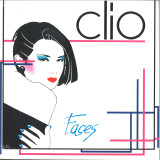
Worthy italo re-issue (in a newly mastered version) of this early Roberto Ferrante's project. Roberto started his career being part of various electronic music groups in Naples around the early 80s! His career took off when he made his first deal with Best Record by Claudio Casalini for ''Come On Closer'' by Pineapples which obtained worldwide success and was played at the legendary Chicago Radio Station WBMX by the mythological DJ's collective, Hot Mix 5. In 1985 it was time for another classic named â??Facesâ?Â�, a simple but direct and honest song with an irresistible rhythm and lyrics that tends to move away from that typical dark sound in other Italo-Disco songs of that era. This song is a triumph for synthesizers and electronic drums as it's fully electronic, something still a rarity in those days! The beautiful melody and spiritual essence of ''Faces'' represent the revolution of a new beginning of the Italian pop of the 80s with a perfect arrangement by Roberto Ferrante, a bouncing bassline, and strong and clear vocal. The sweet and sensual voice, full of personality and charm is by Clio (Maria Chiara Perugini). The graphics are by Patrizio Squeglia and all together it made this groundbreaking release which is one of the best Italo-Disco songs ever made.
- A1: Creation Of Tron
- A2: Only Solutions
- A3: We've Got Company
- A4: Wormhole
- A5: Ring Game & Escape
- A6: Water, Music & Tronaction
- A7: Tron Scherzo
- A8: Miracle & Magician
- A9: Magic Landings
- A10: Theme From Tron
- A11: 1990'S Theme
- B1: Love Theme
- B2: Tower Music - Let Us Pray
- B3: Light Sailer
- B4: Sea Of Simulation
- B5: A New Tron & The Mcp
- B6: Anthem
- B7: Ending Titles
A reissue on black vinyl of the cult 1982 soundtrack to Tron by legendary electronic pioneer and composer Wendy Carlos (The Shining, Clockwork Orange). The music, which was the first collaboration between Carlos and her partner Annemarie Franklin, featured a mix of an analogue Moog synthesizer and GDS digital synthesizer, along with non-electronic pieces performed by the London Philharmonic Orchestra. Two additional musical tracks (“1990’s Theme” and “Only Solutions“) were provided by the American band Journey. This is the first reissue of the black 18 track 1 LP vinyl. 2022 will mark the 40th anniversary of the Tron Franchise. The original film tells the story of computer engineer Kevin Flynn who finds out that an executive at his company, has been stealing his work. Flynn tries to hack into the system but instead is transported into the digital world of The Grid , where he has to battle Sark, and the imposing Master Control Program. Helped by Tron (a security program) and Yori , Flynn becomes a freedom fighter for the oppressed programs of the grid. The soundtrack perfectly captures the geometrically intense landscapes of cyberspace and the virtual gladiatorial computer game.
UTO are a duo from Paris who sound like they might be from outer space. Chic and alien, rhythm-centric yet diaphanous and ghostly, they are a group that thrive on contrasts and embrace paradoxes. Described variously as witchpop, dreampop and trip hop, they mine a rich seam of 90's British music from the peripheries, with added je ne sais quoi. Debut album Touch The Lock sees them present to the world their singular vision for the first time. It's an album grounded in reality that communes with hyperreality, unlocking the box where hard-to-reach emotions and thoughts often lay dormant and untapped.
- A1: Call It A Night 03 47
- A2: Toby Whyle What A Ride 03 23
- A3: Toby Whyle Maze 03 21
- A4: Toby Whyle No One Moves 03 12
- A5: Toby Whyle Not In The Slightest 04 29
- B1: Gave My All 03 24
- B2: Toby Whyle Quiet The Silence 03 41
- B3: Toby Whyle Liven Up This Place 03 54
- B4: Toby Whyle Pity 03 47
- B5: Toby Whyle Trip To The Sun 05 49
What happens when you let go of something you've always been passionate about? Will it come back? And if so, in what ways and with what impact?
These questions laid the foundation for Toby Whyle's debut album 'Call It A Night'.
It is a journey to find out what feels right to him-this means escaping old patterns and allowing himself to try new things. Musically, he exposes himself unreservedly to the gravitational forces of electronic music and guitar pop by orbiting these points of attraction without ever really getting caught by either of them. Each song moves along its own trajectory, fueled by Toby's thoughts and experiences.
His first single, 'No One Moves', hitting number 1 on the FM4 charts in early 2021, marked the beginning of a new adventure-a journey upon which Toby embarks entirely on his own for the first time. After his first EP, 'A Mood Of Its Own', and the release of further singles, the debut album 'Call It A Night' will be out on May 20th, 2022, on Matches Music.
PRESSTEXT
Writing songs has always been quite natural and ever-present in Toby Whyle's life. And he's written plenty of them over the last decade. However, what's new is the realisation that songwriting is one of his few means to slow down the bright and fast-paced world surrounding us. Driven by the urge to create and develop something new, he started to write again. And suddenly, this feeling of being able to pause time came out more intense and immediate than ever.
In this way, the singer, songwriter, and guitarist manages to stand back from the constant rush, carving out space to move freely at his own pace. " Each song is an empty room, and I can decide for myself how I'm going to furnish it. It might get rather chaotic with stuff piled up to the ceiling, then again there's almost nothing in it", he describes his approach to songwriting. For him, creating melodies, crafting music and lyrics is not just a means of reflecting on situations he finds himself in but also a tool of handling them. Toby's music strives to affect and inspire people in all the different phases in life, as his songs are also a result of the diverse situations he's gone through.
Aesthetics and craftsmanship play a crucial role in Toby Whyle's creative process, from crafting songs, recording and producing them, and building and maintaining a particular visual language. He aims to create high-quality and exceptional music that enthuses and delights people, which sparks energy and conveys a certain feeling.
Rhythm Section INTL are back with another release from SAUL, ‘Mutualism’ drops on August 19th 2022. Jack Stephenson-Oliver (keys player of fellow Rhythm Section signee, Vels Trio) and producer Barney Whittaker, aka Footshooter.
Their newest project is a feel good, summer-ready soundtrack, bursting with uplifting synths and groove- heavy broken beats. When the two of them get together, their jam sessions result in a fusion of alternative future jazz. Collaboration is a key element to the creative output of SAUL, shining a light over individual talents such as Allysha Joy, Natty Wylah, Lex Amor and James Mollison.
Rose City Band is celebrated guitarist Ripley Johnson. A prolific songwriter, Johnson started Rose City Band to have an outlet to explore songwriting styles apart from Wooden Shjips and Moon Duo, where he is often not the lead songwriter. Rose City Band allowed him to follow his musical muses as they greet him and not be bound by the schedule of bandmates and demands of a touring group. Stepping out from behind the psychedelic haze that envelops his other output, Rose City Band"s lean yet richly textured arrangements lay bare the beauty of his songcraft. On Earth Trip, Johnson reveals more of himself than ever before, coloring the project"s country-rock twang with a melancholic, wistful undertone. It charts a journey of personal growth and introspection with surprising honesty, from pining for summers spent with friends to meditations on space, stillness and the splendor of the natural world. It continues Rose City Band"s celebration of summer warmth and the great outdoors, seen from a new vantage point, and with newfound appreciation for the freedom and joy that nature provides. Earth Trip was written during a period of sudden shocks and drastic lifestyle changes for Johnson. Forced to cancel extensive touring plans for 2020, the guitarist found himself home for an extended period for the first time in years. No longer in constant motion, he was able to experience and enjoy the simple pleasures of home life, of being in one place: hikes in nature, bathing outside, and waking with the dawn. Forming new connections to his surroundings, from tending to a garden to sleeping out under the stars, Johnson found hope and healing in a more mindful relationship with the natural world. Themes of recalibration and finding personal space are equally mirrored in Earth Trip"s lean production. Recorded at his home studio in Portland and mixed by Cooper Crain (Bitchin" Bajas, Cave), Johnson makes deft use of space while experimenting with new sonics. Shimmering pedal steel, woozy harmonica melodies, and stately piano enhance the album"s introspective tone without ever clouding arrangements. Psychedelic elements that nod to Johnson"s other projects and influences still appear throughout, but hover at the edge of perception, a subtle halo adding colour and texture to Johnson"s songwriting rather than taking centrer-stage. He elaborates: "I told Cooper I was trying to capture that feeling when you take psychedelics and they just start coming on - maybe objects start buzzing in the edges of your vision, you start seeing slight trails, maybe the characteristics of sound change subtly. But you"re not fully tripping yet. He got the idea right away and his mix really captures that feeling." Johnson"s lithe guitar playing throughout treads a fine line between country and cosmic, taut melodies spiralling out into long reverb trails or free-form solos buoyed by a breeze, radiating summer warmth. Through its daring honesty and masteful arrangements, Earth Trip cements Johnson"s place as a singular songwriter of inimitable skill. It"s message of mindfulness and our interconnectedness to the environment expands on a long country and blues music tradition that draws a symbiotic relationship between storyteller and the land, capturing the beauty of the natural world while also emphasising our responsibility in preserving it for future generations
Ever Crashing, the second LP by Kennedy Ashlyn aka SRSQ pronounced ‘seer-skew’, is the summation of a nearly three-year journey of soul searching, songwriting, and self-discovery: “I became myself in the process of making this record.” From the first choral swells of opener “It Always Rains,” it’s clear this collection exists on an ascendant plane, capturing an artist in super bloom. Every song hits like a single, heaving with guitar, synth, strings, live drums, and oceans of Ashlyn’s astounding voice, balletic and illuminated. The tracks gleam with detail, often assembled from as many as 100 separate tracks, all of which were written and played solely by Ashlyn – a feat of world-building as daunting as it is devastating.
For her, however, the process is intrinsic and intuitive – even a matter of survival. Her 2018 solo debut emerged in response to the tragic Ghost Ship fire in Oakland, which took the life of her bandmate and best friend Cash Askew. Similarly, Ever Crashing began materializing in the wake of an ADHD and bipolar disorder diagnosis, prompting a profound personal overhaul. Ashlyn cites such periods of turmoil as a muse of sorts, when “songs begin to echo within me,” gradually reverberating clearer and more vividly. As melodies and arrangements come into focus, the songs act like containers, vessels in which to externalize and exorcise tumultuous emotions, a transformation she memorializes in the climax of “Élan Vital:” “Reeling in and out of deep despair / I am saved by song.”
From swooning end credits balladry (“Dead Loss”) to orchestral slow-burn torch songs (“Abyss”) to dizzying shoegaze heavens (“Someday I Will Bask In The Sun”), the album exudes a sense of aching grandeur and bewildered joy, rich with triumphs hard won and lost loves never forgotten. Melodies pirouette and crescendo in dazzling, elevated acrobatics, somewhere between Kate Bush and The Sundays, threaded with ethereal undercurrents of shimmering shadow. Riffs brood and sparkle over crystalline synths, buoyant bass, and patient percussion, steadily building to holy moments of tidal power, finessed to perfection by producer Chris Coady (Beach House, Slowdive, Zola Jesus). Ashlyn’s is a dream-pop of questing catharsis, vulnerable but orchestral, as dense with hooks as heartbreak.
The album’s title refers to Ashlyn’s recurring sensation of being trapped in the crest of a wave, turned and churned in the surf, mirroring the cycles of self-flagellation and surrender that she battles being bipolar. But as the poetic raptures of these songs attest, her creative process thrives at transmuting trauma into potent music of arresting beauty and hidden divinity. Ever Crashing is an aching, rare work, shaded with gradients of reverie and regret, loss and letting go, “mourning the person I thought I should be, mourning the person I never was.” But even in its pain, Ashlyn’s voice exerts a redemptive gravity, yearning to transform and transcend: “Even on the inside / I’m bracing for impact / I’m waiting to destroy my life / To become sunlight.”
Ever Crashing, the second LP by Kennedy Ashlyn aka SRSQ pronounced ‘seer-skew’, is the summation of a nearly three-year journey of soul searching, songwriting, and self-discovery: “I became myself in the process of making this record.” From the first choral swells of opener “It Always Rains,” it’s clear this collection exists on an ascendant plane, capturing an artist in super bloom. Every song hits like a single, heaving with guitar, synth, strings, live drums, and oceans of Ashlyn’s astounding voice, balletic and illuminated. The tracks gleam with detail, often assembled from as many as 100 separate tracks, all of which were written and played solely by Ashlyn – a feat of world-building as daunting as it is devastating.
For her, however, the process is intrinsic and intuitive – even a matter of survival. Her 2018 solo debut emerged in response to the tragic Ghost Ship fire in Oakland, which took the life of her bandmate and best friend Cash Askew. Similarly, Ever Crashing began materializing in the wake of an ADHD and bipolar disorder diagnosis, prompting a profound personal overhaul. Ashlyn cites such periods of turmoil as a muse of sorts, when “songs begin to echo within me,” gradually reverberating clearer and more vividly. As melodies and arrangements come into focus, the songs act like containers, vessels in which to externalize and exorcise tumultuous emotions, a transformation she memorializes in the climax of “Élan Vital:” “Reeling in and out of deep despair / I am saved by song.”
From swooning end credits balladry (“Dead Loss”) to orchestral slow-burn torch songs (“Abyss”) to dizzying shoegaze heavens (“Someday I Will Bask In The Sun”), the album exudes a sense of aching grandeur and bewildered joy, rich with triumphs hard won and lost loves never forgotten. Melodies pirouette and crescendo in dazzling, elevated acrobatics, somewhere between Kate Bush and The Sundays, threaded with ethereal undercurrents of shimmering shadow. Riffs brood and sparkle over crystalline synths, buoyant bass, and patient percussion, steadily building to holy moments of tidal power, finessed to perfection by producer Chris Coady (Beach House, Slowdive, Zola Jesus). Ashlyn’s is a dream-pop of questing catharsis, vulnerable but orchestral, as dense with hooks as heartbreak.
The album’s title refers to Ashlyn’s recurring sensation of being trapped in the crest of a wave, turned and churned in the surf, mirroring the cycles of self-flagellation and surrender that she battles being bipolar. But as the poetic raptures of these songs attest, her creative process thrives at transmuting trauma into potent music of arresting beauty and hidden divinity. Ever Crashing is an aching, rare work, shaded with gradients of reverie and regret, loss and letting go, “mourning the person I thought I should be, mourning the person I never was.” But even in its pain, Ashlyn’s voice exerts a redemptive gravity, yearning to transform and transcend: “Even on the inside / I’m bracing for impact / I’m waiting to destroy my life / To become sunlight.”
Bis ins Jahr 1973 reicht die Historie von Mass zurück, als Günther V. Radny (das V. steht für Viktor) mit Sänger Josef Hartl, Gitarrist Walter Speck und dem Schweizer Drummer Charles Frey (heute als Akron bekannter Autor) die Formation Black Mass startete. Nachdem Speck wegen psychischer Probleme mit tödlichen Folgen ausfiel, ersetzte ihn der Saarbrücker Gitarrist Gerd Schneider, der zuvor mit ScorpionsSchlagzeuger Hermann Erbel alias Herman Rarebell bei RS Rindfleisch gespielt hatte. Schneider musste allerdings nach einem Jahr wegen massiver Drogenprobleme wieder gehen und wurde durch den englischen Gitarristen Mick Thackeray (The Merseys), der in der Schweiz mit den Slaves und Countdowns, und in München mit Abi Ofarim spielte, ersetzt. Zur gleichen Zeit ersetzte Johannes Eder, von der englischen Band I Drive kommend, Drummer Frey, der sich laut Radny „auf den Büchertrip“ begeben hatte. Zudem wurde der Bandname auf Mass verkürzt. In dieser Besetzung nahm MASS im April 1975 im Studio 7o in München mit Dave Siddle am Mischpult,
der unter anderem mit den Beatles, Jimy Hendrix, Jeff Beck, Animals und Deep Purple arbeitete ein Album auf. Aufgrund der Drogenprobleme von Sänger Josef Hartl wurde dieses Album nie veröffentlicht. Leider sind diese Bänder bis heute verschollen. Doch damit nicht genug der unruhigen Zeiten: Ein Jahr später mussten Hartl (Drogenprobleme, verstorben 1998) und Thackeray (übermäßiger Alkoholkonsum), gehen. Mit dem aus Berlin gekommenen Detlef „Dave“ Schreiber als neuem Gitarristen war die Formation als Trio 1976 erst einmal stabilisiert. 1977 entstand das Album „Back To The Music“, welches bei United Artists Records (Hawkwind, ELO, Don
McLean) erschien.
In Folge wurden Mass als teils boogieorientierte Hardrockgruppe, anschließend als Heavy Metal Band bekannt und genießen heute ähnlich wie Accept, Scorpions, Trance oder Fargo Pionierstatus. Nach einer zeitweisen Umbenennung in Monsters kehrte Bandboss Günther V Radny kürzlich mit Mass zurück und lieferte eine gefeierte Reunion-CD. Die Band wurde auch kürzlich von Golden Core/ZYX geehrt, da je ein Track von Mass und Monsters auf der Compilation „Sound & ActionGerman Hardrock & Heavy Metal Rarities Vol. 1“ zu finden ist. Im Zuge dieses Kontaktes kam es zu der längst überfälligen Idee, das Debütalbum von Mass erstmals auf CD (und erneut auf Vinyl) zu bieten.
Long before Lina Seybold became a geologist, the singer and guitarist was already writing songs and making a name for herself far beyond the city limits of Munich with her Steve Albini-trained (and produced) quartet candelilla, before the band dispersed into new projects. During her studies, she met Moritz Gamperl and the two realised that what they learned in rock research could also play a role in rock music. Thus, the material history of the planet became both a source of existential reflections for the two and the impetus for a highly accomplished and often graceful sound, which has been expressed in the band pirx together with drummer Sascha Saygin since 2019: Technically sovereign, obstinate songs that - with Seybold now on bass and vocals - create subtle dramaturgies, cinematic aesthetics, far-reaching arcs of tension.
With Lamina, the trio now presents an excellent debut album, recorded by Martin M. Hermann, which shoots out of the earth with explosive force as hot lava, only to flow into the valley in glowing beauty the next moment, changing the earth's surface, telling of elemental forces - until it finally evaporates the water in the sea and lays a comatose fog over all existence. Or in other words: pirx make creation music, in all directions of time!
- A1: Gole Yakh
- A2: Dar Enteha
- A3: Hajme Khali
- A4: Paiz
- B1: Leila
- B2: Del Dareh Pir Misheh
- B3: Akhm Nakon
- B4: Shirin Joon
- E1: Saraabe Toe
- E2: Reyhan
- E3: Baroona
- F1: Khaar
- F2: Havar Havar
- F3: Ashiooneh
- C1: Ghazal F4. Bachehaye Khoobe Koocheh
- C2: Tavalode Yek Seda
- C3: Mosafere Shar Baran
- D1: Saghe
- D2: Entezar
- D3: Niyayesh
Repressed , please note price increase, all orders have been cancelled, please re-order! Pre-Revolution Psychedelic Rock from Iran: 1972 - 1979
Now-Again Records is proud to present Back from the Brink, the only legitimately licensed collection of the godfather of Iranian psychedelic rock, Kourosh Yaghmaei. Known within the Iranian diaspora simply by his first name, Kourosh’s Pre-Revolution recordings were thought lost after Islamic fundamentalists took control of Iran. They weren’t: Kourosh had protected them – along with key ephemera from the 70’s. Their collection here - spread over two CDs, a 3-LP and a 4x7” box set - bolstered by Kourosh’s first person recollections of Iran’s 70s rock scene and its death after the Revolution, tells the story of an immensely talented artist’s desire to persevere in the face of terrible adversity.
Kourosh Yaghmaei and his brothers Kamran and Kambiz were amongst the few inspired Iranian musicians determined to change Tehran’s musical landscape in the late 60’s and early 70’s. The trio, armed with rented, second-hand instruments and records by The Ventures, The Kinks, The Doors, merged Western garage rock, psychedelia and Iranian folkloric music to create a sound unlike anything that came before them. Later, inspired by the unlikely duo of Elton John and James Taylor, Kourosh’s music took a sophisticated turn, and he churned out funky, progressive rock that is as imminently enjoyable as it is impossible to categorize.
His star on the rise was knocked off course by the Revolution, and its backdrop of Islamic fundamentalists burning record companies and harassing musicians. But while most Pre-Revolution musicians – including his brothers – fled Iran in 1979, Kourosh stayed, loyal to the country of his birth. He has suffered a performance and recording ban for twenty-two out of the last thirty-two years. Yet he remains stoic and resolved to continue bolstering Iranian musical tradition.
Kourosh still lives in Tehran and is pleased that his story – and his glorious 70s recordings – will finally spread the world over.
Belgian composer Otto Lindholm presents his new LP titled FortyTwo, releasing in early June on Totalism with support from Phantom Limb. Consisting of two complementary entities of equal duration (21 minutes), the album really is one. Together, the two longform pieces are like two sides of one coin, like the two motions of a rocking chair; forwards and backwards. The first piece titled “Reg” explores the simplicity of the stroke with veiled, beautiful melodies, while the second called “The Donkey Theory”, built on an octatonic scale, delves into deeper, more atmospheric zones.
FortyTwo is intentional in its duration, as Lindholm tries to question our relationship with time itself. Extending and expanding the natural sounds of the double bass and expertly arranging and layering them, he is able to toy with time, refocusing the experience on the act of listening itself. The results are rich tapestries of voluptuous tones, deeply felt emotions and elongated melodic motifs which are completely enveloping, almost overwhelming. As the Brussels-based composer and double bassist's focus shifts from instrumental performance to composition, he delves deeper into the world of drone music influenced by contemporary classical composition.
Otto Lindholm is a composer and double-bassist based in Brussels. He has released music on Icarus Records, Gizeh Records, Houndstooth, Aurora Borealis Recordings, Bedouin Records, Midira Records, 7k!, Takuroku and other labels. His new LP, FortyTwo, is due to be released in 2022 on Totalism with the support of Phantom Limb. He is a keen collaborator, working alongside many artists such as Ross Tones aka Throwing Snow, Aidan Baker, string quintet BOW, Jean D.L., P.Maze, and others.
47 revisits German artist OAKE’s seminal track “Paysage Dépaysé” in a special remix EP.
OAKE have established themselves as flagbearers for dark electronica in the years pursuant to their EP on Downwards in 2015, making cinematic dance music for imprints across the experimental-industrial axis—including a solo effort on 47 in 2019. After a series of standout early releases, the artists put out one of their canon-defining tracks, “Paysage Dépaysé,” as part of the Monad XXIV EP for Stroboscopic Artefacts. Now, it receives the remix treatment on 47029 with three dynamic and radically divergent approaches to OAKE’s atmospheric and deeply melancholic inaugural work, which will be pressed to vinyl for the first time.
The newly remastered original song is a post-industrial dirge that weaves OAKE singer Konstanze Bathseba Zippora’s otherworldly vocals over a noisy mothswarm of electronics, but label veteran Killawatt revs the first version’s subdued threnody up to a dance floor-friendly techstepper. On the B-Side, remixer Lemna uses a more restrained style, enshrouding the instrumentals under a martial sashay of tribal breakbeats, while 47 newcomer Quelza brings the collection to a ruminative close by bending and breaking Zippora’s virtuosic solo through a latticework of glitched-out synths and percussive stabs.
May saw the release of Matthias Vogt's extraordinary new album: Pianissimo. A sound journey based on piano compositions, enriched with guitar sounds, drum and percussion parts, electronic influences and snippets of interviews with environmental activists.
Music that is very unique and cannot be directly assigned to any genre.
Two club mixes of Pianissimo tracks were created, which are now released on Flaneurecordings: The Losoul mix of "The Mind Traveller" is a twisted dub that is cleverly teasing original elements again and again and finally boils up in a break. Peter Kremeier aka Losoul, producer legend from Frankfurt's Playhouse environment is himself a traveler in electronic music and takes us here on his very own internalized trip.
Flaneur boss DJ Jauche takes on "Shimmering Sea" and works close to the original, but refines the track masterfully for the deep dancefloors. A sound that works great for open airs as well as clubs. Very soulful, crisp and stylistically confident.
Come for the leopard, stay for the stone cold jams. Yet another thrilling, funky-prog jazzy-rock fusion beauty from Ian Carr’s Nucleus. Originally released on Vertigo in 1975, Alleycat was never re-pressed so those original copies are now very tricky to score. Like all the Nucleus records, it’s aged ridiculously well and this Be With re-issue, re-mastered from the original analogue tapes, shows off just why this deserves to be back in press.
Genius trumpeter and visionary composer Ian Carr was one of the most respected British musicians of his era. He was a true pioneer and saw the potential in fusing the worlds of jazz with rock, just as Miles Davis and The Tony Williams Lifetime did in the US. In late 1969, following the demise of the Rendell-Carr quintet, and tiring of British jazz, Carr assembled the legendary Nucleus. Regarding music as a continuous process, Nucleus refused to “recognise rigid boundaries” and worked on delivering what they saw as a “total musical experience”. We can get behind that.
Under bandleader Carr, Nucleus existed as a fluid line-up of inventive, skilled musicians. This constant evolution and revolution was all part of the continuous musical exploration and discovery that took jazz to new levels. And the music has stayed relevant. To steal a line from a recent review of our re-issue of Roots, when it comes to anything Nucleus “it’s basically already hip-hop”.
Alleycat was the last Nucleus album recorded for the Vertigo label. Released in 1975, it was again meticulously produced by Jon Hiseman and is every bit as sinuous as anything else the group had recorded. As far as riff-laden accidental cop-funk goes, there’s so much energy coursing through the music that at times it sounds like a live recording. It’s pretty unbeatable.
Uptempo opener “Phaideaux Corner” is a funk-flavoured opus with a groove that simply swaggers. This trademark Roger Sutton piece benefits from Trevor Tomkins’s percussive expertise and some excellent sax and keyboard soloing. Check out Geoff Castle on squelchy, stabbing Moog duties. Ian Carr’s elegantly laidback title track is a lengthy suite of magisterial themes. Typically complex, it still gets you hooked and is just riddled with the funk. Carr builds up his initially “straight” trumpet solo with later use of echo to mesmeric effect. And there’s some excellent wah-wah guitar shredding by Ken Shaw too. Nice.
The second side opens with the killer “Splat” and finds Nucleus really ripping it up. A fat, funky bass guitar riff introduces us to the track and stays with us until the end. The often mangled bass groove is pushed along by rattling drums and percussion, dropping out for some restful moments of spacey calm, and along the way picking up some lengthy keyboard noodling by Castle. So so good.
The cool “You Can’t Be Sure” is a gentle jam with Shaw on 12-string acoustic guitar, together with Carr’s muted trumpet and some marvellous fretless work from Sutton for extra colour. The album closes with Bob Bertles’ galloping “Nosegay”, written perhaps as a response to some of the faster Mahavishnu Orchestra pieces. It’s an example of well crafted jazz-rock that doesn’t compromise any of its jazziness, yet it still very definitely rocks.
This Be With re-issue of Alleycat has been re-mastered from the original Vertigo master tapes, Simon Francis’ mastering working together with Pete Norman’s cut to weave their usual magic with these wonderful recordings. The cool AF cover - that leopard was just a cat before he heard Nucleus, you know - has been restored as the finishing touch to this long overdue re-issue.
(feat. Claire Davis)
300 copies pressed
The A side was released back digitally in March. "Hope To See You Again" Which is an original song with Claire Davis on lead vocals
Better things is coming out digitally 15th July and it will be on a Ltd edition 45 vinyl. The Pre-Orders for the vinyl will be starting soon.
The B side is a killer version of her classic tune, "Better Things" The soulful vocals of Claire Davis are accompanied by jaunty horns and keyboards, and the cool groovebefits the positive lyrics ("I'm a better woman than I have been")
Introducing The HP's. This talent-studded Hamilton-based funk/soul collective is poised to make major moves with the release of their debut 45. The group is the brainchild of drummer/bandleader 'Parkside' Mike Renaud, the founder/owner of noted Canadian music company Hidden Pony Records & Management. A life-long fervent fan of funk and old school soul, Parkside has assembled a crack team of musicians and vocalists dedicated to his vision of breathing vibrant new life into these classic forms. Drawing inspiration from the likes of James Brown and The J.B.'s and Sharon Jones and The Dap Kings. The title pays tribute to Renaud's hometown, Hamilton, and The H.P.'s sound
honours The Hammer's core characteristics of rugged authenticity. Get ready to get Gritty!
— The HP's have partnered with UK based soul label LRK Records for the release of their latest single "Hope To See You Again", featuring Canadian soul singer and LRK alum Claire Davis
— "Hope To See You Again" arrives digitally March 31st, 2022 with the 45" expected summer 2022
— The 45" single will also include a cover of the Sharon Jones & The Dap Kings classic "Better Things"
The HP's.
To the Canadian music industry, 'Parkside' Mike Renaud is best known as the founder and owner of Hidden Pony
Records & Management, now widely recognized as one of Canada's premiere talent-development labels and artist
management companies. Past and present artists on Renaud's roster include Said The Whale, The Elwins, The Dirty
Nil, Hannah Georgas, Imaginary Cities, Jeremy Fisher, Odds, and many more.
Not many are aware that this popular industry power player actually got his start in music as a drummer in a '90s
Montreal soul/funk band called Parkside Jones (the source of his nickname). When he moved over to the business
side of music, beginning with top indie label Aquarius Records, Mike Renaud packed the kit away, launching himself
into the biz with full passion, commitment, and skill.
Mike has now resurrected his kit (after 20 years), honed his chops, and emerged as the driving force behind The
Renaud recalls the spark that reignited his love of playing drums: "The first time I played them in 20 years was at the
memorial for industry comrade Jon Box at The Opera House in Toronto. I was talked into playing with Chris Murphy
Sloan, Terra Lightfoot, and the Dirty Nil guys on a version of 'Handle With Care.'"
This renewed love affair would lead to Mike's vision for The H.P.'s. From his teenage years, his favourite musical
genre has been classic soul and funk, and he has an encyclopedic knowledge of these styles. Heartened to see the
growing international community building around these sounds, Mike decided to make his own creative contribution to
the form. He recruited musical and vocal collaborators from his hometown (plus a couple of Toronto imports) for the
project, and The H.P.'s were born.
The group name, The H.P.'s, pays homage to James Brown's legendary band, The J.B.'s, with these initials
referencing Hidden Pony. The album title is a tribute to Renaud's hometown, Hamilton, and The H.P.'s sound
honours The Hammer's core characteristics of grit and authenticity. Mike actually spent some time co-managing the
current J.B.'s.
The late Sharon Jones, a key inspiration for Renaud, is honoured via a killer version of her classic tune, "Better
Things." The soulful vocals of Claire Davis are accompanied by jaunty horns and keyboards, and the cool groove
befits the positive lyrics ("I'm a better woman than I have been").
Giving this cover extra resonance are the memorable encounters both Davis and Renaud had with Jones back in
2015. A documentary portrait of the soul great, Miss Sharon Jones!, had its world premiere at the Toronto
International Film Festival (TIFF), and Claire Davis was doing a house concert playing DapKings songs that night.
The band came across the party and jammed along, then, when one of the Dap Kings backup singers couldn't cross
the border, Claire got the call to fill in at Sharon Jones' headlining show at Hamilton's Supercrawl fest.
In a cool twist of fate, Mike Renaud was one of the organizers of that show, and was tasked with looking after
Sharon. The two bonded instantly and deeply, as Mike recalls. "While driving her to soundcheck, Sharon confided in
me that her cancer had returned. She didn't want anyone to know, as the documentary was about her conquering it,
and she didn't want people to be bummed out at the news. It was my 40th birthday that day, and Sharon actually
stopped her show to sing me Happy Birthday in a soulful way!"
Shakethehoof added "Hope To See you Again' to their playlist musicto/shake-a-hoof/the-hps-ft-claire-davis-hope-to-see-you-again-the-hoof-chats/
"BETTER THINGS" has gone straight into the UK Soul chart breakers at No 8