Hackney Electronica come to Dark Entries with the Feedback Memory EP, featuring 5 cuts of acidic rave-inflected wave. Quinn Whalley (Paranoid London), Unai Trotti (Cartulis Music), and Margo Broom (Hermitage Working Studios) formed Hackney Electronica during COVID era. Trotti and Whalley were spending countless hours digging through records and making music during lockdown. As their sound took shape – heavy and hypnotic – they invited Broom to join, cementing the motley trio. Following their debut EP, Synaptic Shadows, the five pieces on Feedback Memory muse on the loss of self in the digital era and the fine line between pleasure and paranoia. Each track pulses like a memory from the backstreets of Hackney, where the night transforms the city into an electrified maze of fleeting highs and inevitable crashes. Their hard-hitting dancefloor indulgences shine on “Trapped in the Circuit” and “Six Foot Seven,” which features Mutado Pintado on vocals, while tweaked-out wave sounds blossom on “Feedback Memory” and “Lost Trip - Destino.” Things close out with “Compressed Air,” a lush, breakbeat-laced affair that veers into trip-hop territory. Housed in a sleeve designed by Germán Bardo, Feedback Memory continues Hackney Electronica’s tumultuous journey through the flickering alleys of the mind, where tension and transcendence intertwine.
Berlin's Hypersoft crew launch their new vinyl label with Clínica Electrónica by Italian DJ, producer and Evasione Digitale co-founder Andrea Dama. Following the start of their new residency at Panorama Bar, the label opens its catalogue with a strictly limited five-track EP recorded at Buenos Aires' legendary La Siesta del Fauno, bringing Dama's Berlin dancefloor sensibility together with the peculiar chemistry of one of the world's most extraordinary electronic music studios. Forged through extended jam sessions on an array of vintage analogue instruments, including the original Korg PS-3300, Moog modular and Yamaha CS-80, the spontaneity of the sessions translates directly into the finished tracks, where ideas mutate, collide and develop into unexpected forms. Switching gears between hypnotic, mechanical, groove-driven house, and stuttering, furious, off-kilter techno, Dama moves deep into more atmospheric territory, conjuring worlds that are at once lush, organic, paranoid and extraterrestrial. An analogue vision of a future past, built by machines that were already imagining it decades ago.
Benge is the influential electronica artist who launched the Expanding Records label in 1995. Polyrythmic Electronica is one of the underrated gems from Benge's discography, opening the series of re-issues from digital to vinyl on the new System Of Objects imprint.
Veronica Electronica, eine acht Tracks umfassende Begleitung zu Ray of Light, wurde ursprünglich 1998 von Madonna als Remix-Album konzipiert. Das Projekt wurde jedoch durch den überwältigenden Erfolg des Original-Albums und die zahlreichen Hit-Singles, die über ein Jahr lang im Fokus des Interesses standen, zurückgestellt. Ray of Light verkaufte sich weltweit über 16 Millionen Mal und brachte Madonna vier GRAMMY® Awards ein, darunter den für das beste Pop-Album.
Mehr als 25 Jahre später wird dieses lange kolportierte Konzept nun endlich Wirklichkeit. Die Sammlung enthält neu bearbeitete Versionen von Club-Remixen von Sasha, BT und Victor Calderone, zusammen mit dem Original-Demo von „Gone, Gone, Gone“ – einer bisher unveröffentlichten Aufnahme, produziert von Madonna und Rick Nowels. Veronica Electronica erscheint am 25. Juli als limitiertes Silver Vinyl und digital, und ist eine weitere hochwertige Ergänzung zu Madonnas Silver Collection.
Nothing said new or modern or futuristic quite like a synthesiser in the 70s and 80s. If you were shooting an advert and you wanted your product or your company to appear forward-thinking and ahead of the game, then you would want something electronic, something out of the ordinary. When TV producers and advertising directors started searching for music that sounded like “Tubular Bells” – and then Tomita, and later Jean Michel Jarre – music libraries such De Wolfe, Bruton, Parry and Chappell had to have the tracks readily available.
Compiled by Bob Stanley, “Tomorrow’s Fashions” varies from advertising jingles and TV themes to space exploration and gorgeous, beatless ambience. Though it’s 40-to-50 years old there’s a real freshness to this music. Older jazz players Brian Bennett, John Cameron, Alan Hawkshaw and others seized the chance to operate a synth; younger pups including John Saunders and Monica Beale were simply intrigued by the new technology being wheeled into the studios. There’s a tangible sense of adventure.
“Tomorrow’s Fashions’” brand of electronica anticipated new age and ambient music. It also had both a direct and indirect influence on pop – the early Human League and the future sounds of Warp Records are all over this collection. Electronic library tracks have been sampled by everyone from MF Doom to Kendrick Lamar.
One person’s primitive and experimental is another person’s space-age lullaby. This was music made in the shadows – in Soho’s secretive music library studios – that has now become desirable and influential. The chances are chunks of it will be sampled and used on hit records that have yet to be written. If the musicians’ aim was to soundtrack tomorrow’s fashions, they couldn’t have got it more right.
Una interpretación de Soinuarenbidea II debería partir de esta premisa: todo es posible, nada es aleatorio, y en sí mismo es un imposible de aleatoriedades. El escenario planteado explora la idea de realidad aumentada desde una percepción sonora, ambiental y colectiva. La obra transita hacia adelante y hacia atrás recreando experiencias extintas de porvenir incierto, tratando de facilitar un fin pacificador. Cada pieza sonora se crea, se despliega, se repliega y se destruye, en una torsión permanente de toda la realidad que hace posible cada fragmento musical, cada identidad acústica, cada espacio sonoro. Lo onírico, la ficción, y el viaje están continuamente presentes, y es en el transitar de cada fragmento donde se produce el diálogo de la exposición musical. Los elementos de esta ficción se recrean continuamente, en un continuum donde se entrelazan y se van contorsionando a medida que crecen o decrecen con cada fragmento de síntesis concreta. Los temas explícitamente musicales son el magma que conduce a dar voluptuosidad al disco, siendo la piel un contexto o límite que en sí mismo fluctúa indefinidamente en texturas y configuraciones posibles. Y la urdimbre del silencio es la síntesis que está continuamente presente y que trata de cohesionar los fragmentos en continua colisión expresiva. Las grabaciones de campo proporcionan el material sonoro concreto, y como un fractal sonoro cada una de ellas ofrece diferentes grados de interpretación que a su vez conduce a nuevos fragmentos y nuevas creaciones. Así que se puede pensar que esta es una síntesis de una posible realidad, pero interpretable en infinidad de maneras. Un movimiento y una estaticidad implícitas que generan estructuras y dinámicas acústicas. Lo que se escucha no es real, pero en sí mismo forma parte de la realidad, creando un escenario expectante. Lo cinematográfico, plástico y teatral, danzante y dinámico cobra importancia en este juego, porque se trata de contar una historia, una experiencia recreada desde los puntos de vista del arte visual. Es a su vez hilo conductor y entretenimiento, discurso político y puro divertimento. Es desde este espacio de convivencia artística que tiene sentido la totalidad y justifica el formato sonoro planteado. La contradicción de la obra es patente en el formato, y es a su vez el planteamiento de una accidentalidad en el devenir vital. Contenedor de Ruido recoge todas estas contradicciones y las manifiesta en la obra Soinuarenbidea II. Es una historia sonora, es un cuento acústico. Es un fragmento de vitalidad en imágenes audibles. Es una invitación a la reflexión, a la crítica, al disfrute, a la meditación, a la celebración. Y sobre todo es esperanzadora apreciación de la realidad como algo maleable que confeccionamos colectivamente, que requiere de una paciente observación y la participación colectiva global, en un mundo finito pleno de diversidades y del que ignoramos prácticamente todo, al que deberíamos volver con respeto y devoción.
Soinuarenbidea II-ren interpretazio batek premisa honetatik abiatu beharko luke: dena da posible, ezer ez da ausazkoa, eta, berez, ausazkotasun ezinezko bat da. Planteatutako agertokiak errealitate areagotuaren ideia aztertzen du, soinu-, ingurumen- eta talde-pertzepzio batetik abiatuta. Lanak aurrera eta atzera egiten du, etorkizun zalantzagarriko esperientzia desagertuak birsortuz eta helburu baketsua lortzen saiatuz. Soinu-pieza bakoitza sortu, hedatu, tolestu eta suntsitu egiten da, musika-zati bakoitza, identitate akustiko bakoitza eta soinu-espazio bakoitza ahalbidetzen dituen errealitate osoaren etengabeko bihurdura batean. Onirikoa, fikzioa eta bidaia etengabe daude presente, eta pasarte bakoitzaren joan-etorrian gertatzen da musika-erakusketaren elkarrizketa. Fikzio honen elementuak etengabe birsortzen dira, continuum batean, non sintesi zati zehatz bakoitzarekin hazi edo txikitu ahala elkar lotzen eta bihurritzen diren. Esplizituki musikalak diren gaiak diskoari atsegintasuna ematera eramaten duen magma dira, azala testuingurua edo muga izanik, testura eta konfigurazio posibleetan mugarik gabe aldatzen dena. Eta isiltasunaren irazkia etengabe presente dagoen sintesia da, zatiak etengabeko adierazpen-talkan kohesionatzen saiatzen dena. Landa-grabazioek soinu-material zehatza ematen dute, eta soinu-fraktal batek bezala, horietako bakoitzak interpretazio-maila desberdinak eskaintzen ditu, eta horrek, aldi berean, zati eta sorkuntza berrietara eramaten du. Beraz, pentsa daiteke errealitate posible baten sintesia dela, baina hamaika modutan interpreta daitekeena. Egitura eta dinamika akustikoak sortzen dituzten mugimendu eta estatikotasun inplizitu bat. Entzuten dena ez da erreala, baina, berez, errealitatearen parte da, eta agertoki espektakularra sortzen du. Zinematografikoak, plastikoak eta antzerkikoak, dantzariak eta dinamikoak garrantzia hartzen dute joko honetan, ikusizko artearen ikuspegitik birsortutako istorio bat, esperientzia bat, kontatzea baita helburua. Aldi berean, hari gidaria eta entretenimendua da, diskurtso politikoa eta dibertimendu hutsa. Elkarbizitzarako espazio artistiko honetatik osotasunak zentzua du eta planteatutako soinu-formatua justifikatzen du. Obraren kontraesana nabarmena da formatuan, eta, aldi berean, bizi-bilakaeran istripu-tasa bat planteatzea da. Zarata-edukiontziak kontraesan horiek guztiak jasotzen ditu eta Soinuarenbidea II obran adierazten ditu. Soinu istorio bat da, ipuin akustiko bat. Bizitasun zati bat da, irudi entzungarrietan. Hausnarketarako, kritikarako, gozamenerako, meditaziorako eta ospakizunerako gonbidapena da. Eta, batez ere, itxaropentsua da errealitatea modu kolektiboan egiten dugun gauza xaflakor gisa hautematea, behaketa pazientea eta partaidetza kolektibo globala eskatzen dituena, dibertsitatez betetako mundu mugatu batean, ia guztia kontuan hartzen ez duguna, eta errespetuz eta debozioz itzuli beharko genukeena.
An interpretation of Soinuarenbidea II should start from this premise: everything is possible, nothing is random, and in itself is an impossible randomness. The proposed scenario explores the idea of augmented reality from a sonic, environmental, and collective perception. The work moves back and forth, recreating extinct experiences of an uncertain future, seeking to facilitate a peaceful end. Each sound piece is created, unfolds, retreats, and is destroyed, in a permanent twisting of all reality that makes each musical fragment, each acoustic identity, each sonic space possible. The dreamlike, the fictional, and the journey are continually present, and it is in the transit of each fragment that the dialogue of the musical exposition takes place. The elements of this fiction are continually recreated, in a continuum where they intertwine and contort as they grow or diminish with each fragment of concrete synthesis. The explicitly musical themes are the magma that leads to the work's voluptuousness, the skin being a context or boundary that in itself fluctuates indefinitely in possible textures and configurations. And the warp of silence is the synthesis that is continually present and seeks to unite the fragments in a continuous expressive collision. The field recordings provide the concrete sound material, and like a sonic fractal, each one offers different degrees of interpretation that in turn lead to new fragments and new creations. So one can think of this as a synthesis of a possible reality, but interpretable in an infinite number of ways. An implicit movement and staticity that generate acoustic structures and dynamics. What is heard is not real, but in itself is part of reality, creating an expectant scenario. The cinematic, plastic and theatrical, dance and dynamic aspects take on importance in this game, because it is about telling a story, an experience recreated from the perspective of visual art. It is at once a common thread and entertainment, political discourse and pure entertainment. It is from this space of artistic coexistence that the whole makes sense and justifies the proposed sound format. The contradiction of the work is evident in its format, and it is, in turn, the presentation of an accidentality in the course of life. Noise Container gathers all these contradictions and manifests them in the work Soinuarenbidea II. It is a sound story, an acoustic tale. It is a fragment of vitality in audible images. It is an invitation to reflection, to critique, to enjoyment, to meditation, to celebration. And above all, it is a hopeful appreciation of reality as something malleable that we collectively craft, requiring patient observation and global collective participation, in a finite world full of diversity and of which we know practically nothing, to which we should return with respect and devotion.
Paisajes sonoros, diseño sonoro, drones y música grabada, realizada y arreglada para Contenedor de Ruido por David Aranaz. Coro: Basandere Ahotsak. Producido y mezclado por David Aranaz. Mástering: Estanis Elorza. Fotografía: David Aranaz. Texto: David Aranaz. Traducción: Saioa Aranaz Oreja. Trabajo y Diseño artístico: Cristina Martinez. Edición: Contenedor de Ruido Producciones y Sarbide Music. Distribución: Contenedor de Ruido.
Contenedor de Ruido agradece el apoyo en la realización de Soinuarenbidea II al coro Basandere Ahotsak y en especial a Eva Orbara Goicoa.
Soinuarenbidea II está dedicado al pueblo palestino.
Paisajes y objetos Sonoros, samplers y otras músicas transformadas para Soinuarenbidea II
Burlada: Paseos sonoros matinales por Merindad de Sangüesa, Calle Mayor, Capuchinas, Parque Uranga y varias iglesias y plazas. Pasajes del cotidiano: basura de papel, cristal y plástico.
Pamplona: Cementerio de San José. CEIP Sanduzelai /// Quinto Real: Fábrica de Armas, Puerto de Urkiaga y alrededores. Suite del silencio, bosques en movimiento /// Fábrica de armas de Orbaiceta: regatas, biosques, paseo sonoro hasta regata /// Belate: Puerto de Belate y alrededores. Vacas en pradera junto a las turberas /// Bardenas Reales: Suite de guitarra y Suite del silencio, estepa desértica /// Austria: Tranvías de Graz y Viena. Muchedumbre del metro de Viena.
Voces cinematográficas de: Matanza en Texas, Robocop, Espíritu Sagrado, Solo los Amantes Sobreviven, Voces de Gaza, Yojimbo, Terciopelo Azul, Los 7 Magníficos.
La pista A2 está dedicada a la memoria de David Lynch.
La pista B4 está dedicada a Eva Orbara Goicoa.
Pista A4: Contiene interpretaciones de piano de Three Piano Pieces Op.11 de Arnold Schoenberg.
Pista A5: Es una interpretación expandida con síntesis FM del Concerto Op. 24 - Etwas lebhaft - de Anton Webern.
Pista A7: Contiene la canción Besarkatu ninduzun (Letra de Josune López y música de Josu Elberdin) en interpretación de Basandere Ahotsak en la iglesia de Burutain bajo la tormenta.
Pista B2: Contiene la canción Recuerdos de la Alhambra (Fernando Tárrega) en interpretación torsionada de David Aranaz Sarasa.
Pista B14: Contiene la canción Agur María (Letra y Música de Estíbaliz Robles “Estitxu” y arreglo exclusivo de Alfonso Ortiz para Basandere Ahotsak) en interpretación de Basandere Ahotsak.
Equipamiento para Soinuarenbidea II.
Micros de condensador SE7, configuración XY y ORTF; Micros de cinta ORTIZ LUTHIER configuración XY y Blumlein; Grabadoras MARANTZ y ZOOM; Sintetizadores y samplers Elektron MONOMACHINE SPS-1, MACHINEDRUM SFX6 y MODEL:SAMPLES. Dave Smith MOPHO. Torso Electronics S-4. Sintetizador Modular 333 DIY; Guitarra clásica ALHAMBRA 6P; Esculturas Sonoras tipo Baschet, cristal y metales; Mesa Soundcraft FX16ii; Interface de Audio RME Babyface Pro FS; DAW Logic Pro; Procesamiento de modelado analógico con Acústica Audio, Waves, Softube, Brainworx, Sonible, Analog Obsesion, Tokio Dawn. Metering de Logic y RME DigiCheck . Amplificación Hafler PRO2400. Monitorización BW DM602 S3. Mezcla digital; Mastering híbrido.
Veronica Electronica, eine acht Tracks umfassende Begleitung zu Ray of Light, wurde ursprünglich 1998 von Madonna als Remix-Album konzipiert. Das Projekt wurde jedoch durch den überwältigenden Erfolg des Original-Albums und die zahlreichen Hit-Singles, die über ein Jahr lang im Fokus des Interesses standen, zurückgestellt. Ray of Light verkaufte sich weltweit über 16 Millionen Mal und brachte Madonna vier GRAMMY® Awards ein, darunter den für das beste Pop-Album. Mehr als 25 Jahre später wird dieses lange kolportierte Konzept nun endlich Wirklichkeit. Die Sammlung enthält neu bearbeitete Versionen von Club-Remixen von Sasha, BT und Victor Calderone, zusammen mit dem Original-Demo von „Gone, Gone, Gone“ – einer bisher unveröffentlichten Aufnahme, produziert von Madonna und Rick Nowels. Veronica Electronica erscheint am 25. Juli als limitiertes Silver Vinyl und digital, und ist eine weitere hochwertige Ergänzung zu Madonnas Silver Collection.
‘When The 2000s Clashed: Machine Music For A New Millenium’ is the story of how, 25 years ago, a new form of electronic music – known as electroclash - reignited a tired clubland and gave the indie scene and mainstream pop a shot in the arm in the process. Over this 3LP highlights set, carefully curated from the 5CD box of the same name (also released, 3rd October) the collection showcases the back-to-basics electronic beats that heralded in a new generation of exciting and innovative new artists - Hot Chip, Peaches, LCD Soundystem, and Ladytron, to name a handful. It also shows how the sound and attitude of electroclash plugged into the decade’s cutting-edge indie bands, (Franz Ferdinand, Bloc Party), and became intrinsic to the way chart pop would sound in the first decade of the 2000s (Kylie, Goldfrapp).
The collection also shows how the scene’s underground DIY ethos evolved and inspired the next generation of electronic buccaneers (Simian Mobile Disco, Justice Vs. Simian). ‘When The 2000s Clashed’ brings together a dazzling, diverse selection of artists, producers and remixers from right across the 2000s zeitgeist – from The Chemical Brothers and Daft Punk, from M.I.A. to Soulwax and many points in-between. For good measure, there’s also one side of LP3 given over to the original post punk and electronic sounds (including Kraftwerk, The Human League and Cabaret Voltaire) who’d played such a big influence on the electroclash sound. ‘
When The 2000s Clashed’ was compiled and sequenced for Demon / Edsel by Jonny Slut, founder of London’s electroclash citadel Nag Nag Nag. Established in 2002, in a small Soho venue called Ghetto, ‘Nag’ quickly became THE hottest club, first in London and then in the whole world. A glorious mess and hedonists’ hotspot, a night at ‘Nag Nag Nag’ (if you could get in!) saw the capital’s club kids, students and creatives rub up alongside names from the fashion and music worlds - Björk, Pet Shop Boys, Kate Moss, Boy George, Alexander McQueen, and Pam Hogg were among the regulars. Madonna visited, so did John Peel, Yoko Ono asked to perform and did, Throbbing Gristle’s Chris and Cosey DJ’d, so did Marc Almond, and Too Many DJ’s.
Justin Timberlake was refused entry (too many bodyguards)… even Cilla Black was spotted getting down! Jonny shares these reminisces – and many more - in the collection’s sleevenotes. Named after the 1979 Cabaret Voltaire classic, ‘Nag, Nag, Nag’ became the first place to hear the seemingly endless flow of thrilling new tunes coming from every direction during that decade of dance. Many of them are included on this collection.
pas en stock
Dernière livraison il y a 7 mois réapprovisionnement sans garantie
Hackney Electronica come to Dark Entries with the Synaptic Shadows EP, featuring 5 cuts of acidic rave-inflected wave. Quinn Whalley (Paranoid London), Unai Trotti (Cartulis Music), and Margo Broom (Hermitage Working Studios) formed Hackney Electronica during COVID era. Trotti and Whalley were spending countless hours digging through records and making music during lockdown. As their sound took shape - heavy and hypnotic - they invited Broom to join, cementing the motley trio. The five pieces on Synaptic Shadows explore themes of altered states, late-night cityscapes, and the fine line between pleasure and paranoia. Each track pulses like a memory from the backstreets of Hackney, where the night transforms the city into an electrified maze of fleeting highs and inevitable crashes. The anxious grooves on “H.E. Nuestro Circuito” and “Whispers from the Depths” channel 1980s DIY electronics onto the contemporary dancefloor, while “Efecto Perfecto,” “The One”, and “Nueva Ola” offer breakbeat-laced electro that will keep you dancing until dawn. Housed in a sleeve designed by German Bardo, Synaptic Shadows is more than just a debut release, it’s a journey through the flickering alleys of the mind, where tension and transcendence intertwine.
Nichts wirkte in den 70er und 80er Jahren so neu, modern oder futuristisch wie ein Synthesizer. Wenn ein Werbespot das Produkt oder sein Unternehmen zukunftsorientiert und der Zeit voraus erscheinen lassen sollte, wollte man etwas Elektronisches, etwas Außergewöhnliches. Als Fernsehproduzenten und Werbedirektoren nach Musik suchten, die wie 'Tubular Bells' und später nach Jean-Michel Jarre klang, mussten Musikbibliotheken wie De Wolfe, Bruton, Parry und Chappell die Titel sofort verfügbar haben. - 'Tomorrow's Fashions', zusammengestellt von Bob Stanley, reicht von Werbe-Jingles und TV-Themen bis hin zu herrlicher, beatloser Atmosphäre. Die Electronica-Marke 'Tomorrow's Fashions' nahm New Age- und Ambient-Musik vorweg. Sie hatte auch einen direkten und indirekten Einfluss auf Pop - die frühen Human League und die dann folgenden Sounds von Warp Records sind überall in dieser Compilation zu finden. Electronic Library-Tracks wurden von vielen Artists gesampelt, von MF Doom bis Kendrick Lamar. Was für den einen primitiv und experimentell ist, ist für den anderen ein Schlaflied aus dem Weltraumzeitalter. Dies war Musik, die im Verborgenen gemacht wurde, in Sohos geheimen Musikbibliothek-Studios, und die jetzt begehrt bei Sammlern und nicht zuletzt einflussreich geworden ist.
Following up their 2020 EP Barcelona IRREAL delivers eight troglodyte anthems of radikal hardcore punk. Borrowing heavily from the Hear Nothing era DISCHARGE and echoing equally Suomi classics DESTRUKTIONS/ MELLAKKA and AOQ demo era CRO-MAGS, IRREAL creates a maelstrom of hypnotic feedback. Era Electrónica Catalan and Spanish anarchist lyrics bind the bands primitive sonic assault, delivering a modern hardcore punk record without an ounce of modern attitude. Punk as it is meant to be; nasty, aggressive, political and uncompromising. Recorded, mixed and mastered by Markus at No Master's Voice in Copenhagen. Cover art by Arturo PS. IRREAL will be touring the Iberian Peninsula early June with TENSÖ.
Peach Discs is delighted to kick-off a busy 2022 with a five-track EP from one of our favourite new artists. buen clima’s Transferencia Electrónica is an exploration into pared-down dance music, where interlocking rhythms, percussive synthesis and quasi-looping delays meet to form smooth, efficient and pointed club tracks.
In his own words:
“Stylistically the tracks on this EP owe a lot to the great Black musicians from Chicago and Detroit, namely Herbie Hancock, Mr. De', DJ Rashad, Lil' Louis, Frankie Knuckles, James Stinson and Gerald Donald. I feel like the EP is kind of a love letter to the styles they pioneered, done in my own way, which in turn has been influenced by my background in classical music and improvised music but also so, so heavily by my friends and teachers: I've learned so much just from interacting, working and just plain witnessing eggglub, Lorelei, Maxi Cat, il sentimento, Hola Papá/Annunaki, Lavina Yelb, Jorge Pepi, and the whole music scene I belong to in Santiago.”
pas en stock
Dernière livraison il y a 4 ans réapprovisionnement sans garantie
Cult, obscure 1976 proto-electronics masterpiece 'Viaje' is a purely brain frying avant garde flipout from the electroacoustic musicians Eduardo Polonio and Horacio Vaggione (probably most known for his album on Cramps). Together, they deploy synths, electric guitars, organs and bass and squash them all up together in sundry sense befouling ways. On the A side, they're tangled into an overpowering threshing machine of spitting electronic mayhem, while the B side moves the proceedings into overtly acidy territory, everything ratcheting down and expanding outward into a delirious psychedelic electronic whirlpool. Beautiful gatefold vinyl reproducing the original artwork.
pas en stock
Dernière livraison il y a 7 ans réapprovisionnement sans garantie
Sublime frequencies from the golden era of ambient electronica.
Plumbing hidden depths beneath a deceptively tranquil surface, MLO's mid-90s masterpiece Io is an overlooked gem from a golden era for ambient electronic music. Originally released in 1994, Jon Tye and Pete Smith's collaborative album responded to the growing chill-out movement by leaning into classical and avant-garde influences from Satie, Debussy and Cage through to Soft Machine, Incredible String Band and Eno. Recorded across various studios stacked with classic and rare synths, Io was patiently composed into slowly unfolding suites punctuated with ripples of arrhythmic interference to arrive at a purist vision of true ambient.
The next instalment in Forever Records' ongoing reissue series shines a light back on this landmark piece of UK electronica with the first official reissue since its original edition on Rising High. As well as the original double LP pressing and a new CD digipak version, there will also be a uniquely numbered, limited edition housed in a gatefold sleeve that comes with a bonus 10" featuring two previously unreleased versions of the album's opening cut, 'Wimborne'.
Press response to Io:
"Not so much ambient, more environmental music, Io lets you bring as much (or as little) of your surroundings in as suits your mood. Every listen can be different. Interactive ambient at last.”
IO is pure ambience. Relying on motif as opposed to melody, MLO have produced a truly evocative album.
Peter McIntyre, Mixmag, UK 1994.
"MLO's influences range from the likes of Eric Satie and the intellectual salon music of his era to the more predictable reference point of dubby, modern techno, though they feel, perhaps rather contentiously, that "ambient music can exist in isolation from the rest of the dance music arena". Can it? Take a trip to Io, and find out."
Generator Magazine, UK 1994.
"If you like your ambient deep and moody with long chords that creep along at approximately the speed of drying paint then check out MLO’s Io."
Mixology, UK 1994.
"MLO set the controls for the heart of headspace for their first full album release. Io is top grade ambient brain… Ace album…"
Select, UK 1994.
On Last Night At Marienbad's latest, the imprint brings together three of the brightest souls found within the realms of Jazz, namely Mauricesax, 9ick and Milan93, with their collective talents synergising effortlessly on 'A Garden Between Us', alongside a stellar cast of remixers who add even further delight between the grooves….
As a genre, Jazz has perhaps lent itself the most to other musical universes, in that its curious heart, endlessly experimental nature, and parameter-defying spirit have wrapped itself deep within the core of countless albums, scenes, and music makers. It's a genre that welcomes reinvention, consistently defying its contents and always reaching out to find new methods of expressionism. Electronic music, in its many forms, has truly embraced Jazz perhaps like no other movement of music has, with a truly astonishing array of records surfacing in the past 40 years which have blended Jazz's unique motifs with grooves, chords, and emotive excellence. From 90s Jazz house and UR Techno, through to Future Jazz, downtempo, and Hip Hop, and around many other suns, there remains such an intrinsic and symbiotic relationship between the two musical realms that caters to those who wish to live music both within and out with themselves.
As practitioners of blending electronica and Jazz, few do it like the trio of Mauricesax, 9ick, and Milan93. All three are known for their distinctive soundscapes, yet share commonalities in terms of musical language, feel, and sense of progression. Bringing them together allows for overlaps in their sounds to emerge, and just like Jazz itself, this is where the intrinsicness of sound begins to blossom. 9ick brings his softly evolving vibe to the table, one which was so prevalent and celebrated on his 2025 album 'SMIL'; Milan93 draws from his focal point of exploring fill-laden grooves and a myriad of emotive sensibilities; and Mauricesax draws up his extensive musicality that exists at the corner of jazz, electronic, and experimental music, along with running musical workshops all over the globe.
'A Garden Between Us' represents the trio's core tenets, with this immediately obvious from the record's opener, 'Rhodora'. A gentle solo piano quickly evolves into a series of powerful rhythmic pulses, with brass lines bringing vitality and feel to proceedings. The track shifts gears with purpose, transitioning between musical vignettes of the highest order, with the synth work doing much to bind the transitions together. 'Tulip' emerges slightly differently, with glossy Rhodes tones and an unravelling rhythmic undercurrent setting an enthralling stage. The track flourishes amongst sweeping textures, coming up for air amongst a deeply hypnotic rhythmic section that holds on and never lets up. 'Honeysuckle' lands next, which sees the trio emerge with a boundless, dynamic soundscape. The drums shift within the undertones, as keys, chords, horns and hip-hop vocal samples dance around the pulse, capturing the imagination with their narrative-like placement. Wrapping up the A side comes 'Camellia'. A dazzling array of harmonic sounds converges around the transfixing rhythm section, which emerges from deep below to lavishly roll out over the midsection, with the delicateness of the instrumentation a real highlight here.
The B side features two exquisite remixes, with Pacific Coliseum's version of 'Tulip' landing first. Beginning with a signature four to the floor to get things going, his careful handling of the source material is seen in the tactful introduction of the blissful elements that made the original cut so impactful, with great focus placed on emotive fidelity. The result is a summer-bound house number that reimagines the original in all the right ways, flipping it into a euphoria-driven jazz-laden pacer that reaches for the heavens as much as it drives right into the heart. Teuteu then showcases their take on 'Honeysuckle', and at 9 minutes long, represents the longest cut on the record - and the experience is all the richer for it. Leaning heavily into dance music flavours, Teuteu shifts perspective totally into the realm of the club, with the walls beating hard to the kicks. The sax lines that drift ethereally up top keep eyes closed and souls full, as the dance shifts into the next phase.
An experience that drifts from the daydreaming, to soul-warming through to the club shaking - what else is left to experience, except for 'A Garden Between Us' and how it will brighten up life itself….
For the label's latest, Oath is proud to present 'Honey Tangerine', the newest mini-album from producer extortionaire Olsvangèr, who serves up his signature blend of hyper-kinetic, ever-shifting dance music.
Olsvangèr's sound and musical journey are forever rooted in the liminal spaces that make up the broad-reaching and ever-shifting electronic music landscape, with his records consistently channeling that in-betweenness that imprints lasting impressions. A classically trained musician with a profound passion for house and techno, Olsvangèr's sonic palette is one of both broad and delicate brush strokes, applying an array of compelling motifs within amorphous arrangements that blend and blur perspectives. His records seek out the faraway fringes as much as focusing on the intensity found in the detail, creating cavernous soundscapes that are impeccably tuned and effortlessly free-flowing. Seemingly genreless, his records are anchored in all that is known and loved, yet due to the music's perspective situated at the intersectionality of electronica, a beautiful anticipation resides within every stanza of his tracks at what may come next. His musical language has found him releasing on the likes of Kalahari Oyster Cult, Hooj Choons and Craigie Knowes, and follows through within his imprint Tofistock, which has been pushing some of the most forward-thinking dance music of recent times.
'Honey Tangerine' touches upon the classic motifs of Olsvangèr's sound, and as always, the room for growth within the record's parameters remains truly endless. Over six tracks, Olsvangèr lays bare the directions of travel, with paths unravelling that feel well trodden yet with some that branch out towards new horizons. 'Source of Thought' opens up proceedings with a captivating ambience, where twinkling hues and lively tones paint the parameters of sound. The chuggy breaks that land deep within the mix drop in and out of view, allowing a deft balance between pure ambiance and rhythm to exchange dialogue between one another. 'In a Nutshell' shifts gears in atmosphere and energy, with all eyes placed upon the club. The shifting rhythm section lifts the acidic melodic features up above, with driving bass notes and a euphoric vocal like lead linking the depths to the heavens. 'Tulpa Nine' swings into heads-down territory, where the drums swing slow and the throbbing bass hits heavy. The auto-tune vocal line up above creates an atmosphere of hazy, smoke-filled rooms, where the party yearns for downtime in anticipation of the next shift in energy.
'Sunrise on the Lips' gives over further chill out room vibrations, where the lights remain low, and smiles reside all around. The enriching drums provide the basis for sitars and glossy keys to glide across the top ends, with the mind invited to dip deep within this enthralling ensemble. 'Zoom It Out' provides the release into the room, with the ante upped. A breaky house leaning number, this cut grooves through its chiming melodic section and groove-laden bass line, with the polyrhythmic drumming pattern doing much to keep the energy residing very high indeed. The record is wrapped up with 'Some Air', which gives over one final jaunt through the airy, slowed-down slipstreams. A wondrous beat is complemented by melodic elements that chime, absorb and quiver, glowing through the night with such charm and feel. An engrossing composition that demonstrates what Olsvangèr is all about - a crafter of sound, where adventure is sought and found, never wavering but curating new connections, feelings, and tones, with an eye on what might come next.
Whether softly undulating or boundlessly expressive, Olsvangèr's music remains a beautiful enigma that serves up both the glorious knowns and the captivating unknowns - 'Honey Tangerine' is yet another chapter in his glorious discography.
Hidden Sounds Record store – with the help of Emotional Recordings – launches the Dark Times label with the first of two club orientated EPs from Canadian brother-production duo Lex and Rew MacCrimmon and their project Alkahest.
Released on their own Post Contemporary label between 1994 – 1996, Alkahest contrasted with the spacious electronica of their influential and still on-going project, Legion Of Green Men.
Growing up in suburban city life in Burlington, Ontario, the MacCrimmon brothers’ interest in music and collecting records started early, always looking for interesting sounds in new places. With a limited local music scene or record stores, the alternative and college radio stations were the only way to discover new music or the type of music they sought.
The German electronic sounds of Kraftwerk, Klaus Schulze and Tangerine Dream were early obsessions, alongside Neu, Cluster (& Eno) and the post punk and synth pop emanating from Britain. The Flying Lizards, John Foxx / Ultravox, Gary Numan and The Normal were favourites, before diving into the 80s industrial experiments of Cabaret Voltaire, Severed Heads, Nurse With Wound and Throbbing Gristle.
Making their own music soon followed, first experimenting with 4 track cassette and digital delay, drum machines and synths soon followed, steadily building their own studio. All these influences merged in the early 90s with the dawn of house and techno and the progression to start the Post Contemporary label launched in 1992.
With the project Legion Of Green Men achieving early success, their diversion with Alkahest explored a post-industrial techno hybrid. Unsubtle, night music, the rhythm and sonic textures are more prominent over melody.
Contact High covers this Alkahest sound, from the 133 bpm trippy, psychedelics of opener Black Tabs, the acid breaks of Ground Zero or the charging nature of closing Séance 333, where all bets are off – together this 4 track EP perfectly captures the early spirit of Canada’s electronic music scene finding its place in dance culture, from the raves of the Toronto’s outer rim to the beaches of Anjuna.
However, in the title cut Contact High, there is something else happening, as electronic dub is explored, where the space in the music, between the beats, is as important at what happens on the surface. A love of this ethereal feeling would lead the brothers to head further in this direction and here is a perfect example of that early journey.
Dan Kye is the mysteriously evoked moniker from multi-instrumentalist, producer, and vocal sensation Jordan Rakei. The New Zealand-born artist - who now resides in London - presents his first long-player from Dan Kye, ‘Small Moments’, on Bradley Zero’s Rhythm Section INTL. An ode to the dancefloor, the musical project was born out of Jordan’s lockdown experience, created from the comfort of his own home. Recorded with just a laptop, extra live instruments and guest musicians, ‘Small Moments’ seamlessly transcends across electronica, jazz and funk, with each genre being effortlessly fused with Jordan’s melancholy vocals. Allowing himself to push the boundaries, Jordan’s Dan Kye moniker draws on the energetic and uplifting elements of house and techno and perfectly mixes it with the sultry vocals and emotion that come with the live elements we know and love from Jordan Rakei. The record offers listeners a journey through more floor-heavy tracks such as ‘Mogeri’ and ‘Raro’ to more groove infused offerings such as ‘Rainbow Road’ (which is named after one of the maps in Mario Kart and inspired by the energy of Prince’s iconic live concert at The Aladdin in Las Vegas), whilst tracks, like ‘Sober’, take on a more lyrical and anthemic feel.
Jordan Rakei: “Rhythm Section INTL was my entry point into dancefloor orientated music, and it was Bradley who asked me whether I could head in that direction so he could play my music out in the clubs. Dan Kye has still got melodies, but the main focus is to keep it high energy.”
After meeting Bradley Zero online whilst living in Australia, Jordan eventually moved to London in 2014. The same day he landed, he went straight to a Rhythm Section party to meet Bradley, and it was here that he first got a taste for house music. He enjoyed Rhythm Section INTL’s ability to draw on both live and electronic talent; and thus, after Bradley asked him for some productions for the parties, the idea for Dan Kye was born. ‘Small Moments’ is a musical masterpiece that can be enjoyed as much on the dancefloor as it can in the comfort of your own home and is a perfect step into Jordan’s landscape and idealism of dance orientated music.
Bradley Zero - “In around 2014 the proprietor of the famous Northside Records in Melbourne handed me a self released 12” from a new, unknown artist based in Brisbane. It was Jordan Rakei - Franklin’s Room. I’d been home almost a year before I actually got round to listening to it and I remember that moment like it was yesterday. I lay down on the sofa, put the record on and was transported! The Dan Kye project is a testament to the experimental and independent ethos Jordan lives by and is a product of an artist reaching full stride but not afraid to still try something new. This ‘Small Moments’ LP was conceived in a record store, born in a club on Rye Lane and is now flying the nest, throwing caution to the wind and making a bold statement.”
Sublime frequencies from the golden era of ambient electronica.
Plumbing hidden depths beneath a deceptively tranquil surface, MLO's mid-90s masterpiece Io is an overlooked gem from a golden era for ambient electronic music. Originally released in 1994, Jon Tye and Pete Smith's collaborative album responded to the growing chill-out movement by leaning into classical and avant-garde influences from Satie, Debussy and Cage through to Soft Machine, Incredible String Band and Eno. Recorded across various studios stacked with classic and rare synths, Io was patiently composed into slowly unfolding suites punctuated with ripples of arrhythmic interference to arrive at a purist vision of true ambient.
The next instalment in Forever Records' ongoing reissue series shines a light back on this landmark piece of UK electronica with the first official reissue since its original edition on Rising High. As well as the original double LP pressing and a new CD digipak version, there will also be a uniquely numbered, limited edition housed in a gatefold sleeve that comes with a bonus 10" featuring two previously unreleased versions of the album's opening cut, 'Wimborne'.
Press response to Io:
"Not so much ambient, more environmental music, Io lets you bring as much (or as little) of your surroundings in as suits your mood. Every listen can be different. Interactive ambient at last.”
IO is pure ambience. Relying on motif as opposed to melody, MLO have produced a truly evocative album.
Peter McIntyre, Mixmag, UK 1994.
"MLO's influences range from the likes of Eric Satie and the intellectual salon music of his era to the more predictable reference point of dubby, modern techno, though they feel, perhaps rather contentiously, that "ambient music can exist in isolation from the rest of the dance music arena". Can it? Take a trip to Io, and find out."
Generator Magazine, UK 1994.
"If you like your ambient deep and moody with long chords that creep along at approximately the speed of drying paint then check out MLO’s Io."
Mixology, UK 1994.
"MLO set the controls for the heart of headspace for their first full album release. Io is top grade ambient brain… Ace album…"
Select, UK 1994.
Max Cooper delivers the latest instalment in the acclaimed fabric presents series, marking a landmark release as the first tracks to be presented in Spatial Audio. Fusing his signature blend of emotive electronica, immersive sound design and club-focused energy, the project captures Max’s ability to bridge the gap between cutting-edge technology and deeply human storytelling. Featuring exclusive material alongside carefully curated selections, the mix places him alongside previous fabric presents contributors including Daniel Avery, Overmono, Helena Hauff and Mount Kimbie, while pushing the series into new sonic territory.
Leading the accompanying EP is Flecks, a collaboration with LSB that pairs fast drum & bass breaks with Max Cooper’s unmistakable immersive production. Referencing the iconic Hurt You So break, the track fuses old-school jungle influences with a modern, spatial mix, hypnotic synth lines and subtle vocal fragments draw the listener deeper into its expansive soundscape. Also featured is Bredren’s Hash (Max Cooper Remix), a tension-filled drum & bass track built around distorting basslines and constantly evolving movement.
The EP's focus track, AO, sees Max Cooper reunite with Rival Consoles for a more introspective moment. Swapping high-tempo breaks for a slower electronica and house framework, the track unfolds through beautifully detailed percussion, organic rhythmic textures and sweeping synth melodies, culminating in a soaring central passage that showcases the pair's shared gift for emotionally resonant electronic composition.
Released via fabric Records, fabric presents: Max Cooper represents another evolution of the long-running series, a release that is equally at home on immersive listening systems and the dancefloor.
2026 jährt sich die Veröffentlichung von Koop Islands, dem gefeierten dritten und letzten Studioalbum des schwedischen Duos Koop, zum 20. Mal. Mit seiner einzigartigen Verbindung aus Jazz, Swing, Electronica und filmischer Orchestrierung etablierte das Album Koop als international renommierten Act. Umfangreiche weltweite Tourneen und ein Katalog, der bis heute eine große globale Streaming-Hörerschaft begeistert, folgten.Mit Gaststimmen von Ane Brun, Yukimi Nagano von Little Dragon, Mikael Sundin und Earl Zinger enthält Koop Islands den internationalen Streaming-Hit ,Koop Island Blues", der inzwischen mehr als 100 Millionen Streams auf Spotify verzeichnet. Das Album bietet außerdem ,Strange Love", Koops zweiterfolgreichsten Song im Streaming, der hier als Bonustrack enthalten ist. Zuvor war der Titel nicht auf einer regulären europäischen Vinyl-Ausgabe erhältlich - nun erscheint er erstmals in diesem Format.
Budapest based concept label Blue Sun arrives with the 3rd edition of their annual VA series, showcasing a colorful taste of the local underground music scene, with some international sidenotes.
Following up on the label’s customs, the 19-track selection is not only released digitally, but also on a limited 200-piece cassette series. Curated by the label heads, the tracks follow Blue Sun's listening-oriented concept without genre restrictions with downtempo, trip-hop, jazz, dub, balearic, ambient, experimental, and electronica as highlights, with pieces that are more difficult to classify.
As before, instead of the usual A-B markings, the two sides are divided by the label's colors: “ORANGE” contains more organic and high-energy music, while “BLUE” contains more pensive and experimental tracks. Moreover, the selection has been carefully curated so that it can be listened to as an endless loop: the end of a side always resonates with the beginning of the other, wherever the listener begins.
The list of contributing artists this year are truly various and just as impressive. From uniqe debuting local artists to internationally recognised performers, it gives a taste of how the Hungarian underground scene sounds like atm. Important to note, that the release marks another debut: the label’s new visual identity by Blue Sun’s new designer, Péter Tóth.
Slammer Weapons EP es la tercera referencia en 12” que firma el artista Colombiano de electrónica oscura, Filmmaker.
Slammer Weapons EP is the third 12” release from Colombian dark electronic artist Filmmaker.
Side A kicks off with “Swordmaster,” a combative track with a syncopated rhythm and a powerful punch. It’s followed by “Power Overturn,” an exercise in oppressive tension and binary rhythm driven by dense synth lines. The EP closes with “Leveling,” a downtempo track featuring acid arpeggios that evolves from an initial lightness into a dense and sophisticated soundscape.
Side B opens with the relentless energy and unrelenting break of “Restoration Quest.” Next, “Knighthood” showcases a rich texture where the percussion blends with highly intense melodic sequences. The EP closes with Dob41’s reinterpretation of “Swordmaster,” who, after an expansive introduction, transforms the original track into an extremely powerful track.
The impeccable mixing and mastering are handled by Dan Böhler, and all the visual imagery surrounding the record is the work of Lucas Salinas.
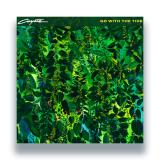
Downtempo legends Coyote offer up a full length of Balearic bliss with Go With The Tide on Universal Cave Records. With one foot in timeless chillout electronica and another in the dubby soundsystem psychedelia of our times, Coyote expand on their distinct cosmic groove with seven songs that dive deep into the sonic underground.
Go With the Tide is a tale of three islands. Coyote drop a heavy dose of modern UK stylings, rumbling bass and chilling vocals, on top of a familiar White Isle dream state while radiating Jamaican dub sensibilities. It’s like coming home from summer holiday and returning to the day to day of city life. The nights grow longer and the air chills, but the shimmering sparkles of sunshine still reflect and refract through your soul.
Coyote pick up that tension between the escapism of summer and the heavier waves of fall, and weave it into a remarkable LP that makes as much sense for a forever summer as it does for an impending winter. For whichever side of that you fall, just Go With The Tide.
Crossing their distinctive techno practices in the spirit of mutual appreciation and experimentation, DJ Nobu invites JakoJako to Bitta. Each delivering an original track and then remixing each other's work, both artists examine where their creativity converges, and what happens when their differing qualities collide. JakoJako has forged a reputation within techno and electronica circles centred on her accomplished exploration of modular synthesis. While she comfortably embraces ambient projects, she's also firmly entrenched in the club matching a tough rhythmic sensibility with adventurous textures and subliminal emotional content. As Nobu himself describes, "Beyond standard techno functionality, I deeply respect JakoJako's approach to music making, which stems from a pure, unyielding curiosity about sound itself. Her sound aligns perfectly with Bitta's core philosophy--the coexistence of experimentation and physicality." Nobu's own 'Wax and Wane' opens up the release in a melancholic mosaic of bleeping leads and natural-sounding drum tones, patiently laid out over a dense pad and developed with the elegant but driving style he's made his own over many years. JakoJako's 'Nodus' is a more cybernetic affair--lithe layers of frequency modulation moving over the rugged kick drum thump before opening up to celestial arps and jagged flurries of percussion. For the remixes, Nobu immediately reframes 'Nodus's melodic crescendo as the core theme while steering the track towards an immersive, linear arrangement that ebbs and flows with poise. In the process, he finds his own expressive sound design language to put a unique spin on JakoJako's original sound. Meanwhile, JakoJako steers 'Wax and Wane' into a mesmerising lattice of needlepoint percussion and swooning synth strokes, creating emotive swells out of the raw ingredients of Nobu's original melodies. The end result is a record made up of four distinct pieces, all logically compatible but bringing forth different aspects of two dedicated, ceaselessly curious practitioners of contemporary techno.
As Eerie Enterprise, upsammy and Piezo have funnelled their singular styles into a classic-feeling but ultra-modern album of elegant, angular electronica. With a strong melodic sensibility and a highly developed palette of playful sound design in their toolkit, the unexpected pairing grew spontaneous jams into a considered collaboration, and Places Remember Events is the end result.
Individually, Thessa Torsing and Luca Mucci have carved out strong identities within contemporary electronic music. As upsammy, Torsing has applied a delicate precision to ambient and uptempo approaches alike, building up a striking catalogue of releases including her 2020 LP for Dekmantel, Zoom. Meanwhile, Mucci has taken a wayward path through contemporary bass music and techno that matches edgy sound design with playful unpredictability. As Eerie Enterprise, both artists tap into their respective creative instincts while arriving at a unique sound with a nurturing quality they were both missing from modern dance music.
Having appreciated each other's work for some years, in July 2024 Torsing and Mucci seized an opportunity to carve out two days in the studio. There was no expectation of an end product, but the sketches conceived during those open-ended, hardware-oriented sessions felt worthy of a deeper exploration developed and finalised over the following year-and-a-half.
Places Remember Events has an unapologetically nostalgic streak, calling to mind the warm glow of melodically-charged, golden-era electronica. The twitchy rhythmic make-up of tracks like 'Decay + Collapse' and 'Folding Origin' speak to the duo's shared affinity for ravey energy, but even within faster frameworks they lean into half-time space to maintain a light-footed agility that allows the relatively busy arrangements to feel grounded and patient rather than frantic.
There's an appreciation for mystery in the emotional make-up of many of the tracks, not least in the slithering textural exploration and spatial tension of 'Capsule', but elsewhere fragile melancholia guides the melody direction of 'Superradiance' and 'Things Fall Upwards'. The final impression is crisp and modern while delivering an accessible experience that seeks to soothe rather than shock when so much contemporary club music tips towards uneasy intensity.
Finding malleable approaches to their chosen sonics and applying them to intentional song structures, Eerie Enterprise collectively land on a sound that promises a lasting reward for the repeat voyager — satisfying headphone gear in the grand tradition of introspective electronic music, but also with a physical immediacy that will manifest in the live set upsammy and Piezo have put together to perform later in the year.
Ghanaian producer, songwriter, and cultural innovator Delasi has earned international recognition for his forward-thinking blend of traditional Ewe rhythms, soul, jazz, hip-hop, and electronic music, with recent releases on Gilles Peterson's Brownswood Recordings and support from outlets including Bandcamp Daily, CLASH, CRACK, COLORS, and BBC Radio 6 Music. His music has also appeared in the indie feature Dreams in Nightmares and the UK Premier League. Joining him are Tokyo's acclaimed experimental pop outfit TAMTAM, whose distinctive fusion of reggae, dub, jazz, soul, exotica, and electronic music has drawn praise from Gilles Peterson, Bandcamp, NTS, Mr. Bongo, and Rolling Stone Japan, alongside performances at Fuji Rock and international tours across Canada, Australia, and South Korea.
This limited 7" brings the two artists together across two richly textured collaborations. A-side "Guardian of The Green" blends alternative soul, downtempo electronica, trip-hop, and cinematic post-rock into a lush, organic soundscape where futuristic electronics meet live instrumentation. On the flip, "Celestial Bodies" explores dream pop, ambient electronica, and jazz-inflected soul, pairing hypnotic rhythms with shimmering synths, expressive guitars, and warm lo-fi grooves. Together, the release showcases a cinematic, globally minded approach to contemporary electronic music that will appeal to fans of Bonobo, Khruangbin, Little Dragon, and Cinematic Orchestra.
* long version / previously unreleased on vinyl
** exclusive / previously unreleased
Felix Laband's highly acclaimed electronica masterpiece album "Dark Days Exit" (2005) is now available as an Extended Version 2LP vinyl. Originally planned for last year's 20th anniversary, this special edition features a new design by Felix Laband and includes a double-sided DIN A2 art print. Dark Days Exit features four exclusive tracks, alongside five vinyl-only tracks available for the first time in their original long versions. Listening to the key track, Sleeping Household, on Dark Days Exit is unsettling: like being an impostor rambling around an uncanny house, a Lynchian leitmotif in the form of a young girl divulging secrets that you probably shouldn't hear. Dark Days Exit is an album that paints an interior landscape, an invitation to transgress private thresholds. Made with old-school production tools that require hands-on application, Dark Days Exit is a sound-production tour de force. The music is as wide as the savannah and microscopic at the same time, a lesson in what can be achieved when 'music' is placed on an equal footing with sound as a phenomenon, by an artist who decides to apply themselves without reserve. The masterful manipulation of reverb and delays and hyper-detail was a generation ahead of its time, and Dark Days Exit is preferred by audiophiles for testing their systems. Dark Days Exit is intimate, demanding, and a masterclass in tension, and Laband's ability to use all sound without hierarchy to paint a detailed personal vision — one that is less overtly political and streetwise than on subsequent albums — is unsurpassed. Most discerning listeners are into music because, in the hands of a master, it can manipulate our mood and transport us. Felix Laband opens with a sonic portrait of spring happiness and gradually dismantles the atmosphere in front of our ears, as epitomised by the haunting track Black Shoes. No sooner are we afraid than the artist drops us off where we started. In many ways, the intimacy derives from the tight group of friends and believers whom Laband corralled as contributors: Mark van Niekerk (xylophone, "Miss Teardrop"), Jane Rademeyer (clarinet, "Black Shoes," "Radio Right Now"), Brendon Bussy (mandolin, "Black Shoes"), and Derek Gripper (sampled violin, used throughout) and Alex van Heerden on Minka. The difficulty in categorising Dark Days Exit is probably due to Laband listening mostly to ambient and classical music at the time, and consequently registering the album at the lush, cinematic end of the electronic spectrum. There is poise and restraint in the spare use of beats, and when they do appear, they hit hard. Forged in the optimistic post-apartheid years, Dark Days Exit is music about life and death, spanning hope, despair, terror, tension, with humour and empathy. Twenty one years on, the album's gravity endures, due to its almost perverse authenticity, its timeless themes of hope and despair, and its apex level of technical mastery. The additional, immaculately produced tracks add new rooms to the uncanny house we are invited into.
Mit der 30th Anniversary Edition von Weekend wird eines der pragenden Alben der deutschen Nachwendegeneration elektronisch gepragter Independent-Musik neu aufgelegt. Als das Album 1996 erschien, markierte es einen entscheidenden Wendepunkt fur Kreidler: Die Dusseldorfer Gruppe bundelte erstmals die unterschiedlichen Einflusse aus Electronica, Post-Rock, Krautrock und improvisierter Musik zu einer eigenstandigen kunstlerischen Sprache. Entstanden aus Live-Improvisationen und weitgehend direkt im Studio eingespielt, entwickelte Weekend eine bemerkenswerte Naturlichkeit und Dynamik, die bis heute nichts von ihrer Wirkung verloren hat. Nationale und internationale Medien feierten das Album als wichtigen Beitrag zwischen Clubkultur und experimenteller Rockmusik, wahrend der Titel "Reflections" der Band erstmals großere Aufmerksamkeit verschaffte. Die Jubilaumsausgabe wurdigt nicht nur einen Meilenstein der Bandgeschichte, sondern unterstreicht zugleich die anhaltende Relevanz einer Gruppe, die auch drei Jahrzehnte spater kreativ und produktiv bleibt.
Shape of the Unknown’ is kind of a double LP that fully embraces the idea of exploration. It is CHLOÉ’s most expansive and immersive work to date. ‘Shape of the Unknown’ is CHLOÉ’s fourth proper studio album. Its predecessor, ‘Endless Revisions’, was released in 2017. Nine years have passed. Nine years during which CHLOÉ has continued digging for music, DJing at internationally renowned clubs and festivals including Rex Club, Robert Johnson, Panorama Bar, Nuits Sonores, Glastonbury and many more, releasing EPs and remixes, while also allowing herself the time to explore entirely new creative paths.
The challenge is to capture the unknown, make it her own, endlessly reshape its textures, and ultimately preserve its mystery.
The first single ‘Drifter’, released back in June, already offered a striking glimpse of the sonic territories the album would venture into, driven by its hypnotically contoured basslines. The album's two other singles offer different windows into her world. 'Shapeshifter' captures CHLOÉ at her most hypnotic, balancing stripped-back techno and melodic house through deep rolling grooves, expansive bass chords and subtle rhythmic shifts that constantly reshape the listener's perception without ever disrupting the flow. Later, 'Repeating The Obvious' takes a more leftfield route, pairing staggered rhythms with retro-inspired harmonics and an understated indie dance pulse that feels simultaneously familiar and unpredictable.
CHLOÉ has ventured into live performance through new formats, notably alongside percussionist Vassilena Serafimova; immersed herself in film scoring with soundtracks for Paris la Blanche, Arthur Rambo, The Mountain, Blanquita, Guru and Unsubmissives; and developed compelling collaborations, from High Season, her project with Ben Shemie of Canadian band Suuns (which resulted in the album The Call), to her own organic, experimental audiovisual performances under the name Slo/Mo AV.
Throughout Shape of the Unknown, CHLOÉ blurs the boundaries between deep house, hypnotic techno, electronica and cinematic sound design with remarkable fluidity. The album unfolds as a continuous narrative rather than a sequence of tracks, moving effortlessly between beatless ambient passages, rolling analogue grooves and emotionally charged club music. Organic percussion, sweeping bass movements, melancholic harmonies and richly textured synthesisers create a body of work that constantly evolves, where no section feels static and every transition reveals another layer of depth. There is an unmistakable warmth running through the record, with grainy analogue textures and spacious production giving even its most driving moments an intimate, almost tactile quality.
The album’s title is no coincidence. It evokes a form that has yet to be named, something language itself struggles to grasp. CHLOÉ approaches it through an organic creative process. Each piece must first be performed in the studio, almost as if it were being played live. The album will be followed by a series of live performances and DJ sets, including a show at the Olympia on March 18, 2027.
She is joined by a handful of steadfast collaborators. Jazz trumpeter David Enhco appears on two tracks, ‘Undertow’ and ‘Inner Bass’. But above all, there are the voices: Ben Shemie lends his unmistakable presence to the radiant ‘More Than Just a Feeling’. Olivia Merilahti, singer, songwriter and one half of The Dø, appears on the otherworldly ‘TWYR’. Working with Olivia’s already hypnotic voice, CHLOÉ has approached it like a sculptor, enhancing its strangeness and dreamlike quality.
And finally, impossible to miss is the instantly recognizable voice of Kittin. A longtime accomplice, she lends her distinctive phrasing to CHLOÉ’s music here for the very first time. The strongest collaborations are often those that take their time, arriving only when the moment is right. Same kind, same bass, same vibe, same pride.
The result is an enigmatic, nocturnal record, drifting between introspective listening and dancefloor functionality, revealing an artist who remains far more interested in atmosphere, movement and emotional storytelling than conventional club structures. It is an album that invites us to dream more deeply and to dance again, both within ourselves and out in the open.
Norwegian instrumental art/prog/post-rock quintet The Samuel Jackson Five return with their first full length album in nearly a decade, "A Passage to Elsewhere", it's their most expansive and exploratory work to date, and the first release in collaboration with Norwegian label Karisma Records. Drawing from Kosmische Musik, '70's progressive rock, vintage library music, the jazz-inflected post-rock of Chicago and Toronto, imaginary folk, and experimental electronica, the result is a rich sonic tapestry. Rather than building towards predictable crescendos, "A Passage to Elsewhere" unfolds as an adventurous evershifting melodic journey, inviting the listener deeper in with each turn.
Vokabularium returns with leksikon vol. 2, the second instalment of the label’s evolving VA series - a carefully curated body of work that reflects the deeper philosophy behind the Copenhagen-based imprint: emotionally driven electronic music built for introspection as much as the dancefloor.
Following the success of the first leksikon compilation, this new chapter expands the label’s sonic identity further, bringing together a diverse collection of artists whose productions move fluidly between melodic techno, leftfield electronica, deep house and experimental club music. Across the compilation, there’s a consistent thread of tension, atmosphere and storytelling - records designed less around fleeting trends and more around lasting emotional resonance.
Founded by Denis Horvat, Vokabularium has steadily established itself as a platform for detailed, synth-led electronic music rooted in analogue textures and cinematic depth. The label has become an extension of Horvat’s own musical language - one shaped by releases on respected imprints including Innervisions, Afterlife and Diynamic, alongside his increasingly distinctive output on Vokabularium itself.
EPILOGUE is the culmination of more than four decades of music-making by Japanese composer, producer and multi-instrumentalist Ken-ichiro Isoda, an album in which environmental sound, electronics, contemporary classical composition and memory converge into a deeply personal late-career statement. Isoda moved through video-game music, film composition, classical production, Okinawan music, television and collaborative projects, continually developing an approach in which acoustic instrumentation, field recordings and electronics could coexist naturally.
His collaborative album Interwoven with aus, released through WRWTFWW, further demonstrated the openness of a musical philosophy Isoda describes as being rooted in fluctuation, imperfection and organic movement.
EPILOGUE brings those threads together while refusing to function simply as a retrospective. The album consists largely of older compositions that Isoda has returned to, reconstructed and reinterpreted from the perspective of the present.
Opening track “TANEKOMA” refers to the Izu Robin, a rare bird native to Hachijō-jima, the volcanic island where Isoda lives. Its song, recorded by Isoda in the mountains, becomes part of the composition itself. Placed at the beginning of the album, “TANEKOMA” becomes both document and prayer.
Elsewhere, “Circulation 2” develops from a work created around the relationship between forest, sea and the movement of water. Flutist Dogen Kinowaki replaces Isoda’s original piano melody with a performance that gives the piece a distinctly Japanese sense of place. Kinowaki also appears on a newly reimagined version of “Beach of the Pliocene”, one of Isoda’s most recognised compositions.“STEPS”, first composed for film in 2008, looks back toward the electronica of that period. For this definitive version, Tsutomu Sonoda of maya ongaku provides vocals, bringing new emotional and lyrical depth to a piece Isoda had wanted to properly complete for more than a decade.
The title track from Isoda’s 1991 New Age album “Yume no Sazanami” is similarly reconsidered. Originally recorded with a small chamber orchestra, the new arrangement replaces elements of the harp and cello with layers of nylon-string guitar performed by Tatsuro Murakami. Perhaps the album’s clearest meeting point between past and present is “WATERWAYS.”The mysterious European ambient artist Aiko Takahashi, transforming an abandoned demo into what is simultaneously the oldest and newest work on the album.
“A Flowering Tree,” written for film in 2013, is reconstructed around multi-tracked flute performances by Dogen Kinowaki. Isoda carries that association into his own arrangement, allowing the piece to function as another quiet meditation on memory, loss and hope.
The album closes with “EPILOGUE” —less a grand conclusion than a moment of acceptance. Isoda chose it as the album’s title piece to hold what he describes as the complex emotions that accompany the twilight of a life spent making music. EPILOGUE is not simply a look back. It is the sound of older music continuing to move, change and breathe in the present: a lifetime of ideas distilled into Isoda’s own form of pure music, shaped by memory, collaboration, nature and the world immediately outside his home on Hachijō-jima.
HUMAN is a vinyl-only electronic music label based in Manchester, focused on music, art, fashion, and culture. We press records we believe in with no shortcuts.
HUM001 is the label's debut release, featuring E-Funk / Twisty by Scarper.
Scarper is a London-based producer and DJ known for blending melodic electronica, broken rhythms and left-field club ideas into a sound that’s entirely his own. Over the past decade, a deep catalogue of albums, EPs and remixes has taken shape, alongside work in advertising, gaming, TV and short film.
‘E-Funk’ is a hybrid club weapon - part 2-step, part house, part breaks, all energy. A certified floor starter that lives in the bag and lands every time, especially when the room hits its stride.
‘Twisty’ is probably the most dancefloor-ready cut, but the solid broken grooves dancing around acid bass lines and bleeps on each of these nine thumping tracks could work any room at the right moment.
Originally released via the Leipzig-based underground label Minor in 2017 the two tracks on this super limited 7" vinyl release see the Japanese producer providing a glimpse into the deeper, more intriciate and surely more intimate side of his work throughout his now 25 years spanning career. Both tracks on this release are based on fragile, fluttering, sparse yet playful rhythmatic signatures evoking memories of late 90s / early 2000s Electronica x IDM releases and backed by most beautiful, icy and glistening atmospheres reminiscent of autumnal morning dew or calm iridescent glacial reflections caused by a rising sun in absolutely unscathed wilderness.
Never officially distributed before and only known and recognized by a few well informed selectors out there this is the first time ever this unrecognized gem is available to a wider audience, albeit in highly limited quantities.
Limited pressing of 100 single copies on white marbled vinyl.
Devotional and visceral, patient and euphoric, a poem, a hymnal. Shygirl calls Swallow! a reintroduction. Her 2022 debut Nymph announced an artist fluent in sonic languages: slippery club structures, toothy pop hooks, juicy production—music that invites you to come closer, pay attention, keep up. That magnetism took her from the electronic underground to the foreground of contemporary pop. She’s collaborated with producers Sega Bodega and Mura Masa, Charli xcx, Arca, SOPHIE, fka twigs, and Björk, and performed on stages across the globe. Swallow! is a new kind of rapturous indie songwriting, woven through the electronica she came from, recorded with Karma Kid and Casey MQ. It is the scripture of the cult of falling in love—radiant, clear-eyed, all-encompassing, divine transformation. “I want people to remember how big the world is even when you feel so small and singular,” she says. “Swallow! is the soundtrack to that experience. “This record is my message in a bottle. Let’s see who picks it up.”
A haunting, cinematic journey into a village that exists beyond time and place, Requiem For A Village is Steven Wilson’s most intimate and imaginative work yet. Blending dark folk, rock and electronica, the album unfolds as a continuous 54-minute “film for the ears,” populated by strange archetypes and eerie folklore. The album is narrated by David Tennant and written with Andy Partridge (XTC).
A haunting, cinematic journey into a village that exists beyond time and place, Requiem For A Village is Steven Wilson’s most intimate and imaginative work yet. Blending dark folk, rock and electronica, the album unfolds as a continuous 54-minute “film for the ears,” populated by strange archetypes and eerie folklore. The album is narrated by David Tennant and written with Andy Partridge (XTC).