Hiroki Tamaki (vocals, violin, mandolin, A.Piano, strings ensemble, Oberheim, vocoder) / Eiji Shimamura (drums) / Yuichi Tokashiki (drums) / Akira Okazawa (bass) /
Kenji Takamizu (bass) / Ken Watanabe (bass) / Ken Yajima (E.Guitar) / Fujimaru Yoshino (E.Guitar) / Toshiaki Fuefuki (A.Guitar) / Koichi Tani (A.Guitar) / Yonosuke Segami (percussion) /
Fumitaka Anzai (A&E.Piano, synthesizer) / Keiko Yamakawa (Harp)
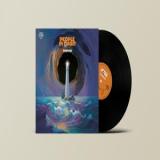
A psychedelic spiritual trip led by multiple vocals and synthesizers
A musical picture scroll of ecstasy depicting a world of harmony on a celestial scale
Violinist, composer and arranger Hiroki Tamaki was inspired by the lectures of Indian religious philosopher Bakwan Shree Rajneesh to create a magnificent musical picture scroll.
Tamaki's own vocals are layered on top of each other, and the music is mysterious and harmonious, woven together by synthesizers by Fumitaka Anzai (TPO, Urusei Yatsura music director).
Includes the progressive rock approach of "Poem of Mahamudra" and "Meditation," as well as "River" and "Beautiful Song," which were selected for "Nippon Acid Folk 1970-1980"
(Time Capsule) and are being re-evaluated as hidden gems of acid folk.
Cerca:ensemble
- See You Soon
- Double Transgression
- Faux Jazz
- Aesthetic Memory
- A Limited Release Of Exclusive Graves
- Flemington Dream House
- Transmodal Projection
- Sentimental Techno Music
- Personal Computer Ensemble
- Shareware
- Peak Leisure
Der zurückgezogen lebende Elektronikmusiker Jeremy Dower aus Melbourne kündigt eine Compilation mit bisher unveröffentlichten Stücken aus einem Vierteljahrhundert an, die in zwei Hälften unterteilt ist, um sein unaussprechliches Ambient-Techno-Projekt Tetrphnm aus den 90er Jahren sowie die melancholischen Faux-Jazz-Aufnahmen, die er später unter seinem eigenen Namen veröffentlichte, zu präsentieren. Personal Computer Music, 1997-2022 ist der Höhepunkt der laufenden Reissue-Reihe von Chapter Music für Jeremy. Im August veröffentlichte Chapter seine früheren Alben erstmals digital - Sentimental Dance Music For Couples (ursprünglich 2000 über das US-Label Plug Research, Heimat von Veröffentlichungen von Flying Lotus und Jon Tejada) und Music For the Young and the Restless (ursprünglich 2004 auf dem japanischen Label Bit Of Heaven). Zunächst inspiriert von strengem deutschen Techno wie Monolake und Mouse on Mars, wuchs Jeremys Klangwelt und nahm so unterschiedliche Einflüsse wie The Sea and Cake, Joao Gilberto, Jaki Liebezeit und Alain Goraguer auf. Jeremy arbeitete jedoch ganz allein auf der anderen Seite der Welt an diesen Meilensteinen und improvisierte Systeme der ,subtraktiven Komposition" mit billigen Soundkarten aus den 90er Jahren, 12-Bit-Samplern und gebufferten Noise Gates. Seine Musik entwickelte sich in einer parallelen, aber separaten Welt zu Genres, die später als IDM oder Microhouse bezeichnet wurden, aber eigentlich klingt sie wie nichts anderes als Jeremy Dower - magisch einfallsreich, berührend und persönlich. Efficient Space hat einen Tetrphnm-Track auf ihrer beliebten 2018er-Compilation mit australischer Elektronikmusik der 90er Jahre, 3AM Spares, veröffentlicht. Aber Personal Computer Music, 1997-2022 ist Ihre erste Gelegenheit, Jeremy Dowers faszinierende Musikgeschichte mit der Tiefe zu erkunden, die sie verdient.
- A1: Part 1
- B1: Part 2
Free Jazz: A Collective Improvisation is a studio album by American jazz saxophonist Ornette Coleman, released in September 1961.
The album features what Coleman called a "double quartet," i.e., two self-contained jazz quartets: each with a reed instrument, trumpet, bass, and drums.
The two quartets are heard in separate channels, with Coleman's working quartet at the time in the left channel, and the second quartet, including
the former Coleman rhythm section of Charlie Haden and Ed Blackwell, on the right.
The two quartets play simultaneously. Free Jazz was the first album-length improvisation at thirty-seven minutes, unheard of at the time.
The original LP package incorporated Jackson Pollock's 1954 painting The White Light. The cover is a gatefold with a cutout window in the lower right corner allowing a glimpse of the painting;
opening the cover revealed the full artwork, along with liner notes by critic Martin Williams.
Free Jazz served as the blueprint for later large-ensemble free jazz recordings such as Ascension by John Coltrane and Machine Gun by Peter Brötzmann.
Free Jazz is available as a limited edition of 1000 individually numbered copies on white vinyl.
Old-time and traditional music stay exciting for their contrasts. Exacting instrumentation honed through mentorships and late-night jams at fiddler's conventions tangles with a community-sourced inventiveness that influences variants and new sounds. Joseph Decosimo is a master of this genre for this very reason, blending deep technique with an openness and curiosity that keep his music crackling with life. A "marvelous fiddler" (No Depression) and banjo player who braids "exultation and veneration" (INDY Week) into his music, on his third solo album Fiery Gizzard Decosimo gathers a close-knit ensemble of friends from his musical career to infuse his interpretations of fiddle and banjo pieces with a contagious communal joy. As an artist working with traditional music from the South and Appalachia, Decosimo chooses songs based not only on historical significance and lineage but also his own sensory approach. For Fiery Gizzard, his ear was tuned to otherworldly tones and mystery, sourcing from field recordings such as Virginia fiddler Luther Davis' hypnotic version of "Shady Grove" while amping up the music's psychedelic potential. On the middle Tennessee banjo composition "Flowery Girls," a VHS of bluesman Abner Jay inspired Decosimo to rig up a pickup inside a fretless banjo and play it thr ough a tube amp to capture some of Jay's edge and funkiness. But to round out the sound and keep it kinetic meant galvanizing a genre-eschewing crew to jam out - and not in a "spaced-out drooly" kind of way, he laughs, but as a sort of "responsive conversation." Decosimo has always been a community-minded artist. He began playing as a seventh graderin Tennessee, fostering relationships with older players at jams and in homes, a learning mode natural to his inquisitive nature and desire for musical connection. A folklorist by intuition, he later became one by profession, studying with old-time legend Clyde Davenport, teaching in East Tennessee State University's renowned bluegrass program, and receiving his PhD at the University of North Carolina with a dissertation titled "Catching the `Wild Note': Listening, Learning, and Connoisseurship in Old-Time Music." In North Carolina, Decosimo kicked about in the verdant environment of Durham and Chapel Hill's folk and indie scenes, collaborating with artists including Alice Gerrard, Hiss Golden Messenger, and Jake Xerxes Fussell. This community has influenced his own music, including his "sublime and strangely heartening" (Bandcamp Daily) 2022 release While You Were Slumbering and Beehive Cathedral, Decosimo's 2024 "Appalachian mountain music treasury" (New Commute) trio album with Luke Richardson and Cleek Schrey for Dear Life Records. Continuing on this path, Fiery Gizzard is home base for a loose outfit of mostly Tarheel-based musicians from within and beyond traditional music. Inspired by a tour with fiddler Stephanie Coleman (Nora Brown), guitarist Jay Hammond, and synth builder and multi-instrumentalist Matthew O'Connell, Decosimo assembled studiomates based on close friendships and comfort. Coleman, O'Connell, and Hammond contribute to Fiery Gizzard, along with bassist and producer Andy Stack (Helado Negro, Wye Oak), horn player Kelly Pratt (Beirut, David Byrne), Mipso and Fust's Libby Rodenbough, Joseph O'Connell (Elephant Micah), and trad/experimental artist Cleek Schrey. Decosimo's fiddle and banjo work is virtuosic, intricate and simple simultaneously, a testament to his many years of study. On some tracks, his playing or lovely, plain-hearted singing is the centerpiece, such as on his interpretations of Texan street preacher Washington Phillips' 1929 recording "I Had a Good Father and Mother" or the Eastern Kentucky fiddle barn-burner "Glory in the Meetinghouse," famously played by Luther Strong for Alan Lomax. But there's also a trusting open-door policy, like where Southern Appalachian tune "Ida Red" relaxes into Coleman's sweet, confident fiddling and Hammond's loping guitar. As a bandleader, Decosimo's confidence and enthusiasm for the music reveal the heart of traditional music and how it can come to life through community. Fiery Gizzard is Joseph Decosimo as a powerful champion of traditional music - a sponge who soaks up as much as he squeezes out, a responsive artist who makes his genre accessible, and a magnet who can bring musicians of all sorts into his orbit with his same passion.
- 01: Leaves (Feat. The Shhart Ensemble)
- 02: Skeleton And Tiger (Fighting)
- 03: Things I Know To Be True (Feat. Richard Greenan &Amp; Robert Juritz)
- 04: Come Back
- 05: Falling In The Sand
- 06: Living My Best Life
- 07: Time Split At The Seams Of Your Departure (Everything Is Now Before And After)
- 08: Axolotl
- 09: Spirit Level (Feat. Buddy Wells, Andrew Lilley, Jonno Sweetman &Amp; Stephen De Souza)
- 10: In Rebellion Of Time (Feat. The Stockholm Saxophone Quartet)
- 11: Lines (Feat. Richard Greenan, Sir Kay &Amp; The Shhart Ensemble)
- 12: Digital Birds
- 13: Black Hole (Let&Apos;S Exit Unceremoniously)
British South African composer & producer Galina Juritz presents 'One Weird Trick', her debut solo album on London's home for interdisciplinary oddballs, Kit Records.
As a classically trained violinist, Galina has worked in bands and ensembles such as ShhArt Ensemble, Inclementine, and in various combinations featuring leading musicians from Cape Town and Johannesburg's classical and jazz scenes.
Galina composed the music for Madness: Songs Of Hope and Despair, a cantata made in collaboration with Dizu Plaatjies, with a libretto by psychiatrist Dr Sean Baumann. Madness debuted at the World Psychiatry International Congress in 2016, and had a two week run at Cape Town's Baxter Theatre in 2017. As a composer she writes frequently for film, animation and ensemble.
She has collaborated with the likes of composer Neo Muyanga, Mr Beatnick, Cara Stacey, Kelpe, Juliana Venter, Violeta Garcia, Kit Records head Richard Greenan & more. Galina has been remixed by the likes of Photay, Memotone and Tom Skinner (Sons of Kemet, The Smile).
'One Weird Trick' is the culmination of her solo material. Still rooted in the ornate, technical world of string composition and arrangement, the album is stubbornly unclassifiable.
Opening with time-dilated ambient ('Leaves') before segueing into rippling, florid techno ('Skeleton and Tiger fighting'), Galina twists again and again, shifting gears through stoned, jazz-inflected r'n'b ('Things I Know to be True'), string-led widescreen songcraft ('Come Back') and orchestral minimalism for standing on vast shorelines ('Time Split at the Seams of Your Departure [everything is now before and after]').
On the B side, Galina flexes her composition chops with the storming jazz of 'Spirit Level', recorded by Cape Town-based musicians Buddy Wells, Andrew Lilley, Jonno Sweetman & Stephen de Souza. Galina is then joined by the Stockholm Sax Quartet on 'In Rebellion of Time', a stately Reichian revelation that moves from solemn ballet to ecstatic multiharmonic denouement. To close, Galina retrieves oozing electronics and smeared journal entries from the guts of a black hole - a fitting conclusion to a truly unique, unpredictable, delightful, sad, infectious, and bizarre record.
Influences / sounds like: Louis Cole, Matthew Herbert, Darkside, Thundercat, Eiko Ishibashi, ECM, Oliver Coates.
'One Weird Trick' is out 7th November 2025 via Kit Records, available on vinyl & digital formats.
Kit Records will throw an album launch party at Servant Jazz Quarters in Dalston, London on 30th October 2025. Tickets TBC.
[g] 07: Time Split at the Seams of Your Departure (Everything Is Now Before and After) [feat. sir kay]
Belgian violinist and composer Elisabeth Klinck announces the debut album of her ensemble, Klinck Trio, on VIERNULVIER Records. My Hair is Everywhere will be released on November 7, 2025 on vinyl LP and through all digital platforms.
Rooted in improvisation and guided by openness, the Klinck Trio — Adia Vanheerentals (saxophone, voice), Maya Dhondt (piano, voice), and Elisabeth Klinck (violin, voice) —crafts music where sound and silence are equally vital.
Their debut album is an exploration of fragility, unfolding like a delicate conversation in which each note is chosen with intention and every pause carries presence.
Recorded in the summer of 2024 at Studio Ledeberg, My Hair Is Everywhere captures a moment in time: three musicians meeting in sound, each bringing their own timbre, language and natural state of being into dialogue. Klinck offers seeds of material —metaphors, sketches, sonic ideas — that the ensemble shapes into fully formed pieces. The result is an album that stands complete, yet carries within it the openness to unfold further in live performance, where new layers and resonances can emerge.
In the spirit of American composer and pianist Meredith Monk, the trio embraces lightness andvulnerability, crafting soundscapes that feel both childlike in their intimacy and expansive in their emotional reach. My Hair is Everywhere balances melancholy, tenderness, and harmonic interplay with silence, breath, and resonance—the subtle negative space where music continues beyond the notes themselves. By recording in close proximity, every detail emerges: the strike of piano pedals, the clicking of saxophone keys, the intake of breath, and the faint displacement of air. Textures of dragging violin, whispered fragments, and soft humming become almost tangible, drawing the listener fully into this intimate, enveloping present
moment.
Above all, this compelling debut is an invitation to listen differently: to enter a transformative space where three distinct musical voices find each other in fragility.
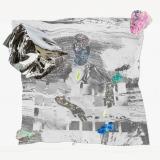
The artwork, created by French artist Annabelle Guetatra, reflects the album’s sense of lightness through color and playful collage work.
- A1: Intro
- A2: Parchman Farm Blues
- A3: Killing Floor
- A4: Born Under A Bad Sign
- B1: Oh Well
- B2: Big Legged Woman
- B3: Key To The Highway
- C1: Papa Was A Rollin' Stone
- C2: Stormy Monday
- D1: The Pusher
- D2: Metal Chestnut
- E1: Crossroads
- E2: Stone Free
- F1: It Takes A Lot To Laugh, It Takes A Train To Cry
- F2: Shake Your Money Maker
Mit »Live at the S. E.R. P.E. N.T. Festival« bringt Slash die Liebe zum Blues und seine eigenen musikalischen Wurzeln zurück in den Vordergrund. Dieses Livealbum fängt den elektrisierenden Auftritt vom 17. Juli 2024 im Mission Ballroom in Colorado ein.
Auf Tour im Rahmen des S. E.R. P.E. N.T. Festivals liefert Slash gemeinsam mit seinem Ensemble »Slash's Blues Ball« ein einzigartiges Set, das den Legenden des Rock und Blues Tribut zollt. Es enthält Blues-Klassiker und Rock-Standards wie »Parchman Farm Blues« (Bukka White), »Killing Floor« (Howlin' Wolf), »Oh Well« (Fleetwood Mac), »Papa Was a Rolling Stone« (The Undisputed Truth), »Stone Free« (Jimi Hendrix) oder »The Pusher« (Hoyt Axton).
• Ein elektrisierendes Livealbum mit Slash in Topform
• Mit 15 legendären Blues-Klassikern wie »Parchman Farm Blues« (Bukka White), »Oh Well« (Fleetwood Mac), »Papa Was a Rolling Stone« (The Undisputed Truth), »Stone Free« (Jimi Hendrix) uvm.
• Mit dem legendären »Slash's Blues Ball« Ensemble
• Hochwertiges Packaging mit aufwendig gestaltetem Artwork und exklusiven Fotos
Comes with 4 page insert, English and Japanese liner notes and lyrics.
A contemporary folk wonder from Cornwall (Falmouth), England.
"We at EM Records love to transport our listeners to new worlds, other worlds; “Pantilde”, this magical new album from Cornish avant-folk performance artist The Worm, is indeed an ethereal new world: otherworldly, but somehow rooted; an imaginary oral and musical story of everyday village life in an alternative Celtic landscape. The music here is strange yet familiar, fantastical and enchanting while remaining simultaneously attached to the earth. Amy Lawrence, aka The Worm, plays cello, harp, recorders and percussion, accompanying and framing her rich voice, which is often overdubbed into lovely homespun vocal ensembles; they tell song-stories of mythical and mystical village life, of nature and the human relationship with the natural world. The Worm can be considered part of a lineage which includes The Incredible String Band, Shovel Dance Collective, Bridget St John, Dorothy Carter, Vashti Bunyan, Jessica Pratt, Cathrine Howe, Mary Lattimore, Tristwch Y Fenywod and of course many others. “Pantilde”, a time-trip to a dreamlike, pastoral world that nevertheless feels distinctly realized, is a remarkable avant-folk fantasia, co-released with Prah Recordings.
- On A Perfect Day
- We Take Things For Granted
- Skin, Colour, Sun, Lover
- A Day Is A Cycle Of Drum Beats
- Looking For A Ghazal
- Amongst All Of The Rubble
- Is There Beauty?
- Beauty Doesn't Know What It Looks Like
- We Won't Go Searching
- There Is Beauty, There Already
Sarathy Korwar, genre-breaking drummer, producer and composer, announces the release of his seventh album "There Is Beauty, There Already" out on Otherland. Celebrating the melodic power of the drum ensemble, the album follows his 2022 Indofuturist manifesto "KALAK" with a deeply immersive longform suite of percussion-led compositions.
- 1: Fire And Brimstone
- 2: Burnin' Hell
- 3: Sure 'Nuff 'N Yes I Do
- 4: Fire In The Blood
- 5: White Light / White Heat

- 6: Cosmonaut
- 7: Fire In The Blood / Snake Song
- 8: So You'll Aim Towards The Sky
- 9: Fire In The Blood
- 10: Fire And Brimstone
- 11: Sure 'Nuff 'N Yes I Do
- 12: White Light / White Heat
- 13: End Crawl
- 14: Midnight Run
None other than Nick Cave helped director John Hillcoat with the screenplay for the movie Lawless, while he also took great care of the movie’s soundtrack. Cave and fellow musician Warren Ellis form the core of The Bootleggers, a country and bluegrass ensemble that welcome a string of guests artist like Emmylou Harris, Ralph Stanley and Mark Lanegan. The Lawless soundtrack contains cover versions of artists such as Velvet Underground and Captain Beefheart and also features original compositions by Cave/Ellis and the great Willie Nelson. Lawless is a studded movie by director John Hillcoat (The Road, The Proposition) about a gang of bootleggers in Virginia during the Great Depression. And when we say star-studded, we really mean it: Guy Pierce, Gary Oldman, Tom Hardy and Shia LeBoeuf signed up for the gritty and evocative story about brothers who try to create their own American Dream during Prohibition. Lawless is available as a limited edition edition of 750 numbered copies on smoke coloured vinyl and includes an 8-page booklet with movie pictures and liner notes by Hal Willner and director John Hillcoat.
- Side A. Oddtaxi
- Side B. Oddtaxi - From The First Take
The long-awaited analog release of “ODDTAXI” by Skirt and PUNPEE, the opening theme of the TV anime "ODDTAXI" is finally here!
■Skirt
Skirt is a self-described “unhealthy pop” band known for its refreshingly light yet slightly shadowed songwriting and band ensemble, earning widespread
acclaim across professions, genders, and age groups.
The project began in 2006 as the solo multi-track recording endeavor of Wataru Sawabe. In 2010, he launched his own label, Kaczka Sound, and released
his first album ""S-O-S,"" marking the true beginning of Skirt’s full-fledged musical journey.
In April 2021, Skirt collaborated with PUNPEE on the opening theme "ODDTAXI" for the anime "ODDTAXI". Drawing from his extensive knowledge of
comedy, Sawabe served as a judge for the finals of the UNDER 25 OWARAI CHAMPIONSHIP—a comedy competition for performers under 25—in
September 2023, and also wrote the event’s official theme song, "Kitai to Yokan"
In addition, he has contributed music to numerous animated works, films, and TV dramas. His exceptional songwriting skills have led him to write songs
for a range of artists including Takashi Fujii, Kaede (Negicco), Toko Miura, and adieu (Moka Kamishiraishi).
As a versatile multi-instrumentalist, Sawabe has also participated in live performances and recordings with artists he deeply admires, such as Spitz,
Makoto Kawamoto, and Moonriders. Skirt continues to attract attention as both a band and the project of a wonderfully talented, genre-defying
singer-songwriter.
■PUNPEE
Active as both a rapper and producer, PUNPEE has released acclaimed albums such as "MODERN TIMES" and "The Sofakingdom"" His diverse body
of work includes contributions to a Red Bull TV commercial, the opening theme for the TBS show "Wednesday's Downtown" a remix of Hikaru Utada’s
"Hikari -Ray of Hope MIX-" and the track "Time Machine ni Notte / Kazoku no Fukei" for the Sotetsu–Tokyu through line commemorative short film.
But of course, what truly matters—is what comes next. P
- A1: Live Gloriously
- A2: From Dust To Dust (Antiquity Age Ambience 1 Peace)
- A3: Ancient Egypt (Antiquity Age)
- A4: Ancient Greece (Antiquity Age)
- B1: Carved In Stone
- B2: Der Sitt Auf Erden (Exploration Age Ambience 2 War)
- B3: The Mongol Empire (Exploration Age)
- B4: The Shawnee (Exploration Age)
- C1: Hope Rising (Modern Age Ambience 1 Peace)
- C2: Para Bellum (Modern Age Ambience 2 War)
- C3: The Mughal Empire (Modern Age)
- C4: Colonial America (Modern Age)
- D1: Mexico (Modern Age)
- D2: The French Empire (Modern Age)
- D3: The Qing Dynasty (Modern Age)
- D4: Siam (Modern Age)
SID MEIER’S CIVILIZATION VII – DER SOUNDTRACK AUF VINYL
Firaxis Games, 2K Games und Laced Records schließen sich zusammen und bringen den epischen Soundtrack von Sid Meier’s Civilization VII erstmals auf Vinyl.
Diese exklusive Doppel-LP präsentiert eine sorgfältige Auswahl musikalischer Highlights aus den verschiedenen „Zeitaltern“ des Spiels – verpackt in kunstvoll gestalteten Hüllen mit historischen Illustrationen aus dem Hause Firaxis.
Der Soundtrack spannt einen weiten Bogen über die Menschheitsgeschichte und Kulturen weltweit – mit orchestraler Wucht, weltmusikalischer Tiefe und eindrucksvollen Chören.
Den Auftakt macht Grammy-Gewinner Christopher Tin mit dem epischen Hauptthema „Live Gloriously“, gesungen in Altgriechisch, Altenglisch, K’iche’ und Sanskrit vom renommierten Crouch End Festival Chorus. Bereits mit „Baba Yetu“ (Civilization IV) schrieb Tin Videospielmusikgeschichte.
Die restliche Ingame-Musik stammt von den langjährigen Civilization-Komponisten Geoff Knorr und Roland Rizzo. Eingespielt wurde sie von internationalen Ensembles wie dem Prague FILMharmonic Orchestra, dem Mongolian State Morin Khuur Ensemble oder der Southern Pine Drum Group – eine weltumspannende Klangreise durch Vergangenheit und Gegenwart.
Ein Must-Have für Sammler*innen, Gaming-Fans und Liebhaber orchestraler Weltmusik.
An electrified meeting of minds, Candy Girl is a lost 1975 session by jazz pianist Mal Waldron, recorded in Paris with core members of the mighty Lafayette Afro Rock Band, the American funk unit who had made France their home and whose deep grooves would later be mined by generations of hip-hop producers.
By 1975, Waldron was a decade into his self-imposed exile from the United States—a transformed musician who had reassembled his sound in Europe and Japan after a devastating breakdown in the early '60s. His post-1969 output had stripped jazz down to its core elements: modal intensity, locked grooves, and hypnotic repetition. Candy Girl doesn’t interrupt this trajectory—it extends it, wrapping Waldron’s minimalist mantras around the funked-up chassis of the Lafayette rhythm section.
Originally released in microscopic quantities on the Calumet label and long shrouded in obscurity, Candy Girl was recorded spontaneously in the studio of French producer Pierre Jaubert, whose Paris HQ had become the workshop for both avant-garde jazz (Archie Shepp, Art Ensemble of Chicago, Steve Lacy) and psychedelic funk (Lafayette Afro Rock Band AKA Ice). This session finds Waldron jamming freely with bassist Lafayette Hudson, drummer Donny Donable, and keyboardist Frank Abel on clavinet, Moog and more—laying down raw, unfiltered instrumental funk with an experimental edge.
Highlights include the low-slung vamp of “Home Again”, the crisp, break-laden groove of “Red Match Box”, and the mesmeric swirl of the title track “Candy Girl” —a minor-key electric piano waltz with hints of cosmic soul. There's even a deep cut for the crate diggers: the somber yet meditative “Dedication to Brahms”, where Waldron deconstructs the Romantic composer’s third symphony into a sparse jazz reverie.
Unlike his polished sessions for Japanese labels or the avant-garde swing of his earlier Prestige work, Candy Girl feels more spontaneous, even accidental — and that’s part of its power. It’s a document of Waldron as bandleader, collaborator, and explorer, captured in the midst of a vibrant, cross-cultural scene in mid-70s Paris. Never officially issued with a cover and barely released at all, Candy Girl is a rare convergence of two underground traditions: Waldron’s Euro-exile electric jazz and the raw, sampled-future funk of the Lafayette Afro Rock Band. Now finally resurfaced, it deserves its rightful place in both stories.
illo.trio is a young ensemble and a representative of the modern jazz scene in the spirit of British group GoGo Penguin and Swedish trio E.S.T.
The band explores an unconventional and fresh sound. In their work, they combine elements of classical and pop music, jazz and minimalism, neo-classical influences, and even post-rock. Familiar musical formulas take on anew, unexpected character.
Band members:
-Nikolay Khomenko - keyboards
-Alexey Bausin - double bass
-Viktor Kulish - drums
Charmaine Lee ist eine in New York lebende Sängerin, Komponistin und Elektronik-Künstlerin, die für ihre furchtlosen Erkundungen von Stimme, Geräuschen und Improvisation bekannt ist. Zu ihren Kollaborationen zählen Ikue Mori, Conrad Tao, JACK Quartet, Spektral Quartet und Wet Ink Ensemble, mit Auftritten im Lincoln Center, MoMA und Storm King Art Center. Nach ihrem von der Kritik gefeierten Debüt KNVF (Erratum Musical , 2021) kehrt Charmaine Lee mit Tulpaa zurück, einem kühnen neuen Statement, das das Ausdruckspotenzial der menschlichen Stimme und der Elektronik bis an die Grenzen treibt. Während ihre früheren Arbeiten ruhige Texturen und gestische Nuancen erforschten, ist Tulpa viszeral und unmittelbar und verbindet rohe Stimmkraft mit dichten Schichten analoger und digitaler Bearbeitung. Inspiriert von der Körperlichkeit des Rock der 70er Jahre und den esoterischen Eigenschaften von Hochspannungs-Röhrengeräten, schafft Lee eine Klangwelt, die sowohl wild als auch futuristisch ist. Tulpa pulsiert mit gesättigten Obertönen, mikroskopischen Details und dynamischen Verschiebungen in der Skala, die zwischen Intimität und Unermesslichkeit hin- und herpendeln. Produziert und aufgenommen von Randall Dunn (SUNNO))), Kali Malone, Anna von Hausswolff), wurde Tulpa mit einer einzigartigen räumlichen Technik erstellt: Lees Stimme wurde in ein direktes Signal und mehrere Vintage-Röhrenverstärker aufgeteilt, die als Lautsprecher dienten, wodurch eine feedbackreiche, dimensionale Umgebung entstand. Das Ergebnis ist eine Aufnahme, die sich taktil und immersiv anfühlt - gleichzeitig geerdet und spektral. ,Ich war fasziniert von diesem Sound der 70er Jahre - wie lebendig und unvorhersehbar er sich anfühlte und doch so tief verkörpert war", sagt Lee. ,In Tulpa geht es darum, Grenzen aufzulösen: zwischen Körper und Maschine, Raum und Wahrnehmung, Klang und Illusion." Der Titel bezieht sich auf ein Konzept aus der tibetischen Mystik: Ein Tulpa ist ein Wesen, das durch konzentriertes Denken heraufbeschworen wird. Lee verwendet diese Idee als Metapher für ihre Praxis, in der Klang zu einem materiellen Akt der Vorstellungskraft wird, der zwischen Präsenz und Erscheinung wechselt. Das Album endet mit einem meditativen Duett mit dem weltberühmten Reed-Spieler Ned Rothenberg an der Bassklarinette , einem spärlichen und weitläufigen Track, der vom Noh-Theater inspiriert ist. Es bietet einen Moment der Stille, der noch lange nach dem Ende des Albums nachhallt.
- Seabird
- Estoy Brillando
- Yo No Sé Señor
- Cariño Grande
- A Beautiful Day
- Something Going
- The World Is Getting Worst
- We Wish To Be Listened
- Mujer
- Guess I'm Going Away
- Tiempo En El Sol
- It's A Sin To Go Away
"It's a Beautiful Day" brings together 12 outstanding songs recorded between 1971 and 1976, reminiscent of sunshine pop, psych folk and soft rock with Peruvian touches, taken from extremely hard to find records, some of them reissued here on vinyl for the first time. A mindblowing look at a really stunning musical moment in Peru. Unusual instruments and exceptional vocal play also feature in the ten original songs and two cover versions, all performed by Lima-based groups. MAG has been, since its foundation in 1953, an essential label in the music scene of Peru, allowing the development of the careers of both tropical artists and musicians of other genres. At the head was Don Manuel Antonio Guerrero, its founder, whose name comes from the acronym of the label itself (M.A.G.). In 2021 MAG was acquired by the Spanish company Distrolux SL, owner of the Munster and Vampisoul record labels, after years of previous collaborations in which some of the most emblematic titles in the catalog were already reissued for the international market: Nils Jazz Ensemble, Sonora Casino, Traffic Sound, Al Valdez, Pax... Following our recent release "14 MAGníficos Bailables", comprising some of the best tropical music on MAG, this new compilation brings together 12 songs recorded between 1971 and 1976, reminiscent of sunshine pop, folk psych and soft rock but with Peruvian touches. The lyrics range from youthful reflections, environmental awareness, paradigm changes to all shades of love that the youth of the day experienced. Unusual instruments and exceptional vocal play also feature in the ten original songs and two cover versions, all performed by Lima-based groups.
"The Bad Seeds and Zakary Thaks were mid ‘60s Texas garage rock bands formed in the wake of the British Invasion, influenced by The Rolling Stones, Kinks, Yardbirds and others, becoming top local live attractions at a time when the 13th Floor Elevators and Moving Sidewalks were leading the way into psychedelia. In late 1966 Rod Prince on guitar and Roy Cox on bass from Bad Seeds joined up with David Fore from Zakary Thaks on drums to create a new band out of San Antonio featuring two lead guitarists. Todd Potter filled out the quartet on second guitar and they chose the name Bubble Puppy, taken from Aldous Huxley’s 1932 dystopian novel Brave New World. Huxley was an early advocate of LSD, appropriately. In 1969 Bubble Puppy scored a top 20 hit single with “Hot Smoke & Sasafrass” which led to their LP “A Gathering Of Promises”. International Artists, the legendary Texas label that previously had unleashed mind expanding classics by the Elevators, Red Crayola, Golden Dawn and others was a perfect fit. After the LP and additional 45s didn’t repeat the success of “Hot Smoke & Sasafrass” the band hooked up with Nick St. Nicholas of Steppenwolf as their new manager and moved to Los Angeles. A new band name was in order, Nick St. Nicholas chose Demian, title of the 1919 novel by Herman Hesse. His books were popular with the counterculture at the time and had provided Steppenwolf with their new name after they changed it from the Sparrow and hit it big. Demian recorded the LP live in the studio at the Record Plant in one midnight to six session. They had their arrangements fully realized, allowing them to combine live show energy and economy with to-the-point delivery suitable for repeated listening. No doubt they were aiming for pop hit success, using proto hard rock skills in a radio friendly way without compromising the heavy guitar moves. The vocals have echoes of the earlier Bubble Puppy style in spots but are more melodic with vibrant harmonies reminiscent of Moby Grape, Buffalo Springfield, James Gang… at times flashing on Steve Stills/Richie Furay westcoast without being too sweet about it. It works terrifically when the radio friendly voices top off killer hard guitar ensemble action. Early hard rock that is too bluesy flashy can get tiresome with repeat listening, especially if overdosing on guitar solos with the band relegated to the background… Demian keep it interesting with inventive song structures allowing all four players to integrate constantly into an ever changing but focused whole. This LP is a grower, despite the basic two guitars, bass and drums lineup and no frills production you reach a lot of different places during the ride. Demian is deadly hard rock, a perfectly organized vibe straddling live energy and crafted itinerary, amongst the first obscure major label killers that commanded premium $$ with collectors even way back in the late ‘70s. It gets you there every time, even half a century later!"
- A1: Whodat's Confidence Mix
- A2: Rely On The Key Of A Flat
- A3: Kassem Mosse's Snooze Mix
- B1: Snooze Seashore Korg X5D Mix
- B2: Snooze Oiseaux De La Nuit Mix
- B3: Nidia's Love In Life Mix
- B4: Sabar Ensemble Diop & 808 - We Another Part Mix 1
- B5: Picci Bis Bi Ci Dakar
- B6: Sabar Ensemble Diop & 808 - We Another Part Mix 2
On the record New Chapter, sound from all directions of the sky is transformed as it flows through the bodies of the musicians. The source material is Viola Klein’s solo record Confidant and the collaboration with the Sabar Ensemble Diop from Saint Louis, titled We. Whodat in Detroit, Kassem Mosse in Leipzig, Nídia in Lisbon, and Viola Klein in Cologne and Dakar reshape the places where Deep House, Leftfield, Kuduro, and Mbalax originated and/or continue to thrive: the USA, Germany, Portugal, and Senegal.
- Opening Intro
- Emotional Weather Report
- Intro
- On A Foggy Night
- Intro
- Eggs And Sausageside B
- Intro
- Better Off Without A Wife
- Nighthawk Postcardsside C
- Intro
- Warm Beer And Cold Women
- Intro
- Putnam County
- Spare Parts Iside D
- Nobody
- Intro
- Big Joe And Phantom
- Spare Parts Ii And Closing
50th Anniversary Reissue on limited edition 180g Yellow Marble. Recorded in front of a live audience at the Record Plant Recording Studio in Los Angeles in 1975, Nighthawks at the Diner debuts some of Waits" greatest classics like "Warm Beer, Cold Women" and "Eggs and Sausage" with a crack jazz ensemble backing him up and some of the greatest stage patter ever committed to record.
- A1: Thad`s Blues
- A2: Doug's Minor B'ok
- B1: B. For B. B
- B2: Blues Number Two
- B3: Space Flight
Jazz saxophonist Hank Mobley’s 1957 album Jazz Message #2 was originally released on Savoy in 1957. Featuring five cuts, including three Mobley compositions, the album features an ensemble of players, including Lee Morgan (trumpet), Hank Jones (piano), and Doug Watkins (bass). This new edition of the album is released as part of the Original Jazz Classics Series on 180-gram vinyl pressed at RTI with all-analogue mastering from the original tapes at Cohearent Audio and a Stoughton Tip-On Jacket.
- A1: Teibou
- B1: Teibou Instrumental
The latest release from the music project "Tokimeki Records," which has garnered worldwide attention for its covers and unearthing of classic J-pop songs
from the 80s and 90s, with a focus on city pop, is a cover of the 1987 hit "Tsuteibo" by 80s singer and gliding writer Nina Atsuko.
Tokimeki Records has taken the original song's arrangement, which evokes the classic 80s AOR, and created a sparkling, summery 2025 sound.
The groovy medium beat and brass ensemble are a perfect match for the seaside at the end of summer.
Hikari (Mime) features on vocals. Based on a neo-soul style, the lyrics and melody evoke 80s city pop, and are expressed in a cool and solid way.
The jacket is an artistic surf photo by surf photographer Sasao Kazuyoshi, which seems to capture the world of the song.
This single is from the surf music compilation "SALT... meets ISLAND CAFE -Sea of Love 3-," supervised by the magazine "SALT...," which proposes new
values for beach lifestyle and surf culture.
A reissue of a cassette that was originally released on Uramado in 2020, this is the first time this live session appears on vinyl. The performance, featuring Kudo on piano and 3C123 on clarinet, was recorded on October 18, 2009, at the Uramado venue in Shinjuku. A beautiful and quixotic forty-minute set, that reconnects both Kudo and 3C123 with various musical histories, including those of classical composition and free improvisation.
The performance documented on Tori Kudo & 3C123 is a curious one. While they both appear to slip into improvised ruminations at times, for the most part, Kudo performs pieces by Erik Satie on the piano, over which 3C123 teases an excoriating stream of improvisation from the clarinet. His playing here is wild in its poetry: sometimes lushly nestly alongside Satie’s melodies, elsewhere loosing Ayler-esque squalls from the instrument, it’s a bravura performance that is matched, in an indirect manner, by the poise and pacing of Kudo’s generous, fluent recital.
When asked about the thinking behind the performance documented here, Kudo explains by describing the historical juxtaposition of Satie with Takehisa Kosugi’s improvised violin as “an essence of the Japanese art of collective improvisation.” The playing here, as within Japanese collective improvisation, is about sitting ‘alongside’ each other, not necessarily in direct (or even indirect) reference, but rather sharing the space; “just being there together,” Kudo says, and letting go of the need for performers to engage in interplay.
Tori Kudo & 3C123 is certainly part of that tradition, and this is where its curious poetry resides; in that ‘third space’ that sits in between, but not directly connecting, the two performers. Kudo makes an analogy with Fluxus, which is appropriate. But you can also hear their shared history here, somehow, as Kudo and 3C123 have known each other since the eighties, when they shared a house in Kunitachi City, Tokyo. Their musical paths have been multiple – Kudo, of course, best known perhaps for his Maher Shalal Hash Baz ensemble; 3C123 as a member of Vedda Music Workshop, and with other Japanese musicians like Koichiro Watanabe.
"Across eleven cinematic tracks — each a melodic treasure and short film — Dienel probes: What does freedom look like when rooted in presence, not escape? “Joy, especially queer joy, is revolutionary,” they muse. “Even in the face of everything else, I wanted to show that happiness is still possible — and necessary.”
The record was brought to life with an impressive ensemble of collaborators: producer Adam Schatz (Japanese Breakfast, Neko Case), bassist Spencer Zahn, guitarists Carly Bond (Meernaa) and meg duffy (Hand Habits), drummer Max Jaffe, mixing engineer Jake Aron (Solange, Snail Mail), and mastering engineer Heba Kadry (Björk, Sade). Breaking from their usual DIY approach, Dienel embraced the power of the collective — an experiment in trust, connection, and openness.
Tonally influenced by My Own Private Idaho and widescreen pop, such as Born in the U.S.A., My Heart Is An Outlaw is a warm-hearted exploration. Can we love fully without being domesticated? Can we resist cultural scripts by choosing presence and community over self-erasure? As they put it, “The heart has a mind of its own…It’s the thing holding you back that you have to set free on your own time, in your own way.”
From the early days of White Hinterland to the lush orchestral pop of her solo work, Dienel has consistently bent and challenged the boundaries of independent music. My Heart Is An Outlaw continues that legacy — an unapologetic, joyous declaration of queer love and creative agency."
Mark Fell inaugurates his new label – The National Centre for Mark Fell Studies – with his first solo electronic material in years; a slinky, ravishing volley of unique dance drills that have been in the works for over a decade, feeling somehow like Derek Bailey dissecting Singeli, or Autechre and Hermeto Pascoal dancing in hyperspace. There’s nothing else quite like it.
Back on the floor for the first time since dealing a pair of deep house 12”s with DJ Sprinkles, sending a contemporary classic in »Protogravity« with Errorsmith, plus a lauded collab with Gábor Lázár – all in 2015 – Fell taps back into core club concerns last explored to this uncompromising extent on his string of »Sensate Focus« EPs released between 2012–2013. He’s hardly been slacking since then, with a slew of far-reaching avant collabs with everyone from Rian Treanor to Limpe Fuchs, Okkyung Lee to Pat Thomas, Explore Ensemble to Will Guthrie – each one blurring distinctions between producer, composer, and conductor.
The »Nite Closures« EP is worth the wait – and then some. As ever, Fell manages to retain a highly distinctive, instantly identifiable sound while also tracing and mapping new bends in the continuum. His exploration of contemporary styles and patterns is here distilled and articulated with a rare, daring playfulness and sinuous intricacy – for over half an hour he flows from frantic to almost emotional at the drop of a snare. Trust it’s not your everyday / everynight club music, with an asymmetric angularity bound to wrong-foot fresher feet, but also the type of absolutely future-facing, skewed machine funk that clubs are crying out for, even if they don’t quite realise it.
As someone who’s witnessed the dominance of colouring-book Jive Bunny DJs recycle tested ideas ad infinitum, the message is a firm do-one to myopic ravers in »Nite Closures«. From the displaced anticipations tested in its extended dub and ravishing, tweaked polymetrics on its version, through a »Large Modulos #3« teeming with organismic details, to the hair-kissing swang of »auchterhouse (inversion)« and its clipped, cascading 2.1-step reprise, Fell offers thrilling new options for the loosey-gooseyest dancers at each turn. For us, it’s perhaps his greatest record this century.
Originally released in 1981, Mr. Circle’s Thi Nam should really have been recognised decades ago as a jazz dance classic. A beautiful example of European jazz fusion at its most sophisticated and optimistic, the album is immersed in the sonics and rhythms of pan-Latin fusion and Brazilian samba, but with one foot in the upful jazz fusion exemplified by Roy Ayers or the Mighty Ryeders.
Taking inspiration from Ursula Dudziak, Flora Purim, and Norma Winstone, singer Monika Linges uses the crystalline tone of her voice as an instrument within the ensemble. The LP is built around the interaction of her vocalising with bandleader Mikesch van Grümmer’s keyboard versatility, all underpinned by the surging Brazilian rhythms laid down by drummer Gerd Breuer and percussionist Ponda O’Bryan.
The result is a unique set of sunlit, Brazilian-inspired jazz fusion. Aimed squarely at the feet throughout, the album kicks off with a double whammy: the funky title track, followed by. the percussion-rich Juntos. The long form Suka begins with a shimmering intro before taking flight halfway through into an urgent jazz samba with Linges’ vocals to the fore. Featuring the vocals of Bill Ramsay, Tides is another driving jazz-dancer with a Brazilian twist, while the summery, propulsive Schoch-Schach features virtuosic interplay between Linges and alto saxophone.
- A1: Cadux Plectere I
- A2: Lacinia Off Axis
- A3: Maris Stella Plectere Ii
- A4: Ere
- B1: Arborea Plectere Iii
- B2: Eve
- B3: Sidereus Plectere Iv
- B4: Lacinia In Axis
- C1: Veris Plectere V
- C2: Nova Pt I
- C3: Eve For String Orchestra
- C4: Nova Pt Ii
- D1: Matrix Plectere Vi
- D2: Maris Stella Plectere Vii
- D3: Lacinia Off Axis
- D4: Cycle Plectere Viii
Returning to Die Schachtel with his fourth full-length with the label, the Genoa born, Bologna based, guitarist and electroacoustic composer, Stefano Pilia, delivers “Lacinia”, a new, immersive cycle of compositions, delving deeper into the realm of metaphysical, spiritual, and divine meaning, weaving astounding arrangements of sonority from a palette of synths, strings, brass, organ, various electroacoustic instruments, and percussion. Resting at a refined intersection of the acoustic and electroacoustic, drone, and chamber music - overwhelmingly beautiful, delicate, and bold, - “Lacinia” stands as a high-water mark in Pilia’s already remarkable and forward-looking career.
Since its founding in Milan during the early years of the new millennium, Die Schachtel has occupied a singular place in the landscape of experimental music, issuing a carefully curated body of reissues and archival releases by historically significant figures and projects like Christina Kubisch, Luciano Cilio, Marino Zuccheri, Prima Materia, Claudio Rocchi, Lino Capra Vaccina, Gruppo di Improvvisazione Nuova Consonanza, Roland Kayn, and numerous others, balanced against bristling contemporary counterparts by the likes of Jim O'Rourke, Giovanni Di Domenico, Nicola Ratti, Luigi ArchettI, Valerio Tricoli, etc. Running like a spine through the label’s output is a deep dedication to the work of the Italian guitarist and electroacoustic composer Stefano Pilia. Now Die Schachtel returns with “Lacinia”, Pilia’s forth full-length with the label and their first release of 2024. Building on the ground of deeply personal engagement with metaphysical, spiritual, and divine meaning, explored within his previous LP with Die Schachtel, 2022’s “Spiralis Aurea”, “Lacinia” encounters the composer working in close calibration with various ensembles, including the Bologna based Ensemble Concordanze and Comunale di Bologna String Orchestra, weaving synths, strings, brass, organ, various electroacoustic instruments, and percussion into an astounding reconfiguration of immersive, contemporary minimalism that stands among Pilia’s most noteworthy releases to date. Issued by Die Schachtel in two special double vinyl editions and a CD edition, “Lacinia” features artwork by Bruno Stucchi/Dinamomilano, and is an absolute marvel that draws you in and doesn’t let go.
First emerging during the early 2000s, over the past two decades – via solo releases and numerous collations with artists like Oren Ambarchi, Valerio Tricoli, Alessandra Novaga, Z'EV, Andrea Belfi, David Grubbs, and numerous others - the Genoa born, Bologna based, guitarist and electroacoustic composer, Stefano Pilia has presented a singular voice within Italian experimental music, harnessing visceral energy and hands-on immediacy within delicately woven tapestries of sonority, each investigating the sculptural properties of sound and illuminating its relationship to space, memory, and the suspension of time. “Lacinia”, Pilia’s forth solo venture with Die Schachtel, encounters the composer reentering his longstanding practice of collaboration with various ensemble forms, including the Bologna based Ensemble Concordanze, for the albums central piece, “Lacinia Off Axis”, spinning stunning string confirmations by Pietro David Carami and Elena Maury on violin, Alessandro Savio on viola, and Mattia Cipolli on cello.
A new, important cycle of compositions by Pilia, “Lacinia” (meaning "lace" in Latin) builds upon the exploration of the metaphysical, spiritual, and divine dimensions through numbers, geometry, and the creation of tonal forms explored by 2022’s “Spiralis Aurea”, mirroring archetypal, immutable forms at the juncture of the abstract realm of mathematics and architectural structures in the physical world, expands the poetics and compositional ideas featured in its predecessor. Regraded by Pilia as both a series of individual compositions and a single work, “Lacinia” was conceived to “define a circular path (a sort of "rhizomatic lace") where the beginning and end touch, suggesting the concept of time not only as linear but also cyclical and ritualistic—an eternal return, a process of transformation where matter changes, its state changes, but without altering the invisible internal principle of mutation”, embarking upon a a series of “steps, degrees, and energetic quanta in a progression of archetypal whole numbers and transcendent creation.”
The resulting 16 tracks unfold as a series of complex sonic meditations. While deeply resonant with the minimalism of composers like Arvo Pärt, LaMonte Young, Pauline Oliveros, and Eliane Radigue, Pilia digs deep and moves far beyond the predictable tonal relationships and structures of that idiom, echoing the ancient liturgical and devotional music of composers like Gesualdo da Venosa, Monteverdi, and John Dowland, at a refined intersection of the acoustic and electroacoustic, drone, and chamber music.
Fascinatingly structured as a whole to include a number of motif returns, across which we encounter works like “Lacinia Off Axis” appearing in slightly different rendering, states, or evolutions three times, and compositions like “Eve” appearing twice in subtly different forms and arrangements - first for four oscillators, guitar and voice and then for string orchestra - as well “Maris Stella”, which similarly makes two appearances, first for horn trio, organ and percussion, and then for string orchestra, with “Lacinia” Pilia delves further into the world of chamber music than ever before, creating a deeply inward, mediative body of work the totality of which, guided by its rich string arrangements of arching, sorrowful tone, feels almost like a mass for some unproclaimed loss; simultaneously locked in the nuances of a moment, while managing to suspend time.
Perhaps most remarkable is Pilia's ability to create a remarkable sense of sonic cohesion while using such a varied number of ensembles and instrumentation. From the sprawling string arrangements delivered by Comunale di Bologna String Orchestra, under the direction of Paolo Mancini, and Ensemble Concordanze, and a flute trio (Cadux / Plectere) brilliantly played by Manuel Zurria, to pieces for sax, organ and percussion, violin duo and percussion, organ and percussion, Pilia manages to create a sense of singular, encompassing world that flows forward like a shifting stream.
Overwhelmingly beautiful, delicate, and bold, “Lacinia” is unquestionably a high-water mark in Stefano Pilia’s already remarkable, forward-looking career. Nothing short of a marvel of contemporary Minimalism that, through its shifting arrangements of harmonics, tonality, and texture draws flickering images of ancient forms of music into the present day, “Lacinia” is Issued by Die Schachtel in two special editions on double vinyl and a CD edition, featuring artwork by Bruno Stucchi/Dinamomilano. This is an immersive all-consuming listen that can’t be missed.
The Pitch is a quartet made up of Boris Baltschun, Koen Nutters, Michael Thieke and Morten Joh. Founded in Berlin in 2009, they play a hypnotic form of structured improvisation full of acoustic exploration and electronic intervention. On Neutral Star, The Pitch are joined by Australian guitarist/composer extraordinaire Julia Reidy for a record of star gazing electro-acoustic jazz.
Reidy's playing and compositional technique between Takoma-style fingerpicking and Glenn Branca'esque microtonality, perfectly complements the loose improvisational framework The Pitch is providing. Endless ≠ Limitless, a recent piece by Reidy and Joh, is transformed from a washed-out/obscured tape delay composition into a colorful, meandering ensemble piece with a swarming character - blooming with intrigue for the patient ear. The B-side strikes a more gentle tone: the 24-minute Neutral Star begins with a siren-like overtone whose drone-like flowing slowly morphs into a deterritorial modality with jazzy undertone. Accompanied by constant eruptions of vibraphone, clarinet, electronics and double bass punctuation – while permanently questioned by Reidy's drippingly pearly steel guitar work. Slowly evolving into new territories through the expansive instrumentation and keen listening between the players.
The fact that Neutral Star was recorded in one take (by Rabih Beaini in his Morphine Raum studio/venue) in front of a live audience and without overdubs is hard to believe, even for the trained ear. The recording appears to be too multilayered for a single snapshot, with its compositional structures constantly shifting and moving against themselves, counterintuitively and anti-cyclically. Reidy´s playing has been described as "unstable harmonic territory, and the collaboration with The Pitch interprets this concept brilliantly - adding further non-places to the territory. And the listener, however, is never left alone in the process of tectonic shifts - at least as long as their listening is attentive and contemplative at once.
After bending boundaries on the acclaimed labels Optimo Music and Höga Nord, Rudolf Abramov resurfaces with a fierce new statement – inaugurating Aquasonic Records, the freshly minted label founded by one half of the duo.
They unveil a sweeping collection of rare recordings, drawn from the shadows of their enigmatic Berlin studio.
This debut full-length album unfolds like a sonic tapestry, threading krautrock, new wave, dub, psychedelia, experimental electronics, ambient, and jazz into a singular, genre-bending experience.
True to form, the duo assembles a diverse ensemble of guest collaborators, fusing layered musical worlds into a cohesive, concept-driven whole.
At its core, the album captures a dynamic interplay: acoustic instruments recorded with raw intimacy and spatial breath meet the hypnotic churn of modular synths, samplers, and analog machines. A vivid document of process, presence, and unfiltered sound, resisting definition, yet wholly their own.
Hard Times welcomes back Alex Arnout and his BLACK LOGIC project, following their recent ‘Pull Up’ EP with a second installment of new music from collective - The Illusions EP.
Hailing from West Yorkshire, Arnout spent his formative years on the Hard Times dancefloors, absorbing the beats and vibes that would later shape his own productions. His journey with the label reignited when he was invited to remix Michael Watford’s classic 'Love Change Over' and Steve Silk Hurley’s fresh hit 'All I Need'. Now, he returns with something truly special.
“Black Logic was born out of the pandemic,” says Arnout. “I wanted to move away from drum machines and synths, getting back to sampling jazz and the deep house sounds of the ‘90s - taking inspiration from artists like Bugs in the Attic, Jazzanova, and Ernest Saint Laurent.”
What began as a solo project soon evolved into a collective effort. Bassist and guitarist Alan Riggs, a former member of Delta 5, joined the sessions, bringing warmth and groove to the productions. Vocalists Tempo O’Neil, Anthony Beckford, Mariana Orsho, and Sophie Barker added their distinct voices, completing the vision
Across four tracks, The Illusions EP pulls us deeper into Black Logic’s rich, live-wired universe. The title track pairs Tempo O’Neil’s vocal with a grooving, low-slung bassline, whilst “Dusty” drifts in on brushed snares and ghostly Rhodes, its saxophone lines curling through the mix like smoke. “Chasing Daze,” analog synth shimmer and Tempo’s velvet tones, is a track suspended between head-nod groove and astral lift.
The curtain falls with “Disco Down,” a jubilant ensemble of Hammond organ, flute, guitar, bongos, and horns locking into joyous conversation.
With this album, Heleen Van Haegenborgh returns to her roots as a pianist.
In recent years, she has primarily composed works on commission for a diverse range of ensembles, from recorders to foghorns.
On this solo album, her entire journey of musical encounters and compositions comes together subtly.
Van Haegenborgh doesn't think in terms of stories or boxes, but rather in colours, energy, and texture - without drifting into the abstract.
She remains true to her personal inside piano world, including the use of wires she has been experimenting with since 2008. These are given a place here as fully-fledged musical elements, communicating on different levels, in various contexts and forms.
The electronics sometimes become completely one with the piano, but often follow an entirely different path: at times calm, subtle and refined; at other times nervous and under the surface. Always within specific atmospheres and with precise timing.
Van Haegenborgh took charge of every detail from start to finish - electronics, composition, and performance.
Bachs Ouvertüren, auch Orchestersuiten genannt, sind eine Abfolge von Tanzsätzen oft fröhlichen und überschwänglichen Charakters. Die beiden hier eingespielten, Nr. 1 C-Dur & Nr. 3 D-Dur, sind mitreißende
Werke barocker Pracht, enthalten aber auch das berühmte „Air“, ein friedliches Stück voll in sich ruhender
Gelassenheit.
Kaum ein Ensemble hat unsere Hörgewohnheiten in Bezug auf ”Alte Musik” so stark beeinflusst wie ”The
English Concert”. Der Gründer und langjährige Dirigent, Trevor Pinnock, leitete die Musiker mit lebendiger
Artikulation vom Cembalo aus und formte so den Klang aus der Mitte des Ensembles.
Die audiophile Vinyl-Serie The Original Source präsentiert herausragende Aufnahmen der 1970er Jahre
in ganz neuer Klangqualität. Dafür haben die renommierten Emil Berliner Studios die originalen Vier- und
Achtspur-Bänder mit eigens für die Produktion der Serie entwickelten Technologien in 100% analoger Qualität (AAA) neu gemastert und geschnitten. Die klanglichen Unterschiede zu den Originalveröffentlichungen sind beträchtlich: Größere Klarheit, mehr Feinheiten und Verbesserungen im Frequenzgang, zugleich
weniger Nebengeräusche, Verzerrungen und Komprimierungen ermöglichen ein audiophiles Hörerlebnis wie
nie zuvor.
Auf 180g Vinylplatten und in einer Deluxe-Gatefold Edition mit Originalcovers und -texten werden die
Exemplare dieser Serie limitiert und nummeriert veröffentlicht, begleitet von zusätzlichen Fotos und Faksimiles der Aufnahmeprotokolle und Bandkartons.
- Combination #1 ( • | 6 | 4 | 3 | 2 | 6 )
- Combination #2 ( 4 | 2 | 1 | 4 | • | 1 )
- Combination #3 ( 7 | 7 | 2 | 1 | 6 | 1 )
- Combination #4 ( 7 & 3 | 3 | 7 | 6 & 2 | 1 | 2 & 6 )
- Combination #5 ( • | 6 | 6 | 3 | 4 | 7 )
- Combination #6 ( 5 | 3 & 7 | • | 5 | 3 | 3 )
- Combination #7 ( • | 6 | • | 2 | 4 | 5 )
- Combination #8 ( 1 | 5 | 3 | • | 7 | • )
- Combination #9 ( 6 | 7 & 4 | 6 | 2 | 5 | 4 & 7 )
- Combination #10 ( 2 | 1 & 3 | 4 & 5 | 7 | 4 | 4 )
frozen reeds presents Mark Fell’s ‘Psychic Resynthesis’, an instrumental work performed by Explore Ensemble. This double LP is the label’s 8th release, arriving 13 years after its foundation.
Fell is a multidisciplinary artist, composer, and theorist based in Rotherham, UK. Renowned for his rigorous and conceptual approach to electronic music and sound art, his work explores the limits of structure, rhythm, and perception through a blend of computational systems, philosophical inquiry, and cultural critique.
Over the last decade, Fell’s practice has visibly shifted from a world of technical intricacy and myopic microdetail to one of collaboration and community. He has purposefully sought out diverse musical partners from a wide variety of traditions and disciplines and found equally diverse ways to work and create together – not to integrate their playing into a musical fusion, but rather to discover how such combinations of approaches and experience can stimulate unique and heretofore unheard results.
The music here emerges from a commission for contemporary chamber group Explore Ensemble, situating Fell’s work in a new context entirely. Having been a notable critic of classical music’s slavish adherence to traditional musical notation, “the score”, and its associated issues of control and hierarchy, one might expect a provocative or abrasive approach. Instead, a work of deep, tonal introspection unfolds - an elegant structure navigating the artist’s antipathy for linear or timeline-based musical approaches.
In Fell’s selection of timbres and events, the dynamic of composer and performer is interrupted by his twin adoption of system and flexibility. Mathematical determination and sonic fixation vie for dominance. The conflict governing combinations. Upsetting preconceived strategies.
Published in an edition of 777 double LPs, with included digital download, the result, ‘Psychic Resynthesis’, represents both a prismatic object for repeated examination and an abstruse table of musical correspondences.
The Keith Tippett Group's Dedicated to You, But You Weren't Listening is a landmark in cutting edge fusion/avant-jazz. A vital and profoundly adventurous Jazz-Rock record that still swings very hard, it was first released on Vertigo in 1971.
Original copies are now very tricky to score and, as most of you really should know, it’s aged ridiculously well.
A legendary work, this Be With re-issue has been newly remastered from the original Vertigo master tapes, demonstrating just why this deserves to be back in press. The stunning gatefold jacket fully restores Roger and Martyn Dean's original, arresting album artwork to complete this must-have reissue.
Alive and bursting with a joyful energy that has to be heard to be believed, Dedicated to You, But You Weren't Listening flirts with perfection. It's truly magical and forever essential.
A brilliant jazz pianist, composer, arranger and bandleader "who could make the outlands of modern music feel like the most hospitable of places" (The Guardian), Keith Tippett's second album is oft-regarded as his Canterbury album.
Indeed, not only does he draw heavily on Soft Machine members past, present and future but the album title itself archly references a Soft Machine composition. Ray Babbington handles bass alongside Neville Whitehead and the drums are shared between Brian Spring (Nucleus), Robert Wyatt(!) and Phil Howard (who would go on to replace Wyatt in Soft Machine). Gary Boyle (Isotope) is on guitar whilst the great percussionist Tony Uter is enlisted for his conga and cow bell expertise. Elton Dean on Alto Saxello, cornetist Marc Charig and Nick Evans on trombone round out this quite stunning ensemble.
Dedicated to You, But You Weren't Listening presents a collective of superhuman musicians really, *really* enjoying themselves in the studio. The sheer exuberance of the performance is totally infectious. It's wild, energetic, atmospheric and, bluntly, bordering on chaotic at points. In a word, it's beautiful.
Robert Wyatt's drumming opens the record with a bang on the majestic Be With favourite "This Is What Happens". Some have described his work here as "easily the most inspired of his career on record." It's an ultra-funky conga-driven groove that truly sparks via the duelling interplay between the three horn players. In the background, Keith's insistent piano, in conversation with those unignorable drums, is the anchor that keeps this piece rollicking away. Breathtaking.
The epic, energetic "Thoughts to Geoff" is a 10-minute jammer that tends towards the dissonant and improvisational but becomes more fluid, laconic and melodic as it unravels. The interplay between soloists and ensembles is particularly dazzling here - blazing solos by Evans, Charig and Tippett himself in a flourish of angular arpeggios interspersed with chordal elocution. Phew.
Up next, the no less-urgent Mingus-referencing "Green and Orange Night Park" is a soaring example of ambitious jazz mixed with rock aggression, with Dean strutting his stuff by launching into a scorching solo. An absolutely jaw-dropping piece. Arguably the highlight of this album of huge highlights!
Though much of the album tends to fall on the raucous side ("Gridal Suite" approaches free-jazz at its most chaotic and, dare we say it, "difficult"), there are a few more sedate, at times spacey numbers, such as the deeply impressionistic "Five After Dawn". The rhythmically complex "Black Horse" is the most accessible track here, a sort of swinging Big Band number with tight grooves, soaring horn & reed melodies, a sizzling Boyle guitar solo and tasty electric piano riffs from Tippett. An hypnotic climax to a staggering record.
This Be With edition of Dedicated to You, But You Weren't Listening has been re-mastered from the original Vertigo master tapes, Simon Francis’ mastering working together with Cicely Balston's cut at Abbey Road Studios to weave their usual magic with these wonderful recordings. The stunning gatefold sleeve has been restored in all its brainchild glory so you know you're dealing with the definitive reissue, here. Now, are you listening?
"I stood on top of the mountain and looked out over the landscape. It was so beautiful that my chest hurt. The light vibrated, time stood still, and the contours dissolved for a moment. Everything had changed; I felt it then. I took their little hands so as not to lose contact with the ground. Then we ran down the mountain, scraping our knees. Still, we didn't make it. You had already put away all the nautical charts, loosened the moorings and steered out among the skerries. Mum stood waving from the jetty. You were alone, you wanted it that way. It was to be just you in the boat this time. I called out to you. I think you heard me and felt less lonely. We couldn't carry each other anymore, no matter how hard we tried. We washed our wounds on the shore and scattered tears and rose petals in the bay. The children laughed and searched for treasures under water. We called to them that it was time to come up. They were cold, and we hugged them to warmth. One ran ahead, the other up on our shoulders. Up the mountain, our mountain."
In 2020 Anna Högberg put her widely celebrated band Anna Högberg Attack on hold, retraining as a nurse whilst continuing a solo practice and playing in other groups. With Ensamseglaren she makes a spectacular return with her own ensemble — this time a double sextet — performing an album length suite of new music written in dedication to her late father — the titular ‘ensamseglaren’ pictured on the LP cover as a young boy.
(ensam in Swedish can mean both alone and lonely, seglaren = the sailor).
Shot through with renewed energy and a brutally affective emotional punch, Högberg’s formal experimentation opens up vibrant possibilities for the assembled musicians to let loose with some of their wildest and most ecstatic playing on record.
Högberg’s contention with grief leans into collective joy as method of mourning — the big band as extended family; where bonds are made through a shared experience of being together. Where everyone gets to be themselves without expectations of who they should be or what they can do. It’s a radical commitment to care — of her self and others — that animates and unifies this suite of music’s radical dynamics and variations in colour: from whisper-quiet textural intensity to harrowing distortion and double drum chaos; raucous and solemn song.
"Throughout history, humans have had different images of the transition between life and death. Imagine standing on the seashore on a summer evening and seeing a beautiful vessel being prepared for departure. The sails are hoisted. The evening breeze comes, the sails fill and the boat glides out onto the open sea. You follow it with your eyes as it heads towards the sunset. It gets smaller and smaller, until it finally disappears as a tiny dot on the horizon. Then you hear someone next to you say, ‘Now they have left us.’ Left us for what? The fact that they got smaller and smaller and finally disappeared is only how we see it. In reality, they are just as big and beautiful as when they were here, lying on the beach by our side. Just as you hear that voice say ‘Now they have left us’, there may be someone on another beach who sees them appear on the horizon, someone waiting to welcome them when they reaches their new port."
A Milan-born multi-instrumentalist of Venetian heritage, Alberto Baldan Bembo was a gifted vibraphonist, organist, pianist, arranger, and composer whose work bridged jazz, pop, and film music. By the early 1960s, he was performing with Italy’s leading ensembles, including I Menestrelli del Jazz and Bruno De Filippi’s group, and soon became an in-demand session musician. For several years, he toured with the legendary Mina, providing the piano and organ backbone to her live shows—a role that sharpened the cinematic sensibility and refined musicianship that would later define his soundtrack work. In the years to come, he would be celebrated for his scores to films such as L’Amica Di Mia Madre (1975) and Lingua Argento (1976), earning a place alongside Piero Umiliani, Alessandro Alessandroni, Berto Pisano, and other luminaries of Italy’s golden age of soundtrack and library music.
Io E Mara is the soundtrack to a film that was never made. Originally released on the CGD label in 1969, this debut album from the brilliant Maestro Baldan Bembo is a sophisticated concept-album tracing 24 hours in the life of two young lovers. Told entirely through music, the record unfolds as a continuous suite of ten tracks, where cinematic lounge, bossa, and jazz flavors mingle to create a dreamlike atmosphere. Baldan Bembo’s signature piano and organ are masterfully complemented by Mara’s ethereal vocals, while immersive soundscapes of crashing waves, seagulls, and rain showers enhance the feeling of a deeply personal and intimate journey. A cast of exceptional musicians brings this vision to life, including Bruno De Filippi on electric guitar and sitar, Carlo Milano on electric bass, Rolando Ceragioli on drums, and Pasquale Liguori on sound effects. This singular work not only showcases the burgeoning talent of a future soundtrack master but also features the original pop art front cover by Italian cult illustrator Guido Crepax.
Im Jahr 2025 veröffentlicht Richard Galliano sein legendäres Album „Viaggio“ bei BMG neu, das ursprünglich 1993 bei Dreyfus Jazz erschien. Eine zeitlose musikalische Reise voller Poesie und Emotionen,
die einen Wendepunkt in der Karriere dieses international bekannten Künstlers markierte.
BMG freut sich, dieses remasterte Juwel präsentieren zu dürfen, angereichert mit bisher unveröffentlichten
Bonusmaterial, das Fans und Neueinsteiger gleichermaßen begeistern wird. „Neues Viaggio“ oder „neue
Reise“: Diese Worte klingen wie ein fernes Echo, eine Einladung, in die Vergangenheit zu reisen und erneut
in die einzigartige Atmosphäre dieses mythischen Albums einzutauchen. Wer hat nicht schon einmal von
Zeitreisen geträumt, davon, kostbare Momente noch einmal zu erleben? Mit der Neuauflage von „Viaggio“
wird dieser Traum Wirklichkeit.
„Als ich die Aufnahmen der Studiosessions wiederentdeckte, empfand ich eine tiefe Emotion, eine Mischung
aus Freude und Nostalgie. Die Präsenz von Pierre Michelot und Charles Bellonzi, diesen außergewöhnlichen Musikern, die uns verlassen haben, ist spürbar. Pierre, Miles Davis’ Kontrabassist (Ascenseur pour
l’échafaud), und Charles, „Lolo“, Nougaros Schlagzeuger (Tu verras), bildeten mit ihrer umwerfenden Sensibilität eine Rhythmusgruppe von seltener Eleganz. Und last but not least war Biréli Lagrène, virtuoser
Gitarrist und langjähriger Freund, immer bei uns und verlieh dem Ensemble eine atemberaubende Magie.
Ich freue mich sehr, diese neue Version von
Mitreißende kubanische Rhythmen treffen auf zeitlose Weihnachtsklassiker
„Cuban Christmas ist ein Fest der Kulturen, des Miteinanders und der Musik, die die Weihnachtszeit so
magisch machen“, sagt Sarah Willis, Hornistin der Berliner Philharmoniker. Gemeinsam mit ihrem kubanischen Ensemble, der Sarahbanda, lädt sie mit diesem Album zu einem ganz besonderen Weihnachtsfest ein!
Die farbenfrohe, mitreißende Energie der kubanischen Musik trifft dabei auf zeitlose Weihnachtsklassiker
wie We wish you a Merry Christmas, Feliz Navidad u.a. - einige davon mit Gesang von Carlos Calunga,
bekannt durch den legendären Buena Vista Social Club. Zu hören ist ein fröhlicher Mix aus Klassikern
wie Jingle Bells und Stille Nacht, alle durchdrungen vom unwiderstehlichen Groove von Salsa, Mambo,
Bolero und Son. Auch Tchaikowskys Nussknacker-Suite und Bachs Brandenburgisches Konzert Nr. 3
erklingen voller kubanischem Flair. Ein beschwingtes Weihnachtsfest mit Tanz um den Weihnachtsbaum
ist garantiert!
Eco Coloured Edition
Elena Tonra ist zwar keine passionierte Schwimmerin, aber der Sound auf dem neuen Daughter Album "Stereo Mind Game" klingt wie ein Ozean, in den man eintauchen möchte. Das dritte Album der britischen Band, gleichzeitig das erste Studioalbum seit sieben Jahren, setzt sich damit auseinander, was es bedeutet, von geliebten Menschen und auch von sich selbst getrennt zu sein - ein komplexes Thema. Daughter, das Trio bestehend aus Elena Tonra, Igor Haefeli und Remi Aguilella - wurde 2010 gegründet. Nach der Veröffentlichung von zwei Studioalben, "If You Leave" (2013) und "Not to Disappear" (2016), und dem Videospiel-Soundtrack Music "From Before the Storm" (2017), beschlossen sie, eine Auszeit voneinander zu nehmen. Kurz zuvor jammten sie allerdings noch gemeinsam in Los Angeles, zwischen einer Support-Tour für The National und ihren ersten Headline-Shows in Südamerika. Hier begann die Arbeit am neuen Album. Danach herrschte erst einmal Stille - als Band und untereinander. In den nächsten Jahren, in denen die Mitglieder an ihren eigenen Projekten arbeiteten, darunter auch Tonras Soloplatte als Ex:Re, trafen sich Daughter gelegentlich zum gemeinsamen Schreiben in Studios in London, Portland und San Diego, wo Haefeli 2019 für sechs Monate lebte. Die zentrale romantische Figur der Platte ist jemand, den Tonra dort kennengelernt hat, als sie aus London zu Besuch kam. Sie teilten eine bedeutende Verbindung, aber sie wusste, dass der Atlantik zwischen ihnen liegt. Daughter begann 2021 konkret mit den Aufnahmen für die zwölf Songs des Albums. Haefeli, der in Bristol lebt, traf sich mit Tonra in den Middle Farm Studios in Devon. Aguilella, der in Portland, Oregon, lebt, nahm seine Schlagzeugparts im Bocce Studio in Vancouver, Washington, auf. Haefeli produzierte eine Reihe der Songs, während Tonra "Junkmail" produzierte. Den Rest haben sie gemeinsam produziert. Die Sehnsucht, physische Entfernungen zu überwinden, ein Gefühl, das sich während der Pandemie noch verstärkt hat, ist in viele dieser Stücke eingeflossen. Auf "Wish I Could Cross the Sea" hören wir Sprachnotizen von Tonras junger Nichte und ihrem Neffen, die in Italien leben. "(Missed Calls)" enthält eine weitere Sprachnotiz, in der ein Freund einen Traum beschreibt. Gefüttert mit einigen modularen Effekten, klingt er geisterhaft eindringlich. Diese Nachrichten, Versuche einer Verbindung von geliebten Menschen, die man nicht sehen kann, "können einen aus dem Brunnen ziehen", sagt Tonra - aber nur, wenn man den Hörer abnimmt. Wenn man andere hereinlässt, kann Schönheit entstehen. Tiefes Gefühl kommt von den Bögen des 12 Ensemble, dem in London ansässigen Streichorchester, das bei vielen Stücken des Albums zu hören ist. Die von Haefeli und Tonra arrangierten und von Josephine Stephenson orchestrierten Stücke wurden, passenderweise, im The Pool aufgenommen, einem Raum in Bermondsey im Süden Londons, der eine ehemalige Badeanstalt war. Ein Blechbläserquartett verleiht auch "Neptune" und "To Rage" eine wohlig klangliche Wärme. Während Daughters frühere Arbeiten ihre Kraft in ihrer entwaffneten und emotionalen Ehrlichkeit fanden, handelt "Stereo Mind Game" von gegensätzlichen Gefühlen. "Es geht darum, nicht in absoluten Kategorien zu arbeiten", sagt Haefeli. Nach mehr als einem Jahrzehnt, in dem sie die dunkelsten Emotionen darstellten, haben Daughter ihr bisher optimistischstes und ein fast schon strahlendes Album aufgenommen.
Sdban Records is proud to announce the first official reissue of Coal Mining, the 1978 debut album by Dutch jazz pianist René van Helsdingen. This album marks a significant milestone-the beginning of van Helsdingen's decades-spanning career as an innovative and independent musician.
Born in 1957 in Jakarta, Indonesia, but holding Dutch nationality, René van Helsdingen began classical piano studies in the Netherlands in the early 1960s. While initially following in his family's footsteps by enrolling in mining engineering at the Technical University of Delft, his passion for music ultimately prevailed. His academic path may have diverged, but it set the stage, both figuratively and literally, for what would become an extraordinary musical career.
Coal Mining was originally released on Munich Records, a respected Dutch jazz and roots label founded by music producer and musician Job Zomer. The album features a blend of jazz influences from giants such as Oscar Peterson, McCoy Tyner, and Bill Evans, and showcases van Helsdingen's distinctive voice as a composer and pianist at the very start of his professional journey.
The record includes contributions from a rich ensemble of musicians, including Wim Essed (bass), Klaus Flenter (guitar), Børge Ring (double bass), Henk Zomer (drums), Martijn Nesenberend (drums), Dick Pluim (bass), and even a student orchestra formed during van Helsdingen's time at Delft University.
Often mistakenly referred to as Piano, a result of the album's back cover design prominentlyfeaturing the word, Coal Mining is both a literal and symbolic title. It alludes not only to van Helsdingen's brief academic past, but to the depth and labor of jazz creation itself: layered, gritty, and forged under pressure.
A year after the album's release, van Helsdingen moved to Los Angeles to continue his jazz studies. While living in Hollywood, he shared a house with future musical collaborators including Kent Brinkley, Essiet Okon Essiet, Brian Batie, John Rigby, Edmond Allmond, David Best and John Butler. Even in the early stages of his career, van Helsdingen displayed the entrepreneurial spirit that would define his path, self-releasing albums and even pioneering an early form of crowdfunding by selling 400 ad spaces on a record sleeve to finance an LP project. After his jazz studies in Los Angeles, he performed extensively in Europe, Canada, the U.S., Australia and Asia, often traveling with his own 'Stage bus', which housedboth a stage and instruments.
In August 2018, van Helsdingen was diagnosed with Parkinson's disease. Despite the physical challenges brought on by the condition, he continues to perform and compose music. His openness about the diagnosis-shared publicly in a 2019 documentary-has helped raise awareness of Parkinson's and the role of creativity and improvisation as tools for resilience.
Now, nearly five decades after its initial release, Coal Mining is finally receiving a well-deserved reissue. Introducing a new generation of listeners to the raw talent and visionary beginnings of a true European jazz original.
Strut presents Mulatu Plays Mulatu, the first major studio album in over 10 years from the father of Ethio-jazz, Mulatu Astatke. Featuring masterful new arrangements of some of his classic compositions, Mulatu Plays Mulatu finds Mulatu revisiting the sounds that helped to change the face of Ethiopian music during the late "60s and early "70s. The album was recorded between London and Addis Ababa, working with his long-standing UK band, a tight, intuitive ensemble honed through years of live performance, alongside cultural musicians resident at his Jazz Village club in Addis. Mulatu Plays Mulatu realises Mulatu"s long-term vision of Ethio-jazz, intricately balancing Western jazz arrangements with the rich sounds of traditional Ethiopian instruments including the krar, masenqo, washint, kebero and begena. Throughout the album, he reshapes familiar material with rich textures, expanded improvisations and a deepened rhythmic complexity, creating a body of work that feels as vital and contemporary as it does steeped in tradition. Familiar compositions like "Yekermo Sew", "Netsanet" and the celebratory "Kulun" are reinvented here as elegant big band performances. Bridging continents and generations throughout his 50-year career, Astatke now offers us an invitation to hear his music again, with a completely fresh perspective. Ethio-jazz, like its creator, is always in motion.