Roma Zuckerman is in fact the trippiest artist on the label and he is back with a new solo release 'stage of loyalty'. Nobody ever knows what is on his mind when recording his next 13 minute long composition at home in Krasnoyarsk but his signature slow mo murkiness and Roma-like mental groove are unmistakable. 'Stage of loyalty' does just that but also contains minimalist techno tracks and a wonderful italo-esque sounding anthem ,,I like you" that could easily soundtrack a movie where everything is going to be just alright! Artwork by Daria Galeeva.
out of Stock
Last delivered 16 months ago available to reorder, subject to availability
Fantas is the epic opening track on Caterina Barbieri’s acclaimed 2019 release Ecstatic Computation. The original Fantas laid out a magical path of patterns leading the listener on a journey into the sound itself. Fantas Variations maps out eight new potentials sprung from this initial path as constructed by a diverse mix of artists lending to a wide spectrum of new works extrapolated from the original work. For this project Barbieri invited friends and long time collaborators from a variety of musical backgrounds to create a more sustainable and inclusive landscape in terms of stylistic, geographical, gender and generational balance. The results are a diverse array of approaches and instrumentation which blur the boundaries between the acoustic and electronic.
Fantas Variations embraces a platform for mutual exchange and support between like-minded artists, where active and collective re-imagination is prioritised over the traditional model of remixes, which is often strategic, functional and more passive.
Longtime friend and collaborator Kali Malone rearranged Fantas to a slowed-down, austere and eerie version for two Organs. Evelyn Saylor created a piece for a vocal ensemble consisting of her, Lyra Pramuk, Stine Janvin and Annie Garlid, joining forces to express the choral, psychedelic and vitalistic nature of the piece. Barbieri’s former guitar professor at the Conservatory in Bologna, Walter Zanetti, composes Fantas for electric guitar, by translating every single gesture of the original electronic piece into a personal, nuanced and detailed interpretation. Bendik Giske’s reinterpretation for Saxophone and Voice captures the atmospheric essence of Fantas and its psychic meteorology. Longtime collaborator and along with Barbieri the other half of the outfit Punctum, Carlo Maria, resynthesizes Fantas for TR808 and MC202, bringing a more club-oriented dimension of the piece to life whilst unveiling the sonic continuum between rhythm and pitch through a sensitive timbral approach. Jay Mitta’s Singeli reinterpretation of Fantas transpires with pitched-up percussion and turbo-fast polyrhythmic patterns unleashing the frenetic, shifting, transformative matter within the piece to a higher plain of euphoric dance. Baseck’s variation is a rave fantasia, where the prismatic trance of the original is channeled into fierce, uncompromising hardcore, whilst Kara-Lis Coverdale’s take is a phantasmagoria for piano that gently, yet inexorably, captures the relentlessness chimerical qualities of the original, unveiling its spectral backbone.
Evelyn Saylor (feat. Lyra Pramuk, Annie Garlid & Stine Janvin) - Fantas Variation for Voices (7’38’’)
Composed by Evelyn Saylor. Performed by Evelyn Saylor, Lyra Pramuk, Stine Janvin and Annie Garlid. Recording, mix and additional production by Bridget Ferrill at Real Surreal Studio, Berlin 2021.
Bendik Giske - Fantas for Saxophone and Voice (7'31'')
Adapted and performed by Bendik Giske. Recorded, mixed, and produced by Bendik Giske in Funkhaus, Berlin 2020.
Kali Malone - Fantas for two Organs (10'21'')
Arranged for The Utopa Baroque Organ, The Sauer Organ and tuned sine waves. Recorded by Benny Nilsen at Orgelpark, Amsterdam 2020.
Walter Zanetti - Fantas for Electric Guitar (7'27'')
Recorded by Walter Zanetti, Bologna 2020.
Jay Mitta - Singeli Fantas (12'03'')
Recorded by Jay Mitta in Sisso Studios, Dar Es Salaam 2020.
Baseck - Fantas Hardcore (4'44'')
Mixed by Anthony Baldino, Los Angeles 2020.
Carlo Maria - Fantas resynthesized for 808 and 202 (4'29'')
Recorded by Carlo Maria, Milano 2020.
Kara-Lis Coverdale - Fantas Morbida (3'04'')
Performed, recorded and mixed at The Shop in Valens, Ontario by Kara-Lis Coverdale, January 2021. Engineering assistance from Robert Coverdale and Adam Feingold.
out of Stock
Last delivered 11 months ago available to reorder, subject to availability
3 track 7” Strictly Limited Half Blue/Half Yellow Vinyl Includes postcard and poster.
Part of the Optic Sevens 3.0 Reissue Series.
Chin-Chin, an all-female group consisting of Karin (guitar/ vocals), Esther (bass/vocals) and Marie-Anne (drums/ vocals) was formed in 1982 in Biel, Switzerland.
Originally released in 1986 on 53rd & 3rd, these 3 tracks make their first appearance on 7”. Look out for their forthcoming Singles and BBC Sessions album on Sealed Records.
out of Stock
Last delivered 5 years ago available to reorder, subject to availability
"(Don't) Hold Me Down" follows "In Conversation" as the second single from PM Warson's debut album "True Story", out on April 23 on vinyl LP, limited edition CD and digital formats.
The first version of "(Don't) Hold Me Down" with its Brit-edged Garage R'n'B and Latin Soul and a girl-group chorus that had developed as a key extension of his live sound, was released by PM Warson himself on a 7inch vinyl single and proved a winning formula for soul collectors. The independent pressing sold out within a couple of days, and it began to spin at clubs from Toronto to Barcelona, its value briefly skyrocketing on collector site Discogs. The song was later picked up by Fred Perry to underscore their 'Soul Boy' short film, further establishing his presence on the UK soul scene.
out of Stock
Last delivered 4 years ago available to reorder, subject to availability
Die Brüder Scott und Bryan Devendorf (The National), Ben Lanz (The National, Beirut) und Multi-Instrumentalist Aaron Arntz (Beirut, Grizzly Bear) sind mit Stirnlampen und Höhlenausrüstung ausgestattet und tauchen in einen somnambulen Raum ein. LNZNDRF's II wirkt wie eine trance-induzierende Massenhypnose. Aufgenommen in ausgedehnten, schamanistischen Jam-Sessions im Public Hi-Fi Studio in Austin, Texas im September 2019 und später bearbeitet, um dem Ganzen eine Form zu geben. Der Titelsong "Ringwoodite" mit seinen flinken, geschmeidigen und präzisen Drums ist ein sommerlicher Wunderkerzen-Song, der so schnell vorbeirauscht, dass einem schwindlig wird, wenn man seinen Spuren folgt. Es folgen das computerverliebte "Gaskiers" und die langsame Motorik-Hymne "Stowaway", die zwar klanglich nicht miteinander verbunden sind, aber LNZNDRF voll in den Kanon des seltsamen und unauslöschlichen Krautrocks einreihen. "II" scheint die Dystopie der Gegenwart ebenso zu beschwören wie das große Mysterium, das uns erwartet, wenn wir endlich die Barriere durchbrechen. Es wird keine Utopie sein, aber es wird zumindest etwas anderes sein. So heißt es im lysergischen Post-Punk-Stück "You Still Rip": "We'll live like fruitless trees towards endless breeze linked as we please, the burning bridges smolder in our wake."
20 Jahre TURBOSTAAT galt es Anfang 2019 zu Feiern - die Band beschenkte sich selbst mit dem üppigen Livealbum NACHTBROT! Die Alben drei bis sieben der Band charteten allesamt, zweimal davonTop 20 und 2020 "Utlande" erstmals sogar Top 10. Die Live-CD sowie die neue Vinylversion 2021 ist via Cargo erhältlich: Doppel-LP, weißes Vinyl, 140 gr, Klappcover mit 16-seitigen Foro-Booklet in LP-Format! "Rückblickend ist es leider nicht mehr zu beantworten, ob überhaupt jemand von uns zur ersten Probe erschienen wäre, wenn wir damals gewusst hätten, dass das automatisch bedeutet, für die nächsten zwei Jahrzehnte Verpflichtungen zu haben. Unser erstes Konzert spielten wir am 08.05.1999 als eine von drei Bands im Husumer Speicher. Marten war im Besitz eines 8-Spur Tape Recorders, dem Yamaha MT8X, mit dem wir, so gut es eben ging, im Juli 1999 im eigenen Proberaum ein Demo mit fünf Liedern aufnahmen..." Der Rest ist Geschichte, dauert nun schon 20 ereignisreiche Jahre und ist nachzuvollziehen auf "Nachtbrot", dem ersten Turbostaat Live-Album. Aufgenommen bei drei aufeinanderfolgenden Konzerten im April 2018 im Conne Island in Leipzig. Ihr langjähriger Wegbegleiter und Freund Moses Schneider produzierte das Album. "Nachtbrot" liefert eine Zusammenfassung der Bandgeschichte, zusammen mit den stets wichtigsten Bandmitgliedern: ihren Fans. Denn Turbostaat stammen aus einer Szene, in der das Agieren auf Augenhöhe Teil der Definition von Punk ist. Wie immer, seit 20 Jahren, verabschiedet sich Jan nach jeder Show mit dem gleichen Satz: "Danke euch, dass wir das hier machen dürfen".
Wir haben gehört, dass Post-Punk es bis auf die Frühlingsseiten der Sunday Times geschafft hat. Oh, bleibt da dran - Desperate Journalist wüten schon seit gefühlten Äonen mit ihrer melodramatischen Mischung aus traumatisierten Gitarren und kunstvoll gebrochenem Gesang gegen den Konzern-Apparat. Sechs Jahre sind vergangen seit dem Erscheinen des teuflischen "Desperate Journalist"-Debuts in 2015. Das stürmische zweite Album "Grow Up" erschien 2017, während 2019 das stellare "The Search For The Miraculous" weit und breit zu hören war. "Maximum Sorrow!", das komplett in Crouch End inmitten der Covid-Pandemie aufgenommen wurde, strotzt nur so vor Alt-Rock-Muskeln, die in sieben Jahren unermüdlicher Auftritte und Veröffentlichungen aufgebaut wurden, wie ein wilder Panther auf der Pirsch. Angetrieben von Simon Drowners ohrwurmverdächtiger Bassline zeigt sich das Quartett schon beider Lead-Single "Fault" in makellos brutaler Form, mit Banshee-Heulen und selbstzerfleischenden Texten von Sängerin Jo Bevan: "And those teenage hangups are hard to beat / When your closet is piled up with defeat", schnauzt sie an einer besonders stacheligen Stelle, während ihr Gitarrist Rob Hardy und Schlagzeuger Caz Hellbent nur noch feuriges Öl in die akustischen Flammen gießen können. Wie ein Großteil des restlichen Albums ist "Fault" sowohl verspielt als auch voll mit Wut. Das sind Desperate Journalist in hyperdynamischer Form, superglatt, aber nie krankhaft glatt; ambitioniert und expansiv, aber immer noch selbstverliebt und durch und durch DIY. Es gibt traditionelle verzweifelte Reisen in das Herz der Dunkelheit - siehe die doomig-prägnanten Desintegrationen von "Armageddon". Und es gibt brillant beleuchtete Lichtblicke: die ohnmächtige Eleganz von "Utopia", die sardonische, melodieverliebte Frechheit von "Personality Girlfriend", die Ruhe von "Formaldehyde", ein tragisches Finale auf jedem anderen Album - hier als Opener. Ein Lob auch für die raumgreifenden, epischen Chorschübe von "Everything You Wanted" und die spektakulär bittersüßen Sehnsüchte von "What You're Scared Of", die mit verstreuten Zuckerwürfeln bestückt sind.
KAMA Kollektiv ist eine multinationale Gruppe um die junge finnische Sängerin und Trompeterin Kirsi-Marja "Kiki" Harju. Das Wort KAMA ist finnisch für "Dinge" oder "Zeug", und es beschreibt, worum es in der Musik der Band geht: die kleinen Dinge des Lebens, die oft so leicht übersehen werden. Kiki erzählt Geschichten - einige auf Finnisch, einige auf Englisch - über Liebe und Verwandlung, Wälder und Tiere, kleine alltägliche Freuden und eine mystische, romantische Sicht auf die Natur. Die Musik ist eine hypnotisierende Mischung aus Jazz, nordischem Folk und Indie-Pop. Sie nimmt die Zuhörer mit auf eine Reise in märchenhafte Länder und intensive Gefühle. Die Band ist in Amsterdam beheimatet, aber Kikis Songs sind voller Erinnerungen an die wunderschönen Landschaften, dunklen Wälder und den eisigen Frost ihrer Heimat Finnland. Der Titel des ersten Albums des KAMA Kollektiv ist KOTI, ein finnisches Wort für "Zuhause".
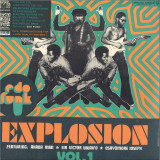
Analog Africa Presents Edo Funk Explosion Vol. 1, available on
2xLP/Gatefold LP with 20-page booklet / CD with 36-page booklet. It was
in Benin City, in the heart of Nigeria, that a new hybrid of intoxicating
highlife music known as Edo Funk was born.
It first emerged in the late 1970s when a group of musicians began to experiment with different ways of integrating elements from their native Edo culture
and fusing them with new sound effects coming from West Africa s night-clubs.
Unlike the rather polished 1980 s Nigerian disco productions coming out of the
international metropolis of Lagos Edo Funk was raw and reduced to its bare
minimum.
Someone was needed to channel this energy into a distinctive sound and Sir
Victor Uwaifo appeared like a mad professor with his Joromi studio. Uwaifo
took the skeletal structure of Edo music and relentless began fusing them with
synthesizers, electric guitars and 80 s effect racks which resulted in some of the
most outstanding Edo recordings ever made. An explosive spiced up brew with
an odd psychedelic note known as Edo Funk.
That’s the sound you’ll be discovering in the first volume of the Edo Funk Explosion series which focusses on the genre’s greatest originators; Osayomore
Joseph, Akaba Man, and Sir Victor Uwaifo: Osayomore Joseph was one of the
first musicians to bring the sound of the flute into the horn-dominated world
of highlife, and his skills as a performer made him a fixture on the Lagos scene.
When he returned to settle in Benin City in the mid 1970s - at the invitation of
the royal family - he devoted himself to the modernisation and electrification
of Edo music, using funk and Afro-beat as the building blocks for songs that
weren’t afraid to call out government corruption or confront the dark legacy of
Nigeria’s colonial past.
Akaba Man was the philosopher king of Edo funk. Less overtly political than Osayomore Joseph and less psychedelic than Victor Uwaifo, he found the perfect
medium for his message in the trance-like grooves of Edo funk. With pulsating
rhythms awash in cosmic synth-fields and lyrics that express a deep personal
vision, he found great success at the dawn of the 1980s as one of Benin City’s
most persuasive ambassadors of funky highlife.
Victor Uwaifo was already a star in Nigeria when he built the legendary Joromi
studios in his hometown of Benin City in 1978. Using his unique guitar style as
the mediating force between West-African highlife and the traditional rhythms
and melodies of Edo music, he had scored several hits in the early seventies,
but once he had his own sixteen-track facility he was able to pursue his obsession with the synesthetic possibilities of pure sound, adding squelchy synths,
swirling organs and studio effects to hypnotic basslines and raw grooves. Between his own records and his production for other musicians, he quickly established himself as the godfather of Edo funk.
What unites these diverse musicians is their ability to strip funk down to its
primal essence and use it as the foundation for their own excursions inward to
the heart of Edo culture and outward to the furthest limits of sonic alchemy.
The twelve tracks on Edo Funk Explosion Volume 1 pulse with raw inspiration,
mixing highlife horns, driving rhythms, day-glo keyboards and tripped-out guitars into a funk experience unlike any other.
out of Stock
Last delivered 5 years ago available to reorder, subject to availability
fter a hiatus of over eight years Fuzzy Lights are making a welcome return. Burials is the follow-up to the critically acclaimed album Rule of Twelfths, and the fourth album from the Cambridge-based post-folk collective.
Their sound has been stripped back to its component parts, deconstructed and rebuilt under less obvious influences. There’s a bedrock of folk-rock - predecessors like Trees and Fairport Convention - but this is then built upon through multiple layers, from the stillness of Talk Talk to the orchestral chaos of Godspeed You! Black Emperor. With Burials Fuzzy Lights have cultivated these sounds and influences into something new and fresh that distances the album from the rest of the folk-rock crowd.
The most striking element of these songs is how intimate they are. Lyricist Rachel Watkins has revealed a lot about herself in these seven songs, which have been written from a very personal perspective. Raw experiences have been distilled into each piece, her translucent vocals often betraying the content of the songs themselves. The album is bookended with the most personal of these. Opener ‘The Maidens Call’ reveals her loss from suffering a miscarriage, whilst album closer, ‘The Gathering Storm’ frames the rallying cry of women’s rights around how individuals must work together now, and in future generations, to destroy prejudice. There is also engagement with humanity’s immediate surroundings and the environment. ‘Under The Waves’ deals with devastation of coral reefs, ocean resources and our natural world, and ‘The Graveyard Song’ imagines the perception of time from the juxtaposed views of a yew tree and a young woman.
As scenarios, paths, and outcomes shift around us, Burials’ amalgam of glowering, intense instrumentation, timeless, weightless melody, and exactingly revealing lyricism carves a very particular path through the world. This is music that tears us away from the everyday not just as a form of escapism, but as a means of self-reflection on hardship and the strategies we develop to overcome it. It is the band’s rawest yet most accomplished statement to date.
We welcome another newcomer to the label, UK-badman Cartridge, who steps up with a smashing debut EP showing the world he’s not messing about. Big Things!
Stone Cold:
The aptly titled EP opener hits hard like a boulder, painting a post-apocalyptic super-metroidesque landscape, building upon the glorious ‘Flummox’ from SUBALT010. Gritty synth lines stating a simple yet catchy and evolving melody, all rounded by a fat bass exactly how we like it. A glittery rain paves the way to the breakdown and the second drop, which tells the final part of this majestic romance.
Choker:
Time to get stealthy with this one… a sinister intro erupts into a refined yet powerful barrage of bass. Solid groove, heavily panned percussion, clever wobs and synth hits, masterful reverb and delay interplays, Cartridge’s sound design really sets to impress with this superb number.
Sweet Doughs:
If the concept of ‘sinister’ was established on the previous track, ‘Sweet Doughs’ definitely takes it to the next level. Menacing car-tyre-screeching-like synths and an amusing yet slightly uncanny vocal sample set up the pace for this weighty dance-floor rattler. A saturated 808-like bass propels the track, which reveals itself as a master-class on how to blend power, bass, crafty sound design and an incredible attention to details.
out of Stock
Last delivered 4 years ago available to reorder, subject to availability
Andrés Vargas Pinedo is a prominent composer of Amazonian popular music from Peru. He is blind and has excelled as a player of the quena and the violin. He was born in the city of Yurimaguas but he developed as an artist in Lima, for thirty years he has worked as a traveling musician on a street in the San Isidro district of Lima. Throughout his career, he has formed and joined various popular music groups. This compilation presents fifteen songs of his authorship, belonging to his first two groups: Conjunto típico Corazón de la Selva and Los Pihuichos de la selva, active between 1965 and 1974, and which helped define the sound of Amazonian popular music.
These years saw the emergence of an Amazonian popular music movement led by Vargas Pinedo as well as groups such as Los Solteritos, Flor del Oriente or Selva Alegre. These artists based their music on the rhythms of the Amazonian folklore (pandilla, sitaracuy, movido, cajada, chimayche) and were nourished by influences from the coast and the highlands of Peru, as well as by the tropical rhythms of Brazil, Colombia and Ecuador, achieving a musical synthesis that is an invitation to collective celebration and endless dance. A sound that is defined by a constant and hypnotic rhythmic base of kick and snare drums, upon which the quena and violin develop imaginative melodic lines. Sometimes there is a singing voice, sometimes the voices playfully appear as sounds that identify Amazonian popular speech or that emulate jungle animals.
The fifteen tracks gathered in 'El fabuloso sonido de Andrés Vargas Pinedo: Una colección de música popular amazónica' (1966-1974) / 'The fabulous sound of Andrés Vargas Pinedo: A collection of Amazonian popular music' (1966-1974) are a good introduction to the work of an essential creator of Peruvian music, whose sound expresses the spirit of the Amazonian people and summarizes the transition from tradition to the popular in the context of the emergence of a record industry of Amazonian music. Andrés Vargas constitutes a fundamental basis for the music of the Amazon, as his work synthesizes diverse influences, having that original root as its main motive.
This compilation is presented in vinyl format and includes a brochure with extensive information and photos. The audio has been remastered directly from the original tapes. Edition of 300 copies. Art by Jordy García (Blumoo Posters).
Aquaregia mainstays, Troma & PERS1, return for their fourth release on the label. Their Kaede EP exhibits the duo's signature exquisite acid lines though a tracklisting of five dripping dreamscapes.
"Kaede" introduces the release with a bubbling acid line and up-tempo groove. A euphoric journey through a new destination; a mental escapade moving from excitement and anticipation to pure bliss.
"Samara" takes over with a haunting acid line and eerie pads, venturing deeper into the unknown. Atmospheric fog intertwines between the rosy foliage of the Japanese maples; a cool breeze propels the ripened samara, helicoptering from their stems.
"Crimson Breath" relieves the tension with a chilled out and dubby trip. We're taken bankside of a babbling brook, sheltered by an enclosing leafy canopy; comforted in a safe haven.
Next, "Autumn Moon" gently guides us on a psychedelic excursion laced with intricate dribbling acid lines and breaky percussion. A walk through a shadowy limestone cave, water trickling down and plinking from the luminous stalactites.
out of Stock
Last delivered 4 years ago available to reorder, subject to availability
Not Waving renders his pop soul on a definitive album opus ‘How To Leave Your Body’, starcrossed with guest appearances by Jim O’Rourke, Jonnine Standish, Marie Davidson, Spivak and Mark
Lanegan
An escapist parable for the times, Alessio Natalizia marks a career high with his most sensitive production and songwriting illuminated by a coterie of notable collaborators. Its 11 songs deal with the necessity of friendship, the fragility of loss and spiritual transcendence via a spectrum of strategies that ultimately arrive at a mutual conclusion: love is the message. It packs sample amounts of nostalgia into a fantasy sequence of elegiac pop, skewed rave and midnight lullabies that fine-tune over 20 years of devotion to his craft, perfectly matching experimental restlessness with enduring pop appeal.
Perhaps unavoidably, circumstances had a hand in the creation of ‘How To Leave Your Body’, forcing Natalizia to work with collaborators remotely. Yet the strength of his bonds bleeds through in the album’s handful of poignant vocal pieces, none more so than the hushed intimacy of Marie Davidson on the bewitching downbeat trance hymn ‘Hold On’, but also in the bruised blush of ‘My Sway’ featuring Jonnine’s spine-tracing lilt over hovering organ and dembow bumps, while the hook-up with Mark Lanegan once again yields bittersweet fruit on ‘Last Time Leaving Home Part 2’, with gravelly blues vox diffused into detuned, miasmic cello that really tugs.
Effortless and made for rinsing, the whole album is testament to the humility and pathos of Natalizia’s oeuvre, which has gotten better with age. It plays out like a lovingly crafted mixtape, decanting all original material with a classic cadence and fleeting play of styles, from aerial jazz notes in ‘You Are Always Younger Than The Future’, to the gnawing club grind of ‘Define Normal’, a noisily gurning ‘Self-Portrait’, and the lushly resolved admittance of ‘My Best Is Good Enough.’
Comparisons don’t really work with this one, it’s just Not Waving.
out of Stock
Last delivered 5 years ago available to reorder, subject to availability
• With more than 60 MILLION STREAMS across his catalogue listened to by fans all around the world, ‘…TO BE CONTINUED’
is the best ‘greatest hits’ album that you’ve never heard!
• This 12-track Limited Edition Vinyl LP collection, with a brand new floorfiller, features his most popular tracks and fans’
favourites, and this is his first Physical release album to celebrate, LE FLEX has signed 500 prints for this Limited Edition.
• Although LE FLEX clearly states that “I just make Pop music”, his 6 EPs and 6 Studio albums are nothing short of serious and
brilliantly creative blends of nudisco, poolside vibes and slow-jams but retaining the essence of his familiar ‘80s
synthpop/dance-based infusions. The accompanying videos are purely tongue-in-cheek, with more than a smattering of
self-deprecation, as you will see on his dedicated YouTube channel.
• Judging by the comments from long-established fans and music lovers from South America to Australia, via the UK, through
Europe and the Far East, discovering LE FLEX for the first time, they are quick to state that his vocal inflections share more
than a passing resemblance to George Michael, an icon about whom LE FLEX modestly says, “I’m not fit to shine his shoes”.
• LE FLEX is a renowned Producer with his popularity rising, having worked with Jaki Graham, Lemar and Ben Macklin and
was commissioned to produce new Donna Summer remixes in 2020.
• Released on heavyweight 180g Clear Vinyl, if you fancy summery escapism, there aren’t many better ways than doing so
than with LE FLEX
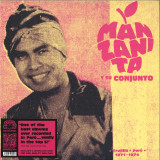
Following the 70s Peruvian cumbia compilation by Ranil last year, Analog Africa returns to Latin America to highlight the work of one of Perú’s undisputed masters of the electric guitar: Manzanita. This 13th release in the Limited Dance Edition Series includes 14 mostly instrumental compositions of electrifying Peruvian cumbia and guaracha. Manzanita's unique guitar lines rest on confident foundations that shifts gears effortlessly. Limited Edition LP in Gatefold Cover pressed on 180g high quality virgin vinyl
"I was in Lima, hanging out with collector-extraordinaire Victor Zela, who had spent the previous few years pouring his passion for Peruvian Cumbia into the blog „la cumbia de mis viejos“, a trove of incredible music. But after the birth of his first child, his priorities shifted and he decided to part with some of his rarest LPs. I was one of the lucky few given an early chance to examine his treasures, and when I picked up the album Manzaneando com Manzanita, Victor said: “Take it! its one of the best LPs ever recorded in Perú … easily in the top five”. That was all the encouragement I needed … two years later many of the songs from that masterpiece have made it onto Manzanita y su Conjunto, a compilation of electrifying Cumbia sides from Manzanita’s golden era.
Berardo Hernández – better known as Manzanita – first surfaced during the psychedelic Cumbia craze. At the head of the scene were the magnificent Los Destellos, whose leader, Enrique Delgado, was such a six-string wizard that other guitarists found it impossible to escape his shadow. But when Manzanita arrived, his electric criollo style sent shockwaves through Lima’s music scene and posed a serious threat to Delgado’s dominance as king of the Peruvian guitar.
Manzanita had come to Lima from the coastal city of Trujillo, five hundred miles up the coast – a place where Spanish, African and indigenous populations had been living and making music together for centuries – and came of age at a time when the first wave of psychedelic rock from the US and UK was starting to sweep the airwaves. But the sounds of Cream and Hendrix disappeared from the radio just as quickly in 1968 when Juan Velasco seized control of the country in a military coup. The new regime, which favoured local traditions over cultural ‘imports’ from the north, was a blessing in disguise for the Peruvian music scene.
Record labels flourished as new bands, raised on a hybrid diet of electric guitars and Cuban rhythms, rushed in to fill the vacuum created by the lack of imported rock. A new genre, known as Peruvian cumbia, was born and Manzanita quickly became one of its most original voices.
Starting in 1969, Manzanita y su Conjunto released a steady stream of singles that used Cuban guaracha rhythms as the foundation for dazzling electric guitar lines. After countless 45s and several years on the touring circuit, the band signed to Virrey, an important Peruvian label, and recorded two LPs acknowledged as masterpieces among aficionados of tropical music. Most of the songs on Analog Africa’s new compilation Manzanita y su Conjunto are drawn from those legendary sessions of 1973 and 74.
Although he scored a few more hits in the later 70s, his dissatisfaction with the music industry caused him to withdraw from the scene for several years; and when he finally retired for good, the golden age of Peruvian cumbia was a distant memory. But when Manzanita was at the top of his game he had few equals. Victor Zela was right: this is some of the best music ever recorded in Perú."
out of Stock
Last delivered 5 years ago available to reorder, subject to availability
Snapped Ankles return to the forest, but it's not as they left it. Trees planted in neat rows. A well-ordered monoculture with access roads and heavy machinery. The smell of greenwashed money in the air. There's no sign of the ancient woodland they emerged from on debut album, Come Play The Trees. And it's far cry from the gentrified East London they found themselves hawking on Stunning Luxury. All is not well in the face of progress. Welcome to the Forest Of Your Problems. Even among the famously close-knit woodwose community there are factions forming. Meet The Business Imp, The Cornucopian, The Nemophile and The Protester. Each with their own motivations and belief systems. Their own sense of injustice: contradictions, anxieties and guilt. There are woodwose who have risen to the top in the boom and bust world of real estate and hedge funds. Grab what you can before the next crash. Others find euphoria in the absolute conviction that wealth and technology will see us through this. There are those with their recycling in order, who are well-versed in the prospect of imminent ecological and economic collapse, burying themselves in vegan cookery and extensive international holiday itineraries. And there's an increasing number angry at the state of the world, ready to take to the streets and the trees in an attempt to force real change. Forest Of Your Problems runs the gamut of modern woodwose emotions. In this neat human approximation of the forest, it's an increasingly knotted affair. Despite all of this, Snapped Ankles haven't lost their innate ability to make you want to move your feet - their Teutonic forest rhythms are still shot through with post-punk lightning. Whether they're exploring those opportunities which might arise when a Nigerian prince emails out of the blue on 'The Evidence', or referencing the crooked woodwose attempting to go straight on 'Rhythm Is Our Business', this is music to lose your inhibitions to. The moments of pure elation on 'Shifting Basslines Of The Cornucopians' are worth the admission price alone - "It's a great time to be alive!" ...apparently. Snapped Ankles outsider status has always allowed them to hold a mirror up to society. Now the boundaries are not so clear. In the four years since Come Play The Trees was released, their cult has flourished. Previous album Stunning Luxury saw the band invited to play the BBC 6 Music Festival and a KEXP session on the back of a sold-out UK tour which culminated with two nights at Village Underground in London. As those who have witnessed the shamanic ritual of their live shows will attest, they are a truly unique, communal experience. Forest Of Your Problems will see the woodwose bring their ancient forest rhythms and high-wire, multi-media live act to ever bigger stages - including Camden's iconic Roundhouse in October.
Following the release of Limewax's Untitled and Speed Dealer Moms' SDM-LA8-441-114-211, Trickfinger and Aura T-09's Evar Records imprint is keeping its foot on the gas, officially introducing the arrival of its sub-label, RAVE4EVAR. Embracing more of an outlaw mindset, RAVE4EVAR was created as a place for rebellion to collide with rave, offering refuge for off-the-cuff releases, special projects and occasional one-off collaborations.
Ushering in the sub-label's inaugural release, RAVE4EVAR is proud to present Chicago-based DJ, producer and new media artist S4M23's debut EP, Angelface. The five-track project, set to arrive on July 2nd via a limited edition cassette and digital download, combines haunting vocals with pounding kicks and rave synths to create a moving take on hardcore. Written and recorded during a weeklong session in April 2020, the creation of Angelface took place during a period of processing grave personal loss juxtaposed with the collective state of chaos, grief and fear brought on by the covid-19 pandemic.
Within that specific period of time, S4M23 channeled intense emotion to reflect how cathartic it can be to honor the connections we build with one another despite how frenetic and heart-wrenching the circumstances of a particular moment or experience can be. Pouring an immense spectrum of emotions into Angelface, these productions eschew simple repetition to create unexpectedly complex rhythms and textures that evoke the sounds of British club music and '90s rave, while simultaneously creating something entirely new.
Born Bad continue their mind-expanding and totally essential series of library music ‘Space Oddities’ compilations with this set focusing on French musician and composer Sauveur Mallia.
In the ever-expanding universe of 70s and 80s French library music, Mallia holds a special place; his career, multifaceted work and the uniqueness of his talent have made him an exemplary figure in the unsung world of library musicians.
In those years a few of them, often for economical reasons, would set off on a
space conquest, taking along just a few synthesisers.
Their ambition well surpassed the modesty of their means; it was in turn the
condition to their experimentations with sound which were to create a new
sonic space: that of a nation tumbling into modernity. From French soil to the
farthest reaches of the cosmos, there were just a few steps to take. It’s with the
label Tele Music, boarding the spaceship Arpadys, along with the Voyage crew,
that Sauveur Mallia took the big leap.
In Switzerland, the Ellis Mano Band are not unlike the Wrecking Crew or
the Funk Brothers.
They are top-flight studio musicians and elites in the Swiss music scene. Although they spent years making music with other artists, the band members
never got much time to make music of their own until now.
“We chose the album title “Ambedo” because it reflects the state of the process of recording an album,” says guitarist Edis Mano. “Ambedo” refers to the
tendency both to reflect and to absorb. Musicians like us do it all the time,
especially when we compose new songs and create a new album.”
The first single “Keep It Simple” refers to the one subject on the planet that
certainly is not simple at all... love.”
Before their debut album "Stürmer", originally out in 1982 and reissued by a-Musik, there were two 7" by Freiwillige Selbstkontrolle. Both the eponymous 4-track EP (1980) by Justin Hoffmann, Thomas Meinecke, Michaela Melián and Thomas Meinecke and the 7-track EP "Teilnehmende Beobachtung" from 1981 were released on Alfred Hilsberg's legendary Zickzack Platten.
With "Moderne Welt" and the literally endless "Deutschland, Deutschland", the rare "Freiwillige Selbstkontrolle" single contains two of the most brilliant tracks ever recorded in the Federal Republic of Germany. "Teilnehmende Beobachtung" was produced by Wirtschaftswunder's Tom Dokoupil and established F.S.K.'s status as one of the most singular (and back in those days controversial) phenomena in the history of (west-)german postpunk/pop/underground history.
The LP reissue of these two 7"s comes with printed innversleeve and a 8 pp. booklet with extensive linernotes (in german) by Tim Klütz.
8-Infinities represents Discos Transgénero’s first contemporary release after several reissues and archival projects. Stepping away from customary North-American guitar traditions, Ameel Brecht (core member of Razen) presents an utterly singular take on early European music with an album which evokes the inner conflicts of growing up and their connection to the concerns of fatherhood.
A classically trained musician, Brecht resorts once again to the use of resophonic guitars and mandolins as a way of finding a middle ground between the virtues of being a schooled musician and the ability to escape pre-established tendencies in pursuit of what he has referred to as ‘metaphysical freeform string music’.
Additionally, the album features a series of fascinating and subtly merged contributions by label associates Marnie Weber and Jabir, along with Bob Rutman’s distinguished steel cello and Walter Hus’ automated glockenspiel. Echoing the likes of Renaissance and Baroque music on plucked instruments, Brecht assembles here a collection of timeless compositions.
I first discovered khroniky – Ukranian folk songs – in the Highlands of Scotland. I was watching a screening of Bajka, a mesmerising documentary made by the filmmaker Lucia Nimcová and sound artist Sholto Dobie. I knew nothing about these ballads beforehand, but I was fascinated by these odd, beautiful songs, especially the easy way in which they mixed misery and levity, where gentle melodies blend with tales of dark violence. The folk songs describe hardship, murder, torture, death in gulags, heavy drinking, outsmarting men, love affairs. But they’re often very funny too – many of the songs make fun of marriage, and there’s an amazing subcategory of khroniky songs called potka (vagina) songs.
The khroniky have never been properly documented because they were considered too crude, or contained lyrics that were problematic, politically. When Ukrainian folk songs have been archived in the past, it’s normally a sanitised, more polite version of the ones that Lucia remembers from her childhood. Lucia grew up on the other side of the Ukrainian border in Slovakia. She is part of the Rusyn (Ruthenian) minority ethnic group found in the borderlands of Slovakia, Hungary, Romania, Ukraine and Poland. Rusyn is a centuries-old Slavic language, looked down upon as a poor, uneducated dialect by the neighbouring Ukraine and Slovakia. It was forbidden to talk about Rusyn culture at Nimcova’s primary school, but the khroniky stayed in her memories.
“I remember weddings when I was young,” says Lucia, who now lives in Addis Abeba, Ethiopia. “At the end of the night, when everyone was drunk and the young couple would go around their guests, people would sing in Rusyn. There was singing and dancing, and songs about being in prison or falling in love. I picked up the lyrics and sometimes my mum would make my sister and I sing them for people we met on the train. I was about five or six but the lyrics still come back when I sing to my kids.”
Determined that these rich, nuanced, unique songs shouldn’t be forgotten, she decided to record them. Over two years, Lucia, joined by experimental musician Sholto Dobie, visited Rusyn villages high in the Carpathian mountains to rediscover the songs and make the documentary. It was at the beginning of war breaking out in Ukraine in 2014.
“The Rusyn community is a very closed one,” explains Lucia. “Sometimes we’d have to wait several days to hear someone sing; we had to earn their trust before they shared something very personal to them. We’d stay up ‘til 5am at a wedding, then go straight to a morning baptism, or collect haystacks with the villagers, hoping they’d sing while they were working.”
DILO is named after an important independent Ukrainian daily newspaper that was shut down when the Red Army entered Lviv in 1939. The four long tracks on DILO blur field recordings with song; an unpolished, privileged glimpse into a private world. We hear dogs barking and insects buzzing in the summer heat, then a blast of hurdy gurdy or violin will drift in, or a plaintive song soars softly over the rural background noise, with casually harrowing lyrics about a cuckoo, “lifeless in a world of misery”, as translated in the album’s booklet.
For both Lucia and Sholto, it was important not to tamper too much with what they heard. “When you think about ethnography,” Lucia explains, “you have to have a lot of time, love and respect to document it with sensitivity.”
“The songs all have their own atmosphere and intimacy from the spaces they were recorded in and it was important to maintain these particularities and move with them,” adds Sholto, who now lives in Vilnius, Lithuania. “They guide and sometimes interrupt a journey between interiors – domestic spaces; in kitchens, by the fire – and exteriors; marketplaces, cow sheds. We used contact microphones to record metal bridges and fences, and we spent one afternoon recording a wool processing machine, the details of the rattling and tuning wheels are the ground layer for the third track.”
Lucia took rough notes and diary entries during the recording process, which are now shared in the booklet alongside a selection of lyrics, loosely translated, but revealing the depth and astonishing beauty that sometimes lies in the language of these folk songs.
The feel of the album is intimate, flipping between laughter, where a woman sings about selling her pussy to buy a cow in one track, then shifts to a raw, painful truth; an adult son asks his mother why his dad won’t be back for dinner, as he’s gone to war.
Since Lucia and Sholto began working together in 2014, they have shared the audio recordings on radio and film and shown photos in gallery spaces, making sure these special, smutty, poignant songs don’t get lost. This new record and booklet joins that same continuum, another glorious fruit from the same rare tree.
Punk Artist Mal-One’s new single Punk Badge celebrates the forgotten but much-loved culture of the button badge. Especially the Punk Badge that just in wearing the item was a statement in itself. It told you more about the person than 1000 words could ever do. Their affiliations likes, even their dislikes, for the pricey some of 25p!!!
To tell this story Mal-One has created 6 one off 18’’ inch badges and has used them to create the 7’’ sleeve artwork. There are 100 of each design. So be a good Punk and collect the set…
Brooklyn’s TOUCAN SOUNDS presents a talent heavy compilation of Boogie, Afro, Nu Disco & House from JACQUES RENAULT, ADELINE, ELI ESCOBAR, DJ PASTA , I.M. YONI, TONY G & HARUKA SALT. All 6 tracks are excellent without any filler!
out of Stock
Last delivered 13 months ago available to reorder, subject to availability
The third release from Exalt Records Fallen Entertainers series is by an artist so hot right now, it's ridiculous. Having has recent releases on some of the hottest electronic music labels on the planet, this producer is certainly having 'a moment'. Electro superstar Sound Synthesis submits an incredible remix to complete the package.
out of Stock
Last delivered 5 years ago available to reorder, subject to availability
Françoise Hardy became an international sensation during the early 1960s through her albums on Disques Vogue, the French jazz label that then began showcasing chanson. She signed to the label at seventeen after answering a newspaper advertisement recruiting unknown singers while she was a freshman at the Sorbonne, the B-side of debut single, ‘Tous Les Garçons Et Les Filles,’ brought her to the forefront of the Yé-yé movement, mixing chanson with Anglophone rock and pop, and paving the way for this debut LP, which was lauded by the likes of Bob Dylan and Mick Jagger. This first offering is still arguably her best – grab it now to understand why!
Vinyl kommt in blau, Klappcover und bedruckter Innenhülle! Die meisten Dinge im Leben entstehen zufällig. Die große Liebe, eine schicksalhafte Begegnung und manchmal auch eine zweite Karriere. Oliver Perau alias Juliano Rossi hätte 1996 sicherlich nicht damit gerechnet, dass er 2021 immer noch als Rossi unterwegs sein würde. Damals hatte sich gerade die alternative Rockband Terry Hoax, die Perau 1988 mit einem Freund gegründet hatte, nach acht europaweit erfolgreichen Jahren aufgelöst. Doch Perau wollte sein Versprechen, bei der ersten Ausstellung des befreundeten Fotografen Olaf Heine zu singen, halten. Also fragte er den Jazzpianisten Lutz Krajenski, ob man zusammen alte Swing-Klassiker präsentieren könnte. Schließlich war Perau seit frühster Kindheit begeistert von Sammy Davis jr., Dean Martin, Burt Bacharach, Barbra Streisand, Tom Jones und Frank Sinatra. So stand Perau im Sommer '96 mit dem eilig ironisch hinzugefügten Künstlername Juliano Rossi vor Galeriebesuchern und Terry-Hoax-Fans und sang entrückt What the world needs now von Bacharach. "So viele entsetzte Gesichter habe ich selten gesehen" sagt Perau lachend und ergänzt nach kurzer Pause "aber für mich war es wie eine Offenbarung". 25 Jahre später veröffentlicht Juliano Rossi sein fünftes Album, Terry Hoax gibt es auch wieder und zusätzlich tourt Perau seit 9 Jahren durch Pflegeheime und macht Musik für Menschen mit Demenz. Ein sehr ungewöhnliches und in dieser dreigleisigen Konsequenz sicherlich einzigartiges Sängerleben, dass offensichtlich glücklich macht. So jedenfalls wirkt Herr Rossi und sein neues Album "Drunk On Love". Aus der Zeit gefallene glamouröse Songs irgendwo zwischen The Doors, Burt Bacharach und Dean Martin.
Nimbus West spirit jazz essential: the Creative Arts Ensemble's classic debut One Step Out. One of the most sought after and highly-regarded titles to have appeared on Tom Albach's celebrated Nimbus West imprint, One Step Out is a timeless work of spiritualized jazz. A true gem from the Los Angeles jazz underground, the album was pianist and composer Kaeef Ruzadun Ali's first recording as leader of the Creative Arts Ensemble, the only large ensemble group that emerged directly from Horace Tapscott's legendary Pan Afrikan Peoples Arkestra community jazz group. A Los Angeles native, Kaeef was introduced to the Tapscott circle in the late 1970s. His first experience of the Arkestra's ethos was through PAPA tenorist Michael Session, who took him to the famous "Great House" at 2412 South Western Ave., LA -- a large mansion house which members of the Arkestra had taken over as a space for communal living. Life in the Great House was a continuous stream of music, dance and community events. "When I walked in there," recalled Kaeef, "it was like this whole rush came over me, just from going in the front door -- It was like a very, very warm feeling of love. I went and I came out with 'Flashback Of Time', and that was my first arrangement." Kaeef quickly became a significant contributor of compositions to the Arkestra's songbook -- his piece "New Horizon" would be recorded by Horace Tapscott for the latter's Tapscott Sessions series. But "Flashback Of Time" would eventually appear on One Step Out, played by the new group he had put together from stalwart Arkestra members. Inspired by both Tapscott's example and by the Art Ensemble of Chicago, Kaeef had wanted to follow their lead by assembling a larger unit. Featuring seasoned Arkestra regulars including reedsman Dadisi Komolafe, drummer Woody "Sonship" Theus and altoist Gary Bias, with veterans Henry "The Skipper" Franklin on bass and George Bohannon on trombone, One Step Out is a key document of the Los Angeles radical jazz underground. Featuring the sanctified vocals of Kaeef's sister, B. J. Crowley, the album is a tour de force of spiritually energized independent jazz music.
Where have you gone, Charles Tolliver? There was such promise in the concept of Music Inc., and in Strata East, but evidently the music world's attention was elsewhere and this tremendous live set was probably heard by only a few hundred sets of ears. On the back of the record sleeve, Tolliver undersigned his mission statement: "Music Inc. was created out of the desire to assemble men able to see the necessity for survival of a heritage and an Art in the hopes that the sacrifices and high level of communication between them will eventually reach every soul." And he isn't kidding. You won't find a much higher level of communication than he, Cecil McBee, Stanley Cowell, and Jimmy Hopps engaged in on May 1, 1970 at Slugs' in New York City. This was much more than an attempt to merely 'preserve acoustic jazz' as in the stilted Marsalis vein. This was an attempt to preserve a measure of authenticity while maintaining the notion of forward-thinking, present-tense improvised music. They deserved a greater response than the lukewarm, sparse applause they received that night, and continue to deserve a far more cognizant audience for their efforts.
Tolliver ('Drought"), McBee ("Felicite"), and Cowell ("Orientale") each contribute a track to the set; though very much distinct, each is equally strong. "Drought" is the kind of dark-hued, well-honed burner which Tolliver routinely produced in his fertile years. "Felicite" is a more contemplative affair, a deeply felt and empathically performed piece; the unit here is in particularly sublime form, merging considerable skill with a staggering depth of emotion. "Orientale" falls somewhere in between the pace of the two, with Cowell's Eastern scales establishing an austere, industrious tone throughout its seventeen-and-a-half-minute length.
Through its duration, the music on Live at Slugs' is often riveting and incessantly compelling. Hopps is a lesser-known entity to me, but the other three players featured here are some of the all-time underrated presences in the jazz pantheon, and they play nothing short of masterfully. Always a presence on his recordings, Tolliver demonstrates tremendous range, flair, and command as a trumpeter and leader. Had he not come along at a time when pure jazz was falling out of favour, I have to believe his name (along with Woody Shaw's) would be every bit as prolific as Freddie Hubbard's or Lee Morgan's; the same holds for the always brilliant and expressive McBee on bass.
I feel saddened that Music Inc. fell so far short of "eventually reaching every soul" - yet fortunate that it eventually reached mine.
Re-mastering by: Ray Staff at Air Mastering, Lyndhurst Hall, London
Owning both this disc and Live at Slugs', Volume 1 is essential for hardcore Jazz fans. Part two of the Slugs' date is just as impressive and again feature three originals all penned by the group. Here we get a better example of Tolliver's compositional work with the touching Coltrane tribute Our Second Father. Again Tolliver's trumpet is simply stunning. The rhythm section of Cecil McBee and Jimmy Hopps also deserve mention as these two really drive the quartet along in a similar fashion to Garrison and Jones did with Coltrane. The McBee original Wilpan's also highlights the strength of McBee's writing and is probably the pick of the tunes here.
Repress! Seventh album by Minneapolis hip hop heroes Atmosphere. Producer Ant and lyricist / rapper Slug have been making music together as Atmosphere for over 20 years and have managed to continually tweak and strive to perfect their formula, while neither straying too far off their path, nor resorting to playing it safe and that holds true on the new set. Fishing Blues is a collection of songs that both define and redefine the Atmosphere sound and features 18 new tracks written and produced by Atmosphere with appearances from DOOM, Aesop Rock, Kool Keith, The Grouch, deM atlaS, and more.
For the fifth anniversary of Buraka Som Sistema's 2016 farewell show in their hometown of Lisbon, Portugal - and the 15th anniversary of their debut EP - we're celebrating this important milestone by releasing 'Buraka 4 Ever', an album created from the recordings of this legendary concert where the band's most iconic songs were last performed in front of a roaring live audience.
out of Stock
Last delivered 5 years ago available to reorder, subject to availability
Milanese imprint Ansia returns with a new V/A of warped, unconventional techno. Following his critically acclaimed debut LP 'Perdu', label-head Piezo continues to carve out his club-ready and explorative sonic niche, this time calling on a team of kindred left-field sound manipulators to get the job done. Manchester's BFFT (Whities, Gobstopper, Cong Burn) leads the charge with a dexterous cut that marries mind-bending sound design with club-ready functionality. Next up is Timedance-affiliate Metrist, who is as playful as ever on 'LB Steaua': a deceptively simple 4/4 beat peppered with distorted glitches and psychedelic details reminiscent of Perlon's more left field releases. Moving to the B-side, Piezo delivers his trademark brand of ruffneck techno - buzzing with off-grid tribal drums, cartoon synths and nonsense vocal samples. To close, Mexican leading-light Siete Catorce ratchets up the tempo for a singular track in a world entirely of its own: rude, fast, no-frills, sitting somewhere between digital cumbia and hardcore tekno. Unsurprisingly this one ended up in Batu's relentlessly forward thinking BBC Essential Mix.
out of Stock
Last delivered 2 years ago available to reorder, subject to availability
The legendary soundman and record producer, Lloyd Coxsone, began his career in the 1960’s soon after arriving from Jamaica. He was one of the first soundmen to play at West End clubs where a generation of British pop stars like the Beatles and the Rolling Stones first heard music from Jamaica. Sir Coxsone sound then dominated the seventies, when Bob Marley & Dennis Brown were among his greatest allies, as heard on unforgettable dub-plates from that era.
He formed the Tribesman Label and issued King of the Dub Rock before recording the likes of Fredlocks, Willy Stepper & Jimmy Lindsay. King of the Dub Rock 1 & 2 are recognized as reggae classics. They not only feature Lloydie’s own productions but also riddims by Jamaican producer Gussie Clarke and heavyweight dubs by mix master Scientist. On King of the Dub Rock 3, Lloydie teams up with Jahsolid Rock Music, who’s albums with Brinsley Forde, Apple Gabriel and Earl 16 were regularly heard on Sir Coxsone playlists. This album features exclusive dub mixes and vocal tracks from these artists plus brand new tunes by Mutabaruka, Chezidek, Micah Shemaiah, Var & Ras Teo.
King of the Dub Rock 3 is an essential companion for all Coxsone fans wanting to complete the trilogy. It delivers such a high standard of musical quality that it promises to be a modern day classic!
Tony Scott (born Anthony Joseph Sciacca June 17, 1921 – March 28, 2007) was an American jazz clarinetist and arranger with an interest in folk music around the world. For most of his career he was held in high esteem in new-age music circles because of his involvement in music linked to Asian cultures and to meditation. Tony performed with many star as Billie Holiday, Sarah Vaughan and Harry Belafonte and before moving to Italy in the early ‘70’s he just cut two sought after masterpiece moving forward from his early idea of bop and cool jazz. In particular ‘Djanger Bali’ (1967 Saba) - recorded with The Indonesian All Stars - and the self titled Tony Scott (1968 Verve) - featuring Richard Davis on bass, John Berberian on oud and Attila Zoller on guitar – set the pace for a revolution in terms. This set recorded in Africa around the mid 90’s is a pure rhythm festival pushing the boundaries of his afro fusion agenda
Psychedelic Percussion definitely sticks to his title. With the help from Paul Beaver of Beaver & Krause (famous keyboard wizard and sound engineer for the likes of Stevie Wonder), vibe master Emil Richards (check is two fantastic album on Impulse! with The Microtonal Blues Band featuring Joe Porcaro, father of the famed Toto brothers) and Gary Coleman (percussionist in the famous Wrecking Crew), Blaine goes wild in the studio with drums, gong, xylophone, organ, bongos, congas and timpani. Unusual textures and tones lead the way to 12 instrumental exotic numbers similar in a way to Raymond Scott most visionary experiments. This is pure madness, a record full of breaks and still unsurpassed in many ways. Blaine was an American drummer and session musician, estimated to be among the most recorded studio drummers in the history of the music industry, claiming over 35,000 sessions and 6,000 singles. His drumming is featured on 150 US top 10 hits, 40 of which went to number one, as well as many film and television soundtracks. He became one of the regular players in Phil Spector's de facto house band, which Blaine nicknamed "the Wrecking Crew". Some of the records Blaine played on include the Ronettes' single "Be My Baby" (1963), which contained a drum beat that became widely imitated, as well as works by popular artists such as Frank Sinatra, Elvis Presley, the Beach Boys, Simon & Garfunkel, the Carpenters, Neil Diamond and the Byrds.
It is a privilege to present to you, our esteemed Daptone Family, a selection of fan-favorites by thee legendary Sharon Jones and her Dap-Kings available for the first time on 45!
Over the years Daptone H.Q. has been flooded with suggestions and requests for certain album tracks to be available on 45, so we've pressed up a few that are consistently at the top of the heap.
After itsʼ original release on the Soul of a Woman album, "Come and be a Winner"'s mellow mid-tempo groove and positive message swiftly grabbed the attention of fans and critics - ultimately placing the song squarely at the top of year-end playlists across the globe.
And for those of you want to keep the groove going and dig the instrumental on the flip!