The sun does not move. The sun has never seen a shadow. - Leonardo da Vinci
Paul and Alessio of Possible Futures believe that some essential fractions in the history of music need to be transmitted in new ways to budding generations. As we seek to bring together a new educational system around contemporary music, we urge anyone with homologous intentions to get in touch.
Over the last 15 years, Possible Futures have been witnesses to the wildest fauna and flora the great nocturnal jungle has to o er.
Possible Futures source their inspiration from the many shades of color that co-exist between black and white on the great designer's palette.
It is through their open and eclectic selections that Possible Futures turn the dancefloor into spaces of self-discovery and musical trance-en-dance.
Possible Futures believe that the eternal act of dancing is one of the most active form of contemplation. Facing our own selves in the mirror of movement, we realize that we indeed are reflections of one another at all times. Compassion forms and in turns gives way to kindness and love.
For this third record, Argentinean expert producer Leonel returns with two long pieces of poetry. Releasing on June 15th, this third edition in the Possible Futures catalog bridge spring into summer in a most gracious manner.
We Cherish Harmony, PF
Coming from different regions in France, Violent Quand On Aime's members have joined forces to canalize their energies into something truly essential. Far away from hype and expectation they have created their own peculiar world. Expect a certain electronic griminess with hints of 90's hiphop, postpunk alienation and an affinity for Musique Concrète. The overall experience is similar to the excitement one feels when hearing something genuinely original. This mini-album is the follow-up to their very impressive 7' on Le Syndicat Des Scorpions.
Fresh off the back of the languorous poolside disco and tropical pop of their debut album 'Shapes On Shapes' released last November, LA based duo Wild & Free return with a collection of essential remixes from label mates and influences alike by revisiting the heady disco of recent single 'Ferns and Stuff'.
Both multi-instrumentalists, singers and producers in their own right, Wild & Free duo Drew Kramer and George Cochrane came together in 2015 and have spent the past 2 years crafting a series of acclaimed EPs and remixes (for the likes of Joe Goddard (Hot Chip), Panama, Gigamesh, RAC and Ben Browning of Cut/Copy) that saw them tipped by the likes of Spin, XLR8R, Indie Shuffle, Clash Magazine, Data Transmission and many more and take their live show on the road playing alongside the likes of Brooklyn's Body Language.After releasing a few solid ep's and two full lengths album's Xinobi has gained real recognition among established and well-known artists and opinion-makers, and his underground cult has amplified. What has followed is remixes, edits and reworks for artists such as Sbtrkt, The Avener, John Grant, Toro Y Moi, Nicolas Jaar, Agnes Obel, Kris Menace and Tensnake.Along with Moullinex and Mr. Mitsuhirato he gave birth to the still-growing-influent Discotexas who here lend their label mates their expert musical arrangement skills with 'Discotexas Club Mix' thrown in for good measure. And it doesn't stop there, with legendary New Yorker Justin Strauss, who has produced and mixed records and remixes for the likes of LCD Soundsystem, Beyonce, La Roux and Goldfrapp contributing a 'Whatever/Whatever' mix as part of the slick and hugely influential production duo he formed with Bryan Mette.
Already noticed for his remixes and array of collaborators and with several releases under his belt (including a track on the 'Bonjour Colette' compilation), Tokyo-based Yuki Abe AKA producer/DJ Boys Get Hurt gets his inspiration from the melancholic feelings the end of summer inevitably brings about, a personal and evocative sensibility in tune with the land of the rising sun's delicate culture. Yuki expertly crafts bouncy disco-house music with sprinklings of electronica, indie, ambient, hip-hop and R&B. Here he adds a mix with a loose and joyful feel that fits the sentiments of what Wild and Free represent perfectly.
"The art of the future, therefore, will not be poorer, but infinitely richer in subject-matter. And the form of the art of the future will also not be inferior to the present forms of art, but infinitely superior to them. Superior, not in the sense of having a refined and complex technique, but in the sense of the capacity briefly, simply, and clearly to transmit, without any superfluities, the feeling which the artist has experienced and wishes to transmit." - Leo Tolstoy, "What is Art"
This statement can be made of Lucky Brown's attempt to "briefly, simply, and clearly" capture the feeling of the sound, soul, smoke and soil of the Texas Hill Country with his upcoming album "Mesquite Suite".
A little more than one year after the release of his firebrand "Mesquite Beat/Justice" single on imprint "Tramp Tapes" (TR-1040) Lucky Brown offers us here another glimpse into the sound and concept of the Mesquite Suite.
Saints & Beggars is a rustic pentatonic horn-led 6/8 anthem that builds upon a simple primitive melody assembled from two opposing figures set against two repeating figures. Brown conceived the motif while in meditation in a yoga-turned-composition studio in San Marcos, Texas. He later delicately draped the parts around it like woodsmoke. The overall effect of the composition is one of economy and restraint - nothing could be added or taken away. The horns, guitar and vintage electric combo organ begin in unison and then the figure brazenly explodes like a flock of white winged doves from a pecan tree in humid dusk. Here are featured extemporizations from Jason Cressey - trombone, Peter Daniel - saxophone, Colin Higgins - guitar, and drummer Ollie Klomp, with an exposition of open horns in the climax. The tune is drenched in shitty reverb which engenders a mysterious dimension begging the record diggers' favorite questions: "...when is this from", "...where is this from".
'Bout To Blow, remaining uncompiled in the upcoming "Mesquite Suite" (exclusively released on this single only), is a specimen of the generic Deep Funk on 45 that lit a fire in Lucky's heart more than 20 years ago. The use of the word generic here is not meant to be derogatory. Rather, it is to transmit the sense that this tune falls squarely within the confines of the so-called Deep Funk canon. 'Bout to Blow offers classic dancefloor essentials: driving bassline, hard drum beat, chanky guitar, and outrageously distorted horns fiercely executing a devastatingly primitive horn line. Also, for devout followers of Lucky Brown's recorded work, there is hidden in the bridge an easter egg in the form of a self-referential quote: the bridge of 'Bout To Blow is also the head of T.D. & The Jimmy James 3's "Jalapeño Pep" (TR-1025)!
It has been Lucky Brown's aim to paint for the world a picture of the vernacular jazz that America's neighborhoods once crafted as their own homegrown cultural heritage. Lucky Brown's music is a rejection of the elitism, classism, and status of the music industrial complex and is an antitoxin to it's resultant homogeneity. He wants with his heart and his art to transmit an everyday people's sound, made by everyday people, dedicated to the upliftment of all people. Could this be the "art of the future" that Tolstoy wrote of in 1904
Key-selling points:
- "Bout To Blow" is available on this 7" release only
- "Saints & Beggars" is taken from the forthcoming album "Mesquite Suite" (out september 2018)
It's been over 10 years since the release of Gui Boratto's breakthrough full length debut 'Chromophobia'. As to what its title suggests, he shook up the techno game with a contrast of lushly coloured minimal grooves and melody, whilst many will recall that the album included the highlight single Beautiful Life' which became a dance floor anthem for that era. Four albums in and countless EPs and remixes under his belt, the Brazilian producer's unique savoir-faire in carving out a functional album out of diversely routed singles and features is back at it on his fifth studio LP, 'Pentagram'. Here Gui Boratto lays down a nuanced 12-track narrative that reinvigorates his signature sound into a refreshingly different perspective that feels all too familiar - including the return of Beautiful Life' vocalist (and Gui Boratto's wife) Luciana Villanova on the single "Overload".
Through his signature kaleidoscopic approach, Boratto delivers an album built as a far-reaching hub-and-spoke system, broadly inclusive as can be. From the opening cut, 'The Walker' - hot on the trail of Tears For Fears 'Elemental' (one of Boratto's "favourite 80's bands") - to the hi-NRG euphoria of 'Forgotten' and its pounding tech alter ego 'Forgive Me'. "I was going into 2 different directions", Boratto says, "the typical indie- electronic-rock' Boratto kind of production like It's Majik' or Like You' and a much more techno approach." He goes on, "I decided to split them into two twin sister songs. When I play live I always put these two songs together."
The Brazilian Producer further embraces the pop-friendly essence of his past work on tracks like 'The Phoenix', featuring vocalist Nathan Berger, and 'Overload', both melding acidulous synthlines with laser-precise breaks, vox hooks and drops calibrated for extended radio and club use, although sieved through his distinctive rainbow-hued musical prism. For the symbolists out there, the album's pared-down closer '618' duration accidentally happens to equate the proportions of the said pentagram. "Coincidence" Boratto questions, and capsulises, "not so ufanista and supporter of Brazilian neo-concretism, but I guess the brazilian sculptor Lygia Clark also inspired me a lot. Not the meaning of her sculptures, but the shape of the hinge of most of her work. I've wanted to transmit the scientific pentagram's point of view. It's not a religious kind of thing."
Whereas 'Spur' (a field-tested 808 and 909-heavy "purist track", "very, very old school" Boratto insists) and 'Alcazar' are sheer smooth-edged four-to- the-floor epics, the album also shares its lot of startling moments, such as with the John Barry'esque 'Scene 2' (with a hint of Amon Tobin, 'Easy Muffin' style, throw in) and its refined string-laden buildup, 100% fitted for a 007 opening credit sequence, or with 'Hallucination' (feat B.T.) and the further James Holden-ish title-track 'Pentagram' (think 'The Idiots Are Winning'), "one of those exercises I did when I got my Buchla modular synth" Boratto analyses, "I think I've used more then 30 different snares, with different delays and reverbs. The whole song is alive". And so is 'Pentagram' in its entirety: alive and definitely just as manifold and hopeful as its architectonics are the stuff of science and dreams all at once.
Es ist zehn Jahre her seit der Veröffentlichung von Gui Borattos bahnbrechendem Debütalbum - Chromophobia . So wie der Titel vermuten ließ, war das Album mit seinen kontrastreichen Minimalgrooves und den üppig gefärbten Melodien ein Schocker im besten Sinne. Ihr erinnert euch sicher noch an die Hit-Single - Beautiful Life , eine Dancefloor-Hymne aus dieser Zeit. Nach vier Alben und unzähligen EPs und Remixen ist das einmalige Savoir-faire des brasilianischen Produzenten, aus vielfältigen Singles und Features stimmige Alben zu schaffen, auch auf seinem fünften Studioalbum - Pentagram zu hören. Hier legt Gui Boratto ein Zwölf-Track-Narrativ vor, das seine Handschrift auf erquickende Weise wiederbelebt. Wiederbelebt wird auch die Stimme von - Beautiful Life (die der Frau Gui Borattos gehört) auf dem Stück - Overload .
Durch seinen charakteristisch kaleidoskopischen Ansatz liefert Boratto ein Album, das gebaut ist wie die Speichen deines Fahrrads, von dem Opener - The Walker - direkt auf der Spur von Tears For Fears - Elemental (einer von Borattos - favourite 80's bands ) - zur Hi-NRG-Euphorie von - Forgotten und seinem stampfenden Counterpart - Forgive Me . - Ich bin in zwei unterschiedlichen Richtungen gegangen , sagt Boratto: - den typischen ,Indie-Electronic-Rock'-Weg wie in - It's Majik oder - Like You und den Techno-Weg. Er fügt hinzu: - Ich hab mich entschieden jedem Track seinen Zwillings-Track an die Seite zu stellen. Immer wenn ich live spiele lege ich die zwei Stücke zusammen.
Der brasilianische Produzent erschließt weiter die Pop-Essenz seiner vergangenen Arbeit auf Tracks wie - The Phoenix (feat. Nathan Berger) und - Overload . Beide kombinieren zwitschernde Synthi-Melodien mit lasergenauen Breaks, Hooklines, Drops und sind wie gemacht für die Rotation und den Club. Und für die Symbolisten da draußen: die Länge des reduzierten Closers - 618 beträgt zufälliger Weise genau die Proportionen des besagten Pentagramms. - Fügung , fragt Boratto und fasst zusammen: - Ich bin kein Anhänger des brasilianische Neo-Konkretismus , aber ich glaube die brasilianische Künstlerin Lygia Clark hat mich sehr inspiriert. Nicht die Bedeutung ihre Skulpturen aber die Form der meisten ihrer Arbeiten. Ich wollte den wissenschaftlichen Blickwinkel auf das Pentagramm übersetzen. Nicht im religiösen Sinne oder so."
Während - Spur (ein erprobter - purist track auf der Basis von 808 und 909, - sehr, sehr old school , wie Boratto betont) und - Alcazar glatte Vierviertel-Epen sind, hält das Album auch Überraschungsmomente bereit. Z.B. das John Barryschen - Scene 2 (auch eine Spur von Amon Tobins - Easy Muffin ist darin zu hören) und seinem Streicher-Aufbau, der hundertprozentig geeignet wär für eine Eröffnungssequenz in einem Bond-Film. Auch - Hallucination (feat. B.T.) oder der James-Holden-hafte Titeltrack - Pentagram (wir denken da an - The Idiots Are Winning ) wäre da zu nennen. - Einer dieser Übungen, die ich gemacht habe, als ich meinen Buchla-Modular-Synthesizer bekommen habe, war , erinnert sich Boratto, - mehr als 30 verschiedene Snares, Delays und Reverbs zu verwenden. Der ganze Song sollte am Leben sein. Und so ist - Pentagram im Ganzen: lebendig und sicher genau so vielfältig wie sein Bauplan, der auch der Wissenschaft und den Träumen zugrundeliegt.
non in magazzino
Ultima consegna 3 anni fa riordinabile senza garanzia
The remarkable thing about BELP's new album is its two-dimensional function. It works both on a loud and a quiet volume. Some tracks would go down well as a club track, like opener 'Travelling Thru Galaxies'. This track brings back memories of the best work released on the Hyperdub label, with it's fine combination of synths and irresistible, dubby beats. Elsewhere, 'Off Ending' might start off as 'dancehall-but-not-quite dancehall' track but when half way the synths kick in they change the feeling of the track to a more cerebral level.
BELP is the artist name of Sebastian Schnitzenbaumer. Born in Munich, he partially grew up on the Seychelles islands off the coast of East Africa. Educated in classical piano, those two gravitational poles, European and African influences, form the basis for his musical development. Currently he has close ties to the (dub) Sausage Studio in Hackney, London. In his hometown Munich, the Bavarian capital, BELP took a central role in a series of discussions and events aiming to improve the image and possibilities of Munich, which to his regret is a predominantly posh and hedonistic city where optimistic and uplifting music take central role.
In different guises Schnitzenbaumer works as a much needed antidote. Since 2013 he runs the Schamoni label, focusing on supporting local artists like Leroy and Protein. Its sublabel Jahmoni is responsible for recent works by international artists like Aaron Spectre and DJ Marcelle/Another Nice Mess.
BELP's music is dark, serious and layered. His love for dub and dancehall shines through in his broken beats. At the same time the synth layered tracks give the album an atmospheric feeling.
This also is what makes this album essential: it's refusal to be pigeonholed. The last track on side A, 'By Beauteous Softness', is an a cappella rendition of a 17th century Henry Purcell piece, beautifully sung by Alexander Schneider. This track is preceded by 'Transmission', which is a brilliant abstract work, sounding like wind closing on you from all sides. And you can sip a cocktail whilst listening to the jazzy 'Time And Again' (BELP once worked as a jazz pianist).
It's clear to hear BELP took a long time recording this album. Every note, synth, drum beat, is carefully placed. But what the album might lack on spontaneity it more than compensates this with its sheer musical beauty. This also reflects on the abstract sleeve, like 'Elephants' designed by BELP himself.
Enjoy this album on big speakers, as background music or simply on headphones. There will always be new sounds and layers to be discovered!
Fresh on Francis Harris' Kingdoms imprint comes Rasmus Juncker's 'Ophold' - six tracks of sublime atmospheres and textures. The Danish musician, sound composer and DJ fits perfectly with the label's aesthetic, joining the dots between ambient, leftfield electronica and modern classical.
Juncker has a background in studying jazz drumming and has been playing improvised music within the jazz domain for many years. He also started to DJ at the age of 14 and was introduced to the world of electronic music production at the same time.
When Rasmus started to think about his debut album he spent several months trying to find his own way to combine his favourite musical influences, improvisation, electronics and classical music. 'Almost a year later', Juncker says, "I went to a sensory deprivation floating tank in Copenhagen while researching for another performance and while I was lying there, floating in the water, deprived from most of my senses, I got the idea to do something drastic in my musical process. Philosophers like Immanuel Kant describe this deprived state as a mental 'Cesura', which became some sort of guideline for the album."
So Juncker decided to start working on the album by leaving the process as well as the final result completely open. 'I wanted to create sounds and music that I had no idea what they would sound like, but would feel like a mental 'Cesura', an 'Ophold' (in Danish)' he states.
He invited musicians, one after the other, to his studio. "I had an electronic musician to improvise patterns and new interesting sounds based on my experience in the deprivation tank. I chose some of the takes and some weeks later I invited a jazz guitarist to listen and improvise on top of what he heard. Then a classical string quartet and a double bass player came to my studio months later, and finally I recorded myself on percussion and drums.
Throughout the recording process I've been experimenting with special microphones in various setups, used noises from the recordings and the room became absolutely essential for the pieces." Juncker states.
"The material I used was all first take improvision which I arranged, layered and edited into compositions. The final pieces were mixed by Andreas Pallisgaard with the same improvised and experimental approach of the recording and the production. None of the musician met each other, but their sounds developed into something completely fantastic I think. The presence of the acoustic instruments and the depth and complexity of the synthesized layers gave some kind of an indescribable sounding music from another galaxy.
Track by track:
'Norddrum' starts proceedings - ethereal, grainy sounds merge and disassociate, as a distant rhythm gradually finds its way to the fore.
The second track, 'Sora' , clocking in at under 2 minutes, is an interlude full of strings, pads, and percussive hits, rich in feeling. This strong sense of sound design and seemingly disparate sounds woven together into a whole carries through into 'Eksotisk Tirsdag' - the strings, plucked instruments and electronics harking back to 4th world adventurers like Jon Hassel and Brian Eno.
'Cyklus' dives into drone textures, pulsing and modulating to create an unearthly soundtrack.
'Havekunst' is another 2 minutes interlude, this time bringing a fully charged rhythmic barrage to the front.
'Cesura', the final track is in essence the EP's centerpiece - a sprawling 8 minute journey that traverses tense, fibrous sections and on into pulsing modular passages, before opening up into glorious moments of wonder and brightness. It's a hugely bold yet fragile endeavour, in line with the whole release.
'Your mind makes it real.' - Ahwlee Vital Sales Points: Extensive Global Sticker Promo Campaign Special Bonus Tracks Release Full-Life April 2018 (digital only) Life2 Quotes : 'Once you press play you want to listen to it from front to back.' - Danny Veekens (The Find Mag) 'Life2 embodies the essence of the ancestors. The marriage of his kicks, snares and hi hats with those lush soul chops reminds me of the first time I fell in love with hip hop.
Benny Blanco debuts with a five-tracks "Staraya Ep" onto his Valkea Music. Every detail has been taken care, from mixing
to the master from the WHITE 180 GRAMS vinyl press to artwork. Following a short description about "Staraya EP"
STRY 1 by Ricky L Red "Is Not Dead Mix" intense and majestic, the track of rare and profound beauty.
STRY 2 "Original Mix" it's a tribute to Benny Blanco's origins and to the electronic/progressive sound of the mid nineties
that had great influence on him and became his trademark from the very beginning.
STRY 3 by Giammaria Coccoluto & Luca Vera "As Soul Sonic Remix" an ethnic rhythm full of grooves thanks to the addition
of percussive elements and a masterly used organ, which won't keep you still.
STRY 4 "The THC Revenge Remix" an atmosphere that captures and hypnotizes, where it extrapolates and magnificently
enhances the most melodic part.
STRY 5 "Erly Tepshi Dark Vision Mix" an esoteric and astral journey in the furthest and most remote corners of your mind.
This original project to the artwork that will in essence, satisfy your eyes and especially the ears.
Only those who read all the credits on record liner notes will know the full details: Areski is of course Brigitte Fontaine's partner in life, but also her creative alter ego, and the composer of the music of most of her songs. Even though it was his wife Brigitte and not him who wrote the lyrics, Areski is a poet in his own right. Furthermore, he is polyvalent: composing, arranging, singing, improvising, playing every possible instrument and even acting! Areski, to sum up, is the perfect mix of the tradition of Munir Bashir with the European sophistication' of someone like Jean-Claude Vannier, one foot permanently in Versailles (where he was born) and the maghreb. Areski, is left bank French songs without the stylistic effects, revised and updated through contact with arab-andalusian music. He is a Living Theatre style happening with a dose of cosmic free jazz, surrealist poetry viewed through the prism of Kabyle culture... All that and a lot more!
Areski honed his talent observing the stars of traditional chaâbi, testing it out in bars and dives before meeting, during military service, the singer Jacques Higelin with whom he would record his first cult album, and who would present him to his wife-to-be, Brigitte Fontaine. Between 1969 and 1980, with her, Areski would contribute an essential chapter to French underground music including classics such as Comme à la radio (with the Art Ensemble of Chicago), Je ne connais pas cet homme, L'Incendie, Le Bonheur and Vous et nous. For all that, Areski has never really tried to have a career under his own name, in spite of the wonderful Un Beau matin first published in 1970, and which it is high time to de (re)discover (better late than never). Those already in the know will not be surprised to see, especially, Jean-Charles Capon, author of the inspired L'Univers-solitude, Brigitte Fontaine of course, or Daniel Vallancien, author of a no-less inspired duo with saxophonist Philippe Maté. All contributing to an acerbic poetic universe, concerned but never militant, and open to worldwide influences long before they became a fashion.
Inspired, poetic, in a word essential: Un Beau Matin is one of the best albums of the French underground produced by Pierre Barouh on his label Saravah, alongside those by Maurice Lemaître, Catharsis, Claude Yvans, Mahjun, Barney Wilen, Cohelmec Ensemble et Michel Roques.
For its seventh offering, Sol Power Sound taps into the pulse of the French Antilles for Tambours de Martinique, a blistering EP of original and remixed versions of rare, drum-centric dance floor workouts. Licensed directly from the legendary Martiniquan label Hibiscus Records, the EP features cuts by Eugène Mona and Max Ransay, two of Martinique's most storied musicians. With reworks by Spanish DJ and producer Kiko Navarro and the Sol Power All-Stars, this one will be in the record bags of discerning DJs all summer long.
The A side features 'Lizo' by Eugène Mona, an essential figure in the folkloric music of Martinique based on the bamboo flute, bèlè drums, and the island's specific variant of Antillean creole. Lizo was originally released in 1990 on Mona's Blanc Mangé Blan Manjé LP and is anchored by frenetic percussion, a driving bassline, and house-evocative key stabs. Kiko Navarro's remix takes an already dynamic cut to deep Afro-space with thumping drums and a bubbling synth-bass groove that will put dancers through their paces.
With its powerful combo of urgent brass and ensemble vocals, Max Ransay's 1988 recording of the traditional Martiniquan folk song 'Ti Kanno' fills the B-side. 'Ti Kanno' was previously recorded by Ti Émile, Ransay and Mona's legendary forebear. Full of surprises, Ransay's version is a sonic melting pot of hand percussion, horns, unexpected synth lines, and bass. The Sol Power All-Stars edit fills out the low-end thump and teases out the groove for maximum impact.
This ridiculously soulful Summer-House EP is the first installment by Peter on Big Bait since 2015. We baked the essence of 3 years of studio work on 12 vinyl. Amongst two brilliant solo tracks, Peter brought in two coops with some exclitingly interesting producers:
Arpeggio Funk' is the first co-production by the Columbian shooting star Felipe Gordon with Big Bait label boss Peter Clamat. The guys met up on soundcloud and immediately started working out some tunes together.
She hates Getting Photos' and Tanzflächengebet' are solo productions by Mr. Clamat. Outstanding, colorful, perfect work as usual. Last but not least track no. four is the uplifting, 90's flavored remix of an unpublished Clamat-gem by Ugly Drums and Chesney. The two guys are old-stagers of the German House Culture and well known for their releases on Kalakutta Soul, AVA, Quintessentials etc.
FINA Records welcome Jad & The for a new EP that shows off the Australian-born, Berlin-based producer's majestically melodic house sound. A special dub from 6th Borough Project makes this another essential release.
Before now Jad & The has served up tracks of the year ('Strings That Never Win' - Mixmag 2017), fronted four piece live act Mitzi—who played alongside the likes of Nile Rodgers—and also produced as Jad & The Ladyboy, all the while picking up fans like Moxie and Bradley Zero. Sonar Kollektiv and Toy Tonics have put out his charming sounds before and this new one is another joyous offering.
The feel good '2 Getha (4 Eva Mix)' kicks things of with old school drum breaks and loved-up vocals. Big smeared pads, a new age melody and classic bassline line finish it off and carry you away to summery house heaven. 'Twist Club' then drops into lush deep house with a long legged bassline tumbling beneath organic drums. It's a dreamy and romantic cut before 'Disco Hold Down' has live sounding jazz drums, choppy vocals and rough edges that take you to the heart of a vibe-fulled basement party. Delusions Of Grandeur's 6th Borough Project serve up a Dub that's more stripped back and built on a big rubber bassline. Jacking drums and a more rapturous vocal make it a truly steamy jam.
Buy the EP digitally and you get a bonus track, '2 Getha (Neva Mix)' which is another blissed out and rave tinged house cut which oozes pure euphoria. It closes out a brilliantly heartfelt EP of varied and vital house sounds.
For the last decade, Argentina has become the epicenter of a musical explosion that characteristically blends folk music from the surrounding Andes and electronic beats. The artist arguably responsible for its emergence on a global platform is one named Chancha Via Circuito- a Buenos Aires native named Pedro Canale whose first album Rodante (2008) opened the floodgates by pushing the borders of Cumbia listeners weren't even aware existed. He's gone on to release other highly acclaimed albums such as Rio Arriba (2010), which Resident Advisor described as 'aural magical realism', and Amansara (2014), which catapulted him onto acclaimed international stages and received praises from Pitchfork to the New York Times.
Four years later, in the midst of some very notable global turbulence, Chancha Via Circuito brings us his highly anticipated new album Bienaventuranza- a word that essentially means bliss. Replete with his signature touches of Andean instruments (think lots of flute and charango), the folkloric elements on this album blend fluidly with danceable and digestible electronic beats. He's been cooking this record slowly, with unprecedented amounts of care and in a much more collaborative manner than his past albums.
Appearing on the album are heavy hitters in the digital cumbia scene, including Mateo Kingman, Kaleema, and Lido Pimienta, all of whom contribute their highly distinguishable sounds to the natural flow of the album. Most of these collaborations came about almost effortlessly. La Victoria is a track that blends cumbia, dancehall, and a bit of mysticism- carried by Lido Pimienta's luminous voice, Colombian Dancehall wizard Manu Ranks happened to be in town and slipped into the song naturally. Kawa Kawa came from an improv jam during rehearsal one day with Kaleema (Heidi Lewandowski) and Federico Estevez (percussionist in Chancha Via Circuito). Niño Hermoso, which is lyrically a fable, sounds the way it does because Pedro saw a video of Gianluz (Gianluca Zonzini), who he knows from dance classes, singing a Pocahontas song on Youtube.
As dancefloor-friendly as it is mystical, Bienaventuranza is as Chancha as it gets- with elements from Cumbia to Dancehall to Andean Folk to Global house, crystal clear production, and collaborations that are evidently natural and genuine, the record holds true to the sound that Canale has played such a huge part in creating. Since the release of his last album, the digital folk scene has also grown exponentially. From a new generation of producers to more listeners in unassuming parts of the globe, Pedro has been humbled to see the sound develop- and proves with this album that he's grown swiftly alongside it.
non in magazzino
Ultima consegna 14 mesi fa riordinabile senza garanzia
For his third album for Far Out Recordings, London based multi-instrumentalist and one of Europe's finest saxophonists Sean Khan ventures to Rio de Janeiro to collaborate with iconic Brazilian polymath Hermeto Pascoal. Taking its title from the escaped slave settlement 'Palmares' in the Northeast of Brazil during the 1600s, Palmares Fantasy is Khan's utopian jazz message for the world, and features Azymuth drummer Ivan 'Mamao' Conti, bassist Paulo Russo, guitarist Jim Mullen, and guest vocals from Brazilian chanteuse Sabrina Malheiros, and Cinematic Orchestra frontwoman Heidi Vogel.
Like Hermeto Pascoal, Sean Khan is a self-taught musician. Never able to afford his original dream of studying at Berklee, and having been turned away from Guildhall School of Music for being 'too raw', he became disillusioned with what he saw as the exclusivity, elitism and dangerous institutionalisation of the jazz world. Yet Sean's love for music and the drive to create never faltered.
Hermeto Pascoal, the man Miles Davis once dubbed the most impressive musician in the world', is a similarly independent artist. A true maverick whose ingenuity and freedom from conventional restraints is so great that he has essentially conceived his own musical language, made him the dream collaboration for Sean.
Aspiring to inclusivity and equality also informs the message in Khan's music. Inspired by the 17th Century settlement of Palmares in Brazil's Alagoas region, which was free from the Portuguese crown's murderous exploitation of South America for a century, Khan notes his fascination with the fact that while majoritively made up of escaped African slaves, many deserter conquistadors also joined the settlement.
Hearing the deep-grooving title track with this history in mind, the listener is transported to a futuristic musical eden, with Mamao's insatiable 10/8 rhythm back-boning Hermeto's wild improvised vocals, rhodes and whistles, while Sean's harmonically brilliant sax and flute add more layers of moody, characterful expression. 'Moment of Collapse' is Sean's poetic study on the uncertainties of modern day western civilisation, delicately presented by the gorgeous vocals of Heidi Vogel and drenched in lugubrious strings and Alice Coltrane-esque harp. The two covers on the album are of Hermeto's own 'Montreux' (on which Hermeto plays solos on a teapot and a pint of water), and an uplifting soulful jazz-funk take on Milton Nascimento & Lo Borges MPB classic 'Tudo Que Voce Podia Ser' featuring the vocals of pioneering nu-bossa voice Sabrina Malheiros.
The recording sessions for the album were part of an intensive and hugely productive eight-week excursion to South America for Far Out boss Joe Davis in the summer of 2016, which also saw the sessions for Azymuth's Fênix and a forthcoming album from Uruguayan fusion legend Hugo Fattoruso.
Fantastic' Gilles Peterson
Loving this!' Opolopo
Thank you!' Sassy J
Proper! Great track.' Colin Dale
this is great!' Yannick Elverfeld (RBMA / Needs Records)
I've enjoyed Sean Khan's earlier releases, but this really seems like he's grown into his fairly considerable talent.' Mark Sampson (Songlines)
His last album was his best so far, but I think this one may be even better.' Laurence Pragnell (Soul Brother Records)
dope!!!' Kyri (R2 Records)
this is great - really cool vibe!' Sam Redmore
wonderful track - can't wait to hear the lp.' Simon Harrison (Basic Soul Radio)
This is very tasty indeed.' Gavin Boyd (Soul Has No Tempo)
The legendary 1972 album from Celia, arranged by Arthur Verocai.
Célia Regina Cruz recorded four self-titled albums for Continental between 1971 and 1977, 'Amor' in 1982 plus several more before she sadly passed away late in 2017. Célia was a Brazilian vocalist who worked frequently with master arranger-composer Arthur Verocai in her early years and many other heavyweights
over the course of her extensive career.
This, her second self-titled LP from 1972, features an all-star line up, including Arthur Verocai, Erasmo Carlos, Roberto Carlos, Marcos Valle, Antonio Carlos Jobim, Nonato Buzar and Vinicius de Moraes, among others.
Célia's version of 'Na Boca do Sol' - taken from this album - is arguably her most well-known and well-loved song. An incredible take on Verocai's original, featuring waling fuzz guitars, strings, piano, horns and drums.
Needless to say clean, original versions of this record now change hands for
silly money.
Official reissue in replica of original gatefold artwork.
Making his debut on the label, Spanish producer Kuo Climax is welcomed to the Hot Creations fold. A solid two track release that has already been heating up dancefloors across the globe, the talented artist showcases his distinct style and proves why he is hotly tipped for 2018.
The EP opens up with Whyte, a pulsating track with a warped bassline and oozing synths. Two and a half minutes deep it disperses into a breakbeat-esque breakdown that dives back into the familiar 4/4 beat. Title track Nacrem is a smooth roller with an underpinning bass and intergalactic vocal stabs. The EP highlights the Spanish producer's ability to bring balance to his output, providing music perfectly attuned for the floor.
Born in Malaga and now residing in Barcelona, Kuo Climax has released on respected labels such as Knee Deep In Sound, Solid Grooves and VIVa MUSiC. 2018 will see the producer launch his own vinyl-only imprint, LFOFL, that aims to recognise the progress in technology without losing the essence of true dance music.
Next up on DABJ, Hissman aka Fabio Monesi is an artist we have been massive fans of since we started playing "Nobody's Talking" (which featured on our 2014 DABJ BBC Radio 1 Essential Mix) a few years back... Through his labels Hardmoon and Wilson Records, he has brought some of the freshest jams to our ears in quite some time.For his first outing on DABJ, shit gets real. Masterfully crafted mechanized, rough, tough techno belters in that inimitable Hissmanstyle... don't sleep on this.
The Land of Look Behind soundtrack returns to vinyl in a remastered and expanded edition that includes a download of three previously unheard and unreleased tracks from the original sessions. Alan Greenberg, who wrote and directed this film documenting the funeral of Bob Marley, provided K. Leimer with location tapes which were used to originate many of the rhythmic patterns for Land of Look Behind. Loops of the monologues and phrases that exhibited more distinctive cadences and pacing, the words, glottal stops, clicks and coughs of witnesses were used as cues for the percussion instruments. In effect, speech became the organizing principle of the musical score. By eliminating the accuracy of click tracks, musicians were prompted to rove through the inconsistent intervals of the voice-derived patterns. Also included is a four-page insert featuring an essay by Paul Dickow.
K. Leimer founded Palace of Lights in 1979. Leimer's early work has recently been reissued by Autumn and RVNG, and his early cassette work is in the critically acclaimed VOD box set American Cassette Culture. Leimer has been actively producing music since the mid 1970s — his current catalog includes seventeen albums plus two collaborative albums with Marc Barreca.
Leimer's work is included in the collection of The British Library.
With MEL011, it is Melodies International's immense pleasure to direct their focus towards both Soul and House royalty, selecting and reissuing two of Frankie Knuckles' scarcer remixes of an all-time classic: Womack & Womack - MPB (Missin' Persons Bureau). Now known as Zekkariyas and Zeriiya, partners Cecil and Linda Womack, two eminent members in an extensive lineage of music artistry (i.e. Bobby Womack was Zekkariyas' brother, Zeriiya is Sam Cooke's daughter) engaged in one of music history's most successful and exciting singing and song writing partnerships in the early 1980s. Zeriiya says her process with Zekkariyas flowed like water, their shared complicity and talent led them to write and produce strings of chart topping hits and classic albums as Womack & Womack but also for other renowned artists of the time such as Patti Labelle, Teddy Pendergrass and the O'Jays to only name a few. The original version of Missin' Persons Bureau was first released in 1988 on 'Conscience' (Island Records), a classic album with impeccable instrumentation and thoughtful and relatable narratives that reflect on the nature of life, true friendship, love or in the case of MPB, it's subsequent loss. Following the release of the LP, Island records founder Chris Blackwell introduced the idea of getting Missin' Persons Bureau reworked by House legend Frankie Knuckles and whilst the Womacks weren't originally set on the idea of having their songs remixed by other artists, Blackwell, who Zeriiya describes as a 'record label manager seriously involved in making sure the project is what the creators really want it to be", had earned their trust. With these remixes, Frankie managed to turn a radio hit into underground club classics. The Paradise Ballroom mix conserves the essence of the original, reinterpreting the rhythm section whilst drawing it out over 8 minutes, with expert tension building and release clearly aimed at the dance floor.
'It is now clear that humans are no longer the most important things in the universe, that their knowledge, creativity and intelligence are ultimately limited.'
The Posthuman realises that the ultimate questions about existence and being do not require answers and accepts that humans have a finite capacity to understand and control nature. Even just to know the ultimate nature of the universe would require knowing everything about the universe, everything that has happened and everything that will happen. If one thing were not known it would imply that all knowledge of the universe is partial, potentially incomplete and, therefore, not ultimate.
Humans privilege to order over disorder on the assumption that the essential laws of nature are gradually being discovered. This is a fundamental error; nature is neither essentially ordered or disordered. What we perceive as regular, patterned information we classify as order; what we perceive as irregular, unpatterned information we classify as disorder. The appearance of order and disorder implies more about the way in which we process information than the intrinsic presence of order or disorder in nature.
The humanist era was characterized by certainty about the operation of the universe and the place of humans within it. The Posthuman era is characterized by uncertainty about the operation of the universe and about what it is to be human.
What is a human Is there such a thing
No finite division can be drawn between the environment, the body and the brain. The human is identifiable, but not definable.
Consciousness, (the interaction body-brain) and the environment (reality) cannot be separated; they are continuous that defines the being.
All technological progress of human society is geared towards the transformation of the human species as we currently know it; the posthumans regard their own being as embodied in an extended technological world. In such 'synthetik' reality power no longer needs to impose physical regulations, as it is able to manipulate and shape up the minds directly, becoming part of it.
There won't be any resistance from the individual, as he will have embodied the needs of the system in his own being, and their ambition will serve the economy.
Currently the output of machines is predictable; the Posthuman era fully starts when the output of machines becomes unpredictable, so that complex machines, apparatus whose workings we do not fully understand or control, become an emerging form of life.
In the Posthuman era, the future never arrives.
..from ´The Posthuman Manifesto´, Robert Pepperel, 1995
This is the only album from The Tutt Band known to ever be recorded. The ultra rare and sought after boogie-funk LP on Spoonful Records out of Phoenix, Arizona was released in 1988, but style-wise it sounds much more like being recorded in 1983 or 1984. It contains ten very solid and good tracks - both club tunes and slow jams - that all hit the required spot. There's also some treats for all Roger Troutman and vocoder lovers. Head straight to the ultra dope tracks 'Get It On' and 'She's Got It Going'. In retrospect The Tutt Band has been one of the little known but essential groups whom created the funky and beat heavy new jack swing sound that dominated American r&b from the mid eighties and early nineties.
Not Long After Recording Her 10th Album, Ruins, Liz Harris Traveled To Wyoming To Work On Art And Record Music. She Found Herself Drawn Towards The Pairing Of Skeletal Piano Phrasing With Spare, Rich Bursts Of Vocal Harmony.
A Series Of Stark Songs Emerged, Minimal And Vulnerable, Woven With Emotive Silences. Inspired By the Idea That Something Is Missing Or Cold,' The Pieces Float And Fade Like Vignettes, Implying As Much As They Reveal. She Describes Them As small Texts Hanging In Space,' Impressions Of Mortality, Melody, And The Unseen - Fleeting Beauty, Interrupted. Grid Of Points Stands As A Concise And Potently Poetic Addition To The Grouper Catalog.
From Liz Harris: Grid Of Points Is A Set Of Songs For Piano And Voice. I Wrote These Songs Over A Week And A Half, They Stopped Abruptly When I Was Interrupted By A High Fever. Though Brief, It Is Complete. The Intimacy And Abbreviation Of This Music Allude To An Essence That The Songs Lyrics Speak More Directly Of. The Space Left After Matter Has Departed, A Stage After The Characters Have Gone, The Hollow Of Some Central Column, Missing.
After putting out Kito Jempere's well received Sea Monsters album last year, Hell Yeah now serve up another selection of remixes of it. Accomplished musician Jimi Tenor, plus Miskotom and Max Essa all contribute before a 7", also taken from the album, lands later in summer. First up is Jimi Tenor, the legndary Finnish musician who has released on Warp, collaborated with Tony Allen and has his own band as well as occasionally playing sax with Kito Jempere Band at live gigs. He flips Puzzled into five minutes of stripped back and moody electronics with plenty of his own flute playing in the track. Busted drum sounds, spooky sci-fi synths and scattered hits make it woozy and late night and utterly absorbing. Miskotom—a newly emerging pair made up of Mik and his wife Andra, both based in Vilnius, Lithuania with credits on Pleasure Unit and Balearic —then reimagine 'Ampa' as a beatdown but of deep house with trudging drums staying low and shimmering synths drift out in all directions. Crunchy hits bring a subtle sense of funk and reverb drenched vocals bring a heavenly feel to the soul drenched grooves and summery keys.
Then comes Max Essa, the Japan based Brit who is a regular on this label as well as the likes of Is It Balearic. His first remix is a huge one that is sure to soundtrack many a boat party this summer. It's a gorgeous rework of 'Ampa' that puts achingly blissful vocals front and centre as low slung bass and slowly turning drums sink you into a pan-pipe laced reverie. Secondly, Essa offers a Dub Reprise that removes the vocals and places all the focus on his churning drums and new age grooves.
This is another perfect package of masterfully electronic horizontal sounds.
Combo Lulo is that rare possibility of true magic moments manifested. Embodying the classic sentiment of a New York supergroup with an ensemble of friends and like-minded musicians whose resume is too full of credits and accolades to grasp in one shot, the band is a testament to what can happen when locked together for a two-day session in a Brooklyn studio.
Drawing inspiration and direction from band leader, composer and multi-instrumentalist Mike Sarason, Combo Lulo moves side to side from effortless Jamaican foundation rhythms into the further reaches of Caribbean influence...incorporating a natural transition between Jamaican classics and the essence of Afro-Latin ritmo. It's a musical match made in heaven and, more importantly, it's carried out with the gentle and deft touch of veteran studio musicians with deep appreciation and nuanced understanding. Together with Names You Can Trust, it's a locked in groove that is a perfect slice of roots, collaboration & present day experimentation that is sure to have any listener feeling nice.
"This release is 3xLP and it's individually 1000 hand-numbered limited edition. The first 200 copies are pressed on BLUE TRANSPARENT vinyls (AR012).
It's dedicated to the Organic / Meditative / Groovy 1992 Japanese release, with all the ORIGINAL tracks, contained both in the CD and in the now so rare 12"" + 4 SPECIAL REMIXES from Japanese men, none than... Kuniyuki, Chee Shimizu (Organic Music), Max Essa and Tadashi Yabe (U.F.O.).
Archeo Recordings is a reissue record label that regenerates old, lost, obscure (and forgotten) rare gems of Italian music of the 70s and 80s, and not only.
All outputs are licensed by the artists and the vintage labels; audio tracks are remastered in their original form; the sleeves and center labels are graphically recreated for today but all based on the original images. Archeo would like to make the music available to a wider audience of collectors, DJs, music lovers of a forgotten time.
Truly nuts and really kind of essential... the Starship Commander had his whole approach to the Synthesiser Voice technique. B-Boys/Girls delight. Check the instrumental cut, Mastership - a head nod synth voyage of the highest order. Limited copies. TIP!
.
'How are you doing, Earthling' That's how Omer Coleman, Jr. addressed his public in the 80s, driving around Kansas City, Missouri in the electric space-car built especially for his alter ego Starship Commander Wooooo Wooooo.
Left Ear Records went back to Coleman's original master tapes for their vinyl reissue of the Commander's 1981 private press album Mastership, a lost electronic funk classic. Coleman performs in an alien voice that comes not from electronic filtering but from his own natural vocal distortions. This visitor from Mars wants people to be happy and, like his song goes, 'Laugh and Dance.' It's an endearing and very personal space-age funk that blends George Clinton and Kraftwerk in a vision of a better and happier world.
Born and raised in Kansas City, Coleman was musically inclined from an early age. His parents couldn't afford to buy him a real drum for orchestra, so he took up electrical wiring and wood shop instead, which fed his muse in a different direction. Omer built enormous speaker cabinets. In the late '70s he was a DJ, and ran a Mobile Disco business that took him across the country, hosting parties. After a trip to California, he came back to Kansas City inspired to dress up as Commander Wooooo Wooooo.
The future commander began working at the Armco Steel Mill in Kansas City when he was 18. He was inspired by older machinists who demanded perfection in their work and in their character. It was while he was working at the steel mill that Coleman came up with Starship Commander Wooooo Wooooo. One day coworker John Manley came up to Coleman with a vision of an electric car, and built it. His coworkers built all of his equipment, from lighting and fog machines to big steel eyeglasses. Coleman's sister, a seamstress, created his outfits.
Coleman started his own label in 1985 but took some time off from music to raise his children, and when they came of age his son recorded with Coleman as a gospel vocalist. When his son was killed in an auto accident in 2004, it took something out of him, and he stopped making music. But he's starting to get the feeling again.
Now 62, he's currently enjoying his retirement from a long stint with the IRS. The former Commander is in the middle of a house project where he's using metal ceiling tiles to line his walls. It's starting to look like a spaceship. Coleman promises, 'There is a real good possibility that we have not seen the last of Starship Commander Wooooo Wooooo!
Pat Padua'
DJ, producer and Rex Club resident Molly presents the third EP for her RDV Music imprint, drawing on talent from across her native France, featuring fellow Parisian Aleqs Notal (Clek Clek Boom, Sistrum) and 1977, as featured on Syncrophone's For Those Who Know imprint. While each side and artist offer their own distinctive flavour, percussive, classy late-night house music is the main course; ideal for late nights under dim red lights.Aleqs Notal pays tribute to the timeless appeal of spinning analogue wax throughout opening track, 'Sweet Rotation'; a simple hymn to the essence of house music, bubbling gently on bright keys and woozy basslines. 'Hands On' follows, offering a more nocturnal angle on this enduring aesthetic, reducing the energy but enhancing the atmosphere even further, both on-record and across any packed dancefloor.The more Southern sensibility of 1977 brings drumwork to the fore, weaving an exotic, patient tapestry of bubbling, alluring synths and analogue feedback across two confident, percussive jams. While 'Vodoom' indulges in tension and intrigue, EP closer 'Jdlf' is pure, unwinding pleasure, across which each of 1977's influences and instruments are offered freedom to breathe and evolve.With this installment of emminently classy and supremely confident house, RDV Music continues to prove itself as one of the most worthy musical institutions on the contemporary Parisian scene.
he 30D Records machinery does not stop. A new stylistic adventure has been concretized in the new label's series 'Eyes Have It', which will be conducted by the well-known Sonar and 30D's resident DJ, Angel Molina, as A&R.
The Lucio Fulci's movies iconic scary-eyes synthesizes the series essence perfectly. 'Eyes Have It' builds the fundamentals for the boundless experimentation, lightlessness, cold and mechanical dynamics.
The EP 'Shelter' is the very first result of this new proposal, an incontestable work signed by Isolated Lines. The Swiss artist has a solid background in underground music throughout various projects, in and outside of electronics.
That means a wider creative resources that can be easily noticeable, for instance, in the music harmonies. Avant-garde, solid sound and savoir-faire, that is what defines the Isolated Lines production.
'Shelter' EP stylistic codes are crystal clear, brazen obstinacy of the rhythm base which sets the basis for epic distorted textures, that may become deeply emotional, like in the cases of 'Onshore' and 'Landfall'. Steadfast rhythmic cycles on slamming sound mantras.
Furthermore, the EP includes an industrially nervous revision of 'Onshore' constructed by 30drop.
Isolated Lines' 'Shelter' EP is an utterly flawless starting point for this strongly promising new 30D series. So henceforth, keep always an eye on 'Eyes Have It'!
Japanese vocal performer Hatis Noit will release her enigmatic EP Illogical Dance via Erased Tapes worldwide on 23rd March 2018.
The arresting 4-track record creates unique song-worlds with transcendent vocal interpretations that at once deconstruct and recombine Western Classical, Japanese folk and nature's own ambience atmosphere. Illogical Dance also features Björk-collaborators Matmos, who were so impressed with Hatis Noit's recordings, they volunteered to edit the lead track Illogical Lullaby.
Hailing from the distant Shiretoko, a small town in Hokkaido, which is the largest island in north Japan, Hatis Noit's accomplished range is astonishingly self-taught, inspired by everything she could find from Gagaku — Japanese classical music — and operatic styles, Bulgarian and Gregorian chanting, to avant-garde and pop vocalists. The sounds she created on Illogical Dance, co-produced by Haruhisa Tanaka and Matmos, bring to mind the experimental vocal patterns of Meredith Monk with the attentive production of Holly Herndon.
It was at the age of 16, during a trek in Nepal to the Buddha's birthplace, when she realised singing was her calling. While staying at a women's temple in Lumbini, one morning on a walk Hatis Noit heard someone singing. On further investigation it was a female monk singing Buddhist chants, alone. The sound moved her so intensely she was instantly aware of the visceral power of the human voice, a primal and instinctive instrument that connects us to the very essence of humanity, nature and our universe.
The name Hatis Noit itself is taken from Japanese folklore, meaning the stem of the lotus flower. The lotus represents the living world, while its root the spirit world, therefore Hatis Noit is what connects the two. For Hatis Noit, music represents the same netherworld with its ability to move and transport us to the other side, the past, a memory, our subconscious. It is the same for Illogical Dance, a set of transformative songs that taps into our most primal instincts.
The human voice is our oldest, most primal yet most powerful instrument. I use it to describe nature's many sounds, a language that isn't logical. Yet it forms a beautiful conversation that isn't restricted to words like the human language is. I want my music to remind us of that.' — Hatis Noit
Wanting to interpret and mimic the sounds Hatis Noit hears in nature, Illogical Dance is as unpredictable, beautiful and mysterious as the world around us. Each track is made up from multi layers of vocals, all improvised and without words, before being carefully pieced together. Astonishingly no samples are used throughout, even the sound of crushing leaves came from Hatis Noit's own vocal chords.
The result is a stunning array of sound sculptures that see her switching between multiple styles with great ease. From the sweet operatics on Illogical Lullaby, the manipulated vocal loops duplicating electronic production on Anagram c.i.y. to the primordial chanting call to arms of Angelus Novus, a 10-minute odyssey that features whispering and leaves crunching, it showcases Hatis Noit's full range and introduces a truly original artist.
Previously only available in Japan, Illogical Dance will receive a worldwide release on 23rd March 2018 including a first edition on 12' vinyl. After participating in a ceremony for memorial and appreciation tailored to the withdrawal of the evacuation area in Fukushima on 31st March 2017, Hatis Noit collaborated with renowned visual artist Nobumichi Asai on a project titled INORI (prayer) which they premiered live as part of an Erased Tapes showcase at Mutek Japan in Tokyo.
Having recently moved to London and performed a first string of UK shows, followed by a special live performance at the Milan Fashion Week and Mutek Japan appearance, Peter Broderick has invited Hatis Noit to support him at the Jazz Cafe on April 15th. She's also been announced as part of this year's Sea Change Festival line-up, and asked to participate in a workshop with the London Contemporary Orchestra.
Wave Stu might just be the Platonic ideal of icy, emotionally fraught synth-pop. On his debut release for Origin Peoples, Stockholm-based musician Michel Isorinne puts paragons of this style like Orchestral Manoeuvres In e Dark in his slipstream. Laced with spoken-word passages from films and television shows, Wave Stu weaves a loose tale about the nature of time, physics, and mortality that can be summarized by the key phrase, uttered by a woman scientist somewhere throughout the album, 'magic is in the molecules...'
Isorinne essentially creates introverted minimalist symphonies in which sprightly synth leads peacefully coexist with melancholy, drone-y undercurrents. Throughout the record, Isorinne's melodies bear a fruitful contrast between the morose and the jubilant. He repeatedly places exceptionally delicate and beautiful tunes amid subliminal waves of pensiveness. It truly is a masterly balancing act. e zenith of this approach is Side A's closing track, in which gorgeous countermelodies intertwine like lovers on a tropical beach while a pistoning rhythm pumps up the libido. It's instant paradisiacal bliss.
Side B contains Wave Stu 's most cheerful, uptempo track yet it never bursts into full-on euphoria. Elsewhere, Isorinne reverts back to more somber moods: an eerie, methodical chiller full of quiet wonderment and subdued sparkle reminiscent of Casino Versus Japan, Plone, and others of their gnomic ilk; a low-key anthem in which '70s Vangelis grandiosi meets the workmanlike bass-synth chug of Ulrich Schnauss; an elegiac piece that conjures an intimate majes ; a bass-heavy dirge festooned with forlorn wisps of melodiousness.
The complex, paradoxical happy/sad pendulum at the heart of Isorinne's music lends Wave Stu a tingly resonance that will reward repeat listens. Please welcome an extravagantly rich synth-pop classic.
Orlando Voorn is back on Tarvisium Electronique with 'Secret Society,' a mysterious, obscure and psychedelic EP exuding the essence of Detroit techno. Side A of the vinyl features the title track in which Voorn melts the analogic rhythm with a spectral melodic pattern. Side B features two tracks; 'Playing for keeps,' a techno bolt of lightning bound straight for the dancefloor and 'Rush,' a track characterized by a mechanical, analogic and highly experimental sound.
To conclude the EP the label manager, Steve Lorenz, has composed a remix of 'Secret society' with an avant-garde fusion of minimal, acid and Detroit techno.
After successful releases with labels such as Rawax, Taped Artifact & Thule Records, the two Icelandic techno titans bring us yet another intriguing release.A Ohm is best known for his releases on Force Inc with his long-time partner Exos and as an inventive techno DJ. Octal Industries, a veteran who has already gained a reputation within the IDM community under his Ruxpin pseudonym, returns yet again to his origins with collaborating with Ohm, a pioneer of the within the Icelandic scene. Bardo EP offers us four enigmatic & atmospheric techno tracks with intricate soundscapes and otherwordly chords. From the ethereal sounds of Bardo to the hard hitting Flow Machine,A this EP works as an essential choice for both the dancefloor as well as for dancefloor within your mind.
Family Affair Records inaugural release steps out of the shadows bearing a quadruplet of vibrant edits by the faceless Yondo.
Re-imaginings of 80's club staples by Mary Jane Girls & Evelyn Champagne King and 90s R&B-sides by SWV & Lucy Pearl breathe new life into some familiar jams while keeping their essence - all updated and re-birthed for 2018. This record is a bow and your ass is the arrow, aimed directly at the dancefloor.
Hand screen-printed and hand-stamped with vibrant fluoro solvent ink. Get it while you can cuz it ain't ever coming back.
Family Affair Records is a record label started by Raj Chaudhuri (Livin' Proof / NTS / Boiler Room). Artwork by Mason London.
Tape / Cassette
This is Essential Tremor's second and final album of all time. The band broke up after the recording of this record but still managed to play one final show before fully breaking up. The show was one of the most brutal things Nashville, TN has ever witnessed and lead singer Cole K was banished from Nashville forever following the performance. Essential Tremor's work never quite fit in with the rest of what was occurring in Nashville around the time these tracks were recorded, but we're sure that this tape will fit right in with the rest of your collection.
Kingswood Drive and Accidental Return were an early teaser of this new set, due in April. Displaying their signature analogue sounds and arpeggios, alongside broken beats and soul, you wouldn't be alone in hearing the influences of Dam Funk, Herbie Hancock or Bugz In The Attic coming through on these two.
Elsewhere more jittery, playful rhythms underpin Croydon Rooftop Café Culture. As well as in the calming and ethereal Prints On The Heath, a subtle tribute to mutual hero Prince, who passed away on the unusually prolific day this and two other, currently unreleased, tracks were written and recorded.Throughout the EP the duo nod at their London home from the "Heath" to Kingswood Drive and more obviously Croydon itself. The sound of South London is threaded throughout this record with pride.
Even down to the mechanical sunset sound of EP finale Thorns, capturing some of the essence of the studio view over London from their high point on the hill in Thornton Heath.
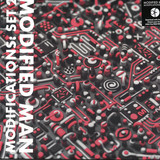
The first EP from Albert's Favourites co-founders and synth-production duo Modified Man focused on throwing out heavy editing, recording music with as few processes as possible and grabbing performances as single takes. Blending warped cassette recordings that touched upon early jazz-funk/brit-funk influences with the energy of broken beat and experimental electronica, won them support from Patrick Forge, Osunlade, Thris Tian, Yam Who and Titeknots to name a few.
Since that release they premiered new track Thorns live on Boiler Room, going on to deliver a full, three-hour live performance and DJ set for the infamous global community.They also provided remixes for Dele Sosimi, Amp Fiddler, Makadem & Behr and Hector Plimmer, meanwhile, busily preparing a series of four, six-track vinyl EPs which will be released over the next 18 months.
Do you like Love songs After spending a lifetime spent avoiding this subject in song, Joel Sarakula finally admits that he does. On his new album "Love Club" Sarakula relives the golden age of Soulful and Romantic Pop music and connects it with a modern aesthetic. While a deeper message of love and peace flows through the record, Joel Sarakula is no old fashioned hippie: ",Love Club' is about connecting to reality and re-framing the idea of romantic love and loss in the present, loveless age ". Featuring eleven songs touching all genres from disco to blues, from soul to soft-rock, Joel Sarakula's "Love Club" is a profound pop statement.
Joel Sarakula has travelled the world in search of his muse, experiencing everything from being a victim of Caribbean carjackings to performing in the remote fishing villages of Norway, via the dive bars of Europe and the US. It was the hodge-podge musical tapestry of England's capital that finally drew him to a settling point, in the wake of seemingly never ending run of shows. With personal tastes that span from the more avant-garde to soul and pop greats like Sly Stone, Todd Rundgren and Hall & Oates, there are clear nods to contemporaries like Unkown Mortal Orchestra, Erlend Oye and Toro Y Moi in terms of ambition and style.
With his last two albums "The Golden Age" and "The Imposter" collecting strong radio plays at BBC Radio 2, BBC 6, BBC London, XFM Joel Sarakula has been play-listed nationally in Europe including Flux FM, WDR 5, Radioeins, Bayern 2, Deutschlandfunk and Deutschland Kultur Radio in Germany as well as in Benelux and Italy and Spain. He is a regular fixture on the live festival and club circuit in the UK, Europe and internationally including appearances at SXSW, Primavera Sound, Glastonbury, The Great Escape, Liverpool Sound City, Scala London, Tallinn Music Week, V-ROX (Vladivostok) and Reeperbahnfestival Hamburg.
"Love Club" is Sarakula's bold and unashamedly emotional next step. In essence the album is a homage to the soulful singer & songwriter artistry of the Seventies filtered through a darker contemporary lens - fitting for these uncertain times. "I always shied away from generic love songs," the Sydney, Australia born songwriter admits, "but on this record I embraced the subject wholeheartedly... and intellectually, looking at themes of love, lust, loneliness and everything in-between." Take the first single "In Trouble", co-written with Michele Stodart of The Magic Numbers, as the best example for Joel Sarakula's unique, and honest approach to making music. "We Used To Connect" questions the changing nature of relationships in our social-media addicted world: 'We used to connect in the real world too, now the touch of your hand is a digital cue'.
"Coldharbour Man", on the other hand, examines the identity of the song's narrator and the artist vs. fan dynamic all wrapped up in a disco love song: "There's a lot going on in this particular track. I feel my writing has grown emotionally...", explains Joel Sarakula. "Just best to listen yourself and make up your own interpretation!: 'We met in a song come to life like some fantasy cliché, though I'm known for my moves in the dark you flooded sunshine on my day'. Then there's "Baltic Jam", capturing romantic love and loss in authentic 70s confessional singer & songwriter style and of course "Dead Heat", a song about how there is struggle in the most perfect relationship pairings as the match is so even: "I recall an ex-girlfriend of mine... when we first met, we thought we hated each other but we eventually flipped that emotion and realised we had a deep passion and love for each other, there just was a lot of underlying sexual tension!" : 'It's a battle we could only win, if we lose. We'd be stronger if these lonely ones became two'.
More than a year in the making, Joel Sarakula recorded "Love Club" in various studios around London and Berlin capturing soulful performances from his many musical comrades on vintage analogue equipment. "This record has truly been a labour of love. Recording and privately sharing these performances amongst my collaborators started to feel like a bit like a club - I guess that lead to the album title! I was surprised how much I actually enjoyed the 'love-making process' and I look so much forward to playing these new songs on stage with my band." We can't wait, Joel Sarakula.
A wonderful companion piece to the totemic Fed, we proudly announce the first ever vinyl edition of Korp Sole Roller by Plush. Liam Hayes' magical fourth full-length LP was previously only available on a rare Japanese import CD. Produced and arranged in 2010 by Pat Sansone (Wilco / The Autumn Defense), it finally arrives in a limited edition of 500 copies.
The common impression of Plush is that of an underground rock myth, lent greater poignancy by the lofty vision that galvanised his music. Yet while he has long been a cult concern, clued-up celebrity fans periodically declare their profound love for Hayes' maverick genius. Indeed, after Jason Schwartzman introduced Plush to Roman Coppola, several stunning songs from Korp Sole Roller soundtracked Coppola's A Glimpse Inside The Mind Of Charles Swan III.
As ever with Plush, it's easy to imagine you are listening to a privately pressed rarity from the mid-late 1970s. Or one of the criminally neglected jewels from the discography of Jimmy Webb or Burt Bacharach. The sound on Korp Sole Roller does differ crucially from Fed, however. It is more streamlined. These 10 gorgeously seductive creations careen around ornate string and wind instrument arrangements and producer Sansone's deft work is likely the reason for this. Yet, brilliantly, it still possesses that sun-warped take on classic pop-rock, that Plush specialises in. That peculiar "down-lifting" phenomenon of performing upbeat songs in an enigmatically mournful way.
Upon completion, Korp Sole Roller barely received anything resembling a release. Press coverage was zero because none of the major magazines or blogs knew of its existence. His management at the time essentially buried the album in order to concentrate on other releases. Looking back on this decision, it really made little sense. Everyone involved in its creation of these near-perfect gems is extremely proud of it. Liam himself has described it as the favourite of his albums. Pat's delicate work is astounding. Remastered especially for this special limited edition, it is presented in a sumptuous gatefold jacket with high-end art photography throughout, including full colour inner sleeves. Finally, here's your chance to own a slice of kaleidoscopic pop history.