It's hard to believe it's taken this long for a proper retrospective of legendary Los Angeles collective CVE. "We Represent Billions" is a crucial portrait of one of the West Coast's most low-key influential crews - a hydra-like collective of rappers, producers, designers and engineers who were key members of the Good Life Cafe's open mic scene, going on to inspire artists like Jurassic 5, Kendrick Lamar amongst many other. Initially called Chillin Villain Posse before morphing into Chillin Villain Empire in the late 1980s, they eventually centered around the core trio of Riddlore, NgaFsh and Tray-Loc. The crew were years ahead of their time, self-producing music without samples and pioneering a stream of consciousness lyrics that still sound fresh and innovative. CVE were self-sufficient and motivated from the beginning, named "Chillin Villains" because that's how they were perceived by white America. This social motivation was channeled into their groundbreaking performances at Good Life Cafe, the South Central session that evolved into Project Blowed and later on came to influence LA club night 'Low End Theory'. It was chronicled by Ava Duvernay, herself an MC in short-lived duo Figures of Speech, in her "This is the Life" documentary, where she interviewed CVE alongside Jurassic 5, Freestyle Fellowship, Abstract Rude and Busdriver. On "We Represent Billions", we're treated to a snapshot of the CVE sound from 1993-2003, their most prolific era. The retrospective collects music from the handful of albums the crew released on their own Afterlife Recordz label (mostly as limited edition CD-R's) plus many previously unreleased tracks and highlights their untethered eccentric creativity and sheer breadth of influence. Whether twisting twitchy West Coast electro on 'All Over Da Globe' or free associating over horror synths and foley sounds on 'Made in Chillz Ville' there's a sense that their music was just too future for its time. Assembled from heaving industrial samples and graced by back-and-forth tongue twisting flows, 'Thugs and Clips' is as eerie and hard-hitting as anything 2Pac's "The Don Killuminati: The 7 Day Theory" full-length. Fuzzed-out and unsettling, 'Calistylics' welds an ambient synth loop and bone-rattling percussion to Tricky-esque percussion, while the flickering closer 'Unicycle' is a cross between Dr. Dre's icy G-gunk pressure and Three 6 Mafia's pitch black lo-fi funk. In many ways, 2022 is the perfect time to rediscover this music: an urgent, creative fusion of spine-tingling pre-grime electronic minimalism and mind bending wordplay that still sounds completely idiosyncratic and utterly alien. Tracks: 1 All Over Da Globe 2 Thugs and Clips 3 C.V. Vault 4 Made in Chillz Ville 5 Bring It On 6 Calistylics 7 No Feelins 8 Let's Get It On 9 Today Was A Fucked Up Day 10 Untitled (Freestyle) 11 Unicycle
quête:event 7
It's hard to believe it's taken this long for a proper retrospective of legendary Los Angeles collective CVE. "We Represent Billions" is a crucial portrait of one of the West Coast's most low-key influential crews - a hydra-like collective of rappers, producers, designers and engineers who were key members of the Good Life Cafe's open mic scene, going on to inspire artists like Jurassic 5, Kendrick Lamar amongst many other. Initially called Chillin Villain Posse before morphing into Chillin Villain Empire in the late 1980s, they eventually centered around the core trio of Riddlore, NgaFsh and Tray-Loc. The crew were years ahead of their time, self-producing music without samples and pioneering a stream of consciousness lyrics that still sound fresh and innovative. CVE were self-sufficient and motivated from the beginning, named "Chillin Villains" because that's how they were perceived by white America. This social motivation was channeled into their groundbreaking performances at Good Life Cafe, the South Central session that evolved into Project Blowed and later on came to influence LA club night 'Low End Theory'. It was chronicled by Ava Duvernay, herself an MC in short-lived duo Figures of Speech, in her "This is the Life" documentary, where she interviewed CVE alongside Jurassic 5, Freestyle Fellowship, Abstract Rude and Busdriver. On "We Represent Billions", we're treated to a snapshot of the CVE sound from 1993-2003, their most prolific era. The retrospective collects music from the handful of albums the crew released on their own Afterlife Recordz label (mostly as limited edition CD-R's) plus many previously unreleased tracks and highlights their untethered eccentric creativity and sheer breadth of influence. Whether twisting twitchy West Coast electro on 'All Over Da Globe' or free associating over horror synths and foley sounds on 'Made in Chillz Ville' there's a sense that their music was just too future for its time. Assembled from heaving industrial samples and graced by back-and-forth tongue twisting flows, 'Thugs and Clips' is as eerie and hard-hitting as anything 2Pac's "The Don Killuminati: The 7 Day Theory" full-length. Fuzzed-out and unsettling, 'Calistylics' welds an ambient synth loop and bone-rattling percussion to Tricky-esque percussion, while the flickering closer 'Unicycle' is a cross between Dr. Dre's icy G-gunk pressure and Three 6 Mafia's pitch black lo-fi funk. In many ways, 2022 is the perfect time to rediscover this music: an urgent, creative fusion of spine-tingling pre-grime electronic minimalism and mind bending wordplay that still sounds completely idiosyncratic and utterly alien. Tracks: 1 All Over Da Globe 2 Thugs and Clips 3 C.V. Vault 4 Made in Chillz Ville 5 Bring It On 6 Calistylics 7 No Feelins 8 Let's Get It On 9 Today Was A Fucked Up Day 10 Untitled (Freestyle) 11 Unicycle
Basic Rhythm returns to his Jungle roots for his final release with Planet Mu. Harking back to the golden era of the mid 90s, but with a contemporary slant, Basic Rhythm hands in three dance floor killers, with a remix from the grim reaper himself, Loxy. The titular track, Cool Down The Dance, opens with a jittery fragmented drum pattern and wooshing stereo effects, lending a slightly disorienting feel to the intro before the well known vocal refrain leads into a monster amen drop. Deep subs, amen breaks and steely stabs roll out this dance floor banger. This is followed up with an absolute behemoth of a track. Horse Mout’ utilises an infamous vocal sample in a fresh way, building upon the intro with waves of dubwise effects before launching into a devastating onslaught. With support from scene stalwarts DJ Storm and Flight this one has been smashing up dance floors! The third track is a remix of Cool Down The Dance by Loxy, bringing his inimitable cool production style to the fore, stripping away the amen layers to reveal something for the darker corners of the dance. One for the head noders and the eyes down crew. The final track, Satta, is a nod to the dub of Augustus Pablo, King Tubby, and On U Sound. A slow boiling minimal intro that drops into the extreme minimalism of just a kick drum and sub bass line belies the swagger of the eventual drop. Swinging drums in an almost military pattern tumble and stagger around the core line of kick drum and sub bass, lending this an almost drunken air.
Time Cow & Ossia take 2 tracks from Jabu’s 2020 album ‘Sweet Company’ into unfamiliar (and dance floor friendly) territory. Side A sees ‘Us Alone’ gets transformed by Time Cow from slo-mo tearjerker into syrupy disco wrecker, managing to somehow touch on reference points everywhere from east LA lowrider anthems through 00s garage and all propelled fwd by an eyeball shaking low end pressure. On the flip Ossia takes snatches of the original ‘Slow Down’ and flashes them in around a 4/4 and a synth melody, fragments of Daniela’s vocal floating like a half remembered conversation. Later Rakhi’s strings come in but in a more unsettling way than the original, eventually dissolving to a kind of Majora’s Mask (in dub) conclusion. All terrain / all weathers - club / bbq / afterparty / late night introspection sessions.
»Sull’Accordo Mimetico (On the Mimetic Chord)« dates back to the end of the 80’s. It was commissioned by the artistic director of the ParcoScenico Festival, held in Treviso, Italy. Since the area where artists and the public gathered after the Festival was located to a very busy street, Marco asked me for a sound installation that could work as some sort of a defensive barrier for the street noise. I suggested that my work, rather than hiding the noise, should aim to harmonize the disturbances coming from the street within musical structures and forms, without burdening or saturating too much the acoustic spectrum of the place. In this way, I thought about sonic veils, consisting of repetitive – but also light and discreet – harmonic-rhythmic structures. Since the Festival took place in a beautiful centenary park, I also integrated the music with natural sounds and animal calls, always as an attempt to bridge these sound events and the other materials that made up the composition. The human voice constitutes a central element in this musique d'ameublement project, as a constant source of memory of places and times – here with many references to traditional music for children.
A pearl of ambient electro-acoustic mimimalism with field recordings components in which the nostalgia of Maestro Tiziano Popoli shines through in painting landscapes that slowly change to be seen with the ears. Nocturnal, emblematic, Lynchian.
The roots of Naima Bock’s music are far reaching. Born in
Glastonbury to a Brazilian father and a Greek mother, Naima spent
her early childhood in Brazil before eventually returning to England
and various homes in South East London. This heritage combines
with more recent pursuits in Naima’s music. From the Brazilian
standards that the family listened to while driving to the beach, to the
European folk traditions she tapped into on her own, and the pursuits
that interest her today - studies in archaeology, work as a gardener,
and walking the world’s great trails - Naima’s music draws from
family, the earth and music handed down through generations.
Naima’s debut album, ‘Giant Palm’, is undoubtedly infused with the
Brazilian music of her youth and regular family visits. She found
inspiration in “the percussion, the melodies, chords - and particularly
the poetic juxtaposition of tragedy and beauty held within the lyrics.”
By the age of 15, Naima was embedded in the music scene of SouthEast London, eventually forming Goat Girl with school friends and
touring the world. After six years playing bass in Goat Girl, Naima left
the band to try something new. She set up a gardening company and
started a degree at University College London in archaeology
because, as she jokes, “I liked being near the ground.” During this
time, she wrote music, played guitar, learned violin, worked with evershifting South-London collective Broadside Hacks, and met producer
and arranger Joel Burton through Memorials of Distinction labelhead
Josh Cohen. Joel’s burgeoning interest in Western classical music,
global folk music, and experience in large scale arrangement and
orchestration informed the collaborative process that eventually
culminated in ‘Giant Palm’.
Recorded with the help of over 30 musicians (including Josh Cohen
on synth / electronics) by Dan Carey of Speedy Wunderground at his
studio space in Streatham, South-East London, and engineered by
Syd Kemp, the songs on ‘Giant Palm’ represent a snapshot of a
specific feeling, of brief moments in Naima’s life that make up a larger
whole.
The expansive yet delicate arrangements highlight Naima’s love for
the collectivist values of traditional folk music, in which songs belong
to everyone, and singing can take on countless forms without the
need to exactly replicate something. “All the other representations
that I’d had of singing felt so unattainable,” she recalls. ‘Giant Palm’
finds Naima bucking these expectations to let her unique voice and
sense of communal creativity flourish.
Obscure Mid 70's Mid Tempo Killer
Producer: Melvin Seals / 1976
Money Mountain BMI / Oakland: California
About Jerone Roy:
Jerone is a highly-skilled singer and entertainer who has been entertaining the audience by putting smiles on faces, warming people’s hearts, igniting song in the soul, and inspiring people to get up and move! His background in music takes him deep from Texas to the Hollywood music industry and back again.
Along the journey, he has developed skills in event management, event planning, singing, television, music production, theatre production, songwriting, recording, festivals, interpersonal skills, acting, and voice-overs.
“Still Lives” is the third solo full length by the Finnish composer Marja Ahti, following a pair of releases on the Hallow Ground imprint. As a collection, it may be seen as a series of studies on the liminality of the listening act and an investigation into the physicality of sound. Ahti forges vivid electroacoustic environments from field recordings, analog synthesizers, acoustic feedback, magnetic tape and digital processing, resulting in a set of articulate, prickly, and surprising compositions. In the artist’s words, “These pieces could be conceived of as vanitas paintings of a kind – selections of mundane or archetypal objects, sounds that have their own distinct qualities, but exist only by virtue of being temporary events. From another angle, one could think of them as shrines – objects assembled and set in a particular relationship to each other, charging each other in their given constellations.” Marja Ahti (b. 1981) is a musician and composer based in Turku, Finland. Originally from Sweden, Ahti has been a part of the Finnish experimental music scene for more than ten years in different constellations. She is currently active in the duo Ahti & Ahti with her partner and as a member of the Himera artist/organizer collective.
The Lost Daughter is a critically acclaimed 2021 psychological drama film written and directed by Maggie Gyllenhaal in her feature directorial debut, based on the 2006 same-titled novel by Elena Ferrante.
The film stars Olivia Colman, Dakota Johnson, Jessie Buckley, Paul Mescal, Dagmara Domińczyk, Jack Farthing, Oliver Jackson-Cohen, with Peter Sarsgaard, and Ed Harris. Colman also serves as an executive producer on the film. The film follows Leda (Colman) who is on a solo-vacation at the seaside and becomes consumed with a young mother and daughter as she watches them on the beach. When a small, seemingly meaningless event occurs, Leda is overwhelmed by memories of the difficult, unconventional choices she made as a mother and their consequences for herself and her family. The seemingly serene tale of a woman’s pleasant rediscovery of herself soon becomes the story of a ferocious confrontation with an unsettled past.
The Lost Daughter premiered at the 78th Venice International Film Festival, where Gyllenhaal won the Golden Osella Award for Best Screenplay. At its opening night world premiere, the movie received a four-minute standing ovation from Venice Film Festival attendees. The film also received three nominations at the 94th Academy Awards for Best Actress (Colman), Best Supporting Actress (Buckley), and Best Adapted Screenplay.
Thescore is composed by Dickon Hinchliffe, founding and former member of Tindersticks. Dickon’s unique style of composition and arrangements developed from his classical study of the violin and song writing and recording in bands.
The Lost Daughter is available as a limited “Peal it like a snake, don’t let it break” edition of
750 individually numbered copies on orange marbled vinyl. The LP features alternative artwork designed by Yelena Yemchuk, a Ukranian professional photographer, painter and film director, best known for her work with The Smashing Pumpkins. The vinyl package includes an inset with pictures and liner notes by both Maggie Gyllenhaal and Dickon Hinchliffe.
When words trail off at the beginning of claire rousay’s »everything perfect is already here«, ornate instrumentation is waiting to fill a void left by the breakdown of language. Yet it becomes clear as we trace rousay’s collaged sonic pathway that breakdown, of meaning and also of melody, is also a place to rest. everything perfect… is made up of two extended compositions that cycle between familiarity and unknowing. There are seemingly infinite ways to feel in response to these pieces of music, which shift tone across their languid duration, earnest like a familiar song but unbound from the emotional didacticisms of lyrical voice and pop form.
rousay builds a fluid landscape around the acoustic contributions of Alex Cunningham (violin), Mari Maurice (electronics and violin), Marilu Donovan (harp), and Theodore Cale Schafer (piano), whose respective melodies weave gently in and out, sometimes steady, sometimes aching, sometimes receding altogether in deference to less overtly musical sounds. That is, percussive texture in the form of unvarnished samples and field recordings: the rattle and rustle and the stops and starts of life unfurling, voices sharing memories nearly out of reach, doors closing, wind against a microphone. Everything comes from somewhere in particular, possessing the veneer of the diaristic, but sound’s provenance is secondary here and so these details become tangled and fused. On this release I hear such details not as individual ornaments or stories but the collective architecture of the greater composition. It’s an architecture that is not quite formed and thus full of openings out to the world unfolding.
“The world unfolding,” that’s a kind way of saying change, movement, loss, transformation. Things rousay here indexes, not without shards of desire or pain, still somehow what I hear is coarse peace in the in-between. These two pieces sweep you away and then bring you to earth, but which is which, anyway? Where am I now? What is different outside of me? What is different inside of me? Um. I think. everything is perfect is already here, like the answers to these questions, is loose and beautiful in surprising ways.
The music guides a certain experience of the world around. In claire’s music there is this marriage—not just a pairing or juxtaposition but an interrelationship, an eventual confusion—of song/texture, narrative/abstraction, figure/ground. Everything comes from somewhere in particular but not just the voices, the field recordings, the what is being said or meant, what matters is the where you are now. There are so many ways of anchoring oneself in the present, some have to do with fantasy or storytelling and some with accepting what is.
These two compositions find peace between these modes. They sweep you away and then bring you to earth, but which is which, anyway? Their mode of feeling is inquisitive. Where am I now? What has changed outside of me? What has changed inside of me? The music, like the answers to these questions, is loose and beautiful in surprising ways.
Robin Pecknold brings light to the bleakest of winters with Fleet Foxes' 'A Very Lonely Solstice,' a 13-track career spanning collection recorded in December 2020, at Brooklyn, NY's St. Ann & the Holy Trinity Church. Now being released for the first time on vinyl, CD and digital formats, 'A Very Lonely Solstice' captures a poignant moment in time. The recording was originally broadcasted as a live-stream event on the winter solstice of 2020, just days after New York declared a state of emergency tightening restrictions again in response to increasing COVID-19 cases. Pecknold describes the set as "me by myself on the longest night of the year... honoring the loneliness of 2020 with a nylon string and some songs new and old." Fans worldwide tuned in while quarantined at home, finding solace and a sense of community in a period of extreme isolation. Much of 'A Very Lonely Solstice' showcases a solo focus on Pecknold who offers up acoustic arrangements of fan-favorite songs spanning Fleet Foxes' catalog. Selections cover all four of the band's studio albums, including their 2008 self-titled debut album ("Tiger Mountain Peasant Song") to 2011's Helplessness Blues ("Blue Spotted Tail") and 2017's Crack-Up ("If You Need To, Keep Time On Me"), all the way to their latest release, Shore. Resistance Revival Chorus joins Pecknold on Shore tracks "Wading In Waist-High Water" and "Can I Believe You." Also featured: a cover of Nina Simone's "In The Morning" and a rearrangement of the traditional "Silver Dagger."
Black Vinyl Repress
For the third release on De:tuned we proudly present The Kosmik Kommando AKA Mike Dred. Mike hardly needs an introduction; considered as one of the masters of the Roland TB-303 Mike has been releasing records under various aliases since the early 90s. He has recorded for high profile labels such as R&S and Rephlex as well as his own Machine Codes label. Together, with Aphex Twin, Mike was behind the Universal Indicator releases which are among the most collectible and sought after records in techno history.
De:tuned has worked closely with Mike to develop an 8 track project that gives props to the American Psychologist Timothy Leary and his proposed theory of 'The Eight-Circuit Model of Consciousness'. This model describes 8 circuits of information that operate within the human nervous system. Each circuit refers to a different sphere of activity, enhanced by experimentation with a particular substance. Each circuit also represents a higher stage of evolution than the one before it and the higher the circuit, the fewer the people have activated it as the higher four circuits exist for those who migrate to outer space and live extraterrestrially.
The 8 Models are applied to the track titles that present a varied collection integrating acid house, techno, electro and rave culture.
3 of the tracks on offer here were written exclusively for Mike's live performance at the De:tuned 'Meeting of Minds' event in June 2012, which was Mike's first full live show in 3 years.
This 8 track project will be available on limited 180 gr white double vinyl with label and sleeve artwork by Mike himself. Stay Tuned!
2022 Silver Vinyl Repress
For the third release on De:tuned we proudly present The Kosmik Kommando AKA Mike Dred. Mike hardly needs an introduction; considered as one of the masters of the Roland TB-303 Mike has been releasing records under various aliases since the early 90s. He has recorded for high profile labels such as R&S and Rephlex as well as his own Machine Codes label. Together, with Aphex Twin, Mike was behind the Universal Indicator releases which are among the most collectible and sought after records in techno history.
De:tuned has worked closely with Mike to develop an 8 track project that gives props to the American Psychologist Timothy Leary and his proposed theory of 'The Eight-Circuit Model of Consciousness'. This model describes 8 circuits of information that operate within the human nervous system. Each circuit refers to a different sphere of activity, enhanced by experimentation with a particular substance. Each circuit also represents a higher stage of evolution than the one before it and the higher the circuit, the fewer the people have activated it as the higher four circuits exist for those who migrate to outer space and live extraterrestrially.
The 8 Models are applied to the track titles that present a varied collection integrating acid house, techno, electro and rave culture.
3 of the tracks on offer here were written exclusively for Mike's live performance at the De:tuned 'Meeting of Minds' event in June 2012, which was Mike's first full live show in 3 years.
This 8 track project will be available on limited 180 gr white double vinyl with label and sleeve artwork by Mike himself. Stay Tuned!
Samantha Togni makes her TITDM debut with five uncompromising cuts, exploring the darkest corners of techno and channeling her artistic expression in a flurry of controlled yet innovative directions. This compulsion to work without boundaries isn't new to Samantha, having always leaned toward a 'do it your own way' attitude, leading to Samantha founding Boudica in 2017; a collective aiming to give visibility to women and non binary artists through their events, conference, radio show and podcast.
'Trust The Heat' rattles through the speakers with its bone twitching bass, spilling out from its kickdrums and marching forward at an unnerving pace. The accompanying grooves give way to primal movements and an added layer of welcomed spice. There's no sing-songy samples here, just a vocal phrase with the energy of a megaphone edging through a busy club; guiding dancers to keep moving. 'No Pressure to Fit In' follows up with its spiraling basslines opening and closing, providing the movement against a backdrop of percussive power. Togni brings back the vocal snippets. this time to greater hypnotic effect.
'Sensible Social Lies' sounds like the type of techno you'd expect to hear on a planet from Dune; shapeshifting its way through sand with a heavy onslaught of newly discovered sounds. 'Cockroaches' scales back, remaining functional and still packing a serious punch, before the record comes to a pupil dilating close with 'In Vivo' a melodic, left-leaning piece honoring what makes techno so great, while remaining fiercely contemporary and unique to the artist who created it.
Soul icon Otis Redding made immeasurable contributions to the form. As a singer-
songwriter, producer, arranger and talent scout, Redding was responsible for some of the
music’s biggest and most lasting hits during the 1960s, though his death in an airplane crash
in 1967 brought his life and career to a tragically premature end. He was born Otis Redding
Junior in 1941 in the small town of Dawson, Georgia, the son of a sharecropper and preacher,
and moved to the city of Macon at the age of two, where he learned to sing at the Vineville
Baptist Church. After singing in the high school band, he performed weekly gospel songs on
radio station WIBB, winning local talent contests after being inspired by Little Richard and
Sam Cooke. Since his father became ill with tuberculosis, Redding began supporting the
family at the age of 15, working as a gas station attendant, a digger of water wells, and
occasionally by playing piano with pianist Gladys Williams at the Hillview Springs Social
Club. Then, in 1958, Redding had a repeat prize run at a talent contest held by broadcaster
Hamp Swain, bringing him first into a group called Pat T Cake and the Mighty Panthers, and
later into Little Richard’s band (during a time when Richard switched rock and roll for
gospel). Moving to Los Angeles in late 1960, debut single “She’s All Right” was issued on
the Trans World label (a subsidiary of Al Kavelin’s Lute Records), credited to The Shooters
featuring Otis; following the birth of their first child and his subsequent marriage to Zelma
Atwood, Redding recorded the popular “Shout Bamalam” for Macon’s Confederate Records
(who swiftly reissued it on the Orbit label since some radio stations objected to the original
label’s confederate flag logo, during a time of terrible racial segregation in the South).
Redding cut the movingly emotive “These Arms Of Mine” at Stax studios in Memphis in
1962, backed by Booker T and the MGs, which surfaced on the subsidiary Volt label in
October, reaching the charts some six months later (and eventually selling a reported 800,000
copies). Subsequent singles “What My Heart Needs” and “Pain In My Heart”/“Something Is
Worrying Me,” recorded in September 1963, formed the bulk of debut album, Pain In My
Heart, which was padded out by standard cover tunes of songs such as “I Need Your Lovin’,”
Ben E King’s “Stand By Me” and Little Richard’s “Lucille.” The album, which surfaced at
the start of 1964, reached the top 20 of the US R&B chart and also hit the Billboard Hot 100;
this edition has an alternate track listing that includes the Trans World debut single tracks
“She’s All Right” and “Getting’ Hip,” as well as “Mary Had A Little Lamb,” the B-side to
“That’s What My Heart Needs.” Carefully remastered, spinning at 45 rpm for enhanced qudio quality.
- A1: Crazy About You (Can't Hold Out Much Longer) (Can't Hold Out Much Longer)
- A2: Down At The Crown
- A3: Tell Me All The Things You Do
- A4: Station Man
- A5: Purple Dancer
- B1: Station Man
- B2: Crazy About You (Can't Hold Out Much Longer) (Can't Hold Out Much Longer)
- C1: One Together
- C2: I Can't Stop Loving Her
- C3: Lonely Without You
- C4: Tell Me All The Things You Do
- D1: Jewel-Eyed Judy
- D2: Hey Baby
- D3: It's You I Miss
- D4: Gone Into The Sun
- D5: Tell Me You Need Me
- E1: Madison Blues
- E2: Purple Dancer
- E3: Open The Door
- E4: Preaching Blues
- E5: Dust My Broom
- E6: Get Like You Used To Be
- E7: Don't Go, Please Stay
- F1: Station Man
- F2: I'm On My Way
- F3: Jailhouse Rock
- F4: King Speaks
- F5: Teenage Darlin
- F6: Honey Hush
This three album Limited Edition Numbered set of Fleetwood Mac live
and studio tracks on Blue Vinyl recorded after the departure of Peter
Green and before the arrival of Stevie Nicks and Lindsey Buckingham
Fleetwood Mac made it big twice over: first as young kings of the late 1960's
British blues boom – blues fanatics who nonetheless made the pop charts with a
batch of memorable songs penned by founder Peter Green.
Then secondly, as the band that with its Rumours album Californian line- up,
tapped into a whole new market in the mid-1970's which became known as AOR -
adult oriented rock.
The music here is from a pivotal eighteen months in Mac's history as it lost its
original if- it- ain't- blues- we- don't- wanna- know attitude and looked to its own
songwriters - and America's West Coast sound - for inspiration.
After Peter Green's exit in May 1970 the rest of the band bravely decided to carry
on as a 4-piece, and so rented an oast house called Kiln House to try and 'get it
together in the country. Christine McVie joined, and one of the stand-out songs,
'Station Man', would endure for Mac in the bleak years before they moved to
California in 1974 where they struck gold with their eponymous white album and
then Rumours. 'Station Man' eventually found its way into the live set-list of the
Buckingham/ Nicks line- up and listening to it again here you can hear why: in
there, as far back as 1970, are some trademarks of the Rumours sound: threevoice harmonies, in- song tempo changes and ringing guitar sounds. Similarly,
'The Purple Dancer' and 'Jewel Eyed Judy' showcase a vocal harmonies and
melodic sense of things to come for Fleetwood Mac many miles down the line.
Höga Nord Rekords kindly welcomes Teecwa back to the label, following up his last full length-album “Beyond the Altai” with “Elysian on Moon Lake”. He is still exploring the intersections between house, electro, techno and dub and once again he manages to harness the analogue electronics in his machines to produce modern psychedelia.
“Elysian On Moon Lake” is rawer, less airy and not as sparkling as his last album. This is a tighter, and slightly darker experience than Teecwa’s previous work, maybe caused by being in quarantine for extensive time during production, letting some of the dreaminess aside for the harsher reality in a pandemic world. Still, you get a mind-altering experience in a lot of tracks since the album starts off in a lighter tone than how it later develops. Switching from the A- to the B-side works as a rite of passage going from dusk to night; the sun rays through the blinders are replaced by neon light dancing on the walls and ceiling.
Regarding the dramaturgy of “Elysian On Moon Lake”, this album has movielike qualities; a well-directed piece from the opening impact and setup through the confrontational part where intensity builds up to the climax in “Hythmdoser” to the cooling down effect of the peaceful closer “Celestial Trails”. The trip eventually ends up in a safe and happy place after the cathartic finale.
This is not a just collection of songs, this is an album made to experience in full length without interruptions.
- A1: Kim Fowley - Intro
- A2: Rock & Roll Music
- A3: School Day (Ring! Ring! Goes The Bell) (Ring! Ring! Goes The Bell)
- A4: Johnny B Goode/Carol /Promised Land
- B1: I'm Your Hoochie Coochie Man
- B2: Maybellene
- B3: Too Much Monkey Business
- B4: Nadine (Is It You?) (Is It You?)
- B5: Reelin & Rockin
- C1: Sweet Little Sixteen
- C2: Memphis, Tennessee
- C3: My Ding-A-Ling
- D1: Wee Wee Hours
- D2: Goodnite, Sweetheart, Goodnite (Aka Bonsoir Cherie) (Aka Bonsoir Cherie)
- D3: Johnny B Goode (Reprise)
2 Vinyl Disc - Swirl Color - Live archive release
Chuck Berry, the songwriter and guitarist now known worldwide as the Father of
Rock & Roll, came from humble beginnings. The complete Concert. Mastered
from the Analog Tapes: There was no shortage of historic rock music festivals in
1969, from highs of Woodstock to the crashing lows of Altamont. Meanwhile,
interest was steadily building on another front. A full-fledged 1950s rock and roll
revival was brewing, and the idiom's pioneers were experiencing a Renaissance.
No longer viewed as over-the-hill relics, they stood as vital sources of real rock
and roll. Combining the two contrasting demographics at one event was a rare
sight to behold, but the Toronto Rock 'n' Roll Revival 1969, held that September 13
at the University of Toronto's Varsity Stadium, represented that unlikely hybrid.
That afternoon the Father of Rock & Roll returned to lead the apostles of rock into
the next decade. After decades of inferior releases, for the first time, this
historical concert is presented in its entirety. Includes, School Days, Carol,
Memphis, Nadine, Rock & Roll Music, Johnny B. Goode, I'm Your Hoochie Coochie
Man, Too Much Monkey Business, Sweet Little Sixteen, Goodnight Sweetheart
Goodnight and more. Double LP Pressed on Swirl Color Color Vinyl.
The “Tumult Hands” duet is made by Jacek Sienkiewicz and Jerzy Przezdziecki - the producers
whose composition has - to a large extent- defined the Polish techno music. Sienkiewicz - as
early as Recognition - started his adventure with music in the late 1990s. Subsequent records,
already under his own name, were released, among others, at Cocoon Records, Trapez, Klang
Elektronik and WMFRec. Przezdziecki started publishing a little later. Over the last two
decades, he has been presenting various types of electronic music, among others, as Praecox,
Epi Centrum and Jurek Przezdziecki.
“Tumult Hands” has two EPs on its account – “Tumult Hands EP” (2014) and “Tropic
Factory” (2016). Both were published by Recognition. So a full record was a matter of time.
The album titled: “TH” (Recognition, 2022) has been prepared for many years. The repertoire
was created mainly out of improvisation. As artists themselves say, “it is the result of
discovering and accepting a chance event.” For both producers, close contact with
instruments was important during their composition; the type of interaction between the maker
and an electronic device. Individual works have been maturing for a long time. Paradoxically -
the lapse of time did not cause them to be ageing but vice versa - allowed them to mature and
gain natural weight.
“TH” brings very diverse music. In part, it is the repayment of the debt that Sienkiewicz and
Przezdziecki incurred towards the most creative techno period, that is, the 90s of the 20th
century. The lovers of experimental dance music from before the quarter of the century will
easily capture in the duet’s themes the art of Cristian Vogel, producers known from the tin
series of Chain Reaction record company or early recordings of Richie Hawtin (Plastikman,
F.U.S.E.). This is a very similar, non-standard approach to sound structure and an original
approach to rhythmic structures. Minimalist melodies, accompanying e.g. the opening of the
“enter TH” or “pow” set, contribute to the composition an element of some sublimity and
metaphysical anxiety. Obviously, it is still the dance music but the duet - to some extent by
abandoning the club functionality (understood in the techno convention) - has given its music
a definitely sophisticated, artistic elegance.
Publishing cooperation between such important makers, as well as high quality of recordings,
leads us to see “TH” as something more than just another techno record. It is an event and an
electronic adventure that all lovers looking for dance music will appreciate.
Listening pays off. This is evident not least in the debut EP of Golden Pudel Club barman Paul Speckmann.
Long years behind the bar of the Hamburg club pub made him a willing listener to the numerous and diverse events there - from start to finish, something that very few "regular" clubbers can claim.
And these influences, from indie concert to electronica crunch, from jungle breakbeat massacre to dignified house groove, not only led to his varied DJ sets, with which Speckmann also made his house club happy, but certainly also served as inspiration for these wonderful tracks, which skil-fully oscillate between deep-dusty house, angereak indie dance and playful IDM jingling, often varying different elements in one track.
There is, for example, the delicately dreamy house hit "On The Flip", the latenight funk of "Star-ship", which would not be out of place on the Sunday MFOC floor, or the blurred indie ambient tune "Return", which captivates with campfire guitar and Sophia Kennedy on the vocals.
And these are just three of the seven tracks (or eight on the digital release) on the EP, none of which disappoint. Someone has listened carefully and learned his lessons. Chapeau!
In their first outing since They Can't Be Saved, released on Skam in 2020, they enlist British rapper King Kashmere, who features on two tracks. Where James Ruskin has appeared
on Tresor Records for his seminal albums Point 2, Into Submission, The Dash and his recent Siklikal EP, the only appearance of Mark Broom on the label is a 2002 remix of
The Golden Apple by Eddie “Flashin” Fowlkes.
The duo unveiled this new work and collaboration with King Kashmere in a live show for a 30th Anniversary event for
Tresor Berlin televised on Arte, performing amidst a battery of lights and fogged-up refraction. It demonstrated their
rough-hewn fundamentals, roving melodies and investigative power, newly advanced by voice.
Death Switch is the first appearance by King Kashmere, savaging questions on segregation and suering, encoding
into our brains the much-repeated refrain - “You wanna know, why they wanna flip the death switch“. Spinning Globe
captures Kashmere in a gritty flow over a swaggering beat, bouncing and resonant. This unsanded voice lends an
enhanced texture and tension to the highly-processed sonic palette of Broom and Ruskin, accumulating with innate mettle.
Elsewhere, Appi dredges depths as widescreen beats lurk, digital artefacts pave the way to a hauntingly melancholic
coda. Lacovset features singer Ella Fleur who has worked with Mark Broom on his solo release Fünfzig. It enacts a
pointillist gated vocal alongside dolphin-like percussive communications. On LFIVE, the duo embalms their sonic textures with digital eects that flutter austerely with
syncopation in the crosswind of a beat that recalibrates at points.
An urgency slowly draws in on title track Slinky through fizzing electronics and fractured drums all corroded. Eem
locates a semblance of euphoria, with a tranceinducing release led by swirling arpeggios. Closer KZAP finds
the calmest moment on the record, with its wafting, nebulous synths and swamped hip hop beat.
Slinky finds an ever-evolving project, The Fear Ratio shapeshifting by bringing in the voice into their work and
continually pushing with their incredibly-eected rhythmic styles and peculiar, wandering synthesis.
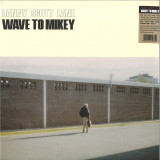
Wave to Mikey, the fourth album from the Los Angeles-based actor, musician and photographer Danny Lane is a nocturnal, neon-lit ode to the friendships that shape us. “I made this album for my friend Mikey from back home,” Danny explains. “We were pretty much inseparable for a large part of our lives, and our musical and social minds were always in sync in a special way. Then with age, we drifted apart, especially since I moved to Los Angeles. This album is just a little wave hello to an old friend and a kindred spirit.”
Equal parts avant-garde composition, instrumental city-pop, ambient, Kankyō Ongaku (environmental music) and Fourth World music, Wave to Mikey is an impressionistic and reflective cycle of eleven richly detailed memory portraits. Throughout the album, the influence of Jon Hassell, Arthur Russell, Hiroshi Yoshimura and Yellow Magic Orchestra hangs in the air like late-night mist, adding character but never overshadowing the rhythmic ambience of Danny’s musical visions.
Wave To Mikey began as a series of sketches on analog synthesisers, guitar, sample and found percussion sketches, initially recorded in Danny’s home studio. Once he’d located the vibe, Danny called on his friends E Talley II, Solange collaborator John Carroll Kirby and Destroyer session musician Joseph Shabason, who respectively added flute, spiritual synth textures and saxophone to the record.
For Glossy Mistakes founder Mario G.R., who originally discovered Danny through his photography, Wave To Mikey captures a vivid feeling of melancholy and peace. “He's able to encapsulate emotions in a very straightforward way, either in his portrait or songs,” Mario says. “I think that's a kind of virtue or skill given to talented artists, no matter the field.”
Born and raised in Staten Island, New York, Danny began playing music with his friends when he was thirteen, before putting that passion on pause to study Fine Arts (Theatre) at Rider University in Lawrence Township in pursuit of an acting career. Acting led him to photography, after playing a photographer in a film, he was inspired to pursue the medium. Danny began shooting photos on film for magazines and lifestyle brands, spent a stint living in New York’s Chinatown neighbourhood, and eventually relocated to Los Angeles in 2017.
Four years ago, Danny started recording and releasing music under his own name, leading to the trilogy of releases that preceded Wave To Mikey, How To Empty A Cup (2019), Memory Record (2019) and CAPUT (2021). Over the course of these releases, he’s revealed himself to be a sophisticated composer and producer with a studied ear from years spent digging through record bins for ambient, experimental, new age, jazz and electronica records from around the globe, with a particular emphasis on Japan.
“Music is something that’s always been involuntary for me,” Danny reflects. “It’s unconditional, always there. It’s something I just have to do. I’ve taken breaks and it’s always gloomy when I’m not playing. I just want to get better and better and understand more and more.”
Here at Glossy Mistakes, Wave To Mikey marks our second contemporary album release, following on from Evenings by Japanese composer Metoronori. We’re proud to be able to present Danny, Metoronori and other modern musicians' work alongside reissues of classic works from Stevia aka Susumu Yokota, Akira Ito, Yuji Toriyama & Ken Morimura, and Takashi Kokubo.
Mastered by Damian Schwartz, Wave To Mikey will be released on Vinyl LP Glossy Mistakes on June 27 2022. Besides the regular black vinyl, a limited clear vinyl will be available in an edition of 100 copies. Both editions come packaged with original cover art photography shot by Danny.
The Entertains were a vocal group from Cleveland Ohio whose line up at different times varied between four to five members. Initially signed to Belkin Productions in Cleveland the group were persuaded by Nick Holiday to move to his Pittsburgh Steel Town Records Label. The group had already been working on two songs penned by C-Way Productions Richard Calloway who had strong links with Cleveland through his work with Jesse Fisher and Lester Johnson at Way Out Records. The two songs in question being “Love Will Turn It Around” and Why Couldn’t I Believe Them”, demo cuts of both songs where touted around to several major labels with 20th Century showing some serious interest, but the owner reputedly turned down 20th Century’s advances and instead chose to release the songs on his own Steel Town Label. Recorded at Jerree’s Studio in New Brighton P.A with the musical arrangements being provided by Don Groton, The Entertains 45 received limited local airplay reputedly due in part to Holiday’s refusal to provide a set of Dining Room furniture for an influential local radio promotion man. Greater radio play was eventually received with “Love Will Turn It Around” gaining air time on WANN, Annapolis Maryland’s largest Black radio station, courtesy of Disc-jockey Charles “Hoppy” Adams. For a time, a popular tune throughout Baltimore, Washington and Delaware without breaking out nationally. Wider appreciation of the Entertains 45 would come from foreign shores as copies of the 45 found their way in the UK. The effervescent dance side of the 45 “Love Will Turn It Around” was heavily championed by Legendary DJ Colin Curtis and became a firm favourite with the dancers within the Highland Room of the Blackpool Mecca and subsequent Northern Soul venues of the time. The Entertains line up on the Steel Town sessions where Donald Rice, Howard Rice (the cousin of Donald) Alfred Wilson and Andrew Wright the lead vocalist on all The Entertains songs. During 1978 Richard Calloway held a second recording session on The Entertains again at Jeree’s Studio’s which yielded a further two songs “I’ll Answer You With Love” and “Your Love I Give It Up” which due to lack of finance at the time of their conception remained in the can. These two songs have now been brought to life through Soul Junction’s licensing deal with C-Way Production’s in the format they originally intended for. The A-side of the release is the emotional charge stepper “I’ll Answer You With Love” with the opening monologue parts been performed by Howard Rice. While the B-side “Your Love I Give It Up” is a punchier up-tempo version of Richie Merrett’s earlier C-Way Records recording “I Gave It Up”, the flipside to “You’ll Always Have Yesterday Standing By” (C-way 103).
In later life Donald Rice would perform with Lonnie Turner Jr a former member of the Detroit groups The Mighty Lovers (Boo-Ga-Loo and Soulhawk) and Innervision (Private Stock and Ariola America) and his daughter Africa Turner in a vocal combo known as The Ambassadors Of Soul, sadly Donald has now passed. It is believed that the other members of The Entertains are still out there performing solo or as members of other different groups.
‘OOH DO U FINK U R’ is A gloriously sunny, optimistic and defiant Motown and ‘60’s R&B influenced stomper drawing on Suggs and Weller’s upbringing in Britain’s 1970’s comprehensive school system in London and Woking respectively.
Having known each other on-and-off over the last four decades, the seeds of this collaboration emerged in 2019 when Weller joined Suggs on his Radio Four series ‘Love Letters To London’ to talk about an ever changing Soho. As the world subsequently went into lockdown in 2020, the pair started chatting more and more frequently about music, clothes and football, eventually exchanging half finished songs, demos and sketches of lyrics. With its working class aesthetic, Motown influenced stomp, and uplifting brass, it’s an intuitive collaboration that sits neatly as a welcome addition to both men’s great songbooks.
- A1: Orhythmo - Nagel
- A2: Spinnuts - Zweimal Schlafen Atmosphäre
- A3: Ypy - Ms
- B1: Keihin - Exhale
- B2: Dj Nobu - Yakou Gai
- C1: Gabber Modus Operandi - Kisah
- C2: Coni - Ängelsbäcksstrand
- C3: City - 9K
- D1: Ryo Murakami - Reminiscence
- D2: Sapphire Slows - Hinotori
- D3: Compuma - Flowmotion (In Dub)
- D4: Albino Sound - Celestial Sphere
Versatility does not even come close to describing how the humble Japanese ¥ØU$UK€ ¥UK1MAT$U is considered to be one of the best DJs in the world by many of his peers. From his debut at DJ Nobu’s FUTURE TERROR event to performing 3 years consecutively at Berlin Atonal Festival, Yukimatsu’s sets have to be heard for you to understand.
In this special mix album, Yukimatsu gathers round his producer friends to build vessels of the story structure. Threading the pages together, interweaved by friendship and sine waves, he has crafted a masterful presentation from their individual messages. Pulling and stretching all sonic shapes and shades while exploring the farthest reaches of sound, the result is a frequency soup of twelve outstanding tracks that when sequenced together, become part of a greater, grander story: Midnight is Comin’.
From the sound art experimentations of orhythmo – Nagel and wide yawning strings in Ryo Murakami – Reminiscence to the rhythmic slo-mo haze of Sapphire Slows – Hinotori and the exponentially pulsing colours from DJ Nobu - Yakou Gai. The DMT-like spacious virtual meditation hall of KEIHIN – Exhale follows the uneasy footsteps of YPY – MS to the intermissioning chapter of City – 9K. Fall into the wormhole of COMPUMA –Flowmotion (IN DUB) and be transported to the reverb-drenched, intimate experience of Coni – Ängelsbäcksstrand, the primal invocations of Gabber Modus Operandi – Kisah (which also means story in Bahasa Indonesian) to the transcendent notes of SPINNUTS - Zweimal schlafen atmosphäre. The soaring universe of Albino Sound – Celestial Sphere wraps up the album with crystalline notes.
“Versatile is not even close to describing his music selection and mixing skills as he plays anything without prejudice and is purely music loving. He is extremely humble, can mix anything and make it sound interesting.” – nolens.volens (Bangkok, Thailand)
Mr. K is back again with a double-sider that tackles the ups and downs of love and does it in fabulous style with two solid soul classics.
Yvonne Fair was a veteran of the soul music world when she finally got the chance to record her first full length album in 1975. She had recorded multiple singles under the guidance of James Brown (her “I Found You” was reworked by Brown into the chart-topper “I Got You (I Feel Good)”) and, after leaving the JB camp for the auspices of Motown, a clutch of 7-inches with Norman Whitfield. These were gathered together to form her first (and only) full-length, but before the album was completed a final song was added to fill things out. This last minute touch would turn out to be the crowning achievement of her career. “It Should’ve Been Me” didn’t seem to be a notable addition at first. The song was originally done by Kim Weston a decade earlier and then by Gladys Knight. But Fair’s version had something special. In addition to the novel addition of a percolating drum machine pulse, Fair imbued the lyrics with a heartfelt sincerity and gruff emotion that touched listeners in a way that other versions had missed. Released as a single in the UK in late ’75, the song rose to the top ten of the British charts by February of the following year, inspiring Motown to release it as a US single. The song never replicated its UK success in the States, but went on to have a long life as a staple of drag performances and gay club life. Gay club life being the heart of all great club life, it’s only natural that the impact of the song has continued to spread, from Adeva’s hit house version in 1991 to Miley Cyrus’s recent revival of the song. Danny Krivit pays tribute to this storied history with his own version, a simple yet effective edit that stays true to the original but gives DJs a little more room (and fans a little more time to sing along!) than the all-too-brief original.
Continuing on our theme of lovelorn loss and redemption, Mr. K turns his attention to the New Birth’s “Brand New Lover” for our B-side. While the original slowly moves from the tentative, immediate aftermath of breakup to the eventual positive path forward, Krivit’s edit jumps straight to the joyous resolution to find new love, riding a delicious call and response chorus punctuated by signature breakdowns from master producer Harvey Fuqua. Danny’s edit provides a natural uplifting opportunity that never stops building over the course of its extended five minutes. Until now, the track has only been available on the group’s debut 1970 full-length, and never on a 7-inch single.
As always, this release has been mastered to the highest standards and is certain to find a spot in the bags of discerning listeners and DJs alike.
An absolutely legendary album from Lebanon by Issam Hajali’s group Ferkat Al Ard, “Oghneya” stands out as one of the great musical gems of the Arab world. A groundbreaking release from 1978 that represents the meeting point of Arab, jazz, folk and Brazilian styles with the talent of Ziad Rahbani, who did the albums arrangements. Filled with a variety of sounds and genres, from Baroque Pop to Psych-Folk to flashes of Bossa Nova, Tropicalia and MPB, “Oghneya” is like if Arthur Verocai took a trip to Beirut in the 70’s to record an album.
In 2015 we heard Ferkat Al Ard’s music for the first time, a Lebanese trio compromised of Issam Hajali, Toufic Farroukh and Elia Saba. It was a stunningly unique release that blends traditional Arabic elements, jazz and Brazilian rhythms hand in hand with poetic-yet-politically engaged lyrics. The band was active in the left-wing movement of Lebanon of the time and they communicated their political ideas candidly through their songwriting.
In our mind the idea was to see whether Issam was interested in re-releasing “Oghneya.” He was not opposed to it, but also made it clear that it was not his priority for a first project. He suggested we start with his first album, before Ferkat Al Ard was formed, “Mouasalat Ila Jacad El Ard,” which was recorded in 1977 in Paris together with his friend Roger Fakhr (whose work we have been privileged to re-release in the meantime as well.) “Mouasalat Ila Jacad El Ard” is melancholic, stripped-down, guitar-based folk intertwined with jazz-fused breaks, and the unique sound of the santour glistens through. While the music is very accessible, some song structures are rather atypical, neglecting common patterns of verse, hook, verse, hook. The lyrics mostly trace back to the poetic work of Palestinian author Samih El Kasem, with one song also written by Issam, who composed the music for the whole album.
We re-released Issam’s “Mouasalat Ila Jacad El Ard” in 2019 to a great reception, with positive reviews all over the place and an ongoing appreciation for the album. This meant it was time for us to undertake an “Oghneya” re-release again!
If you compare “Mouasalat Ila Jacad El Ard” and “Oghneya,” one apparent distinction is the strong Brazilian influence in the music. Issam Hajali explained that you can already hear traces of this influence on his debut, but it’s “Oghneya” where this musical relationship really peaks. Lebanon and Brazil have had a strong connection for nearly a century due to the continuous flow of immigrants from one country to the other. Today, Brazil has the largest Lebanese diaspora in the world, the “Brasilibanês”. The migratory route was not a one-way street, however, and some Lebanese returned to their home country, taking recordings of the music they learned to love in Brazil with them. They were followed by Brazilian musicians who visited primarily Beirut during the 1960’s and the first half of the 1970’s, just like many other musicians from around the world. In these years between the independence and the beginning of the civil war, Beirut became even more of a cultural center and regional hub than it already was.
Bossa Nova, at that time, was one of the defining sounds of Brazilian popular music. Issam Hajali remembers hearing it at a bar in Beirut’s Hamra district in 1974, which hosted musicians from Brazil playing the occasional gig. When Issam had returned from Paris in 1976 he got to know Ziad Rahbani, son of Fairouz, who had a shared passion with Issam for a lot of things, among them Brazilian music. Issam showed him some of the tracks he was working on, and Ziad agreed to help with arranging. The music that evolved from this cooperation between Ferkat Al Ard and Ziad Rahbani’s arrangement is, to put it lightly, outstanding. Issam’s singing is embedded into the uniquely beautiful string arrangements backed by the band’s poignant, swinging groove. The lyrics of the songs on “Oghneya” are based on poems by Mahmoud Darwish, Samih Al Qasem and Tawfiq Ziad, three pillars of Palestinian poetry within the last century, and their influence on “Oghneya” was itself a strong political statement during the Lebanese war.
“Oghneya” was eventually released in 1978 by the band themselves on cassette tapes. Finding a blank tape that fit the playing time proved to be impossible during the war so they needed to open up the case of each cassette to physically cut down the tape and customize it to the playing time. The album was well received, though some cultural critics deemed it too “occidental” in its sound. While the cassette was circulating, Ziad Rahbani started a label called Zida, together with Khatchik Mardirian. They decided to help the band with a re-release on vinyl in 1979, a year after “Oghneya” was originally released on cassette.
Sadly, there are two tracks from the original release of “Oghneya” that did not make it onto the reissue. “Ghfyara Ghaza” was replaced by the song “Juma’a 6 Hziran.” while “Huloul” was taken off without a replacement. This happened as a precondition from the band for this reissue to happen. We would have loved to include all tracks, but the decision ranged between having either a reissue like the one we put out or no reissue at all. Thus, an easy choice for us.
As always both vinyl and CD come with an extensive booklet with an interview with Issam as well as unseen photos from the recording sessions.
A.B. Crentsil is a heavyweight of Highlife music and the main vocalist of Sweet Talks, one of the most popular Ghanaian bands of the 1970’s. In 1992, musician Charles Amoah and producer Richie Osei Kuffour offered him the opportunity to explore a new popular sound: Bürger Highlife. Little did he know these studio sessions would give birth to the biggest song of his career.
Charles Amoah, who had released his Sweet Vibrations LP in 1984 to great acclaim, extensively toured in Europe with bands such as Black Earth and Saraba, was eager to bring a new sound to Crentsil, an artist he had admired for years. Throughout the 1980’s, Highlife had been changing pretty radically, following the same evolution as Congolese Soukous, Caribbean Zouk and most popular black music
genres of that era: Heavy use of drum machines, synths and digital technology was conveniently replacing big bands and expensive
analog studios and equipments. Mostly recorded, produced or mixed in Germany, this new breed of electric Highlife dubbed ‘Bürger Highlife’ could be defined as a fusion of Disco, Jazz, Funk and Pop with the popular Highlife beats, rhythms and lyrics.
According to A.B. Crentsil, the name was a reference to the ever present American cultural influence on Ghanaian musicians. Charles
Amoah has his own take: “I initially called this particular kind of Highlife ‘Ethno Pop’. Bürger is the German word for citizen, and that’s how Ghanaian musicians living and working in Germany were calling each other”.
The music for both “Obi Baa Wiase'' and “Sika Be Ba” was entirely composed and played by Charles Amoah, using minimal equipment: a
DX7 synth, a Korg M1, a Yamaha RX5 drum machine, and an Akai 1000 sampler. A.B. Crentsil provided the lyrics for both tunes on the spot. Obi Ba Wiase’s message is one of gratitude and faith: it says we should appreciate our life way more and follow the example of people who have a lot less but still praise God all day.
Charles remembers fondly Crentsil’s larger than life personality: "A.B. slept a lot, he really loved sleeping. His lack of punctuality was easily dismissed by his wonderful sense of humour and it wasn't uncommon to find musicians rolling with laughter on the studio floor."
Charles also remembers vividly the "Obi Baa Wiase" session: he could feel the magic in the air while working on the soon to be hit, and
knew something special was happening. A.B. asked for a break in the middle of the session, which Charles adamantly refused until the song was finished and the magic fully captured.
Success was not immediate, and Charles was first a little concerned by the lack of buzz following the immediate release of the Gyae Me
Life Ma Me album. But a few months down the line, the situation took a new turn. "Obi Baa Wiase" was making its way into radio playlists,
weddings and festive celebrations. It was covered by local bands, and soon most of Ghana and its European and American diasporas were hooked. It became A.B. Crentsil’s most requested song at live events for the following decades.
As producer Richie Moore wrote on the album back cover : "A perfect integration of two musical geniuses, the result of which are the
scintillating tracks of music on this record… so all you party fans go onto the floor and dance the body music"
- 1: Maybe As His Skies Are Wide
- 2: Herr Und Knecht
- 3: (Entr’acte) Glam Perfume
- 4: Cogs In Cogs, Pt. I: Dance
- 5: Cogs In Cogs, Pt. Ii: Song
- 6: Cogs In Cogs, Pt. Iii: Double Fugue
- 7: Tom Sawyer
- 8: Vou Correndo Te Encontrar / Racecar
- 9: Jacob’s Ladder, Pt. I: Liturgy
- 10: Jacob’s Ladder, Pt. Ii: Song
- 11: Jacob’s Ladder, Pt. Iii: Ladder
- 12: Heaven: I. All Once – Ii. Life Seeker – Iii. Würm – Iv. Epilogue: It Was A Dream But I Carry It Still
‘Mehldau can truly translate his thoughts and feelings into complex and lasting music. He is one of those people whose brain and fingers and musical ability is all one beautiful entity.’ – Jamie Cullum
Nonesuch Records releases Brad Mehldau’s Jacob’s Ladder on 2 x 140g black vinyl on June 17th . The album features new music that reflects on scripture and the search for God through music inspired by the prog rock Mehldau loved as a young adolescent, which was his gateway to the fusion that eventually led to his discovery of jazz. Featured musicians on the album include Mehldau’s label mates Chris Thile and Cécile McLorin Salvant, as well as Mark Guiliana, Becca Stevens, Joel Frahm, and others. The album’s first single, ‘maybe as his skies are wide’, builds off an interpolation of one portion of Rush’s classic ‘Tom Sawyer’.
Mehldau explains, “We are born close to God, and as we mature, we invariably move further and further away from Him on account of our ego. Jacob’s Ladder begins at that place closer to God with the voice of child, and then moves into the world of action. God is always there, but in our discovery and conquest, and all the joys and sorrows they bring, we may lose sight of him. He sets a ladder before us though, like in Jacob’s dream, and we climb towards him, to find reconciliation with ourselves, to stitch up all those worldly wounds and finally heal. The record ends with my vision of heaven – once again as a child, His child, in eternal grace, in ecstasy.
“The musical conduit on the record is prog,” Mehldau continues. “Prog – progressive rock – was the music of my childhood, before I discovered jazz. It matched the fantasy and science fiction books I read from C.S. Lewis, Madeleine L’Engle and others at that time, aged ten through twelve. It was my gateway to the fusion of Miles Davis, Weather Report, Mahavishnu Orchestra and other groups, which in turn was the gateway to more jazz. Jazz shared with prog a broader expressive scope and larger-scale ambitions than the rock music I had known already.
“The prog from Rush, Gentle Giant, and Emerson, Lake and Palmer here only hints at the genre’s conceptual, compositional and emotional range. These bands and others have continued to influence newer groups that bring prog impulses into the arena of hard rock and screaming math metal, like Periphery, whose music is included here, and also inspired the screaming vocals on ‘Herr und Knecht.’ I tried to avoid a direct tribute approach to all the songs, and opted in some cases for excerpts, or reworking of themes.”
Although Brad Mehldau is best known as a jazz composer and improviser, he has made several albums that fall outside of the mainstream jazz genre, including his 2001 Largo, produced by Jon Brion. Wide-ranging in texture and big in scale, it features woodwind or brass ensembles are on several tracks, as well as a heavy emphasis on powerful drums. In 2010, Nonesuch released his second collaboration with Brion, Highway Rider, which includes performances by Mehldau’s trio – drummer Jeff Ballard and bassist Larry Grenadier – as well as drummer Matt Chamberlain, saxophonist Joshua Redman, and a chamber orchestra led by Dan Coleman. Mehldau also orchestrated and arranged the album’s fifteen pieces for the ensemble.
Mehldau’s 2014 collaboration with Mark Guiliana, Mehliana: Taming the Dragon featured Mehldau on Fender Rhodes and synthesizers and Guiliana on drums and effects, playing twelve original tunes – six by the duo and six by Mehldau. His 2019 album Finding Gabriel featured performances by him on piano, synthesizers, percussion, and Fender Rhodes, as well as vocals. Guest musicians included Ambrose Akinmusire, Sara Caswell, Kurt Elling, Joel Frahm, Mark Guiliana, Gabriel Kahane, and Becca Stevens, among others.
"Don’t be afraid, old son, it’s only me,
though not as I’ve appeared before,
on the battlements of your signature,
or margin of a book you can’t throw out"
~ Michael Donaghy
Whytwo is a young, enigmatic artist from Scotland, UK. A talented multi-instrumentalist and performer with an extraordinarily broad range.
First coming to Blu Mar Ten's attention after entering their 2017 remix competition, Whytwo created a wildly different take on their track 'Titans', bending it into a skittering, menacing groove while somehow maintaining a playful edge.
Fast-forward a little and we've now arrived at Whytwo's debut LP, 'Ghost', an exhilarating and elasticated take on Drum & Bass that exists in the hinterland between elation, melancholy and longing.
Mirroring Whytwo's music, the album's title, 'Ghost', is richly layered word, meaning, in different places and at different times; a memory of something or someone; to disappear without communication; to move quietly and quickly; to secretly do work for another; and, of course, a being caught between worlds.
From the old English, 'Gast', meaning 'breath' or 'spirit', the word eventually transformed into 'Ghost' coming to describe "a slight suggestion, mere shadow or semblance". All of these definitions relate, in some way, to the album now before us.
In conversations with Whytwo, he describes how his Jazz musician Grandfather was the person responsible for first giving him music-making software, and whose clarinet features on some of the album tracks. At the same time that 'Ghost' was being created, Whytwo was looking after a young child and some of the drums on 'Ghost' are recordings of the child hitting things. Whytwo describes the feeling of existing between these two extreme states, young & old, naive & experienced, primitive & advanced, and taking the role of a medium 'caught between worlds' whose task was to stitch together this generational fabric.
The result is nothing less than spectacular. Despite having its roots in Drum & Bass, the rules and conventions of the style are ruthlessly disobeyed resulting in glittering cascades of melody, harmony and rhythm that somehow burst with both sadness and joy, hope & loss, memory and anticipation. The music swoops and dips, briefly casting shadows before blasting them away with sunlight, evoking memories both personal and collective. This is 'Lost Soul Music' that manages to speak to all of us.
Despite being deceptively listenable, Whytwo insists this is not relaxing background music. Listeners should fully engage with the music beyond its attractive surface and absorb it at the same deep human level where it was created. 'Ghost's production levels are astoundingly high but focussing on those would be a mistake. They only serve to carry the spiritual content of the music across to the audience and unlock the valves of feeling. The beauty here is not the machine, but the ghost in the machine.
New album by the Berlin-based musician, composer and producer MIDORI HIRANO aka MIMICOF, entirely recorded using the EMS SYNTHI100 at Electronic Studio Radio Belgrade during an artist residency: contemporary electronic music / ambient for the advanced listener.
Midori Hirano is a Japanese musician, composer and producer based in Berlin. She started learning the piano as a child and later studied classical piano at university. Therefore the music she releases under her own name is based on the use of piano, but yet experimental and an eclectic mixture of modern digital sounds with subtle electronic processing and field recordings. So far, Hirano released 7 solo albums under her civilian name on labels such as Sonic Pieces and DAUW.
Under the moniker MimiCof she explores the realm of more experimental music and detailed rhythmic patterns, combined with an idea of drawing melodic shapes and harmonies. As MimiCof she performed at prestigious festivals and events such as CTM, Heroines of Sound Festival, Boiler Room Berlin and L.E.V. Festival, and was selected by Frank Bretschneider for the first volume of the "Sichten" compilation series on his raster label.
Besides producing her own works, Hirano has composed music for dance performances, video installations and films which have been screened at Berlin International Film Festival, Krakow Film Festival, SXSW Film Festival and HongKong International Film Festival (among others) and remixed tracks by artists including Rival Consoles, Foam And Sand aka Robot Koch, Liars and Pascal Schumacher.
While the last MimiCof album "Moon Synch" (2017, Alien Transistor) was recorded on the Buchla analogue modular Synthesizer at EMS Elektronmusikstudion in Stockholm, her latest effort "Distant Symphony" (the 4th as MimiCof) was created on a different synthesizer: the EMS SYNTHI 100 Synthesizer at Radio Belgrade. All sounds from this instrument were recorded as single sound samples at first, then mixed and modified into three long pieces of music, so that the audience can experience the machine's uniqueness and versatility of sound. Hirano understands this work as a gesture of respect for the SYNTHI 100's character: though a vintage instrument, it has never lost the beauty of its modern sound.
- 1: The Chambers Brothers - “Uptown”
- 2: B.b. King - “Why I Sing The Blues”
- 3: The 5Th Dimension - “Don’t Cha Hear Me Callin’ To Ya”
- 4: The 5Th Dimension - “Aquarius/Let The Sunshine In (The Flesh Failures)”
- 5: David Ruffin - “My Girl”
- 6: The Edwin Hawkins Singers - “Oh Happy Day”
- 7: The Staple Singers - “It’s Been A Change”
- 8: The Operation Breadbasket Orchestra & Choir Featuring Mahalia Jackson And Mavis Staples - “Precious Lord Take My Hand”
- 9: Gladys Knight & The Pips - “I Heard It Through The Grapevine”
- 10: Mongo Santamaria - “Watermelon Man”
- 11: Ray Barretto - “Together”
- 12: Herbie Mann- “Hold On, I’m Comin’”
- 13: Sly & The Family Stone - “Sing A Simple Song”
- 14: Sly & The Family Stone - “Everyday People”
- 15: Nina Simone - “Backlash Blues”
- 16: Nina Simone - “Are You Ready”
SUMMER OF SOUL (…Or, When The Revolution Could Not Be Televised) Original Motion Picture Soundtrack accompanies Ahmir “Questlove” Thompson’s directorial debut documentary SUMMER OF SOUL, which won the Grand Jury Prize and Audience Award at the Sundance Film Festival. Like the documentary, most of the audio recordings that were recorded during the 1969 Harlem Cultural Festival have not been heard for over 50 years, keeping this incredible event in America’s history lost – until now. The SUMMER OF SOUL (…Or, When The Revolution Could Not Be Televised) Original Motion Picture Soundtrack is a joyous musical celebration and the rediscovery of a nearly erased historical event that celebrated Black culture, pride and unity. For the album, Questlove carefully selected 16 live renditions of jazz, blues, R&B, Latin, and soul classics performed over the course of The Harlem Cultural Festival in 1969 as chronicled by the film. Performers include The 5th Dimension, Gladys Knight & The Pips, B.B. King, Nina Simone, The Staple Singers, David Ruffin and Sly & The Family Stone! Extensive promo & marketing activity across all media outlets. The CD format was released in Jan. Standard black vinyl 17 track double LP in gatefold sleeve. Promo/marketing activity.
140g Black vinyl LP – Printed inner sleeve – Sealed plastic sleeve
In Trux We Pux is an editorial project organized by the Porto based label and collective Favela Discos. Focusing on the city’s thriving experimental and improvised music scene, it sets out to portrait in a series of four volumes some of the characteristic sounds and collaborative practices that have been in development in Porto during the last few years.
Milteto is an informal orchestra born out of the Favela Discos collective somewhere in 2014. The idea, that had been around for a while, was materialized for a concert in one of the first events hosted by Favela, in the extinct Picadilly Pub in Porto, a small strip club turned underground venue. It was one of those wet pre-covid nights where the condensation dripped down the mirrored walls, in a loud endurance contest that resulted in a fainted audience member.
For a very large number of reasons, it would be hard to define Milteto’s whole “career” in an album: the band has always inhabited the live context, trying to create massive immersive sound experiences for both the listeners and the musicians, subconsciously seeking to achieve transcendence by volume.
So, in reality this is a momentary reflection of an always mutating entity, instead of trying to define the several years of drastically different experiences in just 45 minutes, they took to the album as just another live presentation where they adapted to the idea of what a record could be as if they would adapt to a venue.
Faced with the idea of creating an album that reflected the project’s mutability, the band looked at the medium itself for inspiration, as the vinyl record has two sides, they thought that maybe it would be a good idea to reflect that on the music. So the recording sessions were split into two days, with two different groups of guests. One side set to recreate a more physical manifestation of the band, the other a more mental side, the first teeming with percussion, the other with electronic devices and synthesisers.
Music For Nations release - essentially a reissue of the record from last year's ‘Kvitravn’, augmented with livestream audio from their worldwide streaming event last year, housed in limited deluxe packaging. 2CD with 28 double page booklet includes disc 1 – 'Kvitravn' (original album tracklisting) and disc 2 'Kvitravn – First Flight of the White Raven' (livestream audio featuring tracks from Kvitravn). 2LP set in gatefold sleeve pressed on 180gm vinyl with an 8 page booklet. Specialist promo/marketing activity across all relevant media outlets.
EALZ! Records & brand new label A.D.S team up to pay tribute to the mysterious bluesman and producer : Cleo Page.
Born in Louisiana, this L.A.-based musician worked with the great Johnny Otis, hang out on Central Avenue’s clubs and possibly jammed with top West Coast bluesmen like Jessie Allen, Pete “guitar” Lewis, Jimmy Nolen, Lafayette Thomas.
Curley Page for some, Sly Williams for others, difficult to follow his career and in definitive, little is known about him despite his “big deal” recently approved by blues specialists : Cleo Page IS the man who wrote and recorded the original Boot Hill, a blues classic covered many times up until now.
Cleo Page who lived in California since 14 years-old has been crossing Blues, Rhythm & Blues and proto-Rock'n'Roll in a personal way. He will run his own labels in the heart of Watts just after the 1965 riots. Those tragic events deeply influenced his laid-back groovy sounds, powerful guitar playing, organ-driven garage Blues with strong political and social messages. Somewhere between the first electric recordings of Howlin' Wolf and… Black Diamond Heavies!
You're about to discover 12 rare tracks probably recorded between late ‘60s and early ‘70s. This brand new release includes the ultra-rare track "Black Man part. 1 & 2".
Material reissued here for the first time in an arty/artisanal trifold Vinyl LP and a bonus Vinyl 7inch
Fuchs is a band that never was. It vanished as quickly as it appeared in the picture, much like the animal that can be seen on this album and after whom it was named. In 2005, Kante singer and guitarist Peter Thiessen travelled to Weilheim to visit Markus and Micha Acher in their studio, where they were joined, among others, by Notwist-affiliated musicians like Cico Beck, Robert Klinger, Carl Oesterhelt and Stefan Schreiber. Spirits were high, but schedules were full: after a week of improvised sessions, everyone went their own way. The recordings gathered dust until Markus Acher found them again in 2021 while cleaning out his studio. After carefully re-evaluating the rough mixes, the musicians decided to finally release them. The resulting album comprises six tracks that musically draw on jazz, aesthetically lean on dub techniques and ideologically pick up on krautrock: there’s no solos to be heard on this record, just a few equally skilled and open-minded musicians listening to each other carefully, providing each other with space in which to unfold. »Fuchs« is a document of egos dissolving in a collective spirit.
Thiessen and the Acher brothers met in the 1990s and bonded not only over their shared background in hardcore music and the DIY ethos in which it was rooted, but also over their love for jazz. »If you look at those two things combined, you will eventually become convinced that you don’t have to be formally trained to make music that at least resembles jazz«, says Thiessen today. He invited Micha Acher to join his band Kante on flügelhorn in 2004 for a tour that saw the expanded group play unusual encores after the official concert was over. »Micha had taught us some dixie pieces, so night after night we would play a freestyle dixieland ska set in front of the remaining audience!« Naturally, the Acher brothers didn’t have to ask twice when they invited him for a visit in Weilheim to further explore their mutual interests in a studio setting. »I got on my way immediately and took two or three loose ideas, a tape echo and a guitar on whose headplate you could create fantastic sounds with me«, says Thiessen.
Between immersing themselves in books by the photographer Leonore Mau, cooking together and drinking the occasional fruit schnapps, the trio went into the studio. Says Thiessen, »Micha brought his flügelhorn and some wonderful ideas with him, Markus an Indian harmonium and a plan, Carl Oesterhelt came with a glockenspiel and a Chinese zither and a bunch of amazing jazz musicians joined in, too.« He considers the resulting recording sessions to be a kind of attempt at musically translating their conversations during those days. They discussed different approaches to jazz, whether sampling and musical miscitations can unlock ecstatic potentials and the possible parallels between syncretistic religions and pop music. »There’s traces of glossolalia, it's like a blurry séance«, adds Thiessen in regard to the sessions.
It is especially this spirit that managed to live on even though the recordings themselves were abandoned. »What we all liked most when listening back to the recordings is probably their marginal and fragmentary character, the empty spaces—the moments in which the virtuoso solo never comes, in which the centre remains empty.« The six pieces on »Fuchs« are chock-full of exactly these moments. When at one instant, the players seem to disperse and improvise freely, they always meet again on common ground a short time later, continuing on their way together. There are no conventions or even previous agreements that guide them, just a shared will to explore a vast range of curious sounds and unusual rhythms together as a truly unified constellation of very different musicians. Fuchs is a band that never was. Its ideas still reverberate vividly even 17 years later.
- A1: All The Earth
- A2: Finding The Pattern
- A3: Liquid Light
- A4: The Sleep Of Death
- A5: For Ever
- A6: The Mourning Tree
- A7: Disappearing
- B1: All Of My Birds
- B2: A Choice
- B3: The Seventh Whistler
- B4: An Early Harvest
- B5: The Fragmenting
- B6: A Beautiful Morning
- B7: Carry Me Back To Her Arms
- C1: A Storm Over Yaughton
- C2: Little White Lie
- C3: Aurora
- C4: Clouds And Starlight
- C5: The Pattern Calls Out
- C6: The Manifestation
- D1: These Silent Numbers
- D2: Primary Conduit
- D3: I Hope You Find Peace
- D4: Slipping Away
- D5: Infinite Zero
- D6: The End Of All Things
- D7: I Am Not Afraid
- D8: The Light We Cast
The groundbreaking 2015 PlayStation® 4 game Everybody’s Gone to the Rapture tells the story of the inhabitants of a remote English valley who are caught up in world-shattering events beyond their control or understanding. Made by The Chinese Room - the studio responsible for the hauntingly beautiful Dear Esther - this tale of how people respond in the face of grave adversity is a non-linear, open-world experience that pushes innovative interactive storytelling to the next level. This story begins with the end of the world. The game has already won GameSpot’s Best of E3 and was nominated for Best in Show and Best PS4 game by IGN.
The soundtrack features the music by Jessica Curry, who is also joint Studio Head of the developer The Chinese Room. The music was recorded at the famedAIR Studios in London and features solo vocal performances by renowned Welsh soprano Elin Manahan Thomas, ethereal choir, and a tragically beautiful orchestral accompaniment. With her compelling soundtrack, Curry took home the BAFTA Games Award for Best Music.
Everybody’s Gone To The Rapture is available as a 2LP limited edition of 500 individually numbered copies on translucent red coloured vinyl and includes a
4-page booklet.
Label favourites Balearic Ensemble return to the fore following last summer's spectacular 'Cachonda' EP, this time with a 12" treasury of wonderful, eclectic dancing music of the highest balearic order. They're joined by Das Komplex, notable for recent excursions on DJ Harvey's Mercury Rising, to round out their five-track excursion for the label: this is the Mediterráneo EP.
Opener 'Pitiusas First' sets the tone with dizzy, downbeat percussions as a bass guitar skates and glissades underfoot; soaring, starry-eyed synth work and Latin organ stabs in concerto. This homage to the islands and islets of Ibiza comes with a note of melancholy, or nostalgia: waking up to find that your best years might have evaded you - and celebrating the fact. It's a maturing of the Residentes sound in a way we haven't heard before; a gorgeous moonlight serenade, the last tango on Formentera, and a tip for orange-tinted sunsets all summer long.
Second track 'Almendros y Drones' takes us deeper into the throes of that distinctive Mediterranean sound with dizzying arpeggios and analogue bass over teetering hihats and fizzing synths; it's an eruptive, volcanic beast of a track that will take liberties with your dancefloor. Over-the-top filter action and driving piano perforations, crashing snares and resonant howls, Almendros, Drones.
The third offering is 'Mojada', taking cues from classic deep house with its deep-set bassline and modular squeaks. It's a slow burner, an aquaplane on Eivissa, cueing 303 squelches and 90s drum machine riffing before its eventual, explosive peak.
After Mojada we enter the chugging, gritty realm of Das Komplex's remixes. He refashions the heady throes of 'Mojada' into a driving, churning unit; percussions, distorted into infinity; basslines bent and buckled into submission; slabs of piano lathered with space echo delay. Wonky late-nite dancing music at its very best.
Extra treat: Das Komplex also left us his 'Pineapple Bonus Mix' of Mojada, which is a more sunset-suited affair altogether. This special mix lasers in on that exuberant piano part, then plays with percussions and dynamics to create a full-on dub version of the original track.
This amazing performance features songs from her highly acclaimed release
"The Blues Album" in addition to fan favourites and never- before- heard tracks.
This incredible event welcomes Grammy- Nominated Recording Artist and "The
Blues Album" producer Joe Bonamassa as well as Kenny Wayne Shepherd and
Mike Farris as the night's special guests, giving attendees a once- in- a- lifetime
concert experience.
The past couple of years have provided an ideal breeding ground for periods of reflection. Of rediscovery. And for the reignition of dwindling flames. Perhaps this is why the meeting of Tom Churchill and 2Sox is the perfect match at the perfect time. A collision of minds stoking a fire that has sizzled away into a 12” slab of choice cuts. Introspective and deep, yet not forgetting what a dancefloor wants.
Tom started making music in the mid-90s, inspired by the house and techno records he was buying as a teenager growing up in Cardiff. Co-founder of cult 90’s label, Headspace Recordings and sister label Emoticon; Tom and partner Raeph Powell were responsible for some faultless releases in the 00’s. More recently, Tom has been one half of The Nuclear Family; a production, label and events project launched with Laurence Hughes in 2013. Much of what Tom has put his hand to over the years has been hot in demand. Incredibly, this is his first physical, solo release under his real name since 2002. Despite the 20 year gap, Tom’s enthuse for all things deep and electronic has arguably never been stronger.
“These tracks have been heavily inspired by two things - reconnecting with my surroundings and rediscovering my record collection - both of which have been made possible by the events over the past couple of years.” Tom says.
“As well as spending more time outdoors around my home on the west coast of Scotland, I recorded a lot of DJ mixes and radio shows during the first lockdown, which meant I spent a lot of time digging through older records. This reignited some creative energy that had been lying dormant for a while.
Before 2020 I’d been sporadically using a rented studio space to make music, but in that Spring I put together a basic, compact setup so I could work at home. My influences are pretty clear with these tracks - I’ve drawn on the palette of classic deep house, 90s techno and electro throughout - but while there are some retro elements and familiar sounds, I’ve tried to put my own twist on things. Being surrounded by nature and working exclusively on headphones has made for a more intimate sound, and these tracks are the most personal I’ve ever done.”
''The acts Mermaid Chunky call to mind here tend to lean on a blithe naivete: Animal Collective, Peaking Lights, youthful Norfolkians Let’s Eat Grandma and fuckwitted freak-folkers Cocorosie. This isn’t a fashionable sound in 2020 – venture your own sociopolitical reasoning – and I reckon I’ve found the one record of its type I want to hear this year.''
Mermaid Chunky are an audiovisual duo made up of artists Freya Tate and Moina Moin. Bathing in milkmaid serenity and improvised chaos, the duo boast of pumping trance rhythms, sad Easter time chicks and seriously arousing sax solos. Much of their cultivation has come out of the mossy club culture of Stroud's SVA and London's Total Refreshment Centre, collaborating with the likes of Alabaster DePlume, Danalogue, Donna Thompson, Grove, Snapped Ankles (UK tour support) and Yama Warashi.
Their debut Faith and Industry album VEST (produced by Capitol K at Total Refreshment Centre), was birthed last year out of a history of improvised cheek and club dexterity forefronting their live shows and audiovisual solstice celebrations, recently captured by British Vogue's 2021 PRIDE series. Championing this action is the Mermaid Chunky Mothership, a gang of fellow artists and performers, often clad in nauseous satin frills, swamping the stage with french mime and slut drops (Roundhouse 2021, End Of the Road 2021, SVA Solstice always.) The MC gang just scoured their PRS Woman Make Music funding so who knows what they will be stirring up in the heat of summer soup 2022 (the most ducks in a year we will ever experience.) The only way for you to find out is to join the chunklett buffet and dip your wicked, webbed fingers into something mega.
Mermaid Chunky will perform Camp Bestival (Shropshire), Kite Festival (Oxford) and at Orbury Common’s PrahEP launch (a collaborative audiovisual May Day celebration) at the Brunel Goods Shed, SVA, Stroud 30th April - 1st May.
They will aslo be collaborating with Percolate Music on a series of London based audiovisual events this year focused on experimental, electronic womxn performers, visual artists and DJs. More special announcements to be revealed in the present future of your past.
A product of generations of underground music in L.A. and beyond, The Linda Lindas' debut, Growing Up, channels classic punk, post punk, power pop, new wave, and other surprises into timelessly catchy and cool songs sung by all four members-each with her own style and energy. A handful of cuts have already been previewed at shows and enthusiastically approved by diehard followers in the pit at L.A.'s DIY punk institution The Smell and Head in the Cloud festival goers at The Rose Bowl alike. The Linda Lindas are stoked to unleash Growing Up. The Linda Lindas first played together as members of a pickup new wave cover band of kids assembled by Kristin Kontrol (Dum Dum Girls) for Girlschool LA in 2018 and then formed their own garage punk group just for fun. Sisters Mila de la Garza (drummer, now 11) and Lucia de la Garza (guitar, 14), cousin Eloise Wong (bass, 13), and family friend Bela Salazar (guitar, 17) developed their chops as regulars at all-ages matinees in Chinatown, where they played with original L.A. punks like The Dils, Phranc, and Alley Cats; went on to open for riot grrrl legends Bikini Kill and architect Alice Bag as well as DIY heavyweights Best Coast and Bleached; and were eventually featured in Amy Poehler's movie Moxie. When the pandemic put a pause on shows, The Linda Lindas went on to self-release a four-song EP, make their own videos and grow a following beyond Los Angeles. But they never expected or could have even dreamed that their performance of "Racist, Sexist Boy" for the Los Angeles Public Library in May 2021 would take them from punk shows to TV shows. A month later, when the school year ended and summer began, The Linda Lindas got to work on their first full-length LP. Having written a mountain of new material individually while sheltering in place and attending class virtually, the band was more than ready to enter the studio where Mila and Lucia's dad (and Eloise's uncle and Bela's "uncle") Carlos de la Garza oversaw recording and production. The Grammy-winning producer's work includes Paramore, Bad Religion, Best Coast, and Bleached.

Turquoise Vinyl[32,31 €]
Am 6. August 2021 feierte die dreifach Grammy-nominierten Hardrock-Schwergewichte und Platin-verkaufende Band Killswitch Engage ein Streaming-Event, das die Fans im Sturm eroberte. Die Veranstaltung fand im The Palladium in Worcester in Massachusetts statt, dem Heimatstaat der Band, in dem im Laufe der Bandgeschichte viele ikonische KsE-Shows stattfanden. Die Setlist besteht aus dem 2019er Album Atonement und dem 2000 erschienenen, selbstbetitelten Debütalbum - mit einigen lustigen und unerwarteten Überraschungen auf dem Weg! Dieses besondere Ereignis wurde von David Brodsky und Allison Woest für MyGoodEye inszeniert. Diese fesselnde Performance wird am 3. Juni erstmals digital, auf 2 LP und 2 CD/BR über Metal Blade erhältlich sein.
Black Vinyl[29,37 €]
Am 6. August 2021 feierte die dreifach Grammy-nominierten Hardrock-Schwergewichte und Platin-verkaufende Band Killswitch Engage ein Streaming-Event, das die Fans im Sturm eroberte. Die Veranstaltung fand im The Palladium in Worcester in Massachusetts statt, dem Heimatstaat der Band, in dem im Laufe der Bandgeschichte viele ikonische KsE-Shows stattfanden. Die Setlist besteht aus dem 2019er Album Atonement und dem 2000 erschienenen, selbstbetitelten Debütalbum - mit einigen lustigen und unerwarteten Überraschungen auf dem Weg! Dieses besondere Ereignis wurde von David Brodsky und Allison Woest für MyGoodEye inszeniert. Diese fesselnde Performance wird am 3. Juni erstmals digital, auf 2 LP und 2 CD/BR über Metal Blade erhältlich sein.
Repress coming in June of this sold out LP from last year. LP, 45 RPM, Limited Edition. Style: Post Rock, Downtempo, Shoegaze. The last widely available Hood album was 2005’s critically acclaimed Outside Closer on Domino Records but the Leeds post-rockers actually released a later collection of songs entitled “The Hood Tapes”. This was presented at the time as a tour-only CD available at their final burst of shows and later part of their highly sought after Recollected box set. Until now the standalone album has been impossible to find even on CD and has never been issued on vinyl. In the sleeve notes to the Recollected set, the band describe the album as ‘something made in a hurry in order to have something to sell on the road’ but “The Hood Tapes” is a lot more than that. It contains all new music that seems to straddle their career from scratchy experimental New Zealand weirdo lo-fi to the stuttery and staccato r&b influenced pop they sprinkled over that last Outside Closer missive. “The Hood Tapes” could also be seen as a series of sketches of potential future musical avenues open to the band who eventually instead chose to remain silent and although key band members still operate under such names as Bracken, The Declining Winter and A New Line (Related), there has never been any further work issued under the Hood umbrella. “The Hood Tapes” therefore is an overlooked key component to their storied history and this essential release brings it in line with their more well-known work.
- A1: Jungle Boy
- A2: Chihuahua
- A3: Sinner! Sinner! Sinner! (Prince Of Darkness Instrumental Version)
- A4: Mickey Put It Down
- A5: (I’m A) Tv Savage
- A6: Elimination Dancing
- B1: Golly! Golly! Go Buddy!
- B2: King Kong
- B3: Go Wild In The Country
- B4: I’m Not A Know It All
- B5: Why Are Babies So Wise?
- B6: Orang-Outang
- B7: Hello, Hello Daddy
The English new wave band Bow Wow Wow was created by Malcolm McLaren in 1980. McLaren was an impresario and best known as the manager of the New York Dolls and the Sex Pistols. He recruited members of Adam and the Ants to support the 13 year old vocalist Annabella Lwin. A year after, they released their debut album on RCA Records, titled See Jungle! See Jungle! Go Join Your Gang Yeah, City All Over! Go Ape Crazy! In support of the album, the band opened for The Pretenders and The Police in the US, in Europe for Queen and in Japan for Madness. Vive Le Rock named it one of the 50 greatest new wave albums and the featured single “Go Wild In The Country” was their first UK top 10 hit single.
The cover photograph depicts the band recreating Édouard Manet’s Le Déjeuner sur l’herbe, on which the 14-year-old Annabella posed nude. It caused quite an outrage, but the initiated Scotland Yard investigation led nowhere eventually.
See Jungle! See Jungle! Go Join Your Gang Yeah! CityAll Over! GoApe Crazy! is available as a limited edition of 2000 individually numbered copies on green & yellow marbled vinyl.
- A1: Djemeregne - Muluqen Melesse
- A2: Etu Gela - Mahmoud Ahmed
- A3: Harer Dire Dawa - Abonesh Adinew
- A4: Selam Temagwet - Tekle Tesfa Ezghi
- B1: Aha Gedawo (Live Cape Town) - Getatchew Mehurya
- B2: Emnete (Live Addis Abbeba) - Mulatu Astatqe
- B3: Bati (Live Addis Abbeba) - Traditional
- B4: Zoma (Live Paris) - Martha Ashagani / Zelalem Mekuria
- C1: Lale Lale - Abrar Abdo / Abrar Abdo
- C2: Anchi Bale Game - Tegenu Balkew / Tegenu Balkew
- C3: Yedao - Rahel Yohannes / Yilma Gebereabe
- C4: Bemgnot Alnorem - Bahta Gebre-Metwet
- D1: Shinet - Tadesse Alemu / Traditional
- D2: Demamaye - Ephrem Tamru / Akelilu Siyume
- D3: Yefikir (Live London) - Tezera Haike-Michael / Tezera Haike-Michael
Imperial Tiger Orchestra's Mercato 12th years Anniversary Edition includes the best of both albums Mercato & Addis Abeba remastered with bonuses live recordings in London, Paris, Addis, Tokyo & Cape Town.
Imperial Tiger Orchestra, the finest connoisseurs and grooviest performers of Ethiopian music from the Golden Age.
Back in 2007 in underground Geneva, band leader Raphaël Anker decides to gather musicians for a one off live performance revisiting the golden age of Ethiopian music.
A memorable event that forced all the musicians to carry on.
As Imperial Tiger Orchestra.
Consisting of members with very diverse backgrounds (free jazz, noise experimentations, contemporary music, twisted pop…) the Orchestra soon travels to Addis-Abeba where they perform with local luminaries and deep learn about the large diversity of Ethiopian music.
A life-changing experience which brings them back to the studio and to a plethora of successful gigs around Europe, Eastern Europe, Japan and Africa.
The Tiger's unique sound is a mesmerizing re-interpretation of Ethiopian music's golden age mixed with the digitalized themes that appeared in the 80s and filtered through their eclectic influences, a sort of retro-futuristic and progressive Ethiopian rock. This Anniversary edition brings back thunderous rhythms and feverish hooks, down tempo moments and fast paced epiphanies, electronic sounds and ambient nirvanas.
The content of this email is confidential and intended for the recipient specified in message only. It is strictly forbidden to share any part of this message with any third party, without a written consent of the sender. If you received this message by mistake, please reply to this message and follow with its deletion, so that we can ensure such a mistake does not occur in the future.
Lesley Gore's hit 'Maybe I Know' is here covered by Peruvian singer Monik in 1973, resulting a superb -and probably superior to the original- take on the song, somewhere between pop and northern soul. The EP is completed with the remaining recordings released by the artist, echoing the classic pop sounds of the 60s. Discos MAG was one of the most important Peruvian labels of the 60s. It was owned and directed by Manuel Antonio Guerrero who would also put together bands and get involved in the recording sessions. His son Carlos Guerrero also followed the music path and so did his daughter Mónica "Monik" Guerrero. Members of the bands We All Together and Traffic Sound would take part in the recording sessions at MAG studios in 1972, when Monik managed to record a few songs that would eventually release as a 7" single on his father's label. She would return into the studio one year later and record two more songs: 'Maybe I Know' -first brought to fame by Lesley Gore in 1964- and 'Forgiveness' an original song composed by Ernesto and Félix of We All Together. This EP comprises Monik's complete discography and get s a vinyl reissue for the first time.
- A1: Boris - Funnel Of Love
- A2: Anika - Godstar
- A3: The Hunt - I Can't Stand
- A4: Constant Smiles - Spells
- A5: Dean Hurley - Our Day Will Come
- A6: Domingae - Change
- B1: Thou, Mizmor & Emma Ruth Rundle - Night
- B2: Hilary Woods - In Heaven
- B3: Institute - Boys At School
- B4: Marissa Nadler - Cold Wind Blowin
- B5: The Holydrug Couple - Coca-Cola Blues
Sacred Bones is an independent record label and publishing company based in Brooklyn, NY that started over 15 years ago in the basement of a record store and has gone on to become a critically respected label that is synonymous with forward-thinking music and culture and won the 2020 Libera Award for Label of the Year. With over 300 releases under our belt, we've had the distinct pleasure to work with legendary artists the likes of Mort Garson, Patti Smith, Trent Reznor, and the late Genesis P-Orridge, as well as fostered the respective music careers of film directors David Lynch, John Carpenter, and Jim Jarmusch. We've also released career-defining albums by newer artists like Zola Jesus, SPELLLING, Molchat Doma, Marissa Nadler, Amen Dunes, and Jenny Hval, all while retaining our cult underground through smaller curated releases from some of the best punk and experimental artists. Our fifteenth anniversary as a label will be honored with several events and an exciting vinyl repress collection but the crown jewel of this year's celebration is the compilation Todo Muere that features beloved artists from our roster covering their favorite songs that we have released over the years. The compilation features innovative pairings, like punk stalwarts Institute covering art pop sensation SPELLLING, and matches made in heaven like Marissa Nadler's gorgeously eerie cover of David Lynch's already eerie song "Cold Wind Blowin." Some songs are sister renditions with their own imaginative touch like Constant Smiles' cover of Jenny Hval while others, like the Zola Jesus song performed by Thou, Mizmor and Emma Ruth Rundle take on entirely different genres. And while each song on the comp stands on its own as a testament to the many song writing and song performance talents housed on the Sacred Bones roster, the compilation as a whole was sequenced as a cohesive whole deserving prime placement on any record shelf.
- A1: Good Grief
- A2: Deeper Shade Of Soul
- A3: Ego
- A4: Demagogue
- A5: Happy Go Fucked Up
- B1: Grand Black Citizen
- B2: Alienated
- B3: Fast Lane
- B4: Temporarily Expandable
- B5: No Kid (Electric Version)
- C1: Bureaucrat Of Flaccostreet
- C2: Dresscode
- C3: Routine
- C4: Fearless
- D1: Harvey Quinnt
- D2: Craftmatic Adjustable Girl
- D3: Carbon Copy
- D4: Candy Strip Experience
- D5: No Kid (Acoustic Version)
The Urban Dance Squad was a Dutch noise-rap group led by rap phenomenon Rudeboy. They got together in 1986 with the original intention of creating a one-time jam-session for a festival in Utrecht, The Netherlands. Eventually, after receiving lyrical reviews, the group decided to continue and became one of the most successful Dutch bands of the Nineties, releasing five studio albums in total.
This essential Urban Dance Squad compilation showcases all of the Urban Dance Squad’s hits and noteworthy tracks from their debut Mental Floss For The Globe right up until 1999’s Artantica. This career spanning 2LP includes “Deeper Shade Of Soul”, “Fast Lane”, “Good Grief”, “Demagogue”, “Temporarily Expendable” and “Happy Go Fucked Up” amongst others.
Singles Collection by the Urban Dance Squad is available as a limited edition of 750 individually numbered copies on translucent red coloured vinyl and contains printed innersleeves.
After moving to California, he was introduced to the Serge Modular Synthesizer through Eliane Radigue and registered for classes in all the colleges of the Bay where there was an Electronic Music Department so that he could use their various electronic instruments. At first, he often plugged in his electric guitar into these monsters rather than use the rather rigid sequencers, but through tape recorders and the delay techniques used by Terry Riley, he was able to quickly combine these “sound producing devices” to create his own music.
He eventually released his first “official” album named simply Music by Xolotl in 1977. Originally issued only in cassette, Wah Wah offers the chance of listening to these works on vinyl format for the first time ever on an LP + bonus 7" edition to fit all the sounds from the cassette.
A strictly limited edition of only 500 and with new artwork featuring one of Xolotl's cosmic paintings and an insert with photos and liner notes.
Giacomo “Mino” di Martino started his musical career in several early 1960s Italian beat bands. By 1968 he had found enormous success with pop superstars I Giganti. After a brief split in 1970 –during which Mino formed Il Supergruppo with Ricky Gianco and other greats of the Italian scene– he came back to I Giganti in 1971. With them and with new advanced ideas that set the band pretty far away from the sophisticated pop and beat sounds they had been so successful with, they would record the amazing Terra in Bocca conceptual LP, an adventurous experimental album that explored the obscure connections between the Italian state and the mafia. A delicate topic full of political criticism which also found them having to fight censorship –it was played only once in the radio. This fact, along with the advanced new sound probably being too far ahead from the mainstream audience’s taste, turned the record into a commercial flop. Nowadays Terra in Bocca is a highly regarded album among critics, afficionados and collectors, and a pretty seminal one for the Italian scene of the seventies, since it can even be seen as a precursor to the works on the Cramps label. Gianni Sassi, producer and photographer who founded Cramps was involved in the release of Terra in Bocca –his is the amazing cover concept.
After the Terra in Bocca experience, Mino’s will was to keep exploring new musical paths and free his mind to experimentation. Along with his wife, actress and singer Edda “Terra” di Benedetto, they formed the Albergo Intergalattico Spaziale, just after the brief post-Giganti project Telaio Magnetico (with Franco Batiatto, among others) was over. The Albergo was a venue where artists from diverse disciplines, mainly musica and theatre, could meet and create works together.
On the musical side of the community, Mino and Terra explored the cosmic sonorities that were coming from Germany and mixed them with the Italian experimental scene of names like Franco Battiato, Luciano Berio or Roberto Cacciapaglia. It is from the sessions that took place in the Albergo from 1974 onwards that the Albergo Intergalattico Spaziale LP came out. Originally released in 1978 the compositions had been made during those years of exploration, the goal not being the release of an album but the aim to explore new sounds and experiment with music. Eventually it was decided to present a sample of all that work, and a few copies of the Albergo Intergalattico Spaziale LP were privately pressed.
The record sleeve and notes on the insert reivindicate the fight against nuclear power. The music is dominated by Mino’s keyboards, creating amazing space sounds reminiscent of those from 1950s and 1960s science fiction B movies brought to the most avantgardist experimentation of the moment, exploring new sounds with the newest keyboards available. This intriguing background sets the athmosphere for Terra’s voice to improvise all over.
Just as one can smell a storm swelling on the horizon, the cataclysmic tremor that is IMMOLATION approaches to unleash its latest, immense creation: ACTS OF GOD. Due to be released in winter of 2022, this 11th studio album serves as the next chapter of IMMOLATION’S Death Metal epic. With 5 long years passed since the most recent studio album, ATONEMENT, ACTS OF GOD vigorously showcases IMMOLATION’s ability to consistently create fascinating sounds, while still keeping their feet firmly rooted in the old school, New York Death Metal for which they are renowned.
Emblazoned with a haunting new masterpiece by artist Eliran Kantor, ACTS OF GOD displays a trifecta of angelic beings desperately trying to prevent one another’s flesh from melting in a blackened light from above. The muted colors and ethereal images will ring familiar to fans of IMMOLATION’s previous album covers. “We wanted this cover to feel much darker; more melancholy and hopeless. The music has always been very dark, and a lot of Kantor’s work had the feeling that we were going for; the semi-surreal colliding with a classic, almost renaissance feel,” explains founder and vocalist/bassist Ross Dolan. “It’s unnerving. It really reflects the music perfectly,” agrees founder and guitarist Robert Vigna.
The album’s third track “The Age Of No Light” is a powerful, hard hitting song with an extreme yet catchy melody. “It’s quick, hits hard, and gets straight to the point” explians Vigna. Consistently changing speeds and patterns throughout, the song is short but remains both dynamic and memorable.
“Blooded” has all the usual IMMOLATION elements: the slow, the fast, the explosive, the big overlaid sections of groovy harmony eventually dropping into evil, ripping guitar work. “It’s a little powerhouse,” describes Vigna, “it’s straightforward, and it has all the elements you would expect from us in a nice, neat package.”
A song like “Immoral Stain” is a slightly mid-paced track with an intense, creepy atmosphere. Equipped with plenty of unusual moments, the beat is catchy, dark, and echoing. Searing guitar starts to recite a story and then quickly begins a conversation with thunderous vocals and a vociferous beat. “That whole section of build up just needed to be done exactly as it is. That’s what makes it sound different and interesting,” describes Vigna. Much like the rest of the album, while the lyrics cover the usual, general topics of genuine evil and the great deception of religion, the specifics are most certainly left to the listener’s interpretation. Fortunately for IMMOLATION fans, there is no shortage of corruption and catastrophe in this world.
Fittingly, the concluding track “Apostle” was the last song written for the album. “Some of those chorus sections have a weird almost dream-like quality,” describes Dolan. Its steadily growing momentum discharges rounds of guitar solos and relentless vocals which eventually lead way to an explosive finale to the album.
The creative journey for ACTS OF GOD began with years of notes, and an abundance of inspiration. With Vigna at the helm of the structural writing as usual, further composing and concepts were tossed back and forth amongst all 4 members. Eventually, they began to skeletonize the beginning of what would become a full length, studio album. While the recording process and entering the studio can be a very sterile experience for some musicians, the ferocity of the demos combined with the expertise of long time friend and recording counterpart Paul Orofino of Millbrook Studios (BLUE OYSTER CULT, BAD CO, GOLDEN EARRING), assured that this would not be an issue for IMMOLATION. “Having such a level of comfort is key,” remarks Dolan. Final touches were brought about on the mixing and mastering by Zack Ohren of Castle Ultimate Studios.
Firmly aligned with Nuclear Blast Records, the often coveted sound of IMMOLATION has reemerged from the depths of a cursed and cruel world to illuminate our minds and ears with exquisite, sonic destruction.
David Gedge says: “During the summer of 2006 we were invited to record a session for 'One Music With Huw Stephens' - a show on BBC Radio 1. However, this was the year after the 'return' of The Wedding Present and we'd basically been pretty much continually on tour ever since the release of the 'Take Fountain' album the previous year. Accordingly, we didn't really have any new songs of our own and so I decided that we could pursue that other favourite pastime of The Wedding Present... the recording of cover versions! Arranging covers is fascinating, actually, because you get to explore how other people write songs and I think that can often feed back into your own writing. I thought it would be interesting to pick a song from each of four different decades... the 1960s, 70s, 80s and 90s. No particular reason... if we'd've been asked to record five tracks I would have thrown in the 50s, too. So I chose four classic pop songs for us to look at. They weren't particularly 'favourites' - although I have always loved 'Step Inside Love' and 'Lovin’ You' - they were just songs that I thought the band could successfully 're-imagine'. I have never seen the point of recording faithful copies; I have always felt that any Wedding Present version has to bear the stamp of The Wedding Present. And I think we accomplished that particularly well on this session. I'm pretty proud of this E.P., in fact. I remember Graeme Ramsay, our drummer at the time, initially hating the idea of us doing a 'Take That' song but I think he eventually came round to it, especially after The Guardian said it was an interesting 'post-rock' take on the original, or words to that effect..." Track-listing - Step Inside Love/Lovin’ You/Our Lips Are Sealed/Back For Good/
Featuring Squirrel Flower and Liam O’Neill (SUUNS). Recommended If You Like: Mount Eerie, Low, Richard Swift, the Weather Station, Lomelda, Fleet Foxes, Squirrel Flower, L’Rain. Cedric Noel is a songwriter, bassist, collaborator and producer currently based in Montréal, Québec. The newest longplayer from Tio'tiá:ke/Montreal staple Cedric Noel lands with a stunning sense of surety and self. Hang Time stands as a high water mark for a songwriter who's spent the past decade quietly expanding the borders of his music. Longtime fans will recognize the fluid elements of the album’s open-ended rock formations: reflective strumming, soaring choruses, searing guitar lines, subtle bass grooves; all occasionally dissolving into pools of pure ambience. New listeners will find surprises throughout: threads of folk pop, ambient and sound collage fasten the foundations of this expressive whole. However, what’s most striking on Hang Time is Noel’s newfound sense of voice, both literal and metaphorical. Written primarily in 2017-18 during an intense period of self-reflection, this collection of songs finds Noel wrestling profoundly with his sense of identity, self and place. The album’s material was captured faithfully at The Pines, a beloved downtown Montreal studio whose doors shuttered shortly after amidst the strain of the pandemic. Noel worked closely and patiently with friend and engineer Steve Newton, ensuring the songs had the time and space needed to come fully to fruition. Hang Time features subtle rhythm work from drummer Liam O’Neill (SUUNS) and guest spots from Brigitte Naggar (Common Holly) and Tim Crabtree (Paper Beat Scissors) among others. The album opens in mid-air with ‘Comuu’, a song that implores a becoming-more while hovering triumphantly. Then follows a suite of songs (‘Headspace’, ‘Keep’, ‘Stilling’) that recall the heart-rending power of y2k-era Low, albeit with a more vigorous beat. On ‘Bass Song’, an intimate duet with musician Ella Williams (Squirrel Flower) that explores the depths of interpersonal constriction. At the crux of the album sits ‘Born’, a deceptively pleasant-sounding song that explores the confounding emotionality of adoption before fading into a distended soundfield. Throughout the back half of the album, Noel double’s down on this commitment to his genuine, proud, Black self. The most confrontational track, ‘Allies’ finds him refraining “Are you on my side?” as a trailing guitar solo interweaves a Malcolm X soundbite, eventually engulfing the composition. Glorious lead single ‘Nighttime (Skin)’ traces the artist’s sense of ancestral dissociation through to a triumphant moment of pride in self-acceptance. Throughout Hang Time, Noel finds a way to ask hard questions (both of the listener and himself) in ways that are compassionate, open and honest. The ebb and flow of tension and tenderness that moves within these tracks helps to grow the heart and redefine what Black music can be in 2021.
LIMITED EDITION OF 300 YELLOW VINYL COPIES
Shawn Lee follows up his country-soul solo album "Rides Again", released in 2019, with an even more personal, intriguing set of songs. The US born and London based prolific singer, songwriter, musician, producer, arranger, filmmaker and author puts the story of "Rides Yet Again" in his own words.
"When the original pandemic lockdown of 2020 ascended upon the world, I found myself like many others a prisoner in my own home. I began thinking about making new music. What do I wanna do I pondered… 'Rides Again' was a personal once in a lifetime album or was it? After some reflection, I realised there was more to this story, this sound. As I eventually crept back to my studio ducking and diving all the way, I started writing and recording new songs for Rides YET Again. The lyrics heavily informed by life during lockdown, my new dog Carla and my recent health problems. I had suffered a stroke which left me with some brain damage and I struggled with Aphasia for well over a year with extremely impaired speech. It was hard … I found solace in song and a musical context to share my ups and downs. It was a beautiful place to retreat to. John Pickup brought his brilliant orchestral treatments. Also Nichol Thomson, Tom Walsh, Mike Davis & Andy Ross blessed me with their sublime horn stylings. Suffice to say I'm really quite fond of this little record. Much love to you wherever you may be."
- A1: Won't You Be My Neighbor? (Live)
- A2: Anarchy Up Your Anus (Live)
- A3: Raping Your Mind (Live)
- A4: Bungle Grind (Live)
- B1: Methematics (Live)
- B2: Hell Awaits/Summer Breeze (Live)
- B3: Eracist (Live)
- B4: World Up My Ass (Live)
- C1: Glutton For Punishment (Live)
- C2: Hypocrites/Habla Español O Muere (Live)
- C3: Spreading The Thighs Of Death (Live)
- C4: Loss For Words (Live)
- D1: Sudden Death (Live)
- D2: Loss Of Control (Live)
Am 31. Oktober 2020 feierte die Band die Veröffentlichung ihres ersten Studioalbums seit 1999, The Raging Wrath Of The Easter Bunny Demo - eine Neuaufnahme ihres 1986er High School Thrash Metal Demos -, mit einem massiven Livestream-Event, das neben einem Gastauftritt von Comedian Neil Hamburger auch Cameos von Musikern und Prominenten wie Eric Andre und Josh Homme (von Queens Of The Stone Age) enthielt.
Die Vinylvariante enthält ausschließlich das Audio und keinen Videocontent.
- A1: Bonjour (Feat Julie Normal & Bob Junior)
- A2: Lungo Il Fiume E Sull'acqua
- A3: Desire (Feat Egeeno)
- A4: Gli Inglesi E Gli Americani (Feat Emanuela Villagrossi)
- A5: Turn To See Me (Feat Chiara Castello)
- A6: I Am Here
- B1: Energy & Love
- B2: Empty Window/Empty Space
- B3: What's Your Path, Man (Feat Jonathan Clancy & Maurizio Marsico)
- B4: Water & Sea
- B5: Pronuncia Di Levante
- B6: Notturno Cileno (Feat Gianpiero Kesten)
"Turn To See Me" is yet another step forward for The Dining Rooms, an artistic duo that never lacked creativity. This ninth album of theirs is a further confirmation: an intense record, inevitably influenced by the events of the last two years and therefore imbued with dark and melancholy sounds, but at the same time positive and aimed at a hopefully better future. Once again, there are numerous collaborations and blends of various musical genres (hip-hop, folk, jazz, electronic, trip hop) that do not, however, betray the 'cinematic' trademark of the Milanese outfit.
- 1: La Notte Muore (Orchestra)
- 2: Tallonato
- 3: Ingresso Nel Dramma
- 4: Preludio Al Delitto
- 5: La Notte Muore (Sonata Per Pianoforte)
- 6: Quasi Un Sogno
- 7: Colluttazione
- 8: Eventi Progressivi Rievocazione Ricorrente
- 9: Aggressione
- 10: La Notte Muore (Complesso Pop)
- 11: Tempus Fugit
- 12: Incidente Provocato
- 13: La Notte Muore (Orchestra 2A Versione)
ITALIAN LIBRARY MUSIC MASTERPIECE!
“L’uomo dagli occhiali a specchio” is a 1975 2-part thriller film directed for Rai Television by Mariano Foglietti, former collaborator of Dario Argento in “Quattro mosche di velluto grigio” (Four flies on grey velvet).
The music composed by Sandro Brugnolini for the occasion are exceptional, and in the 14 tracks of the soundtrack it is possible to find all the typical ingredients of a ’70s score: a sublime fusion of rock, pop, jazz, classical and symphonic music, with urban funk sparkles typical of the blaxploitation genre. Brugnolini's taste and skill in dealing with these different elements are still astounding today, starting from the four versions of the main theme “La notte muore” included in this record.
Originally released on Vroommm Records label by Edizioni Leonardi in an LP that is today extremely rare and precious, this soundtrack is exclusively repressed by Redi Edizioni on clear transparent vinyl for Record Store Day 2022. Not to be missed!
- 1: White Over
- 2: Time To Drink
- 3: Rites Of Spring
- 4: Interlude
- 5: I Think, I Think
- 6: Litres Into Metres/Susurrus
- 7: Ghost Story (Flexidisc - Bonus)
Repress[24,16 €]
This is the second Haress album, a five piece from Shropshire. They channel the sounds of Fairport Convention, Lungfish, Papa M, Earth, Robert Wyatt, John Fahey, and Talk Talk. Taking influence and making it their own. The first vinyl press comes with a bonus flexi disc telling the story of the week the band spent recording the album, the weirdness, the positively supernatural happenings. On this album the core duo of Elizabeth Still and David Hand are joined by David Smyth (Mind Mountain, Kling Klang) on drums, Chris Summerlin (Hey Colossus, Kogumaza) on guitar, Thomas House (Sweet Williams, Charlottefield) on vocals and Nathan Bell (Lungfish, Human Bell) on trumpet. In early 2020 the group travelled to a disused water mill in North Wales for a week to record with engineer Phil Booth (JT Soar) and his mobile studio. The stories of what occurred are told on the flexi disc that accompanies the LP but the group’s plans for a relaxing break in the country were scuppered by events that were either highly unusual, or positively supernatural (depending on your own beliefs in such things). Well-made plans were abandoned and the recording was forced to develop according to the location it was being made in. Chance and accident were welcomed as a collaborator rather than a saboteur and the group exited the sessions extremely freaked-out but with the makings of an album. Ghosts is an incredible piece of work and posits Haress on their own when it comes to developing new approaches to traditional musical forms. The music contains many moments of immediate joy - the relative pop of House’s vocals on White Over, the wild horns of I Think I Think, the rush of warmth as Time To Drink morphs into focus. But it also stretches the sound Haress have carefully developed almost to breaking point with sections of music that feel like somebody - something - else is steering the ship. The 2 final songs – Litres Into Metres and Sussurus – are joined together by a collage of site-specific sound. It was decided to add the output from a detuned long wave radio to this section on the final night of recording. Static hissed from the device but as soon as the record light illuminated, a rich male baritone voice sang loud and clear from the radio, taking a solo right where it was needed and then disappearing into space forever like the Ghosts of the title.
Sdban Records is delighted to announce the reissue of this genre-defying jazz album originally released on library label Selection Records in 1972.
Delving into the story of the American pianist and composer Phil Raphaël reveals more questions than answers. He was born in New York where he played with Charlie Parker, Jon Eardley and Howard McGhee, but a 1951 recording with Red Rodney for Prestige Records is the single remaining trace of his bebop days. Raphaël appeared under unknown circumstances in Belgium in the 1960s, playing among others at the 1966 Jazz Bilzen festival, and he eventually settled in Brussels. A multifaceted musician, he did not limit himself to jazz and also worked in pop groups, directed the music for the spectacle Hair, and even had a brief residency at Pol's Jazz Club where he played the music of Johann Sebastian Bach four nights per week.
His album 'Stop, Look, Listen', which was recorded with the rhythm section of Babs Robert's group, consists of four long genre-defying tracks colored by the dreamlike vocals of opera singer Rose Thompson. A surreal blend of genres, hard to pin down. It's highly imaginative jazz, that much is sure. Raphaël shifts from serene late night piano jazz to more free or even spiritual passages, magnificently paired with the otherworldly vocals of Rose Thompson. The LP was put out by Selection Records, a label that primarily issued library music at the time, and thus went largely unnoticed upon release. The recording makes clear that Phil Raphaël was a highly gifted artist whose talent will forever remain undervalued, since it was his only effort as a leader. Raphaël's passage through the Belgian nightlife was just as mysterious as his music, and few people seem to remember him. Drummer Bruno Castellucci describes him as remarkable, both as a musician and as a person: "He was a hippie before there were hippies. He wasn't part of the system but he had a system of his own."
After more than two decades flexing his muscles on the local underground scene and gaining a legendary cult status on his Tenerife home turf, the island’s most famous postman, as he’s affectionately known by his consorts, Tomás de la Rosa aka Postman breaks radio silence to bulldoze his way through the canyons surrounding his hometown of Santa Cruz into an unknown and unsuspecting world. We present thus, Postman’s first ever album of original bangers, micro chopped two steppers and rage induced breakbeat anthems.
Constructed over the course of global confinement, Seeds of Light marks a return to creative activity from the man who regularly delivers your post (its not just a random artist name). Postman aka Tomás de la Rosa has taken his time, compiling sketches and unfinished songs, rummaging through the deep ends of his hardrive, stitching early production sketches with recent compositions, revising, reediting and rebuilding with a more mature and concise attitude, eventually completing, almost unintentionally, the perfect self referential retrospective album. Far from being just a compilation album, Tomás managed to create an explosive document, suspended in time, in which styles are intertwined regardless of fashions and fads – letting go of the ‘modern’ or ‘up to date’ burden - so common these days in electronic music.
It is not an easy album, like many of his previous work it demands extra attention to experience the full crystallization of his complex sound structures. We find ourselves in front of a truly surgically precise work of art whose result comes as a waterproof war machine, refined and incisive, resonating deep with soul and groove.
Postman develops his sound palette throughout the album from very basic sound snippets into a concrete dance world of synthetic sounds eventually creating a parallel reality where J. Dilla could be living in Chemnitz instead of Detroit and releasing records for a label called Raster-Throw. Glitch sampladelics!
Incursions into Grime are also abundant with nods to the ineffable East Man, reunions with his beloved Funkstörung or many other stimulating revisions of lifelong genres and breaks populate this multidimensional sound space, see soul, dancehall, breakbeat, two step and the UK hardcore continuum.
Special mention to the magnificent fluid artwork by the very talented Catalan visual artist Alba de Corral. A still photo from one of her kinetic AI systems programmed directly in code, which matches perfectly the essence of Postman's brutalist alien sound.
Vinyl limited to 200 copies
The dance floor as devotional is a trope as old as the club itself. But, with her new album, Jesus Was An Alien, Perel subverts the stakes of our collective communion: Who are our arms raised to? Who are we seeking salvation from?
“Jesus Was An Alien is a discourse about whether Jesus was an actual alien,” she explains, “but also a social debate about what is and implies religion today.” She offers up her provocative second record – her first on Kompakt – as a soundtrack for the listener’s own journey through the intricacies and ironies of modern belief.
Picking up on the themes she brought to her debut, the 2018’s LP Hermetica on DFA, Perel has created ten tracks rich with spirit and allusion. Her influences are myriad, from the indie dance hitmakers of the early 2000s – Hot Chip, Simian Mobile Disco, Justice – to rave compilations that predate her ascent to the DJ booth, to more abstract inputs. Living with synesthesia, she says, “I feel emotions and colors piling up inside me, then there’s a triggering sound or event that opens a valve. My tracks are color streams that tell a story.”
Jesus Was An Alien is not just multicolored – it’s multi-lingual too, slipping in and out of tongues in a single track, sometimes dispensing with words altogether (the ecstatic breakdown of “The Principle of Vibration”). The album features Perel’s voice almost entirely but for her special collaboration with Canadian songwriter Marie Davidson on the title track.
“Jesus Was An Alien” stirs like a late-night revelation, a heady discovery awakened in the dark. Perel lays out a fiercely disciplined electro pulse, with Davidson’s proclamations growing more fervent over the song’s sensual stride. “I already said everything with my synthesizers and the melodies I created,” Perel explains of the collaboration, but “somehow she gave the song a voice I couldn’t.”
Perel drives further not only spiritually but sonically across the ten tracks, taking thrilling production risks: standouts include her breathy vocals atop a melodic piano strut on “Matrix;” the delirious blur of ghostly chimes and disembodied voices of “Religion;” and the retro radiance of “The Principle of Vibration,” in which Perel exhorts us to “come on and vibe” over an athletic riff and shuffling percussion.
“Kill The System,” meanwhile, hits the listener with tense acid pulses, building to only an imagined release and calls out the end of patriarchy. Album closer “Am Kanal” starts as a pensive cloud of a track, finally breaking into a rich textural rain of synths and stabs.
The variety throughout Jesus Was An Alien underlines Perel’s purpose in this latest project; she’s experimenting her way to answers – or maybe just more questions. After all, she says, “questions are the beginning of something new.”
After the Bend is the second album from Louisville based Flanger Magazine, and the follow up to FM’s 2018 debut, Breslin. Whereas Breslin was the solo creation of Christopher Bush, an album noted for “an astute synthesis of ‘library music’ and solo acoustic guitar,” and “a seamless blend into the uncluttered and airier side of classic 1970’s giallo,” After the Bend is an ensemble affair. An ecosystem, a perfect mutualism bodies forth—of strings, outdoor recordings, electronics, reeds, and percussion—featuring new FM players Anna Krippenstapel (Frekons (Freakwater + Mekons), The Other Years), Jim Marlowe (Equipment Pointed Ankh, Tropical Trash, Sapat), Eric Lanham and Benjamin Zoeller (both from Caboladies). The various combos perform with both a distinguished efficacy and unhurried Sunday drift—charged and beautiful, pulsating and pleasing. The production is subtle and tasteful. Mutating past the old saws of bounded individualism, a strange form of tentacular life accrues, cyborgian-fungral-tangles of the more-than-human variety.
Robert Beatty’s cover art of otherworldly and interconnected river-scape gradients, coupled with song titles like “Reservoir,” “Falls Fountain Removed,” and “Sympathies for the River,” cue and clue the listener toward a river as a singular multitude analogue for the album. Interstitial gaps, clearings and openings give rise and merge into an accumulated flow from the tributaries of spirited improvisational performance, palimpsestic song cycles, and high fidelity studio production. The composite sound-image of After the Bend refuses to put both oars down into any one of the eddies of the folk, sound, chamber, electronic, or jazz idioms, and instead glides along the currents found within the slipstreams between.
Gathering samples, a River Doctor Limnologist inspecting the properties of After the Bend might note the specter of Leroy Jenkin’s free-violin heat-light deepin the water’s thermal stratification. Or mortgage the late-Maestro’s time with Gruppo di Improvvisazione Nuova Consonanza to pay down the growing river heat budget. Or take one’s dirty buckets to the banks of the 19th laundromat where Walt Dickerson plays his vibraphone parts from Divine Gemini with dowsing rods. Or excavate the bedrock in the drainage basin, noting skeletal remains of a Shostakovich string quartet attempting to tune up a Kentucky Fiddle’s subsequent influence on the chemical composition of the water. Or consult the historical revisionist reenactment troupe’s episode of Fishing with John (Fahey) in which Codona, The Sea Ensemble and Nuno Canavarro guest host as their fleet of paddle boats churn river water into a regal lager, and all the fish get drunk in their quest for the leaner enamel Hosianna Mantra GPS coordinates of the Fattened Herb.
Bush and Marlowe recorded and produced the album at End of an Ear Studios, located in the Portland neighborhood, in the west end of the city of Louisville, bordering the Ohio River, between Kentucky’s Upper South and the Indiana’s Midwest, during the first year of the global pandemic, amidst the planet’s sixth great extinction event. As good a time to be alive as any other. (by Kris Abplanalp)
Most known for his role as songwriter and lead singer of punk rock band
Pennywise, JIM LINDBERG has been making inspiring, thought-provoking
music since the 1990's
Musically, he is influenced by an array of genres from punk and folk music to old
school country and americana. Lyrically, Jim takes inspiration anywhere from
transcendental philosophers to real life events; seeking always to tell a story or
find the answers to life's big questions.
This acoustic solo project is the first from JIM LINDBERG. Produced and mixed
by Tedd Hutt (Gaslight Anthem, Lucero, Dropkick Murphys) it's full of heartfelt
songs, some rousing some sentimental, that are a departure for Jim but will
appeal to diehard Pennywise fans and fans of folky punk singers like Chuck
Regan and Frank Turner
Limited 300 180g white vinyl LPs with printed inner Discobag and digital download.
500 CDs in gatefold digifile sleeve.
Each drum controls a virtual musical instrument (synthesizers, samplers, arpeggiators, etc.) within Ableton Live music software that, in combination with a custom step sequencer developed with MaxforLive app, allows Davide to perform real melodies/electronic orchestration without the use of any backing track. 100% live. In addition to that, he also uses a microphone set up in the middle of the drumkit to capture the dynamics of the acoustic drums and translate them through an 'envelope follower' into electronic parts in several ways. About ‘Perceive Reality’: Opener Belief bursts the record into life, as skittering arpeggios spin across a vast open plain of pad synths, before the ground splits beneath it with thrashing drums. On Conceived, Davide creates a simultaneously dark and euphoric wall of crystallised sound, a cacophony of pounding drum hits and icy electronic stabs, with an intensity that continues into Collide. With its shuddering, cut-out reverbed synth pads split in two by crashing cymbals and snares, the song spins itself into a transformative cycling trance, before slowly fading and washing away into silence, only to be broken by Conjectures’ sudden cymbal slams and transfixed toms that roll like thunder into a frenzy, before their final lightning strike. On Subjective, arpeggios twist around beating kick drums and toms, quickly scaling to a furious yet tightly wound sequence that envelops the listener, before Relief, where the album finally takes the shape of a huge wave of calm, glimmering hope and reflection. About the concept behind this latest album, Davide says, “Perceive Reality is a vivid exhortation to deepen the relationship with reality, avoiding simple and often illusory visions. In a historical context that fosters the proliferation of dual information and visions, individuals are increasingly exposed to the danger of perceiving less the complexity of events, thus losing the training to express complex and articulated opinions, the result of a reflection, whether individual or collective. Without having the presumption of resolving epochal issues, the project alerts to the fact that univocal answers do not exist and that only by developing a path of knowledge and giving ourselves the opportunity to examine things in depth, can we enter into the relationship with the existing.” Press highlights so far: Video premiere on Rumore.IT (Italy).
Towards The SeaVery Limited new pressing on Orange/White Galaxy vinyl. This is for Indies only. Chelsea Wolfe's sound is best described with broad strokes: elemental, intense, radiant, ancient yet modern, intimate yet expansive, dark and sparkling. Hues of black metal and deep blues inform her ever-evolving electric folk—a warm force that wraps itself around the listener, encouraging uplift, seeking triumph. Her voice similarly haunts and soothes, with words that illuminate life's darker corners in order to reveal the unlikely truth and beauty hidden within. Originally hailing from Northern California, Wolfe's formative years were spent tinkering in her country musician father's home studio, however, she long lacked the confidence to share her work. Then, in 2009, an overseas excursion as part of a nomadic performance troupe ignited her passion for performing and initiated a renewed interest in writing and recording. After performing in cathedrals, basements and old nuclear plants to whoever would listen, she returned home with a new drive. She began toting around an 8-track and recording as the mood hit, eventually editing her findings into a breathtaking debut album, 2010's The Grime & the Glow. Marrying the gentle intimacy of folk, the atmospheric voodoo of death rock, and the bleak, sullen nihilism of black metal, Wolfe's sound effectively cast a genre all her own: a cavernous rumble, marked by stuttering drums, ethereal synths, and a wash of guitar, all very much in the service of one of the most hypnotic, celestial voices in modern music. Described as both healing and harrowing, enchanting and narcotic, the album established Wolfe as a force on the rise. Inspired, Wolfe then relocated to Los Angeles and recorded her second album, 2011's Apokalypsis, which found her in an actual studio with her live band. The songs captured therein maintained the strikingly visceral elements of her debut, further showcase Wolfe’s unique songwriting ability, while adding a serious heaviness of sound that balanced eloquently with her transcendent voice. Its release was subsequently met with critical adoration, and rightly landed on numerous best of 2011 lists.
RIYL: Velvet Underground, Lou Reed, Nick Cave, Patti Smith, Leonard Cohen, Iggy Pop, Radiohead & Tom Waits. "If you have never heard the Doctors of Madness, you should. Musically they are the Velvet Underground, New York Dolls with shades of glam, hippie, prog and punk all rolled into one, yet are still totally original. Vastly underrated, they should have been huge. Pure genius" Vic Reeves…. The DOM are “the missing link between David Bowie & The Sex Pistols” (The Guardian May 2017). Exploding onto the music scene in 1975 with their theatrical, William Burroughs-inspired Sci-fi nightmare, they were misunderstood by many, but those who knew understood the importance of the band’s dangerous, uncompromising approach to lyrics, to music and to performance. Among the many fans of the band were acts as diverse as The Damned, Vic Reeves, Joe Elliott of Def Leppard, Spiritualized, Julian Cope, The Adverts, The Skids and Simple Minds. The Sex Pistols supported them, so did The Jam & Joy Division. They were the first to combine the avant-garde approach of The Velvet Underground with a distinctly European aesthetic. The blue hair, exotic stage-names, the lyrical themes of urban decay, political propaganda, mind control and madness were all taken up by the punk bands who followed in their wake. The DOM were trailblazers, pioneers, adventurers…pushing the boundaries of rock music and theatre to see how far it would go before it bust. What happened after them was due, in no small part, to what they achieved in 3 short years. They may not have been Jesus Christ, but they were, arguably, John the Baptist!!! Now, 40 years after they imploded, they are back…with an album seething with lyrical anger and passion. It is the most potent and incisive musical dissection of modern life and contemporary politics released the decade. With tracks titles like “So Many ways To Hurt You”, “Sour Hour”, “Make It Stop!” and the ground-breaking sonic assault of the title track “Dark Times”, Richard “Kid” Strange proves once again that he has his finger firmly on the pulse of our times, just as he had when he founded the band in 1974. Produced by John Leckie (Radiohead, Stone Roses, Pink Floyd), the new album, Dark Times, features contributions from Joe Elliott (Def Leppard), Sarah Jane Morris (Communards), Terry Edwards (PJ Harvey, Nick Cave etc), Steve ‘Boltz’ Bolton (The Who, Scott Walker) and the young protest singer Lily Bud, alongside the current thrilling and thunderous DOM rhythm section of Susumu Ukei (bass guitar) & Mackii Ukei (drums) of the Japanese extreme glam-metal band Sister Paul, and Dylan O Bates (violin and keyboards). Julian Cope, another rock star who, like Strange, found the confines of music too tight for his ambition, his energy and his imagination, was blown away when he first heard the songs, declaring, “These Dark Times are enormously informing: the RULES OF THE FUTURE are indeed being forged right now”. Top producer Martyn Ware (Human League/Heaven 17) said the album “…reminds me of Iggy Pop’s Kill City album – love it.” and Biba Kopf (The Wire) declared, “Still listening to new DOM album with immense interest and pleasure”. The first single, Make It Stop!, is an impassioned howl against the global drift to right wing extremism and persecution of minorities, and is already a live showstopper for the band. It features the thrilling cross-generational combination of Def Leppard’s Joe Elliott and Lily Bud on backing vocals. In the period since the last DOM gig in 1978, Richard has written a memoir, collaborated on a cantata with internationally celebrated composer Gavin Bryars, worked as an actor on films with Tim Burton, Martin Scorsese, Harmony Korine & Jack Nicholson, toured the world in a Russian version of Hamlet with James Nesbitt as his grave-digging co-star, played Glastonbury, sung baritone in the British premiere of Frank Zappa’s200 Motels at the Royal Festival Hall, directed a multi-media evening celebrating the life and work of William Burroughs, won Best Art Film Prize at the Portobello Film Festival last year, had his own live talk show, worked with Tom Waits and Marianne Faithfull on the William Burroughs/Robert Wilson stage play The Black Rider, curated events for the Tate Gallery, and sung Walt Disney songs with Jarvis Cocker.
Leyla McCalla finds inspiration from her past and present. Whether it is her Haitian heritage or her adopted home of New Orleans, she - a bilingual multi-instrumentalist and alumna of Grammy award-winning African-American string band, the Carolina Chocolate Drops - has risen to produce a distinctive sound that reflects the union of her roots and experience.McCalla has produced a multi-disciplinary music, dance and theatre work, Breaking the Thermometer to Hide the Fever, which follows her personal journey as she uncovers the history of Radio Haiti, the first radio station in Haiti to report news in Haitian Kreyol - the voice of the people. Through this juxtaposition of voices - the personal and political, the anecdotal and the journalistic - McCalla gives expression to the enduring spirit of Haiti's marginalized poor in the face of several centuries of political oppression. Performances of the theatre work are currently scheduled in New Orleans and Philadelphia with more to be announced in soon.The process of creating Breaking the Thermometer to Hide the Fever included listening to countless archival recordings of interviews by Radio Haiti's journalists, and McCalla specifically wrote "Fort Dimanche" after listening to a testimonial interview that Michele Montas - the prominent former journalist and station director at Radio Haiti - had conducted with a survivor of Duvalier's political prison. In the interview, the man outlined his living conditions, the daily terror and torture that these political prisoners were subjected to and the events that led to his arrest.This album is a soundtrack of sorts to the theatre piece, featuring the songs that Leyla McCalla wrote and performs in this work.
Famed free jazz concert registration of an early New Direction for the Art performance. Recorded in 1971. Old-style Gatefold LP, with rare photographs & extensive liner notes by Alan Cummings.
The performance by Takayanagi Masayuki New Direction for the Art at the Gen’yasai festival on August 14, 1971 was an intense, bruising collision between the radical, anti-establishment politics of the period in Japan and the febrile avant-garde music that had begun to emerge a few years before. The ferocious performance that you can hear here was received with outright hostility by the audience, who responded first with catcalls and later with showers of debris that were hurled at the performers. Takayanagi though described the group’s performance to jazz magazine Swing Journal as a success, “an authentic and realistic depiction of the situation”.
In 1962, Takayanagi, bassist Kanai Hideto and painter Kageyama Isamu went on to form an AACM-style musicians’ collective called the New Century Music Research Institute. Every Friday, members gathered at Gin-Paris, a chanson bar in the fashionable Ginza district of Tokyo, to push the outer limits of jazz creativity.
But the pivotal moment for his music was the creation a new trio version of his New Directions group in August 1969, with the free bassist Yoshizawa Motoharu and a young drummer Toyozumi (Sabu) Yoshisaburō. Experiments eventually led to the creation of two basic frameworks for improvisation that Takayagi referred to as Mass Projection and Gradually Projection.
“La Grima” (tears), the piece that was played at the Gen’yasai festival, is a mass projection and listening to it, you can get a clear sense of what Takayanagi was aiming at. Mass projection involves a dense, speedy and chaotic colouring in of space that destroys the listener’s perception of time, and thus of musical development.
The ferocity of the performance of “La Grima” at the Gen’yasai Festival in Sanrizuka on August 14, 1971 was consciously grounded by Takayanagi in a particular historical moment, ripe with conflict and violence. A month after the festival, on September 16, three policemen would die during struggles at the site. This was the context that the three-day Gen’yasai Festival existed within. The line-up reflected the radical politics of the movement, with leading free jazz musicians like Takayanagi, Abe Kaoru, and Takagi Mototeru appearing alongside radical ur-punkers Zuno Keisatsu, heavy electric blues bands like Blues Creation, and Haino Keiji’s scream-jazz unit Lost Aaraaff.
New Direction for the Arts trio topped the bill on the opening day, playing an aggressive, uncompromising “mass projection” set of polyphonic improvisation. Alongside drummer Hiroshi Yamazaki and saxophonist Kenji Mori, Takayanagi soloed hard and continuously for forty minutes. This was performance as precisely calibrated metaphor: three musicians responding to the demands of the moment with instinctive force and fury, untethered by rules, leaderless yet not rudderless (the direction part of the group’s name was no accident). The piece was entitled La Grima – tears - and the fusion between the palpable anger of the performance and hopeless sadness of its title were also perfectly apt for the situation. This was a fight that the state was always going to win. Yet, by all accounts, the band’s set went down like a fart at a funeral. The band were showered with catcalls and debris throughout, and by chants of “go home” when the music finally came to an end.
However, looking back at the event in the year-end issue of Japan’s leading jazz magazine, Swing Journal, Takayanagi was surprisingly upbeat: New Directions brought a solid political consciousness to our performance and succeeded in an authentic and realistic depiction of the situation. But journalism revealed its superficiality in its inability to penetrate the core of the music. I don’t know much about anyone else, but we at least left behind a competent record.
It’s a fascinating statement in many ways. Perhaps on one-hand it can be read as stubborn, solipsistic and self-justifying, yet in conjunction with his statement in 1971 there are points that guide us towards an understanding of just what Takayanagi intended with his performance at the festival. As Kitazato Yoshiyuki has argued, it becomes an almost religious act, directed at the earth deities of the land. A union of anger, sorrow and malevolence that can be placed nowhere effective, all it can do is find expression and channeling. The forcible land seizures at Narita, the eviction of farmers from land that had been in families for generations, the destruction of communities: none of this can be prevented, not least by an artistic action. All that can be done is an attempt to mark the land itself, to soak it with the combined force of emotions and the volume of the performances, to bury something there that cannot be drowned out, even by the coming roar of jet engines.
Ferocious JP / US free jazz bomb. A rare meeting between the NYC free jazz scene and the Japanese free music scene. Old-style Gatefold LP, with rare photographs & liner notes by Alan Cummings.
Following hot on the heels of the first, mid-sixties generation of Japanese free jazz players like Kaoru Abe, Masayuki Takayanagi, Yōsuke Yamashita, Motoharu Yoshizawa, etc., an exciting second wave of younger players began to emerge in the seventies. Two of its leading members were the saxophonist Kazutoki Umezu and multi-instrumentalist Yoriyuki Harada. Both were post-war babies and immigrants to the city, Umezu from Sendai in the north and Harada from Shimane in the west. They first met as students in the clarinet department at the Kunitachi College of Music, a well-known conservatory in western Tokyo. Harada was already securing sideman gigs on bass with professional jazz groups and was active in student politics, making good use of his connections to set up jazz concerts on campus. It was around this time that the two began to play together in an improvised duo, with Umezu on clarinet and bass clarinet and Harada on piano. They also experimented with graphic scores and prepared piano.
These experiments eventually led to the creation of a trio, with a high-school student called Tetsuya Morimura on drums, that they decided to name Seikatsu Kōjyō Iinkai (Lifestyle Improvement Committee) in joking reference to the Marxist discourse of the student radicals of the time. Around 1973, Umezu and Harada decided to call it a day and go their separate ways. Umezu began playing with the Toshinori Kondo Unit and Harada with the Tadashi Yoshida Quintet. In 1974 Harada formed his own trio and began to play at jazz coffeehouses across Japan.
Then, in September 1974 Umezu travelled alone to New York, where he set about building connections with the loft jazz scene in the city. It was a fortuitous moment to arrive in New York. Rents were cheap in the Lower East Side, possibilities for squatting existed, so many musicians and artists had moved to the area. Umezu soon became known on the scene as Kappo and he started to make connections with some of the young musicians like David Murray, Arthur Blythe, and Oliver Lake. He recalls making the rounds of the lofts every evening, checking out the performances, and getting the chance to sit in with many groups including Juma Sultan’s Aboriginal Music Society and trumpeter Ted Daniel’s orchestra.
Things were going so well that Umezu wrote to Harada and invited him to come to New York. He accepted and arrived in the city in July 1975. Harada and Umezu took the opportunity to resume their artistic collaboration. Their first concert together in over two years took place on July 20th at another loft, Sunrise Studios at 122 2nd Avenue. Umezu remembers Sunrise as an unusually sunny loft with the rarest of things, a grand piano. He invited along Ahmed Abdullah, a trumpeter he had got to know while playing with Ted Daniel. Abdullah led his own group and was a long-term Sun Ra sideman. William Parker, one of the key figures in the loft jazz scene of the period, was on bass. Abdullah also brought along Rashid Sinan on drums. Sinan drummed in Abdullah’s units throughout the seventies, but he had also played on Frank Lowe’s immortal Black Beings album and collaborated with Arthur Doyle, playing on Doyle’s Alabama Feeling album. By all accounts the evening was a huge success, with speed and dynamism of Harada’s piano playing gaining him lots of support.
Since they had managed to save some money from their day jobs, Umezu and Harada decided to set up a recording session with the same line-up on August 11 at Studio We, where there was a well-equipped studio on the third floor. Umezu recalls the session as follows, Of course, we recorded our performances in one take, with zero retakes as far as I remember. On all the tracks we recorded, we moved as one unit, sharp and fast. That was the nature of Lifestyle Improvement Committee, New York Branch.
Umezu and Harada would later become known for the elements of parody and entertainment that they brought to their music, a freewheeling blend of pastiche, humour and on-stage performativity that paralleled the approaches of the Art Ensemble, Sun Ra, and Holland’s ICP. But here, on their first recordings, the humour element is not yet present. Instead, there is a febrile sense of joy in creation and connection. On the Umezu-penned “Kim”, for example, Harada opens the piece with a speedy exploration of the full-range of the keyboard, hitting hard on the bass keys to create a rhythmic bed out of which patterns begin to emerge. Umezu enters at a much slower pace, longer held notes that at first float weightlessly over the urgency of the piano before they begin in splinter and accelerate. When Parker and Sinan kick in, it’s a rollicking tempo with Parker plucking deep and hard and the left-handed Sinan skittering hard across the topside of his kit. Abdullah kicks in a glorious solo twelve minutes in, bright and breathy at once. The piece slows and grows more spacious towards the end, giving Parker a chance to showcase some arco work that shades beautifully into the air against Abdullah’s trumpet.
T. Gowdy has kept up a productive albeit mostly virtual pace since the release of Therapy With Colour (his third full-length album and first for Constellation) which dropped just as things were locking down back in spring 2020: performances at numerous festivals including MUTEK Montréal, Node Festival and NEW NOW; audiovisual pieces exhibited at various European galleries and events; a track and video for Constellation's Corona Borealis Longplay Singles Series; sound design for the documentary Atalaya by filmmaker Emma Roufs. Gowdy now returns with Miracles, his second full-length for Constellation, which draws on source materials originally performed in 2018 for an unreleased audio/visual project based around surveillance footage_a precursor to videocapped, monitor-based horizons that soon took on new meanings. Re-immersing himself in those recordings, Gowdy disassembles and deploys them as raw source material for new experiments with vactrols, noise gates and analog-to-digital triggering and aliasing, the original recordings juxtaposed anew amidst their successive textural and rhythmic treatments. Gowdy keeps this re-composition process stripped down, elemental and purposive, guided by an ascetic Aufhebung: synthesis as sublation_subjecting a temporal material/theme to analysis and transformation, reintegrating to form a whole that overcomes what it preserves without erasure, reshaping and intrinsically carrying its origins forward. Where Therapy With Colour was strictly and rigorously a set of stereo live performances, Miracles fuses iterative_though still spartan_layers of performance. "Therapy With Colour was about healing through self-hypnosis; Miracles is about forging a future with memory through subjection to trigger mechanisms" notes Gowdy. The result is a captivating collection of minimal IDM and oscillated electronics from the Montréal/Berlin producer, working primarily in a 120-140 BPM zone of tonal percussion and corrugated pulse. Gowdy's sensibility and sound palette gets deeper and dirtier, summoning new pathways of alluvial flicker and abraded euphoria. As the album progresses, low-pass gate vactrols coalesce into a clear and vital theme, conveying immanence through woody timbres at times reminiscent of the Shinrin-yoku aesthetic (Japanese `forest bathing'), though always with a grainy transcendence rather than invoking any clean pure sheen. Gowdy consistently heats and heightens the presence of each component in the mix, balancing different elements in democratic compression/distortion, attaining an unornamental and earnest form of mantric-industrial majesty. Miracles is live, corporeal, activated electronic music of the highest caliber, deployed with monastic and meditative focus.
Storming into 2022 with a flurry of high-octane remixed from a stellar array of artists, Anfisa Letyago continues to solidify her position as one of techno's most talked about names. An intrepid selector with a positive attitude regarding all things art and dancefloor related, she's been making seismic waves within the industry for a few years. Letyago launched her own imprint - N:S:DA last year, originally a celebration of her own dark-brooding style of techno, the label has entered a metamorphosis of sorts, welcoming in a host of established producers to remix the labels first two remix EP's.
Kompakt head-honcho and German techno extraordinaire Michael Mayer opens up the floodgates of this remix project with an alluring interpretation of "Nisida". Decades of industry experience have finely tuned Mayer's taste making to an impeccable standard, his extensive knowledge of dancefloors and deep cuts serves as an excellent explanation for his undeniable ability in the studio. Ethereal vocal snapshots from the original mix are weaved intricately amongst the machine-orchestra of arpeggiated synths and stalwart drum loops. "My aim for this remix was to crystallize this yearning sentiment in Anfisa's whispers by adding more warmth and drama to the track" adds Michael.
The Italian-born, multi-faceted DJ Tennis steps into the arena with his unique take on the original mix of "Nisida". Elegant pads flourish through the mix, carrying listeners weightlessly into warping basslines and razor-sharp drum work. The droning synths seem to induce hypnosis, circling and swaying around the driving kick and scattered hi-hats. A production powerhouse since the early nineties, DJ Tennis continues to juggle event promotion, running a label and booking agency. A hugely talented all-rounder.
1979 draws the EP to a close with a swirling techno edit of "Orizzonte", tastefully minimal and precisely crafted with compelling sound design from the analog synth wizard. Classically trained with a deep penchant for attending illegal raves in his youth, 1979 has been making waves with a flurry of breakout hits in recent years. The arrangement climbs through cycles of high-pitched tones and rolling mid-range bass, taking listeners on a sonic journey steeped in warmth with classic drum machine hits. "'Orizzonte' caught me in many ways, and I decided to use the beautiful space-arpeggios and the shoegaze pads made by Anfisa to create my own version of the track" he adds. The perfect track for highway driving and rocking dancefloors.
Light Green Vinyl[25,34 €]
New album from South London producer, multi-instrumentalist and vocalist Wu-Lu.
Leader of the punk-rap awakening, Wu-Lu pulls inspiration from personal hardship and the underrepresented on his latest for Warp entitled 'LOGGERHEAD'. Miles Romans-Hopcraft based his artistic moniker on the Amharic word for water, “wu-ha”. True to his fluid sound and nature, he decided to change it to something that felt more liquid. He ended up with Wu-Lu, a name he has been using since 2015. His first record GINGA opened the floodgates to a career that would take him to various places, people, and genres. From breaking bones at skateparks as a teenager, to DJing as one of the original members of Touching Bass, and eventually getting signed to Warp in 2021.
As an artist, Wu-Lu seems concerned with feeling and communicating the full spectrum of human emotion. Throughout his varied discography, he touches on disparate themes and sounds, straddling a divide between blissed-out beats and grungy guitar dirges, and often mixing both into one amorphous, unclassifiable sound of his own.
On ‘'LOGGERHEAD'’, Wu-Lu hones his unique sound. On ‘Take Stage’, a despondent spoken word intro opens with sombre strings and underlying bows dragged delicately across them. Then the lights flicker to life on ‘Night Pill’, and the mosh pit with them - the bassline approaches like a hungry shark and the guitars snarl with a homemade 90s grunge energy. This grunge drawl and punk spirit is peppered with dry old-school drum sounds of classic hip-hop, with laid-back beat-oriented tracks are spread amongst those with intermittent growls, scratches, and shrieks. Sonic elements are constantly rearranged and juxtaposed throughout the album, like on ‘South’ where the fluctuating pitch of squealing guitars and screaming vocals is contrasted with the steady flow of Lex Amor.
Listening through the album you are constantly greeted with about-turns, and through the element of surprise and deft use of contrast 'LOGGERHEAD' sits at an exciting point in Wu-Lu’s genre-defying artistry.
- A1: Three King Fishers
- A2: Love Is Blue
- A3: Theme From Valley Of The Dolls
- A4: Bacchanal
- A5: Sunshine Superman
- B1: Some Velvet Morning
- B2: The Look Of Love
- B3: Divided City
- B4: Theme From Valley Of The Dolls (Single Version)
- B5: Sunshine Superman (Single Version)
- B6: The Look Of Love (Single Version)
- B7: Bacchanal (Single Version)
The long-awaited reissue of this rare Eastern and psychedelic Jazz LP by the famous Hungarian guitarist, originally
released in 1968. For the first time and as extended Edition with four bonus tracks: radio version from 1968/69 7”
singles 7”. Deluxe 6-sided Digipak CD with 20 page booklet and Gatefold Vinyl comes with long, exclusively written
inner notes by the famous researcher and biographer Douglas Payne.
“The performances on this LP have a restrained, introspective quality. Szabo’s work is lyrical, rather economical, and
somewhat angular, and his tone is warm and glowing.” – Harvey Pekar, DownBeat
“Gabor Szabo is at the musical zenith of his career. This album could rank as his best to date.” - Billboard
“But for sheer lyrical beauty, few players are in Szabo’s class. His startling use of dissonance is a delight, too, and
time and again he will alter a final phrase just slightly, totally reorienting a familiar tune.” – Alan Heineman, DownBeat
“This is definitely one of my ‘go to’ Gabor albums.” Mike Stax, Ugly Things
"Gabor Szabo’s Bacchanal documents one of the earliest and finest examples of what was then known as “jazz rock.”
Years before this new jazz style evolved – or devolved, according to some – into “fusion,” jazz rock was mostly
fashioned by younger jazz players whose ears were open to the emerging sounds coming out of rock and roll,
especially those of the Beatles and, later, Jimi Hendrix. " - Douglas Payne
After recording four albums for Impulse in 1967, the distinctive guitarist Gabor Szabo cut three strongest records for
the Skye label in 1968-1969: "1969", "Dreams" and "Bacchanal" all of them became a legendary classic. This time
EBALUNGA!!! are rediscovers "Bacchanal". Szabo's regular group of the era is heard on record for the last time:
guitarist Jimmy Stewart, bassist Louis Kabok, drummer Jim Keltner and percussionist Hal Gordon. With the exception
of two Szabo originals, the material is comprised of current pop tunes including two songs by Donovan, "Love Is Blue,"
"The Look of Love" and "Theme from the Valley of the Dolls."
Gabor Szabo was one of the most original guitarists to emerge in the 1960s, mixing his Hungarian folk music heritage
with a deep love of jazz and creating a distinctive, largely self-taught sound.
Born in Budapest, on March 8, 1936, Szabo was inspired by a Roy Rogers cowboy movie to begin playing guitar when
he was 14 and often played in dinner clubs and covert jam sessions while still living in his hometown. He escaped
from his country at age 20 on the eve of the Communist uprising and eventually made his way to America, settling
with his family in California.
He attended Berklee College (1958-1960) and in 1961 joined Chico Hamilton's innovative quintet featuring Charles
Lloyd. Urged by Hamilton, Szabo crafted a most distinctive sound; as agile on intricate, nearly-free runs as he was
able to sound inspired during melodic passages. Szabo left the Hamilton group in 1965 to leave his mark on the popjazz of the Gary McFarland quintet and the energy music of Charles Lloyd's fiery and underrated quartet featuring Ron
Carter and Tony Williams.Szabo initiated a solo career in 1966, recording the exceptional album, Spellbinder, which yielded many inspired
moments and "Gypsy Queen," the song Santana turned into a huge hit in 1970. Szabo formed an innovative quintet
(1967-1969) featuring the brilliant, classically trained guitarist Jimmy Stewart and recorded many notable albums
during the late '60s. The emergence of rock music (especially George Harrison, Eric Clapton, and Jimi Hendrix) found
Szabo experimenting with feedback and more commercially oriented forms of jazz.
During the '70s, Szabo regularly performed along the West Coast, hypnotizing audiences with his enchanting,
spellbinding style. From 1970, he locked into a commercial groove, even though records like Mizrab occasionally
revealed his seamless jazz, pop, Gypsy, Indian, and Asian fusions. Szabo had revisited his homeland several times
during the '70s, finding opportunities to perform brilliantly with native talents. He was hospitalized during his final visit
and died in 1982, just short of his 46th birthday.
‘Call To Arms & Angels’ is the title of the twelfth studio album from South London collective Archive.
A 17-track double CD / triple LP recorded at RAK studios in London and released on
Dangervisit/PIAS.
Deluxe editions of the album also include a bonus ‘Super8’ album of new and
exclusive instrumentals, as featured in the band’s ‘Super8’ documentary that will
accompany the release of the album.
Produced by Archive and long-time collaborator Jérome Devoise, ‘Call To Arms &
Angels’ is the band’s first studio set since 2016’s ‘The False Foundation’.
Talking about the new album, Darius Keeler says, “Writing our twelfth studio album
was an extraordinary time for the band. The song writing became an unfolding
narrative as the world got stranger and more disturbing every day. With people’s
freedoms being pushed to the brink, the suffering Covid caused and the terrible
events in the US lead by Trump and the rise of the Right, anything seemed possible.
“To reflect on these times as artists brought up a darkness and an anger, but also a
strange kind of inspiration that was at times unsettling. It really made us appreciate
the power of music and how lucky we are to be able to express our feelings in this
way.
“It seems there is light at the end of the tunnel, but there are always shadows within
that light.”
Deluxe 2CD album plus ‘Super8’ bonus CD in 40-page casebound Polaroid
bookpack.
2CD album.
Deluxe vinyl box set with white coloured vinyl 3LP (exclusive to this box set), ‘Super8’
bonus LP on white vinyl (exclusive to this box set), deluxe 3CD with Polaroid booklet
and 12” x 12” art print.
Triple LP on gold vinyl in triple gatefold sleeve.
Triple LP on green vinyl in triple gatefold sleeve.
Triple LP on black vinyl in triple gatefold sleeve.
By the power of darkness and the might of black-hearted will no two Mayhem albums have been or will be the same. Over the course of Mayhem’s storied and groundbreaking 35-year career—from De Mysteriis Dom Sathanas (1994) through Esoteric Warfare (2014)—the Norwegians have continuously challenged the orthodoxy of the genre they helped create. Originally informed by greats Hellhammer, Venom, Bathory, and Sodom, the Norwegians eventually imbued their damnable attack with influences from all over the music extreme spectrum, indicated first on the harsh and angular Wolf’s Lair Abyss (1997) EP and foremost on the enterprisingly brutal and revolutionary Grand Declaration of War (2000). In 2019, Mayhem yet again reinvent on new album, Daemon. “Mayhem will always be Mayhem,” says guitarist/songwriter Teloch (aka Morten Bergeton Iversen) says. “If we put the genre game aside a bit, no one else sounds like Mayhem. Even when De Mysteriis came out, it was not at first considered to be a black metal album, if my memory serves me right. Tricky to label this band, metal would be the most fitting; it’s not pure black metal in my opinion. Not sure it has ever been actually, despite what the general opinion is. People can call it whatever they want. If it’s black metal to them, then fine. We don’t really care. But to me it’s important to keep some sort of black metal vibe at least
In the more than two decades since their launch, Swedish Metallers Sabaton have gained a legion of loyal fans across the globe by carving out a reputation as one of the hardest working bands in the business, an assessment shared by the UK's Guardian: “Other than veterans Iron Maiden, Sabaton is the biggest heavy metal band in Europe.” Since the band’s debut album in 2005, Sabaton has been combining standout stage design and production with epic concept albums, linking real-life historical war events with classic kick-ass metal. Sabaton has released nine studio albums, amassed six GOLD, one PLATINUM, and one four-times-PLATINUM awards, seen eight of its albums score Top 10 international chart status and six claim the Top 5. The band has earned eight Metal Hammer Golden Gods Awards nominations, taking home the award for “Breakthrough Artist” in 2011 and “Best Live Band” in three different years, and a Grammis nomination (Swedish equivalent to the U.S. GRAMMY) as Best Heavy Metal Band. Sabaton has amassed more than two-billion streams across all streaming platforms, and more than 1.5-billion YouTube views. Over its 20-year touring history, Sabaton has headlined major festivals and sold-out arena concerts around the world.
Just recently, the band not only announced their new studio album "The War To End All Wars" but also their "Tour To End All Tours": In Spring 2022, SABATON will be visiting 26 cities in 17 countries, bringing their ground-breaking modern metal to the people and delivering breathtaking live shows in a setting that will once again set new bars for concerts of this kind. SABATON will be supported by Mongolian rock band THE HU and Finnish heavy metal veterans LORDI.
After the 2020 album "Lieder Für Geometrische Stunden", Sankt Otten finally make us happy again with a new release at the beginning of 2022. "Symmetrie Und Wahnsinn" (Symmetry and madness) fits here skillfully, both creatively and musically, in an album series with geometric context.
The album starts unusually buoyant with "Hymne Der Melancholischen Programmierer" (Hymn for sentimental programmers). A Kraut-Pop pearl, which could go on forever with its Motorik swing and with its catchy melody the track doesn't come across as melancholic as the song title predicts. You have to listen twice to not succumb to the illusion that it was composed in Düsseldorf at the end of the seventies. Here (and on the track "Sei Symmetrisch Zu Mir"), Sankt Otten were supported in the studio by drummer friend DIRK PELLMANN.
The drum machine in rumbling funky mode. "Die Glücklichen Unglücklichen", the secret hit of the album? They bend the beat into geometric shapes, let the bass play in circles and cover the song with ghostly choirs. The echo of a spinett-like sound overlays the sound, spitting out a deceptively cuddly dream world.
The 10 minute long "Die Ordnung Des Lärms" could be called an Ambient-Kraut symphony without hesitation. An enormous swelling to ecstasy, a guitar sings distantly in the background. Silence. Synthetic strings pave the way and are supported by choirs. A crackle that suggests a rhythm until it is taken over by a drum computer in the main part of the track. Bombastic mountains of synthesizers pile up and yet a catchy melody finds its way through this mishmash of hypnotic electronics. Fourth movement - Kosmische-choirs in suspension over a bass synth and an Ebow guitar. Is this already Prog-Rock? The question doesn't arise, in the end everything merges into reverb. "Luftspiegelung Der Sentimentalitäten" begins cautiously with a gentle sequence and a discreet kick drum. The mini-Moog sounds like a guitar. Anyway. A surface floats by and returns, layers and shapes build up. At last, everything melts into perfect harmony with a plaintive-sounding synth. This track was composed as a stripped back reprise of the first track from the last album "Sentimentale Sequenzen". A hypnotic Motorik-beat of an 808 that encourages head nodding and could almost be danceable. True to style with warm analog 80s electronic sounds and a loose echo guitar. This is "Angekommen In Der letzten Reihe". Man and machine hand in hand as a homogeneous musical unit and the connection of tradition and vision.
Sankt Otten like images of infinity. In the religious sense of meditative mantras, or also in the mathematical sense of an elongated curve that eventually returns to its starting point. "Bis Das Helle Licht Uns Holt" goes exactly in this direction with its classical use of sequencers and a sound carpet of choirs. Sound worlds that, through a clever repetitiveness, barely noticeably guard the constant changes in the compositional mesh like a secret and only reveal what is to be discovered by listening closely and letting it be seen. Such a thing is probably called Berlin School?
The Osnabrück duo Sankt Otten, founded in 1999, has been releasing on Denovali since 2009. With their now 12th album they give us again a gem of timeless instrumental music. The holy trinity of Krautrock, Ambient and contemporary Electronics, but always stylistically confident and unmistakable Sankt Otten. For the mastering New York based RAFAEL ANTON IRISARRI could be won. Also with the cover layout again good taste is proven. As part two of a cover series, this extraordinary die-cut cover artwork was again created by designer DANIEL CASTREJÓN.
Mura were a previously little-known group from Japan, formed by friends Kota Inukai (vocals, guitar), Masaki Endo (bass) and Sho Shibata (drums) in the late noughties. Performing mostly in small events in Sapporo, they were outsiders, and felt a kinship with few other groups, though Inukai mentions rock group Green Apple Quick Step, and hardcore band Ababazure as fellow travellers. This isolation surely feeds into the uniqueness of Mura’s music – they sound little like much that we know of the taggable Japanese underground of their times, and the music they recorded for this, their debut album, spanning a decade, is gloriously all over the shop, from delirious punk wig-outs to strange pop miniatures.
The group formed young – Inukai was only fourteen when they started, and Mura were his first ever band. When pressed on what they were listening to while making their music, Inukai recalls that he “used to listen to the works of Haruomi Hosono a lot”, and you can hear traces of this, perhaps, in the breadth of the sound Mura explores, from the lovely, country-esque shuffle of “In The Talk”, through the garage-y plunk of “Rest” and the reflective, melancholy “Younger Brother”. They were also big fans of video game music – “even orchestral covers of video games”, Inukai smiles – and that’s in there, too, in the split-second responsiveness of the playing, the way they flick through ideas and genres almost impatiently, taking minutes to cover terrain that other groups might spend albums and years exploring.
But the songs were also grounded in Japan’s history, with many of the songs inspired by “old Hokkaidō,” Inukai recalls, “from the Meiji, Taishō, Shōwa periods.” With Inukai coming up with the melodies, and Shibata fleshing out arrangements, all three members then contributed lyrics. You can hear that collective effort in the way the music moves, every player listening carefully to each other, the songs moving gracefully, but not without verve and vim. It’s a delightful album, full of pop songs that take unexpected turns, with glinting melodies sung out, here sweetly, there with gruff candour, guitars tangling together like an unholy union of Tom Verlaine and Jad Fair, every song charged with a new, unpredictable spirit.
Caroline No’s 3rd album was built around a set of songs I was writing in the summer of 2019. I built the songs around real events, but looped these narratives into stories from song histories. The result is like an intersection of Brill building characters such as Carole King and Neil Sedaka with the bedroom fanaticism of historical music projects like Virgin Insanity.
After a year of playing the songs live in various formations, we aimed to record in the Australian summer. We knew Jim was going to be in Melbourne, and soon after he arrived in Australia, we met at Mick’s studio. Nick and Mick engineered, with Ian on bass, Jim on drums, Mick, Dee and me on guitars, and Dee and me singing. The sense of intuitive knowledge and performance was exhilarating as we played. We spent two days in the studio, and when we listened back later, it seemed a compelling representation of what had happened, captured live.
The band on this album are artists I grew up with. We were friends first, and engaging with the material, there was no formal structure to follow. Our interpretive approach meant the songs grew from simple structural frames and narrative poetics into full sonic landscapes, engaging across pop, folk, psychedelia and improvisation. Caroline No became - for this iteration - a shifting sonic space tied to intimacy, musical conversation and relationship, expressed in an open improvisatory way. The sound of the record is the result of trust, responsiveness and mutual knowledge.
The name Caroline No was an imaginary character through much of the work, arising from the Beach Boys’ melancholic paen to encountering a past lover who has cut her hair off. My idea was for Caroline No to become the locus for an ongoing composition project where I would write back into songs' history the perspective of patriarchal song’s subjects.
This is a recuperative project of easeful making; attempting reclamations of lost narratives, exploring love, loss and the psychedelic of the everyday.
Caroline Kennedy, January 2022, London
Repress
Founded in October 2017 and known in first place as a party series in Essen, The Third Room expands its spectrum with their debut as a label and mastering studio as well. Those three disciplines going hand in hand and forming our vision as a creative collective. Creating, crafting and sharing the passion that drives us.
After a bitter series of event cancellations caused by the corona pandemic we had to find a way to overcome this financial crisis which has put lot of people in a difficult situation who are driven by love and dedication for what they do. In first place we wanted to give all ticket buyers who waived their refunds for the cancelled The Third Room x Bassiani event at UNESCO World Heritage's Mischanlage a "thank you" gift in form as a Fundraiser Compilation. We wanted to preserve what we have built up over the years at our home base. Because we do believe that the Mischanlage is maybe the most aesthetically-techno place we've ever seen.
We, the founders Ahmet Sisman & VNNN., reached out for artists we have invited on our events, build up a strong relationship and sharing the same ambition for what we stand for. Not only regular guests such as Dax J, Ellen Allien or SHWD & Obscure Shape who have accompanied us over the years, but also new friendships have risen up with artists like Henning Baer, Hector Oaks or Markus Suckut. Or collectives such as Lebendig, R-Imprint, Brutalism, Purify and Acid Wave Records. It is safe to say that we have our own special story with each artist on this compilation and it shows once more that music unites us in these hard times. If you like what you hear, buy the music, support the artists and the local scene. Everyone who has held their T3R x Bassiani Tickets will get a download link of the compilation.
Perhaps one of the most enigmatic of artists on the Rare Soul scene must be Flame N' King aka Oscar Wayne Richardson Jr, who ran his various labels independently since the mid ‘60s. It was a surprise when the group surfaced again with a fantastic uptempo New York dance track in 1976 on the tiny N.Y.C.S. records. "Ho Happy Day" found immediate favour with the Modern Soul crowd, but it took the next 30 years for it to eventually become a Modern Soul anthem and cross over to a wider audience.
These days "Ho Happy Day" can be heard at numerous venues across the world and is a bigger floor-filler now than it was back in the 1970s. We're delighted to finally re-issue this classic on the original N.Y.C.S. imprint and watch it find even more audiences in 2022. An original copy will cost circa £250 these days, so there's already a heavy demand for this long-awaited re-issue
Legendary privately pressed 1979 LP from Scotland. This illusive, super rare and sublimely wonderful percussion album is like no other. Hypnotic, celestial, even cosmic and ambient in parts and totally unique in all ways, it was played by a group of 11 girls with an average age of 14. The group included Evelyn Glennie, who was destined to become one of the world’s greatest percussionists. This is her first ever record.
The Cults Percussion Ensemble was a group formed by percussion teaching legend Ron Forbes in the mid 1970s. The ensemble must have one of the best group names of all time. To many it will immediately come across as something sinister, a touch spooky and possibly a bit dramatic too. They are certainly two of those but the use of the word “Cults” here is easily misinterpreted. Cults, in this case, is the suburb of Aberdeen.
The average age of the students was just 14. They came from a few of the schools in the area, including the Cults Academy, Ellon Academy, Aboyne Academy, Inverurie Academy and Powis.
My original copy of the album came from Spitalfields market in London. I loved the music the second it started, because it reminded me of Carl Orff and peculiar library. So I started to investigate it further, and eventually, thanks to the highly tuned world of percussion, was given the address of Ron Forbes. I got in touch with him and now we have this, a formal release of something quite lovely that was only previously available very briefly in 1979 at concerts when the young girls performed.
The music here is really quite unique, with a celestial swirling hypnotic quality. The blend of glockenspiels, xylophones, vibraphones, marimba and timpani drums is quite intoxicating and can recall the shimmering warmth of the desert sun one minute (“Baia”) or freezing glacial ice caps the next (“Circles”). The Ensemble perform with an effortless tightness and deftness of touch, building textured layers with recurring percussive motives which appear simultaneously dense and yet sparse, almost sounding like modern sampling. In fact, while struggling to find a musical comparison, during the pulsating introduction to "Percussion Suite" I found myself recalling "Gamma Player", a piece of soulful Detroit techno minimalism from Jeff Mills (Millsart - “Humana” EP 1995) with its rhythmic percussion layered with complex emotion. Weirdly enough, other tracks on that EP also prominently feature xylophone and tuned percussion, although obviously synthesised and programmed, a good 20 years after the CPE first recorded.
Sleevenotes also include a letter from Ron Forbes:
“I decided to form a percussion group to provide an outlet for my percussion pupils to play music specially written for them. The group soon became well known in the region and as a result of winning the outstanding award at the National Festival of Music for youth on three occasions, they were invited to play at other festivals within Europe, one being in Erlangen in Germany - hence the Erlangen Polka - and Autun in France - hence the Autun Carillon. During these visits we were often asked if we had any recordings and so it was decided to make an LP”.
Thanks to Ron Forbes and Trunk Records, more people can now enjoy the simple hypnotic musical charms of the Cults Percussion Ensemble
After blazing a trail with 2020's critically acclaimed Good Luck Seeker, The Waterboys waste no time in delivering again with the announcement of their brand new record All Souls Hill on Cooking Vinyl. First track 'The Liar' is a creeping, groove-laden masterpiece, taking a powerful, descriptive swipe at Trump and the lies and deceit that infest those in power. The video, featuring a haunting image by satirical collagist Cold War Steve, leaves nothing to the imagination and amplifies its subject matter in a dark, eerie fashion. "The Liar is a comment on recent and still-current events, and both the song and video speak for themselves." says frontman Mike Scott. "We were proud to work on this video with the brilliant Cold War Steve." All Souls Hill is nine tracks of Waterboys brilliance, all mixed by Scott himself. Announced off the back of the band's recent sold out UK tour and latest box set 'The Magnificent Seven: The Waterboys' Fisherman's Blues/Room To Roam Band, 1989-1990 ', All Souls Hill is current, on the money social commentary, but with an air of hope. "All Souls Hill is mysterious, otherworldly, tune-banging and emotional." comments Mike. "I made it with Waterboys old and new and my co-producer, brilliant sonic guru Simon Dine. Its nine songs tell stories, explore dreamscapes, and cast a cold but hopeful eye on the human drama."
* Limited edition 10” Vinyl release.
* Beat Merchants team up with Jungle Soundclash champion and all-round Jungle / D&B legend Kenny Ken again for an extended four track release of their project 'Riddim Up'.
* Three brand new mixes of last years dancefloor destroyer, a Reggae mix, a Jungle mix, and a Dub version. Ezy Star's features on all tracks, with his cover of Cornell Campbell’s ‘Boxing Around'.
* Beat Merchants have been making real waves over the past 18 months, with their authentic mix of dub, reggae, soul & R&B infused with Drum & Bass flavours. Made up of Jubbz (Supply & Demand) and legendary MC Juiceman, who’s been a main stay and D&B and UKG events for the past 20 years. Beat Merchants are on a mission to bring the jungle vibes back to D&B.
* Kenny Ken is a man who needs no introduction to those who know their Drum & Bass. Legendary DJ who has been flying the Jungle flag since the early 90s. For years Kenny repped for the Kiss 100 D&B show and has been touring the world bringing his unique Mix’N’Blen to crowds the world over ever since.
A Toolroom veteran of 15 years and longstanding member of the #ToolroomFamily, Dave Spoon (aka Simon Neale, or the better-known Shadow Child) made his label debut way back in 2005 with his 21st Century EP. Having released an incredible amount of music during his time with Toolroom, he is most known for his massive 2006 hit ‘At Night’ which saw a huge level of physical sales and massive radio support. Eventually being reworked with So Solid Crew’s Lisa Maffia on vocals, turning into ‘Bad Girl (At Night)’.
2012 onwards saw Simon shelve his Dave Spoon identity, creating the Shadow Child alter ego and his own Food Music record label. Having huge success with records such as 23, Climbing (Piano Weapon), Ooh Tune and his remix of AlunaGeorge – ‘Best Be Believing’.
He is a prolific artist and producer in his own right, having remixed records from high-profile artists Robyn, Paul van Dyk & Dizzee Rascal. As well as scoring multiple hit records under the Shadow Child moniker, the time is right to bring the Dave Spoon pseudonym back online. Taking form of ‘Steels’, a refreshingly new, fiery and fun party record that you won’t be able to get out of your head.
Legendary Polish Dance duo Catz ‘n Dogz are on remix duties for this one. The duo bring a refined, Disco-tinged, festival flavour to Dave Spoon’s summer hit, adding a slick groove with an emphasis on the insanely hooky records brass section. Throwing in similar elements such as the brass swells, melodic steel drum hits and the vocal cuts, Catz ‘n Dogz have created a remix that doesn’t stray too far from the original but lives completely in a world of its own.
A cut that has it all, Catz ‘n Dogz has nailed definitely nailed this remix by putting their own spin on the record whilst staying true to the originals fiery but fun feel. For sure, ‘Steels’ is a record you won’t be able to get out of your head.
3x12"
Extraordinary musical talent returns with a deeply textured third outing on Blu Mar Ten Music.
Having made serious waves with the release of his debut album "Coeur Calme" in 2014 and the incredible 2016 follow up album "Zawadi", Kimyan Law steers his sound in a darker, more introspective direction with the twelve heavily themed set-pieces of his new album, "Yonda".
The album title, "Yonda", homophonically flits between a location in Kimyan Law's native Congo and definitions of something situated at a distance but still visible, foreshadowing the artist's move away from his typical uplifting palette into less playful territory.
While previous work seemed to be a personal exploration of joy-tinged melancholy, "Yonda", feels much more sober and pensive, infected with external events. In conversation with Kimyan Law the artist described one piece ("Krieg") as his "portrait of war", with the music moving through phases of violence, silence, panic, redemption and peace. Ever the allegorist, Kimyan Law relates themes of conflict and war not just to obvious geopolitics but also to his own physical struggles, and even an obsessive battle with the music itself, ("Yonda" has been more than three years in the making). In 2017 the artist wrote, "I've reached a point where I couldn't sleep because it bothered me so much... I have found myself unable to make any music except for Krieg".
An accomplished drummer in his own right, Kimyan Law's intricate rhythmic sensibility is the lifeblood that runs throughout the album, incorporating ever more outlandish sources of percussion recorded from his natural surroundings and filtered through technology.
"Yonda's opener, "Jaardin", is deceptively gentle, with off-kilter rhythms and pianos providing fertile ground for Elyn's delicate singing before the whole piece careens off into what can only be described as orchestral proto-jungle territory. It soon becomes apparent that this placid introduction is misleading, with subsequent tracks fluctuating between pounding tribal beats ("Arboreal Epitone" / "Kin"), chilling orchestration ("Byo" / "Krieg") and rehabilitated jungle forms ("Seven Ant Foley"). A constant mix of light and dark, futuristic yet primitive atmosphere hangs over the album, with waves of luscious synths and deeply musical string arrangements lovingly cloaked over the razor-sharp drum work.
Unusual conceptual themes litter "Yonda"; "Dor Rhythm" is about a Dung Beetle's journey, "Lampion" is about paper lanterns, "Nova" is about plant growth while "Kilele" is a song about peace, featuring Kimyan Law's own vocals in a new language he created himself, conjuring memories of Cocteau Twin's Liz Fraser.
While "Yonda" contains moments of incontestable beauty it can often be a difficult listen, an illustration of an anxious mind yearning for peace. An obsessive and intricate musician, Kimyan Law's use of African percussion, finely honed polyrhythmic patterns and celestial sprinklings of keys melded with slabs of sub-bass power and sheer energy makes for an intoxicating listen. As ever, Kimyan Law has delivered a profoundly serious piece of work that expands the vocabulary of his genre. Despite the darkness saturating the work, a soft light still breaks through the window. It is the east, and Kimyan Law is the sun.
"Half a Klip" is a Vinyl Reissue of Kool G Rap's first solo release It was originally released in 2007: As is to be expected, G Rap fills out the lyrics sheet here with banana clips and stacks of body bags -- certainly not a disappointment (he played a big part in inventing this agenda after all), though the MC's steady, workmanlike approach and topical sameness leaves a lot of responsibility on the shoulders of his producers. t's open to debate as to whether there has ever been a rapper more influential, yet somehow less celebrated, than Kool G Rap. From his seminal work on Marley Marl's Juice Crew productions and Cold Chillin' Records, to the major contributions he gave to the blueprint of gangster storytelling in rap, the Kool Genius has remained relevant and consistent despite heaps of record label drama and the ever-diminishing attention span of the listening public. It's unlikely that the new Chinga Chang Records EP Half A Klip will do much to elevate G Rap's legacy, but there are still shining moments to remind us why the legendary MC is more than deserving of the little reverence he receives.IThus, the EP's best moments come when he is united with a strong hand behind the boards. Marley Marl's sinister keys and kettle drum composition for "With A Bullet" (inexplicably buried at track eight on this 11-track offering) is probably the best canvas for Rap's gangster mentality. DJ Premier contributes a strong track (merely serviceable by Premier standards, but a standout here) and the lesser-known Domingo also seems to be able to give G Rap room to run. Unfortunately, the rest is just middling with one true mistake, Critical Child's dismal "Turn It Out", which sounds like a cast-off from a Jim Jones studio session. In any event, this collection of new and unreleased material is not the next Road to the Riches. On the bright side, the MC behind Road to the Riches is still here (in every sense) and still doing it 20 years later.
Danish singer-songwriter Soren Munk releases his debut solo album Purr Show on 15 April 2022 via Navarino Records.Soren also travels the world as a cameraman for Channel 4 News, and the album was written and recorded in between trips to cover some of the major global events of recent times, from the war in Mali to the Taliban resurgence in Afghanistan
Soren also co- wrote the much- loved theme tune to the hit animated TV series Charlie and Lola – which is currently trending on TikTok with millions of views.Despite the nature of his news work, the songwriting on Purr Show has a more private focus, dealing in intimate but ambiguous moments of love and loss.
Melodic and intense, the album has elements of Dream Pop, Slowcore and classic songwriting, while the blend of electric guitars, analogue synths and vocals draws on the work of artists that combine restraint and power, such as Neil Young, Low, Big Star and Elliot Smith. Soren worked with Andy Ramsay from Stereolab to record the album, and Jimmie Robertson (Depeche Mode, Arctic Monkeys) during the mixing Soren explains, “I wanted to create slow pop songs. Romantic and melodic but with an edge of strangeness that makes them harder to pin down. That's the music I respond to – things that are assertive but fragile at the same time. Where every element counts.”Soren drew together a strong lineup of musicians and collaborators, including guitarists Garo Nahoulakian (Emiliana Torrini, Gaz Coombes, Piney Gir) and Nick 'Growler' Fowler (Gaz Coombes, Luke Haines); a Danish rhythm section of drummer Nikolaj Bjerre (Lamb) and bassist Andreas Jensen (Dub Pistols); and
pianist Tom Dyson (co-writer of the Charlie and Lola theme). Soren's vocals are often combined on the songs with the soft alto of backing singer Emma Faulkner, creating a sense of something confidential, like snatches of pillow talk.
REMASTERED EDITION OF PORCUPINE TREE'S 1995 RELEASE 'THE SKY MOVES SIDEWAYS - 2LP GATEFOLD SLEEVE'."A dreamy, tranquil and heavily atmospheric effort" - Record Collector 'The Sky Moves Sideways' is the third studio album by Porcupine Tree, first released in February 1995
It's the first Porcupine Tree album to be released in the US (albeit with an altered track list), & the first on which Porcupine Tree was a band rather than simply a pseudonym for Steven Wilson.
Regarded by many fans as one of Porcupine Tree's finest releases & a
cornerstone of any Porcupine Tree collection, the album was recorded partly as a Steven Wilson solo project & partly as a full band album, 'The Sky Moves Sideways' is a diverse experimental rock release spanning space rock & progressive rock styles with long guitar led, instrumental sections.
The album is now being re-printed in a gatefold sleeve & presented with Steven Wilson's sonically superb 2017 remasters first heard in the 'Delerium Years' box set. Disc 1 is the original album as conceived for vinyl. Disc 2 includes an alternative version of the title track containing music that was eventually cut from the original album version, as well as different lyrics. It also contains EP tracks
'Stars Die' & 'Moonloop' (the edit presented here is a hybrid which contains all the music from all the previous versions & runs to 22 minutes).
Porcupine Tree are currently gearing up for the release of their new album 'Closure / Continuation', marking another step forward in the incredible journey of the band that began as a solo studio project created by Steven Wilson in the late eighties to a multi grammy nominated act & one of the world's most revered live bands, selling out arenas across the globe & wowing fans with their incredible
performances. TRANSMISSION PRESENTS 'THE SKY MOVES SIDEWAYS' ON GATEFOLD DOUBLE LP
The last and long-awaited third instalment of the trilogy "For The Luv Of It" is finally out, exclusively on vinyl. After Volume 3 and Volume 2, both critically acclaimed and supported by a worldwide audience, E.Blaze just released Volume One, with an emphasis on instrumental versions of some of his classic productions such as "Capital Q" by Infamous Mobb, "Contagious" by D.i.T.C's O.C. and AG from their oasis album, and with a mix of updated bangers from the past alongside some new productions.
The musical cocktail of beats is a feast for the ears, and a truly rare piece of hip hop mastery with a beautiful artwork cover to go with it.
The instrumental record For The Luv Of It - Volume One Reloaded - Part One is a real treasure to be added to any serious vinyl collection of the genre.
Eric Blaze (E. Blaze) is a Paris record shop owner, a worldwide music producer and a label manager at The Group NYC. Before embarking on his New York journey, he co-founded the legendary Hip Hop French group Tout Simplement Noir in 1989 and eventually decided to move to the Mecca of Hip Hop where he has worked for two decades as a vinyl specialist at world-famous A1 and Academy records, and as a music producer, crafting numerous tracks for Hip Hop finest MCs such as Krs one, D.I.T.C., Milano Constantine, OC and AG, Blaq Poet, Infamous Mobb, etc. Over the years, to highlight his skills and efforts, and most importantly recognized and encouraged by his peers. Co-signed by the best original beatmakers in the world, Lord Finesse, DJ Premier, and Large Professor, Eric released on his own New York based company four instrumental records: For the Luv of it Volume Three and Volume Two, Bandwidth and Flip Side
French artist Trudge returns to Lobster Theremin with his debut LP No More Motivation arriving on March 18th with a genre-bending and original masterstroke; charged as it is cerebral. The album's concept points to the artist's tumultuous relationship with music; plagued by life events and the looming shadow of tragedy. That same relationship however, has led to an album of nuance, a cathartic whirlwind that pushes and pulls from one part of the psyche to the next.
From the laden house sounds found in his earlier work, to the hard-hitting emotive techno we hear today, both Trudges’ personal and artistic evolution runs parallel, drawing between the lines of introspection and dance music’s modern functionality. Bangkok Radio kicks off proceedings with a reminiscent drive through the city's bustling landscape, as space unfolds the further we travel from the hustle and bustle of daily life. No Motivation, Meaningless is a nod to the producer's headspace - burdened by the unpredictability of reality and it’s governing influence on art; echoing throughout the entire album.
Mazzomba explores the duality of light and dark; heavily submerged sounds can be heard melting below the surface, as airy synths create an ethereal glow - acting as our torch through the crud-infested trench. The album's interlude Berserk provides a rest bite, an ambient dreamscape laced with deeply layered textures - casting warm fluorescent light amongst the clouds as balance is restored.
Dead Orange and Gradient demonstrate the artist's knact for intelligent sound-design and world-building soundscapes, while Unghosted and Punishments sees Trudge venture into raw and unwavering compositions created for the dance-floor. Closing the album is Blue Ritual, a thought-provoking piece that has the ability to transport and heal. It’s introspective layers point to the changing winds to come - rounding off an album not binded by genre, but an eclecticism that characterizes an artist true to his craft.
The Ricardo Villalobos / Samuel Rohrer partnership has yielded increasingly interesting results over the past few years, with the former’s remixes of the latter’s trio Ambiq being supplemented by further reinterpretations of Rohrer’s solo work and live meetings at select events like Berlin’s Funkhaus and Radialsystem V. As should be the case with any strong collaboration, this partnership has been based on mutual challenge rather than compromise,
seeing each participant shuttle key technical and emotive aspects of the other’s work to previously unexpected places.
Those who have been closely following this relationship will notice a definite sense of continuity between previous outings and the new collaborative release entitled MICROGESTURES. As with those earlier Villalobos / Rohrer pairings, these four new pieces are defined by a special quality of being many things that once: that is to say, depending on the listener’s own level of focus, these can feel very tightly constructed and disciplined, or playful and freely wandering. That the tracks are equally engaging regardless of one’s chosen listening “mode” is a testament to the level of thought put into them; you could almost imagining the creators poring over some elaborate sketched set of architectural blueprints rather than coolly monitoring the usual multi-track editing software.
Altogether the music here is firmly a-melodic and percussive, but within these deliberate limitations there is still a greater variety of individual sounds than most would bother with. Each track is its own observatory of microgestures clustering together into a dense communicative fog or a sort of robotic sound swarm. Yet while all
these tracks are variations on that theme, each one has its own character and, consequently, its own rewards in terms of the exact sectors of the imagination that it activates.
Take for example “Cochlea” and its twin “Helix,” on which the magnetizing, busy layers of percussion are tempered with mischievously disruptive blossomings of digital noise, as well as sampled radio communications (which again bring us back to the idea of listeners’ attentiveness changing the meaning of this music - these
curious transmissions can either be taken as a purely aesthetic element or as something to be actively decoded).
Club-oriented elements are also not absent from this suite, particularly on “Incus” with its traditional sequenced baseline, crisp synthetic trap and hats, and dizzily sliding set of bell-like tones laid on top.?
Yet this track, too, is powered as much by its restless desire to deviate as by its rhythmic consistency: throughout the eleven-minute running time, a mass of ambiguous and restless machine sounds build a parallel narrative, and will maybe prompt the occasional glance over the shoulder as they seem to be taking on their own life. “Lobule” rounds out the program with the most rhythmically eventful sound set off the five.
What this all adds up to is a confident music which builds that quality from its faith in possibilities rather than firm conclusions: it’s an inspiring addition to both the musical landscape and reality in general
Nick Walters returns to his D.O.T. Records imprint with a suite of forward thinking, cosmic, electronic-jazz experiments, inspired by NASA & the concept of gravitational singularity. Each track on “Singularity”, his first home studio produced album, is built around an audio sample recorded by NASA in space, then expertly transported back to earth by Walters via some magical trumpet and synth work on his newly purchased Juno-106. The album features key contributions from Ruby Rushton drummer Tim Carnegie, 22a Music’s Tenderlonious on flute and some sublime guitar work from Thibaut Remy.
Originally released by Victory Music in 1991, Tin Machine II is the second and final studio album by Tin Machine. After this album and the supporting tour, frontman David Bowie resumed his solo career.
Tin Machine II’s reputation has only increased over the years. Uncut magazine placed the album on their list of 50 Great Lost Albums (their list of great albums not currently available for purchase), calling the album “extraordinary”.
As with all Bowie albums, there are plenty of strong tracks here to make this a must have. Opening track “Baby Universal” is pure Bowie. He re-recorded this track in 1996 for his 1997 album Earthling, but the track was not released on the album. It was eventually released in 2020 on the Bowie EP Is it Any Wonder?. The first single “You Belong in Rock n’ Roll” was released ahead of the album and peaked at No. 33 in the UK. The second single “Baby Universal” achieved success on the Modern Rock chart in the USA, where it reached No. 21, and the third and last single “One Shot” became an even bigger hit, reaching No. 3.
RELEASE: 17-7-2020
• 180 GRAM AUDIOPHILE VINYL
• INSERT
• SPECIAL SPOT VARNISHED SLEEVE
• SECOND AND FINAL STUDIO ALBUM BY THE SUPERGROUP TIN MACHINE, ORIGINALLY
RELEASED IN 1991
• TIN MACHINE = DAVID BOWIE, REEVES GABRELS, TONY SALES & HUNT SALES
• LIMITED EDITION OF 5000 INDIVIDUALLY
NUMBERED COPIES ON SILVER COLOURED VINYL
SIDE A
1. Baby Universal
2. One Shot
3. You Belong In Rock N’ Roll
4. If There Is Something
5. Amlapura
6. Betty Wrong
The album’s cover (which was censored for its original USA release!) was created by Edward Bell, who had previously worked with Bowie in making artwork for Scary Monsters. The MOV cover features a spot varnish finish.
Music On Vinyl gives Tin Machine II its first vinyl re-release since the 1991 original, and it’s pressed on coloured vinyl for the very first time. The initial pressing is a limited edition of 5000 individually numbered copies on silver coloured vinyl.
- Won’t You Be My Neighbor? (Live)
- Anarchy Up Your Anus (Live)
- Raping Your Mind (Live)
- Bungle Grind (Live)
- Methematics (Live)
- Hell Awaits/Summer Breeze (Live)
- Eracist (Live)
- World Up My Ass (Live)
- Glutton For Punishment (Live)
- Hypocrites/Habla Español O Muere (Live)
- Spreading The Thighs Of Death (Live)
- Loss For Words (Live)
- Sudden Death (Live)
- Loss Of Control (Live)
On 30th Oct 2020 Mr. Bungle released their first studio
album since 1999. ‘The Raging Wrath Of The Easter
Bunny Demo’ was a re-recording of the band's 1986 high
school thrash metal demo along with songs written then
but never recorded. The album features original
members Mike Patton, Trey Spruance and Trevor Dunn,
joined by Scott Ian of Anthrax and Dave Lombardo of
Slayer / Dead Cross.
On 31st Oct 2020 the band celebrated the release with a
massive livestream event, ‘The Night They Came
Home’. The event featured a full live show plus an
opening set by America’s funnyman Neil Hamburger,
plus cameos from musicians and celebrities such as Eric
Andre and Josh Homme (of Queens Of The Stone Age).
Previously available from Ipecac as a combo audio /
video release in two formats - CD plus Blu-Ray and CD
plus DVD - the event is now released on deluxe white
double vinyl.
The band have sold millions worldwide through their
three major label releases in the 1990s and have been
inactive since 1999, with the new album debuting in the
Top 10 of many countries around the world.
The livestream event was one of the biggest sellers for a
metal band, selling 11,000 virtual tickets and over $500K
in merch.
In 2020 the band graced the magazine covers of
Revolver US, New Noise France, Inferno Finland and
more. Major features in Kerrang, Metal Hammer,
Visions, Guitar World, NME, Record Collector,
Discogs, Dean Delray podcast, Le Soir Belgium
and more.
Historically informed violin player, prize-winning street musician, new age experimentalist, chamber ensemble performer and conservatoire deviant. The career of Valentina Goncharova (b. Kyiv 1953) shares parallels with those associated with the broader new music movement of the 20th century and the dissemination of home recording technologies.
Valentina’s was a youth spent immersed in the world of classical music study under soviet rule, first in Kyiv- later in Leningrad & now St. Petersburg, from the age of 16. With the supervision of professors M. Vayman and B. Gutnikov she learned concert violin and developed alternate playing styles alongside skilled pianists. A student of the Leningrad conservatoire during the years 1969 - 1983, her repertoire included music for violin and later expanded to contemporary music composition.
The improvisatory nature of free jazz and then-budding experimental rock circles also intrigued Valentina during this period in Leningrad. Departing from the rules of the conservatoire, she briefly performed in underground rock clubs alongside future members of the industrial group Pop- Mechanika (Popular Mechanics). This perpetual state of flux is central to the variety found within ‘Recordings Vol. 1’, though as opposed to any degree of uncertainty Valentina’s practice is one
in flux by way of earnest curiosity.
Pushing further into an exploration of solo electro-acoustic sounds, she took to home taping on a modified Olimp reel to reel recorder. Intrigued by the manipulability of dubbing and the fresh sounds of DIY effects chains, Goncharova developed pickups alongside her husband Igor Zubkov. Her infatuation with the music of Stockhausen, Xenakis, Ganelin Trio and Pierre Boulez channels through considerations of space and erratic sound design, the 3 movements of ‘Metamorphoses’ embodying this textural approach to musique concrete.
The compositional skills developed in Leningrad unfold in the romantic gestures of ‘Higher Frequencies’, whilst manipulated cello combines with synthesise keys across ‘Passageway To Eternity’.
The slow, pulsating drone soundscapes recall the likes of Robert Rutman’s US Steel Cello Ensemble or even deep listening pioneer Pauline Oliveros.
The juxtaposition of written notation and improvisatory flare is central to Goncharova’s sound world. This period of home recording documents a confluence of minimalism, free form and flirtations
with new age tropes (inc. bell chimes and cavernous vocal mantras).
Experimenting with unusual performance techniques, such as shouting into amplified cello strings, Valentina’s home studio functioned as a place to foster full artistic and creative freedom
away from any academic strictures.
Relocating to Estonia in 1984, and in parallel to the deeply personal music of ‘Recordings Vol. 1’, Valentina performed at jazz festivals and gave classical concerts across Eastern Europe. In a sense, the recordings on these discs offer only a glimpse into her lifelong body of work. Over the past few decades she has taught at Tallinn Music College, expanded and updated post- Soviet popular music repertoire, collaborated with the Russian Philharmonic Society of Estonia and given concerts and charity events alongside the Catholic Church.
Hers is a life dedicated to the exploration of sound, a career forged through careful study and ceaseless intrigue. In a time where technological interconnectedness has allowed for music of the pas
to be continually mined and evaluated through new lenses, Shukai present an artist whose tendency for private home-taping had allowed recordings to go unheard for thirty years.
Loraine James' new ambient-minded alias, Whatever The Weather, follows her 2021 solo LP Reflection (Hyperdub). In contrast to her club music sensibilities, this mode embraces keyboard improvisations and vocal experimentation, foregoing percussive structure in favor of shaping atmosphere and tone. From this divergent headspace emerged new coordinates and climates, a new outlet: Whatever The Weather. A longtime fan of ambient-adjacent Ghostly International artists such as Telefon Tel Aviv (who she'd ask to master the album), HTRK (whose singer Jonnine Standish features on Nothing), and Lusine (whom she remixed at the start of 2021), James saw the label as the ideal home for this eponymous album of airy, transportive tracks as they began to formulate. The titling on Whatever The Weather works in degrees; simple parameters allowing James to focus on the nuances as a mood-builder. Her suspended universe fluctuates; freezing, thawing, swaying and blooming from track to track. James describes her jam-based approach for the sessions as "free-flowing, stopping when I felt like I was done," allowing her subconscious to lead. The improvisations have an intrinsic fluidity to them, akin to sudden weather events passing over a single environment - the location feels fixed while the conditions vary. The album opens at "25°C," a sunshower of soft hums and keys. As the longest piece, it serves to establish stability, the inflection point where any move above or below this temperate breeze breaks the bliss. Given James' proclivity for organized chaos in her production, this scene is fleeting, naturally. From that utopia, we plummet to the most melancholic read on the meter, "0°C," its isolated synth line traversing a hailstorm of steely beats and static. Next, the dial jumps for the propulsive standout "17°C." Like a timelapse of springtime in the city, the single accelerates across a frenzy of frames; car horns, screeching brakes, and crosswalk chatter fill the pauses between rapid jolts of multi-shaped percussion. For portions of the work, James leans neo-classical, rendering pensive vignettes of cascading piano keys and warm delay. "2°C (Intermittent Rain)" ends the A-Side on a short and stormy loop; a resulting sense of reset permeates the B-Side's opener, "10°C." The producer mingles intuitively on echoed organ, locking into and abandoning atypical rhythms that suggest her jazz-oriented interests. "4°C" and "30°C" display the range of James' vocal experiments. The former chops and pitches her voice to a rhythmic, otherworldly effect, the latter reveals James at her most straightforward (she cites Deftones' Chino Moreno and American Football's Mike Kinsella as inspirations), singing tenderly and unobstructed for nearly the duration before beats collide in the climax. Whatever The Weather closes at "36°C," while a sweltering heat by any standards the track eases along comfortably on a chorus of synth waves, acting as an apt bookend for this evocative, sky-tracing collection that started in a similar state. Cyclical, seasonal, and unpredictable, true to its namesake.
Der aus Los Angeles stammende Produzent/Songwriter Chris Adams aka PENDANT veröffentlicht auf Saddle Creek sein zweites Album HARP, ein üppiges Werk, das 90er Rave-Sounds mit Hip-Hop, Shoegaze und Pop kombiniert. Da er im Lockdown keinen Zugang zu seiner traditionellen Gitarre hatte, gab es für den langjährigen Fan elektronischer Clubmusik plötzlich keinen guten Grund mehr, sich nicht in die beatlastige, synthiegetränkte Welt zu wagen und HARP auf eine eher impressionistische, frei assoziative Weise zu skizzieren.
- A1: The End Of A Robot
- A2: Monster On Saturn 1
- A3: Visitors Of A D 2022
- A4: Galactic Adventures Of
- A5: The Outer Space Fleet “Hope”
- A6: Hit Parade In The Light Year 25
- B1: The Whistling Astronaut
- B2: Murder In The Space Station
- B3: Flirtation On Venus
- B4: Dance On Mars
- B5: Man Out Of A Test Tube
- B6: Just Walking On The Moon
Back in 1968, a pair of Germanic behind-the-scenes sound
librarians called Horst Ackermann and Heribert Thusek left a
tiny but indelible pinprick on the history of German Pop in the
misshaped form of a sexy horror cash-in concept album called
‘Dracula’s Music Cabinet’. Shelved at a micro-cosmic axis
where Krautrock meets lesbian vampire Horrortica and easy
listening meets psychedelia, the delayed reaction of this mutant
concoction eventually exploded in the mid-1990s in the hands of
a generation of ‘record diggers’ sending currency-crushing
tremors through the wallets of mods, rockers, hip hoppers and
psych nuts around the plastic-pillaging planet. The vinyl junkies
had resurrected a monster but, like addicts do, they ravenously
sucked it dry and moved on looking for the next fix to feed their
habit.
Luckily for some, Ackermann and Thusek were also creatures
of habit. And it wouldn’t take a genius to figure out that they
were holding the next dose, but by the turn of the millennium
the mad scientists had been given a thirty-five-year head start
on the pop archaeologists and their mythical sequel was literally
light-years ahead of their previous draconian instalment.
Encouragingly, the unclosed cabinet left a shiny white clue in
the form of its closing track ‘Frankenstein Meets Alpha 7’.
The Ackermann and Thusek duo were far from dynamic. They
were undercover agents hiding behind user-friendly mock-rock
monikers and, like most B-Musicians, the only way to sniff them
out would be to read the small print. But when an unidentified
record on an unknown label with a title like ‘Science Fiction
Dance Party’ crops up in the Eins Deutschmark crates it’s not
exactly rocket science - although the track titles might suggest
otherwise. ‘The End Of A Robot’, ‘Monster On Saturn 1’,
‘Galactic Adventures Of The Outer Space Fleet’, ‘The Whistling
Astronauts’, ‘Death Rays Out Of The Universe’… The tell-tale
signs are all there and if that doesn’t clench the deal then what
will?
Even rarer than its horror counterpart, this ultra-rare record
regularly reaches sums in excess of €400 plus online.
Loraine James' new ambient-minded alias, Whatever The Weather, follows her 2021 solo LP Reflection (Hyperdub). In contrast to her club music sensibilities, this mode embraces keyboard improvisations and vocal experimentation, foregoing percussive structure in favor of shaping atmosphere and tone. From this divergent headspace emerged new coordinates and climates, a new outlet: Whatever The Weather. A longtime fan of ambient-adjacent Ghostly International artists such as Telefon Tel Aviv (who she'd ask to master the album), HTRK (whose singer Jonnine Standish features on Nothing), and Lusine (whom she remixed at the start of 2021), James saw the label as the ideal home for this eponymous album of airy, transportive tracks as they began to formulate. The titling on Whatever The Weather works in degrees; simple parameters allowing James to focus on the nuances as a mood-builder. Her suspended universe fluctuates; freezing, thawing, swaying and blooming from track to track. James describes her jam-based approach for the sessions as "free-flowing, stopping when I felt like I was done," allowing her subconscious to lead. The improvisations have an intrinsic fluidity to them, akin to sudden weather events passing over a single environment - the location feels fixed while the conditions vary. The album opens at "25°C," a sunshower of soft hums and keys. As the longest piece, it serves to establish stability, the inflection point where any move above or below this temperate breeze breaks the bliss. Given James' proclivity for organized chaos in her production, this scene is fleeting, naturally. From that utopia, we plummet to the most melancholic read on the meter, "0°C," its isolated synth line traversing a hailstorm of steely beats and static. Next, the dial jumps for the propulsive standout "17°C." Like a timelapse of springtime in the city, the single accelerates across a frenzy of frames; car horns, screeching brakes, and crosswalk chatter fill the pauses between rapid jolts of multi-shaped percussion. For portions of the work, James leans neo-classical, rendering pensive vignettes of cascading piano keys and warm delay. "2°C (Intermittent Rain)" ends the A-Side on a short and stormy loop; a resulting sense of reset permeates the B-Side's opener, "10°C." The producer mingles intuitively on echoed organ, locking into and abandoning atypical rhythms that suggest her jazz-oriented interests. "4°C" and "30°C" display the range of James' vocal experiments. The former chops and pitches her voice to a rhythmic, otherworldly effect, the latter reveals James at her most straightforward (she cites Deftones' Chino Moreno and American Football's Mike Kinsella as inspirations), singing tenderly and unobstructed for nearly the duration before beats collide in the climax. Whatever The Weather closes at "36°C," while a sweltering heat by any standards the track eases along comfortably on a chorus of synth waves, acting as an apt bookend for this evocative, sky-tracing collection that started in a similar state. Cyclical, seasonal, and unpredictable, true to its namesake.
Der aus Los Angeles stammende Produzent/Songwriter Chris Adams aka PENDANT veröffentlicht auf Saddle Creek sein zweites Album HARP, ein üppiges Werk, das 90er Rave-Sounds mit Hip-Hop, Shoegaze und Pop kombiniert. Da er im Lockdown keinen Zugang zu seiner traditionellen Gitarre hatte, gab es für den langjährigen Fan elektronischer Clubmusik plötzlich keinen guten Grund mehr, sich nicht in die beatlastige, synthiegetränkte Welt zu wagen und HARP auf eine eher impressionistische, frei assoziative Weise zu skizzieren.
In literature an unreliable narrator is a narrator that can't be fully trusted, a
character whose credibility for some reason or another has been
compromised
When I chose to use the expression as the title for my new album, I did so
because I felt it resonated with me on a number of different levels.First of all, it
serves as an accurate way of describing my own lyrical universe, which has
always been a mash- up of real- life events and fiction. No one can tell for sure
what is real and what is made up. At times, even I find there can be a fluid
transition between the two poetic worlds. When I look back on my work, it is often
hard to tell where reality and fiction overlap.
Another factor that undoubtably and unavoidably bled into my writing this time,
was that I finished most of the new lyrics in the weeks and days leading up to the
2020 US Presidential election.
More than any time before, we witnessed a toxic political campaign that
consciously sought to mislead people. And any attempt at raising critical
questions and points of view were brutally brushed off and dismissed as fake
news. Several political narratives played out at the same time, all claiming they
exclusively owned THE TRUTH. A game of smoke and mirrors that for a lot of
people made it hard to decide who to believe. Who was the truthful and who was
the unreliable narrator of the political game?
Tephra is the latest mesmerizing, propulsive EP by Philadelphia-based rave conjurer Furtive. With captivating woozy arpeggios, high-pressure textural progression, and sharp scintillating sound design, Furtive’s release is a fresh and powerful entry on Mild Fantasy - the brainchild of NYC-based DJ/producer Elle Dee.
Furtive is a full-gonzo rave rat, intractably committed to the dancefloor as a producer, DJ, and DIY event organizer. Tephra showcases a canny approach to creative techno dynamics most familiar to die-hard dancefloor supplicants who’ve both been in the booth and worshiping in front of the speaker stacks.
The EP kicks off with its namesake track: Tephra is a pressure-building whirlwind of dense, textural progression and explosive tension-and-release dynamics. Mounting from a muscular low-end pattern up to a dramatic break, Tephra is a proper warp-drive weapon.
With Strobe Bubble Romance, Furtive dives into pedal-to-the-metal rave acceleration with jagged arpeggio interplay and sharper sound design. In gentler, more romantic contrast, Iris Blur brings back a dizzying melodic progression to even out the blistering pulse of the former.
Question Accelerator (No Answers) is a trippy twist in the EP, comprising a high-torque psychedelic drum and bass journey. As a digital-only bonus, Furtive closes the release with Lullaby, a haunting ambient exploration.
A ferociously productive producer with over a decade of experience bending sounds, Furtive cut their teeth as a DJ and promoter in Washington, DC’s warehouses, where they also played a turnkey role in putting on some of the District’s zaniest techno parties. They’ve supported internationally celebrated non-nonsense acts and held court in dingy watering holes with eclectic selections and a steadfast focus on pacing, dynamics, and surprises. Beyond the fog and strobe lights, Furtive creates art in various mediums, including linocuts, render art, inky drawings, and tattooing.
- A1: Hidden Portal
- A2: Early Waves
- A3: Sensitive (Feat Jerome Thomas)
- A4: Nacre
- A5: Skybox (Feat Blue Lab Beats)
- A6: Monkeyflower (Interlude)
- A7: One4Dumile
- A8: Dust On A Curb (Feat Summers Sons & C Tappin)
- B1: Levada (Feat Dal)
- B2: Orbit Sundog
- B3: Mount Rakko
- B4: Seaside Dreams (Feat Hunter Rose)
- B5: Uteki (Feat Alfa Mist)
- B6: Warplude
- B7: Half Nine (Feat Keepvibesnear)
- B8: Ajar
New album by pioneering German beatmaker FloFilz. On Close Distance, the lofiturned-hifi producer blends hip-hop inspired beats with contemporary jazz, alt r&b and a little rap. Featuring Alfa Mist, Blue Lab Beats, Jerome Thomas,
KeepVibesNear, Summers Sons & C.Tappin, Dal & Hunter Rose. Close Distance is his fourth album for Melting Pot Music. Since 2013, the self-taught bedroom producer and classically trained violinist has sold more than 10k LPs and gained 200 million streams.
Close Distance literally means “near in space or time” (or “nah dran”, as we say in German). The 16 songs on Close Distance came to life over the past two years. Many sketches were birthed at FloFilz's old home studio in Aachen. Some songs were made from scratch in London, where Flo did sessions with UK jazz supremos Alfa Mist and Blue Lab Beats at their studios. One was recorded in a kitchen in Streatham, where rap duo Summers Sons and pianist C.Tappin reside.
More sessions were already in planning when lockdown kicked in and travelling was no longer an option. Around the same time, Flo was about to move from Aachen to Berlin which he eventually did in November 2020. Once installed, he started sharing beats and files out of his makeshift studio in Moabit. Beat folders were sent to
London where two of our favourite new alt R&B vocalists – Jerome Thomas and KeepVibesNear – live. Another one went to Dartmoor where the jazz/hip-hop trio Dal added their magic touch while Hunter Rose processed her sultry vocals in Cape Town - 12 flying hours away from Berlin.
The album artwork has been created by Indonesian illustrator Fatchurofi, who caught FloFilz's attention through his work for everybody’s favourite band Khruangbin. Taking influences from Japanese Ukiyo-e art, Fatchurofi is adding a zen-like clarity (and tranquility) that resonates very well with the album.
It is no exaggeration to say that FloFilz has not only created another inspiring album with Close Distance but one that demonstrates how music can close the distance which we all have experienced (and still do) in a beautiful way.
- A1: Prelude
- A2: A Minor Astronomical Event
- A3: A Move To Neptune
- A4: Physical Description Of The Last Human Beings
- A5: Architecture
- A6: Supreme Monuments
- B1: Telepathic Unity
- B2: Childhood/Land Of The Young
- B3: The Navigators
- C1: The Sun
- C2: A New Doom
- C3: Task No 1 The Scattering Of Seeds
- C4: Task No 2 Communicating With The Past
- C5: The Last Office Of Humanity
- C6: Slow Destruction Of Neptune
- D1: The Few That Prevail
- D2: The Last Men
- D3: Remembrance Of The Past
- D4: The Universal End
- D5: Epilogue
(Re-Issue)
This reissued standard vinyl edition of Jóhannsson’s brilliant and seven years in the making work 'Last and First Men' is replacing the limited edition box set, that has originally been released with the album. Please note the Blu-Ray and art prints from the limited edition box set are not included. While composing haunting, elegiac concept albums of lost utopias and working for TV and film the Icelandic composer Jóhann Jóhannsson was thinking about a project on an even larger scale since 2010 - a multimedia work that would include his own visual concept, direction and music. Based on the cult science fiction novel by Olaf Stapledon, Jóhann Jóhannsson's opus magnum Last and First Men artfully combines music, film and narration from Tilda Swinton, sitting somewhere between fiction and documentary to form a poetic meditation on memory and loss.
- A1: Itsame
- A2: Fwd Re: Late (Ref : Karoshi)
- A3: Morning Narcomnastics
- B1: Prove Ur Not A Robot
- B2: (G)Raveyard Tools
- B3: Re Laps (Roll With Id)
- B4: Reptikon 7
- B5: A Star Is Bored
- C1: Prove Ur Not A Rowboat
- C2: Evening Narcomnastics
- C3: F1 Halo
- C4: Consent
- C5: Tracing Rays
- D1: Ad Interim
- D2: Medal Headz
- D3: Brothers
- D4: No Fair (42T)
On his sophomore album “ITSAME” on FILM, Brainwaltzera navigates the turbulent waters of personal crossroads with cautious optimism for an uncertain future.
Drawing comparisons with his debut full-length Poly-Ana , an equally introspective album that explores broader conceptual themes, the artist hesitantly describes the new record as a very personal affair. Acting as a kind of “journal” of the last four years of his life, each of
the 17 tracks directly relate to events and experiences that transpired during their composition
For Fans of Durand Jones & The Indications, Lee Fields, Charles Bradley. Ohio's sweetest soul singer Mr. Wesley Bright has returned with a new ear-worm called "Come Right Back". This family man, entrepreneur, and beekeeper came down to Loveland and to produce some tracks with Leroi Conroy in a more minimal, hard hitting manner. The track started off with a Wu-Tang reference and then eventually evolved into a massive 7 minute soul jam featuring strings and horns arranged by Wesley himself. Limited edition 45 (1500). Follow up to previous 45. "You Don't Want Me" produced by Leroi Conroy has 3.5M Streams on Spotify. Tracks: 1. Come Right Back (pt. 1) 2. Come Right Back (pt. 2).
Clear Vinyl
The Psychedelic Romance experience is birthed, combining future-facing electronic music, art and healing. The venture is a collaboration between former Trouw & De School resident JP Enfant, energy practitioner & artist Cuevawolf and artist & label manager Maren Monika Brombeiss. It will offer an immersive sensory experience to its audience via an event series and label, with music produced at 432hz, a frequency known to uplift emotional wellbeing.
The trio linked in Amsterdam last year. JP had been previously running Psychedelic Romance events at the legendary Trouw, an opportunity he used to explore the musical terrain linking techno, UK bass and ambient. Over the years, the cream of the underground scene was invited to play, from Pearson Sound to boundary-pushing dubstep/bass producer 2562. He met Cuevawolf by chance mid-way through 2020, after fate would have the Mexican artist “stuck” in the Dutch capital during the pandemic. The click was instantaneous. Seasoned music industry professional and yoga practitioner Maren Monika completed the triangle. Together they seek to combine their passion for cutting-edge electronic music with consciousness-raising events and healing.
The label strand of Psychedelic Romance comes to life via JP Enfant’s ‘Somewhere Else EP’, a veritable musical Rubik’s Cube encompassing techno, ambient and bass. The five-track work includes a remix of lead track ‘Muzieklokaal’ from Bristol’s acclaimed experimental producer LCY, who reworks the playful original into a dynamic pastiche of industrial breaks and techno.
Dubbed a “local legend” of the Amsterdam scene by RA, JP Enfant has built up a credible reputation with gigs across Europe including Berghain, Melt Festival and fabric. His nuanced approach to techno has seen releases on Planet X, a.r.t.less and DGTL Records.
The conscious ethos of the project runs through every thread of Psychedelic Romance. Alongside the music being produced at 432hz, a frequency believed to support a calm body and mind, at upcoming Psychedelic Romance events, Cuevawolf will play the crystal singing bowls, which will transition the night from an uplifting sound healing session into an immersive electronic rave experience, led by JP. “Our goal is to create purposeful healing frequencies through music and art that ultimately raises and harmonizes our audience’s vibration,” Cuevawolf explains. “The idea is to marry electronic music and spirituality providing a safe space for transcendental and self-healing experiences that evolve onto a dancefloor.”
Psychedelic Romance hosted an intimate family and friends gathering during ADE week at Amsterdam’s Pamela, with music led by JP and emerging Amsterdam selector DJ Corridor. On the label front, other artists slated for appearances on Psychedelic Romance include Dutch techno artist Mary Lake and ascendant Austrian talent Arthur Robert.
'Superluna' is a conceptual lockdown studio album released by Italian duo Sothiac, Pat Moonchy - vocals and Lucky Liguori - guitar / synth,
alongside UK clarinettist Paul Jolly
They met for the first time at a Mopomoso event at the iconic Vortex Jazz Club in London, curated by John Russell and played the last gig at the club before the first lockdown with Thurston Moore in the audience. Track "Phase #2" is the soundtrack of the visual 'Superluna" directed by the late visionary artist Lino Budano which was selected for the Biennale Venice '21 from the Biennale Austria
and beamed at the Spazio San Vidal in Venice.
Black Vinyl[27,10 €]
Birthed in the bohemian enclave and epicentre of strange vibrations that is Calderdale in West Yorkshire, Hexen Valley’s story began in summer 2021 when a new formation of Gnod came together in a co-op house at the 200-year-old Nutclough Tavern. As always, the line-up of the collective shifted and morphed to fit circumstances, and soon they embarked on intensive jamming that was eventually captured by Sam Greenwood in Hebden Bridge Underground studios. Inspiration struck not only from the chemistry of the four musicians in this confined room but all around - the band’s Paddy Shine cites the likes of shop noticeboard messages and pub conversations in Hebden as lyrical sparks; channeling by his reckoning the ‘valley fever’ that exists somewhere in the chasms and contrasts between the amazing light and vivacity of the valley summit and the comparative darkness of the towns below. Meanwhile, musical shapes were making themselves known seemingly of their own volition, from ‘Still Running’, which takes shape across a sonic hinterland between Daydream Nation-style kineticism and sludged-out aggression to ‘Bad Apple’ - an entirely spontaneous piece of potent and angular post-punk intensity. Perhaps most surprisingly of all, Lou Reed’s tour-bus favourite ‘Waves Of Fear’ is hammered out with fearsome gusto into a salvo of first-take catharsis and alchemy, fit to transcend all or any oppressive atmospheres that surround.Hexen Valley is the sound of a band whose fearsome intensity is only matched by their evolutionary drive. It’s Gnod at full power, and it’s a haunted place you might struggle to leave
Red Vinyl[27,10 €]
Birthed in the bohemian enclave and epicentre of strange vibrations that is Calderdale in West Yorkshire, Hexen Valley’s story began in summer 2021 when a new formation of Gnod came together in a co-op house at the 200-year-old Nutclough Tavern. As always, the line-up of the collective shifted and morphed to fit circumstances, and soon they embarked on intensive jamming that was eventually captured by Sam Greenwood in Hebden Bridge Underground studios. Inspiration struck not only from the chemistry of the four musicians in this confined room but all around - the band’s Paddy Shine cites the likes of shop noticeboard messages and pub conversations in Hebden as lyrical sparks; channeling by his reckoning the ‘valley fever’ that exists somewhere in the chasms and contrasts between the amazing light and vivacity of the valley summit and the comparative darkness of the towns below. Meanwhile, musical shapes were making themselves known seemingly of their own volition, from ‘Still Running’, which takes shape across a sonic hinterland between Daydream Nation-style kineticism and sludged-out aggression to ‘Bad Apple’ - an entirely spontaneous piece of potent and angular post-punk intensity. Perhaps most surprisingly of all, Lou Reed’s tour-bus favourite ‘Waves Of Fear’ is hammered out with fearsome gusto into a salvo of first-take catharsis and alchemy, fit to transcend all or any oppressive atmospheres that surround.Hexen Valley is the sound of a band whose fearsome intensity is only matched by their evolutionary drive. It’s Gnod at full power, and it’s a haunted place you might struggle to leave
Very limited new repress coming, note new price. It’s unusual for an act to hit its peak after four decades. Yet here it is. The band’s climb to become Britain’s most dazzling live band - shows are played at full energy without the breaks lesser combos need to breathe, drink or chatter – was unexpected, and public awakening to their humour, skill and brilliance demands revision of post-punk history. The Nightingales emerge as the industrious ant to their peers’ workshy grasshopper personae, appearing victoriously at the finish line to puzzled realisations that they’d ever even been in the race. The Nightingales have notoriously had a new label for each new album, a fact which might reasonably call for consumer caution, but they don’t fit in with anything like a scene, they speak their own musical language, and while they bust out slogans about being “slightly superior to others of their ilk” . . . the truth is, they have no ilk. Faust’s Hans-Joachim Irmler adds keyboards and The Lovely Eggs’ Holly Blackwell’s languid voice features on one song, but the album’s real shock is that the band has now gelled to an unspoken, nearly psychic interplay. Captain Beefheart, one of Robert Lloyd’s musical heroes, is best known for the difficult-but-classic Trout Mask Replica, and like that album, this one contains nary a ‘hit’, yet here every song sticks in the brain and grooves . . . outclassing Beefheart’s masterpiece with its effortless charm. John Peel noted, “Their performances will serve to confirm their excellence when we are far enough distanced from the 1980s to look at the period rationally and other, infinitely better known, bands stand revealed as charlatans". It’s doubtful he would have bothered with such a pre-emptive defence if he’d been able to witness the explosive growth of the band during their second incarnation. Perish The Thought will be promoted by a far-flung tour, from Scotland to Serbia, with some dates already sold out. Guest supports include Stewart Lee, The Wolfhounds and Near Jazz Experience. Several videos for songs from the album were made.
Catalina Matorral is a duo; Marion Cousin and Borja Flames make up its double head and four hands. At the beginning of the 2010s, they were called June et Jim -- they released some disturbing EPs before joining the label Le Saule (a small, chivalrous table whose holy grail is everything unheard, where folk- singing is avant-garde and avant-garde is synonymous with enchantment). Their first LP, Les Forts (2012), evoked the songwriting of indie-hobos inspired by Latin America, contributing to the rejuvenation of French music. Noche Primera (2013) went even further by vibrating in various reveries, from African songs to Spanish medieval music, from Purcell to Bach. It blew hot and cold under a psychedelic candlelight. The record in question has been maturing for seven years in eccentric barrels, marinating in the shadow of Marion and Borja's respective evolutions, nourished by their individual obsessions. Marion fixated on songs and dances from the Iberian Peninsula. This gave birth to a minimalistic, organic record featuring the cellist Gaspar Claus, where humming trembles among frowning pizzicatos, thin drones and throbbing arpeggios. She went on to release another album with the electronic duo Kaumwald, an oeuvre at the crossroads of vernacular narratives and experimental music, simmering everyday songs in an insolently modern production. Meanwhile, Borja leaned towards an intellectual, synthetic and furious pop; made two albums to awaken the dead, somewhere between Moondog and Battiato. They are two conceptual, electrifying and dance-inducing recordings for the phosphorescent masses. ...chimeric narration, heady verses, pop fragments, horizontal synths, distorted technologies. One would think they're listening to an opera composed by Robert Ashley or Laurie Anderson, based on an improbable libretto written by anthropologist Jeanne Favret-Saada, and performed by holograms of Brigitte Fontaine and Areski -- who unexpectedly regurgitate bits of blunt folk, binary jazz, baroque songs and ghostly madrigals. Micro-events, great enchantments. This record was written and recorded by two people, tinkering feverishly for seven years. It was blessed with the furtive appearances of faithful friends: Gaspar Claus played the cello; Igor Estrabol the clarinet, trumpet and flugelhorn; Renaud Cousin the drums; Ernest Bergez played the violin and whimsically mixed the tracks like a bonesetter-scientist. At the crossroads of worlds, eras and moods, Catalina Matorral invents a curiously rural science fiction that confounds poetry with white magic and puts French music in a permanent tension between the cosmos and manure...
While sailing safe towards the glorious shores of release number 60 across the whole catalogue, we are proud to present you a previously unissued alternate take of the immense recording that saw the light on Brute in 1967, and earned a well deserved induction in the hall of fame of the greatest rare soul records of all times by becoming a steady classic at all major worldwide soul events starting from Stafford.
- A1: Who's Sorry Now?
- A2: Stupid Cupid
- A3: Fallin
- A4: My Happiness
- A5: Lipstick On Your Collar
- A6: Among My Souvenirs
- A7: Mama
- A8: My Heart Has A Mind Of Its Own
- B1: Where The Boys Are
- B2: Everybody's Somebody's Fool
- B3: Breakin' In A Brand New Broken Heart
- B4: Together
- B5: When The Boy In Your Arms (Is The Boy In Your Heart)
- B6: Don't Break The Heart That Loves You
- B7: Second Hand Love
- B8: Vacation
In 1955 Connie Francis recorded a set of demos which were turned down by nearly every record label around. Skilled in mimicking contemporary femal vocalists, she had yet to develop a distinctive style of her own. Eventually, MGM Records offered her a contract and with inspiration from her father, she recorded Who's Sorry Now. The track was singled out in 58 by Dick Clark who played it on his American Bandstand show. By April it had reached #1 in the UK, and #4 in the US charts. Her career went on to flourish when the songwriters Neil Sedaka and Howard Greenfield penned Stupid Cupid which again topped the UK charts at #1. She would go on to rack-up a further seven Top 40 hits before the end of the decade while managing to fit in the recording of an Italian songs album at the iconic Abbey Road Studios in London.
Parallel Traces of the Jewel Voice by dj sniff is a project that takes inspiration from historical narratives and personal memories constructed around The Jewel Voice Broadcast (Gyokuon Hoso) that took place on 15th August 1945. Contrary to common belief, Emperor Hirohito did not speak live on air to announce the surrender of Japan on this day. Instead, two lathe-cut discs with his recorded voice were skilfully mixed and played by NHK engineer Shizuto Haruna. Haruna’s proto-DJ/turntablist performance was heard not only in Japan but also throughout the colonized territories in Asia, marking the end of World War II and Japanese rule.
Interested in these aspects which often have been overlooked within the Japanese narratives of this historical event, dj sniff conducted research in both Taiwan and Japan. Over the course of 3 years he collected various materials that include; interviews and field recordings, audio samples extracted from phonograph discs and recordings sessions with improvising musicians, and a re-reading of the Imperial Rescript on Surrender in Chinese. These were used to compose two compositions that are paired differently depending on their distribution format.
The vinyl release is a multi-sided disc with two parallel grooves cut on one side, which in effect plays a different composition depending on where the stylus is cued. The other side has no audio but features two silkscreened lines that refer to how Haruna played the original lathe-cut discs. For the digital release, each composition is independently assigned to the left and right channel and is heard simultaneously.
Additionally, an extensive text written by dj sniff accompanies this release. Sniff uncovers technical details of the recording and broadcasting of the emperor’s voice that took place over 75 years ago. He also reflects on his encounters with the elderly community in Taiwan who spoke fluent Japanese and shared their personal stories after listening together to records from their childhood.
DJ Sniff – Biography
dj sniff (Takuro Mizuta Lippit) is a musician, curator, and educator. His work builds upon a distinct practice that combines DJing, instrument design, and free improvisation. His collaborations include Evan Parker, Otomo Yoshihide, Paul Hubweber, Tarek Atoui, Senyawa, and Ken Ueno.
He was the Artistic Director of STEIM in Amsterdam between 2007 to 2012 and a Visiting Assistant Professor at the School of Creative Media, City University Hong Kong between 2012 to 2017. He is now based in Tokyo where he is the Co-Director of AMF (Asian Meeting Festival) and teaches at Kyoto Seika University.
Thomas Köner is one of the most influential modernist minimal composers. His music is often defined as dark ambient or drone, because of the use of low frequencies, material from gongs,shadowy resonances and boreal ambience, but at the same time its sound with constant fluctuation and vulnerability of sonic events, what makes it organic, human and almost comforting.
Köners soundscapes are no longer simply dark, the question now is that of a profound blackness. Such is the generic darkness of the abyss, the void and vacuum, the darkness of more than silence, of catastrophe and cataclysm, but also the soundscapes have utopian moments. It is a cosmological blackness, the black of nonbeing.
The more subtractive, the blacker the sound synthesis, Köner writes. Such blackness is non-music. Music will never be music until it ceases to represent and begins to sound like non-music or monochrome.
"Whoever hears the distortion of all sounds, will soon become Ultrablack. Whoever listens to this world, but has no affection for any of its sites, even to the place of Black Noise, may soon reach Ultrablack. Whoever understands the spirit of impartiality through ten thousand million partial tones, hears Ultrablack and can no longer be measured. No measures, no enclosures, no properties are the sign of ultrablack scores." Thomas Köner
Aubrite was first released 1995 on the label Barooni. Roland Speckle helped with production of the album. Aubrite is the name of a group of meteorites named for Aubres, a small achondrite meteorite that fell near Nyons in 1836.
- Do You Dream Of Armageddon? (Live From Abbey Road)
- Black Lungs (Live From Abbey Road)
- Giving Blood (Live From Abbey Road)
- Discourse Is Dead (Live From Abbey Road)
- Dead Butterflies (Live From Abbey Road)
- An Ordinary Extinction (Live From Abbey Road)
- Impermanence (Live From Abbey Road)
- Flight Without Feathers (Live From Abbey Road)
- Little Wonder (Live From Abbey Road)
- Animals (Live From Abbey Road)
- Libertine (Live From Abbey Road)
- Goliath (Live From Abbey Road)
- Demi God (Live From Abbey Road)
- Meteor (Live From Abbey Road)
- Dying Is Absolutely Safe (Live From Abbey Road)
ARCHITECTS’ new album captures a historic live stream performance
event at the iconic Abbey Road studios: spiritual home to legends like
The Beatles and Pink Floyd
Dubbed For Those That Wish To Exist at Abbey Road, the album features a reimagined orchestral version of their masterpiece album For Those That Wish To Exist, backed by their friends in the Parallax Orchestra, the well- respected UK based orchestra made up of some of England’s best and most versatile classical musicians, arranged and written by Simon Dobson, Parallax Orchestra’s conductor and a three times British Composer award (BASCA) winner for his
compositions.Vocalist Sam Carter speaks to the cultural importance of Abbey Road Studios, “It’s such an important part of music in not only the U.K. but all across the world. Some of the biggest and most important records of all time were recorded there. It’s such a joy to even be allowed into the building, let alone to record there. It’s a very special place; I still can’t quite believe we were able to create there.”
ARCHITECTS’ new album captures a historic live stream performance event at the iconic Abbey Road studios: spiritual home to legends like The Beatles and Pink Floyd. Dubbed For Those That Wish To Exist at Abbey Road, the album features a reimagined orchestral version of their masterpiece album For Those That Wish To Exist, backed by their friends in the Parallax Orchestra, the wellrespected UK based orchestra made up of some of England’s best and most versatile classical musicians, arranged and written by Simon Dobson, Parallax
Orchestra’s conductor and a three times British Composer award (BASCA) winner for his compositions. Vocalist Sam Carter speaks to the cultural importance of Abbey Road Studios, “It’s such an important part of music in not only the U.K. but all across the world. Some of the biggest and most important records of all time were recorded there. It’s such a joy to even be allowed into the building, let alone to record there. It’s a very special place; I still can’t quite believe we were able to create there.”
- A1: Da Smo Se Ranije Sreli
- A2: Tesko Mi Je Zaboravit Tebe
- A3: Tebi Majko Misli Lete (Nikola Skrba)
- A4: Susti Bagrem Beli
- A5: Hteo Bih Te Zaboravit
- A6: Sreo Sam Te
- B1: Tamo Daleko (Dorde Marinkovic) (Dorde Marinkovic)
- B2: Cija Li Je Livada S
- B3: Kafu Mi Draga Ispeci
- B4: Kad Ja Podoh Na Bembasu
- B5: Duboko Je More
- B6: Zapletnicki Cacak
Black LP[33,82 €]
A beautifully haunting and plaintive collection of songs, the album stands as a refracted echo of an imagined life as it may have been in an old country of long ago. With songs reaching out through time and space, it captures a fascinating musical and personal journey of a man displaced from his native Dalmatia (now Croatia) during WWII who eventually ended up in Los Angeles in the mid 60s via time in a German labour camp, West Yorkshire and Canada.
Born in 1923 in the coastal town of Bekar, Branko and his family arrived on North Hollywood in 1964. Abandoning his previous profession as a barber, he began to focus on guitar repair and taught himself to fix various related instruments and studio gear.
Blue LP[17,23 €]
Crystal Clear/Black Marble Vinyl[25,00 €]
Black Vinyl[16,60 €]
Transparent Red Vinyl[20,80 €]
Transparent Red Vinyl[44,33 €]
Ornette Coleman's hugely influential 'The Shape Of Jazz To Come'
pressed on limited edition 180g premium orange vinyl.
'The Shape of Jazz to Come' was a watershed event in the genesis of avant-guard jazz. The record shattered traditional concepts of jazz harmony, disposing of both the piano player and the whole idea of concretely outlined chord changes. The album includes Coleman's classic tune 'Lonely Woman.'
"The element that pours out of this disc is creativity in strong, concentrated waves. Four of the half dozen Coleman originals in this collection grow out of bop roots, but Coleman hears other things, too. This is not easy music for the listener, but even at its most difficult it remains compelling." - John S. Wilson, DownBeat
- A1: Two Headed Dog
- A2: Don't Shake Me Lucifer
- A3: Bermuda
- A4: The Wind & More
- A5: Starry Eyes
- B1: I Walked With A Zombie
- B2: Stand For The Fire Demon
- B3: Bloody Hammer
- C1: Wait For You
- C2: Wake Up To Rock & Roll
- C3: You're Gonna Miss Me
- C4: Creature With The Atom Brain
- D1: I Think Up Demons
- D2: The Beast
- D3: I've Just Seen A Face
- D4: The Interpreter
- D5: White Faces
- D6: Klbj Radio Ad
Upon completion of the Stu Cook produced Roky Erickson & The Aliens LP in the summer of 1979, Roky decided to return home to Austin from San Francisco
He needed a band and The Explosives came highly recommended to Roky's manager, Craig Luckin - Introductions were made and rehearsals began. Roky & The Explosives immediately hit it off, musically and personally. They played together in Texas and California from 1979-1981 logging in around 50 shows.
13th Floor Elevators drummer John Ike Walton remarked to Explosives drummer Freddie Steady Krc "You guys played more shows with Roky than the Elevators did!" The guys got in the van and barnstormed all over the Lone Star State.
Bootleg recordings began to emerge that were sub- quality live performance recordings that everyone was making money off except Roky and The Explosives.
Craig and Freddie agreed Freddie would review all the recordings they could find from 1979-81. Almost all were in Craig's possession. Upon final review, Freddie would select the best performance of each song they were playing live from that time period. Some like 'Heroin' and 'I've Just Seen a Face' were called on the spot by Roky at a show, performed once and never played again. After the music was selected, Craig and Freddie went through their personal collection of photos,
poster images and added a complete show itinerary from 1979-81.
'Halloween' is a loving collection of performances documenting a time of Roky's re- emergence into the rock music world. It was something most thought they would never see after his final days with 13th Floor Elevators, following drug busts and his plunge into mental illness eventually ending in his stay at Rusk State Mental Hospital. This record is a testimony of Roky's personal strength and will to return to performing and songwriting. Long live his music!
With ‘Love on My Mind’ - the six-song mini-album, mixed by Claudius
Mittendorfer (Tennis, Parquet Courts, Johnny Marr) - Bambara condense all the energy and darkness that have made them so compelling and rearrange it into something defiantly new.
Opening track, ‘Slither in the Rain’, all hissing high-hat and spectral
synthlines, is a true statement of intent. It’s minimal and atmospheric,
foregrounding Bateh’s raw vocals as he introduces one of ‘Love on My Mind’s main characters years after the events of the album are over, a lonely man who throws bottles at airplanes and dances a two-step in the pattern of a figure-8. While Bateh has always been adept at character sketches, tracks like ‘Slither’ introduce a newfound vulnerability that runs true through the entire album and cause the songs to hit on a more human level.
Similarly, ‘Point And Shoot’ - in which each stanza describes the louche, lawless scenes of “rooftop girls / standing shoulder-to-shoulder, naked figures with their hips / cocked,” busted up jaws, and couches full of burnholes captured by the snapshots of ‘Love on My Mind’s female lead - displays an autobiographical intimacy that is not as apparent in Bambara’s previous releases. This tenderness is echoed on ‘Birds’, a rare love song (from which the EP’s title is derived), and album closer ‘Little Wars’, a gripping finale of loneliness and isolation.
But while these songs may display a softer side of Bambara, it’s important to note that they haven’t lost the thrill of what attracted so many people to them in the first place. ‘Mythic Love’ (featuring vocals from Bria Salmena), with its driving bassline and ricocheting guitar lines, brings to mind past rave-ups like ‘Serafina’ and ‘Sunbleached Skulls’ but obliterates them in the process, while ‘Feelin’ Like A Funeral’ - a dangerously oscillating tale of a city knifing - is probably the most thrillingly anthemic song the band have ever recorded.
Taken together, ‘Love on My Mind’ amounts to another massive step forward for Bambara - the boldest thing they’ve ever done - and the sound of yet another breakthrough.
“Engrossing, dark and irresistible… an adventurous group, who just keep getting better all the time.” - CLASH
“Never anything less than captivating.” - Upset
“What Athens, Georgia bunch Bambara do, they do very well… the trio’s commitment to the dark side is never in question.” - DIY
“Bambara are ice cold and sharp as a knife’s edge.” - Loud & Quiet
“Brooklyn based doom-mongers delight… the trio go further than most in their quest to rattle.” - Q (4/5)
For fans of Daughters, Protomartyr, IDLES, King Krule, Ice Age.
RIYL: Japanese Breakfast, Clairo, Perfume Genius, Sufjan Stevens. Follow up to 2019’s breakout debut ‘Happy To Be Here’, which ranked #21 on Billboard Heatseekers Chart upon release. Early singles “Frankie” and “Dig” praised by Stereogum, The Line Of Best Fit, Billboard, Consequence, and Under The Radar. Radio support from SiriusXMU, KCRW, KEXP, BBC 1, BBC 6 & Triple J. Headline dates in NYC, London, Paris and Los Angeles. Tour dates supporting Sunflower Bean down to Texas, where Barrie will be showcasing as an official artist at SXSW 2022. Release week instore performances at record shops across the UK. On Barbara, the sophomore album from Brooklyn-based songwriter and producer Barrie, she battles the loss of a parent, the start of a new relationship, and the impulse to separate herself from her music. This result is a beautifully peculiar, and quietly ambitious collection of synth-pop, art-pop, indie rock and folk songs that reflect a new willing- ness to let listeners into her world. Two events redefined Barrie Lindsay’s life and shaped the direction of Barbara. In the summer of 2019, she met her now-wife, the musician Gabby Smith. Simultaneously, Lindsay’s father learned that his lung cancer had worsened. In January of 2020, she moved home to Ipswich to spend time with family and begin work on her album. Three months became nine, thanks to the pandemic. Lindsay wrote Barbara while quarantining with Smith in Maine, while her father was dying, and while she was falling in love. Lindsay finds catharsis from the ambivalent desperation of losing a parent on the album’s centerpiece, “Dig.” You can hear her newfound boldness as she wails the song’s central refrain, giving herself over to emotion: “I can’t get enough of you / Where did you come from?” Despite the grief, personal and collective on Lindsay’s mind while making Barbara, she often pauses to embrace joy. “Jenny,” is a simple, acoustic guitar ode to meeting Smith. Similarly, her fantasy of a roman- tic but bloodied afternoon, “Quarry,” sounds eerie and aque- ous, before erupting into a euphoric geyser of synth and drums. “Barbara isn’t an album specifically about grief or love. It’s just an album where I let myself actually feel my emotions,” Lind- say says. “That was something I’d never done before in music.” UK Dates – 24th March Portsmouth, UK @ Pie & Vinyl, 25th Brighton, UK @ Resident, 26th London, UK @ Banquet, 28th Nottingham, UK @ Rough Trade Nottingham, 29th Bristol, UK @ Rough Trade Bristol, 30th Leeds, UK @ Jumbo Records, 31st London, UK @ Rough Trade East. Track listing: A side 01. Jersey 02. Frankie 03. Jenny 04. Concrete 05. Dig 06. Bully B side 07. Harp 2 Interlude 08. Harp 2 09. Quarry 10. Basketball 11. Bloodline
Previous album released on Dead Oceans. Previous album was a collaboration with Brian Eno. Past press coverage from Pitchfork, SPIN, The Guardian, Drowned in Sound, Dusted, The Quietus, and many more. Since the release of his last album 2017’s Finding Shore, a collaboration with Brian Eno pianist and singer-songwriter Tom Rogerson’s life has undergone a number of dramatic transformations. While writing his new album Retreat to Bliss, Rogerson had a child, lost a parent, and received his own diagnosis of a rare form of blood cancer. The new decade brought him from Berlin to the Suffolk of his childhood, composing profound pieces of minimal songwriting in the church next to his parents’ home. Rogerson studied composition at the Royal Academy of Music under mentors like Harrison Birtwistle, and he made his live debut as an improvising pianist in 2002, before releasing an improvised record with Reid Anderson (Bad Plus) and Mike Lewis (Happy Apple, Bon Iver) in 2004. He formed the band Three Trapped Tigers in 2007, expertly blending elements of electronic, jazz and noise rock into a cohesive whole. The band earned a reputation for innovative live shows and went on to perform and collaborate with artists like Brian Eno, Deftones, and the Dillinger Escape Plan. It was working with Eno, another Suffolk native, that eventually led Rogerson back to his roots and back to a place where he could write Retreat to Bliss, his solo debut album. “All my life, the piano has been my constant companion, my confessor, my best friend, and my worst enemy,” Rogerson explains. “I’ve always written music on and for the piano, but it felt too personal, too private to release.” Indeed, listening to Retreat to Bliss feels almost like eavesdropping, as though you’re crouched in the belfry of a Suffolk church, bearing witness to a form of musical bloodletting. For the first time in his noteworthy career, Rogerson has combined masterful piano playing and subtle electronics with the texture of his own voice, an attempt to express deeply private emotions that were difficult to articulate using instrumental music alone. “The last few years have brought some struggle, some joy, and a lot of change. My response has been to retreat to what I trust the most: the piano, my voice, and the landscape I grew up in. That’s how the album got its title, and how I came to be ready finally to release a solo record.” The eleven tracks that make up Retreat to Bliss were recorded by Leo Abrahams (Brian Eno, David Byrne, Grace Jones) over the course of just a few days, a process that emphasized spontaneity and the artist’s own commitment to improvisation. Secular yet devotional, intensely personal yet profound, the experience of listening to Retreat to Bliss seems to evade characterization. It’s physical and emotional, a glimpse into the mind of an artist who has chosen exposure over withdrawal, who uses his command of the piano to chart an unflinching path forward, never looking back. UK press campaign by Someone Great. Press Quotes "A meeting of minds that is full of rewarding surprises, challenging and surprising one another, and their listeners, with music that feels alive and wondrous…” Pitchfork // "Both mournful and dazzlingly optimistic, a taste of the conflict found so ofen in nature and reflected so elegantly across the course of the record.” The Line of Best Fit // "Many avant-garde instrumental albums exist to craf a mood; Rogerson and Eno merge these moods, sounds and themes together efortlessly and radiantly on Finding Shore” Exclaim // Track List 01 Descent 02 Oath 03 Buried Deep 04 Toumani 05 Drone Finder part 2 06 Chant 07 Rapture 1 08 Open Out Span Wide View 09 A Clearing 10 Retreat To 11 Coda
Purple with Black Smoke vinyl / New EP from Exeter's Soot Sprite! 6 songs on a one sided 12", purple smoke vinyl limited to 500 copies. The rising trio have seen Soot Sprite grow from a one-woman lo-fi bedroom pop project to a fully-fledged touring alt-indie shoegaze outfit, championed by BBC6 Music’s Steve Lamacq, Gideon Coe and more. After signing with Specialist Subject for their previous EP Sharp Tongue just before the pandemic, they’re set to continue where they left off, with tour dates in the works and a collection of heartfelt songs that see lead singer Elise Cook learn how to find self-acceptance and belief. She says; “I wrote these songs up until and during lockdown, about turbulent relationships with others, how they affected my relationship with myself, and eventually when they broke down; just being able to accept myself, move on, and celebrate the accomplishments I’d made in my life regardless of others.” A vein of hopefulness runs right through the middle of Poltergeists, though encased within an ocean of murky thoughts, fears and doubts; the lack of a sense of self that many of us experience in relationships is balanced thoughtfully by an epiphany that led Elise Cook to find self-love and a newfound joy for life. Within her beautifully personal lyrics, Cook perfectly exemplifies the confusion and anxiety that often accompanies growing into adulthood. Throughout the tracks, Cook consistently calls herself into question, yet thankfully resolves her insecurities with a profound maturity. Soot Sprite may only be at the start of their exciting journey, but their achingly poignant music is already winning them new audiences far and wide, and their relatability clearly resonates with new listeners and fans alike.
The Sub Pop debut by ever-evolving art-punk band Guerilla Toss, who have done prior releases with DFA, Tzadik, NNA Tapes and Feeding Tube Records. This album follows a 2020 Sub Pop Singles Club release.
Past releases have received great reviews, including acclaim from The Needledrop, Stereogum (Best EPs Of 2019) and more.
Dig deep enough inside yourself - start treating your body as your sanctuary rather than your enemy - and eventually you’ll find yourself blooming right back out into the sun. That’s the transformation Guerilla Toss trace on their newest album ‘Famously Alive’, their effervescent Sub Pop debut. After a decade sprinkling glitter into grit, building a reputation as one of the most ferociously creative art-rock groups working, the upstate New York band have eased fully into their light. This is Guerilla Toss at their most luminescent - awake, alive and extending an open invitation to anyone who wants to soak it all up beside them.
Singer and lyricist Kassie Carlson, multi-instrumentalist Peter Negroponte and guitarist Arian Shafiee wrote ‘Famously Alive’ at home in the Catskills during the pervading quiet of the pandemic year. The uncertainty of COVID-19 lockdowns and the total disruption of routine forced Carlson to negotiate with herself in new and challenging ways. “You have to be with yourself all the time during the pandemic,” she says. “I had to figure out a way to manage my anxiety. The pandemic was hard, but it helped me get comfortable inside my own body. My peace of mind came out of being thrust into the deepest shit. This album is all about being happy, being alive, and strength. It’s meant to inspire people.”
‘Famously Alive’ finds Guerilla Toss coming into the fullness of their power, celebrating their prismatic idiosyncrasies from a place of optimism and abundance. It is a joyous album, equal parts bizarre, accessible and fun.
The Sub Pop debut by ever-evolving art-punk band Guerilla Toss, who have done prior releases with DFA, Tzadik, NNA Tapes and Feeding Tube Records. This album follows a 2020 Sub Pop Singles Club release.
Past releases have received great reviews, including acclaim from The Needledrop, Stereogum (Best EPs Of 2019) and more.
Dig deep enough inside yourself - start treating your body as your sanctuary rather than your enemy - and eventually you’ll find yourself blooming right back out into the sun. That’s the transformation Guerilla Toss trace on their newest album ‘Famously Alive’, their effervescent Sub Pop debut. After a decade sprinkling glitter into grit, building a reputation as one of the most ferociously creative art-rock groups working, the upstate New York band have eased fully into their light. This is Guerilla Toss at their most luminescent - awake, alive and extending an open invitation to anyone who wants to soak it all up beside them.
Singer and lyricist Kassie Carlson, multi-instrumentalist Peter Negroponte and guitarist Arian Shafiee wrote ‘Famously Alive’ at home in the Catskills during the pervading quiet of the pandemic year. The uncertainty of COVID-19 lockdowns and the total disruption of routine forced Carlson to negotiate with herself in new and challenging ways. “You have to be with yourself all the time during the pandemic,” she says. “I had to figure out a way to manage my anxiety. The pandemic was hard, but it helped me get comfortable inside my own body. My peace of mind came out of being thrust into the deepest shit. This album is all about being happy, being alive, and strength. It’s meant to inspire people.”
‘Famously Alive’ finds Guerilla Toss coming into the fullness of their power, celebrating their prismatic idiosyncrasies from a place of optimism and abundance. It is a joyous album, equal parts bizarre, accessible and fun.
P.E.’s sophomore album, ‘The Leather Lemon’, ushers in a new era for the New York band. A wild ride through chewy bubblegum pop, sweeping synthetic orchestrations and mutant club beats, the album slides ever closer to the fully-realized pop sensibility only winked at with their debut album, ‘Person’ (2020), and subsequent releases.
Recorded primarily at Schenke’s Studio Windows in Brooklyn, NY, ‘The Leather Lemon’ was cultivated from a fertile creative period between spring 2020 and summer 2021, which also yielded 2021’s acclaimed ‘The Reason For My Love’ EP.
Digging into mystery, romance and sex appeal, the album centres its sound within a Bermuda Triangle of dance music, electronic composition and experimental rock. Members Jonathan Schenke, Bob Jones and Jonny Campolo play within pop parameters, building upon free-form collaboration to create a fluorescent groove machine that harnesses the energy of their frenetic live shows.
Singer Veronica Torres explores her softer side, expanding her vocal repertoire from spoken word and jagged growls to cherubic and sensuous psalms.
Sax virtuoso Benjamin Jaffe’s chiseled experimental tone is heard in an extended solo of true romance in ‘Tears in the Rain’, a sombre surrealist duet penned by Torres and Andrew Savage, singer/guitarist of Parquet Courts.
It is a reckoning record for the times; an album of psychedelic resurfacing, real-time response to world events, and soft, sympathetic magic. This is a collection of songs shaped by five individuals who embrace music-making as a way to centre themselves in times of uncertainty; it’s resilience and imagination given shape. ‘The Leather Lemon’ is a true sweet-and-sour listening experience, an album as bright and clear as it is fractured and fun.
- A1: Da Smo Se Ranije Sreli
- A2: Tesko Mi Je Zaboravit Tebe
- A3: Tebi Majko Misli Lete (Nikola Skrba)
- A4: Susti Bagrem Beli
- A5: Hteo Bih Te Zaboravit
- A6: Sreo Sam Te
- B1: Tamo Daleko (Dorde Marinkovic) (Dorde Marinkovic)
- B2: Cija Li Je Livada S
- B3: Kafu Mi Draga Ispeci
- B4: Kad Ja Podoh Na Bembasu
- B5: Duboko Je More
- B6: Zapletnicki Cacak
White blossom LP[37,40 €]
A beautifully haunting and plaintive collection of songs, the album stands as a refracted echo of an imagined life as it may have been in an old country of long ago. With songs reaching out through time and space, it captures a fascinating musical and personal journey of a man displaced from his native Dalmatia (now Croatia) during WWII who eventually ended up in Los Angeles in the mid 60s via time in a German labour camp, West Yorkshire and Canada.
Born in 1923 in the coastal town of Bekar, Branko and his family arrived on North Hollywood in 1964. Abandoning his previous profession as a barber, he began to focus on guitar repair and taught himself to fix various related instruments and studio gear.
Studio Electrophonique is James Leesley: a young songwriter and musician from Sheffield.
Since the critical acclaim accompanying his sought-after debut 10" album "Buxton Palace Hotel" in 2019, James has captivated audiences performing at his own curated events in Sheffield, Liverpool, London and Paris as well as at The Green Man and End Of The Road festivals.
In 2020 Studio Electrophonique performed at L'Olympia in Paris at the personal invite of the legendary Étienne Daho as well as across the UK and Ireland with Richard Hawley - both are long-time supporters and admirers of James's work.
James is currently putting the finishing touches to a film featuring Jarvis Cocker and Sean Bean which retraces the fascinating history of Ken Patton's original Studio Electrophonique home recording studio in Sheffield.
Songs come to James Leesley in airless attics, dinner time chippies and late afternoon bookies shops; on long walks through town with a sandwich in each pocket, on morning runs through the park in lost-property trainers or on the top deck of the 52A with rain-laced windows and wet toe-ends.
He records on an old four-track machine using deadstock Metal Maxima cassettes sourced from an unnamed charity shop close to Bramall Lane. This machine kills flashiness. There is no room for garnish. Choice is minimised to serve the song, intimacy is maximised to serve the ache.
Studio Electrophonique is a semi-fictional collective of analogue romantics sent to reassure us that art is not some far off place, that sadness can be enjoyed like happiness and that glamour can descend like a minor key melody on the shoulders of anyone willing to pay their subs and the price of a day-return to Ballifield shops.
Studio Electrophonique's latest 5- song record is a plaintive symphony of love and hope, yearning and hopelessness.
Legendary Italian musician Sergio Messina serves up his 13 track Sensual Musicology on Hell Yeah this March. It comes a couple of years after he first released on the label's Buena Onda compilation and takes in everything from demented waltz to grown-up jazz, groovy beach music to heart-aching melancholia with artwork by virtuoso Italian AD DeeMo.
Now based in Lombardy, Sergio was there at the birth of pirate radio in the mid-seventies and eventually produced Radio art for national broadcaster Rai. At the same time, his DJ career took off and he helped establish Hip hop in Rome before taking his own live show to the stage with a mix of PCs, samplers and tape recorders as early as 1989. Frank Zappa declared himself a fan and in the years since Sergio has done everything from radio art to producing Neapolitan reggae and hip hop band 99 Posse, producing his own solo albums and writing for monthly music magazine Rumore. On top of this, he has both written books about and delivered lectures on the digital porno revolution, as well as teaching History of Pop Culture at the Istituto Europeo di Design in Milan. All this makes him a truly original creative thinking who has long been immersed in many niche facets of popular culture.
Sensual Musicology took several years and four different locations to happen. Its release has been delayed by the pandemic, during which Sergio lost many friends and relatives close to him. As a result, the album is dedicated to all of them. It is a record that addresses many topics from economic migration to jazz piano, 60s blues motifs to corruption, pollution and racism via Michael Jackson covers, odes to West Coast guitar albums and spaced-out pieces of electronica.
Opening with the beautifully delicate Mingus melodies of 'Goodbye Porkpie Hat' the album roams through the bluesy Italo-American-Jamaican groove of 'Amara,' slow melancholy of 'Sometimes Remember' with classy vocals from chanteuse Valeria Rossi and 'The Way You Make Me Feel', an acoustic rebuild of Michael Jackson's hit song. Then comes the serenade that is 'Just Because You're Dead,' and ‘Sono Stufa di Tutto’ which is based around a protest speech recorded from the radio in the 1980s. Jon Hassell Beach Bar' is a musical hybridisation for dancing pleasure.
The second half of the album takes in 'Ouana Di lambo' which is the Four Twenties taking you to a cocktail bar in the tropics, 'Benjamino Placido' which is a melody for a man who inspired Sergio to start writing his columns, and 'Nowhere Special' which is a tribute to West Coast guitar albums. Closer ‘Switchblade Bolero' has a Zappaesque theme.
Sensual Musicology is a rich and diverse musical world that is as thought-provoking and deep as it is emotionally rewarding.
Early DJ Support:
Leo Mas, Phat Phil Cooper, Calm, Chris Coco, Andy (We are The Sunset), Severino (Horse Meat Disco)
2001’s »Anima« was the third album released by Sasu Ripatti under his Vladislav Delay moniker and marked a turning point in the stylistic development of the prolific producer. Clocking in at roughly 62 minutes, the single piece draws on dub aesthetics while working with Musique concrète-like methods through the liberal use of samples to create a dreamlike logic. Muffled voices, lush chords, subtle rhythms and indefinable sound events are not so much integrated into a composition with a predetermined outcome but rather engage with each other freely in a constant sonic flow, forming constellations in one moment before moving on to connect with other elements in the next one. »Anima« marked the first time Ripatti was using a DAW in his working process, creating a piece constantly in motion that subtly evolves over time. This vinyl reissue on the German Keplar label follows up on the 20th anniversary edition of 2000’s »Multila« and will be complemented by a ten-minute long version of the original piece, previously only available on the CD version released by the artist on his own Huume label in 2008.
After the release of his »Ele« and »Entain« albums in 1999 and 2000, respectively, Ripatti took the 1998 independent movie »Hurlyburly« as a conceptual starting point to experiment with different gear and production methods. »Until then I had worked with an old MSQ-700 MIDI sequencer and an Ensonic EPS16 sampler/sequencer that had one or two MB of sampling memory and mixed the music live on a Mackie, which was very limiting arrangement-wise,« says Ripatti. Loading a slightly shortened version of the film into his DAW however allowed him to play along to it with the DrumKAT MIDI controller, triggering and playing all the sounds that can be heard on »Anima« while also contributing synths, bass and other sounds during repeated playthroughs before mixing a total of six stereo tracks together. »This way, after I had edited out most of the few parts that had music in them, I was in the movie; almost like an extra character playing music,« explains Ripatti. »This was certainly the most organic way in which I have ever made music, and I have never again approached another record like this.«
While »Anima« sounded like an unusual Vladislav Delay record at the time of its release, it also prefigured many of the developments Ripatti would go through in the course of his long career. Combining visceral immediacy with a sense of abstraction, it is far more than a mere missing link in his discography but rather a conceptually and musically outstanding piece of work that remains as engaging as it was 21 years ago.
All tracks composed and recorded by Vladislav Delay.
Originally released on Mille Plateaux in 2001.
Remaster and cut by Kassian Troyer @ D&M.
Art direction and design by Marc Hohmann.
Text by Kristoffer Cornils.
First-wave American punk rock band DMZ was formed during the late Seventies when vocalist Jeff Conolly stole the lead position by out-performing the previous lead vocalist. Eventually, Conolly also brought keyboards and original songs into the mix. After signing with Sire Records, they recorded their debut album with Flo & Eddie. It was the only album they recorded in the original formation, because not long after releasing their debut album, the band split up.
Since 2014, Public Release has been enlisting the raw, trademark groove of Richard Sen on a variety of now- renowned remixes. Label boss Eug has cited him in numerous interviews as being one of his all-time favourite producers, so it was inevitable that a solo EP would eventually materialize. That time has finally come, and in the Spring of 2022, the UK legend drops his solo EP “My Definition of Funk” on Public Release.
These three raw, gritty, hard-hitting, peak-time tracks are quintessential Richard Sen, combining the energy and influences of post-punk, breaks, and house in one sturdy sonic package.
- A1: Opening Titles
- A2: The Painting
- A3: High King And Queen Of Narnia
- A4: Reepicheep
- A5: Land Ahoy
- A6: The Lone Island
- A7: Lord Bern
- A8: The Green Mist
- A9: Market Forces
- A10: 1St Sword
- A11: Eustace On Deck
- B1: Duel
- B2: The Magician’s Island
- B3: Lucy And The Invisible
- B4: Coriakin And The Map
- B5: Temptation Of Lucy
- B6: Aslan Appears
- B7: The Golden Cavern
- C1: Temptation Of Edmund
- C2: Dragon’s Treasure
- C3: Dragon Attack
- C4: Under The Stars
- C5: Blue Star
- C6: Aslan’s Table
- D1: Into Battle
- D2: Sweet Water
- D3: Ship To Shore
- D4: Time To Go Home
- C7: Liliandil And Dark Island
- C8: The Calm Before The Storm
The Chronicles of Narnia: The Voyage of the Dawn Treader is a 2010 fantasy-adventure film based on The Voyage of the Dawn Treader (1952), the third novel in C. S. Lewis’ fantasy series The Chronicles of Narnia. It is also the third and final installment in the original Chronicles of Narnia film series. Set three years after the events of Prince Caspian, the film follows the two youngest Pevensie children, Edmund and Lucy, as they return to Narnia to join the new king Caspian in his quest to rescue seven lost lords and to save Narnia from a corrupting evil that resides on a dark island.
Composer David Arnold scored the film, with themes composed by Harry Gregson-Williams (who scored the first two films). It was Arnold’s fourth collaboration with director Michael Apted. He created specific themes for the characters The Dawn Treader and Reepicheep, and used themes from the previous films for the opening and closing scenes as well as recurring characters, to ensure that the film is consistent with the franchise. The score was performed by an 87-piece orchestra and a 40-piece choir, resulting in an epic soundtrack with just the right magical touch to compliment this film.
The Original Soundtrack to The Chronicles of Narnia: The Voyage Of The Dawn Treader is available on black vinyl and includes an insert.
Athlete Whippet return to Toy Tonics with an EP showcasing emotionally layered dance tracks and their refusal to stick to genre conventions. The duo are synonymous with sublime cuts that are just as suited to late nights and early mornings on the dancefloor, as they are to home-listening, this perfectly exhibited on the "Noguiera" EP.
The four-tracker is named after a remote place in the mountains around Rio de Janeiro where it was made on a creatively fruitful getaway in 2021. It's sentimental, joyful, bouncy, and futuristic, and showcases the duo’s musicality combining bass guitar and piano, with hardware synths, loops and fragmented vocal samples.
Robin explains - "Spending time in Brazil in recent years was a blessing. The nature, culture and musical heritage over there is beautiful. Mostly in solitude, as I ended up spending most of my time in a remote place in the mountains around Rio, music became the only real emotional outlet for a while. So in a way this is a record of dance music created as far away as we’ve ever been from the dance floor!"
Both from a live performance background, Robin and Avi met studying at Goldsmiths London and found their way to the dance floor via playing in bands, Robin a guitarist, Avi classically trained in trumpet and later on picking up the keys. Absorbing the community of South London, they eventually set up artist collective and record label Squareglass - a proudly established home for new artists coming out of the area. They’ve remixed for the likes of Rhythm Section, collaborated with Olugbenga, and their releases have come with reworks from Ross from Friends, Cameo Blush, Baltra and Seb Wildblood. In 2021, their hybrid sound found a new home with tastemaker German label Toy Tonics who released their "Vesta" EP in May, followed by a run of European tour dates including Funkhaus Berlin, Phonox London and Amsterdam Dance Event.
Siavash Amini is a composer from Tehran, Iran. He Has worked with labels like Room40, Hallow Ground, Opal Tapes and Umor Rex for the better half of the past ten years. He has performed at festivals like CTM & MUTEK and many other well known international events. Apart from it Siavash is a co-founder of the “SET experimental art events” and “SETfest” in Tehran, Iran. His work ranges from fragile ambient pieces and brittle IDM (incorporating his distinctive style of atmospheric guitar playing) to noisy drones and bleak modern classical pieces. His compositions have been inspired by films such as Andrei Tarkovsky's The Mirror as well as novels by Dostoyesvky and poems by T.S. Eliot.
Saffronkeira is the Sardinian sound researcher Eugenio Caria being active in the electronic music scene since almost two decades. His most recent work - a cooperation with the Italian jazz trumpet legend Paolo Fresu - earned a lot of praise from the international music press for the pure timelessness of the album.
"Upon hearing a small snippet of sound an image is conjured, not a memory but not unfamiliar. A shell of a memory, thousand events superimposed on each other. While trying to extract points of a narrative to ease the discomfort of this recollection, I try to separate and unfold the image and with it the points of the spectrum which make up the sound, a shell of a narrative. Here is an album based upon an almost entirely imagined/ synthesized happening upon hearing a snippet of sound. It sounded like of a whole story that never happened but yet I felt myself amongst it’s participants, a sound triggering a false memory. Each sound in Eugenio’s collection of sounds and ideas guided me a to a point in the narrative and it’s construction. He had handed me a portals of some kind to a few scenes of the whole narrative. This is the soundtrack for that false memory from all the perspectives I can think of."
Tropicantesimo is a music ritual extended over time and a celebration of sound and dance. It all started 10 years ago at the Fanfulla club in Rome. Nothing more than a party that over the years has transformed into a collective listening experience out of time and space. Meanwhile the collective animated by DJ Hugo Sanchez, Lola Kola, Rocco Bartucci, Gabor and Egeeno moved to a new club called Pescheria, and opened up to spontaneous live jams and collaborations with musicians and DJs from various backgrounds. Rhythms are incessant while the BPM is slow and hypnotic. Vocals flow between songs, messages and pure sound, while music is an organism which produces energy. The fruit of all this lives through extensive production work based on recordings collected over the years.
"Tropicantesimo Session 2" is the second of a series of three EPs presented as anticipations of the Tropicantesimo Gitania album release.
Like the first EP, this new chapter contains three songs recorded and mixed at Pescheria, the Tropicantesimo laboratory. "Perfidia" is a jazz and easy listening "classic" from the 1940s, re-sung on a recent techno dub track produced by Donato Dozzy and slowed down to become a new, sexy and enchanting tune. Egeeno's fluidity gives new soul to the piece and projects it right into the future. This is one of those pieces born during live sessions, even though the recorded version reflects the truth of the moment in which it was recorded. An Instant classic! ‘Oro Rosso’ comes from a summer session in which we decided to work on a song by a raw garage band called Gli Offesi. This is a song about submission, sexism, racism and eventually revenge, even though Lola Kola's singing opens up further interpreta ve scenarios. As for most of Pescheria sessions, guests can be very unpredictable, and here we have Maria Violenza the Punk queen. 'Bolla Napoli' is a journey through timeless sounds and feelings. From Neapolitan storytellers to the sublime world of Erik Satie with Lola Kola and Egeeno joining in a jam inspired by two classic songs "Maruzzella" and "Anema e core" both combined with the unpredictable sound texture of the backing track.
- 01: Execution (Original Mix)
- 02: Confession (Original Mix)
- 03: Torment (Original Mix)
- 04: God Bless Your Rotten Soul (Original Mix)
- 05: Deathsman (Original Mix)
- 06: Execution (Melania Remix) - Jfm
- 07: Confesion (Phin Remix)
- 08: Torment (Antechamber Remix)
- 09: God Bless Your Rotten Soul (Tomohiko Sagae Remix)
- 10: Deathsman (Pre Silent Remix)
Tape
Limited to 100 CASSETTES Fairground of Tears’ ‘Execution’ is a 10 track EP of heavy, noisy techno, containing 5 original tracks and 5 remixes from Melania., Phin, Pre Silent, Antechamber and Tomohiko Sagae. Conceptually, the release explores the multi-perspectival facets of the serial killer phenomenon, both the victim and the killer, but also the role of the voyeur, which in this instance, the listener becomes. Fairground Of Tears is a London based producer, resident DJ at Noise Orchestra and the founder and curator of the London event series, Exiled. credits Mastered by Joe Farr Artwork by Hila Angelica Mazzocco
The Equations Collective is an experimental sound project formed by a multi-disciplinary group of artists, active in the fields of music, photography, sound design & software development.
In 2018, the collective set up a temporary outdoor recording studio, 1130 meters above sea level, on the slopes of Mount Helicon in Greece, with the ambition of recording their work in a natural environment. A 'mobile and modular' construction, fully powered by solar panels, the design of the studio showcases the possibilities of a progressive, environmentally sustainable future through renewable energy.
Embodying ecological incentives, and representing an immersive engagement with the landscape, the 'Helicon Sessions' document this extraordinary residency, capturing a profound dialogue with the eponymous mountain region.
Situated in Boeotia, Central Greece, Mount Helicon has a prominent archaic significance. A historic location where stories of sacred springs and the epic origins of the Muses and Narcissus converge. Steeped in the heritage of ancient narratives, Helicon is seen as a principal symbol of poetic inspiration.
On the 'Helicon Sessions' the collective draw upon the inspiring topography and fabled mythological resonances of the area, unfurling an expansive, hypnotic suite of abstract electronics. Liberated by an open-ended, improvisational dynamic, the collective move through a mysterious, elemental cycle that mirrors the imposing scale and dramatic atmospheres of the setting.
Across an entrancing, fluid sequence of five designated 'cuts', the collective traverse the borderlands of drone, techno, dub, and acid, amplifying the acoustic traces of Helicon by integrating field recordings collected at the site into this arresting body of work. With these recordings, the collective delineate an odyssey of subverted 303s, sputtering drum machines and formidable, oscillating low end that drifts and coalesces like an amorphous mirage; a spellbinding sound world of clarity and shadow.
The 'Helicon Sessions' signify a symbiosis (between the terrestrial and the engineered, between wildlife and futurism, between the intrinsic and the synthetic, between the innate and the manmade) And with their conception of a portable, eco-friendly studio The Equations Collective focalize valuable ideas centred on ingenuity and evolution. The outcome of this project illustrates a unique collaborative exchange which acknowledges the deep nuances of environment and the enduring echoes of history.
The Equations Collective is a collaboration between Artefakt, Aroma Pitch, Aphelion and Sphera De Noumenon across Berlin, Amsterdam, Cologne and Hamburg. Together they have established an all night long live event in Berlin, starting at Sameheads and Acud Macht Neu, which eventually lead to their residency at OHM (Tresor).
For this format they have collaborated with the following artists: Alex The Fairy, Anna Z, D-IX, Eliad Wagner, Jón Friđgeir Sigurđsson, Orson Wells, Phillip Jondo, Philipp Matalla, PRSMC, Rabih Beaini, Sabrina Gricourt, Sébastien Robert, and Vida Vojić.
The respective members of The Equations Collective have released a range of output on the likes of Field Records, Delsin, Semantica Records, De Stijl, & Soul People Music.
Since 2018 their visual identity has been shaped by Elias Hanzer.
The 'Helicon Sessions' is their debut release.
Lex Ludlow debuts on Atomnation with the Midnight EP, a four-tracker filled with woozy, seductive house grooves.
Sri Lanka-born but Sweden-raised, Lex Ludlow has spent years working in the dance music industry on events, in nightclubs, singing and co-producing with various projects, but only now is she stepping out with her own sounds. Each track is as free-flowing as the ocean that gives her such inspiration: as well as DJing and producing, Ludlow freelances as a sailmaker. With Midnight, she showcases her love of supple grooves, manipulated vocals and liquid synths.
With the Midnight EP, Lex Ludlow has immediately found her own beautifully unique sound.
**LTD BLACK AND RED MARBLE**
As humans, we are aware of our inner beast and should therefore be able to control it. We understand our hard-wired primal urges and why they exist in an evolutional sense. We understand the relationship between mind and body. Highly evolved and intelligent, we should be able to recognize these genetic hangovers and control them as a means to act positively and move forward as a compassion-ate species. Unfortunately, this is not the case. Recent global events have proven this. The human race is consuming itself.
World Eater, the new album by Benjamin John Power's Blanck Mass project, is a reaction to this. There is an underlying violence and anger throughout the record, even though some of these tracks are the closest Power has ever come to writing, in his words, actual love songs.'
Maybe subconsciously this was some kind of countermeasure to restore some personal balance,' Power explains.
On World Eater, Power further perfects the propulsive, engrossing electronic music he has created throughout his impressive decade-plus career, both under the Blanck Mass moniker and as one-half of Fuck Buttons, as he elaborates upon the sound of 2015's brilliant double album Dumb Flesh. As massive as the sonic world of the new record often feels, its greatest achievement is in its maximization of a limited set of tools, a restriction intentionally set by Power himself.
As an exercise in better understanding myself musically, I found myself using an increasingly restricted palette during the World Eater creative process. Evoking these intense emotions using minimal components really put me outside of my comfort zone and was unlike the process I am used to. Feeling exposed shone a new light on this particular snapshot. I feel enriched for doing so.'
(A) 1. John Doe's Carnival of Error
(B) 2. Rhesus Negative
(C) 3. Please
(D) 4. The Rat
(E) 5. Silent Treatment
(F) 6. Minnesota / Eas Fors / Naked
(G) 7. Hive Mind
orange marbled vinyl
"How does it feel to reminisce? That was something I wanted to try to capture in soundwaves. I tend to reminisce a lot. About the good and bad parts in the past, and everything in between. I try to remember which specific parts in my life made me who I am today. Thinking about those events is going to make me feel a certain way, and i wanted to try to convert these feelings into songs.
Reminiscing to me, is also a very visual experience in my head. So I decided to take sounds that were close to me from the past and make something cinematic that still works as a full song. I've been using a lot of granulated sounds, which is almost like a shattered memory reconstructed into a new one, as your feelings can change recovering the same memory. So you can close your eyes and go on your own reminiscing journey, discovering loads of layers weaved through these soundwaves."
- Sam A La Bamalot
Sound can be a labyrinth, a twilight drift. Sound can truely unfold when it escapes logic or categorisation. For it is never really one thing or another, especially abstract, collaged or found sound, as it is always connected to a time and a place, or sometimes to an intention, or a notion, or – even more vague – to something as dubious as a feeling. So all this is inevitably inherent in a sound too. Sound is a fact but also an inbetween. In A Piece Of Work, concrete composer crys cole takes us on a journey through those inbetween places. Fragments collected over time in Oslo, Berlin, Vienna, Winnipeg, Melbourne and Lisbon were later arranged and assembled into an invented space, a story arc, a freeform poem. cole's work is one of dynamics and proximity, of complexity and sensitivity. One that embraces both montage and movement. Originally commissioned by Radiophrenia (Glasgow, Scotland), where it premiered in 2019, A Piece Of Work has been developed through live performances and studio sessions, naturally progressing over time and eventually leading to this final version presented here on vinyl.
Composed, performed and recorded by crys cole, 2019-21. With additional percussion by Oren Ambarchi and electronics by Seiji Morimoto. Mixed with Joe Talia at Good Mixture in Berlin, 2021. Mastered and cut by Anne Taegert at Dubplates & Mastering in Berlin, 2021. A Piece Of Work was commissioned by Radiophrenia in Glasgow, Scotland, and originally premiered in 2019.
As a confluence of ideas and methods, WILD ROCKET endeavour to interpret the subtle signals of the universe - the interplanetary vibrations - and present them as brash manifestations of sound. Scientists and Shaman alike have endeavoured to interpret the universal whispers, to elucidate meaning from the measurable and the sensible. It is known that to measure and interpret is to alter and colour those signals and this is what drives the development of WILD ROCKET's sound and interpretation.
FORMLESS ABYSS showcases the band's unflinching pummelling style, drifting from repetitive blows to unhinged swirls of din yet always remaining innately infectious and perhaps surprisingly danceable. The record is presented as a continuous piece in three parts.
The title track A FORMLESS ABYSS appears here for the first time in recorded form – a behemoth of a tune which builds around a drone, joined by dual drums and minimal bass locked into a repetitive groove. A groove that is slowly expanded via multiple guitars and synthesis. Vocals eventually join at just the right moment imploring the listener to “leave your criticisms down” and realise “we're all equal now” in the formless abyss or the place between worlds where our earthly preoccupation with human differences are meaningless. We're all in it together, whether we realise it or not.
The second track INTERPLANETARY VIBRATIONS may seem familiar to some in a simpler form. The expanded line up and extended development of the core theme brings a new interpretation and experience that is more than worthwhile. The track's vocals juxtapose the hybrid Germanic language of English with the ancient native Irish language of Gaeilge. Both used to promote meaning and interpretation of the interplanetary vibrations felt by all. The track features large dynamic shifts and changes of pace as the message that “it's time to leave” propagated by the Earth itself becomes more frantic and more desperate. The track culminates in a wash of smashed gongs and distorted guitars, leaving the listener to interpret the message for themselves. Should we leave, to protect ourselves or the Earth itself?
The final track FUTURE ECHOES is a doom/kraut juggernaut coming in at just under twenty minutes. Only one question is asked and none answered, are we doomed to repeat the mistakes of previous civilisations over and over, or can we find the cracks of light that echo through and show us a new way forward? We're left in a swirling formless abyss to consider who we are and where we're headed. Will we ever reach the cosmic truth? Or will we be continuously mocked by the cosmic trout?
WILD ROCKET have proven themselves on the live circuit, playing with such visionaries as Ufomammut, Slomatics, Earth, Boris, The Cosmic Dead and old school rock legends Girlschool. One of the heaviest bands to emerge from the melting pot of talent in the Irish music scene, WILD ROCKET's reputation precedes them wherever they travel and audiences and venues alike are left to piece themselves together in the discombobulation.
Much is made of Detroit techno progenitors proximity to the auto plants. Similarly, overlooked electronic pioneer Jeff Phelps was raised just blocks from a Western Pennsylvania steel mill_close enough to smell the sulphur and hear the roaring blast furnace. When Tascam released their ground breaking Portastudio in 1984_allowing multi tracking on the far more financially inclusive cassette tape_Phelps purchased one immediately, and quickly added a Roland SH-101 monophonic synthesizer, Fender Rhodes suitcase piano, Roland drum machine, and a basic Radio Shack stereo mic. Those basic tools were employed on his first commercial productions for his own Engineered For Sound label: 1985's "Magnetic Eyes" LP and Antoinette's "Now You're Gone" 45. These DIY sketches generated few profits, and Phelps kept his day job in the energy business. Jeff Phelps eventually found his way back into performance and recording, starting with The Next Level Band near the end of the decade. Houston gourmands might have caught them at the opening of Texas's first Cheesecake Factory. "Magnetic Eyes" has already had a few lives, between TomLab's 2010 replica pressing and inclusion on Dante Carfagna's genre-defying Personal Space compilation. This 2021 edition features the heretofore un-re-released second mix, completed after discovering flaws in the initial 1985 pressing. Enjoy this technically perfect, artist-approved version of a visionary techno-adjacent masterwork.
Breaking News! DJs Pareja and Matias Aguayo have joined to form the dance project MDM Factory!
Modern transcendental Techno music for those who know, and those who want to learn!
In a turmoil of events nightlife would change forever, and confined to their respective places - A flat in Buenos Aires and a house in the jungle Diego Irasusta, Mariano Caloso and Matias Aguayo joined forces to create new communication on distance via music.
Taking all their dance floor knowledge and dreaming of sound systems and togetherness in a better future, DJs Pareja & Aguayo put their minds, bodies and souls to work on this stunning EP that will please the forward thinking underground freaks as well as the big room techno pros.
Let’s dive into this divine mess of glorious dance floor jams from the future...
A1. Curvas Peligrosas
With the first track it becomes clear what this is all about: Wobbly metamorphous sounds from outer space jamming with stomping and bass driven techno beats of tomorrow, a new kind of rave, hypnotic and seductive, utterly strange but wonderfully catchy and contagious in a good sense, harsh shuffled hiatus and alternating kick drums, a relentless bassline and sophisticated electronic sounds in a a permanent evolution resembling and invoking altered states of consciousness.
A2. Love Boat
This new rave anthem seems like a classic you haven’t heard about. Muscle memories from dancefloor days trigger your body as you listen on your headphones, awaiting the chance to play it out soon, hopefully, as the dance floors slowly reopen. Alternating between parts of kickdrum, clap and snare awesomeness, and the mangled rave signals that slowly morph into a more concrete melody reminiscent of ancient dreams of the future, this track has it all for the club kids of today.
B1. La Vida Loca
The title track is a tech banger that will please those who dig Kenny Larkin, Claude Young, The Surgeon, Dave Clark or any other star in the nocturnal sky of Techno Techno, as well as the lovers of DJs Pareja’s classic Cómeme Clubbangers, or the more Techno side of Mr. Aguayo. Definitely has the potential to become a huge hit if enough djs that don’t rely on algorithms get their hands on it
B2. Las Llaves
The closer is hyper modern tech funk at its best. Percussive greatness as you can find it on many Cómeme releases is triggered in a different way, “sabroso” rhythms that are played in the light and purposeful way of an elegant jazz drummer, pave the way for an always evolving psychedelic lead synth sound, that will be a useful tool for the dj who knows when to keep the groove, prolonging those magic times between the risings...
One of Europe’s most popular queer parties launches its record label, showcasing the residents who made Adonis such a cult, must-attend event. The four-track ‘ADONIS 001’ EP is released on 25 February, featuring four tracks from residents Nyra and Wilson Phoenix, representing the different music styles experienced across both rooms at their infamous party which ended its four-year residency at The Cause with a bang on New Year’s Day this year.
Long-term resident Nyra delivers both A-Side tracks, presenting the uplifting, main-room house sound of Adonis. Opening with ‘Used To Love Me’ which evokes classic early New York house with its sultry “you used to love me, basic lover” vocal refrain alongside deep atmospheric beats and hypnotic saxophone sounds. ‘Visions’ sparkles with vibrant electro beats which bounce and shimmer throughout, combined with the Italo house inspired synth chords for an anthemic track perfect for peak-time dance-floors.
Resident Wilson Phoenix, known for delivering the faster paced, darker sound of Adonis, provides both B-Side tracks. As the BPM rises, the vibe gets harder. The thumping yet euphoric ‘Dash Und’ flexes its muscles from the out, with its punchy 909 matched by robotic synths and nostalgic acid and rave influences. ‘K-12’ ups the intensity; a sweat-soaked techno stomper with stabbing hi-hats which make for the ideal heads down cut.
In 2006, Jimmy Hunt (then a proverbial punk-troubadour usually found in bars) and Ysael Pepin (bassist for Demon's Claws) started to jam here and there in one of the rooms of an apartment located above the late Zoobizarre in Montreal. Brian, Martin, and Dale eventually joined and the quintet recorded their first garage EP in two winter afternoons. Going against the ebb and flow of indie-pop, receiving praise in both languages all over Canada (La Presse, Exclaim!, Voir), Chocolat participated in the Francofolies de Montréal in 2007 and, in 2008, they were one of the first bands signed on a new label named Grosse Boîte, the French section of Dare To Care Records. They went on to release their first album, Piano élégant, which was met with great acclaim. It featured Beatle- esque melodies, a clearer sound and an addictive chanson side. During the two years that followed, between disheveled yet jolly efficient performances, Chocolat strung together shows and insolence, and even performed at the Vancouver Winter Olympic Games. Then, wanting to try something new, the band decided to take a break in the middle of 2010 and Jimmy Hunt eventually released his first solo album. Jimmy and Ysael kept contact and kept playing together, laying the foundations of an abstract project named Fantôme. Then, at the end of 2013, during the Holidays, while on a break from the tour promoting his second solo album, Maladie d'amour, Jimmy Hunt pitched some ideas on his tablet. The few demos he recorded consisted of linear sequences with drawling riffs interspersed with rhythmic breaks and rudimentary electronic effects. Realizing that Chocolat represented the ideal band to play these, Jimmy got the members together and invited his close friend Emmanuel Ethier (Jimmy Hunt, Cour de pirate) to replace Dale who had left for Europe. After only 3 practices, Jimmy booked the Victor studio in January 2014. For a few days, the guys recorded live and full band. In general, they stuck to the second or third take for each of the tracks. This allowed them to take advantage of the spontaneity of Ysael and Brian's garage games played on the mechanical tracks composed by Jimmy. As spring blossomed and schedules filled up, the guys managed to remotely mix what would become Tss tss, an album recorded between friends, a pop dump of white heat, a discharge of hypnotic rock, and, still under the Grosse Boîte label, an essential tool to hit the roads and travel across Quebec again.
Happy Floating is the debut LP of Italian composer, producer and reed player Damian Dalla Torre. Over the course of two years, the Leipzig-based artist recorded 19 musicians in all kinds of places to bring to life his unique blend of Avant Folk and Electronic. With reeds, brass, guitars, bass, drums, mallets, synthesizers, organ and electronics, the album feels like a mindful walk through a flowering meadow, tickling and caressing all at once.
Born in Northern Italy to a family of non-musicians, his knack for woodwind instruments was uncovered by the sight of a big shiny baritone saxophone in a red velvet case that belonged to his grandma’s neighbour. It was and still is an odd instrument for anyone to play in the Val di Vizze, which may have added to young Damian’s excitement. He opted for the slightly smaller tenor saxophone, took up lessons and eventually studied music in Vienna and Leipzig, where he’s currently living and working within a spirited network of musicians, of which many are featured on this record.
Bobby Weir & Wolf Bros—consisting of Bobby Weir, Don Was, Jay Lane and Jeff Chimenti—are set to release their first ever vinyl collection of recorded material. Bobby Weir & Wolf Bros: Live In Colorado is out February 18 on Third Man Records—their debut with the label. Bobby Weir & Wolf Bros: Live In Colorado features a collection of songs recorded at the band’s live performances at the historic Red Rocks Park &Amphitheatre in Morrison, Colorado and the Gerald R. Ford Amphitheater in Vail, Colorado on June 8, 9, 11, 12, 2020. These shows were the group’s first live audience concerts in over a year and featured Greg Leisz on pedal steel, along with The Wolfpack: Alex Kelly, Brian Switzer, Adam Theis, Mads Tolling and Sheldon Brown. “Been too long,” Weir said of the performances, “but I can’t think of a better place to pick it back up…” Weir explains “I’ve been workin’ in my spare time on expanding the sonic coloration of the songs I do. The Wolfpack is basically a step toward full orchestration - and further, I gotta say, these guys are game. We worked on the arrangements a bit but eventually we needed to trot it all out and play it for folks - and right at that moment, the folks in Colorado reached out and told us they were gonna open up. Holy Shit, WTF? Let’s Go.” Third Man Records says “When Don approached us about this project of course we all jumped at the opportunity. The whole live music experience is so important to everyone here at Third Man Records and the chance to work with a few of the all time greats, well it seems like a miracle.”
Not to add to the deluge of artistic clichés brought on by the Global Event Which Shall Not Be Named, but spending more or less a year in the house offers plenty of time for reflection, reevaluation, and revision. Though there was a lot to process already in those months, it was an opportune time to try and get your shit together, whatever that may mean for you. For Jakob Armstrong—in addition to many other things like the rest of us—part of it meant fine- tuning a collection of songs first recorded in late 2019. A prolonged process leading to five of the seven songs on Get Yourself a Friend retooled into their better-than-even final form. Jakob Armstrong—youngest son of Green Day frontman Billie Joe—began playing guitar at seven years old and honed his craft privately until about sixteen, playing in bands in and around Oakland after meeting friends with like-minded tastes in music. Soon enough, with the memories of Ultraman action figures fighting in his mind, he and a group of friends he cultivated from those years playing around and pouring over records, formed Ultra Q (its name inspired by an Ultraman prequel series). Opening double-shot “Pupkin” and “It’s Permanent” soar to the heights of Ultra Q’s powers in much different ways; the former a black-clad romp through a rainy graveyard, the former pushing straight to the clouds with its soaring chorus. “Straight Jacket” veers pleasantly close to the jangle-pop of the Go-Betweens. “Bowman” features guitars like cats getting into a scratch-fight while an astoundingly metronomic drumbeat is played live rather than punched out on a beat pad. Closing the EP is its title track, an affecting end credits anthem full of nostalgia and a twinge of regret. As a whole, Get Yourself a Friend marks the synthesis of a songwriter’s vision and his band’s ability, forged through an invisible existential threat and an ever-changing world, eager to show what they’ve found while we were all inside
- A1: Omowale
- A2: Manifestin (Feat Angelo Arce)
- A3: Ptsd (Feat Georgia Ann Muldrow)
- A4: Goat (Feat Miles Brown)
- B1: Fatherhood (Feat Posdnuos, Big Daddy Kane & Stacy Epps)
- B2: Breathe (Feat Guilty Simpson & Soulyghost)
- B3: Night At The Museum
- B4: Manchurian Candidate (Interlude)
- C1: 3 Sistas & A Child (Feat Dynasty & Medusa)
- C2: Reflections
- C3: Livin N Color (Feat Ras Kass & Giocello)
- C4: Peace Of Mind (Feat Murs)
- D1: Grown Folk (Feat Sadat X)
- D2: Edge Of Tomorrow (Feat 2Mex)
- D3: Say Their Name
Omowale is the powerful new album from Wildchild, one third of the legendary Lootpack crew and a formidable solo artist who released many projects on the iconic Stones Throw Records. Across the 15 tracks, the Cali rapper deftly explores what it means to be a Black man in the U.S. today with timely, poignant lyrics. It’s a hard-hitting look at this country and its decades of wrongdoing, all with an air of optimism for the future. This album is Wildchild’s first solo release since 2016’s T.G.I.F., though he’s clearly kept busy in the interim by working on Omowale and making a number of standout guest appearances. Many of his past collaborators are returning the favor, as we’re treated to dope features from Posdnuos (of De La Soul), Big Daddy Kane, Guilty Simpson, Ras Kass, Murs, and more. Plus, there’s head-nodding production from Madlib, Nottz, Georgia Anne Muldrow, and Mr. Brady, among others. They’re all bringing their A-game on Omowale, an impeccably produced album beyond its instrumentation and rhymes. Wildchild builds on the project’s narrative by incorporating audio from newscasts, protests, and other live events. He also brings that real-world feel to his lyrics, from joyful raps with his son (Black-ish actor/emcee Miles Brown) on the funky “G.O.A.T.” to raw rhymes about police brutality on “Breathe.”
When the album culminates with “Say Their Name”—a moving tribute to the rap legends we’ve lost over the years—Wildchild proves on Omowale that you can balance hope with the harsh, unjust realities of the world.
After years spent living on opposite sides of the Atlantic world events threw Laura Mary Carter and Steven Ansell of Blood Red Shoes back together into what has become the must fruitful era of their 17 years together.
“It’s been a loooong time since we both lived in the same city”, explains Steven. “I mean we actually wrote this album in LA at Laura’s place, then came to the UK to record it…and then everything went nuts”.
Realising very quickly that they wouldn’t be able to release the album or tour until the world returned to some kind of normality, the band found their energies quickly spilled over into other projects. Laura-Mary started a podcast, Never Meet Your Idols, with her best friend in LA, interviewing everyone from Zack Snyder to Mark Lanegan to CHVRCHES. It is now about to start its third season. Steven started applying his love of electronic music by writing and producing other alternative artists like Circe, ARXX, Aiko and XCerts, racking up millions of streams in the process.
Having worked together on Laura–Mary’s forthcoming solo mini album Town Called Nothing and restless from the lack of touring, the duo started jamming out in rehearsal rooms, which led to the light-speed writing, recording and release of the impossibly-titled Ø EP in the summer of 2021. Which concludes what the band call an “off year”.
And that brings us back to GHOST ON TAPE. It appears that like David Lynch’s The Lost Highway, nothing is linear in the world of Blood Red Shoes. Written and recorded before their most recent EP, GHOSTS ON TAPE is a huge jump into new terrain for the band. Musically and emotionally their most mature work, it is a complex, imaginative, and very gothic development on their sound. Musically, it leaves almost no trace of their former selves.
A few years back I had this dream: I was walking through vast grasslands
towards a solitary hill
On top of the hill was a movie house. On the marquee: History of Jazz.I kept
thinking about it. What was in the movie house? What happened before? What
followed? Why was I going there? Why "History of Jazz"? To reach some kind of
insight, I began a film script, extending the dream tenfold. The script morphed
into a novella-sized book, a series of songs, and finally, a "mind-movie" podcast,
forming this labyrinthine, multi- medium story – equal parts dream, film and
waking life. Figuring out how to transcend the traditional parameters of the album
to create a more panoramic story- vision is something I've been unconsciously
trying to do for some time. I've been pushing against the edges – toying with
narrative, characters and visuals with Easterween and Niagara, a weird children's
book Daydreams for Night – but the scope of life behind Rialto felt too
irrepressible and expansive to be boxed in an album. The book and podcast have
kicked open the doors – allowing the album to lead or serve where it should.In
Rialto's extended narrative, Klaus (loner, insomniac) is working a stint as a driver
for a small town writer's festival. Following a series of unsettling paranormal
events, he finds himself agreeing to a strange request - to deliver a film reel in
time for its premiere at a secluded movie house - the Rialto. The journey leads
him through a circuit of strangely located, oracular movie houses, screening a mix
of dreams, fantasies, memories and prophecies - numinous films of personal
revelation. Inhabiting the movie houses are underworld characters and spirits
with ambiguous motivations, some helping and some hindering Klaus's quest. It's
a Dantesque, deep cleanse pilgrimage to untangle bitterness and trauma,
rediscover a lost clairvoyance, ancestry, and ultimately, the medicinal source of
eternal youth. A metaphysical noir. A hyperstition.Rialto's album stars seven
singer-artists playing characters alongside mine: Tamara Lindeman (The Weather
Station), Daniel Knox, Thom Gill (Owen Pallet, Beverly Glenn- Copeland), Ryan
Driver (Jennifer Castle), Felicity Williams (Bahamas), Robin Dann (Bernice) and
Martin Tielli (Rheostatics). All Toronto- based like me except Daniel (Chicago).
Performed by the Venuti String Quartet with arrangements by Andrew Downing.
Produced by Jean Martin (Tanya Tagaq). It's my 13th album and fourth on Tin
Angel - previous releases on Tin Angel: Miracle In The Night (2019), Small Town
Water Tower (2016), and Niagara (2014). Each of Rialto's eight podcast episodes
features a chapter from the book performed by a cast of twenty five - made up
almost entirely of musicians – including the speaking voices of the
aforementioned singers, as well as Meg Remy (U.S. Girls), Claudia Dey, Veda Hille,
Devon Sproule, Luka Kuplowsky and others. Rialto is available as a 101-page eBook (illustrations by David Ouimet) on Sud de Valeur Press. Premiere
performances begin fourth quarter 2021. Happy Rialto listening, reading,
watching, dreaming...


![Imperial Tiger Orchestra - Mercato [12th years Anniversary Edition] (2LP, RM)](https://www.deejay.de/images/l/3/6/996136.jpg)