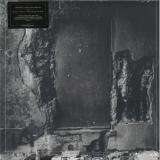
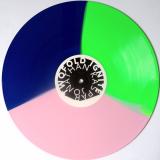
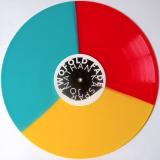
Legendary and pioneering Träd, Gräs och Stenar is considered Sweden's oldest rock band to introduce psychedelic underground music. The group originally formed in 1967 as International Harvester, later became Harvester, and eventually evolved into Träd, Gräs och Stenar. Their unique blend of psychedelic rock and traditional Swedish folk music was groundbreaking at the time-and still resonates with new generations of listeners today. This long-awaited "Green Album" from 1970 marks their very first release under the name Träd, Gräs och Stenar. Now, for the first time since its original release, it's being reissued on vinyl-complete with rare photos, an in-depth story, and a 30x60 cm poster. Decades later, the band continues to perform under the name TRÄDEN, now with only one original member. He is joined by a new generation of acclaimed musicians, who are keeping the spirit alive and carrying the sounds and legacy of Träd, Gräs och Stenar into the future.
In Guadeloupe, many people think that jazz and ka music are like a ring and a finger. To some extent, the same could be said about so called Latin music and the music played in the French West Indies.
Both aesthetics were born in the Caribbean and bear so many connections that they can easily be considered cousins. In constant dialogue, there are lots of examples of their fruitful alliance and have been for a while. The English country dance that used to be practiced in European lounges came to be called kadrille in Martinique and contradanza in Cuba. They both featured additional percussion instruments inherited from the transatlantic deportation. Drawing from shared feelings about the same traumatized identity – later to be creolized – it would be hard not to assume that they were meant to inspire each other. The golden age of the orchestras that graced the Pigalle nights during the interwar period further proves the point. As soon as the 1930s, Havana-born Don Barreto naturally mixed danzón and biguine music in a combo based at Melody's Bar. In the following decade, Félix Valvert, a conductor who was born and raised in Basse-Terre in Guadelupe, also worked wonders in Montparnasse with La Coupole, which was an orchestra made up of eclectic musicians. Afro- Caribbean performers of various origins were often hired on rhythm and brass sections in jazz bands, which used to enliven the typical French balls of the capital. In the 1930s and onwards, Rico’s Creole Band was one of them.
Martinican violinist-clarinettist Ernest Léardée, who would become the king of biguine music as well as the main figure of French Uncle Ben's TV commercials (a dark stigma of post-colonial stereotypes), had musicians from the whole Caribbean sphere play at his Bal Blomet – and they all enchanted "ces Zazous-là" (according the words of Léardée's biguine-calypso piece). In les Antilles (French for French West Indies), music history started to speed up in the 1950s, when trade expanded and radio stations grew bigger. The Guadelupean and Martiniquais youth tuned in their old galena radio sets to South American and Caribbean music. As for the women traders, les pacotilleuses, they bought and sold goods across different islands (the "passing of items through various hands" was thought to be most pleasurable) and brought back countless sounds in their luggage. Such was the case of Madame Balthazar, who once returned from Puerto Rico with the first 45rpm and 33rpm to ever enter Martinique.
Out of this adventure was created the famous Martinican label La Maison des Merengues, a music business she opened and undertook with her husband and which proved to be a major landmark. At the end of the 1950s, in Puerto Rico, Marius Cultier competed in the Piano International Contest playing a version of Monk's Round 'Midnight. He won the first prize and this distinction foreshadowed everything that was to come. Cultier, the heretic Monk of jazz, was quickly praised for writing superb melodies, always tinged with a twist that conferred a unique sound to his music. It didn't take long for the gifted self-taught musician to get to play with Los Cubanos, making a name for himself thanks to his impressive maestria on merengues.
The rest is history. Besides, in the late 1950s, Frantz Charles-Denis, born into the upper middle class in Saint-Pierre and better known by his first name Francisco, went back home after working at La Cabane Cubaine – a club located rue Fontaine where he had caught the Latin fever. Francisco's music was therefore heavily marked by his Cuban cousins' influence, which gave the combos he led a specific style and also led to renewal. Things were swinging hard in La Savane, located in the main square in Fort-de-France. He set up the Shango club close by and tested out the biguine lélé there, a new music formula spiced up with Latin rhythms. Soon afterwards, fate had him fly to Puerto Rico and Venezuela.
As for percussionist Henri Guédon (percussions were only a part of his many talents), he was born in Fort-de-France in May 22nd 1944, the day marking the celebration of the abolition of slavery. As an old man, he could remember that in " his father's Teppaz, a lot of hectic 6/8 music was constantly playing...". In the opening lines of his Lettre à Dizzy, a small illustrated collection of writings published by Del Arco, he highlighted the huge impact that cubop had on him as a teenage boy, around 1960. He eventually turned out to be the lider maximo in La Contesta, a big band steeped in Latin jazz. He was also the one who originated the word zouk to describe music which brought the sound of the New York barrio to Paris. It was the culmination of a journey that started in Sainte-Marie: "a mythical place for bélé, the equivalent of Cuban guaguancó". In the early 1960s, the tertiary economy developed to the detriment of agriculture. Yet rural life was where roots music emerged in Martinique and in Guadeloupe.
Record companies played a major part in the process of Latin versions sweeping across the islands – before reaching everywhere else. Producer Célini, boss of the great Aux Ondes label, and Marcel Mavounzy, both the head of Émeraude records - a firm which was founded in 1953 - as well as the brother of famous saxophonist Robert Mavounzy, were big names to bear in mind. Although there were many of them - all of whom are featured on this record - Henri Debs was definitely the major figure in the recording adventure. He proved to be so influential that he even got compared to Berry Gordy. In the mid 1950s, when he acquired his first Teppaz, he worked on his first compositions: a bolero and a chachacha. Then, he became the one man who made people discover Caribbean music, from calypso to merengue. He was among the first ones to rush out to San Juan, Puerto Rico, to buy records and distribute them through a store run by one of his brothers in Fort-de-France. He had members of the Fania All Star come and perform there, which he was madly proud about. He was also the first one to pay attention to Haitian music, such as compas direct and various other rhythms which would soon flood the market. As a result, many of the combos hitting his legendary studio would end up boosted by widespread "Afro-Latin" rhythms. However, he never denied his identity: gwo ka drums were given a major role, although they were instruments which had long been banned from the "official" music spheres. The present selection bears witness to such a creative swarming. Here are fourteen tracks of untimely yet unprecedented cross-fertilization: all types of music rooted in the Creole archipelago have found their way, whatsoever, to the tracklisting. Whether originating from the city or being more rural, they all go back to what Edouard Glissant, in an interview about the place of West Indian music in the Afro-American scope, called "the trace of singing, the one which got erased by slavery." "It is so in jazz, but also in reggae, calypso, biguine, salsa... This trace also manifests through the drums, whether Guadelupean, Dominican, Jamaican or Cuban... None of them being quite the same. They all point to the idea of a trace, seeking it out and connecting to each other through it. This is the hallmark of the African diaspora: its ability to create something new, in relation to itself, out of a trace. It may be the memory of a rhythm, the crafting of a drum, a means of expression which doesn't resort to an old language but to the modalities of it." The opening track features one of the emblematic orchestras of this aesthetic identity, criscrossing many music types from the archipelago. The 1974 Ray Barretto guajira – Ray Barretto was a major New York drummer influenced by Charlie Parker and Chano Pozzo – is magnificently performed by Malavoi, a legendary Fayolais group (i.e from Fort-de-France). Additionally, the compilation ends on a piece by Los Martiniqueños de Francisco. It symbolically closes the circle as it is a genuine potomitan of Martinique culture which also functions as a tireless campaigner for Afro-Caribbean music. Practicing the danmyé rounds (a kind of capoeiria) to the rhythm of the bèlè drum, it delivers a terrific Caterete, a kind of champeta of Afro- Colombian obedience which was originally composed by Colombian Fabián Ramón Veloz Fernández for the group Wgenda Kenya. The icing on the cake is Brazilian Marku Ribas, who found refuge in Martinique in the early 1970s, bringing his singing to the last trance-inducing track. These two "versions" convey the whole tone of a selection composed of rarities and classics of the tropicalized genre, swarming with tonic accents and convoluted rhythms. It is the sort of cocktail that the West Indians never failed to spice up with their own ingredients. For instance, the Los Caraïbes cover of Dónde, a famous Cuban theme composed by producer Ernesto Duarte Brito, has a typical violin and features renowned Martinique singer Joby Valente and his piquant voice.
The track used to be – or so we think – their only existing 45rpm. The meaningful Amor en chachachá by L'Ensemble Tropicana, a band which included Haitian musicians among whom was composer and leader Michel Desgrotte, also recalls how Latin music was pervasive in the tropics in the mid-1960s. They were the ones keeping people dancing at Le Cocoteraie in Guadelupe and La Bananeraie in Martinique. Around the same time, another "foreign" band, Congolese Freddy Mars N'Kounkou's Ryco Jazz, achieved some success on both islands by covering Latin jazz classics – such as their adaptation of Wachi Wara, a "soul sauce" by Dizzy Gillespie and Chano Pozo whose interweaving of strings and percussions can have anyone hit the dancefloor. How can you resist Dap Pinian indeed, a powerful guaguancó by Eugene Balthazar, performed by the Tropicana Orchestra and published by the Martinique-founded La Maison des Merengues? It also acts as a symbol of the maelstrom at work. Going by the name Paco et L'orchestre Cachunga, Roger Jaffory used to play guaguancó too: his Fania-inspired Oye mi consejo is one example of his style. Baila!!!!! Dancing was also one of the Kings' focus points. Oriza is a Puerto Rican bomba and a "classic" originally composed by Nuevayorquino trumpeter Ernie Agosto, which reserves major space for brasses, giving it a special sheen.
Emerging from the New York barrios crucible was also La Perfecta, a Martinique group originating from Trinidad, whose name directly references the totemic Eddie Palmieri figure as well as his own band, also called La Perfecta. Here they borrow Toumbadora from Colombian producer and composer Efraín Lancheros and interpret it by emphasizing percussions, which set fire to the track even more than the wind instruments. The same goes for Martinique's Super Jaguars, who use Tatalibaba – a composition by Cuban guitarist Florencio "Picolo" Santana which was made famous by Celia Cruz & La Sonora Matencera – as a pretext for sending their cadences into a frenzy. In a more typically salsa vein, the Super Combo, a famous Guadelupean orchestra from Pointe-Noire that was formed around the Desplan family and had Roger Plonquitte and Elie Bianay on board, adapt Serana, a theme by Roberto Angleró Pepín, a Puerto Rican composer, singer and musician also known for his song Soy Boricua. Here again, their vision comes close to surpassing the original. In the 1970s, L'Ensemble Abricot provided a handful of tracks of different syles, hence reaching the pinnacle of the art of achieving variety and giving pleasure. They played boleros, biguines, compas direct, guaguancó and even a good old boogaloo - the type they wanted to keep close to their hearts for ever, "pour toujours", as they sang along together in one of their songs. Léon Bertide's Martinican ensemble excelled at the boogaloo which had been composed by Puerto Rican saxophonist Hector Santos for the legendary El Gran Combo.
Three years later, in 1972, Henri Guédon, with the help of Paul Rosine on the vibraphone, tackled the Bilongo made famous by Eddie Palmieri. Such a classic!!!!! And so were the Aiglons, the band from Guadelupe: choosing to execute Pensando en tí, a composition by Dominican Aniceto Batista, on a cooler tempo than the original, they noticeably used a wonderfully (un)tuned keyboard in place of the accordion. On the high-value collectible single – the first one released by Les Aiglons under the Duli Disc label – there is a sticker classifying the track under the generic name "Afro". Now that is what we call a symbol. Jacques Denis
out of Stock
Last delivered 6 months ago available to reorder, subject to availability
Occasionally, one experiences serendipitous events in life. On the 13th of July this year, I received a message from Tim Trapnell, who had discovered an unknown 60’s track on YouTube and expressed his admiration for its exceptional quality. Intrigued by the message, I clicked on the link and was immediately captivated by the musical composition. Within minutes, I embarked on a quest to uncover more information about the band and the particular track. On the 16th of July, only three days after, I’ve received a message from Jim Bojorquez (aka JC), the lead vocalist of the Baron of Soul, “Hello Yann, I was delighted to hear that you have discovered and enjoyed my original composition, ‘Time or vs Tide.’ It was written by myself and Clark Baldwin. that the recording was performed live and this song was never released in any format back in the day. I have reached out to Jim Bojorquez the next day and we spent a considerable amount of time conversing via video chat about his illustrious 60-year music career as an artist in San Jose, California.
I proposed to Jim that I could release two songs from The Barons of Soul through Epsilon Record Co. I re-mastered both songs and made a deal with Jimmie that same day. So today, I am so pleased to present these two previously unissued tracks. "Time or Tide" is a powerful uptempo piece featuring an exceptional brass section and a Hammond B3. The vocals are exceptionally punchy and catchy, ensuring an unforgettable listening experience. "I Loved and I Lost” is a remarkable take of the Impressions classic written by Curtis Mayfield’s If you are an enthusiast of 60s uptempo music like Tim and myself, then this new and exceptional 45 is an absolute must-listen and must have!
I was aware of Submerse from a long time ago, mainly for when he was making hip-hop & footwork tunes but I had noticed that a few years ago, on his SoundCloud page, he was uploading jungle tunes that he had started making, which got me interested in keeping tabs on what he was doing.
But it wasn't until I met him in Tokyo where he's based, when I played after him at an event at Circus (venue in Osaka & Tokyo) and then met up with him again later on that week that I realised how much he had been making.
He sent me some of the stuff he'd been doing that wasn't available publicly yet and I was really impressed by how strong the melodies were and how much influence from video game soundtracks he had in his tunes, I knew I had to get him on Future Retro London for a release.
Big up to Submerse for allowing me to put out this EP of his on Future Retro London, look out for more music from him to come on Future Retro London and other labels!
out of Stock
Last delivered 13 months ago available to reorder, subject to availability
Friday Night in San Francisco is a live album by Al Di Meola, John McLaughlin, and Paco de Lucía.
It was recorded live at the Warfield Theatre in San Francisco,
on December 5 in 1980. The album is considered an iconic recording and was described by jazz author Walter Kolosky as
"a musical event that could be compared to the Benny Goodman Band's performance at Carnegie Hall in 1938...
it may be considered the most influential of all live acoustic guitar albums."
Al Di Meola is an acclaimed Italian American jazz fusion and Latin jazz guitarist, composer, and record producer.
He experienced a celebrated career that has spanned four decades and earned him critical accolades,
three gold albums and more than six million record sales worldwide.
Di Meola has amassed over 20 albums as a leader while collaborating on a dozen or so others.
John McLaughlin, also known as Mahavishnu, is an English guitarist, bandleader, and composer.
He is a pioneer of jazz fusion, combining elements of jazz with rock, world music,
Indian classical music, Western classical music, flamenco, and blues. He received multiple "Guitarist of the Year"
and "Best Jazz Guitarist" Awards from magazines such as Downbeat and Guitar Player and was ranked 49th in Rolling Stone
magazine's list of "100 Greatest Guitarists of All Time". Jeff Beck called him "the best guitarist alive".
Paco de Lucía was a Spanish virtuoso flamenco guitarist, composer, and record producer.
He was one of the first flamenco guitarists to branch into classical and jazz. De Lucía was noted for his fast and fluent fingerstyle runs
and gained popularity outside Spain after collaborating with McLaughlin and Di Meola. Richard Chapman and
Eric Clapton described de Lucía as a "titanic figure in the world of flamenco guitar."
Friday Night in San Francisco is available as a limited edition of 1000 individually numbered copies on purple coloured vinyl and includes an insert.
It"s been six years since LA DISPUTE released their last album, Panorama. Since then, the Michigan post-hardcore band-made up of Jordan Dreyer on vocals, Brad Vander Lugt on drums, Chad Morgan-Sterenberg and Corey Stroffolino on guitar, and Adam Vass on bass-dealt with the stagnance of the pandemic, celebrated the ten-year anniversaries of Wildlife and Rooms Of The House, and began working on NO ONE WAS DRIVING THE CAR. The fifth studio LP is the first entirely produced by the group, and it came together in Grand Rapids and Detroit, the United Kingdom, Australia, and the Philippines: "I think the change in environment was really helpful to breathing new life into the process each time we came back to it," Dreyer says. Partly inspired by the 2017 psychological thriller First Reformed, NO ONE WAS DRIVING THE CAR reckons with malaise in the shadow of the looming apocalypse, which has noticeably been worsened by the advancement of tech. The title comes from a quote from a police officer Dreyer read in a news article about a lethal self-driving Tesla crash, an absurd event which raises questions about the amount of control we have in our own lives. In fourteen dynamic tracks, the band grapples with the existential topic and the human need to find comfort and a sense of security in an existence where we"re often thrust into chaos without permission.
Emerging from the shadows of a small apartment in Chicago’s South Side Pilsen neighborhood in 1999, Winterlight was produced and mixed by Daniel Thompson over the course of three years, from 1999 to 2002. It’s an intimate and evocative album that captures a pivotal chapter in Thompson’s life and echoes the spirit of a formative era in the underground music scene.
Thompson’s journey began in the heat of Houston, Texas, where his love for sound quickly became an obsession. By the late ’90s, he was among the first DJs in Houston to champion the sound of Chicago house, often driving long distances from Texas to Chicago in search of records, inspiration, and connection. These trips—equal parts pilgrimage and education—eventually led him to relocate to Chicago, where his artistic vision would fully take shape. Winterlight is the direct result of that move. Crafted over several years, the album embodies a raw, hands-on approach to production, built from analog synths, outboard gear, and hours of meticulous layering. Thompson leaned on tools like the Kurzweil K2000, SE-1, Juno-106, and classic processors such as the DP4 and TC Electronic units, shaping each track with
care and intention.
Blending atmospheric textures with hypnotic rhythm and subtle experimental flourishes, Winterlight captures the sound of an artist deeply engaged with his tools and surroundings. His extensive vinyl collection—over 3,000 records—served as both palette and inspiration, with carefully chosen samples lending further depth and narrative to the music. Now set for release across all digital platforms and as a limited double 12" vinyl edition through Berlin’s Word & Sound, Winterlight invites listeners into a soundscape that is both immersive and personal. More than just an album, it is a sonic document of a moment in time—rich in tone, memory, and intent. For those willing to listen deeply, Winterlight offers a rare window into the underground spirit of the early 2000s and the inner world of a producer finding his voice.
Nu-hardcore quintet, Bodyweb, are the sound of someone’s nervous system on the verge of breakdown—hyperactive, tormented and unflinchingly vulnerable. Born out of the Leeds hardcore scene, they’re a shape-shifting alloy of jagged emotion and precision chaos. What began as late-night jams between Louis Hardy (Higher Power, Big Cheese, Fate) and Ben Jones (Pest Control) eventually mutated into train_wreck_simulation, a debut EP filled with frantic breakdowns and nu-metal swag that felt like the soundtrack to a digital exorcism. The final piece of the puzzle came from Hardy’s estranged childhood friend, pq. His twisted samples and synthetic textures are haunted and disturbed, injecting cyberpunk soul into hardcore flesh. Contorting through several iterations in the following years, the band absorbed Luke Thompson (Stiff Meds) on drums, filmmaker Tom Hobson on guitar and Naomi Macleod (Empire State Bastard) on bass, and laid down their first collective offering. deadwired is due out on Flatspot Records later this year. Bodyweb's second EP is a violent thesis on connection and pain that sends Hardy’s unfiltered vocals through heaven and hell. Four overstimulating tracks run a gamut of styles and influences from Slipknot to Björk, constantly lane-switching between dizzying heaviness, ambient soundscapes and brain-burrowing hooks. Entirely self-produced, deadwired upgrades the sonic formula laid down on the last record and raises the question: what else could exist in Bodyweb’s twisted roadmap? Nothing seems impossible. What seems important, however, is retaining the rawness in a style that can often turn sterile. “We still wanted it to sound very human. It had to be well produced but not cold and lifeless.” shares Hardy. “We didn’t use a click track. All guitars were real amps with microphones. We tried to make everything as real and raw as possible, we recorded using all the same gear we use when playing live too to really capture the energy of how it feels when we jam together." ‘Deadwired’ is a snapshot of violent implosion. Four ADHD-fuelled transmissions from the edge of spiritual collapse. It drags metallic hardcore through glitched-out ambience to confront ego death, generational trauma, and the violence of being alive. On stage, Bodyweb don’t just perform, they purge. Raucous live electronics meld with digitally contorted guitars. Breakbeats meet breakdowns—no backing track in sight. Bodyweb enable a collective catharsis. Mosh, dance, dive, scream, heal. A physical therapy session screamed into the void.
Originally out as a free Net-7inch on Jahtari in 2008 to pay respects at the shrine of arcade machine fighting games, these undying hiphop-infused martial arts Dubs by disrupt are finally reaching their intended destination: white blood-splattered 7inch vinyl (attention: not actual blood!).
"Samurai Showdown" (which eventually became Solo Banton's classic "Kung Fu Master", from his Music Addict EP in 2010) is taking place at sunrise, of course, when two master swordsmen are matching blades in a battle to the death. Can the wave-cutting technique of the Jahtari-school prevail?
The B-side is the meditation after the battle, mentally re-creating the epic struggle move by move and in slow motion...
So draw your Katana and prepare for beats as sharp as a battle sword, deadly moves of Ninja swiftness and basslines coming straight from the six paths of hell.
Posters announce a daily action: A professional marksman shoots daily at 12 o’clock from a distance of approximately 15 meters at a paper flower. The number of shots is limited to a maximum of three per day. Upon a hit, the flower is replaced by a new one, the action ends and is continued the next day with a new flower. The bullet holes in the wall are not removed. The flowers remain lying on the floor until the end of the exhibition or event and are then given away.
Posters are produced in color variants (yellow, orange, red, violet, light blue, green) to advertise the action:
Every day at noon a professional marksman will shot at a paper flower (place of action to be filled in).
This performance was first presented at The Fruitmarket Gallery, Edinburgh in November and December 1999 and subsequently repeated (Aberystwyth, London, Nottingham, 2000 – 2002 and Langenhagen, 2007).
The action will be re-staged as part of the Klang Moor Schopfe Festival in Gais, September 4 –14, 2025.
In truth, singing is not all that different from acting. Performing a song is very similar to playing a role in a theatrical production. A singer's delivery — the way they interpret and emphasize certain parts of a song — is much like what an actor does with their character.
That's why we often find singers who go on to gain popularity as performers — some on stage, but more often on the silver screen (film).
These are called 'singing stars' — vocalists who are also featured actors, usually given roles specially created to suit their primary strength: singing.
Among them, a few have become even more famous for their acting talents, which sometimes surpass their singing ability. However, the number who manage to do this successfully is very small. Oslan Husein is lucky enough to be counted among that small number. As his fame as a singer began to rise sharply, he also began his film career as an actor. It's true that he had previously appeared in a film, but only as an extra, alongside the orchestra he performed with.
Following that, he appeared in several other films, including Detik-detik Berbahaya, 1000 Langkah, Kasih Tak Sampai, Hadiah 2.000.000,-, Maut Menjelang Magrib, and Antara Timur dan Barat. Six films over a span of just about 2.5 years — quite an impressive achievement.
Over time, a number of songs that Oslan had performed in his films began to accumulate. Together with a few additional songs — also from films — there were eventually enough to compile into one long-playing (LP) record.
And so, accompanied by Jack Lemmers — who, for this project, created special arrangements and musical treatments unlike the usual (for example, the use of four guitars at once) — Oslan carried out the recordings at Irama studios.
By releasing this LP of songs from the silver screen, Irama took an exciting step forward and opened many new possibilities in its history. Because the world of recorded music and the world of film, wherever they are in the world, are like siblings — and they work best when they collaborate, shoulder to shoulder, in harmony.
Rivet’s new album for Editions Mego is an uplifting and joyous affair coming in the wake of tragedy and disenchantment. It is yet another rebirth from an artist willing to take a step back and reprise the current situation he is in. Mika Hallbäck has a long credible history in the Swedish underground. First recognised for his industrial techno works under the Grovskopa moniker he worked privately on more experimental works that eventually came out as On Feather and Wire, an album released on Editions Mego in 2020. After much acclaim for this bold new direction that blended electronic abstraction, pop and industrial forms into a heavy synthetic trip two tragedies struck. One was the passing of label boss Peter Rehberg and then the passing of his dog Lilo, who was as close as a companion one could have. These events led to the release of the more unsettling follow up L+P-2 (Lilo and Pita minus two) on Midnight Shift Records in 2023. Peck Glamour sees Rivet return to the reawakened Editions Mego with an album of optimism inspired by reconciliation with loss and further explorations of new mental/sonic realms.
Hallbäck defines his approach as not being married to any particular machine, instrument, process or genre. However he holds a particular affinity to sampling, of which, he says, provides the dirt and grit amongst what would otherwise be pristine, generic machine music. The contemporary crate digging method of scouring obscure download music bogs for unique sounds was his preferred research practice.
Peck Glamour is an album full of tracks brimming with the excitement of exploration. It's the results of a mind informed by punk, industrial, techno, dancefloor, disappointment, trauma and rebirth. Here the synthetic and authentic is viewed simply as the same means of human rationale and expression.
The opening, ‘Catch Up to Light’, sets the scene with ecstatic and odd fluorescent vocals sliding amongst crystalline likembe whilst synths swirl amongst the external festivities. ‘Orbiting Empty Cocoon’ is somewhat a homage to the alien sound worlds of The Orb, one which takes the listener deeper into a mind melting array of teased potential as visual elements are executed in a mask of audio wizardry and euphoric staccato rhythms, the later being a nod to Singeli music. ‘Patitur Butcher’ is more dance frontal utilising the Ghatam drum and a YouTube rip of a Chinese language lesson. ‘Plastic Bag Putain’ was made during the beginning of Russia's invasion of Ukraine and should be clear of its intent. ‘All that Heaven Allows’ is a marimba cover of an imaginary Love Parade anthem. 'Kyrie Geire’ potentially briefly fills the void left by the demise of Coil. The entire trip of Peck Glamour is sewn up with ‘We left before we came’ whereby extraneous recordings of double bass player Gregory Vartian-Foss (tuning/strumming/moving the bass) are superimposed with local field recordings to create a gorgeous bed of sounds acting as an exciting exit music to this sharp collection of cinematic ear excursions.
out of Stock
Last delivered 13 months ago available to reorder, subject to availability
Bristol-based producer Zobol lands on Brooklyn imprint Melodize with Killing Culture – a bold, four-track statement that fuses electro, breaks, and electronica into something raw, physical, and emotionally charged. Known as one half of the label Distorted Sensory Perception – a platform showcasing honest, forward-thinking electronic music – and as curator of the UK underground event series d3pth_p3rc3pti0n, Zobol brings a fiercely independent, hands-on ethos to his productions.
Built entirely on hardware – including the Korg MS20, Roland JX-3P, Prophet Rev2, Acidlab Drumatix, Behringer TD-3, Elektron Octatrack, Soundcraft Signature MTK12 console, and finished in Ableton Live – the EP captures a live-wire energy that feels both urgent and immersive.
The EP opens with “Uprising”, a track that sets a hopeful tone with flickers of brightness woven through its punchy rhythms – like the first sparks of something much bigger. Extrawelt reshapes the track with warm bass and swirling atmospheres, lending a more introspective, drifting character. Known for their decade-spanning contribution to electronic music – from their iconic debut on Border Community to defining live performances worldwide – the German duo once again deliver with a remix steeped in depth and analog soul.
The B-side turns heavier. “Weapon of Mass Distraction” unfolds from a looping synth fragment, slowly ramping into a tense, bass-driven groove that hits like controlled bursts of energy – Relentless, exacting & distractingly armoured with acidity. Closing track “Oppression” dives deeper into emotional terrain: the weight of distorted low-end channels the presence of authoritarian force, while fragile melodic elements flicker like voices struggling to be heard – eventually weakening, fading, and falling into silence.
“As shattered cultures bleed beneath a technocratic sky, the silenced cries of Palestine, Sudan, Yemen and other forgotten lands echo a world where humanity’s dawn is cruelly denied; a stark testament to faltering global systems, demanding urgent change before the irreversible erosion of our shared future.”
out of Stock
Last delivered 38 days ago available to reorder, subject to availability
"Reflection Code" is an EP that delves into the multifaceted aspects of human reflection through a collection of immersive musical compositions, each inviting the listener on a unique sonic journey.
The Practice of Desire — A deep techno track featuring enveloping pads and modulating metallic cosmic sounds, reminiscent of heavy matter from outer space. Accompanied by a lecture from Gangaji, this track adds an extra layer of depth and meaning to the musical experience.
Port Del Compte — Inspired by memories of Spain's stunning landscapes and a performance at the Parallel festival, this track transports the listener to picturesque settings, filling their heart with joy and harmony.
Bad Trigger — This track offers a profound reflection on life events, utilizing an expressive electronic soundscape with a compelling bass line at 144 bpm. It creates an atmosphere conducive to introspection and self-discovery.
Green Frequency — A shamanic sequence infused with forest vibes and the calls of an electronic bird. This composition immerses the listener in nature, evoking a sense of unity with the surrounding environment and the inner self.
"Reflection Code" invites listeners to explore their inner reflections and connect with each composition on a profound level, creating a unique auditory landscape that lingers long after the music ends.
Toki Fuko music can be described as mechanical signals are structured in a hypnotic substance. Their constant musical experimentation actor perceives as an analysis of the surrounding world.
out of Stock
Last delivered 5 months ago available to reorder, subject to availability
LA-based composer/arranger E. Lundquist (aka Eric Borders) returns with ‘Art Between Minds’. Having cut his teeth in the LA hip-hop and beats scene and explored realms of cosmic-funk under previous monikers, E. Lundquist’s music displays a rich tapestry of influences including the cinematic & experimental jazz-infused library music that influenced his previous LP ‘Multiple Images’. Now he is back with another ample helping of his hallucinogenic sonics, utilizing a bevy of vintage gear to replicate that warm glow of ’70s jazz-funk. From the Fender Rhodes MKI to the ARP Odyssey, to the Mellotron, the keys and synths he employs on these tracks display a genuine appreciation for the groove-driven music of The ‘Me” Decade.
The album plays like the score to a cult classic B-movie. The sun-drenched haze of “Soliloquy” could easily be what you hear during the calm before the storm in a Blaxploitation flick and the laidback crawl of “Euphoria” seems ripped right out of a fuzzy ‘70s blue movie. But there is a certain sophistication here, like the way the horn section, slinky guitar, and trippy synths combine on “Escape” to sound like liquid one moment and like a summer breeze the next.
While E. Lundquist’s artistry will eventually take him to new plateaus of sound, where he is right now is undoubtedly a high watermark in his career. He has become a torchbearer for jazz-funk in a new jazz revolution, updating the sub-genre with his delicate balance of digital and analog elements that will easily appeal to fans of Kamaal Williams, Surprise Chef, BADBADNOTGOOD, Khurangbin, Robohands and similar.
out of Stock
Last delivered 13 months ago available to reorder, subject to availability
Produced by Joe Barresi (Queens of the Stone Age, Tool), The Dissent of Man finds Bad Religion pushing the boundaries of their music as much today as they did in their formative years as a genre defining punk band. Over the course of making the album, primary songwriters Greg Graffin and Brett Gurewitz"s songwriting was informed by life changing events, with Graffin writing his forthcoming book "Anarchy Evolution" and Gurewitz embarking on parenthood again. The result is one of the band"s most forward thinking and musically varied albums ever. The Dissent of Man is not only a snapshot of the band"s personal experiences of the past years but also of their continued maturity in songwriting, capturing an array of styles ranging from blazing punk rock songs like the opener "The Day That the Earth Stalled" and "Meeting of the Minds" and classic rock-tinged cuts like "Cyanide" and "Turn Your Back on Me" to radio rock ready hits like the first single "The Devil in Stitches." The Dissent of Man is a testament to why Bad Religion has remained relevant for the better part of three decades. Already having cemented their place in history as a groundbreaking band who helped create a movement in Los Angeles with classic releases like How Could Hell Be Any Worse?, Suffer, Recipe for Hate, Stranger Than Fiction and Process of Belief, Bad Religion continue to inspire and create with a unique style that continues to cross boundaries and transcends genres."
Following on from FR023, Soulox & Soeneido are back once again on Future Retro London with a solid 2 tracker release. They sent me "It Been" last year, shortly after their first release had gone into manufacture and I really liked the tune and was playing it a lot in DJ sets but I didn't really have any plans to release it.
At the same time, I remember there being a track in Phineus II's set from the Future Retro London event that took place in February 2023 and I really really liked it but had no idea who it was by. When I later found out it was by Soulox & Soeneido and it was called "Why", it give me the idea for this release as neither track was signed to any other label and I felt that both tracks needed to see the light of day.
Big ups to the both of them on their solid output & many thanks to Shireen for the design of the b-side artwork.
out of Stock
Last delivered 13 months ago available to reorder, subject to availability
"JS", a new vinyl album by Bochum Welt, has been curated in collaboration with Jil Sander under the creative direction of Simone Bellotti.
Minimalist electronic landscapes, analog textures, and emotional precision define this release, blending sound design with fashion-led aesthetics.
Tracks include Crystal Ice, Night's Frost and Wanderlust, featured in Jil Sander's visual campaign directed by Christopher Simmonds.
The EP was launched on July 15, 2025, at OHG Hamburg, a former factory turned contemporary cultural venue, during a dedicated event hosted by Jil Sander.
Bochum Welt is the alias of Italian electronic musician Gianluigi Di Costanzo, whose blend of sonic experimentation and emotional precision resonates with the Jil Sander aesthetic.
out of Stock
Last delivered 9 months ago available to reorder, subject to availability
Born out of the early 1980's Austin noise punk scene, Scratch Acid deliberately eschewed the loud, fast rules of hardcore as everything they didn't want to be and embraced a weirder, artier sound. Prior to the release of their 1984 debut S/T EP, someone gave Touch and Go Records owner Corey Rusk a cassette of the recording, and he was instantly a huge fan. Rusk was immediately interested in releasing the EP and contacted the band to express his admiration. At the time, Scratch Acid had already committed to working with Rabid Cat Records. The group quickly developed a riveting performance aesthetic, and, as the debut S/T EP made its way around the country via fanzines, college radio, and word-of-mouth, the band mounted short tours to the Midwest and the East Coast. While he was not able to work with Scratch Acid directly through Touch and Go, Rusk had begun booking shows with Scratch Acid in Detroit, so he could see them live and meet them. A friendship formed, and Touch and Go Records would eventually release the band's second EP, Berserker, in 1987.
Hot on the heels of 12bit Jungle Out There's 'Right Mind' EP, Foundations Records brings you the hotly anticipated follow-up from rising star Arkyn on 'The Spirit EP' Drawing influence from classic '93 era jungle techno on the likes of Basement Records, it's perhaps his most accomplished work to date in his first foray into all hardware production. Arkyn is a UK based DJ and Producer. His production is influenced from a wide range of music he grew up listening to including Reggae, Dub, Soul, Techno and Funk to name a few. After discovering rave music through the underground party scene in Northampton, he began to cut his teeth DJing and has since gone on to play at some of the most established Jungle/Hardcore events in the country including Distant Planet, The Rave Story and Calling The Hardcore among others. He also recently debuted at Fabric for Motive Hunter Audio's takeover. Arkyn has released on FFF's 3am Eternal, Billy Daniel Bunter's Music Mondays and Motive Hunter Audio to name a few. He also runs his own label TufStuf Records. FOUNDATIONS002 - Arkyn - The Spirit EP Four tracks of Hardcore Jungle Techno and 4x4 made with Akai S3000 XL sampler, Roland 909, Roland JV 1080, Korg 01/W FD and Roland D50.
out of Stock
Last delivered 57 days ago available to reorder, subject to availability
Another record, another appearance from Kid Lib (& his many aliases) on Future Retro London... ????
As I said before on FR015, the Dub & Wheel stuff he makes is almost always making it into my selection for DJ sets, I honestly can't get enough of it. He had done this tune (originally titled Shaka Sound) in 2017 (I think?) but it was never fully finished on its own & I don't think there were any plans to finish it or release it. That didn't stop me from playing it in my sets of course haha
Eventually, I reached a point where I felt like I'd played it so much that I couldn't allow it to not come out, so I offered to finish the tune and then it could come out on Future Retro London & thankfully he allowed me to work on it and get it done.
In dub, they'll record many different versions/mixes of a tune with various differences in arrangement and sounds used & I felt it'd be cool to do that with this tune, with Mix One sounding more true to his original idea & Mix Two having a bit more variation in the bassline & drum patterns.
Anyway, big up to Kid Lib for letting me work on The Firmament & for letting me release it, hopefully there'll be more Dub & Wheel material from him in the future, I'm patiently waiting...
out of Stock
Last delivered 13 months ago available to reorder, subject to availability
The Vestige is the first fruit of a new intergenerational collaboration between Giuseppe Ielasi, a quietly prolific key contributor to the European experimental music scene for over twenty years, and Jack Sheen, a young composer-conductor-sound artist from Manchester whose recent projects have seen him moving seamlessly from enigmatic chamber music composition and installations to conducting the London Symphony Orchestra. Their materials and working methods differ significantly, with Ielasi having focussed for many years on electro-acoustic techniques alongside his ongoing commitment to the guitar, and Sheen primarily composing for traditional instruments. More important, though, is what they share: a fascination with what Sheen calls “mysterious, liminal musical material,” using irregular repetition and cyclical forms to create structures at once alive with activity and almost static, as well as a rigorous exploration of spatial diffusion and the interaction of sound event and environment. Working individually with a library of acoustic instrument sounds from Sheen’s recent projects and Ielasi’s guitar, the pair eventually met for several days at Ielasi’s home studio in Monza, sculpting the fourteen pieces that make up The Vestige. Like Ielasi and Sheen’s solo works, the record shows an exquisite attention to details of sequencing and pacing, the sound palette and compositional approach consistent throughout while each piece asserts its own identity. The twenty-five seconds of the opening piece serve as an entrée into the record’s distinctive world of sound: repeated chirps fluctuate in volume as they move across the stereo spectrum, woven between strangled snatches of string glissando against a backdrop of percussive ticks, long tones, and white noise. Across the remaining thirteen pieces, Ielasi and Sheen sketch further dimensions of the ambiguous space, where distinctions between pitch and noise, repetition and irregularity, electronic and acoustic remain pointedly unclear. As the record’s title suggests, the origins of the sounds we hear have become remote: while at moments we get flashes of timbres and attacks that could come from wind instruments, bowed strings, or prepared guitar, these remain vestigial traces, glimpsed through a veil of shifting white noise textures. These textures are themselves difficult to trace, suggesting artefacts of the recording process, electronic synthesis, amplified room sound, rubbed instruments or objects. The Vestige shows an unusual degree of attention to frequency range as a compositional tool, something it shares with the hyper-subtle variations of Ielasi’s electroacoustic works and the deliberately ‘unbalanced’ midrange-heavy ensemble of Sheen’s Sub. Here, movement between episodes is as much about adding or removing a frequency band as it is about changes in density, harmonic content, or instrumental texture. Tracks are marked by the sudden appearance of subbass or exaggeration of high frequencies in otherwise similar material, contributing to our sense that these fourteen pieces are like different views on a scene that we can never quite see clearly. While calling up a range of past music, from the early works of Rolf Julius to Simha Arom’s recordings of layered polyrhythms embedded in the background sounds of central African villages to the temporal distortions and layered hiss of DJ Screw, the alluring and disconcerting world of The Vestige is entirely its own.
out of Stock
Last delivered 14 months ago available to reorder, subject to availability
Slikback releases "Attrition" – a densely detailed, cinematic exploration of sound packed with intricate rhythms and gleaming textures.
Slikback’s "Attrition" marks his first full-length album for Planet Mu, delivering an immersive melding of cinema and game sound design with tough dance music. It's like a sci-fi film for the ears, exploring a chain of events with dark atmospheres and dramatic pacing; trapdoors and jump scares for your ears. These contrasts and the dense painterly colour of his sounds give it a beastly beauty.
The album came to life during a period of transition, while waiting for a visa after recently moving to Poland from Kenya, where he grew up. With this unexpected pause in travel, Slikback found himself working at a slower, more deliberate pace. Writing for a label instead of self-releasing also introduced new dynamics, like feedback and structured release schedules. Rather than feeling restricted, he saw this process as a blessing. In a happy and reflective headspace—newly married and welcoming a newborn child—he was able to fully develop his compositions. “I was finally able to explore ideas to a point where I didn’t feel the need to change anything,” he shares. "Attrition" is the result of that creative freedom. While "Attrition" nods to familiar genres, drawing on elements of Gqom, Dubstep, Tech-Step, and Hardcore Techno, it pushes them into new territory, shaping high-tech, intricate compositions. “I worked on the tracks back and forth, drastically transforming some from their original sketches,” Slikback explains. “I wanted to create a journey within each track, like something alien emerging from emptiness—beauty from chaos.” The album opens gently before diving into fast-paced 140bpm sounds, reminiscent of earlier Planet Mu releases. Midway through, "Taped" shifts the energy with a shimmering, 160bpm rolling bassline. As the album progresses, its intensity builds. The music grows darker, faster, and more unpredictable, culminating in a final track that bursts apart in a thrilling, chaotic climax. A standout moment in Slikback’s career, "Attrition" is a masterclass in sound design and vision. Strange yet beautiful, intense yet rewarding—it’s the most strikingly unique album you’ll hear all year.
out of Stock
Last delivered 8 months ago available to reorder, subject to availability
Laurie Torres is a Canadian musician and composer raised in Montréal, Québec by Haitian parents. Since 2008, she has been a trusted stage and studio performer for Julia Jacklin, Pomme, and Land of Talk, as well as being a founding member of Folly & The Hunter, with whom she recorded four studio albums and toured Canada, Europe and the UK.
In 2023, Laurie shifted focus to work on her own creations, a process of making time - the will and the need becoming omnipresent. Drawing creative inspiration from contemporary artists like Tirzah, Gia Margaret, Valentina Magaletti, Tara Clerkin Trio and ML Buch, 'Après coup' finds Torres intersecting at a pivotal moment where artists whose marginalized identities are at the forefront in creating a beautiful array of "other options".
"Being othered and tokenized as a woman who plays music, as well as a queer and black person, takes a toll, while also positively feeding a strong urge to push and be seen."
Centering around piano, drums and synthesizer with interweaving field recordings, 'Après coup' follows the precursor ep 'Correspondances' in the form of a sprawling 11-track album. Translating directly from French - afterwards, after the event - its title subliminally points at something deeper between the lines. Recorded in 2023 between tours in a small window of time where 'normal' life hadn't quite recommenced, Torres meticulously crafted her debut solo material in view of surrounding nature, all providing the perfect nourishment for long streams of improvisation. Built right up to the edge of a lake, Studio Wild in St-Zénon, Québec offered an unparalleled location and set up for her freeform creativity.
Instrumental music seemed like a natural response and evolution for Torres who had long basked in the world of "pop music" as she elaborates: "I had an urge to use creativity as a sort of resting place, a place where things can unfold slowly and take time to reveal themselves. In other worlds words, I felt the need to make something slower, more elusive"
The immediacy of Torres' recorded takes doubled with minimal overdubs create a fiercely direct, intimate and unpolished lo-fi beauty. 'Après coup' then is self-reflective, open and inclusive with Torres allowing herself to be fully seen. An album to be felt at close distance with unrivalled authenticity. This album stands as a testament to Laurie's artistic evolution and serves as a beacon, inspiring her to continue nurturing her own creative pursuits and finding exhilarating freedom.
out of Stock
Last delivered 14 months ago available to reorder, subject to availability
Iridescent Metallic Gold Vinyl. Just before recording their epic disasterpiece, You Are There in late 2005, MONO began collaborating with fellow Tokyo native and modern electronic composer, world's end girlfriend. The result was a five-part suite of neoclassical grace and luminescence that defies easy categorization. As dark as the bottom of the ocean, and nearly as otherworldly, Palmless Prayer / Mass Murder Refrain finds MONO inhabiting an illuminated world previously only hinted at in their most orchestral compositions. Recorded in multiple studios in Japan last year, Palmless Prayer highlighted MONO's increasing obsession with classical music with world's end girlfriend's mastery of subtle dynamic shifts. Forgoing their tendency to erupt into hellish bursts of speaker-destroying noise, MONO instead exhibited remarkable restraint, stretching song lengths up to and beyond the 15-minute mark and turning barely-there crescendoes into earth-shaking events. Less an epiphany and more a reminder of the beauty that already exists all around us, Palmless Prayer was a miniature panoramic view of the sea on an eerily still day, the current swaying at an impossibly laconic pace and the sound of a thousand tiny waves crashing in the distance all at once.
out of Stock
Last delivered 14 months ago available to reorder, subject to availability
It’s very difficult to describe someone as prolific as Misha Panfilov. So, I feel the best way to define him is to think of a “Trivial Pursuit Playing Piece,” where each pie piece represents one of the bands he heads up, and each band has its own distinct style and genre. Yet, when looked at all together, create the whole musical persona of Misha. This is the lens I would like to view his latest endeavor, Days As Echoes.
The vibe on this sophomore release channels Krautrock philosophy and Library music, peppered with elements of jazz, Ethiopian, cinema, ambient and bits of everything between. This atmosphere is created from all the instruments Misha uses and the resulting compositions are heard as repetitive patterns that are forged from the multiple layering of melodies. Thus, creating six unique songs with emotional granularity, yet collectively encompass a genuinely positive “feel good” vibe…with a hint of nostalgia.
Moods of the day, moods like echoes say, A future of hope is yours, by following the Sun’s ray.
The opening track, “Days As Echoes,” is a dedication to a much simpler time when the sky was bluer and the snow was whiter…just like how you remember it when you were a child. A time when people honestly cared more about everything as a given, and not as a selfish accolade. A time when optimism seemed within reach. In other words, nostalgia marred by awareness.
…Leading to a path where the skies are not gray. Where dreams of castles in the air are the mainstay.
“In A Dream” has a style that pays homage to both spiritual jazz and ambient music. A simple theme is introduced and leads to the climax of this stormy dream, putting it all in perspective. That pivotal point when one realizes the truth by re-tracing the events, which led to the epiphany of how to find the answer while traveling within this airy soundscape.
…Diurnal or nocturnal, day or night, Traveling the path of truth must be done without fright.
One can’t help but feel a definite traveling vibe that comes from “Moonscape Waltz” To me, it has a dual-characteristic that can be visualized as a train trip, either at sunrise or sunset. Regardless, the time is not of major relevance, but the actual pursuit is. Lao Tzu said, “The journey of a thousand miles begins with that first step.” This track takes you beyond that initial step into this vast world toward your destination as you search for the truth.
…The unknown is real, but you know the deal. People need people to show which direction you point the wheel.
“Together” is the most peaceful and solo oriented compositions of this album. It shows how one cannot achieve happiness alone, but the importance of having someone special or a group of others to help along the way. Not only to help seek your goal, but also the ability to enjoy the scenery while on your journey
…The end of this tunnel has a light that’s so bright. Illuminating the trodden way, your destination, now in sight.
One is free from the chains of the unknown as you listen to a “Few Layers For Smith”, a dedication to a friend. A song that draws energy from the ECM works of Steve Reich, thats married with a primitive lo-fi basement setting. Its positive force breaks those encumbrances and gives you a glimpse of your prize. But you ruminate on this and come to the conclusion that the path that led you there is equally important as the goal itself. Question is, how do you share your realizations and experiences?
…The route was cast, the trials have passed. The glittering treasure you sought is yours now, at last.
“Ocean Song” meanders from the ritual rhythms of its shoreline to the crashing riptides of unbridled guitar feedback, creating this raging ocean atmosphere. However, its message is quite clear and states that people’s goals and experiences are not just meant for personal growth, but to be shared with
others, so that they too can live vicariously thru your story and somehow utilize it for their own.
…The prize has been won, but the journey is never done. You now have the responsibility to share everything under the Sun.
These six songs, each with its own sound, collectively comprise the vibe of this album. One cannot help but feel a sense of joy and fulfillment when listening to it. Each song has its own unique mood, yet together create an atmosphere of hope and happiness that has no choice but to spill out of the listener. I feel this was the ultimate goal of Misha’s on this record. Quite a challenge for the man who never sleeps, but is always searching for the perfect beat. One may not fully grasp his musical mind, but this album does give you a gateway into the moods and magic of Misha!
- Brent Sawicki
out of Stock
Last delivered 79 days ago available to reorder, subject to availability
Things just get heavier and heavier in Scott ‘Wino’ Weinrich’s career and his short-lived classic band The Hidden Hand is no exception. Formed in 2002 and already disbanded in 2007 the trio featured Wino, Bruce Falkinburg on bass/songwriting/vocals and drummer Dave Hennessy.
If The Obsessed, St. Vitus, Shrinebuilder, Probot and Spirit Caravan aren’t enough to bring Wino's CV to legendary status, stop reading now.
LINER NOTES from WINO:
"When I returned from California after The Obsessed Columbia record deal fell apart, I didn't have any gear at all and after we put together (SHINE) which became Spirit Caravan, I was hustling to put a guitar rig together. I discovered ATOMIC MUSIC a super cool store in MARYLAND that encouraged trades, and had a lot of cool shit there,we had met another cat Sonny, who being the gregarious friendly cat he was befriended us (the band) and introduced me to his friend who's recording studio shared space with Atomic Music, Bruce Falkinburg and Phase recording studio. Bruce was a very interesting and hyper intelligent guy, bassist, knowledgeable in all things but specializing in recording rock music. We had decided to diversify our recording process and parted ways with one of my old friends Chris Kozlowski and PolarBearLair studios who had recorded everything Spirit Caravan had done so far.
I hired Bruce to record the version of Darkness and Longing that was our song on the Sixty Watt Shaman -Spirit Caravan split single. We liked what he did on that recording and decided to record more with Bruce at Phase and so we did ;the last SC single -" So Mortal Be/ Undone Mind" and recorded three tracks that were eventually released on "The Last Embrace." Bruce and I had firmly cemented our friendship and when shit fell apart with Spirit Caravan , we decided to form a band. Out of a very interesting list of possible band names Bruce's idea" The Hidden Hand " seemed to resonate the most and once Bruce had recruited Dave Hennessy (guitarist for OSTINATO) to play drums it was ON. Over the next couple years and a couple different drummers, The Hidden Hand would record one single, one split ep ,one compilation song and Three full length albums. Knowing Bruce, and working with everyone in The Hidden Hand realm enriched my life greatly . Bruces enthusiasm, knowledge, creativity, intellect and musical abilities remains an inspiration. Thanks Bruce, Sonny, Louis and Eric and all at ATOMIC MUSIC, Dave Hennessy,Matt and Jeremy Osinato ,Evan Tanner, J Robbins, Mcarthyism records, Andreas at Exile from Mainstream records, Greg Tubevision, 930 club ,Black Cat, Gussound, Diana W, Woody, Stinking Lizaveta, Jadd Schickler and Meteor City, Southern Lord records and extra special thanks to Gianluca and Improved Sequence for keeping this music alive!"
Wino - summer 2024
Things just get heavier and heavier in Scott ‘Wino’ Weinrich’s career and his short-lived classic band The Hidden Hand is no exception. Formed in 2002 and already disbanded in 2007 the trio featured Wino, Bruce Falkinburg on bass/songwriting/vocals and drummer Dave Hennessy.
If The Obsessed, St. Vitus, Shrinebuilder, Probot and Spirit Caravan aren’t enough to bring Wino's CV to legendary status, stop reading now.
LINER NOTES from WINO:
"When I returned from California after The Obsessed Columbia record deal fell apart, I didn't have any gear at all and after we put together (SHINE) which became Spirit Caravan, I was hustling to put a guitar rig together. I discovered ATOMIC MUSIC a super cool store in MARYLAND that encouraged trades, and had a lot of cool shit there,we had met another cat Sonny, who being the gregarious friendly cat he was befriended us (the band) and introduced me to his friend who's recording studio shared space with Atomic Music, Bruce Falkinburg and Phase recording studio. Bruce was a very interesting and hyper intelligent guy, bassist, knowledgeable in all things but specializing in recording rock music. We had decided to diversify our recording process and parted ways with one of my old friends Chris Kozlowski and PolarBearLair studios who had recorded everything Spirit Caravan had done so far.
I hired Bruce to record the version of Darkness and Longing that was our song on the Sixty Watt Shaman -Spirit Caravan split single. We liked what he did on that recording and decided to record more with Bruce at Phase and so we did ;the last SC single -" So Mortal Be/ Undone Mind" and recorded three tracks that were eventually released on "The Last Embrace." Bruce and I had firmly cemented our friendship and when shit fell apart with Spirit Caravan , we decided to form a band. Out of a very interesting list of possible band names Bruce's idea" The Hidden Hand " seemed to resonate the most and once Bruce had recruited Dave Hennessy (guitarist for OSTINATO) to play drums it was ON. Over the next couple years and a couple different drummers, The Hidden Hand would record one single, one split ep ,one compilation song and Three full length albums. Knowing Bruce, and working with everyone in The Hidden Hand realm enriched my life greatly . Bruces enthusiasm, knowledge, creativity, intellect and musical abilities remains an inspiration. Thanks Bruce, Sonny, Louis and Eric and all at ATOMIC MUSIC, Dave Hennessy,Matt and Jeremy Osinato ,Evan Tanner, J Robbins, Mcarthyism records, Andreas at Exile from Mainstream records, Greg Tubevision, 930 club ,Black Cat, Gussound, Diana W, Woody, Stinking Lizaveta, Jadd Schickler and Meteor City, Southern Lord records and extra special thanks to Gianluca and Improved Sequence for keeping this music alive!"
Wino - summer 2024
Silence present a reissue of legendary live album from Sweden's own Woodstock, Gärdesfesterna, the start of the Swedish alternative music movement. It's hard to imagine an album with a greater symbolic significance than the 2LP set "Festen på Gärdet", recorded at the second of the two festivals held at the Gärdet field in Stockholm in 1970, with Träd Gräs Och Stenar and especially Bo Anders Persson as the driving force behind them both. Those festivals are often regarded as the starting point of the music movement. It's convenient having a fixed date of course, but as with any historical event, it was the product of a process, with one thing evolving into something else. So while the date isn't historically valid, the Gärdet festivals' importance to the music movement is unquestionable. This was the first time that several of the soon to be most important bands presented themselves to a larger audience. Most bands didn't have a record contact at the time, and some of them would never get one, such as Det Europeiska Missnöjets Grunder and Låt Tredje Örat Lyssna In & Tredje Benet Stampa Takten.
Known for his ability to create captivating, emotionally charged techno, Jonathan Kaspar eventually returns to Cocoon Recordings with his third contribution Twofold Split. One, yet simultaneously two releases that once again showcase his extraordinary talent through condensed techno with a pinch of trance, weaving together driving rhythms and atmospheric textures in a way that feels innovatively progressive.
Drifting hypnotically, this might be the most fitting way to describe what Jonathan Kaspar unfolds before us here. The rolling percussion grooves seamlessly intertwine with the siren's spectral tone, gradually blending into the alchemy of ‘Yah’ as it erupts into the mix. By the time the peak arrives, there’s a raw intensity in the air - the track seems to bend and stretch then drills and twists until it cracks, but never loses its sense of purpose and remainsanchored in its deep, pulsating groove. On the flip side, ‘Silver Lines’ stands as a counterpart, offering a contrast in both sound and atmosphere. With its minimalist arrangement, the track first nestles in gently, lulling the listener into its world—only to tighten its grip as a synth sequence gradually opens its cut-off filter, slicing through the calm, drilling into the mind, and shifting the mood from tranquil to tense.
out of Stock
Last delivered 5 months ago available to reorder, subject to availability
Known for his ability to create captivating, emotionally charged techno, Jonathan Kaspar eventually returns to Cocoon Recordings with his third contribution Twofold Split. One, yet simultaneously two releases that once again showcase his extraordinary talent through condensed techno with a pinch of trance, weaving together driving rhythms and atmospheric textures in a way that feels innovatively progressive.
Rooted in a minimalist rhythmic structure, ‘Power’ takes us in a new direction, steadily building momentum as its energy billows upwards, with the intensity never wavering throughout. A large, dented, tinny tuba sounds imposingly as Jonathan blows louder and louder into the old thing, its raw, metallic tone instantly commanding attention. What an explosion in the break, leading us into a wild, almost chaotic energy, before Kaspar’s meticulous attention to detail ensures that the shimmering synths feel perfectly placed, guiding us to the absolute freak-out moment. After all the insanity, Jonathan Kaspar takes us by the hand and leads us into a melodic, trancy after-hours mood with “1993,” bringing a sense of release after the wild ride of the previous tracks. What a successful closing track to this outstanding release. With its melodic trance influences, it offers a soothing, almost nostalgic atmosphere, bringing a sense of calm and closure, a perfect moment of introspection and euphoria as
the EP winds down
out of Stock
Last delivered 6 months ago available to reorder, subject to availability
3XL boss and scene hyper-connector Special Guest DJ (aka uon, shy, Caveman LSD) lands on their own label with a debut album of hazed ambient noise and aquatic club anarchitextures, with a patented, heady style bent into new shapes.
For nigh on a decade, Berlin-based American producer, label boss, promoter and DJ Shy has operated at the centre of a scene that's still not fully defined. Their mythical DJ sets, where you're likely to hear precision-tweaked dubstep, dreampop, decelerated rap and dubwise ambient blended into vapour; gives some sense of the vibes at play, and a comb thru their spiderweb of a catalog - as Caveman LSD or uon, as part of Ghostride the Drift, Hoodie, crimeboys, virtualdemonlaxative and Cypher, or as the figurehead of 3XL, Experiences Ltd, xpq? and bblisss labels - further blurs that gist.
They've been caught in the crossfire of Big Ambient, sure, but there's always been something scrappier, sexier and more present going on under the hood. Shy and his network of associates - Huerco, Ulla, Perila, Ben Bondy, Naemi/Exael, Ponteac Streator and Arad Acid, among others - have asserted the interrelatedness of their discrete approaches. So-called "ambient" music doesn't exist in a vacuum, it un-focuses elements that undergird so many more corporeal sounds, and for Shy, their music reflects the druggy, DIY, genre-agnostic ethos of a trans-Atlantic neo-punk underground that exists in some liminal zone between the club, the bedsit and the basement.
Concerned with themes of “anger, sensuality, and dreaming”, the 40 minute roil of ‘Our Fantasy Complex’ frames Special Guest DJ at their most unapologetically oblique and illusive, expanding and contracting between whorls of shoegazing dynamics and extended portions of quasi-speed D&B x dub tech smeared on the mind’s-eye, with a vivid sense of bruised lushness that’s perfused all shy’s work thus far.
Joined by kindred collaborators Ben Bondy, Arad Acid and mu tate, and suspended in agitated bliss by Rashad Becker’s lucid mastering, the results feel out some of 2025’s most considered and distinctive within an amorphous zone that’s become a world unto itself. Ambient music’s fluffier signifiers are swapped out for a sort of sublime tension that, like the sound’s original ‘90s explosion, can be heard to reflect states of altered consciousness - both individual and collective.
Shy's layered, undulating productions are more like the chewed remnants of a thousand mixtapes cooked into a stream-of-consciousness hex. Save for the glistening, zoomed-out parting piece ‘Dream’, it all mostly avoids pretty melodies in favour of a spatio-textural sensuality that wraps us up, sometimes uncomfortably intimately, in shy’s thoughts. That oneiric closer is one of three gritty palate cleansers that swirl around its peaks, where elements of Reese-bass are suspended, writhing below looming atmospheric pressure in ‘How Long Can I Burn?’, emerging charred and flecked with rattled percussion on ‘Yoro (pt I & II)’, as though K-holing thru a blazing summer’s day.
In step with Perila’s notably darker turn of events on her ‘Omnis Festinatio Ex parts Diaboli Est’, album, or the unexpected ferocity of recent Space Afrika live shows, it’s not hard to hear a darkside gravitational pull on this one, where ambient music is no longer just a balm for troubled souls, but also suggestive of humanity’s most frightful odours.
out of Stock
Last delivered 13 months ago available to reorder, subject to availability
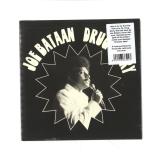
Joe Bataan's extensive discography was expanded in 2022 with the release of some old recordings from the King of Latin Soul that had never been previously published. After the success of his album "Riot!" (1968), Bataan had easy access to a studio whenever inspiration struck to record a new song sketch or even a complete track. Sometimes, he would finish the recording entirely and offer it in its final version to Fania for release. This usually worked, although on some occasions, the song was rejected. In the case of 'Drug Story,' the track was recorded without a clear final purpose, even though Bataan hoped it would become part of an album. When the Fania executives heard the result, they immediately rejected it, thinking it promoted drug use. The tapes were filed away and lost in oblivion until they ended up in a thrift store in New York. From there, they were rescued by a Latin music specialist and later sold, eventually making their way to the Vampisoul archives. The song was finally released in its entirety in 2022 on the LP "Drug Story" by Now Again. It features a long, slow vocal intro that evolves into a more uptempo track with two very distinct parts, to the point that it almost feels like two different songs. It transports us to the best moment of Joe Bataan's career, with all of his classic ingredients, delivering a track as good as his most famous songs. Bataan himself takes on the lead vocals and piano, Bobby Rodríguez handles the flute, sax, and bass, Pete 'Choki' Quintero plays the drums, and William Howes Jr. plays the electric guitar with wah-wah effects. Vampisoul strongly believes that the song deserved to be released as a single as well, and that its structure was perfect for each side to have a separate identity. So here it is, for the first time on a 45, 'Drug Story,', parts one & two, the long lost track by Joe Bataan. Pure Latin soul, recorded at the peak of the artist's career!
out of Stock
Last delivered 14 months ago available to reorder, subject to availability
2025 repress. Expo 70, held in Osaka, was a pivotal event for the Japanese people and their relationship with the rest of the world, demonstrating both the nation's ongoing economic recovery from World War Two and the creative spirit of Japanese society and its artists. The event gained international acclaim for its adventurous architectural design, visual art and electronic music. Some of Japan's most renowned composers were involved, but also present were the now-legendary rockers, the Flower Travellin' Band. A series of performances, billed as "Night Events" were held at the Expo; the most radical of these was "Beam Penetration and Mad Computer, plus the Minimal Sound of Motorcycles", but its anti-establishment feel and general madness took the Expo organizers by surprise and it was cancelled after only one night, despite being scheduled for a longer run. An air of myth developed around the event, but a recording of the event has been discovered and this release is the result. And what an event it was: a night-time sound-bomb with a fabled band, electronic sound and 50 motorcycles with horns blaring,spotlights, electronic billboards and a robot ― all flashing, roaring andhowling at the night sky. This release comprises a CD, a 10-inch record with fold-out sleeve and large obi, plus fascinating notes in Japanese and English by Kenichi Yasuda, an expert on Japanese rock music, and Koji Kawasaki, a renowned researcher of Japanese electronic music, as well as rare photos.
The Gold is inspired by the true story and theories of the 1983 Brink’s-Mat robbery, which saw
the theft of £26 million worth of gold bullion, and the decades-long chain of events that followed. First aired in February 2023, the first series of The Gold garnered 8.7 million viewers for the first episode and was nominated for a BAFTA. Series Two is inspired by theories around what happened to the other half of the gold.
Simon Goff’s work sits at the intersection of contemporary classical, electronic, and cinematic
music. His albums Vale and Spark Like Living Mothers have received critical acclaim for their immersive, textural soundscapes and compositional depth. He has also worked with some of the world’s most acclaimed musicians as a collaborator and sound engineer on Joker and Chernobyl - both of which earned him Grammy Awards.
“In series one of The Gold, the score developed around using the sound pallets of strings and electronics, acting themselves as characters in the narrative. The subject of class permeates the whole story and we used these sound worlds to represent two worlds, divided at first but becoming more and more intertwined as the series progressed. The ways in which the worlds have collided and merged in series two is even more complex. The tension is even higher and the neurosis that torments the characters runs deeper.” Simon Goff
Massi NPL’s EP debut on House on the Strand’s label 'Herah' is a wonderful cluster of ambient club adjacent works
Producer and sound artist Massi NPL has spent close to a decade honing his craft as a producer with an impressive growing list of accolades that have seen him try his hand at everything from scoring award winning video games and theatre productions at the Zurich theater to DJ at events and radio stations around the globe.
While the producer’s output may be slim it is considered and precise. His new Fragments EP is a deeply personal project that is the product of years of work.
These select 3 pieces are crafted from a series of field recordings spanning 3 cities that have shaped much of the producers life. These ambient club adjacent works are equally promising at decibel sound system shaking volumes as they are within tucked away headphone and home listening environments. They exude expansive soundscapes, featuring a rich array of washed out synth backdrops and percussions.
As featured on Alex Ruder’s Pacific Notions on KEXP
Mastered by artist engineer Adam Badí Donova (ulla, mu-tate, dj lostboi, Torus)
Cosey Fanni Tutti has announced details of a new album, 2t2, set for release on the artist’s own imprint, Conspiracy International, on 13 June 2025 on vinyl & CD. Composed, performed and produced by Cosey Fanni Tutti, the 9-track album moves between propulsive beat constructions and expansive electronic explorations, continuing themes from 2019’s acclaimed album TUTTI. It is a personal reflection; a sonic realisation of her life, drawing on her powerful inner resolve and expressing it through music. The album finds Cosey making sense of some very tough years, dealing with personal bereavements alongside swingeing world events that have impacted us all. Centring on her own strength and self will, the album’s two distinct sides – one rhythmic, one more meditative – are connected by an overwhelmingly positive mood. She explains, “My overtone chanting on the track ‘Stound’ was part of that, tapping into the inner self, to the core of your being, emotionally, physically, allowing the sounds to permeate and soothe as well as create a sense of power, resistance and resilience to what we face.” Even in the more melancholic moments, there’s a lightness that she explains is an “acknowledgement that it’s alright to be sad, that’s part of life, but there is so much joy too in our memories of people we lose and in the moments we share with each other. Joy is our resistance.” There are also threads from her most recent projects running through 2t2. Her latest book RE-SISTERS and the score she wrote for Caroline Catz’s film Delia Derbyshire: The Myths and Legendary Tapes are acknowledged, most directly on ‘Threnody’ which is dedicated to Delia Derbyshire and Andy Christian, an artist friend of Delia’s. He sent Cosey an abstract drawing of the same name, created one night from an improvised evening where he drew while Derbyshire intoned and sang softly as she looked at the drawings, as if reading a score expressing how they made her feel. Cosey’s process and the different strands that make up her work form a totality of vision. She goes on to say, “Once you get creating and listening, weaving, collaging sound it’s a wonderfully fulfilling feeling that takes you both out of yourself at the same time as essentially deep within.”
The artwork reflects this idea that the album is a “sound cameo”, reflecting the light within the music, and the buzz of life that exists within all of Cosey’s work. Musician, artist and author Cosey Fanni Tutti has continually challenged boundaries and conventions through her work. As a founding member of the hugely influential avant-garde band Throbbing Gristle, one half of electronic pioneers Chris and Cosey, and as an artist channelling her experience in pornographic modelling and striptease, her work on the margins has reshaped the mainstream. Her first solo album, Time To Tell (1983) was followed by 2019’s Tutti and 2022’s Delia Derbyshire: The Myths and the Legendary Tapes. Her debut book, the Penderyn Music Book Prize shortlisted Art Sex Music, was published in 2017, followed by RE-SISTERS in 2022 (both Faber), which will soon get a Spanish edition.
out of Stock
Last delivered 14 months ago available to reorder, subject to availability
Manchester’s sferic label return with a debut from ungoogleable Greco-Canadian anomaly Anastasia Patellis, aka Any, featuring additional instrumentation and co-production from Klein/Lolina cohort LA Timpa. It's a set of "squat pop" experiments that thread nocturnal soundscaping and pop hooks through hallucinated outlines written on harp and broken synth.
Greco-Canadian artist Any was bedding down in a Cretan squat when the album's title, μέγα ελεός in Greek, boomed from loudspeakers next to a bonfire, courtesy of a midnight Orthodox church sermon. Moving to the sunny, ancient island had provided her with an escape from big city burnout, but she ended staying far longer than expected - years rather than months. It’s this prolonged sense of suspension that provides the album with its wandering spirit, using harp as an emotional core.
Listening to Breton music made on the Celtic harp from artists like Kristen Noguès and Alan Stivell, Any sketched out song outlines that were then tweaked by Lagos-born, Toronto-raised journeyman LA Timpa, who flew out to Crete last summer to put his idiosyncratic stamp on the record. Like the dusty songs on Astrid Sonne's 'Great Doubt, ‘MEGA MERCY' sounds as if its drum line was duped on dictaphone from an old beat tape, then spliced with field recordings and vocals.
Half sung, half spoken, she murmurs around the beat, not exactly over it, adding circuitous, boss-tuned harp twangs when necessary. It's music that's spartan rather than lo-fi; a sort of bare-bones reaction to electroacoustic experimentation and outsider folk. It makes perfect sense that an artist as thematically on-point as LA Timpa is involved - Any's instrumental vamps are roughly pasted around pinprick boom-bap snaps and crunchy foley denouements, eventually cooled into contemplative Nala Sinephro-esque meditations.
Sections bring to mind Tirzah's most psychedelic early excursions, with dry asides set against a slurping, off-axis beatbox loop and distant, barely-audible synths. The record is tied up on 'WEATHER LIKE TIDE', an instrumental callback to the opener, book-ending the album with a melancholy, humid kinda ambient folk, purposefully melting the timeline.
out of Stock
Last delivered 14 months ago available to reorder, subject to availability
… oder Beastie Boys…oder Robert DeNiro…oder Banksy…oder Sportfreunde Stiller – klein anfangen und
dann mal schauen, was draus wird. Es wurde – zwar nicht wie alle erwähnten Künstler, aber der Weg
ist ja eventuell noch nicht vorbei für die Sportfreunde, die bei ihrem ersten Studioalbum auf vier Jahre
Liedansammlung zurückgreifen konnten. In Spanien mit und bei Uwe Hoffmann (Die Ärzte…) turbulente
Wochen verbracht, um in die Wunderwelt der Produktion eingeweiht zu werden. Daraus entstand eine
vorwärtsdrängende Musikplatte, die das zukünftige Spektrum der Sportfreunde definieren sollte. Zwischen
„Hockey (Feld)“ und „Fast wie von selbst“ liegen Punksongs, Balladen, verspielter Dadaismus, Neugier auf
Energie und tiefe Emotion. Sie schwebten damals auf Wolke sieben und waren auf Ochsentouren, auf den
10-Meter-Brettern (Video „Wellenreiten“), auf dem Mond (Video „Fast wie von selbst“), in Fernsehstudios
(Mit ihnen wuchsen und an ihnen verzweifelten MTV und VIVA), in Kochstudios (Video „Heimatlied“),
bouncten mit der Meute und Hans Rosendahl bei „Spitze“ um die Wette und sie klauten dem FC Bayern
die Meisterschale im Video zu „Wunderbaren Jahren“, dem Lied, das ihre erste musikalische Errungenschaft war und nach fast 30-Jahren immer noch deren Bandmotto darstellt. Denn, was soll denn noch
kommen? Außer eventuell ein Duett mit Mike D. und Ad Rock von Beastie Boys, ein Kurzfilm mit Robert
DeNiro, ein Mauerkunstwerk in New York mit Banksy oder eine Übernahme des königlichen Fußballclubs
Real Madrid…die wunderbaren Jahre sind noch nicht vorbei.
Auf dieser LP sind erstmalig auch die Lieder ”Rocket Radio”, ”Wir müssen gewinnen” und ”Money Mark”
enthalten, die es bisher nur auf der CD gab.
Nun kommt das Ganze in weiß daher, damit Nachzügler die reine Shellac-Weste bestellen können. Let´s
surf it!
180gr + weißes Vinyl, bedrucktes Beiblatt mit jeder Menge exklusiven Fotos von damals!





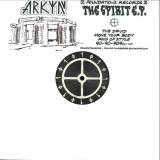
![Dub & Wheel [Kid Lib] & Tim Reaper - FR034](https://www.deejay.de/images/l/6/8/1157368.jpg)