Beyond Structures by Giomini is an exploration of form and perception within deep house. Across four tracks, he distills the genre to its essential elements: rhythm, texture, and atmosphere. The result is a set of pieces that move between motion and stillness; grooves that evolve organically, and silence that holds meaning. Every tone is deliberate, every pause intentional.
This is music not made for distraction but for immersion; a deep listening experience that invites reflection through movement. Beyond Structures seeks the point where architecture dissolves into feeling, and the dancefloor becomes a meditative space.
Buscar:evol intent
Born from a profound devotion to the piano and a reverence for the organic flow of life, byt’ surprises listeners by presenting "paths of sand", a remarkable creation by Amsterdam-based composer xico, offering sound and soul to those willing to listen beyond the surface.
Through the magic of experimentation, xico captured the fleeting beauty of the muse of improvisation, as described by Nachmakovich, transforming the ephemeral into something lasting. Performances recorded on the same old piano during the 2023 Kaalstaart Festival in the Netherlands have since evolved into a fully realized work. A journey of nearly three years of dedicated silence that began with Telva’s intuitive recognition of xico’s voice, starting with an invitation to her radio show and blossoming into a captivating fascination with what unfolded. This process led to the art of shaping the selected live recordings into a collector’s item, now materialized as a limited edition of 200 pressed vinyl copies, forever remaining as an artistic memento.
Perfectly attuned to the energy of the autumn equinox, paths of sand unfolds as an intimate reflection of music’s ability to hold what cannot be held, to speak what cannot besaid, and to embody what can never be described.
xico is a sound artist and improviser from Ibiza whose work explores the merging point between disruptive and post-natural soundscapes, crafting immersive sonic environments through compositions that unfold like ecosystems.
Encouraged by an understanding of chance as nature’s and awareness' most accessible voice, he focuses on creating generative live-sets with varying degrees of unpredictability. For him, subordinating human intention to nature’s order is a conscious choice, and making art through this lens becomes a statement and a spiritual practice. With his distinctive touch, his compositions resonate with the world in unexpected and profound ways, offering experiences you may never have heard before.
"Marionette presents Mélodies pour Clairons, the debut album by multidisciplinary artist Ioa
Beduneau. Based in the South of France, Ioa’s world is rooted in creation - building intricate
self-playing installations and handmade DIY electronics. His practice is driven by a desire to
connect, challenge, and open up dialogues around disability and other social constructs.
Proudly identifying as a disabled artist who is attuned to how our bodies interact with the world,
Ioa brings a fresh and inimitable perspective to electronic and electroacoustic music.
On Mélodies pour Clairons, Ioa contemplates lifeforms using modular synths, channeling
principles of physical modeling and bioacoustics. Ideas begin on paper and evolve into sound,
forming an abstract yet intentional sonic ecosystem. Clairons refers both to a musical instrument
and to a loved one with whom this music was shared, serving as a kind of sound diary during
the stillness of the pandemic. The movement of air, pressure, resonance, and the physical
properties of the clairon (a medieval trumpet) are reimagined and manipulated on this album,
resulting in impressionistic and deeply moving compositions with poetic sensibility. Organic
ASMR tones, synthesized bird calls, and pirouetting melodies of pipes and bells score an
imaginary biodome where chaos and harmony coexist. Striking and singular, these works
embody the kind of boundary-pushing music that defines Marionette."
For his last solo record ‘Through a Room’, Bill Nace shifted his usual saturated guitar sound and added tapes, hurdy gurdy, doughnut pipe, bird calls and the mysterious Japanese taishōgoto. Setting up for the final night of his three day residency at OTO with only the taishōgoto soundchecked, Nace hoped that Parker would arrive with his small soprano as its opposite. “I’ve been interested in state change, you know, playing until there’s a shift in time.” Known for his development of multiphonics to produce a constantly shifting pattern, Evan Parker has evolved an instantly recognizable sound - his work the soprano most distinct. Happily, it was the soprano Evan brought with him and as soon as the two start to play they entwine - taking off in a double helix of keys and reed primed for endless reconfiguration. Space warps under the velocity of playing, the pitch rising unrelentingly. It felt like unending lift off in the room, sheer energy until the last note makes remember your feet have been on the floor the whole time. Total time bending shredding.
–
"They had never played together before. They had never even met each other before this springtime 2024 concert at London’s Café Oto.
Evan Parker, circular breathing maestro of the saxophone, a legend in the universe that is Free Improvisation since the late 1960s and Bill Nace, one of the most intriguing experimental “noise” guitarists of the 1990s/2000s underground scene.
For those of us who have been enamored by the live and documented work of both these gents, this Café Oto duo was a must-hear event. It could have gone anywhere musically and that would have been totally fine. Particularly with Evan having a history of being thrown into a variety of challenging collaborations throughout his career, employing the learned elegance of trust in his own sensitivity to listening, responding, leading, following, sparring, intertwining, dialoguing, creating in the instant and, essentially, dignifying the non-hierarchical grace of chance.
The aesthetics of socialist consideration in Evan Parker’s playing, in his community of expanded and personal technique, for a younger player such as Bill Nace, strikes an exemplary model. This notion of respect would be entirely the reason Nace, when offered a residency at the most critical “new music” room in England, would request to play in duo with Parker.
Bill Nace came to prominence mostly during the apex of experimental music activity in and around Western Massachusetts in the early days of the aughts, with a focus on visual art and free improvisation guitar action. He could be found in the daytime hours, his head hanging down over a notepad, penning fine-tuned illustrations and abstract line drawings, while in the evenings he’d be attending any number of basement noise gigs, many of which he’d be participating in. His guitar style came across as being informed as much as by the physicality of his writing utensils in friction to the page as it was to his hearing and redefining of radical recordings ranging anywhere from the Black Unity Group to Black Flag.
Utilizing various metal files and other small cylindrical objects Bill would allow his guitar and amplifier to be in tandem with the improvisatory movements of his body as the instrument balanced, intentionally and, at times, precariously, upon his lap. The performances came across thrilling and daring and they would be mostly in the context of venues nothing more than a low-ceilinged damp and dank New England basement, a clutch of people hanging onto rusty pipes or sitting up on dilapidated washer/dryer machines, the shards of Bill’s “file guitar” sounds ringing out like the most alive music on Earth.
By the time Bill reached Café Oto in early 2024 he had relocated to Philadelphia all the while releasing a succession of collaborative LPs on his Open Mouth label to present his developing progression of solo and collaborative work. He also would find himself considerably engaged with playing the electric taishōgoto, a keyboard-activated string instrument from Japan which can exist as a one, two, four, five, or six string oblong sound object. Bill’s approach to the taishōgoto would not be too unlike his approach to the traditional electric guitar, though no outboard implements such as files, sticks, and rocks are utilized. The similarity would lie wholly with Bill’s full immersion of high velocity action-playing where, with the taishōgoto, an electric drone beauty occurs. The flurry of sonics and resultant harmonics emanating from the amplifier (which Bill opts to dial into with borderline loud-as fuck volume settings) furthers the meta-mantra properties of the instrument in an astounding display of drone dynamism.
This sound world of Bill’s two-stringed taishōgoto on this Café Oto night worked beautifully with Evan Parker’s improvisatory saxophone conceptions. The duology achieved instant lift off at ground zero only to find it’s eventual finale as if it were organically ordained. Time seemingly morphed from its ancient human construct of control, rendered inconsequential to the torrential transcendence of the room wildly activated by the magic resonance of the multi-directional pan-spatial sonance of the music as if it were some beatific blessing. It was one of those nights where art as a liberating force of spirit gifted the listeners with an offering of exaltation and joy. It was entirely mystical and mind blowing. A night of Total Music."
Thurston Moore, London, 2025
Fides Records celebrates ten years of independent sound and vision with the monumental 41-track release “FIDES X – 10 Years of Fides”. The first 12” FIDESX 1, set to release on 24th October sets the tone for the seven-part vinyl journey, opening with a powerful statement of intent.
UFO95 introduces “After Light Comes Shadow”, a bleep-infused 4/4 cut whose broken accents unfold into layers of cinematic tension. Z.I.P.P.O and Claudio PRC follow with “Marte Rosso”, a poetic excursion across Martian landscapes shaped by evolving pads and hypnotic grooves. D-Leria’s “Underwater” plunges deeper still, driven by relentless modular propulsion and immersive aquatic textures.
The B-side expands the spectrum. Stephanie Sykes & Dyad contribute an untitled roller infused with spiritual intensity and organ-like resonance, while BIMOL’s “Fragmento en La” twists cinematic atmospheres and industrial edges into broken rhythms guided by a haunting Spanish vocal. Bringing the record to a close, Decoder delivers “We Keep Lying To Ourselves”—a slow-burning, 808-driven piece of subtle progression and timeless elegance
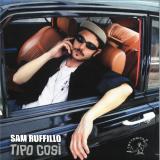
Italian producer, musician, DJ, and groove architect Sam Ruffillo drops his long-awaited debut album Tipo Così on Toy Tonics – a sun-drenched, genre-blurring statement that blends classic house with Mediterranean flair, romantic funk, and tongue-in-cheek Italo vibes. Over 11 expertly crafted tracks, Ruffillo delivers a dancefloor-ready, emotionally rich LP that connects deep musicality with irresistible rhythm and light-hearted elegance.
After three acclaimed EPs and collaborations with revered artists such as Barbara Boeing, Kapote, and Fimiani, Ruffillo has firmly cemented himself as a core artist on the Berlin-based label. Known for his unmistakable signature sound — a warm mix of vintage disco, 90s house, and Italian vocals — Sam’s music has garnered widespread DJ support from tastemakers like Gerd Janson, Palms Trax, Seth Troxler, and DJ Tennis, while becoming a staple on Italian airwaves. His infectious summer anthems like Danza Organica and Perfetta Così have soundtracked countless club nights and festivals, creating a loyal following that eagerly awaited this full-length debut.
Tipo Così is the natural culmination of a musical journey that’s both playful and profound — a travel diary written in grooves, synth stabs, and melodies that feel like postcards from a parallel Mediterranean universe. The album expands and deepens Ruffillo’s world into a fully immersive experience: lush emotional chords meet tight syncopated grooves, vintage synth textures collide with irresistibly catchy pop refrains, and the boundary between sincerity and playful irony is exquisitely blurred.
Entirely written, produced, and recorded in Italy, in his beloved hometown of Bologna, the album finds Ruffillo at the helm on keys, drum machines, and production, supported by a talented cast of musicians contributing live bass, guitar, and other organic elements — further enriching his trademark fusion of electronic grooves and natural instrumentation. There’s a tactile warmth in these tracks, a hands-on feel that adds soul and depth to every beat.
This album also marks Ruffillo’s heartfelt return to singing in Italian, with standout tracks like House Tipo Così, Mi Fa Volare, Ancora, and Dentro Di Me, where romantic naïveté meets pulsing club energy in a way that feels both timeless and refreshingly new. The vocal performances add an intimate, human touch to the music, reinforcing the personal stories woven into each song. There’s poetry in the casual, a bittersweet elegance in the way the lyrics float over groove-heavy production.
Having toured extensively across Europe, Australia, Indonesia, New Zealand, and Mexico — with sets at iconic venues like Panorama Bar and festivals such as Sónar Barcelona — Ruffillo has fine-tuned much of this album in front of live audiences. The real-world testing ground infused the record with a dynamic energy and immediacy that only comes from genuine crowd interaction. These songs weren’t just made in the studio — they were lived on dancefloors around the world.
Tipo Così is not just a collection of tracks. It’s a philosophy — playful, stylish and unmistakably personal. A modern club album bursting with heartfelt emotion and sophistication. Music for dancers with taste; for lovers of beauty, rhythm, and the little imperfections that make things feel real.
But what exactly is Tipo Così? More than just a phrase, it’s a way of being. It’s about embracing elegance without effort, mixing irony with sincerity, and letting nostalgia slip into the room without taking over the party. It’s Sam Ruffillo’s signature language: relaxed, confident, meticulous yet never rigid — where a chord progression can say as much as a lyric, and every beat carries intention.
The album’s visual identity complements this vision perfectly. The artwork and promotional materials lovingly reference Italian design from the ’80s and ’90s, combining bold graphic elements with playful pop culture nods. This aesthetic mirrors Ruffillo’s music — a fusion of vintage warmth and contemporary freshness, delivered with authenticity and charm.
Sam Ruffillo belongs to a new generation of European artists who are reshaping electronic music by blending past and present, analog and digital, groove and emotion — without nostalgia or pose. His artistic universe is coherent, vibrant, and alive; a rich tapestry of sound, images, and stories that coexist with lightness, precision, and a distinctive voice.
Reflecting on his artistic journey, Sam describes music as a vital, deeply human impulse — a tribal connection to rhythm and body that has driven him since he was a teenager. His creative process balances meticulous planning with room for spontaneity, usually sparked by clear melodic ideas that evolve naturally. Collaborations with close friends, especially vocalists like Ninfa, add warmth and authenticity, exemplified in tracks like “House Tipo Così.” For Sam, music is honest self-expression — crafted for listeners who crave memorable melodies and rhythms imbued with genuine feeling.
While technical perfection is tempting, Sam prioritizes emotion, knowing that what truly resonates is the soul behind the sounds. His long-standing partnership with Toy Tonics has been key in nurturing his vision, offering a blend of creative freedom and professional support. Looking ahead, Sam Ruffillo is excited to broaden his live performances, and release new projects that continue to blend electronic grooves with organic, heartfelt sounds — maintaining the delicate balance between playful irony and sincere emotion that defines Tipo Così.
Kurzversion:
Italian DJ, producer and musician Sam Ruffillo drops his debut album Tipo Così on Toy Tonics - a sunny blend of house, funk, Italo and pop, full of groove and emotion. Written and recorded in Bologna with live instruments and Italian vocals, it’s a playful, elegant journey shaped on dancefloors worldwide. A stylish, sincere club album where nostalgia, irony and rhythm meet in perfect harmony.
- Mi Fa Volare
Road-tested across continents and now finally released, “Mi Fa Volare” channels 90s uplifting euphoria with big breakbeats, lush chords, and Italian vocals built to stick. Somewhere between balearic bliss and piano house nostalgia, it’s a feel-good club weapon made for peak-time moments - already sung back by crowds after just one listen.
- Ancora
“Ancora” is a vibrant hi-NRG track inspired by 80s Italo disco, sung entirely in Italian. It blends driving rhythms with dreamy melodies, capturing the radiant spirit of the decade. This fresh yet nostalgic song delivers euphoric vibes and timeless energy, making it a perfect fit for both dancefloors and reflective listening moments worldwide.
- Dentro Di Me
“Dentro Di Me” channels ‘90s sensuality through a fast-paced, UK house-inspired lens. Entirely in Italian, it’s a bold and contemporary dance track where hypnotic vocals meet high-energy grooves. Blending nostalgic textures with forward-thinking production, the result is a seductive and euphoric trip - equal parts emotional and club-ready.
- Amigo
“Amigo” blends Latin groove, acoustic guitar-driven rhythm, and Mediterranean flair into a warm, magnetic, cross-cultural dance anthem. Sung in Spanish and Italian, it celebrates connection, inclusivity, and the joy of moving together - whether stranger or friend. With its unstoppable rhythm and vibrant energy, it’s a feel-good track with a unifying spirit.
- Ma Sei Fuori
“Ma Sei Fuori” is a tongue-in-cheek dancefloor bomb blending raw house energy with catchy vocal phrases and a nod to classic French touch. Driven by hypnotic vocal lines and a playful attitude, it doesn’t take itself too seriously - while still proving serious club impact. Built for late-night moments, it’s bold, bouncy, and impossible to ignore.
Unknown Waveforms is the forthcoming album from Belgian trio KAU, set for release on October 10, 2025. Marking an evolution since their 2023 release The Cycle Repeats, this new record captures a more personal, immediate, and unfiltered version of the band's sound. In an increasingly digital world, KAU takes a different route, with an album rooted in human connection, live energy, and creative spontaneity. Here, the trio reflect their take on instrumental music, drawing heavily fromjazz, hip hop, and electronic influences.
At the heart of Unknown Waveforms lies the starting point of three musicians in a room, writing and composing music on the spot. For KAU, this idea mirrors their working method: long jam sessions, free-flowing experimentation, and shared moments of inspiration. Songs often take shape slowly, unfolding over hours or days, but always built collaboratively as a trio.
The album's title reflects the mystery behind how music comes together, but is also both literal and symbolic. Unknown waveforms are the sounds that arise when machines and people interact in unpredictable ways. Whether you're an experienced musician or just starting out, the creative process often feels elusive and hard to fully understand. But there are also certain moments: creative sparks that can't be planned or programmed. It ends up being more than notes, gear, or structure, it's about the process, the tension and energy that builds when people connect and create in the same room.
The title track, Unknown Waveforms, captures that exact process. It opens with a quote from synth pioneer Wendy Carlos: "I'm just trying to show you how we get some of these sounds", inviting listeners directly into the creative space. The track focuses less on a polished outcome and more on the moment before a song is "finished": it's a portrait of experimentation, feeling, and raw expression.
This commitment to honesty permeates the entire album. KAU kept overdubs to a minimum, avoided excessive editing, and prioritized spontaneous choices over calculated ones. In a time when the future of live, improvised music feels uncertain, they double down on the physical, the real, and the immediate. The album resists the pristine polish of modern production, favoring the warmth and imperfection of analog synthesis. The band embraces the character of their instruments, particularly vintage gear, where subtle flaws add beauty, depth, and personality.
One standout track, cr_eye, is driven by the Moog Subphatty-a key instrument in the band's toolkit for its analog warmth and powerful sub-bass. The track centers around the conversation between bass and drums, allowing the keyboards to recede and create space. It draws emotional threads from earlier KAU tracks like Kampala and Kautokeino, bridging past and present with a shared atmosphere and rhythmic interplay.
Another highlight, Stratford, finds inspiration in London's transport system and the UK jazz scene that has long influenced KAU. A field recording snippet of the London Underground kicks off the track, connecting it to the rhythm of everyday commutes. Built around a hypnotic sequencer line from the Roland JX-3P, the track evokes the motion of a metro journey. Artists like Nubya Garcia, Yussef Dayes, and Alfa Mist, giants of the scenethat the band has admired for years, resonate subtly throughout.
Above all, Unknown Waveforms is a statement of intent from KAU: a celebration of imperfection, creative honesty and an insight in the process.
Some things simply need time to brew. Loek Frey returns to Omen Wapta with his third release on the label: Nayan. The Amsterdam-based artist shares a long-standing friendship with label head Woody92 - keeping each other in motion as artistic peers since the label's inception. Over time, they've built a shared archive of material: sound sketches, tracks, and sonic touchpoints - an ever-evolving third space where their paths continue to meet as they move in parallel. Nayan emerges from this deep-rooted exchange: a distilled six-track release that fuses Frey's cerebral intricacy with the label's primordial uncanniness, reaffirming both as key voices in a yet-to-be-defined sonic realm. Diving into the release, Frey's signature remains intact - tactile, spatial, and rhythmically precise - but a subtle shift is at play. A paring down. A move toward something more reduced, maybe even more patient, yet no less absorbing. The A side leans inward: deep pressure, spectral traces, and an undercurrent of tension that never quite resolves. It's music for staying with, not escaping from. Flip to the B side and the palette widens - kicks land heavier, patterns loosen, textures fill the full frequency field. Still deeply rooted in the Wapta world, but with an assertiveness that whispers rather than shouts. Somewhere between absence and force. With Nayan, Loek Frey carries his Omen Wapta narrative into new territory - merging restless experimentation with dancefloor intention.
Back from the undead in the fresh (because we believe in upgrades & afterlifes!) is this new pressing of the first of all Gastr del Sol records, The Serpentine Similar. It is one of several distinct initiators of a definitive musical drift in the 1990s, and a drift all of its own, to boot! At the time, this album was largely heard within an underground whose boundaries were clearly defined - but if today"s sound-pool of "commercial" music is deeper and wider than it was back then, it is without a doubt due to the cracking open of certain doors of perception by Gastr del Sol, alongside their esteemed others. The year was 1992. After a bruising run of tour dates the year before, the final lineup of Bastro, a power-trio of David Grubbs, Ken (Bundy) Brown and John McEntire, retired, exhausted. Shortly thereafter, they were rebirthed, sans drums, via a new set of ideas composed in the cut-down configuration of Grubbs on guitars, keyboards and vocals and Brown on bass. Playing in duo format opened up sound and intention, leaving the need for speed (and the stock in rock) out, while letting in an expanse of brooding, droning acoustic space that highlighted the songs" serpentine shapes. This was something so radically different as to require a new calling card: henceforth, Gastr del Sol. Signing to Teen Beat, Gastr del Sol completed The Serpentine Similar in late 1992 for release the following year (the DC reissue came in "97). In the final rendering, Serpentine"s roof-rent, white-sky execution was attenuated with several percussion appearances from the prodigal John McEntire. Over the next five years, his cameo presence was a constant in Gastr del Sol"s steadily-evolving tradition of significant breaks from tradition at every turn. There would be an even more significant tradition-breaker onboard for all this; following the release of The Serpentine Similar, Jim O"Rourke joined Grubbs in Gastr as Brown exited (to focus on Tortoise, with McEntire et al). For the new Gastr duo, a world of new directions in music awaited, the future became the past, and the music of Gastr del Sol emerged from the thin air, then returned there. Now, The Serpentine Similar has been returned to vinyl from the temporal streams of contemporary music listening, a glorious rematerializing of all its spatial details on LP for the first time in 20 years.
Woo, formed in 1975 by brothers Mark and Clive Ives in London, is known for its experimental blend of folk, jazz, ambient, and electronic music. Their sound, characterised by the delicate integration of acoustic and electronic elements, has earned them recognition in ambient and healing music spheres. Over decades, the duo has produced over 1,500 tracks, evolving a unique style that evokes dream-like atmospheres and a meditative, soothing quality perfect for moments of reflection.
Dedicated to intertwining the serene beauty of music with the nurturing process of planting seeds when the first new signs of life emerge in the growing season. A carefully crafted collection of ambient & minimalist soundscapes, occasionally branching into the new age. A soundtrack for quiet moments of sowing, nurturing, & witnessing the slow reward of growth.
Each artist will release a recycled cassette and digital format. We plan to release one cassette each month from November through June, aligning our releases with the ideal growing period. Each physical release will precede its digital counterpart by a few months, allowing the music to be experienced in its intended form first, with the tangible connection of a cassette and seeds before becoming accessible to a broader audience in the online sphere. This staggered release allows listeners to engage with the music more profoundly and intentionally, akin to the patience and care required in gardening. Best get that portable cassette player on eBay!
Each release will serve as a soundtrack to quiet moments of sowing, nurturing, and witnessing the slow, rewarding growth process, both in plants and in the listeners' lives. Whether tending to a window sill garden or simply seeking a peaceful retreat in sound, "Music to Watch Seeds Grow By" is an invitation to pause, listen, and cultivate.
Early DJ support including Tom Ravenscroft, Deb Grant, Vladimir Ivkovic,Ruf Dug, Eva Geist, Domenic Cappello, Fergus Clarke & Sofie K.
- Monk Time
- Shut Up
- Boys Are Boys And Girls Are Choice
- Higgle-Dy Piggle-Dy
- I Hate You
- Oh, How To Do Now
- Complication
- We Do Wie Du
- Drunken Maria
- Love Came Tumblin' Down
- Blast Off!
- That's My Girl
Released exclusively in Germany in March 1966, "Black Monk Time" by The Monks has become a cult classic -praised as a groundbreaking forerunner to punk and krautrock. Though the album was overlooked at the time, its bold sound and sharp lyrics have earned it lasting influence and critical acclaim. The Monks were five American G.I.s stationed near Heidelberg, West Germany. Originally performing as a typical beat group under the name the 5 Torquays, they evolved into something far more radical. After discovering guitar feedback by accident and embracing a raw, percussive approach, they caught the attention of two German ad men-Walther Niemann and Karl Remy-who became their managers and helped reinvent their identity. Dressed in monks' robes with tonsured hair and noose neckties, the band developed a confrontational, rhythm heavy sound. Nowhere is this clearer than in the album's opening track, 'Monk Time,' which captures their entire aesthetic in under three minutes. A pounding, repetitive groove of bass and drums anchors the track, layered with distorted guitar bursts, percussive electric banjo, chaotic organ stabs, and unrestrained, shouted vocals. It's a declaration of intent-urgent, jarring, and unforgettable. Their sole studio album, produced by Jimmy Bowien and recorded in Cologne in late 1965, defied musical norms. From the explosive opener 'Monk Time' to the fierce 'Complication,' "Black Monk Time" rejected flower power for something more urgent-anger, humor, and innovation. At the time, Polydor Records deemed the music too radical for American audiences, delaying its U.S. release. Despite its initial commercial failure, the album is now seen as a pivotal moment in rock history-loud, strange, and unapologetically ahead of its time. The Monks' story is as unlikely as their sound: five ex-soldiers and two ad executives creating one of the most daring records of the '60s. The band never sparked the revolution they hinted at, but decades later, "Black Monk Time" still resonates. This is your chance to experience the album that dared to be different - don't miss it. Remastered sound from the tapes, pressed on 180g vinyl.
- 1: Louhi (Part )
- 2: Louhi (Part )
In the world of Pharaoh Overlord, little is ever as it seems. This band is less comprised of tricksters or mischief makers than fearless obsessives whose musical instincts take twisted and wild pathways. Now, fresh from forays into Italo-disco and synth-pop, they have thrown another still more mighty statement of intent into the universe. Louhi is a thunderous and majestic epic of joyful repetition and earth shaking power. A two-track minimalist-rock monolith forged from guitars, synths and hurdy-gurdy, inspired by the band’s eternal touchstone influence Outside The Dream Syndicate by Tony Conrad and Faust, and constructed around a single riff and melodic idea, it builds and evolves to fearsome pinnacles of elemental intensity.Luminaries and constant compatriots in the Pharaoh Overlord
headspace were recruited for this voyage into the ether. Vocalist and longtime collaborator Aaron Turner (SUMAC, Isis, Old Man Gloom)and Tyneside maverick Richard Dawson were equally keen to get on board, the former taking a spontaneous and improvisatory approach to his vocal parts, and the latter largely playing a part consisting of one guitar chord. Yet whatever routes Pharaoh Overlord take to their destination, a common theme is the consciousness-warping singularity of the riff and the mantra, and the temporal disorientation this can provoke mirrors the broader designs of this record, which takes traditional folk elements and transports them in the band’s singular time machine. “It’s our 25th Anniversary this year, and from time to time we hear wishes that if just we could play more of the stuff that we did twenty or more years ago” relate Jussi and Tomi. “We totally understand this. You could say we used Louhi to reset ourselves to the past, to be able to continue again to the future.” Aaron puts it another way, evoking simplicity in the chaos – “The world of Pharaoh Overlord is a magical one - every album is an invitation to enter that place and rejoice in doing so…”
- A1: Sister Hell
- A2: Prelmnlrl
- A3: It Wasn't Me
- A4: Of Toes, Yark
- A5: Keeps Repeating
- A6: Sports Car
- A7: Burning Up
- B1: What Time Is It?
- B2: Change Your Mind
- B3: Mr. Whitey Tighty
- B4: Cold Cold Cold Ground
- B5: Choke
Originally released in 1989 on the band’s own Thwart Productions label, Tangle was the first vinyl release from Thinking Fellers Union Local 282. Coming after their debut cassette, Wormed, By Leonard, it shows the band leapfrogging stylistically into a more mature phase of their patented surreal compositional modus operandi. Tracks like the opener, "Sister Hell," foreshadow the band's later evolutionary mutations and was a minor hit in the underground circuit at the time. The rest of the album is a sleek maelstrom of crackpot dissonance, noise-rock power balladry, schizo-telepathic improv and some of the finest underground music of the era. In short, Tangle is a template and Proclamation of Intent that presages TFUL's classic 90s releases. Originally produced by their longtime engineer and thaumaturge, Greg Freeman, this reissue is impeccably remastered from the original master tapes by Mark Gergis. New and contemporary artwork ties a saucy bow around this astonishing reissue.
Following on from the single release of ‘Intentions’, Soul Quest is pleased to present a myriad of remixes alongside a resonating live version of the original cut - and in doing so, serving up a package of lively renditions that add further to the label’s soulful sound.
‘Intentions’ in its original guise was the result of a joint musical adventure from label head Max Sinal, producer and longtime collaborator Kingcrowney, and vocalist Liv East. The track is Soul Quest to its core, with simmering and emotive chords interlaced between a softly spoken yet impactful rhythm section. East provides some inspired vocal work up top, her angelic voice floating through the breeze, shining light on all corners, as the totality of the musical package gives over only the most heartfelt and joyful feels. It seems only fitting that the original track be explored and reconsidered by some of the finest producers currently going, and with this remix album, you see all sides of ‘Intentions’ possible. Up first comes producer extraordinaire Frits Wentink, who takes the atmosphere firmly into the clubbing sphere. Wentink breaks down all the elements with razorsharp precision, drawing focus to the central progression by adding in new, repeating chordal elements that revolve around the kicks. As the track shifts through the gears, lines emerge and grow in stature, with plenty of time for breakdowns to get that full dose of the original’s emotive brilliance.
Dallas based deep house legend, JT Donaldson features next with not one but two remixes, the first of which retains the forward progression of the original but adds in some exciting elements. The addition of the driving bass line gives depth to the undercurrent, with stripped-back sections allowing the flow to meander through some very profound atmospheres. The ‘Dub’ version strips back East’s vocals to draw more focus to the groove and melodic sequences, and as a flip side to the first remix, the duo encapsulates all that could be wished for in a soulful house number.
Flying Moth is up next, with his spin consisting of a more hypnotic approach, with skipping broken drums creating melodic pools and caverns. East’s voice echoes through space and time, enticing further escapism as the track grows and morphs with each passing minute - a beautiful saucerful of sound that is oh so intoxicating.
Finally, to wrap things up, the live version lands to take the energy down to a beautiful canter. The rhythm section takes the form of a full percussive outlay, which speaks gently amidst a sea of exquisite guitar licks, breezy chords, and brass. East is the star of the show here, her voice the anchor within the ever-evolving backing section, which drifts and lulls with a wondrous effortlessness.
‘Intentions’ as a single contained all the sonic qualities which Soul Quest treasure, and with this collection of remixes and live versions, its meaningfulness is only added to. From imaginative takes through to inspired audial environment
After the explosive Comme à la radio, infused with the free jazz energy of the Art Ensemble of Chicago, Brigitte Fontaine and Areski Belkacem released six albums together or separately between 1972 and 1977. Their music, often stripped down to voice, guitar, and percussion-or performed a cappella-stood in stark contrast to the orchestrated French pop of the time. This minimalist and spontaneous approach highlighted the poetic power of the lyrics and the intimacy of the melodies, earning them recognition in the counterculture and underground scenes. By the end of the 1970s, Fontaine sought to make her work more visible without losing its originality. The Baraka album marked this transitional moment, initially recorded in a home studio without external musicians. Its title (meaning "blessing" in Arabic) hinted at a desire for success. Mixing introspection, absurd humor, and bold stylistic choices, the album was technically ambitious, featuring stereo duets and layered vocals, and lyrically rich, tackling everything from metaphysical themes to playful nonsense. However, the project ultimately veered off course. After moving the recordings to the massive Studio Davout and bringing in producer and guitarist Martial "Mimi" Lorenzini, the album lost its original intimacy. Overproduced arrangements clashed with the simplicity of Fontaine and Belkacem's initial intent, resulting in an album-renamed Les églantines sont peut-être formidables-that the artists later disowned, refusing to allow its commercial release. Recently rediscovered demo tapes, stripped of their bombastic layers, reveal the raw, emotional core of the songs-showcasing the duo's voices with a rare authenticity. These recordings bridge a missing link in their discography, between their experimental lo-fi years and their later, more accessible work. Decades on, Fontaine and Belkacem remain defiant originals, never settling into a formula, always evolving, and continuing to shake the foundations of French chanson.
South African composer and producer Jason van Wyk is continuously honing his craft, with each consecutive release feeling like a clear evolution of its predecessor. Through his albums and soundtrack commissions, van Wyk’s technique at perfectly balancing melody and atmosphere is now more apparent than ever.
Inherent, his sixth aptly named album, finds van Wyk distilling his sound to where each note seems to have implicit cinematic intent, revealing intricate new details with every listen. Inherent features large swaths of warm, wispy ambient, ghostly piano and widescreen drone. Yet, at the very moment when all seems to apex, van Wyk presses on by mining his past endeavors in club music, neo-classical and scoring work to create something else entirely.
Distorted guitars, percolating synth arpeggios and poignant beat design propel the contemplative ambient sections into the light, bringing van Wyk’s sound into previously unexplored territory.
Sohrab unveils “Dreams of Dawn”, on his newly born Toneblind label, a sonic journey that bridges the space between night’s final whispers and the first light of a new day. A fusion of styles with a progressive imprint, this release is a reflection of movement, crafted as a distinct evolution from the artists previous work
Each track, a fragment of a larger vision, pulses with the energy of transition, capturing the essence of dreams dissolving into reality. More than just a collection of sounds, Dreams of Dawn is a statement of intention, dedicated to friendships forged on the road and the experiences around the globe lived so far
WOW. Daniel O'Sullivan's transcendent new album, Eros, is one of the greatest things we've ever heard. A simply stunning song cycle of hypnotic, experimental contemporary chamber music composed for a 14-piece ensemble. Combining minimalism, complex syncopation, detailed acoustic textures, weird intervals and samurai precision, this record will elegantly blow your mind. When Daniel first sent us this, he pitched it as “Liquid Swords meets Michael Nyman”. Trust us, he wasn't wrong. A "unique hybrid orchestral music", it presents a confluence of Daniel's longstanding fixations; indeed, there's elements of Nyman, Antonio Carlos Jobim, Magma, Aaron Copland and RZA. But this is wholly O'Sullivan's. Originally commissioned for the Sonoton Music Library in Munich, Eros now receives a deluxe vinyl release courtesy of Be With Records, bringing this meticulously crafted work to a wider audience. Limited to just 500 copies for the world, these are gonna fly.
An English composer and multi-instrumentalist, Daniel O'Sullivan’s career has been marked by versatility and innovation. In addition to his work with Sonoton, he has composed extensively for the legendary KPM music library, contributing to its storied legacy of production music. As a deep virtuoso and collaborator, O'Sullivan has also played in a number of influential projects, including Ulver, Sunn O))), This Is Not This Heat, Grumbling Fur and Miracle (with Steve Moore), leaving an indelible mark on the contemporary experimental music landscape.
O’Sullivan’s first foray into classically informed chamber music, Eros is a culmination of his long-standing fixations and expansive musical influences. The album features arrangements that are as detailed as they are emotionally resonant, showcasing his unparalleled ear for intervals and mastery of counterpoint. The music brims with complex rhythmic syncopation and a sensitivity to texture and space, resulting in a soundscape that is both intoxicating and dauntingly precise.
Recorded June 2023 and February 2024, in Brussels, London and Carmarthenshire, Wales, Eros features members of Echo Collective (Neil Leiter and Margaret Hermant), Thighpaulsandra (from seminal post-industrial band Coil), and jazz pioneer Oren Marshall. Daniel's sonic weapons of choice, in his own inimitable words, were "Big Bad Drum, Pee Anne Oh, Low End Brass, Willowy Winds & Samurai Strings." You get the picture. As a cyclical suite, this is a record that really needs to be heard in its entitreity, from start to finish, to truly appreciate the genius at work here.
A jaw-dropping statement of intent, the minimalist "Golden Verses" sets the tone with its complex cue which has your neck snapping right when it feels like it needs to. Listen and you'll understand. A syncopated tangle of sharp strings, crunchy bass, drums percussion and bright piano and mallets vie for position with French horn and woodwind melody in the most compelling and unexpected ways. Quite simply, it's one of the finest album openers I've ever heard. It's followed by the atmospheric rippling minimalism of "Lyre Lyre", a gorgeous gem with shimmering chimes, bright melody, human percussion and syncopated pizzicato strings. It kinda comes on like a less-abstract Boards Of Canada, bursting with typical wonderment. The piano and string-drenched "Dolorous Stroke" effortlessly builds its warm, pastoral orchestration with flowing piano arpeggio, steadfast drums, expressive string quartet, rich low brass, woodwind and lyrical flute. Just sublime.
The insistent frenetic propulsion of "Plain Paper" is utterly beguiling, featuring a determined string motif, urgent drums and percussion, driving low brass and breathless, energetic flute. The haunting, interweaving string arpeggios that propel "Grapes Draped" presents a claustrophobic minimalism for chaos and darkness, with growling low woodwind and brass, spiky harpsichord, skittering flutes and tight drums. Up next, "Xanix Annum" is a stately minimalist waltz with expressive lyrical string quartet and delicate woodwind, anchored by drums and percussion. "Painting Rose" is a bouncy stop-start track with angular syncopated strings and a piano pulse underneath bright harpsichord and flutes. "Rotunda Garden" presents ethereal textural minimalism for landscapes and reflection with flowing string arpeggios, warm, low woodwind drones, floating choir and cymbal swells. Closing out this extraordinary side of music, the glowing, flowing minimalism of "Flowry Orb" features urgent organ, piano and woodwind arpeggios, half-time drums with shimmering cymbals, a soaring, beautiful violin solo and hypnotic vocal chant.
Side 2 opens with "Theia Mania" a determinedly off-kilter, angular track featuring low wind, brass and drum stomp in dialogue with lively string trio, woodwind and solo horn. The light, airy minimalism of "Painting Percy" is built around an interplay of rhythmic motifs for piano, low brass, bassoon, fluttering flutes, urgent strings, drums and percussion whilst "For Archetypes" is a delicate, gently syncopated chamber cue for nostalgia, nature, reflection and moments of calm, with steady piano motif, intimate woodwind and French horn, and warm, graceful strings. The urgent Ars Memoriae is a propulsive march for progress, processes and industry, underpinned by driving tuba, with determined strings, resolute drums, and vivid, expressive flute, clarinet and French horn.
The syncopated energetic minimalism of "Mirrored Seven" presents layers of melodic and cyclical piano, drums, low brass, harp, flute and strings. "Pure Ornament" follows, a slowly evolving chamber cue with flowing clarinet, string and harp arpeggio, plodding tuba and percussion, fluttering flute and graceful, lyrical solos. Stunning! Up next, "Brave Boy" moves from its tender, warm, lullaby-like intro with lyrical flute, clarinet and strings before opening into a playful backend driven by a bouncy tuba riff and syncopated piano, woodwind, string trio, and drums and percussion. Rounding out this astonishing piece, "Waxen Waned" is a warm, pastoral chamber cue with light lyrical woodwind, tender French horn and subtly pulsing string trio.
The album's title is a reference to Plato’s conception of Eros, which is more than romantic or physical desire. It is a dynamic and creative force that drives individuals to seek perfection whether in art, relationships, philosophy or the pursuit of truth. Wholly appropriate, here, we think. When asked what his influences were in making this astounding record, he answered thusly: "Non-musical: Householding, Pythagoras, Goethe, Grail romances, Hermeticism, Doctrine of Signatures (Parcelsus, Bohme, Pliny), Eric Rohmer, John Stezaker, Yasujiro Ozu. Musical: Duke Ellington (late suites), Smile-era Brian, early RZA, Wagner (Parsifal Overture), Magma, Mancini, Axelrod, YMO, Hildegard, Nyman, Penguin Cafe Orchestra, Jobim (Stone Flower), Alessandro Alessandroni, Tavener, Moondog, Orthodox Music, Secular Music." That's some pretty deep shit. Makes you want to dive in, no?
Mastering for this vinyl edition was overseen by Be With regular Simon Francis, and it was cut by the esteemed Cicely Balston at Abbey Road Studios to be pressed in the Netherlands by Record Industry. Truly, Eros is a work of extraordinary depth and sophistication. It invites listeners to immerse themselves in its intricate layers, to lose themselves in its hypnotic rhythms, and to marvel at the precision of its execution. With this release, O’Sullivan reaffirms his position as one of the most inventive and uncompromising voices in contemporary music. Do. Not. Sleep.
"Sebastian Mullaert has always favoured the long arc: of tracks, of creative cycles, of artistic trust. His next chapter unfolds in the form of a new vinyl only label, born in close collaboration with Ulf Eriksson - his longtime friend, ally and the steady pulse behind Kontra Musik, a label that's been both home and launchpad for many of Mullaert's most vital releases. K-Files is built on two foundations: singularity and multiplicity. Every release will present a single track refracted through three or four different versions - each one approaching the core idea from a distinct creative angle. These are tools not just for DJs, but for listeners who hear dance music as more than just rhythm - as mood, as exploration, as transformation. The first release, K-FILES 01, sets the tone: deep, dubby, and spacious, it invites patience and immersion. But like all good rituals, the process will shift. Future releases are already poised to explore other territories: sharper energies, stranger grooves, unexpected colours. In a world increasingly defined by instant access and digital saturation, K-Files stands intentionally apart - a slower offering. A return to physicality, to process, to the tactile rituals of listening, selecting, and playing music with care. K-Files is a sublabel for those who play records not just to move bodies, but to open space. A platform for sonic evolution, variation, and perspective. A place where dance music is not pinned down - but opened up. Each record will be released exclusively on vinyl."
Dateline: April 10, 1970. Setting: The storied Fillmore West in San Francisco, CA. Context: Miles Davis, three days removed from his first session for Jack Johnson and, with newly recruited soprano saxophonist Steve Grossman in tow, opening shows for countercultural heroes the Grateful Dead on the latter’s home turf. Result: The initial rumblings of a thrilling era in which Davis and his cohorts would again upend jazz and popular conceptions of the genre with music steeped in groove, improvisation, and hang-on-for-your-life adventurousness. All captured on Black Beauty: Miles Davis at Fillmore West.
Mastered at MoFi’s California studio, pressed at Fidelity Record Pressing in California, and housed in a Stoughton gatefold jacket, Mobile Fidelity's numbered-edition 180g 33RPM 2LP set helps bring what went down that spring evening in Bill Graham’s venue to your listening room with exceptional clarity, balance, and presence. Originally only released in Japan in 1973 and unavailable in the United States until the late ‘90s on compact disc, this marks the first time Black Beauty has been issued on domestic vinyl. The wait is worth it.
Benefitting from quiet surfaces and excellent definition, these LPs present the band’s livewire energy and torrential storm of notes with captivating dynamics, pacing, and fullness. At its core, this audiophile reissue takes you into the walls of sound erected by a band learning on-the-fly the sheer power, will, and breadth of the electric jazz Davis was orchestrating and realizing, on the spot, would reach rock audiences that until that point had only a faint awareness of his mad-scientist experimentation. The sense of release and reach conveyed by these carefully restored records make it clear the veteran bandleader was in the process of a permanent shift that he’d chase for the next five years.
Given Davis was only a few months away from releasing the pioneering double album Bitches Brew, it shouldn’t come as a surprise that much of the fare here adheres to similar explorative approaches. Turbulent rhythms, provocative trumpet passages, and rich, saturated tonal colors that seemingly splash against a blank canvas take precedence over any traditional attempts at organization and melody. Davis and Co. intentionally play everything on a line with the bandleader signaling changes with his horn via coded phrases. The group speaks a common language — with each member having gone to achieve iconic status for their career contributions and technical prowess.
In the company of Grossman, Chick Corea (piano), Dave Holland (bass), Jack DeJohnette (drums), and Airto Moreira (percussion), Davis constructs themes around “Directions,” “Miles Runs the Voodoo Down,” “It’s About That Time,” the title track to Bitches Brew, and more from his then most-recent studio works and the in-progress Jack Johnson. His farewell to the popular standards that for nearly two decades remained a part of his repertoire arrive via a brief dalliance with “I Fall in Love Too Easily,” a shortened albeit aggressive “Masqualero,” and the “Theme” finale of “Spanish Key.” Initially, Black Beauty lacked specific track listings due to Davis’ increasing frustration with listeners over-analyzing his music.
In retrospect, it’s difficult to blame anyone for wanting to view what’s on display here with the aural equivalent of a magnifying glass. Leaning in rock directions, yet maintaining an ear for spaciousness and solos, Black Beauty survives as a snapshot of a thrilling moment amid a transitory period in which evolution came fast and furious. Just two months later, Davis would add another instrumentalist to the lineup in the form of organist Keith Jarrett, and the perpetually restless visionary would blast off to a more atmospheric and arguably more chaotic universe.
Consider, then, this live document a bridge to that galaxy and a breathtaking example of the possibilities of jazz itself.
- A1: Ile De Gorée
- A2: Il Veut Marcher Avec Toi
- A3: Y Vou Balé Va
- B1: Séhé Voulé
- B2: Fortifie-Toi
- B3: Il Veut Marcher Avec Toi (Remix)
- B4: Loué
Vinyl[22,27 €]
Jess Sah Bi is well-known as half of the legendary duo Jess Sah Bi & Peter One who brought homegrown Country-Americana to the West African masses with their smash debut Our Garden Needs Its Flowers in the mid-1980s. Touring stadiums and reaching listeners worldwide, their music has racked up millions of spins on YouTube and remains imprinted in the hearts of Ivorians of a certain age. ATFA reissued their album in 2018, garnering critical acclaim from publications including Pitchfork and Rolling Stone and reaching a new generation of listeners outside Ivory Coast (Cote d'Ivoire). Sometime in the early 90s, Die Sahbi - or Jesse, as he known to friends-became gravely ill with an unknown ailment and almost died. He visited various doctors and all kinds of religious healers and nothing helped. One day he went down to an Evangelical Christian revival in his neighborhood. They prayed over him and he was delivered. He says, "Their prayers helped chase out whatever demons and unhealthy spirits were inside me. After that my illness went away. When I went to the United States a few months later on an exchange program I wanted to make music to thank God because I was saved." He recorded an album of music praising God in order to honor a promise he made to himself at the depths of his desperation in the hospital. The album Jesus-Christ Ne Deçoit Pas Jesus Christ Does Not Let Us Down came out in 1991 and sold around 3000 cassettes in Ivory Coast. The master tape was lost along the way so the recording has never been on digital platforms until now. Jesse didn't have much time to record while visiting South Carolina, hence the relatively short album, 6 songs including two reprises for filler. A local pastor connected him with a studio and some American musicians (Robert Fortner and Gary Davis) to help. They added acoustic guitar, percussion and keyboard accompaniment to Jesse's soaring French and Gouro vocals, harmonica and finger-picked acoustic. The resulting recording is deeply soothing and contemplative music that perfectly compliments the songs already embraced by millions. But he had to find the rest of the studio expenses-$600 total-which he secured drawing cartoons for UNICEF. Jesse is Ivory Coast's first political cartoonist, a vocation for which he was widely celebrated at the time. It also made him a few enemies which lead to him leaving the country permanently a few years later. Jesus-Christ Ne Deçoit Pas is Jess Sah Bi's first and only gospel album. Fortunately, fans responded with enthusiasm: widespread radio airplay and concerts followed, along with a growing solo profile in the country. The first big gospel artists in Ivory Coast were the duo Mathieu et Constance, who emerged in 1989. There was a bigger gospel music movement in English-speaking counties like Ghana and Nigeria (Christians make up roughly 40% of the population in Ivory Coast, slightly less than Muslims). Jesse didn't have any intention of working in Christian music but he realized, "You don't make music to make money-you want to send a message." In the years since Jesus-Christ's release, gospel music in Ivory Coast has grown to become a key part of music culture in the country. Spiritual music appears in community actives across the public and private spectrum from religious gatherings and parties to television broadcasts and music festivals. And, as it has evolved and indigenized locally, gospel music has picked up elements of traditional Ivorian music, reggae and soul. The album ultimately precipitated the demise of the duo, who were soon separated geographically as Peter One relocated to Nashville. He went on to become a nurse and release a successful solo album on Verve following the ATFA collaboration. Nowadays Jesse lives in the Bay Area and continues to record and perform music wherever and whenever he has the chance. He is publishing a new book of humorous cartoons in 2025 and his most recent album Never Give Up came out in 2020
Moving Pressure 03 lands as Rene Wise's third release on his imprint. With a refined approach to rhythm and restraint, the artist once again distills techno to its purest form: hypnotic, percussive, and propulsive. Across four tracks and in line with the label's essence, MP03 thrives on movement-low-end mastery meets tightly coiled grooves, while textural elements shift and evolve with subtle precision.
A1 'Relax' sets the foundation with a mighty sub-base, rolling forward with effortless force. Chopped-up claps ricochet through the mix, while a funky, disembodied vocal repeats a single command: "relax". Then comes 'Chomp Chomp', a denser offering in Wise's sensorial arsenal. Layered with gritty textures, his signature percussion builds a soundscape that is both tactile and weightless, evoking a kinetic dream state where groove and space are in constant conversation. On the flip, 'Cave' plunges into murkier terrain. Swathed in fog and sinister atmospherics, it unfolds through an eerie blend of sci-fi surrealism and grounded physicality. Bleeps hover like distant signals, their sharpness softened by a cavernous, smothering embrace. It's a study in tension-hypnotic and unsettling in equal measure. Closing the release is 'Deep Under', a track that embodies its name with subterranean mystique. The soundscape is rich with detail, an ecosystem of sonic fragments shifting beneath the surface. It's immersive yet elusive, like catching glimpses of something just out of reach-a mirage that flickers between the tangible and the ethereal.
This is minimalism with intent, built for deep immersion. Less, here, is infinitely more.
- A1: Searchin' Ft. Jem Cooke
- A2: Falling Down - Totally Enormous Estinct Dinosaurs & A-Trak
- B1: Y Don't U
- C1: Alive Ft. Bloom Twins
- C2: R U Dreaming? Ft. Mathew Jonson
- D1: So Low Ft. Zoe Kypri
- D2: La Hija De Juan Simon Ft. Mëstiza
- E1: Warrior Dance Ft. Jojo Abot
- F1: Sunrise Generation Ft. Fink
- F2: Force Ft. Jojo Abot
Audio alchemist Damian Lazarus continues to redefine the boundaries of electronic music with his fifth studio album, ‘Magickal’.
Renowned for his unparalleled ability to craft transformative sonic journeys, Damian Lazarus is a master of rhythm, melody, and vibration—a true pioneer among his generation’s visionary artists. Damian’s broad depth of experience encompasses a variety of disciplines: tastemaker, selector, label owner, A&R and a Grammy-nominated artist in his own right - each informed by his unique ear for sound. He is chief wizard of the hugely influential and culture-defining Crosstown Rebels label, a globally renowned DJ with a penchant for exotic outdoor locations and a highly regarded recording artist with four albums and a plethora of solo cuts, collaborations and remixes in his sprawling discography.
With his fifth album, ‘Magickal’, Damian steps into his next evolutionary phase, combining his newly found sobriety with a more mature outlook while still pushing boundaries and creating unforgettable moments. At the root of it all is the magical power of togetherness and human connection that only music can facilitate. Driven by this core ethos, Damian continues on his mission to share his heartfelt music, taking the dance floor into unexplored realms of experience, facilitating moments of transcendence, bliss and pure, unadulterated magic.
Damian Lazarus, the avant-garde architect of spiritually nourishing sounds, is joined by a stellar lineup of collaborators on his latest excursion. It’s imaginative and mystical, rhythmically captivating and daring in its own way, as is typical of Damian’s approach. Taking consideration of his past, the album references his previous work to create a tapestry of compositions that tap into the energy of key moments from his discography. Drawing on his existing catalogue creates cohesive through lines and thematically serves as a continuation of previous stories. November’s single, ‘Sunrise Generation’, for instance, works as a companion to ‘Vermillion’, which was recorded by Damian with his band The Ancient Moons and vocalist Moses Sumney back in 2015. ‘Sunrise Generation’, featuring the beautiful vocals of Fink, was Damian’s first major release since his Grammy-nominated 2021 collaboration ‘Don’t Be Afraid’ with Diplo and Jungle, and continues to take inspiration from global gatherings at solstice and those moments of collective awe at sunrise.
Indeed, the album’s themes of mental elevation and psychedelic sonic journeys are evident throughout. Damian channels this energy through tracks like the soulful ‘So Low’, featuring the incredible Zoe Kypri, and the luminous ‘Searchin’, with Jem Cooke, whose collaboration with Damian dates back to ‘Flourish’ (2020) and lead single ‘Into The Sun’. Uplifting is the operative word here, as Damian aims straight for our hearts and inner selves, stripping away the layers to take us on a trip inwards, and out into the ether all at once. There’s a clear nod to Damian’s appreciation of amapiano when he teams up with Ghanaian interdisciplinary healer Jojo Abot on ‘Warrior Dance’. Old friend and inspirer Mathew Jonson brings his virtuoso touch to ‘Are You Dreaming?’, while TEED and A-Trak form an awesome alliance for ‘Falling Down’ with its heartrending vocals. ‘Alive’ features the Bloom Twins, and also additional production from acclaimed producer Mark Ralph, who incidentally worked on Damian’s debut album ‘Smoke The Monster Out’ in 2009 and forms another throughline to the past. ‘Alive’ blends pop sensibilities and song structure with Damian’s inimitable sound - and could become one of Damian’s biggest moments to date. ‘La Hija De Juan Simon’ delves into the Latin energy synonymous with vibrancy and self-expression as Damian teams up with acclaimed Spanish flamenco-influenced duo Mëstiza. On a solo tip, he rolls out with the eight-minute-plus soulful funk flex ‘Why Don’t U’.
In a suitably aligned instance of serendipity, the arrival of ‘Magickal’ comes at a pivotal period in Damian’s life, just as it has been with previous album concepts. Albums made and released during big shifts in his life speak to the correlation between growth, personal evolution, creativity, catharsis and sharing that process musically. The last album ‘Flourish’, for instance, was recorded and released in the space of a few months during the first summer of the global pandemic. As a result, there’s a kind of vulnerability in the music, a subtle story that’s being told with emotional touchpoints that will be relevant to anyone listening. The universal human experience and spectrum of emotions are things almost everyone can relate to. With the enhanced clarity of his sobriety, Damian’s compositions embody the uplifting nature of simply being alive, connected and unified in our love for music and one another.
Day Zero, Damian’s iconic annual festival, is intrinsically linked to ‘Magickal’. It’s the setting for his imagination when producing the music, it’s the launchpad for each year’s kaleidoscopic adventures around the world, and this year’s edition will be the backdrop to the release of ‘Magickal’. As the pinnacle of Damian’s annual experiences, Day Zero marks a vital milestone for his artistry, an extension of his inner realm, carefully curated and created for his global family of lovers and dancers to revel in the awe-inspiring beauty of Mother Nature. Central to the ethos of Day Zero is its sustainability practices and deep consideration for the locality within which it is held. Connections with local elders embolden its depth, cultivating a strongly aligned purpose with the ritual, customs and energy of the land and its people.
‘Magickal’ will be released in the same week as Day Zero, tying the two projects together in a neat dovetail. 12 years since it started, Day Zero continues to play a significant role in the music Damian makes, curates and plays. For him, it’s the epitome of his vision: a stunning natural setting, the very best party people from around the world, an unparalleled lineup of friends and family, high production values, eco-centric policies and music from another dimension. With these interdimensional transmissions, Damian channels his inner alchemist, which, in turn, permeates into the vibrational framework of ‘Magickal’.
Never one to adhere to convention, Damian has opted for a disruptive album release. ‘Magickal’ is to be kept under wraps and then announced and released on Crosstown Rebels on 8th January 2025, bypassing the modern trend of prolonged single drops and ‘tombstone’ album releases. ‘Magickal’ is the embodiment of Damian and his intentional, against-the-grain approach and reinforces the album as a complete artistic statement, offering listeners the full cohesive experience from the very beginning. This is a return to the album as the pinnacle moment and not the afterthought. Singles, edits and remixes will follow the ‘Magickal album’ release, and, of course, there will be a world tour to promote the album (including Glastonbury and Coachella) and a chance to present the album in exciting, innovative and unique ways.
Forever dreaming, a sincere student of magic, new and old, social sorcerer, lover of nature and master of musical wizardry, Damian Lazarus is a potent force. With ‘Magickal’, he reaffirms his place as one of electronic music’s most influential figures, taking listeners on a profound journey into sound, spirit, and connection.
- A1: Opening Suite
- A2: Truth And Reconciliation Suite
- A3: Brothers In Arms
- A4: Enough Dead Heroes
- B1: Perilous Journey
- B2: A Walk In The Woods
- B3: Ambient Wonder
- B4: The Gun Pointed At The Head Of The Universe
- B5: Trace Amounts
- B6: Under Cover Of Night
- B7: What Once Was Lost
- B8: Lament For Pvt. Jenkins
- C1: Devils… Monsters…
- C2: Covenant Dance
- C3: Alien Corridors
- C4: Rock Anthem For Saving The World
- C5: The Maw
- C6: Drumrun
- C7: On A Pale Horse
- C8: Perchance To Dream
- C9: Library Suite
- D1: The Long Run
- D2: Suite Autumn
- D3: Shadows
- D4: Dust And Echoes
- D5: Halo
- E1: Halo Theme Mjolnir Mix
- E2: Peril
- E3: Ghosts Of Reach
- E4: Heretic, Hero
- E5: Flawed Legacy
- E6: Impend
- F1: Ancient Machine
- F2: In Amber Clad
- F3: The Last Spartan
- F4: Orbit Of Glass
- F5: Heavy Price Paid
- F6: Earth City
- F7: High Charity
- F8: Remembrance
- G1: Prologue
- G2: Cairo Suite
- G3: Mombasa Suite
- H1: Unyielding
- H2: Mausoleum Suite
- H3: Unforgotten
- I1: Delta Halo Suite
- I2: Sacred Icon Suite
- J1: Reclaimer
- J2: High Charity Suite
- J3: Finale
- J4: Epilogue
- K1: Luck
- K2: Released
- K3: Infiltrate
- K4: Honorable Intentions
- K5: Last Of The Brave
- L1: Brutes
- L2: Out Of Shadow
- L3: To Kill A Demon
- L4: This Is Our Land
- L5: This Is The Hour
- M1: Dread Intrusion
- M2: Follow Our Brothers
- M3: Farthest Outpost
- M4: Behold A Pale Horse
- N1: Edge Closer
- N2: Three Gates
- N3: Black Tower
- N4: One Final Effort
- N5: Keep What You Steal
- O1: Gravemind
- O2: No More Dead Heroes
- O3: Halo Reborn
- O4: Greatest Journey
- P1: Tribute
- P2: Roll Call
- P3: Wake Me Up When You Need Me
- P4: Legend
- P5: Choose Wisely
- P6: Movement
- P7: Never Forget
- P8: Finish The Fight
Halo Studios und Laced Records haben sich zusammengetan, um die ikonische Musik der ursprünglichen Halo-Trilogie zum ersten Mal auf Vinyl zu veröffentlichen.
Diese Box enthält 83 Titel aus den ersten drei Halo-Alben, die speziell für Vinyl neu gemastert und auf acht heavyweight LPs gepresst wurden. Jeder Soundtrack befindet sich in einer breitrandige Außenhülle und einer bedruckten Innenhülle. Diese wiederum befinden sich in einer stabilen Sammlerbox aus Karton mit silbernem Laminatüberzug und geprägtem Halo-Logo.
Das Original-Cover-Artwork stammt von Art Director und Concept Artist Isaac Hannaford (alias Rhizus / Space Ship Guru), dem ehemaligen Lead Concept Artist und Mitwirkenden an Halo 3, Halo 3: ODST und Halo Reach. Das zusätzliche Artwork der Box wurde von der Grafikdesignerin Maren Landsnes erstellt.
Halo: Combat Evolved war der Inbegriff des Konsolen-Ego-Shooters und sein Soundtrack legte den Grundstein für den legendären Sound der Serie. Der Soundtrack ist von verschiedenen Genres inspiriert und kombiniert schwungvolle Orchesterklänge mit marschierenden Militär-Snares, Prog-Rock-Percussion und - wer könnte den gregorianischen Mönchsgesang vergessen?
Für Halo 2 taten sich die Komponisten mit hochkarätigen Musikern zusammen und verpassten dem Halo-Thema mit dem neuen „Mjolnir Mix“ ein Heavy-Metal-Makeover. Es war der erste Videospiel-Soundtrack, der es in die Billboard 200 schaffte.
Halo 3 zeichnete sich durch Tribal-Drums und Prog-Rock-Refrains aus, während Klaviermelodien, begleitet von einem 60-köpfigen Orchester und einem 24-stimmigen Chor, dem Soundtrack emotionale Tiefe verliehen.
- 83 Tracks aus Halo: Combat Evolved, Halo 2 und Halo 3
- Speziell für Vinyl neu gemastert
- Cover-Artwork von Isaac Hannaford (ehemaliger Lead Concept Artist, Bungie)
"BODIES marks a bold evolution in our ever-developing sound. HEROINE was defined by its meticulously crafted and tightly woven concept, but the weight of this careful construction sometimes overshadowed the energy of the music itself, leaving some listeners feeling disconnected. With BODIES, we have embraced a more immediate, unfiltered approach that feels like a lightning bolt, looking to capture the energy of “Thornhill right now.” The album thrives on spontaneity and freedom, foregoing rigid concepts in favor of pure, in-your-face authenticity. It’s less about delivering a carefully constructed narrative and more about creating a visceral, open-ended experience. BODIES serves as a sonic moodboard—a collection of feelings and vibes—intentionally left open to interpretation. It has an upbeat and almost celebratory, party energy at times, but also retains all the emotion and intensity Thornhill are known for, making it our heaviest and most explosive work to date. With BODIES, we invite listeners to connect on their own terms. It’s raw, personal, and unapologetically immediate—a record that thrives in the moment, capturing our band at our most authentic and free."
- 1: 3 Am
- 2: Timber
- 3: People Listen (To The Radio)
- 4: Everything's Green
- 5: Generator 6. Gossip
- 7: Shadow Boxing
- 8: Glossary
- 9: An Echo
- 10: Common
'Through Today' is the sophomore album for rising Australian band Chimers. A husband / wife duo comprising life partners Padraic Skehan (vocals / guitar) and Binx (drums / vocals). Recorded by Jono Boulet (Party Dozen) over two days at Stranded Studios, Wollongong and mixed at Boulet’s Sydney home studio, produced by the band and veteran manager / promoter / producer Tim Pittman (Feel Presents), 'Through Today' features ten tracks of tightly-coiled intensity that barely lets up for all of its 34 mins. In enlisting Boulet, the band were confident that due to his own experience of being one half of Party Dozen, they had someone who understood the confines of working within the structure of a two-piece but also the possibilities that creates. Boulet, in turn, rewarding that trust by capturing a powerful bedrock of sound that allowed the band's taught rhythms to circle and permeate and yet give full breathing space for the melody within. For Pittman’s part, having a third ear on hand to devote serious listening time and critical commentary was an added bonus. It’s a major step forward from the band’s 2021 self-titled debut. A twelve track effort that snuck out during covid and only hinted at the power within. "Our debut felt more like just trying to capture the songs we had at the time, we weren’t sure if we’d even release it or if it would be our only album" "This time around we were intent on capturing the energy and intensity of our live show on the recording but with a more produced sound than self-titled. We worked more on song structure previous to the sessions. We rehearsed a lot playing quietly so we could actually talk to each other whilst playing the song and iron out any kinks.” “Jono turned the whole live room into a drum room, mics everywhere. The guitar amps were situated outside to prevent too much spill but still recorded live along with about half of the vocals. Second guitar and the rest of the vocals were recorded the next day. Jono was super quick and had the same work ethic and mindset, get in, get it done. If the first take was good enough, move on.” - Padraic Lyrically Chimers maintain the intensity as they tackle the themes of love, life, death and relationships, distance from home (Padraic is Irish, moving to Australia in 2001) and the current political climate providing enough drama to fuel a forest fire. Guest musicians on the album include saxophonist Kirsty Tickle - also of Party Dozen - and violinist Jordan Ireland of The Middle East. Both of whom were invited in on short notice adding their respective parts in just 1-2 takes each without any prior knowledge of the material. Binx too showing added versatility contributing lead vocals to An Echo and sharing lead across 3AM, Generator and others. “Singing is not something that comes naturally to me, and it was at the last minute before we went into the studio that Padraic suggested I sing the lead in An Echo. Having very minimal musical instruments within the band I think having the two different vocals adds a nice dynamic to the record.” - Binx 'Through Today' is a great album. Solid and confident from the get go. No waste. No unnecessary fat. Should it be Chimers last it would remain a defining statement of originality and intent. But it’s not the last, it’s just the beginning. And there’s plenty more where that came from. BIO Like many good bands Chimers are a band born of isolation, not geographically though, via the pandemic. Irish born Padraic Skehan and his life partner Binx, formed the band in their Wollongong backyard during the initial lockdown of 2020. Veterans and drummers both of the ‘Gong’s vibrant garage-scene – The Pink Fits, The Drop Offs, Evol and more – Chimers is an altogether different beast, Padraic taking a giant leap forward by removing himself from the back-seat and assuming the role of driver; singing, playing guitar and writing the songs that would eventually become their 2021 self-titled debut album. It’s a sound and album that draws heavily on Skehan’s time as a youth in Ireland and the post-hardcore sounds of Dischord Records, Husker Du, The Wipers and which has seen the band find friends and favour in like-minds The Mark Of Cain, Henry Rollins, Guy Picciotto and Mudhoney. This is no mere nostalgia though, the band instead landing at the vanguard of a new generation of Sydney and surrounds bands – Body Type, Second Idol, Dust, Private Wives, R.M.F.C – borrowing from the past in order to create a future.
- Invocación
- Viaje Sideral
- Urmah
- Cumbia Espacial
- El Porro Del Olvido
- Cuando El Río Suena
- Sofi Entre Constelaciones
- El Tigrillo Mono
- La Perica
It's hard to imagine El León Pardo, a loyal advocate of some of the most advanced projects in which folklore is the road map and the destination itself, without his kuisi. It's hard to see him with his hands free. Always holding on to that ancestral instrument, that pre-Colombian flute that survived the conquest and has become a symbol of resistance, overcoming the ravages of time, the imposition of ideologies, dogmas and religions. Despite all that, the kuisi continues with its liberating sound, the power of its cry, its invitation to dance, its sound a cure and a blessing. That's why it leads the way in this Viaje Sideral ("Space Voyage"), an astral journey in which the kuisi is the vehicle and the life force of the rhythm. Viaje Sideral feels like floating eternally in the infinite cosmos. This second long player from El León Pardo is inspired by humanity's relationship with the stars, escaping to mythical planes and led into a trance by Caribbean percussions, analog synths, deep bass, electric guitars and the hypnotic vibrations of the kuisis and trumpets that complete the soundtrack of this voyage. Through these nine songs, El León Pardo continues to create a sound of his own, evolving in his intention to pay tribute to the psychedelia of the tropical world of the Caribbean in the 1970s and 80s, but this time also taking as reference artists like Terry Riley, Kraftwerk and Mad Professor, including the roots of ambient and electronic music with the characteristic sound of the kuisi, an encounter of dreamlike and astral sounds, with the music of the bandas pelayeras of the tropics and figures like Pedro Laza and Juan Lara. In this new universe the Cartagena trumpeter dialogs with the past, processing the ideas that have emerged over the years and morphed into his personal search that gives an identity to his ideas, nurtured by figures like producer Diego Gómez (Llorona Records, Discos Pacífico, Cerrero) who awoke his interest in electronic instruments, Edson Velandia and kuisi maestros like Juan Carlos Medrano and Fredy Arrieta. In his sound there is a particular feature, one that contains histories of personal experiences, accompanied by the kuisi, including ancient Zenú flutes dating from between 600 and 800 AD and which helped create the atmosphere of "Invocación." "Viaje Sideral," the song that gives the album its name, was born from a dream in which two stars speed towards the earth and an imminent collision. As the record continues, the stellar connection becomes clear with songs like "Urmah" with Edson Velandia, inspired by an article about extra-terrestrial races and how the Urmah were a race of hominid felines, the greatest geneticists of the universe; and "Cumbia espacial," featuring rapping from N. Hardem, seeking to create that aura of immensity and consciousness of the infinity of the universe.
K L P S has garnered a reputation for their immersive soundscapes and heavy
riffs, blending elements of post-metal and sludge to create a unique auditory
experience
Fans can expect a collection of tracks that not only showcase the band's signature
style but also push the limits of their musical exploration.
This new album promises to be a compelling journey through sound, reflecting the
band's evolution and artistic growth. Each track is crafted with intention, aiming to
resonate with listeners on various emotional levels. The self-titled album serves as a
testament to K L P S's commitment to authenticity and creativity in their music.
Demonstrating the poignant power of experience + human connection + innate musicality + operating in the present moment, Jeff Mills' Spiral Deluxe collective unveil their second album - The Love Pretender. Driven by the free expression and creativity of improvised performance, Spiral Deluxe is an electronic jazz fusion project comprised electronic music visionary Jeff, along with legendary keyboardist Gerald Mitchell (Underground Resistance/ Los Hermanos), Japanese rocker Yumiko Ohno (Buffalo Daughter/Cornelius) on Moog synthesizer and the Japanese bassist, adopted New Yorker, Kenji "Jino" Hino - son of Terumasa Hino, the world famous jazz trumpeter. Together, the four key players formed a band centred around completely improvised journeys through sound.
During their unrestrained performances, what Jeff describes as sonic "conversations" arose between the musicians, as they each contributed to full-length live shows, and studio sessions. Within the boundless parameters of freeform spontaneity, they developed an unspoken understanding of one another, finding balance and poise within the unplanned performances. The resulting recordings have been used for three releases so far: Two EPs, Kobe Session (2016) and Tathata (2017), and their debut album Voodoo Magic in 2018. With The Love Pretender, we're presented with another stunning collection of "tracks" extracted from one long improv session.
With each musician proficient in their specialism and, of course, an all-out music lover, the communication between the group members became almost telepathic. Very little preparation was needed, and their performances flowed naturally and organically. This can be heard, and felt, throughout The Love Pretender. Tracks like 'The Soloist' evolve effortlessly, each new shift subtly influenced by one of the musicians nudging the conversation into a different phase, and the rest responding accordingly, or vice versa. It's music that embodies the true nature of mindfulness and letting go of fear. In their unstructured, liberated cocoon the artists thrive and create musical moments that have, fortunately, been captured for us all to immerse ourselves in. Jazzy notes fill the air, combined with electronic bass, synthesised beats, sparkling keys and an all-round warm and welcoming atmosphere, with the slight edge you can only get from improvised performance.
Sylvain Luc's posthumous appearance on the album is of significance too. The French guitarist died in March 2024 at the age of 59. His natural flair adds another dimension to the album, bringing a touch of that laid back 1980s American California Coast feeling to tracks such as 'Society's Man'. These contributions to the LP, recorded separately, add character - a final sprinkling of humanity to complement the aliveness and presence of this body of work. Three other musicians also added their creative energy to the project. They were; TOKU, a Japanese jazz musician who specialises in wind instruments, especially the cornet, trumpet and flugel horn. And there's Masa Shimizu, who also has wide-ranging with the guitar, as well as being a producer.
Themes on the album include the optimism one can have by simply trusting the process and trusting that everything will work out in the end. By playing together in the way they do, Spiral Deluxe place their trust in the mystery of what will happen next. Getting comfortable with not knowing is key to a sense of peace with regard to the future and this energy is vital to their collective musical output. By embracing the notion of the unknown, you become an eternal optimist, living in the moment, rather than projecting into the future. This cultivates excitement, an antidote to anxiety.
Meanwhile, the title alludes to the shifts and changes that have occurred in today's society, whereby it's possible to achieve success through pretending. The superficiality, and falsehood, that can often be presented via social media, can lead to questions about what's real and what's not. From AI to the fake personas that populate the dominant platforms, The Love Pretender speaks to a process that is symbolic of the time we're living in. Behaviour that has become acceptable in today's world, which may not have been as welcomed a few decades ago. But this is part of the cycle of life...
Jeff's intention with this music is to present it in high-fidelity, to be listened to over and over and over again. In post-recording he worked for hours to ensure the audio quality was as high as it could be. The goal is to create music that people can live with their entire lives, from his solo work to these masterful improvisations. Music that comes to life, music that has a voice we can replicate with our own vocals. Expressive, unstructured, and alive...
With The Love Pretender Jeff Mills continues his mission to experiment with music outside the bounds of what is typically expected. It's freeing, enlivening, vibrant and uniquely human. As ever, Jeff's visionary outlook and bold approach to musical performance and recording has produced a body of work that epitomises his often revolutionary capabilities. There's no pretending here, just pure unadulterated sonic transmissions from a wonderfully daring, inspiring and optimistic ensemble...
Sharpening his modernist, hybridised club sound with the restless energy he’s made his name on, Breaka returns with Aeoui. Nodding to the vowel-only vocal samples he scatters throughout his tracks, this much-anticipated second album reaffirms Charlie Baker’s reputation as a many-sided bass music innovator.
Since 2019, Breaka has been primarily shaping his own destiny by self-releasing most of his music, and it’s afforded him the space to evolve his sound on his own terms. In the wake of his 2022 debut LP We Move, the consistently prolific producer had been looking for a fitting window to channel his work into a second full-length. The opportunity arose when he struck on a fit of jet-lagged inspiration in late 2023 and laid down two of the new album’s key tunes, ‘squashy track’ and ‘yolo bass rewind’. Jutting out at a distinct angle from his other work, Breaka knew he’d found the anchor point around which to build out the next phase of his sonic evolution.
This productive period also aligned with a new studio space to work in, leading to the album’s striking double-dose opening of ‘Aeoui’ and ‘Are We There’. With the flavour of his new album established, Breaka was able to comb back through his reams of existing ideas and find the remaining pieces that fit the emerging puzzle. There are enduring influences which bind together the Breaka sound — footwork, techno and dancehall continue to guide the infectious floor-ready pressure of the record, but he worked free of stylistic concerns to find a vibe that remained true to his independent spirit.
It’s clear the Breaka DNA reaches beyond purist club music — his roots as a jazz drummer from an early age guide the expressive flair in his beat programming, while he took a more direct influence from a mind-blowing Sons Of Kemet gig in 2022 to make psychedelic centre-piece ‘Roundhouse’. Elsewhere ‘Cascara’ pays tribute to the Afro-Cuban rhythm of the same name, which he fused with amapiano’s lithe log drums and shakers, Brazilian percussion and edgy sound design to create a maverick soundsystem wrecker.
The collision of organic and synthetic, crisp forms and chaotic energy are captured perfectly in the cover artwork created with Jordan Core. It’s a savvy sum-up of where Breaka is at right now, continually building out with clear intentions while embracing the unpredictable energy of lived experiences and the ideas that get sparked along the way. That’s why Aeoui sounds like no one else out there but Breaka.
Taking our time has become a sort of ESP modus operandi, often proving that when variables are left to cook long enough—relationships, styles, politics, moments in culture—we may collectively yield a more considered result. Once in a 'Blue Moon', we set sights on a record that conducts some strange voodoo, some rare combination of elements that commands our entire being. Entering our atmosphere with a concise 6-track debut, dub technician Brendon Moeller has brought us exactly that. Although we’ve long been admirers Brendon’s work, separated by only a few degrees—he and ESP’s Lovefingers are the same age and shared a decade of salad days in New York City—it took another decade before enough courage was mustered to suggest we actually work together. Our reticence has seen Brendon’s aesthetic and palette evolve over the years, and the label has simultaneously sculpted a tone of its own, but now we’re more than proud to finally marry his highly refined output with our, let’s say, “deliberate” appetite. 'Blue Moon' touches everywhere Brendon has been as an artist—from the obtuse corners of ambient to IDM, dub techno to liquid drones and bass—yet the vocabulary is honed and succinct, relying on a very intentional handful of expressions. This is almost an exercise in restraint, all 6 tracks are delivered from a disciplined and committed point-of-view, but what we find most captivating is the exploration that this allows in terms of depth, texture, fluidity and pacing. There is a complexity hidden in plain sight that begs to be studied, a comfort that allows us to slip inside like a warm bath, an addictive tingling sensation that we must prolong indefinitely. Even as we write this testimonial, the album is going on a fourth repeat and we languish the intervening silence between tracks. This is being under the spell of Brendon’s 'Blue Moon'.
Today, the Toronto-born-and-raised singer, songwriter, producer, and multi-instrumentalist Charlotte Day Wilson announces her highly-anticipated sophomore album Cyan Blue out May 3rd via Stone Woman Music / XL Recordings
Along with the announcement of her new album comes the release of first single, "I Don"t Love You", a stark and devastatingly beautiful confessional, highlighting Wilson"s immaculate production skills and chill inducing vocals laid atop smooth groove piano chords and soft drums. The track also arrives with a visual directed by Dani Aphrodite featuring layered low fi footage of the artist and producer performing at home, living every day life and having moments of solitude in her car, a theme that comes up throughout the album. Cyan Blue finds Wilson crafting a smoothly woven cyan tapestry of her eternal influences; thumping gospel piano, warm soul basslines, atmospheric electronics, and penetrating R&B melodies. Yet, it possesses a sense of vastness that rings in a new era for Wilson, one in which she"s embracing collaboration and newfound creative openness tinged with wistfulness and yearning and a reflection on youthful innocence. "I want to look through the unjaded eyes of my younger self again," Wilson explains of making Cyan Blue. "Before there wasn"t as much baggage, before so much life was lived. But I also wish that my younger self could see where I am now. It would be nice to be able to impart some of the wisdom and clarity that I have now onto her.
" Working with producers like Leon Thomas (SZA, Ariana Grande, Post Malone), and Jack Rochon (HE.R, Daniel Caesar), Cyan Blue demonstrates Wilson´s sonic expertise while also showcasing the next evolution of her time-bending songwriting. Through 13 hypnotizing tracks, she continues to use music as a vessel for unpacking relationships, which in turn allows her to meet and understand herself in life-spanning, panoramic focus.
But, on Cyan Blue, she challenged herself to kick her perfectionist tendencies. "Before, I was extremely intentional about creating music with a strong foundation, a bed of artistic integrity," Wilson reflects. "But that was a bit stifling, like, "Let me just make a great piece of art that will stand the test of time, no pressure." Now, I think I"m getting out of this frozen state of needing everything to be perfect. I"m more interested in capturing feelings in the moment as they happen and leaving them in that moment."
While this is only her second album, Wilson"s influence in music has made a major mainstream impact. Wilson broke out in 2016 with her critically acclaimed EP, CDW, followed by 2018"s Stone Woman and made her debut studio album an official coming out moment in 2021 with the critically acclaimed, self-released Alpha.
Over the past decade, she´s been sampled by Drake, John Mayer, and James Blake, while Patti Smith has recently praised and covered Wilson´s 2016 breakout single "Work." Additionally, she´s collaborated with artists like Kaytranada, BADBADNOTGOOD, and SG Lewis, demonstrating that there´s no sound Wilson can´t adapt to and sprinkle her cyan-colored magic over.
Les Disques Bongo Joe is reissuing Au Revoir, the debut album by Société Étrange, originally released in 2015 on the Lyon-based label S.K. Records, and now considered a cult classic. This Lyon trio, composed of Antoine Bellini (electronics), Romain Hervault (bass), and later joined by Jonathan Grandcollot (percussion), explores a minimalist instrumental soundscape, where repetition and tension play a central role.
Au Revoir was created with a raw and intuitive approach, mostly composed during the group’s earliest days. At the time, Antoine and Romain were working as a duo, experimenting with drum machines and electronic sounds inspired by the post-punk of the 80s, the robotic grooves of Neu! and Cluster, and the DIY spirit of early hip-hop. The result is a music that is both hypnotic and introspective, where the presence and absence of sonic elements balance with minimal precision. Between electronic layers and winding bass lines, the tracks move forward like on a foggy road, uncertain but captivating.
For this reissue, Société Étrange offers two new recordings. One of them is a revisited version of Voiturin à Phynance, renamed Voiturin à Fifinance for the occasion, with Jonathan Grandcollot now fully integrated into the group. His percussive style, both organic and melodic, has profoundly transformed the group’s sonic dynamics, adding richness and texture to this new version. The previously unreleased track Blanchard completes the edition, offering another facet of their universe, more spontaneous and free.
This reissue is more than just a re-release of an out-of-print album. It is a testament to the evolution of Société Étrange, a group that blurs genre boundaries, seamlessly blending post-punk, krautrock, dub, and electronic minimalism. With Au Revoir, the trio crafts a singular instrumental sound, where each note seems to carry a unique weight and intention, borrowing equally from abstraction and narrative.
Coloured[25,17 €]
Ben Lukas Boysen’s new album, Alta Ripa, signifies a seismic shift in his artistic journey. It revisits the foundational impulses of his youth, shaped amidst the serene beauty of rural Germany—a bucolic backdrop where his creative palette flourished. However, it was his move to Berlin in the early 2000s that electrified his sound, infusing it with the city’s pulsating energy and diverse cultural influences. Alta Ripa captures this transformative experience, blending the introspective melodies of his rural beginnings with the bold, experimental tones born from Berlin’s vibrant electronic music scene. This album is a testament to Boysen’s evolution, showcasing how geographical shifts can profoundly shape artistic expression.
Boysen’s fourth studio album under his own name, Alta Ripa is a nod to his beginnings as much as a hint to his future, and as a work, it’s almost contradictory in its boldness and humility. He invites the listener on a journey of self-discovery; both for himself and for them, describing the music as “something the 15-year-old in me would have liked to hear but only the grown-up version of myself can write.”
His last two albums involved working closely with other musicians, including cellist Anne Müller, flugelhorn player Steffen Zimmer, and drummer Achim Färber. However, inspired in part by a recent return to live performance, Alta Ripa sees Boysen circling back to his passion for pure computer music.
For Boysen, the return to his youthful musical language marks a major turning point in his career. It represents a departure from his roots in classical music – his mother was an opera singer and his father an actor with an appreciation for Wagner, Arvo Pärt, Keith Jarrett, and Stockhausen. Although these are still important influences, Alta Ripa encapsulates a new, exploratory interplay between Boysen’s careful craft and his ability to let go of some of the process.
The album’s title comes from the original Roman name of the town that Boysen grew up in, Altrip, where he lived until his early twenties. This formative period is central to the ideas behind this album, from Boysen’s parental ‘schooling’ in classical music through to his sonic journeys through drum and bass, Aphex Twin, and Autechre — all of which changed his idea of what music could be. The extreme energy of tracks like ‘Acperience 1’ by Hardfloor, ‘Tracks & Fragment’ by Cari Lekebusch, ‘Focus2 Implan’ by Jiri.Ceiver, and ‘Low On Ice’ by Alec Empire are also pivotal influences.
For Boysen, this time of his musical development also involved knocking down the pillars that he previously thought had carried his world. A key moment for Boysen was being given a precious (pre-internet) club cassette at school that featured artists like Source Direct, Photek and Goldie. Excited by this new discovery, he introduced his father to the song ‘Dred Bass’ by Dead Dred. After the song finished, Boysen Sr. turned off the tape and proclaimed it was “the end of all music”. This heated exchange sparked a new, and more mature dialogue between the two that involved them sharing and discussing music on a regular basis.
Boysen’s classical and jazz music upbringing might not be easily noticeable from the electronic palette that he uses. But it can be found in its bones; the structure of the tracks and their dynamic shifts. On Alta Ripa, he intentionally embraces a spirit of controlled chaos, churning out sonic ideas to see what sticks.
One of Brian Eno’s Oblique Strategy cards contains the phrase “gardening, not architecture”, and the trajectory of Boysen’s creative path reflects this metaphor. In much of his previous work he followed a sort of Brutalist architect’s approach; here, he was fully responsible for the tracks’ austere structures and planned them with deliberate care. But by sacrificing some of that control on Alta Ripa, he sets the right conditions for a dark and unpredictable, organic growth. It’s a push forward into a new world.
Black[23,49 €]
Ben Lukas Boysen’s new album, Alta Ripa, signifies a seismic shift in his artistic journey. It revisits the foundational impulses of his youth, shaped amidst the serene beauty of rural Germany—a bucolic backdrop where his creative palette flourished. However, it was his move to Berlin in the early 2000s that electrified his sound, infusing it with the city’s pulsating energy and diverse cultural influences. Alta Ripa captures this transformative experience, blending the introspective melodies of his rural beginnings with the bold, experimental tones born from Berlin’s vibrant electronic music scene. This album is a testament to Boysen’s evolution, showcasing how geographical shifts can profoundly shape artistic expression.
Boysen’s fourth studio album under his own name, Alta Ripa is a nod to his beginnings as much as a hint to his future, and as a work, it’s almost contradictory in its boldness and humility. He invites the listener on a journey of self-discovery; both for himself and for them, describing the music as “something the 15-year-old in me would have liked to hear but only the grown-up version of myself can write.”
His last two albums involved working closely with other musicians, including cellist Anne Müller, flugelhorn player Steffen Zimmer, and drummer Achim Färber. However, inspired in part by a recent return to live performance, Alta Ripa sees Boysen circling back to his passion for pure computer music.
For Boysen, the return to his youthful musical language marks a major turning point in his career. It represents a departure from his roots in classical music – his mother was an opera singer and his father an actor with an appreciation for Wagner, Arvo Pärt, Keith Jarrett, and Stockhausen. Although these are still important influences, Alta Ripa encapsulates a new, exploratory interplay between Boysen’s careful craft and his ability to let go of some of the process.
The album’s title comes from the original Roman name of the town that Boysen grew up in, Altrip, where he lived until his early twenties. This formative period is central to the ideas behind this album, from Boysen’s parental ‘schooling’ in classical music through to his sonic journeys through drum and bass, Aphex Twin, and Autechre — all of which changed his idea of what music could be. The extreme energy of tracks like ‘Acperience 1’ by Hardfloor, ‘Tracks & Fragment’ by Cari Lekebusch, ‘Focus2 Implan’ by Jiri.Ceiver, and ‘Low On Ice’ by Alec Empire are also pivotal influences.
For Boysen, this time of his musical development also involved knocking down the pillars that he previously thought had carried his world. A key moment for Boysen was being given a precious (pre-internet) club cassette at school that featured artists like Source Direct, Photek and Goldie. Excited by this new discovery, he introduced his father to the song ‘Dred Bass’ by Dead Dred. After the song finished, Boysen Sr. turned off the tape and proclaimed it was “the end of all music”. This heated exchange sparked a new, and more mature dialogue between the two that involved them sharing and discussing music on a regular basis.
Boysen’s classical and jazz music upbringing might not be easily noticeable from the electronic palette that he uses. But it can be found in its bones; the structure of the tracks and their dynamic shifts. On Alta Ripa, he intentionally embraces a spirit of controlled chaos, churning out sonic ideas to see what sticks.
One of Brian Eno’s Oblique Strategy cards contains the phrase “gardening, not architecture”, and the trajectory of Boysen’s creative path reflects this metaphor. In much of his previous work he followed a sort of Brutalist architect’s approach; here, he was fully responsible for the tracks’ austere structures and planned them with deliberate care. But by sacrificing some of that control on Alta Ripa, he sets the right conditions for a dark and unpredictable, organic growth. It’s a push forward into a new world.
Blake Lee has always been fascinated by the unknown, and space, in its isolating, mysterious vastness, embodies this theme immaculately. The open void, captured so memorably by Stanley Kubrick in '2001: A Space Odyssey', is Blake's far-reaching canvas on 'No Sound In Space', a cinematic meditation on the cosmos that's painted in nuanced, emotionally sincere colors. The Los Angeles-based composer has been contemplating his full-length debut since 2021, using his guitar as a sonic paintbrush rather than find himself snared in its traditional aesthetic constraints. Transforming its characteristics with effects and subtle processes, he layers sustained tones and intimate improvisations, creating richly visual polychromatic utopias teeming with unknown life.
Since 2011, Blake has been most known for being the guitarist and a music director for Lana Del Rey, notching up three songwriting credits on her acclaimed ‘Ultraviolence’ full length. He sees his solo work is a form of escapism, a place where he can experiment and find comfort and catharsis outside of expectations and formal structure. The album was written instinctively, and Blake made sure he didn't force anything, letting go and getting out of his own way, listening intently as sounds and textures materialized organically. "I didn't want to ruin it by being a perfectionist," he laughs. And his collaboration with Kenyan sound artist KMRU, who runs the OFNOT label and contributes to two of the tracks on the album, occurred similarly organically.
Blake was moved to reach out to KMRU when he caught a performance of 'Natur' at Los Angeles' Zebulon in 2022, leading to a prolonged back-and-forth. They didn't meet in person until earlier this year, by which time they'd become firm friends, continuously sharing music and conversation. KMRU had lent a valuable ear to Blake, who sent early playlists of 'NSIS' that, over the months, slowly evolved into the finished album. It's the first release on OFNOT that's not by KMRU himself; the label emerged last year with the release of KMRU's own 'Dissolution Grip', and Blake's debut immediately expands its sonic universe. Alongside the playlists, Blake also provided KMRU with the tracks' raw stems, which KMRU began to edit and expand in his Berlin studio. 'Miura' and 'Waiting' are the result of this process, two sublime abstractions that augment Blake's dreamlike, euphoric tones with KMRU's pebbly distortions and booming low-end rumbles. And this same playful sense of freeness seeps into Blake's other compositions.
On the misty 'In A Cloud', he surrounds cascading string tones with soft-focus pads that swell until they're like crashing waves, and on the two 'Echoplexx' pieces, he uses delay and reverb to smudge his sounds until they're viscous residue, the harmonies obscured by whooshes of white noise and distant chimes. The mood is quieted somewhat on 'Moving Air', as Blake's swirling tones form half-heard lullabies, coalescing into a dense, melancholy crescendo, and he fills out the sound with reverberant airport recordings on 'Pan Am', letting pitchy My Bloody Valentine-esque drones warble beneath the transitory chatter. Each track melts into the next, forming a billowing, cryptic narrative that leaves more questions than answers. Blake is constantly searching, and fills his unoccupied space with warmth, perception and sensitivity.
Blake Lee has always been fascinated by the unknown, and space, in its isolating, mysterious vastness, embodies this theme immaculately. The open void, captured so memorably by Stanley Kubrick in '2001: A Space Odyssey', is Blake's far-reaching canvas on 'No Sound In Space', a cinematic meditation on the cosmos that's painted in nuanced, emotionally sincere colors. The Los Angeles-based composer has been contemplating his full-length debut since 2021, using his guitar as a sonic paintbrush rather than find himself snared in its traditional aesthetic constraints. Transforming its characteristics with effects and subtle processes, he layers sustained tones and intimate improvisations, creating richly visual polychromatic utopias teeming with unknown life.
Since 2011, Blake has been most known for being the guitarist and a music director for Lana Del Rey, notching up three songwriting credits on her acclaimed ‘Ultraviolence’ full length. He sees his solo work is a form of escapism, a place where he can experiment and find comfort and catharsis outside of expectations and formal structure. The album was written instinctively, and Blake made sure he didn't force anything, letting go and getting out of his own way, listening intently as sounds and textures materialized organically. "I didn't want to ruin it by being a perfectionist," he laughs. And his collaboration with Kenyan sound artist KMRU, who runs the OFNOT label and contributes to two of the tracks on the album, occurred similarly organically.
Blake was moved to reach out to KMRU when he caught a performance of 'Natur' at Los Angeles' Zebulon in 2022, leading to a prolonged back-and-forth. They didn't meet in person until earlier this year, by which time they'd become firm friends, continuously sharing music and conversation. KMRU had lent a valuable ear to Blake, who sent early playlists of 'NSIS' that, over the months, slowly evolved into the finished album. It's the first release on OFNOT that's not by KMRU himself; the label emerged last year with the release of KMRU's own 'Dissolution Grip', and Blake's debut immediately expands its sonic universe. Alongside the playlists, Blake also provided KMRU with the tracks' raw stems, which KMRU began to edit and expand in his Berlin studio. 'Miura' and 'Waiting' are the result of this process, two sublime abstractions that augment Blake's dreamlike, euphoric tones with KMRU's pebbly distortions and booming low-end rumbles. And this same playful sense of freeness seeps into Blake's other compositions.
On the misty 'In A Cloud', he surrounds cascading string tones with soft-focus pads that swell until they're like crashing waves, and on the two 'Echoplexx' pieces, he uses delay and reverb to smudge his sounds until they're viscous residue, the harmonies obscured by whooshes of white noise and distant chimes. The mood is quieted somewhat on 'Moving Air', as Blake's swirling tones form half-heard lullabies, coalescing into a dense, melancholy crescendo, and he fills out the sound with reverberant airport recordings on 'Pan Am', letting pitchy My Bloody Valentine-esque drones warble beneath the transitory chatter. Each track melts into the next, forming a billowing, cryptic narrative that leaves more questions than answers. Blake is constantly searching, and fills his unoccupied space with warmth, perception and sensitivity.
Mint Green Vinyl.[22,27 €]
Since first bonding over Slowdive at a Texas karaoke bar six years ago, musicians Uriel Avila and Jonathan Perez have grown trauma ray into Fort Worth's foremost flag bearer of crushing shoegaze. A five-piece rounded out by bassist Darren Baun, drummer Nicholas Bobotas, and guitarist Coleman Pruitt, the band's debut album, Chameleon, captures their evolving sound at an apex of majestic devastation. A fusion of downer hooks, gauzy melancholia, and bulldozer riffs, the album heaves and crashes across 50 minutes of stacked amplifier alchemy. Lyrically the songs trace similarly lofty and brooding terrain; Avila says "The theme is death. And a chameleon, like death, can shape-shift in and out our lives in different forms." Chameleon opens with "Ember," dreamy and distant, alternately anthemic and apocalyptic, defeated and deafening. Lead single "Bishop" perfectly encapsulates trauma ray's depth and dimension, ripping out of the gate with "the biggest, baddest, saddest wall of sound." Lyrics about being burnt at the stake and "tossed in the flame" float above a stop-start assault of precision distortion, eventually expanding into a lush, heavy, sorrowful end coda. "Spectre" is a mysterious, introspective dirge, envisioned as a "mellow, slowcore, Duster-thing," all feeling and heavy fuzz chords (with no lead guitar). Avila wrote it, "to be a hymnal" from the perspective of someone who won't let go - a ghost, an ex, a shadow self. Although the album is rich with subtleties, graceful lulls, and "breaths of air," the band's three guitar attack is its defining force, a power flexed to its peak on "Bardo." Perez's intentions were blunt: "I wanted to write a riff that was hard as fuck." The result is alternately mean and eerie, veering between noisy one string bends and surging headbang, mapping a middle ground between Unwound and early-Deftones. One of trauma ray's greatest gifts is their ability to make doomy, sledgehammer heaviness sound like an earworm, without production tricks or gimmicks: "Riff, verse, chorus, three guitar parts - that's all you need." This quality is particularly apparent on the title track, a churning slab of amplifier worship, swirling chords, and heavenly, defeated vocals about not belonging, shape-shifting, and death ("A twisted face / Void of attention / An empty space / In your reflection"). "U.S.D.D.O.S" closes the album, swaying across seven minutes of grey skied guitar and haunted voice, subtly thickening as it deepens. Feedback and shrapnel gradually begin raining down, like a satellite disintegrating in the atmosphere. Titled as an acronym after a poem by Chilean writer Roberto Bolaño that loosely translates to "a dream within a dream," the melody softens, smears, and then disappears, slowly swallowed by the gravity of eternal descent. Chameleon is a masterpiece of craft, balance, melody, lyricism, and gravity, flexing a fresh vision of loud-quiet-loud architectures and the vertigo depths of blasted harmonics. From Slowdive to Nothing, to Hum and beyond, the band absorb and expand on their influences into a rare and dedicated alchemy. trauma ray's cinematic tempest is a gathering storm only just taking flight.
Black Vinyl[21,22 €]
Since first bonding over Slowdive at a Texas karaoke bar six years ago, musicians Uriel Avila and Jonathan Perez have grown trauma ray into Fort Worth's foremost flag bearer of crushing shoegaze. A five-piece rounded out by bassist Darren Baun, drummer Nicholas Bobotas, and guitarist Coleman Pruitt, the band's debut album, Chameleon, captures their evolving sound at an apex of majestic devastation. A fusion of downer hooks, gauzy melancholia, and bulldozer riffs, the album heaves and crashes across 50 minutes of stacked amplifier alchemy. Lyrically the songs trace similarly lofty and brooding terrain; Avila says "The theme is death. And a chameleon, like death, can shape-shift in and out our lives in different forms." Chameleon opens with "Ember," dreamy and distant, alternately anthemic and apocalyptic, defeated and deafening. Lead single "Bishop" perfectly encapsulates trauma ray's depth and dimension, ripping out of the gate with "the biggest, baddest, saddest wall of sound." Lyrics about being burnt at the stake and "tossed in the flame" float above a stop-start assault of precision distortion, eventually expanding into a lush, heavy, sorrowful end coda. "Spectre" is a mysterious, introspective dirge, envisioned as a "mellow, slowcore, Duster-thing," all feeling and heavy fuzz chords (with no lead guitar). Avila wrote it, "to be a hymnal" from the perspective of someone who won't let go - a ghost, an ex, a shadow self. Although the album is rich with subtleties, graceful lulls, and "breaths of air," the band's three guitar attack is its defining force, a power flexed to its peak on "Bardo." Perez's intentions were blunt: "I wanted to write a riff that was hard as fuck." The result is alternately mean and eerie, veering between noisy one string bends and surging headbang, mapping a middle ground between Unwound and early-Deftones. One of trauma ray's greatest gifts is their ability to make doomy, sledgehammer heaviness sound like an earworm, without production tricks or gimmicks: "Riff, verse, chorus, three guitar parts - that's all you need." This quality is particularly apparent on the title track, a churning slab of amplifier worship, swirling chords, and heavenly, defeated vocals about not belonging, shape-shifting, and death ("A twisted face / Void of attention / An empty space / In your reflection"). "U.S.D.D.O.S" closes the album, swaying across seven minutes of grey skied guitar and haunted voice, subtly thickening as it deepens. Feedback and shrapnel gradually begin raining down, like a satellite disintegrating in the atmosphere. Titled as an acronym after a poem by Chilean writer Roberto Bolaño that loosely translates to "a dream within a dream," the melody softens, smears, and then disappears, slowly swallowed by the gravity of eternal descent. Chameleon is a masterpiece of craft, balance, melody, lyricism, and gravity, flexing a fresh vision of loud-quiet-loud architectures and the vertigo depths of blasted harmonics. From Slowdive to Nothing, to Hum and beyond, the band absorb and expand on their influences into a rare and dedicated alchemy. trauma ray's cinematic tempest is a gathering storm only just taking flight.
The band was formed in 2019 from an idea of musicians who at the time were part of acts such as Black Rage, In-sight, Atlas Pain and Sojourner. After a debut show supporting Asphyx and some line-up changes, the band entered the studio to record their debut album "Front: Toward Enemy" in 2020. After its release in 2021, HUSQWARNAH kept themselves busy on the live front, sharing the stage with acts such as Mortuary Drape, Baest, Discharge, High On Fire and Voivod. The latter show was recorded and then independently released under the title "Live At Bloom" in 2023. HUSQWARNAH's death metal is as genuine and convincing as it can possibly get, paying homage to certain traditional formulas dating back to the early nineties, with songs that are particularly compact in structure and dynamics, ideal for being performed live and thus reminiscent of bands such as Asphyx, Bolt Thrower and Benediction. "Purification Through Sacrifice" is a title that reflects the intent of the band to evolve musically, the themes range, as in the previous chapter, from films to crime news stories through visionary and bloody episodes. This time the sound is further enriched with technique and violence while remaining faithful to old school death metal.