
pre-order now23 Oct
expected to be published on 23 Oct
22,48 €
expected to be published on 23 Oct

12“ limited Picture Disc Vinyl
Harvey McKay’s “Table for One” returns to Systematic Recordings for a special and deeply meaningful vinyl edition. Originally released digitally on Systematic, the EP captures the unmistakable sound of the Glasgow producer: powerful, hypnotic and uncompromising techno, driven by raw energy while always retaining the musicality and soul that defined Harvey’s work. Following Harvey’s passing in Spring 2026, this release inevitably carries a different weight. For Systematic and Marc Romboy, it is first and foremost a celebration of
his music and the lasting impression he left behind.
For the first time, “Table for One” will be available on vinyl, presented as a strictly limited 12” picture disc pressing of only 500 copies. The original version takes the A-side, while Marc Romboy’s remix opens the Bside, offering his own interpretation of Harvey’s distinctive sound. The release is completed by “Mycelium”, another powerful example of McKay’s ability to combine hypnotic repetition, precision and sheer dancefloor energy. More than a vinyl edition of an outstanding Systematic release, this record has become a tribute to an
artist whose music will continue to live on through clubs, DJs and dancefloors around the world.
expected to be published on 23 Oct

Ready to ship

The release follows a run of major live moments, including supporting Frankie and The Witch Fingers at The Garage, standout festival appearances at Wild Paths and Down Stokes, and three packed-out sets at Left of the Dial, including highlight performances at De Doelen and V11 in Rotterdam. Sharing stages with Wine Lips and The Bug Club, Dreamwave have quickly become one of the most exciting and fast-rising live acts in the UK psych scene. Two EPs, one essential 12"-Drifter on one side, Moon Dogs on the flip.
expected to be published on 23 Oct

Black Vinyl Version[15,00 €]
HouseClassicsDanceItaloNu DiscoPop
Der legendäre Dance-Klassiker „Bla Bla Bla“ von Gigi D‘Agostino erscheint jetzt als hochwertige 12“ Picture Vinyl – ein echtes Highlight für Sammler und Fans elektronischer Musik.
Diese exklusive Edition vereint insgesamt fünf verschiedene Versionen des weltbekannten Club-Hits, der mit seinem unverwechselbaren Sound und Kultstatus bis heute die Tanzflächen begeistert. Das aufwendig gestaltete
Picture Vinyl macht diese Veröffentlichung nicht nur zu einem musikalischen, sondern auch zu einem optischen Sammlerstück.
Ob als Erinnerung an die goldene Zeit der Dance-Musik oder als besondere Ergänzung jeder Vinyl-Sammlung – „Bla Bla Bla“ auf 12“ Picture Vinyl ist ein Muss für alle Fans von Gigi D‘Agostino und zeitlosen Club-Klassikern
expected to be published on 23 Oct
This compilation containing both super limited and sold out EPs "Naehe & Flackern" and "Es laesst nicht los, mich jedoch laengst" on one 12" Vinyl. The band Nidare presents their EP "Naehe und Flackern", a collection of three powerful songs that thematically deal with the feeling of hate. The singer's lyrics paint a vivid picture of hate in different facets: the hate towards society, the hate the singer faces in his life and the hate the singer himself carries outward. "Naehe und Flackern" is an EP that takes listeners on an emotional journey while also being a profound emotional exploration. Nidare manages to channel the darkness in her lyrics and music. The EP is an expression of pain, anger and despair, but also a call for self-reflection and understanding of the complex nature of human emotions. "Es laesst nicht los, ich jedoch laengst" is a visceral, unapologetic journey through the emotional landscape of a fractured world. Built around themes of political disillusionment, mental health struggles, and the crushing weight of existential dread, this EP serves as both a cry for help and a reflection of the suffocating atmosphere of modern life.
expected to be published on 23 Oct

Set to expand the footprint of his recent album Make-Up Is A Lie, his 14th solo album, legendary singer and songwriter Morrissey highlights “Zoom Zoom the Little Boy” on 7" vinyl, accompanied by a previously unreleased B-side from the album sessions, "Without Music the World Dies". The single features a vintage cover shot by Tina Dehghani.
expected to be published on 23 Oct

Set to expand the footprint of his recent album Make-Up Is A Lie, his 14th solo album, legendary singer and songwriter Morrissey highlights “Kerching Kerching” on 7" vinyl accompanied by a previously unreleased B-side from the album sessions, "Isle Of Dogs". The archival sleeve photograph, seen above, was taken by Jake Walters.
expected to be published on 23 Oct

The songs of Jules de Corte are condensed, folky gems with an almost effortless charm. Poised between the intimate and the universal, between lightness and darkness, they touch on religion, love, loss, and the small dramas of everyday life. Yet they resist easy translation. Packed with wordplay, de Corte’s signature alliterations, humor, and local cultural references, the songs inevitably lose something in another language. Still, when a Belgian quartet of improvisers takes them on, joined by American songwriter Bonnie ‘Prince’ Billy, the songs are reborn rather than merely transposed: literal fidelity gives way to interpretation, and what is lost in words is often gained in spirit.
Even without tracing every change, their overall effect is fascinating. Songs are slowed down, often doubled in length, and filled with unexpected musical intrusions. They gain fuller arrangements and are placed in an entirely new context. Replacing de Corte’s piano with guitar can create a radically different vibe, as in “Mariska.” An added solo can heighten the contrast between childlike perspective and the almost matter- of-fact brutality of “Little Anita.” In “The Stranger,” another use of contrast unsettles the everyday harmony, transforming it with a subtle, disorienting twist.
Ultimately, these performances show that interpretation is not successful simply because it is literal. With the groundwork laid by Linus, Bonnie ‘Prince’ Billy further liberated the songs from their original versions. Lyrics and melodies become malleable, shaped by his recognizable cadences, timbre, and personal quirks. Like his collaborators, he allows himself the freedom to bend the material to his own approach. There is no radical break between this performance and his other records. Listeners familiar with the originals may be puzzled at first; for those new to de Corte, it is a wholly different experience.
Does it really matter that the original “Little Jesus, Mighty God” is a 100-second nugget combining playful naivete with biblical fervor? In the hands of these five explorers, the song becomes an intriguing contemplation, with subtle musical shades and a recitation in which every syllable carries a maturity that offers a new perspective. Then there is “The Outsider,” which feels as genuine as any original American folk song. The musicians’ process is more than reinterpretation—it is reimagination, bringing new musical compatibility and emotional depth. Whether that depth was there from the start, waiting to be uncovered, or created in the process is beside the point. What matters is that Linus and Bonnie ‘Prince’ Billy have made the essence of these songs their own, paying homage yet dancing to their own tune.
Linus is the Belgian duo of guitarist and banjo player Ruben Machtelinckx and reedist and synthesiser player Thomas Jillings. Across five previous albums — Onland (2014), Linus + Skarbø / Leroux (2015), Felt Like Old language at the crossroads of folk, jazz, minimalism, chamber music and free improvisation. Their music is adventurous, shaped by a particular sensitivity to texture, timbre and the subtle interaction between musicians.
What began as a duo gradually grew into a flexible musical world, bringing Linus together with musicians such as Nils Økland, Ingar Zach, Niels Van Heertum, Øyvind Skarbø and Frederik Leroux. Yet each new constellation has remained recognisably Linus: music in which carefully considered forms leave space for intuition, interaction and the unexpected.
For their sixth album, Linus takes a new step by moving into the world of song and text. Inspired by a shared love for the late Dutch songwriter Jules De Corte, the album is a reimagining of De Corte’s unique repertoire. More than simply interpreting De Corte’s songs, they absorb and reshape them, bringing them into dialogue with their own musical language. In keeping with this open approach, they are joined by celebrated vocalist Bonnie “Prince” Billy. With albums such as 1999’s I See a Darkness appearing on several greatest album lists, Bonnie “Prince” Billy is a cult figure in the alternative folk scene, and his highly intuitive way of singing seamlessly matches the subtle interplay Linus has developed over more than a decade.
expected to be published on 23 Oct

Pleasurewood return with 'Electric Telepathy', their second full-length LP offering Simla Space Funk, Psych-Library and Vintage-Cinematic Raga-Rock grooves.
This new offering from the band embraces more of their vintage Hindi Cinema soundtrack influences — "Chump Change", "The Hoverfly" and "RAMMM" could easily fit into the middle of an R.D. Burman score, each with their incongruous synthesis of different genres, infectious percussion, classical modes and funk chops.
There is also a slight sweep across a too-slow-to-disco tempo and feel with the moody Johnny Guitar Watson-esque slow burn of "Good Falcon" up to the nonchalant four-to-the-floor of "Last Dance Saloon" with its lyrical warning of digital over-saturation in our social-media saturated world and a foreboding of the mini-monoliths sat in the palms of our hands that in a Kubrickian way threaten to cosmically absorb us all as a species into their individual jet-black abysses.
And then, coming into focus like a sweet slice of disjointed, lo-fi, 8 bit space disco, "Mojave Desert" is a slacker-strut with telephone vocals dub guitars, dry cosmic synths and futurist Farfisa organ driven by an almost Acid-Jazz meets Post-Punk Bass line. The song is autobiographical in its account of an excursion along the 29 Palms Highway reflecting on an escape from the City of Angels not so far away, up into the stark psychedelic desert realm.
There is a lot to unpack in this record and yet more to discover so it will be best to allocate 40 minutes in a comfortable dimly-lit room with eyes closed and maybe a cognac in hand, to have a deep-dive into its well-travelled and esoterically funky grooves.
Ready to ship
TechnoTechnoIndustrialPopNew WaveBeatsElectro
Slammer Weapons EP es la tercera referencia en 12” que firma el artista Colombiano de electrónica oscura, Filmmaker.
Slammer Weapons EP is the third 12” release from Colombian dark electronic artist Filmmaker.
Side A kicks off with “Swordmaster,” a combative track with a syncopated rhythm and a powerful punch. It’s followed by “Power Overturn,” an exercise in oppressive tension and binary rhythm driven by dense synth lines. The EP closes with “Leveling,” a downtempo track featuring acid arpeggios that evolves from an initial lightness into a dense and sophisticated soundscape.
Side B opens with the relentless energy and unrelenting break of “Restoration Quest.” Next, “Knighthood” showcases a rich texture where the percussion blends with highly intense melodic sequences. The EP closes with Dob41’s reinterpretation of “Swordmaster,” who, after an expansive introduction, transforms the original track into an extremely powerful track.
The impeccable mixing and mastering are handled by Dan Böhler, and all the visual imagery surrounding the record is the work of Lucas Salinas.
expected to be published on 23 Oct

At the foot of the mountain. Our gaze is inclined toward the summit.
Toward the ascent. The destination that awaits us.
From the valley, we look up at the summit: our destination. But also the path: the true destination.
We can already trace our route, and we are already imagining ourselves walking up there. Along the small ridge, just above the tree line. There, we take a short break and look for the exact spot in the valley where we were standing earlier. It is strange to grasp that we have actually climbed this mountain. To look down from up here at the place where we were just moments ago – the same place we looked up from, toward the place where we are standing now.
And now, knowing what it is like to be up here, we remember what we imagined it would be like back then. What we believed it would mean to stand here.
Along the way, our gaze wanders back and forth. Up toward the mountain, down into the valley, sometimes only at our shoes. We keep walking, one step after another. Our thoughts detached. Our body functioning purely mechanically.
Step left. Step right. Step left. Step right.
Our mind has completely detached itself, and our thoughts race at an immense speed. They summon the most different moments. Moments from our lives. Moments that shaped us, that made us who we are. Or are we perhaps simply trying to understand who we are and how we got here?
It is strange that reaching the summit and looking down could make us believe that we have finally reached, or are striving toward, some superior, triumphant position. When in fact, it is really only about looking at the path we inevitably have to take. Processing impressions from a certain distance. Reconsidering what we have experienced, without losing sight of what lies ahead.
Our gaze turns back toward the summit.
Is there a destination?
An ascent? A summit? A descent? The return?
Or is it only about the insights we encounter along the way?
Am Fuß des Berges. Unser Blick ist zum Gipfel geneigt.
Auf den Aufstieg. Das Ziel, das uns erwartet.
Vom Tal aus blicken wir auf den Gipfel: unser Ziel. Aber auch den Weg: das wahre Ziel.
Unsere Route kann man jetzt schon abstecken, und wir stellen uns bereits vor, wie wir dort oben laufen. Über den kleinen Grat, leicht oberhalb der Baumgrenze. Dort machen wir eine kleine Pause und suchen genau die Stelle im Tal, an der wir vorhin noch standen. Es ist verrückt, zu begreifen, dass wir diesen Berg tatsächlich hinaufgestiegen sind. Von hier oben auf den Ort hinunterzusehen, an dem wir eben noch waren – an denselben Ort, zu dem wir hinaufgeblickt haben, als wir noch dort unten standen.
Und jetzt, da wir wissen, wie es ist, hier oben zu sein, erinnern wir uns daran, was wir uns damals darunter vorgestellt haben. Was wir geglaubt haben, es würde bedeuten, hier zu stehen.
Unterwegs wandert unser Blick hin und her. Hinauf zum Berg, hinunter ins Tal, manchmal nur auf unsere Schuhe. Wir gehen weiter, einen Schritt nach dem anderen. Unsere Gedanken losgelöst. Unser Körper funktioniert rein mechanisch.
Schritt links. Schritt rechts. Schritt links. Schritt rechts.
Unser Geist hat sich völlig losgelöst, und unsere Gedanken rasen mit einer ungeheuren Geschwindigkeit. Sie rufen die verschiedensten Momente herauf. Momente aus unserem Leben. Momente, die uns geprägt haben, aus denen wir geworden sind, wer wir sind. Oder versuchen wir vielleicht einfach nur zu verstehen, wer wir sind und wie wir hierhergekommen sind?
Es ist schon seltsam, dass das Erreichen des Gipfels und der Blick nach unten uns glauben lassen könnten, dass wir endlich eine überragende, triumphale Position erreicht haben oder anstreben würden. Dabei geht es doch eigentlich nur um den Blick auf den Weg, den wir zwangsläufig beschreiten müssen. Eindrücke mit etwas Abstand zu verarbeiten. Erlebtes noch einmal Revue passieren zu lassen, ohne den Blick nach vorne zu verlieren.
Unser Blick wendet sich wieder dem Gipfel zu.
Gibt es ein Ziel?
Einen Aufstieg? Einen Gipfel? Einen Abstieg? Die Rückkehr?
Oder geht es nur um die Erkenntnisse, die uns unterwegs begegnen?
expected to be published on 23 Oct

Pink Vinyl[23,11 €]
IRST ALBUM IN 10 YEARS.
TOURING WITH TROPICAL FUCK STORM IN NOVEMBER (DATES BELOW).
PRODUCED BY DAN LUSCOMBE (THE DRONES) WHO IS ALSO PART OF THE LIVE BAND.
PREVIOUS ALBUMS ON HARDLY ART/SUB POP AND REMOTE CONTROL.
VERY LIMITED BLACK VINYL AND INDIES ONLY PINK VINYL . NON-RETURNABLE.
‘Jarrod Quarrell, creator of Lost Animal, is one of the most underrated songwriters in Australia and one of our all-time favourites. He creates poetic expressions. His work is very interesting in a highly original way and richly emotional. The songs reveal themselves more over many listens and always feel fresh. His powerful, beautiful, transformative, and unforgettable songs possess the vast depth of the human spirit.’ - GIMMIE GIMMIE GIMMIE ZINE
‘Quarrell has developed a collaged techne that embodies a heart-on-sleeve attitude. Lush melodic delays wash with an influx of lyrics that pierce with uncanny imagery and diction.’ - VICE
It’s not every day you hear about a new Lost Animal album. In fact, it’s been ten years between drinks. The debut Ex Tropical (Hardly Art/Sub Pop) was released in 2011, and followed by You Yang (Remote Control) in 2016. So what happened, and where’s frontman/mastermind Jarrod Quarrell been for the last ten years?
From the horse's mouth, “I don't give a fuck about productivity”. A humbling reply. It confirms Quarrell's MO: here’s an artist as a non-conformist. And when he does see fit to bless us with his unique vision of what music can sound like, it has the ability to completely charm and disarm. Amongst a sea of rock bands, LA is essentially a solo act. Simply put; LA is JQ. But on the other hand, amongst an ocean of solo acts, LA possesses the grandiosity of a full band, punk in spirit, but without being fast, or heavy.
Armed with keys and synths, timbres align more with what a toucan might listen to, as opposed to what's heard commonly throughout Melbourne's gig economy. Strings are gently plucked and horns are tenderly blown. These are the colourful brush strokes that decorate the upper frequencies. They’re the ticket to a far away land;exotic, and potentially very dangerous. If the crew from Hear My Eyes are reading this, consider Lost Animal performing Give Some Get Some as the soundtrack to the next time you screen The Hangover Part 2. Yeah, the one where shit gets super fried in Thailand.
The album examines the underbelly of what a ten year journey might rub up against. As one may expect, a lot of that action is below the belt. Tracks like Do That Thing, and In
Rewinding, a few things have happened in the past ten years that are worth illuminating. Shags is no longer commandeering the bass full time. Though he does make an appearance on a couple tracks. The main difference from present day to yesteryear LA is Dan Luscombe (The Drones). Luscombe has jumped into the role of producer (and also part of the live band). One could say he’s a producer of the Spector-ilk: playing a hands-on approach and assisting Quarrell's song crafting. He may have suggested to add a chorus or two, but the chord progressions remain distinctly Lost Animal. You'll recognise them easily by their beauty, combined with either fragility or rigidity. Luscombe is arguably the defining force that made this album happen. Perhaps he had Quarrell at gunpoint. Yet to be confirmed. Regardless, thank fuck for Luscombe because it may have been another decade.
But the album's defining feature is arguably Quarrell's lyricism. He may not cross-examine where he's been, but his voice does unmask where he is: absolved and reincarnated. The decade-long journey has resulted in him looking inwards and unlocking himself. The album's many mantras suggest that he may be a bird (I'm a Bird Now), or that he is living on another planet (Never is Forever). Whatever and wherever he may be,
Give Some Get Some invites the listener to reflect on their own journey over the past decade. Because the game's got a price. So ask yourself what have you taken, and what have you given? Life ain't a box of chocolates. It's a bowl of berries. And when fruit symbolizes temptation, get some.
expected to be published on 23 Oct

IRST ALBUM IN 10 YEARS.
TOURING WITH TROPICAL FUCK STORM IN NOVEMBER (DATES BELOW).
PRODUCED BY DAN LUSCOMBE (THE DRONES) WHO IS ALSO PART OF THE LIVE BAND.
PREVIOUS ALBUMS ON HARDLY ART/SUB POP AND REMOTE CONTROL.
VERY LIMITED BLACK VINYL AND INDIES ONLY PINK VINYL . NON-RETURNABLE.
‘Jarrod Quarrell, creator of Lost Animal, is one of the most underrated songwriters in Australia and one of our all-time favourites. He creates poetic expressions. His work is very interesting in a highly original way and richly emotional. The songs reveal themselves more over many listens and always feel fresh. His powerful, beautiful, transformative, and unforgettable songs possess the vast depth of the human spirit.’ - GIMMIE GIMMIE GIMMIE ZINE
‘Quarrell has developed a collaged techne that embodies a heart-on-sleeve attitude. Lush melodic delays wash with an influx of lyrics that pierce with uncanny imagery and diction.’ - VICE
It’s not every day you hear about a new Lost Animal album. In fact, it’s been ten years between drinks. The debut Ex Tropical (Hardly Art/Sub Pop) was released in 2011, and followed by You Yang (Remote Control) in 2016. So what happened, and where’s frontman/mastermind Jarrod Quarrell been for the last ten years?
From the horse's mouth, “I don't give a fuck about productivity”. A humbling reply. It confirms Quarrell's MO: here’s an artist as a non-conformist. And when he does see fit to bless us with his unique vision of what music can sound like, it has the ability to completely charm and disarm. Amongst a sea of rock bands, LA is essentially a solo act. Simply put; LA is JQ. But on the other hand, amongst an ocean of solo acts, LA possesses the grandiosity of a full band, punk in spirit, but without being fast, or heavy.
Armed with keys and synths, timbres align more with what a toucan might listen to, as opposed to what's heard commonly throughout Melbourne's gig economy. Strings are gently plucked and horns are tenderly blown. These are the colourful brush strokes that decorate the upper frequencies. They’re the ticket to a far away land;exotic, and potentially very dangerous. If the crew from Hear My Eyes are reading this, consider Lost Animal performing Give Some Get Some as the soundtrack to the next time you screen The Hangover Part 2. Yeah, the one where shit gets super fried in Thailand.
The album examines the underbelly of what a ten year journey might rub up against. As one may expect, a lot of that action is below the belt. Tracks like Do That Thing, and In
Rewinding, a few things have happened in the past ten years that are worth illuminating. Shags is no longer commandeering the bass full time. Though he does make an appearance on a couple tracks. The main difference from present day to yesteryear LA is Dan Luscombe (The Drones). Luscombe has jumped into the role of producer (and also part of the live band). One could say he’s a producer of the Spector-ilk: playing a hands-on approach and assisting Quarrell's song crafting. He may have suggested to add a chorus or two, but the chord progressions remain distinctly Lost Animal. You'll recognise them easily by their beauty, combined with either fragility or rigidity. Luscombe is arguably the defining force that made this album happen. Perhaps he had Quarrell at gunpoint. Yet to be confirmed. Regardless, thank fuck for Luscombe because it may have been another decade.
But the album's defining feature is arguably Quarrell's lyricism. He may not cross-examine where he's been, but his voice does unmask where he is: absolved and reincarnated. The decade-long journey has resulted in him looking inwards and unlocking himself. The album's many mantras suggest that he may be a bird (I'm a Bird Now), or that he is living on another planet (Never is Forever). Whatever and wherever he may be,
Give Some Get Some invites the listener to reflect on their own journey over the past decade. Because the game's got a price. So ask yourself what have you taken, and what have you given? Life ain't a box of chocolates. It's a bowl of berries. And when fruit symbolizes temptation, get some.
expected to be published on 23 Oct
NAILS is beyond brutality. These grindcore tyrants of the American underground have triumphantly returned with their 2nd full length “ABANDON ALL LIFE”! Like the band's debut album: “Unsilent Death", was recorded with CONVERGE’s Kurt Ballou.
These 10 tracks of barbaric rage have no resemblance to the laughable retro party metal that passes as extreme music in today’s world. Abandon All Life viciously carpet bombs the listener with a horrifying brand of Death/ Grind/ Hardcore chaos.
Bludgeoning beatdowns, grinding blasts, hyper-distorted vocals, hard-hitting metallic chugs and early death metal riffs intensifies to a climatic end where the guitars wail and militant drum breakdowns send us marching. With profound hatred, the howling war cry of ABANDON ALL LIFE shows NAILS as a band without equal in their class.
''A swirling, savage and harrowingly sincere listen from start to finish, the record introduced the world to the band in the most brutal and brilliantly harsh manner possible. The new version of the album also features tracks that were never released from the sessions over a decade ago and completes the story of one of the most influential and affecting crossover releases of the century so far.'' ROCK SOUND
'When Southern Lord picked up and re-released their 2010 debut LP Unsilent Death after its smaller first pressing sold out, they offered a comparison of 90s AmRep bands and early Cro-Mags going faster than either. That sort of works. So does Eyehategod's songbook played by 2013 Converge. This music is more suffocating than it is Suffocation; it also pulls largely from hardcore and comes with plenty of raw emotion attached to it.'' PITCHFORK
expected to be published on 23 Oct

LA-based producer Real Bad Man and multi-JUNO Award winning Toronto-based artist TOBi release their collaborative album The Perfect Blue via the producer’s own Real Bad Man Records. The album collects a diverse array of sounds,highlighted by the album’s two advance singles “When I’m Home, ” which Stereogum described as “a moody,graceful soul song with a serious groove, ” and the funk-laden “Over The Moon, ” released last week.
TOBi and Real Bad Man’s work together on The Perfect Blue encapsulates the producer’s mission for 2025, a year in which he released intricate collaborative albums with a wide swath of artists. His work with TOBi was seamless and began quickly after the two first met, finding kinship in their ability to push past their comfort zones in genre and familiar sounds. The result is eclectic and boundless, jumping from straightforward and unflinchingly personal rap moments, to the flared funk of “Over the Moon” and understated contemporary soul flourishes that prove the Toronto emcee can confidently make each of these sounds his own.
The Perfect Blue marks Real Bad Man’s fifth full-length collaborative album of the year, bookending a prolific 2025 that began with his collaborative album with ZelooperZ, Dear Psilocybin. Over a celebrated catalog spanning years, Real Bad Man, also known as Adam Jay Weissman, has cemented himself as a force in underground hip-hop, but his impact extends beyond work with contemporaries like Boldy James, Pink Siifu, Blue and more. Each of Weissman’s five collaborative albums this year showcases a different side of his craft, appeasing fans familiar with his gritty hip-hop production on his third album with Boldy James Conversational Pieces. He also surprised listeners with a bold turn in sonic direction, well outside of his traditional production palette, with his reunion with former Pollyn bandmate Genevieve Artadi on Everything Is Under Control.
Nigerian-born, Toronto-raised artist TOBi has carved out a distinct lane for himself with a celebrated discography of releases that explore themes of vulnerability, self-reflection and contemporary masculinity with a pointed nuance. His 2023 album PANIC swept the rap categories (Best Rap Album, Best Rap Single for “Someone I Knew”) at the 2024 JUNO Awards and his catalog has been praised by the likes of Billboard, Rolling Stone, i-D and more. Expanding on his ELEMENTS project series with the second volume released earlier this year to high praise, The Perfect Blue cements TOBi’s bonafides as an adept collaborator.
expected to be published on 23 Oct
Underground heroes to worldwide pioneers. Deep cuts from the world's largest archive, pressed on heavyweight, collectible vinyl. Here is a list of names that defined techno, afrobeat, minimal, tech-house and alternative electronic music - all still top of their game.
The A-side features a typically robust Ricardo Villalobos remix of Beck, made accessible by the vocal lead and distinguished by an astonishing 14 minutes of playful drums and sound design that only Villalobos could create.
The AA-side opens with three pioneers co-creating a bass-heavy tech-house banger, with a tinge of guilty pleasure. Katy B on vocals, with Four Tet and Floating Points on production duties. Two further pioneers, Jeff Mills and Tony Allen, follow it up with a deep, brooding organ jam built on layers of intricate, varied percussion. To close, we hear a different side of Villalobos in collaboration with Max Loderbauer of the experimental jazz and electronic music scene. Built on original acoustic recordings, it is reframed with serene delicacy.
This is our deepest release yet.
Limited run. Follow the sound.
a A1: Beck - Cellphones Dead (Ricardo Villalobos Remix) 14:36
b B1. Four Tet, Katy B, Floating Points - Calm Down 4:04)
c B2. Jeff Mills, Tony Allen - Locked And Loaded [7:47
[d] B3. Ricardo Villalobos, Max Loderbauer - Recat [7:15]
[a] A1: Beck - Cellphones Dead (Ricardo Villalobos Remix) [14:36]
[b] B1. Four Tet, Katy B, Floating Points - Calm Down [4:04)
[c] B2. Jeff Mills, Tony Allen - Locked And Loaded [7:47]
[d] B3. Ricardo Villalobos, Max Loderbauer - Recat [7:15]
[a] A1: Beck - Cellphones Dead (Ricardo Villalobos Remix) [14:36]
[b] B1. Four Tet, Katy B, Floating Points - Calm Down [4:04)
[c] B2. Jeff Mills, Tony Allen - Locked And Loaded [7:47]
[d] B3. Ricardo Villalobos, Max Loderbauer - Recat [7:15]
[a] A1: Beck - Cellphones Dead (Ricardo Villalobos Remix) [14:36]
[b] B1. Four Tet, Katy B, Floating Points - Calm Down [4:04)
[c] B2. Jeff Mills, Tony Allen - Locked And Loaded [7:47]
[d] B3. Ricardo Villalobos, Max Loderbauer - Recat [7:15]
[a] A1: Beck - Cellphones Dead (Ricardo Villalobos Remix) [14:36]
[b] B1. Four Tet, Katy B, Floating Points - Calm Down [4:04)
[c] B2. Jeff Mills, Tony Allen - Locked And Loaded [7:47]
[d] B3. Ricardo Villalobos, Max Loderbauer - Recat [7:15]
[a] A1: Beck - Cellphones Dead (Ricardo Villalobos Remix) [14:36]
[b] B1. Four Tet, Katy B, Floating Points - Calm Down [4:04)
[c] B2. Jeff Mills, Tony Allen - Locked And Loaded [7:47]
[d] B3. Ricardo Villalobos, Max Loderbauer - Recat [7:15]
expected to be published on 23 Oct

Orange Vinyl[12,19 €]
Primary Colours swerves with a no-nonsense transmission from Niko Dalagelis, functional hypnosis for overworked machines and the last surviving neurons scattered across the dancefloor. This release also feels a little cosmic for the label. A genuine full-circle alignment as Satoshi Tomiie enters the Primary Colours orbit. One of the true OG architects of deep electronic music that has been humming through basements, headphones, and afterhours rituals for decades. His and Niko’s appearance here just makes sense. Four well-crafted cuts, no excess, just pure, dub techno built for those translucent hours.
expected to be published on 23 Oct
Black Vinyl[12,19 €]
Primary Colours swerves with a no-nonsense transmission from Niko Dalagelis, functional hypnosis for overworked machines and the last surviving neurons scattered across the dancefloor. This release also feels a little cosmic for the label. A genuine full-circle alignment as Satoshi Tomiie enters the Primary Colours orbit. One of the true OG architects of deep electronic music that has been humming through basements, headphones, and afterhours rituals for decades. His and Niko’s appearance here just makes sense. Four well-crafted cuts, no excess, just pure, dub techno built for those translucent hours.
expected to be published on 23 Oct
BOOTS FOR DANCING — “DANCE & RESIST”
A band born from a UK-only JBs compilation and a refusal to be bored by rockism, Boots For Dancing present “Dance & Resist” — ten tracks of funk, protest, and dancefloor testimony.
Boots For Dancing (BFD) trace their roots to probably one single record: Giving Up Food For Funk, a UK-only JBs compilation released in March 1976. The band cross-pollinated P-Funk with the raw energy of Richard Hell & The Voidoids and No Wave. They were chasing adeliberate drift away from the “1,2,3,4” boredom of rockist punk, and toward something else entirely, band members all pulling in different musical directions.
The band came up during the era of the euphemistically-named Standard Music Business Contract — young, naive, and part of Thatcher’s mass youth unemployed, willing to be exploited by the “honest capitalism” of the music industry with little expectation of reward. Anything to get off the Giro.
About the Album
The title Dance & Resist captures the band’s guiding contradiction: that you can acclaim and celebrate something while still seeking to change, challenge, disrupt, or overturn it — the same spirit found decades later in people doing the Electric Slide at BLM protests.
expected to be published on 23 Oct

It's been called " A lost classic of the Acid Jazz Era" and has been featured on Compilations and even Bootlegged.
Onward International "Foot In The Door" has earned it's place as one of the Foundation Stones of the Influential Acid Jazz Scene of the 1980's and 1990's. It’s Horn based intro is a Siren Call to fill floors and has been for over 40 years!
Recorded one Magical Night in the same studio and around the same time as Sade’s “Diamond Life” by the cream of London’s Session Musicians (who all later performed on Working Week’s Debut album.)
The title track was named when finally, after taking the master round to every record company in London, a door opened and a release deal was agreed.
The Airto Styled Batucada Beat Brazilian Boogie “Samba Doo Bonnay” is one of the other standout tracks from that now rare and ever more expensive Brit-Funk meets Acid Jazz E.P. and is now available digitally for the first time ever! And for Mambo Jazz Perfection Roberto Pla’s 21st Floor Mambo rounds off things nicely!
Gilles Peterson: "Killer!"
expected to be published on 23 Oct

Los Orioles, the already legendary Biel/Bienne based, psyche-rock tropical sound group, has signed on with Creaked for their latest release, Vacances à Mer. The seven-piece Swiss band are known and loved for their inimitable blend of Latin rhythms, psychedelic rock, French lyrics and furiously rocking live shows, complete with transcendental dance routines. With this new 4-track EP, Los Orioles expands their rep...
expected to be published on 23 Oct

Having mysteriously re-emerged from the Croydon smog back onto London’s underground scene, Daniel Poli joins the Brixton Row catalogue with a four-track EP.
Reminiscent of his early 2000s sound, the record also touches on a more emotive flavour he’s experimented with recently. Rolling tech-house paired with a more mellow, electro-inspired B2.
Written and produced by Daniel Poli
Remastered by Justin Drake
Pressed by Vinyl Presents
Distributed by Palace Vinyl
expected to be published on 23 Oct

Blume presents two pieces composed in 1970 by the American pianist and composer David Tudor (1926-1996), one of electronic music's most important pioneers, for the Pepsi-Cola Pavilion, a unique artist-designed and programmed space for Expo '70 in Osaka, Japan, created by Experiments in Art and Technology (E.A.T.). Pepsibird and Anima Pepsi deploy electronic technology as a means to experience sound in ways that are anything but matter of fact, rendering liberated environments within and through which one might democratically express and commune. Viewed through the lens of what was, is, and might have been, they offer the tools for time travel: an unmediated encounter with radical, optimistic ideas that gave way to the complex cultural landscape of our time.
Initially trained on organ and then piano, Tudor emerged as a leading figure within New York's musical vanguard after his groundbreaking 1950 performance of Stefan Wolpe's Battle Piece and the American premiere of Pierre Boulez's Second Sonata. Within less than a year he had joined the Merce Cunningham Dance Company as its accompanist, a role he kept until his death, and began one of his most lasting creative relationships with John Cage, who would state that his entire output between 1951 and the end of the 1960s was written with Tudor in mind. Christian Wolff, Earle Brown, Morton Feldman, Sylvano Bussotti, Mauricio Kagel, and Karlheinz Stockhausen all wrote works for him during the 1950s and '60s. Through indeterminacy and chance-based methods, Tudor was noted for radically intervening with the works he played, often making them entirely his own, and it was this same singularity of vision that led him to gradually abandon the piano in favor of electronic process, through which he began working as a composer in his own right.
His engagement with electronics dates to the early 1950s and Cage's Project for Music for Magnetic Tape. By the following decade the pair had moved to live electronics, with Tudor rendering works like Cartridge Music and Variations II through contact microphones and complex systems of feedback and amplification. Before modular synthesizers existed, he designed and built his own electronics, often with engineers from Bell Laboratories, producing dozens of unique instruments and processing tools that helped lay the groundwork for the technological needs embraced by most electronic musicians ever since. A clear marker of his emergence as a composer came in 1966 with 9 Evenings: Theatre and Engineering, where he premiered Bandoneon! (a combine), turning the cavernous performance space into a feedback instrument and a total environment. The event led directly to the founding of E.A.T. the following year by the engineers Billy Klüver and Fred Waldhauer, alongside Robert Rauschenberg and Robert Whitman.
Among the most ambitious of E.A.T.'s projects was the Pepsi-Cola Pavilion, for which Tudor composed four pieces between March and April 1970: Pepsibird, Anima Pepsi, Pepscillator, and Microphone. Together with Forrest "Frosty" Myers, Robert Whitman, the sculptor and filmmaker Robert Breer, and the architect John Pearce, he was tasked with the design and function of the building: a 120-foot diameter steel and polyvinyl dome, shrouded in mist and fog and lit in the evenings by a square of intense blue-white xenon light. Tudor worked with Gordon Mumma and Fred Waldhauer on a unique sound system capable of processing and variable distribution through 37 speakers, controlled both by automated means and by the performer, and with Lowell Cross on a sound-activated laser deflection system inside the pavilion's mirrored performance hall.
Both pieces are an advanced form of musique concrète: libraries of tape recordings, live mixed and processed through the pavilion's sound console and distributed through 8 channels of stationary and rotating patterns designated by Tudor's instructions (small circle, great circle, large rhomboid, spiral, small triangles, small ovals). Pepsibird is focused upon a physical interiority, its source tapes being recordings of the brain wave activity of humans and animals: cat's eye, nerve firing, bats, EKG, alpha waves, a modified nightjar. Recorded in situ in 1970 and mixed down to stereo, it retains a striking sense of the space and ambience that Tudor achieved in performance. For more than eighteen minutes he merges subtle textures and pulses, at times resembling birdsong, within a blanket of vast, resonant ambience of subaquatic density, foreshadowing the relationship to the natural world of later works like Rainforest IV (1973).
Anima Pepsi is centered on the exterior: field recordings that Tudor made of animal and insect sounds (mosquitoes in a jar, a fly on flypaper, a wasp chewing, a beetle walking) and a mix of human and animal sounds that he called the "funny tape". Where Pepsibird deploys interior sounds in ways that allude to the natural world, Anima Pepsi pushes the sounds of nature and humanity toward the otherworldly through the clear presence of electronic sounds and processing, moulding detailed, pointillistic patterns of abstract sonority into gauzy blankets of ambience and space.
The collaboration did not last: less than a month after the opening, Pepsi withdrew its support, fired E.A.T., and disregarded Tudor's tapes, which according to accounts had to be smuggled out by staff, playing its own soundtrack in the pavilion for the rest of the Expo. Heard today, Pepsibird and Anima Pepsi anticipate many territories of later electroacoustic practice, from field recording to live processing, while the terms on which they were made, radically unpredictable, indeterminate, and experimental to the core, reconfigure what we've come to expect from electronic process, making one wonder if the past was ahead. Issued by Blume in a highly limited vinyl edition of 300 copies on red vinyl, with a 20-page LP-size booklet containing You Nakai's essay and newly commissioned liner notes by Bradford Bailey.
expected to be published on 23 Oct

Blume presents The Days Pass Quickly Immersed in the Shadow of Eternity, a new work by Lea Bertucci commissioned by the ZKM Center for Art and Media Karlsruhe and premiered in Karlsruhe in November 2025. Written for, and created in collaboration with, the flutist Norbert Rodenkirchen, it draws on his collection of Renaissance, Medieval, and Neolithic instruments, harnessing sounds that have been largely absent from the modern world. What does it mean to employ one of humanity's oldest known technologies, the flute, appearing in human hands tens of thousands of years before the advent of the wheel, within an experimental, electroacoustic composition that is inherently forward-thinking?
Since her emergence within New York City's Noise scene during the early 2010s, Bertucci has balanced a fierce dedication to the DIY ethos and immediacy of the underground with a refined sense of creative rigor and ambition, moving from brittle, challenging compositions for saxophone, electronics, and tape toward investigations of acoustic phenomena, site-specific resonance, and complex harmonic interplay. Following her return to the rural environments of Upstate New York where she was born and raised, her work has entered a more introspective phase, with an expanded instrumental, technical, and vocal palette that has found her increasingly composing for others, as on 2023's Of Shadow and Substance and on Fata Morgana, a work for organ released earlier this year.
The piece grew from a meeting with Rodenkirchen after a performance by the early music ensemble Sequentia, to which he belongs. Struck by his ability to conjure "spirits from deep within human memory, as a clarion call into the present", Bertucci began a series of conversations that led the pair into the studio at ZKM in the summer of 2024. Conceived for ZKM's 42.4 speaker system, grouped into 8 discrete outputs before being mixed down to stereo, the work aligns with the collaborative process she has honed alongside her solo efforts, in duos with Ben Vida, Lawrence English, and Olivia Block: a dialog with personal and responsive agency offered to both musicians.
It carries forward her inquiry into the fundamentally human aspects of listening ("I am looking for sounds that call from somewhere deep within the listener and that tap into archetypal human knowledge and feeling") and her investigation of psychoacoustic phenomena and otoacoustic emissions through a meticulous alignment of pitches and timbres. Where many of her most celebrated efforts played, and played with, the room, this one is rooted in an implied space: the flutes recall and blur the boundaries between the eras and environments in which those instruments were originally played, from acoustically engineered Renaissance and Medieval halls to the naturally reverberant caves of the Neolithic, and those of the present.
Bertucci is not the first to bring ancient sound sources into experimental music: Harry Partch's instruments drew on Greek, Chinese, and Japanese precursors, Alvin Curran regularly plays a conch shell, and Walter Maioli has spent decades working at the borders of experimental music and archaeology. Her piece occupies a more rarefied position through its hybridity, combining advanced technology with archaic sound sources while sidestepping the exoticism and romantic primitivism that can hobble such efforts. Compared with its closest cousin, Phill Niblock's Four Full Flutes, where the instruments are manipulated beyond clear recognition, here the flutes remain recognizable and embrace the layers of history they carry. The result is an electroacoustic work that largely forgoes the auditory signifiers of the idiom: it could easily pass for a live ensemble, and only attentive listening reveals that it could only have been made through advanced technology.
As Rodenkirchen's playing interweaves with Bertucci's computer-facilitated arrangements of flute samples, ranging from pulsing clusters to dense combinations of sustained tones, timbres, and distances, the piece draws connections with folk and spiritual traditions across human history: Medieval polyphonic ecclesiastical music, Sardinian canto a tenore, Pygmy vocal music, Buddhist chant. By conjoining one of our earliest known technologies with our most advanced, Bertucci proposes that our tools are not the message, but rather the unending continuum of humanity itself. Issued by Blume in a highly limited vinyl edition of 300 copies on transparent light blue vinyl, with newly commissioned liner notes by Bradford Bailey.
expected to be published on 23 Oct

2026 Repress
Cosmo Dance is the artistic alias of Cosimo Mandorino, an Italian producer and DJ who has been active in the electronic music scene for more than twenty years, as well as the founder of the label Mirella. Produced and finalized in Napoli during a series of short stays, and developed with the contribution of Raffaele Arcella and Dario di Pace, "Cosmo-logic" unfolds within a parallel, plausible, and dystopian universe where humans and machines coexist in constant tension and perpetual conflict. A musical narrative shaped by rebellious computers, wars between binary systems, and universal unified languages, the record stands as a manifesto to the early era of Italo-Disco, while remaining deeply infused with influences from cosmic disco and stripped-down electronic funk. The tracks make extensive use of mechanical rhythms, voice modulators, vocoders, and analog effects, exploring sonic territories forged through iconic instruments such as the Korg MS-20.
expected to be published on 23 Oct
DJ support comes from Ferreck Dawn, ACRAZE, Nicky Romero, Oliver Heldens, Danny Howard, David Penn, Nicky Romero, Claptone, Steve Angello, Sonny Fodera, Martin Garrix, Fedde Le Grand, Adam Beyer, Oliver Heldens, Gorgon City, Claptone, CID, Swanky Tunes & more.
Toolroom Trax’s next Sampler showcases 4 big releases from CID, Dances, Audiojack, Low Steppa and Alaia & Gallo.
expected to be published on 23 Oct
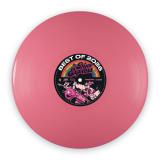
The Disco Express presents Best of 2026 - a deluxe, special edition 12" pink vinyl celebrating six of our favourite records from another landmark year on the label.
Showcasing the breadth of The Disco Express sound, the compilation journeys through funk-fuelled disco, jackin’ house, soulful grooves and peak-time dancefloor energy, bringing together some of the standout moments from our 2026 catalogue.
Featuring music from Make It Disco, Bustin’ Loose, MGR Mike, Ayce & Spirit of House, LEFTI, La Felix and more, Best of 2026 captures a label continuing to push forward while staying firmly rooted in the spirit of disco.
From the feel-good vocal energy of “What You Gonna Say” and the funk-driven swagger of “Less Struggle, More Hustle”, through to the 70's inspired “The Movers”, the soulful lift of “Stronger” and the irresistible drum rhythms of “Muchacho” and “Run It Up”, this is music made first and foremost for the dancefloor.
The music featured on Best of 2026 has already picked up support from some of the world’s most respected selectors, including Roger Sanchez, Danny Rampling, Marco Carola, Jamie Jones, Joseph Capriati, Paco Osuna, Claptone, Danny Krivit, Sam Divine and Arthur Baker, alongside many more.
Pressed on limited edition pink vinyl, Best of 2026 is a snapshot of The Disco Express in full motion.
Original disco for 21st century dance floors.
And this train ain't slowing down anytime soon…
expected to be published on 23 Oct

Following the success of the inaugural all-Jiri Jiri edition, Batov Records returns with the second instalment of its Give Me Disco series, once again curated by label co-founder and globe-trotting selector DJ Kobayashi. Rather than revisiting familiar disco classics, Give Me Disco Vol. 02 digs deeper, bringing together four dancefloor discoveries from across Europe and Asia, including two previously unreleased tracks available here for the first time.
Spanning Portuguese jazz-funk, Norwegian cosmic oddities, Japanese-inspired psychedelic disco and cinematic groove, the EP reflects the breadth of Kobayashi's record bag - a carefully assembled selection of tracks that have soundtracked his DJ sets for years alongside exclusive material rescued from the vaults.
Opening the record is The Bam Jam Band's brilliantly understated "Theme", a soaring slice of jazz-infused disco from Portuguese musicians Sérgio Alves and Pedro Tenreiro. Originally released only as a now long-sold-out 7 inch on Mad About Records, the track has become one of Kobayashi's trusted secret weapons, championed by discerning selectors including Darryn Jones and Red Greg. Built around Alves' dazzling synthesiser work, "Theme" finally gets the wider audience it deserves. The EP's first exclusive arrives courtesy of D. Apal, instrumentalist and member of Norway's Flammer Dance Band. His only solo release, issued on the band's Lysketrekk Records, has become a cult favourite among adventurous record collectors. Batov now unveils the previously unreleased "60 Meter'n (Rytme)", an extended instrumental dub that strips away the vocals to let the handclaps, cavernous bassline, dub effects and wonderfully eccentric synthesisers breathe, transforming an underground favourite into an irresistible dancefloor weapon.
Side B opens with YĪN YĪN's "Tokyo Disco", taken from the band's acclaimed third album Mount Matsu on Glitterbeat Records. Long-time admirers of the Dutch quartet, Kobayashi has championed them since first hearing the breakthrough pairing of "Dis ̄ kô Dis ̄ kô" and "Dion Ysiusk" on Bongo Joe. Since then, he has hosted the band twice on Soho Radio and supported them live in London. "Tokyo Disco" perfectly captures YĪN YĪN's distinctive blend of Japanese-inspired psychedelia, Southeast Asian influences, post-punk funk and shimmering disco grooves, making it a natural fit for the Give Me Disco series.
Closing the EP is another exclusive from Jiri Jiri, whose contribution helped launch the series on Vol. 01. Ahead of their forthcoming album later this year, the duo unveil the previously unreleased "Spaghetti Western", a wonderfully off-kilter fusion of Morricone-esque cinematic atmosphere, taut funk rhythms and the soulful modern groove of SAULT. Equal parts soundtrack and dancefloor curveball, it provides a fitting finale while offering another tantalising glimpse of what's still to come. With two exclusive cuts sitting alongside two carefully chosen modern classics, Give Me Disco Vol. 02 is another lovingly curated snapshot of DJ Kobayashi's musical universe: borderless, groove-driven and unapologetically built for adventurous DJs, discerning collectors and open minded dancefloors alike.
expected to be published on 23 Oct

Mit der „TECHNO CLUB CLASSIX VOL. 1 - VINYL EDITION“ erscheint erstmals eine Vinyl-Ausgabe der beliebten Technoclub Classix-Reihe. Welche Tracks auf die farbige Doppel-LP kommen, haben die Technoclub-Fans selbst
entschieden: In einer Umfrage konnten sie für ihre Favoriten abstimmen. Das Ergebnis sind 13 Trance-Klassiker aus einer Zeit, die den Sound des Technoclubs bis heute prägt.
Mit dabei sind Chicane mit „Saltwater“, Nikolai mit „Ready To Flow“, The Thrillseekers mit „Synaesthesia“ und Veracocha mit „Carte Blanche“. Dazu kommen weitere bekannte TranceTracks in ausgewählten Maxi-Versionen und Remixen, unter anderem von Talla 2XLC, DJ Quicksilver und Rank 1. „TECHNO CLUB CLASSIX VOL. 1 - VINYL EDITION“ bringt die von den Fans gewählten Technoclub-Favoriten gemeinsam auf Doppel-Vinyl - für alle, die diese Trance-Klassiker damals gefeiert haben und heute noch feiern
expected to be published on 23 Oct

XAMAN is the collaborative project of Dino Sabatini and Luigi Tozzi, where two distinct artistic paths converge into a shared musical language shaped through years of independent research and mutual exchange.
Across eight compositions, XAMAN takes shape through gradual transformation. Every element is introduced with intention, allowing subtle shifts in density, tension and space to shape the music over time, revealing its full form through uninterrupted listening.
Released as a double vinyl on Outis Opera Series, the curated imprint of Outis Music, XAMAN reflects a process shaped through listening, exchange and time.
expected to be published on 23 Oct

Crash landing onto the scene in 2017 with his now legendary NTS broadcast of 2 hours of unheard music, the ultra-mysterious and enigmatic Michael J. Blood has gone on to release a series of sought after, lush and rugged future classics on his own imprints Blood Inc. and BodyTronixxx. Allegedly hailing from Manchester in the North of England, Blood’s sound is hard to pin down but instantly recognisable. Rooted in the twin foundations of modern dance music—Detroit and Chicago—while schooled in the sweaty basements of Manchester’s fêted club scene, his music feels both original and familiar, timeless yet unplaceable.
Weaving together a hypnotic narrative that feels both archival and futuristic, Cause & Effect Vol. 1 brings together some of Blood's rare and hard to find bangers from a variety of his early sold out projects. The collection mixes the pulse of Chicago with the grit and cosmic dreams of Detroit, while never losing sight of the North of England’s sophisticated late-night sleaze. Blood’s dance-floor eclecticism and raw, infectious mutant beats drive a soulful, jazz-louche energy into every track. The result is a collection of atmospheric grooves that weave together hypnotic rhythm and smoky texture, blurring house, techno, broken beat, and jazz-soaked electronics into a heady trip. Cause & Effect Vol. 1 maps out the restless evolution of Blood’s sound, a testament to his instinct for rhythm, atmosphere and dance-floor alchemy. House for the heart, techno for the mind, both built for the body. It’s in the Blood.
expected to be published on 23 Oct

In the realm of past-life regression hypnotherapy, there is a concept known as “Life Between Lives,” wherein a sacred exchange of energy occurs between two souls in the spirt world, helping a spirit fully understand and forgive a being who hurt them in a past life. This exchange – called “passing the cup of sorrows” – became the unexpected inspiration for William Basinski’s first new album in six years.
While sinking deeper into the daily abyss of our collective negativity bias, William Basinski stumbled upon a video describing the spiritual hypnotherapy exercise known as “passing the cup of sorrows.” Fixed on the glow of a screen that projected mounting anxiety and cynicism at a seemingly interminable pace, Basinski found the testimonials of this fascinating therapeutic practice to be profoundly moving. He sat at his piano, translating the transformation of those traumatic memories of past lives into cathartic tears of the present day.
Channeling the quiet curiosity and asymmetrical patterns of pioneering 20th Century composer, Morton Feldman, Passing the Cup of Sorrows is a single 40-minute piece that employs a solitary piano and subtle electronics to truly haunting effect. It recalls fragments of traumatic memories and projects them as fractals in a slow-moving soft focus that’s as eerie as it is enlightened.
expected to be published on 23 Oct

New Gamboge Vinyl[29,83 €]
In the realm of past-life regression hypnotherapy, there is a concept known as “Life Between Lives,” wherein a sacred exchange of energy occurs between two souls in the spirt world, helping a spirit fully understand and forgive a being who hurt them in a past life. This exchange – called “passing the cup of sorrows” – became the unexpected inspiration for William Basinski’s first new album in six years.
While sinking deeper into the daily abyss of our collective negativity bias, William Basinski stumbled upon a video describing the spiritual hypnotherapy exercise known as “passing the cup of sorrows.” Fixed on the glow of a screen that projected mounting anxiety and cynicism at a seemingly interminable pace, Basinski found the testimonials of this fascinating therapeutic practice to be profoundly moving. He sat at his piano, translating the transformation of those traumatic memories of past lives into cathartic tears of the present day.
Channeling the quiet curiosity and asymmetrical patterns of pioneering 20th Century composer, Morton Feldman, Passing the Cup of Sorrows is a single 40-minute piece that employs a solitary piano and subtle electronics to truly haunting effect. It recalls fragments of traumatic memories and projects them as fractals in a slow-moving soft focus that’s as eerie as it is enlightened.
expected to be published on 23 Oct

Music From Memory presents ‘Mutualkind’, by Asa Tone, the collaborative project of Melati ESP, Tristan Arp and Kaazi. Written between Indonesia, Mexico City, Berlin and New York, the record unfolds through a process of continual exchange, where distance itself becomes part of the group’s music formation.
At the centre of the album is the idea of a shared language, formed across differences in geography, experience and musical approach. One such process explores Tristan’s electronic hand percussion triggering fragments of Melati’s voice in real time, while a library of spoken words and phonemes are reshaped through chance-based rhythmic processes. Voice becomes percussion, rhythm becomes melody, and the lines between individual contributions begin to dissolve.
Some pieces, including ‘Water Talk’ and ‘Second Language’, were recorded live in a single take, while others were assembled gradually through remote exchange. During the final sessions in Indonesia, Balinese percussionist Putu Septa contributed kendang to two tracks, bringing the instrument into dialogue with modular synthesis, FM textures, electronic drums, MIDI wind instruments and Melati’s shifting vocal forms.
Sounds are slowed, stuttered and reorganised, reflecting a world shaped by illusory borders, vanishing landscapes and glitching ecosystems. Yet the album remains rooted in the act of tending to something shared: a musical field built through listening, improvisation and repeated moments of reunion.
‘Mutualkind’ seeks to blur boundaries without erasing the identities that meet across them, providing a space in which voice and instrument, self and other, separation and togetherness can briefly exist at once.
MFM086 will be released on vinyl and digitally via Music From Memory on October 22nd 2026.
expected to be published on 23 Oct

2026 Repress
Donato Basile AKA DJ Plant Texture always wants his music to tell a story, and with his debut EP on Tresor Records, entitled Life, he’s now trying to tell the biggest story there is. According to the artist, “Life is about the fear of growing up”; both the anxiety itself and acknowledging and moving past it.
This narrative seems to have struck a chord with those who have heard the track, “People want to reflect themselves in the music; something personal. Lots of people have been in touch after hearing it; I guess they feel something melancholic in it. Personally, I imagine the track is like the life of a person; going from being born through childhood and youth and onwards, so perhaps they hear this?”
Having used an MPC since the early 2000s, Basile feels an intuitive connection to the hardware he uses, and so the creative process is very spontaneous: “I know where everything is so the music is made immediately. I make everything in the first ten minutes; after that if it’s not right then I just abandon it and start something else.” This immediacy, and familiarity with his equipment is apparent on the A-side, where Basile’s previous life as a drummer comes to the fore and tracks like Cycles and Ripetivo display his native understanding of groove but also how to stir things up - the three A-side tracks find classic techno rhythms seemingly falling apart only to snap back into place even stronger. The B-side finds Donato exploring more of his melodic side with WTT and the aforementioned title track showing Plant Texture’s love of breakbeat and classic techno.
The three digital bonus tracks continue this exploration of melody and syncopated beats - The EXP Days echos the wistful feeling of Life, as Basile meditates on the times spent at EXP, his record shop in Bari, which functioned as a meeting place for electronic producers in the area.
expected to be published on 23 Oct

The Malian virtuoso, indisputably one of the most creative talents of his country, deserved his solo career decades ago. In May 2026, we released his debut solo album SOBRA DANCE featuring his wife Mariam Kouyate on vocals. The groovy and variated electric album, went straight to the top lists of World Music Charts Europe and Transglobal World Music Chart as well as selected for TOP OF THE WORLD by SONGLINES. Gaoussou's solo debut got several 5 star reviews.DJANGO BLUES is a tribute to Gaoussou's father and childhood teacher, who's nickname is Django. On this album the talented guitarist and composer goes deeper into the roots of Malian Dessert Blues, with the variations from the Arabic soundscapes from the north.In Senegal, Gaoussou is nick named "The new Ali Farka Toure". But even though Ali Farka was one of Gaoussou's greatest inspirations, Gaoussou has developed an unmistakable style of his own. He breathes music and goes to his studio every day to work. He uses his composing to reflect, and as a ventilator when things are hard -they often are in his country of contrasts- and as a love declaration to life itself. He is a true Mandingue, a Griot, peaceful and kind, as the philosophy preaches.Accompanying such legends like Toumani Diabate and Kasse Mady Diabate, Gaoussou Kouyate, with his beloved village 'Sobra' as his middle name, has long proven his level. Yet his name has been relatively undiscovered. The trio performed a memorable concert at Dakar Music Expo, led by their producers, Dudu Saar and Lucy Duran. What started being noticed internationally through this exceptional trio was Gaoussou's composing skills.The electric SOBRA DANCE album was released first, to contrast and give space to the acoustic GUITARI BARO album. Now comes the time for DJANGO BLUES. This great album features Gaoussou's band as well as an exceptional Moroccan Ribab- Amazigh violin master and singer, Aziz Ozouss.
expected to be published on 23 Oct

Hip-HopInstrumentalBeatsAmbientExperimental
Budapest based concept label Blue Sun arrives with the 3rd edition of their annual VA series, showcasing a colorful taste of the local underground music scene, with some international sidenotes.
Following up on the label’s customs, the 19-track selection is not only released digitally, but also on a limited 200-piece cassette series. Curated by the label heads, the tracks follow Blue Sun's listening-oriented concept without genre restrictions with downtempo, trip-hop, jazz, dub, balearic, ambient, experimental, and electronica as highlights, with pieces that are more difficult to classify.
As before, instead of the usual A-B markings, the two sides are divided by the label's colors: “ORANGE” contains more organic and high-energy music, while “BLUE” contains more pensive and experimental tracks. Moreover, the selection has been carefully curated so that it can be listened to as an endless loop: the end of a side always resonates with the beginning of the other, wherever the listener begins.
The list of contributing artists this year are truly various and just as impressive. From uniqe debuting local artists to internationally recognised performers, it gives a taste of how the Hungarian underground scene sounds like atm. Important to note, that the release marks another debut: the label’s new visual identity by Blue Sun’s new designer, Péter Tóth.
expected to be published on 23 Oct
IROIRO aus Seattle verbinden auf ihrer Debütsingle ,Once / Formosa" instrumentalen Psychedelic Rock, Noise Rock, Krautrock und experimentelle Gitarrenmusik zu einem dynamischen, ausufernden Sound. Die Band um die ehemaligen IQU-Mitglieder Michiko Swiggs und Kento Oiwa entwickelt aus improvisierten Jams vielschichtige Klanglandschaften, die zwischen melodischer Schönheit und kontrolliertem Chaos pendeln. Während ,Once" mit treibenden Rhythmen und psychedelischen Gitarrenwirbeln überzeugt, verbindet ,Formosa" Arena-Rock-Gesten mit verträumten Melodien und verzerrten Klangtexturen. Entstanden aus gemeinsamen Sessions mit Justin Schwartz und James Drage, markiert die Single den Beginn einer Band, die experimentelle Rockmusik mit bemerkenswerter Kreativität und Energie neu interpretiert.
expected to be published on 23 Oct

Pablo Volt and J.G.G. make dub-folktronica the unpolished way: guitar, horns, drums and synths, recorded loose, drenched in echoes and tape saturation. They met in Barcelona over a shared love of experimental beers and even more experimental sessions, determined to see how far their musical chemistry could take them. "Mordida", their 2023 tape, spent months on repeat at the Pingipung office. Now comes the debut LP: Aqui me quedo. It's a record built on the gap between two childhoods. Pablo Volt (aka Pope, as producer) grew up in Mendoza, Argentina; Jordi Gege aka J.G.G. in a suburb of Barcelona. What they share is a language and a curiosity about each other's memories and musical roots - the studio is where they embrace their different origins in improvisations. A ditch from Pablo's childhood becomes "Zanjon". A mountain Jordi used to roam becomes "Emisora". An ice cream shop, a Sunday market, a football club: small doors into a past the other never lived, but somehow recognises. Aqui me quedo, "I'm staying here", is also the name of the Barcelona bar where they toast after a good session. Two friends, tracing their way back through the past, decide the present is where they'd rather be. Handmade, melodic, unashamed of a smile as they greet from the LP sleeve: this is the spirit in which Pingipung was founded 24 years ago and these two guys, muy simpatico, are living proof of it.
expected to be published on 23 Oct