Bulkhead present their debut album - Aft Pressure - due June 1st on 2MR Records. In 2015, during the coldest Toronto winter on record, two old friends - Pop District and Patrik Benjamin - locked themselves away in the studio to experiment with a medley of hardware. Both solo artists in their own right, they had overseen their own projects prior, but had never considered how a collaboration might sound. Exploring the polarity of extreme cold and immersive warmth with a distinctly analogue feel, the duo carved themselves an aesthetic. And so Bulkhead was born. Using a raw, organic palette they repudiate formal structure and polish, opting instead for a freeform blend of unhindered mechanical techno and fuzzy ambience - slambient, if you will. Debuting in 2016, their 'Worker's Kampf' cassette album on LA imprint Far Away Tapes sold out quickly, warranting another release on 2MR featuring highlights of the cassette on 12' and digital. Continuing with the purveyance of abstract arrangements and machine wizardry, their forthcoming album - Aft Pressure - is a striking exploration of the intersection between frenzied techno and harmonic warmth.Fragments of techno and EBM mutate without strict guidance, rebuilding themselves into new forms with stunning physical qualities. Whilst many of the tracks might file under dance music, the DIY spirit of the album transcends a nightclub, occupying a peculiar space between the uncensored grit of the post-punk scene and some melancholic form of ambient minimalism. Angular percussion slices its way through dizzying synth leads whilst serene harmonies wander on their own accord. Darting melodies are made all the more powerful by their harsh timbre as drum-less excursions provide a cinematic backdrop. Aft Pressure is a statement of intent, blurring the parameters of dance music culture with equal doses of insanity and serenity. At the same time, it's also a hell of a lot of fun...
For A Long Time, Electronic Music Has Been Understood In Terms Of Sounds Rooted In Particular Places: The Styles Of House And Techno Inextricably Wedded To Detroit, Or The Early '90s Jungle Sound Which Carries Echoes Of London. But That's Something Which Is Changing - In Latin America More Than Anywhere Else. A New Project, Led By Gilles Peterson And Rum Maker Havana Club (that Created The Havana Cultura Platform In 2007 To Promote The Island's Contemporary Culture), Shines A Light On Cuba's Fast-mutating, Rhythmically-adventurous Underground. It's A Scene Where Old Ideas Are Transplanted Into New Contexts, And Like-minded Scenes Are Brought Together In New Dialogues.
Havana Cultura: ¡su´belo, Cuba! Showcases An Extended Network Of Like-minded, Forward-thinking Musicians Driving Cuba's Music Forward. Following Repeated Trips To Connect With Venues, Collectives And Djs, Peterson And Will Lv - One Half Of Lv, Who've Released On Hyperdub And Keysound Amongst Others - Linked Up With Dj Jigu¨e, A Much-respected Producer And Dj, Whose Guampara Label Has Charted New Directions For Cuban Music. He's Been Profiled By The Fader And Vice, And The Album Features His Extended Network Of Collaborators, Connecting Afro-cuban Traditions With Contemporary Movements And Ideas.
The Album Provides A Snapshot Of A Unique Club Culture That's Fast Evolving. On The One Hand, It's Indebted To Cuba's Unique Characteristics, Where Regularly-practised Traditions Are Coloured By Intermittently-experienced Cultures From Outside. On The Other, It's Part Of A Global Shift Toward De-centred Club Music, With Homegrown, Influence-grabbing Dance Cultures Tilting Attention From Club Culture's Traditional Epicentres. It Offers A New Side To Havana That's Firmly Rooted In Its Past.
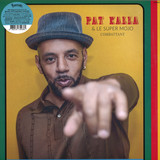
Favorite Recordings proudly presents Combattant, first EP by Pat Kalla produced by Bruno Patchworks' Hovart (aka VOILAAA).
PAT KALLA is a musician, singer and storyteller. Patrice of his birth name, in tribute to the great Lumumba! Lover of words, French language, and music of course. Born in Lyon, from a Cameroonian father, musician and political activist, and a French and literary mother, he explores from his childhood the Soul, the Slam, the Funk ... and the art of telling stories, life being a great one...
After years of touring alongside many bands (Conte & Soul, Legend of Eboa King, Mento Cloub, Voilaaa Sound System), and several acclaimed titles on the two albums by Voilaaa, he comes back with this project to put a bit of primordial lightness in a rainy world: A tribute to the African culture in honor of a father with "Sawa" origins, the tribe from the people of Makossa.
Jojo Ngallé, Moni Bilé, Pain, Manu Dibango, Franco, Rochereau, Kabaselé, Fela, François Nkotti & The Black Style, all these legends' vinyls have turned on the family turntable and the collection has whetted the child's appetite. Through this new trip, he revisits styles that are sometimes little known to Western audiences, such as High-Life, Makossa, Angolan Music, Afrobeat, Afro-Disco and others. We could talk about Franc CFA', we could talk about Jacques Foccart, but we will rather dance, because "the dancer seems naive, but his feet must be connected with earth to understand history..."
Backed by the "Super Mojo Disco", a hyperactive band from Lyon with deep groove and positive energy, Pat Kalla offers us an anti-crisis project, where swaying and feel-good humor is mandatory! An album soon in the crates, beware « c'est médicament » (it's medicine)!!
Fresh off the back of the languorous poolside disco and tropical pop of their debut album 'Shapes On Shapes' released last November, LA based duo Wild & Free return with a collection of essential remixes from label mates and influences alike by revisiting the heady disco of recent single 'Ferns and Stuff'.
Both multi-instrumentalists, singers and producers in their own right, Wild & Free duo Drew Kramer and George Cochrane came together in 2015 and have spent the past 2 years crafting a series of acclaimed EPs and remixes (for the likes of Joe Goddard (Hot Chip), Panama, Gigamesh, RAC and Ben Browning of Cut/Copy) that saw them tipped by the likes of Spin, XLR8R, Indie Shuffle, Clash Magazine, Data Transmission and many more and take their live show on the road playing alongside the likes of Brooklyn's Body Language.After releasing a few solid ep's and two full lengths album's Xinobi has gained real recognition among established and well-known artists and opinion-makers, and his underground cult has amplified. What has followed is remixes, edits and reworks for artists such as Sbtrkt, The Avener, John Grant, Toro Y Moi, Nicolas Jaar, Agnes Obel, Kris Menace and Tensnake.Along with Moullinex and Mr. Mitsuhirato he gave birth to the still-growing-influent Discotexas who here lend their label mates their expert musical arrangement skills with 'Discotexas Club Mix' thrown in for good measure. And it doesn't stop there, with legendary New Yorker Justin Strauss, who has produced and mixed records and remixes for the likes of LCD Soundsystem, Beyonce, La Roux and Goldfrapp contributing a 'Whatever/Whatever' mix as part of the slick and hugely influential production duo he formed with Bryan Mette.
Already noticed for his remixes and array of collaborators and with several releases under his belt (including a track on the 'Bonjour Colette' compilation), Tokyo-based Yuki Abe AKA producer/DJ Boys Get Hurt gets his inspiration from the melancholic feelings the end of summer inevitably brings about, a personal and evocative sensibility in tune with the land of the rising sun's delicate culture. Yuki expertly crafts bouncy disco-house music with sprinklings of electronica, indie, ambient, hip-hop and R&B. Here he adds a mix with a loose and joyful feel that fits the sentiments of what Wild and Free represent perfectly.
"The art of the future, therefore, will not be poorer, but infinitely richer in subject-matter. And the form of the art of the future will also not be inferior to the present forms of art, but infinitely superior to them. Superior, not in the sense of having a refined and complex technique, but in the sense of the capacity briefly, simply, and clearly to transmit, without any superfluities, the feeling which the artist has experienced and wishes to transmit." - Leo Tolstoy, "What is Art"
This statement can be made of Lucky Brown's attempt to "briefly, simply, and clearly" capture the feeling of the sound, soul, smoke and soil of the Texas Hill Country with his upcoming album "Mesquite Suite".
A little more than one year after the release of his firebrand "Mesquite Beat/Justice" single on imprint "Tramp Tapes" (TR-1040) Lucky Brown offers us here another glimpse into the sound and concept of the Mesquite Suite.
Saints & Beggars is a rustic pentatonic horn-led 6/8 anthem that builds upon a simple primitive melody assembled from two opposing figures set against two repeating figures. Brown conceived the motif while in meditation in a yoga-turned-composition studio in San Marcos, Texas. He later delicately draped the parts around it like woodsmoke. The overall effect of the composition is one of economy and restraint - nothing could be added or taken away. The horns, guitar and vintage electric combo organ begin in unison and then the figure brazenly explodes like a flock of white winged doves from a pecan tree in humid dusk. Here are featured extemporizations from Jason Cressey - trombone, Peter Daniel - saxophone, Colin Higgins - guitar, and drummer Ollie Klomp, with an exposition of open horns in the climax. The tune is drenched in shitty reverb which engenders a mysterious dimension begging the record diggers' favorite questions: "...when is this from", "...where is this from".
'Bout To Blow, remaining uncompiled in the upcoming "Mesquite Suite" (exclusively released on this single only), is a specimen of the generic Deep Funk on 45 that lit a fire in Lucky's heart more than 20 years ago. The use of the word generic here is not meant to be derogatory. Rather, it is to transmit the sense that this tune falls squarely within the confines of the so-called Deep Funk canon. 'Bout to Blow offers classic dancefloor essentials: driving bassline, hard drum beat, chanky guitar, and outrageously distorted horns fiercely executing a devastatingly primitive horn line. Also, for devout followers of Lucky Brown's recorded work, there is hidden in the bridge an easter egg in the form of a self-referential quote: the bridge of 'Bout To Blow is also the head of T.D. & The Jimmy James 3's "Jalapeño Pep" (TR-1025)!
It has been Lucky Brown's aim to paint for the world a picture of the vernacular jazz that America's neighborhoods once crafted as their own homegrown cultural heritage. Lucky Brown's music is a rejection of the elitism, classism, and status of the music industrial complex and is an antitoxin to it's resultant homogeneity. He wants with his heart and his art to transmit an everyday people's sound, made by everyday people, dedicated to the upliftment of all people. Could this be the "art of the future" that Tolstoy wrote of in 1904
Key-selling points:
- "Bout To Blow" is available on this 7" release only
- "Saints & Beggars" is taken from the forthcoming album "Mesquite Suite" (out september 2018)
The Ep "a Form Of Travel Unknown To Humans" Is Chasing Us. Guiding And Forcing A Way Simultaneously. The Sound Is Harsh But Has An Immaculate Precision To It "void Of Air - Compelling The Listener Toward A Light, Seducing Us To Tear Through The Night.
We Enter With "s.m.o.d. - Sticks" A Deep And Magnetic Sound Opening Up Slowly, Starting To Breathe And To Merge Into "s.m.o.d. - Cell Culture" Which Gives A Much More Metallic Flavour But Never The Less Beat Driven - Fast And Strident - Maybe Even Hasty, Pushing To Skip A Beat Of The Heart. To Finish Off With "s.m.o.d - Pulse" Carrying An Unsettling Almost Disturbing Quality, Formulating A Mechanical Sound Alienated From The Human Experience. The Ep Creates A Seductive Space Outside Our Comfort Zone, Inviting To Explore A Space And Travel Unknown To Humans. Gimme More.
Soul Jazz Records' latest album 'Yoruba! Songs and Rhythms for the Yoruba Gods in Nigeria' is newly recorded in Lagos, Nigeria. The album is co-produced by Soul Jazz Records label head Stuart Baker and Laolu Akins (founding member of the legendary 1970s Nigerian Afro-Funk/Rock group Blo). Yoruba! features an array of local master drummers led by Olatunji Samson Sotimirin and singers (featuring the lead vocals of Janet Olufanmilayo Abe) performing heavyweight Afro-rhythms, with talking drums, Bata and Dundun drums and a mass of percussion in these deep spiritual and sacred songs used to honour and worship the traditional and ancient Yoruba gods in Nigeria, West Africa.
The enormous impact of Yoruba and West African music and culture is worldwide - from the first Afro-centric explorations of African-American jazz musicians in the 1950s such as Art Blakey, Randy Weston and Dizzy Gillespie, the explosion of Nu Yorican Latin music in New York City starting in the 1960s - Mambo, Boogaloo, Latin funk and soul - through to the sacred and powerful Afro-derived music of the religions of Santería in Cuba, Candomblé in Brazil and Voodoo in Haiti, which all came into existence on account of the Atlantic slave trade which began over 400 years ago. On a wider scale West African music remains the primary root of all African-American musical forms - from New Orleans jazz to Bronx rap, gospel, soul and more.
This album features songs honouring the Nigerian gods of the Yoruba traditional religion - Yemoja, Obatala, Ogun, Sango and others - as well as a selection of instrumental cuts focussing on the Bata and Dundun drums. The album comes complete with extensive text and photography included in the 40-page outsize booklet/gatefold double vinyl + inners showing the influence of Yoruba culture throughout the world and the social and historical context for the music contained here.
Watch out for a limited edition remix of the project by Osunlade, also forthcoming on Soul Jazz Records.
Music and Poetry of the Kesh is the documentation of an invented Pacific Coast peoples from a far distant time, and the soundtrack of famed science fiction author, Ursula K. Le Guin's Always Coming Home In the novel, the story of Stone Telling, a young woman of the Kesh, is woven within a larger anthropological folklore and fantasy. The ways of the Kesh were originally presented in 1985 as a five hundred plus page book accompanied with illustrations of instruments and tools, maps, a glossary of terms, recipes, poems, an alphabet (Le Guin's conlang, so she could write non-English lyrics), and with early editions, a cassette of field recordings' and indigenous song. Le Guin wanted to hear the people she'd imagined, she embarked on an elaborate process with her friend Todd Barton to invoke their spirit and tradition.
For Music and Poetry of the Kesh, the words and lyrics are attributed to Le Guin as composed by Barton, an Oregon-based musician, composer and Buchla synthesist (the two worked together previously on public radio projects). But the cassette notes credit the sounds and voices to the world of the Kesh, making origins ambiguous. For instance, The River Song' description reads, The prominent rhythm instrument is the doubure binga, a set of nine brass bowls struck with cloth-covered wooden mallets, here played by Ready.' According to writer and long-time friend of LeGuin, Moe Bowstern (who pens the liners for the Freedom To Spend edition of Kesh), Barton built and then taught himself to play several instruments of Le Guin's design, among them the seven-foot horn known to the Kesh as the Houmbúta and the Wéosai Medoud Teyahi bone flute.' Barton's crafting of original instruments lends an other-worldly texture to the recordings of the Kesh, not unlike fellow builders Bobby Brown and Lonnie Holley. Bowstern notes, Other musician / makers have crafted their own Kesh instruments after encountering the earlier cassette recordings that accompanied some editions of the book.' Both Barton and Le Guin are sensitive to the sovereignty of indigenous Californians and were careful not to trample the traditions of the Tolowa people who lived in the valley long before the Kesh. You research deeply, and then you bring your own voice to the table,' said Barton. Within the Kesh culture, the numbers four and five shape the lives, society and rituals. Barton composed loosely around these numbers, patiently listening to the land of Napa Valley for signs and audio signals from the natural elements. Todd incorporated ambient sounds of the creek by Le Guin's house and a campfire they built together. The songs of Kesh are joyful, soothing and meditative, while the instrumental works drift far past the imaginary lands. Heron Dance' is an uplifting first track, featuring a Wéosai Medoud Teyahi (made from a deer or lamb thigh bone with a cattail reed) and the great Houmbúta (used for theatre and ceremony). A Music of the Eighth House' sends gossamer waves of the faintest sounds to float on the wind.' Like the languages invented in the vocal work of Anna Homler, Meredith Monk, and Elizabeth Fraser, the Kesh songs and poems play with the shape of voice.
The Music and Poetry of the Kesh cassette was meant to accompany and enhance the experience of reading Always Coming Home. Presented in this edition as a long-playing album, where only traces of the book linger (the jacket offers some of Le Guin's illustration, and a letterpressed bookmark featuring the the narrative modes of western civilization and the Kesh valley is included), the music alone breaking the silence of what might be. It can transport—offering a landscape for imagining a future homecoming. One in which we are balanced, peaceful, and tend to the earth and its creatures. A line from the Sun Dance poem reminds us, We are nothing much without one another.' Freedom To Spend gives new life to the recordings of the Kesh people in the first ever vinyl edition of Music and Poetry of the Kesh, out on LP, and digital formats on March 23, 2018. The LP will include a deluxe spot printed jacket with illustrations from Always Coming Home, a facsimile of the original lyric sheet, liner notes by Moe Bowstern, multi-format digital download code and a limited edition bookmark letter pressed by Stumptown Printers in Portland, OR.
This past Monday, January 22, Ursula passed from this realm to another leaving a life spent building and exploring other worlds while challenging social concepts of the real word she inhabited.
Freedom To Spend had been working under Ursula's enthusiastic endorsement and with Todd Barton, her musical collaborator on Kesh, to give the music that accompanied her 1985 epoch a new life. With the Le Guin family's encouragement to move forward with our planned release, we are humbled to play this small role in sharing Ursula's work.
As Pete Swanson, one third of Freedom To Spend, stated, Ursula's legacy is her work which transformed the world, and this is another piece of the universe that her imagination birthed becoming real.' Listen to A Teaching Poem / Heron Dance' below.
Enigmatic producer Waxwood has a genuinely global outlook. Born in Russia, resident in Brooklyn and a regular visitor to Los Angeles, he can often be found jetting off to far-fung parts of the World in order to make feld recordings and immerse himself in different musical cultures.
You can hear these disparate global infuences and inspirations in
Waxwood's frst single for Claremont 56, which comes on the back of a near legendary 2015 cassette for NYC's Styles
Upon Styles, Sahasraha, which magically fused tropical hand
percussion and densely layered feld recordings with lilting ambient chords, hypnotic electronic rhythms and all manner of intoxicating
aural fourishes. 'Kama' is a slightly different beast from its' predecessor, with a sunny disposition and laidback breeziness throughout. Although underpinned
by a sturdy kick-drum pattern, its chiming melodies and metallic
percussion fourishes - reminiscent of indigenous music from far-
fung nations such as Malaysia and Indonesia - combine with gentle acoustic guitar motifs and waves of acid-esque electronics to create a beguiling and life-affrming mood. It offers more proof that Waxwood is a producer with a unique musical vision. The track's inherent gentle breeziness is explored in greater detail on the accompanying remix, which has been provided by Phantom Island regulars Fuga Ronto (AKA Swiss musicians/producers Ron Shiller and Tobi Schweizer). Riffng on Waxwood's original, they've added superb new vocals and instrumentation - think dreamy harmonies, tumbling synthesizer melodies and mesmerizing guitar parts - to create a sunset-friendly Balearic revision that's both stunningly beautiful and dazzlingly sun-kissed.
James Stewart is the host, resident DJ and co-promoter of monthly night 'Black Atlantic Club' at Le Sucre in Lyon. Borrowing the term 'Black Atlantic' from renowned scholar Paul Gilroy's 1993 book, Stewart presents 'black music' as a transnational, incredibly diverse cultural exchange. An avid lecturer on the subject and founder of the Blog Afrosouldescarga, he merges an intellectual approach with the musical and creative side of things: as an active conga player and percussionist, member of Voilaaa Sound System and showhost at Radio Nova. This EP is the work of of a mature and thoughtful musician, combining different musical influences at a high level of production. Alma Negra Records are proud to present James Stewart with his Cotonou EP!
This ridiculously soulful Summer-House EP is the first installment by Peter on Big Bait since 2015. We baked the essence of 3 years of studio work on 12 vinyl. Amongst two brilliant solo tracks, Peter brought in two coops with some exclitingly interesting producers:
Arpeggio Funk' is the first co-production by the Columbian shooting star Felipe Gordon with Big Bait label boss Peter Clamat. The guys met up on soundcloud and immediately started working out some tunes together.
She hates Getting Photos' and Tanzflächengebet' are solo productions by Mr. Clamat. Outstanding, colorful, perfect work as usual. Last but not least track no. four is the uplifting, 90's flavored remix of an unpublished Clamat-gem by Ugly Drums and Chesney. The two guys are old-stagers of the German House Culture and well known for their releases on Kalakutta Soul, AVA, Quintessentials etc.
Enfant Terrible was one of the first labels to give recognition and attention to the pioneers of minimal electronics / proto-elektro / avant-garde pop / experimental pop music from the late 1970's and early 1980's. Next to that it is one of the few labels in this field of music that truly invests in the development of new talents in this music tradition. In short: Enfant Terrible has been mapping the field of this counter culture and contributing to its development since the very start of its activities.
But in this world of followers and copycats we have an agenda of our own. We go furthur and dare to move into new territories. Both when it comes to content and ways of organizing the business part we are at the forefront of independent music culture. We keep it real, stay ourselves and a hundred percent independent.
While Enfant Terrible for an important part has built the current niche of minimal electronics we also have always looked beyond rigid style definitions and established artists. All our compilation releases have been highly acclaimed for this.
The time is now... we go for the logical next step... supporting and contributing to the local music scene.
'Kamp Holland' is an overview of the current independent electronic music scene from Holland. Some of the artists on this compilation have been inspired by the music tradition we have been building. Others are inspiring Enfant Terrible in its current development. Always furthur we go...
Following two previous excursions into degraded tape loops, fuzzed-out ambience and bittersweet moments of tenderness, O$VMV$M return to Idle Hands to complete a trilogy of LPs with 12 vignettes from the underbelly of the Bristol scene.
Bound to Young Echo's ever-swelling cult of wayward sonics, individually Amos 'Jabu' Childs and Sam 'Neek' Barrett have plenty of irons in the fire. Childs deals in forlorn, vocal-led introspection alongside Alex Rendall and Jasmine Butt as Jabu, while Barrett can be found laying down punishing modern grime variations alongside Kahn, or delving into more traditional soundsystem sonics in Gorgon Sound. Meanwhile the pair were clearly heard laying down some of the tones that seep out of the uncredited Young Echo collective LP from earlier this year. Their production work behind Rider Shafique's killerLion7" on Lavalava was unmissable, and their blunted beats behind Manonmars' debut LP are awaited with anticipation.
As O$VMV$M, the pair enter a particular sound world that mixes cosy nostalgia with creeping dread. Even at its most mellow, a sense of unease hovers beneath the surface, and that's what makes their approach so compelling. The sound palette is broad, from pitch-shifted RnB vocal licks to foggy trumpets crawling at half speed, but over it all a dense blanket of dust gives the sensation of peering back through time.
Putting paid to the idea that immersive music needs to be long and drawn out, the dose response on these condensed mood capsules is quick and strong. In a little over 20 minutes O$VMV$M take you far and wide. The trip over the past three LPs has been an adventure for both label and artists - Sam and Amos have shaped out a style that now feels like a fully formed entity independent of their other ventures. We look forward to seeing where O$VMV$M heads from here.
South African Mbaqanga And Bubblegum Instrumentals For The Dance-floor. First Time Available Outside South Africa. Cult Favorite Among Collectors. Follows The Successful Reissue Of bafana Bafana' Last Year. Professor Rhythm's 1991 Recording Professor 3 Is A Vivid Reflection Of Urban South Africa As Apartheid Was Ending. Thami Mdluli's Production Project Had Young And Old Dancing To A Sound That Sought To Unite Blacks Within Southern Africa. our Music Gave Hope To The Hopeless,' He Says. Mdluli's Third Instrumental Album (which Contains Some Background Vocals, To Be Exact), Portrays The Moment When The Dominant Mbaqanga And American R&b-based Bubblegum Sounds Being Produced In Johannesburg And Other Urban Centers Were Transforming Into House And Hip-hop-inspired Kwaito. The Pop Of The 80's And All That Went With It—from The Models Of Synths And Drum Machines To The Lyrical Style—gave Way To A Changing Melodic Emphasis And New, Much Slower Tempi Using A Completely Different Rhythmic Skeleton. Upbeat, Chipper Bubblegum, Often With Double-time Breakdowns And Upstroke Syncopations, Faded And The Sounds Began To More Closely Resemble Those Of Contemporary Black America—where Hip-hop Was Slowing Down And The Bass-lines And Melodies Were Getting Moodier, Darker In General. At The Same Time House Music Had Briefly Reached Mainstream Acceptance In The States And That Popularity Continued To Feed Into Awareness Overseas. These Two Influences Blended With The Burgeoning House Music Scenes In Johannesburg And Pretoria As Professor Rhythm 3 Was Being Produced In March 1991 (the Same Year Apartheid Ended). Mdluli Explains, we Were Influenced By Foreign Bands And So People Updated Their Sound.' According To Mdluli, The Evolving Sound Was Bolstered By Widening Availability Of House And Rap Records From Abroad While, Most Importantly, An Increasing Sense That Apartheid Might Soon Be Finished Was Met With A New Positivity Vibe Society. 1991, '92, '93... Mandela Was Released. People Were Upbeat, They Were Happy, The Music Was Good.' Professor 3 Came Out On Vinyl As The Lp Business Was Dying In South Africa And Sold Around 20,000 Copies. It Was Mainly Distributed On Tape, Which Sold Closer To 100,000. With The Help Of Engineer Fab Rosso, The Recording Features Backing Vocalists From Mango Groove. After Making A Half-dozen Records As Professor Rhythm, Mdluli Once Again Shifted His Focus Musically. By The Mid-90's He Had Veered Off Gospel Music— And Left Playing In Bands And Started Making His Own Solo Recordings. His Enormous Success In The Gospel Realm In The Years Since Is A Remarkable Story In Its Own Right, But For Now We Are Only Dancing.
Following the 'Screaming Ghosts' collection highlighting the music of C Cat Trance, Emotional Rescue and Malka Tuti return with the first of two EPs where the band's music is given over to a selection of artists, friends and collaborators for reinterpretation, re-editing, replaying and remixing to provide a modern outlook on the bands mixture of East meets West musicology.
Very much the vision of Malka Tuti and close to their ground-breaking releases of the last two years, the genius is out of the bottle with a who's who representing both labels. First, Autarkic go supergroup in enlisting Tel Aviv's White Screen for a cover of Screaming (To Be With You). Totally replayed, this is the perfect opening, with wide-screen production, updated arrangement and decimal delivering vocals setting the standard.
Following comes an effusive, simple and on-point remix of Dalbouka by the inspiring ledge that is JD Twitch. Platitudes aside - enough has been said by others - but the fact Twitch is as enthusiastic and driven as ever is testament enough. The simplicity and genius of his rework, where 909 is added alongside fx to speaker shaking effect, shows that less can be much more.
In Sneaker (DJ) we have a name moving steadily from the (cult) periphery to become one to consistently check and respect. Following EPs for Rat Life and Bahnsteig 23, the singularity of his reversion is audacious and entrancing. Brevity, purity and ultimately intensity of percussion, horns, bell and guitar. Enter.
To end volume 1 comes Die Orangen. Kris Baha and Dreems' bromance of Aussie label (red) heads, united in post-industrial explorations. With a deep, expansive album incoming on Malka Tuti, their brooding, rattling, ghostly mix is one for late night thinkers, that steps up to encapsulate an EP that successfully marries old and new, bringing C Cat Trance's music present.
Rumored to be one of the most intriguing collaborations of 2018, Rocketgirl presents Pieter Nooten's 4th solo album 'STEM' as Nooten teams up with legendary producer/ mixer/sound-artist Stephen W Tayler (Kate Bush, Underworld) at Peter Gabriel's Real World Studios. 'STEM' is probably Nooten's finest work since collaborating with Michael Brook 30 years ago, producing the timeless cult classic 'Sleeps With The Fishes'.Setting the tone in his 2012 double cd 'HAVEN', Nooten further explores the boundaries between the neoclassical and ambient genre, delivering an album of heartwrenching, profound melodic compositions that invites you to listen to 'STEM' over and over again.
Stem is 60 minutes long (The CD includes a bonus track)
The vinyl has been specially edited by Stephen and Pieter and comes with a postcard and a download code of the full version.
Press:'Moments in life so often slip by with only the rusted acquaintance of memory to recall them but with a masterpiece like Haven in your collection you won't ever walk alone. No matter the slips and pitfalls you encounter or the loves you recriminate yourself for squandering, Pieter Nooten's newest will allow you to dwell with your thoughts in private with dignity...''Haven is the kind of record that gives modern composition a good name. It will also give countless budding musicians the belief that they can create a valid piece of work with nothing but a laptop. This may not be a bad thing, but it will be a while before anything in the genre matches the maturity, warmth and technical ability displayed by Nooten...'
Nooten's musical career began in the late 1970s. Starting out as the drummer in a local symphonic rock band,2 he quickly changed to bass guitar and later keyboards, playing in different bands. At the height of house squatting culture and new wave, Nooten met Anka Wolbert and Ronny Moorings who had just formed Clan of Xymox together. During the mid-eighties Clan of Xymox recorded two highly acclaimed albums on 4AD.
Gifted Culture collective kicks off with Zinnigheddas Jam Berlin, first 12' of a series of three releases recorded exclusively during improvised jam sessions. Gifted Culture wants artists to breath and to represent in music the contemporaneity that surrounds us. Gifted Culture catches that very moment on tape. This is an itinerant music project, to highlight the context as influence on the artistic process.
During the first session Two Thou, Autre, Xinner and Demo gather together during a Sunday night in Kreuzberg with an electric bass and a bunch of synthesizers. There they start to tell us how they feel the 'now'.
The Land of Look Behind soundtrack returns to vinyl in a remastered and expanded edition that includes a download of three previously unheard and unreleased tracks from the original sessions. Alan Greenberg, who wrote and directed this film documenting the funeral of Bob Marley, provided K. Leimer with location tapes which were used to originate many of the rhythmic patterns for Land of Look Behind. Loops of the monologues and phrases that exhibited more distinctive cadences and pacing, the words, glottal stops, clicks and coughs of witnesses were used as cues for the percussion instruments. In effect, speech became the organizing principle of the musical score. By eliminating the accuracy of click tracks, musicians were prompted to rove through the inconsistent intervals of the voice-derived patterns. Also included is a four-page insert featuring an essay by Paul Dickow.
K. Leimer founded Palace of Lights in 1979. Leimer's early work has recently been reissued by Autumn and RVNG, and his early cassette work is in the critically acclaimed VOD box set American Cassette Culture. Leimer has been actively producing music since the mid 1970s — his current catalog includes seventeen albums plus two collaborative albums with Marc Barreca.
Leimer's work is included in the collection of The British Library.
LYBES DIMEM is a project by visual artist and musician Lukas Rehm. With a focus on digital sound-de- sign, elaborate beat structures and the use of error, the music plays with cognitive phenomena and abstraction while maintaining an emotional refuge. LYBES DIMEM is presented in formats ranging from spatial sound experiences to sy- nesthetic shows complementing the auditive layers with visualiza- tions of real-time data, computer graphics and moving image. Lukas Rehms installative art, and compo- sitions have been internationally presented and awarded with multi- ple emerging arts prices.
SYNCLEFT CHRONEM is the first album released by LYBES DIMEM in both digital and vinyl format and accompanied by a moving image artwork. The title reflects the pro- jects interest in the potential of difference, cognitive frictions and exertion: sync = variability in the processing of auditive and visual signals, syncleft = the synaptic cleft, which is a crucial empty spa- ce in biological neural networks, chronem = the chroneme as a the- oretical unit to measure the time of
an articulated sound. Mathemati- cally clean sounds juxtapose pat- terns and transitions familiar from the realm of organic acoustics. Multi-layered noise textures ex- plore the simulated space. A tem- porary continuity is provided by percussive and melodic elements, right until the next escalation, eventually awaiting a concluding resolution.
The visual language explores dif- ferent phenomena and techniques of cognition inspired by the rhe- torics of big science (computer graphics, discontinuity of materi- al, pop cultural references). Both the moving image artwork and the graphic design of the release pay tribute to the multi-layered appro- ach of the music. The design of the vinyl cover by studio BNAG.cc uses subtractive colour synthesis to interchange between abstract for- mality and representationalism.
SYNCLEFT CHRONEM is the first release by LYBES DIMEM on SVS Records following a first encounter at the SVS residency at the 4D Spa- tial Sound Institute in Budapest.
It's A Funny Old World, And Yet Again, The Black Dog Have Provided The Soundtrack. Our Fast-approaching Dystopia Has Been Envisioned And Documented By The Band For Decades. Now, The Black Dog's Two New Albums, Post -truth And Black Daisy Wheel, Translate Their Growing Horror Into Some Of Their Most Accessible And Impactful Music, Translating Our Manufactured Reality Into High Energy Dancefloor Constructions On Post -truth, And Reflective Ambient Excursions On Black Daisy Wheel.
Long Familiar With The Tropes And Pitfalls Of Esoteric Undergrounds, In Both The Pre- And Post Internet Eras, The Black Dog Have Ventured Deep Into Contemporary Conspiratorial Cultures With A Trenchantly Critical Eye. In The 80s, Conspiracy Theories Were A Tonic For A Sceptical Mind, A Stimulant To Agile Thinking. Today, They Have Become The Stock In Trade Of Mainstream Political Influence. The Scene Has Morphed Into A Rabbit Hole Where Nothing Is 'really' Real, Everything Is A Hoax, And Everyone Is Out To Get You. The Mindset Is Beyond Paranoid, The Discourse So Far Post-fact That Only Opinion And Assumed Identity Matter. Arguing Against Proven Science Is A Part Of The Entry Criteria, And Wilful Pedantry Its Standard Currency. The Impact On Mental Health Is Corrosive: Fear, Uncertainty And Doubt Multiply And Replicate Until The Most Ridiculous Theories Are Invented To Explain The Most Basic Things: Tarmac, Banana Skins, Duvets. Auto-suggestion Is Rife, Where Willing Victims Drink Bleach (mms) At The Behest Of Youtube Videos, Flat-earthers Are Taken Seriously, And The Manufactured Fearful Believe They Are Being Gang-stalked For Finding Monsters On Pixelated Screens. The Distinction Between The Real World And The World Of An Auto-hoaxer Is So Blurred That Reality Melts Away; You're Only Ever One Personal Detail Away From Being Doxxed, At Which Point Reality Bites Back, Hard.
You Couldn't Make It Up, Even Though That Is Exactly What The Conspiratorial Fringe (now One Sharp Corner From The Mainstream) Always Do. The Fact That There Are Real People Involved In This Scene Creates A Real Sense Of Pathos And Anger Which Is Deeply Embedded In The Music On These Two Albums. As Soon As You Start Engaging With People In The So-called 'truth Movement', One Minute It's Painful, But The Next Can Be Genuinely Funny; These Are People Who Are Both On Edge And Upon The Edge Of A Larger Social And Political Reality That, For Worse And For (even) Worse, Defines Our Times. Hence These Two Very Different Albums. Black Daisy Wheel Is Reflective, Often Intense, Frequently Compassionate; While Post -truth Was Written While The Black Dog Was Fully Engaged With People Whose Paranoia Was In Full Swing.
It's A Funny Old World, And Yet Again, The Black Dog Have Provided The Soundtrack. Our Fast-approaching Dystopia Has Been Envisioned And Documented By The Band For Decades. Now, The Black Dog's Two New Albums, Post -truth And Black Daisy Wheel, Translate Their Growing Horror Into Some Of Their Most Accessible And Impactful Music, Translating Our Manufactured Reality Into High Energy Dancefloor Constructions On Post -truth, And Reflective Ambient Excursions On Black Daisy Wheel. Long Familiar With The Tropes And Pitfalls Of Esoteric Undergrounds, In Both The Pre- And Post Internet Eras, The Black Dog Have Ventured Deep Into Contemporary Conspiratorial Cultures With A Trenchantly Critical Eye. In The 80s, Conspiracy Theories Were A Tonic For A Sceptical Mind, A Stimulant To Agile Thinking. Today, They Have Become The Stock In Trade Of Mainstream Political Influence. The Scene Has Morphed Into A Rabbit Hole Where Nothing Is 'really' Real, Everything Is A Hoax, And Everyone Is Out To Get You. The Mindset Is Beyond Paranoid, The Discourse So Far Post-fact That Only Opinion And Assumed Identity Matter. Arguing Against Proven Science Is A Part Of The Entry Criteria, And Wilful Pedantry Its Standard Currency. The Impact On Mental Health Is Corrosive: Fear, Uncertainty And Doubt Multiply And Replicate Until The Most Ridiculous Theories Are Invented To Explain The Most Basic Things: Tarmac, Banana Skins, Duvets. Auto-suggestion Is Rife, Where Willing Victims Drink Bleach (mms) At The Behest Of Youtube Videos, Flat-earthers Are Taken Seriously, And The Manufactured Fearful Believe They Are Being Gang-stalked For Finding Monsters On Pixelated Screens. The Distinction Between The Real World And The World Of An Auto-hoaxer Is So Blurred That Reality Melts Away; You're Only Ever One Personal Detail Away From Being Doxxed, At Which Point Reality Bites Back, Hard. You Couldn't Make It Up, Even Though That Is Exactly What The Conspiratorial Fringe (now One Sharp Corner From The Mainstream) Always Do. The Fact That There Are Real People Involved In This Scene Creates A Real Sense Of Pathos And Anger Which Is Deeply Embedded In The Music On These Two Albums. As Soon As You Start Engaging With People In The So-called 'truth Movement', One Minute It's Painful, But The Next Can Be Genuinely Funny; These Are People Who Are Both On Edge And Upon The Edge Of A Larger Social And Political Reality That, For Worse And For (even) Worse, Defines Our Times. Hence These Two Very Different Albums. Black Daisy Wheel Is Reflective, Often Intense, Frequently Compassionate; While Post -truth Was Written While The Black Dog Was Fully Engaged With People Whose Paranoia Was In Full Swing. Welcome To Our Disinformation.
Following the U.S. Army's liberation of Munich in May 1945, the world's first Amerikahaus was inaugurated there with a library, a magazine reading room, a children's library, a record and lm department, and lecture and seminar rooms, together with a concert hall and exhibition space. Up to 80,000 people a month utilized the offerings of Amerikahaus during its early years. Beginning in 1953, the United States Information Agency (USIA), an institution founded as an instrument of the Cold War, began to finance Amerikahaus. In addition to representing the U.S., its principal task in West Germany was to democratize and denazify the postwar population. After the beginning of the Cold War, many of these re-educative measures also served as propaganda in a programmatic linking of democratic and economic principles meant to strengthen transatlantic relations against the Communist Bloc. In 1997, the U.S. government concluded its work at Amerikahaus in Munich and shipped almost all its items back to the States. However, 1,630 long-playing vinyl records from the library were left behind in cardboard boxes in the basement. When Michaela Melián looked through this forgotten collection, one of the first things she came across was Don Gillis' 1940 tone poem »Portrait of a Frontier Town«, whose second movement is entitled »Where the West Begins«. Don Gillis, a composer and radio producer, used the musical styles and genres of that decade to create an explicitly American program music. Michaela Melián's »Music from a Frontier Town« is fueled by the diverse sonic material of this extensive record collection once considered as an instrument of cultural education. This record has been produced in addition to Melián's twenty-four hour performative music installation »Music from a Frontier Town« in the garage of what is now the Bavarian Center for Transatlantic Relations at Karolinenplatz, Munich (4-5 May 2018).
Caused Corruption & Spilled Blood is a soundtrack to the tragic drama of humanity's fatal flaws. Inspired by an anecdote shared across the Abrahamic faiths, the release is a meditation on humanity's destructive
potential. It forces us to confront the ugly side of our nature and pose the question, were the angels right to fear our creation would cause corruption and spill blood
Same Script, No Solution provides one answer. The sonification of 'Ordo ab Chao,' the opening track guides the listener through the process of public manipulation, providing a backtrack to the obstruction of the truth for personal gain.
Third Degree Arson touches on humanity's second vice: the affinity for intentional destruction. Is there hope against these demons of our own nature
No Divine Savior suggests not. If we cannot rely on divine intervention for our salvation, that leaves only ourselves to overpower our own vices.
Yet with the discord of the final track, Sects, the listener is reminded of the deep cultural fissures that keep us from doing so.
The Caused Corruption & Spilled Blood EP is a powerfully provocative examination of human nature, a compelling first release from the collaborative efforts of Chafik Chennouf & Katsunori Sawa.
Grammy-nominated Ostinato Records presents "Abu Obaida Hassan & His Tambour: The Shaigiya Sound of Sudan" in a gatefold LP packaging with vintage photos and authentic Sudanese designs.
A complex blend of Arab melodies, Nubian rhythms, and signature Sudanese call and response by a legend of Shaigiya music from nothern Sudan.
Abu Obaida Hassan and the wonders of his five-string tambour remained largely a mystery. In the early 2000's, a prominent Sudanese newspaper declared him dead. Internet forums confirmed his passing. Many in Khartoum, Sudan's capital, said he had indeed died.
But rumors that he was still alive persisted.
What was always certain is Abu Obaida Hassan's mercurial talent.
His command of a modified tambour, backed by a chorus and two drummers, unleashed swirling melodies alongside complex Nubian rhythms and hypnotic Sudanese call and response. His bands roster constantly changed, but he remained at the helm, playing for sold out shows in cities across the country and capturing the dancefloors and youth of 1970's and 80's Sudan. This is a rich, raw example of the human experience with sound from northern Sudan, an ancient part of the world, and the birthplace of civilization. Music like this isn't mastered overnight.
The Ostinato team first came across Abu Obaida's recordings in 2011, finding scratchy bits and pieces along the years. We traveled to Sudan in 2016 to find the clues to piece together the Abu Obaida Hassan puzzle. Through some extensive detective work with our man in Khartoum, Ahmed Asysouti, and a generous dose of good fortune, we tracked Abu Obaida to the rural outskirts of Omdurman, the old capital just across the White Nile from Khartoum. Age has taken its toll, but he remains full of life and music, ready to jointly curate a selection of his eight best cuts. He has written over 100 songs, only 30 were recorded.
Abu Obaida comes from the Shaigiya people, whose culture is spread around the ancient city of Merowe, home of traditional Nubian culture, where pyramids older than those in Egypt still stand. They trace their entire lineage to one man, Shaig, who migrated from the Arabian peninsula in the 15th century. An endlessly rhythmic syncretism between Arab and Nubian styles, Abu Obaida's Shaigiya music was an in demand party affair in an era when a vibrant nightlife and roving sound systems were a staple of life in Sudan.
It was music for a modern era, and Abu Obaida, at just 19, rebelliously abandoned traditional Shaigiya music traditions, pioneering a new sound by adding an extra string to his tambour and electrifying an instrument adored across East Africa. The result was complexity in simplicity and a hyper-talented artist who mirrors the story of Sudan's highs and lows, from the leading tambour maestro of the hour to such obscurity on the fringes that he was believed dead. "They killed me!", he likes to joke.
Abu Obaida Hassan, his music and the musical traditions of the Shaigiya remain alive and kicking. A culmination of a 7-year journey — from first hearing Abu Obaida's distinct sound, found only in Sudan, to finding the man — has produced the first global release of Shaigiya music and is just the beginning of Ostinato's immersion into Sudan, with a full compilation of the lavish musical history of one the most diverse countries in Africa due later this year. All brought to you by the Grammy-nominated team behind last year's "Sweet As Broken Dates."
Over the course of four unforgettable EPs released on Throne of Blood since 2013, Hardway Brother Sean Johnston has cultivated a broad international following for his singular brand of dancefloor fodder.
Best known as one half of legendary DJ team A Love From Outer Space alongside the one-and-only Andrew Weatherall, Johnston's roots in the dance music scene include a clutch of leftfield 90's era bangers on labels like Sabres of Paradise and Flashcomm. Beyond his original output, Johnston has also remixed the likes of Man Power, The Asphodells, Museum Of Love, Split Secs, Clandestino and many more.
The Laser EP is peaktime Hardway Bros business. 'Friedman Feedback Loop Revision' (a nod to TOB boss James Friedman's highly-valued opinions) is a masterclass in efficient simplicity, elevating a few basic loops into an exhilarating 8 minute monster. 'The Laser' rounds out the a- side with a classic electro rhythm/bass/vocal sample combo could easily have landed in retro territory. Instead, Hardway Bros easily flips a clutch of oldschool tricks into an utterly modern execution. The b-side finds TOB's label manager Max Pask injecting 'Friedman Feedback Loop Revision' with his love for all things analog and Italo. With his impressive collection of synths brought to life by Chinatown Records' Brennan Green, the song is transformed into an epic set- closer that's already devasting dancefloors like Berlin's Panorama Bar. The EP closes with 'Afro Sirene,' a midtempo groover with melodic arpeggios built for the discerning DJ's warm-up set.
Born in 1990 to a truck manufacturer in Nara Japan, Youtaro was attracted to HIPHOP early on. First engaging with the culture through break dancing and then by making beats by 2010. In 2012 he began to release his MPC2000XL beats on Bandcamp -beats with heavy basslines and rough samples, described as a CHILL that intoxicates.
On this joint EP with Reggie Dokes, Gari explores the world of deepness without hesitation. He takes us on an intergalactic mind trip, while keeping it true to the dancefloor.
.
On the A side is Reggie Dokes, who gives us deep house, then without shame moves us into that Detroit style of techno, cultivated by the Motor City. Mr. Dokes likes to walk in both worlds of house and techno, and not confine himself to one particular genre. This EP is the perfect
marriage of two creative producers, who bring excitement and inspiration to the dancefloor.
Strut presents the brand new album from cosmic jazz travellers The Pyramids, led by saxophonist Idris Ackamoor, 'An Angel Fell'. I wanted to use folklore, fantasy and drama as a warning bell,' explains Ackamoor. The songs explore global themes that are important to me and to us all: the rise of catastrophic climate change and our lack of concern for our planet, loss of innocence and separation... but positive themes too, the healing power of music, collective action and the simple beauty of nature.' Produced by Malcolm Catto of The Heliocentrics, the album was recorded during an intense week at Quatermass studios in London and is one of the deepest, richest works yet from a band reaching their highest creative peak since the early '70s. Some of the many highlights include the poignant title track depicting a fallen angel in purgatory, outrage and grief on the powerful, hard hitting 'Soliloquy For Michael Brown' and the lilting, beautiful album closer, 'Sunset'.
The Pyramids originally came together in 1972 at Antioch College, Yellow Springs, Ohio where teachers included renowned pianist, Cecil Taylor. After forming in Paris and embarking on a cultural odyssey' across Africa, the group recorded three independent albums, 'Lalibela' (1973), 'King Of Kings' (1974) and 'Birth / Speed / Merging' (1976) and became renowned for their striking live shows, mixing percussive, spiritual and space-age jazz with performance theatre and dance. After migrating to San Francisco, they disbanded in 1977. 35 years later, the band reunited in 2012 following growing demand for their music from vinyl collectors. German label Disko B released the freeform album 'Otherwordly' and in 2016, they released their first album for Strut, the acclaimed 'We Be All Africans'.
'An Angel Fell' is released on Strut on 11th May 2018 and features full hand-painted artwork by Lewis Heriz.
New concept album by leading cosmic jazz collective exploring global apocalypse, climate change and the healing power of music
Produced by Malcolm Catto of The Heliocentrics - Superb cover painting by Lewis Heriz
Full priority worldwide PR campaign and marketing
Release supported by major European tour dates in May and key Summer festivals
Unterton kicks off 2018 sideways with three tracks of high-octane electronics by Mark. 0-160 BPM in 15 minutes. Previous EPs for A Colourful Storm had a conceptual focus: the destructive effects of tech start-ups on Berlin's cultural landscape. Sound-wise, they paired frenetic, experimental d'n'b with musique concrète. On his Unterton debut, Mark continues further down a path of dark and psychedelic beat science. At times tranquil and hypnotic, other times charging forward between cracked whips and whiplash left-turns. 'Comedy is the dog that walks out of the room when you call its name."
Since the release of their critically acclaimed debut album in 2013 on Names You Can Trust, La Mecánica Popular has quietly been contemplating the evolution of the group's sound, philosophy, and overall approach to making music. Band leader Efraín Rozas' experimental nature has continually pushed the boundaries of his own definition of not only Latin American music, but its broader relationship with music's global culture and history. The sound of "psychedelic salsa" that LMP helped capture in their debut was destined for further outside-the-box interpretations, and with the formation of a new quintet lineup over the last few years, LMP began to incorporate a more free, improvised and instrumental-focused performance of Rozas' increasingly radical compositions. The band subsequently took this liberated approach directly into the studio, recording Roza Cruz live, in its entirety. It was a cathartic experience, a necessary methodology for the new album's concept that embraced the intimate performance of its players and did away with standard techniques of isolation and overdubs.
The evolution of the band's sound on Roza Cruz brings forth a blend of styles rarely heard together, a touch reminiscent of electric-era Miles Davis or Eddie Palmieri at his most experimental, as the driving force of timbales and congas provide a bed for a wave of lush, analog amplification that mirrors the dueling leads of fuzz guitar and electric piano. But as far out as those instruments take the listener, the raw rhythm — the clave — always keeps it tethered to the earth and the dance, a cerebral yet visceral gift for the mind and feet.
Kingswood Drive and Accidental Return were an early teaser of this new set, due in April. Displaying their signature analogue sounds and arpeggios, alongside broken beats and soul, you wouldn't be alone in hearing the influences of Dam Funk, Herbie Hancock or Bugz In The Attic coming through on these two.
Elsewhere more jittery, playful rhythms underpin Croydon Rooftop Café Culture. As well as in the calming and ethereal Prints On The Heath, a subtle tribute to mutual hero Prince, who passed away on the unusually prolific day this and two other, currently unreleased, tracks were written and recorded.Throughout the EP the duo nod at their London home from the "Heath" to Kingswood Drive and more obviously Croydon itself. The sound of South London is threaded throughout this record with pride.
Even down to the mechanical sunset sound of EP finale Thorns, capturing some of the essence of the studio view over London from their high point on the hill in Thornton Heath.
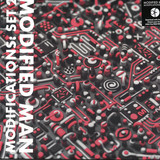
The first EP from Albert's Favourites co-founders and synth-production duo Modified Man focused on throwing out heavy editing, recording music with as few processes as possible and grabbing performances as single takes. Blending warped cassette recordings that touched upon early jazz-funk/brit-funk influences with the energy of broken beat and experimental electronica, won them support from Patrick Forge, Osunlade, Thris Tian, Yam Who and Titeknots to name a few.
Since that release they premiered new track Thorns live on Boiler Room, going on to deliver a full, three-hour live performance and DJ set for the infamous global community.They also provided remixes for Dele Sosimi, Amp Fiddler, Makadem & Behr and Hector Plimmer, meanwhile, busily preparing a series of four, six-track vinyl EPs which will be released over the next 18 months.
Aria Rostami and Daniel Blomquist are from San Francisco, CA, though Rostami has recently moved to Brooklyn, NY. Rostami and Blomquist's work occurs in two stages: the gathering/preparation of source material and the live performance. Rostami and Blomquist's source material primarily focuses on the exchange of information, repetition and decay, and surrendering aspects of creative control. The source material is either sampled and altered by Blomquist or composed and recorded by Rostami. Sometimes this material is repeatedly passed back and forth to be altered, others, it's barely touched.
Following prior albums on Glacial Movements and Jacktone, the duo return with their third full length, "Distant Companion" named after the multiple star Polaris. Comprised of Polaris Aa in orbit with Polaris Ab which in turn, are in orbit with a distant companion, Polaris B. Polaris, aka The North Star, was the star that American slaves followed to freedom. It carries with it a history of Civil Rights, a cosmic history of our origins, as all stars do, and a glimpse into the past as it floats light years away. The first two songs of "Distant Companion" were recorded during a protest performance at Grey Area Foundation of the Arts in San Francisco that featured artists representing communities, cultures and countries on the travel ban list (Executive Order 13769.) For this performance they sampled voice recordings of Persian poets Rumi, Hafez and Forough Farakhzad. Every generation seems to find, in their own way, that the pursuit for equality is not linear, but that we must know our pasts, be in tune with the present and have a will for a better future. This record stands on the shoulders of communities, artists and movements that have made art in protest of oppression, and we hope, in some way, to make a contribution to this conversation. All songs have been mastered for vinyl by George Horn at Fantasy Studios. Cover artwork features a collage by London-based artist Anthony Gerace, and each copy includes a postcard featuring a photo of the duo.
A wonderful companion piece to the totemic Fed, we proudly announce the first ever vinyl edition of Korp Sole Roller by Plush. Liam Hayes' magical fourth full-length LP was previously only available on a rare Japanese import CD. Produced and arranged in 2010 by Pat Sansone (Wilco / The Autumn Defense), it finally arrives in a limited edition of 500 copies.
The common impression of Plush is that of an underground rock myth, lent greater poignancy by the lofty vision that galvanised his music. Yet while he has long been a cult concern, clued-up celebrity fans periodically declare their profound love for Hayes' maverick genius. Indeed, after Jason Schwartzman introduced Plush to Roman Coppola, several stunning songs from Korp Sole Roller soundtracked Coppola's A Glimpse Inside The Mind Of Charles Swan III.
As ever with Plush, it's easy to imagine you are listening to a privately pressed rarity from the mid-late 1970s. Or one of the criminally neglected jewels from the discography of Jimmy Webb or Burt Bacharach. The sound on Korp Sole Roller does differ crucially from Fed, however. It is more streamlined. These 10 gorgeously seductive creations careen around ornate string and wind instrument arrangements and producer Sansone's deft work is likely the reason for this. Yet, brilliantly, it still possesses that sun-warped take on classic pop-rock, that Plush specialises in. That peculiar "down-lifting" phenomenon of performing upbeat songs in an enigmatically mournful way.
Upon completion, Korp Sole Roller barely received anything resembling a release. Press coverage was zero because none of the major magazines or blogs knew of its existence. His management at the time essentially buried the album in order to concentrate on other releases. Looking back on this decision, it really made little sense. Everyone involved in its creation of these near-perfect gems is extremely proud of it. Liam himself has described it as the favourite of his albums. Pat's delicate work is astounding. Remastered especially for this special limited edition, it is presented in a sumptuous gatefold jacket with high-end art photography throughout, including full colour inner sleeves. Finally, here's your chance to own a slice of kaleidoscopic pop history.
'Jamal Moss has cultivated an unmistakable sonic vocabulary. Genre signifiers are contorted into perplexing polyrhythms of perpetual dynamism and velocity. The chirps and squelches of acid heritage are subverted and lunged into new zones without sacrificing spirit. This is another essential statement from an impossibly unique and uncompromising talent.' Tadd Mullinix (JTC/Dabyre), November 2017 ... Jamal Moss's Acid Attacks tape on a 2LP with an exclusive vinyl only track.
Futile Demise EP is an emotional and disconcerting journey through the mind of Finnish artist Juha Puupera¨. Drawing on influences from Norwegian black metal, UK sound system culture and Italian horror cinema of the 1970s, Gruth mixes dark and aggressive tones in his sonic palette. His production methods are often experimental and the style rarely fits into one box as it spans forward-thinking techno, black ambient and doom industrial.
With his EP, Gruth shapes Montevideo-based Tormenta Electrica label's first release. Of the four tracks featured, two are collaborations with the Finnish techno and ambient artist Ikola, known for his Etherwerks label, while the mysterious Helsinki-based violinist and sound designer KuJo contributes to the other two.
IT'S TIME TO PAAAARTY! Why The Universe knows that Tramp is celebrating their 40th trip around the sun in 2018. And what about planet Earth Well... it is as blind as it is in so many other situations. Therefore, it is time to shine the light on Tramp for all of its unremitting efforts. As musical diversity is vanishing, especially in the field of African American music from the 1960s/70s, it is our duty to stop the extinction of threatened species of music in the same way an animal welfare activist would do anything to save a gorilla's life. Tramp Records keeps this beautiful heritage alive, every single day, again and again and again. So we are here wondering why Earth people and especially to those from our beloved home country, why why are you just sitting there, going about your life unaware of this historic event What a pity!
The announcement is especially striking when it comes to the prestigious "Movements" series. Like all its predecessors, this ninth volume contains Rare Groove nuggets recorded between the early 1960s and the late 1970s. The fact that only one of the songs appear anywhere else is a jaw-dropping phenomenon! The chronological track listing starts with two amazing cover versions: "Fever" by Gee Gee Shinn & the Boogie Kings and "I'm A Woman" by Connie Kaye Trio. Bus Brown, Earl Demus and Chuck Finney remain in the same direction although their contributions are slightly jazzier. Chick Willis' gut-wrenching "Sometime Soon" easily rivals James Brown's "It's A Man's World" and the recordings by Australia, J.R. and Joe Akens are beautiful examples of privately produced soul from the 1970s. The latin-soul of "Cho Cho San" by Hummingbird 4 heads the sound in another direction for the next three tunes, highlighted by one more stunning cover version, Oscar Brown Jr.'s "Brother, Where Are You". The album closes with some pre-disco tracks from The Counts, Reunion and Hot Cakes' dance floor bomb cover of "Harlem Shuffle".
Over a hundred great unknown songs have been re-released on the first eight volumes in the "Movements" series, the majority of which can not be found elsewhere, and Vol. 9 is no exception. The work of Germany's tiniest but grooviest record label is still incomprehensibly underestimated. We know you diggers, collectors, mavens, aficionados, fanatics, completists, enthusiasts, and just plain record geeks know what's up and we heartily salute you! Without your support there would be no Tramp Records. But now it's time for a broader cultural shift for good music and a sweeping move to uphold the legacy of the unsung heroes of funk and soul. Therefore, we humbly petition you: in 2018, Don't keep all this glory to yourself! Turn your friends and neighbors on! Thank you!
- the double vinyl LP comes with a full album download code
A Collection with An Exceptional Sound and Visual Aesthetic, In Collaboration With The British Photographer Chris Steel-Perkins, The Counter-Cultures Photograph.
The 12' you're about to read a few lines about is a laconic introduction to the music of an elusive new musician on Antinote. Biographical details about him would probably not help comprehend his music and might even seem slightly contradictory with the music itself, as Reigi / Haipa has been produced in Reims - at least, it would have been much more accommodating if the capital of Champagne was located somewhere in-between Sheffield and London...
.
Indeed, at first listen, Slowglide's music seems deeply rooted in a very British history of dance music. Reigi, on the A-side, unfolds a cavernous syncopated kick on which relies a compressed, flangered, smart but somehow handcrafted sound with an extra Kraftwerkian treatment (the obsessive robotic arigato gozaimasu' and the pocket calculator' bleeping melodic line), enlightened by discreet synth waves appearing in the middle of the track.
Haipa, the atmospheric B-side, is an even stronger throwback to a time when Intelligent Dance Music was ruling over electronic music, the likes of Aphex Twin and his fellow Warp-affiliates were about to be crowned kings and Ghost In The Shell was establishing itself as one of the most culturally significant pictures of the late past century.
Slowglide's music is not backward-looking, though. There's something that relevantly resonates with today's diffracted musical landscape, as the French producer gathers and updates bits and pieces from a thirty-andsomething yearlong history of electronic dance music. The result is probably Bass Music', something that one might have been tempted to describe as the future of Dance Music' a few decades ago - to quote these prophetic words written many times. It's probably not, but these two songs are certainly fresh and futuristic.
DJ Katapila's Aroo EP is the latest addition to the iconoclastic producer's catalog of fast-paced, pan-West African-influenced dance music. From a young age, Ishmael Abbey was a beloved local DJ in Accra, Ghana's competitive and rapidly-evolving music galaxy. DJ Katapila's debut release with Awesome Tapes From Africa, 2016's reissue of Trotro, ignited international acclaim for the Ghanaian DJ and producer: The New York Times, Pitchfork, Resident Advisor and FACT heaped praise on his work. Katapila launched a touring career beyond his grueling schedule of all-night parties around Ghana's southern coast and neighboring countries, heading to Europe and the UK, where he performed at festivals and clubs the pasty two years. Katapila brought Ghana's street party culture to audiences overseas, a wave of joy and happy dancers were left in his wake. The song Aroo' uses his earlier song Cocoawra' as a jumping off point and expands upon its endearing quick-rhythmed interplay of vocal hiccups and percussive clinks. Katapila thinks of Aroo' as a simple math equation: Francophone rhythms plus techno equals so hot and danceable.' While traveling this past summer in Europe, he continued to work on the minimalist electronic music steeped in his hometown rhythms that has made him a growing and singular voice in West African music. Having never travelled outside his region before, the contemporary sounds of London impacted his sonic palette, triggering new song African Techno.' He explains, In Europe and the UK they like these techno songs and house music. They have songs that sound like African music, and we have songs that sound like house music and techno music.' Ghana Baby DJ' references his ongoing development of Ga dance music style gbe ohe. It also conjures his daughter's voice and inimitable vibe and blends it with the characteristic clave rhythm of this. The EP's final cut is a track released with a an eye-catching music video this summer called "Monkey." Following radio play in Ghana and demand from fans online, this track makes its debut on vinyl. Awesome Tapes From Africa is proud to present new music from this unmistakably original artist with an honesty and unpretentiousness that feels good at this current point in history.
Gabber Eleganza was born as a curated blog archive in 2011, an open research about rave subcultures mainly focused on the gabber and post-rave aestethic. The central ambition of the web archive was to become a source of research material on different topics: contemporary folklore, suburban euphoria and post-rave phenomena, revaluing a denigrated subculture through a new cultural lens.Over the years, the magnitude of the project has reached individuals far beyond the hardcore scene. Alberto Guerrini, the Italy and Berlin based founder, has since taken his project offline by producing zines, radio podcasts and garments. He currently tours as a DJ act or with a live performance dubbed The Hakke Show - an old-skool rave/hardcore DJ set with gabber dancers performing onstage: fast, air cutting moves, powerful thanks to their primitive intensity.In the past year Guerrini has brought the Hakke show to festivals: Club to Club (Turin), Resonate (Belgrade), performed as a DJ alongside Lorenzo Senni (Warp Records) and toured cities including Oval Space in London, Niebo in Warsaw, Janus/Berghain in Berlin, Ex Dogana in Rome, Empty Gallery in Hong Kong, etc. Guerrini has hosted radio shows on three London stations: RinseFM, NTS and Radar Radio.
Three clean-cut anthems for the studio debut of Gabber Eleganza, the anticipated new form for the archival and performative project created by Alberto Guerrini in 2011. Now updating the contemporary folklore with his analog grit. Try not to get your attention diverted once again. And keep calm under pressure.First volume of the Never Sleep series. Limited edition vinyl. Includes DL card.