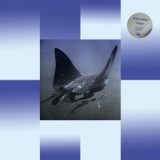
Rush Hour-affiliate and Amsterdam local Relmer is back with what may well be his best work so far. ‘H2O’ expertly displays the vibrant energy he’s known for around these parts with two Amazon-inspired deephouse groovers, a melancholic walk through the jungle, a Detroit-infused progressive anthem and a hypnotic midtempo floorwarmer. Absolutely stellar stuff from A to Z.
“Super nice versatile EP by Relmer, Bummers Paradise has been a firm favourite this summer”
Esa Williams
"Blissful sounds, dancefloor material, and most of all, all very fun music to listen to. 10/10"
Fatima Yamaha
out of Stock
Last delivered 3 years ago available to reorder, subject to availability
Before he co-founded the legendary Sunday afternoon event Body & Soul with fellow New York DJs Danny Krivit and Francois Kevorkian in 1996, Joaquin "Joe" Claussell was the driving force behind Instant House, an eclectic production outift who released a series of uplifting deep house records, several of which were spun by David Mancuso at the 90s iteration of his influential Loft parties.
In 1993, Instant House released their deepest single, Lost Horizons, through Jungle Sounds Recordings. The A-side, ‘Lost Horizons (The Mind Travel Saturday Night Sunday Morning Mix)’ is a seventeen-minute and twenty-second sojourn into the vibrant club sounds of early 90s NYC. Driven by a Latin-accented man-machine beat that marches into infinity, it comes backed by two shorter mixes, ‘Lost Horizons’ and ‘Lost Horizons (Percussion Bonus)’. Twenty-nine years later, Isle of Jura presents an official vinyl and digital reissue of this slow-burning deep cut.
The Instant House story begins in the late 80s at Dance Tracks, an East Village record store established by the businessman, DJ, and graphic designer Stan Hatzakis. Patronised by New York trendsetters like Frankie Knuckles and Larry Levan, Dance Tracks was considered one of the world's best underground dance music retailers.
During the winter of 1991, Stan got together with one of his best customers, Tony Confusione, to make music. A wall street guy by day and a keyboardist by night, Tony was also a serious DJ. Not long after their first recording sessions, they invited another Dance Tracks fixture, Joaquin "Joe" Claussell, to join them in Tony’s state-of-the-art home studio in Long Island. He brought a vibrant, percussive edge to the sample-based tracks Stan and Tony were cooking up. Emboldened, the three DJs began recording together as Instant House. That year, they released the Dance Trax EP.
In 1992, after Instant House had dropped two certified classics, 'Over' and 'Awade', for Jungle Sounds Records, Stan exited the group and sold Dance Tracks to Joe and his business partner, Stefan Prescott. Following Stan's departure, Joe and Tony headed into the studio for a special recording session. “I just remember how powerful the connection was while we were making that record,” explains Joe, recalling the creation of ‘Lost Horizons (The Mind Travel Saturday Night Sunday Morning Mix)’. “It was a very spiritual encounter in the studio.”
While laying out the drum patterns, sound effects, and arrangement, Joe explained the vibe to Tony, who played the lush cosmic chords and an effortless keyboard saxophone line over the top. “That was Tony completely feeling himself,” Joe reflects. “He performed majestically.”
After the release of the Lost Horizons 12”, Joe received a phone call from Cisco International Corp. A plane flight later, he was sitting in their label offices in Tokyo, talking to a senior record executive who wanted to introduce Lost Horizons to Japan. “What they were primarily doing at the time was pressing classical records - we’re talking thousand dollar plus classical reissues - and they wanted to license and distribute Lost Horizons,” Joe remembers. Three years later, Joe and Tony released 'Asking Forgiveness', their final 12” as Instant House, before parting ways with full hearts.
In the context of his career as a DJ, remixer, and producer, Joe is known for long songs and compositions. As Lost Horizons illustrates, he’s carried that impulse with him since his foundational days. “When I produce, I don’t believe in the beginning or endpoint of anything,” Joe explains. “I really despise the rules. To me, that’s not true to the art of creation. I just believe there is a flow in creation. When we were making music in the 90s, we were restricted by format, but that record could have gone on forever.”
The 12” is housed in a full sleeve jacket by Bradley Pinkerton based on the original release design.
out of Stock
Last delivered 4 months ago available to reorder, subject to availability
ATALAYA is new work by bassist Dezron Douglas, and it is alive. Alive in all the ways that jazz is at its best - as a pure and personal expression of Black Music filtered through time-honored traditions by a group of musicians who practice sonic coherence through musical unity. Followers of contemporary jazz might recognize Dezron for his bass work behind Pharaoh Sanders, Louis Hayes, or Ravi Coltrane. Steady International Anthem listeners might remember him from the New York side of Makaya McCraven"s Universal Beings. More recently we presented Force Majeure, his sublime duo record with harpist Brandee Younger which compiled the best of livestream performances from their Harlem apartment during the original covid lockdown. That album reflected the speed and feeling of the moment while somehow simultaneously distracting from the harsh reality of it. It also captured a very vulnerable, intimate, and real impression of Dezron on double bass, sharing his power and truth without abandon.
Technological agitation. Narcissism fatigue. A galaxy of isolation. These are the new norms keeping Weyes Blood (aka Natalie Mering) up at night and the themes at the heart of her latest release, And in the Darkness, Hearts Aglow. The celestial-influenced folk album is her follow-up to the acclaimed Titanic Rising. (Pitchfork, NPR, and The Guardian admiringly named it one of 2019's best.) While Titanic Rising was an observation of doom to come, And in the Darkness, Hearts Aglow is about being in the thick of it: a search for an escape hatch to liberate us from algorithms and ideological chaos. "We're in a fully functional shit show," Mering says. "My heart is a glow stick that's been cracked, lighting up my chest in an explosion of earnestness." And in the Darkness, Hearts Aglow opens with the wistful, winsome "It's Not Just Me, It's Everybody," a song about the interconnectivity of all beings, despite the fraying of society around us. "I was asking a lot of questions while writing these songs. Hyper-isolation kept coming up," Mering says. "Our culture relies less and less on people. Something is off, and even though the feeling appears differently for each individual, it is universal." Other tracks follow in kind. The lullaby-like "Grapevine" chronicles the splintering of a human connection. The otherworldly dirge "God Turn Me into a Flower" serves as allegory about our collective hubris. "The Worst Is Done" is an ominous warning, set against a deceivingly breezy pop melody. "Chaos is natural. But so is negentropy, or the tendency for things to fall into order," she says. "These songs may not be manifestos or solutions, but I know they shed light on the meaning of our contemporary disillusionment."
out of Stock
Last delivered 3 years ago available to reorder, subject to availability
Technological agitation. Narcissism fatigue. A galaxy of isolation. These are the new norms keeping Weyes Blood (aka Natalie Mering) up at night and the themes at the heart of her latest release, And in the Darkness, Hearts Aglow. The celestial-influenced folk album is her follow-up to the acclaimed Titanic Rising. (Pitchfork, NPR, and The Guardian admiringly named it one of 2019's best.) While Titanic Rising was an observation of doom to come, And in the Darkness, Hearts Aglow is about being in the thick of it: a search for an escape hatch to liberate us from algorithms and ideological chaos. "We're in a fully functional shit show," Mering says. "My heart is a glow stick that's been cracked, lighting up my chest in an explosion of earnestness." And in the Darkness, Hearts Aglow opens with the wistful, winsome "It's Not Just Me, It's Everybody," a song about the interconnectivity of all beings, despite the fraying of society around us. "I was asking a lot of questions while writing these songs. Hyper-isolation kept coming up," Mering says. "Our culture relies less and less on people. Something is off, and even though the feeling appears differently for each individual, it is universal." Other tracks follow in kind. The lullaby-like "Grapevine" chronicles the splintering of a human connection. The otherworldly dirge "God Turn Me into a Flower" serves as allegory about our collective hubris. "The Worst Is Done" is an ominous warning, set against a deceivingly breezy pop melody. "Chaos is natural. But so is negentropy, or the tendency for things to fall into order," she says. "These songs may not be manifestos or solutions, but I know they shed light on the meaning of our contemporary disillusionment."
Bill Nace"s Through a Room represents a seismic progression from Both, his startling 2020 debut solo LP for Drag City. Nace"s career has been defined by a relentless probing of ways to frame the complex menu of human emotions, and that the guitar has been his primary tool for exploring this terrain is of little consequence. On this new release, he also employs tapes, hurdy gurdy, doughnut pipe, quelle est belle, as well as his latest instrument of choice, taishogoto. This is also, ultimately, insignificant. What matters is the discerning spirit which animates his work. The tracks are carefully built from loops and phrases that talk to each other, subsume one another, overlapping and crashing and diving and expanding and emerging into unimagined vistas. On the whole, the record offers a fascinating and engrossing chronicle - a sequence of interrelated stories told by a temporally dislodged narrator. You think you"re here, then you"re there, and then you go through trapdoors and along tunnels, into cellars and secret rooms, and you find that actually you"re back where you started. But it"s not hard to follow. Trust me. Nothing this enticing can be hard to follow. The record was recorded and edited in Philadelphia during the uncertain summer of 2021 with engineer and co-producer Cooper Crain. Where Both was a chiseling down of spontaneous live performance, Through a Room, while obviously the work of the same artist, treats its sounds as building blocks, combining them to mesmerizing effect. What"s striking is the poise, the degree of authorial intensity. The false dichotomy of composition and improvisation is thoroughly and rightfully abolished. Bill"s interests range from post-punk to post-industrial to hip-hop to free jazz to avant-garde composition, and every area between such unhelpful labels. From the inscrutable, evocative track titles to the enticingly baffling cover art by his longtime compatriot Daniel Higgs, Nace is guided by an ineffable, internal muse, a persistently personal stormcloud of ideas that, ultimately, comprise that thing we call art. Here"s the real deal. - Matt Krefting, Holyoke, 2022
out of Stock
Last delivered 3 years ago available to reorder, subject to availability
Pioneers, that’s what we call them. Not properly a giant team, but a bunch of forward thinking producers. In the heyday of the italo disco there was some forward thinking, a new way to address the club scene. 1985 is the golden year and if you want to get to the core of the synth-pop experience look no further ! This previously unreleased compilation collects a series of unbelievable tracks. An outstanding vision featuring la crème de la crème of the early 80s scene. All the way from electro wizard Alexander Robotnick to the astonishing performance of vocalist Mya Fracassini, through the French connection of Bigazzi brothers of Mon Bijou.
out of Stock
Last delivered 3 years ago available to reorder, subject to availability
Die 1984 gegründete Band Sepultura ist der wohl größte
brasilianische Musikexport und feierte im Laufe ihrer
Karriere weltweit große Erfolge. In dieser Zeit haben sie
fünfzehn Studioalben veröffentlicht und weltweit über 20
Millionen Einheiten verkauft. "A-Lex", ursprünglich 2006
veröffentlicht, ist das 11. Studioalbum der Band und
basiert auf dem 1982 erschienenen Roman "A Clockwork
Orange" von Anthony Burgess.
Felix Laband’s The Soft White Hand is the masterwork of an artist who expresses himself through musical and artistic collage acting together to reinterpret his sources and to express significant elements of his own personal story.
Released by Munich-based Compost Records, the 14-track album is Laband’s first full-length offering since the critically acclaimed Deaf Safari in 2015. It is heralded by the single “Derek and Me”, and is being pressed on vinyl for distribution globally.
In The Soft White Hand Laband works with source materials that will be familiar to those who know his previous four records – Thin Shoes in June (2001), 4/4 Down the Stairs (2002), Dark Days Exit (2005) and especially Deaf Safari which reached deep into the South Africa scene and its political culture to inspire its vocal and music sampling. However, the disengagement he felt from his homeland during his latest album’s creation – an abiding sense of untethered-ness to place and space, exquisitely rendered in tracks like “Death of a Migrant” – is perceptible in Laband’s desire to illuminate instead aspects of his own life.
“For this album, my source material became almost autobiographical as opposed to African statements I’ve worked with previously,” says the artist. “I have sampled a lot from documentaries from the 80s crack epidemic in impoverished African American communities and believe my work speaks unapologetically for the lost and marginalised, for those who are the forgotten casualties of the war on drugs. In the past, I have had my issues with substance abuse, and I know first-hand about the nightmares and fears, what it feels like to be isolated and abandoned.”
Few artists have managed to air these intimate aspects of their life so luminously as Laband does in tracks like “5 Seconds Ago”, “They Call Me Shorty” and in the strange and meditative “Dreams of Loneliness”. “I’ve been building this weird, autobiographical story using other people talking. It’s kind of humorous but it is also sad and beautiful,” says Laband.
Yet, as in all of Laband’s recorded output, the delineations between emotions are never starkly drawn and The Soft White Hand is also shot through with beauty. Nature appears in recordings made in his garden in the intimate early morning hours, whether as in the calls of the Hadada Ibis and other birdsong in “Prelude” or of the vertical-tail-cocking bird in “Derek and Me”. The last is a wonderful track with Derek Gripper, the South African experimental classical guitarist of international renown, whose 2020 song “Fanta and Felix” imagines a meeting between Fanta Sacko and Laband.
Laband’s eloquence in reinterpreting classical composers such as Beethoven in “We Know Major Tom’s a Junkie” is another thrilling aspect of the new record. “I’ve been properly exploring classical music on this album,” explains Laband, “taking melodies from classical compositions and reinterpreting them”. A fresh quality comes to his work through this sonic adventuring: the tender manipulation of the mundaneness of the computer’s AI voice to reimagine and reinvent iconic lyrics and melodies in strange and unexpected configurations.
The Soft White Hand is Laband’s most cohesive body of work to date. Yet it remains, in its sheer artistic scope, impossible to describe fully. Darkness abuts the gossamer light. A song that summons the sunrise and all the hope of a new day could also be about the final dipping down of the sun that portends a troubled night ahead. Interludes are invitations to expand outwards or shift inwards. Mistakes and “weird fuckups” in the sound are cherished as convincing statements against what Laband calls the “grossness” of perfect sound in modern music.
For this world-leading electronic artist, the boundaries are unfixed. He is inspired by the German Dada artist, Hannah Höch, who memorably declared: “I wish to blur the firm boundaries which we self-certain people tend to delineate around all we can achieve.” His music consequently reflects a primal artistic impulse that is also visible in Laband’s considerable visual art output as seen recently in several solo exhibitions such as that held in the No End Gallery in Johannesburg in 2019 and in the works he produced during his 2018 Nirox Foundation Artists Residency. “My music is always about collage, as is my art,’’ he affirms. “Everything I do is collage. It is a medium I find very interesting because you are taking history and distorting it and changing its meaning and turning it upside down and back to front.” In her book Recollections of My Non-Existence, Rebecca Solnit calls collage “literally a border art”; it is “an art of what happens when two things confront each other or spill onto each other”.
With The Soft White Hand, Laband is confirming his singular ability to achieve this in both art and music, melting the divisions between the two creative disciplines until they become one. He is also affirming his belief that an album of music should be more than a collection of unrelated tracks, but should unfold a fully integrated, cohesive story as in the song cycles of the great classical composers. In doing so, he claims his position as one of the most significant artists working today.
Artist Statement – Felix Laband – August 2022
When the Khmer Rouge took their captives for processing, they identified their class enemies by looking at their hands. If they were sunburned, rough and calloused, they were those of a peasant, a proletarian to be spared. But if they were soft and white, then they were those of a city-dweller, an intellectual or bourgeois, an adversary to be liquidated.
In calling this album The Soft White Hand, I was reflecting on the Cambodian genocide and how it resonates in contemporary South Africa. The apartheid era is over, and gone with it is white political domination. Yet economic and social privilege is still held in soft white hands. But those who grasp it know just how tenuous is their hold, how it singles them out, and my music reflects their subconscious fears, the stress and guilt of clinging on to what others envy and desire.
The soft white hand of the title suggests to me a further image, one that relates to all of postcolonial Africa. In my mind’s eye, I see the soft, duplicitous handshake of the smooth representatives of the superpowers making deals and promising gifts that benefit only them, and not their African dupes.
Yet, soaring above the wailing of sirens sampled from the first day of the invasion of Ukraine, my music is also about love gained and passion lost. It is about the tender caress of a soft white hand that conducts you into a place of dreams to be enfolded by nocturnal melodies.
out of Stock
Last delivered 3 years ago available to reorder, subject to availability
Da Buze Bruvaz and Lord Beatjitzu come together for a truly hard hitting, no holds barred, HipHop grudge match with the tough as nails BoLO Yeung Barbarian Bicepz EP. The long-time collaborators, known for dropping at a prolific pace individually, found time to combine and give their prospective audiences a true gift. Expect nothing but explosive neck-snapping beats and hard-body drunken rhyming.
This is truly a companion piece for the Lord Beatjitzu produced Bruce Li in Japan LP. Here we find Da Buze Bruvaz Him LO and Clever One, deconstructing a few of those tracks while also bringing heat to some exclusive gems from the vaults of the reclusive production wizard. You may want to take a few steps back before entering drunken dragon styles presented on this one.
Bruce Li meets Da Buze Bruvaz and every track contained within qualifies as a lethal weapon! Protect your Necks, Arms, Heads and Chests! PLAY on 45 rpm!
The essential series from the ’80s has been rebuilt, remastered, and carefully portioned onto a five disc set of 7-inch singles, including all the classic vocal bits that became iconic samples, and more than a few new additions to bring things up to date.
Where would dance music be without Acapellas Anonymous? Although many records claim to have changed the game, the arrival of the Acapellas Anonymous series in the mid/late ’80s actually did just that. A hugely popular, multi-volume set of vocal tracks sourced from a wide variety of dance classics, AA was used extensively at the dawn of sampled music to provide hooks for numerous hits. “I’ve Got the Power,” “Ride On Time,” multiple Clivillés and Cole tracks, Pal Joey’s “Party Time,” ’90s Italo house and rave cuts, and untold others all found their choruses among the many acapellas collected on the series. As Ultimate Breaks & Beats was for funk and hip-hop sampling, so was AA for dance music, both for producers and as a must-have for the creative DJ. Sure, before these records came along, DJs had their own choice vocal bits that they used in sets or layered into edits. But suddenly, much like Ultimate Breaks, these carefully guarded secret sources were available easily, and in convenient form, for the first time. And the response, from DJs and a new generation of producers, was immediate.
That part of the story is widely known, and indeed, was widely experienced by anyone paying attention to music of the time. But the questions linger: who was it that found these acapellas, many of them only existing on promo singles, or as tiny fragments buried on obscure B-sides? Who edited and put them together? By now, you may have guessed that once again we owe an enormous debt to the maestro of edits and our hometown hero, Danny Krivit. And it’s to him we must tip our collective caps for this latest release, a carefully revised, fully remastered, and immaculately executed update to the series — this time on 7-inch.
All of the classics are here, rinsed but still powerful: “Let No Man Put Asunder,” “Weekend,” “Don’t Make Me Wait,” “You Don’t Know,” and dozens more. New additions make a few clever appearances as well, with Roland Clark’s “I Get Deep” (used for Fatboy Slim’s “Star 69”), and Rickie Lee Jones’s stoned rambling known as “Little Fluffy Clouds” showing up for the first time. This is no nostalgia trip — Acapellas Anonymous was recently tapped for a Cardi B megahit, and naturally you’ll find that source, Frank-Ski’s “Whores In This House,” included. All in all, an astounding 80 high-quality acapellas and vocal hooks are spread across the five 7-inch, 33RPM singles, which have each been sequenced thematically with attention paid to timings and tempos to provide maximum utility for the working DJ. And if the past is any indicator, we will likely see a new crop of tracks spring up as these find their way into the production toolkits of the world’s track-makers.
out of Stock
Last delivered 9 months ago available to reorder, subject to availability
What if Lee Perry and Lex Baxter have been caught in a firetrap altogether? A weird experiment in dub & reggae coined in 1973, the sole album of this interstellar venture was a case in point. Jamaican rhythms (provided by the almighty Trojan records crew) with legendary prog/psych keyboardist Ken Elliott (former member of influential british bands such as Second Hand and Seventh Wave) creating groovy instrumental on top. 10 tracks including the Joe Meek classic Telstar and a spacey rendition of The Skalaties' »Guns Of Navarone« for an album that might sounds like a caribbean easy listening session on dope. A truly gem on its own, incredible strange music for the suburbs.
out of Stock
Last delivered 3 years ago available to reorder, subject to availability
4 Cuts Placed In "A First Quarter", the companion piece to Solos, is the sonic result of a collaboration with artist Lawrence Weiner. As Landry remembers, “I was working for Keith Sonnier at Castelli Gallery and met Lawrence. He asked ‘can you make a video for me?’ So we did "To and Fro..." At some point he was working on "A First Quarter" (1973) and wanted me to do the music. I said ‘I already have the music.’ He said ‘what do you mean?’ I had recorded several pieces with Kurt Munkcasi and walked around the set playing the music on a boom box.”
The set features one solo each by Landry and contrabassist Rusty Gilder, a duo for the tenor saxophones of Landry and Richard Peck, and an ensemble piece for Landry, Peck, Gilder, trumpeter Robert Prado, and drummer David Lee, Jr. Starting the record off is “Requiem for Some,” inspired by Gil Evans’ long, placid tones. The anchor is Lee’s dry cymbal attack and fancy footwork, dancing around overlapping and recombining horns, chords held just shy of splintering. “4th Register” is a grainy delayed solo tenor piece, presaging “Kitchen Solos” from Fifteen Saxophones by several years. “Piece for So” was, according to Landry, “a chance to give Rusty a solo”. Mostly known as an ensemble bassist, Gilder bounced between Lafayette, Charlotte, and New York, leaving a slim recorded legacy. Here, he stretches out for twelve minutes and change – with keen upper register detail and meaty up-tempo walk, he could have been mentioned in the same breath as players like Dave Holland and Barre Phillips. The closing “Duo Vivace” finds Landry and Peck sparring on tenors, the latter holding a melodic line while Landry leans into explosive glossolalia, until both become birds in flight.
Broadway in Soho to perform a wholly improvised concert. This ensemble’s solos spring from collective improvisations and a tumultuous backbeat, loosely inspired by the creations of Coltrane, Coleman, Albert Ayler, and their brethren. The de facto leader was Richard “Dickie” Landry, a saxophonist and keyboardist who joined composer Philip Glass’s group in 1969. Landry had become a fixture in downtown New York’s loft and art scenes at the close of the 1960s, after he high-tailed it by car from Louisiana to the Lower East Side and auspiciously encountered Ornette Coleman at the Village Gate the night of his arrival.
For this concert, fellow Glass reedists Jon Smith and Richard Peck joined in, alongside Rusty Gilder and Robert Prado, both doubling on bass (upright and electric) and trumpet. The drum chair was occupied by New Orleans firecracker David Lee, Jr., who brought alto saxophonist Alan Braufman along for the session (Braufman was the only non-Louisiana player in the band). The ensemble stretched
out in the gallery for several hours in a configuration reflecting those that took place at Landry’s Chinatown loft, documented in photos by artists Tina Girouard and Suzanne Harris that adorn the inside of the original gatefold album jacket. Recorded live by Glass’ sound engineer Kurt Munkacsi, the album was released as a double LP on Chatham Square, the small imprint Landry and Glass co-ran, in a stark greyscale cover and simply titled Solos. The order of the players’ improvisations was laid out on the album inner labels, though unsurprisingly there’s a fair amount of blend. At the end of the day Solos is beyond category, a rousing exploration of instrumentation, rhythm, and life.
Këkht Aräkh is the Ukrainian project founded in 2018 by Dmitry Marchenko. The debut album Night & Love was initially released on the Finnish label Livor Mortis in 2019 and it’s now seeing a worldwide reissue via Brooklyn label Sacred Bones.
Dmitry’s intent to experiment with standard black metal canons previously seen at play in Through the Branches to Eternity EP (2018) solidify further on Night & Love, he mentions “back then I had an idea of combining Darkthrone’s Transilvanian Hunger type of black metal with early Internazionale or Croatian Amor vibe.”
Described as ambient or atmospheric black metal, this debut presents Këkht Aräkh’s signature dichotomy of harsh traditional early Norwegian black metal and the more ethereal and delicate melodies. On the other hand the lyrics are romantic and melancholic, clearly influenced by a stark Gothic imagery, and serve as an extra layer of mystery to the already suggestive body of work. The album beings with a soft acoustic intro in “As the Night Falls…” before descending into the raw and raucous “Elegy for the Memory of Me” and “Den Venstre Hånd På Den Høyre”, both songs that are drenched in the more traditional black metal style of raspy, high-pitched vocals, dense, tremolo- picked riffs and fast paced drums. It is however songs like “Night” and “Love” that really set this album apart. “Night” is a softly spoken word ambient track that with a beautiful piano synth work that permeates throughout it aids in the romantic delivery and conjuring of imagery of the night. “Love” is a spellbinding and melancholic song, equal in its romanticism but one that displays a deeper sorrow and tenderness supported by calming field recordings of trickling water.
The intertwining of black metal, dark folk and ambient repeats itself, culminating in a quietly hummed outro “...And Never Ends (Eternal Love)” that alludes to and completes the album’s first track.
Angis Music invites you to listen to "Selva" the second release from the Padova duo composed of Stefano Cosi and Alberto Lincetto. The three songs featured represent the deep desire to communicate an evolution of sound and to tell a story that goes beyond traditional paradigms and genre labels. The “chiaroscuro”, lights and shadows, that characterize HUMA's music are once again the result of compositional and sound explorations that travel from jazz to 70’s funk, from deep house to electronic, with echoes of Brazil and film soundtracks. Side A opens with the misty and romantic landscape of "Free and Lost”, in which acoustic, electronic and deep bass sounds blend in a dark and spiritual atmosphere. The journey develops further into "An Ordinary Life” which sees the participation of Yeofi Andoh, aka A Race Of Angels, Los Angeles-based vocalist and co-author of the track, and of Amilcar Soto Rodriguez on classical guitar. It slowly emerges from the initial psychedelic sphere, landing on luminous harmonies and funk rhythms to reiterate a contrast that speaks of life cycles and the relationship between man and nature. This path ends with the title track "Selva" in which the synthetic percussive tangle keeps the listener in a meditative state of disorientation guided by the melodic lines of a dusty Fender Rhodes. It is the temporary epilogue of a story that has just begun..
‘Happiness, Guaranteed’ is about the cyclical nature of our modern dissatisfaction. It’s a brief dive into the frustrations our desires bring in our attempts to reach a level of contentment. Each song explores the pursuit of happiness within our relationships, our work, and our wealth all whilst finding ways to be content with what you have whilst balancing a desire to grow. Having come off the back of touring our first record Shadowboxer we were keen to get back in the room together and start writing new material. Traditionally we had taken the approach of writing sketches alone and sharing them with each other in the studio. We wanted to shake this process up and decided to rent a house, set up our instruments, and play freely together with no expectations, we did this over a couple of months. A lot of the music we made during those sessions felt like new territory for us and a move in the right direction. One of the first songs we landed on was MORE, which is based around a character disillusioned by their desire for consuming possessions. It’s a tongue-in-cheek exploration into how we’re sold happiness with what we can buy, something which we all really resonated with at the time -filling our apartments with furniture, buying gear, and settling back down into a post-tour life. Don’t Wait was another important piece of the puzzle. It’s a song that reckons with a break up and greeting the great unknown. It was a more joyous moment in the record, touching on the freedoms of growing up and having a better understanding of who you are and what you want in a relationship. The Trouble with Us was a similar exploration but focused more on the pain and frustration of a relationship ending. Throughout the record there’s this desire to arrive, to reach what we’ve been promised in life, a sense of completion and happiness.
Sunsleeper was halfway through the touring cycle for their debut album when the pandemic halted live music. For the Salt Lake City indie rockers, that pause allowed them to reframe what their journey as musicians and people inspires them to create and say. After forming in 2016 and briskly realizing their Nathan Hussey-produced debut EP Stay the Same, the band entered the studio for their debut album, inking a deal with Rude Records. You Can Miss Something and Not Want it Back dropped in summer 2019, with the band celebrating with runs featuring their collaborators and friends in All Get Out, an Audiotree live session, and most recently, a run with TWIABP and Bent Knee in fall 2021.While the pandemic still rages on in uncertain terms, Sunsleeper found themselves more solidified than ever writing their sophomore LP, with their road-tested lineup collaborating cohesively and with united goals. While You Can was recorded and produced by Brett Romnes (Oso Oso, Hot Mulligan) and mastered by Will Putney (Counterparts, Knocked Loose). Enlisting heavyweight personnel across scenes and genres underlines what the band views as this album’s mission: to connect with and inspire as many listeners as possible while venturing into their most daring and expansive material to date.
'Rambler of Aeons' is an album of extremes. Musically, both melody and brutality are pushed beyond the boundaries explored in previous albums. The band spans from Motörhead to Black Sabbath passing through Sepultura, Exploited, Paradise Lost, Cro-Mags and everything that is badass. Dealing with all things human and beyond, BARK runs all the red lights from the mundane to the metaphysics, taking us on a euphorical suicide spree between life and death.
Hailing from the North West of England, XENTRIX was formed in 1985 by guitar player Chris Astley. After numerous changes to the line up XENTRIX signed to Roadrunner records and entered the studio to record their first album 'Shattered Existence' with producer John Cuniberti (Vio-lence, Forbidden, Joe Satriani). XENTRIX were one of the leading lights of the British thrash metal movement. They had music videos which all had regular air time on MTV’s Headbangers Ball. Gaining global notoriety, XENTRIX had many high energy performances with audiences of thousands. XENTRIX released their comeback album 'Bury the Pain’ in 2019 with production from Andy Sneap and Mastering by Russ Russell, this new recording showed the band sounding heavier than ever, while still retaining their signature sound. “Seven Words” is the 7th studio release from UK Thrash outfit Xentrix and is a crushing compendium of all that has made this band what it is today. New tracks such as “Reckless with a smile”, “Anything But The Truth”, “The Alter Of Nothing”, “Everybody Loves You When You're Dead”, and the title track “Seven Words” will take their rightful place next to the Xentrix classics. Xentrix’s guitarist Kristian Havard Comments: “This LP is the culmination of the last 2 years of us experimenting and trying new ideas. It feels like a big step forward for the band, but without stepping away from our Thrash Metal past and I can’t wait for people to hear it.” Recorded in the UK at Backstage studios in Derbyshire and Viscon studios in Lancashire, the album was mixed & mastered by Andy Sneap (Judas Priest, Exodus, Megadeth) and returning to create the cover artwork was Dan Goldsworthy (Accept, Corpsegrinder, Alestorm).
Sunking is the experimental sights and sounds of Seattle natives Bobby Granfelt & Antoine Martel, an outlet for the duo whose music is "steeped in funk, fusion, and the dreamier end of the rock spectrum," said Seattle"s The Stranger. The Stranger also went on to say that "this city needs more groups like sunking, who flit among genres such as hip-hop, jazz, and shoegaze rock while messing with the DNAs of each style they address." Both Granfelt and Martel are also members of High Pulp, a jazz collective that draws influences from punk rock, shoegaze, hip-hop, and electronic music. Also signed to ANTI-, their album "Pursuit of Ends" came out in April of this year. "High Pulp blend old-school bebop with contemporary soul and electronica vibes, as though someone convinced the ghost of Duke Ellington to reinterpret a Chemical Brothers album," said the A.V. Club.
In four short years of existence, Green Lung have risen from the murk of the UK heavy underground to become a true cult band with a devoted following. Debut album Woodland Rites, released independently in early 2019, quickly garnered attention, resulting in a single being named ‘Track of the Week’ in the Guardian, plays on Daniel P. Carter’s Radio One Rock Show, a tour with fellow UK heavies Puppy and festival appearances across Europe. This brought the band to the attention of the wider music industry, and after multiple offers (including one from a major label) the band decided to stay true to their roots and sign with the Finnish audio wizards at Svart Records, home to several of their doomy inspirations including Reverend Bizarre and Warning. Svart’s deluxe reissue of the album, and the preceding EP Free the Witch,sold out several runs. Two years later, the folk horror-obsessed fivesome have re-emerged from their mulchy catacombs armed with dozens of freshly-whittled riffs. Black Harvest, the sequel to Woodland Rites, is a more colourful, widescreen reimagining of the band’s sound - Dawn of the Dead to its predecessor’s Night of the Living. Recorded at Giant Wafer Studios in rural mid-Wales over the course of two weeks with longtime producer Wayne Adams (Petbrick, Big Lad), it’s a more expansive and textured record than anything the band have done before, boasting a cinematic quality and more attention to detail.
Drummer and composer Edward Vesala, the most internationally renowned jazz musician from Finland, was very keen on percussion instruments. Oddly enough, this broad and enduring interest is hardly evident on his albums. Whether playing on his own albums or contributing to other musicians’ work, Vesala played a standard drum kit most of the time. He hardly used external percussionists on his own albums either. And most of all: his music was almost never percussive, at least in the traditional manner. Perhaps even stranger is the fact that he barely played any drum solos on his own albums. That’s why I’m Here (Blue Master Special, SPEL 311, 1974), recorded in Helsinki in 1973, is such a rarity. Of course, being a limited release has also made it an expensive treasure among collectors. Additionally, I’m Here is Vesala’s only solo album and only percussive album, and one of the few where he can be said to play drum solos, albeit in his own idiosyncratic way..
"Ramblin' Soul was inspired by the new appreciation I had for the freedom to travel around the country and perform," explains lifelong wanderer Melissa Carper of her forthcoming album. Carper was relieved and energized to be back on the road, on a familiar pilgrimage from Texas to Arkansas and back to meet and collaborate with musician friends. "I had taken for granted the ability to interact with audiences and friends and how much it feeds my soul and my creative process," she adds. Feeling inspired by time on the road and time with other creative minds, she penned the title track on the way back home, and the Ramblin' Soul seeds were planted. From its conception and throughout the recording process, Ramblin' Soul seemed to take on a life of its own. "It wasn't what I had first planned," Carper recalls. "A couple of the songs we recorded I'm now saving for a future album, and there are some brand new songs I decided to add, including one that was written during the week of recording. Thematically, I had a handful of songs about rambling around and living a free life that I wanted to weave through the album. I also knew I wanted Ramblin' Soul to have a different feel than my previous release, Daddy's Country Gold, with more upbeat and diverse styles and grooves," she says. Ramblin' Soul features a co-write with friend Gina Gallina, a song penned by friend and frequent collaborator Brennen Leigh, a reimagined classic from folk pioneer Odetta and 10 Carper originals--venturing into her blues, early rock 'n roll, and soul influences, blended with her signature flavors of country, western swing, and jazz. There is something for everyone on Ramblin' Soul.
Minas-cover Minas is a world music duet comprised of Orlando Haddad and Patricia King. Minas reflects a perfect musical marriage with a stage presence and chemistry that only a lifetime can produce. Drawing on the passionate styles of Brazilian and American roots music, the two create a fresh and innovative sound. With a catalog of 8 recordings released on their label Bluezul and a collection of over 100 songs, they have been building their reputation. Multi-talented as composers, vocalists, and instrumentalists, and equally comfortable in Brazilian jazz, folk, and classical genres, Minas is now bringing their world music approach to the Beatles with their latest album titled Beatles in Bossa. This re-imagination of fourteen Beatles' songs is infused with American Jazz and Brazilian styles of Bossa Nova, Samba, Choro, Partido Alto, Afoxé, Marcha Rancho, and Frevo. "Blackbird" has a nylon-strung guitar and vocal intro that sets the tone for this Brazilian-themed arrangement. Minasminas-1 transforms the melody to something new while still keeping the theme recognizable. The male and female vocals of Haddad and King blend beautifully as the band builds a relaxed Brazilian feel. John Swana plays an expressive Evi solo, adding a modern color while still being vivid. Haddad wrote this creative arrangement with a fresh approach to this classic Beatles melody. "With A Little Help From My Friends" is another Brazilian arrangement that is all Minas. The concept came from Haddad and King with the horn arrangement provided by Andrew Neu. Haddad's nylon-strung guitar keeps a Latin pattern as the horns accent the two vocalists trading phrases of the melody. Neu plays an exciting solo. The arrangement is rewarding, enabling us to hear the melodic lines, harmony, and orchestration from a different perspective.minas-2Minas' Beatles in Bossa impresses with its natural, vibrant, and heartfelt presence, allowing us to hear and appreciate the colors and textures of the exceptional music of the Beatles through a Brazilian perspective and thoughtful performances.
GREY & BLACK SWIRL VINYL
Public Memory is a blend of damaged and dubbed out percussion, unfurling synths and sparse sampling all strung together by producer Robert Toher's spectral tenor. The project's sophomore LP, Demolition follows 2017's Veil of Counsel EP and 2016's Wuthering Drum LP with cinematic fortitude. While Public Memory's prominent krautrock and triphop rhythms are represented here, Demolition explores a greater range of tempos and an expanse of alien emotions with layers of electronic drums, live drums, Korg synths and samples from nature. Themes of rebirth and reflection imbue the album's atmosphere, rich in tape delay, spring reverb, and textures that conjure a sci fi and supernatural narrative. Toher's adept use of space and tension articulates the world of Demolition as eerie, emotive, and above all, narcotic. Each track is an existential procession. "Turning out the lights on your illusion," Toher sings to close the album, accepting that change is an inescapable condition of being.
TELE MUSIC is a label of Éditions Musicales Sforzando now owned by BMG Production Music. It is entirely devoted to the music library, that is to say, music for sound illustration used in audiovisual productions. Created in 1966 by Roger Tokarz,
just before advertising was allowed on French television, Editions Sforzando specialized from the outset in sound illustration for radio and television.
This collection, soberly entitled “Volume 2”, is the sequel to “Volume 1”, produced with equal care, passion and fervour by Lord Funk & DJ L.C. In the mid-90s, Tele Music vinyl was sold at ridiculously low prices. Often disparaged by collectors and record shops, considered by some as lift music or vulgarly called “music by the meter”, the music store was only of interest to fans of instrumental music! But in the 2000's, it had a second life and saw its prices soar on Discogs, thanks to sampling and digging in Hip-Hop mainly. This advent of the library is an era that Lord Funk, curator of this compilation, experienced when he brought several music library collections to New York City (NYC) to his A1 Records stronghold in 1997.
In this 2nd volume, Lord Funk & DJ L.C. have chosen a range of music from 1969 to 1983, from psychedelic jazz to electro funk via rnb, soul and jazz-funk. Most of the titles in this collection were recorded in the magic place that was the famous CBE recording studio set up by Georges Chatelain, Janine Bisson and Bernard Estardy. Bernard, nicknamed the giant, was a sound genius and a mixing perfectionist. Georges Chatelain was an electronic engineer. Together, they brought a sound,
a colour, a trademark. Bernard Estardy was also considered as one of the greatest French sound engineers and an energetic organist for Nino Ferrer or Nancy Holloway. We warmly thank Julie Estardy for her total and unreserved involvement in these reissue and compilation projects.
The combination of all these prodigies has given TELE MUSIC a phenomenal and unique sound colour in the service of a sound repertoire that is now part of the French heritage.
Seabuckthorn is the alias used by Andy Cartwright for his solo works. Cartwright uses finger picking & bowing techniques combined with various open tunings to form a mixture of approaches, often with layered accompaniments. Generally the songs lean towards to the experimental genre, whilst on the edge of the ambient and folk.
Having grown up in Oxfordshire, Cartwright studied sound engineering in Cornwall and then lived in the cities of London, Paris & Bristol working as a broadcast wireman. He now resides in the French Southern Alps making music.
Cartwright has been actively touring internationally for several years performing in festivals and events throughout Europe.
Various songs have been featured in documentaries, film and contemporary dance. His works has been released since 2009 on labels such as Dead Pilot Records, Bookmaker Records, Lost Tribe Sound, Eilean Rec., IIKKI and Fluid Audio. "Of No Such Place" is his 13th solo releases.
Here is the much anticipated volume 3 of the HOT SAUCE compilation LPs dedicated to the Trojan related UK labels between 1965 and 1975.
HOT SAUCE VOLUME 3 features outstanding original Rocksteady, Boss Reggae and early Reggae (“Reggay”) tracks including rare songs, overlooked gems, hidden treasures and a couple of hits.
The record labels showcased on this third volume are Amalgamated, Duke, Gayfeet, Grape, Harry J, Rio, Randy’s, Treasure Isle, Upsetter and Trojan. The tracks here have been selected according to their musical interest firstly, their rarity, and their complementarity.
These tracks are all outstanding tracks, “killer tracks”, there is no “filler” whatsoever.
Particular attention has been paid to the way the songs are sequenced (or “mixed”) so that the album builds up nicely and gradually, generally starting with the Rocksteady songs on the A side and the 70s songs on the B side.
HOT SAUCE is a musical journey across early Jamaican Reggae - highlighting its diverse musical genres and outstanding artists – as it was once published by the U.K. record labels during this golden decade…
Since the early 70s “Tighten Up” series, no compilations have really explored these labels in depth on vinyl.
Wenn ,Black Stabat Mater" das Album ist, mit dem sich das HEDVIG MOLLESTAD TRIO auf neues Terrain wagt, dann ist ,Evil In Oslo" die Zusammenfassung der früheren Jahre, obwohl es tatsächlich auch eine klare Verbindung zwischen beiden Alben gibt. Während die neun Performances hier von den ersten drei Studioalben stammen, sind die meisten längere Workouts, die HEDVIG als selbstbewusste und talentierte Gitarristin zeigen. Aufgenommen in den Osloer Clubs ,John Dee" und ,Buckley's" ist ,Evil In Oslo" ein kraftvolles Livealbum, das sich auf ein hohes Level an musikalischem Können stützt und eine perfekte Balance zwischen Freiheit und Disziplin eingeht. Diese qualitativ hochwertigen Aufnahmen fangen sowohl die pure Energie als auch die kleinsten Details auf ganz großartige Art und Weise ein. Mit Linernotes von Richard Williams. ENG Reissued! If "Black Stabat Master" can be seen as moving into new terrains, then "Evil In Oslo" can serve as a summing up of the previous years, although there is also a clear link between the albums. While the nine live performances presented here all come from their first three studio albums, most are lenghty workouts again showing Hedvig as a very confident and accomplished solo guitarist. Recorded at Oslo clubs John Dee and Buckley's, "Evil In Oslo" is simply a kick ass live album (never thought we'd ever use that expression, but there you go), with a very high level of musicianship and a perfect balance between freedom and discipline. The hi-res recordings capture both the energy level and all the details in a marvellous way! Liner notes by Richard Williams.
Limited Clear Vinyl edition, 500 copies! Besides playing with the likes of T. Monk, J.Coltrane, A. Blakey and R. Weston, bassist and oud player
Abdul Malik is mostly remembered as one of the first to explore how elements of Middle Eastern and North African music can integrate with Jazz
idioms. Originally released in 1963 on Prestige Records, this is his fifth studio effort featuring Bilal Abdurrahman - alto saxophone, clarinet, Korean
reed flute, percussion, and William Henry Allen - bass, percussion, A peculiar combination of different instruments and sounds for a step into the
Eastern side of Jazz.
Limited Clear Vinyl edition, 300 copies! Recorded in 1961 and released on Blue Note in 1964, “It May As Well Be Spring” is often considered as an ideal companion to Quebec’s famous “Heavy Soul” . Here the saxophone player displays a relaxed set of standards, including classic songs from the American repertoire such as “Willow weep for me”, “Lover Man” and “Ol Man River”. Perfect material to express his warm, lyrical tenor sax voice while Freddie Roach on organ, Milt Hinton on bass, and Al Harewood on drums perform with their usual high sense of interaction .
MP3 album download included. Best New Music… 9.2 // ‘Dear Science’ cuts through genres like a laser through a music encyclopaedia, making strange connections, but always with pop clarity as the ultimate aim. — NME // Dear Science reprograms old‐school rock thrills for an ear‐budded nation, using surprising juxtapositions to explode familiar sounds. — Rolling Stone // (Dear Science) boldly took guitars where no album had gone before. And it did so with more creativity, daring and flair than any record since Radiohead's OK Computer. — The Guardian // The band’s third studio album released in 2008, Dear Science, opened with vintage TVOTR, but the nostalgia does not last. With Dear Science, the band continue to push the limit with sonic experiments that fill out the rest of the album. Track Listing: 1 Halfway Home 2 Crying 3 Dancing Choose 4 Stork & Owl 5 Golden Age 6 Family Tree 7 Red Dress 8 Love Dog 9 Shout Me Out 10 DLZ 11 Lover’s Day
Repress in soon, note new price. RIYL Steve Gunn, Hiss Golden Messenger, Ryley Walker, Itasca, Bill Callahan, Kurt Vile, Angel Olsen. “Timeless ... Measured, perceptive storytelling. A singer with an unmistakable and communicative voice, able to convey hope and hurt with equal clarity.” Pitchfork / “She writes literate songs with unusual precision and sings them in an understated, open-hearted way that lends good poetry the directness of conversation.” Uncut / On her fourth album as The Weather Station, Tamara Lindeman reinvents, and more deeply roots, her extraordinary, acclaimed songcraft, framing her precisely detailed, exquisitely wrought prose-poem narratives in bolder and more cinematic musical settings. The result is her most sonically direct and emotionally candid statement to date. The Weather Station is her most direct and candid record, and the first one to include tracks one might characterize as pop songs. Throughout, the record grapples with some of the darkest material Lindeman has yet approached: it is, according to her, the first album on which she touches on her personal experiences of mental illness. And yet the gesture inherent to the record is one of unflinching embrace. Despite it all, the characters “fall down laughing, effervescent, and all over nothing, all over nothing.” “Well, I guess I got the hang of it” she sings wryly, “the impossible.” By saying more than ever before, The Weather Station seeks to reveal the unnamable, the unsayable void that lies beneath language and relationships. It’s willfully messy and ardent and hungry. Tracks : A1 Free A2 Thirty A3 You and I (on the Other Side of the World) A4 Kept It All to Myself A5 Impossible B1 Power B2 Complicit B3 Black Flies B4 I Don’t Know What to Say B5 In an Hour B6 The Most Dangerous Thing About You
Self-recorded indie experimentalist from the Pacific Northwest. For fans of Grouper, The Microphones, Unwound’s Leaves Turn Inside You. Features Madeline Johnston (Midwife), Alex Kent (Sprain), Lula Asplund, a chamber ensemble and more. In 2019, Drowse’s Kyle Bates set out to produce a self-recorded new album. Marked by moving across state lines, long-distance relationships, and deaths in the family, the following years proved to be metamorphic. Now, three years later, he’s emerged with Wane Into It, continuing a distinctly Pacific Northwestern tradition of self-recording indie experimentalists (Grouper, The Microphones, Unwound’s Leaves Turn Inside You). One of the most impactful moments came during the looming passing of a family member. With death expected, the choice was made to conduct a bizarre “living-wake” gathering—with the soon-to-be1deceased in attendance. Shortly after, Bates found himself disturbed, preoccupied with the abstraction of memory. The experience led him to reassess the tool one uses to curate our selective memories: the internet. The internet, which creeped into even more aspects of life during the pandemic, serves as our self-made digital link to the past. Its uncaring presence layered over humbling thoughts of death and his own childhood memories of the Oregon Coast as he worked on Wane Into It; life’s hyperreal texture sank into the recordings as he felt his body age and wane. Big sounds were captured in bedrooms, hallways, practice spaces, forests, and on highways throughout West Coast vibraphones chime over black metal guitars, a mellotron drones under degraded samples, violins splinter against granular field recordings. In the process of documenting these aural moments Bates completed an MFA at Mills College, coloring the album with shades of avant electronic and minimalist composition (Pauline Oliveros, Terry Riley, Maryanne Amacher, Sarah Davachi etc…). To realize this scope Drowse collaborated with Madeline Johnston (Midwife), Alex Kent (Sprain), Lula Asplund, a chamber ensemble and more. Bates’s songwriting and production have never been more lucid; sounds flicker as he sings with fragile intensity. The record, Drowse’s third for The Flenser, impressionistically distills loss, distance, mystery, prescription drugs, the preservation of memory via recording, and ambient anxiety through its titular act: to Wane Into It, to disappear awaiting the next moon phase, water returning to sea before reemerging as a wave. Track Listing: 1. Untrue In Headphones 2. Mystery Pt. 2 3. (Ashes Over The Pacific Northwest) 4. Wane Into It 5. Telepresence 6. Gabapentin 7. Blue Light Glow 8. Three Faces (Cyanoacrylate) 9. Ten Year Hangover / Deconstructed Mystery
Self-recorded indie experimentalist from the Pacific Northwest. For fans of Grouper, The Microphones, Unwound’s Leaves Turn Inside You. Features Madeline Johnston (Midwife), Alex Kent (Sprain), Lula Asplund, a chamber ensemble and more. In 2019, Drowse’s Kyle Bates set out to produce a self-recorded new album. Marked by moving across state lines, long-distance relationships, and deaths in the family, the following years proved to be metamorphic. Now, three years later, he’s emerged with Wane Into It, continuing a distinctly Pacific Northwestern tradition of self-recording indie experimentalists (Grouper, The Microphones, Unwound’s Leaves Turn Inside You). One of the most impactful moments came during the looming passing of a family member. With death expected, the choice was made to conduct a bizarre “living-wake” gathering—with the soon-to-be1deceased in attendance. Shortly after, Bates found himself disturbed, preoccupied with the abstraction of memory. The experience led him to reassess the tool one uses to curate our selective memories: the internet. The internet, which creeped into even more aspects of life during the pandemic, serves as our self-made digital link to the past. Its uncaring presence layered over humbling thoughts of death and his own childhood memories of the Oregon Coast as he worked on Wane Into It; life’s hyperreal texture sank into the recordings as he felt his body age and wane. Big sounds were captured in bedrooms, hallways, practice spaces, forests, and on highways throughout West Coast vibraphones chime over black metal guitars, a mellotron drones under degraded samples, violins splinter against granular field recordings. In the process of documenting these aural moments Bates completed an MFA at Mills College, coloring the album with shades of avant electronic and minimalist composition (Pauline Oliveros, Terry Riley, Maryanne Amacher, Sarah Davachi etc…). To realize this scope Drowse collaborated with Madeline Johnston (Midwife), Alex Kent (Sprain), Lula Asplund, a chamber ensemble and more. Bates’s songwriting and production have never been more lucid; sounds flicker as he sings with fragile intensity. The record, Drowse’s third for The Flenser, impressionistically distills loss, distance, mystery, prescription drugs, the preservation of memory via recording, and ambient anxiety through its titular act: to Wane Into It, to disappear awaiting the next moon phase, water returning to sea before reemerging as a wave. Track Listing: 1. Untrue In Headphones 2. Mystery Pt. 2 3. (Ashes Over The Pacific Northwest) 4. Wane Into It 5. Telepresence 6. Gabapentin 7. Blue Light Glow 8. Three Faces (Cyanoacrylate) 9. Ten Year Hangover / Deconstructed Mystery
Double Groovy / Trans-Pacific Express by Big Boss Man, one of two limited edition of 500 vinyl 45s to be released simultaneously of essential killer funk. The tracks from the accompanying single (Juju Funk / Return Of Baron Samedi) have already received very strong radio responses from around the world. They have both been supported by Gideon Coe and Cerys Mathews at BBC Radio 6 Music, with Nasser Bouzida discussing the rhythm influences of Return Of Baron Samedi on the Cerys show. Many specialist funk shows from Australia, Germany, France Canada and the US have also been supporting those tracks. Expect further support for this the second single Double Groovy as it is sent to radio and goes live on streaming services. This is set to be an essential 45 for funk DJs. Grab a copy of this very limited release while you can. The tracks are also set to appeal to fans of one of Big Boss Man’s biggest tracks ‘Sea Groove’, which is currently one of the UK’s biggest home-grown funk recordings on Spotify currently close to 7 million streams. This is the second single, the two sides of which will be sent to radio though Sept / October / November. These are the first new releases from Big Boss Man since their fourth album Last Man on Earth on Blow Up Records. A Side – Double Groovy B Side – Trans-Pacific Express
"M4 is a tune that I wrote back in 2017 when I was living in Bristol. At the time I was really into writing melodic pieces and messing around with as many synths as possible. I decided to add some heavy bass to this one cinematic organ progression and laid down some basic drums over the top and called it a day really. I think I sent it out to a couple people (one being Mala) and forgot about it.
Another few years went by and the tune has changed a bit to stay in line with my current production style arriving at the version that's set to be released. Abacus was just an all out bass experiment that I never thought would see the light of day and Dusty really shows off the more melodic style of my productions. After hearing these tunes played on big systems for so long I'm really happy that everyone can now finally get their hands on a copy."
ALXZNDR 2022
Order MEDI124 now
unsubscribe from this list update subscription preferences distribution.triplevision.nl
Triple Vision Record Distribution BV · Achterhaven 160 · Rotterdam, Zuid-Holland 3024 RC · Netherlands
out of Stock
Last delivered 3 years ago available to reorder, subject to availability
It's been 5 years since Nicolas Cubillos started his musical odyssey with his band Lachinos. In 2020 they released their first EP America Lachina with the label Goutte d'Or Records. Through these four songs full of lysergic magic, they offer an ode to Latin American music that was danced at home.
In the fall of 2022, Lachinos will release his second EP entitled Costa Brava, still on Goutte d'Or Records. This record, which mixes surf rock, merengue, cha cha cha and cumbia with Japanese tints, is a sincere exploration through their colorful and festive universe.
With the added bonus of two brilliant remixes by Voilaaa and Matias Aguayo Currently, the group is composed of important actors of the avant-garde music scene in Peru and Colombia: Ernesto Velarde
(Moldes, Juan Wauters) on drums, Santiago Jimenez (Mamíferos, Las Migrañas) on keyboards and vocals, John Socha (Romperayo, Nkumba System, the Caribbean Makina) on bass.
out of Stock
Last delivered 3 years ago available to reorder, subject to availability