Krypton 81 returns to Pan-Am Tracks with Resonant Dimensions, a five-track transmission of cold electro rhythms, synthetic atmospheres, and deep-space frequencies.
Moving through plasma, particles, distant stars, and electromagnetic phenomena, the release explores the space between scientific abstraction and machine rhythm.
Teemon and Poomba go looking for light in the darkness on their new EP “Hopeless.” The Madrid duo have a knack for dragging nostalgic sounds into the present, and this release is no exception. With equal parts Hi-NRG euphoria and dark disco dread, the four tracks feel like a glitchy transmission beamed in from another decade, or perhaps another galaxy…
The title track, “Hopeless,” sends us hurtling down a wormhole. Powered by a cavernous bass, we are propelled through kick drums, warp effects and sparkly synths, while a distant voice calls at us through the darkness.
Iranian producer Amirali takes “Hopeless” somewhere a little lighter with his remix, easing the intensity down before letting it slowly climb again. His version foregrounds the track’s earworm synth line and builds on it, layering and expanding on the vocal line until it sounds celestial. Amirali’s skills as a classically trained pianist feel reflective here in his compositional approach.
If “Hopeless” is the wormhole down, then “Moon Connections” is what’s waiting on the other side. The track leans heavily into sharp, percussive sounds that form a grounding contrast to the high synths that glitter above. With a spoken word line that sounds like it’s being transmitted through a space-age radio and enough deep warp effects to get lost in, this B side sends us to the stars.
Closing things out, the Eagles & Butterflies remix of Moon Connections brings us down to earth. Chill, deep-house adjacent and with a hint of Daft Punk in its DNA, it wraps a heavily filtered guitar line around a softened groove built for the comedown – the sound of the sun coming up on the last people left on the floor.
Flowgeist emerges from a shared inquiry into sound and aesthetics. Genre remains peripheral; meaning stays tethered to sensation. The self-titled debut, released on Evighet Records (EVIGHET007), follows that logic across a full record, moving from matter to memory and giving passing states somewhere to stay. Trip Hop, Drum and Bass, post-punk, breakbeat, EBM, Techno and modular electronics all surface within it, summoned only where a feeling demands them, with acoustic instruments retaining their grain inside the electronic frame. The A side keeps its instruments close and its focus intimate, opening on "Molecules," where Zainab J Lascandri's voice and Arthur Boudet's guitar set the album's tone before it moves through cycles that won't break: a life stuck in place, a trust already gone bu14t still being tended, an attraction whose charm thins out under repetition. That inward attention eventually turns outward, closing the side on a colder note about how influence gets performed and mistaken for substance. The B side works through broken rhythm and cinematic scale. It examines political language for the seams in its polish, follows a relationship reduced to proximity without real contact, and rises to the record's most forceful club passage before settling into "Crystal Muse," where Massimo Capobianco's guitar moves alongside an extended modular passage, luminous and unhurried. The album closes by turning its attention to composition itself, treating the act of writing music as a way of holding onto experience before it disappears. Across both sides, the record travels from immediate, bodily feeling toward something more contemplative, carrying the same emotional attention from private entanglement into wider systems and finally into the quiet work of making the record itself.
The second chapter of The Third Room's curator-led series is shaped by D.Dan, one of the defining voices of a new generation pushing techno into sharper, more forward-leaning territory. Through his productions, DJ sets and close ties to an emerging network of artists, he has helped shape a sound defined by precision, intensity and subtle experimentation. For his curation, the focus lies on collaboration and alignment. Rather than presenting a wide spectrum, the release draws a tight circle around a shared sound: one defined by contrast and a strong sense of aesthetic cohesion. D.Dan's Bound sets the tone: reduced, warm and controlled, balancing sharp accents with a steady, grounding low-end. On Dynamic, Rene Wise delivers a record's standout moment: a fluid, rolling tool shaped by subtle disruptions and evolving tension. Slither by Connor Wall expands into a more trippy, forward-facing space, while Gensou by Sunju Hargun & DJ MARIA. closes on a fresh, detailed take on acid - understated but effective. Across all four tracks, the release feels tightly unified - less like a compilation, more like a single body of work shaped from a shared sonic language. Contrast plays a central role: between tension and warmth, control and surprise, functionality and detail. Cohesive and focused, the record feels carved from a single aesthetic, where contrast and small, unexpected shifts drive its momentum. Copyright 2026 The Third Room A1 Written and Produced by Theodore Su-Ahn Shin | A2 Written and Produced by Andrew Shobeiri | B1 Written and Produced by Connor Wall | B2 Written and Produced by Sunju Hargun & DJ MARIA. Mastered by Ahmet Sisman (The Third Room Studios) Artwork by Charlotte Ernst Design by Daniel Bornmann (STUEDIO.XYZ) Distribution by Clone Pressing by Matter Of Fact
MIRRORS was founded as a record label based on the idea that each release is a small window into an unknown reality, a fragment of a universe we cannot fully comprehend, where music becomes a way to observe what lies beyond our reach. The first Mirror: "Ultrawaves," two tracks featuring sounds by Architectural and vocal collaboration from Berlin-based experimental artist Blu Alo?, who captures the Mirrors universe with incredible precision and vocal personality across two extended tracks. A first transmission from the other side of the mirror, situated on the frontier between house and deep techno. A starting point for a universe that will gradually reveal itself through sound.
Following the first volume released on Details Sound in 2023, Vago Spazio del Ritmo Vol. 2 expands its investigation into the relationship between sound and space, this time exploring the inner sphere through resonance.
Here, as the subject seeks to preserve itself while still being open to reciprocal transformation with the world, sound—through its shifting frequencies and vague, indefinite forms—and the inner sphere—as a field of possibilities, variations, and deviations—become the medium guiding the listener toward an authentic form of being-in-the-world.
Compiled and curated by Luce Clandestina, the compilation explores a rich spectrum of ambient textures and IDM-tinged dilated rhythms. Side A opens with soft, melodic explorations and atmospheric soundscapes crafted by Andrea (Ilian Tape), D’Arcangelo, Eusebeia, and Philipp Otterbach. Side B, featuring contributions from DSR (Dream Sonic Research), Sun Genam, Katatonic Silentio’s remix of Otterbach piece, and a second appearance by D’Arcangelo, turns toward transcendental forms of resonance.
Mastered by Marco Milanesio, O.F.F Studio (Turin, IT)
Design by Beatrice Lattuada
Pressed at R.A.N.D Musik
Kennedy John Charles’ forthcoming album tells a story of his life, explained through deep music and his vocal melodies.
It mixes Broken Beat, House and Soul music genres Fluently!
Kennedy met Andy Compton at the Vocal Booth event in Spain in 2024, and they were both surprised to find they only lived a few miles apart near Bristol, UK.
Kennedy came and visited the PENG studio and shared his musical vision, So Andy (The Rurals) assisted to help produce this beautiful album, oozing with Soul & Love!
There’s some HOT players involved in this musical journey, and it’s now ready for your fine tuned ears!
With Sunrise and the Life We Live, John Beltran returns to his ambient techno roots, the sound that garnered him global appeal in the 1990s.
Through ten tracks, the album journeys through lush, aerated textures and beatless expanse. Hypnotic grooves deepen and bloom in a flow of shapes and colors, creating a sound that is both meditative and full of life.
Thirty years after the release of his seminal Ten Days of Blue, Beltran's musicianship, vision and desire to produce remain at a fever pitch. With Sunrise and the Life We Live his gift of extracting emotion from the universe and turning it into
a unique musical experience puts him in a class of his own.
Prunk is taking a journey back to where it all began with 'Footprints'. Over the years, he has become known for many things: the driving force behind PIV, a tastemaker with an ear for exceptional new talent, and a respected figure shaping the future of house music. However, beyond the label, showcases, and the artist development lies the foundation of it all, which is Prunk, the artist. This album is a deeply personal statement and a return to his roots. Stripping away expectations and industry roles, 'Footprints' focuses on what has always been at the heart of his career, which is creating authentic house music driven by soul, groove, and emotion. Across the album, Prunk brings together a unique blend of established legends and the next generation of artists, bridging the past, present, and future of house music. The result is a body of work that honors the sounds and influences that shaped him while continuing to push the genre forward with a fresh perspective. 'Footprints' is a tribute to artistic identity. It reflects the path Prunk has traveled, the people who inspired him along the way, and the musical values that remain unchanged. Every track leaves a mark of who he was, who he is, and where he's headed next.
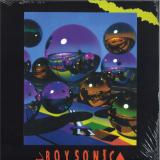
The tracks on the upcoming Boysonic release are a snapshot of a period largely absent from the discussion around Romanian electronic dance music: the first half of the 1990s.
Boysonic’s music was made in the face of considerable adversity, in a Romania still reeling from the aftermath of the 1989 revolution, spiralling inflation of over 200%, and the violence of the early-1990s Mineriads. In the gatefold photos, one of the band’s members can be seen performing live wearing a miner’s safety helmet, a piece of stagewear, but also a charged symbol of the period.
The original music on Madhouse was made in Bra?ov during 1993–1994. Situated away from Bucharest’s political and cultural centre, Bra?ov gave the project its own slightly detached rhythm. Classically trained in piano and active in local radio, Mihai Barb developed Boysonic as a largely one-man act, often joined live by a changing cast of dancers and vocalists. In the absence of a developed club circuit, early performances took place in pre-1989 concert halls, seaside resorts and local entertainment circuits organised around regional radio stations.
Agnostic in genre and unusually fluid in approach, Madhouse moves through downtempo pop burners, KLF-type UK house, boomy breakbeat, new beat and acid-leaning experiments. The material reflects a short-lived moment before the Romanian mainstream/underground divide had fully taken shape, when electronic music lacked infrastructure but not imagination.
Sampling was used generously, with drum loops, vocal fragments and preset banks repurposed through software such as ProTracker and further processed outboard.
The release comes as a 2xLP gatefold.
Remixes are from Benedikt Frey, Boysonic, Cosmin TRG, Flore of Khidja, Romansoff, and Tankwart.
For the 63rd release on Memoria Recordings, Thessaloniki-based producer and DJ G.rush delivers a deep and hypnotic four-track EP shaped by experience, restraint, and underground club sensibility. With roots tracing back to the early days of his DJ career and a production path that has steadily developed through stripped grooves, subtle atmospheres, and low-end movement, G.rush brings a mature and focused sound to the Memoria catalogue. Across the EP, he moves with patience and control. “Spectra” opens the record with a reduced but magnetic drive, built around rolling pressure and detailed rhythmic tension. “Just Friendz” leans into shuffled swing and understated funk, while “Seduction” takes the B-side into deeper, late-night territory. Closing track “Tus Manos feat. Lucie” adds a warmer vocal touch, balancing intimacy with dancefloor flow. MEM063 is a refined club record for selectors who understand the power of subtle movement. Just deep, functional, emotionally charged grooves built for intimate rooms, warm systems, and long after-hours moments.
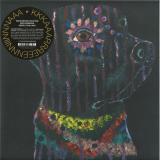
The legendary Charlemagne Palestine returns to Black Truffle with KKKAAARRREEENNNIIINNNAAA, capturing a 2025 performance in London alongside two close collaborators of recent years, multi-instrumentalist Daniel O’Sullivan and guitarist Oren Ambarchi. While perhaps still best known for the ecstatic piano clouds of his ‘strumming music’ performances, Palestine’s life-long search for what he calls the ‘golden sound’ has taken in an enormous variety of methods of sound production. Now stretching back an incredible six decades, his exploration of continuous sound forms has led him to mega-instruments from the carillon bells of the Saint Thomas Episcopal Church to the synthesizer armada of the Moog Sound Lab, with stops along the way at many of Europe’s grandest church organs. Just as important, though, has been Palestine’s practice as a singer, beginning with his childhood experience of sacred Jewish music and growing through his studies of Indian and Javanese musical traditions in the 1970s.
KKKAAARRREEENNNIIINNNAAA reimagines a key work showcasing Palestine’s voice, the haunting ‘magic song’ Karenina for falsetto singing and harmonium, recorded in Paris in March 1997 to honour the spirit of Palestine’s recently departed black labrador. In this trio version, which Palestine describes as the ‘karaoke’ version, O’Sullivan controls three cassette machines playing the original recording, their slow drift out of phase creating complex patterns of delays and ricochets as the recorded voice chants the syllables of Karenina’s name and other trance words. Beginning with a held organ tone that gradually expands to fill out the frequency spectrum, the piece soon grows into a dense psychedelic mass, as Palestine’s electric organs and the echoing pre-recorded voices are joined by Ambarchi’s swirling Leslie guitar tones and O’Sullivan’s viola, synthesizer and additional vocals. Atop it all sits Palestine’s live voice, in an extraordinary performance of keening, shamanic intensity, sometimes delivered in melodic unison with his keyboard playing.
Though clearly a work of Palestine’s design that sits squarely within his oeuvre, Ambarchi and O’Sullivan are far from simple accompanists on KKKAAARRREEENNNIIINNNAAA. As the elements of the teeming, emotionally charged stew writhe and twist, different elements come momentarily to the surface, O’Sullivan’s spaced-out viola taking the lead in moments that recall Kosugi’s Catch Wave, Ambarchi’s gliding chords and signature stuttering tones enriching the details of many of the quieter episodes. Throughout all its transformations, the music is buoyed up by a sacred aura, as Palestine intones his hypnotic prayer for the soul of his departed pet. Arriving emblazoned with a striking labrador painting by O’Sullivan on the cover, KKKAAARRREEENNNIIINNNAAA is an essential slice of modern ritual music.
Available again for the first time since 1970, Lobo’s melancholy masterpiece epitomizes the experimental evolution of MPB. With new liner notes by Edu Lobo.
Released in 1970, Cantiga de Longe is a defining record in the career of Brazilian singer, composer, and guitarist Edu Lobo and a significant contribution to Música Popular Brasileira (MPB). Created during Brazil’s military dictatorship, the album reflects the subtle, poetic strategies that artists use to convey meaning while subject to censorship. Rather than overt protest, Lobo expresses longing and introspection through refined musical language and evocative lyrics.
Musically, the album captures the sophistication of MPB at the turn of the decade. A foundation of acoustic guitar blends with jazz-influenced harmonies and elegant arrangements. The sound is both intimate and expansive: delicate vocal lines unfold over complex progressions, supported by understated rhythms, rooted in Brazilian traditions. Lobo’s controlled yet expressive vocal delivery keeps the lyrical nuance at the forefront.
A key element of the album’s texture is the involvement of Hermeto Pascoal. His imaginative instrumental contributions add subtle harmonic color and atmospheric depth, enriching the refined arrangements and enhancing the sense of openness.
Thematically, the album explores memory, distance, solitude, and time—personal reflections that resonate with the broader climate of uncertainty that dominated Brazil in 1970. This remains one of Lobo’s most mature recordings, exemplifying the emotional depth and artistic subtlety of Brazilian popular music in a creatively fertile era.
At the heart of ‘Diese Fragile Praesenz’ lies a melancholic yet propulsive drone, constructed from a field recording and drenched in white noise. Around this softly glowing orb Kelovolt constructs a vast, shifting, sombre soundscape. Lush, magisterial pads, starry-eyed synth work, cold washes of tape hiss and static melt in and out of the mise-en-scène. Crumbling walls of bass and distortion collapse in slow motion even as rich, brasslike harmonies elevate the listening mind. Long keening synth notes emerge from the fog, intertwining with falling tubular figures, a journey through a wormhole of sound both monumental and fragile.
The accompanying reinterpretations approach this deeply rich source material with discerning reverence. Voltmar's version deepens the grain of the original, with sharper percussion and washes of static that blow through the mix like little gales of dust. Anthony Linell's PM and AM remixes delve into a darker emotional core, placing at the centre a low, shadowy synth pulse around which mists of tape hiss and distortion swirl. Black Merlin steers the track down the path of eerie psychedelia, echoing clicks and dubwise space around a groove often found in the deeper chasms of contemporary techno.
Elsewhere, Die Wilde Jagd stretches the original into a mesmeric landscape of drones, occasional distant percussion and heavy fog, punctuated by fleeting moments of melodic clarity and beautifully resonant bell tones. CV313's pair of reworks complete the collection by exploring two complementary dimensions of the original through his signature dub approach. The Gravitational Pull mix feels the most true to the title track, amplifying its starry-eyed, celestial qualities, with a softer, hazier version built around a deep bass groove, while the Dimensional Dub descends into vast caverns of echo, resonance and alien texture - strong dub-techno sensibilities loom large in this mix.
Endlessly contemplative, endlessly exploratory, minimood027 is a trip to its own sonic galaxy that spirals inexorably outward, carrying the mind to ever wider astral planes. But at the core is that ever-pulsing drone, the black abyss that draws consciousness powerlessly back into the great nothingness.
FatCat was recorded in a single session-live, with all four musicians together in the same place. What you hear on the record isn't a polished production, but a one-of-a-kind recording of four people playing at the same time in the same room.
This is not a nostalgic gesture. It's a stance. As music is increasingly understood as the output of a prompt, the question of what actually makes music becomes urgent again. Not flawless, efficient production, but the imperfect moment and its context. Not the result, but the process in which four people listen to each other, react to each other, misjudge, and find one another. This fallibility - the hesitation before an entrance, the slight pull in the timing, the glance between musicians that signals a turn - is not a weakness but the substance itself. It cannot be synthesized, because it isn't a data point but a lived relationship: between the instruments, between the people, between their shared history and what emerges new in this one take. The album is thus also a statement on the question of where, in the age of generative music, authorship and art can still be located: not in the result alone, but in the shared risk taken in creating it.
"The question was always: how do I bring my work as a producer and beatmaker onto the stage? How can something that usually happens alone behind closed studio doors become a live experience?" With the album FatCat, Sepalot pursues this question to its logical conclusion: what began as a live performance now becomes the recording itself - the studio becomes a stage for a day, and the stage becomes the definitive version of the album.
The love for electronic music remains, the raw pressure of hip hop is still palpable - and yet everything on FatCat sounds like a fresh start, captured in the very breath in which it was played.
On stage as in the studio, the four characters fit together like a puzzle. Sepalot's signature as producer and mastermind is unmistakable. On drums, Fabian Füss, longtime partner behind the kit and the voice that makes Sepalot's radio hit "Rainbows" so unforgettable. On bass, Robin Jermer. On trumpet, Matthias Lindermayr, multiple award-winning jazz virtuoso with his own albums on Enja Records. And then there's Sepalot himself, who turns it all into more than just the sum of its parts.
The eclectic beats, the pulsing bass, Sepalot's passion for atmospheric sound design - all of it remains, now joined by an element of jazz and captured in its most immediate, unpolished form. The album shows what four people in one room are capable of: a sound born of shared experience, and precisely for that reason, unique.
Two Piers / Pavilion Records bring you the second instalment in a new series of 12” EPs called ‘Pavilion 12”s’ showcasing different genres and scenes. Put simply 4 x Killer cuts from the scene on Limited Vinyl pressings
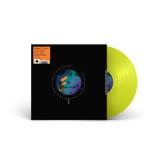
‘Pavilion 12”s Volume 2’ features four cuts from the New Beat, EBM and Electro Industrial explosion of the late 1980s and is pressed on ‘Neon Acid’ coloured vinyl (limited 350 only pressing)
The Vinyl EP opens with the classic EBM track ‘Flesh’ by A Split Second, who were one of the pioneers of the Belgium New Beat underground explosion of 1987. Fellow Belgian New Beat exponents L&O deliver ‘Even now’, a staple in the Underground Electronic scene of the late 1980s. On the flip things take a more Electro Industrial turn with UK electronic industrial collective Nitzer Ebb’s seminal ‘Join in the Chant’, before Front 242 close things off with their EBM dancefloor monster ‘Headhunter (V1.0)’ – 4 Classic and hard to find New Beat & Electro Industrial Dancefloor bangers on one slab of 12” vinyl
Teeing up the next dynamite release on Brighton-based label Murmurations is prolific UK producer Michael James. Spread across four cuts, the fifth vinyl release from the label - MURM005 - continues to focus on essential, stripped-back, driving dancefloor energy with a nostalgic edge. The Moving Music founder delivers exactly that throughout his four excursions here, laced with infectiously swung grooves from top to bottom, synonymous with his sound. “Ultra Realism” kicks off the record with heady peak-time action, its enormous elastic bassline winding itself around intricately arranged, skippy drums, rarely letting up as the track evolves.
Dubby, golden-era tech house sounds arrive on the A2, titled “More Of That”, a fitting name for this after-hours future anthem. As we land on the B-side, we’re greeted by “Lazy River Express”, another slick encounter with a distinctly charming attitude to it. Hard not to move to this one. Rounding off the EP is another example of punchy, rolling action, begging to be played loud. “Stargazer” leaves us with a crisp yet dreamy finish, rounding off the EP with another standout cut for the record bag. In its early days, Leo Christopher has managed to build a sought-after catalogue with the Murmurations imprint, and long may that continue. The curation is always one step ahead, and the label has very quickly become a buy on sight imprint for devoted diggers. An exciting combination here as a growing label joins forces with a staple name on the UK circuit.
ARMOR, a new alias by Pascal Pinkert (Ambassade / Dollkraut). A few years ago he visited Turkey and Lebanon to collaborate with artists such as trip-hop legend Zeid Hamdan and Egyptian singer Maii. While many of these recordings found their way into Dollkraut releases, revisiting the material sparked the need for a new outlet. With ARMOR, Pinkert dives deeper into the space between folk traditions and electronic experimentation. Hypnotic drones merge with Middle Eastern percussion, while subtle rhythmic structures fuse with immersive soundscapes.
Gyros Heroes is the latest release from Adlibitum Tum Tunes, showcasing the unmistakable synergy between label curator Kirill Matveev and trusted maestro Nicolas Barnes, a resident artist renowned for his consistently refined and emotive sound.
The EP unfolds as a sophisticated blend of deep- and tech-house aesthetics, designed to uplift, move, and connect. It balances percussive bounce with emotional subtlety, offering a graceful flow that is both club-ready and sonically rich.
A1. Kirill Matveev – Am I Happy With That and A2. Kirill Matveev – Once At Dawn deliver the opening momentum, channeling sleek grooves and playful introspection with polished restraint. These tracks glide effortlessly between warmth and drive—embracing the listener without overwhelming.
On the flip side, B1. Nicolas Barnes & Kirill Matveev – Naar Shada blends the duo’s sonic sensibilities into a mood-driven piece with elegant progression and percussive intricacy. Closing with B2. Nicolas Barnes – Qeezy, the record reaches its emotional high point: a dancefloor-oriented yet soul-touched cut that radiates both sensuality and controlled energy.
Gyros Heroes is a finely tuned experience—bright yet deep, emotive yet precise—crafted for selectors who value atmosphere as much as movement. This is an EP that invites you into its positive orbit, reminding us how expressive and graceful club music can be when shaped by masters of tone and detail.
Adlibitum Tum Tunes is a division of MixCult Records
This expanded version of the Ringer EP (2008) has been remastered by Kieran Hebden with two tracks added from the same era. The vinyl was cut by Matt Colton.
Includes a booklet of unpublished photographs taken by Jason Evans for the original release.
Truths and secrets often reveal themselves at night, under the freedom of shadowy darkness, away from prying eyes. In creating Given to the Night, sisters Valentine and Clementine Nixon have crafted a world that drifts through the in-between: between dream and reality, between day and night and the undefined, and ultimately a world that embraces the discomfort of being untethered. A process that follows simplicity and intuition rather than pre-determined narratives. “We recorded songs as they appeared, which sometimes felt like catching light. Before we realised it we had a record”, the duo explain.
While making the record Valentine and Clementine gently pushed away from the world- deleted social media, retreated into the trees of their native New Zealand - and only invited a couple of people in during the recording process. From that space, the album came together in an eerily easeful way.
There is a dream-like drift and sonic timelessness to the the record, as reflected in its nocturnal title, which can be read in two ways:
“Being taken by, or being inclined towards nighttime, preferring its blurry cloak of shadows to the harsh light of day; or giving oneself up to night, in sacrifice, letting go of fear and melting into the darkness.”
Written during a time of personal transition there was “a sense of finding the light in the shadow” they add. Guitar lines float, synth lines entwine, tapes hiss and vocals stream creating a kaleidoscopic montage of transient memories and emotions. A spectrum of feelings arise - isolation and joy, insomnia and manic highs, confusion and fleeting clarity, grief and healings. In the record, these feelings all merge and fade into one another in a nonlinear manner, as life tends to do; creating something deeply human that simultaneously gestures towards the transcendental.
Well where do you go from the killer release of sde 78 Kinky Foxx "Is It Still Good To You" which sold out quicker than we could have imagined. I guess you should expect that with a group that has a cult status like Kinky Foxx.
Trawling through the guys demo sessions of the late 1970's and early1980's we always had a soft spot for "Lovely Night" but felt the audio and vocals were not quite on point for an official release. But not letting any obstacles get in our soulful way we took the demo and made it ten times better. New vocals were added by Vincent Lilly jr and with the watchful production skills of legendary Curtis Styles we are so pleased with the outcome. Its a modern day dancer but keeping in line with the 1980's boogie funk from the Kinky Foxx crew!!. Flip the 45 over and you get "Call You Up" again which has been touched up like a classic car with a respray. Keeping all the elements of 1980's synth boogie soul and taking it into 2026.
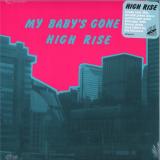
Insane rare Boogie, Soul, Disco, and Floaty goodness all on one LP, High Rise (Harry Malone and Tony Poe) recorded these belters around 1985 in Chicago, Illinois. Harry's previous Band The Elusions only released two Chicago 7" which are also incredibly rare, also included on this expanded LP. Solid all the way through, like all Athens of the North releases.
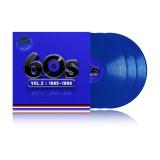
Step back to the mid-1960s with NOW Yearbook Presents – The 60s – Volume 3: 1965–1966, featuring 54 essential tracks across a 3LP set, pressed on beautiful blue vinyl.
LP1 opens with some of the decade’s most iconic vocal performances; Dusty Springfield leads with ‘You Don’t Have To Say You Love Me’, a UK No.1 hit that also reached the US Top 5, followed by The Righteous Brothers’ classic ‘You’ve Lost That Lovin’ Feelin’’, a chart-topper in both the UK and US. The Walker Brothers’ ‘The Sun Ain’t Gonna Shine Anymore’ was a UK Top 3 hit, while The Beach Boys follow with ‘God Only Knows’, widely regarded as one of their finest moments. Huge chart hits from The Moody Blues, Manfred Mann, Small Faces, The Kinks and The Animals with ‘We’ve Gotta Get Out Of This Place’ completes the first side…and flip the LP over for The Mamas & The Papas with ‘California Dreamin’, a major hit on both sides of the Atlantic and The Byrds and capturing the rise of folk-rock with ‘Mr. Tambourine Man’, another US No.1. Cher announced one of the most successful and enduring careers in music with ‘I Got You Babe’ – a #1 duet with Sonny, and is followed by the pop brilliance of Sandie Shaw with ‘Long Live Love’. Following The Mindbenders and The Fortunes, LP1 closes with a pair of soul standards: ‘My Girl’ from The Temptations was a US No.1(and eventually a UK #2 in 1992), and Percy Sledge’s ‘When a Man Loves a Woman’, another US chart-topper and a UK Top 5 hit in 1987 when it featured in a TV ad campaign.
LP2 opens with the explosive sound of 60s soul and crossover pop. Ike & Tina Turner kick us off with the timeless ‘River Deep – Mountain High’, a UK Top 3 hit. Frankie Valli & The Four Seasons had a huge hit with ‘Let’s Hang On’ and Motown is strongly represented with The Four Tops, whose ‘Reach Out I’ll Be There’ hit the US No.1 spot, alongside The Supremes, who scored another US chart-topper with ‘You Can’t Hurry Love’, plus Martha Reeves & The Vandellas, Stevie Wonder and a future Northern Soul Classic from Gloria Jones. Following James Brown, the side closes with the enduring soul classic ‘What Becomes Of The Broken Hearted’ from Jimmy Ruffin… while over on the other side Horst Jankowski’s instrumental smash ‘A Walk In The Black Forest’ leads in to pop classics from Tom Jones with ‘It’s Not Unusual’, a UK No.1, alongside Georgie Fame & The Blue Flames’ UK chart-topper ‘Yeh Yeh’ and Chris Montez with ‘The More I See You’. Sophisticated easy listening pop from Andy Williams and Frank Sinatra’s iconic ‘Strangers In The Night’ come ahead of Elvis Presley’s ‘Crying In The Chapel’, with LP2’s closer’s coming from Roy Orbison and Roger Miller, with the essential ‘King Of The Road’.
The Righteous Brothers’ undeniable ‘Unchained Melody’, a hit on release and a #1 in 1990 following it’s feature in the film ‘Ghost’ opens LP3 ahead of a wealth of huge pop hits from The Walker Brothers, Cilla Black and Cher – and rock oriented chart-toppers from The Troggs with ‘Wild Thing’ and The Spencer Davis Group with ‘Keep On Running’. The Everly Brothers’ ‘The Price Of Love’ leads into era-defining hits from Barry McGuire and Bob Dylan’s hugely influential ‘The Times They Are A-Changin’ reflecting the growing social awareness and changing approach to songwriting…and over to the final side opened by The Supremes with ‘Stop! In The Name Of Love’ ahead of The Toys with ‘A Lover’s Concerto’ and The Shangri-Las’ legendary ‘Leader Of The Pack’. Classic singles from Marianne Faithfull, Petula Clark and Sandie Shaw feature before the collection closes with a trio of timeless tracks: The trans-Atlantic top 5 ‘Sloop John B’ from the Beach Boys is alongside The Mamas & The Papas’ ‘Monday, Monday’ (a US No.1 and UK Top 5), whilst the aptly titled ‘Homeward Bound’ from Simon & Garfunkel – their first UK hit - signs off this superb collection.
NOW Yearbook Presents – The 60s – Volume 3: 1965–1966 – a snapshot of a rapidly evolving pop era where pure pop, soul, rock, beat, easy listening and songwriting sophistication converged.
Consummate selector DJ Sundae returns to Efficient Space with Nothing Ever Was, an immaculate compendium of phantom independent melancholia spanning '60s/'70s village green folk, outsider shoegaze and new millennium domestic pop. Each recording an emotional exorcism, Sundae breathes oxygen into music that was barely there in its own time, made in quiet places and crawl spaces, shared only with a precious few via private presses, hobby labels and now-decaying CD-Rs.
Free of any prescribed epoch, continent, scene or rarity, Noughties homemade indie pop opens both sides with the 4-track wonders of The Motifs and Betelmire, unlinked contemporaries finding their place alongside Andrew Jay's Crazy Horse rust, the regional-garage adolescence of Pauline Scribner and the anaesthetised Mancunian guitar-poetry of the late Quigley.
The remaining coordinates zigzag between the UK and US. Folk wayfarers John Strang & Valentine Lewis Lloyd, Virgin Insanity, Kusudo & Worth and Penny Wager's spartan Garden of Eden acoustica find their mirror in Empress and Slumber's close-quarters indie pangs. Chicago power pop fixture Phil Angotti is caught at his most tender, while Teri Rini takes the final bow with her universe-stopping hotel lounge torch song.
A deeper, more personal exploration of Sky Girl's sentimental songwriting, Sundae found himself amassing a cache of tracks too undeniable to remain confined to his anonymous mixtapes for TTT, P.A.M. and Good Morning Tapes, or bi-monthly hour on NTS Radio. Again his emotional sorcery draws together an unlikely cast, their unwritten narrative assembled from fragmented memories of past lives left behind by future horse trainers, ketamine therapists and Fab Four cover band careerists.
With not a second squandered across 1LP, it took a village to bring this new companion into being, with David Bergot's forensic audio restoration, dreamlike imagery from Matthieu Crozier, Ivan Liechti's elegant design and a perceptive foreword by kindred spirit Jessica Pratt.
Helene Rikhard had remained a hidden gem in the Norwegian electronic music underground for years, before she fully emerged on the international scene with these two critically acclaimed albums. Her sound is an ingenious mix of psychedelic disco, 80’s wave music, techno, krautrock, ambient and it truly operates in a world of its own. Drawing inspiration from the cosmic disco of Daniele Baldelli, the jazzy depths of Detroit techno and the esoteric dreamscapes of Laraaji, it’s astral music for astral people! Psychedelic to the core, but also warm, adventurous and highly original.
Her debut album Unpredictable Express is a dark, brooding masterpiece combining elements of cosmic disco, electro and techno Everlasting High serves as a beautiful, atmospheric counterpoint to its moody and mysterious predecessor, Feeling like a blissed out, hazy summer day, echoing childhood memories from Helenes youth, in the beautiful southern part of Norway. Everlasting High also sees Helene’s vocals coming more to the front. Mad Girl and Lions Eye are both beautiful, dubbed out synth pop with traces of 80’s synth, shoegaze, and reveals a fine-tuned pop sensibility, with a vocal style that’s sits somewhere between Kate Bush, Enya and Fever Ray.
Both as a producer and DJ, Helene’s style is easily recognized for her bold, genre-blending approach to electronic music. Mixing elements of ambient, techno, and experimental sounds, creating immersive, intricate and psychedelic tracks. Her DJ sets work the same way, blending Italo, High Energy and synth nuggets, effortlessly with strange, modern club sounds.
For this second volume of UK ELECTRONICS, we’ve once again selected, here at Delodio, some of our favourite tracks from Mindscan Tapes, an English DIY label active from 1988 to 1994, run by Robert Maycock, a young Englishman with an extraordinary ear.. Its Beatronic and UK Electronics compilations brought together electro, early techno, ambient, experimental, house and industrial music at a time when most labels stayed within clearly defined genres.
Here at Delodio, we are amazed by the contrast between the quality of these cassettes and the label’s extremely underground nature: its best-selling title has barely sold 30 copies.
More than a compilation, the album is a tribute to the artists involved, Robert’s artistic vision, and the pre-internet DIY culture that connected music obsessives through mail, flyers and home-copied cassettes.
A snapshot of an era when a young Englishman spent his dole money bringing unheard music into the world.
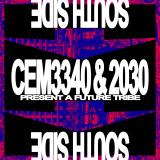
Elypsia Records presents A Future Tribe, the new album from Italian electronic music producers CEM3340 & 2030. Rooted in the formative language of electro and early techno, A Future Tribe channels the past through a lens very much focused on the future. Across the album, analogue warmth, machine-driven funk, synthetic textures and futuristic atmospheres come together in a sound that channels the pioneering spirit of early Detroit while remaining unmistakably connected to the present. For CEM3340 and 2030, machines are not simply tools, they are central to the creative process. Both producers have spent years immersed in the culture of electronic hardware. They've been carefully building and refining their own approach to production through an extensive collection of synthesisers, drum machines, sequencers and studio equipment. Based in Bari, southern Italy, their work reflects a deep fascination with the physicality of electronic music: oscillators, circuitry, voltage, rhythm and the unpredictable character of machines programmed and played with a human touch. That philosophy is deeply embedded in A Future Tribe. Rather than treating the early years of techno as a museum piece, CEM3340 & 2030 approach its foundational ideas as a living language - one that can be stripped back, re-translated and taken somewhere new. The influence of Detroit's first generation of electronic innovators is unmistakable. There are echoes of the futuristic electro and techno pioneered by artists including Juan Atkins and his contemporaries, where funk, science fiction, machines and the possibilities of tomorrow became part of a new musical vocabulary. It is an approach that has already earned the duo recognition within that lineage. Their previous Machines Awake EP, released through Atkins' Metroplex Records, was described as paying homage to the classic foundations of the genre while pushing them into new territory. Juan himself gave the release his sonic approval. But A Future Tribe is not an exercise in retro-futurism for its own sake. The album comes from two producers who understand the history, have the hardware to explore it and, crucially, are interested in what happens when those influences are given space to evolve. The result is electronic music that is full of funk, groove and a kind of nostalgia that is pure and intentional without being a pastiche. Together, they make music that is rooted in one simple truth: machines can't come to life without human creativity.
Francesco Messina is perhaps best known for his split album with fellow composer Raul Lovisoni, Prati Bagnati del Monte Analogo, originally released on the seminal Italian label Cramps in 1979. Along with contemporaries Franco Battiato, Juri Camisasca and Giusto Pio, Messina helped reshape the world of modern composition with an organic rawness and haunting beauty.
In November 2023, Messina performed Prati Bagnati live for the first time in Milan, Italy – along with pianist Michele Fedrigotti, who appeared on the original LP. The concert was a tremendous success and led the composer to further reflect upon the music he made over 40 years ago. From his home piano – a hundred-year-old Schimmel with magnificent resonance – new pieces began to emerge out of these meditative sessions.
As Messina says in the liner notes, "The idea of making a new album wasn't the driving force at all; what mattered was trying to reconnect with the 'freedom' I had experienced back then while creating that music. I started over without haste or deadlines, simply trying to find a deeper, inner connection."
W.25TH / Superior Viaduct is honored to present Le api dell'invisibile. From the hazy drone of "For Florian" and the title track to the gentle swells of "Letter for an Absent Friend," the album is a lush amalgam of new age and ambient minimalism that is vividly reminiscent of Messina's earlier work.
The title draws inspiration from a famous reflection by Austrian poet Rainer Maria Rilke: "We are the bees of the invisible. We ceaselessly gather the honey of the visible, to store it in the great golden hive of the Invisible." It is a phrase that has long shaped the way Messina looks at his music – transforming lived experience into sound, making audible what normally eludes the eye.
Nachdem seine legendären Aufnahmen aus den 1970er Jahren zu grundlegenden Meilensteinen des modernen Reggae geworden waren, setzte der einflussreiche Musiker und Produzent Augustus Pablo in den folgenden zwei Jahrzehnten fort, neue Ausdrucksformen seines einzigartigen Sounds zu entdecken. Ob er nun seine Dub-Meisterschaft mit digitalen Techniken verfeinerte oder die instrumentale Palette seiner basslastigen Melodica-Grooves erweiterte - der wegweisende jamaikanische Künstler blieb während seiner kurzen Zeit auf dieser Welt stets ein Innovator. Nur wenige Wochen vor seinem vorzeitigen Tod im Jahr 1999 erschien ,Valley Of Jehosaphat" - das letzte Album von Augustus Pablo und ein zeitloses Statement eines Künstlers, der seiner Vision stets treu blieb . Mit einer Produktionsqualität, die die körnigen Klassiker seiner frühen Karriere bei weitem übertrifft, erklingen die fesselnden Instrumentalarrangements dieser Sammlung mit Klarheit und fangen die friedliche Essenz von Pablos Kreativität ein. Jetzt erscheint ,Valley Of Jehosaphat" zum ersten Mal überhaupt als vollständige Vinyl-Veröffentlichung. Dank Nature Sounds und dem neu gestarteten Label Rockers International enthält diese 2-LP-Vinyl-Edition außerdem fünf Bonustracks mit seltenem Material von Augustus Pablo aus den 1990er Jahren.
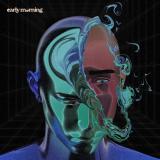
The fourteenth release on Early Morning brings Roy Rosenfeld back to the label for the first time since its second. The two years in between have not had a quiet stretch in them: new singles every few months across 2025 and 2026, and a touring year running from Mexico City and New York through Paris, Barcelona, Ibiza and Amsterdam to Montreal, Santiago and Buenos Aires. He is back in New York on the day this record goes global, and in Amsterdam for ADE later the same month. What arrives here is two long-form pieces, 15 minutes and 15 seconds together, both built on patience and both written for rooms where there is time to stretch out.
New Life takes its time. A full minute passes in suspended texture before the groove arrives, and when it does it carries the weight of everything that was withheld. The track moves in patient cycles, stepping away briefly at its midpoint before opening into an extended central passage where the rhythm withdraws and the harmony is left exposed. The return is the payoff, and Rosenfeld holds it to the final bar rather than letting it fade.
Seven Three Eight begins where New Life arrives. It is in motion from the first bar, with no preamble and no easing in. The low end breathes in long swells beneath a top layer that keeps shifting, and two breakdowns punctuate the arc without ever surrendering the momentum. It closes at full stride, running the seven minutes and thirty-eight seconds its title names.
Two tracks, near identical in length and opposite in approach. EARLY014 is a record about pacing, and about a producer who trusts the long form to do the work.
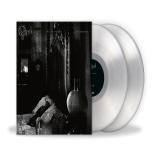
Released at a pivotal moment in Opeth’s ascent, Deliverance offers a snapshot of a band refusing to stand still.
Emerging in the wake of the breakthrough success of Blackwater Park, and produced in tandem with Steven Wilson, their sixth studio album boasts unapologetic heaviness, immersive songcraft, and intoxicating atmospheres. Whilst many contemporaries relied on tried and tested formulations to recreate and restructure, Opeth demonstrated true determination in ambition and sonic exploration.
Now, even after two decades Deliverance continues to hold reverence as a true jewel in the crown of modern progressive metal. This new reissue offers a fresh opportunity to revisit a record whose power, innovation and enduring legacy remain as impactful today as when it first arrived.
16 bongo bashin' tropic-trashin' mambo-shmambo monsteros!!
Everybody likes a bit of LATIN. It's steamy. It's tropical. It's hot. It gets the dames a-dancin' and the guys pay attention. Those wild rhythms are the sound of sweat. It's the heat that can't be beat.
Now let me tell you about LATIN. Real LATIN, bangin' LATIN. Not the sweet soft stuff your mama used to play. I'm talkin' hard bangin' LATIN that's the real deal. The stuff that makes you move. The motion of the ocean. Hot, wild, sexy rhythms. Skin slappin' coconut crackin' conga crushin' caliente copana. And horns to die for!!
You got your rhumba, your mambo, you got your cha cha cha. You got your Cuban heat, Brasilian beat, colourful Colombian cumbia and pure fire from all those little islands in the Caribbean. You cut 'em, you chop 'em, you cook 'em on up with a slug of jazz and some downhome RnB and you got yourself the devil's own firecracker. It's a sauce like liquid lava. It's LATIN that's off the scale.
Now you add your mezcal, your Carolina Reaper, you add yourself whatever you want, and that right there is a volcano in a bottle. Krakatoa ain't got nothin' on this baby! Put the needle on the record, watch your dancefloor EXPLODE!
Welcoming Huge Jackman to Public Possession. Recommended by Eden Burns. Musik produced by an experienced Deejay. Extremely powerful stuff.
Sits right between leftfield - progressive - disco - & further. Build - Sustain - Release. It’s all there for you to touch & make use of. Vinyl + digital.
Hot, hot tip! Uh Oh Ah Ow Hah!
FORT is launching a sub-label, NOCOWALNYA, and introducing its debut release.
The new label's guiding principles are authenticity, the personal taste of its founders, and a synergy of opposing sensibilities: melancholic romanticism and raw, uncompromising rhythm. The first release is the EP NOCOWALNYA 001, recorded by three key figures of the label: Nocow, Valentin Fufaev, and DJ Designer.
NOCOWALNYA deliberately steers away from the canons of classic techno, trance, or house. The label is built as a space for artists ready for unconventional forms and bold experiments, a place to express their individuality.
The sub-label's visual symbol, a logo of two young men standing on an anvil, sums up the idea perfectly. It's a manifesto of duality: fragile sensitivity set against a cold, industrial beat, romantic motifs joined with dense, hard-hitting sound.
It's fitting that the sub-label takes its first step with its three founders, who stood at the origins of FORT. NOCOWALNYA 001 distills their shared vision and shows how different creative approaches can come together as a single monolith.
The result is a techno-trance hybrid where driving energy meets sincere musical drama. This release doesn't just open the new label's catalogue, it sets the direction for every single and mini-album to follow. The release will come out in two formats: digital and vinyl.
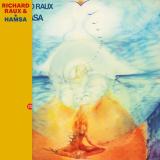
“Nothing grows in the shadow of great trees,” said Constantin Brancusi when leaving Auguste Rodin’s studio. The same holds true in music, as Richard Raux’s journey proves. At the end of 1970, after recording the debut album of the legendary band Magma, which he co-founded, Raux set out to explore new musical horizons. Under the names Faarmadin and later Hamsa, he crafted a sound deeply rooted in jazz and improvisation, yet daringly open to experimentation.
A devoted admirer of Charlie Parker, Raux played bebop alongside René Urtreger and performed with Bernard Lubat’s Percussion Expérience. Jazz is a cornerstone of Hamsa’s iconoclastic approach, blending seamlessly with psychedelic and progressive rock, and the rich musical traditions of Madagascar, where Raux spent his formative years.
Hamsa is as much a personal endeavor as it is a “family affair.” Alongside his brother Patrice on guitar, Raux brought together a circle of friends—Alain Lecointe (double bass), Jean-Lou Besson (drums), John Faure (guitar), and Alain Pistre (percussion)—to record at the iconic Château d'Hérouville, just outside Paris, at the end of 1974. Yet the spirit of Hamsa is deeply Malagasy, rooted in the village of Andranomadio, which gives its name to the album’s opening track: a vibrant explosion of percussion and color. Africa’s presence resonates throughout the record, whether invoking Brotherhood of Breath (Chris McGregor) on “Johanna,” the Malagasy-infused work of Jef Gilson, or paying homage to John Coltrane’s Africa.
Far from being “just another fusion,” Raux’s music dazzles and transports. The saxophone-guitar unison on “Ahiri Lalita” captivates, the vocals of “Fahamadina” sweep you away, and the manifesto of “L’exploité” hits hard—yet with a liberating warmth. Sunshine and joy shine through on the album’s closing track, “Cultivate the Garden of Your Heart” (with Alby Cullaz on double bass and Jean Padovani on drums), capturing the ethos of Richard Raux and Hamsa—and now, ours too.
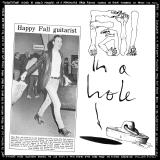
Originally released on Flying Nun in 1983, Fall In A Hole is a double LP of an especially incendiary Fall show at Mainstreet Cabaret in Auckland, NZ in August 1982. The second of a two-night stand, this would be the band's final concert of its successful first tour of Australia and New Zealand. Recorded by longtime Flying Nun associate Chris Knox – who also made the striking cover artwork – Fall In A Hole follows the release of earlier live albums Totale's Turns and A Part of America Therein, 1981.
Besides capturing The Fall onstage during one of its most feral and exhilarating periods, Fall In A Hole is historically significant for several reasons. It heralds the end of Marc Riley's tenure with the band, an era considered by many Fall fans to be the group's peak, and showcases the two-drummer lineup heard on 1982's Hex Enduction Hour, with both Paul Hanley and Karl Burns sharing drumkit duties onstage. With Riley and Craig Scanlon on dual guitars and Stephen Hanley on bass, The Fall was stepping out in its final iteration with a majority of personnel rooted in their late '70s lineup.
The setlist is peppered with a mix of singles and album tracks old and new – including several that had yet to be released. Rarities like "Fantastic Life," "Backdrop" and "Solicitor In Studio" are given epic, feedback-drenched airings, while fan favorites like "Hip Priest," "Prole Art Threat" and "The Classical" radiate with lively, raucous energy.
Superior Viaduct's edition is the first time that Fall In A Hole has been reissued on vinyl. Includes liner notes by Roy Montgomery. Digital transfers made from analogue master tapes in the Flying Nun Collection and Chris Knox Collection held at the Alexander Turnbull Library (National Library of New Zealand).
Originally released in 2023, this highly sought-after release finally gets its much-needed repress in 2026. Original copies are already exchanging hands on Discogs for £50+, so make sure you grab this while you can — before the Discogs sharks get their grubby mitts on it!
Two Cold, a name synonymous with the number two and of course, ice cold beats. Even though the London based brothers haven’t actually released any music yet, their coming has been foretold by a growing chill that has permeated the dance music stratosphere.
Legs beginning to quiver and shake? That’s Two Cold.
Hips involuntarily gyrating in an attempt to stay warm? Two Cold.
Jaw chattering like maracas? It’s those frosty boys, you’d better believe it.
If you like your dance music to take you on a psychedelic journey through time and space, the DESERT LEATHER EP is for you.Winding passages that explore breaks, bleeps, bass and beyond. Genre defying influences snatched from every dimension of the dance diaspora.
Inescapable body-rocking beats that echo through your very bones so hard that even your ancestors have a boogie.
The DESERT LEATHER EP will expand your mind to the very edge of the horizon, where earth and sky meet and where all laws of nature are meaningless.
Two lads
Wicked beats
Original styles
Clever boys
Original styles… wait I said that already
Lots of bass
Delightful melodies
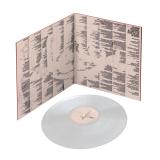
Packaging: 1 X Black 140 grs vinyl, gatefold sleeve reversed board, black dust inner sleeve, marketing sticker, marketing sticker
- Alewya's acclaimed debut album Zero - digitally released June 2026, establishing her as one of the UK's most distinctive voices in alternative music
- Ethiopian-Egyptian heritage meets London's underground, blending electronic, R&B, percussive and experimental influences into a distinctive sound and visual world.
- A deeply artist-led record, developed over three years and built around themes of identity, instinct, freedom and self-discovery.
- Physical release November 27th :