With releases that have been heavily rooted in Glasgow's Southside, Full Dose take things international for the next release and invite Jamaican dancehall artist I Jahbar (SKRS, Duppy Gun) to showcase their talents over two versatile Brollachan productions.
Smokin' is a celebration of marijuana in the truest sense, with I Jahbar's potent delivery perfectly connecting to the bouncy dance floor riddim.
UFO is an altogether different prospect, the spaced out percussive production serves as a blank canvas for I Jahbar to make a call for peace, unity and love to overpower the corrupt forces at large here in 2023.
To close on either side are dubbed out, free-form remixes from Lvchessi, Full Dose's brother in sound."
Поиск:f free
Все
Plafond continues, taking center stage after the mother label BAKK ceded. Here, two long-time collaborators, Ekolali, originating from Sweden, and Tala Drum Corps, from the Netherlands, await their returns. The former reappears with a characteristic approach earlier heard on 'Doggerland'. The latter did multiple dance releases yet now debuts for this series, expanding on his stylistic spectrum. Despite shared tempo, the energies of the track are each of their own. Pulsating with energetic urgency, Ekolali, towards hypnotic movement, Tala Drum Corps. 'Totem Mollusca' shoots for the sun, like a budding landscape, yellow rays, waterdrops - kraut-inspired yet club-like without seeking a climax. 'tokyo subway' has a marimba-ridden, timeless approach - a clock-ticking, crude atmosphere, as a dream long passed, slowly ascending. Known for its two-sided, two-songs approach, Plafond offers two artists or artist combinations the freeform room for exploration and elongation of their respective sound and practices. This is the eighth in the series.
2024 Repress
Straight in the wake of their eponymous debut LP released on the label back in 2016, Weval return to Kompakt this year with their sophomore album, 'The Weight', breaking their pop-mellow, nostalgia-friendly facet further out in the open as they arrive "at this place again were everything felt spontaneous, new and exciting, like we had in the beginning". Orbiting around that ever luminous yet wistful melodic halo that surrounds their music, this second full-length effort sweeps an extra-wide and languidly woven palette of emotions and moods, making for a uniquely ambitious and generously coloured mosaic of sound. If the recording sessions "often started grumpy and emotionless" by Harm and Merijn's own admission, the pair was "surprised by the joy it gave us, which can be compared to the emotions we felt back in the first days of making music together"; subsequently reconnecting with that fresh, naïve feeling of "absolute creative freedom" they were after. The album is also the fruit of a whole new working process for them - more playful and unpredictable - which saw them switch from "guitars lying around to piano, onto our own synths and the most cheap quirky toys synths you can imagine", and involved "recording all of our own samples, voice and almost every instrument out of the box - which for us was a totally new way of working". "We've always wanted a narrative for the album, and finding the right order perhaps took the most effort" they explain; "we felt anxious, felt insanely positive, felt heartbroken again, felt in love again, and there was death, and even suicide around us. It was quite chaotic. As a whole, 'The Weight' breathes with that transformative richness, free of limits and rules, except perhaps to "do quick and not think too much". Amidst this collection of songs and instrumentals that live by Weval's singularly positive take on music - one that can "lift you up, and make you feel hopeful without being necessarily straight out 'happy'" as they define it, the title-track and lead single stays true to the duo's dynamic approach, putting on a fine balance of floor and dream inducing adaptability that sound engineer David Wrench (Frank Ocean, The XX, FKA Twigs, Caribou… etc.) subtly made palpable. There's heavy showers of funk drops pouring from endless bars of thunderstorm clouds and laid-back riffs beating a restrained poolside-party kind of pulse, but also sensual vocals rising from beneath the sheets and rueful polaroid-filtered ambiences to soundtrack all possible moments in life - from the most euphoric to those when music seems the only viable healing potion. More on the post-KLF, BoC-inflected electronica side of things, 'Are You Even Real' takes its listener for a round-trip across the star-studded dome and beyond, before songs like 'Someday' and 'Same Little Thing' head back down to a state of pulsating, earthly organicity, tense and mercurial as get. An arpeggiated slice of piano-strewn kosmische, 'Heaven' is another invitation to an epic-scale odyssey from the inner-spheres into the distant fringes of the outer-world. Weightless and airy, yet texturally dense and widely magnetic overall, Weval second LP is a synthesis of the duo's multi-angle take on electronics: blissed-out, heartening and infinitely free.
Nur zweieinhalb Jahre nach der Veröffentlichung ihres selbstbetitelten Debutalbums finden sich WEVAL zurück "an jenem Ort, an dem sich alles spontan, neu und aufregend anfühlt - so wie als wir anfingen zusammen Musik zu schreiben". An diesem Ort entstand "The Weight", ihr zweiter Longplayer, auf dem Weval sich ganz den Pop-verliebten, Nostalgie-freundlichen Facetten ihres Sounds öffnen. Stetig um den sehnsuchtsvollen Strahlenkranz ihrer Melodien tanzend, legt diese Platte noch vielschichtigere, mit feinster Präzision gewobene Gefühlswelten frei.
Obwohl die Aufnahmesessions nach eigenem Bekunden oftmals "miesepetrig und emotionsarm" begannen, so war das Duo überrascht darüber, wie schnell sich bei der Arbeit jene Freude einstellte, die sie aus ihren künstlerischen Anfangstagen kannten, eine Woge des frischen, naiven Gefühls der "absoluten kreativen Freiheit". Dieses Album ist die Frucht eines verspielteren und unvorhersehbareren Arbeitsprozesses innerhalb der Band, in welchem alles zum Einsatz kam, was ihnen in die Finger kam - von der ollen Gitarre, die in der Studioecke stand, über ein Piano und den bandeigenen Sythesizern und den sonderbarsten Spielzeuginstrumenten, die man sich vorstellen kann. All dies sowie zahlreiche Vocalaufnahmen dienten als alleinige Samplequelle - "was für uns eine völlig neue Arbeitsweise war". "Es war uns wichtig für das Album den perfekten Erzählbogen zu spannen. Die richtige Reihenfolge zu finden war ein extrem aufwendiger Vorgang", erklären Harm und Merjin. "Uns war bange, wir fühlten uns total selbstsicher, uns zerbrach das Herz und wir verliebten uns erneut. Wir waren sogar von Tod und Selbstmord umgeben. Alles war Chaos. Insgesamt atmet "The Weight" die Reichhaltigkeit dieser sich ständig verändernden Gefühlslagen, frei von Einschränkungen und Regeln - außer vielleicht "mach es schnell und zerdenke die Dinge nicht." Inmitten dieser Ansammlung von Songs und Instrumentals, die aus Wevals einzigartiger, von Zuversicht geprägter Herangehensweise entstanden sind - "Musik, die dich hochzieht und Hoffnung spendet, ohne dich notwendigerweise happy zu machen. Der Titeltrack "The Weight" steht exemplarisch für Wevals ambivalenten Ansatz, die feine Balance zwischen Dancefloor und Traumzuständen, perfekt in Szene gesetzt von Soundengineer David Wrench (Frank Ocean, The XX, FKA Twigs, Caribou… etc.).
Der schwer aus gewaltigen Gewitterwolken tropfende Funk, die eine verhaltene Poolparty suggerierenden Riffs, die sinnlichen, geisterhaften Vocals und ein verwaschenes Ambiente, das wie ein Album alter Polaroidaufnahmen alle erdenklichen Momente des Lebens festhält - von den euphorischsten bis hin zu jenen, in denen Musik der einzige Trank ist, der Linderung verheißt. Das post-KLF und Boards of Canada evozierende "Are You Even Real" führt den Hörer auf einen imaginären Flug ins Sternenzelt, während organisch-klingende Songs wie "Someday" oder "Same Little Thing" wie Quecksilber am Boden haften. "Heaven" ist eines jener "kosmische" Stücke mit wilden Arpeggios und Pianosprengseln, die Weval in den vergangenen zwei Jahren zu einer Live-Sensation werden liessen. Wevals Musik ist schwerelos und luftig, aber gleichermassen von dichter Struktur und von einer magnetischen Anziehungskraft. Ihr zweites Album "The Weight" ist eine Synthese aus dem multi-perspektivischem, kaleidoskopischen Verständnis von elektronischer Musik: Herzerwärmend, alles umschmeichelnd und unendlich frei.
Mood Child Presents 'Various Moods Vol. 2' VA; six multi-mood tracks from artists including DJ Sneak, Antss, Marian (BR), and more.
Mood Child, the brainchild of Manda Moor and Sirus Hood, is back with ‘Various Moods Vol. 2’, a captivating collection of six tunes, each possessing its own distinct mood and power.
The VA kicks off with ‘Pakit Ban’ a timeless percussive and funky anthem. Brazilian talents Marian (BR) and Freenzy join forces to create this highly requested track, which has graced not only Manda and Sirus’ sets but also those of Jamie Jones and The Martinez Brothers.
House legend DJ Sneak returns to Mood Child with ‘Wemen’s Groove’. Prepare to be hooked by Sneak’s bouncy rhythms and to feel a masterclass with the massive buildup and incomparable vibe. Making his debut on the label, Barcelona-based artist Dafgal delivers ‘Gozando’. This high-energy tune features a universal groove and a captivating female vocal that will undoubtedly get anyone in a good mood.
UK rising star Antss drops ‘La La Lala’, a simple yet immensely effective track. Its powerful bassline, combined with playful voices, is tailor-made for electrifying crowds.
Brazilian duo Rokke & Techin present ‘Diamonds’, a shiny gem. Its addictive bass-led loop is complemented by an unforgettable bubbly synth, leading to a drop that etches memories.
Riffel & Jack Baron’s ‘Flute’ boasts an irresistible groove, complete with wonderful flute melodies. It’s auditory candy for discerning listeners.
Italian producer Kikko Esse is a talented artist from southern Italy who has been showcasing his skills in producing quality deep house since 2009. Previously prolific, releasing many well-received tracks with respected labels in the underground scene, Kikko Esse makes his debut on the Italian Groovin' Recordings with an EP that sets the bar high. Soul Departure EP is arguably one of his best works to date, where deep house meets intricate melodies and live instrumentation, creating a profound journey into electronic music.
Yes, *that* Al Hirt record. Featuring the godlike "Harlem Hendoo", looped unforgettably by De La Soul for the legendary Buhloone Mind State cut, "Ego Trippin' (Part Two)"!
Al Hirt's infamous Soul In The Horn is inextricably tangled up in crate-digger lore. Originally released in 1967, the album has been in heavy, heavy demand for over 30 years, entirely down to the majestic soul-jazz fire of "Harlem Hendoo". And it's a song so good, so vital, so timeless, that it will always tower above everything else in its proximity. This one track alone is worth the price of admission - even if the cost of entry were $100 or even $1000.
However, it would be an error to dismiss this record as merely a one tracker, loaded as it is with dope samples for adventurous beat makers. Certainly the funkiest Al Hirt record, it definitely lives up to the "soul" in the title. Thanks to composer Paul Griffin and arranger Teacho Wiltshire, Hirt got uncharacteristically free and groovy throughout. It comes on more like an obscure KPM library funk record than the easy listening Al was notorious for.
A Louisiana trumpeter and band leader who made Allen Toussaint’s “Java” famous, Al Hirt was also known for TV themes, Dixieland, Swing and being a minority owner of the New Orleans Saints. Unlike every other Al Hirt record - and despite most "diggers" claiming otherwise - this here gem is genuinely hard to come across "in the wild". Normally, you can't give Al Hirt records away, except this particular one, which raises pulses in the crate digging community to life-threatening levels. For every owner claiming to have found their copy for a dollar, there's scores more claiming to have *never* unearthed one in the field. So, paradoxically, you can consider this the most tricky-to-pull "thrift store record", ever. This is why we're finally making it available for everyone, not just those with endless hours to spend scouring the global goodwills!
Soul In The Horn represented an expressive detour into authentic soul-jazz for Al Hirt. Throughout, we're struck by a fierce, fiery energy that's otherwise absent from his typically easy listening work. Without question, the slinky, magical "Harlem Hendoo" is the standout, here. It's also the reason why the record is so scarce and commands awe among crate diggers, sounding like something from an obscure and deeply revered spiritual jazz record. As is often the case, the true genius of the song is tricky to do justice to; it's like a minor miracle of songwriting and performance that simply swooned down from the heavens on the back of horns, bells and harpsichord. It's one of the sweetest musical compositions ever recorded inside a studio - it's only failing is that it's just too short. Sampled brilliantly by De La Soul, it has also been used by The Roots for "Stay Cool" and Nightmares On Wax for "Damn".
The rest of the record makes for a mighty fine listen. From the opening cover of Booker T. & The MG's "Honey Pot", to the propulsive, ultra-funky "Mess Around", it's nothing but a good time. Given its title, the elegant stepper "Calypsoul" sounds exactly as you'd hope whilst the melancholic, wistful "Long Gone" hurts so good. Truly, this is just dying to be looped up, Al's muted playing capturing a soulful longing only horns can often achieve. The bluesy, slo-mo swing of "Sweetlips" oscillates between cool disaffection and swelling pride whilst the graceful, low-key funky "Girl" closes out the A-Side in the fine style. Ushering in the B-Side, the brief but brilliant strut of "Love Ya' Baby" shines brightly before the skipping funky-jazz of true highlight "Sunday-Goin' To Meetin' Time" demands both your attention and your dancing shoes. The mellifluous piano-funk of bass and horn-drenched "Snap Back" serves as the sumptuous prelude to "Harlem Hendoo"'s main character energy before the irrepressible, upbeat R&B of "Ludwig" closes out this quite remarkable album. An album deserving of a place in every serious record collection.
The audio for Soul In The Horn has been carefully remastered by Be With regular Simon Francis, ensuring it sounds better than ever. Cicely Balston's expert skills have made sure nothing is lost in the cut whilst the records have been pressed to the highest possible standard at Record Industry in Holland. The original sleeve has been restored here at Be With HQ as the finishing touch to this long overdue re-issue. This is after-hours music. Let it speak for itself. Listen. Listen to the soul in Al Hirt's horn.
This album consists of unreleased Dubs recorded between 1986-90 at the early Blakamix Studios.
Blakamix have re-opened the tape vaults and let Mixman loose to revamp and revitalise and give the Dub Doctor treatment to these early Dub tapes.
2025 Repress
Macedonia's own Stojche is Fuse's next guest for the club's freshly made imprint. The long standing DJ and producer has been known to keep Detroit's playfully hybrid style as the focus of his work and 'Metaphor' is the case in point. His four tracks bounce through a nostalgic balance of techno, house, and more with a modern crisp. A refreshing take on club music, Stojche keeps techno's sometimes nonchalant attitude at arms length with a charismatic record that hits its mark with every measure.
The record's first track 'Counterpunch' features heavily lined percussion but still brews up a storm far and wide with resonant dub stabs and open hi hats. The drum machine boasts a full spectrum, rolling through a light show of melodic flashes, perfect for a room compressing soundsystem. The maximalist, vintage detail that Stojche brings to his compositions blurs the lines between classic genres in a time of hasty hybridization, which gives it a sort of authenticity that can't be taken for granted. 'Chordal Tribe', on the other hand, raises the general euphoria of the EP. Luring in the listener with bright pads and full-on drums, Stochje's work is reliable main slot material that adds color to any mix while providing a persuasive low end. Shimmering hi hats give it an ethereal quality making it an appropriate interlude for almost any context. Moving on to the B side, the producer sharpens up his rhythm and emphasizes the hardgroove influence in 'Signal Drive'. Softening the pace of his drums with free use of melodic chord stabs, Stojche opens up his dance floor for a crowd bonding record once again, complete with filter transitions and pummeling toms. As the final contribution, his title track 'Metaphor' begins with a more obscure opening to conclude his EP for Fuse. Leaning more to a techno cut, the record remains flamboyant as ever with open hats and rides shuffling through his arrangement. A muted main synth becomes apparent to focus the energy of the track while allowing for liveset-like drum flickering to take shape beneath, claiming the immortality of old club records with the technical precision of a seasoned modern producer.
At its best, Bristol's scene has been marked out by the artists with an independent spirit. Not just the self-reliant DIY approach to getting the music out there, but a unique, inventive slant on emergent sounds which feed into the city's storied reputation. Flynn & Flora embody that idea, having come up in the nascent Bristol jungle scene while offering something wholly different to their peers in fabled crews like Full Cycle and More Rockers.
The duo were absolutely connected to the wider community, but they followed their own path, and the records reflect that. They're not as widely name checked as the likes of Roni Size, Krust, or Smith & Mighty, but their legacy is just as rich with personality and flair, offering that indefinable twist which sets West Country rhythms apart from the sounds in London or elsewhere. City Road wanted to recognise that fact with a modest 12" which cherry picks four crucial early cuts from Flynn & Flora's archives, before they went on to produce three LPs and a series of 12"s up to the mid 00s.
"We knew as much as anyone else at that particular time," recalls Flynn. "Samples, hip-hop breaks, bass lines. You've got your synth, your drum machine. It's all you needed. So that's what we did."
Shipping by UPS NOT possible !
...because of Disco-Antistat-Mixture
EN:
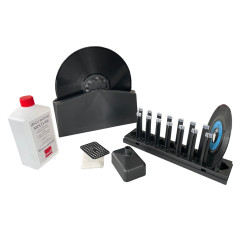
Makes LPs durably antistatic with the alcohol-free Disco-Antistat mixture, a special liquid that automatically removes dust, dirt particles and dried liquids without leaving any residue and deep into the grooves.
The care set consists of:
Wash case with inserted goat hair brushes
Label cover with hanging axle for LPs, singles and 10 inch discs --> Adapter included
1 litre cleaning fluid DISCO-ANTISTAT Mixture (alcohol-free)
Funnel incl. filter grid and filter fleece (5 pieces), with which the liquid is filtered back into the bottle after use.
Drip stand (drying rack) with drip tray for up to 15 LPs or singles (slides into the casing after use)
Device can be stored in our original Archifix box (Art. 1202431) to save space.
DE: Disco-Antistat, das praktische Pflege-Set für die Grundreinigung.
Macht LPs dauerhaft antistatisch, mit der alkoholfreien Disco-Antistat-Mixture, einer Spezialflüssigkeit, die selbsttätig, rückstandslos und rillentief Staub, Schmutzteile, sowie eingetrocknete Flüssigkeiten entfernt.
Das Pflege-Set besteht aus:
Waschgehäuse mit eingesetzten Bürsten aus Ziegenhaar.
Labelschutz mit Aufhänge Achse für LPs, Singles und 10 Inch. --> Adapter inklusive
1 Liter Reinigungsflüssigkeit DISCO-ANTISTAT Mixture. (alkoholfrei)
Trichter inkl. Filtergitter und Filterflies (5 Stück), mit dem die Flüssigkeit nach Gebrauch wieder in die Flasche zurückgefiltert wird.
Abtropfständer (Trockenständer) mit Auffangschale für bis zu 15 LPs oder Singles (wird nach Gebrauch in das Gehäuse geschoben)
Gerät kann platzsparen in unserer Original Archifix-Box (Art. 1202431) verstaut werden.
Rosati launches his new imprint, Global Pulse. The label embraces a futuristic development of Techno, exploring unknown sonic territories while always staying true to its original essence.
The inaugural release, 'Automatic Response EP', features five original tracks that are pulsating with powerful dynamics and detailed textures.
In the first track, A1 'Automatic Response', the vibe is established by a steady bass line and hypnotic bleep sequences that are ensuring high pressure energy.
Continuing with A2 'Way Out', where a wide landscape is created through the use of well crafted sound design elements, juxtaposed to a minimalistic 909 groove.
With B1 'Ufo Memory', Rosati is diving into alien realms, blending atmospheric UFO textures with heavily saturated drum patterns, creating a dark, pumping, and futuristic mood.
In B2 'Feeling', the focus shifts to the late 90s era, where a story of freedom is told through the appearance of percussive loops, funky bass lines and pad melodies.
Inside the record there is also a digital bonus 'Time Tunnel': a melodic electro journey that transports the listener into a robo-dystopic, yet hopeful, future.
With this first release, Global Pulse lays the ground for a promising series that will push the envelopes of Techno, promising a platform focused on sustainability and authenticity of Electronic Music.
The Mental Groove Classic series returns with a treasure trove of rare and hard to find tracks plucked from the personal collection of label founder Olivier Ducret, a pivotal figure in Switzerland's acid house and rave-era party scene.
On Volumes Two and Three of the series - the first installment hit stores in 2017 - the Mental Groove and Musique Pour La Danse label founder takes us back to the turn of the '90s, a time he spent promoting parties in fields, squats, forests, warehouses and former factories in and around Geneva and behind the counter of a record shopof the same name. While others in Switzerland's emerging dance music scene gravitated towards US house and garage, Olivier and his crew opted for a bass, breaks and techno-focused sound inspired by regular trips to clubs, raves and record shops in the UK.
Drawing directly from his own record box and a memory bank full of snapshots of euphoric dancefloor moments, Mental Groove Classics volumes Two and Three sees Olivier reaching for cuts of near-mythical rarity, genuinely overlooked gems, and undeniably brilliant tracks that have left a long-lasting impression on the local raving landscape. It's an autobiographical audio document, historical archive and personal musical statement all rolled into one, inspired by a moment in time where musical boundaries were being redrawn in a wave of carefree optimism and freedom inspired new rave scenes across Europe and far beyond.
Matt Anniss
Original artwork by Soho's Brain Club co-owner and artist of early British club culture Mark Wigan.
File under house, breakbeat, techno and warehouse rave music
The Mental Groove Classic series returns with a treasure trove of rare and hard to find tracks plucked from the personal collection of label founder Olivier Ducret, a pivotal figure in Switzerland's acid house and rave-era party scene.
On Volumes Two and Three of the series - the first installment hit stores in 2017 - the Mental Groove and Musique Pour La Danse label founder takes us back to the turn of the '90s, a time he spent promoting parties in fields, squats, forests, warehouses and former factories in and around Geneva and behind the counter of a record shop of the same name. While others in Switzerland's emerging dance music scene gravitated towards US house and garage, Olivier and his crew opted for a bass, breaks and techno-focused sound inspired by regular trips to clubs, raves and record shops in the UK.
Drawing directly from his own record box and a memory bank full of snapshots of euphoric dancefloor moments, Mental Groove Classics volumes Two and Three sees Olivier reaching for cuts of near-mythical rarity, genuinely overlooked gems, and undeniably brilliant tracks that have left a long-lasting impression on the local raving landscape. It's an autobiographical audio document, historical archive and personal musical statement all rolled into one, inspired by a moment in time where musical boundaries were being redrawn in a wave of carefree optimism and freedom inspired new rave scenes across Europe and far beyond.
Matt Anniss
Original artwork by Soho's Brain Club co-owner and artist of early British club culture Mark Wigan.
File under house, breakbeat, techno and warehouse rave music
"Deep Dancefloor Jams of African Disco, Funk, Boogie, Reggae & Proto Electro Music 1977-1986reggWhen a passionate DJ and crate digger intuitively selects music for a DJ compilation, without artistic compromise and without the burden of trends, AfroMagic vol.1 emerges from the depths of his soul. Herewith we present the new favorite phonomancer’s tool for all the DJs who experience the dance floor as a sanctuary and a source of freedom and love.
The most fundamental thing that defines African music is that it was created for dancing. In African dance, there is often no clear distinction between ritual celebration and social recreational entertainment – one can seemlessly merge with the other. Because dance and rhythm have more power than gesture and more richness than words, and because they express the deepest experiences of human beings, dance is in itself a complete and self-sufficient language. It is truly an expression of life with all of its emotions – joy, love, sadness and hope – without which there is no African music and dance. For the African people, dance and music are integral parts of the body and soul, thus depicting the expression of life, current emotional states, visions or dreams. Through hypnotic repetitive music and dance, people communicate with each other and with the souls of the dead, the animals, the plants, the stars, the Gods… They free the body and the spirit through ecstatic states, reaching a healing sense of freedom, happiness, and satisfaction.
Throughout history, this transcendental perception of rhythm and dance originating from Africa, influenced popular music worldwide, thus creating new living and breathing forms of musical genres – freeing them from their industrial mold. Funk, disco, soul, boogie, reggae, dancefloor jazz etc., developed in parallel all over the world. It is foolish to perpetually discuss where they originated from and who were the creators of all these fiery dance floor genres – being obvious that they directly or indirectly originate from the African continent and its people who were as well, over the centuries, influenced by disturbing socio-cultural factors of colonialism. However, no one can enslave the soul. The seeds of free and uninhibited dance and rhythm, true to their original form, initially first sprouted onto the USA’s fertile fields of clubbing and popular music while later evolving in other parts of the world.
The disco funk club culture manifested itself as a phenomenal explosion of artists and grooves in the second half of the 70s in the USA. Shortly it spread around the world continually reigning over charts in its various forms – to this day. Clubs emerged where the DJ is an almighty shaman and the dancers are a tribe united under one roof. This urban ritual had and still has a single goal: togetherness, freedom, and love. Clubs have evolved into temples where we free ourselves from the burden of a consumerist lifestyle and suppressed emotions – a place where we receive love and give love – to be who we really are.
Disco funk clubbing was such an influential global phenomenon that its influence can be observed in various other genres from the disco funk era i.e. progressive rock, which mutated by layering complex rock arrangements with a disco funk groove resulting in hybrids, highly sought by today’s diggers, producers and collectors. The profit-hungry music industry of the 80s very quickly commercialized the original disco funk sound by amputating of its original Afro groove to be able to easily ‘sell’ it globally. So, the original disco funk groove became underground again, and it has remained so until this day. Today, for a DJ to unearth that ravishing groove that will lead the dancers to the stars, he must dig passionately like a true musical archaeologist in search of that groove that picks you up after just a few initial beats. That groove which forces the atoms in your body to vibrate, that groove which unites the body and releases the burden.
The AfroMagic compilation series is created as a tool for real DJs who stick to the aesthetics and essence of clubbing.
This continuation of the Afromagic compilation by DJ Borovich was created in a private jam session which served as an escape route from intense and complex love problems.
Unconsciously driven by intuition and emotion and following a live mix tape framework where many tunes are arranged instantaneously, Borovich narrates his story with a strong rhythm that cuts loose even the most blocked off energy nodes and restores happiness to the spirit and the body.
The musical experience of the groove is completed by the lyrics of the songs, which symbolically give DJ Borovich universal answers to his questions arising from questioning the boundaries, nuances and other forms of love.
When considering that Borovich’s selection was created to facilitate an escape from the burdens of reality through rhythm and dance, we can be sure that Afromagic Vol. 2 will have a 100% uplifting, energized and spaced-out effect on the listeners.
The intro to A1, “Feeling Happy” by the Apostles, introduces us to an experienced and slow, cool and irregularly tight groove containing a confidently sung chorus that instantly gives a sense of freedom and hints at the remainder of Afromagic Vol. 2: “I’m gonna feel happy, ´cause I know I’m gonna be myself.” After the anthemic song mantra of the Apostles, Aigbe Lebarty uncompromisingly continues with a dirty disco rhythm. Acidified by accented synths that elevate it to shamanic levels and held together by a female tribal choir, we embark on an uncompromising ritual disco journey. Without a moment to take a breather the prog funk band Mighty Flames and their Road Man launch a highly vicious and raw, thick funk groove spiced with acid synths and dirty RnR breaks, raising the bar for the A side. Jimi Hendrix himself would surely praise it given the ultimate freedom and virtuosity in the solo sections. With the last tune on A side DJ Borovich decides to burn the floor with Geraldo Pino’s psychedelic, acid furious groove and lyrics which describe this HEAVY part of love problems: “The way she walk, the way she talk, the way she does a funky dances, she is really really heavy – that woman”.
While the A side represents a compact intoxicating afro groove machine that separates us from reality and lifts us up to the stars in over 23 minutes, the B side is a treasure trove of proto sub-genres gems. This selection represents the mission of the Afromagic: to find singular events in African recorded discography of popular music from the 70s and 80s that give evidence to the birth of new modern genres on the Dark Continent even before they emerged in the U.S.A. or Europe. The beginnings of electronic music influenced genres are represented back to back with 80s synth jazzy pop, all painted in African colours.
The B side opens big with Jake Sollo and a huge reggae blues number singing about the humiliation of a man – goosebumps guaranteed! “You think I’m nobody that’s why, you don’t know the way for me, I’m somebody I know, I found myself at last”. Adolf Ahanotu then enters the scene with a hard sliding tackle at B2 and an exotic rare disco funk dancefloor napalm. A ‘Sensation’ that would ignite even the coldest of introverts. While we approach the end of the compilation the narrative revolves again and takes a different turn. No less and no more than to the proto-electro that Baad John Cross serves us in “Give Me Some Lovin´”. The fat and repetitive broken electro synth groove, championing many early 90s electro tracks, is presented here without hesitation and with constant tension accompanied by a mantric chorus “Gimme some, gimme some, gimme some looooovin’, EVERBODY!!!”. Finally, we’re guided to the end of Afromagic Vol. 2 by Eji Oyevole’s 80s synth pop style presented in an authentic afro manner, giving us a glimpse at yet another released Afromagic edition, as well as giving an answer to DJ Borovich’s love problems. A smoothly broken electronic rhythm resembling electrified highlife sounds, carried on the wings of a virtuoso dreamy saxophone on top of which Eji presents the most intimate parts of himself. Finalizing the track with a symbolic chorus, on the surface referring to the dancefloor and simply having fun, but in actuality referring to the skill and happiness of living: “I´m a dancer, I can dance”. So, get up and dance among the stars with DJ Borovich and Afromagic.
Warehouse Find - Test Pressing!
Time to welcome Kresy to the label with three original tracks of immaculate left of centre house. With only a clutch of releases his name may be new to many but if you dig deeper you'll find he's definitely moving the right circles. His debut release on John Talabot's Hivern Discs gave some broad exposure, picking up spins from the likes of Four Tet's Keiren Hebden, Jenifer Cardini and Nick Hoppner. Remix requests followed too with releases on Exquisite Pain, Southern Fried and Lovemonk all getting the Kresy treatment.
2014 looks equally busy with material forthcoming on Jay Shepheards Retrofit as well as DJ dates taking in Corsica Studios and Panarama Bar.
On his Freerange debut Kresy kicks off with Sweet Dangerous MC's, a shuffling, raw, 90's inspired cut which treads firmly forward rather than backward. The beats are crunched and jacked to perfection while the pads hiss and fizz all the while punctuated by the sweet dangerous MC in person.
Next up is Last Cocktail Of Stallone where echoes of Studio54 combine with the stomp of jacking Chicago house to produce a fresh fusion for 2014.
Flipping over we have a brilliant reinterpretation of Last Cocktail Of Stallone by west coast house heroes Vin Sol and MATRiXXman. Here the duo clearly had a fun session firing up the hardware drum machines and delays, reworking the rhythm track into a steady yet subtly massive warehouse jam primed for the dancefloor.
Finally, we're treated to the elegant beauty of Midnight In Manhattan where melancholic piano chords lay the foundation for an echoing sax riff to take centre stage. An original, interesting and above all deep slice of house that demonstrates Kresy's diversity and talent perfectly.
Repress!
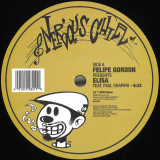
One of the keys to Nervous’ longevity has been our willingness to take chances on new producers and new sounds. As long as a track contains the essence of House, we encourage producers to experiment with combining House with other musical genres. And if the results are creative and fruitful enough we are always ready, willing and able to create a new sub label and logo to go along with a fresh sound.
In the 90’s we felt a movement toward House being juiced with Jazz elements and we created the Nervous Chill Sub-label. Now all these years later we are once again seeing a new appreciation for the sounds, flow and energy of Jazz on the part of some of the world’s premier House Music Producers, and so we are embarking on a re-launch of the Nervous Chill imprint.
Onboard for the re-launch is the very talented and dynamic producer Felipe Gordon with the two tracks “Elisa” and “Resonant.” Both songs feature the legendary musician Paul Shapiro, who has played a key musical role in many of House Music’s most celebrated tunes including “The Whistle Song” for which he supplied the eponymous “whistle.” “Elisa” features an uplifting and bouncy rhythmic vibe that’s topped and energized with Paul’s jazzy flute, while “Resonant” has a deeper and slightly more aggressive tone that’s propelled with Paul hypnotic and free wheeling sax instrumentation.
Maximum vocal power and prime time dramatics by Chrissy and Carrie Wilds. The San Francisco based DJ and producer shows his stylistic versatility and technical capability to work with vocals, melodies and sound sources. Like a facsimile of the late 1980s house/freestyle record that you never owned, Things Can’t Go On Like This Forever ticks all the right boxes. Heartfelt vocals (by the great Carrie Wilds): check! Timely social message: check! Melodic euphoria: check! Old school house and true school freestyle flavor: check! Comes in various mixes and with a freestyle bonus beat special.
Additional airtime is given to the now classic Chrissy production So I Go Dancing. Done in a traditional remix fashion by Gerd Janson it highlights all the features of the original and again Carrie‘s enchanting voice, extends the included hysteria and adds a few snare rolls. Let‘s go dancing to brighten the darkness. Dance music in its purest and maybe most US-American form.
Technics' EAH-DJ1200 DJ headphones have run with the RP-DJ1200 concept and taken it to new heights with more advanced functionality, a better design and superior sound quality that meets all the demands of today's DJs. You'll be able to monitor your beats like never before, even at the biggest clubs and gigs. Extra-large 40mm drivers with CCAW voice-coils deliver clear, detailed sound that stays free of interference thanks to the durable 2,500 mW input and, to match the looks of the SL1200MK7, this robust pair of EAH-DJ1200 headphones are similarly cloaked in black.
For Both Carefree and Careless DJs
Blessed with a lightweight, on-ear design, the Technics EAH-DJ1200 headphones are equipped with a lockable rotating mechanism to suit the style of all DJs, including one-ear monitoring. Because they can be folded up, they won't take up much storage space and Technics agreeably throw in two TRS mini-jack cables plus a TRS jack adapter. It's worth mentioning that these removable cables can be locked into place to prevent them from accidentally coming loose during the set; perfect for both carefree and, dare we say, slightly more careless DJs.
Driver Unit
40 mm
Impedance (with Detachable Coiled Cord)
45 Ω
Sensitivity
106 db / mW
Power Handling (IEC)
2500 mW (IEC)
Frequency Information - Frequency Response (with cord)
8 Hz - 30000 Hz
Operating Temperature Range
0 °C to 40 °C
Weight (without cord)
Approx. 233 g
Weight (with Detachable Straight Cord)
Approx. 251 g
Supplied Accessory
Detachable Straight Cord: Approx. 1.2 m, Detachable Coiled
Cord: Approx. 1.5 m (Extended Length 2.2 mm), Carrying
Pouch, Plug Adaptor (6.3 mm)
Plug
3-Pole 3.5 mm Stereo Plug
Cord - Cord Length (detachable straight cord)
1.2 m
Der DJ1200 begeistert mit einem natürlichen, detaillierten und harmonischen Klang. Auch bei hohem Eingangspegel und den damit verbunden extremen Lautstärken ist der Ton stets verzerrungsfrei. Unabhängig von der Lautstärke sorgt der On-Ear für eine rauschfreie und komfortable Sound-Kontrolle. Der Technics EAH-DJ1200 verfügt über ein sehr geringes Gewicht und ist mit einem 270-Grad-Schwenkmechanismus für beide Ohrmuscheln ausgestattet. Diese sind unabhängig voneinander wegklappbar und variabel arretierbar. Somit kann der EAH-DJ1200 zur Sound-Überwachung auch mit nur einem Ohr verwendet werden und ist flexibel einsatzbereit.Für perfekten Sitz sorgen das gepolsterte Kopfband und die schweißabweisende Kunstleder-Ohrmuschel-Polsterung, welche sich angenehm auf der Haut anfühlt. Darüber hinaus kann der DJ-Kopfhörer für den Transport kompakt zusammengeklappt werden. Zum Lieferumfang gehören ein 1,5 Meter Spiralkabel, ein 1,2 Meter langes gerades Kabel sowie ein 6,3-mm Klinkenstecker-Adapter. Beide Kabel verfügen über einen praktischen Verriegelungsmechanismus, welcher ein versehentliches Ablösen des Kabels effektiv verhindert. Mit seinem modernen Design und der Verwendung hochwertiger Materialien überzeugt der Technics DJ1200 auf ganzer Linie. Durch die matt-schwarze Optik passt der Kopfhörer perfekt zum Technics DJ-Plattenspieler SL-1200MK7 und fügt sich bestens in die Technics DJ-Welt ein.
Treiber
40 mm
Impedanz (mit abnehmbarem Spiralkabel)
45 Ω
Empfindlichkeit
106 db / mW
Frequenzgang
2500 mW (IEC)
Frequenzwerte – Frequenzgang (mit Kabel)
8 Hz – 30.000 Hz
Betriebstemperaturbereich
0 °C bis 40 °C
Gewicht (ohne Kabel)
Ca. 233 g
Gewicht (mit abnehmbarem Spiralkabel)
Ca. 251 g
Mitgeliefertes Zubehör
1,5m Spiralkabel, 1,2m gerades Kabel, 6,3-mm Adapter, Transporttasche
Stecker
3,5-mm-Stereostecker, 3-polig
Kabellänge
1,2m; 1,5m
(comes with a poster) The Klein blue horizon, gliding seagulls, a ferry purring between two languid islands, dotted with ultra-white villages and ancient ruins... These idyllic visions run through Glika, the ultimate musical project of Les Cyclades. An exciting electronic odyssey from West to East, from Belgian effervescence to Greek mysticism.
In 2020, confined to the neighborhoods of Yser and Mystère in Brussels, Alex and Ludo dream of Greek islands, of scorching sun on their skin, of salty baths, chilled ouzo and braised octopus. But everywhere, time stands still. Must one necessarily move to travel? To levitate? In the absence of Elsewhere, the Franco-Canadian duo will compose the imaginary soundtrack to their escape.
Glika (which means "sweet" in Greek) perfectly synthesizes the musical influences of Les Cyclades: a cosmic saxophone inherited from Alex’s dub and free jazz past, an architect-pastry chef-botanist from Normandy, and Ludo’s "Balearic" tracks, a musician-performer-wine lover who frequented his first raves in 1995 in Houston, Texas.
From a hedonistic encounter on a friendly terrace in the 19th arrondissement of Paris to their chosen exile in Brussels, these hypersensitive jacks-of-all-trades first danced and mixed records. Before creating their own phantasmagorical sonic territories, where cinema and poetry meet more or less human voices, brass instruments, synthesizers and analogue drum machines.
A searing fragment of Greek filmmaker Theo Angelopoulos's "Eternity and a Day" preludes Glika. Then, on Yser Mystère - the names of the two stations on tram 51 that physically linked Alex and Ludo's psyches during the lockdown - Alex's astral sax balances out the industrial mechanics of a locomotive, against a backdrop of urban soundscapes.
And then a rising bpm dominates Alocasia, with its deep and sensual light foot. So sunny. From one track to another, there are interludes influenced by Xenakis, Vangelis and Jean-Michel Jarre. Seminal heroes of the Cyclades... But soon, the duo unleash hostilities at the helm of Epigone, their meta-techno anthem. "I know", "You know", echoes Alex.
Laughs of friends, "mouth noises," and "bizarre rhythms" still dominate Parc Fou, while DRAM eyes the minimalist techno of Detroit. So dear to Ludo's heart... And what about PAME, that post-modern Greek epic.Or Glossa, a timeless track that finishes with a fascinating - because diffracted - elegance, this multi-sensory journey through Les Cyclades. Let's close our eyes. Silencio! Hay Banda!
By Eléonore Colin, journalist (and friend!!)