Straight outta Rockaway Beach, Queens, New York City, USA, THE WORLD, Prison is a state of mind, an experience, a loose collective, a band, a jam band and a bunch of psychedelic dudes who aren"t your average bunch of jambanders. All that, all at once, ALL THE TIME. You get what you"re dealing with here? No...you don"t. The only way to REALLY get it is to go to Prison -- and if you"re not from greater NYC and haven"t showed at any of the shows, here"s your best bet: their breakout album, Upstate. And whatta breakout! So high, you can"t get under it; so wide, you can"t get over it! How wide? Every song has two titles, that"s how wide. And almost everybody sings, like, all the time. That wide. Sure, you can break down the numbers -- five guys, five songs and four sides of vinyl in one gatefold sleeve -- but that won"t get you Upstate, either. Prison is the sound of everybody in the room figuring out where to go, individually and collectively. As they go through it, the meaning changes, the destination changes, the words mean something different. It"s meaning and no meaning, rising and falling, sinking and flying on the back of something massive cacophonized by three guitars, four vocals, a bass and drums. A lot of information bouncing around and enough time to really get you out of yourself! Take a look at the titles: each one a dichotomous inquest that the assembled Prison-ers march upon with fervor, glee, vengeance -- a whole spectrum of feels and perspectives woven into the jam for you to see. The Prison population changes with the seasons, and during the season this album was recorded, Sarim Al-Rawi, Mike Fellows, Sam Jayne, Matt Lilly and Paul Major were in Prison. Sarim you might know from Liquor Store, Mike"s made a bunch of scenes and records as Mighty Flashlight, Sam, who passed away in 2020 (R.I.P., brother) was in Love as Laughter -- and Paul Major you know from Endless Boogie, who Matt had roadied for -- and despite being "just a skateboarder who loves music" with no previous experience on the drums, he and Sarim inaugurated the Prison experience, like, seven years ago. Since then, it just fell together and it keeps doing so. A free thing called Prison.
Vinyl includes lyric booklet with hand-written lyrics and exclusive photos and download card. Has collaborated with MF Doom, Czarface, Ghostface Killah, Dennis Coffey, and more. Kendra Morris, the Brooklyn-based Artist is back with her fifth LP, entitled I Am What I’m Waiting For, on Colemine/Karma Chief Records. Co-Written and Produced by Torbitt Schwartz (Run The Jewels, Killer Mike, Rubble Kings, Chin Chin), this collection is Kendra’s most personal album to date. It was spring of 2022 and Kendra had just released Nine Lives, her first new album in almost a decade and her first release on Colemine Records. She felt an urgency to get back into the studio, but something felt different this time. Returning to her usual ways, places, and people that she had been creating with felt like dragging herself back to a familiar and comfortable place - but that wasn’t what she was looking for. “I had to step into a new, unknown process because I knew it was the only way that I’d continue to grow,” she explained. She took a small batch of songs to Torbitt’s studio and the two began to write. “He challenged me to find the best version of every lyric,” she shared. “When I listen back, I’m so proud of the time we spent, because every single line is deliberate. I challenged myself to write just to write. No love songs this time around. Torbitt and I wanted to create a record that felt like you cracked open the ooze in my head. There are a lot of layers to me but I only recently through age and experience have fully accepted the weird little nuances that I’m made of. I’m a messy introvert that pretends to be an extrovert so I can feel like I fit in.” From top to bottom, I Am What I’m Waiting For is sincere. It’s a fresh take on a timeless sound, and Kendra exudes power. “My heart has always been in soul music,” she shared. “On this record, you’ll hear my influences and then some. You’ll hear all the bits of me….the vulnerable bits, the silly bits, all of it.This record is my melting pot.” Whether you’re a longtime listener or just now beginning to explore the whimsical world of Kendra Morris, the relatable lyrics and modern soul sounds on I Am What I’m Waiting For are sure to turn you into a fan
Featuring contributions from Brittany Howard, Daniel Tashian (Kacey Musgraves, Demi Lovato), Julien Baker + more. Since moving to Nashville to start their music career in 2012, Becca Mancari has been lauded for their dextrous songwriting and prodigious guitar playing. Their sophomore album The Greatest Part, released in 2020, was an indie rock opus that garnered acclaim from The New York Times, NPR, and more. After its release, however, Mancari was despairing. An illness in their family, coupled with a realization that their alcohol dependency had become untenable, led Mancari to begin the hard work of taking ownership of their existence by mending broken relationships and investing in their mental health. "I didn't realize it then, but looking back, I was a passenger in my own life," Mancari says. The transformative period of self-reckoning was the catalyst that ultimately steered Mancari to write and produce their triumphant new album, Left Hand. After a disheartening studio session with an outside producer, Becca became convinced that they were capable of rendering their vision independently. Close friend and musical ally Juan Solorzano, who has played on all of Mancari's albums since the debut of Good Woman in 2017, joined them in the studio to co-produce the majority of the record. In addition, Daniel Tashian (Kacey Musgraves, Demi Lovato) co-wrote and co-produced the song "Don't Close Your Eyes," encouraging Mancari to track every instrument on the initial demos. As much as self-producing this album was an act of resilience and growth in one's own craft, Mancari brought trusted friends like Brittany Howard, who they play with in Bermuda Triangle, Julien Baker and Zac Farro into the process. Insecurities that had dogged Mancari since childhood couldn't weather the force of energy in that studio, where they executed decisions with newfound certainty. The title track, "Left Hand," is named for the Mancari family crest. After a lifetime spent feeling like they didn't belong, Mancari unlocked a perfect metaphor in the crest: "In many cultures children born with a dominant left hand were taught not to use that hand, and were told that using the right hand was `normal' and `correct.' Similarly, queer children are often times told that it's not `normal' for them to love who they love and that they need to `change.'" On Left Hand, Mancari offers the listener a collection of songs that should be played in moments when we are in need of reassurance and encouragement. No song exemplifies this better than the ebullient track "Over and Over," which is a reminder to friends that happiness doesn't need to be fleeting. "I wanted to write a queer pop song that has meat on its bones," they say. Inspired by one of many reckless and joyful hangs with dear friends in Nashville, the enlivening pop song makes a promise to them, and to the greater community Mancari embraces on this album. "There is something to the feeling/ Head hanging out of the window/ Being ok that we don't know," sung on the chorus over a beat replete with congas and shakers. What follows is a promise to anyone who ever feels like the greatest moments of their life are disappearing in the rearview: "We can have it like we used to, over and over and over and over again." For Fans of boygenius, Phoebe Bridgers, Julien Baker, Julia Jacklin, Caroline Rose, Miya Folick, Molly Burch, Widowspeak.
With I Will Make a Baby in this Damn Economy, Fat Tony embodies the kind of quixotic figure he would rap about; a singular entity who’s motivated, confident, and hungry; a perpetual-motion-machine locked in a staring contest with his country. It’s the latest album in his catalog produced entirely by L.A-based producer Taydex since 2020’s Wake Up. Later that same year Fat Tony released Exotica, and ever since he’s demonstrated he is in his own lane as a professional rapper with the mind of a magician, as quick to conjure an image as pull it out from under you, deftly manoeuvring through so many details and references a listener feels as if they have witnessed the work of an illusionist. He paints these canvases inside of songs that rarely spill past three minutes; they’re pocket-sized diaries replete with acute observations, character studies, microdoses of storytelling, and single-minded ruminations on a topic that bud, blossom, and fade before too long. Fat Tony & Taydex’s I Will Make a Baby in this Damn Economy cements Tony’s status as someone whose albums are not so much lyrically-lyrical as they are picaresque.
As with any Fat Tony project, the bars are tight as ever, but are so fluid for the 34-year-old it’s almost easy to take for granted the details, warmth, and humanity inside his free-associative tales of day-one friends who’ve passed, edgelord grifters who want to spit game, and nights on ketamine. Taydex’s production sprints through disparate yet simpatico styles, dipping its toes into Pi’erre Bourne-esque bass (see lead single “Spectacular”), house (“Loosen Up”), and even hyperpop. Meditations on loss and grief are woven throughout, but Tony throws a few curveballs as well: Consider “Alexis,” which sweetly reflects on a long-term platonic friendship. Taydex finds a Teddy Riley-indebted New Jack Swing groove just deep enough for the feeling to land and underlines the song’s sincere candor. This is the appeal of Fat Tony writ-large: his boisterous voice and genial personality invite you to the party, then you stick around to hear what he’s saying, which is frequently more introspective and complex than one assumes.
Written and recorded in Taydex’s new studio in North Hollywood, Tony says, “We had much more freedom and flexibility in making this album and you can hear it. It felt like a family project.” If the album is comfortable and loose, it is also dense and substantial. The album’s final two tracks contextualize the immediacy of what came before it—the mezcal with ices drank, Paul Wall swangin’ through to drop knowledge, the Polaris Prize-winning rapper Cadence Weapon providing a vibe check. “Make a Baby” accounts for Tony who’s seen everything, and knows he’s met the one to be a father with, and yet chooses to take his time to get it done. Taydex’s beat recalls turn-of-the-century R&B and the millennial promise of an endless good time. Sombre closer “Jasper, TX” is Tony coming to grips with the story of James Byrd, Jr., a Black man from East Texas dragged to his death by three white supremacists in 1998. These songs are not only trademarks of Tony’s fastidious rapping—they are deeply personal examples of his approach to artistry and life itself, where every decision is made in the shadow of history.
It’s here the mission statement of I Will Make a Baby in this Damn Economy comes into focus—you get the sense he means it, he’s ready for it, he’ll fight for it. He’s waiting to take the world at its word.
The anticipation is there in Elizabeth Stokes’ solo guitar riff under the opening lines of “I’m Not Getting Excited”: a frenetic, driving force daring a packed Auckland Town Hall to do exactly the opposite of what the track title suggests.
As the opener of The Beths’ Auckland, New Zealand, 2020 expands to include the full band, the crowd screeches and bellows. It’s a collective exhalation, in one of the few countries where live music is still possible.
The album title, and film of the same name, deliberately include the date and location, lead guitarist Jonathan Pearce says. “That’s the sensational part of what we actually did.” In a mid-pandemic world, playing to a heaving, enraptured home crowd feels miraculous.
In March 2020, everything seemed on track for another huge year for The Beths. Home after an 18-month northern hemisphere tour, they had just finished recording sophomore album Jump Rope Gazers and were primed for more extensive touring. But within days, New Zealand’s lockdown split the band between three separate houses. All touring was cancelled.
“It was existentially bad,” Stokes says. As well as worrying about economic survival, they lost something crucial to the band’s identity: live performance. “It's a huge part of how we see ourselves... What does it mean, if we can't play live?”
The band found an outlet through live-streaming, returning to the do-it-yourself mentality of their early days to connect with a global audience. The album and film have their genesis in that urge to share the now-rare experience of a live show, as widely as possible.
The fuzzy-round-the-edges live-streams pointed the way aesthetically. Native birds, wonkily crafted by the band from tissue paper and wire, festoon the venue’s cavernous ceiling while house plants soften and disguise the imposing pipes of an organ. The presence of the film crew isn’t disguised: much of the camerawork is handheld; full of fast zooms and pans.
With much of the material still fresh, the band was less focused on re-invention than playing “a good, fast rock show”, Pearce says. The tempo is up on crowd favourites “Whatever” and “Future Me Hates Me” (released as a live single on its third anniversary) as both band and audience feed off the mutual energy in the room.
Certain songs have taken on special resonance post-Covid. Pearce has found “Out Of Sight”, a tender rumination on long-distance relationships, hits particularly hard with live audiences.
Album closer “River Run” visibly brings Stokes to tears as a mix of achievement and relief kicks in. “You can finally relax at that point … You play the last note, breathe out a sigh and look up - and you’re in a giant room full of people happy and smiling.”
Hailed as "gospel titans" by Rolling Stone, the Blind Boys of Alabama defied the considerable odds stacked against them in the segregated South, working their way up from singing for pocket change to performing for three different presidents over the course of an 80-year career that saw them break down racial barriers, soundtrack the Civil Rights movement, and help redefine modern gospel music forever.
The five-time Grammy-winners’ latest album, Echoes Of The South, draws its name from the Birmingham radio program that hosted the group’s very first professional performance back in
1944. Pairing traditional spirituals and long-lost gospel classics with vintage soul and R&B tunes, the collection is as moving as it is timeless, transcending genre and era to touch something deep and fundamental about the human condition.
These are songs of love and friendship, joy and gratitude, faith and perseverance. Uplifting as they are, the recordings can feel bittersweet at times, too: 91-year-old Jimmy Carter retired from performing following the sessions, while two longtime members, Paul Beasley and Benjamin Moore, Jr., have since passed away. Despite the losses, the Blind Boys of Alabama show no signs of slowing down.
“The spirit of the Blind Boys isn’t about what you can’t do it’s about what you can do,” says singer Ricky McKinnie. “As long as we stay true to that, as long as we sing songs that touch the heart, this group will live on forever.”
The most honored and revered group in Gospel music.
Winners of 5 GRAMMY; including Lifetime Achievement.
Echoes of the South brings the group back to Muscle Shoals, Alabama to record, album produced by
Matt Ross-Spang and Ben Tanner, band features Phil Cook, Dennis Crouch and Chad Gamble.
Global touring schedule planned for 2023/2024.
Documentary film to be released in conjunction with the album, book on career to be released in early 2024.
Celebrate Hip-Hop At Fifty, Bad Boy records and the 25th Anniversary of the Double Platinum Sophomore Album from R&B heavyweights 112.
This Limited Edition Black & White Split Vinyl includes hit singles like "Anywhere" and "Love Me," featuring labelmates Mase & Faith Evans, plus Lil' Kim.
2024 BLACK VINYL REPRESS.
One can hardly imagine the genre-busting, culture-crossing musical magic of Outkast, Prince, Erykah Badu, Rick James, The Roots, or even the early Red Hot Chili Peppers without the influence of R&B pioneer Betty Davis. Her style of raw and revelatory punk-funk defies any notions that women can’t be visionaries in the worlds of rock and pop. In recent years, rappers from Ice Cube to Talib Kweli to Ludacris have rhymed over her intensely strong but sensual music.
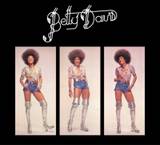
There is one testimonial about Betty Davis that is universal: she was a woman ahead of her time. In our contemporary moment, this may not be as self-evident as it was thirty years ago – we live in an age that’s been profoundly changed by flamboyant flaunting of female sexuality: from Parlet to Madonna, Lil Kim to Kelis. Yet, back in 1973 when Betty Davis first showed up in her silver go-go boots, dazzling smile and towering Afro, who could you possibly have compared her to? Marva Whitney had the voice but not the independence. Labelle wouldn’t get sexy with their “Lady Marmalade” for another year while Millie Jackson wasn’t “Feelin’ Bitchy” until 1977. Even Tina Turner, the most obvious predecessor to Betty’s fierce style wasn’t completely out of Ike’s shadow until later in the decade.
Ms. Davis’s unique story, still sadly mostly unknown, is unlike any other in popular music. Betty wrote the song “Uptown” for the Chambers Brothers before marrying Miles Davis in the late ‘60s, influencing him with psychedelic rock, and introducing him to Jimi Hendrix — personally inspiring the classic album ’Bitches Brew.’
But her songwriting ability was way ahead of its time as well. Betty not only wrote every song she ever recorded and produced every album after her first, but the young woman penned the tunes that got The Commodores signed to Motown. The Detroit label soon came calling, pitching a Motown songwriting deal, which Betty turned down. Motown wanted to own everything. Heading to the UK, Marc Bolan of T. Rex urged the creative dynamo to start writing for herself. A common thread throughout Betty’s career would be her unbending Do-It-Yourself ethic, which made her quickly turn down anyone who didn’t fit with the vision. She would eventually say no to Eric Clapton as her album producer, seeing him as too banal.
In 1973, Davis would finally kick off her cosmic career with an amazingly progressive hard funk and sweet soul self-titled debut. Davis showcased her fiercely unique talent and features such gems as “If I’m In Luck I Might Get Picked Up” and “Game Is My Middle Name.” The album Betty Davis was recorded with Sly & The Family Stone’s rhythm section, sharply produced by Sly Stone drummer Greg Errico, and featured backing vocals from Sylvester and the Pointer Sisters.
The band’s upcoming 8th studio album will be full of the trademark blend of catchy pop melodies, witty lyrics, and infectious energy. Songs about hating your life, loving your life, Norwegian families, coconut crabs, 90s television shows, feeling like a loser, not trusting the government and Peppa pig. There is something for everyone.
After Miss Machine, Dillinger Escape Plan fans were divided. Many of the folks who were attached to the screaming mathematical metal of Calculating Infinity bailed on the band, disapproving of the experimental musical direction and the meathead appearance of new singer/screamer Greg Puciato. Open-minded listeners were excited about the progressive journey they were taking and many critics hailed the group as a true innovator of metalcore. Ire Works succeeds in many of the same ways that their previous album did, while branching out creatively. They continue to toy with technical metal, blistering hardcore, jazz breaks, and post-punk, but here they evolve again by adding more twists and turns with additional electronic elements. While the merging of too many styles in hardcore can make for a convoluted result (see Avenged Sevenfold's self-titled release), the added instruments and genre changeups enhance the result rather than acting as ornamental distractions. Edgy Aphex Twin-style drill'n'bass drum breaks and stretched and squeezed electro blips feel strangely at home next to the psychotic time-signature changes and manic riffs, especially on the tracks "Sick on Sunday," "Dead as History," and "When Acting as a Wave." Violins, pianos, and trumpets sit nicely in the mix, and the group's willingness to take chances leads to stunning artistic endeavors rather than stale attempts at crossing genres just for the sake of being clever. Original vocalist Dimitri Minakakis makes an appearance, as does Mastodon guitarist Brent Hinds, but the most notable inclusion is drummer Gil Sharone, who proves himself an expert at picking up the slack after the departure of founding member Chris Pennie to play in Coheed and Cambria. Undoubtedly, this act added anger to fuel the fire of their heavier numbers. "82588," "Fix Your Face," and "Party Smasher" are as wicked and manic as their most difficult earlier stuff; conversely, the melodic hooks and falsetto of "Black Bubblegum" and the watery ambience of "Mouth of Ghosts" balance out the album nicely. It can be inaccessible and terrifying all at once, but in a genre overly saturated with formulaic groups, Ire Works is a true standout. If DEP aren't careful and continue down this innovative path, they could easily be labeled the Radiohead of metalcore
Back in 2015, Japanese DIY house pioneer Soichi Terada stepped back into the limelight courtesy of Rush Hour's 'Sounds From The Far East', a Hunee curated retrospective of material first released on his own Far East Recording label in the 1990s and early 2000s. Buoyed by the positive response and renewed interest in his work, Terada went back into studio to record his first new album of house music for over 25 years, Asakusa Light.
Developed over 18 months, Terada tried to recreate the mental and physical processes that led to the creation of his acclaimed earlier work. Those familiar with Terada’s celebrated, dancefloor-focused sound of the 1990s – a vibrant, atmospheric, and emotive take on deep house powered by the twin attractions of groove and melody – will find much to enjoy on Asakusa Light.
“I tried to recall my feelings 30 years ago, but when I tried it, I found it super difficult,” he explains. “I didn’t even know what I thought about myself five years ago, and the mental metabolic cycle seems to be faster than I thought. I tried different methods, including digging up my old MIDI data and composing by remembering old experiences. With the help of Rush Hour, I found some of the light from my heart that I had 30 years ago. I nicknamed the light I found in my heart, ‘Asakusa Light’.”
Produced using the very same synthesizers and drum machines that powered his 1990s work, the album is a joyous, colourful and life-affirming collection of timeless house music that not only recalls Terada’s own impeccable back catalogue, but also that of similarly celebrated contemporaries such as the Burrell Brothers or Ben Cenac (Dream 2 Science, Sha-Lor).
Terada, who has spent much of the last two decades writing video game music, has always had a gift for combining warm, undulating synthesizer basslines and perfectly programmed machine drums with stirring chords, smile-inducing melodies and mellow musical flourishes. It’s this immersive, sun-kissed and tuneful trademark style that takes centre stage on Asakusa Light, an album for the ages.
The set begins with the alien-sounding chords, soft-touch percussion and dawn-friendly warmth of ‘Silent Chord’ and ends on a high via the bouncing string stabs, starlight chords and thickset grooves of ‘Blinker’; in between, you’ll find a deluge of effortlessly feelgood music that’s the aural equivalent of a dopamine rush at sunrise.
There are subtle variations aplenty throughout the album – see the 8-bit lead lines and pulsing electronic textures of ‘Takusambient’, the vintage Tony Humphries flex of ‘Diving Into Minds’ and the effortlessly funky ‘Marimbau’ – but it’s the uniquely atmospheric, vivid and tactile nature of Terada’s loved-up sound that resonates. After well over 30 years in house music, the light in his heart is shining brighter than ever.
out of Stock
Last delivered 78 days ago available to reorder, subject to availability
Everybody loves a good comeback story. After releasing five genre-defining albums and building a fiercely loyal fanbase, Turnpike Troubadours — the Tahlequah, Oklahoma kings of Red Dirt music — all but fell apart in 2019, taking a three-year hiatus to find clarity amidst the noise of a red-hot career. But after the break, something remarkable and even unprecedented happened: the band returned more popular than ever. Not to mention stronger. The proof is in the group’s sixth studio album, A Cat in the Rain. Produced by three-time Grammy winner Shooter Jennings and recorded at the legendary FAME Recording Studios in Muscle Shoals, Alabama, and in Los Angeles, the 10-song album is a tale of reliability, rebirth, and redemption. It’s the story of brothers — frontman and chief songwriter Evan Felker, fiddler Kyle Nix, steel player Hank Early, guitarist Ryan Engleman, bassist RC Edwards, drummer Gabe Pearson — six musicians who ran the gauntlet of success, scrutiny, and even personal troubles, and would fight tooth and nail for one another. Turnpike Troubadours’ fans can feel this. That bond is in the band’s songs and in their live performances — they’ve racked up 1.5 billion streams globally and are selling out arenas and headlining festivals. Still, to some, they remain a mystery…the most popular band they’ve never heard of. But with A Cat in the Rain, that’s all about to change.
The Tallest Man On Earth - the project of Swedish musician Kristian Matsson - presents Too Late For Edelweiss, an album of new covers out ANTI. With Too Late For Edelweiss, Matsson weaves together a sparse collection of home recordings made in Sweden and North Carolina, captured fresh off a 39-date run with the adrenaline of tour rattling through his veins. The songs on Too Late For Edelweiss have been with Matsson since he started playing music as The Tallest Man on Earth in 2006. In those early years, Matsson used to perform "Lost Highway" by Hank Williams before he had enough songs to flesh out a full set. In July 2022, Matsson released a cover of Swedish super star Håkan Hellström"s "För sent för Edelweiss," a precious song that has been The Tallest Man"s walk-on music before every performance for over a decade and what inspired the title of this covers album. Since then, in the lead-up to this announcement, he has quietly released other selections, including Lucinda Williams" "Metal Firecracker," Yo La Tengo"s "Tears Are In Your Eyes" and now "Lost Highway." Mattson explains, "When I was a teenager I borrowed a Hank Williams album at the local library, and "Lost Highway" has been haunting me ever since. Many vocal sound checks throughout my career have heard Hank"s advice." As much as Too Late For Edelweiss feels like a scrapbook, an intimate memento with the ghosts of The Tallest Man"s earlier, sparser sound hovering at the edges, it"s also just the artifact of a moment - a flash of joy, of feeling recharged, of feeling good. These are the songs that happened to be in Matsson"s head at the time he sat down to record It came together so simply and easily - and in that way, it"s the purest distillation of making music - and being a fan of it, charting the connective tissue of a songwriter"s life.
out of Stock
Last delivered 3 years ago available to reorder, subject to availability
Simply calling Curtis Harding a soul man feels reductive. Harding's voice conveys pain, pleasure, longing, tenderness, sadness and strength-a full gamut of emotions. Today his voice takes on an optimistic lilt with his his new album, If Words Were Flowers. If Words Were Flowers is Harding's first new music since 2018, a follow up to his critically acclaimed 'Face Your Fears" album. It features songs like " Hopeful" , where Harding croons with devotion over a classic soul groove, textured with infectious horn playing, background singers and modern psychedelic flourishes. Harding fuels his psychedelic sound with the essence of Soul but isn't bound by it. Instead, his songs convey an eclectic blend of genres leaping from the many musical lives he has lived from following his evangelical Gospel-singing mother on tour around the country as a child to rapping in Atlanta, forming a garage band with The Black Lips' Cole Alexander to singing back-up for Cee Lo Green. Through these experiences he fully embraces life's darkest intricacies and conjures dynamic, addictive melodies.
out of Stock
Last delivered 3 years ago available to reorder, subject to availability
Aufgenommen in Berlin und aus der Ferne, zwischen 2020 und 2022, kehrt die Band mit ihrem 20. Studioalbum zurück, nach dem letztjährigen “Fire Doesen’t Grow on Trees“ dem zweiten Teil einer aufregenden neuen Phase für Anton Newcombe und seiner Band. Mit ihm im Studio waren Hakon Adalsteinsson (Gitarre), & Uri Rennert (Schlagzeug). Die Band ging 2022 auf Tour und absolvierte u.a. eine 34 Shows umfassende äußerst erfolgreiche Tournee in Nordamerika mit Mercury Rev und The Magic Castles. Eine neue Tour zur Unterstützung des neuen Albums steht im Januar 2023 in Großbritannien an und wird im Februar in Europa fortgesetzt. Ursprünglich war Newcombe stark von der psychedelischen Phase der Rolling Stones beeinflusst - der Name stammt vom Stones-Gitarristen Brian Jones in Verbindung mit einer Anspielung auf den Sektenführer Jim Jones -, aber seit den 2000er Jahren hat sich seine Arbeit in vielen ästhetische Dimensionen ausgeweitet und sich u.a. dem britischen Shoegaze-Genre der 1990er Jahre annähert und Einflüsse aus Weltmusik, insbesondere der Musik des Nahen Ostens und Brasiliens, miteinbezieht.
out of Stock
Last delivered 3 years ago available to reorder, subject to availability
If you've seen David Lynch's classic film Mulholland Dr, you might
recognize the title of Paerish's third full-length, You're In Both Dreams
(And You're Scared) - It's a line spoken by one of the two men having a
conversation in that movie's incongruous diner scene - Paerish vocalist/
guitarist Mathias Court was watching the film for maybe the tenth time
last year, and, given the insecurity of being a musician during the COVID
pandemic, that line stood out to him like never before
Given that Paerish was formed when Court was at film school with bassist Martin
Dupraz, it's little surprise that the band--now completed by guitarist Frederic Wah
and drummer Loic Fouquet--would use a cinematic reference for its title. The first
two records were peppered with them, and many of their songs started with Court
fiddling with his guitar while watching something in the hopes that he'd capture
the emotion of whatever was onscreen. This time around, the title is the only
thing directly inspired by the moving image. Whereas on 2016's Semi Finalists
and 2021's Fixed It All, Court would utilize other people's art to draw parallels to
how he was feeling, this time it was his own internal wranglings that influenced
his songwriting.
By December 2021, Court had demoed the album. A year later, Paerish flew to
Philadelphia to record with Will Yip. The band's familiarity with Yip lends a natural
confidence to this album that disproves the very insecurities that inspired it. It
turned into the album Paerish have always wanted to make.
"When I listen to these songs," says Court, "I almost don't realize this is our album.
I feel like we got even closer to our final form. This is the one we've been wanting
since we were kids. I'm so proud of it.
Close your eyes and merge into Benedikt Frey’s 'Fastlane'. Imagine sitting in the driver’s seat of a an automobile, one with exceptional horsepower and torque, as you stare out the windshield at the red light, warping in fata-morgana a mile down the road. It’s a straight-away, a black top with two lanes, and against your better judgment you decide to floor the gas. No hesitation in your muscle, your ankle or the ball of your foot, which you now realize is some kind of universal pivot, the first point of contact fusing your body with the will of machine. In this moment you’re in awe that you, a human, an animal, grew from pond scum into something so advanced as to engineer this thing, a mechanical beast capable of overwhelming power and exhilaration. But you also feel a seductive dread, an outside force diverting you from caution toward a dangling carrot of curiosity, asking yourself, ‘How far can I take this thing?’ The dread, now a constant, is numbed, equalized by an adverse intoxicating gratification. You feel both sensations in real time, however, rather than take responsibility for yourself, friends, family and innocent bystanders, you cement your foot to the floor and lean your head back. Noise around you fades to mute. Smell the benzene-scented air, feel the wind on your face, the menacing vibration of the vessel you control beneath you and every grain of asphalt under its tires. This mile has now lasted an eternity and you’ve left your body for some objective view, as if watching climax of a film. Past the point of no return, you embrace abandon and lean into fate. The film becomes slow motion, a crawling pace so mesmerizing you convince yourself of an option to eject yourself from this madness, but as you finally let go of your last morsel of fear, you run the red light head-on into the nucleus of a fantastic glistening sculpture of torn metal, glass, oil, broken dreams and heartache. 'Fastlane' may be just drum machines and synthesizers if you’re timid, but listen harder and know the catastrophic reality of existence, a wreckage so gruesome we dare not rubberneck, but afterall it is our nature to stare.
out of Stock
Last delivered 15 months ago available to reorder, subject to availability
The life-affirming energy at the heart of Sven Väth‘s recent album Catharsis is revisited, reanimated, and remixed by some of the most exciting names around, closing the circle on a superlative burst of
recent work that has not only given us the epic original LP, but also the extraordinary compilation What I Used To Play.
Roman Flügel, Benjamin Damage, Robert Hood, Planetary Assault Systems, Mano Le Tough… do we need to go on? This hand-picked list of luminaries have answered the call and certainly don’t disappoint, each fusing their signature sound with Sven‘s DNA to create a wild, uncompromising companion piece to the original album.
True to form, the running order is very much rooted on the dance floor, Silvi‘s Dream, revisited by Damiano von Erckert, explodes like a Balearic sunrise. Dreamy strings with a touch of Detroit create a lovely atmosphere while the beautiful piano sound goes right into your heart and appears as if you could feel the warm sun on your skin. Roman Flügel’s acidic rework of What I Used To Play is a homage to the 80s and the early sound of electronic music which creates nostalgic feelings and offers a greatly produced retro soundscape à la Kraftwerk. Staying close to the original, but with the perfect amount of spin, it’s a symbiotic interplay of synthetic bass pads, and a tiny bell melody. Robag Wruhme’s cranking minimal funk takes us down The Worm-hole. A concise interference sound builds
up sustained tension, tangled but structured, deep and yet driving. Robag took over the deep and dirty rhythms of the original perfectly and delivers a versatile piece. This opening salvo oozes quality and
sets things up perfectly for the electrified celebration of hi-octane technology come.
Jonathan Kaspar‘s growling interpretation of We Are provides a melancholic atmosphere with fascinating percussion parts. Zaps shoot through the air like small laser pistols while we let ourselves
be carried away by the bass, the frisky vocal stutter effect is the icing on the cake. Speeding things up, the euphoric trance that engulfs Krystal Klear’s epic version of Feiern. Expansive strings increase up
to ecstasy and guide us to a love-filled unity. This remix is sure to be an excellent peak-time smasher for the open-air season. On to a wild ride of pure techno with Benjamin Damage, who delivers a dry and uncompromising Berlin Techno version of Mystic Voices. Harder pace but the string synthesizer harmony brings light to an otherwise gloomy environment. Next up is Luke Slater’s PAS Deep Heet Mix to add a retro nineties vibe to proceedings on Nyx. Entering a rough space with gigantic clap impacts, we are blessed with straightforward Techno. Shimmering and spooling, this groove hits the
mark. Then, as if it was ever in doubt, Sven‘s lofty place in the techno firmament is underlined by a peak-time contribution by non-less than Detroit legend Robert Hood. Unmistakable, you must recognize the signature Robert Hood drive on Butoh. Chord stabs fulfill the Detroit feeling with offtaking string elements and high-energy vocal transformations. It’s a warm embrace that triggers emotions. Planetary Assault Systems then blasts things ever deeper into the cosmos on a second outing of Nyx. Reduced and to the point but of course, true to form, with powerful tribal percussion parts and intensive cutting hi-hats.
From there on in, the collection gradually re-enters the atmosphere, burning with a phosphorescent, melancholy glow. Harald Björk extrapolates Being In Love into a hypnotic groove for the early hours. A playful and atmospheric electronica interpretation to soothe our souls due to disharmonious synth pads and a dreamy deformation of the original melody. Mano Le Tough harnesses the ethno-rhythms
and brooding energy of Catharsis into a low-slung, tribal stomper. Anomalous organ parts ring out and link up with a trance-like sequence, summer feelings arouse as you feel like you can almost smell Ibizan air. The collection comes full circle with a second equally seductive interpretation of Silvi‘s Dream by Florian Hollerith. Stripped-down and hypnotic, the homage to Sven's girlfriend Silvi is extended as a reverence to Sven himself. Sven's profound vocal clearly infuse time and space and leave a forever-lasting memory of love.
By accident or design, it somehow leaves us with the reassuring sense that, although this specific part of the journey may be drawing to a close, the mission of the man behind it all most definitely isn't.
written & produced by: Sven Väth & Gregor Tresher
out of Stock
Last delivered 3 months ago available to reorder, subject to availability
Earthly Measures' second vinyl release of the year sees them team up with the talented & mystical producer & multi-instrumentalist Sidirum - bringing you Balearic & Downtempo flavours from Argentina - sounds that haven’t always been associated with his style. An EP that fills you with euphoria & nostalgia, trying to find those sounds that can take you to another time just by listening to them - as he puts it, "rhythms from the past".
For Sidirum this release is about the beauty of chance. Samples that he has found from near & far over many years of producing finally find a home. 'Donde' in particular is a special track, he says "it is the track where I found my voice again. I have not used it in a song for almost 10 years." 'Ex-Plane' is heavily influenced by his love for Reggae, which runs throughout the whole track. 'Total Interior' is a perfect dance-floor ready track - with the help of multi-instrumentalist Pedro Alvide, the track builds a musical progression that dives into perfect sunset vibes with uplifting energy - ready for a peak time festival set.
After a number of other releases, 'Iris' is an EP where Sidirum feels that he has finally found himself again musically. In a way it's a summary of the places he’s been in the past, intertwined with his ideas in the present, making for a truly unique & pleasant listening experience.
Nick The Record - This is ruddy bloody gorgeous!!!!!!!!!!!!!!! Only problem is choosing a favourite tune
Dom Servini - Gorgeous White Island moments on here! Beautiful.
GK Machine - Nice reggae vibes on Ex-Plane...Total Interior and Donde up my street too
Bill Brewster - V nice esp. total interior
Paul Cottam - In my head now
Jaye Ward - wow!! what a release! super deep very left of the field. deep AF brilliant thing indeed
Oscar Arroyo - Nice one.
Thomas Jackson - I like Donde!
out of Stock
Last delivered 21 months ago available to reorder, subject to availability
In August of 2007, the Port Arthur duo of Bun B and Pimp C known as UGK released their epic fifth studio album, Underground Kingz. Sadly, this was the last release recorded by Pimp C before his untimely death in December of the same year. Production was overseen
by legendary Rap-A-Lot producer N.O. Joe and Pimp C himself with contributions from Three 6 Mafia, Jazze Pha, Lil Jon, Scarface, Swizz Beatz, and Marly Marl among others. The second single "Int'l Players Anthem (I Choose You) was nominated for a Grammy and won video of the year at BET's 2008 Music Awards.
DeYarmond Edison war der Vorläufer von Bon Iver und Megafaun. Im Sommer 2005 verließen vier Freunde Wisconsin in Richtung North Carolina mit einem einzigen Ziel: der Folk-Rock-Flaute zu entkommen. Während eines Jahres intensiver Konzentration, des Studiums und der Verletzlichkeit taten sie genau das, indem sie an den ekstatischen Rand des New Weird America vordrangen und von allem ein bisschen ausprobierten - Grindcore und Gospel, Free Jazz und Phasenstücke, Bluegrass und Blues - und es in DeYarmond Edison packten. Der Rest ist Geschichte_ Ein Mitglied ging nach Hause, um das zu gründen, was später Bon Iver werden sollte, während drei vor Ort blieben, um Megafaun zu gründen. Epoch ist die Geschichte von DeYarmond Edison: Brad Cook, Phil Cook, Justin Vernon und Joe Westerlund, erzählt wie nie zuvor. Die Sammlung umfasst fünf LPs, vier CDs, Dutzende von ungehörten Aufnahmen und ungesehene Fotos. Begleitet wird sie von einer ausführlichen Biografie des Schriftstellers Grayson Haver Currin, der auch als ausführender Produzent der Sammlung fungiert. Alles in allem fängt Epoch die Zeit ein, bevor aus diesen vier Freunden zwei andere, aufsehenerregende Bands wurden. Es ist eine Geschichte über Gemeinschaft, Visionen, Familie und ein Quartett, das zu gut sein wollte, um zu bestehen. Es gibt Momente des Experimentierens, subtile Wendungen im Fuzz von "Epoch" und eine stampfende Herangehensweise beim Covern von "All Tomorrow's Parties", die den Grundstein dafür legten, wie Bon Iver und Megafaun die akustische Musik ein wenig umkrempeln würden. Aber ein Großteil von Epoch unterstreicht die einzigartige Sichtweise der Gruppe auf amerikanisches Songwriting, auf das Nehmen von Patchworks, das Finden der Akkorde und das Singen aus vollem Herzen. "Trials, Troubles and Tribulations" ist ein Beispiel dafür. Am bekanntesten ist es als Duett von Justin Vernon und Sharon Van Etten, das hier in ausufernder Last-Waltz-Manier wieder zum Leben erweckt wird, mit Vocals von Megafaun, Justin Vernon, Frazy Ford und Fight the Big Bull. Jede Platte ist gleichermaßen ein Crash-Kurs in allem, was dieses spezielle Stück Musikgeschichte ausmacht: Fotos aus Hinterhöfen und Kellern; Essays, die bestimmte Aufnahmen beschreiben; Farbpaletten, die Zeit und Ort widerspiegeln. Mit über sieben Stunden und 55.000 Wörtern ist Epoch eine maximalistische Sammlung. Aber man muss kein Komplettist sein, um zu verstehen, was es bedeutet, sich mit seinen besten Freunden zusammenzukauern und Dinge zu erschaffen, für diese Dinge zu träumen, zu lernen, zu kämpfen und zu wachsen.
Stephen Steinbrink discovered a short YouTube video of a street magician who approaches a highschooler walking home in Barstow, California. “Here, let me show you my idea,” he says, as he places a quarter on the kid’s hand. The magician performs some relaxed flourishes, and the coin vanishes. In silence, the kid stares at his hand at the nothing where there once, indisputably, was something, until his wonder finds a single word: “Cool.” The title of Disappearing Coin, the new album from Oakland songwriter Stephen Steinbrink, comes from this short clip. “When I look at it now,” he says, “I relate to the kid, who’s obviously uneasy in his body, and going through the experience of being a teenager in the early 2000s growing up in a bleak desert town like I did. I also relate to the coin, an inanimate disc of possibility. And I relate to the magician, an absurd facilitator of sending what is tactile and concrete into the wispy conceptual realm.” “I’ve watched it probably a hundred times,” he says. “It cracked me up but also blew my mind open the feeling of wonder I experienced watching this video became a guide as I navigated new ways of staying in the realm of what’s both real and magical.” Following the 2018 release of Utopia Teased, Steinbrink completed an apprenticeship in the nearly-lost art of Stained Glass, becoming a glazier at a studio that over three years, fully restored the enormous 90-year-old windows in San Francisco’s Grace Cathedral. He committed to his Buddhist study, beginning lay monastic training before the process was thwarted by the pandemic. He dove deeper into music production for other artists, engineering two albums by Boy Scouts released on Anti- Records in 2018 and 2021. Steinbrink delighted in the way these pursuits pulled at the thread of ego’s tapestry and decentralized him from his craft, allowing him to embody a new role as a creative caretaker engaging in practices that felt communal and restorative. “As I slowly began writing for myself again, I tried to imbue my new songs with this sense of playfulness and wonder I felt while exploring these other interests.” He says. Feeling unlocked from the pressures of perfection that he often felt in his earlier work, creating Disappearing Coin felt buoyant and healing. “The album feels like an integration of all of my past musical selves zeroing in on the present,” Steinbrink explains, “I felt free to explore new ways of writing, through different perspectives, experimenting with fictional songwriting, visual archetypal language, and total collaboration.” This “total collaboration” was a joyous new venture after years of solo performing and recording. The album can be seen as a 42 minute session of show and tell, the manifestation of Steinbrink repeating the mantra of “Here, let me show you my idea” to himself over and over. Disappearing Coin is at once a welcome return for the veteran Steinbrink and the debut of a totally new artist, one who has found a new path to himself with new goals of openness, curiosity, and self-acceptance. “Recalls the magic pop purity of Arthur Russell...its minimalism manages to feel enlightened and transformative.” PITCHFORK // “Melodic and self-assured. Steinbrink delivers his knotted lyricism with a smooth lilt.
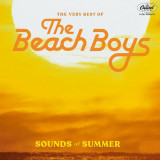
"To kick off the yearlong celebration and provide the perfect summer soundtrack, Capitol Records and UMe will release a newly remastered and expanded edition of The Beach Boys career-spanning greatest hits collection, Sounds Of Summer: The Very Best Of The Beach Boys, on June 17. Originally released in 2003, the album soared to no. 16 in the US and stayed on the chart for 104 weeks. Now certified 4x platinum for sales of nearly four and a half million albums, the collection has been updated in both number of songs and audio quality, expanding the original 30-track best of with 50 more of the band’s most beloved songs for a total of 80 tracks that span their earliest hits to deeper fan-favorite cuts and from their 1962 debut album, Surfin’ Safari through to 1989’s Still Cruisin’.
Assembled by Mark Linett and Alan Boyd, the team behind 2013's GRAMMY® Award-winning SMiLE Sessions and last year’s acclaimed boxed set, Feel Flows – The Sunflower and Surf's Up Sessions 1969-1971, Sounds Of Summer features nearly every US Top 40 hit of The Beach Boys’ incredible career, including “California Girls,” “I Get Around,” “Surfer Girl,” “Surfin’ U.S.A.,” “Fun, Fun, Fun,” “God Only Knows,” “Good Vibrations,” “Be True To Your School,” “Wouldn’t It Be Nice,” “Kokomo,” “Barbara Ann,” “Help Me, Rhonda,” “In My Room,” and many others. Fifty additional tracks showcase a broad mix of songs from across their wide-ranging catalog with some of the many highlights including “All Summer Long,” “Disney Girls,” “Forever,” “Feel Flows,” “Friends,” “Roll Plymouth Rock,” “Sail on Sailor,” “Surf’s Up,” and “Wind Chimes.”
The collection boasts 24 new mixes including two first-time stereo mixes, plus 22 new-and-improved stereo mixes, which in some cases feature the latest in digital stereo extraction technology, allowing for the team to separate the original mono backing tracks for the first time.
The expanded edition of Sounds Of Summer will be available in a variety of formats, including a 3CD softpack, and as a Super Deluxe Edition 6LP vinyl boxed set on 180-gram black vinyl in two options – a standard set or a numbered, limited edition version featuring a rainbow foil slipcase and four collectible lithographs. Both versions will feature color printed sleeves that replicate the original “Capitol Catalog” sleeves that highlight the entire Beach Boys discography, and all formats will include a booklet with new liner notes and updated photos. The original 30-track version will also be available in its newly remastered and upgraded form on single CD or double gatefold LP on standard weight vinyl or as a higher-end limited edition numbered version pressed on 180-gram vinyl with a tip-on jacket and a lithograph. "
Mit dem Debütalbum „Old Time Feeling“ stellte sich 2020 die amerikanische Sängerin, Songschreiberin und Gitarristin S.G. Goodman vor. Goodman steht knietief in der Tradition des Southern Rock und verbindet ihn mit Country, Singer-Songwriter-Kultur und hier und da auch mal knackigem Rock and Roll. In ihren Texten legt die Künstlerin den Finger dahin wo es weh tut und in ihrer Musik flirtet sie des Öfteren so charmant mit Indie-Sounds, dass man sie keineswegs als konservativ oder „retro“ bezeichnen kann, auch
wenn sie musikalisch an klassische Vorbilder anknüpft. Der Rolling Stone legte sie beispielsweise allen Fans
von PJ Harvey ans Herz.
„Teeth Marks“ ist S.G. Goodmans zweites Album auf Verve Forecast, wie der Vorgänger wurde es produziert von Jim James von der Band My Morning Jacket. James über Goodman: „Ich denke, sie könnte
eine wichtige Rolle bei dem Heilungsprozess spielen, den wir unbedingt brauchen. Sie ist der lebende Beweis dafür, dass wir sein können, wer wir wollen, egal woher wir kommen.“
Elysian Park is a slice of unaffected paradise found in downtown Los Angeles. Home to countless birds and (what feels like) infinite layers of greenery, the park plays the role of muse for tstewart’s 21 track album, Elysian. With each track named after his favourite nooks of the Elysian, tstewart likens his crescendos to the grand, never-ending steps found just before the park. As the new project from tstewart (aka MachineDrum), the artist whose credits include Azealia Banks and A$AP FERG, he has signed to Mercury KX with a diverse, piano-led sound that juxtaposes his previous glitchy, pop-fused work.
Kombinat 100, the suspiciously band-like live act from northern shores, are set to unleash their eagerly awaited debut album ‚Wege Übers Land’ (ways across the land). Here, everything we know and love about these notorious dancefloor smashers reemerges from the studio, squeaky clean and freshly rinsed, polished and arranged. An irresistible retrospective of Kombinat 100’s countless live gigs, there is no other way this album could have come about: All of the four Mecklenburgers’ tracks have their origins on stage.
So don’t be surprised if you find yourself moshing along from beginning to end! Kombinat100’s eclectic mix and match of influences touches on more genres than you could possibly think of, from techno, house, dub and pop to jazz and beyond, interspersed with plenty of lovingly crafted moments of homemade bliss. And it is precisely those moments, when the boys reach for their acoustic sidekicks, from accordion and melodica to congas and hammond organ, that our hearts miss a beat. Unafraid to flaunt grand emotions, melancholic opener ‚Flieg kleine Taube’ (fly away, dove’) and the sun-drenched sounds of ‘Hanne Nüte’ meet their match in the rocking grooves of ‘Out Of My Space’. In-between, the boys invariably return to their gig-inspired dancefloor roots – ‘Woterfitz’, ‘Del Maritim’ and ‘Der Pomel’ are set to move your heart, feet and mind. So, finally: a breath of fresh, Open Air for your living room!
Kombinat 100, der bandverdächtige Liveact aus dem Norden, veröffentlicht nun mit "Wege übers Land" sein lang erwartetes Debüt- Album. Das, was bisher den Dancefloor zum Einstürzen brachte, bekommen wir nun sauber im Studio aufpoliert und arrangiert. Dabei handelt es sich um eine Retrospektive der unzähligen Live-Gigs der vier Jungs aus Mecklenburg. Ihre Tracks entstehen auf der Bühne, sind für die Bühne konzipiert. Deshalb muss es auch niemenaden verwundern, wenn man von Anfang bis Ende mitgeht. Kaum ein Genre wird ausgelassen, wenn Kombinat 100 seine Einflüsse aus Techno, House, Dub, Pop und Jazz reflektiert. Aber auch die heißgeliebten handgemachten musikalischen Augenblicke dürfen natürlich nicht fehlen. Denn genau dann, wenn sie ihre akustischen Instrumente, wie Akkordeon, Melodika, Conga`s und Hamond Orgel zum Einsatz bringen, schlägt unser Herz am höchsten. Diese Tracks stehen zu ihren großen Gefühlen, wie der melancholische Opener-Track "Flieg kleine weiße Taube" oder das sonnenverwöhnte Stück "Hanne Nüte". In der Mitte wirds dann mit "Out Of My Space" shufflig und rockig. Dominiert wird das Album jedoch durch die Tracks "Woterfitz", "Del Maritim" oder "Der Pomel", welche ganz klar für den großen Floor zugeschnittenen sind. Endlich: Kombinat 100 gibt uns ein Stück Open Air-Feeling für's Wohnzimmer!
out of Stock
Last delivered 3 years ago available to reorder, subject to availability
Layton Giordani continues his inspiring studio form with ‘Phantom’.
The new two-tracker comes off the back of his collaboration with HI-LO ‘Rabbit Hole’ that nears 3M streams, and his most recent Drumcode EP ‘Life Moves Fast’, which was an early 2023 highlight.
The title track is a vibrant dancefloor trip, sometimes feeling more like a widescreen film soundtrack, such is Giordani’s skill for crafting a thrilling dramaturgy, while always having a strong ear for strong, driving rhythms.
Stepping away from techno, ‘Thrillseeker’ shows a side to the young New Yorker we’ve never seen before. He draws from hip hop, trap and pop, reinforcing his breadth as a producer and talent for sound design.
“I wanted to evoke the vibe of an exciting city at night and channel that unique energy into Phantom. Thrillseeker is pretty much the idea behind the name. I wanted to experiment and make something out side of my ordinary sound. Expand my horizon and welcome some new sound and energy in the studio.”
out of Stock
Last delivered 3 days ago available to reorder, subject to availability
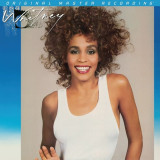
Whitney did more than turn Whitney Houston into a pioneering sensation known around the world by her first name. Originally released in June 1987, the singer's blockbuster sophomore record became the first album by a female artist to debut at No. 1 on the Billboard 200 chart — a position it claimed for a total of 11 weeks en route to selling more than 10 million copies in the U.S. The Diamond platinum effort also contains four No. 1 Hot 100 hits that, when combined with the three chart toppers from her 1985 debut, gave her seven consecutive No. 1 singles — an accomplishment that no other artist has accomplished. Commercially and creatively, Whitney stands on hallowed ground — especially now that the record plays with a sound that puts into perspective just how extraordinary, engaging, and vital Houston's music remains.
Mastered from the original master tapes and pressed on MoFi SuperVinyl at RTI, Mobile Fidelity's 180g 33RPM SuperVinyl LP of Whitney invites listeners to experience the Rock & Roll Hall of Fame inductee's pivotal album in audiophile quality for the very first time. Free of the dynamic limitations and tonal flatness prevalent on prior vinyl and CD pressings, it lets the music breathe and reveals the copious detail, nuance, and texture within the immaculately produced songs. MoFi's SuperVinyl profile offers further advantages in the forms of a nearly inaudible noise floor, dead-quiet surfaces, and superb groove definition.
In addition to featuring extreme clarity and immediacy, this numbered-edition reissue does wonders for the attribute that inspired more than 20 million people around the globe to add Whitney to their record collections: that inimitable voice. Houston's trademark mezzo-soprano — an acrobatic instrument equally capable of taking off on fantastic flights and unwinding for hushed meditations — benefits from the fantastic airiness and transparency afforded by this meticulously restored edition. Whitney has never sounded or looked better. The crossover landmark deserves nothing less.
Issued just two years after Houston's breakthrough debut, Whitney immediately signalled the genre-defying singer's intent to continue to push ahead and expand her palette. Shot by photographer Richard Avedon, the album cover depicts an iconic image of Houston — captured with a gleaming smile, bright eyes, teased-out afro, toned arms, and a right hand that appears to wave a friendly hello — whose active, athletic profile stands in contrast to the extremely formal sit-down shot of her that graces her '85 record. The change is telling: Whitney overflows with unfettered joy, rhythmic vibes, and deep-seated emotions that forever endeared her to the hearts and minds of countless listeners — and which set the standard for the wave after wave of divas that followed in her footsteps.
It's no coincidence that the first track on Whitney is the declarative "I Wanna Dance with Somebody (Who Loves Me)." Like Michael Jackson's "Billie Jean" and Madonna's "Material Girl," the feel-good smash is one of the quintessential '80s gems — a lithe, melodic, celebratory release of pent-up energy and loneliness that glides across club floors, shouts to the rooftops, and shrugs off any concerns about vulnerability or embarrassment. Houston's swooping voice moves in sync with the sleek beats and dipping-and-diving synths. She practically takes her fellow musicians by their hand and leads them in a blissful dance that nobody would dare sidestep. Focusing on Houston's singing — a task made challenging only because of the impossible-to-ignore hooks and grooves — showcases the virtuosic facets of not only her register but her control, discipline, smoothness, and warmth.
That she replicates those feats for the entirety of the nearly 53-minute-long album makes Whitney that much more special. Houston reaches back and channels her childhood gospel training on the R&B-flared "So Emotional"; effortlessly slips into Quiet Storm mode on the duet with her mother, gospel great Cissy Houston, on "I Know Him So Well"; flirts with smooth jazz and collaborates with tenor saxophonist Kenny G on the lush "Just the Lonely Talking Again"; conjures dreamscapes and shadow-boxes with supple funk on a romantic cover of the Isley Brothers' "For the Love of You"; and, for the majestic power ballad "Didn't We Almost Have It All," displays the sky-scraping reach of her vocals amid a grand arrangement made even bigger by Houston's sweeping performance and triumphant finish.
Houston's once-in-a-generation talents weren't lost on the adoring public, radio deejays, or industry experts. In addition to harbouring four No. 1 hits and receiving nominations for four Grammy Awards, Whitney generated another Top 10 success in the guise of the Afro-Cuban-leaning "Love Will Save the Day." The album also netted Houston four American Music Awards; two Billboard Music Awards; back-to-back People's Choice Awards; a Soul Train Award; and various other accolades. It all makes the crux of the Washington Post's July '87 review of the album appear prophetic: "Her voice sounds stronger still and the songs are varied but so consistent she could garner 10 Top 10s out of a field of 11."
That claim still holds true. A brilliant fusion of pop, R&B, smooth jazz, and soul, Whitney is a showstopper – and one of the key reasons Houston is the most-awarded female artist of all time.
Julian Cannonball Adderley's only Blue Note album, Somethin' Else, would likely forever be famous in music lore if just for the presence of Miles Davis. The iconic composer/trumpeter steps into the role of sideman on the 1958 set, one of just a handful of times he'd make such a move after the calendar passed the mid-1950s. Yet evaluating Somethin' Else strictly on Davis' involvement misses the big picture. Plain and simple, Adderley's jubilant work remains a jazz landmark due to the chemistry of its Hall of Fame personnel, enthusiasm of its participants, and sophistication of its arrangements – not to mention the reference-grade production and inclusion of the definitive renditions of two all-time jazz standards.
Limited to 6,000 numbered copies, pressed on dead-quiet MoFi SuperVinyl at RTI, and mastered from the original master tapes, Mobile Fidelity's ultra-hi-fi UltraDisc One-Step 180g 45RPM 2LP collector's edition pays tribute to the record's merit and includes the bonus track "Allison's Uncle." Offering reference-calibre sonics, this spectacular collector's version provides a clear, transparent, ultra-dynamic, and up-close view of a cornerstone effort that witnesses Adderley and Davis sharing horn duty alone for the only time in their fabled careers – an arrangement that occurred as a result of Adderley having joined Davis' majestic sextet a year prior.
The premium packaging and beautiful presentation of the UD1S Somethin' Else pressing befit its extremely select status. Housed in a deluxe slipcase, it features special foil-stamped jackets and faithful-to-the-original graphics that illuminate the splendour of the recording. No expense has been spared. Aurally and visually, this UD1S reissue exists as a curatorial artefact meant to be preserved, touched, and examined. It is made for discerning listeners that prize sound quality and production, and who desire to fully immerse themselves in the art – and everything involved with the album, from the iconic photos to the gorgeous finishes.
The vibrant potency reveals itself openly on an analogue set that provides full-range reproduction of an ensemble that also includes pianist Hank Jones, bassist Sam Jones, and drummer Art Blakey. Each and every snare hit, downbeat, and cymbal splash registered by the latter take on realistic proportions, blooming and decaying as they would right in front of you on a stage. Jones' foundational bass lines register with uncommon depth and palpability, the litheness of the strings and fullness of the instrument epitomizing the definition of rhythm. Stellar, too, are the surefooted 88s. Sublime in scale, tonality, and attack, with the delineation such you can practically separate the white and black keys in your mind. As for that liquid interplay between Adderley and Davis? Breathtakingly lifelike in timbre, naturalism, purity, and presence. This collector's version takes you there – there being Rudy Van Gelder's legendary New Jersey studio in March 1958 to witness it all unfold, again and again.
For reasons that extend far beyond the outstanding playing and flawless repertoire, Somethin' Else is without question a record you'll always want to watch and hear come together. As veteran critic Bob Blumenthal observed writing about the album four decades after its release, "The instant rapport achieved by the quintet is thus the product of much shared and common history, though the tensile strength that they create throughout created a totally unique feeling that can be attributed to the sensitive musicianship of all concerned, including the supposedly hard bopping leader and drummer." Such inimitable feeling, or emotion, courses throughout every passage, and no where more obviously than on "Autumn Leaves" and "Love for Sale."
Without question, the discreet interpretations of the Johnny Mercer and Cole Porter songs, respectively, found on Somethin' Else have long been considered part of jazz's alluring mystique. Adderley and Davis bring contrasting approaches to the table yet sound of a singular mind on "Autumn Leaves," with the latter's muted trumpet and the headliner's lush alto saxophone dovetailing into a performance that endures as a blueprint for expression, counterpoint, sophistication, fluidity, and linearity. Blues, melody, and romance pour from their horns. Their bandmates, picking up on the intimate vibe and calm mood here – as well as on the spry, head-over-heels spirit of "Love for Sale" – join in on the conversation with sharp economy and float-on-air roundedness.
Not to undersell the other three numbers, all deserving five-star status. Twelve measures in length, the title track offers a slow burn in swing. Written by Adderley's brother, Nat, the 12-bar "One for Daddy-O" transmits funk flavors. The closing "Dancing in the Dark" pops with lushness and temptation, its stream of bold colours and understated textures calling for a moonlight twirl, or at least fantasies suggestive of a memorable night. Somethin' else, indeed.
Celebrate Hip-Hop At Fifty, Bad Boy records and the 25th anniversary of the debut album of The Lox, as they takes you on a journey through the streets where money, power, and respect rule supreme. With hard-hitting beats and thought-provoking lyrics, Money, Power & Respect is a timeless masterpiece that will keep you captivated from start to finish. Feel the energy surge through your veins as you immerse yourself in these iconic street anthems.
Featuring iconic tracks like "Money, Power & Respect," "If You Think I'm Jiggy," and "We'll Always Love Big Poppa," this album is a must-have for any true hip-hop aficionado. It's a sonic experience that will leave you hungry for more.
g A7. Let's Start Rap Over (feat. Carl Thomas) 4:28
Hurry has grafted the best qualities of ‘90s bubblegum power pop—the pitch-perfect songwriting, the pop-rock sheen, the borderline saccharine vocal melodies—onto something far more raw and emotionally resonant. Don’t Look Back is striking in its tenderness and candor—approximately half of the lyrics on the record concern the deterioration of an 11- year relationship Scottoline was in, with the other half being a celebration of new love. The first words Scottoline sings, in opening track “Didn’t Have to Try,” is essentially a statement of theme: “And we’re back at the beginning / Never thought I’d see a face like that again / It attacks when we’re not ready / And I won’t play it safe this time.” This is pop music about actual feelings which means it’s automatically better than most pop music. It is challenging and addictive.
There is not a single moment on Don’t Look Back that isn’t completely drenched in melody and emotion. “Parallel Haunting” evokes the tuneful ache of golden age Evan Dando; “Little Brain” sounds like golden age Evan Dando and golden age Noel Gallagher. Don’t Look Back is, in a word, bittersweet, with melodies that feel like a jackhammer on your brain’s pleasure center and lyrics that feel like getting slapped in the heart.
The "Origins" collection focusses on one the greatest guitarist of all time. More than 50 years after his death, find the titles that influenced the sound of Jimi Hendrix on a double vinyl! With original tracks by : Muddy Waters - Bo Diddley - Chuck Berry - Little Richard - Buddy Guy - Bob Dylan - Elvis Presley - John Lee Hooker - B.B King
DJ Jus-Ed is a real house g. The New Jersey man has been keeping it deep for decades, mostly on his own Underground Quality label and that's what he does once more here. As is often the way, his own vocals infuse the opening track 'That First Touch' which is a happy house cut laced with feel-good pianos.
'The Freshness' hits the sweet spot between classic Chicago depths and dubby new school house with sustained chords and lo-fi drums. 'The Walk & Talk' has elastic bass and tumbling drums with zoned-out vocal musings and 'When I Met You' brings some cosmic synth radiance into Ed's smoky house basement.
out of Stock
Last delivered 21 months ago available to reorder, subject to availability
I could smell the curves of the river beyond the dusk and I saw the last light supine and tranquil upon tide-flats like pieces of broken mirror, then beyond them lights began in the pale clear air, trembling a little like butterflies hovering a long way off. -The Sound and the Fury, William Faulkner
This is the third and final instalment of Jeremiah M. Carter’s album triptych, »Vessels«. Following »Rejoice« and »Speak You Also«, all three album’s where conceived within a 6 month period during ferociously exalting creative sessions.
The Emotional turmoil of the early pandemic is as present on »Vessels« as it is in the other two albums, yet the final instalment showcases as more distinctive sense of focus, where the earlier albums saw Jeremiah expel a state of uncertainty and trepidation into an intense, almost spiritual form of musical cleansing, Vessels still bears those same hallmarks, yet comes across with an air of refinement and finality.
Spanning six pieces, each work feels like an integral part of the albums overarching narrative, fervently nestled amid divinity and humility. By its final piece, which also clocks in as the longest in the entire triptych, we are treated to one of Jeremiah’s finest moments, and for a few seconds, it all comes together for one last swansong, forming a sonic distillation of elation and grief, desire and passion. – It’s all here.
First new recordings from GODFLESH since 2017's critically acclaimed full length 'POST SELF'.
'PURGE' musically, amongst the many layers of dirt, revisits and updates the concepts explored on the 'PURE' album from 1992; 90's hip hop grooves mangled and put through the GODFLESH filter to create something that is still unique and futuristic in style.
Both minimal and maximal, with layer upon layer of filth and heaviness, Godflesh deliver alien grooves that swing whilst also retaining the psychedelic / bad trip edge that Godflesh has always obsessed over. This is, and always has been, feel bad music; the title alone 'PURGE' references directly how songwriter / creator Justin K Broadrick utilises this music as temporary relief from his diagnosed autism and PTSD, a journey he has been on since he began creating music and feeling alone and as an outsider in any 'scene' or 'group' from childhood and throughout his adulthood.
Godflesh gives him the means to express a lifetime of feeling misunderstood and overwhelmed by hyper sensitivity, the band being the vehicle to give him some sense of catharsis and transcendence; a way of communicating overload and constant disenchantment at the human condition, and man's abuse of power and the systems that chain us.
The album references the cycle of horror that man has always and will always put us through; those in positions of power revel in the infliction of pain and horror upon individuals, in the name of their religion, their power, their money, their flags....
8 songs, delivered in a concise fashion for fellow outsiders.
This comes for the first time on 180g vinyl in a gatefold sleeve. Re-mastered for vinyl.This 22 track compilation spans the years 1995 - 2004 featuring key tracks from all their albums as well and live recordings and many unreleased tracks.BJM has been essential in the development of the modern U.S. garage scene, and many LA and SF musicians got their start playing with Newcombe, including Peter Hayes of The Black Rebel Motorcycle Club. Originally Newcombe was heavily influenced by The Rolling Stones' psychedelic phase - the name comes from Stones guitarist Brian Jones combined with a reference to cult leader Jim Jones, but his work in the 2000s has expanded into aesthetic dimensions approximating the UK Shoegazing genre of the 1990s and incorporating influences from world music, especially Middle Eastern and Brazilian music.
Freak Frequency was a fitting title for the new material Greg Obis was planning for Stuck, the frenetic and twisted post-punk outfit he formed in 2018. Inspired by the doomy social economics of Mark Fisher’s Capitalist Realism, the bleak worldbuilding of horror games Demon’s Souls and Bloodborne, and the bombastic yet arty satire of Devo, Obis channelled his audio analogy into Freak Frequency, an album ringing out with explosive sounds and ideas.
Stuck formed after Obis’ previous projects, Yeesh and Clearance, called it quits in short proximity. Obis is on guitar and vocals, which span from booming theatrics to ecstatic yelps. The project’s rhythm section is completed by shoegaze guitarist-turned-chugging bassist David Algrim and tightly wound drummer Tim Green—also a graphic designer, and the artist responsible for Stuck’s distinctively unified visual aesthetic. Original co-guitarist Donny Walsh contributed freely inventive lines for the first few years of the project, including on Freak Frequency; Ezra Saulnier of Red Tunic, the newest member of the band, now brings calculated contrapuntal riffs to match Obis’ parts.
The building blocks of Stuck include the egg punk eccentricities of Uranium Club and The Coneheads filtered through noise rock power, à la Jesus Lizard or Slint; that melange is glittered with the precision microtones of Unwound and Women. “I want the feeling of immersion and chaos and tension, with a big guitar amp playing a big chord,” says Obis of his inspirations, citing friends and peers Cloud Nothings and Preoccupations. “But I want it delivered by having a lot of smaller points of light poking through.”
In fact, writing for Freak Frequency began while Content’s recording was still underway—beginning with “Scared,” which features acoustic layers under feedback squalls. “Time Out,” with motoric guitars in the sputtering lineage of Wire, was also composed in late 2019. Obis wrote it about the cycles of compulsion and shame woven into social media use, and the way negativity drives algorithmic engagement. It became an exciting exercise for the group in ramping up speed; “I thought I knew how far I could push Tim’s tempos,” Obis recalls. “But Tim kept insisting we do it 20 bpm faster than what I had. He is an absolute monster for playing that.”
Album opener “The Punisher,” a spiral staircase of disembodied guitars and rhythmic slams over a 2/4 beat, came in the aftermath of the January 6 insurrection. It felt immediately emblematic to Freak Frequency, and Obis describes it as his favorite Stuck track: one he wishes he could write again and again. “It hits all the boxes that Stuck can do: it’s goofy, but there’s a lot of intricate guitar interplay, and at the end, there’s a big payoff,” he explains. The last song written was “Do Not Reply,” a pre-album single that came to Obis after engineering for Melkbelly and channelling their earworm melodies. Algrim wouldn’t let it on the record unless Melkbelly’s front person Miranda Winters dueted on vocals; she was happy to oblige, and the gritty epic closes Freak Frequency.
With slippery snark, percussive heft, and funhouse mirrors of sludge, Freak Frequency delivers its needed screeds with gratifying nuance. If Stuck’s interpretation of this messed-up world goes down like a bitter pill, it’s only because its sugar coating is too delicious to keep from eating.
out of Stock
Last delivered 3 years ago available to reorder, subject to availability
The summer of 2016 marked the fortuitous meeting of two talented musicians, Zaidi Kiggundu (Ziggy Funk) and Jamie Mcshane, at a music festival. Sharing a love for Funk, Jazz, and Soul music, the duo knew they had to collaborate on a project together. Both Zaidi and Jamie had established music careers, bringing their unique backgrounds and experiences to the table. They also had their own music labels, contributing to their respective scenes.
Their collaboration began with a series of demo sessions at Jamie's studio in Scotland. Together, they laid down the foundation for their debut album, which they named 'Fortuitous.' This album fused Funk, Jazz, and Soul with a contemporary touch, paying homage to the classic albums of the past that deeply inspired them. Despite facing challenges such as scheduling conflicts and the disruptive impact of the COVID-19 pandemic, Zaidi and Jamie remained committed to completing the project.
To bring their musical vision to life, they enlisted the help of top-notch musicians on horns, including Ewan Mains, Konrad Wisniewski, and James Steele. With their contributions, the album 'Fortuitous' delivers solid grooves and captivating arrangements, showcasing the duo's dedication to their craft. The quality of the music caught the attention of Splash Music, who eagerly embraced the project. What started as a chance encounter and a few simple ideas many years ago has now transformed into a fully realized album, ready to be released to the world for everyone to enjoy.
out of Stock
Last delivered 18 months ago available to reorder, subject to availability
Joshua Ray Walker announces NEW RECORD “What Is It Even?” - lending his signature alt-country style to iconic pop songs - paying homage to female-identified powerhouse vocalists and their influence on global culture. Launching with his reimagination of Lizzo’s “Cuz I Love You,” Walker pushes himself and his band to respectfully and artfully build a bridge between two seemingly polar styles of music. What Is It Even? Album Rollout 6/2 - “What Is It Even?” Preorder launch & IG1 “Cuz I love You” 7/7 - "Linger" 8/4 - “What Is It Even?” Street Date The catalyst of Joshua Ray Walker’s new album, What Is It Even?, was sparked on the patio of the Tulsa, Oklahoma music venue and dive bar Mercury Lounge, a fitting origin story for any country record. But this is far from an ordinary country record. It was on that Tulsa patio, deep into tour, when Walker and drummer Trey Pendergrass were half joking about what their gospel jump blues version of Whitney Houston’s “I Wanna Dance With Somebody” would sound like, wondering “what if the Blues Brothers covered a Whitney Houston song?” At that point, it was still unclear how the Dallas native would follow up his trio of critically acclaimed, interconnected albums, all of which were packed tight with character-driven songs that put multiple national-tours worth of crowds on the precipice of staining their shirts with either beers or tears, depending on the song. The third of the trio, See You Next Time, led to Walker appearing on The Tonight Show and CBS Saturday Morning, brought with it performances at the Ryman Auditorium in Nashville and Gruene Hall in Texas, landed him on Rolling Stone’s “Best of 2021” list, and prompted SPIN to call him “one of country’s most exciting storytellers.” Those stories about dive bar dwellers running out of last chances made listeners feel a gauntlet of emotions. What Is It Even?, a 10-track covers album consisting of songs made famous by female pop acts, produced with John Pedigo and arranged alongside his touring band of Pendergrass, bassist Billy Bones, and pedal-steel player Adam Kurtz, was born out of wanting to make people feel joy.