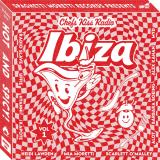
Chef’s Kiss Radio Vol. 1: Ibiza versammelt zehn handverlesene Tracks auf einer stilvollen 12"-Compilation von Spaghetti Moretti Records. Mit Beiträgen von Mia Moretti, Myd, Kapote & ALOT, Radio Slave, Heidi Lawden, Cesária Évora, Uffie und weiteren Künstler:innen verbindet die Sammlung House, elektronische Sounds und unverwechselbares Ibiza-Feeling.
Entstanden aus der Chef's Kiss Radio-Residency im Nocturna Ibiza, vereint das Album exklusive Originale und hochkarätige Remixe zu einem perfekten Soundtrack für endlose Sommertage und lange Nächte. Die limitierte Vinyl-Edition macht diese Veröffentlichung zugleich zu einem attraktiven Sammlerstück für DJs, Vinyl-Fans und Liebhaber moderner Clubmusik.
,Chicano Poetry" begann als viraler Instagram-Clip des mexikanisch-amerikanischen Musikers Obed Padilla und entwickelte sich anschließend zu einem vollständigen Song. Basierend auf einem Sample von Darondos Soul-Klassiker ,Didn't I" verbindet der Track lässige West-Coast-Vibes mit persönlichem Storytelling und modernen Hip-Hop-Einflüssen. Der in Kalifornien beheimatete Sänger, Rapper, Produzent und Gitarrist mischt in seiner Musik Latin-Alternative, Rap und melodische Pop-Elemente. Inspiriert von Künstlern wie J. Cole, Kid Cudi, den Beach Boys und Stevie Ray Vaughan, schafft Padilla einen Sound, der Nostalgie, Identität und zeitgenössisches West-Coast-Feeling verbindet.
Spring Back, Ball Forward is the Soda Gong debut from Jung dj, nom de plume of shapeshifting multi-instrumentalist Randy Riback. Following a series of uniformly great self-releases and cassettes on the dearly missed Lillerne Tapes, this collection observes the spacious and angular dynamics of 1990s Midwestern post-rock through the lens of the bedroom electronic music producer.
Perhaps surprisingly, amp worship lies at the center of the album: a fascination with the grain, pressure, and emotional charge of amplification and gain, refracted through the strange remove of digital amp modeling. Tubes, speakers, sag, and in-the-red textures are a critical part of the album’s expressive vocabulary, imparting density and colorful saturation while lending even its most weightless passages a vital sense of physical presence. Over the course of twelve tracks, wistful ambience gives way to blunt heaviness and roiling catharsis, underpinned by a palpable sense of loss and grief.
The album’s auspicious cast of collaborators further complicates its emotional terrain. Spoken contributions from Natalia Panzer and Angelina Nonaj occupy strikingly different registers: Panzer’s diffuse and oblique, drifting in and out of the music’s contours; Nonaj’s a vivid travelogue, grounding the record in place and lived experience. Elsewhere, Soda Gong veteran Mister Water Wet joins a small constellation of guests whose playing folds naturally into Riback’s arrangements, blurring the boundaries between computer and ensemble music.
For all of its attention to texture, process, and the material qualities of sound, Spring Back, Ball Forward is first and foremost an emotionally potent work, possessed of a directness that can feel rare within experimental electronic music. Riback draws from a rich and idiosyncratic musical vernacular, arriving at something deeply felt and difficult to place: a singular statement whose pathos exceeds the sum of its references.
Mohammad Syfkhan is back with his second album for Nyahh Records. This collection of new recordings marks a hug milestone in Mohammad’s career as it’s the first album that features all original compositions. And with a full band! We had the great help of Syrian Cellist and composer Naseem Alatrash to help with the string arrangements. The resulting record is a beautiful journey into a timeless Middle Eastern and North African sound akin to the likes of Fairuz or Umm Kulthum with a fast Kurdish Dabke tempo.
I Love You Ireland is an incredibly personal album for Mohammad. The title alone, much like his debut ‘I Am Kurdish’ is as personal as it it’s political. To express such love for a place in music is saying, thank you for making me and family feel safe. Thank you for taking us in. A stand out track titled ‘Ah Yu Donia’ is Mohammad’s first real public moment of grieving for the loss of his son at the murderous hands of Isis. In this song he asks God why he was taken. Trying to figure the sense in the actions of fundamentalists. The strings sections are sad, but not morbid. Acting like a release or companion to the horrific reality of losing a child.
‘Al Huriya’ is Mohammad’s first attempt at using an Irish rhythm known as a Reel, as appose to his usual Middle Eastern rhythms. Again, this is a beautiful way for Mohammad to give thanks to all the musicians and supportive people his has met in Ireland since 2011.
WHO IS MOHAMMAD SYFKHAN
Mohammad Syfkhan is a Kurdish/Syrian Singer and Bouzouki player. He began
playing music in 1980 while he was in college studying nursing. When he got
his degree in 1983, Mohammad moved to the city of Raqqa, Syria where he
began working as a professional singer and started his own band, The Al-Rabie
Band which played concerts, parties, weddings and festivals all over Syria. The
Al-Rabie Band were a much sought-after group. Their live sets included Kurdish, Arabic, Turkish and some Western songs as well as Mohammad’s own original material.
Mohammad continued to play with his band while also working as a surgical
nurse until the war broke out in 2011. This unfortunately brought tragedy to
Mohammad’s family when one of his sons was killed by Isis thus threatening
the lives of the rest of his family. His family had no choice but to leave their
home and seek safety in Europe. Three of Mohammad’s sons were resettled in
Germany while Mohammad, his young daughter and wife were taken in by
Ireland. Mohammad has spoken at length of his confusion and despair with
fundamentalists and how their message is a far cry from the teachings of love
and understanding that he considers the true message of Islam.
For our fifth release, we invited Voorman and Siphonophora. Previously, we did pure split EPs, with one artist on each side, but for this one it felt more natural to have both artists share both sides of the record. There is a clear connection between their sounds, so bringing them together came naturally. The A-side is the more intense side, with repetitive elements that gradually change and build, while additional layers and distinct sounds are introduced throughout. These details slowly emerge around the sequences, adding depth and movement while keeping the sound deep and immersive. On the B-side, things get more stripped back. There is more space between the elements, with slower sequences and a calmer feel. The atmosphere and smaller details are given more room to truly shine through. Four deep and hypnotic cuts, moving from intense pressure into a deeper, more reduced sound.
¡NO PASARAN! is the extension to Extrawelt's DYSTORTION, from brooding tension to playful relief, the album took listeners on a six-year-crafted exploration. Their next EP picks up where this epic chapter left off and is clearly related. It's a hypnotic dive into shadow and dream, darkness and melancholy with subtle flashes of light.
The title track of the EP, already known from the album (D1 - Extrawelt - ¡No Pasaran!) carries a commanding presence, pulses with a rolling, insistent bassline that anchors shifting rhythmic currents and evolving sonic layers. Between tension and release, shadows and melody, it's a track that moves like a living entity.
Arctic Dead Run hits like a surge of raw energy. Acid lines roll relentlessly, building tension that feels alive. Then a melody sneaks in - soft, almost fragile - cutting through the intensity, until hi-hats erupt and the groove snaps into full focus. Maximal yet controlled, every element finds its place.
Clipping Me Softly dissolves the pressure with a dark, playful groove. Precise rhythms meet spacious pads, opening into a dreamlike state where night slowly gives way to warmth and light.
A focused and uncompromising continuation of Extrawelt's sonic language: Dense grooves, acid pressure, and dreamlike relief collide in a release built for deep listening and late-night floors.
What makes a life well lived? Career, home, savings, family: these are the milestones that make adulthood legible as success. Friendship, meanwhile, is often treated as something that either endures or doesn’t, more a matter of luck than a relationship requiring its own devotion, maintenance, and care. When really, as the world becomes more isolated and artificial by the day, friendships may be the most important thing a person ever builds.
“A lot of times in life I feel like a late bloomer, like I'm still trying to get my shit together in a way that other people have already figured out,” says Chastity Belt drummer/vocalist Gretchen Grimm. “But then I reflect on my adulthood, and my top priority has largely been my friends, which I do not regret at all.” That priority feels like the guiding principle on the band’s sixth album, All My Friends. Not that they set out to make an album about friendship—during mixing the band's longtime collaborator and engineer, Samur Khouja, pointed out that a lot of the songs referenced the subject. Which makes a lot of sense.
Julia Shapiro (guitar/vocals), Lydia Lund (guitar/vocals), Hunter Truscott (bass/vocals), and Grimm have been making music together for 15 years. Friendship has sustained the Chastity Belt project as its members have grown alongside one another, both as people and as musicians. Across a resonant catalog, they’ve moved from the raucous wit of their early records toward the lush, introspective moods they’ve refined on each album since via trademark intertwining guitars, meticulous rhythms, and double exposure of melancholy and optimism.
All My Friends comprises songs recorded across multiple years, time zones, and studios, including Seahorse Sound in LA, Way Out in Woodinville, and a centuries-old house on the Greek island of Hydra. The oldest track dates back to around 2018; the newest were finished within the past year. These days, the band spans three cities (Los Angeles, Seattle, and Chicago); less writing/rehearsal time means songs are often worked out in the studio, relying on the spontaneity and instinct that comes from knowing one another so well. The result is rawer and less polished than their last couple of records, closer in spirit to the band’s roots.
With »The Future Is Futuristic«, the fifth album for Haleiwa (and third with Morr Music), Stockholm’s Mikko Singh draws from a deep well of nostalgic feeling, while making music that feels razor-sharp, on point, and full of hazy dream-pop pleasure. After 2019’s »Cloud Formations« and 2022’s »Hallway Waverider«, which imagined psychedelic post-shoegaze and mantric pop songs into being, »The Future Is Futuristic« feels like both consolidation and magnification; the noise-drenched songs feel thicker, heftier; the electronic interludes playful and kinetic; the rhythms boundless. It’s as though Singh has truly found his metier, his voice, a place from which he’s comfortable to indulge in the kind of home-recorded worldmaking that has always marked Haleiwa out as something special.
»The Future Is Futuristic« passes by in a rush of whiteout tones and scurrilous energy; the whole thing is over within half an hour, Singh ensuring his songs say exactly what they need to say – no more, no less – before bustling through into the next ecstatic pop moment, pushing the music further into the zone. While his music often has a similar, drenched quality to shoegaze, on »The Future Is Futuristic«, Singh seems to be settling in alongside other spirits – there are touches of the experimentation of both A.R. Kane and Flying Saucer Attack here; the more motoric tunes recall New Zealand’s Snapper; the glitchtronics have a City Centre Offices sensibility, while the sparkling folksiness of the melodies can recall Bristol bands like Light or AMP.
But it’s ultimately not about influence, beyond perhaps Haleiwa nestling alongside some like-minded souls in perceptive listeners’ minds. Instead, thrill to the rush of rhythms that float between jungle and punk on »Flourishing« and »96«, the latter a reference, from Singh, to moments of early revelation – »it’s about being thankful for having found punk rock and skateboarding at a young age, in 1996.« There’s also the hypnotic dream-rush of the opening »Smoke Will Rise«, the beautiful Cure-esque guitars swimming through »Sunset Street« and »Strange Notes«, the tumbling rhythms and heady, elated chord changes that grant lift-off to »Wave Chaos«… A real panoply of pleasures, in fact.
»The Future Is Futuristic« was recorded solely by Singh on four- and eight-track in his home studio, with a quick trip to Telefonstudion to record drums. Recording at home grants a certain intimacy to »The Future Is Futuristic«, even as the songs, at times, bliss their way off into the skies; there’s something both expansive and intimate about the music here, as though Singh is grappling immensities into intimacies. It also feels deeply personal for Singh, a summation of much of what he’s done over the years; as he says, simply and clearly, »The album is in my interpretation a mix between punk, electronic music, and dream pop.« The threads that connect these creative phenomena? Energy, texture, melody, tone, sensuality; pure pop pleasure.
Following the critically acclaimed Fantômes… Futurs, praised by FIP, France Inter, Radio Nova, ARTE and International jazz press, double bassist and composer Kham Meslien returns with Vévés électriques, a deeply immersive second album where memory, landscape and improvisation merge into a singular sonic journey. Joined by Laurent Bardainne, Roger Raspail, Naïssam Jalal and David Neerman, Meslien expands the intimate language of his double bass with subtle loops and organic textures, weaving together echoes of Iceland, the Caribbean and imagined territories. Blending spiritual jazz, contemporary classical influences and ambient soundscapes, Vévés électriques is an invitation to drift beyond geography and into a profoundly personal exploration of emotion, identity and freedom.
Set upon an oil-smooth sea, an immense range of directions opens up before Kham Meslien for “Vévés Électriques”, his second album after “Fantômes… Futurs.”
With only his double bass and bow as vessel and sextant, a distant journey nevertheless begins to take shape. Vibrations and the striking of strings against wood quickly trace lines and winding paths across the surface of the water—so many routes to follow before leaving them behind, allowing the outward journey to become an inward voyage as well.
After an improvisation intended to shed light on the course ahead, isolated lands came into view: the shores of Iceland, the lands of the far north, places cut off from the rest of the world by vast expanses of water. Islands battered by a harsh climate that can only be endured by drawing warmth from deep within oneself.
Then the Caribbean arc appeared. The archipelago, a setting for joyful and unsettling experiences, takes Kham back to a childhood from which the passing years have carried him away. Rather than following the conventional channel of the music of these places, the West Indies emerge through memories whose colors are still vivid.
Through the morning mist, Roger Raspail’s percussion locks into the same frequencies of the groove. Double bass and struck skins then become companions on a road that intersects with Laurent Bardainne’s saxophone. Carrying a dreamlike message, David Neerman’s vibraphone also joins the narrative to write a few chapters of its own, while others are enchanted by the flute and voice of Naïssam Jalal, or struck by the metaphorical rhymes of rapper Rocé.
On the surface, through the themes along which the pieces navigate, landscapes slowly reveal themselves and change shape as the shore draws nearer or recedes. Straying from the marked course and allowing oneself to drift, breaking free from pure acoustic sound by adding loops first played live and then sampled, allows Kham to explore the depths. The depths of the ocean, as well as those of his soul. To enter a world of improvisation that reveals itself even as he explores it. Examined up close, feelings become shells to pick up and hold to one’s ear, so that they can be felt intensely until they take material form.
This sea, which had appeared peaceful, became the stage for a succession of stories and images, which then accumulated to give birth to a larger narrative.
Across To Remind Myself I Have Lived, aquatic sounds drift through hazy electronics and lush bedroom textures, before giving way to harsher, more industrial British landscapes. Voices appear and disappear. Loops seem to circle memories rather than rhythms. Guitar fragments become dream sequences. Domestic spaces open onto something colder and more distant.
The new album by London-based Michele Tellarini under the Catholic Block moniker gathers works made across five years, moving between composition, improvisation and a more instinctive form of sound collage. Known for his work with concrete punks Qlowski (Feel It Records/Maple Death) and goth-punks Secrecy (La Vida Es Un Mus), Tellarini approaches this material without the conventions of a traditional song cycle, allowing disparate pieces to find their own connections.
There is something strangely timeless in these works: a quality shared with music that seems to exist slightly outside its own moment, from the intimate, confidential organic realm of Mount Eerie to Bruce Gilbert's more abstract electronic and ambient experiments or the haunting digital world of Holly Herndon. To Remind Myself I Have Lived belongs to that same uncertain space, music that feels both deeply tied to the circumstances of its making and somehow detached from them, music for the lonely that shines with crepuscular clarity.
YES is a genre-blurring blend of punk, electronic and rap from South Africa, released on limited edition White Vinyl
South African alt-rap trio Internet Girl have officially announced their debut album, YES, arriving November 13 via PACK. Records. Alongside the announcement, the group has released their new single “DA BUSINESS” featuring Kenny Mason.
A high-energy party anthem, “DA BUSINESS” opens with distorted guitar before chopped vocals briefly pull things back, only for an abrupt beat drop and howling synth to send the track into overdrive. As another synth melody sweeps in, TK cuts through the chaos with an introspective opening verse before Kenny Mason crashes in with a gritty guest verse. Live drums, distorted guitars, and surging synths continue to build around them, turning their vocals into something closer to rage-filled battle chants than traditional rap verses.
Partially written on tour last year, “DA BUSINESS” is the oldest song on YES and one of the album’s few guitar-led tracks. Kenny connected with the trio over DMs months earlier before joining them on the track, bringing Atlanta and South Africa together for one of the album’s most charged moments. “DA BUSINESS” follows the trio’s recent single “ALL THE SAME,” a swagger-heavy track built around a hypnotic Spanish-language vocal sample and live drums before a heavily distorted bass synth takes over in its final stretch, drawing inspiration from South Africa’s booming taxi rave scene. Together, the two singles offer an early look at the range of YES, moving between the rock, rap, and electronic sounds Internet Girl have made entirely their own.
Written largely during a week-long trip to South Africa’s Karoo region at the beginning of 2026, YES captures Internet Girl at a turning point. What began as an ad-lib TK would throw into his verses gradually became the philosophy behind the record: saying yes to an idea and committing to it completely, even before there’s any proof it will work. Across the album, that once-delusional confidence begins to feel real as the trio reflect on coming of age, growing more comfortable with themselves, and becoming increasingly assured in the music they make.
The new release arrives on the heels of a big year for the South African trio, who have brought their high-energy live show to stages around the world, including Pitchfork Music Festival Paris and Boiler Room Soweto, while co-headlining Kiss Kiss Festival in South Africa alongside Basement Jaxx.
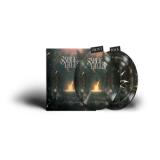
With “Homura”, Sable Hills take everything they have built over the years and push it into new territory.
Since winning the Metal Battle at Wacken Open Air in 2022 as the first Japanese band in the competition’s history to claim the grand prize, Sable Hills have continued to make their mark on the international metal scene. The victory led to a deal with Germany’s renowned label Arising Empire, followed by their global debut with their third album “Odyssey” in 2024. In 2025, their single “Namu”, incorporating traditional Buddhist chanting, became a global viral hit, surpassing 3 million streams on Spotify and 5.4 million views on YouTube, while live clips posted to Instagram and TikTok collectively exceeded 30 million views.
Rooted in the band’s signature blend of metalcore and melodic death metal, “Homura” expands that foundation with distinctly Japanese elements, from traditional instruments and melodies to the use of Japanese language and Buddhist chants. The result is an album that feels both unmistakably Sable Hills and unlike anything they have created before.
The title “Homura” comes from an old Japanese word meaning “flame.” It represents the intensity and aggression at the heart of metal, reimagined through a distinctly Japanese aesthetic. Throughout the album, heaviness and melody collide with the atmosphere and beauty of traditional Japan, creating a sound that is both fierce and deeply rooted in the band’s identity.
With its fusion of crushing riffs, melodic death metal intensity, traditional Japanese instrumentation, and powerful vocal performances, “Homura” marks a new chapter for Sable Hills, embracing their roots, building on their international rise, and setting the band on a path they have never taken before.
With “Homura”, Sable Hills take everything they have built over the years and push it into new territory.
Since winning the Metal Battle at Wacken Open Air in 2022 as the first Japanese band in the competition’s history to claim the grand prize, Sable Hills have continued to make their mark on the international metal scene. The victory led to a deal with Germany’s renowned label Arising Empire, followed by their global debut with their third album “Odyssey” in 2024. In 2025, their single “Namu”, incorporating traditional Buddhist chanting, became a global viral hit, surpassing 3 million streams on Spotify and 5.4 million views on YouTube, while live clips posted to Instagram and TikTok collectively exceeded 30 million views.
Rooted in the band’s signature blend of metalcore and melodic death metal, “Homura” expands that foundation with distinctly Japanese elements, from traditional instruments and melodies to the use of Japanese language and Buddhist chants. The result is an album that feels both unmistakably Sable Hills and unlike anything they have created before.
The title “Homura” comes from an old Japanese word meaning “flame.” It represents the intensity and aggression at the heart of metal, reimagined through a distinctly Japanese aesthetic. Throughout the album, heaviness and melody collide with the atmosphere and beauty of traditional Japan, creating a sound that is both fierce and deeply rooted in the band’s identity.
With its fusion of crushing riffs, melodic death metal intensity, traditional Japanese instrumentation, and powerful vocal performances, “Homura” marks a new chapter for Sable Hills, embracing their roots, building on their international rise, and setting the band on a path they have never taken before.
Comfort with ambiguity, dynamic experimentation and melancholy are rife throughout Brody Price’s newest record, Leaf Miner’s Daughter. Classic alt-country at its core, this collection meticulously weaves together Americana into sluggish, heavy grooves; overdriven guitars, hook-laden acoustic dissonance - all bolstered by a songwriter full of heart and intention.
An integral member of the Dallas / Texas scene and national DIY touring community, Price has been quietly building a dedicated community of fans across the US since 2017, entirely independent and reliant on each other to build and shape the tours by word of mouth. Following a cassette recorded collection of country songs, ‘What’s The Point In Trying’ (2017), and the gorgeous and chaotic ‘Win A Trip To Palm Springs’ (2022), Price is tracing a sonic and narrative arc that feels specific, earnest and whimsical - not without its dark corners and deep questions.
The innate ability to find beauty among the rubble is rife throughout his newest, revealing an authentically tender desire to dig deeper to find relief and understanding. He invites us to empathize and sit alongside his turmoil in an effort to make ours more bearable. At home in his musicality and the discomfort of living, Price revels in the act of putting the pieces back together, giving us all permission to do the same.
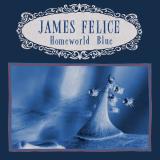
On his sweeping sophomore solo effort, James Felice squares up against cosmic indifference with expansive orchestral production and a depth of writing that makes even visceral Biblical imagery feel effortless. Recorded in Omaha with Nate Walcott (Bright Eyes) at the helm, Homeworld Blue pairs lush horns, intricate strings and pounding piano with Felice's authoritative, plainspoken voice — grand in scope, but never far from the small, everyday moments it's really about. Drawing on twenty years as keyboardist and accordionist of The Felice Brothers, and following his 2025 solo debut The Little Ones, Felice trades the intimacy of home recording for a maximalist, cinematic scope that sits comfortably alongside audacious songwriters like Joanna Newsom, Fiona Apple and Randy Newman — and closes, fittingly, back in the family kitchen.
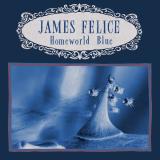
On his sweeping sophomore solo effort, James Felice squares up against cosmic indifference with expansive orchestral production and a depth of writing that makes even visceral Biblical imagery feel effortless. Recorded in Omaha with Nate Walcott (Bright Eyes) at the helm, Homeworld Blue pairs lush horns, intricate strings and pounding piano with Felice's authoritative, plainspoken voice — grand in scope, but never far from the small, everyday moments it's really about. Drawing on twenty years as keyboardist and accordionist of The Felice Brothers, and following his 2025 solo debut The Little Ones, Felice trades the intimacy of home recording for a maximalist, cinematic scope that sits comfortably alongside audacious songwriters like Joanna Newsom, Fiona Apple and Randy Newman — and closes, fittingly, back in the family kitchen.
n resurrecting the band Krill—declared dead over 10 years ago—Jonah Furman considered the turritopsis nutricula: the “immortal jellyfish” that reverts to juvenile form instead of dying. “I was always afraid of coming home,” he says. “But home is inescapable.” Now living in the same Chicago suburb he grew up in, Furman ponders the passage of time on Secret Language, a nostalgic and cerebral exploration of family, fatherhood, and fated love.
From 2010 to 2015, Krill recorded three LPs and two EPs, growing into a cult project revered for its complex, rapturous compositions. Anxious, anthemic, mathy, propulsive, they were beloved by Frankie Cosmos, Girlpool, Horse Jumper of Love, and countless others. Personal lives took priority and brought the project to an official close, save for two reunion shows and a 2020 album under the name Knot, but that's retroactively a Krill album, “because it's easier that way.”
The project was revived “on a whim” as Furman puts it: “Theo from Ovlov asked if Krill wanted to open a Chicago show. Then I started writing new stuff.” He recruited Krill’s longtime drummer Ian Becker who, too, had just moved back to town. Both had known guitarist Andrew Clinkman (also of Spirits Having Fun and Moontype) during their collective years in Boston and growing up in Chicagoland, and soon he joined the fold. On Secret Language, the trio tap into their reclaimed city’s famed music community, drawing inspiration from current locals the same way Krill were inspired by their Boston contemporaries like Pile and Speedy Ortiz instead of Pixies or Mission of Burma.
On Secret Language, home can be anything: a place, a person, a feeling. But Krill is “very much” a Chicago band now; a new beginning where it all began.
Tony Reed is undoubtedly one of those artists whom fans of “heavy music” have, at least unknowingly, encountered on stage or on their turntables at some point. Bands like Pentagram, Mos Generator, Hot Spring Water, and the so-called supergroup Big Scenic Nowhere are just a small part of his discography, which he continues to expand as a producer and mixer.
CONSTANCE TOMB was Tony Reed’s first band, which he founded at age 19 and which was heavily influenced by the gothic movement of the early ’80s. There are recordings online from when they made “boombox recordings” or, later, when he recorded everything “hi-fi” on his own in the garage with just a microphone, preserving it all for posterity on cassettes. You can also find several solo cover versions released under the band’s name. It was a labor of love that Tony Reed never let go of, but there was never a real band that toured or released an album—until now!
Now Tony has breathed new life into his childhood love, CONSTANCE TOMB, and fused his fondness for dark ’80s bands with his heavy metal past. Bands like Southern Cult, Bauhaus, The Cure, Bowie, as well as Black Sabbath and Thin Lizzy have shaped his musical tastes. Now, a mix of old and new songs is being infused with fresh energy, reviving a solo project that had taken on a slightly artificial feel.
With Bo McConaghie on bass and Christian Roney on drums, the band has already played its first concerts in the northwestern United States to find their sound as a group. Joint rehe
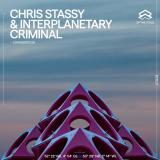
There are collaborations that make sense on paper, and then there are the ones that feel like they were always going to happen. CHRIS STASSY and Interplanetary Criminal now bring their first recorded meeting to Up The Stuss with ‘Dangerous’, a four-track EP that sees two artists with unmistakable identities find common ground somewhere between house, garage, breaks and pure dancefloor energy. With the sounds of this collaboration having quietly made their way into the world long before the full picture was revealed, its arrival feels like the moment the pieces finally fall into place.
Across the EP, the chemistry is immediate. STASSY’s knack for infectious grooves and vivid synth work meets IPC’s breakbeat-driven energy and distinctly UK-rooted sensibility, with neither side disappearing into the other. ‘I Just Can’t Get’ sets things in motion with skippy rhythms, breakbeat drums and those unmistakable STASSY synths, before ‘Movin’’ accelerates the pace with punchy percussion and a more restless, breaks-heavy charge. ‘From The South Coast Mate’ pushes the meeting point further, bringing weighty low-ends and unmistakable UK touches while keeping both artists’ distinct approaches clearly in view. Title track, ‘Dangerous’, brings the journey to its natural conclusion. Bright and dark elements pull against one another as the two approaches lock into a shared rhythm, delivering a track that feels simultaneously euphoric, gritty and slightly unpredictable. It’s the clearest expression yet of what makes the collaboration work: two established sounds remaining entirely themselves while discovering what happens when those worlds meet.
For CHRIS STASSY, ‘Dangerous’ marks the first EP to arrive on Up The Stuss under his new name, following the release of the euphoric ‘U know me’ on CCS, adding to this new chapter with a collaboration of serious weight. For Interplanetary Criminal, it adds another dimension to the Manchester artist’s ever-expanding take on UK garage, which has seen him become one of the defining forces of its current resurgence. It’s the sound of two worlds meeting at exactly the right point - and one that many have been waiting for.
“Interpretation”
The act of explaining, reframing, or otherwise showing your own understanding of something. This captured me. We can all look at the same thing but what we see, hear or experience may differ. This word ended up being the title of my new album. I want to share my interpretation of music with listeners and take them on a musical journey. Through my music, I hope to bring about many interpretations. Your interpretation.
With great joy and pride we announce that The Night Service Commute second album Interpretation is a fact. The release is set for November 13th. You can expect cinematic vibes driven by breakbeats, bass, rhodes, violin, poetry, trumpet and field recordings. This turned out fantastic, and gave the album the groove, feel and vibe I was looking for. During the making, It was so great to learn how to capture the sound and get it to sit well in the mix.
The cover was made by my dear friend Saša Ostoja. His illustrations resonate greatly with me and put a smile on my face. The setting of the cover artwork is urban with hints of forest. Behind the windows, you can see the characters playing music and doing studio stuff. It has loads of hidden jokes and details. I can look at it again and again and discover new things every time.
Tension, contradiction, curiosity, animosity and affection - these are all essential to the collaboration between The Body and Cel Genesis. Also essential are the sounds of trance music, the weight of distortion and the grinding of experimental electronica - all counterpointed against the viscerality of two live drummers. The intensity of the vocals are such that experience and emotion are often conveyed wordlessly and intuitively, with the meaning bending to each vocalists" intent. And whilst some of the vocals were recorded separately, there are goosebump-inducing moments on the record - such as the opening to the whole record - where the two bands come together to chant in unison. Whole Wide World is a dense and heavy album, but one that nevertheless feels joyful and fresh - an uncategorisable ode to egoless invention. It"s a work born of artists with disparate approaches, who feel compelled and comfortable to surrender them, in service of the birth of new art. Whilst the album was made with joy, the themes of the album confront today"s harsher realities; we see this play out as through the eyes of an unrelenting optimist processing the death of possibility itself.
Tension, contradiction, curiosity, animosity and affection - these are all essential to the collaboration between The Body and Cel Genesis. Also essential are the sounds of trance music, the weight of distortion and the grinding of experimental electronica - all counterpointed against the viscerality of two live drummers. The intensity of the vocals are such that experience and emotion are often conveyed wordlessly and intuitively, with the meaning bending to each vocalists" intent. And whilst some of the vocals were recorded separately, there are goosebump-inducing moments on the record - such as the opening to the whole record - where the two bands come together to chant in unison. Whole Wide World is a dense and heavy album, but one that nevertheless feels joyful and fresh - an uncategorisable ode to egoless invention. It"s a work born of artists with disparate approaches, who feel compelled and comfortable to surrender them, in service of the birth of new art. Whilst the album was made with joy, the themes of the album confront today"s harsher realities; we see this play out as through the eyes of an unrelenting optimist processing the death of possibility itself.
Maryos Syawish (b. 1993, Iraq) is a Chaldean Iraqi artist and musician based in Naarm/Melbourne working fluidly across visual art, sound and curatorial practice. His creative work spans more than 15 years and is defined by a lawless, unorthodox approach that resists traditional genre boundaries.
His Research Records debut is an introspective and meandering exploration of place, legacy and personal history. It’s a marked change of pace for the Melbourne-based producer, who has carved his name into the Australian underground as one half of Sleep D and Butter Sessions Records, but his first full length under his own name feels like an extension rather than a departure from what those attuned to his productions will already know.
Qurmami – which translates to “my roots” – functions as an audio collage that bridges the artist’s dual experiences of growing up in Australia and his heritage as a Chaldean Assyrian. Developed over the course of eight years, the record is anchored by field recordings captured during a pivotal trip to Iraq which are sewn into lush ambient electronics over two sides.
Over 42 minutes the production swells and grows; a delicate and mind-transporting beginning gives way to a more rhythmic, body-moving tail end, drawing subtle influences from dub, ambient, and traditional music from the Northern Iraq region along the way. Syawish’s contemporary, friend and fellow Research artist Khaled Kurbeh features, as does Melbourne-based cellist Abby Sundborn, while Sarah Ujmaia – Maryos’ cousin – contributed the album art and a familial through line that rounds out a cohesive, evocative exploration of identity, memory and the spaces that shape who we are.
Following up the launch of his own Dustbin Digs label, Manchester local Rossiter piles four of his own atop the stack of goodtunes97 wax.
Side A lifts off into the clouds with Feels So Good. The rhythmic shuffle, hint of UKG, and a determined bassline get to the gate as spacey chords are cleared for takeoff. Go Straight carries the trajectory, pressurizing the cabin in breezy dubbed transit. Keys vaporize on the periphery as Rossiter mitigates turbulence with careful cadence, maneuvering high-altitude with grace.
With two stops still to go, the B-Side gets off and running upon arrival. Round & Round kicks up dust as the low end stomps out the homestretch, tenaciously hitching a ride to our final destination. P45 is the long awaited return to familiar territory – nostalgic chords carrying beats so blissed they stutter. Interview samples from legendary UK producer/DJ Grooverider give the track a cultural anchor, connecting its contemporary sound to the lineage of UK dance music and the culture that shaped it.
Each side balanced with equal parts heavy and light, Rossiter’s Round & Round EP firms up the fifth release for goodtunes97.
– Forrest Camire
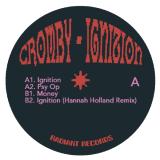
After a brief hiatus and creative refresh, Radiant Records returns with a bang, courtesy of Belfast house aficionado Cromby. A producer who needs little introduction, Cromby delivers the label’s ninth release, showcasing exactly what he does best: colourful, groove-heavy house music built for the dancefloor.
Ignition kicks things off with winks and nods to post-Y2K UK breaks and electro house. The title track’s boshy bassline and driving drums provide the backbone for an irresistibly stomping peak-time cut with summer written all over it.
Pumping the tempo up, A2 Psy Op is a rapturous floor-filler that draws from dance music’s most playful corners without ever sounding pastiche or revisionist. Undulating basslines, infectious vocals and flirtatious synth hooks combine to create something that feels both nostalgic and strikingly fresh.
Taking things in a slightly toolier direction, B1 Money is classic Cromby. A nifty little dinger packed with razor-sharp percussion, “house” vocals, tightly wound subs, timeless stabs and an impeccable arrangement, it’s a hot tip for DJs and dancers alike.
On remix duties, Adonis resident and legendary legend Hannah Holland zeroes in on Ignition’s electro parts and dials the mood up to 11. The result is a Detroit-leaning electro banger that highlights her versatility as a producer and rounds off a highly playable return to the fore from Radiant Records.
Rich Oddie of Orphx and Alex Pi of Pi Electronics introduce Anaxia, a new project arriving on Veyl with the 7-track LP “Maska”.
Built from raw electronics, stripped-down drum machines and a stark post-punk pulse, the record sits somewhere between industrial pressure and the ghostly minimalism of Suicide. It is direct but shadowed, physical but restrained, with vocals from Oddie and Pi cutting through the machinery rather than sitting on
top of it. Oddie’s background in Canada’s industrial underground and Pi’s long-running connection to the Greek electronic scene meet in a sound that feels tense, reduced and fully intentional. KAOSMOS and Florian Engerling add additional vocals, while remixes from In Trance 95 and Veyl regulars Years of Denial extend
the material into darker, more hypnotic territory. With “Maska”, Anaxia deliver a debut that feels fully formed: nocturnal, focused and stripped to its essentials. A natural fit for Veyl, the record draws a line between post-punk, industrial electronics and body music without overexplaining itself.
DJ Support: Danny Krivit, Dj Spen, Tony Humphries, Simon Dunmore, John Morales, Dr Packer, Cj Mckintosh, Kevin Yost, Groovy P, Hector Romero, Souldynamic,
Micky More & Andy Tee are back on wax with Analog Dreams, an exceptional 4-track EP that bridges the gap between classic club heritage and modern dancefloor sophisticated heat. Far from a simple collection of loops, this release delivers four fully realized, 100% original compositions crafted alongside top-tier collaborators.
The title Analog Dreams says it all. In a digital world dominated by sterile, point-and-click production, this EP feels like a vivid, living dream for vinyl purists. It is a sonic love letter to the warmth, depth, and texture that only real studio hardware, live instrumentation, and analog mixing can provide.
PANORAMA Records heads to South Africa for its next release, shining a light on one of the country's great unsung talents, Mpharanyana. Born Jacob Radebe, Mpharanyana was one of the defining voices of South African soul, disco and funk during the 1970s, recording with both The Cannibals and The Peddlers while helping shape a uniquely South African take on dance music. Working alongside future legends including Ray Phiri, his records fused soul, disco, mbaqanga and funk into something entirely his own.
On the A-side, "Get Down" by Mpharanyana And The Cannibals delivers exactly what the title promises. An irresistible blend of modern soul, boogie and disco, it's the kind of record that feels like sunshine from the first bar.
The flip features "Disco" by Mpharanyana And The Peddlers, a super-funky slice of South African Afro-disco that wont leave the record bad.
Despite Mpharanyana's cult status among collectors, "Get Down" has never previously been officially reissued, while the B side was introduced by Kalita Records, both sides remain incredibly rare.
Driven by tight musicianship, infectious hooks and a groove that refuses to quit, this is a genuine dancefloor record for the heads.
Together these two sides tell the story of an artist whose music deserves to be heard far beyond collector circles. As always, PANORAMA Records continues its mission of uncovering rare and essential music from around the world, bringing overlooked gems back into circulation for DJs, collectors and anyone who loves records with real soul.
Feel the rush as DJ Vibes and Hattrixx bring the energy back with their brand-new double AA side release. "On Fire" ignites the dancefloor, while "Get The Feeling" sweeps you away on a wave of pure euphoria. Available now in Vibrant Peach Melba 12' Vinyl (ROTV016) Return of Vibe brings you to a Perfect , NEW HORIZON
Feel the rush as DJ Vibes and Hattrixx bring the energy back with their brand-new double AA side release. "On Fire" ignites the dancefloor, while "Get The Feeling" sweeps you away on a wave of pure euphoria. Available now in Vibrant Peach Melba 12' Vinyl (ROTV016) Return of Vibe brings you to a Perfect , NEW HORIZON
Following July's remastered reissue of Robert Hood's "Invincible", M-Plant's Perpetual Masters series continues with "The Metronome" set for a vinyl release in September, coming after the digital versions which dropped in the summer.
Robert Hood's "The Metronome" distils techno to its barest, most hypnotic pulse. Over the two tracks, Hood strips rhythm down to ticking hi-hats, lean kicks and looping motifs that feel mechanical yet human. The grooves are relentless but never cold, building tension through subtle shifts instead of excess. Originally released in 2002, it remains a masterclass in minimalism: precise, cerebral and intensely physical that still sounds futuristic more than two decades on.
Like other releases in the Perpetual Masters series "The Metronome" has been remastered by legendary German producer, Thomas Heckmann.
Four years on from the much-loved Shelter EP, Orphic return with the Mambe EP, a long-awaited follow-up that sees the duo push further into their signature world of deep, dubwise techno and hypnotic club music. The record opens with the title track, a slow-burning piece of stripped-back techno that unfolds through submerged chords, rolling percussion and finely detailed sound design. Sitting alongside it are two solo productions from each half
of the Orphic project.
Kieran Jandu’s Back To Mine veers into deep, bass-heavy electro, all cavernous sub pressure, fractured drum programming and smoked-out atmosphere, landing somewhere between the weight of Digital Mystikz and the hypnotic, off-centre psychedelia of a Craig Richards set.
DJ Space Taxi takes a different route with Dream Cycle, an introspective, dreamlike cut where shimmering textures, drifting melodies and restrained rhythm combine to quietly draw
you in.
Flipping the record over, two of the underground’s most distinctive voices reinterpret the title track. Polygonia brings her unmistakable fluid, organic touch, stretching the original into a beautifully detailed, living groove, while Konduku strips things back into a
deeply hypnotic, psychedelic excursion that feels tailor-made for the outer edges of the dancefloor.
A beautifully restrained return from Orphic that more than justifies the four-year wait. Four artists, four distinct perspectives, held together by a shared appreciation for depth, space and subtle movement.
DJ Support: Louie Vega, Joe Claussell, Danny Krivit, DJ Spen, Ron Trent, Don Carlos, Sandy Rivera, Emmaculate, Souldynamic and more…
Paolo Fedreghini is a key figure in the Italian nu-jazz and jazz-funk scene, also known, lately, for his FAM Disco project.
Paolo's latest offering, Jazz House Rituals, is more than just an EP; it’s a masterclass in organic production. A 4-track project that bridges the gap between sophisticated jazz arrangements and the infectious energy of the dancefloor. Recorded with a rich palette of live instrumentation—including saxophones, flutes, trumpets and organic drums—the project is a testament to Fedreghini’s ability to blend analog warmth with contemporary club rhythms. From the latin sun-drenched "Happy Feeling" to the nocturnal Deep vibes of "Smoking Area," this EP is an essential choice for lovers of Jazzy-house music.
...of seminal Mr. Fingers album 'Amnesia', available officially for the first time in 32 years on Larry Heard's own Alleviated Records. This remastered collection of early Mr. Fingers works is an absolute must have.
LowMoneyMusicLove coming through with some new friends. Volume 3 brings together TC80, Saharty, Ivo Reiderman and JJ Fortune for four distinct cuts.
TC80 opens with sleek, restless machine funk before Saharty takes things somewhere rougher and more twisted. Ivo Reiderman brings a brighter, sun-dazed energy to the B-side, with JJ Fortune rounding things off in his unmistakable style - low-slung, shadowy and quietly menacing.
New friends, proper grooves, "LowMoney feeling". Vinyl only.
Inhale. Exhale. Remember to breathe. In that rhythm lies the pulse of being - the ancient echo of stars from which we are made. Breathing is the bridge between the inner cosmos and the outer void. When you breathe, you testify to existence itself: "I am." The Moonrover - a child of reason - abandoned on the cold, dead Moon. It does not feel time, know fear, or comprehend solitude. But a human, in its place, would understand: Silence is not emptiness. It is a mirror. And in that mirror arises the question: "If I am alone, and silence is infinite - who hears my breath?" The answer lies in the breath. Each inhale is resistance against entropy. Each exhale is an act of remembrance. To breathe is to remember that you are not just part of the Universe - you are its awakened part. And just as the Moonrover crawls across grey lunar plains, driven by an unknown purpose, so do you move through life, led by an inner light, until you realize: breath is not just life. It is a prayer sent into silence. And if you can hear it - you are alive.
Berlin’s Ayū returns to the label with a collection of trance-inflected fluorescent club tracks, where blissed intent meets direct club functionality.
With previous releases on Harmony Records and Kalahari Oyster Cult, Aju has steadily carved out a place within Europe’s contemporary trance underground, with remix support from the likes of Spray, D. Tiffany, Maara and Jeku.
A concise display of Aju’s range, the EP moves from rolling, chord-rich club workouts to vocal-led peak-time moments, unified by fluid grooves and an instinct for melodic tension.
Equal parts function and feeling, Aju’s latest refines an already distinctive club language.
The record stems from a deep-seated urge to craft something entirely personal; the vocal is CARISTA's own, a result of a discarded Ableton sample that lacked the necessary soul. By recording it herself, she captures a raw, magnetic intimacy. This process, taking standard materials and transmuting them into something deeply individual, mirrors the very alchemy found on the most transcendent dance floors. Whether you find yourself in a sea of strangers or flanked by your closest kin, there is a singular moment where every element aligns. It is a feeling of stepping past your own physical limits to truly experience the best of times.
Celestial Echo Records brings back Sweet Mixture’s “House Of Fun And Love”, a killer slice of crossover soul from 1973.
Produced by Ron Rice and originally coming out of Chicago’s Bazar label he ran, “House Of Fun And Love” sits right in that sweet spot between modern soul and boogie before the lines were fully drawn. It has that glide you want from a great crossover record: warm vocals, a rolling groove, tight drums and enough lift to move from a soul room into a dancefloor set without forcing it.
There’s a nice full circle moment with this one too. “House Of Fun And Love” was one of the earliest releases on Discs of Fun and Love, the label run by miche and Frederika. It sold out quickly the first time around and years on, it feels like the perfect record to bring into the Celestial Echo catalogue, another holy grail for 2026.
On the B-side is “I Love You”, a sweet ballad that is smooth, heartfelt and beautifully understated. A beautiful slow number that’s common on a lot of these early soul records.
A rare soul grail made available again, respectfully cut, properly pressed, and ready to play.