Drei Jahre nach seinem #1-Album „Reparatur“ meldet sich Josh. mit seinem vierten Studioalbum zurück. Auf „Wer singt dann Lieder für dich“ beweist der Wiener Singer-Songwriter und fünffache Amadeus-Preisträger erneut, wie er aus persönlichen Geschichten packende Popmusik schafft – mal leicht, mal melancholisch, immer mit einem Gespür für Timing, Humor und Gefühl. Seit seiner Kindheit spielt Josh. klassische Gitarre und war in Schulbands aktiv. Später studierte er sieben Jahre lang Jazz und Popularmusik, brach das Studium jedoch aus wirtschaftlichen Gründen ab – seine Liebe zur Musik blieb davon unberührt. Heute spiegelt sich diese Erfahrung in einem Sound, der organisch, warm und zugleich überraschend facettenreich ist. Für „Wer singt dann Lieder für dich“ hat Josh. so viele Instrumente wie nie zuvor selbst eingespielt – von Gitarre über Bass bis zur Pedal-Steel – und damit jedem Song eine unmittelbare Nähe verliehen. „Es war das bisher entspannteste und lustigste, gleichzeitig aber auch das arbeitsintensivste Album“, sagt er über die Aufnahmen, die erneut in kongenialer Zusammenarbeit mit Produzent Florian Koch entstanden sind. Seit „Teilzeitromantik“ (2021) ist Koch stetiger kreativer Partner, musikalischer Direktor und Schlagzeuger der Band – eine bewährte Konstellation, die für klare Strukturen und kreative Freiheit sorgt. „Ich glaube, dass es ein Album ist, das wieder die Leichtigkeit des Nonsens gefunden hat“, so Josh., „Momente, in denen man lachen, feiern oder einfach man selbst sein kann, treffen auf nachdenkliche, melancholische Songs.“ Es ist die Momentaufnahme eines 39-Jährigen, der reflektiert – und dabei stets offen für das Absurde und Komische in den kleinen Dingen bleibt.
„Ich habe mir beim Schreiben der Songs keine Grenzen gesetzt“, sagt Josh. „Das spiegelt meine Persönlichkeit ziemlich gut wider: Ich bin jemand, der gern einen Schmäh macht, wie wir hier in Wien sagen – aber gleichzeitig auch immer wieder kämpfen muss und viel über Gefühle, Schmerz und all das nachdenkt.“ Das zeigt sich auf „Wer singt dann Lieder für dich“ in jedem Detail, sei es bei humorvollen Beobachtungen, nostalgischen Rückblicken oder in Songs über das Älterwerden und die kleinen Lebenskrisen („Was hat uns bloß so müde gemacht?“). Nach einem Livejahr 2025, das eine Tour durch Österreich und Deutschland, einen Headliner-Gig auf dem Donauinselfest vor 100.000 Fans sowie eine Support-Show für Robbie Williams umfasste, hat „Austropop-Darling“ (TZ) Josh. in diesem Jahr wieder viel vor: Im April und Mai ist er auf komplett ausverkaufter Solotour in Österreich zu erleben, im Anschluss folgen Konzerte in Deutschland und der Schweiz. Im Sommer geht es gemeinsam mit Rian auf Open-Air-Tour durch Österreich.
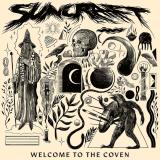
Suncraft is an underground rock band from Oslo, Norway. After appearing on the scene with their debut in 2021, they"ve ratcheted up their sound a notch in every conceivable way with their furious and fun new album Welcome To The Coven. Formed in Oslo in 2017, Suncraft built their early identity on mid-tempo stoner rock, but Welcome to the Coven shows the band has broadened their foundation significantly. The album channels classic rock swagger, punk urgency, and flashes of blackened intensity without settling into pastiche or genre collage - think Turbonegro meets Venom with the odd helping of blast beats thrown in and you"re on your way. The album"s eight tracks move fluidly between heavy riffing, hook-forward choruses and sudden shifts in mood, giving the record a restless, forward thinking character that keeps its 40-minute runtime lean and engaging. Welcome To The Coven is a confident step forward for a promising band which emphasizes their sharpened songwriting and willingness to push beyond scene expectations. The album is available on red or black vinyl from Norwegian purveyors of heavy rock label All Good Clean Records.
Suncraft is an underground rock band from Oslo, Norway. After appearing on the scene with their debut in 2021, they"ve ratcheted up their sound a notch in every conceivable way with their furious and fun new album Welcome To The Coven. Formed in Oslo in 2017, Suncraft built their early identity on mid-tempo stoner rock, but Welcome to the Coven shows the band has broadened their foundation significantly. The album channels classic rock swagger, punk urgency, and flashes of blackened intensity without settling into pastiche or genre collage - think Turbonegro meets Venom with the odd helping of blast beats thrown in and you"re on your way. The album"s eight tracks move fluidly between heavy riffing, hook-forward choruses and sudden shifts in mood, giving the record a restless, forward thinking character that keeps its 40-minute runtime lean and engaging. Welcome To The Coven is a confident step forward for a promising band which emphasizes their sharpened songwriting and willingness to push beyond scene expectations. The album is available on red or black vinyl from Norwegian purveyors of heavy rock label All Good Clean Records.
Zum ersten Mal seit einem Jahrzehnt sind die lebenden Fuzz-Legenden Truckfighters mit brandneuem Material zurück und entfachen die Rockszene erneut mit ihrer rohen Energie.MASTERFLOW - das Gleichgewicht zwischen Disziplin und Freiheit. Eine vibrierende Resonanz auf mehreren Ebenen - Körper, Geist, Raum, Zeit und Publikum in perfekter Harmonie.Tauche ein in MASTERFLOW und lass dich von den donnernden Klanglandschaften mitreißen, die nur Truckfighters erschaffen können.Das neue Album entfesselt eine unerbittliche Welle aus fuzz-getränkten Hymnen, massiven Riffs und hypnotischen Grooves, die die Desert-Rock-Wurzeln der Band widerspiegeln und ihren Sound zugleich in neues, weitläufiges Terrain vorstoßen lassen.Ganz im klassischen Truckfighters-Geist ist die Musik auf MASTERFLOW sowohl dynamisch als auch reich an Variationen - sie wechselt mühelos zwischen erdrückender Schwere und ausgedehnten, psychedelischen Passagen. Von erdbebentiefem Bassfundament bis hin zu aufsteigenden, melodischen Spannungsbögen balanciert die Band meisterhaft rohe Kraft mit Feingefühl und Flow. Jeder Track atmet, entwickelt sich und trifft mit klarer Absicht - eine nahtlose Reise, angetrieben von Schweiß, Fuzz und dem rein verzerrten Geist des Rock 'n' Roll.Dieses Album ist gemacht für überfüllte Clubs, endlose Highways und Lautsprecher am Limit - ein klangliches Monolith, das noch lange nach dem Verklingen des letzten Tons nachhallt.Eine große Europa-Release-Tour startet Mitte April und zieht sich durch den gesamten Mai, bevor sie nahtlos in den Festival-Sommer übergeht. Ob im Studio oder live auf der Bühne: Truckfighters liefern ein unvergessliches, überwältigendes Klangerlebnis.
Following the strong reception of their second album, Totem of Quiet Mystic (2023) Jiyu have earned praises from outlets such as Jazzwise, Enlace Funk and The Chillout Tent, as well as support from a wide range of iconic DJs including Patrick Forge & Chris Coco. The singles to this new album, Cumulus & the Subterranean, Smell of Fire and Deep Woods, have immediately been embraced—drawing glowing reactions and airplay from dj's like, Phil Cooper, Dj Vadim, Fred Everything, David Patterson, Jon Kennedy and Curtis Colin
On this third album from Jiyu, the Copenhagen band stretch their cosmic–spiritual jazz language into deeper, wilder terrain. Dropping April 10th on vinyl and digital via Dubsoul Records, the record captures six musicians in full telepathic flight, recorded at 12 Ton Studio in Copenhagen. Across eight tracks, elastic basslines, jazz-dub-soul—tinted drums and percussion, Wurlitzer and jazz-guitar glow and flute-swept atmospheres drift between grounded groove and open-sky improvisation, while guest vocalist Mai Lan Doky adds dreamlike textures on Cumulus & the Subterranean. From the shuffled broken-beat pulse of Smell of Fire to the slow-burn haze of Deep Woods, the Wild Things album is a rich analogue-soul excursion—earthy, exploratory and tuned to the outer frequencies.
New album from Pictish Trail, AKA Johnny Lynch, known for his wildly inventive electro-acoustic psych-pop. Life Slime is the sixth full-length album by Pictish Trail (AKA Johnny Lynch) - a strange, tender, psychedelic electro-pop record shaped by transformation, exhaustion, hope, guilt, and renewal. Written at home on the Isle of Eigg and recorded at Mike Lindsay's studio down in Margate (Tunng / LUMP), the album follows 2022's critically acclaimed Island Family, further refining Lynch's world of lo-fi electronics, warped pop melodies, baggy psych rhythms and emotionally direct songwriting. It's a record that balances woozy synth-pop, motorik propulsion and intimate acoustic songwriting, all infused with the emotional messiness that gives the album its title. Across the album's singles - the guilt-stained psych-pop ballad 'Hold It', the life-affirming shimmer of 'Infinity Ooze', the late-night confession of 'Torch Song', the expansive eight-minute centrepiece 'Another Way', and the cinematic closer 'Werewolf Ending' - Life Slime charts a journey from emotional fracture to uneasy release. 'Sorry Eyes' brings a punchy electro-pop strut with a sharp emotional edge, 'Crystal Cave' drifts through crystalline guitars and shoegaze haze into transformation, and the title track 'Life Slime' moves with a slow, weary swagger toward bittersweet acceptance. Together, these tracks form a cohesive album statement about surrender, resistance, change and renewal. "Wonderfully weird pop"- Brooklyn Vegan For fans of Hot Chip, The Flaming Lips, Liars, Mercury Rev, Beck, John Grant, Empire of the Sun, Grandaddy. Colour vinyl and digisleeve CD
Die 6-LP-Box „60 Jahre Floh De Cologne Vol. 1“ ist eine umfassende Sammleredition mit historischen Aufnahmen der legendären politischen Rockband Floh de Cologne. Enthalten sind die originalen LP-Reproduktionen Vietnam,
Geyer - Symphonie, Lucky Streik, Fließbandbabys BeatShow, Profitgeier, die einen Querschnitt durch das frühe Schaffen der Band bieten. Die Box richtet sich an VinylSammler und Fans deutscher Underground- und Protestmusik und dokumentiert ein wichtiges Kapitel der Musik- und Kulturgeschichte.
Mit bisher über 30 Millionen Streams ihres Katalogs und einer Tournee-Geschichte, die das Download Festival, Graspop, Resurrection sowie Tourneen als Support für Electric Callboy und Bury Tomorrow umfasst, sind As Everything Unfolds sicherlich keine Neulinge in der Szene. Die Band, angeführt von der Powerfrau Charlie Rolfe, ist bekannt für ihre emotionsgeladene Musik sowie ihre dynamischen Live-Auftritte. Nun veröffentlicht die Band ihr drittes Album "DID YOU ASK TO BE SET FREE?" über Century Media Records. Das Album, benannt nach den Lyrics der Single "SET IN FLOW", zeichnet sich durch die bekannte und beliebte musikalische Intensität der Band aus, gepaart mit emotionalen Texten, mit denen sich Fans und neue Hörer gleichermaßen verbunden fühlen werden. Charlie, die sich nicht scheut, über die Inspiration hinter den Tracks zu sprechen, wechselt mühelos zwischen heavy Growls und klarem Gesang und lässt die Musik wie eine Achterbahnfahrt zwischen verschiedenen Genres wirken. Mit einem Feature von Dani Winter-Bates von Bury Tomorrow auf "WHAT YOU WANTED" würdigt die Band ihre Freundschaft und Tournee-Geschichte mit der britischen Metalcore-Band - ein Track, der sicherlich zu einem Fan-Favoriten werden wird. Nach dem Erscheinen des Albums müssen die Fans nicht allzu lange warten, um die neue Musik auch live zu erleben, denn die erste Festivalankündigung für den Sommer steht bereits fest.
Mit "DID YOU ASK TO BE SET FREE?" definieren sich As Everything Unfolds erneut als Band ohne Grenzen und als eine Gruppe, die man in der alternativen Musikszene im Auge behalten sollte - ihre größten Momente liegen vielleicht noch vor ihnen. Das Album wird als Standard-CD-Jewelcase, als trasparent-petrolgrüne LP sowie als digitales Album erhältlich sein.
2024 marked the 50th anniversary of Cymande’s ‘Promised Heights’, a record that closed out an historic three album run of seminal early 1970s Afro-soul that also included their 1972 self-titled debut and 1973’s ‘Second Time Round’
Promised Heights’ solidified Cymande’s place in music history and contains some of their most- beloved and often-sampled tracks such as ‘Brothers On The Slide’.
As children of the Windrush Generation, Cymande were part of the first wave of innovators and originators of the fledgling Black British music scene.
Taking influences from their Guyanese and Jamaican roots, the band fused reggae basslines, Afro-tinged Nyabinghi percussion, psychedelic rock touches, and American style funk instrumentation into a unique sound they dubbed as ‘Nyah-rock’.
‘Promised Heights’ was recorded following the band’s US tour with Al Green, which had firmly planted Cymande in the ears of an adoring American audience.
Florida deathcore heavyweights Bodysnatcher return with their most punishing and purposeful statement to date. ‘Hell Is Here, Hell Is Home’, out April 10, is not an escape record, it is a confrontation. Brutal, unrelenting, and emotionally unfiltered, the album captures a band fully locked into its identity while sharpening every weapon in its arsenal. True to their roots, Bodysnatcher deliver a sound steeped in suffocating grooves, bone-crushing breakdowns, and feral intensity. ‘Hell Is Here, Hell Is Home’ pushes beyond pure aggression. The record explores cycles of trauma, self-destruction, survival, and the uncomfortable truth that for many, suffering is not a phase, it is a place.
This is deathcore grounded in lived experience, written from inside the fire rather than in hindsight. Across the album, Bodysnatcher balance sonic violence with a disciplined sense of control. Downtuned riffs grind with oppressive weight, drums hit with mechanical precision, and vocals swing between outright hostility and grim reflection. Each track feels deliberate, built not just to hit hard, but to linger. With this release, Bodysnatcher continue to cement their position as one of modern deathcore’s most uncompromising voices. ‘Hell Is Here, Hell Is Home’ is a record built for the pit, rooted in truth, unflinching and heavy in every sense, delivered with absolute conviction.
Broadside has never been a band to stay in one place for too long—musically or otherwise. The Richmond, Virginia-based band has spent the past decade carving out their own space in the pop rock scene. Drawing influence from The Killers, AFI, Kings of Leon, and Taking Back Sunday, their sound seamlessly fuses nostalgic rock energy with a fresh, modern edge. Their evolution has been nothing short of remarkable, taking them from underground favorites to genre staples, all while embracing the idea that growth and change are not just inevitable but necessary. With Oliver Baxxter (vocals), Domenic Reid (guitar), and Patrick Diaz (bass/backup vocals) at the helm, Broadside has built a career on crafting music that feels both deeply personal and universally relatable.
Their last full-length album, Hotel Bleu, served as a bold chapter in their story, using the transient nature of hotel stays as a metaphor for self-reflection, fleeting moments, and personal reinvention. The album marked a significant milestone in their career, amassing over 100 million streams and standing as their boldest, brightest, and most ambitious work to date. Now, as they prepare to enter their next era, the band is gearing up to release their most dynamic music yet, continuing to evolve while staying true to the energy and authenticity that first captivated listeners.
Broadside has never been a band to stay in one place for too long—musically or otherwise. The Richmond, Virginia-based band has spent the past decade carving out their own space in the pop rock scene. Drawing influence from The Killers, AFI, Kings of Leon, and Taking Back Sunday, their sound seamlessly fuses nostalgic rock energy with a fresh, modern edge. Their evolution has been nothing short of remarkable, taking them from underground favorites to genre staples, all while embracing the idea that growth and change are not just inevitable but necessary.
With Oliver Baxxter (vocals), Domenic Reid (guitar), and Patrick Diaz (bass/backup vocals) at the helm, Broadside has built a career on crafting music that feels both deeply personal and universally relatable. Their last full-length album, Hotel Bleu, served as a bold chapter in their story, using the transient nature of hotel stays as a metaphor for self-reflection, fleeting moments, and personal reinvention. The album marked a significant milestone in their career, amassing over 100 million streams and standing as their boldest, brightest, and most ambitious work to date. Now, as they prepare to enter their next era, the band is gearing up to release their most dynamic music yet, continuing to evolve while staying true to the energy and authenticity that first captivated listeners.
'Squish' is the debut album from London-based Gretel, produced by Seth Evans (credits inc Black Midi, Geordie Greep, HMLTD, Shame). It is a grungy, hooky, expressive guitar record inspired by the likes of PJ Harvey, Sonic Youth and Smashing Pumpkins and features the singles 'Unbloom', 'Maybelline' and 'Darkness, be my friend'. 'Squish' is released on 180G Black vinyl housed in a gatefold sleeve and features an A2 poster.
Lisa Decker returned with her second studio album "Soliloquise" one year after her debut album "Serendipity" in 2021 with Japanese Jazz trio Nautilus from Tokyo and a superb single remix of "Everytime" by Pat Van Dyke featuring rapper John Robinson.
For this project she worked on eight new songs. Half of the album is arranged by Nautilus and the other half is produced by SaturnVybz who is known for his works with/and projects like Slick Walk, The Ruff Cats and Jazzanova.
Getting a step forward and conceptually a bit different this release gets the "Oonops Drops" FLIP SERIES treatment which means: Side A and Side B are made by different artists or differentiate from each other like the first volume with Nautilus X Anna Sato & Toshiyuki Sasaki (OD006LP).
Songs like "Free", "Let's Wake Up" and "Summer Child" with their feel warm note of groovy, jazzy pop and the more swing-jazz tune "Rimy Whitewater" meet guitar-electronic touched songs like "Love And Hope", "On My Way" and "True Blue" or her dreamt away track "Stay With Me" with smooth bouncy beats and with an atmosphere for being the perfect soundtrack for a night ride on deserted streets.
Lisa is careful about the artwork and after working together with renowned artist Lindsey Kustusch from San Francisco on her first album she collaborates with local artist Sebastian Maria Otto who is known for his signature art style and exhibitions from Germany to Japan.
Lisa will perform live in Hanover, the 20th May at roof top of the Historical Museum together with Nautilus. Japan meets Germany. Lucky coincidence or: "Serendipity".
out of Stock
Last delivered 3 years ago available to reorder, subject to availability
Der „vielleicht beste Ravel-Interpret unserer Zeit« - Scherzo
Nun endlich auf Vinyl erhältlich! Seong-Jin Cho’s weltweit gefeiertes Album “Ravel: The Complete Solo
Piano Works.”
Im Sommer 2024 stellte sich Cho dem historischen, umfassenden Werk in der Siemens-Villa in Berlin:
»Ravel wusste, was er wollte, deshalb versuche ich, mich an seine genauen Spielanweisungen zu halten.
Miroirs zum Beispiel ist technisch unglaublich herausfordernd. Es ist gefühlvoll und dramatisch, voller
Fantasie und Farbe. Fast ist es unmöglich, jeder Angabe zu folgen, aber ich gebe mein Bestes!«, so Cho.
Das scheint zu gelingen, wie jüngste Kritiken nahelegen: Nach einem Recital in Madrid kürte Scherzo Cho
zum »vielleicht besten Ravel-Interpreten unserer Zeit«, während The Scotsman nach dem Auftritt beim
Edinburgh Festival konstatierte: »Den Ravel-Part des Konzerts spielte Cho mit kaum fassbarer Präzision
in kontrastierenden und reichen Farben, er war wie im Fluss der Musik, was ihr erlaubte, voller Leichtigkeit
und Wärme zu atmen.«
Zehn Jahre nach dem Gewinn des Chopin-Wettbewerbs bestätigt sich Chos Status als einer der bedeutendsten Pianisten unserer Zeit, und der erste Teil dieser maßstabsetzenden Aufnahmen sind nun endlich
auch auf 180g-Vinyl erhältlich.
Mango Glow Edition. Das experimentelle Berliner Trio ZAHN kehrt mit seinem bislang elektrisierendsten Werk zurück. Eine üppige Fusion aus Schwere, Elektronik und halluzinatorischen Farben. Monolithische Grooves treffen auf synthetischen Schimmer. PURPUR strahlt Spannung und Gefahr aus und pulsiert mit Tiefe und Dichte. Bekannt für ihren intensiven, treibenden Sound, der den unerbittlichen Marsch einer Welt am Abgrund widerspiegelt, vertieft das Trio ZAHN - Chris Breuer, Nic Stockmann und Felix Gebhard - seine klangliche Erkundung mit einem Album, das gleichzeitig elektronischer und rockiger ist als seine gefeierten Vorgänger. Purpur orientiert sich am lebhaften Cover des Albums - einer Explosion aus Trauben und Beeren, die seinen üppigen, farbenfrohen Sound widerspiegelt. Das Album verbindet kraftvolle Genres zu etwas Frischem und Elektrisierendem: schwere Fundamente treffen auf reichhaltige elektronische Texturen und schaffen Schichten aus Farbe, Komplexität und einem Hauch von halluzinatorischer Süße. Erneut in Gyhum mit dem Toningenieur Peter Voigtmann (ex-The Ocean, Death By Gong, Heads.) aufgenommen, tritt Purpur in die Fußstapfen der bisherigen Werke der Band, markiert aber auch einen mutigen Sprung nach vorne. Gastbeiträge von Fabian Bremer (Radare, AUA) und Kjetil Nernes (Årabrot) vertiefen das Gefühl der Unruhe und Faszination des Albums, während Magnus Lindberg (Cult of Luna) mit seinem Mix und Mastering dem Album die Tiefe eines unterirdischen Pulses verleiht - knackig, schwer und lebendig mit mikroskopischen Details. Während ,Adria" eine lebhafte Flucht durch Krautrock, Dark Jazz, Noise Rock und Post-Punk bot, zieht ,Purpur" die Zuhörer in eine dichtere, komplexere und eng verwobene Klanglandschaft. Das dritte Album der Band ist ein berauschender Wirbel aus synthetischem Puls und physischer Schwere - ein Album, das sich eher wie fermentiert als wie komponiert anfühlt.
Das zweite Album des Duos aus Denver, Colorado! Shores of Scorpio fordert Sie nicht nur zum Zuhören auf - es fordert Sie dazu auf, sich mit dem auseinanderzusetzen, was Sie zu wissen glaubten. Das mit Spannung erwartete zweite Album des Duos Volores aus Colorado - Shelby und Nathen Maxwell (Bassist von Flogging Molly) - ist ein sehr persönliches Konzeptalbum, das Shelbys Entdeckung nachzeichnet, dass ihr leiblicher Vater nicht der Mann war, für den sie ihn gehalten hatte. Das Album wurde im legendären Sonic Ranch aufgenommen und markiert eine mutige emotionale und klangliche Weiterentwicklung der Band.
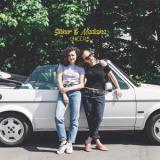
Nora Steiner und Madlaina Pollina malen das Bild einer Welt, die wir schon lange nicht mehr so eindrücklich und reflektiert wahrgenommen haben. Aufbruch, Licht und Schatten und die Bedrängnis der Gegenwart, ausgedrückt in bezauberndem Indie-Folk-Pop, der Zähne zeigt und enorme Dynamik entwickelt. Mal erinnert ihr zweistimmiger Gesang an First Aid Kit, ihre kompositorische Zugänglichkeit lässt an den perlenden Pop von Boy denken, dann wieder geleitet uns das Duo an düstere Abgründe, wie sie auch Emily Jane White beschreibt. Allerdings sind dies nur ungefähre Orientierungspunkte. Dass die beiden aus der Schweiz kommen, ist grundlegend für deren Debütalbum "Cheers", denn "Cheers" heißt nicht nur Prost, "Cheers" kann ein Anfang und ein Ende sein, eine Begrüßung und auch ein Abschied. Dabei spielen Steiner & Madlaina gekonnt mit Ambivalenzen. Mal fließen ihre Songs lieblich daher, dann türmen sich die Instrumente walzenartig auf. Durch die analogen Sounds und teils surfigen Gitarrenklänge gewinnt "Cheers" an Wärme und transportiert einen unterschwelligen 60er-Jahre-Charme. Im Zentrum des Ganzen stehen aber immer die Stimmen von Steiner & Madlaina, die so perfekt harmonieren, dass man die Vertrautheit und langjährige Freundschaft der beiden herauszuhören meint.
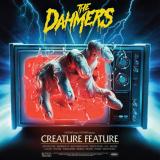
This is the Dahmers third album “Creature Feature” and the band continues to dig deeper in to a world of dark things, the things that don't belong, provokes, gives you the creeps or just makes you want to look away. “Our vision has been to explore and develop the bands sound but also to maintain the bands profound and colorful essence. “We want people to get excited when they hear the album, take them with us to another planet and make 'em forget about all the trouble in the world for a while” - Christoffer Karlsson (Lead singer/guitar)
The album was recorded and co-produced by Johan Gustafsson aka “The Johan and only” from the Hives in studio Ingrid in Stockholm. There's a new level and feel to the production with guest musicians on some tracks. With instruments like brass, cello, flute and piano the songs reaches their full true potential, along with added synth elements this gives the band a fresh feel. There's a wide variety of songs on the album where every track has it's very own theme, sound and characteristics. Where deep subjects like darkness, sorrow and alienation are being explored along with the bands continuing homage to the classic slasher and giallo flicks of the 70's and 80's, but also songs about a Swedish fakir, cults, rats and creatures from outer space. This album is a celebration to trash culture and to the underdogs, all delivered with a catchy uplifting chorus that The Dahmers is known for.
Creature Feature will be released on the bands own label Eerie sounds and will be out on February Friday the 13th.
The sibling duo behind the music on Graceful Degradation — organ and drums, nothing more, nothing less — carve out a sound that feels unmistakably organic in a world drifting steadily toward the synthetic. Their interplay is entirely live, subtle in its details yet dynamic in its momentum, built on the kind of instinctive communication only brothers can share.
The music is fully instrumental, unfolding in a borderland where dreamy retro pop dissolves into the hazy textures of shoegaze and the unruly pulse of noisy, electronic leaning jazz. It’s a sonic world that feels both familiar and elusive, nostalgic yet inherently restless. Melodies shimmer and blur, rhythms swell and contract, and the space between the notes becomes as expressive as the notes themselves.
What emerges is a sound that resists easy categorization: warm but unpredictable, intimate yet expansive, grounded in the physicality of two musicians performing in real time. The organ breathes like a living organism, shifting from soft focus ambience to swirling, saturated harmonics, while the drums move with a fluid, human elasticity — sometimes whisper quiet, sometimes erupting with raw, kinetic force.
In this in between terrain, the duo has always found its identity and its freedom. Their music doesn’t chase perfection; it chases presence. It embraces imperfection, celebrates spontaneity, and insists on staying alive in a landscape where so much is becoming weightless and automated.
This is instrumental music with a pulse: subtle, dynamic, and unmistakably human.
American Steel is the last great band to come out of Berkeley's 924 Gilman scene. Forged in the same ¬res as Operation Ivy, Crimpshrine, and Rancid, these soulful punks have at long last decided to unearth their self-titled album from 1998. AmSteel evolved into one of the most artful and sophisticated punk bands around, but this quartet began as a truly raw and wrathful DIY outfit, and we're grateful for the opportunity to share this 17-song hidden gem. We have been begging the band to release this material since Red Scare first began. Literally pestering them for twenty years. Listen to this dynamic debut and you will understand why.
Playing further in the conceptual universe of Ginger Root came Nisemono EP. In the universe, Cameron is now writing and producing for a new Japanese Idol named Kimiko Takeguchi. At the last minute before Kimiko debuts on national TV, she quits and Cameron is thrust into the spotlight to perform the song ‘Loneliness’ which launches him into stardom.
This cycle included music videos for each track on the album and narrative videos of a fake news station “Juban TV” which reported on the story of the rise of Ginger Root. The episodic rollout on Ginger Roots YouTube was filmed in the same 80s noir style of the City Slicker videos with a much bigger narrative undertaking to provide a creative backdrop to the EPs storyline. The EP was lauded by old and new fans for its captivating storyline and nostalgic visuals. Ginger Root went on to tour the US, Europe, and Japan for the first time where he sold out every show. Nisemono was ranked by music critic Anthony Fantano as his #1 EP of 2022.
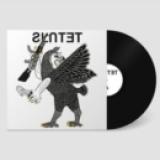
Crypt of the Wizard is proud to make available two legendary underground albums by Slutet on vinyl and digital formats. Here we present the debut self titled LP Slutet - Slutet
Slutet originated in Uppsala well over a decade ago, first emerging as a loose idea around 2010. The original cluster of strangely like minded individuals - Dingir, Ryttersson, J.P., Sviatopolk, were equally set on starting a cult as they were a band, the former emerging as a loose collective known as The End Commune, while the latter eventually began rehearsing together as Slutet on September 1, 2013.
From this constellation three notorious demo tapes sprung which were self-released in very limited numbers, and only available by trading bodily fluids, blood, and/or hair for the cassettes. “A very loose guess but we made probably around 20-30 hand-drawn/custom demo tapes of the first three releases. We got blood and hair from many places, actually the very first offering was from INDONESIA. Slovakia, Germany, USA, Argentina, Norway, Canada, Finland followed.... if my memory serves..... hazy years indeed”
J.P. left early 2015. Later that year, after trying the band as a bass-drum-vocals outfit for a while, Fjalar joined on guitar. This is the classic constellation. Dingir, Ryttersson, Fjalar, Sviatopolk. The same troupe playing to this very day.
While the difficulty of obtaining the demos certainly added to the band’s bottomless mystique, the subsequent release of the self-titled compilation / LP secured their reputation as one of the most interesting and unorthodox bands recording under the somewhat ill-fitting moniker of ‘underground black metal’.
First released as a cassette by Berlin label Teratology Sound & Vision, and later on vinyl in an edition of 100 by Goatowarex, the self-titled LP is the definitive document of the very early and very wild years of the band as they begin to take form, fulminating against whatever was on offer.
“Between September 2013 and September 2014 we rehearsed and recorded 3 very crude demo cassettes; although sub-par in many musical and performance-wise aspects, the passion seeping through those recordings were evidently very real.”
Bristol's Tara Clerkin Trio return to World of Echo and the EP format for a five song collection of quixotic, emotional redolence. But do not mistake their absence for inertia. If their musical output has been a little sparse during those in-between years, limited to a few solo ventures and an astonishing ten minute long piece as a trio, their time has otherwise been richly spent: continuous writing and recording, extensive live performances across Europe and Japan, a cultivation of local and more far-flung artistic connections (musical and otherwise), and a monthly NTS show that, through the voice of others, speaks most obviously to their own unorthodox interests. It's the conflux of that winding activity that leads indirectly to On The Turning Ground, 26 minutes of probing, thoughtful composition that draws from no one specific source. Their inspirations might be centreless, but the trio still possess a very obvious anchor in the form of their hometown. Bristol stands as a city of multitudes, heterogenous and vibrant in such a way as to allow it to renew and remake time and again. Tara Clerkin Trio drink from that same well, duly reflecting a rich musical heritage built on fwd-facing electronic subcultures and experimental urges.
As such, On The Turning Ground finds them subject to their own subtle internal evolution, the pervasive sense that you've caught them mid-bloom, on their way to becoming but never anything but themselves. The two instrumental pieces that bookend the EP stand as a perfect case in point, displaying an increasing mastery of compositional space. Pensive and restrained, 'Brigstow' and 'Once Around' both emanate an interstitial quality that's not so much after- as in-between-hours, miniature dub-folk symphonies held together by the kind of tacit understanding that remains the preserve of only the closest of family units. If those two tracks are shaped by a sense of shifting temporality, then the three vocal-led pieces that comprise the record's core feel like a gentle ossifying of aesthetic into something approaching their own unique form of avant-pop. 'Pop' is, of course, a broadly subjective concept, but there's no avoiding the overt sparkling melodicism of songs like 'Marble Walls' and 'The Turning Ground', undeniable re-directions of that late 90s impulse to bend pop sensibilities into off-centre terrain, to render the familiar new again. This is what Tara Clerkin Trio do, gently pulling the ground from under your feet, turning you to face something you'd not quite seen before. To view the world as they do: sideways, sometimes, all of the time.
out of Stock
Last delivered 2 years ago available to reorder, subject to availability
It seems almost inevitable that at some stage Blue Matter and The Green Ray would be working together, and we’re delighted to say that this is now about to happen. When Blue Matter co-boss, Nick Saloman, was living in Walthamstow, he sat in with The Green Ray many times at the late-lamented Plough Inn on Wood Street (now a mini-supermarket). In more recent times Nick’s band, The Bevis Frond has played live with them on several occasions, and without wishing to disrespect any former members, the current Green Ray line-up sounds as good as they’ve ever sounded, if not, dare we say, even better than before. The Green Ray was originally assembled in the mid-90s by Ken Whaley & Richard Treece, two key members of Walthamstow legends, Help Yourself. During the last 30 years or so, they have released 7 albums and one 12” single.
Sadly, the line-up has changed quite frequently due to the passing of several of their number. Ken & Richard passed away some years ago, and more recently bassist Jeff Gibbs departed this world. However, now under the all-seeing eye of guitarist Simon Whaley, the current line-up is continuing to fly the East London freak flag high. Not long ago Simon asked us if Blue Matter would like to issue their latest offering, and we came back with a resounding “yes please”. ‘Orchard House’ is a superb album, full of great playing and great songs. There are shades of Mighty Baby and Help Yourself (at their trippiest), plus a West Coast atmosphere which put us in mind of Quicksilver and The Grateful Dead. It’s taken some time to happen, but at last Blue Matter & The Green Ray have come together to issue an unmissable album. So don’t miss it.
Pete Blaker returns to RNT with 2 glorious long-play sides of edit mastery. On side A, Miami Sax is a bit of funky 80s fusion for the jazz Uncs, teased out and looped up to dizzying perfection, with the blissful soul of Must Be Love on the flip, for the disco spinners . Both extended loopy journeys of dancefloor euphoria, already getting big support from Harvey, Hunee and company!
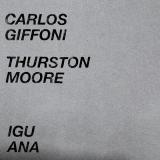
Carlos Giffoni reconnects with Thurston Moore for two sides of loose-limbed axe noise, oscillator worship and hard-phased, Spacemen 3-style feedback.
Giffoni’s been on a roll recently. Since the No Fun founder returned to the scene with »Vain¡, a genius set of synth mutations that appeared in iDEAL back in 2018, he’s been slowly ramping up the activity, dropping the celestial »Dream Walker« on Stephen O’Malley’s Ideologic Organ in 2024 and following it with »Pendulum«, a bumper compendium of collaborations, just a few weeks back. For those who remember Giffoni’s first trip round the block, he was always able to hold his own chopping it up in person, not just by mail.
Just scrub through his early catalog and you’ll see collabs with Nels Cline and Chris Corsano, Merzbow, Jim O’Rourke and Lasse Marhaug, and of course, Thurston Moore. The two rekindle their thing on »IGUANA’« picking up where 2001’s fabled »4 Guitars Live« performance left off. Here, Giffoni straddles a tabletop synth and FX while Moore attacks his signature Jazzmaster with a drumstick and a screwdriver – vibes fully intact.
Moore is on blistering form, sounding as if he’s taken a step back to refresh his approach since the early ‘00s when he could be spotted moonlighting on any number of basement-adjacent noise sides. Sawing at his strings and turning the guitar into a shrieking resonator, he leaves only faint vapours of the classic Sonic Youth sound as opiating accents on his animalistic wails and rumbles. On the opening half, his whammy – assisted shreds are balanced out by Giffoni’s off-world whirrs and airlocked vibrations, building a dense wall of noise towards an unexpectedly elegiac conclusion. At some point, Giffoni’s rasping churr transforms into a simmering shudder and Moore’s into hymnal drones – squint a bit and you could almost call it pretty.
Of course, they ramp things up on the flip, dissolving the melancholia with smokey white noise and twangy, post-Derek Bailey chimes that Giffoni accompanies with aggy oscillations. Like every great taped noise set, the recording quality is crucial - »IGUANA« was captured from the pit by Guillermo Hernandez Avendano, the dad of Lia Miranda who provides the cover photo. It’s that kinda show.
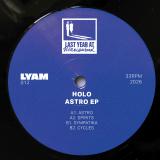
Oath sub-label Last Year At Marienbad is proud to present the latest spellbinding work from producer Holo, 'Astro', a record that emulates never-ending ethereal, emotively pure, and endlessly danceable frequencies…
Berlin-based Holo makes dance music that speaks in carefree whispers, through a brilliantly constructed sound that leans as much on the hypnotically emotive as on the core fundamentals of composition.
'Astro' is the next phase of his musical journey, and as a contained experience, it gives over all that Holo has become celebrated for, alongside explorations of invigorating spaces in which his sound has grown. The title track is an airy, free-flowing affair, with its semi-stepping drum pattern providing the frame for the light chimes of the keys to set the soul going. 'Spirits' ups the ante with its tempo change, its direction more towards a dancefloor in some faraway paradise.
'Sympatika' kicks off the B-side in a similar fashion, with its extensive groove fuelling bated breath for the arrival of the synths. 'Cycles' wraps up the EP, which again shifts focus to a more cavernous, absorbing kind of sound. A final blend of audio excellence that wraps up a one-of-a-kind record from a one-of-a-kind producer.
out of Stock
Last delivered 45 days ago available to reorder, subject to availability
Brighton-born, Cincinnati-based producer Marsh a.k.a Tom Marshall. ‘Lailonie’ is Marsh’s second studio album and debut Anjunadeep LP. After joining Anjunadeep back in 2018 via ‘Explorations 07’ with ‘Black Mountain’, Marsh has gone on to release a string of well received original EPs including ‘Prospect’ with label mate Nox Vahn, ‘Eu Topos’ and his latest ‘Lost In You’ as well as remixing some of the biggest artists in dance music including Above & Beyond and Armin van Buuren.
Marsh has previously released on Silk Music, where he released his debut album ‘Life On The Shore’ in 2017; and Enhanced Music’s progressive house imprint Colourize. Over the past 2 years, Marsh has become a firm Anjunadeep fan favourite all the while establishing himself as a future star of the electronic scene with a steady stream of tastemaker backing from Joris Voorn, Rufus Du Sol, Kölsch and BBC Radio 1’s Pete Tong and Phil Taggart. Recent years have seen him tour globally with Above & Beyond as well as share the bill with legends like Sasha & Digweed and Guy J.
out of Stock
Last delivered 4 months ago available to reorder, subject to availability
A cocktail of rebellious queer vocal fragments, deceptive percussive granules and swaying hammered vibrations, upsammy and Valentina Magaletti's first collaboration trembles with suspense. The seeds of 'Seismo' were sown following a commission from Amsterdam's Rijksmuseum to soundtrack an exhibition of work from the Museum Boijmans van Beuningen in Rotterdam and the duo didn't want to approach their collaboration flippantly. So, wandering the museum's maze of rooms, they recorded various improvised percussive sounds with their arsenal of microphones, using the space to inform various rhythms and textures that were sculpted later into electroacoustic vignettes. This was just the starting point, though; as Magaletti and upsammy began performing together, the project evolved and 'Seismo' began to take shape. The duo had struck on a salient aesthetic concept, using mostly digital and acoustic mallet instruments to blur the boundary between their roles and create friction between the synthetic and the authentic. And the finished record is a phantasmagoric push-and-pull between its various conflicting elements: harmony and dissonance, randomness and predictability, openness and constraint. 'Seismo' isn't the first time that upsammy has studied her environment in search of revelation. On her acclaimed second album, 2024's 'Germ in a Population of Buildings', the Amsterdam-based DJ, producer and multidisciplinary artist erected her complex, unorthodox rhythms and eerie melodies around a modernist frame of field recordings collected in various cityscapes, countering heavyweight basslines with subtle, microscopic sounds. London-based Italian vanguard Magaletti, meanwhile, has applied her unique logic to innumerable projects at this point, working with everyone from batida icon Nídia and hardcore-dub outfit Moin to French writer Fanny Chiarello and British bass scientist Shackleton. For years she's approached the drums with criticism, attempting to challenge any preconceptions, something that's most visible on 2020's 'A Queer Anthology of Drums'. And both artists' thoughtful perspectives are welded together seamlessly on 'Seismo', a dizzying suite of eight eccentric statements that's fragile but never insecure, gauzy but not indistinct. An unnerving sense of space characterizes 'It Comes to an End' as Magaletti's in situ improvisations herald for upsammy's microscopic glitches and chiming pitch-bent melodies. It's almost unbalancing to witness the track's impossible dimensionality, the interplay between reverberant marimba hits and bone-dry synths, or percussion that's been recorded and processed in consciously different settings. A new architecture emerges in the sound itself that the two artists scan and explore meticulously, testing its boundaries with undulating hybridized rhythms on the invigorating 'Superimposed' and offsetting the powdery drums with liquified smacks and alien voices. The duo's vibrations are knotted with piano flourishes on 'Hyperlocalize', balanced with artificial clanks and clangs that disappear into the track's sonorous atmosphere, replaced by whispers and half-hallucinated insectoid chirps. 'Seismo' is an album that feeds off the energy generated by its juxtapositions: the tension and anticipation that's melted by rapid, hyperactive movement and the finely drawn rhythms disrupted by a layer of indistinct, barely perceptible microsounds. It's a collaboration that sounds like two minds challenging each other but not wrestling, each peering from their own distinct vantage point and imagining a third landscape shaped by optimistic, queer vibrations.
out of Stock
Last delivered 5 months ago available to reorder, subject to availability
Writings on the topic that go off in all directions, mind-numbing lectures given by academics, and testimonies, most of them heavily doctored, from those who “lived through that era”: so many people today fantasize about the early days of punk in our country… This blessed moment when no one had yet thought of flaunting a ridiculous green mohawk, taking Sid Vicious as a hero, or – even worse – making the so-called alternative scene both festive and boorish. There was no such thing in 1976 or 1977, when it wasn’t easy to get hold of the first 45s by the Pistols or the Clash. Few people were aware of what was happening on the fringes of the fringes at the time. Malcolm McLaren was virtually unknown, and having short hair made you seem strange. Who knew then that rock music, which had taken a very bad turn since the early 1970s, would once again become an essential element of liberation? That, thanks to short and fast songs, it would once again rediscover that primitive, social side that was so hated by older generations? Who knew that, besides a few loners who read the music press (it was even better if they read it in English) and frequented the right record stores? Many of these formed bands, because it was impossible to do otherwise. We quickly went from listening to the Velvet Underground to trying to play the Stooges’ intros. It’s a somewhat collective story, even though there weren’t many people to start it.
The Guilty Razors were among those who took part in this initial upheaval in Paris. They were far from being the worst. They had something special and even released a single that was well above the national average. They also had enough songs to fill an album, the one you’re holding. In everyone’s opinion, they were definitely not among the punk impostors that followed in their wake. They were, at least, genuine and credible.
Guilty Razors, Parisian punk band (1975-1978). To understand something about their somewhat linear but very energetic sound, we might need to talk about the context in which it was born and, more broadly, recall the boredom (a theme that would become capital in punk songs) coupled with the desire to blow everything off, which were the basis for the formation of bands playing a rejuvenated rock music ; about the passion for a few records by the Kinks or the early Who, by the Stooges, by the Velvet mostly, which set you apart from the crowd.
And of course, we should remember this new wave, which was promoted by a few articles in the specialized press and some cutting-edge record stores, coming from New York or London, whose small but powerful influence could be felt in Paris and in a handful of isolated places in the provinces, lulled to sleep by so many appalling things, from Tangerine Dream to President Giscard d’Estaing...
In 1975-76, French music was, as almost always, in a sorry state ; it was still dominated by Johnny Hallyday and Sylvie Vartan. Local rock music was also rather bleak, apart from Bijou and Little Bob who tried to revive this small scene with poorly sound-engineered gigs played to almost no one.
In the working class suburbs at the time, it was mainly hard rock music played to 11 that helped people forget about their gruelling shifts at the factory. Here and there, on the outskirts of major cities, you still could find a few rockers with sideburns wearing black armbands since the death of Gene Vincent, but it wasn’t a proper mass movement, just a source of real danger to anyone they came across who wasn't like them. In August 1976, a festival unlike any other took place in Mont-de-Marsan – the First European Punk Festival as the poster said – with almost as many people on stage as in the audience. Yet, on that day, a quasi historical event happened, when, under the blazing afternoon sun, a band of unknowns called The Damned made an unprecedented noise in the arena, reminiscent of the chaotic Stooges in their early adolescence. They were the first genuine punk band to perform in our country: from then on, anything was possible, almost anything seemed permissible.
It makes sense that the four+1 members of Guilty Razors, who initially amplified acoustic guitars with crappy tape recorder microphones, would adopt punk music (pronounced paink in French) naturally and instinctively, since it combines liberating noise with speed of execution and – crucially – a very healthy sense of rebellion (the protesters of May 1968 proclaimed, and it was even a slogan, that they weren’t against old people, but against what had made them grow old. In the mid-1970s, it seemed normal and obvious that old people should now ALSO be targeted!!!).
At the time, the desire to fight back, and break down authority and apathy, was either red or black, often taking the form of leafleting, tumultuous general assemblies in the schoolyard, and massive or shabby demonstrations, most of the time overflowing with an exciting vitality that sometimes turned into fights with the riot police. Indeed, soon after the end of the Vietnam War and following Pinochet’s coup in Chile, all over France, Trotskyist and anarcho-libertarian fervour was firmly entrenched among parts of the educated youth population, who were equally rebellious and troublemakers whenever they had the chance. It should also be noted that when the single "Anarchy in the UK" was first heard, even though not many of us had access to it, both the title and its explosive sound immediately resonated with some of those troublemakers crying out for ANARCHY!!! Meanwhile, the left-wing majority still equated punks with reckless young neo-Nazis. Of course, the widely circulated photos in the mainstream press of Siouxsie Sioux with her swastikas didn’t necessarily help to win over the theorists of the Great Revolution. It took Joe Strummer to introduce The Clash as an anti-racist, anti-fascist and anti-ignorance band for the rejection of old-school revolutionaries to fade a little.
The Lycée Jean-Baptiste Say at Porte d’Auteuil, despite being located in the very posh and very exclusive 16th arrondissement of Paris, didn’t escape these "committed" upheavals, which doubled as the perfect outlet for the less timid members of this generation.
“Back then, politics were fun,” says Tristam Nada, who studied there and went on to become Guilty Razors’ frontman. “Jean-Baptiste was the leftist high-school in the neighbourhood. When the far right guys from the GUD came down there, the Communist League guys from elsewhere helped us fight them off.”
Anything that could challenge authority was fair game and of course, strikes for just about any reason would lead to increasingly frequent truancy (with a definitive farewell to education that would soon follow). Tristam Nada spent his 10th and 11th unfinished grades with José Perez, who had come from Spain, where his father, a janitor, had been sentenced to death by Franco. “José steered my tastes towards solid acts such as The Who. Like most teenagers, I had previously absorbed just about everything that came my way, from Yes to Led Zeppelin to Genesis. I was exploring… And then one day, he told me that he and his brother Carlos wanted to start a rock band.” The Perez brothers already played guitar. “Of course, they were Spanish!”, jokes their singer. “Then, somewhat reluctantly, José took up the bass and we were soon joined by Jano – who called himself Jano Homicid – who took up the rhythm guitar.” Several drummers would later join this core of not easily intimidated young guys who didn’t let adversity get the better of them.
The first rehearsals of the newly named Guilty Razors took place in the bedroom of a Perez aunt. There, the three rookies tried to cover a few standards, songs that often were an integral part of their lives. During a first, short gig, in front of a bewildered audience of tough old-school rockers, they launched into a clunky version of the Velvet Underground's “Heroin”. Challenge or recklessness? A bit of both, probably… And then, step by step, their limited repertoire expanded as they decided to write their own songs, sung in a not always very accurate or academic English, but who cared about proper grammar or the right vocabulary, since what truly mattered was to make the words sound as good as possible while playing very, very fast music? And spitting out those words in a language that left no doubt as to what it conveyed mattered as well.
Trying their hand a the kind of rock music disliked by most of the neighbourhood, making noise, being fiercely provocative: they still belonged to a tiny clique who, at this very moment, had chosen to impose this difference. And there were very few places in France or elsewhere, where one could witness the first stirrings of something that wasn’t a trend yet, let alone a movement.
In the provinces, in late 1976 or early 1977, there couldn’t be more than thirty record stores that were a bit more discerning than average, where you could hear this new kind of short-haired rock music called “punk”. The old clientele, who previously had no problem coming in to buy the latest McCartney or Aerosmith LP, now felt a little less comfortable there…
In Paris, these enlightened places were quite rare and often located nex to what would become the Forum des Halles, a big shopping mall. Between three aging sex workers, a couple of second-hand clothes shops, sellers of hippie paraphernalia and small fashion designers, the good word was loudly spread in two pioneering places – propagators of what was still only a new underground movement. Historically, the first one was the Open Market, a kind of poorly, but tastefully stocked cave. Speakers blasted out the sound of sixties garage bands from the Nuggets compilation (a crucial reference for José Perez) or the badly dressed English kids of Eddie and the Hot Rods. This black-painted den was opened a few years earlier by Marc Zermati, a character who wasn’t always in a sunny disposition, but always quite radical in his (good) choices and his opinions. He founded the independent label Skydog and was one of the promoters of the Mont-de-Marsan punk festivals. Not far from there was Harry Cover, another store more in tune with the new New York scene, which was amply covered in the house fanzine, Rock News (even though it was in it that the photos of the Sex Pistols were first published in France).
It was a favorite hang-out of the Perez brothers and Tristam Nada, as the latter explained. “It’s at Harry Cover’s that we first heard the Pistols and Clash’s 45s, and after that, we decided to start writing our first songs. If they could do it, so could we!”
The sonic shocks that were “Anarchy in the UK”, “White Riot” or the Buzzcocks’s EP, “Spiral Scratch” – which Guilty Razors' sound is reminiscent of – were soon to be amplified by an unparalleled visual shock. In April 1977, right after the release of their first LP, The Clash performed at the Palais des Glaces in Paris, during a punk night organised by Marc Zermati. For many who were there, it was the gig of a lifetime…
Of course, Guilty Razors and Tristam were in the audience: “That concert was fabulous… We Parisian punks were almost all dressed in black and white, with white shirts, skinny leather ties, bikers jackets or light jackets, etc. The Clash, on the other hand, wore colourful clothes. Well, the next day, at the Gibus, you’d spot everyone who had been at this concert, but they weren’t wearing anything black, they were all wearing colours.”
It makes sense to mention the Gibus club, as Guilty Razors often played there (sometimes in front of a hostile audience). It was also the only place in Paris that regularly scheduled new Parisian or Anglo-Saxon acts, such as Generation X, Siouxsie and the Banshees, the Slits, and Johnny Thunders who would become a kind of messed-up mascot for the venue. A little later, in 1978, the Rose Bonbon – formerly the Nashville – also attracted nightly owls in search of electric thrills… In 1977, the iconic but not necessarily excellent Asphalt Jungle often played at the Gibus, sometimes sharing the bill with Metal Urbain, the only band whose aura would later transcend the French borders (“I saw them as the French Sex Pistols,” said Geoff Travis, head of their British label Rough Trade). Already established in this small scene, Metal Urbain helped the young and restless Guilty Razors who had just arrived. Guitarist for Metal Urbain Hermann Schwartz remembers it: “They were younger than us, we were a bit like their mentors even if it’s too strong a word… At least they were credible. We thought they were good, and they had good songs which reminded of the Buzzcocks that I liked a lot. But at some point, they started hanging out with the Hells Angels. That’s when we stopped following them.”
The break-up was mutual, since, Guilty Razors, for their part, were shocked when they saw a fringe element of the audience at Metal Urbain concerts who repeatedly shouted “Sieg Heil” and gave Nazi salutes. These provocations, even still minor (the bulk of the skinhead crowd would later make their presence felt during concerts), weren’t really to the liking of the Perez brothers, whose anti-fascist convictions were firmly rooted. Some things are non-negotiable.
A few months earlier (in July 1978), Guilty Razors had nevertheless opened very successfully for Metal Urbain at the Bus Palladium, a more traditonally old-school rock night-club. But, as was sometimes the case back then, the night turned into a mass brawl when suburban rockers came to “beat up punks”.
Back then, Parisian nights weren’t always sweet and serene.
So, after opening as best as they could for The Jam (their sound having been ruined by the PA system), our local heroes were – once again – met outside by a horde of greasers out to get them. “Thankfully,” says Tristam, “we were with our roadies, motorless bikers who acted as a protective barrier. We were chased in the neighbouring streets and the whole thing ended in front of a bar, with the owner coming out with a rifle…”
Although Tristam and the Perez brothers narrowly escaped various, potentially bloody, incidents, they weren’t completely innocent of wrongdoing either. They still find amusing their mugging of two strangers in the street for example (“We were broke and we simply wanted to buy tickets for the Heartbreakers concert that night,” says Tristam). It so happened that their victims were two key figures in the rock business at the time: radio presenter Alain Manneval and music publisher Philippe Constantin. They filed a complaint and sought monetary compensation, but somehow the band’s manager, the skilful but very controversial Alexis, managed to get the complaint withdrawn and Guilty Razors ended up signing with Constantin with a substantial advance.
They also signed with Polydor and the label released in 1978 their only three-track 45, featuring “I Don't Wanna be A Rich”, “Hurts and Noises” and “Provocate” (songs that exuded perpetual rebellion and an unquenchable desire for “class” confrontation). It was a very good record, but due to a lack of promotion (radio stations didn’t play French artists singing in English), it didn’t sell very well. Only 800 copies were allegedly sold and the rest of the stock was pulped… Initially, the three tracks were to be included on a LP that never came to be, since they were dropped by Polydor (“Let’s say we sometimes caused a ruckus in their offices!” laughs Tristam.) In order to perfect the long-awaited LP, the band recorded demos of other tracks. There was a cover of Pink Floyd's “Lucifer Sam” from the Syd Barrett era – proof of an enduring love for the sixties’ greats –, “Wake Up” a hangover tale and “Bad Heart” about the Baader-Meinhof gang, whose actions had a profound impact on the era and on a generation seeking extreme dissent... On the album you’re now discovering, you can also hear five previously unreleased tracks recorded a bit later during an extended and freezing stay in Madrid, in a makeshift studio with the invaluable help of a drummer also acting as sound engineer. He was both an enthusiastic old hippie and a proper whizz at sound engineering. Here too, certain influences from the fifties and sixties (Link Wray, the Troggs) are more than obvious in the band’s music.
Shortly after a final stormy and rather barbaric (on the audience’s side) “Punk night” at the Olympia in June 1978, Tristam left the band ; his bandmates continued without him for a short while.
But like most pioneering punk bands of the era, Guilty Razors eventually split up for good after three years (besides once in Spain, they’d only played in Paris). The reason for ceasing business activities were more or less the same for everyone: there were no venues outside one’s small circuit to play this kind of rock music, which was still frightening, unknown, or of little interest to most people. The chances of recording an LP were virtually null, since major labels were only signing unoriginal but reassuring sub-Téléphone clones, and the smaller ones were only interested in progressive rock or French chanson for youth clubs. And what about self-production? No one in our small safety-pinned world had thought about it yet. There wasn’t enough money to embark on that sort of venture anyway.
So yes, the early days of punk in France were truly No Future!
out of Stock
Last delivered 6 months ago available to reorder, subject to availability
Classic album by Dinah Washington, one of America's most versatile singers of the 1950's who moved effortlessly between pop to gospel to jazz to blues. She teamed with the great Quincy Jones , For Those in Love is an essential album for any collection. Dinah Washington (1924-1963) recorded many albums for EmArcy Records and during the period 1954 to 1961 she worked with Quincy Jones, including the release presented here, For Those in Love, which was the first of their recorded collaborations. Featuring three brilliant small group sessions, taped on three consecutive days in March of 1955, the arrangements were by Jones, who also conducted the band and played a trumpet solo on 'Ask a Woman Who Knows'. The group of heavyweight players includes such stars as Clark Terry, Jimmy Cleveland, Paul Quinichette, Cecil Payne, Wynton Kelly, and Jimmy Cobb.
We've got a bit of an obsession with Hozan Yamamoto here at Mr Bongo! A legend of Japanese jazz, he is rightly regarded as a true master and was recognised as a "living national treasure" by the Japanese government in 2002. Over five decades he pushed the genre into new directions, absorbing fusion, funk, spiritual jazz and many other sounds, resulting in a discography studded with gems of rare beauty. Exploring his back catalogue has taken us on an engrossing journey that now sees us reissuing another work from this ground-breaking musician.
Though not translating perfectly into English 'Akuma Ga Kitarite Fue Wo Fuku', (kitarite has not been a modern expression in Japanese) roughly means 'The Devil Comes Playing The Flute' / 'The Devil Is Coming While Blowing The Whistle' or 'Devils Flute’. It is the original soundtrack to Kôsei Saitô’s 1979 mystery and suspense movie, ‘Devil’s Flute’. The film is based on a story by the famous author, Seishi Yokomizo, and is centred around a much-loved fictional Japanese detective, Kosuke Kindaichi. A Japanese Sherlock Holmes that has been popular for generations.
Hozan Yamamoto was invited to compose the soundtrack directly by the producer of the film, Haruki Kadokawa. Mr Kadokawa also hired keyboard player and producer Yu Imai as assistant producer on the project, resulting in a stunning cosmic, breaks and beats-laden, funk, disco soundtrack extravaganza.
When it comes to the soundtrack and the technology of the time, Hozan Yamamoto and Yu Imai got inventive, tripped out, funked up, and experimented, creating a quirky soundtrack masterpiece that needed to be heard more outside of Japan. Differing from the more traditional Japanese music orientation of some of his other albums such as 'Beautiful Bamboo-Flute' (also released on Mr Bongo) the album showcases a number of genres, from lush atmospheric incidental music to disco and funk grooves, experimental nuggets, drum and flute workouts, to neo-classical and more.
A special record that showcases the further depths of this wonderful musician's talents.
Silicon Scally and Fleck E.S.C. need no introduction at this stage. Both artists are veterans not just of Sheffield's Central Processing Unit label but of modern electro as a whole, with the pair having decades of skin in the game at this point. Their new release, a four-track EP entitledSlipwhere Silicon Scally handles the first half and Fleck E.S.C. the second, carries itself with the adventurous confidence of a record made by masters of their craft.
Slipopener 'Phased Array' is exactly the kind of top quality machine-funk tackle you'd expect from this meeting of minds. The beat programming is deliciously tactile from the off, hissing and clanking like machinery in an old Detroit factory. The feel of 'Phased Array' is altered, though, when the chords come in, a series of alternating floating sounds which give the track an altogether eerier feel. When all of this is coupled with the otherworldly synth blurts that periodically force their way to the front of the track, the overall effect is a piece of real depth assembled by an expert practitioner.
'Phased Array' is followed up by 'Stax', another brilliantly propulsive number. Here we find the drum beat - one which is a little reminiscent of that Kraftwerk tune about the numbers, no less - once more offset by some decidedly more shadowy synth work, all while arpeggiated keyboard licks work against an intricate web of basslines, chords and unidentifiable flying synth tones.
Fleck E.S.C. opens theSlipB-side with 'Good Ride', a number where the nudge-wink title is borne out by a track built around looped snippets of sighing vocals. That said, with a bassline that sounds like a blurting old landline telephone, a ghoulish synth lead and all manner of motion-sick breakdowns, the 'ride' in question could just as well be aWipeout-style whizz through hyperspace as anything more suggestive. 'Good Ride' also sets itself apart from the other joints here by showing off a swaying halftime breakdown.
'Intox Remedy',Slip's closer, wraps the EP in a manner which continues some of the trends of the record's earlier tracks - richly tuneful chords, precision-engineered broken beat drum programming and a wide palette of delightfully unusual synth tones are all present and correct. However, there is also something about the chords here which pares back the eeriness of previous joints for a bit more of a wide-eyed, stargazing feel, and as such 'Intox Remedy' sees the record out by placing the listener firmly back in the cosmos.
Tough enough for the dancefloor and intricate enough for home listening, theSlipEP is a fabulous collaboration from two of the most respected voices in the electro game.
out of Stock
Last delivered 35 days ago available to reorder, subject to availability