Buscar:fon

Estilos
Todo
Carwyn Ellis & Rio 18 - Haf LP

Carwyn Ellis & Rio 18

Haf LP

12inchBWR084V
Bubblewrap
06.02.2026
  • Como Yo Amo
  • Tonnau Ar Tonnau
  • Whistling Sands
  • Bella Estrella
  • Shades Of Red
  • Haf
  • Gwenyn Y Owanwyn
  • Lâgrimas Frias
  • Keep On Smiling
  • Nos Da

Haf is the third album from Carwyn Ellis & Rio 18 in little over a year, no mean feat in and of itself but especially considering Carwyn’s work with other artists (including Edwyn Collins and the North Mississippi Allstars) this year too.

The album picks up where their last (Fontana Rosa) left off, with around half the album being recorded analog to tape at Gizzard Studios in London, with one last tune remaining from their sessions at the legendary (but now closed) Toerag Studios.

There are echoes here of their first album, Joia! - the recordings were once again instigated by the great Brazilian producer and multi-instrumentalist who happened to be visiting London earlier in the year. He suggested doing something.... so they did. And there is a return to more definite Brazilian influences too - Tonnau Ar Tonnau is an homage to ‘Onda’ by Cassiano, Keep On Smiling has a distinct samba / chorro feel. Gwenyn y Gwanwyn (about helping a bee out if you see it struggling) is very much a nod to the psychedelic samba funk of Antonio Carlos e Jocafi. But other Latin styles still loom large: on the sultry salsa of Bella Estrella or the melancholic Andean ballad, Lagrimas Frias.

Anglo-Brazilian singer Nina Miranda features on the Lalo Schifrin goes samba Shades of Red, while new addition to the Rio 18 family (at least on record), Miriam Isaac adds a real RnB edge to the record, along with some beautiful duets: the Salsoul banger Como Te Amo and the gorgeous Whistling Sands (about a beach in North Wales) are standouts.

In reverse to how Carwyn made the first two Rio 18 albums, Haf was recorded in London
and Wales and mixed over five hectic days in Rio. Three days later, it was mastered and at
the pressing plant. Time doesn’t wait for Carwyn Ellis & Rio 18!!

Finally, the song ‘Haf’ and the album itself are dedicated to Haf Morris, Carwyn’s late music teacher - he says, “her focus, guidance and patience shaped me like no other. I hope she’s enjoyed my musical journey, from wherever she’s watching. Diolch, Haf”.

Reservar06.02.2026

debe ser publicado en 06.02.2026

19,75
Boston Symphony Orchestra, Seiji Ozawa - Respighi: Pini Di Roma - Feste Romane - Fontane Di Roma (Original Source Series #10) LP 2x12"

Kein zeitgenössischer Italiener war in der Zeit nach dem Ersten Weltkrieg als Instrumentalkomponist so erfolgreich wie Ottorino Respighi mit seinen vierstimmigen symphonischen Gedichten „Fountains Of Rome”,
„Pines Of Rome” und „Feste Romane”. In diesen Werken erlebte die Programmmusik eine großartige
Wiederbelebung. Besonders bemerkenswert ist Respighis Kunst der Instrumentierung, mit der er Orchestermusikern wie Richard Strauss und Maurice Ravel Konkurrenz machte. Er bediente sich einer aus
vielen Quellen destillierten Musiksprache, einer Art „Euro-Impressionismus“, der modernistische Einflüsse
nicht ausschloss.
Die audiophile Vinyl-Serie The Original Source präsentiert herausragende Aufnahmen der 1970er Jahre
in ganz neuer Klangqualität. Dafür haben die renommierten Emil Berliner Studios die originalen Vier- und
Achtspur-Bänder mit eigens für die Produktion der Serie entwickelten Technologien in 100% analoger Qualität (AAA) neu gemastert und geschnitten. Die klanglichen Unterschiede zu den Originalveröffentlichungen sind beträchtlich: Größere Klarheit, mehr Feinheiten und Verbesserungen im Frequenzgang, zugleich
weniger Nebengeräusche, Verzerrungen und Komprimierungen ermöglichen ein audiophiles Hörerlebnis wie
nie zuvor.
Auf 180g Vinylplatten und in einer Deluxe-Gatefold Edition mit Originalcovers und -texten werden die
Exemplare dieser Serie limitiert und nummeriert veröffentlicht, begleitet von zusätzlichen Fotos und Faksimiles der Aufnahmeprotokolle und Bandkartons.

Reservar06.02.2026

debe ser publicado en 06.02.2026

59,03
Islaja - Angel Tape LP

Islaja

Angel Tape LP

12inchACU02LP
Other Power
06.02.2026

Islaja presents her new album ”Angel Tape”, her debut release on the new Helsinki-based label Other Power. Drawing inspiration from childhood epiphanies while listening to an alleged recording of angels singing, Islaja has crafted an album that stands out as a major work in her expansive and celebrated catalogue, which includes previous releases on labels such as Ecstatic Peace!, Fonal and Svart.


Islaja, aka Finnish artist Merja Kokkonen, describes her new album as a “counterwork” to her most recent albums, where the mode of composing was more song-based. This time around, she goes more in the direction of vast fields of sound where the human voice is a key ingredient of music that breaks free of strict stylistic guidelines and traditional song forms. Rough around the edges, atonal and otherworldly, "Angel Tape” is the result of a lifetime of inspiration from something beyond the immediate realm of our experience, an attempt to catch the elusive essence of musical otherness.


”As a child, I listened to the ’angel tape’ my mother played, and I never thought that the human voices I heard on it were angels singing. Instead, all the aural debris lying just beneath the surface caught my attention as I thought it was mysterious and something from a different world than ours, and so that was probably what was referred to as the ’angels’ so miraculously caught on tape”, Kokkonen explains. ”I think this was one thing that led me on this lifelong quest to find new sounds and forms in music.”


The tape she is referring to, a mid-80s church recording, was passed around in religious circles. Each time the tape was copied, it became slightly more distorted. It was believed that this recording of religious music had accidentally captured for the first time the voices of actual angels singing. The tape was rumoured to have originated in Kansas City and to have made its way to Finland.


Whereas Islaja has often thought of albums as being collections of recent songs presented together, ”Angel Tape” has a strong sense of conceptual coherence. The music comes from a place. That doesn’t mean that one must take a single path from one place to the next, as close listenings of the album reveal layers upon layers of not only sound but also of mood and meaning. From the human voice in its barest form, to the rising dense walls of sound moving and reshaping, ”Angel Tape” is a captivating album that unveils new contours with each repeated listening.

Reservar06.02.2026

debe ser publicado en 06.02.2026

21,82
CARIN LEON - Colmillo De Leche LP 2x12"
  • A1: No Es Por Acá
  • A2: Pedazo De Tonto (Feat. Luis Mexia)
  • A3: Indispensable
  • A4: Deja De Chingarme
  • A5: Te Pedí
  • B1: Con Honores
  • B2: De Piedra A Papel (Feat. Pablo Alborán)
  • B3: Si Es Cierto Que Te Vas
  • B4: Primera Cita
  • C1: Mil Maneras De Morir (Feat. Kakalo)
  • C2: Necesito Encontrarte
  • C3: Mi Alma Embrujada
  • C4: Corazón De Oro (Feat. Los Hijos De Frank)
  • D1: Vete Yendo (Feat. Angela Aguilar)
  • D2: Ni Me Debes Ni Te Debo (Feat. Con Camilo)
  • D3: Hundido En Un Pozo
  • D4: Música De Fondo
  • D5: Outro
  • Ähnliche Artikel Finden

Colmillo de Leche marks a defining moment in Carín León’s artistic evolution, reimagining his sound and signaling the true beginning of a career rooted in authenticity and fearless creativity. Awarded the 2023 Latin GRAMMY for "Mejor Álbum Norteño", the album cemented his status as one of the leading voices in the new wave of regional Mexican music.

140g Black 2LP in widespine jacket with printed inner sleeves

Reservar06.02.2026

debe ser publicado en 06.02.2026

34,03
Roberto Fonseca & Vincent Segal - Nuit parisienne à La Havane LP

Was also geschieht, wenn Paris und Havanna aufeinandertreffen? Die beiden Künstler tauchen tief in die kubanische Tradition ein und spielen zugleich mit klassischen Formen. Dabei rufen sie eine Epoche in Erinnerung, die Roberto nur allzu gut kennt – die des frühen 20. Jahrhunderts, als sich spanische klassische Musik und kubanische Rhythmen vermischten und das entstehen ließen, was später Danzón und Danzonete genannt wurde. Fonseca und Segal fügen dem eine Prise Improvisation hinzu – und damit Moderne.

Man sucht diese Musik nicht, und man hört sie auch nicht, um sie zu analysieren – sie kommt zu einem. Ihre Subtilität überrascht, weil sie in Bildern spricht. Das melodische Wechselspiel kitzelt die Wahrnehmung, zieht einen in die Außenwelt und umhüllt einen, während es zugleich im Inneren weiterlebt. Es ist eine Welt aus Echos und Erinnerungen, ein Wirbel aus Ideen und Gefühlen, die sich ständig erneuern und immer neue Bedeutungen finden.

In einer Zeit, in der künstliche Intelligenz allgegenwärtig scheint – sowohl in der Musikindustrie als auch in unserem Alltag –, erinnert uns diese Musik daran, dass das Geheimnis nicht darin liegt, zu kontrollieren, hinzuzufügen oder die Schöpfung für sich zu beanspruchen, sondern vielmehr darin, zu dekonstruieren, wegzulassen und Raum für Klarheit zu schaffen. Das Geheimnis besteht darin, den kreativen Prozess zu seinem Wesenskern zurückzuführen – Nuit Parisienne à La Havane tut genau das. Es ist ein Album, das nicht um unsere Aufmerksamkeit bittet, keine Rezensionen erwartet und keine Analyse einfordert. Es will gefühlt werden – vielleicht sogar betrachtet – wie eine Abfolge von elf Kurzfilmen, die sich vor unseren Augen entfalten. Es liegt an uns, die Bilder in unserem Geist schweben zu lassen, sie aufzunehmen und schließlich wieder verschwinden zu lassen.

Diese fünftägige Improvisationssession führt uns durch höchst unterschiedliche Genres: von kubanischen Rhythmen verschiedener Epochen über französisches Chanson, klassische Musik, afrikanische Rhythmen bis hin zu östlichen Einflüssen. Sie stellt die Frage: Was wäre, wenn auch die Musik mit den großen Herausforderungen der modernen Welt konfrontiert würde?

Reservar30.01.2026

debe ser publicado en 30.01.2026

24,79
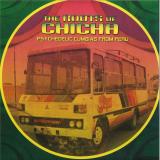
The Roots of Chicha - Psychedelic Cumbias from Peru 2x12"
 
23

The Roots of Chicha, compiled by Barbès Records, was originally released in 2007 and became the first recording to popularize psychedelic cumbia around the world.

From the late 60's through the 80's, Peruvians invented a new popular musical hybrid inspired by music from the Americas. In 1968, Enrique Delgado released his first record on Odeon with his new group, Los Destellos, single-handedly creating Peruvian cumbia. He codified the genre early on by using the electric guitar as the primary melodic instrument, and mixing cumbia rhythms with folkloric huaynos, criollo voicings, Cuban guarachas and guajiras, rock, boogaloo, surf, psychedelia, oriental music, classical music, and bits and pieces from Brazil, France, Chile... All Peruvian cumbia bands for the next thirty years would end up drawing from the exact same sources (Grupo Celeste, Los Mirlos, Juaneco Y Su Combo, Manzanita Y Su Conjunto...).

This new wave of Peruvian cumbia came to be known as chicha. Chicha is originally the name of an alcoholic drink, made of fermented maize, which the Incas were especially fond of. In the past thirty years, however, the word has taken on a pejorative connotation. Peruvian cumbia started being called chicha in the late 70s, around the same time that the music came to be viewed as the expression of the slums – the pueblos jovenes. Little by little, the word became an adjective, and people now talk of chicha culture, chicha press, chicha architecture, even of a chicha president, and none if it – you guessed right – is meant as a compliment. Chicha suggests corruption, shady deals, and cholos – a derogatory term for a person of Andean heritage that, of late, is being reclaimed and worn as a badge of honor by the very cholos it was supposed to demean in the first place.

No en stock

Haga su pedido ahora y le encargaremos el artículo en nuestro proveedor.

26,01

Ültimo hace: 56 Días
Joe Morgan / Reckless Breed - Basement Session / Basement Scrub (Version) (7")
  • A1: Joe Morgan, Reckless Breed–Basement Session
  • B1: Reckless Breed–Basement Scrub

Joe Morgan's "Basement Session" has the trademark Wackie's sound, deep and deeper. Its got great lyrics about the runnings of NYC basement sessions in the 1970's, a wicked dub to match, and a tough rhythm laid by the Reckless Breed band. Released on the "Bullwackie" label using the stock font and layout of one of NYC's long-shuttered pressing plants, according to Mr. Barnes this one was released "right before I got my logo."

Reservar30.01.2026

debe ser publicado en 30.01.2026

10,88
FEMKE DEKKER - OPEN FIELD LISTENING STATION

*Cover Picture: Pauline Oliveros

Practitioner, educator, DJ, and researcher, Femke Dekker (also known as Loma Doom) has long been immersed in both sound and education. Across lecture halls, archives, festivals, art galleries, independent radio stations, and dance floors, she orbits a central question: What if listening itself were an artistic practice? What might unfold when listening becomes method, medium, and material?

Open Field Listening takes shape around these ideas. Presented as a collaboration between Page Not Found—an artist-run platform dedicated to publishing and experimental practices—and the record label Osàre! Editions, the text originates from Dekker’s graduation thesis for the Master Education in Arts at the Piet Zwart Institute, Rotterdam.
There, she honed her skills as a pedagogue, inviting students into improvisational jam sessions, radio-making, and exercises that activate new modes of attention and a heightened sense of sonic curiosity.

Drawing on the work of scholars and artists—most notably Pauline Oliveros—Dekker approaches listening as a call to action: a way of tuning into one’s surroundings, one’s body, and the urgencies that contour our political and social worlds. She emphasizes the radical potential of reorienting knowledge toward collective attunement: the we rather than the I (or the eye). Inspired by Oliveros’s concept of Deep Listening—a way of expanding awareness through focused, embodied perception—Dekker acknowledges the composer as a foundational feminist figure whose insights continue to reverberate through the classroom, the studio, and beyond.

~~~

Page Not Found kindly thanks Mondriaan Fonds and the Municipality of The Hague for their generous support. Page Not Found is a centre for artistic and independent publishing, approaching these practices as vital, collaborative forms of cultural exchange.

Osàre! Editions is a music label founded by Elena Colombi. With a passion for diverse and experimental sounds, Osàre! Editions showcases unique artists and performers from around the world.

Reservar30.01.2026

debe ser publicado en 30.01.2026

10,04
Various - Wizzz! French Psychorama Volume 5 (67-75)

The journey through French-speaking pop archives continues with this fifth volume, packed with fuzz, gimmicks, and dissent. Far from the charts, the selected tracks display a great creative freedom, often backed by corrosive humor. Welcome to the surprising, kaleidoscopic, and colorful world of the late sixties and early seventies, Wizzz!
Born in Montauban, Robert Pico stumbled into music by chance when he met René Vaneste, then artistic director at Pathé-Marconi. René brought him to Paris to record his first 45 RPM EP in 1964. A year later, Pierre Perret introduced him to Vogue, where he recorded his second album with Claude Nougaro’s orchestra. Sylvie Vartan then introduced him to RCA, where he recorded four singles, including the astonishing "Chien Fidèle," a track backed by a hair-rising fuzz guitar. Alongside his solo career, he also composed for other artists like Alain Delon (the song was recorded but remains unreleased), Magali Noël, Bourvil, and Georges Guétary. In the Paris of the sixties, he mingled with Mireille Darc, Elsa Martinelli, Marie Laforêt, France Gall, Françoise Hardy, Petula Clark, Régine, Dani, Serge Gainsbourg, Joe Dassin, Franck Fernandel, Charles Level, and Roland Vincent. Despite his efforts and winning a Grand Prix Sacem for his final record, Robert Pico didn’t achieve the expected success in show business and decided to leave Paris and return to the Southwest, where he devoted himself to writing. He is the author of 23 books (including Delon et Compagnie, Jean-Marc Savary Editions 2025, a memoir about his youth and his many encounters). Today, he is relieved to never have become a celebrity and devotes himself to his work with passion.
In 1969, the Franco-Italian movie Erotissimo was released, directed by Gérard Pirès (who later directed Taxi in 1998, written and produced by Luc Besson). This pop comedy features Annie Girardot, Jean Yanne, Francis Blanche, Serge Gainsbourg, Nicole Croisille, Jacques Martin, and Patrick Topaloff. The soundtrack was written by Michel Polnareff and William Sheller, with lyrics by Jean-Lou Dabadie. "La Femme Faux-cils," performed by Annie Girardot. It recounts the feelings of a rich CEO's wife who seeks to develop her sex appeal under the influence of advertisement and magazines. Groovy, sparkling and light, this track, with ITS lush arrangements humorously critiques consumer society and feminine beauty standards.
“Je suis l’Etat” (1967) is the flagship track of the first EP by singer-songwriter Spauv Georges, aka Georges Larriaga, better known as Jim Larriaga (1941-2022). Born into a family of bakers, the young man was initially planning to become a hairdresser when he discovered English-speaking music through Elvis Presley and the Beatles. After this revelation, he decided he would become a songwriter and gave himself five years to succeed. He recorded his first two EP’s independently for RCA under the pseudonym Spauv Georges; meaning “that poor George”, a nickname given to him by the mother of her friend Jean-Pierre Prévotat (future drummer of the Players, Triangle, or Johnny Hallyday). Portraying a depressed and eccentric young man, Spauv Georges created corrosive and amusing songs that didn’t reach a wide audience, despite a TV appearance with Jean-Christophe Averty.
Supported by his loyal friend and fellow songwriter Jean-Max Rivière, Georges Larriaga met the future singer Carlos in the early '70s, then Sylvie Vartan’s assistant. He wrote songs for Carlos, including the popular "La vie est belle," "Y’a des indiens partout," and "La cantine", which went onto become a huge hit in 1972. He also composed for Claude François (“Anne-Marie”, 1971), Charlotte Julian (“Fleur de province”, 1972), helped launch child singer Roméo (who sold 4 million records), and later wrote the hit "Pas besoin d’éducation sexuelle" (1975) for the young Julie Bataille. In 1971, Jim recorded an album for Disc'Az: “L’univers étrange et fou de Jim Larriaga”, which featured pop gems like “La maison de mon père”.
The story of the song "Zoé" began when Pierre Dorsay, artistic director at Vogue Records, asked Swiss singer and musician Pierre Alain to write a song for a new female singer. The inspiration came when he realized that Zoé (the artist's name) was also the name of France's first atomic battery, created in 1948, which consisted of uranium oxide immersed in heavy water! The lyrics reflect a bubbling energy that must be handled with caution, while the instrumentation echoes this atomic theme, notably with the use of a theremin.
Zoé’s career lasted only as long as a single 45 RPM, but it seems Christine Fontane was the vocalist behind this pseudonym, who is known for several EPs, a good "popcorn" album in 1964, and a handful of children’s singles in the '70s. Regardless, the photograph on the cover is of a different girl entirely.
Later, Pierre Alain continued his career, writing songs for himself, Marie Laforêt, Danièle Licari, Alice Dona, Arlette Zola (3rd place in Eurovision 1982), and achieving multiple gold and platinum records in Canada. Also an inventor with several patents, president of the Romande Academy, and head of the French Alliance in Geneva, he now composes atonal music, books, and poetry. Moreover, he is also the host of "Les Mardis de Pierre Alain" at "Le P'tit Music'Hohl" in Geneva.
Filled with oriental choruses and fuzz guitar, "Fou" is from Jacques Da Sylva's only EP released by Vogue in 1967. Despite the quality of this recording, all traces of this singer disappear after this first effort.
Valentin is a baroque pop singer born in Belgium. He is the songwriter and composer of most of the tracks on his three singles released in the late 60s in Canada. A legend says that he reincarnated himself as Jacky Valentin during the 1970s for a rock'n'roll revival career in Belgium, but his older brother sadly debunked this story. Valentin's first two singles were arranged by Claude Rogen, a Parisian session pianist who had come to Canada to promote the song “Mister A Gogo”, a cover of David Bowie’s “Laughing Gnome”, adapted by singer Delphine, his wife at the time. Far from his usual network, Claude Rogen arranged music for Polydor, including the arrangements for “Je suis un vagabond” in 1969, a jerk tune with string arrangements and a furious optimism.
Jacques Malia wrote, composed, and recorded his only 45 EP for Festival in 1966. “Histoire de gitan” is an incredible beat track with bohemian scat that tells the story of a gypsy musician who came to Paris to make it in the Music-Hall, to no avail. The hero of the song and its author probably shared a similar fate, as Jacques Malia faded into anonymity after this remarkable attempt.
Bernard Jamet recorded two EPs for Barclay in the late sixties and co-wrote several songs with Christine Pilzer, Pascal Danel, and prolific songwriters Michel Delancray and Mya Simile. The track “Raison Légale” (1968), his masterpiece, immerses the listener in a courtroom right when a murderer is being judged, with jerk rhythm and free arrangements. A unique, paranoid, judicial, and psychedelic oddity.
Jean-Pierre Lebrot-Millers started his career in show business in 1967 as a singer and songwriter for the Philips label. After three singles, he wrote several songs of a new kind with his friend Pierre Halioche, in the midst of the sexual liberation movement and the democratization of drugs. With provocative lyrics, “Les filles du hasard” and “Barbara au Chapeau Rose” were released on a Philips singles in 1968. The character of Barbara was inspired by a queen of Parisian nightlife during the psychedelic years: model Charlotte Martin, who dated Eric Clapton from 1965 to 1968, then Jimmy Page from 1970 to 1983. Jean-Claude Petit’s arrangements, with a table-filled intro, soul brass, and Hendrixian guitar, emphasize the flamboyance of a hedonistic and sexy character, whose dog is named Junkie because “Junkie est un nom exquis”! The track was recorded live in three takes with a full orchestra.
Upon its release, the record was censored by Europe 1 and RTL due to its references to drug use. Jean-Pierre Lebrot was then banned from the airwaves and later dismissed by his record label. He changed his artist name to Jean-Pierre Millers, while his companion Pierre Halioche became D. Dolby for a new dreamy composition, “Chilla”, which Jean-Pierre produced himself with arrangements by Jean Musy. Once again, the song was immediately censored everywhere. After this setback, he decided to stop singing and started taking on odd jobs to support his Swedish wife and their son until the day he met Jean-Pierre Martin, then production manager at Decca, who had worked with Manu Dibango. Martin offered Jean-Pierre Lebrot-Millers, then employed at Rank Xerox, the position of artistic director at Decca. He accepted and became, a year later, promotion director (radio, press, TV). He worked on Julio Iglesias’s first album for Decca, which became a massive hit and allowed him to meet Claude Carrère. The latter asked him to write new songs and find their performers, much like a “talent scout.” It’s through him that Jean-Pierre discovered Julie Pietri and Corinne Hermès. He composed “Ma Pompadour” for Ringo, Sheila’s husband, and took the microphone again for the syncope hit “Rendez-Vous” in 1982.
That same year, Jean-Pierre Lebrot-Millers tried to release a track for which he had heavily gone into debt: “Si la vie est un cadeau”. Having recorded it in London, he presented it to numerous professionals, all of whom refused to get involved. The same thing happened with Antenne 2 and the Sacem when he proposed the song as France’s entry for Eurovision. He then met Haïm Saban, who was producing cartoon soundtracks and had just launched the Goldorak theme song. Saban, having listened to the song, declared it had the potential to become a hit. He sent Jean-Pierre and Corinne Hermès to meet the CEO of the Luxembourg radio and television network. The latter received them, asked to hear a verse and chorus a cappella in his office, and immediately hired them to represent Luxembourg at Eurovision 1983. They reworked the arrangements and recorded a new version with Haïm Saban as co-producer. The song ended up winning Eurovision 1983, a great comeback for our hero. He continued producing and hung out with the band Nacash in Belgium when a couple came to introduce their daughter for an impromptu audition in a hotel room. The girl sang “Les démons de minuit” while dancing to a radio cassette. Impressed, he had her take singing lessons for a year and composed a song for her (for which he had the melody and title, but no lyrics). This required him to go on the hunt for a lyricist, who ended up being Guy Carlier. They recorded the song, which was initially a ballad, at Bernard Estardy’s CBE studio, and gave the singer a new name: Melody. They showed the song around their industry network without success. Later, Estardy called Jean-Pierre to suggest changing the rhythm and making it pop-rock. Orlando, Dalida’s brother, liked the result and decided to co-produce the track. “Y’a pas que les grands qui rêvent » became a classic hit. The song has since been covered by Juliette Armanet (as a ballad, like the original) and Valentina.

Born into an aristocratic Breton family, Hervé Mettais-Cartier worked as a DJ at Queen Kiss, a nightclub in Poitiers, where he formed the band Les Concentrés with Michel (an actor) and Christian (a radio technician). Together, they created a repertoire of whimsical songs (“Ma bique est morte”, “J’suis un salaud”, “Fils de dégénéré”...) that they performed on stage dressed in white (in homage to “concentrated milk”). They performed at Bliboquet and Olympia in 1968 for the 10th edition of the “Relais de la chanson Française” organized by L’Humanité-Dimanche and Nous les Garçons et les Filles, sponsored by Pepsi Cola. Winners in the author-composer category, alongside Danish singer Dorte, their visibility allowed them to record a 45, and appear on television in Jean-Christophe Averty’s show. The A-side of the disc features Bruno le ravageur, a casatchok dedicated to Bruno Caquatrix, the director of Olympia, nicknamed in the song “Coq Atroce” or “croque-actrices”. The B-side is dedicated to “Fils de dégénéré”, a quirky tribute to Hervé's aristocratic roots, mixing absurdity with sophisticated vocal harmonies.
After Les Concentrés, Hervé Mettais-Cartier formed the duo La Paire et sa Bêtise with his friend Olivier Robert. They performed in Parisian cabarets and toured with Pierre Vassiliu. In the late 1970s, Hervé began a solo career. He recorded two albums for the Motors label in 1978 and 1979, which did not achieve their anticipated success due to lack of promotion. In 1980, he met Bernadette, with whom he started a family and created a “Chansons à voir” (songs to see) show that he performed until his death at the end of 2024.

Publicité comes from the final EP by the Missiles (Ducretet Thomson, 1966), a disc that also includes “La (nouvelle) guerre de cent ans”, featured on Volume 4 of our Wizzz! series. Please refer to the booklet for the story of the band.

“He’s 1.82 meters tall, 28 years old, weighs 135 kg, is black and Belgian”: this is the description of singer Hegesippe on the back of his sole single (Decca, 1967). He appears on the album cover wearing a Greek toga, like a hippie gag – we are at the end of the year 1967. In “Le crédo d’Hegesippe”, this former bodyguard of Antoine and the Charlots plays the delightful card of the thick brute converted to Flower-Power and non-violence, with arrangements by Jean-Daniel Mercier, aka Paul Mille.
“Ethéro-disco” was released on a promotional record for clients of the Maréchal company (Liège, Belgium) for the New Year 1979. Over a funky rhythm, celebrity impersonations (Brigitte Bardot, Jacques Dutronc, Fernandel…) deliver an enigmatic text about pharmaceutical products like ether, bismuth, and aspartate. The track was composed by Dan Sarravah (responsible for Joanna's “Hold-up inusité” featured on Wizzz! Volume 3) and Tony Talado, who was also a singer (one 45 in 1967), songwriter (with over a dozen credits between 1964 and 1985 in various styles from surf music to disco), author (Devenez Végétarien, Dricot Editions, 1985), ad designer, and psychologist.

Décollez-les is on the A-side of Mamlouk's only single, a pseudonym for Marsel Hurten, who is known for his work on several EPs in the late sixties, as well as composing music for Hervé Vilard’s “Capri, c’est fini”, Claude Channes' “La Haine”, Annie Philippe’s “On m’a toujours dit”, and Nancy Holloway’s “Panne de Cœur”.
This strange song, with Afrobeat horns and absurd dialogues between a chef and his kitchen staff, is the result of a collaboration between Marsel Hurten and one of his neighbors, a photographer from Pavillon-sous-Bois (93), where the musician settled after returning from the Algerian War. A music video was shot to promote the record.
Marsel Hurten was born in Tourcoing (59) into a musical family. At a young age, he joined the brass band founded by his grandfather, playing the piston before studying trumpet at the conservatory, as well as teaching himself how to play the guitar. As an orchestra musician, he toured in France, Belgium, Germany, and England. He released a series of solo 45’s between 1965 and 1968 for the DMF and Az labels before stopping recording to focus on working for other artists (Gilles Olivier, Noëlle Cordier…).
“L’amour nu” (Vogue, 1971) is the work of the short-lived Belgian band Mozaïque. The track, written by singer Jacques Albin, closely resembles another of his compositions, “Carré Blanc”, which he recorded in 1969 for Disc’AZ.
Represented by the Lumi Son micro-label based in Marignane (Côte d'Azur), Jean-Marc Garrigues released two 45 RPMs in the late sixties, defending the French jerk sound. The song “Je dis Non” is a short, joyful ode to youth, pop music, and rebellion.
Songwriter and performer Jacques Penuel released three singles. The first one, “Astronef 328” (Fontana, 1969), features a dizzying series of chords punctuated by sound effects, a sci-fi story, and arrangements by Jean-Claude Vannier.

We would like to sincerely thank Pierre Alain, Moon Blaha, Marsel Hurten, Bastien Larriaga, Jean-Pierre Lebrot-Millers, Bernadette Mettais-Cartier, Robert Pico, Olivier Robert, Claude Rogen, Micky Segura.

No en stock

Haga su pedido ahora y le encargaremos el artículo en nuestro proveedor.

23,11

Ültimo hace: 4 Meses
JORGE BEN JOR - TUTTO BEN (7")

La Matta Records proudly presents the first official 7-inch, Tutto Ben, a rare “Italo-Brazilian” mini EP by iconic singer, guitarist, and composer Jorge Ben Jor. This edition includes Ana Maria (Remastered), originally recorded at the Teatro Sistina in Rome in 1978, while Falcão and Lorella were first released in 1983 on the CGD (Maracanà) label, part of Warner Music Italy, celebrating AS Roma’s league title. This 7-inch captures a pivotal moment in Jorge’s career, singing in Italian with Banda do Zé Pretinho in Rome. Acclaimed for his radiant spirit and admired by the genius art director Franco Fontana — who invited him to Rome several times — this fully remastered gem is now available for collectors and enthusiasts on vinyl.

No en stock

Haga su pedido ahora y le encargaremos el artículo en nuestro proveedor.

19,75

Ültimo hace: 4 Meses
DEHEB - SOUL VISIONS LP

DEHEB

SOUL VISIONS LP

12inchST028
Stereophonk
23.01.2026

Soul Visions is an instrumental journey into the world of Deheb, who, after several years of continuous sound research, continues to draw inspiration from jazz, soul, funk, and progressive rock records, first discovered through his father and then through his fellow collectors and DJs, including his partner DJ Marrrtin from Funky Bijou.
The Breton artist is renowned in the beatmaking world for his collaborations in New York in the mid-2000s (Moka Only, Sean Price, Torae, Tye Phoenix, Apani B, etc.) and for his album “LEAF”, released in 2015 with Swiss producer Chief. He is best known for producing classic Funky Breaks in the global breakdance scene with Marrrtin under the name Funky Bijou, whose tracks have been played at the world's biggest breakdance events since 2011 (Battle Of The Year, Red Bull BC One, etc.). All their tracks have been listened to more than 30 million times on various platforms and social networks.
A prolific artist who draws much of his inspiration from funk and jazz, he is based in Nantes and has collaborated with groups from the French Neo Soul scene, such as J-Silk from Bordeaux, Jo Wedin from Sweden, and Keysuna from Nantes. Close to the dance scene, he has also collaborated with dancer and choreographer Mackenzy Bergile, which led him to join the CCNRB's choreographic project “Earthbound” by choreographers Saïdo Lehlouh and Johanna Faye in 2023.
Deheb has also been composing for documentary projects since his first collaboration with director Shyaka Kagamé in 2015 for “Bounty”. In 2024 and 2025, he worked on two critically acclaimed projects: “Boulevard du village noir”, produced by Radio Television Suisse, and “IMIHIGO, le pacte rwandais”.
This year, 2025, he brings us “Soul Visions”, a journey through the cinematic sound of the early 1970s to the soul funk and jazz funk of the late 1970s, a pivotal period in his own musical identity that contributed to the funk sound of his guitars and the texture of his synthesizers and electric pianos.
Soul Visions is first and foremost a tribute to the artists and composers, the geniuses of that era, such as the Mizell brothers in “Larry and Fonce”, the Bell brothers in “Ron and Don”, and giants of the genre such as Isaac Hayes, Yuji Ohno, Roy Ayers, and Clarence Reid. All these masters of the genre had their own distinctive sound and arrangements, which were easily recognizable and which are among Deheb's major inspirations.

No en stock

Haga su pedido ahora y le encargaremos el artículo en nuestro proveedor.

21,43

Ültimo hace: 3 Meses
JOHN DWYER - Pilot Ost LP

JOHN DWYER

Pilot Ost LP

12inch0657628456575
Rock is Hell
23.01.2026
  • A1: The Right Thing To Do
  • A2: Embrace Me, You Child
  • A3: The Carter Family
  • A4: Waited So Long
  • A5: You're So Vain
  • A6: It Was So Easy
  • A7: His Friends Are More Than Fond Of Robin
  • A8: Night Owl
  • A9: We Have No Secrets
  • A10: When You Close Your Eyes
Reservar23.01.2026

debe ser publicado en 23.01.2026

41,13
Kid Kapichi - Fearless Nature LP
  • A1: Leader Of The Free World
  • A2: Intervention
  • A3: Shoe Size
  • A4: Stainless Steel
  • A5: Worst Kept Secret
  • A6: Dark Days Are Coming
  • B1: Patience
  • B2: If You've Got Legs
  • B3: Head Right
  • B4: Saviour
  • B5: Rabbit Hole
También disponible

White Vinyl[24,79 €]


Jeder, der mit dem zähneknirschenden, blutigen Punk-Knurren von Kid Kapichi vertraut ist, kennt ihre „Fearless Nature“, daher sollte es auf den ersten Blick keine Überraschung sein, dass das vierte Album der Band aus Hastings diesen Titel trägt. Der erste veröffentlichte Track, „Stainless Steel“, wird von Frontmann Jack Wilson als Brücke zwischen dem alten und dem neuen Kid Kapichi beschrieben. Mit seiner tödlichen, straffen und kraftvollen Effizienz trägt er zwar eindeutig die Handschrift des klassischen Sounds der Band, aber die Reife seiner Sichtweise und der Mut in seiner Verletzlichkeit sind etwas Neues. Das hört man auf dem gesamten Album „Fearless Nature“, das von Momenten der Selbstzweifel durchzogen ist und von einer Band stammt, die nach Jahren an vorderster Front mutig genug geworden ist, die Einschusslöcher in ihrer Rüstung zu zeigen. „Fearless Nature“ ist auch im wahrsten Sinne des Wortes eine Brücke zu einem neuen Kid Kapichi.

Im Mai 2025 gaben Gitarrist Ben Beetham und Schlagzeuger George Macdonald bekannt, dass sie die Band verlassen würden – eine Entscheidung, die sie bereits etwa sechs Monate zuvor intern getroffen hatten. Die Entscheidung fiel einvernehmlich, und „Fearless Nature“ steht an der Schnittstelle zwischen zwei Generationen: Die Songs wurden mit der alten Besetzung geschrieben, aufgenommen und produziert (Co-Produktion: Beetham und Mike Horner), werden nun aber mit der neuen Besetzung auf Tournee gehen. Gitarrist Lee Martin und Schlagzeuger Miles Gill sind beide langjährige Freunde von Wilson und Bassist Eddie Lewis und Veteranen unzähliger hart spielender Bands auf der Live-Szene im Süden Englands.

Die politische Botschaft der Band mag unverändert geblieben sein, aber mit „Fearless Nature”, das ihr Repertoire erweitert, hat sie nun Gesellschaft bekommen. Ihre Entscheidung, emotionale Komplexität in ihre lyrische Perspektive einfließen zu lassen, ist ein großer Schritt nach vorne, und die Vorteile liegen auf der Hand, aus denen alle Kraft schöpfen können.

Für Fans von: Fontaines DC / Gorillaz / Blur / Yard Act / Soft Play / Demob Happy / Queens of The Stone Age

Reservar16.01.2026

debe ser publicado en 16.01.2026

24,79
Kid Kapichi - Fearless Nature LP
  • A1: Leader Of The Free World
  • A2: Intervention
  • A3: Shoe Size
  • A4: Stainless Steel
  • A5: Worst Kept Secret
  • A6: Dark Days Are Coming
  • B1: Patience
  • B2: If You've Got Legs
  • B3: Head Right
  • B4: Saviour
  • B5: Rabbit Hole
También disponible

Black Vinyl[24,79 €]


Jeder, der mit dem zähneknirschenden, blutigen Punk-Knurren von Kid Kapichi vertraut ist, kennt ihre „Fearless Nature“, daher sollte es auf den ersten Blick keine Überraschung sein, dass das vierte Album der Band aus Hastings diesen Titel trägt. Der erste veröffentlichte Track, „Stainless Steel“, wird von Frontmann Jack Wilson als Brücke zwischen dem alten und dem neuen Kid Kapichi beschrieben. Mit seiner tödlichen, straffen und kraftvollen Effizienz trägt er zwar eindeutig die Handschrift des klassischen Sounds der Band, aber die Reife seiner Sichtweise und der Mut in seiner Verletzlichkeit sind etwas Neues. Das hört man auf dem gesamten Album „Fearless Nature“, das von Momenten der Selbstzweifel durchzogen ist und von einer Band stammt, die nach Jahren an vorderster Front mutig genug geworden ist, die Einschusslöcher in ihrer Rüstung zu zeigen. „Fearless Nature“ ist auch im wahrsten Sinne des Wortes eine Brücke zu einem neuen Kid Kapichi.

Im Mai 2025 gaben Gitarrist Ben Beetham und Schlagzeuger George Macdonald bekannt, dass sie die Band verlassen würden – eine Entscheidung, die sie bereits etwa sechs Monate zuvor intern getroffen hatten. Die Entscheidung fiel einvernehmlich, und „Fearless Nature“ steht an der Schnittstelle zwischen zwei Generationen: Die Songs wurden mit der alten Besetzung geschrieben, aufgenommen und produziert (Co-Produktion: Beetham und Mike Horner), werden nun aber mit der neuen Besetzung auf Tournee gehen. Gitarrist Lee Martin und Schlagzeuger Miles Gill sind beide langjährige Freunde von Wilson und Bassist Eddie Lewis und Veteranen unzähliger hart spielender Bands auf der Live-Szene im Süden Englands.

Die politische Botschaft der Band mag unverändert geblieben sein, aber mit „Fearless Nature”, das ihr Repertoire erweitert, hat sie nun Gesellschaft bekommen. Ihre Entscheidung, emotionale Komplexität in ihre lyrische Perspektive einfließen zu lassen, ist ein großer Schritt nach vorne, und die Vorteile liegen auf der Hand, aus denen alle Kraft schöpfen können.

Für Fans von: Fontaines DC / Gorillaz / Blur / Yard Act / Soft Play / Demob Happy / Queens of The Stone Age

Reservar16.01.2026

debe ser publicado en 16.01.2026

24,79
Georgie Jesson - soft spot for a junkie (BOOK)

Georgie Jesson was born in London to a Bosnian mum and British father. One, a communist turned neurotic capitalist, the other a private school boy cast-off turned heroin addict. Georgie fell in love with poetry through music and lyric writing at an early age. She has since performed her work to music, written extensively for various music magazines as a journalist and culture writer, and written biographies and forewords for acclaimed artists including Baxter Dury and photographer Ewen Spencer.
Her debut collection traverses grief and love in equal measure, reflecting on family memories with a sharp honesty and a blurred edge. The book charts the changing ways the passing of time can affect us. They are conversational and confessional poems, coloured by images of bittersweet family holidays and hospital trips; sleepy Balkans bars and long London nights. Poems from the heart, about the effects of life on the heart.
“we collect figurines to make a monument of memory / to help ignore the wastage of life”.
The collection features illustrations by Greek artist Maro Michalakakos, whose work has been displayed internationally in galleries including MCA - Chicago, The Guggenheim, Tate, FNAC - Paris and many private collections. The book’s foreword is written by musician Grian Chatten, notably the lead singer & lyricist of critically acclaimed band Fontaines D.C. and whom has also released solo work under his own name.

Reservar16.01.2026

debe ser publicado en 16.01.2026

11,13
Zeitkratzer - Reinhold Friedl: Scarlatti

Zeitkratzer director Reinhold Friedl and his ensemble present new compositions, grounded on Domenico Scarlatti's piano sonata F-minor K.466. Commissioned by the dance company Rubato and dedicated to Mario Bertoncini (1932-2019).

Little is known about Domenico Scarlatti (1685-1757). His music is, so to speak, left to its own devices: free, cheeky, playful, sonorous, surprising. Harmonically strolling again and again into unforeseen regions, the ear leads, not the theory; and also the fingers get their right: playful and haptic it goes. Scarlatti explained, "since nature has given me ten fingers and my instrument provides employment for all, I see no reason why I should not use all ten of them."

Freedom, friction and listening pleasure instead of convention: "He knew quite well that he had disregarded all the rules of composition in his piano pieces, but asked whether his deviation from the rules offended the ear? He believes there is almost no other rule than that of not offending the only sense whose object is music - the ear."

Reinhold Friedl applied this principle and composed the music for a choreography by dance company Rubato. Dance music drawn from Scarlatti, who was so inspired by dance music. The material of the piano sonata F-minor K.466 is twisted anew in all its richness, shifted back and forth, declined, frozen, noisified, sound structures extracted, floating. Those who know the sonata, will more than smell it’s shadows. Dedicated to Mario Bertoncini (Gruppo di Improvvisazione Nuova Consonanza) who was particularly fond of K.466, on which all the music presented here is grounded.

"Wild flowers", Barbara Zubers had once called Scarlatti's music. Let them bloom.

No en stock

Haga su pedido ahora y le encargaremos el artículo en nuestro proveedor.

23,49

Ültimo hace: 4 Meses
ARSENIO RODRIGUEZ - COMO SE GOZA EN EL BARRIO (2LP)
  • Dame Un Cachito Pa' Huelé
  • Dundunbanza
  • Como Se Goza En El Barrio
  • Esas No
  • La Gente Del Bronx
  • Mambo En La Cueva
  • Que Negra P'acelerá
  • Blanca Paloma
  • Mami Me Gustó
  • El Dolorcito De Mi China
  • Hay Fuego En El 23
  • Besame Aquí
  • La Fonda De Bienvenido
  • No Quiero
  • Juégame Limpio
  • Pimienta
  • Cambia El Paso
  • Que Me Manda La Niña
  • Pobre Chinito
  • Baila Simón
  • El Reloj De Pastora
  • Sabor De Pachanga
  • Hachero Pa' Un Palo
  • Errante Y Bohemio
  • El Divorcio
  • Papa Upa
  • Lo Que Le Pasó A Luisita
  • No He Visto A Caridad
  • Suéltala
  • Adiós Carmelina
  • Emilio Dolores

The Godfather Of Salsa - HAVANNA & NYC RECORDINGS 1946-1962! Grosso! again presents this compilation from "El Ciego Maravilloso", the authentic godfather of salsa. His early Havana & NYC recordings. The tracks have been remastered and restored and some are available on vinyl after many years. Format and selection designed for DJs, collectors and latin lovers. Ignacio de Loyola Rodríguez Scull aka Arsenio Rodríguez (30 August, 1911, Güira de Macurijes, Matanzas, Cuba - 30 December, 1970, Los Angeles, CA, USA) was a Cuban musician, bandleader and prolific composer who developed the son montuno and other Afro-Cuban-based rhythms. Today he is seen as one of the most important figures in Latin music, with his influence reaching beyond the Spanish speaking world to also include African popular music of the 20th Century, though when he died he was not widely known by the public for his contributions and influence. He is also recognized (along with Israel 'Cachao' López and Dámaso Pérez Prado) as one of the creators of mambo, what Rodríguez himself often referred to as "ritmo diablo". Some of his best-known, and most-often covered recordings from the 1950s and early 1960s are included here, among them "Dame un cachito pa' huele'," "Dundunbanza," "El reloj de pastora," "Cambia El Paso," and "Hay Fuego En El 23."

Reservar13.01.2026

debe ser publicado en 13.01.2026

37,40
FONTINE - Good Buddy LP

FONTINE

Good Buddy LP

12inchBDAY123LPC1
BIRTHDAY CAKE RECORDS
12.12.2025
  • 1: Good Buddy
  • 2: Body Double
  • 3: Fraying
  • 4: Night Hours
  • 5: I Can’t Be
  • 1: Front Porch
  • 2: Home Right Here
  • 3: 7 Months
  • 4: Current

FONTINE’s debut full-length Good Buddy arrives October 7, 2025, marking a gritty, heartfelt turn from her folk-leaning EP. Recorded live to tape with her road-tested band, the album captures the loose, unfiltered energy of her live shows, pairing raw instrumentation with FONTINE’s powerhouse vocals and emotionally rich songwriting. It’s a rock record with a sensitive core — scrappy, cathartic, and full of heart. The title track, “Good Buddy,” uses CB radio slang for queer love as a playful, anthemic entry point into a record about identity, connection, and vulnerability. FONTINE, who identifies as Indigenous and queer, brings humour, honesty, and a deep sense of place to her writing. From personal struggle to activist fire, her lyrics are grounded and bold, wrapped in a sound that blurs the lines between alt-rock, Americana, and indie folk. With over a million streams, national CBC radio support, and a growing live presence across Canada, FONTINE is emerging as one of the most vital new voices in Canadian roots music. Her breakout charisma, fearless storytelling, and genre-fluid style make Good Buddy a debut worth turning up loud.

Reservar12.12.2025

debe ser publicado en 12.12.2025

28,78
2Beshlag - Jamais 4 Sans 5
No en stock

Haga su pedido ahora y le encargaremos el artículo en nuestro proveedor.

24,16

Ültimo hace: 5 Meses
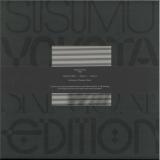
Susumu Yokota - Will (Skintone Edition) LP 2x12"

- Limited edition Cool Grey 2x12” vinyl LP.
- Housed in PMS printed inner sleeve, featuring custom fonts by No Format and spot gloss abstraction of the original album artwork.
- Accompanied with a double sided 2-panel insert and double sided 4 panel poster.
- All sleeved in a custom PMS reverse board outer sleeve with die cut square centre panel and belly band.

Will heralded a disarming, groove-based return to deep house. A wild melange of bumping beats, freestyle samples and esoteric goodness. Recorded over the same period as Grinning Cat this anomaly within the Skintone catalogue was seen as a way to circumvent the swirling politics of his club-oriented releases elsewhere. In itself Will was a reminder of Yokota’s ability to deliver a complex array of sounds within a more recognisable format.

No en stock

Haga su pedido ahora y le encargaremos el artículo en nuestro proveedor.

34,24

Ültimo hace: 79 Días
Artículos por página
N/ABPM
Vinyl