The long-overdue revival of Bim Sherman’s catalog begins here. These essential recordings will become widely available again for the first time in decades, opening a new chapter in the appreciation of one of Jamaica’s most distinctive voices and representing a major moment for reggae and dub aficionados around the world. This reissue series will not only preserve his legacy but will also offer listeners the chance to experience the depth and timeless resonance of Sherman’s work in its full glory.
Bim Sherman—born Jarret Lloyd Vincent, in Westmoreland, Jamaica—holds a unique place in reggae history. Emerging in the mid 70s, his ethereal, haunting vocal style quickly set him apart from his contemporaries. He was soon collaborating with the top producers and musicians of the era, including Adrian Sherwood and the On-U Sound collective, bridging the gap between roots reggae and experimental dub and laying the groundwork for the fusion of Jamaican sounds with the vibrant underground scene in the UK. His career, from Kingston to London to Mumbai, was marked by an artistic daring and spiritual intensity that has earned him enduring respect across generations.
The centerpiece of this reissue campaign is Ghetto Dub from 1988, a record that distills Sherman’s artistry into its most potent form. Originally released in a limited number, the album embodies the stark yet soulful beauty of dub production. With its reverb-drenched drums, cavernous basslines, and echo-laden atmospherics, Ghetto Dub transforms Sherman’s various tracks into spectral presences that drift in and out of the mix. The arrangement and production—minimal yet profoundly textured—captures both the raw urgency of Jamaican street culture and the forward-looking experimentation of the UK dub scene. Each track unfolds like a meditation, balancing grit with grace, density with space. Ghetto Dub is more than an album; it is an immersive soundscape that reaffirms Bim Sherman as one of reggae’s most otherworldly and visionary figures.
This first-time reissue of Quinteplus’ 1971 album revives a key moment in Argentine jazz, featuring crisp trumpet and tenor sax, electric piano-driven funk and modal grooves, and a tight, spacious rhythm section. It showcases prominent figures like Jorge Anders and “Pocho” Lapouble.
==================================
Quinteplus was born in Buenos Aires at the end of the 1960s, emerging directly from the ideas and experiments of the legendary Agrupación Nuevo Jazz. Founded in the early ’60s, this collective brought together some of the most forward thinking figures in Argentine jazz functioned as a creative lab where musicians questioned where jazz could go next. Among the key ideas discussed was the fusion of jazz with Argentine folk styles such as zamba, chacarera, malambo, cueca, and candombe, as well as a deeper look into African rhythms as a bridge between musical worlds.
Two members of that collective, keyboardist Santiago Giacobbe and bassist Jorge “Negro” González, carried those ideas forward when they formed Quinteplus in 1969. The group came together naturally: all the musicians already knew each other and had played in different projects around the Buenos Aires scene. They shared a strong admiration for Julian “Cannonball” Adderley’s quintet, along with a clear goal—to develop a modern jazz language grounded in local Argentine rhythms.
From the start, Quinteplus stood out for its openness and adventurous spirit. Rhythm was central, and so was experimentation. The band belonged to a generation of Argentine jazz musicians eager to explore electric instruments and new textures, anticipating what would soon be known as jazz-rock. This was happening in Buenos Aires at the very same time Miles Davis was opening new doors with “In a Silent Way” and “Bitches Brew”. Giacobbe introduced one of the first Fender electric pianos in Argentina, while González pioneered the amplification of the upright bass and even developed a hybrid electric, boxless version of the instrument. Trumpeter Gustavo Bergalli, meanwhile, maintained close ties with the emerging Argentine rock scene, collaborating with Luis Alberto Spinetta and appearing on Almendra’s first album.
In 1971, Quinteplus recorded its first and only studio album for EMI. The original lineup featured Jorge Anders on tenor saxophone, Bergalli on trumpet, Giacobbe on keyboards, González on upright and electric bass, and Norberto “Pocho” Lapouble on drums and percussion—who also illustrated the album’s iconic sleeve. The record is a refined showcase of the band’s musical vision: original compositions, fluent jazz language, folk-derived rhythms, funky electric textures, tight ensemble playing, and standout brass solos. Though critically praised, the album received little label support and sold modestly, eventually becoming a sought-after collector’s item.
Quinteplus disbanded in 1973, their music was perhaps too bold and unconventional for its time.
Münchenbuchsee, a suburb of Bern, Switzerland. Stephan Eicher is the youngest of three children. His father, a radio and TV repairman, is also a jazz violinist and a sound tinkerer in his spare time. In the family home's converted fallout shelter turned studio, Mr. Eicher experiments with homemade sequencers, tortures handcrafted drum machines, and abuses reel-to-reel tape recorders—all under the fascinated gaze of young Stephan.
The boy quickly develops a musical curiosity, exploring sound through various experiments and wanderings. Alongside his younger brother Martin, Stephan crafts audio plays on a homemade multi-track recorder (essentially several cassette decks hooked together!), which they write, record, add sound effects to, and perform for family and friends. Just a couple of nice kids, really...
Then comes 1972, and Lou Reed's Transformer album changes everything for the Eicher kids. For 13-year-old Stephan, it's a revelation—especially "Vicious", the opening track, which he plays on repeat for months. He convinces his father to buy him an electric guitar. Not stopping there, his father also builds him a tube amp using an old radio.
Then comes adolescence. A rough one. Stephan leaves home at 16 and moves to Zurich. With obvious artistic talent, he persuades his art teacher to help him get into F+F, a radical, alternative art school—despite his young age. Accepted, he starts learning video techniques, determined to become a filmmaker.
At F+F, Stephan organizes Dada-style happenings and concerts with a group of friends known as the Noise Boys. Among them: one of his teachers on bass, Veit Stauffer on drums (who would later found ReR/Recommended Records), his girlfriend Sacha on vocals, and Stephan on guitar. In one of their early performances, they release a remote-controlled mouse covered in dull razor blades into the audience to create panic and chaos. Keeping with this aggressive, confrontational spirit, they once played a concert while wearing headphones blasting Tristan and Isolde, trying to perform their own songs simultaneously—to maximize the cacophony. The goal was always the same: clear the room.
Their “songs,” if you can call them that, followed suit. Take "Hungeriges Afrika", for instance—performed entirely with power drills and some drum feedback.
To make ends meet, Stephan returns to Bern on weekends to work as a waiter at the Spex Club, the city’s main punk venue. On September 16, 1980, during a show by proto-electro group Starter, the police raid the club and arrest everyone. Stephan, who manages to avoid arrest, seizes the opportunity to “borrow” Starter’s gear left behind. He suddenly finds himself in possession of a Roland Promars synth, a Korg MS20, and a gorgeous CR78 drum machine, which he runs through a Big Muff distortion pedal to get that perfect gritty sound.
He then sets out to reinterpret some Noise Boys tracks, reworking them during impromptu sessions recorded on a dictaphone (yes, a dictaphone—now the lo-fi sound makes more sense, doesn’t it?). He ironically titles the resulting cassette "Stephan Eicher spielt Noise Boys" ("Stephan Eicher plays Noise Boys"). This gem features seven tracks, which are the ones reissued here.
Back in Zurich, he visits his friends Andrew Moore and Robert Vogel, who have a DIY cassette duplication setup. They make 25 copies of Stephan Eicher spielt Noise Boys for Stephan and his friends. Robert encourages him to visit Urs Steiger of Off Course Records and play him the tape.
Without much hope, Stephan shows up at Urs’s office. But Urs is instantly hooked and suggests releasing a 7” single. Due to space constraints, they reluctantly drop two of the seven tracks ("Hungeriges Afrika" and "One Second"). As for the musical score featured on the cover—it was randomly chosen and remains a mystery to this day. Calling all music theory nerds!
The 7-inch is pressed in 750 copies and released in the first week of December 1980—a date Stephan remembers well, as it’s the same week John Lennon was killed. Smartly, Urs sends a promo copy to François Murner, Switzerland’s answer to John Peel, who hosts a show on alternative station Sounds. Murner falls in love with the record and starts giving it airtime. To Stephan’s surprise, sales follow—and people actually seem interested in his music.
Even this modest underground success scares Stephan a bit. He stops making music for a year and moves to Bologna, where he works as a programmer at Radio Città, a feminist radio station.
Meanwhile, Stephan’s younger brother Martin, who’s also involved in the punk scene, joins the band Glueams as a singer and guitarist. Glueams, named after the fanzine run by two of its members (drummer Marco Repetto and bassist GT), eventually rebrands as Grauzone. Stephan is invited to their shows to project hacked Super 8 visuals live on stage.
Urs Steiger, now working on a compilation titled Swiss Wave – The Album, asks Grauzone to contribute alongside bands like Liliput, Jack and the Rippers, The Sick, and Ladyshave (Fall 1980).
For the album, Martin tasks Stephan with producing their recording sessions. Under Stephan's artistic direction, two tracks emerge: "Raum" and "Eisbär". During "Eisbär", Martin plays a minimalist bass line borrowed from post-punk band The Feelies (just an open string). Drummer Marco Repetto struggles to keep time. Later that evening, unhappy with the takes, Stephan builds a four-bar drum loop from a ¼-inch tape and uses it instead of the flawed original. He then adds bleepy synths and wind sounds to complete the track’s icy vibe before handing it over to Urs.
The Swiss Wave – The Album compilation is released quietly at first, but things snowball thanks to "Eisbär", which eventually becomes a smash hit—selling over 600,000 singles.
Meanwhile, Stephan plays in a rockabilly band called SMUV (named after Switzerland’s social security agency) and begins producing artists, including the debut album of Starter (1981), which includes a more pop-oriented version of "Minijupe".
By early 1982, Stephan starts spending time with the post-punk girl band Liliput (formerly Kleenex). They’re older than him, and he happily drives them around in his Renault Major, acting as their roadie.
By 1983, Grauzone—signed to the major label EMI, which turned out to be a misstep—is falling apart. Stephan begins to pivot toward a more mainstream pop sound with his debut solo album Les Chansons Bleues.
Xerrox Vol. 3 is the eighth solo studio album by German electronic artist Alva Noto, released in 2015 as part of the ongoing Xerrox penthalogy, which began with Xerrox Vol. 1 (2007) and Xerrox Vol. 2 (2009).
Inspired by formative influences such as Andrei Tarkovsky's 1971 film Solaris, La Isla Misteriosa y el Capitán Nemo by Juan Antonio Bardem, and Henri Colpi, Carsten Nicolai exchanges austerity for cinematographic lushness in the remarkably widescreen third volume of his Xerrox series.
In line with the series' focus on "using the process of copying as a basis," the eleven compositions of this volume can be heard as copies of memories, exploring emotional data patterns that are reflected as melodic vectors and noise.
This remastered version will be reissued on NOTON in 2026
Tracklisting
---------------------------------------------------------
Medium: 1 // Side: A // Track: 1
Artist: Alva Noto
Title: Xerrox Atmosphere
Playtime: 00:01:22
Explicit Lyrics: No
ISRC: DE1N62500026
(P): 2025 NOTON
Country: Germany
Engaging artistically with the unique oeuvre of the Pet Shops Boys through the form of cover versions is both an appealing and risky endeavour. Hundreds of such adaptations already exist, and covering songs is a complex undertaking, one that Neil Tennant and Chris Lowe themselves have mastered to perfection.
Exciting cover versions involve a skillful game of allusions and references, quotations and are entangled with personal as well as borrowed memories. Cover versions are homage, appropriation and interpretation — in many ways like adding letters in a Scrabble game: a new word, a new meaning emerge. Or, in the best case, a new song.
With her first debut EP ’Heart’, due for release in April 2026, Cat Storm dives into this labyrinth. It includes beguiling and intimate versions of 'Heart', ‘The Way It Used To Be’, ‘A Man Could Get Arrested’ and ‘Home And Dry’. The artist behind Cat Storm is Carmen Strzelecki. Born in Lörrach, raised in Mannheim and relocating to Cologne in the 1990s, Carmen has become an integral part of the Cologne art and culture scene since founding her publishing house ‘StrzeleckiBooks’ in 2009.
She produced her EP herself in collaboration with some of the grand masters of the Rhineland indie and electro aristocracy. The remixes by Christian Skrzypek, oskø and Clima ensure that it is well-suited for clubs.
We are excited to continue our work with Art P / Art Programming by finally offering the first full-length work from this Bremen-based electronic group. Originally released only on cassette in 1983, the self-titled album has now been fully restored and remastered, complete with bonus tracks and unreleased mixes unearthed from a rare demo.
The LP opens with "Wesen vom anderen Stern" ("Beings from Another Planet"), a downtempo, 808-driven electro synth wave track with German lyrics telling a story of aliens capturing earth, becoming the new "Herren" (lords), while humans are reduced to mere "objects." Art Programming founding member Jens-Markus Wegener notes that this track has always been a favorite during live performances, and it's easy to imagine how the futuristic sounds would have blown people away at the time.
Next is the electro/proto-techno title track "Art Programming," which we previously issued on a limited 12" in its full-length form. With its straightforward Roland 808 rhythms, catchy synth lines, and vocoder vocals, it's a classic example of German electro, and one of the earliest proto-techno tracks - long before Cybotron claimed the techno mantle. Its extensive break and electronic twist make it an early precursor to the genre. Wegener recalls that this track was created exclusively by him and Grotelüschen, with Grotelüschen contributing most of the melodic elements, while Wegener focused on drum machine programming and vocoder vocals.
On "That's Me," the album welcomes back singer Claudia Roebke. Although it's an electronic composition, Roebke adds a rock-infused, almost psychedelic vibe to the song. The lyrics, written by Wegener, depict a person obsessed with their appearance, using irony to critique societal beauty norms, questioning the obsession with perfection and attraction.
The album continues with a series of uptempo electro tracks: "Videoscreen," "La Gare," and "Genscher Pull 'N' Push." The first two feature slightly different mixes from an earlier demo that we personally prefered over the versions that were available on the final cassette release. "Videoscreen" expands on the theme of social isolation, with lyrics reflecting on a world obsessed with watching video all day - a topic that resonates strongly with today's culture of doom scrolling and social media addiction.
Next up, "Genscher Pull 'N' Push" is an incredible electro/wave/proto-techno track recorded in October 1982 with a political edge. Originally omitted from the album, it was only available on the demo cassette we mentioned earlier. The song takes aim at German politics, with lyrics that shout "bitte geh nach links / bitte geh nach rechts" ("please go to the left" and "please go to the right"), referencing the shifting political allegiances during the 1982 coalition change, when Genscher's party, the FDP, left the Helmut Schmidt cabinet to join the CDU/CSU opposition. The track was never released as the political topic had become outdated just a few months later.
The album closes with "Light and Fire," which originally served as the album's opening track. Its quirky, upbeat vibe now makes for a fitting outro.
The gear used on this album reads like a dream list for early 80s electronic music production: Roland Jupiter 4, TR 808, TB 303, System 100, SVC 350, Korg Mono/Poly, Moog Prodigy, FRICKE-Sequenzer, Roland CSQ-100 Sequenzer, Coron DS-8, MM 12/2, Sony TC 399, TEAC-244 Portastudio, Ibanez DM 1000, EH-Electric Mistress, EV-Micro. This unique lineup of equipment sets the album apart from NDW releases of the era, lending it a distinct sound with heavy proto-techno leanings and that straightforward electro vibe we all love.
The album is being released as a very limited edition of 300 copies on transparent red vinyl, complete with a full picture sleeve and lyrics inlay. This is yet another rediscovered and restored 80s gem on our label that you definitely don't want to miss!
AE Productions in association with Sure Shot Recordings and In Effect Recordings are pleased to announce a 10 Year Anniversary Edition of the critically acclaimed Phill Most Chill and Paul Nice album as the Fabreeze Brothers.
The hugely successful first edition which was pressed on colour vinyl and supplied in double fold out sleeve sold out in only 2 weeks from release date and then the 2nd pressing black vinyl edition sold out a little while later but has for years been out of print but is increasingly requested by shops, via email, social media, AE Productions website back in stock requests, etc…
As it has been 10 years since original release back in 2015 at the time of proceeding with manufacturing, it was the perfect opportunity to do a 3rd pressing to mark the anniversary but we had to pull out all the stops for a 3rd run of this incredible album and also make it subtly different again in packaging design from the 1st and 2nd pressings so that each has it’s own particular feel and quality.
With help from the original designer and all-round vinyl artwork supremo Mr Krum we have found some nice adjustments for the gatefold sleeve where the detail from the insert sheet found in the original issues is incorporated into the inside panels of the sleeve. We have also tweaked the hype sticker to mark the 10th Anniversary Edition and updated the vinyl labels so as to work better with the new Splatter vinyl which follows the original red and yellow vinyl but each splattered with the opposite colour.
For something a little extra we have compiled a Limited Expanded Edition Double Cassette Box Set that includes the original album and also a ‘Bonus Tape’ which features all of the remixes, alternate versions, Original Versions of album cuts and bonus tracks found on B-sides of the array of singles and we included for good measure 2 tracks that only appeared on the promotional only LP sampler that ended up being different on the final release. This is limited to cassette just for the non-vinyl heads as all of these tracks already appear on vinyl. The outer box is A5 card in black with gold foil Fabreeze Brothers logo and comes with discography booklet.
‘The Bonus Tape’ from the box set is also available as a standalone cassette release with alternate j-card art work so that it has it’s own flavour and so that anyone that purchased one of the original run of cassettes that sold out before we could even ship any copies, did not need to purchase the main album again unnecessarily and to make it noticeable from the Expanded Edition Box Set version.
This version also has an alternate shell design in keeping with the clear shell with dark liner that was commonplace back in the 90’s and the cassette geeks may note the red text on the spine as was also a common design back then – giving this a pseudonym of ‘the 90’s tape’ during the design process.
We couldn’t stop there so we also have an extremely low quantity Limited Edition Mini Disc version which is the main album plus 8 of the bonus tracks from The Bonus Tape – only missing the 2 least significant alternate versions but clocking in at just a few seconds under 80 minutes – the absolute maximum for the format! Mini Disc???!!! You’re probably asking – yes!
While looking into the cassette duplication options we realised that the duplicator also offers Mini Disc production so we thought that it may be worth doing a very small run just because not only are professionally manufactured Mini Disc’s rare in Hip Hop, they are rare within the entire music industry as they never really took off as a medium to purchase music but ended up as the choice for home recorded Walkman and car use. Indeed, AE boss Mr Fantastic still has his main machine, portable and old discs. Amazingly also, the sleeve artwork transferred brilliantly to the Mini Disc template. They are manufactured using high quality Sony discs using ATRAC 4.5 codec.
All releases are supplied with unique free download codes on cards that are included inside the packaging but also with the Expanded Edition cassette and Mini Disc having 2 cards – 1 for the main album and a 2nd card for ‘The Bonus Tape’. The free downloads are supplied direct from Phill Most Chill’s Bandcamp page keeping it independent.
This album brings together some of the finest music ever released on Black Jazz Records which in its short four-year history, between 1971 and 1975, released over 20 superlative albums which all successfully blending spiritual jazz, funk and soul jazz of the highest calibre. Similar to other independent jazz labels at the time, including Strata-East Records and Tribe Records, Black Jazz focussed on a number of key artists, most of whom first established their career during this period, and all of whom are featured here. Featuring The Awakening, Doug Carn, Walter Bishop, Chester Thompson, Kellee Patterson and more. Black Jazz Records was founded in Oakland, California, by pianist Gene Russell and percussionist Dick Schory.
The label released twenty albums between 1971 and 1975. Artists who recorded for Black Jazz Records included Cleveland Eaton (bassist for Ramsey Lewis), keyboardists Doug Carn and Chester Thompson, vocalist Kellee Patterson, saxophonist Rudolph Johnson, bassist Henry Franklin, and spiritual fusion group The Awakening. The label was distributed and financed by Ovation Records, based in Chicago. Schory founded Ovation in 1969, shortly after leaving RCA. Schory was a Grammy-nominated percussionist who was also known for his development of the stereo recording techniques including Dynagroove and RCA Victor’s Stereo Action. Schory also pioneered quadrophonic sound, and a number of Black Jazz Records were in quadrophonic and other formats such as ¼” tape and 8-track.
Black Jazz launched in 1971 with Gene Russell’s ‘New Direction’. Russell was the creative force behind the label, acting as producer, engineer and A&R and focussed on developing new solo artists. The most successful of these was Doug Carn, who released four albums featuring his wife, Jean Carn, as vocalist. She later changed her name to Jean Carne and became a successful soul singer signed to Gamble and Huff’s Philadelphia International empire.
BOSLTD013 brings Luminér in a tight, floor-minded 12" that leans into the warm end of micro house and minimal without losing its bite. Analogue Forma is all about motion and detail: elastic grooves, crisp drum work, and that slightly dusty, hardware-fed sheen that sits perfectly between deep and functional.
Across four cuts, the record shifts from rolling, hypnotic pressure to sharper, twisted angles, keeping the swing present and the space alive. The B-side closes with “Forma (Gogan Remix)”, flipping the original into a more driving, late-night tool while staying true to the release’s analogue character. Vinyl only, built for DJs, and made to live in the mix.
Wendy Eisenberg hat die letzten zehn Jahre als feste Größe der Independent-Musikszene und als Künstlerin von inspirierender Vielseitigkeit verbracht. Als Singer-Songwriterin, Improvisatorin und virtuose Gitarristin sind die Koordinaten ihrer Kunst ständig im Wandel, von Art-Rock über Jazz bis hin zu mitreißender freier Improvisation und ausdrucksstarker Folk-Musik. Mit Höhepunkten wie dem 2020 erschienenen Album Auto" und dem 2024 Free-Jazz-Album Viewfinder" hat sie sich einen Namen als ambitionierte Künstlerin gemacht. Nachdem sie die letzten fünf Jahre damit verbracht hat, in verschiedenen Bands, Genres und kreativen Herausforderungen zu experimentieren, und nach einer Phase der Selbstkonfrontation, die sie mit einem persönlichen Exorzismus vergleicht, hat Eisenberg einen Meilenstein erreicht. Die poetischen und formal gewagten Folksongs von Wendy Eisenberg sind ihre bisher klarste Vision. Die Songs begannen 2020 Gestalt anzunehmen, als Eisenberg aus West-Massachusetts wegzog, wo sie nach ihrem Studium am New England Conservatory in Boston einige Jahre gelebt hatte, und nach Brooklyn zog. Aus Sehnsucht nach der ländlichen Atmosphäre ihres früheren Zuhauses fühlte sich Eisenberg zu den warmen Klängen von Country und Folk hingezogen. Die Songs sind echte Folk-Lieder", sagt Eisenberg über ihr Album. Bei der Produktion geht es weniger darum, zu sehen, was die Gitarre leisten kann, sondern vielmehr darum, die inhärente Fremdartigkeit der Sprachen zu akzeptieren, die sie seit anderthalb Jahrhunderten spricht." Auf Wendy Eisenberg schafft die Künstlerin ihr eigenes Paradigma mit einem eng verbundenen Kreis von langjährigen Freunden und Mitwirkenden, darunter Bassist Trevor Dunn, Schlagzeuger Ryan Sawyer und Co-Produzentin Mari Rubio (more eaze), die für Pedal Steel, Synthesizer und Streicharrangements zuständig war. Die Aufnahmen fanden oft in Eisenbergs Haus statt und verliehen jeder Note eine wunderschöne Ensemble-Textur. Endlich war ich von Menschen umgeben, die mich akzeptierten", sagt Eisenberg. Viele der Songs auf diesem Album sind in diesem neuen Gefühl entstanden. Ich wollte, dass es unglaublich beruhigend wirkt, da es einige massive Veränderungen im Selbstverständnis und Selbstwertgefühl beschreibt. Es geht um Erleichterung."
In September 2024, Nacho Piek, Rapha Mundi, Odd Signals and Ibai Machín gathered for four days in a beautiful house in Etxeberri, a small village in Navarre with barely 50 inhabitants. Isolated from everyday rhythm and surrounded by nature, the goal was clear: to create a production camp dedicated exclusively to club music.
The result is Etxeberri EP, the debut of Buenobueno Soundsystem — a work that captures that coexistence in the form of direct and timeless music, designed for the dancefloor. An organic crossing of influences ranging from House, Techno and late-90s Minimal Trance to contemporary UK Bass.
Etxeberri EP will be released on March 13 exclusively on vinyl, in a limited edition of 200 copies. Each record includes an inlay with photographs of the creative process and private access to an audiovisual piece shot by Jesús Iriarte documenting the experience and the spirit behind the project
Chinaski opens 2026 with SOULMEEX record label exactly where he thrives best: suspended between nostalgia and futurism, melody and motion. Known for his synth-forward language and cinematic instincts, the Berlin-based producer delivers a release that feels both playful and sharply intentional, channeling emotion without sacrificing precision.
Across the EP, Chinaski revisits the spirit of Italo through a contemporary lens, shaping glistening arpeggios, buoyant basslines, elastic grooves and joyful synth stabs into five tracks that move effortlessly between the dancefloor and the imagination. There’s an unmistakable sense of lightness here-music that doesn’t overthink itself, yet is clearly crafted by someone who understands form, tension and release.
Rather than leaning on retro tropes, Chinaski treats dance music as a living, breathing language. The melodies feel familiar but never predictable; the rhythms pulse with warmth and confidence. An unforced sense of freedom runs through the release, inviting repeated listens and late-night moments alike.
With this EP, SOULMEEX sets the tone for 2026 with clarity and purpose, and Chinaski delivers the spell-subtle, melodic, and quietly irresistible.
Karkossyn returns to the shadows with Undergrowth, a harrowing descent into the Bristolian void that pushes dark drum and bass into its most predatory forms. The EP opens with a cold, eerie prologue. A warning that constructs a menacing world before the listener is dragged into the sonic abyss.
Drawing from dnb, trip-hop, and jungle, the soundscapes are characterized by a visceral dread birthed from the dampest corners of the South West. These tracks are built on distorted bass, gritty drums, and raw percussion, layered with atmospheric drones that heighten the feeling of suspense throughout.
Adding to the murk, Bristol’s own Pessimist provides a remix that results in a skeletal, rhythmic haunting. It is a definitive statement of UK dread, solidifying Karkossyn’s place as an uncompromising architect of industrial-tinged carnage.
Marking a milestone for the imprint, this serves as Erosion’s first physical release.
DJ Support: Nic Fanciulli, Joe T Vannelli, Danny Tenaglia, Richie Hawtin, Nick Curly, Shiba San, Adam Beyer, Marco Bailey, Boris, Jamie Jones, Markus Schulz, Tom Novy, John Digweed, James Zabiela, Tiesto, Claude VonStroke, Roger Sanchez, Blond:ish, Adriatique, Paul van Dyk, Joris Voorn, Deer Jade, Vintage Culture & Paco Osuna
Few labels can claim true legendary status in dance music - where trends fade as quickly as they emerge and icons are made and broken overnight. Yoshitoshi stands as one of those rare exceptions.
The label makes its return with a statement of intent: a definitive new remix package of Alcatraz’s era-defining “Giv Me Luv”, a dancefloor classic that hasn’t seen fresh interpretations in over a decade. While the original has remained a staple for those who know, it’s now primed for a new generation of club enthusiasts.
“Giv Me Luv” represents everything Yoshitoshi has been standing for: raw energy, unforgettable hooks, and that indefinable magic that makes a track timeless. Bringing it back with new remixes after all these years demanded artists who could match its legacy.
Enter Sébastien Léger, the French maestro whose thirty-year journey has seen him perform everywhere from Coachella to the Great Pyramids of Giza. His interpretation delivers the sophisticated, hypnotic drive that has made him one of electronic music’s most respected tastemakers and the founder of the acclaimed Lost Miracle imprint.
Alongside him, progressive titan Jerome Isma-Ae, whose unique fusion of trance, techno and house has dominated Beatport charts and earned him breakthrough recognition from Armin van Buuren, unleashes his signature sharp, breathtaking power on the classic.
The vinyl also includes the original mix on the B-side, completing a package that marks Yoshitoshi’s triumphant return to form.
pdqb is an entity without a fixed form, moving through multiple timelines at once, performing in all of them simultaneously.
Every tone on this record was sampled somewhere else: in collapsed futures, unfinished pasts, and inside stress loops that never resolved. The tracks are not composed - they are retrieved, stitched together from moments that already happened and moments that haven't happened yet.
The music is unstable, dependent on who listens, and in which dimension, the tracks re-arrange themselves, revealing different harmonics, different fears, different exits. No two listeners hear the same, even if they play it at the same time.
The überskilled Detroit remixers provide a solution for Earthbound listeners - those unable to time-travel or shapeshift: By filtering pdqb's multidimensional signal through machine discipline, they force a temporary alignment - a version of a track that sounds the same to most listeners. Only then does collective rhythm become possible, a shared timeline where bodies on a dancefloor move to the same future at once.
---
Dr. Paul Dominic Quentin Bernard defines Future Traumatic Stress Disorder as a cognitive condition marked by a reversal of mnemonic orientation. Memory, in this model, no longer operates retrospectively but functions prospectively, encoding anticipated survival outcomes rather than past experience. Affected subjects do not recall what has been lived through; instead, they retain anticipatory memory structures of what will be survived. Bernard notes that this temporal inversion produces sustained psychological stress and warrants further empirical investigation.
Rising star Storm Mollison lands her debut on Heist with an ep blending House & R 'n B and we're completely hooked.
The future is looking bright for Storm Mollison - Heist's newest. Marked as artist to look out for by Shazam on their fast forward 2026 list, Storm's got a bright and busy year ahead, after an already big 2025. Last year alone, she featured on Kiki's hit 'Getting ready for the party', featured on a Mixmag London event and a Raw Cuts X Heist ADE party, had her first cover feature on Spotify, multiple radio 1 appearances, released several singles, a full EP on Noir Fever and a Luuk van Dijk remix.
If that's not enough to get you excited, we suggest you just listen to her 'Act like that' EP on Heist. In Storm's own words: "it's the most exciting music I've made so far" and we couldn't agree more. Her EP is a perfect blend of her love for house music and soulful R 'n B with its 4 tracks smothered in deep chords, smooth vocals and crunchy textures.
EP opener 'Doing Sumthin'' has been a staple in Dam Swindle's sets ever since receiving Storm's first demo and has never failed to make the crowd bounce from left to right with its quirky and equally cool vocal courtesy of Aaron Pfeiffer. Sometimes, you just need someone to tell you which way to move and before you know it, the whole club is doing it. The beat is chunky, and the sax lick is a nice wink to the old school house that has influences Storm's sound so much.
Act Like That - the EP's title track -, is a modern R' n B song that could have easily been on Rochelle Jordan's latest album. The lyrics are perfectly delivered by Storm herself and celebrate women who stand up to unreliable men. It could well be the badass soundtrack of womanhood for 2026 delivered in a silky-smooth package that'll live rent-free in your head for the foreseeable future.
On the flipside is "Gotta Go', an undercover dancefloor burner with lush keys and a lean-back groove. The track relies on crisp textures and little frizzles all throughout the track, with a big breakdown for ultimate release.
Ep closer 'Workin' takes us back into R 'n B territory, this time in a very danceable form. Storm's soft vocals lie on top of a steady beat with deep chords and a bassline so sexy It'll make you get down no matter where you're hearing this.
It's hard to speak about a breakthrough for an artist that has already seen such a rise in the scene, but if we're talking about her music, this will be the record that people come back to after years and say, "remember when she releases ALT!?"
Incl. Remixes by Red Axes, Roman Flügel & Abe Duque
What does it mean to exist in sound?
It does not begin with a beat, but with a choice. With the moment when someone decides not merely to inhabit the space, but to shape it – and in doing so, makes themselves visible.
Roman Flügel stands as a constant in the background. Not as an authority, but as a collective consciousness. Since the 1990s, he has moved through club music like a seeker, never content with the first answer. House, techno, experimentation – these are not genres, but states of being. His remix thinks, hesitates, opens, strikes like a surging acid wave, warping reality and demanding true presence.
New York taught him that club music is never neutral. It is body, friction, attitude. Abe Duque’s remix carries a strangely enchanting relentlessness, a resistance to smoothness – as if the dancefloor were a place where freedom is not claimed, but fought for.
Red Axes do not enter this space; they conjure it. Their sound is raw, repetitive, circular, as if deliberately refusing linearity. House, dub, and acid elements become material for a movement that is more trance than structure. Their remix does not ask where it is going; it asks why one should ever stand still.
And then there is Tim Paris. Not at the center, but as a narrator. As someone who knows that the voice is an attitude. “That Boy” is not a pose, but a mirror, ironic, direct, vulnerable. Paris moves between new wave house and club, always aware that identity is never fixed, but formed in the moment.
This remix record is not a gathering of names. It is a situation, four perspectives on the same question:
What does it mean to exist in sound?
Yet sound alone does not tell the full story: like music, the visual is a space to be shaped, felt, and deciphered. The cover of Tim Paris feat. Foremost Poets – That Boy, created by Konstantin Fürchtegott Kipfmüller, a visual artist at the Hochschule für Gestaltung in Offenbach under Heiner Blum, embodies this principle. Drawing inspiration from the urban environment, Kipfmüller transforms traces of decay, weather, and time into abstract narratives that, like the music of Tim Paris, Roman Flügel, Abe Duque and Red Axes, unfold meaning layer by layer. The result is no mere adornment, but a mirror of the sonic landscape: every line, every surface an echo of the question of what it means to exist – fully, in the moment, in sound.
For Oath's latest release presents Vault with Holes, the first record from French duo C.ling. Formed by lifelong friends Paul Brunet and Alexandre Maillet, now based between Paris and Brussels, the pair draw from a wide European electronic music network and a classical background.
Combining hyper-kinetic sound design, delicate instrumentation and fluid, polyrhythmic layering, C.ling's sound is immersive and genre-less at times, rooted in remembrance and shifting emotional spaces. Vault with Holes unfolds like chapters, where thresholds between tracks feel like breaks in a narrative, reflective, tactile and quietly expansive.
Chris Liebing's first full solo techno LP, 'Evolver' is released on 27th March 2026, via his own CLR imprint. The German techno don's LP features a host of collaborators across music, images, and artwork. Luke Slater, Charlotte De Witte, Speedy J, The Advent, Terence Fixmer, Pascal Gabriel, Daniel Miller contribute to the music, while long-time collaborators Studio Bergfors deliver design, and legendary photographer Anton Corbijn shot Liebing for the project.
The Evolver LP is the sum total of Chris Liebing's three decades at the beating heart of techno. It's the record only someone whose first break as a techno DJ was playing five hours at Sven Väth's infamous Omen in Frankfurt - and who has ridden out every twist and turn of life and subcultures since, while remaining rooted in the true school, dark, sweaty techno sweat pits of the world - could have made. It's the result of deep introspection, but it's about utter immediacy. It's the sound of someone previously driven along by compulsion and happenstance at last finding the confidence to be utterly intentional about their practice, allowing them to take the most classic, familiar, proven elements from the past and render them completely new.
Evolver is also Liebing's first completely solo album. There are collaborations, yes: with old friends from the OG techno generation, Luke Slater, Speedy J, and The Advent, all on uncompromising form, and with new generation figurehead Charlotte De Witte, who provides a thrilling narration of total surrender to the moment on acid clarion call "Symphonie des Seins". But unlike all Liebing's albums to date, there's no co-pilot. Every structure, every mixdown, every choice serves his singular vision of how his untold immersion in the surging currents of the world's greatest clubs should sound. The elements are all those forged in the white heat of Omen and Tresor in the mid 90s - brutal repetition, titanium kick drums, industrial atmospherics, but also dark rave euphoria, ever present surging acid lines just on the cusp of trance, and just enough human voices to remind you of bodies on the dance floor - but rendered with all the extraordinary accumulated skill and technological developments since then.
It's Chris's vision entirely, his musings on sound, technology, and life birthing tracks like "Roy Batty." Inspired by thoughts of AI becoming sentient and hungering for more life like Rutger Hauer's titular Blade Runner character, it was one of the first tracks to emerge and a foundation stone for the album. And in pursuit of that vision, it's built like a "proper album". The anticipation and menace of intro "Unfold" tip over into the glowing hot high drama psychedelia of "Symphonie…" then the breathless headlong rush of The Advent collab and on through an unfolding narrative that goes deep, goes dark, opens out into grand vistas, takes strange turns before finally landing on the alien landscape of… well… "Endtrack".
Not everything is pummelling on Evolver - the dazzling title track feels like you've been welcomed into the courtly dance of a higher dimension civilisation, and the audacious Speedy J collab "Shaping Frequencies" is a beatless flow that tests the boundaries between signal and noise. But for all its complexity, conceptualism, and stylistic branching out, every last part unmistakably powered by that dark techno-cavern energy above all else. All of it positively radiates the qualities of Liebing's greatest work and sets to date - but somehow even more so than before. Whether you're listening for aesthetic inspiration, cerebral stimulation or just that raw physical power, this album will sweep you up into its momentum and won't let go of you until it's done.
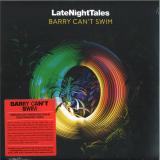
In the last two years, Barry Can’t Swim has released two albums – When Will We Land? and Loner. The debut was nominated for a Mercury Music Prize, winning 2024’s Best Dance Act on BBC Radio 1 and being nominated for Best Dance Act at the BRIT Awards in the same year. The latest album, 2025’s Loner, hit the top ten in the UK charts and was number one in the dance charts. This summer, Barry Can’t Swim cemented his position as one of the most singular new voices in electronic music with a gangbusting performance as a headliner at All Points East in London’s Victoria Park, building on his back-to-back performance with Bonobo at Coachella in 2024. Barry’s Late Night Tales mix brings together disparate styles and forms them into a coherent narrative. The powerful house tracks, like Lance DeSardi’s ‘Power of Suggestion’ and Daniel Avery’s remix of Factory Floor, intertwine with the abstract grooves of Freddie Da Stupid or Ronald Langestraat’s leftfield reading of Boz Scaggs’ ’70s smash ‘Lowdown’. There are exclusive tracks from Barry Can’t Swim himself (in the form of new single ‘Chala’ and an exclusive edit of Superpitcher’s ‘Yves’) and from friends and contemporaries, like Ninja Tune labelmate O’Flynn. Leaving aside the obvious quality of the mix, with its serpentine twists and dramatic turns, you can tell Josh is a fan of this series by bringing in his own personal poet, the brilliant Seamus, for the spoken word section right at the end. He’s a one-man Late Night Tales programmer.
DISPLACES represents Fabris' most personal musical journey to date, inspired by the concept of hyperobjects and cartographic practices. The album sculpts a high-dimensional phased time-space composed of concrete materials and digital archetypes in a state of constant displacement. It delves into the symbolic and philosophical realms of mapping as one of the greatest sense-making mechanisms for life, in dialogue with object-oriented environments, superimposition and non-locality applied to cosmic, temporal, and emotional memory.
The sonic ecosystem expands on the image of navigating a path through a set of places, from the microcosm of quanta to the macro force of dark matter, from underwater depths to overland terrains, encapsulating the cyclical flow between birth and death, both in ecological and anthropological sense. The intersection of these shifting states is explored through the extensive processing of the langspil, Iceland's only traditional instrument, intertwined with manipulated field recordings of biophonies and geophonies captured across Icelandic and Venetian territories. These recordings form the backdrop for a meditative process that relocate familiar objects into unfamiliar realms, reflecting on the transformative power of self-reflection while encapsulating the fragmentation and entanglement found in nature and the human state. The record plunges the listener into a disconcerting and physical soundscape, as a “ghostly spectrality that comes in and out of phase with normalized human spacetime,” evoking sensations of suffocation and release as each layer continuously unfolds the palimpsest of the enclosed labyrinth.
“Extraction of the I” embodies a subatomic reaction—erupting as a molecular force that rises, only to re-submerge with a solitary exhale underwater. In this mutated dark space, beluga whales breathe into "Xanadu Phasing," creating a pulsating tension that releases only to unveil a frozen landscape.
In “Barricading the Ice Sheets” the glacial material morphs into a liquid tunnel of digital artifacts, building a wall of noise that shatters into scattered fragments of ice, resembling bird calls from another world.
A moment of stasis is offered with the appearance of an asymmetrical loop in Monolith I, evoking a primitive rite before an unknown force emerges.
The physical intensity of subsonic material in "A Quake in Being" interrupts the hieratic tone, detuning into polluted sonic matter sourced from relics of the First World War in the Venetian Prealps. The geography of this place reconciles with the original homeland in "The Map is the Territory," blending negative space with anthropogenic elements and exploited sounds of the langspil.
The burning density of "Wolf-Rayet" projects into the void, echoing the residual sounds of a local church as relics of fossilized religions. Wolf tones are the remains in Monolith II, introducing the final track, "Topography of Extinction," where evolving psilocin textures invite the listener to uncover deeper layers of meaning and dislocation.
In den letzten fünf Jahren hat sich Joe Westerlund intensiv mit der Clave beschäftigt, dem metrischen Muster, das zunächst die afro-kubanische und lateinamerikanische Musik geprägt hat und dann in fast alle Bereiche des Jazz und Rock Einzug gehalten hat. Was bedeutete es, dass eine Idee so flexibel war, dass sie so viele Formen annehmen konnte und dabei doch ihre eigene Essenz behielt? Das Ergebnis ist für Westerlund ein Sprung ins Unbekannte: Curiosities from the Shift, ein 12-Track-Spielplatz mit endlos verwobenen Beats und Melodien, auf dem Westerlunds Begeisterung für die Clave auf seinen experimentellen Umgang mit Texturen trifft und seine rhythmische Symphonie mit Freunden Hand in Hand geht, die diesen Raum gemeinsam mit ihm gestalten. Die dreiteilige Suite, die die erste Hälfte von Curiosities ausmacht, beginnt mit den Schrottplatz-Percussions und den entzückenden Bass-Splashes, die ,Tem" umrahmen, und endet mit dem surrealistischen Boom-Bap von Daumenklavieren und Shakers auf ,Can Tangle". Diese Stücke strahlen eine hart erkämpfte Freude aus, als würde Westerlund sich in Echtzeit daran erfreuen, eine potenzielle Sackgasse zu entdecken, aber trotzdem seinen eigenen Weg nach vorne zu finden. Diese Songs wurden zu einer Art Arbeitsplan für das Terrain, das Westerlund auf Curiosities erkundet, vom glorreichen Call-and-Response-Opener ,Nu Male Uno" bis zum unheimlich amorphen Schlussstück ,Felt Like Floating". Alle diese Songs zeichnen sich durch einen erkennbaren Rhythmus aus, wie den galoppierenden Gang in der Mitte von ,Midpoint" und den kopfnickenden Puls, der sich durch ,Persurverance" schlängelt, dessen Name augenzwinkernd falsch geschrieben ist, um seiner Aussprache aus North Carolina via Wisconsin zu entsprechen. Aber das sind nur Sprungbretter für andere Texturen, Stimmungen und Ideen, wie die New-Age-Anklänge - schimmernde Metallophone, zwitschernde Vögel, zurückhaltende Flöten -, die ,Midpoint" durchziehen, oder die Dub-artigen Delays und Gamelan-Hymnen, die ,Persurverance" durchziehen. Dies ist zutiefst vielschichtige Musik, deren treibender Kern durch eine Reihe überraschender Entscheidungen ausgeglichen wird. Bittersüße und Freude, Trauer und Befreiung, Seufzer und Lächeln: All das ist hier vorhanden und verflechten sich bis ins Unendliche. In den Monaten nach den ersten Sessions wandte sich Westerlund an Freunde - darunter Tim Rutilli von Califone, den Saxophonisten Sam Gendel, den Trompeter Trever Hagen und die Violinisten Libby Rodenbough und Chris Jusell. Es waren seine am gründlichsten komponierten und präzisesten Werke, aber er wollte hören, was passierte, wenn seine Freunde in Echtzeit darauf reagierten. Sie lieferten Anmut, Tiefe und Gefühl, wobei ihre Parts den Vorhang zu verborgenen Winkeln rhythmischer Welten öffneten. Westerlund gibt bereitwillig zu, dass er von der Betonung des Grooves und des Metrums des Albums überrascht ist, die sich von abstrakten Klängen abhebt. Nachdem er so lange mit Bands gelebt und gearbeitet hatte, ging er davon aus, dass er mit grundlegenden Metren fertig war. Diese 12 Songs verschmelzen so viele von Westerlunds Leidenschaften zu endlos faszinierenden Stücken, die mit vertrauten Elementen seine Abenteuer ins Unbekannte übertragen. Verspielt, aber zart, wehmütig, aber wundersam, von Beats angetrieben, aber nicht an sie gebunden - dies ist Westerlunds bisheriges Vermächtnis, das Soloalbum, das einen Blick auf eine musikalische und emotionale Landschaft eröffnet, die vielleicht sogar noch reichhaltiger ist, als er es sich jemals hätte vorstellen können.
Dark Entries does as they often do once more here and revives a cult gem with Sucre De Pasteque, a 1986 standout from legendary French industrial outsiders Vox Populi! Formed in Paris in 1981, the group fused musique concrete, early industrial grit and Persian instrumentation into a sound that felt improvised yet eerily deliberate. This reissue captures the band at their most curious and unbound: psychedelic dirges, cosmic drones, hypnotic chants and broken machine-funk all dissolve into one disorienting, deeply fried trip. Bleak but never heavy-handed, the album embodies the anarchic imagination of the 80s DIY cassette underground. Archival photos and notes from the band add extra context.
This 7" record by Agogo Records features two remixes by Mo' Horizons. Track one is a cover of Nat King Cole's "Calypso Blues", performed by percussionist and singer Nené Vasquez, who is part of the Mo' Horizons family and used to play in Shakira's band in a former life. Super Oud is a musical project from Bremen, Germany, combining traditional Middle Eastern sounds with modern electronic grooves.
a. Nené Vasquez - Calypso Blues (Mo' Horizons Remix)
Written by Nat King Cole & Don George. Published by Crestview Music.
Original production by Nené Vasquez. Remix production by Ralf Droesemeyer.
Lead Vocals by Inna Vizotska. Additional Remix Vocals by Frankie Figueroa.
b. Super Oud - Zala (Mo' Horizons Remix)
Written by Claas Bösling & David Niedermayer.
Original production by Claas Bösling. Remix production by Ralf Droesemeyer.
Oud by David Niedermayer. Remix Vocals by Marriam.
Ben is a Detroit-based producer who makes up half of Symptoms of Love, along with BPT records alum Ryan Spencer. He here brings us a 4 tracker of the absolute highest order. It both sounds like music that no one else is making, while also sounding like a pastiche of everything that you've ever liked in the past. The magic formula baby!!!!!!! Shall we walk thru the music together?
BPT founder and music's #1 man Jeremy Castillo has described the EP absolutely brilliantly as such: "YMO style dissonant electro with a Detroit touch on the a side, with pitched down Patrick Cowley psychedelic Macarena on the B-side.
The A1 and title track is an incredible statement of intent from Ben - it really does sound like if Hosono grew up in Detroit listening to Electrifying Mojo. It's an absolute blast of sunlight coming through your headphones. Press play and watch your vitamin D levels rise baby!!!
A2 cut "Music Remembers" is a groovy joy ride reminiscent of Galaxy II Galaxy, complete with re-pitched vocal chops and 808 claps galore. This will hit SO hard on a spring day if you live in a city currently blanketed in snow.
On the flip, B1 "Whose Water" will be a big hit with anyone who dug Dam Funk's Garret project. Introspective downtempo synth fans rejoice!!! And we wrap a stellar outing with B2's "New Sun" - a propulsive Cosmic workout that will open up any dancefloor. The psychedelic Macarena is right baby!!!
2026 Repress
Ivy Lab return for 2015 with their most ambitious and most accomplished EP yet, spanning across the most pearlescent of D&B through to rough, rugged glitch and raw half time grooves. Adding extra freshness is man of the moment Sam Binga and Brighton based El Train, each bringing their own take on the Lab sound. A stunning collection of work presented on multiple formats including limited edition vinyl with hand-crafted packaging from the Ivy Lab boys themselves.
Since establishing his Stereo:type imprint, former Papa Records contributor Risk Assessment (real name Glyne Braithwaite) has released a dizzying amount of material, both digitally and on vinyl. His latest wax outing boasts four superb, tried-and-tested cuts. He gets straight to the point on opener 'Get Up', a chunky, emotive and life-affirming affair that appears to make liberal use of orchestral and vocal samples from what sounds like a luscious, maximalist Philly Soul workout of the mid 1970s, before going percussion crazy on 'Circus' (which also boasts samples from a much-loved disco record). 'I Had Enuff' is a colourful and piano-rich classic house number boasting fine vocals from Kathy Brown, while 'Man Like Mike Delgrado' is a swirling, filter-heavy chunk of swirling disco-house hedonism.
StandUP Records returns with its second release, welcoming a respected name Konerytmi with the 1999 EP.
Across five tracks, Konerytmi pulls listeners straight into the golden era of 80s electronic music. Steering clear of formulaic kicks and basslines, the EP embraces eerie nostalgia, raw textures, and dim-lit atmospheres, the elements that defined the genre’s earliest identity. It’s a deep dive into the past, capturing the authentic sound, spirit, and experimental edge of early electronic music.
WRWTFWW Records is very happy to announce the release of Renga, the new collaborative album from Gak Sato and Tadahiko Yokogawa - available on limited edition LP (300 copies worldwide !) housed in a heavyweight sleeve with inside out print of a beautiful artwork by Aoi Huber Kono.
Renga (??, linked poem) is a genre of Japanese collaborative poetry in which alternating stanzas, or ku (?), of 5-7-5 and 7-7 morae (sound units or syllables per line) are linked in succession by multiple poets.
Inspired by the traditional Japanese poetic form of linked verses, Renga unfolds as a fluid 10-track journey spanning ambient, jazz, breakbeats, electronica, environmental music, techno, cinematic, library music, and musique concrète. Much like its literary namesake, the album is built on intuition and shared momentum, each piece emerging from what came before while opening new paths forward. Beats appear, disappear, then reassemble, while textures shift between organic warmth and electronic abstraction. The result is music that resists fixed categorization, existing somewhere between known subgenres and free-form exploration.
The album's visual counterpart, created by Aoi Huber Kono, mirrors the sensibility of the music. It's elegant, modern, and quietly expressive, extending the idea of linked forms from sound into image.
Points of interest
- For fans of ambient, experimental electronic music, jazz-inflected compositions, breakbeats, techno, cinematic soundtracks, library music, musique concrète, genre-blurring sonic exploration, linked verses, and dark blue.
- A unique collaboration between Gak Sato and Tadahiko Yokogawa, inspired by the Japanese poetic form of linked verses.
- Presented on limited edition LP housed in a heavyweight sleeve, edition of 300 copies.
- Artwork by acclaimed visual artist Aoi Huber Kono, extending the album's concept of interconnection across disciplines.
RareTwo Inc. aka DJ Sneak and Tripmastaz are back together for 33 chambers EP, the next Respect The Craft release.
Words by Sneak:
"On a hot Ibizan summer the Rare Two fellas spent a period of 33 days on the island making tracks in a house garage with a couple of pieces of affordable gear and a whole lot of talent. We managed to create 33 tracks often burning them on CD to take to djs like Ricardo Villalobos at Amnesia and seeing the instant reaction of the crowd. We are a mega team of same mentality dudes who create from the heart breaking all rules and getting music done for a purpose. The Tripmastaz and Sneak Team is one to expect many great dance floor killers. As we call them Guttah Styles!
Words by Tripmastaz:
Recently I found these projects and since they were done on just a laptop and cheap small speakers, I gave them proper analog mixing and mastering.
All tracks remain exactly the same form and arrangement as they were originally done, including track Aww Lawd, that was featured on R. Villalobos BBC Radio 1 Pete Tongs mix back in 2018.
Mike Grinser at Mandmade Mastering did the lacquer cut and made it sound very crisp and loud a lot like it would've been cut in the 90s.
Through his tracks, Jumo explores nostalgia and memory, from phili to memory, blending memories of youth and fleeting sensations. Tgthr encourages living the moment, while lula unfolds like a raw, cinematic road movie. The synthetic voices of sirens create a hypnotic theme, reflecting free souls suspended between a desire to escape and the fear of falling back. Euphoria tackles the madness of man's race to innovate and his indifference to the world, mixing mechanical urgency and emerging awareness. Each track plays with contrasts; melancholy and euphoria, darkness and light; combining synthesizers, persistent bass, and saturated textures. Together, they form a sonic journey where dancing becomes an act of memory and emotional survival.
Ein legendärer 80s-Electro-Klassiker kehrt endlich zurück auf Vinyl!
Mit „Los Niños Del Parque“ landete Two Of China, das Projekt der DJ-Legende Talla 2XLC, 1986 einen der prägendsten Club-Hits der Electro- und Wave-Ära.
Jetzt erscheint dieser Meilenstein erstmals wieder als farbige 12“ Maxi Single – streng limitiert und ein echtes Sammlerstück für DJs, Vinyl-Liebhaber und Fans elektronischer Musik der 80er Jahre. Der hypnotische Sequencer-Sound, die düstere Atmosphäre und der ikonische Club-Drive machten den Track damals zu einem festen Bestandteil internationaler Tanzflächen.
Die Maxi Single enthält vier originale Mixe aus dem Jahr 1986, sorgfältig ausgewählt und in ihrer ursprünglichen Form erhalten – authentisch, druckvoll und zeitlos.
Nach dem erfolgreichen Release der CD „Techno 2026“ im letzten Jahr folgt nun eine exclusive Vinyl-Ausgabe.
Diese Schallplatte ist kein simples Re-Release, sondern ein kuratierter Auszug aus dem ursprünglichen CD-Projekt: Die drei DJs haben jeweils ihre persönlichen Highlights ausgewählt und daraus diese exklusive Vinyl-Edition zusammengestellt.
Treibende Grooves, hypnotische Sequenzen und atmosphärische Spannungsbögen spiegeln den Sound wider, der bereits die CD zum Erfolg gemacht hat – nun verdichtet und veredelt für das Vinyl Format
Clock Poets returns with Get Down, the seventh release on the label and a floor-focused statement from Spanish producer Baltazar, based in Palma de Mallorca and founder of the Sapernika platform. Known for selecting and developing distinct, groove-centred voices from the underground, Clock Poets hands the reins to an artist who understands hypnosis, repetition and tension as tools rather than effects.
The A-side, “Get Down”, is a pumping minimal cut shaped by slightly tribal percussion loops and a locked-in groove that builds momentum through subtle shifts rather than overt peaks. Hypnotic male vocal samples circle like a mantra, weaving ritual into rhythm as the track steadily tightens its grip on the floor. On “Try On Trust Me”, the formula expands: a female vocal, washed in reverb and echo, floats between melodic textures and soft pads, creating a more spacious, emotive framework while maintaining the same disciplined drive and forward motion. Closing the record, “On My Way” dives deeper — a stripped-back 4/4 minimal construction infused with Arabic and double harmonic scale influences. Spatial, meditative and profoundly hypnotic, it stretches time and space, offering a moment of emotional suspension within the dancefloor continuum.
With Get Down, Baltazar doesn’t chase trends — he commits to groove, sophisticated repetition and unique atmospheres. In doing so, he both reinforces Clock Poets’ sonic identity and injects it with a fresh, trance-like intensity, proving once again the label’s consistency without predictability.
CRYME lands on Oddysee with 5 club tools designed for maximum dance floor functionality. Titled “7th Element”, the Berlin-based producer finds himself in form with a collection of deep and dubby dance floor grooves, rhythmic programming and sexy vocal-infused house. The record also features a sophisticated slice of steamy, house-laced techno in collaboration with Ben Reymann. Another step in the SEVEN’s co-founder steadily growing repertoire that shows continues upwards progression.
A Sudden Burst of Noise is a study in equivalence between rotational frequency, material structure and sonic form. The album is based on sonified pulsar data and field recordings captured at a concrete radiotelescope located in the Eifel region of West Germany.
Following the core concept of BRUTALISM, architecture and infrastructure are not treated as backdrop but as structural agents. The radiotelescope – its reinforced concrete body, rotational mechanics and scientific function – serves as compositional framework. Rotational movement becomes rhythm. Structural tension becomes texture.
Measured cosmic data becomes sound.
The source material consists of astronomical measurement data translated into sound, combined with field recordings from the site itself: interacting with exposed concrete, mechanical resonance and electromagnetic presence. Dornen and Lomi process these elements into compositions that oscillate between abstraction and physical density.
The result is not a documentary representation of the site but a sonic architecture derived from it. Each track reflects a structural component: axis, mirror, descent, radiation. The record unfolds as a sequence of material states – from reduction and
erosion to rotation and amplification.
With A Sudden Burst of Noise, BRUTALISM continues its transformation of material, texture and structure into sonic forms. The vinyl format captures our site-specific research process as a physical object.
Blue Hour distills over a decade of artistry into his debut album Selva, unearthing eight tracks inspired by ancient wisdom and forgotten worlds.
Blue Hour is the moniker of Luke Standing, a multifaceted artist, producer, and label owner navigating between past and present electronic dance music. Over more than a decade, Standing has built a career balancing transformative craft with a sharp curatorial approach, earning him respect across the global scene. After years of sonic experimentation, he now releases his debut LP Selva. “I never set out to make an LP – it just wrote itself,” he says. “I followed my intuition, and the music found its own path.”
Born and raised in the UK, Standing grew up in parallel with club culture, moving between Brighton, Bristol and Berlin while running club nights and establishing himself under former aliases Furesshu and Esoteric.
He launched his Blue Hour project in late 2013, shortly after relocating to Berlin. Initially a platform for his own music, Blue Hour quickly became a collaborative hub, blurring the lines between personal output and curation. Over time, Standing has cultivated an international ecosystem of like-minded artists while continuously expanding his own sonic horizons.
Selva marks his first full-length studio album, weaving a lifetime of influences into a cohesive narrative inspired by ancient wisdom and forgotten worlds. The eight-track double LP transforms his inner dialogue into a subconscious story pulling inspiration from a labyrinthine network of influence and experience. “I followed the music obsessively, reflecting and refining until the story revealed itself,” Standing explains.
“To me, the LP evokes Amazonian or Mayan jungles, themes of exploration, the mysteries of the natural world, wisdom passed down through generations. I didn't set out to write about these things consciously,
they just emerged on their own.” he adds.The album was shaped through intensive work in his studio and periods spent in subtropical locations.
Listening closely, Selva unfolds like a modern ceremony: the opening tracks channel his early UK dance influences, shifting into blends of traditional and contemporary techno, then expanding into melodic soundscapes before concluding with transcendental textures and atmospheres. The result is an introspective journey where functionality and emotive storytelling coexist, revealing a depth in Blue Hour we haven’t heard before.
Whether performing, curating, or producing, Standing operates with a deep commitment to sound, culture, and collaboration. More than an artist, he is an architectural thinker of what electronic music could become. “Every release is my own metamorphosis,” he says. “This LP reflects my current form, and I’m curious to see what the next chapter brings.” Few artists can unify a lifetime of genre-spanning influences into a sound as sharp and focused. On Selva, Blue Hour does exactly that, opening a new era of deeper
immersion from his Berlin-based label.
Beat Machine Records is proud to drop the sixteenth chapter of its iconic Swinging Flavors series, starring Newcastle’s own Nectax — a breakbeat alchemist pushing jungle and D&B into jagged, unpredictable territory — backed with a remix from forward-thinking bass manipulator Fracture.
Cool Runnings is exactly that: a hypnotic, mid-nineties-tinged jungle cut stripped back and dubbed out, but sharpened with modern production techniques that give every snare and sub-bass a punchy, alive quality. Razor-sharp breaks collide with rolling basslines, weaving a track that’s at once nostalgic and fully of-the-moment.
The B-side flips the energy with Fracture’s remix, injecting fractured percussion, jagged fills, and high-octane bass tweaks. It’s a modern take that preserves the original’s laidback groove while kicking it into full-blown club chaos. Together, the two tracks form a high-voltage 7” that bridges classic jungle aesthetics with contemporary sonic experimentation. “Cool Runnings is my take on a laidback mid-nineties tipped Jungle track. Stripped back, dubbed out, but with a subtle focus on modern production techniques to tie it all together,” says the artist.
Following recent Swinging Flavors contributors like Ac1d Vicious, DJ Sofa, and Ornette Hawkins, Nectax marks the next evolution for the series: tense, textured, and unafraid to push the floor into new territory.
The release continues Beat Machine Records’ mission to highlight forward-thinking club music rooted in underground culture, with a sharp focus on physical formats and hybrid rhythms.
Analog Fingerprints Vol. 0 is a compilation bringing together the early 2000s works of Marco Passarani under his Analog Fingerprints alias, collecting key tracks originally released on Rome’s Plasmek and Pigna labels.
For Numbers, the story starts long before the label itself. In their formative years, digging in Glasgow’s Rubadub, Passarani’s records felt like dispatches from a future city. Releases on his own Nature Records and on labels such as Generator and Interr-Ference Communications were mind blowing: rooted in Detroit techno, Chicago house and electro, yet pushing somewhere new. Much like fellow travellers Autechre, who would remix him in 2001, Passarani’s music balanced machine funk with restless experimentation.
Information was scarce, and you would hear these records first on the dancefloor or at listening stations in shops like Rubadub. Print fanzines like Ear and early web outposts such as Forcefield offered only fragments. But there was a palpable axis forming between Detroit techno and a new European wave of record labels including Skam, Rephlex, Clone, Viewlexx and Nature itself. It was the sound that defined Saturday nights at Rubadub’s ‘69’ parties in Paisley, just outside of Glasgow.
Passarani’s records, in particular, were instrumental in bringing together the future Numbers co-founders. Richard had already booked him pre-Numbers; meanwhile Calum (Spencer) and Jack (Jackmaster), then 16/17 year olds working alternate Saturdays in Rubadub, were so enamoured with the Roman sound that they travelled to Rome for the Bitz Festival in 2003 to seek out Passarani and Lory D at their source.
The first Analog Fingerprints release landed as a 12” on Plasmek in 2001, following the fractured, IDM-leaning 6 Katun material. For Passarani, the project marked a recalibration. A DJ first and foremost, he had moved into production via early computer setups, from a Commodore Amiga through primitive PC audio, Cubase and Logic, later experimenting with Ableton. The IDM scene had offered a playground for trial and error, but there was always a tension between abstraction and the dancefloor. Analog Fingerprints became the bridge: still intelligent, but with more dance than distance. After years of broken beats and complex arrangements, he wanted directness without surrendering identity.
Working closely with Francesco de Bellis and Mario Pierro in the Pigneto district, the trio formed Pigna as a vehicle for reclaiming a more accessible dance sound, deliberately steering away from the minimal wave beginning to dominate Europe. Sessions were fast, instinctive, often stretching late into the night with friends dropping by. It was a studio as social space, production as collective energy.
“In that constant search for balance, Analog Fingerprints was my way of expressing something closer to the classic dance floor. The track 'Tribute' - a tribute to my favourite early Detroit techno track of all time, 'First Bass' by Separate Minds - came after I realised I had almost lost my connection with the dance floor. The simplest step was to take inspiration from early Chicago and Detroit and twist it in our Roman ‘Pigna’ way. My goal was to create more accessible dancefloor tracks by mixing my unconscious Italo roots with my teenage love for that early US sound, ensuring the result was as far as possible from the minimal sound that was starting to dominate everywhere.” - Marco Passarani
Technically, the Analog Fingerprints tracks span a transitional era: Roland TR-909, SH-101 and Alpha Juno hardware met early software experiments. A Novation Drumstation rack stood in for the unattainable TR-808, syncing with TB-303 and TR-606. Yet the true secret weapon was Jeskola Buzz, a tracker-style modular environment that allowed step-by-step parameter control and strange melodic constructions, later exported into the audio sequencer. Even the lead on ‘Tribute’ came from an early PPG Wave-style plugin. It was hybrid thinking at a moment when digital tools still felt unstable but full of possibility for technologists like Passarani.
Behind the music sat Finalfrontier, a loose Roman collective orbiting Nature and Plasmek. Distribution and production were intertwined; importing obscure records into Italy built connections with like-minded outsiders across Europe and the US. Expensive phone bills and fax machines forged an “electronix network” that linked Rome to Clone, Viewlexx, Skam, Rephlex, Rubadub and Detroit’s Underground Resistance. There was a shared sense of survival and resistance, of operating against commercial systems.
Passarani recalls “The first time I found a sheet of paper inside an Underground Resistance 12” with info about upcoming releases... and a huge picture of Spock on the back. Imagine that: you love the music, you love Star Trek, and there’s someone on the other side of the ocean sharing those same values and sounds. It was the perfect match. We even gave our original company the suffix ‘Finalfrontier’: that says it all.”
Feedback in that era arrived physically: distributor faxes, conversations with visiting DJs, the experience of playing abroad and meeting kids who had connected with the records. Glasgow became a key node in a scattered outlier network. Passarani personally brought the first two Nature releases to Fat Cat in London, playing them in-store. Shortly after, a fax arrived from Rubadub in Glasgow requesting copies.
“I still remember that phone buzz and the fax paper slowly sliding out, with someone I didn’t know saying they wanted 75 copies of Nature 001. Or like the time we got a fax from the Rephlex crew just saying, “Hello Nature Records, Keep up the good work.” That was how we knew the message was getting through. It was a fantastic feeling; just one piece of thermal fax paper as an analog notification - the mood for the entire week would change.” - Passarani
The connection to Glasgow has since stretched across generations. As Passarani reflects, links often fracture as scenes renew themselves, but in Glasgow something different happened. New and old mixed seamlessly. There was a visible trust in what came before, and a willingness to carry it forward rather than discard it. Observed from Rome, it was deeply encouraging.
Analog Fingerprints Vol. 0 captures that moment of exchange: Rome to Glasgow, Detroit to Europe, experiment to dancefloor. It documents an artist recalibrating his sound and a network of scenes discovering one another in real time, connected by vinyl, faxes and shared intent.
No stranger to the game, Jay Tripwire returns bringing his usual caliber of stylish, late night tales.
2 extended no-nonsense cuts combine to form his ‘Jazz is Pain’ EP. Ethereal themes bleed through a body of meticulously programmed rhythms and beats that bubble and bleep in “Jazz is Pain”. With sprinklings of deep tones and jazz notes creeping in throughout, Jay delivers some otherworldly weaponry fit for the darkest hour.
“Jazz is Life” embodies the spirit of world music as he tells the story through twisted and tweaking lenses, as a plethora of drums, calls and crashes lead the way, punctuated by a tight rhythmic section that ticks away.
The Citadel Speaks marks the first recorded statement of ElektrAV as a curatorial imprint.
Rooted in Pamplona’s Citadel —and more specifically within the Arms Hall— this release brings together Alberta Balsam, Boris Divider, Bendiak, Komatssu and µ-Ziq, artists whose practices have resonated within the festival’s ecosystem through a shared sensitivity to space, experimentation and sound as cultural expression. Their contributions are not conceived as documentation of an event, but as part of an ongoing cultural dialogue.
The Citadel is not presented here as a venue, but as an active entity: a space that absorbs, transforms and emits sound. Each contribution responds to that condition, forming a collective statement shaped by place, time and intention.
This first volume initiates a living archive.
What follows is not a catalogue of releases, but a body of work.
TCHDWN, the former DMC Vice World Champion and Barcelona based artist, returns with the highly anticipated second chapter of his vinyl-only series: "BCN City Of Mind Summer Collection." Following the success of the Spring Collection, which garnered support from artists like Gabbs and Velasco, this new volume elevates the journey. Still calling Barcelona his creative home since 2018, TCHDWN continues his sonic exploration of the city, capturing the heat, the late night energy, and the relentless pulse of a Mediterranean summer!
It started in a Brooklyn studio back in 2011. A raw demo, a shared vision, and a deep reverence for the echoes of Basic Channel and King Tubby. After years of meticulous overdubbing and sonic layering, Marter (Bass) & Yony (Drums) have finally completed their masterpiece. Originally licensed to Bill Laswell’s label for digital release, this warm, lo-fi journey is finally available in its truest form. Recorded on 4-track and 8-track tape before meeting ProTools, every frequency breathes with analog soul.
This album sold out immediately upon its initial release in 2018. Due to overwhelming demand, a highly limited number of copies have been repressed with sticker on black jacket.
Lars Huismann returns to Mutual Rytm as he delivers the second instalment of his "Sounds From The Past" trilogy on the label.
As SHDW & Obscure Shape's Mutual Rytm imprint continues to grow, it's clear that the DJ and producer pairing have a strong vision for the label and are building an equally impressive roster of artists to form the imprint's core family members. One of the early standouts is Lars Huismann, who arrived to deliver a selection of impactful offerings influenced by the "golden years" of techno in his own unique style crafted by various production techniques. Having featured on the label's opening VA and delivered the first EP for MR002, racking up a wealth of global support in the process, mid-November welcomes a return for the Berlin-based talent as he serves up six fresh cuts in his signature sound for "Sounds From The Past II".
Opener "Sounds From The Past II" is an action-packed title cut fusing typically slick rolling grooves with hazy melodies and atmospheric releases of tension, while "Propulsion" takes cues from its title and sees precise drum shots, echoed background vocals and a tunnelling groove taking the track right into the thick of the action.
On the flip, B1 "Loucura" brings a percussive workout as frantic organic drums and resonant brass melodies bring a party
to proceedings, with "Stroke" and "Nudge" both armed with tough kicks, zipping synths and more subtle vocal work.
Digital buyers get an extra exclusive in the form of "Dub Division", welcoming a slightly more subdued but equally as impactful track guided by dubby chords and peppy hi-hats to close the show.
Elevation, released in 1974 on Impulse! Records, finds saxophonist Pharoah Sanders expanding his spiritual jazz vision on an album that balances ecstatic expression with focused ensemble interplay. Produced by Ed Michel and recorded in 1973 across two live performances and a studio session, Elevation features a dynamic ensemble including Joe Bonner on piano, Calvin Hill on bass, and Michael Carvin on drums.
The album’s open forms, modal grooves, and spiritual themes underscore Sanders’s ongoing search for transcendence and cultural affirmation through sound. With chant-like melodies, circular motifs, and immersive rhythmic textures, pieces like “The Gathering” and the title track reflect a more meditative and exploratory side of Sanders’s aesthetic. Elevation comes towards the end of Sanders’ tenure on Impulse!— a cohesive and spiritually resonant statement that bridges the raw fire of earlier albums with a deeper, more spacious sound.
The album’s open forms, modal grooves, and spiritual themes underscore Sanders’ ongoing search for transcendence and cultural affirmation through sound. With chant-like melodies, circular motifs, and immersive rhythmic textures, pieces like “The Gathering” and the title track reflect a more meditative and exploratory side of Sanders’s aesthetic. Elevation marks the culmination of his Impulse! discography — a cohesive and spiritually resonant final studio statement that bridges the raw fire of earlier albums with a deeper, more spacious sound.
The Verve Vault series is always mastered from analog tapes and pressed on 180g vinyl at Optimal.
a A1. Elevation 18:26
b A2. Greeting To Saud (Brother McCoy Tyner) 4:15
[c] B1. Ore-Se-Rere (Nigerian Juju HiLife) [6:20]
[d] B2. The Gathering [14:09]
[e] B3. Spiritual Blessing [6:20]
[a] A1. Elevation [18:26]
[b] A2. Greeting To Saud (Brother McCoy Tyner) [4:15]
[c] B1. Ore-Se-Rere (Nigerian Juju HiLife) [6:20]
[d] B2. The Gathering [14:09]
[e] B3. Spiritual Blessing [6:20]
[a] A1. Elevation [18:26]
[b] A2. Greeting To Saud (Brother McCoy Tyner) [4:15]
[c] B1. Ore-Se-Rere (Nigerian Juju HiLife) [6:20]
[d] B2. The Gathering [14:09]
[e] B3. Spiritual Blessing [6:20]
[a] A1. Elevation [18:26]
[b] A2. Greeting To Saud (Brother McCoy Tyner) [4:15]
[c] B1. Ore-Se-Rere (Nigerian Juju HiLife) [6:20]
[d] B2. The Gathering [14:09]
[e] B3. Spiritual Blessing [6:20]
A label long synonymous with raw, off-centre electronics and uncompromising club tools, Bjarki’s bbbbbb recors welcomes a producer whose approach feels cut from the same cloth, London’s Henry Greenleaf. In an era where functionality often outweighs feeling, ‘Brawn’ is a record that doesn’t court approval; it insists on impact. Built for high-pressure systems and low ceilings, it channels force not as spectacle, but as design.
Greenleaf’s catalogue to date, spanning labels such as Par Avion, YUKU, and ARTS, sketches a restless trajectory between precision and collapse. His productions operate where rhythm becomes architecture: kicks land like poured concrete, subs buckle and flex beneath shifting percussive grids, and textures are stretched until they fray at the edges. Sound is treated as a physical material, layered and stress-tested, reshaped until the familiar mutates into something tactile and strange.
Across the EP, that philosophy takes full form. A1 ‘Brawn’ sets the tone with dense, piston-like drums and tightly coiled low-end pressure, balancing brute force with meticulous spatial control. ‘Jump Up To Be’ follows with a more fractured swing, percussive shards ricocheting across a framework that feels perpetually on the verge of rupture. On the flip, ‘Gawk’ strips things back to skeletal components, carving negative space between distorted pulses and menacing, warped rhythmic figures, before ‘UNTUNTUNT’ closes the record in driving fashion, delivering a raw, functional workout that reduces the groove to its bluntest, most hypnotic form.
True to the label’s ethos, ‘Brawn’ doesn’t chase trends or smooth its edges. It folds air and pressure into motion, pares club music down to its working parts, and leaves room for spontaneous chaos to erupt within the grid; moments where structure splinters, energy misbehaves, and control gives way just enough to keep things volatile. Engineered yet unpredictable, utilitarian yet unruly, the EP embodies the tension, unpredictability, and uniqueness that have long defined bbbbbb recors.
Guti returns to Crosstown Rebels with improvisational new EP, ‘You Know Ya Miss Me’.An exploration of instinct, groove, and the new Latin sound, the Argentinian live maestro returns to Damian Lazarus’ imprint on 13th March 2026.
A new wave of Latin-infused groove arrives on Crosstown Rebels, and South American favourite Guti is at the helm. Returning to Damian Lazarus’ imprint with a release that captures his music in its most immediate and expressive form, his four-track ‘You Know Ya Miss Me’ EP marks his first material on the label since 2020, reigniting a relationship that stretches back over 15 years. For the Argentinian artist, the studio has always been a living room, a jam space, a place where ideas can breathe, collide, and evolve naturally. Throughout his career, Guti has blended groove-driven house and Latin percussion into a signature sonic language in which spontaneity guides the process. The result here is a new release that feels as alive as it does intentional, designed for ears, hearts, and dancefloors alike.
Title track ‘You Know Ya Miss Me’ opens with warm rhythmic layers and subtle instrumental interplay, a space where melody and movement coexist freely. ‘What You Give’ follows, pulsing with the organic energy of jam-session dynamics, each percussive gesture and melodic line alive with intention. On the flip, ‘The Truth’ unfurls a rich tapestry of percussion, soulful vocals, and improvisational motifs, while ‘La Nueva Onda Latina’ closes the EP as a vivid statement; an embodiment of the “new Latin sound” at the heart of Guti’s ethos, where instruments, electronics, and collaborative energy meet on equal footing. At its core, ‘You Know Ya Miss Me’ is a showcase of a musical mind at work: deliberate yet free, precise yet flowing, rooted in tradition but open to the unexpected. It’s a reflection of Guti’s belief that dance music can be both kinetic and expressive, that improvisation and groove can coexist, and that the most resonant sounds are born when musicians let go in the moment. This EP invites listeners into that space, to move with the rhythms, and to experience a sound unmistakably Guti; organic, vibrant, and alive.
Loto Azul (EP) distills EC13’s sonic identity into four focused pieces shaped for the 12″ format: cinematic atmospheres, cosmic resonance, and meticulously crafted rhythmic structures — infused with high-energy dynamics, epic tension, and textured distortions that add depth, grit, and dramatic weight.
From the mystical tension of Astrum Nox (Phase I) to the melodic, ascending narrative of Sinfonía Tercera, the EP moves between introspection and propulsion.
Perdiendo, in both its original version and the Jupiter Rhythms reinterpretation, forms the emotional core of the release — a hybrid between electro, techno, and celestial harmonic design.
A refined work that expands EC13’s role within the Cosmic Tribe universe, reaching toward new sonic dimensions with precision and depth.
Wolfgang Haffner is one of Europe's most respected jazz drummers, known for his impeccable sense of timing, groove, and atmosphere. Though rooted in jazz, his musical language transcends genre boundaries, guided by pulse and subtle nuance rather than tradition alone. For Cocoon Recordings, he now enters an entirely new dialogue, offering warm, organic reinterpretations that honor the spirit of the source material while opening a fresh sonic horizon. The result is a meeting of two artistic worlds where Sven Väth's timeless energy and Haffner's refined touch flow naturally into a new musical form, an encounter between two artistic universes, merging into something both unexpected and deeply musical.
Fusion is a groove driven piece built around a clear, flowing melody, allowing Haffner to reinterpret it acoustically through a jazz lens. Its straight, driving pulse lets him explore the track's rhythmic and melodic interplay with clarity and nuance.
L'Esperanza, originally a dreamy, trance like track, envelops listeners in strings, filtered downbeats, and a playful synth melody, a perfect canvas for Haffner's warm, organic touch. Its ethereal layers and subtle tension allow him to explore the track's emotional depth while preserving its entrancing charm.
Barbarella, emblematic of Sven Väth's early 90s vision, carries the energy and innovation of a club classic. Haffner's reinterpretation transforms it into a rich, acoustic exploration that honors its hypnotic essence. By emphasizing the track's iconic motifs and underlying drive, and by drawing out the track's essential elements, he bridges its electronic origins with a new, organic perspective.
Together, these three reinterpretations form a cohesive journey that celebrates the timeless essence of Sven Väth's music while revealing a new dimension through Haffner's masterful touch, a release that invites listeners to experience familiar classics in a completely new light.
- All tracks selected by DJ Yoshizawa Dynamite. Includes the first ever vinyl release of The Peanuts' "Ohara Bushi" track, originally released only on tape in 1970.
- Fully licensed King Records masters.
- Mastering and lacquer cut by Jukka Sarapaa at Timmion Cutting Lab, Helsinki, Finland.
- 180g heavy vinyl pressing, reverse board jacket.
- Artwork by Nicolas Kerembellec (Nker).
---
Active as a professional DJ in Japan since the late eighties, DJ Yoshizawa Dynamite is also a renowned remixer, compiler and producer. An avid record collector and an expert of Wamono music, Yoshizawa has published in 2015 the now-classic Wamono A to Z records guide book, which instantly sold-out. The book unveiled a myriad of beautiful and rare records from a highly prolific, but still then unknown, Japanese groove scene. He has also selected a large part of the music in our highly acclaimed Wamono compilations.
For this brand new chapter in the series, Yoshizawa explores King Records' legendary catalog and unearths exceptional, rare and unknown musical gems. King Records has been releasing music since 1931 and is one of the most prestigious labels in Japan. Traditional Japanese music, known as "Minyo", are ancient songs once sung by fishermen, coal miners and sumo wrestlers. They are reimagined here with vibrant afro latin, rock, rare groove and funky arrangements in this killer selection of music released on King between 1963 and 1979. Also worth mentioning is the track Ohara Bushi by The Peanuts, which was released only on tape in 1970 and is now available for the first time ever on vinyl format.
Put the needle on the record, turn up the volume and dig right now into the Wamono sound - the cream of the Japanese funk, soul, rare groove and disco music developed throughout the years since the end of the fifties in Japan!
---
180GWALP08 - Manufactured and distributed by 180g.
On this album the former "Chasing Clouds" have accumilated into the eponymous "Black Sky"; these drifting soundclouds have swallowed a bulk of Sepalot´s sunny nature; his trademark relaxed attitude gave way to instrumental melancholy and pugnacity. "Before I started recording I listened to lots of The Doors songs. I found the suicidal aspect in their music very exciting. I totally inhaled it." Sepalot reports. "The breakage, the grid, the dirt - that was my inspiration. I was thirsty for the energy of pureness." In order to capture this roughness Sepalots first production steps were drafting soundsketches - often more than 100 in a row. This is then is followed by a sorting procees with many drafts going immediately into the trashcan. The survivors create the first basic draft.
There is something waiting in the wings. Don´t fear the storm, come outside with us... "Black Sky" is here.
Clemens Brentano: "These sounds are a wonderfull living breath of darkness"
Todh Teri returns with a brand new record, and this time the spotlight falls on Hari Heart. The Return of Hari Heart marks the eighth release on Masala Movement Records and launches a fresh vinyl-only series that brings the mythical characters of Deep In India back to life in a bold new form. Todh Teri further expands his conceptual universe by focusing on deeper sonics & music explorations. Hari Heart guides the release with a delicious blend of nostalgia, analog warmth and a club-ready intentions - built for curious DJs (and listeners alike).
On the A side you will find Smriti (Remembrance) - a reimagined classic flipped into a peak-time driver - disco spirit, acid bite, and pure dancefloor release. Limited, loud, and made to move bodies. On the flipside we have ??a (Debt) - a deep, dubby slow-burn built around an evergreen melody which grows patiently - finally rewarding you with a sweet earworm.
The final tune on the record is Prem (Love) - a reinterpretation of a ’70s indie rock n roll gem. Unmistakably retrospective (if you know your history). Play it a bit longer into the dead wax, and you will catch a hidden acid sequence locked groove.
Art by Soju Aduckathil with creative direction from Masala Movement’s Manoj Kurian. This is the label’s eighth release, a vinyl-only exclusive, with more coming in 2026.
Celebrating five years deep in the trenches of techno resistance, the Greek label presents ENACT, a Various Artists compilation that captures the ethos of Renegade Methodz in its purest form and collects together a carefully selected group of music that embodies the Renegade Methodz philosophy.
In a sharp-angled, fiercely inventive reflection on the nature of club culture and digital fatigue, Simo Cell and Abdullah Miniawy reunite to deliver their new album, Dying is the internet, to Dekmantel's UFO series.
French producer Simo Cell has blazed a singular path from his dubstep-influenced origins to become a leading light in contemporary leftfield club music, twisting up adventurous rhythms and flamboyant production in pursuit of a perpetual freshness for the floor. Egyptian singer, poet, producer and composer Abdullah Miniawy has become equally omnipresent in the past 10 years, straddling the arts world and leading with his piercing Arabic lyricism while maintaining an eternally curious spirit that leads into open-ended, experimental music from the abstract to the propulsive.
Following up on their 2020 EP for BFDM, Kill Me Or Negotiate, Miniawy describes their sharply focused new album as "a playful prophecy about the triggers of a new global revolution." Cell considers the title, Dying is the internet, to be a mantra about "how the internet lost its soul," becoming "less about sharing ideas and more about surviving in a digital business ecosystem." Deliberately at odds with the reel-ready two-minute attention span of the average social media surfer (i.e. everyone), the pair set out to make an album that takes its time to reveal nuanced ideas and expressions. Rather than one-note despair for the modern malaise, Cell and Miniawy offer a philosophical reminder that this present moment in the human experience is a temporary phase, no matter how overwhelming it feels.
Dying is the internet finds Miniawy experimenting with auto-tune across the record, while Cell has developed his voice design chops and compositional instincts, moving closer to fully realised song structures without losing the fundamental 'clubbiness' of each track. The result is a cohesive, wildly original kind of heavyweight dance music that slings out hooks left right and centre, from Miniawy's laconic trumpet looming through low-slung 'Reels in 360' and 'Travelling In BCC' to the persistent handclaps that bring 'Living Emojis' to life. Miniawy's poetry explores the power of insistent, repeated phrases in a break from his more typically structured form.
Kenyan powerhouse Lord Spikeheart adds extra snarl to stripped-back, slow-burn opener 'I See The Stadium', but otherwise Dying is the internet is purely the work of Miniawy and Cell casting their considerable chops out into unexplored territory. The results are electric, bound together by a consistent economy of sound that burrows into a shroud of bass-heavy minimalism barely masking Cell's incredibly detailed studio flex. Even the beatless flourish of the Miniawy-produced 'Tear Chime' comes loaded with physicality — a sensory rush at the mid-section of the album bookended by some of the most idiosyncratic club music in recent memory.
Both Simo Cell and Abdullah Miniawy have already proved themselves as fearless innovators across different fields. The strength of their partnership lies in their ability to make space for each other while letting their distinctive sonic identities ring loud and true. Dying is the internet has immediacy and physicality to translate over a soundsystem, but its intricacies are purpose-built for repeat visits and contemplation, unveiling hidden dimensions the deeper you dive into it.
After the massive success of Vol 1 Boogie Down Edits are back with Vol 2 keeping the same winning formula with another group of Hip Hop legends ATCQ. re-inventing some of their best-loved hip-hop cuts as party-starting house jams. Wisely, they've chosen to retain many of the key musical ingredients of their source material, subtly shifting the grooves to aid slick mixing and peak-time joy.
For their fourth release, Australian label Lunatic Music welcomes Chris Stoker (UK) and Jamie Blanco (UK born, AUS based) to the fray for a dubbed out analogue synth workout that is indisputably Ess O Ess.
Fusion unfolds in Simply Nothing. Analogue synths intertwine with exquisitely programmed percussion and George Humes' chorus-drenched, draped in a veil of spectral vocals by Sarah-May Brown. The result is a retro-futuristic sonic whirlpool that is as memorable as it is delicate.
A waterfall forms in The Lotus & The Banksman. An otherworldly mutant breakbeat techno floor filler. Ethereal pads and dubby textures ripple across the surface whilst the resonant bassline churns below. Gentle currents give way to surging momentum as the percussion kicks in wth the repetitive chant of Time Travelling Man throughout, again by Sarah-May Brown.
On Remix duties, Hybrid Man applies their refined proto-trance formula to Simply Nothing, drawing out its hypnotic core.
Mayurashka fractures The Lotus & The Banksman, sifts through the pieces, and assembles a mind-melting, wonky techno drum work-out from the fragments.
uper Deception dives into the uncanny beauty within the everyday, drawing inspiration from M.C. Escher’s idea of “super deception”: the art of creating the impossible without illusion. Nelson of the East translates that concept into sound: deep, tactile basslines and intricate percussion twist familiar rhythms into hypnotic new forms. Textures and samples are lifted from their origins and reimagined, creating tracks that feel both ancient and futuristic, physical and dreamlike. The result is an electronic landscape where sound folds in on itself: a timeless, shape-shifting exploration of rhythm, resonance and perception.
Nelson of the East is a Berlin-based sound artist, producer and educator. He operates at the intersection of experimental composition and club culture, shaping his craft both as a music teacher and behind the scenes as an experienced ghost producer.
Legendary dub techno artist Paul St. Hilaire (AKA Tikiman) announces new collaborative album, marking 10 years of Kynant Records
Building on the success of Paul St. Hilaire’s landmark solo album for Richard Akingbehin’s label Kynant in 2023, w/ The Producers switches up the formula to pair St. Hilaire’s with a different producer on each track. Referencing fellow dub techno pioneers Mark Ernestus & Moritz von Oswald’s acclaimed album w/ The Artists as Rhythm & Sound, St. Hilaire flips the concept to feature as the lone vocalist.
Over the album’s nine tracks, St. Hilaire offers a range of conscious song-writing and headtop musings, such as the spoken-word dread of “What’s This” or the sparse call-to-action of “Send Them On”. The record weaves through all shades of contemporary dub evolutions, showing the vocal range and versatility of St. Hilaire. w/ The Producers is yet another essential record in St. Hilaire’s unmatched discography.
The producers were curated by label owner and DJ Richard Akingbehin to give the new album a future-facing feel and mark 10 years of Kynant Records. Akingbehin sourced beats from luminaries such as Digital Mystikz boss and dubstep trailblazer Mala or elusive Chain Reaction artist Shinichi Atobe. They sit alongside some of the most exciting names in recent electronic music - Batu, Gavsborg, Azu Tiwaline, Priori, Cousin, Russell E.L. Butler, Aurora Halal and DJ G - all of whom bring different elements of dub techno into their productions.
w/ The Producers finds Kynant Records bridging the original voice of dub techno with the genre’s new wave. It’s a statement of intent from the label, which began 10 years ago with deep, hypnotic techno and has veered gradually towards more dubwise sounds
Singer-songwriter and multi-instrumentalist Son Little expands his musical palette on his upcoming album, Cityfolk. Blending elements of soul, folk, and blues, Son Little captures his signature sound along with expressive yet personal lyrics. Cityfolk is a reflection on love, loss, and finding peace in the chaos. It"s about holding on, letting go, and learning to breathe again when the world feels heavy. Born Aaron Earl Livingston to a preacher and a teacher in Los Angeles, Little"s collaborations with The Roots and RJD2 helped him make a name for himself in his adopted hometown of Philadelphia. Critics were quick to recognize the unique power of Little"s solo recordings, which stripped the past for parts that could be reconstituted into something wholly new and original. NPR hailed Little"s "impeccably crafted songs" as "honest and unpretentious," while The Independent proclaimed him "a formidable talent." Since then, his catalog has racked up over 250 million streams, and Little has toured with everyone from Leon Bridges and Kelis to Shakey Graves and Mumford & Sons alongside festival appearances at Bonnaroo, Newport Folk, and more. Never one to rest on his laurels, Little also earned a GRAMMYî for his work helming Mavis Staples" acclaimed "See That My Grave Is Kept Clean."
After launching its label in 2020, Mother's Finest comes back with fresh tracks courtesy of Nasty King Kurl. Following a strong start with a compilation curated by Hodge and Franklin De Costa, Hekate showcases the mysterious and fun producer honing the magic of his craft. The EP features five deadly and frantic pieces, sometimes otherworldly vocals collide with sounds seemingly coming from all directions. The formerly Berlin based producer relocated recently with a cute dog to Poland. He has released since 2017 on various imprints such as Serious Trouble or 777 Recordings. His background is firmly rooted in modern hip hop, he performs mostly live which explains maybe why his productions contain this certain quality, this bit of craziness: a high that can happen anytime, anyhow, anywhere. Life is never boring in the Nasty Kingdom.
At the core of the creative process behind “HPC” and “Bor3d” lies meta-irony, a quality that permeates much of today’s digital content landscape.
Both tracks are a deliberate attempt to push the sound toward a barely perceptible absurdity and ironic unseriousness in their interpretation of well-familiar styles of dance club music. It is a play with form, expectation, and recognizability — balancing sincerity with sarcastic exaggeration.
Okay
Okay is built around interruption. Voices, fragments of dialogue, yawns, irritation — people seem to step inside the track uninvited. Someone is bored, someone is annoyed, someone tries to stop the flow entirely. Just like in real life, the process is constantly disrupted. The track reflects the experience of being surrounded by opinions, noise, and skepticism — especially the kind that will never be convinced, no matter what you do. “Okay” becomes a quiet, ironic response to this pressure: not agreement, not approval, but endurance. The track continues anyway.
Tripatura
Tripatura is a fictional creature — a warped echo of cryptid mythology. In this narrative, Tripatura doesn’t simply exist, it hunts. Once it finds you, it drags you into an endless trip with no exit point. Time stretches, perception blurs, and the track itself becomes the trap. Its prolonged, unresolved ending mirrors the experience of being stuck inside a loop that refuses closure. Tripatura doesn’t rush. It lingers, slowly pulling you deeper, until the trip no longer feels temporary.
since his first ep tips' on luciano's label cadenza in 2007 producer and dj petre inspirescu emerged into one of the key figures of the romanian electronic music scene.
so far he released music on labels such as vinyl club, lick my deck or amphia. together with his buddies rhadoo and raresh he also launched in 2007 the label (a:rpia:r) - a platform where he, his two friends and many producers from romania and abroad released detailed grooving house and techno, that stands out with delicate structures and one-of-a-kind grooves.
both of his more dance floor oriented solo albums intr-o seara organica...' and gradina onirica for (a:rpia:r) are enlarged with melodies, sounds and harmonies that go beyond the usual characteristics of a dance album.
furthermore his love for classic musicians like mily alexejewitsch balakirev, alexander porfiryevich borodin or or nicolai andrejewitsch rimsky-korsakow can be felt in the album padurea de aur (opus 2 in re major) and two more eps that he released under the alias pensemble on the romanian label yojik concon in order to unite classical spheres with analogue electronic music production.
in february 2013 he also released his highly acclaimed fabric mix cd that only features dance floor leaning music produced by himself. with talking waters' he published in late 2014 his first 12inch on mule musiq that is now followed by the full-length album vin ploile' which he produced without the intention to entertain with easy to hook up rhythms, melodies and harmonies.
even tough he established himself as a internationally playing house dj that regularly performs at all major clubs, festivals and other party destinations around the globe: as a musician petre inspirescu always tries to enter new territories to explore with a heartfelt human touch the infinite space of sound.
for his latest album the man that originally comes from the eastern romanian town braila stepped away from his former experiments of melting classical spheres with electronic music. instead the 36-years old man from bucharest only used some piano, string and wind instrument elements and analogue electronics to arrange a gracefully deep ocean of sound.
all slow grooving tracks spread the atmosphere of live improvised sessions that are edited, tweaked and mixed to perfection. in-the-moment moods of strange and unusual analogue synth sounds groove in a fluid quality with subliminal bass shapes, latinate percussions, jazz rhythms and acoustic melodies.
together they create a gaseous kinetic atmosphere full of tangible rhythm patterns, delicate chords and ghostly modular synth pads - all mixed subtle to create space for the tones between the tones.
you can call it a hypnotic after hour album for after hours that are dedicated to a deep listening experience. you can tag his arrangements as brilliantly textured and musically super-charged ambient, which goes beyond the usual definition of the genre.
all nine suspenseful compositions seduce with a deep melodic sensibility, harmonic adventures and an overall rhythmic ambiance of freshness and laidback enthusiasm. together they represent a challenging auditory experience that will resonate in your mind long after the music has finished.
Cinthie’s Collective Cuts sub-label of her 803 Crystal Grooves label welcomes the UK’s Black Eyes onto its roster this March with his ‘Hydrocity Reflex’ EP, comprised of four original soul drenched House Jams.
Cinthie’s 803 Crystal Grooves Collective Cuts welcomes Black Eyes with a fresh four-track EP that distils the Manchester-born, Berlin-based artist’s signature aesthetic into its purest form. Fusing deep, trippy and soulful house with a raw, Detroit-leaning sensibility, Black Eyes channels the influence of House music’s roots into rolling rhythms and fluid textures alongside shaped by his enduring love of water. Now firmly embedded in Berlin’s underground while carrying the grit of his northern roots, he delivers a release that feels both immersive and driving a natural fit for 803 Crystal Grooves’ dance floor focused sonic vision.
Opening the EP is ‘Can You Dig That Depth’, an emotive slice of House driven by saturated keys, soulful vocal lines, heavily swung drums and a buoyant bassline. ‘Pressure Malfunction’ follows, stripping things back to organic percussion, sweeping filtered funk loops and intricately processed spoken-word chants. The B-side begins with ‘Loyalty To Tha Deep’, living up to its name as it embraces classic Deep House sensibilities through choppy, airy chord progressions, hypnotic breathy vocals, fluttering melodies and slow-slung, crunchy drums. ‘Funky Oxygen’ then brings the release to a close, channelling the spirit of Motor City House with a refined blend of cut-up samples, shuffled percussion, jazzy keys and a snaking bass groove.
Zum 40. Jubiläum des ersten Teils des stylischen Actionspiel-Klassikers DEVIL MAY CRY erscheint der Killer-Soundtrack des Capcom Sound Teams - bekannt für seine Musik zur Resident Evil-Serie - spezielle für 180g Vinyl gemastert. Der OST ist eine genreübergreifende Meisterklasse, die von Rock über Techno zu Ambient und weiteren Paletten wechselt. Erhältlich als 2LP-Format mit 34 Tracks auf transparent-rotem und ockerfarbenem Doppelvinyl, sowie als luxuriöses 4LP-Boxset mit den kompletten 73 Tracks auf schwarzem 4fach-Vinyl.
Hailing from Barcelona they are an eclectic, discerning form of contemporary industrial music, deploying compulsive minimal synth and primal polyrhythms, as well as uniquely reconstrued elements of post-punk & EBM. An artistic identity that embraces influence yet eschews compromise, changing flavors, but not essence, from release to release. Their music has been shared or praised by Iggy Pop, Cosey Fanni Tutti (Throbbing Gristle, Chris & Cosey), Geoff Barrow (Portishead, Beak), among many others.
This LP shows Dame Area most melodic side, bringing back experimentation to the genres of minimal synth, synthpop or EBM: subverting them from the inside, finding new ways to innovate, giving us unexpected twists along the ride. FFO: Chris and Cosey, DAF, Giorgio Moroder, Essaie Pas, Kraftwerk, Liasons Dangerouses.
Dancers of the Grove is the debut release from Colombian talent Dream Architect, mostly known for former releases as Buraye.
This 4-track EP explores the more human side of the floor. Melancholy, tension, release, wrapped in deep basslines and rolling percussion. Designed to hit in a club or deep in the woods, and to linger after: groove-driven, immersive, and quietly intense.
The second vinyl release on Platz fur Tanz continues the narrative of techno's past and future. Experienced artists reinterpret the shadowy vibe of dancefloors around the world, giving it new form and depth.
The record opens with a track by Swedish techno futurist Lakej, featuring his signature sound of machinery on a working factory floor. The music immediately transports you into the industrial atmosphere of a rave.
This time, the Italian-born, Berlin-based artist VSK takes us on a journey through the emotional waves of deep techno. A slightly jazzy groove makes this track perfect for peak time dancefloors.
Latvian producer Ksenia Kamikaza stays true to her style, transporting us into a world of visualized melodies and rhythms. The bassline sets the groove, while the unhurried rhythm allows you to fully surrender to the dance.
Liza Aikin brings an uncompromising Berlin vibrations to the release, reminding us how a true rave should sound. Her style is not heavy but persistent. Liza never stops experimenting, and this track will be a highlight of any DJ set.
Another Latvian electronic talent closes the release. Igors Vorobjovs blends the best of electro and techno in his track. Nervous rhythms and loud sounds stir the emotions, while the raw, untamed resonance will leave no true connoisseur of feral techno indifferent.
With Hyperbola, Laima Adelaide frames speed as a condition of softness rather than impact. The fan- tasy of flying through the air with effortless move- ment forms its emotional core, as tracks move fast, yet nothing collides: rhythms skim the surface, tex- tures hover, and motion unfolds through glide inste- ad of strike. Energy is continuous and diffused, pro- ducing propulsion without aggression, momentum without weight.
The hyperbola operates as both image and method. Sounds trace curved trajectories, drawing close only to diverge again, suspended in a state of gentle tension. Elements never resolve into force, they re- main airborne, elastic, and permeable, as if shaped by an invisible geometry. Across the EP, velocity becomes a tool for lightness, revealing an ethereal space where motion is elegant, friction dissolves, and intensity is carried through grace rather than pressure.
Credits:
Mastering by HWA
Artwork and Graphic Design by Enrico Caldini
Distributed by One Eye Witness
JOCELYN VIRAPIN is one of the master of the Guadeloupean Gwoka percussion.
Born October 17th, 1957 in Basse-Terre, he’s an author, composer, producer and a vinyl digger.
His Gwoka is a pure tribute to the traditional combination of responsorial singing in Guadeloupean creole, rhythms played on the Ka drums and dancing.
He started to play in the 90’s with his band Gwaka. He opened and collaborated with prestigious band such as Kassav or Zouk Machine.
He has a massive discography as arranger and musician: he appears on more than 78 albums! The track "Pasyon" was originally released in 1994 on a rare vinyl , but with the artist we decided to do an edit, so we invited the super talented jazz player Florian Pellissier for a Rhodes improvisation on the original take.
The track "Respè Pou Fanm" was originally released with his band BELOKA in 2010 and was only pressed on a Cd format at a very limited quantity. This beautiful song is a blend of Ka, fantastic jazzy keys on Rhodes, hypnotic bass, sublime creole spiritual chants. With an incredibly joyous feel, the lyrics gave a timeless advice to men: Respect Women .
It definitely deserves a vinyl version for all the music lovers, Dj’s and diggers from all over the world !
Kenbé red pa moli !
Lucas Santtana’s tenth album celebrates the vitality and musicality of the Romance languages.
The heir to Brazilian tropicalism, Santtana marks 25 years of his career with Brasiliano, a true collective celebration that brings together prestigious collaborators: Gilberto Gil, Oxmo Puccino, Flavia Coelho, Piers Faccini, Chico César, Paralamas do Sucesso, Cocanha, Dimartino, Karyna Gomes, Tainara Takua, Rachel Reis and Maria Lado.
Sung in eight different languages, Brasiliano is both an ode to linguistic diversity and a testament to its symbolic power. Carried by luminous and layered arrangements where voices intertwine like a polyphonic conversation, the album treats language as a musical instrument in its own right, but also as a political tool. Santtana questions cultural heritage, identity, colonial memory, and the possibility of a shared language. With his singular approach—blending popular rhythms, contemporary soundscapes and vibrant melodies—he celebrates the love and exchange embodied in Romance languages, where music becomes fertile ground for encounters and reinvention.
The breakout underground star of the past year, the deservedly hyped Thought Leadership returns with another X ideas: the deck this time chooses the suit of Cups. This new collection is closer to the Post-Punk tonality of Pentacles, than the breezy Balearic Jazz of Swords. Gone are the brushed drum samples and airy synths and in their place are BIG guitars, 808 thumps and a decidedly more prominent use of bass as a melodic device.
As the suit of Cups reflects the emotional heart of the Tarot, presented within are a further X pieces, this time displaying the full range and fervour of Thought Leadership.
You know the drill by now. Originally out on cassette only, we present the first ever vinyl issue. It's a hideously limited pressing of 300 for the world, so don't sleep on this.
Side A explores the emotional levels of consciousness; angst, joy, love, sorrow, relief, regret – they are all represented across the first seven tracks, and often within the same piece. XXI kicks us off with a huge tumbling D minor passage, layers and layers of guitar front and centre, whilst the drums pound away in the distance. Release is provided with a gorgeous G Dorian section, where we hear the bass take flight with a high melodic line.
We’re still in familiar Durutti Column meets Dif Juz territory here, but things switch up with XXII. This piece showcases a darker, more angular palette of guitars; think Alan Rankine (The Associates), or Deb Demure (Drab Majesty) in the unexpected harmonic shifts, knotty arpeggiated patterns and heavy, goth-adjacent modulation. A real love letter to 45+ years of darkly inclined guitar heritage.
XXIII enters the fray with tight, thumping 808s and Marr-esque guitar figures; and again, the bass providing heavy melodic counterpoint to the guitars. Enter chiming, lyrical lead phrasing, reminiscent of the eternal opening to "Everybody Wants To Rule The World". Another accidental perfect pop moment from the Thought Leader. Whilst on the topic of Tears For Fears, XXIV comes swinging out of the gate with some serious Sophisti-chug; we’re reminded of "Shout" in the A section, before being beautifully juxtaposed in the B section with more Vini-eqsue patterns, reminiscent of his timeless classic, Another Setting.
XXV gives us welcome pause to take stock midway through the A side. No drums this time, but instead a heartbreaking conversation between two guitars; think Kevin McCormick and David Horridge’s masterful Light Patterns, or perhaps even the early solo-Bill Connors mid-70s cuts for ECM. The moment of quiet reflection passes, and is quickly shattered by the thudding march of XXVI – this piece comes across like The Associates playing "Wicked Game"; heavy, moody, and utterly compelling. XXVII ends our journey across Side A with more Marr-inspired playing; one for the heads and already featured on mixes, this one is real testament to the vision of Thought Leadership.
Side B again takes us on a trip through three long-form semi-improvised pieces. XXVIII is like those classic Jonny Nash, early Melody As Truth releases, slowly unfurling, additional details introduced deliberately piece by piece, this idea builds across 7+ minutes culminating in some utterly joyous ebow fireworks at the end – well Balearic.
XXIX again, like XXV before it, dispatches the drums with a focus purely on melody and mood. The piece feels like a lost Save Room Theme from the Resident Evil series, pure golden age Capcom Sound Team vibes. Unadulterated aural nostalgia for hours spent with a PS1 in haze of hash.
XXX completes this majestic voyage with another Modal exercise; this time the Thought Leader has opted for the Lydian Mode. Beautifully dreamy, undeniably Soundtrack-y, and arguably the most concise distillation so far of everything this project stands for; drum machines, guitars, pedals, one-take improvised solos – XXX has the lot, and is surely destined for greatness.
So, another X epic statements for guitar, homespun with the humblest of means, for all the dreamers out there. The first ever vinyl release of IV Of Cups has been carefully remastered by Be With's engineer Simon Francis to ensure it sounds better than ever after its initial tape release. Cicely Balston's expert skills have made sure nothing is lost in the cut at Abbey Road Studios whilst the records have been pressed to the highest possible standard at Record Industry, in Holland. The original tape cover artwork, so crucial to Thought Leadership's striking visual aesthetic, has been rejigged for vinyl issue here at Be With.
Black Truffle is thrilled to announce Dalbergia Retusa, an extensive double LP selection of the solo guitar music of Hans Reichel, compiled by Oren Ambarchi. Last heard on Black Truffle as one quarter of the joyously anarchic Bergisch-Brandenburgisches Quartett, Hans Reichel (1949-2011) is one of the great figures of experimental guitar music. Though perhaps lesser known than peers like Derek Bailey, Fred Frith and Keith Rowe, Reichel’s rethinking of the instrument was in some ways the most radical of all. Early on, he dispensed with existing guitars to build a series of his own that explored the use of additional strings and fretboards, moveable pickups, extra bridges, special capos, and other innovations documented in the extensive booklet accompanying this release.
Reichel was a long-term resident of Wuppertal, the small Western Germany city that became an unlikely centre of European free jazz in the late 1960s, also home to Peter Brötzmann and Peter Kowald. His solo debut Wichlinghauser Blues was an early entry into the FMP discography and began a relationship with the label that stretched into the 1990s; all the solo performances heard here were first released on FMP. As Reichel says in the charming archival interview with Markus Müller included here, he was ‘always a cuckoo’s egg at FMP’, a label that began as an outlet for roaring European free jazz. What strikes the listener right from the opening selection on Dalbergia Retusa—‘Return of the Knödler show’, from 1987’s The Dawn of Dachsman—is the extraordinary beauty of Reichel’s music, at once alien in the shimmering sonorities and unconventional pitch relationships made possible by his invented instruments, and deeply lyrical, even romantic in its harmonic content. Growing up in West Germany in the 1960s, Reichel’s formative influences were mainly British and American rock bands, a background that shines through in many of the pieces included here: ‘An old friend passes by’ is haunted by the ghost of Hendrix’s rhythm guitar, and the wild closer ‘Heimkehr der Holzböcke’, taken from a rare 1975 7” and the only piece to use overdubbing, layers errant hammer-on and slide tones over a Canned Heat boogie chug.
Reichel was an important source for the development of Oren Ambarchi’s own extended approach to the electric guitar. Appropriately enough, his selection opens with the very first piece by Reichel he ever heard, on a flexidisc included with a 1989 issue of Guitar Player magazine. Though Reichel collaborated with others extensively in many settings and also performed on violin and his other major contribution to instrument invention, the daxophone, his music for solo guitar remains at the core of his oeuvre. Focusing exclusively on solo pieces recorded between 1973 and 1988, the 23 pieces on Dalbergia Retusa showcase the range and consistency of Reichel’s work, allowing the listener to see how his performances developed hand-in-hand with his instrumental inventions. On a piece from his very first LP, played on an 11-string instrument (partly strung with piano strings and using a schnapps glass a slide), we hear his intensive exploration of fret-hammering to create zither-like, chiming tone, which Reichel would hone further in later years with a double fretboard guitar specifically designed to be hammered rather than fretted and picked. On a piece from 1979’s Death of the Rare Bird Ymir, Reichel uses two steel-string acoustic guitars at once, with beautiful results: ‘some even say too beautiful’, he jokes in the interview included here. Many of the pieces from the 1980s make use of varieties of the ‘pick behind the bridge guitar’, instruments of uncanny harmonic richness primarily designed to be played on the ‘wrong’ side of the bridge. At times the unexpected behaviour of attacks, resonance, and decay can almost seem electronic, conjuring up the technology-assisted work of Henry Kaiser or even Fennesz, but realised solely through Reichel’s unorthodox techniques on his invented instruments. Extensively illustrated with photos and Reichel’s own plans and drawings of his instruments, Dalbergia Retusa is an essential introduction to the unique world of Hans Reichel. Rarely has music been at once so strange and so beautiful.
Swiss DJ and producer Audrey Danza returns with Next Stop, her first self-released vinyl EP on her own imprint, Proxima. The four-track release sharpens her sound into a direct, club-focused statement rooted in acid techno.
Each track is carefully engineered for the dancefloor. Driving acidic basslines and distinctive percussion interlock with warped, spacey textures to form forward-moving, high-pressure grooves. Processed vocal fragments punctuate the tracks, heightening tension and momentum. The EP moves through trippy, mental territory, balancing functional DJ tools with off-kilter details and strange sonic flourishes.
Built for movement and momentum, Next Stop works equally well in late-night warehouse settings and peak-time club moments.
Wah Wah 45s present a limited edition vinyl special from Afro-dub masters, Soothsayers. With a history that goes back three decades, having released two classic LPs (Tradition and We Are Many) and numerous EPs and remixes on the imprint, the band deliver two brand new and exclusive versions of one of the highlights of their new LP, entitled Fly Higher.
Love Will Find a Way features vocalists Maia Avery and Akin Soul, both former members of Youthsayers - a South London based music performance and education group, taught by Soothsayers band members. With new mixes by acclaimed Sao Paulo based producer Victor Rice, it's a stepping reggae vocal duo piece with a strong, universal message asserting that despite the current divisive political rhetoric and the championing of greed over human empathy by those in power, love will always be a more powerful force than hatred and division. Maia and Akin Soul's distinctive voices blend and weave beautifully over a hypnotic groove with a fresh and poignant emotional energy contributing to what should be a future steppers classic. These previously unreleased mixes are available in both vocal and dub versions on hand-stamped 7-inch vinyl and Bandcamp only. "We are so proud and happy to be able to feature Maia and Akin on this beautiful song. Both are former members of Youthsayers, the youth music education organisation set up by Soothsayers in 2016. Maia (from recent Wah Wah 45s signings Kotoa) and Akin are now great artists in their own right and it feels very satisfying to feature them on this new Soothsayers release." Robin Hopcraft (Soothsayers)
a A1: Love Will Find A Way (Light Still Shines Version) [feat. Maia Avery & Akin Soul]
[b] B1: Love Will Find A Way (Victor Rice Dub) [feat. Maia Avery & Akin Soul]
[a] A1 | Love Will Find A Way (Light Still Shines Version) [feat Maia Avery & Akin Soul]
[b] B1 | Love Will Find A Way (Victor Rice Dub) [feat Maia Avery & Akin Soul]
Daniele Baldelli
"A pleasant surprise to find in this release various atmospheres and sounds that have always been part of my DJing. It even made me rediscover M’Bamina, whom I used to play back in 1974 at the Tabù Club in Cattolica.
There are afro vibes as well, with Black Line – Myele, which is featured on one of my Cosmic tapes, and Nowhere by the Stratosferic Band recalls a track I used to play at the Baia degli Angeli…
Excellent work!"
Voom Voom Music was an independent Italian record label based in Turin, founded and managed by record producer Ivo Lunardi (Turin, December 6, 1940 – December 9, 2010). A pivotal figure in the Piedmont music scene, Lunardi was active both as a DJ and as the owner of several disco clubs.
The label operated for several years in the latter half of the 1970s, releasing mainly productions connected to the Italian dance and pop scene.
Since 2016, the original master tapes from the Voom Voom Music catalog have been owned by Gianluca Pandullo (I-Robots), a close friend of Ivo and Luca Lunardi. Through his labels Opilec Music and Turin Dancefloor Express, Pandullo oversees their preservation and historical enhancement.
The artistic direction of Voom Voom Music was marked by a distinct sonic identity — eclectic yet visionary. The Turin-based label founded by Ivo Lunardi embraced a sound that blended disco, pop, and rock influences, interwoven with African American grooves in a pioneering, international perspective.
Voom Voom Music was among the first Italian labels to introduce this kind of musical language in the country. A prime example is the Italian edition of the debut album by B.T. Express, Do It ('Til You're Satisfied), released in LP, 8-Track Cartridge, cassette, and 7" single formats.
The label’s productions clearly reflected the influence of black and funk music, as evidenced by the references and inspirations running through its catalogue. The track “Lady Pick-Up”, for instance, includes direct nods to “Do It Good” by KC & The Sunshine Band and Manu Dibango’s iconic “Soul Makossa”, revealing a musically refined and contemporary sensibility.
Among the label’s most representative works is Splash (1977) by the Stratosferic Band, a project conceived by Luigi Venegoni — producer, songwriter, and guitarist of Arti e Mestieri. Venegoni’s artistic journey spanned from progressive rock to space and Italo disco. The album artwork was designed by Piero D’Amore (1944 - 2022), a charismatic and multifaceted figure of Turin’s art scene (one of his works was even acquired by the MoMA in New York).
The record includes a disco reinterpretation of Van Morrison’s classic “Gloria”, and “Splashdown”, a track fusing the disco-rock energy of Rockets and Space. In contrast, “Nowhere” revisits the 1975 single by Hokis Pokis, a soul/disco band from Nassau County (New York), transforming it into a vibrant disco-funk number.
Another significant expression of the label’s catalogue is the afro-rock sound of M’Bamina, an Italo-Congolese group whose rhythmic energy and dialogue between African percussion and Western funk evoke the style of international formations such as Osibisa — themselves linked to a rich artistic history in Italy.
Mit „You“ veröffentlichte Boytronic 1983 einen der prägendsten Synth-Pop-Klassiker der frühen 80er Jahre. Der Song steht exemplarisch für den elektronischen Zeitgeist seiner Ära: melancholische Melodien, klare Synthesizer-Sounds und emotionale Vocals verbinden sich zu einem zeitlosen Werk, das bis heute nichts von seiner Faszination verloren hat.
Endlich ist „You“ wieder erhältlich – und zwar als streng limitierte Vinyl-Edition auf farbigem Vinyl. Diese Neuauflage richtet sich gleichermaßen an langjährige Fans, Sammler und Liebhaber klassischer elektronischer Musik, die den authentischen Sound der frühen Synth-Pop-Ära in hochwertiger analoger Form erleben möchten.
Limitiertes blaues 12“ Vinyl mit Siebdruck auf B-Seite inklusive 12“ Stickerbogen.
Artwork von Christopher Ian Macfarlane
Flying Lotus, der Produzent – auch bekannt als Steve Ellison – veröffentlicht Anfang März seine neue ‘BIG MAMA’ EP auf Brainfeeder: dem Plattenlabel aus Los Angeles, das er vor fast zwei Jahrzehnten gegründet hat und das seitdem Alben von renommierten Künstlern wie Thundercat, Hiatus Kaiyote, Kamasi Washington und vielen anderen veröffentlicht hat.
BIG MAMA fängt Ellison in einem Moment spontaner, ungezügelter Dynamik ein. Die EP ist dicht gepackt mit unterschiedlichen Sounds, Rhythmen und Effekten und liefert, wie er es selbst beschreibt, „experimentelle, maximalistische, hyperschnelle, elektronische Energie“, wobei sieben dynamische Tracks zu einer einzigen durchgehenden Komposition zusammengefasst sind, in der jeder Takt einzigartig ist und es keine Loops gibt.
Die EP, die innerhalb von zwei Monaten fertiggestellt wurde, zeigt Ellison mit einem deutlich anderen Ansatz bei seiner Produktion. Anstatt sich hinzusetzen und an einzelnen Tracks zu arbeiten, stattete er sein Studio mit einer Vielzahl neuer Tricks und Spielzeuge aus, nutzte Software-Synthesizer, um FM-, Wavetable- und Granularsynthese zu erforschen, sowie Second-Hand Drum Machines und verbrachte den ersten Monat damit, ein Skizzenbuch mit einzelnen Sounds für die nächste Phase des Prozesses zu erstellen. Von dort aus begann er, die akribischen Details der BIG MAMA-Welt aufzubauen, wobei er täglich nur 10 bis 15 Sekunden Musik fertigstellte, bevor er die Fragmente zu ihrer endgültigen Form zusammenfügte: ein mehr als dreizehnminütiger Strom des Bewusstseins, der weder durch Tempo noch Stil eingeschränkt ist.
Underground stalwarts Voodoos & Taboos make their Duality Trax debut alongside a remix from rising talent Bertie, set to drop on November 8th. Now on its seventh release, Holly Lester’s vinyl imprint blends seasoned pioneers with the next generation of producers. A serendipitous moment at London’s E1 in 2023 was the genesis for the labels latest release, when DT label head Holly Lester unknowingly dropped a Voodoos & Taboos track only for the duo to walk in mid-way. Already known for their standout releases on iconic labels like Phonica, Bordello a Parigi, and Palms Trax's
CWPT, this chance encounter sparked a creative connection between Holly and the pair.
‘Time Out’ kicks things off with swirling synths and the duo's signature alien electronics, set to a playful breaks infused rhythm and morphing bassline, as command and control rings out overhead. ‘Endless Game’ comes with the usual V&T trimmings; an infectious bassline and with a scattering of curious sounds and samples, with a healthy dose of italo-inspired groove - the type of track reserved for bringing a dash of joy to the danceoor amidst a heads down body-moving groove. On the B-side, Australian newcomer Bertie steps up with her remix of ‘Time Out’, following her breakout EP and high-pro¬le remix by Ciel. In a short space of time, Bertie has already developed a signature sound injecting her productions with nostalgic 90s house and contemporary subtext; glued together by crunchy drums and a penchant for wide-eyed rhythms. Sticking to her guns, Bertie’s ip of ‘Time Out’ packs a serious punch, showingwhy she’s an artist on the rise. The EP closes out with the psychedelic ‘All Action’ with its vocoder vocal samples, bubbling acid and teleporting top-lines.
One of the most notable features of the duo's music is their ability to let things evolve over time, their music often accompanied by strong storytelling, an art that has been almost lost in today’s era of instant grati¬cation; their instrumentation often taking on a life form of their own and dosed with surprises.
Plastik People - no, not the legendary London venue that was host to dubstep's formative FWD>> parties - a garage label run out of Albuquerque, New Mexico with some seriously authentic roots. This new one kicks off with a raw, bumping Jovonn Project Boyz mix of a vocal house gem that overflows with dusty and soulful vibes. Straight & Shuffle offer the equally timeless 'Love', complete with twinkling synths, golden chords and nice undercooked grooves. The flip features Wayne Hunter's perfect US garage vibes as he flips 'Keep On Pushin'' and last of all is the super silky and speedy house of Baeka's 'All I Need.' These tunes are the very definition of oldies but goldies.
Dennis Huddleston is 36, a prolific ambient producer who releases albums on a prolific basis but never lets the quality levels dip. He often roams around different labels and for this one lands on Pure Life with six more sublime and subversive sounds. 'Pre-Dream Condition' is a slow awakening that sharpens your senses then 'Manual Dream Transmission' continues the heavenly ascent with lush arps shimmering across an infinite horizon. 'A Bright & Tranquil Light' is soft focus and beautiful and 'Night Language' brings sharper melodic focus with 80s nostalgia ripping through the keys. Two more long-form and unhurried but dense ambient soundscapes close out a pure escape.
DJ Support: Laurent Garnier, Dennis Cruz, Girls Of The Internet, Horse Meat Disco, Stacey Pullen, Elliot Schooling, Solomun,Marco Carola, Joseph Capriati, The Martinez Brothers, Dam Swindle, Soul Clap, Luke Solomon, Riva Starr, Franky Rizardo, Archie Hamilton, Silvie Loto, Fouk, Austin Ato, Salomé Le Chat, Blackchild, Jean Pierre, Black Loops, Kassian, Seamus Haji, Melvo Baptiste, Rimarkable, Sophie Lloyd
In-demand Amsterdam-based duo Makèz step into new ground with the release of their album ‘Arriving Home Elsewhere’, via ANOTR’s No Art label. A kaleidoscopic project that moves between deep house, cosmic jazz, R&B, broken beat, and club-ready energy, the record is both a declaration of identity and a dissolution of boundaries - proof of the duo’s rare ability to merge worlds without diluting or compromising their true essence.
Where most albums that span electronic realms lean on functionality, ‘Arriving Home Elsewhere’ reaches for something much more expansive. The project is a true hybrid: half shaped for the intimacy of a headphone listen, half designed for the electricity of the dancefloor. together forming a seamless continuum between reflection and release. Tracks like ‘REARRANGE YOURSELF’, ‘BE REAL’, and ‘LOOKS LIKE IT (SPACE TALK)’ are stripped to the core of house music’s driving pulse, made for bigger systems and peak-time release. In contrast, ‘Dreams’, ‘Fruits of the Universe’ (with douniah), and ‘Without The Sun’ (with Oliver Night) explore lush, textured arrangements where live instrumentation and improvisation carry equal weight to rhythm and groove.
Collaboration is at the heart of the LP, with Makèz inviting a constellation of voices who each expand the project’s palette. Ben Westbeech, Liv East, and SANITY bring soulful intensity; 30/70 and dreamcastmoe connect Amsterdam to Melbourne and DC; Cor.Ece and Oliver Night weave delicate threads of emotion; Goya Gumbani and Javonntte guide the production with their vibey, groove-led performances; while Life on Planets reprises his role as a core creative partner, appearing across the album on tracks including the standout ‘BE REAL’ and the previously released ‘ILLUSIONS’ alongside rising Amsterdam talent AVA LAVÁ. Together, these contributions shape an album that feels less like a singular statement and more like a living, breathing ecosystem.
For Makèz, ‘Arriving Home Elsewhere’ is as much about philosophy as it is about music. The title encapsulates a tension central to their art: the feeling of belonging to multiple worlds without ever being confined to one. Jazz, house, soul, and experimental club sounds are not separate influences but parallel languages, and in merging them, the duo has created a record that mirrors the fluidity of contemporary identity and expression. And while it may speak in many voices, the LP tells one clear story - that of Makèz, arriving, again and again, home elsewhere.
Garage Hermétique celebrates its tenth release with what could be described as a mini-album. Multi-talented producer Levat's electronic vision comes in different shapes and forms. Whether it's Electro, Italo, IDM, Trip Hop, Techno or Electronica, his brush paints a diverse yet cohesive collection of tracks, united by the ability to create dreamy atmospheres, emotional leads and punchy drum patterns, always bordering on the edge of pungent eeryness.
Asyncronous return with their third EP "Selected Memories We Never Had" - a refined continuation of the Ukrainian project's signature blend of ambient and downtempo. On this release, their sound evolves into a more cinematic, immersive form, shaped by layered atmospheres, subtle melodic narratives, and deep emotional textures. The EP balances introspective mood with strong visual imagination, positioning Asyncronous firmly within the space between contemporary ambient, electronica, and film-influenced sound design.
This release marks the relaunch of Kashtan, a Ukrainian record label curated by Vera Logdanidi. After a pause caused by the full-scale war in Ukraine, Kashtan returns with its first vinyl release since 2022, dedicated to forward-looking Ukrainian electronic music beyond strict genre definitions.
For fans of post-punk and new wave, some songs aren’t just classics — they’re emotional landmarks. Joy Division’s “Love Will Tear Us Apart” and The Cure’s “A Forest” (both released in 1980) helped define an era, shaping decades of alternative music with their stark honesty, atmosphere, and unmistakable sound. Revisiting them is no small task.
Reimagining them successfully is even rarer. This special, limited 7” release — pressed to just 300 copies — does exactly that, thanks to legendary Dutch electronic producer Maarten van der Vleuten. A joint effort between Maarten’s own Signum Recordings and American chill-out imprint re:discovery records, he brings these two towering songs into new territory through the hands of an artist who understands both history and transformation. On one side, Maarten delivers a striking cover of “Love Will Tear Us Apart,” taking on Ian Curtis’ immortal lyrics himself. Rather than mimicking the original’s desolation, this version reframes the song into something unexpectedly inspirational and equally moving. It’s respectful, deeply personal, and emotional. Flip the record and “A Forest” is reborn as an ambient-electro journey, marking the vocal debut of Melbourne-based Linda Kastanja.
The result is dynamic and powerful, retaining the song’s eerie tension while expanding its atmosphere into something spacious and cinematic. Honoring their legacy while reshaping their form, it offers longtime fans and new listeners a rare opportunity to hear familiar emotions from a completely new perspective. Todocument this release, a music video has been made for “Love Will Tear Us Apart,” directed by Maarten and edited by Tobias Grönvall, aka Unit 21.
Riotvan opens 2026 pulsating with drama in the form of a sad Valentine and a special collaboration: Hard Ton, joined by New York City icon Amy Douglas. “How am I going to fill the hours now?” It’s an emotion we’ve all known; and one we all dread, the raw burning haunting ache, when left alone with ourselves after loss. Hard Ton and Amy take us on a soul scorching journey through hollowed out earlymorning emotions, set to a raw, early-2000s house energy—somewhere between Berlin and New York, without drifting into nostalgia. Adding a layer of raw intimacy is a stripped-back piano interpretation shaped by Hard Ton together with maestro Matteo Baroni, whose freestyle takes became the emotional backbone of this version. From there, the release branches out: Massimiliano Pagliara stretches the original into a deep, slow-burning piece of late-night elegance, while Sylvio B flips the energy entirely, firing it back onto the floor with bold grooves and big-room confidence.
About Alec Pace’s “Respiro 22:16”
Breath as rhythm. Breath as memory. Respiro 22:16, the debut album by Alec Pace, is a world suspended between intimacy and impact — where personal confessions are carried by low-end frequencies and fragile melodies are shaped into physical space.
Written, produced and mixed between London and Turin, this record reveals Alec Pace not only as a producer but as a storyteller through sound. Layer by layer, his voice, guitars, piano, synthesizers, drum machines, samplers, and field recordings converge to form a sonic diary — one that whispers, cracks, shimmers and erupts.
The album moves fluidly between dream pop, modern UK bass, breaks, jungle, and club music, yet its essence lies in emotion: love, memory, anticipation, release. Each track is a breath, an exhale, a fragment of something lived.
“The30th” opens with nostalgic warmth, darkness and breaks; “For You (Hello)” captures the tender rush of a love song over a drum & bass heartbeat; “Venus Winds” floats in a balance of techno pulse and harmonic light. “Angular Invariance” reshapes the floor beneath your feet, while “Respiro” pauses to listen inward — piano and air, fragile and close. “Anticipation” closes it all with a forward surge: emotional, propulsive, unresolved.
Respiro 22:16 is not just a collection of tracks, but a portrait of an artist learning to breathe out loud.
Alec Pace said:
“This album is about putting myself out there — letting every sound, chord and rhythm breathe,” says Pace. “Respiro is both a personal archive and a release.”
“Respiro 22:16” is available across all platforms on Friday 6th March 2026.
Marking his return to Mind Against’s HABITAT imprint, German DJ/producer Sam Shure steps forward with ‘Best Of Me’ - a sophisticated four-tracker that reflects his continued evolution as a producer and performer. Known for fusing adventurous electronic design with melody-driven storytelling, Shure’s latest EP captures both the energy of the dancefloor and the introspective moods that define his sound.
Title track ‘Best Of Me’ opens with warmth and precision, balancing vivid melodies with propulsive rhythm and infectious vocals to form an emotionally charged journey. ‘CV Winds’ dives deeper into hypnotic territory, layering fluid percussion and enveloping synths in a piece built for late-night connection. On the B-side, ‘The Vibe’ sees Shure link with Turkish pairing Drumstone for a magnetic collaboration, a heady, trippy, and earworming dive into both artists’ sonic worlds. Closing with ‘Together’, the EP’s finale brings a sense of unity and release, blending tension and release with intricate grooves to round out the journey.
Having begun his musical journey under the guidance of his father, the Egyptian jazz musician Basem Darwisch, Sam Shure has evolved into an artist renowned for his expressive and forward-thinking sonic approach. Following releases on TAU, Cercle Records, and Magnifik, ‘Best Of Me’ reaffirms Shure’s reputation as a unique voice within the modern electronic landscape, making him a perfect fit for HABITAT’s expanding vision.
SAMOH unleashes his new dancefloor weapon, four-track EP ‘Changing Worlds’, out on February 26th, as his debut on Charlotte de Witte’s prestigious KNTXT imprint.
Charlotte de Witte: ‘I have been playing SAMOH’s tracks for quite some time now and I am very happy to welcome him to KNTXT. His acid, techno and trance driven approach to music fits my lane perfectly. There is an energy in his work that feels raw, focused and completely unapologetic. This release in particular has that acidic drive that I love so much. This is powerful club material and I cannot wait to see where it will go.’
Rotterdam’s producer, DJ & live artist SAMOH responds, ‘Releasing this as my first record on KNTXT is an amazing opportunity, and I feel honoured to be able to share my music with so many people and let this sound travel further worldwide.’
‘Changing Worlds’ EP: from the title track’s rampant beat, rattling drums, acid-saturated main theme with euphoric edge, and portentous vocal (‘reality peels away...’) to ‘We Are All Waveforms’ with its psytrancey, insanely acidic builds to banshee pitch over shutter & hiss FX at which point you are indeed ‘entering a non-linear dimension’, you are then a willing victim for ‘Reality Is Gone’ to hammer-drill into the brain and take command of your feet. Final piece ‘Echoes Of Tomorrow’ starts with dystopian chattering percussion and spacey FX, before luring you into a healing euphoric dreamstate with moonstruck, melodic trancey sweetly soaring singing.
’Changing Worlds’ represents my approach to acid techno/trance in its most direct and energetic form.’ SAMOH says.‘I made this EP with three high energy tracks, followed by a more atmospheric closing piece that brings everything together. It’s about a driving motion and intensity, creating moments where dancers can disconnect from everything else and fully give themselves to the music.’
You have been warned. You may as well succumb to acid as voracious as Venusian cloudforms, techno beats galloping over your inhibitions, and trance as bewitching as absinthe for the ears. You’ll be glad you did.
Since first forming in 2016, London's High Vis have steadily polished their palette of progressive hardcore with shades of post-punk, Brit pop, neo-psychedelia, and even Madchester groove, mapping a middle ground between hooks and fury, melodies and mosh pits. Singer Graham Sayle describes their third album 'Guided Tour' as an axis of competing forces: "It's trying to be a hopeful record, while also being incensed." Rounded out by drummer Edward 'Ski' Harper, guitarists Martin MacNamara and Rob Hammaren, and bassist Jack Muncaster, the band's deep roots in the UK and Irish DIY hardcore scenes have kept them grounded but growing, inspired equally by restlessness and righteous anger. As Sayle puts it, "Everyone's scratching, everyone's working all the time, and their idea of relaxing is just getting fucked and avoiding reality. This album is an escape from that."From its opening seconds of a cab door slamming, a car revving away, and a baggy rhythm swinging to life, 'Guided Tour' sounds like a band reaching for new heights, bristling with energy. Recorded across a few weeks at Holy Mountain Studios in London with producer Jonah Falco and engineer Stanley Gravett, the results feel dynamic and dialed-in, like anthems burned into sense memory through sweat and repetition. Harper cuts to the chase: "We had a clear idea going in, every moment got used. Maybe when we're 60 we can sit around and get a drum sound right, but for now it's about getting things done."The album's 11 songs span the spectrum of contemporary guitar music, sharpened by experience, camaraderie, and societal frustrations. From swaggering street punk ("Drop Me Out," "Mob DLA") to jangling indie sneer ("Worth The Wait," "Deserve It") to heavy alt ("Feeling Bless," "Fill The Gap") to shoegazey spoken word ("Untethered"), the group's chemistry transmutes any style to their unique intensity. Sayle champions this evolving fusion: "For years coming from hardcore, we had pretty clear boundaries - other scenes were separate worlds. Now things are getting more blended, drawing from different places."Nowhere is this sentiment flexed more boldly than on "Mind's A Lie," a dance- punk anthem inspired by Harper's love of house, garage, and pirate radio. Stabs of sampled female vocals (by celebrated South London singer and DJ Ell Murphy) build into a razor wire rhythm of low-slung bass, tense drums, and sparkling guitar before Sayle's staunch voice starts barking harsh truths ("Face to face with all I've known / I can't call these thoughts my own"). After a sudden breakdown, the track regroups and takes off, cruising into the horizon in a haze of chiming guitars and Murphy's ascendant voice, from the streets to somewhere beyond.
In the last two years, Barry Can’t Swim has released two albums – When Will We Land? and Loner. The debut was nominated for a Mercury Music Prize, winning 2024’s Best Dance Act on BBC Radio 1 and being nominated for Best Dance Act at the BRIT Awards in the same year. The latest album, 2025’s Loner, hit the top ten in the UK charts and was number one in the dance charts. This summer, Barry Can’t Swim cemented his position as one of the most singular new voices in electronic music with a gangbusting performance as a headliner at All Points East in London’s Victoria Park, building on his back-to-back performance with Bonobo at Coachella in 2024. Barry’s Late Night Tales mix brings together disparate styles and forms them into a coherent narrative. The powerful house tracks, like Lance DeSardi’s ‘Power of Suggestion’ and Daniel Avery’s remix of Factory Floor, intertwine with the abstract grooves of Freddie Da Stupid or Ronald Langestraat’s leftfield reading of Boz Scaggs’ ’70s smash ‘Lowdown’. There are exclusive tracks from Barry Can’t Swim himself (in the form of new single ‘Chala’ and an exclusive edit of Superpitcher’s ‘Yves’) and from friends and contemporaries, like Ninja Tune labelmate O’Flynn. Leaving aside the obvious quality of the mix, with its serpentine twists and dramatic turns, you can tell Josh is a fan of this series by bringing in his own personal poet, the brilliant Seamus, for the spoken word section right at the end. He’s a one-man Late Night Tales programmer.
Bobby and Martin Boer started experimenting with music in a small bedroom in their parental house in an apartment building on the 4th floor.
The brothers brought together rapper Da Smooth Baron MC and singer Peggy “The Duchess” to form their stage act. The first single “Can’t Help Myself” was released in 1990 and became an international hit in 1991.
multiple international hits were produced as 2 Brothers on the 4th Floor. Gradually changing the style from Eurodance into happy hardcore.
Singles like “Fly (Through the Starry Night)”, “Come Take My Hand” and “Fairytales” were international bestsellers and topped charts all over Europe.
The Very Best Of 2 Brothers On The 4th Floor is available as a limited edition of 1500 individually numbered copies on crystal clear vinyl and includes an insert.
Desinteresse releases their second album Onschuld through Fabrika Records on September 9, 2025.
Desinteresse is a Dutch Coldwave act consisting of Bart Vranken (bass), Joppe de Swart (drums), and Sem van den Munckhof (vocals/synth/guitar). Formed in late 2022 as a duo, Bart and Sem released their debut album Voor Altijd in April 2023 and the EP Ik Wil Dood Als Ik Het Vergeet in November 2023, both on cassette through their own label DECADENCE. With the addition of Joppe in early 2024, they released their first work as trio in August 2024, the 7” single Grijze Dromen.
Desinteresse produces their music using original vintage equipment as a deliberate form of artistic expression and identity. Their live performances are a melancholic, but mesmerizing affair, where music and vocals amplify the weight of their message, emphasizing the non-existential and abandoned emotions that define their sound. An absolute delicacy for fans of Fad Gadget, The Normal, Joy Division and early work from The Cure.
The titles and lyrics are in their native Dutch. Onschuld (also the title of the opening track) translates to ‘innocence’. With other titles such as Niets Te Zeggen (nothing to say), Brekend Glas (breaking glass) and Grizje Dromen (grey dreams), this pensive album could be a good-bye to innocence, but it’s certainly the ideal companion for ruminations on gloom.
Brooklyn-based BlackCat Records continues its deep analog journey with Sonder, a refined dub techno statement by Argentinian producer Volpe.
Known for his warm sound design and subtle rhythmic detail, Volpe builds four immersive cuts around drifting dub chords, spatial depth, and slow-burning groove.
Instead of pushing for impact, Sonder explores atmosphere, patience, and emotional resonance, techno reduced to its purest and most timeless form.
- Limited edition Orange 2x12” vinyl LP.
- Housed in PMS printed inner sleeve, featuring custom fonts by No Format and spot gloss abstraction of the original album artwork.
- Accompanied with a double sided 2-panel insert and double sided 4 panel poster.
- All sleeved in a custom PMS reverse board outer sleeve with die cut square centre panel and belly band.
The Boy and the Tree was composed after a visit to Yakushima Island, an outstandingly beautiful world heritage site off the southern tip of Japan, scored by a deep, lush and ancient ravine, home of the ancient 7000-year old ‘Jōmon Sugi’. Tree. Also the inspiration for Miyazaki's epic anime Princess Mononoke, a conflict between the rampant greed and destructive force of humanity, and the stoic, mysterious fragility of nature.
This fleeting immersion in nature lent the album a profound introspection and mystery, and the its twelve tracks unfold in dream sequence, each drifting seamlessly into the next while still managing to steer the listener in myriad directions, from eerie butoh atmospheres, to ebullient raga, to desolate, cavernous chanson. The Boy And The Tree is definitely one of, if not the most, visually evocative and cinematic Yokota releases.
Double Je is Hypnotique’s third release on Bordello A Parigi. Following the successes of La Pénombre and Solitude, the trio of Sergio Mesa (IAMNOTAROBOT), David and Maia Jornet have reconvened for a smouldering three tracker. Vocals scale soaring synthlines in the title piece. Melodies dip and swoop like birds in flight. A beat throbs as Maia’s lyrics sail ever higher in this tale of misguided romance and impossible answers. The instrumental version allows the track’s intricate synthwork to take centre stage. Drums snap that bit tighter, gentle pads lapping against the pulsating basslines and addictive hooks. Tempos drop on the flip, the B-Side being dedicated to “Dark.” Slender keys rise above a steady kick before a rumbling bass takes hold. Vocals take spoken word form, their message and mood shifting from resignation to resilience and then resolve as the track becomes ever more emboldened. A truly fantastic return from a uniquely talented group.
Limited obi strip edition, exclusively in our store!
To celebrate the 10th anniversary of Salty Nuts, label head Fabe returns with his first EP of 2026.
The record captures the unmistakable signature of the label: groove-driven drum work, punchy basslines, and razor-sharp sample chops, all coming together to form the infectious sound Salty Nuts is known for.
Across four carefully crafted club tracks, Fabe delivers music designed to work at any moment on the dance floor. Each cut carries peak-time energy while remaining versatile enough to set the tone in early hours or drive the floor deep into the morning.
“Alle Sorgenti Delle Civiltà Vol. 3 - Africa, Australia, Nuova Zelanda” (1971) is the third and final chapter of a triptych of folk-based sound recordings released by Folkmusic. The album contains a total of fourteen tracks by Braen and Raskovich, i.e. the a formidable multi-instrumentalists Alessandro Alessandroni and Giuliano Sorgini, each grappling with seven different compositions characterised by a tribal mood. Among the grooves of this record, repressed on vinyl for the first time by Musica Per Immagini, it is possible to discern an in-depth study of one of those forms of popular culture referring to a specific geographic area, comprising the types of traditions often handed down orally and concerning knowledge, beliefs, fairy tales, legends, myths, narratives linked to the dimension of the fantastic, customs and traditions, namely music. Festivals and propitiatory rites, fights and dances, magical and sacred representations were all expressions of life whose sound and rhythm contributed to an appropriate description of the environment. Alessandro Alessandroni and Giuliano Sorgini have chosen some of the most significant musical characters that even belong to specific ethnic realities scattered across two distant continents, where the use of some of the typical instruments has favoured the realisation of sonorities of considerable interest.
NEOCLASH is DJ Hell's new work.
The Electroclash of the early 2000s is reconstructed here, its characteristic codes extracted and reshaped into a modern, reflective form.
NEOCLASH is a cultural experiment - music as a medium of reflection, a structure for space and time, and a vehicle for exploring the tensions between technology, the body, and perception.
Electroclash now - or a manifesto for the aesthetic relevance of electronic club music, combining strong old-school references with a new understanding.
DJ Hell, a.k.a. Helmut Josef Geier, delivers a contemporary reinterpretation of the Electroclash genre.
International Deejay Gigolo Records was the pulse of the movement 25 years ago - and Hell, its very namesake. Godfather of Electroclash reloaded.
25 years and many milestones later, DJ Hell returns to his roots with NEOCLASH, proving that Electroclash in 2025 can sound not nostalgic, but forward-thinking and visionary.
NEOCLASH builds a bridge between past and present within electronic dance culture and club music.
Italo Disco, New Wave, Indie Dance, Disco, Pop, Chicago House, Acid, Detroit Techno, and Avantgarde Music merge here into a bold new interpretation.
The short, mysterious career of the female French duo Deux Filles is bookended by tragedy. Gemini Forque and Claudine Coule met as teenagers at a holiday pilgrimage to Lourdes, during which Coule's mother died of an incurable lung disease and Forque's mother was killed and her father paralyzed in an auto accident. The two teens bonded over their shared grief and worked through their bereavement with music. However, after recording two critically acclaimed albums and playing throughout Europe and North America, Forque and Coule disappeared without a trace in North Africa in 1984 during a trip to visit Algiers. The short and terribly unhappy lives of Forque and Coule are at the root of the small but fervent cult following the mysterious duo have gained since their disappearance, not least because the placid, largely instrumental music on the duo's albums betrays no hint of the sorrow that framed their personal lives.
This would be a terribly sad story if a word of it were true. In reality, Deux Filles were Simon Fisher Turner, former child star/teen idol and future soundtrack composer, and his mate Colin Lloyd Tucker. Turner and Tucker left an early incarnation of The The in 1981 to pursue another musical direction. Turner claims that the idea of Deux Filles came to him in a dream, and he and Tucker strictly maintained the fiction throughout the duo's career. Not only did they pose in drag for the album covers, the duo once even played live without the audience realizing that the tragic French girls on-stage were actually a pair of blokes from south London. Deux Filles released two albums through Turner and Tucker's Papier Mache label, 1982's Silence & Wisdom' and 1983's Double Happiness'. Both albums are included here and blend watery piano, occasionally ghostly vocals, sheets of synthesizers, heavily processed guitars and the barest minimum of percussion. Drifting and wistful, they're a pair of lost ambient gems from a time when the genre had yet to mature, an excellent example of post-Eno, pre-Orb ambient music.
All songs have been remastered for vinyl by George Horn at Fantasy Studios in Berkeley. The vinyl comes housed in gatefold sleeve with original front covers of both albums, and a centerfold of archive images and the original liner notes. Each LP includes a sticker of the Lino cuts by Adrian Gill that was included with the original pressing.
"Like an early French film soundtrack with melodramatic overtones, the sound is jagged and disjointed but never harsh. Lilting guitars and ample use of echo smack of Vini Reilly, relying on the hypnotic qualities of the sound rather than abrasive noise" (Sounds, 03/1983)
Stepping up for Punctuality number 8 is the dynamic duo of Ciel and Matthis Ruffing. Needing little introduction, both artists are prolific producers and collaborators across tempos and genres. Toronto-based Ciel has released music on labels like NAFF, Peach Discs, and !K7, while Berliner Matthis Ruffing’s work can be found on International Chrome, Infinite Drift, and Strictly Strictly, to name just a few.
Bonding over a shared love for the techno stylings of Claude Young and early 2000s tech/prog house from labels like Future Groove and Slide, the duo’s collaboration began with a spontaneous jam in Ruffing’s Berlin studio during the summer of 2022. With an organic studio chemistry, the pair continued to jam over the following years. Hot Squid is the result of these studio experiments: five tracks of sleek, muscular, contemporary tech house that fluidly distill the creative visions of both artists—slick, shimmering grooves, heavily weighted for the dancefloor.
The title track, Hot Squid, weaves dubbed-out waves of FX and low-end sonics around metallic, staccato drum bursts, sci-fi pads, stuttered vocals, and syncopated snares that flit and flicker around a rolling bassline reminiscent of golden-era UK tech house from the late ’90s. Roza Terenzi’s remix flips the original into a modern, low-stepping tek roller—a mind-bending re-fix that puts more focus on the snaking vocal groove and a sparser percussion arrangement, filled out with lustrous textures and razor-precise sound design.
On Little Voice, glossy synths and spiraling atmospherics cascade around a mesmeric vocal line, while tightly wound, minimal drum loops give way to a swaggering bassline that barely relents throughout the track. The result is a satisfyingly boshy, groove-driven roller, fit for the dancefloor at any time of day.
Late Summer maintains the EP’s high-grade production standard in the form of a dreamy, electro-leaning tech house number, resplendent with deep, pummeling kick drums, woozy low-end, and organic sonics. Its plucked melody and introspective pads nod to halcyon-era IDM and the Detroit techno that inspired the duo in creating Hot Squid.
The release culminates in Bong Bong—a meditative dancefloor tool suffused with ASMR-like nature documentary samples that lend the track a psychedelic intimacy. Careening percussion lines and swooning chord stabs anchor the rhythm, while the title’s “Bong Bong” mantra hums beneath the surface, carried along by barely perceptible sub fills and ultra-processed percussion. A cohesive, unique, and enduring take on seminal tech house and Detroit techno from Ciel and Matthis Ruffing.
WRWTFWW Records is ecstatic to announce a limited edition vinyl release of the remarkable PONYBOI (Original Motion Picture Soundtrack) by Chilean-born composer, arranger, music producer, and multi-instrumentalist Cristobal "Cristo" Tapia de Veer (The White Lotus, Utopia, Smile, Black Mirror, and many more).
This collector's edition presents Tapia de Veer's complete original score for the critically acclaimed feature film PONYBOI - a bold, genre-defying neo-noir tale directed by Esteban Arango and and starring filmmaker, actor, screenwriter, model, and intersex rights activist River Gallo who also wrote the movie. The soundtrack arrives as a deluxe audiophile vinyl LP, housed in a luxurious 350gsm gold cardboard sleeve, cut with utmost precision by Sidney Claire Meyer at the legendary Emil Berliner Studios, home to Deutsche Grammophon's world-renowned legacy.
Vivid, seductive, gritty, dreamy, tender, and sometimes heart-pounding in its tension, the PONYBOI soundtrack is a sinuous creature of its own - an emotional, atmospheric, and deeply textural listening experience. Tapia de Veer fuses shimmering electronics with haunting melodies, raw rhythms, shadowy ambience, and surges of romantic intensity, perfectly embodying the film's world of danger, desire, identity, and survival on a single wild New Jersey night. It's daring, intimate, stylishly noir, and unmistakably Cristo: music that refuses boundaries and speaks directly to the pulse.
The LP showcases Cristobal Tapia de Veer's uncanny ability to blend experimental sound design with narrative emotion - a talent that has earned him global acclaim and numerous awards, including four Primetime Emmy Awards for The White Lotus.
This new WRWTFWW edition celebrates his artistry in its purest form: warm, rich, analog, and physically stunning. A must for soundtrack fanatics, ambient and experimental music lovers, and rare memorabilia collectors.
Transparent grünes Vinyl! Wieder lieferbar! Zum ersten Mal überhaupt seit der digital-only Veröffentlichung 2011 erscheint nun der erste "Minecraft"-Soundtrack in physischer Form. Die Vinylversion enthält zwölf Tracks! "Minecraft - Volume Alpha" ist das Werk des deutschen Komponisten und Musikers Daniel Rosenfeld. Unter seinem Künstlernamen C418 erschuf Rosenfeld den weitreichenden Soundtrack und das lebendige Sounddesign, das das auf Voxel aufgebaute Universum von "Minecraft" zum Leben erweckte. Fans und Kritiker waren durch die Bank weg begeistert von seinen beatlosen, ausgewogenen Electro-Stücken. Die bekannte Gaming Seite "Kotaku" führte den Soundtrack unter der "Best Game Music" 2011 und nannte die Musik "beeindruckend beruhigend", während The Guardian die zerbrechlichen Stücke Rosenfelds aus Klavier und minimalistischem Ambient mit den legendären Künstlern ERIK SATIE und BRIAN ENO. In einem Interview destillierte Polygon "Volume Alpha" auf seine Essenz hinuntern: "Der Soundtrack ist nicht gebunden an die Retro-Ästhetik der Minecraft Graphik. Der Soundtrack setzt sich über sie hinweg. Das Album ist ein Versuch, die kombinierte Game/Music Erfahrung in etwas Himmlisches zu übersetzen."
The third release on Pan Records comes from BRS (British Rhythm Services), a UK deep house production collective active since 2000. They first appeared on the Parisian label Cyclo Records and quickly followed up with releases on Imperial Dub (San Francisco) and Leeds-based 20/20 Vision.
Throughout the 2000s, BRS — originally formed by Ben Vacara, Robert Evans and Mr. Mulatto — built a strong reputation for quality deep house. In 2001 they launched their own imprint, Friends & Families, while their music also appeared on major labels and compilations including Café del Mar, Ministry of Sound, Paper Recordings, Peng, Late Night Tales and React.
Over the years the project evolved, with core members Ben Vacara (also known as Frank Situation) and Mr. Mulatto continuing at the forefront, joined by musicians such as Dom Thompson, Phil “Dr. Keys” Campbell and James Payne. In 2019, BRS saw a new wave of reissues and fresh material on Cyclo, Wolf Music, Pressed For Time and their own label, Situationism.
Still active as producers and DJs, BRS have now been shaping UK deep house for over 25 years.
Black Moon Mother blends light and heavy soundscapes that pull from elements of Psych-Rock, Pop, Doom Metal and Shoegaze. Formed out of a Nashville music collective in 2017, the band put together a demo EP that became their live set, kickstarting their musical journey. At the beginning of 2018, Black Moon Mother began writing new material and continued the show-a-month ritual, while adding a new song to the live set one by one. January 2020 brought Black Moon Mother to Dark Art Audio in Madison, TN where they worked with engineer and producer Mikey Allred. Their newest album Illusions Under the Sun showcases an expanded musical depth and songwriting maturity, while exploring themes of nature, purpose, and perspective.
VA – BLIS002 is a four-track sonic journey into the heart of mood-driven dub techno, curated by BLACKINSTOCK with a focus on emotional depth, spatial exploration, and stripped-back intensity. Featuring contributions from Noosa Sound System, Mac Rattana, and Chain Selector, this EP weaves together atmospheric yet rhythmically commanding cuts—perfect for immersive listening and nuanced set-building.
A1. Noosa Sound System – Trope (Build 2) opens the record with melancholic elegance, where dub textures are sculpted with warmth and restraint, setting the tone for inward reflection. A2. Noosa Sound System – Allways Rains follows with a shadowy, slow-burning progression—equal parts heavy and hypnotic, layered with raw emotional weight that feels both intimate and expansive.
Flipping to the B-side, B1. Mac Rattana – Om introduces a more buoyant, acid-tinged energy. Its pulsing low end and fluid motion give it a meditative yet tactile quality—inviting movement while maintaining a contemplative core. Closing the EP, B2. Chain Selector – Techno Dub delivers a deep, cavernous excursion—dark, refined, and uncompromising in atmosphere. With its textured delays and mounting pressure, it stands as a statement piece for those who crave depth over flash.
At once bouncy, raw, and emotionally resonant, BLIS002 is crafted for listeners who embrace dub techno as a language of feeling and form. Deep, suspenseful, and sonically purposeful—this is a release designed not only for the club, but also for the introspective spaces between.
After a quiet year in the shadows, Mithra rises once more, offering four tributes to the sun. Opening the ritual, Titino’s “Sole Nero” radiates with dark-wave tension and Italo-synth euphoria, a storm of emotion forged for the twilight hours. Riccardo’s “Neosun” follows as a luminous, left-field Euro-pop surge to an ecstatic sunrise in motion. On the flip, Sweater’s “Talk to Me” drifts into warm organic grooves, a perfect hymn for open-air dusk and introspective transitions. Finally, Ewan Jansen’s “Kuseni Yayo” closes the circle with lush pads and earthy resonance, echoing the spirit of dawn breaking through the forest. Together, these four offerings form the first light of our next journey, an initiation toward the mountain peaks that lie ahead.
Following his collaborative EP with Om Unit, titled Pressure 3D, the Italian born, London-based producer Dario Picchi, aka Soreab, presents his new album CU, which compresses techno, grime, dub and industrial into compellingly taut, musculoskeletal forms.
Short for Completely Unstable, but also pronounced See You – suggesting an acknowledgement and also a farewell, the album is characterised by pressurised jettison, where personal disquiet fuelled compelling results. With its track titles reading like a process, the record could be viewed a set of exercises from a mental health toolkit, or a series of diagrams for the liberation of wellbeing.
Bursting forward with momentum like the uncoiling of a tightly wound spring, CU’s unleashed energy is captivating across 10 combinations of texture, tension and torque; each of which was recorded in just four takes, allowing unfiltered impulses to resonate with honesty.
Like Radical Minimalism for sound systems, discarding stress by cathartic decluttering, and stripping elements to their rawest forms, CU shows that that instability, when harnessed, can yield something elemental, and essential.
Master Tee returns to his own mighty Freeze imprint! Presenting four highly affective and characteristic house cuts that were not available on physical format before.
Somewhere between heaven and hell…there is Fallen Angel. Dark Entries continues its mission of shining light on a generation of composers and musicians lost to AIDS with Brandy Dalton’s Fallen Angel, his soundtrack work for the award-winning Fallen Angel series. Brandy was known for many years in the LA underground for his performances with his boyfriend, Robert Woods, who was the resident DJ at Club Fuck. Eventually, they recruited John Munt to form the band Drance, becoming infamous for their high-energy performances and songs that tackled taboo topics like sadomasochism. While Drance explored the aggressive sounds of industrial and EBM, Dalton continued to produce a wide range of electronica, from abstract sonic textures to techno bangers. The Fallen Angel album collects 16 sweaty, sticky cuts composed for the pornographic series Fallen Angel, a trio of leather-focused films released by Titan Studios. The sounds here span from the fractured cyberpunk-rave of “Swelled” to the tabla-laced trance of “FA2,” taking listeners on a journey through hedonistic recesses chock full of crunchy digital drum machines and wailing FM synths.
This album was originally released on CD in 1999 by Titan Studios, capitalizing on the success of the film franchise. It will be reissued on LP as well as CD, featuring 6 bonus tracks. Artwork for the album, designed by Eloise Shir-Juen Leigh, features stills from the Fallen Angel film. Also included is an insert with liner notes and photographs. This album is dedicated to Brandy, who passed away from AIDS-related illness in 2006, after battling with the disease for 17 years. Brandy’s passing was preceded by his best friend and Drance co-founder Robert’s death in 1995. Documenting a sonic shift in the 90s bathhouse music, Fallen Angel provides a hardcore BDSM ride, building upon the analogue archival soundtracks that Dark Entries has previously released.
Bézier ripples their way back to Dark Entries with Decompose, an LP of doomed spa music. Multi-instrumentalist Robert Yang has made numerous appearances on Dark Entries for more than a decade, with releases spanning the stylistic gamut from hi-NRG disco floor-fillers to lush ambient epics. Decompose, Bézier’s second LP, is perhaps his most introspective work yet. It is an album almost ten years in the making, a deep investigation of life, loss, and the struggle of knowing oneself. If one were to pull a tarot deck for this album it would be the Nine of Swords. The album honors the lives of the fallen victims of Pulse Nightclub. It honors lives lost or suffering through the ongoing genocide in Gaza. The title track takes the form of a Buddhist chant, a brooding synth-driven meditation that scales steadily until breaking into John Carpenter-esque arpeggios halfway through. Tracks like “Egg,” “Marionette,” and “A Fading Citadel Atop Black Sand Bluffs” build on this soundworld, one in which intricate melodies and cavernous reverb induce in the listener feelings of both claustrophobia and free-fall. The album’s dancefloor-leaning moments, like “Codebreaking” and “Split a Path Towards the Thicket” are spartan, tunnel-vision techno tracks speeding towards ego-death. Decompose chronicles Yang’s journey to find peace with himself, as a gay Asian American. During this process, they learned to “repot” long-lost parts of their identity so they could grow forth in wholesome fashion. The sleeve for Decompose was designed by Eloise Shir-Juen Leigh, and features a photograph by Frankie Casillo of Robert laying on a bed of rocks in savasana pose, resembling an ascetic, evocative of the monastic vibes of the record.
Disco legend Sylvester comes to Dark Entries with Private Recordings: August 1970, an intimate collection of vintage jazz, blues, and gospel. While Sylvester is best known for his chart-topping collaborations with producer Patrick Cowley, such as “You Make Me Feel (Mighty Real),” this release reveals his passion for the sounds of the 30s and 40s. In 1970 a 22-year-old Sylvester had moved to San Francisco and found himself involved with the Cockettes, the infamous psychedelic performance art troupe. Among this milieu was Peter Mintun, a pianist and record collector living in a commune devoted to retro culture. According to Mintun, “We were like hippies who lived in the twenties. We lived in a house that didn’t have anything modern in it. Nothing in it was made after World War II.” Mintun and Sylvester bonded over their love of Black singers of yore and were allotted a slot during Cockettes performances reviving the music of the Prohibition Era. One afternoon, Sylvester and Mintun recorded a number of their shared favorites using a high-end microphone a friend had acquired. Private Recordings features 9 songs from this session, including standards like “Stormy Weather,” “Happy Days Are Here Again,” and “God Bless the Child.” Sylvester’s unmistakable falsetto brings depth and a dash of camp to these familiar tunes. The recordings are casual and intimate, even capturing banter between Sylvester and Mintun; their brief rendition of “When My Dreamboat Comes Home” has the duo working out a melody in real time. In addition to their sonic explorations of decades past, Sylvester and Mintun also staged photographic shoots in vintage couture. Private Recordings comes with a 16-page booklet on firm cardstock featuring images from these never-before-seen shoots as well as liner notes from Mintun detailing his friendship with Sylvester and their experiences recording. All this is housed in a metallic silver sleeve designed by Eloise Leigh featuring a 1920’s Art Deco aesthetic. The record will be released on September 6th which would have been Sylvester’s 76th birthday, and all proceeds from Private Recordings will go to the two charities that Sylvester left his royalties after his death: Project Open Hand and PRC (formerly AIDS Emergency Fund). This essential release documents the earliest known recordings from one of disco’s greatest talents.
Duality Trax welcomes the newly formed 9 Hours Ahead to the label with their debut release, complete with a remix from progressive royalty Bliss Inc. Landing in early 2026, Smooth Sailing traces a blissed-out sonic journey from the combined minds of San Francisco’s Namastrange and Amsterdam’s Breeze. Their cross-continental connection threads throughout the EP, with subtle nods to the vast ocean that separates them. The title track opens the release with a gentle drift: airy synths, angelic pads, and tribal percussion guiding listeners steadily out to sea. Meridian Space picks up the momentum, driven by a pulsating, everexpanding bassline. Namastrange’s whispered vocals weave between swelling orchestral pads, before the track mutates into a mind-bending acid line - perfect for a heads-down, eyes-closed dancefloor moment.
The B-side turns up theenergy with Transatlantic Dreams, a dancefloor-minded cut that nods to the golden era of San Francisco progressive and the Hardkiss legacy. Lush piano melodies, breakbeat interludes, rave stabs, and glimmering gated vocals collide in a warm, nostalgic swirl. Closing the EP, Bliss Inc. delivers a psy-tinged reinterpretation of Meridian Space - a dark, brooding acid workout that pulls the original into deeper, murkier waters.
Visionary producer Ilija Rudman confidently lands into the Black Jukebox catalogue with a truly mesmeric 2-tracker.
Based in Zagreb, Ilija has carved a legacy over more than two decades in the game throughout which he's released over 100 vinyl EPs and 8 studio albums, collaborating with the likes of Robert Owens, Greg Wilson, Faze Action and Ron Trent.
'Euphonia' opens up with a suave slice that melds deep Detroit shades with the flexible Electro funk of Morgan Geist and Clatterbox. A sawtooth bass climbs steps in the low end while gorgeous synths bend and glide at the groove's core. Crisp, delicate drums kick, snap and shuffle as they guide a low-slung, retro-futuristic trip to the moon.
'Late Checkout' draws for a similar sound palette as rich analogue pads form a magic carpet for Prelude-era synth phrases and another sneaking bass line. The tone is elegant and nothing feels forced as Ilija Rudman traverses the vast sonic territory between Salsoul-era Disco and modern Electro-funk in the most fluent and stylish manner.
On October 2 1958, after over 60 years of colonial rule, Guineans voted overwhelmingly for their independence, and Guinea was declared a Republic with Sékou Touré as President. Guinea was the first of West Africa’s Francophone colonies to gain independence. To free Guinea from its colonial legacy, president Touré sought to restore dignity to his nation and give cause for Guineans to take pride in their culture, history and newfound freedom. To achieve this, he instructed his government to implement new cultural policies that were intended to revitalise and celebrate indigenous culture. The focus of these new policies was on music.
In 1961, President Touré launched authenticité, the name of his new cultural policy for Guinea. One of its first acts was to assemble the best Guinean musicians into a new state-sponsored orchestras that were tasked with presenting traditional Guinean music in a new and modern style. All musicians in Guinea’s orchestras were officially designated as members of the public service. During the years of Sékou Touré’s presidency (1958 – 1984), the government’s cultural policy of authenticité was applied strictly to the creative arts. Guinea’s sole political party, the Parti Démocratique de Guinée exercised complete authority over artistic production. The scale of the Guinean government’s commitment and efforts to invigorate its indigenous musical cultures was unmatched in Africa, and it presented a clear contrast to the minimal endeavours undertaken by Guinea’s former colonial rulers.
From 1967 to 1983, Guinea’s government presented selections of songs from the Voix de la Révolution catalogue on its own recording label, Syliphone. These recordings were described as ‘the fruit of the revolution’. Syliphone was revolutionary in many aspects: it was the first recording label to feature traditional African musical instruments such as the kora and balafon within an orchestre setting; it was the first to present the traditional songs of the griots within an orchestre setting; and it was the first government-sponsored recording label of post-colonial Africa. Syliphone represented authenticité in action, and over 750 songs were released by the recording label on 12-inch and 7-inch vinyl discs. All are highly sought after by collectors worldwide.
This is the second of a two-volume release which presents a selection of the best songs from Guinea's Syliphone recording label. This volume focuses on recordings from the 1970s, when Guinea’s authenticité policy had transformed the nation's music through a network of over 30 orchestras, each representing their local region, and each presenting Guinean musical traditions alongside the influences of Cuban music, jazz and funk.
Mint Condition - A brand new record label focussed on excavating the outer fringes of classic House and Techno. Unreleased mixes, classics and overlooked gems mined from the last 20+ of contemporary dance music are the order of the day. From Chicago, Detroit and New York to London and beyond, Mint Condition have got their expert digging hats on to bring you exclusive heat and those rarer than rare jams that have been on your wants list for years! Dig in....
The word 'classic' get's bandied around a lot when talking about certain records, artists, labels etc but rarely is it truly justified. In the case of the monumental slab of NYC deepness that is 'I'll Be Your Friend' we feel the tag is genuinely justified. Originally released in 1991 on the RCA label the track has been one of house music's most enduring anthems. Literally one of the deepest tracks out there, it's combination of Owen's vocals paired with the stellar production techniques of Def Mix's David Morales (and THOSE drums) is such a heady combination that the record crossed over so many scenes and to this day remains an evergreen staple in DJ's of all persuasions bags. Featured here we have all the original mixes (with the exception of the shorter radio edit) in their original forms. The record sounds as fresh as it ever did, the sort of track that never dates and will always fit into a set, the very definition of a classic.
Legitimately re-released with the full involvement of RCA records for 2017 and remastered from the original sources specially for Mint Condition by London's very own Curvepusher. 100% legit, licensed and released. Dug, remastered, repackaged and brought to you by the caring folks at your new favourite reissue label - Mint Condition!.
Melbourne / Naarm strongholdButter Sessionsclock 15 years in the game with a trilogy of 12"s, sustaining their uncompromising streak of peak-form electronics. The family-style V/A binds friends, collaborators, former studio neighbours and DJ booth allies, capturing a label that exists as community as much as catalogue.
Disc Three entrantRBIserves up a tweaked-out psy-not-psy cut with a built-in spin-back upending the room, beforeUnsolicited Joints- siblingsCousinandBen Fester- slide in with a deep dub techno shuffler. Tokyo mainstayHarukaseals the side withEventide, a serotonin-tipped house curveball made in collaboration with Rotterdam'sCharlton Bakeliet, one of the last internationals to grace the Mercat X booth.
The B-side blooms withOK EG's zoned, psychoactive techno, handing over toHybrid Manto diffuse the tension with their morphing dubwise excursion.Yuzo Iwatacontinues his uncategorisable strain, self-described as EPM (Electronic Psychedelic Music), marked by Japanese ingenuity and free of genre boundaries. Finally,Sleep Dround out the set with a rogue link-up withPosseshot, a raw and adrenalised raver laced with a vocal that snarls closer to The Prodigy than hip-hop.
Whether taken alone or folded into the three-disc triptych, each instalment stands as a bag-ready constant, charged with Butter Sessions' curatorial finesse.
The union of Antwerp synthesist David Edren and Tokyo minimalist Hiroki Takahashi is a fit so natural as to feel preordained. Both traffic in subtle shades of contemplative electronics, marked by patience, space, and poetic restraint. And both have rich histories of curation and collaboration – Edren in the duo Spirit & Form alongside Bent Von Bent, and Takahashi as proprietor of the Kankyō record shop, as well as one fourth of cosmic ambient quartet UNKNOWN ME. Mutual fans of one another’s work, they began sharing stems in the latter half of 2020, which slowly blossomed into a collection of multi-hued compositions inspired by notions of connectivity and impermanence, translated for east and west: Flow | 流れ.
Opener “Dusk Decorum | 黄昏 礼節” maps the mood of what’s to come, elegantly pirouetting and percolating through an expanding vista of looming stars and half-light horizons. Takahashi describes Edren’s arrangements as evoking “a strange feel, something we haven't heard much of before.” The sensation is one of “in-betweenness,” a restless current whispering beneath the beauty, like seasons seen in time-lapse footage: flickering but infinite, transience turned permanent. Takahashi’s signature sculpture garden tones plot spiral patterns over which Edren cascades dazzling pointillist synthesizer coloration. The pieces veer between delicate and dilated, micro and macro, their aperture forever softly in flux.
From the oscillating orchestral lullaby of “Stalactime | 鍾乳石時計” to the sweeping, sparkling dream sequence closer, “Shift Register | シフトレジスタ,” the album achieves the elusive goal of being more than the sum of its parts. This is music of rare air, elevated and amorphous, shimmering just out of reach. Though Edren and Takahashi have yet to cohabitate the same room in person (a fact that should be rectified soon by an astute festival booker), their palettes and poise are perfectly paired, twin fragilities woven into seven radiant and regenerative vibrational states. The cover design of a beatific, beaded leaf rippling on the surface of a hidden pond aptly captures the record’s muted majesty. Takahashi’s quiet pride is justified: “We are very happy with this time-consuming and carefully crafted work.”
Already in its title, Plume Girl’s debut thoroughly lets things go and takes them in – all at once. “In the End We Begin” is the first solo full-length from Sowmya Somanath, a Hindustani classical singer/composer and half of alt-pop duo Felt Out. Plume Girl’s music takes inspiration from the semi-regular musical form of the rāga (translated as ‘tinting’), invoking mood and atmosphere, each rāga thought to have its own distinct nature and personality, brought to life through improvisation. String swells and Somanath’s searching vocalisations envelop every track’s own blissful chamber. Exploring imagined binaries along the way — eastern vs. western, traditional vs. experimental, acoustic vs. electronic, Sowmya sees music as a curious dialogue between divine Self and an invisible reality. Beneath the illusion of a chromatic world, there remains a blissful oneness.
Plume Girl’s songs sit between ambient Hindustani music and emotionally-encumbered pop. In front of backdrops comprising sundrenched drones or glitches, sketched out beats, and criss-crossing glissandi or flutes, Somanath both murmurs intimately and spirals upwards into soaring choruses. The lyrics ponder innermost thoughts, never more literally than on the blissful emo folk closing track: ‘In my heart I know / what’s in my heart / I know what’s in my…’
“When I began writing this music, I was fresh off of an experience that completely twisted my reality,” explains Somanath. It was the end of a years-long relationship, and the blossoming of a long-buried love hidden in plain sight: “a best friend of a decade, my musical partner, someone who had always seen me completely…At once, I felt grief and loss. At once, excitement and love.”
















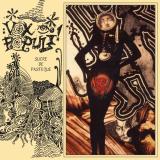









































![Soothsayers - Love Will Find A Way (Victor Rice Mixes) [feat. Maia Avery & Akin Soul] (7")](https://www.deejay.de/images/l/3/6/1203436.jpg)