The Equatoguinean Norberto de Nöah established in Madrid in the early 80s, where he became a firebrand of African culture in the vibrant Movida. In 1988 he self-released his first solo album, a blend of homeland sounds —modern and traditional— with new synth and drum machine touches. The vanished album finally gets its well-deserved reissue.
Edition of 500 albums on vinyl (Bandcamp download code included) - Original artwork with new 14 pages insert and poster
In the mid-1980s, the European media, music industry and public became increasingly interested in African music. This was a period of international success for King Sunny Adé, Salif Keita, Youssou N’Dour, Ray Lema, Touré Kunda, etc. Spain, with its own particular conditions, wasn’t oblivious to the phenomenon and the Equatoguinean Norberto de Nöah may be its best exponent.
Norberto moved in the early eighties from his hometown in the island Fernando Po (now known as Bioko) to its former colonial capital, Madrid. While studying dramatic arts, he created and led the band Nohkis, made up of African and Spanish musicians. In 1985 they released the maxi-single “Mujer española” / “África, ¿dónde está tu gloria?”, and the song “El loco”, was released on a compilation LP called Esto es increíble, both on the label Lollipop. According to the journalist Patricia Godes, they were first artists to record an African music record in Spain. It received positive reviews and a great impact on the most independent side of Madrid’s La Movida movement. Very soon afterwards, Nohkis’ band split up.
Afterwards, Norberto would concentrate on his solo career, and Norberto de Nöah and The Böhöbé Spirits Müsic was released in 1988, definitely a solo album. Norberto created his own label, Kilimandjaro Productions, and composed, arranged and produced all the songs of the LP. Moreover, he sang and played all the instruments: a vast selection of organic instruments, a Yamaha RX-5 drum machine and a Roland D-50 synthesizer.
In the album he exposed his deepest roots, updating the lexicon of traditional Bubi music, the musician’s ethnic group, a compendium of ceremonial melodies that ancient troubadours composed for the court. Doing so he showed new possibilities to one of the oldest ethnic groups in the world. Besides all this, he was also inspired by American music such as funk, R&B, Latin American music and also by a wide range of African and Caribbean rhythms.
Mixing the traditional and the avant-garde in a spontaneous and natural way, the music contained in the record’s grooves flows freely and takes you to places full of magic and mystery, while still transmitting new and exciting sensations. Even more, according to the Equatoguinean musician and writer Baron Ya Búk-Lu based in Madrid, the album’s sound was “the perfect combination of all characteristics that defined the Equatoguinean Afropop music made in Madrid during the 1980s”, a story that still needs to be told in all its depth and intensity!
Following the release of two LPs and several singles, the activity of Norberto de Nöah and Kilimandjaro Productions (and the subsequent Bananas Podridas) ceased. Nevertheless, Norberto’s links to music continued, as a promoter and DJ in Madrid’s nightlife.
Norberto de Nöah contributed greatly to changing Spain’s musical landscape, breaking barriers and mental frameworks. He was the first to make contemporary and popular Guinean music known to the Spanish public.
The repercussions in the African market of a Spanish (and Bube) speaking African musical project, where English and French dominate, was very difficult. In addition, the passage of time and changes in phonographic formats have diluted the memory of Norberto's legacy. Now it’s time to reverse the situation and break all the outdated frontiers!
Norberto de Nöah and The Böhöbé Spirits Müsic, as every important music piece, was at the same time part of a universal phenomenon of recognition of African music and a very personal project, based on the artist’s nostalgic and heartfelt need to show and homage his ethnic group, the Bubis. In this process he also refreshed his hometown music legacy, giving it a new air and opening the door to lots of other great Equatoguinean artists coming afterwards, as well as being an inspiration for many musicians in Spain.
Suche:former being
Debut collaborative album from Troth, the Nipaluna-based duo of Amelia Besseny and Cooper Bowman, and kindred spirit and legendary Mancunian free-form guitarist Jon Collin. A lavish dreamscape conjuring the dramatic beauty of uncharted mountains and streams, it documents both the crystilisation of ideas first shared during an Australian encounter in early 2023 and years of mutual appreciation.
Troth’s sonic universe, a constellation of drifting atmospherics, bedroom pop impulse and modern classical motifs, is deeply intimate and never rushed. Recent sides Forget The Curse and Idle Easel and live performances supporting the likes of Maxine Funke and Treasury of Puppies have seen Besseny’s soaring, celestial voice take centre stage, delicately adorned with Bowman’s synthesiser flourishes and homespun instrumentation. At their heart lies Bowman’s tireless collaborative instinct: his decade-long involvement in the Australian underground and his countless musical outfits (including contemporary trio Th Blisks, with Besseny and Yuta Matsumura).
Summer 2023 saw the duo host two shows for Collin in their former home of Mulubinba, regional New South Wales. Collin is perhaps best known for his playing, deconstructing and reconfiguring of the guitar and other stringed instruments, realised in solo works on his own Early Music and Winebox Press imprints, and collaborations on a trio of albums with Demdike Stare and live sessions with Sarah Hughes and Bill Nace. His unique style of playing, sometimes delicate, at other times frictional, refutes expectations of traditional instruments and fits perfectly within both Troth’s ethos and their lush sonic mise-en-scène.
The objects of devotion perhaps symbolise the group’s devotion towards each other during their music-making process, and the fruits from which they are borne. “I think, any music I have a hand in, is a dialogue with by the people I'm making it with. It's an ongoing conversation between people and sound”, reflects Bowman. The sacredness and ominousness of remote Tasmania is just as affecting, the interplay of Besseny’s haunting vocal washes, Bowman’s sparse instrumentation and Collin’s ritualistic strum evoking the eeriness that lurks beneath the seemingly limitless Australian landscape. “When I think about it, it sounds like being together at the bottom of the Earth. Watching, listening and playing together with no-one else in sight."
Way back in 2008 Soul Junction released a 45 on Duane Williams “Yes My Love Is Real” with Duane being one half of the Detroit husband and wife singing duo Beverley and Duane. The duo under the guidance of their lifelong friend Will Hatcher recorded six songs of which two “ We Got To Stick Together” and “Glad I Got You Baby” were picked up by local Detroit label president Woodrow ‘Woody Wilson for release as a 45 single on his Fee label. The popularity of the 45 was to attract attention from the major Ariola label, who picked it up for national distribution during 1978 leading to the subsequent Ariola album ‘Beverley & Duane”. As the 1980’s dawned Beverley and Duane recorded a solitary 45 single for the independent Detroit Brown Bomber label “Love/You Belong To Me”. The label was owned by John L. Barrow a nephew of former heavyweight boxing champion Joe Louis, (Brown Bomber being Louis’s nickname). Beverley and Duane later moved to the west coast until their amicable divorce which led to Duane returning to his native Detroit to reacquaint himself with his former mentor Will Hatcher. This meeting of old friends led to the creation of Duane’s first solo project which Will brought to Soul Junction in late 2007. Hot on the heels of Duane’s hugely popular Soul Junction 45 came his subsequent CD album “These Songs Are For You” (SJ5001) released in 2009. Contained within this album was the very pertinent gospel/social commentary song “Father We’re Having Trouble” a song which two very close and knowledgeable friends of mine the late John Anderson and Bill Randle claimed had all the right ingredients for a potential hit record. Over the ensuing years this song has always remained in my thoughts until a few years ago I broached the idea with my good friend Jesse James recording a cover version of it, Jesse upon hearing the song was very receptive to the idea. Another period of time elapsed before we again reignited the idea. A decade or so on from Duane’s original version and the lyric’s of this particular song still remain as pertinent as ever, if not more so! During early 2020 Jesse entered, Con Funk Shun multi-instrumentalist and vocalist Felton Pilate’s Felstar Studio in Atlanta to lay down the basic tracks with Felton acting as co-producer on this project. Everything was progressing nicely until a worldwide pandemic intervened. With Jesse locked down in his new home on the West Coast and Felton in Atlanta the project unfortunately came to a holt. During this enforced period of inactivity further racial and political upheaval occurred which only added more poignance to the project. Eventually with the lifting of lockdown restrictions Jesse finally made it back to Atlanta to finish the project, the fruits of which you have before you now.
The last couple of years have seen a renaissance for West Coast singer-songwriters. LA-based youngsters such as Drugdealer and Sylvie have attracted considerable attention releasing warm and mellow records tonally reminiscent of the early 70s. Most fans of this new/old sound are unaware of Bart Davenport's early explorations in the same sonic territory. His now 20-year-old "Game Preserve"album should gain an appreciative new audience with its first ever vinyl release.
In the year 2000, Bay Area troubadour Bart Davenport and several other musicians were recruited by a major tech corporation in Seattle to work on an algorithm-based music matching/search engine. It was what looked like the beginning of a promising career. After a year, however, the project was shelved. Bart and his colleagues were laid off with a healthy severance package... on the 12th of September, 2001. Not only had the musician's life changed, so had the world. Rather than blow the money on a holiday or new car, Bart knew he had to make a record. A proper album that meant something.
Back in Oakland, he entered Wally Sound Studios with former Kinetics bandmate Jon Erickson at the controls, and a swathe of talented local musicians. "With Game Preserve," Bart explains, "Jon and I really wanted to knock it out of the park. I wanted to utilize people from my old bands like Loved Ones drummer John Kent. I also invited my newer indie-pop friends from Call & Response, and a young Nedelle Torrisi. Harmony singing by The Moore Brothers was an essential ingredient on Game Preserve as well."
Both Erickson and Davenport fondly recall growing up in households where the music of The Carpenters, Joni Mitchell and The Eagles soundtracked their young lives. By the early 00s they were ready to reconnect with what is often referred to as the "Laurel Canyon" sound. "I'd buy used tapes at garage sales and play them in the car. "Ladies Of The Canyon" by Joni and Jackson Browne's first album were both in heavy rotation. Jon Erickson was getting deeper into the Steely-Mac-Doobie yacht-rock sound in earnest. A certain amount of childhood nostalgia led a lot of us back to that part of the 70s. I'd flirted with classic soft-rock on my first album, but that record was pretty scattered esthetically. I wanted my next one to be more focused. Jon and I made some ground rules: no electric guitars (except on 'Bar-Code Trees'). No synths. Most importantly, all the songs have an air-tight, super dead, close mic'd drum sound. Putting these sorts of limitations on the sessions will give your record a specific quality. In the case of "Game Preserve"it's mostly about tight drums, acoustic instruments and analog production. We used a 24-track, two-inch tape machine for tracking, then ran the mixes through an analog board straight to a 1/4 inch master tape."
While the album's sonic palette may be firmly planted in 1970, Davenport's songwriting covers a sizable landscape of moods and reflections. From the quasi-flamenco intro of 'Sweetest Game' to the somber Wurlitzer of 'Nowhere Left To Go', to the 12-string shimmer of 'Intertwine', "Game Preserve" tells a story of young love, lost innocence and redemption, crossing borders and oceans along the way.
Released in 2003 on family-run Oakland label Antenna Farm, the ultra-analog sounding "Game Preserve" was only made available on digital formats, including CD. Copies were later pressed by labels in Germany and Spain; the latter being one country the album actually did well in, establishing Bart Davenport with a small but loyal fanbase he still enjoys today. Two European tours as support for Kings of Convenience also helped gain a foothold on the continent. Back in the US, however, Davenport and his sophomore album remained quite obscure.
Limited promotion meant it did little, but for the music lovers that heard it, the album undoubtedly remains a classic of the era, deserving far more. Twenty years on, it now finally receives its vinyl debut. "I personally think it holds up well," says Bart of the album two decades later. "The idea was to make something that could be an homage to late 60s/early 70s West Coast pop but hopefully timeless as well. Years on, I hear it as just that. It was a colorful and brief period of my life that felt at times like it could last forever. I discovered the joy of working in a proper studio with a perfect cast of characters. I'm still very close with all these people and still play music with many of them."
Black vinyl 180g made only in 100 numbered copies.
This record is different. It is different from what might be expected of Jan Emil Mlynarski by those who know him, from sold-out shows and platinum albums of his bands – Jazz Band Młynarski – Masecki and Warsaw Dance Combo, as an old-timer, curator and reenactor of pre-World War II Warsaw's plush dancehalls and backyards folklore. Quite likely they may not recognize him until the last song, when he removes his shaman mask and bows down: Yeah, that's really me, folks, your good ol' Jan Emil, the entertainer. They might not have even known that he ever played drums because in his flagship bands, clad in a white tux in the former or in a Peaky Blinder hat in the latter, he sings and plays mandolin banjo. In fact, Młynarski has been a drummer for a lot longer than a singer. He stands clear of the jazz mainstream but is active on the progressive scene. A record he contributed to, trumpeter Tomasz Dąbrowski's 2022 release The Individual Beings, was recognized by Downbeat magazine as "excellent" and awarded the highest rating of five stars.
However, this is the first instrumental record to bear his name. As an album by a drummer, it stands out from other records, especially as it features drums as the principal content rather than the performance by a band with a drummer as the leader. It's all about drums, there is neither an articulate melody – because the melodies that are there are only micro-linesencased in ostinato modules – nor is harmony as an intentional chord progression – because whatever harmony-wise there is, is rather a product of the counterpoint of overlapping voices. All sounds other than the drums make only a riverbed through which runs a raging stream of rhythms. And indeed, this record took off just with this stream. At first all the drums were recorded live onto an analog tape, all at once, without overdubs or editing. After that, synthesizer riffs were added, and the record was ultimately assembled on tape without the use of computers or complex postproduction, which sets it apart from most releases today.
Młynarski the drummer acknowledges that he follows the trail beaten by Art Blakey, Max Roach, Roy Haynes, and Billy Higgins, but he walks it in his own strides. He treats the jazz drumming with specific reversed engineering by decompiling the jazz drum kit originally compiled by the pioneer jazz drummers from an array of instruments that had made their way from a jungle to New Orleans, first to Congo Square and then to street brass bands.
This takes him back to the jungle, his drums don't sound like jazz drums, the snare is rare, and the hi-hat and ride aren't there at all. Instead, there are drums and bells from Nigeria, Ghana, Burkina Faso, and Côte d'Ivoire. He doesn't sound like a jazz drummer either, but like a gang of drummers, each playing their own rhythm, and it's hard to believe that all this is the work of one man.
Not only his drumware comes from the jungle, but also the software – his approach to rhythm and time. Its essence is polyrhythm and ostinato. The polyrhythmic matters were unveiled to Młynarski and Piotr Zabrodzki, his creative partner in many projects and co-composer/producer of this album, by the legendary eccentric veteran-drummer Władysław Jagiełło, who introduced them, aged thirteen, to his concept and practice of "17 Latino rhythms at once". Ostinato, an obstinate repetition of a phrase or rhythm, "arrests" time, turning its linear course into cyclical in-place rotations. This is specific not only to African music but also to cultural music of other regions and differs from Western artistic music in that it does not "run" to fulfil an aesthetic intention but "stays" to provide the framework for recurrent routines of communal proceedings.
So, this record is different. And, if you are different too, this is the record for you.
Originally released on Robs Records offshoot Pleasure, followed by a repress on Air Trance in 1995 featuring Francesco Farfa & Kiticonti on remix duty, the debut offering from French/UK outfit Prism - aka Pascal Eloy & Grant Wilkinson - ‘Vapour Trails’ EP eventually gets a much needed reissue on Cosmocities this summer, enhanced with a remix from Bliss Inc.
From its initial sortie on the label run by Rob Gretton, former manager of legendary New Wave bands New Order and Joy Division, onto making it to a then en-vogue Italian trance imprint, this record made waves and opened new portals for many lovers of the burgeoning electronic sound, including - years later - Cosmocities head exec himself, holding the special status of being his first ever vinyl record buy. Harder was the path towards that longed-for repress, but with a twist from destiny - after tracking down one half of Prism - Pascal Eloy - to no avail, the label managed to find him through his father, contemporary composer Christian Eloy, plans were set out to release a first EP, ‘Rain’ (2022), and now ‘Vapour Trails’, which comes as the icing on the cake.
A future-facing slice of fast-track trance bound to have ravers melting in XTC thru and thru, the lead single treats us to a deluge of prismatic arps and multi-faceted synthwaves, ushering us into a vivid, mind-expanding kaleidoscope of throbbing colours and propulsive groove; an absolute killer of a tune that’s lost nothing of its frenzied punch. In the hands of Italian duo Farmakit, the track morphs into a further corrosive churner tailored for peak-time rumble in the warehouse with its calibrated mix of acid-drenched bass whorls, hard house bounce and Tangerine Dream vibrations.
Flip sides and here’s ‘O.N.V.I.’ shifting gears towards a more tribal / spiritual kind of uptempo hoodoo, running the gamut wildly from ethereal choirs to warlike drum programming, via sci-fi-indebted cosmicness and proper 303-infused salvos from outer space. New addition to the bunch, the remix from Bliss Inc. treats us to a more focussed parade of jacking house percussions, hi-NRG acid tropes and Afro funk-minded psychedelia, revving up the engines as the room temp rises from hot to sweltering. No surrender
- 1: Summer Bodies
- 2: That Thing You Did
- 3: Canines
- 4: Back From Tour
- 5: Yearning And Pining
- 6: Banger #7
- 7: No Souvenirs
- 8: Inferno
- 9: My Best Me
- 10: Eating For Two
- 11: Paddling Pool 12. 30
12” paddling pool blue vinyl, is an edition of 500. CD Digifile. Following the runaway success of their critically acclaimed 2021 second album Contender, the question for fast-rising London four-piece Fightmilk was always going to be “what next?” With a tight indie-pop sound that defined their early recordings, the answer was obvious to a band who seem hellbent on the notion of evolve or die… The band originally formed in 2015 in a Brixton pub garden by Lily and Alex, who had both, separately, just been dumped and thought being in an angry punk band would cheer them up. Then they found Nick and Healey to hold the rhythm down and make them sound good. With three albums under their belt, they’ve perfected their chaotic, melodic brand of joy and rage-filled pop with full-throated yelling and sparkling guitar riffs as their trademark. They’ve graduated from angsty whippersnappers in their mid-twenties to overgrown teenage 30-somethings with mild ongoing back and shoulder pain. Their previous 2 albums Not With That Attitude (2018) & Contender (2021) marked them out as an ambitious and rising prospect, and now on their forthcoming new album No Souvenirs the band eschew their former Britpop ties and edge further into DIY punk and heavier rock influences to reveal a leaner, meaner, more abrasive side to their cathartic lo-fi anthems. Whilst collectively diving into their passion for Jimmy Eat World, frontwoman Lily Rae made a conscious decision to strengthen her “big loud yell” with influence from Alicia Bognanno (Bully), Nat Foster (Press Club), and Missy Dabice (Mannequin Pussy). “My voice is the biggest it’s ever been and I’m constantly thrilled when people are surprised at how loud I am, considering I’m so small in stature,” she grins. “Lyrically I always look to Bruce Springsteen for inspiration but I also really enjoyed the angsty candour of Sour by Olivia Rodrigo, and Kacey Musgraves’ impeccable one-liners.” There are a few genre experiments on the record—Yo La Tengo in ‘Paddling Pool’, ‘Canines’ is part The Strokes and part Neu!, and ‘Back From Tour’ was heavily influenced by long term friends Johnny Foreigner. “You could probably make a case for ‘Inferno’ having a bit of Counting Crows to it, but we were never writing to emulate,” explains guitarist Alex. “The references and touchstones just happened along the way. As far as we’re concerned, they just sound like Fightmilk - and that’s a really nice place to be nearly a decade in.” “That said, we’ve also been REALLY picky with the songs that made it onto the album - there’s probably an-other album’s worth of songs that didn’t feel right, even if we loved them. We got really good at finding the “magic thing” in each song that made it work.” Spilling over with candid lyrics about death, doomed love, and dog bites, framed by endless punk energy and the kind of full-throated riff-rock that sounds just at home in a giant stadium as it does in a sticky-floored toilet bar, No Souvenirs is a triumphant return from the band, who are equally enthused by the album. “I only realised after we put the songs together how personal to me this album was,” explains Lily. “Not just because I’m writing about extremely specific sitcom episodes in my life (getting fired from bridesmaid duty, being bitten on the arse by a dog, being relentlessly asked when I’m going to have kids), but because whilst we were making it, I turned 30. It’s a significant age for women, especially in music, because aside from being something called a ‘geriatric millennial’, there’s an unspoken rule that there’s a cut-off point for you to have ‘made it’ and after that you have to settle down and be normal.” For Lily, writing for the album also aligned with the 10th anniversary of the death of a close friend, with the resulting track ‘No Souvenirs’ lending its title to the album as a whole. “It had taken me that long to write about it in a way I felt ok with. But I realised that I couldn’t have written it before,” she explains. “I needed that distance, and that maturity, to be able to articulate those feelings. It feels to me now like the album is about scorched earth, moving on, taking nothing with you for the next ‘thing’ - and realising that getting older is a privilege.” Bringing a huge amount of energy and joy with them whenever and wherever they hit a stage, interacting with the audience is a vital part of the Fightmilk live experience. “Without people singing and dancing at us we wouldn’t have gigs at all, so we want everyone to get involved!” says Lily of the band’s future tour plans
Here we have the third LP by the excellent Guy Hamper Trio, featuring James Taylor on Hamond organ, and Guy Hamper on guitar (sometimes called Childish) and what a first-class LP this is! 'Instrument of Evil' in particular has a very eerie vibe. We asked the man himself what was the inspiration for it? G.H. The track is the sequel to '7% Solution', which featured on the last Guy Hamper Trio LP (with Thee Headcoats standing in as rhythm section). A 7% Solution being the amount of morphine Dr Watson administered to Sherlock Holmes. For 'Instrument of Evil' I took Sherlock Holmes' later designation of his syringe as "an Instrument of Evil". This is originally a quote from the bible- "Wicked men do at times reject God's purpose for the state, transforming the good of civil government into an instrument of evil." Point of interest: Morphine addiction happens to tie in with another aspect of the song. In the section that nods to Elmer Bernstein's main title theme to the film of the book The Man With the Golden Arm, in which the main character is also a morphine addict. Another ingredient - we added six-string bass to that section in tribute to Jet Harris - he formerly of top group The Shadows, who recorded a great version of Bernstein's classic. To top it all off the record sleeve references the fine graphics of the great Saul Bass. The track also features contributions from Tom Morley (trumpet) and Anna Jordanous (sax) . Both Were a pleasure to work with. My job at the wheel is to basically make a playground and let Jamie, Anna and Tom loose in it with very little direction, apart from pointing out the swings and location of the roundabout. I told Tom "you're a Spanish trumpeter stood on a hill in Spain." For Anna, I think we said "go low and nasty." Other titles are taken from early poetry chapbooks I made in my youth. 'The First Creature is Jealousy' and 'Dog Jaw Woman' being examples. The title 'Incense Rising From a Censer' comes from Dostoevsky's The Brothers Karamazov, a book I really recommend. Prayer rises to God on the smoke of the incense burning in the censer. I imagine this track being some kind of antidote to 'Instrument of Evil'. They are all excellent tracks. I imagine film companies will be queuing up to use many of them.
Red Vinyl. Listening to Fashion Club's self-produced second album A Love You Cannot Shake feels like being caught in the crossfire of a profound beam of light. You can't help but feel both enlivened and exposed as its aberrant synth lines, artful strings and disfigured guitars swell into larger-than-life crescendos, which evoke a divine yet probing spotlight. Pascal Stevenson, the Los Angeles-based musician behind Fashion Club, likens the experience of hearing A Love You Cannot Shake to staring into the sun, and though the record wasn't written with religion in mind, its heavenly sonics and emotional sagacity also make it feel like a prophetic encounter. The album was shaped by Stevenson's gender transition and sobriety journey and parses her fluid emotions surrounding these events and other personal trials and tribulations. But as much as it's a dialogue between Stevenson's current and former selves, it's also an invitation for listeners to join her in the work of discarding bitterness and re-centering hope, especially when such efforts feel futile. Musically, A Love You Cannot Shake is an unshackling of expectations, as Stevenson's previous stint as bassist in the L.A. post-punk outfit Moaning and her first record as Fashion Club, 2022's Scrutiny, didn't necessarily reflect the full range of her taste, which includes ambient, pop, classical and dance music, or embody her sensitive tenderness and femininity. A Love You Cannot Shake also thrives on a fluid sonic palette. The album's magnetic immersiveness hinges on its strange dynamic shifts, jagged production and ambitious song structures with parts that don't repeat_choices influenced by her love of left-field electro-pop and her classical music background. While Stevenson handled most of the instrumentals on Scrutiny, this LP is much more collaborative, featuring an array of contributors who lent strings, piano, pedal steel and more. Plus, this album boasts country harmonies from Perfume Genius ("Forget"), high-pitched coos from Jay Som ("Ghost") and gauzy whispers from Julie Byrne ("Rotten Mind"). Stevenson's vocal evolution is also on display with this record, embracing a softer delivery that's more reflective of her personality and identity.
Re-issue of this hyper rare single from 1978 on Whirl (West Indies Records Limited). George Clinton's Parliament getting funked up in the Caribbean. TIP!
The Outfit was one of the funkiest bands ever coming from The Caribbean. They showed (together with other top bands from Barbados like The BRC or The Organization) the potential of Spouge music and the many creative possibilities that this genre can lead to.
This single is one of the finest examples of Spouge and Funk blended perfectly together in an explosive, ultra funky cover of the Parliament's "Dr. Funkenstein", titled for the occasion "Dr. Spougenstien". Despite being an extremely rare single, this song used to be quite popular in Barbados, to the point where most people on the Island used to think this was an original song. B side "Theme From Peter Gunn" serves up a punchy and groovy Cosmic disco tune on the very popular Theme from the Peter Gunn tv show.
This single is proposed to you as a first issue on the newly born Lava On Wax Records, started by Dj and Collector Matteo Fava, who have been to Barbados multiple times and works together with former Wirl label since 2020. The release has been possible thanks to help of GUTS from France, who worked since the start of this project to the end in close collaboration with Matteo. Here is what he has to say about this release: " Lava on Wax , It's putting love into old things to make them new with conscience and respect "
Color Vinyl 12" + 7"[26,26 €]
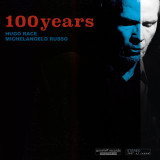
Hugo Race (Dirtmusic, Fatalists, ex-Bad Seeds) and Michelangelo Russo (True Spirit), fuse rock, blues, ambient and electronic sounds on their raw, compelling new album "100 Years".
In 2017, the duo released John Lee Hooker's World Today (Glitterhouse/Gusstaff Records), a tribute to the blues legend's delta blues legacy reinvented in a swirling mix of analog grit and deep trance pulses.
100 Years showcases the duo's sonic chemistry against Race's stark songwriting. Inspired by the raw majesty of early blues recordings, the album was recorded in two days in a non-stop live Hugo Race & Michelangelo Russo - 100 Years session. Amplified harmonica, open-tuned guitars, smoky vocals and primal foot beat walk us through a landscape of dreamlike devastation, a hypnotic wall of sound suspended in time and space celebrating endurance and redemption, hand-made from ancient roots. "Tradition does not mean passing the ashes, but the fire."
100 Years. Recorded November 1 & 2, 2023.
Engineered by Andrew 'Idge' Hehir at Soundpark Studios, Melbourne.
Mastered by Giovanni Versari at La Maesta, Milano.
Published by Peermusic.
PRESS about former album:
Rock'n'Roll Monuments, Greece:
"Race and Russo's pioneering electronic atmospheres give the historical Blues something you never imagined possible."
Rolling Stone, Germany: 'Dark Eros and transcendental blues…'
Musikreviews.de, Germany: "A psychedelic ghost blues of a profound sort, a mature, sensitive interpretation of the music and lyrics of John Lee Hooker. (Race and Russo) have blown us away in slow motion, economically instrumented and with painfully beautiful intensity. "
Q, London: "A darkly singular experience then, and one of the best records (Race) has ever made..."
The Music, Australia: "A collection of bluesy, brooding songs from a talented singer-songwriter with three decades of musicianship under his belt."
Eclipsed, Germany: "Hypnotic rhythms and haunting guitars, this album tingles under your skin..."
Focus Kultur, Germany: "No one else makes music like this, and that in itself is an achievement..."
Rock and Folk, Paris: 'This traveler without borders advances through a menacing atmosphere of no-wave electro-acoustics. Here is the spirit, and he does not forget
the body and the soul ... '
Tom Tom Rock, Italy: "An almost epic attack, worthy of the soundtrack of an apocalyptic post-nuclear catastrophe film… a talking blues of the third millennium, filtered by years of psychedelia and industrial music - and the Berlin years of Hugo Race can certainly be felt - hypnotic and dark, but precisely for this reason enveloping and fascinating. A record in which the music of the legendary bluesman is completely transfigured, without, however, the fidelity to his "spirit" and his "message" being questioned in the slightest. In short, JLH is alive and fighting with us, if we find the strength to follow him."
Hugo Race (Dirtmusic, Fatalists, ex-Bad Seeds) and Michelangelo Russo (True Spirit), fuse rock, blues, ambient and electronic sounds on their raw, compelling new album "100 Years".
In 2017, the duo released John Lee Hooker's World Today (Glitterhouse/Gusstaff Records), a tribute to the blues legend's delta blues legacy reinvented in a swirling mix of analog grit and deep trance pulses.
100 Years showcases the duo's sonic chemistry against Race's stark songwriting. Inspired by the raw majesty of early blues recordings, the album was recorded in two days in a non-stop live Hugo Race & Michelangelo Russo - 100 Years session. Amplified harmonica, open-tuned guitars, smoky vocals and primal foot beat walk us through a landscape of dreamlike devastation, a hypnotic wall of sound suspended in time and space celebrating endurance and redemption, hand-made from ancient roots. "Tradition does not mean passing the ashes, but the fire."
100 Years. Recorded November 1 & 2, 2023.
Engineered by Andrew 'Idge' Hehir at Soundpark Studios, Melbourne.
Mastered by Giovanni Versari at La Maesta, Milano.
Published by Peermusic.
PRESS about former album:
Rock'n'Roll Monuments, Greece:
"Race and Russo's pioneering electronic atmospheres give the historical Blues something you never imagined possible."
Rolling Stone, Germany: 'Dark Eros and transcendental blues…'
Musikreviews.de, Germany: "A psychedelic ghost blues of a profound sort, a mature, sensitive interpretation of the music and lyrics of John Lee Hooker. (Race and Russo) have blown us away in slow motion, economically instrumented and with painfully beautiful intensity. "
Q, London: "A darkly singular experience then, and one of the best records (Race) has ever made..."
The Music, Australia: "A collection of bluesy, brooding songs from a talented singer-songwriter with three decades of musicianship under his belt."
Eclipsed, Germany: "Hypnotic rhythms and haunting guitars, this album tingles under your skin..."
Focus Kultur, Germany: "No one else makes music like this, and that in itself is an achievement..."
Rock and Folk, Paris: 'This traveler without borders advances through a menacing atmosphere of no-wave electro-acoustics. Here is the spirit, and he does not forget
the body and the soul ... '
Tom Tom Rock, Italy: "An almost epic attack, worthy of the soundtrack of an apocalyptic post-nuclear catastrophe film… a talking blues of the third millennium, filtered by years of psychedelia and industrial music - and the Berlin years of Hugo Race can certainly be felt - hypnotic and dark, but precisely for this reason enveloping and fascinating. A record in which the music of the legendary bluesman is completely transfigured, without, however, the fidelity to his "spirit" and his "message" being questioned in the slightest. In short, JLH is alive and fighting with us, if we find the strength to follow him."
In 1977 this classic punk album had a sound flaw and wasn"t heard properly until it was recompiled in 1994 - after both former New York Dolls Johnny Thunders and Jerry Nolan had died. Now songs like Born to Lose and Chinese Rocks are acclaimed as punk anthems. The album was remastered and repackaged in 2017 to celebrate its 40th anniversary, but has only ever been in black vinyl since then. "That "L.A.M.F.", the only studio album by Johnny Thunders" swaggering, smacked-up post New York Dolls outfit, The Heartbreakers, is one of New York punk"s defining artefacts (despite being recorded in Britain), is beyond dispute. 12 songs that put the guitarist"s abiding passions - Chuck Berry, The Rolling Stones, Phil Spector and Shadow Morton girl groups, glam, garage, trash and junk - in perfect, speedy collision." - Damien Love, Uncut mag, 9/10.
Skinshape (aka Will Dorey) releases his ninth studio album titled Another Side Of Skinshape on 27th September via Lewis Recordings. As the album title suggests, Dorey’s latest body of work is somewhat unlike anything in his prior discography. However, there is always a consistent Skinshape thread which pulsates throughout all of his music - a kind of sonic dreamscape which echoes a mystical nostalgia for a sun dappled afternoon.
Taking inspiration from childhood memories, Ethiopian rhythms, and even calls to prayer, Another Side Of Skinshape gained access to the most esoteric corners of Dorey’s mind. Whilst ‘It’s About Time’ and ‘Ananda’ display a slightly more synthesised palette than we typically hear of a Skinshape tune, singles ‘Stornoway’ and ‘Lady Sun’ (which features the hazy soul vocals of West London’s Hollie Cook) replicate the same lifeblood heard on albums Nostalgia, or Craterellus Tubaeformis.
Speaking on the album, Dorey says “Some songs pay homage to the 90s whilst others the 60s and 70s. Yet you may not perceive all of these in the form that they are presented. In any case I hope that the album is enjoyable and will fit casually into the flow of your day.”
Whilst making this album, Dorey experimented with various keyboards and drum machines, which are at times layered over the excellent drumming of Thomas Blunt, who played live onto tape. Blunt is well versed in the Skinshape vernacular, also being part of Dorey’s live band. Indeed, Another Side Of Skinshape is due for release just before a run of UK and US live dates, which will be the first time the band has ever hit the open road.
Dorey is a former member of the band Palace, has played Glastonbury, BBC Maida Vale and Shepherd’s Bush Empire to name a few. Skinshape’s ‘I Didn’t Know’ has streamed over 50 million times. He is proudly from Swanage, Dorest.
- A1: Sam Ruffillo & Fimiani - Mediterranea (Party Mix Extended)
- A2: Tommiboy Feat Dm Disco Band - La Sfinge
- B1: M¥Ss Keta & Kapote - Italomania Intermezzo
- B2: Severino & Giacomo Moras Ft M¥Ss Keta - Maledetto
- B3: Stump Valley Feat Femmina - Non Dire Di No (Extended Version)
- C1: Munk & Kapote - La Musica (Hot Dj Version)
- C2: Fimiani & Angeleri - Sessospaghetti (Extended Version)
- C3: Kapote - Sono Tropical (Extended Version)
- D1: Giovanni Damico - Tropica (Feat Martina)
- D2: Lele Sacchi Feat Elasi - Malamore (Extended Version)
- D3: Daniel Monaco Band - Milly
Toy Tonics ITALOMANIA Vol. 2 is a compilation dedicated to NEW ITALIAN DISCO. (Not Italo Disco.)
13 young contemporary Italian producers made new organic disco, indie dance, avant pop and house tracks with Italian vocals.
Everything on this compilation has been produced in 2023. Fresh dance music by Italian indie electronic star Myss Keta together with DJ Severino (of Horse Meat Disco) and newcomers Sam Ruffillo, Fimiani, Magou, Tommiboy, Daniel Monaco, Giovanni Damico. And new music by artists Stump Valley (from Dekmantel), Munk (Gomma records), Rodion (Slow Motion Records) and DJ legend Lele Sacchi,
The ITALOMANIA compilation was initiated by Toy Tonics boss Kapote. The idea is to show the status of Italian Disco of today. It’s like a „manifesto“!
Kapote invited the most relevant Italian producers to make new tracks with Italian vocals and show different styles of modern Italian disco, dance and house music.
with Italian vocals. All tracks compiled by Kapote aka Mathias Modica aka Munk. Italo-German producer, DJ, keyboarder and head of Toy Tonics and Gomma records.
Italian Disco is not Italo Disco.
While the last years the slightly trashy pop music of the 1980’s called Italo Disco (with English lyrics) had a big revival. But now also the attention for more quality and organic dance music with Italian language is rising. This compilation is about this Italian Disco,
It’s a fact that not just in Italy but also in France and Germany there are now artists singing in Italian or using Italian words and names - even if they are not Italian.
Let’s not forget: The world’s culture of party, dancing, showbizness and pop music would be unimaginable without the heritage and creativity that Italians contributed.
Italy is not just the country of good food, beautiful beaches and high fashion, but it’s also the original country of dance music. Since almost 3000 years, since the ancient roman times the Italians have been making (dance) music culture, creating popular culture and being the maestros in organizing parties.
Also the disco wave of the 1970ies and the Pop music of the 1980ies has been co-created by Italians (and Italo-americans in New York).
The ITALOMANIA artists & tracklist:
M¥SS KETA
The most famous artist on the compilation is singer M¥SS KETA. The Italian press calls her "the Italian Lady Gaga“. M¥SS KETA is an edgy performer that reached the top of the charts with indie pop songs, but is also well rooted in the Milan art, fashion and LGTB scene.
To create a song for Italomania she teamed up with DJ Severino. The Italian part of London’s Horse Meat Disco DJ collective. Probably the world leading queer DJ team. (M¥SS KETA recently was invited to perform Berghain in Berlin).
Sam Ruffillo
Sam Ruffilo has contributed a new (party) version of his song Mediterranea. A organic disco track with lyrics in Neapolitan dialect. Sam Ruffillo is an upcoming Italian DJ and producer and one of the lead artists of Toy Tonics (along with Coeo, Kapote and Cody Currie). He had a few underground hits combining leftfield disco and Lofi House with Italian vocals creating a new genre that is finding lot of fans right now. One of his songs (Chiamami Subito) made it into the rotation of big Italian radio station M20. On Instrgam you can see his DJ sets where hundreds of Italians sing his songs at Toy Tonics parties.
Munk
Toy Tonics head honcho Kapote reworked the Munk song ‚La Musica‘ for this compilation. Munk is the former producer name of Mathias Modica aka Kapote. The creative mind behind Toy Tonics and Gomma records. ‚La Musica‘ is an Italo house song that he originally released 2010 when he was doing his former label Gomma records. Now there is this new version of this catchy dance song with the Italian hookline that became almost iconic when first released.
It made sense to include a new version of this track on ITALOMANIA because its a blueprint of italian disco and sounds so fresh again now.
Giovanni Damico
The south Italian DJ, producer made „Tropica“. The song is a tribute to the music of the Italian discos of south Italy of the 1980ies. A Balearic session that can be great at a beach in the afternoon, but also for dancing in the early morning. Damico is part of the new Italian disco scene releasing his dance tracks on international labels like Lumberjacks in hell and White Rabbit records since 2013.
Kapote
His new song „Sono tropical“ is an ironic Latin pop song based on a classic salsa piano riff and a strong Latin soul bassline. It reminds the big tunes from the 1970ies New York Salsa Scene (Tito Puente, Willie Colon, Fania All Stars). The vocals performed by Kapote are a mix of Italian and Spanish. The girl’s voice is also performed by Kapote. But transferred into a female voice by an AI. All instruments played by Kapote who before starting to get into the DJ and label business used to to study jazz piano. Before starting Toy Tonics Kapote he released 3 albums under his former name Munk and produced records with big names from the electronic music scene like James Murphy of LCD Soundsystem, Peaches, The Rammellzee and three albums of Danish band WhoMadeWho. Mathias/ Kapote also worked with artists like Franz Ferdinand, The Rapture and Asia Argento.
Lele Sacchi
Lele Sacchi is an Italian DJ legend and host of Italy's most important DJ radio show on RAI national radio. He has been djing all around the world playing from Circoloco Ibiza to Avalon LA. He has Besides being on Italian national radio he has been doing shows on NTS Radio or guest on BBC Six. He produced for labels like Soul Clap, !K7, Internasjonal, Nervous, Snatch, Crosstown Rebels, Poker Flat and his own Stolen Goods imprint.
Sacchi teamed up with young vocalist Elasi, a new talent from Milano that is making waves in Italy for a few songs she released in a indie disco style. Their song is an interpretation of late 70’s cult slow disco pop classic ‘Malamore’ by the underdog Enzo Carella. A mix of slow house and playful pop with a slight touch of acid!
Tommiboy
Tommiboy made a nasty, disco rock song called Sfinge. Only 26 years old he is one of the most hyped up Italian disco diggers and collectors. Originally from Rimini, the capital of discos, he is the son of a father who was a regular dancer in Rimini’s clubs of the 1980is and fed his son with all things disco.
Tommiboy started to do parties and compilations under the name Disco Stupenda three years ago. By now he and his parties are a big thing in Italy and has fans all around the country. He also is DJ for fashion brands like Gucci and he is the guy who re-introduced 1980s stars like Pino D’Angio.
Fimiani aka BPlan
The DJ und producer from Napoli is part of the new, vibrant disco scene from Napoli. (NuGenea, Mystik Jungle, Manny Whodamanny )
His collabo with italian 1980ies crooner Angeleri called SessoSpaghetti is a remake of a song originally released in 1983, but never became famous when it came out. The drums on the song are played by Napoli legend Tullio De Piscopo and the guitar by Lucio Battisti guitar player Massimo Luca.
The new version is a ironic summer disco with sexy vocals and Italian fun rapping about beach life, beautiful girls and sex on the beach. Fimiani also does edits of rare italo disco under the name of BPlan
Daniel Monaco
Daniel Monaco is a multi-talented artist, producer, and bass player DJ, bandleader and producer from Napoli - but has been living for many years in Amsterdam where he hosted show on Red Light Radio released on Labels of the likes of Rush Hour and Bordello a Parigi. Is one of the key figures of the scene due to unique fusion of Italo Disco, Proto House, Obscure Disco, and a captivating tropical touch. His latest EPs came out on Slow Rush Hour records and Periodica Records contributed the song ‚Milly‘ for Italomania. Played with a 5 person band.
Stump Valley
The two DJs, producers and vinyl collector are experts in all things Italo Disco and Balearic music. Before joining Toy Tonics they released an album on Dekmantel records. One of the guys (Brain de Palma) is the favorite DJ of Peggy Gou. He is regularly opening the shows of Peggy as a warm up DJ and releases his solo records on Peggy's label Gudu records. For this compilation they made Non dire di no. An old school piano house track with catchy vocals in the finest tradition of the piano house style that Italians invented in the early 1990ies.
The Petersons’ were a vocal trio from Waycross, GA, their performing name came from their founder, lead vocalist and drummer Kenneth Peterson, along with Keyboard player Salem Chatman and vocalist/bassist Johnny Members. The trio regularly performed shows along America’s East Coast, and it was while working in Philadelphia during early 1973 that the group answered an advertisement in Billboard Magazine quote “Masters Turned Down? We Are Looking for New Acts to Sign, Contact Omega Sound Productions, Philadelphia, PA”.
Omega Sound was a fledgling independent Recording Company formed by Frank Fioravanti a budding songwriter and former Encyclopedia Britannica Salesman for the initial purpose of find some extra work for the musicians of The Philadelphia Orchestra who were looking to earn some side money. As a result of answering the Billboard advertisement ‘The Petersons’ found themselves booked into Frank Virtue’s recording studio to record two Fioravanti and the late Alan Felder penned songs, the up-tempo “What’s It Gonna Be” backed by the melodic “Just What I’ve Been Looking For” Mel Omega (1833). With the release failing to make much noise, The Petersons returned to their native Georgia where they continuing to perform and record but under the group name of ‘Toll Darkness’. Fast forward circa 30 years and a couple of copies of this obscure Mel Omega 45 was introduced into the UK by Soul Bowl’s John Anderson where they gained belated recognition initially at the Soul Essence Weekenders through resident DJ Steve Guarnori with “Just What I’ve Been Looking For” being his chosen side. These initial copies had a paper sticker on them crediting the Artist as ‘Toll Darkness’ but the subsequent find of further copies with no sticker coverings, revealed the real artist to be ‘The Petersons’, intriguing? The reason behind the differing artist names is reputedly assumed to be that Ken Peterson took some copies of the Mel Omega 45 back to Georgia and pasted the ‘Toll Darkness’ group name stickers over the Petersons label credits to enable him to sell them at shows with his other ‘Toll Darkness’ 45 “Party/Love Makes Me Do Foolish Things on Alpha Records. The up-tempo backing track of The Peterson’s “What’s It Gonna Be” was a Frank Virtue arrangement that he had great faith in, hence it’s usage on plethora of other Philly artists recordings, i.e. Fred Mark, Liza Mae, Michael Christian, Cody Michaels etc over different record labels, Melomega, Concept, Fox Century Plaza and Merben.
Frank Fioravanti also founded the Sound Gems label which brought us the timeless classic “Your My Main Squeeze” recorded on the New Beford, MA group ‘Crystal Motion’. Omega Sound’s most notable achievement would be William DeVaughn’s 1974 hit “Be Thankful For What You Got”.
Lukas de Clerck brings us the ancient greek instrument, the aulos, of which his new interpretation of long form expression is coaxed forth on this tremendous recording. Lukas de Clerck explores a niche of archaeological research in music; the aulos is a historical Greek instrument that Lukas analyzed and reinterpreted by a luthier in modern times_navigating this impression as an artwork or living sculptural object, as there is an absence of historical partitions or written information about how to recreate technique on the instrument. Lukas de Clerck has interpreted information from the rare archaeological resources and visual art of the classical Greek period to recreate both playing technique and possible sound timbres with the instrument. With his contemporary approach to drone, post-minimalist music, and contemporary folk, we find a deeply satisfying and compelling, even playful set of songs, timbral exercises and compositions. An important document of new music meets contemporary archaemusicological research via Stephen O'Malley of SUNN O)))'s label Ideologic Organ. _ The telescopic aulos is speculative: might it have existed? It takes on features from the historical aulos, a double-reed instrument of which we know how it looked but little about what music was played on it or how it would have really sounded. It's an instrument without the limitations of canon or manual, providing creative freedom and awakening curiosity. The new instrument featured on this album is ancient and futuristic at once. The aulos has no tone holes; instead, each of the two tubes consists of three parts that can slide into each other. In this sense, the metal pipes bear a certain resemblance to the principle of a trombone. However, since both hands are already in use to hold both tubes, the sliding has to be done by way of gravity and the help of a «phorbeia», a leather mask which helps keep the reeds in place. The aulos's material is metal (instead of wood), which gives it a certain electronic allure and intensity, as well as a variety of sonic possibilities and textures. It produces overtones efficiently and allows them to play with their microtonality. The aulos Lukas plays on this recording was developed at Brasserie Atlas, a temporary occupation of a former brewery in the heart of Brussels where Lukas lives. It is quite a poetic coincidence that the birthplace of the instrument is named after the Greek titan condemned to carry the sky, while this instrument needs to be turned skywards to lower its pitch with the help of gravity. At Brasserie Atlas, Lukas has found collaborators who have shared in the process of building this new instrument: the collective Noir Métal has constructed the tubes, in this way becoming instrument builders; the phorbeia has been manufactured by Jot Fau; a former water reservoir in the vast cellar of the building carried the instruments' resonance for its first sounds. The place has left an imprint on this new instrument. With all of the telescopic aulos' layers, its sonic, musical and extra-musical components are still unfolding their potential as a medium for discovery and research, next to being an instrument of great musical potential. The music on The Telescopic Aulos of Atlas reflects this spirit. In several miniature pieces, it presents an encyclopaedia of musical possibilities that the instrument offers while keeping an intense and corporeal sonic specificity. The short pieces are studies that reflect on the sonic possibilities of this instrument that are yet to be explored. It meanders, searches and interacts with itself and the space. It needs to answer common expectations of old instruments being harmonious or pleasing. It transports a kind of experimental archaeology that, by formulating hypotheses in the present, allows us to reflect on what might have been in the past and simultaneously questions concepts of beauty, harmony or virtuosity. However, in the end, this instrument might have never existed before. -Julia Eckhardt
Indignation Meeting are punky rail fans from Leeds. 15-year-old Peter is the driver - he's the drummer and lead singer, writes most of the songs, and also plays bass and trumpet on the album. The rest of the crew is his dad Michael on guitar, Hugo on bass, and with Keith, Heather and Sally often along for the ride when they play out. Here at DGHQ we've been listening to their self-released debut album Trouble In The Shed since last year and finally spoke with the band and agreed to release it on vinyl for the first time. It was very good timing as they've just been in the studio to finish recording their second album, so we'll be releasing that later in 2024. Welcome on-board! We caught up with Peter to ask as few questions about the band_ Q: "In a week when the Labour Party promised to return the rail network to public ownership, we ask how did your fascination with trains begin?" A: "Honestly, I don't really know - I've just loved them ever since I can remember. It's not like with some people who had a family connection or watched Thomas the Tank Engine; I've just always loved them. I guess it's just a childhood obsession that never went away!" Q: "'Trouble In The Shed' is quickly becoming a firm office favourite here at DG. There's a touch of punk, indie and new wave about it. What would you say are the key influences that make up your musical DNA?" A: "My main influence when this album was released was Blyth Power. They'd been my favourite band for years when this was recorded, so everything on it was influenced by them in some way. They've had so many different musical styles over the years that they kind of conglomerated into this album, to create yet another eclectic mix of songs. The only real exception to that on this album is Electrification - no prizes for guessing the influence there! If you see us live, however, you may notice another influence pervading through our songs. That influence is the anarcho-hippy band 'The Astronauts,' whom I discovered midway through the recording process, and have quickly become one of my all-time favourite bands!" Q: "What's the story behind your song 'Hornby Horrors'?" A: "Hornby Horrors is an interesting one. People who haven't heard it may assume it's about some ill-fated model railway endeavour, but it's actually a tale of corruption in, of all places, the model train company Hornby! This song was the result of several minor scandals at Hornby HQ making their way to the modelling masses, the main ones of which were an ill-fated tier list, which placed retailers in three categories as to whether or not they received Hornby's products, with tier 3 retailers barely getting anything at all. Interestingly, the UK's former biggest retailer, Hatton's Model Railways, was a tier 3 retailer due to their 'competing products' (made by their own small brand Hatton's Originals') and has recently announced closure due to financial hardship. Now as we all know, correlation does not equal causation, but I wonder_" Q: "The album is being released on a specific shade of green vinyl. What's the significance?" A: "The shade of green on the vinyl is very similar to the shade worn by the locomotives from the Great Western Railway in the 1870s - 1940s. Due to this connection, we thought it was only proper we picked this colour, which we have dubbed 'Great Western Green!'" Q: "The album release coincides with an appearance at Rebellion Festival in Blackpool this August. Can you give the readers three reasons why they should come and see your performance?" A: "1 - We like to think we provide something different with our music - it is very obviously punk, but it's a bit more light-hearted than a lot of the political stuff, with nearly all the songs being about some sort of obscure steam loco engine. If you just want something light-hearted to enjoy, we might just be the band for you! 2 - We've got a rather interesting line up - instead of the usual line-ups you see, we've got a 15 year-old singing drummer with his dad on guitar, a newly-turned adult with a massive ginger afro playing the bass, the guitarist from the old anarcho band 'Dog On A Rope' playing some gnarly lead parts, and all topped off with some beautiful backing vocals from the drummer's sister and mother. As Attila the Stockbroker described us, Blyth Power meets the Partridge Family - not to be missed! 3 - Here's something you won't forget in a hurry - as well as his vocals, our 15-year-old frontman Peter plays drums and trumpet at the same time! If that's something you want to see, make sure you get down to see us!"
Sumer Is Icumen In is Quentin Thirionet's (Dhavali Giri, Pairi Daeza) debut album. Still, his musical escapades are vast and varied, based almost entirely on improvisation and live recordings, of which he occasionally distributes tapes without further information. Elusive to categorization and identification, unwilling to fix his musical activity under a stable pseudonym, his projects have ranged from gypsy jazz guitar swings, French traditional songs from Auvergne, and various experimental collaborations. Increasingly closer to electronic instrumentation, he crafted what Belgian label KRAAK presents here as Maibaum, his first ever solo output. As the title goes, this may be a maypole on which his multicolored sonic visions spring about.
Former rope access worker and currently a farmer of organic greens, Thirionet lives up to these lines of work as a musician. He assembles precisely what seems like a subtle balance between high manmade structures and soft fertilized soils; a high voltage pylon placed in a biotic landscape. It's all an even blend, spontaneous and steady, but this contraption comes from profound considerations. "I chose these tracks among many others," says Quentin, "because I heard the melodies all the time in my mind, and because I cried while playing them without really understanding why."
Armed with nothing more than a blackbox, a sequencer, a freeze pedal, and a tape player, Thirionet orchestrates a vivid rite of polished futures. At times reminiscent of Hans-Joachim Roedelius' enveloping arrangements, Maibaum's ambiances rely on mild repetitive patterns subsequently textured by prickling sprouts, mechanic dislocations and revamps that stoke and brighten the stirring motions. Jim O'Rourke's I'm Happy and I'm Singing comes to mind in terms of its detailed and prismatic nature, but Sumer Is Incumen In has its particular narrative. It's a tale of regeneration, of spring's delicate procedures and allure, a celebration of gracious and fortunate junctions between nature and machinery.
The album unfolds like a massive engine being made flesh to drift along the ether of a sultry land. The terrain turns pleasant and fertile in the title track; the colors and melodies of May start to unravel. Chromatic columns rise and define the scenery's depth of field breeding a synesthetic stream between crystal lights and warbling organisms. Grande Albero Buono Magico Uoma's brisk kaleidoscopic arpeggios sound like scanning a tree's litmus foliage. Then Ciguri takes us back to the foggy swamp of the beginning but is suddenly lit by an insect’s labyrinthine roundabout. The Jeweled Grid is a poem Quanta Qualia's lustrous metallic voice recites as a report of the album's phenomena. "Shiny revelations jump out. Pearls of thought flicker about." Images from within that distill to swirl around among us. The thicket dissolves as the album concludes calmly in Le Concept De Chien N'aboie Pas. Swaying under sieved solar light, leaves and branches tingle until the winds grow weak. All the warm creatures gathered along the way, and all those who danced around the maypole's splendid equilibrium now withdraw, folding up small to foster rebirth once again.
José Badía Berner
The magic and majesty of Holger Czukay’s late career works for Claremont 56 is being celebrated on a new compilation. The former Can bassist – a musical maverick renowned for his freewheeling approach to composition, recording and promotion – released a string of inspired tracks on Paul Murphy’s label between 2009 and 2012, typically delivering hard-to-pigeonhole workouts, bona-fide epics and radical reinventions of some of his most beloved tracks.
The collection has been a labour of love – fitting given the sonic details and inventive musicality that marked out the late artist’s solo career – for Claremont 56 founder Paul Murphy AKA Mudd, who first reached out to Czukay after witnessing his now legendary live performance at the Roundhouse in 2009. As Murphy details in his introductory liner notes, it led to a productive working relationship between the pair that included collaborative recording sessions with Ben Smith in Czukay’s legendary Innerspace Studio – a former cinema in Cologne in which much of Can’s music was recorded.The impact of that Roundhouse gig on Murphy is reflected in the fact that two of the tracks on the collection are based on that celebrated performance. There’s ‘Ode To Perfume’, a languid and solo-laden version of one of Czukay’s most celebrated solo records that ratchets up the original’s inherent dreaminess, and a jaunty take on quirky kraut-pop number ‘Photosong’ featuring a spoken introduction recorded at the concert in question.
Murphy’s ability to coax Czukay into delving into his archives is evident across the compilation. Opener ‘A Perfect World (Remix)’ is an eccentric, ever-building masterpiece originally recorded in 1984 – but later re-imagined for Claremont 56 – featuring vocalist Sheldon Ancel and former Can band-mates Jaki Leibezeit and Michael Karoli, while ‘Fragrance’ is a subtly re-wired slab of picturesque Balearic kraut-dub which was initially recorded as a coda for ‘Ode To Perfume’ but lay unreleased for decades.
Then there’s ‘Let’s Get Cool’, a bright and breezy, French horn-sporting 2009 take on 1979 avant-disco classic ‘Cool In The Pool’; ‘My Persian Love (Remix)’, a 2010 re-take of one of his earliest solos recordings; and the near 18-minute brilliance of ‘Music Is A Miracle’. Originally recorded for his fans in the 1980s – but only released three decades later – this widescreen epic not only features drums by Jaki Leibezeit and a fine spoken word vocal by Czukay, but also numerous nods to some of his most revered tracks.
It's fitting, too, that two of the most potent cuts feature Czukay’s much-missed wife and musical muse Ursa Major: the dense, trippy and fittingly out-there ambient soundscape ‘In Space’, and the mesmerising ‘Music To be Murdered By’. Partially inspired by hearing painfully out of tune violin practice through his studio windows, the track was originally recorded for an unreleased album but finally found a home on Claremont 56’s 10th anniversary box set ion 2017. A genuinely spaced-out and mind-mangling slab of organic dub in Czukay’s distinctive style, it delivers a fine curtain call to the iconic artist’s endlessly inventive career.
Continue As Amery is the debut album by Montreal-based artist Amery. Formerly recording under the moniker Alpen Glow, Continue As Amery sees the songwriter step out into a bold, colourful world full of pop hooks, snagging feelings of abandon and the mornings after. Amery Sandford began releasing as Alpen Glow in 2020 after years playing in punk groups in Newfoundland and as half of Montreal pop duo Born At Midnite (Arbutus). Recorded in Montreal by David Carriere (TOPS, Marci), Patrick Holland, and Kristian North, Continue As Amery is a blast of melodic joie de vivre. On her debut Sandford brings her punk and DIY credentials into sharp focus on 8 perfect pop odes to city living, making mistakes and figuring it out as you go along. Suffuse with powerful imagery and an almost uncanny talent at spinning out hooks brimming with humour and spirit, Amery’s soundworld is informed by friendship, experience and by her day job as a renowned illustrator and visual artist. Beginning Alpen Glow in a spirit of fun and now shedding the alias, Amery’s ready to hotwire the nite. Each song is rich with story. Mountain FM, named for the radio station in Sandford’s home town in the mountains of Alberta, launches into a tale of speeding, blasting the radio too loud, the giddy burning of rubber with no care in the world to slow you down. Featuring live band members Sarah Harris, Jack Bielli, and Frank Climenhage, the singer bristles to get out of her stifling hometown while lamenting the wide eyed adventurer who left for the big city. On Hotwire The Nite, Amery is out on the town, with imagery loaded with the night’s promise. Amery sings “Black candle / Dripping intel / Dagger hanging by an emerald handle / Holy roller that I just can’t have without my hand on an old flame,” diving in and out of fantasy and desire over a pulsating banger. Moments like these feel like a thesis on aural pleasure, with the production sleek and silky playfulness persisting throughout. Spirit Is Broken is a pep talk the artist is giving herself in the mirror. Only Amery could write something so joyous and harmonically glorious while singing about low ebbs. Every line shines with humour, the chorus starting with an exasperated “oh my god, alright” and the refrain nailing the bittersweet feeling of enjoying feeling down. It’s a mood continued on slow groover Ennui, a melter striking out at being stuck; same parties, same faces, daring to dream beyond. As an illustrator and visual artist, Sandford’s images detail dancing instrument-clad animals, party scenes that nod to historical image making heavy hitters like Hieronymus Bosch and Ludwig Bemelmans. On Miracles, Amery deals in bold pop production and her yearning to escape into fantasy, given wings by Korgs and drum machines. On Rocker Blues, originally by French artist FR David, Amery brings the heavy with synth-guitar and an undeniable chorus. C9 is in some ways the album’s centrepiece, a mid tempo funk jam and duet with Montreal stalwart Fireball Kid, it’s the party just out of reach on the horizon. The thing about Cloud 9 is that on the comedown you might get a hella lot of rain. The world Amery builds is intoxicating, rich and most importantly open for anyone to fall into. To be continued…
2025 Repress
Operation Sole like the summer, hopefully, imminent; “Operazione Sole” like the 1967 song by Peppino Di Capri, considered, perhaps wrongly, the first ska in Italy, but certainly the first to talk about Jamaica and upbeat rhythms.
The record you have in your hand is intended to be a testimony to how much the sounds born in Kingston between the '60s and '70s had a significant influence on local pop.
With the first explosion of reggae in England between 1968 and 1970, as well as with the rise of Bob Marley to a worldwide cult phenomenon, parallel to the all-English phenomenon of Two Tone and the ska revival, Italy, always attracted by the new trends not only English, he certainly couldn't stay on the sidelines.
Therefore these innovative and unknown upbeat sounds, derived from the blues of the 1950s and mixed with a Caribbean sauce, have also taken hold in the Bel Paese.
It began as early as 1959 with the song “Nessuno” by Mina, considered to all intents and purposes a Jamaican shuffle, to arrive in a few years at blue-beat (I4 di Lucca, Claudio Casavecchi) and ska (Margherita, Peppino Di Capri , Silvano Silvi, Renzo and Virginia) and be exposed to the first reggae (for example Jo Fedeli and his Italian version of “Israelites” by Desmond Dekker). Thus, we quickly reach the end of the decade of the economic boom and the culture, styles, references change: everything becomes more busy (on a cultural, artistic and political level).
After a stalemate phase that lasted more than five years, Bob Marley's reggae (considered a sort of new Messiah) conquers the planet, including Italy: the producers and artists, even at a high level, for a few years do not remain at all indifferent to this novelty and decide to introduce the "upbeat", primarily reggae, into the various pop repertoires: well-known names such as
Loredana Bertè, Mario Lavezzi, Rino Gaetano, Ivano Fossati, Ilona Staller, Adriano Celentano, Edoardo Bennato throw themselves headlong into new sonic adventures, in a pioneering way, but often with excellent results.
The "Operazione Sole" collection wants to take the credit, instead, of proposing and discovering lesser-known artists (with the exception of Gino Santercole, former associate and relative of Il Molleggiato), often real meteors in the Italian musical panorama, who have tried to achieve (or achieve again) success by adapting the pop that was so popular in those years to the new black sounds prevailing in the West.
We are in the early 80s and we range from the most classic reggae, to Italo-disco contaminated by dub up to the true Neapolitan style which, on more than one occasion, in its being endemically "black" and full of groove, has wrung out the watch out for agreements made in Kingston and London.
“Operation Sun”: a pleasant philological work, but surrounded by an equally pleasant aura of disengagement.
- A1: Sk8Er Boi (Let Go/Single - Arista 2002)
- A2: Girlfriend (The Best Damn Thing/Single - Rca 2007)
- A3: What The Hell (Goodbye Lullaby/Single - Rca 2011)
- A4: Complicated (Let Go/Single - Arista 2002)
- A5: Don't Tell Me (Under My Skin/Single - Arista/Rca 2004)
- B1: I'm A Mess (With Yungblud) (Love Sux Deluxe/Single - Elektra/Dta 2022)
- B2: He Wasn't (Under My Skin/Single - Arista/Rca 2005)
- B3: Losing Grip (Let Go/Single - Arista 2003)
- B4: My Happy Ending (Under My Skin/Single - Arista/Rca 2004)
- B5: Bite Me (Love Sux/Single - Elektra/Dta/2021)
- C1: Nobody's Home (Under My Skin/Single - Arista/Rca 2004)
- C2: I'm With You (Let Go/Single - Arista 2002)
- C3: When You're Gone (The Best Damn Thing/Single - Rca 2007)
- C4: Bois Lie (Feat. Machine Gun Kelly) (Love Sux/Single - Elektra/Dta 2022)
- C5: Smile (Goodbye Lullaby/Single - Rca 2011)
- D1: Love It When You Hate Me Feat. Blackbear (Love Sux/Single - Elektra/Dta 2022)
- D2: Rock N Roll (Avril Lavigne/Single - Epic 2013)
- D3: Here's To Never Growing Up (Avril Lavigne/Single - Epic 2013)
- D4: Keep Holding On The Best Damn Thing/"Eragon" Soundtrack/Single - Rca 2006
- D5: Head Above Water (Head Above Water/Single - Bmg 2018)
Neon Green Vinyl[31,05 €]
Ahead of her upcoming headline tour, eight-time GRAMMY®-nominated diamond-certified icon Avril Lavigne announces her first-ever Greatest Hits album set for a June 21 release via Legacy Recordings, the catalog division of Sony Music Entertainment. Avril Lavigne - Greatest Hits will be available on 12" vinyl, CD and digital formats and is now available for pre-order. The album will be available in 12" black vinyl and a Target-exclusive 12" vinyl neon green pressing. The album packaging includes new photos and a personal note to fans from Avril.
An essential compilation from all phases of Avril's pioneering career as one of the 21st century's breakout pop icons, Avril Lavigne - Greatest Hits features 20 career-spanning fan-favorites from her record-smashing catalog including the RIAA 3x platinum-certified "Complicated" and 2x platinum-certified “Sk8er Boi” from her chart-topping 2002 debut album Let Go (Artista) through her seventh studio album Love Sux (Elektra/DTA) with songs such as “Bite Me,” “Bois Lie” feat. Machine Gun Kelly and “I’m A Mess” with Yungblud.
Avril Lavigne will bring her Greatest Hits on the road for a series of unforgettable concerts in 2024. The Avril Lavigne: The Greatest Hits tour kicks off on Wednesday, May 22 in Vancouver, BC at Rogers Arena, with stops in Los Angeles, Las Vegas, Phoenix, 2x Toronto, Charlotte, Nashville, Chicago and more before wrapping up on Wednesday, Sept 18 in Calgary. All Time Low and Simple Plan will join Avril on select dates throughout the tour as special guests and direct support, with Royal & the Serpent and Girlfriends joining select dates as opening acts.
Four of Avril's studio albums – Under My Skin (Arista/RCA - 2004), Best Damn Thing (RCA - 2007), Goodbye Lullaby (RCA - 2011), and Avril Lavigne (Epic - 2013) – will be released for the first time in 12" vinyl editions expanded to include bonus recordings formerly available as digital-only tracks. Amazon will offer an exclusive metallic silver pressing of Under My Skin, an exclusive 2LP surge green pressing of Goodbye Lullaby (with nine bonus tracks) and an exclusive opaque baby blue pressing of Avril Lavigne (with three bonus tracks). Avril's D2C store will offer their own exclusives including a 2LP 12" neon pink vinyl pressing of The Best Damn Thing (with five bonus tracks).
Released in January 2023 in expanded digital and 2LP 12" vinyl formats as Let Go (20th Anniversary Edition), Avril's 2002 studio debut is being re-struck in a new 12" vinyl pressing for the Avril Lavigne catalog reissue celebration.
- A1: Sk8Er Boi (Let Go/Single - Arista 2002)
- A2: Girlfriend (The Best Damn Thing/Single - Rca 2007)
- A3: What The Hell (Goodbye Lullaby/Single - Rca 2011)
- A4: Complicated (Let Go/Single - Arista 2002)
- A5: Don't Tell Me (Under My Skin/Single - Arista/Rca 2004)
- B1: I'm A Mess (With Yungblud) (Love Sux Deluxe/Single - Elektra/Dta 2022)
- B2: He Wasn't (Under My Skin/Single - Arista/Rca 2005)
- B3: Losing Grip (Let Go/Single - Arista 2003)
- B4: My Happy Ending (Under My Skin/Single - Arista/Rca 2004)
- B5: Bite Me (Love Sux/Single - Elektra/Dta/2021)
- C1: Nobody's Home (Under My Skin/Single - Arista/Rca 2004)
- C2: I'm With You (Let Go/Single - Arista 2002)
- C3: When You're Gone (The Best Damn Thing/Single - Rca 2007)
- C4: Bois Lie (Feat. Machine Gun Kelly) (Love Sux/Single - Elektra/Dta 2022)
- C5: Smile (Goodbye Lullaby/Single - Rca 2011)
- D1: Love It When You Hate Me Feat. Blackbear (Love Sux/Single - Elektra/Dta 2022)
- D2: Rock N Roll (Avril Lavigne/Single - Epic 2013)
- D3: Here's To Never Growing Up (Avril Lavigne/Single - Epic 2013)
- D4: Keep Holding On The Best Damn Thing/"Eragon" Soundtrack/Single - Rca 2006
- D5: Head Above Water (Head Above Water/Single - Bmg 2018)
Black Vinyl[28,53 €]
Ahead of her upcoming headline tour, eight-time GRAMMY®-nominated diamond-certified icon Avril Lavigne announces her first-ever Greatest Hits album set for a June 21 release via Legacy Recordings, the catalog division of Sony Music Entertainment. Avril Lavigne - Greatest Hits will be available on 12" vinyl, CD and digital formats and is now available for pre-order. The album will be available in 12" black vinyl and a Target-exclusive 12" vinyl neon green pressing. The album packaging includes new photos and a personal note to fans from Avril.
An essential compilation from all phases of Avril's pioneering career as one of the 21st century's breakout pop icons, Avril Lavigne - Greatest Hits features 20 career-spanning fan-favorites from her record-smashing catalog including the RIAA 3x platinum-certified "Complicated" and 2x platinum-certified “Sk8er Boi” from her chart-topping 2002 debut album Let Go (Artista) through her seventh studio album Love Sux (Elektra/DTA) with songs such as “Bite Me,” “Bois Lie” feat. Machine Gun Kelly and “I’m A Mess” with Yungblud.
Avril Lavigne will bring her Greatest Hits on the road for a series of unforgettable concerts in 2024. The Avril Lavigne: The Greatest Hits tour kicks off on Wednesday, May 22 in Vancouver, BC at Rogers Arena, with stops in Los Angeles, Las Vegas, Phoenix, 2x Toronto, Charlotte, Nashville, Chicago and more before wrapping up on Wednesday, Sept 18 in Calgary. All Time Low and Simple Plan will join Avril on select dates throughout the tour as special guests and direct support, with Royal & the Serpent and Girlfriends joining select dates as opening acts.
Four of Avril's studio albums – Under My Skin (Arista/RCA - 2004), Best Damn Thing (RCA - 2007), Goodbye Lullaby (RCA - 2011), and Avril Lavigne (Epic - 2013) – will be released for the first time in 12" vinyl editions expanded to include bonus recordings formerly available as digital-only tracks. Amazon will offer an exclusive metallic silver pressing of Under My Skin, an exclusive 2LP surge green pressing of Goodbye Lullaby (with nine bonus tracks) and an exclusive opaque baby blue pressing of Avril Lavigne (with three bonus tracks). Avril's D2C store will offer their own exclusives including a 2LP 12" neon pink vinyl pressing of The Best Damn Thing (with five bonus tracks).
Released in January 2023 in expanded digital and 2LP 12" vinyl formats as Let Go (20th Anniversary Edition), Avril's 2002 studio debut is being re-struck in a new 12" vinyl pressing for the Avril Lavigne catalog reissue celebration.
The next release in the Mr Bongo Cuban Classics series, is one of Juan Pablo Torres' most-known and loved albums, the iconic Super Son from 1977. A wonderful record of tripped-out rumbas, psych-Afro-Latin funk and quirky orchestrated tracks with a big band horn section courtesy of Torres’ band, Algo Nuevo.
As well as being the director of Algo Nuevo and Cuban all-star ensemble Estrellas De Areito, the trombonist, bandleader, arranger and producer also released a wealth of albums under his own name predominately on the state-owned imprint Areito/EGREM.
Post-revolution, there was a contrast in Cuba’s musical world. State censorship was at play, but professional musicians were on the government payroll which gave them an artistic freedom. Experimentation emanated in the ‘70s and ‘80s and Super Son is a prime example of that. ‘Y Que Bien' kicks off the album taking you down a tripped-out, cosmic rabbithole, psych guitars and skat vocals opening up into a joyful funk groove laced with jazzy Afro-Cuban horns stabs. Tracks such as 'Pastel En Descarga' seem to come out of nowhere and are completely unique. Fuzzed-up guitar lines and percussion lay the groundwork, with those jubilant horns adding to the energy of this forever building track.
Elsewhere, there’s the ‘70s TV theme-tune feeling of 'Con Aji Guaguao', a playful funk number that boils and bubbles with blistering trombone playing by Torres. Or ‘Son A Propulsión' and ‘Son Riendo’, two more brilliant examples of psychedelic funk, wrapped up in a blanket of Afro-Cuban rhythms. The former sweeping you up in rushes of wind as trumpets, trombones and distorted guitars trade off, the latter, an intergalactic fiesta of tradition and exploration.
Super Son is up there as one of the funkiest Cuban records around, a playful fusion of ideas from a producer, player and group on fine form and, for us, one of our favourite gems to come out of Cuba in this period. A sheer masterpiece.
Waterloo To Anywhere is the debut album from the short-lived, briefly adored Dirty Pretty Things - Originally released on Vertigo Records in May 2006, the album reached No 3 in the UK charts and spawned three Top 40 singles - This re-issue is pressed on high-quality 180g black vinyl. What do you do after being in the Libertines, one of the most notorious British bands of the early 21st Century? For Carl Bart, you form Dirty Pretty Things, something of an indie supergroup of their moment. Joining Bart was Libertines drummer Gary Powell, guitarist Anthony Rossomando, who'd stood in for Doherty, and former Cooper Temple Clause bassist, Didz Hammond. Leading Waterloo To Anywhere was the infectious UK Top 5 hit Bang Bang You're Dead, which set the tone for the fabulous collection of rock, punk and ska. Recorded in Los Angeles with producer Dave Sardy and then later in Glasgow with Tony Doogan, the album showed the strength of the group's writing. Away from the standard high-octane indie of Gin & Milk and You F*cking Love It, The Gentry Cove was particularly captivating, marrying Bart's fascinating wordplay with robust Clash reggae/sea shanty interludes. Two years later, it was all over; Bart and Powell rejoined the Libertines (and Rossomando later going on to win an Oscar for co-writing Shallow from the film A Star Is Born).
Tuk Smith & The Restless Hearts is an American rock band from Nashville founded and fronted by former Biters leader Tuk Smith, originally from Atlanta, now living in Nashville. The band released their debut single "What Kinda Love" on January 10, 2020 and were also added as an opening act for The Stadium Tour with Def Leppard and Mötley Crüe on the same day. Then came the onset of Covid 19. “When the pandemic hit, it was like hitting the reset button on my music career” recalls Tuk, “everything got taken away…album campaign, stadium tour, record deal. The world was in lockdown, and the only way to escape was to throw myself into writing. My thoughts began exploring the past, and the inspiration for the songs just came in tidal waves.”
The new collection is a rock ‘n roll silver lining that came out of the solitude and reflection of the pandemic. Ballad Of A Misspent Youth is the new single (and subsequent album of the same name) released summer of 2022 on Tuk’s new record label MRG, through Virgin Music. Tuk explains, “I decided to make a rock and roll record for me and what I like because there was no label, there was no committee involved…just me and my stories. I wanted to create a setting and an authentic feeling about everything. I reunited with long-time friend Dan Dixon and recorded these songs in his garage studio, and there is a purity to the work that came from all the circumstances of that time.” Growing up as an outsider in rural Georgia, Tuk found solace in hardcore punk acts like Black Flag and The Exploited. From there, Smith branched out into exploring seventies New York bands like The Dead Boys and New York Dolls, which lead him across the sea where he embraced first-wave British acts like The Buzzcocks and the Clash. Smith wasn’t just a casual fan of these acts, he was obsessed with them and traced their lineage with fervent dedication. “I was always into the Clash growing up and Mick Jones’ favorite band was Mott The Hoople, so through the years I ended up developing a love of the first wave of British glam, power pop and things like that,” he explains. Soon Smith was forming his own acts, touring relentlessly and building a following with his high-energy live shows, including his tour of duty as lead singer for the Biters, who he fronted for nearly a decade. He offers “Then after being on the road for years, I had a reckoning about where I was at and the future ahead. …I realized the only way to achieve something meaningful was to be a good songwriter…that clicked. I went on a musical diet where I stripped the obscure stuff away, and I really started focusing on the greats. When I started clicking that it was just about the songs, things changed. I had already put my 10,000 hours in the van to play in the dive clubs, but then I put my 10,000 hours into figuring out how to write. I also started working with other songwriters. I humbled myself… it was an education, like going to school.” Tuk elaborates, “I wanted to kind of branch out musically and do different things, and I figured to go solo would be better. My manager actually suggested I call my new band “The Restless Hearts” and that's what he would call me all the time. It was the title of a Biters song that people loved and I’d seen a few restless hearts tattoos at our shows along the way… and so Tuk Smith & The Restless Hearts was born. I was in a period where I changed everything including the way I lived my daily life. I experimented with different ways to tap into positive/creative energy…it was an evolving overall process (and still is).” Tuk summarizes, “Things used to be about debauchery, and now they’re more about dedication. I mean, I was always driven, but I was sometimes focusing on the wrong things. Now I focus on the music and the craftsmanship of writing and producing and performing. “
Deluxe 180g vinyl. Art Edition LP includes set of six 12”x12” art cards.
The follow-up to Kee Avil's acclaimed 2022 debut Crease: "A stunning debut" (The Quietus); "A whiplash style of uninhibited exploration" (The Wire); "Kee Avil's debut is a force" (Foxy Digitalis); "A work of Frankensteinian wonder" (Electronic Sound); "A tightly coiled, finely wrought vision of avant-pop" (Exclaim); "A debut of fiendish creativity" (Bandcamp Album Of The Day / Albums Of The Year) Kee Avil's music is both adventurous and intimate, intellectually challenging and emotionally resonant. The Montréal guitarist and producer's 2022 debut LP Crease garnered plaudits from outlets like The Wire, The Quietus, Mojo and Foxy Digitalis, picking up a Canadian Juno Award nomination and Bandcamp Album Of The Day and Albums Of The Year along the way. Its intricate construction, unnerving atmospheres, and knife-edge take on avant-pop prompted comparisons to early PJ Harvey, This Heat, and Gazelle Twin. A remix EP with work by claire rousay, Ami Dang, Cecile Believe, and Pelada brought collaborative perspectives to four Crease tracks, offering new pathways within those songs. With Spine, Kee Avil strips back her heavily textured compositions, opening up a much rawer sound. She calls it folk… and while traditionalists might scoff, this is urgent music that reflects the precarity of modern life, as well as the jarring mixture of electronic and real-world interactions that have become the fabric of our day-to-day experiences. There's a hypnotic post-punk somnambulance to it all, using the repetition and fracturing of melodic phrases interwoven with delicate electronics to create curious and persistent hooks. While not a concept album, themes of time's passage, remembrance, and decay crop up across multiple tracks. Each track intentionally only has four elements - guitar, electronics, and two other instruments, with Kee's voice and guitar pushed to the front. Within this minimalist framework, the juxtaposition of beauty and discomfort that is key to the Kee Avil sound stands out in skin-prickling relief. "We're shaped by many versions of ourselves," says Avil. "I was looking back at these versions of myself and what could have been, what didn't end up being and what did end up being, and going back like that through time. Seeing the future, the past." Spine was written in Kee Avil's home studio after a lapse in writing while touring Crease and working on other projects. She is a well-known and respected member of the Montréal experimental scene, and formerly ran Concrete Sound Studio with Zach Scholes, who continues to work with her as a producer on Spine. Compared to the three years that went into making her debut, Spine emerged in a matter of months - a process that may also be a factor in its intensity and sharpness: "This record was much harder, like it was really discovering everything from scratch." In her desire to not simply replicate or extend the sound of Crease, she felt she had to rip up the rule book, write in a different way, and pare back songs against her usual instincts. Sometimes, when we work against our ingrained habits, we get to the core of who we really are. Spine is an exercise in that process. Without over-intellectualizing or being didactic, it hits immediately and emotionally, especially if you are a person who has spent much time in the process of self-examination. Kee's voice hisses, whispers, and chants; her guitar bends and rings; electronics skitter and crackle; violin creaks like a door in the wind. There is something so evocative about the atmospheres she creates that it's easy to overlay one's own feelings onto her work, but to do that wholly would be to overlook one of the most important things about Spine: Kee Avil's clear and thoughtful vision. This isn't just the next step forward in her artistic trajectory; it's a stunner of a record that stands on its own, a bracing and thrilling listen that has much to reveal about the contradictions inherent in being human. - jj skolnik
Bruno Berle, the young songwriter and poet originally hailing from Maceió, the capital of Brazil’s Alagoas state, crafts songs that are simple, direct, and full of tender nuance. With his first album No Reino Dos Afetos (which translates to "In the Realm of Affections” and was released in 2022), Berle firmly established himself as a unique and important voice in the burgeoning scene of new Brazilian artists making a global impact, including peers like Ana Frango Elétrico, Tim Bernardes, Bala Desejo, Sessa and more. Now back with his second album, No Reino Dos Afetos 2, he stretches that further.
Bruno Berle’s music lives between two worlds – a traditional Brazilian folk talent steeped in history, and a contemporary, dreamy electronic pop; the result is songwriting that’s genre-bending, intentional, iconoclastic and consuming, spacious and sinewy and singular, a striking reflection of its composer while leaving space for the listener to settle in. The album follows Bruno’s relocation to São Paulo, and the songs are a reflection of his past and present. A rebuke of former categorizations of his work in Brazilian music scenes, and an idea of where his music can move, unfettered.
Berle’s music is purposeful in being a true portrait of himself, and a reflection of the music, art, and fashion scenes he personally moves through. Berle aims to provide an entrypoint for Black queer joy in his music, in his storytelling, in his presence and vision as a creative. For him, it feels subversive to be playing MPB laced with dubstep and lo-fi, a sort of intentional sacrilege, capturing a dialogue of modernity in traditional music.
Berle wrote most of the arrangements and co-produced his new album, Reino Dos Afetos 2 with longtime friend and musical partner Batata Boy, who is also from Maceió; the album was recorded in Rio de Janeiro, Maceió, and São Paulo, his new home, and picks up the conversation begun in 2022 on Berle’s debut album No Reino dos Afetos. Both records are the result of a nonlinear but coherent seven-year music creation process culminating in these albums, holding hands across space and time.
“Tirolirole,” the first single from the record, was released at the end of 2023; sun-soaked rhythms and soft voice coat the song, the lilting refrain of “Tirolirole” throughout – hushed, gentle, but somehow almost tactile, a golden-hour moment unlocked in the mind. “Tirolirole” is a triumphant future classic about the temporality of a blossoming love, with Bruno’s stunning vocal soaring over melodies which ebb and flow like the waters on the Atlantic shore. Of the track, Berle explains: “Despite ‘Tirolirole’ being an expression that evokes my childhood, just like the light words about nature, the harmony, and the poetry are epic, carrying a great hope for love.”
In fact, the guiding theme of No Reino dos Afetos 2 is a relationship, unfolding in the arc of a weekend. It traverses the innocence of an early young love, how that can be formative, can stretch on to take new shapes, or shape you. The album happens at the genesis of meeting someone and falling for them, before the relationship is thrown into overdrive – set in a big city, against a backdrop of major life changes, rising energy, the sound of São Paulo.
Something transcendental emerges in “Dizer Adeus,” with an arrangement that echoes a gospel atmosphere (evangelical and Catholic environments were pivotal to Berle’s upbringing). On “É Só Você Chegar,” piano and flute gracefully intertwine, a dance, while “Quando Penso” skews sparser, the voice-and-guitar minimalism somehow cultivating an entirely different shape – somehow both cozy and melancholy, with the background sound of a rainy day. Coupled with the lo-fi aspects that shape much of the album’s personality in the vocals and the production, No Reino Dos Afetos 2 is meticulously elaborated by Berle’s sonic alchemy, like on the mid-album instrumental “Sonho,” which feels like floating. “It’s the apex. It’s when lovers are sleeping together,” Berle explains of the feeling he wanted to encapsulate in the song.
On “Love Comes Back” Berle interprets Arthur Russell, the late Iowa musician who only reached greater visibility after he died in 1992. “His way of making music is similar to mine,” Berle explains. “He sings in a more fragile way, has more of an experimental way of recording, letting ‘chance’ appear in the final work.”
Even so, Berle doesn’t want his music to be buried in sentimentality – and the purposefulness of his craft serves as a sort of north star. The production, the arrangements, his restraint and intentionality in crafting his songs feel just as vital as their emotional cores. His songwriting is amorphous, fluid, an encompassing genre-bending movement in-and-of-itself, quietly daring. The songs are often in conversation with other works – drinking in fountains as diverse as the filmmaking of Ingmar Bergman, the poetry of Walt Whitman, the rhythm of Djavan, and the painting of Maxwell Alexandre. Musically he weaves together a rich tapestry of Brazilian folk, UK 2-step garage/dub, trip hop and sun soaked west coast songwriters; something akin to the worlds of Milton Nascimento, Arthur Russell, James Blake, Feist, and Sade colliding into one. But even then No Reino Dos Afetos 2 floats separately, a romanticism driven by a simplicity and intimacy, an open-ended possibility, Berle’s singularity as an artist at the helm of the ship.

- A1: The Soul Stirrers - Wade In The Water (Chatter - Lp1)
- D4: Sam Cooke - Yield Not To Temptation (Chatter)
- D5: Sam Cooke - Yield Not To Temptation
- D6: Sam Cooke - Couldn't Hear Nobody Pray
- D7: Sam Cooke - Somewhere There's A God
- D8: Mel Carter - That's Heaven To Me
- E1: The Simms Twins - You Send Me (Demo)
- E2: The Simms Twins - Just For You
- E3: The Valentinos - Somewhere There's A Girl
- E4: Johnnie Taylor - You Were Made For Me
- E5: Johnnie Taylor - When A Boy Falls In Love
- E6: Johnnie Taylor - Soothe Me
- E7: The Valentinos - That's Where It's At (Chatter)
- E8: Lc Cooke - That's Where It's At
- E9: Johnnie Taylor - Everybody Wants To Fall In Love
- F1: Billy Preston - Keep On Loving You
- F2: The Simms Twins - I'll Always Be In Love With You
- F3: Johnnie Morisette - Baby We've Got Love (Chatter)
- F4: Johnnie Taylor - Baby We've Got Love
- F5: Johnnie Morisette - Baby, Lots Of Luck
- F6: Johnnie Morisette - Put Me Down Easy
- F7: Johnnie Morisette - Rome (Wasn't Built In A Day) (Wasn't Built In A Day)
- F8: Johnnie Taylor - Greazee (Part 1 & 2)
- G1: Johnnie Morisette - I Gopher You
- G2: The Simms Twins - I Gopher You (Chatter)
- G3: Lc Cooke - You're Always On My Mind
- G4: The Valentinos - I Need Lots Of Love
- A2: The Soul Stirrers - Wade In The Water
- G5: The Valentinos - Don't Throw Your Love On Me So Strong
- G6: The Valentinos - Black Night
- G7: The Valentinos - Damper
- G8: The Valentinos - You Can Run (But You Can't Hide) (But You Can't Hide)
- G9: Meet Me At The Twisting Place (Chatter)
- G10: Meet Me At The Twisting Place
- H1: Good Good Loving
- H2: The Wobble
- H3: Lookin' For A Love (Chatter)
- H4: Lookin' For A Love
- H5: I've Got A Love For You
- H6: I've Got A Girl (Chatter)
- H7: I've Got A Girl
- H8: Tired Of Living In The Country
- H9: It's All Over Now
- A3: The Soul Stirrers - I'm A Pilgrim
- A4: Rh Harris & His Gospel Paraders - Praying Ground
- A5: Rh Harris & His Gospel Paraders - Somebody (Chatter)
- A6: The Soul Stirrers - Somebody
- A7: Rh Harris & His Gospel Paraders - Sometimes
- A8: The Soul Stirrers - Amazing Grace
- B1: The Soul Stirrers - Pass Me Not (Lp2)
- B2: The Soul Stirrers - Oh Mary, Don't You Weep (Chatter)
- B3: The Soul Stirrers - Oh Mary, Don't You Weep
- B4: The Soul Stirrers - Since I Met The Savior
- B5: The Soul Stirrers - God Is Standing By
- B6: The Soul Stirrers - Lead Me To Calvary (Rehearsal)
- B7: The Soul Stirrers - Listen To The Angels Sing
- B8: The Soul Stirrers - Don't Leave Me Alone
- C1: The Soul Stirrers - Stand By Me Father
- C2: The Soul Stirrers - Jesus Be A Fence Around Me
- C3: Rh Harris & His Gospel Paraders - Lead Me Jesus
- C4: Rh Harris & His Gospel Paraders - Free At Last
- C5: The Soul Stirrers - Looking Back (Chatter)
- C6: The Soul Stirrers - Looking Back
- C7: The Womack Brothers - Born Again
- D1: The Womack Brothers - Wait On Jesus
- D2: The Womack Brothers - Time Brings About A Change
- D3: Sam Cooke - Must Jesus Bear The Cross Alone
Sam Cooke’s SAR Records Story 1959-1965 gathers significant recordings of SAR Records – the label Sam Cooke co-founded, produced the majority of records for and was instrumental in operating. Groundbreaking artists such as The Soul Stirrers, Johnnie Taylor, Billy Preston, and Bobby Womack’s group The Valentinos are all featured, in addition to Sam himself. “The whole SAR Records Story is infused with Sam Cooke’s rapturous sense of how sacred gospel and sexual soul flow together, unbroken,” stated Milo Miles on NPR’s Fresh Air upon the set’s initial release almost three decades ago. In an era where black-owned labels were a rarity, Los Angeles based SAR Records was founded at almost exactly the same time as Motown, its Detroit counterpart. SAR was established in 1959 by Sam Cooke, music publisher J.W. Alexander, and S. Roy Crain, Cooke’s road manager and founder of gospel group The Soul Stirrers. The acronymous name standing for Sam Alex Roy, SAR sought to keep gospel music alive while simultaneously crossing over to pop audiences in the secular world. LPs 1 and 2 of the set focus on the former, while LPs 3 and 4 encompass the latter. From choosing talent, to writing a great number of songs, to producing, SAR was entirely the fulfillment of Cooke’s vision on a musical/creative level. The superstar singer, who had already crossed over from the gospel world himself, tirelessly coached the vocalists during SAR recording sessions, emphasizing diction. His methods are heard throughout the collection, as he is heard speaking to artists between takes. “And by Sam being there with you and just giving you that special attention, you wanted to give it to him like it was supposed to be. I think that’s what made SAR, SAR. Because he was selling himself through different artists.” – Bobby Womack. VERY LIMITED 1-2 COPIES ONLY PER SHOP
Kee Avil's music is both adventurous and intimate, intellectually challenging and emotionally resonant. The Montréal guitarist and producer's 2022 debut LP Crease garnered plaudits from outlets like The Wire, The Quietus, Mojo and Foxy Digitalis, picking up a Canadian Juno Award nomination and Bandcamp Album Of The Day and Albums Of The Year along the way. Its intricate construction, unnerving atmospheres, and knife-edge take on avant-pop prompted comparisons to early PJ Harvey, This Heat, and Gazelle Twin. A remix EP with work by claire rousay, Ami Dang, Cecile Believe, and Pelada brought collaborative perspectives to four Crease tracks, offering new pathways within those songs. With Spine, Kee Avil strips back her heavily textured compositions, opening up a much rawer sound. She calls it folk—and while traditionalists might scoff, this is urgent music that reflects the precarity of modern life, as well as the jarring mixture of electronic and real-world interactions that have become the fabric of our day-to-day experiences. There's a hypnotic post-punk somnambulance to it all, using the repetition and fracturing of melodic phrases interwoven with delicate electronics to create curious and persistent hooks. While not a concept album, themes of time's passage, remembrance, and decay crop up across multiple tracks. Each track intentionally only has four elements—guitar, electronics, and two other instruments, with Kee's voice and guitar pushed to the front. Within this minimalist framework, the juxtaposition of beauty and discomfort that is key to the Kee Avil sound stands out in skin-prickling relief. "We're shaped by many versions of ourselves," says Avil. "I was looking back at these versions of myself and what could have been, what didn't end up being and what did end up being, and going back like that through time. Seeing the future, the past." Spine was written in Kee Avil's home studio after a lapse in writing while touring Crease and working on other projects. She is a well-known and respected member of the Montréal experimental scene, and formerly ran Concrete Sound Studio with Zach Scholes, who continues to work with her as a producer on Spine. Compared to the three years that went into making her debut, Spine emerged in a matter of months—a process that may also be a factor in its intensity and sharpness: "This record was much harder, like it was really discovering everything from scratch." In her desire to not simply replicate or extend the sound of Crease, she felt she had to rip up the rule book, write in a different way, and pare back songs against her usual instincts. Sometimes, when we work against our ingrained habits, we get to the core of who we really are. Spine is an exercise in that process. Without over-intellectualizing or being didactic, it hits immediately and emotionally, especially if you are a person who has spent much time in the process of self-examination. Kee's voice hisses, whispers, and chants; her guitar bends and rings; electronics skitter and crackle; violin creaks like a door in the wind. There is something so evocative about the atmospheres she creates that it's easy to overlay one's own feelings onto her work, but to do that wholly would be to overlook one of the most important things about Spine: Kee Avil's clear and thoughtful vision. This isn't just the next step forward in her artistic trajectory; it's a stunner of a record that stands on its own, a bracing and thrilling listen that has much to reveal about the contradictions inherent in being human. — jj skolnik.
Cathartic avant-rock, literate DIY folk & experimental composition exploring displacement, love, climate change, belonging & the places we call home - RIYL Jim O’Rourke, Richard Youngs, This Heat, Richard Dawson, Flying Nun. ‘Real Home’ is the new album by the Manchester-born, London-based artist Kiran Leonard. His sixth album proper (not including innumerable tour-only CD-Rs and short-run cassettes), since his precocious debut in 2013, ‘Real Home’ finds Leonard invigorated by inspiration and experience, making passionate, literate, and mercurial music that explores displacement, love, memory, climate change, connections to home and more. Encompassing songs recorded after moving to South London, ‘Real Home’ reflects on ideas of belonging and domesticity through folkloric, stream-of-consciousness songwriting. Across nine tracks, Leonard traces lived impressions of the household and the city, expressing sentiments of dislocation, alienation and stasis, but contentment too. Infusing the avant-rock effervescence, terraced dynamics and visionary lyricism of his music with what he defines as a greater sense of openness, Leonard is as versatile, fervent and imaginative as ever on ‘Real Home’, yet his music is somehow more intimate, affecting, and acutely expressive. Shaped by dual considerations of simplicity and formalism, ‘Real Home’ is by turns beautiful, allusive, and ruminative, an album on which Leonard considers what his songs have resembled in the past and what they mean now. In recent years, Leonard has crafted eloquent chamber music inspired by the likes of James Joyce and Clarice Lispector (‘Derevaun Seraun’), responded to contemporary politics and communication breakdown in the digital age (‘Western Culture’), and compiled solo works and ensemble recordings for a longform ode to Jonas Mekas and to one of Leonard’s enduring themes; home (‘Trespass On Foot’). On ‘Real Home’, Leonard reiterates this abiding thematic focus yet ascends to new, different heights, in music of cathartic delicacy and dissonance where all the myriad dimensions of his work to date seem to crystallize. There are sinuous songs about struggle and defying the pace of city life through drift and diversion (‘Pass Between Houses’), stirring songs of intense feeling and crescendo, described as a form of speculative detective fiction (‘Theatre for Change’). There are touching solo piano ballads (the title track), symbolic contentions with carbon capture and climate change (‘Utopia of Bog’), modes of experimental minimalism (‘Void Attentive’), and other profuse feats of compositional range, embroidered with wild tendrils of narrative and lyrical depth. A record to pore over, and get lost in. Exemplifying the vast aesthetic scope of Leonard’s music, lead single ‘My Love, Let’s Take The Stage Tonight’ is inspired by country lodestar Hank Williams, Russian poetry and a late period love poem by William Carlos Williams. Yet for Leonard, the song signals a sense of accessible materiality, and is the product of a more linear approach to writing songs: “My imitation of the great Hank Williams, in spirit if not in substance…This is one of the best efforts on Real Home at a song-as-object. Looking at it now I realise I was trying to write a song that made itself known as a song to the listener, and I wonder whether that’s crucial if you want a song to transcend its context. And that this is either accomplished through a total openness – by being inviting, by laying the tricks of the song out plain to see, as Williams and his many ghostwriters did so well – or by adopting a knowing aloofness, positioning oneself against the listener but letting it be known that that’s what it’s doing. In this song I try both, but mostly the former: as in, I wanted to write a song where every line follows on from the next.” Imbuing the endlessly elaborate and inventive qualities of his music with a newfound streak of candid, clear-cut melodicism, Leonard has reached a special place in his artistry, on a record that feels familial, and expresses closeness. Assembled with affiliates including Lauren Auder, Otto Willberg, Jasper Llewellyn (caroline), Tom Hardwick-Allan (Shovel Dance Collective), Magda McLean (caroline, The Umlauts), Alex Mckenzie (caroline, Shovel Dance Collective), Isabelle Thorn (Dear Laika) & more, the recording process had a significant influence on the subject matter of ‘Real Home’, in sessions defined by close-knit camaraderie and artistic eccentricity: “The theme of the home obviously recurs throughout the record; the album was mostly recorded in domestic spaces with friends, and the name of the album is Real Home. I like the qualifier ‘real’, like you’re getting past the cloak of the word and towards the thing-itself…also nearly all the percussion in this record was recorded on items from my dad’s shed (jam jars, sandpaper, blocks of wood, etc). Real home record!” ‘Real Home’, like anything by Kiran Leonard, is a record of dazzling multiplicity. Yet it’s a companionable prospect with a central premise; a collection of songs where listeners old and new can find a home. An album led by a scene; of Leonard standing at the threshold, ready to welcome you inside. “Exceptional songs that linger” - The Guardian // “An autodidact of amazing talent & energy” – Pitchfork // “A ridiculous amount of talent…confrontational, celebratory, provocative or perverse – he manages all of these emotions & more” - The Quietus /
CLEARxCUT is out there to spread the message of total liberation. (Former) Members of HEAVEN SHALL BURN, IMPLORE, and KING APATHY/THRÄNENKIND started this collective, because they are dedicated to the vegan straight edge (XVX) and want to confront listeners with inconvenient thruths and todays harsh reality. The German band addresses their songs and convictions to all people who are prepared to stand up for a better, fairer future - but especially to all anarchists, anti-fascists, feminists, primitivists and indigenous peoples of the world. Or to put it brief: to all defenders of our earth. The stylistic choice of means falls on metallic hardcore, which is rooted in a strong DIY ethic. Having released their first two albums "For The Wild At Heart Kept In Cages" (2019) and "Songs of Desire Armed" (2022) for Catalyst X Records (Gather, Nueva Ethica, Abnegation, Birthright, Maroon, Point Of No Return, Forward To Eden), "Age Of Grief" now marks CLEARxCUTs debut for LIFEFORCE RECORDS. Started in the mid-1990ies as label with mainly vegan and straight edge bands, the German Label has an impressive history with XVX bands such as ARKANGEL, DAY OF SUFFERING, RANCOR, UNCONQUERED, UNBORN, FAULT, or DEADLOCK. Being a collective that is outspoken in its message and keeps the vegan straight edge banner high, CLEARxCUT continue this tradition. Also besides having switched their label, "Age Of Grief" marks a fresh start for CLEARxCUT. After a big shift in their ranks, before the global pandemic hit, the band moved from two (female) vocalists to one (male) frontman. This is accompanyed by a change of sound. On their third full lenght album, the German band is diving into the realms of metallic hardcore, leaving behind their early hardcore punk influences. Noone should be surprised by this move, as CLEARxCUT was conceived as a collective where members, names, or styles wouldn’t matter, but one and only the final goal of spreading a positive message in defense of animal rights and sober living. "Age Of Grief", in this respect, is extremely consistent.
Noir Brésil is the debut album from Franco-Brazilian artist, composer and producer Yndi. Formerly known as Dream Koala, she decided to retire the moniker back in 2017 and began writing what ultimately became Noir Brésil, a modern pop album where afro-Brazilian percussion meets French and Portuguese poetry to create an immersive soundscape. As Dream Koala, Yndi released EPs Odyssey (2013,) Earth. Home. Destroyed. (2014,) and Exodus (2015,) as well as popular single "We Can't Be Friends", gaining her international success and garnering multi-millions of streams across platforms. In 2020, there were so many images of black people suffering on social media. After that traumatizing year, Yndi needed images showing that being black wasn't only about suffering, she wanted healing images. It's exactly what the Afro-Brazilian culture has been doing for centuries, it conveys a strength that keeps us alive in a dehumanizing society. The title track "Noir Brésil" is a poem for her ancestors. Yndi wrote "Amazona" on an atabaque (Afro-Brazilian percussion) rhythm inspired by the myth of the Amazons, warrior women, and Douanier Rousseau's painting La Guerre. The violence of the lyrics contrasts with the melancholic harmonies. The song pays tribute to the anger and strength required by women to live in the contemporary world. The song "Novo Mundo" and its animated video directed by Nina-Lou Giachettia are a reflection of Brazil, through luminous and colorful landscapes. Here the evocation of the divine, the beauty and the violence of nature reflects perfectly the essence of Yndi'sdebut album.
Book[57,94 €]
Here In, Absence" ("Here, In Absence" for the book) is the result of the dialogue between the Finnish photographer Mikael Siirilä and the music artists The Humble Bee & Offthesky initiated by IIKKI, between March 2023 and January 2024.
After a first release in 2019 on IIKKI ("All Other Voices Gone, Only Yours Remains"), a second one in 2020 on LAAPS ("We Were The Hum Of Dreams"), Craig Tattersall (The Humble Bee) and Jason Corder (Offthesky) come back with a third stunning out-of-time beauty, paired with the Mikael Siirilä photography works.
Craig Tattersall is a former member of The Remote Viewer and Famous Boyfriend bandmate Andrew Johnson. Tattersall's music can be found these days more often under his alias The Humble Bee; as a founder member of The Boats; and in his collaborative works with the likes of Bill Seaman in The Seaman And The Tattered Sail. He has run the wonderful label Cotton Goods from 2008 to 2015 and since 2009 he has recorded 16 solo albums on his moniker The Humble Bee and almost the same under his name on some collaborations.
Jason Corder is experimental-ambient multimedia artist based in Denver, CO. He has been producing music, video art, audio software, and the occasional interactive sound sculpture, for over 20 years. He teaches private courses on generative music and occasionally lectures on various sound design topics at Denver University. He currently is the Audio Director at the Denver based videogame studio Dire Wolf. Over the years, he has worked with labels such as Home Normal, 12k's term, Facture, LAAPS and more. Over the years he has performed at Mutek, Decibel, Communikey and other festivals, sharing the bill with likeminded artists Pole, Matmos, William Basinski, and more.
Mikael Siirilä: "I am a darkroom artist (b. 1978) based in Helsinki, Finland. My small individual photographs examine the themes of absence, presence and outsiderhood. My characters appear immersed in their inner worlds and moments of being: simultaneously absent and intensely present. The pictures also reveal the outsider’s gaze, lost in observation and reflection. My pictures are true observations captured with minimal interaction with the subjects. Their origin is in the act of looking, and they feel causally connected to the world. The craft of printmaking is inseparable from my artistic expression. I work solely with black & white film and the darkroom. The slow, contemplative process lends the pictures a calmness. I make physical pictures I want to stare at, feel and become lost in. Again and again."
Fine Art Book, Ltd. to 500 copies:
Hardcover book printed on Munken Lynx 150g/m2 // 80 pages, 18cm x 24cm, 51 photos // Logo and slot embossed // Selective UV varnish // Visible seam and cutting cover pages // Hand-numbered, hand-stamped.
Available on ltd edition white vinyl, only 300 pressed. Includes extended album download.
Ivan The Tolerable is the alter ego solo project of Middlesbrough based musical wizard Oli Heffernan. Aside from his solo work as ITT, Oli has played in numerous bands over the years including Year Of Birds, King Champion Sounds with members of the Ex, Detective Instinct, and Shrug, and has collaborated with icons like Mike Watts of the Minutemen, and J Mascis of Dinosaur Jr.
On Black Water/Brown Earth, Heff called in the help of his Dutch friends Mees and Elsa in King Champion Sounds again and wrote the album in a long-distance session. The album feels like an excursion in nature, featuring bird song, flowing water, pots and pans percussion, and a genuine feel of wandering about and experiencing the outside world with eyes and ears wide open. It is a band effort too, with organic sounding drums, the characteristic saxophone, and droning synths.
‘Elsewhere, gentle intonations of morning with almost childlike embellishments and rhythmic beats, and more flute, might lull and comfort but nothing ever sits exactly in time which might make this Ivan The Tolerable’s most frustrating album at times but also one of his most interesting to really delve into aurally. ‘Sawdust’ is another sonic interlude, little more than a purge of effects and ideas but in a place where effects and ideas are plentiful. However, it’s centrepieces ‘Seaweed’ and ‘Signs’ that provide the pulsing, grooving dual that makes the second half of Black Water/Brown Earth a sheer delight. The former being simply kind of folky with a bit of sitar but utterly immersive, the latter oddly upbeat with eastern vibes and tubular rhythms, combined it is nearly twenty minutes of serene experimentalism.
The shorter tracks are perhaps designed to temper the mood or counter and reflect the passage of time on an album of mostly structured improvisation, and it may only be closer ‘Memory’ that is truly free to roam musically, its long jazzy segments skipping off into the farthest corners of the left field’.
The Morning Papers Have Given Us the Vapours was made with the black watch bandmates and producers/engineers Rob Campanella (Brian Jonestown Massacre, The Tyde, The Warlocks) and Andy Creighton (The World Record, Parson Red Heads). Ben Eshbach, formerly of The Sugarplastic, arranged the strings. Kesha Rose guests on lead vocals on the second single, Oh Do Shut Up. And the great Lindsay Murray once again lends her beautiful backing vox to a number of tracks.
the black watch songwriter/frontman John Andrew Fredrick wrote the ten songs on this, his Los Angeles-based band's latest album, entirely unselfconsciously, with no set goal in mind other than to revel in the joy of songwriting, and, eventually, the luxury of recording his music with his more-than-accomplished band. The Morning Papers Have Given Us the Vapours, produced separately and together by Rob Campanella and Andy Creighton evinces the black watch's often stunning ability to, as Andy Gill once observed in The Independent, "find chaos in the calm, melody in the miasma."
Fredrick, who has also published four comedic novels and a book on the early films of Wes Anderson, jovially describes himself as "a recovering Anglophile--one who'll never, one hopes, fully recover." From his home studio in the Angeleno Heights district of L.A., he waxes eloquent about how being branded, as it were, as a too-ardent lover of British music, film, and literature has left him as bemused as has the tag "prolific" that is often affixed to reviews of his work.
"I just don't think it's all that interesting to note that we've made so many records. Looked at one way, it's a sort of deflection from talking about the timbre if not the quality of the individual songs. Though I know it can be intimidating for fans who've just discovered us--a sort of 'My goodness, where do I start with this band that has put out LPs since 1988?' I get it. I do. I picture someone standing at our slot at a bin at a record store becoming overwhelmed at the prospect of picking the 'wrong' title. And then walking away and not picking up anything from us!" Fredrick laughs. "What can you do indeed?"
He started his career as a songwriter as a result of an American Football injury that left him bedridden in the home he grew up in in Santa Barbara, California. The year The Beatles immortal double-album came out at Christmastime he broke his leg so badly that he had to be home-schooled for an entire year. His parents, ex-teachers themselves, refused to let him watch telly for more than an hour a day. He propped a Silvertone acoustic on top of the massive cast that screamed all the way up to his thigh from his toes, and began to write little melodies and lyrics that, doubtless, did not in the least mask his love for the Fabs, The White Album in especial.
And he read and read and read--histories of the American Revolution and Civil War, mostly, and as many Dickens novels as his mum and dad could bring him. "That year," Fredrick observes, "surely made me who I am today. Proof that intensely unfortunate-seeming events can prove most fortunate. As a sport-mad kid, it made me absolutely mental that I was exiled from the activities I loved most and the school teams I played on. What a blessing undisguised that injury was! Not that I'd like to experience anything like it ever again, mind you."
Fredrick can even recall a few of the melodies he wrote as boy ("Utterly trite, of course, completely jejune"); and in a way, The Morning Papers Have Given Us the Vapours showcases a kind of get-back-to-where-you-once-belonged sensibility. "I didn't intend, this time, to make an album per se. I write both songs and fiction in order to find out what happens, to find out what I might want to say," he notes. "Rob often asks me what a particular song is about; and I often reply that I either don't know, or would prefer that others say. Same thing goes for when people ask me where they should start with our discography. I never know what to say. Our LP from 2011, Led Zeppelin Five (remastered in 2021 for its tenth anniversary), has been our best seller, I think--but that may be because some stoned Zepheads thought their gods had perhaps put out a record they'd missed!"
Despite being deadly serious about music-making, TBW's been known to either whimsically or perversely title their albums. Examples: Jiggery-Pokery (an allusion to John Lennon assessing George Martin's productions), After the Gold Room (a pun on the Neil Young classic plus a local eastside L.A. watering hole), Sugarplum Fairy, Sugarplum Fairy (echoing Lennon's famous count-off to A Day in the Life), Fromthing Somethat (a garbled spoonerism/lyric while doing a vocal), Brilliant Failures (the 2020 release that, along with Fromthing Somethat, was named Album of the Year by venerable indie rock magazine The Big Takeover), and the aforementioned LZ5.
For the new LP, the band recruited longtime friends and allies Ben Eshbach (the Emmy-Award-winning frontman of The Sugarplastic) and Lindsay Murray (Gretchens Wheel) to compose and arrange strings and sing heaps of lovely backing vocals, respectively.
And the result? A collection of songs that Fredrick, in his quite-but-not-quite self-deprecatory way, might call another set of brilliant failures. "Every song, every LP we do, is a failure of sorts--no matter how powerful or beautiful or pleasing-to-us it turns out," John concludes. "I have often said that my aim is to write songs as good as anything on The Beatles... and I will never achieve my goal. And thus I'll have to keep at it, keep trying. And chin-chin to that!"
And now your attention's been brought to a band (or you've heard of them or heard a track or two down the years) that has been pegged by The L.A. Weekly as "a national treasure" as well as "the most criminally-neglected indie pop group imaginable."
So here's to the prospect of that ostensible neglect becoming as much of a thing of the past as John Andrew Fredrick's year-long stint in bed.
Bruno Berle, the young songwriter and poet originally hailing from Maceió, the capital of Brazil’s Alagoas state, crafts songs that are simple, direct, and full of tender nuance. With his first album No Reino Dos Afetos (which translates to "In the Realm of Affections” and was released in 2022), Berle firmly established himself as a unique and important voice in the burgeoning scene of new Brazilian artists making a global impact, including peers like Ana Frango Elétrico, Tim Bernardes, Bala Desejo, Sessa and more. Now back with his second album, No Reino Dos Afetos 2, he stretches that further.
Bruno Berle’s music lives between two worlds – a traditional Brazilian folk talent steeped in history, and a contemporary, dreamy electronic pop; the result is songwriting that’s genre-bending, intentional, iconoclastic and consuming, spacious and sinewy and singular, a striking reflection of its composer while leaving space for the listener to settle in. The album follows Bruno’s relocation to São Paulo, and the songs are a reflection of his past and present. A rebuke of former categorizations of his work in Brazilian music scenes, and an idea of where his music can move, unfettered.
Berle’s music is purposeful in being a true portrait of himself, and a reflection of the music, art, and fashion scenes he personally moves through. Berle aims to provide an entrypoint for Black queer joy in his music, in his storytelling, in his presence and vision as a creative. For him, it feels subversive to be playing MPB laced with dubstep and lo-fi, a sort of intentional sacrilege, capturing a dialogue of modernity in traditional music.
Berle wrote most of the arrangements and co-produced his new album, Reino Dos Afetos 2 with longtime friend and musical partner Batata Boy, who is also from Maceió; the album was recorded in Rio de Janeiro, Maceió, and São Paulo, his new home, and picks up the conversation begun in 2022 on Berle’s debut album No Reino dos Afetos. Both records are the result of a nonlinear but coherent seven-year music creation process culminating in these albums, holding hands across space and time.
“Tirolirole,” the first single from the record, was released at the end of 2023; sun-soaked rhythms and soft voice coat the song, the lilting refrain of “Tirolirole” throughout – hushed, gentle, but somehow almost tactile, a golden-hour moment unlocked in the mind. “Tirolirole” is a triumphant future classic about the temporality of a blossoming love, with Bruno’s stunning vocal soaring over melodies which ebb and flow like the waters on the Atlantic shore. Of the track, Berle explains: “Despite ‘Tirolirole’ being an expression that evokes my childhood, just like the light words about nature, the harmony, and the poetry are epic, carrying a great hope for love.”
In fact, the guiding theme of No Reino dos Afetos 2 is a relationship, unfolding in the arc of a weekend. It traverses the innocence of an early young love, how that can be formative, can stretch on to take new shapes, or shape you. The album happens at the genesis of meeting someone and falling for them, before the relationship is thrown into overdrive – set in a big city, against a backdrop of major life changes, rising energy, the sound of São Paulo.
Something transcendental emerges in “Dizer Adeus,” with an arrangement that echoes a gospel atmosphere (evangelical and Catholic environments were pivotal to Berle’s upbringing). On “É Só Você Chegar,” piano and flute gracefully intertwine, a dance, while “Quando Penso” skews sparser, the voice-and-guitar minimalism somehow cultivating an entirely different shape – somehow both cozy and melancholy, with the background sound of a rainy day. Coupled with the lo-fi aspects that shape much of the album’s personality in the vocals and the production, No Reino Dos Afetos 2 is meticulously elaborated by Berle’s sonic alchemy, like on the mid-album instrumental “Sonho,” which feels like floating. “It’s the apex. It’s when lovers are sleeping together,” Berle explains of the feeling he wanted to encapsulate in the song.
On “Love Comes Back” Berle interprets Arthur Russell, the late Iowa musician who only reached greater visibility after he died in 1992. “His way of making music is similar to mine,” Berle explains. “He sings in a more fragile way, has more of an experimental way of recording, letting ‘chance’ appear in the final work.”
Even so, Berle doesn’t want his music to be buried in sentimentality – and the purposefulness of his craft serves as a sort of north star. The production, the arrangements, his restraint and intentionality in crafting his songs feel just as vital as their emotional cores. His songwriting is amorphous, fluid, an encompassing genre-bending movement in-and-of-itself, quietly daring. The songs are often in conversation with other works – drinking in fountains as diverse as the filmmaking of Ingmar Bergman, the poetry of Walt Whitman, the rhythm of Djavan, and the painting of Maxwell Alexandre. Musically he weaves together a rich tapestry of Brazilian folk, UK 2-step garage/dub, trip hop and sun soaked west coast songwriters; something akin to the worlds of Milton Nascimento, Arthur Russell, James Blake, Feist, and Sade colliding into one. But even then No Reino Dos Afetos 2 floats separately, a romanticism driven by a simplicity and intimacy, an open-ended possibility, Berle’s singularity as an artist at the helm of the ship.
Superb 45 featuring two Hammond-led instrumentals! We caught up with Mr Guy Hamper for an insightful Q&A_ Q: What a cracking single this is! 'Instrument of Evil' in particular has a very eerie vibe. What was the inspiration for it? A: The track is the sequel to '7% Solution', which featured on the last Guy Hamper Trio LP with Thee Headcoats standing in as rhythm section. A 7% Solution being the amount of morphine Dr Watson administered to Sherlock Holmes. For 'Instrument of Evil' I took Sherlock Holmes' later designation of his syringe as "an Instrument of Evil". This is originally a quote from the bible: "Wicked men do at times reject God's purpose for the state, transforming the good of civil government into an instrument of evil." Point of interest: Morphine addiction happens to tie in with another aspect of the song. In the section that nods to Elmer Bernstein's main title theme to the film of the book The Man With the Golden Arm, in which the main character is also a morphine addict. Another ingredient - we added six-string bass to that section in tribute to Jet Harris - he formerly of top group The Shadows, who recorded a great version of Bernstein's classic. To top it all off the record sleeve references the fine graphics of the great Saul Bass. Phew! Q: The track features contributions from Tom Morley (trumpet) and Anna Jordanous (sax). What's it like working with them? A: They are great and easy to work with. I basically make a playground and let them loose in it with very little direction, apart from pointing out the swings and location of the roundabout. I told Tom "You're a Spanish trumpeter stood on a hill in Spain." For Anna, I think we said "go low and nasty." Q: On the flip side you have 'Incense Rising From a Censer'. A very evocative title for an evocative track. Do you have lyrics in mind for this for a possible later release? A: No lyrics have sprung to mind as yet - but it's always possible. The title is from The Elders observation in Dostoevsky's The Brothers Karamazov, a book I really recommend. Prayer rises to God on the smoke of the incense burning in the censer. I imagine this track being some kind of antidote to 'Instrument of Evil'. Q: This single marks your first time in the new premises of Jim Riley's Ranscombe Studio. What's the new place like? A: The studio is great - the sound - using my old Mighty Caesars drum kit, and Jim engineering, is pure, easy with a better sound than the old premises. Q: Any more Guy Hamper Trio releases in the pipeline? A third album perhaps? A: Again, anything is possible. Me and Jamie (James Taylor, Hammond organ) have talked of writing together in the future. Jamie is a truly great musician - the cherry on the cake if you will. We're just busted old eggs, sour milk, and some gunk. Q: A live Guy Hamper Trio show would be amazing. Any chance of that happening or will it remain a studio-based project? A: It could happen if someone came up with a very cunning plan.
Blue Bendy are kicking off 2024 with news of their highly anticipated debut album ‘So Medieval’ which is being released via state51 on 12 April. Alongside this big announcement the band are sharing the latest new track from the record, ‘Come On Baby, Dig!’, and dates for their UK tour including their largest headline show to date at The Garage in London on 9 May and a special Album Launch Show in the band’s hometown of Scunthorpe to celebrate the release.
‘So Medieval’ captures all the musical foibles, idiosyncrasies and departures from the norm which Blue Bendy have displayed across their previous releases. Expressing their sound over the course of a full record for the first time, ‘So Medieval’ is an explosive mix of genre, atmosphere and emotions. The end result is something rare for a new band: a debut album which is as experimental as it is confident and assured, as tender as it is visceral, as quiet as it is loud, as bloody as it is teary.
Released 25th January, new single ‘Come On Baby, Dig!’ follows on from previously released album tracks ‘Cloudy’ and ‘Mr. Bubblegum’. Simmering down the tempo and darkening the mood, the track stacks forlorn lyrics against an assortment of riffs, tones and textures. The music video, directed by Michael Julings, depicts an unnamed character locked in an existential battle with an immovable black fridge. Starring Laura Schuller, a performance artist recently cast in the Marina Abramović retrospective at the RA, the video also features the band coming together to conjure supernatural powers at the video's climax.
Singer and lyricist Arthur Nolan explains that “Dig is dedicated to an old flame and a city break. I was eat pray loving, digging around for some culture in the wake of breaking up. The wheels came off the trip quickly, and now I won’t go back to Bologna, I’m banned.”
Building on the momentum of their 2022 EP ‘Motorbike’ Blue Bendy are stretching out into vast new sonic terrain. Their following two singles ‘Mr Bubblegum’ - a joyously intricate piece of experimental guitar pop - and the frenetic, propulsive yet incredibly deft sprawl of ‘Cloudy’, saw the band reach new heights creatively. Of the former, The Guardian enthused: “indie is riddled with addled, verbose frontmen right now, but none so rapturous as Blue Bendy’s Arthur Nolan: here he dances all over splayed post-rock and micro-cataclysms.”
Having toured as main support for Squid and Cola as well as playing packed out tents at festivals like End Of The Road and Green Man, Blue Bendy have struck a balance between being obviously skilled musicians, writing complex, layered, overlapping and ambitious compositions, while also utilising space, breadth, and restraint. Their music is bursting with dynamism, exploring push-pull dynamics that results in something ceaselessly unpredictable.