The open skies of Ochre's new album, Oversail, replace the dense canopies of his last, Understory back in 2020. This time, UK-born, Netherlands-based talent Christopher Leary trades rhythmic intricacy for something more exposed and reflective on a record that unfolds in measured steps, with each passage revealing fragile melodies set against sparse, shifting frameworks. There's a tactile quality to the sound design, hardware elements clicking and sighing like ageing machinery still in motion. Tracks feel suspended and the focus is on slow revelation across the quietly affecting 'Casadastra', airy beauty of 'Meristem' and hopeful synth sequencing of 'Canthropa.'
Dan Kye is the mysteriously evoked moniker from multi-instrumentalist, producer, and vocal sensation Jordan Rakei. The New Zealand-born artist - who now resides in London - presents his first long-player from Dan Kye, ‘Small Moments’, on Bradley Zero’s Rhythm Section INTL. An ode to the dancefloor, the musical project was born out of Jordan’s lockdown experience, created from the comfort of his own home. Recorded with just a laptop, extra live instruments and guest musicians, ‘Small Moments’ seamlessly transcends across electronica, jazz and funk, with each genre being effortlessly fused with Jordan’s melancholy vocals. Allowing himself to push the boundaries, Jordan’s Dan Kye moniker draws on the energetic and uplifting elements of house and techno and perfectly mixes it with the sultry vocals and emotion that come with the live elements we know and love from Jordan Rakei. The record offers listeners a journey through more floor-heavy tracks such as ‘Mogeri’ and ‘Raro’ to more groove infused offerings such as ‘Rainbow Road’ (which is named after one of the maps in Mario Kart and inspired by the energy of Prince’s iconic live concert at The Aladdin in Las Vegas), whilst tracks, like ‘Sober’, take on a more lyrical and anthemic feel.
Jordan Rakei: “Rhythm Section INTL was my entry point into dancefloor orientated music, and it was Bradley who asked me whether I could head in that direction so he could play my music out in the clubs. Dan Kye has still got melodies, but the main focus is to keep it high energy.”
After meeting Bradley Zero online whilst living in Australia, Jordan eventually moved to London in 2014. The same day he landed, he went straight to a Rhythm Section party to meet Bradley, and it was here that he first got a taste for house music. He enjoyed Rhythm Section INTL’s ability to draw on both live and electronic talent; and thus, after Bradley asked him for some productions for the parties, the idea for Dan Kye was born. ‘Small Moments’ is a musical masterpiece that can be enjoyed as much on the dancefloor as it can in the comfort of your own home and is a perfect step into Jordan’s landscape and idealism of dance orientated music.
Bradley Zero - “In around 2014 the proprietor of the famous Northside Records in Melbourne handed me a self released 12” from a new, unknown artist based in Brisbane. It was Jordan Rakei - Franklin’s Room. I’d been home almost a year before I actually got round to listening to it and I remember that moment like it was yesterday. I lay down on the sofa, put the record on and was transported! The Dan Kye project is a testament to the experimental and independent ethos Jordan lives by and is a product of an artist reaching full stride but not afraid to still try something new. This ‘Small Moments’ LP was conceived in a record store, born in a club on Rye Lane and is now flying the nest, throwing caution to the wind and making a bold statement.”
This is the reissue of original 1993 Rephlex double vinyl album, completely remastered from DATs by Beau Thomas, with the original artwork, and photography by Richard James. µ-Ziq's Tango N'Vectif was released in 1993, a classic year for auteurist electronic music that didn't always fit on the dancefloor. Written by Mike Paradinas in his late teens with some help from Frank Naughton, it still stands up really well today and its influence on electronic music in the decades since is obvious. Across an expanse of ideas, taking influences from early Aphex, Detroit Techno and UK Hardcore, Mike created this spirited, funky, jerry-rigged, lo-fi version of rave; with crunchy drums and a knack for melody that fell somewhere between John Barry and classic TV themes. Without owning a computer, Mike had been writing techno, house and industrial tracks on and off since 1990, playing live keys alongside drum machine rhythms on his 4-track recorder. µ-Ziq started when Mike linked up with Frank who was also writing dance-influenced music, and importantly owned an Atari 1040ST computer with Cubeat software. They pooled their equipment and Mike would travel up to Frank's house a couple of miles away in Wimbledon to record together. By 1992, and after a false start when a proposed EP for Mark Pritchard and Tom Middleton's Evolution label got shelved, Mike had started at Kingston University where he deejayed and met like-minded people including a couple of guys who knew Aphex Twin who was also a student at Kingston too, and they passed Aphex a demo of Mike's material. A few days later Mike got a message from his mum to 'call Aphex Twin' and he gave Mike some advice, and seemed interested in releasing something. So when Frank and his family went on holiday that summer Mike borrowed his Atari and synths and wrote the majority of the Tango N'Vectif album during that 2 weeks. By the end of 1992 a release with Aphex Twin and Grant Wilson Claridge's Rephlex label had been agreed - Aphex had moved to the house in Clissold Crescent where he recorded a lot of his early classic albums and Mike went over to collect his advance, in the form of his very own Atari computer.
here is a direct and enduring connection between the roots of Italian electronic music and the underground club culture of today.
Boldly pulling that thread are Marta Paradise, the duo from Martina Franca (Puglia, Italy), who have established themselves as a go-to name for anyone craving an elegant, refined sound that remains unapologetic.
For their latest release, they team up once again with a true legend: Fred Ventura. As one of the most iconic artists of early Italo Disco, Ventura brings an unmistakable vocal timbre that turns every track into an instant classic.
The result of this cross-generational collaboration is Call In The Night, a track that bridges authentic Italian heritage with the sharpest edges of modern Indie Dance. It delivers everything discerning clubbers live for: shimmering synths cutting through the dark, an octave-driven bassline that locks you to the dancefloor and a nocturnal, dreamy, relentlessly catchy vocal line.
Elevating the package even further is a stellar remix package featuring some of the hottest names on the current circuit, including Mystery Friend, Day Ventura, the unmistakable touch of the legendary Flemming Dalum, and Slow Motion label boss Franz Scala.
Far from a simple nostalgia exercise, Call In The Night is a forward-looking journey with a vintage soul that never falls into cheap clichés. Past and present merge to set the world’s most visionary DJ booths ablaze.
Written by GIANLUCA SERVETTI
HEY CABRERA
Owner of the Magazine “rockerilla”
Dark Entries is ecstatic to announce Terminal Fascination, a retrospective release of the music of Camille O’Grady, subversive artist, leather witch, punk poet, and gender saboteur. O’Grady cut her teeth in New York’s burgeoning punk scene at clubs like CBGB’s, where her band Leather Secrets would share the stage with acts like Television. She became one of the few women to be welcomed into the Mineshaft, Wally Wallace’s legendary Manhattan gay BDSM club. Towards the end of the 70s, she would trek west to San Francisco to be with her partner, performance artist and gallerist Robert Opel, who was tragically killed in 1979. O’Grady would pass away from COVID in 2020, with her voluminous works across various media - text, image, and sound - having been unpublished during her lifetime.
Working with O’Grady’s estate, Dark Entries has assembled thirteen of her finest recordings, including instant classics like “James Dean to the Rescue,” “Tourniquet,” and, of course, “Toilet Kiss.” Two songs, “Angel with a Key” and “Love Comes Like a Cutthroat,” were recorded at a studio in Los Angeles for a 7” release that never materialized, while the rest of the material was recorded live in 1979 at The Ambush, a San Francisco leather club. O’Grady’s songs, often written from the perspective of a gay man, explode like a genderfuck version of Patti Smith, like Buffy St. Marie in leather, like the hedonic utopianism of the 1960s dragged (blissfully) through the broken glass of the 1970s. The release of Terminal Fascination coincides with the publication of ‘A Cross-Worlds Angel,’ a 300-page book of O’Grady’s work by Phillip Zimmerman. The record includes an insert featuring liner notes, lyrics, and photographs. Celebrate Camille O’Grady, the artist Jack Fritscher described as an “earth mother, a leather lioness of the arts.”
Season Two continues with its fifth edition - a shift south this time, from KiF's English hedgerows to the island of Lutruwita, Tasmania, and the work of Soda Lite.
A gooseberry plant took root in the sand between the bricks of Alex's back patio - nutrient-deficient leaves and all - and fruited regardless. That's most of the appeal: "I'm drawn to species that survive in the interstices of human industrialisation." The husk itself carries the same idea, shielding the berry until it's ready to be let go.
Past Soda Lite records - Earthbound, Aqua Solar Cura, Vale & Stone - built outward from field recordings first. Here that flipped: you can't field-record a plant, only the noise around it, so only two tracks (Vibrant Matter and An Sí Gaoithe) carry field sound at all. The rest came from narrowing to a single species instead of the wider non-human world, and "trying to create and replicate sound and energy on the level of the plant and its perceptive world."
Two more things worth knowing. ‘Bryn Celli Ddu’ takes its name from a Neolithic burial chamber in Wales, aligned so the summer solstice sunlight reaches its back wall - the sun turning up again as its own recurring character. And ‘An Sí Gaoithe (Return)’ is a reworking of a Vale & Stone title, old fragments reprocessed into something new - "a bit like composting."
Soda Lite is the recording project of Alex Last, a gardener and composer working from Lutruwita on unceded Palawa land. Their music moves through field recordings gathered directly from the island's own biomes - coastline, forest, alkaline lake bed - alongside slow, warbling synth work, built less as backdrop than as document: proof of a specific place, at a specific time, being listened to closely. Past records have taken their titles and themes from geology and land relationships as often as botany - Aqua Solar Cura, Earthbound, Vale & Stone - so a plant with its own mineral-adjacent etymology (soda, found in dried alkaline lakebeds; lite, from the Greek for stone) suits the pairing.
Subject Sue is an Amsterdam-based artist creating dystopian nightclub music at the intersection of darkwave and ethereal techno. Inspired by queer club culture and the fragile edge between euphoria and estrangement, her music unfolds into a cinematic nocturnal haze.
Music has always been part of her life. As a vocalist and keyboard player, she performed in various projects and studied Visual Arts, where she explored themes of alter egos, personal realities, and the tension between subjectivity and objectivity in storytelling. Over time, she shifted from being an observer of these themes to embodying them herself. What began as an alter ego gradually evolved into something more personal.
Through Subject Sue, she explores desire, identity, and the strange beauty of the night, transforming fragments of her subjective inner world into cinematic club music. Drawing inspiration from Amsterdam’s queer nightlife and fleeting moments of intimacy, she creates music that inhabits the space between desire and isolation.
Debut EP Details In The Dark explores the blurred boundaries between lust and romance, intimacy and alienation through six tracks rich with pulsating synthesizers, textured soundscapes, and haunting vocal harmonies.
ATA00BS will be released in a Number Stamped Edition, with Full Cover Art made by Pepe and will be Sealed / Shrinkwrapped.
'Keep it simple' 103636;"Reissue- Tracklist A1. Unknown A2. Pain Is Full B1. Damaged Memory B2. Damaged Memory ( Iori Remix ) Shortinfo: Roberto Bosco has selected Kiny's music to better prepare his first 12, consisting of four tracks, named 'Damaged Memory'.The track Unknown (A1) leads off the dance of the release on Last Drop Records imprint. It's a proper exploration in an unknown sonic territory to most of the people, and also a difficult element to make out for those who are novice to the visonary component in the musical poetic of Kiny. The track starts with rounds of recurring sirens, almost deafening, framed by dark and ghostly noises. Something not easily identifiable, ambiguous and unknown, as the title itself says, is perceptible in its sound. All this helps to shape a bad presage that fades away into the mystery. On the same side we find Pain Is Full (A2) that, according to the producer, was born in a moment of pain which can be overcome only by fighting. In fact, the track is characterized by a more combative and insistent tone, made up by the sound of snare and tom entering since the start and determining an atmosphere of contrast able to shake the listener until the end. Shouts of encouragement suggest an initiation rite in which there is struggle for survival. The titletrack, Damaged Memory (B1) has more quiet register with less ghostly vocals, perceived at times, unlike the previous tracks. The sounds have a vanished effect, such as when you create a halo on a white sheet with the dust of a pencil just sharpened. You will hear a sort of democracy among the sounds held together by the voice, a metaphor of a damaged memory, as the title itself recite, that always makes the same process till the end: it commences by recalling but then forgets. Last, is the version of the producer Iori, Damaged Memory (B2), on the same side.
For the third release on Earthbound, Mihail P steps into a slightly different frame of mind with Silent Mirrors — an EP that pulls his atmospheric, emotive sound toward the rougher edges of 90s tech house, breakbeat and electro.
While Mihail P has become known for spacious productions, warm pads and mellow melodic detail, Silent Mirrors is about merging that side of his sound with something more direct and club-focused. There is a clear nod here to the halcyon days of UK tech house and labels and artists such as Primitive Urges and Pure Science, but filtered through Mihail P’s own sensibility rather than treated as an exercise in nostalgia.
YARN welcomes René Audiard for its tenth release with "Makes Me Feel", a four-track EP from one of underground electronic music’s most singular voices.
Across years of dub techno, minimal and leftfield electronic experimentation, René has developed an approach to stripped-down music that feels anything but limited. Where minimalism can often become an exercise in taking things away, his work finds possibility in what remains. "Makes Me Feel" is a particularly fitting example: immersive, at times strange, but always full of feeling.
‘Lovin’ opens the EP in familiar Audiard territory: murky low-end, locomotive groove, reduced rhythmic compositions and an understated framework swimming in a pool of detail. 'Possession' lets in more light. Vocal echoes, persistent rhythms and occasional string phrases give it a cinematic quality, while a groove that seems to circle endlessly takes on an almost shamanistic pull. The EP’s 11-minute behemoth, 'Flesh', fills most of the release’s B-side while making a convincing case for patience and sophistication. There are echoes of minimal’s golden age here, but Audiard never mistakes repetition for standing still. Tiny rhythmic fragments sit alongside expansive orchestral gestures, with samples working at every scale of the arrangement. Warmth and cinematic drama run through the track, but it's the playful programming underneath that keeps it moving. 'Night' closes the record on a different note, recalling Audiard’s work with Ali Çakır in Düve. Percussive samples, accordion and Middle Eastern guitar phrases bring a more acoustic character to his reduced 808-infused broken beats, making for a playful, occasionally melancholic ending with a distinctly microtonal feel.
What makes René Audiard’s music so rewarding is how readily you recognize his hand in it. There is a particular grain to the sounds, a way of placing details within a groove, and a willingness to follow an idea wherever it leads. Across “Makes Me Feel”, those instincts give four quite different tracks a shared identity. Even when working within familiar forms, Audiard makes them sound entirely his own. It’s the holy grail of music production: a personal sound signature. And a thoughtful addition to YARN’s growing repertoire of reduced, sophisticated dancefloor music.
XKatedral ist stolz darauf, ein neues Album in voller Länge von Label-Mitbegründerin Maria W. Horn zu präsentieren. ,Melting Pillars of Snow" ist eine Sammlung neuer Kompositionen der renommierten schwedischen Komponistin, geschrieben für Kontrabassblockflöte, Sho, Percussion, E-Gitarre, Gesang und Elektronik, gespielt von Horn zusammen mit einem Kammerensemble bestehend aus Anna Petrini, Mattias Hallsten, Magdalena Meitzner und Mats Erlandsson. Das Album enthält außerdem eine Erzählung von Horn sowie einen Gastauftritt von Michael Gira auf der ersten Single ,Scythe of Saturn". Für ,Melting Pillars of Snow" ließ sich Maria von W. G. Sebalds Roman ,Die Ringe des Saturn" inspirieren, einer poetischen Reflexion, die einem namenlosen Erzähler folgt, der an der Küste von Suffolk in England umherwandert. Während sich die Landschaft allmählich verändert, thematisiert der Text auf vielfältige Weise den Lauf der Zeit und die Distanz zwischen Vergangenheit, Gegenwart und Zukunft und spiegelt dabei sowohl weitreichende zeitliche Maßstäbe wie die Zyklen der Jahreszeiten und die tiefe historische Zeit als auch mikroskopisch kleine Momente und Fragmente wider. Mit den Kompositionen auf dieser Veröffentlichung beschwört Maria ein ähnliches Gefühl der Stille herauf - eine Umgebung, in der die Bewegung der Zeit selbst beleuchtet und beobachtet werden kann. Das Instrumentarium auf diesem Album ist Horns bislang ambitioniertestes: Sie ergänzt ihre gewohnte Palette aus maßgeschneiderter algorithmischer Synthese und elektronischer Bearbeitung um eine komplexe Auswahl an Perkussionsinstrumenten, Blasinstrumente, die an beiden Enden des musikalischen Spektrums spielen, sowie E-Gitarre, um so einen spiralförmigen, spektralen Klangteppich durch den gesamten Frequenzbereich zu weben. Die Perkussionistin Magdalena Meizner spielt spezielle Techniken auf dem Obertondreieck, dem Dubachi, den Pauken und dem Tam-Tam sowie auf gestimmten Weingläsern und gestrichenen Crotales. Die von Anna Petrini gespielte tieftönige Kontrabassblockflöte und das von Mattias Hallsten gespielte hochfrequente Sho fügen kontrastierende Akkordarrangements hinzu, die in strengen metrischen Strukturen eingebettet sind. Das Ensemble wird durch Mats Erlandsson vervollständigt, der auf E- und Akustikgitarren spielt und dabei von sanften Arpeggio-Figuren zu düsteren Drones und Feedback-Heulern wechselt.
Carl Cox drags Renegade Soundwave’s “The Phantom” back onto the dancefloor with a fierce, high-pressure rewire built for peak-time systems. Running at 130BPM, the mix combines pounding techno kicks, snapping breakbeats and metallic percussion with dark, rolling bass and flashes of rave-era synth energy. Chopped vocal chants and distorted samples cut through the rhythm, steadily increasing the tension before the track erupts into a relentless, warehouse-sized groove. Raw, physical and deliberately uncompromising, it preserves the original’s rebellious industrial spirit while giving it the weight, momentum and modern production power of a full-blooded Carl Cox club weapon.
Mr C breaks into Renegade Soundwave’s “Probably a Robbery” and escapes with a hypnotic, acid-soaked rewire designed for the darker reaches of the dancefloor. Opening with clipped percussion and shadowy vocal fragments, the track gradually locks into a muscular groove as a snarling 303 line twists, bubbles and mutates across the mix. Layers of machine-funk rhythm, metallic drums and psychedelic electronics steadily intensify, creating a raw tension that rarely lets up. Spacious enough to draw DJs deep into the journey but relentlessly physical when it hits full force, this is classic British electronic mischief rebuilt as a tripped-out, late-night acid workout.
Originally released via the Leipzig-based underground label Minor in 2017 the two tracks on this super limited 7" vinyl release see the Japanese producer providing a glimpse into the deeper, more intriciate and surely more intimate side of his work throughout his now 25 years spanning career. Both tracks on this release are based on fragile, fluttering, sparse yet playful rhythmatic signatures evoking memories of late 90s / early 2000s Electronica x IDM releases and backed by most beautiful, icy and glistening atmospheres reminiscent of autumnal morning dew or calm iridescent glacial reflections caused by a rising sun in absolutely unscathed wilderness.
Never officially distributed before and only known and recognized by a few well informed selectors out there this is the first time ever this unrecognized gem is available to a wider audience, albeit in highly limited quantities.
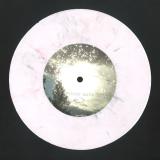
Limited pressing of 100 single copies on white marbled vinyl.
A Portal To The Unknown – 7 Rotations of Neptune Discs brings together 12 producers across a double LP. Tifra and Match Box return following their own ep’s on the label this year, joined by familiar contributors Wigs, Aiden Francis, Jeku, Cybernet and Mahkina. COZi, Dive Crew and Thurlow Joyce make their first appearances, with Milès Borghese and Biodive completing the four sides.
Run independently by Astro from Edinburgh, Neptune Discs treats the exploratory ideas of ’90s and early-’00s club music as unfinished business. Prog, trance, tech house and dub techno remain reference points rather than templates, with more than 50 releases—and the arrival of Jupiter’s Depth and Pyramid Fields—allowing that identity to keep developing.
Wigs’ “Strangers” and Aiden Francis’ “Uno” bring warped, driving prog. COZi makes his Neptune debut with “Ride The Snake”, a lean, stripped-back tech-house roller that brings early-2000s economy into the present. Jeku follows with “Droop”, a trippy, ozone-soaked slow roller, while Thurlow Joyce closes with the warm, deeply submerged dub techno of “Sundowner”.
Beyond the vinyl, three digital exclusives expand the release: Bert Vesper’s “Babbel Truc”, Azzecca’s “Home” and Foley’s “What Could’ve Been”.
Featuring artwork by theAJM, the release is pressed across two 12-inches, distributed by One Eye Witness and arrives on 23 October 2026.
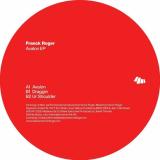
Those familiar with the work of veteran French deep house don Franck Roger will happily tell you that he has long been one of the best in the business - a European equivalent to US greats such as Larry Heard, Ron Trent, Vick lavender and Glenn Underground. More proof of Roger's finely-tuned, floor-focused musicality can be found on this fine three-tracker on Seasons, an imprint he first featured on way back in 2005. Check first title track 'Avalon', where deep, dusty, minor key motifs, echoing organs and layered percussion cluster around a deep, dubby house groove. 'Draggin' sees him make merry with sustained chords, smooth beats, jazzy synths and gentle TB-303 acid motifs, while 'Ur Shoulder' is a spacey and futurist deep house delight.
Muss sich alles ständig so schwer anfühlen? Claud Mintz ringt ständig mit dieser Frage. Und zwar nicht in Form von höflichen kleinen Wortgefechten, sondern in Form von großen, langwierigen, existenziellen Kämpfen - von der Art, die einen letztendlich dazu bringen könnte, den Kurs des gesamten Lebens zu ändern. Die 10 Songs auf seinem facettenreichen und glanzvollen dritten Album ,Me and the Music" zeigen den 27-jährigen Singer-Songwriter und Produzenten aus Brooklyn, wie er sich mit dieser Frage auseinandersetzt und schließlich triumphierend zu etwas gelangt, das einer Antwort nahekommt: Die Dinge können schwer sein, aber das bedeutet nicht, dass man keinen Spaß haben kann. Das Leben kann schwer sein, aber das Bier in Ihrer Hand ist es nicht - warum sollten Sie es nicht für einen Moment in die Höhe recken, mit den Freunden um Sie herum mitsingen und Ihre Sorgen für die Dauer eines perfekten Indie-Pop- Songs vergessen? ,Me and the Music" ist Clauds erstes Album seit drei Jahren, seit dem 2023 erschienenen, hochgelobten ,Supermodels". Sowohl ,Supermodels" als auch ,Super Monster" aus dem Jahr 2021 waren weitgehend inspiriert von ,dieser einen unklaren Beziehung", von der er irgendwann während des Schreibens von ,Me and the Music" erkannte, dass sie ,eigentlich nie wirklich etwas war". ,Supermodels" war ein so ernstes Album, und ,ich habe einfach so lange in meinen Gefühlen geschwelgt", sagt Claud. ,Es gibt einen Unterschied zwischen Aufrichtigkeit gegenüber dem Leben und dem Leben zu ernst zu nehmen." Diese Erkenntnis veränderte alles: Im Titelsong von ,Me and the Music" singen sie: ,Das ist der letzte Song, den ich von dir ruinieren lasse", und das meinten sie auch so. Nachdem Claud diesen Song geschrieben hatte - in den berühmten Electric Lady Studios zusammen mit ihren Freunden Hank Heaven und Annie DiRusso -, begannen sie, sich völlig befreit zu fühlen. ,Dadurch wurde viel Bedauern losgelassen, das ich mit mir herumgetragen hatte, und es ermöglichte mir, zu denken _ das macht so viel Spaß", sagen sie. ,Musik zu machen macht so viel Spaß." Das Markenzeichen von Me and the Music sind also Songs, die die Komplexität des Erwachsenwerdens und des Lebens in der Welt einfangen, ohne dabei den Sinn für Verspieltheit oder Spaß zu verlieren. Es ist ein typisches ,Slice-of-Life"-Album , das neue Romanzen, Insider-Witze, Gap-Werbespots, die Band ,America" und das Land Amerika thematisiert und all diese Dinge mit Sorgfalt und Rücksicht behandelt. Die Lead-Single ,She Doesn't Love Me" von ,Me and the Music" ist in vielerlei Hinsicht der Kern des Albums - ein leichtfühliges Lied darüber, wie es ist, in den 2020er Jahren in Amerika queer und trans zu sein. (Es ist eine kraftvolle, mitreißende Hymne, die vor Schmerz nicht zurückschreckt - und trotzdem Lust macht, wie Claud in dem Titel singt, die ,Biere in die Luft zu recken".) Als Claud den Song gemeinsam mit Heaven und DiRusso schrieb, waren sie fest davon überzeugt, dass es ein Yacht-Rock-Song werden sollte; das Demo klang letztendlich dennoch ,Lo-Fi und Indie". ,Me and the Music" wurde von Claud und John Congleton (Alvvays, St. Vincent) produziert und bedeutet für Claud, dass sich der Kreis schließt: Mit diesem Album hatte Claud endlich das Gefühl, als Produzent selbstbewusst genug zu sein, um die Rolle des Co-Produzenten zu übernehmen (und hat seitdem eine Reihe viraler Singles von Romy Mars produziert). Die Zusammenarbeit ist natürlich ein wesentlicher Bestandteil von Clauds Arbeit - wer wären wir ohne unsere Freunde? Neben Claud gehört er zu einem Viertel zu Shelly, einer Band, die er gemeinsam mit Clairo, Noa Getzug und Josh Mehling gegründet hat. Auf ,Me and the Music" arbeitet Claud bei dem Titel ,The Legend" erneut mit ihrem langjährigen Kollaborateur Dan Nigro (Olivia Rodrigo, Chappell Roan) zusammen. Der Song thematisiert das Gefühl, tief in jemanden verliebt zu sein, der nicht mit einem gesehen werden möchte, sagt Claud: ,Es geht gewissermaßen um eine beschissene Beziehung und den Wunsch, die Liebe zur Schau zu stellen, ohne jedoch dazu in der Lage zu sein ", erklären sie. Doch wenn es auf ,Me and the Music" ein echtes Liebeslied gibt, dann ist es ,I Owe You", ein Dream-Pop-Road-Song, der hingebungsvoll und facettenreich ist. Er fängt den Geist von ,Me and the Music" als Ganzes ein: die Dinge Tag für Tag zu nehmen, Bilanz über das zu ziehen, was einen umgibt, und die schönen Dinge anzunehmen, wenn sie sich bieten. Das fühlt sich gar nicht so schwer an.
Skarra Mucci, the globally acclaimed Jamaican MC known as the "Dancehall President", partners with Manudigital, one of Europe's top producers, to bring us the full-length album Ragga Blasta.
Following the success of their self-titled EP, the duo doubles down by expanding the concept into a complete 10-track album, delivering a varied, multi-inspired showcase where hybrid beats meet core sound system culture. This project retains the essence of their initial release: the energy of title track Ragga Blasta blending reggae and boom-bap hip-hop, Angel’s ragga beat and intoxicating Likkle Devon sample, alongside the heavy basslines of Freedom Fighter. It also features the more introspective rub-a-dub vibe of Inna Mi Brain, the explosive ska collaboration with Queen Omega on Feel It, and the atmospheric dub of Natty, where Skarra delivers razor-sharp rap flows.
This long-form edition packs an even bigger punch with four brand-new tracks built to shake sound systems and dancefloors alike. Skarra Mucci showcases his technical mastery on Lyrics Machine, a hard-hitting, hip-hop-infused track, while delivering a powerful, anthemic dancehall tune with Nah Fraid No Police. The tracklist further elevates with a legendary feature from Johnny Osbourne on What A La La, before broadening its musical horizons through the festive, hybrid sounds of Rock This Cumbia.
Following up 2007s well received X-dub was the Phalaenopsis 12inch that came out later that year. A track selection that came from the same hyped mysterious MySpace track folder, but now transmitted through Frustrated Funks subsidiary, the now defunct Frantic Flowers imprint that was emerging through the early Clone channels. Signing there, without the staffs knowledge of the producers identity, further muddied the waters. Exploring a more housy dub-techno vibe and diving deeper into experimental dub territory. And with it deploying an even bigger smokescreen around Ovatows real identity. Both Phalaenopsis versions re-appear now, for the first time after almost 20 years, fully retouched and remastered, together with an unknown unreleased track (edit) called So It Goes. This is the second in a series of Ovatow work, revived for the heads that appreciate the foggy deep of the Undacurrnt.
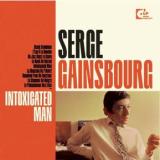
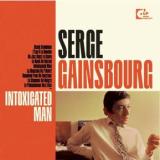
Mit "Intoxicated Man" widmet sich diese umfangreiche 2LP-Edition den frühen Jahren von Serge Gainsbourg und dokumentiert die Entstehung eines der einflussreichsten Künstler der französischen Musikgeschichte. Lange bevor Gainsbourg mit seinen provokanten Pop-Produktionen internationale Bekanntheit erlangte, entwickelte er aus Jazz, Chanson und literarischen Einflüssen eine unverwechselbare musikalische Handschrift. Die Sammlung vereint zentrale Aufnahmen seiner frühen Karriere, darunter Klassiker wie "Le Poinçonneur des Lilas", "La Chanson de Prévert", "L"Eau à la Bouche" und "Black Trombone". Begleitet von hochkarätigen Musikern wie Alain Goraguer, Marcel Zanini und Hubert Rostaing zeigen diese Aufnahmen bereits den scharfsinnigen Texter, stilistischen Grenzgänger und musikalischen Innovator, der Gainsbourg später werden sollte. Eine sorgfältig kuratierte Retrospektive eines prägenden Kapitels französischer Musikgeschichte.
Elastica’s iconic self-titled debut album is set to be reissued by Rough Trade Records on 2 October in a new edition boasting rarities and b-sides.
Striking their own, distinct path in March 1995, Elastica proved uniquely fresh-sounding as the London four-piece delivered on the reputation they had built up gigging around the capital beyond in the months ahead its release.
Home to the likes of Line Up, Waking Up and Connection, singles at once timeless yet in the moment, Elastica’s debut captured the fraying emotions, hazy experience and burning energy of life, love and after-hours adventure.
Absorbing atmospheres and attitudes of their post-punk and new wave forbears, Justine Frischmann (vocals, guitar), Annie Holland (bass), Donna Matthews (guitar, vocals) and Justin Welch (drums) poured their own identities into the album’s 15 tracks which balancing youthful swagger, with sage-like observation and a knowing cool that made Elastica and their debut effortlessly timeless.
Layne & Chang might not be household names to everyone, but in the underground they’re long-established fixtures. Chang—who’s released music under a string of aliases over the years—was tipped by Urb magazine as one to watch back in the mid-’90s and has been embedded in dancefloor culture ever since. Alongside him, Layne Fox (formerly San Francisco, now back in Florida) brings deep disco credentials, having helmed the cult-loved Disco Dimensions label and recording as 40 Thieves—best known for the underground anthem Don’t Turn It Off. In short, the boogie lineage on this record runs deep.
And that’s before you even get to Dan Tyler. As one half of the Idjut Boys and co-founder of Noid Recordings, Tyler helped lay the groundwork for London’s edit culture long before it became a global phenomenon. His involvement here only strengthens the package.
“Shake Your Body” opens the release with a locked-in, funk-driven groove—swirling melodic lines, subtly acidic textures, warm vocoder touches, and tight, punchy drums all dialed for peak-time movement. On the A2, “In The Desert” shifts the mood into something more transportive: a hazy, late-night burner equally suited to open-air parties, after-hours sessions, or home listening with the lights low.
Flip to the B-side and Dan Tyler delivers two cosmic reworks that push things further out. Psychedelic, elastic, and built for serious systems, both cuts hit that sweet spot between heady and physical—already circulating among a handful of tastemaker DJs and primed for heavy rotation as festival season ramps up.
A strong, floor-ready release that sits comfortably in the Whiskey Disco catalogue—rooted in disco, but reaching well beyond it.
KKYV10 is a four-track EP by Bulgarian producer Loopdeville, currently based in Spain. The release explores a flexible space between minimal, breakbeat and house, shaped by groove-led structures, textured sampling and a slightly twisted, off-centre energy. Built to move through different moments — daytime light, peak pressure, late fade. The EP opens with "The Bizz", a track built around jazzy elements, vocal cuts and a jackin low-end. Its warm, rolling groove sets a natural tone for the record, balancing playfulness with reflections. "Shmuck Norris" follows with a heavier, more direct approach. Driven by raw drums and a rolling bassline, the track leans into a big-beat aesthetic while maintaining a stripped structure. On "Rashford", the EP shifts into a breakbeat framework. The track carries a deeper, more introspective mood, with subtle background movement adding acid tension beneath it’s surface. The closing track, "Septimo", draws from UK-influenced minimal with garage elements. Focused on sub frequencies it is designed for systems that favour depth and clarity in low parts. Together, the four tracks form a cohesive yet varied release, reflecting Loopdeville’s recognisable sense of tension and detail while staying totally aligned with Kooky’s sonic direction.
“Negative Music / The Poorest! If they still know silence at all, then only as holes in the continuum of noise…” — Günther Anders, 1965
Editions Mego presents GETGETGET, a new release by Thomas Brinkmann which serves as an inquiry into silence, code, and the limits of perception.
The title GETGETGET references the trilogy of ‘Get’ lp’s made by Rehberg under his PITA moniker; Get Out, Get In and Get On. The music is based on material by Rehberg and Brinkmann morphing these two identities into a third colour, a disappearing color.
Emerging from a live performance at the label’s 30th anniversary in Berlin, the work unfolds as both sonic artifact and conceptual system: a study in what remains when sound is reduced, extracted, and reconstituted.
Taking inspiration from Günther Anders’ notion of “negative music”—composition through absence—Brinkmann’s approach aligns with Heinrich Böll’s idea of “collected silence”: silence not as void, but as a material framed against the constant pressure of noise. In GETGETGET, pauses are not gaps but structural elements, cut from a continuum and reinserted as signals.
The two side long tracks weave a dark abstract and ‘twisted’ presence where the ghosts of the machines and their operators fuse into a fantastical whole. One can hear traces of both Brinkmann and Rehberg logic which seems to fuse in a hallucinatory manner.
Brinkmann’s work reflects a broader condition: the translation of material processes into informational ones. As images detach from bodies and code separates from matter, sound too loses its fixed resonance. What remains is circulation—of signals, of data, of meaning—within systems that increasingly define perception itself.
GETGETGET is an album where absence is equal to presence, a metaphor with suggestive tones of the influence Rehberg had and continues to have in the world of the radical experimental electronic avant garde. The “zero” is not empty; it is what makes everything else work.
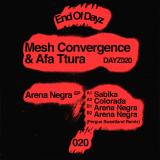
End Of Dayz returns to the fray, this time with a deeper release than usual, presenting tracks by Granada-based Canarian producer Mesh Convergence, teaming up with the mysterious Afa Ttura. The record is completed by a remix from Australian artist Fergus Sweetland.
Among the most influential hip-hop artists to emerge in the rapid creative expansion of the early 1990s, Queens duo Organized Konfusion helped reshape rap's aesthetic horizons with the 1991 release of a groundbreaking self-titled album. A dizzying display of lyrical dexterity and forward-thinking production, Organized Konfusion helped lay the foundation for what would become underground hip-hop, with intricate wordplay and cerebral rhyme structures. Both Pharoahe Monch and Prince Po shine throughout the album, revealing
the immense talent that would later establish Monch as one of hip-hop's most revered voices and spark Po's collaborations with producers like Danger Mouse, Madlib, Large Professor, Oh No, and more. From playful nostalgia to sharp social commentary to surreal linguistic explorations, the duo navigates chaotic drum breaks with dense rhyme patterns, vivid imagery, and ever-shifting narratives. After decades of limited availability and unofficial bootlegs, this is the first official vinyl reissue of Organized Konfusion since its1991 release. Featuring three rare bonus tracks, this 35th anniversary edition is available on 2LP and CD, giving a long overdue spotlight to one of hip-hop's most important albums.
In the realm of past-life regression hypnotherapy, there is a concept known as “Life Between Lives,” wherein a sacred exchange of energy occurs between two souls in the spirt world, helping a spirit fully understand and forgive a being who hurt them in a past life. This exchange – called “passing the cup of sorrows” – became the unexpected inspiration for William Basinski’s first new album in six years.
While sinking deeper into the daily abyss of our collective negativity bias, William Basinski stumbled upon a video describing the spiritual hypnotherapy exercise known as “passing the cup of sorrows.” Fixed on the glow of a screen that projected mounting anxiety and cynicism at a seemingly interminable pace, Basinski found the testimonials of this fascinating therapeutic practice to be profoundly moving. He sat at his piano, translating the transformation of those traumatic memories of past lives into cathartic tears of the present day.
Channeling the quiet curiosity and asymmetrical patterns of pioneering 20th Century composer, Morton Feldman, Passing the Cup of Sorrows is a single 40-minute piece that employs a solitary piano and subtle electronics to truly haunting effect. It recalls fragments of traumatic memories and projects them as fractals in a slow-moving soft focus that’s as eerie as it is enlightened.
In the realm of past-life regression hypnotherapy, there is a concept known as “Life Between Lives,” wherein a sacred exchange of energy occurs between two souls in the spirt world, helping a spirit fully understand and forgive a being who hurt them in a past life. This exchange – called “passing the cup of sorrows” – became the unexpected inspiration for William Basinski’s first new album in six years.
While sinking deeper into the daily abyss of our collective negativity bias, William Basinski stumbled upon a video describing the spiritual hypnotherapy exercise known as “passing the cup of sorrows.” Fixed on the glow of a screen that projected mounting anxiety and cynicism at a seemingly interminable pace, Basinski found the testimonials of this fascinating therapeutic practice to be profoundly moving. He sat at his piano, translating the transformation of those traumatic memories of past lives into cathartic tears of the present day.
Channeling the quiet curiosity and asymmetrical patterns of pioneering 20th Century composer, Morton Feldman, Passing the Cup of Sorrows is a single 40-minute piece that employs a solitary piano and subtle electronics to truly haunting effect. It recalls fragments of traumatic memories and projects them as fractals in a slow-moving soft focus that’s as eerie as it is enlightened.
By the time Michael Nau completed Popfly, the songs felt less like compositions than companions. Arriving in fragments, notebook lines, and fleeting observations, these pieces kept company for years until taking their final form. The result is one of Nau's most openhearted, expansive records, both homespun and otherworldly at once. Radiant folk melodies, tape-warped textures, and flashes of everyday wonder coexist in perfect balance on Popfly. Nau has never been a songwriter who forces songs into existence. Instead, he follows them, trusting intuition over agenda and allowing songs to gradually reveal themselves. Writing and recording often blur together, with melodies evolving before lyrics are finished and stray recordings forming the basis for new songs. Popfly showcases these creative detours: thoughtful folk songs, sonic experiments, and accidental beauty transformed into fully realized compositions. Many songs began at home, growing in meaning. Since he entered the Vermont studio, Little Jamaica, with longtime friend and collaborator Benny Yurco, many of them had already lived several lives. "Studio recording feels like covering my own songs," Nau says. This idea flows throughout: performances are lived-in, feeling effortless, as if assembling itself. The title track carries a flicker of wonder in its simple observations. "New Slack" moves with the loose confidence of a song content to follow its own path. On "Lost Station Hideaway," soft static and fading signals become something strangely comforting, as if the song itself is being broadcast from somewhere just beyond reach. Family and friendship are deeply woven throughout the record. Nau's children contribute vocals, bringing warmth and spontaneity to the album's communal spirit, with longtime collaborator and wife Whitney McGraw lending her serene voice. The harmonies that drift from them extend the album's central impulse of people gathering to make something beautiful. Across Popfly, loose-limbed folk songs mingle with homespun psych-pop, porchside country-folk, dreamlike atmospherics, and quietly profound observations. The record moves with the ease of conversation among old friends, finding beauty in tiny revelations, strange coincidences, and everyday mysteries. The record is full of transmissions from different moments in Nau's life, stitched together by instinct, affection, and time. Taken together, they form a portrait of a life spent paying close attention to the world and its small miracles.
Music From Memory presents ‘Mutualkind’, by Asa Tone, the collaborative project of Melati ESP, Tristan Arp and Kaazi. Written between Indonesia, Mexico City, Berlin and New York, the record unfolds through a process of continual exchange, where distance itself becomes part of the group’s music formation.
At the centre of the album is the idea of a shared language, formed across differences in geography, experience and musical approach. One such process explores Tristan’s electronic hand percussion triggering fragments of Melati’s voice in real time, while a library of spoken words and phonemes are reshaped through chance-based rhythmic processes. Voice becomes percussion, rhythm becomes melody, and the lines between individual contributions begin to dissolve.
Some pieces, including ‘Water Talk’ and ‘Second Language’, were recorded live in a single take, while others were assembled gradually through remote exchange. During the final sessions in Indonesia, Balinese percussionist Putu Septa contributed kendang to two tracks, bringing the instrument into dialogue with modular synthesis, FM textures, electronic drums, MIDI wind instruments and Melati’s shifting vocal forms.
Sounds are slowed, stuttered and reorganised, reflecting a world shaped by illusory borders, vanishing landscapes and glitching ecosystems. Yet the album remains rooted in the act of tending to something shared: a musical field built through listening, improvisation and repeated moments of reunion.
‘Mutualkind’ seeks to blur boundaries without erasing the identities that meet across them, providing a space in which voice and instrument, self and other, separation and togetherness can briefly exist at once.
MFM086 will be released on vinyl and digitally via Music From Memory on October 22nd 2026.
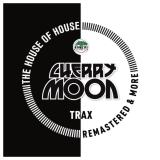
Original, Oliver Lieb, M.I.K.E. Push, Moon Project, DJ Taucher remix
The iconic electronic music masterpiece “The House Of House” by Cherrymoon Trax is set to make an electrifying return to the scene. Originally introduced in 1994, this timeless classic, helmed by the talented trio Axel Stephenson, Yves Deruyter, and Franky Kloeck, has been revitalized in a new remastered wax format.
The eagerly awaited 2 x 12" double vinyl features mixes that have never graced vinyl before, alongside the cherished original and other mixes that have left an indelible mark over the years. As an added treat, collectors will also find the inclusion of the original tracks “Let There Be House” and “Conflictation.”
This exclusive edition is strictly limited to just 500 copies worldwide and features a unique Inside Out cut, pressed on stunning Starlight vinyl — a distinctive black colour with vibrant coloured speckles. The striking vinyl perfectly complements the sleeve, making this a truly special collector’s edition.
But this release marks more than just a return to the past. “The House Of House” also introduces a new upcoming single featuring the return of Axel Stephenson, bringing a legendary name from the original Cherrymoon Trax era back into the spotlight.
Brace yourselves for the resurgence of a true electronic music masterpiece — and the beginning of an exciting new chapter. Only 500 copies available — once they’re gone, they’re gone.
On their third album, FANGS, London collective HMLTD have created an entirely new genre: Götherdammerüng (or ÜberGöth). Predictably unpredictable, it could not be further away from their last outing, 2023 rock opera The Worm. The sixteen-piece orchestra has been traded in for Ableton, the timpani and violins replaced with side-chained four-to-the-floor and rave synths, and the gospel choir swapped for guttural gothic howling and black metal screams. The result is both unique and terrifying: a total reinvention and rehabilitation of the goth genre, through the looking glass of modern electronic and doomscroll-era dance music.
This new beginning was accompanied by a change in personnel, with Theo Spark and Andrei Martynchyk joining the fray alongside original members Henry Spychalski and Duc Peterman. Decamping to a ruined château in the Loire Valley, the quartet became obsessed with vampire lore, and the EBM and goth sound that inspired their early work: Fad Gadget, DAF, Nitzer Ebb, Suicide and Bauhaus. FANGS also points to more contemporary influences like Crystal Castles, German hardcore, 2000s blog-house a la Justice, and 2020s sleazepop.
The world crafted in FANGS is full of cosmic pessimism, glowing horror, imperceptible evil and digital dismemberment, ancient curses and ruined castles, Vampires. But it is also a thoroughly fun, and funny, record, as danceable as it is deep. Born of the club, some tracks would not sound out of place on Brat. Like a Smiths song which sounds happy and carefree until your brain tunes in to the misery of the lyrics, it can be listened to - and enjoyed - on two levels. One can get lost in the throb of bass and ludic synths, or tune into the horror of the lyrics which overlay them.
FANGS attempts to offer up a reflection to a culture that - like a Vampire - has lost its own. The result is something not only thoroughly modern, original, and inventive - but that feels genuinely dangerous and potent. FANGS delights in this ambiguity: simultaneously indicting decadence, decay, and moral rot, while luxuriating in its intoxication by it. Cacophonous sub-bass becomes a chthonic call of the void; seraphic rave synths become the screech of Valkyries; four-to-the-floor becomes a deathly funeral march. Vampire apocalypse.
Max Cooper delivers the latest instalment in the acclaimed fabric presents series, marking a landmark release as the first tracks to be presented in Spatial Audio. Fusing his signature blend of emotive electronica, immersive sound design and club-focused energy, the project captures Max’s ability to bridge the gap between cutting-edge technology and deeply human storytelling. Featuring exclusive material alongside carefully curated selections, the mix places him alongside previous fabric presents contributors including Daniel Avery, Overmono, Helena Hauff and Mount Kimbie, while pushing the series into new sonic territory.
Leading the accompanying EP is Flecks, a collaboration with LSB that pairs fast drum & bass breaks with Max Cooper’s unmistakable immersive production. Referencing the iconic Hurt You So break, the track fuses old-school jungle influences with a modern, spatial mix, hypnotic synth lines and subtle vocal fragments draw the listener deeper into its expansive soundscape. Also featured is Bredren’s Hash (Max Cooper Remix), a tension-filled drum & bass track built around distorting basslines and constantly evolving movement.
The EP's focus track, AO, sees Max Cooper reunite with Rival Consoles for a more introspective moment. Swapping high-tempo breaks for a slower electronica and house framework, the track unfolds through beautifully detailed percussion, organic rhythmic textures and sweeping synth melodies, culminating in a soaring central passage that showcases the pair's shared gift for emotionally resonant electronic composition.
Released via fabric Records, fabric presents: Max Cooper represents another evolution of the long-running series, a release that is equally at home on immersive listening systems and the dancefloor.
Axel Karakasis returns to Remain Records with four new tracks, delivering driving rhythms, hypnotic grooves and raw, functional techno across the A and B sides.
With his last three records all landing within a calendar year (2024-25), enigmatic Swedish producer Civilistjävel! (aka Tomas Bodén) is on a hot streak of releases, his singular vision increasingly ambitious and expansive. There are few artists working at this level so consistently right now, reinventing, revising and continually developing their language. Following on from 2025’s radically re-worked ‘Versions’ (of Mayssa Jallad’s ‘Marjaa…’), Bodén returns to break further fresh ground with his new album, ‘Älvgång’. Featuring contributions from Soccer Committee, Carrier and guest (aka Jabu’s Jasmine Butt), ‘Älvgång’ foregrounds a more brittle and insistent rhythm-based sound, whilst comprising his most broad-ranging collection of material to date.
‘Älvgång’ grew out of a series of sketches made from late ‘24 and throughout the whole of ‘25 at Stockholm’s renowned EMS Studios, which gave Boden free rein to its extensive collection of vintage analogue equipment and rare modular synthesizers such as the Serge and Buchla systems. As a loose framework of tracks began to take shape, so did a reflection of sorts, on family and foundations, underpinned or influenced by sounds that drifted into Tomas consciousness around this time - ancient Swedish pastoral music, Georgian lithurgical chants, gongs, chimes. An idea settled into place, a dedication to his Grandfather, as the earlier release Fyra Platser (tr. ‘Four Places’) was to his Grandmother. Älvgång is grounded with the sense of time and place of an old family photograph, with the tracks over each side bearing one of two names that are more or less the same location - Strinne was the old name for a this loose collection of villages. These days it is more commonly known as Bjärtrå. Metaphorically speaking, the river runs through both.
Civilistjävel! conjures so many adjectives and descriptors, ‘glacial’ and ‘ambient’ frequently among them - but while not altogether untrue, such terms belie the tension and drama so often present in Tomas’ music. Listening to ‘Älvgång’ is not a passive experience. The eight tracks here feel like a patchwork of memories that bathe in the same ethereal, otherworldly glow of Tarkovsky’s polaroids’.
The machine pulses that dominate this landscape are reigned in and tempered by a human hand; lithe, untethered coils, breathing in and out. ‘Strinne Ett’ sets out with purpose, sensing awe and wonder through the murk, but as the final tone unfurls like a question mark, another chapter begins, unfolding/building like a Tarjei Vesaas novel. These lyrical, abstract miniatures combine to reveal a wider context, fragile humanity standing alone against nature.
Guest appearances on Civilistjävel! records have become a regular occurrence (including recent collaborations with Mayssa Jallad, Laila Sakini, Cucina Povera, Thomas Bush, Eldon + Withdrawn), but are used sparingly and with increasing precision. On ‘Strinne Tre’ Mariska Baars’ (Soccer Committee) voice feels like a balm, a clearing. But as her simple, three-word incantation drifts further into fog, the meaning changes, and her words seem to curdle. Carrier’s beats widen the parameters on ‘Strinne Fyra’, a skittering promise that builds tension then refuses to release it; all false starts, Photek gongs, and trinkling modulars. Jabu’s Jasmine Butt pulls all the threads together for the final track, Thomas Tallis’ ghost walking over offset machine impulses, that work against their own symmetry.
Side two begins inquisitively, scanning bleached, alien surroundings, its sparse pads recalling Aphex Twin’s ‘Selected Ambient works Vol 2’. 'Bjärtrå Två’ picks up the baton from ' Strinne Fyra’ with a ruptured Simmons SDS200 analogue drum synth set free from its shackles, the rhythm eventually slotting into the spaces that were hiding in plain sight. What follows seems like an epiphany; ‘Bjärtrå Tre’ is achingly beautiful, a euphoric, winding ascent that leads to devotional plainsong. ‘Bjärtrå Fyra‘s final unheralded shift feels both tragic and haunting.
Do you know what time it is? It’s Prime Time, the new EP on Punctuality from mischievous French duo Pureblast . Marking the label’s twelfth release, the record serves as a bold statement of intent from the Parisian pair and demonstrates why they’re quickly earning a reputation as one of France’s most exciting live acts.
Across the EP’s five tracks, Pureblast weave together a broad spectrum of influences while remaining deeply rooted in the duo’s singular vision. Every cut is fat, pumping, gritty and playful, ready to turn heads and hips on the dancefloor.
Side-stepping easy genre classifications, Prime Time is modern rolling prog at its most energetic. Tightly wound low-end, pummelling drums and restless basslines drive each track forward with purpose, while sa+ga’s vocals are manipulated and distorted to humanoid perfection. The result is something distinctly personal beneath the machine funk: robotic yet seductive, gritty yet playful.
Deep listeners will spot nods to tranced up breakbeats, Ray of Light-era big beat, Detroit electro and contemporary UK techno with psy-fluenced synth swirls and texture. Far from pastiche, these influences are absorbed into the Pureblast machine and transformed into something entirely their own.
Gritty, pumping, sexy and playful. It’s Pureblast, it’s Prime Time.
credits
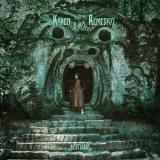
,Bestiaria" ist das neue Album des mexikanischen Trios Karen y los Remedios um Sängerin und Songwriterin Ana Karen G. Barajas. Inspiriert von persönlichen Erfahrungen wie Mutterschaft, Krankheit und Neuanfängen erschafft das Album ein klangliches Universum aus mythischen Frauenfiguren, Göttinnen und Legenden, die für Selbstbestimmung, Stärke und Weiblichkeit stehen. Musikalisch verbindet die Band ihre charakteristische Mischung aus Cumbia rebajada, Trip-Hop und verträumtem Pop mit Einflüssen traditioneller lateinamerikanischer Musik. Die zwölf Songs wirken wie eine Tarot-Legung aus Symbolen, Geschichten und magischen Bildern, die zwischen Sehnsucht, Liebe, Fürsorge und Transformation schweben. Mit seiner atmosphärischen Klangwelt und Ana Karens ätherischem Gesang führt ,Bestiaria" den Weg des gefeierten Vorgängers ,Silencio" konsequent weiter.
The third and final full-length, double album from the Elephant 6 Recording Co. co-founders. Their first record in 27 years from the Athens, GA band. A legend is a heavy thing to carry. It has been 27 years since the last album by The Olivia Tremor Control. In that time, they have influenced countless bands, been the subject of documentaries and biographies, and now, finally, improbably, there is a third Olivia Tremor Control album. In the 1990s, The Olivia Tremor Control released two albums of experimental and psychedelic pop genius, Music from the Unrealized Script: Dusk at Cubist Castle (1996), and Black Foliage: Animation Music Vol. 1 (1999). As founding members of the Elephant 6 collective, they redefined the US underground scene, injecting bright paisley colors and sonic adventure into a scene weighed down by grim irony and a fear of pretension. Work began on the album as far back as 2005 but progress was slowed by other projects, other responsibilities, but in 2010, the band of Hart, Doss, John Fernandes, Pete Erchick, Eric Harris, and Derek Almstead began to record. By 2011 The Olivia Tremor Control had reemerged as a fully active band and added AJ Griffin to the lineup as well as touring members Scott Spillane and Robbie Cucchario. The band was now recording constantly and were fast on their way to completing the album. Then in the summer of 2012, Bill Doss suddenly, tragically passed away. With everyone still in shock and grieving, work on The Same Place came to a halt. Every attempt to resume the project stalled until 2023, when, after watching the Elephant 6 Documentary, Athens producer/musician Jason NeSmith came on board to help. In 2024, with the album nearly finished, Will Hart unexpectedly passed away. Drawing on Will's extensive collections of notes, The Same Place was finally completed by the surviving band members, the broader Elephant 6 community, and producers Derek Almstead, Jason NeSmith, and Ron Kwasman. The Same Place does everything The Olivia Tremor Control ever did well. It also does it better, and goes further, than anyone could have imagined was possible.
For more than two decades, Vidmantas ?epkauskas has occupied a singular position within European underground culture. As the driving force behind Opium Club and gallery 1986 in Vilnius, founder of Ant Bangos, Alfavilnius and OLE festivals, curator, label owner, promoter, DJ and artist, he has spent much of his life creating the conditions for other people's music to be heard.
It makes sense then that he has no shortage of friends and collaborators in play. Across ten tracks, V presents shades of Italo, krautrock, post-punk, minimal synth, industrial pop and neon-noir romanticism, arriving somewhere between the dancefloor and a dream-state. The cast of collaborators both contextualize and help sharpen the vision.
First and foremost, much of the album was crafted alongside Frankfurt's Philipp Lauer, whose friendship with V grew through marathon studio sessions. Curses lends his unmistakable blend of dark romance and theatrical energy to "Is This What You Want?", Australian cosmic journeyman Dreems joins for the kaleidoscopic "Blitz Disc," Domenique Dumont brings their unmistakable emotive touch to "Avventura," while Lithuanian artists Noyus and Ruta MUR, both distinctive voices from the country's queer scene, whose vocals add another dimension to the record's emotional palette. As V puts it, "These are the people I've been vibing with."
That he finally delivers a full-length LP with such elusive qualities is more than a clue to his character. The title itself, a nod to Magritte's famous paradox and his years living in Brussels, suggests that any attempt to define V through a single image is destined to fail. At once playful and philosophical, 12:55 (Ceci n'est pas une V) questions ideas of identity and artistic value while marking the closing chapter of the musical persona that followed ?epkauskas' earlier success as Vidis. Neither retrospective nor statement of intent, it feels like a connected set of reflections spanning a lifetime of influences.
Following last year's ''Magic Overlooked'' EP, DJ AGITATED returns to the Dolly TS series. ''Horses of Volcanoes and the Moon'' sounds as big as its title. Frantic vocal loops, deep dub stabs, fast paced strings and funky basslines, sky is the limit! DJ AGITATED delivers beautiful techno for the soul yet again.
“My Love” is one of its key tracks on “Summer End”, the current album by French singer & songwriter Al Sunny. Now that summer really has ended, Al Sunny asked a few producers and DJs from all over France to deliver their interpretation “My Love”. Featuring a wonderful organic take by Ludovic Llorca aka Art of Tones this EP is available digitally and as limited four track 12inch vinyl edition including the Art of Tones, Hugo LX and Jared mixes.
Art of Tones
Art of Tones is the house and disco project of acclaimed French producer Ludovic Llorca. Launched in 2006, the alias quickly earned international recognition through its distinctive combination of soulful musicianship, powerful grooves and dancefloor energy. His catalogue includes releases on respected labels such as 20/20 Vision, Local Talk, Glitterbox, GAMM and Toy Tonics, establishing him as a highly regarded producer and remixer within the global house scene.
Hugo LX
Hugo LX is a Paris-based DJ and producer whose musical universe moves effortlessly between deep and soulful house, downtempo beats, jazz, hip-hop and ambient influences. Known for his refined production style and wide-ranging musical knowledge, he has released music on respected labels including NDATL, MCDE, Balance and People of Earth, alongside projects on his own Doma Music imprint. Both behind the decks and in the studio, his work is defined by warmth, subtlety and a deeply personal approach to electronic music.
Jared
Jared is a French DJ, producer and event curator based in Bordeaux, with a strong connection to house music and club culture. Over the years, he has performed at a wide range of events and international stages, including Tomorrowland, developing a reputation for energetic and carefully constructed DJ sets. His musical approach combines a deep understanding of the dancefloor with warm grooves, contemporary production and an enduring passion for house music.
On their third album, FANGS, London collective HMLTD have created an entirely new genre: Götherdammerüng (or ÜberGöth). Predictably unpredictable, it could not be further away from their last outing, 2023 rock opera The Worm. The sixteen-piece orchestra has been traded in for Ableton, the timpani and violins replaced with side-chained four-to-the-floor and rave synths, and the gospel choir swapped for guttural gothic howling and black metal screams. The result is both unique and terrifying: a total reinvention and rehabilitation of the goth genre, through the looking glass of modern electronic and doomscroll-era dance music.
This new beginning was accompanied by a change in personnel, with Theo Spark and Andrei Martynchyk joining the fray alongside original members Henry Spychalski and Duc Peterman. Decamping to a ruined château in the Loire Valley, the quartet became obsessed with vampire lore, and the EBM and goth sound that inspired their early work: Fad Gadget, DAF, Nitzer Ebb, Suicide and Bauhaus. FANGS also points to more contemporary influences like Crystal Castles, German hardcore, 2000s blog-house a la Justice, and 2020s sleazepop.
The world crafted in FANGS is full of cosmic pessimism, glowing horror, imperceptible evil and digital dismemberment, ancient curses and ruined castles, Vampires. But it is also a thoroughly fun, and funny, record, as danceable as it is deep. Born of the club, some tracks would not sound out of place on Brat. Like a Smiths song which sounds happy and carefree until your brain tunes in to the misery of the lyrics, it can be listened to - and enjoyed - on two levels. One can get lost in the throb of bass and ludic synths, or tune into the horror of the lyrics which overlay them.
FANGS attempts to offer up a reflection to a culture that - like a Vampire - has lost its own. The result is something not only thoroughly modern, original, and inventive - but that feels genuinely dangerous and potent. FANGS delights in this ambiguity: simultaneously indicting decadence, decay, and moral rot, while luxuriating in its intoxication by it. Cacophonous sub-bass becomes a chthonic call of the void; seraphic rave synths become the screech of Valkyries; four-to-the-floor becomes a deathly funeral march. Vampire apocalypse.
“Kjorstad is an intriguing musician. He’s fascinated by the world, its history and future, nature and sound.”
Songlines
“Routinely blurs lines between folk, jazz, free improvisation, experimental, and contemporary music. Impressive, elusive, superb. I’m never less than spellbound.”
the Quietus
“Just as likely to appeal to followers of classical, folk and improvised music as to the jazz fraternity…A deep listening experience. Enchanting.”
Jazz Journal
Norwegian multi-instrumentalist Hans P. Kjorstad debuts on Phantom Limb (following works with Sam Gendel and Ernst Reijseger) with new album Inn, a nuanced, lower case, orchestra-in-miniature full of curiosity, charm, and sensitive mastery of its form."
Early DJ Support: Massimiliano Pagliara, Paranoid London, Logan Fisher, Terry Farley, James Holroyd, Rocky (X Press 2), Francois K, Marcel Vogel, Sean Johnston, Austin Ato, Ron Basejam, Richard Rogers, Oliver Dollar, Crazy P and many more
Creating an international name for itself over the past decade as a sample pack label, Samples From Mars made its inevitable venture into the music world originally as a home for founder Teddy Stuart’s work. Long before making samples, Stuart garnered credits working as a grammy-nominated recording engineer in the hip hop world, and DJing / producing with Justin Strauss as A/JUS/TED, for labels such as DFA, Domino Records and Southern Fried Records. Now the label is set to release a variety of genres - house, disco, techno, ambient, all with a vintage tinge and a focus on high quality, analog production.
Enter Salt Queen. Visual artist and musician Magali van Caloen together with Samples From Mars founder, Teddy Stuart. Based in New York, the duo combine hardware dance aesthetics with dry, salty takes on familiar club moments into music that sits somewhere between funny, raw and unpredictable.
Salt Queen’s debut ‘ARE U OK’ is an acid-laced, deadpan spoken word track with an opening line that snaps any room to attention. A disorienting club encounter unfolds over Italo-inflected 808s and a relentless 303 bassline. There are no chords and no melodies - just a skeletal groove and an intimate voice circling the dancefloor. Drifting between concern and provocation, the vocal runs through cliché club conversations before destabilizing completely into a siren-laden crash out. The ‘Freak Nasty Club Mix’ ditches the plot and lets the hardware breathe, with a thick SH-101 bassline anchoring the first half before a sudden switch into an unrelenting acid pattern that refuses to settle. Two versions of the same wild night out.
After almost twenty years of releasing music, Sven Tasnadi finds himself circling back to some of the sounds that first drew him into house music. Explorer was written at home following a longer break from producing and after moving out of his studio, a change of setting that coincided with a shift in priorities. "The tracks on this EP came together at home after a longer break from music and after I moved out of my studio," he explains. "Musically they are very deep and minimal, at times almost meditative. They were inspired by a new chapter in my life as well as my never-ending love and connection to artists like Lawrence from Smallville and Frank & Tony from Scissor and Thread."
That sense of returning to something runs through the whole record. For much of Tasnadi's career, producing and DJing were closely connected, with many releases naturally shaped by the club. Things have changed. "DJing is no longer my main focus, so I can dedicate myself to these deep and minimal sounds again, free from pressure or expectations," he says. "In a way, after almost twenty years of releasing music, things have come full circle for me."
"Atlas (Chapter 1)" and "Atlas (Chapter 2)" grew from the same initial idea but followed separate paths during production. Chapter 2 came first, while Chapter 1 emerged later from a variation Tasnadi discovered while the track was still essentially a loop. "I was still looking for the right theme for the original idea when another version suddenly opened up," he recalls. He saved that variation for later so he could stay focused on the first version. When he returned to it, the two had developed distinct enough identities to stand independently. Their shared DNA is still audible in the restrained rhythms, slowly shifting details and the way small changes carry much of the movement.
The title track moves further into dub techno, another longstanding passion for Tasnadi. "Explorer is almost a classic dub techno track," he says. "Subtle movements within a constantly repeating pattern create a particular atmosphere. It feels like the track could just keep going forever." It is a patient approach to repetition that he connects to artists such as Moritz von Oswald and his friend Daniel Stefanik.
"Megasektor", one of the first tracks Tasnadi made at home with a new equipment setup, brings the EP into deep house territory. "To me it's almost classic deep house, or at least how I define deep house for myself." Warm, compact and gently propulsive, it provides a natural closing point for a record that is ultimately less about changing direction than reconnecting with an instinct that has always been there.
Explorer captures Tasnadi at a point where making music has become more personal again. The four tracks come from following ideas for their own sake and from rediscovering the deeper, more minimal sounds that have stayed with him throughout his career.
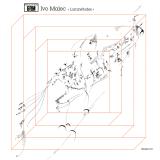
Composed over a period of twenty years, these four electroacoustic pieces by Ivo Malec reflect the richness of his sonic universe and reveal the unique power of his musical writing. His strength lies in an ability to harness emerging sounds and techniques (ranging from complex editing to early computer music and electronic synthesis) and develop them through an exploratory approach, giving rise to musical ideas of rare clarity. This sense of determination, not only in terms of the future of sounds but also of musical forms, is what makes Ivo Malec an essential composer on the contemporary music scene and a key figure in the GRM’s repertoire.
François Bonnet, Paris, 2025
Melissa Weikart and her piano have proceeded through life in step, from her early classical
training to the experimental practice that defines her work today, a blending of sounds and forms that has never been so clear—and so fully realized—as on her new album, Contact. Across twelve shifting and evocative tracks that examine the connective tissue binding us to ourselves and others, the Franco-American musician’s voice and piano navigate personal and emotional terrain with clarity and nuance, forging a rich dialogue between artist and instrument, artist and self, and artist and listener.
Winner of the 2022 Nancy Jazz Pulsations emerging artist award and the instrumentalist prize at the 2023 La Défense National Jazz Competition, Weikart has released two EPs and an album as a solo artist, and one EP and an album—Surprise and Secret—with her electronic duo Beatrice Melissa. A student of jazz and ’70s folk-pop, and a keen lover of improvisation since her time at the New England Conservatory in Boston, Weikart has always conjured the confessional candor of the singer- songwriter in her music, even as she dispenses her lyrics across rich, shifting, dreamlike tableaux.
On Contact, written and arranged entirely by Weikart (aside from “New angles”), she pushes her sound further than ever before. The album is animated by a pressing need for connection, observing what brings us together and what drives us apart, and the life-saving revelations that emerge along the way. The album’s opener, “Crash,” is a dreamy telephone-hour ode, a message in a bottle, to connections new and old. On the wistful “Mesurer le vent,” Weikart conjures Debussy or Ravel, layering contrasting sounds like an Impressionist painting. The title track begins as a showcase of Weikart’s frank lyricism, a splice-reel of missed connections and wasted time, then glides into a hazy, euphoric galaxy of pleas, circling around her thesis—“I wanted to make contact”—that ushers us into “The Intersection,” a song that recalls her the beginning of her career, when it was just Weikart and her keys. “Appétit.e” is built around a sample of her down-the-hall neighbor’s drumming—another subtle, affecting gesture toward proximity and connection—while pulsating synths reminiscent of Air lend the track an unsteady atmosphere. On the Carpenters-inspired “Expectations,” Weikart muses on the relationship patterns, universal and specific, that have always been a hallmark of her songwriting.
The psychedelic “L’amour de construit” is a slow-motion fall down the rabbit hole, as Weikart
considers the way her own emotions are captured and commodified by the confining ways we think about love. The interlude—“L’amour pt. 2”—finds her near the end of that trip, shouting into the void as a last-ditch effort to rescue herself from the fall. The drums near the end of the interlude warn us that there may be no cushion for, until she is saved, again, by the power of revelation, on the confident, resilient “Not Right”—on which a show-stopping, frenetic conversation between singer and piano is gracefully interrupted by a rush of transcendent strings, lifting her back up.
On solid ground anew, “New angles,” featuring Manu Delta, creates a percussion-less groove that relies on experimental synth sounds. The 11-o’clock stunner “Catching up”—composed in a church—meets the singer in a state of ecstatic confession, bringing her to the formative memory that propels “Bicycle,” the album’s closer. Younger, more wide-eyed, she reflects on her move from Boston to Strasbourg, those early days, when Weikart had no other companion than that loyal hunk of scrap metal that took her to the shores of her own soul. She seems to suggest, on “Bicycle,” that a backward-glance is not always troublesome, not always anxiety-producing, but can be grounding: a reminder of where we come from, so that we can keep moving forward.
UK experimental multi-instrumentalist Oli Heffernan (aka Ivan The Tolerable) returns to independent label Riot Season Records on October 23rd, 2026, with The Planets, a fierce, tension-fuelled reinterpretation of Gustav Holst’s iconic orchestral suite tailored for the modern age.
Originally composed over a century ago to capture the astrological characters of the cosmos, Holst's masterpiece receives a radical, uneasy update. Where the original composition leaned on grand symphonic sweeps, Ivan The Tolerable strips away the comfort of the orchestra, replacing it with fracturing analog synthesisers, claustrophobic tape loops, and the hypnotic, nervous pulse of modern kosmische music and avant-garde noise.
The Planets is an album forged in the specific dread of 2026—a year defined by geopolitical instability, climate weariness, and pervasive societal tension. Rather than looking up at the stars in awe, Heffernan turns the telescope back toward a fractured Earth. From the staggering, industrial-tinged dread of "Mars" to a hollow, melancholic take on "Jupiter," the album transforms familiar motifs into an immersive exploration of collective psychological fatigue.
Recorded in isolation by Heffernan, the project captures the signature solo vulnerability seen on his recent landmark releases like Psychogeography. It balances moments of deep, meditative stillness with sudden, jarring eruptions of noise, offering listeners a space to both confront and process the overwhelming static of the everyday world.
Strawberry Guy’s new album ‘Give Me A Dream’ unfolds as a tender, fragile and intimate record. The 14 track album arrives as the ultimate hopecore long player, in a time when we need it most. It's a guiding light, healing for the mind, exploring the tight-rope balance that is making it through life intact. Strawberry Guy evolves from the dreamy indie-pop home recordings to a perfectly formed crystalline vision, utilizing an immersive studio approach. Shifting from sparse & fluid piano parts to rich, engulfing layered strings, infectious melodies and an exquisite rumination on manhood from fraught emotional states. Give Me A Dream is a big step up, brimming with ideas, glistening production, and a tender heart.
The title of the fourth full‑length by A SECRET REVEALED already serves as a dark omen: "The Ruin I Summoned Forth" sounds powerful, oppressive, and inescapable. And that very weight permeates all eight songs of the album. The band from Würzburg crafts a sonic landscape defined by immense emotional force, urgent intensity, and a density that feels almost impossible to contain. Their wall of sound is never an end in itself, but the foundation of an existential expression that hits immediately and resonates long after. Stylistically, the quintet moves within the tension field of post‑metal - a sound that doesn’t deny its core roots, yet highlights more clearly than ever their affinity for black metal, melodic death metal, and modern, forward‑driving heaviness. Time and again, fragile, searching passages open up, giving the massive sound room to breathe, occasionally interwoven with subtle, almost folkloric accents. Fittingly, the opener 'Disheartened' sets an early exclamation mark: with Nikita Kamprad of Der Weg einer Freiheit as guest vocalist, the track gains additional depth and sharpness. "The Ruin I Summoned Forth" marks the band’s third release on LIFEFORCE RECORDS, following "Sacrifices" (2019) and "When The Day Yearns For Light" (2021). Their debut "The Bleakness" was released in 2015 via Bastardized Records. Across all four records, a clear narrative thread emerges: A SECRET REVEALED consistently strive to craft strong thematic arcs and a massive, uncompromising sound that grips listeners from the very beginning and leaves a lasting impact. Once again, the band presents a cohesive work in which individual elements rise into an overwhelming whole, until, in the end, the inevitable unfolds: "The Ruin I Summoned Forth".
This compilation took almost four years to come together. For the residency, the band Alexander Flood composed three new pieces, which they developed with the ensemble over two rehearsal days before performing them across three concerts. The core ensemble - Lucy Liebe, Franka Fairy, Tara Sarter, Raffaelo Visconti and Nonny Smith - remained together throughout the summer of 2024, growing into something far greater than just a band. This compilation not only documents the music played by the Residence Band, but also captures the wider story of the other bands that we recorded while they were on tour and who came to the studio with me the following day. Kai appears here after performing at Holidays in 2024. Sonic Interventions recalls a special milestone: the band's first concert outside Berlin, which took place at Holidays in 2023. Sasha Berliner performed at the Jazz Klub, which is illustrated throughout the comic included in this booklet. Benedikt Montiel Mathews joined the Jazz Montez project through a year-long internship and a record we released together. Hind Ennaira led the successor to the Residence Band during a weekend at El Barrio in 2024. However, her recording was not made in Frankfurt, but in Essaouira, Morocco, during a spontaneous late-night session.
Inlcuding: Pressed on high quality 150g vinyl, the record comes packaged in a beautiful cover, designed by artist Verena Mack. It features a 20 page booklet that includes a fictional comic on the making of a Jazzklub.
Includes unlimited streaming of Jazz Montez Presents Vol. III via the free Bandcamp app, plus high-quality download in MP3, FLAC and more.
byt’ continues its eclectic journey with the third release in its catalogue. This chapter sees the return of Telva, shifting into a new frequency with a story born between 11.11 and a full Taurus moon back in 2024 in Berlin. The composition recorded in a single take, is articulated through a dreamy, electronic, minimal house, and vocal infusion. Left as romantic and unrestrained as the artist’s reverie, it is preserved in its raw form to protect its intimacy.
“Every record I make is a guide towards a better understanding of all that I can be. 11:11 is a fragment of a special spark I experienced, which peeled back another layer of myself enriched by the lessons along the way, until finally holding it in my hands today. What started as an epiphany on Heideglühen’s dance-floor unfolded into a kiss of destiny, a fleeting delirious love affair, and a quest of passion that hugged my memory, compelling me to revisit my early days. An endeavor of surrender, no matter how unknown, unconventional or uncertain it all may feel. To finally have the courage to let it be messy, raw and true, so that I stand naked once again, while daring to honor the absence of order as part of the magic and mystery of life.” - Telva
For over 25 years, David Madson (aka Odd Nosdam) has been stationed away from the light of the mainstream, diligently working the nightshift. Every so often, we awake to find another of his bleary and beautiful missives slung into the waking world – albums whose assemblages of sampled grooves, atmospheres and voices are unified by a hallucinatory sense of melody, like disparate visions strung together through ribbons of sleep-talk. From his earliest days as a member of the seminal group cLOUDDEAD, through his remixes for artists such as Boards of Canada and Black Moth Super Rainbow, Nosdam has been reporting back from his rounds upon the perimeters of culture and consciousness, forging a musical language all of his own.
On Patrol is the second Odd Nosdam LP to be released on The Notwist’s imprint Alien Transistor – following on from the 2019 album Mirrors – and continues a collaborative history that begun with a 2008 remix of The Notwist song, “Sleep”. It’s a love letter to the vinyl format, produced with the aim of optimizing for a single LP. This objective permeated every aspect of the album’s production, from the duration of each side through to the vinyl mastering (Jessica Thompson) and lacquer-cutting (Dubplates & Mastering, Berlin). As we've come to expect, the album is built almost entirely from found sounds, many of which were taken from obscure and second-hand vinyl gathered during Nosdam’s ceaseless crate-digging escapades. Other sources include field recordings made in 2022 at the Catalonia summer home of artist Salvador Dalí, which are baked into the swirling sci-fi glide of “Here to Know (Adéu Mix)”, and a sumptuous clunking bass line courtesy of Organi’s Mike Walti, which runs like an infinite highway through the fuzzy, sunbaked sprawl of “Deepsimple”.
Odd Nosdam’s work has always swept the entire atmospheric spectrum, from rhythmic vigour to levitational beauty. On Patrol is perhaps his finest assimilation of these extremes. “Sgt. Pepsi” is the perfect case in point: a formidable slow groove capsizes into vinyl crackle after a mere minute, before the song resurrects itself through sweeping strings and vocal harmonies, sliding against each other like the overlain romantic denouements to a dozen Hollywood films from the 1940s. Elsewhere, “Get You In (Belong Mix)” drapes shoegaze guitar over a trundling funk backbeat, straddling the physical world and the outer realms, while hushed voices point toward the song's implied themes of cultural cliques, critical consensus and the plight of the eternal outsider: “Sure, I can get you in... these people are my friends, I’m one of them - I belong.”
This is music that both endures and disappears. Odd Nosdam has always wielded a strange relationship with time, scrambling association with any specific era, weaving together numerous tempos simultaneously. There is no master clock. Each track could happily hold up as an infinite loop, yet Nosdam clearly favours the potency of the gone-too-soon, applying the fadeout just as hypnosis starts to crest. Indeed, the songs are both the product of meticulous long-term construction and spontaneity. While the foundations of On Patrol have come together over several years, the recording process involved channeling vibes through a vintage Roland Space Echo and bouncing song fragments back and forth from hard disk to cassette 8-track, gifting a phased permanence to creative decisions made on the fly – a hat-tip to the production processes of Nosdam's longtime hero, Lee ‘Scratch’ Perry. Like a recurring dream, On Patrol appeals to both the plains of momentary ephemera and the long-established backchannels of the unconscious, equal parts revelation and deja vu.
Mit "Intoxicated Man" widmet sich diese umfangreiche 2LP-Edition den fruhen Jahren von Serge Gainsbourg und dokumentiert die Entstehung eines der einflussreichsten Kunstler der franzosischen Musikgeschichte. Lange bevor Gainsbourg mit seinen provokanten Pop-Produktionen internationale Bekanntheit erlangte, entwickelte er aus Jazz, Chanson und literarischen Einflussen eine unverwechselbare musikalische Handschrift. Die Sammlung vereint zentrale Aufnahmen seiner fruhen Karriere, darunter Klassiker wie "Le Poinconneur des Lilas", "La Chanson de Prevert", "L'Eau a la Bouche" und "Black Trombone". Begleitet von hochkaratigen Musikern wie Alain Goraguer, Marcel Zanini und Hubert Rostaing zeigen diese Aufnahmen bereits den scharfsinnigen Texter, stilistischen Grenzganger und musikalischen Innovator, der Gainsbourg spater werden sollte. Eine sorgfaltig kuratierte Retrospektive eines pragenden Kapitels franzosischer Musikgeschichte.
Third time’s a charm, or possibly an anomaly. Johannes Volk returns to Running Back for another five exercises in perception, memory and dance-floor physics.
Following Extra Dimensions and Lightweave, this third instalment finds Volk continuing his particular way of making machine music feel strangely human and vice versa.
Shining Force starts somewhere above ground. Gliding across an unfamiliar planetary surface, optical illusions and physical anomalies slowly interfere with the senses. Unknown landscapes,
peculiar vegetation, nature behaving unnaturally: techno as field research. Switching From Bicycle to Spaceship does exactly what it says on the tin, more or less: trading pedal power for propulsion as a deceptively simple groove gathers speed, sheds gravity and quietly leaves the atmosphere behind.
Hidden In Dark belongs to a more immediate kind of archaeology: fog, strobes, bodies and those inexplicably intense emotions that only seem to exist on a dance floor at the right (or wrong) hour.
Back Alley Dancers turns the telescope around and looks backwards. Vocal fragments, pitched, delayed, reversed and removed from their original meaning trigger half-memories of youth, and of
encountering music and culture before you quite understood what any of it meant. Familiar feelings in unfamiliar shapes.
Finally, Drumatury dispenses with introspection and gets down to elementary forces. Morphing bass drums meet a Chicago jacking snare-roll massacre. Drama becomes drumaturgy. Or the other way around.
Five tracks, several states of consciousness, one Johannes Volk. No protective equipment supplied.
Mit „Tranquilo II“ schlagen In Extremo ein neues Kapitel ihrer beeindruckenden Erfolgsgeschichte auf. Am
23. Oktober 2026 erscheint das außergewöhnliche Akustikalbum mit 17 Songs, die mehr als drei Jahrzehnte
Bandgeschichte in überraschend neuem Klang präsentieren.
Statt ihre Klassiker lediglich leiser zu spielen, haben In Extremo Stücke wie „Spielmannsfluch“, „Frei
zu sein“, „Störtebeker“, „Liam“ und „Feine Seele“ komplett neu arrangiert. Swing, Rockabilly, Ska, Reggae und osteuropäische Einflüsse treffen auf historische Instrumente und den unverwechselbaren Sound der
erfolgreichsten Mittelalter-Rockband der Welt. Eingespielt wurde das Album in einem kleinen Studio in
Dornbirn – live, unmittelbar und mit viel Raum für spontane musikalische Ideen.
Unterstützt werden In Extremo von hochkarätigen Gästen: Metal-Ikone Doro Pesch verleiht „Feine Seele“
besondere Intensität, Jan „Monchi“ Gorkow und Max Bobzin von Feine Sahne Fischfilet sorgen bei „Störtebeker“ für eine ebenso ungewöhnliche wie mitreißende Begegnung, während Faun-Sängerin Laura Fella
den Klassiker „Liam“ bereichert. Mit „Heute wird der Himmel brennen“ enthält das Album außerdem einen
brandneuen Song.
Ein besonderes Highlight für Fans ist die exklusive Bonus-EP „Sternhagelvoller“, die der Deluxe-CD sowie
dem streng limitierten Vinyl-Bundle beiliegt. Das Herzstück bildet eine sechsminütige XXL-Version des
Partyklassikers „Sternhagelvoll“, aufgenommen mit zahlreichen Weggefährten aus der Mittelalter-Rock- Szene – darunter Mitglieder von Feuerschwanz, d’Artagnan, Faun, Tanzwut, Subway to Sally, Versengold,
Fiddler’s Green und Corvus Corax. Ergänzt wird die EP durch den exklusiven neuen Song „Amontillado“
und eine besondere Version von „Ave Maria“ mit der kroatischen Vokalformation Metaklapa.
Im November und Dezember bringen In Extremo „Tranquilo II“ auf große Akustiktour. In ausgewählten
Spielstätten wie dem Berliner Admiralspalast, der Hamburger Laeiszhalle, der Alten Oper Frankfurt und
dem Circus Krone in München stehen Nähe, Atmosphäre und musikalische Feinheiten im Mittelpunkt.
„Tranquilo II“ ist weit mehr als eine Reise durch die Vergangenheit: Es ist ein mutiges, vielseitiges und
überraschendes Album, das bekannte Hymnen neu entdecken lässt und zugleich eindrucksvoll zeigt, warum
In Extremo auch nach mehr als drei Jahrzehnten musikalisch unberechenbar bleiben.
Mit ’The Sea Has No Mercy’ veröffentlicht Bernie Taupin sein erstes Soloalbum seit fast vier Jahrzehnten
und zugleich sein erstes vollständig selbst geschriebenes Werk. In zehn persönlichen, atmosphärischen
Folk-Songs verarbeitet der legendäre Songwriter und langjähriger Kollaborateur von Elton John 76 Jahre
Lebenserfahrung. Aufgenommen in Nashville mit Produzent Frank Liddell, überzeugt das Album mit großer
Erzählkunst, emotionaler Tiefe und Beiträgen von Brandi Carlile, Lee Ann Womack und Tochter Georgey
Taupin. Inspiriert von seiner gefeierten Autobiografie Scattershot zeigt sich Taupin hier so persönlich und
unmittelbar wie nie zu vor.
Celebrating 50 years of dancing, Amnesia represents the heart and soul of electronic music in Ibiza. Telling a story that spans five decades, the 50th anniversary vinyl/CD compilation is a window into a legendary venue that has helped establish some of the world's biggest tracks.
From the iconic piano riff of Eric Prydz' 'Pjanoo' to the laid-back groove of 'Benediction' by Hot Natured. A club that spans eras and genres - the disco of Chic's 'Good Times', the synth-pop of New Order's 'Blue Monday', or the gritty electro of Alter Ego's 'Rocker'.
The soundtracks of 50 summers are represented across 50 tracks spanning 10 vinyl/5 CDs. A hand-picked selection that reflects the incredible breadth of Amnesia's cultural influence, featuring music from Calvin Harris, Donna Summer, Paul van Dyk, Candi Staton, Fred Again.., Robert Miles, Laurent Garnier, Binary Finary, and many more.
Quiet, from the Latin quies, evokes a state of being still. In its verb form, quiet means to clear so that something can gradually come into focus. Kind Stranger by Amedeo Cappelletti is where quiet materializes in a more transient, even foreign, way. Each track takes a step back from noise, borne out of a slow return to music, a different pace, and a familiar place left behind for years.
Kind Stranger, released on Aurora Edition on July 24th, is about the strangeness of a return. Cappelletti's melodic scores work their way between faint noise and disquiet, and sonically muse upon the familiar. That is, when given enough time and distance, the familiar can become unrecognizable, demanding stillness to resituate oneself within it.
The album began taking shape when Cappelletti performed at Aurora Edition at Silent Green, just after he had returned to music following a three-year hiatus. In one month, he wrote forty-five minutes of new material from scratch. Then Cappelletti left Berlin after eight years and returned to the Tuscan countryside where he had grown up, back into slowness.
The album develops as an atmosphere in the truest sense. Resampled voices, found sound, and years of sound design practice converge as compositions form by overlapping texture with spatial depth. Kind Stranger cultivates a quietude that envelops the listener.
Vocal recordings made with Matthew Walsh and Sarah McInerney, collaborators Cappelletti met by chance in a Berlin ice cream shop, appear throughout the album like a current, shaped during a residency at MONOM, Berlin's spatial sound institute. Thematically, the record moves through digital addiction, fragmented attention, and the grief of work done in the darkness.
Kind Stranger is an offering to whoever finds themselves here within the quiet, in this particular quality of sound between return and lingering.
The release follows a run of major live moments, including supporting Frankie and The Witch Fingers at The Garage, standout festival appearances at Wild Paths and Down Stokes, and three packed-out sets at Left of the Dial, including highlight performances at De Doelen and V11 in Rotterdam. Sharing stages with Wine Lips and The Bug Club, Dreamwave have quickly become one of the most exciting and fast-rising live acts in the UK psych scene. Two EPs, one essential 12"-Drifter on one side, Moon Dogs on the flip.
This compilation containing both super limited and sold out EPs "Naehe & Flackern" and "Es laesst nicht los, mich jedoch laengst" on one 12" Vinyl. The band Nidare presents their EP "Naehe und Flackern", a collection of three powerful songs that thematically deal with the feeling of hate. The singer's lyrics paint a vivid picture of hate in different facets: the hate towards society, the hate the singer faces in his life and the hate the singer himself carries outward. "Naehe und Flackern" is an EP that takes listeners on an emotional journey while also being a profound emotional exploration. Nidare manages to channel the darkness in her lyrics and music. The EP is an expression of pain, anger and despair, but also a call for self-reflection and understanding of the complex nature of human emotions. "Es laesst nicht los, ich jedoch laengst" is a visceral, unapologetic journey through the emotional landscape of a fractured world. Built around themes of political disillusionment, mental health struggles, and the crushing weight of existential dread, this EP serves as both a cry for help and a reflection of the suffocating atmosphere of modern life.
Every coastline develops its own rhythm. The Adriatic is no exception.
For decades, Italy’s eastern coast has been shaped by funk, Cosmic Disco, Balearic sounds, Italo Disco, House, Latin rhythms, Brazilian music and countless other influences. Rather than blending into a single style, these musical worlds have lived side by side, constantly inspiring new generations of DJs, musicians and dancers. For more than fifteen years, Soul Fingers and Funk Rimini have explored that landscape from different perspectives. Founded by Claudio Cavallaro in 2013, Soul Fingers grew into a vinyl-driven community where groove matters more than genre. Its philosophy has always been simple: if the groove is right, genres stop mattering. Brothers Ricky and Francesco Cardelli developed Funk Rimini into a project rooted in funk, disco, live performance and electronic production. Anima Adriatica is where these two journeys meet.
The project didn’t begin with the ambition of making an album. It began behind the turntables. As DJs, Claudio Cavallaro and Ricky Cardelli found themselves constantly searching for records capable of connecting distant musical worlds inside their sets; from Afrobeat into disco, from hip hop into Latin, from Brazilian grooves into boogie, from cosmic electronics into deep funk. Sometimes those records existed. More often, they didn’t. So they stopped searching and started writing them. Not records designed to belong to one genre, but records designed to travel between genres. That space between musical worlds became Anima Adriatica.
The music grew through spontaneous jam sessions with Ricky and Francesco Cardelli, drummer Enrico Mao Bocchini and, gradually, a wider circle of musicians, singers and longtime friends, making Anima Adriatica less a traditional band than the beginning of an open collective. Recorded at SynthPosio Studio, founded by Ricky and Francesco Cardelli inside Rimini’s iconic skyscraper, the project also carries a symbolic connection to the building itself, where many Italo Disco classics (including records by Betty Miranda, The Creatures and many others) were recorded decades earlier.
Betty Miranda returns not as a nostalgic guest, but as a bridge between generations. On the title track she performs a spoken-word text written by Claudio Cavallaro, reflecting on the invisible thread connecting the Adriatic dancefloor across time. From Baia degli Angeli to Cocoricò, from the legendary clubs of Riccione to today’s independent communities gathered around projects such as Soul Fingers and Funk Rimini, the places have changed, but the dancefloor continues to tell the same story. Much like Pier Vittorio Tondelli’s Rimini captured the Adriatic through literature, Anima Adriatica imagines its soundtrack.
Brazilian musician Daniel Plentz (Selton) expands that vision on Açúcar and Alegria, bringing another coastline into the story. Across its four tracks, the EP moves naturally between analogue funk, boogie, Brazilian music, underground disco, cosmic textures and the wider Black musical tradition, with All Down The Line paying tribute to the Paradise Garage era.
Released by Bordello A Parigi, the project found its natural home through a shared love of adventurous dance music, records and club culture. More than the title of an EP, Anima Adriatica marks the beginning of an open collective; a meeting point where musicians, DJs, producers and friends continue building bridges between genres, generations and communities.
Because Anima Adriatica doesn’t live inside a genre. It lives between genres. If soul music has always reflected the places where it was born, Anima Adriatica is simply our own Adriatic Soul.
We are in-between again: FELT founder Fergus Jones surfaces on his own label for the first time with this dreamy, dubby pair of introspective tracks featuring the hazy, elegiac vocals of Thomas Bush, back on FELT after 2023's split cassette with Princess Diana of Wales. The results of a three-day studio bender in Copenhagen, Bush's entrancing vocals gesture towards the unchangeable past and unknowable future, creating a vital, pumping circulatory system of sound, further supported by the saxophone of Italian-Danish artist Francesca Buratelli and the (vinyl debut) of New York's Yumi with a notable interjection on "Untitled (Mix 1)”.
Written, produced and mixed by Fergus Jones & Thomas Bush
Saxophone on Untitled (Mix 1) by Francesca Burattelli
Additional vocals on Untitled (Mix 1) by Yumiko Mannarelli
Based in Cornwall, Blind Yeo emerged from the isolation of lockdown. Built as an open collective, the project brings together musicians, visual artists and performers, developing a practice rooted in improvisation, live energy and shared creation. The Lemoine Point, their debut album, was recorded on a disused airfield near St Agnes. The title refers to a hidden geometric centre where lines converge, a metaphor that runs through the record as past, present and future meet within a single moment. Much of the album was captured live by a core ensemble including Sam Pert, Phil Self, Henry Greenham, Philippa Blum, Jake Sheridan, Will Greenham and Anouska Helm. These recordings are balanced by more intimate sessions, shaping a sound that moves between reworked folk traditions, electronic textures and raw, organic energy. Across the album, fragments of stories and emotions intertwine, exploring themes of love, duality and disorientation in time. Rooted in the Cornish landscape yet open in form, The Lemoine Point unfolds as a space where place, people and memory converge into a fluid and immersive whole.
The A-side delivers two sublime cuts drenched in that unmistakable Italo-Balearic magic. Warm chords, sun-kissed melodies and effortless grooves transport you straight back to the golden days of mid-'90s Italian house music. Eyes closed, you're cruising along the Riviera with the top down, lost in pure bliss.
Flip it over and the mood shifts firmly toward the dancefloor.
The B-side explores deeper territory, moving through a range of shades while keeping things locked into a tough, clubfocused framework. There's a distinct New York stomp running through these tracks—driving, hypnotic and full of attitude— yet they never lose the emotional depth and musicality that have become a Westcoast Goddess trademark.
Just when you think the journey is complete, the EP saves its ace for last. Closing things out is a hypnotic funk groove built around silky Rhodes, a tight rhythm section and an iconic bassline—a fitting finale that leaves a lasting impression. A seriously strong package from start to finish, and another essential chapter in the ever-expanding world of D3 Elements.
Frenchman Franck Roger seems to be in something of a purple patch right now, with a steady stream of succulent deep house vibes flowing from his studio, most often on Seasons Limited. 'In Motion' is a perfect set builder with its traditional deep house groove infused with whimsical melodies and a sprinkling of percussion that gets you ready for more. 'SH Time' is named after a choice piece of Roger's studio gear and swirls with lovely smeared pads, and '6th Track' closes with some persuasive swing and just the right amount of vocal heat. Early doors, late at night, outdoors in the sun, this is a useful EP for real house heads.
Longtime Do It Now favourites Club Squisito are back alongside vocalist Fre Monti for a warm, emotionally-charged deep house cut that will soon worm its way into your affections. The original is an unhurried blues ballad that builds into a thumping groove with Monti's haunting vocal work threading through with real feeling. Emiliano S. remixes it into something jazzier and hard-swinging, complete with a clever half-speed breakdown, while Nutty Nys opens the flip with a tasteful, vocal-led broken-piano hook. Pigsie closes things out with a four-on-the-floor banger that taps into early-2000s deep house energy.
Function has long since cemented his legacy in the underground world but it's always worth reminding yourself where an artist's story began. In David Summer's case, that's with this EP, which dropped on Damon Wild's Synewave, who now reissue it in full, 30 years on. It's an impressively fully-formed sound for a debut: 'F1' is a jacked-up techno rhythm with a fat bassline and frazzled synths that bring it to life. 'F2' is a more experimental and beatless piece with modular pulses, echoing frequencies and decaying sine waves then 'F3 rides a dreamy dub rhythm that undulates gently amid some gorgeous sustained pads that recall Thebes of Detroit. 'F4' comes with more Millsian-style minimal that fires up your brain.
Best known for his frankly insane 32-year Subculture residency at Glasgow's legendary Sub Club, Domenic Cappello also played a foundational role in 20/20 Vision's early days as part of Urb n Ri alongside founder Ralph Lawson and Carl Finlow. Space City revives that out-of-print cult classic with a fresh remastering of 'Dream of a Groove' and 'Aquans Realm'. Next to those, the team have unearthed two lost DAT cuts in 'Marvin' - a loosey-goosey and beautifully deft melodic dreamer - and 'Nice n Slow,' a more angular slow-motion workout. Classic US deep house tropes and jazzy invention characterise what a super tasteful EP is.
You know the pattern: someone calls their album "Balearic," and you immediately expect chill-out terraces, pan-flute samples, and the umpteenth return of the Café del Mar sunset. Devi G. refuses this reflex almost maliciously. The title is a trick—an invitation to disappointment for those hoping for postcard exoticism. What is actually being negotiated here is erosion, but that of the body itself: the abrasion one inflicts upon oneself in the excess of the night, when partying turns into wear and tear, and a rush becomes a graze that only becomes visible in the morning. No backdrop, then, but a wound one has voluntarily acquired.
Instead of the usual Ibiza xylophones, Devi G. digs into the rift between idyll and wear. The result reads like a séance—less José Padilla, more as if Kevin Martin had re-recorded a Manuel Göttsching record on a dying four-track deck. The target area lies somewhere between the waterlogged ambient sketches of Huerco S. and the faded dub-afterglow of Actress, but Devi G. remains consistently on his own, grainier frequency.
Balearic Abrasions (title track) opens without haste, demanding almost without impatience: no motif, no rhythmic handhold, just a slowly tilting balance between warm texture and rough surface. The grain never feels forced—it is not a lo-fi costume, but an integral part of the statics themselves. Where other ambient producers strive for perfection, Devi G. consciously seeks the breaking point. Rhythm remains a tool, never an ambition. Those expecting quick resolution will be disappointed; those willing to listen will receive a depth effect that is rarely this vivid.
Exit Through Thee Gift Shop tips into harder territory: dub-techno reduction meets industrial edge, carried by a stoic kick drum that knows no mercy. Metallic textures slice through the sub-bass, while repetitive chords hypnotize like a defective loop. Central to this is a rare Terence McKenna recording, which functions less as spoken-word ornamentation and more as a disruptive spirit between memory and media archaeology. The title—Banksy reference included—turns this into a biting punchline: radical electronic abstraction positioned against the hyper-commercialized art world.
Morning Depth pushes the claustrophobia further, somewhere between post-industrial and deep-sea dub. The track refuses any peak-time logic, preferring to disintegrate into itself, subcutaneously, methodically. At the end, a casual, almost banal vocal sample (“i defiantly prefer chocolate”) breaks into the cool machinery—a small, profane fissure that makes the coldness of the rest of the piece all the more apparent.
Desiré Algorithmic is the album's most calculated moment: a stoic, repetitive bassline as a foundation, topped with fragile melody fragments that flash like glitches in faulty code. The title reads like a promise from nightlife—a figure that suggests much and delivers nothing, because behind the façade there is simply nothing, only simulation. The track carries exactly this principle: promise without substance, desire without body, just rendering. Only in the final third does a melancholic saxophone break into the sterile structure—organic, imperfect, and for that very reason more credible than everything before it. It is the moment in which the real briefly flashes through the surface of the dummy before it closes again.
All-inclusive Residue concludes the album as sedimentation rather than dramaturgy: dub-techno remnants, industrial patina, salty ambient surfaces that settle rather than compose. The refusal of consumption as a sonic principle—brittle, stubborn, with a gravity that lingers long after.
Verdict: Balearic Abrasions is not easy listening with a sea view, but an exercise in patience and friction. The restraint with which Devi G. avoids climaxes will frustrate some—for everyone else, that is exactly where the record's strength lies. No sunset. Rather, what remains on the rocks afterward.
Second chapter in the Alkaline series. Five electro cuts and one techno excursion, crafted by two artists with decades of dedication to electronic music.
On Side A, Raakel Bloody Raakel brings decades of discipline and formal training into a sharp, uncompromising sound. Active since the late 90s and rooted in both classical education and underground culture, his work reflects precision, intensity and structural control.
On Side B, Roi delivers three focused electro pieces forged through years of experimentation and dancefloor experience. His approach blends coherence, tension and forward motion, driven by a continuous commitment to evolving the language of electronic music.
Two trajectories. One alkaline framework. Built for those who understand the craft.
Sheffield-based electronic duo Synaptic Voyager arrive on Seventh Sign Recordings in a fresh phase of the label's ongoing legacy with an EP that blends classic Detroit-rooted machine soul with a crisp, modern production touch. With a catalogue already spanning respected imprints including Cyphon and Frame of Mind, their sound here leans into rich atmospherics, deep synths and tightly crafted rhythms. The release is complemented by a remix from label owner Graham Wilson, who reshapes the original into a groovy late night cut while keeping its melody intact. A strong addition to the Synaptic Voyager story and the Seventh Sign catalogue, this EP offers a truly timeless electronic sound.
DJ DIE SOON is the apocalyptic alter-ego Daisuke Imamura, whose performances of masked malice have been a fixture in the Berlin underground for the past decade. His latest record My Brothel The Wind takes inspiration from Sun Ra at his most grotesque, conjuring a distorted phantasmagoria with an eclectic crew of compatriots like Rully Shabara, Sara Persico, and longtime collaborator Kiki Hitomi. Film director Hiroo Tanaka’s visual contributions in the album art, poster, and music video complete the album’s narrative, telling a story not of villainy but of phantom caprice in a dying world.
My Brothel The Wind shows DJ DIE SOON as an alchemist of distortion, transmuting the club-forward beats of his 2020 debut Kappa Slap and the seething horrorscapes of DIEMAJIN, his 2022 collaboration with Tokyo vocalist MA. Imamura’s obsession with noise stems from his upbringing in Tokyo, where he grew up hearing the deafening roar of trains every day. “The buildings were really tall, so the sounds reflected so much and it was so loud that you couldn’t even have a conversation on the phone. Hearing this noise every minute when living in this flat, it became a normal thing,” he says. While most would content themselves with avoiding loudness, DJ DIE SOON seeks to unpack its visceral potential.
DJ DIE SOON’s subterranean productions form a monstrous gestalt with the eclectic contributions of his network of co-conspirators. “Unfinished” and “Directions” are pulsating chimeras that highlight animalistic vocalizations from Hitomi and Shabara; Italian MC Franco Franco’s verses snake underneath the noisy onslaught. The tectonic textures of “Dandelion Crackers” are courtesy of multi-instrumentalist Laure Boer’s handmade stone synth. Sara Persico’s mangled vocables hang as fleshy reminders of human fragility on “SAQ4IME”; in the Hiroo Tanaka-directed music video, the track’s sonic uncanniness is made cinematic, with an ambient dread that references Hiroshi Teshigahara’s 1964 psychological thriller Woman in the Dunes.
While Sun Ra’s intergalactic Moog reached for the stars, DJ DIE SOON plunges into the depths of hell. “Everybody, Shake Your Body, We Chill At Party” feels like the sonic equivalent of a wax museum burning to the ground, rigid smiles melting into the fire. Rather than a vision of the future, My Brothel The Wind is a laugh-cry of despair in the face of a Hadean present. DJ DIE SOON confronts the world with a new hand-made mask, reborn in the ashes.
Italian sound artist Giulio Aldinucci returns with his 5th album on Karlrecords: "Materia" is unsurprisingly a truly masterfully composed and sound-designed ambient masterpiece that adds perfectly to a series of critically acclaimed albums like “Disappearing In A Mirror” (2018) or “Shards Of Distant Times” – some of which made it onto several year’s best lists.
Giulio Aldinucci is an Italian composer and sound artist from Siena, Italy. His work focuses on ambient and experimental music, blending field recordings, electronic processing, and acoustic elements. Active since the early 2000s, he has released several solo albums on international labels including Karlrecords, Home Normal, and 99chants. His compositions often explore themes of memory, perception, and the relationship between sound and place.
Aldinucci's music is characterized by immersive, multilayered textures and meticulous attention to sonic detail. He constructs expansive soundscapes by integrating processed environmental recordings, choral elements, instrumental timbres, and subtle harmonic shifts. His style draws from both the aesthetics of contemporary ambient and the techniques of electroacoustic music, resulting in works that are at once atmospheric and conceptually grounded. The interplay between organic and synthetic sound sources is central to his approach, blurring the boundaries between the natural world and the constructed sonic environment.
His works have been presented at international festivals. He has also created art installations and multidisciplinary performances. In addition to his solo output, Aldinucci has collaborated with a wide range of musicians and artists, developing projects that intersect sound art, composition, and performance.
Aldinucci about "Materia": "Materia focuses on the idea of sound as a matter, which can be shaped into complex forms by removing excess material from the sound mass.The album originates from the dichotomy between accumulation and subtraction, creating compositions out of frequency-dense audio material in order to unearth what is “hidden” inside the raw sound mass. Unlike sculpture, in music time can be matter too by shattering sounds into milliseconds andrecompose them with a different fragments order, going beyond the traditional notions of rhythm and duration.“
"Dark Flower" is the new imprint by Robert Babicz, launched in cooperation with Systematic Recordings as a home for his own music. Named after one of the defining tracks of his career, it feels less like the launch of another label and more like the opening of a private room: a place for sound, emotion and instinct, shaped entirely by Babicz himself. With „Electric Love EP" he begins this chapter in full colour. After more than 1.000 released tracks and music on labels such as Bedrock, Kompakt, Systematic and Sudbeat, FLOWER0001 is not about proving anything. It is about freedom.
“Electric Love” opens the EP with punchy breaks, luminous harmonies and choral textures that seem to rise above the beat. It is bold, open and slightly unexpected, electronic music with a pulse and a sky above it. "Cuerpo Con Color” brings things closer to the floor: warm chords, fluent grooves and a calm, driving pressure that slowly pulls the body into motion. Across two versions, “Tease Me” closes the EP with a burning bassline, oriental vocal fragments and a seductive tension running underneath. Strange, physical and unmistakably Babicz.
"Surface Noise Isn’t A Crime" continues NOREPRESS’ exploration of texture, pressure, and imperfect sound as core elements of underground electronic music. Across four tracks, the release moves through Deep Tech House, Dub Techno, Electro, and Breakbeat without settling into fixed genre boundaries, balancing functionality with experimentation throughout.
A1. Tvardovsky feat. Andrey Zverev – Flute Meditation opens the record with a dense, slowly unfolding trip built on dub space, electro tension, and hypnotic Tech House movement. Organic flute phrases drift through layered percussion, evolving bass pressure, and spacious analog textures, creating a strange collision of futurism and nostalgia. The track resists obvious peak-time formulas, choosing gradual transformation over immediate impact and rewarding deeper immersion with every transition.
A2. Osman Öz – Regrets moves into softer territory without losing rhythmic weight. Warm breakbeat structures, airy melodic fragments, and fluid low-end movement give the track a calm but persistent momentum. Osman Öz keeps the arrangement restrained and precise, allowing groove and atmosphere to carry the emotional core of the composition naturally.
On the B-side, Kirill Matveev appears under his Natural Piece Of Aloe alias with two contrasting interpretations of the project’s dub-informed language.
B1. Salto Mortale is playful, unstable, and constantly mutating. Rhythms stretch and reorganize themselves around shifting tonal fragments, while the arrangement moves with the loose unpredictability of an improvisation session. Despite its complexity, the track never loses control, maintaining a strong forward pull through every unexpected turn.
Closing the record, B2. Columbo Beat, Kirill Matveev - Sundub pushes deeper into darker territory. Acid sequences slice through heavy dub atmospheres while rugged drums and saturated low-end pressure drive the track forward with raw physical energy. Distortion, space, and movement interact continuously, turning the track into a hypnotic late-night tool designed for more adventurous dancefloors.
"Surface Noise Isn’t A Crime" captures NOREPRESS at its most confident: raw textures, deep space, broken edges, and timeless club influences reconstructed into a modern dub-driven framework.
Mutual Rytm's Versus sub-label returns with a dark, absorbing new EP from contemporary techno innovators Kameliia and BLANKA. Kameliia and BLANKA both previously appeared on Federation of Rytm IV and now step forward with their long-awaited debut EPs. It is another standout for Mutual Rytm's Versus series, which has already made an impact with two previous EPs from Regent and Chontane and Klint and Hemka. This third release subtly evolves the sound into more hypnotic and atmospheric worlds that bring fresh perspectives to the series. Bulgarian-born, Norway-based Kameliia’s music is rooted in cinematic, melancholic and hypnotic sounds. She translates deep emotions into immersive sonic landscapes inspired by nature, particularly the moon, the sky and their atmospheric qualities. Along with Berlin-based Spaniard BLANKA, she has released on labels such as SK_Eleven, while BLANKA also co-founded Room Trax and draws heavily on the human voice, which she considers one of the most personal and intimate instruments. She uses it to create an emotional, direct connection with the dance floor, with a clean, minimal, timeless style rich in emotion. Kameliia opens up with the weighty kicks and eerie atmospheres of 'Bird In A Cage' before 'Red Sky' layers taut kicks and icy synths into a hypnotic forward charge full of depth and darkness, then 'Lightness' has an unsettling and paranoid lead hanging in the air next to vocal fragments and haunting pads. BLANKA’s offering begins with tightly wound kicks and bass on the dubby 'Say It With Me'; 'Self Pleasure' is an immersive and rubbery rhythm with cosmic synth work, and 'Rabbit Habits' brings funky synth lines that radiate a sense of subtle light and hope amidst the darkness of the groove. Two digital bonus cuts from each artist follow: Kameliia's unsettling, dystopian soundscape 'No Longer A Desire' and the backlit suspense of 'Vivere', and BLANKA's gritty, loopy 'Dream VST' and the deep-space odyssey that is 'Gone For Good'.
Blame The Mono makes a powerful debut on RAW with their latest EP, Pace Refinery. Capturing the Franco-British duo at a defining moment, this project sharpens their hybrid European identity into a focused and forward-looking statement. They remain a shining beacon of inventiveness, balancing driving club energy with refined textural detail. Spotify, Apple, etc: bfan.link/pace-refinery Mastering : Charles Accarissi released April 9, 2026
A warm Mediterranean summer night. The day’s heat lingers on the walls as the sea breeze carries fragments of conversation into the dark. Time slows, hearts open, and a melody drifts by familiar, yet impossible to place. Minutes later, you’re humming it. This is Tonight In Tunisia... If you know, you know..
With these remixes for Re:Imagine, the now well-established pairing of Chez Damier and Ben Vedren continues to blur the lines between deep house tradition and contemporary expression.
Built around warm rhythms, sun-drenched melodies, and irresistible vocal hooks, Tonight In Tunisia balances sophistication with immediacy. Rooted in jazzy sensibilities, it offers a version for every mood: open-air dancefloors, late-night terraces, and those summer moments that seem to linger long after the music stops.
Effortlessly uplifting and deceptively simple, it’s the kind of record that slips into your mind on first listen and refuses to leave.
“Echoes From The 90s” is a high-energy house and tech-house cut from Dutch producers Desmond & Summum. Built around a familiar sample from “Waterfall” by iconic ’90s dance act Atlantic Ocean, the track combines an unmistakable sense of nostalgia with driving grooves, powerful basslines and a polished, contemporary club sound. Already supported by Stussy, Ida Engberg and Danny Howard, “Echoes From The 90s” lands on Franky Rizardo’s LTF Records imprint.
This limited 12-inch release features two extended versions, both available exclusively on vinyl.
Pablo Sánchez´s new solo album “Archipiélago” is out now. The new long player, a follow-up to his “Nocturnal” album as Basic Need will be released on Sisternoise Records and is a 42 minute voyage sailing through uncharted waters.
Every archipelago is a constellation of islands, distinct yet bound by invisible tides. Archipiélago, the latest work from Pablo Sánchez, follows this same geography of sound and memory. Its islands are not of sand and rock, but of places which inspired the artist throughout his life; Buenos Aires, Caracas, Puerto Rico, New York, Madrid, Berlin, and Barcelona. Each city has left a trace, a shoreline carved into Sánchez’s musical journey and left a distinctive musical mark.
The ten songs gathered here are like sovereign entities, each with its own character, its own rhythm, its own language. Together they form a single territory, a map drawn by musical experience, longing, and imagination. They are ports of call, but also fragments of a larger voyage, where tradition and experimentation, nostalgia and discovery, coexist to create a common territory. Along the way guest magicians Animal Feelings and Salomeya add their vocal sparks to the voyage.
Archipiélago is not a destination but a map of crossings, a territory of sound where the journey itself becomes home.
Longtime Sonic Groove staple REALMZ (Rob D'Atri) makes his long-awaited return to the label with his first release since 2018. Delivering a sharp, clinical transmission of heavy electronic sound design, this record pairs intricate programming with fractured rhythms and dense, driving atmospheres. Echoing the minimalist, metallic energy of classic warehouse techno, it cuts straight to the floor with precision mechanical grooves. Pure, uncompromising underground techno
Jazzbois Around The World - a project built around mutual musical respect, encompassing MCs from all around the globe - Some who we've had the pleasure of meeting personally, some who we connect with online. Much love to all of you for being a part of this.
Absolutely born out of an admiration of live hiphop and beats culture - a musical collage of international collaboration. So proud of all our culprits:
now available on 500pcs limited edition 12" vinyl
Artwork/Illustration: Roland Herczkó
Print master: Lobotworks
All tracks produced by the jazzbois
Track 6 co-produced by Franky Bones
Track 3 co-produced by FAKT
Track 1 co-produced by MrSlipz
Track 10 co-produced by BluntOne
All tracks mixed & mastered by Czirják Tamás / jazzbois
Jazzbois are
Bencze Molnár - keys, sampling, editing
Viktor Sági - bass, guitars, sampling, editing
Tamás Czirják - drums, editing, drum sampling
SELN Recordings is proud to present Sillons, the debut release from French musician Pierre François.
Straight from Nantes with love and sadness; Sillons is the soundtrack to being shut inside and sheltered from all the dread beyond your bedroom door. What may at first appear as a collection of abstract loops unravels into something much greater throughout its entirety.
Underneath a thick atmosphere of tape hiss and crackle, minimal synth explorations emerge and float away while the occasional guitar-esq riff ebbs in and out of the foreground like waves at the shore. Percussive refrains come through with perfect timing, their occasional rudimentary timbre all in the spirit of ‘do it yourself magique’.
Picture the following: it’s been decades and you’ve forgotten how to communicate with the world outside, all you have left are message-songs which leave behind a story of what it was like to be separated from everything you’d ever known during an existential sabbatical. This is very near to the audio experience that Sillons gives and thus makes it so real. On this merit alone François deserves his flowers.
Even the shortest of songs manage to conjure up visceral imagery. For example ‘Abouile’, with an impressive runtime of 51 seconds, dives straight into the eeriest corners of a Cold-War era ‘Numbers Broadcast’ being sent out from malfunctioning military personnel venturing off into the depths of their consciousness.
All in all there is something distinctly ambitious and positive within Francois’ work. It takes you to a place where little else matters except the mood and feeling the music provides, a hopeful and emotive landscape.
“The alarm had been sounding for so long that nobody remembered what it had been warning about. The protocol had become routine; every signal acknowledged, every command obeyed. Dreams were archived, memories rewritten, emotions reduced to corrupted fragments of data. The city continued to function with mechanical precision, while the last traces of humanity slowly dissolved into the noise.”
With Oblivion Protocol, The Relic continues his ongoing ARK series, once again excavating hidden layers of industrial hardcore’s past while transforming them into something unmistakably his own. Across six meticulously crafted tracks, echoes of classic hardcore attitude, doom-like heaviness and early industrial brutality surface before being reshaped into a bleak, contemporary vision. Nostalgia is never the destination; it provides fragments for reconstruction. The release constantly shifts in weight and momentum. Crushing mid-tempo passages give way to relentless bursts of energy, while distorted textures, commanding vocal samples and melodic fragments create an atmosphere that is as oppressive as it is immersive.
The archaeology continues, but the discoveries become increasingly unsettling: What once promised the future now echoes through abandoned systems, corrupted memories and hostile sonic environments.
Jason Wilkins aka Cammile welcomes Lello Di Franco to his long-running Adeen imprint. As usual the Italian veteran has an eye-catching selection of collaborators in tow. Chief amongst these is Javontte, who not only guests on opener 'Do It Right' - a nostalgic chunk of classic house/boogie/jazz-funk fusion - but also flipside cut 'Elements', a hybrid deep house/Afro-house/disco house bouncer topped off with poetic spoken word vocals courtesy of Yvette Garrett. Alongside the duo's original vocal mix, we also get a jacking, stripped-back Toddsonic33 take and a propulsive, percussion-rich 'Vocal Dub'. Elesewhere, Orlando Voorn lends a hand on the appropriately titled 'The Deep', and Di Franco offers up the languid, organ-rich mid-tempo house shuffle of 'Lely The SBT'.
From the depths of Rotterdam's machine soul, Gerd returns with Plasmic Echo - a four-track transmission drifting between submerged dub atmospheres, decayed textures and hypnotic late-night pressure. Released on Frame Of Mind, the EP moves through dense fog, frozen delays and low-end currents with precision and restraint. Deep, spacious and subtly psychedelic, Plasmic Echo balances stripped-down rhythm tracks with immersive atmospheres and pulsing analog textures. Built for dark rooms, long blends and those moments where time starts to dissolve into the groove.
Mit Autobigophonie schuf Françoise Cactus, die unvergessene Sängerin von Stereo Total, einen der charmantesten Klassiker der deutsch-französischen Popliteratur. In diesem autobiografisch inspirierten Roman erzählt sie mit lakonischem Humor, Melancholie und feiner Ironie vom Aufwachsen in der französischen Provinz, von Jugend, Rebellion und dem Aufbruch ins Berlin der Hausbesetzer- und Punkära. Zwischen Schloss, Mädchenpensionat, Revolutionsgeist und Underground-Musikszene entsteht das Porträt einer jungen Frau, die sich gegen Konventionen und Erwartungen behauptet. Fast 30 Jahre nach der Erstveröffentlichung erscheint dieses literarische Juwel nun in einer überarbeiteten Neuausgabe. Ein kluger, witziger und zeitloser Roman über Selbstfindung, Popkultur und die Sehnsucht nach einem anderen Leben.
Catapult yourself back to the early-'90s raves with this limited edition vinyl of Human Resource's 'Dominator'. Including legacy-championing renditions from Klubbheads, Frank De Wulf and Rebuke alongside the UK-charting original mix, this multi-track pressing represents the sound that's proven to be rougher and tougher than any other.
Few have dared to record all twenty of Philip Glass’s piano Etudes in their entirety. Even fewer have attempted to remix them. Vanessa Wagner’s 2025 album, Philip Glass: The Complete Piano Etudes, crowns a longstanding passion for Glass’s compositions. While it focuses less on the dialogue between composer and producer that she cultivated with Murcof on Study Of The Invisible, Inland, and Statea, Glass’s music resonates deeply within the world of contemporary electronic music. This EP, part of InFiné’s “Versions” series, passes the baton to a new generation of composer/producers who radically reinterpret these unique piano pieces: Aho Ssan, Carmen Villain, Cucina Povera & Tauceti.
Vanessa Wagner’s album of Philip Glass’s Piano Etudes received unanimous critical and public acclaim, both in France and internationally. This success earned the pianist a nomination for the 2026 Victoires de la Musique Classique. Following numerous sold-out concerts across France, Vanessa Wagner is currently continuing her tour around the world. She will also serve as curator of the Folle Journée de Nantes in 2027 and 2028.
Hanne Lippard and Renato Grieco's Today's Special is a suite of language works synthesising melody and diction that integrates the literary and the audible in a repertoire of songs that bask in the melody of voice and the punctuations of structured composition. Working with methods of reduction rather than opulence in both tonal composition and rhetoric, each piece pegs the poetic to the musical with compositional schematics and methods. It is important to state that there is little to none improvisation here, instead, the duo set up matrices, rules and structural links that facilitated meaningful locus of exchange between their two practices. Lippard's texts are a collection of new and previously completed works. In these, as is typical for her work, she enjoys the easy pleasure of wordplay, iterative language, and decontextualised anecdote, as in opener Portrait of a Betrayal, a piece about the loss of a phone and the way it haunted the owner who dropped it, based on a lived experience. Grieco's instrumentation works with Lippard's language art as a form of acoustic typography. "I studied graphic design and I think about how you can express typography through voice," she says. "Renato's use of the viola da gamba becomes like an underline, or a font's brushstrokes, in ways that feel typographical." In this, the classically-trained composer Grieco often finds and echoes the pitch movements of Lippard's voice, intonation mirrored and revealed, linguistic meaning doubled and shadowed by plucked, strummed or bowed strings. His main instrument is the viola da gamba, the instrument considered closest to the human voice for its tonal range and ability to mimic inflections and timbre, and here he brings it even closer to the voice, building systems by which it moves with and around Lippard. He also plays piano and Wurlitzer, and joins her in speaking on Receiver and in conversation for final track The Black Rose. "Hanne's voice is an artist's voice, embodied as the artwork itself," he says. "But where my approach is from the perspective of a composer, hers is around rhetoric and language. We worked towards each other in this sense, Hanne finding a space to welcome my voice, and me designing an acoustic space to enhance her vocal persona." In some tracks the structural connections are obvious - the matched tumbling delivery and stepped pitches of voice and piano in Aficionado sounding like two tipsy friends descending a staircase. In others, like the triptych of tracks Three Rungs Ladder, structured with rules derived from nursery rhymes, or cumulative song (akin to the 12 Days of Christmas). For the Colour 1 and Colour 2 pieces, the duo worked from palettes of colours connected to clusters of harmonies, which underlined the power of the word and its articulation. The absurd Labradorable personifies a people pleaser, A Story About Being Blue is an imagined playful monologue from the Deep Blue supercomputer - requesting in sing-song stop motion to be called Debbie, and Larry - as Grieco echoes in factual reportage. Hurtbeat unpacks and recomposes a tweeted non-apology by a Russian art collector about owning a piece of racist art, Grieco shadowing Lippard's generating a third `drop-shadow' performer from the resonances between the duo, typographic re-articulation of the source material. The Receiver includes lines from Robert Ashley's Improvement (Don Leaves Linda), Ashley existing as a spiritual parent of sorts to the practices contained on Today's Special, and here interpolated as if he is being quoted and written through within the audible world of the piece in a palimpsest of borrowed sentences. Closing track The Black Rose contains its own self-aware comedy, a lightly distorted conversation sourced from a Reddit thread about whether black roses exist, recorded as if it were an internet radio or a low budget podcast, the casual exchange stilted in the delivery of platitudes as scripted speech. Today's Special was developed in person over the course of a series of small residencies - at Deutsche Akademie Rom Villa Massimo, Rome; Fondazione Morra, Napoli; Callie's, Berlin. In these limited periods that rarely stretched beyond a week, Lippard and Grieco developed strategies for the works, keeping tightly locked to musical concepts. This, for Grieco, is about maintaining a solid, meaningful connection within the compositions, and committing to everything having a purpose for existing within the work. Each element pulls its weight; has something to say, literally and metaphorically speaking. In the same way that Lippard's work leaves nowhere for her to hide, he wants the music to exist with its own naked purpose: "It's is about exposing nudity via reduced materials," says Grieco. "This is a form of courage we want to embrace. Once we take off everything, it needs to be extremely precise to maintain a connection with the audience. We have a lot of tools to hide behind now, to protect ourselves and our identities as artists, performers, and in life more generally. It's something I don't want to do. I want extreme reduction: no hiding."
A document of chill-out room dreamscapes transmitted from San Francisco circa 1993-1994.
Rooted in live improvisation and arriving at the sweet spot where nascent dance music collided with dub tradition, Selene Songs marked an early highpoint for Sunshine and Moonbeam Jones' enduring partnership as Dubtribe Sound System. This collection of dreamy, harmonious grooves and ambient excursions were recorded between November 1993 and January 1994, captured live in the chill-out room at the duo's legendary Come-Unity parties held at their home on Bryant Street in San Francisco.
Selene Songs was originally released on Chicago-based label Organico in 1995 as a CD and abridged 12" EP. Now it receives a full reissue that spreads the blissed-out majesty of the full seven-track album across a double vinyl pressing and CD digipak edition. Across all formats, Kristen Anderson's original artwork has been faithfully reproduced.
“… All the elements of classic ambient dub with the Tribe’s own sense of love wonderment. One from the heart." - Muzik Mag - 1995
“ We have faith that the universally accessible warmth oozing from these tracks will eventually entice a larger audience." - Billboard - 1995
Number 1 on the Eastern Bloc shop chart - Muzik Mag - 1995
A document of chill-out room dreamscapes transmitted from San Francisco circa 1993-1994.
Rooted in live improvisation and arriving at the sweet spot where nascent dance music collided with dub tradition, Selene Songs marked an early highpoint for Sunshine and Moonbeam Jones' enduring partnership as Dubtribe Sound System. This collection of dreamy, harmonious grooves and ambient excursions were recorded between November 1993 and January 1994, captured live in the chill-out room at the duo's legendary Come-Unity parties held at their home on Bryant Street in San Francisco.
Selene Songs was originally released on Chicago-based label Organico in 1995 as a CD and abridged 12" EP. Now it receives a full reissue that spreads the blissed-out majesty of the full seven-track album across a double vinyl pressing and CD digipak edition. Across all formats, Kristen Anderson's original artwork has been faithfully reproduced.
“… All the elements of classic ambient dub with the Tribe’s own sense of love wonderment. One from the heart." - Muzik Mag - 1995
“ We have faith that the universally accessible warmth oozing from these tracks will eventually entice a larger audience." - Billboard - 1995
Number 1 on the Eastern Bloc shop chart - Muzik Mag - 1995
“Cue Blue”, the latest and fifth studio recording from Australian down under, gritty jazzfunk grooves ensemble Kerbside Collection sees a return to a more classic, stripped back, meat-and-potatoes, home-cooked, quartet formation sound of guitar, bass, drums and brass.
A sound formed on previous, recent recordings (incl. Golden Rules compilation tune “Fleet Streak” etc), seemingly harking back to the approach of the group’s first recordings (2013’s “Mind The Curb”, “Night in Tunisia” etc), whilst embodying inspirations from more ‘true school’, classic, bluesy New Orleans funk and soul groove flavours à la early Meters, Boogaloo Joe Jones, Melvin Sparks, Billy Butler etc. But it’s not all completely ‘retro’ and ‘looking back’, the album definitely taps into some of the current exponents and leaders of the contemporary deep funk sound – The Greyboy Allstars, Eddie Roberts, The New Mastersounds, The Mighty Mocambos, Breakestra and fellow Aussie funksters Cookin’ on 3 Burners, Lance Ferguson and The Bamboos etc.
The lead single and first tune “Shivers” gives us a clear, picture and definitive opening statement to the record with all the characteristics you’ve come to expect from the Kerbside gritty jazzfunk sound: silky guitar line phrasing, rubbery bass-lines, tight crusty drum breaks, and sweet brass arrangements. Then it’s straight into a frenetic, jangly, mod-funk workout complete with Northern Soul & Motown inflections in the surging B sections. “City Park Avenue” conjures up classic New Orleans funk flavours with its strutting brass, slinky guitar and swinging tambourine groove. There’s classic, b-boy funk territory covered in “Coffee Grinder” (a breakdance move) with its razor-sharp drum break groove and chunky riff complete with sizzling trombone solo. Before the pace of the record changes up with the finger-clicken’, hand-clappin’ boogaloo, reminiscent of early 60s Harlem x Puerto Rican Bronx sounds (à la Willie Bobo, Mongo Santamaria, Ray Barretto) loaded with a scintillating baritone sax solo from long standing part of the collection ‘Papa Joe’ Roberts.
“Sittin’ On The Porch” cools the temperature down even more, delving into slight Southern Louisiana Delta blues territory, while suggesting some of the hot and muggy atmosphere and imagery of their home town location in suburban Brisbane Australia, complete with kooky Casio percussion representing familiar yard sounds such as sprinklers (spinning lawn watering devices) and ‘mozzies’ (mosquitos), passing cars indicated by trombone, and guitarist TC Tyler, channelling some bluesy John Lee Hooker, R.L. Burnside guitar flavours - you can almost feel the humidity on your skin.
Then it’s time for a stroll down memory lane, with their version of a People Under The Stairs hip hop classic “San Francisco Knights”, bringing the tune full circle back into band mode, also with another tasty guitar solo. The album then enters its final stages with a mesmerising, soulful, jazz ballad “Shimmer”, complete with Elliott Parker’s sultry upright double bass, and trombone taking the melody for a gentle stroll down the street. The album finally closes and arrives at its title “Cue Blue”, a classic blue-eyed soul number (penned by bassist Parker), emitting the scent of true school, vintage R&B and soul (à la Donny Hathaway, Marvin Gaye).
An album of funky arrangements and refined compositions, mostly penned by recent new-ish member, guitarist Tyler (for fans of Tower of Power & John Scofield guitar playing) taking the ensemble through their paces with all the usual characteristics of the Kerbside sound, on top a groove that will take you round-the-block-and-back :P Gritty jazzfunk and rustic soul grooves with definite bluesy overtones, some classic 60s, 70s flourishes and down-home funk flavours.
BATTISTINO, the artistic alias of Marco Battistini, is an Italian musician, songwriter, producer and DJ. His project is rooted in the meeting point between Italo Disco, French Electro, late-’70s Disco Music and Italian pop culture, reinterpreted through a contemporary vision that avoids nostalgia in favor of a distinctive sonic identity. His main influences include the aesthetic vision of Daft Punk, the musical freedom of Daniele Baldelli’s Cosmic Sound, the international disco movement of the late 1970s, and the golden era of Italian Italo Disco, with a special admiration for Righeira. His productions combine driving synth grooves, pulsating basslines and immediate melodies. Gritty electronic drums, saturated synthesizers and subtle harmonic distortion deliberately break away from the polished sound traditionally associated with classic Italo Disco. The result is a more physical and textured sonic palette that preserves the melodic elegance at the heart of the project. BATTISTINO’s visual identity follows the same philosophy. Elegant, reserved and almost bureaucratic, he prefers to remain behind the scenes rather than at the center of attention. More than a performer, he acts as the curator of a sonic archive, where every track represents a fragment of a larger story.
“Il Segreto” is the opening chapter of a conceptual trilogy inspired by an affair that was never revealed, set on the Italian Riviera in the early 1980s. Rather than telling the story itself, the project explores what remains: silence, forgotten details, invisible traces and memories suspended in time. Music, visual design and imagery all become chapters of the same narrative. Every release is a new file, every track a recovered document, every production another fragment of a story that will never be fully disclosed. BATTISTINO doesn’t tell stories. He preserves them. And, from time to time, he allows part of them to surface.
Turn back the clock to an unforgettable era, with 32 huge hits from 1980–1984 brought together across 2LPs.
LP1 launches with Wham!’s feel-good ‘Wake Me Up Before You Go-Go’, before Duran Duran’s ‘Is There Something I Should Know?’ and Eurythmics’ ‘Sweet Dreams (Are Made of This)’ capture the contemporary sound of the new decade. The Human League’s ‘Don’t You Want Me’, Soft Cell’s ‘Tainted Love’ and Heaven 17’s ‘Temptation’ continue an outstanding run of synth-pop classics, with Blondie and Frankie Goes To Hollywood completing Side One. Culture Club open Side Two with ‘Do You Really Want To Hurt Me’, followed by colourful 80s favourites from Adam & The Ants, Altered Images and Kajagoogoo. Haircut 100’s ‘Love Plus One’ and ABC’s ‘The Look Of Love’ lead into Dollar and Bucks Fizz, rounding out a side packed with pure pop nostalgia.
LP2 starts in suitably anthemic style with Spandau Ballet’s ‘Gold’, alongside Elton John’s uplifting ‘I’m Still Standing’ and Billy Joel’s ‘It’s Still Rock and Roll to Me’. The Cars’ ‘Drive’ and Bonnie Tyler’s epic ‘Total Eclipse of the Heart’ bring some of the decade’s biggest power-pop moments, while Laura Branigan’s ‘Self Control’ and Matthew Wilder’s ‘Break My Stride’ pave the way for Dexys Midnight Runners’ ‘Come On Eileen’. Side Two brings another burst of ’80s energy with Ray Parker Jr.’s ‘Ghostbusters’, Chaka Khan’s ‘I Feel for You’ and Billy Ocean’s ‘Caribbean Queen’. Diana Ross’ ‘Upside Down’ is followed by favourites from The Police, Pretenders and The Jam, before Roxy Music’s ‘Jealous Guy’ provides an elegant finale to this celebration of 1980–1984.
After vocal-led 12”s featuring the likes of Razor and Sikka Rymes, Low End Activist pivots back towards purely instrumental territory for further explorations in the hybridised hardcore sphere. There’s an over-arching air of introspection to the five tracks assembled here, as LEA’s signature bass ructions and jagged, roughly-hewn drums offset with a widescreen line in melancholia.
Building on the promise of nearly 10 years testing limits within club music, Batu presents his debut album Opal. Experimentation is a well-established facet of Omar McCutcheon's identity within the leftfield techno zeitgeist, but more than ever on Opal he seizes the opportunity to incorporate ideas beyond dancefloor impetus into his animated, forward-leaning sound.
Through the course of 11 tracks, rhythmic forms are mutated and manipulated, sonic matter bends across the frequency range and narrative structures coalesce and dissolve according to Batu's own internal logic. Unpredictability lies at the heart of all this music, bound together by a consistent modernist glint. It's a sound intrinsically connected to the superlative string of club 12"s, EPs and collaborations Batu has spun behind him thus far, even as it moves into unfamiliar terrain, guided by abstract inspiration from coastal landscapes and the mineral matter all life on Earth is built on.
Debut album from Batu on his own Timedance imprint following releases for Livity Sound, Hessle Audio or XL Recordings.
UK & Worldwide press campaign led by Dawn Creative. International press cover TBA and strong media (RA, Mixmag, DJ Mag, XLR8R) and radio coverage around the release (Jamz Supernova, KEXP, Dublab, Rinse France)
Extensive touring schedule for 2022 includes US, Mexico, UK, Europe, and features headline slots in multiple high profile festivals (Sonar, Dekmantel, Outlook, Dimensions, Waterworks and more)
There's a tendency in metal to mistake aggression for honesty, volume for depth. To confuse the performance of darkness with its actual weight. Hidden Fires Burn Hottest, the new album from San Francisco-based post-black metal band Bosse-de-Nage, sidesteps this entirely. It’s the group’s most fully realized work yet, precisely because it refuses to be pinned down.
Bosse-de-Nage have been working with The Flenser for over fifteen years. They were one of the first bands the label ever partnered with and have the longest active relationship in the label's history. But unlike most bands who build momentum through constant touring and visibility, Bosse-de-Nage has largely existed apart from the music world's usual machinery. They've evolved on their own terms, in relative isolation, allowing the work to develop without outside pressure or influence. What began rooted in black metal anonymity has mutated into something that actively defies categorization. The aggression is still there, but it's no longer the point. Hidden Fires Burn Hottest finds the band treating emotions like physical objects, feelings with spatial properties. “No Such Place"" describes a space that can't exist but does anyway, somewhere between thought and location. ""Immortality Project"" examines infinite possibility not as promise but as problem, endless options collapsing under their own weight. These songs don't use metaphor to describe emotion. They make emotion into something you could theoretically touch.
Tracked by Jack Shirley (Deafheaven, Oathbreaker) at Atomic Garden East and mixed and mastered by Richard Chowenhill of Agriculture, Hidden Fires Burn Hottest was years in development, with some tracks beginning in 2018.
The long writing process offered time that most records don't get. Time to live with ideas, revise endlessly, to let structures settle. For the first time, lyricist Bryan Manning wrote everything in advance, creating a surplus to pull from rather than working under deadline pressure. The difference shows.
Coming off Further Still, an album built on constraint and economy, Bosse-de-Nage sought the opposite: sprawl, strangeness, fewer rules. Space for ideas to develop without rushing them. Dynamics that move through quiet as much as noise. Presence earned through atmosphere instead of volume. The record even includes ""Mementos,"" which might be considered the first love song the band has ever written.
Nothing here coheres into a theme. These are pieces pulled from low moments and private feelings made public through sound. The band has never been interested in positivity, in music that resolves cleanly or offers comfort. But bleakness doesn't mean humorlessness. There's something darkly funny running through much of it, even when it shouldn't be.
Hidden Fires Burn Hottest doesn't explain itself. It just insists: what you feel is as real as what you can see."
Das Wiener Kollektiv TAKESHI'S CASHEW präsentiert sein neues, drittes Album "Planet Odyssey 64". Nach weltweiten Tourneen mit ihren ersten beiden Alben, gönnte sich die Band eine kreative Pause und kehrt nun mit neuem Sound zurück. Der bisherige analoge Cosmofunk der Band wurde um Electro-Einflüsse erweitert. Die sechs Musiker experimentierten mit alten Synthesizern, ließen sich von vintage Computerspielen inspirieren und schufen so ein neuartiges Klanguniversum. Ihre besondere Spielfreude brachte die Idee für eine Art Konzeptalbum namens "Planet Odyssey 64" hervor. Zahlreiche Bands kreisen nach ihrem zweiten oder dritten Album um Fragen der Standortbestimmung - auch Takeshi's Cashew mussten eine Weiche stellen bzw. wollten ein Konzept: nun treffen - back to the 90s - Mittelalterwelten auf Game Boy & Nintendo 64. Wie die loopbasierten Klangwelten der ersten Konsolen oder die höfischen Tanzmusiken, arbeiten Takeshi's Cashew auf Planet Odyssey 64 ebenfalls mit zyklischen Figuren. Nicht nur 8-Bit-Games erzeugten ihre Atmosphären mit reduzierten Mitteln - auch die Wiener Instrumentalisten haben ihre Werkzeugkiste im Vergleich zum bisherigen Ouvre komprimiert. Di verwendeten Leitmelodien und Chiptunesounds gedenken Videospielikonen wie "The Legend of Zelda: Ocarina of Time" oder "Pokémon Saphir Edition". Das rhythmische Amalgam hingegen formt ein Hybrid aus synthetischen Elementen und organischen Bausteinen. Präsent im Klangraum steht ein vorwärts kippendes Krautrock-Gerüst samt E-Bass und Schlagzeug. Die zweite Säule übernimmt ein monophoner Bass-Synthesizer namens Roland SH-101. Völlig verabschiedet haben sich Takeshi's Cashew trotzdem nicht von ihrer originären Herangehensweise, dem Jam. So entstand z.B. binnen eines Tages der vibrierende "Operator" auf dem alten Moog-Synthesizer eines Familienmitgliedes. Im Kern dient diese Musik als Transzendenzapparat, die Hörer*innen kehren mit heiterer Verwandlung von dieser Odyssey zu sich selbst zurück. Möglich auf klarem Vinyl, als analoges Tape, auf CD im Digi-Sleeve oder als Album Digital.
DJ Rasoul has a knack for crafting stripped-back grooves that pack a serious emotional punch. Samples are often key to it - as well as the way they are deployed - and 'Flight' is a perfect example. The drums are raw with a subtle stumble that keeps you locked, while the vocals are smeared in painterly fashion through the mix. The Paka Project remix is a little brighter while Andrew Macari sinks into vast kicks for a deeper trip. The Natural Rhythm remix is more sleek and sunny with extra vocal fragments and a warmer edge.
Houston’s premier street griot is stepping into his most profound chapter yet with his highly anticipated upcoming album, O.Y.N. Throughout a decorated career that spans over 1.2 billion global streams and a fiercely loyal fanbase, Maxo Kream—born Emekwane Ogugua Biosah, Jr.—has established himself as one of rap’s most authentic, uncompromising storytellers. From the raw trenches of Alief to the critically acclaimed triumphs of Punken, Brandon Banks, Weight of the World, and his triumphant 2024 independent pivot Personification, Maxo has long been celebrated by Pitchfork, NPR, and Complex for his cinematic, hyper-detailed world-building. Now, O.Y.N. finds the Houston icon turning his gaze inward, pairing his signature Texas grit with an expansive, global perspective that redefines his artistic boundaries.
If his previous work was about Maxo taking full creative control as an independent force, O.Y.N. is about him uncovering who he is at his core. Following the passing of his father, Maxo found himself searching deeper for his family origins, leading to a pivotal moment of artistic and personal rebirth. For the first time in his life, Maxo traveled to Lagos, Nigeria, anchoring his new music in a profound celebration of his Nigerian heritage. The emotional centerpiece of this journey is the JPEGMAFIA-produced single “Time Out,” an introspective track that moves away from the frantic energy of his past releases to offer a stripped-back look at love, loss, and legacy. Featuring a heavy, resonant drum presence on the outro, the song’s accompanying music video was filmed on location in Lagos, capturing Maxo navigating his ancestral roots in real-time.
While O.Y.N. reaches new emotional depths, it doesn't sacrifice the hard-hitting, volatile street persona that made Maxo a star. The album expertly balances soul-baring vulnerability with cutting-edge hip-hop experimentation, showcasing elite chemistry with some of the genre's most forward-thinking visionaries. Look no further than “Fake Jeezy,” a collaborative explosion featuring Denzel Curry and masterminded by JPEGMAFIA. The track is a masterclass in industrial chaos, combining sharp lyricism and early-2000s trap imagery with cold, surreal visual aesthetics. This duality highlights Maxo's unique positioning in the culture as a trusted street general who can effortlessly trade bars with rap's avant-garde elite.
From his early days flipping Kendrick Lamar's “Rigamortis” to sharing marquee tracks with the likes of A$AP Rocky, Travis Scott, and Tyler, The Creator on hits like “Big Persona,” “Cracc Era,” and “Cracc At 15,” Maxo Kream has always been a rapper's rapper. O.Y.N. represents the ultimate synthesis of this incredible journey. It is an album born from the soil of Alief but elevated by the spirit of Lagos—a raw, beautiful, and heavy-hitting testament to an artist who has survived his past, honored his losses, and fully embraced his destiny.
Shadowy Detroit duo The Fantasy continue to offer up "secret mixes fixes" - high-grade, sonically spectacular re-rubs inspired by the original reel-to-reel re-edit era and the now iconic DJs behind the movement (Ron Hardy, Danny Krivit and Larry Levan included). The Motor City twosome kick off volume 5 in their ongoing series with 'Working Girl', a throbbing, San Francisco style electro disco workout peppered with spacey synth riffs, before turning a Bay Area drum machine workout into a breathless peak-time percussion-fest. Over on the reverse, 'On Fire Warp' is another percussion-laden revision of what sounds like a post-punk era industrial funk gem, while 'Lovefingers' is a break-driven translation of an ancient psychedelic rock workout.
Simon Reynolds erzählt von der letzten großen Blütezeit der analogen Musikkultur und schließt damit direkt an sein Standardwerk zum Post-Punk, 'Rip It Up and Start Again', an. In einer Zeit, in der Musik noch greifbar war - als Schallplatte, als Zeitschrift, als Objekt -, war jeder neue Tonträger ein Ereignis, jede Ausgabe eines Magazins ein Ritual. Zwischen den späten Achtzigern und den frühen Neunzigern entfaltete sich ausgehend von diesen Objekten und Ereignissen eine musikalische Revolution, in der die Underground-Szene die Gitarrenmusik neu erfand und langsam in den Mainstream einsickerte, während sich politisch statt Utopien und Zukunftsentwürfen der Konservatismus festgesetzt hatte.
Reynolds erzählt von der Explosion des Noisepop, von Shoegaze, Slackern und Grunge - von My Bloody Valentine und Sonic Youth, die mit atemberaubenden Sounds eine zweite Psychedelic-Welle entfachten, den Cocteau Twins und Slowdive, die in Traumwelten entführten. Außerdem treten auf: Dinosaur Jr., Björk, Pixies, PJ Harvey, Nirvana, Felt, R. E.M., Hüsker Dü, Talulah Gosh, Big Black, Butthole Surfers, Spacemen 3, Spiritualized, Galaxie 500, Mercury Rev, Pavement, Stereolab, Stone Roses, Pussy Galore und viele mehr.
'Still in a Dream' ist der sehr persönliche Blick eines Journalisten, der damals als Autor diverser Musikmagazine dabei war, diese musikalischen Entwicklungen zu begleiten und ihnen Namen zu geben. Simon Reynolds beschwört die Magie der analogen Welt, bevor das Internet, Streaming und soziale Medien die Spielregeln der Musik für immer verändert haben. Ein Buch für alle, die sich fragen, was verloren ging - und was vielleicht nie ganz verschwunden ist.
Das neue Album "The Lying Swans" der deutsch-brasilianischen Musikerin und bildenden Künstlerin Gloria de Oliveira entfaltet sich wie ein Werk des Magischen Realismus - bevölkert von Vögeln, Heiligen, Sirenen, blutigen Gesichtern, Geisterschiffen und gespenstischen Erscheinungen - und lädt die Hörer*innen in ihr bislang unmittelbarstes und komplexestes Werk ein. De Oliveiras drittes Album aber eigentliches Debut wirkt wie ein Werk der Gothic-Literatur, angestoßen durch das Bild einer Frau, die aus einem Spukhaus flieht; dieses zentrale Motiv prägte auch die visuelle Welt des Albums. Produziert von Randall Dunn (Anna von Hausswolff, Sunn O))), Marissa Nadler) und aufgenommen zwischen Island, New York und Berlin, ist das Ergebnis eine traumhafte Welt, in der Zauber und Gefahr nebeneinander existieren. Nach der EP-Compilation "Fascination" (2020, Reptile Music) sowie "Oceans of Time" (2022, Sacred Bones) - ihrer Zusammenarbeit mit David Lynchs langjährigem Sounddesigner Dean Hurley - führt "The Lying Swans" de Oliveira in neues Terrain. Sowohl thematisch als auch klanglich scheinen diese neun Songs aus den nebligen Gefilden von Hall und ätherischem Fuzz-Sound herauszutreten und eine erdige, greifbarere und damit verletzlichere Seite zu offenbaren. Dennoch bleibt ihre seraphische, sehnsuchtsvolle Stimme der Mittelpunkt, flankiert von einer beeindruckenden Riege an Musikern: Schlagzeuger Matt Chamberlain (David Bowie, Tori Amos, Pearl Jam), Gitarrist Lennard Zander, Cellistin Gyda Valtysdóttir (múm), Harfenistin Marilu Donovan (LEYA, Eartheater, Julie Byrne) und Keyboarder Ulfur Hansson wirken mit, während Ambient-Ikone Tor Lundvall eine seltene Spoken-Word-Darbietung beisteuert. Lina Andonovskas Querflöte spielt eine tragende Rolle und verleiht den Songs einen ebenso luftigen wie beunruhigenden Klang - inspiriert sowohl von de Oliveiras brasilianischen Wurzeln als auch von den Giallo-Soundtracks der 1970er und 1980er Jahre, jenen atmosphärischen italienischen Horror-Krimis, die stilisierte, drastische Gewalt und Voyeurismus mit prachtvoller Schönheit verbinden. Inspiriert von Lyrik, Literatur, Film und bildender Kunst ebenso wie von Musik, haben de Oliveira und Dunn ein Album geschaffen, das sich mühelos zwischen dem Spektralen und dem Pastoralen bewegt - ein Werk, in dem Anklänge an Fantasy- und Giallo-Soundtracks, alte Folk-Traditionen sowie die rhythmische Zartheit von Bossa Nova, MPB und Tropicália verschmelzen. Auch die Texte verweben Mythologie mit Anspielungen auf Miltons Paradise Lost*sowie die Lyrik von John Keats, Emily Brontë und Anne Sexton. Ein durchweg erhabenes Werk. Als CD (Digisleeve) mit Booklet oder auf LP (in klassisch Schwarz, Coke-Bottle-Green oder weiß-blau marmoriert) mit bedruckter Innenhülle & inside-out Sleeve.
Das neue Album "The Lying Swans" der deutsch-brasilianischen Musikerin und bildenden Künstlerin Gloria de Oliveira entfaltet sich wie ein Werk des Magischen Realismus - bevölkert von Vögeln, Heiligen, Sirenen, blutigen Gesichtern, Geisterschiffen und gespenstischen Erscheinungen - und lädt die Hörer*innen in ihr bislang unmittelbarstes und komplexestes Werk ein. De Oliveiras drittes Album aber eigentliches Debut wirkt wie ein Werk der Gothic-Literatur, angestoßen durch das Bild einer Frau, die aus einem Spukhaus flieht; dieses zentrale Motiv prägte auch die visuelle Welt des Albums. Produziert von Randall Dunn (Anna von Hausswolff, Sunn O))), Marissa Nadler) und aufgenommen zwischen Island, New York und Berlin, ist das Ergebnis eine traumhafte Welt, in der Zauber und Gefahr nebeneinander existieren. Nach der EP-Compilation "Fascination" (2020, Reptile Music) sowie "Oceans of Time" (2022, Sacred Bones) - ihrer Zusammenarbeit mit David Lynchs langjährigem Sounddesigner Dean Hurley - führt "The Lying Swans" de Oliveira in neues Terrain. Sowohl thematisch als auch klanglich scheinen diese neun Songs aus den nebligen Gefilden von Hall und ätherischem Fuzz-Sound herauszutreten und eine erdige, greifbarere und damit verletzlichere Seite zu offenbaren. Dennoch bleibt ihre seraphische, sehnsuchtsvolle Stimme der Mittelpunkt, flankiert von einer beeindruckenden Riege an Musikern: Schlagzeuger Matt Chamberlain (David Bowie, Tori Amos, Pearl Jam), Gitarrist Lennard Zander, Cellistin Gyda Valtysdóttir (múm), Harfenistin Marilu Donovan (LEYA, Eartheater, Julie Byrne) und Keyboarder Ulfur Hansson wirken mit, während Ambient-Ikone Tor Lundvall eine seltene Spoken-Word-Darbietung beisteuert. Lina Andonovskas Querflöte spielt eine tragende Rolle und verleiht den Songs einen ebenso luftigen wie beunruhigenden Klang - inspiriert sowohl von de Oliveiras brasilianischen Wurzeln als auch von den Giallo-Soundtracks der 1970er und 1980er Jahre, jenen atmosphärischen italienischen Horror-Krimis, die stilisierte, drastische Gewalt und Voyeurismus mit prachtvoller Schönheit verbinden. Inspiriert von Lyrik, Literatur, Film und bildender Kunst ebenso wie von Musik, haben de Oliveira und Dunn ein Album geschaffen, das sich mühelos zwischen dem Spektralen und dem Pastoralen bewegt - ein Werk, in dem Anklänge an Fantasy- und Giallo-Soundtracks, alte Folk-Traditionen sowie die rhythmische Zartheit von Bossa Nova, MPB und Tropicália verschmelzen. Auch die Texte verweben Mythologie mit Anspielungen auf Miltons Paradise Lost*sowie die Lyrik von John Keats, Emily Brontë und Anne Sexton. Ein durchweg erhabenes Werk. Als CD (Digisleeve) mit Booklet oder auf LP (in klassisch Schwarz, Coke-Bottle-Green oder weiß-blau marmoriert) mit bedruckter Innenhülle & inside-out Sleeve.
Das neue Album "The Lying Swans" der deutsch-brasilianischen Musikerin und bildenden Künstlerin Gloria de Oliveira entfaltet sich wie ein Werk des Magischen Realismus - bevölkert von Vögeln, Heiligen, Sirenen, blutigen Gesichtern, Geisterschiffen und gespenstischen Erscheinungen - und lädt die Hörer*innen in ihr bislang unmittelbarstes und komplexestes Werk ein. De Oliveiras drittes Album aber eigentliches Debut wirkt wie ein Werk der Gothic-Literatur, angestoßen durch das Bild einer Frau, die aus einem Spukhaus flieht; dieses zentrale Motiv prägte auch die visuelle Welt des Albums. Produziert von Randall Dunn (Anna von Hausswolff, Sunn O))), Marissa Nadler) und aufgenommen zwischen Island, New York und Berlin, ist das Ergebnis eine traumhafte Welt, in der Zauber und Gefahr nebeneinander existieren. Nach der EP-Compilation "Fascination" (2020, Reptile Music) sowie "Oceans of Time" (2022, Sacred Bones) - ihrer Zusammenarbeit mit David Lynchs langjährigem Sounddesigner Dean Hurley - führt "The Lying Swans" de Oliveira in neues Terrain. Sowohl thematisch als auch klanglich scheinen diese neun Songs aus den nebligen Gefilden von Hall und ätherischem Fuzz-Sound herauszutreten und eine erdige, greifbarere und damit verletzlichere Seite zu offenbaren. Dennoch bleibt ihre seraphische, sehnsuchtsvolle Stimme der Mittelpunkt, flankiert von einer beeindruckenden Riege an Musikern: Schlagzeuger Matt Chamberlain (David Bowie, Tori Amos, Pearl Jam), Gitarrist Lennard Zander, Cellistin Gyda Valtysdóttir (múm), Harfenistin Marilu Donovan (LEYA, Eartheater, Julie Byrne) und Keyboarder Ulfur Hansson wirken mit, während Ambient-Ikone Tor Lundvall eine seltene Spoken-Word-Darbietung beisteuert. Lina Andonovskas Querflöte spielt eine tragende Rolle und verleiht den Songs einen ebenso luftigen wie beunruhigenden Klang - inspiriert sowohl von de Oliveiras brasilianischen Wurzeln als auch von den Giallo-Soundtracks der 1970er und 1980er Jahre, jenen atmosphärischen italienischen Horror-Krimis, die stilisierte, drastische Gewalt und Voyeurismus mit prachtvoller Schönheit verbinden. Inspiriert von Lyrik, Literatur, Film und bildender Kunst ebenso wie von Musik, haben de Oliveira und Dunn ein Album geschaffen, das sich mühelos zwischen dem Spektralen und dem Pastoralen bewegt - ein Werk, in dem Anklänge an Fantasy- und Giallo-Soundtracks, alte Folk-Traditionen sowie die rhythmische Zartheit von Bossa Nova, MPB und Tropicália verschmelzen. Auch die Texte verweben Mythologie mit Anspielungen auf Miltons Paradise Lost*sowie die Lyrik von John Keats, Emily Brontë und Anne Sexton. Ein durchweg erhabenes Werk. Als CD (Digisleeve) mit Booklet oder auf LP (in klassisch Schwarz, Coke-Bottle-Green oder weiß-blau marmoriert) mit bedruckter Innenhülle & inside-out Sleeve.
The seminal psych-rock classic The Evil One by Roky Erickson And The Aliens is reissued by Fire Records in a deluxe 15-track edition, restoring the original front cover from San Francisco’s 415 Records release for the first time since 1981. Presented across two LPs cut at 45 rpm for maximum sonic depth and clarity, the release brings together the complete recordings from the legendary 1978 and 1979 sessions. The package includes a collector’s booklet with liner notes by acclaimed Austin music journalist Joe Nick Patoski, who attended a recording session for The Evil One in 1979. Alongside rare photographs and archival images from the collection of Roky’s then manager, Craig Luckin.
Following his release from Rusk State Hospital in 1974, Erickson formed The Aliens and channelled his experiences and fascination with horror and science fiction into a singular new sound. Moving beyond the psychedelic garage blues of the 13th Floor Elevators, the band created harder, more ferocious rock built around jagged guitars, strange melodies and a propulsive rhythm section.
Produced by Creedence Clearwater Revival bassist Stu Cook, The Evil One includes some of Erickson’s most celebrated recordings, including ‘Two Headed Dog’, ‘I Walked With A Zombie’ and ‘It’s A Cold Night For Alligators’. Erickson’s unmistakable voice and surreal lyrics, populated by zombies, demons, vampires and atomic monsters, gave the album a character unlike anything else in rock. Both the LP and CD editions feature rare photographs and images from the archive of Erickson’s then manager and the sessions’ executive producer, Craig Luckin.
The Evil One has since become a landmark of cult rock, with its songs covered by generations of artists and its influence extending across punk, alternative and psychedelic music. As Craig Luckin recalls, “Roky considers The Evil One to be his favourite album that he ever recorded. He really loves that album.”
Austin music journalist Joe Nick Patoski, who attended one of the album’s 1979 sessions, contributes a new essay to the LP and CD packaging, exploring Erickson’s extraordinary career, enduring influence and place in Texas rock history.
More than a standalone reissue, this deluxe edition of The Evil One opens an exciting new series honouring Roky Erickson’s extraordinary body of work, with Gremlins Have Pictures and Don’t Slander Me to follow in 2027.
The seminal psych-rock classic The Evil One by Roky Erickson And The Aliens is reissued by Fire Records in a deluxe 15-track edition, restoring the original front cover from San Francisco’s 415 Records release for the first time since 1981. Presented across two LPs cut at 45 rpm for maximum sonic depth and clarity, the release brings together the complete recordings from the legendary 1978 and 1979 sessions. The package includes a collector’s booklet with liner notes by acclaimed Austin music journalist Joe Nick Patoski, who attended a recording session for The Evil One in 1979. Alongside rare photographs and archival images from the collection of Roky’s then manager, Craig Luckin.
Following his release from Rusk State Hospital in 1974, Erickson formed The Aliens and channelled his experiences and fascination with horror and science fiction into a singular new sound. Moving beyond the psychedelic garage blues of the 13th Floor Elevators, the band created harder, more ferocious rock built around jagged guitars, strange melodies and a propulsive rhythm section.
Produced by Creedence Clearwater Revival bassist Stu Cook, The Evil One includes some of Erickson’s most celebrated recordings, including ‘Two Headed Dog’, ‘I Walked With A Zombie’ and ‘It’s A Cold Night For Alligators’. Erickson’s unmistakable voice and surreal lyrics, populated by zombies, demons, vampires and atomic monsters, gave the album a character unlike anything else in rock. Both the LP and CD editions feature rare photographs and images from the archive of Erickson’s then manager and the sessions’ executive producer, Craig Luckin.
The Evil One has since become a landmark of cult rock, with its songs covered by generations of artists and its influence extending across punk, alternative and psychedelic music. As Craig Luckin recalls, “Roky considers The Evil One to be his favourite album that he ever recorded. He really loves that album.”
Austin music journalist Joe Nick Patoski, who attended one of the album’s 1979 sessions, contributes a new essay to the LP and CD packaging, exploring Erickson’s extraordinary career, enduring influence and place in Texas rock history.
More than a standalone reissue, this deluxe edition of The Evil One opens an exciting new series honouring Roky Erickson’s extraordinary body of work, with Gremlins Have Pictures and Don’t Slander Me to follow in 2027.
Das Wiener Kollektiv TAKESHI'S CASHEW präsentiert sein neues, drittes Album "Planet Odyssey 64". Nach weltweiten Tourneen mit ihren ersten beiden Alben, gönnte sich die Band eine kreative Pause und kehrt nun mit neuem Sound zurück. Der bisherige analoge Cosmofunk der Band wurde um Electro-Einflüsse erweitert. Die sechs Musiker experimentierten mit alten Synthesizern, ließen sich von vintage Computerspielen inspirieren und schufen so ein neuartiges Klanguniversum. Ihre besondere Spielfreude brachte die Idee für eine Art Konzeptalbum namens "Planet Odyssey 64" hervor. Zahlreiche Bands kreisen nach ihrem zweiten oder dritten Album um Fragen der Standortbestimmung - auch Takeshi's Cashew mussten eine Weiche stellen bzw. wollten ein Konzept: nun treffen - back to the 90s - Mittelalterwelten auf Game Boy & Nintendo 64. Wie die loopbasierten Klangwelten der ersten Konsolen oder die höfischen Tanzmusiken, arbeiten Takeshi's Cashew auf Planet Odyssey 64 ebenfalls mit zyklischen Figuren. Nicht nur 8-Bit-Games erzeugten ihre Atmosphären mit reduzierten Mitteln - auch die Wiener Instrumentalisten haben ihre Werkzeugkiste im Vergleich zum bisherigen Ouvre komprimiert. Di verwendeten Leitmelodien und Chiptunesounds gedenken Videospielikonen wie "The Legend of Zelda: Ocarina of Time" oder "Pokémon Saphir Edition". Das rhythmische Amalgam hingegen formt ein Hybrid aus synthetischen Elementen und organischen Bausteinen. Präsent im Klangraum steht ein vorwärts kippendes Krautrock-Gerüst samt E-Bass und Schlagzeug. Die zweite Säule übernimmt ein monophoner Bass-Synthesizer namens Roland SH-101. Völlig verabschiedet haben sich Takeshi's Cashew trotzdem nicht von ihrer originären Herangehensweise, dem Jam. So entstand z.B. binnen eines Tages der vibrierende "Operator" auf dem alten Moog-Synthesizer eines Familienmitgliedes. Im Kern dient diese Musik als Transzendenzapparat, die Hörer*innen kehren mit heiterer Verwandlung von dieser Odyssey zu sich selbst zurück. Möglich auf klarem Vinyl, als analoges Tape, auf CD im Digi-Sleeve oder als Album Digital.
Aaron Dilloway kehrt mit ,No Skill Comedy Mind Reading" zu Dais Records zurück - seinem ersten echten Album in voller Länge seit 2017, einer Sammlung von typisch verstörendem, absurdem Material. Geprägt von seinen typischen Verzerrungen und Verformungen - von Feedback umhüllte Fundstücke, Feldaufnahmen und Gesangsimprovisationen - versammelt ,No Skill" fast ein Jahrzehnt ausgewählter Soloarbeiten und wirkt dennoch ganz und gar zeitgemäß: ein sprunghaftes Produkt der Unbeständigkeit, zugleich hart und humorvoll. Nur wenige zeitgenössische Experimental-Künstler des letzten Vierteljahrhunderts sind so produktiv und verehrt wie Dilloway, ein Pionier der amerikanischen Noise-Szene im Mittleren Westen, ehemaliges Mitglied von Wolf Eyes und Gründer des in Oberlin ansässigen Labels und Plattenladens Hanson Records. Doch trotz seines immensen Gesamtwerks hat er nur zwei richtige Solo-LPs veröffentlicht, neben einer regelmäßigeren Produktion von Kassettenveröffentlichungen und Kollaborationsprojekten. Mit ,No Skill" vollendet er nun eine vieldeutige Albumtrilogie, die mit seinem wegweisenden Werk ,Modern Jester" aus dem Jahr 2012 begann. ,Ich habe fast das Gefühl, dass sie irgendwie Teil eines Ganzen sind. Alle drei Alben versuchen, in den schlimmstmöglichen Situationen Humor zu finden. Je nachdem, wer zuhört und wie die jeweilige Einstellung ist, könnten sie als lustig oder einfach nur als grauenhafte, schreckliche Alben empfunden werden." Halb im Ernst fährt Dilloway fort: ,Für mich ist dieses hier das Ergebnis von, na ja, verkorksten Sachen: psychische Erkrankungen, Medikamente, Scheidung, komischer Scheiß. Das Eintauchen in seltsame Dinge fasziniert mich immer auf die eine oder andere Weise." Neben den bereits erwähnten Einflüssen aus der menschlichen Erfahrung greift ,No Skill" auf verschiedene technische und ästhetische Kuriositäten zurück: das methodische Sounddesign von Alvin Lucier, Andy Milligans Low-Budget-Kult-Horrorfilm ,The Weirdo" aus dem Jahr 1989 und die pop-exzentrische Art des Filmkomponisten Hugo Montenegro. Dilloway stieß bei einer Lagerraumversteigerung auf dessen skurrile Habseligkeiten, darunter Notizen zu den frühen elektronischen Experimenten des Komponisten. Einige der beunruhigendsten Momente des Albums, wie das Lachen, das ,Bring Me The Head Of The Unknown Comic" heimsucht - klanglich eine Anspielung auf die Avantgarde-Größen Nurse with Wound und thematisch auf den Komiker aus den 1970er Jahren mit der Papiertüte über dem Kopf -, lassen sich auf den Einfluss dieses wahrhaft ungewöhnlichen Fundes zurückführen. ,No Skill" knüpft zudem an Dilloways jüngste künstlerische Ausflüge an: seine Umsetzung von John Cages 88-Band-Loop ,Rozart Mix"; die Originalmusik für ,The Absence of Milk In The Mouths of the Lost"; Gemeinschaftsalben mit Lucrecia Dalt (Lucy & Aaron) sowie Kim Gordon & Bill Nace (Body/Dilloway/Head). Während er an diesen und anderen Projekten arbeitete, legte er in Gedanken einen Ordner für sein nächstes Dais-Album an und sammelte Aufnahmen, die zu einer ziemlich vagen Vision passten. ,Dieses Album hat mich irgendwie völlig in Beschlag genommen, seit ich ,The Gag File` 2017 fertiggestellt habe. Zuerst dachte ich, es würde eher ein Pop-Album werden, aber dann hat mir das Lucrecia-Projekt diese Idee irgendwie aus dem Kopf getrieben. Es begann, eher wie meine Live-Sets zu fließen." Er entschied sich für eine Abfolge, die den Hörer ein wenig im Ungewissen lässt - ob erschrocken, amüsiert oder verwirrt; der Effekt soll absichtlich den Eindruck erwecken, dass etwas kaputt ist. Das Album beginnt mit schrillen Kreischen, bevor es in Drone-Passagen eintaucht, die durch zwei aneinander geriebene nepalesische Sarangi-Bögen entstehen, begleitet vom ersten Auftauchen seiner ogerartigen stimmlichen Präsenz. Anschließend werden mehrere Minuten von weißem Rauschen verschluckt (,Forced Auctioneer"). Dilloway verweist auf The Weirdos seltsamen Einsatz ausgedehnter Übergänge mit schwarzem Raum und seine lebenslange Liebe zum Bandrauschen. Er bekam Kassetten von älteren Kindern und hörte diese Geräusche als Teil der Songs, nur um später zu erfahren, dass es sich um klangliche Artefakte handelte, die von Generationen des Kopierens auf Kassette übrig geblieben waren. ,Ich stehe total auf die Idee, all diese Schichten aufzubauen und sie in etwas anderes zu verwandeln. Wenn ich zum Beispiel live spiele, kann es rauer zugehen als bei meiner aufgenommenen Musik, und dafür wollte ich genau dieses Gefühl einfangen - dass diese Ausbrüche laut sind, aber ein bisschen gedämpfter. Dieser totale Rauschklang, fast so, als wärst du unter Wasser." Dilloway sammelt Tonpoesie-Platten, und obwohl er seine eigene Arbeit nicht gerne in dieses Genre einordnet, spricht die Absurdität dieses Handwerks - die Verwendung von phonetischen Lauten und nonverbalen Geräuschen als Ersatz für traditionelle semantische Bedeutung - durch sein Werk. Auf ,Possession Audition Tape" liest er verschiedene Passagen aus einem Buch vor, das von einer französischen religiösen Gruppe aus dem 18. Jahrhundert handelt, die zu öffentlichen Unruhen neigte, und schneidet diese digital auseinander, wodurch er im Mix seine eigenen, echoartigen Stotterausbrüche erzeugt. ,No Skill Comedy Mind Reading" endet mit einem Stück aus Synthesizer und Orgel-Rhythmusmaschine, das auf Musik basiert, die er für den Film ,Supporting Actor" von Pieter Schoolwerth und Phil Vanderhyden komponiert hat - in dem ein Avatar von Dilloway in ein Portal gezogen wird. Dort trifft er in einem fantastischen Club auf posthumane Wesen. Die Szene, die sich irgendwie auf Audio übertragen lässt, versetzt das Set in einen passend verwirrenden Traumzustand. Ein Star der Noise-Musik, ein moderner Hofnarr, der aus dem Unbekannten berichtet.
Für ihre zweite LP ,Iconoclast HaHa" greift das Vierer-Ensemble Aluminum aus San Francisco den Shoegaze, Big Beat und Alt-Pop ihres Debüts ,Fully Beat" (Felte, 2024) auf und heizt die Stimmung richtig ein. Im Gegensatz zu früheren, selbst aufgenommenen Alben besteht das Album aus einer Reihe mitreißender Studioaufnahmen der gesamten Band , die alle während einer inspirierten Woche mit Toningenieur Jack Shirley im Atomic Garden Studio in Oakland aufgenommen, abgemischt und gemastert wurden. Die Leadsänger und Songwriter Marc Leyda und Ryann Gonsalves schaffen weiterhin die Balance zwischen poppiger Eingängigkeit und experimenteller Unbekümmertheit, während sie diese Songs mit Spontaneität, Unmittelbarkeit und Post-Punk-Hartnäckigkeit erfüllen. ,Wir wollten, dass dieses Album gitarrenlastiger wird", bemerkt Leyda, ,deshalb haben wir über Marshall-Stacks aufgenommen, um ihm ein schwereres Feeling zu verleihen und einen schnelleren, punkigeren Sound zu erzielen, der bei Live-Auftritten gewaltig und mitreißend wirkt." Thematisch nennt Gonsalves als große Inspiration ,die Frustration, in einem gesellschaftlichen System zu leben, das dich zum Scheitern verurteilt, in dem du immer ,nicht genug` oder ,zu viel` bist, und all die Wut, Erschöpfung und den Druck, dich anzupassen." Im Rückblick auf das Zusammenspiel von Stimmung, Botschaft und Strudel auf ,Iconoclast HaHa" erläutert Leyda anhand seiner ultimativen künstlerischen Frage: ,Wenn es sich so anfühlt, als würde die Welt in Richtung Untergang kippen, machst du einfach weiter und versuchst, etwas Kraftvolles und Sinnvolles zu schaffen - denn was bleibt dir sonst übrig?"
Match Box continue an unstoppable run of form. Following their 2026 12” on Neptune Discs and relentless support from Job Jobse, they link with Amsterdam’s Mixolydian for a summer-closing split that marks their debut on the label. The record brings Mixolydian’s slick tech-house sensibility together with Match Box’s vibrant prog palette.
Played by Peach and Gabrielle
Kwarteng during their b2b at Junction 2, the A1 pairs catchy vocal cuts with a relentless, festival-ready groove — while Bliss Inc. joins the ozone on remix duties on A2 with a heads-down, tunnelling dose of wormhole prog.
The B-side is built for movement. ‘Go’ locks shuffling hats, alien bleeps and whispered fragments into a restless club groove. The B2 is pure vortex prog: warm trance pads, a hypnotic inward pull and a huge, ecstatic breakbeat that arrives out of nowhere at the breakdown.
Four club tracks spanning vibrant prog and heads-down pressure. Limited edition 12” and digital.
WHIMM formed around the shadowy heart of the Toronto post-punk underground over a decade ago. The partnership between Mounir Al Shami and Andrew Matthews has emitted sporadic musical shards over time, while slowly evolving into something so much bigger than its beginnings. Ideas seep out of every corner of No Promotion, showcasing a burning desire to explore and challenge while delivering very direct sonic offerings. The result is an album that feels as if you took the entire Coil discography and smashed it into pieces, assembling these precious songs from the fragments. Or as if Vangelis beckoned Section 25 to the studio in hopes of recording the score to a seedy film. The resulting LP is in a state of flux – equal parts motion and decay.
Patrick Flegel, of Cindy Lee, welcomed Al Shami and Matthews into REALISTIK Studios in Montreal to engineer half of the tracks for the album, including lending guitar to the opening track "Five in Decline." That influence is evident early on, as the first three songs are taken from those sessions. "Five in Decline" throbs and barks before racing through the hallways closing in around it. "Another Labour" slows to a spidery waltz as anxious melodies call out to one another. "Returnal" pulses, floats through the night sky and haunts you forever. "Rye" carves a percussive pathway toward similar travellers like Terry Riley and Jon Hassell, before the lament of "A Death Remembered" forms the perfect midpoint for the record. A slow build countered by twitching drums and blanketed by organs recorded at Metropolitan United Church in Toronto, it feels like emotion right on the edge of resolve.
"Rhymes of December" screeches through on a solitary train under the towering cityscape as the flickering lights blur past, its doors opening to the candlelit altar of "After the Last Sky" (those beautiful organs again) with an operatic swirl. "K'20" throws you into a claustrophobic and chaotic cab ride (Who is talking? Are those sirens?) until you finally find the quiet of the early morning, waiting at the window for the sun to join you once again as the first notes of "No Promotion" are delicately plucked. The final song from the Flegel sessions, it is over eight minutes of contemplative beauty. A restless heart that is ready to rest. Closing with a final apparition in the key of The Caretaker, "After the Last Sky (Reprise)" is a return to melody when words lose all meaning.
Al Shami and Matthews weave their lyrics throughout, words describing a search for lucidity, and of reactions and reflections. Al Shami – speaking from the Palestinian diaspora – ruminates on displacement, both personal and collective. His journey from having "been without a land and I can still see clearly" in "Rhymes of December" to a more defiant "we will be back again, no matter how it ends or where we've been" in "Returnal" takes a very insular turn on No Promotion. That sense of alienation pulls at the very center of a relationship when land and circumstances separate: "And after our last breath, all that's left in me is our flesh and fears, your last words would swim for years, you'll never find a home in me." Hearts on the outskirts that know the direction.