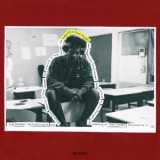
Contradictory accounts of Miles Davis’ creation of the soundtrack to Louis Malle’s film noir Ascenseur pour l'Échafaud have all become part of its legend. Rarely has a soundtrack been so decisive. Nearly seventy years on, beyond the myth, this taut, feverish recording, imbued with extreme dramatic tension, remains one of the Miles’ finest records. The basic outline remains: Jean-Paul Rappeneau suggested to Malle asking Miles Davis to create the film's soundtrack who agreed to record the music after attending a private screening. Davis was performing at the Club Saint-Germain in Paris in November 1957 and on December 4, he brought his four sidemen to the recording studio without having had them prepare anything. Davis only gave the musicians a few rudimentary harmonic sequences he had assembled in his hotel room, and, once the plot was explained, the band improvised without any precomposed theme, while edited loops of the musically relevant film sequences were projected in the background. Bassist Pierre Michelot recalled in 1988 that “Miles just asked us to play two chords, D minor and C7, 4 bars of each, ad lib.” Typically, Miles planned very little but know exactly what he wanted. François Leterrier, the film’s Second Assistant Director picks up the story: “The session started at around ten o’clock and went on until dawn. The screen in the auditorium was showing the scenes for which Miles had devised some harmonies, and they were edited into a loop. And that’s what makes this music unique: it was entirely improvised in conditions that went back to the days of silent films, while watching frames shot in black and white by cinematographer Henri Decaë: tracking shots of Jeanne Moreau wandering down the Champs-Elysées at night, passing in front of lit window displays or going into bars, while looking for her lover/murderer alias Maurice Ronet … All of us there in the dark auditorium were aware that something extraordinary was taking place, something that had definitely never happened before. … In the small hours we all met up again at the Pied de Cochon in Les Halles, and Louis was looking at Miles with the disbelieving eyes of a child … as if he couldn’t believe the gift he’d just received. Even in his wildest dreams he had probably never imagined what his film would be like once it had been as if illuminated by the trumpet of Miles, incisive or wrapped softly in cotton.” The music was released on 10” by Fontana and received the Grand Prix from France’s Académie Charles Cros. It was released in the USA on Columbia as the A-side of the 12” LP Jazz Track, which received a 1960 Grammy nomination for Best Jazz Performance, Solo or Small Group. This beautiful re-issue of the original recording is pressed on 180g vinyl at GZ, and packaged in a deluxe gatefold tip-on jacket with Boris Vian’s original liner notes and Jean-Pierre Leloir’s iconic studio photo of Miles and Jeanne Moreau, and an essay on the circumstances that led to this out-of-the ordinary music by Franck Bergerot.
Search:fran har
- A1: Ficus Carica (Joaquin Joe Claussell's Cosmic Arts Deeper Journey Version) (14 22)
- A2: Colline (Mark E Remix) (5 46)
- B1: Platanes (Gigi Testa Remix) (8 54)
- B2: Ô Zénith (Arno E. Mathieu Re?Version - Alt Disco Dub 1) (9 29)
- C1: Insulae (I Cube Remix) (6:52)
- C2: Colline Au Zenith (Next Evidence Vocal Remix) (6 39)
- C3: Ô Zénith (Gilb'r Remix) (5 24)
- D1: Ficus Carica (Beanfield Remix) (5 25)
- D2: Aurora Baléaris (Julien Jabre Remix - Julien's Arak Edit) (4 25)
- D3: Temps Libre (Max Essa Remix) (7 16)
Es zirkulieren wenige LPs, die über die gesamte Albumlänge die Schönheit und Wärme des "Balearic Sound" widerspiegeln. Man kann das auch dem Genre "Cosmic" zuordnen. Arno E Mathieu aus Südfrankreich schafft auf "Contemplation" das einzigartige flimmernde Licht des "Mediterranen" einzufangen, und in einem modernen Sound die Stimmungen der Natur des Mittemeerraumes rüber zu bringen. Die Songtitel und das Cover Image ergänzen das abgerundete Stimmungsbild. Es kommt nicht von Ungefähr, dass DJ Harvey großer Fan von Arno E Mathieu ist und viele seiner Tunes spielt. Wer auch in diesen Kosmos passt, ist Joe Claussell, der neben Franck Roger, I:Cube, Beanfield, Julien Jabre, Mark E, Simoncino, Woolfy, DJ Deep, Gigi Testa, Next Evidence, Max Essa jeder für sich einen tollen Remix abliefert. Fast jeder Track des Albums wurde geremixt.
- A1: The Rub 2 27
- A2: Money Runner 2 15
- A3: White Elephant Walk 1 24
- A4: White Elephant Walk (Link) 0 07
- A5: Walking Link 0 18
- A6: Master Plan 3 26
- A7: Night Watch 2 12
- A8: The Fence (Version A) 1 49
- A9: The Fence (Version B) 2 11
- A10: Surveillance 1 33
- B1: Total Silence 1 26
- B2: Eyes 0 47
- B3: Drama Backcloth (1A) 1 38
- B4: Drama Backcloth (1B) 0 17
- B5: Drama Backcloth (2) 0 59
- B6: Drama Backcloth (3) 0 17
- B7: Drama Backcloth (4) 0 24
- B8: Scenechange (1) 0 17
- B9: Scenechange (2A) 0 10
- B10: Scenechange (2B) 0 24
- B11: Scenechange (2C) 0 25
- B12: Scenechange (3A) 0 17
- B13: Scenechange (3B) 0 17
- B14: Scenechange (4) 0 15
- B17: Scenechange (6B) 0 21
- B18: Scenechange (7) 0 10
- B19: Scenechange (8A) 0 12
- B20: Scenechange (8B) 0 30
- B21: Scenechange (9) 0 51
- B22: Brass Statement 0 05
- B23: Final Statement 0 47
- B15: Scenechange (5) 0 21
- B16: Scenechange (6A) 0 25
Part I[24,79 €]
It's the pair you've all been waiting for! FINALLY!
Alan Tew's Drama Suite Part II. What can we really say? Honestly? We guess the first thing that strikes you is how clean the drums are. Almost impossibly slick but dripping so, so heavy with the neck-snapping funk you'd expect from perhaps the most sought-after library funk set of them all! The cheapest on Discogs is, currently, £1300+. Now's your chance to remedy that. If you know, you know. And we think you know...
"The Rub" is a cool, low-slung heavy-funk roller with relaxed brass and alto flute phrases. Up next, "Money Runner" is another edgy funk glider, its easy-tempo moving in harmony with slinky rhythmic riffs and featuring a seemingly ad-libbed electric piano solo. Strutting along after, "White Elephant Walk" is another laconic, deeply stoned walking theme with electric piano and alto flutes. There follows a couple of brief "walking" links before the brilliantly tense "Master Plan" slowly builds. Expectancy grows to the main theme around a minute in and then a melodic theme builds slightly to the 3 minute mark before floating down gradually and elegantly to its climax. It's utterly fantastic. The smoky, after-hours "Night Watch" is a slow, cool gem featuring alto flutes and synths.
Now we're talking, "The Fence (a)" is just sensational and worth buying this album all on its own. It's likely the reason you're here, anyway. Another impossibly funky, slow and easy tempo with a bass riff to die for, dramatic guitar with gorgeous electric piano and alto flute phrases. It was sampled for "Action Satisfaction" by J5, way way back. "The Fence (b)" is a slower, more deliberate version of the previous heater, but it's no less essential. Indeed, it's absolutely jaw-drooping. Closing out this remarkable side, "Surveillance" is another horizontal masterpiece of relaxed yet dramatic jazz-funk. Vibes ad-lib in centre section and give you an idea of how Roy Ayers making library funk in the mid-late 70s might've sounded. Sensational.
Flip over for "Total Silence", a near-beatless and understated scene-setter featuring neat interplay of guitar and synthesizer themes over bass and hi-hats. The slow "Eyes" follows, a brief gem with subdued electric piano solo and a light climax. The fantastic "Drama Backcloth (1a)" is up next, a repetitive piano and bass refrain with guitar figures over the top. Its creeping crime-funk vibe was pilfered for "Outta Town Shit" by Ghostface Killah in 2006. "Drama Backcloth (1b)" is a short, subdued version without the guitar figure. "Drama Backcloth (2)" features an expectant, background marimba figure over light rhythm whilst the cool "Drama Backcloth (3)" centres around a relaxed riff and the angular "Drama Backcloth (4)" presents eerie progressions with piano interjections. It's decidedly non-rhythmic!
We're then onto 14 (!) different half-minute "Scenechanges", all jazzy and funky, some cool and dramatic, some slow and rhythmic. All ace and groove-fuelled. The aptly-titled "Final Statement" closes proceedings, a slow, pensive theme on guitar joined by cool brass and a solo trumpet to its climax.
As with all of our KPM re-issues, the audio for Drama Suite Part II comes from the original analogue tapes and has been remastered for vinyl by Be With regular Simon Francis. And as usual, the sleeve reproduction duties were handed over to Richard Robinson, the current custodian of KPM’s brand identity. We're not quite sure what else to say about this landmark record, other than, GET IT!
- A1: Brian Bennett – Image 4 29
- A2: Neil Richardson – The Little Orphan 2 27
- A3: David Gold / Gordon Rees – Paradise Island 2 19
- A4: David Gold / Gordon Rees – Forbidden Fruit 2 19
- A5: David Gold / Gordon Rees – The Enchantress 2 56
- A6: David Gold – Phenomena 2 41
- B1: John Scott – Infinite Expanse 1 46
- B2: John Scott – Static Objects 2 31
- B3: John Fiddy – Metamorphosis 2 37
- B4: Neil Richardson – Cubist Pictures 2 12
- B5: Neil Richardson – Analysis 2 04
- B6: Neil Richardson – Crystal Ball 2 38
- B7: Steve Gray – Gliding Through Clouds 2 55
Impossible to find in the wild, KPM's Image is exactly that; this record paints extraordinary, hyper-vivid scenes with music, in the way only the library greats can. Originally released in 1974, Image is an absolutely stunning listen from start to finish, and arguably the most wanted KPM grail that's still not been reissued - until now! Just too good…
Worth the price of admission alone, and likely the reason you're all already drooling about this release, the mellow, dramatic beat of "Image", Brian Bennett's opener and title track, is a Jaylib-sampled firecracker. A reflective, scenic underscore which grows to full orchestra and ends as it begins - it's just beautiful. Next up, swoon to "The Little Orphan" by Neil Richardson featuring strings and harp. It's a deeply emotive, sweeping orchestral piece. Just straight gorgeous. It's followed by "Paradise Island", a lush, horizontal Balearic gem courtesy of Gordon Rees and David Gold; it'll send you into a blissful reverie with its elegant strings and gentle drums. From the same pair, "Forbidden Fruit" is, again, string-drenched but the strings are more insistent, stabbing even, and, with drums and Blaxploitation guitars high up in the mix, it's definitely a funkier proposition. "The Enchantress", again a Rees-Gold special, is a slower, groovy, synthy wonder. Closing out the A-Side, "Phenomena" is a mysterious gem, a Gold solo effort set at a breezier tempo with propulsive percussion and head nod, fast-paced breaks with ace keys.
Flip over for "Infinite Expanse", John Scott's dramatic panorama adorned with proud, triumphant horns. Scott's "Static Objects" paints patient, pastoral scenes; there's a serenity and stillness to the proceedings. Next up, Be With favourite John Fiddy delivers shifting shapes and patterns with his wonderful "Metamorphosis", all wah wah, harps, dramatic percussion and strings. It's by turns billowy and blasting. "Cubist Pictures" follows, Neil Richardson's brilliant nebulous, fragmentary piece. Better yet, Richardson's gorgeous, beatless "Analysis" follows, and it's an orchestral beauty featuring cello, harps and woodwind. It's no exaggeration to describe this as transcendental. His "Crystal Ball" presents more static scenes with cello, twinkling percussion and strings, before Steve Gray's fantastically-titled softly-ace "Gliding Through Clouds" closes out this remarkable set.
As with all of our KPM re-issues, the audio for Image comes from the original analogue tapes and has been remastered for vinyl by Be With regular Simon Francis. And as usual, the sleeve reproduction duties were handed over to Richard Robinson, the current custodian of KPM’s brand identity.
Delasi, the Koforidua-based producer, singer and rapper has released his new single ‘Amplifier’ featuring Nii Noi Nortey.
Prophetic, spiritual and frenetic, ‘Amplifier’ is Delasi’s testimony in musical form. A manifestation of Delasi emerging triumphant after many years in limbo as he searched for a long-awaited breakthrough in the music industry.
Produced by Delasi himself alongside Morgan Greenstreet, ‘Amplifier’ is underpinned by the texture of coastal rhythms indigenous to Accra and tightly ornamented with bustling drum breaks, electronic synth lines and jazz sensibilities.
Veteran Ghanaian multi-instrumentalist and sound designer Nii Noi Nortey appears on the track to deliver an explosive and rhythmically intense saxophone performance throughout as it tastefully builds to an emphatic crescendo.
Self-described as a prayer, the track’s maximalist and percussive instrumentation is cleverly juxtaposed with minimal lyrics where Delasi’s faint vocal repeats a series of repeated phrases like evoking the mood and semblance of a meditative chant and religious experience. Harkening to the work of afrofuturistic jazz musicians like Sun Ra and Pharaoh Sanders.
Speaking on the track’s meaning, Delasi said: “‘Amplifier’ is my prayer and like with other songs of mine it can scare me because I write things and then it’ll manifest in exact detail. The song is basically outlining how hard I’ve worked and how I need an amplifier to have my desires fulfilled. It's like a mantra and that’s why it's not so lyrical”.
‘Amplifier’ marks Delasi’s first release as a lead artist since his 2015 self-released project ‘#thoughtjourney’ which garnered support and praise from Rolling Stone, BBC6 Music, Worldwide FM, KCRW, Afropop Worldwide, Deutschlandfunk Kultur, NRK and legendary French DJ/Producer Laurent Garnier. Additionally parlaying into touring and festival gigs across Nairobi, Berlin, Morocco, Denmark and Sweden.
Delasi is an artist that has been quietly prolific for over a decade. Honing his musicianship exploring sonic possibilities with Ableton and Teenage Engineering. Eventually entrenching himself in the Ghanaian rap scene via collaborations with Hammer of The Last Two, Reggie Rockstone and Yaw P with whom he would release a joint project ‘Imperfections: The Break Up Vol 1’ in 2013.
He was musically raised on a diet heavily influenced by his father who exposed him to the sounds of Marvin Gaye, Bob Marley & The Wailers, Bobby McFerrin, Jim Reeves and Billy Ocean alongside the soundtracks for movies like Doctor Zhivago, The Sound of Music and La Bamba. Delasi’s own tastes would be heavily informed by linchpins of US Hip-Hop like Wu-Tang Clan, Nas, Onyx and M.O.P in addition to alternative R&B artists Frank Ocean and James Blake.
After many years of operating as a proudly independent and self-contained artist, Delasi has now partnered with Gilles Peterson’s Brownswood Recordings. One of the world’s leading indie labels, famed for their instrumental role in breaking the likes of KOKOROKO, Yussef Dayes, Swindle, Joe-Armon Jones, Shabaka And The Ancestors, Zara McFarlane and Ghostpoet.
With Delasi now being granted resources to give his music the grand and worthy footing, he is now on the cusp of the artistic breakthrough that was long out of reach. Speaking further on how the deal with Brownswood inspired the new single, Delasi said:
“The music I’ve created this go round is so strong that I can’t handle it all by myself. Though I had a lot of fun doing it all by myself with ‘#thoughtjourney’, this time around I needed it to be with a home who could properly amplify it.”
- A1: Let 'Em Know
- A2: Live And Let Live
- A3: That’s When Ya Lost
- B1: A Name I Call Myself
- B2: Disseshowedo
- B3: What A Way To Go Out
- B4: Never No More
- C1 93: Til Infinity
- C2: Limitations (Feat. Casual & Del Tha Funkee Homosapien)
- C3: Anything Can Happen
- D1: Make Your Mind Up
- D2: Batting Practice
- D3: Tell Me Who Profits
- D4: Outro
Consisting of MCs A+, Phesto, Opio and Tajai (with production by A+, Domino, Del the Funky Homosapien, Jay Biz and Casual), East Oakland’s Souls of Mischief burst onto the scene in the early 90s with an impact that few other West Coast artists had at the time. Culminating in the release of their classic debut, they created a bouillabaisse that was most parts West Coast swagger but - similar to The D.O.C. and Cypress Hill - with a sonic approach that could just as well have stepped off the streets of New York City. Recorded in less than two weeks at San Francisco's Hyde Street Studios, 93 ‘til Infinity doesn’t suffer from a single freshman jitter or misstep. It’s a fully-realized effort, packed from start to finish with ridiculous lyricism - all carried out in impressive four-part, tag-team style - and backed by a wide range of musical possibilities, from hard boom-bap to 70s CTI-jazz-sprinkled grooves. But without worthy music, the group’s high-level lyricism could have fallen by the wayside. Digging deep into crates that other producers had yet to mine, the production crew gave the quartet exactly what they needed, with unpredictable rolling basslines, dusty drums and jazz keyboard and horn stabs and swirls. Non-singles like Disseshowedo (produced by Domino and Jay Biz), Batting Practice (Casual), Limitations (Jay Biz, with Del and Casual contributing verses) and What A Way To Go Out (Domino) made sure that the fast-forward button remained untouched. Get On Down is proud to present a 30th Anniversary pressing of this west coast Hip-Hop classic on cloudy blue and cloudy yellow vinyl, packaged in a gatefold jacket with liner notes and a commemorative 30th Anniversary stamped numbered OBI.
finally available again on vinyl, note the new price. The most critically revered and commercially successful Eluvium album finally released on stand-alone vinyl for the first time ever. Originally released on CD and Digital formats only, Copia was eventually available on vinyl exclusively as part of the Life Through Bombardment Vol. 1 box set. With thatset long out of print – and Copia celebrating its 10-year anniversary – we are finally giving this landmark album the vinyl reissue that it unquestionably deserves. Remastered for vinyl by Francesco Donadello at Calyx Mastering in Berlin, this deluxe 2xLP set is packaged in a full-color wide-spine jacket with dual heavyweight full-color inner sleeves. // “The grandest, most sweeping Eluvium record to date.” Pitchfork // “A magnificent set, awash in textures, atmospheres, moods, and emotion.” AllMusic // “Copia is the sound of Cooper surpassing himself, combining his patented minimalist drones with beautifully rendered piano.” – Drowned In Sound // Following a string of increasingly remarkable albums, Eluvium's Matthew Cooper set out to broaden his instrumental palette, while maintaining the uncanny emotional resonance that has become his trademark. The result is Copia, an hour-long epic that applies Eluvium's heartache-inducing ether to a symphony of strings, brass, keyboards and piano. Noticeably absent but hardly missed are the washes of guitars that color most of Eluvium's previous material. The deliberate exclusion of traditional rock instrumentation serves as sufficient proof that the instrument is not Eluvium's driving force. At best it is a catalyst, a vehicle to that netherworld in the back of your head, where your life starts to uncontrollably reevaluate itself. Also Available From Eluvium: False Readings On CD, 2LP, Life Through Bombardment Vol. 2 7LP, Nightmare Ending 2CD, The Motion Makes Me Last CDEP, Leaves Eclipse The Light CDEP, Similes CD, Talk Amongst the Trees CD / 2LP, An Accidental Memory In the Case of Death CD, Lambent Material CD
- A1: I Really Love You (Full Length Studio Version) 4 38
- A2: Your Love Is Smokin' (Previously Unissued) 4 40
- A3: What's That Sound (Full Length Studio Version) 4 48
- A4: Free To Be Me (Previously Unissued) 5 28
- B1: You Changed Me (Part 1 & 2) (Full Length Studio Version) 7 10
- B2: Nice Beat (Easy To Dance To) (Previously Unissued) 5 28
- B3: Get The Funk Off My Back 3 20
- B4: Get It From The Bottom (Previously Unissued) 4 02
Impulse’ was a band of Milwaukee, Wisconsin musicians whose members included Michael Reese (Rhodes Piano and background vocals), Cedrick Rupert (Lead and Rhythm guitar), Jeffrey Williamson (Drums and background vocals) and Robin Gregory (Bass and background vocals). They would become a group in their own right with the eventual addition of another local artist John Gee, who joined them as their lead singer. The Impulse musicians formed the backing/touring band for another Milwaukee outfit, a vocal quartet, The Quadraphonics who recorded the solitary 45 single “Betcha If You Check It Out/Prove My Love To You” for the Carl Davis/E. Rodney Jones owned ‘Innovation II’ Record label during 1974. This release would later be nationally distributed by the major Warner Brothers label. With import copies of “Innovation II” single finding their way into the UK the record became popular with the devotees of Blackpool Mecca’s Highland Room.
During 1976 the members of Impulse migrated to Oakland California, they had hoped that, The ‘Quadraphonics’ would join them but instead The Quadraphonics chose to remain in Milwaukee and eventually broke up. It was fellow Brewtown producer/recording artist Harvey Scales who was responsible for inviting ‘Impulse’ to the west coast. Under the auspice of Scales, Impulse recorded their self-titled debut album project at Wally Heider’s Studio in San Francisco. The album was initially offered to Casablanca Records but no firm interest was to materialise, a subsequent approach to Jerry “The Ice Man” Butlers newly formed Chicago label, Fountain Records again failed to secure a release of the album, sadly leaving the project unreleased in the can. In the ensuing years, the former group members have continued with their respective careers, the late John Gee embarked on a solo career, recording the 1980 release “Not Enough Love Makin’/ you Are That Man (Why Don’t You Be That Man)” for Leroy Smith’s Oakland C.A, Pashlo label followed by his 1985 modern favourite “So Good To Me/Just Get On” recorded under the artist name of Jon Pierre Gee on his own newly formed Kandi Inc, Record label. Later Kandi projects included the 1995 Jon Pierre Gee & Touch album and the 2005 Ah’VantSoul cd album project, which featured Jon’s business and real-life partner, Kathryn Hannemann (a.k.a the performing artist Kat Webb).Throughout all the aforementioned projects Jon continued to use and enjoy performing with his former fellow ‘Impulse’ musicians of which the two surviving members Robin Gregory and Michael Reese can still be found jamming to this day in the renowned Milwaukee Restaurant/Coffee House by the name of ‘Coffee Makes You Black’. Sadly, drummer Jeffrey Williamson passed away during 2015 with Coley Jackson coming in to pick up the sticks! Lead and Rhythm guitarist Cedrick Rupert left the group in the 1970’s moving to Lake Charles, LA, sadly, he too passed away in 2020.
The Impulse album project having lain dormant since the 1970’s was resurrected during 2018 when Jon Pierre Gee in conjunction with Stephen Chin of Nice Choice Records (USA) and Soul Junction Records (UK) breathed new life into the project. Beginning with the release of the first of two ‘Impulse’ 45 singles on Jon’s Kandi imprint. Firstly “What’s that Sound/You Changed Me” followed in 2020 by a second 45 “I Really Love You/Get The Funk Off my Back” with all four soul and funk tracks receiving worldwide acclaim. Initial plans for the release of the whole album project had been set in place but we’re unfortunately brought to an unexpected halt with the passing of Jon Pierre in November 2020.
Undetered Soul Junction have finally been able to bring this amazing ‘Impulse’ project to life as a limited vinyl press I’m sure once heard, the old adage of “Good Things Come To Those Who Wait” will certainly ring true, enjoy.
Second ist der Nachfolger ihres selbstbetitelten Debütalbums von 2021. Dead Best nimmt die rohen, pandemischen Ausdrucksformen zweier Punk-Veteranen auf und verfeinert sie in 13 mitreißenden Tracks. Die LP ist ein kurzes, aber klares Profil der gemeinsamen kreativen Stimme von Goren und Sokel, die mit stampfenden Gitarren und verzweifelten, verzerrten Vocals tiefe Ängste zum Ausdruck bringen. Die langjährigen Freunde Adam Goren und Brian Sokel gingen Ende der 90er und Anfang der 2000er Jahre in der Punkszene von Philadelphia getrennte Wege.
Während Sokel Riffs in die Dub- und Hardcore-Mischung Franklin einbrachte und der primäre Songwriter und Multiinstrumentalist von AM/FM war, die eine Reihe von Alben auf Polyvinyl Records veröffentlichten, spielte Goren in den Punkbands Fracture und Armalite und erforschte die Verwendung von Sequenzern in seinem exzentrischen Soloprojekt Atom and His Package. Mit ihren jeweiligen Projekten tourten die beiden gemeinsam durch die USA und Kanada, veröffentlichten die Musik des jeweils anderen auf selbst gegründeten Labels, und Goren zollte sogar Sokels Band auf dem Atom and His Package-Track For Franklin" Tribut.
Big Sigh brings together the best of Marika's previous works as an indie musician and adds a new layer of epic sounds and full-bodied production. Big Sigh is the "hardest record" Marika has ever made. As the title suggests, it is a relief of sorts - of sadness, of stress and lust, but mostly relief. Co-produced with Sam Petts Davies (Frank Ocean, Radiohead, Red Hot Chilli Peppers) & Charlie Andrew (Alt J, Wolf Alice, London Grammar). Lyrically there's always romance a longside grief, with elements of vulnerability and feeling trapped. "This album took a long time I got to the end of it I was quiet. I wanted to be away from it and let it sit in its own space. Now the dust has settled and I've got to re-enter the world of big sigh, and I'm excited." Stepping into a new world, moving forward, chipping away. Breath in, breath out. Big sigh."
On January 23, 2020, North Carolina-based Watchhouse —Emily Frantz (fiddle/vocals) and Andrew Marlin (mandolin/vocals)— known at the time as Mandolin Orange, took the stage at one of Austin’s most prominent venues, Austin City Limits Live at The Moody Theater, in support of their sixth album, Tides of a Teardrop.
Formed in Chapel Hill, NC, in 2009, Watchhouse has released six albums of original American roots music. Signing with Yep Roc Records in 2013, they released four critically acclaimed albums—This Side of Jordan, Such Jubliee, Blindfaller, and Tides of a Teardrop. In the last several years, they have toured the United States and Europe, performing at Austin City Limits, Telluride Bluegrass Festival, Newport Folk Festival, Pickathon, Hardly Strictly Bluegrass, and Merlefest, among others.
In 2021, the duo changed their name from Mandolin Orange to Watchhouse, of which Marlin noted, “Mandolin Orange was born out of my 21-year-old mind. The name isn’t what I strive for when I write” and that Watchhouse is a name that reflects their true intentions as a band.
Austin City Limits Live At The Moody Theater by Watchhouse, released 12 January 2024.
This version of Austin City Limits Live At The Moody Theater comes as a 2xLP in a(n) Gatefold Sleeve packaging.
The vinyl is pressed as a transparent, smoke disc. Another vinyl is pressed as a transparent, smoke disc.
- A1: Giorgio Moroder - Chase (From "Midnight Express")
- A2: Paul Mccartney & Wings - Live And Let Die (From "James Bond Live And Let Die")
- A3: Mick Jagger - Memo From Turner (From "Performance")
- A4: Willie Nelson - Midnight Rider (From "The Electric Horseman")
- A5: Tom Pierson, Galt Macdermot & Original Cast "Hair" - Aquarius (From "Hair")
- A6: Jimmy Cliff - The Harder They Come (From "The Harder They Come")
- A7: Bob Dylan - Knockin' On Heaven's Door (From "Pat Garrett And Billy The Kid")
- A8: Paul Williams - The Hell Of It (From "Phantom Of The Paradise")
- B1: Mike Oldfield - Tubular Bells (From "The Exorcist")
- B2: Isaac Hayes - Theme From "Shaft" (From "Shaft")
- B3: Olivia Newton-John - Hopelessly Devoted To You (From "Grease")
- B4: Jerry Reed - East Bound And Down (From "Smokey And The Bandit")
- B5: Jimmy Helms - Black Joy (From "Black Joy")
- B6: Sylvia Kristel & Orkest Ruud Bos - Hey, A Letter Came Today (From "Naakt Over De Schutting" A.k.a. "Naked Over The Fence")
- B7: Donny Hathaway - Little Ghetto Boy (From "Come Back Charleston Blue")
- B8: Roy Ayers Feat. Dee Dee Bridgewater & Wayne Garfield - Coffy Is The Color (From "Coffy")
- C1: Frankie Valli - Grease (From "Grease")
- C2: Diana Ross - Strange Fruit (From "Lady Sings The Blues")
- C3: Elton John - Pinball Wizard (From "Tommy")
- C4: James Brown Feat. The J.b.'s - The Boss (From "Black Ceasar")
- C5: Pierre Bachelet - Emanuelle (From "Emanuelle")
- C6: Willie Hutch - Theme Of Foxy Brown (From "Foxy Brown")
- C7: Chris Bennett - (Theme From) Midnight Express (From "Midnight Express")
- D1: John Williams & The London Symphony Orchestra - Main Title (From "Star Wars A New Hope")
- D4: Yvonne Elliman - If I Can't Have You (From "Saturday Night Fever")
- D5: Gene Clark - American Dreamer (From "The American Dreamer")
- D6: Rose Royce - Car Wash (From "Car Wash"")
- D7: Michael Jackson - Ben (From "Ben")
- D8: Ramones - Rock 'N' Roll High School (From "Rock 'N' Roll High School")
- D2: Cat Stevens - If You Want To Sing Out, Sing Out (From "Harold And Maude")
- D3: Marvin Gaye - Trouble Man (From "Trouble Man")
70's Movie Hits Collected is a compilation of Coloured Vinyl, High Quality, Insert 33 pop tracks released as 2-LP on 15 Dec 2023. 70's Movie Hits Collected includes a.o. the following tracks: “Giorgio Moroder - Chase (from "midnight Express")”, “Mick Jagger - Memo From Turner (from "performance")”, “Mike Oldfield - Tubular Bells (from "the Exorcist")”, “Isaac Hayes - Theme From "shaft" (from "shaft")” and more.
"Impératrice" bedeutet "Herrscherrin" auf Französisch, und der Bandname ist für Nicht-Frankophone wohl am schwierigsten zu begreifen - musikalisch gesehen gibts es bei L'Impératrice nichts, was man übersetzen muss. Die Pariser greifen auf eine Reihe von Genres zurück, von Space-Disco der 70er Jahre bis zum Downtempo-Synthpop der 90er Jahre, wobei sie dabei auch die französischen Filmkomponisten wie François de Roubaix und Michel Legrand mit einbeziehen. "Albums that sold 500 copies in the 1970s are the records that interest us most," sagen L'Impératrice. "Matahari" ist das glitzernde, kinematographische Ergebnis der letzten sechs Jahre harter Arbeit, das auf einige der besten musikalischen Fundstücke und schon vergessene Schätzen zurückgreift, die sich in Plattenkisten im ganzen Land verstecken. Versehen wird das ganze mit L'Impératrice' eigenem, unnachahmlichen 21st century twist. Subtil und dennoch majestätisch, L'Impératrice haben eine strahlende Zukunft in ihrem Heimatland, aber wenn das sechsköpfige Ungeheuer drauf und dran ist, wirklich in die musikalische Königsklasse Frankreichs aufzusteigen, dann müssen sie auf ihre têtes, ihre Köpfe, aufpassen. Boisseguin hat alles richtig gemacht, seit er seinen Journalisten-Job vor sieben Jahren geschmissen hat. Wenn der leise und stetige Aufstieg von L'Impératrice zur Vormachtstellung in ihrem Heimatland Teil eines Plans wäre, dann könnte man erwarten, dass in Zukunft mit der Weltherrschaft zu rechnen ist.
Mit der 7"-Single "Fairies Wear Boots" spendieren ZAKK SABBATH einen ersten Vorgeschmack auf ihren zweiten Longplayer, dessen Erscheinen für Anfang 2024 geplant ist.
Dieser amüsante Klassiker des Heavy Metal wurde ursprünglich im Jahr 1970 als letzter Track auf BLACK SABBATHs zweitem Album "Paranoid" veröffentlicht. ZAKK SABBATH sind aus purer Leidenschaft und Liebe zur Musik entstanden. Der Gitarrist, Sänger und Kopf von BLACK LABEL SOCIETY, Zakk Wylde, der sich auch als langjähriger Lead-Gitarrist bei OZZY OSBOURNE und nun auch noch PANTERA einen Namen machte, gründete die Band als Hommage an die "Erfinder" des Heavy Metal: BLACK SABBATH.
Anfangs spielten ZAKK SABBATH zunächst nur Live-Shows in wechselnder Besetzung, bis im Jahr 2017 die 12"-EP "Live in Detroit" erschien. Vom 50. Jahrestag des selbstbetitelten Debütalbums von BLACK SABBATH inspiriert, das bezeichnenderweise am Freitag, dem 13. im Jahr 1970 veröffentlicht wurde, ging die mittlerweile stabile Besetzung mit Zakk sowie OZZY OSBOURNE und ROB ZOMBIE Bassist Blasko und Joey Castillo am Schlagzeug (DANZIG, QUEEN OF THE STONE AGE) ins Studio, um jenem Album einen angemessenen Tribut zu zollen, dessen Songs die Geschichte der Musik entscheidend beeinflusst hat. Ein Jahr später erschien das ZAKK SABBATH Debüt mit allen Songs des monumentalen BLACK SABBATH Meilensteins unter dem Titel "Vertigo" (2020), womit die Amerikaner auf das legendäre Label Vertigo Records des Vierers aus Birmingham anspielten. "Vertigo" wurde von Kritikern und Fans gleichermaßen mit Lob überschüttet. Der Erstling des Trios wurde zu einem globalen Erfolg, was durch beeindruckende Platzierungen in den Charts unterstrichen wurde: "Vertigo" kletterte auf Platz 5 in den US Hard Music Charts, wo es auch Platz 7 in den Current Rock Albums Charts und Platz 27 in den Billboard Top Albums Charts erreichte. Im Ausland kaperte die Tributscheibe sogar Platz 1 der Metal Alben Charts in Frankreich sowie Platz 3 der deutschen Album-Charts und den 9ten Rang der UK Top 40 Rock/Metal-Charts. Mit "Fairies Wear Boots" setzen ZAKK SABBATH der legendären Metal-Band aus Birmingham nun ein weiteres Denkmal. Fortsetzung folgt!
Four dazzling, extended engagements with mbalax master-drumming.
The contribution from Holy Tongue is chase-the-devil steppers — thumping, clangorous, reverberating — super-charged with energy and atmosphere. From the off drummer Valentina Magaletti detonates a hard rain of small bombs, rounds of fire, ticking fuses. Musical co-ordinates are somewhere between classic On-U Sound crew like African Head Charge, The Mothmen, and Creation Rebel, and the experimental funk of the Pop Group and 23 Skidoo, at their funkiest. Thrillingly, the two dubs are increasingly deranged.
Adjusting the same wavelengths as her superb Workaround LP, Beatrice Dillon plays spaced-out, abstract synth-work against the bodily physicality of the ancient, shifting mbalax rhythms. The music is poised, mindful, tentative; but also limber, fleet, and magical.
Phantasmagorical and efflorescent, Lamin Fofana’s one-two is simply stunning. Both excursions are wide-open, beautiful, epic, and propulsive — the first mix is banging and headlong, the second more syncopated and serpentine — teeming with freshly sublime, funkdafied updates on Jon Hassell’s Fourth World possible musics.
The two parts of LABOUR’s Etu Keur Gui engage the same sequence of drum patterns (called bakks) from different perspectives. The duo performed portions of this piece at the opening ceremony of the Dakar Biennial in 2022, at the Grand National Theater, with thirty sabar players from the family of Doudou Ndiaye Rose. This Wolof phrase for the inner-court of a home — a meeting-place — doubles here as a metaphor for inner space on a metaphysical level; and Pan Sonic, Muslimgauze, Zoviet France, early Shackleton… all ghost across the threshold.
Fuzz has abandonment issues. Abandoning expectation. Abandoning reservation, consummation, resignation and trite dictation. Instinct is all there is when it comes to the divination of harsh salvation. Segall, Moothart and Ubovich are exploring all the blank-ations of what will be, or has always been, Fuzz II. Tried and true methods mixed with tongue-twisting, teeth-shattering, seizure-inducing stabs at the norm. Who knows… maybe that’s wrong. Maybe it’s all done. Played out. Maybe it’s not for want of new but for lack of old. But probably not. Bathe in the heat wave that is Fuzz, and regret nothing in the time freeze. Necessity is the mother of creation; and devolution stakes its claim in the past as it continues to bind itself to the future. San Francisco, Los Angeles, heaven, hell, lunar fields, subterranean hallucinations, traffic jams, sleepless days, hazy nights, recollection or blind reflection. It is all there and so should be you. 2015 and 2016 will bring a new surge of slime, fuzz and otherwise bittersweet concoctions of earthly lettering. It will be heavy, chaotically controlled, softly serpentine and blindingly barbaric. To translate the auditory from ethereal to saliva- soaked semantics is to shatter a promise as it’s made. In the meantime, Ty, Charles and Chad walk on. It is what it is. Just like everything else. And if you don’t know, now you know. This message brought to you by In The Red Educational Services… as it was before and is it will be again.
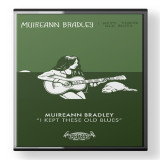
Muireann Bradley is a young blues, ragtime, roots and folk guitarist and singer based in Ballybofey in County Donegal Ireland. “This is my first album. Most of these tunes were originally recorded by the great blues men and women who were making records from the 1920s and 1930s right up in some cases to the early 1970s. I have also found inspiration for the renditions recorded here in the playing of some of the musicians who began recording this music in the 1960s and later, and who in some cases learned at the feet of the greats. Many of these guitarists played pivotal roles in the 1960s blues revival and subsequent “rediscovery” of many of the greats of country blues. I grew up steeped in these old blues in the hills overlooking the valley of the River Finn just outside the town of Ballybofey in County Donegal. My father would play this music constantly at home and wherever we went in the car and talk about it endlessly whether anyone was listening or not, telling stories about the lives of these musicians as if they were legend, mythology or the evening news. My father could of course play all this stuff on guitar, I remember watching him when I was very young and thinking “I want to be able to do that”. When I was nine he agreed to teach me and bought me my first little travel guitar. I worked hard to learn how to play but as time wore on I seemed to have less and less time to practice as I became more and more invested in the combat sports I was regularly training and competing in. Then in March 2020 the first Covid lockdowns happened and all contact sports were shut down. I was lost for a while but soon found my way back to the guitar. I was now listening, playing and practicing with a new intensity and focus. In a very serious moment, I wrote out a list of tunes I was going to learn. The first tune on that list was Blind Blake’s “Police Dog Blues”. I’m not sure now how long it took to get that arrangement together but when it was ready we videoed me performing it and posted it on YouTube. It ended up getting a lot of attention, I remember my parents being quite shocked and soon after that Josh Rosenthal got in touch… and here we are! Each individual track on this album was recorded live in the studio and represents one entire take with me singing and backing myself up on guitar simultaneously. Most are either first or second takes. Nothing has been added or taken away, no overdubs or modern recording tricks of any kind have been used at all so at least in some respects this album has been recorded in the same way as those classics of the 1920s and 1930s
High Vis were formed in 2016 from the ashes of some of the UK's best hardcore bands. Gild-toothed frontman Graham Sayle's anguished lyrics about life in working class Britain were familiar to fans of Tremors' full-throttle thrash, but alongside his former bandmate Edward `Ski' Harper and veterans of Dirty Money, DiE and The Smear, High Vis sought to transform that energy and intensity into something entirely new.Like scene-mates Chubby and the Gang did by pulling in unlikely source material from classic doo-wop or Micromoon have by combining everything from psychedelia and metal into their high potency mix, High Vis' 2019 debut album, No Sense No Feeling showed the band were never going to be constrained by any sense of genre rules or regulations. Its claustrophobic rattle bore traces of Joy Division, Bauhaus, Crisis, The Cure and Gang Of Four lurking in the shadows. 2020's synth-driven EP, Society Exists, was further evidence of the band's restless creative MO.High Vis' second album Blending sees them open their viewfinder wider than ever before. Alongside longstanding favourites such as Fugazi and Echo and The Bunnymen; Ride and even Flock Of Seagulls were shared reference points as the band worked on the album together.From the anthemic sweep of opener "Talk For Hours", through the title track's psychedelic swirl and "Fever Dream"'s baggy groove, it sees High Vis' sound blossoming into something with an unlimited richness. The hazy drift of "Shame" or the melodic jangle of "Trauma Bonds" may take them until uncharted waters, but they still have all the power and bite that made No Sense No Feeling so remarkable.Lyrically, the album represents another leap forward too. Talking frankly about poverty, class politics, and the challenges of everyday life, Sayle's lyrics have always addressed the downtrodden and discarded communities across Britain slipping below the waterline. This time around, Sayle's lost not of that social consciousness, but he's looked at himself and his own emotional landscape, and in the process created something that feels more universal, that reaches a hand-out to people and ultimately gives a message of hope."To me, the lyrics are less selfish," reflects Sayle. "In the past, I couldn't see past whatever was going on with me. It's about accepting things and being open to conversations and learning to talk to people rather than just thinking that we're all doomed."The song "Talk for Hours" is a prime example of that. Born out of an afternoon meeting up with an old group of mates "repeating the same thing and not actually learning anything about each other" it offers to actually break the cycle and to listen and speak frankly about shared feelings and experiences. "Trauma Bonds", meanwhile, traces the broken lines of those living in lost communities, but ultimately realises that despite our shared scars, there's still hope to move on to a better future."The message of the album is you're not who you're told you are," Sayle summarises. "You're not your class background. Whatever it is, you're not that. Don't resign yourself to thinking you can't be this and you can't be that."It's a vitally important message right now, and one that could be the motto for not only Blending, but for High Vis themselves.
Van Halen did more than announce to the world the earthshaking arrival of a revolutionary guitarist. Performed by an enterprising California quartet that took its name from two of its principal members, the 1978 debut ripped headlines away from punk, injected fresh energy into a then-moribund rock 'n' roll scene, reimagined how heavy music and throwback pop could coexist, and invited everyone to experience the top-down pleasures of a beach-front Saturday night every day of the week no matter where they lived. Painstakingly restored by Mobile Fidelity Sound Lab, and the first of a multi-album series in an exciting partnership between the famous reissue label and Van Halen, Van Halen delivers feel-good thrills and hormonally charged desires like never before.
Limited to 12,000 numbered copies, pressed on dead-quiet MoFi SuperVinyl at RTI, and mastered from the original analogue master tapes, Mobile Fidelity's ultra-hi-fi UltraDisc One-Step 180g 45RPM 2LP collector's edition pays tribute to the record's merit and allows fans to experience Van Halen's original blend of raw power, Hollywood flair, and vaudeville fun for generations to come. Playing with reference-setting sonics that elevate a 10-times-platinum landmark whose importance cannot be quantitatively measured, this definitive version provides a clear, clean, transparent, balanced, and turn-the-volume-up-to-11 view of an album that birthed entirely new styles. Since MoFi's unique SuperVinyl compound allows you to crank the decibels to your wildest desires without risking noise-floor interference, prepare to not only hear but feel Van Halen in your chest, no fifth-row concert seat necessary.
The premium packaging and gorgeous presentation of the UD1S Van Halen pressing befit its extremely select status. Housed in a deluxe box, it features special foil-stamped jackets and faithful-to-the-original graphics that illuminate the splendor of the recording. No expense has been spared. Aurally and visually, this UD1S reissue exists as a curatorial artefact meant to be preserved, touched, and examined. It is made for discerning listeners that prize sound quality and production, and who desire to fully immerse themselves in the art – and everything involved with the album, from the iconic cover art to the meticulous finishes and, yes, of course, Eddie Van Halen's pioneering fretwork and his brother Alex's double-bass percussion.
Indeed, could a piece of music that transformed how countless guitarists approached their instrument be more fittingly named than "Eruption"? Likely not, and in just 102 seconds, Eddie Van Halen rewrote, reimagined, and reconfigured a vocabulary last significantly updated a decade earlier by fellow six-string wizard Jimi Hendrix. Akin to the Washington State legend, Eddie Van Halen developed his own techniques and tones all the while making his seismic accomplishments seem effortless. Devoid of the pretence, ego, and showiness that infected many of his imitators, the Dutch native sticks to a straightforward approach that underlines the authority, prowess, and visionary scope of his playing and then-unheard-of finger-tapping skills. Throughout Van Halen, he establishes himself as an instant idol – a savant whose otherworldly combination of breadth, poise, feel, speed, force, and melody seems beamed in from another galaxy.
As does nearly every song on the record, whose cohesiveness and dynamic put into perspective the advanced chemistry and one-for-all spirit the youthful band had out of the gates. Having paid its dues for years in bars and clubs – going as far as recording a 24-track demo for Kiss bassist Gene Simmons at Village Recorders only to be spurned by management companies that felt its music wouldn't go anywhere – Van Halen finally got a deserved break when Warner Bros. executives signed the group in 1977. The subsequent recording sessions further testify on behalf of the band's synergy and alignment. Completed in just a few weeks with producer Ted Templeman, Van Halen was primarily cut live in the studio with minimal overdubs and edits. The explosiveness, energy, and electricity remain definitive, and as heard on this UD1S set, put the group on a private stage – humming amplifiers, Frankenstrat guitar, bright spotlights, sweaty headbands, and then some.
Van Halen yielded just one hit in the form of a Top 40 single (a breathless cover of the Kinks' "You Really Got Me") but practically every song on the revered LP has become a staple. Named the 202nd Greatest Album of All Time by Rolling Stone and considered by countless experts as one of the best debuts in history, the record displays what can happen with four distinct talents gel and strive for the same purposes. In Van Halen's case, the latter almost always involved partying, freedom, sex, and, in the immortal words of singer David Lee Roth, living "life like there's no tomorrow." The celebration manifests from the opening notes of the strutting "Runnin' with the Devil" – announced with the blare of droning car horns, Michael Anthony's robust bass line, and Alex Van Halen's thumping drumming – and continues through the conclusion of the white-hot "On Fire," goosed by Eddie Van Halen's race-track-ready lines, Roth's flamboyant deliveries, and the rhythm section's cat-like pounce.
Picking out individual highlights on Van Halen is akin to trying to count all the stars in a clear nighttime desert sky: There are far too many to identify, once you see one you notice another dozen you didn't spot before, and the cluster is best enjoyed as a whole. What's evident over repeat listens is the sheer diversity, a fact that's often overlooked: The high harmonies and background funk of "Jamie's Cryin'"; the insistent cane-and-a-tophat shuffle and doo-wop shoo-bop vocal break on "I'm the One"; the throwback acoustic blues that spreads into fast-paced, single-entendre wildfire on the Roth-led standout interpretation of John Brim's "Ice Cream Man." Like the man says, on Van Halen, all the flavours are guaranteed to satisfy.
More About Mobile Fidelity UltraDisc One-Step and Why It Is Superior
Instead of utilizing the industry-standard three-step lacquer process, Mobile Fidelity Sound Lab's new UltraDisc One-Step (UD1S) uses only one step, bypassing two processes of generational loss. While three-step processing is designed for optimum yield and efficiency, UD1S is created for the ultimate in sound quality. Just as Mobile Fidelity pioneered the UHQR (Ultra High-Quality Record) with JVC in the 1980s, UD1S again represents another state-of-the-art advance in the record-manufacturing process. MFSL engineers begin with the original master recordings, painstakingly transfer them to DSD 256, and meticulously cut a set of lacquers. These lacquers are used to create a very fragile, pristine UD1S stamper called a "convert." Delicate "converts" are then formed into the actual record stampers, producing a final product that literally and figuratively brings you closer to the music. By skipping the additional steps of pulling another positive and an additional negative, as done in the three-step process used in standard pressings, UD1S produces a final LP with the lowest noise floor possible today. The removal of the additional two steps of generational loss in the plating process reveals tremendous amounts of extra musical detail and dynamics, which are otherwise lost due to the standard copying process. Every conceivable aspect of vinyl production is optimized to produce the most perfect record album available today.
MoFi SuperVinyl
Developed by NEOTECH and RTI, MoFi SuperVinyl is the most exacting-to-specification vinyl compound ever devised. Analogue lovers have never seen (or heard) anything like it. Extraordinarily expensive and extremely painstaking to produce, the special proprietary compound addresses two specific areas of improvement: noise floor reduction and enhanced groove definition. The vinyl composition features a new carbonless dye (hold the disc up to the light and see) and produces the world's quietest surfaces. This high-definition formula also allows for the creation of cleaner grooves that are indistinguishable from the original lacquer. MoFi SuperVinyl provides the closest approximation of what the label's engineers hear in the mastering lab.
- A1: Jeito Bom De Sofrer
- A2: Papo Furado (Jive Talking)
- A3: Xibaba (She-Ba-Ba)
- A4: Andei
- A5: Back Streets Of Havana
- B1: Flora's Song
- B2: San Francisco River
- B3: Vera Cruz
- C1: Celebration Suite
- C2: Casa Forte
- C3: From The Lonely Afternoon
- C4: Black Narcissus
- D1: When Angels Cry
- D2: O Sonho (Moon Dreams)
- D3: Summer Night
- E1: A Secret From The Sea
- E2: O Cantador / I Just Want To Be Here
- E3: Light As A Feather
- E4: O Canto Da Sereia
- F1: Open Your Eyes You Can Fly
- F2: Hot Sand
- F3: Parana
- F4: Jump
- G1: Fingers (El Rada)
- H1: Samba De Flora
- H2: Amajour
- H3: The Road Is Hard (But We're Going To Make It)
- I1: Above The Rainbow
- I2: Love Lock
- I3: What Can I Say
- I4: Musikana
- J1: The Happy People
- J2: Peasant Dance
- J3: Dom-Um (A Good Friend)
- J4: Outernational Meltdown - Hungry On Arrival
- G2: Toque De Cuíca
- G3: Romance Of Death
Airto Moreira and Flora Purim, the legendary King and Queen of Brazilian Jazz, have captivated audiences for over six decades with their vibrant albums and exhilarating live performances. With a dedicated global fan base including the UK's jazz funk and jazz dance scene to Japan's concert halls, the power couple continues to make waves in the industry – Flora's 'If You Will' (2022) album was even nominated for a Grammy! The duo met and came together musically in Sambalanço and the Sambrasa Trio. The mixture of Airto's rural Brazilian background and percussion talents and Flora's classical training and involvement in the underground Bossa Nova movement, created a unique blend of sounds that resonates across generations. They have not only collaborated with music legends like Miles Davis and Chick Corea but have also produced ground-breaking music alongside the likes of Hermeto Pascoal. Despite facing numerous challenges, including Flora's arrest and incarceration in 1974, the duo's close connection with friends-musicians like Thelonius Monk and Cannonball Adderley, their persistence and absolute passion for music have propelled them to the pinnacle of success. They worked with renowned musicians like Wayne Shorter, Jaco Pastorius, Herbie Hancock, Joe Henderson, McCoy Tyner, George Duke and producers such as Orin Keepnews and Creed Taylor. Having been a part of numerous prestigious ensembles, including Dizzy Gillespie's United Nations ensemble, Airto and Flora's journey is a testament to their innovation and devotion to their craft. This collection offers a glimpse of that incredible journey, showcasing their extraordinary talent and unique sound and it’s also the first comp scanning their 60 year careers Compiled by Straight No Chaser editor/publisher Paul Bradshaw & Totally Wired Radio presenter Roberta Cutolo. Àṣẹ.