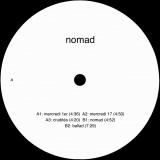
Every so often Public Release takes a snapshot along their discography timeline, to pause and recognize the various artists that represent the past, present and future of where the label sits. The last such release was in 2016, and four years, twelve releases later it’s time for another marker. This EP pools together six exclusive tracks from their global family, some on the PR roster for the very first time. From the beautifully addictive melodies by Tendts and Metropolitan Soul Museum, brooding baselines and synths from Richard Sen and Tim Sweeney, to the ecstatic floor energy produced by Fran-key and Earth Boys, the range presented here is impressive. Equally enjoyable as an abbreviated album, or as singular tracks at your service.
Search:fran key
Analog Fingerprints Vol. 0 is a compilation bringing together the early 2000s works of Marco Passarani under his Analog Fingerprints alias, collecting key tracks originally released on Rome’s Plasmek and Pigna labels.
For Numbers, the story starts long before the label itself. In their formative years, digging in Glasgow’s Rubadub, Passarani’s records felt like dispatches from a future city. Releases on his own Nature Records and on labels such as Generator and Interr-Ference Communications were mind blowing: rooted in Detroit techno, Chicago house and electro, yet pushing somewhere new. Much like fellow travellers Autechre, who would remix him in 2001, Passarani’s music balanced machine funk with restless experimentation.
Information was scarce, and you would hear these records first on the dancefloor or at listening stations in shops like Rubadub. Print fanzines like Ear and early web outposts such as Forcefield offered only fragments. But there was a palpable axis forming between Detroit techno and a new European wave of record labels including Skam, Rephlex, Clone, Viewlexx and Nature itself. It was the sound that defined Saturday nights at Rubadub’s ‘69’ parties in Paisley, just outside of Glasgow.
Passarani’s records, in particular, were instrumental in bringing together the future Numbers co-founders. Richard had already booked him pre-Numbers; meanwhile Calum (Spencer) and Jack (Jackmaster), then 16/17 year olds working alternate Saturdays in Rubadub, were so enamoured with the Roman sound that they travelled to Rome for the Bitz Festival in 2003 to seek out Passarani and Lory D at their source.
The first Analog Fingerprints release landed as a 12” on Plasmek in 2001, following the fractured, IDM-leaning 6 Katun material. For Passarani, the project marked a recalibration. A DJ first and foremost, he had moved into production via early computer setups, from a Commodore Amiga through primitive PC audio, Cubase and Logic, later experimenting with Ableton. The IDM scene had offered a playground for trial and error, but there was always a tension between abstraction and the dancefloor. Analog Fingerprints became the bridge: still intelligent, but with more dance than distance. After years of broken beats and complex arrangements, he wanted directness without surrendering identity.
Working closely with Francesco de Bellis and Mario Pierro in the Pigneto district, the trio formed Pigna as a vehicle for reclaiming a more accessible dance sound, deliberately steering away from the minimal wave beginning to dominate Europe. Sessions were fast, instinctive, often stretching late into the night with friends dropping by. It was a studio as social space, production as collective energy.
“In that constant search for balance, Analog Fingerprints was my way of expressing something closer to the classic dance floor. The track 'Tribute' - a tribute to my favourite early Detroit techno track of all time, 'First Bass' by Separate Minds - came after I realised I had almost lost my connection with the dance floor. The simplest step was to take inspiration from early Chicago and Detroit and twist it in our Roman ‘Pigna’ way. My goal was to create more accessible dancefloor tracks by mixing my unconscious Italo roots with my teenage love for that early US sound, ensuring the result was as far as possible from the minimal sound that was starting to dominate everywhere.” - Marco Passarani
Technically, the Analog Fingerprints tracks span a transitional era: Roland TR-909, SH-101 and Alpha Juno hardware met early software experiments. A Novation Drumstation rack stood in for the unattainable TR-808, syncing with TB-303 and TR-606. Yet the true secret weapon was Jeskola Buzz, a tracker-style modular environment that allowed step-by-step parameter control and strange melodic constructions, later exported into the audio sequencer. Even the lead on ‘Tribute’ came from an early PPG Wave-style plugin. It was hybrid thinking at a moment when digital tools still felt unstable but full of possibility for technologists like Passarani.
Behind the music sat Finalfrontier, a loose Roman collective orbiting Nature and Plasmek. Distribution and production were intertwined; importing obscure records into Italy built connections with like-minded outsiders across Europe and the US. Expensive phone bills and fax machines forged an “electronix network” that linked Rome to Clone, Viewlexx, Skam, Rephlex, Rubadub and Detroit’s Underground Resistance. There was a shared sense of survival and resistance, of operating against commercial systems.
Passarani recalls “The first time I found a sheet of paper inside an Underground Resistance 12” with info about upcoming releases... and a huge picture of Spock on the back. Imagine that: you love the music, you love Star Trek, and there’s someone on the other side of the ocean sharing those same values and sounds. It was the perfect match. We even gave our original company the suffix ‘Finalfrontier’: that says it all.”
Feedback in that era arrived physically: distributor faxes, conversations with visiting DJs, the experience of playing abroad and meeting kids who had connected with the records. Glasgow became a key node in a scattered outlier network. Passarani personally brought the first two Nature releases to Fat Cat in London, playing them in-store. Shortly after, a fax arrived from Rubadub in Glasgow requesting copies.
“I still remember that phone buzz and the fax paper slowly sliding out, with someone I didn’t know saying they wanted 75 copies of Nature 001. Or like the time we got a fax from the Rephlex crew just saying, “Hello Nature Records, Keep up the good work.” That was how we knew the message was getting through. It was a fantastic feeling; just one piece of thermal fax paper as an analog notification - the mood for the entire week would change.” - Passarani
The connection to Glasgow has since stretched across generations. As Passarani reflects, links often fracture as scenes renew themselves, but in Glasgow something different happened. New and old mixed seamlessly. There was a visible trust in what came before, and a willingness to carry it forward rather than discard it. Observed from Rome, it was deeply encouraging.
Analog Fingerprints Vol. 0 captures that moment of exchange: Rome to Glasgow, Detroit to Europe, experiment to dancefloor. It documents an artist recalibrating his sound and a network of scenes discovering one another in real time, connected by vinyl, faxes and shared intent.
- 01: Ces Gens La
- 02: Aujourd&Apos;Hui C&Apos;Est La Fête Chez L&Apos;Apprenti Sorcier
- 03: Bivouac (1Ère Partie)
- 04: L&Apos;Espionne Lesbienne
- 05: Bivouac (Final)
- 06: De Temps En Temps
- 07: La Route Aux Cyprès
- 08: Le Cimetière Des Arlequins
Ange (lit. 'Angel') is a French progressive rock band formed in September 1969 by the Décamps brothers, Francis (keyboards) and Christian (vocals, accordion, acoustic guitar and keyboards).
Since its inception the band's music has been inspired by medieval texts, fantasy and the music of Procol Harum and King Crimson. Their music was quite theatrical and poetic.
- 01: Bêle, Bêle Petite Chèvre
- 02: Sur La Trace Des Fées
- 03: Le Nain De Stanislas
- 04: Jour Après Jour
- 05: Ode A Émile
- 06: Ego Et Deus
- 07: J&Apos;Irai Dormir Plus Loin Que Ton Sommeil
- 08: Aurélia
- 09: Les Noces
- 10: Le Marchand De Planètes
Ange (lit. 'Angel') is a French progressive rock band formed in September 1969 by the Décamps brothers, Francis (keyboards) and Christian (vocals, accordion, acoustic guitar and keyboards).
Since its inception the band's music has been inspired by medieval texts, fantasy and the music of Procol Harum and King Crimson. Their music was quite theatrical and poetic.
- A1: Frankie Knuckles Feat Jamie Principle - Your Love (Original 12” Version)
- A2: Steve "Silk" Hurley - Jack Your Body (Original Club Mix)
- A3: Marshall Jefferson - Move Your Body (The House Music Anthem)
- A4: Farley “Jackmaster Funk & Jesse Saunders Feat Darryl Pandy - Love Can’t Turn Around
- B1: Jesse Saunders - On And On
- B2: Ron Hardy - Sensation (Long Version)
- B3: The House Master Boyz& The Rude Boy Of House - House Nation
- C1: Ralphi Rosario Feat Xavier Gold - You Used To Hold Me
- C2: Ten City - That’s The Way Love Is (Underground Mix)
- C3: Joe Smooth - Promised Land
- C4: Raze - Break 4 Love
- D1: Maurice Joshua With Hot Hands Hula - This Is Acid
- D2: 808 State - Pacific State
- D3: Orbital - Chime
- D4: Phuture - Acid Tracks
Back in stock !
First three releases in Ministry Of Sound's new 'Origins Of' series of vinyl releases. Taking it right back to where it all began, Ministry of Sound’s Origins series charts a selection of pioneering records responsible for shaping the sound of modern day dance music. It’s hard to imagine a world without House; this 2x LP release explores the origins of the genre from its early beginnings in 1980s Chicago presenting some of the key building blocks of a sound that went on to change the world. Featuring, Frankie Knuckles&Jamie Principle, “Steve” Silk Hurley, Marshall Jefferson, Farley “Jackmaster” Funk, Ron Hardy, RalphiRosardo, Joe Smooth and many more.
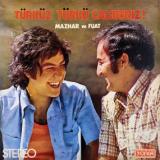
- 1: The Awakening - Mode For D.d. (4.47)
- 2: Doug Carn - Higher Ground (5.06)
- 3: Calvin Keys - Aunt Lovey (7.22)
- 4: Roland Haynes - Eglise (3.06)
- 5: The Awakening - Slinky (6.0)
- 6: Walter Bishop Jr. - Coral Keys (5.33)
- 7: Rudolph Johnson - Diswa (6.34)
- 8: Henry Franklin - Blue Lights (6.57)
- 9: Kellee Patterson - Maiden Voyage (5.17)
- 10: Chester Thompson - Power House (6.33)
- 11: The Awakening - March On (5.31)
- 12: Walter Bishop Jr. - Soul Village (6.16)
- 13: Rudolph Johnson - The Highest Pleasure (7.36)
This album brings together some of the finest music ever released on Black Jazz Records which in its short four-year history, between 1971 and 1975, released over 20 superlative albums which all successfully blending spiritual jazz, funk and soul jazz of the highest calibre. Similar to other independent jazz labels at the time, including Strata-East Records and Tribe Records, Black Jazz focussed on a number of key artists, most of whom first established their career during this period, and all of whom are featured here. Featuring The Awakening, Doug Carn, Walter Bishop, Chester Thompson, Kellee Patterson and more. Black Jazz Records was founded in Oakland, California, by pianist Gene Russell and percussionist Dick Schory.
The label released twenty albums between 1971 and 1975. Artists who recorded for Black Jazz Records included Cleveland Eaton (bassist for Ramsey Lewis), keyboardists Doug Carn and Chester Thompson, vocalist Kellee Patterson, saxophonist Rudolph Johnson, bassist Henry Franklin, and spiritual fusion group The Awakening. The label was distributed and financed by Ovation Records, based in Chicago. Schory founded Ovation in 1969, shortly after leaving RCA. Schory was a Grammy-nominated percussionist who was also known for his development of the stereo recording techniques including Dynagroove and RCA Victor’s Stereo Action. Schory also pioneered quadrophonic sound, and a number of Black Jazz Records were in quadrophonic and other formats such as ¼” tape and 8-track.
Black Jazz launched in 1971 with Gene Russell’s ‘New Direction’. Russell was the creative force behind the label, acting as producer, engineer and A&R and focussed on developing new solo artists. The most successful of these was Doug Carn, who released four albums featuring his wife, Jean Carn, as vocalist. She later changed her name to Jean Carne and became a successful soul singer signed to Gamble and Huff’s Philadelphia International empire.
- 1: Little B’s Poem (3:50)
- 2: Power And Glory (7:57)
- 3: Revelation (:4)
- 4: Chant (:36)
- 5: Western Sunrise (:0)
- 6: The Messenger (4:09)
- 7: Naima (4:28)
- 8: Mighty Mighty (5:47)
- 9: Higher Ground (5:04)
- 10: Fatherhood (4:15)
- 11: Trance Dance (8:39)
- 12: Acknowledgement (8:45)
- 13: Sweet Season (3:54)
- 14: Jihad (7:24)
This album brings together key tracks from Doug Carn recorded for Black Jazz Records in the 1970s.
Doug Carn is one of the most-important (and least-recognised) forces in the creation of the canon of 'deep and spiritual jazz music' - full of powerfully emotive intensity, consciously-uplifting lyricism and addictively beautiful melodies.
All of his LPs during this period have since achieved cult classic status including 'Infant Eyes', 'Adam's Apple', 'Spirit of the New Land' and 'Revelation'.
Aside from his songwriting and keyboard skills, many of the tracks here feature the stunning and powerful 5-octave range vocals of Jean Carn (later Carne), his wife at the time.
Musicians featured on this album include Alphonse Mouzon, Charles Tolliver, Henry Franklin, Michael Carvin, Walter Booker, Ronnie Laws and others. Aside from Carn’s compositions there are also striking interpretations of music by Lee Morgan, Miles Davis, John Coltrane, McCoy Tyner, Bobby Hutcherson and Wayne Shorter.
Black Jazz became one of the defining labels of independent and conscious jazz music in the 1970s alongside other important labels such as Strata-East and Tribe Records. As well as this Best of Doug Carn release, Soul Jazz Records are also releasing a Best of Black Jazz Records collection at the same time.
'Matsuli Music is proud to announce the first vinyl reissue of Philip Tabane’s Sangoma ("Spiritual Healer") since its 1978 release. Remastered from the original tapes with lacquers cut by Frank Merrit and pressed on 180g heavyweight vinyl at Pallas in Germany, this definitive edition re-asserts the power of one of South Africa’s landmark recordings. Featuring new liner notes by cultural critic Kwanele Sosibo and artwork restoration by Siemon Allen, Sangoma returns in full force through an extended Malombo line-up, fronted by Tabane's spellbinding guitar - ancestral, timeless, and unbound.
'Philip Tabane (1934–2018), the mercurial guitar genius of South African music, forged a sound that was as rooted in the spirit world as it was in daily life. With the Malombo Jazzmen of the 1960s, Tabane disrupted Western notions of “jazz,” bringing the resonant rhythm of cowhide malombo drums into the foreground. While outsiders and the uninitiated often reached for labels like “primitive yet sophisticated,” Tabane and his collaborators named it more truthfully: “music of the spirit.”
'By the time of Sangoma, Tabane stood at a crossroads. Fresh from a period of three years’ touring in the United States where he graced the Newport Jazz Festival, and played alongside Miles Davis, Herbie Hancock, Pharoah Sanders and others, he brushed off comparisons with characteristic self-assurance: “No, I don’t play like Miles. Miles plays like me.” Back home in South Africa, and with a newly signed international distribution deal with WEA Records, he harnessed this momentum into a larger band setting, capturing a rare intensity.
'The result was Sangoma—an album that bridges contradictions: expansive yet intimate, celebratory yet haunted by exile and return. Tracks such as “Sangoma,” “Hi Congo,” and “Keya Bereka” are not simply performances but living testaments, songs that would remain in his repertoire for decades. Unlike the moody, immersive character of much of his work, here Tabane is on the move—urgent, restless, uncontainable. As he announces on the second track, “Maskanta wa tsamaya” (“something that kicks ass”).
More than four decades on, Sangoma is both an historical document and a timeless invocation. From his home in Mamelodi to the world and back again, Tabane’s spiritual healing endures—raw, electric, and unbowed.'
From his roots in House, Alex Finkin is a renowned producer and creative director. Working in his Paris studio he has developed numerous projects, notably his own (Roseaux), as well as commissions for radio and television. Meanwhile, with 30 years of production and DJing under his belt, Rocco Rodamaal belongs to the elite circle of House innovators who continue to influence the scene. He's played alongside some of the best in the industry showcasing his versatility and deep understanding of the genre, and remixed artists including Marshall Jefferson, Kerri Chandler, Louie Vega & Moodymann, Todd Terry, Barbara Tucker and Robert Owens to name just a few. Alex Finkin befriended Rocco Rodamaal, who he met via the soulful Parisian club Djoon, where Alex was resident from 2006 to 2014. They have since collaborated on a number of projects together, including "In Da Hood" released on COD3 QR in 2023. Kenny Dope's "O'Gutta" remixes are a series of house and club-focused reworks characterized by raw, gritty and often stripped-back percussion, which he now brings to "In Da Hood".
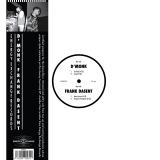
Ross McMillan, known professionally as Carlos Nilmmns, is a Scottish electronic music producer, DJ and composer originally from Glasgow. Over the years he has collaborated with a range of notable artists, including Grammy-nominated and Grammy-winning figures, including Kenny Dope, Carl Craig, Kevin Saunderson and Davina Bussey, plus respected artists like Niko Marks, Rolando, Laurent Garnier, Santiago Salazar, Hardrock Striker, Karl The Voice, Zadig, Ben Sims, Andrés (who worked with Jay Dilla and Moodymann), and YouANDme. His music has been released on Planet E, Trax, Cocoon, Ornaments, Circus, Virgin, Skylax/Universal Music France and more. His style draws from house, techno and jazz influences, often combining analogue and digital production methods. A returning regular and COD3 QR favourite, he's back with another stunner in "Latin Quarter".
K' Alexi Shelby is a prominent figure in electronic music and with a career spanning decades, he's established a significant influence on House and Techno. Throughout his career he's worked with many well-known artists and remixed tracks that are now key pieces. The cultivation of his massive musical catalogue has overflowed into albums and the three labels he heads. It's also led to legendary collaborations with artists such as The Pet Shop Boys, Robert Owens, Kenny Dixon, Roy Davis Jr., Maurice Joshua, Terry Hunter, Joe Smooth, Steve Silke Hurley, Tyree Cooper, Ron Trent, Glenn Underground, Larry Heard, DJ Pierre, Carl Craig, Felix da Housecat, Marshall Jefferson, Will Smith and countless others. Already respected around the world as a true underground House legend, he delivered "Flame" in 2025 for COD3 QR. Now he's back with "When I", another deep and sexy cut.
Benny Rodrigues a.k.a. ROD unveiled his new moniker, The Lost Souldancer when he dropped "No More Voices" for COD3 QR last year. In his own words, Benny says: "The Lost Souldancer is about coping with the loss of what once was. Finding comfort in the invisible rather than what can be seen. Disconnect to connect in order to be loved rather than liked." He continues this ethos with the delicate and melodic closing track "Life and Death".
- A1: Poltergeist Party
- A2: Music Box Concerto
- A3: Rain Forest Rap Session
- A4: A Love Theme For Gargoyles
- A5: Bridge Of Promises
- A6: Exasperated Frog
- A7: Take Me To Your Leader
- A8: Deserted Palace
- A9: Pogo Rock
- B1: Wind Swept Canyon
- B2: The Abominable Snowman
- B3: Iraqi Hitch-Hiker
- B4: Free Floating Anxiety
- B5: Synthetic Jungle
- B6: Bee Factory
Transversales Disques proudly presents the first official LP reissue of "Deserted Palace", studio album written & performed by Jean Michel Jarre in 1972, during his work experience at G.R.M. (Groupe de Recherches Musicales).
In 1971, an order was placed with producer Francis Dreyfus to provide sound for public places such as airports and libraries. He decided to pass the project on to Jean-Michel, who had recently been signed by his record company.
These fifteen tracks are made with only two synthesizers (EMS VCS3 & Farfisa organ) in an experimental and very minimal style.
"It was a crazy album, totally homemade, with rhythms that I made in my student room, with a minimum of equipment and at the same time electronic sounds that I stole from the GRM where I went at night after stealing the keys to the studios. It is a pirate record, in every sense of the word, in which we find what I did afterwards.” JMJ
Audio restored & remastered
Including cuesheet poster/ Limited edition of 500 copies
- A1: Les Rapports De Production
- A2: À L'est De Ton Corps
- A3: Injecte Moi
- B1: Le Samedi C'est Agnès
- B2: Comme Alan Vega
- B3: Satan Vit Dans Mon Ventre
After “Messin plutôt que français / Enfonce-toi dans la ville” and “Gloire à Satan,” Noir Boy George, an iconic artist from Metz and a key figure in the French underground scene, unveils a new album: “Polytoxicomane de toi.”
Boogie Vice & N-You-Up Return to Definitive Recordings with 'Decadisco EP'
Definitive Recordings continues its run of forward-thinking house releases with DEF2603, the new four-track 'Decadisco EP' from Boogie Vice and N-You-Up. Following their 2025 collaboration 'Come On Closer', the duo returns to the label with a fresh collection of groove-driven club tools that balance modern energy with classic house foundations. Recent releases on sister label Get Physical Music further underline the duo's strong creative momentum.
Boogie Vice is a French DJ and producer known for his groove-led house sound that blends funk, soul, and percussive club energy. With releases on labels such as Get Physical, Rekids, and Definitive Recordings, he has built a reputation for warm, dancefloor-focused productions supported by tastemakers worldwide. Now based in Cape Town, Boogie Vice has expanded his creative work into film scoring and executive production, adding new depth to his already rich musical palette.
N-You-Up, Southern France native Nick, brings decades of DJ experience and a deep-rooted love for jazz, funk, and disco. Formerly known as The Beatangers, he now channels those influences into a refined house fusion under his N-You-Up alias. Alongside Boogie Vice, his collaborative releases have appeared on labels such as Nervous Records and Get Physical Music, with their joint productions receiving support from key artists including Solomun, Dennis Ferrer, Jamie Jones, Pete Tong, Laurent Garnier, Radio Slave or Mita Gami, firmly establishing the duo as a reliable source of dancefloor-ready house music.
The EP opens with 'Game Concept', a driving house cut built on percussive drums, a rolling classic house bassline, and catchy vocal samples. Dreamy, deep synth chords float above the groove, creating a hypnotic yet energetic opener. 'Wurkin Like Dat' follows with a disco-infused house vibe, stacking groove upon groove as vocal snippets and disco elements take center stage, delivering pure dancefloor momentum. Rounding out the EP are two DJ-focused versions of 'Wurkin Like Dat'. The Invasion Tool strips the track back into a flexible club weapon, while the Drumapella isolates the rhythm and percussion, offering maximum versatility for creative mixing.
With 'Decadisco EP', Boogie Vice and N-You-Up once again showcase Definitive Recordings' ability to deliver modern house weapons that honor the genre's past while pushing the sound firmly forward.
- A1: Les Masques - Il Faut Tenir (1969)
- A2: Isabelle Aubret - Casa Forte (1971)
- A3: Christianne Legrand - Hlm Et Ciné Roman (1972)
- A4: Jean Constantin - Pas Tant D'chichi Ponpon (1972)
- A5: Billy Nencioli & Baden Powell - Si Rien Ne Va (1969)
- B1-: Marpessa Dawn - Le Petit Cuica (1963)
- B2: Jean-Pierre Sabar - Vai Vai (1974)
- B3: Sophia Loren - De Jour En Jour (1963)
- B4: Isabelle - Jusqu’à La Tombée Du Jour (1969)
- B5: Sylvia Fels - Corto Maltesse (1974)
- C1: Frank Gérard - Comme Une Samba (1972)
- C2: Ann Sorel - La Poupée Des Favellas (1971)
- C3: Charles Level - Un Enfant Café Au Lait (1971)
- C4: Andrea Parisy - Les Mains Qui Font Du Bien (1970)
- C5: Audrey Arno - Quand Jean-Paul Rentrera (1969)
- C6: Aldo Frank - T’as Vu Ce Printemps (1970)
- D1: Christianne Legrand - Cent Mille Poissons Dans Ton Filet (1972)
- D2: Clarinha - Lemenja (1970)
- D3: Hit Parade Des Enfants - Aquarela (1976)
- D4: Jean-Pierre Lang - Tendresse (1965)
- D5: Magalie Noël - Une Énorme Samba (1970)
- D6: Françoise Legrand - La Lune
Ever since the late 1950s bossa-nova revolution, Brazil’s influence on French music has been undeniable. Pierre Barouh, Georges Moustaki and a vast array of lesser known artists, all made the Musica Popular Brasileira (MPB) an axis of promotion at the service of a cool and metaphysical, modern and mixed Brazilian lifestyle. Some were seduced by the poetic languors of the bossa, some were looking for fun, and others just loved the American hybridization of jazz-bossa, jazz-samba.
What is bossa nova? One of its creators, Joao Gilberto said: "Its style, cadence, everything is samba. At the very start, we didn't call it bossa nova, we sang a little samba made up of a single note - Samba de uma nota so .... The discussion around the origins of bossa nova is therefore useless”. It is nevertheless useful to remember that these magnificent Brazilian songs, which the guitarist describes as samba, were shifted and balanced around improbable chords. "I like things that lean, the in-betweens that limp with grace," said Pierre Barrouh, quoting Jean Cocteau.
With emotion, arrangements for violin and supple guitar licks, bossa nova rapidly changed. A transformation that can be heard in the Tchic, tchic, French Bossa Nova 1963-1974 compilation, the result of a cultural reappropriation, which traveled through the United States and supplemented itself in France.
A musical revolution that has remained significant, bossa nova was born in Rio. From 1956 to 1961, Brazil lived through its golden years. In five years, the country had invented its modernist style. Elected president in 1956, Juscelino Kubitschek de Oliveira, an elegant man with a broad forehead, brandished a promising slogan: "Fifty years of progress in five years". He quickly got to work. Not worried about increasing debt, he launched the project for a new federal capital, Brasilia, designed by the communist architect Oscar Niemeyer. Volkswagen opened state-of-the-art factories and created the “fusquinha”, the Beetle. In Rio, the Vespa made its first appearance. The Arpoador Surf Club crew run into the “girl” from Ipanema, Helô Pinheiro - the tanned garota ("chick"), between a flower and mermaid, who at 17 walked by the Veloso bar, where the fiery author and composer, Tom Jobim and Vinicius de Moraes, were getting drunk on whiskey. From then on, bossa symbolized cool.
In 1958, Joao Gilberto recorded Chega de Saudade, which the directors of Philips denied, calling it "music for fagots". The marketing director, who believed in it, secretly pressed 3000 78-inch vinyls and distributed them at schools around Rio, creating a tidal wave.
American jazzmen then took over. In particular, trumpeter Dizzy Gillespie and guitarist Charlie Byrd. In November 1962, the Brazilian Ministry of Foreign Affairs funded a "Bossa-Nova" concert at Carnegie Hall in New York, inviting the genre’s pioneers. Unprepared, the show soon turned to disaster. But the troupe was invited to the White House by Jackie Kennedy. The first lady loved "the new beat" and in particular Maria Ninguem, a song by Carlos Lyra, later covered by Brigitte Bardot.
In Brazil, the 1964 military coup quickly ended this euphoria. The destructive atmosphere that ensued pushed many Brazilian musicians to leave, if not to exile. Thus, Tom Jobim, Sergio Mendes and Joao Gilberto arrived to the United States. In New York, Joao Gilberto met saxophonist Stan Getz. At the time, he was married to the Bahianese Astrud Weinert Gilberto, who had a German father. She had never sung before, but she knew how to speak English. Getz therefore asked her to replace her husband on The Girl From Ipanema. The Getz/Gilberto record with Tom Jobim on piano, was released in March 1964. Phil Ramone, the "pope of pop" was in charge of sound.
Bossa nova arrived in Paris through the classic “guitar-voice” channel (Pierre Barouh, Baden Powell, Moustaki…) But France loved jazz and Paris had already welcomed its American contributors. All these good people were to pass through Saint-Germain-des-Prés. The cabaret l'Escale became the Mecca of Latin American sound where one could find Pierre Barrouh and his friends, such as the Camara Trio, samba-jazz aces, whose only record was published by the Saravah label. With a band strangely called Les Masques (a band that included Nicole Croisille and Pierre Vassiliu, among others), the Camara Trio recorded an interesting Brazilian Sound, including the track Il faut tenir which is present on this tasty compilation of rarities.
Other enlightened musicians can also be found on the compilation, such as Jean-Pierre Sabar (songwriter for Hardy, Auffray, Leforestier ...) and the French pop rock organist Balthazar. In 1975, Sabar recorded Aurinkoinen Musiikkimatka on a Finnish label, which featured the crazy Vai, Vai, included on this record. We are now following the footsteps of Brazilian electronic musicians such as Sergio Mendes, Eumir Deodato or Marcos Valle who created funk and disco sounds on their keyboards and synthesizers. A style that influenced Véronique Sanson when she wrote Jusqu’à la Tombée de la nuit in 1969 for Isabelle de Funès, the niece of Louis and a great friend of Michel Berger - Sanson did end up singing this track on her 1992 Sans Regret record.
The pinnacle of exoticism and travel, Sylvia Fels’ Corto Maltese includes bongos, sea mist and ocean sounds. The title was taken from Jacky Chalard’s concept album written in 1974, Je suis vivant, mais j’ai peur (I am alive, but I am scared), based on Gilbert Deflez’s science fiction novel.
However, bossa nova extended the scope of popularity. "In the 1970s, I was a fan of Sergio Mendes, Getz / Gilberto. I fell in love with this music that I knew because I had been an orchestral singer, " explained Isabelle Aubret, who in 1971 delivered a composite record of covers by the very funky Jorge Ben, Orfeu Negro, Tom Jobim, Vinicius de Morais and Jean Ferrat. "I recorded this album for Meys Records in Paris, far from Brazil, with wonderful musicians, François Raubert, Roland Vincent, Alain Goraguer...". The latter wrote the arrangements for Casa Forte, a very percussive title borrowed from Edu Lobo, one of the initiators of the bossa who spent time in California. "Jazz and bossa came together and produced very rhythmic music. I love singing, it allows me to dream, to have fun, to feel a high on stage, and these songs brought me joy, made me swing, my singing felt like a dance.”
The world tours of French singers and their desire for the tropics, often brought them to Rio with its hills, forests, caipirinhas and tanned bodies. There are surprises though, like this Iemenja (Iemenja is the goddess of the sea in the Afro-Brazilian candomblé religion). Not unlike the composer and musician Jean-Pierre Lang, based in Sao Paulo, Claire Chevalier taught Brazil to Brazil. In 1970, the singer and painter published a 45-inch vinyl, Mon mari et mes amants (My husband and my lovers), under the improbable pseudonym of Clarinha (little Claire). She was then living in Rio, with her husband, Joël Leibovitz, who founded a band called Azimuth, and who owned a record label specialized in "sambas enredos" songs for samba school parades.
For its B side, she asked Pierre Perret to come up with lyrics for a song composed by Carlos Imperial: "Oh goddess of the sea, o goddess Iemenja, I bring a white rose to adorn your long hair ..." . "Perret came to see us, and we had fun, remembers Joël Leibovitz. We wrote Lemenja for fun, we recorded it at the Havaí studio, behind the Central do Brasil the central station. Erlon Chaves, the arranger who worked with Elis Regina, joined us" adding his share of Afro-Brazilian percussions and funky brass to the mix.
There is a common misunderstanding in Franco-Brazilian history: that bossa, admittedly hedonistic, is perceived as funny, even though the poets who wrote the texts are often philosophizing on the human condition. Its French interpreters pull it towards a carnival inspired universe, far removed from its fundamental essence. Thus, Jean Constantin covered the famous Samba da minha terra, an ode to the art of samba written by the classic Bahian composer Dorival Caymmi, renaming it with the enticing title of Pas tant de tchi tchi pompon: "On your pier there is no tchi tchi / when you arch your back, you know everything is alright ”(lyrics by Gérard Calvi). This expedited bossa aims for the absurd, but retains a certain elegance.
Indeed, Jean Constantin was not an idiot, the rather large man had a huge mustache and liked fantasy, (Les pantoufles à papa, Le pacha, inspired by cha-cha-cha-cha, salsa and jazz) but he was also the lyricist of Mon manège à moi interpreted by Edith Piaf, the composer of Mon Truc en plume by Zizi Jeanmaire and the soundtrack of François Truffaut’s 400 Blows. Le Poulpe, published in 1970, from which this bossa is extract, was arranged by Jean-Claude Vannier, an accomplice of Serge Gainsbourg’s Melody Nelson. In short: "There is enough of samba / By looking at the parasol / Because my poor cabeza / Is going to die in the sun".
Even the American actress Marpessa Down, who was at the heart of the bossa nova revolution with her role as Euridyce in Marcel Camus’ film Orfeu Negro, winner of the 1959 Cannes Palme d'or, fed the clichée with Je voudrais parler au petit cuica - "Tell me how you manage to always make people want to dance / It's true, I must admit that I cannot resist your magic" - in consequence, once can hear the cuica, a little drum inherited from the Bantu.
But bossa nova had many angles. Societal, of course, pushing actresses who were symbols of women's liberation like Brigitte Bardot, Jeanne Moreau, or Sophia Loren to engage in the exercise of accelerated bossa. In February of 1963, Sophia Loren made a record in French in Rome, Je ne t'aime plus, featuring the song De jour en jour, a bossa written by two Italians, Armando Trovajoli and Tino Fornai, which was released a little later by Barclay. Bossa accompanied the 1960s, a decade of moral liberation. Ann Sorel, who interpreted La Poupée des favellas, caused a sensation with L’amour à plusieurs, a provocative song written by Frédéric Bottom and Jean-Claude Vannier. As for the actress Andrea Parisy, she displayed her bourgeois cheekiness in Marcel Carné's Les Tricheurs before interpreting Les mains qui font du bien. And Magalie Noël, the friend of Boris Vian, who sung Johnny fais-moi mal, was hired to sing Une énorme Samba, composed by Alain Goraguer (arranger to Gainsbourg, Bobby Lapointe and Jean Ferrat) with lyrics by Frédéric Botton.
But in the end, of what wood is bossa nova made of? The answer is given by Christianne Legrand, daughter of Raymond the conductor, and sister to Michel the composer: "With me, with jà" - jà means "immediately" in Portuguese. In 1972, the singer, an expert in vocal jazz and a member of the Double Six, published Le Brésil de Christianne Legrand. Two songs included on the Tchic Tchic compilation that demonstrate how bossa, jazz, funk, rock, etc. work like a swiss army knife: the music is used to denounce broken systems, or miracles, HLM et ciné roman, Cent mille poissons dans ton filet, two songs from the O Cafona soundtrack, a successful telenovela broadcast, at the time in black and white, on TV Globo. The first was adapted in French by the fighter and friend of the Legrand tribe, Agnès Varda. The second is content with a play on words, jostling them into a summer fun.
Véronique Mortaigne
Irlam's dastardly duo are back with another bonza bucket of bass, breaks and badness as they fire up Studio Krust for another high octane session.
Sure to top the Fairground charts and further enrage the Hell's Angels, 'Synthetic Stupidity' sees the pair unleash their full force unabashed, as they hit a purple patch full of new found and frankly quite surprising productivity (rumours of a European-wide sputnik shortage are the likely catalyst).
Fractionally distilling their many collective years of dance music experience into 12 refined pieces of advanced club kinetics that skirt between the syncopated intricacies of breakbeat science and maxed-out 4/4 propulsion.
More hyped-up vox & frantic sampling, more tension, tons of one-finger keyboard melodies, and - as usual - moments of sonic tomfoolery to flummox the assumers.
With their drug debts paid off and a forced clarity of mind, 'Synthetic Stupidity' is a more expansive, deeper and unhurried project; allowing Bosco and Metrodome the space and time to truly deliver the zenith of their sound.
This, is DJ ABSOLUTELY SHIT!!!
A great name. A great cover. And - of course - outstanding library music.
Soul City Orchestra's Meal Ticket houses titanic funk, mellow groove and symphonic disco-soul.
Released in 1977 on Rouge, a subsidiary of the prestigious and long-established British library label Music De Wolfe, Meal Ticket was crafted by the studio band Soul City Orchestra (a pseudonym for the De Wolfe in-house composers Chris Rae & Franck McDonald).
The driving instrumental funk-rock of the A Side is enhanced with strings and no little drama. However, it's undoubtedly the peerless flipside that makes this record an essential part of any collection.
Head straight to highlight "Chamber Maid"; insistent, conga-driven funky rock with lashings of string-heightened drama. It's sophisticated, classical and deeply classy.
The majestic, powerfully emotive "Sore Head" contains an excellent intro drum break and sultry slo-mo disco breaks throughout. It's low-key stunning. With a few melodic switch-ups, it's symphonic soul heaven and is comfortably the best and most beautifully crucial track on Side A.
The breezy, Philly soul-tinged "Short Change", its intense strings reminiscent of the Salsoul Orchestra and TSOP, presents an easy-glide funk that's just irresistible.
The funky, cool and slick AF "Wheeling And Dealing" is laconic flute and string-propelled sophisticated mid-tempo disco soul. It's worth the price of admission alone.
The breezy, mellowed out disco-funk workout "The Jam" is a deliciously slinky and sophisticated soul strut. Try not swaggering into the club with this in your head next time you venture into the murky world of "the night". Just ace.
The crowning glory is the sweeping, sublime symphonic disco breaks of horn-infused "Soul City Drive", an absolute monster of radiant heavy soul-funk à la Barry White with great string & brass arrangement.
Basically, this is essential for all groove-aficionados.
The audio for Meal Ticket has been meticulously remastered by Be With regular Simon Francis, ensuring this release sounds better than ever. Cicely Balston's expert skills have made sure nothing is lost in the cut whilst the records have been pressed to the highest possible standard at Record Industry in Holland. The original, iconic sleeve has been restored here at Be With HQ as the finishing touch to this long overdue re-issue.
On and on, the beat goes on. Sound System culture plays a huge part in the history of House music, shaping Mysticisms, its founders and the music it brings into the spotlight. Continuing the dive into that history, in all its forms and permutations, Tranquil Elephantizer’s 1995 classic Zombie Dawn is reissued here in its original form.
A name that has been getting noticed on recent releases for the likes of legendary San Francisco collective Wicked Records and Manchester’s cult Red Laser label, the project has, in fact, been around for several decades.
Morphing out of the late 80s Acid House revolution, members Alexis Worrall, brothers Caspar and Darius Kedros and focal point, David Jenkins aka DJ Shakra came together in the South London melting pot of free parties and DIY anything is possible ethos.
Born of a collaboration between the short-lived Camberwell Butterflies project – featuring Alexis Worrall and DJ Shakra amongst others – and the Kedros’ bothers downtempo/trip hop forbears Slowly. With a shared label, on the ground-breaking Chill Out Records, and Thursday late-night encounters at London’s legendary Megatripolis club, they decided to pool studio resources and Tranquil Elephantizer was born.
Mixing lo-fi 808 heavy analog jams of the Butterflies, with the studio sophistication from the Slowly crew, sparked something new and Zombie Dawn was the first result. Local producer Crispin J Glover dropped by the studio, riding high with his Caucasian Boy project’s hypnotic Northern Lights (featuring DJ Shakra on Roland 303) – recently out on Strictly Rhythm – he offered to remix both Zombie Dawn and the Slowly album cut No Slo Dub for release on his own Matrix label and an underground hit on the London and West Coast 90s party scene was born.
Coming in the original “Saxmental Mix”, alongside Glover’s storming “Nu Dawn Club Mix” Zombie Dawn was a correlation of the past, present and future in one record. The history of British House can be heard in the bumpin’ nature of the beats, the sharp hats encompassed around dub overtones that give it added warmth. The slightly quirky, left field touches of the tracks, set against the then weekly overload of sharp US imports, brought the mix of influences from the Tonka and Sugarlump Sound Systems they had partied and been involved with, on to vinyl, adding touches of jazz keys and disco’s heritage for good measure.
A bedfellow for the emerging UK House sound coming on the likes of Luxury Service (Rob Mello / Zaki Dee), Other (A Man Called Adam / DJ D) and Nuphonic (Faze Action / Idjut Boys), that shaped and defined London clubs and far beyond. Some 30 years later, with a new album on the way, here is debut Tranquil Elephantizer’s release, remastered especially for this reissue, ready to bring that optimistic thinking back.
Tranquil the Mystery.
The third release on Pan Records comes from BRS (British Rhythm Services), a UK deep house production collective active since 2000. They first appeared on the Parisian label Cyclo Records and quickly followed up with releases on Imperial Dub (San Francisco) and Leeds-based 20/20 Vision.
Throughout the 2000s, BRS — originally formed by Ben Vacara, Robert Evans and Mr. Mulatto — built a strong reputation for quality deep house. In 2001 they launched their own imprint, Friends & Families, while their music also appeared on major labels and compilations including Café del Mar, Ministry of Sound, Paper Recordings, Peng, Late Night Tales and React.
Over the years the project evolved, with core members Ben Vacara (also known as Frank Situation) and Mr. Mulatto continuing at the forefront, joined by musicians such as Dom Thompson, Phil “Dr. Keys” Campbell and James Payne. In 2019, BRS saw a new wave of reissues and fresh material on Cyclo, Wolf Music, Pressed For Time and their own label, Situationism.
Still active as producers and DJs, BRS have now been shaping UK deep house for over 25 years.
- A1: Al Green – Let's Stay Together
- A2: Marvin Gaye - What's Going On
- A3: Diana Ross - Ain't No Mountain High Enough (Single Version)
- A4: Stevie Wonder - Signed, Sealed, Delivered (I'm Yours)
- A5: Commodores - Easy (Album Version)
- A6: Bill Withers - Ain't No Sunshine
- A7: The Stylistics - You Make Me Feel Brand New (Let's Put It All Together Version)
- A8: Rose Royce – Wishing On A Star
- B1: Jackson 5 - I Want You Back (Single Version)
- B2: Smokey Robinson & The Miracles - The Tears Of A Clown (Single Version / Mono)
- B3: The Supremes - Nathan Jones
- B4: Frankie Valli And The Four Seasons - The Night (1972 Album Version)
- B5: Chairmen Of The Board – Give Me Just A Little More Time
- B6: The Trammps - Hold Back The Night
- B7: The O'jays - Love Train
- B8: The Blackbyrds – Walking In Rhythm
- B9: Heatwave - Always And Forever (Single Version)
- C1: The Temptations - Papa Was A Rollin' Stone (Edited)
- C2: Isaac Hayes - Theme From "Shaft" (Remastered 1991 Album Version)
- C3: Ike & Tina Turner - Proud Mary
- C4: James Brown - Get Up I Feel Like Being A Sex Machine
- C5: Edwin Starr - War
- C6: Sly & The Family Stone - Family Affair (Single Version)
- C7: The Delfonics - Didn't I (Blow Your Mind This Time)
- C8: Billy Paul - Me And Mrs. Jones (Single Version)
- D1: The Floaters - Float On (Single Version)
- D2: Minnie Riperton - Lovin' You
- D3: The Isley Brothers - Summer Breeze, Pt. 1
- D4: William Devaughn - Be Thankful For What You Got (Part I)
- D5: Detroit Emeralds – Feel The Need In Me
- D6: The Moments - Jack In The Box
- D7: Raydio - Jack And Jill
- D8: The Tymes - Ms. Grace
- E1: Barry White - Can't Get Enough Of Your Love, Babe
- E2: Aretha Franklin – Until You Come Back To Me (That's What I'm Gonna Do)
- E3: Al Green – Tired Of Being Alone
- E4: Gladys Knight & The Pips - Midnight Train To Georgia
- E5: Timmy Thomas – Why Can’t We Live Together (7" Glades Version) (2013 Remaster)
- E6: George Benson – The Greatest Love Of All
- E7: Diana Ross - Theme From Mahogany (Do You Know Where You're Going To) (Single Version)
- E8: Jackson 5 - I'll Be There
- F1: Freda Payne – Band Of Gold
- F2: Ann Peebles - I Can't Stand The Rain
- F3: Marvin Gaye - Let's Get It On (Single Version)
- F4: Harold Melvin & The Blue Notes Featuring Teddy Pendergrass - If You Don't Know Me By Now
- F5: The Stylistics - Can't Give You Anything (But My Love)
- F6: The Three Degrees - When Will I See You Again (Single Version)
- F7: Deniece Williams - Free (Single Version)
- F8: Earth, Wind & Fire - After The Love Has Gone (Single Version)
- F9: Commodores - Three Times A Lady (Single Version)
NOW That’s What I Call 70s Soul brings together 50 era-defining tracks from one of the most powerful decades in soul music, featuring classics from Motown legends, Philly Soul pioneers, smooth balladeers and funk innovators – all pressed across 3LPs on beautiful blue vinyl… Out April 24th!
LP1 opens with one of the decade’s most recognisable love songs: Al Green’s ‘Let’s Stay Together’, a US #1 and UK Top 10 hit that became his signature recording. It’s followed by Marvin Gaye’s ‘What’s Going On’, the socially conscious masterpiece and title track from his landmark 1971 album, and Diana Ross’ Ain’t No Mountain High Enough’, which topped the US chart and became her first solo #1. Stevie Wonder’s ‘Signed, Sealed, Delivered (I’m Yours)’ remains one of Motown’s most joyful recordings and comes before Commodores’ ‘Easy’ introducing Lionel Richie’s smooth ballad vocals. The side also includes Bill Withers’ timeless ‘Ain’t No Sunshine’, a Grammy-winning classic, and The Stylistics’ lush ballad ‘You Make Me Feel Brand New’, a UK Top 3 smash, before closing with Rose Royce’s beautiful ‘Wishing On A Star’, one of the most loved soul ballads of the era.
Flip the LP over and The Jackson 5’s ‘I Want You Back’ – the group’s explosive debut single opens the side. Smokey Robinson & The Miracles’ ‘The Tears Of A Clown’ became a UK #1 and is followed by The Supremes’ Nathan Jones’ showcasing the group’s evolving psychedelic-soul sound. Northern Soul classics from Frankie Valli & The Four Seasons with ‘The Night’, Chairmen Of The Board’s Top 3 smash ‘Give Me Just A Little More Time’ and The Trammps’ ‘Hold Back The Night’. The O’Jays’ joyous ‘Love Train’ leads to The Blackbyrds’ Walking In Rhythm’, before the side closes with the romantic classic ‘Always And Forever’ from Heatwave.
LP2 opens with The Temptations’ epic ‘Papa Was A Rollin’ Stone’, a Grammy-winning US #1 remains one of the most stunning recordings from the Motown catalogue, is followed by Isaac Hayes’ ‘Theme From “Shaft”’, an Academy Award-winner and a US #1 smash. More funk follows from Ike & Tina Turner, James Brown with one of his key tracks ‘Get Up (I Feel Like Being A) Sex Machine’, Edwin Starr’s powerful anti-Vietnam protest song ‘War’, and Sly & The Family Stone’s hugely influential ‘Family Affair’. The Delfonics’ sublime ‘Didn’t I (Blow Your Mind This Time)’ comes ahead of Billy Paul’s timeless ‘Me And Mrs. Jones’ which closes the side…the other side begins with the 1977 #1 from The Floaters with ‘Float On’, before the breathtaking vocals of Minnie Riperton on ‘Lovin’ You’. The Isley Brothers’ Summer Breeze’ and William DeVaughn’s ‘Be Thankful For What You Got’ have become enduring classics and are followed by a run of ‘80s pop-chart crossover hits completing LP2 from Detroit Emeralds, The Moments Raydio and The Tymes’ #1 ‘Ms. Grace’.
LP3 opens with the unmistakable voice of Barry White and his US #1 hit ‘Can’t Get Enough Of Your Love, Babe’, before Aretha Franklin’s ‘Until You Come Back To Me (That’s What I’m Gonna Do)’, delivers one of her smoothest performances. Al Green’s ‘Tired Of Being Alone’ and Gladys Knight & The Pips’ ‘Midnight Train To Georgia’ are followed by minimalist soul classic ‘Why Can’t We Live Together’ from Timmy Thomas, and the side closes with a trio of defining ballads:- George Benson’s ‘The Greatest Love Of All’ Diana Ross’ ‘Theme From Mahogany (Do You Know Where You’re Going To)’ and The Jackson 5’s ‘I’ll Be There’, their biggest hit…while over on the final side…Freda Payne’s #1 ‘Band Of Gold’, opens alongside Ann Peebles’ influential and much covered ‘I Can’t Stand The Rain’.Marvin Gaye’s sensual ‘Let’s Get It On’ became another US #1, while Harold Melvin & The Blue Notes featuring Teddy Pendergrass deliver the contemporary standard ‘If You Don’t Know Me By Now’. Three massive UK #1s are next…The Stylistics with ‘Can’t Give You Anything (But My Love)’, The Three Degrees’ peerless ‘When Will I See You Again’ and Deniece Williams’ ‘Free’. This amazing collection closes with two timeless ballads: Earth, Wind & Fire’s ‘After The Love Has Gone’, a Grammy-winning classic, along with ‘Three Times A Lady’, a huge worldwide #1 for the Commodores.
NOW That’s What I Call 70s Soul, 50 defining tracks from one of music’s greatest decades. Out April 24th.
repressed !
Francois Kevorkian is a name that should need no introduction. With over 40 years in the game FK has occupied numerous roles in his long and storied career - drummer, DJ, A&R man, remixer and producer - his skills know no boundaries. Having DJ-ed during the nascent days of club culture in NYC alongside Walter Gibbons, Larry Levan and more, Kevorkian has been there from day one. Years spent in the seminal clubs of the day sharpened his ears and his prowess behind the mixing desk saw him become the A&R man at the legendary Prelude records in the early 80's, this in turn led to him working with everyone from The Eurythmics, Depeche Mode, Erasure, D-Train, Yazoo, The Smiths, Kraftwerk and many many more. A true NYC original and legend, Kevorkian is still active today and the respect he commands amongst his peers has never waned, his adventurous extended DJ sets, seminal mixes and remixes and his open ears and open mind have ensured that he will go down in history as a musical pioneer.
Rewind to 1995. Kevorkian's 'Wave Music' imprint has come into existence with a handful of releases. No-one could imagine that his self-produced 'FK EP' - the next release on the label - would be a stone cold classic. Easily one of the most consistent, exciting and solid EP's to come out of NYC during this golden era of dance music. Across 4 tracks we are taken on a sound journey through a world that is undoubtedly informed by FK's time as an engineer, DJ and most importantly, a music lover.
EP opener 'Hypnodelic' brings us into this world, a deep, driving cut that fuses the dubbed out vocals of Freddie Turner against FK's keyboards and immaculate drum programming, oozing cosmic electronic soul, this track was destined to be a future classic. 'Mindspeak' also boasts some tough drums and with a respectful nod to Chicago is an incredibly mixed and arranged peak-time cut that will drive your dancefloor into deep space again and again. 'Edge Of Time' welcomes us to the flipside of the EP, wild Latin percussions, tablas and old school horn stabs drive this monstrous cut, not to mention cavernous dub FX and that huge bassline that just doesn't let up. Essential. 'Moov' rounds things out on a more subdued, stripped back vibe. Reversed percussions and spaced-out synth chords lace this beautifully understated and warm track, one that builds into a crescendo of melodies and hypnotic rhythms and the perfect way to close what has been a truly special musical journey.
This essential reissue of the 'FK EP' has been fully licensed, sanctioned and remastered in conjunction with FK from the original master sources by Optimum Mastering, Bristol UK, repressed onto high quality vinyl and packaged as the 1995 release was. A truly classic record indeed, available again for 2018. Welcome back Wave Music!
- A1: Design - Premonition
- A2: Vision - Lucifer’s Friend
- A3: Richard Bone - Alien Girl
- A4: John Howard - I Tune Into You
- A5: Ian North - We’re Not Lonely
- A6: Selwin Image - The Unknown
- B1: Harry Kakoulli - I’m On A Rocket
- B2: Rich Wilde - The Lady Wants To Be Alone
- B3: Billy London - Woman
- B4: Alan Burnham - Science Fiction
- B5: The Microbes - Computer
- B6: The Goo-Q - I’m A Computer
- C1: Gerry & The Holograms - Gerry & The Holograms
- C2: The Warlord - The Ultimate Warlord
- C3: Die Marinas - Fred From Jupiter
- C4: Dee Jay Bert & Eagle - I Am Your Master
- C5: Peta Lily & Michael Process - I Am A Time Bomb
- C6: Sole Sister - It’s Not What You Are But How
- D1: Alasdair Riddell - Do You Read Me?
- D2: Karel Fialka - Armband (The Mystery Song)
- D3: John Springate - My Life
- D4: Idncandescent Luminaire - Famous Names
- D5: Disco Volante - No Motion
- D6: Dream Unit - A Drop In The Ocean
2025 REPRESS ON TRANSPARENT GREEN VINYL
Compiled by Philip King “And then came the rise of synth pop : blokes with dodgy haircuts hunched over keyboard-operated machines stuffed with wires and do-it-yourself tone oscillators making sounds like a brood of geese passing gas in a wind tunnel. Whoopee! This is the way the ‘70s ended : not with a blood-curdling bang bang but with a cheap, synthesized, emasculating whimper.” NICK KENT, NME. All The Young Droids: Junkshop Synth Pop 1978-1985 is a new compilation that charts the underbelly of the epoch-defining sound of the synthesiser in 80s popular music. Compiled by Philip King (previously seen compiling All The Young Droogs, Glitterbest and Boobs - The Junkshop Glam Discotheque), the music here connects the dots between DIY synth enthusiasts grappling with new, cheap synthesisers at the tail-end of punk and wannabe, jobbing songwriters enthral to the new music pioneered by Gary Numan, Depeche Mode and Daniel Miller’s Mute Records. Featuring rare tracks of auto-didactic progressive pop music, proto-techno punk, shoot-for-the-stars-land-in-the-gutter chart flops and heralded, underground synth classics, School Daze paints a picture of beautiful failure. Complete with extensive sleeve notes written by King and never before seen imagery, all 24 tracks were remastered by RPM in-house engineer Simon Murphy, many from vinyl copies due to lost master tapes. The story told on All The Young Droids is one of the dawning opportunity presented by both the emergence to the market of cheaper analog synthesisers and the distribution networks plus indie labels that exploded with the advent of punk music in 1976. While the music that sprouted out all over the globe in the wake of these factors was decried as fake, plastic, a refutation of punk’s guitar-led revolution, it’s telling that much of the music on All The Young Droids.. was created in bedrooms, ramshackle studios and home-made set ups with often borrowed equipment. In the era of record labels jumping to capitalise on the success of The Sex Pistols, The Clash (both on major labels, of course) these artists struggled to stand out from a new gold-rush with next to no budget or PR team. With radio and labels desperate for the new Yazoo, what resulted was a testament to necessity being the mother of invention. At the time, the synthesiser was the music of the future, a shiny new machine that could paint like an orchestra with a single finger and a 4-track. In the hands of Manchester avant-pranksters Gerry & The Holograms it’s a pulsing, sardonic weapon.. the only instrument on the Messthetics classic lampooning of New Wave fashion. In Hamburg, a 16 year old Andreas Dorau used it to write and record (with his female classmates on vocals) a global smash in Fred Vom Jupiter (later licensed to Mute Records). The hard-to-find English version (Fred From Jupiter, natch) is included here. Many artists with alreadystoried careers caught the bug and recorded synthesiser-fuelled peons to space, computers, the future and, of course, love-interests. Harry Kakoulli, late of Squeeze, recorded a solo album in 1979 that included the incredible power-synth-pop smash-that-never-smashed I’m On A Rocket. Similarly, Ian North of Neo and American Power Pop stalwarts Milk ’n’ Cookies bought a Korg MS20 and used a tape machine to record We’re Not Lonely, an absolute lost-classic of minimal synth pop. We’re Not Lonely also features on the Junkshop Synth Pop sampler 7” twinned with John Howard unreleased track You Will See, released April 12th 2025. There are plenty of compilation debuts in evidence. Sole Sister were a mysterious trio who were featured on the Scaling Triangles compilation of female-fronted, queer-adjacent post-punk / underground music that also featured The Petticoats. Selwin Image were from San Francisco and featured members of the recently defunct power pop/punk group The Pushups. Their stupidly catchy The Unknown fizzes with New Wave energy - think XTC to Sparks but remains unreleased until now. Dream Unit’s A Drop In The Ocean is an early synth wave cut, positively teaming with Joy Division instrumentation, previously only released on a long-forgotten and super rare, self-released EP. Incandescent Luminaire’s Famous Names belies an archetypal struggle of a small-town trying to make it in a cruel industry but is a thrilling New Romantic-Synth Wave cross over with a OMD gloominess that’s a joy to hear. Feminist Minimal Wave track I Am A Time Bomb by performance artist Peta Lilly and Michael Chance is a revelation destined for new found cult status. It was released on 7” and lost until now. The flipside to the subterranean, never-made-it synth pop mentioned above are the ambitious, even fruity attempts at success that have a perennial elegance to their confidence. New Jersey-ite Billy London (real name Ed Barth) tried to cash in on the synth boom with Woman, released by a major label, a lurching new wave track built on the Louie Louie rhythm and a wonderfully camp Lou Reedstyle sleazy vocal before exploding in the synthesised chorus. The song bombed but with a chorus like this, you have to wonder why? Ex-Glitter Band member John Springate’s My Life is truly epic, with doomed chord progressions and massive sounding drums turning into at least 3 different songs in the course of the track. Before you wonder what’s going on the song resolves with a glorious return to the main refrain. The dry-ice-dressed dance floor is well catered for too. Design’s Premonition and Vision’s Lucifer’s Friend are stone-cold minimal synth bangers, well loved but given a new lease of life here. The Warlord’s The Ultimate Warlord was released in 1978, a homespun proto Hi NRG banger that was later re-recorded by The Immortals in Canada who had a club hit with it. One-man- band Disco Volante’s No Motion was re-issued by Synth wave label Medical in 2012 but makes its first vinyl compilation appearance here. Close your eyes and you can imagine what Lawrence of Felt would have sounded like with some cheap Korgs a little earlier in his career. Gibraltar-based trio The Microbes imagined a computer programming people to dance - how prescient - and ended up with a propulsive, robo-funk track with splendid rubbery bass playing over a tectonic drum machine. Previously picked up by Belgian label Stroom TV, Dee Jay Bert & Eagle’s heavily Euro-accented I Am Your Master demands the listener to “come to paradise!” In a frankly terrifying manner. All The Young Droids is the first compilation to peel away from the narrative that dour, Minimal Synth and Cold Wave were the only musical children of the first rush of synth pop. Philip King and School Daze Records describe a much more complicated world: along with the austere, Brutalist children of Daniel Miller (who produced Alan Burnham’s Bowie-Low-influenced Science Fiction here) was a plethora of desperate cash-ins, accidental mainstream hits, ambitious pop dramas and major label punts that went nowhere. Crucially, the compilation blurs the line between junk and treasure. What if the two things are interchangeable. What if it’s all science fiction?
- A1: Hurts And Noises
- A2: Wake Up
- A3: I Don't Wanna Be A Rich
- A4: Terrorist Bad Heart
- A5: Provocate
- A6: Lucifer Sam (Pink Floyd)
- B1: Happy!?
- B2: So Lazy
- B3: I Feel Down
- B4: Stupido
- B5: Guilty
- B6: Caroline Says (Loo Reed)
UILTY RAZORS, BONA FIDE PUNKS.
Writings on the topic that go off in all directions, mind-numbing lectures given by academics, and testimonies, most of them heavily doctored, from those who “lived through that era”: so many people today fantasize about the early days of punk in our country… This blessed moment when no one had yet thought of flaunting a ridiculous green mohawk, taking Sid Vicious as a hero, or – even worse – making the so-called alternative scene both festive and boorish. There was no such thing in 1976 or 1977, when it wasn’t easy to get hold of the first 45s by the Pistols or the Clash. Few people were aware of what was happening on the fringes of the fringes at the time. Malcolm McLaren was virtually unknown, and having short hair made you seem strange. Who knew then that rock music, which had taken a very bad turn since the early 1970s, would once again become an essential element of liberation? That, thanks to short and fast songs, it would once again rediscover that primitive, social side that was so hated by older generations? Who knew that, besides a few loners who read the music press (it was even better if they read it in English) and frequented the right record stores? Many of these formed bands, because it was impossible to do otherwise. We quickly went from listening to the Velvet Underground to trying to play the Stooges’ intros. It’s a somewhat collective story, even though there weren’t many people to start it.
The Guilty Razors were among those who took part in this initial upheaval in Paris. They were far from being the worst. They had something special and even released a single that was well above the national average. They also had enough songs to fill an album, the one you’re holding. In everyone’s opinion, they were definitely not among the punk impostors that followed in their wake. They were, at least, genuine and credible.
Guilty Razors, Parisian punk band (1975-1978). To understand something about their somewhat linear but very energetic sound, we might need to talk about the context in which it was born and, more broadly, recall the boredom (a theme that would become capital in punk songs) coupled with the desire to blow everything off, which were the basis for the formation of bands playing a rejuvenated rock music ; about the passion for a few records by the Kinks or the early Who, by the Stooges, by the Velvet mostly, which set you apart from the crowd.
And of course, we should remember this new wave, which was promoted by a few articles in the specialized press and some cutting-edge record stores, coming from New York or London, whose small but powerful influence could be felt in Paris and in a handful of isolated places in the provinces, lulled to sleep by so many appalling things, from Tangerine Dream to President Giscard d’Estaing...
In 1975-76, French music was, as almost always, in a sorry state ; it was still dominated by Johnny Hallyday and Sylvie Vartan. Local rock music was also rather bleak, apart from Bijou and Little Bob who tried to revive this small scene with poorly sound-engineered gigs played to almost no one.
In the working class suburbs at the time, it was mainly hard rock music played to 11 that helped people forget about their gruelling shifts at the factory. Here and there, on the outskirts of major cities, you still could find a few rockers with sideburns wearing black armbands since the death of Gene Vincent, but it wasn’t a proper mass movement, just a source of real danger to anyone they came across who wasn't like them. In August 1976, a festival unlike any other took place in Mont-de-Marsan – the First European Punk Festival as the poster said – with almost as many people on stage as in the audience. Yet, on that day, a quasi historical event happened, when, under the blazing afternoon sun, a band of unknowns called The Damned made an unprecedented noise in the arena, reminiscent of the chaotic Stooges in their early adolescence. They were the first genuine punk band to perform in our country: from then on, anything was possible, almost anything seemed permissible.
It makes sense that the four+1 members of Guilty Razors, who initially amplified acoustic guitars with crappy tape recorder microphones, would adopt punk music (pronounced paink in French) naturally and instinctively, since it combines liberating noise with speed of execution and – crucially – a very healthy sense of rebellion (the protesters of May 1968 proclaimed, and it was even a slogan, that they weren’t against old people, but against what had made them grow old. In the mid-1970s, it seemed normal and obvious that old people should now ALSO be targeted!!!).
At the time, the desire to fight back, and break down authority and apathy, was either red or black, often taking the form of leafleting, tumultuous general assemblies in the schoolyard, and massive or shabby demonstrations, most of the time overflowing with an exciting vitality that sometimes turned into fights with the riot police. Indeed, soon after the end of the Vietnam War and following Pinochet’s coup in Chile, all over France, Trotskyist and anarcho-libertarian fervour was firmly entrenched among parts of the educated youth population, who were equally rebellious and troublemakers whenever they had the chance. It should also be noted that when the single "Anarchy in the UK" was first heard, even though not many of us had access to it, both the title and its explosive sound immediately resonated with some of those troublemakers crying out for ANARCHY!!! Meanwhile, the left-wing majority still equated punks with reckless young neo-Nazis. Of course, the widely circulated photos in the mainstream press of Siouxsie Sioux with her swastikas didn’t necessarily help to win over the theorists of the Great Revolution. It took Joe Strummer to introduce The Clash as an anti-racist, anti-fascist and anti-ignorance band for the rejection of old-school revolutionaries to fade a little.
The Lycée Jean-Baptiste Say at Porte d’Auteuil, despite being located in the very posh and very exclusive 16th arrondissement of Paris, didn’t escape these "committed" upheavals, which doubled as the perfect outlet for the less timid members of this generation.
“Back then, politics were fun,” says Tristam Nada, who studied there and went on to become Guilty Razors’ frontman. “Jean-Baptiste was the leftist high-school in the neighbourhood. When the far right guys from the GUD came down there, the Communist League guys from elsewhere helped us fight them off.”
Anything that could challenge authority was fair game and of course, strikes for just about any reason would lead to increasingly frequent truancy (with a definitive farewell to education that would soon follow). Tristam Nada spent his 10th and 11th unfinished grades with José Perez, who had come from Spain, where his father, a janitor, had been sentenced to death by Franco. “José steered my tastes towards solid acts such as The Who. Like most teenagers, I had previously absorbed just about everything that came my way, from Yes to Led Zeppelin to Genesis. I was exploring… And then one day, he told me that he and his brother Carlos wanted to start a rock band.” The Perez brothers already played guitar. “Of course, they were Spanish!”, jokes their singer. “Then, somewhat reluctantly, José took up the bass and we were soon joined by Jano – who called himself Jano Homicid – who took up the rhythm guitar.” Several drummers would later join this core of not easily intimidated young guys who didn’t let adversity get the better of them.
The first rehearsals of the newly named Guilty Razors took place in the bedroom of a Perez aunt. There, the three rookies tried to cover a few standards, songs that often were an integral part of their lives. During a first, short gig, in front of a bewildered audience of tough old-school rockers, they launched into a clunky version of the Velvet Underground's “Heroin”. Challenge or recklessness? A bit of both, probably… And then, step by step, their limited repertoire expanded as they decided to write their own songs, sung in a not always very accurate or academic English, but who cared about proper grammar or the right vocabulary, since what truly mattered was to make the words sound as good as possible while playing very, very fast music? And spitting out those words in a language that left no doubt as to what it conveyed mattered as well.
Trying their hand a the kind of rock music disliked by most of the neighbourhood, making noise, being fiercely provocative: they still belonged to a tiny clique who, at this very moment, had chosen to impose this difference. And there were very few places in France or elsewhere, where one could witness the first stirrings of something that wasn’t a trend yet, let alone a movement.
In the provinces, in late 1976 or early 1977, there couldn’t be more than thirty record stores that were a bit more discerning than average, where you could hear this new kind of short-haired rock music called “punk”. The old clientele, who previously had no problem coming in to buy the latest McCartney or Aerosmith LP, now felt a little less comfortable there…
In Paris, these enlightened places were quite rare and often located nex to what would become the Forum des Halles, a big shopping mall. Between three aging sex workers, a couple of second-hand clothes shops, sellers of hippie paraphernalia and small fashion designers, the good word was loudly spread in two pioneering places – propagators of what was still only a new underground movement. Historically, the first one was the Open Market, a kind of poorly, but tastefully stocked cave. Speakers blasted out the sound of sixties garage bands from the Nuggets compilation (a crucial reference for José Perez) or the badly dressed English kids of Eddie and the Hot Rods. This black-painted den was opened a few years earlier by Marc Zermati, a character who wasn’t always in a sunny disposition, but always quite radical in his (good) choices and his opinions. He founded the independent label Skydog and was one of the promoters of the Mont-de-Marsan punk festivals. Not far from there was Harry Cover, another store more in tune with the new New York scene, which was amply covered in the house fanzine, Rock News (even though it was in it that the photos of the Sex Pistols were first published in France).
It was a favorite hang-out of the Perez brothers and Tristam Nada, as the latter explained. “It’s at Harry Cover’s that we first heard the Pistols and Clash’s 45s, and after that, we decided to start writing our first songs. If they could do it, so could we!”
The sonic shocks that were “Anarchy in the UK”, “White Riot” or the Buzzcocks’s EP, “Spiral Scratch” – which Guilty Razors' sound is reminiscent of – were soon to be amplified by an unparalleled visual shock. In April 1977, right after the release of their first LP, The Clash performed at the Palais des Glaces in Paris, during a punk night organised by Marc Zermati. For many who were there, it was the gig of a lifetime…
Of course, Guilty Razors and Tristam were in the audience: “That concert was fabulous… We Parisian punks were almost all dressed in black and white, with white shirts, skinny leather ties, bikers jackets or light jackets, etc. The Clash, on the other hand, wore colourful clothes. Well, the next day, at the Gibus, you’d spot everyone who had been at this concert, but they weren’t wearing anything black, they were all wearing colours.”
It makes sense to mention the Gibus club, as Guilty Razors often played there (sometimes in front of a hostile audience). It was also the only place in Paris that regularly scheduled new Parisian or Anglo-Saxon acts, such as Generation X, Siouxsie and the Banshees, the Slits, and Johnny Thunders who would become a kind of messed-up mascot for the venue. A little later, in 1978, the Rose Bonbon – formerly the Nashville – also attracted nightly owls in search of electric thrills… In 1977, the iconic but not necessarily excellent Asphalt Jungle often played at the Gibus, sometimes sharing the bill with Metal Urbain, the only band whose aura would later transcend the French borders (“I saw them as the French Sex Pistols,” said Geoff Travis, head of their British label Rough Trade). Already established in this small scene, Metal Urbain helped the young and restless Guilty Razors who had just arrived. Guitarist for Metal Urbain Hermann Schwartz remembers it: “They were younger than us, we were a bit like their mentors even if it’s too strong a word… At least they were credible. We thought they were good, and they had good songs which reminded of the Buzzcocks that I liked a lot. But at some point, they started hanging out with the Hells Angels. That’s when we stopped following them.”
The break-up was mutual, since, Guilty Razors, for their part, were shocked when they saw a fringe element of the audience at Metal Urbain concerts who repeatedly shouted “Sieg Heil” and gave Nazi salutes. These provocations, even still minor (the bulk of the skinhead crowd would later make their presence felt during concerts), weren’t really to the liking of the Perez brothers, whose anti-fascist convictions were firmly rooted. Some things are non-negotiable.
A few months earlier (in July 1978), Guilty Razors had nevertheless opened very successfully for Metal Urbain at the Bus Palladium, a more traditonally old-school rock night-club. But, as was sometimes the case back then, the night turned into a mass brawl when suburban rockers came to “beat up punks”.
Back then, Parisian nights weren’t always sweet and serene.
So, after opening as best as they could for The Jam (their sound having been ruined by the PA system), our local heroes were – once again – met outside by a horde of greasers out to get them. “Thankfully,” says Tristam, “we were with our roadies, motorless bikers who acted as a protective barrier. We were chased in the neighbouring streets and the whole thing ended in front of a bar, with the owner coming out with a rifle…”
Although Tristam and the Perez brothers narrowly escaped various, potentially bloody, incidents, they weren’t completely innocent of wrongdoing either. They still find amusing their mugging of two strangers in the street for example (“We were broke and we simply wanted to buy tickets for the Heartbreakers concert that night,” says Tristam). It so happened that their victims were two key figures in the rock business at the time: radio presenter Alain Manneval and music publisher Philippe Constantin. They filed a complaint and sought monetary compensation, but somehow the band’s manager, the skilful but very controversial Alexis, managed to get the complaint withdrawn and Guilty Razors ended up signing with Constantin with a substantial advance.
They also signed with Polydor and the label released in 1978 their only three-track 45, featuring “I Don't Wanna be A Rich”, “Hurts and Noises” and “Provocate” (songs that exuded perpetual rebellion and an unquenchable desire for “class” confrontation). It was a very good record, but due to a lack of promotion (radio stations didn’t play French artists singing in English), it didn’t sell very well. Only 800 copies were allegedly sold and the rest of the stock was pulped… Initially, the three tracks were to be included on a LP that never came to be, since they were dropped by Polydor (“Let’s say we sometimes caused a ruckus in their offices!” laughs Tristam.) In order to perfect the long-awaited LP, the band recorded demos of other tracks. There was a cover of Pink Floyd's “Lucifer Sam” from the Syd Barrett era – proof of an enduring love for the sixties’ greats –, “Wake Up” a hangover tale and “Bad Heart” about the Baader-Meinhof gang, whose actions had a profound impact on the era and on a generation seeking extreme dissent... On the album you’re now discovering, you can also hear five previously unreleased tracks recorded a bit later during an extended and freezing stay in Madrid, in a makeshift studio with the invaluable help of a drummer also acting as sound engineer. He was both an enthusiastic old hippie and a proper whizz at sound engineering. Here too, certain influences from the fifties and sixties (Link Wray, the Troggs) are more than obvious in the band’s music.
Shortly after a final stormy and rather barbaric (on the audience’s side) “Punk night” at the Olympia in June 1978, Tristam left the band ; his bandmates continued without him for a short while.
But like most pioneering punk bands of the era, Guilty Razors eventually split up for good after three years (besides once in Spain, they’d only played in Paris). The reason for ceasing business activities were more or less the same for everyone: there were no venues outside one’s small circuit to play this kind of rock music, which was still frightening, unknown, or of little interest to most people. The chances of recording an LP were virtually null, since major labels were only signing unoriginal but reassuring sub-Téléphone clones, and the smaller ones were only interested in progressive rock or French chanson for youth clubs. And what about self-production? No one in our small safety-pinned world had thought about it yet. There wasn’t enough money to embark on that sort of venture anyway.
So yes, the early days of punk in France were truly No Future!
- 1: I Don't Know
- 2: Kissburn
- 3: I'm Getting Ready
- 4: Something Out Of Nothing
- 5: Home
- 6: Orange Blossom (There's A Million Reasons)
- 7: Miedo De Olvidar
- 8: Quand Vient Le Soir
- 9: Needed
- 10: Burning Down The House
Nach ihrem Debütalbum ,I" im Jahr 2023, das ihnen nationale Radiopräsenz, Auftritte bei großen Festivals und Europatourneen einbrachte, erweitert das Montrealer Art-Pop-Trio Bye Parula mit seinem zweiten Album ,Something Out of Nothing" seinen ästhetischen Horizont und widmet sich einem eher introspektiven Songwriting. Wie sein Vorgänger wurde ,Something Out of Nothing" von Robbie Kuster von Patrick Watson produziert und von Warren Spicer von Plants and Animals gemischt, aber das neue Album präsentiert auch ein Team von Mitwirkenden - darunter die Inuk-Sängerin und Songwriterin Elisapie, Adèle Trottier-Rivard von Bibi Club, Morgan Moore und Karkwa-Keyboarder François Lafontaine -, das von der wachsenden Bedeutung von Bye Parula in der kanadischen Indie-Szene zeugt. Das Ergebnis ist eine vielseitige Mischung, die sich aus dem orchestralen Funk von Serge Gainsbourg, den melancholischen Melodien von Elliott Smith, den weltlichen Rhythmen von Talking Heads und dem bodenständigen R&B von Dijon speist, allesamt durchdrungen von einer cineastischen Sensibilität der 70er Jahre, die die Grenze zwischen sonnendurchfluteter, weichgezeichneter Fantasie und urbaner Raffinesse verwischt. Doch die vergnügungssüchtigen Klänge von ,Something Out of Nothing" können die unter der Oberfläche lauernde Not nicht verdecken - dies ist ein Album, das Ihre Schultern musikalisch massiert, während es Ihnen textlich in die Magengrube schlägt.
- 1: Lake Walk
- 2: Lazy Daisy
- 3: Ups & Downs
- 4: Silently
- 5: There Was A Nice Sunset
- 6: Somewhere Good
- 7: Slow Island
- 8: Movin’ On
If – in some parallel universe (or perhaps a not-so-distant-future version of the one we’re already sentenced to living in) – the evil overloads of artificial intelligence were actually successful in their attempts to create convincingly enjoyable “original music,” more specifically tasked with wholly encapsulating my own personal tastes by data-chugging some cocktail of – oh, I don’t know – the posters on my wall, the records in my “most listened to” pile, the mixtapes I made for others, intensive physical scans of my auditory cortex, amygdala, hippocampus, heart strings, whatever else they have splayed out on their autopsy table with the intention of generating one all-encompassing “perfect band” based on the fruitful sum of their findings – that band, for me, would be (or would at least sound exactly like) the Tara Clerkin Trio. It is, quite simply, without exception, the music I wish to hear.
Formed in Bristol UK (where none of them are from yet all of whom are deeply engrained) in 2020, the Tara Clerkin Trio – as it somewhat democratically exists today, despite the singular authority implied by its name – consists of the titular Tara Clerkin, her partner Sunny Joe Paradisos, and Sunny’s brother, Patrick Benjamin. I’ll confess, I don’t know what their respective roles are within the operation and there’s only a very small part of me that cares to learn, as one of my favorite qualities in an objective listening experience is the mystery of who is playing what, which sounds are “authentic” versus synthesized, which chunks are performed “live” in a room together versus meticulously Frankenstein’ed from measure to measure, or how exactly the overall sound is so (seemingly) effortlessly achieved. Though, I suspect, if and when I do witness a live performance by this band at any point, my enjoyment of the music will not be lost in my better understanding of it.
With two extraordinary mini-albums – In Spring (2021) and On The Turning Ground (2023) – making a splash on London’s formidable World of Echo label in wake of their self-titled 2020 debut, this upcoming Somewhere Good LP is, in many ways, the band’s most realised work. In running their usual gauntlet of idiosyncratic (*an overused adjective for which here there is regrettably no sufficient alternative) approaches, Clerkin & co. colour in and outside of compositional lines over the course of 40+ celebratory minutes - never wallowing, despite inherently somber subject matters of self-defeat, disease, displacement, restlessness, gentrification - allowing their arrangements and improvisations ample space and time to situate, stretch out, breathe, cross-pollinate, and ultimately take deeper hold on the listener’s imagination – all while somehow sounding more like themselves than ever before.
Of course, there are traceable influences herein, if one felt that such comparisons were necessary to properly examine and enjoy this music (they aren’t)… Being the big dumb American from the small boring town that I am, cornfed on ‘90s alternative radio with the enchantingly exotic sounds of Maxinquaye and Mezzanine emanating from my chunky tube television, I can’t help but to make a blatantly obvious reference to a “Bristol sound”, ie the whole trip-hop trip, the pastoral crooning over the suggestive urban grime of cracked electro/piano treatments, the digitally-yet-primitively reconstructed James Bond soundtrack string-beats, etc.. But the Tara Clerkin Trio is so infinitely much more than that. There are elements of avant-pop, modern classical, kraut-folk, audio verité, dare I say indie rock (and not of the beer guzzling, masturbatory fuzz-flex variety but perhaps more like a Trish Keenan-fronted Faust, Adrian Sherwood at the mixing desk of If You’re Feeling Sinister, or – in expanding on our alternate reality – a world in which High Llamas cut a full-length for Warp Records with Andrew Weatherall on coffee duty).
The hazy, unmappable skyline-mirage of droning harmonium, upright bass, peculiarly accentuated wind instruments, acoustic guitar, hushed yet literally mighty keys combine to hypnotizing effect. The band may make underlying nods to jazz, sure, but it’s not appropriation, it’s that they have the actual chops to build it out. Beneath the janky samples and oddball percussive embellishment lies actually great drumming. Beyond the manipulated vocal witchery and woefully reflective plain-spoke moments are Tara’s subtly inspired melodies, sung with what might honestly be the glue to the whole crazy equation. A calming consistency throughout the otherwise unpredictably dynamic, boldly intuitive, uniquely British exploration of this (their own) universe in song. – Ryan Davis (Chicago, February 2026)
Shep is back on his People Pleaser's label with a fourth transmission of groovy tech house that blends drive, cosmic atmospheres and just the right amount of vocal and melodic hookiness. 'Reach For The Tongs' is warm and dubby, one to get the head down and lock into. 'Pulver Zimmer' has warped synths and glassy percussion, bringing the early Terry Francis style drums to life and 'Rave Gravel Drive' gets more unhinged. The synths are wonky, the sound designs more trippy and abstract and the groove is minimal and synthetic. 'Mutzki' closes with a subtle, warming rush of low-key joy thanks to the muted chords that ride a slick groove.
- Rainbow Summer
- One Summer's Adventure
- Solramimi
- Clear Silver Sound
- Bashfully Across The Ledge
- Bluegrass Beneath The Sky
- Days Of Ocean Colors
- Before The Second Star Lights Up
- Ordinary Days
- Secret Hideout
- Hometown Island
- End Of Hibernation
- Southern White Wind
- Grain Rain, Wheat Wind
- Won't Forget, Can't Regret
- Look Inside Yourself. You Are More Than What You Have Become
- Crocus
- A Miracle That We Met
- Somewhen Somewhere
- A New Experience Summer Adventures
- Adventures Into The Unknown Soaring Meaning
- Timbre Of Light And Wind Silver Sound
- Okay Let's Start
- Base Of A New Adventure
- Skipping Along The Cobblestones
- Shimmering Streetlight
- Balmy Summer Breeze
- It's All Uphill From Here
- Clouds Upon The Moon Soaring Meaning
- Swallowed By The Forest
- White Dew Windswept Grass
- Hands
- That Summer Hideout
- Okay, Let's Go! ~From One Summer's Adventure~
- Because I Still Want To Watch The Sky ~From Soaring Meaning~
- Silver Harmony ~From Silver Sound~
- Day Out
- Scented Breeze And Chilly Wind
- The Summer View ~From The Secret Hideout~
- Summer Dawn
- Say That Again!
- Flick Of Reverse Water
- When We Laugh About Forgetting To Buy Something
- I'll Take You Down
- Lark Ascending Into Ultramarine
- Epoché
LEMON, RED & LIGHT BLUE VINYL[64,50 €]
Clear Vinyl mit blauer Marmorierung. Das luxuriöse Atelier Ryza (Original Soundtrack Trilogy)-Vinyl-Boxset enthält 45 Songs auf drei LPs, darunter die beliebtesten musikalischen Highlights aller drei Spiele. Jede Vinyl-Schallplatte steckt in einer polylined Innenhülle und befindet sich in vollständig illustrierten Covern mit Rücken. Das Set beinhaltet außerdem ein 24-seitiges Booklet mit Konzeptzeichnungen, Charakter-Artworks, Liedtexten sowie Liner Notes auf Englisch und Japanisch. Alles ist in einer hochwertigen, schweren Box verpackt, die diese Sammlung zu einem echten Must-have für jeden Fan des Spiels, seiner Kunst und natürlich der Musik macht, die immer ein wesentlicher Bestandteil des Erfolgs der Atelier Ryza Secret Trilogy war.Die Atelier-Serie ist ein JRPG-Franchise mit dem Thema Alchemie, entwickelt von GUST und seit 1997 laufend. Die ,Secret Trilogy" umfasst die Videospiele Atelier Ryza: Ever Darkness & the Secret Hideout (2019), Atelier Ryza 2: Lost Legends & the Secret Fairy (2020) und Atelier Ryza 3: Alchemist of the End & the Secret Key (2023). Sie ist die erste Reihe innerhalb der Atelier-Serie, die über mehrere Titel hinweg dieselbe Protagonistin zeigt. Die Geschichte folgt einem gewöhnlichen Mädchen, Reisalin ,Ryza" Stout, die die Alchemie entdeckt und gemeinsam mit ihren Freunden ein Sommerabenteuer erlebt, welches ihr persönliches Wachstum durch diese Erfahrungen widerspiegelt. Alle drei Titel im neu veröffentlichten Atelier Ryza Secret Trilogy Deluxe Pack bieten Verbesserungen hinsichtlich Bedienkomforts sowie zusätzliche Inhalte, um die ,Secret"-Reise weiter aufzuwerten.
- Rainbow Summer
- One Summer's Adventure
- Solramimi
- Clear Silver Sound
- Bashfully Across The Ledge
- Bluegrass Beneath The Sky
- Days Of Ocean Colors
- Before The Second Star Lights Up
- Ordinary Days
- Secret Hideout
- Hometown Island
- End Of Hibernation
- Southern White Wind
- Grain Rain, Wheat Wind
- Won't Forget, Can't Regret
- Look Inside Yourself. You Are More Than What You Have Become
- Crocus
- A Miracle That We Met
- Somewhen Somewhere
- A New Experience Summer Adventures
- Adventures Into The Unknown Soaring Meaning
- Timbre Of Light And Wind Silver Sound
- Okay Let's Start
- Base Of A New Adventure
- Balmy Summer Breeze
- It's All Uphill From Here
- Clouds Upon The Moon Soaring Meaning
- Swallowed By The Forest
- White Dew Windswept Grass
- Hands
- That Summer Hideout
- Okay, Let's Go! ~From One Summer's Adventure~
- Because I Still Want To Watch The Sky ~From Soaring Meaning~
- Silver Harmony ~From Silver Sound~
- Day Out
- Scented Breeze And Chilly Wind
- The Summer View ~From The Secret Hideout~
- Summer Dawn
- Say That Again!
- Flick Of Reverse Water
- When We Laugh About Forgetting To Buy Something
- I'll Take You Down
- Lark Ascending Into Ultramarine
- Epoché
- Skipping Along The Cobblestones
- Shimmering Streetlight
CLEAR W/ SKY BLUE MARBLES VINYL[64,50 €]
Clear Vinyl mit blauer Marmorierung. Das luxuriöse Atelier Ryza (Original Soundtrack Trilogy)-Vinyl-Boxset enthält 45 Songs auf drei LPs, darunter die beliebtesten musikalischen Highlights aller drei Spiele. Jede Vinyl-Schallplatte steckt in einer polylined Innenhülle und befindet sich in vollständig illustrierten Covern mit Rücken. Das Set beinhaltet außerdem ein 24-seitiges Booklet mit Konzeptzeichnungen, Charakter-Artworks, Liedtexten sowie Liner Notes auf Englisch und Japanisch. Alles ist in einer hochwertigen, schweren Box verpackt, die diese Sammlung zu einem echten Must-have für jeden Fan des Spiels, seiner Kunst und natürlich der Musik macht, die immer ein wesentlicher Bestandteil des Erfolgs der Atelier Ryza Secret Trilogy war.Die Atelier-Serie ist ein JRPG-Franchise mit dem Thema Alchemie, entwickelt von GUST und seit 1997 laufend. Die ,Secret Trilogy" umfasst die Videospiele Atelier Ryza: Ever Darkness & the Secret Hideout (2019), Atelier Ryza 2: Lost Legends & the Secret Fairy (2020) und Atelier Ryza 3: Alchemist of the End & the Secret Key (2023). Sie ist die erste Reihe innerhalb der Atelier-Serie, die über mehrere Titel hinweg dieselbe Protagonistin zeigt. Die Geschichte folgt einem gewöhnlichen Mädchen, Reisalin ,Ryza" Stout, die die Alchemie entdeckt und gemeinsam mit ihren Freunden ein Sommerabenteuer erlebt, welches ihr persönliches Wachstum durch diese Erfahrungen widerspiegelt. Alle drei Titel im neu veröffentlichten Atelier Ryza Secret Trilogy Deluxe Pack bieten Verbesserungen hinsichtlich Bedienkomforts sowie zusätzliche Inhalte, um die ,Secret"-Reise weiter aufzuwerten.
- A1: Caus'ette - Pilotes
- A2: Frank M. Dux - Aurora Borealis
- A3: Narco Marco - Gorbatschovv
- A4: Ost-Berliner Nachtrag - Mäntel & Dinger
- A5: B. M. Cinelli - Beijing Genomics Institute
- B1: Neu Verboten & Nyn - Worlds End 3 (Feat. Loa Mauna)
- B2: Poppy Wonnacott - Pretence
- B3: Michele Ottini - Crepa Su Ghiaccio
- B4: Source Of Radiating Noise - Silizium
- B5: Michele Ottini - Tesoro
Tóxico and Subject To Restrictions Discs present a retrospective on Switzerland’s hidden analogue gear scene from 2017 and 2018. A vibrant yet undocumented chapter in the country’s music history. The 10 tracks, originally released exclusively on cassette and heard only by a small circle of listeners, are now compiled for the first time on vinyl as “Tóxico Tapes”. The collection captures the scene’s raw, hands-on energy through off-kilter rhythms, low-key EBM, ominous wave and free-form synth excursions.
Founded and curated by the former DJ and producer Narco Marco, the Tóxico label became a hub for Switzerland’s analogue gear enthusiasts. Between 2016 and 2020, it released a series of 10 tapes – albums and compilations – that now stand as a blueprint of the DIY, machine-driven underground of the time. Narco Marco is a key figure in Swiss electronic music. As a long-time clerk at “Oldiesshop” record store in Bern, he has championed eclectic sounds across decades. His in-depth knowledge of 1980s music, combined with his work as a musician, avid record collector, and founder of the “Hot Jam” label, influenced an entire generation of musicians and DJs in Switzerland at the time.
Subject To Restrictions Discs joins forces with Narco Marco to present a selected set of 10 songs as a tribute to Tóxico and this creative era. The material draws primarily from the Autumn Tape and Winter Tape compilations, which spotlighted artists from Zurich and Bern – two cities at the heart of this analogue revival.
Esteemed soul man of Panama Mr. Ralph Weeks has in recent years been enjoying a much overdue retrospective of his remarkable six decades-long musical journey with the help of Names You Can Trust. Now onto their fifth record release together since 2019, the label has covered both Weeks' original holy grail material as well as re-cuts and reimagining of some of his rarefied and unreleased songs.
One of Mr. Weeks' two iconic 45 releases on Panamanian label Sally Ruth was a funky soul side called "Let Me Do My Thing," originally recorded in 1971 as Weeks' answer to Charles Wright's big tune "Express Yourself," which had just hit the airwaves in 1970. Weeks' musical response would help define his legacy. He was gonna express himself, he was gonna Do His Thing. This golden age ultimatum recorded with the Dynamic Exciters of Panama as the backing band was a simple, straight ahead number with a defining message that would be carried on throughout Weeks' independent career. The funkified air and creative freedom of the original tune is a prime example of the crossover Combos Nationales sound that flourished in the prolific Panama recording industry of the era, and in the ensuing decades Weeks' tune would live on as a cherished rare groove for souleros, funk fans, and bootleggers alike.
Fast forward to 2023, when Ralph Weeks and Names You Can Trust prepared for a Bay Area appearance at the wonderful Latinos Con Soul weekender put on by San Francisco's Discodelic record shop, the groundwork was laid in the studio for a revival, a reawakening of Weeks' funky fan favorite. A spectacular ensemble of NYCT's All-Star artists and alumni was convened in the studio, including Caito Sánchez on drums, Victor Axelrod (Daptone Records) on clavinet and Sam Day Harmet (La Banda Chuska) on guitar. Anant Pradhan (The Skatalites), Eric Biondo (The Budos Band) and Alex Asher (Los Cumpleaños) occupied the brass section, and Ralph Weeks even lent his still formidable chops on electric bass and keyboards, a little OG flare to back up his silky voice with a deft musical touch. What came out of the sessions was a chance for NYCT to pay homage to Weeks' iconic original, without replacing it, and build a brand new version from the ground up with the maestro and composer himself!
On a "Balearic-Jazz trip", the phenomenally hyped Thought Leadership returns with another X ideas: the deck this time chooses the Ace of Swords. In the acclaim garnered by III of Pentacles, there were many whispers of “Balearic” from those in the know. As soon as you drop the needle on XI you will be basking in turbo Balearica.
Originally out on cassette only, we present the first ever vinyl issue. It's a hideously limited pressing of 300 for the world, so don't sleep on this.
The sonic palate has been augmented by the addition of synth and bass; there are more guitar layers, more pedals and more organic drums this time – a much fuller production. Still DIY, and still recorded straight to multitrack, just ever so slightly grander in scale; think a rough-hewn, long-lost Claremont 56 cut and you’ll have some idea of how XI opens this future classic LP.
The touchstones so key to the vision of Pentacles (Cocteau Twins, Dif Juz, Durutti Column) are all still present and correct; XII could be a piece from Extractions, XIII is pure Garlands-era Guthrie and, now with the shuffling jazz drums, XV makes TL even more LC – but more disparate influences are found this time out too. ECM guitar legends John Abercrombie and Pat Metheny in the more considered melodic phrasing and harmonic structure of the ideas and a nod to the cosmic Balearic spirit in the overall vibe, means more is offered to the listener across Swords.
XVI and XVII are the biggest indicators to Thought Leaderships’ new found love of The Real Book and their grasp of jazz chords. The former sounds like if Mike Hedges had produced on a heavily sedated ECM date in the early 80s, whilst the latter is Bright Size Life condensed into a most post-punk shard of Strat conversation. The syrupy Phase 90 on the lead parts lends much weight to the guitar melodies, a beautiful tonal counterpoint to the Vox-ish chimes of the plangent chords we’ve all come to love.
The flip again treats us to three extended, improvised jams. XVIII owes as much to Canterbury as it does to Krautrock, another modal voyage through the stars. Light the incense and drift away, guided by delayed cymbals and weaving ribbons of guitar. XIX has almost a New-Wave/Sophisti-Pop energy to it in tone, if not in structure and execution. Something almost Tears for Fears-esque in the chiming chorus guitars. An interesting outlier that has already received a lot of love from those that have heard it. XX is the starkest idea, and the only piece this time with no drums. What we do get, however, is a free exploration over a two chord-vamp. It’s Harvest Time meets Planet Caravan and a fitting end to this Balearic jazz trip.
Be With is honoured to present the first ever vinyl release of Ace Of Swords, carefully remastered by Be With's engineer Simon Francis to ensure it sounds better than ever after its initial tape release. Cicely Balston's expert skills have made sure nothing is lost in the cut at Abbey Road Studios whilst the records have been pressed to the highest possible standard at Record Industry, in Holland. The original tape cover artwork, so crucial to Thought Leadership's striking visual aesthetic, has been rejigged for vinyl issue here at Be With.
The last one flew. You have been warned.
Musiq Voyage sets sail with its debut release by TORRE Bros, a producer duo from Aix-en-Provence. A heartfelt tribute to Marseille and the Mediterranean through two shimmering Space Disco cuts: Gyptis and La Pointe Rouge.
Remixed by the legendary Moplen, Alex From Tokyo, and Julien HBT, this EP blends house, boogie, and balearic vibes into a warm and elegant sonic journey.
//
After cruising their native Provence and spinning on the mythical shores of Ibiza with their iconic pink-and-blue DJ truck, the Musiq Voyage crew is proud to launch their new label with a sun-soaked debut EP.
Rooted in Mediterranean soul, Phocaea Vol. 1 features longtime friends and local legends TORRE Bros (Jean-Marc & Patrick Torre), producers from Aix-en-Provence with over two decades of musical exploration—from disco and house to hybrid electronic jams. Known for underground hits like Corps à Corps and Baleora, supported by artists such as Carl Craig, the duo now pays tribute to Marseille, their beloved coastal city.
A1 – Gyptis
Named after the legendary princess said to have founded Marseille, Gyptis is a lush space-disco homage to the city’s ancient roots—where Greek sailors met local tribes, and myth met the Mediterranean.
A2 – Gyptis (Moplen Remix)
Italian disco don Moplen (Chaka Khan, Talking Heads, Loose Change) delivers a floor-ready rework—elevating the groove with cosmic flair while keeping the original’s dreamy vibe.
B1 – La Pointe Rouge
A sonic postcard of one of Marseille’s most iconic seaside spots—sunsets, sailing, and slow walks by the sea. Built on a strong boogie beat, 80s synths, and balearic textures.
B2 – La Pointe Rouge (Alex From Tokyo & Julien HBT Remix)
Legendary DJ/producer Alex From Tokyo (Tokyo Black Star, Innervisions) teams up with Parisian underground figure Julien HBT (Demented, with François X) for a deep, syncopated reimagining. Infused with Chicago house and leftfield boogie influences, this remix flips the original into a spaced-out late-night groover.
More than just a legendary DJ, Alex From Tokyo has built a global career bridging cultures and sounds. After growing up in Japan, he returned to Paris in the early ’90s and co-founded A Deep Groove with DJ Deep and DJ Gregory, launching one of France’s first underground dance radio shows on FG 98.2 FM.
A key link between Europe and Japan, Alex worked with labels like F Com, Mr Bongo, and Yellow Productions, before living in NYC, Berlin, and beyond.
- A1: Panafrican Dub Part1 Feat. Tydal Kamau
- A2: Panafrican Dub Part2 Feat. Tydal Kamau
- A3: Look At You
- A4: Nguê Ghara Feat. Lenna Bahule
- A5: Better Days Feat. Mark Wonder 03 33
- B1: The Government Part 1
- B2: The Government Part 2 Feat. Gengis Don
- B3: The Don Is Coming
- B4: Moto Fire Feat. Vimbai „Vee“ Mukarati
- B5: Kadudu
On "The Afrodub Experience," Umberto Echo takes us on a ride across four continents, exploring 50 years of Afro-Caribbean music history with numerous collaborators.
The inspiration is the Afrobeat of the 1970s, which he discovered through original musicians from Fela Kuti's "Africa 70" band in the Berlin project "Afrobeat Academy" which he began to fuse with dub and reggae.
Mitwirkende
wird veröffentlicht am 17. Oktober 2025
Recorded by Umberto Echo and the musicians in Berlin, Hamburg, Munich, New York, Melbourne,
Kingston Jamaica & São Paulo between 2008 and 2024
Mixed by Umberto Echo & Silvan Strauss, November 2024 at Apollo Studio Berlin
assisted by DJ Tobi Neumann & Robin Ludyga
Produced by Umberto Echo, co-produced by Silvan Strauss
Mastered by Umberto Echo
Artwork by aDUBta
Umberto Echo published by KKBB Publishing/Edition Dubvibes
Drums: Silvan Strauss, Giuseppe Coppola
Drum Programming: Silvan Strauss, Gengis Don, Umberto Echo
Bass: Daniel Stritzke, Oghene Kologbo, Patrick Frankowski, Giorgi Kiknadze
Percussion: Samuel Wootton, Nicholas Ado-Nettey, Umberto Echo, Djakali Kone, Giuseppe Coppola
Guitars: Umberto Echo, Mandjau Fati, Ferdinand Kirner, Oghene Kologbo, Giovanni Agostini
Cora: Sebastian Cuevas, Djakali Kone
Saxes: Ben Abarbanel-Wolff, Florian Riedl, Giovanni Pecorini, I Sax
Trumpets: Benny Brown, Philip Sindy, Sebastian Kölbl
Trombone: Roman Sladek
Keys: Barney McAll, Lionel Wharton, Markus Kuczewski, Umberto Echo, Silvan Strauss, Milo Winter
Vocals: Lenna Bahule, Gengis Don, Vimbai „Vee“ Mukarati, Mark Wonder, Tydal Kamau
Backing Vocals: Runtendo Machiridza, Tariro neGitare, Erica Nevell
Skylax Records proudly presents the first release in our brand-new archival reissue project: the SKYLAX COLLECTOR'S SERIES. This collection is dedicated to unearthing rare and forgotten underground gems, pressed back to vinyl with love and respect for the original sound. We kick off this essential series with a deep cut from one of the UK’s most respected techno pioneers: AUBREY – WAREHOUSE, originally released in 1997 on his cult imprint Textures (catalogue: TEX2). This classic slab of wax features five tracks that masterfully blend deep house grooves with raw UK techno energy: A1. Warehouse / A2. Rift Zone / B1. Shot / B2. Insult My Friend / B3. Space Lead. Aubrey, real name Allen Saei, started his journey into music in 1990 under the alias Panic, with his first release Voices Of Energy on Sheffield’s Ozone Recordings, later licensed by Buzz in Belgium. That same year, he launched his first label Solid Groove Records, which went on to drop over 30 vinyl releases in 13 years, with tracks licensed and supported by heavyweights such as Derrick May, Carl Cox, Adam X, Pete Tong and Terry Francis. Aubrey also ran four additional underground labels: Textures, Dark, DOT and Cheap Knob Gags. A true lifer, he became a hip hop DJ at age 13, discovered acid house at 16 after hearing Mr. Fingers’ Washing Machine, and released his first vinyl at 17. By 18, he had a residency at Central Park in Portsmouth (a key spot that hosted the likes of Luke Slater, Carl Cox, Frankie Bones, Joey Beltram, Grooverider…), and quickly became a fixture in the UK rave circuit, playing regularly at London institutions such as The Astoria, Turnmills, The Gardening Club, The Pirate Club, and legendary events like Energy and Raindance. He also worked behind the counter at import store Razzles, one of the most important dance music shops in the South of England, before joining Luke Slater at Jelly Jam Records. In 1991, he created Solid Groove to push his unique production vision—a journey that continues today through releases on legendary techno labels such as Metroplex and Ostgut Ton. Still fully active and devoted to music—DJing, mastering, remixing, and working in record stores—Aubrey remains a cornerstone of the underground. This reissue has been carefully remastered from the original tapes, pressed with the utmost attention to quality. A vital release for collectors, DJs, and all lovers of true UK techno and deep house. Strictly limited. No repress. Just music.
Physical format only. No digital. Limited to 100 copies.
After a long break from the 12" club format, Pedro Vian returns with a four-track EP aimed at the dancefloor. One of the key cuts is a club version of "I am OK", originally released on his latest album The Addiction (2025).
The EP also includes an additional track, "Teresa (Comelade's Piano Redubbed)" - a reinterpretation that samples Pascal Comelade's version of a song by Ovidi Montllor, the iconic Catalan folk singer known for his poetic, politically charged work during the post-Franco era. Vian reshapes this reference into a meditative ambient piece.
- A1: Alton Ellis - Tumbling Tears (2.25)
- A2: Winston Francis - Turn Back The Hands Of Time (2.24)
- A3: Sound Dimension - Sing A Simple Song (2.59)
- A4: The Gladiators - Fling It Gimme (3.00)
- B1: Jackie Mittoo - Soul Finger (2.19)
- B2: Winston | Francis - Groovy Situation (2 53)
- B3: Calvin Marshall - La La 69 (2.22)
- B4: Soul Defenders - Way Back Home (3 55)
- C1: The Heptones - Young, Gifted And Black (2.34)
- C2: Im And David - Up Fully (2.42)
- C3: Slim Smith - Keep That Light (2.52)
- C4: Sound Dimension - Give It Away (2.44)
- D1: Zoot Simms - Real Gone Loser (2.28)
- D2: Sound Dimension - Soul Bowl (3.13)
- D3: Peter Tosh - Can’t You See (2.22)
- D4: Joy Roberts - Someday We’ll Be Together (2.44)
- D5: The Freedom Singers - Give Peace A Chance (2.23)
Soul Jazz Records’ new Soul Jamaica brings together a wicked selection of
reggae funk and soul tracks from the legendary Studio One stable, featuring
a stellar line-up of artists including Jackie Mittoo, The Heptones, The
Gladiators, Sim Smith, Peter Tosh and The Wailers, Cedric ‘Im’ Brooks and
many more.
For a short period of time at the end of the 1960s and early 1970s, nestled
between the end of rocksteady and the arrival of roots reggae, Studio One
released a small stream of superb soul and funk reggae tunes – covering
everyone from Sly and The Family Stone, Diana Ross and The Supremes,
Nina Simone, Gene Chandler, Tyrone Davis and more.
Most of the tracks featured on Soul Jamaica were only ever released on
Studio One’s UK-subsidiary label Bamboo in small-run pressings and are
now consequently extremely hard to find.
The cover photograph features images of Air Jamaica, the new airline
created by the Jamaican government at the end of the 1960s, showing how
in the years following independence the
country assumed its place on the world
stage, with reggae music playing a key
role in creating the island’s new
cultural identity.
The latest release from the Villains Inc. camp delivers an Italian-made electro gem.
And as the saying goes: Villains do it better! After the soulful "Time To Go Back EP" back in 2022, the "Generation V EP" (limited to 300 copies) marks the arrival of fresh talents joining the collective. This new wave steps in after the tragic loss of some of the label key figures, carrying the torch and keeping the Villains Inc. spirit alive.
Side A opens with "Vaccin", a hypnotic yet funky electro-bass track by Deepvision and Lefka. Despite their young age, the duo U.A.G.L.I.O. shows remarkable musical maturity and delivers a powerful debut. Expect to hear much more from this awesome team in a near future.
Next comes "FM Resistance" by Jack Bags (half of Dr. Boomer). A synthetic ride of swirling URish style sequences, darkened by moody strings. Breakdance moves guaranteed on the dancefloor!
On the flip, Index Case teams up once again with the late X-Beat (RIP) to provide a furious "Against" anthem, calling for "revolution against the government, against the police". The frantic rhythm and unsettling atmosphere push the track into gloomier territory in a powerful way.
Closing the record, Antizer0’s founder Zora Neti concludes the 12" with "Stereocash_(Pt.2)", a downtempo storm built upon eerie voices and mental sororities. A haunting yet masterful finale.
The legacy of the original V members lives on. Special mention to Simonloop aka Urbanmagic, one of the OG Villains, whose artwork on the B-side captures the grit of the music and makes the vinyl worth owning on its own.
From start to finish, Generation V EP is a masterclass. Crafted with the unmistakable Villains Inc. sound by label owner Gab.Gato, it’s pure underground quality. This record is dedicated to the memory of X-Beat and Yo Flava. Once a Villain, forever a Villain. Support the underground!
DJ Balaton continues to carve out his part in the puzzle with a fresh 4-tracker on LQL <3. With a nostalgic nod to Frankfurt, the producer shows that it doesn't take much, just the right touch, to install a badass groove. Spacious arrangements and carefully placed synths turn the EP into an echo of a different time in the club.
The title track "Back To The Mood" orbits around that secret open-air energy - one of those full-circle cuts for the crew. You are missing the water, baby is all there is to say about "Flow Key", rolling away at 127, disguised but with energy. "Reso 02" is the track we all wanted to finish but never did, grooving along with restrained intensity, shaping the EP into something personal and unique. Closing off, "Push Yourself" is Geoff White meets Herbert in a club-ready outfit.
All tracks produced by Julian Mosch, Master by Moomin, manufactured at intakt!, cut by Manmade, distributed by Wordandsound.
Artwork by Hannes & John & Printready by John.
Steve Moore reprises his beloved Lovelock guise by presenting his unique riff on the library breaks genre. Business And Pleasure contains grimy groove and sleazy, funk-laden lounge music.
This vinyl release is hyper-limited, with just 500 pressed for the world.
The LP is ushered in by the spacey synth-funk of the sleazy, woozy title track. This is that serious slo-mo cosmic-balearic head-nod shit. Laidback bass, heavy funk with dreamy synth and electric guitars. An outstanding opener. Up next, the dynamic, swaggering "Last Call" is a sophisticated, elegant stroll - sweeping, mellow strings, a smooth bassline and gorgeous percussion with urgent keys and swelling synths.
"Slinky Strut" is another spaced-out, sleazy funk groove with jazz rock by way of a heavy, heavy guitar riff, mellotron and bass breakdowns which build to brass crescendos. Gigantic. "First Class" closes out the side, and, like classic Hawkshaw / Bennett noir, it's got that mysterious and murky stretched out sleuth / detective soul with a great bassline and percussive elements, with swelling strings, ace synths and smooth Rhodes piano melodies entering the mix halfway through. Dramatic guitars and groovy percussion add extra intrigue. It's 7 minutes of funk!
Side B opens with the stretched-out psychedelic funk and jazz groove of "Stank 49". It takes its sweet time to unfurl, creating enormous - almost sensual - anticipation for the ensuing beauty but, as it does, we're left beguiled and straight-up hypnotised. Heaven-sent synth flourishes and a laidback bassline over smooth drums cement its simple, vivacious grace. "Dangerous Man" is that creeping crime funk we all love; heavy bass and fuzzy guitar riffs, mellow strings and sumptuous piano/synths. It's irresistible, it's ominous and it's pretty gargantuan. It's basically like an El-P hip-hop instrumental. We need to get some rappers over this stuff, stat!
"Stinkbug" is a dazzling and funky groove-fuelled jazz-rock workout with fizzing synth riffs joined by full percussion and drum breaks, building with strings to a strong swagger. Vigour! To close out this remarkable set, the breezy "Win Or Lose" is laidback soul-inflected funk, utilising urgent, skipping drums and galloping basslines. Just stunning.
This collection was written and recorded in Spring and Summer of ’24. Everything was tracked at Steve's home studio in Albany, NY except the drums and percussion, which were recorded by Jeff Gretz at his space in NYC. The whole collection is basically a rhythm section feature, so Steve's Rickenbacker 4003 and Fender Jazz Bass play very prominently. The bass guitar serves as lead instrument in a lot of these tracks. Also, lots of Rhodes and stringers (Solina, Logan etc) and guitar (Strat and Les Paul). He even dusted off my sax for this one, which he doesn’t do as often as he’d like!
This type of groove-oriented library music has been a steady part of Steve's diet since the late 90’s. In heavy rotation while writing this collection were the following classics: “Time Signals” by Klaus Weiss, “Tilsley Orchestral No. 10” by Reg Tilsley, and “Heavy Truckin’” by Simon Haseley. “Voyage” by Brian Bennett was also a big one.
Lovelock started as a dedicated Italo-disco project, but over the years Steve expanded it to include anything directly informed by the commercial/pop side of the music of his childhood (70s/80s). Writing and recording this album was, like a lot of Steve's music these days, basically a test to see whether or not he could do it.
The song titles, like the music, are meant to be evocative yet vague. But there is a bit of a travel theme. Steve imagined this record being the soundtrack to a sleazy salesman’s business trip. The kind of guy who, when asked if he’s traveling for business or pleasure, responds “both.” Beyond the traveling salesman comparison, the title directly relates to the creation of this album. This was something he wanted to do just for his own enjoyment. Yet, like our sleazy salesman, he still found a way to get paid.
The album’s cover was designed by Chris Stevenson, with no little direction from Steve. He knew that he wanted to go with something photography-based for this cover so, in true DIY/cheapskate spirit, Steve started by looking through his own photos. He found the cover image on his phone, taken through an almost empty bottle of beer, and it clicked. The whole album has a very boozy vibe (especially with titles like “Last Call”) so this shot seemed appropriate. We, hic, agree.
Mastering for this vinyl edition was overseen by Be With regular Simon Francis, and it was cut by the esteemed Cicely Balston at Abbey Road Studios to be pressed in the Netherlands by Record Industry.
Wally Badarou is a synth pioneer and musical polymath. But rarely does he sing over his sumptuous tracks. The 6 songs that comprise new record Simple Things finally realise Wally's vision for select backing tracks from his beloved Colors Of Silence.
The tracks were originally developed back in 2001 for the release of the original CD; here, Wally has “simply" added overdubs and vocals to their mastered mixes with some discerning edits. Simply put, Simple Things is another slice of simply stunning Wally Badarou genius.
Simple Things has been decades in the making. Indeed, Wally struggled not only with the idea of singing these wonderful songs himself but singing them in English and writing his own lyrics, while wrestling with the sensational backing tracks, which themselves seemed to have taken on a life of their own.
As Wally explained to us: "In addition to the instrumental artist I have been known as, so far, there has always been a singer who simply was not sure he was, up until now. Even though “Back To Scales Tonight”, my very first album, was, indeed, a song album."
Opener "It Couldn't Be You" embellishes the uptempo groove of soca-funk gem "The Lights Of Kinshasa". As Wally explained to us, it's about “a simple love story somewhere, one rainy night, under the lights of Kinshasa. A woman, a man, online dating, quite usual in our times. Then they meet, almost missing each other." The guide vocal Wally had laid for Colors Of Silence - with an organ sound - seemed striving for words in Linguala, a Congolese language he could not speak. Therefore the decision to do it himself was not an easy one, for it had to be in English to fit his singing. We think it turned out pretty good!
"You Can't Hide Always" vocalises Wally's deep concerns set to the propulsive "Smiles By The Millions": "Populism, ostracism, radicalism, ethics and values all turned upside down worldwide, are they all inevitably exacerbated by our social networks? It could all melt down one day, like a house of cards in the ocean of fake news and false prophecies”. Wally wanted to keep the track as bare as possible but, inevitably, the backing vocals and the synth-brass arrive ultimately to present a welcome 70s flavour, with no snare-drum added.
The bright and breezy "We'll Make It Again" adds vocals to "Where Were We", a tropical, reggae-tinged bounce through the islands. Here's Waly: "Where were we when we last said: "I love you"? Simple words to express something quite common, but never quite simple to deal with. A simple song about the resilience of the broken hearts.” The reggae came from it being conceived when Wally was scoring for “Third World Cop”, a 1999 Jamaican action movie.
"Walk Straight Ahead" provides Wally's gorgeous, contemplative and idiosyncratic vocals to the deep serenity of Colors Of Silence highlight, "Amber Whispers". It's a gliding, divine, mini melodic masterpiece. It'll make you swoon in its extreme beauty. As Wally describes, "it started as just whispers, sweet amber whispers. Then the colour turned darker, as darker skies seemed to fall upon us while the whole world keeps on walking ahead, straight ahead, regardless of the blatant warnings, feeling much too comfortable in conformity. Initially, the verses were to be spoken only. I realised they could be sung all the while, without overshadowing the ethereal atmosphere." Amen.
The serene, celestial "Painting My Life Blue" presents the vocal version of "Days To Wonder". Says Wally, "how does it feel when your second half is gone after decades of riding life together? Past the temporary loss of your bearings, you come to realise you've been blind to the essential, and suddenly you can see...For this most intimate song of mine, I had tried to come up with a melody on top of the existing backing track, long before realising the melody was in the keyboard part already. It just needed to be properly mixed with it."
The profoundly emotional "Just Two Lovers" works up the formerly-too-brief and glorious "Crystal Falls" into a much fuller masterpiece and features acoustic guitar sparkle before fully glistening with some gentle head-nod percussion. Waly explains further: "Dear little green men, please tell me, what is it about us that makes you want to come and visit us so often (contrary to Fermi's assertion)? And here is the reply I believe I heard them sing: "You've got the key you've been searching for: Love”. I reverted to the initial backing track I had made around 1985, which already bore the melody, and which I added acoustic guitars to, before singing it." An astounding closer.
A synth specialist, there can be few artists more under-appreciated given their vast influence than Wally Badarou. His solo work practically defined the sound of the Balearic DJs of the 1980s, and thus the more sophisticated sound of dance culture thereafter. He was one of the Compass Point All Stars (with Sly and Robbie, Barry Reynolds, Mikey Chung and Uziah "Sticky" Thompson), the in-house recording team of Compass Point Studios responsible for a series of albums in the 1980s recorded by Grace Jones, Tom Tom Club, Mick Jagger, Black Uhuru, Gwen Guthrie, Jimmy Cliff and Gregory Isaacs. Badarou's keyboard playing could also be heard on albums by Robert Palmer, Marianne Faithfull, Herbie Hancock, M (Pop Muzik), Talking Heads, Manu Dibango and Miriam Makeba. He also produced Fela Kuti. Phew!
When we asked Wally about the significance of this collection's title, he explained: "These are "Simple things” that everyday’s life seems to build upon. The simplest are the harder to describe, but when satisfactorily described i.e. with simple words, they are the more genuine and authentic to express and share. I’ve immersed myself in other classic song lyrics, something I hardly did before, just to appreciate the genius behind the simple words they were made of, and had a great time studying how powerful they were in expressing complex ideas such as love."
Recording was twofold: first, most of the backing tracks were recorded in 2001, in Wally's studio in Normandy, mostly using hardware synths and Yamaha digital consoles. Then, he fine-tuned the melodies and wrote the lyrics in late 2023, then added some overdubs and sang them all during summer 2024. States Wally, "Digital Performer was and remains the DAW I’ve been using throughout, ever since the 80s."
Wally's sophisticated synth textures and expressive keyboard runs are so full of character, so full of life, that this work of art transcends any easy genre categorisation. Meticulously remastered and cut by both Simon Francis and Cicely Balston respectively, it has been pressed to the highest possibly quality at Record Industry in Holland. Sometimes, the simple things are the most extraordinary.
- A1: Savage - Magic Carillon (Also Playable Mono Remix) Zyx55910-1
- A2: Italove - At The Disco (Also Playable Mono Remix) Zyx55910-1
- A3: Carino Cat - Passion Of Love (Extended Version) Zyx55910-1
- A4: Excitations And Fred Ventura - State Of Confusion (Italoconnection Remix) Zyx55910-1
- B1: Italoconnection - Metropoli Zyx55910-1
- B2: Francesca E Luigi - Watch Me Dance Tonight (Zyx Remix) Zyx55910-1
- B3: Stockholm Nightlife Feat Nathalie Hanberg - Stay One Day (Cliff Wedge Special Zyx Remix 2018) Zyx55910-1
- B4: Mike Kremlin - The Years (Go By) (Flemming Dalum Remix) Zyx55910-1
- A1: Savage - Italodisco (Flemming Dalum Remix) Zyx55917-1
- A2: Bunny X - Words Feat Fred Ventura (Original 12“ Version) Zyx55917-1
- A3: Moderno - Waves Of Light (Night Mix) Zyx55917-1
- A4: D White - One Wish (Zyx Extended Version) Zyx55917-1
- B1: P Lion - Happy Children (Flemming Dalum Remix) Zyx55917-1
- B2: Tam Harrow - Your Love Is So Nice (1St Extended Mix) Zyx55917-1
- B3: Brian Ice - On The Moon (Vocal Version) Zyx55917-1
- B4: Mode One - Man On The Moon (Extended Mix) Zyx55917-1
- A1: Flexx - Forever Starts Today (Also Playable Mono Remix) Zyx55929-1
- A2: Savage - Lonely Night (Flemming Dalum Remix) Zyx55929-1
- A3: D White - Don‘t Be Shy (Ryan Benson Remix) Zyx55929-1
- A4: Ken Laszlo - Forever Young (Flashback Remix) Zyx55929-1
- B1: Victor Ark Feat Matt Doll - Dark Affair Zyx55929-1
- B2: Also Playable Mono - Love Is In Your Heart (Extended Mix) Zyx55929-1
- B3: Alex Valentini - See You Again (Extended Mix) Zyx55929-1
- B4: Plastic Mode - Me Amor (Flemming Dalumn Remix) Zyx55929-1
- A3: Simon Bennett – I Wanna Tokyo'u (Flemming Dalum Remix) Zyx55934-1
- A4: George Aaron – Midnight Love (Extended Version) Zyx55934-1
- B1: Tom Hooker & Tam Harrow – You And I (Extended Version) Zyx55934-1
- B2: Flemming Dalum – Don't Take Your Time (Special Zyx Remix) Zyx55934-1
- B3: Some Bizarre – Don't Be Afraid (Also Playable Mono Remix) Zyx55934-1
- B4: Wish Key – Orient Express (Flemming Dalum Remix) Zyx55934-1
- A1: Flexx - Break You Down (Vocal Version) Zyx55955-1
- A2: Tom Hooker & Tam Harrow - Love Me Tonight (Extended Version) Zyx55955-1
- A3: Linda Jo - Keep Trying (Flemming Dalum Remix) Zyx55955-1
- A4: Fred Ventura & Dj Tintin - Come On (Flemming Dalum Remix) Zyx55955-1
- B1: Joe Yellow - Flash In The Night (Extended Version) Zyx55955-1
- B2: Flemming Dalum - Walking In The Neon (Special Zyx Remix) Zyx55955-1
- B3: Agf - Loved By You (Flemming Dalum Remix Edit) Zyx55955-1
- B4: Italove - Viva La Victoria (Royal Flashback Remix) Zyx55955-1
- A1: Den Harrow – Always (Flemming Dalum Remix) Zyx55934-1
- A2: The Sweeps – Voices (Extenden Version) Zyx55934-1
ZYX Italo Disco New Generation – Limited 5LP Box
Ein echtes Sammlerstück für alle Italo Disco Fans!
Diese streng limitierte 5 LP Box vereint gleich fünf Alben aus der erfolgreichen „ZYX Italo Disco New Generation Vinyl Serie“ – erstmals als exklusives Box-Set erhältlich. Auf insgesamt 5 hochwertigen Vinyl erwartet dich eine einmalige Zusammenstellung von Klassikern und modernen Hymnen im typischen Italo-Disco-Sound, der weltweit Fans begeistert. Tauche ein in die Welt des Italo Disco – mit dieser Box sicherst du dir ein Stück Musikgeschichte zum unschlagbaren Preis!
Slippery1 caused quite the ruckus on the floor and here, arch slippery customer Harri Pierson returns, along with some equally slick sidekicks...
So, four more eclectic, leftfield dance chops for your turntables.
Assembled with care and an eye for the esoteric - one limited press. This 12" has been mastered with love by the Grammy award-winning Frank at the Carvery for maximum dancefloor punch.
VINYL ONLY !


![VARIOUS - [QR]V.093.STTP!.26](https://www.deejay.de/images/l/8/2/1218782.jpg)