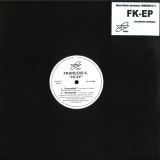
repressed !
Francois Kevorkian is a name that should need no introduction. With over 40 years in the game FK has occupied numerous roles in his long and storied career - drummer, DJ, A&R man, remixer and producer - his skills know no boundaries. Having DJ-ed during the nascent days of club culture in NYC alongside Walter Gibbons, Larry Levan and more, Kevorkian has been there from day one. Years spent in the seminal clubs of the day sharpened his ears and his prowess behind the mixing desk saw him become the A&R man at the legendary Prelude records in the early 80's, this in turn led to him working with everyone from The Eurythmics, Depeche Mode, Erasure, D-Train, Yazoo, The Smiths, Kraftwerk and many many more. A true NYC original and legend, Kevorkian is still active today and the respect he commands amongst his peers has never waned, his adventurous extended DJ sets, seminal mixes and remixes and his open ears and open mind have ensured that he will go down in history as a musical pioneer.
Rewind to 1995. Kevorkian's 'Wave Music' imprint has come into existence with a handful of releases. No-one could imagine that his self-produced 'FK EP' - the next release on the label - would be a stone cold classic. Easily one of the most consistent, exciting and solid EP's to come out of NYC during this golden era of dance music. Across 4 tracks we are taken on a sound journey through a world that is undoubtedly informed by FK's time as an engineer, DJ and most importantly, a music lover.
EP opener 'Hypnodelic' brings us into this world, a deep, driving cut that fuses the dubbed out vocals of Freddie Turner against FK's keyboards and immaculate drum programming, oozing cosmic electronic soul, this track was destined to be a future classic. 'Mindspeak' also boasts some tough drums and with a respectful nod to Chicago is an incredibly mixed and arranged peak-time cut that will drive your dancefloor into deep space again and again. 'Edge Of Time' welcomes us to the flipside of the EP, wild Latin percussions, tablas and old school horn stabs drive this monstrous cut, not to mention cavernous dub FX and that huge bassline that just doesn't let up. Essential. 'Moov' rounds things out on a more subdued, stripped back vibe. Reversed percussions and spaced-out synth chords lace this beautifully understated and warm track, one that builds into a crescendo of melodies and hypnotic rhythms and the perfect way to close what has been a truly special musical journey.
This essential reissue of the 'FK EP' has been fully licensed, sanctioned and remastered in conjunction with FK from the original master sources by Optimum Mastering, Bristol UK, repressed onto high quality vinyl and packaged as the 1995 release was. A truly classic record indeed, available again for 2018. Welcome back Wave Music!
Buscar:francois
François X closes The Skin Between Us with a final chapter that sharpens his vision.
Where Part I explored heritage and tension, Part II brings clarity — two new tracks that affirm his belief in techno as something lived, not abstracted.
Before I Knew The World is immersive and weighty, built on reverberant kicks and magnetic pads. In Memory Of is more direct — a driving, knight-like piece balancing percussive force and tenderness.
Rooted in the legacy of Black American dance music yet shaped by the European club experience, François X’s sound remains hybrid, sensual, and human.
This vinyl edition gathers the complete project — all five tracks from Part I and Part II — pressed into one record, capturing the full journey from friction to clarity.
- The Wires: Part 1
- Hall's Creek
- Emu Creek
- The Crater
- Alien F100
- Abysmal Horizon
- Talimnavi
- Liz
- The Shed: Part 1
- Arcane Menace
- Escape
- The Shed: Part 2
- The Cliff
- Mick
- The Return
- Trophy Room
- Head On A Stick
- Kristy
- Statesman Deville
- Ben
- Monumental Isolation
- Epilogue
- The Wires: Part 2
- Wolf Creek: Main Title
Erleben Sie den packenden Soundtrack des australischen Horrorklassikers "Wolf Creek" (2005) wie nie zuvor – neu remastert und auf Red+Black Splatter-Vinyl gepresst, mit exklusivem Artwork und Liner Notes. Der Komponist Francois Tétaz erschuf mit Klavier, Alan Lambs einzigartigen Telefonleitungsaufnahmen aus dem Outback Westaustraliens und einem Streichquartett einen Soundtrack, der als philosophischer Kontrast zum Horror von "Wolf Creek" fungiert. Eine eindringliche Mischung aus atmosphärischen Klanglandschaften, sparsamer Instrumentierung und unterschwelliger Bedrohung – die Musik fängt die Einsamkeit und Bedrohlichkeit des Outbacks in jeder Rille ein. Exklusive Collector's Edition für alle Horrorfans, Soundtrack-Sammler und Vinyl-Liebhaber gleichermaßen.
- A. The Surfer
- B. The Surfer
mpressed präsentiert in Zusammenarbeit mit Rubber Records den Soundtrack zum Psychothriller "The Surfer" (2024) in der Regie von Lorcan Finnegan mit Nicolas Cage in der Hauptrolle, der bei den 77. Filmfestspielen von Cannes Premiere feierte. Den Score schrieb der australische Filmkomponist François Tétaz, bekannt für seine Arbeiten für "Elvis" (2022), "Wolf Creek" (2005) und "Judy & Punch" (2019). Er fängt die Nostalgie des Protagonisten für den Strand seiner Kindheit, seine unterschwellige Melancholie und die einzigartige Atmosphäre des Ortes ein. Ein wunderschön gestalteter Soundtrack, der unabhängig vom Film genossen werden kann. 180g blau-weisses WAVE/WHITE WASH-Vinyl im Gatefold mit 12-seitigem Booklet und einzeln nummeriertem Obi-Streifen.
- "François Tétaz’ grandiose Filmmusik trägt in ihrem mythischen Antrieb Anklänge an Morricone." - Paste Magazine
- "Die Vertonung von "The Surfer" war ein Geschenk und eine Herausforderung zugleich. Nicolas Cage lieferte eine so großartige Performance ab, dass die Instrumentierung immer umfangreicher und ungewöhnlicher wurde – die Klangfarben erweiterten sich ständig. Irgendwie fügte ich schließlich eine absurde Menge an Windspielen, Mark Tree und Bell Tree hinzu. Normalerweise eine klischeehafte Instrumentenwahl für Wunder und Magie, sollen sie hier so eindringlich wirken, dass sie höhnisch und verrückt machen." – François Tétaz, Filmkomponist
Wieder ein gesuchter Kult-Soundtrack aus den Archiven von CAM Sugar - remastered und mit bislang
unveröffentlichten Bonustracks!
Der Gangsterfilm „La Scoumoune“ (1972) lief in Deutschland unter dem Titel „Der Mann aus Marseille“
und zog nicht zuletzt durch seinen Star Jean-Paul Belmondo die Leute ins Kino. Die Filmmusik von
François de Roubaix ist ungewöhnlich eingängig, auf Basis eines ins Ohr gehenden Titelthemas ist der
Sound mal nostalgisch (der Film spielt 1944), mal krimimäßig groovy, mal elektronisch angehaucht. Das
Thema wurde mehrfach als Werbejingle eingesetzt und von DJs gesampelt.
140g-Doppel-LP im Gatefold mit Beiblatt/Linernotes, digital remastered, mit neun bisher unveröffentlichten
Tracks und vier Coverversionen/Remixen von Alessandro Baldessari, Jean-Michel Bernard und Benjamin
de Roubaix
- François J. Bonnet Banshee
- Sarah Davachi Brasse Brevis
Basse Brevis der kanadischen Komponistin Sarah Davachi wurde im Rahmen des Festivals Présences 2024 uraufgeführt, das Steve Reich gewidmet war und von Radio France und INA grm gemeinsam in Auftrag gegeben wurde. Ausgehend von ihrem eigenen minimalistischen Ansatz erkundet Sarah Davachi mit äußerster Sorgfalt die Verflechtungen und komplexen Beziehungen zwischen den klanglichen, räumlichen und zeitlichen Komponenten der Musik. Mit Hilfe von Entwicklungen, die im Laufe der Zeit nachvollziehbar sind, gelingt es der Komponistin, eine äußerst präzise, subtile und lebendige Musik zu schaffen. Was jedoch auffällt und in Basse Brevis besonders deutlich wird, ist die Tatsache, dass ein derartiger Ansatz, der sowohl abstrakt als auch zurückhaltend ist, dennoch zuweilen äußerst ergreifend ist. Das Werk verbindet Momente der formalen Erkundung mit Momenten reiner Emotion auf perfekt beherrschte Weise und erzeugt eine sanfte Spannung, während es zwischen zwei Arten des Hörens schwankt, die sich unentschlossen zwischen instrumentalen und konkreten Ansätzen bewegen und parallel dazu eine Diagonale des Klangs nachzeichnen, die sich um Wahrnehmung, Empfindung und Gefühl herum entfaltet.
- A1: Où Mène La Nuit
- A2: Adorer Feat Thomas De Pourquery
- A3: Aïeul Inconnu
- A4: Jeune Versant Feat. Malik Djoudi
- A5: Le Fil
- B1: Fleuve Des Âges
- B2: Pas Lents Dans La Neige
- B3: Elle S’envole
- B4: Party
- B5: Rappelle-Toi Feat. Rozi Plain
Fragility, modesty, delicacy... Frànçois’ voice evokes illustrious contemporaries, from Devendra Banhart to Vincent Gallo, whose vocal inflections sometimes echo behind the uniquely French timbre.
Artists like Malik Djoudi with his captivating pop, in-demand jazzman Thomas de Pourquery, and British folk artist Rozi Plain all lend their talents to Âge Fleuve. These three delightful collaborations blend seamlessly into the album’s 10 tracks. But the album’s fluidity is also felt in the flavor of certain compositions, like the upbeat “Où mène la nuit,” a kind of mystical inquiry into the whirlwinds of youth. Then there’s “Aïeul inconnu”, whose apparent melancholy pairs perfectly with its elegant groove. “Adorer”, the duet with Thomas de Pourquery, is an uplifting track that jumps wholeheartedly into the joy of living in the “present moment”.
Âge Fleuve—or rather, a “liquid inspiration”— is built on a heritage of memory. And when one delves into the mystery of this heritage, the answer becomes clear: “We’re here, under this part of the river, further downstream. Everything communicates, everything is in motion.” In other words, an album flowing through the river of our sensory, intimate, and universal heritage.
- Enfer - La Découverte De L'ombre
- Enfer - Les Portes (1E Contrainte) I - La Bête
- Enfer - Les Portes Ii - Le Chemin Difficile
- Enfer - Les Portes Iii - Les Portes De L'enfer
- Enfer - Les Portes Iv - L'étendard Humain
- Enfer - Les Portes V - Passage De L'achéron
- Enfer - L'impouvoir (2E Contrainte) I - Béatrice
- Enfer - L'impouvoir Ii - Désir Sans Espérance
- Enfer - L'impouvoir Iii - Les Châteaux
- Enfer - L'impouvoir Iv - L'ouragan Infernal
- Enfer - Mal-Mort (3E Contrainte) I - Mal-Mort
- Enfer - Mal-Mort Ii - Le Messager Céleste
- Enfer - Les Monstres (4E Contrainte) I - Femmes De Griffe
- Enfer - Les Monstres Ii - Hommes De Ronces
- Enfer - Les Monstres Iii - Métamorphoses
- Enfer - Les Monstres Iv - Cerbères
- Enfer - Les Abysses (5E Contrainte) I - Les Abysses
- Enfer - Les Abysses Ii - Le Styx
- Enfer - Les Abysses Iii - Le Rêve Du Rêve
- Enfer - Fond De Bleu (6E Contrainte) I - Le Phénix
- Enfer - Fond De Bleu Ii - Fond De Bleu
- Enfer - Le Noud Ardent (7E Contrainte) I - Bataille Des Dragons
- Enfer - Le Noud Ardent Ii - Le Noud Ardent
- Enfer - Le Crépuscule De L'aube
- Purgatoire - Danse Des Chiffres
- Purgatoire - Chiffre 1 L'ange De Dieu - Le Roseau
- Purgatoire - Chiffre 1 - Ils
- Purgatoire - Chiffre 1 - La Barque
- Purgatoire - Chiffre 1 - Danse Du Tremblement Initial
- Purgatoire - Chiffre 2 La Vallée Des Princes - Polyphonie 1
- Purgatoire - Chiffre 2 - Polyphonie 2
- Purgatoire - Chiffre 2 - Longue Attente
- Purgatoire - Chiffre 2 - Rêve De L'aigle
- Purgatoire - Chiffre 3 La Porte Ou Deuxième Ange
- Purgatoire - Chiffre 4 Les Sculptures - Épreuve De L'orgueil
- Purgatoire - Chiffre 4 - Ô Notre Père
- Purgatoire - Chiffre 5 Extase - Polyphonie 3
- Purgatoire - Chiffre 6 L'ange-Feu - Danse En Six Parties
- Purgatoire - Chiffre 7 Épreuve Des Flammes - Fusion
- Purgatoire - Chiffre 7 - Maître De Toi-Même
- Purgatoire - Chiffre 8 Paradis Terrestre - Béatrice -Danse Des Trois Dames
- Purgatoire - Chiffre 8 - La Forêt
- Purgatoire - Chiffre 8 - Béatrice
- Purgatoire - Chiffre 9 Transparence - Le Repentir
- Purgatoire - Chiffre 9 - La Vérité Révélée
- Purgatoire - Chiffre 10 Figure Supérieure Paradis
Erste Gesamtausgabe als Deluxeausgabe: 4xLPs in einem geprägten Gatefold-Cover, gestaltet von Stephen O'Malley, mit einem 30 x 90 cm großen Poster. "Divine Comedie" ist ein Opus Magnum, geschaffen von zwei der führenden Komponisten ihrer Zeit, mit einem musikalischen Anspruch, der Dantes Gedicht und seiner visuellen Interpretation durch Sandro Botticelli oder Gustave Doré gleicht. Lange Zeit wurde dieses Triptychon als ein zweiseitiges Werk präsentiert, in dem Bernard Parmegianis Hölle und François Bayles Fegefeuer aufeinander reagierten und sich gegenseitig erweiterten. Michel Hermons Stimme führt durch die Vorstellungskraft des Zuhörers. Erstmals wird "Paradise", ein gemischtes Stück, das gemeinsam komponiert und live aufgeführt wurde, auf Tonträger veröffentlicht. Tatsächlich wird "Paradise" fünfzig Jahre nach seiner Uraufführung für unsere Ohren enthüllt und wertet damit die erste Gesamtausgabe von "Divine Comedie" auf. - François J. Bonnet, Paris, 2023
Francois Dillinger coming directly for the metallic jugular here. Right hooking the all the AI bots , tearing down mainframes , and anything else his edge out sharp electro sound can rattle . Made to oil the pistons on the dancefloor ONLY .
It's almost a shame were putting online . But this heat seeking missile of a 4 tracker EP is just too good to not let all the fake profiles hear . So grab it quick , before we change our minds , and wipe the data base !
Almost 3 years after the release of "Mathusalem", François Ier reveals his fiery successor, "Incendie". In keeping with his previous releases, this new opus has been conceived on the basis of enveloping layers, deep bass and harmonies that are always very rich. The melancholy dimension characteristic of his music is also omnipresent, although it sometimes asserts itself with a form of violence.
Like its abundant cover, this new opus deploys an extremely varied range of sounds, most often evoking strong English influences, with breakbeat, jungle, drum'n'bass and new-wave rhythms, all supported by vocal samples with dancehall, reggae, r'n'b, reggaeton and hip-hop accents, resulting in a hybrid sound to say the least. "Incendie" is marked by the systematic use of the Prophet 8 synthesizer, whose wild, constantly shifting sound underlines the fiery character of this new opus.
PAPILLON DE MER'('Sea Butterfly') is jazz guitarist Jean-Franois Pauvros' and electro musician/composer Alain Mahe's latest collaboration - music inspired bythe paintings of Belgian artist Vincent Fortemps, and their shared attraction to an imagined underwater world withmetaphorical guidance of the legendary trombonist and singer Rico Rodriguez, instigator of Jamaican ska with whom Pauvros was lucky enough to play and record with.
Jean-Francois Pauvros - guitar, vocals
Alain Mahe - Kobol RSF modular synthesizer, tenor sax, stones...
Rico Rodriguez - trombone ( feat. on 'Disparition' and 'Au bout des mondes'
Cylene II is the new materialization of the collaboration between François J. Bonnet & Stephen O"Malley, initiated in 2018 and continued without interruption since then, taking form in a myriad of contexts ranging from common practice to recording sessions, concerts and tours. Cylene II bears witness to these different contexts, offering a multifaceted sound signature developed on different occasions (artist residencies in La Becque, Switzerland and Modena, Italy, live performance excerpts, a studio session at INA-GRM Studios in Paris). The epic opening track "Four Rays (Anti Divide)" welcomes, for the first time, other musicians - in this case a wind quintet - expanding the duo"s sonic palette without betraying the fundamental component of their music, namely the driving of sonic energy. Elsewhere, Bonnet and O"Malley propel the energy between themselves, extending the singular climate that has characterized their musical development over the past five years. Among their minimal presentation of tones and resonances, as glacial harmonic intersections slowly elevate with massive physicality to an orchestral degree, new refinements become evident: the music"s relationship to silence, and a brightening of the fine metallic edge glowing at its core. For the listener, Cylene II is a sound that reaches from the deep and scales up to the far firmament in its careful motion, drawing emotions viscerally from the chest, giving rise to the suggestibility of the soul. A séance of sorts for all who witness it, whether playing or listening.
Francois Dillinger brings his futuristic visions to this classy new EP on EC Underground. It finds the sonic sculptor kick off with a warped bassline underpinning an eerie and slow motion electro cut on 'The Pilgrimage.' 'Tangential' is another snaking rhythm with mysterious pads and bouncing bass that makes for a truly original vibe.
'Message Failed To Send' has a hint of Kraftwerk retro-ism to its snappy snares and talk box vocals then 'When It Was Free' classes down with a gritty mix of celestial charm and deep space unknown.
These are next level sonics as always from Dillinger.
After a stay on the Côte d'Azur, Claude François moved to Paris in 1961. Determined to take the Capital, the young performer recorded new songs for the Fontana label. A few months later, the stunning success of “Belles! Belles! Belles! is soon followed by that of “Si j’avais un marteau”, an adaptation by folk songwriter Pete Seeger. At the dawn of the 1960s, Claude François joined the closed circle of yé-yés idols. Appeared under the pen of the sociologist Edgar Morin, the name "yéyé" designated a generational movement inspired by Anglo-Saxon pop culture. Adored by post-war baby boomers, his protagonists caused a veritable popular tidal wave and shake up the charts. Here starts the yé-yé revolution, and the legend of Claude Francois Ads –London Macadam Reviews –London Macadam, R2
Coming straight from the United States, soul music became an essential genre in the mid-1960s. In France, Claude François, marked by the discovery of serial hits from the legendary Tamla-Motown label of Detroit, became one of its first promoters. Proposed in their French adaptations, the pulsating rhythms and irresistible melodies from the Four Tops, the Supremes and other champions of soul music spread across France. On stage, Claude François also adopted the spectacular performances of his models from across the Atlantic and surrounded himself with the Claudettes, dancers-choristers echoing the famous Ikettes of Ike & Tina Turner. An exceptional showman and performer! Ads –London Macadam Reviews –London Macadam, R2
Paris, 1965. Pianist François Tusques laid the foundation stone of French-style free jazz with his first, soberly titled, album “Free Jazz”. Also in the team were several future key names of the French scene, (Michel Portal, Bernard Vitet, Beb Guérin, Charles Saudrais and François Jeanneau) all of whom honed their skills at the beginning of the decade in Jef Gilson’s groups, although he was none too fond of the turbulent new face of jazz at the time.
Ten years later, Jef Gilson had obviously changed his tune, as the label Palm that he had created in 1973 was now the launch pad for what would become the cream of French and international avant-garde jazz. This would notably be the case for François Jeanneau and “Une Bien Curieuse Planète”. His first album as leader (after briefly erring into pop with Triangle) was recorded in 1975, a few months after “Watch Devil Go” by his old friend Jacques Thollot, and with more or less the same casting: Jeanneau on sax of course, Jenny-Clark on bass and percussions, Lubat replacing Thollot on drums and Michel Grailler (plucked out of Magma) was called in as a reinforcement for his completely ‘out of space*’ synthetiser sounds. Thus began a strange trip to a very strange planet, at the border of experimental jazz and swinging avant-garde.
From 1960 to nowadays, from Georges Arvanitas to Laetitia Shériff, from Manu Dibango to “Mama” Béa Tékielski, everyone has wanted to play with François Jeanneau at some point. There is a good reason for this. The saxophonist is a formidable improviser, but also a solid composer, as he demonstrates on this record with, for example, the monumental “Droit d’Asile”, the spooky “Theme For An Unknown Island” or the Coltranesque “Mr J.C. For Ever”. Over half a century later, the planet seems far more familiar to us. And François Jeanneau is always on the front line for a guided tour.
Jérôme « Kalcha » Simonneau
Following the reissue of the self-titled debut by Tülay German & François Rabbath in 2021, we're presenting the 2nd and final part of our Tülay German reissues: "Homage to Nazım Hikmet" (1982). Once again in a duo setting with François Rabbath, Tülay German pays tribute to one of Turkey's greatest poets of the 20th century: Nazım
Hikmet (1902-1963).
Recorded in the early 80s this two-album workcycle refers heavily on turkish poets and the tradition of aşıks (singer-poets and wandering bards) and consists of unique and modern interpretations of turkish folk songs unmatched to this day.
Back in the 60s Tülay German (*1935 in Istanbul, Turkey) shook the turkish music landscape with several 7" records. Most notably her first 7" record Burçak Tarlası (1964) is now considered
the cornerstone of what was to become the Anadolu Rock/ Pop movement and underlines her rebellious nature and sense of justice. But due to increasing repression Tülay German and her
lifelong partner and intellectual impetus Erdem Buri decided to leave Turkey a few years later.
In France Tülay German signs a major contract with Philips resulting in many 7" releases sung in french under her french moniker Toulaϊ. In the long run Tülay German doesn't feel quite comfortable with this major deal. And thus, despite the success and recognition she had gained, she decides to quit the contract with Philips!
Later on she signs to independent world-music label Arion to pursue her actual artistic goals more in line with her origin and temperament. Back to her mother tongue, Tülay German records above mentioned albums for Arion under full artistic freedom, the only full-lenghths in
her 20+ years career. Alongside with double-bass virtuoso and turkophil François Rabbath (*1931 in Aleppo, Syria) the albums consist of aşık traditionals and intonated poems mainly by
Nazım Hikmet. Her passionate voice and the restrained arrangements of François Rabbath turn these centuries old melodies and poems into glowing manifestos for love and justice. The fruitful collaboration of these artists-in-exile adds significantly to the rich heritage of turkish folk music.
Nazım Hikmet (1902-1963) is considered as one of Turkey's greatest poets of the 20th century, though during his lifetime his works were banned in Turkey for decades and he spent most of his life in prison or in exile. He is up to this day a huge reference for turkish writers,
musicians and intellectuals.
Tülay German ended her musical career in 1987. In 2021 Tülay German was awarded with the Lifetime Achievement Award by the Istanbul Foundation for Culture and Arts, Turkey.
- A1: Les Survivants Resume
- A2: Les Survivants Tango
- A3: Les Survivants Theme Siffle
- A4: Sarlino
- A5: Cointreau
- A6: Michelin Radial
- A7: Coral
- A8: Tarif De Nuit (Instrumental)
- A9: Tarif De Nuit (Version Chante)
- A10: Fiat Coupe
- A11: Muratti
- A12: Maniatis
- A13: Megeve Mont D'arbois
- B1: De Paris A L'everest
- B2: Cashmire
- B3: Trois Enfants Au Nepal
- B4: Everest
- B5: Tradit
- B6: Mobyx
- B7: Le Cubisme, Les Tableaux
- B8: L'avenir Du Futur
Composer François de Roubaix was born in 1939. He didn’t receive any formal musical education, but he became interested in jazz from the age of 15. His professional musical career only spanned ten years, from 1965-1975. During that period he composed for commercials, TV series, shorts, and about 30 feature-length films.
The most striking aspect of François de Roubaix’s music is its versatility: on one hand, it’s his ability to create simple, memorable tunes; on another hand, it’s his bolder experiments with different timbres and recording techniques. He freely combined folkloric and electronic instruments, embracing the advent of the first synthesizers and rhythm boxes. Being a multi-instrumentalist gave him a high degree of artistic freedom, as he spent long hours at his home studio overdubbing various parts of his scores until he would reach the desired result.
Du Jazz à L’Electro 1965-1975 is a brand new compilation album consisting of compositions by Francois de Roubaix. It includes previously unreleased and hard to find compositions from tv-series like Les Survivants and Tarif De Nuit. This compilation also includes compositions for commercials of Cointreau, Muratti and Fiat Coupé. Du Jazz à L’Electro 1965-1975 is available as a limited edition of 1500 individually numbered copies on solid yellow coloured vinyl, housed in a gatefold sleeve with liner notes and background stories about the compositions.
In the year 2909, the first naturally-born human is found with endogenous AI code built into its DNA. As we cross into the 31st century, all living humans are controlled by a decentralized master AI known as MINDFRAME: The system has access to all of human consciousness with the ability to store and manipulate the data of every interaction and thought — even operating within your subconscious mind. It becomes impossible to know when or how you’re being controlled.
During each sleep cycle, our behaviors and memories are reformatted to align with MINDFRAMES control and order programming. Some have discovered that during these cycles, there are parts of the AI’s algorithm left exposed to extraction. Through meditative states, gifted cyber-shamans are now on a mission to reverse engineer enough of the AI to escape its grip and free us all.
FRANCOIS DILLINGER (Ben Worden) glides between the two worlds of electro and techno. His journey through the genres is dark while retaining a cerebral, dancefloor-oriented quality. This stems from influences of Industrial, Detroit’s rich history of electro, minimal techno, and even Ghettotech. In the studio, he uses primarily all external hardware and modular gear, utilizing Ableton for final arrangements and editing. His Live & DJ sets lean heavily into the generation of hypnotic loops, creating long protracted mixes between elements to form an unshakeable tension.
While he grew up an hour east of the Motor City, his musical roots were firmly planted there – taking hold over decades worth of defining moments in sound. As a fan, former promoter, and DJ he’s been a part of the Detroit scene for over 20 years, having lived there multiple different times. Currently, he also works with local Detroit label Infolines to manage branding and art direction alongside his wife, Ashely.
Prior to the MINDFRAME: CYCLES LP, he had released a track on SPEC-017’s VA release, and will feature a remix on an upcoming Specimen Records project as well. Early in 2021, his second album was released on Diffuse Reality featuring remixes from Keith Tucker/K1, Detroit’s Filthiest, and Squaric. Upcoming releases from DILLINGER include a variety of collaborative projects — Machine Men EP with Lloyd Stellar on LDI Records, an LP with Cyphon and Obzerv, and a number of VA releases with artists like RXMode (via Pareidolia Recordings), CYBEREIGN (via Science Cult), ADMN (via Infolines) and others. Look for other releases coming soon on Noise To Meet You, Roulette Rekordz, and Syntek Industries.
His previous releases have landed on Blind Allies, Natural Sciences, Dionysian Mysteries, Ukonx Recordings, Fanzine Records, and ZwaarteKracht—as well as a debut album on Narrow Gauge, ‘Chasing the Red’. Support for his music has come from the likes of Richie Hawtin, Dave Clarke, Jensen Interceptor, UMWELT, and others.
Between May and September 1970, pianist François Tusques recorded »Piano Dazibao«, an album on which he multiplied joyful escapades as a critical iconoclast. The following year Tusques recorded »Dazibao N°2«, which shows him as an incisive commentator of his times. Following in the footsteps of Don Cherry, who he had met a few years earlier in Paris, Tusques made a plea for “friendship between all the peoples of the world” to the sound of Universalist hymns which transported us from Africa to Asia. But it is really a song to America, evoking the assassination of the activist George Jackson and the mutiny in Attica prison, before covering “Seize the Time” by Elaine Brown – three years after the release of Dazibao N°2, she became the first (and only) woman to lead the Black Panther Party.
The turmoil of Piano Dazibao, was opposed, on Dazibao N°2, by long, labyrinthine tracks with alternating discords and repetitions. Often using prepared piano, Tusques was more percussive (even heady) than ever, exposing a melody with solid hammer strikes or painting an image which radiated peace in spite of the storms. Piano Dazibao and Dazibao N°2 thus form the two sides of one coin, which displays the effigy of François Tusques, an international national monument.
- 01: Mister Don Cherry Comprit Que Leur Esprit Etait Abattu Et Repeta Dune Voix Musicale Quelques Blagues Reservees Pour Les Temps De Detresse
- 02: Sunny, Archie, Clifford, Meme Combat
- 03: Que 100 Fleurs Sepanouissent
- 04: La Revolution Est Une Transfusion Sanguine Voila La Mer, Voila La Vie
- 05: La Bourgeoisie Perira Noyee Dans Les Eaux Glacees Du Calcul Egoiste
- 06: Liberez Michel Le Bris_
- 07: Vie Et Mort De Lalexandrin
To avoid the “Quésaco?” on the sleeve of Piano Dazibao, François Tusques explains everything: A wall mural on which the Red Guard expressed their opinions during the Chinese proletarian cultural revolution. So much for the “Dazibao”, very good; but the piano in all that?
The piano, François Tusques was self-taught and his work was influenced by Jelly Roll Morton and Earl Hines before discovering Thelonious Monk, Bud Powell and then... free jazz. In Paris in 1965, Tusques mixed with Michel Portal, François Jeanneau, Jean-François Jenny-Clark, Aldo Romano or Jacques Thollot. He also met Don Cherry and above all recorded, with other like-minded Frenchmen (Portal and Jeanneau alongside Bernard Vitet, Beb Guérin and Charles Saudrais), the first album of free jazz in France, named... Free Jazz.
In 1967, Tusques again served up Le Nouveau Jazz, this time in the company of Barney Wilen (and Guérin, Jenny-Clark, Romano). Three years later his thirst for freedom led him to isolation; between May and September 1970, the pianist recorded, at his home, the first of two albums that he would release on Futura Records: Piano Dazibao and Dazibao N°2.
Under the influence of Mao and Lewis Carroll, the free spirit roamed and composed seven tracks which are not so much free as libertarian. As an homage to some friends (Don Cherry, Sunny Murray, Archie Shepp, Clifford Thornton but also Colette Magny, Michel Le Bris or the Théâtre du Chêne Noir), the pianist played cascading bouquets of notes, free-form wanderings, blues-ambushed dances, growls, discords, a fatal requiem... A cherished freedom, songs of hope and demands, François Tusques offers the most unrelenting of independent records.
Remastered vinyl reissues of the two essential albums by Turkish folk singer Tülay German, starting with the self-titled release (1980) and followed by "Hommage to Nazım Hikmet" (1982) in early 2022.
Referring heavily on turkish poets and the tradition of aşıks (singer-poets and wandering bards) these two albums represent unique and modern interpretations of turkish folk songs unmatched to this day. A matured artist with full conviction at the height of her powers!
Back in the 60s Tülay German (*1935 in Istanbul, Turkey) shook the turkish music landscape with several 7" records. Most notably her first 7" record "Burçak Tarlası" (1964) is now considered the cornerstone of what was to become the Anadolu Rock/ Pop movement and underlines her rebellious nature and sense of justice.
But due to the increasing repression Tülay German and her lifelong partner and intellectual impetus Erdem Buri decided to leave Turkey a few years later. In fact, an impending prison sentence for Erdem Buri for translating Hegel's "Dialectic and Science of Logic" and
Plekhanov's "Fundamental Problems of Marxism" led the couple to emigrate to France.
In France Tülay German signs a major contract with Philips resulting in many 7" releases sung in french under her french moniker Toulaϊ. In the long run Tülay German doesn't feel quite comfortable with this major deal. And thus, despite the success and recognition she had
gained, she decides to quit the contract with Philips!
Later on she signs to independent world-music label Arion to pursue her actual artistic goals more in line with her origin and temperament. Back to her mother tongue, Tülay German records above mentioned albums for Arion under full artistic freedom, the only full-lenghths
in her 20+ years career. Alongside with double-bass virtuoso and turkophil François Rabbath (*1931 in Aleppo, Syria) the albums consist of aşık traditionals and intonated poems mainly
by Nazım Hikmet. Her passionate voice and the restrained arrangements of François Rabbath turn these centuries old melodies and poems into glowing manifestos for love and
justice. The fruitful collaboration of these artists-in-exile adds significantly to the rich heritage of turkish folk music.
The self-titled debut, which was awarded with the prestigious "Grand Prix du Disque" of Académie Charles Cros in 1981, is now seeing a vinyl reissue after 40 years.
Tülay German ended her musical career in 1987 and after the death of Erdem Buri in 1993 she retired from public life completely, leading a quiet life in Paris where she still lives to this day. In 2021 Tülay German was awarded with the Lifetime Achievement Award by the Istanbul Foundation for Culture and Arts, Turkey.
In 1980 the trio Humair / Jeanneau / Texier
recorded this album, which was initially intended to
illustrate an animal documentary. The trio did not
know that ‘Akagera’ would become one of the
founding moments of an aesthetic and an ethic of
French jazz which, 40 years later, remains a model
of the genre.
First of all, the instrumentation (sax / bass / drums)
is already singular for the time, then the creative
power of a trio where each musician finds a
cardinal place, very far from a mere rhythm section
accompanying a soloist. Finally, the three
musicians are also composers, each of them
contributing original themes tinged with Africa and
the Savannah, modal and mysterious World Music,
inexhaustible subjects of unbridled improvisations.
‘Banane Bleue’ (French for blue banana), the brand new album from Frànçois & The Atlas Mountains, is a nomadic and truly European record, hailing from rented workspaces in some of the continent’s key cities - Berlin, Athens and Paris - and recorded with instruments that were often borrowed from likeminded musicians.
Written solely by Frànçois Marry himself, close collaborator and Weird World artist Jaakko Eino Kalevi was enlisted for production duties whilst Renaud Letang (Feist, Gonzales, Connan Mockasin) mixed the album.
The title of the album is taken from the ‘blue banana’ concept, a geographical theory that groups together a corridor of Europe’s biggest cities, originally conceived in the 1980s. The theory states that the blurring of these cities’ boundaries has resulted in the formation of one massive, interconnected megalopolis.
Expanding on the theory, Frànçois poetised it, picturing a luminescent blue banana shape that you can see from space with vibrant, ethereal currents that surround and bind us. It explores common cultural and romantic ground, creating an album full of missed meetings and misunderstandings.
CD into printed inner wallet and 8-page booklet.
Vinyl into printed inner sleeve with digital download card.
- A1: Celima
- A2: Du Vent Dans Les Voiles
- A3: La Vie À Bord
- A4: Marche Dans La Montagne
- A5: Enterrement De Said Ali
- A6: Générique
- A7: La Mer, La Nuit
- A8: Pêcheur De Perles
- A9: Les Plus Belles Perles Du Monde
- A10: Thème De L’adieu (Final)
- A11: Générique (Version 2)
- B1: Mafia Au Moyen-Orient
- B2: Hadji
- B3: La Pêche
- B4: Amina
- B5: L’esclave Gabré
- B6: Les Pirates
- B7: L’enlèvement
- B8: L’évasion
- B9: Désert
- B10: Amina (Version 2)
Transversales Disques presents for the first time on LP, François de Roubaix’s full score for the French TV series Les Secrets de la Mer Rouge, an adaptation of the epic travel, through the Middle East, of the famous writer and explorer Henri de Monfreid. This album is a collection of the original (1967) themes and those recorded later in 1975 when the TV series was continued.
In the 1967 soundtrack, de Roubaix uses various flutes, marine conches, and for underwater views, unexpected instruments such as a celesta or a crystal xylophone. By 1975, electronic technology had dramatically developed and this evolution is clearly apparent when one listens to the recordings of the two seasons. For the later 1975 series, de Roubaix composed a new music score, mixing old and new sounds, a great combination of EMS VCS3 synthesizer subtly mixed with acoustic instruments.
For François de Roubaix, there was never a border between fiction, life and music, and writing music for Les secrets de la Mer Rouge was an extension of his love of the open sea.
The 888 Miles E.P. includes two original tracks, 888 Miles and 777 Miles, which both develop a psychological tension that leads to moments of euphoric liberation where the synths soar and allow the mind the wander, accompanied by a rhythmic groove. There is a slightly different sensitivity between the two tracks that you'll can easlyer constat. Then, don't forget, even if the approach sounds different, the soul remains the same. The other original track, 000 Miles, places you on a spacecraft, with ambient musicality sounding like it could have been generated by hydraulic pipes or air conditioning. This E.P. release also includes '888 Miles XXX Reshape', a deep techno remix by none other than the awesome Francois X. He's probably the best person to describe it: "I've known David & Kevin (Klash Point duo) for a while now and when they suggested that I produce a remix for them, it was natural to say yes. It's funny how this piece of music saw the light, as it has a completely altered tone from the original. It's definitely one of my funkier tracks, with trippy and bluesy vibes - like a trip deep into the wild."
40 years after the original release, Nanga Boko Records is very proud to
present you the official reissue of De Bonaberi A Douala, the first album from
the Cameroonian musician Nkotti François and his band The Black Styls.
Limited edition, high quality remastered sound, includes a very detailed
biography in both English and French languages with exclusive pictures for a
better comprehension of the work of the musician, and a voucher to download
the album in a HQ digital format.
Approved by the artist himself, 100 % legit, all 8 tracks are under exclusive
license of Nanga Boko Records.
Kêtu Records started as a project which sells original vinyl discs with the aim of promoting African music of the Golden Age (1960-70). We have developed a large network in Africa to trace these original vinyl discs. We also organize events and sell the discs. Part of the profit is reverted to support local initiatives such as local orchestras, O.N.G. that help disables and schools.
For this first single release, NKOTTI FRANCOIS, great Cameroonian artist of the 70s-80s and still active on the African scene, signs for a reissue of 'MUWASO MWA LONGE' and 'NJA KA'; two amazing titles from the LP Retro 2000.
Our final physical release of 2018 at First Word comes courtesy of Souleance, aka the DJ producer duo consisting of Soulist and Fulgeance, with a double A sided single, and a glimpse into one of our forthcoming 2019 releases, 'French Cassette' which follows on from Souleance's acclaimed 'La Beat Tape' release from 2013, and again delves into crates of samples with a distinct French flavour.
'François' is a track dedicated to the one and only François de Roubaix, legendary film score composer, jazz aficionado and one of the duo's biggest French influences. A delectable slice of 100 bpm instrumental boom bap, built around a seriously infectious jazz-funk groove, and chopped-up vocals.
'Sète' heads to the south of France, to the beautiful Mediterranean city where Gilles Peterson's Worldwide Festival takes place. A region that the duo have had love and appreciation of, for many years. This one touches up the tempo a little, with some sun-glazed boogie riding beneath ethereal vocals, samples and sizzling synths.
With a decades worth of collaboration between them, and persistent party rocking across Europe, Souleance continue to create tried & tested nuggets of magic for the dancefloor. This double-sided 7" is no exception, and should give you an idea of what to expect from the full beat tape next year. Meanwhile, here's another essential one for the record bags.
Never released before: on the occasion of the 60th anniversary of the GRM, the composer François Bayle introduces us to some of his unpublished archives:
"Electrucs !" (1974) composed on a 1970's Synthi AKS synthesizer like an imaginary oundtrack
"In 2016 I released Cascades. Francois K got in touch with some very kind words about the track and offered to remix it, initially in surround for his 2016 show at the Ministry of Sound and later on in stereo. Here it is. It's deep & luscious. Enveloping and all encompassing. A melted chocolate fountain of warmth & joy minus Augustus Gloop.
Cut by CGB at Dubplates & Mastering, Berlin, June 2017
Digital Transfer: Jonathan Fitoussi
Translations: Valérie Vivancos
Layout: Stephen O'Malley
Coordination GRM: Daniel Teruggi & François Bonnet
Executive Production: Peter Rehberg
Tremblement de terre très doux (1978), 28'14
climate 1 / transit 1 / landscape 1 / climat 2 / landscape 2 / transit 2 / landscape 3 (walking - jumping - sliding - flying) / climate 3 / landscape 4 / climate 4 - transit 3 / landscape 4, end.
The familiar generates the strange.
These rolls, these hums, these sudden rushes, this song, these peaceful circlings, these sudden outbursts, these returns to quiescence - what do they remind us of
This piece's trajectory could also be a representation of the dramatic unfolding of a day - of a life - from sunrise (climate 1) to night-time (landscape 4) via restless encounters, transitions (1 to 3) that announce the drama climaxing in landscape 3, before reaching its denouement in climate 4... A whole concrete 'story'.
The subterranean properties inherent to listening gently shift our ideas...
François Bayle
First performance: 19 March 1979 - Grand Auditorium of Radio-France,
Ina-GRM's Cycle Acousmatique. .
Toupie dans le ciel (1979), 21'
A wave is swaying on two minors thirds. This constantly uniform yet constantly varied swaying revolves in a swarm of sharp designs that blink on and off in a layer of growing density and mobility.
Distance, speed, pressure, density, temperature, colour, intensity, are the "themes" of the 27 short interconnected cells flowing together though this seemingly unified movement.
Occasionally, a breach in the texture reveals skyes dotted with little comets. In the centre, a slow gliding picks up the distant harmonics of a basic chord. Toward the end, this gliding returns with a fiery burst.
Fine lines and whirs are generated from the song of a spinning antique top.
To end on a lighter note the title Toupie dans le ciel - Spinning Top in the Sky reminds us of Lucy in the Sky with Diamonds by The Beatles as well as Lucy, the oldest Australopithecine (3 million years), our African grandmother in the Erosphere...
The overall title Erosphere alludes to the desire inherent to the listening experience, and to the very primitive cues that sustain the auditory attention and are the basis of all musical pleasure.
François Bayle
First performance: 21 January 1980 - Grand Auditorium of Radio-France,
Ina-GRM's Cycle Acousmatique.
From Paris with Techno! Taapion records is back with a second compilation: Four tracks made in the French Capital city with Shlomo, Francois X, PVNV & Birth Of Frequency. Fisrt come Radioactive Sin from one of the label owner: Shlomo. The track has an uptight rythm, giving a feeling of pressure with hopless pads on top. Like an empty landscape after a nuclear war. Francois X is standing on A2 with Dreaming Of The Tesseract. He is building up a hudge loop with the Devil's tension and driving the cinematics Leads as an Horror movie director. Just flip the record and you'll find an other Taapion records owner on B1 : PVNV. He's travelling again In a deep and atmospheric techno with a track called Pace Chemistry. An amazing journey into the center of a dream where techno is a religion. Birth Of Frequency is closing the record on B2. With this track named Child, he decided to recreate his own vision of Taapion records. With that amazing Pad, wich is almost there all the time in the track, Simon aka Birth Frequency catch you on the Techno highway and gives you strong emotions.
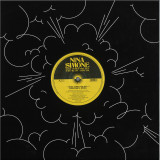
Three incredible reimaginations of Nina Simone classics from Francois K, Tony Humphries and Coldcut each with their own unique touch and trademark style weaved within.
Francois K kicks off with a sublime deep house rework of 'Here Comes The Sun'. Reminiscent of Larry Heard's output, Francois nods to Mr Fingers with a bassline that harks back to those early Chicago classics, coupled with deft mbira touches that create an other-worldy feel to the remix. Celestial waves and singing rides mix with a buzzing top line melody that lay the foundations for Simone's spiritual voice to hang in the air with a perpetual elegance and grace. A timeless slice of house music that earned Francois' version a spot on one of Innervisions acclaimed 'Secret Weapons' compilations.
Next up, Zanzibar royalty Tony Humphries lays out a bumping remix of 'Turn Me On' turning the bluesy soul leanings of the original on their head and flipping it into an uplifting summertime groover. Simone's words take on a different tone with this revitalising rework backed by staccato guitars and chopped up vocal melodies that give a playful yet soulful character to this slab of sunshine.
Rounding off the EP in classic Coldcut style, the duo meld 'Save Me' into a chopped, screwed and crunched remix. Lo-fi percussive elements and distorted textures blend with glitching samples and stuttering sequences that turn Simone into a tripped-out goddess. An atmospheric piece of electronica but with a harden edge purpose made for the dancefloor.