7"
Melbourne/Geelong quartet School Damage began as a bedroom recording project for Carolyn Hawkins (Chook Race, Parsnip) and Jake Robertson (Ausmuteants, Frowning Clouds etc). They released a cassette for Moontown Records in 2013, then were joined by Jeff Raty on drums and Dani 'Damage' Hakim on bass.
Taking cues from pop outfits such as The Vaselines, The Particles and Young Marble Giants, School Damage's sound is defined by wobbly keyboards, weaving bass lines, and lyrical content focused on the vagaries of modern life.
Following on from last year's excellent debut album through Chapter, School Damage return with a new EP for Upset The Rhythm titled 'Sings... Four Songs About One Cat'. As titles go this one hits it on the head, School Damage tell the tale of a very independently-minded feline that they share their life with called Lumpy (also known as Scump). As Jake from the band explains, 'Lumpy is incredibly naughty, she's not very cuddly and she definitely plays by her own rules. The songs here are a mix about us having anxiety as pet owners - whether she'll run away, or if we're suffocating her by our constant need of attention... and also about how much she enriches our lives.'
For a cat who spends much of her time scratching up record spines, it seems fitting that Lumpy will now grace the cover and sentiment of her very own 7'. Maybe she's just been making room all this time for as many copies as possible of her hit record.
Поиск:from scratch
Все
Grammy-nominated Ostinato Records presents "Abu Obaida Hassan & His Tambour: The Shaigiya Sound of Sudan" in a gatefold LP packaging with vintage photos and authentic Sudanese designs.
A complex blend of Arab melodies, Nubian rhythms, and signature Sudanese call and response by a legend of Shaigiya music from nothern Sudan.
Abu Obaida Hassan and the wonders of his five-string tambour remained largely a mystery. In the early 2000's, a prominent Sudanese newspaper declared him dead. Internet forums confirmed his passing. Many in Khartoum, Sudan's capital, said he had indeed died.
But rumors that he was still alive persisted.
What was always certain is Abu Obaida Hassan's mercurial talent.
His command of a modified tambour, backed by a chorus and two drummers, unleashed swirling melodies alongside complex Nubian rhythms and hypnotic Sudanese call and response. His bands roster constantly changed, but he remained at the helm, playing for sold out shows in cities across the country and capturing the dancefloors and youth of 1970's and 80's Sudan. This is a rich, raw example of the human experience with sound from northern Sudan, an ancient part of the world, and the birthplace of civilization. Music like this isn't mastered overnight.
The Ostinato team first came across Abu Obaida's recordings in 2011, finding scratchy bits and pieces along the years. We traveled to Sudan in 2016 to find the clues to piece together the Abu Obaida Hassan puzzle. Through some extensive detective work with our man in Khartoum, Ahmed Asysouti, and a generous dose of good fortune, we tracked Abu Obaida to the rural outskirts of Omdurman, the old capital just across the White Nile from Khartoum. Age has taken its toll, but he remains full of life and music, ready to jointly curate a selection of his eight best cuts. He has written over 100 songs, only 30 were recorded.
Abu Obaida comes from the Shaigiya people, whose culture is spread around the ancient city of Merowe, home of traditional Nubian culture, where pyramids older than those in Egypt still stand. They trace their entire lineage to one man, Shaig, who migrated from the Arabian peninsula in the 15th century. An endlessly rhythmic syncretism between Arab and Nubian styles, Abu Obaida's Shaigiya music was an in demand party affair in an era when a vibrant nightlife and roving sound systems were a staple of life in Sudan.
It was music for a modern era, and Abu Obaida, at just 19, rebelliously abandoned traditional Shaigiya music traditions, pioneering a new sound by adding an extra string to his tambour and electrifying an instrument adored across East Africa. The result was complexity in simplicity and a hyper-talented artist who mirrors the story of Sudan's highs and lows, from the leading tambour maestro of the hour to such obscurity on the fringes that he was believed dead. "They killed me!", he likes to joke.
Abu Obaida Hassan, his music and the musical traditions of the Shaigiya remain alive and kicking. A culmination of a 7-year journey — from first hearing Abu Obaida's distinct sound, found only in Sudan, to finding the man — has produced the first global release of Shaigiya music and is just the beginning of Ostinato's immersion into Sudan, with a full compilation of the lavish musical history of one the most diverse countries in Africa due later this year. All brought to you by the Grammy-nominated team behind last year's "Sweet As Broken Dates."
Gitkin sold guitars. To be precise, he re-branded, sold and traded knock-off Gibsons. A lone, travelling salesman, he toted his counterfeit wares to guitar stores and music emporiums. His trade took him to most corners of the USA, passing through big, smoggy cities and nowheresville small towns. His nights were spent at not-so-salubrious motels. It was at those nocturnal stop-offs that he'd often cross paths with newcomers to the States. His fellow travellers were mostly immigrants, newly-arrived, from places like Ethiopia, Mexico, Indonesia.
Or at least, that's the story as Brian J Gitkin has been able to piece it together. This album, '5 Star Motel', is by a different Gitkin, an ode to the one described above. Or to put it another way, this is the younger Gitkin's homage to his elder relative: the elusive, guitar salesman uncle he never met. A steady drip of anecdotes have construed an image of his relation's itinerant, huckster lifestyle. Finding a cassette of his recordings, it spoke of the effect of those encounters: lo-fi and scratchy, the music leaped seamlessly, in difficult to discern ways, between different far-flung styles.
On '5 Star Motel', that younger Gitkin (henceforth referred to simply as Gitkin) has sought to expand the philosophy he encountered on that tape. The guitar is common thread, the raft to navigate a sun-dappled stream of ideas. It's an embrace of cultures where folkloric stringed instruments still rule, or where they've led to a more recent embrace of the electric guitar. He traces the loose, meandering paths which join them together.
It's about America, the world outside its borders, and the inscrutable, inevitable dialogue that exists between them. Take 'Cancion Del Rey', where the sound of Peruvian chicha - steady-moving, alluring, and lyrical - winds its way through Gitkin's fuzz-filtered licks, and the rhythm underpinning it. Or 'Yama', where Middle Eastern influences echo out of grooving, cyclical riffs. Touching on the distinctive tones of Tuareg music and the Sahara, too, 'Grand Street Feast' charts a sand-dusted, melodic misadventure.
A bit of an emotional moment for us - this much needed repress of one of our very favourite slabs of vinyl that have passed through these doors over the years. Exploring the very outer limits of dancehall and techy D&B, both sides writhe and snarl at 90bpm, beating you over the head with pressure cooked kick drums, drop forged snares and, those ugly, ugly mentasms. Upon it's original release, it was a challenging and very rewarding record - one that had DJs scratching their heads, dancers demanding wheelups and, more recently - more than a few emails from people asking if there were any copies left stashed away. Both side's disregard for genres and conventions mean this plate sounds just as fresh now as it did upon it's original release date - arguably it's better stationed for tactical deployment now than it was back in 2013 - The current crop of stripped back dancehall (and halftime D&B that has been undoubtedly informed by it) are in rude health and prime for disruption with this record. That said, regardless of which styles you play - this is one of those wildcard riddims that can be used at peak time to wreak havoc on any dancefloor. Blacklabel, sticker sealed pressure, with a yellow paper insert of the original artwork. One of those records you'll pull off the shelf in years to come, no doubt about it. Edition of 300, with insert and stickered centre labels.
The Aroma are a production unit from Bristol UK who supply a bedrock of masterfully crafted soundscapes for a very carefully selected set of guest MCs. The beats are created by DJ Rumage and engineered and produced by Rola (both from the mighty Bristol Hip Hop crew The Numskullz) with scratch wizard Sir Beans OBE on turntable duty.
Volume 1 has vocals supplied by Junior Disprol, Upfront MC (of Split Prophets), NK (p/k/a Blaktrix), NiLLa, Retna, MCM (of Caveman), Stepasaur (a/k/a Stepchild), Kelz (of 3PM) and last but not least additional vocals by Lizz.E (of the legendary Fresh 4).
At 8 tracks deep this album is short by modern standards but takes you back to a time when albums were 7 or 8 tracks long but overall were a higher standard. Too often now albums have 20 plus tracks with 10 or more fillers and quiet vinyl pressings.
Here you have 8 killers no fillers cut nice and loud and so gives a better sounding product which is something very important to Ruztik Records and AE Productions who have joined forces for this release.
Furcula is a collective work by composer Asger Baden and recording artist & actor Peder. Peder and Asger Baden work as film composers on a daily basis at their townhouse studio in central Copenhagen. They have worked for 'Breaking Bad", 'Beastie Boys", 'Wolfpack' amongst others. Whenever they have some time, they work on Furcula. The music is based on the acoustic colours of two very different rooms: The Village (large orchestral studio in Copenhagen) and Vor Frue Kirke - the biggest church in Denmark which features a reverb of over 7 seconds. All sounds, instruments and samples are recorded in these two rooms and used as samples in the studio to create the music. The result is the depth and contrast between the huge reverb and very close textures that feel as though they're right next to you, scratching your skin. The result is ghostly, dark, cinematic and beautiful. Art by Rob Sato. - Debut album as a collective by filmcomposers Asger Baden & Peder who has had music featured in Breakin Bad. - Peder has 4 solo albums under the belt released by Ubiquity records, Wordandsound, Fake Diamond and allways featured in Radio Nova. Featured artists like Oh Land, Coco (Quadron) Jonas Bjerre from MEW amongst others. - Asger Baden solo debuted with a classical album 2015 recorded in Prague and The Crooked Spoke in 2008. - 2/4 of danish group Cours Lapin - As cinematic as it gets.
- A1: What Ifa
- A2: Fed Up
- A3: What Is Life
- A4: Scammer Jammers
- B1: The Sound Of War
- B2: Horror Zone
- B3: Cigarette
- B4: Give Thanks To Jehovah
- C1: What If (Version - Feat Lee Perry)
- C2: Fed Up To My Dub
- C3: Whay Is Dub
- C4: Scam Jam Dub
- D1: The Sound Of Dub
- D2: Horror Zone In Dub (Feat Lee Perry)
- D3: Cigarete Stub
- D4: Give Thanks To (Version - Feat Lee Perry
Max Romeo has teamed up with UK based, Grammy Nominated Producer Daniel Boyle, to create a stunning return to form, Roots Reggae album with accompanying Dub versions.
''Max is noted for his critically acclaimed work with Lee Scratch Perry in the 1970's, and for his timeless classic songs penned over the last 50 years - Such as 'War ina Babylon' 'Melt away' 'one step forward' and the worlds most sampled reggae song ever -''Chase the Devil'. Picked up by artists such Jay Z, Kanye West, The Prodigy and Blockbuster hit movies.
Max and Daniel have teamed up with an all-star cast of musicians to create a true Part 2, to Max's legendary, ''War Ina Babylon'' album. Using strictly Studio equipment ranging from between the 1950's - 1970's, recorded and mixed in 100% analogue format, and presented with stunning artwork in Physical format.
After his well acclaimed soundtrack lp on Hivern Discs,Brussels based producer Lawrence Le Doux is returning to homebase Vlek for his next offering. And what a project it has become: Le Doux, heads first, dived deep into the Belgian national history of electronic music, and came up with a sampler covering the various fields the Belgians have explored over the last 30 years.
From digi dub over simple drum computer house to oneman industrial cassettes: 'Host' has it all."
Lawrence Le Doux opened for Matias Aguayo in one of Brussels' major venues: Ancienne Belgique earlier this year.
Lawrence Le Doux' latest album was released on Hivern Discs (Music For Documentaries' - 3,8/5 on RA)
VLEK designer Dimitri Runkkarri's take on the analog type press / glass printing process: With Lawrence Le Doux, from the beginning (with "Terrestre", 2014) we used different materials to print out the sleeves. We used cork, overlapping letters, plastic cross for wall carving.
This time, I had some glass left at the workshop. We wanted to try. We broke it on the press then printed it with all the texture, scratch, accidents caused by the pressure of the press..."
- A1: Brothers
- A2: How About U (Feat. Davide Shorty)
- A3: Just Slow Down
- A4: Wherever You Say
- B1: Adriatica
- B2: Life On Fire (Feat. Forelock & Paolo Baldini Dubfiles)
- B3: El Destino
- B4: Glue
- C1: Dreamers (Feat. Klune)
- C2: Lip
- C3: Records
- C4: 1989
- D1: Don't Need
- D2: Disquietude
- D3: Father's Light (Feat. Inude)
- D4: Freddo
Just as magnified record grooves reveal dust constellations and lunar landscapes, so too does Godblesscomputers' third album. 'Solchi' is a deep search into previous moments in Lorenzo Nada's lifetime, influenced by the presence and power of music. His process began with the recovery of some old cassettes, mixtapes nearly forgotten, audio recording of voices from his childhood, and lots of dusty jazz, soul, and hip-hop records. As the starting point of this travel merge with its end, past and present combine to form GBC's current sound. Warm electronic production rooted by grooving bass lines form the core of a kaleidoscope of sixteen tracks, colored by synthesizers, guitar echoes, scratches, samples, fading voices and kalimba. The album is a collection of sixteen stories, sixteen soundscapes; each of them GBC's tribute to the path taken thus far, an homage to his love for music. The recording and studio work took place over a year, with the adding and subtracting of many elements.
As music continuously evolves, times change and new ideas and movements come & go. All of this functions in tandem with scientific, technological, social and political advancements in our society. The biggest component to that evolution is the people. There are creators and consumers. One cannot exist without the other. Throughout art, the audience defines quality, but artist has the power to introduce change and shift perception. Execution is key. The masses are always hungry for something fresh. Sometimes we're at the forefront of new trends and sometimes we find comfort innovating the past. No matter what, musicians have a responsibility to bridge the gap. Raw Poetic and Damu the Fudgemunk meet all of the above. Produced entirely by the artists, the new album "The Reflecting Sea" revisits sonic textures of yesteryear and combined with their own distinct ears for music, have created something uniquely foreign for the music world in our time. Speaking of the times, Raw Poetic's lyrical subject matter is nothing short of relevancy. Speaking from an observatory perspective in addition to his own personal experiences, the album's content is infinitely relatable. Although known primarily as hip hop acts, both Damu and Raw P stretched out to expand what the genre is known for. The combination of elements from the mix of live instrumentation, improvisation and sampling to the range of styles including jazz, fusion, rock, electronic and soul make The Reflecting Sea unlike anything else. Captured and recorded in it's rawest form, the album is honest expression. Masterminding the festival sounds is Damu the Fudgemunk. His voice is absent from the recordings, but his presence is immediately noticed throughout the 40 minute exhibition. Packed with tons of beats, tons of scratching, original compositions, upbeat and signature atmosphere, there's no question who's behind the boards. With the average tempo of over 100bpm, this is one of the most energetic releases in Redefinition's catalog. Raw P and the Fudgemunk aim to revitalize listeners of all types with their original sound. They call it "The Reflecting Sea: Welcome to a New Philosophy." Raw Poetic (MC), hails from the DMV area by way of Philadelphia. In addition to several collaborations with Damu the Fudgemunk, he's recorded 6 albums as a member of Panacea, 1 album with K-def, 1 album with Kev Brown and recent features with Brous One in which all have been met with critical acclaim. Damu the Fudgemunk (producer/DJ) is a DC native who co-owns and operates Redefinition Records. With several successful releases as a solo artist, his music has garnered a reputation in the last decade for it's consistent quality and conceptual structure.
Granny13 opens with Nicola Ratti's 'Odd Doubt'. With the use of a modular system and tape loops, a broken rhythm is obtained by parallelism between single sound signals as LFO one or processed tapes.On the second side, Giovanni Lami's 'Johnny Leech' is made with a small bunch of equipment, just a chaotic hand-made synth (cacophonator) and a memoryman, working mainly on static electricity and leakage current in the synth used without any kind of power supply.
Reviews
The Wire
''Two Italian mucisians share a split single of glitchy fun and everyone goes some happy. Lami s piece uses a defective unplugged synthesizer to make huzzing chitters that have a kind of rhythm in spots. Ratti s contribution is a bit more structured it sounds like a record of accordion miniatures broken into pieces, then glued back together with little pieces of felt stuck onto it. Which would definitely be a pretty hep thing to hear.''
Textura
''Some releases qualify as art objects as much as musical collections, a case in point this recent seven-inch vinyl outing featuring material by Nicola Ratti on one side and Giovanni Lami on the other. That shouldn't be interpreted to mean that the musical content isn't worthy of one's time, as it assuredly is, but more to emphasize how striking the sleeve artwork by Opora is and how effectively it complements the musical content.Mastered by Giuseppe Ielasi and issued in an edition of 150 copies, the release opens with Odd Doubt, a concise experimental setting by the Milan-born Ratti, who's issued material on labels such as Anticipate, Preservation, Die Schachtel, and Entr'acte and who's presently working with Ielasi in the project Bellows, with Attila Faravelli as Faravelliratti, and with Enrico Malatesta and Faravelli in ~Tilde. Though Ratti started out as a guitar player, his current focus is more on beat-analog experimentation and sound installation. In Odd Doubt, Ratti's modular system and tape loops generate broken rhythms that varyingly call to mind dub-techno, even if dub-techno of an extremely wonky variety. Off-beat chords, crackle, and snare strikes add to the dubwise flavour of the material, though ultimately it registers as more of an experimental exploration than straight-up dub exercise.The flip side features Johnny Leech by Lami, a one-time photographer now known as both a field recordist and a musician focusing on soundscaping and sound-ecology. In his contribution to the seven-inch, Lami's chaotic hand-made synth (cacophonator) and memoryman give birth to blustery smears of static electricity that ultimately mutate into an Oval-like array of ripples and scratches. Johnny Leech is so removed from anything conventionally musical, it makes Odd Doubt sound like a Top 40 pop song. Like Ratti's piece, Lami's is short, so short, in fact, it gives the impression of being an excerpt from a larger sound art work. Here's a release where the abstract nature of the musical content matches its visual presentation.December 2014''
Vital Weekly 951
''Granny Records is from Greece, but the two musicians here are from Italy, of which I don't I heard from Giovanni Lami before. His piece is called 'Johnny Leech' and he uses a hand-made synth known as the cacophonator and a memory man (a delay machine), 'working mainly on static electricity and leakage current in the synth used without any kind of power supply'. It makes up for a nice piece of chaotic lo-fi sound, which is put forward through methods of improvisation. Quite a nice piece and it fits the format very well. The crackling of vinyl surely adds an extra layer. Nicola Ratti uses a modular synth and tape loops, of what seems to be percussive material, but the rhythm is broken down and the whole thing has a nice gentle feel to it, even when it bumps, clicks and glides, but the synth makes it more subtle. Here too one could say this perfect for a 7": one doesn't have the idea that this is cut from a longer part as is not unusual with this kind music. Especially Ratti seems to have worked out his music as a composition, which is very nice. (FdW)''Vital Weekly 951''Granny Records is from Greece, but the two musicians here are from Italy, of which I don't I heard from Giovanni Lami before. His piece is called 'Johnny Leech' and he uses a hand-made synth known as the cacophonator and a memory man (a delay machine), 'working mainly on static electricity and leakage current in the synth used without any kind of power supply'. It makes up for a nice piece of chaotic lo-fi sound, which is put forward through methods of improvisation. Quite a nice piece and it fits the format very well. The crackling of vinyl surely adds an extra layer. Nicola Ratti uses a modular synth and tape loops, of what seems to be percussive material, but the rhythm is broken down and the whole thing has a nice gentle feel to it, even when it bumps, clicks and glides, but the synth makes it more subtle. Here too one could say this perfect for a 7": one doesn't have the idea that this is cut from a longer part as is not unusual with this kind music. Especially Ratti seems to have worked out his music as a composition, which is very nice. (FdW)''Vital Weekly 951''Granny Records is from Greece, but the two musicians here are from Italy, of which I don't I heard from Giovanni Lami before. His piece is called 'Johnny Leech' and he uses a hand-made synth known as the cacophonator and a memory man (a delay machine), 'working mainly on static electricity and leakage current in the synth used without any kind of power supply'. It makes up for a nice piece of chaotic lo-fi sound, which is put forward through methods of improvisation. Quite a nice piece and it fits the format very well. The crackling of vinyl surely adds an extra layer. Nicola Ratti uses a modular synth and tape loops, of what seems to be percussive material, but the rhythm is broken down and the whole thing has a nice gentle feel to it, even when it bumps, clicks and glides, but the synth makes it more subtle. Here too one could say this perfect for a 7": one doesn't have the idea that this is cut from a longer part as is not unusual with this kind music. Especially Ratti seems to have worked out his music as a composition, which is very nice. (FdW)''
Following the release of Synkro AKA Joe McBride collection of his formative early works earlier this year, Apollo Recordings is proud to present a brand new EP that draws on the rich heritage of library music. Despite having come up during the dubstep era McBride's music has always resisted easy classification - 'Hand In Hand' sees him shift his musical focus in a yet more cinematic direction. McBride explains : "The record was inspired and influenced by my love of electronic 80's UK library records like the Chappell AV series, Bruton, Soundstage & De Wolfe Music library. There's a lot of synth work that carries on from my album using my trusted Juno-6 / SH101 / JX8P combo with the addition of drum samples via an old akai S2800 I purchased recently. Most sounds I've made from scratch on hardware based on sounds used in the library records I mentioned above along with a few cheeky samples." Synkro's signature expansive atmospherics are still very much present, but now they have been burnished by soaring synth pads and pulsing drum tracks that call to mind the haunted melancholy of John Carpenter or contemporary such as Legowelt or Andy Stott. Rhythmically 'Hand In Hand' sees McBride moving somewhat away from his usual off kilter programming inspired by 2-step and garage, embracing the steady pulse of 4:4 which turns out to be an effortless fit.
Henrique Oliveira aka HNQO, is the man responsible for this exciting full album release on DOC Records.
HNQO
is one of the fastest rising young stars in the techno, house and indie dance scene in Brazil.
Causing much attention and hype with his recent EP release on DOC Records (Balinese Death - also featured in MAGNUM VOL 1) and having reach the
#1 spot at Hot Creations Top selling single, it is time to introduce his first album "The Old Door", (influenced by Marlin Stimming and Anders Trentemøller, two of his heroes).
A weird string sound marks the opening of "The OId Door".
By mixing old sounds with new ideas, while recording different instruments, the track shows HNQO's life and it features Urzula Amen in the vocals.
"The Death of the Elephant' is a soundtrack to remind us how destructive human kind has been to the nature. Using sounds of Pizzicato Violin, "40s Cartoon' continues to take us to a journey through the artist's imagination.
The album is filled with the Henrique life moments during the year it took to produce the album.
For an example in "Egyptian Lover" HNQO describes how nice it would have been to have a lover flying overnight.
On this track Russian singer Cotry interprets the lyrics.
"Fallen Angel" is a dramatic piece telling a story still about flying.
"If" is another collaboration with the amazing Urzula Amen.
As we get closer to the end, when its finally time, 'Light a Cigarette' reaches a melancholic state where all melodies were recorded with eyes shut and in complete darkness.
A spiritual moment that became Henrique's favourite track of this project.
The scratch of a match, the flame and then a foggy synth that releases all the feelings in sound waves.
The album cover was inspired on a door.
A door that HNQO was able to enter by playing certain keys on his synths, percussions and strings that allowed him to reach a organic level while making it all a bit more human in terms of groove construction.
A poem from Rai Knight was perfect fit to give the density for the digital bonus track.
To get a better feel of what this album has to say, HNQO invites you to open 'The Old Door"
- A1: Ewan Jansen - Motif Of A Fish
- A2: Fia Fiell - Caju
- A3: Cale Sexton & Sleep D - Strait Bass
- B1: Roman Nails - Fresh Fruit
- B2: Booshank - Bully (Deep Daddy)
- B3: Phil Stroud - City Living
- C1: Norachi - C376
- C2: Miris - Unity Of Opposites
- C3: Colours Of Infinity - Frequency Shift
- D1: Hotrod - Peppermint Darling
- D2: Kangaroo Skull - Black Shore
- D3: Senate - Chambers
Released by Butter Sessions and Noise In My Head who are also known for their offshoot Efficient Space (Sky Girl, etc) - All Exclusive Tracks! Scratching the surface of Australia's independent electronic massive, Butter Sessions and Noise In My Head finally compile the second volume of Domestic Documents. Featuring all exclusive tracks, Perth godfather Ewan Jansen joins new WA blood Phil Stroud and Senate, respectively making hectic percussion tracks and hell bent techno, as Newcastle transplant Roman Nails emerges with his squelching one take tape experiments. Meanwhile in Melbourne, Fia Fiell's ambient mind maze and Butter Sessions alumni Booshank target the cerebral cortex, Hotrod goes full turbo and live/DJ wingmen Miris and Norachi share the same side of their vinyl debuts (alongside the freakishly underrated Colours of Infinity - aka Kloke). Kangaroo Skull and Cale Sexton fly the flag for Temporal Cast, the latter on a calming club collab with Sleep D. - Liner notes from Ivan Smagghe and artwork from Misha Hollenbach (Perks and Mini) - Features many rarities reissued for the first time ever (Karen Marks' most wanted Australian cold wave single last sold for 290€ while Once traded for 170€) - All tracks officially licensed, sourcing original masters when available - Includes digital download
Music From Memory's final 12" for 2017 is a reissue of Dub Oven's self released, and sadly one-off, 1983 EP 'Skin N Bones'.
.
Pioneers in the Post Punk Industrial and New Wave scene in 1980's San Francisco, Gary Miles (Voice Farm) and Blaise Smith (Minimal Man), met at San Francisco's notorious 181 Club in December of 1982. This straight/same sex/swing-both-ways late night dive bar was tucked away in one of the city's most risky, drug riddled neighbourhoods. Stationed near the SF Museum of modern Art it attracted a wild audience of local patrons, aspiring young artists and music heads. In the thick of all this the duo felt impartial to a lot what was going on musically and set out to produce electronic music that could break through the "somewhat exhausted post disco sound that was then competing in the local San Francisco clubs". Enlisting soul vocalist Celeste Miller, the duo were also inspired by Lee 'Scratch' Perry / Upsetters dub tracks being produced in Jamaica and created a unique breed of avant guard hybrid New Wave/Electronic Funk.
With it's influences seemingly as much rooted in the past and the present as it was focused on the future, Dub Oven formed a distinct, mystical approach to music intended for the dance floor. All three tracks on this 12" embody a signature groove and an inventive synthesized abstraction to express a languishing urban unsettledness and spiritual awareness. Recorded at L7 Studios in San Francisco with the assistance of the the studio's in house producer Marco Perry (who currently now works with Bjork) the record was unfortunately overlooked by A&R at several major and even local labels and was finally self-released in very limited quantities. Utilising analog electronics and instrumentation, the record draws on elements of dub, new wave, soul and funk to create a sound that is uncategorizable and one that was perhaps simply too forward thinking for it's time.
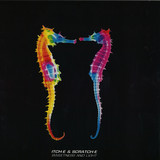
An Australian classic rereleased for the first time ever. Born in 1993 when euphoria was still cool Sweetness and Light is the original rave anthem. Dreamy and breakbeaty this has aged like your best bottle of wine. Brought to you by icons of the scene Itch-E & Scratch-E AKA Paul Mac and Andy Rantzen, between them they have remixed the likes of INXS, Severed Heads, LCD Soundsystem, Kylie Minogue, The Presets and Sia.
In 1994 it came 21st in Triple J's Hottest 100 followed by the honours of an ARIA award for Best Dance Release in 1995. In his infamous acceptance speech Paul Mac announced "We'd like to thank all of Sydney's ecstasy dealers, without whom this award would not be possible".
On the b-side we have Motorik's newest festival act For Life remixing Sweetness into 21st century tempos. Perfect to break between your house and techno this 130bpm heavy hitter blew off the dust from the original to shine again.
Brought to you by your favourite party techno label Motorik who cares more about concept then a budget, this is an opportunity which couldn't be passed down. Sweetness and Light represented warehouse culture in the 90s, it was the resistance to authority, the acceptance of all and the beginning of underground dance music as we know it today.
12 whitelabel, limited to 250 hand stamped and numbered copies
The 2nd drop on Through My Speakers comes straight from NGHT DRPS' dubby chambers. Showcasing his musical roots and influences, it blends earthy grooves and heavy drums with his signature deep and trippy vibes. From killing it on FACTMAGs 'Against the Clock' producer series - collecting almost half a million plays and making it into the all-time top ten of 'Against the Clock' - to remixing Moderat's 2016 'Eating Hooks", we are very happy to announce NGHT DRPS' debut EP on Through My Speakers. Vital Sales Points: - already played by dBrigde, Plastician, Toddla T, Sarah Farina, Kabuki, Scratcha DVA, Zed Bias, Moderat and more - Releases on tba - airplay on Rinse FM, NTS, BBC Radio 1 & 6,
A FISTFUL OF WAX is an extension for some very special projects of our beloved deep house SKYLAX RECORDS' sub - label WAX CLASSIC. A Fistful of Wax is back with its fourth volume! This offshoot originally began as an avenue for showing off some of the overflowing great talent we have floating about the Wax Classic sub-label, but with the growing reception of our previous three releases, it has developed itself into its own uniquely successful imprint. In a time when a lot of the hot records of the moment are made by highly distinguished producers with years of success under their belts, it is easy to forget how much good house music can come out of the underground by relatively fresh names. With AFX4, we are only scratching the surface once again, yet we have 5 special tracks from a group of producers who, if not already, will stay on your radar for the foreseeable future.The A side features tracks from Erman & Abtomat (of Série Limitée Records fame) and Kid Mark (Head honcho of Killax Recordings). We start off deep with the aptly named 'How Deep Can You Go', easily the most soothing of the bunch. 'Fantasy '95' takes it up a notch for those who wish to, with classic 90s chords and accompanying bass and horns. Over on the flip side, we hear 'Won't Get To Heaven' by Californian newcomer, An Expresso. Being a self confessed New Jersey style house addict, this hits in all the right places for those familiar with the sounds of NJ legend George Lockett Jr, aka Jerzzey Boy. Shin continues things with 'Phara', a percussive stormer with one of the hardest hitting leads you will hear for a good while. This one is a sure fire hit! Last, but by no means least is Rosenhaft's 'Voyager'. Fans of early UK Garage, perk up your ears because this could have easily been a tune you would have heard on your favourite pirate radio station back in '97.If you are still on the fence about the record at this point, you are in the wrong place. This record has it all for lovers of the 90s house sound! Whether you are of the deeper persuasion or the more garagey persuasion, the US or the UK side of things, there is something here for almost everyone on A Fistful of Wax 4.
* Includes a DIN A2long poster inside the 12" sleeve with edition number and music download code
* Rogue Style 1 EP is an international homage to b-boy culture, where the worlds of breakbeat music and breakdance collide. Sinistarr (USA), Kiat (Singapore), Kabuki (Germany) and HomeSick (Canada) are connected in many ways, now they lay bare their hip-hop roots and give something back with a fresh take through the eyes of drum & bass and juke/footwork. Here is what they have to say:
Sinistarr: "As a teenager I grew up as a b-boy, dancing anywhere I could: schools, parks, festivals, you name it, my crew was there with cardboard and a speaker. I eventually got deeper into DJing and making music and learned to bring a sound that's not just for the crowds and the purists, but also for all the dancers!"
Kiat: "Hip Hop has taught me to keep evolving, to explore new forms in all my art. Progression is the key to evolution. -- I met Sinistarr online thru myspace and we had a musical connection which led to our first collaboration 'Black Diamonds' which is still one of my personal favourite tunes I've been fortunate to be part of it's creation. With Kabuki, i've always been a fan of his work since his 'Makai' alias on No U-Turn, despite meeting him only recently thru the label.I've always known him to be constantly progressing his ideas in his music which I respect alot."
Kabuki: "B-boy culture has always been a strong influence on how I pursued my art, mainly because of its DIY ethos and attitude of perfecting your craft. Incidentally these were also the aspects that drew me to Jungle when I first discovered it in the nineties. -- I'm happy to rub shoulders with Kiat, Sinistarr and HomeSick on this release, as I'm a fan of their music foremost, but also because we became friends through the music."
HomeSick: "I was only a child in the 90s and as a result I feel like my understanding of b-boy culture was experienced second hand thanks to 90s/early 2000s hip hop music. I appreciate the parallels I can see with footwork culture, particularly the similarities to the community mentality of break dancing. -- I know Sinistarr through booking him for our local party night in Alberta, Canada called Percolate. Our city must have left an impression on him because a year later he made the move here from Detroit. Had the pleasure of hosting him as a room mate for a little over half a year, the home was a very potent creative space during this time. Kabuki hit me up a few years ago and we very quickly got to sharing tracks and collaborating together. Mans a master of production and a super important part of the global scene."
The idea for a reminiscence of b-boy culture stem from label owner Booga:
"Why am I interested in this so much I grew up in East Germany and as the movie "Beat Street" premiered in 1985 over here I was age 13 and blown away by the energy, the music, the wit, the style - everything in this movie was better than everyday life in Leipzig. So I started saving for a cassette recorder and taped music shows from West German radio and prepared tapes for school disco gigs to the hope somebody would do the "robot" to Arthur Baker "Breaker's Revenge". Unfortunately that never worked out hahaha. But I was hooked since then and as the wall came down in 1989 I travelled to West Berlin just to buy the Beats, Breaks and Scratches 1-4 vinyl box by Simon Harris. The fascination for breakbeats never stopped and before I discovered Jungle around '94 I was down with the British cut up house thing from the likes of Marrs, Krush and Coldcut as another form of breakbeat music. The "do it yourself" spirit from hip hop culture inspired me to start a local website called breaks.org in 2000 to locally promote the drum and bass scene with emerging producers, djs and mcs for a wider audience and I threw in some interviews with Storm, Kabuki, Rob Playford, Klute and John B. That turnt into a multi author blog called itsyours.info in 2004 which still exists - that is where I had the pleasure to introduce Kiat and Ash in 2007. All these years I was listening and playing drum and bass tunes when the occasional "bboy tune" came up, some were obvious like Alex Reece "B-Boy Flavour", Lemon D "B Boyz", Commix "Change" and some were not so much self-explanatory like Digital & Spirits "Phantom Force" and the remixes by T-Power & Codeine or Fracture's Astrophonica Edit - but I felt the hidden force of breakdancing nevertheless. With the Rogue Style series I have the first class opportunity to ask established and new Defrostatica artists to present a current interpretation of b-boy culture. This is a dream coming true."
Until he was about 20, Texas-born Melvin Sparks was a rhythm & blues guitarist, backing Jackie Wilson, Curtis Mayfield and Marvin Gaye as a member of The Upsetters. But Sparks gave up his seat on The Upsetters' bus in New York City, where a chance introduction to George Benson led him to a place in soul jazz history. Melvin played and recorded with Lou Donaldson, Leon Spencer, Bernard Purdie, Jack McDuff, Jimmy McGriff, Idris Muhammad, Dr. Lonnie Smith, Charles Earland, Grover Washington Jr., Reuben Wilson and so many more. Even during the quietest years of soul-jazz Melvin stayed relevant through hip-hop and r&b, a quick search at WhoSampled turns up more than 150 samples of his funky chicken scratch. And Melvin's legacy is heard in contemporary soul/funk bands like The New Mastersounds, Soulive and The Greyboy Allstars, all of whom he also guested with several times before his early departure from this realm in 2011.
This release documents Melvin's final band just months before his death. Organist Beau Sasser and drummer Bill Carbone had been working with Sparks for several years, and, despite the power dynamic - they were in their early 30s, Melvin an elder-statesmen of the genre - the unit was sharp, relaxed and performed Melvin's music with a jovial spirit. The trio played the Burlington, VT club Nectar's regularly, but this night featured two "onlys." Per the recommendation of Nectar's agent they used the "Grippo Horns," the only time Sparks used a horn section in the last several years of his life, and they allowed a multitrack recording of the show. Both were strong decisions.
The tracks on this album, lovingly mixed by guitarist, producer and Melvin Sparks fan Eddie Roberts, demonstrate that Melvin played as well in the final months of his life as at any time. Sparks counts "Whip! Whop!" off at what he said The Upsetters called a "showtime tempo," and peppers it, as well as most of the album, with quotes from jazz standards, pop songs and cartoon themes, all woven effortlessly into the bebop-funk dialect he helped create. He unfolds amiable melodies, patiently and methodically, through his several-minute lead on "Breezin'." And Sparks is audibly uplifted by the Grippo Horns helping him perform his 1973 arrangement of "Ain't No Woman" for the first time in decades.