Hello Spiral returns to the same North London block, the same triangulated geometry of balconies and courtyard, but with a shift of orientation. His previous record looked outward from the eighth floor, these four new recordings move inside, into the building’s arteries. Joe explores the hallways of the complex where he has lived and listened for years, using the same tool as before, an iPhone and its voice memo app. The recordings were made in situ, each exactly eleven minutes, captured without ceremony.
The hallways feel different. Less private, less scenic, more neutral. They are the connective tissue between hundreds of domestic units, a space of transit rather than rest. The carpet absorbs certain frequencies. The fire doors catch and release pockets of air. The lights hum. Elevators drone in soft cycles of arrival and departure. These are the institutional sounds of shared living, yet once recorded they begin to behave strangely. A kind of internal weather appears.
As with the previous album, Joe remains attentive to what is often overlooked, irrelevant or discarded. The hallways, with their scuffs and signage, their coded access and polite functionalism, provide an unexpectedly rich field. The ambience is not shaped by storms or scaffolding, not by birds or street spill. Instead the material is the building’s own breath, its mechanical rhythms, the low frequency traces of neighbours, the occasional shuffle of footsteps that pass but do not return.
Joe talks about this record as a possible middle chapter in a trilogy. If so, it sits between the exposed openness of the balcony and whatever comes next. A hinge point. These recordings continue Joe’s long practice of defamiliarization, sharpening attention to the unnoticed while withholding narrative. They invite repeated listening, not for revelation, but for the subtle shifts that occur when a familiar space is treated as an instrument.
High-definition audiophile pressing - 180g premium vinyl - the complete album plus bonus track from the same session, but not included on the original LP
This special edition presents the complete Grant Green LP 'Gooden's Corner' (1961) with an additional track recorded at the same session with saxophonist Ike Quebec joining the quartet on the seldom heard standard, Count Every Star by Bruno Coquatrix and Sammy Gallop. Grant Green - guitar Sonny Clark - piano Sam Jones - bass Louis Hayes - drums Ike Quebec - tenor sax (on 'Count Every Star' only) Rudy Van Gelder Studios, Englewood Cliffs, New Jersey, December 23, 1961. Original sessions recorded by Rudy Van Gelder & produced by Alfred Lion. "This is an album of real beauty and synergy between Green and pianist Sonny Clark, who along with Sam Jones on bass and Louis Hayes on drums rounds out the quartet. Green, an expert with standards, offers 'Moon River', 'What Is This Thing Called Love?', and 'On Green Dolphin Street'." - ****1/2 Michael Erlewine, All Music
A chopped-and-screwed love letter to the sounds of rebajada – half-speed cumbia, pioneered by Sonido Dueñez in the 1990s, and born from an overheated turntable motor that didn’t make the crowd stop dancing. With Debit’s treatment, rebajada becomes an ethereal, at times intense ambient tapestry that’s also a history lesson.
Spend any amount of time pacing the streets of Monterrey, the bustling city in the north of Mexico where Delia Beatriz, aka Debit, grew up, and you’ll be sure to catch traces of cumbia echoing from Bluetooth speakers, DIY soundsystems, or car stereos. An Afro-Latin dance form and »practica cultural« originating in Colombia in the early 19th century, cumbia evolved rapidly in the early 1900s, as a localised sound played on drums and flutes quickly modernised to integrate European instrumentation like the accordion. When it reached Mexico in the 1940s, the sound shifted again, fusing with mariachi styles and integrating further vallenato folk elements. Eventually, cumbia spread across the entirety of Latin America, splintering into a spectrum of different musical styles such as chicha in Peru, and cumbia villera in Argentina. And over in Monterrey, cumbia inadvertently found its own idiosyncratic groove.
From the 1950s to the 1970s, waves of immigrants from across Mexico and Latin America headed to Monterrey to find work, making a home in Colonia Independencia. Colombian cumbia records, shipped in from Mexico City, Houston, and Miami, became the soundtrack of the neighbourhood, relaying familiar stories to a rural working class adjusting to their new industrial reality. The sound struck a chord with locals, and huge street parties hosted by ramshackle soundsystems known as sonideros unified the diverse community. So when cumbia rebajada materialised serendipitously in the 1990s, it emphasised and highlighted the memory distortions at the heart of the immigrant experience. Local record collector, selector, and sonidero Gabriel Dueñez had been playing cumbia for hours one night when disaster struck: his turntable’s motor overheated and slowed down, turning the music into a warped groan, with half-speed voices echoing over wobbly accordion drones and splashy drums. But the crowd kept dancing, and Sonido Dueñez realised he’d struck gold – cumbia rebajada was born.
Over the next few years, he dubbed a popular series of mixtapes, hawking them at the flea market on the dried-up Santa Catarina riverbed beneath El Puente del Papa, the bridge that links downtown Monterrey with Independencia. These woozy archives became the stuff of legend, poetically but subconsciously shadowing DJ Screw’s series of epochal cassettes that appeared over the border in Houston. Beatriz uses Sonido Dueñez’s first two tapes as the starting point for »Desaceleradas«, entering into a dialogue with time, culture, and geography as she recalls the sonic ecosystem that surrounded her decades ago, long before she emigrated to the USA. If 2022’s acclaimed »The Long Count« was an attempt to recover concealed pre-Columbian history in the face of colonisation, »Desaceleradas« jumps forward, figuring out how memory and shared celebration can resist a more contemporary form of cultural erasure. As AI systems scrape, blend, and decontextualise culture around us, leaving vapid slop, »Desaceleradas« proposes a slower, more careful, and ultimately more human kind of engagement. It’s an archive with a pulse.
out of Stock
Last delivered 7 months ago available to reorder, subject to availability
Celebrate the 35th anniversary of Squeeze’ sole Reprise album from 1991 with the first US pressing. With only four official members instead of five, this expanded album will include 4 non-album singles tracks. On Black Vinyl.
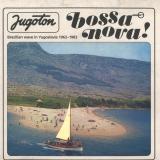
Rich musical history of Yugoslavia reveals a long-lasting love for the music of Latin America.
Entwined in Afro-Cuban rhythms, ballrooms were shakin', swayin' and swingin', gathering musicians who were heavily into jazz bands and orchestras, most notably in Ljubljana, Zagreb, and Belgrade. Jazz could be heard on the streets of Split way back in 1919 when dancing became a symbol of freedom. Radio was the most loved household item, newest sheet music was in demand and collecting records was hip like today. In the aftermath of Second World War, jazz went underground but little by little, things changed and Ella, Satchmo, Dizzy and Miles came to visit, among others. Music festivals shaped the music for entertainment and variety of popular styles showed influences from all over the world. In the early sixties, one particular rhythm crashed on the coast of the Adriatic Sea: the rhythm of bossa nova!
In the whirlwind of various musical styles, Latin American music still played important part of the scene in the early sixties Yugoslavia. Beguine, tango, rhumba, samba, calypso, mambo and cha-cha-cha all found their place on the festivals inspired by famous Sanremo, festival of Italian popular song that largely shaped the musical taste of Europe. It was the era of instrumental rock, R & B and rock'n'roll - sounds of "imperialist America" now played freely on imported and hand-made electric guitars. While dancing halls had been turning into concert venues, bossa nova has come! Eydie Gorme with Blame It on the Bossa Nova and Paul Anka with Eso Besso (That Kiss!) tried to make us learn some new dance moves but it was Joao Gilberto's gentle singing and his new way of playing samba songs, along with Tom Jobim's modern dissonant harmonies and poetry of Vinicius de Moraes that created the magic. When American alto saxophonist and flautist Bud Shank visited Zagreb and Ljubljana in 1963 (with Boško Petrović in his quintet) "it was the first time we heard bossa nova!" remembers Stjepan Braco Fučkar. Jugoton, the biggest record company in Yugoslavia, released 4-track EP Bossa Nova by Bogdan Dimitrijević and his ensemble that same year! While not being fully accepted or understood completely, the archives of Jugoton reveal to us various interpretations of this new trend from their vast catalogue.
out of Stock
Last delivered 8 months ago available to reorder, subject to availability
The third instalment of the remixes from J:Kenzo's album 'Taygeta Code' sees four killer producers take on each remix in their own unique style across the 140 bpm spectrum.
BOYLAN (Sentry / Mean Streets) leads the dance with his 140 bpm jungle / breaks flip of 'Like A Hawk' which features vocals by the mighty FLOWDAN. Bringing the heat in heavy and devastating fashion!
MANI FESTO (Rupture / Club Glow) steps up with his electro breaks remix of the modular dance floor heater 'Deadbull', with filtered breaks and a high energy bounce.
Canadian dubstep producer MYTHM (Artikal / Wheel & Deal) delivers his heavyweight remix of album highlight 'Narky'. The Vancouver native flips the groove and levels up the energy bringing additional heat to his version.
The final remix is from UNKEY (Foto Sounds) who takes on the album opener 'Desired State'. Unkey turns the air dark, strips back the vibe and uses sub heavy minimalism to inject a feeling of dread throughout his remix to put a stamp on the finale covering 4 corners of the world of Dubstep and 140 music.
out of Stock
Last delivered 9 months ago available to reorder, subject to availability
Mighty Joseph is the combination of emcees Vast Aire (Cannibal Ox) with his long-time rhyme ally Karniege. The duo's sole album, Empire State (2008) was released during the tail-end of the last great non-commercial Hip-Hop period.
Never released on vinyl before, the album will be available soon on a double LP edition.
Rooted in the concrete streets but lyrically abstract, features and beats are provided by equal musical foils including Madlib, Camu Tao, Murs, J-Zone, Poison Pen and Vordul Mega (Cannibal Ox) among others.
Fan and critical attention were positive with All Hip Hop summing the album as "solid post-millennium product that bridges the gap between gritty street tales and a paranoid view of the future."
Plug One Magazine added that "Empire State" "unravels a unique perspective, documenting not only much personal change between the two emcees but also the changes in the streets of New York City. From poverty, to the September 11 attacks, to the abuse of Hip Hop culture in general, "Empire State" stands strong as a snapshot of the city."
The night is restless, the streets eerily silent... only distant echoes and haunting rhythms fill the air. Halloween 2025 drags you deep into the atmosphere of a world forever changed.
As shadows lengthen and whispers grow louder, the familiar coziness of Lofi Girl’s room takes a darker turn. This 20-track compilation gathers artists from across the globe to conjure chilling melodies and spectral beats, the perfect soundtrack for the spooky season. Press play, and lose yourself in a soundtrack where the undead roam and even the walls seem to listen.
ECHOES OF SOUL FEAT. SHELLY NELSON — “MY PEOPLE / THE ONE THING” The debut release from Boogie Back Dance — the new spin-off label of Boogie Back Records — delivers a deep and heartfelt journey through rhythm and soul. “Echoes of Soul” brings together the warmth of classic street soul with the energy of soulful house and the groove of neo boogie.
Side A, “My People,” is a dancefloor statement — a call to unity and movement, blending lush keys, vibrant basslines, and uplifting vocals that honor the spirit of community and togetherness.
Side B, “The One Thing,” dives deeper into the groove — a smooth, late-night cut layered with emotion, subtle percussion, and timeless soul sensibilities. With BBD001, Boogie Back Dance sets the tone for a new era of soulful club music — one rooted in authenticity, crafted for the heads and the heart alike.
out of Stock
Last delivered 10 months ago available to reorder, subject to availability
Selbst in einer Karriere voller krasser Wendungen war ,Joggers & Smoggers" (1989) echt überraschend. Während ,Aural Guerilla" (1988) ein Versuch war, die verrückte Live-Energie der Band im Studio einzufangen, was echt gut geklappt hat, war der Nachfolger ,Joggers & Smoggers" ein Versuch, fast alle Grenzen zu ignorieren. Diese 34 Songs strotzen vor grenzenlosem Eklektizismus und verbinden die legendäre Intensität der Band mit spielerischen Umwegen, literarischen Erfindungen und Referenzen sowie erfolgreichen Kollaborationen (von den Noise-Rockern Thurston Moore und Lee Ranaldo bis hin zu den in Amsterdam ansässigen Improvisatoren Ab Baars und Wolter Wierbos und einer Reihe bereits bekannter Freunde und Verbündeter). Das Ergebnis ist nicht mehr eine streng ausgeführte Reihe von Songs, sondern ein großzügiger Ausbruch von Kreativität. Auf diesem Doppelalbum kombiniert The Ex Unruhe, Verspieltheit, ethnische Einflüsse und improvisatorische Ideen, wie sie bereits auf Veröffentlichungen wie ,Dignity Of Labour" (1983) und ,Blueprints For a Blackout" (1984) angedeutet wurden. Das Ergebnis ist ihr bis dahin umfangreichstes und einzigartigstes Album, vielleicht eine ihrer wirklich ,wichtigsten Veröffentlichungen", die die Grundlage für ihre bevorstehende Zusammenarbeit mit Tom Cora bildete.
The vinyl LP at the heart of this éthiopiques 31 tracks 2 to 11 was one of the very last vinyl records ever released in Ethiopia. But above all it represents, we felt, the absolute masterpiece of the Ethiopian Groove – the Swan Song of Swinging Addis. The album leaves a clear idea for posterity of the level of sophistication and mastery that modern Ethiopian music had achieved, before being crushed under the Stalino-military heel of the Derg – as the bloody revolution that was unfolding came to be called.
Ethiopia1976.
The Revolution that broke out in February 1974 rolled on in a ruthless march. The whole of Ethiopian society was utterly stunned. The bouquets of flowers handed joyfully to the first tanks of the coup d'état were to wilt very rapidly. From September 1976 to February 1978, 18 months of Red Terror (the name given by the junta itself) spilled blood throughout the country. This fratricidal conflict took its heaviest toll among students and youth. The shift from feudalism to a cruel and primitive Stalinism left the country's citizens deeply traumatised, and snuffed out any pretence of activism, whatever the sector of society. This ice age was to last for seventeen long years.
ሙሉቀን፡መለሰ Mulukèn Mellèssè Muluqän Mälläsä
It was three tracks by Muluken that served as the opener for éthiopiques-1 more than 25 years ago. Seven more tracks appeared on éthiopiques-3 and 13, all accompanied by The Equators, which was soon to become the Dahlak Band.
The first track, Hédètch alu, also the very first piece that Muluken ever recorded, left audiences both unsettled and amazed. Reflecting the singer's extremely young age (he was just 17 at the time), this angelic voice mystified many, who thought they were in fact listening to a feminine voice. He was not yet 22 when he released his last vinyl record in 1976 with Kaifa Records (KF 39LP), one of the very last to be issued in Ethiopia, before the cassette tape became the dominant medium for music distribution – and before the new revolutionary regime put a stop to all independent musical life, via an unspeakable barrage of prohibitions and other persecutions.
Mulu qèn, literally, “A well filled day”. This tender maternal intention wasn't enough to ward off the cruelty of fate. His mother's premature death drove Muluken to leave his native Godjam, in northeast Ethiopia, to live with an uncle in Addis Ababa. Born Muluken Tamer, he took his uncle's last name – Mèllèssè.
The spelling Muluken appeared in his administrative records. Transcription of Amharic to the Latin alphabet, both in Ethiopia and for scholars, gives rise to controversies and quibbles that can never be neatly settled. French allows for a closer approximation of the original pronunciation, thanks to its battery of accent marks, confusing as they may be to anglophones.
Between rather accommodating administrative record-keepers and the various versions that pop up in interviews given by the artist, Muluken's year of birth oscillates between 1953 and 1955…
1954? One thing is certain: the artist's talent made itself known very early indeed, because he got his start in 1966-67, at the age of 13 or 14. Photos from the period attest to his extreme youth. It's a strange sort of initiation for a very young teenager to become a sensation in the heart of Addis's nightlife at the time, Woubé Bèrèha – the Wilds of Woubé. And what's more, in the club of the Queen of the Night, the Godjamé Assègèdètch Alamrèw herself, the very same that was portrayed by Sebhat Guèbrè-Egziabhér in his novel-memoir Les Nuits d’Addis Abeba2… The legendary female club owner who is remembered to this day by the capital's ageing boomers.
Muluken first tried his hand at the drums, before he grabbed the microphone. He emigrated briefly to the Zula Club, across the street from the old Addis Post Office, one of the ground-breaking bars of the burgeoning musical scene, before joining the Second Police Band in 1968, for around three years. He spent a few months with the short-lived Blue Nile Band founded by saxophonist Besrat Tammènè. As the musical scene grew increasingly successful, and pulled slowly but decisively away from its institutional ties, Muluken released his first 45rpm single in February 1972 (Amha Records AE 440). It was included in two LP Ethiopian Hit Parade compilation albums in September of the same year. All in all, Muluken released eight two-track 45s and the same number of original cassette tapes between February 1972 and 1984, the year that he departed for permanent exile in the USA. After converting to Pentecostalism in 1980, Muluken gradually abandoned all secular musical activity. In 1985, at the end of a concert in Philadelphia, he decided to quit concerts and recording for good. Mèlakè Gèbré, the historic bass player from the Walias band who was playing with him that night, recalls that everything appeared so irredeemably diabolical in Muluken's eyes, that it was to be the end of his contribution to Ethiopian Groove.
The end of the story, the beginning of a legend.
Dahlak Band, forgotten by History
Aside from his personal history and vocal talents, it must be remembered that Muluken Mèllèssè was one of the biggest names in the musical innovations that marked the end of the imperial period. These éthiopiques aim to convince those who are just discovering this hidden gem... As for Ethiopians themselves, they are to this day captivated by this singular and atypical figure in the Abyssinian pop landscape – even though he withdrew from public life some 40 years ago. Incorrigible devotees of poetic twists, of more or less hidden meanings, Ethiopians appreciate above all the care Muluken took in choosing his lyrics and the writers who penned them, such as Feqerte Haylou, Alemtsehay Wodajo and, here, Shewalul Mengistu (1944-1977). Love songs, written by women, a far cry from the conventional drivel that pleases sappy sentimentalists.
Muluken is equally acclaimed for his perfectionism when it came to music, the opposite of the overly casual approach that is all too common. He remained a faithful partner of musicians who came from a lineage that borrowed from several inventive and pioneering bands (Venus, Equators, Dahlak). Amongst them were certain artists who began their musical lives with Nersès Nalbandian at the Haile Sellassie Theatre and who come of age in around 1973 – at just the wrong time, you might say. Among them were the pillars Shimèlis Bèyènè (trumpet), Dawit Yifru (keyboards) and Tilayé Gèbrè (sax & flute). Most notably Tilayé Gèbrè, certainly one of the most important musicians, composers and arrangers of his generation, of the end of the imperial era, and of the early years of the Derg.
It was only in 1981 that a miraculous opportunity arose for Tilayé to escape the Stalinist paradise of the dictator Menguistou Haylè-Maryam. Once again it was Amha Eshèté (1946-2021) who provided a solution. The spirited and courageous producer, who had been in exile in Washington since 1975, succeeded, thanks to his incredible perseverence, in bringing the Walias Band to the USA. It was, in fact an extended Walias Band comprising ten musicians3, six of whom chose to slip away after a few concerts and the recording of an LP (The Best of Walias, WRS 100). Tilayé Gèbrè was one of these. He has been living in the USA ever since. There he joined the then-nascent Ethiopian diaspora, which lived largely unto itself, and was making only very modest headway in the American musical market. It seems unfair that Tilayé Gèbrè and the Dahlak Band were not able to benefit earlier from the public recognition that they do deserve.
A similar draining away of the top-rate talents would lead to the reorganization of the major groups of the “Derg Time”. The remaining artists spread themselves around between Ibex Band (renamed Roha Band), Ethio Star Band and a remodeled Walias Band. That spelled the end of the Dahlak Band.
With this record, produced by the essential Ali Abdella Kaifa a.k.a. Ali Tango, we can appreciate everything that the Derg not only destroyed, but also prevented from flourishing. This gem of Ethiopian-style afrobeat came out in 1976 (and, by way of a parenthesis, before the FESTAC 1977 in Lagos, which was attended by an impressive delegation of Ethiopian musicians — although Fela was already personna non grata in his own country). Despite everything that might distinguish this ethio-groove from Fela’s music – no colonial axe to grind, no question of political confrontation with the authorities, no claims to negritude or Africanism for the Ethiopian musicians, and less extrovertion! –, this LP fits beautifully into the saga of intense and electrified soul of the new “African” groove that Fela and Manu Dibango embodied so well from that point onwards.
In restoring this record to its place in the afrobeat epic, it can be seen that, if nothing else, the timeline bestows a legitimate pedigree and a historical primacy to works that had no international impact when they were originally released.
Warning! Masterpiece!
out of Stock
Last delivered 3 months ago available to reorder, subject to availability
Louis Armstrong and his All-Stars are captured in rare form during this live recording from 1956. The album features a great collection of tunes which had become staples of Armstrong's live shows, including his perennial opener, "Indiana"; the crowd favorite, "Tiger Rag"; the always joyful, "When The Saints Go Marching In"; and the great title-track, "Basin Street Blues". Satch's frontline band at the time boasted the very distinctive sounds of trombonist Trummy Young and clarinetist Ed Hall.
London’s gothic five-piece, Dog Race, unveil ‘Return The Day’—a debut EP that drags you deep into the fog of burnout, codependency, and emotional stasis. Across five tracks, the band unspools the slow horror of fading joy and fractured identity, where insomnia bleeds into daylight and personal growth is sacrificed to keep others comfortable. Following the stark theatrics of ‘It’s The Squeeze’ and the icy operatic swell of ‘The Leader – which earned praise from BBC Radio 6, landed them in NME’s 2025 Top 100, and left Anthony Fantano in awe, placing It’s The Squeeze at #11 in his Best Singles of 2024 – the EP pushes further into the dark. Operatic vocals drift through modulated guitars and synths that crackle with unease. Produced by Ali Chant and released via Fascination Street Records, ‘Return The Day’ captures a band fully embracing psychological unrest and emotional paralysis. Dog Race may take their time, but they strike hard.
Celebrating over a decade of hip-hop excellence, Legacy of Hits delivers 15 career-defining tracks from Rich Homie Quan, one of Atlanta’s most influential voices. From the breakout anthem "Type of Way" to the multi-platinum-certified smash Flex "(Ooh, Ooh, Ooh)", this collection captures Quan’s ability to craft both raw street records and timeless radio staples that shaped the sound of Southern rap.
The set includes fan favorites like “Differences”, "Walk Thru (feat. Problem)”, "They Don’t Know”, "Blah Blah Blah”, “Reloaded" and "15 Shots, giving fans a complete retrospective of his impact. With production from heavyweights such as Yung Carter, Metro Boomin, London on Da Track, Trauma Tone, and Yizzle, the project stands as a true testament to Quan’s consistency, resilience, and influence.
Available in both vinyl and CD formats with exclusive collectible packaging, Legacy of Hits is more than just a greatest hits, it’s a landmark release that celebrates Rich Homie Quan’s journey, artistry, and legacy.
Adrian Younge Presents: Twelve Reasons To Die II inhabits the grimy streets of mid-1970s, NYC. Younge's cinematic, psychedelic soul returns to set the stage for a clash between crime syndicates and the vengeful spirit of Tony Starks (Ghostface Killah). This gripping sequel features special guest appearances from Wu Tang alumni Rza and Raekwon, who personifies the criminal mastermind, Lester Kane. A Wu-Tang saga unfolds in this thrilling sequel to the acclaimed original. Recorded and mixed by Adrian Younge at Linear Labs, the preeminent analog studio of Los Angeles, CA.
Twenty years ago, ILL BILL released “What’s Wrong With Bill?”, a raw, unfiltered snapshot of where his mind was at during a dark, creative and transformative time. Chaos and clarity in musical form, a record built from trauma, truth and the New York streets that raised him. He never imagined it would become what it did: a cult classic with a revered mystique that continues to be quoted and debated 20 years later. This album captured ILL BILL at his most urgent, most aggressive and most alert to the madness around him.
For the first time in two decades, “What’s Wrong With Bill?” is being reissued on 2LP vinyl, a complete capsule including an alternate variant cover, 20th anniversary commemorative OBI strip, and, for the first time ever, a cassette edition, alongside a remastered limited edition CD. This is more than nostalgia, it’s encapsulated arcana, proudly representative of an era when Hip Hop was dangerous, fearless and alive. This one is for the true believers who never forgot.
Louis Armstrong and his All-Stars are captured in rare form during this live recording from 1956. The album features a great collection of tunes which had become staples of Armstrong's live shows, including his perennial opener, "Indiana"; the crowd favorite, "Tiger Rag"; the always joyful, "When The Saints Go Marching In"; and the great title-track, "Basin Street Blues". Satch's frontline band at the time boasted the very distinctive sounds of trombonist Trummy Young and clarinetist Ed Hall.
out of Stock
Last delivered 7 months ago available to reorder, subject to availability
Iconic hip-hop duo The High & Mighty, composed of rapper Mr. Eon and producer DJ Mighty Mi, make their long-awaited return with Sound of Market, their first studio album in over twenty years. The release marks a powerful comeback for one of underground hip-hop’s most celebrated duos — a project steeped in nostalgia, boom-bap grit, and the timeless energy of East Coast rap.
Named in honor of Sound of Market Street, the legendary Philadelphia record store that served as a hub for crate diggers, DJs, and hip-hop heads for decades, the album pays homage to the culture that shaped The High & Mighty’s sound and identity. Much like the store itself, the record celebrates deep cuts, rare finds, and the shared love of vinyl that connects generations of hip-hop fans.
Across 17 tracks, Sound of Market revives the duo’s trademark wit and sharp lyricism while showcasing an impressive lineup of collaborators, including Kool Keith, The Alchemist, Your Old Droog, Large Professor, O.C., Chubb Rock, King T, Skillz, and many more. The result is a cohesive, sample-driven experience that bridges the classic and contemporary — reaffirming The High & Mighty’s status as true architects of independent hip-hop.
From the opening anthem “Two Man Crew” and the surreal swagger of “Pinky Tuskadero” with Kool Keith, to the cinematic boom of “Mighty’s Big 5 (Live from The Palestra)”, the record moves effortlessly through sharp lyricism, layered production, and a shared reverence for the foundations of the genre. Sound of Market is both a return and a reminder — a record that feels timeless in its authenticity.
The song titles on Van Halen's aptly titled Fair Warning don't lie. The likes of "Unchained," "Mean Street," "Push Comes to Shove," "One Foot Out the Door," and more indicate the mood the band channels on its double-platinum 1981 record — the nastiest, darkest, and fiercest album of the group's storied career. For the fourth time in four years, Van Halen throws down the gauntlet to all challengers and emerges victorious.
Sourced from the original analog tapes, pressed on MoFi SuperVinyl at Fidelity Record Pressing, and strictly limited to 5,000 numbered copies, Mobile Fidelity's UltraDisc One-Step 180g 45RPM 2LP set plays with unfettered clarity, dynamics, and immediacy. Benefitting from superb groove definition, an ultra-low noise floor, and dead-quiet surfaces, this vinyl edition captures what went down in the studio with tremendous realism and involving presence.
Taking a more controlled approach in the studio and still completing everything in less than two weeks, Van Halen and producer Ted Templeman relied on studio amplifiers to direct the sound. Further diverging from the live-on-the-floor approach of its earlier albums, the ensemble also employed overdubs to great effect. The result: Dense, stacked architecture that underlines the hard-hitting tenor of the songs — and which comes alive like never before on this reference edition that looks as good as it sounds.
The premium packaging and gorgeous presentation befit the reissue's select status. Housed in a deluxe slipcase, it features special foil-stamped jackets and faithful-to-the-original graphics that illuminate the splendor of the recording. Aurally and visually, it is made for listeners who want to immerse themselves in everything involved with the album, including the iconic cover art adopted from William Kurelek's haunting painting, "The Maze."
Isolated frames from Kurelek's childhood-inspired work — including a man bashing his head into a brick wall, a guy pinning down an adversary as he delivers bare-fist blows to his face and others watch with apparent glee, a boy tied down on a conveyer belt and being sent through the equivalent of a meat saw — adorn the front and back covers. The sunnier visual disposition of Van Halen's prior efforts gives way to something sinister and tortured, traits reflective of the music within. The band members, too, are visually depicted not in glamorous shots but in a serious black-and-white portrait in which the quartet is clad in black leather jackets.
Tough, aggressive, stark: Fair Warning comes on like a series of bare-knuckled punches to the solar plexus and boasts lyrical narratives to match. Though not a concept record, the concise album revolves around themes of roughing it on the streets and struggling to survive amid dim prospects. Singer David Lee Roth reportedly penned many of the initial lyrics after traveling to Haiti and observing extreme poverty. The characters and situations populating Fair Warning reflect hardscrabble existence, last-chance desperation, and underlying danger.
Witness the crazies, poor folks, and hunters of “Mean Street”; the former prom queen turned pornographic actress on “Dirty Movies”; the menace and vice of “Sinners Swing!”; the streetwise hustle of “Unchained”; the isolation and alienation of “Push Comes to Shove”; the desire for escape on “One Foot Out the Door”: A carefree California beach party Fair Warning is not.
Having said he felt angry and frustrated during the sessions, guitarist Eddie Van Halen uses the forceful arrangements as a playground for his seemingly unlimited arsenal. Supported by a crack rhythm section and a hyped-up Roth, he performs with an almost impossible combination of punk-like intensity, technical finesse, lyrical fluidity, and unbridled emotion. The virtuoso was increasingly butting heads with Templeton and seeking a freedom in the studio he believed denied him.
No wonder he plays like a bat out of hell. Listen to the rapid-fire manner in which he slaps the high and low E strings on the 12th fret of his instrument on “Mean Street,” instilling the tune with funk flair and metal-spiked sharpness. For the pouty strut of “Dirty Movies,” Eddie Van Halen contributes slide guitar magic made possible after he sawed off the lower portion of a Gibson SG so he could reach further down the fretboard.
Related intensity, urgency, and daredevil momentum punctuate the surging “Sinner’s Swing!” A heavily flanged, delicately melodic introduction frames the attitudinal “Hear About It Later,” among the most creative arrangements of Van Halen’s career. And do riffs come any bigger or magnetic than those on the high-wire kick of “Unchained”? As for the out-of-left-field “Sunday in the Park,” an instrumental composed on an Electro-Harmonix micro-synthesizer: Who but Eddie Van Halen to supply creep factor in such an ingenious way?
Despite selling fewer quantities than Van Halen’s prior efforts, Fair Warning remains for many diehards the record that epitomizes all of the band’s immense strengths —Roth’s manic energy and tongue-wagging humor, Alex Van Halen’s rhythmic heartbeat-in-your-chest bombast, and Michael Anthony’s lucid bass lines included. Arriving when the New Wave of British Heavy Metal and new-wave movements were taking flight, it signaled a shot across the bow from a band determined to stay a step ahead and provide proof nobody could touch what it delivered.
More than four decades later, Fair Warning still sounds that alarm.
George Gadd + The Aftermath is a Nottingham-based Indie-emo four-piece band. George has been performing since 16 years old and was joined by The Aftermath in 2017. They are set to release their debut album ‘Too Many Ghosts...’ on 5th September 2025. This captures a decade of growth and includes fan favourites from over the years. Taking influence from acts such as Bright Eyes, Manchester Orchestra and Death Cab for Cutie, they create emotionally resonant songs built for catharsis and connection with fans. George Gadd + The Aftermath's DIY set has seen them tour across the UK & Europe, with a few US solo shows. They have performed alongside Frank Turner, Get Cape. Wear Cape. Fly, The Xcerts and more! They have made festival appearances at 2000 Trees, Y Not, Dot to Dot, Beat the Streets and Splendour. While also being confirmed for Y Not and 2000 Trees in 2025.
Evolving further with each release, ASC delivers his latest monumental album on Spatial, a varied and memorable journey through stunningly realised fusion of modern and classic atmospheric breakbeats.
A1 - Mystic Street
Setting a murky tone with light cymbals and synthwork flecking the intro, Mystic Street calmly purrs and growls towards a drop of analogue kicks and a sparse, menacing drum pattern to kick off this incredible album. Enveloped by a dense cloud of darkly atmospherics, the track coils with tension, each element rippling through the mix like distant memories as the suitably enigmatic bassline rumbles beneath.
A2 - Convergence
Straight into the beats with a DJ-friendly two step intro, ASC utilises sparse, sci-fi hits and persistent danceable breakbeats with a melodic bassline. As the atmosphere builds, percussive tones punctuate the swirling pads, creating a luscious sense of forward motion with echoing samples and effects combining in the mix to create a dreamlike soundscape perfect for the dancefloor and headphones alike.
B1 - Invisible Borders
No ASC album would be complete without an amen workout, and we certainly have that here as Invisible Borders rushes into view with simmering intent, melodic samples tore from battlegrounds of yesteryear providing a truly epic atmosphere, rippling breakbeat trickery teasing the listener before crushing full contact amens arrive with panache and veracity - twisted across yearning bass with an unflinching fighting spirit.
B2 - Celestial Bodies
Up next a moment of calm as we soak up the charms of the dreamlike Celestial Bodies, a soothing journey of beats, breaks and atmosphere from Spatial's label head. Melodic notes ripple across the mix with old school breaks filtering to and fro, conjuring images of a cosmic journey unfolding, where old school breakbeat rhythms pulse like distant constellations, echoes shimmering in the vast expanse of ASC's versatility.
C1 - Losing Track Of Time
Into an absolute stunner next as ASC unleashes a modern classic which has a wonderfully instant familiarity to it - like it was lifted directly from the golden era of atmospheric drum & bass. The old school breaks have a distinctive feel while a variety of pads teaming with life swirl around above. A myriad of spirited melodies develop and maintain your attention with classic 808 basslines to complete this remarkable composition.
C2 - Slipstream
Switching up the vibe in style, ASC delivers an intense, cosmic intro to Slipstream which builds gradually with whooshing effects and long female vocals before a crisp, crunchy slice of Hot Pants breakbeat heaven tears through the mix, chock-full of excitable edits portrayed in a brilliant clarity. Warm sub bass punctuates the track while a reverberating earworm melody slowly etches itself into your mind.
D1 - Paradigm Shift
A good old fashioned roller up next as Paradigm Shift sees ASC blend a superb 2-step rhythm with a sumptuous smooth bassline - guaranteed to move the dancefloor. Atmospherics take no back seat either as elegant synthwork swirls and washes across the soundscape with subtly used vocal samples adding texture and warmth to an impressively layered mix that maintains its pace right through to an echoing conclusion.
D2 - Transmitter
Sending us back to interstellar space for an inspired mission through vast unexplored star systems, Transmitter sees ASC create a stunningly evocative, ethereal collage of atmospherics with sonar-like beeps punctuating and persisting throughout. Driving the track along are the superbly programmed drums, filtered and layered with twisted, distorted vocal samples to complete this exhilarating album in pure Spatial style.
out of Stock
Last delivered 8 months ago available to reorder, subject to availability
Alvorada is Montanha’s first long play: an ambient-leaning work, nocturnal in mood yet touched by electricity, tracing a journey from waking activity into dream logic. Recorded mostly in the late hours of the evening with windows open to the city, letting its air and sounds influence the music, it sometimes reached the early moments of sunrise. The title, meaning “dawn,” reflects both the liminal hours of its making and the band’s own renewal. These tracks are closer to drawings than songs: narratives written between instruments, moments of tension and release, fragments of memory and dream. The tracklist follows this nocturnal voyage with the patience of Eno, the disquiet of Uematsu, and the madness of Miles Davis’ Decoy, oscillating between streets and sleep, routine and reverie.
Montanha was formed in 2010 by André Azevedo, Nuno Oliveira, João Sarnadas, and Tito Silva, bonding over architecture school all-nighters on videogame soundtracks (Age of Empires, Super Mario). They began as a psychedelic rock combo and in 2013 released their self-titled EP which introduced a raw, improvised energy. But the album that was meant to follow was abandoned as the band entered hiatus. The four members turned their creative drive towards co-founding Favela Discos, where experimentation with media and form reshaped their ideas of music, and developed their taste, their way of playing, and a more personal sound that was more open and disconnected from a defined genre.
By 2017, Montanha had returned to the studio with new experience, no longer a rock band in the traditional sense but a project devoted to improvisation and electronic soundscapes. An ever gentrifying city forced them to abandon acoustic drums, and they embraced electronic beats instead, and became mobile; one guitar dissolved into full synths, leaving the other to converse with bass. Improvisation remained their compass. In improvisation there are no mistakes, only missed opportunities. Montanha found their opportunity in the routine of the studio to break routines of pop and experimental. The result is a body of nearly fifty hours of recordings, sculpted into an album.
Alvorada is not only Montanha’s first LP but also the dawn of their new phase. Improvised yet carefully sculpted, the record expands the territory of the song into nonlinear narratives, letting the language of night, dream, and city seep into its form.
This holiday season, Harlem’s Capo, Jim Jones, brings At the Church Steps to vinyl for the very first time — and it’s more than just a reissue. A founding member of The Diplomats, platinum-selling artist, and a pioneer of NYC street rap, Jones has long been a voice of the hustle, style, and raw authenticity that define East Coast hip-hop. With over 2 million records sold and a deep-rooted influence on music and culture, At the Church Steps is now set to become a collector’s essential — reimagined for vinyl in a way no fan has ever experienced.
This limited-edition, audiophile-grade 2LP set is crafted for true connoisseurs. Pressed on premium Neotech 100% virgin vinyl, the release uses exclusive mastering technology that employs predictive analysis to correct groove deformation — delivering unmatched clarity, fidelity, and warmth. Every detail, from the sonic depth to the physical finish, speaks to the cult following Jones commands. Tailored for both the streets and the crates, this vinyl is a tribute to legacy and craftsmanship. Store it upright, keep it out of direct sunlight — and know you’re holding a piece of hip-hop history made to last.
Key Marketing Highlights:
Available on vinyl for the first time as a limited numbered 2LP set on Audiophile-Grade, COllector's Quality Vinyl
Brand new studio album from Jim Jones now available on 2LP
Jim Jones is a member of legendary hiphop group The Diplomats
Das Album zeichnet sich durch eine düstere und allgegenwärtige Melancholie aus, die Themen wie Isolation und emotionale Konflikte auf großartige Weise zusammenfasst. Am besten hört man sich ,The Longest Night" in den dunkelsten Stunden der Nacht an, denn es ist ein Album, das einen sanft umhüllt. Obwohl NATTRADIO sich von verschiedenen Quellen inspirieren lässt, hat ihre Klangwelt sicherlich am meisten mit der Ära von KATATONIA seit Discouraged Ones gemeinsam.
Vor allem die Stimme des Sängers klingt auffallend ähnlich wie die von Jonas Renkse. So sehr, dass man sich nur fragen kann, ob es tatsächlich die charakteristische melancholische Stimme des KATATONIA-Sängers ist, die zu den Sound Noir-Klängen singt. The Longest Night ist eine bewegende Reise durch das Labyrinth der Melancholie, die den Zuhörern eine immersive und introspektive Klanglandschaft bietet.
The new Endell Street release is another essential excavation from the deep, rare archives of London’s early 00’s tech house movement.
On the A side, the elusive T.V. Babies project finally sees the light of day, a hidden gem from some of the era’s most respected spinners, delivering that unmistakable after hours groove that defined the generation. Flip it over for the heavyweight Peace Division’s legendary remix of Smart Alex, a track that turned heads on the release and still carries the same raw, driving energy today.
A deep, funky and timeless slice of UK tech house, crafted for the heads and anyone tuned into the true Endell Street vibe.
out of Stock
Last delivered 4 months ago available to reorder, subject to availability
Cross merchandise with Rhymesayers, KMD, Viktor Vaughn, Madvillain, JJ DOOM, King Geedorah & Dangerdoom. LP packaging: Case wrapped tip-on gatefold vinyl jacket, new purple vinyl colour double vinyl, 2000 only for the UK. In celebration of the album’s 20th anniversary, MM..FOOD has been repackaged with all new artwork by Sam Rodriguez! Produced by MF DOOM, except "One Beer" produced by Madlib, and "Kon Queso” produced by PNS of the Molemen. Guest features include Count Bass D, Mr Fantastik, Angelika and 4ize. QR-activated immersive AR experiences with album artwork. Brand new music video for "Hoe Cakes" planned for album street date. Originally released in 2004, MF DOOM's MM..FOOD is hailed as a classic hip-hop album full of inventive production, brilliant wordplay, and unique themes. Celebrated for its seamless blend of humor, wit, and social commentary, the album ushers listeners into a bizarre world of food-related metaphors, painting a bitterly comedic portrait of a life tainted by vice, violence, and jealousy. It was a brilliant and novel concept that gave DOOM plenty of room to explore the album’s subjects. Throughout MM..FOOD, DOOM embeds complex ideas within seemingly simple narratives. Album opener “Beef Rapp” is a multi-pronged metaphor reminding listeners of the dangers involved in the glorification of conflict, especially within the rap game. “Hoe Cakes” borrows its name from the sweet, hot water cornmeal patties, which he uses as a symbol to rhyme about indulgence and excess. Continuing the motif, DOOM uses the Madlib-produced “One Beer” to fold layers of depth about escapism and ego, while the popular “Rapp Snitch Knishes” critiques the self-incrimination and contradictory behaviors of some rappers. Overall, MM..FOOD is both a social commentary and a piece of social satire, showcasing MF DOOM’s ability to blend serious themes with his unique, playful lyrical style. MM..FOOD album sales history over 820K+ units sold (RIAA-certified gold). MM..FOOD streaming history over 1.2M+ streams. MF DOOM’’s catalog sales history over 1.7M+ units sold. MF DOOM’s catalog streaming history over 3B+ streams.
out of Stock
Last delivered 10 months ago available to reorder, subject to availability
Oh No helped shape the texture of modern independent hip-hop, introducing the world to his turbulent lyricism with the 2004 Stones Throw classic The Disrupt before establishing himself as one of the world’s most dynamic beat architects. Ranging from soulful to sinister, hypnotic to chaotic, Dr. No’s psychedelic production has become a vital force in hip-hop, bringing the best out of artists like Mos Def, Action Bronson, Prodigy, Murs, Dilated Peoples, Danny Brown, Elzhi, Your Old Droog, and more. The California native has also released several acclaimed sample-themed instrumental collections, mining Mediterranean psyche funk, the work of jazz icon Roy Ayers, Italian library music, rare Ethiopian grooves, and more. Now, Oh No is back with Nodega, his first vocal album in more than a decade. Conceptualized as a corner store where microphone assassins stop through to lay down their street tales, the project finds Oh No cooking up a fresh batch of wild creations as the drama unfolds. While contributing a handful of memorable verses himself, Oh No mostly focuses on crafting soundscapes for a staggering array of guests, including Logic, Ghostface Killah, Talib Kweli, Tha God Fahim, Alchemist, Guilty Simpson, Blu, Crimeapple, Rah Digga, Esoteric, Vic Spencer, Wildchild, Big Twins, and more. “I work with some of the most dangerous emcees in the game,” he explains. “I wanted the album to be like a hip-hop play, with all these different geniuses showing how they steal the scenes.” This concept is brought to life by music Oh No describes as a “cinematic landscape ranging from dark stabbing pianos to melodic jazz interludes, raw gutter loops to funk grit, dirty synths to nighttime thrills.” A visceral experience elevated by immense collective talent, Nodega is a compelling one-stop shop for Oh No’s expansive artistry.
Longstanding streetpunk resolutes, NOi!SE are set to release On and On, a full length collection of singles, B-sides, split 7" tracks, and a few completely unreleased songs, via Pirates Press Records, with whom the band share a long and productive history. On and On is a companion piece to the band's previous collection record, Pushing On, and like that album, it provides a bookend to a period in the band's career. This collection represents the final release from the band's lineup featuring Nate, Jesse, Kenny, and Matt, clearing the vaults and providing a fresh start for the band's upcoming recordings with their new lineup. Bringing together tracks from several rare or out-of-print releases in one place, this collection is essential to any fan of the band. Even those that have diligently collected every release will be excited by the presence of a few previously unreleased tracks, and the chance to listen to these individual songs as an extraordinarily thoughtful, unified body of work.
Panama meets Havana on this new 7" from Nino Augustine & AfroQbano on Future Rootz. Both artists are Atlanta and Chicago-based, respectively but they brilliantly channel their Afro-diasporic roots into a sound that's equal parts street heat and global groove. The record is anchored by rich Afro-Caribbean rhythm with slick modern production and the kind of cross-border energy that this label is now well known for. It's music for the dancefloor and the diaspora that merges soulful vibes with kinetic grooves that make you feel alive. A great snapshot of what Afrolatino futurism sounds like right now.
out of Stock
Last delivered 4 months ago available to reorder, subject to availability
The Break Cracker returns with a double sided delight for all funky, latin and soulful DJs with some tried and tested sure shots - showcasing two sides of latin club sounds
On one side- an extended version (33% extra!) of a Latin-soul crossover classic from New York in the late 60s. Originally issued on a Fania LP and then on their subsidiary Uptite label for a 45 release. It really gained attention in forward thinking soul clubs in the early 2000’s with its soulful vocals combined with a familiar riff - and now the original 45 now commands a hefty price tag - with sales up to the four figures GBP bracket
The flip sees an edit of a lesser known 1970s Latino funk bomb - chopped and looped for devastating dancefloor action - as witnessed on dub plate action over the last 6 months at select clubs and venues. From B-Boys to Jazz Dancers - to the Salsa familia - this whips up an instant storm anywhere !
out of Stock
Last delivered 7 months ago available to reorder, subject to availability
Two years after releasing the Frontier's Edge EP, the Budos Band are returning with their first full-length since 2020's Long in the Tooth. Titled simply VII, the new album sees them doing what they do best: laying down hypnotic, horn-spiked grooves that menace and mesmerize in equal measure. Produced by Budos guitarist Tom Brenneck with Simon Guzmán engineering, VII features 11 tightly constructed new tracks that draw on the group's wide range of influences, sounding like only the Budos can. It's music for getting down, for nighttime drives, and for alternate headspaces _ a beguiling mix of mystery and rhythm that stands with the formidable work they've released in their two decades of recording. VII was recorded in California and serves as the Budos Band's first full-length album on Diamond West, the independent label founded in 2023 by Tankel and Brenneck. It's also the group's first album to include instrumental contributions from percussionist Rich Tarrana, who previously played in the Frightnrs. All told, it succeeds in opening up some new sonic spaces while staying tethered to the intuitive, unique musicality that made them such a sensation from the jump.
out of Stock
Last delivered 10 months ago available to reorder, subject to availability
Pat Orburn serves up a wicked nine-track offering for Cassette Blair — a project built from pure resourcefulness and raw imagination. His vocals glide over synth-driven textures crafted from all around, including a battered Yamaha psr 175 keyboard that his flatmate rescued off the street. Pat leans into the beauty of imperfection, shaping found sounds through analog tools, tape warmth, and gritty modulation.
“good” marks the second release on Cassette Blair — a label founded by Gavsborg, dedicated to uplifting his extended global family of artists. True to its mission, the record feels communal, handmade, and deeply personal: a celebration of creativity that thrives outside of traditional studios, born instead from curiosity, friendship, and the joy of sound exploration.
“Good news. Good it’s out, good of Gav to help, all round completely good!"
- Pat Orburn
Digi- Cover art & Design by Pat Orburn (London, UK)
Cassette- Cover art & Design by Gavsborg, Sherice Bromfield & Pat Orburn (Kingston Jamaica & London, UK).
Mixed by Pat Orburn (London, UK).
Mastered by Mario “Syantis” Lawerence (Kingston, Jamaica).
From 1968 through to the mid 1970’s the reggae beat began to slow down,some say due to the extreme heat hitting down onto Kingston Town and its surrounding enclaves. People needed something less strenuous to dance to. The Ska and Rocksteady Sounds (see 101 Orange Street KS007) that rocked Jamaica previously, had now found a slower tempo and become more ‘Dread’ lyrically to suit the times. Reggae music has always moved within the social climate it found itself in and this set here, as we ‘Return To Orange Street’ was ROOTS ROCK REGGAE TIME....
The Rastafarian message that runs through this collection of ‘Reality’, sometimes labelled ‘Sufferers’ music,is strong and works on many levels. It can come across on a heavy rhythm and vocal cut. Its example represented here by Prince Jazzbo’s ‘Dread in a Earth’ and ‘I Roy’s ‘Roots Man Time’, moving through to the popular new sounds of the DJ’s working over an old rhythm and alongside its existing vocal. As with Busty Brown working with Delroy Wilson's ‘Know Your Friend’ and Mr Jah Stitch working over Johnny Clarke’s ‘Roots Natty Roots’ to produce an even more dreader ‘True Born African’. The heartfelt lyric can also convey this message as we can see when Horace Andy laments ‘Where is the Love’ and Delroy Wilson again shows us on his ‘Who Cares’ cut. The great Twinkle Brothers also put the message across on their two cuts we have here, ’Too Late’ one of their lost classics if ever there was one and the thoughtful ‘It’s Not Who You Know’,being another prime example.
Orange Street itself is always at the heart of all reggae's musical changes and some singers also ride these waves as Mr Cornell Campbell shows us here with two cuts. The mournful ‘Too Be Loved’ and his uplifting ‘Girl of My Dreams’, which uses the same rhythm as our previously mentioned Prince Jazzbo’s 'Dread in a Earth’. Showing us that firstly you can’t keep a good rhythm down and secondly that two if not more great songs can work from the same source point. The light hearted ‘Vengeful’ lyric also worked in this period when artists spared off to each other on records to vent their frustrations. As we can hear here with Mr Lee Perry’s ‘You Funny Boy’. The song snipping back at a previous employer over what he felt were his misdoings to an under appreciated Mr Perry. We have culled these tracks together to show that the Dread Roots feel of the 1970’s came across in many guises and even in earlier songs these sentiments were also prevalent. As represented in Slim Smith’s almost bluesy feel in ‘Trying To Find a Home’, never a truer statement in Kingston's ghetto areas.
Well we hope you enjoy this musical journey and make a connection with messages portrayed here, as Mr Monty Morris points out on his contribution to this collection ‘Times Are Dread’.... Dread indeed.....
South Street International return with the house goodness once again, reissuing Vick Lavender’s house anthem “The L.O.V.E. Song (From Chicago To New York)”. Originally self-released on his label Sophisticado Recordings by the Chicago producer and musician, this is one of those timeless deep house gems that’s become an underrated weapon for discerning DJs worldwide.
Lavender – known for his work with Glenn Underground as part of the legendary Strictly Jaz Unit – has been shaping deep and soulful house for over three decades, blending world music, jazz fusion, R&B and more into a sound that’s both spiritual and deeply rooted in the dancefloor. Here he brings the best of both cities into one track: the soulful musicality of Chicago, the cosmopolitan polish of New York. Warm Rhodes, fluid percussion, and vocal refrains ride over a groove that’s equally at home in a dark basement session or a sunrise terrace set.
With originals changing hands for eye-watering prices on Discogs, this official reissue makes this must have record accessible again. Lovingly remastered by The Bakehouse and presented on South Street International, This record is a must-have for fans of deep house, and anyone who believes in the eternal conversation between Chicago and New York.
out of Stock
Last delivered 6 months ago available to reorder, subject to availability
After Hours is a 1957 album from the Prestige All Stars – led by trumpeter Thad Jones. Also including Frank Wess (flute, tenor sax), Mal Waldron (piano), Kenny Burrell (guitar), Paul Chambers (bass), and Art Taylor (drums), the album features 4 cuts, all composed by Mal Waldron. This new edition of the album is released as part of the Original Jazz Classics Series on 180-gram vinyl pressed at RTI with all-analogue mastering from the original tapes at Cohearent Audio and a Stoughton Tip-On Jacket.
Introducing: Temporary Blessings, the new project by stalwart Naarm / Melbourne trumpet player and composer Liam McGorry.
Assembled to realise McGorry's compositions drawing on 1960s Italian & French soundtrack music, Temporary Blessings brings together trusted instrumentalists and fellow travelers from Melbourne's rich enclave of cinematic soul. With Liam at the helm, the group is composed of members of Surprise Chef, Karate Boogaloo, Saskwatch and Let Your Hair Down.
The resulting recordings realise McGorry's sonic visions of film noir, giallo, library music and cinematic soul, captured live in one room with what the maestro describes as "a shared spirit". The recordings, produced by paragon Henry Jenkins, bring together emotive string arrangements, tough horns and a steadfast rhythm section with an acute attention to detail McGorry has developed over years in the saddle.
Liam says: "I find great comfort in collaborating with good friends and playing together in the same room and taking these blessings as they come."
A veteran of Melbourne soul, McGorry's steady hands have touched some of the city's most revered projects over the last 15 years; McGorry-led projects Saskwatch, Dorsal Fins and Ex-Olympian sit aside Sampa The Great, Ella Thompson and Adrian Eagle on Liam's heavy list of credits and collaborators. He has contributed more than his fair share of bricks to the great structure of Melbourne soul, always playing the background, true to his humble nature.
LP available in black or orange and brown splatter vinyl.
out of Stock
Last delivered 10 months ago available to reorder, subject to availability