Double 12" release
The Story — From the Streets of Rome to the Male Productions Label
In the early 1990s, Rome lived in a kind of suspended moment. The city was still tied to its historic clubs, yet in the outskirts—inside abandoned warehouses, quarries along the coastline, and the wooded parks north of the capital—something new was beginning to stir. A nocturnal, constantly shifting movement fuelled by a hunger for freedom and a sonic curiosity that reached far beyond the mainstream.
Moving through this ferment was Francesco “Chicco” Furlotti. First an organizer of unconventional parties and underground nights, he soon became one of the driving forces behind Rome’s itinerant rave scene. Furlotti sensed that a wave of change was about to sweep across the city. It wasn’t just about parties: it was the rise of a culture, a new way of thinking about music, community, and belonging.
It was within those nights—later held with official permits, properly built sound systems, and an ever-growing crowd—that Furlotti recognized the existence of a distinctly Roman sound, and the need to capture it, preserve it, and give it tangible form.
So, in 1991, he decided to take a bolder step: to found an independent record label—small, determined, and far removed from the commercial logic that dominated at the time.
That was the birth of Male Productions.
Male was not a label like any other: it was a workshop, a gathering point, a creative hub where DJs, producers, friends, and wanderers converged. Within that environment, an artistic core took shape—Stefano Di Carlo, Leo Young, and Mauro Tannino, along with other collaborators orbiting around Furlotti. From their synergy emerged a project whose very name declared its mission:
The True Underground Sound of Rome.
The collective did not simply aim to release music; it sought to tell a story of Rome through sounds that defied categorization: house, techno, ambient, electronic mysticism, psychedelic visions… a unique blend, instantly recognizable, emotional, and experimental. The sessions unfolded using essential yet razor-sharp gear: Roland drum machines, analogue synthesizers, Akai samplers, stripped-down mixers. Few tools, endless imagination.
The first result of this work was the 12” Secret Doctrine, released in 1991 in an extremely limited run—around 500 promotional copies, according to accounts. The record captured something that until then had floated only in the air of Roman raves: enveloping atmospheres, deep rhythms, melodies built to make the mind travel far beyond the dancefloor. A sound that did not imitate what was happening in Detroit, London, or Berlin, but absorbed those influences and re-sculpted them with a distinctly Roman sensibility.
Yet, precisely because it was independent and detached from commercial circuits, Male’s output remained sparse: few EPs, few copies, irregular distribution. Over time, those records became rare artifacts—almost mythical objects within the Italian electronic scene. The legacy of Male Productions seemed destined to survive only in the memories of those early years, in the stories told after raves, and in the private archives of a handful of collectors.
Many years later, thanks to the almost accidental rediscovery of a few original copies of the first two releases issued by Male Productions, it became possible to undertake a meticulous process of recovery and restoration of the audio etched into those grooves, with the aim of preserving as fully as possible the quality and character of that unrepeatable sound.
We are therefore able today to present — at last in a complete and faithful form — the first two mixes created for Male Productions, now released on a double vinyl that brings back into the present the exact moment when it all began: the nomadic nights of the raves, Furlotti’s vision, the creativity of Di Carlo, Young and Tannino, and the sonic identity of a Rome in the midst of transformation.
This is not merely a reissue.
It is a historical document.
A fragment of a culture that changed the city.
The authentic sound of the Roman underground, finally returned to the world.
Cerca:full force session
Analog Fingerprints Vol. 0 is a compilation bringing together the early 2000s works of Marco Passarani under his Analog Fingerprints alias, collecting key tracks originally released on Rome’s Plasmek and Pigna labels.
For Numbers, the story starts long before the label itself. In their formative years, digging in Glasgow’s Rubadub, Passarani’s records felt like dispatches from a future city. Releases on his own Nature Records and on labels such as Generator and Interr-Ference Communications were mind blowing: rooted in Detroit techno, Chicago house and electro, yet pushing somewhere new. Much like fellow travellers Autechre, who would remix him in 2001, Passarani’s music balanced machine funk with restless experimentation.
Information was scarce, and you would hear these records first on the dancefloor or at listening stations in shops like Rubadub. Print fanzines like Ear and early web outposts such as Forcefield offered only fragments. But there was a palpable axis forming between Detroit techno and a new European wave of record labels including Skam, Rephlex, Clone, Viewlexx and Nature itself. It was the sound that defined Saturday nights at Rubadub’s ‘69’ parties in Paisley, just outside of Glasgow.
Passarani’s records, in particular, were instrumental in bringing together the future Numbers co-founders. Richard had already booked him pre-Numbers; meanwhile Calum (Spencer) and Jack (Jackmaster), then 16/17 year olds working alternate Saturdays in Rubadub, were so enamoured with the Roman sound that they travelled to Rome for the Bitz Festival in 2003 to seek out Passarani and Lory D at their source.
The first Analog Fingerprints release landed as a 12” on Plasmek in 2001, following the fractured, IDM-leaning 6 Katun material. For Passarani, the project marked a recalibration. A DJ first and foremost, he had moved into production via early computer setups, from a Commodore Amiga through primitive PC audio, Cubase and Logic, later experimenting with Ableton. The IDM scene had offered a playground for trial and error, but there was always a tension between abstraction and the dancefloor. Analog Fingerprints became the bridge: still intelligent, but with more dance than distance. After years of broken beats and complex arrangements, he wanted directness without surrendering identity.
Working closely with Francesco de Bellis and Mario Pierro in the Pigneto district, the trio formed Pigna as a vehicle for reclaiming a more accessible dance sound, deliberately steering away from the minimal wave beginning to dominate Europe. Sessions were fast, instinctive, often stretching late into the night with friends dropping by. It was a studio as social space, production as collective energy.
“In that constant search for balance, Analog Fingerprints was my way of expressing something closer to the classic dance floor. The track 'Tribute' - a tribute to my favourite early Detroit techno track of all time, 'First Bass' by Separate Minds - came after I realised I had almost lost my connection with the dance floor. The simplest step was to take inspiration from early Chicago and Detroit and twist it in our Roman ‘Pigna’ way. My goal was to create more accessible dancefloor tracks by mixing my unconscious Italo roots with my teenage love for that early US sound, ensuring the result was as far as possible from the minimal sound that was starting to dominate everywhere.” - Marco Passarani
Technically, the Analog Fingerprints tracks span a transitional era: Roland TR-909, SH-101 and Alpha Juno hardware met early software experiments. A Novation Drumstation rack stood in for the unattainable TR-808, syncing with TB-303 and TR-606. Yet the true secret weapon was Jeskola Buzz, a tracker-style modular environment that allowed step-by-step parameter control and strange melodic constructions, later exported into the audio sequencer. Even the lead on ‘Tribute’ came from an early PPG Wave-style plugin. It was hybrid thinking at a moment when digital tools still felt unstable but full of possibility for technologists like Passarani.
Behind the music sat Finalfrontier, a loose Roman collective orbiting Nature and Plasmek. Distribution and production were intertwined; importing obscure records into Italy built connections with like-minded outsiders across Europe and the US. Expensive phone bills and fax machines forged an “electronix network” that linked Rome to Clone, Viewlexx, Skam, Rephlex, Rubadub and Detroit’s Underground Resistance. There was a shared sense of survival and resistance, of operating against commercial systems.
Passarani recalls “The first time I found a sheet of paper inside an Underground Resistance 12” with info about upcoming releases... and a huge picture of Spock on the back. Imagine that: you love the music, you love Star Trek, and there’s someone on the other side of the ocean sharing those same values and sounds. It was the perfect match. We even gave our original company the suffix ‘Finalfrontier’: that says it all.”
Feedback in that era arrived physically: distributor faxes, conversations with visiting DJs, the experience of playing abroad and meeting kids who had connected with the records. Glasgow became a key node in a scattered outlier network. Passarani personally brought the first two Nature releases to Fat Cat in London, playing them in-store. Shortly after, a fax arrived from Rubadub in Glasgow requesting copies.
“I still remember that phone buzz and the fax paper slowly sliding out, with someone I didn’t know saying they wanted 75 copies of Nature 001. Or like the time we got a fax from the Rephlex crew just saying, “Hello Nature Records, Keep up the good work.” That was how we knew the message was getting through. It was a fantastic feeling; just one piece of thermal fax paper as an analog notification - the mood for the entire week would change.” - Passarani
The connection to Glasgow has since stretched across generations. As Passarani reflects, links often fracture as scenes renew themselves, but in Glasgow something different happened. New and old mixed seamlessly. There was a visible trust in what came before, and a willingness to carry it forward rather than discard it. Observed from Rome, it was deeply encouraging.
Analog Fingerprints Vol. 0 captures that moment of exchange: Rome to Glasgow, Detroit to Europe, experiment to dancefloor. It documents an artist recalibrating his sound and a network of scenes discovering one another in real time, connected by vinyl, faxes and shared intent.
Repress
The Collaboration - Having toured together over the years, Lattimore and Barwick now join forces to co-write and record this full-length album. Their creative synergy brings together harp, voice, and analog synths in a deeply emotional, immersive sound journey. The album was recorded at the Philharmonie de Paris with co-producer Trevor Spencer (Fleet Foxes, Beach House). This album continues a unique series of collaborations between the label and the Musée de la Musique, featuring historical instruments in contemporary composition. Since 2017, InFiné and the Philharmonie de Paris have co-developed a series of albums designed to highlight the extraordinary instrument collection of the Musée de la Musique. Following the albums InBach by Arandel (2020) and Saturn 63 by Seb Martel (2022), this third release is a meeting of two iconic contemporary ambient voices: Mary Lattimore and Julianna Barwick. The project offers the artists full access to the museum’s playable instruments for recording, sound conservation, and creative reinterpretation.
--
Tragic Magic brings together Julianna Barwick and Mary Lattimore, two of contemporary ambient, experimental and electronic music’s most celebrated composers, for a unique collaboration at the Philharmonie de Paris, with extraordinary access to the Musée de la Musique’s instrument collection, in partnership with the French label InFiné. The album features seven immersive, evocative compositions guided by the human spirit – intimate, grounded in friendship, both earthly and cosmic – and part of a greater continuum, reflecting the solace and transformative power of artistry across generations.
Co-produced by Trevor Spencer (Fleet Foxes, Beach House), Tragic Magic was created in just nine days, a testament to the “musical telepathy” that has developed between Barwick and Lattimore over years of touring and friendship. Arriving in Paris from Los Angeles shortly after the 2025 wildfires, their sessions combined improvisation with the emotions and experiences they carried, in a setting both inspiring and deeply supportive. Lattimore selected harps tracing the instrument’s evolution from 1728 to 1873, while Barwick chose several iconic analog synthesizers, including the Roland JUPITER and Sequential Circuits PROPHET-5. In freeform dialogue between voice and instrument, they create a meditation on tragedy, wonder, and the restorative power of shared experience.
The duo, often joined by Spencer, also explored the city, sharing meals and visiting museums and landmarks, each encounter leaving an impression on their next session. The experience allowed them to work intimately with rare instruments, blending their personal sensibilities with centuries of history, resulting in music that honors the past while remaining a deeply authentic expression of the present.
Throughout Tragic Magic, Barwick and Lattimore find something beyond themselves: a sense that while everything may not be okay, beauty persists. Their approach – transforming life into music, observing, feeling, and creating – continues a lineage of creative expression and visionary invention, embodied in the very instruments they employed for this project.
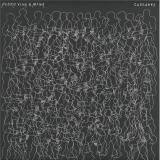
On 9th December Modern Obscure Music presents Cascades, the new album from Pedro Vian & Mana, which premiered during their immersive live set at the most recent Sonar Festival in Barcelona.
Cascades was recorded over a three-day studio session in Turin during the winter months, which is reflected in the musical narrative, as the eleven tracks flow gently like an icy river, filled with a mixture
of hazy melancholy, uncanny dream-states and euphoria.
Various recording techniques and instrumentation was utilised, including the Lyra-8 organismic analogue synthesiser, which takes principles from living organisms to produce sounds resembling a
conversation between nature and technology. The result is a spellbinding ambient odyssey that features a luminous synthesis of neo-classical strings and orchestral drones, together with strange
voices, and abstract passages designed to evoke Dante’s Inferno, which represent the soul’s journey.
Pedro Vian is a renowned Catalan artist who has released three solo albums (Beautiful Things You Left Us For Memories, Pedro Vian and Ibillorca) and a collection of singles on his Modern Obscure
Music imprint – a multi-disciplinary platform based on deep listening and music research. The ‘PRSNT’ compilation, which Pedro curated in 2021 and featured Laurie Spiegel, Ryuichi Sakamoto, and Visible Cloaks, received support from Pitchfork, Crack, Brooklyn Vegan, The Quietus, The Wire and Metal. Pedro has been remixed by Inga Copeland and Pye Corner Audio, and has recorded mixes for of Bleep, Self-Titled and Juno Daily.
As part of a new generation of Italian electronic music artists, Piedmont born composer and producer Mana has released two full length albums (Seven Steps Behind and Asa Nisi Masa) on Kode 9's
Hyperdub imprint, plus an EP on Nicolas Jaar's Other People label under his Vaghe Stelle alias.
Earlier in his musical journey, Mana supported Laurent Garnier, James Holden and Skream across the Torino club scene, and in 2011 teamed up with Italian friends Lorenzo Senni and A:RA to form
the experimental group One Circle.
Pedro Vian & Mana’s previous work as solo producers has pushed the limits of electronic music, and together they’ve garnered critical acclaim from the likes of Pitchfork, The Quietus, The Vinyl
Factory, Resident Advisor and more. They now join forces to traverse new sonic territories between electronica, ambient, drone, and trance-inducing soundscapes.
Co-Accused Records return this autumn with From The Pit, a four-track EP from Paris-born, Berlin-based producer SOD-90 that seeks out connections between electro, industrial, breakbeat and EBM. Locking into the raw, gritty range of distortion that defines his sound, the release also features a remix from Hamburg’s L.F.T. and follows SOD-90’s label debut with 'Saving Up For Botox’ last year.
A classically trained flautist, professional musician and teacher, SOD-90’s electronic production has become an increasingly vital part of his daily life. Working almost exclusively with hardware, his tracks emerge from spontaneous sessions as a channel for emotional release, fuelled by bursts of adrenaline and a need to counterbalance the refinement of classical music. Distortion, for him, is a way to dig deeper into timbre and sonic depth, pulling distinctive textures out of his machines.
Opener ‘Fugitive Passagére’ sets the tone with driving kick drums, distorted vocal fragments and full-throttle energy aimed straight at the club. L.F.T. 's remix twists it into a dark electro moment, layering a jagged bassline over razor sharp beats. On the B side, ‘Muzzle’ goes all-in on blown-out distortion and breakbeat force, before closer ‘Rust Fountain’ moves into complex, off-kilter territory with ricocheting synths and layered percussion.
- A1: John Simmons - Ain't Nothing Like The Love (3 48)
- A2: Le Cop - Law, Order & Peace (2 47)
- A3: The Medlows - Love (Part 1) (2 57)
- A4: The Whale & Flea - Ridin' On (4 00)
- B1: Liberation Of Man - Lovely Day (3 11)
- B2: Thrills - Telephone (4 00)
- B3: East Wind Band - Read The Fine Print (3 31)
- B4: Late Nite Music Band - Sundance (4 45)
- C1: Gulden Karabocek - Dokunma Keyfine Yalana Dunyanin (3 29)
- C2: Nukhet Ruacan - Golge (3 11)
- C3: Carlos Bivar - Amargo Amar (3 50)
- C4: Art Carey & Magnum Force - Good-Bye My Love (4 37)
- D1: New Way - Holding On (2 46)
- D2: Flashback - Piece Of Mind (4 30)
- D3: Spectrym - In Flight (3 58)
- D4: John Academia - Open Our Eyes (4 45)
Black Vinyl[28,53 €]
With two critically acclaimed compilations already under his belt, DJ / collector miche returns to Mr Bongo with the third instalment of his With Love series. Testament to his ever-expanding taste, Volume 3 isn’t just a subs bench call-up from the past compilations, it’s an evolution and progression casting the net deeper and wider than before.
Keeping true to the series, but with some fresh surprises along the way, this carefully curated compilation is a celebration of soulful, independently released music from across the globe, and the amazing (often unsung) musicians and vocalists that made these sublime records.
Across the third volume, miche explores a jazzier side of his tastes. “The deeper I went, the more I found myself gravitating towards jazzier music - not leaving soul behind, but following that same feeling into new territory”, he explains. Tracks like the gliding jazz funk found on Late Nite Music Band’s ‘Sundance’, or the glorious jazz-soul number ‘In Flight’ by Spectrym are shining examples of this.
That defining soulful thread of previous volumes is still in full effect throughout this latest edition. “There’s a healthy dose of impossible-to-find soul gems that have that unmistakable, heartwarming feel. Tracks like John Simmons' 'Ain't Nothing Like The Love', which I've adored ever since Zaf Love Vinyl played it, sit perfectly alongside records like Le Cop and New Way”, states miche.
The addition of some top-tier Turkish music showcases another side to his ever-broadening taste. Nükhet Ruacan's 'Gölge' is something unique, a floaty Brazilian-inspired gem recorded in Turkey and not what you’d typically expect from Turkish records of this era.
It also wouldn’t feel right to leave out a stop in Brazil, with miche looking to the work of Carlos Bivar whose track 'Amargo Amar' carries that undeniable groove of samba-funk from Rio.
Spreading the With Love message far and wide the series has led to miche DJing across the globe, “from batucada sessions in Timisoara, to all-night sets in a club in Beijing, and even an eight-hour Root Down With Love stage takeover at We Out Here festival, joined by Danilo Plessow, Jeremy Underground, and of course, my mentor and buddy Rainer Trüby.”
Volume 3 then, carries that message even further. It’s an eclectic but intentional collection, built for the music lover who wants to discover something new. Working just as well as a soundtrack to cook dinner to, as it does keeping a packed dancefloor moving into the small hours.
- A1: John Simmons – Ain’t Nothing Like The Love
- A2: Le Cop – Law, Order & Peace
- A3: The Medlows – Love (Part 1)
- A4: The Whale And Flea – Ridin' On
- B1: Liberation Of Man – Lovely Day
- B2: Thrills – Telephone
- B3: East Wind Band – Read The Fine Print
- B4: Late Nite Music Band – Sundance
- C1: Gülden Karaböcek – Dokunma Keyfine Yalan Dünyanin (*Vinyl Only)
- C2: Nükhet Ruacan – Gölge
- C3: Carlos Bivar – Amargo Amar
- C4: Art Carey & Magnum Force – Good-Bye My Love
- D1: New Way – Holding On
- D2: Flashback – Piece Of Mind
- D3: Spectrym – In Flight
- D4: John Academia – Open Our Eyes
Magenta Vinyl[28,53 €]
With two critically acclaimed compilations already under his belt, DJ / collector miche returns to Mr Bongo with the third instalment of his With Love series. Testament to his ever-expanding taste, Volume 3 isn’t just a subs bench call-up from the past compilations, it’s an evolution and progression casting the net deeper and wider than before.
Keeping true to the series, but with some fresh surprises along the way, this carefully curated compilation is a celebration of soulful, independently released music from across the globe, and the amazing (often unsung) musicians and vocalists that made these sublime records.
Across the third volume, miche explores a jazzier side of his tastes. “The deeper I went, the more I found myself gravitating towards jazzier music - not leaving soul behind, but following that same feeling into new territory”, he explains. Tracks like the gliding jazz funk found on Late Nite Music Band’s ‘Sundance’, or the glorious jazz-soul number ‘In Flight’ by Spectrym are shining examples of this.
That defining soulful thread of previous volumes is still in full effect throughout this latest edition. “There’s a healthy dose of impossible-to-find soul gems that have that unmistakable, heartwarming feel. Tracks like John Simmons' 'Ain't Nothing Like The Love', which I've adored ever since Zaf Love Vinyl played it, sit perfectly alongside records like Le Cop and New Way”, states miche.
The addition of some top-tier Turkish music showcases another side to his ever-broadening taste. Nükhet Ruacan's 'Gölge' is something unique, a floaty Brazilian-inspired gem recorded in Turkey and not what you’d typically expect from Turkish records of this era.
It also wouldn’t feel right to leave out a stop in Brazil, with miche looking to the work of Carlos Bivar whose track 'Amargo Amar' carries that undeniable groove of samba-funk from Rio.
Spreading the With Love message far and wide the series has led to miche DJing across the globe, “from batucada sessions in Timisoara, to all-night sets in a club in Beijing, and even an eight-hour Root Down With Love stage takeover at We Out Here festival, joined by Danilo Plessow, Jeremy Underground, and of course, my mentor and buddy Rainer Trüby.”
Volume 3 then, carries that message even further. It’s an eclectic but intentional collection, built for the music lover who wants to discover something new. Working just as well as a soundtrack to cook dinner to, as it does keeping a packed dancefloor moving into the small hours.
- A1: Change Feat. Ricardo
- A2: Rhythm Spirit Feat. Ricardo
- B1: Rosie And Hannah House
- B2: Smiling And Smiling... Feat. Haris
- C1: How Can Something
- C2: Move Your
- D1: Give It To Me (Mix 1) Feat. Gideon Jackson
- D2: Give It To Me (Mix 2) Feat. Gideon Jackson
- E1: Love Tiger
- E2: Wobaza Feat. Haris
- F1: Moving With Me Feat. Haris
LTD Marbled Vinyl,[36,56 €]
Terry Francis stands as one of the original architects of acid tech house, a genuine pioneer whose influence shaped the sound and spirit of London’s underground scene in the 90s. From the seminal projects with Housey Doingz to his enduring tenure as a core resident at fabric, Terry has remained a constant and uncompromising force at the heart of the scene.
His contribution is impossible to overstate. Across three decades, Terry’s unmistakable sound, forward thinking approach and steadfast dedication have inspired artists across the globe. His work helped define an era and continues to resonate today.
Following a widely acclaimed run of reissues from the golden age of the early 2000s London underground, where the label was born, Sushitech Records now joins forces with Terry for a landmark moment, his first Sushitech LP, featuring various tracks from over the years alongside unreleased session recorded at Strange Weather Studios in 1999.
This special collection brings together eleven tracks, officially remastered from the original tapes and source material for the very first time. These are timeless productions, restored to reveal new depth, clarity and detail while preserving the raw energy that made them so vital and sought after, pressed on 180g vinyl. The release also features standout collaborations with Ricardo Afonso, Gideon Jackson and Haris, further cementing its status as an essential document of an era. A landmark collection, restored with precision and reintroduced in its fullest form.
- A1: Change Feat. Ricardo
- A2: Rhythm Spirit Feat. Ricardo
- B1: Rosie And Hannah House
- B2: Smiling And Smiling... Feat. Haris
- C1: How Can Something
- C2: Move Your
- D1: Give It To Me (Mix 1) Feat. Gideon Jackson
- D2: Give It To Me (Mix 2) Feat. Gideon Jackson
- E1: Love Tiger
- E2: Wobaza Feat. Haris
- F1: Moving With Me Feat. Haris
Black Version[33,57 €]
Terry Francis stands as one of the original architects of acid tech house, a genuine pioneer whose influence shaped the sound and spirit of London’s underground scene in the 90s. From the seminal projects with Housey Doingz to his enduring tenure as a core resident at fabric, Terry has remained a constant and uncompromising force at the heart of the scene.
His contribution is impossible to overstate. Across three decades, Terry’s unmistakable sound, forward thinking approach and steadfast dedication have inspired artists across the globe. His work helped define an era and continues to resonate today.
Following a widely acclaimed run of reissues from the golden age of the early 2000s London underground, where the label was born, Sushitech Records now joins forces with Terry for a landmark moment, his first Sushitech LP, featuring various tracks from over the years alongside unreleased session recorded at Strange Weather Studios in 1999.
This special collection brings together eleven tracks, officially remastered from the original tapes and source material for the very first time. These are timeless productions, restored to reveal new depth, clarity and detail while preserving the raw energy that made them so vital and sought after, pressed on 180g vinyl. The release also features standout collaborations with Ricardo Afonso, Gideon Jackson and Haris, further cementing its status as an essential document of an era. A landmark collection, restored with precision and reintroduced in its fullest form.
"Bassland Prophecy" was a collection of Southern California musicians, including Alex Xenophon (Deep Squared), Stuart Breidenstein (formerly of Skylab 2000), Alissa Kueker (vocals), and Maxx Vaxx (Euterpre, Butterfly Garden).
The act nourished and grew the emerging LA scene and was a renegade force in live electronic improvisation. Rather than composing full tracks, Breidenstein stated over email that they built musical "ingredients" on the fly, syncing DOS and hardware sequencers mid-performance. Their unpredictable sets, from illegal raves to makeshift desert parties, resulted in electrifying, unforgettable sonic trips.
Recalling 90s LA, Breidenstein said: “Before the internet, finding a rave was an adventure. You’d get a flyer with a phone number, call it the night of the event, then drive—sometimes 100 miles or more from a map point to the actual party. The scene was raw and underground, built by music obsessives hunting for the freshest sounds.”
Two standout tracks from 1996—“Nine / Deeper” and “Blue and Purple Starship of Trust”—perfectly represent their unique genre-bending concoctions. Against all odds, the recordings survived and have been given new life, remastered and reissued on Bristol-based *Sex Tapes From Mars*. To produce the wizardry, their setup included a Juno 106, Yamaha FB-01, a Roland S330 sampler, and a Sequential Circuits Pro-One mono synth with external MIDI, and some guitar effects pedals.
“Nine / Deeper,” born from one of their many spontaneous studio sessions, became eerily intertwined with recurring appearances of the number 9 and black cats. So much was the frequency of apophenia episodes that paranoia began to take over the artists. Recorded in a makeshift living room studio, the 14-minute excursion traverses genres and tempos, beginning quick and hypnotic, and climaxing chuggy and drenched in adlibbed acid lines, culminating in a surreal and legendary live performance in Hollywood. The piece captures the raw spontaneity of their sets, crafted with vintage gear, cassette tape recordings, and, as always, a DIY ethos. Breidenstein states, “While improvised sessions often failed, when it succeeded, it was definitely a kind of infectious magic the listener would recognize.”
“The Blue and Purple Starship of Trust” is a deeply personal piece, named after when Breidenstein saw a heavenly blue morning glory on a walk around his neighborhood, and emerged from heartbreak and the following deep depression entrenching his life at the time. Recorded in a single take onto cassette tape, blending piano, guitar, and heart-rending vocals into an emotional, dreamlike journey. The track starts with a lush, cascading synth sound, bolstered up by rolling, reverbing downtempo drums. Using Sequential Circuits Pro-One throughout, the rippling synths and off-key piano licks act like pipetted droplets of water, all elements bleeding into each other in some kind of hallucinogenic swelling, reflecting Breidenstein’s fading relationship. The guitar part is a nod to Bill Withers’ “Ain’t No Sunshine,” and Breidenstein recalls just “bawling as the guitar line was recorded.”
Created in a time of artistic struggle, living in an old school bus, surviving on instant noodles while hauling their gear from venue to venue, and scraping by on gig money, these recordings act as rare artifacts of a movement that thrived on passion and perseverance, standing as a poignant testament to resilience. Though they released a handful of tracks, ranging from deep house to ambient to techno, their true legacy lay in their high-energy, genre-blurring live shows, which are powerfully encapsulated within these recordings and leave a lasting impact on underground electronic music today.
The second instalment from London Odense Ensemble digs deeper into the group's vision of what modern psychedelic jazz should sound like. Cut from the same sessions as Jaiyede Sessions vol. 1, released last summer, vol. 2 presents a more nuanced approach to the material. On this set the ensemble focuses on shorter, layered pieces - travelling from deep spiritual jazz grooves to gorgeous free-flowing minimalism to full-on acid jazz. There's echo-drenched flutes being absorbed into layers of analog synth pads and guitars, bossa beats and double bass sequences merging with electronics. It’s an intoxicating mélange of sounds and styles, spanning wide temporal and geographical distances. London Odense Ensemble came together when two of the finest exponents of London's flourishing jazz scene, flautist and saxofonist Tamar Osborn and keyboard specialist Al MacSween, came over to Denmark to explore new sounds with Causa Sui's Jakob Skøtt and Jonas Munk, as well as local bass player Martin Rude. For two days the group laid down grooves and ideas and experimented in the studio, and later the best segments were edited and mixed by Jonas Munk, who took a somewhat liberal approach to the mixing process, often dyeing the material with external effects and synthesizers. Jaiyede Sessions are the kinds of records that defy genre-terms, yet have its own instantly recognizable fingerprint. It carries a unique shared vision between the players of what modern psychedelic jazz sounds like. bios: Tamar Osborn: Saxophonist, composer and multi-wind instrumentalist is the creative force behind modal jazz ensemble Collocutor (On The Corner Records). She is a member of the Dele Sosimi Afrobeat Orchestra, performs and collaborates regularly with Sarathy Korwar, Jessica Lauren, Emanative, Ill Considered and DJ Khalab. Al MacSween: Keyboard player & founding member of Kefaya. Collaborations include American jazz legend Gary Bartz, Syrian qanun master Maya Youseff, London Community Gospel Choir, Palestinian jazz singer Reem Kelani & kora player Kadialy Kouyate. Martin Rude: Multi-string instrumentalist & lead singer in Sun River & Edena Gardens with members of Papir & Causa Sui. Jakob Skøtt: Drummer in Causa Sui with a slew of side projects on El Paraiso, including Chicago Odense Ensemble, as well as being responsible for the label’s visuals. Jonas Munk: Guitarist in Causa Sui & studio wizard on most releases on El Paraiso. Also works with a wide palette of electronic music.
Next up on Aris is a particularly special one - Ireland's first electronic music 12''- Carrier Frequency's Telecaster Man, a particularly Irish take on the acid house sounds of the late 80's, that still does the job 35 years later. ''A nine minute tune with two chords, it's just f-ckin' madness mostly - distortion and drum machines.'' simply put by one of the artist himself, but it's much more really. The record originally released in 1989 was a collaborative effort featuring the talents of Mr. Spring, Leo O'Kelly of 70's folk heroes Tir Na nOg, and Trevor Knight of 80s synth pop band Auto Da Fe, Mr. Spring, a veteran of pirate radio since his early teens and the local go to studio guy for dreamers and the Depeche Mode and Talk Talk clones of the time, spearheaded the project. Drawing from his extensive experience and technical prowess, Spring had already established his own studio in 1987, equipped with state-of-the-art gear including an Atari sequencer and an Akai s900 sampler. They decided to work together on it as Spring says ''We wanted to get a Cabaret Voltaire sound to it and have a bit of fun.'' Fueled by a shared passion for experimentation and sonic exploration and inspired by the dynamic energy of the club scene and the rapidly evolving sounds of electronic music, the late-night recording sessions in Spring's studio characterized by spontaneity and innovation. The result of their collaboration was ''Telecaster Man,'' a nine-minute tour de force combining distorted guitars, hypnotic rhythms, and pulsating synthesizers. The 12 inch comes with the original and Sinewave mixes plus a new Mr. Spring remix from the original multi tracks rounding it out with the replication remix and a bonus acapella. Full colour sleeve and comes with extended liner notes.
Can't Stop .There seems no better way to describe the work, party and music ethic of Solomun. Carrying the mirror ball on his shoulders like Atlas, it is impossible to imagine the modern disco world without his dynamics. While his countless DJ sets give fresh impetus to the many shades of house, techno and their siblings, conversely they are a driving force behind his studio and remix excursions. Can't Stop provides an impressive insight into his musical universe.
Resulting from a rather casual after-dinner-listening-session during a car ride on Ibiza with a zesty Gerd Janson, who coaxed the title track out of Solomun making use of their friendship to full capacity, it is a triptych of direct, functional and free-spirited dance floor approach. After some back and forth in the search of the missing pieces to make it so, Solomun managed to deliver the perfect Running Back peak time record.
While Can't Stop channels UK dance music highs through German engineering values, which makes it perfect for dance hall and car rides (yes, indeed!) alike, its heavy dub is constructed with fearless techno DJs in mind who like new beat excerpts, rave stabs and a lot of bass in equal parts. Follow The Disco Ball leads us back to the aforementioned Greek titan and can be read as a love letter to the genre that can be found in its name. Catchy, compelling and cool, it is a masterclass in user-friendly, yet edgy arrangement and dancing shoe compatibility. We repeat: the perfect Running Back peak time record. Can't Stop, won't stop!
Short: Solomun on Running Back. Dance floor fanatics at work. A triptych of fun, friendship and functionality. Can't Stop channels UK dance music highs through German engineering values. Perfect for dance hall and car rides alike. Its heavy dub is constructed with fearless techno DJs in mind who like new beat excerpts, rave stabs and a lot of bass in equal parts. Follow The Disco Ball can be read as a love letter to the genre that is found in its name. Catchy, compelling and cool, it is a masterclass in user-friendly, yet edgy arrangement and dancing shoe compatibility. The perfect Running Back peak time record. Can't Stop, won't stop!
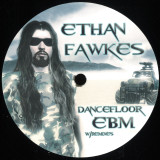
Ethan Fawkes is an oldskool rave techno and EBM DJ and producer based in Tilff, Belgium. He’s known for his charismatic presence and combat ready style on stage, comfortably playing anywhere from raves to clubs or shows and festival stages with his signature sound which is a masterclass in unmistakably powerful and personal tracks. His unique vision and tireless work ethic are evidenced by a growing catalogue of original EPs, LPs and remixes for top international labels, winning the respect of his peers, the adoration of fans and the full attention of DJs and clubbers worldwide.
‘Dancefloor EBM’ is an energetic sensation of a release with all tracks having a distinctly unique sound of their own which encapsulates the industrial post punk, EBM and techno vibe of the label. Along-with the original version of Ethan’s track, which is an event all unto its own, the EP also comes with three stunning remixes.
The 1st is from legendary Italian producer Adriano Canzian who subtly smashes out a rusty snaking baseline version that’s on a journey of foreboding discovery. That’s followed by Columbian industrial EBM nutter Delectro who comes blustering in with a full on forceful driving session of a remix that leads impeccably into label owner Paulitical’s rearrangement that’s a 135 bpm ‘monster from the deep’ infused version with synths aplenty to round the release off in orchestrated style.
microCastle’s third offering of 2023 welcomes Ditian back to the label for his first artist EP. Splitting time between Buenos Aires, Berlin and Barcelona, the Argentinean artist has carved out a unique place in the electronic underground over the last half decade. With an immediately recognizable sonic signature, Ditian channels languages of varied musical landscapes, churning them into his own complex rollercoaster of intricate electronica. A sound that is equally at home on rebellious dance floors around the world or in the sweet spot of a late-night leftfield listening session. A short but meticulous discography reflects Ditian's choosy nature; with Exit Strategy, Innervisions and TAU serving as the primary landing spots for his musical output. Having remixed Ivory’s ‘Arpstairs’ for his microCastle debut last summer, a project which was followed by a contribution to Dixon and Ame’s Secret Weapons 15 collection to begin the year, Ditian now returns to the label with a four-track showcase entitled ‘Serpenta’.
The crushing title track crashes in and sets any preconceived ideas of Ditian’s music alight, forecasting jet force propulsions and wild signal bending synths. As somewhat of a departure from his previous experiments, Ditian’s clustered pungi mutations provide an enduring main theme, while a wonderfully warped break is sure to cast a paranoid spell over the dancefloor.
‘Venena’ follows in fine style and further hammers down Ditian’s elusive vision. Dizzying, rapid-fire sequences of rhythm, granular textures and heavily manipulated synths travel to the very edges, while maelstroms of drums and contorted basslines highlight a high-octane second act.
‘Inertia’ lands at the collection’s midway point and does so in remarkably twisted fashion, stepping decisively on the gas and steering into shadowy transgressions. Never one to shy away from darkness or pushing boundaries, Ditian’s metallic storyboarding rises and falls across act one, consciously withholding energy, as grooves pulse and effects orbit, creating tension that eventually gets resolved as clusters burst open and oscillate in kaleidoscopic fashion.
Ditian’s creative attitude reveals itself further on collection closer ‘Influenza’. Presenting some of his most club-adjacent rhythms yet, it’s a clever coax of billowing tones and scrappy melodica which get wrapped up in a concordant fog, eventually getting washed away; because after all, the oceanic drones are all the better when they’re magnified to full size.
Cover art: Mauricio Seidel
- A1: Daryl Hall & John Oates - Out Of Touch (Club Version)
- A2: Robbie Nevil - C'est La Vie (Extended Version)
- A3: Living In A Box - Living In A Box (Dance Mix)
- B1: Fleetwood Mac - Big Love (Extended Remix)
- B2: Artists United Against Apartheid - Sun City (Last Remix)
- B3: The Cars - Hello Again (Hello Again)
- C1: Fine Young Cannibals - Ever Fallen In Love? (Club Senseless)
- C2: The Colourfield - Running Away (Long Version)
- C3: Deborah Harry - Sweet & Low (Swing Low Mix)
- D1: Daryl Hall - Dreamtime (Extended Remix Version)
- D2: Carly Simon - My New Boyfriend (Remix)
- D3: Bob Dylan - When The Night Comes Falling From The Sky (Full Length Version)
- E1: Neneh Cherry - Buffalo Stance
- E2: Wally Jump Jr & The Criminal Element - Turn Me Loose
- E3: Arthur Baker & The Backbeat Disciples - The Message Is Love (Feat Al Green - Cupid Mix)
- F1: Roberta Flack - Uh-Uh Ooh-Ooh Look Out (Here It Comes) (Here It Comes)
- F2: Will Downing - A Love Supreme (Jazz In The House Remix)
- F3: Al Jarreau - I Must Have Been A Fool (Remix)
- G1: Jeffrey Osborne - Soweto (Remixed Version)
- G2: Jermaine Stewart - Jody (Dance Version)
- G3: Atlantic Starr - One Lover At A Time (Extended Version)
- H1: Junie Morrison - Tease Me (Long Version)
- H2: Jennifer Holliday - No Frills Love (Extended Dance Remix)
- H3: Cindy Mizelle - This Could Be The Night
- J2: Glory - Can You Guess What Groove This Is (Short Version)
- J3: Ritz - I Wanna Get With You
- K1: Afrika Bambaataa & The Soul Sonic Force - Planet Rock
- K2: Tina B - Honey To A Bee (Vocal/Extended Version)
- K3: Arthur Baker - Breaker's Revenge (Extended Vocal Version)
- L1: Rockers Revenge - Walking On Sunshine (Feat Donnie Calvin - 12" Version)
- L2: Freeez - Iou (Mega-Mix)
- I1: Touchdown - Ease Your Mind
- I2: Second Image - Star (Us Remix)
- I3: Central Line - Surprise, Surprise
- J1: Afrika Bambaataa & The Jazzy 5 With The Kryptic Krew - Jazzy Sensation
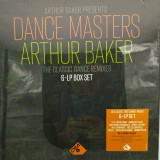
This latest instalment of ARTHUR BAKER Presents DANCE MASTERS finds the production/ song-writing/ remixing maestro taking the spotlight for a long overdue snapshot of his own classic 12” mixes during a crucial evolution of dance music, club
and pop culture.
“I’ve always felt like I was on a mission to make music from the time I heard Motown, Philly and Sly and the Family Stone. My mission started as a hobby and still feels like one now. You’ve got to keep on pushing and hustling. It can be a drag sometimes but
if you really love what you’re doing, it’s worth the work. I still really love what I do.”
Arthur Baker helped codify the remixer as artist. His genre-fluid approach to projects
has resulted in a joyous myriad of classics that spans many decades. This ’80’s focused DANCE MASTERS collection offers a welcome glimpse at Baker’s illustrious career and many long out-of-print 12” versions and previously unavailable mixes.
This 35-track, six LP expanded edition includes a wide array of selections from the likes of Robbie Nevil’s “C’est La Vie,” Fleetwood Mac’s “Big Love,” Neneh Cherry’s “Buffalo Stance”, Jeffrey Osborne “Soweto”, Freeez “I.O.U”, Rockers Revenge “Walking On Sunshine” and of course the juggernaut “Planet Rock” with Afrika Bambaataa & Soulsonic Force.
Complete with in-depth liner notes by Bill Coleman, track by track notes written by Arthur Baker himself, previously unseen session photos from Arthur’s personal archives and a signed insert.
All tracks remastered by Nick Robbins at Sound Mastering
2023 Repress
This latest limited 7" from Mr. K features two incomparable baroque soul masterworks, one from a Chicago-based band that defied categorization and the other a deep cut from a living legend songwriter and performer.
The psychedelic soul of Rotary Connection’s “I Am the Black Gold of the Sun” still sounds revolutionary and unlike anything else, a full fifty years after it was originally released in 1971. Swathed in ethereal ripples of strings (courtesy the Chicago Symphony Orchestra) innovatively arranged by unsung genius Charles Stepney, and rooted in a rock solid foundation provided by the cream of Chicago’s cutting edge session musicians (among them guitarist Phil Upchurch and drummer Morris Jennings, veterans of countless soul jazz cuts), “Black Gold” sits in uncharted territory somewhere between soul, rock, jazz and classical chamber music. It’s a gorgeous territory, a fantasy land where Minnie Riperton and Sidney Barnes’s vocals transmit mystical, uplifting vibes, the entire affair anchored throughout by an addictive piano riff—a mixture that proved irresistible to Masters at Work, who covered it for their Nuyorican Soul project in 1997. Mr. K’s edit doesn’t try to force anything fancy on this masterpiece, simply tightening it up and taking advantage of the lush remastering to present this progressive classic on 45 for the first time.
In keeping with the orchestral soul mood, Mr. K turns to Stevie Wonder’s “Pastime Paradise” for the flip. Whereas “Black Gold” paints a portrait of a magical land, Stevie’s lyrics on “Pastime Paradise,” originally issued in 1976, are a penetrating look at the very earthbound concerns of modern society and its follies, an urgent message to look ahead rather than languish in dreams of the past. The sensitive string accompaniment provides just the right amount of gravitas and emphasis to Stevie’s voice without overwhelming it, while the hare krishna-inspired tambourine keeps the rhythm effectively. Mr. K’s edit again keeps things true to the original, simply providing a subtle intro that uses the tambourine rhythm to lead into the body of the song.
Recycled Cherry" (Red/Black) Vinyl[28,53 €]
Australian indie and garage-rock firebrand, GIMMY unveils her new EP Labour of Love — a raw, emotionally charged collection that fuses gritty indie rock, post-punk bite and tender poetic expression, all powered by Gemma Owens’ unmistakable vibrato and fiercely honest songwriting.
Where her 2024 debut Things Look Different Now was a slow-burn, two-to-three–year voyage of change and introspection, Labour of Love hits with an entirely new force: intuitive, immediate and deeply connected to Owens’ emotional world. Written over six months and captured in an intense 4–5 day studio burst with producer Sam Joseph (King Gizzard), the EP moves with the urgency of something that needed to be felt and heard, right away.
Across seven compelling tracks, GIMMY dives into social anxiety, grief, falling in love and the chaotic beauty of everyday life, with each song arriving “on its own terms” — born from late-night home writing sessions, snippets of inspiration while travelling and moments of full-band electricity. Sonically, Labour of Love nods to Soft Play, Nick Cave, Fontaines D.C., The Preatures and The Smiths, yet remains unmistakably GIMMY: expressive, gritty, vulnerable, cheeky and alive in every moment.
Ultimately, the EP is an unfiltered snapshot of emotional truth, celebrating life’s highs, lows and everything in between, and showcasing GIMMY at her most dynamic, powerful and compelling to date.
Black Vinyl[27,31 €]
Australian indie and garage-rock firebrand, GIMMY unveils her new EP Labour of Love — a raw, emotionally charged collection that fuses gritty indie rock, post-punk bite and tender poetic expression, all powered by Gemma Owens’ unmistakable vibrato and fiercely honest songwriting.
Where her 2024 debut Things Look Different Now was a slow-burn, two-to-three–year voyage of change and introspection, Labour of Love hits with an entirely new force: intuitive, immediate and deeply connected to Owens’ emotional world. Written over six months and captured in an intense 4–5 day studio burst with producer Sam Joseph (King Gizzard), the EP moves with the urgency of something that needed to be felt and heard, right away.
Across seven compelling tracks, GIMMY dives into social anxiety, grief, falling in love and the chaotic beauty of everyday life, with each song arriving “on its own terms” — born from late-night home writing sessions, snippets of inspiration while travelling and moments of full-band electricity. Sonically, Labour of Love nods to Soft Play, Nick Cave, Fontaines D.C., The Preatures and The Smiths, yet remains unmistakably GIMMY: expressive, gritty, vulnerable, cheeky and alive in every moment.
Ultimately, the EP is an unfiltered snapshot of emotional truth, celebrating life’s highs, lows and everything in between, and showcasing GIMMY at her most dynamic, powerful and compelling to date.
- 1: Torchbearer
- 2: Asylum
- 3: The Ice Witch
- 4: Surrender
- 5: Wayfarer
- 6: Blood And Steel
- 7: Dystopia
- 8: Fighter
- 9: Red Light Tower
Galaxy Effect Vinyl[23,32 €]
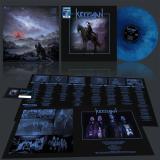
Kerrigan are one of the most promising newcomers from Germany playing traditional heavy metal. The band was formed in Freiburg in 2019 by Bruno Schotten (guitars, bass) and Jonas Weber (vocals, guitars). The duo recorded a demo tape consisting of original compositions “Intruders”, “Force And Will” and “Heavy Metal 2020” plus a cover version of “Rest In Peace” by Wolf (UK). »Heavy Metal 2020« was later released by Fucking Kill Records on tape and vinyl (re-issued by High Roller). For their first full-length album »Bloodmoon«, Kerrigan inked a deal with High Roller Records. »Bloodmoon« was recorded with the help of session drummer Jonathan Döring, an old friend of the band, and received very favorable reviews in the metal press when it was released back in 2023. Together with Jakob on bass, Jonathan is now a regular member of Kerrigan. Three years after »Bloodmoon«, it’s time for the follow-up album by the name of »Wayfarer«. “Dreamy, melancholic and pretty versatile,” this is how guitarist and singer Jonas Weber describes the second Kerrigan album. For him, »Wayfarer« is more or less a direct continuation of »Bloodmoon«. Who knows, maybe Kerrigan have indeed achieved to write a modern heavy metal classic!
- 1: Torchbearer
- 2: Asylum
- 3: The Ice Witch
- 4: Surrender
- 5: Wayfarer
- 6: Blood And Steel
- 7: Dystopia
- 8: Fighter
- 9: Red Light Tower
Black Vinyl[21,81 €]
Kerrigan are one of the most promising newcomers from Germany playing traditional heavy metal. The band was formed in Freiburg in 2019 by Bruno Schotten (guitars, bass) and Jonas Weber (vocals, guitars). The duo recorded a demo tape consisting of original compositions “Intruders”, “Force And Will” and “Heavy Metal 2020” plus a cover version of “Rest In Peace” by Wolf (UK). »Heavy Metal 2020« was later released by Fucking Kill Records on tape and vinyl (re-issued by High Roller). For their first full-length album »Bloodmoon«, Kerrigan inked a deal with High Roller Records. »Bloodmoon« was recorded with the help of session drummer Jonathan Döring, an old friend of the band, and received very favorable reviews in the metal press when it was released back in 2023. Together with Jakob on bass, Jonathan is now a regular member of Kerrigan. Three years after »Bloodmoon«, it’s time for the follow-up album by the name of »Wayfarer«. “Dreamy, melancholic and pretty versatile,” this is how guitarist and singer Jonas Weber describes the second Kerrigan album. For him, »Wayfarer« is more or less a direct continuation of »Bloodmoon«. Who knows, maybe Kerrigan have indeed achieved to write a modern heavy metal classic!
Irlam's dastardly duo are back with another bonza bucket of bass, breaks and badness as they fire up Studio Krust for another high octane session.
Sure to top the Fairground charts and further enrage the Hell's Angels, 'Synthetic Stupidity' sees the pair unleash their full force unabashed, as they hit a purple patch full of new found and frankly quite surprising productivity (rumours of a European-wide sputnik shortage are the likely catalyst).
Fractionally distilling their many collective years of dance music experience into 12 refined pieces of advanced club kinetics that skirt between the syncopated intricacies of breakbeat science and maxed-out 4/4 propulsion.
More hyped-up vox & frantic sampling, more tension, tons of one-finger keyboard melodies, and - as usual - moments of sonic tomfoolery to flummox the assumers.
With their drug debts paid off and a forced clarity of mind, 'Synthetic Stupidity' is a more expansive, deeper and unhurried project; allowing Bosco and Metrodome the space and time to truly deliver the zenith of their sound.
This, is DJ ABSOLUTELY SHIT!!!
- 1: Intro
- 2: Rocket Science
- 3: Kryptonite
- 4: Couldn’t Find Another
- 5: Magnetics
- 6: The Funnel
- 7: Absotively Posolutely
- 8: This Year
- 9: The Chosen
- 10: Combustion Spontaneous
- 11: World Premier
- 12: Creatively Wise
- 13: Widespread
- 14: Holier Than Thou
- 15: Rain
- 16: Counseling
Over two decades later, the underground classic that lit the fuse on indie hip-hop’s next era finally gets its vinyl debut. Originally dropped in 2001, Table Scraps is a gritty, no-frills compilation of unreleased tracks and lost sessions from the formative years of MHz, the Columbus, Ohio hip hop crew that helped define an era before the mainstream caught wind of the underground. Recorded between 1997–2001, the album is raw, urgent, and packed with early glimpses of the greatness that would follow.
The core lineup is fully intact and fully in form: Copywrite flexes his unmatched wordplay and delivers two self-produced heaters, “The Funnel” (co-produced) and “Combustion Spontaneous,” proving he’s just as deadly behind the boards. Tage Future brings futuristic cadence and sharp delivery, Jakki Da Motamouth stays unapologetically rugged, and the late Camu Tao is in rare, untamed form, a creative force whose brilliance only grew from here. Holding it all together are beats from RJD2, Mighty Mi, Camu, and Copywrite himself.
Pressed on vinyl for the first time ever, Table Scraps is more than a collection, it’s a time capsule from a crew that helped shape the underground before it had a name.
Disco Mind taps into a rich vein full of Italy's freshest electronic talents here with a glorious new EP for retro-future dancefloors. Kicking things off is Naples-based Lance, who channels proto-house ruggedness and glossy Italo disco melodies on 'Renato Superstar, which is an homage to a cult 80s film. Club Mediterraneo follows with 'Prima Cala' and provides a shimmering Balearic bliss for sunset sessions, and Sparking Attitude makes a strong first impression with 'Au Revoir Bonsoir,' which sinks into slinky deep house grooves with a touch of filter sync madness. Leslie Lello and Luksek join forces on 'Caravan' for a sugary-sweet nu-disco finish, lovely analogue drums and a carefree attitude.
- D4: Everything Happens To Me
- C1: Everything Happens To Me
- A1: A Light Reprieve
- A2: Buzzard Lope
- A3: Blue Monday
- A4: Zonky
- B1: Later For The Rock
- B2: Sweet And Lovely
- B3: Dear John
- B4: Blue Friday
- C2: Mardi Gras
- C3: What A Difference A Day Makes
- C4: For All We Know
- C5: Ill Wind
- D1: If I Could Be With You (One Hour Tonight)
- D2: I've Got The World On A String
- D3: Me 'N Mabe
- E1: How Long Has This Been Going On
- E2: With A Song In My Heart
- E3: Imagination
- E4: What Is There To Say?
- F1: There Is No Greater Love
- F2: All Of Me
- F3: Intermezzo
- F4: But Not For Me All The Way
The Complete Blue Note 45 Sessions of Ike Quebec collects a phenomenal body of work produced between 1959–62 by a key player in the Blue Note Story. The saxophonist had recorded for Blue Note and served as a talent scout in the 1940s before personal problems forced him off the scene. Alfred Lion began to reintroduce Quebec’s music to jazz fans in 1959 with a series of 45 jukebox singles that were well received and revealed a formidable stylist very much at the top of his game with a full-throated yet relaxed sound ideally suited to a range of material from ballads to blues. The success of Quebec’s comeback inspired Lion to keep going, capturing four sessions of material with a revolving cast of musicians that yielded classic tracks.
i C1. Everything Happens To Me Short Version
[q] D4. Everything Happens To Me [Long Version]
[i] C1. Everything Happens To Me [Short Version]
[q] D4. Everything Happens To Me [Long Version]
[i] C1. Everything Happens To Me [Short Version]
[q] D4. Everything Happens To Me [Long Version]
After years of friendship and sound fragmentation, Felipe Valenzuela and Federico Molinari have succeeded in capturing and distilling their unique musical perspective into a single frame.Throughout this process, these two minds from across the Andes have developed numerous productions with a broad, multidirectional genre range.This release features four tracks, each with its own distinct identity. The A1 track, FORCED TO THE SCALES, which lends its name to the EP, blends elements of Spanish classical music with a futuristic edge, seamlessly adapting to various moments within a set.The second track on side A, RAPS TIGHT, is an experiment born from the same session, where a subtle sensitivity is expressed through a a slow beat, enveloped in a harmonious world.On side B, 503 emerges from a different creative process, combining two divergent paths that naturally intersect, resulting in a track full of energy and dynamism.The EP closes with DEAD MAN, a one-shot recording that, through its raw spontaneity, encapsulates the conclusion of a fragmented journey within a frame full of versatility.
Brooklyn Sway's 7th drop might best be described as the black market edition, but as always we leave the gumshoe work to those heads out there savvy enough to figure it out themselves. Thugfucker alum Acid Tourist and BKS stalwart DeWinter remix celebrated West Coast sideman ROC's cover of a tune that needs no intro, transforming a torch song into an acid belter while keeping its quality intact. Charles Levine, best known as Charlie from Soul Clap, steers close to his usual antics with 'Ocean Waves & Ashtrays', his ashtrays obviously full of blunt ends as he runs the voodoo down on a sultry funk number laced with fat lead keys and ideal for beach party afterhours or smoky late-night sessions. Returning for a second BKS appearance, Ohm Hourani's 'SupaDupaFly' fetches the funk again with rap vocal samples sliding just inside the industry 10% rule set amidst seesawing synths for a woozy, extended effort sure to influence sobriety decisions. On 'Hearts & Diamonds,' label honcho Jay Prouty and mainstay David Paglia join forces jailbreaking two legendary NYC freestyle anthems into a combination that rocks more like high period New Order, so when you catch Fumero's psychedelic painting winking at you off the plate after a few spins, you'll understand exactly why the sway resides in Bucktown.
Repress!
In the mid-1970s, a force of nature swept across the continental United States, cutting across all strata of race and class, rooting in our minds, our homes, our culture. It wasn’t The Exorcist, Goodbye Yellow Brick Road, or even bell-bottoms, but instead a book called The Secret Life of Plants. The work of occultist/former OSS agent Peter Tompkins and former CIA agent/dowsing enthusiast Christopher Bird, the books shot up the bestseller charts and spread like kudzu across the landscape, becoming a phenomenon. Seemingly overnight, the indoor plant business was in full bloom and photosynthetic eukaryotes of every genus were hanging off walls, lording over bookshelves, and basking on sunny window ledges. The science behind Secret Life was specious: plants can hear our prayers, they’re lie detectors, they’re telepathic, able to predict natural disasters and receive signals from distant galaxies. But that didn’t stop millions from buying and nurturing their new plants.
Perhaps the craziest claim of the book was that plants also dug music. And whether you purchased a snake plant, asparagus fern, peace lily, or what have you from Mother Earth on Melrose Avenue in Los Angeles (or bought a Simmons mattress from Sears), you also took home Plantasia, an album recorded especially for them. Subtitled “warm earth music for plants…and the people that love them,” it was full of bucolic, charming, stoner-friendly, decidedly unscientific tunes enacted on the new-fangled device called the Moog. Plants date back from the dawn of time, but apparently they loved the Moog, never mind that the synthesizer had been on the market for just a few years. Most of all, the plants loved the ditties made by composer Mort Garson.
Few characters in early electronic music can be both fearless pioneers and cheesy trend-chasers, but Garson embraced both extremes, and has been unheralded as a result. When one writer rhetorically asked: “How was Garson’s music so ubiquitous while the man remained so under the radar?” the answer was simple. Well before Brian Eno did it, Garson was making discreet music, both the man and his music as inconspicuous as a Chlorophytumcomosum. Julliard-educated and active as a session player in the post-war era, Garson wrote lounge hits, scored plush arrangements for Doris Day, and garlanded weeping countrypolitan strings around Glen Campbell’s “By the Time I Get to Phoenix.” He could render the Beatles and Simon & Garfunkel alike into easy listening and also dreamed up his own ditties. “An idear” as Garson himself would drawl it out. “I live with it, I walk it, I sing it.”
But as his daughter Day Darmet recalls: “When my dad found the synthesizer, he realized he didn’t want to do pop music anymore.” Garson encountered Robert Moog and his new device at the Audio Engineering Society’s West Coast convention in 1967 and immediately began tinkering with the device. With the Moog, those idears could be transformed. “He constantly had a song he was humming,” Darmet says. “At the table he was constantly tapping.” Which is to say that Mort pulled his melodies out of thin air, just like any household plant would.
The Plantae kingdom grew to its height by 1976, from DC Comics’ mossy superhero Swamp Thing to Stevie Wonder’s own herbal meditation, Journey Through the Secret Life of Plants. Nefarious manifestations of human-plant interaction also abounded, be it the grotesque pods in Invasion of the Body Snatchers or the pothead paranoia of the US Government spraying Mexican marijuana fields with the herbicide paraquat (which led to the rise in homegrown pot by the 1980s). And then there’s the warm, leafy embrace of Plantasia itself.
“My mom had a lot of plants,” Darmet says. “She didn’t believe in organized religion, she believed the earth was the best thing in the whole world. Whatever created us was incredible.” And she also knew when her husband had a good song, shouting from another room when she heard him humming a good idear. Novel as it might seem, Plantasia is simply full of good tunes.
Garson may have given the album away to new plant and bed owners, but a decade later a new generation could hear his music in another surreptitious way. Millions of kids bought The Legend of Zelda for their Nintendo Entertainment System back in 1986 and one distinct 8-bit tune bears more than a passing resemblance to album highlight “Concerto for Philodendron and Pothos.” Garson was never properly credited for it, but he nevertheless subliminally slipped into a new generations’ head, helping kids and plants alike grow.
Hearing Plantasia in the 21st century, it seems less an ode to our photosynthesizing friends by Garson and more an homage to his wife, the one with the green thumb that made everything flower around him. “My dad would be totally pleased to know that people are really interested in this music that had no popularity at the time,” Darmet says of Plantasia’snew renaissance. “He would be fascinated by the fact that people are finally understanding and appreciating this part of his musical career that he got no admiration for back then.” Garson seems to be everywhere again, even if he’s not really noticed, just like a houseplant.
- A1: Dave Watts Aka Kinglman - The Loop Jerk
- A2: Kiki Hitomi - Red Mustang
- A3: Kris Kemist - Casio Hiphop
- A4: El Fata - Boom Sound
- A5: Jura Soundsystem - On My Way (Dub)
- B1: Pupajim - Tidal Wave (Raggattack Disco Dub)
- B2: Noda Wolfers - Cabal Of Puppeteers
- B3: Speng Bond - Wha Mek
- B4: Namahage - Voidout Dub
- B5: Tiiu Helina - Muuri Dub
Jahtari label compilation full of all-new Outsider Dubs, Dancehall bangers and lots of cosmic low end, marking twenty years of Reggae oddness from Leipzig.
Vol. 5 is the first addition to the Jahtarian Dubbers series in over ten years, starting off with ‘The Loop Jerk’ by DJ and activist Dave Watts aka KingLMan (who sadly passed away in 2024).
Kiki Hitomi turns up the heat with ‘Red Mustang’, a raw but sweet PG 18-rated Japanese lofi Reggae gem, followed by ‘Casio HipHop’, an addictive synth & drum machine session by UK bedrock producer Kris Kemist (Reality Shock Records).
Singjay miracle El Fata brings the positive energy with ‘Boom Sound’, a synthie dancehall scorcher hot off the tape reels at Naram’s studio in the New Zealand bush, while Jura Soundsystem’s hypnotizing ‘On My Way (Dub)’ easily shifts gears into Sly & Robbie-mode.
Side B starts off with Pupajim’s prophetic ‘Tidal Wave’, produced by digi-reggae specialist Raggattack and coming in an epic extended Disco Dub version.
Melodica wizard Taka Noda (Mystica Tribe) and synth shaman Danny Wolfers (Legowelt) enter into deep magnetic communion with their Sacred Tascam tape deck on ‘Cabal of Puppeteers’, followed by DJ veteran Speng Bond chanting ‘Wha Mek’ over a spaced out depth charge by Jahtari co-founder Rootah.
Gameboy-whisperer DJ Scotch Egg (WaqWaq Kingdom, Seefeel) joins forces with disrupt and Dub trumpet black belt Pablo Volt (STA) for a mindbending journey going all the way from synth heavy Roots to Acid Jazz, on Namahage‘s ‘Voidout Dub’.
The voyage ends with a hazy and mystical Ambient Dub version of ‘Muuri’ by Finish singer Tiiu Helinä, with Tapes on keys – not to be missed!
All lovingly mixed by disrupt, coming with iconic artwork by Disko 69 (Doppeldenk).
- 1: Synthtro
- 2: I'm So Tired (Of Living In The City)
- 3: Can't Get Through To My Head
- 4: Someone Else Is In Control
- 5: Goin' Down
- 6: Wish That She'd Come Back
- 7: Thick Skin
- 8: Too Much Tension
- 9: Watching The News Gives Me The Blues
- 10: It's Alright
- 11: Traces
Ltd edition in transparent yellow vinyl!
The Mystery Lights 2nd outing on Daptone's rock subsidiary, Wick, sees them digging deeper into their cavern of influences, taking on tips from Suicide, The Kinks and Television as they look to build on their already party fuelled, raucous sound.
The Mystery Lights story begins in 2004 in the small town of Salinas California when friends Michael Brandon and Luis Alfonso -whose shared fondness for groups like The Mc5, Velvet Underground, Dead Moon, and The Fall (just to name a few) -decided to join forces and craft their own brand of unhinged rock and roll. From there they spent the better part of 10 years touring relentlessly before migrating to Queens, New York in 2014.
With a live show known for its raw, visceral energy and relentless assault –leaving little to no stoppage between songs –they barreled through countless NYC haunts and DIY venues, quickly amassing a fervent local following. The buzz soon caught the attention of Daptone Records execs who were in the beginning stages of launching a new rock-centric imprint, Wick Records. Impressed by the groups’ musicianship, groove, endless supply of energy, and understanding of musical history the Mystery Lights were quickly signed to Wick. Though a rock band at heart, the parallels to what Daptone Records had traditionally looked for in their Soul artists was undeniable. Soon sessions were booked with Producer/Engineer Wayne Gordon, and the release of their debut single “Too Many Girls” b/w “Too Tough to Bear” launched to mass critical fanfare.
Upon the release of their self-titled full-length on June 24th 2016 The Mystery Lights were quickly crowned “one of New York’s finest garage rock bands” by NME. Extensive touring, including multiple stops in Europe, Asia and Australia followed which found the group graduating from support slots at hole-in-the-wall clubs to headlining stages at major festivals worldwide.
After two years of break-neck, non-stop touring, the group settled back into Queens to prepare for their second full-length record, Too Much Tension(out May 2019). With Wayne Gordon in the producer’s chair and several intense writing sessions under their belt the group were back at Daptone’s House of Soul and ready to track. While keeping the hard-hitting approach of the first LP, Too Much Tension finds the group digging deeper into their well of eclectic influences, enriching their sound without echoing the past. Mixing the eerie, insistent synth sounds of groups like The Normal and Suicide, the energy and swagger of punk’s golden age, the pop sensibility of The Kinks, and the stark, deliberate execution of Television -The Mystery Lights are taking their idiosyncratic brand of rock and roll to dizzying new heights.
- 1: Meadowland
- 2: The Dream
- 3: Burning 05
- 4: Call Up The Doctor
- 5: The Score
- 6: Boogietown
- 7: Tiergarten
- 8: Howling Dog Song
- 9: Twist Of A Nerve
- 10: Sun For Hire
'Gone Down Meadowland' is the much-anticipated debut album release from Norwich, UK psych outfit Floral Image, releasing 25th April 2025 on the renowned Fuzz Club. More than ever, the band wanted to produce a brand of East-Coast psychedelia that reflected the natural lusciousness and glorious solitude of the immediate world around them. Over 30 songs were conjured, considered and arranged before being whittled down to a final 10 that epitomise what they do best - ten tracks of vivid hue, harnessed live power, all laced together in fluid lyrical harmonies. Taking inspiration from band favourites Woods, KGLW, Stereolab, among many others, a string of at-home recording sessions commenced over a 6-week period across the summer of 2024. Side A is a sun-drenched journey through their whimsical Norfolk countryside, narrated with a surreal sense of lyricism which focuses on the undulating flow of the human psyche and the shape of relationships that can decide its fate. 'Burning 305' follows the mould of the band’s earlier creations with white-knuckled rhythms layered with dashing production and gritty guitars. 'The Score' summarises their love of Revolver-era Beatles and infuses it with a hint of 90's dance grooves. Side B is where the trip takes a heavier turn, the un-hinged night-time of the record. It is where the band best shows the force with which their live reputation has been built on. 'Tiergarten' - a motorik course through consciousness and 'Howling Dog Song' - all raucous, scuzzy-garage riffing. The album concludes with the 7-minute epic 'Sun For Hire'. Born out of a 30-minute live improvisation, it is the earliest written of all songs on GDM and a strong fan favorite for the audiences of the last 2 years. "A lot of themes are anti-establishment commentaries on the state of the modern world. It can feel isolating being bystanders of global concern in sleepy Norfolk, even though it’s easy to slip into a false comfort when you’re surrounded by vast space, natural beauty and friendly folks down the market. Gone Down Meadowland is that egoless escapist fantasy that still can't escape the world caving in on itself; Norfolk isolationism." Produced by the band themselves, mixed by Hugh Fothergill of Volleyball, and mastered by Joseph Carra at Crystal Mastering of KGLW fame, Gone Down Meadowland is Floral Image’s first full flourish. They take the record on the road across Europe and the UK throughout April & May 2025.
- A1: Porto Feliz (Mozar Terra)
- A2: Janeiro (Ion Muniz)
- A3: Serena (Steve Sacks
- B1: A Chegada (Dom Salvador)
- B2: Para Ana (Ricardo Dos Santos)
- B3: Pra Nova (Aloisio Aguiar)
- B4: Constelação (Alfredo Cardim)
- C1: Ascensão (Mozar Terra)
- C2: Clodes (Alfredo Nascimento)
- C3: Naquela Base (Guilherme Vergueiro)
- D1: Atlantico (Ricardo Dos Santos)
Gatefold 2LP
Far Out Recordings proudly presents a landmark discovery in Brazilian jazz: the long lost album by drumming pioneer Edison Machado. Recorded in New York City in early 1978 but never released, Edison Machado & Boa Nova captures a pivotal figure in Brazilian music history at the height of his artistic powers.
Combining North and South American jazz traditions with Machado's revolutionary samba innovations, Edison Machado & Boa Nova represents a triumph against the odds. After facing persecution under Brazil's military dictatorship and being forced to sell his drum kit in 1976, Machado found renewed creative purpose in New York with the Boa Nova ensemble. The resulting album captures the essence of his genius - sophisticated yet wild, controlled yet daring, leading an ensemble of some of the best jazz, samba and bossa nova players of the day.
At just fifteen years old, Machado revolutionized Brazilian music through an accident that would change everything - when his snare drum broke during a performance, he began playing samba rhythms on the cymbal. This innovation, known as "samba no prato" (samba on the cymbals), brought new layers of dynamism to samba and proved instrumental in the development of bossa nova alongside contemporaries like Antonio Carlos Jobim and João Gilberto.
A complex and passionate figure, Machado was notorious for his militant perfectionism and "attacking" style of drumming. Having spent some years of his youth in the Brazilian army, musicians often remarked that he played as if he were at war. But his innovative style, while exhibiting complete control and sophistication, somehow so often danced right on the edge of chaos and wild abandon.
After making his name in Rio's legendary Beco das Garrafas (Bottles Alley) in the 1950s and early '60s, Machado went on to form Bossa Três - the world's first instrumental bossa nova group. His influence spread internationally through collaborations with Stan Getz, Sergio Mendes, Antônio Carlos Jobim, Milton Nascimento, and Chet Baker, while his 1964 album Edison Machado É Samba Novo stands as a masterpiece of Brazilian jazz.
At 80 minutes in length, Edison Machado & Boa Nova, the lost 1978 New York sessions, is a singular achievement in Brazilian jazz. The format itself is a rarity in the canon. It’s packed full of exceptional technical precision and creative vitality, with sophisticated arrangements and masterful improvisation from its exceptional sextet of Brazilian and US musicians: Paulinho Trompete (flugelhorn/trumpet), Ion Muniz (tenor saxophone), Steve Sacks (baritone saxophone), Mozar Terra (piano), and Ricardo dos Santos (double bass).
The album features unheard compositions by Brazilian masters Dom Salvador (Salvador Trio, Harry Belafonte, Edu Lobo), Guilherme Vergueiro (Raul De Souza, Leon Ware, Joyce), Aloisio Aguiar (Arthur Verocai, Airto) amidst the plethora of captivating original material by the members of the Boa Nova ensemble.
Southern-bred, alternative R&B singer-songwriter Mereba artistically embodies self-understanding on The Breeze Grew a Fire, her grandest work and first release on Secretly Canadian. To hone in on this latest album, it was necessary for Mereba to reconnect with her whole many-sided self, from her inner child to her inseparable relationships. Mereba peacefully transmutes her beginnings, looking upon her closest kinships and friendships with a keen understanding of their steadying, inspirational force. Surrounded by the gentle Breeze of these relationships and recollections, Mereba is empowered as both an artist and mother, while also being reminded to nurture her childlike wonder. Mereba gracefully shines on the follow-up to her bounteous 2019 debut, The Jungle Is the Only Way Out. In escaping the Jungle, Mereba faced the paradigm shift of birthing a son in 2021 and getting accustomed to a rapidly changing self-outlook. Mereba's creative output has always relied on her innermost reflections and ideas on whatever was happening around her; but in motherhood, the singer's perspective widened while her inspiration became more focused, and more individually powerful. "Even though I'm fully an adult, I had to grow up in a way overnight when he my son came," Mereba explains. "The process of watching him open up to the world, learn how to engage with the world, it is very tender. I feel like it's the most reminded I've ever been of when I was a child and the first memories I have of life." The transformation brought Mereba to the intimacy of DIY recording sessions, providing an honest and organic foundation to Breeze. Mereba tapped her longtime production collaborator Sam Hoffman to co-assemble the album's rich production, which parallels its folk-like warmth. Although Mereba is a true double Earth sign-Virgo and Virgo rising-the development of Breeze was anchored by experiences and memories that span from Atlanta to L.A., Addis Ababa to Greensboro, an intention that speaks to the album's fluid nature. While nowhere near the end of her musical trek, The Breeze Grew a Fire is a loving, inspiring return to origin, one where Mereba frees a painful past, eases into future possibilities, and goes with life's flow.
While 1995's Washing Machine LP moniker was a thinly-veiled jab at the corporate aesthetic ("no, you cannot turn Sonic Youth into a household appliance brand", the band even considered changing its name to Washing Machine but settled on the album title instead), their major label relationship was indeed a curious buzzpoint of talk on the street after their intake to DGC in 1990. It wouldn't be fair to say that this state of existence propelled the band to reinforce its independent mindset by releasing a series of opaque-looking, French-language-dipping, highbrow-looking releases on their own that focused on the more abstract improv/compositional side of the band; in all truths they had been heavily steeped in self-releasing spillover material prior to that. But after a pressure pot of the early 90's indoctrination into a new operational mode for the band and its visibility, and the forces around it attempting to shape their direction, it seemed like a good time to create a strong show of radical concept.
The Anagrama EP became the first in a series of the SYR label's Perspective Musicales releases seemingly cementing Sonic Youth's connectivity to an increasing public awareness in experimental composers of the 20th century (French or otherwise). The irony was that many of those original avant composers being rediscovered by the indie audience (Partch, Neuhaus, Reich, Messaien) often found themselves on major labels anyway! So, perhaps this reverse approach was a necessary concept/comment given the music biz climate of the 90's. Regardless of how apples and oranges fell in Xenakian probability/theory, it was clear that both Sonic Youth's stature in progressive music, aided by now unlimited taperoll time thanks to a home base studio downtown established after their Lollapalooza stint, gave the band plenty of trailblazing time for their self examination of untraveled avenues.
"Anagrama" unfolds into nine minutes of delicate textures, starting with thick drone segueing into moments reminiscent of the post-crescendo flutter/comedown of "Marquee Moon's" trail-out; Thurston, Lee and Kim's guitars all circling round each other taking delicate pokes and stabs before drifting into some post-rock rhythmic moves tapered with delicate percussive guidance from Steve Shelley. "Improvisation Ajoutée" reaches further out into dissolve with whirring oscillations, guitars hissing and clanking radiator-style in a short blast format that continues into "Tremens" and a spooked-out landscape of gelatinous notes snaking up slowly. The sparseness of attack is colorful, textures emit and linger, silent spots shine, all flanked by tasteful drumming that provides the thread to all the abstraction. Shelley's approach here is interestingly sideways to any kind of usual rock action, it's tempered, mutant and metronomic simultaneously. The finale track "Mieux: De Corrosion" is a real pedal-palatte showcase. Here, Plutonian guitar wash flanges upwards to buoy a myriad of colorful eruptions of amp-spuzz, chopped up tone blasts and general confusion. Out of the blue, some metallic one-note choogle kicks in and threatens to explode into some Judas Priestly motion, before it all sputters into aural glass showers, clang, and finally a ferocious wave of more flange hiss that crashes down on a dime.
This initial foray into SY's Perspectives Musicales series continued onward with releases featuring other co-conspirators, peaking with the ambitious 2CD Goodbye 20th Century that finally connects the band into full-on interpretations of other composers' pieces (as well as displaying their own new ones). The whole series is not so much an outlet for another "side" of the band, but a run that went hand in hand building new approaches of songcraft onto their own, more overground direction which included Jim O'Rourke (who hopped on during SYR3), adding additional density to A Thousand Leaves and other LPs of his era. Fans of the '86 Spinhead Sessions as well as the recently-exhumed later jams of In/Out/In will take in the sounds of SYR1 with glee.
- Quality Crayon Wax Ok
- The Order Form
- Shabby Abbott
- World Friction
- Wake Up
- Albert
- Alkaline Loaf In The Area
- Collecting Dust
- Popcorn Boy (Waddle Ya Do?)
- Aerosol Burns
- World Friction (Single Version)
- Wake Up (Ep Version)
- Eagle Bird
- Quality Crayon Wax Ok (Ep Version)
- Bod's Message
- Flora Force
- Eugene
- Tame The Neighbours
- Music Is A Better Noise
- Moon Town
- Fanfare In The Garden
- The Captain
Iconic UK punk band X-Ray Spex co-founder Lora Logic was unexpectedly ousted before the recording of their debut album 'Germ Free Adolescents' in 1977. Undeterred, Lora went on to form and front the post-punk band Essential Logic. With trademark angular sax lines and her unmistakable vocal stylings, she went on to create some of the most liberating and exciting music of the early post-punk era, not only as Essential Logic, but also as a solo artist. 'Beat Rhythm News (Waddle Ya Play?)' is the band's debut studio album. Originally released in December 1979 on the Rough Trade Records label, whose founder Geoff Travis provided enthusiastic encouragement. The album reached number 11 in the UK Indie chart. Lora's solo album 'Pedigree Charm' followed in 1982. Lora and Poly Styrene would later reform X-Ray Spex for the band's sophomore and final studio album 'Conscious Consumer' in 1995. Essential Logic returned from an extended hiatus in 2022 with the 5 x LP boxset 'Logically Yours', including the new studio album 'Land of Kali', co-produced by Lora and Youth (Killing Joke), followed by 2024's remix album thereof - 'Rekalibrated', which enlisted the talents of an ambitious and diverse set, including Grammy Award winner - Dave Audé, Rave-pop legend - Adamski and Scottish Kandy-poppers - bis, amongst others on remixer duties. This 45th Anniversary 'Deluxe' edition compiles the original studio album together with a bonus album containing the complete Essential Logic studio recordings from 1978 - 1983, including the iconic Cells Records debut single 'Aerosol Burns' (1978), the 'Wake Up' EP (1979), included here for the first time on any physical release since its original pressing, together with the non-album b-side 'Flora Force' and 3 post album Rough Trade Records single releases: 'Eugene' (1980), 1981's 'Music Is A Better Noise' and 'Fanfare In The Garden', and their respective b-sides. Repackaged in a high gloss accented, spot varnished sleeve, on 2 x black and white splatter vinyl, foiler stickered, with inner-sleeves including full lyrics and new sleeve notes by Lora. This release also marks the long overdue and highly championed CD debut of the original album and bonus tracks. Following their recent UK tour with fellow punk legends Penetration, featuring Pauline Murray, in November 2024, Essential Logic show no signs of stopping or slowing down as they plan extensive live celebrations of the album throughout 2025 as well as the recording and release of their next studio album. Press Quotes : "Lora's voice is always doing the right, thrilling things...she frets and somersaults in such an intoxicating way" - NME // "A stunning record that remains a benchmark of the punk era" - AllMusic // "Beat Rhythm News suggests an impromptu brainstorming session between Kate Bush, Talking Heads and Captain Beefheart" - Louder Sound // "An intelligent and fluid benchmark for any band willing to dabble in both punk and dance music at the same time" - PopMatters
Black[23,95 €]
‘What makes Sex Swing so powerful is that they transcend the limitations of rock music. Their sound is so full of possibilities, violence, sexuality, sacrifice, even religion. If there was a future to look forward to for heavy guitar music, this is it’ The Quietus The locals call it Sop Ruak – eighty thousand square miles of mountains and mystery and unholy medicine. “It really is an endless seam of activity,” Sex Swing frontman Dan Chandler explains of Golden Triangle – both the title of their new album and the region between Myanmar, Thailand and Laos that inspired it. To know this contradictory corner of the world is to understand fully why the cult-beloved noise-rock artisans turned to it when writing their hotly-anticipated third full-length. The real-life Golden Triangle is a groundswell of both natural wonder and drug production, and who combines beauty and narcotic brutality better than Sex Swing? For a decade now, this
collective of revered UK underground musicians, comprising members of Earth, Mugstar, The Keep and Jaaw, have been pulling audiences into drug- like slipstreams with their alchemy of pummelling rhythms, towering guitars, and unrelenting saxophone through which glimmers of light occasionally pierce through. No wonder their Golden Triangle is an album telling distortion-shrouded tales from one of the most storied, enigmatic places on the planet, with enough invention within to fill eighty thousand miles and more.
Where does this violent, hypnotic aural travelogue take you within the Sop Ruak? The seven tracks that make up The Golden Triangle see the band – completed by bassist Jason Stoll, drummer Stuart Bell, guitarist Jodie Cox, synthesist/guitarist Oli Knowles and saxophonist Colin Webster – adventure first to ‘The Confluence of the Ruak and Mekong Rivers,’ full of shimmering orchestration and feather-light ambience. Then come stops in ‘Myawaddy’, named after a small town embroiled in bloodshed on the border of Myanmar
and Thailand, and ‘Boten, Route 13’ – sparked by stories of a seemingly endless stretch of road from Laos into China. Before long, listeners are plunged into ‘Hpakant’, one of the album’s most invigorating and singular moments, lyrically inspired by a jade mine in Myanmar, where the spoils of forced labour are exchanged for prostitution and methanphetamine. The result is a mesmerising slow-burn of sax, snaking rhythms and sinister spoken word courtesy of the Scottish-born Bruce McClure, who “took the theme and turned it into a sci-fi story of exploitation and vice,” explains the frontman. It’s a track that, like the rest of Golden Triangle, underlines the evolution Sex Swing have undertaken since forming in 2014. From the raw and primitive sounds of the self-titled debut full-length, followed up by the coruscatingType II in 2020. Sex Swing’s third effort retains those early primitive elements and adds layers of structure and complexity. Golden Triangle initial formation was that of programmed beats and bedroom recordings shared electronically in the height of the pandemic. Those ideas were then completed during intensive writing sessions at a secluded farm in Oxfordshire.
Album credits consist of recording by Stanley Gravett at Holy Mountain Studios in Hackney, mixing by Wayne Adams at Bear Bites Horse, mastering from James Plotkin, and the continued aesthetic collaboration with artist Alex Bunn. Golden Triangle bristles with a rawness familiar to fans of the British sonic punishers, but adds new elements indicative of a group never resting on their laurels or sitting in one place. Why would they, after all? There’s an entire world of mountains and mystery and unholy medicine out there to be explored. The Golden Triangle, it seems, is just the beginning.
Green[23,95 €]
‘What makes Sex Swing so powerful is that they transcend the limitations of rock music. Their sound is so full of possibilities, violence, sexuality, sacrifice, even religion. If there was a future to look forward to for heavy guitar music, this is it’ The Quietus The locals call it Sop Ruak – eighty thousand square miles of mountains and mystery and unholy medicine. “It really is an endless seam of activity,” Sex Swing frontman Dan Chandler explains of Golden Triangle – both the title of their new album and the region between Myanmar, Thailand and Laos that inspired it. To know this contradictory corner of the world is to understand fully why the cult-beloved noise-rock artisans turned to it when writing their hotly-anticipated third full-length. The real-life Golden Triangle is a groundswell of both natural wonder and drug production, and who combines beauty and narcotic brutality better than Sex Swing? For a decade now, this
collective of revered UK underground musicians, comprising members of Earth, Mugstar, The Keep and Jaaw, have been pulling audiences into drug- like slipstreams with their alchemy of pummelling rhythms, towering guitars, and unrelenting saxophone through which glimmers of light occasionally pierce through. No wonder their Golden Triangle is an album telling distortion-shrouded tales from one of the most storied, enigmatic places on the planet, with enough invention within to fill eighty thousand miles and more.
Where does this violent, hypnotic aural travelogue take you within the Sop Ruak? The seven tracks that make up The Golden Triangle see the band – completed by bassist Jason Stoll, drummer Stuart Bell, guitarist Jodie Cox, synthesist/guitarist Oli Knowles and saxophonist Colin Webster – adventure first to ‘The Confluence of the Ruak and Mekong Rivers,’ full of shimmering orchestration and feather-light ambience. Then come stops in ‘Myawaddy’, named after a small town embroiled in bloodshed on the border of Myanmar
and Thailand, and ‘Boten, Route 13’ – sparked by stories of a seemingly endless stretch of road from Laos into China. Before long, listeners are plunged into ‘Hpakant’, one of the album’s most invigorating and singular moments, lyrically inspired by a jade mine in Myanmar, where the spoils of forced labour are exchanged for prostitution and methanphetamine. The result is a mesmerising slow-burn of sax, snaking rhythms and sinister spoken word courtesy of the Scottish-born Bruce McClure, who “took the theme and turned it into a sci-fi story of exploitation and vice,” explains the frontman. It’s a track that, like the rest of Golden Triangle, underlines the evolution Sex Swing have undertaken since forming in 2014. From the raw and primitive sounds of the self-titled debut full-length, followed up by the coruscatingType II in 2020. Sex Swing’s third effort retains those early primitive elements and adds layers of structure and complexity. Golden Triangle initial formation was that of programmed beats and bedroom recordings shared electronically in the height of the pandemic. Those ideas were then completed during intensive writing sessions at a secluded farm in Oxfordshire.
Album credits consist of recording by Stanley Gravett at Holy Mountain Studios in Hackney, mixing by Wayne Adams at Bear Bites Horse, mastering from James Plotkin, and the continued aesthetic collaboration with artist Alex Bunn. Golden Triangle bristles with a rawness familiar to fans of the British sonic punishers, but adds new elements indicative of a group never resting on their laurels or sitting in one place. Why would they, after all? There’s an entire world of mountains and mystery and unholy medicine out there to be explored. The Golden Triangle, it seems, is just the beginning.
It is summer dawn . . . and you are alone. Here is music for your strange mood. The piano starts the first track, slow tempo beat, a strict beat, a swinging beat. Lillemor—here minor harmonies give the tune a rural, romantic feeling of some place in Spain or France. The tempo changes to medium fast—the flute solos. Light phrasing contrasts beautifully to the earthy, swinging beat of the rhythm section and the repeating piano figures. The trombone adds a new color, a counterpoint of sound and phrasing, backed by the pulsating beat of this wonderful rhythm and the driving piano. Summer dawn . . . This music has more to offer, because it shows the personality of Sahib Shihab at its best. Sahib is a universal musician who reflects musical experiences in jazz since the end of the thirties. He lived through the important periods of modern jazz with his heart and mind wide open toward everything that was good music, regardless of being termed "Mainstream", "Bop", "Cool", "Westcoast", "Eastcoast", "Hard Bop'', et cetera. When you listen closely to his music, you will find traces of all these, but they are immersed in his deep musicianship and his true jazz personality. Sahib Shihab's background reads like the record of a master of advanced studies. Furthermore he played and collaborated with the coolest jazz musician of that period. Above all let's name Budd Johnson, Theolonius Monk, Tadd Dameron, Milt Jackson, Dizzy Gillespie, Illinois Jaquet, Elmer Snowden, Luther Henderson, Larry Noble, Fletcher Henderson, Roy Eldridge. In his early professional years, Sahib was heard mostly on alto sax; later, more often on baritone sax and flute. Today, his name is inseparably connected with these two instruments. The unity of his jazz performances is not alone bound up with the com¬positions and the arrangements of Sahib Shihab, though in their understated simplicity they have a melodic beauty that is seldom found in jazz of today. The rhythmical subtleties add to the overall qualities of being relaxed vehicles for free-blowing, but there is an immediacy that you hear and feel every moment when listening which defies analysis. The playing of the rhythm section helps greatly to promote the sense of flux and contrasting constant renewal that makes listening to this record so invigorating an experience. Well, this is no surprise, with Kenny Clarke as the nucleus of the rhythm group. Kenny 'Klook' Clarke is a major figure and contributor in jazz, one of the founders of modern jazz, and is ranked as one of the all-time great drummers. He influenced a whole generation of musicians with his playing, though living in Paris since the middle of the fifties somewhat dimmed his name to the general American public. Nevertheless, his name alone will assure a connoisseur to expect top class musical experiences. Talking of the rhythm section we have to name Jimmy Woode's bass, which together with Kenny's drumming, is the driving force for the group and the reliable harmonic anchor for the improvisors. By the way, Jimmy has been with the Duke quite a while, and this alone is an award for extraordinary craftsmanship and artistry. The good sounding rhythm with its full-bodied color is also a result of the added bongos of Joe Harris, who manages to stay out of the way of the players—a quality not often found with drummers—but his playing is felt through the set. There are two members of the group not yet mentioned. Two Europeans, pianist-composer-arranger Francy Boland from Belgium, and trombonist Ake Persson from Sweden. Francy Boland this time is a sideman, though normally he is a leader of recording sessions, both as composer-arranger and as musical director of the band. In the fifties he was in the States writing arrangements for different name-bands, such as Basie and Goodman. In Europe, he is famous for his swinging modern big band arrangements; and his inventiveness as a writer is reflected in his piano playing. He has the talent of using the right dynamic approach every moment, thus making his playing helpful to soloists and interesting for listeners as well. Ake Persson has been Scandinavia's out-standing trombone player for about ten years. There are only a few trombonists in Europe who might match his talents at times, but they lack the consistency of his playing. He is impressive, whether playing in a big band, or whether main soloist in his own small groups. American musicians love the sound of his slide trombone and his easily flowing romantic improvisations, so he often joins American name-bands as they travel in Europe. The music speaks alone . . . , we said it before. You have your soul to feel the beauty, to follow lines and structure, and to enjoy the spiritual excitement. Whether you enjoy the flowing, easy sounding theme of "Please Don't Leave Me", or the climaxing piano solo in the same piece—the bass solo in "Waltz For Seth" or the swinging baritone sax—listen to the first bars of this solo and pay attention to Kenny. Whether you listen to "Campi's Idea", (named after Gigi Campi, the well known Cologne jazz enthusiast who organized this recording) with the romantic flute solo of Sahib, the interesting tempo changes, the piano comping, the moving trombone solo; or to the up-tempo "Herr Fixit", with the cooking Kenny and humorous, driving flute solo, you know that these six musicians where in the right mood, in the right stimulating surroundings to feel what we all feel when it's: SUMMER DAWN.
- A1: All In (Original Mix)
- A2: Golden (Original Mix)
- A3: Axen (Original Mix)
- A4: Dicktator (Original Mix)
- A5: Give It To Me (Original Mix)
- A6: Ergh (Original Mix)
- B1: Treat Yourself Badly (Original Mix)
- B2: Try Again (Original Mix)
- B3: Flummi (Original Mix)
- B4: Rabbit Underground (Original Mix)
- B5: Your Mother (Original Mix)
- B6: Seven Rivers (Original Mix)
- C1: Dicktator (Club Mix)
- C2: Golden (Cub Mix)
- C3: Treat Yourself Badly (Club Mix)
- D1: Give It To Me (Club Mix)
- D2: All In (Club Mix)
Heavy support by Radio Slave, Sam Divine, Acid Pauli, Green Velvet and Maceo Plex to name a few, while also being played on radio stations world wide. The album marks the beginning of a new chapter for The Glitz as they embark on a journey beyond the world of electronic music. After a wide range of beautiful, inspiring, provoking and uplifting The Glitz-singles, we are now approaching the full album in all its might. The singles have shown us the diverse soundscapes you can find in Andreas and Daniels musical multiverse, with the genres ranging from the classic House and Techno genres, to also introducing their take on Trip Hop, Neo RnB, Hip Hop, Ballad and Electronica. This journey into their musical realm has resonated with fans and colleagues alike the last months, putting the first single on position 1 in the German Club Charts for four weeks straight (it is still in the Beatport top100 after 7 months). Born out of a desire to create a space to explore and expand their unique sound, their new album is a bold extension of The Glitz vision and purpose. It has been a long time coming and is the result of four intense years in the studio together with the unique and talented singer and songwriter Mulay. And now it is time to present the full album to the world. is the mesmerising product of one of their many jam sessions in the studio. It carries the unique The Glitz fingerprints all over it while also letting them shine in a new context. The slow flowing Hip Hop beat paired with Mulays raw vocals and incredibly poetical and personal lyrics is a must hear for old and new The Glitz-fans alike.
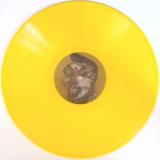

Placed between some of the beautiful singles we have heard before, "Ergh" hits us with full force. The track takes us on a breaky, synth loaded trip. As an energetic and driving fresh breath of air, the track combines a frisky attitude with a tension building arrangement, showing that while Andreas and Daniel embrace new genres and styles, they still have good ears for club oriented, heavier hits as well. "Flummi" is put to work in a similar setting, but with a completely different world of sounds. Bright synths slowly build up, paralleled with the pulsating low end and guiding the listener towards an explosive breakdown. The track is followed by the wild and intoxicating "Rabbit Underground" that swoops you off your feet like a rocket launch. A skilfully crafted yet raw drum work with an exquisite snare creates a foundation for tantalising synths and captivating vocals that radiates with power. After this rollercoaster of a track, the wilderness is countered with the soft and playful "Mother". The Glitz bring together various layers of soft synths and smooth percussions, creating a beautiful sphere where the captivating vocals by Mulay shine in a new way. Ending this incredible journey of sound exploration is the stunning ballad "Seven Rivers". No noise, no distractions, just a beautifully stripped down ballad that carries an ocean of emotions. A perfect completion of "Axen". In their own way, each song carries the unique sound characteristics that Andreas and Daniel are so known and loved for, while giving them space to experiment and show themselves in new ways. The mix of emotionally charged, dance floor oriented and vibrant songs are bound to give the listeners an entrancing, unforgettable experience.