
quête:full repertoire

Immersive Patterns has quickly established itself as a label of rare quality, with the first three releases already proving its strong artistic vision and timeless approach. Each record blends hypnotic depth with precision and a clear sense of identity, making the catalog highly sought after among DJs and collectors alike.
For the fourth chapter, Jonas Orbiting returns with a striking four-tracker that adds a raw, Detroit-tinged energy to the label’s repertoire. Mastered by Thomas P. Heckmann at Schnittstelle, the sound is powerful, warm, and exact, while the new full-colour Pantone sleeve designed by Steve O Connell expands the visual language of the series.
Immersive Patterns continues to set its mark: refined, uncompromising, and built for both the floor and the shelf.

11
A cafe in Paris, a cocktail lounge in Palm Springs, a beachside bar in Rio De Janeiro, a lokanta in Istanbul. Jill Barber’s French repertoire is played around the world and has earned her a following that transcends language barriers. Her music has become the soundtrack to an experience. It is a surprising achievement for an anglophone artist who only began her affair with the French language in her late twenties, following a moment during the Montreal Jazz Festival, where she sang a few notes of French to an enraptured crowd. Inspired by their reaction, Jill enrolled herself in an immersive French school in the South of France, eventually emerging with her own recordings of the songs and poets that inspired her most: Piaf, Gainsbourg, Aznavour. The album "Chansons" was released in 2013 and has since become Jill's most globally successful record to date, having been streamed over 120 million times - with more than 35 million listens in the past year alone. A full decade later, Jill has reunited with Grammy Award-nominated producer Drew Jurecka and the musicians that accompanied her on "Chansons" to produce "ENCORE!", its long-awaited sequel. "ENCORE!" is a delightfully arranged and lushly orchestrated album, featuring all new interpretations of classic songs by Edith Piaf, Charles Trenet, Blossom Dearie, Django Reinhardt, Robert Charlebois, Josephine Baker, and Barbara. “For me, singing in French is an embodied, sensual experience… it’s a new language in which to explore and express myself artistically- and be vulnerable.” The French have a saying for a particularly pleasurable sensation that is so unique, it’s difficult to put into words- when Jill Barber sings in French, there is a pleasing quality, a “Je ne sais quoi” that is hard to describe, but easy to enjoy. And now she’s done it again - ENCORE!

7
Veteran Japanese electronic music producer, AKIO NAGASE, a leading player in the Kansai underground music scene since the late 1990s teams up with Yukino Inamine, a gifted and young female singer from Okinawa who magically mixes traditional Ryukyu (Okinawa) folk songs with her sanshin (Okinawan Shamisen) playing into the modern age, to create this wonderful collaborative album, Yugafu ai KAJI. This album is set to be released on GLOCAL RECORDS, a record store/ record label run by Genta Minowa, an ex-staff at the record store, Disc Shop Zero in Shimokitazawa, Tokyo and who still continues to introduce a great selection of dubby, club music from his HQ in Harajuku.
AKIO NAGASE regularly organised parties at his own venue, as well as ran a record store of the same name while actively being part of the Kansai scene at legendary clubs such as Tsuru no Ma, Sound Channel, etc., the best of what was offered in the Kansai underground dance scene in the 2000s.
As an artist, he released his own productions out of labels such as Sound Channel and RUDIMENTS run by Minowa. His album, Make Dub was released in 2003 out of the label, Sound Channel featured an innovative, techno meets dancehall track, Dance Hall King which connected techno, acid house with reggae and dub. This album is an undiscovered gem whose sound still emulates freshness and originality today (my wish is for it to be reissued on vinyl!) After a brief hiatus of releasing music, he released the EP, Delusion out of Chillmountain Records, a label run by his friend, Ground in 2018 and at his own leisurely pace, he has been slowly but surely releasing material that oozes originality, expressed through a robust acid sound and a variety of elements such as afro and Ryukyu folk music that is then incorporated into the medium of dub. Recently, he has also started to gain international attention by releasing original material and remixes out of labels such as the UK label, Emotional Especial, etc.
For this album, NAGASE teams up with Yukino Inamine who brings her own distinctive singing and sanshin playing magic into this collaboration and they fuse electronic music sounds with Ryukyu folk songs to create this wonderfully imaginative album that has no precedence or equal. Apart from the song, Ishikawa Koiuta, all other songs are covers of Ryukyu folk standards that were handpicked by NAGASE from the repertoire of songs that Inamine regularly performs live. They met up when NAGASE was commissioned to remix one of her original compositions, Miyagi Kaigan that was released in 2023 and that evolved into a collaboration with a concept that mixed Inamine singing Ryukyu folk standards with a backing tracks produced by NAGASE. Whenever she went to the the Kansai area, she would work on the basic track material created by NAGASE at the dub master of Osaka, Soulfire’s studio, HAV who would then additionally edit her takes to create the finishing tracks.
This album, Yugafu ai KAJI opens with Shirahamabushi, a track that slowly builds with an interesting mix of slow acid techno and sanshin and then moves onto the easy-going electro dub of Tinsagu nu hana (it is actually a cover of the track of the same title that first appeared in the label sampler, Comuni ó n Especial that was released on Emotional Especial. NAGASE initially wanted to feature Inamine on vocals for this track but due to scheduling issues, it did not happen but with good fortune, the new version of this track is now included in this album). A side closes with the optimistic Balearic sounds of Tsuki nu Kaisha that converges immaculately with slow-mo steppers. It is also worth noting that the person who introduced NAGASE to Inamine was the Okinawa dub master, HARIKUYAMAKU. They met at a concert held by both him & Yukino Inamine hosted by BUN BUN THE MC at the venue, RAGGA CHANNEL. From this encounter, this album came into fruition and they also asked HARIKUYAMAKU to produce an earthy, traditional rootsy, dub version of Tsuki nu Kaisha that is included as the 3rd track on the B Side.
Ashimizubushi, the track that magically blends old school Chicago house ala TRAX with Ryukyu folk music starts off the B side and it carries on to an uplifting track with a Skaouse (ska + house) feel, Hounen Ondo. Inserted after HARIKUYAMAKU’s dub of Tsuki nu Kaisha, this album closes out with the song, ‘Ishikawa Koi Uta’, the only song written by Inamine who said that she wrote it after falling in love with chill-out music. It is an ambient dub track with a collage like flavour, reminiscent of early The Orb (remixed by Mad Professor) and the latter half of the track finishes off with a message presented by Masao Itokazu (her uncle) who received tutelage from the prior owner of her sanshin that Inamine plays, Moritomo Inamine (her grandfather).
Incidentally, the album title, YUGAFU ai Kaji is derived from an auspicious word from Okinawa, Yugafu which means fruitful year, happiness, prosperity and ai (indigo) is a word that Yukino found inspiration few years ago (she wears a Okinawan indigo clothing called kinonuno in the front cover of this album).
The unique indigo colouring produced by nature overlaps with the unique charm of the human personality, and she wanted to present that current along with the music so the name was integrated to ‘indigo wind’, and the two were connected to form the album title, ‘YUGAFU ai Kaji’.
The photo of the front cover was taken by a young, Uchinaanunishie—- (meaning a boy from Okinawa) 17 year old photographer named Ratio and the designer of this album is Anmonaito who is a childhood friend of Inamine who also did the artwork for her album, Miyagi Kaigan. And the mastering and cutting of this album was done by Rei Taguchi.
The cosmology existing in Yukino Inamine’s singing is fully amplified by AKIO NAGASE’s spacey, abundant with many ideas, dance machine beat~ambient music and all of these elements are organically linked by the adhesive effect of dub.
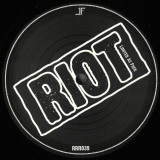
Sebastian Sandmann, from Elsteraue in Germany, has been DJing and producing since 1999, honing his skills in clubs and gigs such as the ‘Endstation’ event series in the Leipzig Distillery which resulted in him being picked up by the renowned Leveltrauma booking agency where his obvious talent flourished leading to residencies at the Sky Club, Leipzig and the Tube Club, Merseburg. Sebastian’s music repertoire covers many genres inc. multiple forms of techno, house, hardcore and DnB which has culminated in releases on some insane German labels including “Rage & Error”, “Leveltrauma” and “PsychoDevils Records”.
Continuing with the ‘Limited As Fuck’ series of releases, on our fiercely independent techno label based in
Scotland, we’re getting more extreme than we’ve ever been before with an absolute ‘Onslaught’ of speaker
punishment grade screaming techno. This is Sebastian Sandmann’s first ever solo vinyl release and it‘s utterly lethal. Featuring four aggressive crushin’ tracks to get all them imprisoned clubbers marching
to its accelerated beat. This aint dance music, this is stomp music, and you best not pound on down in front of
anyone when it’s spinning or you’re gonna get trampled on, mark our RIOTous words.
The full digital release also features one bonus brain mashin’ track so you can dive even deeper into your own infernal techno psyche.
WARNING: ONCE THE RIOT SENTINEL APPEARS YOU MUST OBEY ……………. OR ELSE
Credits:
Written by Sebastian Sandmann
Mastered by Joe Farr
Artwork by Nomad

4
It’s approximately been a year since Antoine lost what would have been his debut album, ironically dubbed ‘Humour. Positivity & Affection’. In its wake, stemmed the idea for the producer to reform his conceptually based project (Mise En Place) into a vinyl only label.
The Land Down Dunder EP being the first, of hopefully, many releases throughout this new imprint. The label head feels there is no better way to start this campaign, than with a body of work, entirely inspired by the modern, timeless TV Sitcom - The Office (US).
The opener ‘Australian Reds’ looks to bridge the gap between Progressive House and Antoine interpretation of Minimal. Matched with Ghanian inherited grooves of course.
‘Colombian Whites’ as suggested by its title, widens the eyes and warms the soul with its textbook, 90’s House inspired Kicks, Hi’s and Baseline. Synthy melodies run throughout the mid(s) of the track to marry the ensemble together. Fitting for all terrains, but would be highly favoured in the Summer.
The B-Side flips the script in tone, tempo and texture - pulling on Antoine’s repertoire for groove laden Techno - ‘Cafe Disco (AK’s Rare Groove Dub)’ brings you to the after hours of any setting with it’s full bodied percussive rhythms, beautifully automated soundscapes and highly persuasive swing. Lastly, the EP is capped off by ‘Threat Level Midnight’. A nod to Antoine’s versatility within the realms of House and Techno. An incredibly versatile track, structurally inspired by the producers love of Hip-Hop. A cacophony of ethereal chord progressions run throughout the track alongside one moody baseline, as well as solemn drum patterns which progress in both body-feel and stature.

7
Five trombonists and a three-member rhythm section: that sort of unique musical synergy is what Nabou Claerhout brings to life with her own Trombone Ensemble. For years, such a project had been one of the dream projects on her bucket list, and thanks to Antwerp based cultural actor Rataplan, she already saw the creation become a reality in spring 2022. In the summer of that year, the eight-piece ensemble opened both Gent Jazz and Jazz Middelheim.
In January 2023, Nabou was artist in residence at the Brussels Jazz Festival in Flagey, where she presented the Trombone Ensemble as one of three carte blanche projects. In a sold-out Studio 4, American trombone legend Robin Eubanks joined the line-up as a special guest, having previously also contributed during the studio recordings of the young collective during. The band's self-titled debut album will be released on November 3rd 2023 via W.E.R.F. Records.
Nabou composed the entire repertoire for this Ensemble herself, and did so with a fully open vision. While writing the music, she explored the trombone's wide possibilities: "The aim is to both indulge you with warm, soft, carrying parts and then afterwards discover the trombone's spicy and cordial character." That rhythmic playfulness, which we hear more often in Nabou's compositions with her acclaimed quartet N?BOU, also seeps subtly into this band's sound.
Despite the 'unusual' line-up of five diverse jazz trombonists, each with a different background, you still get to hear a very homogeneous sound, which is full of playfulness and small details. "I tried to make room and focus for each individual. And of course there is also a starring role for the rhythm section with guitar, double bass and drums."
When Nabou started looking for the dream fellow jazz musicians for this project, she ended up with artists from her own country, Belgium, but also from far beyond the country's borders: The Netherlands, the UK and Germany. "In selecting the trombonists, I looked for specific timbres, but also for personality. It is important that there is a good balance in playing together, but also that each musician is strong enough on his or her own for the solo parts."
Wanting to push boundaries in her approach to both compositions and the trombone as an instrument, the real crème de la crème of the newest generation proved indispensable. "I selected a handful of European trombonists with whom I may or may not have already played, but who, above all, inspire me very deeply. They are all young people who have a lot to offer and already have significant projects to their name in their own region or country."

Modern highlife luminary Rex Omar has been a force within
the Ghanaian music scene for over 30 years. Now Soundway
presents five of his premier cuts remastered for a new self-titled
EP.
Over his career Rex Omar has evolved the genre, pushing
boundaries and dazzling listeners. A definitive piece of his
repertoire comes via his Dangerous album: while it was selfproduced and recorded in London circa 1997, upon CD
release it saw success mainly within his homeland of Ghana.
An irresistible blend of street-soul-come-highlife, with elements
of bouncing 90s RnB/hip-hop, it was developed with help
from Ibibio Sound Machine’s Kari Bannerman and prolific
Jamaican producer Bill Campbell. From this album rising
London producer and DJ Aroop Roy revisits the four-to-the-floor
excursion ‘Dada’, repurposing for today’s dancefloor with the
addition of fizzing synth chords and stabs.
While Omar regularly raps on his earlier works, on ‘Kele
Ngele’ (taken from his 2004 album Ajala) we hear a yearning
melodic vocal over a more laid back RnB beat. This rounds out
the new Rex Omar EP for the discerning listener to experience
the full breadth of his inventive output.

4
Next up on Toolroom’s 4-track vinyl sampler series is 4 killer cuts from our latest repertoire.
Kicking off with another straight up, dance floor weapon, Essel lands back on the label with brand-new single, ‘Sweat’. Her toughest sounding record to date that captures the post-rave moment, cementing herself as one of the hottest new talents to emerge in the electronic music scene.
Next up, Parisian born and US based tech house producer Shiba San debuts on Toolroom with a seriously wonky affair alongside studio buddy, Ayarez, aptly titled ‘Twist It’.
Up next on the sampler, is the return of longstanding label favourite Friend Within with his rolling tech house banger ‘Pilka’. Having landed 2 of the hottest tracks on Toolroom last year with ‘Monkey Bars’ and ‘Bring It Down’ which saw sweeping support flood in from across the scene, including Paul Woolford (Special Request) Salute, LF System, Dom Dolla and many more, friend within is officially back for 2023!
Completing the EP, we welcome sola regulars and one of the freshest, most exciting dance music duos to come out of the UK in recent years, Maur who lock horns with chart topping US based Westend, for a label debut set to become 2023’s festival anthem - ‘Over’.
DJ support from Danny Howard, Annie Mac, Mistajam, Pete Tong, Charlie Hedges, Kraak & Smaak, Maxinne, Todd Terry, Alex Preston, Full Intention, Gw Harrison, Dj Rae, Rudimental, Alaia & Gallo, Illyus & Barrientos, Johan S, David Penn, Sam Divine, Riva Starr, Claptone, Nice7, Dario D’attis, Mousse T, S-Man, Huxley, Kc Lights, Friend Within, Dombresky, Gorgon City, Chris Lake, Format:B, Pirupa, Tcts, Alan Fitzpatrick, Low Steppa, Mat.Joe, Raumakustik, Eskuche

- A1: Wrong (Album Version)
- A2: Wrong (Thin White Duke Remix)
- B1: Wrong (Trentemøller Club Remix)
- B2: Wrong (Caspa Remix)
- C1: Wrong (Magda's Scallop Funk Mix)
- C2: Wrong (D I.m. Vs Boys Noize Remix)
- D1: Wrong (Trentemøller Club Remix Dub)
- D2: Oh Well (Black Light Odyssey Remix)
- E1: Peace (Single Version)
- E2: Peace (Sixtoes Remix)
- E3: Come Back (Jonsi Remix)
- F1: Peace (Ben Klock Remix)
- F2: Peace (The Japanese Popstars Remix)
- G1: Peace (Sid Lerock Remix)
- G2: Peace (Justus Köhncke Extended Disco Club Vocal Remix)
- H1: Peace (The Exploding Plastic Inevitable Jk Disco Dub)
- H2: Peace (Pan/Tone Remix)
- I1: Fragile Tension (Stephan Bodzin Remix)
- I2: Fragile Tension (Kris Menace's Love On Laserdisc Remix)
- J1: Hole To Feed (Popof Vocal Mix)
- J2: Hole To Feed (Paul Woolford's Easyfun Ethereal Disco Mix)
- K1: Perfect (Roger Sanchez Club Mix)
- K2: Perfect (Ralphi Rosario Dub)
- L1: Peace (Hervé's 'Warehouse Frequencies' Remix)
- M4: Fragile Tension (Laidback Luke Remix)
- N1: Fragile Tension (Peter Bjorn And John Remix)
- N2: Hole To Feed (Joebot Remix)
- N3: Perfect (Ralphi & Craig Club Mix)
- N4: Fragile Tension (Solo Loves Panorama Remix)
- L2: Peace (Sander Van Doorn Remix)
- M1: Fragile Tension (Radio Mix)
- M2: Hole To Feed (Radio Mix)
- M3: Come Back (Sixtoes Remix)
33
Sounds Of The Universe | The 12" Singles, a deluxe collector's
edition box set, contains seven 12" vinyl discs presenting
singles--including Wrong, Peace, the double A-side Fragile
Tension/Hole To Feed--alongside B-sides, remixes, dub
versions and other recordings contemporaneous to Depeche
Mode's 12th studio album, Sounds Of The Universe, originally
released by Mute Records in April 2009.
Sounds Of The Universe | The 12" Singles offers a full range of
ear-grabbing mixes--radio, club, dub and more--of Depeche
Mode originals with three discs (Discs Two, Four and Seven)
newly compiled for this collection, bringing together B-sides
and mixes first released across CD and maxi-singles
contemporaneous to the album's release.
When it came time to record the Sounds Of The Universe
album, DM's classic core (Dave Gahan, Martin Gore, Andrew
Fletcher) returned to the studio to make their second album
with producer Ben Hillier, whose intuitive contributions to
their previous studio album, 2005's Playing The Angel, had
created new sonic possibilities for the band expanding
Depeche Mode's vision and repertoire while continuing their
tradition of issuing monumental 12“ singles.

3
également disponible
Part 2[14,08 €]
A rare treat for Drumcode faithful: A-Sides Vol.10 is set to drop in December, the second edition of the beloved series to come in 2020.
Fuelled by the extra time and space to be creative during lockdown, Drumcode’s collective of artists have stepped up. Across 17 contributions, the producers have gone deeper into their sonic repertoire, crafting powerful, yet reflective works that capture the range of the label’s sound.
Jay Lumen leads the way with a rousing riff-driven weapon, ‘Galactic Rainbow’, while Ramon Tapia brings us the muscular gem ‘Drum Control’, mixing up ruffneck techno with a barrage of synapse-tickling synths in the second half. Both rousing highlights of the compilation.
Victor Ruiz, Drumcode’s most prolific contributor in 2020, dishes up ‘Love Story’, led by a huge vocal lead. Zimmz also returns with ‘Tension’, which deftly combines deep squelchy grooves with a silky synth interlude. Thomas Hoffknecht follows up his debut on Vol.9 with ‘Escape’, keeping listeners on their toes with dynamic, choppy shifts throughout. Veerus joins with another stirring addition ‘I Know’, reinforcing why Beyer rates him so highly.
Elsewhere a string of debutants feature: buzzy newcomer Lilly Palmer gives us ‘Amnesie’, a brilliantly pummelling and eerie cut; Alex Lentini & Stomp Boxx serve up ‘Expanders’ mixing up drone effects, trippy vocals and an unsettling melody line; and Patrik Berg’s ‘Activated’ is full-bodied techno that drops down into funky rhythms.
Long-time DC family member Bart Skils brings his A-game with the thrilling no-nonsense ‘Solid State’ that hits like a steam train. Likewise, Alan Fitzpatrick who brings a momentous slab of techno energy with ‘Rochus’, while Thomas Schumacher, now feeling like a regular on the imprint, crafts another dark techno opus, this time in collaboration with CAITLIN.
There’s even a special appearance by the chief Adam Beyer, who makes a welcome return with the progressive-tinged ‘Changes’, driven by organic tones and spacey atmospherics. The track stands as his first original contribution to A-Sides since 2017.

A rare treat for Drumcode faithful: A-Sides Vol.10 is set to drop in December, the second edition of the beloved series to come in 2020.
Fuelled by the extra time and space to be creative during lockdown, Drumcode’s collective of artists have stepped up. Across 17 contributions, the producers have gone deeper into their sonic repertoire, crafting powerful, yet reflective works that capture the range of the label’s sound.
Jay Lumen leads the way with a rousing riff-driven weapon, ‘Galactic Rainbow’, while Ramon Tapia brings us the muscular gem ‘Drum Control’, mixing up ruffneck techno with a barrage of synapse-tickling synths in the second half. Both rousing highlights of the compilation.
Victor Ruiz, Drumcode’s most prolific contributor in 2020, dishes up ‘Love Story’, led by a huge vocal lead. Zimmz also returns with ‘Tension’, which deftly combines deep squelchy grooves with a silky synth interlude. Thomas Hoffknecht follows up his debut on Vol.9 with ‘Escape’, keeping listeners on their toes with dynamic, choppy shifts throughout. Veerus joins with another stirring addition ‘I Know’, reinforcing why Beyer rates him so highly.
Elsewhere a string of debutants feature: buzzy newcomer Lilly Palmer gives us ‘Amnesie’, a brilliantly pummelling and eerie cut; Alex Lentini & Stomp Boxx serve up ‘Expanders’ mixing up drone effects, trippy vocals and an unsettling melody line; and Patrik Berg’s ‘Activated’ is full-bodied techno that drops down into funky rhythms.
Long-time DC family member Bart Skils brings his A-game with the thrilling no-nonsense ‘Solid State’ that hits like a steam train. Likewise, Alan Fitzpatrick who brings a momentous slab of techno energy with ‘Rochus’, while Thomas Schumacher, now feeling like a regular on the imprint, crafts another dark techno opus, this time in collaboration with CAITLIN.
There’s even a special appearance by the chief Adam Beyer, who makes a welcome return with the progressive-tinged ‘Changes’, driven by organic tones and spacey atmospherics. The track stands as his first original contribution to A-Sides since 2017.

Stevie Cox and Ansboy: two powerhouses of the Glaswegian club scene join forces for their collaborative debut EP on Rhythm Section INTL- ‘Twice Like Rice’. It’s a weighty four-track EP designed for the dancefloor, taking in myriad influences from dub techno, breaks, trance and good old fashioned house music. The Ep is full of deep, pulsating rhythms, lush textures and emotive peaks - all road tested in Stevie’s Iconic home turf: Sub Club.
Stevie Cox has long been a name long ruminating on everyone's lips, as a resident DJ of the iconic ‘Sub Club’ with an ever-growing tour schedule and back catalogue of releases via the likes of Klasse Wrecks and Optimo. Whilst the name Ansboy may be new to some, it is a fresh alias for the grammy nominated producer and mixdown engineer Robert Etherson who has long been a staple in the Scottish scene with an international touring repertoire under his belt.
The two friends met in their hometown of Glasgow and began their musical journey together last year after Robert taught Stevie how to do mixdowns. The pair clicked effortlessly, quickly discovering they shared the same passion for emotive, deep and progressive dance music. Their first track together - which took shape in the form of ‘Drift’ - a high-energy synth led anthem, came out with a special selection of tracks curated by Bradley Zero for his exclusive SHOUTS Summer sampler in 2025.
For the Twice Like Rice EP, their work evokes all corners of the dancefloor, kicking things off with ‘GC’ - a peak time breaks-infused trancey-heater - a master class in building dancefloor tension which gives way into a searing crescendo. Things spin towards a darker percussive focus on the more intense ‘Twice Like Rice’.
On the b-side things return to blissful euphoria with ‘Virgil’ - a warm up dub-techno ballad, before the emotional release of ‘Subculture closure’ inspired ‘Carter21’.

10
'Matsuli Music is proud to announce the first vinyl reissue of Philip Tabane’s Sangoma ("Spiritual Healer") since its 1978 release. Remastered from the original tapes with lacquers cut by Frank Merrit and pressed on 180g heavyweight vinyl at Pallas in Germany, this definitive edition re-asserts the power of one of South Africa’s landmark recordings. Featuring new liner notes by cultural critic Kwanele Sosibo and artwork restoration by Siemon Allen, Sangoma returns in full force through an extended Malombo line-up, fronted by Tabane's spellbinding guitar - ancestral, timeless, and unbound.
'Philip Tabane (1934–2018), the mercurial guitar genius of South African music, forged a sound that was as rooted in the spirit world as it was in daily life. With the Malombo Jazzmen of the 1960s, Tabane disrupted Western notions of “jazz,” bringing the resonant rhythm of cowhide malombo drums into the foreground. While outsiders and the uninitiated often reached for labels like “primitive yet sophisticated,” Tabane and his collaborators named it more truthfully: “music of the spirit.”
'By the time of Sangoma, Tabane stood at a crossroads. Fresh from a period of three years’ touring in the United States where he graced the Newport Jazz Festival, and played alongside Miles Davis, Herbie Hancock, Pharoah Sanders and others, he brushed off comparisons with characteristic self-assurance: “No, I don’t play like Miles. Miles plays like me.” Back home in South Africa, and with a newly signed international distribution deal with WEA Records, he harnessed this momentum into a larger band setting, capturing a rare intensity.
'The result was Sangoma—an album that bridges contradictions: expansive yet intimate, celebratory yet haunted by exile and return. Tracks such as “Sangoma,” “Hi Congo,” and “Keya Bereka” are not simply performances but living testaments, songs that would remain in his repertoire for decades. Unlike the moody, immersive character of much of his work, here Tabane is on the move—urgent, restless, uncontainable. As he announces on the second track, “Maskanta wa tsamaya” (“something that kicks ass”).
More than four decades on, Sangoma is both an historical document and a timeless invocation. From his home in Mamelodi to the world and back again, Tabane’s spiritual healing endures—raw, electric, and unbowed.'

8
Turma da Bênção – A Semba Gathering Across Generations
Conjunto Angola 70 & Paulo Flores
The Turma da Bênção project brings together Conjunto Angola 70, a collective dedicated to recreating and preserving the golden-era sound of Angolan music from the 1970s, and Paulo Flores, one of the most important ambassadors of semba worldwide and one of the creators of kizomba. Throughout his career, Flores has built bridges between tradition and modernity, helping shape the global understanding of contemporary Angolan music.
Recorded in Lisbon in 2018 in an intimate “roda de semba” setting, informal jam sessions rooted in collective rhythm and storytelling, Turma da Bênção gathers legendary musicians such as Botto Trindade (guitar), Joãozinho Morgado (congas) and Teddy N’Singui (guitar); mid-generation artists including Galiano Neto (percussion), Paulo Flores (vocals and artistic direction) and Pirika Duia (viola); and younger creators such as Mayo Bass (bass), Jéssica Pina (trumpet) and Armando Gobliss (keys).
The result is a powerful dialogue between eras. Classic Angolan repertoire meets new compositions, all deeply rooted in semba — the rhythmic and poetic foundation from which kizomba later emerged.
The album revisits emblematic songs such as Runfo da Liberdade, Memórias de Gui and Lamento de Duia, while introducing new works including Morgadinho, Catuta 45, Boas Festas Conterrâ and Réveillon, the latter awarded Semba of the Year at the Angola Music Awards in 2020.
Before this LP, Keep On Pushin Records released the singles Turma da Bênção presents: Joãozinho Morgado and Turma da Bênção presents: Botto Trindade, building anticipation for what now becomes the label’s first full-length vinyl release.
Issued on vinyl in the year Angola celebrates 50 years of Independence, Turma da Bênção stands as a symbolic statement, honoring the elders, empowering the present generation, and ensuring that the pulse of semba continues to resonate across borders.
Turma da Bênção is more than an album. It is a rare intergenerational encounter and a living celebration of Angola’s musical heritage.

- Side A. Stay By My Side
- Side B. Strawberry Girl
●STAY BY MY SIDE (Youth Of Roots)
This is the title track from Young Israelites' 2021 debut EP, which made them a household name.
Its catchy, pop melody has captured the hearts of reggae fans worldwide, and Youth Of Roots' KON RYU has covered it in Japanese.
It blends seamlessly with the song like a long-time favorite, bringing out the original's charm with a new brilliance.
●STRAWBERRY GIRL (Young Israelites)
A popular song that shines with sweetness in Youth Of Roots' repertoire, which is filled with roots-conscious, message-driven songs.
Young Israelites' English cover, with its melancholic vocals, further enhances the quality of the original.
YOUTH OF ROOTS
A roots rock reggae band formed in Kanagawa in 2016. Their multi-generational sound and spiritual musicality, rooted in their experiences in Jamaica,
define their sound. They've released numerous singles, including their latest album, "LOVE IS THE ANSWER."
They connect with their audiences at live shows, conveying the spirit of "One Family." Their overwhelming sense of unity and sincere message transcends
borders, earning them praise from international fans as "the best reggae band."
[YOUNG ISRAELITES]
A rocksteady/roots reggae band consisting of three members from Israel. Building on a vintage Jamaican sound, their familiar melodies and soulful,
passionate performances have garnered attention from reggae fans worldwide. Since their debut, they've released a string of EPs and full-length albums,
and have expanded their global reach, including airing on the BBC and performing at the world's largest reggae festival, ROTOTOM SUSPLASH.
This new-generation band vividly revives the spirit of rocksteady and roots reggae for the modern era.

- A1: Robert Pico - Le Chien Fidèle
- A2: Annie Girardot - La Femme Faux Cils
- A3: Spauv Georges - Je Suis L'état
- A4: Zoé - Zoé
- A5: Jacques Da Sylva - Fou
- A6: Valentin - Je Suis Un Vagabond
- A7: Jacques Malia - Histoire De Gitan
- A8: Bernard Jamet - Raison Legale
- B1: Jean-Pierre Lebort - Barbara Au Chapeau Rose
- B2: Les Concentrés - Fils De Dégénérés
- B3: Les Missiles - Publicité
- B4: Hegessipe - Le Credi D'hegessipe
- B5: Marechalement Votre - Ethero Disco
- B6: Mamlouk - Decollez Les
- B7: Mozaique - L'amour Nu
- B8: Jean-Marc Garrigues - Je Dis Non
- B9: Penuel - Astronef 328
17
The journey through French-speaking pop archives continues with this fifth volume, packed with fuzz, gimmicks, and dissent. Far from the charts, the selected tracks display a great creative freedom, often backed by corrosive humor. Welcome to the surprising, kaleidoscopic, and colorful world of the late sixties and early seventies, Wizzz!
Born in Montauban, Robert Pico stumbled into music by chance when he met René Vaneste, then artistic director at Pathé-Marconi. René brought him to Paris to record his first 45 RPM EP in 1964. A year later, Pierre Perret introduced him to Vogue, where he recorded his second album with Claude Nougaro’s orchestra. Sylvie Vartan then introduced him to RCA, where he recorded four singles, including the astonishing "Chien Fidèle," a track backed by a hair-rising fuzz guitar. Alongside his solo career, he also composed for other artists like Alain Delon (the song was recorded but remains unreleased), Magali Noël, Bourvil, and Georges Guétary. In the Paris of the sixties, he mingled with Mireille Darc, Elsa Martinelli, Marie Laforêt, France Gall, Françoise Hardy, Petula Clark, Régine, Dani, Serge Gainsbourg, Joe Dassin, Franck Fernandel, Charles Level, and Roland Vincent. Despite his efforts and winning a Grand Prix Sacem for his final record, Robert Pico didn’t achieve the expected success in show business and decided to leave Paris and return to the Southwest, where he devoted himself to writing. He is the author of 23 books (including Delon et Compagnie, Jean-Marc Savary Editions 2025, a memoir about his youth and his many encounters). Today, he is relieved to never have become a celebrity and devotes himself to his work with passion.
In 1969, the Franco-Italian movie Erotissimo was released, directed by Gérard Pirès (who later directed Taxi in 1998, written and produced by Luc Besson). This pop comedy features Annie Girardot, Jean Yanne, Francis Blanche, Serge Gainsbourg, Nicole Croisille, Jacques Martin, and Patrick Topaloff. The soundtrack was written by Michel Polnareff and William Sheller, with lyrics by Jean-Lou Dabadie. "La Femme Faux-cils," performed by Annie Girardot. It recounts the feelings of a rich CEO's wife who seeks to develop her sex appeal under the influence of advertisement and magazines. Groovy, sparkling and light, this track, with ITS lush arrangements humorously critiques consumer society and feminine beauty standards.
“Je suis l’Etat” (1967) is the flagship track of the first EP by singer-songwriter Spauv Georges, aka Georges Larriaga, better known as Jim Larriaga (1941-2022). Born into a family of bakers, the young man was initially planning to become a hairdresser when he discovered English-speaking music through Elvis Presley and the Beatles. After this revelation, he decided he would become a songwriter and gave himself five years to succeed. He recorded his first two EP’s independently for RCA under the pseudonym Spauv Georges; meaning “that poor George”, a nickname given to him by the mother of her friend Jean-Pierre Prévotat (future drummer of the Players, Triangle, or Johnny Hallyday). Portraying a depressed and eccentric young man, Spauv Georges created corrosive and amusing songs that didn’t reach a wide audience, despite a TV appearance with Jean-Christophe Averty.
Supported by his loyal friend and fellow songwriter Jean-Max Rivière, Georges Larriaga met the future singer Carlos in the early '70s, then Sylvie Vartan’s assistant. He wrote songs for Carlos, including the popular "La vie est belle," "Y’a des indiens partout," and "La cantine", which went onto become a huge hit in 1972. He also composed for Claude François (“Anne-Marie”, 1971), Charlotte Julian (“Fleur de province”, 1972), helped launch child singer Roméo (who sold 4 million records), and later wrote the hit "Pas besoin d’éducation sexuelle" (1975) for the young Julie Bataille. In 1971, Jim recorded an album for Disc'Az: “L’univers étrange et fou de Jim Larriaga”, which featured pop gems like “La maison de mon père”.
The story of the song "Zoé" began when Pierre Dorsay, artistic director at Vogue Records, asked Swiss singer and musician Pierre Alain to write a song for a new female singer. The inspiration came when he realized that Zoé (the artist's name) was also the name of France's first atomic battery, created in 1948, which consisted of uranium oxide immersed in heavy water! The lyrics reflect a bubbling energy that must be handled with caution, while the instrumentation echoes this atomic theme, notably with the use of a theremin.
Zoé’s career lasted only as long as a single 45 RPM, but it seems Christine Fontane was the vocalist behind this pseudonym, who is known for several EPs, a good "popcorn" album in 1964, and a handful of children’s singles in the '70s. Regardless, the photograph on the cover is of a different girl entirely.
Later, Pierre Alain continued his career, writing songs for himself, Marie Laforêt, Danièle Licari, Alice Dona, Arlette Zola (3rd place in Eurovision 1982), and achieving multiple gold and platinum records in Canada. Also an inventor with several patents, president of the Romande Academy, and head of the French Alliance in Geneva, he now composes atonal music, books, and poetry. Moreover, he is also the host of "Les Mardis de Pierre Alain" at "Le P'tit Music'Hohl" in Geneva.
Filled with oriental choruses and fuzz guitar, "Fou" is from Jacques Da Sylva's only EP released by Vogue in 1967. Despite the quality of this recording, all traces of this singer disappear after this first effort.
Valentin is a baroque pop singer born in Belgium. He is the songwriter and composer of most of the tracks on his three singles released in the late 60s in Canada. A legend says that he reincarnated himself as Jacky Valentin during the 1970s for a rock'n'roll revival career in Belgium, but his older brother sadly debunked this story. Valentin's first two singles were arranged by Claude Rogen, a Parisian session pianist who had come to Canada to promote the song “Mister A Gogo”, a cover of David Bowie’s “Laughing Gnome”, adapted by singer Delphine, his wife at the time. Far from his usual network, Claude Rogen arranged music for Polydor, including the arrangements for “Je suis un vagabond” in 1969, a jerk tune with string arrangements and a furious optimism.
Jacques Malia wrote, composed, and recorded his only 45 EP for Festival in 1966. “Histoire de gitan” is an incredible beat track with bohemian scat that tells the story of a gypsy musician who came to Paris to make it in the Music-Hall, to no avail. The hero of the song and its author probably shared a similar fate, as Jacques Malia faded into anonymity after this remarkable attempt.
Bernard Jamet recorded two EPs for Barclay in the late sixties and co-wrote several songs with Christine Pilzer, Pascal Danel, and prolific songwriters Michel Delancray and Mya Simile. The track “Raison Légale” (1968), his masterpiece, immerses the listener in a courtroom right when a murderer is being judged, with jerk rhythm and free arrangements. A unique, paranoid, judicial, and psychedelic oddity.
Jean-Pierre Lebrot-Millers started his career in show business in 1967 as a singer and songwriter for the Philips label. After three singles, he wrote several songs of a new kind with his friend Pierre Halioche, in the midst of the sexual liberation movement and the democratization of drugs. With provocative lyrics, “Les filles du hasard” and “Barbara au Chapeau Rose” were released on a Philips singles in 1968. The character of Barbara was inspired by a queen of Parisian nightlife during the psychedelic years: model Charlotte Martin, who dated Eric Clapton from 1965 to 1968, then Jimmy Page from 1970 to 1983. Jean-Claude Petit’s arrangements, with a table-filled intro, soul brass, and Hendrixian guitar, emphasize the flamboyance of a hedonistic and sexy character, whose dog is named Junkie because “Junkie est un nom exquis”! The track was recorded live in three takes with a full orchestra.
Upon its release, the record was censored by Europe 1 and RTL due to its references to drug use. Jean-Pierre Lebrot was then banned from the airwaves and later dismissed by his record label. He changed his artist name to Jean-Pierre Millers, while his companion Pierre Halioche became D. Dolby for a new dreamy composition, “Chilla”, which Jean-Pierre produced himself with arrangements by Jean Musy. Once again, the song was immediately censored everywhere. After this setback, he decided to stop singing and started taking on odd jobs to support his Swedish wife and their son until the day he met Jean-Pierre Martin, then production manager at Decca, who had worked with Manu Dibango. Martin offered Jean-Pierre Lebrot-Millers, then employed at Rank Xerox, the position of artistic director at Decca. He accepted and became, a year later, promotion director (radio, press, TV). He worked on Julio Iglesias’s first album for Decca, which became a massive hit and allowed him to meet Claude Carrère. The latter asked him to write new songs and find their performers, much like a “talent scout.” It’s through him that Jean-Pierre discovered Julie Pietri and Corinne Hermès. He composed “Ma Pompadour” for Ringo, Sheila’s husband, and took the microphone again for the syncope hit “Rendez-Vous” in 1982.
That same year, Jean-Pierre Lebrot-Millers tried to release a track for which he had heavily gone into debt: “Si la vie est un cadeau”. Having recorded it in London, he presented it to numerous professionals, all of whom refused to get involved. The same thing happened with Antenne 2 and the Sacem when he proposed the song as France’s entry for Eurovision. He then met Haïm Saban, who was producing cartoon soundtracks and had just launched the Goldorak theme song. Saban, having listened to the song, declared it had the potential to become a hit. He sent Jean-Pierre and Corinne Hermès to meet the CEO of the Luxembourg radio and television network. The latter received them, asked to hear a verse and chorus a cappella in his office, and immediately hired them to represent Luxembourg at Eurovision 1983. They reworked the arrangements and recorded a new version with Haïm Saban as co-producer. The song ended up winning Eurovision 1983, a great comeback for our hero. He continued producing and hung out with the band Nacash in Belgium when a couple came to introduce their daughter for an impromptu audition in a hotel room. The girl sang “Les démons de minuit” while dancing to a radio cassette. Impressed, he had her take singing lessons for a year and composed a song for her (for which he had the melody and title, but no lyrics). This required him to go on the hunt for a lyricist, who ended up being Guy Carlier. They recorded the song, which was initially a ballad, at Bernard Estardy’s CBE studio, and gave the singer a new name: Melody. They showed the song around their industry network without success. Later, Estardy called Jean-Pierre to suggest changing the rhythm and making it pop-rock. Orlando, Dalida’s brother, liked the result and decided to co-produce the track. “Y’a pas que les grands qui rêvent » became a classic hit. The song has since been covered by Juliette Armanet (as a ballad, like the original) and Valentina.
Born into an aristocratic Breton family, Hervé Mettais-Cartier worked as a DJ at Queen Kiss, a nightclub in Poitiers, where he formed the band Les Concentrés with Michel (an actor) and Christian (a radio technician). Together, they created a repertoire of whimsical songs (“Ma bique est morte”, “J’suis un salaud”, “Fils de dégénéré”...) that they performed on stage dressed in white (in homage to “concentrated milk”). They performed at Bliboquet and Olympia in 1968 for the 10th edition of the “Relais de la chanson Française” organized by L’Humanité-Dimanche and Nous les Garçons et les Filles, sponsored by Pepsi Cola. Winners in the author-composer category, alongside Danish singer Dorte, their visibility allowed them to record a 45, and appear on television in Jean-Christophe Averty’s show. The A-side of the disc features Bruno le ravageur, a casatchok dedicated to Bruno Caquatrix, the director of Olympia, nicknamed in the song “Coq Atroce” or “croque-actrices”. The B-side is dedicated to “Fils de dégénéré”, a quirky tribute to Hervé's aristocratic roots, mixing absurdity with sophisticated vocal harmonies.
After Les Concentrés, Hervé Mettais-Cartier formed the duo La Paire et sa Bêtise with his friend Olivier Robert. They performed in Parisian cabarets and toured with Pierre Vassiliu. In the late 1970s, Hervé began a solo career. He recorded two albums for the Motors label in 1978 and 1979, which did not achieve their anticipated success due to lack of promotion. In 1980, he met Bernadette, with whom he started a family and created a “Chansons à voir” (songs to see) show that he performed until his death at the end of 2024.
Publicité comes from the final EP by the Missiles (Ducretet Thomson, 1966), a disc that also includes “La (nouvelle) guerre de cent ans”, featured on Volume 4 of our Wizzz! series. Please refer to the booklet for the story of the band.
“He’s 1.82 meters tall, 28 years old, weighs 135 kg, is black and Belgian”: this is the description of singer Hegesippe on the back of his sole single (Decca, 1967). He appears on the album cover wearing a Greek toga, like a hippie gag – we are at the end of the year 1967. In “Le crédo d’Hegesippe”, this former bodyguard of Antoine and the Charlots plays the delightful card of the thick brute converted to Flower-Power and non-violence, with arrangements by Jean-Daniel Mercier, aka Paul Mille.
“Ethéro-disco” was released on a promotional record for clients of the Maréchal company (Liège, Belgium) for the New Year 1979. Over a funky rhythm, celebrity impersonations (Brigitte Bardot, Jacques Dutronc, Fernandel…) deliver an enigmatic text about pharmaceutical products like ether, bismuth, and aspartate. The track was composed by Dan Sarravah (responsible for Joanna's “Hold-up inusité” featured on Wizzz! Volume 3) and Tony Talado, who was also a singer (one 45 in 1967), songwriter (with over a dozen credits between 1964 and 1985 in various styles from surf music to disco), author (Devenez Végétarien, Dricot Editions, 1985), ad designer, and psychologist.
Décollez-les is on the A-side of Mamlouk's only single, a pseudonym for Marsel Hurten, who is known for his work on several EPs in the late sixties, as well as composing music for Hervé Vilard’s “Capri, c’est fini”, Claude Channes' “La Haine”, Annie Philippe’s “On m’a toujours dit”, and Nancy Holloway’s “Panne de Cœur”.
This strange song, with Afrobeat horns and absurd dialogues between a chef and his kitchen staff, is the result of a collaboration between Marsel Hurten and one of his neighbors, a photographer from Pavillon-sous-Bois (93), where the musician settled after returning from the Algerian War. A music video was shot to promote the record.
Marsel Hurten was born in Tourcoing (59) into a musical family. At a young age, he joined the brass band founded by his grandfather, playing the piston before studying trumpet at the conservatory, as well as teaching himself how to play the guitar. As an orchestra musician, he toured in France, Belgium, Germany, and England. He released a series of solo 45’s between 1965 and 1968 for the DMF and Az labels before stopping recording to focus on working for other artists (Gilles Olivier, Noëlle Cordier…).
“L’amour nu” (Vogue, 1971) is the work of the short-lived Belgian band Mozaïque. The track, written by singer Jacques Albin, closely resembles another of his compositions, “Carré Blanc”, which he recorded in 1969 for Disc’AZ.
Represented by the Lumi Son micro-label based in Marignane (Côte d'Azur), Jean-Marc Garrigues released two 45 RPMs in the late sixties, defending the French jerk sound. The song “Je dis Non” is a short, joyful ode to youth, pop music, and rebellion.
Songwriter and performer Jacques Penuel released three singles. The first one, “Astronef 328” (Fontana, 1969), features a dizzying series of chords punctuated by sound effects, a sci-fi story, and arrangements by Jean-Claude Vannier.
We would like to sincerely thank Pierre Alain, Moon Blaha, Marsel Hurten, Bastien Larriaga, Jean-Pierre Lebrot-Millers, Bernadette Mettais-Cartier, Robert Pico, Olivier Robert, Claude Rogen, Micky Segura.

Vinyl gatefold jacket includes a 12x12 insert reproduction of the original LP jacket art.Recorded in 1956 and released in 1957, Supersonic Jazz is arguably the first long-playing album by Sun Ra and His Arkestra on his Saturn label. However, it was not recorded as a debut. Rather, the album was assembled from tapes recorded during a number of sessions at two Chicago studios (RCA Victor and Balkan), and several tracks had been released as singles before their inclusion on this album. (Sunny's first fully realized commercial album was 1957's Jazz by Sun Ra, produced by Tom Wilson on his short lived/soon to be defunct Transition label.) Prior to these sessions, Sunny was still arranging for the Red Saunders Orchestra and singer Joe Williams, in addition to arranging for and coaching doo-wop ensembles. As Sunny's ambitions achieved liftoff, the Arkestra coalesced, began building a repertoire (mostly of Ra's originals), and making forays into studios. Deciding it was time for commercial releases, Sunny and business partner Alton Abraham launched Saturn (sometimes called El Saturn) as a record company in 1956. As a first offering, Supersonic Jazz is a pinnacle Sun Ra release. While reflecting many prevailing bebop, Latin, and R&B conventions of the mid-1950s, it's evident that Sun Ra's musical voice and vision were starting to propel him away from the jazz mainstream. Biographer John Szwed finds on these recordings "characteristics which seemed alien to swing, bebop, or the new, more soulful and hard-edged music which was coming to be called hard bop."

Thelonious Monk once famously said "the piano ain't got no wrong notes", and this mantra is evident in his playing: full of angular, challenging harmonies combined with a harsh and percussive technique. Though his style of playing was unorthodox, he could also play runs and arpeggios with great speed and accuracy. All in all Monk would prove to be a long-lasting influence on jazz piano. All this is highlighted on 1967's Straight, No Chaser, Monk's sixth album for Columbia. On it, you'll find the album's namesake "Straight, No Chaser", a composition by Thelonious himself that became one of the most important blues-based standards in the jazz repertoire. Furthermore, the album features "Japanese Folk Song", a two-century old tune that Ryan Gosling's character is practicing in the movie La La Land. Charlie Rouse plays the tenor saxophone and the liner notes are writting by jazz writer and producer Orrin Keepnews. Straight, No Chaser is available as a limited edition of 2500 individually numbered copies on crystal clear vinyl and comes in a deluxe, heavy duty sleeve.
12
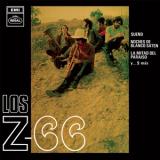
For the first time ever, the only full-length album by Spanish soul and garage legends Z-66 is being reissued. Z-66's signature blend of powerful soul, psychedelia, and pop-clearly influenced by bands like The Move, Stones, Vanilla Fudge, and Blood, Sweat & Tears delivers a bold, modern sound that remains fresh and compelling. Unlike other Spanish bands of the time, Los Z-66 enjoyed unique conditions that allowed their sound to stand out as one of the most advanced on the local scene in the late 1960s. As was the case with many other groups, their repertoire for entertaining discotheques had to include the hits of the moment and was not always open to the songs of the most daring international bands, which was the sound that most stimulated the musicians. In the case of Los Z-66, being based in Mallorca meant they had privileged access to hard to-find records, imported by foreign tourists, and to a much more modern atmosphere than in other parts of the country. Songs in Italian and French soon gave way to English hits by the Animals, the Stones, and the Beatles. But it was the offer received from Mike Jeffries, manager of Jimi Hendrix, the Animals, and others, to serve as the house band at the newly opened club Sgt. Pepper's that allowed the group to raise their live performances to a level rarely seen in these parts... They even soon incorporated the distorted sound of fuzz into their guitar when they received a fuzz face pedal as a gift from Jimi Hendrix himself, who was invited to play at the club's opening! Their excellent blend of stunning soul, psychedelia, and pop became their hallmark, not only in the band's concerts but also in the handful of singles and EPs they released on the Regal label. We are now re-releasing for the first time their only full-length album, originally published in 1969, which is actually a compilation of songs previously released in 45 rpm format, complete with two bonus tracks not included on the original LP plus a booklet with liner notes and rare photos.
