Over 14 days at Henson Recording Studios in Los Angeles, Nikka created Pebble to a Pearl- a quintessential collection of soul, blues, funk & pop infused tracks.
Originally recorded and produced by Justin Stanley (James Lidell, Beck), the album was released on Stax Records in 2008.
This timely Deluxe Anniversary Edition features new feel-good funk track ‘Soulsucka’ and will be released alongside Costa's new album 'Dirty Disco' coming June 2024.
out of Stock
Last delivered 2 years ago available to reorder, subject to availability
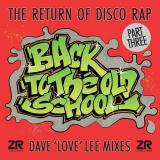
They say 3 is the magic number so here we are with Part 3 of our 'Back To The Old School' 12" series. Four cuts of the finest Disco-Rap remixes by Dave 'Love' Lee, we start things right off with some uptempo disco in the shape of Eddie Cheeba's " Lookin' Good" with it's clav stabbing & synth jabbing funk, ready to rock any dance floor with it's brilliant part-rapped, part-sung vocal play. Two versions are included of the B-Boys early 80's breakers anthem 'Rock The House'. First up is the breakbeat underpinned 'Magic Funk' mix that utilises one of the funkiest basslines of all time. On the flip the 'Roller Rink' mix is a mid tempo floor filler reprising a much loved 90s r&b jam to great effect. Finishing affairs is the 'Maximus Boogie Mix' of Maximus Three, leaning heavily into the classic disco-rap sound of fat Good Times bass, squelching synths under the bragging raps of TJ Swann and Pee Wee Mel.
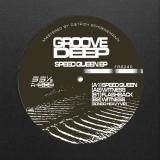
Groovedeep, the international supergroup comprised of Toronto’s Ciel and DC stars James Bangura and Jackson Ryland aka JR2k, brings Fixed Rhythms a 12” of four racing, groovy, energetic, funky and lush techno cuts. This is the second vinyl outing by the group, the first one being the recent “Funk Solo” on Turbo Recordings featuring remixes by Batu, Shed, and Mark Broom.
“Speed Queen” opens up the EP with hypnotizing techno that eschews any four-on-the-floor demands. Up-tempo with a touch of house and handdrums and a tantalizing vocal clip. “Witness” has a similar structure…handdrums, non four-on-the-floor kick drum composition, rhythmic vocal chop-work, but whereas A1 is the leap into the deep, “Witness” has us diving down, exploring the eerier depths.
Whip to the B-side with “Flashback”, a slightly more east coast club track while also incorporating a bit more of a pummeling kick. The aforementioned Groovedeep sonic signatures are there, and…can’t get enough of the handdrums?!?! Well then just let that last “Witness (Bongo Heavy VIP)” track slide in, a slightly meaner (and of course bongo-ier) boom of a take on the A2.
Carrying the torch of Freeez, Light of the World, Incognito & The Warriors, INTA-CITY is the clandestine jazz-funk operation from Daniel Maunick alongside Zaidi Kiggundu & Jamie McShane AKA Zaime.Limited edition remix 12” (500 Units) with dancefloor-ready cuts from Kon, Danielle Baldelli and G&D.
Formed between London and the outskirts of Glasgow, INTA-CITY is a new clandestine jazz-funk project from Daniel Maunick alongside Zaidi Kiggundu and Jamie McShane AKA Zaimie.
With the rebellious spirit of the British funk hustlers of the 1980s — Freeez, Light of the World, Incognito The Warriors, all of which counted Maunick's father Jean Paul 'Bluey' Maunick among their founding members — INTA-CITY adopt the DIY, solidaristic and dancefloor-first ethos of the original movement: no frontman, no band photos or fancy music videos. Just music to move to.
Ahead of their debut album release next year, the band have enlisted Boston edit master Kon, Italian cosmic royalty Daniele Baldelli & DJ Rocca, and Bolognese duo G&D for a limited edition remix 12” and digital release out 18th September 2026 via Far Out Recordings.
2026 Repress
Oh yes! First ever official reissue of the positively sublime and very rare Butterfly LP, recorded in Tokyo in 1979 by Japanese songstress Kimiko Kasai and jazz legend Herbie Hancock.
Due to it's super-rare status as a Japan-only release, this exquisite collection of covers never got the recognition it deserved at the time, despite incredibly inspired performances from Kimiko, Herbie and the supremely talented musicians assembled for the project. From heavenly drummer Alphonse Mouzon and renowned organist Webster Lewis to bassist Paul Jackson, reedman Bennie Maupin and the master percussionist Bill Summers, the legendary performers crafted amazingly good vocal versions of Herbie / Headhunters jazz-funk. Unsurprisingly, it has been heavily in demand for many years.
The LP opens with Kimiko's highly desirable version of "I Thought It Was You", an elegant take on Herbie's own anthem. Other superb re-workings include the delicately soulful "Butterfly", jazzy groover "Sunlight", the smooth and sexy "Tell Me A Bedtime Story" and the beautiful ballads "Maiden Voyage" and "Harvest Time". A wonderful example of perfectly understated and masterful jazz-funk soul fusion that shouldn't be missed, the set closes with a jaw-dropping version of Stevie Wonder's "As".
This lovingly curated reissue enables a long overdue reappraisal of this hitherto unavailable masterpiece. The stunning artwork which adorned the original jacket - complete with OBI strip and sumptuous
4 page folded insert - has been faithfully restored. Simon Francis' sensitive mastering elevates the sound throughout and, as ever, it has been pressed at a reassuringly weighty 180g. Essential.
Emerging from the dark Olympic forests with a new album and a full bag of chanterelles, fish narc's Ben Funkhouser has shifted the damp melancholy characteristic of his earlier work towards the sun. Uncle is at once a cry of resignation ("say uncle!") and a declaration of seniority, a set of observations steeped in the blues of youth, delivered with Westerbergian inclination. Recorded and produced by Alex Farrar, the album's 11 tracks bear the hallmarks of his style: textured rock `n' roll somehow both raw and polished. Neither waxing pathetic nor sugarcoating, fish narc and the band are at peak form on Uncle, strumming out the complexities of aging with the conviction of a group that's fully found its footing in well-crafted rock and powerpop. Uncle KLP313, is a culmination of the punk rock musical work fish narc has done in his native Northwest environs. Says Funkhouser, "I feel like Uncle is the best record I've ever made. The songs grew without changing, the textures are spot on, and Alex [Farrar] and I saw eye to eye about almost everything. The album represents what I want for my band and songwriting and is the touchstone on which all my future work will be based." fish narc is a rocker and producer from the Pacific Northwest, recently relocated to Los Angeles. As a member of GothBoiClique, his innovative guitar playing became iconic of the group and helped shape the style of the movement that they pioneered. As a songwriter, fish narc leans more on influences from SST, K and the diy scene he grew up in. Catch him with a full band for the true intended experience. Previous records include WiLDFiRE in 2020, Camouflage in 2022, fruiting body [KLP295] in 2023 and frog song [KLP298] in 2025. This autumn fish narc will tour the United States with his punk horde.
In the spring of 1971, somewhere between Brussels, Paris and a collective pop fever dream, Le Monde Fabuleux Des Yamasuki landed on vinyl. It sounded like nothing else then and it still does not today. More than half a century later, Sdban Records proudly presents a reissue of this singular cult album, available from April 3, 2026 on vinyl.
The album was produced by Jean Kluger and written both by Jean and Daniel Vangarde (aka Bangalter, later the father of Thomas Bangalter of Daft Punk), who were alreadywell ahead of their time, long before electronic music rewrote the rules of pop culture.
Released under the name Yamasuki, also referred to as The Yamasuki Singers, or The Yamasuki's, the project was never intended as a conventional band. It was a studio-born fantasy, a concept album disguised as a pop record. What began as a standalone single quickly expanded into a full-blown pan-cultural pop opera that ignored genres and common sense with joyful abandon.
Musically, the album sits at a delirious crossroads. Psychedelic pop collides with funk rhythms, samba and bubblegum melodies, full of chants and choruses in a phonetic pseudo-Japanese, written with the help of a dictionary. Kluger and Vangarde famously recruited a children's choir to perform the vocals, and for added spectacle, they brought in a Japanese judo grandmaster, whose ritualistic shouts and battle cries erupt throughout the record.
Several singles were released. One of them, Yamasuki, with accompanying dance move, appeared in the United Kingdom and France on John Peel's Dandelion label, a fitting home for a record that thrived on the margins of pop culture. Its B-side, Aieaoa, proved even more potent. In 1975, the song was reborn as A.I.E. (A Mwana) by Black Blood, an African group recording in Belgium, this time sung in Swahili. That melody would travel even further. Aie a Mwana became the debut single of English pop group Bananarama, and in 2010 it resurfaced once more as Helele, an official song of the FIFA World Cup, recorded by South African singer Velile Mchunu with Danish percussion duo Safri Duo. That version became the most widely known incarnation of the song. With Jean Kluger directly involved, it was less a cover than a continuation of the original idea.
The album's afterlife did not stop there. Over the years, Yamasuki has been quietly sampled, covered, and featured across media far beyond the realm of novelty pop. Kono Samourai was sampled in The Healer by Erykah Badu (2007), produced by Madlib, while Yama Yama has found its way into recent pop culture as well: appearing in the television series Fargo, on Angus Stone's project Dope Lemon, and on the 2008 Late Night Tales compilation curated by Arctic Monkeys drummer Matt Helders. Proof, if any were needed, that this strange little record carries a deeper musical DNA than its playful exterior might suggest.
This new reissue of Le Monde Fabuleux Des Yamasuki proves the renewed interest and respect for this cult album, faithful to the original spirit while finally giving it back the physical presence it deserves. In an era obsessed with genres and algorithmic neatness, Yamasuki still laughs, dances and karate-kicks its way past definitions. It reminds us that pop music can be playful without being disposable, strange without being cynical and joyfulwithout explanation. The world of Yamasuki was always fabulous, we are just lucky it found its way back to us!
Larry June has built a career on making hard work look effortless, and his album Who Coppin’ stands as a masterclass in smooth, lifestyle-driven West Coast hip-hop. The album delivers a high-grade mix of Bay Area luxury, entrepreneurial motivation, and unbothered charismatic flows. Spanning a laid-back audio palette designed for early-morning juice runs and late-night freeway cruises alike, Uncle Larry balances the discipline of a hustle-first mindset with warm, sun-drenched production anchored by crisp organic instrumentation and heavy-knocking bass.
The album features a tightly curated roster of collaborators who align seamlessly with Larry's signature aesthetic. Spoken-word encouragement from Wallo267 sets an intentional tone on the opener "Go Outside Intro," framing the record around execution and focus. Soulful contributions from Jhené Aiko on "California Dream" and Musiq Soulchild on "Pretty Green Eyes" provide lush R&B textures, while NorCal legend B-Legit and longtime partner DJ.Fresh reinforce June’s deep West Coast roots. Meanwhile, Swizz Beatz injects high-energy bounce into "Flex," offering a vibrant contrast to Larry’s understated, cool-headed cadence.
Behind the boards, top-tier producers like Cardo, Teeko, Beat Butcha, Jay Versace, and June Santana craft a nostalgic yet modern backdrop filled with warm sample flips, smooth G-funk synthesizers, and relaxed soul grooves. The project builds to an emotionally grounded conclusion on "God Got Us (Ain't Too Many)," where June strips away the flexes to offer direct encouragement to his audience, proving once again that consistency, self-belief, and steady progress remain the ultimate luxuries.
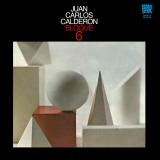
“Bloque 6” (1968), by Juan Carlos Calderón, is a landmark in the history of modern Spanish jazz, quite different from the later phase of his career, when he incorporated elements of fusion under the influence of funk, disco, and even flamenco. For the recording of this album, he was joined by prominent Spanish jazz musicians such as Pedro Iturralde, Vlady Bas, and Pepe Nieto.
In the United States, it was awarded Best International Jazz Album in 1969 and reissued on CD by Blue Note many years later.
Inspired by the ska and reggae sounds crossing the border from Belize, the Mexican band Ely Combo was among the first in the country to incorporate Jamaican rhythms into its repertoire in the early 1970s. This single brings together two funk classics—Isaac Hayes’ ‘Shaft’ and the dancefloor favorite ‘Express Yourself,’ originally recorded by Charles Wright & The Watts 103rd St. Rhythm Band—reimagined here as two explosive reggae tracks.
A remarkable anomaly within the Latin American music scene of the 1970s.
Detroit techno visionary Keith Tucker returns through his acclaimed alter ego Optic Nerve with AUGMENTATIONS EP, a forward-thinking exploration of minimalist machine funk, futuristic sound design, and deep electronic movement.
Crafted with precision and unmistakable Detroit character, AUGMENTATIONS merges hypnotic analog sequences, mechanical rhythm structures, atmospheric synth textures, and driving electronic beats into a powerful sonic statement rooted in the city’s enduring techno legacy. Sparse yet immersive, the EP balances raw underground energy with cinematic futurism — designed equally for dark warehouse floors and deep headphone listening.
Pressed as a Limited Collector’s Edition Clear Vinyl 12-inch, PBX-38 captures the sleek, transparent aesthetic of the music itself: pure signal, machine emotion, and uncompromising Detroit innovation.
A1 — Augmented 1 (Optic Nerve Original Mix)
A deep, stripped down Detroit techno workout driven by pulsing drum programming, evolving synth modulation, and hypnotic minimalist sequencing. Functional futurism engineered for late-night motion.
B1 — Augmented 2 (Infinite Worlds Mix)
Built around a rolling funky bass line and eerie flowing string textures, this expansive composition moves through layers of atmospheric electronics and mechanical groove architecture. The track creates an immersive sense of drifting through endless digital landscapes while maintaining a sharp rhythmic intensity designed for the underground dance floor.
B2 — Augmented 3 (Visual Shapes Mix)
Abstract melodic fragments, and precision electronic rhythms collide to form a futuristic minimalist soundscape filled with movement, tension, and cinematic pulsed chords.
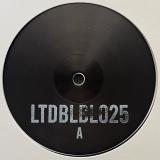
Limited White Label reaches a milestone with LTDBLBL025 – our first ever LP. For the occasion, we’re handing the catalogue over to Boris Graus aka Borka & The Gang for a 12-track journey through House, Jazz-House and Deep House Electronica. The double LP brings together years of Boris’ work and collaborations, connecting electronic production with the feel of live musicianship. Across the record, House grooves meet jazz, disco, funk and deeper electronic textures, moving between warm, rhythmic cuts and more atmospheric moments. Boris plays the keyboards, glockenspiel and percussion himself, while the record features contributions from a wide range of musicians from both his local circle and further afield – including Malou de Sel on vocals, Jürgen Leutnant on saxophone, Bruno dela Rosa on bass, Dario Cei on flute and Bruno Freitas on guitar.
Pressed on double 12” white vinyl, LTDBLBL025 is not only the first LP in the Ltd, W/Lbl catalogue, but also a milestone for Borka & The Gang – bringing together a body of work that reflects Boris’ long-running connection between electronic music and live musicianship. LTDBLBL025 – 2×12” White Vinyl / 12 Tracks
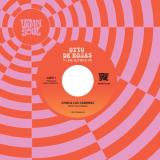
Two dancefloor bombs, recorded in Peru in the mid-'70s by bandleader, producer, and keyboardist Otto de Rojas. It's no coincidence that "Choca las caderas" was originally released as a single backed with "Al ritmo del Bump-Bump," a clear tribute to the classic "Soulful Strut," making the artist's affinity for the soul and funk sounds coming out of the States unmistakable. "Choca las caderas" is made for dancing and partying hard, with irresistible horn arrangements and an incredibly groovy rhythm section. "El tema de Coco" is another superb instrumental recorded by Otto de Rojas, who plays the electric pianos and Moog on this track.
These two tracks are now reissued together on a 45 for the first time.
Plush shag carpeting, jazz flutes, analogue synths, funk grooves, exotica, and sultry, Italian-style vocalising: Erotica 70 is the new album from Larry Manteca, known for their inventive, tongue-in-cheek reimaginings of classic Italian soundtrack aesthetics.
This time around, the Milanese collective sets its sights on the distinct sonic landscape of 1970s commedia sexy—a film genre that, for better or worse, defined an era and fed richly into the cinematic education of Larry Manteca’s members.
Through this lens, Erotica 70 also becomes a way of celebrating Piero Umiliani in his centenary year—a composer whose name is closely linked to the erotic comedies of the time.
The nod to Umiliani is baked right into the details, starting with the choice of vintage gear like the Eminent synth and the Wurlitzer electric piano. These instruments deliver that particular blend of jazz, groove, electronics, and sensual charm that made the golden age of Italian film music so unique.
Standout track “Lando” is a joyful, playful homage to actor Lando Buzzanca, who starred in numerous films scored by Umiliani, including the iconic 1973 comedy La schiava io ce l’ho e tu no (My Darling Slave).
Larry Manteca is spearheaded by multi-instrumentalists Alessandro Paiola and Riccardo Danieli, flanked by the cinematic flute of Carlo Pelsa, the swinging drums of Andrea Quattrini, and the magnetic vocals of Valentina Castelli and Alessandra Maria Manzoni.
Recorded across various studios in Northern Italy, Erotica 70 is the imaginary soundtrack to an Italy that no longer exists, recreating its atmosphere while rendering it in full, vivid colour. It’s a record whose music seems to come straight out of a provincial cinema, a smoky late-night club, or a long-lost 70s film. But while it looks back to a bygone era, it does so only to bring it straight into the present, making the past sound surprisingly fresh and contemporary.
You've never played a game like Blippo+ before, and you've never heard a video game soundtrack quite like Greatest Hits from Planet Blip.
Composed by Rob Kieswetter and Jona Bechtolt from the LA-based trio YACHT, the soundtrack collects 71 tracks from the cult classic video game Blippo+, reworked and sequenced into a continuous listen for this special release —a TV static-speckled gatefold double LP, out Oct. 16 via Hologram Opera, marking the soundtrack’s physical debut.
Taking the form of a cable TV simulator, Blippo+ captures the magical feeling of seizing a mysterious signal from outer space and discovering the television programming of an alien culture. Soundtracking the game’s pastiche of programs is Rob and Jona’s genre-spanning score—synth-heavy, eccentrically electronic, with a skewed sensibility that pays homage to cable access, library music, video art, and the late-night margins of the 80s and 90s underground.
TV obsessives will find plenty to love in Greatest Hits from Planet Blip: with surreal theme songs, jangly jingles, zippystings, catchy kitsch, period-accurate menu music and even pop hits from the alien airwaves, this propulsively playful soundtrack will have channel-flippers tingling with nostalgia.
“Planet Blip is an alien planet where art and music are the only currency and ‘consciousness particles’ form the basis of all media. To capture the spirit of this world, we drew inspiration
from all the music we felt best embodied this ethos and ran it through our own utopian blender,” say Bechtolt and Kieswetter.
Blippo+ is an award-winning, experimental, live-action video game created by YACHT and Telefantasy Studios, along with developers Noble Robot and Dustin Mierau, and published by Panic Games. It was released for Steam, Playdate and Nintendo Switch in 2025 to widespread
critical acclaim and has earned a devoted fandom. A Mac version followed earlier this year, and was nominated for an Apple Design Award.
"Simultaneously nostalgic and futuristic, otherworldly yet
welcoming, Blippo+ is an absolute artistic triumph.
" —Deven McClure, Screen Rant
"Blippo+’s presentation might ape old traditions, but the collective impact of its content is richer, deeper, and more entertaining than any mere remembrance.
" —Garrett Martin, Paste/Endless Mode
"In the increasingly reactionary and prescriptive landscape of video games, it is remarkable to encounter something so distinctive, so hopeful, so celebratory, so devoted to expanding the possibility space of art beyond a single medium." —Sam Bodrojan
Two of the most prolific remixers in the world of Disco,Dave 'Love' Lee and John Moraleshave teamed up for one of their biggest projects to date - 'Mixed To The Maxxx'. After gaining access from the legendary original artists, the pair take the multi-track tapes of many classic Disco, Funk & Soul tracks and re-work them...to the Maxxx!
Where Remixed With Love stands as Dave Lee's own gold-standard body of work, Mixed To The Maxxx sets that legacy alongside Morales' own decades-deep M+M body of work: Lee brings his musically dense, groove-first touch to the likes of Harold Melvin, Syreeta, Lenny Williams and The Brand New Heavies, while Morales applies his extended, dancefloor-built M+M treatment and crushes the likes of Barry White, The Temptations and Loleatta Holloway, plus Dennis Coffey's breakbeat classic "Scorpio" for the DJs and collectors alike. Both work from original tapes, surfacing parts barely audible or entirely unheard in the source mixes, and both know when to let a classic breathe rather than bury it under modern production. It's a pairing a long time in the making. Lee and Morales first talked about working together around a decade ago, and getting Mixed To The Maxxx off the ground took five years of patient work: tracking down usable stems, securing approvals, and navigating a licensing landscape where much of the best material is now tied up with major labels increasingly cautious about clearing remixes. What's landed here is the product of that graft as much as the pair's shared ear for a great record, the sound of two people who know exactly what they're looking for and are willing to put in the time to find it.
A double 12" sampler in summer 2025 previewed the record's range. A bass-driven overhaul ofThe Brothers Johnson's "The Real Thing" and an extended mix of Philly legends Bell & James' "Livin' It Up (Friday Night)" showcased Lee's side, while an anthemic take on Inner Life's "Ain't No Mountain High Enough" and a tempo-lifted Light Of The World"London Town" flew the flag for Morales. Both drew strong early support ahead of the full LP.
Wewantsounds it delighted to announce a deluxe reissue of Frank Foster's 'The Loud Minority' LP. Released on Bob Shad's Mainstream Records in 1972, it's a landmark album and one of the key political works of the 70s. Featuring an all-star cast of superb musicians including Elvin Jones, Stanley Clarke, Airto, Cecil Bridgewater and Marvin 'Hannibal' Peterson, it is also Dee Dee Bridgewater's earliest full recordings. This special edition includes a 20-page booklet featuring amazing unseen session photos recently unearthed, an introduction by Judd and Mia Apatow (Shad's grandchildren), an essay by British journalist Kevin Le Gendre and an exclusive interview of Cecil and Dee Dee Bridgewater by Paul Bowler. The album's original artwork as been recreated with original photos and the audio newly remastered from the original tapes.
When he recorded "The Loud Minority" in 1972 for Bob Shad's Mainstream Records, Frank Foster had been a solid sax player for nearly twenty years, playing with the likes of Donald Byrd, Thelonious Monk and The Count Basie Orchestra. For this special session, he gathered a stellar line up of old fellow musicians like Elvin Jones and Harold Mabern and young turks including Stanley Clarke, 'Hannibal' Marvin Peterson, Cecil and Dee Dee Bridgewater. Cecil Bridgewater remembers: "Frank, his thing was, any group that he had he wanted to give young musicians a chance." As usual for Mainstream sessions, the studio was booked for two days and the record was cut live, supervised by Bob Shad's trusted men, arranger Ernie Wilkins and engineer Carmine Rubino.
What came out of these two days is now the stuff of legend, four long funky jams fuelled by two distinct line ups playing simultaneously augmented with a powerful 6-piece brass section led by Foster. The album kicks off with the anthemic "The Loud Minority" (sampled by United Future Organization and DJ Shadow) with its long brass introduction followed by Dee Dee Bridgewater fiery poem, a politically charged statement expressing the fight for civil rights, before the whole group comes together for a funky explosion clocking at 14 minutes. "That was a period where we were really into our African consciousness" reminisces Dee Dee in the interview.
The album continues with the funky uptempo "Requiem for Dusty" while "J.P.'s Thing" adopts a slightly more spiritual feel, with a beautiful Fender Rhodes solo and Foster's soprano sax improvisation. The album ends with "E.W. Beautiful People", a long dreamy improvisation climaxing with Dee Dee Bridgewater's poignant vocals.
The Loud Minority is a key militant jazz manifesto and one of the landmark jazz funk albums of the 20th Century. The album was recorded in two days but its legacy lives on and still resonates loudly in the BLM days. Wewantsounds is delighted to reissue this major works with newly remastered audio and a deluxe 20-page booklet full of breathtaking unseen session photos and insightful texts telling the whole story of this superb album.
A stylish selection of city pop, funk and modern soul from Japanese label Nippon Columbia, selected by DJ Notoya and featuring cult classics and rarities by Hiroshi Sato, Hatsumi Shibata, Hitomi 'Penny' Tohyama & many more.
Annotated by Notoya with journalist Nick Luscombe and artwork by Optigram.
Newly remastered audio.
The selection on ‘Tokyo Glow’ starts with 'Kimugare' a relaxed mid-tempo track by Kumi Nakamura, actually a famous actress who only recorded one album in 1980 for Columbia.
The set continues and flows effortlessly with the sunshine grooves of Miyuki Maki, Hatsumi Shibata and cult keyboard player Hiroshi Sato before the pace starts going faster and funkier with New Generation Company, Kengo Kurozumi - with his superb boogie, 'Juggler'
- and one of the queens of the genre, Hitomi 'Penny' Tohyama with 'Tuxedo Connection'.
Another fine example on the set is the mid-tempo groove of "I Wander All Alone Part III" by New Generation Company, an aggregate group of some of the best Japanese session musicians led by arranger Katz Hoshi and including Hiroyuki Namba (key), Kazuo Shiina (gtr) and Yutaka Uehara (ds) who all played with Tatsuro Yamashita among many others.
There are many other excellent examples in 'Tokyo Glow', showcasing the diversity and specificity of Japanese City Pop during the late 70s and 80s.
Nippon Columbia opened their much-guarded vaults to curator DJ Natoya. Tracks were remastered in Tokyo and the result, ‘Tokyo Glow’, is a unique insight into a most creative period in Japanese music.
Wewantsounds is delighted to continue its Ziad Rahbani reissue program with Ana Moush Kafer, a classic album by the Lebanese legend Ziad Rahbani, recorded at his By-Pass Studio in Beirut during the height of the Lebanese Civil War in 1985. Showcasing Rahbani’s signature blend of Arabic music infused with touches of jazz-funk and bossa nova, the album has attained cult status over the years. Originally released on cassette, it has never before been available on vinyl. Newly remastered, this edition features the original Relax-In cassette artwork from 1985 and includes new liner notes by Mario Choueiry of the Institut du Monde Arabe in Paris.
Ziad Rahbani, who passed away in 2025, remains one of the most influential figures in modern Arabic music and a cultural icon in Lebanon. A musician, composer, pianist, producer and playwright, he helped modernize Arabic music over five decades. The son of composer Assi Rahbani and singer Fairuz, he shaped her late 70s–80s recordings producing Wahdon and Maarifti Feek, while building a major solo career with classics such as Abu Ali and Houdou Nisbi, which have become cult favourites for a new generation of DJs and music lovers.
Released in 1985 in Lebanon, Ana Moush Kafer stands as one of Rahbani’s key achievements. Recorded at his By-Pass Studio during the Lebanese Civil War, it blends Arabic melodic traditions with jazz-funk, bossa nova and Western arrangements. Originally cassette-only, it became one of his most revered releases. Throughout the album, Rahbani’s writing reflects the turbulence of wartime Beirut with a blend of sharp social observation, political satire and melancholy. It captures a moment in Lebanese cultural history where experimentation, satire and popular song intersected, giving the album its enduring influence among music lovers.
Sung by Rahbani and Sami Hawat, alongside Beirut-based musicians, the album features both Western and traditional Arabic instruments. It balances refined arrangements with lyrical irony, social commentary and political reflection, which remain deeply resonant in today’s context in Lebanon.
One of the highlights of the album is the song “Shou A’ada Ma Bada,” with lyrics by Joseph Harb, which reveals a clear bossa nova influence, while the closing track, “Al Mokawama Al Watania Al Lobnani,” offers a deeply human view of war, avoiding patriotic cliché in favour of a nuanced perspective rooted in lived experience.
As Mario Choueiry observes in his liner notes, “Ana Moush Kafer stands as one of the high points of modern Arab political songwriting, yet transcends its historical and geographical context through the universal relevance of its themes and the timeless quality of its music.”
Forty years on, Ana Moush Kafer remains a landmark of Arab music. Wewantsounds presents it on vinyl for the first time, newly remastered and featuring original artwork. This long-awaited reissue restores one of Ziad Rahbani’s most important works to circulation, reaffirming its place as a defining statement in modern Arabic music.
a 1. Ana Moush Kafer 5:03
b 2. Shou Hal Ayyam 5:46
c 3. A'anitham 4:37
d 4. Shou A'ada Ma Bada [3:45]
[e] 5. Yessa'ed we Yea'en [5:05]
[f] 6. Bi Halyawmayn [3:46]
[g] 7. Bharf Esheen [1:12]
[h] 8. Bhaneek [5:34]
[i] 9. Al Mokawama Al Watania Al Lobnani [3:06]
[a] 1. Ana Moush Kafer [5:03]
[b] 2. Shou Hal Ayyam [5:46]
[c] 3. A'anitham [4:37]
[d] 4. Shou A'ada Ma Bada [3:45]
[e] 5. Yessa'ed we Yea'en [5:05]
[f] 6. Bi Halyawmayn [3:46]
[g] 7. Bharf Esheen [1:12]
[h] 8. Bhaneek [5:34]
[i] 9. Al Mokawama Al Watania Al Lobnani [3:06]
[a] 1. Ana Moush Kafer [5:03]
[b] 2. Shou Hal Ayyam [5:46]
[c] 3. A'anitham [4:37]
[d] 4. Shou A'ada Ma Bada [3:45]
[e] 5. Yessa'ed we Yea'en [5:05]
[f] 6. Bi Halyawmayn [3:46]
[g] 7. Bharf Esheen [1:12]
[h] 8. Bhaneek [5:34]
[i] 9. Al Mokawama Al Watania Al Lobnani [3:06]
[a] 1. Ana Moush Kafer [5:03]
[b] 2. Shou Hal Ayyam [5:46]
[c] 3. A'anitham [4:37]
[d] 4. Shou A'ada Ma Bada [3:45]
[e] 5. Yessa'ed we Yea'en [5:05]
[f] 6. Bi Halyawmayn [3:46]
[g] 7. Bharf Esheen [1:12]
[h] 8. Bhaneek [5:34]
[i] 9. Al Mokawama Al Watania Al Lobnani [3:06]
[a] a1. Ana Moush Kafer [5:03]
[b] a2. Shou Hal Ayyam [5:46]
[c] a3. A'anitham [4:37]
[d] a4. Shou A'ada Ma Bada [3:45]
[e] b1. Yessa'ed we Yea'en [5:05]
[f] b2. Bi Halyawmayn [3:46]
[g] b3. Bharf Esheen [1:12]
[h] b4. Bhaneek [5:34]
[i] b5 Al Mokawama Al Watania Al Lobnani [3:06]
[a] a1 | Ana Moush Kafer [5 03]
[b] a2 | Shou Hal Ayyam [5 46]
[c] a3 | A'anitham [4 37]
[d] a4 | Shou A'ada Ma Bada [3 45]
[e] b1 | Yessa'ed we Yea'en [5 05]
[f] b2 | Bi Halyawmayn [3 46]
[g] b3 | Bharf Esheen [1 12]
[h] b4 | Bhaneek [5 34]
[i] b5 | Al Mokawama Al Watania Al Lobnani [3 06]
[a] a1 | Ana Moush Kafer [5 03]
[b] a2 | Shou Hal Ayyam [5 46]
[c] a3 | A'anitham [4 37]
[d] a4 | Shou A'ada Ma Bada [3 45]
[e] b1 | Yessa'ed we Yea'en [5 05]
[f] b2 | Bi Halyawmayn [3 46]
[g] b3 | Bharf Esheen [1 12]
[h] b4 | Bhaneek [5 34]
[i] b5 | Al Mokawama Al Watania Al Lobnani [3 06]
[a] a1 | Ana Moush Kafer [5 03]
[b] a2 | Shou Hal Ayyam [5 46]
[c] a3 | A'anitham [4 37]
[d] a4 | Shou A'ada Ma Bada [3 45]
[e] b1 | Yessa'ed we Yea'en [5 05]
[f] b2 | Bi Halyawmayn [3 46]
[g] b3 | Bharf Esheen [1 12]
[h] b4 | Bhaneek [5 34]
[i] b5 | Al Mokawama Al Watania Al Lobnani [3 06]