Bassist Leroy Vinnegar has gone down in history as the person who popularised the "walking bass" style in jazz. He was worked with Chet Baker, Eddie Harris, Les McCann, Lee Konitz, and Stan Getz. His milestone 1973 album 'Glass Of Water' featuring Dwight Dickerson on the rhodes and wurlitzer slipped into obscurity shortly after release. However, in recent years it has been rediscovered and has become highly coveted as a grail for crate diggers and jazz collectors worldwide.
On High is proud to present the first ever reissue of this long forgotten classic. Remastered and pressed on audiophile virgin vinyl to fully capture the wonderful spacey emotion of Vinnegar's classic LP.
Overview
Arguably the greatest Jamaican record producer of all time, Lee ‘Scratch’ Perry was instrumental in transforming the island’s national sound throughout the Sixties and Seventies, with his unique approach to music making pushing the music beyond previously perceived boundaries.
To mark the first anniversary of his passing, the very best of his work is showcased across a number of products, all of which effectively demonstrate why Perry was widely venerated figure for so long..
The deluxe box set comprises four vinyl LPs and four CD sets featuring his best known and most influential recordings including a previously unreleased mix of Junior Murvin’s powerful ‘Police And Thieves’, UK chart-buster ‘Hurt So Good’ by Susan Cadogan and the Upsetters’ boss reggae classic ‘Return Of Django’, as well as numerous major Jamaican hits.
Aldo included in the set is a 50 page fully illustrated page book, penned by Scratch’s official biographer, David Katz and featuring an array photos by celebrated photographer Adrian Boot, and a newly designed two sided full colour 24” x 24” poster.
The 2x gatefold LP and 2x CD set collection focus upon of the legendary music-maker’s best known productions from the Sixties and Seventies, performed by some of the giants of Jamaican music, with both extensive notes on the man whose talent and imagination took reggae to new heights of excellence.
2024 edition of the single that marked the return of Joe Bataan in 2004. A dancefloor favourite by the King of Latin Soul!
Back in 2004, Vampisoul was extremely honoured to play a role in the return to recording of the legendary Joe Bataan, which fully materialized in the lauded 2005 album "Call My Name", written and produced by Daniel Collás. But first came out the preview 45 'Chick-A-Boom' / 'Cycles Of You', which quickly became a DJ favourite and guaranteed dancefloor filler, long out of print until now. Let's hear Collás explain how it all happened:
"This whole project grew out of a song called 'Cycles of You', which I had written around 2000-2001 with the guitarist and bassist of my band at the time, Easy. The chord progression and vocal melody really reminded me of Bataan, and it occurred to me that it wouldn't be impossible to get him into the studio to do a guest vocal if we ever recorded it. I had met Bataan a few years before at a small, family-reunion style show at the Nuyorican Poets Cafe in my neighborhood, where he not only still sounded great, but was also gracious and easy to talk to.
"By the time we got around to recording with Easy, the band was about to break up but we still had the studio booked. We all agreed that we didn't want to continue as a band, but at the same time, it would be a shame to never record what we had been working on. Around this time Bataan was playing out again, so I went to the show to see him and find out if he'd be interested in doing some vocals with us. He was agreeable, so we decided to turn it into a Joe Bataan session and do 'Cycles of You'. The funny thing is, 'Chick A Boom', a live favourite with Easy, was hastily added so we could have a B-side, but it ended up chosen to be the A-side of the single."
Record Kicks presents Keep It To Yourself, the new album by premier Dutch soul band The Tibbs, out next January 26th.
Dutch vintage soul combo The Tibbs are back with their highly anticipated new album Keep It to Yourself, to be released on LP, CD and digital format next January 26th on Milan-based label Record Kicks. Produced by Paul Willemsen (Michelle David) and mastered in Nashville by soul veteran Bob Olhsson, who used to cut vinyl for Motown back in the day, the new album Keep It to Yourself is the band's third Long Play. It contains 12 fresh 'n vibrant tracks that once again will take you back to the golden days of soul music. Prepare to be swept away on a groovy, soulful odyssey with one the most sensational and enchanting soul bands from the Netherlands!
From the very first note, The Tibbs' musical prowess exudes a soulful, funky energy that is nothing short of mind-blowing. Among the 12 new tracks of Keep it To Yourself, we find the first single "Ain't It Funny", a high-energy stomper that sets the tone for the entire album, the New Orleans funk inspired "Can't Teach an Old Dog New Tricks" and "Chicken Bones, "In Orbit", an emotional and heartfelt love ballad that allows the velvety vocals of singer Roxanne to take center stage or the northern soul belter "Give Me A Reason".
Lyrically, Keep It to Yourself is a poetic wonderland, delving into the depths of love, heartache, but also social issues and the need to preserve the world we're in. Roxanne's vocals, rich and velvety, take you on a euphoric journey through the peaks and valleys of human emotion. The harmonious blend of the horn section weaves an exhilarating tapestry of sound that can only be described as a symphonic supernova. The rhythm section is an unstoppable force, driving each track with a pulsating groove that is pure sonic adrenaline. Keep It to Yourself is a true tour de force, a symphony of soul that will leave you awe-inspired, foot-tapping, heart-soaring, and utterly enthralled.
Based around Amsterdam, The Tibbs is a group of seasoned musicians who draw inspiration from the timeless music of the 1960s, channeling the emotional depth and raw authenticity of that era's classics. Led by their charismatic female vocalist and backed by a powerhouse lineup of drums, guitar, bass, organ and a three-piece horn section, they have been wowing audiences with their live performances. They took off in 2012 working right from the start with producer Paul Willemsen (Beans & Fatback, Lefties Soul Connection, Michelle David & The Gospel Sessions). In 2016, their first LP Takin' Over marked their debut with Milan-based imprint Record Kicks. In late 2018, singer Elsa Bekman decided to focus on a solo career and The Tibbs duly began their search for a truly worthy successor, bringing astonishing vocalist Roxanne Hartog and the band together for the first time with their sophomore album Another Shot Fired, released in November 2020. Now, with their third album Keep It to Yourself, a testament to their dedication to keeping the soulful spirit alive, The Tibbs are once more ready for lift off.
Fate is a funny old thing. One day in 2011, DJ/producer Tom Trago found himself sharing a train journey with Steven Van Lummel, a DIY musician, artist and co-founder of PIP, an underground nightclub and cultural hub in The Hague. Over the course of a rambling, open-ended conversation, the idea of making music together came up; a few weeks later, Trago travelled to van Lummel’s place – a former industrial unit that was now home to a rotating cast of artists and musicians – and didn’t leave for a month.
Cossetted away from the outside world in van Lummel’s loft, with multi-instrumentalists Janneke Nijhuijs and Wieger Hoogendorp joining them to create a musical four-piece, MEGA WEGA was born. Over the course of four weeks, the quartet embarked on an almost continuous creative session punctuated only by impromptu parties and mixing sessions. Life-long bonds were made and over 70 tracks recorded before the mundanity of day-to-day life came calling.
For one reason or another, the project never saw the light of day, with tracks sat gathering dust on hard drives for the best part of a decade. During the madness and loneliness of the COVID-19 pandemic, Trago rediscovered the tracks. Delighted by what he heard, a collective decision was made to add finishing touches and release the resultant album on van Lummel’s PIP Records imprint. Further instruments and vocals were added over two days at Hoogendorp’s studio, before mutual friend Tom Ruig got on board to mix the album.
So, what can you expect from Haunted, Mega Wega’s debut album? First and foremost, it’s the sound of pure creative expression – the distillation of a freewheeling, no-holds-barred, spontaneous musical journey variously inspired by the do-it-yourself ethos of musical counterculture, shared inspirations and influences, epic jam sessions, distant stars (Wega, sometimes known as Fidis or ‘the harp star’, is one of the brightest in the night sky), imaginary journeys across dusty deserts, and the comradeship of four new friends.
Enchanting and alluring, it’s an album that gleefully denies lazy categorization and ploughs its own eclectic, atmospheric musical furrow in vivid sonic detail. It’s a collective exploration of heady musical eclecticism unified by saucer-eyed vocals, low-slung bass, loose-limbed beats, sweaty percussion workouts and hazy electric piano motifs.
Haunted begins with the woozy and hallucinatory slow-burn soundscape of ‘Get Things Done’ – an effects laden shuffle akin to lying flat on your back tripping under an intense desert sun – and ends with the creepy, mind-mangling post-punk funk of ‘Brain Carpaccio’; in between, you’ll find spaced-out, low-tempo lo-fi soul (‘Move Around’, ‘Haunted’), tactile synth-powered boogie revivalism (‘Make Me Work’), deep and off-kilter opioid jazz (‘Copenhagen’), intoxicating psychedelia (‘Last Night on Earth’), piano-laden dream-pop epics (‘Shake Or Fall’), and Latin-infused, percussion-powered hedonism (‘Chopping Heads’).
Born out of spontaneous collaboration and immersive, almost endless recording sessions, Haunted is an album shot through with imagination and boundless energy, captured for posterity by four friends and collaborators at the top of their game.
Reverse board tip on with silver pantone print. The first ever reissue of Dorothy Carter's 1978 folk/psych/drone masterpiece. A truly unique album in Dorothy's catalog of otherwise traditional psaltery folk music, Waillee Waillee's essence sits in the confluence of Dorothy's mastery of the dulcimer; its shimmering notes fully enmeshed with the tremulous, cavernous drones of Bob Rutman's bowed steel cello. The core of this album, Dorothy's only with a full band, lies in the contradiction of traditional psych-folk idioms and the minimal avant-garde, referencing Henry Flynt and Laraaji as much as Karen Dalton. This LP version includes 12 page booklet with unpublished manuscripts, drawings, photographs, and songbooks of the songs from the album, as well as extended liner notes from friends and family of Dorothy Carter, including notable musicians such as Laraaji, Bob Rutman, and Alexander Hacke (of Einstürzende Neubauten). Drops soon - a joint release between Palto Flats & Putojefe Records.
Dorothy Carter was many things - a virtuoso player, storyteller, historian of Celtic and Appalachian folk music, avid lifelong busker, avant-garde musician, and itinerant troubadour, laying a framework for music that existed both within and outside of standard folk idioms - never better represented than on her 1978 masterwork, Waillee Waillee. Underscored by Bob Rutman’s cavernous bowing of the steel cello, the richness of Waillee Waillee’s sound produces an album unlike any other in her discography. In particular, its two side-ending pieces, “Summer Rhapsody” and “Tree of Life,’’ glide with the shimmering filigree of hammered dulcimer and Dorothy Carter’s ephemeral voice floating over Rutman’s droning buzz of the steel cello. The elements of these two tracks suggest something akin to a transcendental Appalachian raga or whirling cosmic folk music, an effortless combination that serves to add additional substance to the remaining tracks on the album.
The title track is one of her most enduring compositions, often performed in stripped down versions throughout her career, and one of her sole recordings featuring a full band, with the contrapuntal interplay of tremulous flute, vibrating steel cello, bass and drums. Lyrically and tonally, her voice would never sound as stirring and refi ned as on this, her most outwardly accessible song.
She counted musical colleagues as diverse as Constance Demby, Einstürzende Neubauten and Laraaji, as well as her lifelong artistic partner and friend Bob Rutman, whose imprint is felt throughout the grooves of this record. The master tapes for this recording were fortuitously discovered in Rutman’s Berlin studio, many, many years later. As recounted in Laraaji’s contribution to the liner notes, Dorothy was “someone who really influenced my early zither exploration and vocabulary and inspired my shift toward hammered zither performance and recording,” after encountering him busking on the sidewalk one day in the 1970s. Later, when living in Berlin in the early 1990s, Dorothy would begin work on manuscripts detailing the history of the dulcimer family and providing extensive sheet music, selected material of which is reproduced in the twelve page booklet included with this release. Dorothy would find later success touring and performing in the late 90s with the ensemble Mediæval Bæbes, which she led with British musician Katherine Blake, playing a prominent role on their first four albums.
In the early seventies, Joey Gilmore embarked on his musical journey, captivating audiences with a series of unforgettable singles that showcased his raw talent and unique style. It wasn't until 1977 that the culmination of his musical endeavors arrived—the release of his highly anticipated debut record.
This debut album marked a pivotal moment in Joey Gilmore's career, solidifying his reputation as a self-taught guitar virtuoso and soulful singer. The record resonated with listeners, capturing the essence of his artistry and leaving an indelible impact.
Now, after a 45-year wait, the time has finally come for a vinyl reissue of Joey Gilmore's debut album. This reissue is a celebration of his timeless music, meticulously crafted to preserve the authenticity and integrity of the original recording. Every note, every lyric and the original design of the sleeve has been lovingly restored to transport you back to the magic of that era.
Get ready to immerse yourself in the unadulterated funk and soul of Joey Gilmore's music, as this remarkable reissue brings his debut album back to life. Allow the melodies and rhythms to envelop you, taking you on a captivating musical adventure that transcends time. Revisit the magic, rediscover the artistry, and let the music of Joey Gilmore captivate your soul once again.
This new released is dedicated to fans of minimal house and rominimal. Mihai Popoviciu, Christian Burkhardt, Octave and Nicolas Duvoisin are worthy representatives of these musical currents. On the A side, Christian Burkhardt brings with "Buto" a jazzy, happy orientation mixing funny keyboard, catchy bass and repetitive sound whereas "The Message" by Octave is a romantic and hypnotic ballad that will enchant you with its languorous atmosphere. On the other side, Nicolas Duvoisin's "Kempin" is a trippy dancefloor track as it has the secret of production. And finally, enter the acidulous mood of Mihai Popoviciu's "Fast Forward" with its rhythm always calibrated and like no other.
Labrish’ is one of jamaica’s great talkover tunes, producers bunny lee and lee perry discussing hard times and funny stories over a great rhythm. the flipside is another cut to the rhythm by cornell campbell & the original b-side to the single on it’s release ‘power pressure’.
Loved by parents and children for its heartfelt and funny portrayal of young family life and celebration of play, the season follows Bluey, a six-year-old Blue Heeler dog, who loves to play and turns everyday family life into extraordinary adventures that unfold in unpredictable and hilarious ways, bringing her family, friends and community into her world of fun.
Bluey ‘The Album’ was released in January 2021 in Australia and the US and was a phenomenal success reaching #1 in the Australian ARIA charts and #1 in the US Billboard Kids Album Charts.
The initial pressing of the vinyl exclusive to Australia Record Store Day 2021 sold out.
Now the chart topping album is available on vinyl globally for the first time. Pressed on 140g blue coloured vinyl, the album features 17 songs, all original compositions from Season 1. Housed in the original album artwork this release includes an A3 colour poster of the
family neighbourhood.
Highlights include music from fan favourite episodes such as ‘Keepy Uppy’, ‘Here Come The Grannies!’, ‘Pool’ and ‘The Creek’. Two versions of the catchy theme tune are included – as an
extended version and ‘Instrument Parade’.
Side A features upbeat songs to get the whole family dancing like ‘The Claw’ and ‘Taxi’. Side B takes a tranquil tone with highlights ‘I Know A Place (The Creek Song)’, vocals by Helena Czajka & Jazz D'Arcy, and ‘Camping’. This is the perfect album for Bluey fans of any age.
Global pointing Brazilian jazz trio releases their new album Agôra, that sparkles with electric funk and Herbie-esque eclecticism. It features a myriad of guest vocalists and musicians including Brazilians Xênia França and Zé Leônidas, Jembaa Groove's Ghanaian singer Eric Owusu and South African artists Bongani Givethanks & Mpho Nkuzo
Re-wiring the concept of 'fusion' for 2023, Agôra is Brazilian trio Caixa Cubo's resurgent new record with the title referring to 'now', based upon the intuitive and fluid nature of the trio's method, and this inspired recording. With shoots to black music culture, from Brazil to Brooklyn, Ghana and South Africa, Agôra is the group's ninth album yet is their first where they've invited guests, mainly singers, onto each track and follows their last, Angela from 2020, released on Heavenly Records, which won a BBC 6 Music Album of the Year (Huey Morgan's selection) granting them much deserved international recognition.
The core musical elements of Caixa Cubo are Henrique Gomide (keys), João Fideles (drums) and Noa Stroeter (bass), all from São Paulo, Brazil and where they met as teenagers and would continue their friendship and musical bond at the Royal Conservatory in The Hague, Netherlands. Now all in their mid thirties, João and Noa live back in the city where it all started but Henrique has settled in Cologne, Germany where the recording of Agôra took place, over the course of 3 days, at the home cum studio of Chris 'Dusty' Doepke, their friend and owner of the label they signed to, Jazz & Milk.
In line with all their creations where flow and energy provide the magic, allowing what the moment provides, the album shines not only for its virtuosity but for its minimalism, the depth of space, and for the first time, the ability to figure in and outside of the jazz fold, as the trio decided, for the first time, to bring in singers and add a new aesthetic to their sound.
"Agôra is a wake-up call to reality, a reminder that the infinite possibilities of technological progress should not disconnect us from the earth, from eye-to-eye relationships, and from moments lived in person" the band are keen to point out. "And that we must not be consumed by greed, for all we truly possess.... is the NOW."
Turning hope and metaphor into music, the debut single Sábado, an electrified future- jazz-fizz reflects perfectly the spontaneity that permeated the entire recording of the album. "When we got to the studio, we had no idea what we were going to record. We started playing a groove, kind of inspired by Gilberto Gil's 80s albums, and our drummer João started singing this funny song 'Sábado Barrigudão' (Big Belly Saturday) alongside the bass groove and that was that". Inspired by their city of birth, São Paulo, it features long time collaborator and vocalist Zé Leônidas, with cuicas, tamborim, agogo and shakers providing the most obvious Brazilian affect from the album.
Dreams is the band's first foray into R'n'B melding the group's simple and sporadic instrumentation of drums, keys and bass into a Jill Scott inspired song that could have been born in Brooklyn yet sung by Brazilian singer and Grammy nominated Xênia França and Zé Leônidas in both English and Portuguese. Xênia recently performed online for hip-to-it website Colors and it's her latest collaboration with Caixa Cubo, having first met in 2009 for a series of live performances.
South African artists Bongani Givethanks & Mpho Nkuzo come to the record with a wholly different approach on Ndiyakhangela, providing spoken word and vocal refrains on top of an Afro-Brazilian percussion jam with a delivery and verse in Xhosa, Zula and Ndebele. Asase is the album opener and features vocals of Eric Owusu who is part of highlife pioneer Pat Thomas's live band and most recently, co-leader of Jembaa Groove, an Afro-soul band from Berlin. It's a synth wig out with djembe grooves and offers a brand new take on Afro-soul-jazz.
Other contributions come from Cologne based jazz singer Rebekka Ziegler (Oblique Sunshine), São Paulo based guitarist Eduardo Camargo (Caio & Eric) and trumpet player Matthias Schriefl on Kismeti, a gorgeous and rolling number that ebbs and flows, exemplifying the group's effortless ability to craft a sound energised by a belief in one-self and the idea of having faith without the need to look at each other for verification.
As drummer and percussionist João Fideles perfectly surmised upon arriving for the recording session, "What drums do you have? Whatever you have, I'll use it". Agôra is testament to nearly 20 years of camaraderie, friendship and most importantly, trust.
It was in the year 1981 when Belgian electronic musician Michel Huygen and his Spanish colleague Carlos Guirao, both better known as Neuronium, met with Evngelos Odyss as Papathanassou, better known as Vangelis, to record a joint session in London.
Michel Huygen remembers: "The music we played together starting from my score, was flowing, flowing so fast and smoothly between the 3 of us, that I can now, many years after, say: We recorded all the music's parts in one single "shot", since the result was absolutely what we all wanted and Vangelis told us: "Don't touch what we have recorded, it is lovely " and so we did."Now, after some rather unofficial releases, the opus "In London" is finally released for the first time in its entire length, titled "In London - The Platinum Edition", fondly reworked, remastered and sonic refined to perfection exactly 45 years after Neuronium released their first album on the famous Harvest label.
Michel Huygen had intended to celebrate this anniversary with Vangelis in Paris. But fate had other intentions, on May 17, 2022, Vangelis died as a result of a Covid-19 disease.
Huygen: "I feel honored to have been able to meet him, to play music with him and to have him as a funny friend too. And mainly to have been able to meet a huge musician, a classical composer for the forthcoming generations, without doubt. R.I.P, dear Vangelis."
DC Salas’s label Higher Hopes returns for its sophomore chapter… ‘Male Tears’, a deliciously sleazy and wry take on the patriarchy from queer polymath, Kiosk Radio resident, visual artist, performer, producer and DJ Strapontin.
“I wanted it to be funny, sassy, with a drama touch,” he tells us. “The track ‘Angry’ is about a frustrated and lonely angry man. ‘Male Tears’ is a sleazy club hit mocking a straight white male friend of mine who is unable to question himself and his privileges. ‘Divorce’ is a joke on marriage and its rules and ‘Teaching Drama’ is, well, about drama queens…”
Drama, hard truths and witty observations: Strapontin’s agent provocateur status is galvanised by the oily basslines, off-grid drums and loose, swathing grooves that prowl out of the speakers and flip devilishly into moments of pure euphoria… And moments of total chaos.
Strap up, strap in… Strapontin is taking us higher. We couldn’t hope for more.
Oh so you thought that was it with RELO1 "Funny idea but we wont ever hear from those goofy guys again." You were so wrong. We spent 7 months in the studio and pulled another 3 pointer out of the hat with a bat. RELO2 is here from the Rebound Lounge label and production project brought to you by DJ Dog(aka DJ Fett Burger) & Double Dancer.
Born in Burlington, Vermont, and conservatory-trained in the US, the cellist Tristan Honsinger moved from Montreal to Amsterdam in 1974, quickly linking with Han Bennink and Misha Mengelberg, and opening a long and fruitful musical relationship with Derek Bailey. Recorded in 1976, Duo displays a performative musical approach already characterised by the lack of inhibition which would later endear him to The Pop Group: he is knockabout, exclamatory, explosively rhythmic; burping Bach and folk melodies with spasmodic lyricism, in amongst the garrulous textures and accents of his scraping, bowing and plucking, and gibbering like a monkey; throwing out his arms and stamping the floor, grappling with his instrument like an expert clown, always on the lookout for new ways to trip himself up. You can hear Bailey revelling in the company, as he ranges between scrabbling solidarity and an askance skewering of his partner's antics, on prepared (nineteen-string) and standard electric guitars — and a Waisvisz Crackle-box, for the garbled, quizzical, cross-species natter which closes The Shadow. Throughout, the spirited interplay between laconic, analytic wit and guttural, sometimes slapstick physicality is consistently droll, often laugh-out-loud funny; vigorously alert, alive and gripping.
Murmuration’ is the low hum made by vast, beautifully choreographed flocks of starlings as they simultaneously flap their wings and take to the sky. Some people say that the frequency of this unique, rumbling, oscillating sound can cure diseases...
One of the most exciting live bands in the UK, British Birds combine the garage-punk energy of Billy Childish, the wry English sophistication of XTC and the witty pop inventiveness of The Lovely Eggs. Like a murmurating flock of starlings, they create a unique sound, and might even be able to cure diseases.
Based in Chorley, Lancashire, British Birds are a resolutely DIY band. Bobby records and mixes all the music; Emma creates all the artwork. Their first two albums were self-released, selling hundreds of copies at gigs and at a few chosen record stores. British Birds didn’t wait for permission to take flight. They just got on with it. Their songs are sophisticated, hard-hitting, and very skilful. It may be DIY, but it’s big and it’s ambitious.
Sessions for Marc Riley and Gideon Coe have followed, along with tours supporting The Bug Club, BC Camplight and Lovely Eggs.
‘Murmurate, Oscillate’ kicks off with Lie Down With Dogs, Stand Up With Fleas, a rousing expression of exasperation at our passivity in the face of lame authority. British Birds are acute observers of the English political scene, shrouding their observations in humour and surrealism. Polka Dot Eyes is another piece of sharp social observation: it portrays Lancashire lads – friends from school – who join the Army and return home physically and mentally damaged. The song is simultaneously disturbing, funny and catchy as hell. From the fog of disinformation and doubt that surrounds us all in 2020s Britian, British Birds embrace the darkness, but with wit and verve – no slogans, no easy answers – and with an energy that helps us escape the mundanity of a declining island. This might all sound a bit bleak, but it’s not: every single one of the songs on this album has a chorus as big as a house.
There are personal songs too: Scary Movies is a poignant description of Bobby and Emma’s grandfather, who delighted in showing them horror films when they were kids – giving them sneak previews of the darkness they’d come to embrace as adults; Just Like Them is a celebration of introversion: it might not be fun, but it’s better than being an idiot. (Paradoxically, any other introverts who hear this song will feel impelled to join in in the chorus.) Blame Game and Thunder Claps examine the darkness inherent in relationships: there is always an impending storm, if you recognise the low hum of the imminent thunder. Once again: the choruses of these songs confound the melancholy sentiment.
You’ll get the same impression if you see British Birds live: Bobby’s ferocious guitar and dark lyrics are counterpointed with Emma’s sometimes haunting, sometimes playful vocal responses and insistent rhythms. You’ll be swept away by the energy of a band who don’t know the meaning of limits. And as the songs get darker and darker the smile on your face gets wider and wider.
The core members of British Birds are siblings Bobby and Emma Townson, working from their HQ-cum-nest in Chorley. Drums are by Dominic Lawson (apart from Michael Aindley on ‘Just Like Them’). Bass is by James Robinson.
British Birds will be embarking on a headline tour of the UK in early 2027.
And they can't. Tiny things are important - This house could be anywhere, These things could happen to anyone." With this reflection, Charlie Parr introduces the characters of Rooming House, a conceptual folk opera that chronicles the lives of Upper Midwesterners through his quietly raucous, deeply rooted, and empathetic blues. These are songs of lost memories and hardship, but also of the improvised acts of kindness that help neighbors make do. Joined by celebrated drummer and fellow Minnesotan Dave King (The Bad Plus, Happy Apple), Parr cements his role as one of the great troubadours of our time with an album that becomes its own small yet profound offering of care. * "A gritty blend of Delta blues and Depression- era roots music soaked in his hardscrabble voice. It's a sacred realm of folk wisdom and sorrowful vulnerability." - Rolling Stone * "Expertly-picked resonator guitar and lyrics that puncture the soul" - NPR * "Arguably America's finest living troubadour." - Songlines (UK) * Compelling character-driven portraits on a folk opera concept album that chronicles the lives of Upper Midwesterners through his quietly raucous, deeply rooted, and empathetic blues. Driving, groove- driven resonator guitar pulls you in. Working through the material realities of our contemporary moment but also weaving that narrative with his hypnotic sound reveals the near-mythic scale importance of these stories
In their own words, it's "more focussed, paced and thought-out." Over 13 tracks that explore the horrors of the outside world and the internal minefield of the brain, Mould's debut also hits with the thrills of a brilliant live band who've distilled that energy to tape. The title comes from a line taken from the time signature-warping 'Emotive Language' that distills what it means to be a band in 2026 down to one concise sentiment. "This has always been the dream, playing with your mates and making good songs and getting to tour and make records," says Kane. "But the realities of trying to start a band now, when you're 30 and also have other goals at the same time are hard. We'd be doing it regardless, but you have to learn a lot. " This duality runs throughout the record, where tracks like lead single 'Float' speak of "strolling through hellscapes" of social media yet surround their frustrations with the sort of barbed, visceral musicality that sounds like if Interpol had grown up in gloomy, rain- soaked Britain. "You're endlessly doom scrolling, past a funny video of a sausage, and then there's Farage and then there's an ad for something," Joe says of the track. "That mindnumbing flashy distraction turns you into idiots."
In their own words, it's "more focussed, paced and thought-out." Over 13 tracks that explore the horrors of the outside world and the internal minefield of the brain, Mould's debut also hits with the thrills of a brilliant live band who've distilled that energy to tape. The title comes from a line taken from the time signature-warping 'Emotive Language' that distills what it means to be a band in 2026 down to one concise sentiment. "This has always been the dream, playing with your mates and making good songs and getting to tour and make records," says Kane. "But the realities of trying to start a band now, when you're 30 and also have other goals at the same time are hard. We'd be doing it regardless, but you have to learn a lot. " This duality runs throughout the record, where tracks like lead single 'Float' speak of "strolling through hellscapes" of social media yet surround their frustrations with the sort of barbed, visceral musicality that sounds like if Interpol had grown up in gloomy, rain- soaked Britain. "You're endlessly doom scrolling, past a funny video of a sausage, and then there's Farage and then there's an ad for something," Joe says of the track. "That mindnumbing flashy distraction turns you into idiots."
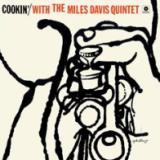
Miles Davis' quintet formed in 1955 is widely regarded as one of the greatest combos in jazz history. Each of its members was an individual creative force and each could easily have been the leader. Cookin' was the first in a series of four albums featuring this classic all-star combo: Miles Davis, John Coltrane, Red Garland, Paul Chambers, and Philly Joe Jones. Like its followers ' Steamin ', ' Workin' and Relaxin' , ' Cookin' is the product of two massively productive recording sessions during May and October of 1956, sessions required to fulfil Davis's contractually obligations to Presage Records before moving to Colombia Records. . A quartet version of the song 'When Lights Are Low' from a previous session has been added to this special edition as a bonus.
The Yummy Fur’s first album of new material in over 25 years is seductive and ambiguous; a fast-paced flip through scenes from art, myth, life and fantasy; a witty whole made from glittering scraps. The band’s original incarnation – fronted by singer, songwriter and guitarist John McKeown from 1992 to 1999 – morphed from making quick-hit cartoon-art songs to Eno and Cale-influenced creepers, populated by characters from McKeown’s life in Glasgow and the films, books and poetry that he lived a parallel life through. Everybody Talks About The Weather delights in using every past iteration of the band as potent collage material: a melee of sounds and ideas existing at once, revealing themselves then dipping back into hiding.
Recorded by the original core trio of McKeown, Brian MacDougall (guitar) and Paul Thomson (drums), Everybody Talks About The Weather comes 17 years after the band reformed for sporadic live shows, and seven years after the release of their sorta-greatest hits compilation Piggy Wings (Rock Action). Ten tracks long with nothing to spare, it is as condensed and vital as their best songs, with a new clarity of sound that allows their ambiguities to come into the light.
The album begins with “Cogs”, a taunting inquisition from within. As McKeown stages a fight between his id and ego, the tension heats up between conversational guitar lines and minimalist repetition; threatening sing-song melody and real, palpable menace. The band members are forced in tandem only to break apart, sustaining a genuine sense of just-hidden danger throughout the whole record – except, arguably, “Headphones”, a looser moment which sees McKeown make an existential something out of nothing while waiting for someone in the car (“I should have brought a book.../My ears are bleeding from the compression on your album”)
The songs are riots of reference: “Unity Over Europe” is a slyly complex two act play about the Mitford sisters – Diana, Unity, and Nancy, in a wink to the YF canon – smashing tragic biographical detail together with allusions to Thomas Pynchon and Francis Bacon. Pynchon is also lifted to serve “Blue Sunshine”, a collision of school shooters, serial killers and fictional fuck-ups (“Fast forward to Compton/Fast forward to Pynchon/Fast forward to Columbine'”) whose buzzy guitar lines are taunting and confrontational like a smarmy teenager. The innocuous title of “My Lasagne” belies a song that exists in several time periods at once: a visit to see Guernica, 50 people with their backs to the portrait of Dora Maar; the time that Picasso painted from; the Reina Sofia and the dirty streets of the Malasaña; myth-making musicians and the myths they’re riffing off overlapping and leering at each other.
All this could be laboured in lesser hands, but cultural verbosity is second nature to The Yummy Fur, who transform all this source material into songs that are weird, sexy, funny and absurd. Meaning is not happily understood or flattened. Susan Sontag's essay Against Interpretation accompanied McKeown as he wrote this album, and she’s paraphrased in “Semolina Ballerina”, the album’s justification of artistic ambiguity. Thomson’s motorik beat leads a gathering of back-and-forth instrumental phrases – including a wiry contribution on saxophone – embodying the futility of trying to parse something definitive from repeated action. “Listen to the very first thing that’s in your head,” Sontag-via-McKeown commands directly, then slinks sideways: “Interpretation is a conversation in an unmade bed”
The album features two more focused portraits, or at least The Yummy Fur’s version of such a thing. “Wanda” merges the life of filmmaker Barbara Loden and the title character of her semi-autobiographical 1970 feature film, with Loden’s then-husband Elia Kazan joining the fray of no-good men in her film. It’s a mix of adaptation and avant-criticism, with McKeown’s wordplay and mannered pronunciation mirroring the way that non-fiction and fiction twist around each other in the song. The title track is a series of vignettes and impressions from the lives of the band’s ‘90s inner circle, positing painter Mac McNaughton as a kind of Falstaffian ringleader. As with Piggy Wings and the recent single “New T-Shirt”, McNaughton painted the cover of Everybody Talks About The Weather – like the album’s music, the image of a coy girl in a white dress is an uncanny amalgamation of styles, suggestions and references just out of reach, as though seen in an art museum in a dream.
The album ends with two reads of the same frustration. “King of Nothing” is the closest The Yummy Fur will ever get to sludge-rock: the band melts together into a dusty, dreary haze as McKeown drowns in a drudgery of personal struggle (“Two jumpers on in Babylon/And only cats to talk to”) and the rhythmic toppling of heroes (Rowlands, Duvall, Munro). The majority of visible dirt is cleaned off for “Say Hello”, an uncharacteristic depiction of throwing the windows open after a dark night of the soul. Here, the situation is still cold and hard (“When the sun burns gold, but the heat never reaches your fingertips”) but it feels surmountable. Everybody Talks About The Weather is an unpredictable album from an unpredictable group, but ending on a moment of almost uncomplicated light is maybe its biggest surprise. - Claire Biddles (2026)
The Yummy Fur’s first album of new material in over 25 years is seductive and ambiguous; a fast-paced flip through scenes from art, myth, life and fantasy; a witty whole made from glittering scraps. The band’s original incarnation – fronted by singer, songwriter and guitarist John McKeown from 1992 to 1999 – morphed from making quick-hit cartoon-art songs to Eno and Cale-influenced creepers, populated by characters from McKeown’s life in Glasgow and the films, books and poetry that he lived a parallel life through. Everybody Talks About The Weather delights in using every past iteration of the band as potent collage material: a melee of sounds and ideas existing at once, revealing themselves then dipping back into hiding.
Recorded by the original core trio of McKeown, Brian MacDougall (guitar) and Paul Thomson (drums), Everybody Talks About The Weather comes 17 years after the band reformed for sporadic live shows, and seven years after the release of their sorta-greatest hits compilation Piggy Wings (Rock Action). Ten tracks long with nothing to spare, it is as condensed and vital as their best songs, with a new clarity of sound that allows their ambiguities to come into the light.
The album begins with “Cogs”, a taunting inquisition from within. As McKeown stages a fight between his id and ego, the tension heats up between conversational guitar lines and minimalist repetition; threatening sing-song melody and real, palpable menace. The band members are forced in tandem only to break apart, sustaining a genuine sense of just-hidden danger throughout the whole record – except, arguably, “Headphones”, a looser moment which sees McKeown make an existential something out of nothing while waiting for someone in the car (“I should have brought a book.../My ears are bleeding from the compression on your album”)
The songs are riots of reference: “Unity Over Europe” is a slyly complex two act play about the Mitford sisters – Diana, Unity, and Nancy, in a wink to the YF canon – smashing tragic biographical detail together with allusions to Thomas Pynchon and Francis Bacon. Pynchon is also lifted to serve “Blue Sunshine”, a collision of school shooters, serial killers and fictional fuck-ups (“Fast forward to Compton/Fast forward to Pynchon/Fast forward to Columbine'”) whose buzzy guitar lines are taunting and confrontational like a smarmy teenager. The innocuous title of “My Lasagne” belies a song that exists in several time periods at once: a visit to see Guernica, 50 people with their backs to the portrait of Dora Maar; the time that Picasso painted from; the Reina Sofia and the dirty streets of the Malasaña; myth-making musicians and the myths they’re riffing off overlapping and leering at each other.
All this could be laboured in lesser hands, but cultural verbosity is second nature to The Yummy Fur, who transform all this source material into songs that are weird, sexy, funny and absurd. Meaning is not happily understood or flattened. Susan Sontag's essay Against Interpretation accompanied McKeown as he wrote this album, and she’s paraphrased in “Semolina Ballerina”, the album’s justification of artistic ambiguity. Thomson’s motorik beat leads a gathering of back-and-forth instrumental phrases – including a wiry contribution on saxophone – embodying the futility of trying to parse something definitive from repeated action. “Listen to the very first thing that’s in your head,” Sontag-via-McKeown commands directly, then slinks sideways: “Interpretation is a conversation in an unmade bed”
The album features two more focused portraits, or at least The Yummy Fur’s version of such a thing. “Wanda” merges the life of filmmaker Barbara Loden and the title character of her semi-autobiographical 1970 feature film, with Loden’s then-husband Elia Kazan joining the fray of no-good men in her film. It’s a mix of adaptation and avant-criticism, with McKeown’s wordplay and mannered pronunciation mirroring the way that non-fiction and fiction twist around each other in the song. The title track is a series of vignettes and impressions from the lives of the band’s ‘90s inner circle, positing painter Mac McNaughton as a kind of Falstaffian ringleader. As with Piggy Wings and the recent single “New T-Shirt”, McNaughton painted the cover of Everybody Talks About The Weather – like the album’s music, the image of a coy girl in a white dress is an uncanny amalgamation of styles, suggestions and references just out of reach, as though seen in an art museum in a dream.
The album ends with two reads of the same frustration. “King of Nothing” is the closest The Yummy Fur will ever get to sludge-rock: the band melts together into a dusty, dreary haze as McKeown drowns in a drudgery of personal struggle (“Two jumpers on in Babylon/And only cats to talk to”) and the rhythmic toppling of heroes (Rowlands, Duvall, Munro). The majority of visible dirt is cleaned off for “Say Hello”, an uncharacteristic depiction of throwing the windows open after a dark night of the soul. Here, the situation is still cold and hard (“When the sun burns gold, but the heat never reaches your fingertips”) but it feels surmountable. Everybody Talks About The Weather is an unpredictable album from an unpredictable group, but ending on a moment of almost uncomplicated light is maybe its biggest surprise. - Claire Biddles (2026)
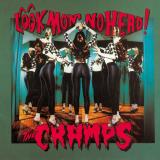
Released in 1991, the Cramps’ “Look Mom No Head!” is a stone-cold classic.
As well as black vinyl, it was also released on red and Ace are delighted to give fans old and new the opportunity to restock their vinyl blood bank with that delicious colour.
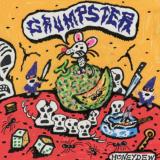
Grumpster returns to ASIAN MAN with "honeydew". A six song one sided 12" with an etched B side. This is a one time pressing of 600 records. Availability is limited - so get yours while you can.
Original Jazz Classics celebrates Miles Davis’ centennial with the release of Cookin' with the Miles Davis Quintet. Originally released on Prestige in 1957 and one of four albums recorded during sessions at Van Gelder studios, Cookin’ features Davis alongside John Coltrane, Paul Chambers, Red Garland and Philly Joe Jones. This new edition of the album is released on 180-gram vinyl pressed at RTI with all-analog mastering from the original tapes at Cohearent Audio and a Stoughton Tip-On Jacket.
Recorded in England and finished off in Lanarkshire with all three Bluebells joining Billy on vocal duties. PostWar sees Billy prove his Stevie Nicks Gypsy status by channelling Mirage era Fleetwood Mac. PostWar is Billy's fourth album with independent label Last Night From Glasgow, following 2024's double release of Steve (a Weekend in Egham, 1996) and When The Lord God Almighty Reads The News. The new album is released on CD and vinyl.
'Devotional music and its devotees all do a bit of "buying in"; that while one's on the ground reality may appear anything but celestial, through this music, one can reach ecstatic space, ecstatic peace. However, devotional music is not solely concerned with a skyward glance - what does it look like to raise up the rust, look upon fractured branches, gaze at the density of a low fog across a field? Instead of us looking up at the land, what if the land was looking back at us? Old Saw brings together a brigade of New England silt sifters to raise up the land not as excavators, but as preparators. Tending and caring for the simple mess that our world discards. Throughout Country Tropics four pieces, the crew stretches and bends chords to their resting place before setting forth towards a new one. Fiddle drone, wistful tape loops of pedal steel, pipe organ hums, and clattering bells call us to scenes of observation, a water tower, a mechanical bull rental agency, a back porch, a taxidermy shop, a local church choir, a garden with singing vines, voltage hum of the electric fence on Pulp mill bridge road.
'The funny thing about devotion is the absence of sight, of source. We place trust in the guide or guides to bring us to a place of seeing, feeling, and hearing. The music on Country Tropics calls out to those in search of such places, but also doesn't demand we conjure some fantastical, celestial vision of understanding. Rather, Old Saw points our gaze downward towards the terrafirma unconsidered, and guides our hands into the dirt.'
out of Stock
Last delivered 65 days ago available to reorder, subject to availability
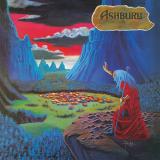
One of the biggest “re-discoveries” of obscure eighties US Metal/Hard Rock are Ashbury from Tuscon in Arizona. The band, led by brothers Randy and Rob Davis, did originally record two very hard to find albums: »Endless Skies« in 1983 and the (belated) follow-up »Something Funny Going On« (issued in 2010). However, the roots of the band go way back to the late 1970s, when multi-instrumentalist Randy Davis formed his very first band (called Ashbury South) in Southern Oklahoma in late 1977. The original vinyl edition of »Endless Skies« came out in 1983 (with a circulation of 1,000 copies). ”It was a complete indie project all the way,” states Rob Davis. “We worked mostly on a budget of $ 5,000 for the entire project. Our distribution was through Tower Records in the western United States.” Ashbury's sound has sometimes been compared to Jethro Tull and the Davis brothers are indeed not too unhappy about this comparison: ”We both have a big smile on our face with that question,” they explain. “Yes, we are proud to be compared with Jethro Tull.” Ashbury's first album does feature an iconic artwork. Who was responsible for it and what does the cover signify? ”The cover signifies Creation, and the choices we all make,” elaborate Rob and Randy. “The cover obviously coincides with the opening song 'The Warning', about the Prophet who warns against bad choices, evil and greed. The final touch was a 'fantasy' setting, a look just off from any real world appearance.” Randy and Rob Davis are playing as brothers in Ashbury, they have always been the core of the band: ”We would not continue performing as Ashbury without both being involved. We write independently, and also together, therefore the very creation of the music would be different if one of us left the band. We also both sing lead vocals, so the sound of the band would be altered. I might refer to a recent tour concerning Styx - touring without Dennis DeYoung - therefore it's NOT Styx.”
Byard Lancaster released no less than 4 albums on the Palm Records, label in the 1970s: Us, Mother Africa, Exactement and Funny Funky Rib Crib. On Exactement, Lancaster performs alone for the most part– swapping instruments and occasionally joined by percussionist Keno Speller.
At the beginning of the 1960s, at the Berklee College of Music, Byard Lancaster met some feisty friends: Sonny Sharrock, Dave Burrell and Ted Daniel. It is easy to see why he rapidly became involved in free jazz. Once he was settled in New York, he appeared on Sunny Murray Quintet, recorded under the leadership of the drum crazy colleague of Albert Ayler.
In 1968, the saxophonist and flutist recorded his first album under his own name: It’s Not Up To Us. The following year he came to Paris in the wake of… Sunny Murray. He would come back to France in 1971 (again with Murray) and in 1973 (without Murray for a change). This is when he met Jef Gilson, the pianist and producer who encouraged him to record under his own name again.
On Palm Records (Gilson’s label), he would release no less than four albums: Us, Mother Africa, Exactement and Funny Funky Rib Crib. The recording of Exactement required two sessions in the studio: on the 1st February and the 18th May 1974 – in between the two dates, Lancaster recorded, alongside Clint Jackson, the excellent Mother Africa.
On the cover of Exactement, there are two names: Lancaster (Byard) and Speller (Keno). OK. But for what reason ‘Exactement’? Perhaps because Byard Lancaster wanted to be precise, moving regularly from one instrument to another: piano, to begin, which was the first instrument he learned. Sur "“Sweet Evil Miss Kisianga”", his inspiration is first and foremost Coltrane (even if leaning more towards Alice than John) but this announces the storm to follow.
It is Lancaster’s horn-playing which really stands out: on alto (the sound of which is transformed by an octavoice on one track, "Dr. Oliver W. Lancaster") or soprano saxophones, as well as on flute or bass clarinet, the musician walks a tightrope making the most of all the risks he takes. Using the full register of his instruments, he has fun with the possibilities.
Then, Lancaster invokes or evokes Ornette Coleman, Eric Dolphy and even Prokofiev, before even going into a danse alongside Keno Speller on percussion. But above all he makes us aware of a unique sound. We can go on to say that on "Exactement", that perhaps Byard Lancaster, on whatever instrument and by continually seeking, ends up always hitting the right note… ends up by playing exactement the note he had to play.
Following the first two singles by Freiwillige Selbstkontrolle (later F.S.K) from 1980 and 1981, as well as their debut LP “Stürmer” and the 1982 EP “Magic Moments”, A-Musik is now releasing “Ça c’est le Blues,” another of their early works, all of which were released on Alfred Hilsberg’s legendary ZickZack label and have long since become rarities. “Ça c’est le Blues” was originally released in 1984 and marks nothing less than a milestone in F.S.K.’s already impressive discography. While numerous bands from the West German underground of the early 1980s, following the “Summer of Pop” of 1982 and the associated breakthrough of the “Neue Deutsche Welle,” either moved toward the mainstream or began singing in English, Justin Hoffmann, Thomas Meinecke, Michaela Melián, and Wilfried Petzi took a different path.
The songs became more elaborate, the production – influenced by bands like Gang of Four and Dexys Midnight Runners – more opulent, and the instrumentation now included wind instruments for the first time, which have since become an integral part of F.S.K.’s sound. At the same time, the Munich-based band’s music-historically motivated focus was directed more toward the US than was typical of the bands in the West German scene of that era. To their signature blend of post-punk and experimental music, as already evident on “Stürmer,” they now incorporated funk (on the opener “Faire Le Chicken”) and jazz (on the heartbreaking cover version of “My Funny Valentine”). From then on, this “transatlantic feedback” was an essential component of F.S.K.’s musical practice. The discursive twists and turns, the incorporation of references, and the insistence on German lyrics would influence bands in the coming decades, not just those of the “Hamburg School.” At the same time, the album features legendary hits by Freiwillige Selbstkontrolle – such as “Move Ahead” and “Fragen der Philosophie (Völkerball)”– which are still played at every concert to this day.
With the reissue of “Ça c’est le Blues,” one of the most impressive releases in 20th-century German avant-pop history is finally available again. The reissue includes a comprehensive booklet featuring an in-depth interview about the album with all band members, as well as numerous previously unpublished photos.
In his most self-aware and sonically refined work to date, JORDY returns with In Retrospect—an 11-track journey through the clarity of hindsight. Transitioning from a breakup record into a manifesto on healing, the album captures the "push-and-pull" of turning 30 and finding power in the wreckage of the past.
Known for his unmistakable blend of "pop precision" and vulnerable storytelling, JORDY moves past the guilt of time wasted to celebrate the person he has become. This is an album about finding yourself again after the noise fades.
In Retrospect is a love letter to the music that shaped a generation. Sonically, JORDY pays homage to his roots, blending the infectious energy of early 2000s pop-punk and Hilary Duff-era bubblegum with the high-gloss production of modern synth-pop.
JORDY commented, “In Retrospect started as a breakup record, but it quickly became something much bigger. It turned into an album about healing. About growing. I think when people find themselves stuck in bad relationships, they often blame themselves for not leaving sooner. They carry guilt over the time they feel they’ve wasted. But writing this album helped me see it differently. The moment I chose to leave the toxicity behind, I felt like I found myself again. I got healthier, mentally and physically. I gave myself permission to mourn the life I thought I’d be living at 30, the future I imagined as a kid. I found peace in remembering that nothing is ever as serious as it feels. I found my power again. In retrospect, the pain and suffering may have been the very thing that saved me.
“Sonically, this album pays homage to my roots - to my younger self blasting Hilary Duff and pop punk bands alone in his room. It’s nostalgic. It’s the kind of music I love to listen to. It feels more like me than anything I’ve made in a long time. It’s funny and catchy, vulnerably heartbreaking, and beautifully hopeful all at the same time. It’s exactly where I am right now,” he added.
Ever since the late 1950s bossa-nova revolution, Brazil’s influence on French music has been undeniable. Pierre Barouh, Georges Moustaki and a vast array of lesser known artists, all made the Musica Popular Brasileira (MPB) an axis of promotion at the service of a cool and metaphysical, modern and mixed Brazilian lifestyle. Some were seduced by the poetic languors of the bossa, some were looking for fun, and others just loved the American hybridization of jazz-bossa, jazz-samba.
What is bossa nova? One of its creators, Joao Gilberto said: "Its style, cadence, everything is samba. At the very start, we didn't call it bossa nova, we sang a little samba made up of a single note - Samba de uma nota so .... The discussion around the origins of bossa nova is therefore useless”. It is nevertheless useful to remember that these magnificent Brazilian songs, which the guitarist describes as samba, were shifted and balanced around improbable chords. "I like things that lean, the in-betweens that limp with grace," said Pierre Barrouh, quoting Jean Cocteau.
With emotion, arrangements for violin and supple guitar licks, bossa nova rapidly changed. A transformation that can be heard in the Tchic, tchic, French Bossa Nova 1963-1974 compilation, the result of a cultural reappropriation, which traveled through the United States and supplemented itself in France.
A musical revolution that has remained significant, bossa nova was born in Rio. From 1956 to 1961, Brazil lived through its golden years. In five years, the country had invented its modernist style. Elected president in 1956, Juscelino Kubitschek de Oliveira, an elegant man with a broad forehead, brandished a promising slogan: "Fifty years of progress in five years". He quickly got to work. Not worried about increasing debt, he launched the project for a new federal capital, Brasilia, designed by the communist architect Oscar Niemeyer. Volkswagen opened state-of-the-art factories and created the “fusquinha”, the Beetle. In Rio, the Vespa made its first appearance. The Arpoador Surf Club crew run into the “girl” from Ipanema, Helô Pinheiro - the tanned garota ("chick"), between a flower and mermaid, who at 17 walked by the Veloso bar, where the fiery author and composer, Tom Jobim and Vinicius de Moraes, were getting drunk on whiskey. From then on, bossa symbolized cool.
In 1958, Joao Gilberto recorded Chega de Saudade, which the directors of Philips denied, calling it "music for fagots". The marketing director, who believed in it, secretly pressed 3000 78-inch vinyls and distributed them at schools around Rio, creating a tidal wave.
American jazzmen then took over. In particular, trumpeter Dizzy Gillespie and guitarist Charlie Byrd. In November 1962, the Brazilian Ministry of Foreign Affairs funded a "Bossa-Nova" concert at Carnegie Hall in New York, inviting the genre’s pioneers. Unprepared, the show soon turned to disaster. But the troupe was invited to the White House by Jackie Kennedy. The first lady loved "the new beat" and in particular Maria Ninguem, a song by Carlos Lyra, later covered by Brigitte Bardot.
In Brazil, the 1964 military coup quickly ended this euphoria. The destructive atmosphere that ensued pushed many Brazilian musicians to leave, if not to exile. Thus, Tom Jobim, Sergio Mendes and Joao Gilberto arrived to the United States. In New York, Joao Gilberto met saxophonist Stan Getz. At the time, he was married to the Bahianese Astrud Weinert Gilberto, who had a German father. She had never sung before, but she knew how to speak English. Getz therefore asked her to replace her husband on The Girl From Ipanema. The Getz/Gilberto record with Tom Jobim on piano, was released in March 1964. Phil Ramone, the "pope of pop" was in charge of sound.
Bossa nova arrived in Paris through the classic “guitar-voice” channel (Pierre Barouh, Baden Powell, Moustaki…) But France loved jazz and Paris had already welcomed its American contributors. All these good people were to pass through Saint-Germain-des-Prés. The cabaret l'Escale became the Mecca of Latin American sound where one could find Pierre Barrouh and his friends, such as the Camara Trio, samba-jazz aces, whose only record was published by the Saravah label. With a band strangely called Les Masques (a band that included Nicole Croisille and Pierre Vassiliu, among others), the Camara Trio recorded an interesting Brazilian Sound, including the track Il faut tenir which is present on this tasty compilation of rarities.
Other enlightened musicians can also be found on the compilation, such as Jean-Pierre Sabar (songwriter for Hardy, Auffray, Leforestier ...) and the French pop rock organist Balthazar. In 1975, Sabar recorded Aurinkoinen Musiikkimatka on a Finnish label, which featured the crazy Vai, Vai, included on this record. We are now following the footsteps of Brazilian electronic musicians such as Sergio Mendes, Eumir Deodato or Marcos Valle who created funk and disco sounds on their keyboards and synthesizers. A style that influenced Véronique Sanson when she wrote Jusqu’à la Tombée de la nuit in 1969 for Isabelle de Funès, the niece of Louis and a great friend of Michel Berger - Sanson did end up singing this track on her 1992 Sans Regret record.
The pinnacle of exoticism and travel, Sylvia Fels’ Corto Maltese includes bongos, sea mist and ocean sounds. The title was taken from Jacky Chalard’s concept album written in 1974, Je suis vivant, mais j’ai peur (I am alive, but I am scared), based on Gilbert Deflez’s science fiction novel.
However, bossa nova extended the scope of popularity. "In the 1970s, I was a fan of Sergio Mendes, Getz / Gilberto. I fell in love with this music that I knew because I had been an orchestral singer, " explained Isabelle Aubret, who in 1971 delivered a composite record of covers by the very funky Jorge Ben, Orfeu Negro, Tom Jobim, Vinicius de Morais and Jean Ferrat. "I recorded this album for Meys Records in Paris, far from Brazil, with wonderful musicians, François Raubert, Roland Vincent, Alain Goraguer...". The latter wrote the arrangements for Casa Forte, a very percussive title borrowed from Edu Lobo, one of the initiators of the bossa who spent time in California. "Jazz and bossa came together and produced very rhythmic music. I love singing, it allows me to dream, to have fun, to feel a high on stage, and these songs brought me joy, made me swing, my singing felt like a dance.”
The world tours of French singers and their desire for the tropics, often brought them to Rio with its hills, forests, caipirinhas and tanned bodies. There are surprises though, like this Iemenja (Iemenja is the goddess of the sea in the Afro-Brazilian candomblé religion). Not unlike the composer and musician Jean-Pierre Lang, based in Sao Paulo, Claire Chevalier taught Brazil to Brazil. In 1970, the singer and painter published a 45-inch vinyl, Mon mari et mes amants (My husband and my lovers), under the improbable pseudonym of Clarinha (little Claire). She was then living in Rio, with her husband, Joël Leibovitz, who founded a band called Azimuth, and who owned a record label specialized in "sambas enredos" songs for samba school parades.
For its B side, she asked Pierre Perret to come up with lyrics for a song composed by Carlos Imperial: "Oh goddess of the sea, o goddess Iemenja, I bring a white rose to adorn your long hair ..." . "Perret came to see us, and we had fun, remembers Joël Leibovitz. We wrote Lemenja for fun, we recorded it at the Havaí studio, behind the Central do Brasil the central station. Erlon Chaves, the arranger who worked with Elis Regina, joined us" adding his share of Afro-Brazilian percussions and funky brass to the mix.
There is a common misunderstanding in Franco-Brazilian history: that bossa, admittedly hedonistic, is perceived as funny, even though the poets who wrote the texts are often philosophizing on the human condition. Its French interpreters pull it towards a carnival inspired universe, far removed from its fundamental essence. Thus, Jean Constantin covered the famous Samba da minha terra, an ode to the art of samba written by the classic Bahian composer Dorival Caymmi, renaming it with the enticing title of Pas tant de tchi tchi pompon: "On your pier there is no tchi tchi / when you arch your back, you know everything is alright ”(lyrics by Gérard Calvi). This expedited bossa aims for the absurd, but retains a certain elegance.
Indeed, Jean Constantin was not an idiot, the rather large man had a huge mustache and liked fantasy, (Les pantoufles à papa, Le pacha, inspired by cha-cha-cha-cha, salsa and jazz) but he was also the lyricist of Mon manège à moi interpreted by Edith Piaf, the composer of Mon Truc en plume by Zizi Jeanmaire and the soundtrack of François Truffaut’s 400 Blows. Le Poulpe, published in 1970, from which this bossa is extract, was arranged by Jean-Claude Vannier, an accomplice of Serge Gainsbourg’s Melody Nelson. In short: "There is enough of samba / By looking at the parasol / Because my poor cabeza / Is going to die in the sun".
Even the American actress Marpessa Down, who was at the heart of the bossa nova revolution with her role as Euridyce in Marcel Camus’ film Orfeu Negro, winner of the 1959 Cannes Palme d'or, fed the clichée with Je voudrais parler au petit cuica - "Tell me how you manage to always make people want to dance / It's true, I must admit that I cannot resist your magic" - in consequence, once can hear the cuica, a little drum inherited from the Bantu.
But bossa nova had many angles. Societal, of course, pushing actresses who were symbols of women's liberation like Brigitte Bardot, Jeanne Moreau, or Sophia Loren to engage in the exercise of accelerated bossa. In February of 1963, Sophia Loren made a record in French in Rome, Je ne t'aime plus, featuring the song De jour en jour, a bossa written by two Italians, Armando Trovajoli and Tino Fornai, which was released a little later by Barclay. Bossa accompanied the 1960s, a decade of moral liberation. Ann Sorel, who interpreted La Poupée des favellas, caused a sensation with L’amour à plusieurs, a provocative song written by Frédéric Bottom and Jean-Claude Vannier. As for the actress Andrea Parisy, she displayed her bourgeois cheekiness in Marcel Carné's Les Tricheurs before interpreting Les mains qui font du bien. And Magalie Noël, the friend of Boris Vian, who sung Johnny fais-moi mal, was hired to sing Une énorme Samba, composed by Alain Goraguer (arranger to Gainsbourg, Bobby Lapointe and Jean Ferrat) with lyrics by Frédéric Botton.
But in the end, of what wood is bossa nova made of? The answer is given by Christianne Legrand, daughter of Raymond the conductor, and sister to Michel the composer: "With me, with jà" - jà means "immediately" in Portuguese. In 1972, the singer, an expert in vocal jazz and a member of the Double Six, published Le Brésil de Christianne Legrand. Two songs included on the Tchic Tchic compilation that demonstrate how bossa, jazz, funk, rock, etc. work like a swiss army knife: the music is used to denounce broken systems, or miracles, HLM et ciné roman, Cent mille poissons dans ton filet, two songs from the O Cafona soundtrack, a successful telenovela broadcast, at the time in black and white, on TV Globo. The first was adapted in French by the fighter and friend of the Legrand tribe, Agnès Varda. The second is content with a play on words, jostling them into a summer fun.
Véronique Mortaigne
out of Stock
Last delivered 3 months ago available to reorder, subject to availability
Gold Panda returns with TON UP, a brilliantly stubborn new album for Studio Barnhus: eight rough-hewn dance tracks and two cozy little service-station interludes, all crafted with the robust determination of a producer who knows that 140 bpm is not so much a tempo as a way of life.
Made with Derwin Dicker’s unmistakable sampler-bashing touch, the tracks on Ton Up carry the raw knock of old-school hip-hop instrumentals, pushed through pumping house-music machinery and ready to cause absolute trouble on any half-decent sound system.
Here you’ll find zero of that dreaded, over-explained “maturity” usually demanded of beloved electronic artists several albums deep into the game. Instead, Gold Panda just sounds as happily locked in as ever, carelessly chasing the physical joys of pressure, swing and repetition.
TON UP is functional, funny and oddly tender club music, arriving just when the world needed it the most (June 26 that is.)
Recorded about a year after Scenery, his second album retains the delicacy and emotional depth of his playing, but adds a new strength that gives the world Fukui paints a clearer contour and striking dimensionality. From the bittersweet, heart-stirring melody of “Mellow Dream” to the vibrant, exhilarating drive of “Horizon”, the album is filled with performances that shine brilliantly. It is also notable that the number of original compositions only one on the debut—has increased to three here, allowing listeners to appreciate Fukui’s musicality even more fully. Considering its maturity and the richness of its content, it may even be fair to say that this work surpasses his first album. Ryo Fukui, who sadly passed away...
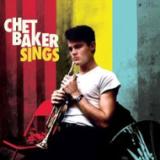
The complete album + 2 bonus tracks - limited edition pressing 180g red coloured vinyl Contains new specially prepared liner notes by Penguin Guide to Jazz's writer Brian Morton and by Paris' prestigious Jazz Magazine . Unique cover photograph by renowned American jazz photographer Bob Willoughby (1927-2009). The complementing talents of Chet Baker (1929-1988) both as a trumpet player and as a singer are now well known. His trumpet and voice are extensions of the same musical personality, and once you have become familiar with both facets of Baker, you expect to hear them both. However, Chet Baker Sings was a revelation at the time and won Baker new fame and a new audience, which was less familiar with jazz than with pop music. Includes the bonus tracks "Let's Get Lost" and "Just Friends"