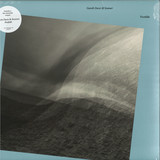
As electronic musician Lorenz Brunner sketched his vision for the first Recondite full-length on Ghostly in five years he took a step back to assess who and where he was as an artist. 2013’s Hinterland accelerated a progression — he’s since been touring around the world and releasing music with labels such as Hotflush and his own Plangent Records — yet, for him, the album cast a shadow of pressure that widened over time. As with most art forms, perhaps especially music, there is an expectation to change, to creatively pivot elsewhere with each project. After careful consideration, Brunner rejects this notion with his new work, opting alternately to use the icy Hinterland as an aesthetic and tonal template for a like-minded map of evocative compositions aptly titled after the German word “stillstand,” now presented as Dwell.
“I am coherent with what I do, even if I’m not reinventing myself,” Brunner says contentedly. In regards to the album title, he adds, “It’s like when you’re on a hike and you stop and look at the scenery; you may know which path you want to go next but right now you are dwelling.” The title also doubles as a reference to everyday domestic life, a restorative haven for Brunner between tours. Like Hinterland, he incorporates a subtle range of field recordings to intensify the textural atmosphere. While he worked at home on “Mirror Games,” Brunner noticed the buzz coming from across the room, where his wife was using an electric toothbrush, naturally harmonized with the track. He decided to push that frequency further and record the device directly, syncing vibrations for added urgency across the propulsive piece as well as parts of the ambient “Interlude 2.”
Windswept, moody, and melodic, moments on Dwell linger with emotional resonance. The title track sends an eerie synth loop through a field of techno kicks. The beats recede for a breather four minutes in as if to survey the surroundings. If Brunner pivots anywhere — possibly just a new perspective afforded by being confidently stationary in his craft — it’s by leaning more into hip-hop structures. He’s an avid rap fan and his love for those production techniques is notably present on “Nobilia,” a queasy shuffler (titled in reference to the Super Nintendo game Secret of Evermore), “Interlude 1,” which skitters in lockstep with contemplative synth chords, and “Surface,” an isolatory, ruminative sequence. The closer “Moon Pearl” soothes and shimmers like its namesake, a cherished gem in The Legend of Zelda series that allows carriers of the gem to retain their shape and essence in the Dark World.
In an era where constant reinvention and highly self-reflexive brand awareness reigns supreme in the music industry, Brunner as Recondite does something many artists try to avoid, he dwells in his own established identity, one that has garnered him a devoted fanbase. His murky electronic productions, built around mirage-like pads and clipped drum programming, have proven to be highly functional and spectrally enveloping; Dwell is not a return to form, it is a further study of the shapes, it is the modes, and the structures Brunner has trademarked.
out of Stock
Last delivered 6 years ago available to reorder, subject to availability
Concealed within the eclipse, Overdue presents a new black-label 12" series - symbolic of its sinister auditory contents.
Further proof of their unbridled dedication to sound system music and commitment to quality, the Belgian Dubstep imprint unravels
it's fifth physical release. Based in Denver, its newest signee by the name of Ghast returns to the spotlight, following up on heavyweight releases on prominent labels such as Encrypted and Gradient Audio.
The talented American artist sets the stage with two unruly armaments, alongside murderous remixes by Denmark's bass music stalwart RDG as well as the label operators themselves, Substrada & Caba.
Starting the engines, 'Mothership' immerses the stage in flickering echoes and haunting wails - the air bustling with anticipation. Eerily disfigured, granular reverberations materialize amid a pressurized and truly outlandish soundscape, barren at its core. Heading into the second section with renewed vigour, no dance floor remains unscathed in the ensuing aftermath.
The subsequent doomsday scenario, as engineered by Substrada & Caba, strips the ship to its bare essentials - laced with trippy drum instrumentations and the psychedelic foley samples. The meticulous flow presents itself in a bleak dungeon style - hoodlum vocal fragments rounding off the resulting low-frequency inferno.
Flipping the record to its equally profound B-Side, 'Vehement Mess' unhinges another portal into madness - dance floor upheaval guaranteed. Showing no signs of mercy, the infernal armagedon proves to be emblematic for Ghast's dystopian sound design. Profusely industrial and with clinical efficiency, hitting all the right frequencies as the second wave ignites but all available power reserves.
Finishing off any remaining survivors with his irreproachable signature style, RDG's remix marches onwards with unrestrained might in a four-to-the-floor fashion - super-charged, galvanizing the rave in a no-holds-barred shutdown.
out of Stock
Last delivered 6 years ago available to reorder, subject to availability
As electronic musician Lorenz Brunner sketched his vision for the first Recondite full-length on Ghostly in five years he took a step back to assess who and where he was as an artist. 2013's Hinterland accelerated a progression he's since been touring around the world and releasing music with labels such as Hotflush and his own Plangent Records. His new album uses the icy Hinterland as an aesthetic and tonal template for a like-minded map of evocative compositions aptly titled after the German word "stillstand," now presented as Dwell. Windswept, moody, and melodic, moments on Dwell linger with emotional resonance. The title track sends an eerie synth loop through a field of techno kicks. The beats recede for a breather four minutes in as if to survey the surroundings. If Brunner pivots anywhere - possibly just a new perspective afforded by being confidently stationary in his craft - it's by leaning more into hip-hop structures. He's an avid rap fan and his love for those production techniques is notably present on "Nobilia," a queasy shuffler (titled in reference to the Super Nintendo game Secret of Evermore), "Interlude 1," which skitters in lockstep with contemplative synth chords, and "Surface," an isolatory, ruminative sequence. The closer "Moon Pearl" soothes and shimmers like its namesake, a cherished gem in The Legend of Zelda series that allows carriers of the gem to retain their shape and essence in the Dark World. Recondite does something many artists try to avoid, he dwells in his own established identity, one that has garnered him a devoted fanbase. His murky electronic productions, built around mirage-like pads and clipped drum programming, have proven to be highly functional and spectrally enveloping; Dwell is not a return to form, it is a further study of the shapes, it is the modes, and the structures Brunner has trademarked.
out of Stock
Last delivered 6 years ago available to reorder, subject to availability
Satin is the first solo EP from Lack, the alias of Manchester based artist Charlie Foy - having previously featured on various twelves for the Cong Burn collective. Recorded between 2016 and 2019, these tracks were started during long train journeys, before being finished in the studio. More introspective than previous material, these tracks offer a unique insight into the window of serenity that comes from movement and being in-between places.
These exceptionally balanced and well-crafted compositions use production techniques that explore the relationship between the natural and synthetic, using transients from field recordings to trigger machines, as well as granular synthesis and resampling techniques that further blur this distinction. Equally suited to listening at home or in a club context, these tracks reward deep listening and continually reveal details with each listen.
out of Stock
Last delivered 6 years ago available to reorder, subject to availability
Pacific Express emerged from Cape Town, South Africa in the 1970s. The band were from the so called "Coloured" community and were ground breakers in both musical and political arenas. The founder members Paul Abrahams (Bass), Jack Momple (Drums) and Issy Ariefdien (Guitar) were joined by Chris Schilder (Piano), Vic Higgins (Pecussion), Barney Rachabane (Alto Sax), Stompie Manana (Trumpet) and Zayn Adams & Kitty Tshikana on vocals for their second album "On Time" in 1978.
On several occasions the group fell foul of Apartheid laws and discrimination by the state broadcaster, SABC. On one occasion they were asked to leave the stage of an international tour by Australian act John Paul Young, because the law forbade racially mixed performers on the same stage. The promoter, management and band members all resisted and once he incident made the Australian newspapers the authorities had little choice and turned a blind eye.
And so to the music. The most important thing. The LP opens up with the slick jazz-boogie funk of "We Got A Good Thing Going On", a perfect vehicle for the vocals of Zayn and the statement-of-intent, on-point musicianship of the band.
"I Hear Music" is the first of three smooth sweet string-laden ballads to feature on the LP. The majority of the songs on the LP were written by keyboard player Chris Schilder. As well as high-craft songwriting Chris also contributes layers of effortless musicality with his Rhodes and piano. "Good Old Days" (the only cover on the LP) is next and its smooth-rock grooves swing effortlessly to the fore. The A-Side of the vinyl closes with the instrumental jazz funk of "Saturday Night".
The flip side of the album opens with the bands biggest commercial success. A sweet soul ballad penned "Give a Little Love". Stepping outside their usual sound. This hit however was not without controversy as the video was removed from the TV airways after the South Africa Broadcasting Corp realised that the group were of mixed race, which was against rules for so called local artists in public performance at the time.
"Dream" follows on with the driving jazz rock and travelling keyboard solos. "Reaching Out For Love" is a power-pop boogie groover powered by guest vocalists Erica Lundy and Kitty.
"Say The Last Goodbye" is the last of the trio of ballads. A smooth style moment sounding all the bit like a 70's US TV drama closing theme. The LP features with a funky workout where the band show off their chops and slick level of musicianship.
Besides the success in southern Africa this album became a regional hit as a pirated music cassette in Nigeria. It was also released in France and Japan.
The band would go on to record one further LP in 1979 and a single in 1981. They carried on performing however well pass that. Throughout their years together the band acted as central hub for Jazz musicians within the Cape Town area. Players as Tony Cedras, Jonathan Butler and Alvin Dyers gaining experience alongside established names such as trumpeter Stompie Manana and alto saxman Barney Rachabane.
Here at World Seven we are ever so pleased to be re-releasing what we consider the bands finest album moment.
Award-winning bassist Daniel Casimir and vocalist Tess Hirst release their debut album via pioneering London-based record labe Jazz re:freshed. Following the success of Daniel Casimir's critically acclaimed debut EP 'Escapee' which featured Hirst on vocals and fellow rising stars on the scene Moses Boyd, Joe Armon-Jones and Shirley Tetteh, this album - 'These Days' is inspired by the duo's London surroundings, delivering thought-provoking lyricism, neo-soul and modern jazz
Casimir, a former Birmingham Conservatoire student, has collaborated with Julian Joseph, Jason Rebello, Benet McLean, Lonnie Liston Smith, Nathan Facey, Shane Forbes, Chihiro Yamanaka, Ashley Henry, David Lyttle, Nubya Garcia, The Tracey Quintet (Meantime Jubilation), Tom Harrison (Unfolding In Tempo), Jasmine Power (Stories And Rhymes), Camilla George and Art Blakey Jazz Messenger saxophonist, Jean Toussaint.
Named Young Jazz Musician of the Year by the Musicians' Company in 2016, Casimir has received plaudits for his arrangements and recital, while Hirst has made a name for herself with her vocals on the jazz circuit having moved between London, Leeds and LA to hone her craft. What sets Hirst apart as a musician is not only the originality of her music but her perspective of herself as an artist. She is an Ethnomusicology Graduate of SOAS and her writing style walks us through her upbringing in West London and down the halls of academia
Casimir and Hirst fuse traditional jazz sounds into beautiful compositions, narrating their way through a political and cultural landscape across these twelve tracks. The frenzied groove heavy'Security' addresses the need to trust one another and how we protect ourselves personally, while the rich atmospherics of 'Freedom' combined with Hirst's vocals, explore liberation and the rejection of duty - from a female perspective.
At the heart of 'These Days', Casimir plays with a passion and power that resonates throughout each composition. His knack for complex chord changes are highlighted in 'What Did I Do', bringing an energy and enthusiasm to the track while Hirst decries our changing capital. Elsewhere, references to John Agard's poem 'Listen Mr. Oxford Don' in 'The Magic Money Tree', explore the past and its relevance to now while a re-imagining of Charles Mingus' 'Fables Of Faubus' further ensures this theme remains central to the essence of the album.
Daniel Casimir and Tess Hirst have already received radio support from BBC Radio 3, BBC Music Introducing and Jazz FM, along with coverage in the London Evening Standard and Jazzwise Magazine
'Don't Let Them' interpolates elements of 'Fables Of Faubus' written by Charles Mingus (c) 1959. Published by Jazz Workshop Inc. Administered by BMG Rights Management (UK) Ltd. Used by permission. All rights reserved.
out of Stock
Last delivered 6 years ago available to reorder, subject to availability
Legend has it that Brian Eno’s concept of ambient music came to him while laid up in a hospital bed after an automobile ac-cident in the 70's. A friend brought him some records, playing them too low to be properly heard, and Eno couldn’t get out of bed to adjust the volume. While the record spun softly, Eno’s idea for music you could ignore as easily as you could give it your full attention, like a sort of sonic wallpaper, was born. It’s in that spirit of quiet isolation that Ghostly International, in associ-ation with Adult Swim, shares Ghostly Swim 2, our way of giving listeners a space to get away from the manic holiday bustle.
For those keeping track at home, Ghostly is wrapping up its 15th anniversary as an Ann Arbor/Brooklyn-based indie. 2014 has seen the company soundtracking video games (Playstation’s Hohokum), collaborating with awesome companies like Warby Parker and VOID watches, and clearing 300 releases of for-ward-thinking music with records from Tycho, Com Truise, and HTRK. What better way to end this banner year than to revisit one of our favorite partnerships from the past decade and a half?
Released in 2008, Ghostly Swim was praised for its adventurous survey of exploratory dance and pop music. Our curatorial focus has shifted this time around, moving further inward (spiritually) and outward (as far as our roster goes) to reflect the electron-ic underground in all of its hazy and vibrant experimentalism. Ghostly Swim 2 is a document of textured ambient zone-outs and woozy, granular house and techno that will help you find some downtime away from The Most Wonderful Time of the Year. So sit back, lower the volume, and enjoy our selections.
out of Stock
Last delivered 6 years ago available to reorder, subject to availability
The record sleeve of Dark Loops was injected with carbon powder by the artists. Please be aware of this on purchase and handling of the record and inlays.
Dark Loops is the third instance of Carbon Theater, an ongoing research project by the Institute of Incongruous Translation (Natascha Sadr Haghighian and Ashkan Sepahvand). As the other acts in the series, Dark Loops unfolds from a found site, the abandoned Fort Walem, which was now turned into a bat habitat. The field recordings and synthesised loops on the record further investigate the discrepancies between sensing and knowing and challenge the anthropocentric narratives within current discussions on planetary climate change.
out of Stock
Last delivered 6 years ago available to reorder, subject to availability
These two new tracks continue to push the band’s sound into new territory; ‘Overture 1’ is a brand-new composition from Ruby Rushton keyboard player Aidan Shepherd. Taking inspiration from bands like Weather Report and Soft Machine, it's explosive introduction leads you to a dub-like breakdown, creating an open space for Shepherd to let loose his synthesizer for some deep space, Headhunters’esque exploration.
Yardley Suite - is a song first conceived by band leader Ed ‘Tenderlonious’ Cawthorne back in 2012. Having lied dormant for several years it felt like an appropriate time to pull it back out the bag. It’s a composition inspired by Cawthorne’s solo work as an electronic producer, under his alias Tenderlonious. Always wanting to merge his various approaches, ‘Yardley Suite’ is the perfect mix of Jazz and House. With a steady four to the floor beat and snappy horn lines it's sure to work its magic on dancefloors around the globe.
Having focused on improvisation and more “open” compositions in the past, the bands new direction is geared towards tighter, more groove-orientated arrangements. This exciting new material is yet further evidence that this is a highly prolific band at the top of their game, continually evolving, stretching out their own unique sound across the full jazz spectrum.
DJ Support: Tom Ravenscroft, Bradley Zero, Huey Morgan, James Endacott, Kev Beadle, Chris Phillips, Tony Minvielle, Tim Garcia, Delia Tesileanu, Kamaal Williams, Al Dobson Jr, Contours, Poly-Ritmo.
out of Stock
Last delivered 6 years ago available to reorder, subject to availability
For it’s second-release, Planisphere returns once more to the Berlin studio of Swiss-Turkish producer Mehmet Aslan, who has fast become one of the most fiercely individual and increasingly prolific emerging artists in some time.
This three-track EP is arguably Aslan’s most-refined work to date, aiming squarely at heads-down dancefloors, riding on sophisticated and hypnotic grooves. On ‘Comme II Faut’, a minimal beat unravels Aslan’s textural, traditional samples, delivering a woozy and intoxicating atmosphere.
Meanwhile, ‘Lobster Is Coincidence’ christens the EP with its title and a stop-start slice of unpredictable, cut-up psychedelia, utilizing obscure samples to generate esoteric funk. On the contrary, Aslan executes a tapestry of tightly-wound and no less entrancing rhythms on ‘Kakusui’, which evolves intriguingly with a subtle half-step and further echoes of Aslan’s unique musical heritage.
out of Stock
Last delivered 6 years ago available to reorder, subject to availability
Hebi is tough, stomping, mesmerizing romany funk, riding Far East from the Baltic Sea on clopping hooves of uranium, with synths from spaceways further out still. Weakheart deejays will scatter, but Sotofett has road-tested this on dubplate for six months, tearing up parties and dancefloors.
Deeply meditative, desolately beautiful, Haru will stop you in your tracks. Osaruxo’s violin could be a rebab or a shamisen, a reed instrument or a voice.
Ravishing music.
out of Stock
Last delivered 5 months ago available to reorder, subject to availability
After having released several solo works of both artists, Dauw announce the first collaborative full album by The Humble Bee & Benoît Pioulard; 'I suppose I'm your future'.
Both artists hold a very special place in the history of the label. The Humble Bee was already present from the very beginning and, in hindsight, definitely has put an important mark on the musical aesthetics we've been developing throughout the years. On the other hand, we crossed paths with Benoît Pioulard several years ago through our ongoing Living Room Concert Series in which he offered one of the most magical evenings to date. Given their mutual love for the tape medium and melancholic compositions, we only had to connect the dots as we were pretty sure that some magic was up in the air.
It goes without saying that we were uttermost happy when they both accepted our invitation to work on a collab album. Even though we didn't know where their efforts would end, it already felt like a victory that we, as a label, were able to link these artists. Above all, the art of curating can be considered as an essential feature of running a label but for us it is also the most wonderful part about it. Linking artists to each other, like we also did in our Dialog Tapes or Illuminine Reworks series, even goes a step further as it makes new connections, pushes boundaries and ultimately can result in an unexpected enrichment of the musical field.
"I always look forward to the Dauw collaboration releases. Most of the creativity for these lays within their curation: it brings together artists that, although arc in the same orbit but somehow never cross paths. The beauty of collaborating is that we learn from having to give space to another creative force, working alone we fall back on what we know and what we have already done. Although I wasn't paired with Tom for earlier projects, the guys at Dauw thought (and rightly so) that it was about time we crossed our musical paths for an lp." (The Humble Bee)
Following a string of releases via his own bbbbbb recors, along with bodies of work on трип Recordings, February 2019 saw Bjarki debut on !K7 Records with the ‘Happy Earthday’ album.
With the album considered to be the Icelandic producers first full debut LP, ‘Happy Earthday’ offered a conceptual collection of music which Bjarki thought he would never release. Influenced by his home country of Iceland as well as the planet’s environmental issues, the album received support across the board from the likes of The Quietus, DJ Mag, Pitchfork, XLR8R, FACT and CLASH Music, along with being crowned Mixmag’s ‘Album of The Month’.
As part of the limited edition 200 copy box set version of ‘Happy Earthday’, a secret album of original music was available to hear unbeknown to listeners. Now receiving a full release this December on double vinyl and digital platforms, Bjarki will release his second full album of the year via !K7 Records. ‘Psychotic_Window’ is a further extension of the experimental artists creative vision whilst continuing to address environmental themes and nature.
Combining influences from techno, breakbeat, IDM, electronica and more across all of his studio output, ‘Psychotic_Window’ is Bjarki’s final signoff for 2019. The new 14-track album follows in line with one of his most significant years to date, highlighted by performances at major events including Dekmantel and DGTL Festival, along with pioneering eclectic new sounds via his bbbbbb recors label.
“After ‘Happy Earthday’, people have been asking me about the secret tracks and it made me feel that they deserve a proper release. Each track means a lot to me as I made them during a depressing phase in my life; I was pretty broke, working many shit jobs and also just being super lazy, uninterested in leaving my apartment.
Before I started touring, I had these periods where I could write so much music without thinking, pouring my heart out to comfort my thoughts and feelings without trying. I doubt that this kind of window will come back to me anytime soon, my way of music making has changed a lot after going on tour. At that time, I was listening to a lot of Coil, Chris Carter and Cosey Fanni Tutti. I think every struggling artist goes through these phases of being sleep deprived, staying up and making music all night. This was my psychotic window.” -
Bjarki
out of Stock
Last delivered 12 months ago available to reorder, subject to availability
Derek Neal is a Turin based producer born in Vermont (USA). He started his DJ'in career as an undergraduate student at his college radio station and since then he's been cultivating his interest in house and techno music. Fostered by his brother's own producer career, who goes by the name of Motions and is 1/3 of the Montreal collective 00:AM, Derek pushed further his own interest in production to the point of proposing a set of tracks to Funnuvojere Records. Probably struck by the simplicity and effectiveness of Derek's sound, the Berlin label agreed on releasing Reason Machine, Derek's debut EP.? A comforting sound distinguishes this record, it is gentle and deep at the same time. If A1 - Sky City feels like diving in calm water, A2 - Jet Fuel could soundtrack a romantic date. On the flip B1 - October has a cinematic personality, envisioning a urban landscape, while B2 - Stereosense expresses a special dynamicity of sound.? Don't get tricked by my rather emotional introduction though, Neal knows about beats and you'll hear. From breakbeat to funk, Chicago house to dub this EP is all-round a delightful expression of contemporary club music.
out of Stock
Last delivered 6 years ago available to reorder, subject to availability
Fabio & Grooverider have been at the forefront of UK dance music for over 3 decades. This is the roots of their story told through music.
The 2 London DJ's are part of the DNA of the global Jungle / D&B movement and they have remained relevant, cutting edge, authoritative and essential to this truly underground art-form since it's inception. RAGE could arguably be the ground zero of Jungle. The party was started at London's cavernous Heaven club by Fabio & Grooverider in 1988, at the height of Acid House fever that was making it's way up and down the motorways, slip-roads, fields and warehouses of the M25 and further beyond every weekend, troubling the nation, the police, your parents and the press as it went. RAGE was a different beast, it certainly channelled some of that Acid energy but pitted it against the new and exciting sounds emanating from Belgium, Amsterdam, Detroit, Sheffield, Essex and Hackney and in turn created a new style, a new sonic attitude and energy in the process. Rumbling bass-lines, narcotic synth rushes and roughly chopped and sped-up breakbeats all merged into a style that we now know as Jungle. Nothing like this had been heard before, this was a brand new style and it was coming out of London's West End and Fabio & Grooverider were the people firmly behind it.
RAGE is approaching it's 30th anniversary. It's sonic and cultural legacy is still being felt today, Fabio & Groove are still shutting down raves and festivals every weekend all over the world with their superior DJ sets and musical knowledge guided by their pioneering spirit. This musical selection you hold in your hands, the first of 4 parts, sees them delve into their prodigious memories and record boxes to select a true musical representation of the very beginning of one of the UK's most unique and influential musical movements of the last 50 years. Across 4 x 2 x 12"s compilations we are taken on the journey through the sounds of RAGE, accompanied with track by track notes from Fabio & Groove themselves. This is the sound of the underground, from the inside out.
This is a masterclass in the old-school. The roots. There is no filler here, it's simply ALL killer. Lovingly selected and programmed by the masters - 'The Living Shock' & 'The Ladies Choice'. Produced in conjunction with Above Board distribution and Fabio & Grooverider. All tracks mastered from original sources and fully licensed. Mastering by Optimum, Bristol. Artwork and design by Atelier Superplus. 2019
out of Stock
Last delivered 6 years ago available to reorder, subject to availability
When acclaimed South African musician Guy Buttery first sought out Dr. Kanada Narahari in late 2016, it was as his patient.
“It was a dark time.” Buttery recalls, “I had been bedridden for months and had been suffering from debilitating bouts of fatigue which no diagnosis or medication could help me get to the bottom of. When I first met Kanada, I was at the stage where even picking up my guitar to make music had become a joyless and taxing exercise.”
As Buttery’s searched for a cure, a family member recommended he see Kanada an Ayurvedic doctor who had relocated to South Africa from India and set up a practice in Durban. It was during this consultation, that the musician first experienced how Narahari infused the healing properties of Indian Classical music into his practice. Rather than treating him with a smorgasbord of pharmaceuticals, Narahari played his sitar and set Buttery on a strict daily diet of Raga’s to fast track his recovery.
Buttery was not only struck by his doctor’s musical talents but by the powerful healing properties inherent in his sitar compositions. When he left Narahari’s doctors room that afternoon, he asserts he was feeling decidedly clearer, lighter and stronger.
“Diving into Kanada’s music was definitely one of the reasons I'm still here today.” he admits. “The consistent tonal centre at the heart of Indian Classical Music, literally became my support pillar over this period. A central core of sorts in which to fall back on, strengthen and discover.”
Narahari as it turned out, was not only a prominent music therapist (and one of the only Ayurvedic doctors practicing in South Africa) but like Buttery, a highly accomplished musician with a devoted following back in his homeland.
Born in a small village along the Western Ghats in Karnataka, India, Narahari, at the age of nine, had enrolled to study Carnatic classical vocal and developed an interest in Hindustani Classical music with a particular passion for the sitar. While Buttery had secured his reputation as one of South Africa’s musical treasures, a multi-instrumentalist who commands sold-out performances both locally and internationally and more recently had been awarded the prestigious 2018 Standard Bank Young Artist for Music.
From this consultation, a friendship developed between the two musicians with Buttery soon inviting Narahari to join him in his studio. But it wasn’t all plain sailing in the beginning. While Buttery and Narahari’s sensibilities were very much aligned, there were a range of cultural and musical influences, nuances and inflections that first needed to be navigated and understood.
“I suppose we had to find a common ground.” Buttery says, before adding, “Which in the end turned out to be pretty "uncommon ground" for the both of us.”
It was after a few intensive sessions together that something exhilarating began to emerge. What began as a few idle improvisations soon evolved into feverish and lengthier jams. Whenever time permitted, the musicians would meet, descending deeper into the emerging sounds, while reimagining the realms that existed between their African and Indian heritages.
Over the next few months, the duo would rack up over fifteen hours of recordings in studio, and it was up to Buttery to shape the material into an album which they collectively titled Nāḍī, which Narahari translates from the Sanskrit as "The Channel" or "An Internal River".
During this period, Narahari bestowed upon Buttery, the moniker Guruji while Guy would refer to him, in affectionate return, as Panditji. Each time the musicians would meet, the studio space would be cleared by an impromptu ritual, with Guruji burning African Imphepho while Panditji would chant a Sanskrit mantra dusting Indian Agarbatti clouds over their instruments.
Once the room had been made hazy with this aromatic alchemy (with the ancestors welcomed in) the musicians would pick up their instruments and plunge into shimmering tides of sound. Reflecting on these sessions, Narahari recalls the immense creative freedom he felt throughout: “Guy and I tried to wander as much as possible, without any speculative, preoccupied ideologies or limitations. Love remained at the forefront of our journey together.”
“Those evenings we spent together in the studio” adds Buttery, “felt incredibly rich with purpose and a profound sense of freedom. While improvising, anything could happen and mostly did.”
On a first listen, the tracks on Nāḍī emerge as salty, humid invocations to the inscrutable depths and misty myths of the Indian ocean-- that vast body of water that stretches between, and laps the shorelines, of the artists’ respective homelands.
When asked to describe the sound him and Narahari refined, Buttery prefers to relay a series of evocative images.
“For me” he explains, “Nāḍī is a lighthouse, a beacon that resides at the bottom of the ocean.” As Buttery envisions it, “what once offered light to guide ships to safety, has been submerged and re-purposed by marine life as a coral-reef temple. Similarly, this sunken lighthouse exists as a concealed cenotaph, memorializing the ancient sea-routes and passages that once connected the two distant lands.”
On paper this may sound obscure but listening to the songs, it serves as an apt metaphor.
Across each meditative movement, listeners are able to relive the journey, immersing themselves in a series of incantations, replete with high dynamics, delicate African-Indian inflections and virtuoso string playing of an entirely new order. Further complimenting the fusion of musical dialects are a range of guest artists including Shane Cooper on bass, Thandi Ntuli on vocals, Chris Letcher on organ, Ronan Skillen on tabla and percussion and Julian Redpath on guitar, synth and backing vocals.
Now like the submerged lighthouse, the recordings stand as a monument, a marker and snapshot of this fortuitous meeting, a tribute to the healing gifts of Guruji and Panditji in performance. It’s a process that already, both musicians look back on with reverence and nostalgia.
Buttery ruminates in closing, that when he first met Kanada his illness correlated with the biggest drought South Africa had experienced in many years “…for whatever reason, whenever we would connect and make music together, the sky would tend to open. Even if it was just a few drops. This went on for months, until finally the drought dissipated and my health had been restored.”
By the time the heavens did open across the East Coast, a deep friendship had been forged and with it abundant musical offerings poured down. A treasured sample of which we able to share in every time we press play and immerse ourselves in the sacrosanct musical universe that is Nāḍī.
out of Stock
Last delivered 6 years ago available to reorder, subject to availability
Huren returns to the Zhark Catalogue with his latest fory ‘ELEKTRONISCHE SELBSTDARSTELLUNG’ his first in five years since the ‘MRTVI’ release.
Whith this outing Huren explores further uncompromising Terrain…
While the Signature layers of distrortion and heavy kick drum burials retain his distinct Hardline Approach – with ZHARK032 Huren layeers complex Masses of Sound into Ominous textural electronic compüositions….Drawing interdisciplinary from the works of Marker, Kayn, Ligeti and Penderecki…
Disconcerting and challenging ‘Elektronische Selbstdarstellung’ galvanizes Huren’s place as an artist operating on his own wavelength.
out of Stock
Last delivered 19 months ago available to reorder, subject to availability
Following September 2017's release of "Imperfect Charm" a 5-track EP of post-club, haunted techno and heady sound designed industrial.
Evitceles has developed his sound far further, with releases on Seagrave, Yerevan and his own Amek imprint. "The Substance Of My Fantasies" is his first album and boils down the previous work into a narrative and truly dramatic session over its 9 tracks.
Opening gambit "Take Me to Common Ground" unlocks the gates with bruising rave stabs left to exist in a vacuum of sub-bass boom and augmented voice. "Nightcrawler / Third Night" is a diffuse future-garage roller, priming razor-edged basslines against a hollow melancholia, a theme present throughout this album. "Spit Hearts" cranks the busted drum patters out through a super hi-fi field of gothic synthesiser.
Closing piece "Behaviour Exercise" places off-thumbed emo-guitar lines and barely uttered exclamations into a gorgeous outro recalling sad boy rap styles from the darkest corners.
out of Stock
Last delivered 6 years ago available to reorder, subject to availability
The music of Chel White is celebrated in Automaton, a collection of mostly unreleased recordings from 1985 to 1991, by this innovative animator, film maker and visual artist.
Having studied music theory in grade school, White taught himself drumming and played in a new wave band until, in 1981, together with Dan Gediman, they formed the minimal wave duo Process Blue (Alternative Funk, 1985 / Dark Entries, 2018). Here their experimentation went way beyond playing drums.
His interest in industrial music, fostered in the late '70s and early '80s while working in factories as a way to put himself through college, informed his use of electronic instruments, tape manipulation, noise and unconventional percussion.
By 1985, as a now solo artist buoyed by newly affordable audio sampling technology, White tapped into his earlier teenage fascination with the art and films of both the Surrealist and Dada movements - in particular their disparate and fragmented imagery and sound - as a means to create striking new sonic palettes.
Science & Industry - a track largely influenced by Balinese monkey chanting and the consumer excess of American in the 1980's - is a clear example of "music collage". Photocopy Cha Cha, made for the short animation film Choreography for Copy Machine (Berlin International Film Festival, 1992 / Sundance Film Festival, 2001) moved his music into the realm of early multi-media.
Experimenting further, tracks like Liquid Shadows and Pensive provide minimalist moments, before the drone-like Dream #630 and Forest Song point to a future that included music video works (David Lynch/Thom Yorke).
out of Stock
Last delivered 6 years ago available to reorder, subject to availability
Fresh from the release of their third album ‘Autonomy’ earlier this summer, comes Autonomy Variations: four brand new perspectives from four exciting, innovative kindred spirits of the avant-pop duo.
South London’s Medlar breaks the seal. Following a series of incredible live collaborations with Dele Sosimi (Fela Kuti), he’s has turned ‘Autonomy’ into a minimal, percolating house track. Swapping the acid spikes for analog bleeps, Medlar’s signature can be felt every step through this vivid energetic stomper.
Fabric resident Anna Wall follows with another beautiful subversion as ‘New Politik’ is given a smouldering take. Moody, intimate, downtempo; there’s some serious late night HTRK-esque vibes to Anna’s twist.
Further into the remix trip we glide to find Dischi Autunno, Ombra International affiliate Curses pulling ‘Electric Light’ into the fringes. Taking the upbeat, crystalline pop of Penelope and Stephen’s original and flipping it into a stark postpunk Bauhaus-inspired take, Curses’ live bass and driving new wave beat shine a whole new light on the original and write it a whole new chapter.
Finally, brand new act, Isolating have the honour of closing the EP with industrial modular apocalyptic take on ‘Infinity’. A vast playground of contrasts, at points it’s dirty and pounding. At others it’s quiet and menacing. File under ‘Dystopian Techno.’
Four extensions on one of the most interesting electronic albums released this year, if you haven’t treated yourself to ‘Autonomy’ yet, you’d be wise to. DJ Mag stated it’s The Golden Filter’s best work yet while Clash called a it a bruising return. These remixes follow with complete forward-thinking consistency. Enjoy…
out of Stock
Last delivered 6 years ago available to reorder, subject to availability
Microdosing is a series of compilation 12”s selected by Julienne Dessagne aka Fantastic Twins, and designed in collaboration with French visual artist Geff Pellet. Microdosing is a collective experiment aimed at helping you fighting back your modern obsession with happiness. You may deserve a nice day but the day does not need a nice you, nothing should be forced, everything is permitted. Microdosing will provide you with sonic healing weapons on regular basis and at irregular dosage. Those doses will favour psychedelic social techniques against self help tyranny, creation over soma, provoking over numbing, our outer-selves over our inner-selves. Microdosing refuses the fatality of the pleasure principle. Life is a struggle, time to embrace it. —— “The cure 4 pain is in the pain” The Microdosing community is an endless Tibetan geometric tattoo on a thousand backs, a black well opening on infinite space. Let us embrace the void in our lives as it is fruitful. Cooper Saver hails from L.A, a city of fallen angels. “Phase 0” is a demonic weapon of choice, its beauty rising from urban ashes. Borusiade’s “Worlds” is an industrial mantra, tribal rhythms driving you through the seven circles of agony, the voyage being the destination itself. Zillas On Acid’s “S-Test” slowly pours acid into your retina, its groove showing you that the blind are the true see-ers. Scott Fraser’s “Deliria” concludes this chapter with the serenity only known to true martyrs. This is not a soothing piece, just the realisation that peace comes from eternal damnation. Microdosing is happy to lead you through the dances that know no threshold. To the chant of “the only cure for pain is in the pain”, you will travel further through an empty eternity. (Ivan Smagghe)
out of Stock
Last delivered 6 years ago available to reorder, subject to availability
The ninth record on NEW YORK TRAX was written and produced by Deflector, the Brooklyn experimental hardware virtuoso who previously appeared on imprints such as Clan Destine Records or E-Saggila's Summer Isle. "The Living Flesh" is an angry hardcore piece which needs no further elaboration. In Zero RA, Deflector showcases their brilliant frequency manipulation skills in the context of a sarcastic techno track. The B side opens with "skrrt," a dark yet danceable piece filled with intriguing sounds and rattling bass. md34 rounds up the EP with its stripped down heavy industrial sound.
out of Stock
Last delivered 3 years ago available to reorder, subject to availability
FUTURE AFRO-LATIN JAZZ HOUSE FROM MASTER PERCUSSIONIST, MULTI-INSTRUMENTALIST AND COMPOSER GABRIELE POSO.
A true multi-instrumentalist, Gabriele Poso found a particular affinity for percussion at a young age, studying in Puerto Rico and Cuba. His latest album ‘Batik’, to be released on Soundway Records, is once again entirely selfproduced and features guest vocalists Nailah Porter, Nina Rodriguez, Quetzal Guerrero & Sofia Rollo.
Following a long-term collaborative partnership with Osunlade / Yoruba Records, as well as albums on BBE and Agogo Records, Gabriele Poso has garnered acclaim from reviewers and selectors including Gilles Peterson. On ‘Batik’, Poso further develops and matures his sound - exploring his extensive roots in Afro-Cuban percussion, while delving into the realms of jazz and soulful house. Much of the album features Poso on not only vocals but many of the instruments - including percussion, guitar and kalimba. With mixing by renowned Spanish DJ and producer Kiko Navarro, the lead single “Africa Linda” is an up tempo live take on Latin house, featuring American-born soul singer Quetzal Guerrero on vocals.
out of Stock
Last delivered 6 years ago available to reorder, subject to availability
‘Still Strange’ reaches back into the prized loft tapes of Jeff Sharp aka Orior following the revelatory discovery of his overlooked early ‘80s gems on 2016’s ‘Strange Dream’ collection, as coaxed out by
DDS dons Miles Whittaker and Sean Canty.
Huddling another sublime, dusty set of analogue tapes freshly baked and remarkably well-restored by Andy Popplewell, ’Still Strange’ contains four gorgeous flashbacks to the era 1979-1983
surrounding and even pre-dating ‘Strange Beauty’, and then shifts focus to recordings that Orior made around the early ‘90s.
As with its predecessor, Orior is not alone on the material in ’Still Strange.’ From those feted early tapes we find Phil Hollis returning to lend jagged guitar on the drum machine sizzle of ‘Feels Like
Summer’, while the mysterious synth player New Cross John makes vital contribution to ‘Invium.’
Along with the aching synth sigh of ‘To Return’, which pre-dated all of these recordings, and the nine minutes of haunting bedsit strums in ‘Larbico Alt Mix’ which came from the first batch, the
early material is all arguably worth the price of admission alone for seekers of lost synth treasures - really this stuff is just so good..
However, the album’s other six tracks expand knowledge of Orior’s work into the ‘90s and also contain some extraordinary material. Salvaged from further loft tapes found in various states of degradation, and subsequently mixed down between London’s Goldsmiths College and Miles Whittaker’s Whalley Range attic (and elsewhere), they are decidedly more blunt and gloaming, especially in the Deathprod-like ‘Under Shadow’ and the near static witching hour ambience of ‘Endless’, while shorter vignettes such as ‘Unknown Future’, ‘Gothic’ and ‘Another’ point to pre-echoes of BoC’s crepuscular scapes and even Bladerunner-esque sci-fi noir soundscapes
out of Stock
Last delivered 6 years ago available to reorder, subject to availability
The modern, avant synth/dance-pop frolics of ‘Moi’ catch Steven Warwick (Heatsick) at his impish but droll best for PAN. Returning to PAN six years after his standout Re-Engineering album,
Warwick returns to similar zones of enquiry as 2016’s ‘Nadir’ - the first release under his birth name. With ‘Moi’ (which we definitely hear enunciated with a playful pucker), Warwick further emphasises the personal, playful nature of his work with 10 melodic, danceable and pop-tart arrangements accompanied by a range of vocal personas; from his naturally droll singing voice to more alien and leaned-out styles, plus a guest platitude by Turner Prize nominee, Jo Pryde.
Bubbling up with the pickled 2-step and Lolina-esque lilt of ‘Open Fire Hydrant’, Warwick clearly draws upon a UK dance music heritage - and its Afro-Caribbean and US inspirations - with the
freshest, exceptional style that percolates throughout the album, strongly informing its biggest dancefloor highlights such as the warped trancehall bumps of ‘Salvation’ and the crooked crankshaft of ‘Kaleidoscope’, along with the the brittle boned shimmy of ‘Rush’ and the hard but elegant drive of ’Silhouette.’
But they’re only half the story, which really comes together with contrasts in the fizzy downstroke of ‘Kind of Blue’, on the Black Zone Myth Chant-like psychedelic daze and blunted vocals in
‘Consolatio’, and the album’s standout ‘Danke’, which revolves around Jo Pryde’s gentle utterance of the title weft into ominous ambient clag, connoting a sort of humility that knowingly becomes
both less and more meaningful with each reiteration
out of Stock
Last delivered 6 years ago available to reorder, subject to availability
While during the 1990s - higher, faster, further! - the straight bass drum has been shooted around the globe, there arose a number of variations of more or less contemplative slow- and sacred music from all kinds of corners at the same time. In a sense, it’s the other side of the medal: Chillout, Lounge, Easy Listening, Trance, Muzak and elevator music, electronic music and intelligent techno… and of course and in particular: Ambient. In classical and new variations.
Beside the constant pushing forward of the so called „Sound Of Cologne“- Minimal Techno in the home of Kompakt, there was also a strong faible for ambient sounds. Not only because of the labels origin and its operator’s preference for the pop music of the 70s and 80s, there was evolving a variety of ambient music, that added the aspect of pop to the confusing diversity of genres during that time. Not pop in the sense of actual classic pop music: Pop in the sense of subculture, of Pop Art and, first and foremost, in the sense of pop as an attitude. This was how Pop Ambient was launched and the way it established its own authentic music with a high recognition value. Pop Ambient is indulging the beauty and the timelessness. Pop Ambient is a sonic cosmos of attitude for itself and has no fears of contact with adjoining genres nor with kitsch, art or carnival. It’s ambient if you do it nevertheless. ^
Während sich im Laufe der 1990er Jahre die gerade Bassdrum immer höher, schneller, weiter einmal um den gesamten Planeten geballert hatte, kamen parallel dazu etliche Spielarten mehr oder weniger kontemplativer Erbauungs- und Verlangsamungsmusik aus allen möglichen Ecken auf. Gewissermaßen die andere Seite der Medaille. Chillout, Lounge, Easy Listening, Trance, Muzak und Fahrstuhlmusik, Elektronika und Intelligent Techno… und natürlich und vor allem Ambient. In altbewährten und neuen Variationen.
Auch im Hause Kompakt gab es neben dem steten Vorantreiben des sogenannten „Sound Of Cologne“ - Minimal Techno ein starkes Faible für ambiente Klänge. Nicht zuletzt aufgrund ihrer popmusikalischen Herkunft und einer besonderen Vorliebe für die Popmusik der 70er und 80er Jahre, kristallisierte sich bei den Kompakt-Machern ab dem Jahr 2000 eine Spielart ambienter Musik heraus, die den vielschichtigen, unübersichtlichen Genres dieser Zeit den Aspekt des Pop hinzu fügte. Nicht Pop im Sinne eigentlicher, klassischer Popmusik. Pop im Sinne von Subkultur, von Pop-Art und vor allem von Pop als Haltung. So wurde „Pop Ambient“ aus der Taufe gehoben und etablierte eine genuine Musik mit hohem Wiedererkennungswert. Pop Ambient frönte hemmungslos dem Schönen und der Zeitlosigkeit. Pop Ambient ist ein Klang- und Haltungskosmos für sich, und hat dabei keinerlei Berührungsängste, weder mit angrenzenden Genres, noch mit Kitsch, Kunst oder Karneval. Ambient ist wenn man’s trotzdem macht.
out of Stock
Last delivered 9 months ago available to reorder, subject to availability
Yuzo Iwata has made one prior appearance to date on Pluie/Noire in 2018. This EP for Malin Genie's label finds him exploring further deep cover plains of expression through the medium of experimental house and techno, leading in with the rippling textures and haunting piano refrain of "Spoit."
The delicate gamelan chimes of "Mount Castle" that follow collide with rugged drum machine beats and artful sonic interference, while "Tiger" fuses jagged off-centre beats with gnarled acid lines and fluttering melodies lingering in the middle distance.
- Touch - seals the deal on this highly distinctive EP with a writing, organic mass of sound design strapped to a forthright four to the floor stomp.
out of Stock
Last delivered 6 years ago available to reorder, subject to availability
After 7 club-orientated releases that have found their way into a wide variation of record bags from Midland, Raresh, Ricardo Villalobos, Ryan Elliot, Craig Richards, to Patrick Topping, INSTINCT goes further into his sound over 10 tracks for the LP. Not to be missed.
out of Stock
Last delivered 4 years ago available to reorder, subject to availability
After launching with Jaxe’s acid bomb Seekings earlier this
year, Dom Trojga is back with a bang (and five smiles). Uniting
artists from Ukraine and Poland, and ditching genre
considerations in favour of a shared wavelength, Domownicy
Różnoracy Cz.1 is all about further revelation of the imprint’s
purpose. First up is synth enchantress Poly Chain with the
storming ostinato of Moonhaze (first track ever signed to the
label, but not her last, by any means), followed by the beaming
legend SLG and his soother-shaker Hello Utopia. On the B-side
Jaxe strikes back, teaming up with the uncanny Bejenec
(CHECK OUT HIS LIVE SHOW, FOR REAL), for a hefty slab of
tekno-funk that is Seamless. Finally, label founder Eltron
rounds things up with his own quirky Rym Cymcym. The
beautiful label art has been drawn by the inimitable Martyna
Bolanowska. Playing this record is good for you, so don’t
hesitate.
out of Stock
Last delivered 6 years ago available to reorder, subject to availability
SCI+TEC has been successfully growing its family of artists over the last decade, with now over 200 releases, label owner Dubfire continues to nurture new talented producers, as well as those more established. Together the label has created a steady
stream of top-notch underground releases year upon year.
Next up is this wonky four-tracker from Guti and David Gtronic. Regulars when playing together, this is the debut
release from the South Americans as a collaboration team.
Opening with stompy ‘You Will Be Mine’ the duo are quickly into their stride with a solid bass groove supported by weird sweeps, 8-bit FX and vocal snips. In dub form, the groove is further stripped back for complete dance floor domination.
Over on the flipside, ‘Acid Ramen’ opens with a bongo groove ably assisted by acid touches and percussive energy. Covering bass, mid and high frequencies, the interplay of acid layers will make Josh Wink blush! Truly exceptional modern-day acid house.
Rounding out the pack, ‘Pin Pun’ is a straight house vibe with full body kit added.
Starting out innocently enough, once the acid hits begin the wonk is out for all to see!
out of Stock
Last delivered 20 months ago available to reorder, subject to availability
The two collaborators, known separately for contemporary electronic music & free clarinet experimentations team up to create the delirious trip, Footfalls.
Two scenes are presented here, seemingly taken from different sides of the same desolated seaside setting, loosly inspired by poet and novalist T.S Elliot and Samuel Becket. In Towards the Door, Gareth Davis´ bass clarinet breathes slow, wave-like tones that merge with the oft-rythmic electronic textures from his counterpart. A third of the way in, Robin Rimbaud´s synth erupts into a Blade Runner-esque epic harmonic section that disappears as suddenly as it arrives - leaving ripples of oscillation in its wake, slowly unfolding into the sound of waves, as it arrives back where it begun : as a full circle, drawn in echo´s of sound.
Smokefall begins with the words „Invisible choirs“, subtly spoken by a woman’s voice among a blurred distant conversation, as textural sound effects creep forwards to the point where a slow progressing but steady LFO rhythm enters. Water, metal & smoke are absorbed into a creeping tribal passage, acompanied by long clarinet tones. The piece expands further and further into a state of ecstatic harmonic noise that fulfills all parts of your body – if played loud. Both artists from here on move into full on crushing electronics, all while Rimbaud´s Kilpatrick Phenol synth drives the background with its pulses and repetative bassline. The piece has an ellipse like rotation that makes one feel a sort of blissful vertigo that reverberates in your mind after the piece has ended.
Footfalls is an euphoric trip from two artists that – although prolific - manages to arrive at the perfect meeting point to deliver two hard to shake pieces of dizzying electro-acoustic perfection.
out of Stock
Last delivered 6 years ago available to reorder, subject to availability
Tim Tama is back with a four track EP called Phases Of The Tide, which is his first release on his own newly created imprint "Dreamscape Music". In these four tracks, the Dutchman further explores and delivers his signature blend of dream-like melodies coupled with pummeling drums, and occasionally even making use of his electric guitar.
out of Stock
Last delivered 4 years ago available to reorder, subject to availability
In her most personally narrative work to date, A Fossil Begins To Bray is the follow up on Dais Records for NYC producer Hiro Kone, furthering the dialogue set forth on her 2018 release, Pure Expenditure. While the statements on Pure Expenditure rallied behind a point of dangerous excess and injustice, the material on A Fossil Begins To Bray embark upon a journey of discovery and selfanalysis, proposing a potential reorientation towards absence in hopes of illuminating potential futures.
In Mao’s own words, “This album considers the power of absence as neither a lack or deficit, but as a quiet, indeterminable force to cultivate in this time of looming and unrelenting techno-fascism. It asks that we take pause to consider our learned languages and actualities and to better consider how desire shapes our recollections and interpretations of this ‘existence.’” This allegory is expertly applied to every song on A Fossil Begins To Bray. Mao has established a long history of employing absence in her productions to maximum effect. With a vast assortment of diverse elements at play, no single track ever feels overly convoluted and further illustrates Hiro Kone’s skillful attention to dynamic tension and flow. Tracks such as “Fabrication of Silence” and “Submerged Dragon” perfectly represent the power of absence, utilized in a matter to create unique amalgams of decisive, cinematic techno rhythms from the electronic void. As the melodic elements contained within A Fossil Begins To Bray begin to unravel and slowly take form, the unaware are rewarded with a driving yet tangible refrain that offers resolve in contrast to the dense, textureladen backdrop that forms the album’s foundation. The first single, “Feed My Ancestors”, expands upon Hiro Kone’s signature take on electronic music structures. Seemingly free from the predictable contracts imposed by any one genre’s stereotypes, Hiro Kone throttles the foreboding bassline in favor of more calculated, abstract cut-ups that gracefully hold the track in place between hopeful utopia and something more ominous.
out of Stock
Last delivered 6 years ago available to reorder, subject to availability
Aleksei Nikitin, whose first release kindled the GOST ZVUK history (and whose brilliantly sparkish "Ledyanoy Album" was issued on the label a couple of years ago), goes back to Ground Zero after his trilogy on Figure and REKIDS' "Atoner" LP. All four tracks of the eighth GOST INSTRUMENT's vinyl present a rather way-out approach, surprisingly uncommon for Aleksei's form style. But this seemed minimalism tends to be valid only at first glance. Starting from plain rhythm, "Elektromechanika's" further groove is drifting on lots of tousled synths. "Far Voices", an exercise in interweaving of echoes and voice samples, ends right at the moment when you expect track's next iteration. The B-side is not without surprises too: the acid beat of "Oasis" rises almost suddenly after drone-alike "Monothone". Summarizing all the above, getting into this record is not only the extremely clear case, but you should also try to play it from random track, or even in "B2-A1" order.
out of Stock
Last delivered 8 months ago available to reorder, subject to availability
Planning the imminent arrival of the 50th release on Touchin’ Bass, label boss Andrea Parker was digging through the warehouse during a stock take and it became apparent that there was something missing. There was a gap in the catalogue numbers. Where was TB036? Searching the archives it transpired that, for one reason or another (not least Parker’s inability to count), there actually wasn’t one.
So what better way to backfill this now documented gap than to welcome the multitalented guitarist and drummer, mathematician and multidisciplinary improviser Maria Gamboa Perez into the Touchin’ Bass fold with an updated focus for 2019.
Perez combines elements of rage, chaos, tension and anguish to form a visceral style. Her musical terrain and talent is shaped by dissonance and NO art. Under the moniker NonZero!, Perez brings Matrix Equation to the fore; a heavy 8 track EP with electro aesthetics from none other than Carl Finlow Scarletron/Silicon Scally/Voice Stealer.
Beginning her artistic career as a teenager playing as a bassist and guitarist in groups with influences from Noise, Avant Garde and the No-Wave, Perez was introduced into several areas of electronic music during the club culture years in Madrid and opted for styles such as Electro or Industrial, at which point she began to be interested in the introduction of rhythm boxes together with traditional drums.
Her passion for sound synthesis and musical exploration led Perez to introduce electronics into a solo project under the pseudonym NonZero!. Under this name she aims to make electronic music her field of sound research and for years has been continuously searching for existing relationships between sound and mathematics, focusing on the perceptual limit between music and noise.
Matrix Equation indulges in an evidential brooding angst, shifting between abstraction and the kind of elevated introspection carefully harvested over the years. With dramatic frontage in parts, blasts of boisterous energy and machine mayhem, its deployment of surprise, shifting focus and spontaneity operate in an assured statement.
Splintered beats and a foreboding sense of tension give way to a more DJ friendly logic of instinctive introductions and codas of gradual builds and breakdowns as Finlow further reworks the results to great effect.
out of Stock
Last delivered 6 years ago available to reorder, subject to availability
Editions Mego is proud to present the latest addition to the compelling discography of Thomas Brinkmann. Throughout his career Brinkmann has focussed on the human operating amongst industry alongside rhythms that manifest as a result of technological advancement. With this new release Brinkmann makes a u-turn, looking back to the early industrial age. Comprised of recordings of various looms, Raupenbahn investigates the sonic properties and consequences of the first automatic loom as constructed by Jacques de Vaucanson in 1745. Thomas Brinkmann once again adheres to his tendency for clarity and simplicity whilst further investigating not only the sound and rhythms of the machines (looms) but also what role they serve in society and what consequences they have on the environment. Raupenbahn presents 21 tracks in total, 11 feature on the vinyl, the remaining 10 as digital bonus tracks. The majority of recordings were undertaken by Brinkmann in 2017 with a Neumann KM 184 stereo set. Additional recordings were sourced with permission from Monika W. recs. from 2014 Central Museum of Textiles Łódź, Poland. Each piece presents a diversity of material which borders on the breathtaking and beautiful in richness and complexity. The various looms unravel rhythms and patterns unexpected from machines of the early industrial age.
The loom holds a significant role in shaping our world being the catalyst for Charles Babbage's Analytical Engine which, alongside the subsequent work of Byron's daughter Ada Lovelace, paved the way for modern computing. There is a linage of the loom that fits succinctly in Brinkmann's overall argument. Here we encounter a parallel between machine driven economies and the music that rose from such places, consider the Sheffield steel industries, the Manchester weaving industry or the Rhineland / Düsseldorf loom and machine industry. Is it a coincidence that the practice of such machines in the environment gave rise to today's predilection for electronic dance music, in pop, soundtracks, etc.
Raupenbahn features no treatment or processing and explicitly displays varying tempo and timbres which ascertain a wide range of acoustic structures. The artwork features Ingrid Wiener, Rosemarie Trockel and Alexandra Bircken, three different generations who would with ideas of fabric weaving, loming and the like. This exceptional release works on a number of levels alongside it's striking sonic palette.
i 9 Günne (Irmscher) BO Möhnesee / D
out of Stock
Last delivered 6 years ago available to reorder, subject to availability
Having returned from a 4-year break in August with its latest release from GW & Henry, A&R Edits follows up with a debut for Moplen.
With a recent remix of Frankie Knuckles ft. Jamie Principle and a Salsoul Reworks EP, Luca Moplen has been gaining new traction of late, so it felt fitting to release two of his evergreen edits on vinyl for the first time. Moplen’s edit of Tavares’ classic disco stomper ‘It Only Takes A Minute’ coupled with Greg Wilson’s edit of Moplen’s edit of Larry Levan’s mix of David Joseph’s ‘You Can’t Hide (Your Love From Me)’, if you can follow all that!
An all brother group hailing from Providence, Rhode Island, Tavares were a band that evolved with the disco sound, hitting their peak in 1976 when both ‘Heaven Must Be Missing An Angel’ and ‘Don’t Take Away The Music’ became huge club favourites. They scored their first R&B #1 in ‘1974 with a cover of Hall & Oates ‘She’s Gone’ and in 1975 they returned to the top of the R&B chart whilst going top 10 pop and scoring a #2 Disco hit with ‘It Only Takes A Minute’.
In 1992 a cover by boy band Take That would gift them their first top 10 entry, many people unaware that this track had first been recorded 17 years earlier. Rising to prominence in Brit-funk band Hi-Tension, David Joseph soon found his footing as a solo artist after they’d split, with his first release being ‘You Can’t Hide (Your Love From Me)’ in February 1983.
That same month, Greg Wilson appeared on The Tube, mixing between two copies of this very record – the first time mixing had been demonstrated on British TV. It would subsequently enter the UK chart, climbing into the top 20. The track would then be remixed by legendary Paradise Garage DJ Larry Levan, resulting in a #2 placing on the Billboard Dance chart.
Upon hearing Moplen’s extended dub edit, Greg worked further into it reintroducing the song – given his history with the track it was unthinkable that he’d play it without the vocal. The result is a unique version where Moplen’s dub sets the vibe during the first half of the edit before the song is finally introduced.
out of Stock
Last delivered 2 years ago available to reorder, subject to availability
In future times, culture historians will refer to Gabor Schablitzki aka Robag Wruhme as a creator of a singular techno sound, a rock in the murky sea of arbitrary musical dullness that befell mankind in the early 21st century.
Furthermore, a lesser known quality of Schablitzki will be praised and explored: He was a relentless wordsmith, a deeply passionate inventor of elegant idioms that enriched German language. Take ‘Freggelswuff’ or ‘Wemmel’ as shining examples.
It’s within this context that a certain cultural artefact released on a Cologne based record label called KOMPAKT (which towards the end of the 21st century made a hardly publicised turn to manufacturing CO2-neutral wall plug systems) that went by the sonorous title ‘Topinambur’ has to be mentioned. Legend has it that Schablitzki claimed to have created the word ‘Topinambur’, unknowingly that local farmers have been marketing a root tuber under the same name since it got imported from America in 1610 AD. The following tenacious copyright lawsuit between Schablitzki and a large agricultural consortium lasted for many years. It isn’t considered as a highpoint in Schablitzki’s turbulent life but it still serves a staircase wit that is passed on from generation to generation amongst Black Forest moonshiners.
Kulturhistoriker künftiger Generationen werden Gabor Schablitzki alias Robag Wruhme als Schöpfer eines singulären Techno-Sounds preisen, als einen Fels in der Brandung der im frühen 21. Jahrhundert vorherrschenden Beliebigkeit. Als DJ und Produzent war ein Meister des deepen Abrisses, werden sie weiterhin formulieren, obschon es weitere 136 Jahre dauern wird, bis die subkulturelle Bedeutung des Wortes 'Abriss' zweifelsfrei geklärt werden konnte.
Es wird aber auch eine weitere einzigartige Qualität Gabor Schablitzkis hervorgehoben werden: Er war ein unermüdlicher Wortschöpfer, der die deutsche Sprache um elegante Idiome wie Freggelswuff oder Wemmel bereicherte. In diesem Zusammenhang findet meist eine Veröffentlichung des Kölner Labels KOMPAKT (welches im ausklingenden 21. Jahrhundert einen wenig bemerkenswerten Wandel zum Hersteller von CO2-neutralen Dämmstoffdübeln vollzog) Erwähnung. Diese Veröffentlichung erschien unter dem klangvollen Namen "Topinambur" und die Legende besagt, dass Schablitzki behauptete auch hier der Nachwelt eine neue Wortschöpfung hinterlassen zu haben, nicht wissend, dass europäische Landwirte bereits seit 1610 A.D. unter diesem Namen ein aus Amerika importiertes Knollengewächs vermarkteten. Der sich daran anschliessende Copyright-Streit zwischen Schablitzki und einem mächtigen Agrarkonzern, zählte nicht zu den rühmlichen Episoden seines bewegten Lebens, sorgt aber seit Generationen als Treppenwitz unter Schwarzwälder Schnapsbrennern für viel Geschmunzel.
out of Stock
Last delivered 7 months ago available to reorder, subject to availability
The avant-garde composer and conductor Pierre Boulez was a titan of post-War experimental classical music. Born in the small cheesemaking town of Montrbrison in central France in 1925, Boulez studied at the Paris Conservatoire with the composer and organist Charles Messiaen and received private tuition from pianist Andrée Vaurabourg; after moving to the Marais district in 1945, he briefly studied with Schoenberg disciple, René Leibowitz, and further influence came from immersion in Balinese gamelan, Japanese classical music and African drumming, among other sources. Earning money by playing an early electronic keyboard called the ondes Martenot on theatre productions, Boulez soon became music director of the Renaud-Barrault theatre company (led by actor/direction Jean-Louis Barrault and his actor wife, Madeleine Renaud), leading to tours of Belgium, Switzerland, Britain and both North and South America. American composer John Cage became an ally, though they subsequently clashed over Cage’s commitment to the role of chance in his compositions, paving the way for an intense and lasting friendship with the German composer, Karlheinz Stockhausen, who arrived in Paris in 1952 to study with Messiaen. In July of that year, the pair attended the International Summer Course for New Music in Darmstadt, leading to contact with Italian composer Luciano Berio and other noteworthy figures. Then, in 1954, with backing from Barrault and Renaud, Boulez began staging a series of concerts of experimental music at the Petit Marigny theatre, titled Le Domaine musical. The pieces collected on this album are all taken from performances staged for the 1957 Domaine musical season, beginning with Berio’s “Serenata I,” conducted by Boulez, which debuted in Paris in March of that year; arranged for flute and fourteen instruments, Berio said that the idea behind the piece was for the solo flute to be confronted by continuously interchanging elements, rather than mere accompaniments or oppositions. Boulez’s own “Sonatine,” composed in 1946 for flute and piano, is a 12-tone piece that evidences Messiaen’s influence, with shades of Asian classical music in places; then, Stockhausen’s monumental “Zeitmasze” or “Time Measures,” a serial composition for five woodwinds, played in different combinations of tempos and speed, was partly inspired by Webern’s principles of homogenous and harmonic textures. Finally, Messiaen’s 1949 work “Cantéyodjayâ,” delivered by pianist Yvonne Loriod, takes it shape from the classical Hindu rhythms of ancient India, as with much of the composer’s oeuvre.
out of Stock
Last delivered 6 years ago available to reorder, subject to availability
I felt totally unrestrained making this album” says Lindstrøm about his 6th solo album On A Clear Day I Can See You Forever (a title inspired by the 1970’s musical On A Clear Day You Can See Forever starring Barbra Streisand). “I’ve listened to Robert Wyatt’s solo albums and his Matching Mole’s debutalbum a lot lately. It so effortless, fearless and free. And not insisting. I was very inspired by this” In the autumn of 2018, Lindstrøm composed a commissioned piece for Norway’s premiere art centre Henie Onstad Kunstsenter. Sketches from the three sold-out performances became the foundation for the new tracks. “I decided to keep some of the initial ideas and develop them further. All the songs are based on long one-take recordings”, says Lindstrøm “Also I’ve been very conscious about the music on the album not exceeding the length of the physical limitations of the vinyl-format, finding that 2 long tracks on each side were the perfect balance for this album” This is also the first time ever Lindstrøm has made an album entirely with hardware instead of computer-plugins. He utilised thirty plus synthesizers and drum-machines during his performance at Henie Onstad Kunstsenter. The experience inspired him to embrace a similar set-up when making the album. “The joy of making music on actual physical objects and devices makes a lot of sense to me now. After working on a computer for over 15 years, I don’t think I’ll ever look back” he says with an almost childlike excitement. It was the accessibility to his enviable collection of music gear – largely consisting of sought after synthesizers – that allowed Lindstrøm to experiment so freely with ideas and soundscapes. “The title track is a 10-minutes improvisation on the Moog Memorymoog. I liked the loose feel so I decided to keep everything unedited. The other tracks were written and arranged prior to the recordings. I then set up the instruments needed for my sessions, then recorded more or less everything in a single take. I’m really happy with the way this album came together.” Lindstrøm has cited classical music as an inspiration the last couple of years “I used to study classical music at school. Back then I was listening to a lot of Opera, orchestral music and solo music on the piano. Listening to classical music again has been a revisit to my childhood days, just like I did when I embraced the 80s in the early 2000s”
Once embracing the freedom and the joy of making music without inhibitions, immersing himself in to the physical realm of making music with hardware, Lindstrøm learned something new not only about music – but about himself.
“I guess I've been trying to re-educate myself”
out of Stock
Last delivered 6 years ago available to reorder, subject to availability