Esoteric Ears is a new label from Barcelona’s Conor Brophy.
Its first release comes from an unsung hero of the early 00s: Julian Foddy. As Katakana, Foddy released a string of now sought-after EPs, with a signature, brooding sound in the sweet spot between progressive, breaks and tech house. EARS 01 represents Katakana’s first release in over two decades, archival tracks forgotten for 20 years but that sound like they could have been produced yesterday, perfectly tuned for contemporary dance floors and listeners.
Side-long A1 ‘Incline’ is a driving but patient percussive progressive groove: heavy but spacious. On side B the stabs and bass pressure of ‘Xii’ are primed for peak time play; B2 ‘Fear of the Unknown’ is more heads down and pensive, with gradually unfurling hopeful melodies, perfect for mornings and after hours.
Earth hat die moderne Musik maßgeblich geprägt - von Experimental Metal über Electronic/Ambient bis hin zu Stoner Rock - und Künstler von SUNN O))) über The Bug bis hin zu Godflesh beeinflusst. Die Geschichte von Earth wurde in der gefeierten Dokumentation "Even Hell Has Its Heroes" aus dem Jahr 2023 festgehalten. Das dritte Album von Earth, "Pentastar: In the Style of Demons" aus dem Jahr 1996, ist ein Klassiker der trägen Riff-Verehrung, der vor einer dicken, verzerrten Schmiere nur so strotzt, in der Black Sabbath, Hawkwind, Hendrix, Drone und Ambient-Musik miteinander verschmelzen. Das Ergebnis fühlt sich an wie eine lange, einsame Fahrt durch die Wüste, mit dem inneren und/oder äußeren Weltraum als einzigem Ziel. Als wohl rockorientiertestes Album der Band enthält "Pentastar: In the Style of Demons" die zeitlose ,Hit"-Single "Tallahassee". Diese 30-jährige Jubiläumsausgabe erscheint auf grünem Vinyl und enthält einen limitierten "Wraparound"-Kunstdruck mit einer Neuinterpretation des Albumcovers durch den zeitgenössischen Künstler Matt McCormick.
Keen listeners who have dug below the surface of Oren Ambarchi"s triple-digit discography know that alongside hypnotic minimalism, veins of irreverent and joyously wayward exploration run deep. Cooked is something of a landmark in Oren"s work, bringing this gloriously cuckoo sensibility right into the heart of his most high-profile solo work. Carrying on the grand Ambarchi tradition of meticulously constructed all-star studio jams (which reached new heights with Shebang), Cooked brings together collaborators from Australia, Germany, Japan and Sweden for two side-long epics where the foot keeps tapping even as the mind boggles. Cooked is a long way from the spacious, light-dappled grooves of Ghosted, but Oren"s Swedish bandmates play starring roles here, with Johan Berthling"s double bass anchoring both sides, and drummer Andreas Werliin lending his delicate touch to the second piece, "Sleight of Hand". Beginning with glistening layers of electric 12-string guitar, "Sleight of Hand" takes some key cues from electric Miles touchstones like "Feio" or his epic take on David Crosby"s "Guinnevere", with Berthling"s sparse basslines punctuating an almost weightless cornucopia of shifting detail, glimmering with subtle contributions from Michiko Ogawa on sho and James Rushford on a panoply of acoustic keyboards. Suddenly, everything is overwhelmed by a knotty, hyper-complex "solo" from Marcus Pal on digital synthesis, teleporting us to an alternate history where Allan Holdsworth traded the SynthAxe for Xenakis" UPIC. Building with additional drums and percussion from Will Guthrie to a peak of sizzling intensity, the music then goes sideways into a gently surreal coda, where some distinctly Zawinul-esque chords and Fredrik Rasten"s guitar float over a sprightly rhythm box, the avian inventions of Swedish virtuoso whistler Isak Hedtjärn wafting atop the sunlit stew.
Bridgeport Records is a new venture from Windy City house heads Jerry Morrison and Vick Lavender, and they kick off with a serious EP of delicious Chicago house depths from some standout stars. Glenn Underground opens up with one of his deepest and most serene sounds in some time: 'Slander' rides a rolling kick drum and is infused with dreamy, wispy pads and gentle cosmic details that empties your mind perfectly. Anthony Nicholson brings a little funk to the dancefloor with his equally classy 'Boogie Aftermath' and its jazzy melodies, while Lavender himself offers 'Deep Funk Dance', a timeless and soul-drenched gem. Dejay Cease's closer 'Seeing Is Believing' has a more pronounced, subtly off-kilter groove with loungey piano chords and lush strings. Pure class.
2026 Repress
In the ever-expanding universe of deep house, Julius Steinhoff is far from being a stranger. Half of the dynamic duo Smallpeople, founder and one of the steersmen behind Hamburg's Smallville empire (record store/ label/ party curator around the globe) as well as a producer and DJ in his own right, Steinhoff is closely associated with a group of like-minded people that unite fresh ideas and individualism with a certain consciousness of tradition. That 'Flocking Behaviour' is well embodied in Steinhoff's debut album by the same name. After a string of 12-inches for the likes of Live at Robert Johnson, Geography or his own-brand Smallville and the very well-received Smallpeople long-player 'Salty Days", Julius Steinhoff makes a submission that is all his. Rooted in the elegiac variety of the big three (New York, Chicago & Detroit) and a romantic concept of house music that is at times utopian, the album gathers eight tracks that evoke late nights, hazy mornings and walks on thin air. But 'Flocking Behaviour' is by no means anachronistic: Tracks like 'Under A Waterfall' could be made in just the same manner by a puerile Baby Ford in 1989 as they represent a swaying dance floor in 2014. 'Treehouse' or the title track 'Flocking Behaviour' are experiences that make you feel like meeting new people who instantly greet you like old friends. With someone that works and lives in the here and now, Steinhoff seemingly has no interest in revisionism, complains or antagonism, his approach is welcoming and caring, embracing and mesmerizing. Along the way, his musical apparatus never makes use of cheap tricks or antique clichés.
Layne & Chang might not be household names to everyone, but in the underground they’re long-established fixtures. Chang—who’s released music under a string of aliases over the years—was tipped by Urb magazine as one to watch back in the mid-’90s and has been embedded in dancefloor culture ever since. Alongside him, Layne Fox (formerly San Francisco, now back in Florida) brings deep disco credentials, having helmed the cult-loved Disco Dimensions label and recording as 40 Thieves—best known for the underground anthem Don’t Turn It Off. In short, the boogie lineage on this record runs deep.
And that’s before you even get to Dan Tyler. As one half of the Idjut Boys and co-founder of Noid Recordings, Tyler helped lay the groundwork for London’s edit culture long before it became a global phenomenon. His involvement here only strengthens the package.
“Shake Your Body” opens the release with a locked-in, funk-driven groove—swirling melodic lines, subtly acidic textures, warm vocoder touches, and tight, punchy drums all dialed for peak-time movement. On the A2, “In The Desert” shifts the mood into something more transportive: a hazy, late-night burner equally suited to open-air parties, after-hours sessions, or home listening with the lights low.
Flip to the B-side and Dan Tyler delivers two cosmic reworks that push things further out. Psychedelic, elastic, and built for serious systems, both cuts hit that sweet spot between heady and physical—already circulating among a handful of tastemaker DJs and primed for heavy rotation as festival season ramps up.
A strong, floor-ready release that sits comfortably in the Whiskey Disco catalogue—rooted in disco, but reaching well beyond it.
Tokyo-based producer aus debuts on Squama with his new album Mere Meer.
Grounded in the question of how a specific environment can emerge through voice and memory, rather than through recording of an objective reality, the album stands in the tradition of modern Japanese Ambient and Kankyo Ongaku.
aus is the solo project of composer, producer, and curator Yasuhiko Fukuzono. His music is characterized by a precise combination of cinematic strings, acoustic instrumentation, and concrete sound design derived from everyday life.
In recent years, he released music on EM Records, WRWTFWW and his own flau imprint. As a remixer, he put his touch on tracks by Matthew Herbert, Tenniscoats and Craig Armstrong, among others.
His sonic research also extends beyond traditional formats into spatial sound installations and site-specific works, collaborating with experimental figures like Ulla, Li Yilei, and Hinako Omori for institutions such as the Tokyo National Museum.
Much of the album consists of sketches made with synthesizer and voice. Sampled from social media clips, field recordings or a heavily processed version of Fukuzono's own vocals, the voice became a central element of the record. "I have long been interested in the relationship between words and melody.", aus says. In his former work as a speech therapist, he witnessed patients with severe dementia or aphasia, who all of a sudden could recall lyrics when they were sung with familiar melodies. An experience that left a deep impression on him.
During the Covid years, when hearing voices of friends and family sometimes was the only way to feel connected to the outside world, aus began reflecting on the connection between voice and environment. "Every voice represents an encounter with a person, but it's also an encounter with a place."
Unable to travel as freely as before, that limitation became part of his method: rather than just recording actual field material capturing the real world, he would write and perform melodies that simulate a sense of place - an imagined room, an imagined street.
"My interest lies not in the dichotomy between artificial and environmental sounds, but in how they collectively shape a single perceptual field."
By observing and mapping our world, aus creates his own and his new record is a prime example of that process.
Melissa Weikart and her piano have proceeded through life in step, from her early classical
training to the experimental practice that defines her work today, a blending of sounds and forms that has never been so clear—and so fully realized—as on her new album, Contact. Across twelve shifting and evocative tracks that examine the connective tissue binding us to ourselves and others, the Franco-American musician’s voice and piano navigate personal and emotional terrain with clarity and nuance, forging a rich dialogue between artist and instrument, artist and self, and artist and listener.
Winner of the 2022 Nancy Jazz Pulsations emerging artist award and the instrumentalist prize at the 2023 La Défense National Jazz Competition, Weikart has released two EPs and an album as a solo artist, and one EP and an album—Surprise and Secret—with her electronic duo Beatrice Melissa. A student of jazz and ’70s folk-pop, and a keen lover of improvisation since her time at the New England Conservatory in Boston, Weikart has always conjured the confessional candor of the singer- songwriter in her music, even as she dispenses her lyrics across rich, shifting, dreamlike tableaux.
On Contact, written and arranged entirely by Weikart (aside from “New angles”), she pushes her sound further than ever before. The album is animated by a pressing need for connection, observing what brings us together and what drives us apart, and the life-saving revelations that emerge along the way. The album’s opener, “Crash,” is a dreamy telephone-hour ode, a message in a bottle, to connections new and old. On the wistful “Mesurer le vent,” Weikart conjures Debussy or Ravel, layering contrasting sounds like an Impressionist painting. The title track begins as a showcase of Weikart’s frank lyricism, a splice-reel of missed connections and wasted time, then glides into a hazy, euphoric galaxy of pleas, circling around her thesis—“I wanted to make contact”—that ushers us into “The Intersection,” a song that recalls her the beginning of her career, when it was just Weikart and her keys. “Appétit.e” is built around a sample of her down-the-hall neighbor’s drumming—another subtle, affecting gesture toward proximity and connection—while pulsating synths reminiscent of Air lend the track an unsteady atmosphere. On the Carpenters-inspired “Expectations,” Weikart muses on the relationship patterns, universal and specific, that have always been a hallmark of her songwriting.
The psychedelic “L’amour de construit” is a slow-motion fall down the rabbit hole, as Weikart
considers the way her own emotions are captured and commodified by the confining ways we think about love. The interlude—“L’amour pt. 2”—finds her near the end of that trip, shouting into the void as a last-ditch effort to rescue herself from the fall. The drums near the end of the interlude warn us that there may be no cushion for, until she is saved, again, by the power of revelation, on the confident, resilient “Not Right”—on which a show-stopping, frenetic conversation between singer and piano is gracefully interrupted by a rush of transcendent strings, lifting her back up.
On solid ground anew, “New angles,” featuring Manu Delta, creates a percussion-less groove that relies on experimental synth sounds. The 11-o’clock stunner “Catching up”—composed in a church—meets the singer in a state of ecstatic confession, bringing her to the formative memory that propels “Bicycle,” the album’s closer. Younger, more wide-eyed, she reflects on her move from Boston to Strasbourg, those early days, when Weikart had no other companion than that loyal hunk of scrap metal that took her to the shores of her own soul. She seems to suggest, on “Bicycle,” that a backward-glance is not always troublesome, not always anxiety-producing, but can be grounding: a reminder of where we come from, so that we can keep moving forward.
Back in May of '25, Body/Head's Bill Nace and Purling Hiss' Mike Polizze launched an improv duo with an unhindered exhibition of full-spectrum free string playing at Philadelphia's Pageant Soloveev. Mike + Bill, on gtr & taishogoto respectively, their unique idioms colliding with sibilant crunch across twenty-three minutes of forever captured on iPhone and carved into vinyl. Wild molten rock to keep noise freeks spinning for eternity.
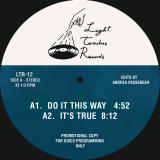
Light Touches Records is devoted to shed new lights on hot rarities, unknown grooves as well as forgotten classics.
As the attention to the older volume is rising, Light Touches camp pushes things further with four uncompromising tunes.
On A side, “Do It This Way” is an intense lost disco roller with oniric string machine and thundering bass, while “It’s True” goes deeper with a relentless Philly groove with psychedelic tones. On the flipside, “Jus’ta Funky Jam” opens things up with some killer groovy arrangement, and “Dance With You” closes the release with a dreamy, mellow jazzfunk tune.
All tracks have been carefully edited without overdubs, in order to bring the spirit of classic disco manipulators to today’s dancefloors!
Strawberry Guy’s new album ‘Give Me A Dream’ unfolds as a tender, fragile and intimate record. The 14 track album arrives as the ultimate hopecore long player, in a time when we need it most. It's a guiding light, healing for the mind, exploring the tight-rope balance that is making it through life intact. Strawberry Guy evolves from the dreamy indie-pop home recordings to a perfectly formed crystalline vision, utilizing an immersive studio approach. Shifting from sparse & fluid piano parts to rich, engulfing layered strings, infectious melodies and an exquisite rumination on manhood from fraught emotional states. Give Me A Dream is a big step up, brimming with ideas, glistening production, and a tender heart.
Dusky return to Anjunadeep with their forthcoming studio album ‘Signals’. The London duo first debuted on Anjunadeep in 2011 with their critically acclaimed album Stick By This. Expanding the boundaries of deep house and UK club music, the record marked the beginning of Dusky’s rise as one of the scene’s most respected acts. Their breakout track ‘Careless’, released via Aus Music, further cemented their reputation, amassing more than 14 million streams and becoming one of the defining UK house records of its generation. In 2014, the pair launched their own imprint, 17 Steps, which has since hosted releases and remixes from artists including Nathan Micay, LTJ Bukem, Interplanetary Criminal, Denham Audio and Shed. Since then, Dusky have released two further studio albums, Joy and Pressure, alongside a string of acclaimed singles. Their music has earned support from Pete Tong, Danny Howard and Sarah Story on BBC Radio 1, as well as widespread backing from leading DJs including Jamie Jones, Peggy Gou, Gorgon City, TEED and TSHA. While 'Signals' represents a natural continuation of the Dusky story, it also ventures into more reflective territory than previous releases. The album's wider range of influences and more contemplative mood offer a fresh perspective on the duo's sound, while also paying subtle homage to their acclaimed debut album ‘Stick By This’. Featuring multiple collaborations with vocalist Rromarin, alongside a contribution from Nadeem and Pritt, 'Signals' reflects a creative process that unfolded over many years. Some tracks grew from ideas first sketched long ago, while others emerged more recently, giving the album a sense of both history and momentum. Across its 13 tracks, 'Signals' balances Dusky's club-rooted instincts with downtempo offerings. Tracks such as 'Next Life', 'Kadhalan' and 'Lab' showcase the duo's signature combination of bold basslines, driving rhythms and emotional resonance. Elsewhere, 'Elm' and 'Bindweed' slow the tempo and draw on the warmth of soul, the deeper edges of disco and richly textured live instrumentation.
For their eagerly awaited third album, the Parisian trio Howlin' Jaws have teamed up with Swedish producer Kalle Gustafsson Jerneholm (bassist with The Soundtrack Of Our Lives and producer for Foals, The Hives, Jose Gonzalez and Junip) and have taken a major step forward, affirmingthe universal appeal of their explosive yet elegant psych-rock. This new album, Living The Dream, crystallises just about everything we'd ever dreamt of hearing from Howlin' Jaws. Here, more than ever, their dreams take the form of unifying choruses, transforming grief ("Troubled Mind") or separation ("Do What You Gonna Do", "So Sorry") into genuine bursts of hope. Rich in texture (with the Omnichord and Mellotron featuring on the spellbinding "Miss You" and the twilight-tinged "Up On The Roof" respectively) and in wit (led by the biting "Living The Dream"), the eleven-track album is equally diverse in its range of influences. Disco looms large on "Terminal Buzz", country creeps in on "Sunset Laundromat", whilst the fiery "Maximum Speed" is a joyful reminder of King Gizzard & The Lizard Wizard's trippy flights of fancy. The trio are stunning when they're in full swing, but just as impressive when they slow the tempo down. Behind its layers of cosmic keyboards, "Time Has Come" immediately sets the scene and subtly invites introspection. Like an echo at the end of the journey, "That Kind of Pain" rubs shoulders with the stars of the French Touch (the Air school), letting the strings of the Stockholm Philharmonic Orchestra burst forth amidst its melancholic swells. All in all, whether he simmers his albums like an omelette or a beef bourguignon, Howlin' Jaws proves he's never short of imagination.
For their eagerly awaited third album, the Parisian trio Howlin' Jaws have teamed up with Swedish producer Kalle Gustafsson Jerneholm (bassist with The Soundtrack Of Our Lives and producer for Foals, The Hives, Jose Gonzalez and Junip) and have taken a major step forward, affirmingthe universal appeal of their explosive yet elegant psych-rock. This new album, Living The Dream, crystallises just about everything we'd ever dreamt of hearing from Howlin' Jaws. Here, more than ever, their dreams take the form of unifying choruses, transforming grief ("Troubled Mind") or separation ("Do What You Gonna Do", "So Sorry") into genuine bursts of hope. Rich in texture (with the Omnichord and Mellotron featuring on the spellbinding "Miss You" and the twilight-tinged "Up On The Roof" respectively) and in wit (led by the biting "Living The Dream"), the eleven-track album is equally diverse in its range of influences. Disco looms large on "Terminal Buzz", country creeps in on "Sunset Laundromat", whilst the fiery "Maximum Speed" is a joyful reminder of King Gizzard & The Lizard Wizard's trippy flights of fancy. The trio are stunning when they're in full swing, but just as impressive when they slow the tempo down. Behind its layers of cosmic keyboards, "Time Has Come" immediately sets the scene and subtly invites introspection. Like an echo at the end of the journey, "That Kind of Pain" rubs shoulders with the stars of the French Touch (the Air school), letting the strings of the Stockholm Philharmonic Orchestra burst forth amidst its melancholic swells. All in all, whether he simmers his albums like an omelette or a beef bourguignon, Howlin' Jaws proves he's never short of imagination.
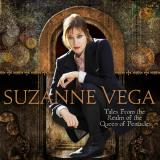
Originally released in 2014, Tales from the Realm of the Queen of Pentacles is now being reissued on limited-edition gold vinyl.
The album tells a story of the intersection of the material world and the world of the spirit. Includes fan favorites "I Never Wear White" and "Crack in the Wall,” plus "Song of the Stoic" and “Don't Uncork What You Can’t Contain,” and "Horizon", written for Vaclav Havel.
Produced and arranged by Gerry Leonard, the album features an illustrious group of musicians including longtime Vega bass player Mike Visceglia and drummer Doug Yowell, bass player Gail Ann Dorsey and drummer Zachary Alford (David Bowie), bass player Tony Levin (Peter Gabriel), drummer Jay Bellerose (T-Bone Burnett), and Larry Campbell (Bob Dylan) who plays banjo, mandolin, and cymbal throughout the album. Additional contributions feature drummer Sterling Campbell (David Bowie, B52s) and Alison Balsom, the virtuoso principal trumpet for the London Chamber Orchestra. Catherine Russell, known for her work with David Bowie and Paul Simon, adds background vocals.
The strings were recorded in the Czech Republic with the Smichov Chamber Orchestra. The album was mixed by Grammy Award-winning engineer Kevin Killen.
Despite the widespread popularity of reggae music in the UK, following its explosion onto the international music scene in the late 1960s, many of these in charge of Britain's mainstream media were reluctant to give the exciting new sound coverage, wither in print or over the airways.
In an attempt to counter this prejudice, Trojan Records took the bold step of embellishing recordings from Jamaica with sophisticated orchestration, with the resultant ‘commercial reggae’ sound immediately finding favour with the country’s reggae fans.
Consequently, the company not just maintained, but in fact extended the procedure, employing producers to record the country’s finest British-based reggae acts. The result was the release of an abundance of superbly crafted recordings, the production values of which rated with the best that British pop had to offer.
IRST ALBUM IN 10 YEARS.
TOURING WITH TROPICAL FUCK STORM IN NOVEMBER (DATES BELOW).
PRODUCED BY DAN LUSCOMBE (THE DRONES) WHO IS ALSO PART OF THE LIVE BAND.
PREVIOUS ALBUMS ON HARDLY ART/SUB POP AND REMOTE CONTROL.
VERY LIMITED BLACK VINYL AND INDIES ONLY PINK VINYL . NON-RETURNABLE.
‘Jarrod Quarrell, creator of Lost Animal, is one of the most underrated songwriters in Australia and one of our all-time favourites. He creates poetic expressions. His work is very interesting in a highly original way and richly emotional. The songs reveal themselves more over many listens and always feel fresh. His powerful, beautiful, transformative, and unforgettable songs possess the vast depth of the human spirit.’ - GIMMIE GIMMIE GIMMIE ZINE
‘Quarrell has developed a collaged techne that embodies a heart-on-sleeve attitude. Lush melodic delays wash with an influx of lyrics that pierce with uncanny imagery and diction.’ - VICE
It’s not every day you hear about a new Lost Animal album. In fact, it’s been ten years between drinks. The debut Ex Tropical (Hardly Art/Sub Pop) was released in 2011, and followed by You Yang (Remote Control) in 2016. So what happened, and where’s frontman/mastermind Jarrod Quarrell been for the last ten years?
From the horse's mouth, “I don't give a fuck about productivity”. A humbling reply. It confirms Quarrell's MO: here’s an artist as a non-conformist. And when he does see fit to bless us with his unique vision of what music can sound like, it has the ability to completely charm and disarm. Amongst a sea of rock bands, LA is essentially a solo act. Simply put; LA is JQ. But on the other hand, amongst an ocean of solo acts, LA possesses the grandiosity of a full band, punk in spirit, but without being fast, or heavy.
Armed with keys and synths, timbres align more with what a toucan might listen to, as opposed to what's heard commonly throughout Melbourne's gig economy. Strings are gently plucked and horns are tenderly blown. These are the colourful brush strokes that decorate the upper frequencies. They’re the ticket to a far away land;exotic, and potentially very dangerous. If the crew from Hear My Eyes are reading this, consider Lost Animal performing Give Some Get Some as the soundtrack to the next time you screen The Hangover Part 2. Yeah, the one where shit gets super fried in Thailand.
The album examines the underbelly of what a ten year journey might rub up against. As one may expect, a lot of that action is below the belt. Tracks like Do That Thing, and In
Rewinding, a few things have happened in the past ten years that are worth illuminating. Shags is no longer commandeering the bass full time. Though he does make an appearance on a couple tracks. The main difference from present day to yesteryear LA is Dan Luscombe (The Drones). Luscombe has jumped into the role of producer (and also part of the live band). One could say he’s a producer of the Spector-ilk: playing a hands-on approach and assisting Quarrell's song crafting. He may have suggested to add a chorus or two, but the chord progressions remain distinctly Lost Animal. You'll recognise them easily by their beauty, combined with either fragility or rigidity. Luscombe is arguably the defining force that made this album happen. Perhaps he had Quarrell at gunpoint. Yet to be confirmed. Regardless, thank fuck for Luscombe because it may have been another decade.
But the album's defining feature is arguably Quarrell's lyricism. He may not cross-examine where he's been, but his voice does unmask where he is: absolved and reincarnated. The decade-long journey has resulted in him looking inwards and unlocking himself. The album's many mantras suggest that he may be a bird (I'm a Bird Now), or that he is living on another planet (Never is Forever). Whatever and wherever he may be,
Give Some Get Some invites the listener to reflect on their own journey over the past decade. Because the game's got a price. So ask yourself what have you taken, and what have you given? Life ain't a box of chocolates. It's a bowl of berries. And when fruit symbolizes temptation, get some.
IRST ALBUM IN 10 YEARS.
TOURING WITH TROPICAL FUCK STORM IN NOVEMBER (DATES BELOW).
PRODUCED BY DAN LUSCOMBE (THE DRONES) WHO IS ALSO PART OF THE LIVE BAND.
PREVIOUS ALBUMS ON HARDLY ART/SUB POP AND REMOTE CONTROL.
VERY LIMITED BLACK VINYL AND INDIES ONLY PINK VINYL . NON-RETURNABLE.
‘Jarrod Quarrell, creator of Lost Animal, is one of the most underrated songwriters in Australia and one of our all-time favourites. He creates poetic expressions. His work is very interesting in a highly original way and richly emotional. The songs reveal themselves more over many listens and always feel fresh. His powerful, beautiful, transformative, and unforgettable songs possess the vast depth of the human spirit.’ - GIMMIE GIMMIE GIMMIE ZINE
‘Quarrell has developed a collaged techne that embodies a heart-on-sleeve attitude. Lush melodic delays wash with an influx of lyrics that pierce with uncanny imagery and diction.’ - VICE
It’s not every day you hear about a new Lost Animal album. In fact, it’s been ten years between drinks. The debut Ex Tropical (Hardly Art/Sub Pop) was released in 2011, and followed by You Yang (Remote Control) in 2016. So what happened, and where’s frontman/mastermind Jarrod Quarrell been for the last ten years?
From the horse's mouth, “I don't give a fuck about productivity”. A humbling reply. It confirms Quarrell's MO: here’s an artist as a non-conformist. And when he does see fit to bless us with his unique vision of what music can sound like, it has the ability to completely charm and disarm. Amongst a sea of rock bands, LA is essentially a solo act. Simply put; LA is JQ. But on the other hand, amongst an ocean of solo acts, LA possesses the grandiosity of a full band, punk in spirit, but without being fast, or heavy.
Armed with keys and synths, timbres align more with what a toucan might listen to, as opposed to what's heard commonly throughout Melbourne's gig economy. Strings are gently plucked and horns are tenderly blown. These are the colourful brush strokes that decorate the upper frequencies. They’re the ticket to a far away land;exotic, and potentially very dangerous. If the crew from Hear My Eyes are reading this, consider Lost Animal performing Give Some Get Some as the soundtrack to the next time you screen The Hangover Part 2. Yeah, the one where shit gets super fried in Thailand.
The album examines the underbelly of what a ten year journey might rub up against. As one may expect, a lot of that action is below the belt. Tracks like Do That Thing, and In
Rewinding, a few things have happened in the past ten years that are worth illuminating. Shags is no longer commandeering the bass full time. Though he does make an appearance on a couple tracks. The main difference from present day to yesteryear LA is Dan Luscombe (The Drones). Luscombe has jumped into the role of producer (and also part of the live band). One could say he’s a producer of the Spector-ilk: playing a hands-on approach and assisting Quarrell's song crafting. He may have suggested to add a chorus or two, but the chord progressions remain distinctly Lost Animal. You'll recognise them easily by their beauty, combined with either fragility or rigidity. Luscombe is arguably the defining force that made this album happen. Perhaps he had Quarrell at gunpoint. Yet to be confirmed. Regardless, thank fuck for Luscombe because it may have been another decade.
But the album's defining feature is arguably Quarrell's lyricism. He may not cross-examine where he's been, but his voice does unmask where he is: absolved and reincarnated. The decade-long journey has resulted in him looking inwards and unlocking himself. The album's many mantras suggest that he may be a bird (I'm a Bird Now), or that he is living on another planet (Never is Forever). Whatever and wherever he may be,
Give Some Get Some invites the listener to reflect on their own journey over the past decade. Because the game's got a price. So ask yourself what have you taken, and what have you given? Life ain't a box of chocolates. It's a bowl of berries. And when fruit symbolizes temptation, get some.
It's time to dip into the secret vault once more, and after the first two visits this year, we can't wait. The latest from this mysterious and so far anonymous new label and production crew is another scorching disco two-tracker. The opener on the A-side is full of excitable horns and funky guitar lines with irresistible hand claps and tracky grooves that roll for days. On the flip-side, 'Track 2' brings a vocal line that is brings a sing-along and uplifting vibe as it rides on busy, funky bass motifs with lovely slide in the hi-hats and more lush strings. It's a big-hearted and fulsome disco-house sound for when the whole floor needs locking in to a loved-up vibe.
Fred Peterkin releases a lot of music but rarely hands his work over to other artists to remix. This EP, which sees a trio of artists deliver their interpretation of the Berlin-based New Yorker's strings-and-piano-drenched 2023 deep house number 'Someone', is therefore an interesting development. He kicks things off with his own smooth, bass-heavy 2026 'Interpretation', an even deeper and more sensual take that blends dancefloor weight with light-touch jazziness, before Juliet Mendoza takes over with a more locked-in interpretation smothered in warming Rhodes motifs and snippets of soulful, eyes-closed vocal. Dave Aju's take is more weighty, psychedelic and propulsive, while Korea Town's 'Acid' interpretation is darker, faster, tougher and altogether more thickset - the kind of revision tailor-made for peak-time moments in dark basement clubs.
Hanne Lippard and Renato Grieco's Today's Special is a suite of language works synthesising melody and diction that integrates the literary and the audible in a repertoire of songs that bask in the melody of voice and the punctuations of structured composition. Working with methods of reduction rather than opulence in both tonal composition and rhetoric, each piece pegs the poetic to the musical with compositional schematics and methods. It is important to state that there is little to none improvisation here, instead, the duo set up matrices, rules and structural links that facilitated meaningful locus of exchange between their two practices. Lippard's texts are a collection of new and previously completed works. In these, as is typical for her work, she enjoys the easy pleasure of wordplay, iterative language, and decontextualised anecdote, as in opener Portrait of a Betrayal, a piece about the loss of a phone and the way it haunted the owner who dropped it, based on a lived experience. Grieco's instrumentation works with Lippard's language art as a form of acoustic typography. "I studied graphic design and I think about how you can express typography through voice," she says. "Renato's use of the viola da gamba becomes like an underline, or a font's brushstrokes, in ways that feel typographical." In this, the classically-trained composer Grieco often finds and echoes the pitch movements of Lippard's voice, intonation mirrored and revealed, linguistic meaning doubled and shadowed by plucked, strummed or bowed strings. His main instrument is the viola da gamba, the instrument considered closest to the human voice for its tonal range and ability to mimic inflections and timbre, and here he brings it even closer to the voice, building systems by which it moves with and around Lippard. He also plays piano and Wurlitzer, and joins her in speaking on Receiver and in conversation for final track The Black Rose. "Hanne's voice is an artist's voice, embodied as the artwork itself," he says. "But where my approach is from the perspective of a composer, hers is around rhetoric and language. We worked towards each other in this sense, Hanne finding a space to welcome my voice, and me designing an acoustic space to enhance her vocal persona." In some tracks the structural connections are obvious - the matched tumbling delivery and stepped pitches of voice and piano in Aficionado sounding like two tipsy friends descending a staircase. In others, like the triptych of tracks Three Rungs Ladder, structured with rules derived from nursery rhymes, or cumulative song (akin to the 12 Days of Christmas). For the Colour 1 and Colour 2 pieces, the duo worked from palettes of colours connected to clusters of harmonies, which underlined the power of the word and its articulation. The absurd Labradorable personifies a people pleaser, A Story About Being Blue is an imagined playful monologue from the Deep Blue supercomputer - requesting in sing-song stop motion to be called Debbie, and Larry - as Grieco echoes in factual reportage. Hurtbeat unpacks and recomposes a tweeted non-apology by a Russian art collector about owning a piece of racist art, Grieco shadowing Lippard's generating a third `drop-shadow' performer from the resonances between the duo, typographic re-articulation of the source material. The Receiver includes lines from Robert Ashley's Improvement (Don Leaves Linda), Ashley existing as a spiritual parent of sorts to the practices contained on Today's Special, and here interpolated as if he is being quoted and written through within the audible world of the piece in a palimpsest of borrowed sentences. Closing track The Black Rose contains its own self-aware comedy, a lightly distorted conversation sourced from a Reddit thread about whether black roses exist, recorded as if it were an internet radio or a low budget podcast, the casual exchange stilted in the delivery of platitudes as scripted speech. Today's Special was developed in person over the course of a series of small residencies - at Deutsche Akademie Rom Villa Massimo, Rome; Fondazione Morra, Napoli; Callie's, Berlin. In these limited periods that rarely stretched beyond a week, Lippard and Grieco developed strategies for the works, keeping tightly locked to musical concepts. This, for Grieco, is about maintaining a solid, meaningful connection within the compositions, and committing to everything having a purpose for existing within the work. Each element pulls its weight; has something to say, literally and metaphorically speaking. In the same way that Lippard's work leaves nowhere for her to hide, he wants the music to exist with its own naked purpose: "It's is about exposing nudity via reduced materials," says Grieco. "This is a form of courage we want to embrace. Once we take off everything, it needs to be extremely precise to maintain a connection with the audience. We have a lot of tools to hide behind now, to protect ourselves and our identities as artists, performers, and in life more generally. It's something I don't want to do. I want extreme reduction: no hiding."
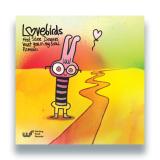
To celebrate the 15th anniversary of the release of the stone-cold classic ‘Want You In My Soul’, Winding Road brings together a group of deep house legends to put their own spins on the Lovebirds feat Stee Downes original.
The Schmoov! remix is a feel-good 80s disco reimagination, cloaking Stee’s soulful vocals in uplifting synths and strings.
The Atjazz remix is a mellow and percussive beauty which has sunshine baked into its very heart. All the quality you’d expect from the master.
On the flip, the dubs – starting with a punchy dancefloor-friendly Kneedeep dub, and closing things off with the beautiful underwater vibes of Lovebirds’ own ‘Ocean Dub’.
House music has truly gone worldwide and here at Local Talk Records we like to think that we're open-minded to all shades of our beloved 4/4 rhythms...
This time we've given North Africa an opportunity to showcase their take on electronic deep house...with soul of course.
Egyptian producer Adham Zahran has been on our radar for quite a while now.
With a blend of dark yet beautiful electronic themes we like to think that his sound lands somewhere between Ron Trent, Atjazz or the more electronic Glenn Underground tracks.
For his debut on Local Talk, Adham presents 'Stripped Years', a beautiful production that takes us down below with big strings, supa deep chords and a light yet bumpy 4/4 kick.
Not hard, not pumping, just sexy and deep.
In order to make the North African theme even stronger we asked Moroccan producer Cee ElAssaad to take 'Stripped Years' further beyond the limits of the original version. The result is quite Chicago-ish, slightly more soulful but still very electronic and thumping. Cee gives us two versions, the original remix but also a massive beatless version that works just as well without beats.
A native of the island nation of Cape Verde, Cesaria Evora was known as the country's foremost practitioner of the morna, a combination of West African percussion with Portuguese fados, Brazilian modinhas, and British sea shanties. After a short singing career in the 1970’s, she returned in the late ‘80s with a string of critically acclaimed and increasingly popular albums.
Her 1999 album Café Atlantico (a reference to her home where she frequently entertained guests) is a much-acclaimed masterpiece, finding Evora venturing into more Latin American musical landscapes, as opposed to Portuguese, which dominated her previous albums. Evora draws from traditional Cuban and Brazilian music to mesmerizing effect. The music is heart-breaking and nostalgic, warm and tragic all at once.
Café Atlantico is available on black vinyl and includes an insert with lyrics.
The Five Green Moons present Moon 3. The third sphere to find its way into orbit. On its surface the evolution of a many faceted creature has taken place. Now with long, long tentacles and a million mouths the creature dances and sings. Its voice is the sound of the ghost dub ritual. The echo of spirits passing through the translucent veil. The chants of souls lost in the vampire woods. The clap, clap of its limbs colliding is the sound of frequencies being bent into fascinating new shapes by machine/ human hybrids. Post punk dubwise angular electro folk, Pastoral dub, whatever name you give to this music is of no consequence. It is alive and spinning in orbit.
The third Five Green Moons album sees Justin Robertson's sonic pallet blossoming into new exciting shapes. These 11 tracks offer a wide vista of across the frequencies including a truly remarkable and uncanny tale from celebrated author David Keenan on ' To Haunt of the Dark Earth A Spot' that brings to mind a vision of M.R. James merging with African Headcharge. Another refreshing collaboration can be found on 'Message from the Tone Generator' where underground electronic producer Nickelle adds her magical poetry to the psychedelic swirl. This is a bold and magical offering in a time of pastiche where new shapes are drawn from the sketches of the past.
If you need a sonic shorthand imagine Public Image Limited meeting the haunting chants of a new age Incredible String Band. The spiritual tones of late 70's Don Cherry. The whispering psych swooshes from Planet Gong and most importantly a solid bass foundation straight out of King Tubby's studio.
Finnish-American guitarist Raoul Björkenheim and Norwegian drummer Paal Nilssen-Love join forces on their new album PING, released by We Jazz Records on 30th October on LP, CD and digital formats. Recorded in Helsinki, the album finds the seasoned duo firing on all cylinders and delivering a remarkable set of contemporary free music.
PING brings together nine excursions beyond “guitar + drums” and way beyond “free jazz”. That being said, those are still good touching points for the music that is wild, imaginative, raw, yet also at times delicate and introspective. Friends and collaborators for decades in groups such as the lauded Scorch Trio, Raoul and Paal have the history and the trust to create memorable and original improvised music that stuns and moves the curious listener.
Raoul Björkenheim (b. 1956) is a Finnish-American guitarist and composer who has been creating original music for the past four decades living in New York City and Helsinki, where he is presently based. Describing his on-going work as investigative guitarism, he is best known for an expressionistic and lyrical guitar style. Björkenheim’s eclectic discography numbers 50+ albums, ranging from ambient soundscapes to visceral free jazz, from duo to big band. His large-scale works for symphony orchestra have yet to be recorded, and he has also composed scores for over ten films and dance productions. Björkenheim has collaborated musically with Bill Laswell, Toshinori Kondo, William Parker, Mats Gustafsson, Hamid Drake, Ingebrigt Håker Flaten, Gerald Cleaver, Henry Kaiser, Lukas Ligeti, Morgan Ågren, Paul Schütze, Edward Vesala and Juhani Aaltonen, for the labels ECM, Rune Grammofon, Cuneiform, Tum Records and Long Song records. Björkenheim has been awarded various prizes including the Emma prize for best jazz recording of the year, and been nominated three times for the Nordic Music Award.
Paal Nilssen-Love (b. 1974) is a Norwegian drummer, composer, bandleader, and producer known for his central role in Scandinavian free jazz and improvised music. Since the mid- 1990s, he has appeared on more than 280 albums, including 70 released through his label, PNL Records. He has performed with influential groups including Atomic, The Thing, Peter Brötzmann’s Chicago Tentet, Scorch Trio, and Frode Gjerstad Trio, and collaborates regularly with artists such as, Ken Vandermark, Akira Sakata, Otomo Yoshihide, David Murray, Arto Lindsay and more. Paal Nilssen-Love’s fascination with traditional and experimental music has taken him around the world. Since his first visit to Ethiopia in 2009, he has built strong connections with musicians and artists in Addis Ababa, leading to collaborations, performances, teaching, and artist exchanges with Norway. Since his first trip to Brazil in 2013, he has returned regularly, developing collaborations with artists and musicians across the country. His musical explorations have also brought him to Tsugaru and Aomori in northern Japan, where he has developed an interest in the region’s traditional music. Nilssen-Love is also an active organizer and educator. He started both Oslo’s all-Ears festival, the Blow Out festival and FRAM Kunstfest, and has led workshops internationally and in Norway.
Repress of since last 2025 sold out box set. Ltd edition Gold vinyl, 4 X 140g LP Box set, 24pp booklet, DL card. or Ltd edition 4xCD Bookback. Trees classic albums, beautifully packaged as a four-disc anniversary edition includes 12" book with liner notes from founder member David Costa and comedian Stewart Lee - Features two new discs of alternate mixes, early demos, BBC session tracks and 2018 live recordings in London - Includes lost demos of 'Polly On The Shore' and 'Streets Of Derry' It's now over fifty years since Trees' formation and, although 'Acid Folk' has now become a sub-category in the lexicon of record dealers and music critics, and although founder member David Costa feels the original noughties reissue helped consolidate a gathering wave of curiosity, they themselves remain in the shadows. Earth's new Trees collection brings together both albums adding shiny alternate mixes of key tracks along with a selection of radio sessions and demos, all sounding brighter and cleaner than ever before. Trees first album, 'The Garden of Jane Delawney' (1970) snuggles nicely into contemporary nu-folkies' idea of the genre, and shares some of the pastoral-whimsy that characterised The Incredible String Band or Donovan, offset by some stunning interpretations of traditional material and Bias' own songs, which were somehow part of the tradition Trees had adopted. Readings of 'Lady Margaret', 'Glasgerion' and the old standard 'She Moved Thro' The Fair', and the extended fade of the group's own 'Road', presage the explosive instrumental duelling that would come to characterise the follow up album, 'On The Shore'. There's a definite shift between the records, the second being darker and more ambivalent. Here Trees don't tell you what to think. You're left to formulate your own response to this odd, opaque music. The 'Streets of Derry' session version leans into the brain vibrating drone-groove they somehow found at the traditional tune's centre. 'Polly On The Shore', another traditional tune, is one of the definitive moments of English folk rock. This special expansive collector's edition celebrates the bands 50th anniversary. "A beautiful hybrid, Trees found a unique space between intimate folk and freewheeling psychedelia. Musically ambitious yet brilliantly balanced, they have left an enduring legacy for those lucky enough to be in on the secret" - Edd Gibson, Friendly Fires
EPILOGUE is the culmination of more than four decades of music-making by Japanese composer, producer and multi-instrumentalist Ken-ichiro Isoda, an album in which environmental sound, electronics, contemporary classical composition and memory converge into a deeply personal late-career statement. Isoda moved through video-game music, film composition, classical production, Okinawan music, television and collaborative projects, continually developing an approach in which acoustic instrumentation, field recordings and electronics could coexist naturally.
His collaborative album Interwoven with aus, released through WRWTFWW, further demonstrated the openness of a musical philosophy Isoda describes as being rooted in fluctuation, imperfection and organic movement.
EPILOGUE brings those threads together while refusing to function simply as a retrospective. The album consists largely of older compositions that Isoda has returned to, reconstructed and reinterpreted from the perspective of the present.
Opening track “TANEKOMA” refers to the Izu Robin, a rare bird native to Hachijō-jima, the volcanic island where Isoda lives. Its song, recorded by Isoda in the mountains, becomes part of the composition itself. Placed at the beginning of the album, “TANEKOMA” becomes both document and prayer.
Elsewhere, “Circulation 2” develops from a work created around the relationship between forest, sea and the movement of water. Flutist Dogen Kinowaki replaces Isoda’s original piano melody with a performance that gives the piece a distinctly Japanese sense of place. Kinowaki also appears on a newly reimagined version of “Beach of the Pliocene”, one of Isoda’s most recognised compositions.“STEPS”, first composed for film in 2008, looks back toward the electronica of that period. For this definitive version, Tsutomu Sonoda of maya ongaku provides vocals, bringing new emotional and lyrical depth to a piece Isoda had wanted to properly complete for more than a decade.
The title track from Isoda’s 1991 New Age album “Yume no Sazanami” is similarly reconsidered. Originally recorded with a small chamber orchestra, the new arrangement replaces elements of the harp and cello with layers of nylon-string guitar performed by Tatsuro Murakami. Perhaps the album’s clearest meeting point between past and present is “WATERWAYS.”The mysterious European ambient artist Aiko Takahashi, transforming an abandoned demo into what is simultaneously the oldest and newest work on the album.
“A Flowering Tree,” written for film in 2013, is reconstructed around multi-tracked flute performances by Dogen Kinowaki. Isoda carries that association into his own arrangement, allowing the piece to function as another quiet meditation on memory, loss and hope.
The album closes with “EPILOGUE” —less a grand conclusion than a moment of acceptance. Isoda chose it as the album’s title piece to hold what he describes as the complex emotions that accompany the twilight of a life spent making music. EPILOGUE is not simply a look back. It is the sound of older music continuing to move, change and breathe in the present: a lifetime of ideas distilled into Isoda’s own form of pure music, shaped by memory, collaboration, nature and the world immediately outside his home on Hachijō-jima.
With a string of singles and remixes plus an incredibile debut album under their belt, Musclecars have quickly become a creative force in the last few years.
Their originality and fresh musical approach it's eloquent in this debut EP for Neroli. Here they combine the futuristic afro-electronic suite 'Black Planet' with the liquid space-funk of 'Euphoria' until landing in sweet beatless territories with the "Cosmic' version of the title track!
A mature and uncompromising offering, a glimpse of things to come...
After continuing to refine the space between House and Techno across a string of acclaimed releases, Portuguese producer Alfonsvs returns to his own imprint Kokölò with his most dancefloor-focused statement yet. Ready for the summer and with the festival season in full swing, Need Your Love EP sees the Porto-based artist embrace classic house influences without losing the energy and depth that have become his signature.
Opening with the title track, 'Need Your Love' wastes no time setting the tone as driving analogue drums, uplifting old-school piano chords and soulful vocal samples combine into an infectious peak-time cut built for hands-in-the-air moments. ‘In There' is a collaboration between Alfonsvs and RR, that shifts into darker territory, balancing the EP’s author intensity and eye for trippy vocal fragments with René Raabe’s spacious synth work to create an immersive late-night journey.
On remix duties, kicking-off the B-side, Amsterdam favourite Elias Mazian delivers his reinterpretation of 'Need Your Love', transforming the original into a deep rolling house workout driven by swinging drums, his soft voice and a warped, rubbery bassline that effortlessly bridges classic and contemporary club sounds.
Continuing to blur genre boundaries, 'Everybody' pairs deep, driving grooves with sharp progressive-inspired synth stabs, while closing track '6AM Liberation' rounds out the EP with hypnotic rhythms, subtle acid flourishes and the unmistakable feeling of sunrise after a long night on the dance floor.
Deluxe LP features 140g virgin vinyl; heavy-duty board jacket, artwork by Art Rosenbaum + DL. RIYL: Bob Dylan, John Prine, Townes Van Zandt, Ry Cooder, Michael Chapman, Michael Hurley, The Youngbloods & Bonnie “Prince” Billy. Jake Xerxes Fussell’s 4th album finds the acclaimed folksong interpreter, guitarist, and singer navigating fresh sonic and compositional landscapes on the most conceptually focused, breathtakingly rendered, and enigmatically poignant record of his wondrous catalog. Produced by James Elkington and featuring formidable players both familiar (Casey Toll, Libby Rodenbough) and new (Joe Westerlund, Bonnie “Prince” Billy), it includes Jake’s first original compositions; atmospheric arrangements with pedal steel, horns, and strings. One of the most striking and strangely moving moments on Jake Xerxes Fussell’s gorgeous Good and Green Again an album, his fourth and most recent, replete with such dazzling moments arrives at its very end, with the brief words to the final song “Washington.” “General Washington/Noblest of men/His house, his horse, his cherry tree, and him,” Fussell sings, after a hushed introductory passage in which his trademark percussively fingerpicked Telecaster converses lacily with James Elkington’s parlor piano. That’s the entire lyrical content of the song, which proceeds to float away on orchestral clouds of French horn, trumpet, and strings, until it simply stops, suddenly evaporating, vanishing with no fade or trace, no resolution to its sorrowful minor-key chord progression, just silence and stillness and stark presidential absence. It feels like the end of a film, or the cold departure of a ghost, and is unlike anything else Jake has recorded. In all his work Jake humanizes his material with his own profound curatorial and interpretive gifts, unmooring stories and melodies from their specific eras and origins and setting them adrift in our own waterways. The robust burr of his voice, which periodically melts and catches at a particularly tender turn of phrase, and the swung rhythmic undertow of exquisite, seemingly effortless guitar-playing here he plays more acoustic than ever before pull new valences of meaning from ostensibly antique songs and subjects. On Good and Green Again, Jake not only ventures beyond his established mastery of songcatching and songmaking into songwriting, but likewise navigates fresh sonic and compositional landscapes, going green with lusher, more atmospheric and ambitious arrangements. The result is the most conceptually focused, breathtakingly rendered, and enigmatically poignant record of his wondrous catalog. It’s also his most deliberately premeditated album, representing his fruitful return to a producer partnership after two self-produced projects, What in the Natural World (2017) and Out of Sight (2019) (William Tyler produced his friend’s self-titled 2015 debut.) This time James Elkington produced and played a panoply of instruments, bringing to Jake’s arcane song choices his own peerless sense of harmony and orchestration, balance and dramatic tension. The pair enlisted a group of formidable players including regular bandmembers Casey Toll (Mt. Moriah, Nathan Bowles) on upright bass, Libby Rodenbough (Mipso) on strings, and Nathan Golub on pedal steel. They were joined by welcome newcomers Joe Westerlund (Megafaun, Califone) on drums, Joseph Decosimo on fiddle, Anna Jacobson on brass, and veteran collaborator and avowed Fussell fan Bonnie “Prince” Billy, who contributes additional vocals. Album opener “Love Farewell” (featuring some beautiful singing by Bonnie “Prince” Billy), an elliptical tale of the folly of war, set to the world’s most heartbreaking goodbye march for a lover left behind. “Carriebelle” and “Breast of Glass” each similarly concerns, in its own way, romantic love and leavings. All three songs highlight Jacobson’s diaphanous, understated brass parts, tying them together in a true lover’s knot. “Rolling Mills Are Burning Down,” with its distant keening strings and capacious sense of space, observes and mourns the loss of work and community in the wake of elemental disaster. Nine-minute tour de force “The Golden Willow Tree,” the sole explicitly narrative song herein, is a hypnotic, minimalist rendering of a tragic maritime ballad about scuttling an enemy ship in exchange for wealth and glory and a captain’s inevitable betrayal. “Fussell is creating his own legacy within the long lineage of traditional folk musicians and storytellers that have come before him.” The New York Times // “So elegant … It’s relaxing in the way that pondering a Zen koan is relaxing, and sweet in the way that the wounded, honey-voiced blues of Mississippi John Hurt are sweet.” Pitchfork // “Music that resides at the seams of Appalachia and the cosmos.”
The Allergies are making 2026 their own with a string of hot singles leading up to their next studio album in October. Opening singles This Feeling and Dig It Up have received heavy BBC 6 music support where the band have previously been A Listed as well as press support from Dummy Mag, Wordplay, DMC and Monkey Boxing. Future single Resistance has already been synced to a TV advert and this album looks set to take the band to the next level.
“Sacred Aeolian music capturing and harnessing the divine power of the wind”
Aeolian Harp is somewhere between a string instrument and a receiver. Its strings are agitated by the wind without any human interference, producing tones entirely of its own volition. Archer toured the British Isles setting up his harp in various sacred and loosely mystical locations. Where he let the Devaharp transmit an otherwise unknown sacred music that has ALWAYS existed around us.
Listening to the natural swells of the strings and their unusual tonalities, the billowing wind and bird song overhead, it feels divinely calm and comforting. Something like tapping into the natural resonance of Mother Gaia or being back inside the womb.
DELUXE 2LP REISSUE
Housed in it’s original gatefold sleeve with original inserts, 2 new special colour inner sleeves, a new 2026 insert and a BONUS UNRELEASED album recorded in 1983 on Robert’s previously UNHEARD pyramid-shaped Aeolian harp the DEVAHARP 2.
2027 marks two decades since musician and producer Paul ‘Mudd’ Murphy struck out on his own and launched Claremont 56, a label initially dedicated to “music by Mudd and friends” and named after the house he grew up in. To celebrate its 20th anniversary, Murphy has assembled the label’s first ever decades-spanning vinyl retrospective: a six-LP re-mastered collection bringing together key cuts, cult classics, personal favourites, hard-to-find gems and inspired remixes from across the catalogue.
Unlike the label’s previous 10th anniversary box set, which focused on unreleased material and never-before-heard remixes, 20 Years of Claremont 56 traces the musical story of the imprint to date. Across six records, it showcases the distinctive Claremont 56 sound in all its many forms: acoustic, electric and electronic instrumentation, Balearic sunshine, krautrock grooves, folk-inflected psychedelia, slow-burning chuggers and deeply considered dancefloor music.
The set comes housed in a custom box featuring cover art by long-term label illustrator Mark Warrington. Inside are six slabs of vinyl across three gatefold sleeves, accompanied by liner notes from music journalist and author Matt Anniss, Murphy himself, and many of the artists whose music features in the collection.
The journey begins with a selection of formative late-noughties releases, including Mudd & Pollard’s chugging, picturesque ‘Villa Stavros’, the folksy beauty of Smith & Mudd’s ‘Shulme’ and Murphy’s exotic reworking of Ahmed Fakroun’s ‘Drago’. From there, the collection moves freely through deep cuts, overlooked gems, album highlights and some of the most inspired remixes in the label’s catalogue.
Among those remixes is Murphy’s own über-Balearic rework of Zee Erf’s cover of ‘Southern Freeez’, a mix dedicated to his partner Emma; an extraordinary 22-minute, Manuel Göttsching-meets-ambient-dub revision of Smith & Mudd’s ‘Vegetable Square’ by friends-of-the-family Idjut Boys; Larry Heard’s typically deep and immersive house treatment of Jack Cutter’s ‘Serpent Strut’; and Quiet Village’s ambient-house ‘deep space dub’ of Mudd’s ‘Spielplatz’. Also included are lesser-celebrated but no less rewarding reworks by Recloose, Jex Opolis, Felix Dickinson and Deep88.
The collection represents every corner of Claremont 56’s self-contained musical universe, from the Murphy-assembled in-house collectives Hillside, Paqua and Bison - whose members famously included the late Holger Czukay and his life partner Ursula, to long-serving label artists such as Almunia and Hear & Now, as well as later additions and artists who took some of their first steps on the label through its much-loved Claremont Editions compilations.
That means the deeply cosmic krautrock of Bambi Davidson, the folk-meets-Americana of Torn Sail and the samba-electrofunk of Jpye sit alongside baggy Balearic sing-alongs such as Bel’s ‘Ready To Die’ and Sillyboy’s Ghost Relatives’ ‘In a Small Place’, recent high-profile guest releases such as Chaz Jankel’s ‘Rhumba Jam’, and string-laden ambient pieces such as Four Hands’ wonderful ‘Hizou’.
Packed with classic cuts, formative gems and overlooked treats, 20 Years of Claremont 56 is not only a fabulous label retrospective, but also an essential collection of timeless music from a label whose output has remained distinctive and unique for two decades.
Athens-based multi-instrumentalist, songwriter and producer Raphael Meleteas presents "Someone Else", the title track and first single from his forthcoming debut album of the same name.
Written, arranged, performed, recorded and mixed entirely by Meleteas, the recording reflects an organic approach to songwriting, where warm analogue textures, cinematic arrangements and carefully layered instrumentation take precedence over studio polish. Every instrument heard on the track is performed by Meleteas himself.
Drawing from the rich tradition of orchestral pop, cinematic music and library recordings of the late 1960s and 1970s, Someone Else balances intimate songwriting with understated orchestration, creating a sound that feels timeless while remaining unmistakably personal.
Recorded in Athens, Greece, the single introduces the atmosphere that defines the forthcoming album: melodic, reflective and rich in subtle detail, unfolding naturally through live performance rather than digital construction.
"Someone Else" offers the first glimpse of Raphael Meleteas' debut album, also titled Someone Else, which will be released by Veego Records in September 2026.
Tiger Stripes unveils part one of ‘A Tiger Never Loses Its Stripes’ on Rekids. The series will culminate in the Swedish artist’s sophomore album later this year.
Sweden’s Tiger Stripes, aka Mikael Nordgren, drops the first part of the ‘A Tiger Never Loses Its Stripes’ EP series on Rekids. The EP previews his upcoming sophomore album, his first in two decades, due out later this year, and follows three recent releases and a remix for Dino Lenny on Matt Edwards’ Rekids label.
Tiger Stripes kicks off the ‘A Tiger Never Loses Its Stripes’ EP with ‘Slow’, a snappy groove driven by weighty bass and vocals that are as playful as they are drenched in soul. ‘Twelve’ picks up the pace with irresistible low-end and funky, jazz-inflected key riffs, before ‘Stay Hypnotic’ takes things somewhere more dream-like, pairing shimmering synth sequences with glitched-out percussion and fragmented vocal snippets on the flip. ‘Shape The Future’ closes the first instalment with a squelchy bassline, slightly off-key strings and gorgeous dubbed-out chord progressions, bringing a classy, club-ready finish to this preview of Tiger Stripes’ next album.
Founder of the Strange Idols label, Tiger Stripes has spent over two decades forging his own path with standout releases on Hot Creations, Kaoz Theory, Kwench Records, and more. After stepping back to focus on his indie-rock project Little Lies, he made a full return in 2024 and quickly recaptured the form that’s made him an international favourite, returning three times to Rekids since.
One year after the release of his debut album Harap-Alb, Articulat returns with Harap-Alb: The Reworks – a companion record that continues the story rather than simply revisiting it.
Based on the original album Harap-Alb by Articulat. Reimagined by friends and fellow travelers.
Just as Harap-Alb leaves home, travels through unfamiliar lands, and meets companions who each shape his story, the music has now found new fellow travelers. Eight artists, each with their own signature, reinterpret one track from the original album, transforming it into something entirely their own while preserving the album’s essence.
The result is a richly varied collection that moves between dreamy synth landscapes, nostalgic strings, hypnotic excursions, broken rhythms, and straight-up dancefloor bangers. Every remix reflects the personality of its creator, turning the album into a conversation between artists connected by a shared appreciation for the original work.
If the first Harap-Alb was a personal retelling of a timeless story, The Reworks is proof that stories continue to evolve once they are shared.
YARN welcomes René Audiard for its tenth release with "Makes Me Feel", a four-track EP from one of underground electronic music’s most singular voices.
Across years of dub techno, minimal and leftfield electronic experimentation, René has developed an approach to stripped-down music that feels anything but limited. Where minimalism can often become an exercise in taking things away, his work finds possibility in what remains. "Makes Me Feel" is a particularly fitting example: immersive, at times strange, but always full of feeling.
‘Lovin’ opens the EP in familiar Audiard territory: murky low-end, locomotive groove, reduced rhythmic compositions and an understated framework swimming in a pool of detail. 'Possession' lets in more light. Vocal echoes, persistent rhythms and occasional string phrases give it a cinematic quality, while a groove that seems to circle endlessly takes on an almost shamanistic pull. The EP’s 11-minute behemoth, 'Flesh', fills most of the release’s B-side while making a convincing case for patience and sophistication. There are echoes of minimal’s golden age here, but Audiard never mistakes repetition for standing still. Tiny rhythmic fragments sit alongside expansive orchestral gestures, with samples working at every scale of the arrangement. Warmth and cinematic drama run through the track, but it's the playful programming underneath that keeps it moving. 'Night' closes the record on a different note, recalling Audiard’s work with Ali Çakır in Düve. Percussive samples, accordion and Middle Eastern guitar phrases bring a more acoustic character to his reduced 808-infused broken beats, making for a playful, occasionally melancholic ending with a distinctly microtonal feel.
What makes René Audiard’s music so rewarding is how readily you recognize his hand in it. There is a particular grain to the sounds, a way of placing details within a groove, and a willingness to follow an idea wherever it leads. Across “Makes Me Feel”, those instincts give four quite different tracks a shared identity. Even when working within familiar forms, Audiard makes them sound entirely his own. It’s the holy grail of music production: a personal sound signature. And a thoughtful addition to YARN’s growing repertoire of reduced, sophisticated dancefloor music.
The year was 1989, and Derrick May was at a creative peak as both a DJ and producer. Under his Rhythim Is Rhythim moniker, he released a string of landmark records on Transmat, while his residency at Detroit's The Music Institute showcased the distinctive DJ style that would soon take him onto the international stage. Around the same time, he hosted a weekly radio show on Detroit radio station WJLB, alongside influential programs by The Electrifying Mojo and The Wizard (Jeff Mills).
For one of these broadcasts, May assembled a 15-minute megamix in his studio during the week leading up to the show. He opened his radio set with this continuous mix, blending his own tracks and versions into a seamless introduction that reflected his approach to DJing at the time. It includes unreleased versions of classics such as ‘Nude Photo 88’ and ‘Strings Of Life’.
‘All of this is unreleased because I made it as I was playing it on the spot as a special Mayday Mix for my show on the radio station WJLB in 1989, edited together straight from the keyboards live to tape. There is no other recording of these tracks in this form, only here’.
The original WJLB master tapes have since been lost, and no official recording is known to survive. Fortunately, many listeners recorded the broadcasts at home. One such cassette, preserved by Richie Hawtin, eventually made it our way. It has been carefully restored and mastered, with the artist’s approval.
To highlight this remarkable document of techno history, the recording is now available as a limited-edition, one-sided 12-inch release. The mix has been cut as a continuous side, visually divided into eight sections, while the reverse features a custom engraving.
Following last year's ''Magic Overlooked'' EP, DJ AGITATED returns to the Dolly TS series. ''Horses of Volcanoes and the Moon'' sounds as big as its title. Frantic vocal loops, deep dub stabs, fast paced strings and funky basslines, sky is the limit! DJ AGITATED delivers beautiful techno for the soul yet again.