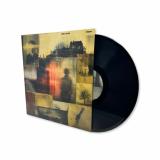
“I am not sure which of us it is that's writing this page” - Jorge Luis Borges. There are places where a river runs through the story even when you cannot see it. Austin Cash grew up in the Arkansas Delta, and Nathan Smerage in the Chicago suburbs, their paths crossing years later in Fayetteville, Arkansas, where both became members of the Ozark Free Music Society, a loose congregation of musicians who made free and experimental music in non-traditional venues across the city. ‘River Season’ began as an impulsive text sent to Smerage in the summer of 2024, Cash suggesting they should make an album of guitar duets. Calling his bluff, Smerage returned a folder of recordings within a week. Cash had a handful of pieces of his own, originally written for an unreleased film about an Ozarks ceramicist. The songs began traveling back and forth between them by email, however, after opening for the Magic Tuber String Band and playing the compositions live for the first time together, realised the decision to record them live was the only true option. For four days, in the basement apartment where Cash lived, they recorded River Season live. The result is a meticulously composed collection of steel-string guitar music: part folk record, part road map.
Fahey and Ackerman are somewhere in the distance, alongside Bert Jansch, Nick Drake, Marisa Anderson, Nathan Salsburg, Loren Connors, and others. But River Season belongs to neither Arkansas nor Chicago entirely. Cash grew up in Arkansas before moving to Chicago, whereas Smerage grew up in Illinois before moving to Arkansas. River Season catches the two musicians at an intersection in their paths; it belongs to the stretches of road and rivers between them, real and imagined. "This new collaboration between Austin and Nathan is intimate and tonally diverse. Many of the tracks see Austin playing acoustic and Nathan on electric. The statements are succinct (all but two clock in under four minutes) and idiosyncratic. "Bell Harp" and "Painting Friend" are two stand out examples for me in which the textures of the electric/acoustic pairing play off each other in a way that I can't say I have encountered before." -Evan Morgan (Magic Tuber Stringband)
MARGOT is a violinist, composer and producer defined by a deeply emotional orchestral language shaped by classical training and a highly personal approach to string writing. She has collaborated with artists including Beyoncé, Lady Gaga and St. Vincent. Trained from the age of four in North Florida, she moved to New York at nineteen, where her musical world expanded through collaborations and exposure to new scenes, alongside the discovery of artists such as Radiohead, Sigur Rós and Björk via their string arrangements. In 2020, she met pianist and composer Juan Villacrez in Colombia, leading to the creation of the instrumental album The Apartment on Third Street (over 13 million streams) and a long-term creative collaboration.
Her new album The Villain presents a major new artistic statement: a cinematic, immersive instrumental work unfolding across ten movements, shaped by profound personal loss and recorded live in Colombia with a minimum of takes and no overproduction. The physical edition of the record is designed by NYC-based artist Bráulio Amado (known for his work with André 3000, Harry Styles, Frank Ocean and Róisín Murphy), reinforcing the album’s position as a complete visual and sonic object. MARGOT’s writing, violin playing and emotional depth resonate throughout, particularly through arrangements in which she layers her own performances, creating a sound world that is at once intimate, restless and constantly evolving.
Composer and multi-instrumentalist Amir ElSaffar has achieved international renown for his work combining the Maqam of Iraq and the Arab world with jazz. With Ashwaaq, he displays a new facet of his work with a composition for string quartet, santur, and vocalist Khaled AlHafez, a master of the musical tradition of Aleppo, Syria. This dialogue between AlHafez’s warm voice and interpretive style that blends rigor and grace and string quartet explores the microtonal resonances of the maqam and the possibilities of a polyphony rooted in Arab traditions.
The texts come from Turjuman Al-Ashwaaq (Translator of Desires) a collection of mystical and ecstatic love poems written by the revered 12th century Sufi mystic, Ibn Arabi, and explore the universal power of love, the inner quest, and the search for unity in the diversity of the world.
Ashwaaq is a captivating moment of celebration, where poetic and musical heritages intersect beyond cultural and disciplinary boundaries.
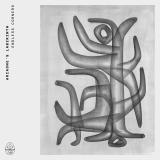
Ariadne's Labyrinth returns with Endless Corners on Adepta Editions. Classically trained yet shaped by London's illegal rave scene, her distinct sonic language is born from live improvisation. Following acclaimed releases on Detroit Underground and Touched Music, this EP seamlessly intertwines the dense, physical pulse of underground club culture with breathtakingly beautiful string arrangements. It is a visceral journey, bridging heavy dancefloor tension with vulnerable, chamber-esque introspection.
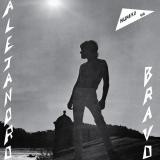
Private Mexican lounge that still burns long after the cruise ship disembarks. Armed with a single nylon string guitar , a toy chest of rudimentary percussion, and the emotional microtones of the Spanish tongue, Alejandro Bravo’s lone LP blends bossanova, samba, and the Brill Building into a horny margarita for the tourist class. Recorded at home in Acapulco in 1971, Bravo’s self-released LP slaps and thrills with its taps and trills. Pair with a pregnancy test for best results.
,Manifold of Partially Actualized Realities" ist das neue Album bei Kou Records von Randall Dunn - Produzent, Komponist und einer der markantesten Gestalter von Low-End- und räumlichen Klängen in der zeitgenössischen Musik, bekannt für seine Arbeit mit Sunn O))), Oneohtrix Point Never, David Torn und unzähligen anderen aus den Bereichen Heavy-, Experimental- und Avantgarde-Musik. Das Album ist eine Meditation über zerbrochene Realitäten, Zeit und Sterblichkeit - ein Spiegel, der sich auf sich selbst zurückfaltet und darüber, wie zukünftige Ereignisse die Vergangenheit beeinflussen. Sein tragender Geist ist Philip K. Dicks ,Pink Light Experience" von 1974, in der der Autor berichtete, eine Übertragung von einer gewaltigen, außerirdischen Intelligenz empfangen zu haben: informationsreich, uralt und überwältigend. Dunn nähert sich dem sowohl als Konzept als auch als kompositorische Logik - Musik, die in Schichten auftaucht, zusammenbricht, sich neu formiert und sich einer Auflösung verweigert.? In vier Stücken setzt Dunn ein ganzes Arsenal an Vintage-Synthesizern ein - Korg MonoPoly, Korg MS-20, PPG Wave, CS-80, Juno-60, Waldorf Strings, Fizmo - neben einer außergewöhnlichen Ensemblebesetzung. Spoken-Word-Beiträge von Jim Jarmusch (basierend auf PKDs Prosa) und Laima Leyton (basierend auf Robert Graves' ,Time") verankern zwei der vier Stücke in Sprache, ohne sie zu erklären. Das Album bewegt sich von orchestraler Kammermusik über elektroakustische Abstraktion hin zu einem abschließenden Stück - ,Ayn" -, das sich zu ekstatischem Jazz entfaltet, mit Cyro Baptista, Briggan Krauss, Henry Fraser, Charmaine Lee und Robert Aiki Aubrey Lowe. Wahre elektroakustische Komposition im vollsten Sinne: spektral, körperlich und weit offen. Produziert und gemischt von Randall Dunn bei Circular Ruin, April 2026. Aufgenommen und gemastert von Ben Greenberg. Dolby-Atmos-Mischungen von Ben Greenberg. Lackschnitt von Paul Gold bei Salt Mastering. Cover- und Rückseitengestaltung von Steve Rude.
Power Ballads and The Wash is the sophomore album from London-based multi instrumentalist James Howard, due for release on 6th November 2026 via boutique
label Faith & Industry. James is known as founder of critically acclaimed 2010’s band Blue House and collaborator with luminaries such as Rozi Plain, Dana Gavanski, Kate Bollinger and Alabaster Deplume.
For Power Ballads and The Wash James has worked with producer Mike Lindsay, co-founder of folktronica group Tunng. Power Ballads and The Wash follows James's debut solo album Peek-A-Boo, released to great acclaim in April 2023.
All eight songs of Power Ballads and The Wash began life as intimate live takes of
guitar or piano and voice, recorded at Howard’s studio in Deptford, south London.
Steeped in the energy of the local environment, each session was preceded by a visit to the Thames to ask for its muddy blessing, with the DLR rumbling by. The sessions at Lindsay’s Margate studio built a widescreen world around Howard’s original performances, from the restless Eventide vocal treatments on Seven Seconds to the Hollywood string samples of The Moon In The Movies and the Moog bass that quietly anchors the record throughout. Howard also praises violinist Magdalena MacClean's (Caroline) contributions.
Beneath this gentle absurdity, though, lies something quietly powerful. Howard’s
song-writing explores the notion that, despite our ever-shortening attention spans,
there is still the possibility of quiet reflection and the discovery therein of revelations hidden in plain sight. The world of these lucid dream-esque reveries is unmistakably London. The record began with a wing-and-a-prayer visit to the Thames, and ends there too: the wash from the Thames Clipper / nearly breaks through your shoe / like some feelings sometimes do.
Lower the drawbridge, raise the gates. Texas-based composer Graham Reynolds (A Scanner Darkly, Before Midnight, Hit Man) returns to the world of The Portcullis with a brand-new LP of music. This deluxe edition brings together the original album and The Portcullis Expansion Pack across two LPs, housed in a die-cut slipcase.
Following the original album’s release in May 2026, the Expansion Pack ventures deeper into a medieval world of knights and merchants, almoners and thieves. Percussive medieval textures, fretted guitars, brass fanfares, atmospheric strings and piano reshape dungeon synth into something vividly Reynolds’ own: an imagined soundtrack steeped in folklore, fantasy and adventure.
What began as an investigation into Reynolds’ family lineage, tracing his name back to Launceston Castle, has grown into a world extending beyond the record.
Released via Fire Records as part of the Weird Walk Record Cult, the deluxe edition arrives alongside an expanded dice game and a special Portcullis porter created with Skipton Brewing Company.
“One of the most unique and addictive albums of 2026 so far” - Loud and Quiet
“Of all the RPG-infused dungeon synth, medieval ambient records released this year, Graham Reynolds’ will be the finest.” - Loud And Quiet
“Ominous, stark environment that rumbles with sounds evocative of the natural world, in both its beauty and despair” - The New York Times
“A work of great scope, subtlety, and powerful suggestion. (…) Prepare yourself for an immersive experience, full of color and personality.” - Time Out
Monster release by the Swedish Starving Insect and Japanese Miyuki Omura.
The Cinematic horror concept EP "Ningyo no Hausu" (Translated: House of Dolls) offers 4 bangers that will send shivers down your spine.
The theme track Hausu has both a Techno and a Hardcore version as well as A remix By label boss Tripped himself.
The "Disturbing, haunting & Scariest and strongest music" (as quoted in Kanji on the cover art)
dares you to indulge on this journey but remember "In this house... evil itself pulls the strings."
Forty years of cassette releases, pressed for the first time on vinyl
First of two instalments exploring the previously unreleased sonic archives of one of Poland’s most enigmatic
living artists - with its first volume focused on his deep listening practice and spiritual reverie (recorded 1990–2013)
The last time Andrzej Dudek-Dürer took a banknote bearing the face of the Polish anarchist Jarosław Dąbrowski from his pocket to trade it for a pair of shoes was in 1969. He bought them for 120zł - the equivalent of 100€ today - and never replaced them since then. Only rebuilt them, year after year, drawing a needle and thread through the leather each time it split, closing one wound before the next one opened. It became a ritual of precision, stitching a record of another year into their soles.
That same year, in Wrocław, he arrived at a conclusion that would recalibrate everything that followed. Convinced he was the reincarnation of Albrecht Dürer, he adopted the surname Dudek-Dürer, stopped cutting his hair and began wearing the same garments every day. It was the first ritual of many, though he wouldn't have called it that yet. Look closely enough, over the decades, and it is always the same gesture, returning in different material: hair growing in a single unbroken strand, a needle drawing thread through leather, sitar strings pulled taut across a neck he built with his own hands and magnetic tape spooling forward inside the cassette boxes stacked against his walls.
None of this began in a vacuum. Dudek-Dürer emerged from the Wrocław neo-avant-garde, in a Polish art world where an exhibition could be cancelled overnight by the stroke of a censor's pen. In 1973, his exhibition Auto-crucifixion was shut down by the state, and for a time he found himself blocked from exhibiting his own art at all - the one force in his life that ever came close to cutting the thread.
He seemed to experience it differently. In 1974, after long, patient research into sitar craftsmanship, he built his first prototype with his brother, a knowledgeable luthier. In 1978, in a smoked-out jazz club, he took his first steps into sound recording with the unreleased album Jazz From Underground with his first band. By 1979, recognition started to travel further than he could.
Turning toward Far-Eastern philosophy, meditation and the idea of reincarnation was another language of freedom for him. It was a way of claiming an inner territory the state could not reach, a border it could not close. Mail Art served a parallel function, reaching further out: in a country that restricted travel and expression, sending and receiving art through the postal system became an act of quiet rebellion.
The body, in his understanding, is only an envelope readied for constant transformation. From this came Metaphysical Telepathy: during the years he could not leave Poland, he treated that confinement as a rehearsal room, sending his mind out ahead on the same thread his body would later follow. Living Sculpture grew from the same root with performances of stillness beside static art objects, until the boundary between the object and the man beside it simply dissolved. Camera Meditation extended the same instinct into photography: a shutter click flattening three dimensions into two so that a single instant could be held forever. Inspired by the pioneers of self-portrait photography like Robert Cornelius, he used it to document time itself, and kept explaining to me: "You know. This is not about vanity. This is about observing time passing.”
The isolation did not end suddenly. It ended the way his own philosophy had already predicted it would, from the inside first. Mail Art quietly solved the problem politics couldn't. Correspondence built during years of confinement slowly worked its way through doors the state itself had kept locked. Contacts made through folded paper and stamps became invitations. Ultimately, invitations became passports.
In 1983 he made his first trip outside Poland, to Germany, in search of the audio technology he couldn’t get his hands on before. In 1985, he was invited by the Indian embassy in Poland to give a sitar concert on an instrument he had spent a decade patiently stringing together - half sitar, half tanpura, built from patience and determination. After the collapse of the People's Republic of Poland, the travels kept unspooling: South Korea, then Mexico, then Australia, Canada, New Zealand, Singapore, Japan and the United States - each stop leaving behind its own small knot of tape, tied off and carried home.
In the decades since, recognition arrived at the same unhurried pace: he conducted workshops at UC Berkeley, served as vice-president for artistic affairs of the Union of Polish Art Photographers and the Union of Polish Visual Artists between 2010 and 2014 and received the Bronze Medal for Merit to Culture - Gloria Artis. His visual work gradually entered collections including the National Museums of Warsaw, the Stedelijk Museum, Tate Modern, MoMA and the Venice Biennale. His musical practice, by contrast, never found that kind of room - left to circulate quietly, sharing his cassette tapes directly, waiting for someone willing to follow it further.
It took months before I could find a way to reach Andrzej Dudek-Dürer - his presence online is very close to nonexistent. Surprisingly, LinkedIn turned out to be the only door still open, a faintly absurd irony given everything else about him. I packed the strict minimum for a three-day trip and an empty notebook and made my way to Wrocław. His headquarters sits in the neighbourhood of Grabyszyn: a two-storey pre-war house that has belonged to his family for generations. The man who opened the door was long-haired, long-bearded, in his trademark leather shoes and patched jeans. We sat in his living room, in front of a computer where decades of recordings sat organised in cryptically named files, surrounded by books and objects that had arrived one layer at a time, leaving room for only two chairs in the middle. His shoes sat by the door, rebuilt so many times they had become their own quiet sculpture. Cassette tapes filled boxes against the walls, almost unlabelled, each one a spool of thread holding decades of sound that had never once been asked for, until now.
I listened for hours: meditating in front of strangers on the porch of a Seoul temple until the tourists stopped taking photos and simply waited with him; a stand-off with border guards at the US–Mexico crossing over an instrument they couldn't identify and didn't trust; a session with the Stockhausen family that he still, decades later, describes like it happened last week. All of it interrupted, occasionally, by the smell of soup boiling and fresh bread warming on the ceramic stove. After two days, it felt like being handed the end of a very long thread and asked, gently, to keep following it. I left with a USB drive holding his full discography, signed with his unmistakable signature.
Astral Meditations From A Living Statue is a length of that thread, drawn out from the boxes stacked against his walls - recordings gathered from different rooms, different countries, different decades. This first record breathes slowly: incense-thick, meditative, built for stillness. A cutting-edge séance in outer space where machines learn how to dream.
It begins with the neo-classical improvisations of Andrzej, space-delayed, recorded at Klub Muzyki i Literatury in Wrocław in 2002. 'When..So' opens the curtains with a deep-rooted meditation accompanied by slow-decaying piano figures illuminated by a candle-lit spirit gathering.
Los Angeles, 1990: a dormant villa, a grand piano, the voice of Bonnie Barnett. 'Exception' is captured in a single room, in a single afternoon - voice and keys circling each other, neither one leading, until the silence between the notes starts to feel like the instrument.
'The Meta...' and 'Tired Of...', recorded at Studio Morandi in Ponte Nossa, Italy, in 1992, settle into a sitar drone built entirely from patience - overtones stacking and beating against each other, strung by a man who never once set foot in India. 'Mastery Of...' follows, recorded the same year at Studio Suski in Łomianki, pushing that same hum further still, until pitch dissolves into a spectral reverie. 'Transcendental Sound', from 2000, closes the first record in a slow bath of celestial frequency - better heard beside the shores of the Odra river.
More than fifty years after deciding that a life could become an artwork, Andrzej Dudek-Dürer continues to inhabit that decision. His shoes keep wearing thin against the earth's crust. His hair keeps growing, one strand at a time. His cassette tapes keep spooling in the dark of their boxes.
Now the thread finds its last shape: a single unbroken groove, spiralling inward from the outer edge to the label at the centre. Never cut - the way nothing else in his life ever was. Drop the needle and it will find that groove and follow it, the same way a needle once followed leather, once followed a border it couldn't cross, once followed string into an instrument that didn't exist until he built it. This record is the other end of a thread that has been travelling for fifty years. For the length of both sides, it rests here, in your hands. This is a timeless proof that the Lord of the New Age was never lost."
NOW Music proudly presents the next release in the ‘ERA’ series with NOW That's What I Call An Era - Ballroom Blitz: 1967-1976 celebrating the colourful world of glam rock, pop and unforgettable chart hits that defined the early-to-mid 1970s, with a selection of pop gems from the late 1960s. Pressed across three stunning coloured vinyl LPs – red, white and gold – showcasing the era’s biggest stars, instantly recognisable anthems, novelty favourites and enduring singalongs from one of the most distinctive periods in UK pop history.
File not found. Library on device may be corrupted.
Nearly six years since his last full EP on Claptrap, Vanity Project returns with a fresh release, featuring a killer remix from Manchester aficionado Ruf Dug.
File Management Blues was born in the malaise that followed an irretrievable loss of studio files dating back over ten years at Claptrap HQ. Made with love in the wake of that back-up drive meltdown, these jams drift between acid, proto house and dreamy balearic sounds, moving from uptempo club rollers with swirling pads and biting acid lines to downtempo dub chuggers. Running through all of it is a melancholic digital string melody, four original versions on a theme, plus that tasty Ruf Dug rework of the A1.
Quiet Village invites Eric Duncan AKA Dr Dunks for his latest EP ‘Plateau Alone’ featuring Zopelar. Dr Dunks is one half of DJ duo Rub-N-Tug.
New York music veteran Eric Duncan AKA Dr Dunks lands on Quiet Village with his latest release ‘Plateau Alone’ featuring Zopelar, dropping 18th September. Beginning his journey over three decades ago in New York's underground scene as one half of the duo ‘Rub-N-Tug’ alongside Thomas Bullock and one half of DFA’s ‘Still Going’, Duncan has built a reputation for his genre-defying music and sets, mixing disco, house, funk and electro. His production and remix catalogue over the years includes Grace Jones, Todd Terje, LCD Soundsystem, Groove Armada, and more. Producer and DJ ‘Zopelar’ hails from Brazil, taking inspiration from the Brazilian music scene and lacing it with jazz, soul, and house, with releases on Apron Records, Tartelet Records, Soul Clap Records, and Selva Discos
The ‘Plateau Alone’ EP comprises three funk-fuelled tracks. Syncopted electro synths fl ood opening track ‘Plateau Alone’ with an 80s-inspired groove, where bass melodies and textures create an otherworldly feel. Second track ‘Slow One Eleven’ slows the pace; percussion and strings featuring rock accents create a steady groove as Duncan adds his signature sonic sound. Low-down bass blends with dub-chords and alien textures in ‘88 Lights’, creating a warm and cosy closing to the EP.
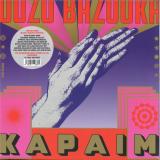
Ouzo Bazooka enchant on Kapaim, drawing listeners through a maze of hypnotic, head snapping grooves, cosmic string bending, and swirling guitar explorations. As trailblazers of the new Middle Eastern psychedelia movement, the band fuse traditional folk sounds with gritty soul, funk, and rock.
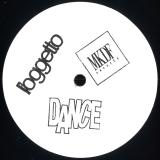
The third chapter of l’oggetto’s DANCE trilogy continues the sought-after series of instrumental DJ tools. Four new tracks, conceived as techniques to reach ecstatic states on the dancefloor through different moods, tempos, and vibes.
“Vallee,” with its infectious 12-bit groove, opens the EP with a syncopated, never-ending jazz-infused vibraphone. “Bone” takes it from there, staying midtempo and percussive while pushing funky horns into trippy, repetitive territory.
Side B turns moodier, as expected. “2600’” unfolds through digital strings of life, enabling a sense of suspension, release, and transcendence. Lastly, “Ambientale” closes the record with the ethereal, wobbly analog warmth of a downtempo drift into dawn.
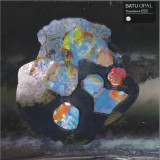
Building on the promise of nearly 10 years testing limits within club music, Batu presents his debut album Opal. Experimentation is a well-established facet of Omar McCutcheon's identity within the leftfield techno zeitgeist, but more than ever on Opal he seizes the opportunity to incorporate ideas beyond dancefloor impetus into his animated, forward-leaning sound.
Through the course of 11 tracks, rhythmic forms are mutated and manipulated, sonic matter bends across the frequency range and narrative structures coalesce and dissolve according to Batu's own internal logic. Unpredictability lies at the heart of all this music, bound together by a consistent modernist glint. It's a sound intrinsically connected to the superlative string of club 12"s, EPs and collaborations Batu has spun behind him thus far, even as it moves into unfamiliar terrain, guided by abstract inspiration from coastal landscapes and the mineral matter all life on Earth is built on.
Debut album from Batu on his own Timedance imprint following releases for Livity Sound, Hessle Audio or XL Recordings.
UK & Worldwide press campaign led by Dawn Creative. International press cover TBA and strong media (RA, Mixmag, DJ Mag, XLR8R) and radio coverage around the release (Jamz Supernova, KEXP, Dublab, Rinse France)
Extensive touring schedule for 2022 includes US, Mexico, UK, Europe, and features headline slots in multiple high profile festivals (Sonar, Dekmantel, Outlook, Dimensions, Waterworks and more)
Underpinned by spoken folktales stretching from Indonesia to Poland, a new collaborative EP from Warszawa/Berlin-based Jerzy Mączyński and London-based Flora Yin-Wong arrives via Accidental Meetings. Demons rising from the wind, unknown beings lurking in the forest — the record conjures a landscape built from heady layers of saxophone and the tormented strings of zither, harp and kemence.
Recorded across two intense studio sessions, the EP also features idiosyncratic contributions from London-based guest vocalists and musicians Aga Ujma and Laila Sakini.
Flora Yin-Wong is a London-born experimental sound artist and writer of Chinese and Malaysian heritage, known for weaving field recordings and traditional instruments. Her album Holy Palm (Modern Love) and book Liturgy (PAN) cemented her as a singular voice in experimental music today.
Jerzy Mączyński is a Polish saxophonist, producer and composer whose jazz training feeds into genre-melting work spanning kosmische, prog, industrial techno and minimalism. One of his collaborations being a record of free jazz and rhythmic cubism with Chicago's Hieroglyphic Being.
Mohammad Syfkhan is back with his second album for Nyahh Records. This collection of new recordings marks a hug milestone in Mohammad’s career as it’s the first album that features all original compositions. And with a full band! We had the great help of Syrian Cellist and composer Naseem Alatrash to help with the string arrangements. The resulting record is a beautiful journey into a timeless Middle Eastern and North African sound akin to the likes of Fairuz or Umm Kulthum with a fast Kurdish Dabke tempo.
I Love You Ireland is an incredibly personal album for Mohammad. The title alone, much like his debut ‘I Am Kurdish’ is as personal as it it’s political. To express such love for a place in music is saying, thank you for making me and family feel safe. Thank you for taking us in. A stand out track titled ‘Ah Yu Donia’ is Mohammad’s first real public moment of grieving for the loss of his son at the murderous hands of Isis. In this song he asks God why he was taken. Trying to figure the sense in the actions of fundamentalists. The strings sections are sad, but not morbid. Acting like a release or companion to the horrific reality of losing a child.
‘Al Huriya’ is Mohammad’s first attempt at using an Irish rhythm known as a Reel, as appose to his usual Middle Eastern rhythms. Again, this is a beautiful way for Mohammad to give thanks to all the musicians and supportive people his has met in Ireland since 2011.
WHO IS MOHAMMAD SYFKHAN
Mohammad Syfkhan is a Kurdish/Syrian Singer and Bouzouki player. He began
playing music in 1980 while he was in college studying nursing. When he got
his degree in 1983, Mohammad moved to the city of Raqqa, Syria where he
began working as a professional singer and started his own band, The Al-Rabie
Band which played concerts, parties, weddings and festivals all over Syria. The
Al-Rabie Band were a much sought-after group. Their live sets included Kurdish, Arabic, Turkish and some Western songs as well as Mohammad’s own original material.
Mohammad continued to play with his band while also working as a surgical
nurse until the war broke out in 2011. This unfortunately brought tragedy to
Mohammad’s family when one of his sons was killed by Isis thus threatening
the lives of the rest of his family. His family had no choice but to leave their
home and seek safety in Europe. Three of Mohammad’s sons were resettled in
Germany while Mohammad, his young daughter and wife were taken in by
Ireland. Mohammad has spoken at length of his confusion and despair with
fundamentalists and how their message is a far cry from the teachings of love
and understanding that he considers the true message of Islam.
Portugal-based percussionist Gabriel Ferrandini spent years honing his skills in various free jazz ensembles, where he demonstrated his absorption of the styles of pioneering rhythm liberators like Sunny Murray and Milford Graves while forging his own energetic and agile sound. During this time, Ferrandini performed with everyone from Evan Parker and Alexander von Schlippenbach to Thurston Moore and Dirty Beaches' Alex Zhang Hungtai. At some point, the percussionist grew restless and began taking a more compositional approach, using his drums as primary sources from which to produce spectral tones and timbres via electronic manipulation.
In Ferrandini's hands, cymbals become generative instruments with endless reverb tails and choir samples are distilled into vapor. With its subtle evocations of light and color and meticulous editing, Romance suggests an almost cinematic scale. The strings and grainy synthesizer of "Crying Game" lend an air of giallo dread to the deep sub-bass rumbles; "Afters Lisboa" processes cymbal crashes through a Leslie speaker to create a siren-like Doppler effect; "Fallen Angels," one of the few tracks to feature Ferrandini's mostly untreated percussion work, stacks layers of reverb effects of varying lengths (an old Autechre trick) to add friction and give the spatialized sounds a dissociative quality. Album highlight "Cova da Vaporwave" utilizes creative sidechaining, warbly VHS-like tones and drums amplified through a Fender Twin to gather apocalyptic momentum.
Romance is a formidable artistic statement, establishing Ferrandini as one of the most vital composers on the contemporary avant-garde music scene. He is influenced by Renaissance composer Carlo Gesualdo, whose passionate yet dissonant chromatic approach can be detected throughout the album's seven uncanny tracks.
Symbol Of The Land marks Dialog's first beat-driven album, broadening the duo’s vision of dubwise electronic music into a long-player shaped by collaboration and global exchange.
Over the last two years, Helsinki-based producers Samuel van Dijk and Rasmus Hedlund have been refining their voice within modern dub techno, testing their material on the road and inviting kindred spirits to their studio for real-life feedback loops. During these sessions, they built the album around live mixing, repeatedly re-recording elements as they work, committing effects and modulation before pushing digital processes back out into analogue voltage.
Across the record, the smoky tones of their regular collaborator, Jamaican singer Benji, plus the original voice of dub techno Paul St. Hilaire (aka Tikiman) fold into an open exchange of rhythm, space and sound. Their musings are housed by warm, patient grooves across a range of tempos and moods; from the blissed-out, reggae style on “Mellow Mood” to the wispy and esoteric “Constellation Of Stars”.
The album, which follows a string of well-loved releases on the duo’s own DOT Records, lands via Richard Akingbehin’s Kynant imprint, a label regularly dialling into the transcendent qualities of vocal dub techno.
After releasing their first LP on PPU under the name of CEEOFUNK, Spaced Out Knew and Orion Westbrook are releasing a brand new 6-track EP entitled "Friends, Love, Freak."
Watch out: an "unidentified sonic object" is heading your way!
It’s a funky anomaly that pays tribute to 80's grooves while asserting a fresh style all its own—decidedly "offbeat." The sound blends unique touches of cosmic soul-funk and European 80's synth-pop influences with a "DIY" approach, sitting somewhere between "disco-not-disco" and unconventional grooves.
Vocals are performed in Italian, French, and English, featuring the excellent Ghostape, Lydie Gaga, Marius Cyrilou, and Chérie Bibi. Themes include love, desire, and bonds of brotherhood...
On the menu: fat slap-bass lines, funky guitars, smooth electric piano, sparkling analog synths / Solina String Machine, and on top, an abundance of Casio SK-1 synth and lo-fi sampling gadgets.
The vibe oscillates between boundless energy and laid-back grooves, all served up with a non-conformist freshness and a touch of originality that can be read "between the lines."
Dajusch brings his distinctive sound to Backspin Records with 'Oracle', a five-track EP that showcases his instinct for powerful grooves, deep low end and carefully selected synth work, rounded out by a remix from Dutch techno veteran Sterac. Another strong addition to Regal's Backspin Records, this EP balances Dajusch's musical sensibility with his feel for high impact club music, keeping the focus firmly on club functionality.
Opening with 'Boxer', Dajusch immediately strips things down to their essential elements. A buzzing deep bassline provides the foundation while a repeated vocal hook becomes the central motif, surrounded entirely by percussion including a punchy kick, heavy toms and crisp hats. 'Narrow' introduces a saw wave synth that functions simultaneously as bassline and lead, gradually building tension through repetition and a slowly opening filter before a droning pad leads into the return of the drums. Closing the A-side, 'Reeses Piece' is built around a wide gliding Reese bass moving across di?erent notes. A heavy breakbeat, clean claps and hats provide the framework while a high-pitched vocal brings a distinct 90s rave energy, with swinging toms adding movement to an already groovy production.
On the flip side, the title track 'Oracle' shifts the focus towards melody, with Detroit-influenced synth work taking centre stage. A classy melodic motive is complemented by heavily processed vocals transformed into euphoric, drone-like elements, adding another dimension without losing the track's directness. 'Strings' closes the original material with a hefty saturated kick while string synths carry the main theme. Drums straight out of a classic drumcomputer and warm chords build into a more expansive breakdown before returning to the groove. Closing the EP, Sterac's remix of 'Narrow' takes the original saw synth motive into a more hypnotic direction, playing with its pitch and arrangement while reducing the percussion and pushing an already deeper kick further into the mix, giving the synth work more space to breathe.
With 'Oracle', Dajusch delivers a focused statement rooted in classic Techno while remaining connected to a modern sound. Another strong addition to Regal's Backspin Records, this EP balances Dajusch's musical sensibility with his feel for high impact club music', reinforcing the label's dedication to forward-thinking techno with a clear respect for where techno came from.
Das Repertoire des aus Brooklyn stammenden Komponisten, Arrangeurs und Multi-Instrumentalisten Sammy Weissberg umfasst intime Stücke für Gitarre und Holzblasinstrumente, Filmmusik für Kammerorchester und alles dazwischen. Im Mittelpunkt seiner zeitgenössischen klassischen Werke stehen liebevoll geschwungene Melodien, markante Akkordfolgen und insgesamt eine grenzenlose musikalische Fantasie. ,Music for Strings and Brass", Weissbergs neueste Veröffentlichung (und sein Debüt bei Dear Life Records), enthält zwei Werke, die den Umfang seines künstlerischen Schaffens neu definieren und Techniken einbeziehen, die er während seiner Arbeit als Arrangeur für Songwriter (The Lemon Twins, Allegra Krieger, June McDoom, Frances Chang und viele mehr) verfeinert hat. Das Album enthält sein beeindruckendes, impressionistisches Streichquartett Nr. 2 und ein Blechbläserquintett, das die ergreifende, stimmähnliche Ausdruckskraft jedes einzelnen Instruments auslotet. In beiden Fällen erweist sich Weissberg als Komponist, dessen humanistische und unmittelbare Musiksprache keinen großen dramatischen Rahmen benötigt, um tief im Herzen nachzuklingen. Inspiriert von Komponisten der Spätromantik und der Moderne spricht Weissberg eine musikalische Sprache, die manchmal so klingt, als käme sie direkt aus einer anderen Zeit. An verschiedenen Stellen greifen seine Werke die anmutigen und eingängigen Instrumentalthemen von Antonín Dvorák und Sergej Prokofjew, das atomare rhythmische Zusammenspiel von Igor Strawinsky sowie die üppigen Klangwelten von Claude Debussy und Nino Rota auf. Doch stets verwandelt er diese nostalgischen Anknüpfungspunkte in zeitgemäß klingende, zutiefst persönliche Kammermusikwerke, die man unmöglich missverstehen kann: ausgefeilt und unprätentiös, außergewöhnlich und zeitlos. Seine Werke spiegeln die grundlegendsten Instinkte und die Struktur des Alltags wider - das Gefühl, dass wir ständig von irgendwoher kommen und irgendwohin gehen, auf der Suche nach einfachen, zugrunde liegenden Mustern, die komplexen Phänomenen Sinn und Sinnzusammenhang verleihen, und voller Sehnsucht nach jenem Gefühl der Leichtigkeit, das uns über das Vertraute hinaustreibt. ,Music for Strings and Brass" ist der perfekte Einstieg in die Art und Weise, wie Sammy Weissberg das Leben in Klängen verarbeitet - ein Album, das zu den warmherzigsten und zielstrebigsten Instrumentalveröffentlichungen des Jahres zählen dürfte.
London-based French artist, composer and vocalist Vanessa Bedoret returns with her second
album, About Time, released via Scenic Route.
Across 11 tracks, About Time moves between intimate vocal-led songs, glitching electronics haunting soundscapes and moments of catharsis. Bedoret’s classical training remains at the heart of the record, underpinning an approach that brings together spectral vocals, strings, guitar and experimental electronics with a striking sense of compositional clarity.
Written through a period of significant change in Bedoret’s life, the album explores transition and our shifting perception of time - how some moments disappear almost instantly while others seem to stretch indefinitely.
About Time follows Bedoret’s 2024 debut Eyes and marks a significant step forward for an artist whose work moves fluidly between classical composition, experimental electronics and songwriting. Alongside her solo work, Bedoret has collaborated with Astrid Sonne, Blackhaine , Space Afrika and Mark William Lewis.
Three Stripe Records, the original ‘Bristol Sound’ label release their first vinyl in 30 years.
Founded in 1988 by Smith & Mighty, the label was set up to release music from local talent as well as the pair’s own recordings, and in the late eighties released a string of underground hits.
The label’s first venture in ’88, a cover of Dionne Warwick’s ‘Anyone Who Had A Heart’, featured local singer Jackie Jackson alongside rappers M.C. Kelz and Krissy Kriss and stayed at the top of the indie charts for several weeks.
Now after a long hiatus, a new three-track 12” vinyl featuring Tammy Payne performing a cover of the ’60s Mandel & Webster classic, ‘The Shadow Of Your Smile’ is due to be released on 13th November 2026.
The vinyl’s three tracks capture different variations of breakbeat, dub and soul.
The A side is a break driven, dynamic bond-esque version with orchestral drops and rises, over a tough hiphop rhythm.
AA1 is a head nodding, rolling breakbeat affair with a digi dub style bassline, while Tammy’s vocal floats in and out on a sea of echo.
AA2 is the original mello mix with sparse beat machine style patterns and 303 bass line. Tammy’s full vocal carrying the flow in contrast to the urgent backbeat, occasionally joined by keys, guitar melodies and fx.
Each version having it’s own identity while all remaining very ’Smith & Mighty’
Returning to Discrepant after 2023's 'Atheitsaregods', Humboldt County, California's most mystical entity continues to reshape its own patented processes of lysergic invocations on 'Squall Lines'.
Conjuring a vast array of sound sources, both organic and electronic, from vocals, violins or flutes to synths and pedals, the duo of Brian Pyle and Merrick McKinlay conveys a carefully sequenced and ritualistic aural tapestry from ancient futures. The synth beam and out of reach field recordings at the beginning of 'Sin Idioma' unfolding a dirge-like procession of drums and bells, flowing into the cave-like ambience of 'Nightshade', populated by echoes of unidentified origin, bleeding seamlessly through a foggy half-light drone into the fractured melodies and creeping voices of the pummelling 'No Chance'.
The B side sequencing from 'Squall Line' to closer 'Totality', drifting from faraway war cries, dissonant strings and crumbling percussion through post- apocalyptic landscapes, hazy pads and murky atmospherics to a final glimmer of processed flutes. A revelation. End time visions for the unquiet spirit.
Hier ist das definitive Beat Konducta-Box-Set: 7 LPs, die alle sechs Teile von Madlibs legendärer Instrumental-Serie vereint - erstmals gemeinsam erhältlich in einem hochwertigen, schweren Deluxe-Schuber. Zusätzlich enthalten ist Vol. 0, eine zuvor offiziell unveröffentlichte Promo-LP mit weiteren Tracks. Das 7-LP-Box-Set umfasst alle sieben Teile von Madlibs "Beat Konducta"-Reihe aus den Jahren 1994 bis 2008. Die Volumes 1-2, 3-4 und 5-6, die lange vergriffen waren, erscheinen hier erstmals als Doppel-LPs im klassischen schwarzen Vinyl und im aufklappbaren Gatefold-Cover. Exklusiv in diesem Set enthalten ist zudem Vol. 0: Earth Sounds, gepresst auf grünem "Northern Lights"-Vinyl. Die Tracks auf Vol. 0 entstanden im Zeitraum von 1994 bis 1996 und wurden dann ursprünglich 2001 als streng limitierte Promo-LP veröffentlicht. Die musikalischen Einflüsse reichen von Library-Musik aus TV und Film der 70er Jahre bis hin zu Bollywood-Soundtracks und weiteren Produktionen aus Indien (aus den 60er bis 80er Jahren) und gipfeln in einer Hommage an seinen verstorbenen, großartigen Freund und musikalischen Weggefährten J Dilla. Essentiell, keine Frage.
Madlib ist der Beat Konducta - oft kopiert, doch nie erreicht. Neuauflage der essenziellen Beat-Konducta-Reihe, hier die Volumes 1 und 2 als Siren Split Edition Beat Konducta Vol. 1-2: Movie Scenes & Movie Scenes, the Sequel waren die ersten offiziellen Veröffentlichungen in Madlibs Beat-Konducta-Reihe (Vol. 1 Ende 2005, Vol. 2 im Jahr 2006). Bei beiden handelt es sich um Instrumental-Hip-Hop-Produktionen von Madlib, die im Stil von TV- und Film-Library-Platten der 70er Jahre gehalten sind und zusammen eine Stunde voller instrumentaler Klanglandschaften bilden. Nachdem sie lange vergriffen waren, erscheinen diese beiden Volumes von Madlibs legendärer Instrumental-Reihe nun erstmals als farbige Doppel-LP auf Vinyl, welches zur Hälfte rot und zur Hälfte blau gefärbt ist (50/50 Split Vinyl), und verpackt in einem aufklappbaren Gatefold-Cover.
Neuauflage der essentiellen "Beat Konducta"-Reihe, hier Vol. 5-6: "Dil Cosby & Dil Withers Suite" (Steady Metals Edition) - Madlib zollt J Dilla Tribut! Auf "Beat Konducta Vol. 5-6: Dil Cosby & Dil Withers Suite" (ursprünglich 2008 als zwei separate LPs veröffentlicht) würdigt Madlib seinen verstorbenen Freund und musikalischen Weggefährten J Dilla - unterstützt durch Features von J. Rocc. 42 soulige, atmosphärische Instrumentals bilden den Abschiedsgruß an Jay Dee. Nachdem sie lange vergriffen waren, erscheinen beide Teile von Madlibs legendärer Instrumental-Reihe nun erstmals gemeinsam als farbige Doppel-LP auf metallisch schimmerndem silbernen und goldenen Vinyl, verpackt in einem aufklappbaren Gatefold-Cover.
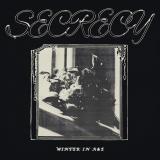
Where other bands seem to be hellbent on pushing an energy of exhilaration, London’s premiere grief peddler’s SECRECY seem to be more interested in reminding us all what deep shit we are in. Their debut recorded outing captures the morbid and grandiose power of their successful string of London shows, refining the message to a promising and bewildering first release. Taking compositional cues from THE EXECUTE, SOUTHERN DEATH CULT, and THE CHAMELEONS, the room filling instrumentals carry a bleak and punishing prophecy of moral turmoil and hysteria, opting to drive the notion of post punk off a cliff through force of will alone. The sound is crisp and wide without giving up the austerity necessary to carry the prophetic sense of dire urgency in the vocals, driving and marching drums and bass lines carrying almost danceable guitar parts to climax. Soaring guitars over driving drums push the corpus to blistering movement, restrained by lyrics about fucking and dying, an Eros/Thanatos act delivered with a refreshing lack of irony or sarcasm. Lyrical influences from RIMBAUD and BAUDELAIRE abound, veering from the brink of poetry back down to primitive taunts and cries.
Following the critically acclaimed Fantômes… Futurs, praised by FIP, France Inter, Radio Nova, ARTE and International jazz press, double bassist and composer Kham Meslien returns with Vévés électriques, a deeply immersive second album where memory, landscape and improvisation merge into a singular sonic journey. Joined by Laurent Bardainne, Roger Raspail, Naïssam Jalal and David Neerman, Meslien expands the intimate language of his double bass with subtle loops and organic textures, weaving together echoes of Iceland, the Caribbean and imagined territories. Blending spiritual jazz, contemporary classical influences and ambient soundscapes, Vévés électriques is an invitation to drift beyond geography and into a profoundly personal exploration of emotion, identity and freedom.
Set upon an oil-smooth sea, an immense range of directions opens up before Kham Meslien for “Vévés Électriques”, his second album after “Fantômes… Futurs.”
With only his double bass and bow as vessel and sextant, a distant journey nevertheless begins to take shape. Vibrations and the striking of strings against wood quickly trace lines and winding paths across the surface of the water—so many routes to follow before leaving them behind, allowing the outward journey to become an inward voyage as well.
After an improvisation intended to shed light on the course ahead, isolated lands came into view: the shores of Iceland, the lands of the far north, places cut off from the rest of the world by vast expanses of water. Islands battered by a harsh climate that can only be endured by drawing warmth from deep within oneself.
Then the Caribbean arc appeared. The archipelago, a setting for joyful and unsettling experiences, takes Kham back to a childhood from which the passing years have carried him away. Rather than following the conventional channel of the music of these places, the West Indies emerge through memories whose colors are still vivid.
Through the morning mist, Roger Raspail’s percussion locks into the same frequencies of the groove. Double bass and struck skins then become companions on a road that intersects with Laurent Bardainne’s saxophone. Carrying a dreamlike message, David Neerman’s vibraphone also joins the narrative to write a few chapters of its own, while others are enchanted by the flute and voice of Naïssam Jalal, or struck by the metaphorical rhymes of rapper Rocé.
On the surface, through the themes along which the pieces navigate, landscapes slowly reveal themselves and change shape as the shore draws nearer or recedes. Straying from the marked course and allowing oneself to drift, breaking free from pure acoustic sound by adding loops first played live and then sampled, allows Kham to explore the depths. The depths of the ocean, as well as those of his soul. To enter a world of improvisation that reveals itself even as he explores it. Examined up close, feelings become shells to pick up and hold to one’s ear, so that they can be felt intensely until they take material form.
This sea, which had appeared peaceful, became the stage for a succession of stories and images, which then accumulated to give birth to a larger narrative.
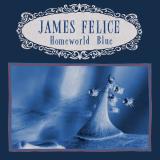
On his sweeping sophomore solo effort, James Felice squares up against cosmic indifference with expansive orchestral production and a depth of writing that makes even visceral Biblical imagery feel effortless. Recorded in Omaha with Nate Walcott (Bright Eyes) at the helm, Homeworld Blue pairs lush horns, intricate strings and pounding piano with Felice's authoritative, plainspoken voice — grand in scope, but never far from the small, everyday moments it's really about. Drawing on twenty years as keyboardist and accordionist of The Felice Brothers, and following his 2025 solo debut The Little Ones, Felice trades the intimacy of home recording for a maximalist, cinematic scope that sits comfortably alongside audacious songwriters like Joanna Newsom, Fiona Apple and Randy Newman — and closes, fittingly, back in the family kitchen.
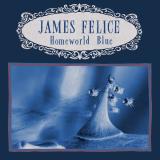
On his sweeping sophomore solo effort, James Felice squares up against cosmic indifference with expansive orchestral production and a depth of writing that makes even visceral Biblical imagery feel effortless. Recorded in Omaha with Nate Walcott (Bright Eyes) at the helm, Homeworld Blue pairs lush horns, intricate strings and pounding piano with Felice's authoritative, plainspoken voice — grand in scope, but never far from the small, everyday moments it's really about. Drawing on twenty years as keyboardist and accordionist of The Felice Brothers, and following his 2025 solo debut The Little Ones, Felice trades the intimacy of home recording for a maximalist, cinematic scope that sits comfortably alongside audacious songwriters like Joanna Newsom, Fiona Apple and Randy Newman — and closes, fittingly, back in the family kitchen.
When Network Records originally issued “Innovator” in 1991 we knew that the music contained within was timeless. At that time, of course, we had no grasp of how well Derrick’s epic soundscapes would time travel. We christened the collection - “Soundtrack For The Tenth Planet” - because it seemed like the music (and Derrick) had indeed arrived from another world.
The release has been acclaimed as iconic because Derrick, the madcap and maverick philosopher of Detroit Techno, introduced the concept of dance music with a musical and emotional agenda way beyond anything that had come before. Beats with beauty. Literally the strings of life. Where fellow musical geniuses Chic had previously urged everybody to simply "Dance, Dance, Dance" mood alchemist Mayday merged simple yet cerebral dreamscapes with strange and urgent complex dance rhythms and invited us all to Dance And Dream. And in a strange juxtaposed way helped birth the hedonistic Acid House scene with classics “Nude Photo” and “Strings Of Life”
The energy is frenetic, but merged with a new age ambience. The gems collected on this offering were iconic in 1991, now they cause mass hysteria when Derrick turns his one time musical experiments, created in a tiny room in Detroit, and turns them into epic concerts with orchestras and musicians across the globe. “Hand In Hand” existed in 1991 and we wanted to release it then, but it’s taken until now for the complete 13 minute recording to finally meet the world.
It will be revered, because like all of Derrick May’s music it is life affirming. Emotions Electric indeed.
The original “Innovator” release was housed on one single slab of wax. This time around we have expanded it to two discs to make space for “Hand Over Hand” and also so everything elsewhere - masterpieces remastered - can be presented in a complete and superior fashion. Whatever the tweaks, changes and updates etc all these years on, this music still sounds gloriously alien and groundbreaking. But there’s still no Tenth Planet.
"Innovator" remastered by Curvepusher, London 2019. Re-presented by Network Records in conjunction with Derrick May.
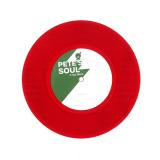
Brooklyn-based producer and lathe-cut specialist P-Sol returns to his own imprint (as he does on an impressively frequent basis, frankly) with another irresistible double-sided 7". Both tunes continue to carve out his own soulful, sample-driven corner of hip-hop and r&b, starting with 'A Little Personal' with its elegant strings and classic boom-bap era drums topped with a silky smooth and loved-up vocal. The B-side, 'Pete's Soul' is a fitting tribute and nod to make great from this world and bumps gently but with a catchy vocal edge. Another heady crate-digger's delight from a man whose purple patch continues.
Hot Digits main guy Fingerman - a veritable of the UK nu-disco and disco re-edit scenes - is the man at the controls on the latest missive from the imprint's vinyl-focused Wax Digits offshoot. He's in prime form from the off, offering a deliciously chunky, effects-laden, dub disco style rework of a New York no-wave era 'downtown' disco classic. He doffs a cap to pal Chewy Rubs and their joint love of heavy, looped bass guitar lines on the stretched-out funk-goes-deep disco wonder that is 'Bestest Beat', before cunningly rearranging a more string-laden slab of disco-funk grandiosity on closing cut 'We Love It'. We certainly do, and there's a fair chance you will too.
Tehran-born Sohrab brings a unique mix of influences to the new outing on Iran-based label Shahr Farang. Vocals in Persian and melodies associated with Middle Eastern styles all colour his take on deep techno. 'Santouri (Sange Sabour)' kicks off with a throbbing rhythm and exotic strings that intertwine up top with wirey electronics. It's an intoxicating collision of cultures that also comes as a more direct instrumental. On the flip, 'Rise' is a jacked analogue workout with punchy kick and spangled bass locked in a wrestle as swung percussion and rattling chords all beef things up further.
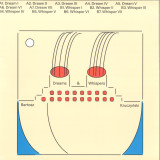
We’ve always been careful not to call Balmat an ambient label, because we like having the freedom to move, to drift, to morph. But with our 11th release, we turn our ears—proudly, blissfully—to a strain of ambient at its most timeless. The appropriately titled Dreams & Whispers comes from Warsaw’s Bartosz Kruczyński, who has recorded under a number of guises, Earth Trax, as well as his own name. Over the years, he’s touched upon deep house, breakbeats, acid, techno, electro, IDM, and more; often, the throughline running through a given album is simply the refusal to remain in any one place for long—well, that, and his unusually nuanced ear for harmony and texture.
Those qualities come to the fore on Dreams & Whispers, which might be the most focused encapsulation of Kruczyński’s atmospheric sensibilities to date.. Across 14 stripped-down tracks for shimmer and pulse, Kruczyński evokes overlapping styles in ambient—warm vibraphones, taut arps, massing strings, lonesome delay chains —but always with his own twist. Fitting the album’s title, the album is loosely divided into two distinct moods: The A-side, “Dreams,” is charged with subtle movement, rhythms spreading out like rings around skipped stones, while the B-side, “Whispers,” plunges into a zone of shadows and hush. The two complementary moods flow into one another like the faces of a Moebius strip, yielding an album that’s intuitively shaped and rich in emotion.
zake and bvdub are towering figures in the world of ambient - and prolific ones at that. The pair now return to zake's hugely influential Past Inside the Present label with the four-track long player Erasure. Each piece goes typically long and builds slowly but surely into an all-consuming soundscape despite the fact each one is crafted simply from textured synth drift. There's distortion brewing under 'Effacing The Ephemeral' that nods to the likes of Stephen O'Malley while 'Eclipsing Your Earth' is a much more luminous and celestial mood that empties your mind of everything. 'Erasing Empires' then builds to an intense crescendo before falling away to sultry strings. A hugely dramatic work.
It's been almost a year exactly since the debut CJP Band 12' was released, Landing just in time for a few nausent plays at We Out Here 2025.
12 months and two more well received 12's later, Most notably of course by festival founder Gilles Peterson, the band find themselves making the short trip from their New Forest homes to the Tomorrow's Warriors stage on Saturday night for their We Out Here debut.
What better way to mark the occasion and round of the (calendar) year of releases with a tasty 7' that perfectly encapsulates festival vibes wherever they might be.
Taking the foot of the gas, For one release at least, Freedom delivers two sides of blissed out summer soul. Heavy drum breaks and the funkiest basslines of course still come as standard with a sweet vocal from guitarist Geoff Lai.
On the flip those trademark CJP strings glide over a stripped back instrumental version for the aptly named String Dub.