Il Quadro di Troisi presents La Commedia
Everything changes, all things evolve: four years after their eponymous debut, Il Quadro di Troisi return with a new album and a new line-up.
The perfect circle traced by Eva Geist (aka Andrea Noce) and Donato Dozzy (aka Donato Scaramuzzi) becomes a triangle with the permanent addition of Pietro Micioni, who collaborated in the previous recordings and had been part of ll Quadro’s live set.
Nothing stays the same, and the world is a lot different from what it was in 2020. The global crisis generated by the constant escalation of conflict and by the pandemic was mirrored by a time of individual crisis and personal, often irreversible transformation that underscored the entire period of the album’s composition.
The influence of these turbulent times is felt in the writing: La Commedia is about turning a crisis into an opportunity and using change as a catalyst for rebirth. Much like the characters in classic Italian comedies, who are masters in using irony to face life’s hardships, Il Quadro di Troisi explores the vast and unpredictable terrain between the lighter and darker sides of the human experience, matching the magical with the mundane.
La Commedia is about the many facets of life: each song is named after an archetype (e.g. the truth, the night, the Earth, the prophet), as though our existence were a tarot deck and its reading an exercise in collective consciousness.
La Commedia marks the band’s embrace of a more traditional song form, shaped by a very personal and distinctive musical style. The distinguishing elements of Il Quadro di Troisi’s music – classic Italian songwriting with an electronic spin – meld into a unique mix that is both seductive and eerie, elegant and earthy, contemporary and timeless. La Commedia celebrates the band’s cultural roots while constantly moving into new territory, balancing nostalgia with a forward-thinking approach.
La Commedia is a rare gem that confirms Il Quadro di Troisi’s relevance in the international music scene, as demonstrated by the number of top-level artists featured on the album: from Suzanne Ciani, a legend and a pioneer of independent music with a career spanning five decades, to Aimee Portioli, aka Grand River, a Dutch-Italian musician, composer and sound designer based in Berlin, along with Francesca Colombo’s eclectic violin (the de facto “fourth angle” of Il Quadro di Troisi’s frame), Fiona Brice’s strings, cultural agitator and icon of the Roman underground scene Stefano Di Trapani (aka Demented Burrocacao and a member of Trapcoustic and System Hardware Abnormal, among other projects), Maestro Daniele Di Gregorio, an excellent musician and a longtime collaboration of songwriting legend Paolo Conte, and Tommaso Cappellato, whose professional description goes well beyond “drummer” and who has been working with artists like Rabih Beaini and Maurice Louca.
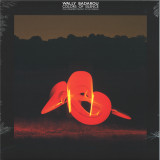
The cover of the album, as well as those of the singles, was designed by Francesco Messina, another icon of Italian music. Messina is a longtime Franco Battiato collaborator and co-author, a cult musician (his Prati Bagnati del Monte Analogo, made in collaboration with Roul Lovisoni, is considered a seminal record by the alternative Italian music scene), as well as a photographer, visual artist and the author of legendary record covers.
Buscar:g strings
Blue curacao transparent vinyl repress!
As the title suggests 'On Flute' shows us how diverse Tenderlonious's musicianship is as he embellishes each song with his signature flute sound. 'Ghana' sets the pace of the record with up-tempo afro beats, complimented by keys, strings, a distinctive lead synth and of course a soaring flute solo. 'Autumn Leaves' follows with a more UK broken-beat flavour, revealing a darker sense of atmosphere. Side A closes with 'Oedo Bushi,' a comparatively stripped back tune, a simple conga rhythm with flute and xylophone solos weaving in and out as if in conversation with each other.
Side B starts strong and steady with 'Song For My Father', an upbeat number fusing funk and disco to create the perfect dance floor filler that builds to a climax with one of Tenderlonious's wild flute solos (one of my personal favourites!). 'In A Sentimental Mood' follows and, as the title suggests, shows the listener how this producer came by his name. Tender flute inflections and sensitive lead synths, backed by quiet whispers make this the perfect accompaniment to an intimate candle lit dinner. The EP finishes with 'Dale's Corner,' another broken feel on this one with delayed Rhodes supported by tasteful flute lines throughout - it leaves the listener feeling uplifted and wanting more.
Since 2011, For All We Know has been the side project of Ruud Jolie, known from Within Temptation. The debut album was released in the same year, followed by the second album called 'Take Me Home' in 2017. In 2023, both albums were released on vinyl via prog rock/metal label Construction Records.
The brand new third album, entitled 'By Design Or By Disaster', will also be released on CD and colored vinyl via Construction Records.
During the writing process, Jolie again worked closely with singer Wudstik, and the band consists of the same musicians who were featured on the first two albums: Léo Margarit (Pain of Salvation), Kristoffer Gildenlöw (ex Pain of Salvation), and Marco Kuypers (ex Cloud Machine). The 11 songs on the album were produced by Jolie herself and range from heavy, thrashy metal to calm melodies.
Compared to the previous two albums, 'By Design Or By Disaster' takes the listener to even more extreme corners, ranging from beautiful atmospheric strings to powerful rhythms and heavy guitars. Despite this diversity, Jolie continues to search for unexpected melodies and harmonies, where he is not afraid to go off the beaten path. There are also some 'Easter eggs' hidden for the attentive listener; melodies from the previous albums that return in an innovative way on this new album, making the first two albums together with this album a kind of trinity, which also applies to the artwork.
Since 2011, For All We Know has been the side project of Ruud Jolie, known from Within Temptation. The debut album was released in the same year, followed by the second album called 'Take Me Home' in 2017. In 2023, both albums were released on vinyl via prog rock/metal label Construction Records.
The brand new third album, entitled 'By Design Or By Disaster', will also be released on CD and colored vinyl via Construction Records.
During the writing process, Jolie again worked closely with singer Wudstik, and the band consists of the same musicians who were featured on the first two albums: Léo Margarit (Pain of Salvation), Kristoffer Gildenlöw (ex Pain of Salvation), and Marco Kuypers (ex Cloud Machine). The 11 songs on the album were produced by Jolie herself and range from heavy, thrashy metal to calm melodies.
Compared to the previous two albums, 'By Design Or By Disaster' takes the listener to even more extreme corners, ranging from beautiful atmospheric strings to powerful rhythms and heavy guitars. Despite this diversity, Jolie continues to search for unexpected melodies and harmonies, where he is not afraid to go off the beaten path. There are also some 'Easter eggs' hidden for the attentive listener; melodies from the previous albums that return in an innovative way on this new album, making the first two albums together with this album a kind of trinity, which also applies to the artwork.
Stolen Goods Records announce Pergola's cinematic techno 'Zed' EP, featuring a remix from indie-dance legend CURSES.
Exploring hypnotic, emotionally charged melodies and vast techno breakdowns, the title track opens up the EP with a strong sense of mystery. Suspenseful strings build in anticipation as the bassline filters in intensity, this deep space offenng is the perfect example of a tune fit for the club as well as headphone-listening.
'Freak' is a beautifully intense piece featuring soft synths marked by subtle scratches, a feel-good vocal and the catchy strum of a quitar. '"Zed' is then given the CURSES treatment, the Optimo Music, Bordello a Parigi and Correspondant artist amplifies its retro feel resulting in nine minutes of pure dark disco hedonism. Closing out the release is an ambient collaboration between Pergola and Luigi Sambuy, 'Tunnel' is an ode to the early days of IDM through to the '70s.
*"Zed' marks the third release on Lele Sacchi & Asian Fake's Stolen Goods Records and follows up their widely acclaimed 'Volume 0' compilation as well as the recent collaborative EP between Black Loops & Innocent Soul. Since its launch last summer, the label has seen the support of artists like Dixon, Sasha, DJ Seinfeld and DJ Sneak and has garnered plays on prestigious stations like NTS and BBC Radio 1. The imprint continues its strong start to the year with three new tracks from the hyper-talented Pergola: a newcomer to the scene whos aready listed on labels such as Multinotes, Sementa ano Adriatiques Siamese, the latter which saw/ him reach number one on Beatport's Electronica chart.
Following the success of the "Out Of Luck" single, we're wrapping up the Ghia reworks chapter with "The Other Side" - a dynamic 12" vinyl loaded with three contemporary funk tracks and three instrumental cuts.
The release starts off with the title track on which we can hear another collaboration with vocalist Adriano Prestel. The song is built on the foundation of "Message From The Other Side," a synth-funk instrumental from last year's "Don't Stop" LP. Jim Dunloop has skillfully rebuilt the infectious grooves from scratch, and guitarist Lucy Liebe has contributed to the guitar elements. Interestingly, the 1985 original version contained vocals that were preserved on a demo tape. These original lyrics conveyed the idea that everyone should learn to listen to the other side. Adriano picked up this idea and wrote new verses and a new chorus, beautifully transforming the song into a soulful bliss. In today's world, the message remains relevant: without listening, understanding, and compromise, solutions are elusive.
Next up, DJ Friction takes "Out Of Luck" to new heights with a remix infused with electro-funk. The synth bass replaces the original, a punchier kick and a clap snare give it a classic boogie feel. Additional strings on the chorus and an extended build-up complete the transformation, making it a fantastic tune for any DJ set.
Marian Tone returns to remix "The Other Side" in the '85 rework, blending parts of the original song with replayed instruments from the studio sessions. He adds clav sounds and retains the original marimba keys by Ghia's Lutz Boberg. If you are into the 80s vibes, this rework will be your choice.
The flip side features instrumental versions that, even without vocals, are a special treat for all boogie and funk enthusiasts. Last but not least, the release includes the original mixdown of "Out Of Luck" from when the recording was finalized at Ed Longo's Soundrays studio - offering a different take from the instrumental version on the previously issued 45 single.
The 12" is presented in a full-picture sleeve designed by The Raincoatman, also known as label owner DJ Scientist.
Men of North Country from Tel Aviv follow up their late 2023 digital single and Keith Richards cover "Hate It When You Leave" with a rousing vinyl version of Carl Carlton's Northern Soul floorfiller "I Can Feel It". This 7inch release is backed by a special, as yet unreleased version of the MONC classic "Ravens".
In 2014, Wye Oak released Shriek, their fourth album. It was a necessary departure for Jenn Wasner and Andy Stack, who found themselves on uncertain ground after two years of constant touring for 2011's Civilian, living on opposite ends of the country and trying to revitalize their creative partnership. Wasner set aside her guitar for a bass. Stack took on the band's upper register, playing syncopated, meditative keyboard parts that interacted with Wasner's voice, which was newly freed from its call-and-response relationship to the guitar_what had been, until then, a signature of Wye Oak's sound. "This idea and the ensuing creative reworking of our band did what it was meant to do," Wasner writes in 2024. "It ended a long, painful period of creative stagnancy and reconnected me with the joy of making music." During that period, Wasner and Stack were introduced to William Brittelle, the Brooklyn-based composer whose 2019 LP Spiritual America featured Wye Oak, the Metropolis Ensemble, and the Brooklyn Youth Chorus. His orchestral reimaginings of five songs from Shriek (Shriek: Variations, if you will) are the centerpiece of this package, which serves not only to mark the tenth anniversary of a great album, but to demonstrate the richness of Wye Oak's compositions. Stack says of Shriek: Variations: "It's like looking at the songs in a funhouse mirror. The songs on Shriek can be stripped down or embellished_this is maximal embellishment. William took the album and blew it to smithereens, looking at it in a weird, prismatic way." Through Brittelle, Wasner and Stack found themselves at the intersection of classical, experimental, and pop music. Further collaborations, like the Brooklyn Youth Chorus- featuring No Horizon and Paul and Michi Wiancko's string arrangements on "My Signal" from The Louder I Call, The Faster It Runs, followed, as this connection fundamentally changed the way Wye Oak approached making records, incorporating an entirely new palette of sound into their work. That shift began here. Shriek: Variations may feel like a startling take on the material, something like light bursting into a room through drawn curtains, but Brittelle's arrangements are largely original to his first collaborations with Wye Oak a decade ago, suggesting that his maximalist arrangements have lived comfortably within the framework of Shriek the whole time, waiting for the right moment to emerge. It's a fitting reintroduction to the album, which upon its initial release was pigeonholed into the easy one-note talking point of being the "no-guitar" record. But even so, as that happened, Shriek quietly started to become a staple among Wye Oak's core fans. Here, with help from Brittelle's expansive compositions, the release draws attention back to the songwriting_how, regardless of the instrumentation, Wasner and Stack's uncanny musicwriting partnership at the core is what makes both Shriek and Wye Oak excellent. Joined by the Metropolis Ensemble, Paul Wiancko, and Lizzie Burns, Wye Oak turn songs like "Logic of Color" inside out, reaching towards a kind of pastoral bombast, Brittelle's aesthetic with Wasner and Stack as an anchor. In fact, "Logic of Color" in this iteration takes that "no-guitar" script and flips it, with Wasner playing the synthesizer ostinato on acoustic guitar at its center. If Shriek is a record that charts the depths of solemnity and inner space, its Variations, roiling in a sea of winds, brass, and strings, recolors that space and complicates it, a gorgeous, unexpected response to the original's siren call.
With two critically acclaimed albums and a swathe of award-winning production turns under their belt, Ana Frango Elétrico present their most confident and accomplished work to date: Me Chama De Gato Que Eu Sou Sua / Call Me They That I’m Yours. Gesturing to a tradition of Brazilian boogie music, but bouncing with modern pop ebullience, the album sees the Rio artist evolve from a captivating upstart into a surefooted scene leader in full stride.
At just 25, the prolific artist and producer has already garnered worldwide admirers. Ana’s sophomore Little Electric Chicken Heart was nominated at the 2020 Latin Grammys. Since then, standalone singles have received the WME ‘Best Music Producer’ Award, recognising Ana’s deep passion for music production – a passion which has led to collaborations with nascent Brazilian stars Dora Morelenbaum, Illy and Sophia Chablau. Most recently, Ana was hailed for their co-production of Bala Desejo’s 2022 Latin Grammy-winning album Sim Sim Sim.
The new album finds Ana at their most assured and full voiced. Album opener “Electric Fish”, with funky bass and shimmering backing vocals, sets a buoyant tone. “Boy of Stranger Things” is its bombastic counterpart. It’s the grooviest Ana has ever sounded. And the most brazen. Lyrically, where Ana was once oblique on personal matters, they are now forthright – lucidly exploring their gender identity, citing accessible cultural references, and often singing in English.
“I started this album in 2021 with the intention of showing, in means of sound, understandings and feelings about queer love, subjectively exposing myself,” the non-binary artist states – before qualifying that though “feeling was its driving force, the album is really about musical production.”
“There’s so many references to different decades,” Ana explains. “Seventies drums with eighties processing … Going back, getting beyond … Testing the limits of organic sounds”. Characteristically playful, on Me Chama, Ana takes vivid and rewarding detours through funk-inflected R&B (“Dela”) and art pop (“Dr. Sabe Tudo”). “Nuvem Vermelha” is a cinematic chanson with lush strings that recalls Arthur Verocai. Then, “Coisa Maluca” loafs with the indie insouciance of Canadian slacker Mac Demarco. Later, “Let's Go Before Again”, is a full-on drum machine workout evocative of Stereolab.
“Even if people don't find my own references here, they'll find theirs,” observes Ana. “Maybe that’s this record’s biggest goal.”
On September 9th, 2022 at the Harrison House in Joshua Tree, Georg and Heike debuted a collection of songs that would later comprise Son of Velvet Rat’s Ghost Ranch studio album. A sacred space to present these new pieces, stripped-down to their most essential elements: two voices; one gruff and anchoring baritone, the other lifting in weathered hope, over six strings danced upon by Georg’s possessed spider-fingers, every note plucked with intention. A bare-boned outpouring, reverberating through the House like Midnight Mass in a rare church brave enough to explore the complexities of love.
That night, which ended with a refreshing baptismal monsoon as we walked out to our cars, would have to be preserved in the amber of memory until Georg and Heike would properly document the pieces at Gar Robertson’s Red Barn Studio in Morongo Valley the following spring ’23, before finishing the album in Austria.
Beside Trawbreaga Bay, in Co Donegal, on the north coast of Ireland, in an old schoolhouse, with a suitcase full of hired recording gear, Oisin Leech strums gently on an acoustic guitar and watches the tide pull the water away from the ancient inlet - The thickness of Oisin's voice soothes the room as the sound waves bounce around in the land where his ancestors still live and still wander - With a musical history that led Leech from the street punk bands of yesteryear through an ongoing stint with folk duo The Lost Brothers, he found himself for the first time working on songs to sing alone. In his mind, the songs became imagined vignette films playing behind closed, guitar eyes. After writing nearly 40 new songs in this fashion, Leech wrote "October Sun" which would become the foundation for his debut solo record, Cold Sea.
Cold Sea was produced by guitarist/songwriter Steve Gunn. Leech dreamt of making the record in Donegal Ireland, a county significant to him because it is the home of his ancestors. Pitching this idea to Gunn sparked the first of several serendipities circling the Cold Sea sessions - Gunn had always wanted to visit Donegal to connect with his own familial roots in the region.
Cold Sea is perhaps most notable for its tremendous warmth. Each song was recorded in a few takes and adorned gently with synthesizers and guitar from Gunn. Several songs feature contributions on the upright bass by Bob Dylan band stalwart Tony Garnier. M. Ward plays guitar on October Sun and there are strings by Roisin McGrory and bouzouki by the legendary Donal Lunny throughout. It is a friendship record but even at its most collaborative, Cold Sea remains centered around the humble acoustic guitar and wool blanket vocals of Leech.
Embark on a sonic odyssey with "Between Poetry and Catastrophe," a 15-year labor of love by Norwegian electronic artist Ars Dada. The title draws inspiration from the poignant words "Music lives in the span between poetry and catastrophe", of the late Norwegian composer Arne Nordheim.
In this album, Ars Dada delves into the extremes—where chaos intertwines with serenity, and violence meets the poetic. Every track is a meticulously crafted journey, featuring real instrumentation such as vocals, piano, and strings, including a grand collaboration with the chamber orchestra of the Arctic Philharmonic Orchestra. From intense breakbeat chaos to delicate neoclassical string pieces, Ars Dada invites you to experience the visceral beauty of this musical tapestry.
This isn't just an album; it's an exploration of the human condition at its most extreme.
Thank you to the performers and Arctic Philharmonic
Written and recorded with support from Fund for Performing Artists
All music written, arranged and produced by Erlend Bilsbak/Ars Dada
All strings recorded in Kysten studio by Sivert Henriksen
Violin on all tracks except Fjordyp, End of September, Skyggespill, and Du Må Ikke Sove performed by Brynjar Lien Schulerud
Violin on Fjordyp, End of September, Skyggespill, and Du Må Ikke Sove performed by Sander Tingstad
Viola on all tracks except Tjernet performed by Heidi Schulerud Bilsbak
Cello on all tracks except Tjernet performed by Håvard Bilsbak
Grand Piano on Fjordyp and Skyggespill performed by Yegor Shevtsov
Alto soprano on Fjordyp, End of September, Sub Luna Saltamus, Du Må Ikke Sove, and Grief performed by Marika Schultze
All strings on Tjernet by performed by Arktisk Filharmoni (Arctic Philharmonic)
Mastered by Julien Guillot at Electric Voyage Studio
Album photo and design by Erlend Bilsbak
Introducing, the experimental violinist and performer Vanessa Bedoret.
The London-based French musician today announces that she’ll be joining, Scenic Route, a label renowned for selecting and nourishing rising stars for the release of her debut album, Eyes, due out on 8th of March 2024. Launching with a taste of what’s to come, today she also shares single “1/2”, a textural track that tells of the dichotomy between those who are selfless and those who are self-centred, and their need to merge as one. This duality is reflected in the industrial metallic echoes under Vanessa’s soaring vocals and the piercing strings of her chosen instrument, the violin.
Treating songwriting as an instinctive process, Bedoret transforms her deeply personal experiences into pure emotion. Not following any set narrative, Eyes takes the listener on a journey via their own experiences, prompting introspection through Bedoret’s hypnotic melodies.
Through the album, she awakens the audience's imagination, to open up their emotional response. On “Ballad”, a vague, loving lyrical letter to someone close, Bedoret’s heartbreakingly soft lament is barely audible over the dramatic atonal strings. She flips her narrative again in the titular track, “Eyes”, so the listener empathises through her isolated violin, and takes on her anguish, not needing to understand the full story.
Bedoret began her classical training at age 6 and on completion at 18 she embraced the thrill of playing guitar in punk bands, and like many at the turn of adulthood, was quickly captured by the allure of the dancefloor. Her far-reaching taste doesn’t stop there, she also counts black metal to opera and from eurodance to IDM as inspiration. Her deep understanding of musical form elevates her experimentation to a truly unique sonic experience, one that never strays too far from her original love of classical music.
With only a string of releases under her belt via independent labels like Laura Lies In and Archaic Vaults, her refined skillset has meant she’s been in high demand for both solo shows and collaborations. These accolades include playing violin with New York avant garde collective Standing On The Corner at The Serpentine, as well as a part of Kahil El’Zabar conducts MOKI at the ICA, and Linder: Another Music in a Different Arcadia at the Design Museum alongside artist Linder Sterling, Naima Cherry, Maxwell Sterling, Kenichi Iwasa & Ella Frears.
For her solo performances, she’s shared stages with Standing on the Corner, Ekaterina Bazhenova-Yamasaki, Philomème Pirecki, John T. Gast and Nexcyia to name a few. She’s also performed as a duo alongside musician Severin Black in support of their collaborative EP release, First Passage / Excommunicated.
Through the lens of a life lived to it’s fullest and one that does not shy from experiencing the rawest of emotions, it’s clear that Bedoret has a nack for translating personal observations into cinematic crescendoes. The field recordings throughout only heighten this feeling adding both a grounding and other worldy sensibility. Lyrically, she allows you to peek into her private world and for a fleeting moment letting you lock eyes with hers, asking what do you see?
This debut is a glowing experimental work that purrs with a distinctive narrative. Vanessa Bedoret is a promising new act, ready to take 2024 by storm.
On A Golden Shore arrives as The Hanging Stars reflect on a year of triumphs. With an Americana Music Association Bob Harris - sanctioned award and a Nashville sell-out in Third Man’s Blue Room with Jack White approvingly looking on, they’re a leading light in the UK Cosmic Americana cohort. Their standing has allowed them to pay less attention to any preconceptions of what they are ‘supposed to be’. On A Golden Shore - their fifth album and their second for the pioneering Loose Music, following 2022’s Hollow Heart - finds them definitively themselves and presents a set of disparate songs whose fundamental linkage is the band that made them. On A Golden Shore was recorded at Edwyn Collins’ Clashnarrow Studios with Sean Read producing. Singer/guitarist Richard Olson, drummer Paulie Cobra, multi-instrumentalist Patrick Ralla, plus freshman bassist Paul Milne – laid down the album’s backbone over eight days. Mostly recorded live, even the solos done as a piece. Much is first take because trying better, it never worked as well. Pedal-steel player Joe Harvey-Whyte created and added his parts at his London studio bringing ‘shimmery psychedelic goodness’. Smartly sequenced On A Golden Shore proceeds in clusters of songs; commencing with the free and easy choogle of ‘Let Me Dream Of You’, encompassing the sunny glam of ‘Sweet Light’, the baggy Balearic waft of ‘Happiness Is A Bird’, the pan pipes and bongos of the exotic ‘Golden Shore’, through to the rolling banjo of ‘No Way Spell’ and the celestial cascades of ‘Heart In A Box’. Fashioned instinctively On A Golden Shore is ultimately an album of sensation as much as thought, filled with fleeting moments of blissful excess, and stumbling, rushing flutters of sound; its evanescent psychedelia, divine choruses, and shards of strings combine into an infectious, compelling Cosmic Heartbreak Boogie.
15 years after their last album of original music, the Robinson Brothers present ‘Happiness Bastards’- their 10th studio album. Some may say the project has been several tumultuous years in the making, but we argue it's arriving at just the right time. Call it brotherly love or music destiny that brought them back together, the highly anticipated record consecrating the reunion of this legendary band just may be the thing that saves rock & roll. In a time where the art form is buried beneath the corporate sheen of its successors, The Black Crowes are biting back with the angst of words left unsaid penned on paper and electrified by guitar strings, revealing stripped, bare-boned rock & roll. No gloss, no glitter, just rhythm and blues at it's very best - gritty, loud, and in your face.
Since The Black Crowes reunited in 2019, they've made a triumphant return to form with over 150 shows spanning 20 countries worldwide, celebrating the 30th anniversary of ‘Shake Your Money Maker’, the album that put them on the map. Upon their return from the road, they knew they needed something new to show for their lost time. The Robinson Brothers and longtime bassist Sven Pipien headed to the studio with producer Jay Joyce in early 2023 and the experiences of years past transcribed themself through the music as the band found their way back to their roots. And it's finally here!
Violist, violinist and singer-songwriter Marla Hansen returns to Karaoke Kalk with "Salt", her second full-length album to date. Building upon the sonic palette the Berlin-based musician established with her debut "Dust" in 2020, "Salt" takes the delicate mixture of acoustic instruments such as viola, violin, piano and guitar combined with subtle electronics to the next level. The new album is both a remarkable departure and at the same time sheds a new yet reassuring light on Hansen's work and creativity. "Salt" features numerous collaborations with like-minded musicians and friends, e. g. producer and composer Simon Goff, The Notwist's drummer Andi Haberl and the renowned artist DM Stith.
The "Dust" has settled. After having recorded her solo debut of that name, in 2020 the world came to a grinding halt, leaving Marla Hansen left to her own devices in her adopted home of Berlin. For Hansen, who previously had lent her talent to many creative minds such as The National, Sufjan Stevens, The Hidden Cameras, Jay-Z and Ravi Coltrane, the collaborative aspect of writing and producing music had always played a crucial part in finding her own path as a solo artist.
"I started to explore synthesizers and electronic production myself," she remembers of the time when meeting other musicians in person was out of the question. "I am proud that I accomplished many of the electronic elements of the new album by myself, and otherwise laid the groundwork for the final electronic structures through my own experiments. I always wanted to record a 'big' record, one that has a lot of power and sound, and this one is 'bigger' than anything I have done so far."
"Salt" is big, indeed. The opener "Chains" is driven by a gliding bass line, bobbing 808 snares, deep chords and a mesmerizing chorus doubled by luscious strings, marking the beginning of a new chapter in her creative journey. A stark statement, both musically and lyrically. Meanwhile, the title track of the album is an almost abstract sounding ambient miniature, sketch-like, dark and haunting, showcasing Hansen's voice in a shy, brittle and fragile state. If This Mortal Coil/The Hope Blister were ever to record another album, these songs should be high up on the shortlist of tunes to pick. "The One Time" - a duet with Hansen's long-time friend DM Stith - gently meanders between a Philip Glass-inspired piece for chamber orchestra and a vocal ensemble performing on Top Of The Pops. In this range of styles and approaches, Hansen's vision is more present than ever.
For refining and finishing the songs, Hansen turned to Simon Goff, who produced the album and engineered much of the recording, merging Hansen's newly-found songwriting approach with the artistic delicacy which made her debut album an exceptional piece of work. Features include among others: Alice Dixon (Oriel Quartett) on cello, Kyle Resnick (The National, Beirut) on trumpet, Benjamin Lanz (The National, Beirut) on trombone and tuba, and Miles Perkin on bass. And then there is The Notwist's Andi Haberl, who "crafted perfect drum and percussion parts to move the songs wherever they needed to go, either into their driving grooves, slow-build explosions or gentle swells of feeling."
But what are songs actually about? "The themes revolve around a feeling of being trapped. Having to stay inside during the pandemic, with all the silence and stillness coming with it. Simultaneously, I was caught up in a professional situation that was not working for me, yet it required a lot of energy and time. I was thinking a lot about how to break old habits and patterns. Patterns in my life, patterns I saw my friends and loved-ones stuck in. There are a lot of ways that people can be trapped, and breaking out of that requires a lot of courage and energy - on all levels. The title 'Salt' seemed to fit, ocean themes showed up naturally in some of the songs, and I thought often about the quote: 'The cure for anything is salt water: sweat, tears or the sea.' Maybe I was just dreaming of the ocean, since it was inaccessible for the first time! But I wanted a cure for this feeling of being trapped, in a time of uncertainty and anxiety, salt as a remedy seemed to have some truth in it: sweat, tears or the sea."
Perseverance and the urge for freedom prevailed in the end. "Salt" is a bold artistic achievement, with songs as big as the biggest waves imaginable. With melodies as alluring as the most comfortable breezes. Perfect from start to finish.
Most audiophiles know Alan Parsons Project's I Robot by heart. Engineered by Parsons after he performed the same duties on Pink Floyd's Dark Side of the Moon, the 1977 record reigns as a disc whose taut bass, crisp highs, clean production, and seemingly limitless dynamic range are matched only by the sensational prog-rock fare helmed by the keyboardist and his creative partner, Eric Woolfson. Not surprisingly, it's been issued myriad times. Can it be improved? Relish Mobile Fidelity's stupendous UltraDisc One-Step 180g 33RPM box set and the question becomes moot.
Mastered from the original master tapes and pressed at RTI on MoFi SuperVinyl, I Robot comes to life with reference-setting realism on this numbered, limited-edition reissue. Boasting immaculate highs and lows, generous spaciousness, and see-through transparency that takes you into the studio with Parsons and Woolfson at Abbey Road, this definitive edition is designed to demonstrate the full-range capabilities of the world's best stereo systems while offering listeners the convenience of having all the music on one LP.
Featuring a nearly inaudible noise floor, this transcendent UD1S edition functions as a repeat invitation to savor reference-grade soundstages, immersive smoothness, sought-after instrumental separation, three-dimensional imaging, and consummate tonal balances. Able to be played back at high volumes without compromise or fatigue, it is a demonstration record for the ages – the likes of which are no longer being made. This is the very reason you own and invest in high-end audio gear.
The special characteristics of this UD1S version extend to the premium packaging. Housed in an elegant slipcase, the reissue features special foil-stamped jackets and faithful-to-the-original graphics. Aurally and visually, it is made for discerning listeners who prize sound quality and production, and who desire to fully immerse themselves in everything about this conceptual landmark. The Alan Parsons Project's most famous record deserves nothing less.
Inspired by and loosely based around the Isaac Asimov stories of the same name, I Robot delves into themes of artificial intelligence and technological dominance that make the record extremely relevant in the 21st century. Indeed, Parsons and Woolfson's pinnacle creation dovetailed with the ascendency of Star Wars, which itself is experiencing a rebirth in an age of self-driving cars, smart devices, and mindless automation. Lyrically, songs such as "The Voice" call into question human behavior – and their relationship to increasing robotic supremacy – in everyday life. Parsons and Woolfson reflect the associated paranoia, dichotomy, and transformation via shifting sci-fi arrangements steeped in drama and moodiness.
The absorbing tunes on I Robot also continue to fascinate due to their perfectionism and innovation. Borrowing from Pink Floyd's strategies, Parsons and Woolfson utilize a looped sequence on the title track to create new downbeats. "Some Other Time" employs two different lead vocalists and yet gives the illusion that only one is involved. Captivating strings, a piccolo trumpet, and bona fide pipe organ grace "Don't Let It Show." The origins of "Nucleus" stem from a unique analog keyboard concoction dubbed "the Projectron," devised by Parsons and electronic engineer Keith Johnson. Andrew Powell's orchestral and choral arrangements top it all off, with "Total Eclipse" arriving as a frightening track that presages the climactic "Genesis Ch. 1 V. 32."
Does man or machine win in the end? Decide as you get lost in Mobile Fidelity's UltraDisc 180g 33RPM LP pressing. Secure your numbered copy today!
More About Mobile Fidelity UltraDisc One-Step and Why It Is Superior
Mobile Fidelity Sound Lab's UltraDisc One-Step (UD1S) technique bypasses generational losses inherent to the traditional three-step plating process by removing two steps: the production of father and mother plates, which are created to yield numerous stampers from each lacquer that is cut. For UD1S plating, stampers (also called "converts") are made directly from the lacquers. Since each lacquer yields only one stamper, multiple lacquers need to be cut. Mobile Fidelity's UD1S process produces a final LP with the lowest-possible noise floor. The removal of two steps of the plating process also reveals musical details and dynamics that would otherwise be lost due to the standard multi-step process. With UD1S, every aspect of vinyl production is optimized to produce the best-sounding vinyl album available today.
MoFi SuperVinyl
Developed by NEOTECH and RTI, MoFi SuperVinyl is the most exacting-to-specification vinyl compound ever devised. Analogue lovers have never seen (or heard) anything like it. Extraordinarily expensive and extremely painstaking to produce, the special proprietary compound addresses two specific areas of improvement: noise floor reduction and enhanced groove definition. The vinyl composition features a new carbonless dye (hold the disc up to the light and see) and produces the world's quietest surfaces. This high-definition formula also allows for the creation of cleaner grooves that are indistinguishable from the original lacquer. MoFi SuperVinyl provides the closest approximation of what the label's engineers hear in the mastering lab.
For a few years Leo Robinson was the sort of hidden secret you sometimes come across in local music scenes. First in Manchester and now in Glasgow, he’d pop up regularly on DIY bills or as local support to a touring act, quietly blowing them off stage with his rich baritone vocal and homespun lo-fi tales of folklore and animism. With The Temple – his debut on PRAH Recordings – he looks set to cross over from being a cult concern.
“There's a spectrum within the album between fully mythologising or symbolising my lived experience, and just stating it in very matter of fact terms - that push and pull between the need to abstract and the need to break through the abstraction and have an honest moment with oneself” he explains. “This is one of the themes of the album as well as part of the process. The aim was to take all these anecdotal or symbolic elements and merge them into one narrative and one world, in a way that you can find your way through the record as if it were a landscape or language with its own logic.”
The record takes on a pastoral, slightly baroque nature that Robinson partly attributes to a friend screening a lot of ‘70s BBC material in his book shop that they used to hang out at. There are also elements of jazz, flickering to life in “The Spring”’s piano-led finale and coda.
Thematically, Robinson likens it to a Jungian ‘Hero's Journey’, his voice possessing a character who goes through several defined stages of consciousness. From conception and the beginning of an earthly life, the first half of the album recognises the development of the protagonist’s narrative and identity, before “The Pink Light”’s freeform departure from the hitherto more song-based suite devastatingly shatters this. The second half of the album then sees the protagonist witness “the uncontainable” water; learning that true divinity lies not in the individual self or lofty notions of gods and temples, but in the unremarkable nettles, insects and dogs on the roadside riverbank - referenced on tracks “The Cormorant” and “The Spring”.
Although now residing north of the border, The Temple was written while Robinson was finding his feet in Manchester, having moved there to go to art school as a teenager (as a visual artist, he has exhibited at the Tiwani Contemporary in London and Cardiff’s Chapter Arts Centre). As a result, many of the tracks bear out the shadows of his experiences in the northern city – at their most visible and explicit on the beautifully fragile storytelling of “The Pavement”. Written the day after the Manchester Arena Bombings, it recalls Robinson waking up to go to work on a hot summer’s day to discover that his street had been blocked off for terrorism investigations; it then progresses through the rest of his day, amidst the grimly surreal aftermath of the previous night.
Having written the chords, melodies and lyrics to the album, Robinson fleshed out the tunes by scoring out parts for the additional instrumentation, but it was only when a friend sent a demo to PRAH that he was able to fund its full recording. Guitars, vocals, piano and French Horn (the latter recorded by Lauren Reeve-Rawlings) were put down at Green Door Studios in Glasgow. Microphones were placed around the room and the sound of the musicians stepping on creaky floorboards and opening creaky doors were left audible to further the record’s live feel. The harpsichord heard on “The Serpent”, meanwhile, came from University of Glasgow lecturer David McGuinness. Strings were then recorded at PRAH Studios by Francesca Ter-Berg and Raven Bush, the Social Singing Choir adding their choral vocals to “Temple II”.
The result is an album that feels both luscious and yet intimately raw; as grand as Richard Dawson at his most panoramic but containing the rough edges and skeletal looseness of a Calvin Johnson work. At times Robinson lyrically moves towards the surreal, but ultimately this is a record grounded in reality; a true showcase of Robinson’s skill as a lyricist and songwriter.
James Hudson is a captivating and charming performer who has a natural affinity with an audience. His outstanding voice can communicate the nuances of a melody and lyric with great interpretive prowess which undoubtedly sets him apart as a jazz singer at the top of his game.
James Hudson's upcoming second album 'Moonray' is a bold and ambitious project that features a unique ensemble including horns, vibraphone and strings to create a rare and accomplished sound. This follows his debut album 'Tomorrow', which attracted international media coverage and exceptional reviews from many top jazz publications (BBC Music Magazine, London Jazz News, Jazzwise, JazzViews), plus air-time across national radio stations where it was named 'Album of the Week' by Jazz FM.
Having recently sold out his first show at the world- renowned Ronnie Scott's, James is in demand at many of the UK's most respected jazz clubs. Regularly performing to sell- out crowds at Pizza Express Jazz Club Soho, Crazy Coqs, Piano Smithfield, Peggy's Skylight, and Hull Truck Theatre, he has appeared at the EFG London Jazz Festival, Leeds Jazz Festival, and Wigan International Jazz Festival. James is sought after by some of the top big bands and orchestras in the industry whom he has guested with all over the world.
James has taken great inspiration from the likes of Mel Torme, Frank Sinatra, Nat King Cole, and Sarah Vaughan which when combined with his passion for jazz standards has inspired him to establish his own voice and unique style, which is captured in his music and live performances.
- A1: Moon's Milk Or Under An Unquiet Skull (Part One)
- A2: Moon's Milk Or Under An Unquiet Skull (Part Two)
- B1: Bee Stings
- B2: Glowworms/Waveforms
- B3: Summer Substructures
- B4: A Warning From The Sun (For Fritz)
- C1: Regel
- C2: Rosa Decidua
- C3: Switches
- C4: The Auto-Asphyxiating Hierophant
- C5: Amethyst Deceivers
- D1: A White Rainbow
- D2: North
- D3: Magnetic North
- D4: Christmas Is Now Drawing Near * Featuring – Robert Lee, Rose Mcdowall
- E1: Copal
- E2: Bankside
- F1: The Coppice Meat
- F2: Ü Pel (Insense Offering)
Red in Clear Vinyl[57,35 €]
First compiled as a double CD in 2002, Moon's Milk (in Four Phases) is a suite of four EPs that Coil released seasonally via their in-house Eskaton imprint across 1998. The line-up for these sessions were John Balance, Peter "Sleazy" Christopherson, Drew McDowall, and William Breeze. Recorded primarily at their home studio in Chiswick, London on the eve of a permanent relocation to the small seaside town of Weston-Super-Mare, the collection has long loomed as a pivotal and pinnacle work in the group's discography, but has never been officially reissued, or repressed on vinyl. Time has only ripened its tapestry of regal strangeness. Arranged sequentially in tribute to the equinoxes and solstices, Moon's Milk captures Coil at a revelatory crossroads, leaning deeper into improvisation, spontaneity, and sound design. "Moon's Milk or Under an Unquiet Skull" initiates the proceedings on Spring Equinox, a two-part netherworld organ séance woven from vocal drones, cathedral keys, seasick strings, and opiated undertow. From there, Summer Solstice skews lighter but no less incantational, with Balance embracing his voice-as-instrument across lucid dream torch songs ("Bee Stings"), purgatorial spoken word ("Glowworms/Waveforms"), sultry chamber pieces ("Summer Substructures"), and falsetto ravings ("A Warning From The Sun (For Fritz)"). Autumn Equinox exudes more of a pensive and twilit mood, from the Rose McDowall-sung folk ballad "Rosa Decidua" ("I hear your voice sing near to me / I've put away the poisoned chalice (for now) / And lie down amongst the flowerbeds") to hall-of-lords hallucination "The Auto-Asphyxiating Hierophant" to the liminal string-plucked classic "Amethyst Deceivers," featuring excellent alien guitar by Breeze layered with Balance's oft-quoted couplet: "Pay your respects to the vultures / For they are your future." The album's final chapter, Winter Solstice, is its most swooning, remote, and ceremonial. Opener "A White Rainbow" stirs strings, layered choral vocals, and shivering rhythm into an imploding burial hymn. "North" oscillates bleakly, a ghost in the machine murmuring opaque prophecy ("This black dog has no owner / This black dog has no odour"), while "Magnetic North" is its inverse, a guided meditation of gently flickering software and surreal chakra poetics ("Red rose filling the skull / Yellow cube in the lower pelvis / Silver moon crescent below the navel"). The suite fades to grey with a traditional English carol ("Christmas Is Now Drawing Near"), rendered like an executioner's song by Rose McDowall's doomed, beautiful voice. The Dais box set includes the entirety of the rare Moon's Milk Bonus Disc CD-R / 2019 Threshold Archives Copal CD, which includes three collaborations with Thighpaulsandra. This material is as rich and intoxicating as the previous four phases, ranging from electro-acoustic singing bowl rituals ("Copal") to dissonant electronic recitations of visionary Angus MacLise poetry ("The Coppice Meat") to ominous classical melancholia ("Bankside"). Once again, Coil confirm the vastness of their confounding, infinite alchemy, explored and refined across decades of experimentation - both sonic and bodily. From postindustrial to post-everything, theirs is an art untethered, in the wilds of its own design.
The Edits Collection label is fast becoming essential with a third irresistible offering in a little over a year. This latest one opens with some soul drenched boogie and disco featuring a heart-aching vocal hook and snappy grooves, then gets more deep and jazzy with 'Disco Is A Feeling'. The flip side opens with the steamy 'Take U 4 A Ride' with its explosive Philly strings and busy percussive lines and '10.15' then slow it down with a more steamy and sexy late-night sound that is all big loved-up vocals and freewheeling synths. All four of these are glorious weapons to have handy.
Scottish alt/post/progressive-rock outfit Midas Fall release their Fifth studio album, ‘Cold Waves Divide Us’ on March 8th, 2024 worldwide on Monotreme Records. Michael Hamilton joins founding members Elizabeth Heaton and Rowan Burn for the follow-up to their 2018 Prog Magazine Awards ‘Limelight Award’ winning album, ‘Evaporate’. ‘Cold Waves Divide Us’ sees Midas Fall at their most confidently visceral, each song moving beautifully between quiet and loud, gentle and crushing. “This album is a heavier and bigger experience than the last album”, says Heaton. “We kept the atmospheric strings and 80s synths of Evaporate but wanted to add heavier layered elements, to represent more what we sound like live.” Opener ‘In the Morning We’ll Be Someone Else’ starts quietly with serene piano and vocals, ominously ratcheting up the tension to walls of crashing guitars and Heaton’s soaring vocals. ‘I Am Wrong’ thunders along on pounding rhythmic drums swirling around heavy swathes of low and delicate melodic highs. On ‘Monsters’, the band are more contemplative, with an ethereal beginning making way for gorgeously syncopated guitar and drums, whilst ‘Cold Waves Divide Us’ builds slower, allowing Heaton’s voice to gracefully float over the growing force beneath it. ‘Avalanche’ is a bittersweet lullaby showcasing Heaton’s heart-rending vocals in one of the quieter moments on the album. ‘Point of Diminishing Return’ sees a more electronic influence, with glittering shimmered synths taking the space where guitar melodies were, but with all of the Post Rock beauty that the duo are known for, something ‘Little Wooden Boxes’ showcases perfectly, expertly hovering between gentle clean guitar and piano, and exhilarating, uplifting full-band, full-bore epic. Credits: Elizabeth Heaton - vocals, guitars, strings, synths, piano, drums // Rowan Burn - guitars, synths, piano, drums // Michael Hamilton - bass, synths, drums // Music by Elizabeth Heaton and Rowan Burn/Lyrics by Elizabeth Heaton
DELUXE CLEAR VINYL EDITION
Marking 40 years of The Jesus And Mary Chain, "Glasgow Eyes" was recorded at Mogwai"s Castle of Doom studio in Glasgow, where Jim and William continued the creative process that resulted in their previous album, 2017"s "Damage and Joy", becoming their highest charting album in over twenty years. What emerged is a record that finds one of the UK"s most influential groups embracing a productive second chapter, their maelstrom of melody, feedback and controlled chaos now informed more audibly by their love for Suicide and Kraftwerk and a fresh appreciation of the less disciplined attitudes found in jazz. "Glasgow Eyes" not only extends The Jesus and Mary Chain"s story, but feels simultaneously like a return to roots. From the incendiary "Psychocandy" debut and its classic "Just Like Honey" onwards, the Reid brothers steadily became the misfits who made good without compromise.
RED VINYL EDITION
Marking 40 years of The Jesus And Mary Chain, "Glasgow Eyes" was recorded at Mogwai"s Castle of Doom studio in Glasgow, where Jim and William continued the creative process that resulted in their previous album, 2017"s "Damage and Joy", becoming their highest charting album in over twenty years. What emerged is a record that finds one of the UK"s most influential groups embracing a productive second chapter, their maelstrom of melody, feedback and controlled chaos now informed more audibly by their love for Suicide and Kraftwerk and a fresh appreciation of the less disciplined attitudes found in jazz. "Glasgow Eyes" not only extends The Jesus and Mary Chain"s story, but feels simultaneously like a return to roots. From the incendiary "Psychocandy" debut and its classic "Just Like Honey" onwards, the Reid brothers steadily became the misfits who made good without compromise.
- A1: Garden Of Eden (Feat. Charlotte Savary) - 3’38
- A2: Middle Of Nowhere (Feat. Charlotte Savary) - 4’22
- A3: Insomnia - 3’46
- A4: The Trip (Feat. Charlotte Savary) - 3’44
- A5: Andy’s Dream - 4’27
- B1: Game Over (Feat. Charlotte Savary) - 3’43
- B2: Around The Corner - 2’58
- B3: Stranger Night - 3’19
- B4: One Day (Feat. Charlotte Savary) - 3’30
- B5: Last Call From Earth - 3’29
The Trip is the first solo album by N'Zeng, better known as Sébastien Blanchon. It has to be said that he hid behind his (hollow) nose to sniff out the right projects (ex Le Peuple de l'Herbe, member of Entourloop). His nose is hollow, but not for the trumpet, and yet it's with this instrument that he started out. And he reinvents it, giving it a subtle place on this musical road trip we call The Trip.
A journey open to all, with no tolls and no filters, apart from the cinematic filter of this lover of original soundtracks and trip hop. Beautiful images flash before our eyes, and in our ears, the smooth voice of Charlotte Savary (Wax Tailor). An album, a very good trip for lovers of Portishead, Gorillaz, and well-felt scratches in the form of controlled skids.
He's making a name for himself as N'Zeng, with his smooth arrangements.
N'Zeng's father played trumpet with his grandfather in the Feurs brass band in the Loire department. When he arrived in Saint Etienne, young Sébastien started out with a cornet à pistons at the Conservatoire. His teacher at the time, Marcel Heyte, had won a prize in Paris at the same time as a certain Maurice André.
His father took lessons in orchestral conducting, accompanying the offspring's budding musical career, which included a course at the Festival de Cuivre in Monastier-sur-Gazeille, where he met the soloists of the Radio France orchestra. A new awareness, a new confidence: off to Lyon, not for a soccer derby, but to "beef up his game". In 1997, he was awarded a gold medal for trumpet by a unanimous jury at the Conservatoire National de Lyon.
Lyon, capital of the Gauls, was the starting point for N'Zeng, who went on to become a member of the group Le Peuple de l'Herbe. 15 years later, with several successful records to his credit, a concert in 2003 at the Transmusicales with Beth Gibbons (Portishead), and a Victoire de la Musique award, it was time for N'Zeng to move on to other things.
Arrival in the City of Light, the place where dreams come true. Nzeng's dreams are not only sonic, but also visual, for Sébastien is not only a friendly presence and a talented musician, but also a cinephile. His knowledge of music theory, acquired during his years at the conservatory, enables him to tackle music for pictures.
He created a soundtrack for the cult film Alien - The 8th Passenger, and worked with musician Rone (collaborating with Baxter Dury) and his bandmates from Le Peuple de l'Herbe, composing 2 tracks for the soundtrack of Virginie Despentes's hard-hitting film "Baise-moi". On the album "Hollywood Hustlers", with the group "Mustang Force", he pays tribute to the soundtracks of Lalo Shiffrin, Ennio Morricone... The album is also well received by the critics. He conducts the arrangements and orchestrations for the Degiheuga Orchestra, and composes the original music for the Hôtel Bellevue dance show, another success!
2019 sees the birth of "The Trip" project. On this record, no masks, but a female voice, that of Charlotte Savary (Wax Taylor), laid on a carpet of strings. With this musical voyage, trip hop takes pride of place, with a balance between the body of the instruments and the mechanics of beatmaking.
There's no getting off track on this well-balanced record, with its silky orchestrations. N'Zeng accompanies us elegantly, with his trusty trumpet as GPS, here used subtly. The album cover is a photograph taken by Sébastien Blanchon's mother, in 1973, a year when Saint Etienne was about to become French champion for the 7th time.
Sangre Voss returns with the idiosyncratic ‘Brogkl EP’ this March, marking five years of Third Place.
In the five years since his debut ‘Dance Class’ 12” on Will Hofbauer’s Third Place in 2019, London-via-Devon producer Sangre Voss has continued to melt minds and confuse dancefloors with his singular, head-turning productions. Having featured on Rhythm Section and Fabric Records, he’s also appeared on The Wire’s Below The Radar compilation series and on labels Control Freak, International Extraterrestrial Music, and more.
Here though, the label’s main gun returns with four curious and brilliant productions. ‘Smyyre Myyrgu’ leads with folky strings and stabs as chunky percussion and mystical pads unfurl throughout. ‘Ersatz Terrasse’ is a floaty slow-fast affair, sliding through bright keys, skippy drums, and otherworldly effects.
On the flip, ‘density of aha’ sees trippy, sluggish vocals and punchy drums combine, forming a bedrock for twisted, randomised synths. The title track ‘Brogkl’ turns up the heat with wonky leads, heavy low end, and wild guitar-like twangs to close out the record, ending another essential offering from the thrilling and always unique musical mind of Sangre Voss.
“But into my miserable brain, always concerned with looking for noon at two o’clock" - Charles Baudelaire (1869)
The Foreign Department is the second album by Astrel K, the solo project helmed by Stockholm-based British ex-pat, Rhys Edwards. Those already familiar with Edwards’ work will likely know him for fronting the cultishly great Ulrika Spacek, and given he operates as the principal songwriter in both projects, much of the same hallmarks of his cathartic, elliptical songwriting are present in Astrel K. Nonetheless, The Foreign Department feels like a rubicon moment of sorts, and the album that Edwards has unconsciously been working towards his entire creative life.
As a title, The Foreign Department offers an instructive guide for the listener, framing a life-in-transition/artist-in-exile document that maps two impromptu moves in twelve months for its songwriter: the first from London in pursuit of a relationship, the second between homes in Stockholm as that decade long relationship then suddenly dissolved. Indeed, diffusion, dissolution and reconstitution feel like appropriate touchstones for its recurring themes. Written amidst the flux of two states, at once isolated from home and then any established emotional anchor, the resulting eleven tracks came to represent a precognitive search for shifting identity and with it forming an unwittingly biographical record. It's commendable and somewhat telling that during this shake up, Edwards somehow landed upon his most realised and original work.
With a former life stripped away, there emerged an opportunity to reinvent a sense of self through art, now not just as a writer, but a composer also. Developing the confidence to arrange songs in ways he'd previously considered off-limits, while also taking cues from the opulent string and brass arrangements of records like Mercury Rev's Deserters' Songs and Death of A Ladies Man by Leonard Cohen, Edwards enlisted a range of performers to bring to life the mini-symphonies forming in his head. Perhaps it's inevitable that an album written while facing the consequences of being alone would eventually ossify around the process of bringing people together.
For all its troubled origins, The Foreign Department is a remarkably warm sounding collection. Edwards' lyrics are typically knotty and neurotic, dancing around the poetry of quarter-life anxiety, but the music itself is often joyous and even uplifting, the combination expressing that neat duality of melancholic euphoria. Edwards sings variously of crises, "torrid pieces of art", of "houses on fire" and not "having the guts for it", yet these troubling sentiments are framed by seemingly incongruous swelling strings, chirping horns or motorik percussion, creating that sense of pushing forward or floating above, of wrapping your troubles in dreams, a salve for the moments when you get a bit too much for yourself.
Lead single, 'Darkness At Noon', likely captures this all best. Named for the French idiom "midi a quatorze heures", the maddening idea of attempting the impossible for the sake of some greater possibly pointless cause, it directly grapples with the opposing notions of wanting and not wanting, of being here and being there at the same time. The conflicting and impossible self. It’s something Edwards addresses in the song at perhaps his most open, opining, “I know I want to be seen, but I hate most of what comes out of me”. And yet here is, putting it all out in the open and on the line, the dialectics of his enlightenment up on show.
Montenegrin born in Istanbul, precocious pianist growing up in an embassy, brilliant musician. Prolific composer speaking eight languages, he arranged music for jazz, pop music, adopting multiple identities.
For one label, he is Andy Loore; for another, Emiliano Orti. For others, he is called Alan Blackwell or Johnny Montevideo, but behind all these aliases, there is only one man: Janko Nilovic.
Exploring the shelves of musical production, venturing into the less-illuminated corners of library music, Janko Nilovic's name lights up dozens of shelves on which his soundtracks, his records for Editions Neuilly or Sforzando, but above all his twenty albums for Editions Montparnasse, are stored. A considerable and imposing work, rich in orchestrations of keyboards, strings and brass instruments, themes, atmospheres and melodies. A repertoire in which the cinema, television and advertising have come to find their delight ...
Subjected to the sharp blades of samplers, reduced to a few effective seconds, joined with rhythmic beats, some of his tracks have infiltrated hip hop for a long time , leading the most curious to go back to the source to get the complete albums from which the precious loops had been taken.
Almost unknown to the general public, Janko Nilovic is a master for the initiated, whether they are at his side in the studio or comfortably seated in their armchair savouring the final result on their turntable. His discretion combined with his long years of silence on the record could lead one to believe that he had cleverly arranged his disappearance from the radar to make Janko Nilovic a mystery that has never been completely solved.
Until this message from The Soul Surfers.
A few miles away, in their studio fired up by analog funk, the Muscovites had been put back on the Nilovic track by multi-instrumentalist Shawn Lee. A few passionate discussions later, and the desire for a joint album was already lighting up the amps, making the bass strings shiver and the drum skins tighten.
Initiated by the coming and going of scores, the collaboration finally continued in studio for a real exchange, instantly bouncing off proposals, developing ideas in a live group dynamic that distance would have made impossible.
To feel the vibrations accumulated for decades at the CBE studio (like Chatelain Bisson Estardy), a mythical place founded in 1966, in which many albums, especially library, were immortalized. A place where consoles, equipment and instruments were kept as they were, accumulating in their wiring, meters and speakers, endless hours of experimentation and recording.
A place that Janko knew well and where an old acquaintance was waiting for him. A Hammond organ with a Leslie booth whose keys he had already flattered in the past and behind which an improvisation and a single take were enough to complete the eponymous title.
Together, Janko Nilovic and The Soul Surfers have built Maze Of Sounds, a musical labyrinth paved by the master's keyboards where the soul-funk groove of the fiery Russians is the listener's thread, his point of reference in this maze of atmospheres and emotions, at once cinematic, nostalgic, dancing, dreamlike and contemplative.
An album where, however, nothing is compartmentalized. Where, blown by the whirlwind strung by a violin quintet, the barriers move preparing the entrance of a Slavic choir, letting a screaming guitar come and go alongside the crystalline liveliness of the Fender Rhodes, organize some rhythmic aerations at the disposal of the samplers.
A fusion between the cleverly blackened scores, between the science of precisely written arrangements and the soul-funk feel of The Soul Surfers. An album such as Janko Nilovic has been dreaming of making for years.
Die Kitchen Dwellers setzen ihre musikalische Entwicklung fort und präsentieren ihr mit Spannung erwartetes viertes Studioalbum „Seven Devils“, das am 01.03.2024 bei No Coincidence Records erscheinen wird Produziert von Glenn Brown (Billy Strings, Greensky Bluegrass), definiert das aufstrebende Quartett aus Montana weiterhin die Grenzen von Bluegrass, Folk und Rock neu. Inspiriert von Dantes epischer Reise durch die Neun Kreise der Hölle, führt das Album den Hörer auf eine ähnliche Entdeckungsreise. Die Kitchen Dwellers laden den Hörer ein, ihr Album als eine musikalische Reise ins Innere des eigenen Ichs zu betrachten.
- Down In The Country
- You Got A Spell On Me
- Shake Daddy Shake
- Tipping Strings
- Nitecap (Inst)
- Sweet Thing
- I'll Be There
- Somebody Got'a Help Me
- Love (It's Been So Long)
- The Hump (Inst)
- The Clown
- Who Wants Me Now
- Now That I'm Wise
- Tumbling Down
- Heavenly Father
- What Can The Matter Be
- Love Is So Mean
- You're The Only Thing I've Got Going For Me
- Every Now And Then
- Watch The Dog That Bring The Bone
- Messing Around
- How Can I Hit The Ball
- All Because Of You
- Standing By Love
- I Need You More
- Why
- Let Me Be Free
- Try
- Ain't That Sharp
- Too Beautiful To Be Good
- Breaking My Heart
- You Mean Everything To Me
- Charade
- Deep In Your Heart
Orange Vinyl[35,71 €]
Atlanta's original Eccentric Soul labels, Jesse Jones' Tragar & N ote concerns captured critical regional R&B, soul, and funk from 1968-1976. Compiling 34 tracks and sprawled across two LPs, this 15 year anniversary deluxe edition appears on vinyl for the first time. Featuring rareas- hens-teeth 45s by Eula Cooper, Tee Fletcher, Richard Cook, Frankie & Robert, Tokay Lewis, Nathan Wilkes, Chuck Wilder, Bill Wright, Sonia Ross, Sandy Gaye, Four Tracks, Young Divines, and several others we can't fit on a h ype sticker.
- Down In The Country
- You Got A Spell On Me
- Shake Daddy Shake
- Tipping Strings
- Nitecap (Inst)
- Sweet Thing
- I'll Be There
- Somebody Got'a Help Me
- Love (It's Been So Long)
- The Hump (Inst)
- The Clown
- Who Wants Me Now
- Now That I'm Wise
- Tumbling Down
- Heavenly Father
- What Can The Matter Be
- Love Is So Mean
- You're The Only Thing I've Got Going For Me
- Every Now And Then
- Watch The Dog That Bring The Bone
- Messing Around
- How Can I Hit The Ball
- All Because Of You
- Standing By Love
- I Need You More
- Why
- Let Me Be Free
- Try
- Ain't That Sharp
- Too Beautiful To Be Good
- Breaking My Heart
- You Mean Everything To Me
- Charade
- Deep In Your Heart
Black Vinyl[32,73 €]
Hotlanta Orange Marble Color Vinyl.
Atlanta's original Eccentric Soul labels, Jesse Jones' Tragar & N ote concerns captured critical regional R&B, soul, and funk from 1968-1976. Compiling 34 tracks and sprawled across two LPs, this 15 year anniversary deluxe edition appears on vinyl for the first time. Featuring rareas- hens-teeth 45s by Eula Cooper, Tee Fletcher, Richard Cook, Frankie & Robert, Tokay Lewis, Nathan Wilkes, Chuck Wilder, Bill Wright, Sonia Ross, Sandy Gaye, Four Tracks, Young Divines, and several others we can't fit on a h ype sticker.
Heels & Souls Recordings roll into reissue number eight with a double dose of early '90s UK street soul magic, splitting the sides between two sought-after cuts from Elaine Vassell and 3rd Zone.
Step back to 1993, house music has hit, UK Soul is in full flow and its rawer, DIY street soul sibling is making its mark across the UK’s underground. Fuelled by accessible, affordable production gear and ignited through enthusiasm and an influx of ideas and sounds, two acts drew inspiration from a melting pot of genres they were exposed to, providing their take on soul as they saw it.
Up first, Elaine Vassell - ‘Never Give Up’. A rough breakbeat-driven, mid-tempo groover from a North West London production triple threat, made up of Longsy D, Pinky and Murray. Utilising Pinky’s home studio with its DX7, Juno 106, LinnDrum and 808, they masterminded a track that sits at the intersection between soulful house, hip hop and R&B. Its crunching drum loop, chest-rattling low-end and serene synth lines, lay the foundation for Elaine’s powerful yet emotive voice to take centre stage. ‘Never Give Up’ should have been a future classic, but never quite found its feet.
On the flip side another 1993 gem, as Sansel Ali and twin brothers Mark and Stephen Anglin joined forces to form 3rd Zone. Conceived in Mark’s makeshift bedroom studio, the trio laid down their first foray into recorded music, ‘You Stole My Heart’. Originally promoed as a limited whitelabel in 1991, it officially landed on the group's one and only EP ‘No Real Reason' in '93.
Armed with a handful of synth modules, a drum machine and a Korg M1, Mark, Stephen and Sansel hit with a tough but tender, underground triumph. Part dance, part romance, layering synth strings, chunky breaks and M1 stabs underneath Sansel’s heartstrung vocals and Stephen’s hip house rap interlude, it provides another perfect example of house seen through the street soul prism.
Two timeless tracks that fly the flag for the fact that big studios and big budgets aren't necessary to create songs that really resonate. Each side also contains an alternate version, with the A housing a beatless reprise of ‘Never Give Up’ and the B a tougher, bassier remix of ‘You Stole My Heart’.
Licensed from Pinky Music and 3rd Zone respectively and remastered from the original DATs by Justin Drake.
Mano De Fuego land on Yaxteq with the mighty Fuerza EP. In 2022, los hermanos Cedillo also known as Soul of Hex launched their Mano De Fueogo alias from Underground Resistance headquarters in Detroit. Their debut for Yaxteq showcases their versatillity as producers. Sagrada is pure musical magic for the dancefloor with rising chord swells, relentless bass and strings that reach into the cosmos. Aztec Obelisk gives a latin flavor to the classic Detroit electro-bass blueprint. Fuerza dives deep into hi-tech jazz including an interstellar saxophone improvisation courtesy of Tijuana’s own Manuel Paez Armendariz. DJ Dex then takes the soul of Fuerza and remixes it with the concrete foundation of jaaackin US house music. All tracks were mixed and arranged at the Yaxteq studio in Los Angeles. Saludos!!
The studies with Goffredo Petrassi and the association with Gruppo di Improvvisazione Nuova Consonanza let the Avant-garde playing an important role in the career of Ennio Morricone,
who wrote many contemporary pieces for himself, but then the author composed soundtracks where dissonance played a major role.
For the Italian edition of the film SPACE: 1999 (1975), the cult British TV series, he composed a very neurotic Jazz with muted horns.
Also for the science-fiction film THE HUMANOID (1979) Ennio Morricone created hallucinating strings scores mixed with electronic effects. For SACCO E VANZETTI (1971)
an electronic score by Walter Bianchi evokes all the drama of the undeserved death sentence of the two protagonists.
Experimental music of great impact in the film and off the screen for famous thrillers such as THE DEATH DEALER (1974), SHORT NIGHT OF GLASS DOLLS (1971).
Avant-garde music has always been present in Elio Petri’s films set to music by Morricone such as PROPERTY IS NO LONGER A THEFT (1973).
Avant-garde music in the noir cinema of VIOLENT CITY (1970) and A PURE FORMAL- ITY (1994) and in auteur films such as GARDEN OF DELIGHTS (1967) and SARAH’S LAST MAN (1972).
The romantic side of Maestro Morricone contrasts the dramatic side of Thriller and Crime genre where dissonances always dominate.
For TIE ME UP! (1989) Morricone composed a delicate love theme for his one and only collaboration with the great Spanish film director Pedro Almodovar.
For FOR LOVE (1976) he created a motif for piano and orchestra as a back- ground to a love triangle.
The first sexual experiences of a teenager with older women at the end of the war in DISOBEDIENCE (1981) are accompanied by piano, strings and oboe.
“Desperate love theme” from MAKING LOVE (2000) is a very nostalgic classic tune for violin and orchestra. “Per le antica scale (Preludio)” from
DOWN THE ANCIENT STAIRS (1975) is a captivating, slow and sensual, love tune for piano and orchestra with a predominant flute solo.
“Beata and Joe” from THE STAR MAKER (1995) a sentimental theme for the two protagonists performed by an orchestra with the intervention of a classical guitar in the second part.
The crystal voice of soprano Edda Dell’Orso appears very frequently in Ennio Mor- ricone’s soundtracks as in the case of THE GOOD THIEF (1980),
THE MASTER AND MARGARITA (1972), WHAT HAVE YOU DONE TO SOLANGE? (1972), ORIENT EXPRESS (1979).
marbled green vinyl
A1 - The Cartographer
JLM Productions opens the EP with an inspiring, uplifting intro leading wonderfully towards an intricate old school atmospheric drum loop, laden with sprightly deep bass tones with crisp, clear hats and cymbals. Luscious, long swaying strings weave their magic on the ears as catchy keys sneak around the movements of a cartographer far from silent, to create a composition which will rightly sit atop your playlist for some time to come.
A2 - Fata Morgana
Showcasing his diversity in the genre and an immense ability to seamlessly mix old school jungle sensibilities with a modern atmospheric twist, Fata Morgana sees JLM Productions fuse a medley of swirling, enveloping atmospheric pads and a tight two-step breaks to form a collage of inspired vibes which will fit perfectly within a synth wave-style dancefloor set - or a good old throwback jungle mix.
AA1 - The Navigator
Breaks are on the agenda immediately with The Navigator, bringing forth a myriad of fluid drum samples, filtered and chopped with old school sensibilities shining through. Tense pad work builds the vibe with washes of synths before the breaks switch up, throwing in more surprises to the mix alongside along early 90's jungle inspired melody. We are continually treated with layers of detail and intricacies with FX as the breaks reach their final form. A real treat.
AA2 - Aleya
Closing out the EP, we see JLM Productions deftly toying with the legendary Apache break, which features heavily in the varied cluster of classic jungle breaks on display. A diverse selection of pads and keys tint the engulfing atmospheric soundscape with a quiet Sci-Fi intensity, developing and
evolving towards a stunning breakdown before the breaks
return, eventually exhaling towards a fittingly epic outro.
After an impasse recording with tightly arranged groups and big bands with strings, Billie Holiday signed her last long-term contract with Norman Granz. He had showcased her as a star with his Jazz at the Philharmonic tours in the mid and late forties, and when he signed her as a recording artist in 1952, he endeavoured to repeat the small group magic of her early years.On Billie Holiday Sings, she is backed by an all-star sextet including Charlie Shavers on trumpet, Flip Phillips on tenor sax, Oscar Peterson on piano, and Barney Kessel on guitar, among others.Bonus Tracks: (Studio session for Aladdin Records):'Blue Turning Gray Over You' , 'Be Fair With Me Baby aka Be Fair To Me)' , 'Rocky Mountain Blues' , Detour Ahead' .
- Sandman's Song - 5:05
- Highlodge Hare - 2:15
- Fire And Wine (Steve Ashley) - 3:30
- Step Right Up (Henry Mccullough) - 3:10
- Ride, Ride - 3:20
- The Time Has Come - 2:35
- Clea Caught A Rabbit (Stan Ellison) - 1:50
- Tangled Man - 3:22
- Wishing Well (Anne Briggs, Bert Jansch) - 1:45
- Standing On The Shore - 4:33
- Tidewave - 3:23
- Everytime - 3:04
- Fine Horseman (Lal Knight) - 3:02
GREEN VINYL[27,31 €]
LP black vinyl repress, standard single sleeve printed inner but note no download card. The Time Has Come’ is an absolute master class on words and guitar twisting into one another - the poetry goes beyond simple observation into deeply personal and profound lore. A timeless document of sweet and haunting melodies. My favourite record of all time.’ Ryley Walker. // "I've never written songs, regularly, because I never considered myself a songwriter. I've only ever really considered myself a ballad singer, which is what is most important to me. The stories... the ancient nature of the situations and the human condition. And obviously, it's changed so much over the centuries that those songs have been sung, but it always retains that essence of something that's universal... to humanity, and I've always wanted to touch that. I think I wanted to understand people; I think I wanted to understand myself. It's a way of finding the truth. I felt I belonged to that music.” Anne Briggs // Offering some of her first original compositions, ‘The Time Has Come’ was a break from tradition in more ways than one for Anne Briggs. Where previous recordings displayed the unaccompanied melodies of her voice, this album - originally released by CBS in 1971 - brings additional instrumentation in the form of guitar and bouzouki. The result is that her vocals are not submerged but heightened - the plucked strings providing the perfect foil for her crystalline inflection. ‘The Time Has Come’ is a mix of Anne’s own songs alongside some notable covers (Lal Waterson, Steve Ashley, Stan Ellison, Henry McCulloch). All are graced with the quietly self-assured elegance of Anne’s playing, with sounds ranging from the breezy ‘Clea Caught A Rabbit’ to the terrible beauty of ‘Wishing Well’ - each song typifying the bouzouki or guitar style. To say that Anne was an accomplished picker is to do her something of an disservice - the intricacy of her finger-work rivals - and more often than not eclipses - any number of her contemporaries.
Black vinyl LP. Debut album by striking experimental duo featuring Aboriginal songman Fred Leone. Mixed by Jake Miller (Björk, Arca), mastered by Alex Wharton (The Beatles, MBV). RIYL: Autechre, Arca, Björk. Yirinda means 'Now' in Butchulla language. Australian duo Yirinda combine ancient Aboriginal language with sublime modern production. Fred Leone and Samuel Pankhurst's music invokes thousands of generations of story and culture, while emerging as something entirely new. Fred is one of three Butchulla songmen - a song and language custodian for the Butchulla people from the Fraser Coast region of Queensland, including K’gari (formerly known as Fraser Island). He sings the songs on this album in the endangered Butchulla language, now spoken by only a handful of people. Samuel is an internationally acclaimed contrabassist / producer known for his kaleidoscopic harmonies and polyrhythmic mastery. Their self-titled debut album was recorded in Brisbane by Samuel, then mixed in London by Jake Miller (Björk, Arca, Yves Tumor) and mastered at Abbey Road by Alex Wharton (The Beatles, My Bloody Valentine). The album sets Fred’s powerful vocals against striking experimental soundscapes, rich with strings, horns, double bass, synthesizer, piano and percussion. Every arrangement began with Fred's voice alone and from there sounds and systems were constructed. The result is otherworldly, a timeless art music outside Western convention. Yirinda have performed at the Australian Art Music Awards, Vivid Festival, Golden Plains, Dark Mofo, Supersense and elsewhere, and been covered by ABC Radio and NME Australia. Fred has toured Europe as a member of The Black Arm Band, and as a solo artist supporting Ash Grunwald. He founded Australia’s first Aboriginal hip hop label Impossible Odds in the late 2000s. Samuel has performed with the Brodsky Quartet and is a member of the Australian Art Orchestra. He has scored extensively for contemporary dance, and his studio work covers everything from the Bluey TV show to Hiatus Kaiyote
Ploy kicks off the year with the third release on his Deaf Test imprint with his own strain of club rattling 4/4 house music.
The A side - Vortex (stripped mix) - rolls out an infectious three note bassline, rumbling alongside seven minutes of cranky arps and sharp risers with a minute long breakdown providing the only respite amidst the unrelenting groove. Tech house through Ploy’s weirdo lens.
Vocal chops and slapping percussion feature on Vortex (busy mix), deftly layered over the pounding U.S garage drums and explosive hits. A main room roller for the peak hours.
In Your Head races along a galvanic bassline and guttural techno synths, complemented by an earworm vocal hook (a ploy signature). Rude UK tech house business.
Eyez On U is a ‘tough as nails’ progressive drum workout. Functional club gear with bags of groove and industrial strength breaks, slapping you around the dancefloor.
Sending winds down the 5 tracker with sultry r&b vocals floating over hazy synths, glossy strings and a dusty drum groove. A nod to Detroit and the house music that has informed his work for the past decade.
Written, produced and mixed by S. Smith
Additional mixing from Thomas Bulwer on Vortex and In Your Head
Mastered by Beau Thomas
Gladio Operations label presents its ninth release, with volume 2 of the Split Machine series, which this time features two new and recognised faces on the European and American electro scene.
One of these new faces is producer Noamm. This Greek artist, who has releases on such respected labels as Bass Agenda and Fundamental Records, opens the EP with “Clone Machine” and “Scientific Technological Device”, two excellent rough and pragmatic tracks which link perfectly with “Verruckter Wissenschaftler”. The latter track, a fast-paced cut impregnated with tasty dark textures, perfectly defines the talent of the Hellenic producer.
The B-side bears the signature of Brice Kelly, who also debuts on Gladio Operations and gifts us three fantastic, enveloping, and melodic tracks. The American producer kicks off with “Beings of Alpha”, a deep and very well-constructed journey that gives way to “If You Don’t Think Like Us”.
We really like it, even more so if it is accompanied by an elegant vocoder and enigmatic strings. Lastly, we arrive at “Powers That Be”, the closing track of the album, where we can perceive a cut of aggressive bass lines and gloomy textures, well aligned with well-chosen robotic vocals.
- Returning
- Selah
- First House On The Left
- These Words Of Mine
- Does She Hold You Like I Did
- Northern Sunrise
- A Boat On The River
- Father Of Two
- Anyway, Always
- Walnut Shell
- Ready To Go
- Leaving
Clear vinyl[22,65 €]
British singer-songwriter Katherine Priddy releases her much-anticipated sophomore album "The Pendulum Swing" via Cooking Vinyl. This follows her highly acclaimed 2021 debut The Eternal Rocks Beneath, which announced Priddy as a singular new talent on the contemporary roots music scene. Once again recorded in Birmingham by producer Simon J Weaver, guest musicians comprise John Smith (lead guitar), Harry Fausing Smith (strings), Marcus Hamblett (brass/double bass), George Boomsma (guitar, backing vocals, co-writer on track "Ready To Go"), Polly Virr (cello) and even a brief appearance from Priddy"s family members right at the end of the album, in keeping with its themes. With The Pendulum Swing, Priddy has managed to keep moving forward whilst acknowledging and honouring all that has gone before. For fans of Nick Drake and John Martyn.
Bella Brown & the Jealous Lovers Unveil "Soul Clap" LP: A Fusion of Retro Soul/Funk and Modern Grooves
Los Angeles-based retro soul/funk sensation Bella Brown & the Jealous Lovers are set to ignite the music scene with their highly anticipated LP, "Soul Clap." Born from the creative genius of Grammy Award-winning vocalist/songwriter Carol Hatchett, Bella Brown emerges as a diva with a fiery stage presence, drawing inspiration from the likes of Tina Turner and Sharon Jones, and channeling the empowered female leads of 70s Blaxploitation films. Led by producer/bassist/songwriter Daniel Pearson, The Jealous Lovers assemble an impressive ensemble of A-list musicians, boasting pedigrees that include names like Mick Jagger, Elton John, Whitney Houston, Prince, and Stevie Wonder. This musical collective is on a relentless quest to redefine the boundaries of music, infusing soul and funk with elements of jazz, rock, and Afro-Caribbean influences.
The essence of "Soul Clap" is derived from the cultural phenomena it is named after—a shared and improvised rhythm-making by a collective. The LP, spanning 40 minutes of pure musical bliss, invites the audience to immerse themselves in the groove and discover their individual truths in the music.
The title track, "Soul Clap," and the infectious "Living Proof" serve as funky dance bangers, echoing the spirit of Bohannan and The Tramps. These tracks, punctuated with jazzy improvisations and soulful horn arrangements, are simple yet joyful expressions of shared humanity and self-love.
"Coming For You" is Bella's audacious response to the soul/funk classic Apache, boldly announcing her and The Jealous Lovers' arrival on the modern soul landscape. "I Found You" takes a northern soul love song approach, reminiscent of Gloria Jones with a touch of modern influence, giving it a distinct Amy Winehouse feel.
Bella Brown seamlessly weaves social commentary into her art. "Bang Bang Bang," an uptempo, funky Motown groove, cleverly uses Curtis Mayfield's sense of sarcasm to reflect on American gun culture. "Lady Time" takes a driving afrobeat groove, employing brassy horns and reggae-like echoes to address the issue of homelessness.
However, the album is not without its lighthearted moments. "Fast As Lightning" celebrates a cleaner future by imagining Jimi Hendrix joining Ike and Tina Turner's band to create a classic Chuck Berry car song. "There Is Love" blends horns, strings, and vocals reminiscent of The Stylistics over a Chi-Lites style rhythm section, to create a lush message of support to those among us that may find the world a bit overwhelming at moments. Finally, "What Will You Leave Behind," is a revamped version of the group's sold-out vinyl 45 release. This track serves as a powerful call to action for a better future, delivered over a straight-up Motown groove with a funky Sly Stone finish.
Bella Brown & the Jealous Lovers have crafted an album that transcends genres, embracing the roots of soul and funk while pushing musical boundaries.
"Soul Clap" is a celebration of individual truths, shared experiences, and the timeless power of music.
Rated 5/5 in UK Music Republic Magazine
Egil Kalman has levelled up on this one; we were stunned by his last solo opus, and on ‘Forest of Tines’, the bassist/synthesist has traded the EMS Synthi 100 for the Buchla Series 200, recording at Stockholm’s illustrious Elektronmusikstudion (EMS). Here, he builds on themes he explored on his debut with a generous 20 track double album that marks firmer lines between Scandinavian folk music and contemporary electro- acoustic minimalism.
Using woody, synthesised tones that gradually open into sawing wails, Kalman suggests harmonies that lie between the 17th century polska and earlier, pre-Renaissance sounds, mimicking the tonal and textural fluctuations of strings with advanced tuning and sequencing techniques. There are plenty of artists delving into the past to unravel their identity, but Kalman’s approach is refreshingly unadulterated. He recorded the entire set on the fly, using just spring reverb to add extra texture, without overdubs or modern DAW-style layering, the Buchla 200 played almost like an acoustic instrument.
There’s a glimmer of vintage acid on the lithe ‘Dub One’, a complex, rhythmic experiment that lashes its pulses together with willowy portamento slides. And on ‘Klystron’, he absorbs warehouse techno’s architectural oomph, splaying psychedelic, reverberating ascending sequences over jagged kicks; listen carefully, and there’s something else going on in the background too, as Kalman meets his stabs with flute-like echoes. It’s a peculiar cocktail of ideas and provocations: ‘Mbira’ finds the composer shaping his synth into dusty, fluttering hits that resemble the titular Zimbabwean finger harp, and on ‘Drums’, he pipes pre-recorded percussion through the system, triggering its oscillators and helping shape its rhythmic patterns. He’s most comfortable when he’s mines a hazier past, ‘Autumn Leaves’ is a mystickal, just intoned droner that harmonises with Mattias Petersson’s awesome ‘Triangular Progressions’, and ‘Subtines’ sounds as if Kalman has deployed his instrument in a subterranean crevice, resonating his rumbles around synthetic water droplets.
If it’s uncanny court music you’re particularly interested in, there’s plenty of that too. ‘Polska’ is another sublimely hauntological Swedish folk interpolation, while closing track ‘Ocquet’ appears to blur Kalman’s ideas more thoroughly, melting folk phrasing and peaceful, uneasy drones to draw us to a neat conclusion. Soft-hearted but animated, it’s modern electronic music that isn’t afraid of employing vintage techniques to suggest new directions.
The organic minimalism of composer and producer Kirk Barley is collected on his new studio album Marionette, released via Odda Recordings.
Whether drawing from field recordings, found sound, instrumental improvisations or synthetic processes, Barley’s compositions evoke unfolding sound worlds, as simple ideas or motifs are layered and developed into complex set-pieces that reveal themselves over time.
Marionette showcases the breadth and variety of the Yorkshire-born artist’s sound, weaving together familiar and uncanny moods of rural England and its Victorian architecture, as suggested by the gated garden print of the album’s cover. Unfurling between physical textures – the patina of vinyl crackle or gentle rain – and the hyper-real spaces that his music inhabits, Barley describes the compositions as “landscape or static scene paintings,” with many of the album’s tracks taking nature’s rhythms as their compositional cue.
On ‘Seafarer’, this manifests in the repeated synth swells of a boat on rough waters, while title track ‘Marionette’ imagines an eerie scene, were shadows flicker by an open fire. Similarly,‘Lake of Gold’ layers plucked strings at different scales and velocities to create what Barley calls the “rain-like quality” of the rhythm.
Drawing from jazz, minimalism and techno, Barley focuses on the detailed qualities of sound, experimenting with time signatures, temporals and tuning systems. His esoteric alter-ego Bambooman (2013-2018) found a home on Matthew Herbert’s Accidental imprint, releasing the album Whispers in 2017.
In contrast, under the pseudonym Church Andrews (most notably in collaboration with drummer Matt Davies), he produces synthetic, often beat-focused music, using digital synthesis and algorithmic composition techniques, with the live drum performances triggering and modulating Barley’s synths. The duo has recently performed at festivals such as Rewire and Waking Life, filmed sessions for Fact Magazine and Slate & Ash, and recently had their music played out by Aphex Twin.
Under his own name, Barley released his debut album Landscapes in 2019 on 33-33 Records and received support from the likes of NTS Radio and BBC 6 Music. Barley has performed at events across the UK and Europe alongside the likes of Andy Stott, Beatrice Dillon, Jan Jelinek, MF DOOM and Madlib. He has also completed commissioned work for the British Art Show, Camden Arts Centre, MSCTY and the Open Music Archive.
When Paul Murphy released his critically acclaimed debut solo album, Claremont 56, in 2006, many thought it would be the first of many. In a way, it was, as in the years since he’s released a string of collaborative sets alongside Benjamin J Smith (as Smith & Mudd), and as part of underground ‘supergroups’ Paqua, Bison and Hillside. But that second solo album? Well, it just had to wait. In early 2023, Murphy finally decided to scratch that itch, roping in some of his most trusted collaborators (keyboardist and bassist Michele Chiavarini, percussionist Patrick Dawes, guitarist Dave Noble and HF International’s Kashif included) to lay down a sumptuous set of tracks that not only showcases his now familiar (bit hard to pigeonhole) neo-Balearic sound, but also proves how much he has matured as a writer and producer since 2006.
In The Garden of Mindfulness is richly musically detailed, expertly arranged and full to bursting with fluid instrumental solos, with Murphy and his collaborators serving up tracks that brilliantly blur the boundaries between languid jazz-funk, downtempo, vintage synth-laden krautrock, dubby grooves and sun-splashed soundscapes. It simply sparkles from the moment that opener ‘Eighty Three’ slowly rises like the morning sun, with gentle, undulating synth sounds ushering in a slow-motion jazz-funk excursion rich in twinkling electronics, spacey pads and warming bass. Recent single ‘Katanaboy’, a lusciously layered dub disco-infused dancefloor excursion in Murphy’s familiar style, raises the temperature a touch, before ‘Bonne Anse’ and the sublime ‘Unka Paw’ (whose combination of evocative fretless bass, extended electric piano solos, Clavinet licks and acoustic guitars is genuinely spellbinding) invite a combination of wavy shuffling and flat-on-the-back, eyes-closed appreciation.
And so it continues, with gorgeous title track ‘In The Garden of Mindfulness’ making way for the boogie-influenced, Japanese-British brilliance of ‘Hangsang’ (check the jaunty pianos, yearning breakdown and exotic melodies). Murphy’s long held love of warm, weighty bass, hypnotic disco grooves, colourful analogue synth sounds and jazzy guitars once again comes to the fore on ‘Way Of The Hollow’ before the album reaches a fittingly triumphant conclusion with ‘Late In March’.
A neat sonic summary of all that makes the set such a rewarding and entertaining experience, repeat listens reveals a wealth of musical details, from off-kilter triple-time drums and surprise bass guitar solos, to impeccable piano solos (provided by the immensely talented Chiavarini), fizzing jazz-funk synth doodles and stirring synth-strings. It’s a breathlessly brilliant way to end an album that was genuinely worth waiting for.
Harm’s Way is Duck Ltd.’s most intuitive and organic album yet, the result of keen observation, self-possessed songwriting, and a collaborative spirit. Building on the successes of their previous releases, the deeply relatable album displays a band operating at a nuanced, lyrical and musical best.
Ducks Ltd. make inviting and frenetic guitar pop for when life feels overwhelming. While the band’s songs are ostensibly breezy, a palpable anxiety boils underneath that communicates something deeper about everyday existence. On their latest album Harm’s Way, the Toronto duo of Tom McGreevy and Evan Lewis hones in on interpersonal and societal collapses, urban decay, and the near-impossibility of keeping a level head when everything around you seems to be falling apart.
“They’re songs about struggling,” says singer and lyricist McGreevy (who also plays bass and rhythm guitar). “About watching people I care for suffer, and trying to figure out how to be there for them. And about the strain of living in the world when it feels like it's ready to collapse.”
Even with its often dark subject matter, Harm’s Way is Ducks Ltd.’s most vividly rendered and collaborative collection yet. It’s an undeniable evolution for the band, not just in how these songs soar, but in their entire writing and recording processes. Composed on tour while supporting acts like Nation of Language, Illuminati Hotties, and Archers of Loaf, the album displays the band’s finely tuned songcraft and well-earned, road-tested confidence. “When we got signed, we had played maybe five or six shows ever. After last year, it’s in the hundreds. That experience can change your perception of your own music and songwriting,” says McGreevy. “In the past when we got stuck on a song we had a tendency to look at our favourite records to see how they tackled it. But now, instead of asking ‘what would Orange Juice do?’, we’d ask, ‘what would we do?’.” Lewis adds, “We have this really great thing where every decision with the band is filtered through both of us. Here especially, we really figured out how to make something that truly sounds like us.”
The band, fortified by this strong sense of sonic identity and a self-assurance in their new material—and in contrast to their critically acclaimed 2021 debut Modern Fiction and 2019 EP Get Bleak, both self-recorded and self-produced in a Toronto basement—wanted to bring Harm’s Way to life in a new city, with an outside producer, and with some of their favourite musicians. “We realised that so many of our favourite bands who are making guitar music right now are from Chicago,” says McGreevy. Working with producer Dave Vettraino (Dehd, Deeper, Lala Lala), they enlisted a marquee cast of Windy City collaborators to round out the tracks on Harm’s Way, including: Finom’s Macie Stewart (violin, string arrangements); Ratboys’ Marcus Nuccio (drums on most tracks); Dehd’s Jason Balla (who helped arrange the backing vocals, to which he also contributed); and backing vocals from Julia Steiner (Ratboys), Nathan O’Dell (Dummy), Margaret McCarthy (Moontype), Rui De Magalhaes (Lawn), and Lindsey-Paige McCloy (Patio). The band’s touring drummer, Jonathan Pappo, and bassist Julia Wittman also appear on the LP.
Ducks Ltd. are a band that already thrives on skirting the edges of buoyant jangle pop and driving power pop, and the duo credits these collaborators with helping to push their sound even further. “Historically our process has been really tightly controlled and insular. On this record, we worked with people who we trusted with a pretty wide range of musical backgrounds and they had approaches and ideas that helped open up the record's sonic palette,” explains McGreevy. “Jason thinks about backing vocals in a totally different way than I do and is super intuitive with melodic ideas. Julia and Margaret have a really deeo understanding of harmony. Macie and Dave were comfortable with the idea of improvising string parts which took some of those layers in some surprising directions. Dave also has an amazing ability to create atmosphere on a recording, and encouraged us to use a bunch of different techniques, tones, and processes to achieve that.”
Harm’s Way’s lush, melodic swagger is clear from the first notes of opener “Hollowed Out.” A song about living with decline (inspired by a Toronto sinkhole), its bright, indelible catchiness serves in contrast to its lyrical unease. Anchored by Lewis’ shimmering electric guitar, “The Main Thing” laments growing apart from a person whose views you once shared while managing to toss in references to both the unglamorous lives of middle relief baseball pitchers and the occult. Other songs split the difference between country and krautrock, like the rollicking “Train Full of Gasoline,” which uses the 2013 Lac-Mégantic rail disaster in Quebec as a metaphor for self-destructive patterns. Meanwhile, “Deleted Scenes” mourns the absence of someone no longer in your life (even if for very good reasons) and recalls The Cure at their most direct, and closer “Heavy Bag” employs enveloping, mournful strings to evoke a sense of how misery frequently loves company.
Released in 1973, Lord of Lords was Alice Coltrane's final album for the Impulse! label, as well as the last instalment of a trilogy that began with Universal Consciousness and World Galaxy. Like its two predecessors, Lord of Lords features a 16-piece string orchestra that the leader arranged and conducted, fronted by a trio in which she plays piano, Wurlitzer organ, harp, and timpani accompanied by bassist Charlie Haden and drummer Ben Riley.
The original producer, Ed Michel, later stated that Coltrane worked with the top-rank classically-trained studio musicians of the string section and "opened them up so they could do absolutely astonishing things. Afterwards, the string players couldn't believe that they had done what they had done." According to AllMusic reviewer Thom Jurek, "The interplay between the three principals is lively and engaging, based on droning blues chords, and her soloing - even amid flurries of notes - comes right back to the root. Haden's bass is a beautiful anchor here, and the strings offer a lovely response to her organ and harp. Riley's cymbals are shimmering shards of light throughout, ending Lord of Lords on a very high note. She succeeds here, in ending her Impulse! period with elegance, grace, and soul."
After nearly two decades releasing music on prominent Drum n Bass labels such as Creative Source, Soul:R and Paradox Music, Paris based producer Naibu is finally launching his own imprint, Minato Music. Starting things off with this new solo LP entitled ‘Sans Soleil’, Naibu draws inspiration from the very best of 90s Drum n Bass and Anime film scores of that period, to create a modern day soundtrack that is relevant both at home and on the dancefloor.
Featuring a 40-piece strings orchestra, a Japanese women’s choir and the vocal talent of legendary singer Robert Manos, this album masterfully blends the evocative beauty of the human soul with cold synthesized sounds, deep sub basses and original hand-crafted breakbeats. This massive project, which took nearly 5 years to complete, is an emotional journey through time and a future classic.
A white convertible drives off into the sunset to the sound of Save you ft. Surahn and its funky, dance-inducing mantra, the first single to herald this road trip to the edge of space. Whether on cathartic beaches (Breath) or a desolate landscape: First Wave, Shades of Black, Who am I, Stars or Ghosts and its conquering lasers, Peter's music transports us into a cinematic world
(Night Road), where the synth-pop of M83 would have fused with the pop-rock of Supertramp and Fleetwood Mac (Burning House ft. Goldilox). A radiant production, wrapped in folk strumming, orchestrated by strings and keyboards with multicoloured diodes. A record that draws on the roots of timeless songwriting, enhanced by a modern, demanding electronic sound. The voice of Surahn (Empire of the Sun) returns to close the album with Open Your Mind and its flower power adlib: the closing credits of this first opus.
- A1: Delroy Wilson – I Don't Know Why
- A2: Basil Daley – Hold Me Baby
- A3: Myrna Hague – Touch Me Baby
- A4: John Holt & The Paragons – Darling, I Need Your Loving
- A5: The Sharks – How Could I Live (1St Cut)
- B1: The Mad Lads – Ten To One
- B2: Jackie Mittoo – Reggae Magic (2Nd Cut)
- B3: Larry & Alvin – Your Love
- B4: Freddy & Jenny – Too Long Will Be Too Late
- B5: Alton Ellis – Let Him Try
- C1: Albert Tomlinson – Don't Wait For Me
- C2: Horace Andy – Got To Be Sure
- C3: Carlton & His Shoes – Never Give Your Heart Away
- C4: The Heptones – Ready To Learn
- D1: Bob & Marcia – Really Together (No Strings)
- D2: Ernest Wilson – Undying Love
- D3: Bob Marley & The Wailers – I'm Still Waiting (1St Cut)
- D4: Doreen Schaeffer – We're All Alone
Lovingly compiled, this album features only the finest Lovers from Jamaica’s finest label. From Blues parties in London, Birmingham, Bristol etc Lovers Rock quickly became one of the UK’s finest-ever musical movements.
Sweet harmonies, soulful reggae, love songs – the key ingredients of Lovers Rock - were all based on the revival of many of the classic Rocksteady harmony groups of the late 60's and early 70's, such as The Heptones, Carlton and The Shoes, Larry & Alvin, The Paragons, that Clement "Sir Coxsone" Dodd’s Studio One and rival Duke Reid’s Treasure Isle label produced hit after hit with as they fought for dominance in the dancehalls of Kingston.
As well as these classic harmony groups, this album also features fine contributions from many of the reggae greats – Horace Andy, Alton Ellis, Bob Marley and The Wailers, Delroy Wilson – All artists who became stars at the legendary Studio One Records which Chris Blackwell, founder of Island Records, describes as "The University of Reggae".
Very limited vinyl pressing, 500 copies, housed in a full colour sleeve & printed inner sleeve & download. CD in a 4 panel digipack with a 4 page lyric booklet. New Heavy Sounds are always on the lookout for new bands that are looking to push the boundaries of what is considered as inhabiting the ‘heavy’ or ‘metal’ spectrum’. Stuff that pricks up the ears, a bold new voice within a maelstrom of genres and sub-genres. We believe we have found such a band. New York-based GUHTS (pronounced ‘guts’) declare themselves to be an ‘avant-garde post-metal project, delivering larger than life sounds through, deeply emotional music’. We are thrilled to be able to deliver that statement in the form of their debut album ‘Regeneration’. By their own admission, GUHTS' musical style is influenced not only by iconic metal bands like Gojira, Cult of Luna, YOB and Deftones, but more unconventional acts like Bjork, Subrosa, Isis, Julie Christmas, and even PJ Harvey. It’s undoubtedly heavy, with a strong feminist streak, it’s cathartic and weighty, a formidable debut for such a new band. Founded in 2020 as a passion project by Scott Prater (Witchkiss), and Amber Burns (Witchkiss) and then Dan Shaneyfelt (Black Mountain Hunger), GUHTS became its members’ main focus following the release of their first EP 'Blood Feather' which itself received rave reviews from the likes of Decibel Magazine, Invisible Oranges, The Obelisk, Cvlt Nation, and more. Brian Clemens Sleaping Dreaming) & Daniel Martinez (Nefariant) joined GUHTS in 2022 and the band swiftly started booking tours and making plans to record 'Regeneration'. Since then GUHTS have been steadily making a name for themselves with their powerful live performances., sharing stages with the likes of Yob, Cave in, Marissa Nadler, plus appearances at the Maryland Doom Fest, Crucial Fest and Ohio Doomed and Stoned Fest. ‘Regeneration’ is set to cement their status as one of the coolest and most interesting bands on the scene. Of the album, vocalist Amber says. "Regeneration" symbolizes the power of self-renewal, often overlooked. Embracing it means shedding old layers and welcoming new beginnings. Without this, life stagnates and is “sustaining”. Through regeneration, change becomes empowering, allowing new facets to emerge. It's a courageous, transformative process, inspiring others to overcome fear and embrace change. The album embodies the human spirit's resilience and capacity for growth. Musically ‘Regeneration’ is a powerful and intense series of songs, topped off by some seriously powerhouse and expressive vocal performances. It’s slow-moving chords, moving like sheets through sludge. High guitar lines above, ranging from piercing and shimmering to nasty. Drums pound but not without groove. There are strings, pianos and synths widening the palette. Atmospheric sludge, Metalgaze, maybe, but there’s also that link to the New York Noise lineage from The Velvets and Sonic Youth, becoming a type of post-hardcore in the process, while gaining a connection to metal partly due to the sheer heaviness. A raft of creative experimentation that pushes beyond the realm of post-metal. And then of course, the very first thing that hits you is Amber Gardner's unbelievable, hypnotising vocals - as scary as a banshee while also intimate and persuasive. Amber means it for sure and almost dominates the proceedings. Her lyrics are eclectic, thoughtful. Immersed in women's narratives frombooks like "Women Who Run With the Wolves" or works like "On Our Best Behavior" by Elise Loehnen. Amber advocates stepping beyond comfort zones, believing it's transformative for individuals and vital for Earth's future. Hokey occult rock it is not. In short ‘Regeneration’ is a bold and startling debut, that will reward and enthral listeners the deeper they delve into its many layers.
Boomstraat 1818's newest release 'Durgan's Odyssey' is a warm and melodic Detroit techno ep, inspirited by summer visits to the Cornish coast at Glendurgan.
Kuba Sojka delivers the A1: 'Root Loop', a dj friendly peaktimer, tested on multiple crowds with an ascertained result. We are blessed to release this track on our label.
'Remain' is the A2 of the ep, in The Parallel's typical deep Detroit style: combining warm pads with classic Roland percussion.
Aztronouth is a longtime friend of the label and founder of the legendary Amsterdam based Mechanism parties. He takes care of the A3 with his track 'Tears From Detroit', a clever analog 'one take' electro recording paying his respects to the Motor City.
Acclaimed French techno veteran Taho is on B1. Well known for his classics such as Mutant Fight the Creature and Forest of Wonders. His track 'Dub Jazz' says it all: it sounds like Brendon Moeller and Saint Germain had a love baby.
On the B2 Boomstraat 1818 label owner Stroef combines his analog 808 drums with strings and pads to deliver a warm and captivating melodic Detroit track called 'Main Gate'.
- A1: Time Cow - Hey There Fat Fingers (3 32)
- A2: Guest - Heavy Knot (3 06)
- A3: Jonnine - As You Sleep By My Feet (3 45)
- A4: Static Cleaner Lost Reward - Sweet Paradise (2 06)
- A5: Teresa Winter - Juniper (3 32)
- A6: Hermeneia & Zaumne - In The Soil (3 27)
- A7: Guest & Birthmark - Freeze In The Aisle (3 10)
- B1: Yl Hooi - Glitch Clarry Ditty (2 33)
- B2: Silzedrek - Kristopher Kolumbo Inaction Ark (1 38)
- B3: Laughter Of Saints - Shards (3 25)
- B4: Laughter Of Saints - The Motif (4 15)
- B5: Vessel - Sleepless (3 55)
- B6: Vessel & Rakhi Singh - It Can't Be Helped (There Is Nothing In The Sky) (2 50)
ALWAYS + FOREVER is the first compilation to be released on Do You Have Peace? collecting unreleased tracks from both new and existing artists on the label. Featuring Time Cow, YL Hooi, Teresa Winter, Jonnine, Guest, Static Cleaner Lost Reward, Hermeneia, Zaumne, Birthmark, Silzedrek, Laughter of Saints, Vessel & Rakhi Singh. Originally imagined as a project to link together the dream pop related leanings of a disparate group of artists, as the project grew it became more amorphous but still kept a strange and half awake quality throughout. The pop leanings are still there, although often buried under slabs of reverb, but there are also less heavy lidded bedroom confessionals, as well as DIY chamber pieces and teary eyed instrumental passages. Most of the vocal-led tracks are in the first half of the album, leaving the second section to drift fully into hypnagogic sedative territory. Where vocals do come in they are more like half remembered fragments of dream speech than any kind of traditional narrative. The voices eventually leave us completely, drifting through 3 chamber pieces, reclaiming the classical arrangements of strings / piano / etc from the lofty heights of concert halls and scores to something more intimate and familiar, a box room in a flat, or a bedroom, a memory of lying awake staring at the ceiling and trying to go to sleep again.
Gruff Rhys is pleased to announce his new album "Sadness Sets Me Free" which will be released by Rough Trade Records on 26.01.2024. This incredibly will be the 25th album he has released in his 35 year career individually, collaboratively and as a member of various bands. "Sadness Sets Me Free" is also the follow up to 2021"s "Seeking new Gods", his first solo top ten record. The album will be available in a range of formats including a unique Dinked edition on "honeycomb neo-neapolitan" vinyl, an LP sleeve with "container doors" and a bonus 7" with exclusive audio for the first 1500 copies. A gatefold soft pack CD also includes a pull out poster. Lead-off single "Celestial Candyfloss" is a telling four minute glimpse of the forthcoming album, revealing the heady wonders and classic pop sounds within. Soaring strings carry the sweet melodies along, anchored by just enough necessary melancholy to add emotional ballast. The eye-popping video was created by long-time collaborator Mark James and compliments the scope and style of the song on a galactic scale. "Celestial Candyfloss" is, Gruff says, "an attempted pocket symphony about the cosmic lengths that people will travel in the pursuit of love and acceptance. Mark James has brought the Sadness Sets Me Free album cover to life & managed to place me watching TV interference in a shipping container that"s lost in space. For what is apparently the 25th album I"ve had a hand in writing I"ve reverted to a rich seam of inspiration relating to shedding some light on sadness and the general terror of cosmic loneliness." And so it was that Gruff and his band - Osian Gwynedd (piano), Huw V Williams (double bass) and former Flaming Lips drummer turned Super Furry Animals archivist Kliph Scurlock (drums) piled into a van driven by the late, legendary tour manager "Dr" Kiko Loiacono and raced from Dunkirk, where they had just played the final show of a tour of Spain and France, to the outskirts of Paris in the early hours of a March morning in 2022. There, in La Frette Studios, a recording facility installed in a 19th-century house, Gruff and his road-hardened group tracked "Sadness Sets Me Free" in just three days. Backing vocals were added along the way by Kate Stables from This Is The Kit along with additional strings and orchestration and it was mixed between Marseille and Cardiff. What finally emerged from these intense bouts of cross-continental activity was Gruff"s most accomplished and beautiful record to date. In a career that has taken him from the slate-mining towns of north-west Wales, down to the expat communities of Patagonia, up to the Mandan tribe of the Great Plains of North America and across to the Tuareg rock groups of the Saharan Desert, Gruff Rhys, one of Britain"s most beloved and successful singer-songwriters, has always been willing to follow an opportunity, wherever it may lead him. "At this point I quite like working with serendipity," he says. "Not in a cosmic way, but I try and leave things open to chance encounters and chance geography. As I"m around 25 albums in I"m always looking for ways to make a different-sounding record".
"Come Around and Love me", the title track from Jalen's smash debut album, is a modern, mid-tempo masterpiece whose lush arrangement and laser-sharp groove provide the perfect foundation for Jalen's profoundly soulful vocals. The track exudes charm and manifests positivity in a way rarely captured on today's soul scene. On the flip is the moody, previously unreleased beat-ballad, "What is Left to Do", whose gorgeous strings, plaintive, call and response chorus and tasteful delay create the kind of subdued psychedelic that was coming out of Motown in the early 70's. But contrary to the trends of that era, both sides of this disc are presented in glorious mono.
When it comes to warming, quality, life-affirming live blends of house and disco, Italian duo Micky More and Andy Tee are in a league of their own. Logo Side Sees "Celebrate” Feat. Kathy Brown & Sheree Hicks; A beautiful original song with a great energetic two-voice chorus full of intensity; Hypnotic guitars and explosive strings surround the voices of Kathy Brown and Sheree Hicks. Feel-good house music with disco and soulful influences. On The Flip “So Wide Open” Feat. Angela Johnson is a horn-heavy, disco and funky-fired organic house number. Quality dance music as we like it.
DJ Support: David Morales, Dimitri From Paris, Dave Lee, Simon Dunmore, David Penn, Michael Gray, Brian Tappert, Melvo Baptist, Seamus Haji, Terry Hunter, DJ Spen, Hector Romero, Dr. Packer, Kenny Carpenter; Jellybean Benitez, Husky, Birdee, Derrick McKenzie, Angelo Ferreri.
- A1: Brian Bennett – Image 4 29
- A2: Neil Richardson – The Little Orphan 2 27
- A3: David Gold / Gordon Rees – Paradise Island 2 19
- A4: David Gold / Gordon Rees – Forbidden Fruit 2 19
- A5: David Gold / Gordon Rees – The Enchantress 2 56
- A6: David Gold – Phenomena 2 41
- B1: John Scott – Infinite Expanse 1 46
- B2: John Scott – Static Objects 2 31
- B3: John Fiddy – Metamorphosis 2 37
- B4: Neil Richardson – Cubist Pictures 2 12
- B5: Neil Richardson – Analysis 2 04
- B6: Neil Richardson – Crystal Ball 2 38
- B7: Steve Gray – Gliding Through Clouds 2 55
Impossible to find in the wild, KPM's Image is exactly that; this record paints extraordinary, hyper-vivid scenes with music, in the way only the library greats can. Originally released in 1974, Image is an absolutely stunning listen from start to finish, and arguably the most wanted KPM grail that's still not been reissued - until now! Just too good…
Worth the price of admission alone, and likely the reason you're all already drooling about this release, the mellow, dramatic beat of "Image", Brian Bennett's opener and title track, is a Jaylib-sampled firecracker. A reflective, scenic underscore which grows to full orchestra and ends as it begins - it's just beautiful. Next up, swoon to "The Little Orphan" by Neil Richardson featuring strings and harp. It's a deeply emotive, sweeping orchestral piece. Just straight gorgeous. It's followed by "Paradise Island", a lush, horizontal Balearic gem courtesy of Gordon Rees and David Gold; it'll send you into a blissful reverie with its elegant strings and gentle drums. From the same pair, "Forbidden Fruit" is, again, string-drenched but the strings are more insistent, stabbing even, and, with drums and Blaxploitation guitars high up in the mix, it's definitely a funkier proposition. "The Enchantress", again a Rees-Gold special, is a slower, groovy, synthy wonder. Closing out the A-Side, "Phenomena" is a mysterious gem, a Gold solo effort set at a breezier tempo with propulsive percussion and head nod, fast-paced breaks with ace keys.
Flip over for "Infinite Expanse", John Scott's dramatic panorama adorned with proud, triumphant horns. Scott's "Static Objects" paints patient, pastoral scenes; there's a serenity and stillness to the proceedings. Next up, Be With favourite John Fiddy delivers shifting shapes and patterns with his wonderful "Metamorphosis", all wah wah, harps, dramatic percussion and strings. It's by turns billowy and blasting. "Cubist Pictures" follows, Neil Richardson's brilliant nebulous, fragmentary piece. Better yet, Richardson's gorgeous, beatless "Analysis" follows, and it's an orchestral beauty featuring cello, harps and woodwind. It's no exaggeration to describe this as transcendental. His "Crystal Ball" presents more static scenes with cello, twinkling percussion and strings, before Steve Gray's fantastically-titled softly-ace "Gliding Through Clouds" closes out this remarkable set.
As with all of our KPM re-issues, the audio for Image comes from the original analogue tapes and has been remastered for vinyl by Be With regular Simon Francis. And as usual, the sleeve reproduction duties were handed over to Richard Robinson, the current custodian of KPM’s brand identity.
Keiji Haino/Jim O'rourke/Oren Ambarchi
With pats on the head, just one too few is evil one too many...
- My “Watashi Dake?” Is Definitely Not Included In This Unequal Treaty, Is It?
- Right Brain, Left Brain; Right, Left; Right Wing, Left Wing. Just How Many Combinations Can Be Made From These?
- “Critical Consciousness?” That’s Been Abandoned In Corner Of A Shower Room In A 53-Storey Apartment Building Inhabited By Extra-Terrestrial Lifeforms…
- I Thought I Had Pulverized It Summarily But There Are Just Too Many Who Lack Reality Or Who Are Cowards So I Cannot Change A Thing
- E1: Still Divided Into Pieces? Let’s Reconnect Them Recognise That You Are A Point And The Longest Line Let It Become Light
- I Can No Longer Sense That Sacred Feeling Of Expression Just The Loitering Of Vulgar Vibrations That Can Only Be Described As A Half-Hearted Class Reunion Will You Consent To This?
- There Are Always Things I Wish To Say But I Can Only Convey Them In This Language August 6 August 9
The heavyweight trio of Keiji Haino, Jim O’Rourke and Oren Ambarchi return with their 12th and most epic release to date, the triple LP With pats on the head, just one too few is evil one too many is good that's all it is. Documenting the entirety of their final performance at the dearly departed Roppongi home of Tokyo underground institution SuperDeluxe in November 2018, the music spread across these six sides splits the difference between the guitar-bass-drums power trio moves and experiments with novel instrumentation that have defined the trio’s decade of working together. Containing some of the most delicate music the three have committed to wax since the gorgeous 12-string acoustic guitar and dulcimer tones of Only wanting to melt beautifully away is it a lack of contentment that stirs affection for those things said to be as of yet unseen (BT011), this wide-ranging release also offers up some of their most blistering free rock performances yet.
The side-long opening piece finds Haino on a single snare drum in duet with O’Rourke on unamplified electric guitar, playing in the lovely post-Bailey vein heard on his classic 90s recordings with Henry Kaiser and Mats Gustafsson. Spiky dissonance and ringing harmonics interweave with flowing melodic fragments as Haino single-mindedly explores the resonance of the snare like an untutored Han Bennink. On ‘Right brain, left brain; right, left; right wing, left wing. Just how many combinations can be made from these?’, O’Rourke moves to synth and electronics, joined by Ambarchi on drums, who at first focuses on sizzle cymbals before hypnotic cycles of gentle tom rhythms combine with electronic burbles and flutters to suggest a dream collaboration between Masahiko Togashi and Jean Schwarz. Ambarchi’s percussion is then joined by Haino on wandering, overblown flute, before the man in black switches back to the snare for a bizarre, stuttering drum duet.
For the first trio performance, Haino makes another new addition to his seemingly infinite catalogue of instruments, this time a homemade contraption he refers to as ‘Strings of Dubious Reputation’. Joined by O’Rourke on increasingly spaced-out electric guitar and Ambarchi on skittering percussion, Haino’s wonky, slack strings adds a definite ‘musique brut’ edge to this side-long performance, certainly one of the most enchantingly odd in the trio’s discography. When the group reconvene for the second set, spread out across the final three sides, they seem ready to breathe fire from the first instant. O’Rourke slashes distorted chords on the six-string bass, Ambarchi breaks into his signature irregular caveman thump, and Haino squeals and squawks on heavily delayed oboe before unleashing an overpowering electrical storm when he first picks up the guitar. For over half an hour, the trio pound out one of their most relentless performances, a constantly rearranging kaleidoscope of tortured fuzz guitar, insanely busy bass riffing and propulsive, tumbling drums. A hushed atmosphere initially reigns on the final long piece, given the mournful title ‘There are always things I wish to say but I can only convey them in this language August 6 August 9’. Haino’s clean guitar strumming calls up the shimmering tones of his PSF classic Affection, gradually building to a surging wall of sound, bass and drums lumbering through a roar of jet-engine guitar. Arriving in a deluxe trifold package with photos by Lasse Marhaug alongside inner sleeves with extensive live images, this epic release is perhaps the most remarkable document yet of this unique trio’s stamina and continuing inventiveness.
- Interruption Introduction
- Passé Composé
- Les Orpailleurs
- Vitesse & Précipitation
- Octopolis
- La Ligne Claire
- The Coordinates Of A Soul
- Sens Dessus Dessous
- Catamaran Cameraman
- Une Minuscule Effervescence
- Le Devoir De Vacances
- Stereogrammes
- The Patterns Of A Hand
- Ainsi Souffle Le Vent
- Schmall Talk
- Maritime Jazz
- The Laws Of Subtraction
- Le Dictionnaire Des Sentiments
- Passé Decomposé (Bonus)
- Les Murènes (Bonus)
- The Contrast Of Characters (Bonus)
Jakarta Records is proud to present “Les Grandes Vacances” courtesy of Beirut’s Cosmic Analog Ensemble, aka multi-instrumental phenom Charif Megarbane. The LP is an expansive musical odyssey, one that paints a melodic tapestry woven from an eclectic panorama of sonic tools. Funky beats, dreamy melodies + cinematic flair combine to create an experience that transcends time. From vibrant funky energy to introspective moods and library-inspired tunes, “Les Grandes Vacances” captures the essence of past and present, inviting you to indulge in the perfect balance of “groove-stalgia.” Out January 19, 2024.
Cosmic Analog Ensemble (1.6k Spotify Monthly Listeners – SML), the prolific one-man band helmed by Charif Megarbane (61.5k SML), the staggeringly prolific producer, instrumentalist, and all-around musical mastermind, returns to his “Ensemble” with LP “Les Grandes Vacances.” Megarbane's artistry has garnered widespread recognition, with notable placements in Spotify Editorial Playlists like "Global Groove" (679k) and "Folk Fabrique" (162k), along with coverage from esteemed platforms / publications such as BBC Radio, Bandcamp, The Vinyl Factory, Time Magazine, and Esquire, among others. Building on the success of his debut solo release “Marzipan” in 2023 via Habibi Funk, “Les Grandes Vacances” is a sonic journey that captures the full scope of Megarbane’s sonic habitus. As a composer and producer, Megarbane touts hugely versatile, sometimes volatile musicianship — his 100+ catalogue of projects (including legendary groups like the Cosmic Analog Ensemble, Free Association Syndicate, Monumental Detail, etc.) features a huge domain of sonic direction. Now, Jakarta Records presents a new expansion in the Megarbane sonic universe.
In the enchanting sonic world of “Les Grandes Vacances,” Cosmic Analog Ensemble expertly combines diverse musical elements to craft an immersive experience. From vibrant funky energy to introspective moments and library-inspired compositions, the album's sonic palette is rich and varied. The meticulously designed artwork by Simone Cihlar (known for collabs with Anderson Paak., Tom Misch, Ivan Ave, Tapioca and others) complements the album's thematic depth, enhancing the visual and auditory journey for listeners.
First single is the thrilling sonic escapade, “La Ligne Claire,” set to release on November 10th in conjunction with LP pre-order. The track immerses listeners in vintage spy movie ambiance, featuring groovy drums, warm keys, thematic guitars, and strings that create an unforgettable car chase scene. As part of the rollout schedule, this single offers a glimpse into the album's captivating fusion of nostalgia and innovation, promising a musical adventure that lingers and resonates in your ears. Second single, the lush and groovy “Le Dictionnaire des Sentiments,” follows in the sonic footsteps of Serge Gainsbourg (complete with beautifully poignant French lyricism), out December 8th to round out the year. The track jerks the listener towards a more meditative state and expanding, cinematic sound.
Kicking of 2024 will be the absolute funkified single 3 “Maritime Jazz,” out January 5th. The track transports you to a groovy marina where the movement of the sea and boats sways you along a Madlib / Yesterdays New Quintet-esque groove.
Reflecting on his creative process, Megarbane cites a stream of consciousness approach to the Cosmic Analog Ensemble: “It’s a very spontaneous, playful, and diary-like approach and workflow…I trust my instinct because instinct is based on experience.”
finally available again on vinyl, note the new price. The most critically revered and commercially successful Eluvium album finally released on stand-alone vinyl for the first time ever. Originally released on CD and Digital formats only, Copia was eventually available on vinyl exclusively as part of the Life Through Bombardment Vol. 1 box set. With thatset long out of print – and Copia celebrating its 10-year anniversary – we are finally giving this landmark album the vinyl reissue that it unquestionably deserves. Remastered for vinyl by Francesco Donadello at Calyx Mastering in Berlin, this deluxe 2xLP set is packaged in a full-color wide-spine jacket with dual heavyweight full-color inner sleeves. // “The grandest, most sweeping Eluvium record to date.” Pitchfork // “A magnificent set, awash in textures, atmospheres, moods, and emotion.” AllMusic // “Copia is the sound of Cooper surpassing himself, combining his patented minimalist drones with beautifully rendered piano.” – Drowned In Sound // Following a string of increasingly remarkable albums, Eluvium's Matthew Cooper set out to broaden his instrumental palette, while maintaining the uncanny emotional resonance that has become his trademark. The result is Copia, an hour-long epic that applies Eluvium's heartache-inducing ether to a symphony of strings, brass, keyboards and piano. Noticeably absent but hardly missed are the washes of guitars that color most of Eluvium's previous material. The deliberate exclusion of traditional rock instrumentation serves as sufficient proof that the instrument is not Eluvium's driving force. At best it is a catalyst, a vehicle to that netherworld in the back of your head, where your life starts to uncontrollably reevaluate itself. Also Available From Eluvium: False Readings On CD, 2LP, Life Through Bombardment Vol. 2 7LP, Nightmare Ending 2CD, The Motion Makes Me Last CDEP, Leaves Eclipse The Light CDEP, Similes CD, Talk Amongst the Trees CD / 2LP, An Accidental Memory In the Case of Death CD, Lambent Material CD
Gudu Records label continues a 2023 for the books with Dream Universe, a new four-track EP by Italian duo Hiver.
Based in Milan, Giuseppe Albrizio and Sergio Caio have spent the last decade honing a very special take on electro and machine funk, driven by the duo’s trademark basslines, glossy strings that drip with emotion and an overall utopian nature.
On Dream Universe, a “tribute to early ‘90s house and trance”, built around trance elements, acid bass and Detroit-inspired rhythms made on iconic synthesizers like the Alpha Juno, Juno 106 and the Roland 303, 909 and D-550, they pack more energy and emotion into their music than ever before, from the high-emotional vocal that defines the EP’s title track, to the raw bass hits that drive ‘Lodash’.
At this point, Hiver’s sound is so distinctive that you know one of their tracks the minute you hear it, but Dream Universe feels like the high water mark of their work to date; a duo in complete control of their craft.
A discreet but essential figure in the field of musical creation, Horacio Vaggione has been crafting an ambitious, precise and highly significant body of work for over the last fifty years, coupled with a demanding research activity. This disc offers four purely electroacoustic pieces which illustrate, each in their own way, this singular and fascinating grammar developed by Horacio Vaggione, a complex but fertile grammar which establishes a very special relationship between structure and texture, between matter and formula, to create a fascinating musical space, made up of polyphonies and metamorphoses. (François Bonnet, Paris, 2022)
--
«Schall» (1994), 07’30
Schall exclusively uses piano sounds sampled and processed with various digital techniques. The sound palette focuses on several shapes of various sizes which reiterate, altered to varying degrees, throughout the process. The granular paradigm is clearly assumed here, as is also that of the interactions between various temporal scales. Basically, there is a concern for the articulation of micro-events. The piece essentially plays with low-intensity frames, composed of various planes and punctuated by stronger objects, in a kind of polyphonic dialogue between proximity and distance. (H. V.)
«Rechant» (1995), 15’51
Initially, a few brief sounds of instrumental origin — percussions, flutes, strings. Processed by means of various digital techniques, projected on various temporal scales, analyzed and re-synthesized, worked in their parts (in their saliences), articulated in their edges as well as in their interactions, these sounds show, as Bachelard would say, «pluralism under identity». I thus tried to compose morphologies by targeting properties contained in the material and by projecting them on temporal perspectives of all sizes. The title, an allusion to the old polyphonic technique, refers to the iterative content of these morphologies as well as to the modalities of their interweaving. (H. V.)
«24 Variations» (2001), 09’50
The word «variations» applies here to the morphological transformations of the material, as well as to the various contexts in which these transformations appear. The result can be heard as a continuous interaction between sound particles of different sizes, composed of several layers, reflecting a preoccupation with detailed articulation spanning different time scales. (H. V.)
«Gymel» (2002), 09’25
In Gymel I tried to compose a space-trajectory using layered sounds, produced by morphological operations (splits, clusterings) that spread out from location to location in variously dense objects. The space was treated through phase-decorrelation, a technique which I use extensively, both to create spaces and to locate sounds and movements within a polyphonic (stratified) context. (H. V.)
Classic Solo Album From Founding Member of The Byrds!
"... one of the greatest singer/songwriter albums ever made." -All Music
Gene Clark's 1971 classic "White Light" is a bittersweet and knowing statement from a singer/songwriter at the peak at his creative powers. Having fronted The Byrds, Clark on his own here is stripped down in guitarist Jesse Ed Davis' stark production. The lyrics, singing and guitar playing are so powerful that less production here is immeasurably more musically.
White Light was 100% Analogue Mastered by Kevin Gray at CoHEARent Audio from the best source available- phenomenal-sounding 1/2" safety copies of the original stereo master tapes. The results are amazing! The beautiful guitar playing is finally full and rich, and you can hear the full body of the instruments, not just the strings. Gene's aching vocals have never been so emotive and immediate.
#40 ON ROLLING STONE'S 500 GREATEST ALBUMS OF ALL TIME: ANTICIPATES LATE 1960S TURBULENCE VIA PROPHETIC SONGS AND DARK THEMES
1/4" / 15 IPS analogue master to DSD 256 to analogue console to lathe
Any discussion about the finest psychedelic rock record ever recorded is incomplete if it doesn't grant consideration to Love's Forever Changes. Ranked by Rolling Stone as the 40th greatest album ever made, and named by Mojo the second-greatest psychedelic set in history, the effort is an internationally recognized seminal work of art. Transcending language and convention, its magnitude and magnificence need to be heard again and again. For here is an effort whose mind-boggling acoustic complexities and kaleidoscopic nuances are tailored for high-fidelity playback.
Nearly unlimited headroom, vast instrumental separation, transparent clarity, artifact-free atmospherics, and faithful balances appear out of jet-black backgrounds. Turn it up as loud as you want; the sole limitation will be your system's potential.
Commercially ignored upon release in November 1967, Forever Changes confronts the alienation, paranoia, violence, and strife that would soon plague the countercultural movement and send the Summer of Love into a tailspin. Apart from its lyrical themes and prescient malaise, the record's enduring nature equally owes to intertwined arrangements sewn together with Latin guitar-picked lines, finessed folk harmonies, mariachi-inspired horn charts, and subdued strings.
The seemingly opposing combination – ominous, dark reflections situated amidst lush, light melodic beds – affords Forever Changes a distinguished tension of claustrophobia and openness, dourness and ecstasy, ugliness and elegance enjoyed by no other record in the rock canon. Much of the contrast owes to leader Arthur Lee's mental state and pertinent observations. Lee, whose suppressed romanticism often surfaces even amidst the blackest shadows and most cynical moments, believed he would soon die, and hence channeled everything from lasting hopes to acid-addled decay to the chilling testimony of a Vietnam veteran in his narratives.
Alternatively sad and beautiful, the album-opening and flamenco-inspired "Alone Again Or" establishes the mood for what follows. Vocals overlap and soar; tempos rise and fall; surrealism trades places with reality.Forever Changes thrives both because of and in spite of a surfeit of labyrinthine chords and difficult notes that never repeat. Its ambitious construction almost forced the already fractured band to cede responsibilities to session musicians, which appear on two tracks. The quintet's resolve to not only complete the album, but to do so with such poignancy and curiosity, further enhances Forever Changes' standing.
No wonder that, in the twilight of his troubled career, Lee performed the record in its entirely during concerts met with overwhelming critical acclaim. It was, and will always be, a personal manifesto of timeless relevance and appeal.
“Now And Then” is the last Beatles song, written and demoed by John Lennon in the mid/late 1970s. With John’s voice now pristine in the mix, “Now And Then” features elements from the 1995 sessions including George Harrison’s guitar parts, and vocal and instrumental parts recorded by Paul McCartney and Ringo Starr in 2022, along with a new arrangement for strings. Produced by Paul and Giles Martin, “Now And Then” is the last song recorded by all four Beatles, a powerful and fitting finale for the band’s timeless recordings.
Clear Vinyl
On Rock Island, their second LP, Palm produces evidence of a distinct musical language, developed over time, in isolation, and out of necessity. On the island, melodies are struck on what might be shells or spines. Rhythms are scratched out, swept over, scratched again. Individual instruments, and sometimes entire sections, skip and stutter. There is the sense of a music box with wonky tension or a warped transmission in which all the noise is taken for signal.
Like other groups so acclaimed for their compulsive live show, Palm has been burdened by the constant comparison between their recorded material and their touring set. On Rock Island, they render this tired discussion moot, using the album form to present that which could never be completely live, reserving for performance that which could never be completely reproduced.
Despite appearing behind the instruments typical of rock music, Palm trades in sounds of their own making. On these songs, one of the guitars and the drum kit are used as MIDI triggers, producing an index that can be combed through later and replaced with new information. The percussion is sometimes augmented so as to suggest a multiplication of limbs. The strings are manipulated to choke, crack, and hum like other instruments, or other bodies, might.
Working again with engineer Matt Labozza, the band spent the better part of a month in a rented farmhouse in Upstate New York. With the benefits of time and space, Palm recorded the various elements piecemeal, only rarely playing together in groups larger than two or three. While some members tracked, others holed up in the next room, experimenting with quantization, beat replacement, and other methods borrowed from electronic music. Even accounting for the many labors that brought them to be, these materials seem produced by an organic logic. Their complex friction forms a habit of thought, scores a network of grooves on the floor of the mind.
This is music with dimensionality. Sonic objects are deployed, developed, and dissected in various states of mutation. The listener flits about between the field and the lab. The tone is warm in a way only the sun could make, the pace as forceful and as variable as a gale. Whether one locates Rock Island in a sea or in a refinished attic (as in Greg Burak's album cover), whether one escapes to there or is banished, its psychic environs are charted clearly enough. Only at this remove from the mainland can we sense the conditions necessary for such a strange species of sound.
The A side of this 45, a brand new track from Aaron Frazer, is about how pressure makes diamonds. The last couple years have been really challenging, especially for those navigating relationships amidst the chaos. This song celebrates the connections of love that are strong enough to weather any storm, and the certainty that comes from making it through together. The B side features a track from Aaron's first solo LP, Introducing. Lyrically, Frazer sounds lovesick; the imagery he paints of demons "so close behind" and the repetition of these lyrics emphasize his longing. The song starts with piercing guitar, dark bass, and chime piano and Frazer himself drums throughout the song. The orchestration is swell while the strings and voices blend well with the transcendent feel of the music.
With its tenth record from Fortunato Durutti Marinetti, Quindi continues to celebrate songwriting and storytelling framed by curious musicality. In keeping with the label's trajectory to date, this is an album which draws on a universal human sentimentality and presents it with an uncommon flair. In the case of Toronto-based Daniel Colussi, the man behind Eight Waves In Search Of An Ocean, his melancholic poetry cuts through with a clarity which calls to mind all-time greats from Anette Peacock through to Lou Reed and Leonard Cohen.
Turin-born Colussi has drifted through various bands, guises and styles over the past 20 years, but since settling into Fortunato Durutti Marinetti as a vehicle for his songs, he's found a strong expressive impetus which transcends genre to become entirely hinged on the power of his words and melodies. The first album under this alias was a 2020 cassette album, Desire, later pressed on vinyl due to demand in tandem with the release of 2022's Memory's Fool. On each record, Colussi has found distinct arrangements of players to set the mood, ranging from gently lilting art and folk rock through to orchestrated balladry, but Eight Waves In Search Of An Ocean widens the palette of Fortunato Durutti Marinetti to create an album in which each song feels like a tale unto itself.
Colussi's renewed approach is instantly apparent as album opener 'Lightning On A Sunny Day' unfurls, informed greatly by producer Sandro Perri's input pursuing a hybrid electro-organic sound. The addition of drum machines and synths to the musical palette bring with them the strong connotations of pop while the sax and violin sounds similarly smooth and silky, and one can't help but think of John Martyn's slide into the digital sound of Sapphire or Kraftwerk's bittersweet synthetic tenderness.
Within this sound, there's still space for the energy to fluctuate according to the whims of songs. 'The Flowers' turns inward with a soft-touch composition as delicate as the petals Colussi describes falling to the floor. 'Misfit Streams' and first single 'Clerk Of Oblivion' savour the fluid, luxuriant tone of fretless bass with all the 80s connotations intact. Colussi remains the central focus whatever happens around him, in possession of the kind of unforced charisma which drives a song deep into the listener's heart. It's at once entirely his own style and yet comforting and familiar. The lyrics might sweep you into the singer's inner world, similarly to the experience listening to late 60s Tim Buckley, or you might well inhale the mellow jazziness of the harmonic movement like you would Joni Mitchell on Hejira.
The emotional direction of each track is never linear - 'Smash Your Head Against The Wall' snarls its rhythm section before the strings sow their aching beauty to cool the song's temper, winding up as a track of distinct halves jabbing at each other. "I Need You More' leaves space for spiralling flute solos and strangely stiff, militaristic drum rolls in the midst of a sweet, slightly sad synth ballad, the final wave receding back into the tidal undulations of Colussi's unique exploration of his muse.
The artist himself dubs his musical expression as "poetic jazz rock" with a sideways glance - it's not exactly poetry, far from trad jazz and it doesn't really rock, yet the tag feels uncannily like it fits, just like the curious music it's used to describe.
Berlin-based artist Avilynn fuses electro, breaks, rave and IDM on modular driven '6' EP for her own Taisha Records this October.
Avilynn has been slowly unveiling releases via her fledgling Taisha imprint, showcasing her unique sound which encapsulates a variety of influences, always laced with a dynamic feel, sonic hypnotism and gritty drive. Following on from 2021's acclaimed 'Five Million Sunsets', Avilynn returns to Taisha Records with her new '6' EP. Blending sonic experiences from the Berlin cityscape and coupling them with provocative and sophisticated instrumentation.
'Air and Bubbles' leads the release and lays down cinematic strings, tension building atmospherics, a vacillating rhythmic groove and murky bass grooves. '66 33'48.8' follows next, coordinates possibly, a hidden destination, a journey complete. This one sees Avilynn shift focus towards textural soundscapes layered with ethereal, billowing voices atop intricate off-kilter drums and swirling synth flutters.
Title-cut '6' then opens the flip-side, embracing a brighter aesthetic with cosseting pads and resonant bubbling synths delicately intertwined with a winding low-end groove and a combination of electronic and acoustic drums to create the composition's bumpy
breaks. 'Fobias' then rounds out the EP, edging back into darker realms bringing crunchy saturated bass stabs and shuffled percussion into the forefront while sweeping strings, intricate melodies and voice-like textures unfurl as the composition progresses.
LP reissue of Collective Calls, the first duo LP from Evan Parker and percussionist Paul Lytton. Mythically alluded to as ‘An Improvised Urban Psychodrama In Eight Parts”, Collective Calls utilises electronics, pre-records and homemade instruments to wryly in/act self investigation. Having just recorded the cliff jumping Music Improvisation Company with Derek Bailey, Christine Jeffrey, Hugh Davies and Jamie Muir, Parker was at the point where he was thinking, ‘what’s the next thing?’ On Collective Calls, only the 5th release to appear on the newly minted Incus label, percussionist Paul Lytton arrives with an arsenal of sound making sources to push Parker into ever new territory. Recorded in the loft of The Standard Essenco Co on Southwark Street by Bob Woolford (Topography of the Lungs, AMM The Crypt), Collective Calls has more in common with noise or music concrete than with jazz; sitting comfortably alongside Italian messrs Gruppo di Improvvisazione Nuova Consonanza or the husband-wife duo of Anima Sound. According to Martin Davidson, it was a Folkways record that Lytton was obsessed with around the time of this release - Sounds of the Junkyard - its track titles like “Steel Saw Cutting Channel Iron in Two Places” working to give you a good idea of the atmosphere of Collective Calls. Paul Lytton had encountered the use of electronics in music in 1968 when he was invited to play drums on the recording of An Electric Storm by White Noise (along with David Vorhaus, Delia Derbyshire and Brian Hodgson). He had seen Hugh Davies using contact mics in the Music Improvisation Company, and soon set about assembling a Dexion frame akin to drummer John Stevens’, except that his own was armed with several single-coil electric guitar pickups, long wires and strings with connected foot-pedals to modulate pitch. Influenced as much by Stockhausen, Cage and David Tudor as he was by Max Roach and Milford Graves, Lytton’s percussion is abstract, expressionist and at times totally mutant. Sometimes rolling extremely fast, then screeching almost backwards over feedback, Lytton gives Parker room to play some of his weirdest work. Parker is listed as performing both saxophones, but also his own home made assemblages, including one dubbed the ‘Dopplerphone’ - a length of soft rubber tubing (activated by a saxophone mouthpiece and manipulated to alter the rate of airflow) attached to a longer length of clear plastic tubing (whirled around the head whilst being played) ending in a plastic funnel. Thickening the brew even more, Parker would also add a cassette recorder, on which he would play back collected sounds and previous recordings of the duo. Imagining the set up in a 70s loft, it’s an assemblage more akin to what today's free ears might see at a Sholto Dobie show, spread out on the floor of the Hundred Years Gallery, the shadow of Penultimate Press lurking in the corner. It’s a testament to Parker’s shape shifting sound - the ever present link to birdsong being at its most warped here - terrifically free and unfussy, wild and loose from any of the dogma that might come in later Brit-prov years
The A side of this 45, a brand new track from Aaron Frazer, is about how pressure makes diamonds. The last couple years have been really challenging, especially for those navigating relationships amidst the chaos. This song celebrates the connections of love that are strong enough to weather any storm, and the certainty that comes from making it through together. The B side features a track from Aaron's first solo LP, Introducing. Lyrically, Frazer sounds lovesick; the imagery he paints of demons "so close behind" and the repetition of these lyrics emphasize his longing. The song starts with piercing guitar, dark bass, and chime piano and Frazer himself drums throughout the song. The orchestration is swell while the strings and voices blend well with the transcendent feel of the music.
- A1: Scooter - Rhapsody In E
- A2: Marco V - Simulated
- B1: Fiocco - Afflitto
- B2: Da Hool - Meet Her At The Love Parade
- C1: Zolex - Beautiful Inside
- C2: Carlos - The Silmarillia
- D1: Tom Wilson - Techno Cat (Dance Like Your Dad Mix)
- D2: Der Dritte Raum - Hale Bopp (Raumgleiter Version)
- E1: Dave Swayze - Sunstroke
- E2: Lunatic House Sounds Feat. D.j.l.b. - The Day (Dj Lb Efficient Mix)
- F1: The Mackenzie Feat. Jessy - Innocence (Club Mix)
- F2: Dj Furax Vs Redshark - Big Orgus
- F3: Puncher - The Wall (Dub Wall Dub Mix)
- G1: Silvio Ecomo - In No Dip
- G2: Joe T Vannelli Feat. Csilla - Play With The Voice In Germany (Paul Van Dyk Remix)
- H1: 4 Strings - Take Me Away (Into The Night)
- H2: Team Deep - Morninglight
- I1: Mox Epoque Vs Bk - Be Sure!
- I2: X-Press 2 - Muzik X-Press
- J1: Rmb - Redemption
- J2: Dream Your Dream - Belgium Jump
- J3: Nikolai - Ready To Flow
TOPradio, the trailblazing force in dance music, proudly announces the release of its highly anticipated 5 x 12" Vinyl Box Set, showcasing the very essence of timeless classics through the revered Retro Arena brand.
Renowned for curating unforgettable musical experiences, Retro Arena has meticulously handpicked 22 iconic tracks that continue to set dancefloors ablaze. This limited edition vinyl collection is a testament to the enduring allure of the classics, encapsulating the spirit of an era that defined the electronic dance music landscape.
From anthems that resonate with the golden age of dance to tunes that have stood the test of time, the Retro Arena 5 x 12" Vinyl Box Set promises an immersive journey through the evolution of electronic dance music.
Some of the earliest works by American composer Phill Niblock, including three never before released pieces: "Index" (1969), "Tenor," and "Boston III" (both from 1972). Until now, it's been impossible to encounter Niblock's compositions from earlier than the 1960s, a reality thankfully rectified by the long overdue publication of this Boston/Tenor/Index LP on Alga Marghen.
"Tenor" (1972) represents the first evolution of Niblock's musical thought towards the aesthetics of microtones, overtones, and drones which the composer would develop in following decades. The piece was recorded by the photographer Martin Bough on tenor saxophone and gradually dubbed back and forth by the composer in his New York studio. "Boston III" (1972) was recorded at the Intermedia Sound studio in Boston with Rhys Chatham (flute, voice), Martin Bough (tenor saxophone), and Gregory Reeve (viola, voice); the composer himself also contributed with his voice. The LP also includes "Index" (1969), an improvised sound performance by the composer himself. Guitar (both its body and strings), fingers and fingering fuse in a vehement action around which barely listenable sounds and resonances vibrate. Considering the extended pulsation as an organic blend of impulse, rhythm, drive, strength, vitality and passion, the end of this sole solo in Niblock's complete oeuvre is not defined by the fixed duration of the piece but as the consequence of the tiredness of the performer. The music changes according to the loudness of playback. The interaction of the upper harmonics changes especially, with much richer overtone patterns being produced at louder levels.
There’s a big clue to the pacific wisdom of The Orchestra in the Sky in the artist name – Hochzeitskapelle + Japanese Friends. For this is, indeed, music based in, and resonating with, friendship, camaraderie, collaboration, and creative exchange. Across two albums – one documenting recordings from Tokyo, the other an expansive double album of sessions from Kobe – Hochzeitskapelle gather around them some of the finest voices in Japanese independent and underground pop music, like Tenniscoats, Eddie Marcon, Yuko Ikema, and Kama Aina, and explore an open field of music, full of creative encounters.
You may already know Hochzeitskapelle as the German instrumental quintet formed by members of The Notwist, Alien Ensemble, and friends from the jazz scene. Across three albums, one a collaboration with Kama Aina (2018’s Wayfaring Suite), they’ve developed a way of playing together that’s intimate and playful, rich and human; it’s a music that’s deliberately rough around the edges, and that nestles cosily into the everyday. Their relationship with Japanese indie has developed over the years, doubtless encouraged by Saya´s „Minna Miteru“, compilations series of Japanese indie pop for Morr Music. A peripatetic gang, Hochzeitskapelle also recently backed Japanese singer-songwriter Makoto Kawamoto on her new album, Hikari.
In many ways, The Orchestra in the Sky feels like the culmination of a set of ongoing cross-cultural exchanges: the Minna Miteru compilations; tours of Japan by Hochzeitskapelle and The Notwist; and indeed, Markus Acher’s Spirit Fest group with Saya and Ueno of Tenniscoats. The latter are present throughout much of The Orchestra in the Sky, and Saya’s voice is particularly winning on songs like “Tsuki no oto”, where the two outfits are joined by brass ensemble Zayaendo. There are several lovely turns from singer-songwriter Yuko Ikema, and Eddie Marcon appear twice; their songs are still beautiful, spectral acid folk, but with Hochzeitskapelle filling the details with lush, sad brass and strings.
But it’s also the potentially lesser-known names that shine through The Orchestra in the Sky, like the frail folk of Gratin Carnival; the delightful, gentle pop songs by sekifu and Zayaendo member, Kanako Numata; a trio of beautiful, stumble-drunk melodies played in swaying consort with popo. That group, along with the presence of Zayaendo, Fuigo, and Mitamurakandadan?, make strong connections with the Japanese underground’s love of brass bands, partly informed by the tradition of chindon’ya, marching bands that walk the streets of Japanese cities. They also all appeared on the recent Alien Parade Japan compilation of such groups, assembled by Acher and Saya.
All things converge, then, on The Orchestra in the Sky, a smart, spirited collection of heavenly pop songs, intimate folk melodies, lungfuls of joyous brass, deep weeping strings, and swooning sighs. The last words go to Acher himself: “Many things we did in the last years come together here and it feels like something special was captured.” We hope you like what you hear.
- A1: Garden Of Peace - Hochzeitskapelle, Tenniscoats
- A2: Higasa Amagasa -Hochzeitskapelle, Gratin Carnival
- A3: Itsuno Manika Watashitachi - Hochzeitskapelle, Eddie Marcon
- A4: Kaze No Uta - Hochzeitskapelle, Tenniscoats
- B1: Kitakana St March - Hochzeitskapelle, Satomi Endo
- B2: Kuroganemochi - Hochzeitskapelle, Eddie Marcon
- B3: Poisong - Hochzeitskapelle, Tenniscoats
- C1: Big Park - Hochzeitskapelle, Kanako Numata
- C2: Unknown Street - Hochzeitskapelle, Gratin Carnival
- C3: Miracle Happy - Hochzeitskapelle, Mitamurakandadan?
- C4: Dep - Hochzeitskapelle, Popo
- C5: Gold Rush - Hochzeitskapelle, Popo
- D1: Boat - Hochzeitskapelle, Popo
- D2: Ashioto - Hochzeitskapelle, Kanako Numata
- D3: When The Wind Blows, The Bucket Maker Gains - Hochzeitskapelle, Satomi Endo
- D4: Coppepan - Hochzeitskapelle, Mitamurakandadan
There’s a big clue to the pacific wisdom of The Orchestra in the Sky in the artist name – Hochzeitskapelle + Japanese Friends. For this is, indeed, music based in, and resonating with, friendship, camaraderie, collaboration, and creative exchange. Across two albums – one documenting recordings from Tokyo, the other an expansive double album of sessions from Kobe – Hochzeitskapelle gather around them some of the finest voices in Japanese independent and underground pop music, like Tenniscoats, Eddie Marcon, Yuko Ikema, and Kama Aina, and explore an open field of music, full of creative encounters.
You may already know Hochzeitskapelle as the German instrumental quintet formed by members of The Notwist, Alien Ensemble, and friends from the jazz scene. Across three albums, one a collaboration with Kama Aina (2018’s Wayfaring Suite), they’ve developed a way of playing together that’s intimate and playful, rich and human; it’s a music that’s deliberately rough around the edges, and that nestles cosily into the everyday. Their relationship with Japanese indie has developed over the years, doubtless encouraged by Saya´s „Minna Miteru“, compilations series of Japanese indie pop for Morr Music. A peripatetic gang, Hochzeitskapelle also recently backed Japanese singer-songwriter Makoto Kawamoto on her new album, Hikari.
In many ways, The Orchestra in the Sky feels like the culmination of a set of ongoing cross-cultural exchanges: the Minna Miteru compilations; tours of Japan by Hochzeitskapelle and The Notwist; and indeed, Markus Acher’s Spirit Fest group with Saya and Ueno of Tenniscoats. The latter are present throughout much of The Orchestra in the Sky, and Saya’s voice is particularly winning on songs like “Tsuki no oto”, where the two outfits are joined by brass ensemble Zayaendo. There are several lovely turns from singer-songwriter Yuko Ikema, and Eddie Marcon appear twice; their songs are still beautiful, spectral acid folk, but with Hochzeitskapelle filling the details with lush, sad brass and strings.
But it’s also the potentially lesser-known names that shine through The Orchestra in the Sky, like the frail folk of Gratin Carnival; the delightful, gentle pop songs by sekifu and Zayaendo member, Kanako Numata; a trio of beautiful, stumble-drunk melodies played in swaying consort with popo. That group, along with the presence of Zayaendo, Fuigo, and Mitamurakandadan?, make strong connections with the Japanese underground’s love of brass bands, partly informed by the tradition of chindon’ya, marching bands that walk the streets of Japanese cities. They also all appeared on the recent Alien Parade Japan compilation of such groups, assembled by Acher and Saya.
All things converge, then, on The Orchestra in the Sky, a smart, spirited collection of heavenly pop songs, intimate folk melodies, lungfuls of joyous brass, deep weeping strings, and swooning sighs. The last words go to Acher himself: “Many things we did in the last years come together here and it feels like something special was captured.” We hope you like what you hear.
Far Out Recordings proudly presents the new album from Brazilian guitarist and composer Fabiano do Nascimento: Mundo Solo.
Recorded at his home studio in Los Angeles (2020) the album is fundamentally the sound of a man alone with his instruments.
Utilizing a variety of guitars, including 6, 7 and 10 strings, Oktav guitar and electric baritone guitar, alongside a host of pedals and synthesizers, Fabiano tracked imagined landscapes with expressive, expansive improvisations, which tend toward the more ambient and atmospheric reaches of his recent output.
Adopting Hermeto Pascoal’s concept of Universal Music, a rejection of nationalistic tendencies in order to express all of one’s musical influences all at once, Fabiano avoided leaning too heavily on any particular musical language, without denying his own musical roots.
After studying classical piano as a child, the Rio de Janeiro native discovered the guitar aged 10. Studying under his late uncle, Lucio Nascimento, he eventually left Brazil for LA, where he soon became an in-demand player for his distinct and authentic sound. He has since released seven albums under his own name and collaborated with renowned Brazilian artists including Arthur Verocai and Airto Moreira, as well as experimental US saxophonist Sam Gendel.
Mundo Solo (Do Nascimento’s eighth), was recorded in one take per track, with occasional overdubs and a few appearances from collaborators and friends Julien Canthelm (drums on Etude 1), Ajurinã Zwarg, (percussion on CPMV) and Gabe Noel (Bass on Curumim).
Fabiano Do Nascimento’s consummate mastery of his instrument has afforded him a freedom of expression few can claim. Blending the emotional with the elemental, Mundo Solo is a stunning snapshot of solitude and the beauty which can blossom within it.
Mundo Solo will be released on vinyl LP, CD and digitally on the 24th November, via Far Out Recordings.
Repress!
To celebrate what would have been the world-renowned songwriter, Rod Temperton’s 70th birthday, one of the highlights of Heatwave’s ‘Central Heating’ album, and never before released as a single, the mystical ‘The Star Of A Story’ gets an official, remastered outing on 45! Backed with the intoxicating, funk joint ‘Ain’t No Half’ Steppin’ it’s an incredible insight into the magic of both Rod and Heatwave as a whole.
Formed in 1975, Heatwave, primarily a chart topping funk / disco outfit, dropped ‘The Star Of A Story’ an uncharacteristic yet deeply elegant and ethereal departure crafted by keyboardist, Rod Temperton. Like an eternally warming Balearic blanket, angelic, siren-like falsetto vocals from Johnnie Wilder lure from a distance as harmonies straight outta heaven drift across the airwaves.
It’s a serenade of the sweetest kind backed with sweeping cellos, soft keys and laidback acoustic guitars. A dream-inducing, drifting beauty that has been sampled numerous times by the likes of A Tribe Called Quest, The Pharcyde and Hudson Mohawke and even covered by the legendary George Benson.
On the flip side, a trademark Heatwave mid-tempo funk number, in the form of ‘Ain’t No Half Steppin’. Beginning with a head spinning intro that leads into a true showcase of the group’s collective power on the mic. Mario Mantese jams out on the bass as blaring horns, lively strings and grooving chord struts turn this up about as hot as you can get. Sultry, soulful and smooth bursting at the seams with funk richness it’s long been a staple of the some of the best DJs out there and famously sampled by Big Daddy Kane, amongst many others.
Australian indie alternative stalwarts Boy & Bear hit their stride on the sophomore epic, Harlequin
Dream. Upon release, it clinched #1 on the Australian Album Sales Chart and notably received a
nomination in the category of “Australian Album of the Year” at the 2013 J Awards. Staples such as
the title track “Harlequin Dream” and “A Moment’s Grace” have cemented the record’s legacy among
fans, while “Southern Sun” stands out as the band’s most streamed song to date. The Guardian rated
it “4-out-of-five stars” and assured, “They’ve nailed the tequila-sunrise mellowness, which acts as a
gateway to an albumful of emollient soft rock.” Harlequin Dream crystallized the group’s emotional,
ethereal, and enthralling style in its eleven tracks, and it continues to entrance.
Following their debut award-winning album Moonfire, Boy & Bear will release Harlequin Dream, their
bold and brave new album recorded in their hometown of Sydney at legendary Alberts Studio and
mixed by Phil Ek (Band of Horses, Fleet Foxes, Modest Mouse). The lead single, “Southern Sun,” has
a powerful urgency not unlike the best of Bruce Springsteen or Fleetwood Mac, while a sprinkling of
strings and brass brings life and color to such standouts as “Back down the Black,” “Old Town Blues”
and “Stranger.” Boy & Bear’s debut record Moonfire won five ARIA awards, including Album of the
Year
Ninja Tune favourite and sometime lo-fi house pin-up DJ Seinfeld continues to prove he was always about so much more with a new collab alongside Confidence Man that he describes as "quirky, naive and an ode to all the summer flings out there". It came about after the pair hung out a few times and enjoyed each other's company and the tun itself has already been something of a mini classic during festival season. As well as the original with its catchy drum loops, pop leaning vocal hooks and lush strings, there is a cheeky UK garage version that has even more irresistible bump and a Carlita remix that reworks into something different but equally essential.
Sistro (Sistrum) is a kind of percussion instrument that has had several incarnations and names in various cultures since the time of the Sumerians and throughout history has always been associated with religious rituals. It’s from this relationship between music and the transcendent that Nuno Oliveira (Nuno O, Judas Triste, José Pinhal Post-Mortem Experience), Tito Silva (Vasco da Ganza, José Pinhal Post-Mortem Experience) and Rodolfo Oliveira (Oficinas TK) were gradually inspired to create a trio that pays homage to this instrument of ancient times.
The project was born casually and without intentionality throughout several incursions into megalithic monuments in the hills and mountains of northern Portugal, culminating in an unusual two-day session of musical experimentation in Esposende, in September 2019. In this two-day session, codenamed “Arménio Sessions”, the trio explored a sound based on sea soundscapes, electronic beats, electric noises and the strings of na altered guitar. Channeling the strength of the elements and the mystique of the place in the form of a musical experience.
In 2021, Sistro collaborated with Mario Klingemann (aka Quasimondo) who created a music video especially for the band, created using a vintage video mixing board. Then using feedback loops and a process that Klingemann calls “Neural Edit”, which uses an artificial intelligence algorithm to correlate the raw video material with the sound.
After a long period of incubation, the group's first full-length release sees the light of day on the 31th October, 2023, moment in which a sequence of rituals begins to present and celebrate the relationship between music and the transcendent. Sistro's debut album will be released by Favela Discos, having been mixed by Tito Silva and mastered by Pedro Augusto. The photography and graphics are by Oficinas TK.
The Brazilian Singer Ed Mottais one of the greats in Jazz / Funk, not onlyin the South American Music-Scene, but world-wide.He has been one of the leading artists at the forefront in Brazil with a hugefollowing in his Home-Country and around the world With his new album "Behind The Tea Chronicles" he embarks on a new musical journey, crossing genres from Jazz to Funk, over to Soul. Having worked with many renowned musicians over the course of his career (Greg Phillinganes, Chucho Valdez, Roy Ayers and many more) he established his own style of creating music with a message. On this latest album Ed Motta is singing in English, telling stories that resonatewhich a broad audience. Recording the rhythm in Brazil, backing vocals in LA -featuring the legendary Paulette McWilliams and Phillip Ingram - strings in Prague and horns in Detroit, he worked with the best musicians he could find to find an astonishing sound, that will be recognised by the audiophile audience as top of the class. Being recorded with the highest standard, Ed Motta made sure to raise the bar once more.
Repress!
Two huge Bobby Womack classics, the heart-on-a-sleeve 'How Could You Break My Heart' and the sweet soul love song, 'Give It Up' get a much deserved, official remastered reissue.
Produced and composed alongside Patrick Moten, who worked with the likes of Loleatta Holloway, Anita Baker and Rosie Gaines, 'How Could You Break My Heart' was a massive record on the modern soul scene and still a favourite across the board with the biggest selectors and DJs on the circuit.
The blend of warm woozy keys and magical piano touches, over energetic strings, powerful horns and tight percussion, are near impossible not to get swept up by and provide the perfect backing for Womack to bare all. Arguably one of the greatest soul singers to have ever done it, endless amounts of passion and raw emotion emanate from his rugged tones as he swallows the bitter pill of heartache and rejection.
On the B side the bittersweet 'Give It Up' where soaring strings and sumptuous chord progressions, marry with the full range of Womack's vocals and those expert backing harmonies. A luscious sax solo and funk bass give a sultry feel that mixes with the tenderness on show, providing a powerful metaphor for the swirling emotions that come part and parcel with this ever-relatable tale of reaching out for love.
It might be his debut album, yet Peacey’s “Play It By Ear” is a body of work crafted as though by a scholar. And where better for this work to emerge from than Derby, UK’s Atjazz Record Company, a label with a rich heritage and many strings to its bow?
This eclectic sonic journal catalogues the evolution of Peacey, documenting his interactions with, and influences from, some of dance music’s notable players. It’s an album that will attract discerning ears and open minds; minds attuned to a multitude of genres as it visits Hip Hop, R&B, House, Garage and Fusion.
'Culture Bandit' is the 2nd single taken from this colossal album, and gives us a great understanding that Peacey really knows where to hit it! It’s a deep banger of course, with a hint of tech-house, deep-house and even the more percussive side of afro-latin house, but with the electrifying vocals of Vanessa Hidary atop, this will go down in history as “One of those tunes”. To say this song has life is an understatement. So we’ve covered that, did we mention that Osunlade & Atjazz have also remixed this killer slice? Ah, well they have, and they join Peacey on this pristine release to give alternative angles on this wild, spoken and edgy outing.
Welcome to Masters Series - for people who understand that some things just can't be tamed. (Read: these are scratchy, poppy, and rough recordings from busted acetates. Click the listen tab to preview quality. These are cleaned up as best we can get them - if that's not going to work for you, don't order!)
For the third installment of our Master Series we present This Is Me by Mark Bluford. A heavy slice of early 70s Psychedelic Deep Funk from the Bay Area. Hard to miss the massive wah-wah guitar leads, but the arrangement is pretty complex with piano, bass, and strings backing the earnest vocals.
There are breaks on both sides, parts one and two. The first break is a string break, very unique to a Funk record. But, somehow this fits for a Bay Area Funk record. The break in part two is one of the heaviest drum breaks no one has heard in 50 years.
A very limited special upgrade option for this release: choose to get MS-003 in a one of a kind, hand-painted sleeve by the legendary McBoing Boing. Only 12 completely unique sleeves were hand painted by the man himself, and one of those 12 is staying right here in our HQ. So there are now only 11 out there! (Yes, the vinyl comes with the sleeve.)
Big thanks to Dr. Scott Bulleit for digging this acetate out of a flea market and contributing it to the Preservation Project! This is a sure shot, don't miss out on this limited run!
The story behind The Masters Series
In our hunt for unreleased soul, we occasionally find some incredible gems that are just a bit too beaten to restore to the ears of the general public. Rather than return them to the moldy basements from whence they came, we press them in small batches to share with those who love to share.
Mostly known for his work as founder, vocalist and main songwriter for The Legendary Pink Dots, Edward Ka- Spel has long forged an equally prolific career as a solo artist given to sometimes exploring similar sonic realms as his group but clearly working at such a pace the need to channel ideas and songs in this capacity must be enforced. And just as well too, because Edward Ka-Spel is one of those rare and exceptional artists whose high workrate doesn’t betray a keen sense of quality control. Long known as somebody unafraid to venture wherever he pleases, his work has for a few decades now long traversed the more outward-bound or so-called ‘fringe’ areas of electronic music, psychedelia, hypnotic rock, kosmische sounds and the avant-garde. Heartily sewn into all of this is Edward’s fantastic grasp of spinning a twilight tale or spiralling deep into the mind’s recesses to craft a song from comparatively nimble melodies and words of Kafka-esque proportions. It’s a strikingly rich blend that’s always deserved far more attention than the cult audience it thankfully at least has.'Tales from the Trenches' is the second release by Edward for Lumberton Trading Company. Following on from the abstract-flavoured ‘Permission to Leave the Temple’ 10” released at the start of 2023, this LP collects eight tracks of a personal nature mostly pinned into place by some refined electro rhythms, molten cosmic textures, plaintive strings, introspective keys and a late night hue that sways effortlessly between the beautiful, haunted and even, a couple of times, a steam-pumped and sweat-ravaged dancefloor. Limited to 500 only, 'Tales from the Trenches' delivers exactly as the title indicates. Everything may at first feel ominous or sombre in tone, but there’s also a glimmer of hope laid bare in all its sun-drenched glory poking between the cracks.
New Zealander via Berlin Philippa is a producer and DJ whose passion for house music, tireless commitment to her craft and ear for what makes a dance floor tick is slowly and surely starting to pay off. With her recent release Rainy Nights on Slothboogie and Things I’d Like To Be for Razor n Tape getting a lot of love Philippa continues to deliver the goods and has led to remixes for Fat Freddy’s Drop (The Drop) and Roach Motel (Faith).
Here on the Latent Magic EP we’re treated to three new tracks which highlight Philippa’s deft touch and musical approach to making interesting and left field house music. Opener Hold sets the tone with lush orchestral strings, crunchy drums and a bouncing analogue synth bassline which drives the track along perfectly.
Latent Magic uses a similarly wide-ranging sound palette, mixing up the electronic and organic, but goes heavier on the epic, arpeggiating synths for a spacious and uplifting genre-defying track to lift the spirits.
Closing out we have There It Is which has hints of Mr Scruff with looping horn stabs, live drum groove and rolling electric bassline. All in all another mighty fine Philippa release which reminds us of the early days of Freerange when artists such as Square One, Shur-i-kan and Jimpster were melding live musicians with electronics to make a refreshing, UK-centric take on house music.
The Roger Webb Sound's Moonshade is one of the coolest records ever. Originally appearing via the legendary De Wolfe library in 1971, it's a sumptuous jazz-soul-funk instrumental set. Full of melodic, melancholic yet sun-drenched songs, rich with colour and contrast, it was composed by self-taught jazz pianist Roger Webb and features vocal performances by Barbara Moore. That's right; *the* powerhouse library music duo! It makes Moonshade the perfect precursor and accompaniment to Barbara Moore's eternal classic Vocal Shades And Tones. It will come as no surprise that original copies, if you can ever find them, will set you back north of 200 notes.
Moonshade is a phenomenal showcase of Brit maestro Webb's own roots in jazz. Those roots are served up here with a plethora of fast-stepping rhythms that truly give flight to the vocals of Barbara Moore, as they soar in wonderful ways. Moore sings wordlessly throughout, allowing her voice to act like another instrument in concert with the horns and keyboards elevating the fine arrangements. This is a deeply beautiful record.
The album opens with the ornate Baroque pop splendour of the sun-dappled melancholia of "Sunshine". Strings, piano and wordless female vocals combine to create this brief beauty of unimaginable grace. The cool "Gentle Eyes" features haunting and beautiful vocals, smooth jazz piano and horns and a general easy vibe without being easy listening, if you know what we mean. You do. Just listen. The pounding "Heavy Lace" is one for the beat-heads, funky open drums (!) with muted organ, bassy piano chords and ace horns. Sampled by Quakers for their great debut album on Stones Throw. The nostalgic "Yesterday" is wistful and beautifully melodic instrumental soul music with gorgeous acoustic guitar and flutes. It's followed by the light, lilting "Petal Soft" which features more Baroque styles, overflowing with flutes and harps. The bright, bouncing "Coaster" is an easy-going piano-led, guitar-driven swinger whilst "Grey Sigh" is another classic. A real highlight, with more fantastic propulsive drums and percussion and plaintive wordless vocals courtesy of Barbara. Speaking of which, the soft, sweet Rhodes jazz of the lilting "Sweet Thing" is another staggering showcase of the brilliance of Barbara. Just astounding.
Head straight past the honky-tonk-by-numbers piano jaunt "Cough Drop" and luxuriate in the soft, delicate beauty of the album's melodic, cyclical title track, "Moon Shade". Fragile flutes and acoustic guitar float across judicious bass notes before giving way to slightly ominous piano and, again, those beguiling wordless vocals. And then round again to the flute refrain of the intro. This time with the vocals to see us out. Majestic drama jazz at its finest. The cello-and-flute adorned "Sapphire" is a fluid orchestral beauty whilst "Interweave" rides with more urgency in its string and bass stabs. When the warm keys enter, it's a bonafide mellifluous wonder. The softer "Musette" begins in beautifully gentle fashion before pivoting for a driving yet elegant piano middle section. It reverts back to the mellow intro, for its outro. Understood? The melodic organ and prominent rhythm section running through "Reminiscence" makes for a delightfully understated folk-funk instrumental whilst the cool, rolling piano feels of "7.30 For 8.00" seem to perfectly suit the phrase "dinner jazz". It's no bad thing, c'mon. This classy, memorable set is rounded out by the half-minute mince of the Barbara-blessed "Sparky". It's just over too soon!
The audio for Moonshade has been brilliantly remastered by Be With regular Simon Francis, ensuring this release sounds better than ever. Cicely Balston's expert skills have made sure nothing is lost in the cut whilst the records have been pressed to the highest possible standard at Record Industry in Holland. The original, iconic sleeve has been restored here at Be With HQ as the finishing touch to this long overdue re-issue.
Experimental rock quintet from Los Angeles for fans of Unwound, Duster, Slint, and Lowercase. Mixed and engineered by Tim Green at Louder Studios (Unwound, Melvins, Jawbreaker). Live appearances with Flenser labelmates, Have a Nice Life, Chat Pile, Midwife, and tour dates planned throughout 2023. Since its formation in 2018 by like-minded Calarts students Alex Kent (guitar, vocals), April Gerloff (bass), and Sylvie Simmons (guitar), as well as the recent addition of Clint Dodson (percussionist), Los Angeles-based quartet Sprain has honed its signature flavor of experimentalism to a razor-fine point. Gradually moving from twisting conventions in its early works of minimalist slowcore to now transcending the confines of genre altogether, Sprain's evolution over the past several years has encouraged the band to embrace a sound true to its muse. With its latest record, The Lamb As Effigy or Three Hundred And Fifty XOXOXOS For A Spark Union With My Darling Divine, the band has translated this intent into an ambitious work that pairs its resplendent scale with uncompromising honesty towards the band's artistic and conceptual essences. The most extraordinary of art isn't created without its fair share of trials, of which Sprain faced numerous during the recording process of The Lamb As Effigy, with the sum and circumstances of them nearly sealing the album's fate in limbo. With obstacles including session reschedulings as a result of a line-up change and a major studio electrical failure at the last possible moment, a mixing process that demanded the organization of several years of material across four separate studios, and the recording of the actual songs pushing the members of Sprain to their own physical limits, there were several times where the band considered scrapping the whole thing altogether. But Sprain persevered, applying the knowledge and willpower derived from those struggles to get The Lamb As Effigy across the finish line. Clocking in at nearly two hours, The Lamb As Effigy resembles an aural parallel to the human experience itself, with all the glorious beauty, crushing brutality, and unexplainable chaos that comes with it intact. Explosions of earth-sundering guitars, angelic keys, swirling strings, and bursts of improvised electronic noise coalesce to weave a visceral yet unique sonic tapestry bearing hints of no-wave, sound collage, 20th-century avant-garde, and free jazz. Spanning bellowing howls, emphatic spoken word, and nuanced croons, Alex Kent's dynamic vocal delivery adds texture to these eight meditations on otherwise immaterial topics and the meaning or the lack thereof they embody.
- A1: One Of The Bredrins
- A2: Str8 Outta Mumbai
- A3: Zion Wolf Theme - Unfinished
- A4: Garden Of Paradise - Instrumental Unfinished
- A5: Genevieve - Unfinished
- A6: Raw Beat - Unfinished
- A7: Crush - Unfinished
- A8: Good Time
- A9: Jasmine - Demo
- B1: 100000 - Unfinished
- B2: Vibin' - Unfinished
- B3: Baby Beat - Unfinished
- B4: Desert River - Unfinished
- B5: Chix - Unfinished
- B6: All Night - Unfinished
- B7: Btstu - Demo
Written, Produced, and Mixed by Jai Paul.
RECORDED AT HOME IN RAYNERS LANE, LONDON, ENGLAND.
Published by BMG Music Publishing Ltd. Except:
Str8 Outta Mumbai contains a sample of Bala Main Bairagan - Vani Jairam. Banner: Suchitra International Productions “Meera”. Music: Ravi Shankar. Lyrics: Meerabi. Licensing courtesy of UNIVERSAL MUSIC INDIA PVT. LTD.
Crush Written by Berny Cosgrove, Kevin Clark, Clifford Mueller and Andy Goldmark. P ublished by Warner/Chappell North America Ltd., Universal Music Publishing Ltd. and Shapiro Bertstein & Co. Ltd.
Baby Beat contains a sample of “All My Life” performed by K-Ci & JoJo. Courtesy of Geffen Records, A Division of UMG Recordings Inc., under license from Universal Music Enterprises.
Chix contains a sample from “Adagio For Strings, Op11.” as recorded by Leonard Bernstein and The New York Philharmonic, used courtesy of Sony Masterworks, a division of Sony Music Entertainment.
Lacquers cut by Scott Stratton at Bernie Grundman Mastering, Hollywood CA.
- A1: Future Testaments (4 13)
- A2: Resting Point (2 16)
- A3: A Desolate Stretch Of Night Road (5 50)
- A4: Where All Is Ending (4 37)
- A5: Overwrite (4 11)
- A6: I'm Eating Here (4 01)
- B1: Echos Of Inherent Sense (1 21)
- B2: A Space In The Subsequent Familiar (4 23)
- B3: Drift Incline (4 52)
- B4: Trichome (4 19)
- B5: Absence Of Solution (4 23)
- B6: Kwaahu (5 02)
FSOL present the final instalment in the Environments Trilogy. “7.003” goes deeper and darker than the previous two albums, the flavour here harping back with memories of the group’s 90’s sounding pre “Dead Cities” album. On this release we have swamp laden electronics dripping from cavernous breakbeats weaving in and out of otherworldly chords and strings firmly back in the driving seat.
FSOL deliver not only the final piece of the jigsaw but a clever jaw-droppingly sensorium.
Brueder Selke, a polyinstrumental composer duo originally from East Berlin, consistently enriches the repertoire of their two primary instruments: cello and piano. Their independent curator role shines through as they frequently host boutique concerts and happenings, featuring both established and emerging artists during their yearly Q3Ambientfest.
'Go East' marks a significant milestone in the long-term collaboration of Brueder Selke, two brothers who grew up on the socialist side of the Berlin Wall. The tracks are driven by the essential components of a restored Piano-Strings machine, along with two electronic organs named Sandy and the ET6-1, and a E-Piano, all manufactured by Vermona in the late 1970s and early 1980s.
Their innate sense of interplay, developed during their upbringing in GDR times, stems from a deep-rooted longing for connection and exchange with like-minded musicians and individuals. Through their music, they convey ideas that embrace a universal duality, showcasing how diverse elements harmoniously complement each other. The album encompasses a wide range of atmospheric moods, from intimate classical chamber music to expansive textural landscapes created by these now rarely intact socialist synthesizers, with their parameters mimicking strings and keyboard instruments. In this ironic and thoughtful manner, Sebastian and Daniel once again skilfully let their main instruments, cello and piano, merge into one another.
'Go East' aptly reflects the artist's profoundly experimental yet accessible approach, making it their 8th duo album. The 2x2 recordings were produced in their Klingenthal Studio in Potsdam in February 2022.
Repress!
IZIPHO SOUL are thrilled to collaborate with music producer extraordinaire Julian Jonah!
Two wonderful tracks from earlier this year now gain a 7” vinyl release.
NOW’S THE TIME FOR US is filled to the brim with early 80s soulful influences - sultry vocals from Tamika Tyan, a bass line riff to die for, catchy chorus, synths, strings and a horn solo!
COMIN’ BACK FOR FOR YOUR LOVIN’ maintains the high standard, rooted in the same era and is the more uptempo side. It features the powerful singer Ada Dyer who first came to the attention of Soul Music fans through her contributions on a couple of Norman Conners late Seventies albums.
Synth pioneer and musical polymath, Wally Badarou is a genius. But you know that already. A vinyl version of his majestic Colors Of Silence has been craved by the Balearic cognoscenti ever since its low-key 2001 release. Indeed, when we first started work on Be With, we asked some pals with exquisite taste what their dream release would be. We asked Balearic legend Moonboots and, without hesitation, he said Colors Of Silence by Wally Badarou. We didn't know Wally had made this album. And most still don't. But that's about to change.
Colors Of Silence is ostensibly a new age album. As ever though, Wally's sophisticated synth textures and expressive keyboard runs are so full of character, so full of life, that this work of art transcends any easy genre categorisation. It's simply stunning, throughout. It sounds like A.r.t. Wilson or Suzanne Kraft, with traces of CFCF and Jonny Nash. But it was made a good decade earlier than the work of these modern giants. Sometimes, it doesn't seem far from some Larry Heard albums.
Island Records founder Chris Blackwell's friend Nathalie Delon asked Wally to provide music for the yoga DVD she was to release. Lack of time on both sides made them agree on using "quality demos" Wally had in his ideas bank. It's understandable why Colors Of Silence remains somewhat of a lost gem. As Wally explains: "Total lack of promotion made it an 'intimate' release, which was exactly what I was looking for: just a buzz-maker and time-buyer that would allow me to concentrate on the real thing as soon as I'd have time, which could also turn into a rare collecting item later, once the final versions made their way to success. You never know."
Over the years, Colors Of Silence has become a true cult record for the ambient/Balearic heads.
The beguiling but brief "Dance In The Dust" is the shuffling, hyper-percussive, hypnotic opener. It gives way to the deep serenity of "Amber Whispers". It's a gliding, divine, mini melodic masterpiece. It'll make you swoon in its extreme beauty. The bright and breezy "Where Were We" follows, a tropical, reggae-tinged bounce through the islands.
The uptempo groove is maintained on the keys-drizzled soca-funk of "The Lights Of Kinshasa" before Side A is rounded out with "Pictures Of You". It starts with stately, melancholic, unadorned piano and this alone would make for a beautiful song. But Wally always gives us that bit extra and he effortlessly introduces warm, dreamy pads and minimal, slo-mo percussion to augment a frankly stunning piece of work.
Ushering in Side B, Wally's mesmeric piano playing is to the fore again, in the intro to uber-chilled "Serendipity For Two". The playing becomes more mellifluous as the track progresses and adds warmth through exotic percussion, woodwind, sweeping synths and digi-drums. It has echoes of, er, Echoes. It segues seamlessly into the more propulsive, wavy "Smiles By The Millions". If you're not nodding and grinning along widely to the gently throbbing bassline underpinning this, we can't help you. The meditative "Higher Still" follows, cinematic in feel and ever so slightly sinister with the strings. It sounds particularly Badalamenti-esque, if you ask us.
That unmistakable, almost peculiar Badarou funk - so lyrical, so texturally rich and so rhythmically spacious - is all over "Oriental". Next up, "Days To Wonder" brings the serenity back, insistent yet melodic keys, as if played in a place of worship, coupled with birdsong, conjure a kind of instant nostalgia for halcyon days of youth. The contemplative "Dawn Of Europa" is a sombre, beatless, ambient journey whilst the glorious, too-brief "Crystal Falls" features soft percussion and sparkle before fully glistening with some gentle head-nod beats. Wally brings this incredible collection to a mellow, tender close with the graceful "Purple Lines".
There can be few artists more under-appreciated given their vast influence than Wally Badarou. His solo work practically defined the sound of the Balearic DJs of the 1980s, and thus the more sophisticated sound of dance culture thereafter. A synth specialist, Badarou was the long-time associate of Level 42. He was one of the Compass Point All Stars (with Sly and Robbie, Barry Reynolds, Mikey Chung and Uziah "Sticky" Thompson), the in-house recording team of Compass Point Studios responsible for a series of albums in the 1980s recorded by Grace Jones, Tom Tom Club, Mick Jagger, Black Uhuru, Gwen Guthrie, Jimmy Cliff and Gregory Isaacs. Badarou's keyboard playing could also be heard on albums by Robert Palmer, Marianne Faithfull, Herbie Hancock, M (Pop Muzik), Talking Heads, Manu Dibango and Miriam Makeba. He also produced Fela Kuti. Phew!
Meticulously remastered and cut by both Simon Francis and Cicely Balston respectively, it has been pressed to the highest possibly quality at Record Industry in Holland. Special thanks must go to Apiento from Test Pressing who first introduced us to Wally and facilitated all those early zoom meetings. It couldn't have happened without his help. Not least on pulling the art together, too, which features striking original photography by Mads Perch. Benji Roebuck of Roebuck Press did his thing brilliantly in art working the whole package to completion. All in all: essential.
The phoenix symbolizes a new beginning. The fire burns off the last vestiges of the past as the bird spreads its wings and takes flight into the future. The Polyphonic Spree harness the flames of rebirth on their 2023 full-length offering, Salvage Enterprise. Led by frontman, founder, producer, multi-instrumentalist, and visionary Tim DeLaughter, the group embark on their next season. They're reverent of their history, yet they're also ready for an even brighter tomorrow. "Across all of the music I've done, lyrically there's a sense of desperation and a moment of convincing myself I'm going to make it through regardless of how the music dresses up," notes Tim. "On this one, I struggled with the amount of vulnerability I was experiencing and was willing to share both musically and lyrically, but ultimately decided to let it play out. Now that it's done, I'm happy with the dance between the two. It's a `rising-from-theashes' record." Salvage Enterprise beckons complete immersion. Opener "Galloping Seas (Section 44)" affixes softly strummed acoustic guitar to an orchestral hum as Tim urges, "Hold on through the galloping seas." "We're all galloping through rough waters," he says. "I tried to describe the process as well as I could and encourage people to keep their heads above the storm and the waves. Ride it out. It's going to be okay. It starts off very calm and introspective, and you can envision where it's going." Flute echoes over nimbly plucked guitar during "Shadows On The Hillside (Section 48)" as keys twinkle. A glorious harmony amplifies the nostalgia of "Hop Off The Fence (Section 49)." It concludes with "Morning Sun, I Built The Stairs (Section 52)." Optimism strains through his hopeful intonation, "I learned to fly, the more that I become a new reason, I want to try," uplifted by boisterous horns and cinematic strings. It crashes into an Ennio Morricone-style crescendo bolstered even higher by operatic vocals. "There is an arc of leaving the world behind, stripping your old self away, and becoming new again," he offers. "You're shedding off this old world, and you're heading into the future. It's an epic ending. You've made it. You're going to be alright." In the end, The Polyphonic Spree are the soundtrack to that light at the end of the tunne
Orange Vinyl[13,40 €]
Berlin party series and label AWAY Music continues its limited vinyl series called "Reissued", dedicated to re-releasing iconic cuts from the vast collaborative catalog of Move D & Pete Namlook. The third installment "Reissued 3", which follows the series' first two EPs from previous years, features again some exceptional pieces that were previously only available on CD. Move D and Pete Namlook are electronic visionaries whose 26-album relationship explored and intertwined psychedelic synthscapes, deep house and techno, future jazz, and downtempo on Namlook's cult imprint Fax Records. Their innovative and influential works keep inspiring electronic music producers today, showcasing their willingness to collaborate and push the boundaries of electronic music. First up on the A side, “Der Strahlender Verlierer”, from the 2006 Album “Let the Circle Not Be Broken”, begins atmospherically before pushing subtly into open filter and undulating synth territory. Introspective and accepting, the piece gradually lets the sum of its parts coalesce into a peaceful whole with sustained chords and the flicker of played steel strings.
“Hardwired Tangent” from the 2001 Album “Wired” rounds out the first side with edgier and more ominous tones. Brooding and bubbling its way through artificial textures absorbed by carefully weighted rhythmic tension. Shuffling jazz electronics. The moody low-mid hum providing buoyancy throughout. Also from the 2001 album, the B side’s “Hardwired Hypotenuse + Asymptote” is a synthetic journey. Textural, pseudo-organic, pulsating with urgency. The motoric percussion imparting structure to the sonic alchemy. Tactile yet integrated components offer the listener (or dancer) multiple entry points into the music. This is both artful and kaleidoscopic — a treatise on contemplative and psychoactive house music.
"Reissued 3" is a true testament to the innovative spirit and pioneering work of Move D and Pete Namlook. With these tracks now available on vinyl for the first time, AWAY's limited series is a must-have for old and new fans alike.
Black Vinyl[12,14 €]
Berlin party series and label AWAY Music continues its limited vinyl series called "Reissued", dedicated to re-releasing iconic cuts from the vast collaborative catalog of Move D & Pete Namlook. The third installment "Reissued 3", which follows the series' first two EPs from previous years, features again some exceptional pieces that were previously only available on CD. Move D and Pete Namlook are electronic visionaries whose 26-album relationship explored and intertwined psychedelic synthscapes, deep house and techno, future jazz, and downtempo on Namlook's cult imprint Fax Records. Their innovative and influential works keep inspiring electronic music producers today, showcasing their willingness to collaborate and push the boundaries of electronic music. First up on the A side, “Der Strahlender Verlierer”, from the 2006 Album “Let the Circle Not Be Broken”, begins atmospherically before pushing subtly into open filter and undulating synth territory. Introspective and accepting, the piece gradually lets the sum of its parts coalesce into a peaceful whole with sustained chords and the flicker of played steel strings.
“Hardwired Tangent” from the 2001 Album “Wired” rounds out the first side with edgier and more ominous tones. Brooding and bubbling its way through artificial textures absorbed by carefully weighted rhythmic tension. Shuffling jazz electronics. The moody low-mid hum providing buoyancy throughout. Also from the 2001 album, the B side’s “Hardwired Hypotenuse + Asymptote” is a synthetic journey. Textural, pseudo-organic, pulsating with urgency. The motoric percussion imparting structure to the sonic alchemy. Tactile yet integrated components offer the listener (or dancer) multiple entry points into the music. This is both artful and kaleidoscopic — a treatise on contemplative and psychoactive house music.
"Reissued 3" is a true testament to the innovative spirit and pioneering work of Move D and Pete Namlook. With these tracks now available on vinyl for the first time, AWAY's limited series is a must-have for old and new fans alike.
- A1: The Cougar
- A2: I'm Gonna Make You Love Me
- A3: Michelle
- A4: Green Sleeves
- A5: The Sandpiper
- B1: No More Than A Drop
- B2: Hey Jude
- B3: Deep River
- B4: Mago-Uta
Introducing Count Buffalo! An ambitious work that explores the sound of the next generation with innovative arrangements and outstanding performances. A new era opens here.
Akira Ishikawa, a drummer who led groups such as Midnight Sons, Genchers, and Count Buffaloes and has released countless works to the world. This work, the earliest recording under the name of Count Buffalo, features Ken Muraoka, Hiromasa Suzuki, Kiyoshi Sugimoto, Masahiko Sato, and others. Hip jazz-rock “Cougar” led by disquieting strings, “Greensleeves” with a hint of avant-garde, his own interpretation of “Hey Jude”, and a dry jazz-rock version of a folk song such as “Makouta”. , so dense that you don’t even have time to breathe. It is one of the most important works in the history of Japanese jazz-rock, not only in content, but also considering the era of 1969.
text by Yusuke Ogawa (UNIVERSOUND/DEEP JAZZ REALITY)
The phoenix symbolizes a new beginning. The fire burns off the last vestiges of the past as the bird spreads its wings and takes flight into the future. The Polyphonic Spree harness the flames of rebirth on their 2023 full-length offering, Salvage Enterprise. Led by frontman, founder, producer, multi-instrumentalist, and visionary Tim DeLaughter, the group embark on their next season. They're reverent of their history, yet they're also ready for an even brighter tomorrow. "Across all of the music I've done, lyrically there's a sense of desperation and a moment of convincing myself I'm going to make it through regardless of how the music dresses up," notes Tim. "On this one, I struggled with the amount of vulnerability I was experiencing and was willing to share both musically and lyrically, but ultimately decided to let it play out. Now that it's done, I'm happy with the dance between the two. It's a `rising-from-theashes' record." Salvage Enterprise beckons complete immersion. Opener "Galloping Seas (Section 44)" affixes softly strummed acoustic guitar to an orchestral hum as Tim urges, "Hold on through the galloping seas." "We're all galloping through rough waters," he says. "I tried to describe the process as well as I could and encourage people to keep their heads above the storm and the waves. Ride it out. It's going to be okay. It starts off very calm and introspective, and you can envision where it's going." Flute echoes over nimbly plucked guitar during "Shadows On The Hillside (Section 48)" as keys twinkle. A glorious harmony amplifies the nostalgia of "Hop Off The Fence (Section 49)." It concludes with "Morning Sun, I Built The Stairs (Section 52)." Optimism strains through his hopeful intonation, "I learned to fly, the more that I become a new reason, I want to try," uplifted by boisterous horns and cinematic strings. It crashes into an Ennio Morricone-style crescendo bolstered even higher by operatic vocals. "There is an arc of leaving the world behind, stripping your old self away, and becoming new again," he offers. "You're shedding off this old world, and you're heading into the future. It's an epic ending. You've made it. You're going to be alright." In the end, The Polyphonic Spree are the soundtrack to that light at the end of the tunne
In 2021 the album "Footsteps" introduced listeners to the individual style of Human Figures.
Daniel Lewis aka The Recluse, Death Posture or Holt merged raw strings with primal percussion to forge a sound of his very own. Lewis now returns to Frigio with "Tabula Rasa¨. The entrancing title piece is a heady brew of intricate guitars, smoky basslines and a pulsing drum patterns. The uplifting melody indie wave of “Breaking Free” follows, with Lewis’ vocals haunting from an echoing distance. The low slung “Conclusions are Nil” gives way to the eastern infused harmonies and underhand dealings of the soundtrack streaked “Military School.”
Distortion drenched, the short and intense “Obedience” shrouds sorrowful vocals in drum machines, strings and haze. Those pain ridden lyrics are central in the closer. A stoical snare pierces the dirge of “Disparages,” a cold industrial march into the driving rain. Embittered brilliance from Human Figures. "
DJ Hasse is the alter ego of Erik Danielson—co-founder of Västkransen Records and one half of the duo Bike Thieves. Written and produced in the spring of 2023, his solo debut ”Hasse’s Fabrication EP” is now ready for the shelves. With two original tracks and a remix by Stockholm’s up-and-comer DJ Beverage, the record delves through styles and genres that Erik loves and always includes in his DJ sets.
On the record’s title track, DJ Hasse gives us a glimpse of the 1980s with a bass-driven italo piece ornamented by arpeggios and synthesized strings.
On the B-side, ”For My Friends” increases the energy with a euro house inspired tune built on a steady breakbeat groove. The record then closes with DJ Beverage’s own take on ”For My Friends”, which strips it down to its essentials and turns it into a bouncy UKG belter.
- A1: Going Under
- A2: Bring Me To Life
- A3: Everybody's Fool
- A4: My Immortal
- A5: Haunted
- A6: Tourniquet
- B1: Imaginary
- B2: Taking Over Me
- B3: Hello
- B4: My Last Breath
- B5: Whisper
- C1: My Immortal (Band Version)
- C2: Breathe No More
- C3: Farther Away
- C4: Missing
- C5: My Immortal (Strings Version)
- D1: Bring Me To Life (Demo)
- D2: Bring Me To Life (Aol Session April 15 2003)
- D3: Going Under (Live Acoustic 2003)
- D4: Bring Me To Life (Live On Triple M's Garage Session, Australia June 2020)
- D5: My Immortal (Live At O2 Arena London November 14 2022)
Black Vinyl[32,35 €]
Fallen ist das Debüt-Studioalbum von Evanescence, aus dem vier Singles hervorgingen, darunter die weltweiten Chart-Hits My Immortal” und Bring Me To Life”.
Das Album wurde 2003 veröffentlicht, erreichte Platz 2 der deutschen Charts & konnte sich 2003 auf # Platz 9 der Endjahres Charts platzieren & 2004 auf Platz 10; das Album war insgesamt 73 Wochen in den deutschen Charts vertreten. und wurde mit 7-fach Gold ausgezeichnet. Evanescence erhielt für dieses Album zwei GRAMMYs in den Kategorien Best New Artist und Best Hard Rock Performance für ”Bring Me To Life”. Seit seiner Veröffentlichung hat sich Fallen mit über 17 Millionen verkauften Exemplaren weltweit zu einem der meistverkauften Alben aller Zeiten entwickelt. Das komplette Album wurde remastered & enthält eine alternative Version von „My Immortal“ sowie Demo Aufnahmen von „Bring Me To Live“ sowie Live-Versionen davon, die Singles „Breath No More“, „Farther Away“ & „Missing“ die ebenfalls während der Aufnahme für „Fallen“ entstanden sind. Verfügbar ab dem 17.11.2023 als 2LP, Ltd. 2LP White Purple und 2CD
An EP based on nostalgic feelings of bygone days. Deep electronic grooves and melodies are mixed with intense emotional musicality that transports you to the past… Resulting in a 'hands up in the air' feeling, where the rush of music bathes you in warmth and remembrance, showcasing Wink’s diverse range of production and artistry on each cut.
"12 months of Longing" begins with a pounding 909 kick that soon gets flooded with funky percussion building up to the 1st break of lush keys and swirling beats. The production continues leading into bouncing bass and a serious groove, that evolves into a rhythmic pause where soaring strings, and melodies build and build leading to an intense crescendo that will blow the roof off.
"Sexy Bot” is a title which suits this sexy tune. It’s journey begins with latin rhythms and is quickly joined with repetitive stabs and ascending pads, that spirals around you, directing the path of music that unfolds into a Detroit inspired musical progression. Symphonic string plucks leads you into a break of serious sexy melodies that explodes into a rolling bassline that will elevate any listener into another sexy feel good echelon.
“Used to Be” quickly guides you to a signature wink acid bassline, that writhes its way to an infectious groove that is soon complimented by a hauntingly smooth analog synth, advancing into a sensual musical progression. Wink then adds his voice to the song, with simple and effective contemplative words “The way I used to be”, endorsing the overall nostalgic feeling of this unique and diverse EP.
The band is John Dwyer (synths, vocals), Heather Lockie (viola), Thomas Dolas (synths), Andres Renteria (hand percussion), Brad Caulkins (tenor saxophone), Kyp Malone (synths) and Archie Carey (bassoon). The singers are YoshimiO (Boredoms, OOIOO), Albert Wolski (EXEK), Gracie Jackson (GracieHorse), Ciriza (Artist Extraordinaire), Kyp Malone (Bent Arcana, TV On The Radio, Rain Machine etc.), Brigid Dawson (Thee Oh Sees, The Mothers Network), AZITA (Scissor Girls, Bride of NONO, AZITA). For fans of Steve Roach, Eno, Syrinx, Howard Shore, Current 93, Terry Riley, Tangerine Dream and a proper sage scrub. “An experiment in symphonic improvisation paired with synthesizerscapes. Strings, reeds, synths and hand percussion all blend sweetly into an odd landscape indeed. The final touch was to bring aboard some singers I have loved over the years. I’m so pleased they were all willing to participate and I’m very tickled by the plane we navigate. Once YoshimiO agreed to be on board I knew we were going to be OK. Recorded and mixed at my home studio (Stu-Stu-Studio in Los Angeles) and remotely, this one was a slow burn to see the light of day. And here it is in its final crystal form. Celebrating the spaces between ritual, habit and ceremony. And all the parallels between. The line is blurred. This is occult adjacent strain of sound. At home in daily ritual, contemplation and meditation.” - John Dwyer
A World Outside is a breakthrough album for composer-pianist Sophie Hutchings, seeing her expand into cinematic soundscapes with strings, electronics and vocals alongside her signature intimate solo piano sound. An avid surfer and deep lover of the outdoors Sophie draws inspiration from the land for her new album, and ventures to new horizons collaborating with indigenous singers, including the highly-respected Yolngu songman Rrawun Maymuru from Yirrkala (a remote community in Australia's Northern Territory).
Malian and French pair Siraba unveil their much-anticipated self-titled debut LP on Damian Lazarus’ Secret Teachings label, a 10-track odyssey fusing Mali’s rich musical traditions with cutting-edge electronic music.
Malian hunter Boubacar Samake and Damien Vandesande, one half of the French electronic band dOP, have won plenty of plaudits for the early singles taken from their debut album as duo Siraba. Those singles, spanning across the summer months, have found the pair bring the traditional sound of the Wassoulou - a river valley of West Africa - to the electronic world after 20 years of friendship. The music comes with an important underlying message of love and respect and results in spellbinding tracks that move heart, body and soul, finding a perfect home on Secret Teachings - a left-of-centre alternative label to Lazarus’ celebrated and often more club- focused Crosstown Rebels. With the arrival of the full album, the pair exhibit and showcase the emotional breadth and depth of their music, with detailed explorations of organic textures and native sounds merged with future-focused ideas and concepts.
The title track opens with an atmospheric mix of spoken words and spine-tingling chords that bring rich Afro flavours, while ‘Dounoiia’ is a languid groove made from hand drums and pixelated synth leads that cast a fine spell. The slow-blooming ‘Bani’ brings rich Malian blues and melancholic horns, while ‘Komafly’ is a rich mix of acoustic strings and broken beats that transports you to a hot and dusty landscape. A vital component of the sounds of the Wassoulou, the indigenous stringed instrument the Ngoni features again on the rousing ‘Nanse’ as spiritual vocals sung in Bambara rouse the soul.
‘Djandjo’ is another rich infusion of Malian culture with simmering electronics to make for something both ancient sounding yet futuristic, and the hypnotic ‘Ngana Fôlly’ with its rich bass is a song ‘dedicated to those who fight for the well-being of their families, for unity... a song for the people who also fight a great disease, between life and death’. The sublime ‘Toro’ is a wavy groove perfect for sundown - a deep and inviting sound rich in soulful vocals and dreamy melodies, while ‘Tolonawoulile’ is driven by the intense strumming of the Ngoni with busy hand claps and hurried drums and last of all ‘Fo Te Mokobana’ sinks into a heart-warming slow groove with sweeping strings and Malian percussion all overlaid with impassioned vocals.
A rich listening experience, Siraba’s debut album is an immersive journey and absorbing dive into the minds of two artists breaking new grounds while spotlighting native traditions and musical techniques spanning hundreds of years.
Novo Line – aka Berlin's algorave maestro Nat Fowler – delivers a noisy, ultramarine voyage into the depths of his archaic hardware. Clawing at the periphery between leftfield electronics and avant-garde pop, Zeit is an entirely new sonic universe, eerily familiar yet utterly uncharted. A visionary synthesist, Fowler is renowned for his productions that make use of mainly '80s equipment including vintage digital synths, discarded MIDI Hi-Tech, tape delay and even an ancient Atari ST computer. But, despite the aged technology, the result is far from nostalgic.
'Ain't That a Mess' slams in with Monica Kremidi's crooning à la Little Annie Anxiety with reeving car engines and guitar-rock static fed through a pan effect. Multilayered melodies soar on 'Stein', the pounding drums matched by gliding strings, crafting that holy grail of cavernous, booming textures and uplifting euphoria that mark out the most transcendent of rave tracks. The deceptively gentle opening bars of 'Morning Star' are interrupted by a viscously squelching bassline, Cass McCombs' vocals dancing deliciously with the raw beat.
Rejecting contemporary tech-fetishism, Novo Line has a near-supernatural ability to exorcise novel sequences, weaving together a record that speaks to the ghost in the machine.
John Devecchis AKA The Owl takes flight once again here on his self titled label's 10th outing. Once again it is a head turning mix of disco and funk that carries on where his superb Concrete Funk album from 20121 left off. These are beefy cuts with authentic grooves, starting with the loose limbed playfulness of 'Shake It'. There is a more heavy, purposeful chug to 'Follow Me' which comes alive with lush strings and perfect soul vocals. 'Always Be There' leans into a house groove with noodling guitar riffs a la Chic and 'The Way' is a nice leggy and elastic pumper with expressive diva wails. Super stuff.
Having toured the world with Mczo and been at the helm of his own studio Pamoja Records since he was just 18, influential Singeli producer Duke, now 25, is one of Tanzania's busiest club alchemists. On his acclaimed solo debut "Uingizaji Hewa" we were introduced to his idiosyncratic "hip-hop Singeli" sound, a slower cousin to the Dar Es Salaam-rooted hard 'n fast club template that takes as much special sauce from Busta Rhymes and Eminem as it does the 200BPM clatter of genre veterans Jay Mitta and Sisso. On September's "Sounds Of Pamoja," we were treated to a closer look into Duke's studio, and specifically at his work with the city's best young MCs like Dogo Kibo, Pirato MC and MC Kuke. "Early Instrumentals" allows us to witness the depth of Duke's evolution with a selection of unearthed genre melting Singeli mutations laid completely bare without vocals. This 11-track set features some of his most arresting hybrid dance music yet, expressing his visionary fusion of contemporary rave sounds, US rap attitude, and Tanzanian dance history. While the roots of Singeli are in taraab, a popular fusion of East African and Middle Eastern traditional dance rhythms and melodies, Duke steers the sound into a synth-led, syncopated firework display that sounds spry and futuristic. Centered arounda bumping staccato melody and urgent synth strings 'Dukelo Fl Sing' echoes the lo-swung swagger of early Dr. Dre productions, but kicks the tempo into overdrive, decorating any gaps with flickering late-nite synths. 'Beat Kali Duke' meanwhile drives carnival trance leads through hard and fast rolls of kick drums, whistles and woodblock cracks. It's not all completely high speed either: 'Duke Selecta' is almost afro-house, with slow, sexy bass and woozy vocal melodies, and 'KKKKKKKKKKKKKKK' absorbs the propulsive spirit of South African gqom. "Early Instrumentals" is the most varied picture we've been presented yet of Duke's rousing dance cocktail. IT's a physical call to action that assures listeners the genre is for movement, not headphone listening
Straight Outta Caledonia is the first commercially available “Greatest Hits” of the outsider songwriter Jackie Leven, an artist
who has largely remained in obscurity in his native Scotland despite being one of the greatest wordsmiths – and singers – it ever
produced. A well-travelled musician who began making psychedelic, progressive music in the late 60s before emerging as an
epic storyteller full of pathos, humour and humanity in the 90s, Leven lived and wrote like many of the fragile, gregarious
characters of his songs; large, full of life and empathy. Leven passed away in 2011 after recording 30+ albums under different
guises or with his briefly successful New Wave band Doll by Doll. Straight Outta Caledonia is a compilation collated by Night
School Records on its Archival label School Daze that seeks to introduce Leven’s music to new generations.
In an age of isolation, alienation and loss of visceral experience, Jackie Leven’s music can be massive and welcoming. It feels
connected to some universal humanity and vibrates with vitality. His songs are often full of tragedy and comedy simultaneously,
cutting straight to the heart, often plugging directly into the nervous system of the listener. His lyrics are rich, dense with imagery
that can veer from apocalyptic to the comically banal in a sentence, with a songwriting panache that can be heavy handed to
almost bursting point before skewering the song with a clownish, warm punchline. His productions ranged from Bob Dylan’s
Rolling Thunder Revue style rock band orchestrations with strings and organ as on the epic Ancient Misty Morning or they could
be pared down to the purest form of folk song as on Poortoun: Leven on stage alone with an acoustic guitar, albeit played with a
mastery of the instrument that he often only hinted at. Musically his sound can bend traditional structures or stay completely
confined within them yet still forever push towards an ecstatic release, as on the cinematic Snow In Central Park.
The most exciting, jaw-droppingly effective tool at Leven’s disposal was his voice. A multi-octave instrument that, though
damaged during a savage assault in Fife, he used with flair; he had both a brazen disregard for the rules and a deep humility, all
of which is evidenced with every phrasing. A baritone that could flit up through the register – always touched by his gentle
Kirkcaldy accent – it’s the prime delivery method for his songs. Leven’s voice enabled him to inhabit the characters in his songs to
an uncanny degree, a skill that in turn enables the listener to empathise with them and, subsequently, the singer. It’s most evident
in stand out song The Sexual Loneliness Of Jesus Christ, a breathtaking re-telling of the life of its protagonist, not as a pure,
sinless messiah but as a sexually frustrated, solitary man condemned to an existential loneliness no one else will ever feel. In
many ways the track is the archetypal Jackie Leven song. Produced by Pere Ubu’s David Thomas, what strikes the ear first –
after the samples of unemployed workers in Glasgow following the closing of the Clyde shipyards – is the audacious, rhythmic
tremolo effect Leven employs through the verses before the production opens up to allow Leven’s vocal to lift into a soar, a
freeing glide powered both by the force of the singer’s chutzpah and the inherent, doomed destiny of the protagonist. With any
other singer such subject matter could come across as gauche or worse, pretentiously sonorous, but Jackie Leven’s genius was
such that he could be this cinematic and brazen while touching something elemental and true in the beholder. It’s a skill evident in
every song on Straight Outta Caledonia, the trademark of a songwriter who revelled and excelled in intensity with a lightness of
touch.
In his lifetime, Jackie Leven toured, wrote and recorded at a ferocious rate. He recorded under aliases to avoid record contract
restrictions, played house shows in Europe after or instead of official concerts, events which were often spoken word story telling
masterclasses as well as performances of his often bewilderingly dense songbook. His music has traditionally been catalogued
as “folk” music and has been largely banished to a small, dedicated group of international fans and apostles both private and well
known, like author Ian Rankin or Glenn Matlock. Since his passing in 2011 however, there has been a growing recognition
amongst a newer generation, with artists like James Yorkston or Molly Nilsson publicly stating the influence of the unsung
troubadour on their own craft. Jackie Leven’s fairytales for hard men are often forensic deconstructions of masculinity, sad and
ecstatic, light and shadow, always endlessly rich, a resource as bountiful as Leven himself’s human spirit undoubtedly was.
Nach dem Studioalbum 'Two Sisters' und dem Archiv-Sampler 'Selected Works 1&2' veröffentlicht die kanadische Komponistin & Performerin Sarah Davachi mit 'Long Gradus' ein Auftragswerk seitens des Montrealer Streicherquartetts Quatuor Bozzini für ein beliebiges Ensemble aus vier ähnlichen Instrumenten mit dem Untertitel 'Harmonische Beobachtungen in vier Teilen'. Die Streicherquartett-Version gibt es als CD & 2LP. Drei weitere Arrangements desselben Stücks (für Holzbläser, Blechbläser & Orgel, Chor & Elektronik) wurden im Laufe von 2022 in Berlin und LA aufgenommen und erscheinen gemeinsam auf der 4CD-Box 'Long Gradus: Arrangements', bei der jeder Interpretation eine CD gewidmet ist.
Released in 1976, Eternity was Alice Coltrane's first album for Warner Bros. after eight wondrous records on Impulse! Combining the drones and textures of India, the gospel and R&B of her Detroit youth and the dissonance of modern classical composition, Coltrane's music in the '70s would become increasingly difficult to categorize.
Having moved a few years earlier to California (where she founded the Vedantic Center, an Ashram for spiritual studies), Coltrane stretches out on Eternity – incorporating various musical styles, including a stirring adaptation of Igor Stravinsky's The Rite of Spring – and the results are dazzling, both in sonic scope and emotional range
Opener "Spiritual Eternal" sways between Alice's exploratory organ and the dramatic swell of lush strings. A meditative solo piece for harp, "Wisdom Eye," precedes the rollicking rhythms of "Los Caballos," which showcases some of her finest soloing.
"Om Supreme" is the album's first track to be built around bhajans (Hindu devotional songs). Featuring graceful keyboards backed by an angelic choir, this piece hints at the ecstatic devotional music that she would later make with members of her Ashram.
While Coltrane would delve deeper into her spiritual journeys and continue to expand her musical interests on subsequent LPs, Eternity remains a vivid and compelling display of her unique vision, myriad talents and passions.
Since founding Swedish synthpop duo KITE in 2008, singer Nicklas Stenemo and keyboardist Christian Hutchinson Berg's brooding fusion of cinematic electronics and anthemic pop has steadily elevated into a spectacle of passion, atmosphere, and communion. Their double-A vinyl single for Dais Records, "Don't take the light away" / "Remember Me" captures KITE at their most urgent, thrilling and apocalyptic. "Don't take the light away" is a song about "the war between energies," with singer Stenemo's wounded croon leading a rising tide of stabbing strings, pulsing percussion, and looming bass orchestrated by keyboardist Hutchinson Berg, surging to a mass-chanted chorus both desperate and triumphant. Like the best of KITE's music, "Don't take the light away" and "Remember me" fuse theater and catharsis into anthems of universal yearning, born of "the struggle to keep a flickering candle lit in a very dark space."
The evolution of Swampmeat Family Band continues apace. When the Birmingham outfit released
their incendiary third album, Muck, three years ago, it marked the culmination of the kind of vision that
frontman Dan Finnemore had always had for them; having returned from the U.S. after a spell as a key
member of Philadelphia rockers Low Cut Connie, he was burning with ideas and inspiration,
channeling a renewed creative energy into a new-look version of the garage band he’d formed, as
simply Swampmeat, with drummer T-Bird Jones in 2006. Muck certainly felt like a family affair, one
that saw the group expand to a five-piece and broaden their musical palette, boldening their bolshier
side with brass, lending their forays into country some authenticity with the addition of pedal steel and,
by welcoming vocalist Joni Coyne into the fold, providing Finnemore with a new foil. The new
accoutrements came together to form the basis of Swampmeat 2.0, a slicker, sharper band anchored
by Finnemore’s handsome arrangements and melodic sensibilities. Polish Your Old Halo continues
Finnemore’s hot vein of songwriting form with Muck and capitalises upon that album’s creative
momentum, without being afraid to try new things and remove old ones; the brass and strings that
made it on to Muck have been left to one side, propelling Finnemore’s writing to the fore. The
freewheeling blues rock that came to define their last album is still alive and well. But there’s also
progression, something particularly evident in the album’s bookends; ‘Do It All’ brings the curtain up
with juddering, synth-led punk energy, while closer ‘Plant Your Feet Correctly’ is a swooning acoustic
cut, initially envisioned as having a string section but now presented in vulnerable, bare-bones fashion.
The latest album release by acclaimed Norwegian band Erlend Apneseth Trio is made in collaboration with renowned experimental composer and vocalist Maja Ratkje. Their impromptu concert together in 2022 was a glorious kick-off for a five-day festival and was luckily put on tape. After reworking and reimagining the recorded material with their steady collaborator Jorgen Træen, the result is a refreshing take on improvisations-turned-compositions. Featuring innovative soundscapes with archival material and an engaging transitory state. Listening to the album is akin to being on a voyage of discovery, in and out of the dream state. From the very beginning, the listener is met by ancient voices on tape, surrounded by distorted and dispersed sounds. Like stars on a moonless night, the sounds fall in and out of perceptibility, most twinkling, some falling. You suddenly wake up on a speeding train. As it enters a tunnel, ghostly voices sing a lullaby. The music gradually unfolds from mesmerizing melancholia to a ritualistic blowout. The music always takes the route of the unexpected and reaches momentums which shows why this is one of Norway's most unique constellations. Orbiting sounds gather around and assemble themselves into scenes, forming uncanny rooms collectively dreamed up by the artists. The album's first track Tre Vegar follows an enthralling pathway layered with field recordings and intensified by noise, suddenly plunging into a delightful stream of chords fleeting in mid-air. The variety of sounds that make up this glorious and aptly named 'Collage' is astounding. Elemental sounds range from the howling wind and soft-bright ringing of sheep-bells to the timeless trickling of a small stream of water. Strings of many timbres soar over animated croaks and quacks, assembling into a swampy symphony. The well-balanced diversity of acoustic and electric sounds has become the band's trademark. It is ever-present, complementing and creating new improvisatory trails to follow. Erlend Apneseth: Hardanger fiddle Stephan Meidell: baritone acoustic guitar, live sampling, modular synth Oyvind Hegg-Lunde: acoustic & electronic drums, percussion, timpani Maja S. K. Ratkje: voice, electronics
Naarm/Melbourne-based soul artist and proud Noongar woman Bumpy presents her new single, ‘Return Home’, it illuminates the transportive nature of BUMPY, guiding the listener through a world in which vulnerability is strength and power is quiet but self-assured.
Described by Bumpy as an ode to home and “the people, places and connections that make us feel grounded and at ease”, ‘Return Home’ is propelled by stirring strings arranged by Aaron Wyatt, who recently marked history as the first Indigenous conductor of an Australian state orchestra.
Since founding Swedish synthpop duo KITE in 2008, singer Nicklas Stenemo and keyboardist Christian Hutchinson Berg's brooding fusion of cinematic electronics and anthemic pop has steadily elevated into a spectacle of passion, atmosphere, and communion. Their double-A vinyl single for Dais Records, "Don't take the light away" / "Remember Me" captures KITE at their most urgent, thrilling and apocalyptic. "Don't take the light away" is a song about "the war between energies," with singer Stenemo's wounded croon leading a rising tide of stabbing strings, pulsing percussion, and looming bass orchestrated by keyboardist Hutchinson Berg, surging to a mass-chanted chorus both desperate and triumphant. Like the best of KITE's music, "Don't take the light away" and "Remember me" fuse theater and catharsis into anthems of universal yearning, born of "the struggle to keep a flickering candle lit in a very dark space."
Hot on the heels of their releases on Nu Groove and Refuge Recordings Acid Jerks are back once again with another EP of jackin' traxx.
It's their first for Local Talk and we are, of course both proud and honoured to release "Hifi Shades Of Grey" on limited 12" vinyl.
The Acid Jerks sound is tried and tested to perfection by now and their fans won't be disappointed listening to this EP for sure.
First up is 'Shades Of Grey', a proper builder with its haunting strings, setting the tone perfectly.
Then we have 'Wheels Of Fortune', a track with that raw Chicago vibe. Warehouse soul anyone?
Both 'Rise Up' and 'Ace Of Spade' are tracks infused with that and equal parts of old-school and bounce.
Acid Jerks makes music that is impossible to ignore, it's a fact.
Repress!
In the mid-1970s, a force of nature swept across the continental United States, cutting across all strata of race and class, rooting in our minds, our homes, our culture. It wasn’t The Exorcist, Goodbye Yellow Brick Road, or even bell-bottoms, but instead a book called The Secret Life of Plants. The work of occultist/former OSS agent Peter Tompkins and former CIA agent/dowsing enthusiast Christopher Bird, the books shot up the bestseller charts and spread like kudzu across the landscape, becoming a phenomenon. Seemingly overnight, the indoor plant business was in full bloom and photosynthetic eukaryotes of every genus were hanging off walls, lording over bookshelves, and basking on sunny window ledges. The science behind Secret Life was specious: plants can hear our prayers, they’re lie detectors, they’re telepathic, able to predict natural disasters and receive signals from distant galaxies. But that didn’t stop millions from buying and nurturing their new plants.
Perhaps the craziest claim of the book was that plants also dug music. And whether you purchased a snake plant, asparagus fern, peace lily, or what have you from Mother Earth on Melrose Avenue in Los Angeles (or bought a Simmons mattress from Sears), you also took home Plantasia, an album recorded especially for them. Subtitled “warm earth music for plants…and the people that love them,” it was full of bucolic, charming, stoner-friendly, decidedly unscientific tunes enacted on the new-fangled device called the Moog. Plants date back from the dawn of time, but apparently they loved the Moog, never mind that the synthesizer had been on the market for just a few years. Most of all, the plants loved the ditties made by composer Mort Garson.
Few characters in early electronic music can be both fearless pioneers and cheesy trend-chasers, but Garson embraced both extremes, and has been unheralded as a result. When one writer rhetorically asked: “How was Garson’s music so ubiquitous while the man remained so under the radar?” the answer was simple. Well before Brian Eno did it, Garson was making discreet music, both the man and his music as inconspicuous as a Chlorophytumcomosum. Julliard-educated and active as a session player in the post-war era, Garson wrote lounge hits, scored plush arrangements for Doris Day, and garlanded weeping countrypolitan strings around Glen Campbell’s “By the Time I Get to Phoenix.” He could render the Beatles and Simon & Garfunkel alike into easy listening and also dreamed up his own ditties. “An idear” as Garson himself would drawl it out. “I live with it, I walk it, I sing it.”
But as his daughter Day Darmet recalls: “When my dad found the synthesizer, he realized he didn’t want to do pop music anymore.” Garson encountered Robert Moog and his new device at the Audio Engineering Society’s West Coast convention in 1967 and immediately began tinkering with the device. With the Moog, those idears could be transformed. “He constantly had a song he was humming,” Darmet says. “At the table he was constantly tapping.” Which is to say that Mort pulled his melodies out of thin air, just like any household plant would.
The Plantae kingdom grew to its height by 1976, from DC Comics’ mossy superhero Swamp Thing to Stevie Wonder’s own herbal meditation, Journey Through the Secret Life of Plants. Nefarious manifestations of human-plant interaction also abounded, be it the grotesque pods in Invasion of the Body Snatchers or the pothead paranoia of the US Government spraying Mexican marijuana fields with the herbicide paraquat (which led to the rise in homegrown pot by the 1980s). And then there’s the warm, leafy embrace of Plantasia itself.
“My mom had a lot of plants,” Darmet says. “She didn’t believe in organized religion, she believed the earth was the best thing in the whole world. Whatever created us was incredible.” And she also knew when her husband had a good song, shouting from another room when she heard him humming a good idear. Novel as it might seem, Plantasia is simply full of good tunes.
Garson may have given the album away to new plant and bed owners, but a decade later a new generation could hear his music in another surreptitious way. Millions of kids bought The Legend of Zelda for their Nintendo Entertainment System back in 1986 and one distinct 8-bit tune bears more than a passing resemblance to album highlight “Concerto for Philodendron and Pothos.” Garson was never properly credited for it, but he nevertheless subliminally slipped into a new generations’ head, helping kids and plants alike grow.
Hearing Plantasia in the 21st century, it seems less an ode to our photosynthesizing friends by Garson and more an homage to his wife, the one with the green thumb that made everything flower around him. “My dad would be totally pleased to know that people are really interested in this music that had no popularity at the time,” Darmet says of Plantasia’snew renaissance. “He would be fascinated by the fact that people are finally understanding and appreciating this part of his musical career that he got no admiration for back then.” Garson seems to be everywhere again, even if he’s not really noticed, just like a houseplant.
Since the 1970s Mario De Leo works as a musician and visual artist. His mechanical paintings are hybrid works that reveal the cosmic spiritualism hidden in the meanders of electronics. With Riccardo Sinigaglia (Futuro Antico, Correnti Magnetiche, Doubling Riders) De Leo consolidates an artistic and human partnership with Lettera Cosmica, a work unpublished to date, produced and recorded in 1981. In a wacky electronic vision of the succession of time, the tracks trace the four seasons in a fine process of analog loops, prepared tapes of strings and piano, time and pitch shifts, filtering with Synthi Ems and Teac 3340 4-track recorder. On this seemingly cold palette, De Leo deploys his own personal Mediterranean fingerpicking, with vocal timbres peculiar to the music of the South of Italy, but no longer circumscribed to the origins of his Pugliese regionalism, as much as to an expressive range seasoned also with irony and avant-garde.The sound writing harmonizes with the evocative cover, in which emerges a warmest human note of "technological peasant”.
Fresh out of Bournemouth Town the Phonomena crew are back and taking you Intergalactic with the second and final chapter of the Lazerdrome series, at least for the time being…
On the A Side, Renegade blasts you on a mission through the galaxy with Multiverse, creating a tough and futuristic track full of influences from the past. With layers of hard hitting beats and a nod to one of the biggest rave tracks from 1991, this one will hopefully be rocking dance floors from 2023 into beyond.
Flip to the AA and Rage teams up with legend of the scene EQ for a musical journey flying Supersonic with some euphoric strings before steadily building up to a tear out full of mentasms and heavyweight bass reminiscent of one of EQ’s most famous tracks from 1992.
Incoming on translucent purple wax all copies have been hand stamped by the artists.
Following a four-year hiatus, Jamie has returned with his 6th album and most poignant and heartfelt work to date Chronicling the earliest years of fatherhood and a newfound creative energy, Little Weaknesses is a record that embraces brightness and brims with optimism for the future. Little Weaknesses is Jamie's return to music after a four-year break that saw the birth of his son in 2020."Originally, I had intended to take six months off when he came along. And then the pandemic hit, and I had what felt like three years off," he says. The time away instilled him with a desire to re-wire his creative process, following a period of immense career highs that included performances at Wembley Stadium and Croke Park, and tours with Ed Sheeran and James Blunt. Fatherhood brought a new sense of direction and meant any music he left his young family to play, perform or promote had to fulfil him completely. "Having that time settled me into a style of music that I wanted to make that I wasn't making," he shares. "Now, I would say this record is not that far away from the others, but it does feel much more cohesive. I remember listening to some playlists, like Lost In The Woods or Fresh Folk, and just thinking:'Oh, this is where I should be sitting. This is the music I love. This is the music I get the most out of.'It's all quite simple, but it's all quite beautiful. And there's proper lyrical content, something going on that makes me think about things. Those are the songs I wanted to write." Little Weaknesses is 14 tracks of concise, emotive, painterly beauty. It's a record that sees Jamie wholeheartedly embrace collaboration, working alongside a close- knit group of artists and friends, including multi- genre violinist Isabella Baker who arranged strings for six songs and songwriters Simon Aldred (aka Cherry Ghost) and Jack McManus. The entire album was crafted in Jamie's music room in his family residence in Manchester and recorded by producercollaborator Tim Ross at his home studio in Twickenham.
"Intrinsic Rhythm is proud to welcome and release a new record by Westcoast Goddess. The enigmatic producer provides 4 r&b flecked sample led tracks which borrow and take influence from the classic machine soul from Chicago, Detroit and NY. The EP kicks off with the musically rich " Fallin' " which uses melody and emotive machine and sample programming to welcome you to a brilliantly unique record. The title track " Time 4 Change " takes a classic tactile Chicago groove and concocts a deep hybrid of strings, evocative synth and vocal sample programming to take the listener and dancefloor to a deeper level. " Change Is Comin' " is next and takes influence from classic Gospel house music and uses classic drum machine programming combined with a chord driven lead to create a mesmerising twist on machine soul. Finally "One O' These Days" uses Boogie. New Jack Swing and Deep House variations to bring the listener through a classic song structure which builds from beginning to end. IR005 contains 4 tracks brought through the unique lens of the Westcoast Goddess and is available on limited vinyl
This third release from Rubi Records sees Ashley Tindall—aka Skeptical—stepping out of his usual drum and bass territory and slowing things down with three seriously deep dub-infused bass tracks in the 140-150bpm realm. While not the first time Skeptical has dipped his toes in such waters, these are easily among the finest, most musically mature examples to date. For those drum & bass fans out there unsure about Skeptical branching out into other genres, this EP shows that an open mind and listening without prejudice will reward your ears.
First up is the utterly dub-soaked 75/150bpm track 'Tell Me'. This solid stoner groove takes clear elements of Skeptical's more dub-orientated D&B and adds mesmeric pads and soulful vocal hooks, making it one of the deepest head-nodders in his overall catalogue. This is more a refined track for the 'listener' than for the dance floor, and while you can still easily throw some shapes to it, it's great to just immerse yourself in as a purely audio experience.
Next is the 140bpm 'Tapestry', which is somewhat the darker twin of 'Tell Me'. Again, we have a slow dub-infused head-nodder, but this time more menacing in tone thanks to the finely-judged use of some moody sound modules that Skeptical has tweaked and twisted in his inimitable fashion. This one's the audio equivalent of a restless mind in the depth of night.
The final offering is another 140bpm track – the unsettling beast 'Atomic v1'. It begins with a slow-burn build up of an off-kilter metronomic beat, subtly growling bass and haunting strings. This, in turn, gives way to a distorted rendering of Oppenheimer's famous use of 'Now I am become death, the destroyer of worlds' from the Bhagavad Gita, before becoming a sinister slow-motion dubstep rumbler. With its dragging beat and the purposefully off-point main sonic hook running over the top, this is a disorientating and unsettling weapon for the discerning DJ.
This EP continues the fresh direction of Rubi Records, showcasing exceptional, forward-thinking music without borders.
Support: Ben UFO, Joy Orbison, Gilles Pererson, dBridge, Break, DLR, Doc Scott, Mefjus, Kasra, Kings of the Rollers, Alix Perez, Jubei, Dub Phizix, Flight, Tasha, Loxy, Randall, Lens.
Radio Support: BBC Radio 6 Music, Rinse FM, Kool FM
His much-anticipated second album, Steady Away, moves inward and takes on a more self- reflective quality, whilst retaining glimmers of soaring figures and pastoral imagery.
Brain's distinctive warm vocal and finger- picked guitar style are sustained alongside expansive strings and delicate piano arrangements, taking shape through evolving and introspective impressions on tenderness, loss, pain and awe in nature.
The album was recorded at The Nave, an old refurbished church which is now a studio. Glancing off The Nave's eaved ceilings with natural reverb, Steady Away's 11 tracks, recorded by Tom Orrell, capture the intimacy of Chris' songwriting.
Musicians appearing with Chris on the album are, on piano - Simeon Walker, violin - Mary-Jane Walker and on double bass - Alice Phelps.
Steady Away further embeds Chris Brain within the contemporary folk scene, whilst gesturing towards the folk tradition. His commitment to folk is only deepened by the two folk clubs and folk festival in Leeds that Chris founded and runs, attracting a wide range of audiences and musicians alike.
After impressing with recent outings on the likes of Chocolate Star back in September, KNOE1 is back with a fresh new EP that is for DJ Use Only. This one on Truseschool Ltd kicks off with 'Inside Out' (Boogie dub), a fresh take on a classic tune you may well know if you dance in classy places. It's a timeless cut with gorgeous vocals and hip swigging drums and finger claps that oozes warmth and soul, not to mention lush strings at the breakdown. Flip it over and you will find 'Feels So Good' (Diskomix) which his more uptempo but no less full of magical groove and disco dazzle. Another great outing from this ever more vital artist.
Mr. K’s series of edits on Most Excellent Unlimited is nothing if not eclectic, and utilitarian — as befits a veteran DJ of Danny Krivit’s stature. For our latest, Krivit pulls two disparate gems out of his bag of tricks and fits them neatly on a single 7-inch piece of vinyl.
In 1972 Ralph Bakshi’s landmark underground animated film Fritz the Cat was released, featuring a soundtrack performed by an all-star cast of San Francisco area musicians associated with the Berkeley-based Fantasy label. Perhaps Fantasy’s biggest artist was the vibes player Cal Tjader, who debuted in 1955 and was still going strong when songs were gathered for the movie’s soundtrack nearly twenty years later. Rather than simply using one of his older, already-recorded tunes, Tjader laid down a completely new version of his earlier hit record “Mamblues.” This time however, he swapped his standard latin percussion accompaniment for a can’t-miss rhythm section of Bernard Purdie, Chuck Rainey, and Arthur Adams. The result was a searing funk workout that took the latin jazz classic to new heights. Mr. K subtly warms this one up by adding a hint of reverb and bringing the tempo down a notch, pushing things from frenetic to funky, and firmly into friendly mixing territory for the DJs.
For our flip side, we turn to an unsung jewel amongst Philadelphia’s many contributions to disco music. Executive Suite released a series of singles in ’74 and ’75 that were recorded at the famed Sigma Sound Studios and had ties to a number of better known disco luminaries, among them the holy trinity of Baker-Harris-Young and, on “You Believed In Me,” the mighty Patrick Adams. Along with his longtime associate Stan Lucas, Adams garnished the vocal quartet’s composition with a driving arrangement and epic, soaring strings. The combined effect produced a vibrant, uplifting club cut that echoes the positive spirit of Curtis Mayfield’s “Move On Up” while being altogether its own thing. For our latest release Mr. K focuses solely on Adams’s instrumental section, returning repeatedly to that addictive string riff and creating a propulsive rhythm track that just doesn’t quit. And we don’t want it to!
As always, these connoisseur’s choice cuts have been remastered and pressed to Most Excellent Unlimited’s standards, and are primed and ready on 7-inch for DJs and home listeners alike.
Long-time house music producer, DJ and journalist Anthony Teasdale is back with a new four-track EP for London’s Pamela Records.
The lead track is ‘Tango de la Boca’, an uplifting house tune with an unforgettable piano line and a groovy disco beat. Named after the barrio of La Boca in Buenos Aires, the tango feel is supplemented with layers of percussion, electric guitar stabs and moody strings. So far, it’s been played in clubs and on the radio by DJs like Rocky, David Holmes and Richard Sen.
“I think this is the most uplifting record I’ve ever made,” says Anthony. “Hearing those piano lines come in on a club system is a massive buzz.”
Second up is ‘A Pavement in Palma’ – a chilled jazz-house track. Inspired by lazy afternoons in Majorca’s capital, its swinging beat is joined by electric piano chords, live bongos and a bassline you can’t help but move to.
On Side B, we set sail on the good ship disco for ‘Deep in the Forest Something Stared’. Opening with bucolic bird noises – referencing the title – the track adds ’80s-style bass, glockenspiel melodies and soothing strings. It ends with a haunting piano motif that’s well worth the wait.
Finally, we return to 2023 with ‘It’s 5am Somewhere’, which blends old-school Roland 909 drum beats with minor chord synth stabs and rumbling piano melodies – plus an atmospheric breakdown guaranteed to excite any dancefloor.
Anthony says: “The EP reflects the music I’m listening to at the moment – which goes from classic techno to uptempo disco-house (and lots of synth pop!). The fusion of beautiful, often brittle, melodies with percussive house beats sets these records apart. And they sound as good on a dancefloor as they do in headphones when you’re relaxing at home.”
DJ K-1's (Keith Tucker - AUX88) re-release for modern electro heads Direct Beat Classics label.
1) "K-1 Intro" -Fine metallic percussion and Jeep beats define the groove of this EP's introduction from the year of 1996 featuring Anthony 'Blaktony' Horton (vocals) on this legendary Keith Tucker production. K-1's hauntingly dark strings emerge as you are informed by its mission statement. Mental.
2) "K-1 Agenda" (Instrumental) - Purposely added to enhance variety and balance, this instrumental holds its own. Highlighting his production skill, 'DJ K-1' cuts loose in the minimal groove with traditional Detroit escapism that makes the EP the fine concept it is. Made to dream & jam.
3) "K-1 Agenda" (Vocal Mix) -Written and executed by longtime cohort, 'Blaktony' (AUX88, Alien FM) on vocals. The tune transforms into a classic global jam with android-like vocals planted between the hand-crafted Detroit electronic backdrops. A mainstay in electro bass crates since its release, this track is the description of a man on a mission to jam this world and beyond. Rubbery 'K-1' signature bass lines and strings ride the perfect beat.
4) "The Future I Can See" - K-1's laid back robotic lyrics describe a look into the future paired with thunderous beats and electro bounce. Visionary rocking, Tucker provides the weight to the project that would bare his signature flavor. Hot.
5) "The Future I Can See" (Instrumental) - Focused on an atmosphere of eerie and moody Detroit dark electro, the energetic bass line weaves amongst jamming drums. Imaginative and compelling material made for global dance floors. 100% Electro.
6) "Unreleased track" - A short newly added bonus cut from the original sessions, laced with experimentation in the Motor City Electro sound.
- A1: Main Title
- A2: Ghoulies Flambé
- A3: Sneaking
- A4: Ghoulieboppin’
- A5: An Old Tomato
- A6: Patty Gets It
- A7: For The Benefit Of Mr. Satie
- A8: Ghouliepalooza
- A9: Help Him
- A10: Montage
- A11: Organus Maximus
- A12: Sex Critters
- A13: Slice ‘Em, Dice ‘Em
- A14: Merle’s Mummy
- A15: Yuppie Agenda
- A16: Ned Discovers
- A17: Larry Sees
- B1: They’re Real
- B2: Interlude
- B3: Ned’s Showdown
- B4: Ned Is Gone
- B5: Nigel
- B6: Studio Chatter
- B7: Nicole’s Story
- B10: Fighting
- B11: Gang’s All Here
- B12: Clown’s Jaws
- B13: Froggy
- B14: Cuteness
- B15: Hell Breaks Loose
- B16: Ghoulies Jazz
- B17: Danger Zone (Studio Chatter)
- B18: Slate 9M2 (Studio Chatter)
- B19: Gastroburgers From Hell
- B20: Mazel Tov, Molotov
- B21: Baroque Indigestion
- B22: Ghoulies Ii Finale
- B8: Prepping The Carnival
- B9: Larry In Satan’s Den
WRWTFWW Records is proud to announce the first ever release of the long-lost original motion picture soundtrack from the 1988 cult horror comedy sensation Ghoulies II by the incomparable Fuzzbee Morse. Digging deep to uncover a true gem of the VHS era, this limited-edition vinyl release (500 copies worldwide) marks history in the making as a piece of film score lore is resurrected from the depths of oblivion. The LP is packed with 39 tracks and features an exclusive artwork by French illustrator Pierre Thyss, as well an obi and composer notes.
The captivating melodies that once played hauntingly in the background of Ghoulies II were long believed to be lost forever. It took over 30 years and Fuzzbee Morse's unwavering determination to dig out the legendary recordings – and restore them for full audio pleasure!
The superb soundscape of Ghoulies II perfectly captures the chilling and wacky essence of the cult movie, as well as its creepy carnival setting. Morse, citing influences such as Bernard Hermann, Frank Zappa, and Igor Stravinsky, flexes his multi-instrumentalist skills, flowing with ease between magical fairground elements (with brilliant use of calliope, tuba, flutes and sparkly sounding synthesizers), dark atmospheres and frightening attacks (tribal percussion, strings, along with dissonant, atonal gongs, bowed cymbals), and goofy moods (bassoon, bass clarinet, glockenspiel, trumpet, clarinet). It’s big cinematic horror movie music with a lighter comedic touch – the 80s live again!
To complete this collector's edition, French illustrator Pierre Thyss (the man behind the WRWTFWW Records logo) lends his (immense) talent to provide awe-inspiring visuals that flawlessly encapsulate the juxtaposition of horror and comedy.
Ghoulies II follows the release of the full uncut soundtrack of Ghoulies (1985) which was released on vinyl for the first time ever by WRWTFWW Records in 2020 alongside soundtracks for other Richard Band-composed, Empire Pictures-produced classics: TerrorVision and Troll. All these 80s horror favorites are still available – complete the collection now!
For Fans of Horror, Halloween, and Haunted Attractions! Shadow’s Symphony creator Grant Smoker has loved everything to do with Halloween since he was a kid and always wanted to be able to contribute or be a part of Halloween in some way. Hearing music at Haunted Attractions inspired him to start writing and recording. He writes this instrumental music with haunted attractions, films, and gaming in mind. Since 2014 Shadow's Symphony has been played in haunts around the world. Each album that he writes has a different theme, which means different instrumentation as well as style that pertain to the theme of the album. There's a bit of everything from melancholy piano to full blown dark orchestral strings and creepy ambient synth over the course of an album. For this release, The House in the Mist was written using unpolished instruments and synthesizers to match the "look and feel" of old silent films. It was his first album written in 2011 and is still a popular choice for haunted attractions. This is a fist in a multi part series from Shadow’s Symphony
'Scapegoat' is the new album by TRIOLA, the project led by the prolific Tokyo-based composer & experimental string musician Atsuko Hatano, featuring the Japanese violinist Anzu Suhara.
Conceived as a strings project, with Hatano on viola and Suhara on violin, TRIOLA involves a rotating ensemble of guest musicians, including the likes of Chicago-born musician, composer & producer Jim O'Rourke (Drag City, Sonic Youth, Steamroom), the composer & musician Eiko Ishibashi (Drag City, Black Truffle), Australian composer Joe Talia (Touch, Room40, Feeding Tube Records), Yamaguchi-born drummer Tatsuhisa Yamamoto (releases on Black Truffle, Longform Editions, SUPERPANG, performances with Keiji Haino, Oren Ambarchi & Phew +++), Sendai-based vocalist & musician Koji Shibuya (Maher Shalal Hash Baz, Yumbo) & many more.
New Music Fix BBC Radio 6 8th August.
In the early 1990s, a team of linguists, engineers, anthropologists, and archaeologists were tasked with constructing a type of communication that could transcend time. How might we converse with future civilizations when language may evolve or dissolve entirely? The result yielded the design of spike fields; a strange construction of granite thorns bursting from the earth to alert its viewers to the deadly uninhabitability of nuclear waste disposal sites. For Maria BC (they/them), this state of temporal focus molds the wanderings on their second full length album Spike Field. How do we connect with the weathered shadow of our experience, while envisioning the self a few steps ahead of us? While their debut album Hyaline (2022, Father/Daughter) explored grief and anxiety through a series of character-led accounts, Spike Field recognizes that the past will continue to lurk below the surface until we decide to break through the soil. Spike Field was recorded in the home of a family friend. The home featured an out-of-tune baby Steinway piano, complete with squeaky hammers and strange, sporadic sounds. The piano is sprinkled throughout the album, and features extensively on opener "Amber," showcasing Maria BC's looser, more extensive arrangements. The song flickers with electronic wonder, like a wave seeking out its station, before crashing into the angelic choral introduction of "Watcher". Strings, plucked guitar and buzzing swells accompany their classically-trained mezzo-soprano voice on "Return to Sender," a song that focuses on the frustrations and turmoil of being unable to reach a loved one--both physically and emotionally. Spike Field reminds us that despite our best efforts to bury certain aspects of ourselves, they will always lurk beneath the surface. Instead of ignoring the seeds striving to break through, we can point to these places with a curious grace, concocting a language that transcends words to converse with our previous selves. Maria BC pieces together juxtaposing sonic landscapes and oscillating vocals to represent the thread of miscommunication, or the failure of words, that weaves throughout the album, transforming it into a distinct and ever-evolving sonic tongue. If we listen, we might find something new within ourselves.
Produced by Katie von Schleicher and Sam Griffin Owens (Sam Evian), A Little Touch of Schleicher in
the Night was recorded with a bunch of poker buddies the two accumulated during the pandemic.
Lyrically wry and classically lush with strings and horns, it’s a songwriter album that nuzzles up to the
Arthur Russell and Kirsty MacColl LPs in one's record collection. In narrowing the gap between her
personality and her songwriting, von Schleicher has made her most untroubled album.
The lush psych-pop sound of Copenhagen's Halasan Bazar returns with their ambitious third album, "Burns". After numerous shows, recording sessions, a powerful collaboration LP and tours, "Burns" finds the band even more seasoned and impressive, giving the record a breezy naturalism from these gurus of their psychedelic craft.
Recorded in the French mountains, armed with a magical unending bag of weed, Halasan Bazar laid down these tunes mostly live - all vocals, acoustic guitars, drums and piano. This immediacy emphasizes their blissed out sonics, buoyant melodies and kaleidoscopic composition, each moment purposefully placed creating their rich sonic tapestry. Inspired by the greats of Greenwich Village's '60s folk, the lavish production of Lee Hazlewood, vocal harmonies of yesteryear and hallucinogenic day tripping. Some surf-y guitar vibes and plenty of driving piano jams too.
Tunes like "Freak" wave that Halasan flag proudly atop infectious guitar melodies and layered vocal harmonies creating a sing-a-long anthem for the misfits and the weirdos out there. "Get Sick and Die" incorporates swelling strings for an unexpectedly dreamy passage alongside sophisticated rock 'n' roll. One of many highlights, "Burns My Mind" has a driving, catchy groove and the entire band firing on all cylinders crafting a bombastic party atmosphere.
A beautiful and vivid album from an unapologetic band of freaks and dreamers, Halasan Bazar effortlessly leave their mark with "Burns".
Steve Rosborough, Moon Glyph Records
Knifeplay's sophomore full-length, and first ever studio album Animal
Drowning is a sprawling landscape of shoegaze and lofty slowcore
The album finds the band in a blend of folk instruments, walls of distortion,
orchestral strings and delicate vocals, all carefully organized by Philadelphia
engineer/ producer Jeff Zeigler, known for his work with Nothing, Kurt Vile, and
more.
Though their sonic palette is vast, Knifeplay craft a cohesive aesthetic to carry
frontman TJ Strohmer's thematically heavy songwriting, which touches on loss of
all kinds against the backdrop of a nihilistic world. These songs cry out with
urgency no matter their ever-varied tempo and dynamic, each painting a unique
vignette of tragedy. Yet the band's dense, meticulously composed
instrumentation exudes beauty, creating a lightness to balance the subject
matter.
With Animal Drowning, Knifeplay goes deeper into the sonic experimentation and
brutally honest lyricism so beloved on their early bedroom recordings, creating an
enrapturing experience that deftly builds on previous work.
“Cinematic electronica embraces intelligent Indian infused beat making”.
Belgian beat collective Up High Collective return with their new album 'Koinonia.' Their second full-length comes five years after their debut album in 2018. For 'Koinonia' they have invited Belgian iconic drummer Lander Gyselinck (STUFF.) and several other guest musicians. The first single 'Koi' is available now, the record is set for release on Wednesday October 11 on vinyl, Bandcamp and via all digital platforms via San Kofa Rhythm Records.
"Going with the cinematic tides of sound: first single 'Koi' features compelling South-Asian sitar, imminent strings, drums by Lander Gyselinck and carefully constructed beat making."
Spearheaded by producer duo Koen De Petter and Renaldo Maria, this record is Up High Collective’s most ambitious music project to date and has been in the works since 2015. The name of the record - Koinonia is Greek for "fellowship" or "community" - refers to the intense and inspiring interplay between the collective and several musicians they invited to contribute.
Raw analog recordings and beats by the producer duo, brimming with imperfections and samples from original Indian music, laid the foundation for live studio sessions by Bert Cornelis, one of the few sitar players in Belgium, drummer Lander Gyselinck (Lander & Adriaan, STUFF.), double bassist Jens Similox (Orchestre Collone) and multi- talented bassist Boris van Overschee (Okon, Delv!s). From their intrinsic penchant for deconstruction, the live elements were cut up by the producers, heavily rearranged and presented as new sounds. After several sessions in their Up High Studio (Leuven), carefully constructed collages gradually started to form with all of its layers filling the deepest corners of the sound space.
The result is a record that balances perfectly between cinematic electronica with complex harmonies to get lost in and solid club oriented beats with crunching textures and off the grid rhythmic patterns.
"All of these songs share an underlying, invisible force bound by the intense interplay and mutual inspiration between us and the live musicians.
New label Justracks kicks off with a literally and metaphorically heavyweight new disco 12" on 180g vinyl. As far as we know it's the first release from the mysterious A Thin Man but the beats are fat. 'Doogie Bown' gets you doing just that with a mix of chatty synth funk and hip-swinging disco grooves. 'W(h)ats On' is an old school funk and soul dancefloor heater then class oozes from the breezy and free-flowing grooves of 'Catch The Strings' which pair bustling beats with rich strings. Last of all is the tightly woven disco and persuasive funk of 'Bees'n'Flowers' with cosmic lines and heartfelt female coos. A fine debut.
Singer-songwriter Dora Morelenbaum is one of the stunning voices at the forefront of Brazil’s exciting new musical wave. Her sublime 'Vento De Beirada' EP takes you on a trip into the sensuous sounds of Dora's world. On first hearing her music, we were reminded of the transformational moment when we first discovered the Brazilian singer-songwriter, Joyce. The music is completely new to you, yet instantly familiar, like rediscovering a past love.
Dora is a member of the Brazilian Latin-Grammy-winning superstar quartet Bala Desejo; a trailblazing light opening up Brazilian music to a whole new audience outside of the country. 'Vento De Beirada' EP showcases a different sound to the riotous, joyful, avant-garde Tropicália sound of Bala Desejo. This solo set takes a more dream-like, downbeat, MPB stance. It is firmly contemporary, yet you can also trace the lines of influence back to idols such as Gal Costa and Maria Bethânia.
The EP is comprised of four tracks that have already garnered critical acclaim following their digital release. It starts with the tender and gentle 'Japão', which was inspired by the melodies of the legendary Japanese composer, Ryuichi Sakamoto. Sakamoto once collaborated with Dora's musician parents, Paula and Jaques Morelenbaum, when she was young. 'Dó a Dó' is drenched in lush, sweeping strings that were arranged by her father himself, and is co-written by Dora and Tom Veloso of the band, Dônica. There’s further collaboration on the EP, including production from one of the lynchpins and stars of the current Rio scene, Ana Frango Elétrico. Fellow Bala Desejo band member, Lucas Nunes, contributes towards the production, writing, and guitar with Guilherme Lírio also on production, guitar, and bass. Whilst Bala Desejo’s Zé Ibarra penned the song 'Vento De Beirada' with Lucas and Victor Vasconcellos.
The four-track EP has been cut to 12" and mastered for vinyl by Joker (Liam McLean). With crystalline beauty and a breezy sense of ease and serenity, sounding classic yet contemporary. This release serves as the perfect introduction to an extraordinary talent.
Although sound is his medium, what is seen is central to Larionov’s new 12”; I Want To Believe. After scanning the heavens, the Russian producer lands with six tracks that encompass a spectrum of electronics. A glistening dawn of bright melodies and murky basslines introduces “Morning Light”, crisp percussion adding balance and ballast. Aquatic lines and soulful arcs are at the core of “Across the Sky” before the bold synth stabs and rasping rhythms of “External Twilight.” Illuminating the flip is the sci-fi inspired “Strange Lights” with the eclipsing shades and tones of “Shadows” darkening speakers while igniting floors. The close is the future gazing “Space and Time.” Fluid strings, reverberating arpeggiators and vocoder lyrics are kept in check by incising snares in this superb finale.
Since forming in 1999, Suishou No Fune (A Ship Of Crystal), the vehicle for long-term musical collaborators Pirako Kurenai (guitar, voice) and Kageo (guitar), have been one of the most compelling groups in the Japanese underground. Their long, languorous songs are devastating in their simplicity, as though the gently sung ballads of the Velvet Underground’s third album were re-scored by the legendary Japanese free-rock gang, Les Rallizes Denudes. Their new album, 風は春、空は虹、愛は波間に隠れている (The wind is spring -. There is a rainbow in the sky - Love is hiding in the waves.), documents a live performance from May 2021, at Silver Elephant, where the duo are joined by Matsuedo Hideo on bass, and Mark Anderson (Greymouth, Mysteries Of Love) on drums.
The duo of Pirako Kurenai and Kageo have come a long way since their early performances and self-released CD-Rs – in the intervening decades, they’ve released albums on P.S.F., Holy Mountain, Important, Archive, 8mm and Essence, amongst others, each album another manifestation of the duo’s ever-changing same. You can hear them patiently toiling over these beauteous songs, with their choral melodies and lush waves of tonology, Kageo’s guitar radiating bejewelled chimes and dense passages of texture, pulling the songs into a black hole of quietude and sadness. And as Kurenai once told journalist Phil Kaberry, “Suishou No Fune’s songs, sounds and words are often born from heartrending feelings like sadness and pain”.
The wind is spring. There is a rainbow in the sky. Love is hiding in the waves begins with the deep blues of “Cherry”, a drawn-out drift-song that pivots on a most elegant two-chord mantra, as Kurenai sings, siren-like, amidst the sheets of noise Kageo peels from six strings. There’s something painterly about the duo’s playing here, and indeed, Kageo was a painter and Kurenai was a doll maker and watercolour painter when they met in the late ‘90s. On the flip side, a spare, spaced-out improvisation, “A Rainbow Is Floating”, acts as a prelude to “Endless Descent”, one of Suishou No Fune’s most remarkable songs, where a mesmeric guitar line endlessly coils and twines around the flicker and toll of Kurenai’s hypnotic one-chord strum. It’s a bruised, quietly desperate ending to an album that has an achroamatic air, as though the songs were transmitting to a cabal of lost spirits.
Black vinyl, in 3 colour variations of silkscreened jacket with obi in black or kraft, with inserts and a postcard Liner notes by Jon Dale Printed by Alan Sherry
Have you heard of the Nurse With Wound List? If you are a fan of creative-experimental-unlikely music, certainly. You would therefore be aware that amongst the recommendations that Steven Stapleton slipped into the first album of his group Nurse With Wound, were to be found a few restless frogs: Jef Gilson, Luc Ferrari, Jacques Thollot, Urban Sax, Horde Catalytique and last but not least Jean-Jacques Birgé and Francis Gorgé. Stapleton admired their album Défense de. The two Frenchmen just had to conceive of a fabulous precursor to the channel tunnel (check out the inside of the record, you’ll see) to enable Stapleton to come to France in 1980. The Englishman was looking for contributions to a compilation to be released on his United Dairies label that he had created with John Fothergill, and he naturally called on Birgé and Gorgé, who were then playing with Bernard Vitet in ‘Un drame musical instantané’.
It was a done deal and the compilation would be named In Fractured Silence. Alongside Nurse With Wound and Un drame musical instantané, could be heard Hélène Sage (whom Birgé introduced to Stapleton) and Sema, a project from the experimental British musician Robert Haigh who had participated in key records in the Nurse With Wound discography, such as Homotopy to Marie and Spiral Insana.
The curtain is raised and it is Un drame musical instantané who start the ball rolling. Mystery abounds; synthesisers lurk, percussion clatters and the sounds (creaks, whistles, vocal insertions...) fire in all directions. For the piano, it’s a debacle, the Drame won, Hélène Sage can take over. Heading up a quintette including Gorgé and Vitet, she creates a cushioned chamber music with strings and many silences.
On the B side, it’s the other side of the channel. Sema’s piano first off, which dares everything, even melody, before spilling out its darkest ideas in a raucous requiem. Finally, Stapleton appears, delving into his collection of female voices to devote himself to an iconoclastic transformation and concoct a song which collapses under the assault like Marianne at Agincourt. After having listened to In Fractured Silence, you will simply have to choose sides.
Have you heard of the Nurse With Wound List? If you are a fan of creative-experimental-unlikely music, certainly. You would therefore be aware that amongst the recommendations that Steven Stapleton slipped into the first album of his group Nurse With Wound, were to be found a few restless frogs: Jef Gilson, Luc Ferrari, Jacques Thollot, Urban Sax, Horde Catalytique and last but not least Jean-Jacques Birgé and Francis Gorgé. Stapleton admired their album Défense de. The two Frenchmen just had to conceive of a fabulous precursor to the channel tunnel (check out the inside of the record, you’ll see) to enable Stapleton to come to France in 1980. The Englishman was looking for contributions to a compilation to be released on his United Dairies label that he had created with John Fothergill, and he naturally called on Birgé and Gorgé, who were then playing with Bernard Vitet in ‘Un drame musical instantané’.
It was a done deal and the compilation would be named In Fractured Silence. Alongside Nurse With Wound and Un drame musical instantané, could be heard Hélène Sage (whom Birgé introduced to Stapleton) and Sema, a project from the experimental British musician Robert Haigh who had participated in key records in the Nurse With Wound discography, such as Homotopy to Marie and Spiral Insana.
The curtain is raised and it is Un drame musical instantané who start the ball rolling. Mystery abounds; synthesisers lurk, percussion clatters and the sounds (creaks, whistles, vocal insertions...) fire in all directions. For the piano, it’s a debacle, the Drame won, Hélène Sage can take over. Heading up a quintette including Gorgé and Vitet, she creates a cushioned chamber music with strings and many silences.
On the B side, it’s the other side of the channel. Sema’s piano first off, which dares everything, even melody, before spilling out its darkest ideas in a raucous requiem. Finally, Stapleton appears, delving into his collection of female voices to devote himself to an iconoclastic transformation and concoct a song which collapses under the assault like Marianne at Agincourt. After having listened to In Fractured Silence, you will simply have to choose sides.
The debut recording by Setting, a trio comprising Nathan Bowles (solo/trio, Pelt, Black Twig Pickers); Jaime Fennelly (Mind Over Mirrors, Peeesseye); and Joe Westerlund (solo, Califone, Sylvan Esso, Jake Xerxes Fussell). Deluxe LP edition features 140g black virgin vinyl and a reverse board jacket with art by Timothy Breen. Deluxe CD edition features a gatefold jacket with art by Timothy Breen. RIYL: Popol Vuh, Brian Eno’s Ambient 4, Harmonia, The Necks. Setting, befitting its name which can be read as noun or verb, and simultaneously suggests the sun, or any star in the firmament from our earthbound perspective; a story and its surroundings, its scenic context or mise en scène; or a psychedelic experience, as in the prescription to mind one’s “set and setting” arose outdoors, uncontained and unconstrained by architecture. The group’s debut recording Shone a Rainbow Light On traverses textural, phosphorescent topography with a certified organic folk-engine. Kosmische correspondences are inevitable and valid, but also somewhat deceptive, given this meditative music’s terrestrial rootedness in the familiar natural world, more in native humus and humidity than in outer space. Fuelled by a vibratory hybrid of acoustic and electronic instrumentation, these four stately longform pieces sound like a UFO slowly sinking into a peat bog (or, as we call it in North Carolina, a pocosin). An instrumental trio comprising Nathan Bowles (solo/trio, Pelt, Black Twig Pickers) on strings, keys, and percussion; Jaime Fennelly (Mind Over Mirrors, Peeesseye) on harmoniums, synthesizers, and piano zither; and Joe Westerlund (solo, Califone, Sylvan Esso, Jake Xerxes Fussell) on drums, percussion, and metallophones, Setting established its own setting and found its footing in regularly scheduled improvisational sessions outside Westerlund’s home in Durham, North Carolina, beginning in 2021. The three players began as two, in the context of occasional Bowles and Westerlund percussion duo performances dating back to 2018. Fennelly provided the initial impetus to gather and play together with intentionality and discipline, as well as an harmonic adhesive and thickening agent in the grain and gravity of his harmonium and synthesizer. As always, Bowles’s background as a pianist and drummer informs his approach to banjo, imparting a woodiness, a piney verticality and resinous tang. Westerlund’s training with Milford Graves is apparent in his polyrhythmic flow and its correspondences to human circulatory and corporeal rhythms. They recorded their collective discoveries with engineer Nick Broste in the spring of 2022.The record begins, like the group’s name, and like the language of its unique instrumental interplay, with ambiguous grammar: “We Center,” the first and longest track at thirteen and a half minutes, builds patiently to a percolating climax of tidal heaving, with ceremonial connotations. “Zoetropics,” the shortest piece, follows, offering a more diaphanous counterpoint to the density of its predecessor. The zithery, shivering “A Sun Harp,” its title redolent of Sun Ra, showcases Westerlund’s unfettered drumming, which skitters restlessly until anchored, at its conclusion, by a minor bass progression. Finally, “Fog Glossaries” exhales through the maritime and meteorological evocations of its title, distant buoys clanging. Although certainly elements and strategies of so-called ambient and drone musical traditions are invoked and deployed, those diffuse terms feel inadequate to describe everything else happening here: the devotional valences, the minimalist rigor, and even submarine jazz inclinations perceptible beneath the surface. Throughout this four-movement program, which invites deep listening, it is often difficult to differentiate individual instruments from the massed choir of the group’s unified sonic presence. At times what sound like field recordings cicadas, birds, wind, water splash out of this slow but powerful current, only to be revealed as overtones produced by harmonium, banjo, or cymbals. Setting’s sound is fundamentally synthetic in the sense of synthesis, not artifice—in a manner remarkable for its almost entirely acoustic arsenal of instrumentation, often registering as the product of a single alien technology, perhaps the rainbow lights of that bog-marooned UFO. (“Setting,” of course, can also refer to a machine’s variable operational amplitude its temperature, volume, speed, elevation, etc.) Sometimes the most seemingly extraterrestrial lifeforms are in fact our unfamiliar earthbound neighbors. Despite the destruction of many such habitats, the coastal plains of eastern, tidewater North Carolina is home to more pocosins freshwater, evergreen wetlands with deep, acidic, sandy, peat soils than anywhere else in the world. These threatened peat-bog ecosystems are the only native environment to sustain the carnivorous Venus flytrap, among other oddities. The sonic ecosystem of Setting similarly deep, acidic, and boggy contains equivalent wonders, savage and delicate, for listeners willing to take the time to sink.
More Than A Whisper: Celebrating The Music Of Nanci Griffith is an all-star tribute to the legacy of the GRAMMY award-winning singer, guitarist, and songwriter. Featured artists include Brandy Clark, Shawn Colvin, Iris Dement, Steve Earle, Mary Gauthier, Emmylou Harris, Sarah Jarosz, Lyle Lovett and Kathy Mattea, Ida Mae, John Prine and Kelsey Waldon, Todd Snider, Billy Strings and Molly Tuttle, Aaron Lee Tasjan, and The War And Treaty covering some of Griffith’s most notable releases. ★★★★ - MOJO “More Than A Whisper is Olympic standard” 9/10 Americana UK
On her new album Queen of Time (due September 29th from Kill Rock Stars), Lou explores that quest across ten tracks of tender, heartbreakingly beautiful music.
Featuring a gamut of guests including GRAMMYr Award-winners Billy Strings and Jerry Douglas, Queen of Time celebrates love and loss, but above all, the art of living as an unattainably--a vibrant, powerful woman who can share herself with the world, and yet define a mighty sense of inner self as well.
RIYL: The Fall, Royal Trux, The Dead C, Shirley Collins, ’70s British progressive rock, Dean Blunt.
Throughout their legendary, decade-long run, the Shadow Ring were an enigmatic force on the international musical sub-underground. Before their disbandment in 2002, this shambolic rock outfit, formed by a group of rowdy teenagers in southeast England, left behind a mighty run of eight LPs, a handful of 7"s, and a spate of raucous live shows and cryptic zine appearances on both sides of the Atlantic, all which have bolstered their enduring word-of-mouth mystique. Beginning this year with the first-ever vinyl pressing of the self-released pre-Shadow Ring tape The Cat & Bells Club (1992), Blank Forms Editions is conducting a systematic retrospective of the storied group, including a multi-year LP reissue effort and a forthcoming comprehensive CD box set and an over five hundred page book. Recorded in summer of 1994 at S.H.P studios (frontman Graham Lambkin’s parents’ home), the group’s sophomore record Put the Music In Its Coffin is a more sinister, saturnine affair than their debut City Lights. Coffin was many listeners’ introduction to the Shadow Ring, who had hitherto self-released their music, courting a steady stable of international fans through the magazine and mail-order catalog Forced Exposure. For their follow-up, the duo reached out to the ascending Philadelphia label Siltbreeze, whose eclectic roster of sneering, low-fidelity rock and noise connected disparate subterranean scenes from rust-belt America to the English Midlands, Dunedin, and beyond. As luck would have it, Siltbreeze proprietor Tom Lax was already a fan of the band’s first record and arranged to release both a 7” and their “difficult second album.” The connection proved to run deeper than vinyl within six months, Lax would pick up the pair from the airport for their spring 1995 US tour. This episode marked not only their first trip to the States but their first live performances at all, formally introducing the Shadow Ring to the American underground and solidifying the allure of the Folkestone pair. From the get-go, the record has a menacing, vile ambience. Its opening track “Horse-Meat Cakes,” inspired by an anecdote by pulp author Philip K. Dick about how he and his wife subsisted off low-grade pet food when he first arrived in San Francisco, sets the tone lyrically and sonically. Subsequent tracks are filled with Rabelaisian body horror and sinewy, haptic diction. “I try to pass out vital organs, convinced that they are waste,” intones Lambkin in “Heart, Liver & Lungs,” before a chorus of detuned guitars kicks in, nearly drowning out the speaker’s account of consuming chevaline intestines. Later songs similarly detail vernacular cooking (“Caribbean Porridge,” about a cornmeal hangover cure), bodily processes (“Nocturnal Middle Rumbles,” about nighttime defecation), and creaturely conflict (“Crystal Tears” and “Spin The Animal Dial”). The album’s makeshift percussion and teenaged rawness resembles the verve of City Lights, while its screeching strings and gnarly distorted vocals give it a sparse, miasmic atmosphere that look towards the uncompromising, otherworldly experimentation of the band’s Hold Onto I.D. (1996) and Lighthouse (1997), making this one of the Shadow Ring’s most distilled musical statements
Disco Bits are back with 2 slices of high class edits/mash ups !!
SIDE X
KLA vs TSI - MAKE ME BELIEVE IN FREE
The Patti Jo classic is reworked for the dance floor. Brand new vocals cut together with a steppin' Nu-disco beat and soulful strings. We believe in free!
SIDE Y
THE CHOPPER - PEOPLE ON HOLD
Lisa, our best friend from the 80's is dressed up in nu disco clothes by The Chopper. An uptempo chugger that will work in nightclubs and weddings alike!
Keita Sano is a prolific Japanese producer who has released on revered labels such as Mister Saturday Night, Lets Play House, Morris Audio and 1080P. His fusion of dark, distorted, acidic textures and crunchy disco beats gives his produc tions a unique sound which works perfectly for Delusions Of Grandeur and the label is proud to welcome him for his debut DOG EP entitled Love Is Emotion.
The title track comes on like a proverbial runaway train with heavy, pounding beats and bassline forging things ahead while the most twisted, tripped out FX rise and fall creating an absolute juggernaut of a track which takes no prisoners. A decept ively simple DJ tool which is loaded with drama for maximum impact on the more left of centre dance floors.
Up next we have Violet which takes a low-slung deep house approach but with the grit and dirt that Keita always brings to the party. The first half of the track teases with tension-building chords and syncopated bassline which bounces around a massive four on the floor kick drum. Things fall away in the middle of the track to reveal a beautiful, heartwarming piano part, setting the scene before things get truly epic with orchestral strings bringing a touch of the film noir to proceedings.
I’m A Man picks up the pace again for an intense acid work out which pushes the sonic boundaries to the limits with seriously warped FX creating mayhem around a simple, percussive disco groove. As secret weapon DJ tools go, this is right up there.
Closing out this mind-bending release Keita remains in experimental mode on Love Is Emotion offsetting melodic arpeggios and sweet chords with off-kilter sonic madness ensuring things remain dark, dirty and deep.
Moments of eternity: the first plucks at the strings, a bass note cementing the drift into place a little more than a minute in. The organ drones, iterating unrelivable ancient history, a chiming note of the church. Guitars strings, climbing that stairway to heaven. Gossamer-light when viewed from a distance; up close, the gears grind with a visceral physicality. With BCMC, Cooper Crain and Bill MacKay unite to create Foreign Smokes: provocalogues, equal parts avant-garde noir and fire-and-icy jams to recall bright shades and warm stretches of infinity drawn through the buzzy overdrive of this side of life"s strange and sunny days. Cooper"s organ and synths and Bill"s guitar draw songs from spontaneous statements and elegiac scraps, floating closer, then farther, and closer again to the sounds of the other. Starting with a melody, as set of progressions or even as little as a scale or just a key, gives room for either one of "em to take the lead, depending on where they are or are going at any given time. The reigning motif most often seems to be, to melt and wind around each other"s sound, part of a singular undulation, handed back and forth, a slowly emerging trip up into and through an ideal of exuberance.
Reissue des in Paris aufgenommenen und im Disco-Jahr 1978 erschienenen Albums 'Sun Explosion' von Manu Dibango. Die LP umfasst 4 Titel mit einer Länge von jeweils 7-9 min und einer Vielzahl von Stilen, von lässigem Reggae-Jazz und traditionellem Afro-Funk-Jazz bis zu vom Disco-Sound inspirierten, episch-funky Strings, lebhaften Bläsern und funky Xylophon-Klängen. Ein Album, das im heutigen Musikklima überraschend zu Hause zu sein scheint.
Alien Transistor is proud to announce a reissue of Such December, the fourth album by Japanese indie folk-pop artist, Gratin Carnival. Listeners might already know Gratin Carnival from their appearance on the Alien Parade Japan compilation of indie pop groups working with brass and woodwind; compiled by Markus Acher of The Notwist and Saya of Tenniscoats, it introduced this beautiful genre to the wider world. Gratin Carnival’s “Just Watching” was one of the many highlights of that compilation, and its gentle bossa-folk glide reappears on Such December.
Originally released in 2020, Such December captures beautifully the happy-sad charm of Gratin Carnival. The project of Koreyuki Mitsunaga, Gratin Carnival started in 2011; Mitsunaga had been home recording for some time and decided on the name as an umbrella for his music-making. Mitsunaga’s main instruments are guitar, which he uses to great effect throughout, his gorgeous acoustic playing reminiscent of players like Ueno Takashi of Tenniscoats or João Gilberto, and alto saxophone and clarinet. Those three instruments make up the core of Gratin Carnival’s sound, along with Mitsunaga’s charmingly doleful singing.
Recording at his parents’ home, with a four-track cassette recorder and a MacBook, Mitsunaga created Such December during 2020, though the songs on it stretch back to 2016. The closing “On The Train” was the first song written for the album – “a song about a small trip,” Mitsunaga recalls – and from there, he built a beautiful collection of songs that sit together perfectly. There’s great clarity in Mitsunaga’s writing, with nothing extraneous getting in the way of the lucid arrangements and gorgeous melodies; there’s something of chamber jazz about it at times, so it’s no surprise that Mitsunaga shares his love of Benny Goodman’s small group playing.
He's also a fan of Japanese folk artists like Kenji Endo and Kyouzou Nishioka, and grew up listening to Japanese popular music, The Beatles, and The Carpenters. You can hear trace elements of all this in Such December, in the clear-headedness of the melodic decisions made by Mitsunaga, and the quiet charm of the song’s gentle arrangements. They take on different shapes live, too, where Mitsunaga often invites other musicians to join in – his live band currently includes Masafumi Ezaki (trumpet), Nahoko Kamei (bass clarinet, piano, keyboards) and Tadashi Yonago (trombone, self-made instruments).
As with plenty of musicians from the Japanese underground, Mitsunaga is involved in other music, too – he’s been working with The Otoasobi Project, which performs music in collaboration with individuals with learning disabilities, and their families; and he’s also involved in improvised music. With Such December, though, you get to hear Mitsunaga’s music at its most personal and individual, ten songs of still, gorgeously poised indie folk-pop, where the swooning clang of six strings meets the breathy bliss of woodwind and brass.
Rarely could a project be called such a culmination point of a career as what Kris Defoort presents with Pieces of Peace. Just about all the backgrounds, influences and acquaintances the iconic Belgian composer and improvising pianist collected throughout his long career come together in this distinct and original musical adventure.
Together with vocal artist Veronika Harcsa and three fellow musicians, he forms a chamber orchestra in the strict sense of the word, although they are by no means restricted to that one idiom. As an experienced opera and classical composer, Kris Defoort dribbles the timbres, harmonies, dynamics and, if you like, drama of a complete (opera) orchestra through these compositions, supplemented by an inescapable layer of jazz, obviously the other form of music that remains continuously prominent in Kris' life and DNA.
As always in his work, also improvisation is added as a core element, not least thanks to the voice and inventive personality of Hungarian vocalist Veronika Harcsa, a true European reference in this field. This duo has worked together regularly over the past decade, including for Diving Poet Society (2017, W.E.R.F.148) and in DUET: pure vocal and piano improvisations, on poems by Theodor Roethke, Peter Verhelst and William Blake.
Those musical ideas formed the framework when composing the final new song cycle Pieces of Peace. The duet was then quickly expanded into a quintet, with Lode Vercampt on cello, Jean-Philippe Poncin on clarinets and Benjamin Sauzereau on electric guitar. These three musicians are as well compagnons de route of Kris has since many years, allowing him to incorporate each one's own playing style in a special way throughout these compositions: therefore, the entire orchestral spectrum (woodwinds, strings, percussion) is thus prominently represented through these five instruments.
Intimate and joyful, playful and complex, lyrical and rhythmic, ... and layered and full of detail, each track on the eponymous record unfolds like a story in itself. They are all states of emotions, impressions from real life - another reference to opera. They are also an ode to the voice, the human instrument par excellence. As improvised compositions (or composed improvisations?), Pieces of Peace represents a constant evolution that offers hope, softness and inspiration in times when all this sometimes dares to be lacking.
'New World Artifacts' is the debut album from Rouen, France-based group Unschooling, arriving following their 2021 'Random Acts of Total Control' EP and 2019's 'Defensive Designs' tape. Out October 6th via Bad Vibrations, it's a collection of lo-fi post-punk clocking in at 30 minutes, underscored with subtle pop melodies and structures but never far away from bouts of chaotic no-wave dissonance. Here, Unschooling claim loud and clear their desire to return to a sound which is less calibrated, less obvious. As they themselves write, "New World Artifacts is an ode to the unexpected, a tribute to many art rock bands who are always where you least expect them." Already heralded as one of the most exciting up-and-comers in the new school of post-punk revivalists, having spent the last couple of years playing to busy crowds and festival fields across the continent, 'New World Artifacts' might just mark them out as the best in class. The Unschooling quintet, as referred to on the album's collage artwork, is made up of Vincent Fevrier (Vocals/Guitar), Damien Tebbal (Bass), Paul Morvant (Guitar), Marc Lebreuilly (Guitar/Synth) and Thomas Fromager (Drums). Although their music might revel in discord, it is a calculated one. The musicianship is complex and meticulous, hardened by their time spent together playing on the road. For 'New World Artifacts', additional musicians were also brought in to expand the sound in new ways, including saxophonists Levi Gillis (The Dip, Beat Connection) and Emeline Morisset (Les Agamemnonz), and Kyleen King (Stephen Malkmus & The Jicks, My Morning Jacket) on strings. Pressing Info: 180g blue vinyl, limited to 300 hand-numbered copies ww, download card included.
Wewantsounds is delighted to reissue 'Khalik Hena' recorded 1973 by legendary Arabic Diva Warda who has been sampled by J Dilla. The album recorded in public mixes traditional Arabic music with a tinge of 70s grooves. Here Warda delivers a hypnotic performance backed by her full-size orchestra featuring those unparalleled Arabic strings that made recordings by Oum Khalthoum, Farid El Atrache and Abdel Halim Hafez so famous. 'Khalik Hena' is one of her all-time classics, written by equally legendary composer Baligh Hamdi and the audio has been newly remastered. This release features the LP original artwork with a 2 page insert featuring a new introduction by Mario Choueiry from Institut du Monde Arabe who curates Wewantsounds' Arabic series of reissues.
Brutter continue with their deep dives into the endless possibilities of beat music. The duo has a gravitation towards headstrong bass drums and pulsating patterns that contain remnants of everything from dub to disco, from hip-hop to mechanical workshop. On their fourth album 'Outta', Brutter steps out of their good dogmatic rhythm skin and brings strings into the mix. Auto-harp and lap steel guitar contribute twisted sweet tones and floating comments to everything that otherwise thumps and beats. 'Outta' gives a precise sound picture of where Brutter has ended up after 10 years of digging for rare beat metal. Brutter is the duo consisting of Norwegian brothers Christian and Fredrik Wallumrød, founded in 2012. Christian Wallumrød is a well renown pianist and composer, releasing music since 1996 on labels like ECM Records, Jazzland and Hubro. Fredrik Wallumrød was educated at the Trondheim Music Conservatory, same as his brother, with focus on drums and jazz as a genre. He has later changed his course for rock/metal and more pop-oriented music, such as Span / El Caco / Dog Almighty, in addition to his work with singer/songwriter Susanna and soul / r&b artist Jarle Bernhoft. Christian Wallumrød – drum machines, electronics, auto harp Fredrik Wallumrød – drums, drum synth, electronics, lap steel.