Cerca:gale
HIFILOFI SCIFIWIFI is the debut solo album from Gale P, best known as the co -founder, guitarist and occasional singer of acoustic-indie stalwarts Turin Brakes.
Born in Tehran, based in Brixton, Gale Paridjanian was raised in the multicultural melting pot of South London in a family home full of musical instruments. He picked up a guitar at a young age and launched himself onto his musical arc.
A lockdown break from touring provided the space to explore fresh creative directions, inspirations and collaborations. Gale brought all these into his home studio to stitch together into a compelling set of personal songs; “I’d go around London looking for inspiration, bring it back to my garden shed and create freely, attempting to turn into sound what I’d seen that day - a painting, a fight, a story overheard. But sometimes I’m just trying to make music I want to hear, like a home-made Shazam playlist.”
Everything is tied together by Gales’ authentically lo-fi production, intimate vocals and sultry acoustic guitar, floating across dreamily trashy beats and subtle offbeat electronics.
On Respective Edges Of America — Oregon And Maine — Keith Kenniff Records Quiet Music At Night. 'when Things Are Calmer,' He Says. 'my Mind Is Less Distracted When I Know That Everything Is Dark Outside.' For Over A Decade, Such Has Been The Mode — Nocturnal, Unrushed, Using The Same Mini-cassette Recorder, "a Lovely Little Imperfect Way To Treat Sounds" — For One Of The Country's Most Understated Composers. Kenniff Has Housed Dozens Of Ambient Releases Under The Name Helios Since 2004, Alongside Post-classical Output As Goldmund, Shoegaze Pop With His Wife Hollie As Mint Julep, And Commissions For lm And Television. It Is A Reliably Transportive Body Of Work That's Earned Kenniff A Cult Following, And A Genuine Modesty That's Kept Him On The Fringes, Right Where He Prefers, In The Dark.
Kenniff Mostly Lets His Music Breathe Free Of Explanation, Open To Interpretation. As Listeners, We Follow Subtle Suggestions — The ery Sky On The Cover Of 2012's Moiety, The Countryside Daydream Of 2015's Yume — Extracting Meanings From Imagery And Inscriptions. Veriditas, The Sixth Helios Full-length, Shares Its Name With Twelfth-century Philosopher Hildegard Von Bingen's Notion Of "the Greening Power Of The Divine," The Term Derived From The Union Of Two Latin Words: Green And Truth. Bingen Saw The Abundance Of The Earth As Vitality To Be Cultivated, Interconnected With The Body And Spirit. Take The Concept In Concert With Veriditas' Vistas Of Sound, Gazing Beyond The Tree-lined Wonder On Its Artwork, And We Undoubtedly Recognize The Album's Rooting. Kenniff Elaborates, "while I'm Not A Very Spiritual Person As It Relates To A Religious Belief, I Do Feel An Overwhelming Connection Between The Aesthetics I nd Pleasing In My Experience Of Nature And My Experience Of Writing Music."
- A1: Juaneco Y Su Combo - Perdido En El Espacio
- A2: Los Wembler's De Iquitos - Bola Bola En El Tres
- A3: Los Orientales De Paramonga - La Danza Del Mono
- A4: La Mermelada' De Jose L. Carballo - Olvidate De Mi
- A5: Grupo Rosado - En El Campo
- B1: Jaime Gale Y Sus Profetas - Cumbia Profeta
- B2: Anarkia Tropikal Feat. Los Chapillacs - El Silbido Del Tunche
- B3: Sonido Gallo Negro - Inca-A-Delic
- B4: Afrosound - María Isabel
- B5: Chicha Libre - Alone Again Or
- B6: Bareto - No Hay Vuelta Atrás
This Rough Guide features deeply cool cumbia influenced by 1960s Western rock and the hippy movement, spanning the spectrum of psychedelic cumbia from the 1960s pioneers to today's innovators. A classic selection ranging from the vintage Peruvian recordings to classic contemporary bands from Colombia, Chile, Mexico and beyond highlighting how cumbia was reborn in the 1960s to make it relevant to the younger generation.
Includes a FREE download card allowing you to download the full album
Peru has had its share of great electric guitarists bending strings to the rolling beats of cumbia - from Enrique Delgado to José Luis Carballo - who came from its own important domestic tradition of criollo guitar music as much as rock). So it's not an exaggeration to say cumbia peruana (and regional variants at times referred to as cumbia andina, cumbia selvática, and more recently chicha) has had the lion's share of Carlos Santana influences evident in the mix.
Interestingly the Peruvian psych sound so prevalent in the early 1970s had a profound effect on the originators of cumbia; hence we offer the two fine examples from 1970s Colombia that follow. We round out the mix with a gaggle of contemporary artists from Chile, Mexico, USA, Peru, Colombia, Argentina, and Germany, bringing the psychedelic tropical vibe up to date while still retaining the trippy trappings of yesteryear.
- A1: Againstme - Snowfall
- A2: Anfs - Omnia
- A3: Alexander Kowalski - Falling Forward
- B1: Temudo - Lifted
- B2: Metapattern - La Galerie Des Glaces
- B3: Oliver Rosemann - Buy The Ticket, Take The Ride
- C1: Electric Rescue - S2I0L2K5Y
- C2: Sera J - Hypoxia
- C3: Annē - Soundscapes
- D1: Kerrie - Kontrapuntal
- D2: Endlec - Vitriolic
- D3: Nases Morur - Dancefloor 4Am
RENEGADE METHODZ presents ENACT
5 YEARS RM - MUSIC WITH THE FORCE OF FUTURE
Celebrating five years deep in the trenches of techno resistance, the Greek label presents ENACT, a Various Artists compilation that captures the ethos of Renegade Methodz in its purest form and collects together a carefully selected group of music that embodies the Renegade Methodz philosophy.
Celebrating his Bleep Album of the Year ‘The Eternal Present’, Mark Van Hoen rounds out a prolific 2025 with further goodies as he joins forces with Clark for a club focussed 7” split release of vinyl only material.
‘Needles’ is an assuredly buzzing, thumping, murky dancefloor cut, with turbulent scribbling frequency shifts adding extra heft to the bristling bass thuds. Following his own triumphant return to rave modes with his latest album Steep Stims, Clark delivers the frenetic ‘Poland RYTM (Live Take 2023 Mix)’, constantly morphing with sharp, snapping sounds, and a curious blend between acid squelch and chiptune beep melodies.
“From gently weaving melody to gale force rips and tears, The Eternal Present shows Mark Van Hoen at all angles of his sonic practice”.
White label with a postcard
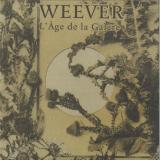
Based in Rennes and founder of the Vives label in 2020, Weever has been exploring the interplay of light and shadow for over 10 years, crafting abstract soundscapes and textured sonic tunnels of unparalleled musical breadth. He elegantly blends industrial and baroque sounds to construct sonic cathedrals. His music is both utterly raw and meticulously crafted.
L’âge de la Galère :
started this EP in 2020. At the time, I had just finished my studies, it was a pretty difficult period and I had made a track, or rather a melody, that I thought was amazing. I held onto it all these years without ever releasing it. 2020 was a tough year overall. The big question was: What am I going to do with my life? Hence the title L’âge de la Galère
The title really started to make sense when I began putting tracks together for Micheal. Around that time, I was reading Those of 1914 by Maurice Genevoix. For those who don’t know it: it’s written as a journal and tells the story of the author and his fellow soldiers in the trenches during World War I.
I’ve always been passionate about the two World Wars, I watch every film, old and new, I listen to the soundtracks, and so on. Same with period films, especially medieval ones. I love drawing inspiration from them.
So naturally, I imagine and create around that. It comes easily because it’s always been my universe. And when I make music, those kinds of images inevitably come out, even subconsciously.
So I created and told an audio story through my 6 tracks.
“It’s 1914. The story of many men who, upon hearing the sound of the bells, are met with the announcement of a war like no other. Most of them are young, some very young, and they are drafted into the French and German armies. They have no military experience, and the first battles are so violent that many won’t make it back. Very few will earn the glory they deserve.
The conditions are appalling, everything is in short supply, and the men are exhausted. Still, they must hold on.
Leaving carelessly from beneath their mothers’ skirts, too few returned. Many were left traumatized, and an entire generation was forever changed.”
An extremely rare Northern Soul 45 RPM single originally released in 1965 on the Holly label, Billy Arnell And The Sparkles "Tough Girl" was the product of two childhood friends that lived less than a block apart in suburban Fairlawn, New Jersey in the early 1960s - Billy Smith and Lou Hemsey.
Billy played guitar and sang; Lou played guitar and wrote songs, so they decided to form a band. They added friends Eddie Hoffman on organ and Jack Gullone on drums and began playing lots of gigs locally as Little Willie & The Sparkles. They were young, ambitious, and imagined themselves as the next Beatles. By a stroke of fate, they met Joe Martin of Apex-Martin Distributors in Newark, NJ, who caught the band's live show and was duly impressed. That meeting led to the recording session for the "Tough Girl" single. When they recorded the first version of the song, the producer wasn't happy, nor was Joe Martin - so he fired that producer and brought in the young, up and coming producer, George Kerr. Kerr didn't care much for the band, so they redid the entire thing without Hoffman and Guilone - with just Billy singing and Lou playing guitar.
The pair of old friends were buoyed by session aces Eric Gale on guitar, Bernard Purdie on drums, Bobbie Banks on organ, as well as a bass player whose name has been lost to time. In addition to those changes, they used the studio horn section that Hemsey arranged for, plus two trumpets, two saxes and two vibes players. The resulting single was an infectious amalgamation of rock and soul. Billy changed his surname to Arnell for the 45 release (because he thought it sounded more "show-biz") and the rest is pop history. Arnell later started a record company (Fire Sign Records) and purchased a recording studio (112 Greene Street Recording) in the trendy SoHo section of Manhattan with Steve Loeb.
As for the rest of The Sparkles, Hoffman became a teacher somewhere on Long Island, Guilone graduated from the Culinary Institute of America in Massachusetts and ended up living in Northern New Jersey. Hemsey became a well-known recording engineer, composer (Lou was the one who wrote "Tough Girl"), guitarist, arranger, orchestrator, editor, film director and producer for records and commercials.
"Dame café", originally released on Discos Fuentes in 1965 to meet the tropical music demand of the time, features a mix of traditional rhythms like vallenato and cumbia, alongside more experimental beats. The vibrant musical scene of the 1960s in Colombia owes much to a group of versatile accordionists who blended genres such as cumbia, charanga, guaracha, vallenato, and Cuban-influenced rhythms. This group included notable figures like Andrés Landero, Aníbal Velásquez, Lisandro Meza, and Alfredo Gutiérrez, among others. A prime example of their diverse musical styles is the album "Dame café", released in November 1965, which features a mix of traditional rhythms like vallenato and cumbia, alongside more experimental beats such as paseaíto and pasaje. The album includes six previously released singles composed by José Castro, Policarpo Calle, and others. The album highlights the commercial strategy of Discos Fuentes, which often created short-lived studio bands to meet the tropical music demand of the time. Los Gavilanes de la Costa, the band behind "Dame café", had a brief existence but left a lasting impact, especially in Mexico's sonidero scene. The group's creation was driven by the high demand for tropical music in the 1960s, with many musicians adjusting to market trends. Most of the members, including composers Campillo and Castro, vanished from the scene, while others, like Calle and Zambrano, went on to have notable careers in music. Calle, in particular, became a cumbia legend, later settling in Mexico City. The album "Dame café" has gained cult status due to its rarity and the intrigue surrounding its origins. The album features a remarkable contribution from Colombian jazz legend Justo Almario, who, at just 16 years old, played tenor sax on the track 'Pues no da pa' más'. Over the years, pirate editions and elusive original copies have made it a highly sought-after collector's item. The album's lively sound, combining accordion melodies, deep bass, and vibrant guacharaca rhythms, continues to resonate in the tropical music scene.
Aimer Perdre is a movie by the Guit Brothers and tells the story of Armande Pigeon; the queen of shenanigans. In Brussels, she struggles to make ends meet because she can’t stop gambling on everything, always ending up on the wrong side of luck. When she teams up with Ronnie one night, everything changes – they win it all. And when you hit a winning streak, you have to know when to stop.
For Aimer Perdre, Brooklyn NY native Simon Hanes travelled to Brussels in order to work directly with the directors, synchronizing the editing of the film with the composition of the soundtrack so that both processes would influence each other. Hanes and the Guits spent 3 months working alongside each other almost every day, passing ideas back and forth and allowing the soundtrack to grow organically. The music is an honest representation of Hanes’ experiences over those months, which he spent couch surfing across Brussels, sharing meals and ideas with new friends in broken refrains of French and English – falling asleep at the Cinémathèque, and occasionally breaking into abandoned buildings…but thats a story for another time.
Throughout all this, Simon hired musicians he met in bars, members of the Brussels experimental/artistic community, singers from a choir that was rehearsing in the squat where the Guits built their editing room…All the while sculpting the soundtrack out of these seemingly dissolute elements and constantly blurring the line between the compositional process and his day to day life.
Finally the process culminated in hiring the FAMES string orchestra for ONE SINGLE HOUR (all they could afford) to achieve the full orchestral sound the film’s climax so clearly needed.
The end result, like the film itself, is a reflection of life – a hodgepodge of sounds, colors and ideas that come together to create a beautiful, unique tapestry, sometimes harmonious, other times less so.
Comes with a limited edition flexidisc with a bonus track.
- A1: Dj Oyster – Ricci One (Gerd Janson Remix)
- A2: Lauer X Johannes Albert – Mokka Paradise
- B1: Cinthie – Set Me Free
- B2: Wolfram - Macho
- B3: Lui Hill – With You
- C1: Phonk D – Medusa
- C2: Levitation Venue – Calippo (Super Mix)
- D1: Sound Support – Subway Location
- D2: Accent Circonflexe – Manipulation? Non!
- E1: Lukas Lehmann – Pull Up The Blinds
- E2: Move D – Dance On
- F1: Terry Lee Brown Junior – Mono Mono Mono
- F2: Retina Dreams - Strachelrochen
Since ten years Galerie Kurzweil enriches the electronic club scene and has made a name for itself worldwide, not least thanks to excellent bookings and its impressive sound system. To celebrate its anniversary, Galerie Kurzweil releases a 3 x color vinyl compilation with beautiful artwork by Jofeca and exclusive tracks by renowned artists Gerd Janson (aka DJ Oyster), Cinthie, Lauer x Johannes Albert, Sound Support, Wolfram, Move D and its residents Thomas Hammann (aka Retina Dreams), Terry Lee Brown Junior, Lui Hill, Phonk D, Lukas Lehmann, Levitation Venue and Accent Circonflexe. If you want to get hold of this sexy collector's item, you should pre-order directly – the compilation is limited to 400 copies.
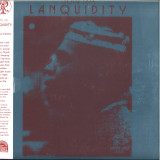
Strut proudly presents a special edition, deluxe repress of Sun Ra’s classic ‘Lanquidity’, for the 25th anniversary of the label. Housed in a tip-on sleeve with OBI strip, this new special editions features an A2 poster including a rare Veryl Oakland photograph of Sun Ra in his home, as well as liner notes by Tom Buchler (Philly Jazz), Michael Ray and Danny Ray Thompson (Sun Ra Arkestra) and Bob Blank. Originally released in 1978 on Philly Jazz, ‘Lanquidity’ was recorded overnight at Bob Bank’s Blank Tapes studio on 17th July 1978 following a performance on Saturday Night Live. “Most critics felt that it was more of a fusion-inspired record,” explains Michael Ray. “As the name suggests, the album is liquid and languid.” Bob Blank adds, “Musically, it was very ad hoc and freeform. There were horn charts but most tracks came out of improvised jams. Sun Ra just did his thing.”
The album 'Lanquidity' consists of five smooth tracks from the Sun Ra discography. It begins gently with 'Lanquidity,' a spontaneous composition by Sun Ra described by Danny Ray Thompson as reminiscent of an Ancient Egyptian Stargazing Ceremony, plotting the stars and planets. 'Where Pathways Meet' follows, featuring Sun Ra's funky interpretation of an Egyptian march, evoking the image of Pharaoh rallying his troops. 'That’s How I Feel' maintains a relaxed groove, featuring reflective trumpet lines from Eddie Gale and solos by John Gilmore and Marshall Allen, with Allen's oboe described as reminiscent of snake-charming. 'Twin Stars Of Thence' dances around Richard Williams' celebrated elastic bassline, while the haunting closer, 'There Are Other Worlds (They Have Not Told You Of),' epitomizes "space music," described by poet Mama Nzinga as 'The essence of light. Spirit takes a ride inside the deep dark space of just being.' Start to finish, Lanquidity remains an effortless, psychedelic pleasure and one of the strongest in the Ra 70's discography.
This new deluxe LP edition of ‘Lanquidity’ features the widely distributed version of the album originally released on Philly Jazz and reflects the album’s original packaging with a metallic foil / magenta sleeve, housed in a tip-on sleeve with OBI strip and featuring both liner notes and a limited edition poster, to celebrate 25 years of Strut records.
- A1: Blue Beach - Welcome To Your Beach
- A2: Never Find A Girl (To Love Me Like You Do)
- A3: By The Pool
- A4: Roll Over, Beethoven - Out Of The Beach
- A5: In The Shade
- A6: Looking Across The Street
- A7: Long Distance Look
- B1: Hot Afternoon
- B2: Crying In The Sun
- B3: The Next Time
- B4: Miss B B. Walks Away
- B5: Sleep Walk
- B6: Standing There
For the first time since its inception 36 years ago, Steve Hiett’s elusive Down On The Road By The Beach is finally made available outside of Japan. Most recognized in the fashion sphere as an English photographer and graphic designer, Hiett‘s transportive audio portraits amplify his serpentine guitar to the infinite blue, recorded across Paris, Tokyo and New York with no coastline in sight. Now widely celebrated as a desert island disc, very little is actually known of its unfathomable genesis.
A career devotee of Brian Wilson’s ground breaking harmonies, Hiett shot The Beach Boys for Rolling Stone - as well as The Doors, Miles Davis and Jimi Hendrix (in one of his final performances at the 1970 Isle Of Wight Festival) - while establishing himself as a fashion photographer. Decamping to Paris in 1972, he began what would become 20-year collaborations with Vogue Paris and Marie Claire, printing his signature warm, saturated and vibrantly hued snapshots.
In 1982, representatives from Tokyo’s Galerie Watari visited him to propose a solo exhibition. Asking if he could insert a 7” of original music into the back of the exhibition catalogue, Hiett laid down ‘Blue Beach - Welcome To Your Beach’ in a Parisian radio station, playing all of the instruments himself, and two more cuts in New York with Yoko Ono, The Doobie Brothers and Steely Dan hired-gun Elliot Randall. Once dispatched, the phone began ringing off the hook with requests for him to fly to Tokyo. Assuming these long-distance callers were wanting him to check proofs for the book, it wasn’t until he arrived that he discovered CBS/Sony had facilitated an entire album. Heitt hastily gripped some petty cash, bought a guitar and retreated to his hotel room to start writing.
Entering the studio the following day, he was further surprised by a waiting room of session players known as Moonriders - one of Japan’s most acclaimed rock bands of the 1980s. Intimidated by their indecipherable sheet music, Hiett suggested Randall join them and with money being no object for major labels at the time, his wingman was on the next plane out of New York to finalise the high production indulgence. Near-ambient arrangements that float in a space between The Durutti Column, Steve Cropper and Ashra, Down On The Road By The Beach also crowns Hiett the master of recontextualization with his zero-gravity blues visions of Roll Over Beethoven, Santo & Johnny’s Sleep Walk and the 1967 Eddie Floyd soul hit Never Found A Girl.
Produced in coordination between Be With, Efficient Space and the artist, this definitive reissue is restored from original masters with vivid reproductions of the Down On The Road By The Beach exhibition catalogue, intended to accompany its original release, and extensive liner notes penned by fellow Steve Hiett obsessive Mikey IQ Jones.
- A1: Bappi Lahiri & Asha Bhosle - Deewana Dil Sangeet Ka
- A2: Amit Kumar - Hero
- A3: Zingadi To Zingadi Hai (Outro)
- A4: Asha Bhosle - Meri Ankhon Mein Zara Jhanko To
- B1: Urban Flesh Market (Instrumental)
- B2: Amit Kumar, Mahendra Kapoor, Chorus - Becho Becho
- B3: Birth Of Shiva (Music)
- B4: Kishore Kumar - Dekho Idhar Jano Jigar
- C1: Suresh Wadkar - Aye Zindagi Gale Lagaa Le
- C2: Kishore Kumar & Asha Bhosle - Baahon Me Leke Mujhe
- C3: Rural Flesh Market (Instrumental)
- C4: Sharon Prabhakar & Bappi Lahiri - Mere Jaisi Mehbooba
- D1: Suresh Wadkar & Sadhana Sargam - Aage Bhi Dushman
- D2: Asha Bhosle & Chorus - Prem Ashram
- D3: Asha Bhosle, Behrose Chatterjee, Vinod Sehgal - Dil Gadbad Jhala
- D4: Instrumental Music
Bollywood rarities handpicked and remastered on a double LP release with laminate gatefold and multi-layered flower petal foldout. Featuring rare, overlooked or not-previously-on-vinyl music from Bappi Lahiri, R. D. Burman, Ilaiyaraaja, Kalyanji-Anandji, Anand Milind, Raamlaxman and Kirti Anuraag released between 1982 and 1986. Mastered for and cut to vinyl by multi Grammy-nominated Frank Merritt at his mastering studio The Carvery.
Naya Beat is incredibly proud to present the first in our series of ‘Awaaz’ (‘sound’ in Hindi) archival projects focused on uncovering the sounds of 1980s Bollywood Original Soundtrack Recordings (OSTs). Series 1 focuses exclusively on the musical output of CBS Gramophone Records & Tapes (India) Ltd. Active during India’s peak disco era – a time when synthesisers and drum machines became a mainstay in Indian popular music – CBS India became a home for established composers to be experimental, up-and-coming composers to get their start, B-movie soundtracks, and straight-to-VHS releases.
Expertly curated by Naya Beat co-founders Turbotito and Ragz, who were given unprecedented access to the original label archives, this compilation is not just a collection of four-to-the-floor Bollywood disco (although there are plenty of those). ‘Awaaz’ is designed to take listeners on a musical journey that includes everything from leftfield electronic and mood music to outrageous proto house.
Be it classic and hard to find cuts like Ilaiyaraaja's "Aye Zindagi Gale Lagaa Le" and “Mere Jaisi Mehbooba” (Bappi Lahiri’s Hindi remake of Herbie Hancock's “Rockit”), or the instrumental mood music of Kirti Anuraag’s VHS movie soundtracks, to the proto house of Raamlaxman’s “Dil Gadbad Jhala” and Kalyanji-Anandji’s “Aage Bhi Dushman,” or the synth and guitar drenched breakdance madness of R. D. Burman’s “Dekho Idhar Jano Jigar,” the music on this compilation captures the output of a label that was unique as it was unconventional.
An homage to the genre, every detail in this stunning release has been lovingly crafted. From the laminate cover to the absolutely incredible foldout, to the cut-out and collage design, to the font type and layout, there are countless authentic details and nods to classic Bollywood releases of the era. As much of the album has been made in India as is possible. The sleeves have been handmade in New Delhi. The liner notes have been compiled by music archivist Nishant Mittal (aka Digging In India).
- Sublevel
- Rise And Fall Fetish
- Who Says
- Cold And Cruel
- Fail Better
- Deep Fake Heaven
- What We All Get
- Mirror
- My River
- What Kind Of Time
ULTRA CLEAR VINYL[23,49 €]
Auf ihrem neuen Album ,Delusion" begibt sich Tempers - das musikalische Pseudonym der in New York lebenden Künstlerin Jasmine Golestaneh - auf eine nichtlineare Reise der Heilung und des Werdens. In zehn Tracks navigiert sie durch stürmische emotionale Gezeiten und tastet sich durch einen Fiebertraum aus Gewitterwolken und Sonnenstrahlen hin zu seelischer Klarheit, wobei sie einen Soundtrack für "diejenigen, die zu sehr lieben, zu tief fallen und zu lebhaft träumen" kreiert. "Delusion" bewegt sich fließend zwischen verschiedenen Genres, von Art-Pop bis Techno, Grunge bis Metal, mit epischen balladischen Momenten, die überall verstreut sind. Das Album wurde von Golestaneh und Jorge Elbrecht (Sky Ferreira, Crushed, Wild Nothing) co-produziert und enthält Kollaborationen mit Camille Henrot, Estelle Hoy und Sandra Mujinga. Das mit Spannung erwartete neue Album von Tempers folgt auf das Debütalbum "Services" aus dem Jahr 2015, das den Underground-Dance-Hit ,Strange Harvest" enthielt. Im Jahr 2019 veröffentlichten Tempers das Album "Private Life", das einen eher introspektiven Sound präsentierte, gefolgt von "New Meaning" im Jahr 2022, das von einem Buch mit Golestanehs originellen Collagen begleitet wurde, die von dem Album inspiriert waren. Die Neigung von Tempers zur Kunstwelt hat zu einzigartigen Kooperationen geführt, darunter Auftritte in Museen, Galerien und O-Spaces, eine EP (Fundamental Fantasy aus dem Jahr 2017), die aus einer Künstlerresidenz bei The Vinyl Factory hervorgegangen ist, und die Veröffentlichung von Junkspace feat. Rem Koolhaas im Jahr 2018.
Faitiche welcomes a new artist: Christina Kubisch belongs to the first generation of sound artists. Her practice ranges from performances, concerts, to works with video and visual art, but she is best known for her sound installations and electro-acoustic compositions.
TUNING brings together three pieces by Christina Kubisch from different periods of her oeuvre. What they have in common is the way they transform sound phenomena originally considered “non-music” into compositions.
Jan Jelinek: Gaming in Silence (2024) is the most recent work on this compilation. It’s a collage of electromagnetic waves, voice, and abstract sound textures. How did this combination come about?
Christina Kubisch: Gaming was commissioned as a fixed-media composition for the Sound Dome at ZKM Karlsruhe. Since Resonances: The Electromagnetic Bodies Project (2005), I’ve been making recordings in the old and new server rooms at the ZKM and in their permanent collection of historical computer games. Computer games like Asteroids (Atari, 1979) and Poly-Play (VEB Polytechnik, 1986) have specially generated analogue electromagnetic waves that interest me in particular on account of their density, rhythms and textures. I originally studied painting and to me the work of composition often feels like painting an abstract picture. I alter my source material as little as possible, layering and overlapping until a distinctive sound space emerges. In recent pieces, I sometimes combine magnetic waves with field recordings or live instruments. In Gaming it’s my recording of a Chinese song about silence.
JJ: Two persons walking through a street in Madrid (2004) is a recording from your Electrical Walks series. Here we should give a brief explanation of one of your best known works: participants in an Electrical Walk move through public spaces wearing prepared headphones that allow them to receive electromagnetic waves from their surroundings – for example from security gates, ATMs or neon signs. They discover a situation that normally is inaudible to the human ear and they can actively shape it by choreographing their movements. I really admire this piece, not least because there’s no clear dividing line between participants and artist. What exactly do we hear in Two persons walking through a street in Madrid (2004)?
CK: With this early work, I wanted to understand what is heard by people participating in an Electrical Walk in the same place but moving in different ways. The Spanish composer Miguel Alvarez-Fernàndez and I set off from opposite ends of a major shopping street in Madrid, met briefly in the middle, and then continued to the end. We both recorded our walks and I then layered them over one another. You might call it a work of electromagnetic conceptualism.
JJ: Diapason (2009 version) is an installation that plays a composition based on sounds from fifteen tuning forks. This setting is audible in the recording: there’s no dramatic arc, no beginning or end – instead, it recalls a piece of aleatoric music focussing on the decay phase. How did you come to make this work and could you tell us something about your compositional method?
CK: Diapason is part of a series of three pieces that deal with “non-instruments” or instruments that no longer exist: electrical mine bells used to send signals to the workers underground; a historical glass harmonica originally used for medicinal purposes; and tuning forks that were used by doctors to test people’s hearing. All of these methods are no longer in use. The sound of the tuning forks, audible only if held close to the ear, was recorded at the electronic studio at Berlin’s Technical University in such a way that even their decay remained audible. The frequencies range between 64 and 2048 Hertz and they can be adjusted at micro-intervals using small movable weights. The sequence and the duration of the pauses are dictated by chance and were not defined in advance. The 2009 version was created for an installation in the historic Holy Cross Church (Korskirken) in Bergen. Visitors could enter and leave the space at any time, deciding for themselves where and for how long they wished to listen to the sounds played back over an array of small loudspeakers placed on the floor of the apse.
Credits:
Gaming in Silence: commission of the ZKM/Hertzlab, Karlsruhe 2023
elektronic sound processing: Tom Thiel
sound engineering and mixing: Eckehard Güther
Diapason: produced at Elektronisches Studio of TU Berlin
rearrangement: Eckehard Güther
Christina Kubisch, published by Edition Christina Kubisch / Random Musick Publishing
image front: Transitionen 2021 by C. Kubisch, sonagrams of electronic waves (courtesy: Galerie Mazzoli Berlin)
image back: Diapason Tuning Fork, property of Folkmar Hein, Photo: Archiv Christina Kubisch
design by Tim Tetzner
mastered by Giuseppe Ielasi
Thanks to Miguel Álvarez-Fernández, Folkmar Hein, Dominik Kautz and Mario Mazzoli
- 1: Wishing Moon
- 2: Stranger Now
- 3: I Got A Feeling
- 4: Wait For The Tide
- 5: My Mind Always
- 6: Gale
- 7: After You
- 8: Abyss
- 9: Redrawn
- 10: You & I
- 11: All Eyes
- 12: Like A God