
Suche:gave
- A1: Of The Sea
- A2: I Don't Live Today
- A3: Five Six
- A4: Blue Gold
- A5: Foggy Night
- A6: Empty Of Your Possession
- B1: What A Way To Be Laughing
- B2: Let It Alone
- B3: Never With You (Acoustic Version)
- B4: To Catch The Sun
- B5: Don't Move Girl
Born into a musical family Al Manfredi started writing songs when he was child. As a teenager in 1965, he formed the Nuts & Bolts in the small beach town of San Clemente, California. Inspired by the Kinks, the Beatles and the Byrds, the group separated themselves from the pack by also performing original material written by Manfredi and band mate Mike Ingram. In late 1966 they changed their name to the Lost & Found and relocated to Phoenix, Arizona, where they cut a rare single, “Don’t Move Girl” b/w “To Catch the Sun,” which now commands high coin from ‘60s garage collectors. When they returned to San Clemente in early 1967 their music had taken a more psychedelic direction. The Lost & Found were riding high that year, until tragedy struck. Ingram was found hanged under suspicious circumstances and soon after Lost & Found drummer Mike Ryer died of cancer at the age of 19. Heartbroken, Manfredi gave up on the band scene completely and moved to Garden Grove to teach at his family’s music store. But alone, behind closed doors, he kept writing songs and working on his music, recording hours of tapes, often tracking all the instruments himself. In 1973 he chose six of his best songs, some of them written back in the Lost & Found days, and had them custom-pressed as an LP. Only a handful of copies were pressed, and most of these were sent out to various record companies in the hope of landing a deal. Despite the outstanding quality of the music, there were no takers. But decades later, collectors discovered the Al Manfredi album and hailed it a West Coast rock masterpiece. In his Acid Archives book, Patrick Lundborg called its discovery a deus ex machina and compared it to David Crosby’s first solo album and Hawaii-era Merrell Fankhauser, “not just the acutely captured mellowness, but the self-confidence and the talent.”This little-known West Coast rock masterpiece was rediscovered and celebrated by Acid Archives founder Patrick Lundborg and others around the time that Manfredi died in 1995. This version of the album, overseen by Manfredi’s son Exile, and with Manfredi’s story told by Ugly Things’ founder Mike Stax, presents the complete package of an incredible lost and found artist. Contains the album, as originally issued, on side A with unreleased music on side B.
- A1: Crushed
- A2: That Girl Suicide
- A3: Deep In The Devil's Eye & You
- A4: Kid's Garden
- B1: When I Was Yesterday
- B2: Records
- B3: Spacegirl
- B4: Spacegirl (Revisited)
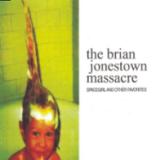
The Brian Jonestown Massacre is a psychedelic rock band originally from San Francisco, California, led by guitarist/singer Anton Newcombe. Since 1995 The Brian Jonestown Massacre has released numerous albums, first for Bomp! Records, the label which gave them their start, and later for TVT and Tee Pee. BJM has been essential in the development of the modern U.S. garage scene, and many LA and SF musicians got their start playing with Newcombe, including Peter Hayes of The Black Rebel Motorcycle Club.

12
UILTY RAZORS, BONA FIDE PUNKS.
Writings on the topic that go off in all directions, mind-numbing lectures given by academics, and testimonies, most of them heavily doctored, from those who “lived through that era”: so many people today fantasize about the early days of punk in our country… This blessed moment when no one had yet thought of flaunting a ridiculous green mohawk, taking Sid Vicious as a hero, or – even worse – making the so-called alternative scene both festive and boorish. There was no such thing in 1976 or 1977, when it wasn’t easy to get hold of the first 45s by the Pistols or the Clash. Few people were aware of what was happening on the fringes of the fringes at the time. Malcolm McLaren was virtually unknown, and having short hair made you seem strange. Who knew then that rock music, which had taken a very bad turn since the early 1970s, would once again become an essential element of liberation? That, thanks to short and fast songs, it would once again rediscover that primitive, social side that was so hated by older generations? Who knew that, besides a few loners who read the music press (it was even better if they read it in English) and frequented the right record stores? Many of these formed bands, because it was impossible to do otherwise. We quickly went from listening to the Velvet Underground to trying to play the Stooges’ intros. It’s a somewhat collective story, even though there weren’t many people to start it.
The Guilty Razors were among those who took part in this initial upheaval in Paris. They were far from being the worst. They had something special and even released a single that was well above the national average. They also had enough songs to fill an album, the one you’re holding. In everyone’s opinion, they were definitely not among the punk impostors that followed in their wake. They were, at least, genuine and credible.
Guilty Razors, Parisian punk band (1975-1978). To understand something about their somewhat linear but very energetic sound, we might need to talk about the context in which it was born and, more broadly, recall the boredom (a theme that would become capital in punk songs) coupled with the desire to blow everything off, which were the basis for the formation of bands playing a rejuvenated rock music ; about the passion for a few records by the Kinks or the early Who, by the Stooges, by the Velvet mostly, which set you apart from the crowd.
And of course, we should remember this new wave, which was promoted by a few articles in the specialized press and some cutting-edge record stores, coming from New York or London, whose small but powerful influence could be felt in Paris and in a handful of isolated places in the provinces, lulled to sleep by so many appalling things, from Tangerine Dream to President Giscard d’Estaing...
In 1975-76, French music was, as almost always, in a sorry state ; it was still dominated by Johnny Hallyday and Sylvie Vartan. Local rock music was also rather bleak, apart from Bijou and Little Bob who tried to revive this small scene with poorly sound-engineered gigs played to almost no one.
In the working class suburbs at the time, it was mainly hard rock music played to 11 that helped people forget about their gruelling shifts at the factory. Here and there, on the outskirts of major cities, you still could find a few rockers with sideburns wearing black armbands since the death of Gene Vincent, but it wasn’t a proper mass movement, just a source of real danger to anyone they came across who wasn't like them. In August 1976, a festival unlike any other took place in Mont-de-Marsan – the First European Punk Festival as the poster said – with almost as many people on stage as in the audience. Yet, on that day, a quasi historical event happened, when, under the blazing afternoon sun, a band of unknowns called The Damned made an unprecedented noise in the arena, reminiscent of the chaotic Stooges in their early adolescence. They were the first genuine punk band to perform in our country: from then on, anything was possible, almost anything seemed permissible.
It makes sense that the four+1 members of Guilty Razors, who initially amplified acoustic guitars with crappy tape recorder microphones, would adopt punk music (pronounced paink in French) naturally and instinctively, since it combines liberating noise with speed of execution and – crucially – a very healthy sense of rebellion (the protesters of May 1968 proclaimed, and it was even a slogan, that they weren’t against old people, but against what had made them grow old. In the mid-1970s, it seemed normal and obvious that old people should now ALSO be targeted!!!).
At the time, the desire to fight back, and break down authority and apathy, was either red or black, often taking the form of leafleting, tumultuous general assemblies in the schoolyard, and massive or shabby demonstrations, most of the time overflowing with an exciting vitality that sometimes turned into fights with the riot police. Indeed, soon after the end of the Vietnam War and following Pinochet’s coup in Chile, all over France, Trotskyist and anarcho-libertarian fervour was firmly entrenched among parts of the educated youth population, who were equally rebellious and troublemakers whenever they had the chance. It should also be noted that when the single "Anarchy in the UK" was first heard, even though not many of us had access to it, both the title and its explosive sound immediately resonated with some of those troublemakers crying out for ANARCHY!!! Meanwhile, the left-wing majority still equated punks with reckless young neo-Nazis. Of course, the widely circulated photos in the mainstream press of Siouxsie Sioux with her swastikas didn’t necessarily help to win over the theorists of the Great Revolution. It took Joe Strummer to introduce The Clash as an anti-racist, anti-fascist and anti-ignorance band for the rejection of old-school revolutionaries to fade a little.
The Lycée Jean-Baptiste Say at Porte d’Auteuil, despite being located in the very posh and very exclusive 16th arrondissement of Paris, didn’t escape these "committed" upheavals, which doubled as the perfect outlet for the less timid members of this generation.
“Back then, politics were fun,” says Tristam Nada, who studied there and went on to become Guilty Razors’ frontman. “Jean-Baptiste was the leftist high-school in the neighbourhood. When the far right guys from the GUD came down there, the Communist League guys from elsewhere helped us fight them off.”
Anything that could challenge authority was fair game and of course, strikes for just about any reason would lead to increasingly frequent truancy (with a definitive farewell to education that would soon follow). Tristam Nada spent his 10th and 11th unfinished grades with José Perez, who had come from Spain, where his father, a janitor, had been sentenced to death by Franco. “José steered my tastes towards solid acts such as The Who. Like most teenagers, I had previously absorbed just about everything that came my way, from Yes to Led Zeppelin to Genesis. I was exploring… And then one day, he told me that he and his brother Carlos wanted to start a rock band.” The Perez brothers already played guitar. “Of course, they were Spanish!”, jokes their singer. “Then, somewhat reluctantly, José took up the bass and we were soon joined by Jano – who called himself Jano Homicid – who took up the rhythm guitar.” Several drummers would later join this core of not easily intimidated young guys who didn’t let adversity get the better of them.
The first rehearsals of the newly named Guilty Razors took place in the bedroom of a Perez aunt. There, the three rookies tried to cover a few standards, songs that often were an integral part of their lives. During a first, short gig, in front of a bewildered audience of tough old-school rockers, they launched into a clunky version of the Velvet Underground's “Heroin”. Challenge or recklessness? A bit of both, probably… And then, step by step, their limited repertoire expanded as they decided to write their own songs, sung in a not always very accurate or academic English, but who cared about proper grammar or the right vocabulary, since what truly mattered was to make the words sound as good as possible while playing very, very fast music? And spitting out those words in a language that left no doubt as to what it conveyed mattered as well.
Trying their hand a the kind of rock music disliked by most of the neighbourhood, making noise, being fiercely provocative: they still belonged to a tiny clique who, at this very moment, had chosen to impose this difference. And there were very few places in France or elsewhere, where one could witness the first stirrings of something that wasn’t a trend yet, let alone a movement.
In the provinces, in late 1976 or early 1977, there couldn’t be more than thirty record stores that were a bit more discerning than average, where you could hear this new kind of short-haired rock music called “punk”. The old clientele, who previously had no problem coming in to buy the latest McCartney or Aerosmith LP, now felt a little less comfortable there…
In Paris, these enlightened places were quite rare and often located nex to what would become the Forum des Halles, a big shopping mall. Between three aging sex workers, a couple of second-hand clothes shops, sellers of hippie paraphernalia and small fashion designers, the good word was loudly spread in two pioneering places – propagators of what was still only a new underground movement. Historically, the first one was the Open Market, a kind of poorly, but tastefully stocked cave. Speakers blasted out the sound of sixties garage bands from the Nuggets compilation (a crucial reference for José Perez) or the badly dressed English kids of Eddie and the Hot Rods. This black-painted den was opened a few years earlier by Marc Zermati, a character who wasn’t always in a sunny disposition, but always quite radical in his (good) choices and his opinions. He founded the independent label Skydog and was one of the promoters of the Mont-de-Marsan punk festivals. Not far from there was Harry Cover, another store more in tune with the new New York scene, which was amply covered in the house fanzine, Rock News (even though it was in it that the photos of the Sex Pistols were first published in France).
It was a favorite hang-out of the Perez brothers and Tristam Nada, as the latter explained. “It’s at Harry Cover’s that we first heard the Pistols and Clash’s 45s, and after that, we decided to start writing our first songs. If they could do it, so could we!”
The sonic shocks that were “Anarchy in the UK”, “White Riot” or the Buzzcocks’s EP, “Spiral Scratch” – which Guilty Razors' sound is reminiscent of – were soon to be amplified by an unparalleled visual shock. In April 1977, right after the release of their first LP, The Clash performed at the Palais des Glaces in Paris, during a punk night organised by Marc Zermati. For many who were there, it was the gig of a lifetime…
Of course, Guilty Razors and Tristam were in the audience: “That concert was fabulous… We Parisian punks were almost all dressed in black and white, with white shirts, skinny leather ties, bikers jackets or light jackets, etc. The Clash, on the other hand, wore colourful clothes. Well, the next day, at the Gibus, you’d spot everyone who had been at this concert, but they weren’t wearing anything black, they were all wearing colours.”
It makes sense to mention the Gibus club, as Guilty Razors often played there (sometimes in front of a hostile audience). It was also the only place in Paris that regularly scheduled new Parisian or Anglo-Saxon acts, such as Generation X, Siouxsie and the Banshees, the Slits, and Johnny Thunders who would become a kind of messed-up mascot for the venue. A little later, in 1978, the Rose Bonbon – formerly the Nashville – also attracted nightly owls in search of electric thrills… In 1977, the iconic but not necessarily excellent Asphalt Jungle often played at the Gibus, sometimes sharing the bill with Metal Urbain, the only band whose aura would later transcend the French borders (“I saw them as the French Sex Pistols,” said Geoff Travis, head of their British label Rough Trade). Already established in this small scene, Metal Urbain helped the young and restless Guilty Razors who had just arrived. Guitarist for Metal Urbain Hermann Schwartz remembers it: “They were younger than us, we were a bit like their mentors even if it’s too strong a word… At least they were credible. We thought they were good, and they had good songs which reminded of the Buzzcocks that I liked a lot. But at some point, they started hanging out with the Hells Angels. That’s when we stopped following them.”
The break-up was mutual, since, Guilty Razors, for their part, were shocked when they saw a fringe element of the audience at Metal Urbain concerts who repeatedly shouted “Sieg Heil” and gave Nazi salutes. These provocations, even still minor (the bulk of the skinhead crowd would later make their presence felt during concerts), weren’t really to the liking of the Perez brothers, whose anti-fascist convictions were firmly rooted. Some things are non-negotiable.
A few months earlier (in July 1978), Guilty Razors had nevertheless opened very successfully for Metal Urbain at the Bus Palladium, a more traditonally old-school rock night-club. But, as was sometimes the case back then, the night turned into a mass brawl when suburban rockers came to “beat up punks”.
Back then, Parisian nights weren’t always sweet and serene.
So, after opening as best as they could for The Jam (their sound having been ruined by the PA system), our local heroes were – once again – met outside by a horde of greasers out to get them. “Thankfully,” says Tristam, “we were with our roadies, motorless bikers who acted as a protective barrier. We were chased in the neighbouring streets and the whole thing ended in front of a bar, with the owner coming out with a rifle…”
Although Tristam and the Perez brothers narrowly escaped various, potentially bloody, incidents, they weren’t completely innocent of wrongdoing either. They still find amusing their mugging of two strangers in the street for example (“We were broke and we simply wanted to buy tickets for the Heartbreakers concert that night,” says Tristam). It so happened that their victims were two key figures in the rock business at the time: radio presenter Alain Manneval and music publisher Philippe Constantin. They filed a complaint and sought monetary compensation, but somehow the band’s manager, the skilful but very controversial Alexis, managed to get the complaint withdrawn and Guilty Razors ended up signing with Constantin with a substantial advance.
They also signed with Polydor and the label released in 1978 their only three-track 45, featuring “I Don't Wanna be A Rich”, “Hurts and Noises” and “Provocate” (songs that exuded perpetual rebellion and an unquenchable desire for “class” confrontation). It was a very good record, but due to a lack of promotion (radio stations didn’t play French artists singing in English), it didn’t sell very well. Only 800 copies were allegedly sold and the rest of the stock was pulped… Initially, the three tracks were to be included on a LP that never came to be, since they were dropped by Polydor (“Let’s say we sometimes caused a ruckus in their offices!” laughs Tristam.) In order to perfect the long-awaited LP, the band recorded demos of other tracks. There was a cover of Pink Floyd's “Lucifer Sam” from the Syd Barrett era – proof of an enduring love for the sixties’ greats –, “Wake Up” a hangover tale and “Bad Heart” about the Baader-Meinhof gang, whose actions had a profound impact on the era and on a generation seeking extreme dissent... On the album you’re now discovering, you can also hear five previously unreleased tracks recorded a bit later during an extended and freezing stay in Madrid, in a makeshift studio with the invaluable help of a drummer also acting as sound engineer. He was both an enthusiastic old hippie and a proper whizz at sound engineering. Here too, certain influences from the fifties and sixties (Link Wray, the Troggs) are more than obvious in the band’s music.
Shortly after a final stormy and rather barbaric (on the audience’s side) “Punk night” at the Olympia in June 1978, Tristam left the band ; his bandmates continued without him for a short while.
But like most pioneering punk bands of the era, Guilty Razors eventually split up for good after three years (besides once in Spain, they’d only played in Paris). The reason for ceasing business activities were more or less the same for everyone: there were no venues outside one’s small circuit to play this kind of rock music, which was still frightening, unknown, or of little interest to most people. The chances of recording an LP were virtually null, since major labels were only signing unoriginal but reassuring sub-Téléphone clones, and the smaller ones were only interested in progressive rock or French chanson for youth clubs. And what about self-production? No one in our small safety-pinned world had thought about it yet. There wasn’t enough money to embark on that sort of venture anyway.
So yes, the early days of punk in France were truly No Future!
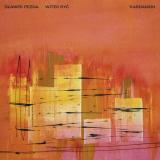
Numbered 150 copies on green vinyl.
The duo Sławek Pezda & Witek Ryć is a project by Krakow-based musicians, a hybrid of ambient, noise, experimental music, jazz, trance, electronica, and ethnic music. The two musicians' musical paths were united by the practice of meditation, which also significantly translates into their musical language and the need to share the peace that flows to the listener through sound.
In their recordings and live performances, the musicians utilize tenor saxophone, modular synthesizers, electronics, drums, flutes, drum pads, Tibetan bowls, gongs, and a wide array of percussion instruments. They have played together in improvised concerts, relaxation concerts, chamber sessions, and even spiritual jazz.
"Kardamon" is the result of one of the live sessions, where the rhythm, based on a simple pulse flowing from a frame drum, accompanied by Ankle Bells (Indian janissary bells played with the foot), is enriched by Sławek's tenor saxophone. In addition to the aforementioned instruments, a synthesizer and a Roland HPD 20 drum machine were also used, accompanied by various percussion instruments (shaker, chimes, bells, etc.), as well as a fragment of Witek's own field recordings from the Polesie National Park.
The remix on the B-side was created by DJ PLASH, who gave the duo's original sounds a completely new dimension. Plash (Marcin Przeplasko) is arguably one of the most sought-after DJs playing for b-girls and b-boys worldwide, a feat culminating in his official performance behind the turntables at the last Summer Olympics. PLASH is Witek's neighbor from Krakow's Nowa Huta district.
The front cover artwork is a painting by Witek Ryć, and the entire album was assembled and framed by Animisiewasz. Mastering was handled by Eprom. The single is limited to 150 copies and is being released by Funky Mamas and Papas Recordings, a label specializing in seven-inch singles since 2008.

- A1: Ismistik - Cassis
- A2: Acid Junkies Feat The Doctor - Telephone Terror
- B1: China White - No Sell Out
- B2: Greyhawk - Epidemic Future
- B3: Storm - Takaru
- C1: Hexagone Burning - Trash Floor
- C2: Phase Phorce - Complications
- D1: Mike Dearborn - Raw Acid
- D2: Mike Dearborn - Outer Limits (Trance Mixx)
- D2: Planet Gong - Eight Miles High
- E1: Group X - Tranze X
- E2: Edge Of Motion - La Orilla
- F1: Random Xs - Aftermath V1 2
- F2: Miss Djax - Killer Train
14
Delsin is pleased to announce an extensive compilation series combing through the catalogue of landmark Dutch techno label Djax-Up-Beats. The series, curated by Rush Hour co-founder Christiaan Macdonald, launches with a look at the label's legacy in the development of acid music through the 90s. In total, this first entry in the Djax-Up-Beats 1990-2005 series comprises 20 tracks, presented as a main triple-vinyl album plus two additional 12" EPs. The compilation also features all-new illustrations from Alan Oldham, the Detroit-rooted visual artist who gave Djax-Up-Beats a distinctive visual identity from very early on, and design by Lost Communication. Each volume of the series also features liner notes from music journalist Oli Warwick. Crucially, every track featured on the series has been carefully mastered by Johanz Westerman, bringing the best out of tracks that often had very little post-production treatment before they were originally pressed to wax. Volume 1 - The Acid Trip focuses on an area the label is best known for - acid house and techno. After the pioneering breakthroughs Chicago-based producers made with the Roland TB-303 in the late 1980s, acid music creation was starting to become more widespread when Djax-Up started in late 1990. The rebellious, rave-ready sound was an instant draw for label founder Miss Djax, and so her label ended up reflecting the development of acid as it spread from the Chicago roots across the world. Volume 1 - The Acid Trip looks at the diverse approaches to acid taken by artists on Djax-Up. Tracks on the compilation include an early outing from Ludovic 'St Germain' Navarre and Bjorn Torske's Ismistik alias, as well as Dutch pioneers such as Edge Of Motion, Spasms, Random XS and Acid Junkies, and Chicago heavyweights Mike Dearborn and Gene Hunt. With five more, equally extensive, volumes to come in this series, Djax-Up-Beats 1990-2005 is a thorough exploration of a true totem of techno culture - a renegade label that operated on its own terms and carried surprises and slammers in equal measure.

- Intro
- Can't You See
- Prom King
- I Can't Be Your Superman
- Ridiculous!
- Fall Harder
- Bounce Is Back
- Affairs
- All I Want
- Cash Wednesday
- Fiona Coyne
- Carousel
- Cry Wolf
- Why Do You Wanna Dance
- Practice
- Song For Rio
- Fall Harder (Single Mix)
- Fall Harder (Demo)
- Affairs (Demo)
11
When Ryan DeRobertis announced the name change of his project from Saint Pepsi to Skylar Spence, there was no indication of any stylistic departure, though the change arrived with a musical shift toward faster tempos and more pristine production. Whereas Saint Pepsi had often used decades-old boogie, disco, and new wave as grist for the sampling mill, Skylar Spence is intent on trafficking more overtly in those genre aesthetics through his own production techniques and vocal contributions. With Prom King, DeRobertis reorients his music for his new full-band live act and winds up with an album full of tight and enveloping dance tunes.
Working with Carpark Records 'gave me the confidence to 'go big' with the new material: to write pop songs with universal messages in the sonic wrapping paper that I've grown accustomed to,' DeRobertis says. 'A few songs on Prom King are about specific events in my life—a party where I got too messed up, watching a friend's life spiral out of control and trying to help—but I tried hard not to be too autobiographical because I want my music to unite, above all else. I'm much more interested in connecting with the listener than mystifying my personality.'
While DeRobertis' previous long-players have been more amorphous collections in the style of beat tapes, Prom King is compact and cohesive, with the album's varied stylistic references (new wave, UK garage, boogie) united through strong guitar melodies and Todd Edwards-ian cobblings-together of tiny vocal samples. 'I slowed some music down and called myself an artist,' DeRobertis sings on lead single 'Can't You See,' acknowledging in his lyrics what is already apparent in the music's tone—he can maintain fidelity to his vision while working in more uptempo, disco-based song structures.
'Ridiculous!' and 'Bounce Is Back' are big groovers that capitalize on jacking hi-hats and hand drumming, respectively, and both have an air of Balearic warmth and smoothness. On the title track, DeRobertis entwines a chorus of unintelligible but expressive samples with his own vocals—what feels like a synthesis of two approaches—and the result is an affecting pattern of build and release. More contemplative sophisti-pop numbers like 'Fall Harder' and 'Affairs' add a realist's breadth of scope: thoughts of past foibles bleed into present-dwelling and dancing.
Prom King is DeRobertis making sense of missed opportunities. His high school did not have a prom king; he has filled the position with an imaginative album of personal and musical revisionism.

10
Kēpa is built whole, even if life has broken a few bones along the way.
Back when he was a pro skater, he gave everything to the board. Today, he gives that same intensity to the stage, delivering hypnotic cine-concerts where motion, sound, and image blur into one. The only falls left now are the ringing final chords of his guitar — not just an instrument, but an extension of his body.
Fingerpicking is his native tongue. So much so that Kēpa no longer sings — he lets the strings speak. Percussive, alive, essential. This music isn’t about performance, it’s about living: a personal quest, a way to reach others by first going inward. Moving against the current without fighting the wind. Finding breath, essence, and remembering we’re all drifting on a spinning planet, surrounded by forces bigger than us.
It’s easier to look away. Easier to follow noise, fear, or false prophets. Harder — and braver — to truly connect.
Released in late 2025, Hotline Service opened the door, offering a wide-open, spiritual escape. With SOUL WASH SERVICES— produced by Timber Timbre — Kēpa goes further. Warmer, deeper, more focused. The album feels like sunlight on asphalt, a long drive with the windows down, time slowing just enough to let something real surface.
A kindred spirit to Hermanos Gutiérrez, Kēpa plays the role of a modern, pagan preacher — guiding us through a dusty, golden road movie that unfolds entirely inside the listener. His music doesn’t shout; it cleans.
Kēpa does it all: writes, plays, films, edits, mixes. Music becomes image, image becomes music. Nothing is separate, on record or on stage. There’s no excess, no showboating — just an open invitation to slow down, go deeper, aim higher.
Tracks like Solarium and Paradisiac reach the peaks with minimal gear: five strings, a few picks, and total control of touch and space. Listening to Kēpa feels like checking in with yourself — a quiet inner trip shaped by sounds from every corner of the world. Blues, not to feel them, but to leave them behind.
After years devoted to picking, his playing has become something sacred.
And if you let it, it carries you with it.

Chez Damier and Ralph Lawson had a fruitful transatlantic hook-up decades ago in a famous farmhouse studio in West Yorkshire. The fruits of that session gave rise to some timeless jams - most notably on 2015's full length collaborative album Lost In Time - including the ones appearing here, though two have come in all-new forms. 'A Dedication to Jos', named in honour of Lawson's friend and late Back to Basics resident, is a mid-tempo sound with phased vocals pacing about the mix and a classic bassline that gets a slight Wulf Lost Tape edit. 'Thank You' then comes as a Ralph Lawson dub and has a darker energy rising from the moody bassline. Closer 'The Moment' then brings some soul with warm chord injections, supple spoken words and a cool as you like groove. An evergreen EP for sure.
Yellow Vinyl
Blue Lake reveals his most ambitious album yet, which finds its visionary creator Jason Dungan harnessing the collective alchemy of his band, with ten spirited tracks that resonate with a powerful directness, evoking an ecological connection to the wider world.
The solo project (Blue Lake), now on its fifth album, found its name and inspiration via Don Cherry's 1974 live album, sparking a creative epiphany in Dungan, who set off on a path into his own untapped sonic world, guided by what he cited as the emotional potential found within non-lyrical composition. With a newly inspired ethos aimed toward creating direct and simple instrumental music imbued with a deep sense of feeling, Jason began combining an array of musical elements that gave rise to his highly revered album 'Sun Arcs' (2023), with its "ornate, zither-led lattices" (Pitchfork, Best New Music). Conceived in the blissful isolation of a Swedish cabin set in the woods, this was music that soundtracked spring in full bloom. Then, in contrast to the solitary approach of 'Sun Arcs', the highly lauded mini-album 'Weft' (2025) began to set the tone for a more band-oriented approach to delivering the Blue Lake sound. Jason had by this time experienced a special collective energy with his band during a swathe of live performances, which he then sought to harness and distill on 'The Animal', leading him to take the project into a traditional recording studio (The Village) and its limitless potential along with his gifted cohorts.
'The Animal' at its core vividly celebrates human collaboration and is deeply rooted in a sense of community and non-hierarchical connectivity. The group's creative alchemy transcends outwards and beyond the musicians performing together, to summon an inclusive, existential and ecological connection to the wider world and its inhabited spaces. The album contemplates the idea of the human as an animal as Dungan explains: "I'm quite fascinated in thinking about humans more as part of the animal environment and not as something that's so separated into a "human" realm, or sitting on top of a hierarchical pyramid. So the Animal is also me, or us - that we are just living, existing, in the same way as a piece of moss or a sparrow or a cow.
'The Animal' is a form of musical metamorphosis, still acoustic, yet more amplified, elevating it to new dimensions. The Blue Lake project takes on a new lease of life to encompass collaboration with Jason Dungan bound in a universal connectivity, resulting in his most ambitious album to date. A harmonious rejoicing that cements his reputation as a transformative presence in contemporary music.
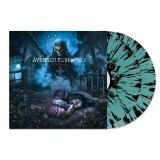
Their fifth studio album, Avenged Sevenfold’s album Nightmare debuted No. 1 on the Billboard 200 Chart and No. 5 on UK OCC chart.
Following the unexpected death of drummer Jimmy “The Rev” Sullivan, the album is dedicated to his memory and a reflection of death and despair. Dream Theater’s Mike Portnoy would step in to finish the recording.
Metal Hammer rated the album eight out of ten. Billboard rates four out of five and Kerrang! gave the album four K’s out of five. The album won Golden God Awards for Best Drummer, Best Guitarist, and Album of the Year. Nominated for Kerrang! Awards Best Album and Single (Nightmare) & Revolver Magazine’s Song of the Year 2011 for Buried Alive.
For Fans Of | Metallica, Slipknot, & Bullet For My Valentine

- A1: 6Up 5Oh Cop-Out (Pro/Con)
- A2: Skeleton Appreciation Day In Vestal, Ny (Bones)
- A3: Front Street
- B1: ?Aikido! (Neurotic/Erotic
- B2: White Knuckle Jerk (Where Do You Get Off?)
- B3: Cover This Song (A Little Bit Mine)
- B4: Thermodynamic Lawyer Esq, G F.d
- C1: Red Moon
- C2: Lysergide Daydream
- C3: The First Step
- C4: Jimmy Mushrooms' Last Drink Bedtime In Wayne, Nj
- D1: Chemical Overreaction / Compound Fracture
- D2: Everything Is A Lot
13
Will Wood's very first LP displays a variety of genres, with a chaotic homemade anti-folk feel and an experimental edge. "Everything is a Lot" began its long production in 2014, when the singer-songwriter was still 20 years old and performing drunken alt-comedy at open mics. With no funding, Wood led a slapdash band into the studio to bring songs mainly from his teenage years to life, and the unstructured production process and youthful experimentation gave it a uniquely loose and chaotic feel. The debut LP's sound is defined by Wood's Jay Hawkins-esque vocal delivery, an out-of-tune old upright piano, wailing wind instruments, jangly guitar, high-powered yet loose drums, and sardonic overdriven kazoo solos. Delivering everything from swing jazz and twee indie pop to pseudo-mariachi and waltz, these sounds and their accompanying bizarre lyrics come together to match the existential title, "Everything is a Lot." Will Wood's early career can be primarily defined by his experimental vocal delivery, honky-tonk piano smashing, and darkly edgy songwriting. While his stylings have matured and taken on a more precise approach, his refusal to conform to expectations and constant shifts in the genre have continued to be hallmarks of his songwriting and production. In his "Will Wood and the Tapeworms" releases (Everything Is A Lot in 2015, SELF-iSH in 2016), audiences can see the first glimpses into what would eventually become his signature style, presented in a uniquely raw and chaotic state of potential.
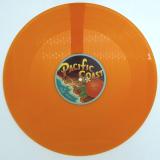
Introducing the 4th instalment of the Pacific Coast House rebirth. We bring back another much sought-after 12” from The Coastal Commission & Jesse Outlaw. “Bring down the Walls” was a nod to Raze’s “Break for Love”, Robert Owens “Bring Down the Walls” and Ritchie Hawtin’s use of the Roland 606 throughout “Sheet One”. Long out of reach and fetching $100+ on Discogs, Atjazz’s freshly remastered editions are finally available .. “Let it Go” was never mastered & only ever cut to dub-plate. It has now been mastered & available in all it’s glory.
Coastal Commission “Bring Down the Walls” “Bring down the Walls” was a nod to Raze’s “Break for Love”, Robert Owens “Bring Down the Walls” and Ritchie Hawtin’s use of the Roland 606 throughout “Sheet One.” We gave the tune a Californian psychedelic twist with conga laden drums, a moody synth, low pulsing 303 patterns + Benjamin Zephaniahs patois call to “Move the Body Rhythmwize!” The first PCH releases had dropped Worldwide to International acclaim from DJ’s far and wide across the Globe with support in London, Paris & New York. However the local scene here in L.A that preached “Love, inclusion & Unity” was anything but that. L.A at that time was very tribal & divided up into 3 camps. If you weren’t affiliated with any of them (aka independent) then you were pretty much locked out of getting any kind of gig support or the Dj’s from those camps actually playing the music. The local feedback from Dj’s was that what we were making wasn’t “house,” but “Techno” which was absurd to me. “Bring Down the Walls” was a mantra to “move the bod”y and in doing so “bring down the walls” of separation not just in L.A but throughout society in general. Thank goodness for support from people like Terry Francis, Eddie Richards, DJ Deep & Philly Stalwart King Britt. After years of copies going for upward of $100+ on Discogs the now freshly remastered copies by At Jazz’s Martin Iveson are finally hitting the platters this Spring.
Jesse Outlaw “Let it Go” I met Jesse at Beatnonstop Records on Melrose Ave with Miguel Placencia in the late 90’s. Miguel (RIP) was a mainstay in the Underground scene and had always been very supportive of my endeavors. He had had success with a huge release on Yellow Orange and was working with Jesse under the moniker “When Worlds Collide.” I signed “Brighter Days” & “Set you Free” from them and released the tracks on my Seductive imprint. They told me that they were making the tracks on a Sony Playstation “Music Now” program and I was like FFS “What.s more Underground than that!?” Later Jesse gave me some of his solo work. The track “Let it Go” was never mastered & only ever cut to Dub-plate and featured on my 1st PCH mix “Pacific Coast House Sounds.” It has now been mastered by Martin Iveson and is available in all it’s glory. The dreamy vocal “You need to let it go” beckons over the top of driving percussive Latin beats and church organ which is a great compliment to the flip side of “Bring down the Walls.” All in all two West Coast stompers now finally available remastered on PCH in Orange vinyl.

- A1: My Life Is Real
- A2: Git Ready
- A3: N Y. State Of Mind Pt. 3
- B1: Welcome To The Underground
- B2: Madman
- B3: Pause Tapes
- B4: Writers
- C1: Sons (Young Kings)
- C2: It's Time
- C3: Nasty Esco Nasir
- C4: My Story Your Story Feat Az
- D1: Bouquet (To The Ladies)
- D2: Junkie
- D3: Shine Together
- D4: 3Rd Childhood
GRAMMY-prämierte Rap-Ikone Nas und DJ Premier – zwei der einflussreichsten und angesehensten Persönlichkeiten der Hip-Hop-Geschichte – veröffentlichten ihr mit Spannung erwartetes Kollaborationsalbum „Light-Years“ am 12. Dezember digital über Mass Appeal Nach den limitierten Day Ones Editionen gibt es nun die regulären Editionen mit Artwork, ab 20. Februar 2026.
Nach jahrzehntelanger Vorfreude ist „Light-Years“ die Wiedergeburt einer 30-jährigen Zusammenarbeit. Die Partnerschaft von Nas und DJ Premier ist tief in der DNA des Hip-Hop verwurzelt. Ihre Geschichte begann 1994 mit „Illmatic“, das Hits wie „N.Y. State Of Mind“, „Memory Lane“ und „Represent“ hervorbrachte. „Illmatic“ etablierte Nas als Ausnahmetalent und festigte Premiers damals aufstrebende Karriere. Ihre musikalische Chemie vertiefte sich im Laufe des folgenden Jahrzehnts durch Klassiker wie „I Gave You Power“, „2nd Childhood“, „Nas Is Like“ und „N.Y. State Of Mind Pt. II“.
Angeführt von Mass Appeals bahnbrechender Reihe „Legend Has It…“, die einige der wichtigsten und einflussreichsten Hip-Hop-Künstler aller Zeiten feiert und ins Rampenlicht rückt, präsentierte die Reihe ein ganzes Jahr lang historische Veröffentlichungen von Kultur prägenden Künstlern wie Slick Rick, Raekwon, Ghostface Killah, Mobb Deep, Big L und De La Soul. Mit „Light-Years“ liefern Nas und DJ Premier den krönenden Abschluss dieser legendären Reihe, in der ihre unbestreitbare Synergie nach wie vor einzigartig ist.
2006 zierten Nas und DJ Premier das Cover des Scratch Magazine und kündigten ein gemeinsames Projekt an, das die Begeisterung der Fans erneut entfachte und die zwei Jahrzehnte währende Vorfreude beflügelte. Letztes Jahr taten sich Nas und Premier zusammen, um das 30-jährige Jubiläum von „Illmatic“ mit der Veröffentlichung des neuen Tracks „Define My Name“ zu feiern, mit dem sie erstmals ihr wegweisendes Kollaborationsalbum ankündigten.
„Light-Years“ ist ein wahrer Beweis für den Einfluss beider Künstler, ihr Vermächtnis und die Zeitlosigkeit ihrer gemeinsamen Musik.

- A1: Think
- A2: Messin' Up
- A3: Dedicated To The One I Love
- A4: Tell The Truth
- A5: It Hurts Inside
- A6: When I Get Like This
- A7: Good Lookin' Woman
- A8: Say It
- B1: Don't Let It Be In Vain
- B2: I'm With You
- B3: Show Me
- B4: I Got To Know
- B5: Much In Need
- B6: Catch That Teardrop
- B7: What's In The Heart
- B8: Get Something Out Of It
The “5” Royales were the most enduring and influential of all the 1950s proto-soul groups. In a very crowded market, their success was remarkable. The Royales were the first African American group to introduce gospel based vocal styles into the rhythm and blues format. This gave an intensity to their recordings and live performances that no other combo could get near, thanks to the passion and power that lead singer Johnny Tanner generated. Furthermore, the group possessed in Lowman Pauling a songwriter of genius and a guitarist, who invented an exciting style of playing that linked stinging solos with rhythmic accompaniment. The Harbingers Of Soul is a mouth-watering overview featuring the best of the King era and the most soulful sides from their stay at Home Of The Blues. 180gsm vinyl. Sleeve notes by John Ridley.

- A1: Cigarettes & Coffee Al 'Tnt' Braggs
- A2: You're Gonna Miss Me Shirley Raymond
- A3: Shout Bamalama Otis Redding
- A4: I've Been Wrong For So Long Bobby Bland
- A5: Backtracking Little Junior Parker
- A6: That's Cuz I Love You Louis Jones
- A7: You Don't Have To Cry Little Bob & The Lollipops
- A8: Please Think It Over Roscoe Shelton
- A9: If I Don't See You Again Ted Taylor
- B1: Too Many Tears Roy Lee Johnson
- B2: What Can I Do For You Elmore Morris
- B3: You Don't Miss Your Water William Bell
- B4: I Cried Joe Medwick
- B5: Blessed Are These Tears Joe Tex
- B6: Best Of Luck Baby Earl Gaines
- B7: My Love Belongs To You Sam & Dave
- B8: I Don't Hurt Anymore Fontella Bass
- B9: Please, Please, Please James Brown
The Golden Age of southern soul lasted from about 1962 to 1975, when disco ripped the heart out of it. And although it may seem as though the blend of country, gospel and R & B that emerged from the great studios in Memphis and Muscle Shoals in that decade was entirely fresh and new, like any other genre classic, southern soul picked up musical cues and absorbed influences from a whole variety of sources: horn lines from Louisiana's swamp pop, lyrical themes from the blues, songs from country music, and of course so, so much from the black churches. Part of the 'History of Soul' series, this LP reveals the musical antecedents that gave southern soul its inspiration. The music here will tell you the real story - and it will knock your socks off too! Notes by John Ridley.

12
Mononoke is a Berlin band founded by Fabian Rösch and Benjamin Geyer. Their musical passion is improvisation with a sound that moves between experimental electronic music, jazz, beat music and ambient.
This LP combines their two recent EPs which have been released on the Munich based label tunnel.visions,
each on one side.
APARt
APARt was created in the field of tension between spontaneous improvisation and careful studio work, marked
by the lockdowns during covid and social isolation. It was precisely this physical separation that gave rise to a
new experimental approach.
Each track is a puzzle, whose individual pieces were put together, moved around, and placed in new contexts.
Instead of jamming and rehearsing together, musical ideas were exchanged online so that they could be freely
interpreted, altered and redesigned.
modular
Newly found vivid playfulness, fresh approaches and a tilt towards the unexpected marks these songs. Capturing moments in our lives full of challenges, developments and salvation.
The same new and unusual process of working separately, shaped the subsequent second EP modular which
followed the same working structure but with a new component: the modular synthesizer, which decisively reshapes the sound: a collection of analog textures, broken structures and a touch of raw intimacy.
Each song is an episode, each sound a reminder of how music connects us.?
Even when circumstances, such as a pandemic, can threaten to pull us apart.

The long-standing artistic director, resident DJ, and co-founder of Closer Kyiv, Timur Basha steps up after 15 years of producing in the shadows with his first-ever solo EP. The daughter of Timur's best friends (Karine + Shakolin) gave us these words to accompany the record on its journey into the world: "sensitivity, serenity, loyalty, hope, luck & love...<3"
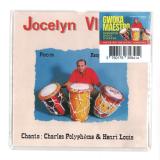
JOCELYN VIRAPIN is one of the master of the Guadeloupean Gwoka percussion.
Born October 17th, 1957 in Basse-Terre, he’s an author, composer, producer and a vinyl digger.
His Gwoka is a pure tribute to the traditional combination of responsorial singing in Guadeloupean creole, rhythms played on the Ka drums and dancing.
He started to play in the 90’s with his band Gwaka. He opened and collaborated with prestigious band such as Kassav or Zouk Machine.
He has a massive discography as arranger and musician: he appears on more than 78 albums! The track "Pasyon" was originally released in 1994 on a rare vinyl , but with the artist we decided to do an edit, so we invited the super talented jazz player Florian Pellissier for a Rhodes improvisation on the original take.
The track "Respè Pou Fanm" was originally released with his band BELOKA in 2010 and was only pressed on a Cd format at a very limited quantity. This beautiful song is a blend of Ka, fantastic jazzy keys on Rhodes, hypnotic bass, sublime creole spiritual chants. With an incredibly joyous feel, the lyrics gave a timeless advice to men: Respect Women .
It definitely deserves a vinyl version for all the music lovers, Dj’s and diggers from all over the world !
Kenbé red pa moli !
13
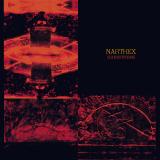
Narthex means railed-off western portico or ante-nave in earty Christian churches for women, penitents and catechumens.
Narthex is also a trio featuring (at the beginning) Daniel Denis (Universe Zero, Art Zoyd), Alain Neffe (Pseudocode, Human Flesh, Bene Gesserit) and Nicolas de Villemarqué (Nuwage Music). They had a very different musical background, mostly electric-electronic rock, and decided to work in the field of acoustic music recorded live (two microphones + portable DAT) in churches of their area. After several recording sessions, Nicolas de Villemarqué decides to leave the group. ln order to complete the trio, Daniel Denis and Alain Neffe ask the participation of some of their friends. Anna Homler, Michel Berckmans and Daniel Malempré have accepted the challenge and succeed to fit into their musical universe.
The instruments Church organ, harmonium, sitar, saxophone, oboe, bassoon, zither, valiha, senzas, tarang, voice, percussions, metal clarinet, classical guitar, mew's harp, ongolok, violin, dulcimer, mouth organ, etc.
The music Often dark, sometimes repetitive or experimental, sometimes rhythmical and exotic, always based on emotion inducted by the sound. One could define it as dark age music (as opposite to new age music), a sort of minimal come back to the roots and purity of acoustic sound without the cultural background linked to the 'academic' use of some instruments (for example African senzas are transformed and tuned to sound like Indonesian instruments, sitar or harmonium are used as rhythmical instruments, vahilla is played with a bow).
The places Churches located in an area of 20 kms in the region where Daniel Denis and Alain Neffe live for years and where they feel at home (and feel the vibrations. Every church, place emotionally loaded, has its own specific resonance and sound structure. Every church gave to the musicians a particular inspiration and fill the sound of the instruments with a natural reverberation/echo. The place but also the moment is important. They had the privilege to be allowed to record in the Ecaussines church at night lightened only by candles. lt was one of their most productive recording sessions.
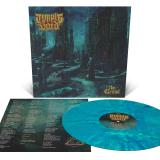
- 1: Poison Icon
- 2: Godless Cynic
- 3: The Crawl
- 4: A Dead Issue
- 5: Thy Mountain Eternal
- 6: Soulburn
- 7: The Twin Stranger
Critically acclaimed Death Metal force TEMPLE OF VOID return with their new album, The Crawl. The caveman brawn of previous albums, namely Summoning the Slayer (2022), remains, but there’s a wider dynamic on the group’s fifth full-length album at play. Now a quartet—featuring guitarist Alex Awn, drummer Jason Pearce, vocalist/guitarist Mike Erdody, and bassist Justin Malek—the Michiganders aren’t shying away from their non-metal influences, seeking greater integration of grunge and post-punk with their brutish signature. Singles “The Crawl” and “Soulburn” demonstrate the proficiency of TEMPLE OF VOID's death-cloaked, spearheaded attack. From the high intensity of opener “Poison Icon” to the granite wall of “The Twin Stranger,” The Crawl isn’t just TEMPLE OF VOID evolved, it’s a harbinger of death metal to come. “The biggest shift for me on this record was not feeling like we had to fly the ‘death-doom banner’ as part of our identity,” says Alex Awn. “Death-doom, as a genre, gave us something to anchor our sound around when we started. It was always a reference and touchstone. At the same time, we always wanted to make sure we had our own spin on it. We’ve always been adding to the conversation, adding to the genre, giving our point of view. A huge part of what makes a Temple of Void record is the non-death-doom influences that make up our DNA. And on album five we never once asked ourselves, ‘Do we have enough death metal? Do we have enough doom metal?’ We simply wrote a heavy-ass record—let the chips fall where they may.” For lyrics, Erdody built on the psychology and fear themes of Summoning the Slayer. The overarching theme of The Crawl is, put rather simply, an “allegory about life, choices, and consequences.” It’s a qualitative view on the horrors of the human condition and the contemplation of our monstrous capabilities. “The Twin Stranger,” for example, is about being stalked by a person’s doppelganger; “Godless Cynic” draws on a short story by sci-fi author Harlan Ellison; and “Poison Icon” tackles the crushing effects of mankind’s intrinsic nature to deceive and control.

- A1: Paul Kalkbrenner - No Goodbye
- A2: Water World - Give Me Love
- B1: Panoramic - Colors
- B2: Natasha Bedingfield - Pocketful Of Sunshine (Stonebridge Club Remix)
- C1: Y-Traxx - Mystery Land (Fred Baker Vs Mr Sam's Magical Mystery Dub Mix)
- C2: Weiss - Feel My Needs
- D1: The Killers - Mr. Brightside (Jacques Lu Cont's Thin White Duke Mix)
- D2: Sia - Drink To Get Drunk (Different Gear Remix)
8
Since 2020, 12 Inch Lovers have been releasing new samplers every year, eagerly anticipated by collectors. These samplers have now become a staple and are easily added to vinyl collections across Europe. They offer timeless classics and rare tracks that are often hard to find elsewhere.
With Samplers 11 & 12, they surprise again with a mix of modern classics and tracks that have never been released on vinyl or are difficult to find. By adding unique and exclusive tracks, the 12 Inch Lovers samplers remain innovative and high-quality. They are a must-have for DJs, collectors, and fans of contemporary classics!
SAMPLER 11
A1) Paul Kalkbrenner - No Goodbye (2019)
Berlin techno producer Paul Kalkbrenner became world-famous with his 2008 hit Sky & Sand. Since then, he has released one record after another and performed all over the world in the biggest venues and at the most renowned festivals. No Goodbye is one of his more recent hits, released in the summer of 2019.
The track was created using an a cappella he received on a demo tape while on tour. He was immediately inspired by the vocal and built his own sound and production around it. Interestingly, Kalkbrenner rarely uses vocals, but for No Goodbye he collaborated with Australian singer Chiara Hunter, giving the track a unique and instantly recognisable character. The result is a stylish, dance-floor-friendly track with a rolling house groove that quickly became a modern classic on dance floors worldwide.
A2) Water World - Give Me Love (2000)
This trance classic by Water World appeared in 2000 on the French label Adequat Records and is the perfect tune for a sunny summer evening. Warm melodies and pulsing beats instantly create that beach feeling, as if you were dancing with your feet in the sand. The record recalls Beachball by Nalin & Kane, sharing the same dreamy, sun-drenched vibe.
Behind Water World were producers Laurent David and Frédéric De Backer-names well known to many trance fans. In the nineties De Backer was active with projects such as Global Trance Mission (Dream Mission) and Y-Traxx, the trio that released the 1997 classic Mystery Land.
Give Me Love clearly bears their combined signature: euphoric, warm and melodic, with a timeless build that perfectly balances emotion and energy. The track was released on vinyl as part of Trance E.P. Vol. 01 and remains a fixture in retro-trance sets to this day.
B1) Panoramic - Colors (1996)
Colors by Panoramic is a Belgian trance classic released in 1996 on the legendary label XTC Records, a sub-label of Bonzai Records. Panoramic was a collaboration between Belgian techno icon Marco Bailey and Mauro Mirisola. The duo, also known under playful aliases such as The Coke Man & Sniff, released an EP featuring two powerful trance tracks.
We chose Colors, a tune with pure Belgian trance DNA: driving rhythm, dreamy synths and a catchy female vocal. The combination of Bailey's production expertise and Mirisola's creative touch resulted in a timeless track that still appears in many classic playlists.
B2) Natasha Bedingfield - Pocketful Of Sunshine (StoneBridge Club Remix) (2008)
British singer-songwriter Natasha Bedingfield released the album Pocketful of Sunshine in 2008, featuring the title track as a single. The original pop version became a major hit in North America, reaching the Top 5 in the US. Swedish DJ and producer StoneBridge (Sten Hallström) reworked the song into a groovy house version, released in the summer of 2008.
StoneBridge gave the upbeat pop tune a club-ready beat and an infectious piano riff that made it shine on dance floors worldwide. It was not his first time transforming pop into house gold-he had already achieved global fame with his remix of Robin S - Show Me Love (1992), one of the greatest house anthems of all time. He also remixed Sia - The Girl You Lost to Cocaine in 2008, another club favourite.
The StoneBridge Club Remix of Pocketful of Sunshine appeared on a special remix EP in July 2008 and was played endlessly in clubs-by us too, in the venues where we performed. The result is a timeless, sun-soaked house classic thatmakes sitting still impossible.
C1) Y-Traxx - Mystery Land (Fred Baker vs Mr Sam's Magical Mystery Dub Mix) (original release 1995)
Y-Traxx was a nineties trance project by DJs Laurent David and Fred Baker. This trance classic first appeared in 1995 as a B-side but gained real attention when it featured on a Paul Oakenfold mix album. Thanks to that success it received an official re-release in 1998 on the respected French label FFRR (Full Frequency Range Recordings).
In 2003 an excellent remix by Mr. Sam & Fred Baker followed on the Nebula label. That version is highly sought after on vinyl by trance collectors, and we are proud to feature it on our new sampler.
C2) Weiss - Feel My Needs (2018)
Feel My Needs by British producer Weiss (alias Richard Dinsdale) is the tune with that unmistakable old-school piano and catchy vocal that instantly pulls you onto the dance floor. Released in May 2018on the UK label Toolroom Records, the track is pure feel-good house with a modern touch. From the very first piano riff, hands go up in the air.
Toolroom even called it a "future anthem" for the summer of 2018, and indeed Feel My Needs became a huge floor-filler. The record charted high on global dance lists and gained massive popularity at festivals and clubs that year. With its warm piano chords, tight beat and soulful vocal, this is a modern house classic that will stay in the collective club memory for a long time.
D1) The Killers - Mr. Brightside (Jacques Lu Cont's Thin White Duke Mix) (2005)
American band The Killers formed in 2001 and scored a massive hit a few years later with Mr Brightside. Taken from their debut album Hot Fuss (2004), it became their biggest and best-known track-a true rock-pop anthem.
In 2005 the song was given an electronic twist when renowned producer and remixer Jacques Lu Cont (the alias of Stuart Price) created an eight-minute dance version titled Mr Brightside (Jacques Lu Cont's Thin White Duke Mix). This remix replaced the raw rock energy with a more progressive and electronic vibe, driven by a steady beat and long build-up.
The track found a second life in club culture and quickly became a dance-floor favourite. For vinyl collectors it was an instant must-have, and to this day it stands as the perfect party closer. The Killers themselves loved it so much that they often used the remix live as an outro, followed by the original version. A remix that perfectly bridged rock and club culture-and has since become a genuine classic.
D2) Sia - Drink To Get Drunk (Different Gear Remix) (2001)
The legendary ice-cube sleeve says it all: Drink to Get Drunk was a huge club hit in the early 2000s. Released in 2001 on the UK label INCredible, a sub-label of Sony Music, it was a collaboration between British DJ duo DifferentGear (Gino Scaletti & Quinn Whalley) and singer Sia.
The producers took Sia's original song Drink to Get Drunk from her album Healing Is Difficult and gave it a complete transformation, keeping her distinctive vocal and placing it over a hypnotic progressive-house groove.
The combination of Sia's unmistakable voice and the deep, driving production hit hard: the track became hugely popular in Belgian clubs and turned into an anthem of its time. In Belgium it even reached number one in the dance chart in early 2001, and it also performed strongly in the UK and the Netherlands.
To this day it remains a nostalgic crowd-pleaser that perfectly captures the atmosphere of the early 2000s.

- A1: Move
- A2: Jeru
- A3: Moon Dreams
- A4: Venus De Milo
- A5: Budo
- A6: Deceotion
- B1: Goldchild
- B2: Boplicity
- B3: Rocker
- B4: Israel
- B5: Rouge
In 1949 Miles Davis, Gerry Mulligan and Gil Evans - they'd never met before - gravitated together with the natural
affinity of kindred souls. Combined, they gave each other a spiritual boost that resulted in many all-night sessions of
earnest discussion, writing and playing-productive work on new musical ideas, new voicings, new concepts of jazz.
Their first appearance startled a delighted jazz public, and marked the birth of the cool. Today, these famous Miles
Davis instrumentals are as exciting as ever, and here are in all their glory.

- 1: And In 02:50
- 2: Pouring Elixir 08:0
- 3: Imbrication 04:41
- 4: Skin Contact 08:21
- 5: Unwitches 09:42
- 6: Everything I Never Asked Him Ft. Nikita Gill 08:29
- 7: Incandescent Strings 0:00
- 8: Icarus And Lucifer 03:31
- 9: Matthias' Wajd 04:55
- 10: Circles 05:12
- 11: Soaring Above The Nave 06:45
- 12: And Out 01:50
FRQNCY LDN, the new project from Alex Lavery and James Ford (producer du jour and one half of Simian Mobile Disco), are releasing their debut album ‘The White Edition’ on 5 September via PRAH Recordings. Alongside the news of their debut album, the duo are sharing the first taste in ‘Matthias’ Wajd’, which they describe as “a rousing, instrumental piece from the middle of the set where the whole ensemble became balanced providing moments where Raven played violin with haunting yet uplifting melodies within the cavernous reverb of the church. Interestingly, at this moment, most of the audience who had been laying down rose to watch the performance like a gig, like an awakening.”
Initially conceived as a live project with earlier performances at churches in London and at Glastonbury, FRQNCY LDN’s music is a mix of strings, gongs, oscillators, FX, and spoken word, and the result is a musical experience unlike any other. Now that immersive magic has been captured on their debut release through Prah Recordings.
The music that FRQNCY LDN are releasing as their debut album is from an extraordinary live take from a performance at St Matthias Church in Stoke Newington last year, and thanks in no small part to the serendipitous bunch of musicians they assembled: composer and violinist Raven Bush, clarinettist Arun Ghosh, cellist Satin Beige Chousmer, and harpist Chloe Chousmer-Kerr. Alongside Lavery and Ford and assisted by engineer Animesh Ravel, they were able to capture the music to a world class level.
FRQNCY LDN has its roots in a supermoon that occurred three summers ago, after the hottest day of the year. Two of Lavery’s friends gave a sound bath that evening. “I’m not overly into astronomy or anything but the experience was nuts,” he says. “I had to find out what had just happened. What felt like forty minutes was actually two and a half hours. We were all out. It was so profound that I was hooked.”
He immediately signed up for a sound therapy course where he learned about what he calls a “brain hack” to meditation. “The thing about sound therapy is there’s a lot that’s meditation-based, and I find meditation really difficult. I’ve got a very busy brain. What was alluring about this process of sound immersion, a sound bath, whatever you want to call it, is it’s basically a hack to making your brain get into a meditative state.”
FRQNCY LDN’s early shows crystallised their ideas into a project, and Lavery brought poet Nikita Gill on board as a vocalist. “One of the first poems she gave to me, ‘Unwitches’ was in response to me explaining that I’d love this project to be perceived as something anyone could access. It’s not just for the sound meditation or the yoga, or the mushroom crowd. No one should be turned off by connotations from where the music comes from, I love music but I’d never be into that because it’s too woo-woo. Nikita said she’d had this poem for a long time but she’d never found the right home for it.”
And in an increasingly busy and fraught world, the need to tune out for an hour or so, and maybe tune in to something more profound, is only going to get bigger.

Macclesfield 3-piece Cassia make their extremely welcome return with the announcement of their most ambitious release yet in new studio album everyone, outside - out April 11th.
The album marks a bold new chapter, and recently served up a tropical-tinged first offering in ‘heat’ - with today serving a superb Round Two with the stomping, insatiable, hook-laden new single ‘friends’.
everyone, outside takes Cassia’s sound to new heights. Written fresh off the back of two years of relentless touring, the band channelled every ounce of their renowned live energy into the album, returning to a studio they built themselves in Macclesfield, after creating their previous album in Berlin. The journey provided an added twist, recording the majority of tracks live on TikTok, giving fans a unique, inclusive experience to be part of the process.
The album’s title is a metaphor for embracing your truest self and reflection of a band who are at their happiest outside. It’s a message that speaks to the idea of reconnecting with nature and Britain’s finest summers. As frontman Rob explains, “That title, ‘everyone, outside’ started as a song about how weird it is that we stay inside all the time when being out in nature always makes us feel better. Over time, it came to mean more than that - like a metaphor for being your truest, most natural self, unburdened, like when no one’s watching.”
Drawing influences from a host of genres and cultures, everyone, outside reveals Cassia’s venn diagram of global sounds and intimate storytelling. A trip to Mexico during the writing process injected the record with a new energy, while their time spent in their new space back home gave the band a freedom to try new instruments, new sounds, acquire new tools to hone their production skills - and to simply have fun and explore. “The time we spent in Berlin taught us so much, but coming back home to Macclesfield allowed us to really focus on making something that felt like it came from us. No distractions, just pure creativity,” says drummer Jacob Leff.
Cassia’s rise has been impressive. From their early days busking the streets of Cornwall to playing major festivals, touring the world and receiving critical acclaim from BBC Radio 1, Radio X, The Independent, Rolling Stone UK, Clash & many more, the band has carved out a unique niche. Their sound, influenced by the African music Rob’s father introduced him to, combined with the indie heritage of nearby Manchester, combines the positivity of bands like Foals and Vampire Weekend, with the jazz-tinged afrobeats of Fela Kuti and Ebo Taylor.
After signing to Distiller Records in 2018, the band gave up their full-time jobs and ventured to Bath to record their debut album, Replica. Tracks such as ‘Right There’, ‘Drifting’ & ‘100 Times Over’ have amassed millions of streams, seeing the band sell out multiple headline Tours both in the UK and Europe. Playing to a homecoming capacity crowd at Manchester’s O2 Ritz, as well as sold out headline shows at London’s KOKO & The Garage, the band have accrued a huge, loyal following and their live shows earned them a nomination for Best Live Act at the AIM Awards alongside Idles and DMA’s, as well as making them the winners of Reeperbahn’s Anchor Award in 2022.
Cassia will tour the UK in May 2025, playing songs from the new album and some of their biggest tracks - headlining Leeds, Bristol, a newly added night in Southampton, a special Manchester homecoming, Glasgow, Birmingham, & a huge show at London’s HERE @ Outernet - dates below & Tickets Here. The band will also take things Stateside this year for their first ever run of headline shows in the US & Mexico.
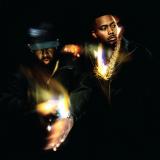
- A1: My Life Is Real
- A2: Git Ready
- A3: N.y. State Of Mind Pt. 3
- B1: Welcome To The Underground
- B2: Madman
- B3: Pause Tapes
- B4: Writers
- C1: Sons (Young Kings)
- C2: It's Time
- C3: Nasty Esco Nasir
- C4: My Story Your Story Feat. Az
- D1: Bouquet (To The Ladies)
- D2: Junkie
- D3: Shine Together
- D4 3: Rd Childhood
GRAMMY-prämierte Rap-Ikone Nas und DJ Premier – zwei der einflussreichsten und angesehensten Persönlichkeiten der Hip-Hop-Geschichte – veröffentlichten ihr mit Spannung erwartetes Kollaborationsalbum „Light-Years“ am 12. Dezember digital über Mass Appeal Nach den limitierten Day Ones Editionen gibt es nun die regulären Editionen mit Artwork, ab 20. Februar 2026.
Nach jahrzehntelanger Vorfreude ist „Light-Years“ die Wiedergeburt einer 30-jährigen Zusammenarbeit. Die Partnerschaft von Nas und DJ Premier ist tief in der DNA des Hip-Hop verwurzelt. Ihre Geschichte begann 1994 mit „Illmatic“, das Hits wie „N.Y. State Of Mind“, „Memory Lane“ und „Represent“ hervorbrachte. „Illmatic“ etablierte Nas als Ausnahmetalent und festigte Premiers damals aufstrebende Karriere. Ihre musikalische Chemie vertiefte sich im Laufe des folgenden Jahrzehnts durch Klassiker wie „I Gave You Power“, „2nd Childhood“, „Nas Is Like“ und „N.Y. State Of Mind Pt. II“.
Angeführt von Mass Appeals bahnbrechender Reihe „Legend Has It…“, die einige der wichtigsten und einflussreichsten Hip-Hop-Künstler aller Zeiten feiert und ins Rampenlicht rückt, präsentierte die Reihe ein ganzes Jahr lang historische Veröffentlichungen von Kultur prägenden Künstlern wie Slick Rick, Raekwon, Ghostface Killah, Mobb Deep, Big L und De La Soul. Mit „Light-Years“ liefern Nas und DJ Premier den krönenden Abschluss dieser legendären Reihe, in der ihre unbestreitbare Synergie nach wie vor einzigartig ist.
2006 zierten Nas und DJ Premier das Cover des Scratch Magazine und kündigten ein gemeinsames Projekt an, das die Begeisterung der Fans erneut entfachte und die zwei Jahrzehnte währende Vorfreude beflügelte. Letztes Jahr taten sich Nas und Premier zusammen, um das 30-jährige Jubiläum von „Illmatic“ mit der Veröffentlichung des neuen Tracks „Define My Name“ zu feiern, mit dem sie erstmals ihr wegweisendes Kollaborationsalbum ankündigten.
„Light-Years“ ist ein wahrer Beweis für den Einfluss beider Künstler, ihr Vermächtnis und die Zeitlosigkeit ihrer gemeinsamen Musik.

- 1: Y Dechrau (Feat. Boy Azooga, Jessy Allen, Earl Jeffers, Andy Brown & Amanda Whiting)
- 2: Chware Teg
- 3: Thema Osian
- 4: Tyrchu (Feat. Gruff Rhys)
- 5: Dŵr Y Mynydd
- 6: Geiriau
- 7: Tynged
- 8: Trac Piano
- 9: Cynnau Tân (Feat. Carwyn Ellis)
- 10: Anturiaethau Pellach Capten Idole
- 11: Pino Ar Y Bâs!! (Feat. Darkhouse Family)
- 12: Brân Swît
- 13: Thema Nia (Ahmed)
- 14: Sidan Torri
- 15: Erlid Y Ddraig
- 16: Dwyrain Cymru
- 17: Un I Dewi (Feat. Andy Brown)
- 18: Maen Llia
- 19: Tad A Mab (Feat. Dafydd Brynmor Davies)
- 20: Diolch A Nos Da (Feat. Dafydd Iwan)
1
Don Leisure has cemented his name as one of the most forward-thinking and experimental beatmakers & producers within the current musical ecosystem. As well as being 50% of Darkhouse Family (alongside Earl Jeffers) he has collaborated with the likes of Angel Bat Dawid, Gruff Rhys, DJ Spinna and First Word label-mates Amanda Whiting & Tyler Daley (Children of Zeus). Garnering serious support from Lauren Laverne, Tom Ravenscroft, Huw Stephens, Gilles Peterson, Huey Morgan, The Vinyl Factory, Clash, Uncut and many more. Following the release of ‘Cynnau Tân (feat. Carywyn Ellis)’ (which gained support across BBC Radio from Tom Ravenscroft, Zakia & Huw Stephens) Welsh beatmaker Don Leisure announces the release of a new album ‘Tyrchu Sain’) as he returns with a new single ‘Tyrchu’ due for release on 22nd January 2025. ‘Tyrchu’ features the soft-spoken vocal stylings of Gruff Rhys over a gently rolling, tape saturated and expertly chopped instrumental, creating (in Gruff’s own words) ‘Shiny new beat-treasures with ghostly reflections of Welsh pop’s past - skillfully dug from Sain Records’ deepest veins’
A dedicated student of music, over the years, Don has amassed a vast encyclopaedic knowledge of music genres and subcultures, including a fascination with Welsh psychedelic folk music from the mid-20th century. This introduction was made by respected musician, producer & selector Andy Votel’s 2005 two-part compilation series ‘Welsh Rare Beat’ (in collaboration with Gruff Rhys and Don Thomas), comprising twenty-five tracks from Sain Records’ back catalogue. Now the oldest independent record label in Wales, Sain is a wildly influential bastion of home-grown Welsh talent, co-founded by Welsh-language folk singer Dafydd Iwan, whose music has seen a cultural resurgence in recent years with his 1983 song Yma o Hyd (We’re Still Here) becoming a huge anthem for Wales football fans. Set up in the Welsh capital, many of Sain’s early releases were recorded at Rockfield Studios in Monmouthshire, but in the early 1970s the record company moved to the Caernarfon area and opened their first recording studio in 1974 near Llandwrog. Announcing a huge digitisation project throughout 2024, Sain Records took on the mammoth task of painstakingly digitising their entire back catalogue spanning 55 years, working in partnership with the National Library of Wales the resulting archive then be submitted for to the National Library of Wales in Aberystwyth, preserving them for future generations to enjoy. Taking this period of rediscovery as an opportunity to reimagine their impressive inventory, Sain invited Don Leisure to dig into their musical treasure chest, creating a sprawling sonic tapestry from the dusty gems within. On this exhilarating excursion, Sain Records founder Dafydd Iwan explains: ‘Imagine someone gave you access to over 50 years of Welsh popular music – almost all of it unknown to you before. It would be a strange experience of discovery, an unknown territory which could baffle and excite. This happened to Jamal (Don Leisure) – and he was captivated by a world of music he barely knew existed, and when he was asked to distill the experience into one album, he immediately warmed to the idea. And this is the result – a kaleidoscope of sounds to encapsulate a half century of Welsh music. To call it unique would be superfluous: no-one could ever recreate this album. Listen, and enjoy.’.
The resulting product is ‘Tyrchu Sain' (translating to ‘Digging Sain’), a fearless and exploratory album, which sees Don put his signature unparalleled and unpredictable skills to work, weaving together moments of forgotten beauty into celestial and otherworldly compositions. The record features appearances by artists from Wales who have a similar obsession as Don Leisure in these classic Welsh rarities including Gruff Rhys, Carwyn Ellis, Earl Jeffers Amanda Whiting and Boy Azooga. A shimmering patchwork quilt of sound, ‘Tychru Sain’ traverses a shifting landscape of acid folk, eerie vocal melodies and interstellar soundscapes, propelled forth by crisp, head nod-inducing drums and grainy textures. Breathing new life into compositions lost to time, and paving a path for new listeners to discover the magic that lies within.

12
“Tubby did three original dub albums, ‘Dub From The Roots’. ‘The Roots of Dub’ and the third is ‘Brass Rockers’ with Tommy McCook ‘pon the flying cymbals. Where he mixed it with the horn going in and out in a dub way and one named ‘Shalom Dub’ you can call Tubby’s too because he mixed the versions as they were off forty fives’’
Bunny ‘Striker’ Lee
King Tubby and Producer Bunny ‘Striker’ Lee are intertwined in the birth of Dub Music. After discovering a mistake that made a ‘serious joke’ (more of which later...) they went on to release the first pressings of this new musical genre namely ‘Dub Music’. Tubby’s vast knowledge of electronics and Bunny’s vast catalogue of rhythms would lay the foundations of what today is taken as a standard... the Remix / Version cuts to an existing vocal tune.
Osbourne ‘King Tubby’ Ruddock was born in Kingston, Jamaica on 28th January 1941 and grew up in the High Holborn Street area of downtown Kingston. He studied electronics at Kingston’s National Technical College and also on two correspondence courses from the U.S.A... When he had qualified Tubby began repairing radios and other electrical appliances in a shack in the back yard of his mother’s home. His work in the early days included winding transformers and building amplifiers for Kingston’s Sound Systems. Tubby built his first Sound System in 1957 playing jazz and Rhythm & Blues at local weddings and birthday parties. His reputation as a man who knew and understood both electronics and music grew steadily and as the sixties drew to a close. Tubby
purchased his own basic two track equipment. He installed this alongside his dub cutting machine, a home-made mixing console, and his impressive collection of jazz albums in the back bedroom of his home at 18 Dromilly Avenue which he christened his music room.
Tubby and Striker were at Treasure Isle Studio’s one day while Ruddy from Spanish Town was working with the engineer Byron Smith....
“Tubby and myself was talking when Ruddy was cutting some dub but Smithy (engineer) made a mistake through we were talking and forgot to put in the voice. It was two track recording in those days. Ruddy said ‘No Man! Make it stay! and so they cut the rhythm. When I went over to Ruddy’s that Saturday night a dance was in progress and when they played the vocal to the tune... then he said we’re going to play ‘Part Two’. They never called it ‘Version’..and then he played the rhythm track. The song was a catchy song and everybody started to sing along and the deejay started to toast so everything went down well. On Monday morning I went up and I said ‘Tubbs the mistake we made was a serious joke.It mash up Spanish Town! The people went wild. So you have to start to do that now ‘cause when the man put on the ‘Part Two’ everyone start singing this song. It played about twenty times. I said you try Tubbs!’...Well the next Saturday night now when Tubby strung up down the farm U Roy said he’s going to play ‘Part Two’ but Tubby did it different now. He started with the voice then dropped it out and let the rhythm run and then he brought in the voice in the middle and from there Tubby started to get really popular.’’
Bunny ‘Striker’ Lee
Dynamic Sounds upgraded to sixteen track recording in 1972 and Tubby purchased, again with the help of a deal brokered by Bunny Lee. The old four track equipment and the MCI console from their Studio B. The four tracks now gave him far wider scope to work with and he began to create a new musical form where the bass and drum parts were brought up while the faders allowed Tubby to ease the vocal and rhythm in and out of the mix. It was only a matter of time before Tubby’s dub plate experiments began to make it on to vinyl and the first ever long-playing King Tubby releases would feature a collection of his mixes to a selection of Strikers rhythms. So please sit back and enjoy this historic set of sounds. Lovingly restored and with a few extra gems added to the CD Editions. These releases were the first to carry the name of King Tubby and the first to credit the great musicians that contributed so much to the rhythms that made these albums possible.

4
We have made Enormous Mouse 005 available once again as the original 2006 release is currently for sale at £35 a copy of Discogs. But for this release we have taken it from a two tracker to a four tracker by adding the two recent remixes by the guys that we gave away as WAVs with the previous bundles.

- A1: First Sequence
- A2: Second Sequence
- A3: Third Sequence
- A4: Fourth Sequence
- A5: Fifth Sequence
- A6: Sixth Sequence
- B1: Seventh Sequence
- B2: Eighth Sequence
- B3: Ninth Sequence
- B4: Tenth Sequence
- B5: Eleventh Sequence
- B6: Twelfth Sequence
- C1: Symmetry Systems (Porcelain)
- C2: Symmetry Systems (Gold)
- C3: Symmetry Systems (Amber)
- C4: Symmetry Systems (Violet)
- D1: Symmetry Systems (Indigo)
- D2: Symmetry Systems (Emerald)
- D3: Symmetry Systems (Shadow)
- D4: Symmetry Systems (Midnight)
- E1: Imagine The Truth
- E2: Axiom Haze
- E3: Discrete Time
- E4: Reality Engine
- E5: Blissgrid
- F1: State Space
- F2: Principle Dilution
- F3: Everything & Nothing
- F4: Echo Diffusion
- F5: Beyond The Hyperreal
30
Threewave is the complete synth trilogy from 36 and it unites three releases into a single, evolving statement shaped over five years. Spanning the Wave Variations, Symmetry Systems and Reality Engine releases, the project is rooted in self-imposed limitations and a carefully refined melodic palette that gave rise to a suite of interconnected transmissions. Minimalist sketches give way to warm, AI-era-inspired nostalgia, but always grounded by a distinctly human sensibility. Melancholic keys and glowing atmospheres balance precision with emotion before expanding into themes of perception, artificial intelligence and imagined realities. Together, these works make for a defining chapter in 36's partnership with the legendary Past Inside the Present.
- A1: Robert Pico - Le Chien Fidèle
- A2: Annie Girardot - La Femme Faux Cils
- A3: Spauv Georges - Je Suis L'état
- A4: Zoé - Zoé
- A5: Jacques Da Sylva - Fou
- A6: Valentin - Je Suis Un Vagabond
- A7: Jacques Malia - Histoire De Gitan
- A8: Bernard Jamet - Raison Legale
- B1: Jean-Pierre Lebort - Barbara Au Chapeau Rose
- B2: Les Concentrés - Fils De Dégénérés
- B3: Les Missiles - Publicité
- B4: Hegessipe - Le Credi D'hegessipe
- B5: Marechalement Votre - Ethero Disco
- B6: Mamlouk - Decollez Les
- B7: Mozaique - L'amour Nu
- B8: Jean-Marc Garrigues - Je Dis Non
- B9: Penuel - Astronef 328
17
The journey through French-speaking pop archives continues with this fifth volume, packed with fuzz, gimmicks, and dissent. Far from the charts, the selected tracks display a great creative freedom, often backed by corrosive humor. Welcome to the surprising, kaleidoscopic, and colorful world of the late sixties and early seventies, Wizzz!
Born in Montauban, Robert Pico stumbled into music by chance when he met René Vaneste, then artistic director at Pathé-Marconi. René brought him to Paris to record his first 45 RPM EP in 1964. A year later, Pierre Perret introduced him to Vogue, where he recorded his second album with Claude Nougaro’s orchestra. Sylvie Vartan then introduced him to RCA, where he recorded four singles, including the astonishing "Chien Fidèle," a track backed by a hair-rising fuzz guitar. Alongside his solo career, he also composed for other artists like Alain Delon (the song was recorded but remains unreleased), Magali Noël, Bourvil, and Georges Guétary. In the Paris of the sixties, he mingled with Mireille Darc, Elsa Martinelli, Marie Laforêt, France Gall, Françoise Hardy, Petula Clark, Régine, Dani, Serge Gainsbourg, Joe Dassin, Franck Fernandel, Charles Level, and Roland Vincent. Despite his efforts and winning a Grand Prix Sacem for his final record, Robert Pico didn’t achieve the expected success in show business and decided to leave Paris and return to the Southwest, where he devoted himself to writing. He is the author of 23 books (including Delon et Compagnie, Jean-Marc Savary Editions 2025, a memoir about his youth and his many encounters). Today, he is relieved to never have become a celebrity and devotes himself to his work with passion.
In 1969, the Franco-Italian movie Erotissimo was released, directed by Gérard Pirès (who later directed Taxi in 1998, written and produced by Luc Besson). This pop comedy features Annie Girardot, Jean Yanne, Francis Blanche, Serge Gainsbourg, Nicole Croisille, Jacques Martin, and Patrick Topaloff. The soundtrack was written by Michel Polnareff and William Sheller, with lyrics by Jean-Lou Dabadie. "La Femme Faux-cils," performed by Annie Girardot. It recounts the feelings of a rich CEO's wife who seeks to develop her sex appeal under the influence of advertisement and magazines. Groovy, sparkling and light, this track, with ITS lush arrangements humorously critiques consumer society and feminine beauty standards.
“Je suis l’Etat” (1967) is the flagship track of the first EP by singer-songwriter Spauv Georges, aka Georges Larriaga, better known as Jim Larriaga (1941-2022). Born into a family of bakers, the young man was initially planning to become a hairdresser when he discovered English-speaking music through Elvis Presley and the Beatles. After this revelation, he decided he would become a songwriter and gave himself five years to succeed. He recorded his first two EP’s independently for RCA under the pseudonym Spauv Georges; meaning “that poor George”, a nickname given to him by the mother of her friend Jean-Pierre Prévotat (future drummer of the Players, Triangle, or Johnny Hallyday). Portraying a depressed and eccentric young man, Spauv Georges created corrosive and amusing songs that didn’t reach a wide audience, despite a TV appearance with Jean-Christophe Averty.
Supported by his loyal friend and fellow songwriter Jean-Max Rivière, Georges Larriaga met the future singer Carlos in the early '70s, then Sylvie Vartan’s assistant. He wrote songs for Carlos, including the popular "La vie est belle," "Y’a des indiens partout," and "La cantine", which went onto become a huge hit in 1972. He also composed for Claude François (“Anne-Marie”, 1971), Charlotte Julian (“Fleur de province”, 1972), helped launch child singer Roméo (who sold 4 million records), and later wrote the hit "Pas besoin d’éducation sexuelle" (1975) for the young Julie Bataille. In 1971, Jim recorded an album for Disc'Az: “L’univers étrange et fou de Jim Larriaga”, which featured pop gems like “La maison de mon père”.
The story of the song "Zoé" began when Pierre Dorsay, artistic director at Vogue Records, asked Swiss singer and musician Pierre Alain to write a song for a new female singer. The inspiration came when he realized that Zoé (the artist's name) was also the name of France's first atomic battery, created in 1948, which consisted of uranium oxide immersed in heavy water! The lyrics reflect a bubbling energy that must be handled with caution, while the instrumentation echoes this atomic theme, notably with the use of a theremin.
Zoé’s career lasted only as long as a single 45 RPM, but it seems Christine Fontane was the vocalist behind this pseudonym, who is known for several EPs, a good "popcorn" album in 1964, and a handful of children’s singles in the '70s. Regardless, the photograph on the cover is of a different girl entirely.
Later, Pierre Alain continued his career, writing songs for himself, Marie Laforêt, Danièle Licari, Alice Dona, Arlette Zola (3rd place in Eurovision 1982), and achieving multiple gold and platinum records in Canada. Also an inventor with several patents, president of the Romande Academy, and head of the French Alliance in Geneva, he now composes atonal music, books, and poetry. Moreover, he is also the host of "Les Mardis de Pierre Alain" at "Le P'tit Music'Hohl" in Geneva.
Filled with oriental choruses and fuzz guitar, "Fou" is from Jacques Da Sylva's only EP released by Vogue in 1967. Despite the quality of this recording, all traces of this singer disappear after this first effort.
Valentin is a baroque pop singer born in Belgium. He is the songwriter and composer of most of the tracks on his three singles released in the late 60s in Canada. A legend says that he reincarnated himself as Jacky Valentin during the 1970s for a rock'n'roll revival career in Belgium, but his older brother sadly debunked this story. Valentin's first two singles were arranged by Claude Rogen, a Parisian session pianist who had come to Canada to promote the song “Mister A Gogo”, a cover of David Bowie’s “Laughing Gnome”, adapted by singer Delphine, his wife at the time. Far from his usual network, Claude Rogen arranged music for Polydor, including the arrangements for “Je suis un vagabond” in 1969, a jerk tune with string arrangements and a furious optimism.
Jacques Malia wrote, composed, and recorded his only 45 EP for Festival in 1966. “Histoire de gitan” is an incredible beat track with bohemian scat that tells the story of a gypsy musician who came to Paris to make it in the Music-Hall, to no avail. The hero of the song and its author probably shared a similar fate, as Jacques Malia faded into anonymity after this remarkable attempt.
Bernard Jamet recorded two EPs for Barclay in the late sixties and co-wrote several songs with Christine Pilzer, Pascal Danel, and prolific songwriters Michel Delancray and Mya Simile. The track “Raison Légale” (1968), his masterpiece, immerses the listener in a courtroom right when a murderer is being judged, with jerk rhythm and free arrangements. A unique, paranoid, judicial, and psychedelic oddity.
Jean-Pierre Lebrot-Millers started his career in show business in 1967 as a singer and songwriter for the Philips label. After three singles, he wrote several songs of a new kind with his friend Pierre Halioche, in the midst of the sexual liberation movement and the democratization of drugs. With provocative lyrics, “Les filles du hasard” and “Barbara au Chapeau Rose” were released on a Philips singles in 1968. The character of Barbara was inspired by a queen of Parisian nightlife during the psychedelic years: model Charlotte Martin, who dated Eric Clapton from 1965 to 1968, then Jimmy Page from 1970 to 1983. Jean-Claude Petit’s arrangements, with a table-filled intro, soul brass, and Hendrixian guitar, emphasize the flamboyance of a hedonistic and sexy character, whose dog is named Junkie because “Junkie est un nom exquis”! The track was recorded live in three takes with a full orchestra.
Upon its release, the record was censored by Europe 1 and RTL due to its references to drug use. Jean-Pierre Lebrot was then banned from the airwaves and later dismissed by his record label. He changed his artist name to Jean-Pierre Millers, while his companion Pierre Halioche became D. Dolby for a new dreamy composition, “Chilla”, which Jean-Pierre produced himself with arrangements by Jean Musy. Once again, the song was immediately censored everywhere. After this setback, he decided to stop singing and started taking on odd jobs to support his Swedish wife and their son until the day he met Jean-Pierre Martin, then production manager at Decca, who had worked with Manu Dibango. Martin offered Jean-Pierre Lebrot-Millers, then employed at Rank Xerox, the position of artistic director at Decca. He accepted and became, a year later, promotion director (radio, press, TV). He worked on Julio Iglesias’s first album for Decca, which became a massive hit and allowed him to meet Claude Carrère. The latter asked him to write new songs and find their performers, much like a “talent scout.” It’s through him that Jean-Pierre discovered Julie Pietri and Corinne Hermès. He composed “Ma Pompadour” for Ringo, Sheila’s husband, and took the microphone again for the syncope hit “Rendez-Vous” in 1982.
That same year, Jean-Pierre Lebrot-Millers tried to release a track for which he had heavily gone into debt: “Si la vie est un cadeau”. Having recorded it in London, he presented it to numerous professionals, all of whom refused to get involved. The same thing happened with Antenne 2 and the Sacem when he proposed the song as France’s entry for Eurovision. He then met Haïm Saban, who was producing cartoon soundtracks and had just launched the Goldorak theme song. Saban, having listened to the song, declared it had the potential to become a hit. He sent Jean-Pierre and Corinne Hermès to meet the CEO of the Luxembourg radio and television network. The latter received them, asked to hear a verse and chorus a cappella in his office, and immediately hired them to represent Luxembourg at Eurovision 1983. They reworked the arrangements and recorded a new version with Haïm Saban as co-producer. The song ended up winning Eurovision 1983, a great comeback for our hero. He continued producing and hung out with the band Nacash in Belgium when a couple came to introduce their daughter for an impromptu audition in a hotel room. The girl sang “Les démons de minuit” while dancing to a radio cassette. Impressed, he had her take singing lessons for a year and composed a song for her (for which he had the melody and title, but no lyrics). This required him to go on the hunt for a lyricist, who ended up being Guy Carlier. They recorded the song, which was initially a ballad, at Bernard Estardy’s CBE studio, and gave the singer a new name: Melody. They showed the song around their industry network without success. Later, Estardy called Jean-Pierre to suggest changing the rhythm and making it pop-rock. Orlando, Dalida’s brother, liked the result and decided to co-produce the track. “Y’a pas que les grands qui rêvent » became a classic hit. The song has since been covered by Juliette Armanet (as a ballad, like the original) and Valentina.
Born into an aristocratic Breton family, Hervé Mettais-Cartier worked as a DJ at Queen Kiss, a nightclub in Poitiers, where he formed the band Les Concentrés with Michel (an actor) and Christian (a radio technician). Together, they created a repertoire of whimsical songs (“Ma bique est morte”, “J’suis un salaud”, “Fils de dégénéré”...) that they performed on stage dressed in white (in homage to “concentrated milk”). They performed at Bliboquet and Olympia in 1968 for the 10th edition of the “Relais de la chanson Française” organized by L’Humanité-Dimanche and Nous les Garçons et les Filles, sponsored by Pepsi Cola. Winners in the author-composer category, alongside Danish singer Dorte, their visibility allowed them to record a 45, and appear on television in Jean-Christophe Averty’s show. The A-side of the disc features Bruno le ravageur, a casatchok dedicated to Bruno Caquatrix, the director of Olympia, nicknamed in the song “Coq Atroce” or “croque-actrices”. The B-side is dedicated to “Fils de dégénéré”, a quirky tribute to Hervé's aristocratic roots, mixing absurdity with sophisticated vocal harmonies.
After Les Concentrés, Hervé Mettais-Cartier formed the duo La Paire et sa Bêtise with his friend Olivier Robert. They performed in Parisian cabarets and toured with Pierre Vassiliu. In the late 1970s, Hervé began a solo career. He recorded two albums for the Motors label in 1978 and 1979, which did not achieve their anticipated success due to lack of promotion. In 1980, he met Bernadette, with whom he started a family and created a “Chansons à voir” (songs to see) show that he performed until his death at the end of 2024.
Publicité comes from the final EP by the Missiles (Ducretet Thomson, 1966), a disc that also includes “La (nouvelle) guerre de cent ans”, featured on Volume 4 of our Wizzz! series. Please refer to the booklet for the story of the band.
“He’s 1.82 meters tall, 28 years old, weighs 135 kg, is black and Belgian”: this is the description of singer Hegesippe on the back of his sole single (Decca, 1967). He appears on the album cover wearing a Greek toga, like a hippie gag – we are at the end of the year 1967. In “Le crédo d’Hegesippe”, this former bodyguard of Antoine and the Charlots plays the delightful card of the thick brute converted to Flower-Power and non-violence, with arrangements by Jean-Daniel Mercier, aka Paul Mille.
“Ethéro-disco” was released on a promotional record for clients of the Maréchal company (Liège, Belgium) for the New Year 1979. Over a funky rhythm, celebrity impersonations (Brigitte Bardot, Jacques Dutronc, Fernandel…) deliver an enigmatic text about pharmaceutical products like ether, bismuth, and aspartate. The track was composed by Dan Sarravah (responsible for Joanna's “Hold-up inusité” featured on Wizzz! Volume 3) and Tony Talado, who was also a singer (one 45 in 1967), songwriter (with over a dozen credits between 1964 and 1985 in various styles from surf music to disco), author (Devenez Végétarien, Dricot Editions, 1985), ad designer, and psychologist.
Décollez-les is on the A-side of Mamlouk's only single, a pseudonym for Marsel Hurten, who is known for his work on several EPs in the late sixties, as well as composing music for Hervé Vilard’s “Capri, c’est fini”, Claude Channes' “La Haine”, Annie Philippe’s “On m’a toujours dit”, and Nancy Holloway’s “Panne de Cœur”.
This strange song, with Afrobeat horns and absurd dialogues between a chef and his kitchen staff, is the result of a collaboration between Marsel Hurten and one of his neighbors, a photographer from Pavillon-sous-Bois (93), where the musician settled after returning from the Algerian War. A music video was shot to promote the record.
Marsel Hurten was born in Tourcoing (59) into a musical family. At a young age, he joined the brass band founded by his grandfather, playing the piston before studying trumpet at the conservatory, as well as teaching himself how to play the guitar. As an orchestra musician, he toured in France, Belgium, Germany, and England. He released a series of solo 45’s between 1965 and 1968 for the DMF and Az labels before stopping recording to focus on working for other artists (Gilles Olivier, Noëlle Cordier…).
“L’amour nu” (Vogue, 1971) is the work of the short-lived Belgian band Mozaïque. The track, written by singer Jacques Albin, closely resembles another of his compositions, “Carré Blanc”, which he recorded in 1969 for Disc’AZ.
Represented by the Lumi Son micro-label based in Marignane (Côte d'Azur), Jean-Marc Garrigues released two 45 RPMs in the late sixties, defending the French jerk sound. The song “Je dis Non” is a short, joyful ode to youth, pop music, and rebellion.
Songwriter and performer Jacques Penuel released three singles. The first one, “Astronef 328” (Fontana, 1969), features a dizzying series of chords punctuated by sound effects, a sci-fi story, and arrangements by Jean-Claude Vannier.
We would like to sincerely thank Pierre Alain, Moon Blaha, Marsel Hurten, Bastien Larriaga, Jean-Pierre Lebrot-Millers, Bernadette Mettais-Cartier, Robert Pico, Olivier Robert, Claude Rogen, Micky Segura.

- 1: Moanin' At Midnight
- 2: How Many More Years
- 3: Smokestack Lightnin
- 4: Baby, How Long
- 5: No Place To Go (You Gonna Break My Life)
- 6: All Night Boogie
- 7: The Red Rooster
- 8: Spoonful
- 9: Evil (Is Goin' On)
- 10: I'm Leavin' You
- 11: Moanin' For My Baby
- 12: I Asked For Water (She Gave Me Gasoline)
- 13: Forty- Four
- 14: Somebody In My Home
- 15: So Glad
- 16: Back Door Man
Moanin’ in the Moonlight, Wolfs erstes Langspielalbum aus dem Jahr 1958, versammelte ein Dutzend
Singles, die er im Laufe des vorangegangenen Jahrzehnts aufgenommen hatte, darunter die Favoriten
„Smokestack Lightnin’“, „Evil“ und „How Many More Years“.
Holen Sie sich den Sound des größten Blues-Labels Amerikas in High Fidelity mit der Chess Records 75th
Anniversary Series nach Hause. Diese audiophilen Neuauflagen klassischer Alben und Compilations aus der
Chess-Diskografie wurden von den originalen Analogbändern remastert und bei Quality Record Pressings
(QRP) auf 180-Gramm-Vinyl gepresst. Jede Platte ist in einer Tip-On-Gatefold-Hülle aus hochwertigem
Karton verpackt.
g 7 The Red Rooster [aka Little Red Rooster]
[g] 7 The Red Rooster [aka Little Red Rooster]
- A1: Joey Beltram - Energy Flash
- A2: Joey Beltram - Jazz 303
- A3: Joey Beltram - Subsonic Trance
- A4: Joey Beltram - Psycho Bass
- B1: Joey Beltram - My Sound
- B2: Joey Beltram - The Melody
- B3: Joey Beltram - Sub-Bass Experience
- B4: Joey Beltram - The Reflex
- C1: Second Phase - Mind To Mind
- C2: Second Phase - Mentasm
- D1: Mental Mayhem - Joey's Riot
- D2: Open Mind - The Trance
- D3: Disorder - Groove Attack
13
Few producers have had the same seismic impact on techno and rave music as Joey Beltram. Hailing from Queens, New York, Beltram was a key architect of the early '90s rave explosion and responsible for some of the most influential electronic records of the era - and it was Belgium’s R&S Records that gave many of these tracks their first home.
Originally compiled and released by R&S in 1996, Classics brings together the core of Beltram’s groundbreaking early output - namely the Beltram Vol. 1 (1990) and Beltram Vol. 2 (1991) EPs, alongside the legendary Second Phase productions ‘Mentasm’ and ‘Mind To Mind’ (1991), plus a selection of aliases and collaborative work from the same period, including tracks under Mental Mayhem, Open Mind, and Disorder.
Now remastered and reissued as a 2LP set for 2025, Classics is available on vinyl for the first time since 2006, offering a long overdue opportunity to own these timeless cuts in their purest form. Across the 13 tracks, you'll hear the sheer force and innovation that made Beltram a household name in underground techno.
Integral to this collection are ‘Jazz 303’ and ‘Psycho Bass,’ co-produced with Norwegian techno innovator Per Martinsen (aka The Alien), which stand out for their experimental, forward-facing sound - highlighting a futuristic edge even within Beltram’s already pioneering catalogue. Elsewhere, his Second Phase project with Mundo Muzique delivers the seminal ‘Mentasm’ and ‘Mind To Mind,’ two foundational tracks that introduced the infamous “hoover” sound to dancefloors worldwide. Rounding out the set are deeper cuts under his aliases Mental Mayhem, Disorder, and Open Mind, capturing the breadth of Beltram’s restless creativity and technical command during his peak R&S years.
Classics’ by Joey Beltram is available on R&S Records from 25th July 2025.

- A1: Beautiful Baby
- A2: Better Change Your Mind
- B1: Atomic Bomb
- B2: Shame
- B3: I Need You All Life
auch erhältlich
red vinyl[30,46 €]

- 1: The Cricket
- 2: My Sea
- 3: If You Seek Joy From The Sun
- 4: Andante Ma Non Troppo
- 5: The Poet And The Rose
- 6: Freedom
- 7: Con Calore
- 8: Mosso
- 9: The Lake By Lamartine
- 10: Moderato
- 11: Wings
- 12: Greek Melody
- 13: Thantalos
- 14: Ode To The Moon
- 15: The Linden Tree (Der Lindenbaum)
To mark what would have been Mikis Theodorakis' 100th birthday in 2025, Intuition released a very special album: 'Lost Songs' - fourteen previously unpublished compositions by the world-renowned Greek composer, presented here for the first time in a remarkable solo piano version by German pianist Henning Schmiedt. A remarkable moment took place in 2009 at Mikis Theodorakis' studio in Athens: Henning Schmiedt personally played his piano arrangements of the 'Lost Songs' to Theodorakis himself. Some of the melodies sparked the composer's memory, while others did not - but he listened attentively, offered comments and gave guidance that directly influenced the final versions of the pieces.
As such, 'Lost Songs' can be considered a posthumous release with the composer's blessing. These pieces offer a glimpse into Theodorakis' expressive power and artistic maturity from a very young age - most of the 'Lost Songs' were written in the early 1940s and provide a compelling window into the formative years of one of the most important composers of the 20th century.
'Lost Songs' is available on 180g vinyl and digipak CD editions.

»Hug of Gravity« is the second solo album by Raphael Loher and his first for Hallow Ground. The Swiss pianist and composer uses piano preparations, tape machines, and digital means to forge an aesthetic of playful reduction and rhythmic abstraction. The source material for these four sprawling pieces was culled from recordings of the artist performing the album’s predecessor, 2022’s »Keemuun.« Loher used them in a painstaking two-part working process to create an album that is both a product of and an ode to transformation, exploring themes of alternative temporalities and spatialities. »Hug of Gravity« oscillates between experimental electronic music, ambient, and minimal music and calls to mind the work of artists like William Basinski, Linda Catlin Smith, or label mate Andrius Arutiunian.
Loher laid the foundation for »Hug of Gravity« in 2020 with ten solo performances at his studio, during which he presented the pieces from his debut album. For these intimate concerts, he prepared the piano with modelling clay in order to move beyond the well-tempered tuning that dominates most of Western music. He then used a consecutive three-month residency in the Blenio Valley to refine the recordings. »I cut up and rearranged the material, then transferred the results—around 30 pieces—to a varispeed tape machine and then back to the computer. After that was done, I cut them up and rearranged them again,« he laughs. By radically reworking the material, he created an album that eschews traditional notions of time and space.
Loher points out the influence that his surroundings had on him. »The process created the music—and the place was essential to the process.« he says. He wandered through the mountains for up to nine or ten hours a day, which gave him a sense of what he calls expanded temporality. »Time just felt longer, my experiences seemed more diverse and nuanced, and it was as if I perceived my environment more clearly,« he explains. This shift in Loher’s perception of time and space—the latter also expressed in the album’s title—influenced his work with the varispeed tape machine. It allowed him to change the pitch of different recordings while layering them to let interference patterns emerge and emphasise the emotional qualities of the unconventional tunings he had used.
In this way, Loher constructed numerous interlocking narrative arcs throughout »Hug of Gravity,« an album that is ever-changing; an exercise in calm ecstasy that provides its audience with the feeling of being removed from conventional time and space. This approach is also reflected in the artwork for »Hug of Gravity,« which is based on drawings Loher made during his residency at Blenio Valley. Their fine hand-drawn lines run in parallel and let incidental patterns emerge, an effect that is only multiplied when the six different drawings that accompany each vinyl copy of the album are overlapping, forming ever-new visual constellations.
- Despair
- Devil Woman
- Hell Better
- Hiq82
- Humanity One
- Last Days At Hot Slit
- Lazarus
- Monday
- Shape
- Sweet Jesus
- Indifference
auch erhältlich
Fluo pink and blue splatter vinyl[38,61 €]
This is the third release by Trevor Dunn (Mr Bungle, Fantomas, Trio Convulsant, various with John Zorn) and Kevin Rutmanis (Tomahawk, Melvins, Cows, Hepa/Titus) On this outing Trevor joins Lords and Lady Kevin (duo of Kevin Rutmanis and drummer/artist Gina Skwoz) for a full length LP "Last Days at Hot Slit"
Songs are loosely based on assorted gospel, blues and jazz songs, some original, some covers. Included is a re-working of Mingus "Devil Woman". The trio based the pieces on improvisations that were then arranged and used to build free standing songs. A multitude of instruments were exploited by all those involved, to create a sizzling blend of aural delicacies. The album title is from a collection by writer Andrea Dworkin, often sited as the Celine of feminism. Less outre perhaps than their previous recordings, these songs hover somewhere between soundtrack- like excursions, to jazz/ blues mutations to a demented "rock" sounding affair. Something for everybody, or perhaps, nobody! Uniting former and current members of Tomahawk, Last Days At Hot Slit marks a powerful reunion between Rutmanis and Dunn. The record took shape gradually, born from Rutmanis's raw, unconventional bass recordings. "I sent Trevor a phone recording of some hideous bass racket and asked if he wanted to add anything," Rutmanis shares. "What he sent back was something like delicious fresh cherries with ice and banana slices." The pair's combined creativity gave rise to a new, immersive soundscape, while their collaborative piece, Crackpot Whorehead, set the tone for the current formation of Lords and Lady Kevin."

- A1: Get Up I Feel Like Being A Sex Machine
- A2: Brother Rapp (Part I & Part Ii)
- A3: Bewildered
- A4: I Got The Feeling
- B1: Give It Up Or Turnit A Loose
- B2: I Don’t Want Nobody To Give Me Nothing
- B3: Licking Stick
- C1: Lowdown Popcorn 9.Spinning Wheel
- C2: If I Ruled The World
- C3: There Was A Time
- C4: It’s A Man’s Man’s Man’s World
- D1: Please, Please, Please
- D2: I Can’t Stand Myself (When You Touch Me)
- D3: Mother Popcorn
James Brown wants to know one thing before he and his band begin Sex Machine. “Can I get into the thing, really?,” he asks. His cohorts enthusiastically respond in the affirmative. And for the next hour and change, Mr. Dynamite gets into it and more, turning in a sweat-soaked, feet-moving, hip-swiveling, emotion-purging, in-the-red, drop-everything-you’re-doing-and-dance performance for the ages. Ranked by Rolling Stone among the 500 Greatest Albums of All Time, the sweeping 1970 effort towers as a testament to Brown’s inimitable legacy as well as the peak powers of his voice, vibrancy, and bands.
Sourced from the original master tapes, pressed at Fidelity Record Pressing, and housed in a Stoughton gatefold jacket, Mobile Fidelity’s numbered-edition 180g 33RPM 2LP set presents Sex Machine in audiophile sound for the first time. It explodes with the energy the lightning-strike music demands. Dynamic, immediate, present, airy: Everything from the brassiness and fluidity of the horns to the snap and decay of the snare to the swell and carry of the organ comes across in full-range perspective.
Then there’s Brown’s superhuman singing, which here emerges with a purity, naturalism, and transparency that ensure you feel everything. Screeching, shouting, pleading, moaning, preaching, stinging, commanding, testifying, crooning, humming: The Godfather of Soul contributes one of the finest vocal performances known to man. This definitive 55th anniversary reissue of Brown’s monster funk statement further exhibits a combination of clarity, solidity, separation, and imaging that helps bring to light what he and his crack ensembles committed to tape. Both in the studio and on the stage.
Just how lifelike does this reissue sound? Senior Mobile Fidelity Sound Lab engineer Krieg Wunderlich, who handled the remaster, notes: “There were some artifacts that sounded a bit like mistracking. But they turned out to be breath blasts on the vocal microphone. That is part of history. JB was workin' hard, and breathin' hard. And there was an edit the timing of that was truly strange. Again, a part of history.”
Originally marketed as a live album, Sex Machine contains six songs recorded in the studio and later overdubbed with canned crowd noise and reverberation. Save for “Low Down Popcorn,” the tracks on the latter half stem from a phenomenal performance captured in October 1969 at Bell Auditorium in Brown’s adopted hometown of Augusta, GA. The special relationship between the singer, the audience, and the location is palpable.
As the 1960s gave way to a new decade, Brown experienced immense success and dealt with unexpected change. Soul Brother Number One soon expanded his idea for an official live album captured in Augusta when the ensemble that backed him on that date morphed into the original version of the world-famous J.B.’s just months after the show. The virtuosic abilities, sticky chemistry, and rhythm-forward nature of the J.B.’s prompted him to book a one-off session in Cincinnati, OH, on a late July night.
Anchored by brothers William “Bootsy” Collins and Phelps “Catfish” Collins, the group — as well as two different drummers — laid down a nearly 11-minute rendition of “Get Up I Feel Like Being Like a Sex Machine” and a thrilling medley of “Bewildered,” “I Got the Feeling,” and “Give It Up or Turnit a Loose.” A pair of then-recent studio singles cut in separate locations in 1969, “Brother Rapp” and “Low Down Popcorn,” each featuring his prior group, took care of the second LP worth of material that complements the originally planned live set.
Complicated? Somewhat. Unusual? Definitely. But just as he elevated the expectations for all present and future R&B artists, Brown not only makes it all work. He makes it positively electrifying.
“Get Up I Feel Like Being Like a Sex Machine” is alone deserving of a dissertation on the art of funk music, seeing it moves up and down akin to an oil derrick, witnesses Brown unleashing a trademark series of grunts, squeaks, and “good god” asides, and glides to a hypnotic groove that won’t quit. Or look to the syncopated rhythms of “Brother Rapp (Part I and Part II),” one of multiple pieces here that signify the point where Brown began viewing every instrument as a percussive tool. Brown closes the three-song medley with his new band with a skedaddling “Give It Up or Turnit a Loose,” which provides jolts on the order of sticking your finger into a socket.
Not that the actual live material falls short in any way. Setting an insistent tempo for the vitality that follows, “I Don’t Want Nobody to Give Me Nothing” positions Brown as a role model, leader, and self-sufficient entrepreneur. All simmer and boil, the short and sweet “Licking Stick” dares you to keep pace. The floating, almost comforting “Spinning Wheel” spotlights the instrumental prowess of Maceo Parker and company, and functions as a seamless segue into the tender, horn-saluted “If I Ruled the World.”
And Brown and his mates still aren’t done. Just try to resist the one-two closing punch of “I Can’t Stand Myself (When You Touch Me)” and “Mother Popcorn.” Mercy.
Ain’t it funky? Sure ‘nuff.

- A1: Beef Rapp
- A2: Hoe Cakes
- A3: Potholderz Feat Count Bass D
- B1: One Beer
- B2: Deep Fried Frenz
- B3: Poo-Putt Platter
- B4: Fillet-O-Rapper
- B5: Gumbo
- C1: Fig Leaf Bi-Carbonate
- C2: Kon Karne Il - Guinnessez Feat Angelkia & 41Ze
- C3: Kon Queso
- D1: Rapp Snitch Knishes Feat Mr. Fantastik
- D2: Vomitspit
- D3: Kookies
Cross merchandise with Rhymesayers, KMD, Viktor Vaughn, Madvillain, JJ DOOM, King Geedorah & Dangerdoom. LP packaging: Case wrapped tip-on gatefold vinyl jacket, new purple vinyl colour double vinyl, 2000 only for the UK. In celebration of the album’s 20th anniversary, MM..FOOD has been repackaged with all new artwork by Sam Rodriguez! Produced by MF DOOM, except "One Beer" produced by Madlib, and "Kon Queso” produced by PNS of the Molemen. Guest features include Count Bass D, Mr Fantastik, Angelika and 4ize. QR-activated immersive AR experiences with album artwork. Brand new music video for "Hoe Cakes" planned for album street date. Originally released in 2004, MF DOOM's MM..FOOD is hailed as a classic hip-hop album full of inventive production, brilliant wordplay, and unique themes. Celebrated for its seamless blend of humor, wit, and social commentary, the album ushers listeners into a bizarre world of food-related metaphors, painting a bitterly comedic portrait of a life tainted by vice, violence, and jealousy. It was a brilliant and novel concept that gave DOOM plenty of room to explore the album’s subjects. Throughout MM..FOOD, DOOM embeds complex ideas within seemingly simple narratives. Album opener “Beef Rapp” is a multi-pronged metaphor reminding listeners of the dangers involved in the glorification of conflict, especially within the rap game. “Hoe Cakes” borrows its name from the sweet, hot water cornmeal patties, which he uses as a symbol to rhyme about indulgence and excess. Continuing the motif, DOOM uses the Madlib-produced “One Beer” to fold layers of depth about escapism and ego, while the popular “Rapp Snitch Knishes” critiques the self-incrimination and contradictory behaviors of some rappers. Overall, MM..FOOD is both a social commentary and a piece of social satire, showcasing MF DOOM’s ability to blend serious themes with his unique, playful lyrical style. MM..FOOD album sales history over 820K+ units sold (RIAA-certified gold). MM..FOOD streaming history over 1.2M+ streams. MF DOOM’’s catalog sales history over 1.7M+ units sold. MF DOOM’s catalog streaming history over 3B+ streams.

11
Shogun Audio is extremely proud to present GLXY's second album, 'Form, Focus'. Unequivocally the most refined body of work to date from the ever-evolving drum & bass duo, this LP showcases GLXY at their irresistible best.
A decade on from the release of their debut single 'Small Talk/Trinity', GLXY have cemented themselves as one of liquid drum and bass’ most respected and prolific acts. With twelve EPs, a debut album in 2020, and collaborations with the likes of Alix Perez, Halogenix, Lenzman, Unglued, and Catching Cairo under their belt, 'Form, Focus' represents the next definitive milestone in an already heavyweight catalogue.
From beginning to end, the record distils everything that makes GLXY so special. Abundant with luscious sound design, soulful vocal features, and an unmistakable sense of groove and musicality. Featuring Charli Brix, DRS, Duskee, Eljé, Jords, Salo, and Verbz, the tracks flow seamlessly between deep, introspective liquid cuts and vibrant, club-ready rollers, painting a full picture of their artistry while pushing their sound into fresh, exciting spaces.
More than just a continuation, 'Form, Focus' feels like a statement: a decade of honing their craft distilled into a singular vision. It’s an album that reaffirms GLXY’s position at the cutting edge of the genre, while at the same time carving out their own unmistakable lane within it.
- A1: Kingdom Come
- A2: Is It Like Today?
- A3: What Is Love All About?
- A4: And God Said
- A5: Give It All Away
- B1: Sooner Or Later
- B2: Hollywood
- B3: Radio Days
- B4: Rescue Me
- B5: Sunshine
- B6: All I Gave
White Vinyl Repress
World Party was a musical group, predominantly the solo project of its sole consistent member, the songwriter, producer and multi-instrumentalist Karl Wallinger. Wallinger started the band in 1986 in London after leaving the Waterboys.
Featuring the #2 most downloaded/ streamed hit Is It Like Today?, small limited runs of each World Party album (5 total) will be pressed on white vinyl, with the run marketed as “The White Albums”, cheekily referring to Karl’s re-recording of The Beatles and his fans eternal quest to hear them.

- 1: Awakening
- 2: Under The Wire
- 3: Contact
- 4: Tug
- 5: Profess
- 6: Altar Of The
- 7: Ancestors
- 8: Quixotica
- 9: Postscript
He cast off his old skin, fundamentally altering his studies, homeland, and life, thereby charting a new future. Recorded at Sound on Sound Studios in Montclair, New Jersey, in January, 2024, 'Ancestral' was influenced, in part, by O'Gallagher's PhD studies into the music of John Coltrane, and reunites the versatile reeds player with guitarist Ben Monder while, notably, features the first-ever recorded collaboration between master drummers Andrew Cyrille and Billy Hart. "Basically, my PhD (available on O'Gallagher's website) is an analysis where I transcribed all of Trane's solos, spelling out what he does on his late recordings 'Interstellar Space' and 'Stellar Regions'. And it shows that free music is not free, not the way people think it is.
Trane was definitely thinking about organization in those records. This research definitely gave me ideas about how to be freer within the systems that I had developed, and how to perceive them in a more organic way." O'Gallagher's latest recording marks a significant artistic evolution, following a period of considerable personal change. After leaving Brooklyn, New York, he and his wife relocated to the UK before ultimately settling in Lisbon, Portugal. This journey, coupled with dedicated study, profoundly shaped his new music. O'Gallagher, Monder, Cyrille, Hart, and Coltrane: a potent brew. In an album consisting largely of first takes, O'Gallagher's compositions vary from through- composed pieces to skeletal charts to full- blown group compositions/ improvisations.

- A1: Biguine Willy - Biguine
- A2: Oh Esto Y De Irvaba Cumabo - Mambo Espagnol
- A3: Saoco - Charanga Cubain
- A4: En Guantánomo - Son Montuno
- A5: A M. Decantonio - Son Montuno
- A6: No Me Persigas - Cha Cha Cubain
- B1: Mama Egée - Rumba Lingala
- B2: Vivo Africa - Rumba Lingala
- B3: Ngonga Ebeti - Rumba Lingala
- B4: Minge Rumba Fiesta - Rumba Lingala
- B5: Matulekele - Folklore
- B6: Mitele Ngo Mama - Rumba Lingala
- C1: African Negra - Cha Cha Cha Indubil-Lingala
- C2: Rithmo Ya Suka - Cha Cha Lingala
- C3: Seis Linda Cubana - Son Cubain
- C4: Mi Amor - Cha Cha Cha Espagnol
- C5: Sabrosito - Cha Cha Cha Indubil Lingala
- C6: Nadie No Puede - Cha Cha Espagnol
- D1: Nella Negrita - Bolero Lingala
- D2: Arsene Diongue - Bolero Lingala
- D3: Liliane Yo Nsomi - Bolero Lingala
- D4: Yve Ya Fabien - Bolero Lingala
- D5: Tu Te Rappelles - Bolero Français
- D6: L’edera - Bolero Italien
24
'The creation of the band African Fiesta, founded in 1963 by three well-known musicians, Nicolas Kasanda, Tabu Ley Rochereau and Roger Izeidi, and the contributions of the VITA label, established by Roger Izeidi, occupy an exciting chapter in the history of Congolese popular music. During the mid-1960s, African Fiesta consistently reached the top of the hit parade. The band, which back in the day positioned itself as a competitor to a current called ‘Fiesta Cubana’, breathed new life into Congolese Rumba, continuing the tradition of the African Jazz school started by Joseph Kabasele.
'The VITA label, with African Fiesta as their sole provider, besides four songs of Eduardo De Veracruz Vinagre et Son Orchestre, ran between May 1963 and early 1966. It created a spectacular legacy and back catalog full of tasteful sentiments and sensual melodies, deeply rooted in the Afro-Latin sound.
'This new compilation offers a few of the classic African Fiesta songs and complements them with an eclectic and original selection, divided into four thematic sides: Showcase, Rumba Lingala, Cha Cha Cha & Bolero. This double LP album comes with a 16-page booklet featuring the history of VITA and African Fiesta, song commentary by Congolese journalist Herman Bangi Bayo, and a written catalog of the VITA label. The heirs of Roger Izeidi kindly gave permission in Kinshasa to release this album of African Fiesta on Planet Ilunga.'

11
Since her debut in 1983, Madonna has been one of the most important and revolutionary artists within pop music, influencing fashion and freedom of expression.
Bedtime Stories, Madonna's sixth studio album, was released in 1994 and saw collaborations with Babyface and Bjork. The lead single from the album, "Secret", gave Madonna her record-breaking 35th consecutive top ten single on the UK Singles Chart, while "Take a Bow" spent seven weeks at number one on the US Billboard Hot 100.

15th Anniversary Edition. Black Vinyl. When Dinosaur Jr. reunited, more than 20 years after their formation and legendary dissolution, the worry was that these guys were just flogging the back catalog, taking the old show on the road as a marketing gimmick. But the 2007 release of Beyond gave a hearty Marshall-driven "F**K YOU!" answer to those inquiring ears. Restoring the sound established by the unassailable hat-trick gambit of their first three albums -- Dinosaur, You're Living All Over Me, and Bug -- Beyond continued the band's march into rock greatness by making old ears smile and new ears bleed afresh. And then came Farm, the 9th full length record by the original line-up: J Mascis, Lou Barlow, and Murph. If Beyond was Dinosaur Jr.'s return to form, Farm is proof that Dinosaur Jr. could (and still do, to this day!) deliver timeless, exhilarating rock music. Farm encompasses Dinosaur Jr.'s signature palette: soaring and distorted guitar, unshakable hooks, honey-rich melodies. At times wholly 70's guitar-epic, at times perfect for sitting by a babbling brook with Joni and Neil, these songs get into your head and stay there, bouncing happily around. The ear-catching "Plans" is nearly seven minutes of classic whipped-topping rock dessert, while "I Don't Wanna Go There" is a meat-and-potatoes main dish, mixing unapologetic lead guitar with straight-ahead delivery a la James Gang or Humble Pie. This expanded deluxe edition of Farm features four songs never pressed to vinyl and never given worldwide release:"Houses", "Whenever You're Ready" (The Zombies Cover), "Creepies" (Instrumental), and "Show". "Whenever You're Ready", a cover of classic pop-rockers The Zombies, is impossibly good for a hidden gem; Murph stomps in with a sledgehammer to the kit, J and Lou layer low-end and fuzz like two halves of one brain, and right when things feel biggest, airy and colossal, there's J with a lightning bolt of a guitar solo. Pure electricity and melody like only he can make. Recorded in J Mascis' Bisquiteen studio in Amherst, Massachusetts, Farm was produced by Mascis himself, and delivers the singular, unique energy of one of America's greatest living rock bands.

Acclaimed Scottish composer Craig Armstrong releases his new work Pacific via his own label CMA Records. Written for piano, cello, and electronics, the three-movement piece was originally commissioned in December 2024 by Christian Kellersman, a pioneering figure in contemporary classical and jazz music, for his new live event series Berlin Confidential, co-curated with Alexander Szlovák. The series aims to promote innovative new music projects, with a particular focus on emerging musicians and composers.
Armstrong was among the first artists invited to perform as part of Berlin Confidential, premiering Pacific at Berlin’s historic Meistersaal concert hall in March 2025. The concert featured Armstrong on piano alongside cellist Lena Angelina von Almen and producer and musician Guy Sternberg, combining acoustic instruments with live electro-acoustic treatments to create a rich and atmospheric sound world.
Recorded in May 2025 at Lowswing Studios in Kreuzberg, Pacific continues Armstrong’s ongoing exploration of blending acoustic and electronic sound in a natural, seamless way. Over several days in the studio, Armstrong, von Almen and Sternberg developed the work’s intricate textures and dynamic interplay, resulting in a recording that captures both the intimacy and expansiveness of the original live performance.
Speaking about the inspiration behind the piece, Armstrong says: “I wrote this work during a time of great instability in the world, I wrote “Pacific” as an Elegy dedicated to the many suffering in today’s conflicts and in the hope that peace will prevail.”
Across its three movements, Pacific 1 is elegiac in nature, with the main themes stated and developed throughout the piece, punctuated by recurring piano motifs. The movement is reflective and atmospheric, with subtle electronic interventions. The second movement is arrhythmic in nature, following shifting time signatures that reflect a sense of uncertainty - the music is searching and static, ending without resolution but leaving hope for one to come. Pacific 3 moves towards peace and resolution, bringing the work to a close with quiet strength and emotional release.
When speaking about the creative process and his collaborators, Armstrong said: “Lena’s beautiful playing , tone and expression worked so beautifully on Pacific, Lena was also a great collaborator and was always willing to experiment and try new musical approaches. Lena is such a natural musician and she brought so much emotion and beauty to the piece. I wish her all the best in her future musical journey.”
He continues: Guy is a unique combination of being a brilliant engineer and mixer and a prolific very talented musician/composer. I was very fortunate to spend time with Guy in his studio in Berlin. His sensitivity to the project and his electronic programming made a wonderful contribution to the composition. His collaboration and friendship made the days working in Berlin such a great experience I would like to thank Emma Ford for her dedication, enthusiasm and guidance on Pacific”
For both von Almen and Sternberg, the collaboration was equally meaningful. Von Almen reflects on the experience of recording the piece, saying: “As a musician, it is always a great privilege to work on a piece together with the composer, and of course I felt even luckier to go through the process of creating something new with an artist like Craig Armstrong. Figuratively speaking, it felt like knitting a silk scarf: using the finest materials and taking the utmost care during the recording, we have realised another beautiful and touching work by Craig, which will bring us and certainly many others great joy. I feel very honoured to have been part of this and to have experienced this warm encounter.”
Sternberg adds: “Diving into Armstrong’s music while working on this record felt like examining a diamond under a microscope, discovering endless beauty within simplicity. Perfection and complexity emerging from simplicity, where every note, tone, noise, and gesture has meaning. I’m deeply grateful to have been part of this process, and for the freedom Craig gave me to express myself through his music, to let our sonic visions merge into one. It’s been both a lesson in music-making and in setting the ego aside, if only for a moment.”
Reflecting Armstrong’s belief in the role of music as a force for empathy and reflection, proceeds from Pacific will be donated to charities working towards peace: Médecins Sans Frontières and the Red Cross.
The limited-edition vinyl release has been pressed on Eco Vinyl at SeaBass Vinyl, a sustainable plant near Edinburgh. The record features striking cover art by Dirk Rudolph, who has designed several of Armstrong’s previous releases.

4
Back again with another release for the Meeting Of The Minds series, this time with lucky number 13!
First track on this is by me & Fez The Kid, who has been regularly sending me music for years, most of which I admit to sleeping on due to the sheer volume of demos submitted to the label. But when I was able to actually check some music that he sent me, there was one tune (at the time called All Round Juggling) of his that I gave me a few ideas on how it could sound. He was thankfully up for me working on it with him & the end result is "Skin Out Crew (Magnificent Mix)", which I've been playing a lot in sets this year.
"BDC" is a track done by me & The Last Ronin (aka Stretch & Enjoy) which they had started and I was really into it because it reminded me of some of the "ruff with the smooth" ragga jungle style tracks I'd hear on labels like Slam!, Tom & Jerry, Kemet & so on. It was really fun to work on this with them & we were also able to do a 2nd collaboration, which will be coming out on the next Defender compilation on Stretch's label AKO Beatz.
Settle Down is someone that was on my list of potential collaborators for a long long time but I just kept neglecting to reach out to him about actually doing something together. I eventually got round to getting in touch with him last year for collaborating on a track for Meeting Of The Minds, so he sent me something he had started, which I added some more to & sent back to him, so that he could add the finishing touches. The end result is "Shell Of A Man", which I like because it's quite sparse & ominous, dark but not in the typical "darkside hardcore" way.
"Altitude" by me & Flex Luthor has been through quite a lot haha. He initially reached out about working on a tune together in 2021 & at the time, I was keen but already quite occupied with other artists I was collaborating with for the series, as well as contemplating ending the series on Vol. 10, due to the amount of work it takes to compile each one (which also explains why Vol. 14 is not currently ready for release yet). But around the end of 2022, he sent me a track he had done where he said that he was struggling to get any kind of bassline that he was happy with. I liked what he sent so I asked him to send the track over for me to work on, but I then sat on the track for a whole year due to other commitments before finally working on it in 2024, during a long plane ride where I had time to actually focus on it. I was able to get the track to a place we were both happy with, until it became one of the tracks of mine that got lost when my backpack was stolen a few weeks later, with my computer inside. I didn't have the backup of the project, so unfortunately, we had to master this track for release from the mp3 file of the first & only version we had of it. I think it still sounds fine though, especially as this is not the first (or only) time I've had to send mp3 files off for mastering, but yeah, what a journey this tune has had!

- The Edwin Hawkins Singers - Oh Happy Day
- Elvis Presley - Joshua Fit The Battle Of Jericho
- The Golden Gate Quartet - Rock My Soul
- Ister Rosetta Tharpe / The Sam Price Trio - This Train
- The Southern Tones - It Must Be Jesus
- The Charioteers - Jesus Is A Rock In The Weary Land
- The Dixie Hummingbirds - Book Of The Seven Seas
- Sam Cooke / The Soul Stirrers - Jesus Gave Me Water
- Aretha Franklin - Never Grow Old
- Louis Armstrong - Nobody Knows The Trouble I've Seen
- Mahalia Jackson - Just Over The Hill
- Josh White - Jesus Gonna Make Up My Dying Bed
- The Five Blind Boys Of Alabama - Hills Of Calvary
- The Original Gospel Harmonettes - Get Away Jordan
- The Trumpeteers - Babylon's Fallen
- Louis Armstrong - Go Down, Moses
- Mahalia Jackson - Dig A Little Deeper
- Elvis Presley - Swing Down Sweet Chariot
- Aretha Franklin - Precious Lord
- Josh White - My Soul Is Gonna Live With God
- Sister Wynona Carr - Each Day
- Brother Joe May - Search Me Lord
- Ella Fitzgerald - Crying In The Chapel
- The Five Blind Boys Of Alabama - Honey In The Rock
- Sam Cooke & The Soul Stirrers - I'm Gonna Build On That
- Marie Knight - I Just Can't Keep From Crying Sometimes
- The Golden Gate Quartet - Golden Gate Gospel Train
- The Pilgrim Travelers - Satisfied With Jesus
- Stars Of Harmony - Rough & Rocky Road
- Alex Bradford - Too Close To Heaven
GOSPEL GREATEST HITS - Die Seele der Musik Mit Gospel Greatest Hits präsentiert Wagram eine außergewöhnliche Sammlung der kraftvollsten Stimmen und bewegendsten Songs der Gospelgeschichte - als Doppel-CD und Doppel-Vinyl. Diese Zusammenstellung vereint emotionale Tiefe, spirituelle Kraft und musikalische Exzellenz in einem einzigartigen Hörerlebnis. Zu hören sind Legenden wie Mahalia Jackson, The Edwin Hawkins Singers, Sister Rosetta Tharpe, Sam Cooke, Ella Fitzgerald, Louis Armstrong und das Golden Gate Quartet - Künstler:innen, die Gospel nicht nur geprägt, sondern weit über die Kirchenmauern hinausgetragen haben. Gospel war schon immer mehr als nur Musik: In den USA war er Stimme der Hoffnung, Ausdruck von Widerstand und Quelle spiritueller Kraft - und ist bis heute ein Fundament für Soul, R&B und Pop. Diese Sammlung bringt die Ursprünge zurück ins Rampenlicht - mit Songs, die unter die Haut gehen.

Not much is known about the artist Ethan Syann. It's the musician's choice to stay behind his sounds, anonymous and far away from the lights. We don't know if he's behind some other projects or monikers. The only thing we know is that we discovered his works over a decade ago, via Soundcloud. At that time, the quality of the works, the unpredictable range of sounds and atmospheres gave his own imprint to Ethan Syann and the reason to have him on board at a point. It was an obvious fact to put the light on his first and only tracks, recorded between 2013 and 2015. Today, he seems to come back in the area, and started again to record recently for some future projects to come. Yorgos Yatromanolakis choose his works between some various musicians propositions by us, and it has been the perfect match for IIKKI. This is his first release.

- A1: Parisian Thoroughfare 14'27
- A2: Yusef 5'34
- A3: Shaw' Nuff 6'52
- B1: Blues 6'14
- B2: Torsion Level 6'24
- B3: Woody 'N You 7'31
- B4: Dancing In The Dark 7'36
This Transition's label album features the concert that Donald Byrd Sextet gave in Detroit on August 23th, 1955 organized by the New Jazz Society, a group formed under the impetus of Kenny Burrell, one of the key influences in Detroit jazz.
The reissue of this hard-to-find album is significant for a number of diferent reasons. Its very rarity is one attraction for certain collectors, but more important perhaps is the fact that it was the first recording as featured artist for trumpeter Donald Byrd. It is also extremely revealing of the depth of the jazz scene in 1950s Detroit, which had nurtured Byrd and from which he was just emerging at the time of this concert.

9
Jazz by Sun Ra, Vol. 2.
These albums are important because they are Sun Ra's first recordings before the Saturn sessions, made in 1956 when the Chicago musicians were searching for something more, something beyond.
In 1957, Transition Records gave us Volume 1, but before Volume 2 could be released, the label went bankrupt, and it took more than a decade for it to finally be released on the Delmark label. Today, for the first time, both volumes are available, as they were meant to be from the beginning.
Volume 2 is presented here for the first time with the silver cover originally planned by Transition!

- 1: Pure Energy 09:8
- 2: Clint 06:53
- 3: 5.000 Feet Up 1:19
- 4: Give The Vibes Some 05:51
On “Cold Sweat,” James Brown famously called to “give the drummer some.” In 1974, Philadelphia vibraphonist Khan Jamal called to Give the Vibes Some, with superb results. Pianist and composer Jef Gilson’s PALM label gave Jamal the platform he needed to deliver a thorough exploration of contemporary vibraphone. After launching PALM in 1973, Gilson quickly demonstrated that he would only produce records not found anywhere else. Give the Vibes Some, PALM number 10, was another confirmation of this guiding principle.
Raised and based in Philadelphia, Khan Jamal took up the vibes in 1968, after two years in the army during which he was stationed in France and Germany. Decisively drawn to the instrument by the work of the Modern Jazz Quartet’s Milt Jackson, Jamal studied under Philadelphia vibraphone legend Bill Lewis and soon made his debuts in the local underground.
Early in 1972, Jamal made his first recording, with the Sounds of Liberation. The band attempted an original fusion of conga-heavy grooves with avant-garde jazz soloing. Saxophonist Byard Lancaster, an important figure in Jamal’s development, contributed much of the solo work. Later in 1972, Jamal made his leader debut with Drum Dance to the Motherland, a reverb-drenched, never-to-be-replicated experiment with live sound processing. Both albums appeared on the tiny musician-run Dogtown label.
“We couldn’t get no play from nowhere. No gigs or recording sessions or anything. So I took off for Paris,” Jamal recalled in a Cadence interview with Ken Weiss. “Within a few weeks, I had a few articles and I did a record date. It didn’t make me feel good about America.” That was in 1974, while Byard Lancaster was recording the music gathered on Souffle Continu’s recent The Complete PALM Recordings, 1973-1974.
Jamal’s record date delivered Give the Vibes Some. At its core, it was an exploratory solo vibraphone album, even if two tracks added (through technological resourcefulness?) a très célèbre French drummer very much into Elvin Jones appearing under pseudonym for contractual reasons. Another track, for which Jamal switched to the vibes’s wooden ancestor, the marimba, added young Texan trumpeter Clint Jackson III. The most notable article published on Jamal during this stay in France was a Jazz Magazine interview. Jamal’s last word there were “The Creator has a master plan/drum dance to the motherland.” “Give the vibes some” could be added to this programmatic statement.

Electro Glide in Blue is the successful second album by UK big beat collective Apollo 440.
The album attracted a lot of attention thanks to its blend of big beat, jungle and drum and bass.
With samples of Van Halen and Gene Krupa, the group showed the wide range of their influences.
This unique blend gave the band a major UK Top 10 hit with "Ain't Talkin' 'Bout Dub".
Electro Glide In Blue is available as a limited edition of 1000 individually numbered copies on translucent blue coloured vinyl.

10
Or Kantor returns with his sophomore album Snake Island, a vivid and cinematic journey through imagined landscapes and lost love, for fans of Eden Ahbez and other seekers of sound and spirit.
Following the critical success of his 2024 debut Sarda Sarda, praised by BBC Radio 6 Music, FIP Radio, RRR Australia, WYEP, KCRW, and Songlines Magazine, Kantor continues to refine his distinctive sonic identity, grounded in instrumental storytelling.
With Snake Island, Kantor ventures deeper into what he calls Subterranean Music, an atmospheric fusion of Mediterranean ballads, desert blues, spiritual jazz, and psychedelic textures. Drawing inspiration from artists such as Gábor Szabó, Omar Khorshid, The Budos Band, Dorothy Ashby, and Tommy Guerrero, he crafts instrumentals that feel both timeless and cinematic.
"Snake Island was written as a soundtrack to a fictional film that disappeared from the world, one that most likely no one has ever seen," says Kantor. "It began as a tragic love story, imagined during my time on a remote island in the Cyclades. Every landscape felt like a scene waiting for music. Eventually, the story gave way to sound."
A respected tattoo artist and founder of the Love Light Studio, Kantor's musical path began after a chance encounter with Johnny Sharoni (Garden City Movement, A&R at Anova Records). During a tattoo session, Sharoni heard Kantor's demos and was immediately struck by their raw beauty.
Kantor now steps confidently into the next chapter of his creative journey. Snake Island is more than an album. It is a mythic, imagined soundtrack to a film that only exists in memory, rendered in tones that shimmer like heat on stone.

- 01: Grotesque (Chapter 2)
- 02: Duo + 1
- 03: Night Out (Theme From Early Snow In Munich)
- 04: Paraphrase Sw (Theme For Stevie Wonder)
- 05: Feat. Zdenka Kovacicek - Peep Show (Theme From Early Snow In Munich)
- 06: Love Experiment (End Credits From Whatever You Can Spare)
- 07: Video Games (Theme From Early Snow In Munich)
- 08: Whatever You Can Spare (Orchestral Version)
- 09: Early Snow In Munich (Opening Credits)
- 10: The Forrest Date (Theme From Whatever You Can Spare)
- 11: The Graduates (Theme From The Graduates)
- 12: Oberhausen (Theme From Way To Your Neighbour)
- 13: Winter's Wish (Theme From Winter's Wish)
13
A new release from Fox & His Friends Records, Chapters (Screen & Stage Dancefloor Jazz from Yugoslavia 1971-1984) by Ozren Depolo brings to light a trove of previously unreleased music spanning more than a decade of his work in film, theater and television. This gatefold audiophile 180g LP, including a 12-page booklet with archival photos and detailed liner notes, offers for the first time a full album composed exclusively of Depolo's own authorship, drawn from master tapes held in private and institutional archives. Mastering and cutting was done by Frank Merritt from The Carvery Ozren Depolo rarely pursued opportunities to record original material, in part due to a general lack of interest among local publishers in jazz discography. Yet he was more than a gifted composer: he was also an accomplished saxophonist, clarinettist, flutist, pianist, arranger and occasionally, a jazz journalist who contributed articles to specialized programs on Radio Zagreb. Depolo also played in international big bands alongside jazz greats such as Clark Terry, Oliver Nelson and Gerry Mulligan, as well as in formations led by Bosko Petrovic, including the Nonconvertible All Stars and the B.P. Convention Big Band. He was a member of ensembles including The Alfi Kabiljo Orchestra, The Dragutin Diklic Ensemble, Jugoslovenska Pop Selekcija, The Stipica Kalogjera Octet, Vaclav Zahradnik & His East All Stars Band and the Zagreb Jazz Quintet. As both composer and arranger, he produced a significant body of work for large jazz orchestras and small ensembles. He was deeply engaged in jazz improvisation and avant-garde classical music, recording numerous chamber pieces for saxophone. A long-standing member of Acezantez, Zagreb's renowned contemporary music ensemble, he also collaborated with international figures such as Ted Curson, John Lewis, Johnny Griffin, Art Farmer, Leo Wright, Art Taylor, Slide Hampton and Lucky Thompson. This selection also includes his collaboration with Igor Savin and jazz vocalist Zdenka Kovacicek who were played on Karl Lagerfeld's fashion shows. The release demonstrates how Depolo was able to shift fluidly between idioms: from driving big-band passages to intimate chamber-like arrangements, from funk-tinged motifs to lyrical, impressionistic soundscapes. This stylistic breadth, always anchored in his deep jazz and funk sensibility, gave his music an adaptability perfectly suited to the hybrid world of stage and screen. The LP highlights that versatility while also presenting the coherence of his artistic voice, one that had gone unrecognized precisely because it was dispersed across so many contexts.

9
auch erhältlich
Blue Vinyl[24,58 €]
The brilliantly named duo - formed by Adam Morrow and Jamie Sego - might be based in "the hit recording capital of the world", Muscle Shoals, Alabama, but somehow, they have made a concept album about the ancient religious outpost off the coast of northeast England. It's a stunning record that mixes fuzzy guitars with folk horror and fantastic melodies - for fans of Ride, Slowdive, Galaxie 500, Talk Talk, Yo La Tengo and The Clientele. Despite its lyrical inspiration lying thousands of miles away, it comes imbued with the soulfulness of their surroundings - not least because it was recorded in the old Muscle Shoals Sound studio by the Tennessee River, now Portside Sound, which is run by Jamie. "The story of Lindisfarne gave us a framework for what were otherwise very abstract ideas and emotions," explains Adam. "It became a way to make sense of our own moment in history. We really want our lives and societies to always get better, and to be left alone to make that happen. But we are stuck in these cycles of progress and regression, and I think most people are really driven to make sense of it and assign meaning. Lately, we've lived through a global pandemic, a devaluation of truth and reality, and a resurgence of far-right politics into the mainstream. Not really what I expected out of life in 2025." He is keen to point out that, despite the seriousness of its inspirations, the duo had a lot of fun making the album and really want it to be "a living and breathing thing". "We want people to be able to engage with it regardless of whether they care about it as a concept record," he says. "For me, it's just another reason to expand the pedalboard," concludes Jamie. "We hope you enjoy it. Peace, love and reverb from Alabama." Coloured Vinyl LP, and Bonustrack CD available, this version is `Lindisfarne Sky' Blue & White Vinyl and adds a postcard.

- A1: Waiting For The Sign (Feat Lispector)
- A2: Patch 1985
- A3: Count To 10 (Feat Domotic)
- A4: Godbot
- A5: Skyway
- A6: Le Robot Gentilhomme
- B1: Ufo (Feat Lispector)
- B2: Cosmic Battle
- B3: Olympus
- B4: Shoppers On The Run
- B5: Postcard (Feat Kumisolo)
- B6: Melchiator
Emile Sornin has a robot in his life. It's not love, but it's not friendship either, and Forever Pavot is releasing an album documenting the affair on Born Bad. After a bunch of bold pop studio albums and a small stack of soundtracks, Emile needed a break. To put an end to it, he embarked with handyman extraordinaire Jonas Euvremer on the manufacture of an automaton destined to make his musician’s life easier. Melchior, who gave his name to the record, has the face of a ventriloquist's dummy, two plastic left hands, preppy clothes and a primitive logic circuit. This goodie two-shoes cousin of Bender’s is supposed to be doing the interviews and deal with socials for Emile. The plan worked admirably : Melchior is a perfect cover-boy, and his very existence has put our man back to work.
They set a path for phat electronic ventures (and by the way, mostly english-speaking). Sub- continental bass & massive drums, heavy-footed and unabashed : as much appreciated as unexpected. The half-android shares songwriting credits and vocal parts vocoded to perfection. Not a jealous lad, Melchior makes way for a guest of choice on “UFO” and “Waiting for the sign” : Lispector. Julie Margat sings and collaborated on the lyrics for these two bangers that provide a lot of context (robot angst is real). Kumisolo, our favorite Japanese « it » girl in Paris, also sent her “Postcard”, more vapour than song, unreal musical cotton candy of arrangements.
Domotic, who mixes and co-produces, gives a nice spin to “Count to 10”, a hip-hop/kraut crossover with a BEAK> flavour. The Forever Pavot, once a big-band, will be touring as a bass/ drums/keys & vocals trio, with Melchior as guest.
Record after record, Emile Sornin has become an increasingly literate musical illiterate. When needed, his music can still become a thicket of ancient and modern finds. « Le robot gentilhomme », a skillful pastiche of baroque composer Jean-Baptiste Lully, would stand a few rounds against Wendy Carlos. His love for oldies also shines through “Skyway”, a nod to the late Pierre Arvay, France’s Colonel Sanders of library music nuggets.
Forever Pavot may have gone wild, but remains indebted vis-à-vis the golden age of film music. Forebears deluxe Ennio Morricone & François de Roubaix make Hitchcock-style cameos: discreet appearances that you’ll watch out for (those syncopated cascades of syllables at the end of « UFO », and I guess we can indulge with some clavichord/ondioline Victoria sponge). His new flirt is all but a toxic relationship. « Melchior, Vol. 1 »: the robo-bromance is not over yet.

17
As trans-Atlantic alchemists pulling from a shared dialectic that somehow encompassed both postmodern deconstructionist tendencies and a delightfully subversive sense of poptimism, it’s easy to see how David Cunningham and Peter Gordon immediately hit it off upon initially meeting each other back in the late-1970s at the height of their youthful transgressions. Having initially worked together on the second Flying Lizards’ LP fourth wall, with its ingenious fusion of dismantled rhythms and rearranged melodies juxtaposed against the slyly sultry singing of Snatch’s Patti Palladin— with Gordon adding a few sprinkles of mischievous sax in the mix— it’s no wonder the collaboration would lead to further musical adventures.
Which leads us directly to the genesis of The Yellow Box. Embarking on a collaborative exercise in the structural repurposing of music as untethered puzzle pieces in need of rearrangement with no predetermined outcomes, the duo gave birth to a project that would see them move through both time and recording studios across Europe, taking nearly two years from 1981-1983 to complete. Enlisting the great Anton Fier on drums from The Feelies/Lounge Lizards nexus and John Greaves on bass from Henry Cow/Soft Heap lore to round out their dueling creative counterparts, the album would be something of a lost treasure until its eventual release on Cunningham’s Piano imprint in 1996.
Cinematic in scope, and filled with drifting drones, beautiful counter-melodies, eery minimalism, Kraftwerkian synthesizers, looped voices, skronky interludes, and other shifting undercurrents of sound, it was an album that utilized both a diverse array of expressive languages, as well as early sampling techniques and prepared instruments, well before most people were thinking in such expansive, integrated terms at the dawn of the 80’s. But such is life at the vanguard of new music. And one of the reasons that it likely sat on the shelf for so long before finally being released well over a decade later. Like a sparser, less groove-oriented version of My Life in the Bush of Ghosts, or a more radical take on the experimental work of Can’s Holger Czukay, The Yellow Box stands at the crossroads of time and technology, fusing multiple strands of musical thought and compositional techniques into a disjointed whole that somehow still comes off as a conceptually complete record.
Now, here it is again, over 40 years later, with perhaps even more historical resonance than it had before, remade and remodeled just waiting to be rediscovered again.

These gifted artists gathered, for what they knew was probably the last time, at their beloved clubhouse. That’s what these legendary southern musicians called Capricorn Studios in Macon, GA. These sought after performers had been here many times before as a part of their journey. This time they were here to record some of the best and last tunes of Tommy Talton’s life. There was sincere respect and love in that studio, for the individuals, for their talents and for their accomplishments. You can feel, hear and experience the emotions in each and every song. They gave it their finest effort for a life-long brother and it brought heartfelt joy to all that witnessed it.
12
For the first time ever, the only full-length album by Spanish soul and garage legends Z-66 is being reissued. Z-66's signature blend of powerful soul, psychedelia, and pop-clearly influenced by bands like The Move, Stones, Vanilla Fudge, and Blood, Sweat & Tears delivers a bold, modern sound that remains fresh and compelling. Unlike other Spanish bands of the time, Los Z-66 enjoyed unique conditions that allowed their sound to stand out as one of the most advanced on the local scene in the late 1960s. As was the case with many other groups, their repertoire for entertaining discotheques had to include the hits of the moment and was not always open to the songs of the most daring international bands, which was the sound that most stimulated the musicians. In the case of Los Z-66, being based in Mallorca meant they had privileged access to hard to-find records, imported by foreign tourists, and to a much more modern atmosphere than in other parts of the country. Songs in Italian and French soon gave way to English hits by the Animals, the Stones, and the Beatles. But it was the offer received from Mike Jeffries, manager of Jimi Hendrix, the Animals, and others, to serve as the house band at the newly opened club Sgt. Pepper's that allowed the group to raise their live performances to a level rarely seen in these parts... They even soon incorporated the distorted sound of fuzz into their guitar when they received a fuzz face pedal as a gift from Jimi Hendrix himself, who was invited to play at the club's opening! Their excellent blend of stunning soul, psychedelia, and pop became their hallmark, not only in the band's concerts but also in the handful of singles and EPs they released on the Regal label. We are now re-releasing for the first time their only full-length album, originally published in 1969, which is actually a compilation of songs previously released in 45 rpm format, complete with two bonus tracks not included on the original LP plus a booklet with liner notes and rare photos.

In May, fans were treated to the first new music from Trentemøller since 2022. A new single, "A Different Light," showcased a stunning blend of prismatic space rock and folk. For anyone wondering if it foreshadowed the release of a full-length, Dreamweaver will drop in September, on Friday the 13th.
Featuring 10 tracks that traverse Trentemøller's many musical strengths, Dreamweaver also represents an obvious artistic leap, treading new ground while retaining the overall plot. Tracks featuring vocals come courtesy of of Iceland's Disa, who has been in Trentemøller's fold since the Memoria tour.
Dreamweaver's nylon string-led opening track, and first single from the album, "A Different Light," contains many of Trentemøller's trademarks: exploring dichotomies, musical shadowplay, Nordic frigidity, and warm waves. It opens the door for the steady, hypnotic "Nightfall," with its tetherless vocal, wistful guitars, and early morning desert chill. The third track in the opening trifecta, "Dreamweavers" finds its footing with a percussive soft trot, which starts after what feels like a shortwave radio scan in search of the right chords, eventually dialing in a weightless voice. Ostensibly keeping a ruminative pace with the previous two tracks, the song and, by extension, album soon opens up as the rest of the elements drop into place with a grand, luxurious burst.
Dreamweaver is about to enter its next phase. With the hatch blown off of the portal, the noisy "I Give My Tears," driven by its glissed and fuzzy bass line, pours into the void. It's followed by its sibling, the most chaotic track on Dreamweaver, "Behind My Eyes." Arriving as a piece of noise rock pandemonium, "Behind My Eyes," can't be contained in its plush vault. A whip-crack snare and convulsing guitars smash against each other in the song's verse chamber. The tension builds, as the particles collide, pushing past the point of critical mass, kicking off the chain reaction which is the chorus. At times it harkens back to the proto-gaze tracks that gave birth to dream pop, at others it newly defines what that is. There's no time to contemplate it, though, as the song disintegrates in a microphonic feedback instant.
A respite follows with the somnambulistic pair of "Hollow" and "Empty Beaches." Then, a moment of intensity returns as the soaring textures and tribal drum bursts of "In A Storm" take control, before being taken out with the ambient slo-core of "Winter's Ghost" and "Closure." This diptych wraps up an album which certainly feels on-script for Trentemøller, but is also much more psychedelic than previous offerings.
Dreamweaver will be released on Trentemøller's own In My Room label. It is an exceedingly immersive experience, bound to release any dormant hallucinations you may be harboring.

- Il Cavaliere Dell'apocalisse
- Un Posto Sotto Il Cielo
- Presagio
- Cattedrale Della Natura
Quattro Racconti" is a new version of the debut solo album from Wobbler's Lars Fredrik Froislie - This time in Italian, with Stefano "Lupo" Galifi from the legendary Museo Rosenbach on vocals! "Fire Fortellinger" became a great success when released in 2023, and when the opportunity for Lars to do one of the songs in Italian with Galifi, he did - and the 10" release of "Un Posto Sotto il Cielo" came out. And later, when Wobbler played a festival in Italy in 2024, Froislie went to visit Galifi and to record vocals for the rest of the album. The result is stunning! FROISLIE who is himself a huge fan of Italian Prog in general and of MUSEO ROSENBACH in particular, explains: "When I wrote "Et sted under himmelhvelvet", I imagined an Italian version in my head with just STEFANO "LUPO" GALIFI'S vocals. Not so surprising, perhaps, since he is one of my favourite vocalists. I have loved his slightly raspy, but powerful and soulful vocals, ever since I discovered MUSEO ROSENBACH as a teenager. When the opportunity presented itself, I thought it couldn't hurt to ask him, and it gave me much joy that he was actually willing to sing on this. He brings a new dimension to the songs, and it's incredible that he actually sings just as well today as he did 50 years ago. For me, it was both emotional and surreal to hear a voice I have known and loved throughout much of my life, singing my songs."

- Defiance
- Use It Don't Lose It
- It's A Long Way To Brooklyn
- Timeline
- How To Be
- Change Of Use
- Push The Rock
- On The Longest Day
What the fuck?? What the fucking fuck?? It's the only realistic response to these dark, divisive and dangerous times. How do you react? How do you feel? How do you soundtrack? Immersion is the project of post punk musical architects Colin Newman (Wire) and Malka Spigel (Minimal Compact) and Matt Schulz (Holy Fuck, Savak & Lake Ruth). Since the pandemic, Immersion has been mainly working on their Nanocluster collaborations, but they have now re-engaged with the core project after a UK and USA tour gave them a shot of musical urgency and lyrical immediacy. If the Nanocluster project is about collaboration, then Immersion in 2025 is a response to where humanity finds itself in the second decade of the 21st century. It reacts to not only that relentless rhetoric of these times but also how we as humans should respond. Music is the message, the medium, the massage and the moment. This song collection manages to combine the unease with hope, minimally hypnotic songwriting with taut melodies and inventiveness with groove. The lead off track released on July 28th is "Use It Don't Lose It" which they describe as `An expression of us both together, saying the same thing for ourselves & for others. The words are so direct they need no explanation. Anyone could join in with the chanting!
![Kettel - Through Friendly Waters [20th Anniversary Edition] (2x12")](https://www.deejay.de/images/l/1/6/1171516.jpg)
11
Originally recorded in the Dutch towns of Ureterp and Groningen between 2003 and 2005, 'Through Friendly Waters' marks a pivotal moment in Reimer Eising’s —better known as Kettel— journey through melodic braindance and ambient electronica. With his classical training on piano and a refined sensibility for gentle electronic textures, Kettel weaves together shimmering piano motifs, warm ambient textures, playful breakbeats, and pastoral atmospheres that shimmer with emotional resonance.
First released in 2005 via his own label Sending Orbs, the album soon achieved cult status among IDM fans, celebrated for balancing playful compositional elegance with heartfelt sonic depth. TFW still remains as a timeless soundtrack that perfectly encapsulates why Kettel remains a key figure of electronic music enthusiasts two decades on.
To honour its twentieth anniversary, Lapsus Records presents 'Through Friendly Waters (20th Anniversary Edition)', marking the album’s debut on vinyl within the Perennial Series. This edition has been remastered by Alex Ferrer and redesigned by Basora, resulting in a deluxe version that also includes the tracks "Unistar" and "Toen", which were originally released only on CD by the Timothy Really label back in 2007.

Debut album by Cindy is aptly called I'm Cindy. Produced by Kai Hugo a.k.a. Palmbomen II. Vinyl comes with a 20-page handmade booklet, an individually signed and kissed handkerchief of Cindy (some of them even have her teardrops on them) and a huge fold-out poster! Who exactly is Cindy? If producer Kai Hugo used oblique strategies it would be this question that's been central to his past four years of musical output. First appearing on his 2015 LP Palmbomen II as the titular subject of the track Cindy Savalas, her life has become intertwined with the producer's. "Following that release, I made a music video for Cindy Savalas, where Cindy came to life through the portrayal by Blue LoLan,' Hugo explains. 'I really felt a connection with this character and went deeper into developing who she was and the world she lived in. The result was the creation of the LP Memories Of Cindy, where my goal was to reveal more about Carmel Vista, the town Cindy lived in. Afterwards, I imagined Cindy having her own 'lost' album, as if she had once released a record that was kind of forgotten.' I'm Cindy is altogether different though. It sits at an uncommonly explored intersection between Italo disco and shoegaze - Cocteau Twins and Slowdive are mentioned as influences and you can hear that in the blurred textures and hazy synths of the 13 tracks here. But Hugo also revels in a chance to use his self-created character as a conduit to explore his love of both mainstream pop and its more skewed forms. In many ways the record is as much LoL?n's. It was she who gave the character her voice - initially across 27 tracks recorded with the producer - but her own connection to Cindy runs deeper than that. 'It makes me really nostalgic thinking about everything Cindy went through, she and I have similar feelings' says the vocalist. 'Cindy is a mix of me and Kai so when I listen to the album I feel like I'm half entering Kai's head and half in mine, with a whole bunch of deep emotions, purity and loneliness that just makes me want to dance and cuddle with all my cats in a disco forest somewhere outside of Carmel Vista.'

Debut album by Cindy is aptly called I'm Cindy. Produced by Kai Hugo a.k.a. Palmbomen II. Who exactly is Cindy? If producer Kai Hugo used oblique strategies it would be this question that's been central to his past four years of musical output. First appearing on his 2015 LP Palmbomen II as the titular subject of the track Cindy Savalas, her life has become intertwined with the producer's. "Following that release, I made a music video for Cindy Savalas, where Cindy came to life through the portrayal by Blue LoLan,' Hugo explains. 'I really felt a connection with this character and went deeper into developing who she was and the world she lived in. The result was the creation of the LP Memories Of Cindy, where my goal was to reveal more about Carmel Vista, the town Cindy lived in. Afterwards, I imagined Cindy having her own 'lost' album, as if she had once released a record that was kind of forgotten.' I'm Cindy is altogether different though. It sits at an uncommonly explored intersection between Italo disco and shoegaze - Cocteau Twins and Slowdive are mentioned as influences and you can hear that in the blurred textures and hazy synths of the 13 tracks here. But Hugo also revels in a chance to use his self-created character as a conduit to explore his love of both mainstream pop and its more skewed forms. In many ways the record is as much LoL?n's. It was she who gave the character her voice - initially across 27 tracks recorded with the producer - but her own connection to Cindy runs deeper than that. 'It makes me really nostalgic thinking about everything Cindy went through, she and I have similar feelings' says the vocalist. 'Cindy is a mix of me and Kai so when I listen to the album I feel like I'm half entering Kai's head and half in mine, with a whole bunch of deep emotions, purity and loneliness that just makes me want to dance and cuddle with all my cats in a disco forest somewhere outside of Carmel Vista.'

- A1: Natty Dub Source: Natty Dread In A Greenwich Farm / Cornell Campbell
- A2: Lee's Dub Source: Lee's Dream / Derrick Morgan
- A3: Wonder Why Dub Source: Wonder Why / Cornell Campbell
- A4: I'm Gone Dub Source: I'm Gone / Derrick Morgan
- A5: Country Boy Dub Source: Country Boy / Cornell Campbell
- A6: True Believer Dub Source: True Believer / Johnny Clarke
- A7: Care Free Dub Source: Care Free / Mighty Diamonds
- A8: Rasta Train Dub Source: Mule Train / Johnny Clarke
- B1: Move Out Of Babylon Dub Source: Move Out Of Babylon / Johnny Clark
- B2: Give A Little Man A Great Big Hand Dub Source: Give A Little Man A Great Big Hand / Cornell Campbell
- B3: Feel So Good Dub Source: Feel So Good / Derrick Morgan & Paulette
- B4: For The Rest Of My Life Dub Source: Wonder Why / Cornell Campbell
- B5: When Will I Find My Way Dub Source: When Will I Find My Way / Owen Grey
- B6: I'm Leaving Dub Source: I'm Leaving / Derrick Morgan & Hortense Ellis
- B7: Feel Lost Dub Source: Feel Lost / Bb Seaton
- B8: Dawn Dub Source: Dear Dawn / Barrington Spence
16
2024 Reissue
“Tubby did three original dub albums, ‘Dub From The Roots’. ‘The Roots of Dub’ and the third is ‘Brass Rockers’ with Tommy McCook ‘pon the flying cymbals. Where he mixed it with the horn going in and out in a dub way and one named ‘Shalom Dub’ you can call Tubby’s too because he mixed the versions as they were off forty fives’’
Bunny ‘Striker‘ Lee
King Tubby and Producer Bunny ‘Striker’ Lee are intertwined in the birth of Dub Music. After discovering a mistake that made a ‘serious joke’ ( more of which later...) they went on to release the first pressings of this new musical genre namely ‘Dub Music’. Tubby’s vast knowledge of electronics and Bunny’s vast catalogue of rhythms would lay the foundations of what today is taken as a standard... the Remix / Version cuts to an existing vocal tune.
Osbourne ‘King Tubby’ Ruddock was born in Kingston, Jamaica on 28th January 1941 and grew up in the High Holborn Street area of downtown Kingston. He studied electronics at Kingston’s National Technical College and also on two correspondence courses from the U.S.A... When he had qualified Tubby began repairing radios and other electrical appliances in a shack in the back yard of his mother’s home. His work in the early days included winding transformers and building amplifiers for Kingston’s Sound Systems. Tubby built his first Sound System in 1957 playing jazz and Rhythm & Blues at local weddings and birthday parties. His reputation as a man who knew and understood both electronics and music grew steadily and as the sixties drew to a close. Tubby purchased his own basic two track equipment. He installed this alongside his dub cutting machine, a home made mixing console and his impressive collection of Jazz albums in the back bedroom of his home at 18 Dromilly Avenue which he christened his music room.
Tubby and Striker were at Treasure Isle Studio’s one day while Ruddy from Spanish Town was working with the engineer Byron Smith....
“Tubby and myself was talking when Ruddy was cutting some dub but Smithy (engineer) made a mistake through we were talking and forgot to put in the voice. It was two track recording in those days. Ruddy said ‘No Man! Make it stay! and so they cut the rhythm. When I went over to Ruddy’s that Saturday night a dance was in progress and when they played the vocal to the tune... then he said we’re going to play ‘Part Two’. They never called it ‘Version’..and then he played the rhythm track. The song was a catchy song and everybody started to sing along and the deejay started to toast so everything went down well. On Monday morning I went up and I said ‘Tubbs the mistake we made was a serious joke.It mash up Spanish Town! The people went wild. So you have to start to do that now ‘cause when the man put on the ‘Part Two’ everyone start singing this song. It played about twenty times. I said you try Tubbs!’...Well the next Saturday night now when Tubby strung up down the farm U Roy said he’s going to play ‘Part Two’ but Tubby did it different now. He started with the voice then dropped it out and let the rhythm run and then he brought in the voice in the middle and from there Tubby started to get really popular.’’
Bunny ‘Striker’ Lee
Dynamic Sounds upgraded to sixteen track recording in 1972 and Tubby purchased, again with the help of a deal brokered by Bunny Lee. The old four track equipment and the MCI console from their Studio B. The four tracks now gave him far wider scope to work with and he began to create a new musical form where the bass and drum parts were brought up while the faders allowed Tubby to ease the vocal and rhythm in and out of the mix. It was only a matter of time before Tubby’s dub plate experiments began to make it on to vinyl and the first ever long playing King Tubby releases would feature a collection of his mixes to a selection of Strikers rhythms. So please sit back and enjoy this historic set of sounds. Lovingly restored and with a few extra gems added to the CD Editions. These releases were the first to carry the name of King Tubby and the first to credit the great musicians that contributed so much to the rhythms that made these albums possible.

I was obsessed, am obsessed, by The Groundhogs, so gave C93 a chance to cover their perfect “Sad-Go-Round” from their perfect Solid album. I also loved Black Sabbath, but had listened to them so much that I never wanted to hear them again. So Michael Cashmore’s Perfect Playing of their intro to “Paranoid” was Perfect Way To Wave GoodBye to them, and slip into my visions of LUCIFER Over LONDON, May G+D DAMN him AGAIN. “The Seven Seals…” I wrote whilst sitting at my desk in my Then House in Aubrey Road, London E17 and drinking bottle after bottle of white wine till I collapsed. My cats then were Mao, Rao, and Yao — and Mao had left up for G+D. Even writing this, their names now makes my heart break and my eyes fill up. So I will stop writing them. We all meet again.Remastered from the original tapes by The Bricoleur at Bladud Flies!, and with the original artwork refreshed and reborn by Rob Hopeye, this 12” vinyl picture-disc comes in a full-colour die-cut sleeve, which is printed on both the outside and inside.
This is one of the second group of 4 reissues of the entire back catalogue of C93 on picture-disc and standard vinyl, in the lead-up to the publication of my autobiography at the end of 2026, whilst I also work on many other recording, publishing, and painting projects, and Watch And Pray! Each release in the picture-disc vinyl reissues series is limited to 1,000 copies, and the titles will not be repressed as picture-discs once they have sold out.

- A1: Teal Dreams
- A2: Two Steps
- A3: Wallpaper
- A4: Love Is Like The Ghetto
- A5: Worlds Apart
- A6: Rear View
- A7: Grace
- B1: No Promises
- B2: Wild Things
- B3: Ain’t I Good For You
- B4: Crutch
- B5: Ribbons
- B6: Water
- B7: Longest Way Around
auch erhältlich
Transparentes Vinyl in Teal Ripple[22,65 €]
Yazmin Lacey returns with Teal Dreams - her soulful, fearless second album, rich with real-life storytelling and sonic flair.
Following the breakout success of her debut album Voice Notes, praised by Billboard, Fader and Pitchfork (who likened her to Erykah Badu and Lauryn Hill), Yazmin’s star continues to rise. Last year saw her headline London’s Village Underground and KOKO, as well as perform with Ezra Collective on Strictly Come Dancing and Radio 1’s Live Lounge, the unforgettable voice behind firm festival favourite “God Gave Me Feet for Dancing.”
With Teal Dreams, she builds on her signature sound blending soul, ska, lover’s rock and indie into a vivid, emotionally sharp record shaped by real life, late-night reflections, and a last-minute trip to Thailand.
Collaborating with some of the best in class Miles James (Lotus), Barney Lister, Matt Maltese and more, Yazmin has expanded and elevated her sound on this album. Teal Dreams is a bold, honest evolution, and proof that Yazmin Lacey is only just getting started.
Classic and timeless, the Teal Dreams 12” black vinyl LP comes housed in a beautifully designed sleeve with a foldout lyric booklet. Artwork shot by Wukda brings the album’s mood to life with bold, striking design from Lauren Harewood.
Teal Dreams eco-friendly digipack CD, featuring an 8-page lyric booklet. Elegant photography by Wukda and striking design by Lauren Harewood complete this elevated package.
- Super Combo Los Famosos - El Bailador De La Esquina
- Sexteto Manaure - Bajo El Trupillo Guajiro
- La Protesta De Colombia - El Campesino
- Sonora Guantanamera - Sal Y Agua
- Orquesta Salsa Panamericana - El Fantasma Salsero
- La Integracin - Hecho Y Derecho
- Galileo Y Su Banda - No Me Conviene Tu Amor
- The Latin Brothers - Llorars
- Piper Pimienta Y Su Orquesta - El Sufrido
- Fruko Y Sus Tesos - Soy Tu Dueño
This curated collection highlights hard-to-find salsa 45s from the Discos Fuentes vaults-deep cuts that have long flown under the radar but still light up dance floors today. These tracks, once pressed in small numbers, feature top tier musicianship, fiery brass, unforgettable grooves, and lyrical gems that reflect the rich diversity of Colombia's musical landscape. Among the featured artists are: Super Combo "Los Famosos" with their irresistible barrio anthem 'El Bailador de la esquina', capturing the spirit of Cali's street life, Sexteto Manaure, delivering a poignant son that blends regional pride with poetic nostalgia, La Protesta de Colombia, a revolutionary Barranquilla outfit that gave a young Joe Arroyo his early spotlight and channeled the rebellious pulse of the times. This compilation also includes a range of studio experiments and covers-where artists like Piper Pimienta, Galileo y Su Banda, and La Integración reimagined beloved hits, from boleros to vallenatos, through a distinctly Colombian salsa lens. These obscure gems, long scattered across dusty crates and forgotten jukeboxes, now find new life. They speak not just to the past, but to a timeless rhythm that still moves dancers and dreamers alike.

- Lose It (In The End)
- Bang Bang Bang (Feat. Mndr & Q-Tip)
- The Bike Song (Feat. Kyle Falconer & Spank Rock)
- Somebody To Love Me (Feat. Andrew Wyatt & Boy George)
- You Gave Me Nothing (Feat. Andrew Wyatt & Rose Elinor Dougall)
- The Colour Of Crumar
- Glass Mountain Trust (Feat. D'angelo)
- Circuit Breaker
- Introducing The Business (Feat. The London Gay Men's Choir & Pill)
- Record Collection (Feat. Simon Le Bon & Wiley)
- Selector
- Hey Boy (Feat. Rose Elinor Dougall & Theophilus London Iii)
- Missing Words
- The Night Last Night
b 2Lose It (In the End) feat. Ghostface Killah & Mark Ronson
b 2Lose It (In the End) [feat. Ghostface Killah & Mark Ronson]
[b] Lose It (In the End) [feat. Ghostface Killah & Mark Ronson]
[b] Lose It (In the End) [feat. Ghostface Killah & Mark Ronson]

Yazmin Lacey returns with Teal Dreams - her soulful, fearless second album, rich with real-life storytelling and sonic flair.
Following the breakout success of her debut album Voice Notes, praised by Billboard, Fader and Pitchfork (who likened her to Erykah Badu and Lauryn Hill), Yazmin’s star continues to rise. Last year saw her headline London’s Village Underground and KOKO, as well as perform with Ezra Collective on Strictly Come Dancing and Radio 1’s Live Lounge, the unforgettable voice behind firm festival favourite “God Gave Me Feet for Dancing.”
With Teal Dreams, she builds on her signature sound blending soul, ska, lover’s rock and indie into a vivid, emotionally sharp record shaped by real life, late-night reflections, and a last-minute trip to Thailand.
Collaborating with some of the best in class Miles James (Lotus), Barney Lister, Matt Maltese and more, Yazmin has expanded and elevated her sound on this album. Teal Dreams is a bold, honest evolution, and proof that Yazmin Lacey is only just getting started.
Classic and timeless, the Teal Dreams 12” black vinyl LP comes housed in a beautifully designed sleeve with a foldout lyric booklet. Artwork shot by Wukda brings the album’s mood to life with bold, striking design from Lauren Harewood.
Teal Dreams eco-friendly digipack CD, featuring an 8-page lyric booklet. Elegant photography by Wukda and striking design by Lauren Harewood complete this elevated package.

Le Motel and Bruce Wijn met at school, during a school art trip to Munich. They went separate ways for a long time.
Hailing from Brussels, Le Motel's world is a vortex of sight and sound that takes in the many and varied corners of the planet. As a music producer and film composer his versatility has taken him to festivals and clubs in every direction as naturally as he has ventured out to the less accessible areas of the globe as a field recordist. It's somewhere in between these spaces that Le Motel operates, gathering unique experiences and sounds to channel through his studio.
Bruce Wijn is a Brussels-based guitarist who played in several postrock kind projects such as Sound Film, 52 Commercial Road, or more shoegaze Lazy Sin. These collaborations gave him the opportunity to perform in various locations in Belgium, France, England, and the USA. As a musician, his focus has always been attracted by progressively built rhythmic melodies, which would eventually turn into long reverberated or distorted swells, or the otherway round.
All these experiences brought them both to the idea of scoring movies with different yet similar approaches.
That's how their first collaboration happened as Le Motel was working on the soundtrack of the movie Binti, and invited Bruce Wijn for the track Exode, in 2018. Since then, they've been working on other scoring projects, such as the feature film 'Aller Retour' more recently.
Alongside the movie scoring activities another audiovisual live project was born, in collaboration with Antoine de Schuyter and his mesmerizing images.
This one is more focusing on tape textures, field recordings and glitchy effects in order to build atmospheric tracks that they decided to bring together in a first E.P. 'MAAR'.
'MAAR' is elaborated as a soundtrack for an imaginary journey between cold seas and volcanoes explorations.
From the first echoing sounds of playing kids on the shoreside in the opening track 'La Perche' Le Motel & Bruce Wijn let you slide in a technicolor dreamworld, reverbing slowly innocent childhood memories into a chilled, out of range, future.
'MAAR' dives deep into a kaleidoscopic microcosmos watching Nautilus playing hide and seek with 'Captain Ahab' floating on sonic breaking waves, while seagulls gently spread their wings flying through the breezy and misty clouds of Blankenberge.
Lava vulcanica slowly melts in the sad euphorica of the cold North Sea, crystallizing sounds only Le Motel and Bruce Wijn can deliver.

5
2025 Repress
Portland was produced by our mate Dave Clark aka Sparky and was the first record we released in 2002, about a year before the first ever Numbers party took place.
Originally recorded live to tape using an MMT8, a Microwave II, and an ESi32 in the summer of 1998, it was released on an old label of ours named Stuffrecords and formed part of a somewhat rambling compilation called STUFF001. We hastily stuck this record out without any proper distribution, because at the time we didn't know any better. Despite this the record did pretty well, selling 500 copies to a few select stores who had faith in what we were doing.
Fast forward a year or so to when Numbers kicked off and the track became one of the first bonafide anthems in the club. It was our tune and it would tear the roof off at any of our parties.
A couple of years later, we booked DJ Pete, aka Substance, to play. We're talking about the record in the pub when he suddenly informs us that Ricardo Villalobos is crazy about it and even charted it. This was a deep, almost Drexciyan electro track and here was the king of crazy experimental minimal house music caning it in his DJ sets.
Not long after that night, the Numbers label was up and running and the idea to re-release Portland with a remix from Mr Villalobos was brought up almost as a kind of pipe-dream. Now in 2013, with a little help from Gerd Janson, it has finally happened. Recorded live in one take and clocking in at over 30 minutes long, it's cited as an "experiment" by Ricardo. Designed to play at two speeds, at 33rpm its almost like an early 90s Black Dog track stretched out to infinity, whilst at 45rpm, it's a club-ready groover with an almost Dopplereffekt rhythm to it - the sort you could imagine sneaking into a DJ Assault or Godfather Ghettotech mix. Somehow, it also manages to be classic Villalobos.
To finish off the record Dave gave us a two unheard tracks from those original Portland sessions in 1998. The malevolent electro of 'Jigsaw' would instantly have become another Numbers anthem if only Dave had let us hear it ten years ago, and closer track 'Wilson St' heads down an ambient route.

It began with a cassette tape entitled 'Pleased To Meet You' gifted to us at Sessa's Fasching, Stockholm show by Yann Dardenne, the multi-tasking tour manager/sound engineer/producer/merch stall worker and co-owner of Seloki Records. On first listen, the selection of underground Brazilian artists from the Seloki's roster was superb, however, one song stopped us in our tracks. The hauntingly captivating ' GOSTO MEIO DOCE' by Nina Maia and Francisca Barreto, gave us a taste of Nina's ethereal, addictive voice and we knew we needed to hear more. Born in Minas Gerais but now based in Sao Paulo, the 22-year-old has already packed a lot into a relatively short space of time. The singer, songwriter, instrumentalist, and producer, has already collaborated on the soundtracks for six Brazilian feature films, including a track with the vocalists Maria Gadu, Iza, and Liniker. But things enter a new exciting era with this, her remarkable debut album entitled 'INTEIRA', which translates to English as 'whole'.
As much inspired by Billie Eilish and Rosalia, as Milton Nascimento and Toninho Horta and not sounding like other records coming out of Brazil, 'INTEIRA' is unique. Though rich in its Brazilian heritage, inspired by samba cancao, MPB, and the Clube da Esquina movement, it also channels influence from bands such as Portishead and Massive Attack, mixed with jazz, contemporary leftfield and electronic pop artists. Musically, it is not easily pigeonholed, with beautiful, well-crafted songs, sophisticated arrangements, eloquent vocals and intimate lyrics. Each track reflects different moments and stories from Nina's youth but with dialogues, feelings, and questions that span generations and resonate with all. This ambitious debut album is Nina's vision and sound, expressing herself without constraints and making music with her friends. Featuring a lineup of Thalin (drums), Valentim Frateschi (bass), Francisca Barreto (cello and vocals), Thales Hashiguti (viola and violin), Yann Dardenne (acoustic guitar and co-producer) and Nina on piano, Rhodes, guitar and production. The album led to a nomination in Paulista Association of Art Critics (APCA) award's 'Breakthrough Artist' category, who also listed 'INTEIRA' as one of the 50 best albums of 2024.
It also received support from Bandcamp Weekly and Jamz Supernova on BBC 6 Music. Released digitally by Seloki Records in Brazil in 2024, Mr Bongo in partnership with Seloki Records now present this new, deluxe worldwide edition that includes four additional songs. These comprise the brand-new exquisite 'MANHA', as well as an original twist on Vinicius de Moraes' classic 'Serenata Do Adeus'. Elsewhere you'll find a live recording showcasing Nina's remarkable energy on stage courtesy of 'DE DENTRO' and 'GOSTO MEIO DOCE' with the amazing musician/vocalist Francisca Barreto, where our whole story began. Here at Mr Bongo, we are honoured to release music by such a remarkable new talent - one whose musical trajectory is most certainly about to soar.

- A1: Love Is All I Bring
- A2: Cocaine In My Brain
- A3: Time So Hard
- A4: Don't Want To Wait In Vain
- A5: Money Alone Is Not Enough
- A6: Some More Love
- A7: Hear & Deaf
- B1: Marijuana In My Brain
- B2: Bathe In A Washpan
- B3: King Pharaoh Was A Bald Head
- B4: Dub It In A Three Mile
- B5: I Want To Squeeze You
- B6: Rastafari Rule
- B7: Concubine
14
Dillinger one of the most consistently successful DJ’s to come out of the Jamaica, fondly remembered for his massive ‘Cocaine In My Brain’ hit from the great CB200 album and the later reworked ‘Marijuana In My Brain’ which gave Dillinger crossover hits in both England and Europe. But the versatile DJ has many more strings to his bow.
Dillinger (born. Lester Bullocks,1953 Kingston, Jamaica) began his musical venture around 1971, working asa DJ to Sound Systems run by Prince Jackie and El Brasso.1974 saw his first vinyl release in the form of ‘Freshly’ for Producer Yabby U and in 1975 he came with the great ‘Brace A Boy’ for the young Mr Augustus Pablo.But his first album release was through Coxsone Dodd’s Studio One setup, where he let Dillinger fire some vocals over classic Rocksteady rhythms. It took the form of ‘Ready Natty Dreadie’. It was his time at Joseph ‘Jo Jo’ Hookim’s Channel One Studio that produced his second album set(a crossover release and fore mentioned) the timeless 1976 classic ‘CB 200’. It contained three big singles in ‘Plantation Heights’, ‘Cocaine In My Brain’ and ‘Crank Face’. The reworked ‘ Marijuana In My Brain’ even became a No 1 hit in Holland in 1979.
We have taken our set of tunes from his classic 70’s period when Mr Dillinger could do no wrong.Alongside the big ‘Cocaine’ and ‘Marijuana’ hits the great opening track ‘Love Is All I Bring’ sees him working over Alton Ellis ‘Still In Love With You’ which Itself turned into ‘3 Piece Suite’. ‘Money Alone Is Not All’ where he works over Barry Brown’s ‘Mr Money Man’, ‘Hear and Deaf’ working over Johnny Clarke’s ‘Nobodies Business’. ‘King Pharaoh Was A Baldhead’ has him working Frankie Jone’s ‘ Jesse Black’ cut. ‘Concubine’ reworks the Mighty Diamond’s ‘Mother Winney’ and ‘Time So Hard’ sees Dillinger telling it like it is over Ronnie Davis’ original ‘ Time So Hard’ cut, empathizing the points in fine style.
A classic set of tunes all ‘Killer No Filler’ from the master of rhyme himself we hope you agree…..

- The Sink Thank You
- Beers With My Name On Them
- Why I Bought The House
- Travel Safe
- Cobalt Room: Good Work / Silver Saab
- Voice Memo
- Like Another Planet Instrumental
- Country Girls
- Falls
On the cover of 8 Tips for Full Catastrophe Living, the new album by Asher White, The Statue of Liberty is in pieces but not destroyed - in progress, being built, not yet complete. Her torch is on the ground, her head somewhere out of frame. Before she was a symbol, she was metal, and living, sweating people riveted her together. The spirit of de/construction characterizes 8 Tips, White's 16th LP overall and first since signing to Joyful Noise. Like White's previous albums, 8 Tips for Full Catastrophe Living darts boldly among varied musical styles. Doom metal splits open into bossa nova; psychedelic rock and power pop flip into industrial techno. Each song emerges from its composite parts in the studio: White doesn't draft or demo before recording, but builds out her pieces sculpturally, sound by sound. "It's forever collage, forever assemblage," she says of her music. "To me, it has more to do with J Dilla, L.A. beat, and musique concrète than pop songwriting." The record's quick turns and vivid contrasts reflect White's cultural voraciousness. A writer, painter, and sculptor as well as a musician, she gathers materials constantly, always digging for new ideas in every possible form. The films of Claire Denis, the novels of Clarice Lispector, and the memoirs of Eve Babitz all funnel into White's reflection of 21st century disaster capitalism. 8 Tips is also White's first album to have been mixed outside her Providence studio; after recording it herself, she brought tracks to Seth Manchester (Lightning Bolt, Battles, The Body) who gave the album its brawny, unruly charge. "I was interested in making something that serves dually as a self-help book and a chronicle of self-destruction," says White. Overlaying autobiography onto character vignettes, 8 Tips for Full Catastrophe Living wrenches open the idea of apocalypse - an abrupt disaster rained down on uncomplicated innocents - and peers inside at its bursting, devastated particulars. Apocalypse is slow and uneven. Nations falter as do individual people, clinging fast to their old, dilapidated self-preservation strategies. What saved you in the past might destroy you in the future. Flip it around, shake yourself loose, ruin the person you've known yourself to be, and you might get the chance to become something else. "There have been so many end times, many other apocalypses." White says. "People were writing self-help tips, and people were partying." We have survived catastrophe before. Out of the ruins, people made work - art, books, culture. "I was interested in making something that sounds like a self-help book, but it's actually about self-destruction," says White. "In full catastrophe living, you just have to do a bunch of whippets. This album is mostly about doing whippets. I'm not even kidding."
- A1: It’s Immaterial – Driving Away From Home
- A2: The Woodentops – Why Why Why (Leo Mas & Fabrice Balearic Militant Dub Edit)
- A3: Nitzer Ebb – Join In The Chant (Lies! Instrumental)
- A4: Georgie Red – Help The Man (Help Yourself Alternative Mix)
- B1: Elkin & Nelson – Jibaro (Enrolle)
- B2: Willie Colon - Set Fire To Me (Inferno Dub Edit)
- B3: Funkapolitan – As The Time Goes By
- B4: Dj Alfredo, Cathy Battistessa & Arian 911 – Moral Of The Story (Unreleased)
- C1: Mandy Smith – I Just Can't Wait 'The Cool & Breezy Jazz Version
- C2: Mr Fingers – Mystery Of Love
- C3: Jose Padilla – Still Waters (A Man Called Adam Mix)
- C4: Alfredo – Inspiration
- D1: Atlas – Compassion
- D2: 808 State - Pacific State
- D3: 51 Days - Paper Moon (Edit)
- D4: The Sabres Of Paradise – Smokebelch Ii (Beatless Mix)
16
2025 Repress
In 2022, Daniele “Shield” Contrini of Rebirth Records proposed Paraíso to the great man himself, a compilation honouring Alfredo’s legacy. After Alfredo’s passing in December 2024, the project was final; with artists rallying to honour his vision and memory.
Before becoming a global clubbing hotspot, Ibiza embodied freedom—a place where sunrises blurred into sunsets and music became a way of life. In the 1950s and '60s, the island drew artists, hippies, and outsiders seeking escape and creative liberty.
In 1976, Alfredo Fiorito, fleeing political repression in Argentina, arrived in Ibiza and stayed. A former music journalist, he soon began DJing at Amnesia, a farmhouse-turned-club where time bent and boundaries dissolved. With eclectic, genre-defying sets, Alfredo blended reggae, flamenco, soul, rock, and early house, crafting a hypnotic energy that captivated a generation.
British DJs like Trevor Fung, Paul Oakenfold and Danny Rampling brought this “Balearic Beat” back home. But Balearic wasn’t a style it was a mindset. As DJ Leo Mas said, it was “a state of mind,” where rhythm, spirit, and psychedelia merged.
Other clubs like KU, Es Paradis, Pacha, and Lola’s amplified the movement. Visual artists such as Yves Uro gave it a striking identity, and DJs like César de Melero, DJ Pippi, and Jon Sa Trinxa carried the sound into a new era. José Padilla’s sunset sessions at Café del Mar birthed chill-out music as breath, not just beat.
But the 1990s brought change. Laws requiring roofs on clubs altered the open-air magic. Commercialisation followed; freedom became luxury, and many pioneers left.
Still, the Balearic spirit lives—raw and untamed. It pulses in hidden parties, intimate venues like Pikes and Hostal La Torre, and sacred places like Benirrás and Las Dalias.
Featuring 16 tracks of classic and true Balearic sound; alongside House & proto-House tracks that Mr Fiorito spun, the album also includes an unreleased Alfredo track and stands as a tribute to the man, the music, and the enduring spirit of true Ibiza.

- 1: Mom'lo Siwaju
- 2: The World Is A Village
- 3: L'enfant C'est Notre Dieu
- 4: Bowo Fun Obir
- 5: Women Rights
- 6: Jusqu'au Bout Du Monde
- 7: Unis Pour Toujours
- 8: Azo We Yin Gbeto
- 9: Tonkuro, Yonnu
- 10: Yonin Isa Pom'bi
- 11: Nin Yani
- 12: Pee
8
Star Feminine Band, hardest working women in Beninese show business, are releasing their third album on Born Bad, who went all out for their first. Some get malaria at the sight of that sticky world label : rest assured, the world is all they deserve after nine years of hard work. These eight young women, from a village that even Beninese can't quite place, started out in hard mode.
They had to convince themselves that it was worth a shot, but also their family, their village and an entire continent.
André Balaguemon, composer, manager and lyricist, does a lot, while remaining in the background. He put the group together, included his three daughters, houses everyone with his wife Edwige who also manages dances and costumes. He gave them a musical training, and created the framework for them to continue school while rehearsing hard. From local heroes to UNICEF ambassadors, the group has made it. The very existence of this new album is a testament to the perseverance of Grâce, Anne, Urrice, Bénie, Angélique, Sandrine, Julienne and Ashley. The personnel of this family affair has changed a bit : two new women have joined the group, which conquered bigger stages (Glastonbury in the summer, the X-mas BBC special).
This new album brings simple joys : watching them grow from Benin's first girl band to a band in its own right. And never forgetting why they took to the stage in the first place. Star Feminine Band makes straightforward music, taking no detours to express what's missing in the country. When Grâce advocates for kids getting a chance to get to school it's because there's nothing else more important to say that day. Teachers, don’t leave the kids alone, after all.
As they said on their first album, « music is our job », let them be that : musicians having a lot of fun on this album. It wanders through the vast territory of the countless West African styles. They even make a quick foray into reggae to talk about marriage (with a little rap thrown in), and interweave their voices in multiple languages (Waama, Ditamari, Bariba, Fon, Yoruba). And boy do they have hits. To each is own, but “L'enfant c'est un don de Dieu » (Child is god’s gift) is a mighty steamroller, methodically smoothing out the ground for dancing together to its final chorus, singing « debout-les-en-fants / get up, kids ! » along.
Smoother than the first two albums, supported by fine arrangements, ambitious keyboard parts and more complex vocal harmonies without losing any of their spontaneity, this third opus quietly adds to Benin's musical heritage. As they make clear in « Jusqu'au bout du monde », clever little number that we can already hear swelling up on stage: « oui, c’est Star Feminine Band qui a gagné - o / Star Feminine Band won».

7
Black Truffle is thrilled to present the first ever solo Donso n’goni recording from octogenarian Swedish multi-instrumentalist Christer Bothén. Active in the Swedish jazz and improvisation scene since the 1970s, often heard on bass clarinet, Bothén travelled to Mali in 1971, eventually making his way to the Wassoulou region in the country’s south where he encountered the Donso n’goni, the sacred harp of the hunter caste of Wassoulou society. Though playing the instrument has traditionally been restricted to those who belong to the hunters’ brotherhood, Bothén found an enthusiastic teacher in Brouema Dobia, who, after many months of intensive one-on-one lessons, gave Bothén his blessing to play the instrument both traditionally and in his own style. Returning to Sweden, he would go on to pass on what he had learned to Don Cherry and play the Donso n’goni in a wide variety of inventive settings, including the driving Afro-jazz-fusion of his Trancedance (reissued as BT118).
The seven pieces of Christer Bothén Donso n’goni offer up a stunning showcase of Bothén’s work on this remarkable instrument, heard entirely unaccompanied, except for the final piece where he is joined on a second Donso n’goni by his student and collaborator, the virtuoso bassist Kansan/Torbjorn Zetterberg, and Marianne N’Lemvo Linden on the metal Karanjang scraper. Recorded in three sessions in Stockholm between 2019 and 2023 in richly detailed high fidelity, the instrument’s buzzing, sonorous bass strings make an immediate, overwhelming sonic impression. Hyper-focused on hypnotically repeating pentatonic patterns, the seven pieces are at once relentlessly single-minded and endlessly rich in subtle variations. The concentrated listening environment turns small details, such as the deployment of the instrument’s segesege rattle on two of the pieces, into major events. Six of the seven pieces are traditional, with Bothén contributing the remaining ‘La Baraka’, but the line between tradition and the individual talent is imaginary here: as Bothén explained in a recent interview with The Wire’s Clive Bell, ‘I play traditional and untraditional, and I play the music forward and backward’. While the traditional Wassoulou pieces provide the rhythmic and harmonic elements, Bothén’s individuality as a performer is alive in every moment, felt acutely in boundless variations of attack, improvisational flourishes, and unexpected accelerations and decelerations. Captured entirely live and bristling with spontaneity, this music is undeniably the product of almost half a decade of Bothén’s devotion to the Donso n’goni and its traditional music.
Accompanied by detailed new liner notes by Bothén and stunning colour photos from his time in Mali, Christer Bothén Donso n’goni is a stunning document of a remarkable instrument, played with an almost spiritual intensity by one of contemporary music’s great explorers.
- A1: Something In My Eye – The Acid Jazz Orchestra Featuring Sherine
- A2: Samba De Flora (Original Full Length Version) – Romero Bros
- A3: Tambores Da Vida (Drums Of Life) – Chris Bangs
- A4: Coconut Rock – Soul Revivers Featuring Sheila Maurice-Grey And Anoushka
- A5: Rocksteady – Brand New Heavies
- B1: Crucifix Lane – Matt Berry
- B2: Thinkin’ About You – Carmy Love
- B3: Beggin’ – Bdq
- B4: This Is Day One – Earth-O-Naut
- B5: That’s About The Time (I Fell In Love With You) – Quiet Fire
We are excited to announce the return of the iconic Totally Wired series with a brand new collection on LP and CD. The first 50 orders will include a special art print of the artwork. We are also doing a limited edition T-shirt to celebrate this milestone!
In 1988 Acid Jazz released its first compilation album ‘Totally Wired: A Collection From Acid Jazz Records’. Compiled by Eddie Piller and Gilles Peterson it collated 11 tracks that summed up the early days of our scene, mixing new label signings, cool new records being played in our clubs and a couple of oldies. It sold well to the then small scene and set the template for a series, that in the wake of the international success of The Brand New Heavies, Jamiroquai, The James Taylor Quartet and others exploded. By the time that Volume 5 appeared, we were selling tens of thousands of copies, with major label artists vying for inclusion.
By that point ‘Totally Wired’ was a phenomenon, that sign-posted changes in both the directions of new music, but of the oldies that were played on the scene. It gave DJs new tunes to play and soundtracked 1000s of Cafés and bars the world over in the age of the CD. It was largely retired at the end of the 90s and as times changed.
Over the years we have been asked to return to the scene of the crime, but it has never quite felt right, until now. With vinyl back, and the need for easy to digest compilations becoming neccessary in the chaos of streaming’s ‘I can listen to anything I want, but can’t think what that might be’ is evident, but also we are feeling excited about where Acid Jazz is right now. New artists on the label are making great records, Matt Berry has a Top thirty album, and The Brand New Heavies are headlining the Royal Albert Hall. It’s easy to make an exciting album when that is happening.
So we are releasing “Totally Wired: A New Collection From Acid Jazz” and treating it like the important milestone that it is. From the Acid Jazz sid we have new and exclusive recordings by Matt Berry, Chris Bangs and new signings Earth-o-Naut and Quiet Fire, there is also a recent white label only 45 cut by the Soul Revivers – released ahead of their new album due this Autumn and featuring Kokoroko’s Shiela Maurice-Grey and Anoushka Nanguy. For the oldies we have dug deep into our own archives to bring you the Acid Jazz Orchestra’s version of Corduroy’s ‘Something In My Eye’ and The Brand New Heavies astounding funk take of Aretha Franklin’s ‘Rock Steady’. These are all joined by recent scene records by Carmy Love – one of the greatest voices in the UK – The Romero Brothers, and BDQ, carrying the series onwards at last.

- A1: Malavoi - Te Traigo Guajira
- A2: Los Caraibes - Donde
- A3: Tropicana - Amor En Chachacha
- A4: Ryco Jazz - Wachi Wara
- A5: Eugene Balthazar - Dap Pignan
- A6: Roger Jaffort - Oye Mi Consejo
- A7: Les Kings - Oriza
- B1: Les Supers Jaguars - Tatalibaba
- B2: Super Combo De Pointe A Pitre - Serrana
- B3: L'ensemble Abricot - Se Quedo Boogaloo
- B4: Henri Guedon - Bilonga
- B5: Les Aiglons - Pensando En Ti
- B6: Los Martiniquenos - Caterate
13
In Guadeloupe, many people think that jazz and ka music are like a ring and a finger. To some extent, the same could be said about so called Latin music and the music played in the French West Indies.
Both aesthetics were born in the Caribbean and bear so many connections that they can easily be considered cousins. In constant dialogue, there are lots of examples of their fruitful alliance and have been for a while. The English country dance that used to be practiced in European lounges came to be called kadrille in Martinique and contradanza in Cuba. They both featured additional percussion instruments inherited from the transatlantic deportation. Drawing from shared feelings about the same traumatized identity – later to be creolized – it would be hard not to assume that they were meant to inspire each other. The golden age of the orchestras that graced the Pigalle nights during the interwar period further proves the point. As soon as the 1930s, Havana-born Don Barreto naturally mixed danzón and biguine music in a combo based at Melody's Bar. In the following decade, Félix Valvert, a conductor who was born and raised in Basse-Terre in Guadelupe, also worked wonders in Montparnasse with La Coupole, which was an orchestra made up of eclectic musicians. Afro- Caribbean performers of various origins were often hired on rhythm and brass sections in jazz bands, which used to enliven the typical French balls of the capital. In the 1930s and onwards, Rico’s Creole Band was one of them.
Martinican violinist-clarinettist Ernest Léardée, who would become the king of biguine music as well as the main figure of French Uncle Ben's TV commercials (a dark stigma of post-colonial stereotypes), had musicians from the whole Caribbean sphere play at his Bal Blomet – and they all enchanted "ces Zazous-là" (according the words of Léardée's biguine-calypso piece). In les Antilles (French for French West Indies), music history started to speed up in the 1950s, when trade expanded and radio stations grew bigger. The Guadelupean and Martiniquais youth tuned in their old galena radio sets to South American and Caribbean music. As for the women traders, les pacotilleuses, they bought and sold goods across different islands (the "passing of items through various hands" was thought to be most pleasurable) and brought back countless sounds in their luggage. Such was the case of Madame Balthazar, who once returned from Puerto Rico with the first 45rpm and 33rpm to ever enter Martinique.
Out of this adventure was created the famous Martinican label La Maison des Merengues, a music business she opened and undertook with her husband and which proved to be a major landmark. At the end of the 1950s, in Puerto Rico, Marius Cultier competed in the Piano International Contest playing a version of Monk's Round 'Midnight. He won the first prize and this distinction foreshadowed everything that was to come. Cultier, the heretic Monk of jazz, was quickly praised for writing superb melodies, always tinged with a twist that conferred a unique sound to his music. It didn't take long for the gifted self-taught musician to get to play with Los Cubanos, making a name for himself thanks to his impressive maestria on merengues.
The rest is history. Besides, in the late 1950s, Frantz Charles-Denis, born into the upper middle class in Saint-Pierre and better known by his first name Francisco, went back home after working at La Cabane Cubaine – a club located rue Fontaine where he had caught the Latin fever. Francisco's music was therefore heavily marked by his Cuban cousins' influence, which gave the combos he led a specific style and also led to renewal. Things were swinging hard in La Savane, located in the main square in Fort-de-France. He set up the Shango club close by and tested out the biguine lélé there, a new music formula spiced up with Latin rhythms. Soon afterwards, fate had him fly to Puerto Rico and Venezuela.
As for percussionist Henri Guédon (percussions were only a part of his many talents), he was born in Fort-de-France in May 22nd 1944, the day marking the celebration of the abolition of slavery. As an old man, he could remember that in " his father's Teppaz, a lot of hectic 6/8 music was constantly playing...". In the opening lines of his Lettre à Dizzy, a small illustrated collection of writings published by Del Arco, he highlighted the huge impact that cubop had on him as a teenage boy, around 1960. He eventually turned out to be the lider maximo in La Contesta, a big band steeped in Latin jazz. He was also the one who originated the word zouk to describe music which brought the sound of the New York barrio to Paris. It was the culmination of a journey that started in Sainte-Marie: "a mythical place for bélé, the equivalent of Cuban guaguancó". In the early 1960s, the tertiary economy developed to the detriment of agriculture. Yet rural life was where roots music emerged in Martinique and in Guadeloupe.
Record companies played a major part in the process of Latin versions sweeping across the islands – before reaching everywhere else. Producer Célini, boss of the great Aux Ondes label, and Marcel Mavounzy, both the head of Émeraude records - a firm which was founded in 1953 - as well as the brother of famous saxophonist Robert Mavounzy, were big names to bear in mind. Although there were many of them - all of whom are featured on this record - Henri Debs was definitely the major figure in the recording adventure. He proved to be so influential that he even got compared to Berry Gordy. In the mid 1950s, when he acquired his first Teppaz, he worked on his first compositions: a bolero and a chachacha. Then, he became the one man who made people discover Caribbean music, from calypso to merengue. He was among the first ones to rush out to San Juan, Puerto Rico, to buy records and distribute them through a store run by one of his brothers in Fort-de-France. He had members of the Fania All Star come and perform there, which he was madly proud about. He was also the first one to pay attention to Haitian music, such as compas direct and various other rhythms which would soon flood the market. As a result, many of the combos hitting his legendary studio would end up boosted by widespread "Afro-Latin" rhythms. However, he never denied his identity: gwo ka drums were given a major role, although they were instruments which had long been banned from the "official" music spheres. The present selection bears witness to such a creative swarming. Here are fourteen tracks of untimely yet unprecedented cross-fertilization: all types of music rooted in the Creole archipelago have found their way, whatsoever, to the tracklisting. Whether originating from the city or being more rural, they all go back to what Edouard Glissant, in an interview about the place of West Indian music in the Afro-American scope, called "the trace of singing, the one which got erased by slavery." "It is so in jazz, but also in reggae, calypso, biguine, salsa... This trace also manifests through the drums, whether Guadelupean, Dominican, Jamaican or Cuban... None of them being quite the same. They all point to the idea of a trace, seeking it out and connecting to each other through it. This is the hallmark of the African diaspora: its ability to create something new, in relation to itself, out of a trace. It may be the memory of a rhythm, the crafting of a drum, a means of expression which doesn't resort to an old language but to the modalities of it." The opening track features one of the emblematic orchestras of this aesthetic identity, criscrossing many music types from the archipelago. The 1974 Ray Barretto guajira – Ray Barretto was a major New York drummer influenced by Charlie Parker and Chano Pozzo – is magnificently performed by Malavoi, a legendary Fayolais group (i.e from Fort-de-France). Additionally, the compilation ends on a piece by Los Martiniqueños de Francisco. It symbolically closes the circle as it is a genuine potomitan of Martinique culture which also functions as a tireless campaigner for Afro-Caribbean music. Practicing the danmyé rounds (a kind of capoeiria) to the rhythm of the bèlè drum, it delivers a terrific Caterete, a kind of champeta of Afro- Colombian obedience which was originally composed by Colombian Fabián Ramón Veloz Fernández for the group Wgenda Kenya. The icing on the cake is Brazilian Marku Ribas, who found refuge in Martinique in the early 1970s, bringing his singing to the last trance-inducing track. These two "versions" convey the whole tone of a selection composed of rarities and classics of the tropicalized genre, swarming with tonic accents and convoluted rhythms. It is the sort of cocktail that the West Indians never failed to spice up with their own ingredients. For instance, the Los Caraïbes cover of Dónde, a famous Cuban theme composed by producer Ernesto Duarte Brito, has a typical violin and features renowned Martinique singer Joby Valente and his piquant voice.
The track used to be – or so we think – their only existing 45rpm. The meaningful Amor en chachachá by L'Ensemble Tropicana, a band which included Haitian musicians among whom was composer and leader Michel Desgrotte, also recalls how Latin music was pervasive in the tropics in the mid-1960s. They were the ones keeping people dancing at Le Cocoteraie in Guadelupe and La Bananeraie in Martinique. Around the same time, another "foreign" band, Congolese Freddy Mars N'Kounkou's Ryco Jazz, achieved some success on both islands by covering Latin jazz classics – such as their adaptation of Wachi Wara, a "soul sauce" by Dizzy Gillespie and Chano Pozo whose interweaving of strings and percussions can have anyone hit the dancefloor. How can you resist Dap Pinian indeed, a powerful guaguancó by Eugene Balthazar, performed by the Tropicana Orchestra and published by the Martinique-founded La Maison des Merengues? It also acts as a symbol of the maelstrom at work. Going by the name Paco et L'orchestre Cachunga, Roger Jaffory used to play guaguancó too: his Fania-inspired Oye mi consejo is one example of his style. Baila!!!!! Dancing was also one of the Kings' focus points. Oriza is a Puerto Rican bomba and a "classic" originally composed by Nuevayorquino trumpeter Ernie Agosto, which reserves major space for brasses, giving it a special sheen.
Emerging from the New York barrios crucible was also La Perfecta, a Martinique group originating from Trinidad, whose name directly references the totemic Eddie Palmieri figure as well as his own band, also called La Perfecta. Here they borrow Toumbadora from Colombian producer and composer Efraín Lancheros and interpret it by emphasizing percussions, which set fire to the track even more than the wind instruments. The same goes for Martinique's Super Jaguars, who use Tatalibaba – a composition by Cuban guitarist Florencio "Picolo" Santana which was made famous by Celia Cruz & La Sonora Matencera – as a pretext for sending their cadences into a frenzy. In a more typically salsa vein, the Super Combo, a famous Guadelupean orchestra from Pointe-Noire that was formed around the Desplan family and had Roger Plonquitte and Elie Bianay on board, adapt Serana, a theme by Roberto Angleró Pepín, a Puerto Rican composer, singer and musician also known for his song Soy Boricua. Here again, their vision comes close to surpassing the original. In the 1970s, L'Ensemble Abricot provided a handful of tracks of different syles, hence reaching the pinnacle of the art of achieving variety and giving pleasure. They played boleros, biguines, compas direct, guaguancó and even a good old boogaloo - the type they wanted to keep close to their hearts for ever, "pour toujours", as they sang along together in one of their songs. Léon Bertide's Martinican ensemble excelled at the boogaloo which had been composed by Puerto Rican saxophonist Hector Santos for the legendary El Gran Combo.
Three years later, in 1972, Henri Guédon, with the help of Paul Rosine on the vibraphone, tackled the Bilongo made famous by Eddie Palmieri. Such a classic!!!!! And so were the Aiglons, the band from Guadelupe: choosing to execute Pensando en tí, a composition by Dominican Aniceto Batista, on a cooler tempo than the original, they noticeably used a wonderfully (un)tuned keyboard in place of the accordion. On the high-value collectible single – the first one released by Les Aiglons under the Duli Disc label – there is a sticker classifying the track under the generic name "Afro". Now that is what we call a symbol. Jacques Denis

*2025 RE-PRINT - Originally issued in 2013 ** ** No advertisements **
Wax Poetics takes you on a voyage through the music cosmos — from disco’s heyday to the underground scenes that gave birth to house, techno, and hip-hop.
We explore the rise, fall, and rebirth of disco, the backlash that tried to bury it, and the resilient Black and queer communities who kept the scene alive. From Nile Rodgers and Gino Soccio to De La Soul, Slum Village, J Dilla, and Teddy Riley’s genre-blurring New Jack Swing — this issue maps the interstellar lineage of dance music.

Marja Ahti is a Swedish artist living in Turku, Finland. She works with found sounds, objects and electronics, creating auditory assemblages that reveal a profound sensitivity to sound’s tactile potential. This new record sees her palette expand to include more recognisable acoustic instrumentation, albeit working in collaboration with musicians who are already reconfiguring how those instruments can sound.
Touch This Fragrant Surface of Earth has its roots in a tape piece presented at Lampo in Chicago. Ahti then started working with Isak Hedtjärn (clarinet), Ryan Packard (percussion) and My Hellgren (cello) at the electronic music studios (EMS) in Stockholm. Incorporating recordings from those sessions, Ahti presented a new iteration of the work at the Seventh Edition Festival for Other Music in February 2024 with the trio performing live on stage whilst Ahti helmed the mixing desk, spatialising a specially made tape part through the INA GRM’s Acousmonium speaker orchestra. The piece has since gone through several further iterations before arriving at the version we have here on the LP's B-side where immense bass pressure and high frequency tones buffer restless amplified breath and scrape that folds over itself with extraordinary dynamics and subterranean activity before giving way to gorgeous resonant forms and passages of ritual purpose and sheer, unmistakeable beauty.
The A-side is Touch This Fragrant Surface of Earth’s gentle double. Still Life with Poppies, Mirror and Two Clouds offers a companion reconfiguration of Ahti’s resynthesised percussion sustain and the same recordings of Hedtjärn and Hellgren from EMS, but here they’re nestled in a sonic landscape of calm and restraint that gives them a wholly other character. Ahti also draws on older recordings she’d made of Sholto Dobie’s diy pipe organs and uses these to create repeating patterns and flourishes of sliding pitches that emerge unexpected out of cycling passages of Ahti’s clear struck metal, destabilising electronic interventions and minimal piano figures.
Marja Ahti: “I’ve been fascinated with the kind of elemental quality the sounds I'm using have such as airy sounds or earthy, wooden sounds. These qualities can also be found in wind instruments and percussion and the musicians I worked with on Touch This Fragrant Surface of Earth are really good at enhancing these qualities in their playing. I wanted to have this connection between found sounds, field recordings, or pre-recorded sounds, objects, and material, and see where these sounds might meet each other, and hopefully blend is a natural way without a divide between instrumental music, or acoustic music, or electronic music. But also, when you bring in people they come with their personalities and their ideas which is also energizing and brings surprising things into the collaboration that I couldn't come up with myself. I was really interested in making this a proper collaboration and not just coming up with the piece and giving it to them. We had the sessions at EMS where we could share ideas and Isak, Ryan and My could bring in their own ideas. Making recordings there gave me time to process these ideas and to also approach them in the same way that I would work with any other sound.”

"Los Angeles-based ska-punk band The Interrupters have just released Live In Tokyo! via Hellcat Records. The live record, produced by guitarist Kevin Bivona, is taken from the band"s 2019 performance at Tokyo"s Summer Sonic Festival in support of their latest album, Fight the Good Fight (2018). The past few years have been pivotal for The Interrupters. Fight the Good Fight debuted #1 Heatseekers, #5 Current Rock, and #5 Current Alternative Album on the Billboard charts. The lead single, "She"s Kerosene" charted #5 at Alternative Radio in US, #1 Alternative in Canada, and #1 Rock in Canada making The Interrupters the first female-fronted band with an Alternative Radio hit since No Doubt. The follow-up single, "Gave You Everything" charted #19 at Alternative Radio in US, and #2 Rock in Canada. In addition, the band made their US TV debut on Jimmy Kimmel Live! and were featured as iHeartRadio"s On The Verge Artist (Fall 2018)"

- A1: Cheb Bakr – Allom
- A2: Group Hewaya – Irja
- A3: Shahd – Erhal Keef Alshams Tgheeb
- A4: Ahmed Ben Ali – Jara
- B1: The White Bird Band– Ya Ummi
- B2: Khaled Al Melody – Jani Bigool
- B3: Fathi Aldiyqz & Sons Of Africa Band – Palestine Is My Homeland
- B4: Libya Music Band – Kol Al Mawaeed
- C1: Stars Of Africa – Baed Al Farha
- C2: Khaled Al Reigh – Zannik
- C3: Khaled Al Zlitni – Jiti Yam Eloyoun Buhoor
- C4: Murad Najah – Hubbi Leeki
- D1: City Lights Band – Kul Ghrub
- D2: Adil Al Ramli – Mawoud
- D3: The Hope Duo – La Tgheeb Anni Wala Youm
15
auch erhältlich
2x12"[28,15 €]
Habibi Funk is more than happy to announce our 31st release which happens to be our 3rd various artists compilation. The album is dedicated to the cassette tape scene in Libya from the late 80s to early 2000s, from disco to reggae to pop. All songs previously unreleased outside of Libya and not available on any DSP platforms.
This compilation isn’t a sweeping history of Libyan music — it’s a personal journey into the sounds we fell in love with while digging through tapes, conversations, and stories across Libya and beyond. Rather than spotlighting the country’s most famous musical exports, the compilation brings forward a mix of overlooked gems and local classics of the cassette era: artists whose work thrived despite political limitations, and scarce international exposure. The music featured here blends reggae rhythms, synthy disco grooves, gritty pop, house, and funk, a vibrant collision of genres that reflects Libya’s unique sonic landscape from the 1980s to the early 2000s. Many of these recordings were recovered from the TK7 cassette factory in Sousse, Tunisia, a now-demolished site that once played a quiet but vital role in distributing and manufacturing Libyan music. Other tracks were digitised in a Cairo hotel room in 2021, where we transferred nearly 100 tapes over the course of three days, on-site using a high-grade cassette deck brought into Egypt with us. From that trove emerged artists like Ahmed Ben Ali, Cheb Bakr, and Najib Alhoush & The Free Music, who have already featured on our earlier releases. Their sounds sit alongside contributions from this release from the likes of Khaled Al Melody, Fathi Aldiyqz & Sons of Africa Band, City Lights Band, Libya Music Band, and Group Hewaya. During this era, Independent artists relied on makeshift home studios or travelled abroad to record in Tunisia and Egypt, gradually building their own infrastructures for creativity. By the 90s and early 2000s, as access to digital equipment increased, a few of the artists began setting up their own studios — a shift that gave rise to a more self-sufficient recording culture across the country. The resulting sounds are anything but homogeneous. They reflect Libya’s geographic and cultural crossroads: North African rhythms meet Arab melodies and deep African roots. Reggae, in particular, took on a local Libyan flavour — not just musically, through the slowed-down cadence of traditional shaabi beats, but socially, as a vehicle for expressing identity and pride. What ties all the artists on this comp together is a boundary- pushing approach to genre and style: recorded in small studios, exchanged by hand, and shaped by a cross-pollination of influences, from Benghazi to Tripoli and beyond. All tracks are licensed from their creators and in the case of the artists being deceased from their estates. All profits are being split 50:50 between us in the licensors and ownership remains with the creators, we only licensed the music.

White LP. Born out of the early 1980's Austin noise punk scene, Scratch Acid deliberately eschewed the loud, fast rules of hardcore as everything they didn't want to be and embraced a weirder, artier sound. Prior to the release of their 1984 debut S/T EP, someone gave Touch and Go Records owner Corey Rusk a cassette of the recording, and he was instantly a huge fan. Rusk was immediately interested in releasing the EP and contacted the band to express his admiration. At the time, Scratch Acid had already committed to working with Rabid Cat Records, who released the band's debut release S/T EP (1984) and their only full-length album, Just Keep Eating (1986). The group quickly developed a riveting performance aesthetic, and, as the debut S/T EP made its way around the country via fanzines, college radio, and word-of-mouth, the band mounted short tours to the Midwest and the East Coast. After playing a total of 146 shows, Scratch Acid broke up after the long tour that followed the release of the Berserker EP (Touch and Go Records, 1987). Since that time, the band have had many imitators, and many alternative bands have cited Scratch Acid as one of their influences.

Born out of the early 1980's Austin noise punk scene, Scratch Acid deliberately eschewed the loud, fast rules of hardcore as everything they didn't want to be and embraced a weirder, artier sound. Prior to the release of their 1984 debut S/T EP, someone gave Touch and Go Records owner Corey Rusk a cassette of the recording, and he was instantly a huge fan. Rusk was immediately interested in releasing the EP and contacted the band to express his admiration. At the time, Scratch Acid had already committed to working with Rabid Cat Records. The group quickly developed a riveting performance aesthetic, and, as the debut S/T EP made its way around the country via fanzines, college radio, and word-of-mouth, the band mounted short tours to the Midwest and the East Coast. While he was not able to work with Scratch Acid directly through Touch and Go, Rusk had begun booking shows with Scratch Acid in Detroit, so he could see them live and meet them. A friendship formed, and Touch and Go Records would eventually release the band's second EP, Berserker, in 1987.

8
Durango 95 releases his new album on Discos Tabú. He shares with the world his unique sound which has been in the works for years. This album tells a personal story, inspired by remote places in Mexico and the roots of all its traditions; with a synergy of chaos and order. An inner fight between man and wolf in a remote place, in another time. There is a strong connection between the stories of the of land, his personal experiences and a journey through sintheseizers that gave life to Durango’s music. As Robert Moog; one of the most important pioneers of sinthesis once said. 'Everything has some consciousness and we tap into that. It is about energy at its most basic level.' This is an important philosophy behind Vamonos Muchacho.

14
It’s been ten years since Drew Lustman aka FaltyDL last released on Planet Mu. In the meantime he's been running his own label Blueberry Records, been in-house producer for Mykki Blanco and has become a dad. The best things come out of play and it was Drew’s relationship with his young daughter that switched on this playful side of his music. The album in question, ‘Neurotica,’ expresses Drew’s fun in creating such energetic pieces people will want to move to. It's a dizzying sugar-rush at a high-speed bounce; the music is fresh and inviting and most important of all, joyful."Summer of ’24, we were in Catalonia. My girl, our young daughter, the old folks. Days by the village pool, afternoons on the dirtbike. At night, I made salads. Simple things. Good things. One afternoon, lying back, phone in hand, I saw a friend post a GRWM. The music behind it stopped me. A song grabbed hold. The track was ‘Secret’ by Mietze Conte, which is fast-paced euro-pop dance music, like soft fluffy gabber with childlike vocals. I hunted down the full version. Played it again. And again. Twenty times over the next few days. It unlocked something. The best music does that. Like the first time I heard Burial. Had to know what was happening under the surface. That time, it led to ‘Love Is A Liability’ in 2009. This time, it led to ‘Neurotica.’“ “I started to record, getting down fast, bright, sugar-rush sounds. 185 to 200 BPM. I wrote them quick—half a day per track. In between, I slowed things down. Gave space for breath. Mike Paradinas helped shape the album, his ear guiding the flow. I tested the tracks. Played them for kids barely out of diapers and grown folks who still move like they are. It worked, on all ages. I kept it simple. Only two rules: keep it moving and don’t look at my phone. Cut the vocals like I used to.” ‘Neurotica’ is FaltyDL with his mojo refreshed, a new life squared, do yourself a favour, crack a smile and feel the joy.

New colour on Enter Shikari’s 2023 number 1 album.
Enter Shikari are a rock band from St Albans, UK. In 2020, they released their sixth album - Nothing Is True & Everything Is Possible - which also gave them their sixth album to debut in the UK Album Chart top 5. Frequently collecting Best Live Artist awards, Enter Shikari’s seventeen-year career thus far has seen them rise from teenagers touring the UK grassroots venues, to festival main stages and arena headliners worldwide.
It was in the Spring of 2022 that the band descended to the coastal town of Chichester, and a delipidated farmhouse, to rebuild their studio setup and capture their renewed momentum on record. Using only solar power to track the album–in what Reynolds says was to “bring back some sense of naivety” – the life-giving properties and Technicolor palate of A Kiss For The Whole World were made real. Reynolds continues: “Back to basics. This band - my best friends - bundled into an old farmhouse, miles away from anywhere. Off-grid, and ready to rediscover ourselves. This album is powered by the sun, the most powerful object in our solar system. And I think you can tell. It’s a collection of songs that represent an explosive reconnection with what Enter Shikari is. The beginning of our second act”.

- As I Watch My Life Online
- She Came For A Sweet Time
- Day 2
- Opening A Door
- American Church
- Modern Entertainment
- Uncensored On The Internet
- If I Fall (Would You Crawl Under My Skin)
- Deadstar
- If I Knew I Was Dying (I Would Stare At The Sun)
- Last Seen Online
- Terabyte
- She'll Sleep It Off
late night drive home have never known a world without Wifi - without access to the endless stream of joy, sorrow, heartbreak, and hope that we all tune in and tune out to on the daily. In many ways, the guys can"t really extricate themselves from that reality - even their band name comes from a random Wikipedia page - but they"re trying to at least grapple with it. "Most of us grew up on the internet with unsupervised access at a very young age," says singer Andre Portillo. "As we started foreseeing all the outcomes - both good and bad - of this kind of access and advancement, we started writing... forming a sound and message that would become our next record." The culmination of that, then, is the buoyant yet ominous as I watch my life online, the band"s debut album. late night drive home was born in El Paso, Texas, and Chaparral, New Mexico, hardworking communities where folks built their houses by hand and collars were mostly blue. Comprising guitarist Juan "Ockz" Vargas, singer Andre Portillo, drummer Brian Dolan, and bassist Freddy Baca, the entirely self-taught quartet released their first digital EP as a full band, 2021"s Am I sinking or Am I swimming?, and blew up with the single "Stress Relief," a blast of early-Aughts indie that racked in tens of millions of streams. After they signed with Epitaph Records in 2023 - and releasing 2024"s grunge-inspired 3 song EP i"ll remember you for the same feeling you gave me as i slept - they found themselves playing stages their indie idols previously shredded: Coachella, Shaky Knees, Austin City Limits, and Kilby Block Party. Since the end of the pandemic, though, the band had been dreaming up as i watch my life online. "I started thinking about the time after the pandemic and how much things were changing," says Vargas. "So the whole album is a critique of social media and the way we use the internet to distance ourselves from each other." The resulting suite of tracks is a series of online vignettes that hammers home the band"s message: the photos on your phone shouldn"t be your identity; your posts aren"t your inner monologue. A bigger life is lived where there"s no service - in your hometown on a late night road with your friends, and on stage, where the band finally found their destination after that long drive.

- Well Made Play
- Purity Drag
- Kingbreaker
- Grace Obscure
- Broken Mirror (Feat. Prostitute)
- Sharp Teeth
- I Steal What I Want
- Local Millionaire
- Gave Up
- Heathen
- A More Perfect Design
auch erhältlich
Color Vinyl[31,72 €]
Die Bewaffneten sind zurück und präsentieren "The Future Is Here and Everything Needs to Be Destroyed", dem Nachfolgewerk des von der Kritik hochgelobten Albums "Perfect Saviors" von 2023. The Armed sind Post Hardcore Non-Conceptual Alternative Metalpop! Nach der Fertigstellung der Alben-Triologie, die sich auf die Analyse der künstlerischen Authentizität im Informationszeitalter konzentrierte, begannen The Armed mit der Arbeit an neuem Material, ohne vorher festgelegte Regeln oder Konzepte, sondern nur mit neuem Druck und Dringlichkeit, um eine neue Ära für das Post-Hardcore-Kollektiv einzuläuten. Das Ergebnis ist ein wütendes und konfrontierendes Album, ein ungefilterter Ausdruck von Weltschmerz, ein deutscher Begriff, der den Schmerz über die Realität der Welt im Gegensatz zu unseren idealisierten Visionen von dem, was sie sein sollte, beschreibt. "Diese Platte ist eine Absage an sanierte, für den Geschmack der oberen Mittelschicht kuratierte Rebellion", erklärt Sänger Tony Wolski. "Es ist Musik für eine statistisch wohlhabende Bevölkerung, die sich irgendwie kein Essen oder keine Medikamente leisten kann und endlos durch Urlaubsfotos, Fitnessstudio-Selfies und Bilder von amputierten Kindern im selben Feed scrollt. Sie spiegelt die Abgrenzung wider, die man braucht, um in dieser Realität zu existieren." Die Waffen von The Armed sind weiterhin ihr Kanalisierung von Wut über die unfassbaren Umstände in ungewöhnliche Songs mit innovativen Sounddesign und ihr fester Glaube an das Miteinander, was sich im Gedanken des Kollektivs, aber auch an den vielen Kollaborateur*innen festmachen lässt. Mit Beiträgen von Ken Szymanski, Patrick Shiroishi, Urian Hackney, Kurt Ballou, Troy Van Leeuwen, Meghan O'Neil, Cara Drolshagen, Tony Wolski, Brian Wolski, Justin Meldal-Johnsen, Ben Chisholm, Prostitute, Zach Weeks, Mark Guiliana, Kayleigh Goldsworthy, and Derek Coburn. Inklusive der Singles "Well Made Play", "Kingbreaker" und "Sharp Teeth" LP & LP Ltd im Gatefold mit bedruckten Innenhüllen & 44seitigem Booklet, CD als 6-panel-digipak!

Limitiertes Cloudy clear with yellow, green and pink splatter Vinyl mit 44-Seiten-Booklet! Die Bewaffneten sind zurück und präsentieren "The Future Is Here and Everything Needs to Be Destroyed", dem Nachfolgewerk des von der Kritik hochgelobten Albums "Perfect Saviors" von 2023. The Armed sind Post Hardcore Non-Conceptual Alternative Metalpop! Nach der Fertigstellung der Alben-Triologie, die sich auf die Analyse der künstlerischen Authentizität im Informationszeitalter konzentrierte, begannen The Armed mit der Arbeit an neuem Material, ohne vorher festgelegte Regeln oder Konzepte, sondern nur mit neuem Druck und Dringlichkeit, um eine neue Ära für das Post-Hardcore-Kollektiv einzuläuten. Das Ergebnis ist ein wütendes und konfrontierendes Album, ein ungefilterter Ausdruck von Weltschmerz, ein deutscher Begriff, der den Schmerz über die Realität der Welt im Gegensatz zu unseren idealisierten Visionen von dem, was sie sein sollte, beschreibt. "Diese Platte ist eine Absage an sanierte, für den Geschmack der oberen Mittelschicht kuratierte Rebellion", erklärt Sänger Tony Wolski. "Es ist Musik für eine statistisch wohlhabende Bevölkerung, die sich irgendwie kein Essen oder keine Medikamente leisten kann und endlos durch Urlaubsfotos, Fitnessstudio-Selfies und Bilder von amputierten Kindern im selben Feed scrollt. Sie spiegelt die Abgrenzung wider, die man braucht, um in dieser Realität zu existieren." Die Waffen von The Armed sind weiterhin ihr Kanalisierung von Wut über die unfassbaren Umstände in ungewöhnliche Songs mit innovativen Sounddesign und ihr fester Glaube an das Miteinander, was sich im Gedanken des Kollektivs, aber auch an den vielen Kollaborateur*innen festmachen lässt. Mit Beiträgen von Ken Szymanski, Patrick Shiroishi, Urian Hackney, Kurt Ballou, Troy Van Leeuwen, Meghan O'Neil, Cara Drolshagen, Tony Wolski, Brian Wolski, Justin Meldal-Johnsen, Ben Chisholm, Prostitute, Zach Weeks, Mark Guiliana, Kayleigh Goldsworthy, and Derek Coburn. Inklusive der Singles "Well Made Play", "Kingbreaker" und "Sharp Teeth" LP & LP Ltd im Gatefold mit bedruckten Innenhüllen & 44seitigem Booklet, CD als 6-panel-digipak!

9
The album is most famous due to the lead single "You Spin Me Round (Like a Record)". The band's over the top image gave the group their unique identity. Another huge single hit is the disco influenced "Lover Come Back to Me", in which the singer is pining over a love interest. Glam rock and goth music are mixed together both in their music as their image. Youthquake is an interesting and energetic example of how you're going to start the party. Dead or Alive found success in the mid-1980s and sold over 50 million records worldwide. Founder and vocalist Pete Burns passed away in 2016 and since the band discontinued.

- Monument
- Hell Freezes Over - I
- Hell Freezes Over - Ii
- Black Lily
- Gold
- Star
- Hell Freezes Over - Iii
- What Did I Do ?
- Golem
- The Dumb
- Hell Freezes Over
- Iv
Formed in Oslo in 1996 by childhood friends Jon- Arne Vilbo & Thomas Andersen
along with Jan-Henrik Ohme (later joined by Mikael Kromer, Lars Erik Asp & Kristian
Torp), Gazpacho have honed their unique sound over a string of critically acclaimed
albums & numerous tours, including several with long-time supporters Marillion.
'March Of Ghosts' was the band's follow-up to 'Missa Atropos', which was released on
Kscope in 2011 along with the live album, 'London'. 'London' was recorded on the
band's European tour & the success of this tour helped provide the genesis for 'March
Of Ghosts', as Jon-Arne explains: "the previous tour gave us lots of inspiration. So, the
week after returning we went straight into the studio to capture whatever came." This
material was then honed, dissected & refned throughout the summer & autumn of
2011 to create a coherent whole.
While 'Missa Atropos' can be viewed as a concept album, 'March Of Ghosts' is much
more as a collection of short tales; "The idea was to have the lead character spend a
night where all these ghosts (dead & alive) would march past him to tell their stories.
They are short stories. They are a March Of Ghosts. They are tales that need to be
told."

- Vibrate On Ft. Lee "Scratch" Perry, Augustus Pablo
- Fisherman Dub Ft. Lee
- Scratch" Perry, Congos
- War Ina Babylon Ft. Max Romeo
- Sufferers Time Ft. The
- Heptones
- Fever Ft. Jr. Byles
- Scratch The Dub Organiser Ft. The Upsetters, King
- Tubby, Dillinger
- Better Days Ft. Carlton & The Shoes
- Police & Thieves Ft. Jr. Murvin
- Traveling In Dub Ft. Lee "Scratch" Perry
- Upsetters
- River Ft. Zap Pow
- Dreader Dub Ft
- Lee "Scratch" Perry
- Upsetters
Though Scratch may have at times seemed crazy, it is worth noting that creative
genius appears so because geniuses see things others do not see and inhabit
realities unseen. As the music on this album reveals, Lee Perry's Black Ark creations
re-arrange the familiar into something new and magical.
Lee spent his early days working with legendary producers Coxsone Dodd, Duke Reid,
Joe Gibbs, Clancy Eccles and Prince Buster, and by 1968 he was an independent
producer, naming his studio musicians The Upsetters and scoring instrumental hits
with innovative rhythms that helped forge the new reggae style. In 1970-1971 he
produced what many consider the greatest works by the Wailers; in 1968 one of his
Upsetters productions hit #5 on the UK pop chart and more hits followed. That gave
him the funds to build his own studio and in 1973 the legendary Black Ark was born.
Among the many landmark classics cut at Black Ark are such incisive political
commentaries as Max Romeo's "War Ina Babylon," and Junior Murvin's "Police and
Thieves" (covered by the Clash). The Congos' "Heart of the Congos" album is a roots
classic and there are many wonderful obscure singles such as Carlton and the Shoes'
"Better Days." Many dub creations made innovative use of Scratch's sonic wizardry via
echo, phasing, reverb, fanging, wah-wah and various sound effects.
It all came to an end in 1978 as Lee, besieged by extortionists, freeloaders, religious
fanatics and assorted pilgrims, let the studio lapse. And then he set it on fre, some
say due to frustration, others say from mental collapse. He left Jamaica, collaborated
with musicians around the world, toured as a sort of mystic trickster/ shaman and
prospered. But his work at Black Ark will always stand as his ultimate creative
achievement.

Following their now cult debut EP, ‘Scream In The City’ and a host of European shows, retro synth provocateurs Sex Kino are back with their latest offering, DEFCON ONE on the highly vaunted Spanish underground label, SOIL Records.
From the explosive electronic disco sounds of such tracks as ‘Space is the Place’ & ‘U-Bahn, to the soaring synths of the formidable ‘East Meets West’, Sex Kino whacks the judges gavel calling to order 50 years of dance music and offers 4 fully realised tracks of poptastic synth wizardry on limited edition vinyl.

- The Genie
- Magic Ride
- Pisces
- I'm So Glad (And I'm Thankful)
- You Think Of Her
- Night Breeze
- Mother Nile
- I Didn't Know What Time It Was
Bobby Lyle is a keyboard legend from the fusion period of jazz in the mid to late 1970s. He was the pianist with Young Holt Unlimited and played with Jimi Hendricks, booked to go on the road with him just ahead of the untimely death. In 1974 he moved to Los Angeles and went on the road with Sly & The Family Stone, and then through dates with Ronnie Laws he met ex-Crusader Wayne Henderson who took him to Capitol Records where this, the first of three iconic albums was released in 1977. Bobby also became Wayne’s keyboard player of choice on his solo albums and productions through the remainder of the 70s and early 80s, contributing to the ‘At Home Production’ sound which defines these albums. “The Genie” was rediscovered in the ‘rare groove’ period of the 80s and is from which Bobby gets his nickname for the lightning pace and magic of his playing. This album is ultimate jazz funk from a period that gave us artists like Lonnie Liston Smith, Joe Sample and Bob James. Bobby still tours to this day with artists like George Benson and Anita Baker.

4
Cody Currie & Kapote together in the studio! Delivering a 4 track EP that connect proto-disco, neo soul, Chicago house beats and jazz funk in a very spontaneous, super catchy way.
Cody, the London multi-talent musician and Kapote, the Berlin based creative head of Toy Tonics have a lot in common. Both come from studying jazz, knowing different instruments, having played in bands and at the same time being DJs with a huge passion and the skill to rock thousands of people every weekend at the Toy Tonics Jams with a wild mix of different music. They have what we call THE VIBE. Soulful, catchy, intense. When they play records at a party and when they work on tracks. Both play keyboards, bass, guitar and drums. Both sing. And both have funny nicknames that journalists gave them: Cody Currie was called "the Tom Misch of House music" and Kapote the "Wes Anderson of electronic music". Makes us laugh, but also fits well. And yes: Both are a bit crazy... like every extremely talented musician.

“Extremely highhgrade psych” (MOJO, 2024) “Immaculate sounding new psychedelia“ (Maggot Brain, 2024) “Alexander succeeds in capturing the post-psych grandeur that he’s aiming for while also creating one of his headiest offerings yet” (Raven Sings The Blues) “Psych lifer in a bloozy Americana mode. The whole thing hangs loose like a frayed rope tied to a river tube… essentially, a choogler’s dream.” (Viking’s Choice / NPR Music) “Plug in and space your face” (Aquarium Drunkard) Originally on Tape via Arrowhawk (please go check more releases on this wonderful label) - Now on Vinyl Presented in a high gloss laminated outer sleeve with artwork by Jake Blanchard - Both sets of art joining together to complete the picture. 36 minutes of sonic bliss for your ears and brain. Side 1 - Dark Star Side 2 - Dark Star (continued) "Jeffrey Alexander is a lifer. He has been flirting around the underground for the past thirty years - starting in Baltimore in the mid-90s and later percolating in Providence, Pittsburgh, San Francisco and, now, Philadelphia. Throughout this span, he has run various record labels, worked in a bunch of record shops, organized music festivals, managed live venues, FM deejayed, jammed econo, booked endless tours and performed in a gaggle of groups from Black Forest / Black Sea to Dire Wolves to Jackie-O Motherfucker to The Iditarod and points in-between. And now we have The Heavy Lidders. Jeffrey Alexander + The Heavy Lidders takes the freaked improvisation of Alexander’s instrumental band - DWLVS / Dire Wolves Just Exactly Perfect Sisters Band - into the world of song. Heady songwriting, ethereal jazz and Trad Gras-y blues stomps all feature. Backed by members of Elkhorn and Kohoutek. This vinyl (in 2 volumes) you hold in your hands is a collection of live Lidders that will surely wax your stem, and how! When Record Crates United invited JA+THL to perform at their inaugural garden party, not only did the Lidders show up with a one-off Live/Dead cover as a surprise gift for Keith and Sarah, but they rolled in with the Jesse Sheppard mobile multi-track truck, as well. Fucking pros, mate. Most of the material here was captured that sunny afternoon in suburban New Jersey - and thank the Godz that we have this plastic burner. I missed the set, but Kenneth Higney was there and gave it two thumbs up! I know them Lidders have a deluxe studio LP lined up for September, but til then, this little box will comfortably help you break on through. But don’t be fooled into thinking this is a mere EP. It’s SEVENTY SIX minutes of pure medicated goo. Now dose your capstan and pinch your roller. Shit is about to get Lidded." - Glen Burnout (on Sun Ra’s arrival day 2023)
- A1: Pharoah Jones
- A2: Ghost Gospel
- A3: Ill Feeling
- A4: Capital Punishment
- A5: Do Not Adjust
- A6: Cool Green Trees
- A7: Chill Scratch
- A8: Poisonous Fumes
- A9: Welcome Aboard The Starship
- B1: Keep On Runnin
- B2: Sounds Impossible
- B3: Painted Faces
- B4: The Knew Style
- B5: Chicken Wing Blues Sauce
- B6: Kool Breeze
- B7: Sexx Bullets
- B8: Soul Child
- B9: Take Off Runnin
- B10: Centurian
- B11: Bozack
- B12: Church
- B13: Splash One
- B14: Hank
- B15: 73 Goatee
24
"Chasing the funky symphonies that filled my head and my dreams..."
December 25th, 2023 - an Instagram post. Stimulator Jones shared half a dozen FIRE tracks from his beat tape archive. We were immediately drawn to the rough hewn boom bap.
"I'd release that", Rob commented.
Hours of material was shared and the result is this: Cool Green Trees (1999-2005). A collection of beats and loops Stimulator Jones created between the ages of 14-20 at home in his basement, bedroom and computer room in Roanoke, Virginia.
You will not believe the profound soulful genius contained within these naive schoolboy melodies.
December 25th, 1998 - 25 years ago to the day and his much-coveted Yamaha SU10 sampler was finally bestowed upon young Stimmy AKA Sam Lunsford: "I immediately hooked up a CD Walkman to the input jack and looped the beginning two bars of Grover Washington Jr.'s "Mercy Mercy Me". I don't know what exactly was so thrilling about hearing two measures of music repeating over and over but it was so infectious and hypnotizing and enthralling to me. I'll never forget that ecstatic rush of making my first loop - an uncontrollable, gleeful smile plastered all over my face." When you hear the pocket breakbeat symphonies featured here on Cool Green Trees, you'll feel the same sense of frisson.
In the wake of his Stones Throw breakthrough - Exotic Worlds & Master Treasures - Stimulator Jones was pegged by many as a 90s throwback artist. However, he literally IS a 90s artist. He's been recording music most of his life and he's now 40. He created the bulk of Cool Green Trees as a teenager. Everything before 2004 was recorded when Sam was still in school. He was in 8th grade when he made the 1999 tracks - he didn't even have his learner's permit. This album is a snapshot of a young man in a simpler time. Things were still mysterious back then and he was flying blind, relying on his ears and having to figure things out for himself: "I had no road map for becoming a beatmaker. I have been collecting music since I was a kid, I am a lifelong digger and seeker of cool and interesting sounds. I was there in the golden age of Hip Hop, and while I may have been a suburban white kid in Roanoke, Virginia, I was tuned in and I bought so many classic albums when they came out. I was attracted to Hip Hop because of the musical and poetic quality. I was hypnotized by the rhythms, partially because I was a drummer. I didn't brag about collecting my breakbeat records or making beats - it was something I did in isolation. It wasn't something I generally wanted to bring attention to and it didn't really score me any cool points. I certainly wasn't flexing on social media about it."
Hell, he can do that now!
Opener "Pharoah Jones" was inspired by Yesterday's New Quintet and Madlib's ability to capture that classic 70s sound whilst playing all the instruments. Sam created this one stoned afternoon by laying down a 2 bar loop and a shaker loop on his Yamaha SU700 sampler. He hung a microphone from the ceiling and played his Yamaha Stage Custom drum kit over the top before adding ender Rhodes and playing his dad's Selmer tenor sax through an Electro Harmonix Memory Man echo pedal. Yes! Up next, "Ghost Gospel" utilises a dope loop from a gospel record and adds some soul-funk drums overtop, whilst working that filter knob. Says Sam: "The loop reminded me of something Ghostface would rap over. The sample was in 3/4 waltz time but I flipped it for a 4/4 groove, a technique I picked up from RZA. "Ill Feeling" uses sped-up pieces from a dusty old funk record and putting them over a classic NOLA drum loop; gain chopping up a slow, bluesy 3/4 time signature and bending it to a 4/4 groove. Classy shit. "Capital Punishment" features drums tapped in live, inspired by MF Doom's Special Herbs series. "Do Not Adjust" consists loops found on a compilation of 70s French music at Happy's Flea Market, a classic Roanoke digging spot.
The sublime, evocative title track, "Cool Green Trees" was created when Sam was still living at home. He dumped samples off his SU10 into the family desktop and arranged them in a demo version of Pro Tools: "This track was sort of my ode to the DJ Shadow style of sample based production. Super spacey, slow, and moody. The heavily filtered drums were inspired by Alec Empire's 'Low on Ice' album. I later added some scratches and sounds from a Spider Man storybook record." "Chill Scratch" snags the final bit of a bossanova record and pairs it with a drum loop before adding experimental scratching run through an Electro Harmonix Memory Man echo pedal. "Poisonous Fumes" was made using a sampler, mixer and a turntable; a kind of mixtape beat collage with added scratches and sounds from various records. Using dialogue from superhero records was a nod to Madlib. "Welcome Aboard The Starship" is dark, downtempo trip-hop with a spooky bent. Sam paired a slow, hard drum loop with a guitar sample grabbed off a psychedelic rock record. To finish, he added various backwards sounds and weird atmospheric effects and a little scratching. Swoon.
Side B opens with "Keep On Runnin", made on a borrowed Roland SP202 sampler. Having always loved the sound of the Lo-Fi filter on those machines, reminiscent of the Emu SP1200, Sam always imagined Del or another of the Hieroglyphics crew rapping over this beat. You can certainly hear why. "Sounds Impossible" sees Sam experimenting with layering multiple kick samples at different volumes to create patterns similar to those heard by Showbiz and Lord Finesse during their God-level 1995 period. "Painted Faces" was made by chopping up a REDACTED record which he had gotten from Happy's Flea Market and paired it with a REDACTED drum loop. By the time Sam recorded "The Knew Style", he had acquired a shitty old 1960s portable turntable off eBay. It didn't function properly when he bought it but his brother opened it up, cleaned it out and got it working: "I remember he told me that there was a bunch of sand inside of it when he opened it up, as if its previous owner had taken it to the beach. I would take that turntable on my Happy's Flea Market digs so I could preview records...that's how I found this loop."
"Chicken Wing Blues Sauce" loops up a classic blues joint and pairs it with some REDACTED drums. A bit of filtering and arranging et voilà! "Kool Breeze", from 1999, is one of Sam's oldest surviving beats, as is "Sexx Bullets". The Roots sampled the same record, leaving Sam frustrated yet vindicated. "Soul Child" was an early SU10 creation, looping a dusty old Soul Children 45 and pairing it with 70s rock drum loops to great effect. "Take Off Runnin" was another loop found digging with a portable turntable. Paired with some boom bap drums it makes for a hypnotic head-nod groove. "Centurian" was intended to be a little beat interlude a la Pete Rock. The sample is from a sun-dappled soft-psych record and it's paired with a Robin Trower drum loop that just happens to fit perfectly. Sometimes you slap things together kind of haphazardly and magic happens. "Bozack" was the first beat Sam made using Pro Tools, his first foray into using chopped sounds instead of loops, an exciting new world. "Church" is beat interlude using a Phil Upchurch loop with the "Long Red" drums - a favourite break of Dilla et al. Sam was really on a tear in late 2004, probably because he was unemployed and phoneless and able to just make beats all day. He made "Splash One" on a borrowed Yamaha SU700 and again was experimenting with tapping the drums in live with his fingers, instead of using a loop or sequenced pattern. Channeling 9th Wonder, Sam used a water splash sound effect from a Batman record as a percussive element, hence the title (also a 13th Floor Elevators reference). The main loop is a backwards portion of one of his favourite Roy Ayers songs.
"Hank" is another fun little beat interlude thing, created on a borrowed Roland SP202 sampler with the fantastic Lo-Fi effect that resembled the Emu SP1200 at a fraction of the price. "73 goatee", from 99, is another of his oldest surviving beats, created in his bedroom with his Yamaha SU10 and his brother's Vestax MR-300 4-track recorder: "This one will always feel special. I can remember having a feeling all the way back then on the night that I created it that this was a solid beat with a catchy loop. There was something in the Fender Rhodes melody that resonated with me emotionally, and I had never heard a producer sample that portion before. I felt like I had found my own unique sound, my own unique loop. It came from an Ahmad Jamal '73. I actually even recorded myself rapping and scratching over this beat way back then, I still have that version in all its imperfect sloppy glory."
Sam explains just how much these tracks mean to him: "They all have immense historical and sentimental value and I'm proud of them. These beats come from an innocent, simple time when I was just figuring out how to craft these sounds. They're something very personal to me. They are the initial part of a journey that I really was taking *alone*. There was no YouTube. I couldn't Google shit. I didn't even know any other beatmakers, producers or DJs in my town that could teach me anything. It was always just me, alone, in a room with some equipment - chasing the funky symphonies that filled my head and my dreams. What I was doing wasn't cool. Most of my peers thought I was a weirdo and couldn't care less. Creating these sounds was an anti-social endeavour. In a sense, I felt like it was me against the world, and all I had to instruct and assist me were the recordings produced by my heroes - RZA, DJ Premier, Erick Sermon, Beatminerz, Showbiz, Diamond D, Beatnuts, Prince Paul, The Bomb Squad, Pete Rock, Q-Tip, E-Swift, Mista Lawnge, DJ Shadow, Cut Chemist, Peanut Butter Wolf, El-P and so many more...I dedicate this collection to them, and to my older brother Joe who has always been a musical and technical guiding light for me.
This was a time before every kid was a self-described producer and beatmaker, before everyone had a DAW, before Kanye and "chipmunk soul", before Red Bull beat battles, before there was any social media beyond chat rooms and AOL Instant Messenger, before Soundcloud, before SP-404 mania, before lo-fi beats to study to, before Splice, before targeted ads for MIDI chord packs, etc. In 99 when I told people that I had a sampler and made beats I was mostly met with bewildered confusion and indifference. Kids and adults alike would wonder why I got this weird machine for Christmas instead of something worthwhile like a Playstation or a mountain bike or even a guitar for that matter because at least that could be used to make "real music". Back then, sampling was still not widely respected as an art form - it was seen as lazy, talentless and unoriginal at best and outright criminal theft at worst. I had gotten respect for playing drums and guitar and things of that nature but this was a step in the wrong direction in the eyes of many."
The cover photo is a picture of Sam standing on his back porch in the latter part of 1998, just before he got his first sampler. He was 13 years old, in 8th grade. His dad took the picture with his 35mm film camera: "I actually wanted to be pointing my dad's .22 pistol at the camera lens but he wouldn't let me. He gave me an old walking cane to use instead. The Tommy Hilfiger puffer jacket came from the lost and found at William Fleming High School where my mom worked as a secretary. I was thrilled when she brought it home because we never spent money on expensive name brand clothing like that - we were for the most part strictly a sale rack, bargain bin, thrift store, yard sale, flea market kind of family when it came to clothes. My watch is some cheap off-brand fake gold department store watch." Mastering for this vinyl edition was overseen by Be With regular Simon Francis and it was cut by the esteemed Cicely Balston at Abbey Road Studios to be pressed in the Netherlands by Record Industry.
- Sol Solet
- Es Fa Llarg Es Fa Llarg Esperar
- Cuatre Barres Blanc I Negre
- Brian A Clown
- Lluna Robada
- Maria
- Occident (Recepte De Cuina)
- Lluna Estimada
- Estrella De La Fortuna
Once again, Riba left everyone bewildered with a work that, on its own, gave early substance to what would eventually be known as roc català, of which Riba may well have been its most authentic representative. The album was recorded in the winter of 1975 with the help of the same group of musicians who had accompanied him a few months earlier at a concert at Zeleste to debut new songs: a mix of Valencian musicians from bands like Paranoia Dea and guitarist Eduardo Bort's group. "Electròccid àccid alquimístic xoc" marks a shift in Pau Riba's sound-now electrified and fully embracing rock with nods to Lou Reed, Ray Davies, and Kevin Ayers, but the core of "Electròccid_" is defined by Riba's own authorship. With lyrics that veer from poetic to absurdly ironic, Riba explores themes like the moon, the stars, death, love, women, the devil, and the bourgeoisie-fueling the originality that made him such a unique artist. It's striking how naturally and effortlessly Riba incorporated the Catalan language into the rock idiom-and vice versa. First vinyl reissue in over four decades!

- A1: Intro
- A2: In My Hood
- A3: This Is 50
- A4: I'm Supposed To Die Tonight
- A5: Piggy Bank
- A6: Gatman And Robbin
- B1: Candy Shop
- B2: Outta Control
- B3: Get In My Car
- B4: Ski Mask Way
- B5: A Baltimore Love Thing
- C1: Ryder Music
- C2: Disco Inferno
- C3: Just A Lil Bit
- C4: Gunz Come Out
- C5: My Toy Soldier
- D1: Position Of Power
- D2: Build You Up
- D3: God Gave Me Style
- D4: So Amazing
- D5: I Don't Need 'Em
- D6: Hate It Or Love It (G-Unit Remix)

- A1: The Light 5:13
- A2: Pavane 5:08
- A3: Maiden Voyage 6:21
- B1: On The Road 9:55
- B2: The Sword 5:33
- C1: Dragon Song 4:34
- C2: I Wanna Take You Higher 5:50
- D1: Oblivion Express 8:37
- D2: Listen Her 4:53
Recorded on October 17th, 1970, just months after his previous group Brian Auger, Julie Driscoll and The Trinity had split up, this the first ever live Oblivion Express recording, captured on tape a year before this influential group released their first album. The set list includes early versions of their debut album’s tracks and amazing covers, including Herbie Hancock’s ‘Maiden Voyage,' Gabriel Fauré’s ‘Pavane,’ and Brian’s take on Sly and The Family Stone’s ‘I Wanna Take You Higher,’. The 12-page booklet features the band’s history from its formation, with Brian Auger recalling how festival organiser Claude Nobs gave the group this early opportunity.

- Track 1 Fight Against Corruption
- Track 2 Malicious World
- Track 3 Trick In The Book
- Track 4 Everybody Wants Promotion
- Track 5 I'm In Love
- Track 6 Love Trap
- Track 7 The Drifter
- Track 8 Got To Tell The People
- Track 9 Give Your Love To Me
- Track 10 Where I Stand


- I Don't Need Anyone
- Groundhog Day (Damn The Piper)
- Forever
- Academy Award For Best Actor In A Supporting Role
- Friend Of Mine
- Famous Orange Sweatshirt
- Time And Distance
- 17: Th Last Cigarette (Thinkin' Bout Drinkin')
- Wrote You A Letter
- The Darkest September
- Great Actress
- I Love You (Liar)
- Adjectives
- Don't Want To Dream (About You)
- I Likes Your Style
- Wasting Your Time
- It's Love That Chooses You
12
SWEARING AT MOTORISTS haben einen langen Weg hinter sich, seit der Name 1994 auf Plakaten für eine Fake-Band erschien Die hingen auf mysteriöse Weise in Plattenläden und Musiklokalen in Dayton, Ohio, Ein paar Monate nachdem die Plakate auf auftauchten kritzelte Dave Doughman den Namen auf eine Kassette mit homerecordings, die er an Freunde verschenkte, und 1995 war die Band dann offiziell geboren. Ende der 90er Jahre veröffentlichten S@M eine Reihe von 7"-EPs bei verschiedenen Labels, und nachdem sie wiederholt von John Peel gespielt wurden und die Presse weltweit positiv über sie berichtet hatte, erhielt die Band einen Vertrag mit dem damals neuen Label Secretly Canadian. Sie veröffentlichten 2 EPs und 4 LPs auf Secretly Canadian, darunter Number Seven Uptown aus dem Jahr 2000 und This Flag Signals Goodbye aus dem Jahr 2002, die beide in den Jahren ihrer Veröffentlichung vom MOJO Magazine zum Underground Album of the Year" gewählt wurden. Swearing At Motorists zogen 2005 nach Berlin, Deutschland, und veröffentlichten im folgenden Jahr ihre letzte LP für Secretly Canadian, Last Night Becomes This Morning, bevor sie leise in der nicht enden wollenden Berliner Nacht verschwanden... 8 Jahre später war die Band plötzlich in Hamburg wieder aufgetaucht, mit einem neuen Album: "While Laughing, The Joker Tells The Truth", das 2014 auf Anton Newcombes Label A Recordings Ltd. erschien. Co-produziert von Dave und Rick McPhail (von Tocotronic), erzählt das Album die Geschichten dieser verlorenen" 8 Jahre im klassischen Motorists-Stil. Der Autor Camden Joy, vielleicht eine weitere Underground-Figur der 90er/00er Jahre, beschreibt es am besten: "Like Iggy Pop's great lost Nashville record or the legendary demos for the Strokes masterpiece that never was, this recording is full of catchy courage, significant low notes, bedroom rhythms, hooks, and so on, all of which make for an impossible amount of pleasure. This Swearing At effort towers heads and squirrels above whatever that was you were just listening to. I see why Rolling Stone gave it five stars." - Camden Joy 11 Jahre später ist die Band in Hamburg erneut aufgetaucht, aus einer weiteren Auszeit und mit einem neuen Album, das im Herbst 2025 über BB*ISLAND erscheinen soll. Vor der Veröffentlichung stellen wir euch das Album von 2014 noch einmal, oder zum allerersten Mal vor. Vielleicht lag Camden Joy genau richtig. Zu gut, um vergessen und vergriffen zu sein. Das Beständige an Swearing At Motorists sind ihre Auszeiten als Band. Alles andere ist Bonus, aber das ist natürlich der beste Teil. "...While Laughing...demontrates Doughman's unerring abilitity to turn autobiographical minutiae and emotional turmoil into exquisitely heartfelt rock'n'roll poetry. From the warmly familiar powerpop chug of Groundhog Day (Damn The Piper) and Great Actress, to the tearjerker wistfulness of Wrote You A Letter and acoustic closer It's Love That Chooses You, this is classic Swearing At Motorists throughout...." - Andrew Carden/ MOJO
- A1: Chatham Drive
- A2: General Belgrano
- A3: Scapa Flow
- A4: The Wrong Man
- A5: The Klansmen Kometh
- A6: Thunderbird
- A7: Mumble The Peg
- B1: The Yorkshire Ripper
- B2: Flatfoot
- B3: Dogwatch On Monkey’s Paw
- B4: Every Corner
- B5: Can You Tell?
- B6: Dreadnaught
- B7: Shed Country ‘83
DESCRIPTION
Having endured no less than three long-players and a brace of singles featuring the caterwauling of Messrs Hampshire and Childish, the Milkshakes’ audience figured it might be time for an instrumental outing. In response the group gave them just that. But this was to be no run-of-the-mill effort – no Dick Dale-esque surf marathons or Shadowsy twangers are apparent here. These tunes are more ‘rhythm-and-mood’-based compositions; occasionally leaning more towards the Link Wray end of the spectrum – as you would probably expect. This IVth album (hence the name) was recorded in 1983 at Oakwood Studios – as were all previous releases – but this was the first in their new facilities in a converted church near Canterbury, which opened up a whole new golden vista of shimmering, silvery sounds in atmospheric conditions. Of course, the Milkshakes were having none of that. We suggest you plonk the wax on your gramophone and let whatever happens happens. Hasty bananas.

- Through The Heat Waves
- Eight Miles High Alone 07:46
- In Motion
- Inhale
- Crystalline 06:38
- Exhale
- One More Rush
- Silence Is Gliding 05:56
- Cloud Surfing
Marconi Union, one of the most influential names in contemporary ambient and electronic music, announce their twelfth studio album, The Fear of Never Landing, set for release 6th June via Just Music. The news is paired with the release of first single Eight Miles High Alone, out 20th March on all major streaming platforms.
Known for their ability to craft cinematic, immersive soundscapes that blur the lines between ambient, electronic, and experimental music, the Manchester-based duo once again push the boundaries of sonic exploration. The Fear of Never Landing takes us on a dynamic journey that’s atmospheric, diaphanous and never short of mesmerising. While the new record is certainly infused with a sense of hope, there’s more than a soupçon of anxiety too, as the title suggests.
A 55-minute odyssey presented as one seamless piece divided into nine movements, they transcribe the nexus of modern living into a mostly wordless odyssey. The album encapsulates Marconi Union’s ability to translate the complexities of the human experience into sound, all while maintaining a stunning sense of cohesion.
While the music feels effortless, the creative process was anything but. During the two years it took to complete the album, members Jamie Crossley and Duncan Meadows faced creative struggles that even led them to briefly question the band’s future. A pivotal moment came when they performed a live soundtrack to the 1975 skateboarding film Downhill Motion, rekindling their connection to atmospheric composition. By testing new material live and returning to their roots, Marconi Union redefined their creative process, leading to some of their most emotionally impactful work to date.
“We’ve always made atmospheric music but we had started to lose that aspect. Other than some rough ideas, we had no sense of what we were doing anymore, a kind of musical wilderness. Eventually a couple of things fell into place, and it was like, ‘Ah, okay.”
With a foundation to build upon, they went back to basics and decided to take their time going forwards. “We tried out a few new tracks live which gave us the opportunity to see what worked and what didn’t. We've never given ourselves that luxury before.”
The first track to be shared, Eight Miles High Alone, is a mesmerizing sequencer-driven track that builds an immersive, atmospheric soundscape. Its hypnotic pulses and intricate layers evoke a sense of solitude and weightlessness, perfectly capturing the album’s blend of tension and introspection. “Eight Miles High Alone was the first piece that we managed to complete and helped to inform our approach to the rest of the album.”
Formed in Manchester in 2003, their debut album, Under Wires and Searchlights (2003), introduced their signature sound, but it was their 2011 release of Weightless that brought international acclaim. Developed in collaboration with a sound therapist, Weightless was scientifically recognised as “the world’s most relaxing song”, praised for its ability to reduce anxiety and heart rates. With over 900 million streams and widespread coverage across media, the track remains a cultural phenomenon.
Over the years, Marconi Union has continued to evolve, producing critically acclaimed albums such as Signals (2021), Ghost Stations (2016), and Tokyo+ (2017). Their work has been hailed for its emotional resonance and sonic depth, with The Quietus noting their ability to find “beauty in the bleakest places” and The Sunday Times describing them as “amongst today’s most talented musicians.”
Beyond their studio albums, Marconi Union has collaborated with visual artists, provided soundtracks for installations, and remixed notable acts like Max Richter and Vök. Their invitation by Brian Eno to perform at Norway’s Punkt Festival further cemented their reputation as innovators in the ambient music sphere.
With The Fear of Never Landing, Marconi Union once again showcases their unmatched ability to create immersive soundscapes that resonate deeply. The album reaffirms their position as masters of atmosphere and emotional storytelling, making it an essential addition to their storied catalog.

10
Germany's iconic deep funk collective digs into a new soundscape: "A Higher Frequency" was recorded with a nine-piece live to tape at legendary MPS studio in the Black Forest, adding an airy, jazzy flavour to their trademark raw and breaks-heavy funk. Ten tracks full of spiritual grooves, soulful themes, loose funkiness and organic interplay, captured with state-of-the-art 1960s gear in a super-vibey room - but the title A Higher Frequency is not just about the pristine analogue sound quality of the recording, it is also a reference to a trancendant wavelength where minds meet and music connects.
Together with long-time friends and collaborators Daniel Kimaz on flute and Guillame Métenier, who worked his magic on the studio's historic Bösendörfer grand piano and Hammond organ, the group spent a week in the Black Forest, with full focus on the mission to capture the live energy and togetherness of the ensemble.
The result is an album bursting with positive energy and power, rooted in a universal funk groove with excursions into many colourful branches like outernational, cinematic, soulful jazz, psychedelic & disco.
The common thread is a propulsive, driving-forward feel: "Open The Gate" welcomes us with hard-hitting breakbeats and dramatic crime brass, followed by the cool groovin' piano-led soul jazz of "Get Loose", while "Spinning" takes us on a ride through cinematic horn choruses and folky-psych flute and guitars. "Back And Better" is Nichola Richards' time to shine, laying her sweet vocals over the sparse hiphop-infused soul beat to tell a comeback story. "Sweet Company" is a lighthearted uptempo tune inspired by TV and library themes of the 1960s. The swampy groove of "Sparks Of Joy" best reflects the fun of the band playing together and "Phantom Power" combines a trademark Mocambo breakin' theme with an unusual instrument, an electric phin from Thailand – a nod to the many so-called "world music jazz" recordings that the MPS studio gave birth to. On "Can't Stop This Fire", soul singer Carlton Jumel Smith from New York City takes over the mic as a special guest and brings the house down with a heavy funk delivery. "When We Roll" builds another highlight where bouncy drums play off disco-jazz horn themes and finally, the gospel-flavoured cine-soul epic "Homebound" drives it all home.
The vinyl record comes in a limited first edition in hand-made tip-on sleeve.

Akte is a series of events at the renowned Club Gewölbe to keep the vision of timeless Ambient, Minimal and Techno in Cologne alive and is now expanding to develop a record label.
The first release will be a 12" EP by founder Philipp Stoffel featuring 4 originals and a remix by living legend .VRIL. A modern interpretation of techno with strong dub influences, produced in different styles and put together to form a meaningful listening journey. Akte pursues an EP concept away from pure techno tools towards the idea of packing the diverse listening experience of an LP into an EP, striving for a texturally cohesive aural aesthetic.
Mastering engineer Stefan Betke, also known as Pole, gave the record its sonic polish. The EP is rounded off by the grainy cover design by Berlin-based artist Friedrich Breidenich, which visually captures the sonic aesthetic and translates the listening experience into a striking visual form.
11
In his sixth and latest album “New African Orleans”, released by ENJA and Yellow Bird, bass guitarist and composer Alune Wade explores the multiple junctions between his native West African rhythms, the Afrobeat and juju rhythms from Lagos and the brass band repertoire immortalized in New Orleans. “I’m exploring a world that goes from my roots to the lost branches on the other side of the Atlantic,” explains the musician from Senegal. He has whittled down around 50 compositions – both original and standards - to a dozen which Alune recorded in Paris, Dakar, Lagos and New Orleans. “The idea first came to me during the Jazz à Gorée festival I organized back in 2014,” he explains. “It had me reflect on the notion of reversing the musical trip most people take from the United States to the African continent. I wanted to set out westward and begin a musical conversation with the best artists, both in Nigeria and the US.”
To achieve this, Wade has invited top artists from both sides of the Atlantic, including the Nigerian talking drummer Olaore Muyiwa Ayandeji, the percussionist Weedie Braimah and the jazz drummer Herlin Riley from New Orleans. The musical inspirations are equally transatlantic, ranging from Dr. John to Manu Dibango and Charlie Parker. But the 45-year-old also pays homage to his father who was a brass band star in his native Senegal back in the Sixties.
BACKGROUND
We only have a partial idea of the birth and remarkable development of the music born of the transatlantic slave trade. From Malinke ballads to Cuban son, from call-and-response patterns to field hollers and hip-hop, Yoruba rhythms to Argentinian tango, from Angolan percussions to the New Orleans brass band sounds… all have roots in Africa and a shackled migration that lasted four centuries. No more so than Congo Square in the Louisiana capital. In 2024, we mark the 300th anniversary of the implementation of the Code Noir which “gave enslaved Africans Sundays off to dance”. A drop in the ocean, but one which shows the importance of culture as a lifebuoy against this barbaric trade. As the Guadeloupian writer Daniel Maximin once claimed: “Our music guided us from the scream to the song, from dragging our chains to dancing.”
8
Earthly Measures are proud to present the release of ‘El Búho - Cumbias Imaquinarias’, this time on wax with some added remixes.
'Cumbias Imaquinarias' is an EP that flows full circle with one of El Búho’s earliest inspirations for making electronic music; digital Cumbia. It was a scene that exploded out of Buenos Aires around 2008 and went global. The scene soon saturated and fell out of fashion, but gave birth to artists like Chancha Via Circuito, Frikstailers, El Remolon and was a big inspiration for him as a young producer.
For El Búho there was always something there; the entrancing magic of the Cumbia rhythm reimagined for the electronic dancefloor. Cumbia is a music that is globally connected but also so diverse, evolving and growing into many subshoots of this one simple rhythm. This EP presents three Cumbia’s and one Porro rhythm (a derivation of the Cumbia rhythm from the Colombian Caribbean which evolved into its own style).
Joining El Búho on remix duties for this release are ARN4L2, Lagartijeando, Auntie Flo, La Jungla, Earthly Measures x Dreems, La Forasteria and Sun Sone. Each artist offering a completely unique approach and their own magic touch to this El Búho masterpiece.
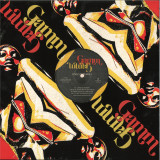
Premier on GAMM for Californian producer Coflo whose probably THE most in demand producer on the house scene right now...
But on this EP we gave Coflo a carte blanche and to go musically freestyle.
The result are 3 reworks in various styles. The first track ;Canto De Alright' is what we call a "transition mix" where we go from house to hip hop and back to house, a proper club tool.
On 'Fly Like The Payback' Coflo goes more rare groove with a blend of Steve Miller Band and James Brown.
Last but not least Nas gets a stompin' boogie treatment that just works.
Enjoy the dance!


- A1: I Don't Know Why
- B1: If I Could Open Up My Heart
Lynn White hails from Mobile, AL and started singing at the age of six in her local church. She worked in Ike Darby’s record store where she would sing along to the sounds that were playing, and it wasn’t long before the owner decided to record her on his local label Darby Records in 1978 at the age of 25. Three singles and the highly collectable album “Am I Too Much Woman For You” ensued, but they didn’t bring much success to the label, which folded shortly afterwards. They did get married though.
Her sultry bluesy Darby-penned/produced “I Don't Ever Wanna See Your Face Again” was released in 1982 on another local label, Sho-Me Records, and it quickly came to the attention of Willie Mitchell, who signed her immediately to his Waylo imprint. A fruitful period followed with 7 albums and 12 singles released for the Memphis-based label during the rest of that decade. Her mid-paced “See You Later Bye” was a huge favourite with the modern soul scenes in Europe, and it was a pleasure to see White as part of Waylo’s A Memphis Soul Night - Live In Europe in 1990 when she appeared with Otis Clay, Ann Peebles and David Hudson, performing in Amsterdam, Rotterdam, Berlin and London; each artist doing a solo spot then all four joining together for some rousing soul medleys.
By now a Memphis resident, she switched to S.O.H. Distributions in 1990, which gave her more control of her output, and these two sides are from that period; “I Don’t Know Why” (1993), clearly her most popular track was only available as a 12” single, and featured the amazing but uncredited vocals of Farris Lanier Jr., who was lead singer of another Waylo act, Lanier & Co. Now very hard to find, this will be an eagerly awaited release as a 7” single. The flip is a gorgeous stepper written by George Jackson (previously recorded by Otis Clay) and from her CD only album The New Me (1990). White’s version just oozes with soul and makes for an essential double-sider.

- Pieces
- I Want You To Know
- Ocean In The Way
- Plans
- Your Weather
- Over It
- Friends
- Said The People
- There's No Here
- See You
- I Don't Wanna Go There
- Imagination Blind
- Houses
- Whenever You're Ready
- Creepies
- Show
auch erhältlich
Black Vinyl[31,05 €]
15th Anniversary Edition. Lime Green Vinyl. When Dinosaur Jr. reunited, more than 20 years after their formation and legendary dissolution, the worry was that these guys were just flogging the back catalog, taking the old show on the road as a marketing gimmick. But the 2007 release of Beyond gave a hearty Marshall-driven "F**K YOU!" answer to those inquiring ears. Restoring the sound established by the unassailable hat-trick gambit of their first three albums -- Dinosaur, You're Living All Over Me, and Bug -- Beyond continued the band's march into rock greatness by making old ears smile and new ears bleed afresh. And then came Farm, the 9th full length record by the original line-up: J Mascis, Lou Barlow, and Murph. If Beyond was Dinosaur Jr.'s return to form, Farm is proof that Dinosaur Jr. could (and still do, to this day!) deliver timeless, exhilarating rock music. Farm encompasses Dinosaur Jr.'s signature palette: soaring and distorted guitar, unshakable hooks, honey-rich melodies. At times wholly 70's guitar-epic, at times perfect for sitting by a babbling brook with Joni and Neil, these songs get into your head and stay there, bouncing happily around. The ear-catching "Plans" is nearly seven minutes of classic whipped-topping rock dessert, while "I Don't Wanna Go There" is a meat-and-potatoes main dish, mixing unapologetic lead guitar with straight-ahead delivery a la James Gang or Humble Pie. This expanded deluxe edition of Farm features four songs never pressed to vinyl and never given worldwide release:"Houses", "Whenever You're Ready" (The Zombies Cover), "Creepies" (Instrumental), and "Show". "Whenever You're Ready", a cover of classic pop-rockers The Zombies, is impossibly good for a hidden gem; Murph stomps in with a sledgehammer to the kit, J and Lou layer low-end and fuzz like two halves of one brain, and right when things feel biggest, airy and colossal, there's J with a lightning bolt of a guitar solo. Pure electricity and melody like only he can make. Recorded in J Mascis' Bisquiteen studio in Amherst, Massachusetts, Farm was produced by Mascis himself, and delivers the singular, unique energy of one of America's greatest living rock bands.
5
At long last, Q Lazzarus says hello to Dark Entries. Q Lazzarus is the moniker of Diane Luckey, born in New Jersey in 1960. While living in the East Village in New York City in the 1980s, Diane met songwriter Bill Garvey at a party and they recorded “Goodbye Horses” in his home studio. As the story goes, Luckey met Hollywood director Jonathan Demme when she picked him up in her taxi during a snowstorm in 1986. Demme was wowed by her demo tape, which was playing in the cab, and they ended up hanging out at a restaurant for hours talking about life and music. “He liked it so much, I gave him the tape I was listening to, he said he would call me for one of his movies, but I didn’t really take it seriously.” said Luckey. Demme would have the song “Goodbye Horses” first appear in his offbeat comedy Married to the Mob, and then again more memorably in Silence of the Lambs when Buffalo Bill changes into women’s clothing while drowning out his intended victim’s pleas with loud music. Despite the exposure, both Luckey and Garvey languished in relative obscurity. “Goodbye Horses” is the definition of a cult classic, an ethereal tearjerker driven by Garvey’s lush synth work and Luckey’s unmistakably powerful voice. Garvey says, “the song is about transcendence over those who see the world as only earthly and finite.”
Over 15 years of effort have gone into the making of this release. All five songs on this record were previously unreleased and are sourced from original master tapes. The extended version of “Goodbye Horses” was newly mixed from the original stems by Alberto Hernandez at Fantasy Studios. Instrumental and acapella versions of the song are included, which are also available for the first time. Side B opens with “Hellfire,” a brooding number about the New York BDSM nightclub of the same name, showcasing the range and force of Luckey’s voice. “Summertime” follows, with a sauntering synth-reggae spin on the 1937 George Gershwin number. Both B-side tracks are also new mixdowns and edits from the original stems. This record is released alongside Eva Aridjis Fuentes’s documentary on Q Lazzarus, Goodbye Horses: The Many Lives of Q Lazzarus, a work chronicling the life of the enigmatic Luckey. It is an opportune moment to reflect on the underrecognized artists we have lost and the undeniable brilliance of both Diane Luckey and William Garvey.

Previously unreleased; four track 12" with two different vocal takes, each w/ dub. Comes in Bond Export company sleeve.
Another cold case solved! One of DKR's early victories was finding a tape of the drum & bass cut of the legendary dubplate 'Rocks & Mountains.' Rumor had said the artist was the Mighty Travellers, but this didn't really add up chronologically or audibly. More astute listeners mostly agreed the artist was likely the Majesterians, a little recorded group who had made a couple other records for Taxi circa 1980. When we first issued the song on a 10" back in 2011, even Sly himself couldn't recall for sure who sang the tune. Like with other 'mystery' projects which we eventually came to realize, we never gave up digging on this one. There were two mysteries at work here - one, confirming the identity of the group, and two - finding the other cut of the tune, which features fuller instrumentation and a different vocal take. Both cuts were around on dubplate circa '80/'81, and the latter cut can be heard ever so briefly in the infamous UK "Sound Business" documentary film from '81. In the course of a mere 13 years, both questions came to be solved - we obtained a pretty clean plate cut of the fuller mix, and we confirmed the identity of the group. The Majesterians were a vocal trio consisting of Everton Dacres, Roderick Perkins and Paul Mitchell. While the latter two gentlemen don't seem to have done much otherwise, we are sure the roots heads and hopefully all DKR followers know Everton Dacres, who made some fine roots music in the 1970s prior to fronting the Majesterians. We spoke to Everton and he confirmed 'Rocks & Mountains' was their tune, cut in Channel 1 at a Taxi session featuring a host of other artists. Indeed, these were the heady days of 1980 with Channel 1 booked round the clock for locked-in sessions, with the Taxi Gang and the Roots Radics laying down future classic after future classic. All that said, we're happy to re-present this tune now with not only proper accreditation, but also both known mixes and the drum & bass mix in improved fidelity over its previous issue.

- Blu-Bop
- Flying Saucer Dudes
- Turtle Rock
- Flight Of The Cosmic Hippo
- The Star Spangled Banner
- Star Of The County Down
- Jekyll And Hyde (And Ted And Alice)
- Michelle
- Hole In The Wall
- Flight Of The Cosmic Hippo (Reprise)
How many albums virtually upend a genre? And how many erstwhile bluegrass bands top a contemporary jazz chart?! The answer to these questions, is, one, very few, and two, only Béla Fleck & the Flecktones! Their second album, 1991’s fancifully entitled Flight of the Cosmic Hippo, did indeed top Billboard’s contemporary jazz albums chart and scored a couple of Grammy noms. But more importantly, this record really made explicit the Flecktones’ bebop leanings, as they devised the term “Blu-Bop” to describe their unique fusion of bluegrass and jazz. Stylistic whiplash has never felt so good or sounded so sweet; check out their warm, instrumental wizardry on chestnuts like “Michelle” and “The Star Spangled Banner”…and don’t miss Béla’s banjo power chords on “Turtle Rock!” We had Mike Milchner at Sonic Vision remaster this classic for vinyl for maximum fidelity, and gave it a repress in cobalt blue vinyl limited to just 900 copies. Essential!

- Ecstasy
- Guilt
- See That Girl
- Die Die Die
Legendary shoegaze band Chapterhouse will share their first ever recordings on a new EP, White House Demos, released via Sonic Cathedral on May 9.The four tracks were laid down at The White House studio in Weston-super-Mare on January 15, 1989, when the band were only four gigs old. "They were the first songs we wrote as a band," says the band's singer and guitarist Stephen Patman. "At the time our live set consisted of Stooges and '60s garage-psych cover versions which we mixed with these original songs." The tracks weren't included on 2023's career-spanning Chronology boxset because they had been forgotten about - until the intervention of Slowdive guitarist Christian Savill. He and Patman worked together in an office in Reading as their respective bands were starting out and he says the demo remains "their best record"."When the boxset was released, Christian got in touch and reminded me of these demos and how much he loved them," says Stephen. "He was probably the first person I gave a cassette copy to. He still rehearses and records at The White House and was going in for a session the following week, so I asked if he could ask the owner/engineer Martin Nichols to check if he still had them in his archive. Thankfully he did." Of the four tracks that make up the EP, `Ecstasy' has appeared in various versions and permutations on Chapterhouse compilations over the years, but never in its full eight-minute glory; a much later version of `Guilt' was included on the band's 1991 debut album and shoegaze classic Whirlpool; a version of `Die Die Die' was also included with that album on a bonus 12", and remained part of the band's live set for a while. The stunning `See That Girl', however, has never been released before. With 36 years of distance, it sounds like something of a lost classic, and the White House Demos as a whole feel like a brief moment in time captured forever.

The band signed to 6131 Records, who gave the group a budget of one thousand dollars to record their first full-length. Johnson, then 24, compiled songs he had composed over various years, including some dating to his teenage years. He viewed the debut as a greatest hits of sorts, a collection of his best work to date. The album was recorded in September 2010 at Earth Capital in Los Angeles with producer Alex Estrada. The group aimed to emulate the sound of Weezer's 1996 album Pinkerton, particularly the spacious way drums were tracked on that LP. Johnson requested Estrada distort his vocal tracks, due to personal pressure: "Maybe I was trying to cover my voice up a little bit because I was insecure," he admitted.

- Lights Out
- Naukluft Plateau
- Golden Gain
- Tangential Thoughts
- On The Accordeon Bus
- On The Accordeon Bus
Following a trio of quick sell out, limited lathe cut 45 to kick off 2025, Feral Child now embark on a stash of more widely available full lengths (from the likes of Lake Ruth, The Jonny Halifax Invocation and Polypores amongst others). First up is a wonderful follow up to 2023’s “Refrains” 10” EP from Swedish band TAPE. “Refrains” figured in 2 or 3 notable UK stores’ end of year polls, noticeably Monorail in Glasgow where Stephen Pastel gave it a top 3 for 2023 nomination. “Preludes” is -if anything- even more majestic and acts as a superb follow up. The record is released 11th April on Feral Child as one time pressing 10” vinyl only release, featuring beautiful artwork once more from Peter Liversidge and the calligraphic hand of Klas Augustsson. The return of Swedish trio Tape has been reassuringly slow motion. They’ve always moved at their own pace, these three peripatetic musicians – brothers Andreas and Johan Berthling, and companion Tomas Hallonsten – though it’s been over a decade since their last full-length, 2014’s Casino. Not a disappearing act, rather a break for consideration, time to explore other avenues of creativity, perhaps… But their reappearance, with the Refrains 10”, was one of 2023’s most encouraging moments; doubly so, as it was proof they’d not lost their way, at all, in the intervening nine years. The Tape modus operandi is one of deceptive simplicity and artful innocence. On Preludes, a typically right, one-word Tape title, this means five wordless songs that move between fully fleshed out, lovingly tended folk threnodies – the beautiful opener, “Lights Out”, that spins webs via simple, hypnotically repeating guitar – and textural conceits that hover, appealingly, in a kind of no-place. “Naukluft Plateau” is lovingly dappled, with ruminative piano adrift on a cascading tonal waterfall. Then, feather-fall strums of guitar meet huffing harmonium and electronic scrum on the brief “Golden Gain”. Is there a more perfect song title for Tape than “Tangential Thoughts”? It sums up the way their music, nimble and dainty but also carefully tended, lends itself to the reverie, the meander, the anfractuous. The madeleine-like power of this song’s two-chord figure allows the music to take flight: rustling organ, oscillating cymbal, droplets of percussion, a spinney of sound. And Preludes slips away “On The Accordeon Bus”: there’s something lovely about the way that title collapses transit, articulation and bellows, reflected in the see-sawing sway and glitch-like rivulets of sound that course through the song. So, Preludes, then – alive to the moment, both gentle and sturdy. A copse of tone, and a most gorgeous wool-gathering.

- A1: Brainwave Playground
- A2: Promised Land Utopia
- A3: Lucidity Gone
- A4: Life Out Of Balance
- B1: Satan's Waltz (Metamorphosis Stage 1)
- B2: Bambino Illuminatus
- B3: Bambino Criminale
- B4: Over The Rainbow
- B5: An Answer
- B6: V Day Baby
- B7: The Moaning Pyramid
- C1: Mind Splitting Lab (Metamorphosis Stage 2)
- C2: I Feel Seperated
- C3: Fascinating Child
- C4: 8-Bit Trauma
- D1: The Monarch's Pyramid
- D2: To You All Kids Will Come (Metamorphosis Complete)
17
Stylish, intelligent and cinematic, the second series of the cult UK TV series UTOPIA in 2014 reinforced the impact of Emmy Award winning
Series 1 and gained the show an even larger following. Integral to the action is Chilean composer Cristobal Tapia de Veer's original music
for the programme, recognised by the Royal Television Society who awarded it Best Music (Original Score), Record Collector who gave
it five stars and Mojo who placed it at No. 4 in their Top 10 Soundtracks of the year.
This record was originally released for Record Store Day 2015 and is repressed on a new colour by popular demand. Cristobal Tapia de Veer’s
music has more recently found a new audience with his soundtrack to HBO hit show The White Lotus and the film Babygirl (2024).

13
The Crippled Flower was a post-punk band from Düsseldorf - and they arrived late. However, unlike many young, unsuspecting, hairsprayed hopefuls from that time, in 1985 they could sense that the end of their era was approaching. They knew too much to want to take the world by storm. They were four individualists searching their own way. Each of the band members only found their calling after the time that they had spent together – but that's exactly what makes The Crippled Flower still seem really interesting today, this static energy that does not discharge, but is simply there.
Searching dreamers should sound like that and that's what they were. Singer Phil Elston, for example, had brought his love of Kraftwerk from England to Düsseldorf. Even his bandmates found this strange, but they were also entangled in their own longings. This is because the times were still so crazy and these searchers were "on fire". A fire that glows in the band's recordings.
Listening to the songs today, The Crippled Flower sound like they are hugely at the height of their game; think of Wire, Felt, Scritti Politti or Minimal Compact. The variety of musical themes, as well as different soundscapes, which the band created can only be listened to in amazement. Often, it is only Phil Elston's Sprechgesang that confirms that this is really the same band. However, it was back in 1985 when, importantly, the catalyst that brought the musicians together - the short lived eclectic record store "Heartbeat" in Düsseldorf Bilk - occured. It was there where post-industrial and pop, melodic minimal music and sound attacks awaited those who wanted to discover music by artists and bands they did not yet know.
Cassette releases. All recorded on 4-Track. The Crippled Flower succeeded in this medium. Firstly, with a cassette just entited The Crippled Flower, working from project-like studio recorded sketches. Four more tracks from the short-lived band appeared in 1986 on "A Heartbeat Rendezvous“. A demo tape submitted to Les Disques du Crépuscule, however, did not lead to a worldwide career and so, unfortunately, it was soon over.
Stefan Krausen moved on to the follow-up project Deux Baleines Blanches with Stefan Schneider, which, in 1994, gave rise to the band Kreidler. Krausen was already drumming with the I-Burnettes on AtaTak and much later he studied painting in Munich. Nina Ahlers moved from Düsseldorf to Paris to study art, because in the 80s it was still the case that Paris was the destination of choice for those really wanting to become an artist – and that's what she did. Her work is characterized by a non-academic minimalism focusing on everyday objects. Stefan Schneider remained connected to music. Only Phil Elston, who helped sabotage fox hunts in England and wrote these observant lyrics about environmental destruction and time travel, seems to have escaped the social-media world. Whether he found Kraftwerk-fulfilment in Düsseldorf or moved on disillusioned remains a mystery to us. And somehow this also fits in with that peculiar, special band. - Oliver Tepel, Köln 2025 (Translation by Philipp Elston)

4
Back in 2017, Field Of Dreams remixed the deep house masterpiece, 'La Nuit Des Tropiques' by Les Crocodiles. It became a firm favourite with the late, great Andrew Weatherall and his partner Sean Johnston at the ALFOS parties.
With only a few DJ's given a copy of the demo, it gathered momentum and was set to be huge. Unfortunately, due to a couple of abortive attempts to get it pressed, it was never released.
The FoD boys have now licensed their own remix and can now put it out there for all to enjoy on their own label.
Add to that an amazing Pete Herbert chuggy remix of their 'Pourquoi?' single which, again, never saw the light of day until recently, on digital, and we have a pretty special 12 already.
Al & Chris decided that wasn't enough. They thought their much loved deep house track, 'In Our House', needed a bit more love so gave it a slight re-edit/re-eq and brought a banging new track, 'Protect Yourself' into the fold. The result is a rather special 12 inch record with four completely different but equally strong tracks.
No fillers here.

A stellar collaboration between composer Michael Cashmore (Current 93) and vocalist Marc Almond of Soft Cell fame. Two complementary creative sensibilities in intimate interlock; supreme compositional and vocal talents fusing to make uniquely dramatic musical and vocal interpretations of searing beauty and insight. Specifically, this suite of songs feature the heightened lyricism of a stunning array of cult poets, both contemporary and of yesteryear. 'Feasting With Panthers' is a stellar collaboration between composer Michael Cashmore (Current 93) and vocalist Marc Almond of Soft Cell fame, in the nearest thematic echo and nod, in the latter's vast back catalogue, to the darker gothic influences of his celebrated Marc And The Mambas period and his acclaimed 'L'Absinthe' and 'Jacques' twisted chanson solo albums. This album's defining aesthetic is the setting of outsider poems to music. Poems by Count Eric Stenbock plus unique lyrical translations - by celebrated poet Jeremy Reed - of works by Jean Genet, Jean Cocteau, Arthur Rimbaud, Paul Verlaine, as well as Reed's own poetry. The emphasis throughout is on 'decadent' poems of thwarted love, ill-fated romance, self-destruction and death: many poems are woven with homo-eroticism, laced with opium dreamstates and all are accompanied by Michael Cashmore's haunting and melancholic music that lends the verses a deft yearning for beauty and a bittersweet, melancholic longing for lost innocence and youth. Originally released in 2011 and long since deleted, 'Feasting With Panthers' is now restored to back catalogue availability as a double vinyl album - it's first ever vinyl edition - with a variant of the original album artwork and two printed, full colour inner sleeves complete with lyrics and pictures and featuring four bonus tracks. The album was recorded over several years by the artists sending music files back and forth by e-mail and post; the artists never once recording together in the studio. Berlin based Michael Cashmore worked at home composing the music, playing all of the instruments and adding Marc's vocals from files recorded in London. The resulting album is a glorious union of sensual talents, both in voice and music, complementing the intriguing and evocative poetic texts. The project began after Current 93's David Tibet gave Marc a book of poems by the Baltic German poet Count Stanislaus Eric Stenbock. Marc was instantly attracted to the dark eroticism and the melancholic yearning of the verse and, so, contacted Michael Cashmore, whom he had previously worked with on Current 93's reading of 'Idumea'. He felt Michael would have the right understanding of the verse with his intricate, beautiful musical compositions. From this, the project developed to include many of Marc's favourite poems by some of his favourite 'outsider' poets with common thematic ground.

- A1: Theme From The Men (Instrumental)
- A2: Type Thang
- A3: Rolling Down A Mountainside
- A4: (If Loving You Is Wrong) I Don't Want To Be Right
- A5: Joy Pt 1
- B1: Joy Pt 2
- B2: Wonderful
- B3: Someone Made You For Me
- B4: Title Theme
- B5: Hung Up On My Baby (Instrumental)
- C1: Chocolate Chip
- C2: Chocolate Chip (Instrumental)
- C3: Come Live With Me
- C4: Body Language
- C5: Disco Connection
- D1: St. Thomas Square
- D2: Rock Me Easy Baby Pt 1
- D3: Rock Me Easy Baby Pt 2
- D4: Juicy Fruit (Disco Freak) Pt 1
- D5: Juicy Fruit (Disco Freak) Pt 2
The wonderfully favourable response to our first CD and double vinyl volume of the original A and B sides of the singles of the late great Isaac Hayes – as originally released on Stax’ Enterprise subsidiary between 1969 and 1972 – has forced us to bring forward, this month, the release of “Hot Buttered Singles 2” to cater for what Ace is sure will be just as great a level of popular demand.
This volume picks up where “Hot Buttered Singles Vol 1” left off with Hayes’ final 45 of 1972, and carries his seven inch story through to 1976 – by which time Stax was defunct, and Hayes’ was on his own Hot Buttered Soul label via ABC Records. It features eight US R&B chart hits including the much sampled ‘Hung Up On My Baby’ and ‘Chocolate Chip’, Hayes’ biggest hit of this period ‘Joy’ and the ever-popular 1976 instrumental ‘Disco Connection’, which finally gave Hayes’ his second UK Top 20 hit after ‘Shaft’.
All tracks match the original single edits, and wherever possible are taken from digital transfers of the original Enterprise singles masters. Where the original 45s came in two parts, they also do so here. And where original singles masters no longer exist, as was the case for two tracks, Ace’s engineers have re-created them beat for beat from the longer album versions. (Have fun guessing which two they were…)

11
Marina y su Melao is a band from Barcelona led by Puerto Rican Marina Molina. After a period of live activity, in 2025 they will release their debut album, "Rezo al agua", where Puerto Rico's bomba, an eminently rhythmic genre, expands to fuse with the colours and flavours of other Afro-Caribbean sounds. Tradition and folklore are embodied in a powerful and innovative conception.
In "Rezo al agua", Marina Molina expresses an attachment to the land, the landscape, the culture, the beliefs and the environment where she was born, Puerto Rico. She does this through bomba, one of the country's most identifying musical expressions. Bomba is as old as the slavery of those who gave birth to it in order to tell their tribulations and hopes, armed with the instrument they had at hand: the drums. It is a kind of meta-genre that includes a multitude of rhythmic varieties.
But Marina is something more than bomba, the legacy she received from her elders and which she does not wish to turn into a frozen object of veneration, an untouchable totem, mystical and ruled by norms bequeathed by the years. Marina, who has Colombian blood in her veins, is an artist of today, of a world in which cultures can mix, people migrate, influence each other, travel, exchange their cultural traces, can see online what happens at the other end of the world and thus open the window that facilitates the mixing of identities. These mixtures redraw borders and genres, allowing popular music to avoid its fossilization.
Marina grows in this fertile territory. She has a ductile and powerful voice, as clear as her strong, independent mindset. This is a remarkable element in the lyrics of the album, which despite being written from a current perspective, contain the sense that popular lyrics have always had: they explain life with the small letters of the everyday. And all this is presented in the bomba genre. Impure. There is an African guitar, a pedal steel guitar, a Wurlitzer, an accordion and everything that Marina and Miguelito Superstar, the album's producer, thought was necessary to accentuate the musicality of a full voice and drums that resonate raw with the vibration of tradition. A tradition now in the hands of a woman who aspires to her own space in life, to write her own chapter.

Comes in deluxe gatefold sleeve with exclusive artwork and double sided printed insert. Remastered from the original master tapes. The most comprehensive vinyl edition of Catalyse to date, featuring additional improvisations that were omitted from the album's original 1970 pressing. Sounding better than ever, rediscover the album that started it all for French psychedelic rock.
The highly sought-after 1970 debut album Catalyse by Ame Son, widely regarded as the first French psychedelic rock album, is finally being reissued. This milestone release by France's pioneering psychedelia band, founded by drummer/vocalist Marc Blanc and bassist Patrick Fontaine-both from the Banana Moon lineup, bridging Soft Machine & Gong-has been restored and remastered from the original master tapes. It includes additional archive material, presenting the Catalyse album in its entirety on vinyl for the first time. Originally released by the avant-garde label BYG Records, Catalyse embodies the vibrant and experimental energy of France's burgeoning underground scene in the early 70s. The album fuses English psychedelic influences with French poetry, free jazz, and experimental freak-outs. "The concept was to create pieces composed of multiple parts, forming an ever-evolving ensemble with shifting ambiences and improvisations. We wanted to blend French poetry with the free-spirited creativity of English psychedelic rock" explained Marc Blanc in an exclusive interview featured in the new liner notes of this reissue. This unique vision gave birth to an album that remains as groundbreaking and captivating today as it was at its original release. Out of print for decades, the Catalyse LP has become a rare and highly coveted gem among collectors and fans of psychedelic rock.

Here comes a very special production from East Germany of the early 70s!
One of the TOP Soul-Jazz & Beat combos in the country led by bassist and singer HORST KRÜGER,
recorded two previously unreleased, outrageously good titles here in the newly formed septet format.
"Ich will die Zeit nicht bereuen" is probably by far one of the most crispy produced German-language soul beat numbers that existed in the GDR at that time! From the pen of Ralf Petersen, the then head of Berliner Rundfunk personally, no pure high-class hit was recorded here, but hard-hitting, rocking beat.
It was not without reason that the choice of the head of broadcasting fell on the recently formed Horst Krüger Septet, which also gave the contemporary jazzy sound a perfect touch through an intensified brass section from 1970 on.
The title "Sonderbar" is exactly what its title promises, peculiar and extraordinary. A feat that was created as such in 1972. This somewhat sweeter SoulJazz vocal piece had a concrete idea, which composers Dieter Kopf, Horst Krüger and Franz Bartzsch as a musical arranger as well as Jens Gerlach in the musical free spirit of the hippiesque era. A through the stylistic device of Repetito in the text
dominant repetition, which is complicated in the context of the ever-evolving theme about feelings and love Groove of bass, guitar, drums and organ theme is reflected, redefined and constantly found again, simply masterfully. An interlude with a flute solo and a groovy dreamy Hammond organ solo at the end of the title, envelops the verses very contemporary.
Horst Krüger on bass guitar and his wife Gerti Möller with her outstandingly distinctive and powerful voice on the microphone.
A must for every fan of early beat, rock and soul!

- A1: Juliet As Epithet
- A2: Machiavelli’s Room
- A3: Big Cat Tattoos
- A4: Nancy Dearest
- A5: Autobiography Of Spy
- A6: You Can Film Me
- B1: Christopher St
- B2: Men Like Wire
- B3: Questionable Hit
- B4: Disingenuous
- B5: Milk An Ending
- B6: The Hard Won
Limited repress of 2024 critically acclaimed album ‘A Firmer Hand’ on Canary Yellow Vinyl
“Writing this album, I opened up my closet, and a skeleton came out.” In a café just around the corner from his Edinburgh flat, Hamish Hawk is contemplating his extraordinary new record, A Firmer Hand. “The thing that links all of the songs is a sense of the unsaid, whether out of guilt, shame, repression, embarrassment, coyness, whatever it might have been. I realised: I am going to say these things, and not all of them are going to make me look good. The album made so many demands, and I just gave myself over to it.”

- Chemical Prisoner
- God, If You Are Above
- Sexy Drug
- Just Like You
- Guillotine Iv(The Final Chapter)
- Stay Awayside B
- Wait And See
- The Bitter End
- My Heart's To Blame
- Get Me Out
- Die For You
- Brother
Just Like You is the follow up to Falling In Reverse"s 2013 release Fashionably Late. The album debuted at #2 on the Billboard Top Hard Rock Albums chart, #4 on the Modern Rock Albums chart, and #3 on the Top Independent Albums chart. Falling In Reverse"s first album, The Drug in Me Is You debuted in the Billboard Top 20 in 2011. In 2012, Alternative Press gave Falling In Reverse the title of Artist of the Year while Revolver named Ronnie Radke one of the 100 Greatest Living Rockstars. Additionally, Falling In Reverse/frontman Radke have been on numerous magazine covers worldwide, including Alternative Press, Las Vegas Weekly, Rocksound, Hysteria, and Kerrang!. In 2014, Kerrang! named Ronnie one of the 50 Greatest Living Rockstars in the World, in the company of Lemmy, Slash, Steven Tyler, and Ozzy Osbourne. Reissued on Clear with Neon Pink Splatter vinyl to celebrate the 10th anniversary of it"s release.

- 1: Love.jones
- 2: Choosin
- 3: Diamonds And Pearls
- 4: Rotation
- 5: * Star*
- 6: Drive Thru
- 7: Never Change
- 8: Straight Up
- 9: Gemini
- 10: Can't Let Go
R&B duo THEY. — songwriter Drew Love and producer Dante Jones — have developed a smooth, future-facing sound for nearly a decade. In the early days, it was simple; two artists aligning on an appreciation for '90s R&B, new jack swing, and the height of soul-sampling hip-hop. Jones making beats and Love on the lines, a basic, balanced, and open-ended setup, free from major label expectations (which they'd feel on their 2017 breakout Nü Religion: Hyena) and high-profile collaborations (explored on 2018's Fireside, 2020's The Amanda Tape, and 2023's Nü Moon). They're proud of every stop along their story, while hindsight and a fresh perspective after signing to Secretly-affiliate label drink sum wtr have afforded them some distance to reflect on where THEY. goes next. The answer is LOVE.JONES. Here the duo exudes a whole new energy by reasserting their artistry in its most potent and pure form, just Love and Jones, making straight-fire, love-making music indebted to the golden neo-soul era that gave us the namesake 1997 film. “Forget the features, forget bringing in the big producers and writers. It's really just a return to our original dynamic," says Jones. Refined and reinvented, THEY. have arrived at their boldest work, a stacked, high-energy collection celebrating Black art, culture, and "the intense feelings of Black love."

13
The British jazz/hip hop fusion collective Us3 founded in 1992 in London and its notable members included producers Mel Simpson and Geoff Wilkinson. The group scored a major hit in 1994 with “Cantaloop (Flip Fantasia)”, a track that displayed the group’s fondness for sampling classic recordings from the Blue Note label (in this case, Herbie Hancock’s “Cantaloupe Island’). The track was included on their debut album Hand On The Torch.
The album was a result of their connections with Blue Note owner Capitol Records, which gave Simpson and Wilkinson free rein to sample anything from the Blue Note catalog. Together with several musicians and rappers Kobie Powell and Rahsaan Kelly, they sampled a series of Blue Note classics, from Art Blakey and Thelonious Monk, to Horace Sylver and the previously mentioned Herbie Hancock. With the release of Hand On The Torch, Us3 had forged one of the most elaborate union between styles and became one of the best-selling jazz albums on the Blue Note label.

10
Edinburgh-based three-piece funk band High Fade are set to release their debut album 'Life’s Too Fast'.
Capturing the raw, on-stage energy that has been the driving force behind High Fade’s meteoric rise was never going to be easy, but that’s exactly what Harry, Oli and Calvin set out to do with a clear creative vision to record their album live at the iconic RAK Studios in London.
'We recorded in RAK Studios, with the desk built for the Rolling Stones in ‘76, with the same cigarette burns still on the faders. It instantly had a vibe of raw energy and liveliness to it that matched the way we wanted to record - live.' – Calvin
The result? 'Life’s Too Fast' – a blistering 10-track debut from one of the UK’s most exciting bands that manages to deliver the same tight, groove-laden funk rock that has put the group on the radars of Jack Black, Cypress Hill and Rage Against the Machine’s Brad Wilk, has seen them tour with The Cat Empire, and tick off iconic venues including Glastonbury, Jazz Cafe, and Boomtown Festival.
'We decided to record the album live rather than through the normal single track overdubbed method – we felt this would help to fully convey the band’s power, sound and energy across to the listener! More like we’re playing a gig and having it recorded – it was a tough process, but we went about it in the best way for both us and the audience, to ensure they’re getting the most authentic High Fade sound and experience possible.' – Oli
Having spent much of the last three years on the road seeing to a punishing tour schedule, 'Life’s Too Fast' is a chance for the band to stop and take stock, to reflect on their whirlwind success, and create an artistic milestone that demonstrates who High Fade are today. 'It’s the most accurate representation of what High Fade is, what we sound like, and who we are' explains Harry. Telling a clear story that matches their own experiences over the last few years, the album is a snapshot taken by a band who are accelerating towards real success and recognition.
'I’m glad we finally have a body of work that we’re proud of and feels like a collection of songs that nicely represents where we are right now. It’s organised chaos and shows that we like to play, but can also write a catchy tune.' – Calvin
Launching into proceedings with the effortlessly uplifting 'Take Me To The Floor', every track is a demonstration of the band’s technical prowess and broad sonic palette. A forward-facing selection of completely original material, the album also gave the band the opportunity to re-imagine fan-favourite 'Sharpen Up' as a stripped-back cut that reflects the band’s current lineup.
'Honestly, I kinda feel like I could explode with excitement about getting it out for everyone in the world to hear because it has been a long time in the making! A culmination of what all the singles have been working towards! I guess the album represents us and the direction we’re taking the music, it represents us as a trio and the gel that is High Fade.' – Oli

First time on LP, a previously unreleased, remastered collection limited to 1000 units / white vinyl. The Legendary Guitar Player Who Inspired Stevie Ray Vaughan, Joe Bonamassa, and Kenny Wayne Shepherd. Johnny Winter had a unique career plan: to make music. The lightning-fast guitarist fulfilled this wish magnificently, decade after decade., becoming one of the most respected singers and guitarists in rock. From the Sixties onwards, Winter was the unofficial torchbearer of the blues, standing up for his idols like Muddy Waters and John Lee Hooker and promoting their careers. A musical prodigy, he grew up in Beaumont, Texas, on a diet of blues and rock'n'roll. As a teenager he hitchhiked to Louisiana almost every weekend to play in small nightclubs. After a short stay in college, he gave up his academic career and devoted himself to making music. This is the first collection of the "early years" to distinguish between the formative blues roots and the advance to the rock idiom. It is the best forerunner of his breakout record "The Progressive Blues Experiment" and the "Johnny Winter" album. Curated By Blues Historian Bill Dahl

- This War Of Mine
- Some Place We Called Home
- When The Night Comes
- These Cold Days
- No Good Choice
- We Keep Going
- Things Right And Wrong
- Alone
- Still Alive Inside
- A Girl From Pogoren
- Never Forget
- Not A Game (Outro)
This record marks not only the first-ever release of the This War of Mine original game soundtrack but also a milestone 10th anniversary of the game. With its bestselling status, cult following among players, educational usefulness and recognition as a poignant symbol of war's threat to human lives-underscored by honours such as the recent Special Award from Amnesty International-it has been a decade of remarkable success. Yet, we cannot truly celebrate while wars continue to claim lives, stripping away humanity with relentless and senseless cruelty. To mourn in silence, however, would be equally futile. Instead, we're once again using This War of Mine as a platform for change through the Forget Celebrations charity DLC, now available for the PC (Steam) version of the game. Composer Piotr Musia? is looking back at the creation process for the music of This War of Mine and points out the significance the soundtrack still has for him: "This War of Mine was one of those projects, where picking up an electric guitar and playing on it felt like a good idea, although I'd never done it before. It gave the music this unpolished character - it's rough around the edges to match the grim atmosphere of the game. Just like its characters, I felt lost at first and it took me a while to figure it all out. For this and many reasons, it was an emotional ride and the music still feels special to me."

10
Songs about the unity of Sudan, peace between Muslims and Christians and the fate of war orphans, backed by grooves equally taking influence from Arabic sounds, American funk as well as neighboring Ethiopia.
Kamal Keila was among the first artist we met in Sudan during our two trips to Khartoum and Omdurman last year. He is one of the key figures of the Sudanese jazz scene that was a vital part of the musical culture in Sudan from the mid 1960s until the islamist revolution in the late 1980s. When we meet Kamal he luckily presented us with two mold covered studio reels.
Each tape included five tracks. One with English lyrics and another with Arabic ones. Musically you can hear the influence of neighboring Ethiopia much more than on other Sudanese recordings of the time, as well as references to Fela and American funk and soul. His lyrics, at least when he sings in English which gave him more freedom from censorship, are very political. A brave statement in the political climate of Sudan of the last decades, preaching for the unity of Sudan, peace between Muslims and Christians and singing the blues about the fate of war orphans called "Shmasha".
A note inside one of the boxes specified the track titles, durations and the fact that the sessions were recorded on the 12th of august 1992. Both sessions stand as a hearable testament how Kamal Keila stuck to a sound aesthetic from decades ago, while incorporating current events into his lyrics.
Kamal Keila's album is the first in a series of releases covering the Sudanese jazz scene on Habibi Funk. Be on the lookout for albums by The Scorpions and Sharhabeel coming soon.
2LP + Download Code + 8 Page Booklet

4
The Italian 80s avant garde / anarcho scene is explored in this limited 12” release presenting Nengue and their previously unreleased cover version of the new wave classic Los Ninos Del Parque and the electro pop wave African Beat.
The tumultuous political climate of the 1960s through 1980s inspired Italian artists to craft an introspective, psychological musical landscape. As civil unrest, violent demonstrations, and political murders became commonplace, Italy's centres of intellect vibrated with activist energy. This atmosphere gave birth to a unique, mechanized sound that blended electronic elements with a raw, discordant aesthetic, reflecting the chaotic spirit of the times.
Through vintage forms of social networking and music sharing, a community led process steered the scene, publishing zines and records that grasped alternative concepts of music and lifestyle.
Nengue, were similar to many of these lo-fi, retro-future electronic music pioneers. Based in Rome, their music / art backgrounds flowed with anti-art, extreme noise, futurism, industrial, experimental, martial, folk, free jazz and exotica.
With a couple of releases as a duo, as was often the case, they appeared in numerous other projects and the music was a mixture of their individual backgrounds.
Extraordinarily, only appearing on a couple of obscure cassette compilations, indicative of the time, the quality of Nengue’s productions stands testament. Originally approached to reissue their Cosmic meets Kraftwerk inspired African Beat, a wonderful yet simple electronic idiom, layers of electronica rising, each element an addition flow, vocals the release’s waves.
However, the discovery of their cover of Los Ninos Del Parque – describing it as ‘powerful anarchic nonsense’ – is rightfully now the primary focus.
Acting as some Brutalist interpretation, its sharp electronics and industrial vocals, propel you to a brick-strewn squat party and a place in anarcho folklore.
These are matched with a remix / remake by Berlin’s Bionda e Lupo. Presenting a ‘Neumisch’, Sneaker’s exacting studio mastery and Sano’s additional vocals are a blessing – a new duo version – dynamic and wonderfully special.
To complete, the powerful dub of African Beat closes. Stepping out of his time as one half of Romanian duo Khidja (DFA / Hivern Discs), Andrei Rusu builds on his recent solo releases / remixes for Malka Tuti with a fantastic, bottom heavy version, perfectly building with expertise, an EP for the basements of today that was made in the dark times of the past.

William Onyeabor in Color, 10th Anniversary! William Onyeabor self-released these records in 1978 and 1980, respectively, before he gave up his life as the greatest Nigerian funk artist to become a devout Christian. "Body and Soul" is available in Blue Vinyl, "Atomic Bomb" in Red Vinyl.

- The Recollection Facility
- Time2
- Losing My Mind (Ft. Denaun)
- Heroin Addict
- Damage
- Bad M.f
- The Recollection Facility Pt. 2
- Rapid Eye Movement (Ft. Black Thought)
- Scream
- Sidefx (Ft. Dr. Pete)
- The Jungle
- Broken Again
- Post Traumatic Stress Disorder
- D.r.e.a.m. (Ft. Talib Kweli)
- The Recollection Facility Pt. 3
- Eht Dnarg Noisulli (Ft. The Stepkids)
16
Pharoahe Monch is one of the most revered and influential emcees in the history of hip-hop, and 2024 marks the 10th anniversary of his fourth studio album "PTSD: Post Traumatic Stress Disorder".
In PTSD, Pharoahe Monch continues the story he began telling in his previous LP, "W.A.R. (We Are Renegades)" from 2011. The Queens emcee narrates, in both literal and metaphoric ways, about the trials and tribulations of an independent artist who is at war with the music industry and the struggle of the black male experience in America.
In 2012, during an interview with Shawn Setaro, host of the podcast The Cipher, the rapper explained the connections between the two projects, beyond their titles. “The W.A.R. album was like, I’m going to battle against the machine, I’m doing this independently. I’m putting some things out that I learned and I’m going to expose about the music industry. PTSD is the result of me doing that, where I am emotionally now. It’s similar to how someone comes back from war and is stricken by re-adjusting to a regular situation.”
Monch told MTV Hive that PTSD is “more mental, emotional and personal” because it came out of the depths of a period of depression. He also gave the internal and external factors that helped him create the album. “I was working on the title track, which took me to a point in between Internal Affairs and Desire, where I was heavily depressed. Through the waiting period, the industry period, and going through a lot emotionally. Then there was the physical problem with asthma. It was the worst. So I started off with that title track and my manager was like, ‘Yo, let’s really dive into that state and how you got to where you are now, and how this follows what people go through to get back to a so-called ‘normal’ situation’.”
The concept album follows a veteran through combat experience, his return home, relationship dissolution, drug addiction, painful depression, and, finally, a triumphant but realistically rendered decision to keep living and struggling.

- A Necessary Response With Gerald Casale
- Recombo Dna (Demo)
- The Words Get Stuck In My Throat (Live)
- Sloppy (I Saw My Baby Gettin’) (Demo)
- Be Stiff (Alternate Mix)
- Pink Pussycat (Demo)
- Goo Goo Itch (Alternate Version)
- Strange Pursuit (Demo)
- Sequence (B)
- The Day My Baby Gave Me A Surprise (Demo)
- Bushwacked (Prosthetic Version)
- Girl U Want (Demo Alternate Version)
- Turn Around (Demo Alternate Version)
- Snowball (Demo Alternate Version)
- Luv & Such
- Conscious Mutation With Mark Mothersbaugh
- Sequence (C)
- Gates Of Steel (Demo Alternate Version)
- Planet Earth (Demo Alternate Version)
- Whip It (Demo Alternate Version)
- Cold War (Demo Alternate Version)
- Time Bomb
- That’s Pep (Demo Alternate Version)
- Mental Warfare With Gerald Casale And Mark Mothersbaugh
- Make Me Dance (Labeled ’Make Me Move’)
- Gotta Serve Somebody (Live) By Dove
- I Saw Jesus
- Psychology Of Desire (Demo)
- Pity You (Demo)
- Sequence (E)
- Beautiful World (Demo)
- Race Of Doom (Demo)
- I Desire (Demo)
- Big Mess (Demo)
- Pink Pussycat (Demo)
- The 4Th Dimension (Alternate Rough Mix)
- Here To Go (Alternate Rough Mix)
- Sequence (F)
- Some Things Don’t Change (Rough Mix)
- Big Adventure (Rough Mix)
- No Noise (Rough Mix)
- Love Is Stronger Than Dirt
- Faster And Faster
- Modern Life
- We Are Unique With Gerald Casale And Mark Mothersbaugh
- Sequence (G)
- The Only One (Demo) With Vocal By Toni Basil
- Baby Doll (Demo)
- Some Things Never Change (Demo)
- Plain Truth (Demo)
- Sequence (D)
- Happy Guy (Demo)
- Sequence (H)
- Before Baby Doll There Was Satan With Mark Mothersbaugh
- Satan (Pre-Baby Doll)
- Red Alert (Unreleased)
- Sad Song (Unreleased Instrumental)
- Mind Games (Demo)
- Later Is Now (Instrumental)
- It’s Not Nuclear Bombs You Must Fear With Booji Boy
- Sequence (I)
- The Somewhere Suite (Studio Version Demo)
- Ton ‘O Luv (Instrumental Demo)
Also includes a large double sided poster , colour inner sleeves and liner notes by Gerald V Casale.
Spuds rejoice. After years of requests, Futurismo are thrilled to announce a brand new limited pressing of the DEVO’s incredible Recombo DNA 4xLP with Mini CD Set, plus also available is a brand new 3xCD version.
For decades Devo have been working non-stop at Recombo DNA Laboratories on a new kind of research to keep up with the mutating world around us. That extensive research is now ready for public consumption once again. Futurismo were the first to bring you this on vinyl and now they present unhindered access into Devo’s labs, documenting the scientific analysis and demonstrations as conducted by the band between the years 1977-2008.
This tireless research has manifested itself in Recombo DNA…an unmissable collection of studio demos and unreleased rare tracks that span Devo’s entire recording career, from their original basement days to their famed ’Freedom Of Choice’ era, right the way through to unused demos from their last studio album. You may know the track ‘Baby Doll’ but do you know it’s original incarnation as ‘Satan’? If you submit to the findings of Recombo DNA Labs you will, Futurismo’s version of this compilation includes six bonus tracks taken from the archives that had never been released, or even heard before.
This limited edition 4xLP set is a sonic fusion of demos, alternate versions and outtakes, demonstrating the true breadth and talent of one of America’s most important bands. But this set doesn’t stop at four beautiful slabs of mutated vinyl, also included is ’The Somewhere Suite’ served up on the format it was originally intended to be back in the May of ‘89, advertised although never released, it’s contained here in all it’s full length glory on a 3” Mini CD. Recombo DNA is also coming on a 3xCD digipak version for the very first time from Futurismo, including all the wonderful artwork and bonus material. Devo’s Recombo DNA is an essential addition to the collection of any science fearing spud, and the perfect sister release to last years Art Devo. The original 2017 pressing of Recombo DNA sold out in less than 48 hours, so grab this while you can. Each set includes 4xLP on limited edition coloured vinyl and includes a Mini CD. This fantastic collection of devolved recordings and bonus tracks are contained within the gloss laminated wide spined sleeve, with newly tweaked artwork, a huge A1 poster, full colour inner sleeves and liner notes by Gerald V Casale. A 3xCD digipak version is also available. Submit to these findings and witness audio mutation in action.

- 1: I Can Lie
- 2: Rolling Backwards
- 3: Charred Grass
- 4: Right Thing By Me
- 5: God Fax
- 6: Cutting A Cake
- 7: Led Through Life
- 8: Dorset Area Of Natural Beauty
- 9: Pearl Through A Funnel
- 10: Designed In Hell
- 11: Crush Me
- 12: Twisted Up Fence
Cross Record's new album, Crush Me, is steeped in the pressures and wonders of existence—a profound statement, especially coming from artist and death doula Emily Cross. A two-and-a-half-year gestation period offered challenges, disappointments, and joys reflected in the cramped space of the album, which explores how we handle the weights we carry. Emily Cross had held hundreds of Living Funerals and was as many episodes deep into her podcast, What I’m Looking At. She was five years into serving clients as a death doula and fresh off a tour with Loma, her band with Jonathan Meiburg (Shearwater) and Dan Duszynski, when she began work on her fourth album. After moving from Austin, TX to Dorset, UK, she established the Steady Waves Center for Contemplation (named after a track from her second record, Wabi-Sabi ), where she hosted Living Funerals, met clients, scheduled mindful tea sessions, and showcased experimental music nights. All the while, she was scribbling down song ideas. Cross’s Tascam four-track demos finally reached readiness, and she sent them to an interested major independent label. She was encouraged to push her imagination to the limits of what a record could be. So, unlike her usual process of recording as inexpensively as possible, she prepared a two-week recording session in Germany with a group of skilled musicians from around the world. True to her previous work, Cross left plenty of room in her demos for experimentation, collaboration, chance, improvisation, and complete obliteration, then resurrection when necessary. Comfort and traditional structure were eschewed in favor of unaccountable magic, prayers whispered into The Void. Cross is comfortable with the chaotic and unpredictable, a perspective demanded by her work and writing style. The Berlin Airbnb was packed with people, instruments and luggage. During a ride down in a tiny elevator to the studio, Cross realized how central the sense of being crushed was to the album. “I thought of it later and it dawned on me that ‘Crush Me’ perfectly embodied the record,” says Cross. Yes, the weight of a body laying limply atop yours, or the tight squeeze of a hug, can be pleasant. Go too far, and you’re in the hands of a cruel, adolescent god. Upon leaving Germany, the record was unfinished, and without a roadmap. As passages were recorded as isolated parts, Cross and musician Marcin Sulewski collaborated, facing a haphazard brick pile, waiting to be assembled. Work dipped in and out of view like a buoy bobbing in a violent sea over many months. During that time, the aforementioned interested label went radio silent, suddenly not seeming so sure of a thing. Collaborators disappeared, continuing the themes of abandonment, surrender, and disarray that followed the project. Cross physically felt her entire body go numb: In a twist of fate, the record was rescued by long-time friend and supporter Ben Goldberg at Ba Da Bing Records who was eager to help realize the project. Cross worked for months on the album, all the while nursing a pregnancy and continuing her full-time funeral work. The last minute participation of Seth Manchester of Machines with Magnets, who mixed and mastered, was an essential liferaft. He gave true final form to the abstracted songs. Crush Me has the effect of a spell being cast, with songs balancing heaviness and levity. Vocals, guitars, and keyboards float above, as drums and upright bass (often bowed) lurch beneath. On “Rolling Backwards” percussion wanders about while feedback squeals and persists in the distance. “Dorset Area Of Natural Beauty” starts with a thick, unhinged church organ progression punctuated by the disquieting sounds of laughter reaching the point of hysteria. “God Fax” is a slow-moving panic attack, with shallow breaths in and out framing a guttural cacophony like a wooden freighter encountering increasingly turbulent waters and vocals struck emotionless by autotune. The album ends with “Twisted Up Fence,” a reflection on life from outside the wall--wistful, warm, and comforting. Cross, likely with a smile on her face, sings: “You say it’s an endless abyss” “And I say the abyss is the best”
"Pithecanthropus Erectus was Mingus’ breakthrough as a leader, the album where he established himself as a composer of boundless imagination and a fresh new voice that, despite his ambitiously modern concepts, was firmly grounded in jazz tradition. The tune that gave the album its name is one of Mingus’ true masterpieces: a four-movement tone poem depicting man’s evolution from pride and accomplishment to hubris and slavery, and finally to ultimate destruction. This was the first album where Mingus tailored his arrangements to the personalities of his musicians, teaching the pieces by ear instead of writing everything out.
THE COMPLETE ALBUM + 2 BONUS TRACKS 180-GRAM VIRGIN VINYL • LIMITED EDITION"

- A1: Idrissa Soumaoro Et L'eclipse De L'ija — Nissodia (Joie De L'optimisme)
- A2: Rail Band — Mouodilo
- A3: Les Ambassadeurs Du Motel De Bamako — M'bouram-Mousso
- B1: Super Tentemba Jazz — Mangan
- B2: Sorry Bamba — Yayoroba
- B3: Super Djata Band — Worodara
- C1: Zani Diabaté Et Le Super Djata Band — Fadingna Kouma
- C2: Salif Keita — Mandjou
- C3: Alou Fané & Daouda Sangaré — Komagni Bèla
- D1: Super Djata Band De Bamako — Mali Ni Woula
- D2: Idrissa Soumaoro Et L'eclipse De L'ija — Fama Allah
11
Mr Bongo is proud to present 'The Original Sound of Mali', compiled by Vik Sohonie & David Buttle.
Malian music is arguably deeper, more sophisticated and lyrical than any other form of African music. Those of us deeply entranced by Malian culture, and, in particular, the immense hypnotic beauty of Malian music, have put together a
selection of songs from across the country.
Compiled by Vik Sohonie & Dave 'Mr Bongo' Buttle, the story of this release began in 2015 when Dave happened upon the Soul Bonanza blog. A treasure chest of rare finds from around the world! One mix in particular stood out and totally enthralled Dave - le monde à change: a tribute to mali 1970 - 1991. He
already knew of Malian legends such as the Rail Band, Salif Keita, & Les Ambassadeurs du Motel de Bamako, but this mix was something else! Deep & culled from the collections of some of the heaviest African music collectors in the world, legends like Vik Sohonie, Hidehito Morimoto, Philippe Noel, Gregoire
Villanova, and Rickard Masip. Dave immediately contacted Vik and a journey of discovery tracking down the rights-holders began. He also turned to the font of Malian music knowledge, Florent Mazzoleni. Florent has written the definitive book about Malian music - 'Musiques modernes et traditionnelles du Mali'. He
proposed some incredible tracks to include and provided the back bone of the sleeve notes and photos that are used in the album. No Malian album would be complete without a striking front cover photo, and ours is sourced from the late great Malian photographer Malick Sidibé.
On this album you will find well-known artists sitting next to rarer
discoveries. The Rail Band, who are one of the best known of all the big bands in Mali, gave us the stars Mory Kanté and Salif Keita. Les Amabassedeurs du Motel de Bamako were another big act that had Idrissa Soumaoro, Kanté Manfila, and for a while Salif Keita in their ranks. Sometimes Salif would play in both bands in one night, quite a feat considering the bands were fierce rivals. As an albino Salif has had to face considerable prejudice from society, focussing on his musical career to help overcome this.
A major discovery on the album has been Idrissa Soumaoro et L'Eclipse de L'Ija. L'Eclipse de l'Institut des Jeunes Aveugles was a Blind teenagers institute and their record was produced by the German association that took care of blind Malian teenagers in Bamako. It was never properly released commercially and was the first recordings by the legends of Malian music Idrissa Soumaoro, Amadou Bagayoko and Mariam Doumbia. Amadou & Mariam later got married and became household stars, including making an album with Manu Chao.
This album is a concerted global effort to showcase the most vital cornerstone of Malian culture in an attempt to preserve its reputation in the face of its current, grim reality. We hope our highlights of Mali's rich history of musical innovation will serve as a starting point for reclaiming an image tainted by unnecessary conflict. May peace and music return to Mali soon.
Dedicated to Malick Sidibé.

8
In 2017, Matthias launched his record label named Superluminal, after the astronomic motion observed in 1902 by Jacobus Kapteyn in the ejecta of the nova GK Persei, which had exploded in 1901. His discovery was published in the German journal Astronomische Nachrichten, and received little attention from English-speaking astronomers until many decades later. It appears to travel faster than light, its existence could conceal the most inexplicable mysteries of our universe which gave birth to many of the secrets hidden in the path of mysticism and esotericism.
The label celebrates its 8th Anniversary with Matthias’s first self-released album. The instalment pays homage to the roots and influences the artist has genuinely embraced throughout the years. An immersive composition which summons a line from the sounds of the past to the present, designed meticulously and displayed within gatefold cover.
It certainly manifests a polyhedral vein with some very cerebral, experimental songs among more dancefloor oriented music. The artist delves into a self exploratory leap of synth-driving notes, striking chords of late decaying dub pianos. Certainly a journey that pairs conceptual alignment with more clubby-essential, stripped-down recordings.
The song’s progression evokes atmospheres from the far out worlds, carved into a space-echoing psychedelic trip with sinister tribal-percussive rhythm. The song’s arrangements are simple-complex drum’s versatile patterns, forged and elegantly blended into cinematic soundscapes.
This is a one way ride to the forest of mysteries, from which, there is no return. The time of the day between dusk and night, when it gets dark.

- Crazy Dan
- Eyeball
- Big Bone Lick
- Unlike A Baptist
- Damned For All Time
- Ain't That Love
- Untitled 1
- Holes
- Albino Slug
- Spit A Kiss
- Amicus
- Cheese Plug
- Untitled 2
auch erhältlich
180G BLACK VINYL[26,01 €]
White LP. Born out of the early 1980's Austin noise punk scene, Scratch Acid deliberately eschewed the loud, fast rules of hardcore as everything they didn't want to be and embraced a weirder, artier sound. Prior to the release of their 1984 debut S/T EP, someone gave Touch and Go Records owner Corey Rusk a cassette of the recording, and he was instantly a huge fan. Rusk was immediately interested in releasing the EP and contacted the band to express his admiration. At the time, Scratch Acid had already committed to working with Rabid Cat Records, who released the band's debut release S/T EP (1984) and their only full-length album, Just Keep Eating (1986). The group quickly developed a riveting performance aesthetic, and, as the debut S/T EP made its way around the country via fanzines, college radio, and word-of-mouth, the band mounted short tours to the Midwest and the East Coast. After playing a total of 146 shows, Scratch Acid broke up after the long tour that followed the release of the Berserker EP (Touch and Go Records, 1987). Since that time, the band have had many imitators, and many alternative bands have cited Scratch Acid as one of their influences.

- Cannibal
- Greatest Gift
- Monsters
- Owner's Lament
- She Said
- Mess
- El Espectro
- Lay Screaming
- Mary Had A Little Drug Problem
- For Crying Out Loud
- Moron's Moron
- Skin Drips
- This Is Bliss
- Flying Houses
auch erhältlich
180G BLACK VINYL[29,20 €]
Born out of the early 1980's Austin noise punk scene, Scratch Acid deliberately eschewed the loud, fast rules of hardcore as everything they didn't want to be and embraced a weirder, artier sound. Prior to the release of their 1984 debut S/T EP, someone gave Touch and Go Records owner Corey Rusk a cassette of the recording, and he was instantly a huge fan. Rusk was immediately interested in releasing the EP and contacted the band to express his admiration. At the time, Scratch Acid had already committed to working with Rabid Cat Records. The group quickly developed a riveting performance aesthetic, and, as the debut S/T EP made its way around the country via fanzines, college radio, and word-of-mouth, the band mounted short tours to the Midwest and the East Coast. While he was not able to work with Scratch Acid directly through Touch and Go, Rusk had begun booking shows with Scratch Acid in Detroit, so he could see them live and meet them. A friendship formed, and Touch and Go Records would eventually release the band's second EP, Berserker, in 1987.

- K.a I
- K.a Ii
- K.a Iii (Part 1)
- K.a Iii (Part 2)
K.A (Köhntarkösz Anteria) is the ninth studio album by French rock band Magma. The album was Magma's first full-length studio release in just under 20 years. The material was largely composed by drummer Christian Vander in 1973–74, and fragments of it can be heard on Magma's 1977 live album Inédits. K.A is sung almost entirely in Magma's constructed language Kobaïan. This album is part of the Köhntarkösz cycle of albums. Christian Vander revisited an old unrecorded composition and gave it a very succesfull modern-day reinterpretation Introducing a new group sound that blends the vintage "Da Zeuhl" elements from Magma's Kohntarkosz-era material and the engrossing cosmic jazz and massed vocals of Vander's later group, Offering. The lineup featured here is very similar to the one appearing on the 2001 live CD and DVD Theusz Hamtaakh La Trilogie au Trianon. The album is a must-have for die-hard fans and newcomers alike.
K.A. is now available as a remastered 2LP in a gatefold sleeve. The record is cut at 45rpm for the ultimate audio experience.

- Until The Time Is Right
- Damage Is Done
- Add It Up
- Heartbreak In East Dallas
- Blame It On Me
- Tabletop
- Low No More
- Countin' Them Days
- My Journey
- Somebody Gonna Lose, Somebody Gonna Win
- That's What Love Will Make You Do
Liner Notes Shawn Pittman 'My Journey' Since releasing my first album in
1998, I have been on a road with many twists and turns and some interesting
stops along the way - Like the title song of this album 'My Journey' reveals,
"if I played on the streets, or on the biggest stage..." I think of high points like
getting a standing ovation and an encore as the opening act at The Fillmore in
San Francisco
Opening up for B.B. King for two nights in Houston at The House of Blues. Playing the
Chicago Blues Festival and having hundreds of people standing in line for an
autographed CD. Playing with the Muddy Waters band at Antone's in Austin and doing
a duo with James Cotton. Being a guest front man with Double Trouble in Minneapolis
and many more special moments. There were also gigs where I played for tips on the
street (mainly 6th street in Austin) and played at a shark auction on a pier in Bordeaux
(the auctioneer would interrupt the song and speak in very fast French!). I played 3
nights a week on the Riverwalk in San Antonio for people throwing wadded up napkins
at me and yelling "Play something we've heard!"
During this journey you meet people along the way that can see something in you that
maybe you can't even see yourself. I have been fortunate enough to meet many
people like that that have encouraged me to continue to use the gift that God gave
me. Erkan Ozdemir is one of those people. We started doing tours together around
2011 and I have had the privilege of sharing the band stand with him many times in
Europe and even in the USA. He is a great bass player and has raised up some
amazing young men as well as musicians, Kenan and Levent. You may know them as
the Ozdemirs. I am kind of like the "American cousin" to them as I have seen them
grow up and felt like family. This is the second time we have teamed up on a record.
The first was 'Make it Right' with Levent on drums and Erkan on bass. We have a great
chemistry live and in the studio.
I think this album might just be my favorite one of them all! Hope you enjoy!

No matter how much of their filthy riches Munich’s oh-so shiny and smart glitterati are going to spend on generic pest control, they’ll never manage to exterminate SPINNEN (n.b. German for “spiders” – and also for “being bonkers” ;) Instead, SPINNEN will spread even further, they’ll form new networks, take over new corners, new spots, connect more musical dots with invisible, incendiary cobwebs.
Whereas these two SPINNEN – Sophie Neudecker (drums) and Veronica “Katta” Burnuthian (bass) – have been doing their spidery thing(s) in countless muggy, experimental corners of Munich for years (think bands such as Bombo, Uschi, Apian, The Living Object, Friends of Gas + other art ventures, tats, Schaufel & Besen Records…), the duo’s first full-length offering for Weilheim-based Alien Transistor sees them move on towards a warm kind of light – “Warmes Licht”. Inspired by Lambrini Girls, Peaches, McLusky, Amyl And The Sniffers, and all things loud and gain-heavy around their hometown, the album – obviously two body parts (A + B side), 8 legs (tracks) – is set to arrive in March 2025.
“Zusammen wachsen/Zusammen fallen,” meaning grow together/fall together feels like a fitting motto on opening track “Träume,” an initial onslaught of shouts, spiky basslines, crunchy chords, a whole lot of awesome friction in that lovely lower end. “Visionen folgen/Kämpfen und Erschaffen,” is another apt line while doing just that, fighting, creating, turning visions into soundscapes, into pure sonic fun & resistance. Putting even more pressure on the mosh pit with wordless “Wirken,” that titular warm light eventually breaks through towards the end of hypnotic “Moment”: The lyrics might talk about a calm state of mind – but these two are certainly not slowing down, not aiming for consistency, or for “making it”…
“Warm” has no drums, no message, it’s pure light, all playful organ hypnosis, paving the way for the b-side that opens with first single “Geister” (spirits/ghosts/genies): Arriving with a rough wind that immediately turns things upside down, it’s all screams and riffs, turbines and propellers – one of many moments that make you realize how bad you want to see this hi-octane duo live, how good it must feel to have them scare the shit out of your body (“Verscheuche mich aus meinem Körper”). They’re like two genies coming from the same smashed bottle, offering three wishes to those who’re lucky enough to listen (Fuzzy Noise Pop? Punk Catharsis? Rrriot Krautsound?).
Following a quick melancholy breather (“Lichter”), things once again get restless as they rush towards the punk finale via slow-burning demolisher anthem “Ermüdend”/“Immer wieder,” only to unleash one last battle cry, one last middle finger made of light and noise to the heated room (“Mäuse”) they’ve long taken over.
It’s certainly no coincidence that a certain square/fine/upstanding citizen named Margit O. gave Munich’s Bürgerpark Oberföhring a scathing 1-star review on Google Maps exactly four years ago – at the very moment that Sophie and Katta first met just there, which eventually lead to the formation of SPINNEN. The reason for O.’s negative rating: “Too loud”.

- 1: St Marie Under The Canon
- 2: Slingshot
- 3: No Rock: Save In Roll
- 4: Everywhere That Wog Army Roam
- 5: King Kongs
- 6: Highly Amplified
- 7: England Is A Garden
- 8: The Cash Money
- 9: Morning Ben
- 10: I'm A Wooden Soldier
- 11: One Uncareful Lady Owner
- 12: The Holy Name
Repress!
In the latest of a series of albums that have mirrored the exceptional story of the band itself, Cornershop return with a new album ‘England Is A Garden’ on March 6th 2020 on Ample Play Records. It is an album that strides in an upbeat fashion, to deliver a full listening experience, bringing songs of experience, empire, protest and humour, steeped in the way only Tjinder Singh would come with. Listen to a first taste of the album now, ‘No Rock: Save In Roll’, that is to say that there is not one without the other, that rock, for all its focus on death is the saviour of life. The anvil here is music itself, and a celebration of Tjinder’s birth place - The Black Country, which also gave birth to heavy metal that has gone on to influence the world to dirty rock, whether the streets are lined with pylons or palm trees, the Black Country has allowed us to see things differently. So the sound here goes back to Englands’ Midlands with two thumbs up to the feeling of hearing heavy metal from the back of a stage, as we all ride on and await the female backing vocals of our song to come in.

- A1: Fiesta En La Jungla
- A2: Fuga En La Selva
- A3: Tu Partida
- A4: Agua De Cachilde
- A5: La Chicharra
- A6: Dolor Y Pena
- B1: Izango
- B2: El Shiringuero
- B3: A Jenny
- B4: Linda Tocachina
- B5: Para Mi Gente
- B6: Tragedia En Uchiza
Carrying the torch of psychedelic cumbia, with a healthy dose
of surf guitar and Amazonian dancefloor flourishes from Peru
and Brazil alike, Fiesta en la Jungla by Los Dexter’s de Uchiza
is the first release from the newly formed London-label Ritmo
del Barrio. Originally released in 1982, it captures the finest
cumbia being made in Peru at the time, decked out with
frenetic surf-rock guitar riffs, rhythms floating on crisp
cumbia percussion and occasionally punctuated by carimbó
breakdowns native to the Pará region of north-eastern Brazil.
The album is filled with energy, a gem that was always
intended to animate any dancefloor. Peruvian cumbia came to national attention in the late 60s
through the recordings of Juaneco y su Combo, Los Destellos
and Los Wembler’s de Iquitos, but it’s had many revivals, and
Fiesta en la Jungla arrived when the style was going through a
major transition. In 1977, a passenger plane carrying most of
the members of Juaneco y su Combo crashed, killing everyone
on board. In 1980, Los Destellos retired, and Los Wembler’s
released their tenth and final record, they were ready for a
break. This left a big void in Peruvian music. Wasting no time,
Los Dexter’s Emerson Ruiz Mosquera took the opportunity and
gave his band new life, filling the band’s ranks with young and
energetic musicians who were hungry for success. He built the
new band around a solid base of dexterous guitars, a dynamite
rhythm section, and added oodles of percussion and an electric
organ, giving them a powerful psychedelic sound that called
back to the sounds of the original chichamasters, but added a
new sheen. Along with bands like Los Shapis and Los Walkers
de Huánuco, Peruvian cumbia was reborn as chicha in the
1980s, and was now the sound of Peru’s barrios up and down
the country.
Based in the city of Uchiza, on the edges of the Amazon basin,
Los Dexter’s were uniquely located in central Peru, closer to the
largest urban centres of the country than Amazonian outposts
like Pucallpa or Iquitos, and therefore better positioned to
travel to the furthest reaches of the country with ease. In a
sense, Los Dexter’s were a bridge between the Amazon and the
rest of Peru, a bridge over which the sounds of Amazonian
cumbia could travel to the rest of the country on their way to
becoming one of the most ubiquitous elements of Peru’s musical
identity. Fiesta en la Jungla represents Los Dexter’s in their third
iteration. Led by Emerson Ruiz Mosquera, who was just a
young boy in 1970 when his older brother founded the group
with four of his friends, the ensemble by the time of Fiesta en la
Jungla included Orlando Abad on the timbales and lead vocals,
Lucho Bendezú on lead guitar, Javier Quiroz as second
guitarist, Alejandro Almeira on bass, Rufino Bustamante on
keyboard, Ramon Siu on bongos and bells, Ivan Rios on conga,
and Emerson as musical director and composer. Remarkably,
most of the group’s members helped to write at least one
track, Los Dexter’s were a collective endeavour.
Reissued on vinyl for the first time by Ritmo del Barrio, this
record is essential for any collector of Peruvian cumbia.
Showcasing the unique sound of Los Dexter’s, it carries hits
like “Fuga en la Selva” and “El Shiringuero”, which are sure to
set any dancefloor on fire, combined with slower, carimbó-
infused cumbias like “Fiesta en la Jungla,”and “Agua de
Cachilde.” Its closing track, “Tragedia en Uchiza'', is a key
piece of local history and tells of the flooding of the
Chontayacu River in 1982, a mortal tragedy that affected
thousands of people. Despite the subject matter, the album
maintains a joyful vibe throughout, with high energy riffs and
irresistible rhythms, contrasted with terse love ballads, like “A
Jhenny.” It is both a piece of musical history, and a sure-fire
tool for the dance floor.
Los Dexter’s became a fixture of festivals and celebrations in
the provinces of San Martin and Huánuco, and from expanded
across the country, taking Amazonian cumbia from the
Peruvian Amazon, to the heights of the Peruvian sierra, the
coastal plains, and the capital city of Lima.

Stix Records, a sub-label of Favorite Recordings, proudly presents the new and 3rd single by Mato & Ethel Lindsey. Following to their stunning cover of the famous “What You Won’t Do For Love” by Bobby Caldwell, and “Baby Come Back”, the underground AOR/Blue-Eyed-Soul classic from The Player, the duo this time takes over “Georgy Porgy” by Toto.
As usual Mato’s unique reggae production skills delivers a blazing version of the multi-platinum worldwide hit, and Ethel Lindsey’s vocals match perfectly with his strong AOR influence and style. To complete and provide the release with a special twist, they also decided to cover the more underrated French version of the song, originally released by Dwight Druick on his Tanger album.
Ethel Lindsey is currently preparing his 1st album to be released on Favorite Recordings, Ethel has a long music and singing experience, unless an almost blank discography. From his very young age, he’s developed a deep passion for AOR and Blue-Eyed-Soul artists.
Starting his reggae production career in 2006, Thomas Blanchot (aka Mato) has released music through various projects on EDR Records, Big Singles or Makasound... In the meantime, he developed a real trademark: taking over classic French, Hip-Hop, OST, Classical or Pop songs, into roots reggae-dub new versions. His 15 years collaboration with Stix Records and label honcho Pascal Rioux gave life to many masterpieces and the story seems far from the end…

- A1: A Brief Visitation (Hey, You Got Me)
- A2: Solstice Solace
- A3: Shirking Class Hero
- A4: Gave The Walls A Talking
- A5: Sun Ray Cathedral
- B1: Wade
- B2: Used To Say
- B3: Saving It For Best
- B4: It Gave Me Life
- B5: Sad Little Hymn
"You Are Stronger Than You Think" belegt eine Intensivierung und Reife des Bradford-Sounds und ihrer Präsenz. Starke Themen tauchen in gefühlvoller Musik auf und sorgen für ein reichhaltiges und lohnendes Hörerlebnis. Es ist das vierte Album der britischen Indie-Pop-Band aus Blackburn, Lancashire.

4
Emotional Response is proud to welcome renowned multi-instrumentalist Alan Briand aka Shelter, to the label with a striking new EP that delves deep into the realms of modern Digi-Dub.
Over a myriad of releases Shelter’s dextrous ability to straddle genres, from ambient, Balearic, improvisation and most recently a series of acid ragas, releasing on an impressive roster of today’s electronic labels including Antinote, Growing Bin, International Feel, Séance Centre and his own Protopost imprint.
After making waves on Emotional Response's All Trades compilations with his standout track "The Four Knights Dub," Briand returns to further explore his passion for digital dub and UK roots. Across four tracks, all recorded live, he merges sound design, found sounds, and world music with seismic basslines, creating a truly immersive sonic experience.
The rise of Digital Dub is often traced to the groundbreaking "Under Me Sleng Teng" by Prince Jammy / Wayne Smith, but it was the UK's later reversioning – adding electronic drums to roots and steppers rhythms – that gave birth to the unique sound of Digi-Dub.
Shelter pays homage to this tradition, drawing inspiration from the likes of Alpha & Omega, Bush Chemist, and Jonah Dan. His process is as raw as it is innovative: building an analog setup with a MIDI sequencer, DCO synth, live vocals, and sound effects fed through Boss pedals. Digital drums from the KPR77 and DD10 are layered in, with everything mixed live to tape, no overdubs, capturing the raw, live energy of the performance.
This EP must be experienced as a whole – a continuous live set of steppers 4/4 rhythms, cryptic titles (a nod to chess tactics) that acts as rewinds, paying tribute to dub classics of the past.

It’s written in the Agreement Terms. There’s no getting out alive in Life. And yet, mankind keeps striving for eternal life; through art, through power, through cryogenics, through singularity. In that misguided quest against the inevitable, we all fall into the category of lost travellers. No one is exempt. In that understanding, Confucius MC and producer Bastien Keb offer no misgivings about the destination on the somber “Time Will Come”: Time will come for all of us / try to take your time.
Songs For Lost Travellers is a collaborative album by Con and Bastien Keb that merges unexplored pathways between rap, folk, and jazz into a spiritual triumvirate. Each genre is a balancing force within the record. The result is an album unlike either artist have made previously, possibly unlike any record in existence. Songs For Lost Travellers opens with bedtime stories and fairytales. Both “Tell Me Lies” and “Fairytale” present the creature comforts that trick us into forgetting the truth. Con’s first words spoken are “tell me lies ‘til I swear I can’t remember” over Keb’s lo-fi plucking that feels like it was lifted from a handheld recorder capturing a nursery mobile above a crib. Third track “Time Will Come” resets the album after acknowledging on “Fairytale” there’s “no nourishment in half-truths / no sustenance in eating lies.”
Honest and direct, Con and Keb imbue Songs For Lost Travellers with knowledge and truth from their lived experiences. There is grief hidden in the notes, an inherent sadness that is balanced with an awareness that grief is a protest against the social machinery of remaining numb. The record lingers in a meditative state, unafraid of restlessness and embracing solitude, with the expectation that peace is just as imminent as death.
The production contains a complimentary authenticity. Neither Con nor Keb bothered much with the professional studio in making Songs For Lost Travellers. Instead they opted for the raw state of their home recordings and first takes, matching the intimacy of being alone and reflective in their creative energies. Room static on “Tell Me Lies” makes it feel like you’ve entered their apartments. The immediacy continues on “Gutters,” as Keb plays guitar while watching the tele and Con hums along to the vocal melody in search of the proper pocket for his verse. Someone snaps their finger to mark a cue, but the snap never returns to the mix to keep time.
More drawn to Keb’s recent folk recordings on the Songs For Lilla EP than his funk roots circa Dinking In The Shadows of Zizou or the cinematic soul of The Killing of Eugene Peeps, Con leaned into the spacial freedom he heard in Keb’s lo-fi production cobbled from field recordings and voice notes. Both artists placed their families into the tableau. Con wrote “Little Man” for his son, hoping to add a positive contribution to the canon of parental rap songs. Later, his son appears at the end of “Paramount” to deliver a passage from Kahlil Gibran’s The Prophet. Keb secretly recorded his mum playing saxophone and sampled his cousin playing sax as well. The result is a near-drumless album (save for “Toulouse” and light tapping on “It Would Speak”) in which Keb’s raw production (plus a few sessions with Kofi Flexxx) gave Con a liminal zone, unencumbered by beats per minute, to craft melodies that turn his philosophical rhymes into mantras.
Perhaps there’s a message in the presence of family? It would be one of many. Con and Keb’s reflective, somber approach to Songs For Lost Travellers does not wallow in the mire. Music is action and it’s taking them through a portal to the other side of grief. We are welcome to join (which is also in the fine print of the Agreement Terms), but first there’s a password in the final song, a single request to answer: Tell me what you care about.
Biography by Blake Gillespie
credits
