Seit sie 2007 mit ihrem Debütalbum A Guide to Love, Loss & Desperation zu den Vorreitern der späten 00er-Jahre in der Indie-Rock-Szene gehörten,
haben The Wombats aus Liverpool - Matthew „Murph“ Murphy, Bassist Tord Øverland Knudsen und Schlagzeuger Dan Haggis - einen unglaublichen
Aufwärtstrend hingelegt und 2,5 Milliarden Streams angehäuft. Mit ihrem elektrolastigen zweiten Album The Modern Glitch aus dem Jahr 2011
landeten sie regelmäßig in den Top Ten; mit ihrem dritten Album Glitterbug aus dem Jahr 2015 wurden sie Jahre später von der TikTok-Generation
umarmt, wobei „Greek Tragedy“ ein mehrfacher viraler Hit wurde. Mit „Beautiful People Will Ruin Your Life“ von 2018 traten sie in Arenen auf der
ganzen Welt auf, und „Fix Yourself, Not the World“ von 2022 war das erste #1-Album der Band in Großbritannien.
Nun beginnt die neue Ära von The Wombats sechstem Album Oh! The Ocean, einem Projekt, das von sozialen Ängsten, innerer Zerrissenheit,
zwanghaftem Verhalten und den Dilemmata und Schwierigkeiten des Lebens in Los Angeles handelt, wo Murph und seine Familie leben. Hinter der
täuschend kuscheligen Fassade der Band hat Murph schon immer offen über seine Ängste, Depressionen und Süchte geschrieben (er ist jetzt
„stocknüchtern“), aber mit dieser Sammlung gibt es ein Gefühl des Fortschritts in Richtung Konfrontation, Akzeptanz und Bewältigung seiner
Probleme. Neben vertrauten Klängen erkunden sie neue Genres, von glitzerndem Tech-Rock über Sci-Fi-Pop, futuristischen Fuzz-Rock bis hin zu
bluesigem Rock'n'Roll, mit einem Hauch von Disco und Hip-Hop-Einflüssen.
Bandler Ching makes a bold return from within the vibrant, Brussels music scene with their sophomore album, Mercurial. In this latest offering, the band edges even closer to the ever-evolving world of electronics and dance music while retaining the improvisational spirit that has always defined their sound at its core.
On Mercurial, the band navigates the fringes of industrial trap, while expertly bending and pushing the possibilities of their instruments. Ambroos De Schepper's saxophone transcends its traditional role even more, becoming a dynamic, shapeshifting entity capable of evoking haunting melodies one moment and otherworldly harmonies the next. Federico Pecoraro's bass transforms into ethereal ambient pads that drift through the mix like vapor, adding depth. Meanwhile, Olivier Penu's drums form the rhythmic backbone, laying down eclectic grooves that defy the constraints of any single genre, merging seamlessly from trap to electronica, hip-hop, and beyond.
Known for their ability to blend disparate genres and experiment with textures, Bandler Ching forges a new instrumental language, one that feels untethered to convention and free from classification. It's not a genre-crossing experiment-but a daring move towards a new instrumental genre in the digital age.
Fans of experimental electronic icons like Aphex Twin, Squarepusher, and Ceephax Acid Crew will find much to admire in the upcoming Mercurial album- it's a next step in pushing to a new musical territory and boldly casting off the jazz genre in the process.
It's been two years since Bandler Ching first released their debut album Coaxial on Sdban Ultra. Kicking off the album campaign with an album release show in Volta, the Brussels hotbed for a new generation of Belgian artists. What followed was a series of concerts in key venues and festivals across Belgium and the Netherlands to honorable reviews in national and specialized press.
out of Stock
Last delivered 19 months ago available to reorder, subject to availability
Maud the moth, the solo project of Spanish-born and Scotland-based pianist, singer and songwriter Amaya Lopez-Carromero announces her new album, The Distaff, to be released via The Larvarium (digital +CD) and La Rubia Producciones (vinyl) Amaya has long used the mantle of Maud the moth as an alter-ego, a séance-like conduit to explore themes of rootlessness, identity and trauma. The Distaff in particular refers to the stick or spindle onto which wool or flax is wound for spinning, and an object which has historically been used across multiple cultures as a symbol wielded by the “virtuous woman”, an authoritarian ideal around which much of the trauma surrounding the feminine coalesces. The album takes the form of a sort of self reflective and surreal autobiography. It was in part inspired by the poem of the same name written by the Greek poet Erinna, as she mourns her friend's loss of individuality and agency in exchange for marriage - and therefore safety and acceptance in the eyes of society. The album exists in an ethereal but violent world of aesthetic overlaps where time stands still and fictional and reimagined folk sits at the table with Maud the moth’s usual sonic menagerie. It is the result of a lifetime of obsession with sound and music, where glimpses of musical genre offer insight into Amaya’s artistic interests and her participation in the underground European scene for many years, in bands such as healthyliving. Heavier, darker, and more exposed than any of her previous works it features some highly accomplished artists, such as Seb Rochford (Patti Smith, Polar Bear, Sons of Kemet, Pulled by magnets, etc.) on drums, Alison Chesley (Helen Money) on cello, Fay Guiffo on violin and Scott McLean (Ashenspire, healthyliving, Falloch) on guitar, saxophone and synthesiser. Maud the moth shares the video for "Siphonophores". About the track, Maud the moth says; I wrote "Siphonophores" on guitar, during the first lockdown, a period where I was kind of trapped between an almost empty flat in Edinburgh and Dresden. It was an incredibly harrowing time, but also one of hope and where important new things were being birthed. I felt incredibly sensitive to everything, almost like life was happening in slow motion. I´m not a confident guitarist since I am completely self-taught, but, probably because of this, I feel that this instrument allows me to focus on aspects of the songwriting that I normally overlook when writing on piano, and I think it was a necessary step for this song to exist. Something else which I've been really exploiting lately and features strongly in the album is the percussive capabilities of the piano, and in particular, of the sustain pedal when mic'd up. This can be heard very clearly at the beginning of "Siphonophores". Written and arranged by Amaya, with some contributions in the later role from the aforementioned collaborators, the album presents nine tracks originally written entirely on acoustic piano as accompanied voice pieces, in pure singer-songwriter fashion. The album was co-produced and recorded by Scott and Amaya in different studios across the UK between January and July of 2024, in a process that started shortly after the 2020 pandemic and finished alongside the album recordings in a detailed, organic and at times obsessive process aimed primarily at capturing the natural dynamics and expression of free performance. The Distaff was mixed in its entirety by Scott and mastered at Abbey Road by Alex Wharton (Radiohead, My Bloody Valentine, Aurora, Kathryn Joseph etc.) Despite being born of a very personal point of view, the album lacks a specific narrator and was conceived almost as a sonic trousseau, where the needle point, silks and other family heirlooms have been swapped for out-of-the-corner-of-the-eye memories of rural Spain by the vineyards, family disputes, old tales of wartime pains, generational breaches and finally the conflict of migration and estrangement. The songs paint dystopian pastoral scenes which evolve throughout the span of one fictional day outside of time and coherent locations and where imagination (often the only account surviving from traumatic events and gaslighting) has become indistinguishable from fact. The Distaff attempts to acknowledge past trauma, comprehend and process some of the more difficult aspects which have contributed to our darker self and offer closure and solace through creative catharsis.
Maud the moth, the solo project of Spanish-born and Scotland-based pianist, singer and songwriter Amaya Lopez-Carromero announces her new album, The Distaff, to be released via The Larvarium (digital +CD) and La Rubia Producciones (vinyl) Amaya has long used the mantle of Maud the moth as an alter-ego, a séance-like conduit to explore themes of rootlessness, identity and trauma. The Distaff in particular refers to the stick or spindle onto which wool or flax is wound for spinning, and an object which has historically been used across multiple cultures as a symbol wielded by the “virtuous woman”, an authoritarian ideal around which much of the trauma surrounding the feminine coalesces. The album takes the form of a sort of self reflective and surreal autobiography. It was in part inspired by the poem of the same name written by the Greek poet Erinna, as she mourns her friend's loss of individuality and agency in exchange for marriage - and therefore safety and acceptance in the eyes of society. The album exists in an ethereal but violent world of aesthetic overlaps where time stands still and fictional and reimagined folk sits at the table with Maud the moth’s usual sonic menagerie. It is the result of a lifetime of obsession with sound and music, where glimpses of musical genre offer insight into Amaya’s artistic interests and her participation in the underground European scene for many years, in bands such as healthyliving. Heavier, darker, and more exposed than any of her previous works it features some highly accomplished artists, such as Seb Rochford (Patti Smith, Polar Bear, Sons of Kemet, Pulled by magnets, etc.) on drums, Alison Chesley (Helen Money) on cello, Fay Guiffo on violin and Scott McLean (Ashenspire, healthyliving, Falloch) on guitar, saxophone and synthesiser. Maud the moth shares the video for "Siphonophores". About the track, Maud the moth says; I wrote "Siphonophores" on guitar, during the first lockdown, a period where I was kind of trapped between an almost empty flat in Edinburgh and Dresden. It was an incredibly harrowing time, but also one of hope and where important new things were being birthed. I felt incredibly sensitive to everything, almost like life was happening in slow motion. I´m not a confident guitarist since I am completely self-taught, but, probably because of this, I feel that this instrument allows me to focus on aspects of the songwriting that I normally overlook when writing on piano, and I think it was a necessary step for this song to exist. Something else which I've been really exploiting lately and features strongly in the album is the percussive capabilities of the piano, and in particular, of the sustain pedal when mic'd up. This can be heard very clearly at the beginning of "Siphonophores". Written and arranged by Amaya, with some contributions in the later role from the aforementioned collaborators, the album presents nine tracks originally written entirely on acoustic piano as accompanied voice pieces, in pure singer-songwriter fashion. The album was co-produced and recorded by Scott and Amaya in different studios across the UK between January and July of 2024, in a process that started shortly after the 2020 pandemic and finished alongside the album recordings in a detailed, organic and at times obsessive process aimed primarily at capturing the natural dynamics and expression of free performance. The Distaff was mixed in its entirety by Scott and mastered at Abbey Road by Alex Wharton (Radiohead, My Bloody Valentine, Aurora, Kathryn Joseph etc.) Despite being born of a very personal point of view, the album lacks a specific narrator and was conceived almost as a sonic trousseau, where the needle point, silks and other family heirlooms have been swapped for out-of-the-corner-of-the-eye memories of rural Spain by the vineyards, family disputes, old tales of wartime pains, generational breaches and finally the conflict of migration and estrangement. The songs paint dystopian pastoral scenes which evolve throughout the span of one fictional day outside of time and coherent locations and where imagination (often the only account surviving from traumatic events and gaslighting) has become indistinguishable from fact. The Distaff attempts to acknowledge past trauma, comprehend and process some of the more difficult aspects which have contributed to our darker self and offer closure and solace through creative catharsis.
The prolific and internationally renowned Dancehall artist, Blaiz Fayah, announces the release of his new album "Shatta Ting" on February 21, 2025.
For his new album "Shatta Ting," Blaiz Fayah returns with pure Shatta instrumentals. Produced between Martinique, Paris, the Netherlands, and Spain, the album is built on collaborations with top Martinican beatmakers like DJ Glad, Mafio House, Gyzmo, Mikado, B Mad, as well as, of course, Kybba, Tribal Kush, and Limitlezz from the Basshall Records team. Over the years, Blaiz Fayah has forged a strong artistic bond with these talented beatmakers, whose productions are the starting point for each of his tracks.
"Shatta Ting" features two standout collaborations: one with the bad queen, Maureen, on the track "Money Pull Up," and another with the singer Le Jèm’ss, a leading artist of the new generation, on the song "Whole A Dem." Blaiz Fayah shares a common artistic vision with Le Jèm’ss, who is also the first signing to his new label, Mad Ting Records.
To accompany the album's release, Blaiz Fayah will embark on a world tour with his musicians and dancers, performing in France, Europe, Canada, Latin America, and East Africa. The highlight of this tour will be a unique show at the Olympia on January 31, 2026, promising a new performance, fresh arrangements, and plenty of surprises!
Phonogramme is thrilled to announce a special reissue of the iconic "Analog Trax 1" by Abacus including the original tracks with an exclusive instrumental version. Originally celebrated for its rich, analog sounds and deep, emotive grooves, this classic release is a cornerstone of house music. Abacus, also known as Austin Bascom, delivers timeless tracks that continue to resonate with both old and new fans alike. Don't miss this chance to own a piece of house music history, lovingly reissued by Phonogramme for a new generation of listeners.
out of Stock
Last delivered 10 days ago available to reorder, subject to availability
Apple Cores is the latest full-length album from New York tenor saxophonist James Brandon Lewis, "one of the fiercest sounds in jazz today" (The Guardian) with a "penchant for unbound exploration" (Pitchfork). Informed by the rhythms and textures of hip-hop and funk while remaining rooted in jazz, Apple Cores was recorded with Chad Taylor (drums/mbira) and Josh Werner (bass/guitar) over the course of two intense, entirely improvised sessions. The album takes its name and intention from the column that poet and jazz theorist Amiri Baraka wrote for DownBeat in the 1960s. In addition to Baraka, the influence of another jazz giant looms mightily over Apple Cores: trumpeter and multi-instrumentalist, Don Cherry. In a testament to Cherry"s influence over the music that the trio is playing, Lewis designed each song title as a cryptogram of sorts, making subtle references to Cherry"s life and music. Apple Cores further cements Lewis as one of the provocative and prolific musical voices of his generation. It follows his breakthrough with JazzTimes" Album of the Year Jesup Wagon (2021), a dreamlike mosaic of gospel, folk-blues, and catcalling brass bands inspired by inventor George Washington Carver, and Eye Of I (2023), his joyous and exploratory debut for ANTI-.
out of Stock
Last delivered 19 months ago available to reorder, subject to availability
Tradition shapes your work. For saxophonist and bandleader Shabaka Hutchings, that's something he's long understood. After years spent in the orbit of London's jazz circuit, he examines and reimagines his influences with a dexterity that's unique. Drawing out the vision underlying his new album, he says, I see energy as being a form of wisdom to be passed down through the ages.'
Unpicking the album's title, he continues, "When we study the music, the lives, the words of our master musicians we obtain a glimpse of that artist's essential energy source. This is the core vitality of the individual which leads them to utilise the musical specifics of their chosen genre in a way that mirrors their inner source of power. This is an intuited wisdom that's handed to us from the legacies of our elders.
The album is a document of sessions combining Hutchings with a group of South African jazz musicians he's long admired. His connection to the group was Mandla Mlangeni (bandleader of the Amandla Freedom Ensemble), whom he'd flown there to play with over the past few years. Recorded across just one day, the group drew on their South African lineage - heroes like Zim Ngquwana and Bheki Mseleku - to bring their own slant to the American jazz lineage which is reconfigured in Hutchings' compositions themselves.
Going beyond the jazz greats Hutchings cites, influences are drawn from plenty of other sources: Caribbean calypso, central African song structures and Southern African Nguni music all play a part. Bringing together those ideas with the contributions of his bandmates is, he explains, crucial to what he sees in the role of an album artist. Even though I wrote all the music, for me, the leader of the project isn't the person who writes all the music but the one who has a vision for how certain musical elements will be combined."
A regular sight on stages around London and beyond, playing - and often leading - groups like The Comet Is Coming, Sons of Kemet and Melt Yourself Down, he's part of a generation whose idea of jazz is pointedly unrefined. That's to say, Wisdom of the Elders comes from an artist interested in the indefinable gaps more than fitting into boxes.
SHOLTO's 'Letting Go of Forever' is an expansive double LP that digs deep into his other-worldly blend of cinematic soul, and psychedelic library music. Drawing on influences spanning Mozart, Arthur Verocai, Piero Umiliani and David Axelrod, the record sits alongside contemporaries including Robohands, The Ironsides and Surprise Chef.
A captivating listen, well worth the investment of time across its 26-track run time, SHOLTO explores the concept of letting go as a painfully natural ritual, characterising the art of being able to do so as riddled with complexities and anguish. Morbid to some, but beautifully freeing to others, the art of letting go of the idea that anything should be forever can be relieving, allowing us to cherish what is in front of us in the moment.
Be it in the face of the deaths of friends and loved ones or weddings and celebratory moments, everything is just passing, and SHOLTO spins a delicate balance between this dark and light on the record, pursuing the narrative that you can always turn a negative into a positive.
out of Stock
Last delivered 19 months ago available to reorder, subject to availability
Max Richter, der gefeierte Komponist, der dafür bekannt ist, traditionelle Orchestrierung nahtlos mit modernen elektronischen Elementen zu verbinden, bereitet sich darauf vor, sein mit Spannung erwartetes Album
zu veröffentlichen. Dieses Album markiert eine bedeutende Entwicklung in Richters musikalischem Werdegang, da er sich intensiver mit Themen wie Optimismus und der Polarität des Lebens und menschlicher
Emotionen auseinandersetzt, begleitet von einer tieferen Erkundung elektronischer Klänge und Feldaufnahmen.
Mit seiner jahrzehntelangen Karriere und prägenden Projekten wie SLEEP oder Vivaldi Recomposed kann
Max Richters Einfluss auf Musik und Kultur gar nicht hoch genug eingeschätzt werden. Seine unvergleichliche Fähigkeit, tiefgreifende menschliche Erfahrungen in musikalische Kompositionen zu übersetzen, hat
ihm weltweit eine treue Anhängerschaft eingebracht.
Seither begeisterte Max Richter weltweit ein Millionenpublikum und berührte damit nicht nur bewährte
Kenner, sondern auch völlig neue Generationen von Hörern, sei es in Filmen wie Ad Astra, oder Serien, wie
zuletzt in den Netflix-Erfolgsformaten Bridgerton oder The Crown.
out of Stock
Last delivered 18 months ago available to reorder, subject to availability
A nugget of rare South African groove originally issued alongside Bra Sello on the Soweto label in Johannesburg in 1976. A self-titled offering and the group's only album, Themba delivers the quintessential blend of sophisticated jazz improvisation over hip-swinging township pop that gives South African jazz from the 1970s its timeless appeal.
Themba features a skilled ensemble led by Baba "Themba" Mokoena, who appeared on Dick Khoza's landmark Chapita album in 1975 and has gone on to earn a reputation (over the course of a career that spans into the 2020s) as one of the legendary guitarists of his generation. Reissued for the very first time on the cusp of its 50th anniversary, this edition of Themba is sourced from the original master tape under license from from As-Shams Archive.
Recorded at Satbel Recording Studios
Produced by Greg Siphi Ngcobo
Engineered by Paul Dobbe
Originally issued on the Soweto label
Under license from As-Shams Archive
out of Stock
Last delivered 19 months ago available to reorder, subject to availability
Vibraphone and keyboard player, master arranger and bandleader, Mulatu Astatke is one of the all-time greats of Ethiopian music and the creator of his own original music form, Ethio jazz. Through the acclaimed Ethiopiques album series and through featuring on the soundtrack to the Jim Jarmusch film Broken Flowers, his music has belatedly reached a global audience and a new, younger generation of fans. In November of last year, he recorded an inspired new album with London psych jazz band The Heliocentrics for Strut's 'Inspiration Information' studio collaboration series. Now, Strut are proud to present, for the first time anywhere, the definitive Mulatu career retrospective covering his landmark 60's and 70's recordings.
Mulatu is a true pioneer of African music. He was the first Ethiopian musician of his generation to travel extensively and to record abroad - he studied in the UK in Wales and at Trinity College Of Music in London, cutting his teeth on the buoyant London jazz scene of the early 60's. He became the first African student to attend Harvard and he lived and recorded in New York, developing a unique sound that fused Western jazz with traditional Ethiopian melodies.
Tracing the progression of his Ethio jazz experiments with full access to all of the labels for whom he recorded, Mulatu Astatke: New York-AddisLondon is the essential Mulatu. Covering his first recordings in the UK during 1965, his groundbreaking fusions for the small Worthy label in New York and his key '70s recordings back in Addis on Amha, Phillips and Axum, the album features comprehensive sleeve notes by Miles Cleret, boss of the excellent Soundway Records imprint, and rare, previously unseen photos from Mulatu's personal archive.
‘Insides is a cracking album of shifting ambient moods, riding on the cusp of technology without forgetting emotive credence’ 9/10 FUTURE MUSIC
Originally released in 2009 Insides is Jon’s third solo album and will be made available from the 18th December 2020 on the Just Music label, following on from his first two Just Music albums, Opalescent and Contact Note. It paved the way for both Immunity (his hypnotic breakthrough solo album) and Diamond Mine (his collaboration with King Creosote) which attracted Mercury nominations and for his recently released fifth solo artist album, Singularity.
The epic Light Through The Veins from Insides, which bookends Coldplay’s Viva La Vida album, is always a crowd favourite and is played by Jon as one of the closing tracks at almost all of his venue and festival shows. Small Memory, also from Insides has been streamed almost 57 million times on Spotify alone where Jon has 355, 462 followers and nearly 2 million monthly listeners.
Cited by The New Yorker as “One of the most celebrated electronic musicians of his generation”, electronic artist, producer and composer Jon Hopkins has forged a reputation for music that marries the dance floor to the devotional, and for live performances that are visceral, generous and charged with a rapt, sensuous beauty.
Jon has remixed artists as diverse as Flume, David Lynch, Moderat, Disclosure, Four Tet, Wild Beasts and Purity Ring. Other projects include collaborations with Natasha Khan of Bat For Lashes and Bonobo, as well as productions for London Grammar and Coldplay. His film credits include his Ivor Novello nominated score for the indie sci-fi classic Monsters, The Lovely Bones (scored with Brian Eno and Leo Abrahams), How I Live Now, Uwantme2killhim? and Rob and Vanentyna in Scotland. He also scored the National Theatre Live production of Hamlet and his work has appeared in many films and adverts.
‘Lilting piano and strings give way to industrial glitch with a calculated force, shifting the mood from tranquillity to terror’ 7/10 CLASH
‘Hopkins is a conjurer, an illusionist, symbolically combining imagery and sounds that shouldn’t work together, creating new dimensions of listening’ KRUGER
out of Stock
Last delivered 20 months ago available to reorder, subject to availability
Produced by Dynazty themselves and mixed by Swedish pioneer Jens Bogren, Game of Faces takes you on a journey exploring the essence of the human mind and existence with lyrical themes such as self-discovery, spiritual death, rebirth and re-invention.
Formed in 2008, Dynazty has over the years evolved from its humble beginnings rooted in the Scandinavian Hard Rock scene into now being a powerhouse and formidable force to be reckoned with on the top shelf of the modern melodic metal scene.
Career milestones include the 2020 chart breaking album The Dark Delight, certified for gold status in the bands home country Sweden and neighbours Finland. With single tracks Heartless Madness reaching platinum status and Presence of Mind featured in DC comics and HBO’s Peacemaker series.
Tours in recent years together with bands like Sabaton, Powerwolf, Battle Beast, Pain and Kissin Dynamite has showcased and established the band on the European continent as one of the most prominent live acts of its generation. Fast forward to August 2024 where Dynazty concluded an extensive run of European summer festivals with releasing a new song, Devilry of Ecstasy as a precursor and first taste of a yet unannounced new album
As the first decade of the 21st century came to a close, a new generation of hip-hop artists began to emerge, leveraging the power of digital mixtapes to capture the attention of listeners around the globe. With deceptively intricate flows bringing smoke-filled visions to life, two of the leading lights in this rap renaissance were Smoke DZA and Curren$y. These talented artists both released breakthrough projects in 2009 before ascending to even greater heights, including Billboard-charting albums, high-profile collaborations, extensive touring, and joint projects alongside Wiz Khalifa, The Alchemist, Pete Rock, Big K.R.I.T., Freddie Gibbs, Benny The Butcher, Styles P, Harry Fraud, and more. In 2019, Smoke DZA and Curren$y finally linked for a full-length release, entitled Prestige Worldwide. The two longtime collaborators bring out the best in each other on the acclaimed collection, with inspired rhymes and trunk-ratting beats reverberating from Harlem to New Orleans. Featuring appearances by Styles P and Dave East, Prestige Worldwide is now receiving a new vinyl release via GoodTalk and Nature Sounds after years out of print.
Franco Rosso’s epic cinematic opus of reggae social commentary, Babylon, landed in November of 1980. Moving through the film’s opening frames of grey dreary London, two spars – Blue and Ronnie – run with unrestrained anticipation to link with their Ital Lion Sound System brethren. Simultaneously the rest of the crew does what sound crews have done from time: Load them boxes up in the van and trod with vigor to the dance.
But that bassline…The soundtrack notes that carry the celluloid movements of the film’s opening scenes…That bassline…Upside down…Jazzy…Dubby…A bassline like no other reggae bassline the Ital Counselor has ever heard. The hook that got me deep into UK roots music from the band that is my number one inspiration.
If there is bassline that represents the core imperative of Ital Counselor Records, it would have to be Aswad’s Hey Jah Children. It seemed therefore only fitting to bring its absolutely resplendent glory to a new generation. Lovers of sounds and blues, it is time for the dread ital lion sound to once again rise to meet the day. So it is with the deepest of gratitude and respect to the legacy of Aswad (RIP Drummie Zeb) and Franco Rosso, that we present a deeper than deep next cut…Christened here…the Ital Lion Serenade.
In line with all IC releases, we have enlisted top tier session musicians and studio men. Long time IC collaborator, Inyaki BDF, is at the center of the action as the musical maestro. Hopping on the BDF sonic lorry are Aratz Diez on Trombone and James Zugasti on the dub mixes. This crew bring the original composition up-to-date with a heady dubwise weight. Syndrums ricochet while Inyaki’s bassline rumbles teetering as it does somewhere between a modern dubstep warble and its core roots-wise influence in Tony Gad’s original playing.
Diez’s trombone playing comes across like an x-ray of the Aswad Horn Section and keeps intact the jazzy abstraction of the original. In turn, Inyaki goes full 70s synth on the psychedelic dubwise of the B-side’s Operation Swamp 81. UK history buffs better you know the reference in that title and its thematic echoing significance from the UK depicted in Rosso’s film and carried on in remembrance on this here hotter than hot 12”.
A warning: the Zugasti dub cuts are devasting to speaker boxes.
The latest signee to the Kniteforce stable is DJ Semah, and he makes his vinyl debut on Knitebreed Records. He is one of the best of the new generation of producers who were born in the new millennium yet manage to fully embrace the original sound and style of the 90s!
out of Stock
Last delivered 19 months ago available to reorder, subject to availability
Rock im Park 2001 is a live festival recording from Nuremberg, Germany. The festival performance of Limp Bizkit is praised as CHAOTIC FRENZIED-HIGH ENERGY. DJ Lethal functions as the sound designer shaping their sound on this recording. According to Lethal, “I try and bring new sounds, not just the regular chirping scratching sounds. It’s all different stuff that you haven’t heard before”. In the UK it was released as a CD & DVD while the video was solely released as a DVD in the United States. It has NEVER been released on vinyl.
THIS DELUXE PACKAGE INCLUDES AN OBI SIDE STRIP, SINGLE ALBUM JACKET, TWO PRINTED INNER SLEEVES, NEW RECORD LABELS AND SPECIALTY COLOR VINYL.
Representing the new generation of conscious reggae music world wide, Brazilian singer Junior Dread teams up with Amsterdam based producer U-Root in a digital style.
out of Stock
Last delivered 17 months ago available to reorder, subject to availability
Of all the nicknames given to Elvis, only one of them really seems to reflect his importance in the history of rock: they called him The King.
Together with Chuck Berry, Elvis represented the young generation that vibrated to the music with new rhythms that appeared in the Fifties: Rock’n’Roll. Presley’s personality, not to mention his voice, charm, and a whole series of chart hits, guaranteed Elvis a special place in the hearts of his fans; and not only in his own lifetime, because the same is true some fifty years later.
The thirty titles included in this album are a brilliant demonstration of Elvis’ talents, and the music alone is enough to explain the cult following of his fans, who will worship him forever.
out of Stock
Last delivered 12 months ago available to reorder, subject to availability
In the late 1980s, as techno and house made its way around Europe, mutating as it hopped from city to city, one young DJ from Curacao made a mistake that would inspire a brand new sound. While he was performing at Den Haag's Club Voltage, DJ Moortje accidentally dropped a dancehall track at 45RPM rather than 33, and let it play out. Thirsty for a hi-NRG sound, the crowd loved the squeaky vocals and rapid beat, and bubbling (or bubbling house) was born.For the next couple of decades, bubbling was a crucial part of Holland's Afro-diasporic club landscape. And as a new generation of wide-eyed young DJs and producers began to take the reins, it evolved accordingly. In the late-2000s, Den Haag-based teenage prodigy Guillermo Schuurman followed in the footsteps of his uncle DJ Chippie (one of the genre's co-founders) and cousins DJ Daycard, DJ Master-D, Stiko Jnr and DJ Justme, and began performing and writing beats. Using Fruityloops, he fused familiar bubbling rhythms with rap and R&B samples, trance synths and electro house wobbles, and his tracks quickly became a regular fixture on the Dutch circuit."Bubbling Inside" is a collection of Schuurman's most essential cuts from the era (2007-2009), with a couple of newer productions added for context. Crafted solely for the dance, most of these tracks were never properly released and have been painstakingly hunted down and collected by the Nyege Nyege Tapes together with Sascha Roth from Pantropical in Rotterdam and De Schuurman himself. Hearing them together highlights just how forward thinking the young producer was, steering a Dutch institution into the future.2008's 'First One' is a proto-Berghain belter, with booming bass-heavy kicks underpinning the kind of cheeky melodies that remain the calling card of the genre. 'Pier Je Bil!!' ratchets up the tempo, twisting bubbling's syncopated dancehall kicks into a rapid-fire club clatter and decorating them with steel-pan melodies. Elsewhere, 2019's 'Domina' shows how Schuurman's production style has developed as he mutates trap percussion, dubstep bass and eerie synth textures, while retaining the DNA of bubbling. "Bubbling Inside" is a testament to the evolution of the bubbling genre, as witnessed by one of its most visionary producers.
out of Stock
Last delivered 16 months ago available to reorder, subject to availability
In the late 1980s, as techno and house made its way around Europe, mutating as it hopped from city to city, one young DJ from Curacao made a mistake that would inspire a brand new sound. While he was performing at Den Haag's Club Voltage, DJ Moortje accidentally dropped a dancehall track at 45RPM rather than 33, and let it play out. Thirsty for a hi-NRG sound, the crowd loved the squeaky vocals and rapid beat, and bubbling (or bubbling house) was born.For the next couple of decades, bubbling was a crucial part of Holland's Afro-diasporic club landscape. And as a new generation of wide-eyed young DJs and producers began to take the reins, it evolved accordingly. In the late-2000s, Den Haag-based teenage prodigy Guillermo Schuurman followed in the footsteps of his uncle DJ Chippie (one of the genre's co-founders) and cousins DJ Daycard, DJ Master-D, Stiko Jnr and DJ Justme, and began performing and writing beats. Using Fruityloops, he fused familiar bubbling rhythms with rap and R&B samples, trance synths and electro house wobbles, and his tracks quickly became a regular fixture on the Dutch circuit."Bubbling Inside" is a collection of Schuurman's most essential cuts from the era (2007-2009), with a couple of newer productions added for context. Crafted solely for the dance, most of these tracks were never properly released and have been painstakingly hunted down and collected by the Nyege Nyege Tapes together with Sascha Roth from Pantropical in Rotterdam and De Schuurman himself. Hearing them together highlights just how forward thinking the young producer was, steering a Dutch institution into the future.2008's 'First One' is a proto-Berghain belter, with booming bass-heavy kicks underpinning the kind of cheeky melodies that remain the calling card of the genre. 'Pier Je Bil!!' ratchets up the tempo, twisting bubbling's syncopated dancehall kicks into a rapid-fire club clatter and decorating them with steel-pan melodies. Elsewhere, 2019's 'Domina' shows how Schuurman's production style has developed as he mutates trap percussion, dubstep bass and eerie synth textures, while retaining the DNA of bubbling. "Bubbling Inside" is a testament to the evolution of the bubbling genre, as witnessed by one of its most visionary producers.
out of Stock
Last delivered 20 months ago available to reorder, subject to availability
Volume 1 of this expertly curated project of 90s Italian House - put together by Don Carlos.
If Paradise was half as nice… by Fabio De Luca.
Googling “paradise house”, the first results to pop up are an endless list of European b&b’s with whitewashed lime façades, all of them promising “…an unmatched travel experience a few steps from the sea”. Next, a little further down, are the institutional websites of a few select semi-luxury retirement homes (no photos shown, but lots of stock images of smiling nurses with reassuring looks). To find the “paradise house” we’re after, we have to scroll even further down. Much further down.
It feels like yesterday, and at the same time it seems like a million years ago. The Eighties had just ended, and it was still unclear what to expect from the Nineties. Mobile phones that were not the size of a briefcase and did not cost as much as a car? A frightening economic crisis? The guitar-rock revival?! Certainly, the best place to observe that moment of transition was the dancefloor. Truly epochal transformations were happening there. From America, within a short distance one from the other, two revolutionary new musical styles had arrived: the first one sounded a bit like an “on a budget” version of the best Seventies disco-music – Philly sound made with a set of piano-bar keyboards! – the other was even more sparse, futuristic and extraterrestrial. It was a music with a quite distinct “physical” component, which at the same time, to be fully grasped, seemed to call for the knotty theories of certain French post-modern philosophers: Gilles Deleuze, Félix Guattari, Paul Virilio... Both those genres – we would learn shortly after – were born in the black communities of Chicago and Detroit, although listening to those vinyl 12” (often wrapped in generic white covers, and with little indication in the label) you could not easily guess whether behind them there was a black boy from somewhere in the Usa, or a girl from Berlin, or a pale kid from a Cornish coastal town.
Quickly, similar sounds began to show up from all corners of Europe. A thousand variations of the same intuition: leaner, less lean, happier, slightly less intoxicated, more broken, slower, faster, much faster... Boom! From the dancefloors – the London ones at least, whose chronicles we eagerly read every month in the pages of The Face and i-D – came tales of a new generation of clubbers who had completely stopped “dressing up” to go dancing; of hot tempered hooligans bursting into tears and hugging everyone under the strobe lights as the notes of Strings of Life rose up through the fumes of dry ice (certain “smiling” pills were also involved, sure). At this point, however, we must move on to Switzerland.
In Switzerland, in the quiet and diligent town of Lugano, between the 1980s and 1990s there was a club called “Morandi”. Its hot night was on Wednesdays, when the audience also came from Milan, Como, Varese and Zurich. Legend goes that, one night, none less than Prince and Sheila E were spotted hiding among the sofas, on a day-off of the Italian dates of the Nude Tour… The Wednesday resident and superstar was an Italian dj with an exotic name: Don Carlos. The soundtrack he devised was a mixture of Chicago, Detroit, the most progressive R&B and certain forgotten classics of old disco music: practically, what the Paradise Garage in New York might have sounded like had it not closed in 1987. In between, Don Carlos also managed to squeeze in some tracks he had worked on in his studio on Lago Maggiore. One in particular: a track that was rather slow compared to the BPM in fashion at the time, but which was a perfect bridge between house and R&B. The title was Alone: Don Carlos would explain years later that it had to be intended both in the English meaning of “by itself” and like the Italian word meaning “halo”. That wasn’t the only double entendre about the song, anyway. Its own very deep nature was, indeed, double. On the one hand, Alone was built around an angelic keyboard pattern and a romantic piano riff that took you straight to heaven; on the other, it showcased enough electronic squelches (plus a sax part that sounded like it had been dissolved by acid rain) to pigeonhole the tune into the “junk modernity” section, aka the hallmark of all the most innovative sounds of the time: music that sounded like it was hand-crafted from the scraps of glittering overground pop.
No one knows who was the first to call it “paradise house”, nor when it happened. Alternative definitions on the same topic one happened to hear included “ambient house”, “dream house”, “Mediterranean progressive”… but of course none were as good (and alluring) as “paradise house”. What is certain is that such inclination for sounds that were in equal measure angelic and neurotic, romantic and unaffective, quickly became the trademark of the second generation of Italian house. Music that seemed shyly equidistant from all the rhythmic and electronic revolutions that had happened up to that moment (“Music perfectly adept at going nowhere slowly” as noted by English journalist Craig McLean in a legendary field report for Blah Blah Blah magazine). Music that to a inattentive ear might have sounded as anonymous as a snapshot of a random group of passers-by at 10AM in the centre of any major city, but perfectly described the (slow) awakening in the real world after the universal love binge of the so-called Second Summer of Love.
For a brief but unforgettable season, in Italy “paradise house” was the official soundtrack of interminable weekends spent inside the car, darting from one club to another, cutting the peninsula from North to centre, from East to West coast in pursuit of the latest after-hours disco, trading kilometres per hour with beats per minute: practically, a new New Year’s Eve every Friday and Saturday night. This too was no small transformation, as well as a shock for an adult Italy that was encountering for the first time – thanks to its sons and daughters – the wild side of industrial modernity. The clubbers of the so-called “fuoriorario” scene were the balls gone mad in the pinball machine most feared by newspapers, magazines and TV pundits. What they did each and every weekend, apart from going crazy to the sound of the current white labels, was linking distant geographical points and non-places (thank you Marc Augé!) – old dance halls, farmhouses and business centres – transformed for one night into house music heaven. As Marco D’Eramo wrote in his 1995 essay on Chicago, Il maiale e il grattacielo: “Four-wheeled capitalism distorts our age-old image of the city, it allows the suburbs to be connected to each other, whereas before they were connected only by the centre (…) It makes possible a metropolitan area without a metropolis, without a city centre, without downtown. The periphery is no longer a periphery of any centre, but is self-centred”.
“Paradise house” perfectly understood all of this and turned it into a sort of cyber-blues that didn’t even need words, and unexpectedly brought back a drop of melancholic (post?)-humanity within a world that by then – as we would wholly realise in the decades to come – was fully inhuman and heartless. A world where we were all alone, and surrounded by a sinister yellowish halo, like a neon at the end of its life cycle. But, for one night at least, happy.
out of Stock
Last delivered 83 days ago available to reorder, subject to availability
"Blackbirds and the Sun of October" von Pianist und Komponist Federico Albanese ist inspiriert von seiner Heimat Monferrato im Norden Italiens, wo das Album vollständig geschrieben und aufgenommen wurde. "Es ist ein Album über Heimkehr, vor allem aber über Herkunft und Erbe", sagt der Pianist, Komponist und Produzent.Nachdem er mehrere Jahre in Berlin gelebt hatte, kehrte Federico Albanese mit seiner Familie im Herbst 2022 in seine Heimat zurück - in eine malerische Landschaft und mit der Empfindung, wie er sagt, "tief mit diesem Ort verbunden zu sein". Dies erwies sich auf vielerlei Weise als inspirierend. "Es ist ein Gefühl der Freiheit, das mit der Rückkehr einhergeht und in alles einfließt, was man tut - auch in die Musik." Seine Kompositionen spiegeln die tiefe, natürliche Schönheit seiner Umgebung wider - die Farben, die Tierwelt, den Wechsel der Jahreszeiten, aber auch die reiche Geschichte und die vielen Mythen und Legenden, die über Jahrtausende hinweg von Generation zu Generation weitergegeben wurden. "Dieser Ort atmet Geschichte", fügt er hinzu. "Es ist sehr romantisch in diesem Sinne."Während seine früheren Alben sich oft um Erinnerungen, innere Welten und imaginäre Landschaften drehten, schöpft "Blackbirds and the Sun of October" aus der konkreten, physischen Welt um ihn herum - aus der Geschichte, der Natur und der Schönheit. "Ich spüre die Freiheit in dieser Musik", sagt er, "und es steckt mehr Positivität darin. Ich merke, dass etwas anders ist als zuvor."
Der Pianist Louis Philippson begeistert seine Generation mit emotionalen und virtuosen Videos auf Social Media für die klassische Musik. Für sein Debütalbum "Exposition" verfolgt er die gleiche Idee und verbindet eigene Kompositionen mit neuen Arrangements bekannter Melodien klassischer Werke, sowie von Anime- und Pop-Songs. Selbstgeschriebene, epische Stücke wie "Supernova" und das groß-orchestrierte "C'est toi" stellt er seinen reduzierten Klavierminiaturen wie "Paulette", "Memories of Moldau" und "Dragon's Lullaby" gegenüber. Seine Eigenkompositionen ergänzt Louis Philippson durch frische, farbenfrohe Arrangements von Melodien aus verschiedenen Genres. Nach dem Motto von Duke Ellington, dass es "nur gute oder schlechte Musik" gibt, vereint er eine poetische Klavierversionen von "OMG" der K-Pop-Band NewJeans mit einer dynamischen Bearbeitung von Tschaikowskys Klavierkonzert, kreiert elegische Klavierversionen über Melodien aus Mahlers Symphonie der Tausend oder "In Trutina" aus Carl Orffs Carmina Burana, und spielt Puccinis "O mio babbino caro" begleitet von einem Cello. Auch Anime-Klassiker wie "A Town with an Ocean View" und "Lover's Oath" spielt er am Konzertflügel.Über sein Debüt-Album sagt Philippson: "Die Entstehung von 'Exposition' war eine unglaubliche Reise. Ich wollte ein Album schaffen, in dem ich alle Genres verbinden kann, die mich inspirieren. Es gibt so viele großartige Melodien, die man neu auf dem Klavier entdecken kann. Mein Ziel ist es meine Generation für die Schönheit der Klaviermusik auf neue Weise zu begeistern."Lange vor seiner TikTok-Karriere wurde Louis Philippson im Alter von sieben Jahren auf YouTube von seinem zukünftigen Klavierlehrer entdeckt, einem Professor an der Robert Schumann Hochschule in Düsseldorf. Dort wurde er später Jungstudent und nahm an zahlreichen nationalen und internationalen Klavierwettbewerben teil, darunter der prestigeträchtige Bach-Wettbewerb, den er gewann. Während der Pandemie im Jahr 2022 startete Louis Philippson seinen TikTok-Kanal und begeistert seitdem die Gen Z mit Vlogs, Humor und eindrucksvollen Klavierdarbietungen. Seine Posts haben inzwischen über 750.000 Follower erreicht. Philippson hat bereits mit einer Vielzahl von Künstlern aus unterschiedlichen Genres zusammengearbeitet. Unter anderen dem Konzertpianisten Martin Stadtfeld, der Geigerin und Influencerin Esther Abrami sowie dem italienischen TikTok-Pianisten Gabriele Bagnati. Ein besonderes Highlight seiner Kooperationen war die Zusammenarbeit mit der Sängerin Teya Dora für eine akustische Version ihres weltweiten Top-50-Hits "Dzanum".
Mit "Nobody Loves You More" veröffentlicht Kim Deal am 22.11.24 auf 4AD ihr erstes Soloalbum. Die elf Songs umfassende Sammlung ist das erste Album der in Dayton, Ohio lebenden Künstlerin unter ihrem eigenen Namen. "Nobody Loves You More" ist Kim Deals Debütalbum, obwohl es nicht das erste Mal ist, dass sie einen Alleingang unternimmt - 2013 veröffentlichte sie im Eigenverlag eine fünfteilige Reihe von zehn Songs, die limitiert als 7" erschienen. Im Einklang mit Deals akribischer Herangehensweise an ihre Kunst, wurde das Album über mehrere Jahre hinweg verfeinert. Die ältesten Songs, "Are You Mine?" und "Wish I Was", wurden 2011 geschrieben und aufgenommen, kurz nachdem Deal von der "Lost Cities Tour" der Pixies zurückkam und nach Los Angeles umzog (frühe Versionen dieser Songs waren in der besagten Vinyl-Serie enthalten). Die letzten Aufnahmen für "Nobody Loves You More" fanden im November 2022 mit dem legendären Tontechniker und engen Freund Steve Albini statt, der den letzten Track "A Good Time Pushed" in seinem Electrical Audio Studio in Chicago einspielte. Auf dem Weg dorthin hat sie eine Vielzahl von Mitstreitern aus der Vergangenheit und Gegenwart hinzugezogen, von den Breeders (Mando Lopez, Zwillingsschwester Kelley Deal, Jim Macpherson, Britt Walford) oder auch Raymond McGinley (Teenage Fanclub), Jack Lawrence (Raconteurs) sowie Fay Milton und Ayse Hassan von den Savages. "Nobody Loves You More" wurde von Marta Salogni gemischt und von Heba Kadry gemastert. Zu jedem Song gibt es eine persönliche Geschichte. Sie handeln von den Winterferien mit ihren Eltern auf den Florida Keys ("Summerland"), einem Hochzeitsband-Cover von "Margaritaville" ("Coast") oder auch der Demenz ihrer Mutter ("Are You Mine?"). Die Platte zelebriert Deals unvergleichliche Kunstfertigkeit, die nicht nur auf die Höhepunkte ihrer Karriere mit gefeierten Bands der Alternative-Landschaft (Pixies, The Amps, The Breeders) verweist, sondern auch auf ihr unverrückbares kulturelles Gewicht, das über Generationen hinweg Musiker und Musikerinnen wie Kurt Cobain und Olivia Rodrigo beeinflusst hat.
out of Stock
Last delivered 20 months ago available to reorder, subject to availability
Die Debüt-LP der Londonerin Nia Wyn ist ein fesselndes Soulwerk, inspiriert von der Musik aus Detroit, Philadelphia und Memphis der 1960/1970er Jahre, das ihren selbstbewussten Produktionsstil, ihre Begabung für authentisches und introspektives Geschichtenerzählen und ihre unverwechselbar kraftvolle Stimme offenbart. Thematisch deckt die LP ein breites Spektrum ab, von Nias Erfahrung, als Erwachsene mit Autismus diagnostiziert zu werden, über psychische Probleme bis zu den Kulturkriegen gegen die Queer-/Trans-Communities. Der Albumtitel ist eine Anspielung auf schulische Erfahrungen ängstlicher (nicht diagnostizierter neurodivergenter) Kinder der Millennial-Generation.
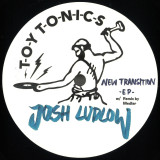
Here comes a first EP by Josh Ludlow for Toy Tonics. Mastermind of Make a Dance aka M.A.D. records. London’s best kept secret (or not so secret anymore) of new underground dance weapons that are played by everybody who counts in the scene.
Josh delivers a hot 4 -tracker that will move people on dance-floors worldwide. Combining 1990es filterhouse influences, 2000’s indie dance and some of the edgy contemporary funk moods that are lighting up clubs these days. The post - techno generation likes it funky and Josh delivers. Fitting perfectly with the vibe of Toy Tonics this EP will find a lot of friends. In fact Josh knows how things work.
Josh Ludlow has been steadily honing his craft over the past 15 years. Starting out releasing Drum & Bass under the ‘Squash!’ moniker in the late 2000’s whilst also playing drums in bands. The former gave way to live touring and it was only in 2020 when Josh resurfaced with some new electronic music.
The impetus for releasing this new material was when Josh Ludlow & Ben Lewis formed there beloved project ‘Make A Dance’ (which then went on to establish the imprint) M.A.D. Records during the pandemic.
Since then M.A.D have made a big impact on the underground scene, become regulars at places such as Fabric, Heidegluhen, Gottwood and gained DJ support of propel such as Laurent Garnier, Optimo, Palms Trax and Peggy Gou and across BBC Radio1 and regularly Cover show’s on NTS for Long Running Host’s Moxie and Apiento.
This is just the beginning.
out of Stock
Last delivered 6 months ago available to reorder, subject to availability
The Montreal rapper's new opus is at once deeply introspective and a wide-eyed embrace of the world. Produced by longtime collaborators Adrian X and Kevin Figs, this sonically adventurous follow-up to her two-part debut Godspeed: Baptism (Prelude), released in 2020, and Godspeed: Elevated (2021) finds her stretching her wings lyrically, vocally and musically.
Naya Ali's journey to We Did The Damn Thing took hard work, sacrifice, faith, and sweat, as represented on the album cover : “Our sweat has trickled down from our braids for generations”. The song The Heist completely embodies the cutthroat energy and hard work that fuels Naya’s music. Yet, We Did The Damn Thing shows there’s more to her artistry. From the dark, ominous More Life, Less Names, a defiant anthem about protecting your peace, to the country-inspired renegade spirit of Turning Tables, and the Afrobeats-infused warmth of Life, where she stepped out of her comfort zone by singing instead of rapping, it is clear that Naya Ali has decided to embrace her versatility as an artist. Beyond the classic, 808-heavy beats, We Did The Damn Thing is a gospel-infused album grounded in live instruments, especially the electric guitar. Naya also took on a larger role in production, leading the choirs and working on vocal production for the songs Life, Jericho and Freedom Creepin.
“Richard Davies is one of the last great songwriters on planet Earth. Every song on Composition Book is up there with his finest and so it's no small feat that after 35 years of making beautiful records, this one is his best.” – Robert Pollard / Guided By Voices Australian mad scientist Richard Davies has long flown under the popular radar with his groups The Moles and Cardinal, but his 10 albums are loved and championed by indie rock royalty. The Flaming Lips, for example, have recorded a Davies song and backed him up on a Moles tour in 1995. A scholar of the songwriting of The Beatles, The Beach Boys, Dylan et al., Davies spins off subtle, catchy indie rock melodies, sometimes reassembled in bizarre Frankenstein arrangements and deconstructed sonic derangements. On Composition Book, The Moles have evolved with emphasis on acoustic guitar and divine female voices. Davies’ lyrical non sequiturs and caustic wit sting, surprise and delight. “The Australian-bred, New England-based Richard Davies has long been a secret-handshake artist for indie diehards; his songs suggest self-contained pop hits from a crooked dimension.” – The New Yorker “The greatest differentiator between the work of the Moles and that of their contemporaries, though, is Davies himself. As a presence, there is something deeply and beguilingly inscrutable about him, a purposeful blankness that betrays an enormous amount of weight and depth behind it, and oozes both vulnerability and vitriol when it breaks and cracks.” – Pitchfork
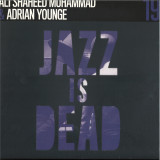
Instrumentals JID019 captures the musical alchemy produced at the Linear Labs Studio by producers Adrian Younge and Ali Shaheed Muhammad. These instrumental recordings encapsulate the spirit of the Jazz Is Dead concert and recording series, celebrating the African-American art form known as jazz through improvisation, musical collaboration and authentic cross-generational and cross-cultural communication.
out of Stock
Last delivered 20 months ago available to reorder, subject to availability
Special edition repress of the groundbreaking ‘Nigeria 70’ compilation, now available on translucent green vinyl 3LP to celebrate the label’s 25th Anniversary.
Originally released in 2001, the collection set the benchmark for a new generation of archive labels and releases mining the vaults for rare Afro funk and Afro jazz fusions and helped to paint the wider picture of the 1970s Lagos scene beyond Fela Kuti's catalogue for a legion of soul, funk and dance music enthusiasts. Check!
out of Stock
Last delivered 20 months ago available to reorder, subject to availability
Singer, songwriter and composer Melike Şahin is set to releases her new album AKKOR via Gülbaba Records in partnership with Day Dreamer
An empowering assertion of survival that propels traditional Anatolian pop and folk influences into the future, AKKOR rises like a phoenix from the flames to reintroduce the Turkish superstar diva to an international audience. An expression of Şahin’s personal growth, the album is an affirmation of her growing status as the voice of a generation, and hose lyrics have been adopted as a callto rights for the women’s movement in Turkey.
Recorded live in London with producer Martin Terefe (London Brew, Buika, Jamie Cullum), AKKOR features a selection of the most talented and forward-thinking musicians on the scene, including guitarists Dave Okumu and violinist Raven Bush, as well as terling Campell (David Bowie) on drums, Glen Scott (Eric Bibb) and Nikolaj mTorp Larsen on keyboards. Bringing an international feel to her mheart-rending performances, the record represents the most focussed and complete expression of Şahin’s sound to date. Melike Şahin has made a career of facing down criticism and censorship to make sumptuous and provocative music that captures the defiant tone of progressive creativity in contemporary Turkey. Having performed around the world with Turkish psych legends BaBa ZuLa, Şahin released her debut album Merhem in 2021, gathering billions of streams and building a reputation for unforgettable live performances in the process. Influenced by the style of Sade, cutting an elegant and beguiling figure on the stage. Where Şahin describes Merhem as about healing, she says AKKOR is about survival, both on an emotional level, coming to terms with difficult relationships, childhood trauma and the pressures of newfound fame, and on a social level, in continuing the champion the rights of the oppressed in the face of state and media violence. Powerful and vulnerable in equal measure, AKKOR demonstrates an orchestral grandeur and a dramatic flair drawn from Şahin’s love for traditional Anatolian pop and folk music, injected with the urgency of contemporary production. Bound together by Şahin’s inimitable voice AKKOR skips between Middle Eastern melancholy and classic disco hedonism, for an album that is as stylistically open, pluralistic and affirmative as the messages the music carries.
Although she does not describe herself as an activist, Şahin’s poignant lyrics have come to define the women’s movement in Turkey, with the words, “I deserve each and every inch of this smile,”adorning protest banners on International Women’s Day and celebratory posters at Pride.
“This is the moment that I told myself, Yes, I am an artist,” Şahin says. “I am bearing all of the other things because of this, because I am affecting people's lives, and I am giving some power.” AKKOR – which translates as candescent – finds Melike rising again and burning brighter than ever before.
Overall though, Şahin says AKKOR is her rebirth album – a statement of self-empowerment, through which she hopes tocontinue to raise up the voices of those around her. “You are seeinga woman who falls down, but who rises again and flies,” sheexplains. “Maybe she doesn't win, maybe she doesn't lose, but she's a survivor,” Şahin concludes. “She is a phoenix.”
out of Stock
Last delivered 20 months ago available to reorder, subject to availability
Founded in 1994, LA's Aberdeen were an underground twee-pop group who’s tight discography of beautifully melodic, melancholic and dreamy songs envelope the cliche topics of summer sunshine, young love, and the lack thereof. Since 2006 the band has been helmed solely by lead writer & producer John Girgus.
Their music primarily resided on the Bristolian cult label Sarah Records, where they would release of some of their most beloved tracks such as 'Byron' and 'Fireworks' in the mid 90s. They are a band who's stripped back sound had a blissful focus on the love of melody whose influence has subconsciously woven itself throughout the current generation of underground pop and indie music.
We are super excited to announce the re-pressing the bands first 3 EPs in their entirety, with additional bonus tracks, on vinyl for the first time in 30 years. These are very special songs by a band whose permeance on vinyl was integral to the flexi disc adoring generation of the Sarah movement..
Entering Phase II, we welcome back a familiar face with another mega electro release. Just as the previous Janus Gate EP, but now we get to focus solely on the unique sounds of Cyphon!
Limited 12" vinyl only release. Run of 400. No repress, no digital.
out of Stock
Last delivered 2 years ago available to reorder, subject to availability
Long-Awaited Reissue of Classic Solo Album by visionary Gong Founder Daevid Allen
The classic Now Is The Happiest Time of Your Life, is being reissued in a beautifully remastered edition. This release, a follow-up to the beloved Good Morning album, captures the whimsical yet profound spirit of Daevid Allen's music, blending his countercultural message with tranquil and organic sounds that evoke the best of his work with Gong.
Originally released in 1977, Now Is The Happiest Time of Your Life invites listeners to join Allen's musical journey alongside his imaginary green hero, Zero, a character familiar to fans of the Gong trilogy. With its lush instrumentation, including the use of tabla, harp, and Allen’s signature glissando guitar, the album creates a peaceful, meditative atmosphere that meanders gracefully across its tracks.
Accompanied by Gilli Smyth and the Spanish group Euterpe, Now Is The Happiest Time of Your Life showcases Daevid Allen’s unique blend of cosmic psychedelia, folk influences, and countercultural sensibilities, all wrapped in a sound that feels both timeless and refreshingly original. This reissue celebrates one of Allen’s finest solo efforts, offering a new generation the chance to experience his visionary artistry.
First-ever reissue on vinyl Remastered audio bringing the warmth and clarity of Allen's sound back to its analog roots Faithful reproduction of the original LP artwork, featuring Daevid Allen's own hand-drawn illustrations and personal notes on the back cover CD digi-sleeve captures the spirit of the original LP and includes collector full-sized poster showcasing Allen’s hand-drawn artwork
Mit ihrem Debütalbum, 'Portraits', aus dem Jahr 2015 und dem ebenso hochgelobten 'Kingdom In Colours' aus dem Jahr 2018 haben Maribou State die Weltbühne betreten und gefühlvolle Downtempo-Electronica für eine neue Generation neu definiert. Ihre Musik wurde von Medien wie Kulturnews, Beat, TV Spielfilm & TV Today, Piranha & Start und wurde beim Münchner Radiosender, egoFM, sogar das Album des Jahres! International gab es zudem Support von u.a. NME, Complex, GQ, Clash und Crack Magazine, Mixmag kürte Maribou State zu einem ihrer 'Künstler des Jahres' und BBC 6Music huldigte 'Kingdom In Colours`' als „Album des Tages“, während Annie Mac, Gilles Peterson, Pete Tong und viele andere die Band unterstützten, sowie US-Radioplay von KCRW & KEXP - wo sie auch eine spezielle Live-Session spielten. Außerdem gab es Welttourneen, Auftritte an majestätischen Orten wie der Sydney Opera sowie Auszeichnungen als Künstler des Jahres und mit „Feel Good“ auch eine äußerst erfolgreiche Single mit Khruangbin. Bei 'Hallucinating Love' hat sich das Warten jedenfalls definitiv gelohnt: es ist ehrgeizig, vollgepackt mit erhabenen Hymnen und gespickt mit rastloser Energie, schwebenden Streichern und umwerfendem Gastgesang von Holly Walker, mit der sie schon seit vielen Jahren zusammenarbeiten, und neuen Freund:innen, wie der MOBO-nominierten Künstlerin Andreya Triana. Es unterstreicht Maribou States sich entwickelnde Balance zwischen Intimität und Komplexität, sowie ihr Talent, epische Musik für Sonnenuntergänge zu machen. Die engere Zusammenarbeit mit anderen half auch dabei, musikalisches Gold zu schürfen, und zwar bei verschiedenen Aufnahmesitzungen in idyllischen Gegenden im ganzen Land. Liam und Chris luden Kollaborateur:innen wie den unglaublich talentierten Produzenten Jack Sibley und den Bassisten Jonjo Williams ein und schufen so überall, wo sie hinkamen, kleine provisorische Gemeinschaften. Das verlieh ihrer Musik eine neue Energie.
out of Stock
Last delivered 19 months ago available to reorder, subject to availability
Between records like Relentless and Show `Em How, Pentagram have never wanted for self-awareness in terms of album titles. The gauntlet thrown down by Lightning in a Bottle is very much in this tradition. The 10th Pentagram album sees founding frontman and doom figurehead Bobby Liebling leading a new cast of players that includes guitarist/producer Tony Reed (Mos Generator, Big Scenic Nowhere, etc.), drummer Henry Vasquez (Legions of Doom, Saint Vitus, Blood of the Sun, etc.) and bassist Scooter Haslip (Mos Generator, Saltine). It would be hard to overstate the energy the new band brings to songs like "Live Again," "Solve the Puzzle" or "In the Panic Room," but Lightning in a Bottle is unmistakably a Pentagram record, of course in Liebling's unremittingly charismatic performance and the groove conjured to back it. Recorded with Reed at the helm, Lightning in a Bottle recalls the best of what has allowed Pentagram to cast an influence across decades and generations of musicians, bands, and worshippers of Riff, and as just their third studio release in the last 15 years, it's not a moment to neglect as they dig into a cut like "Dull Pain" or "Lady Heroin," the latter of which is a naked reconciliation on the part of Liebling with a lifelong addiction to opiates that's become an inextricable part of the Pentagram story. As he wonders in the lyrics, "Lady Heroin, have I seen the last of you?" it becomes difficult to know whether the separation would be through sobriety or death, and that ambiguity becomes part of what makes the song so striking.
Deluxe Edition, Double LP, Gatefold, alternative Cover. Comes with three bonus tracks. Between records like Relentless and Show `Em How, Pentagram have never wanted for self-awareness in terms of album titles. The gauntlet thrown down by Lightning in a Bottle is very much in this tradition. The 10th Pentagram album sees founding frontman and doom figurehead Bobby Liebling leading a new cast of players that includes guitarist/producer Tony Reed (Mos Generator, Big Scenic Nowhere, etc.), drummer Henry Vasquez (Legions of Doom, Saint Vitus, Blood of the Sun, etc.) and bassist Scooter Haslip (Mos Generator, Saltine). It would be hard to overstate the energy the new band brings to songs like "Live Again," "Solve the Puzzle" or "In the Panic Room," but Lightning in a Bottle is unmistakably a Pentagram record, of course in Liebling's unremittingly charismatic performance and the groove conjured to back it. Recorded with Reed at the helm, Lightning in a Bottle recalls the best of what has allowed Pentagram to cast an influence across decades and generations of musicians, bands, and worshippers of Riff, and as just their third studio release in the last 15 years, it's not a moment to neglect as they dig into a cut like "Dull Pain" or "Lady Heroin," the latter of which is a naked reconciliation on the part of Liebling with a lifelong addiction to opiates that's become an inextricable part of the Pentagram story. As he wonders in the lyrics, "Lady Heroin, have I seen the last of you?" it becomes difficult to know whether the separation would be through sobriety or death, and that ambiguity becomes part of what makes the song so striking.
Aqua Blue Vinyl, limited to 500 copies. Between records like Relentless and Show `Em How, Pentagram have never wanted for self-awareness in terms of album titles. The gauntlet thrown down by Lightning in a Bottle is very much in this tradition. The 10th Pentagram album sees founding frontman and doom figurehead Bobby Liebling leading a new cast of players that includes guitarist/producer Tony Reed (Mos Generator, Big Scenic Nowhere, etc.), drummer Henry Vasquez (Legions of Doom, Saint Vitus, Blood of the Sun, etc.) and bassist Scooter Haslip (Mos Generator, Saltine). It would be hard to overstate the energy the new band brings to songs like "Live Again," "Solve the Puzzle" or "In the Panic Room," but Lightning in a Bottle is unmistakably a Pentagram record, of course in Liebling's unremittingly charismatic performance and the groove conjured to back it. Recorded with Reed at the helm, Lightning in a Bottle recalls the best of what has allowed Pentagram to cast an influence across decades and generations of musicians, bands, and worshippers of Riff, and as just their third studio release in the last 15 years, it's not a moment to neglect as they dig into a cut like "Dull Pain" or "Lady Heroin," the latter of which is a naked reconciliation on the part of Liebling with a lifelong addiction to opiates that's become an inextricable part of the Pentagram story. As he wonders in the lyrics, "Lady Heroin, have I seen the last of you?" it becomes difficult to know whether the separation would be through sobriety or death, and that ambiguity becomes part of what makes the song so striking.