Nachtbraker is back! It's been a huge year for the Amsterdam deep house juggernaut who returns to Dirt Crew with his all new and colorfully titled "Really Ties The Room Together" EP. Constantly on the move, he's found time between touring throughout Europe, Asia and South America to continue to push his a-typical house sound forward with this year's HEIST release and his quirky jam "Busy Bee" that was featured on our "Deep Love 100 Compilation. This three tracker is jam packed with bouncing club tunes and a whole lot of flange. Things kick off with the title track "Really Ties The Room Together". It twists and turns over an unconventional but irresistible groove, shimmying shakers, brass stabs and a serpentine riff work together creating a super tight dance floor cut. "Rew" begins somewhere in deeper territory, suspense building beneath the clouds, a rumbling bass rolls in from over the horizon before a glorious funk guitar blows the whole thing wide open, letting the sun's rays burst through and that familiar Nachtbraker good time energy shine in. The rerub of "Rew" is something altogether new from our deep house protagonist, a break beat and casual groove guide gently towards an ever intensifying acid trip. Don't be fooled by the lovely deep chords, things get nasty in the end. It's best to expect the unexpected from our adventurous resident producer, and this EP is no exception.
Cerca:get it
LYR002 'GDEP' sees Adam Stromstedt and Flord King split the credits with both producers getting one track on either side. A side 'SINBAD' by Adam Stromstedt is a 12 minute long piece that takes you through intertwining chord patterns and delay heavy percussions to create a multi layered low-end journey. B side 'Dapper' by Flord King is an already proven secret weapon of some of this scene's most influential DJ's. It kicks off from the first bar with minimal inspired percussion, dreamy chords and tight groove, a real cruiser.
Australian label Nightime Drama, run by Peter Fincher (aka Vibrio) and Shaun Franklin (aka Trebek) now serves up its second standout release of 2016. This four track affair comes hot on the heels of the last by Yoshihiro Arikawa, and is a second release on the label by Aussie live act, DJ and producer Trinity, with Steven Tang and Italian based Andee on the remix. Trinity has also released on OOC, Coincidence and Android Muziq and regularly performs all round Europe. His sound deep and cosmic, heady and hypnotic, as the fresh tracks here prove. Cascade Drive is seven minutes of direct and elastic house with spacey pads and driving drums carrying you through the cosmos. From the Earthmothern label and one half of RK's, Andee strips it back to a slick rubber kick drum then layers in a forceful acid line and icy hi hats to really get you under its spell. The longform groove is physical and cerebral in equal measure. The next original is Expansion, and again finds Trinity serving up a hi tech and soul infused deep techno sound that is lithe and liquid, smeared with great pads and truly timeless. Emphasis boss Steven Tang is the perfect man to remix given his style, and his version flips the cut into a more heavyweight and banging techno effort, but one that is just as littered with sci fi sounds, spaceship trails and intergalactic energies.
1999...after the global supremacy of Oasis and Blur, the world is looking for some musical freshness. Some artists such as Daft Punk and Air have already contributed to globally popularise what the English called the "French Touch", a new term that refers to a large musical French movement. The first album of Cassius is one of the key pieces of this growing genre, and demonstrates once again the variety of the trend. Indeed, after have cooperated for a long time with MC Solaar, one of France's 90's best rappers, the hip-hop influence of both Cassius members had to have an impact on their personal concept, and it did seduce a lot of listeners hungry for new musical flavours: more than 250 000 units sold worldwide and numerous unconditional fans...Before the release of their new album Ibifornia coming out this summer, we're taking you back to basics with a new release of Cassius' first album, for the ones who didn't have the opportunity to hear it, or for those who only have the CD, and would like to get themselves the vinyl edition !
With the agreement of the artist Hot casa decided to select the best of his repertoire. The long awaited Tee Mac's Best Of is a reality at last: juicy, hot, explosive and threatening to shatter all existing records !
Tee Mac is a Nigerian multi-talented maestro flutist with cross-cultural Itsekiri and Swiss roots. He combined his first degree in Economics from the University of St. Gallen in Switzerland, with a specialization in classical music concert performance and philharmonic compositions at University of Lausanne.
During a rich career spanning over 40 years, Tee Mac formed numerous bands including Tee Mac & Afro Collection in the 1970s with notable Nigerian artists. He recorded his first LP, United, for Polydor International in Germany, with his European band, Tee Mac United, in the late 70s. And he then hit the global music charts with two songs, "Fly Robin Fly" and "Get Up & Boogie", touring extensively with his third band, Silver Convention.
Jel Ford returns to Drumcode after his highly anticipated remix of Alan Fitzpatrick's For An Endless Night.
Ford laces his three electrifying, new original tracks with a high energy that are guaranteed to get any dance floor rocking.
Heavily featuring on Adam Beyer's Drumcode radio both Red Mist and Overcast have gained heavy support from DJ's and fans alike. Ode To Basement' is an end of night smasher that will make everyone melt into the ground as it is caressed out of the sound system.
repressed !
RFBCOLOURS 002 bring L'Atelier on board. This pair from Amsterdam bring you a 4 track EP with a digi only bonus. It starts off with Again, which hits that great sample hard and gets the party started on a disco vibe with a house twist. Then theres XTC which carries on where the A1 left off. On the flip we see a serious piano workout on top of a a grooving drum arragement. To finish off the vinyl package we see Times Are Ruff take the remix on a deeper tip with some seriously crunchy basslines and rolling groove. Then if that wasnt enough theres a digital bonus that will warm up any willing club room.
Feedback:
Telonius (Gomma)
'thanks nice one'
Laurin Fedora (Sleazy McQueen (Morris Audio / Paper Recordings))
'I'm looking forward to this vinyl. Nice return to late 90s filter disco!'
kostas tassopoulos (Ekkohaus (2020 vision, morris audio, cargo edition, liebe detail))
'Solid house record, loving it, thanks....'
Harri (Sub Club)
'liking afew of these'
Gameboyz (Clouded Vision / Relish)
'we dont usually play this kind of house music, but this is very nice! will try! thanks!'
Sebastian Wilck (Sebastian Wilck, Watergate)
'times are ruff remix is strong! support'
Jonny Cade (2020 Vision / Leftroom)
'great house ep'
Tensnake
'wow, that's quite a killer, downloading thanks!'
Lauhaus Lanting (Polder / Intacto)
'nice ep guys, also diging the times are ruff mix. thanx!'
Julien Barthe (Plaisir de France, Pro-Zak Trax)
'yeah remmeber 2000'years'
Julien Sandre (Morris Audio)
'nice music'
Doc Martin (none)
'XTC for Me!!!!'
Tom Findlay (Groove Armada)
'great EP, a little bit of everything and in all the right places....'
Andrew Claristidge (Acid Washed (Records makers))
'good stuff...'
Mihai Popoviciu (Highgrade, Fear Of Flying, Hudd Traxx)
'again is cool for me!'
Dorian Paic (Raum Musik)
'xtc times are ruff remix is the one for me ! cheers Dorian.'
Hector Couto (Tribal Sessions)
'full support for this release! good music!!!'
Gianluca Pandullo (I-Robots)
'LAtelier - XTC (Times Are Ruff Remix) ! I-Robots approved!'
Belgian talent Ilario Liburni looks to the release of his debut LP, 'Travel So Far', forthcoming on his own label, Invade Records. The eight track affair comes on a double vinyl pack as well as digital form which will follow a month later and proves the man behind it to be a superb producer with plenty to say.
Combining elements of house, minimal and intricate sound design, Ilario also heads up the Cardinal label and first emerged back in 2011 on Monique Musique. Since then he has gone on to release on a number of respected imprints (including Riva Starr's Snatch! And Memoria Recordings), has had his tracks licensed to compilations including Noir's In the House album for Defected and has continued to make a big impression as a DJ around Europe.
The album kicks off with 'Travel So Far', a synthetic and stripped back groove with lots of squelchy sounds, scurrying synths and feathery percussive lines all working their way into your brain. 'Sudden' is another Ricardo Villalobos style track that is elongated, intricate and immersive as it unfolds on soft edged drums. Next up, 'Carrie' is a smooth, dubbed out affair that demonstrates plenty of restraint yet really locks you into its hypnotic groove as static hiss and crackles alongside distant synths colour the spaces left behind.
'Steampunked Sewing Machine' ups the ante a little with a hollowed out drum line rocking back and forth on its heels, and 'Can't Fool Data' starts all waify and minimalistic before getting pulled apart to the sound of whirring machines, and then it drops again; you can imagine dancefloors going wild to its hooky rhythms. 'Jenndrum' is all about the pinging drum kicks and globular toms that make for a peppery groove, 'Pherthothal' toys with a sense of abstract funk and closer 'Schwalbe' is a gloopy, gluey, druggy fusion of slurred synths, hiccupping drums and dark textures that make for involving listening.
This is a genuinely inventive album riddled with fascinating sounds,
a real attention to detail and plenty of otherworldly moods that really stick with you.
Some words from the man himself on way he chose these tracks: Make Me Feel: Classic disco track from Sylvester. Always gets the dance floor completely pumped. Love2Love: I love everything that Donna and Giorgio have done. Love To Love You Baby is definitely a big favourite. Just wanted to put my spin on it. Great vibe for the early hours of the morning. He's Mine: One of my favourite R'n'B tracks from the 90's given some LNTG muscle.
Môme is quickly becoming something like France's new house god. His earthy vinyls for Housewax and FTWR got him a great following with record collectors and house DJs alike. Appearing on Appolonia's Fabric mix, several Boiler Room sets, and his 'For One Day EP' at #1 on Decks Buzz Charts, Môme quickly wins the hearts of dancers and players. 'Triple House' is probably the most amazing outing of his fresh style to date, with all 3 tracks being sweaty bouncing groove monsters. As if this wasn't enough, label honcho Stefan Goldmann cracks his funkiest cutting remix in ages to round the package off. It's unreal. 4 out of 4 are total winners to fall in love with and spawn children. Where else do you ever get this
Cellaa Music are very happy to welcome our great friend Marc Faenger and Label Head Sven Jaeger back to the fold. This one - obviously called B2B Volume 1 features two artists, two universes, two different ways to approach the music theory to form a B2B Cellaa relationship.
Young, skilled and supremely talented, Marc Faenger, is an artist set for great things on the international scene. Marc´s - Nip' contains an infectious groove an elegant labyrinth of percussive dub textures and sinusoidal tones and fast shuffling hats. Deep, fresh and seductively satisfying, this tune was designed for the discerning dancefloor.
Sven Jaeger returns to Cellaa Music with his second release for his label. - Get The Fuck' is a track that immediately commands attention with it's rolling, rich bassline surrounded by punchy, organic drums that delivers a soothing atmosphere. The track is really powerful and works really well on all dance-floors. People love it!'
The first of the remixes comes from the in form, Reelow. His releases have been huge hits, ruling the DJ charts. Here he strips the oringinal of Marc Faenger to it's essential parts. The super dry kickdrum and percussion in combination with the deep subs together create Reelow´s own techno vision.
Next we have Dan Noel providing a soulful tech house surrogate to the original of Mr. Jaeger. His remix has a deeper twist with glittering sounds and a concrete percussive arrangement to convey a fantastic Remix.
This vinyl includes a free downloadcode were customers get the
whole digital release (incl. Bonustrack) for free via Facebook !!
Anyhow fresh but still trusts! 4CR comes with his second vinyl - release,
and it sounds fat. "Menschenskind" has delivered with "Tequila" this time
a real Minimal House bomb with catchy tune character. Organic guitar -
samples and fresh Grooves sound like the fruity sweet taste of summer
which drips in the dusty and dry desert. A touch of western, High Noon
and heat under cloudless sky. "Menschenskind" gives us with Tequila an
acoustic place under the sun, the suitable drink and just the pure groove.
Alec Troniq, Sonntagsmusikant and Tinush deliver their great remixes on
top. While Sonntagsmusikant holds the striking theme first a little more
covered and comes along even more minimally, Alec Troniq with a stylish
variation of the subject rocks more offensively forwards. Tinush adds with
his Remix some Coolness and completes this 4CR Release. This package is
the fruity cocktail, which runs down the dusty throat, while the smell of
the sun and desert is omnipresent. Get a drink, and enjoy Tequila!
Irgendwie fresh aber dann doch vertraut! 4CR kommt mit seinem
zweiten Vinyl - Release, und es kommt dicke. Menschenskind hat mit
- Tequila' diesmal einen waschechten Minimal- House Knaller mit
Ohrwurmcharakter abgeliefert. Organische Gitarren - Sounds und
freshe Grooves klingen wie der fruchtig süße Geschmack von Sommer,
der in die staubtrockene Wüste tropft. Ein Touch von Western, High
Noon und Hitze unter wolkenlosem Himmel. Menschenkind gibt uns
mit Tequila einen akustischen Platz unter der Sonne, den passenden
Drink dazu und den puren Groove. Dabei liefern Alec Troniq,
Sonntagsmusikant und Tinush ihre großartigen Remixe on top.
Während Sonntagsmusikant das markante Thema zunächst etwas
gedeckter hält und noch minimaler daher kommt, rockt - Alec Troniq'
mit einer stylischen Variation des Themas offensiver nach vorne.
Tinush packt mit seinem Remix die Coolness und rundet dieses 4CR
Release gekonnt ab. Dieses Package ist der fruchtige Cocktail der die
Staubige Kehle runter läuft, während der Geruch von Sonne und
Wüste allgegenwärtig ist. Schnapp dir n Drink, und genieß Tequila!
Sascha Kloeber & Partina Records... a secret hint for superb produced
songs in highest quality with a lots of feelings and musical emotions.
From deep to nice. Be careful with "Nights of the Sun" - it turns into a
surprise by a heavy synthesizer sound.
Limited white colored Vinyl with a special mastering: much more
dynamic and smoother sound than the digital release.
Early support by: Pig&Dan (Cocoon), Max Cooper (Traum), Laurent Garnier, Patrick Kunkel (Cocoon), Tim Green (Get Physical, Cocoon), Microtraum (Traum), Beatamines (Keno), André Kraml (Dirt Crew, Trapez), Homebase (Beatwax, Playhouse), Broombeck (Terminal M), Anderson Noise, Philipp Wolgast (Kompass Musik), Oscar Barila (Bondage Music), Martin Dacar, Turm 3 (Seenplatte) and more
Every record includes a downloadcode to get the whole digital
release for free via Facebook !!
Traumfabrik (Ton Liebt Klang, Gris Musique) just drop their new Ep
after releasing their Darkroom Honey EP as C2M006 - and again
Michael & Florian show that they keep it rolling. Two Primetime
Originals and Remix works from Fabian Schumann (Mangue Records)
and debutant duo Panik Pop are rounding up this 12" as a remarkable
release.
We kick off 2013 in style with an Ep from Kiiroy. It´s always exciting for us to be introduced to a new artist. Especially when we are blown away by their Music. For his debut on Cellaa Music Kirroy brings a bouncing track which is perfect for all floors. Please help this new label get off to the best of starts by listening well and leaving considered and constructive feedback. Thank you.
30 years old Kiiroy is using freaky instruments and concrete sounds, our lovely boy, always keepin his distinctive funky´n´groovy attitude. Deep, fresh and seductively satisfying, this tune was designed for the discerning Dancer.
A bumper remix is lead by Stefano Libelle who bring a trademark deep house tune with a weighty, warped bassline and euphoric break. Here he strips the original to it´s essential parts. The super dry kickdrum and percussion in combination with the dark bassline together create Stefano´s own deep-house vision.
deutsch:
Wir starten mit einer EP von Kiiroy stylisch ins Jahr 2013. Für uns war es schon immer aufregend, neue Künstler vorzustellen, ganz besonders, wenn uns ihre Musik umhaut. Für sein Debüt auf Cellaa Music präsentiert Kiiroy einen bouncigen Track, den man auf jeden Floor einsetzen kann. Wir bitten euch, unser neues Label bei seinem Start zu unterstützen, indem ihr euch den Track genau anhört und uns Vorschläge und konstruktive Kritik zukommen lasst. Vielen Dank!
Der 30-jährige Kiiroy verwendet eine freaky Instrumentierung und harte Sounds. Unser Liebling, der stets bei seinem bezeichnenden, funkigen und groovigen Stil bleibt. Die Melodie ist deep, frisch und verführerisch und somit ideal für den anspruchsvollen Zuhörer.
Stefano Libelle liefert mit seinem Remix ein schönes Deephouse-Stück ab. Mit einer deepen, verschrobenen Bassline und euphorischen Breaks reduziert er das Original aufs Wesentliche. Die supertrockene Kickdrum und die Percussion in Verbindung mit der dunklen Bassline sind die Zutaten von Stefanos ganz eigener Deephouse-Vision.
- A1: All My Love
- B1: Can't Get Over You
The world of discovering Soul music and artists can lead to sheer moments of jubilation. The thought of igniting a long lost sound, reviving the energy of a once exuberant individual . But not every story that's told is filled with joy. Some are peppered along the way with struggles and heartache. Over time artists have battled with over powering label owners, record executives who just don't back what you do. The story of Tommy Hill is one such story. Tommy along with friend and longtime collaborator Ricky Tarbo had a deal with Motown records back in the early 1980's which turned sour very quickly. His release "Flame"/"Super Star Of Love' was dropped pretty quickly with no promotion and record boss Sylvia Rhône calling the shots within the duo questioning skin colour within the group and even trying to get vocals wiped off the release to sabotage it.
This said the single didn't amount to much and nothing else was recorded for Motown records. The duo did record some 4 demo's in LA before Tommy headed to re-record them again in New York circa 1982.
The A side has never been released until now, which is such a crying shame as the quality is so damn good. It's an uptempo boogie cut called "All My Love" which we gave a sexy 45 mix so you get some slamming synth work half way in. Tommy Hill's vocal range is nothing but astonishing. Just check out the 2 step ballad of "Can't Get Over You", which was recorded and released back in 1980 by The James Simpson penetration Band written by Tommy Hill, who went back into the studio 2 years later to give the song much more depth not only within the production but also to his vocal range. Tommy Hill headed back to LA after not securing a record deal and a few years later tried to get this singing career back on track. Like many of the artists who have moved on to a higher place Tommy succumbed to his own mental health issues and took his life. We hope this record does you proud Tommy Hill
Boogie Vice & N-You-Up Return to Definitive Recordings with 'Decadisco EP'
Definitive Recordings continues its run of forward-thinking house releases with DEF2603, the new four-track 'Decadisco EP' from Boogie Vice and N-You-Up. Following their 2025 collaboration 'Come On Closer', the duo returns to the label with a fresh collection of groove-driven club tools that balance modern energy with classic house foundations. Recent releases on sister label Get Physical Music further underline the duo's strong creative momentum.
Boogie Vice is a French DJ and producer known for his groove-led house sound that blends funk, soul, and percussive club energy. With releases on labels such as Get Physical, Rekids, and Definitive Recordings, he has built a reputation for warm, dancefloor-focused productions supported by tastemakers worldwide. Now based in Cape Town, Boogie Vice has expanded his creative work into film scoring and executive production, adding new depth to his already rich musical palette.
N-You-Up, Southern France native Nick, brings decades of DJ experience and a deep-rooted love for jazz, funk, and disco. Formerly known as The Beatangers, he now channels those influences into a refined house fusion under his N-You-Up alias. Alongside Boogie Vice, his collaborative releases have appeared on labels such as Nervous Records and Get Physical Music, with their joint productions receiving support from key artists including Solomun, Dennis Ferrer, Jamie Jones, Pete Tong, Laurent Garnier, Radio Slave or Mita Gami, firmly establishing the duo as a reliable source of dancefloor-ready house music.
The EP opens with 'Game Concept', a driving house cut built on percussive drums, a rolling classic house bassline, and catchy vocal samples. Dreamy, deep synth chords float above the groove, creating a hypnotic yet energetic opener. 'Wurkin Like Dat' follows with a disco-infused house vibe, stacking groove upon groove as vocal snippets and disco elements take center stage, delivering pure dancefloor momentum. Rounding out the EP are two DJ-focused versions of 'Wurkin Like Dat'. The Invasion Tool strips the track back into a flexible club weapon, while the Drumapella isolates the rhythm and percussion, offering maximum versatility for creative mixing.
With 'Decadisco EP', Boogie Vice and N-You-Up once again showcase Definitive Recordings' ability to deliver modern house weapons that honor the genre's past while pushing the sound firmly forward.
- A1: Les Masques - Il Faut Tenir (1969)
- A2: Isabelle Aubret - Casa Forte (1971)
- A3: Christianne Legrand - Hlm Et Ciné Roman (1972)
- A4: Jean Constantin - Pas Tant D'chichi Ponpon (1972)
- A5: Billy Nencioli & Baden Powell - Si Rien Ne Va (1969)
- B1-: Marpessa Dawn - Le Petit Cuica (1963)
- B2: Jean-Pierre Sabar - Vai Vai (1974)
- B3: Sophia Loren - De Jour En Jour (1963)
- B4: Isabelle - Jusqu’à La Tombée Du Jour (1969)
- B5: Sylvia Fels - Corto Maltesse (1974)
- C1: Frank Gérard - Comme Une Samba (1972)
- C2: Ann Sorel - La Poupée Des Favellas (1971)
- C3: Charles Level - Un Enfant Café Au Lait (1971)
- C4: Andrea Parisy - Les Mains Qui Font Du Bien (1970)
- C5: Audrey Arno - Quand Jean-Paul Rentrera (1969)
- C6: Aldo Frank - T’as Vu Ce Printemps (1970)
- D1: Christianne Legrand - Cent Mille Poissons Dans Ton Filet (1972)
- D2: Clarinha - Lemenja (1970)
- D3: Hit Parade Des Enfants - Aquarela (1976)
- D4: Jean-Pierre Lang - Tendresse (1965)
- D5: Magalie Noël - Une Énorme Samba (1970)
- D6: Françoise Legrand - La Lune
Ever since the late 1950s bossa-nova revolution, Brazil’s influence on French music has been undeniable. Pierre Barouh, Georges Moustaki and a vast array of lesser known artists, all made the Musica Popular Brasileira (MPB) an axis of promotion at the service of a cool and metaphysical, modern and mixed Brazilian lifestyle. Some were seduced by the poetic languors of the bossa, some were looking for fun, and others just loved the American hybridization of jazz-bossa, jazz-samba.
What is bossa nova? One of its creators, Joao Gilberto said: "Its style, cadence, everything is samba. At the very start, we didn't call it bossa nova, we sang a little samba made up of a single note - Samba de uma nota so .... The discussion around the origins of bossa nova is therefore useless”. It is nevertheless useful to remember that these magnificent Brazilian songs, which the guitarist describes as samba, were shifted and balanced around improbable chords. "I like things that lean, the in-betweens that limp with grace," said Pierre Barrouh, quoting Jean Cocteau.
With emotion, arrangements for violin and supple guitar licks, bossa nova rapidly changed. A transformation that can be heard in the Tchic, tchic, French Bossa Nova 1963-1974 compilation, the result of a cultural reappropriation, which traveled through the United States and supplemented itself in France.
A musical revolution that has remained significant, bossa nova was born in Rio. From 1956 to 1961, Brazil lived through its golden years. In five years, the country had invented its modernist style. Elected president in 1956, Juscelino Kubitschek de Oliveira, an elegant man with a broad forehead, brandished a promising slogan: "Fifty years of progress in five years". He quickly got to work. Not worried about increasing debt, he launched the project for a new federal capital, Brasilia, designed by the communist architect Oscar Niemeyer. Volkswagen opened state-of-the-art factories and created the “fusquinha”, the Beetle. In Rio, the Vespa made its first appearance. The Arpoador Surf Club crew run into the “girl” from Ipanema, Helô Pinheiro - the tanned garota ("chick"), between a flower and mermaid, who at 17 walked by the Veloso bar, where the fiery author and composer, Tom Jobim and Vinicius de Moraes, were getting drunk on whiskey. From then on, bossa symbolized cool.
In 1958, Joao Gilberto recorded Chega de Saudade, which the directors of Philips denied, calling it "music for fagots". The marketing director, who believed in it, secretly pressed 3000 78-inch vinyls and distributed them at schools around Rio, creating a tidal wave.
American jazzmen then took over. In particular, trumpeter Dizzy Gillespie and guitarist Charlie Byrd. In November 1962, the Brazilian Ministry of Foreign Affairs funded a "Bossa-Nova" concert at Carnegie Hall in New York, inviting the genre’s pioneers. Unprepared, the show soon turned to disaster. But the troupe was invited to the White House by Jackie Kennedy. The first lady loved "the new beat" and in particular Maria Ninguem, a song by Carlos Lyra, later covered by Brigitte Bardot.
In Brazil, the 1964 military coup quickly ended this euphoria. The destructive atmosphere that ensued pushed many Brazilian musicians to leave, if not to exile. Thus, Tom Jobim, Sergio Mendes and Joao Gilberto arrived to the United States. In New York, Joao Gilberto met saxophonist Stan Getz. At the time, he was married to the Bahianese Astrud Weinert Gilberto, who had a German father. She had never sung before, but she knew how to speak English. Getz therefore asked her to replace her husband on The Girl From Ipanema. The Getz/Gilberto record with Tom Jobim on piano, was released in March 1964. Phil Ramone, the "pope of pop" was in charge of sound.
Bossa nova arrived in Paris through the classic “guitar-voice” channel (Pierre Barouh, Baden Powell, Moustaki…) But France loved jazz and Paris had already welcomed its American contributors. All these good people were to pass through Saint-Germain-des-Prés. The cabaret l'Escale became the Mecca of Latin American sound where one could find Pierre Barrouh and his friends, such as the Camara Trio, samba-jazz aces, whose only record was published by the Saravah label. With a band strangely called Les Masques (a band that included Nicole Croisille and Pierre Vassiliu, among others), the Camara Trio recorded an interesting Brazilian Sound, including the track Il faut tenir which is present on this tasty compilation of rarities.
Other enlightened musicians can also be found on the compilation, such as Jean-Pierre Sabar (songwriter for Hardy, Auffray, Leforestier ...) and the French pop rock organist Balthazar. In 1975, Sabar recorded Aurinkoinen Musiikkimatka on a Finnish label, which featured the crazy Vai, Vai, included on this record. We are now following the footsteps of Brazilian electronic musicians such as Sergio Mendes, Eumir Deodato or Marcos Valle who created funk and disco sounds on their keyboards and synthesizers. A style that influenced Véronique Sanson when she wrote Jusqu’à la Tombée de la nuit in 1969 for Isabelle de Funès, the niece of Louis and a great friend of Michel Berger - Sanson did end up singing this track on her 1992 Sans Regret record.
The pinnacle of exoticism and travel, Sylvia Fels’ Corto Maltese includes bongos, sea mist and ocean sounds. The title was taken from Jacky Chalard’s concept album written in 1974, Je suis vivant, mais j’ai peur (I am alive, but I am scared), based on Gilbert Deflez’s science fiction novel.
However, bossa nova extended the scope of popularity. "In the 1970s, I was a fan of Sergio Mendes, Getz / Gilberto. I fell in love with this music that I knew because I had been an orchestral singer, " explained Isabelle Aubret, who in 1971 delivered a composite record of covers by the very funky Jorge Ben, Orfeu Negro, Tom Jobim, Vinicius de Morais and Jean Ferrat. "I recorded this album for Meys Records in Paris, far from Brazil, with wonderful musicians, François Raubert, Roland Vincent, Alain Goraguer...". The latter wrote the arrangements for Casa Forte, a very percussive title borrowed from Edu Lobo, one of the initiators of the bossa who spent time in California. "Jazz and bossa came together and produced very rhythmic music. I love singing, it allows me to dream, to have fun, to feel a high on stage, and these songs brought me joy, made me swing, my singing felt like a dance.”
The world tours of French singers and their desire for the tropics, often brought them to Rio with its hills, forests, caipirinhas and tanned bodies. There are surprises though, like this Iemenja (Iemenja is the goddess of the sea in the Afro-Brazilian candomblé religion). Not unlike the composer and musician Jean-Pierre Lang, based in Sao Paulo, Claire Chevalier taught Brazil to Brazil. In 1970, the singer and painter published a 45-inch vinyl, Mon mari et mes amants (My husband and my lovers), under the improbable pseudonym of Clarinha (little Claire). She was then living in Rio, with her husband, Joël Leibovitz, who founded a band called Azimuth, and who owned a record label specialized in "sambas enredos" songs for samba school parades.
For its B side, she asked Pierre Perret to come up with lyrics for a song composed by Carlos Imperial: "Oh goddess of the sea, o goddess Iemenja, I bring a white rose to adorn your long hair ..." . "Perret came to see us, and we had fun, remembers Joël Leibovitz. We wrote Lemenja for fun, we recorded it at the Havaí studio, behind the Central do Brasil the central station. Erlon Chaves, the arranger who worked with Elis Regina, joined us" adding his share of Afro-Brazilian percussions and funky brass to the mix.
There is a common misunderstanding in Franco-Brazilian history: that bossa, admittedly hedonistic, is perceived as funny, even though the poets who wrote the texts are often philosophizing on the human condition. Its French interpreters pull it towards a carnival inspired universe, far removed from its fundamental essence. Thus, Jean Constantin covered the famous Samba da minha terra, an ode to the art of samba written by the classic Bahian composer Dorival Caymmi, renaming it with the enticing title of Pas tant de tchi tchi pompon: "On your pier there is no tchi tchi / when you arch your back, you know everything is alright ”(lyrics by Gérard Calvi). This expedited bossa aims for the absurd, but retains a certain elegance.
Indeed, Jean Constantin was not an idiot, the rather large man had a huge mustache and liked fantasy, (Les pantoufles à papa, Le pacha, inspired by cha-cha-cha-cha, salsa and jazz) but he was also the lyricist of Mon manège à moi interpreted by Edith Piaf, the composer of Mon Truc en plume by Zizi Jeanmaire and the soundtrack of François Truffaut’s 400 Blows. Le Poulpe, published in 1970, from which this bossa is extract, was arranged by Jean-Claude Vannier, an accomplice of Serge Gainsbourg’s Melody Nelson. In short: "There is enough of samba / By looking at the parasol / Because my poor cabeza / Is going to die in the sun".
Even the American actress Marpessa Down, who was at the heart of the bossa nova revolution with her role as Euridyce in Marcel Camus’ film Orfeu Negro, winner of the 1959 Cannes Palme d'or, fed the clichée with Je voudrais parler au petit cuica - "Tell me how you manage to always make people want to dance / It's true, I must admit that I cannot resist your magic" - in consequence, once can hear the cuica, a little drum inherited from the Bantu.
But bossa nova had many angles. Societal, of course, pushing actresses who were symbols of women's liberation like Brigitte Bardot, Jeanne Moreau, or Sophia Loren to engage in the exercise of accelerated bossa. In February of 1963, Sophia Loren made a record in French in Rome, Je ne t'aime plus, featuring the song De jour en jour, a bossa written by two Italians, Armando Trovajoli and Tino Fornai, which was released a little later by Barclay. Bossa accompanied the 1960s, a decade of moral liberation. Ann Sorel, who interpreted La Poupée des favellas, caused a sensation with L’amour à plusieurs, a provocative song written by Frédéric Bottom and Jean-Claude Vannier. As for the actress Andrea Parisy, she displayed her bourgeois cheekiness in Marcel Carné's Les Tricheurs before interpreting Les mains qui font du bien. And Magalie Noël, the friend of Boris Vian, who sung Johnny fais-moi mal, was hired to sing Une énorme Samba, composed by Alain Goraguer (arranger to Gainsbourg, Bobby Lapointe and Jean Ferrat) with lyrics by Frédéric Botton.
But in the end, of what wood is bossa nova made of? The answer is given by Christianne Legrand, daughter of Raymond the conductor, and sister to Michel the composer: "With me, with jà" - jà means "immediately" in Portuguese. In 1972, the singer, an expert in vocal jazz and a member of the Double Six, published Le Brésil de Christianne Legrand. Two songs included on the Tchic Tchic compilation that demonstrate how bossa, jazz, funk, rock, etc. work like a swiss army knife: the music is used to denounce broken systems, or miracles, HLM et ciné roman, Cent mille poissons dans ton filet, two songs from the O Cafona soundtrack, a successful telenovela broadcast, at the time in black and white, on TV Globo. The first was adapted in French by the fighter and friend of the Legrand tribe, Agnès Varda. The second is content with a play on words, jostling them into a summer fun.
Véronique Mortaigne
- A1: Borinquen
- A2: Con Quien Andas
- A3: Latin Blues
- A4: Ya No Te Quiero
- B1: Negrita Mia
- B2: Telegrama
- B3: M & M
- B4: Sassie
Ghetto Records was Latin music legend Joe Bataan’s way to get over on The Man and out of the ’hood, a bold move by an artist looking for independence and creative control in an industry that had exploited his talents and treated him like chattel.
As Bataan puts it today, “Ghetto Records was part of my journey, a stepping stone to everything else that I’ve done. I learned enough that it enabled me to get out of the box with my thinking, it showed me how to deal with adversity.” Like many dreams and schemes born of the street, this one was audacious, perhaps even reckless to a fault.
Hatched from desperation yet full of hope Ghetto Records came crashing down shortly after its inception. The seven albums in its discography languished out of print - until now.
- A1: Abay
- A2: Tew Ante Sew
- B1: Mengedegna
- B2: Kahn
- C1: Sew Argen
- C2: Nafekeñ
- D1: Abet Wubet
- D2: Guramayle
- D3: Gud Fella
- D4: Guramayle (Slight Return)
180g Heavy double vinyl LP with liner notes by Tyran Grillo. Limited Japanese Obi for the first pressing. Original artwork by Russell Mills and photography by Jean-Baptiste Mondino.
The third Time Capsule is a body of dub reinterpretations by celebrated producer Bill Laswell of Ethiopian singer Gigi. Curated by Tokyo record collector, music researcher and seasoned reissue supervisor Ken Hidaka, it is the first time Illuminated Audio is pressed to vinyl after its CD release in 2003.
Ejigayehu Shibabaw was born in 1974 in Chagni, northwestern Ethiopia and by pursuing a career as a singer, went against her father’s strict, traditional gender roles. As Gigi, she embraced the same musical freedom she had strived for in her personal life, incorporating the Ethiopian church, funk, hip-hop, West and South African music into her work. She first settled in Nairobi, then Addis Ababa, where she quickly established herself as one of the city’s leading singers. A move to San Francisco in 1998 led to a long and fruitful creative partnership with bassist and producer Bill Laswell.
Around the same time, Chris Blackwell had stepped away from Island Records to start the art house film company and label Palm Pictures. He took an interest in Gigi and together with Laswell, pulled together an all-star cast of musicians for her self-titled US debut album, including Herbie Hancock, Pharoah Sanders and Wayne Shorter. It won international critical acclaim, not just for its musicianship but for making Gigi a “defining voice for the Ethiopian expatriate community”, as journalist Tyran Grillo praises in his Time Capsule liner notes. From the nation-defining 1896 victory over Italian invaders to the quiet revolutionaries who wear simple shemma garments, Grillo believes the themes in Gigi make it “a shower of sunlight on her homeland for those ignorant of its struggles.”
After its success, Blackwell encouraged them to go back into the studio to rethink the album and Illuminated Audio was born. “Anyone can make a voice sound worldly”, Grillo remarks, “but rare are those who can make one sound inner-worldly.” Gigi was clear with Laswell to give her vocals a minor role “because it’s already been done.” Instead her Amharic verse is fleeting, exhaling through the textures like ghostly fragments; soaring yet muted. Yet the album is still titled under her name, an assertion by Laswell of her central role in the album’s creation. Not only was it a fully endorsed project by Gigi, but she would be present throughout its development, giving feedback on half-finished ideas as Laswell played them back in the studio. “It works perfectly”, she reflected after the album’s release. “We wanted to capture the whole spirit of each track, and Bill’s remixes create a different music language that really puts you in a pleasant place”.
This new vocabulary takes its lead from a technical approach that Laswell had been perfecting during a furtive creative period at the turn of the millennium. Much like his ambient interpretations of Miles Davis (Panthalassa, 1998), Bob Marley (Dreams of Freedom, 1997), and Carlos Santana (Divine Light, 2001), Laswell approached Illuminated Audio by returning to the original multitrack masters. Gigi wasn’t just reworked, but recomposed into an expansive lattice of instruments, submerged in a watery ambience of dub and trance undercurrents.
Sonically, this new language that Gigi refers to, is manifested by the original album’s more understated parts being pushed to the fore. Explaining his contrasting methods, Laswell saw Gigi as being “put together in a way that fits”. Contrastingly, in Illuminated Audio, “a lot of things that I featured in the remix weren’t as audible in the original.” Instrumentation laying near-dormant, deep in the mix, are brought to the fore: the acid rock guitar and Wayne Shorter’s saxophone on ‘Tew Ante Sew’, Graham Haynes’ flugelhorn on ‘Nafekeñ’, Laswell’s bass on ‘Kahn’, the melodica in Mengedegna or the floating synths and talking drums in ‘Gud Fella’.
Brought to his attention by mentor DJ Nori, Hidaka describes Illuminated Audio as a “masterful sonic exploration into ethereal ambience and dub” and made sure this reissue also contained a full remaster to give its “deep musicality” much better dynamics and density in the overall sound. Hidaka admits that Laswell's music “is sometimes so out-there, it is often misunderstood” and, indeed, to dub album non-believers this might seem like a prolific producer imposing himself on another artist’s work; eternally developing rearrangements that never quite get to its destination. But that’s missing its true power and triumph. This is more than the reissue of a remix, but “a wholly unique musical entity”, as Hidaka describes. Illuminated Audio refers to the illuminated manuscripts that comprise the major part of Ethiopian art and its new compositions stand in proud solitude as a rare body of reworks that both informs and enhances their originals.
A guitar stands alone in Wedding, that metropolitan biotope in the western center of Berlin, caught in constant transformation between idyll and abyss. It lets its gaze wander, unsettled, almost shy, until it encounters a trumpet, with which it begins a cautious, then ever more intimate pas de deux.
Welcome to the second studio album by the Berlin-based band Conic Rose.
The album title Wedding is no coincidence. The story of Conic Rose is closely intertwined with the Berlin neighborhood that gives the record its name. The band's studio is located here, and both studio albums were created in the immediate vicinity of the small river Panke. This place settles over the music like a warming patina. The album feels as though the musicians and the neighborhood have invited one another to get to know each other. Not least because Wedding also means marriage. These marriages between a band and an urban landscape, a fading past and an emerging future, fear and hope - unfold in every single song on Wedding.
For their second album, Conic Rose repositioned themselves completely. Not in terms of personnel, but in the question of how to move forward. Conic Rose still sound like Conic Rose; their distinctive blend of cinematic jazz, ambient textures and guitar-led contemporary music remains untouched. And yet Wedding is, in many ways, the conceptual counterpart to their debut album Heller Tag. Where the debut documented movement within an urban setting, Wedding describes a state of being. Behind every piece seems to hover a large question mark.The group opens up its palette, allowing more influences, becoming at once more subtle, more profound, more filigree. It is less about definition than about the spaces in between. The most immediately striking difference from the previous album is the strong presence of the guitar. In Bertram Burkert's playing, many voices seem to converge. His yearning openness forms an equal counterpoint to Döben's trumpet and flugelhorn. Blurred and layered sounds occasionally make the ground seem to slip away beneath one's feet, while Döben's gliding lines create both closeness and distance. Together, the band express in a deeply subtle way a sense of life that corresponds precisely to our time. Something lurks in the background, omnipresent yet still unnameable. Conic Rose need no words to convey this feeling of uncertainty with remarkable eloquence. Perhaps this has something to do with Wedding being a place of confrontational introspection, but Conic Rose confront the escape from escape itself. With the recording and release of Wedding, this process is far from complete. The seed only begins to grow in the listener's ear. With every listen and the echo it leaves behind in memory, the studio bud continues to bloom. The album is merely the point of departure. What ultimately matters is what it sets in motion within those who encounter it.
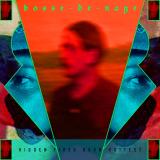
There's a tendency in metal to mistake aggression for honesty, volume for depth. To confuse the performance of darkness with its actual weight. Hidden Fires Burn Hottest, the new album from San Francisco-based post-black metal band Bosse-de-Nage, sidesteps this entirely. It’s the group’s most fully realized work yet, precisely because it refuses to be pinned down.
Bosse-de-Nage have been working with The Flenser for over fifteen years. They were one of the first bands the label ever partnered with and have the longest active relationship in the label's history. But unlike most bands who build momentum through constant touring and visibility, Bosse-de-Nage has largely existed apart from the music world's usual machinery. They've evolved on their own terms, in relative isolation, allowing the work to develop without outside pressure or influence. What began rooted in black metal anonymity has mutated into something that actively defies categorization. The aggression is still there, but it's no longer the point. Hidden Fires Burn Hottest finds the band treating emotions like physical objects, feelings with spatial properties. “No Such Place"" describes a space that can't exist but does anyway, somewhere between thought and location. ""Immortality Project"" examines infinite possibility not as promise but as problem, endless options collapsing under their own weight. These songs don't use metaphor to describe emotion. They make emotion into something you could theoretically touch.
Tracked by Jack Shirley (Deafheaven, Oathbreaker) at Atomic Garden East and mixed and mastered by Richard Chowenhill of Agriculture, Hidden Fires Burn Hottest was years in development, with some tracks beginning in 2018.
The long writing process offered time that most records don't get. Time to live with ideas, revise endlessly, to let structures settle. For the first time, lyricist Bryan Manning wrote everything in advance, creating a surplus to pull from rather than working under deadline pressure. The difference shows.
Coming off Further Still, an album built on constraint and economy, Bosse-de-Nage sought the opposite: sprawl, strangeness, fewer rules. Space for ideas to develop without rushing them. Dynamics that move through quiet as much as noise. Presence earned through atmosphere instead of volume. The record even includes ""Mementos,"" which might be considered the first love song the band has ever written.
Nothing here coheres into a theme. These are pieces pulled from low moments and private feelings made public through sound. The band has never been interested in positivity, in music that resolves cleanly or offers comfort. But bleakness doesn't mean humorlessness. There's something darkly funny running through much of it, even when it shouldn't be.
Hidden Fires Burn Hottest doesn't explain itself. It just insists: what you feel is as real as what you can see."
PURE GARAGE RETURNS WITH A CAREFULLY CURATED SELECTION OF COLLECTIBLE CLASSICS.
Pure Garage, the best-selling UKG compilation of all time, returns with a fresh stack of high value collectible classics on DJ friendly vinyl.
With a host of gold & platinum selling compilation albums under it’s belt, plus countless sold out events across the UK, Pure Garage is known and trusted by both hard-nosed purists & the casual listener.
This latest foray coincides with an incredible resurgence in interest for the UK Garage sound, bringing together 8 high collectible infectiously funky cuts, spread across a DJ Friendly 2 slices of vinyl.
Pure Garage Collectible Classics Volume 1 opens with Buggin Me by garage pioneer Zed Bias alongside Al Brown, a groovy bassline, funky beats and a great vocal hook combine perfectly to showcase the mighty Zed Bias at his funky best.
Set It Off, by Chris Mack / Flavour, is a truly collectible record. Originally only available on vinyl as a limited white label press, copies of Set It Off have been trading hands on sites such as Discogs for as much as £130… It’s worth buying this compilation purely to get hold of this track on vinyl!
Another track that is going for big money on reseller sites is Romantic 2001 by DJ Deller. With this minimal 2 step riddim having sold for up to £120. This is definitely one for the collectors.
Funkaholics aka Jeremy Sylvester rounds off the first piece of vinyl on this album with the bass heavy Down 2 Da Ground.
Vinyl 2 kicks off with the sing-a-long classic from 1998, Anthill Mobs’s track Don’t Leave Me, followed hotly by the speed garage sounds of Body Grooving by M.F. Project.
Finally, Deep Impact drops My Fantasy followed up with a regular name of the Pure Garage live event line ups, Scott Garcia drops his soulful club classic Music Takes You, rounding out an impressive batch of tracks representing everything exciting about the UK Garage genre.
PURE GARAGE COLLECTIBLE CLASSICS VOL 1 will be released on double vinyl 16th December 2022!
Petter Eldh's explosive ensemble Koma Saxo continues their adventures with a new album "Koma West", out on We Jazz Records, 18 March 2022. The album sees Koma Saxo expand on their previous sound with the addition of vocalist Sofia Jernberg and a strong cast of featured artists, including cellist Lucy Railton, violinist Maria Reich, pianist Kit Downes and accordionist Kiki Eldh (Petter's mom!). The hard-hitting key quintet remains, including Eldh on bass and assorted instruments, Christian Lillinger on drums, plus saxophonists Otis Sandsjö (of Y-OTIS), Jonas Kullhammar and Mikko Innanen bringing the SAXO to the KOMA operation.
At 14 tracks, "Koma West" is a full menu of monumental compositional ideas that could spawn entire albums. True to his chop & go production style, Eldh relies on continuous movement while presenting another all killer no filler program taking Koma Saxo on a sonic outing not quite like anything that had previously appeared under the band's name. That being said, there's very much the Petter Eldh touch here, one which might be hard to pinpoint and verbalise, but nevertheless a recognisable style of composing, producing and arranging.
Thematically, the album is rooted in the West Coast of Sweden, where Eldh grew up – he's from a tiny town called Lysekil. There's a thread of Swedish folk song tradition that has been part of the Koma Saxo DNA from the get-go and you can hear that here as well, especially on cuts such as "Närhet", beautifully sung by Sofia Jernberg.
Petter Eldh says:
"In a way, it's a concept album and a celebration of the Swedish West Coast. The first single is called 'Koma Kaprifol', and kaprifol is the landscape flower of Bohuslän on the West coast, where I grew up. I'm not too wild about attaching strong narratives to my music but there's no way around it this time. The oysters, a common snack around the coast, are a strong conceptual presence here. Anyway, they seem to pop up here and there quite often already thus far in the Koma Saxo narrative, even though it's not always so obvious. Koma Vocals! Koma Strings! I love the presence of Sofia Jernberg here and I love writing string arrangements, too, although I never thought I would do it for Koma, but of course, Koma should have some strings, why not?. Koma Saxo should and can become anything."
Guests is the home recording project of Jessica Higgins and Matthew Walkerdine. Vaguely named as such to avoid any problems with the poster if they pull out of a gig (which has only happened once, about a year and half before any songs were actually written to be fair) but also to capture a sense of reverse hospitality. That is, arriving at your door with a bottle of good wine (can’t turn up empty handed) or a fist full of savoury or sweet snacks (time of day dependant); oversharing at the afters (and then passing out on your couch); reading to your toddler while you make their lunch or put everything back where it was meant to go (only to get torn apart again). So, something about what happens when private worlds meet each other, making or having been made a space for. But at times, it’s a different kind of intimacy, a temporal or material one, like the feeling of crisp fresh sheets, and abundant and soft, body-part appropriate towels in a hotel in a city you’ve been to before and love to go back to.
Their debut record, “I wish I was special”, was variously described as “a collage of concrète experiments and outerzone pop gestures, music that sounds as if it’s been written from the depths of a dream”; “music for people who love music but also hate it too”; “something like chasing ghosts or befriending a wild animal”; “pulling apart nervous sensations with haphazard ease and requisite humour”; and “a melody of refusal, of being all-in (…) finding the exact right WRONG sound to express the discontent”. Common Domestic Bird continues in this vein, layering synthesiser, keyboards and samples over rudimentary drum rhythms and field recordings, which are in turn sung or spoken with to create nine new songs.
Written and recorded between autumn 2024 and summer 2025 in Reading, Berkshire, the music has matured since its last outing, in a way, leaning less into collage and more toward structured composition and melodic depth, yet retains a healthy dose of indeterminacy and off-kilter rhythms for the forever-amateur. The songs on Common Domestic Bird hint at some “about”-ness through a series of discrete vignettes which sound a bit like architecture or end of year lists, gossip or over-thinking subjectivity, like disappearances and impressions, the support structure of the spine, letters and signs offs, things you could really do without and where they should go, hoping you’ll see something that isn’t there, pretences and performance. At times they feel kind of funny, others kind of sad or a bit angry and annoyed, a bit like you really.
- A1: Original
- B1: Bladerunner Remix
DJ Ron's forgotten classic 21st Century finally gets the release it deserves, arriving on 12" black vinyl alongside a brand-new Bladerunner remix Originally recorded for DJ Ron's debut album Quintessence back in 1997, Hospital Records proudly welcomes it back into the world in style. The A side carries the original in all its glory. 21st Century is a timeless and futurefacing weapon - analogue at heart, hand-controlled automation and carefully curated sounds take you centre stage, giving it a unique, personal texture and depth that has lost nothing with age. Flip it over and Bladerunner steps in with an equally powerful B side remix, bringing his own vision to a track that was always ahead of its time. Born and bred (and still resident) in Hackney, career-long Rinse/Kool FM DJ, the first jungle/ D&B artist to record an Essential Mix for BBC Radio 1, host of the London Something podcast and more, DJ Ron is a multi-faceted creative and an uncontested foundational figure within jungle and drum & bass. This 12" is long overdue. The first time that DJ Ron's '21st Century,' taken from his unsung debut album, will be available digitally & physically alongside a fresh remix from Bladerunner. One for the heads - this one is all about flying the flag for DJ Ron, one of the foundational figures of jungle and drum & bass.
- A1: Ch-Check It Out
- A2: Right Right Now Now
- A3: The Hard Way
- A4: It Takes Time To Build
- B1: Rhyme The Rhyme Well
- B2: Triple Trouble
- B3: Hey Fuck You
- B4: Oh Word?
- C1: That's It That's All
- C2: All Lifestyles
- C3: Shazam!
- C4: An Open Letter To Nyc
- D1: Crawlspace
- D2: The Brouhaha
- D3: We Got The
- F1: Brrrr Stick Em
- F2: And Then I
- F3: Now Get Busy
- F4: Ch-Check It Out (Just Blaze Remix)
- F5: Triple Trouble (Brainpower Remix)
- G1: Triple Trouble (J. Wizzle Remix)
- G2: Triple Trouble (Dexter's Triple Decollte Situation)
- G3: Triple Trouble (Graham Coxon Remix)
- G4: Rizzle Rizzle Nizzle Nizzle
- G5: Mtl Reppin' For The 514
- G6: Rrnn: Straight Outta Shibuya
3LP limited deluxe edition of Beastie Boys’ platinum-selling 2004 To the 5 Boroughs album, featuring 11 bonus tracks, including remixes and B-sides., pressed on 180-gram vinyl and housed in a triple gatefold jacket with pop-up elements and an NYC map lithograph, inside a rigid slipcase.
Avril Lavigne - LET GO (20th ANNIVERSARY EDITION) - Let Go celebrates 20 years as one of the most influential pop punk albums of the early 2000's. Originally released in June of 2002, Let Go became an instant sensation with hits such as "Complicated," and "Sk8ter Boi" dominating the charts and airwaves. Certified 7X Platinum, the album has cemented it's lasting legacy in the pop punk world and beyond. To commemorate it's 20th anniversary, an expanded edition of the original album will be released featuring 6 bonus tracks, including a brand-new recording of "Breakaway" by Avril, reimagined 20 years later.
- 1: The Show Ain't Over Till The Fatman Swings
- 2: Portrait Of A Fiend
- 3: Just Like A Niguh
- 4: From The Brick Jungle
- 5: It Ain't Easy Bein' Me
- 6: Only In America
- 7: Hustler
- 8: It's Getting Hard
- 9: T.h.i.c.k
- 10: Marrero
- 11: You Said It Couldn't Be Done
- 12: Leave 'Em Out There
- 13: Bitch Contro
Originally released in 1993 on Big Beat/Atlantic, MC Thick’s The Show Ain’t Over Till the Fatman Swings followed his 1991 underground single “Marrero (What the Fellas Be Yellin)” and marked a defining moment for the Marrero, Louisiana rapper. While early ’90s New Orleans was dominated by bounce, MC Thick stood apart with gritty, street-level storytelling and a raw, unapologetic voice.
Featuring “T.H.I.C.K.” and production work involving T-Ray (Todd Ray), known for his work with Cypress Hill, the album remains an important piece of Southern rap history.
Fully remastered and pressed on black vinyl, this is the first vinyl availability in decades. Housed in a full-color jacket with a printed insert and is limited to 500 copies worldwide.
- A1: La-Di-Da-Di – Main Vocal Version
- A2: The Show – Main Vocal Version
- B1: La-Di-Da-Di – Street Version, Recorded Live At Lincoln Projects In 1984
- B2: The Show – Previously Unreleased Demo Version, Recorded In 1984
Limited Edition of 1,000 Hand-Numbered Units on Ruby Red Vinyl. Includes never heard before audio and lyrics printed on heavy board inner sleeves!
40 years later - and still no one does it like this. We’re celebrating the unstoppable legacy of one of hip-hop’s most iconic collaborations: Doug E. Fresh and Mc Ricky D (now globally known as Slick Rick) “La Di Da Di" along with the pop dance tune "The Show."
From its very first breath, this track reshaped sound, style, and storytelling — a cultural moment that became a timeless movement. Decades on, its influence is everywhere: sampled, quoted, reimagined — but never duplicated. “La Di Da Di”and “The Show” didn’t just belong to an era — they created one.
To mark this monumental anniversary, the Hip-Hop legends decided to drop a limited 12” 40th Anniversary Edition. The release features the original versions of “La Di Da Di” and “The Show” - plus a rare demo of "The Show" as well as an unreleased street version of "La-Di-Da-Di" recorded live from The Lincoln Projects in Harlem NY) that take you deeper into the sound that started it all with the Get Fresh Crew.
- Spacetime
- Phase
- Composer
- Earthling
- Next 2 Me
- Rendezvous
- Future See Millenium
- Ghost Train
- Smoke Machine
- Holding U Closer
- How Did I Know
- Over End
- Only An Emotion
- Tenzillionlightyears
- Chasing Storms
- Tsechu
- A Thousand Stars Breathing
- Phoenix
- Forever
- Tangerine
- Arp80
- Crushed
- Almost Had It All
- Time Travel
Logistics makes a highly anticipated return after a three-year hiatus, with a whopping 24-track album.
Released across four 12 inch records, housed in spined sleeves, and presented in a premium two-piece lift-off box with scratch resistant matt laminate, matt varnish, and with fully printed packaging throughout. It is a beautiful presentation of this new LP from a Hospital Records legend.
Dropping almost out of the blue, the current reception from fans, artists & industry heads off the back of the 'ambush' announcement has been incredible. The album campaign is illusive, but rewarding to fans who have been waiting so long for brand new music from Logistics, they've now got 24 brand new tracks to get stuck into!
The recordings on Volume II were captured in Copenhagen, Denmark on January 18, 2020. Guided as much by human instinct as by musical intention, the ensemble moved through the evening with a shared sensitivity…listening, responding, and trusting the moment as it unfolded. Though Morten McCoy admits to having felt quite ill that evening, nothing in the music suggests restraint. Instead, what remains is a vivid, playful exchange, where McCoy and Johannes Wamberg carry both Part I and Part II as a flowing conversation, speaking through sound rather than words.
Part I begins abruptly, almost throwing the listener back in time to the exact moment the improvisation was born. Jonathan Bremer steps to the forefront, providing a solid, melodic bassline as Kristoffer and Eliel, perfectly in sync, lay down a steady foundation for whichever voice chooses to rise above the rhythm.
This is also one of the few I Am An Instrument recordings to feature two guitarists. Johannes Wamberg leads the way, shaping the harmonic direction, while Steven Jess Borth II adds subtle rhythmic textures through muted palm work, deepening the groove without ever stepping into the foreground.
Part II unfolds with Morten McCoy on his Moog One, delivering a beautiful, expansive solo. Using a carefully chosen patch, the sound pulses through the rhythm, moving with the groove rather than above it, riding the beat like a wave through the ocean.
Shaped by trust, presence, and collective improvisation, Volume II captures a group deeply attuned to one another, allowing intuition and momentum to guide the unfolding form.
——
Volume III was recorded in Copenhagen on March 5, 2020. Little did anyone know that only days later, the world would be placed on pause for years. Captured just before that moment of global stillness, this session carries a heightened sense of presence, a final gathering before silence reshaped everything. Recorded in a space more commonly associated with a club atmosphere, the music draws on a different kind of energy and immediacy. With Eliel Lazo unable to attend, the group invited Victor Dybbroe of Girls In Airports to join on percussion, subtly reshaping the ensemble while preserving its core spirit. Part I opens with Steven Jess Borth II calling out on tenor saxophone, answered by Morten McCoy on Wurlitzer electric piano. The piece gradually unfolds into a meditative groove, patient and expansive, carrying the listener through an eight-minute journey of layered rhythm and restraint.
Part II begins with Jonathan Bremer on stand up bass, slowly joined by the rest of the ensemble as each voice enters with intention. Midway through, an unexpected vocal melody from Borth emerges, drenched in reverb and delay, later reappearing as a melodic line on the tenor saxophone.
Part III is led by Morten McCoy on Wurlitzer electric piano. His signature melodic language sets the direction, guiding the ensemble while leaving ample space for the music to breathe and evolve through collective improvisation. Reprise returns to the closing moments of Part II, its title reflecting its origin. The familiar groove reappears, transformed into a distinctly Jamaican-influenced rhythm, over which Borth delivers a final tenor saxophone solo, bringing the conversation to rest.
Any questions about any of these products feel free to get in touch and we'll help you out!
[a] a1. Part I [Vol.2]
[b] a2. Part II [Vol.2]
[c] a3. Part I [Vol.3]
[d] b1. Part II [Vol.3]
[e] b2. Part III [Vol.3]
[f] b3. Reprise [Vol.3]
French artist Swan Wisnia, under her solo project molto morbidi, announces her second album Maybe Marcel for release on April 17th via No Salad Records. An experimental album forged in both tenderness and turmoil, combining art / weird pop and baroque pop, the album moves between the intimate and raw to the playful and inventive, creating a universe that is at once dark and hopeful.
"What inspires me are artists who stand by their influences while transcending traditions," she explains. "Artists who are recognisably their own." Drawing inspiration from everything from Siouxsie Sioux to The Raincoats to Broadcast, Lizzy Mercier Descloux, and ESG, Wisnia balances melodic sensibility with the experimentally daring, creating a body of work that is both timeless and wholly original.
- A1: Life Could Be A Cloud
- A2: Cut Glass Hammer
- A3: I Can't See A Rainbow
- A4: Dropped Down The Well
- A5: In The Weeds
- A6: Reimagined River
- A7: Mediocre Demon
- A8: Bell Miner
- A9: Lemon Trees
- A10: Watching The Moon
- A11: Wildly Remote
- A12: Holy Invisible
YELLOW VINYL[25,17 €]
MEMORIALS jump off the waterslides and head above the clouds with their stunning second album, ‘All Clouds Bring Not Rain’. The duo of Verity Susman and Matthew Simms (formerly of Electrelane and WIRE) locked themselves away in a studio in a barn secluded deep in the woods in southwestern France and re-emerged with a beautiful, unusual record that is both melodic and unconventional. For such an ambitious album it’s striking that it was written, performed, recorded and mixed solely by the two of them. Sounding like an unearthed classic, MEMORIALS twist their influences into their own unmistakable sound. Imagine Nico singing with Can produced by David Axelrod and you’re somewhere in the right ballpark.
The record draws inspiration from a wide range of music including folk, dub, post punk, experimental tape music, 60s soul, garage rock, 70s spiritual jazz and Canterbury prog. This attention to detail in their sound meant finding several other studios to get what they needed to record with, including a harpsichord at 4AD’s studio in London and a vibraphone and vintage Leslie speaker in Stereolab drummer Andy Ramsay’s studio Press Play. Verity’s distinctive, unadorned singing is a focal point of the record, moving from tender to wild. Her vocal melodies quickly become earworms, providing the tuneful heart around which the songs’ more unorthodox elements are arranged, which is where Matthew’s unconventional approach to recording and production comes to the fore. With their adventurous arrangements, classic songwriting skills and innovative production techniques, MEMORIALS have created another mesmerising listen that’s accomplished and compelling in its unique approach yet remains dizzyingly immersive - just like their acclaimed live shows.
- 1: Intro
- 2: Arepa 3000
- 3: La Vecina
- 4: Qué Rico
- 5: Cuchi-Cuchi
- 6: Si Estuvieras Aquí
- 7: Masturbation Session
- 8: Mami Te Extraño
- 9: Mujer Policía
- 1: No Le Metas Mano
- 2: Amor
- 3: Pipi
- 4: El Barro
- 5: Domingo Echao
- 6: Piazo E' Perra
- 7: El Baile Del Sobon
- 8: Fonnovo
- 9: Caliente
- 10: Llegaste Tarde
Since their ground-breaking US debut the Amigos have lived a double life. In their hometown of Caracas, Venezuela, they"ve hosted underground club nights for years (the most recent called "Super Sancocho Variety"). Then, insouciant single-entendre songs like "Sexy" and the doggy-style anthem "Ponerte En Cuatro" landed them on MTV and radio, and before long, the six young men found themselves pop idols. It wasn"t hard, but their hearts remain on the dance floor and in the clubs. AREPA 3000 is live instruments, start to finish. "Electronic music tries to simulate human sounds," says the guitarist. "It"s really easy to buy a groove box or an 808 to make us sound like techno. So we try to get those sounds from our instruments, to go the other way. Make the human sounds sound electronic. When we do our club shows, I"ll spin before our set and we"ll add live instrumentation. We can play four, five hours like that.
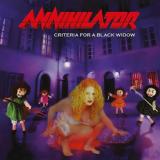
- A1: Bloodbath
- A2: Back To The Palace
- A3: Nothing Left
- A4: Schizos (Are Never Alone) Part Iii
- A5: Criteria For A Black Widow
- A6: Punctured
- B1: Loving The Sinner
- B2: Double Dare
- B3: Sonic Homicide
- B4: Mending
Criteria for a Black Widow was a love letter to old-school Annihilator fans. It hit record shops at the precise moment the delirium of the 90s cleared and metal was ready to get heavy again. From the pummeling attack of opener Bloodbath to the classic brawl of Back To The Palace and the album's searing title track – all festooned with Jeff's ability to fuse the finesse of six stringed virtuosity with the auditory effects of a hand grenade – this was more than a return to form; it was the sound of Annihilator coming full circle.
- A1: Can’t Get Enough Feat Sahara Beck
- A2: At The Disko & Lorenz Rhode
- A3: Fireworks Feat Moss Kena & The Knocks
- A4: Don’t Stopa5Dopamine (Feat Eyelar)
- B1: Purple Disco Machine & Elderbrook - I Remember
- B2: Opposite Of Crazy (Feat Bloom Twins)
- B3: Hypnotizedb4Loneliness (Feat Francesca Lombardo)
- C1: Hands To The Sky (Feat Fiorious & House Gospel Choir
- C2: Money Money Feat Pink Flamingo Rhythm Revue
- C3: Playbox
- C4: Exotica Feat Mind Enterprises
- D1: Wanna Feel Like A Lover Feat Ed Mac
- D2: Twisted Mind & Agnes
- D3: Rise Feat Tasita D'mour
- D4: In The Dark Feat Sophie And The Giants
Repress!
Deluxe Edition of PDM's massive Exotica LP features 2 x Purple Vinyl, 2 x Printed Inner Sleeves in Embossed Gatefold Sleeve with A2 Poster includes full Exotica album plus 3 bonus tracks: “In The Dark” with Sophie and the Giants “Rise” featuring Tasita D’Mour “Twisted Mind” featuring Agnes. Limited Edition.
Esbe returns to Cold Busted for a phenomenal new four-track EP, Sunset Girl. With previous releases on Dusted Wax Kingdom and Cult Classic, as well as his acclaimed Bloomsday and Late Night Headphones albums for Cold Busted, the Los Angeles-based multi-genre beat-maker is riding a wave. Sunset Girl is another exciting moment in Esbe's musical progression. The release starts quietly with the gentle, muted piano chords of "Special." A sparse hip-hop beat and subdued melodic layers round out the tune, cutting away to reveal a lonesome vocoder vocal. "Again" is as close as Esbe gets to a pop song, as a carefree male vocal and twinkling pianos ride over a crisp, solid rhythm track. More delights await on "Sunset Girl" with its simple piano line, reverby percussion hits, distant sax solo, and splashes of vocal collide in a sonic daydream. "I Want Love" closes things out on a vintage flavor, with echoes of a mid-century school dance reverberating into a modern day beat battle. Potent vibes all around.
“Onomatopeikoa II” follows on from Irazoki's 2017 Gitarra Onomatopeikoa release, and that album's sense of untethered, questing curiosity is not only carried over but expanded upon even further here. Combining a fully committed approach to the guitar with an almost egoless lightness of touch, this album builds upon the already impressively scopious range of Gitarra Onomatopeikoa to dizzying effect.
Irazoki makes full use of an impressively broad palette. Yet nothing feels forced, nothing is for show – there’s just a sense of open-hearted generosity.
In lesser hands such a whirlwind tour of style and form might risk failing to get its hooks in deep enough, yet not only does Irazoki have the imaginative scope to tackle these varying approaches to the instrument, he has the technical chops to pull it off. Each composition seems to have an openness of intent that is utterly disarming; all cards are on the table and nothing is held back, resulting in a creative tour de force that builds, piece by piece, to a unifying cohesiveness that makes the whole far greater than the sum of its parts.
Featuring contributions from long-time OTO favourites Rhodri Davies and Raphael Roginski,
“Onomatopeikoa II” is nevertheless unmistakably a work of singular craft and vision.
FFO: Jeff Parker, Loren Connors, Keiji Haino
Limited edition vinyl of 250 copies
presented by Hegoa with a cover designed by Pablo Mirón.
VOL 1[18,28 €]
Emotional Response presents Volume 2 of the LNS-ID series. Atmospheric, infectious, at times nostalgic, warm yet ghosty, the tension of Laura Sparrow’s music is her exploration in electronic music.
An introduction to DJing and music production has been a natural progression, applying skills in new and fresh formats. Built on the heritage of Chicago and Detroit house, alongside old IDM and electro, her first productions might have been raw, but the creativity was lit.
While her recent productions have explored club orientated, loud cut records, in collaborations with DJ Sotofett, that represent the sound found in her residency on the Globus floor at the Tresor club, LNS’s interest in the solo productions of the LNS-ID recordings and more organic-style explored in the recent Misiats EP burns bright.
LNS-ID 1 and LNS ID 2 are her latest offering. Two sets of four tracks based on the acid tradition in the more restless corners of 90s and early 00s Braindance. Acid lines drive the melodies, while drums move between sliced break fragments and the familiar sounds of the Roland TR-606 and TR-808.
Pads drift in with a warm glow or at times, quiet ghostly tension. The results are music that leans towards atmosphere and memory, something almost nostalgic that was built for those of us who still chase the more expressive edges of acid.
Easygoing Acid Express, Alive Acid, Blue Acid and Gentle Acid. Get the message. We call it Acid.
2026 Repress
Deadbeat & Tikiman's occasional collaborative performances have since blown the minds of many audiences
Deadbeat. Tikiman. Infinity. Dub. A quadrangle of such obvious statement and perfect musical inference may very well never have been uttered for those of the wholly weeded out persuasion. Indeed, when the great book of Dub music is written the names Scott Monteith and Paul St Hilaire will undoubtedly figure highly in its chapters devoted to recent years. Monteith, the last great prodigal son of the doctrine handed down from the Blue Mount of Lord Scratch and King Tubby, St Hilaire the undisputed voice of a generation, those fanatical warrior monks, followers of the most Holy House of Ernestus and Von Oswald incarnate.
Having developed a fast friendship from their very first meeting in Montreal at the premier Micro Mutek event a decade ago, Deadbeat and Tikiman's occasional collaborative performances have since blown the minds of audiences from Berlin to Tokyo and many points in between. No great surprise then that their first album length venture is a Tour de Force of Dub music of the highest order.
Nearly a year in the making, the genetic code of Deadbeat's Infinity Dubs series gets shot through with a Dreader than Dread Kingstonian logic, hi hats dropping back from the three to the one, Tikiman at his most militant, poetic, fierce, and flowing. These are the recordings of two lions uncaged, and none who bare witness shall escape their fiery judgement.
If music is truly eternal, here be two voices which shall echo in infinity with all the weight, reverence, and dire power unleashed with every tectonic bass hit, and every whimsical turn of phrase. And if these eight burnt offerings are any indication of what happens when these two sit down for a session of smoke and reasoning, here's hoping they choose to do it frequently. Dub without end. Ad Infinitum.
In the Summer of 2023, Dans Dans were nearing the end of a two-and-a-half-year-long period of intense creativity, during which they had released two celebrated albums, Zink and 6, and had toured extensively in Belgium and abroad. Feeling it was time for a well-deserved break in activity, they decided to play three final, intimate concerts before going into hiding: two consecutive nights at Trix in Antwerp (hometown of drummer Steven Cassiers and guitarist Bert Dockx) and one at Botanique in Brussels (hometown of bassist Frederic Jacques). 'LIVE!', Dans Dans' first ever full length live record, features highlights from these memorable nights, offering excitingversions of several of the group's most beloved compositions from across their back catalogue. While the band is, at the time of writing, getting ready to start working on new material, these recordings from 2023 are a good reminder of the magic Dans Dans are able to conjur when they get together and play. Here is one of the most original instrumental trios of the last two decades in their natural habitat, on stage, performing for a live audience, speaking through their intensely personal music. Here is Dans Dans at full flight, effortlessly blending different musical genres and painting fascinating sonic landscapes full of energy, mystery and contrast.
- A1: Un Dia Sin Ti (Spending My Time)
- A2: Crash! Boom! Bang! (Spanish Version)
- A3: Directamente A Ti (Run To You)
- A4: Alguien (Anyone)
- B1: No Sé Si Es Amor (It Must Have Been Love)
- B2: Quisiera Volar (Wish I Could Fly)
- B3: Como La Lluiva En El Cristal (Watercolours In The Rain)
- B4: Cuánto Lo Siento (I´m Sorry)
- C1: Habla El Corazòn (Listen To Your Heart
- C2: Tímida (Vulnerable)
- C3: El Día Del Amor (Perfect Day)
- C4: Quiero Ser Como Tu (I Don´t Want To Get Hurt)
- D1: Soy Una Mujer (Fading Like A Flower, Every Time You Leave)
- D2: Lo Siento (Salvation)
- D3: Tu No Me Comprendes (You Don´t Understand Me)
- D4: Una Reina Va Detrás De Un Rey (Queen Of Rain)
Red Vinyl[46,64 €]
For the first time ever, Roxette release ‘Baladas En Español’ on vinyl. The relationship between Roxette and Spanish-speaking audiences has been a love story since the early ‘90s and this release celebrates that special relationship. The release is timed with Roxette’s 40th anniversary and their return to South America for live shows in April. The album will be available on vinyl and CD, featuring 4 bonus tracks compared to the original release. The vinyl will be released in both a limited coloured edition and standard black.
Roxette have some exciting plans to celebrate their 40th Anniversary this year, including extensive touring, further anniversary re-releases, video upgrades, contemporary remixes and much more!
- A1: Un Dia Sin Ti (Spending My Time)
- A2: Crash! Boom! Bang! (Spanish Version)
- A3: Directamente A Ti (Run To You)
- A4: Alguien (Anyone)
- B1: No Sé Si Es Amor (It Must Have Been Love)
- B2: Quisiera Volar (Wish I Could Fly)
- B3: Como La Lluiva En El Cristal (Watercolours In The Rain)
- B4: Cuánto Lo Siento (I´m Sorry)
- C1: Habla El Corazòn (Listen To Your Heart
- C2: Tímida (Vulnerable)
- C3: El Día Del Amor (Perfect Day)
- C4: Quiero Ser Como Tu (I Don´t Want To Get Hurt)
- D1: Soy Una Mujer (Fading Like A Flower, Every Time You Leave)
- D2: Lo Siento (Salvation)
- D3: Tu No Me Comprendes (You Don´t Understand Me)
- D4: Una Reina Va Detrás De Un Rey (Queen Of Rain)
Black Vinyl[40,29 €]
For the first time ever, Roxette release ‘Baladas En Español’ on vinyl. The relationship between Roxette and Spanish-speaking audiences has been a love story since the early ‘90s and this release celebrates that special relationship. The release is timed with Roxette’s 40th anniversary and their return to South America for live shows in April. The album will be available on vinyl and CD, featuring 4 bonus tracks compared to the original release. The vinyl will be released in both a limited coloured edition and standard black.
Roxette have some exciting plans to celebrate their 40th Anniversary this year, including extensive touring, further anniversary re-releases, video upgrades, contemporary remixes and much more!
- 01: Why You Done Me Wrong
- 02: Rudie Cool It Down
- 03: Early Getoff
- 04: The Chambermaid
- 05: Right Way Of Loving
- 06: Baby Baby Baby
- 07: Hooligan &Apos;69
- 08: Cool Ska Time
- 09: Little Talks &Amp; Rumours
- 10: Reggae Fever
- 11: Pharaohs Last Wish
- 12: Another Lovecall
- 13: Brian The Big Black Butcher&Apos;S Last Card Trick
- 14: Jackie Miller Down
Debut album by The Upsessions
20th anniversary edition on solid pink vinyl
Previous pressings by Moon Ska and Cherry Red Records have sold out
- A1: Träumerei 02 31
- A2: Brenne 06 02
- A3: Taxi Driver 04 57
- A4: Sehnsucht 05 30
- B1: Entwurf Einer Ballade 05 06
- B2: Schock 04 17
- B3: Flüchtlingswalzer 05 13
- B4: In Die Disko 03 13
- C1: Der Lärmkrieg 04 46
- C2: Liebe Emmi 05 51
- C3: Im Atelier 03 54
- C4: Take The Red Pill 04 15
- D1: Ashley Smith 04 13
- D2: Zweites Vierteljahr 04 54
- D3: Da Fliegt Die Rakete 02 30
- D4: Die Erde Ist Mir Fremd Geworden 03 16
»Music for Shared Rooms« is B. Fleischmann’s eleventh solo album and his first since 2018. It is also not an album, or at least not in the conventional sense of the word. These 16 instrumental pieces provide a kaleidoscopic glimpse of a forward-thinking musician at home in many different musical worlds, including experimental and abstract music, pop and more classically-minded compositional forms. These pieces were culled from an archive of roughly 600 compositions for theatre pieces and films written throughout the past twelve years. The Österreichischer Filmpreis-awarded composer, however, aimed for more than simply documenting his extensive work in and with different media. To do so, he edited and re-mixed the individual recordings for this release, taking them out of their contexts and reworking them for an audience who can experience them in a different setting. »Music for Shared Rooms« makes it possible for its listeners to engage with the sounds and to fill the spaces they open up with their own imagination.
Roughly speaking, music for theatre or film can serve two functions: it either takes the lead, or underscores what is happening on stage or screen. The marvelous thing about these pieces is that they manage to do both. Fleischmann’s work as a prolific producer has always drawn on contrasts, at times combining pop sentiment with rigid experimentation, the seemingly naive with the intricate and complex. This approach also marks the tracks collected here: bringing together acoustic elements and electronic sounds, at times working with conventional structures but always de- and re-contextualising them, Fleischmann constructs a vivid dramaturgy out of discrete singular compositions, letting them interact across the record.
Take, for example, the opener »Träumerei« and the following »Brenne«: after the soothing acoustic sounds of the former, the latter quickly picks up speed with hard-hitting drum machine rhythms. It’s a stark contrast sonically and stylistically, however both tracks are tied together by a certain harmonic sensibility. This sort of dramaturgical interconnectedness of varied musical materials is the thread that runs through »Music for Shared Rooms«. A droney piece for string instruments like »Sehnsucht« is followed by a trip-hop beat, before »Schock« lives up to its title with skittering beats and piercing high frequencies. The differences between the pieces may be striking, but the progression from one to the other is subtle. It goes on like this through different moods and tempos. There’s soothing-yet-eerie piano pieces like the »Für Elise«-inspired »Der Lärmkrieg«, gentle house grooves, joyful synthesizer excursions and, finally, »Die Erde ist mir fremd geworden«, a collage of abstract textures and concrete sounds.
All these pieces create distinct situations through the juxtaposition of diverse musical elements, but are also bound together by a single vision. Writing music for theatre pieces or film requires a composer and his pieces to engage with people and their movements in space, which is exactly what Fleischmann offers on this record. He breaks down the fourth wall and invites his listeners into his world, a wide-ranging musical panorama. »Music for Shared Rooms« is indeed not an album in the conventional sense of the word, but more like a photo album in which each page opens up a new space to get lost in; recreates different scenes in which you can immerse yourself. These are shared rooms indeed.
The Coyote-affiliated Magic Wand wafts its mercurial charm over a series of mega-useful and equally effective edits here. Robot 84 kicks off with a slow, cyborg-infused and digitally finished dub of a Prince classic and Ali Renault brings sugary synth charm to 'Indovina Key'. Bratley himself then steps up with the whacked out piano house of 'PNO', a slow jam with oversized impact. 'Song To The Hills' gets a Secret Soul Society mix that's infused with subtle psychedelic charm and fresh disco chug.4 new heavyweight reworks from Secret Soul Society, Robot 84, Ali Renault and Craig Bratley.
2026 Repress
Autumn of 2022 marked 20 years since the initial release of Metro Area's first and only album, Metro Area. Environ had already remastered and re-released this essential LP for its 15th anniversary. So this time around, we're doing something a bit different.
To celebrate two decades of Metro Area, Environ has partnered with renowned mastering engineer Matt Colton (Metropolis Studios) to remaster and recut the first four Metro Area 12"s: Metro Area, Metro Area 2, Metro Area 3 and Metro Area 4. Unlike the album reissue, these records include the original, extended 12" versions of all songs, including some which have never been re-released.
Metro Area 4 is the duo's fourth 12" EP, originally released in 2001.
Let's see now – you just love that hugely fertile foundation period of Jamaican pop music from the birth of ska, through the spectacularly brief two year heyday of rocksteady up to and including the arrival of the first incarnation of reggae a.k.a. early or 'boss' reggae. But you're also aware that the pioneers of these sounds (including The Pioneers!) won't be creating music in these styles or touring forever – so what do you do?
Well, if you're Neil Anderson, owner of Original Gravity Records, the creation bit isn't a problem. You put forth period-authentic style material from a 'roster' of acts – such as Junior Dell & The D-Lites - that in reality consist mostly of yourself (you are a multi-instrumentalist and lyricist after all!) and whichever extra musicians and session singer you rope in for a given track. In the case of Junior Dell & The D-Lites that singer was Adrian Dell – soon to be dubbed (no pun intended) 'Junior' - first appearing on 2021's uptempo ska tribute to Salvadoran retro-dancing internet sensation Aranivah, entitled Miss Aranivah. And you keep putting out stuff so profusely and effectively that there are clamours for you to tour 'the band' which - er - doesn't really exist. What a botheration! Still, maybe your session singer could become – well - a permanent singer? Maybe you can rustle up assorted bredren to become the rest of the band and...you know what? That might just work!
And so, in the blink of an eye, Junior Dell & The D-Lites becomes a bona fide actual live band fronted by a young Jamaican singer playing fresh 60s/70s-style Jamaican music with an energy last seen and heard in, well, the 1960s and 70s. And it tours so effectively that there are clamours for 'the band' – or more accurately, now – the band - to release an album. Wait...what now? And, by the way, you've got a European tour coming up in April wouldn't it be great if the album was ready to tour by then? Pressure drop? Pressure rise more like!
Then again, Junior Dell & The D-Lites have done so many sure-shot singles to date that assembling them along with a new cut, an extended version of one of the singles and re-recordings of two of the label's previous singles that were originally by 'label mates' The Regulators should be a cinch. So expect all the hits: bluebeat banger 20 Flight Ska, the euphoric ska bounce of the aforementioned Miss Aranivah and the title track, a de rigueur smattering of covers (opener Jump Around, midway markers Praise You and Just Can't Get Enough, and one of the re-recordings, closer Don't Look Back In Anger), early reggae groovers Cool Right Down, Last Night Reggay, Can't Stop The Reggae (in a new extended form) and crowd-pleasing new one Mi Try along with the other Junior Dell re-recording - the gorgeous Why Why Why which nods to the period of reggae between the sound of '69 and the arrival of roots.
Don't you brag and don't you boast but that's a Whole Lotta Skankin' going on! Do the ska, do the rocksteady, do the reggay, why– it's another scorcher!
Get The Hose is the fabled, long awaited debut release from Montreal duo Plumbing, featuring Martyn Bootyspoon aka Jason Voltaire (Fractal Fantasy/LuckyMe/Fool’s Gold Records) and Stephen Ramsay of Young Galaxy (Paper Bag Records/Smalltown Supersound).
Born in 2018 as a live, analog hardware-based studio project, the duo worked quietly on the periphery of the left-field electro scene, only venturing out to do occasional, legendary winter warehouse DJ sets and a still-vaunted live set at MUTEK in 2021, which was so visceral that it knocked every person present into their seats simultaneously.
As cheeky and playful as it is gritty, relentless and overdriven, Plumbing’s new EP showcases their love of the raw and grimy, bare-bulbed basement aesthetic of underground dance music, where Paranoid London, Drexciya, MMM and Blawan meet to steal your drink and ignite the dancefloor.
It’s getting hot in here, it’s time to Get The Hose…
- A1: Even God Gets Stuck In Devotion
- A2: Plenty For All The Masses
- A3: Plenty For All Of Lifes Messes
- A4: Even God Gets Stuck In Devotion Featuring Zach Phillips
- A5: Garden
- A6: Photography The Hard Way
- A7: Why I Remember Each Day Of Summer
- B1: Ln60 - Jupiter Opposite Jupiter
- B2: Rose Of Mysterious Union
- B3: A Car With No Lights On
- B4: Her Masters Voice
- B5: Memory Always Sees The Loved One Smaller
- B6: In Filth Your Mystery Is Kingdom
- B7: To Live Happily
Cassette[16,77 €]
Nicaraguan-American artist Dagmar Zuniga makes music that feels both intimate and expansive: songs drift like disrupted signals, carried by harmony, tape hiss, and a strong sense of touch. Her debut solo album in filth your mystery is kingdom / far smile peasant in yellow music — written and recorded in New York, Norway, and Athens, Georgia over a period of five years on her longtime companion, the Tascam 424 — was uploaded to Bandcamp and YouTube in January 2025, quickly garnering over two hundred thousand views and the attention of artists such as Mount Eerie, who invited her to tour with them that summer. This year, what was once a jewel of tapped-in algorithms and message boards will meet the world at large, with in filth arriving digitally on March 4, and physically on April 10, via AD 93.
in filth is an atmospheric, devotional collage where one voice multiplies into a chorus of selves, sometimes delicate, sometimes severe; an effect created by Zuniga’s masterful layering of texture and complex harmonies. Synths glitter out like spears of sunlight from beneath clouds of moody, time-distorted guitars, and songs spin about themselves like tightly-wound music boxes, making use of a kind of hypnotic repetition, before melting apart into their components or slipping into the following track.
Zuniga began recording to tape as a teenager, drawn to the physicality of the medium — how a tape recording is fragile, mutable, and alive. Though her ethereal sound may draw easy comparisons to other female pioneers of psychedelic folk, she is influenced just as much by the darker sounds of Syd Barrett and The Fall. Like Barrett, Zuniga is a painter, and she is interested not only in recording music but in creating a full, self-contained artistic universe: she creates her own artwork, merchandise, music videos, and bootleg tapes of new and unfinished music that she exclusively sells at live shows (“If something is not material, it does not exist,” she insists). Her world has not gone unvisited, garnering her a monthly show on NTS Radio ‘World of Pain’, as well as a forthcoming appearance at Rewire Festival in April 2026.
Though Zuniga’s work explores themes of solitude and suffering, the suffering in her songs is not borrowed or displayed; it is held, then opened outward through empathy — an exacting practice of attention that insists on shared ground. Solitude, in her work, is not withdrawal but a starting point for connection. Likewise, over time, her recording process has become increasingly communal, with in filth featuring musicians Hayes Hoey, Austyn Wohlers (Tomato Flower), and Zach Phillips (Fievel Is Glauque). Newer recordings widen the circle even more. For Zuniga, collaboration is a way to “find a place between worlds,” echoing Badiou’s idea of love as a vision refracted through the prism of difference. Meaning emerges there — in the space between voices, between artist and listener. “I hope my music helps people work through difficult experiences,” she says. “The same way it helps me.”
The Illegal Disco Limited series never misses. It's all about the king of cheeky edits adding his own spin to a carefully curated mix of disco and funk nuggets and, once again, here Monsieur Van Pratt is back with the goods. Though he always nods to the past with these reworks, he beefs them up with grooves designed for loud systems and to move floors. This one opens with the funk licks and disco stylings of 'Watcha Gonna Do' then gets celebratory with the feel good hands in the air vibes of 'The Contest'. Last but not least, 'Dance With Me' explores a more lavish sound with big vocals and lavish string stabs for good times only. Another doozy from Mr Pratt.
Polytechnic Recordings - sublabel of Disctechno Music - presents a split EP of jacking house and psychedelic rhythms from Detroit’s DJ Slush and Dretraxx. Label co-founder DJ Slush follows up his Model Collapse EP with 2 jacking, sleazy, 80's-tinged house tracks with garbled vocal samples on A1 and B2. Dretraxx - head of Detroit’s acid-forward Body Worx party - delivers dubbed out modular grooves and on A2. On B1, Interdimensional Transmissions’ BMG remixes Dretraxx for the No Way Back Mix, with some freaky heart-pumping analog techno. Recommended for fans of Midwest rhythms.
- Even God Gets Stuck In Devotion
- Plenty For All The Masses
- Plenty For All Of Lifes Messes
- Even God Gets Stuck In Devotion Featuring Zach Phillips
- Garden
- Photography The Hard Way
- Why I Remember Each Day Of Summer
- LN60: Jupiter Opposite Jupiter
- Rose Of Mysterious Union
- A Car With No Lights On
- Her Masters Voice
- Memory Always Sees The Loved One Smaller
- In Filth Your Mystery Is Kingdom
- To Live Happily
COLOURED VINYL[23,11 €]
Nicaraguan-American artist Dagmar Zuniga makes music that feels both intimate and expansive: songs drift like disrupted signals, carried by harmony, tape hiss, and a strong sense of touch. Her debut solo album in filth your mystery is kingdom / far smile peasant in yellow music — written and recorded in New York, Norway, and Athens, Georgia over a period of five years on her longtime companion, the Tascam 424 — was uploaded to Bandcamp and YouTube in January 2025, quickly garnering over two hundred thousand views and the attention of artists such as Mount Eerie, who invited her to tour with them that summer. This year, what was once a jewel of tapped-in algorithms and message boards will meet the world at large, with in filth arriving digitally on March 4, and physically on April 10, via AD 93.
in filth is an atmospheric, devotional collage where one voice multiplies into a chorus of selves, sometimes delicate, sometimes severe; an effect created by Zuniga’s masterful layering of texture and complex harmonies. Synths glitter out like spears of sunlight from beneath clouds of moody, time-distorted guitars, and songs spin about themselves like tightly-wound music boxes, making use of a kind of hypnotic repetition, before melting apart into their components or slipping into the following track.
Zuniga began recording to tape as a teenager, drawn to the physicality of the medium — how a tape recording is fragile, mutable, and alive. Though her ethereal sound may draw easy comparisons to other female pioneers of psychedelic folk, she is influenced just as much by the darker sounds of Syd Barrett and The Fall. Like Barrett, Zuniga is a painter, and she is interested not only in recording music but in creating a full, self-contained artistic universe: she creates her own artwork, merchandise, music videos, and bootleg tapes of new and unfinished music that she exclusively sells at live shows (“If something is not material, it does not exist,” she insists). Her world has not gone unvisited, garnering her a monthly show on NTS Radio ‘World of Pain’, as well as a forthcoming appearance at Rewire Festival in April 2026.
Though Zuniga’s work explores themes of solitude and suffering, the suffering in her songs is not borrowed or displayed; it is held, then opened outward through empathy — an exacting practice of attention that insists on shared ground. Solitude, in her work, is not withdrawal but a starting point for connection. Likewise, over time, her recording process has become increasingly communal, with in filth featuring musicians Hayes Hoey, Austyn Wohlers (Tomato Flower), and Zach Phillips (Fievel Is Glauque). Newer recordings widen the circle even more. For Zuniga, collaboration is a way to “find a place between worlds,” echoing Badiou’s idea of love as a vision refracted through the prism of difference. Meaning emerges there — in the space between voices, between artist and listener. “I hope my music helps people work through difficult experiences,” she says. “The same way it helps me.”
UILTY RAZORS, BONA FIDE PUNKS.
Writings on the topic that go off in all directions, mind-numbing lectures given by academics, and testimonies, most of them heavily doctored, from those who “lived through that era”: so many people today fantasize about the early days of punk in our country… This blessed moment when no one had yet thought of flaunting a ridiculous green mohawk, taking Sid Vicious as a hero, or – even worse – making the so-called alternative scene both festive and boorish. There was no such thing in 1976 or 1977, when it wasn’t easy to get hold of the first 45s by the Pistols or the Clash. Few people were aware of what was happening on the fringes of the fringes at the time. Malcolm McLaren was virtually unknown, and having short hair made you seem strange. Who knew then that rock music, which had taken a very bad turn since the early 1970s, would once again become an essential element of liberation? That, thanks to short and fast songs, it would once again rediscover that primitive, social side that was so hated by older generations? Who knew that, besides a few loners who read the music press (it was even better if they read it in English) and frequented the right record stores? Many of these formed bands, because it was impossible to do otherwise. We quickly went from listening to the Velvet Underground to trying to play the Stooges’ intros. It’s a somewhat collective story, even though there weren’t many people to start it.
The Guilty Razors were among those who took part in this initial upheaval in Paris. They were far from being the worst. They had something special and even released a single that was well above the national average. They also had enough songs to fill an album, the one you’re holding. In everyone’s opinion, they were definitely not among the punk impostors that followed in their wake. They were, at least, genuine and credible.
Guilty Razors, Parisian punk band (1975-1978). To understand something about their somewhat linear but very energetic sound, we might need to talk about the context in which it was born and, more broadly, recall the boredom (a theme that would become capital in punk songs) coupled with the desire to blow everything off, which were the basis for the formation of bands playing a rejuvenated rock music ; about the passion for a few records by the Kinks or the early Who, by the Stooges, by the Velvet mostly, which set you apart from the crowd.
And of course, we should remember this new wave, which was promoted by a few articles in the specialized press and some cutting-edge record stores, coming from New York or London, whose small but powerful influence could be felt in Paris and in a handful of isolated places in the provinces, lulled to sleep by so many appalling things, from Tangerine Dream to President Giscard d’Estaing...
In 1975-76, French music was, as almost always, in a sorry state ; it was still dominated by Johnny Hallyday and Sylvie Vartan. Local rock music was also rather bleak, apart from Bijou and Little Bob who tried to revive this small scene with poorly sound-engineered gigs played to almost no one.
In the working class suburbs at the time, it was mainly hard rock music played to 11 that helped people forget about their gruelling shifts at the factory. Here and there, on the outskirts of major cities, you still could find a few rockers with sideburns wearing black armbands since the death of Gene Vincent, but it wasn’t a proper mass movement, just a source of real danger to anyone they came across who wasn't like them. In August 1976, a festival unlike any other took place in Mont-de-Marsan – the First European Punk Festival as the poster said – with almost as many people on stage as in the audience. Yet, on that day, a quasi historical event happened, when, under the blazing afternoon sun, a band of unknowns called The Damned made an unprecedented noise in the arena, reminiscent of the chaotic Stooges in their early adolescence. They were the first genuine punk band to perform in our country: from then on, anything was possible, almost anything seemed permissible.
It makes sense that the four+1 members of Guilty Razors, who initially amplified acoustic guitars with crappy tape recorder microphones, would adopt punk music (pronounced paink in French) naturally and instinctively, since it combines liberating noise with speed of execution and – crucially – a very healthy sense of rebellion (the protesters of May 1968 proclaimed, and it was even a slogan, that they weren’t against old people, but against what had made them grow old. In the mid-1970s, it seemed normal and obvious that old people should now ALSO be targeted!!!).
At the time, the desire to fight back, and break down authority and apathy, was either red or black, often taking the form of leafleting, tumultuous general assemblies in the schoolyard, and massive or shabby demonstrations, most of the time overflowing with an exciting vitality that sometimes turned into fights with the riot police. Indeed, soon after the end of the Vietnam War and following Pinochet’s coup in Chile, all over France, Trotskyist and anarcho-libertarian fervour was firmly entrenched among parts of the educated youth population, who were equally rebellious and troublemakers whenever they had the chance. It should also be noted that when the single "Anarchy in the UK" was first heard, even though not many of us had access to it, both the title and its explosive sound immediately resonated with some of those troublemakers crying out for ANARCHY!!! Meanwhile, the left-wing majority still equated punks with reckless young neo-Nazis. Of course, the widely circulated photos in the mainstream press of Siouxsie Sioux with her swastikas didn’t necessarily help to win over the theorists of the Great Revolution. It took Joe Strummer to introduce The Clash as an anti-racist, anti-fascist and anti-ignorance band for the rejection of old-school revolutionaries to fade a little.
The Lycée Jean-Baptiste Say at Porte d’Auteuil, despite being located in the very posh and very exclusive 16th arrondissement of Paris, didn’t escape these "committed" upheavals, which doubled as the perfect outlet for the less timid members of this generation.
“Back then, politics were fun,” says Tristam Nada, who studied there and went on to become Guilty Razors’ frontman. “Jean-Baptiste was the leftist high-school in the neighbourhood. When the far right guys from the GUD came down there, the Communist League guys from elsewhere helped us fight them off.”
Anything that could challenge authority was fair game and of course, strikes for just about any reason would lead to increasingly frequent truancy (with a definitive farewell to education that would soon follow). Tristam Nada spent his 10th and 11th unfinished grades with José Perez, who had come from Spain, where his father, a janitor, had been sentenced to death by Franco. “José steered my tastes towards solid acts such as The Who. Like most teenagers, I had previously absorbed just about everything that came my way, from Yes to Led Zeppelin to Genesis. I was exploring… And then one day, he told me that he and his brother Carlos wanted to start a rock band.” The Perez brothers already played guitar. “Of course, they were Spanish!”, jokes their singer. “Then, somewhat reluctantly, José took up the bass and we were soon joined by Jano – who called himself Jano Homicid – who took up the rhythm guitar.” Several drummers would later join this core of not easily intimidated young guys who didn’t let adversity get the better of them.
The first rehearsals of the newly named Guilty Razors took place in the bedroom of a Perez aunt. There, the three rookies tried to cover a few standards, songs that often were an integral part of their lives. During a first, short gig, in front of a bewildered audience of tough old-school rockers, they launched into a clunky version of the Velvet Underground's “Heroin”. Challenge or recklessness? A bit of both, probably… And then, step by step, their limited repertoire expanded as they decided to write their own songs, sung in a not always very accurate or academic English, but who cared about proper grammar or the right vocabulary, since what truly mattered was to make the words sound as good as possible while playing very, very fast music? And spitting out those words in a language that left no doubt as to what it conveyed mattered as well.
Trying their hand a the kind of rock music disliked by most of the neighbourhood, making noise, being fiercely provocative: they still belonged to a tiny clique who, at this very moment, had chosen to impose this difference. And there were very few places in France or elsewhere, where one could witness the first stirrings of something that wasn’t a trend yet, let alone a movement.
In the provinces, in late 1976 or early 1977, there couldn’t be more than thirty record stores that were a bit more discerning than average, where you could hear this new kind of short-haired rock music called “punk”. The old clientele, who previously had no problem coming in to buy the latest McCartney or Aerosmith LP, now felt a little less comfortable there…
In Paris, these enlightened places were quite rare and often located nex to what would become the Forum des Halles, a big shopping mall. Between three aging sex workers, a couple of second-hand clothes shops, sellers of hippie paraphernalia and small fashion designers, the good word was loudly spread in two pioneering places – propagators of what was still only a new underground movement. Historically, the first one was the Open Market, a kind of poorly, but tastefully stocked cave. Speakers blasted out the sound of sixties garage bands from the Nuggets compilation (a crucial reference for José Perez) or the badly dressed English kids of Eddie and the Hot Rods. This black-painted den was opened a few years earlier by Marc Zermati, a character who wasn’t always in a sunny disposition, but always quite radical in his (good) choices and his opinions. He founded the independent label Skydog and was one of the promoters of the Mont-de-Marsan punk festivals. Not far from there was Harry Cover, another store more in tune with the new New York scene, which was amply covered in the house fanzine, Rock News (even though it was in it that the photos of the Sex Pistols were first published in France).
It was a favorite hang-out of the Perez brothers and Tristam Nada, as the latter explained. “It’s at Harry Cover’s that we first heard the Pistols and Clash’s 45s, and after that, we decided to start writing our first songs. If they could do it, so could we!”
The sonic shocks that were “Anarchy in the UK”, “White Riot” or the Buzzcocks’s EP, “Spiral Scratch” – which Guilty Razors' sound is reminiscent of – were soon to be amplified by an unparalleled visual shock. In April 1977, right after the release of their first LP, The Clash performed at the Palais des Glaces in Paris, during a punk night organised by Marc Zermati. For many who were there, it was the gig of a lifetime…
Of course, Guilty Razors and Tristam were in the audience: “That concert was fabulous… We Parisian punks were almost all dressed in black and white, with white shirts, skinny leather ties, bikers jackets or light jackets, etc. The Clash, on the other hand, wore colourful clothes. Well, the next day, at the Gibus, you’d spot everyone who had been at this concert, but they weren’t wearing anything black, they were all wearing colours.”
It makes sense to mention the Gibus club, as Guilty Razors often played there (sometimes in front of a hostile audience). It was also the only place in Paris that regularly scheduled new Parisian or Anglo-Saxon acts, such as Generation X, Siouxsie and the Banshees, the Slits, and Johnny Thunders who would become a kind of messed-up mascot for the venue. A little later, in 1978, the Rose Bonbon – formerly the Nashville – also attracted nightly owls in search of electric thrills… In 1977, the iconic but not necessarily excellent Asphalt Jungle often played at the Gibus, sometimes sharing the bill with Metal Urbain, the only band whose aura would later transcend the French borders (“I saw them as the French Sex Pistols,” said Geoff Travis, head of their British label Rough Trade). Already established in this small scene, Metal Urbain helped the young and restless Guilty Razors who had just arrived. Guitarist for Metal Urbain Hermann Schwartz remembers it: “They were younger than us, we were a bit like their mentors even if it’s too strong a word… At least they were credible. We thought they were good, and they had good songs which reminded of the Buzzcocks that I liked a lot. But at some point, they started hanging out with the Hells Angels. That’s when we stopped following them.”
The break-up was mutual, since, Guilty Razors, for their part, were shocked when they saw a fringe element of the audience at Metal Urbain concerts who repeatedly shouted “Sieg Heil” and gave Nazi salutes. These provocations, even still minor (the bulk of the skinhead crowd would later make their presence felt during concerts), weren’t really to the liking of the Perez brothers, whose anti-fascist convictions were firmly rooted. Some things are non-negotiable.
A few months earlier (in July 1978), Guilty Razors had nevertheless opened very successfully for Metal Urbain at the Bus Palladium, a more traditonally old-school rock night-club. But, as was sometimes the case back then, the night turned into a mass brawl when suburban rockers came to “beat up punks”.
Back then, Parisian nights weren’t always sweet and serene.
So, after opening as best as they could for The Jam (their sound having been ruined by the PA system), our local heroes were – once again – met outside by a horde of greasers out to get them. “Thankfully,” says Tristam, “we were with our roadies, motorless bikers who acted as a protective barrier. We were chased in the neighbouring streets and the whole thing ended in front of a bar, with the owner coming out with a rifle…”
Although Tristam and the Perez brothers narrowly escaped various, potentially bloody, incidents, they weren’t completely innocent of wrongdoing either. They still find amusing their mugging of two strangers in the street for example (“We were broke and we simply wanted to buy tickets for the Heartbreakers concert that night,” says Tristam). It so happened that their victims were two key figures in the rock business at the time: radio presenter Alain Manneval and music publisher Philippe Constantin. They filed a complaint and sought monetary compensation, but somehow the band’s manager, the skilful but very controversial Alexis, managed to get the complaint withdrawn and Guilty Razors ended up signing with Constantin with a substantial advance.
They also signed with Polydor and the label released in 1978 their only three-track 45, featuring “I Don't Wanna be A Rich”, “Hurts and Noises” and “Provocate” (songs that exuded perpetual rebellion and an unquenchable desire for “class” confrontation). It was a very good record, but due to a lack of promotion (radio stations didn’t play French artists singing in English), it didn’t sell very well. Only 800 copies were allegedly sold and the rest of the stock was pulped… Initially, the three tracks were to be included on a LP that never came to be, since they were dropped by Polydor (“Let’s say we sometimes caused a ruckus in their offices!” laughs Tristam.) In order to perfect the long-awaited LP, the band recorded demos of other tracks. There was a cover of Pink Floyd's “Lucifer Sam” from the Syd Barrett era – proof of an enduring love for the sixties’ greats –, “Wake Up” a hangover tale and “Bad Heart” about the Baader-Meinhof gang, whose actions had a profound impact on the era and on a generation seeking extreme dissent... On the album you’re now discovering, you can also hear five previously unreleased tracks recorded a bit later during an extended and freezing stay in Madrid, in a makeshift studio with the invaluable help of a drummer also acting as sound engineer. He was both an enthusiastic old hippie and a proper whizz at sound engineering. Here too, certain influences from the fifties and sixties (Link Wray, the Troggs) are more than obvious in the band’s music.
Shortly after a final stormy and rather barbaric (on the audience’s side) “Punk night” at the Olympia in June 1978, Tristam left the band ; his bandmates continued without him for a short while.
But like most pioneering punk bands of the era, Guilty Razors eventually split up for good after three years (besides once in Spain, they’d only played in Paris). The reason for ceasing business activities were more or less the same for everyone: there were no venues outside one’s small circuit to play this kind of rock music, which was still frightening, unknown, or of little interest to most people. The chances of recording an LP were virtually null, since major labels were only signing unoriginal but reassuring sub-Téléphone clones, and the smaller ones were only interested in progressive rock or French chanson for youth clubs. And what about self-production? No one in our small safety-pinned world had thought about it yet. There wasn’t enough money to embark on that sort of venture anyway.
So yes, the early days of punk in France were truly No Future!
2025 Reissue.
Münchenbuchsee, a suburb of Bern, Switzerland. Stephan Eicher is the youngest of three children. His father, a radio and TV repairman, is also a jazz violinist and a sound tinkerer in his spare time. In the family home's converted fallout shelter turned studio, Mr. Eicher experiments with homemade sequencers, tortures handcrafted drum machines, and abuses reel-to-reel tape recorders—all under the fascinated gaze of young Stephan.
The boy quickly develops a musical curiosity, exploring sound through various experiments and wanderings. Alongside his younger brother Martin, Stephan crafts audio plays on a homemade multi-track recorder (essentially several cassette decks hooked together!), which they write, record, add sound effects to, and perform for family and friends. Just a couple of nice kids, really...
Then comes 1972, and Lou Reed's Transformer album changes everything for the Eicher kids. For 13-year-old Stephan, it's a revelation—especially "Vicious", the opening track, which he plays on repeat for months. He convinces his father to buy him an electric guitar. Not stopping there, his father also builds him a tube amp using an old radio.
Then comes adolescence. A rough one. Stephan leaves home at 16 and moves to Zurich. With obvious artistic talent, he persuades his art teacher to help him get into F+F, a radical, alternative art school—despite his young age. Accepted, he starts learning video techniques, determined to become a filmmaker.
At F+F, Stephan organizes Dada-style happenings and concerts with a group of friends known as the Noise Boys. Among them: one of his teachers on bass, Veit Stauffer on drums (who would later found ReR/Recommended Records), his girlfriend Sacha on vocals, and Stephan on guitar. In one of their early performances, they release a remote-controlled mouse covered in dull razor blades into the audience to create panic and chaos. Keeping with this aggressive, confrontational spirit, they once played a concert while wearing headphones blasting Tristan and Isolde, trying to perform their own songs simultaneously—to maximize the cacophony. The goal was always the same: clear the room.
Their “songs,” if you can call them that, followed suit. Take "Hungeriges Afrika", for instance—performed entirely with power drills and some drum feedback.
To make ends meet, Stephan returns to Bern on weekends to work as a waiter at the Spex Club, the city’s main punk venue. On September 16, 1980, during a show by proto-electro group Starter, the police raid the club and arrest everyone. Stephan, who manages to avoid arrest, seizes the opportunity to “borrow” Starter’s gear left behind. He suddenly finds himself in possession of a Roland Promars synth, a Korg MS20, and a gorgeous CR78 drum machine, which he runs through a Big Muff distortion pedal to get that perfect gritty sound.
He then sets out to reinterpret some Noise Boys tracks, reworking them during impromptu sessions recorded on a dictaphone (yes, a dictaphone—now the lo-fi sound makes more sense, doesn’t it?). He ironically titles the resulting cassette "Stephan Eicher spielt Noise Boys" ("Stephan Eicher plays Noise Boys"). This gem features seven tracks, which are the ones reissued here.
Back in Zurich, he visits his friends Andrew Moore and Robert Vogel, who have a DIY cassette duplication setup. They make 25 copies of Stephan Eicher spielt Noise Boys for Stephan and his friends. Robert encourages him to visit Urs Steiger of Off Course Records and play him the tape.
Without much hope, Stephan shows up at Urs’s office. But Urs is instantly hooked and suggests releasing a 7” single. Due to space constraints, they reluctantly drop two of the seven tracks ("Hungeriges Afrika" and "One Second"). As for the musical score featured on the cover—it was randomly chosen and remains a mystery to this day. Calling all music theory nerds!
The 7-inch is pressed in 750 copies and released in the first week of December 1980—a date Stephan remembers well, as it’s the same week John Lennon was killed. Smartly, Urs sends a promo copy to François Murner, Switzerland’s answer to John Peel, who hosts a show on alternative station Sounds. Murner falls in love with the record and starts giving it airtime. To Stephan’s surprise, sales follow—and people actually seem interested in his music.
Even this modest underground success scares Stephan a bit. He stops making music for a year and moves to Bologna, where he works as a programmer at Radio Città, a feminist radio station.
Meanwhile, Stephan’s younger brother Martin, who’s also involved in the punk scene, joins the band Glueams as a singer and guitarist. Glueams, named after the fanzine run by two of its members (drummer Marco Repetto and bassist GT), eventually rebrands as Grauzone. Stephan is invited to their shows to project hacked Super 8 visuals live on stage.
Urs Steiger, now working on a compilation titled Swiss Wave – The Album, asks Grauzone to contribute alongside bands like Liliput, Jack and the Rippers, The Sick, and Ladyshave (Fall 1980).
For the album, Martin tasks Stephan with producing their recording sessions. Under Stephan's artistic direction, two tracks emerge: "Raum" and "Eisbär". During "Eisbär", Martin plays a minimalist bass line borrowed from post-punk band The Feelies (just an open string). Drummer Marco Repetto struggles to keep time. Later that evening, unhappy with the takes, Stephan builds a four-bar drum loop from a ¼-inch tape and uses it instead of the flawed original. He then adds bleepy synths and wind sounds to complete the track’s icy vibe before handing it over to Urs.
The Swiss Wave – The Album compilation is released quietly at first, but things snowball thanks to "Eisbär", which eventually becomes a smash hit—selling over 600,000 singles.
Meanwhile, Stephan plays in a rockabilly band called SMUV (named after Switzerland’s social security agency) and begins producing artists, including the debut album of Starter (1981), which includes a more pop-oriented version of "Minijupe".
By early 1982, Stephan starts spending time with the post-punk girl band Liliput (formerly Kleenex). They’re older than him, and he happily drives them around in his Renault Major, acting as their roadie.
By 1983, Grauzone—signed to the major label EMI, which turned out to be a misstep—is falling apart. Stephan begins to pivot toward a more mainstream pop sound with his debut solo album Les Chansons Bleues.
But that... is already another story.
As Nathan Fake rises from the nocturnal subterranea and rave catharsis of his previous records, on Evaporator, he resurfaces into the domain of daylight, bringing a tangible sense of air rushing against your face, of big skies, and endless landscapes.
The idea of pop accessibility that trickled into 2023’s Crystal Vision is refracted here through the prism of sweeping ambient, deep electronica, and trance uplift. Evaporator is Fake’s idea of “airy daytime music”, with each track a different barometer reading across the album’s varying atmospheres, which range from vibrant sunbursts, bracing rainscapes, and fine mists of clement melodics. “It’s not overtly confrontational electronic club music,” states Fake. “It’s quite pleasant, it’s accessible. As I was progressing through making the tracklist, I called it a daytime album. It doesn’t feel like an afterparty album.” For the past decade Fake has been gingerly introducing collaborations with heroes and friends alike into his lone, idiosyncratic working process.
Border Community alumni Dextro AKA Ewan Mackenzie transmutes his ferocious drumming for Pigs Pigs Pigs Pigs Pigs Pigs Pigs into the blurred choral thump of ‘Baltasound’. ‘Orbiting Meadows’, meanwhile, is his second collaboration with Clark, an eerily idyllic duet where microtonal 18EDO piano clangs slowly twirl around wailing pads. Evaporator marks the junction point of old technology and ever fresh creativity for Nathan. The trusty “dinosaur” age software, particularly Cubase VST5, that has powered two decades of music is rarely updated. “I used to sort of feel a bit ashamed of using such old software, and then I kind of had an epiphany – that’s just how I work”, comments Fake. “That’s just how I play. I’m very fond of these old tools, and I get the most joy out of them, but now I’ve incorporated new technology too.” When an artist accumulates so much synergy with their instrument, music making becomes instinctual. By Fake’s account, much of Evaporator just fell into place. The album title arrived randomly in his head (“it felt completely perfect. Airy.”), ideas looped and developed until things locked into place and just felt right. ‘The Ice House’ is a fleeting glimpse of the sonic world he taps into in this creative state, its glassy FM synths built around a counterpoint between rough-hewn crystalline arpeggios and sparse yet gravitas-bearing bass. “That riff I just wrote out on the keyboard, I just played it forever and ever and ever.
The original track ended up being really short. Here you go, and it’s gone!” These unplanned channellings of sound call forth records from Fake’s past while he looks ahead, perhaps getting at the very essence of his musicianship. The opener ‘Aiwa’ (“the breeziest,” he muses) reminds of the introspection that characterised Providence, excited by the fire and grit of Steam Days’ textural experiments, its chunky slams and clatters surging into a flood of harmonic buzzing as they reach out for old wisdom. ‘Hypercube’ stampedes in a similar chronological confluence, infusing an incessant synth line reminiscent of the golden age of rave with the crackling, ecstatic energy of modern festival anthems. Like the vaporisation of liquid to particles, everything that Evaporator presents has a mutant desire to be amorphous. Sounds rarely settle; the irradiated garage beat of ‘Bialystok’ is pitched downwards to driving, rebounding effect, while ‘You’ll Find a Way’ warps static into shivering energy, cinematic synth strings building anticipation into a gradual gush of chords. This translates into a more expansive stereo field than Fake has explored before.
‘Slow Yamaha’ saves the wildest, most kinetic transformations for last with a cornucopia of crispy melodies and fried drums; a sibilance of cymbals on the left, a susurrus of shakers on the right, and kaleidoscopic lasers pulsing and fizzing all around. Evaporation culminating in pure excited atoms.
- 01: Feel Like Dancing
- 02: Thicker Than Water
- 03: A Message From The Meters
- 04: Catch This
- 05: Fussy Girl
- 06: Cool And Deadly
- 07: The Life
- 08: Keep Your Step
- 09: Make It Reggay
- 10: Behind My Shoulders
- 11: Stormy Weather
- 12: We Shall Overcome
Killer Groove Records proudly presents "Keep Your Step", the explosive comeback by Italian rock steady & early reggae ambassadors The Appetizers, a soulful celebration of reggae's timeless spirit.
"Keep Your Step" marks the band's much-awaited return, landing April 10th on limited edition LP, CD digipack and digital format featuring two exclusive bonus tracks.
The Appetizers deliver a masterclass in roots reggae music with their highly anticipated second studio album, bridging Jamaica's golden age with contemporary relevance. "Keep Your Step" is a heartfelt sonic journey where the band blends rocksteady and early reggae with funk and soul influences to create a sound that's both genuine and refreshingly modern.
The fourteen tracks move fluidly between infectious dancefloor fillers and socially conscious lyrics. From the laid-back swing of "Feel Like Dancing" to the hypnotic rhythm of "Thicker Than Water", the band demonstrates their versatility while remaining true to the roots of Jamaican sound. "A Message from The Meters" pays tribute to the legendary funk pioneers, while the instrumental "Catch This" and "Make It Reggay" highlight the band's musical prowess and the deep connections between reggae and funk.
Meanwhile, tracks like "Fussy Girl" and "Behind My Shoulders" explore love's complexities with humor and soul. The album's heart lies in its social consciousness. "Cool and Deadly", "The Life", "Stormy Weather" and the album title track "Keep Your Step" tell stories of perseverance through life's struggles.
With the hopeful anthem "We Shall Overcome," The Appetizers deliver a timely message about genuine human connection in a social media-dominated era. The digital edition closes with "Get Some Rollin'" and "Swing and Sway," rounding out the journey with two additional gems.
"Keep Your Step" pays homage to Jamaican music legends, from Jackie Mittoo and Tommy McCook to Toots & the Maytals, while carving out The Appetizers' own distinctive sound. This is a groove made for both the dance floor and the soul, proving that reggae's power to inspire, unite, and uplift remains as vital as ever.
The production stays true to The Appetizers' signature sound: organic tones, deep groove, and that live-room vibe you only get when real musicians are locked in together. Luca Monza and Claudio Mambrini, the band's core members, handled the artistic production. Mastering came courtesy of the great JJ Golden (Black Pumas, Sharon Jones & The Dap-Kings, Jr. Thomas & The Volcanos, The Frightnrs) at Golden Mastering in Ventura, California. JJ is one of the most trusted engineers working in this sound, ensuring every ounce of warmth and authenticity came through.
The Appetizers are a rocksteady and early reggae band formed in Milan in 2020 by musicians deeply embedded in the Italian and international reggae scene. Musicians from different paths united by a shared vision: recreating that vintage Caribbean and American sound with authenticity, respect and a forward-thinking edge.
Drawing inspiration from Jamaica's golden era and channeling the soul of Delroy Wilson, Alton Ellis, the early Wailers, and The Upsetters, The Appetizers carry forward the essence of bass culture with a pure, fully organic approach.
Their debut album Listen Up! (2022), released via Belgian imprint Badasonic Records (home to The Slackers, The Aggrolites, David Hillyard & Victor Rice), featured ten original tracks and a dub cut by Victor Rice. Distributed across Europe, the UK, the US, and Japan, it quickly earned international recognition among reggae connoisseurs and selectors worldwide.
Following extensive touring, including shows with The Slackers, Black Uhuru, Skip Marley, and more, the band returned to the studio to record "Keep Your Step", their second album produced by Killer Groove Records. Here the band expands its musical language, weaving together the spirit of historic Jamaican labels like Studio One and Treasure Isle with '60s funk, arriving at a warm, organic, and timeless sound: soul, Jamaican roots, and modern sensibility in perfect balance. Their lyrics explore heartbreak, social issues, and reflections on life and music, performed with dedication and respect for tradition while always pushing forward.
If you're into The Skatalites, The Ethiopians, and those classic Caribbean rhythms, this one's for you.
- 1: Reichpop
- 2: Lady Blue
- 3: A Woman's Wisdom
- 4: Japanese Alice
- 5: Life Of Pause
- 6: Alien
- 7: To Know You
- 8: Adore
- 9: Tv Queen
- 10: Whenever I
- 11: Love Underneath My Thumb
White vinyl. Signed Print Edition. When Jack Tatum began work on Life of Pause, his third full-length to date, he had lofty ambitions: Don't just write another album; create another world. One with enough detail and texture and dimension that a listener could step inside, explore, and inhabit it as they see fit. "I desperately wanted for this to be the kind of record that would displace me," he says. "I'm terrified by the idea of being any one thing, or being of any one genre. And whether or not I accomplish that, I know that my only hope of getting there is to constantly reinvent. That reinvention doesn't need to be drastic, but every new record has to have its own identity, and it has to have a separate set of goals from what came before." What came before: a rightfully acclaimed, much beloved display of singular pop craftsmanship. Tatum's dreamy, unexpected 2010 debut, Gemini, was written while he was still a student at Virginia Tech University. Its equally disarming follow-up, 2012's Nocturne, marked the first time he'd been able to bring his bedroom recordings into a studio, to be performed and fully realized with the help of other musicians. There has been a set of wonderfully expansive EPs in between_each hinting at new directions and punctuating previous ideas_but with Life of Pause, Tatum delivers what he describes as his most "honest" and "mature" work yet, an exquisitely arranged and beautifully recorded collection of songs that marry the immediate with the indefinable. "I allowed myself to go down every route I could imagine even if it ended up not working for me," he says. "I owe it to myself to take as many risks as possible. Songs are songs and you have to allow yourself to be open to everything." After a prolonged period of writing and experimentation, recording took place over several weeks in both Los Angeles and Stockholm, with producer Thom Monahan (Devendra Banhart, Beachwood Sparks) helping Tatum in his search for a more natural and organically textured sound. In Sweden, in a studio once owned by ABBA, they enlisted Peter, Bjorn and John drummer John Ericsson and fellow Swedish Radio Symphony Orchestra veteran Pelle Jacobsson, to contribute drums and marimba. In California, at Monahan's home, Tatum collaborated with Medicine guitarist Brad Laner and a crew of saxophonists. From the hypnotic polyrhythms of "Reichpop" to the sugary howl of "Japanese Alice" to the hallucinogenic R&B of "A Woman's Wisdom," the result is a complete, fully immersive listening environment. "I just kept things really simple, writing as ideas came to me," he says. "There's definitely a different kind of `self' in the picture this time around. There's no real love lost, it's much more a record of coming to terms and defining what it is that you have_your place, your relationships. I view every record as an opportunity to write better songs. At the end of the day it still sounds like me, just new."
- 1: Luv Is Fiction
- 2: Up And Down Under
- 3: We Only Came To Get High
- 4: Death March
- 5: Truth Is Stranger Than Fiction
- 6: Chains And Shackles
- 7: I'm Not Dead
- 8: Lockdown
- 9: Bad Boy For Love
- 10: M E 262
- 11: Revenge
Solid Red vinyl[23,11 €]
This Record you are holding is VOLUME 10 (The Best Of) the series of compilations in which I recorded the vocals. Bands that I like and bands that like my singing voice enough to have asked me to "guest vocal" on a song for their records. Some of these have been released and some have not until now. I have sang and/or recorded bass on 50+ releases of bands I love and had the great honor to work with. The good folks at HEAVY PYSCH SOUNDS RECORDS are releasing a series called "N.O. HITS AT ALL". All these songs and bands I've recorded with over the past 25 years are together and available to you to trip out on. So get your head right and put this record on and play it loud. That is all for now. All the Best, Nick Oliveri 2025 Los Angeles, California
Solid Red vinyl, limited to 400 copies. This Record you are holding is VOLUME 10 (The Best Of) the series of compilations in which I recorded the vocals. Bands that I like and bands that like my singing voice enough to have asked me to "guest vocal" on a song for their records. Some of these have been released and some have not until now. I have sang and/or recorded bass on 50+ releases of bands I love and had the great honor to work with. The good folks at HEAVY PYSCH SOUNDS RECORDS are releasing a series called "N.O. HITS AT ALL". All these songs and bands I've recorded with over the past 25 years are together and available to you to trip out on. So get your head right and put this record on and play it loud. That is all for now. All the Best, Nick Oliveri 2025 Los Angeles, California
p:m is delighted to welcome Kumarachi to the fold - a Nottingham-based artist with a deep catalogue steadily built over the past 11+ years. For the label’s first 10” vinyl cut, Kumarachi teams up with his old friend, the wonderful Liam Bailey, for some rudeboy pressure on the a side, while flying solo for the b.
Tracklist:
A. On Sight: snappy snares, snarling bass, and shifting percussion meet the dulcet tones of Liam Bailey, who turns in a different kind of original dancehall style vocal that gets people skanking and swaying.
B. Cast No Shadow: a heavy-hitting track of pummelling breaks and beats, heavy bass, dub fx, and synth stabs, reminiscent of Star Wars’ X-wings in space.
In Kumarachi’s own words: “On Sight was just a loop when I sent it to Liam, then arranged and built around his vocals. I played it to a couple of people for feedback and to test out, it luckily found its way to DJ Flight via Sweetpea, so a big thanks to her too. Both myself and Liam felt play:musik is the perfect label for On Sight, with what Flight stands for musically and culturally, there’s a definite alignment within the lyrical content aswell. It’s a perfect fit. Cast No Shadow was written later and specifically for this release to contrast and complement the flip. It actually came together quite quickly - referencing classic combinations, whilst hopefully sounding fresh for 2026.”
- 1-: Fire Graphics
- 2: Secret Speech
- 3: Ex-Human Shield
- 4: History's Biggest T-Shirts
- 5: Not A Sound In Heaven
- 6: Company Town
- 7: You Can't Say Dallas Doesn't Love You
Bristol experimental band SUGAR HORSE are delighted to announce that their third album, Not A Sound In Heaven, will be released on 10th April 2026 via Fat Dracula Records.
To celebrate the news, the band are sharing the bruising lead single ‘Secret Speech’, available to stream on all good digital service providers from 12th February 2026.
Also announced today are a run of April 2026 UK album headline tour dates and an appearance at StrangeForms Festival 2026, with tickets on sale now (see below for full listings).
“We are fortunate enough to live in what is generally known as ‘The West’,” says front man Ash Tubb of the lyrical themes behind the new track. “I say fortunate with gritted teeth, because I know—as I’m sure the reader knows—that living in the West isn’t always rosy. The vast majority of people struggle everyday to feed, clothe and house themselves. Let alone receive adequate healthcare, schooling and workers’ rights.”
“We are, however, where all the world’s wealth is hoarded. We are at the centre of Empire. The people outside of this empire—those of the Global South—have had their resources extracted and their populations exploited by our own governments, with very little given back in return. This won’t go on forever. It will inevitably end, as all great empires do.”
“We in The West have a choice to make in the meantime; either help create a new, fairer world, or let the greed of our ruling classes become the undoing of all of us.”
The first glimpse of new material from the quartet, ‘Secret Speech’ starts as Not A Sound In Heaven means to go on—a politically-charged wrecking ball of a song that smashes its way through the often unbelievable chaos and brutality of the 21st century with vitriolic malice.
How do you capture the machinations of the geo-political industrial war machine—and all the horrors that go with it—in the studio, without seeming trite or crass? That’s the question that Sugar Horse have posed themselves on their forthcoming third album Not A Sound In Heaven, and they must surely be one of the only bands in existence capable of delivering on just that premise with both musical substance and cutting philosophical insight.
“Ever since I was born I can remember visions of war, famine, and death being beamed directly into my living room via the magic of television,” says Tubb of the record. “These visions were accompanied by newsreader narratives designed to either humanise or dehumanise the people involved. We humanise our government’s allies and dehumanise their enemies. This is taken as common sense, or even wisdom to some degree. People watch the news and accept it as fact, simple and true.”
“As a person gets older they move in one of three different directions with this acceptance of reality; They embrace what they’re being told, they fall into a kind of trust free nihilism or they learn that there are deeper narratives at play.”
“Not A Sound In Heaven is an aged acceptance of the latter. An acceptance of sitting at the centre of a global empire of both military and economic dimensions. An acceptance that the stories we’re told as a nation, or what’s generally in the zeitgeist, isn’t necessarily reality itself.”
“How does a person cope with the weight—and, frankly, the guilt—of a society that perpetuates such distinct inequalities? A society that thinks a bit of killing abroad is fine, as long as it improves the lives of people at home. You can see why so many choose to embrace it. Hell, nihilism seems pretty sensible. Once a person decides upon pursuing a degree of truth however, things get a bit depressing. Beyond depressing...maddening.”
“This album explores this kind of breezy, frivolous subject matter in a manner that will no doubt be uplifting to the listener and massively financially rewarding for the artist.”
The new album follows on from their standalone AA single ‘What’s Your ETA? Let’s Have A Tear Up’/‘Would You Like Me To Be The Cat?’ which was released late last year as a surprise double drop.
- 1: Kill It, Kill It, Kill It
- 2: Hello Honey
- 3: Runs To Blue
- 4: I Got An Itch
- 5: Colored Lights
- 6: I'll Write You Love Songs Until I Die
- 7: Take It Easy On Me
- 8: Runnin' For It
- 9: I Ain't Gonna Cry
- 10: I Get Lonesome Singin' These Songs
Das vierte Album von Big Harp, "Runs To Blue", kommt mit Songs über Fernweh und Verlust, Liebe zu den eigenen Kindern und zum Partner, der Akzeptanz des Älterwerdens und der gleichzeitigen Wehmut darüber, dass wir nie wieder so sein können wie früher, genau zum richtigen Zeitpunkt. Es ist, als würde man Stefanie Drootin und Chris Senseney eines Abends zu Hause besuchen und ihnen zuhören, wie sie lachend und weinend Geschichten aus ihrer Vergangenheit erzählen und Hoffnungen für die Zukunft schmieden. Nur Akustikgitarre, Bass und zwei Stimmen, die sich blind verstehen: "Runs To Blue" ist das schlichteste Album von Big Harp. Gleichzeitig ist es aber das emotional komplexeste – zwei lange verbundene Leben, verdichtet zu zehn offenen und berührenden Songs. Eine Momentaufnahme im Leben eines Paares, dessen Beziehung mit Musik begann und ihr bis heute treu bleibt. Es klingt nach Folkmusik, weil es genau das ist: eine ehrliche Sammlung von Erlebnissen, vertont mit schlichten Melodien, die man mitsingen und immer bei sich tragen kann – kleine Erinnerungen an die Vergangenheit, die den Weg ins Unbekannte weisen.
"Big Harp war schon immer eine der besten und am meisten unterschätzten Bands unter meinen vielen talentierten Freunden aus dem Umfeld von Saddle Creek. Ihre Musik verbindet authentische Americana mit dem rebellischen Punk-Ethos, mit dem wir alle aufgewachsen sind. Chris und Stef sind für mich Helden." – Conor Oberst
- When Your Lover Has Gone
- A Cottage For Sale
- Who's Sorry Now
- Once In A While
- These Foolish Things
- Just For The Fun Of It Can't
- I Lover Come Back To Me
- Don't Get Around Much Anymore
- I Understand
- Just One Of Those Things
- The Song Is Ended
- I Should Care
- The Party's Over
- Angel Eyes
- Teach Me Tonight
By the time Just One of Those Things was recorded, Nat "King" Cole was already considered by the general public as more of a singer and entertainer than a jazz pianist. Cole did his first sessions with the more jazz-oriented Billy May in 1951, but it wasn't until 1957 when they collaborated on this first LP - Just One of Those Things, a memorable album in which all 12 songs fit seamlessly together perfectly. It wasn't just May's arrangements that created such swinging music behind Cole's vocals though, it was also the band, which included many illustrious soloists: Harry "Sweets" Edison, Willie Smith, Pete Candoli, Jimmy Rowles and Lee Young, along with John Collins and Jack Costanzo, members of the celebrated Nat "King" Cole Trio.
Twenty Years Ago, Jan Jelinek's Debut Album Personal Rockwas Released By Source Records. Under The Pseudonym Gramm, It Brings Togethereight Tracks That Have Not Been Available On Vinyl Since Their Original Release.faitiche Is Very Glad To Announce The Re-release Of The Album: Personal Rockwill Appear As A Double Lp Featuring The Original Cover Artwork. What People Wrote About Personal Rock Two Decades Ago: "situated Somewhere Between Jelinek's Much Loved Loop-findingjazz Records, Farben, Move D's Conjoint Project And Atom Heart's Most Immersivework For Rather Interesting, It's A Late Night Album Full Of Subtle Productiontricks And Melodic House Structures That Belong To The Pre-millennial Idmheyday, But Which Transcend Its Overly-masculine Templates." (boomkat) "a Serene Little Masterpiece" (de:bug) "though Many Producers Have Pushed Forward Theclicks-and-cuts Style Of Experimental Ambience Developed By Germanexperimentalists Oval (among Others), Few Have Been Able To Matchtheir Knack For Making Abstract Cuts Into Pieces Of Undeniable Beauty. Janjelinek's First Lp As Gramm Is One Of The Precious Few, And It'sobvious From The Opener." (allmusic) "organized In Organic Structures And Minimal Movements, Thetracks Get Into Utopian States And Super-desirable Moods, Offering Superiorcontentedness And Dependable Taste Of The Kind Seldom Sustained For A Wholealbum. (...) Subway-escalator-soul." (spex)
- Death Cleaning
- Silver Plane, Now Boarding
- Entrance To The Afterlife
- Desert Under Bridge
- Heaven's Waiting Room
- Silver Tramway (In Snow)
- Honeyman-Scott
- Taxi To The Terminal Gate
- A Window In The Strings
- Golden Gate, Silver City
“The music on this record is a reflection of journeys and travel. The real world kind and the metaphorical ones as well. Having experienced the arrival of my children, the decline and departure of my parents, and the many years of venturing out and returning home in my own life, travel feels like the perfect tropology to consider the mysteries we inhabit. Travel and its impressions, rituals, superstitions—the possibilities and risk-all open up onto the landscape of our biggest questions, fear and wonder.
“Two songs established the spine of this music. Songs I’ve always loved, it seems even before I’d heard them. The first one, and the source of the title is ‘You Belong to Me’ by Jo Stafford. Colonial overtones unmissable to our modern ears aside, it’s also a beautiful mid century romance—and an ode to the threat of a shrinking world. The song represents the loneliness and the mystery of being alone and left behind. The singer is not asking their loved one to shut down horizons, merely reminding them to return when the traveling is done. To set aside The Silver Plane of transition, change and the in-between for the intimacy of solid earth.
“The second song is ‘Promised Land’ by Chuck Berry. Also about a journey and another one that moves easily between allegory and narrative. The singer is on the move across segregated America trying to get to the promised land of California. The song is both a tall tale that evokes Mark Twain, and an American epic that can keep good company with Herman Melville. When the hero finally makes it to California, his first instinct is to call home and reassure the Old World that he’s safely arrived in the new one.
“The songs on Fly the Ocean in a Silver Plane were recorded at home over the last couple years. I played electric guitar, rubber bridge acoustic guitar, Ableton Live and an Electron Digitone synth. My friend Mallory Linnehan aka Chelsea Bridge contributed beautiful violin and vocals to a couple of the songs. We recorded those performances on a summer afternoon in Chicago at the Not Not space with the windows open.
“The cover is a photo of my mom—one I never saw when she was alive. With the headscarf and that excited, nervous expression, she looks about to embark on a journey. Ready, finally, to cross the tarmac and board the Silver Plane. “Wishing safe travels to all.” — Mark N / Pan•American
b DEATH CLEANING listen
b DEATH CLEANING [listen]
[b] DEATH CLEANING [listen]
[b] DEATH CLEANING [listen]
It seems almost inevitable that at some stage Blue Matter and The Green Ray would be working together, and we’re delighted to say that this is now about to happen. When Blue Matter co-boss, Nick Saloman, was living in Walthamstow, he sat in with The Green Ray many times at the late-lamented Plough Inn on Wood Street (now a mini-supermarket). In more recent times Nick’s band, The Bevis Frond has played live with them on several occasions, and without wishing to disrespect any former members, the current Green Ray line-up sounds as good as they’ve ever sounded, if not, dare we say, even better than before. The Green Ray was originally assembled in the mid-90s by Ken Whaley & Richard Treece, two key members of Walthamstow legends, Help Yourself. During the last 30 years or so, they have released 7 albums and one 12” single.
Sadly, the line-up has changed quite frequently due to the passing of several of their number. Ken & Richard passed away some years ago, and more recently bassist Jeff Gibbs departed this world. However, now under the all-seeing eye of guitarist Simon Whaley, the current line-up is continuing to fly the East London freak flag high. Not long ago Simon asked us if Blue Matter would like to issue their latest offering, and we came back with a resounding “yes please”. ‘Orchard House’ is a superb album, full of great playing and great songs. There are shades of Mighty Baby and Help Yourself (at their trippiest), plus a West Coast atmosphere which put us in mind of Quicksilver and The Grateful Dead. It’s taken some time to happen, but at last Blue Matter & The Green Ray have come together to issue an unmissable album. So don’t miss it.
Sorry We Play Vinyl are once again not at all sorry to play vinyl and good, frankly, because what they serve up on wax is always going to be well received. 'EDIT7' kicks off this latest with a tightly worked 90s sample woven into a loopy groove that is going to get crowds into a funky lather. 'EDIT8' follows with retro-slanted raver era breakbeats and opulent synth oozing, the odd bleep and a bubbling bass thrown in for good measure. 'EDIT9' completes a varied EP with some smooth and succulent deep house with a US warmth to it. The soulful vocals are smeared through soft drums and it's a perfect late-night tool.
- A1: Ramblin Man
- A2: I Saw The Light
- A3: Hey, Good Lookin
- A4: I M So Lonesome I Could Cry
- A5: Cold, Cold Heart
- A6: Lovesick Blues
- A7: (I Heard That) Lonesome Whistle
- A8: Your Cheatin Heart
- A9: My Heart Would Know
- A10: Lost Highway
- A11: I Ll Never Get Out Of This World Alive
- A12: Honky Tonkin
- A13: You Win Again
- A14: Kaw-Liga
- A15: I M A Long Gone Daddy
- A16: Move It On Over
- A17: Take These Chains From My Heart
- A18: Mansion On The Hill
- A19: There Ll Be No Teardrops Tonight
- A20: Mind Your Own Business
- A21: Jambalaya (On The Bayou)
- A22: I Can T Help It (If I M Still In Love With You)
Regarded as one of the most significant and influential musicians of the 20th century, Hank Williams recorded 55 singles that reached the top 10 of the Billboard Country & Western Best Sellers chart, five of which were released posthumously, and twelve of which reached #1. After a life of alcoholism and substance abuse, Hank Williams died on New Year’s Day 1953 at the age of 29 in the back seat of a car, while going to perform a concert in Canton, Ohio. His songs have been covered by hundreds of artists and he influenced the careers of such stars as Chuck Berry, Elvis Presley, Waylon Jennings, Johnny Cash, Bob Dylan, and the Rolling Stones. Presented here are his 22 greatest hits. 22 TRACKS - 180-GRAM VIRGIN VINYL - SPECIAL GATEFOLD - LIMITED EDITION
To mark the 25th anniversary of its release, Doubts and Convictions by Troublemakers is officially reissued, more than twenty years after its original release in 2001.
Never reissued until now, this emblematic French Touch album—originally signed in Chicago, USA—captures a moment when French electronic music opened up to jazz, soul and transatlantic grooves.
A cult record whose sound remains timeless.
- A1: The Making Of You
- A2: Can Hurt Sometimes
- A3: We Will Always Be The Way We Were
- A4: Tick Tock
- A5: Only Gonna Cry For You Feat. Steph Fraser
- A6: Time Will Tell
- A7: Do It For Love
- A8: Anything But A Fool
- A9: Tempting Fate Feat. Kt Tunstall
- A10: I Hear You Calling
- A11: Step By Step
- A12: The One
- A13: If I Get The Chance
Black Vinyl[25,42 €]
How do losers dance? According to Helmut, almost weightlessly, with soft feet, warm gestures, sometimes alone, sometimes together. Content Creatures, Helmut's fourth album, evokes the pop archetype of the "beautiful loser", who had almost disappeared from view in so-called late capitalism. In a present in which even suffering is often similarly instrumentalised and tailored to clicks like a competitive sport, this album sets a counterpoint: those who listen to it suddenly want to be enchanting losers again, useless and joyfully messing up, losing something beloved, having their hearts broken, giving up a dream, sinking into beauty.
You don't sink alone. Comforting harmonies envelop you, the voices of friends appear, accompany you for a while and then disappear again. Warm grooves, floating synths and delicate guitar lines characterise an indie sound that remains open and breathes.
Self-produced for the first time in his home studio in Neukölln, 'Content Creatures' sounds thoughtful and light at the same time. The album will be released digitally and on vinyl on 10 April 2026 on Berlin-based label St.Vladimir. There are four songs on one side and four songs on the other. The cover is adorned with an exceptionally pretty guinea pig. Helmut shows the special in the seemingly ordinary: a child's pet, the most ordinary of all, is his cover star and headstrong protagonist.
Wie tanzen Verlierer? Wenn man nach Helmut geht, dann fast schwerelos, mit weichen Füßen, warmen Gesten, manchmal allein, manchmal gemeinsam. Content Creatures, Helmuts viertes Album, evoziert den Pop-Archetypus des "beautiful loser", der im sogenannten Spätkapitalismus fast aus dem Blick geraten war. In einer Gegenwart, in der sogar das Leid oft ähnlich durchinstrumentalisiert und auf Klicks getrimmt ist wie ein Leistungssport, setzt dieses Album einen Kontrapunkt: Wer es hört, möchte auf einmal gern wieder ein bezaubernder Verlierer sein, nutzlos und freudvoll abkacken, etwas Geliebtes verlieren, das Herz gebrochen bekommen, einen Traum aufgeben, in Schönheit versinken.
Man versinkt nicht allein. Tröstende Harmonien legen sich um einen, die Stimmen von Freundinnen tauchen auf, begleiten einen ein Stück weit und verschwinden wieder. Warme Grooves, schwebende Synths und feine Gitarrenlinien prägen einen Indie-Sound, der offen bleibt, atmet. Erstmals in seinem Neuköllner Homestudio selbst produziert, klingt "Content Creatures" bedacht und leicht zugleich.
Das Album erscheint digital und auf Vinyl am 10.04.2026 auf dem Berliner Label St.Vladimir. Es hat vier Songs auf der einen und vier Songs auf der anderen Seite. Das Cover ziert ein außergewöhnlich hübsches Meerschweinchen. Helmut zeigt das Besondere im scheinbar Gewöhnlichen: Ein Kinderhaustier, das normalste von allen, ist bei ihm Coverstar und eigensinnige Protagonistin.
How do losers dance? According to Helmut, almost weightlessly, with soft feet, warm gestures, sometimes alone, sometimes together. Content Creatures, Helmut's fourth album, evokes the pop archetype of the "beautiful loser", who had almost disappeared from view in so-called late capitalism. In a present in which even suffering is often similarly instrumentalised and tailored to clicks like a competitive sport, this album sets a counterpoint: those who listen to it suddenly want to be enchanting losers again, useless and joyfully messing up, losing something beloved, having their hearts broken, giving up a dream, sinking into beauty.
You don't sink alone. Comforting harmonies envelop you, the voices of friends appear, accompany you for a while and then disappear again. Warm grooves, floating synths and delicate guitar lines characterise an indie sound that remains open and breathes.
Self-produced for the first time in his home studio in Neukölln, 'Content Creatures' sounds thoughtful and light at the same time. The album will be released digitally and on vinyl on 10 April 2026 on Berlin-based label St.Vladimir. There are four songs on one side and four songs on the other. The cover is adorned with an exceptionally pretty guinea pig. Helmut shows the special in the seemingly ordinary: a child's pet, the most ordinary of all, is his cover star and headstrong protagonist.
Wie tanzen Verlierer? Wenn man nach Helmut geht, dann fast schwerelos, mit weichen Füßen, warmen Gesten, manchmal allein, manchmal gemeinsam. Content Creatures, Helmuts viertes Album, evoziert den Pop-Archetypus des "beautiful loser", der im sogenannten Spätkapitalismus fast aus dem Blick geraten war. In einer Gegenwart, in der sogar das Leid oft ähnlich durchinstrumentalisiert und auf Klicks getrimmt ist wie ein Leistungssport, setzt dieses Album einen Kontrapunkt: Wer es hört, möchte auf einmal gern wieder ein bezaubernder Verlierer sein, nutzlos und freudvoll abkacken, etwas Geliebtes verlieren, das Herz gebrochen bekommen, einen Traum aufgeben, in Schönheit versinken.
Man versinkt nicht allein. Tröstende Harmonien legen sich um einen, die Stimmen von Freundinnen tauchen auf, begleiten einen ein Stück weit und verschwinden wieder. Warme Grooves, schwebende Synths und feine Gitarrenlinien prägen einen Indie-Sound, der offen bleibt, atmet. Erstmals in seinem Neuköllner Homestudio selbst produziert, klingt "Content Creatures" bedacht und leicht zugleich.
Das Album erscheint digital und auf Vinyl am 10.04.2026 auf dem Berliner Label St.Vladimir. Es hat vier Songs auf der einen und vier Songs auf der anderen Seite. Das Cover ziert ein außergewöhnlich hübsches Meerschweinchen. Helmut zeigt das Besondere im scheinbar Gewöhnlichen: Ein Kinderhaustier, das normalste von allen, ist bei ihm Coverstar und eigensinnige Protagonistin.
- A1: The Making Of You
- A2: Can Hurt Sometimes
- A3: We Will Always Be The Way We Were
- A4: Tick Tock
- A5: Only Gonna Cry For You Feat. Steph Fraser
- A6: Time Will Tell
- A7: Do It For Love
- A8: Anything But A Fool
- A9: Tempting Fate Feat. Kt Tunstall
- A10: I Hear You Calling
- A11: Step By Step
- A12: The One
- A13: If I Get The Chance
Turquoise Vinyl[32,35 €]
- 1: Ich Werd Nie Gehen
- 2: Prost Hawaii
- 3: Wenn Du Mir Glaubst
- 4: Hold
- 5: Riot
- 6: Das Schöne Leben
- 7: Reckless Love
- 8: Groß Geträumt
- 9: Wait For It
- 10: Herz Vorus Id Wand
Yellow Vinyl[23,07 €]
Nora Steiner und Madlaina Pollina malen das Bild einer Welt, die wir schon lange nicht mehr so eindrücklich und reflektiert wahrgenommen haben. Aufbruch, Licht und Schatten und die Bedrängnis der Gegenwart, ausgedrückt in bezauberndem Indie-Folk-Pop, der Zähne zeigt und enorme Dynamik entwickelt. Mal erinnert ihr zweistimmiger Gesang an First Aid Kit, ihre kompositorische Zugänglichkeit lässt an den perlenden Pop von Boy denken, dann wieder geleitet uns das Duo an düstere Abgründe, wie sie auch Emily Jane White beschreibt. Allerdings sind dies nur ungefähre Orientierungspunkte. Dass die beiden aus der Schweiz kommen, ist grundlegend für deren Debütalbum "Cheers", denn "Cheers" heißt nicht nur Prost, "Cheers" kann ein Anfang und ein Ende sein, eine Begrüßung und auch ein Abschied. Dabei spielen Steiner & Madlaina gekonnt mit Ambivalenzen. Mal fließen ihre Songs lieblich daher, dann türmen sich die Instrumente walzenartig auf. Durch die analogen Sounds und teils surfigen Gitarrenklänge gewinnt "Cheers" an Wärme und transportiert einen unterschwelligen 60er-Jahre-Charme. Im Zentrum des Ganzen stehen aber immer die Stimmen von Steiner & Madlaina, die so perfekt harmonieren, dass man die Vertrautheit und langjährige Freundschaft der beiden herauszuhören meint.
This is the Dahmers third album “Creature Feature” and the band continues to dig deeper in to a world of dark things, the things that don't belong, provokes, gives you the creeps or just makes you want to look away. “Our vision has been to explore and develop the bands sound but also to maintain the bands profound and colorful essence. “We want people to get excited when they hear the album, take them with us to another planet and make 'em forget about all the trouble in the world for a while” - Christoffer Karlsson (Lead singer/guitar)
The album was recorded and co-produced by Johan Gustafsson aka “The Johan and only” from the Hives in studio Ingrid in Stockholm. There's a new level and feel to the production with guest musicians on some tracks. With instruments like brass, cello, flute and piano the songs reaches their full true potential, along with added synth elements this gives the band a fresh feel. There's a wide variety of songs on the album where every track has it's very own theme, sound and characteristics. Where deep subjects like darkness, sorrow and alienation are being explored along with the bands continuing homage to the classic slasher and giallo flicks of the 70's and 80's, but also songs about a Swedish fakir, cults, rats and creatures from outer space. This album is a celebration to trash culture and to the underdogs, all delivered with a catchy uplifting chorus that The Dahmers is known for.
Creature Feature will be released on the bands own label Eerie sounds and will be out on February Friday the 13th.
- Sunny
- What's The Rush
- Back Beat
- My Funny Valentine
- What It's All About
- 18: Carrots For Rabbit
- Shady Side
- Festive Minor
n the late 1950's Norman Granz produced several studio sessions where he paired Gerry Mulligan with some of the most important saxophonists of the day, including Ben Webster, Stan Getz, and alto player Johnny Hodges as heard on this exemplary 1959 session Gerry Mulligan meets Johnny Hodges. includes the bonus tracks 'My Funny Valentine' 'Festive Minor'
Multi Culti seasonal balance returns with Equinox III Kicking things off Guadalajara-based Bofo Dab (known for their blog 'Drops a Banger') does what their name suggests. This one has been getting caned by the Keinemusik crew, legions of phone-holders' shazam-prayers will only now be answered. It's a restrained big-room horn-loaded banger. Mehmet Aslan slides in to the proceedings with an awesome FM-sounding heads-down slice of clubby introspection. Long-time cult-hero Gilb'R of Versatile records fame spaces out the side with a deep, sparkly, live synth jam. On the flip, Mytron brings a fun stripped-back cover of a stone-cold classic with Higher (state of consciousness, that is). Brazillian hotboy Niev sounds right at home on the label with the aptly titled 'Professor Banjo.' Yuki Miyauchi lends an ethereal 90s bleep-inflected chunk of vibe with 'Donkey Conga.' Finally, fellow Japanese but London-based DJ Himitsu drops the deep, rollicking 'Waterfall.'
The culmination of an incredible six months of touring the new ‘Aria’ live show, Marsh shares his ‘Aria EP’.
Originally birthed as an audio-visual live concept designed to showcase Marsh’s growing catalogue and the many talented vocalists he has worked with, ‘Aria’ began as two UK shows - the first at London’s premium new venue, HERE at Outernet, followed by a night at New Century in Manchester.
More recently the EP has been supported by a run of eight North American shows including dates at New York’s Webster Hall, Los Angeles’ Fonda Theatre, and a set at Montreal’s Piknic Électronik festival. The ‘Aria’ live show reached its final stop at iconic Colorado venue Red Rocks Amphitheatre for Anjunadeep Open Air - a particularly snowy and enchanting performance for all those lucky enough to be there.
The full EP features two brand new Marsh tracks; ‘Mercy’, a hard-hitting club record known for getting the crowd moving on ‘Aria’ tour dates, and ‘Hope’, a softer track with uplifting vocal samples.
The ‘Aria EP’ is out November 15 on Anjunadeep.
Mitchum Yacoub flips Fela Kuti's legendary "Water No Get Enemy" into a full-force cumbia frenzy featuring a scalding 4-piece horn section. As a drummer who toured with Seun Kuti and Egypt 80, Yacoub has a healthy understanding of this Afrobeat classic yet makes it entirely his own. This is followed by "Zaire", inspired by the legendary festival Zaire '74,which rides on the James Brown side of afrobeat with the low-end dialed up— sure to resonate with every bone in your dancing body.
Two more Glide In Your Stride Winners brought to you by London Underground Label Jazz Room!
A veteran touch meets fresh intent on this pair of cuts for CA, where decades of experience translate into effortless groove. Best known as part of Sugar Ray, American DJ, musician, rapper, singer, record producer and radio personality DJ Homicide_ shows his range here with two confident, club-ready jams. 'Wild Mary' leans into a smooth 90s hip-hop and r&b feel, all creamy vocals and soft-focus chords riding an easy swing. Flip it over and 'Get Up Steez' digs deeper into early hip-hop attitude, driven by tougher drums, crunchy low end and soaring falsetto hooks.
Ashley Tindall, AKA Skeptical, returns in peak form with Blimp EP — the fourth release on his Rubi Records imprint — delivering four meticulously crafted cuts of uncompromising drum & bass.
Opening with the title track, Blimp sets the tone with a deep, steppy wobbler that nods subtly to the title track from his second Rubi Records release, Capsize EP. All the signature Skeptical hallmarks are here: hypnotic, pared-back metronomic drums and shimmy-inducing, undulating subs that demand movement. Yet this time there's a noticeable shift — warm, underlying melodic pads bring an unexpected emotional depth. It's not dreamy, but it is more introspective than we're used to, showing another layer to his sonic palette.
So Good flips the script entirely. A dark, cinematic growler, it leans into ghosted vocal fragments and a futuristic film-noir aesthetic. Tense, claustrophobic rhythms and sinister textures create an unsettling atmosphere — tailor-made for those lights-out, pressure-heavy dancefloor moments.
Third comes the undeniable monster of the EP, Technology. Trademark "stink-face" Skeppiness is in full effect from the first bar. Disjointed sci-fi stabs and eerie pads collide with clinical, almost militaristic drum programming, all anchored by a devastatingly weighty bassline. Movement isn't optional — this is pure Skeptical, uncompromising and lethal.
Closing the EP is Bad Generation, a sound system–influenced weapon that finds Skeptical operating at his dubwise best. Fusing minimal D&B with heavyweight, roots-inspired rhythms is no easy task, but here it's executed with effortless authority. It's equally suited to shelling down a rave or getting lost in a deep, eyes-closed session.
Four tracks. Four distinct moods. 100% Skeptical.
Blimp EP confirms once again that his sound continues to evolve — sharper, deeper, and more refined with every release.
Support: Ben UFO, Joy Orbison, Gilles Peterson, dBridge, Break, DLR, Doc Scott, Mefjus, Kasra, Kings of the Rollers, Alix Perez, Jubei, Dub Phizix, Flight, Tasha, Loxy, Lens.
2026 Repress!
(Long awaited 2026 repress, Black vinyl) While the original, 2013 version of Robert and Lyric Hood's bittersweet banger had already managed to leave tear stains on dancefloors across the globe, the 2014-released “Re-Plant” of 'Never Grow Old' has undeniably lived up to its name. As likely to be rolled out by Carl Cox as Ricardo Villalobos, 'Never Grow Old''s quickening synth stabs and piercing symbols wrap tenderly around a heart-wrenching vocal to make up a track that is both poignant and euphoric. It's the ultimate crying in the club track, the cheat code to getting crowds to embrace each other, and the track you'll probably want to ring your loved ones to tell them about, all wrapped into one.
Manchester dub techno explorer Andrew Hargreaves has just dropped his new album, Objects, on Lempuyang, and now some choice cuts from it get some tasty rework action. Deadbeat's Nephilim version of 'Notions' kicks things off with underlapping kicks that cuddle and comfort. 'Ruptures' (Federsen remix) taps into the stripped-back and sparse Basic Channel template, while 'Perspectives' (Merv remix) brings more light to the EP with subtle beams piercing the surface and energising as they do so. 'Assertions' gets an Ohm & Octal Industries remix that is more heady with widescreen synth layers constantly in flux.
- 01: Glass Mask On
- 02: Celebrity Culture Simp Farm
- 03: Please Just Make It Stop
- 04: No Laughter Left In Me
- 05: Weaponizing My Failures
- 06: Unthinking My Every Thought
- 07: Insignificant Other
- 08: It Keeps On Stinging
- 09: I Took A Pill In Vilvoorde
- 10: Suffering In Technicolor
DOODSESKADER clearly haven’t had enough of redefining boundaries – they’ve only just gotten started. Tim De Gieter and Sigfried Burroughs return on April 3rd, 2026 with their third full-length album, The Change Is Me, a rollercoaster that can only be described as the unstable lovechild between witch house, hip-hop, industrial dream pop, and stadium rock that can’t decide if it wants to watch the world burn or shout from the rooftops that we need to save it. Their combination of grungy 90s melodies with distorted synths, sludgy bass, hard tuned vocals, rapping, singing, and explosions of undiluted rage at the current state of the world leave you wondering just exactly what it was you smoked last night, and if it was too much or not enough. The Change Is Me is an album that grabs you by the arm and asks if you’re ready to go on a grand adventure, then pulls you into its chaos before you can say “yes” or “no.”
Tim and Sigfried aren’t just breaking the boundaries between genres; they’re breaking out of their own Year cycle, a path they had laid out for themselves at the band’s inception in 2020. Up until now, the duo had set out to document their “journey to getting better” through writing one album each year: Year Zero (2020), Year One (2022), and most recently Year Two (2024). After spending eight months throughout 2024 and 2025 writing, recording, producing and mixing Year Three, the band scrapped the finished record entirely. Playing shows while simultaneously navigating the process of mixing Year Three created a sort of disconnect – the people that they were when they wrote that record and the people that playing shows made them become were no longer one and the same. “We’re people with faults and strengths, and we realized we needed to accept it. That’s equal parts bleak and liberating. If you’re so focused on self-improvement, you can’t even applaud yourself for how far you’ve come,” the band explains. “This project is meant to be a document of us and of the human condition, not a self-improvement handbook designed to keep us all stuck on what may or may not have happened to us or because of us in the past.”
DOODSESKADER chose instead to embark anew on a week-long creative journey in Tim’s own Much Luv Studio with one goal in mind: to make an album that captures who they are right now. Finally writing everything together in the same room for the first time in years, the process of bringing "The Change Is Me" to life was captured by Diana Lungu in their latest documentary, "Now I Know You See Me", out December 2nd, 2025.
"The Change Is Me" marks the beginning of DOODSESKADER’s shift into a more positive era, both musically and conceptually. Over the course of the 40-minute record we hear the two friends unite in a fight against a world that grows more and more disappointing, a concept made crystal clear in tracks like “Celebrity Culture Simp Farm,” “It Keeps On Stinging,” and of course the album’s epic closer “Suffering In Technicolor.” While their previous albums saw them trying to outrun their pasts and arrive at a better version of themselves, here the search for some external or internal revelation that will “make them better” is no more. It’s been replaced by the realization that change isn’t something we force: it’s gradual, and more importantly, it’s something that’s already there – we just need to reach out and accept it.
The band’s live appearances over the last several years have been instrumental in shaping their ideology. On stage is where the duo find connection; not only with the audience, but also with each other. Their sold-out release shows at Ancienne Belgique (2022) and VierNulVier (2024) have proven that they are one of Belgium’s must-see acts. Abroad, their energy has translated into a month-long EU/UK tour with French band Alcest in 2024, as well as appearances at festivals such as Roadburn Festival (NL), Eurosonic (NL), Hellfest (FR), Mystic Fest (PL), Jera On Air (NL), ArcTanGent (UK), Fluff Fest (CZ) and more.
"The Change Is Me" is out April 3rd, 2026 on DOODSESKADER’s own label, 45 Records.
I wrote this album in prison. I went to the music room every week to play on their keyboards. I studied different styles of beat patterns and sound recording to be a recording engineer. I wanted to create this new sound, so I took go-go, hip-hop, house, and drum and bass to blend up a new pattern of beats with a DJ sway. So I rapped on it. I need a perfect mix sound so I used a reverb gate, small room because I was in a small room. I used my moms blankets to trap the sound waves in the room. I use a digital mic from radio shack and was rapping with a blanket over my head to trap the sound waves. I played my keys in F flat to deepen the tone. I put tom toms on it to fill the spaces with handclaps to have that snap. Then I put a reverb gate on every instrument to get the lo-fi audio sound. I mastered it with all knobs on zero. Equalizer on zero. I mastered my own sound by tweeking and listening with cheap headphones. So that's why I call myself Mix-0-Rap because I master my mix and DJ rap style with a touch go-go rapping. Thank you for supporting me and my music, I hope you enjoy this.
- A1: Intro (Feat. Slaine)
- A2: Lord Giveth Lord Taketh Away
- A3: Rap Money (Feat. Daz)
- A4: Affiliated (Feat. Reks & Push! Montana)
- A5: Wild Style (Feat. Termanology & Fred The Godson)
- B1: Already (Feat. Trae Tha Truth)
- B2: Keep It Warm For Ya (Feat. Smoke Dza & Chace Infinite)
- B3: Carry On (Feat. Joey Bada$$)
- B4: Serve Or Get Served
- B5: Crushin' Feelings
Originally released in 2012, Lord Giveth, Lord Taketh Away captures a defining early chapter in Freddie Gibbs’ rise, pairing his unfiltered street narratives with Statik Selektah’s raw, boom-bap-driven production. Stripped of excess and heavy on realism, the project reflects an era where Gibbs’ sharp lyricism and moral tension took center stage.
The original seven-track lineup features a strong cast of underground heavyweights including Slaine, Daz Dillinger, Reks, PUSH! Montana, Termanology, Fred The Godson, Trae Tha Truth, Smoke DZA, and Chace Infinite—anchoring the album firmly in the early 2010s hip-hop underground.
This limited edition vinyl reissue expands the original release with three bonus tracks: “Carry On” featuring Joey Bada$$, “Serve Or Get Served” (available on vinyl for the first time ever), and “Crushin’ Feelings.” Featuring brand new artwork by Alejandro Torrecilla and mastered for vinyl by Davide "Bassi Maestro" Bassi, this edition stands as an essential archival release for fans of Freddie Gibbs, Statik Selektah, and uncompromising hip-hop.
Mathias Kaden announces the ‘Three Decades’ LP on Rekids, releasing 3rd April 2026, with single ‘Fyutr’ featuring Zoë Xenia and a remix from the legendary Dennis Ferrer available now. His third full-length, following 2009’s ‘Studio 10’ on Vakant and 2015’s ‘Energetic’ on Freunden Am Tanzen, ‘Three Decades’ spans nine tracks and celebrates Kaden’s 30-year career as one of Germany’s most enduring House and Techno figures.
The ‘Three Decades' album opens with a title intro, in which Mathias Kaden expresses gratitude to those closest to him before moving into his signature deep, emotive House sound. Tracks like ‘Keep Balance’ set the tone with sub-heavy bass and crisp, driving drums, occasionally punctuated by vocal snippets, while ‘I Got You’ features Cassy for a high-energy, soulful dancefloor moment. Reminiscent of Kaden’s work as Mathimidori, the dubbiness of ‘Getting Closer’ sets the stage for ‘Inner Signal’, which leans into wiggy electro territory, before the second record shifts gears with ‘Next Wave’ and ‘Shelter’, returning to pacey, piano-fuelled rave energy.
‘Viral’ follows with tough drums and excellent stab work, before the album closes on ‘Fyutr’, Kaden’s collaboration with Zoë Xenia, already supported by Honey Dijon, DJ Deep, Laurent Garnier, and more. Active since the mid-90s, Mathias Kaden quickly became one of the artists at the forefront of Germany’s flourishing rave scene. He began releasing music in the early 2000s, first collaborating with Marek Hemmann on a series of EPs for Freude Am Tanzen, before establishing himself as a solo artist with more than two dozen EPs on labels including Desolat, Watergate Records, Pets Recordings, Diynamic, Ovum, and Cocoon. Since first appearing on Rekids in 2019 with the ‘Control Your Mind’ EP, Kaden has released multiple projects on the label and remains a regular contributor to its catalogue.
Alongside his own productions, he has remixed artists such as DJ Koze, KiNK, Monika Kruse, Trentemøller, and Sven Väth, while under his Mathimidori alias, he has explored more spacious territory with releases on Mule Musiq, Ornaments, and Freund der Familie, including an additional album, ‘Akebono’, on Echocord.
Talulah’s Tape is the debut offering from magnetic Midwest-jangle collective Good Flying Birds. Across a patchwork mixtape of stripped-down home recordings that span the independent-guitar spectrum, the band delivers colorful, intricate pop songs perched between the immediacy of DIY punk and the intimate sweetness of twee. Breakbeats, memes, and noise glue everything together, making the album feel as chronically online as it is timeless.
Originally released on cassette in January 2025 by Midwest-punk legend Martin Meyers’s Rotten Apple label, the tape sold more than 300 copies in under a month and quickly became an out-of-print and coveted item. Meyers called it “certified catnip for popheads.” Now, with a refined track list and a fresh master from Greg Obis, Talulah’s Tape returns on LP and CD via Carpark and Smoking Room in October 2025.
While production and approach vary, a through-line of sensitive self-contemplation rests on bright, scrappy guitars and hyperactive melodic bass. Opener “Down on Me” rides a buoyant bass line while jangling guitars frame reflections on overcoming trauma: “I see you in the mirror every time I cry / I hear your voice every time I try.” Next, the guitars trade twinkling counter-melodies on “I Care for You,” pairing sugary, lovestruck lyrics with effervescent strums: “You catch me when I fall / You build me up so tall.”
The rosy grin occasionally twists into a wicked smirk. “Dynamic” warns, “You used to paint the face, but now you’re just the clown,” while “Glass” asks, “Is it lonely at the top when everyone follows the trend, and you hold the pen?” Both tracks brim with sparkling guitar interplay. By the closing, nearly five-minute “Last Straw,” Good Flying Birds stand far beyond conventional indie-pop or 4-track punk, unveiling a roller-coaster of unpredictable changes, vocal harmonies, and instrumental cross-talk.
Altogether, Talulah’s Tape is a pastel-yellow, candy-coated shell filled with thoughtful juxtapositions and melodic experiments. Standing on the same ground as idiosyncratic songwriters like Connie Converse and Daniel Johnston, Good Flying Birds find sweetness in sadness, tear stains on a colorful flower-print couch. Simultaneously, it’s packed with the scratchy guitars and vibrant rhythms of Scottish guitar groups like The Pastels, Orange Juice, and Josef K. It’s a tremendous opening statement from a band just getting started.
Twice Grammy-nominated, Mercury Prize and BRIT Award-winning artist Arlo Parks announces her new album, Ambiguous Desire, due April 3rd via Transgressive Records.
Ambiguous Desire is Parks at her most confident and experimental, supplanting live band sessions for modular synths, ableton plugins and samplers that channel the frenetic, vibrant spaces she was immersed in, all while spotlighting the acclaimed poetry and lyricism she’s beloved for.
Reflecting on the making of the record, Parks shares, "I danced more than ever as I made this record, I made more friends than ever too, found myself in the weird underbelly of New York juke nights, unleashed, laughed and laughed and laughed. This record has desire at its centre. Desire is a life force, it’s a wanting, a yearning, a momentum - we are all alive because there is something or someone we want - desire is an engine. But it is also mysterious, tangled, random, enlightening and HUMAN."
Parks crafted the album with producer Baird (Brockhampton, Kevin Abstract). Their process unfolded between NYC’s vibrant, community-rooted nightlife and long, introspective days spent in Baird’s downtown loft. The result is Parks’ most vulnerable, self-affirming, and euphoric work to date.
Die zweifach Grammy-nominierte, mit dem Mercury Prize und BRIT Award ausgezeichnete Künstlerin Arlo Parks kündigt ihr neues Album „Ambiguous Desire“ an, das am 3. April über Transgressive Records erscheinen wird.
„Ambiguous Desire“ zeigt Parks von ihrer selbstbewusstesten und experimentellsten Seite. Live-Band-Sessions wurden durch modulare Synthesizer, Ableton-Plugins und Sampler ersetzt, die die frenetischen, pulsierenden Räume widerspiegeln, in denen sie sich bewegte, während gleichzeitig ihre gefeierte Poesie und Lyrik, für die sie so geliebt wird, im Vordergrund stehen.
Über die Entstehung des Albums sagt Parks: „Ich habe während der Arbeit an diesem Album mehr getanzt als je zuvor, ich habe mehr Freunde gefunden als je zuvor, ich habe mich in den seltsamen Untergrund der New Yorker Juke-Nächte begeben, mich gehen lassen, gelacht und gelacht und gelacht. Dieses Album dreht sich um das Thema Begehren. Sehnsucht ist eine Lebenskraft, sie ist ein Verlangen, eine Dynamik – wir alle leben, weil es etwas oder jemanden gibt, den wir wollen – Sehnsucht ist ein Motor. Aber sie ist auch geheimnisvoll, verworren, zufällig, erleuchtend und MENSCHLICH.“
Parks hat das Album zusammen mit dem Produzenten Baird (Brockhampton, Kevin Abstract) produziert. Der Entstehungsprozess fand zwischen dem pulsierenden, gemeinschaftsorientierten Nachtleben von NYC und langen, introspektiven Tagen in Bairds Loft in der Innenstadt statt. Das Ergebnis ist Parks' bisher verletzlichstes, selbstbewusstestes und euphorischstes Werk.
- A1: Blue Disco
- A2: Jetta
- A3: Get Go
- A4: Senses Ft. Sampha
- A5: Heaven
- A6: Beams
- B1: South Seconds
- B2: Nightswimming
- B3: 2Sided
- B4: Luck Of Life
- B5: What If I Say It?
- B6: Floette
Blue Vinyl[25,63 €]
Twice Grammy-nominated, Mercury Prize and BRIT Award-winning artist Arlo Parks announces her new album, Ambiguous Desire, due April 3rd via Transgressive Records.
Ambiguous Desire is Parks at her most confident and experimental, supplanting live band sessions for modular synths, ableton plugins and samplers that channel the frenetic, vibrant spaces she was immersed in, all while spotlighting the acclaimed poetry and lyricism she’s beloved for.
Reflecting on the making of the record, Parks shares, "I danced more than ever as I made this record, I made more friends than ever too, found myself in the weird underbelly of New York juke nights, unleashed, laughed and laughed and laughed. This record has desire at its centre. Desire is a life force, it’s a wanting, a yearning, a momentum - we are all alive because there is something or someone we want - desire is an engine. But it is also mysterious, tangled, random, enlightening and HUMAN."
Parks crafted the album with producer Baird (Brockhampton, Kevin Abstract). Their process unfolded between NYC’s vibrant, community-rooted nightlife and long, introspective days spent in Baird’s downtown loft. The result is Parks’ most vulnerable, self-affirming, and euphoric work to date.
Die zweifach Grammy-nominierte, mit dem Mercury Prize und BRIT Award ausgezeichnete Künstlerin Arlo Parks kündigt ihr neues Album „Ambiguous Desire“ an, das am 3. April über Transgressive Records erscheinen wird.
„Ambiguous Desire“ zeigt Parks von ihrer selbstbewusstesten und experimentellsten Seite. Live-Band-Sessions wurden durch modulare Synthesizer, Ableton-Plugins und Sampler ersetzt, die die frenetischen, pulsierenden Räume widerspiegeln, in denen sie sich bewegte, während gleichzeitig ihre gefeierte Poesie und Lyrik, für die sie so geliebt wird, im Vordergrund stehen.
Über die Entstehung des Albums sagt Parks: „Ich habe während der Arbeit an diesem Album mehr getanzt als je zuvor, ich habe mehr Freunde gefunden als je zuvor, ich habe mich in den seltsamen Untergrund der New Yorker Juke-Nächte begeben, mich gehen lassen, gelacht und gelacht und gelacht. Dieses Album dreht sich um das Thema Begehren. Sehnsucht ist eine Lebenskraft, sie ist ein Verlangen, eine Dynamik – wir alle leben, weil es etwas oder jemanden gibt, den wir wollen – Sehnsucht ist ein Motor. Aber sie ist auch geheimnisvoll, verworren, zufällig, erleuchtend und MENSCHLICH.“
Parks hat das Album zusammen mit dem Produzenten Baird (Brockhampton, Kevin Abstract) produziert. Der Entstehungsprozess fand zwischen dem pulsierenden, gemeinschaftsorientierten Nachtleben von NYC und langen, introspektiven Tagen in Bairds Loft in der Innenstadt statt. Das Ergebnis ist Parks' bisher verletzlichstes, selbstbewusstestes und euphorischstes Werk.
- A1: Gloria Lynne “The Jazz In You” 2.22
- A2: Joe Harrioj Quintet “Señor Blues” 4.02
- A3: Peggy Lee “Black Coffee” 3.05
- A4: Benny Golson “Tippin’ On Thru” 6.41
- B1: Sheila Jordan “Dat Dere” 2.42
- B2: Al ‘Jazzbo’ Collins “Max” 3.04
- B3: Nina Simone “Central Park Blues” 6.49
- B4: John Wright Trio ”South Side Soul” 5.03
- C1: Diane Maxwell “Love Charms” 2.16
- C2: David Michael And Chorale “Wow” 2.36
- C3: The Jimmy Heath Orchestra “Big ‘P’” 3.54
- C4: Bobby Timmons “So Tired” 6.11
- D1: Nappy Brown “My Baby” 2.32
- D2: Sonny Clark “Midnight Mambo” 7.12
- D3: Sabu MarNez And His Jazz-Espagnole “Enchantment” 4.27
- D4: Zoot Sims And His Orchestra “Recado Bossa Nova - Pt.1” 2.36
Step into the second chapter of the The Jazz Sinners saga dedicated to cool, groovy and sinful
Jazz. The Jazz In You goes deeper with richer grooves, glamorous moods, pure analog soul.
A cinemac journey through jazz’s most seducve decades, pressed and presented with
uncompromising audiophile standards. This is jazz that moves, seduces, and stays. Every cut is pure
jazz alchemy. Rare, prisne vintage first pressings and top-er sources only. No shortcuts, no
compromises. Mastered organically for a full 360° sound spectrum, where every nuance and every
breath feels as if the players were right there in the room. The mood is cinemac, midnight cool. Jazz with a;tude inspiring shadowed alleys, smoky clubs, late-night elegance.
Music that speaks equally to jazz lovers, lounge selectors, DJs, and serious collectors.
At the heart of the journey, instantly recognizable landmarks light the way:
Gloria Lynne’s “The Jazz In You”, Benny Golson’s “Tippin’ On Thru”,
Nina Simone’s “Central Park Blues”, Diane Maxwell’s “Love Charms”,
Sabu Marnez’s “Enchantment”, and Zoot Sims’ “Recado Bossa Nova – Pt.1”.
Timeless names, meless grooves, each cut is chosen for its power to move and to suggest feeling
and emoons. Behind the selecon stand true masters of mood, with over thirty years of digging,
taste, and style shaping every decision.
On this double vinyl, the experience is treated with the respect it deserves. Pressed under expert
supervision, housed in a premium 100% Italian-made cover on luxurious 350g cardstock, with polylined inner sleeves designed for long-term preservaon. Built for collectors. Made to last
generaons and here is the promise: Triumphant. Timeless. Deeply grooving.
Soulful vocals, hard-swinging combos, cinemac big bands, Afro-Lan heat, late-night Blues. Every
track is a winner. The Jazz In You is feeling. It’s a;tude. It’s moon and emoons.
Now, sit back, close your eyes and get ready to find something captured, once again, that escapes
explanaon … The Jazz Sinners’ way!
- A1: Intro
- A2: Off The Turnpike
- A3: Tripleback Tuck
- A4: New Dance Show (Feat. Boldy James)
- B1: Youngblood Priest
- B2: Just The Three Of Us
- B3: Large Step! (Feat. Blu)
- B4: Perceived Merits
- C1: Calculated Risks (Feat. Theravada)
- C2: Coffee Into Coins (Feat. Dreamcastmoe)
- C3: Thx-1138 (Feat. Genevieve Artadi)
- C4: Flick Of The Wrist (Feat. Grip)
- D1: The Amazing Randi (Feat. Kool Keith & Fatboi Sharif)
- D2: This Or That
- D3: Tell Me Something Different
Real Bad Man and YUNGMORPHEUS are excited to announce their new album The Chalice & The Blade is out now. The album features Boldy James, Kool Keith, Grip, Blu, Fatboi Sharif, and more.
YUNGMORPHEUS is a highly innovative rapper that consistently endeavors to redefine the boundaries of originality and elevate the art of lyricism. Earlier this year, YUNGMORPHEUS dropped his critically acclaimed album “From Whence It Came” which received praise from The FADER, NPR, SPIN, and was hailed by QUIP Mag as “Everything you need from a hip-hop record.”
Since 2020, Prolific LA-based producer and designer Adam Weissman (Real Bad Man) has been on a sensational run releasing albums with Boldy James, Smoke DZA, and Pink Siifu. The Chalice & The Blade will be Real Bad Man’s third album of the year following his remarkable collaborations with Blu (“Bad News”) and Kool Keith (“Serpent”).
The Chalice & The Blade showcases a unique ambiance marked by a stoney and atmospheric quality, interspersed with elements of funk. Real Bad Man explains the album making process, "I always tailor the music to the artist I’m collaborating with. I sent Morpheus a bunch of beats that he’d sound good over and once he started picking them, that set the path. We’d record and I’d make more beats, and move stuff around, get rid of some songs and record new ones. It was a good process. I like being able to adjust as we go, I think that makes for a good album. We left some songs on the cutting room floor. Cream rises."
YUNGMORPHEUS discussing the new album, “‘The Chalice & The Blade’ is an album primarily rooted in dichotomies; contemplation of action vs action itself, inner locus vs outer locus, pursuit for self vs pursuit for others. Honesty is always the centerpiece. Play if you want cause I’m not!”
On The Chalice & The Blade, the seamless synergy between Real Bad Man and YUNGMORPHEUS takes center stage, showcasing an extraordinary chemistry that elevates every track to new heights of musical innovation.
- A1: Dark Sky Reservation
- A2: A Walled Garden
- A3: Blah! Blah! Blah!
- A4: Pray Silence
- A5: Where Have You Been All My Life?
- A6: French Cursive
- B1: Guernica Jigsaw
- B2: Eclipse
- B3: The Goldilocks Zone
- B4: Sirius Alpha, Sirius Beta
- B5: Under Artificial Lighting
- B6: Collared Dove
The new album by L.Y.R., their third commercial release, begins with the idea that the furthest points of light - stars - can only be seen in the dark. It’s a kind of contradiction that finds musical expression in these new tracks, the band always navigating towards sightings of hopefulness and constancy in an increasingly bewildering and storm-battered world.
The term dark sky reservation has its origins in environmentalism, and several tracks on the album deal with the messed-up weather of our contemporary planet, both meteorological and psychological, from descriptions of an earth deluged by thunderstorms to the soggy back-gardens of suburbia, a climate crisis brought on by rampant urbanism. In that context, dark sky reservations are those regions of the landscape where light pollution is discouraged and even outlawed, to allow scientists and casual stargazers to peer into the cosmos and see the glory of the constellations, patterns of light that have entranced and mystified us for hundreds of thousands of years.
It’s from those designated zones that human beings get a sense of their place in the universe, and experience the wonder of the here and now against a context of eternity and infinity. An alternative to the hectic craziness of everyday life, so often virtual and synthetic, the dark sky reservation is a place of refuge and dreaming, and like L.Y.R.’s music, such spaces are earmarked for contemplation and thoughtfulness.
L.Y.R. is author and current British poet laureate Simon Armitage, singer-songwriter Richard Walters and multi-instrumentalist & producer Patrick Pearson.
Black Vinyl[23,95 €]
Uni Boys waltz back into our lives spinning thundering playful songs full of ideas on a self titled power-pop LP recorded all analogue across two weeks with Paul D. Millar in Brooklyn and once again with cameos from friends The Lemon Twigs. The raw power of Uni Boys undeniable pop has marked them for rock’n’roll greatness from the start. With a unique feel for classic melodies — worn proudly on their sleeves, delivered tongue in cheek, and charged with the swagger of restless youth — they’ve won the hearts of their young generation’s music scene and earned the respect of their legendary predecessors.
Power Pop saviors recorded in all their analog glory on their third Curation Records long player UNI BOYS. Returning to NYC under the sonic thumb of Paul D. Millar (Lemon Twigs/Tchotchke) Noah Nash and Lemon Twigs drummer/guitarist Reza Matin have crafted 12 new songs of introspection, heartbreak and young love - the follow-up to their success with‘BUY THIS NOW!’. The resulting ‘UNI BOYS’ album is their most listenable, radio-ready (if this was 1979) record to date, it's so super catchy you’ll not get away easily.
Pink Vinyl[23,95 €]
Uni Boys waltz back into our lives spinning thundering playful songs full of ideas on a self titled power-pop LP recorded all analogue across two weeks with Paul D. Millar in Brooklyn and once again with cameos from friends The Lemon Twigs. The raw power of Uni Boys undeniable pop has marked them for rock’n’roll greatness from the start. With a unique feel for classic melodies — worn proudly on their sleeves, delivered tongue in cheek, and charged with the swagger of restless youth — they’ve won the hearts of their young generation’s music scene and earned the respect of their legendary predecessors.
Power Pop saviors recorded in all their analog glory on their third Curation Records long player UNI BOYS. Returning to NYC under the sonic thumb of Paul D. Millar (Lemon Twigs/Tchotchke) Noah Nash and Lemon Twigs drummer/guitarist Reza Matin have crafted 12 new songs of introspection, heartbreak and young love - the follow-up to their success with‘BUY THIS NOW!’. The resulting ‘UNI BOYS’ album is their most listenable, radio-ready (if this was 1979) record to date, it's so super catchy you’ll not get away easily.
Bleech 9:3 share their debut single 'Ceiling / Jacky'. The Irish four-piece, fresh off an extensive run of dates with Keo, will support Shame on their upcoming Ireland dates.
Headed up by Barry Quinlan (vocals/guitar) and Sam Duffy (guitar) - the pair met at AA, where Sam became Barry's sponsor. The moved from Dublin to London together in 2024. "I think the vulnerability of those meetings helped us be a lot more comfortable with each other from the get go" they say about these first recordings.
Ceiling toys with 90’s infused heavy alt-grunge, music catalysed by a longing which transcends the material realm, a fixation upon negative space, and the desire for erasure. On the new single, Bleech 9:3 say-
"The story behind “Ceiling” is a sad one. I realised while writing the lyrics that it was about my friend Ryan who I met at a recovery meeting in Dublin. He passed away before he really got the chance to get better. It’s not something I’ve ever purposefully sat down to write about, it’s all those types of things which try to make contact with me through the writing. It’s like it’s trying to manifest itself to be released or something. Some things you hold on to for a long time before they finally find their way out."
Ceiling is out now on Ra-Ra Rok Records (Wu-Lu, The Goa Express, Bingo Fury).
- A1: Island Universes (Intro)
- A2: 7Th Thunders
- A3: The Best Recluse
- A4: Wondering Ascetic
- A5: Put The Work In
- A6: Rhythm Of Water
- A7: Benevolent Beings
- B1: Where Is Your Tribe (Interlude)
- B2: A Kings Mind
- B3: Umbilical Cord
- B4: Shell Of The Soul
- B5: Divine Reality
- B6: The Meet & Greet
- B7: Life Span
- B8: Triple Beam
- B9: The Path Of Stars
In his 1954 book The Doors of Perception, Aldous Huxley theorized that every person lives and experiences life on their own island universe. We can try to explain our experience to others using language, symbols, and art, but we'll never be sure that we're feeling something precisely the same as anyone else. This line of thinking has become a source of inspiration for many prolific artists. Now, Cincinnati-based producer Jason Grimez is inviting us to hear what it sounds like on an island of his own creation. The Island of Dr. Bionic is the third installment in Dr. Bionic's Terrestrial Radio series. Due out 5/2/2025 on Chiefdom Records, it's a collection of instrumental fusion for fans of hip-hop, jazz, funk, and beyond. Grimez is the producer, mixer, and mastermind behind Dr. Bionic. He's a Cincinnati-based creator with a deep understanding of 90s hip-hop and DJ culture, and he draws inspiration from music of all kinds. Grimez' ever-growing catalog is best described as organic groove. He calls on a rotating cast of veteran musicians to join him at his home studio to write, record, and try out new ideas. Long-time listeners will find some familiar names in the liner notes, for good reason. 'Life Span' (track 14) features a head-bobbing beat from Marvin Hawkins. Nick Brown is responsible for the dreamy Rhodes performance on 'Shell Of The Soul' (track 11). If Charlie Suit's unforgettable sax performance on 'The Path Of Stars' (track 16) is stuck in your head for more than 3 days, please consult Dr. Bionic. Once the recording sessions are complete, the real production work begins. "We get together and record a ton of stuff, and then I'll go back and cut it and mix it together," Grimez explained. "It all finds a home over time."
ABR002 brings Art Bleek Records back to the floor with Get Involved, a deep house cut built for late-night warmth and open-air uplift. Anchored by Phoenix’ beautiful, soulful vocal, the original version glides on a tight house groove, rich chords and that instantly memorable hook that keeps pulling you back in.
The package expands the story with a proper remix roster: David Duriez delivers both a driving club rework and an Acid Dub twist, while Jamie Anderson pushes the energy into a crisp, dancefloor-focused direction. Art Bleek rounds it off with his own remixes, from a punchy peak-time flip to a stripped instrumental for DJs who want the groove in pure form.
A versatile 12" for deep house heads, vocal heat, classic house attitude, and enough versions to fit any set.
Rave-o-lution - Teknology EP (HDK-3)is a manifesto disguised in project.
Forged in the raw energy of the underground, Rave-o-lution - Teknology EP explores the connection between machine, movement and collective consciousness. This is not nostalgia, it’s forward motion. Teknology as a tool, rave as a language, evolution as a necessity.
Across four different versions, the same core signal mutates and adapts, shifting pressure, tempo and density while staying locked to its original frequency. Each version is built for a different moment on the floor, from deep hypnosis to pure mechanical drive.
Sometimes a pad emerges in the break, a moment of suspension where emotion cuts through the structure. A brief opening. A breath inside the system. Proof that even the hardest teknology carries feeling beneath the steel.
HDK-3 is made for soundsystems at full power, bodies in sync, and minds ready to disconnect from the surface and dive deeper.
No compromise.
No decoration.
Just rave — evolved.
long content, you may need to expand row to see all... • Warren Zevon’s final concert, recorded August 9, 2002 at the Edmonton Folk Music Festival, available for the first time
• Features “Werewolves Of London,” “Poor Poor Pitiful Me,” “Lawyers, Guns & Money,” “Play It All Night Long,” and more
• Double LP with etched 4th side and liner notes fromlongtime Zevon band member and friend Matt Cartsonis, who accompanied Warren during this performance
• Available for on opaque metallic silver vinyl
One of my favorite repeatable moments in our sets was looking over when he was singing that line from “Don’t Let Us Get Sick”: “I’m lucky to be here with someone I like . . .” to find him looking at me. That’s some pure and precious stuff, and I’m immensely grateful for the memory.
—Matt Cartsonis from his liner notes
Luckily, 2025 Rock & Roll Hall of Fame inductee, Warren Zevon left us with a treasure trove of nearly four decades of incredible songs and performances. Neither Warren, nor his long-time band member, accompanist, and friend Matt Cartsonis, nor the 14,000 people in attendance at the Edmonton Folk Music Festival knew this would be Warren’s final concert—it was just another great performance from an exceptional songwriter and artist. Epilogue: Live At The Edmonton Folk Music Festival offers you the chance to experience it for the first time, or relive it if you were there.
Featuring Warren on guitar, harmonica, and piano, with Cartsonis adding guitar, dulcimer, fiddle, harmonies and more, the pair run through classics like “Werewolves Of London,” “Poor Poor Pitiful Me,” Lawyers, Guns And Money,” and “Play It All Night Long.” The set also features a performance of the song “Dirty Life And Times,” only ever played twice! The pair found room in the set to pay tribute to Canada with a cover of Joni Mitchell’s “A Case Of You” and the traditional, “Canadee-i-o.”
Available on double metallic silver Vinyl (with etched fourth side), Epilogue: Live At The Edmonton Folk Music Festival has been mastered and restored by multiple Grammy-winning engineer Michael Graves and Jordan McLeod of Osiris Studio with Matt Cartsonis. Cartsonis also adds poignant liner notes about the performance, and insight into his musical relationship and friendship with Zevon.
Epilogue: Live At The Edmonton Folk Music Festival is a gift from a truly legendary singer and songwriter. Play it all night long, indeed.
- A1: Philip Smart - Get Smart Theme
- A2: Sammy Levi - Come Off The Road
- A3: Lilly Melody - Promotion & Stripe
- A4: Scion Success - Cry Fi Mi Girl
- A5: Tom And Jerry Horns - Autumn Leaves
- B1: Tony Tuff - Hit And Run
- B3: Shelene - Where Does It Go From Here
- B4: Frankie Paul - Plastic Smile
- B5: Half Pint - Don't Try To Use Me
Following our well received "Prince Philip Presents..." 2LP compilation, here's a lovely overview of the second phase of Philip's career, as engineer & producer at his own studio, HC&F. These ten tracks comprise our favorites from his production catalog, spanning the mid '80s when the studio really got going, right up until 1996 and his last set of proper productions. The album holds a mix of well known classics like the Garnett Silk, lesser known album only cuts like the Frankie Paul, NY dancehall 12" staples like the Scion Success or Shelene, as well as some lesser known gems. We'd be remiss in not mentioning that this album also contains two previously unreleased cuts - a wicked mid '80s Tony Tuff, and the wild vocoder laden 1985 theme song for Philip's "Get Smart" radio show, which ran for many many years on New York University's WNYU radio station.
- A1: That Old Feeling
- A2: It's Always You
- A3: Like Someone In Love
- A4: My Ideal
- A5: I've Never Been In Love Before
- A6: My Buddy
- B1: But Not For Me
- B2: Time After Time
- B3: I Get Along Without You Very Well
- B4: My Funny Valentine
- B5: There Will Never Be Another You
- B6: The Thrill Is Gone
- B7: I Fall In Love Too Easily
- B8: Look For The Silver Lining
- A1: Do The Get Together
- B1: First Night Away From Home
Jeb Loy Nichols is at it again with a brand new 7” that pairs two sides of his soulful storytelling. On the A-side, the exclusive cut “Do The Get Together” makes its debut – a slow-burning southern soul dancer that gently calls people closer, both on the dancefloor and beyond it. With warmth, patience, and a steady groove, Nichols invites connection without force, offering a quiet reminder that togetherness can still feel natural and unpretentious.
Driven by Cold Diamond & Mink’s deep-pocket rhythm and understated analog textures, “Do The Get Together” unfolds with ease. The groove never rushes, allowing Jeb’s voice to guide the message with soft authority and lived-in wisdom. It’s a song that feels tailor-made for late-night spins, where movement and meaning find common ground.
On the flip, “First Night Away From Home” brings listeners back to the opening chapter of Nichols’ latest album This House is Empty Without You. Warm, melodic, and intimate, the track captures that mix of vulnerability and quiet resolve that defines Jeb’s songwriting. Together, these two sides form a perfect 7” pairing, pressed for those who value soul that speaks gently but stays with you
- Fire Back About Your New Baby's Sex
- The Peter Criss Jazz
- Haven't Lived
- Afro Pop
- You Drink A Lot Of Coffee For A Teenager
- Ones All Over The Place
- I Never Liked You
- Details On How To Get Iceman On Your License Plate
- A Lot Of People Tell Me I Have A Fake British Accent
- Lets Face It Pal, You Didn't Need That Eye Surgery
- Fire Back About Your New Baby's Sex
- Haven't Lived
- Afro Pop
- The Peter Criss Jazz
- Ones All Over The Place
- I Never Liked You
- Details On How To Get Iceman On Your License Plate
- Let's Face It Pal, You Didn't Need That Eye Surgery
Maui Blue & Orchid Vinyl. Nachdem wir American Don mit (Steve) Albini fertiggestellt hatten, waren wir kurz davor, dass die Spannungen zwischen uns so groß wurden, dass wir uns trennen mussten. Ich (Eric) war überzeugt, dass wir bei den Aufnahmen die wahre Essenz der Songs verloren hatten. Es war keine einstimmige Entscheidung, mit Steve aufzunehmen. Wir haben das Album komplett mit Gitarrenloops geschrieben, und Team Storm & Stress wollte im Studio mit Pro Tools weitermachen, was sowohl zu dem passte, was wir machten, als auch zu dem, was wir erreichen wollten. Steve hatte gerade den großartigen A-Raum bei Electrical fertiggestellt, und Damon bestand darauf, dass wir dort die Drums aufnehmen würden. Er gab in dieser Frage nicht nach. Sobald wir dort ankamen, wurde uns klar, dass alle Songs, die wir mit unseren Pedalen in mehreren Overdubs geschrieben hatten, nur Mono-Gitarrenaufnahmen zuließen. Wir haben das Problem gelöst, indem wir die Songs zu einem einzigen Loop gespielt und alle Gitarren später überlagert haben, sodass ein volles Stereofeld entstand, das zu den grandiosen Drum-Aufnahmen von Steve passte. Dieser Ansatz hat unsere Spielweise total verändert. Das hat zwar magische Momente der Improvisation ermöglicht (Peter Criss Intro), aber als das Album fertig war, klang es aufgebläht und die Darbietungen waren träge. Ich war mir immer sicherer, dass der Sound des Akai Headrush und die Tempi, die er für Damon vorgab, das Herzstück dieser Songs waren. Ian stimmte mir zu. In einem gewagten letzten Versuch hatte ich die Idee, Greg Norman (der für Steve arbeitete!) anzurufen und ihn zu fragen, ob wir nach unseren nächsten Shows heimlich in sein Studio in S. Chicago kommen und das Album LIVE neu aufnehmen könnten. Es war ein riesiger Schritt, der niemals hätte funktionieren können, aber wie durch ein Wunder waren alle einverstanden, und wir versuchten es. Greg hat uns persönlich und professionell in unserer heißesten Phase eingefangen. Die Tempi sind schneller, und niemand hält sich zurück. Diese echten Live-Bänder zeigen die Songs genau so, wie wir sie auf Tour gespielt haben, wo sie zwischen Juni 1999 und Juli 2000 entstanden sind. Jetzt, 25 Jahre später, wurden die Greg-Norman-Aufnahmen entstaubt und digitalisiert. Mit Hilfe moderner Restaurierungswerkzeuge und dem Fachwissen von Sir Bob Weston konnten wir diese Aufnahmen zum ersten Mal neu abmischen und mastern. - Eric Emm, Bassist
- 1: Where To Now?
- 2: Mementos
- 3: In The Name Of The Moth
- 4: With A Shrug
- 5: No Such Place
- 6: Triangular Dream
- 7: Underwater
- 8: Frenzy
- 9: Immortality Project
- 10: Leviathan
There's a tendency in metal to mistake aggression for honesty, volume for depth. To confuse the performance of darkness with its actual weight. Hidden Fires Burn Hottest, the new album from San Francisco-based post-black metal band Bosse-de-Nage, sidesteps this entirely. It’s the group’s most fully realized work yet, precisely because it refuses to be pinned down.
Bosse-de-Nage have been working with The Flenser for over fifteen years. They were one of the first bands the label ever partnered with and have the longest active relationship in the label's history. But unlike most bands who build momentum through constant touring and visibility, Bosse-de-Nage has largely existed apart from the music world's usual machinery. They've evolved on their own terms, in relative isolation, allowing the work to develop without outside pressure or influence. What began rooted in black metal anonymity has mutated into something that actively defies categorization. The aggression is still there, but it's no longer the point. Hidden Fires Burn Hottest finds the band treating emotions like physical objects, feelings with spatial properties. “No Such Place"" describes a space that can't exist but does anyway, somewhere between thought and location. ""Immortality Project"" examines infinite possibility not as promise but as problem, endless options collapsing under their own weight. These songs don't use metaphor to describe emotion. They make emotion into something you could theoretically touch.
Tracked by Jack Shirley (Deafheaven, Oathbreaker) at Atomic Garden East and mixed and mastered by Richard Chowenhill of Agriculture, Hidden Fires Burn Hottest was years in development, with some tracks beginning in 2018.
The long writing process offered time that most records don't get. Time to live with ideas, revise endlessly, to let structures settle. For the first time, lyricist Bryan Manning wrote everything in advance, creating a surplus to pull from rather than working under deadline pressure. The difference shows.
Coming off Further Still, an album built on constraint and economy, Bosse-de-Nage sought the opposite: sprawl, strangeness, fewer rules. Space for ideas to develop without rushing them. Dynamics that move through quiet as much as noise. Presence earned through atmosphere instead of volume. The record even includes ""Mementos,"" which might be considered the first love song the band has ever written.
Nothing here coheres into a theme. These are pieces pulled from low moments and private feelings made public through sound. The band has never been interested in positivity, in music that resolves cleanly or offers comfort. But bleakness doesn't mean humorlessness. There's something darkly funny running through much of it, even when it shouldn't be.
Hidden Fires Burn Hottest doesn't explain itself. It just insists: what you feel is as real as what you can see."
There's a tendency in metal to mistake aggression for honesty, volume for depth. To confuse the performance of darkness with its actual weight. Hidden Fires Burn Hottest, the new album from San Francisco-based post-black metal band Bosse-de-Nage, sidesteps this entirely. It’s the group’s most fully realized work yet, precisely because it refuses to be pinned down.
Bosse-de-Nage have been working with The Flenser for over fifteen years. They were one of the first bands the label ever partnered with and have the longest active relationship in the label's history. But unlike most bands who build momentum through constant touring and visibility, Bosse-de-Nage has largely existed apart from the music world's usual machinery. They've evolved on their own terms, in relative isolation, allowing the work to develop without outside pressure or influence. What began rooted in black metal anonymity has mutated into something that actively defies categorization. The aggression is still there, but it's no longer the point. Hidden Fires Burn Hottest finds the band treating emotions like physical objects, feelings with spatial properties. “No Such Place"" describes a space that can't exist but does anyway, somewhere between thought and location. ""Immortality Project"" examines infinite possibility not as promise but as problem, endless options collapsing under their own weight. These songs don't use metaphor to describe emotion. They make emotion into something you could theoretically touch.
Tracked by Jack Shirley (Deafheaven, Oathbreaker) at Atomic Garden East and mixed and mastered by Richard Chowenhill of Agriculture, Hidden Fires Burn Hottest was years in development, with some tracks beginning in 2018.
The long writing process offered time that most records don't get. Time to live with ideas, revise endlessly, to let structures settle. For the first time, lyricist Bryan Manning wrote everything in advance, creating a surplus to pull from rather than working under deadline pressure. The difference shows.
Coming off Further Still, an album built on constraint and economy, Bosse-de-Nage sought the opposite: sprawl, strangeness, fewer rules. Space for ideas to develop without rushing them. Dynamics that move through quiet as much as noise. Presence earned through atmosphere instead of volume. The record even includes ""Mementos,"" which might be considered the first love song the band has ever written.
Nothing here coheres into a theme. These are pieces pulled from low moments and private feelings made public through sound. The band has never been interested in positivity, in music that resolves cleanly or offers comfort. But bleakness doesn't mean humorlessness. There's something darkly funny running through much of it, even when it shouldn't be.
Hidden Fires Burn Hottest doesn't explain itself. It just insists: what you feel is as real as what you can see."
- A1: Wolf's Theme
- A2: Harappā
- A3: Body And Soul
- B1: Doxie
- B2: Chattanooga Choo-Choo
- B3: I Can't Get Started
- B4: Viva Giappone
During his time with the Yosuke Yamashita Trio, Nakamura poured his entire being into every note, weaving flashes of inspiration and raw impulses into powerful blows in the early 1970s. With this work, he undergoes yet another transformation. As Nakamura himself described: “Sharing space with everyone, feeling as if we’re flying freely like birds that’s the ideal.” Here, layers of sound and moments of silence expand the sonic space, and within it, Nakamura’s saxophone runs vibrantly and unrestrained.
Highlights include the exhilarating “Wolf’s Theme”, inspired by Kazumasa Hirai’s Wolf Guy series; the nostalgic melodies and relaxed groove of “Harappa”; elegant, richly textured interpretations of standards like “Body & Soul” and “I Can’t Get Started”; and the dynamic, liberating energy of “Viva Giappone”. In every track, Nakamura’s ideal is vividly realized. Featuring contributions from Toshiyuki Daitoku, Aki Takase, and Ryojiro Furusawa.
- 1: Wichita Lineman
- 2: I'm Getting Old
- 3: Ordinary World
- 4: Two Whole Summers, Half A Life
- 5: Catch
- 6: Between The Bars
- 7: Alone And Forsaken
- 8: You've Been Flirting Again
- 9: Frozen
- 10: Gloomy Sunday
On her new album, Two Whole Summers, Half A Life, Lisa Bassenge is once again accompanied by her trusted fellow musicians, pianist Jacob Karlzon and bassist Andreas Lang, with whom she has already realised numerous projects. Typical of Bassenge, the repertoire comprises a seemingly wild yet harmoniously connected mix of pop, singer-songwriter and jazz elements. The spectrum ranges from Elliott Smith to Duran Duran, from Billie Holiday to Björk. ‘It's always about the expressiveness of the songs – that's the common thread for us,’ emphasises the Berlin-based artist. The album features a track by Hank Williams as well as Madonna's ‘Frozen’ and “Catch” by The Cure. Two original compositions are also part of the recording: the title track ‘Two Whole Summers, Half a Life,’ a tribute to the power of friendship and youth, and the neo-folk ballad ‘I'm Getting Old.’ Both works impressively underline Lisa Bassenge's own artistic signature. For over two decades, Lisa Bassenge has stood for stylistic openness and a characteristic voice that lends new nuances to every song. Despite all the diversity, jazz remains the tonal basis. The Scandinavian-style relaxed sound of Karlzon and Lang lends the interpretations a soft, atmospheric depth.
- A1: Poor Johnny
- A2: That Ain't Love
- A3: Does It Really Matter
- A4: Fadin' Away
- A5: My Last Regret
- A6: It Doesn't Show
- A7: I'm Walkin
- A8: Twenty
- A9: I Know You Will
- A10: I Forgot To Be Your Lover
- A11: Two Steps From The End
Not long after Strong Persuader became an unexpected crossover hit in 1986 - which was hard to imagine then and seems like a near impossibility now - Cray decided that he would rather pursue the sound of Stax and Hi soul than be a full-fledged bluesman. He punctuated his songs with stinging licks not dissimilar to Albert King, but the sound was closer to O.V. Wright. But what really separated Cray from his forefathers is that instead of getting dirty and gritty, he stayed classy and tasteful. After 25 years and 14 albums, Robert Cray has been mining the same low-key, mellow Memphis soul-blues groove for well over two-thirds of his career. He's found his sound and he's sticking to it. Now for the first time ever available on vinyl Twenty, his 14th album; a thoroughly pleasant listen indeed, it pack's a punch, and has just all the right ingredients. Twenty is available as a limited numbered edition of 750 copies on crystal clear 180 gram vinyl and includes an insert.
- 01: Dune
- 02: Kundela Mawedi
- 03: Paco
- 04: Cameo
- 05: Cacopoulos
- 06: Khettara
- 07: Hell Dorado
- 08: Papambra
- 09: Porpora
Killer Groove Records proudly presents the self-titled debut album by Italian cinematic funk trio Atabasca. A sonic journey where funk, psychedelia and desert groove merge into a timeless narrative suspended between rhythm and vision.
"Atabasca" marks the debut release from the cinematic funk trio, dropping March 27th on limited edition LP, CD digipack and digital formats, the latter featuring an exclusive bonus track. This is a project built on evocative imagery: each song unfolds as an open scene, an emotional landscape where listeners can step inside and write their own ending.
Lap steel, kalimba, percussion and guitars interweave with bass and drums, striking an original balance between tradition and experimentation that evokes unwritten soundtracks for worlds at once distant and familiar. The record navigates between melancholy and irony, tension and release, with a sharp focus on dynamics and sonic narrative.
Deserts, seas, imaginary villages, getaways, pursuits and collective rituals: "Atabasca" emerges as a collection of musical landscapes that unfolds through vivid, evocative imagery.
Jazz-funk, world music, afrobeat, psychedelia and the Italian Golden Age of movie soundtracks merge into a singular emotional geography: warm, analog and deeply human.
The musical journey opens with "Dune", a melancholic statement that leaves room for imagination, before igniting with "Kundela Mawedi" and its cascading lap steel over haunting vocal chants. "Paco" tips its hat to classic westerns, tracing a bandit's trajectory, while "Cameo" drifts back to childhood through minimal rumba and shimmering kalimba. The cinematic imagery continues in "Cacopoulos", a nod to Spaghetti westerns and Eli Wallach, built on raw drum patterns and distorted guitars. Intensity builds in "Khettara", where afrobeat rhythms and Middle Eastern textures intertwine, before "Hell Dorado" tears off in pursuit of the American dream's funk-fueled mirage. "Papambra" weaves hypnotic polyrhythms between kalimba and lap steel, while "Porpora" delivers a sensual, visceral tango of passion and tension. The digital edition closes with "Reprise", a sequel that stretches the album's central theme into an expansive, meditative interpretation.
The tracks were recorded in single takes, capturing the raw energy and natural atmosphere of the performance. Artistic production was handled by the trio alongside Andrea Fabrizii (digger, musician, producer and catalogue curator for CAM Sugar), while Riccardo Ricci mastered the album at Velvet Room Mastering Studio in Brighton.
Like a desert blooming within the evergreen forests of the planet's far north, a unique, alien, disruptive environment. This is the vision behind Atabasca, the project of Luca Mongia (guitars, lap steel, keyboards, vocals), Paolo Mazziotti (bass, keyboards, vocals) and Valerio Pompei (drums, percussion, vocals).
Individually active for over twenty years on both the national and international scenes, the three Italian musicians came together in 2023 to create a project that merges experience, experimentation and creative freedom. Their music is imaginative and at times dreamlike, blending the classic concept of the instrumental trio with the worlds of film scoring and sound design.
Atabasca's sound moves through jazz-funk, world and cinematic territories, weaving together afrobeat, desert and psychedelic influences into a personal and timeless language. Each piece is a scene; each sound, a fragment of a world, a journey between reality and imagination where groove, texture and organic timbre merge into a singular sonic ecosystem: a perpetually shifting balance that generates new inner landscapes.
For fans of Khruangbin, Surprise Chef and instrumental psych-funk!
- A1: People Move On
- A2: Planets
- A3: Winter
- A4: Not Alone
- A5: Did I Say
- B1: Last Ship On The River
- B2: Me & Magdalena
- B3: Souvenir
- B4: Does It All Add Up To Nothing
- B5: Lonely Night
Following on from Butler, Blake & Grant's eponymous 2025 debut for Bernard Butlers' 355 Recordings, the trio reassembled at Norman Blake's home studio. 'Murmurs' is in some ways going back to where it all began for Butler, Blake & Grant, with the trio reimagining songs from their individual back catalogues which was in fact the premise for the very early shows that they played together. It all begins with 3 guitars, 3 voices and blooms from there.
Limited edition initial pressing of 1000 copies on silver vinyl in individually numbered sleeve.
"Scottish fireside Supergroup' - Uncut
"A uniquely pastoral musical summit...the tone feels perfectly integrated and cohesive. Imagine a mostly-Caledonian CSN&Y and you get the idea" - Record Collector
- 1: The Auctioneer
- 2: Tour Worn
- 3: Hey You Hey You (Are You Are You Ok Ok?)
- 4: Ducklings
- 5: Some Advice
- 6: The Wardrobe Song
- 7: Party With A Hard T
- 8: Pixels
- 9: Listening
- 10: Top Score
- 11: The Ship Is Still Sinking
- 12: Paintballs
- 13: Keep Eyes On
- 14: Vertical
- 15: A Great Deal
- 16: Can We Get This Straight?
PET NEEDS return with their fourth studio album ‘ELBOWS OUT! THIS IS CAPITALISM’ to be released on Xtra Mile Recordings on 27th March 2026. Recorded by George Perks (Enter Shikari, You Me At Six, Mogwai, Skindred) it follows the release of their Top 20 album ‘Intermittent Fast Living’ in February 2024. The album charts the exploits of the band buying a second-hand punk rock career at auction and trying (and failing) to make it work.
Over the course of the genre-spanning 12 tracks, the story unfolds with a mix of frenetic punk rock defiance; reflective melodic introspective and beat heavy party anthems as well as guest appearance by CJ Ramone, legendary auctioneer Eric Olson and friends The Whops and Jess Guise who help the story develop. The album is a satirical look at the pitfalls of trying to make it as a DIY punk band, delivered by a band at their most creative and bold as they continue on their own ascension of success.
PET NEEDS are a punk fuelled melodic rock fourpiece from Colchester who have toured the world since they signed with Xtra Mile in 2020. Their past three albums have helped catapult the band to the rising stars they are today. They regularly headline tours in UK, Europe and in America as well as huge support tours with Laura Jane Grace, Art Brut, Frank Turner, Flogging Molly, Skinny Lister, Bouncing Souls, NOFX, The Hives. The Lottery Winners, Spike & The Gimmie Gimmies and The Levellers. In the lead up to the album release the band will tour the UK’s regional towns giving fans exclusive listens to some of the new songs. And throughout week of release will perform instores and outstores to push for a high chart position.
Part 2 of the jungle series, it's another 4-tracker for fuzzy Akai hardware samplers, Technics turntable, analog monosynth bass and wide stretches of polysynths. Built with strictly old-school hardware with a loose groove, it's somewhere to get lost, down those night roads, and early mornings in the sky. Soak it up, and let's let time move a little faster.
- Before
- Hurts Like Hell
- Lost Leader
- Lucky
- Living With It
- Number
- Squiddd
- Kitchen
- Long Game
- Bloody And Alive
CLEAR & YELLOW SWIRL VINYL[22,27 €]
Hurts Like Hell ist Charlotte Cornfields sechstes Album und das erste, das sie seit der Geburt ihrer Tochter aufgenommen hat - ein Wendepunkt für sie als Mensch und Künstlerin. Die wiederkehrenden Themen des Albums - persönliche Entwicklung und Erneuerung, die Beständigkeit der Liebe trotz Schwierigkeiten, Scham und Unbeholfenheit - haben dort ihren Ursprung. ,Diese Erfahrung hat mich aus mir selbst herausgeholt und mir eine andere Sichtweise auf die Dinge gegeben", sagt sie. ,Die Verletzlichkeit, Zerbrechlichkeit und Wildheit des Ganzen haben dazu geführt, dass ich mich weniger auf mich selbst konzentriere und mehr Abstand gewinne." Hurts Like Hell ist das offenste und stimmgewaltigste Album ihrer Karriere und auch dasjenige, an dem am meisten mitgearbeitet wurde. Cornfield zog sich in Philip Weinrobes Sugar Mountain Studio in Brooklyn zurück und wurde von einer kompletten Begleitband unterstützt, darunter El Kempner von Palehound, Bridget Kearney von Lake Street Dive, Adam Brisbin und Sean Mullins, mit wichtigen Beiträgen von Núria Graham und Daniel Pencer. Cornfield holte dann Feist, Buck Meek, Christian Lee Hutson und Maia Friedman als Gastsänger für das Album dazu. Das Ergebnis dieses Prozesses wird sofort in der Lead-Single ,Hurts Like Hell" deutlich, einem von Country-Klängen durchdrungenen Sehnsuchtslied, das Cornfield als ,eine Liebesgeschichte schüchterner Menschen" bezeichnet, wobei die Band Cornfields eigenwilligen Flow aufnimmt, als wolle sie das Herz ihrer Protagonistin wiegen. Dass der Song so verletzlich und so lebendig ist, ist eine Frage des Vertrauens zwischen Cornfield und ihren Bandkollegen, untereinander und in ihr Bauchgefühl. Ihr Sound liegt irgendwo zwischen Nashville Skyline und Harvest - eine warme, reichhaltige Antwort auf ihren verletzten, aber suchenden Ruf. Ein Großteil der Magie von Hurts Like Hell entsteht in dem Raum, den Cornfield für Harmonie schafft. Von Meek oder Hutson aufgegriffen, werden die Charaktere wie mit einem Pinselstrich zum Leben erweckt. Wenn Kempner oder Kearney hinzukommen, entsteht eine schillernde Facette der natürlichen, blitzartigen Chemie ihrer Band. In ,Kitchen" spiegelt Friedman Cornfields Erstaunen darüber wider, dass sie sich verliebt hat, und bringt die Emotion auf ihren ätherischen Höhepunkt. In ,Living With It" wird sie von Feist begleitet, die Cornfield über einen Gruppenchat für Mütter, die als Musikerinnen auf Tournee sind, kennengelernt hat. Cornfield ist mit den Narben ihrer Vergangenheit und der Hoffnung für die Zukunft zu diesem Album gekommen. Sie hat sich selbst von außen betrachtet und überlegt, was sie mit ihrer Musik nach der Geburt ihres Kindes erreichen will. Dabei war sie mutig genug, um Freiraum, Zeit und Hilfe von vertrauten und unerwarteten Quellen zu bitten - einem Gruppenchat, Songwritern, die sie bewundert, aber nicht persönlich kennt, Freunden, deren längst vergessener Song ihr den Refrain für einen neuen Song geliefert hat. Jedes ,Ja", jede Sprachmemo, jede geteilte Datei, jede offene Tür führte zu diesem Moment in Charlotte Cornfields Karriere. Nenn diesen Moment, wie du willst - eine Erweiterung, eine Wiedergeburt, ein Durchbruch - Hurts Like Hell ist groß genug, um ihm gerecht zu werden, und hat nichts von Cornfields Charme, Witz oder Dringlichkeit verloren. Es ist gleichzeitig eine Bestätigung ihrer Stellung unter den großen Singer-Songwritern ihrer Generation und die erste Formulierung ihrer Zukunft, egal welche Unsicherheiten und welche Liebe sie mit sich bringen mag.
Black Vinyl[22,27 €]
Hurts Like Hell ist Charlotte Cornfields sechstes Album und das erste, das sie seit der Geburt ihrer Tochter aufgenommen hat - ein Wendepunkt für sie als Mensch und Künstlerin. Die wiederkehrenden Themen des Albums - persönliche Entwicklung und Erneuerung, die Beständigkeit der Liebe trotz Schwierigkeiten, Scham und Unbeholfenheit - haben dort ihren Ursprung. ,Diese Erfahrung hat mich aus mir selbst herausgeholt und mir eine andere Sichtweise auf die Dinge gegeben", sagt sie. ,Die Verletzlichkeit, Zerbrechlichkeit und Wildheit des Ganzen haben dazu geführt, dass ich mich weniger auf mich selbst konzentriere und mehr Abstand gewinne." Hurts Like Hell ist das offenste und stimmgewaltigste Album ihrer Karriere und auch dasjenige, an dem am meisten mitgearbeitet wurde. Cornfield zog sich in Philip Weinrobes Sugar Mountain Studio in Brooklyn zurück und wurde von einer kompletten Begleitband unterstützt, darunter El Kempner von Palehound, Bridget Kearney von Lake Street Dive, Adam Brisbin und Sean Mullins, mit wichtigen Beiträgen von Núria Graham und Daniel Pencer. Cornfield holte dann Feist, Buck Meek, Christian Lee Hutson und Maia Friedman als Gastsänger für das Album dazu. Das Ergebnis dieses Prozesses wird sofort in der Lead-Single ,Hurts Like Hell" deutlich, einem von Country-Klängen durchdrungenen Sehnsuchtslied, das Cornfield als ,eine Liebesgeschichte schüchterner Menschen" bezeichnet, wobei die Band Cornfields eigenwilligen Flow aufnimmt, als wolle sie das Herz ihrer Protagonistin wiegen. Dass der Song so verletzlich und so lebendig ist, ist eine Frage des Vertrauens zwischen Cornfield und ihren Bandkollegen, untereinander und in ihr Bauchgefühl. Ihr Sound liegt irgendwo zwischen Nashville Skyline und Harvest - eine warme, reichhaltige Antwort auf ihren verletzten, aber suchenden Ruf. Ein Großteil der Magie von Hurts Like Hell entsteht in dem Raum, den Cornfield für Harmonie schafft. Von Meek oder Hutson aufgegriffen, werden die Charaktere wie mit einem Pinselstrich zum Leben erweckt. Wenn Kempner oder Kearney hinzukommen, entsteht eine schillernde Facette der natürlichen, blitzartigen Chemie ihrer Band. In ,Kitchen" spiegelt Friedman Cornfields Erstaunen darüber wider, dass sie sich verliebt hat, und bringt die Emotion auf ihren ätherischen Höhepunkt. In ,Living With It" wird sie von Feist begleitet, die Cornfield über einen Gruppenchat für Mütter, die als Musikerinnen auf Tournee sind, kennengelernt hat. Cornfield ist mit den Narben ihrer Vergangenheit und der Hoffnung für die Zukunft zu diesem Album gekommen. Sie hat sich selbst von außen betrachtet und überlegt, was sie mit ihrer Musik nach der Geburt ihres Kindes erreichen will. Dabei war sie mutig genug, um Freiraum, Zeit und Hilfe von vertrauten und unerwarteten Quellen zu bitten - einem Gruppenchat, Songwritern, die sie bewundert, aber nicht persönlich kennt, Freunden, deren längst vergessener Song ihr den Refrain für einen neuen Song geliefert hat. Jedes ,Ja", jede Sprachmemo, jede geteilte Datei, jede offene Tür führte zu diesem Moment in Charlotte Cornfields Karriere. Nenn diesen Moment, wie du willst - eine Erweiterung, eine Wiedergeburt, ein Durchbruch - Hurts Like Hell ist groß genug, um ihm gerecht zu werden, und hat nichts von Cornfields Charme, Witz oder Dringlichkeit verloren. Es ist gleichzeitig eine Bestätigung ihrer Stellung unter den großen Singer-Songwritern ihrer Generation und die erste Formulierung ihrer Zukunft, egal welche Unsicherheiten und welche Liebe sie mit sich bringen mag.
Tape
Around the Songster's Commune was made quite quickly and purposefully without a lot of fuss -- made to preserve the spirit of its making -- at Diana Duta's generous Jambes studio in Brussels. It's a collection of meditations: compositional fragments, whimsy ditties, field recordings and (live/d) experiments with troubadour song-making methodologies. It's a sonic drift -- sonically drifts. Here, Bergur seems to be exploring the looseness of world-making. Or, maybe better said, exploring how loose he can get with world-making and the realization of sonic realities. Exploring how unconscious, how trusting of himself, as an artist/composer/sound-maker/human, he can be.
- A1: Corduroy
- A2: Sucker
- A3: Blue Eyes
- A4: Always The Quiet One
- A5: Apres Ski
- A6: Go Out And Get 'Em, Boy!
- A7: Don't Talk, Just Kiss
- A8: Loveslave
- A9: A Million Miles
- A10: Suck
- A11: I'm From Further North Than You
- A12: Come Play With Me
- A13: It's Not You, It's Me
- A14: Crushed
- A15: Falling
- A16 2: 3, Go
- A17: Click Click
- A18: Ringway To Seatac
- A19: Brassneck
- A20: Nobody's Twisting Your Arm
- A21: Kennedy
- A22: Heather
- 1: Purgatory
- 2: In The Morning
- 3: Highway Ii
- 4: Hollywood
- 5: Country Suep
- 6: Patronised
- 7: The Rain
- 8: Big Jump
- 9 10: Days
- 10: Fornever
The track shows SUEP at their best - glistening synth pop with Marr-esque jangle, sweet but emotionally incisive. Singer Georgie Stott - also known for being the keyboardist of the recently ended Porridge Radio - is at peak performance, marrying catchy melodies with off-kilter storytelling.
Receiving acclaim across BBC 6 Music and the indie press for their ‘car boot sale’ pop music, SUEP rummage through the jumble bin of music history, selecting and reassembling its best parts into something playful, strange and deeply artful. The band are affiliates of the Gob Nation collective - including The Tubs, Sniffany & The Nits, Ex-Void, and others., described by the Guardian as uniting around “a leftfield sensibility, lacerating wit and snotty attitude.”
With a slightly darker edge than their delightful EP Shop or last year’s groovy The Rain, Highway II tells the story of hope slamming into disappointment - a Valentine’s date gone wrong. Tears, cigarette breaks, running makeup and snotty sleeves paint a picture of painful emotional dislocation. It comes with an incredible, multilayered dance-routine music video from frequent collaborator, artist Jess Power.
Singer Georgie Stott says: “The lyrics for this poured out of me on Valentine’s Day when me and my partner went out on a date in the Limehouse area, over the river from where we lived in Rotherhithe. I got drunk too quickly, he got grumpy, and tears started streaming down my face because I just wanted to have a nice romantic time. We made up in the Canary Wharf Wetherspoons at the end of the night, but I went to have a cigarette before, to get out all my sobs and wrote all the lyrics on my phone in one go. Then at a practice studio we quickly wrote it around some chords I made up in the room.”
Forever is a confident debut, a masterpiece of modern indie songcraft. Across the album SUEP dip into country, synthpop, garage rock, post punk, and pub rock, but always retain their signature penchant for melodic hooks, snappy structures and straight-to-the-heart lyrics. Artfully unpretentious, the album was recorded by friend Matt Green, best known for his work with The Tubs, and mixed by Mike O’Malley of the band caroline.
Led by Georgie Stott and Joshua Harvey, SUEP have become fixtures of south-east London’s underground through a series of shared living spaces, improvised studios and DIY venues. Now with George Nicholls (The Tubs, Joanna Gruesome, GN Band), William Deacon (PC World), and Louis Forster (The Goon Sax, Expiry) completing the line up, their debut is finally on its way.
Forever is a glimpse into one of the best bands on the scene, not fitting into any trend, but also never fading into obscurantism - SUEP are a band that wear a joie de vivre loosely but fashionably. Now is their time to shine.
- How To Exist
- Best Days
- Getaway Car
- La Dolce Vita
- Work In Progress
- The Actor
- Magnificent Seven
- The Double
- Well Well Wellness
- Through The Looking Glass
- True Romance
- The Entertainment
Formed in Galway City, Ireland James McGregor (vocals/ guitar), Sean Connelly (guitar) and Damian Greaney (drums) went to school together there and met Tom Freeman (bass) on the music scene. Relocating to London in 2019, the quartet signed to Alan McGee's new record label 'Creation23' almost overnight. They have since impressed audiences across Europe with live performances at festivals including Rock Werchter, Eurosonic and Electric Picnic, performing to a huge crowd at Sefton Park in Liverpool in support of Kings of Leon, as well as a head- turning televised appearance on Sky 1's Soccer AM. Media have been quick to show their support too plus previous singles, taken from their 2023 debut "Exit Strategy" received praise on BBC Radio 1's Annie Mac on her "New Names" showcase, BBC 6 Music's Steve Lamacq on his 'Recommends' show, received day-time radio play on RTE 2FM, and impressed the legendary Rodney Bingenheimer on Sirius XM.
The four-piece are drawn together by not only a mutual appreciation of music past and present but also a love of films and books, notably the ones on the more 'noir' side of the spectrum. You could say Arctic Monkeys got them into a band, The Strokes showed them how tightly you could distil it and Radiohead showed them how wide you could take it. But these days there not afraid to also put Billie Eilish and Charlie XCX into that mixture and films from director Fellini to "Drive". What matters is that from starting out playing acoustic folk, that turned into 3 minute (post-)punkish songs, they now have expanded a lot from there, taking in all the experience they have now recording and touring. Pushing the emotion by being authentic and creating what you really want despite the noise and haste around you.
Steve Bug and Pornbugs team up on Behind The Glass / On The Swing with remixes from Mihai Popoviciu and Markus Homm.
Unsung House hero, Steve Bug has been there and done it all. Arguably Germany’s most important pioneer, his label Poker Flat has been an epoch-defining imprint. Celebrating 20 years of Bondage Pornbugs are mixing in different circles with recent releases for Selador and Acker Dub, showcasing their crossover appeal with a new generation of DJs.
Opening with ‘On The Swing’ we are delighted by classic deep vibes with a modern twist. Grooevsome and warm, this will get the floor going anywhere in the world. On remix duties, Mihai Popoviciu drops his trademark style, smoothing out the bumps for a deeper ride.
Next up, ‘Behind The Glass’ takes a similar path. Soulful warmth exudes from the speakers as the bumpy bass and echoing keys mark time. Reaching a crescendo with muted acid undertones in the second half keeps attention high and the dancefloor full and happy. For his remix, Markus Homm takes it deeper with shades of Detroit. Liquid cool for the later floors.
- A1: Yume No Funanori
- A2: Andromeda No Kanata
- A3: Uzumaku Sargasso
- A4: Nagareboshi No Dance
- A5: Toki No Lost World
- A6: Shinobiyoru Invade
- A7: Oyasumi Future Men
- A8: Oira Ha Sabishii Space Man
- B1: Kirameku Inner Space
- B2: Toumei Wakusei He Warp
- B3: Astronaut No Uta
- B4: Ok! Captain
- B5: Icarus No Hoshi
- B6: Youki Na Alien
- B7: Ijigen No Eden
- B8: Poplar Doori No Ie
(Vinyl LP with obi strip and 4-page insert, pressed and printed in Japan) The legendary soundtrack of the Captain Future anime is finally getting its long awaited vinyl reissue
Composed by Yuji Ohno, renowned for his work on the Lupin the Third soundtrack, this masterpiece delivers a unique “Space × Jazz × Funk” approach, creating an unparalleled galactic groove. From the fiercely funky slap bass of “Beyond Andromeda”, to the spacey, mellow Rhodes on “Good Night, Future Men”, the iconic tracks that colored this cosmic adventure are back in all their glory
This is a must have for fans of anime, jazz-funk, rare groove, and synth sounds.
(Vinyl LP with obi strip and 4-page insert, pressed and printed in Japan) The legendary soundtrack of the Captain Future anime is finally getting its long awaited vinyl reissue
Composed by Yuji Ohno, renowned for his work on the Lupin the Third soundtrack, this masterpiece delivers a unique “Space × Jazz × Funk” approach, creating an unparalleled galactic groove. From the fiercely funky slap bass of “Beyond Andromeda”, to the spacey, mellow Rhodes on “Good Night, Future Men”, the iconic tracks that colored this cosmic adventure are back in all their glory
This is a must have for fans of anime, jazz-funk, rare groove, and synth sounds.
Mental baile future-funk.
Impossibly, round two ratchets through higher gears than round one. The cutting and scratching skills are brutally imperious, by turn eviscerating in split seconds a trembling flock of far-flung musical prey. Out of the wreckage looms the apotheosis of apocalyptic Techno Scratch terror; the ebulliently vengeful prophesy of forebears like Grand Wizzard Theodore and the Knights of the Turntable.
Blisteringly hot.
'A sequel. An escalation. Pressure spikes from bar one: future facing, low-latency. A firmware update for the body.
'Cuts bite into cuts. Fragments swarm, collide, die out. Drums stumble untile they speak; samples crop up without names and leave without warning. Momentum is the one and only rule. Unpredictable, gridless, post-genre.
'From Tik-Tok feed to vinyl: born digital, cut for the floor. The glitch grows a body, develops a nervous system.
'Match it or get out of the way. Damned be the ones that are stuck on tradition.'
- 1: Love Will Work It Out
- 2: Witchoo
- 3: Private Space
- 4: More Than Ever
- 5: Ride Or Die
- 6: The Way That I Do
- 7: Reach Out
- 8: Sexy Thang
- 9: Sea Of Love
- 10: I Can See
Nach dem "makellosen und zeitlosen Soul" (The Guardian) des 2019er-Vorgängers "American Love Call" öffnet "Private Space" von Durand Jones & The Indications die Tür zu einer breiteren Palette von Klängen und führt die Band kühn in eine synthielastigere Soul-Welt aus mit Streichern durchsetzten Disco-Beats. Das harmonische Zusammenspiel zwischen Aaron Frazers sanftem Falsett am Schlagzeug und Durand Jones' kräftigem Gesang sitzt noch immer tadellos und wird von Blake Rhein (Gitarre), Steve Okonski (Tasten) und Mike Montgomery (Bass) perfekt abgerundet. The Indications bleiben auch auf ihrem dritten Album wahre Meister darin, Revival-Sounds mit einer modernen Haltung zu verschmelzen. "Private Space" atmet den Geist der vergangenen Disco-Ära und die zehn Tracks liefern so eine dringend benötigte Dosis Eskapismus nach diesem turbulenten Jahr 2020. Das Album entstand nachdem die Band einen Großteil des Jahres getrennt voneinander verbracht hatte. Die Freude des Wiedersehens und am kreativen Miteinander ist auf "Private Space" jederzeit spürbar. Der hoffnungsvolle Sound setzt auf die Idee, dass Freude uns befreien kann. Die Kraft eines guten Songs, ein Licht in der Dunkelheit zu sein. Bandleader DURAND JONES fasst es treffend zusammen: "At the end of the day, I just want people to close their eyes and forget where they are. Just the way a Stevie Wonder album does for me."
"Static Shock out here still pushing the finest in international punk and hardcore. This time with a smoking debut from Oslo’s Draümar. Their influences are from the same city block with groundwork laid by groups like So Much Hate and Svart Framtid. Unfortunately, the songs are blasting away at the same monumental enemies albeit with different faces. The never-ending nuclear question, societal unease, genocide, and a steadfast approach to not turn away from the constant horror of today’s world make up the tapestry of this 12”.
The intro and outro track nod and update John Carpenter’s Assault On Precinct 13 setting the stage for a flurry of cold, desperate Norwegian punk - instantly identifiable and as potent as ever. Indeed, they’ve scraped the blood, sweat and victory off the floors of Blitz and distilled it into a Molotov aimed directly at a world in constant crisis. These are chords and context against a rising fascist world where screaming is not limp response but also tactic, celebration and affirmation. Aside from the fury contained in the original tracks you get a bonus treat in the dual vocal attack on the Bannlyst song ‘Herrene’ which features original Bannlyst vocalist, Finn Erik Tangen - instantly identifiable and still just as pissed."
- 1: Give Me A Reason
- 2: Billie Was A Vampire
- 3: Black Box
- 4: I'm Addicted
- 5: Ist Die Liebe Tot?
- 6: Un Amor Eterno
- 7: The Language Of Love
- 8: Living Scandal
- 9: Βιτριόλι - Vitrioli
- 10: Φούξια Χαμαιλέων - Fuchsia Chameleon
- 11: Η Μοναξιά Είναι Της Μόδας - Loneliness Is In Fashion
- 12: Υστερία - Hysteria
Black / White Splatter Vinyl[25,17 €]
As Selofan's fifth studio album, Vitrioli, from 2018, is a testament to the tragedy of life. The Greek duo, Joanna Pavlidou and Dimitris Pavlidis, who recorded the album in the Fabrika Records home studio, continue on in their poetic, but heartbreaking, music set to a dance beat. Between languages (Greek, English, German, and Spanish), Selofan feels on the brink of mania with Vitroli. However, the madness is controlled, the songs are restrained hysterics that culminate into the alchemic perfection of the band's specific moody sound.
From synthpop to synthpunk elements, the twelve-track LP leads listeners through dark corridors and into haunted, empty beds. There is a resignation to a doomed destiny with Vitroli—a trait that connects all Selofan releases—as a bitter pain and loneliness that cannot, or will not, subside.
The album begins with "Give Me a Reason" whose lyrics feel universal in this day and age: Give me a reason, to get out of bed / I could just watch the ceiling instead. Its heartbreak is profound as bells and voice pads echo under Joanna's voice. The adjacent music video for the song was directed by Dimitris Chaz Lee, and the band describes the video as "depicting the fragile nature, conflicts, emotional demands, and vulnerability of each person in a relationship."
"Billie Was a Vampire" is a story about an undead creature who works at a nightclub followed by the urgency of "Black Box." Brass sounds moan against the fast beat and suggest a frenzied need to escape.
"I'm Addicted" became the second single for the LP. I am addicted, you are mine, Joanna demands of the lover. The music video, also directed by Dimitris Chaz Lee, depicts a clean, white photoshoot primed for the most beautiful creatures of the Athenian wave scene. Alex Macharias, from the legendary Greek band In Trance 95, acts as the photographer for the session, as the models pose and flail under the bright bulbs. The director states: "Addiction is a mental state, something inside all of us. It altered our perception and created a parallel world of avant-garde beings and flashy lights making us part of this everlasting bond."
As Selofan's fifth studio album, Vitrioli, from 2018, is a testament to the tragedy of life. The Greek duo, Joanna Pavlidou and Dimitris Pavlidis, who recorded the album in the Fabrika Records home studio, continue on in their poetic, but heartbreaking, music set to a dance beat. Between languages (Greek, English, German, and Spanish), Selofan feels on the brink of mania with Vitroli. However, the madness is controlled, the songs are restrained hysterics that culminate into the alchemic perfection of the band's specific moody sound.
From synthpop to synthpunk elements, the twelve-track LP leads listeners through dark corridors and into haunted, empty beds. There is a resignation to a doomed destiny with Vitroli—a trait that connects all Selofan releases—as a bitter pain and loneliness that cannot, or will not, subside.
The album begins with "Give Me a Reason" whose lyrics feel universal in this day and age: Give me a reason, to get out of bed / I could just watch the ceiling instead. Its heartbreak is profound as bells and voice pads echo under Joanna's voice. The adjacent music video for the song was directed by Dimitris Chaz Lee, and the band describes the video as "depicting the fragile nature, conflicts, emotional demands, and vulnerability of each person in a relationship."
"Billie Was a Vampire" is a story about an undead creature who works at a nightclub followed by the urgency of "Black Box." Brass sounds moan against the fast beat and suggest a frenzied need to escape.
"I'm Addicted" became the second single for the LP. I am addicted, you are mine, Joanna demands of the lover. The music video, also directed by Dimitris Chaz Lee, depicts a clean, white photoshoot primed for the most beautiful creatures of the Athenian wave scene. Alex Macharias, from the legendary Greek band In Trance 95, acts as the photographer for the session, as the models pose and flail under the bright bulbs. The director states: "Addiction is a mental state, something inside all of us. It altered our perception and created a parallel world of avant-garde beings and flashy lights making us part of this everlasting bond."
Hidden Spheres is a Rhythm Section mainstay for a reason: having released 3 EPs on the label, he has
developed his sound and fully emerged into a flow state. His residency at Public Records has enabled him to mould an EP perfect for any dancefloor, perfecting a Detroit indebted House style with influences from early Kerri Chandler and Ron Trent perfect for those heads down, hands-up moments.
Delivering 5 tracks that master dancefloor tension, it's difficult to pick a stand out. “Come On, Yeh” harks
back to the New Jersey House sound with dubby organ chord stabs and punchy 909 drums and a sublime bongo loop. “Don’t You Wanna” welcomes the house dancers, with a low-slung, heavily swung groove, resampled pads, and a deep spoken refrain that gives the track its title. Kicking off the B-side “Get Down” hits the subs, with unmistakably phat bass, moody strings and broad use of the iconic M1 organ bass patch “Organ2”. Followed by “I Feel Good” brings police sirens, 808s and swirling pads, to a glorious Deep House tune with a top chime motif that keeps the party moving. The final track of the B side, “You Don’t Know”, takes things down a notch, but maintaining the sublime tension with classic house piano chords and another wicked percussive loop.
Hidden Spheres has returned to his unadulterated House roots, with an EP that stays true to the classic sound. He has shaped an awesome body of work with character from deep spoken word samples, perfect use of dub sirens and grooves that can give any club a reason to invest in bigger
- A1: 6Up 5Oh Cop-Out (Pro/Con)
- A2: Skeleton Appreciation Day In Vestal, Ny (Bones)
- A3: Front Street
- B1: ?Aikido! (Neurotic/Erotic
- B2: White Knuckle Jerk (Where Do You Get Off?)
- B3: Cover This Song (A Little Bit Mine)
- B4: Thermodynamic Lawyer Esq, G F.d
- C1: Red Moon
- C2: Lysergide Daydream
- C3: The First Step
- C4: Jimmy Mushrooms' Last Drink Bedtime In Wayne, Nj
- D1: Chemical Overreaction / Compound Fracture
- D2: Everything Is A Lot
Will Wood's very first LP displays a variety of genres, with a chaotic homemade anti-folk feel and an experimental edge. "Everything is a Lot" began its long production in 2014, when the singer-songwriter was still 20 years old and performing drunken alt-comedy at open mics. With no funding, Wood led a slapdash band into the studio to bring songs mainly from his teenage years to life, and the unstructured production process and youthful experimentation gave it a uniquely loose and chaotic feel. The debut LP's sound is defined by Wood's Jay Hawkins-esque vocal delivery, an out-of-tune old upright piano, wailing wind instruments, jangly guitar, high-powered yet loose drums, and sardonic overdriven kazoo solos. Delivering everything from swing jazz and twee indie pop to pseudo-mariachi and waltz, these sounds and their accompanying bizarre lyrics come together to match the existential title, "Everything is a Lot." Will Wood's early career can be primarily defined by his experimental vocal delivery, honky-tonk piano smashing, and darkly edgy songwriting. While his stylings have matured and taken on a more precise approach, his refusal to conform to expectations and constant shifts in the genre have continued to be hallmarks of his songwriting and production. In his "Will Wood and the Tapeworms" releases (Everything Is A Lot in 2015, SELF-iSH in 2016), audiences can see the first glimpses into what would eventually become his signature style, presented in a uniquely raw and chaotic state of potential.
- A1: Dun
- A2: Sleep
- A3: Make My Feat Big Krit & Dice Raw
- A4: One Time Feat Phonte & Dice Raw
- A5: Kool On Feat Greg Porn & Truck North
- A6: The Otherside Feat Bilal Olivier & Greg Porn
- B1: Stomp Feat Greg Porn
- B2: Lighthouse Feat Dice Raw
- B3: I Remember
- B4: Tip The Scale Feat Dice Raw
- B5: Redford (For Yia-Yia & Pappou) (Redford Suite)
- B6: Possibility (2Nd Movement)
- B7: Will To Power (3Rd Movement)
- B8: Finality (4Th Movement)
Undun is the story of a man, Redford Stevens, dying in reverse, rewinding from the moment he became a statistic and hitting the points in his life where he's at his most self-aware. That he's a criminal who got caught up in the familiar street-hustle trappings that the modern media's documented countless times is a pivotal detail-- it's hit at an angle that seems to emphasize the futile inevitability of it all. His life could be any number of misdirected narratives that ends with a toe tag, and what details listeners learn about him are hazy, buried under archetypal turns of fate and decisive struggles. That this protagonist is a fictionalized composite of a handful of real people, filtered through a matter-of-fact narrative that splits character ambivalence with journalistic impartiality, only makes his lack of direction and the failure of any real closure stand out even more. "Lotta niggas go to prison," Dice Raw states on "Tip the Scale", "how many come out Malcolm X?"
So the Roots' latest album isn't a sprawling, rise-and-fall crime story, not a condemnation or a veneration of a man living outside the law, not a bullet-riddled grand guignol heavy on explicit details of soldiers getting cut down. It's a character study of a man whose existential crisis ends only with his death-- a death gone largely unspecified, the glamor and tragedy washed over with a doomed resignation. That's a hard thing to pull off, even for a band as given to deep-thinking concepts as the Roots are. And when your main lyrical catalyst is Black Thought-- a man more given to allusions than direct statements-- it's likely that it'll take a while for the full scope of Undun to really sink in.
If and when it does, it might strike listeners as a bit skeletal: omit the mood-setting instrumental bookends, including a brief, four-part orchestral suite that builds off Sufjan Stevens' "Redford (For Yia-Yia and Pappou)", and you've got maybe a half hour's worth of material. By ?uestlove's accounts, writing Redford's story introduced the headaches and challenges that come with scriptwriting into their songwriting, and what's left on Undun is the end result of frequent revisions and rewrites that attempt to reconcile character, theme, and continuity. If it comes at the expense of nuance, it's not always obvious: There's an easy-to-trace narrative line from Redford's acceptance of his fate ("Sleep") to his acknowledgement of how close it's approaching ("Make My"), back through declarations of aggravated toughness ("One Time"), and celebratory fatalism ("Kool On"), along ups and downs that juxtapose motivation ("Stomp") and helplessness ("Lighthouse"). When the vocal portion of the album ends with two of the bleakest sets of verses in the Roots discography, peaking with the estrangement of "I Remember" and the desperation of "Tip the Scale", Undun reveals itself as a story where a man's actual death isn't quite as tragic as the circumstances that pushed him to it.
Some tracks have a lot of history to them. Some are just one of life's mysteries.
TEDI seems to have been a work in progress with New York producers Greg Carmichael and Mitch Braithwaite.
The body of work being recorded during the late 1970's and early 1980's was a daily procedure with many people passing through. Over time Greg had no recollection of the recording and neither did his good friend Leroy Burgess. Sadly Mitch Braithwaite is no longer with us. But his music lives on with this boogie soul record with those stabbing piano keys , synth and reverbs. Topped with some growling vocals. The singer sounds familiar but I haven't a clue who it is? Tedi someone!!
Russell Paine (Super Disco Edits).
These four tracks simply blew me away when I heard them. Its raw disco funk cosmic energy that you just can't replicate. Sometimes when you get a long disco track that's eight or ten minutes long, mundane thoughts and loss of interest can start to kick in once the dums and bongo's have faded.
This isn't the case with Magique. You just keep joining the rocket ride to the stars.
From the social message disco funk of "Inch By Inch" which is still relevant to today's social problems. "Dancin" and "Disco Nights" epitomise why we love disco.
And finally "Disco Cowboy" has a sound that harks back to those Plainfield NJ P-Funk roots. I think if any of the Dj pioneers from the 1970's stumbled across these they would have been etched in Disco Folklore!
The latest release from Jazz Room is a tribute to the legendary pianist Tenorio Jr. by Cult J-Jazzers 45 Trio, and is their tribute to the Mystery Man who spearheaded Brazilian samba jazz.
Side-A features a cover of 'Nebulosa', released in 1964 and still regarded as a pinnacle of piano jazz, approached in a manner unique to 45 Trio. With delicate touch, profound performance and arrangement, they breathe new life into this classic. It get's really Funky halfway through too, watch the Jazz Dancers take the lead on this one!
Side-A '#Tenorio' was crafted as an homage to his work. Light rhythms intertwine with sophisticated chord progressions, creating a groove that fuses jazz and samba with a contemporary Dance Floor feel.
Walter Thomas’s “Chicago Knights” LP features a retrospective of songs written and released between 1987 and 2009, primarily with the Roland 1824 and the Fostex 8 track reel to reel. Channeling the spirit of underground soul and dance music specifically rooted within the greater area of Chicago, Illinois–a city known for its deep and healthy soul and r&b roots–this compilation features 8 of its 9 tracks on vinyl for the very first time.
The intro track “I Wanna Get Witcha” dates back to 1987, holds a proven track record of kicking off many a dance floor, rocking clubs worldwide in a blur of boogie-funk, disco, and soul. “Immaturity” and both versions of “Fed Up” echo the emotional differences and tensions between lovers in a spat. “Magic City” served as the anthem and homage to its namesake roller skating rink in 90s-era Waukegan, IL. While “Chicago Knights” is a relentless mid-tempo groove inspired by the aggressive motorists that dominate Chicago roadways, “2nd Chance” drops the tempo to a slow r&b roll, preaching the ethos of love, peace, and forgiveness.
Last but certainly not least, “E&J’s” was a real commercial jingle used for a once legendary BBQ joint “E&J’s” in Illinois: a short bonus track to close out the LP. These 9 tracks are just a touch of Walter’s expansive body of work, and we’re stoked to bring them to you on wax.
Walter Thomas is a singer, songwriter, producer, arranger, and composer from North Chicago, IL known for his soulfully smooth arrangements and vocals. Walter has toured internationally with quintessential soul groups like the Temptations and Friends of Distinction, as well as opening for performers including the Floaters, Bette Wright, The Emotions, and The Drifters. His decades of touring with nightclub and concert performances have honed this gifted artist into a seasoned and refined live act.
Solo 500 delivers another irresistible donut that takes the form of this 2-sided celebration of afro-latin & jazz-funk classics. GSC dusts off 2 deep catalog selections here — & part of the appeal is that neither side is a played-out sample cliché. This one is for heads who already burned through the obvious joints.
Side A digs into Manu Dibango beyond the endlessly flipped “Soul Makossa” universe. “The Panther”, from the 1973 album “Africadelic”, isn’t one of his commonly sampled tracks — & that’s exactly why it hits so hard. Low-slung Afro-funk, stalking bass & suspense-building horns that feel like a break record even if they haven’t been rinsed by every golden-era producer. Selectors who chase texture over recognition will understand the power here immediately. It’s the kind of cut hip-hop heads love not because they’ve heard it before — but because they haven’t.
Side B moves into Latin jazz-funk royalty. Ray Barretto is one of the most sampled percussionists of all time, but “Together” (from the 1969 album of the same name) sits slightly off the obvious break-beat path. Instead of a clean, isolated drum loop, you get rolling congas, warm keys & a communal groove that’s been DJ-tested far more than it’s been sampled. This is the type of Barretto cut that crate-diggers pull when they want rhythm to breathe — bridging jazz floors, disco-leaning sets & hip-hop selectors who think like musicians, not beat miners.
2026 Repress
Bosconi Records, the Florence-based imprint run by Fabio Della Torre, is back with something truly special. Over the years, the label has built a reputation for pushing house, funk and electro in all their shades, always keeping a strong link between the local scene and international legends. And when it comes to legends, there are few names that shine brighter than Alexander Robotnick.
The Italian electro pioneer – aka Maurizio Dami – has already collaborated with Bosconi on The Hidden Game and Italcimenti Under Construction. Now he returns with My La(te)st EP, a vinyl-only release that pulls five standout cuts from his 2007 CD My La(te)st Album and finally makes them available on wax. All tracks have been remastered for the vinyl format, enhancing their depth and dynamics to deliver the best possible experience on wax.
The EP opens with “Jette Le Masque (Extended Version)”, driven by a pumping bassline and jagged sawtooth synths, with whispered French vocals by Robotnick himself. Stretched out and more DJ-friendly than the original, this version is tailor-made for the dancefloor.
On “We Love The Music” things get fun and funky: vocoder vocals, an electro-funk bounce and that unmistakable Robotnick irony. A killer cut to start a set on the right foot.
Flip the record and you dive into the acidic depths of “I’m Getting Lost In My Brain”. Old-school Chicago vibes, a hypnotic groove and basslines that just don’t quit – a peak-time weapon that feels raw and timeless.
Then comes “A Coffee Shop in Rotterdam”, one of those secret gems: melodic, laid-back and warm, built on a slapping bass and dreamy arpeggios. It has that Riviera house touch from the ’90s, but with Robotnick’s unmistakable twist.
Closing the EP is “Addio” – a track that wears its heart on its sleeve. Romantic, emotional, and driven by a bassline that nods back to Robotnick’s all-time classic Problèmes d’Amour. A perfect goodbye track, the kind that leaves a smile on your face as the lights come on.
This is a must-have for vinyl lovers and Robotnick fans alike – five cuts carefully remastered for the vinyl format, pressed exclusively on wax and ready to work the floor from start to finish. Don’t sleep on it: limited copies, vinyl only.
With the Hormesis EP, Alric Aerial explores the delicate threshold between pressure and growth. The title a reference to the biological phenomenon where stress triggers a positive adaptation serves as the conceptual foundation for a sound born from deep introspection.
It is a testament to the idea that resilience is not just about enduring, but about evolving through the friction.
In his productions, Alric Aerial weaves together personal and cultural fragments, bridging the echoes of his heritage (Tales From The Desert Part II) with a conscious departure from familiar scenes and habits (Good To Be Gone). This work marks a natural evolution a shift from the noise of the outside world toward a more refined, intentional focus in the studio.
The tracks strike a balance between "dirty" authenticity and infectious, groovy basslines. From driving, straight-forward rhythms to melodic leads, the work shifts between cinematic tension and uncompromising momentum. Especially in the title track, Hormesis, Alric’s vision culminates in the transformation of fragmentation into energy. The music invites the listener to find a new kind of presence within the act of disappearing to get lost in the pulse, only to emerge more resilient.
Patience moonlights as one of the most underworked muscles of the modern human. Time meanders at the same pace as always but yet everyone seems to be living their lives as through they are stretching it out like elastic jelly through their fingertips, ignoring the virtue necessary to ride each moment. At the end of patience always lies a reward. DJ Teeth, a veteran disciple of time, presents a sonic palette to Kasra V's V-Sion imprint that is for only the most determined. Symphonic synths and acid swells ebb and flow, vocal samples move like auditory hieroglyphics scrawled on cave walls, and other hidden messages appear, but only for those who wait. Patience will be rewarded.
- 01: 808'S N Trance Gates
- 02: Shalom Aleichem Ft. David Berman
- 03: Minouma Remix
- 04: Lekha Dodi
- 05: The Lock Ft. Muha
- 06: Sol
- 07: Talmuds Ft. Derya Yildrim
- 08: The Noise (Hitbodedut)
- 09: This Song Has A Different Title But It Can't Be Pubished Here Because Of "Reasons"(Questions With Rael)
- 10: Aleichem Shalom
On his second album for Bruk, hoyah חיה continues to take an unflinching look at his Jewish identity while confronted with the heinous actions of the Israeli state. Echoing the name of his Refuge Worldwide radio show, he examines the shared histories of the Jewish diaspora across the Middle East and North Africa — from Morocco to Uzbekistan and everywhere in between. Can I Get A Chayah? is an honest attempt to explore what Judaism could become at a time when the culture faces an existential crisis.
The sonic approach hoyah חיה takes on Can I Get A Chayah? is central to the album's theme, as hard-gated processing on every sound creates a disorienting effect aiming for a kind of 'functional transcendentalism'. From the opening strains of preceding single '808s n Trance Gates' the jagged stop-start intensity of the samples sets a head-spinning tone for the album. The source material comes from across the aforementioned Jewish diaspora, challenging the nationalist idea of the single Jewish state.
Balancing beauty and aggression, hoyah חיה also reaches to a strong cast of collaborators to round out his cultural explorations. Principle among these is the late David German, the US-born guitarist and songwriter behind Silver Jews, whose repeated, bewildered mantras on 'Shalom Aleichem' embody hoyah חיה's own struggles with faith in the face of current horrors. Internationally celebrated Turkish-descent German musician Derya Yıldırım graces 'Talmuds' with her haunting vocal — a tribute to ancient Jewish mysticism that gets passed through the album's unrelenting sonic framework. On 'The Lock' Muha tackles African transcendentalism, while Rael pulls no punches with the questions he poses on the barbed 'This Song Has A Different Title But It Can't Be Published Here Because Of "Reasons"'.
With further prayer recitals on 'Lekha Dodi' and 'The Nose' and videos examining the psychedelic nature of reading the talmud and repetitive prayer movement shuckling, hoyah חיה has taken his research deep into the spirituality of his heritage at a time of crisis for Jewish identity. Naturally, Can I Get A Chayah? is not an easy listening experience, but neither is it a bleak one. There is beauty, mystery, complexity and nuance woven within the stark approach — an intentional, considered statement on a culture much deeper and wider than the barbaric acts of an unrepresentative group of twisted ethno-nationalists.
- 1: Spirit Salient
- 2: The Rebel Duke
- 3: Wrecked
- 4: Valiant Heart
- 5: Prince Of This World
- 6: Time Is Out Of
- 7: Joint
- 8: My Throbbing Heart Shall Rock Thee
- 9: Ours Is The Fall
- 10: Sweet Remembrencer
- 11: I Am Thine
It's hard to fathom Martin Bramah's trajectory from his beginnings as a guitarist/writer behind two crazily influential postpunk albums - The Fall's Live At The Witch Trials and Blue Orchids' The Greatest Hit (Money Mountain) (vocalist on the latter too, of course) - then nearly three decades of sporadic-at-best activity, offering releases just frequently enough to remind fans of his peculiar brilliance . . . before another stay in the void. Chalk it up to what you want - Mark E. Smith's utter usurpation of The Fall, his split from partner Una Baines after Blue Orchids' debut, the vague collapse of rash experimentation in `underground' music as early `80s nu-pop and American college rock diluted any real spirit, a few failed attempts at working with with Mark again . . . and maybe just life getting in the way. A sense of lost opportunities isn't tough to justify. Inasmuch as Martin was originally the singer for The Fall - Mark began as guitarist but couldn't play! - and given that the group's mythology was born in an era before that gang of Mancunian misfits had even thought of playing, it's high irony that 49 years after The Fall began, Martin has both become wildly prolific and the leader of a band with more rights of inheritance to The Fall's credibility than any other living person could justify . . .yet the band isn't remarkable for that as it is for the range and wealth extent of their collective powers and talent: two great and original guitarists, three of the UK's most daringly-skilled drummers, a genuine bass legend, and a brilliant spare Blue Orchid guitarist. Four albums in, the HOUSE Of ALL is getting ambitious, with each album a subtle improvement on the last, forging a path away from their pasts without denying a thing. Inklings differs from the first three for not having being largely improvised at first, with sounds, rhythm, groove and melody later forged into songs. They rehearsed! They had fun doing it! They're going on an extended tour! There were even extra tracks! We'll leave it to fans and critics to sit down and analyse the specifics of it all, but Steve, Si, Pete, Phil, Karl and Martin have made a bold and powerful album unlike any other you'll hear in 2026 . . . stately, majestic, bold and worthy of a group of real survivors. In perverse form, the album will be officially announced and preceded by a song not on the album!
Introducing the 4th instalment of the Pacific Coast House rebirth. We bring back another much sought-after 12” from The Coastal Commission & Jesse Outlaw. “Bring down the Walls” was a nod to Raze’s “Break for Love”, Robert Owens “Bring Down the Walls” and Ritchie Hawtin’s use of the Roland 606 throughout “Sheet One”. Long out of reach and fetching $100+ on Discogs, Atjazz’s freshly remastered editions are finally available .. “Let it Go” was never mastered & only ever cut to dub-plate. It has now been mastered & available in all it’s glory.
Coastal Commission “Bring Down the Walls” “Bring down the Walls” was a nod to Raze’s “Break for Love”, Robert Owens “Bring Down the Walls” and Ritchie Hawtin’s use of the Roland 606 throughout “Sheet One.” We gave the tune a Californian psychedelic twist with conga laden drums, a moody synth, low pulsing 303 patterns + Benjamin Zephaniahs patois call to “Move the Body Rhythmwize!” The first PCH releases had dropped Worldwide to International acclaim from DJ’s far and wide across the Globe with support in London, Paris & New York. However the local scene here in L.A that preached “Love, inclusion & Unity” was anything but that. L.A at that time was very tribal & divided up into 3 camps. If you weren’t affiliated with any of them (aka independent) then you were pretty much locked out of getting any kind of gig support or the Dj’s from those camps actually playing the music. The local feedback from Dj’s was that what we were making wasn’t “house,” but “Techno” which was absurd to me. “Bring Down the Walls” was a mantra to “move the bod”y and in doing so “bring down the walls” of separation not just in L.A but throughout society in general. Thank goodness for support from people like Terry Francis, Eddie Richards, DJ Deep & Philly Stalwart King Britt. After years of copies going for upward of $100+ on Discogs the now freshly remastered copies by At Jazz’s Martin Iveson are finally hitting the platters this Spring.
Jesse Outlaw “Let it Go” I met Jesse at Beatnonstop Records on Melrose Ave with Miguel Placencia in the late 90’s. Miguel (RIP) was a mainstay in the Underground scene and had always been very supportive of my endeavors. He had had success with a huge release on Yellow Orange and was working with Jesse under the moniker “When Worlds Collide.” I signed “Brighter Days” & “Set you Free” from them and released the tracks on my Seductive imprint. They told me that they were making the tracks on a Sony Playstation “Music Now” program and I was like FFS “What.s more Underground than that!?” Later Jesse gave me some of his solo work. The track “Let it Go” was never mastered & only ever cut to Dub-plate and featured on my 1st PCH mix “Pacific Coast House Sounds.” It has now been mastered by Martin Iveson and is available in all it’s glory. The dreamy vocal “You need to let it go” beckons over the top of driving percussive Latin beats and church organ which is a great compliment to the flip side of “Bring down the Walls.” All in all two West Coast stompers now finally available remastered on PCH in Orange vinyl.
Music never exists in a vacuum — every scene and sound evolves from the non-stop exchange of ideas between different groups and cultures. Traditions get passed down from one generation to the next, and then individual heads take influence from their own unique perspective. Sometimes, certain people strike upon fusions that spark massive new movements, but even those rarest innovations came from somewhere.
Jon E Cash knows this more than most — the legendary beats he started putting out at the turn of the millennium had their own disparate roots and influences which he had the motivation to put together into a sound he called sublow. There wasn't any other reference point for this music — when he took the first white labels of 'Drop Top Bimmer Kid' into Blackmarket Records in Soho, London, he had to describe it to a puzzled Nicky Blackmarket and J Da Flex as being, "between garage and hip-hop."
Playing catch-up in 2004, Rephlex Records nodded to sublow when trying to introduce a wider audience to the sounds which had been tearing up the London underground. "Grime. Sublow. Dubstep... It's Music. Different people call it different things depending on when they discovered it." But Jon E Cash's sound was rooted in more than the UK garage that had dominated the clubs through the late 90s, reaching way back to his pre-teen days when the first waves of hip-hop culture crossed the Atlantic and broke in the UK.
25 years on, it's a fine time to reflect on the impact of the music Cash made at the turn of the millennium. History looks back favourably on what he and the Black Ops crew were doing with sublow in the early 00s. The timing meant it ran in parallel with what was happening over East with Pay As U Go, Roll Deep et al, and of course there was crossover. Every DJ and every MC was on the hunt for the best beats they could find. But there's a whole different swagger to sublow — a different web of influences, a different intention and so a different outcome. It's still there in the beats Cash is making more than 20 years later — his 3dom Music label is carrying upfront productions with that sublow DNA coursing through their veins. Whatever the beat or the tempo, the drums are still hard as nails, and the bass is tuned for maximum rave damage.
- A1: Orchestral Manoeuvres In The Dark - If You Leave
- A2: Suzanne Vega, Joe Jackson - Left Of Center
- A3: Jesse Johnson - Get To Know Ya
- A4: Inxs - Do Wot You Do
- A5: The Psychedelic Furs - Pretty In Pink
- B1: New Order - Shell Shock
- B2: Belouis Some - Round, Round
- B3: Danny Hutton Hitters - Wouldn’t It Be Good
- B4: Echo & The Bunnymen - Bring On The Dancing Horses
- B5: The Smiths - Please Please Please Let Me Get What I Want
- A1: Harris & Orr - Spread Love
- A2: Terry And Deep South - Trying To Get By
- A3: Toshiyuki Honda - Burnin' Waves
- A4: Igna Igwebuike - Disco Bomp
- B1: Janette Renee - What's On Your Mind (Super Club Remix)
- B2: Grupo Serenata - Sodade, Tem Pena D’mim
- B3: Vital Disorders - Zombie
- B4: Alphonsus Idigo - Flight 505
- C1: Dj Food - Peace (Harvey's 30 Something Mix)
- C2: Man Jumping - In The Jungle
- C3: Stars - Dancin’ People
- D1: Gaucho - Dance Forever (Club Version)
- D2: 49Th Floor - Night Passage (Bongo Mix)
- D3: Orion Agassi - Desacato
- D4: Fatdog - Remember Feat Cj Raine
yellow vinyl[28,15 €]
With two deeply cherished compilations already in the bag, Luke Una steps up for the third volume in his É Soul Cultura series on Mr Bongo. A love letter to the dancefloor and its power to unite people from all corners of society amid growing division and extremist politics. Genre-spanning in nature, the 15 tracks travel between cosmic soul, boogie, proto-house, slo-mo technoid grooves, drum machine afro, astral bass-bugging futurism, jazz funk, dance, and disco. Each having the ability to move the body as much as the heart.
From his formative years in Sheffield to co-founding Manchester’s much-fabled Electric Chair with Justin Crawford, through to helming the iconic LGBTQ institutions of Homoelectric / Homobloc, Luke has spent 40 years immersed in dance music. His latest outlet, É Soul Cultura, has grown from a label to a globe-spanning events series with Luke holding residencies and embarking on tours across the world from Japan and Australia to America and Europe.
“For me, the dancefloor was never about a one-dimensional, thudding, 130 BPM beat only. It's a much more dynamic, broader vision than that. I cut my teeth in an era where a 100 BPM record had as much impact, excitement, and energy as a 134 BPM dancefloor jazz funk or techno record”, Luke mentions. É Soul Cultura Volume 3 is the perfect embodiment of that notion: “It’s about four decades in the trenches playing dance music, the late-night afters, the shebeens, the basements, warehouse parties, the eight-hour journeys in East London, through to festival sets at Houghton and We Out Here. It’s music unconstrained by genre or tempo and more about making your body move”.
But this isn’t simply a collection of disparate dance tracks; they carry meaning and soul. “It’s less about escapism, more about reconnection. My experience of post-covid has been the coming together of all the clans in various clubs and gatherings. A reaction to a very toxic world out there, where the aggro rhythms of division have sought to divide us, and people don't meet as often. The coming back together face-to-face in clubs has encouraged a real love in the air, there's a real togetherness and collective spirit”.
Opening up the compilation is a track that channels that very message, the transcendental, soul-rousing Harris & Orr ‘Spread Love’. Joining the dots from there, to the low-slung deep house closer of Fatdog ‘Remember’, you’ll find electronic drum machine Nigerian funk, sitting side by side with dancefloor Cape Verdean brilliance, a post-punk cover of Fela Kuti, rubbing shoulders with cosmic electro, and an Una-championed, 8-minute, kickless DJ Harvey remix. There’s jazz funk in various guises moving from boogie synth to astral travelling, slo-mo acidic raw techno, and a ‘79 soul stepper, alongside swirling percussive Italo disco and tribal-charged house. All infused with an innate ability to bring people together.
As society becomes increasingly fractured, É Soul Cultura Volume 3’s message is more than movement. It’s about dance music’s power to unify people from all walks of life and break down the barriers that divide us.
- A1: Harris & Orr - Spread Love
- A2: Terry And Deep South - Trying To Get By
- A3: Toshiyuki Honda - Burnin' Waves
- A4: Igna Igwebuike - Disco Bomp
- B1: Janette Renee - What's On Your Mind (Super Club Remix)
- B2: Grupo Serenata - Sodade, Tem Pena D’mim
- B3: Vital Disorders - Zombie
- B4: Alphonsus Idigo - Flight 505
- C1: Dj Food - Peace (Harvey's 30 Something Mix)
- C2: Man Jumping - In The Jungle
- C3: Stars - Dancin’ People
- D1: Gaucho - Dance Forever (Club Version)
- D2: 49Th Floor - Night Passage (Bongo Mix)
- D3: Orion Agassi - Desacato
- D4: Fatdog - Remember Feat Cj Raine
black vinyl[26,68 €]
With two deeply cherished compilations already in the bag, Luke Una steps up for the third volume in his É Soul Cultura series on Mr Bongo. A love letter to the dancefloor and its power to unite people from all corners of society amid growing division and extremist politics. Genre-spanning in nature, the 15 tracks travel between cosmic soul, boogie, proto-house, slo-mo technoid grooves, drum machine afro, astral bass-bugging futurism, jazz funk, dance, and disco. Each having the ability to move the body as much as the heart.
From his formative years in Sheffield to co-founding Manchester’s much-fabled Electric Chair with Justin Crawford, through to helming the iconic LGBTQ institutions of Homoelectric / Homobloc, Luke has spent 40 years immersed in dance music. His latest outlet, É Soul Cultura, has grown from a label to a globe-spanning events series with Luke holding residencies and embarking on tours across the world from Japan and Australia to America and Europe.
“For me, the dancefloor was never about a one-dimensional, thudding, 130 BPM beat only. It's a much more dynamic, broader vision than that. I cut my teeth in an era where a 100 BPM record had as much impact, excitement, and energy as a 134 BPM dancefloor jazz funk or techno record”, Luke mentions. É Soul Cultura Volume 3 is the perfect embodiment of that notion: “It’s about four decades in the trenches playing dance music, the late-night afters, the shebeens, the basements, warehouse parties, the eight-hour journeys in East London, through to festival sets at Houghton and We Out Here. It’s music unconstrained by genre or tempo and more about making your body move”.
But this isn’t simply a collection of disparate dance tracks; they carry meaning and soul. “It’s less about escapism, more about reconnection. My experience of post-covid has been the coming together of all the clans in various clubs and gatherings. A reaction to a very toxic world out there, where the aggro rhythms of division have sought to divide us, and people don't meet as often. The coming back together face-to-face in clubs has encouraged a real love in the air, there's a real togetherness and collective spirit”.
Opening up the compilation is a track that channels that very message, the transcendental, soul-rousing Harris & Orr ‘Spread Love’. Joining the dots from there, to the low-slung deep house closer of Fatdog ‘Remember’, you’ll find electronic drum machine Nigerian funk, sitting side by side with dancefloor Cape Verdean brilliance, a post-punk cover of Fela Kuti, rubbing shoulders with cosmic electro, and an Una-championed, 8-minute, kickless DJ Harvey remix. There’s jazz funk in various guises moving from boogie synth to astral travelling, slo-mo acidic raw techno, and a ‘79 soul stepper, alongside swirling percussive Italo disco and tribal-charged house. All infused with an innate ability to bring people together.
As society becomes increasingly fractured, É Soul Cultura Volume 3’s message is more than movement. It’s about dance music’s power to unify people from all walks of life and break down the barriers that divide us.
As the world sinks deeper into screens and algorithms blur the line between creation and imitation, Nubiyan Twist return with Chasing Shadows, a record that reclaims the pulse, warmth and spontaneity of human connection.
The band’s fifth studio album is a rich and restless blend of jazz, afrobeat, hip hop and electronic textures, exploring the space between the organic and the digital. It’s music that moves, sweats, and breathes, made by real people in real rooms with heavyweight features bringing together varied voices from the music community which they inhabit.
Bandleader and producer Tom Excel explains: “We wanted to make something that felt joyous and defiantly human — something that couldn’t exist without that connection between people. You can get an AI to write a fugue in seconds, but it can’t capture the chemistry and chaos that happens when musicians lock in together. Chasing Shadows is our way of holding onto that.”
Folowing 2024’s acclaimed Find Your Flame, praised by Roling Stone, Jazzwise, NPR and more, Chasing Shadows pushes the band’s sound further into new soulful territory under Exce l’s expert guidance, featuring bright new vocalist Eniola and a glowing cast of icons and innovators. Malian star Fatoumata Diawara lights up the title track on a powerful slice of Afrobeat, Joe Armon Jones leads the dub workout ‘Rhythm Of You’ and the band take it back to their hip hop roots on great colabs with The Pharcyde’s Booty Brown, Ghanaian MC M.anifest and London dancehal favourite, Mr Wi liamz.
On Chasing Shadows, Nubiyan Twist continue to look outwards with their music but keep the focus firmly on humanity and positivity. It is an album which crosses continents and which shamelessly celebrates our co lective strength.
Fifth album from UK-based co lective Nubiyan Twist led by bandleader & producer Tom Excel (Africa Express, Onipa)
Featuring Booty Brown, Fatoumata Diawara, M.Anifest, Mr Wi liamz and Joe Armon Jones.
Pressed on Yelow Vinyl LP, or Green & Yelow splatter Vinyl LP (exclusively for UK indies).
- A1: Dvtr
- A2: Vasectomia
- A3: Crmatorium
- A4: Sound $Ex Change
- A5: Anu Cuni
- A6: Rhum Coke?
- A7: Les Flics (Sont Des Sac Merde)
- A8: Fruits Frais
- A9: Les Olympiques
- A10: Pied De Poule
- A11: Bye
In the past, DVTR has definitely been shaking up the Canadian punk scene, racking up dazzling reviews, best of 2023 lists, soldout shows and some bootlicking awards for their first ever EP "BONJOUR". Somewhere between the B-52s and fast DIY punk à la Jay Reatard, Demi Lune & Jean Divorce's troublemaking duo pours out its bile on often surprising, sometimes awkward, and always salvatory soundscapes. Its unpredictable stage antics break all language barriers, already taking the band on stages everywhere from Mexico to the UK. DVTR is French-speaking, female-fronted, short and not sweet at all: it repeats, it repeats, it repeats - that's the only way to get the message across. Vasectomy for all, ACAB, Rhum coke and MDMA, etcetera, etcetera. A simple fuck off to anyone who'd need a reminder before everything burns? As the legendary magazine CULT MTL recently said: "This is a live band doing what great live bands do, live: entertaining, f*cking with people's heads, having fun, and showing what they've got - crazy licks - without showing off."
- I Don't Think It's Dead
- What's In Your Car?
- What We Stand To Gain
- The Seven Tapestries
- Get It Cracking
- Here's To Being Reborn
- Wherever They Take Us
- I Think I Made A Mistake
- Some Kind Of Current
- It Won't Stay Dead
- Good Job, Partner
- Doa
Die Originalmusik von Dan Romer und Giosuè Greco und der Song "DOA" von St. Vincent, zusammen auf einer "Purple Swirl Vinyl" Schallplatte.
- Rabbit
- Whip The Wind
- Let's Get Involved
- It's Your World
- Cherry
- Bottomless
- Be Better
- The Valley
- In Orbit
- Paper Children
- Breathe
Green Vinyl[23,49 €]
Singer-songwriter and multi-instrumentalist Son Little expands his musical palette on his upcoming album, Cityfolk. Blending elements of soul, folk, and blues, Son Little captures his signature sound along with expressive yet personal lyrics. Cityfolk is a reflection on love, loss, and finding peace in the chaos. It"s about holding on, letting go, and learning to breathe again when the world feels heavy. Born Aaron Earl Livingston to a preacher and a teacher in Los Angeles, Little"s collaborations with The Roots and RJD2 helped him make a name for himself in his adopted hometown of Philadelphia. Critics were quick to recognize the unique power of Little"s solo recordings, which stripped the past for parts that could be reconstituted into something wholly new and original. NPR hailed Little"s "impeccably crafted songs" as "honest and unpretentious," while The Independent proclaimed him "a formidable talent." Since then, his catalog has racked up over 250 million streams, and Little has toured with everyone from Leon Bridges and Kelis to Shakey Graves and Mumford & Sons alongside festival appearances at Bonnaroo, Newport Folk, and more. Never one to rest on his laurels, Little also earned a GRAMMYî for his work helming Mavis Staples" acclaimed "See That My Grave Is Kept Clean."
- Osmos
- Peace Of The Unsaid
- Cloudmachine
- Skin Dress
- Unleash
- Jeanne De Rien
- Kiss The Lion's Tongue
- Throw Ashes!
- Samadhi
- Hora Et Devoura
Devotional music most often gets distilled into earthy chants and ancient folklore, it doesn't always ascend to the sky like Julinko’s ‘Naebula’ an album that from the first organ note clearly trades in terrestrial dreams for ethereal visions. A feverish quality permeates the whole record, as if a ritualistic performance was being captured from start to finish, a collection of hallucinatory doom, synthetic neo-folk hymns and ghostly art-rock.
Julinko, stage name for Giulia Parin Zecchin, has long been one of the best kept secrets of the experimental community in North-East Italy, with three records that helped define her unique blend of heavy psychedelia, slowcore and dark ambient. On ‘Naebula’ what really stands out is how powerful and soaring her voice is, a weapon of undeniable force that can transform into a vessel of raw fervour or glide effortlessly as a delicate lament. Her unconventional approach shines through on tracks like ‘Jeanne De Rien’, where a marching pulse acts as a pillar for an extended mantra, almost verging into powwow territory. ‘Peace Of The Unsaid’ uses its arrhythmical structure to create space, a crepuscular night ode that reaches the heights of Sinead O’Connor’s most intimate force-fulness while retaining a sweet composure. Whether it’s glacial murderous shrieks or gospel-esque vitality, songs like ‘Cloudmachine’ or ‘Kiss The Lion’s Tongue’ seem to draw as much from a tradition of European minimalism, the use of drones and repetition, to the tradition of folksongs as hymns, where modal harmonies make way for an apparent stasis. Another key element in Julinko’s songwriting is the seamless blend of her minimalistic approach with these dense textures borrowed from a distant outsider metal heritage, Lynchean noir on steroids or wordless exorcisms with deep undercurrents.
- 1: Total Tantrum
- 2: An Eye For An Eye
- 3: Under My Skin
- 4: I Miss Me
- 5: Power Play
- 6: Bulls Eye
- 7: Kir
- 8: Stop It Now
- 9: Never Say Die
- 10: Frontline
- 11: Devils Twin
- 12: Up To You
- 13: Busy Making Difference
Zooparty sind international betrachtet so etwas wie Spätzünder, wenngleich sie in der skandinavischen Punkszene seit zwei Jahrzehnten eine high credibility genießen (Skrutt Magazine: "So damn good, I really love this group") und Kenner ihre Alben im Plattenschrank schon lange wie einen raren Schatz aufbewahren. Als die Band 2024 ihr Album "No matter what you say" veröffentlichte, bemerkte nicht nur das legendäre "Maximum RocknRoll" US-Magazine, dass "I am, in fact, late to the party with this band. Fortunately, they're still raging. They fucking rock Yay, I love this. Hats off " Die mitreißende Mixtur aus poppigem Punk, englischem 77er-Punkrock, Glam und ehrlichem Streetrock'n'Roll. (Ox-Fanzine) spricht eigentlich für sich selbst und obwohl Punk-Legenden wie Glen Matlock von den Sex Pistols, Brian James/ The Damned und sogar KISS-Gitarrist Bruce Kulick ihr Potential erkannten und Songs mit Zooparty aufnahmen, sind die Schweden einfach immer zu bescheiden gewesen, um sich groß ins Rampenlicht zu rücken. Eigentlich ist jedes ihrer Alben bisher ein Volltreffer gewesen oder wie schon Englands Mass Movement Fanzine 2018 schrieb: "If you like your punk with a pop edge and relish the classic Fat Wreck Chords period, then Zooparty may well have created your favourite album of the year! Pogo, pogo!" Ihr neues Album "XX" zum 20jährigen Jubiläum steht dem in nichts nach. Jede Band bezeichnet ihr neues Album als "Ihr Bestes". Zooparty darf man das aber getrost glauben: "XX" ist voller fesselnder Punkrock-Songs, die Aggression mit Wut, Verzweiflung und der klarer Message mit einem Sound verbinden. Mit Lieder wie "Stop it now" und "An eye for an eye" fassen sie alles zusammen, was Punk seit Jahrzehnten so faszinierend macht, bringen es in die Zukunft und machen daraus ihre eigene, "pogotastische Mischung" aus Tragik und Melodie. Mit dem Black Sabbath-Cover "Never say die" verabschieden sich Zooparty zusammen mit "Nomads"-Gitarrist Hans Östlund auf ihre Art von der Legende Ozzy Osbourne. Apropos Sound: Mastermind Chips Kiesbye (Sator, Nomads, The Hellacopters, etc) hat es sich auch diesmal nicht nehmen lassen, das Album zu produzieren.
- 01: Bunny&Apos;S Pie (Feat. Bruce Johnson, John Abercrombie &Amp; Chip White)
- 02: Trial N. 5 (Feat. Bruce Johnson, John Abercrombie &Amp; Chip White)
- 03: Dimenticare Stanca (Feat. Bruce Johnson, John Abercrombie &Amp; Chip White)
- 04: Katcharpari (Feat. Bruce Johnson, John Abercrombie &Amp; Chip White)
- 05: Fluid Connection (Feat. Bruce Johnson, John Abercrombie &Amp; Chip White)
- 06: Cheerin&Apos; Cherry (Feat. Bruce Johnson, John Abercrombie &Amp; Chip White)
- 07: Peace (Feat. Bruce Johnson, John Abercrombie &Amp; Chip White)
The breakthrough album. Enrico Rava's second solo record, recorded in Milan in January 1973 and released on the German BASF label, is nothing less than a cornerstone of Italian jazz-rock - the record that caught Manfred Eicher's attention and opened the doors to ECM. Rava himself has called it his breakthrough, and history proved him right.
The lineup is killer: John Abercrombie on guitar, Bruce Johnson on bass, Chip White on drums. Four musicians operating at the absolute peak of early seventies fusion energy - electric, cosmopolitan, burning with that particular fire that only existed in that brief window when jazz met rock and nobody knew the rules yet. Abercrombie, already on his way to becoming one of the most distinctive voices in electric jazz guitar, delivers some of his most ferocious early work here. White's drumming is relentless, pushing the music forward with an intensity that never lets up.
If Miles' Bitches Brew-era speaks to you, if Ian Carr's Nucleus gets you moving, if you know Sun Ra's Lanquidity and Don Cherry's Relativity Suite by heart - this is essential listening. Rava's vision was already fully formed: South American rhythms, Mediterranean warmth, free jazz ferocity, rock power - all flowing together without borders or categories. By the early seventies, Rava had absorbed everything - the New Thing, the European free scene, the electric revolution coming out of Miles' studio - and forged something entirely his own.
The seven tracks cover serious ground. "Bunny's Pie" introduces the music with an almost cosmic atmosphere of suspense, hovering in that liminal space before it trails off into the up-tempo vibrant frenzy of "Trial N. 5" - Abercrombie and Rava trading swirling solos at full intensity, the rhythm section locked in tight. "Dimenticare Stanca" moves from Rava's expressive balladic intro into pure funk, guitar and trumpet steering over the rhythmic drive with absolute confidence. The title track carries the lyrical feel and cadence of an Incan-Peruvian folksong - that cosmopolitan spirit made audible. "Fluid Connection" rides a funky bass riff into fusion heaven, with standout trumpet and guitar solos that build and release with perfect tension. "Cheerin' Cherry" pays homage to the great Don Cherry - Rava's spiritual mentor and fellow traveler in world music - exploring a North African soundscape that points toward the global jazz to come. Johnson's "Peace" closes the album with a minute and a half of serene, blissful calm - a moment of stillness after the storm.
This audiophile reissue - cut from the original masters, pressed by Pallas in Germany on 180gm vinyl, housed in a thick laminated hand-glued gatefold - does full justice to an album that remains a collector's holy grail.
Don't sleep on this one. Limited Edition.
Crackazat returns to Freerange for his latest EP entitled Shine, and sees the artist in his finest form to date! An absolute anthem in the making the title track appears here in Club Mix and Mana’s Dub form, plus an amazing flip of Crouching Tiger from Baltimore legend Karizma Shine is a soulful, jazz-inflicted epic which will have any dance floor worth it’s salt fully locked in. Crackazat’s own vocals bring hints of Jamiroquai whilst his production calls golden era MAW and Blaze to mind. Add an incredible arrangement, live horns, bass and drums to this already heady concoction and you get an idea of why we’re so excited about this release. These kind of club tracks are few and far between these days! Next up we have one of Crackazat’s own Mana’s Dubs of Shine.
A chance for Ben to strip things back, loop things up and dub things out. Keeping the funk intact, we’re treated to a feelgood party-starting house track which has a classic sound that can’t fail to warm the cockles! Flip over for a proper curve-ball from everyone’s favourite Baltimore house hero Karizma who turns Crouching Tiger into the kind of twisted, rolling, jazzy and leftfield workout we love him for. A driving force of the city’s underground, he always comes with the raw energy and fearless creativity. A staple of the dance floor and a leader beyond it, Karizma represents the past, present, and future of Baltimore House and once again proves why he’s such a don.
Drop this one and run for cover whilst the dancers throw crazy shapes! Closing out the EP we have Crackazat’s Mana’s Dub take on previous single Watchu Say. Looping up the killer piano hook and his live bass line, Ben manages to craft the kind of warm, uplifting slice of house music which simply works. And for those who love a big drop, this one should fit the bill with a trademark Mana’s Dub seratonin-boosting build that hits all the right buttons.
- A1: Window In The Sky
- A2: The Bachelor
- A3: Harry
- A4: Helnwein
- A5: Youth Packing
- A6: Syukatsu Process
- B1: Grandia Ad
- B2: Collapse Roppongihills
- B3: Driftwood
- B4: Memoria
- B5: Drakedreamdrain
- B6: Get Out
Following his critically acclaimed debut "Dentsu2060" released via Lorenzo Senni's Presto!?, Tasho Ishi's second full-length album "Tasho Ishi lI" is now available on his own label T's.
tI features the new-wave Parapara anthem "Collapse Roppongihills" which became a staple at Narita Airport raves. celebrity trap rave track "DreamDrakeDrain" reminiscent of jam session between Drake and David Chronenberg. the junk entertainment track "Hellnwein" depicting modern pop utopia and its violent underbelly.
The Japanese-style Eurodance meets Philip Glass "The Bachelor" inspired by reality TV. These anthems are contemporary, pop, and carry Tasho Ishi's unique critical edge.
The second album, 'Tasho Ishi Il', is both a musical translation of Japan's diverse techno-animism and a sequel to the previous work "Dentsu2060" Techno-animism: Para Para, anime voice actors, reality TV, epics, advertising, and raves. Each track stands alone yet forms part of a larger, chronologically unfolding narrative.
While all tracks are animated by Japan-specific sound imagery, this is a pop album rather than avant-garde or abstract. In essence, it's a series of songs generated by rave trans-layers, serving as both reportage and documentation tracing Tasho Ishi's visionary city and its phenomena.


![WILD NOTHING - LIFE OF PAUSE (LENTICULAR SLEEVE) [SIGNED PRINT ED]](https://www.deejay.de/images/l/9/4/1227394.jpg)