U//D welcomes Swedish maestro Arkajo to the label with Fourier Dust, a four-track EP built for deep dancefloors. Across the record, Arkajo moves through breakbeat techno, dark 2-step, broken techno and dubstep, with close friend and Naarm/Melbourne stalwart Pugilist rounding things out with a remix of “Chasm”.
A1, “Fourier Dust”, opens the record with a breaky techno groove driven by a ferocious acid bassline, razor-sharp percussion and deeply atmospheric pads. Tough, spacious and hypnotic, it sets the tone for the EP perfectly.
A2, “Illusion”, shifts into darker 2-step garage territory. Wobbling bass, submerged vocals and rolling percussion build throughout, with bongos keeping the groove moving as the track gets progressively deeper. There are clear echoes of the darker UK garage lineage of SP:MC and EL-B.
Flipping to the B-side, “Chasm” moves into techno-bass territory, pairing a wonky 4x4 groove with hypnotic, heavily dubbed vocals. The result feels both spacious and eerie, balancing club pressure with a distinctly psychedelic edge.
Closing the EP, Pugilist’s remix of “Chasm” takes things in a dubstep-leaning 2-step direction. Heavy rolling sub, signature dub stabs, swung percussion and the occasional wub give the remix serious weight — one designed to be felt properly on a big system.
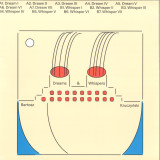
We’ve always been careful not to call Balmat an ambient label, because we like having the freedom to move, to drift, to morph. But with our 11th release, we turn our ears—proudly, blissfully—to a strain of ambient at its most timeless. The appropriately titled Dreams & Whispers comes from Warsaw’s Bartosz Kruczyński, who has recorded under a number of guises, Earth Trax, as well as his own name. Over the years, he’s touched upon deep house, breakbeats, acid, techno, electro, IDM, and more; often, the throughline running through a given album is simply the refusal to remain in any one place for long—well, that, and his unusually nuanced ear for harmony and texture.
Those qualities come to the fore on Dreams & Whispers, which might be the most focused encapsulation of Kruczyński’s atmospheric sensibilities to date.. Across 14 stripped-down tracks for shimmer and pulse, Kruczyński evokes overlapping styles in ambient—warm vibraphones, taut arps, massing strings, lonesome delay chains —but always with his own twist. Fitting the album’s title, the album is loosely divided into two distinct moods: The A-side, “Dreams,” is charged with subtle movement, rhythms spreading out like rings around skipped stones, while the B-side, “Whispers,” plunges into a zone of shadows and hush. The two complementary moods flow into one another like the faces of a Moebius strip, yielding an album that’s intuitively shaped and rich in emotion.
We have reached the final chapter of Kontra-Musik Records' 20th-anniversary celebrations - a busy and rewarding year filled with new releases, represses, club nights, festival appearances and tours. To bring the year to a fitting close, Andreas Tilliander, aka TM404, has once again teamed up with label head Ulf Eriksson for a new limited, vinyl-only 12-inch. Entitled Tjugo (Twenty), the EP sees the duo return to their dusty, machine-driven sound. It opens with Navet, a deep techno track built around rolling stabs, a melancholic organ chord and a solid bassline. From there, it moves into Ravet, a hissing, propulsive piece of minimal techno. The B-side is given over to Sjuhundrasjuttiosjuan, a slow, acidic bonnadub, to close of the year and the record.
Peter 'Baby' Ford's legendary Trelik Records taps up Martinez for some gently persuasive minimal and tech on this new Dream Scheme EP. First out of the blocks is 'Outta Da Sky' (Ethereal mix), which marries honours bell sounds and gently cascading synth with a weighty deep house groove and spoken words that bring things to life. 'Laughter Land' has more intent but is still a shimmering sound with soft edges and plenty of late-night warmth. 'Gravy Disputes' sounds like the problem to have but in fact plays out like a serene, playful groove that gives a little nod and a wink across the dance floor as it persuades you to start moving more seriously.
Following the critically acclaimed Fantômes… Futurs, praised by FIP, France Inter, Radio Nova, ARTE and International jazz press, double bassist and composer Kham Meslien returns with Vévés électriques, a deeply immersive second album where memory, landscape and improvisation merge into a singular sonic journey. Joined by Laurent Bardainne, Roger Raspail, Naïssam Jalal and David Neerman, Meslien expands the intimate language of his double bass with subtle loops and organic textures, weaving together echoes of Iceland, the Caribbean and imagined territories. Blending spiritual jazz, contemporary classical influences and ambient soundscapes, Vévés électriques is an invitation to drift beyond geography and into a profoundly personal exploration of emotion, identity and freedom.
Set upon an oil-smooth sea, an immense range of directions opens up before Kham Meslien for “Vévés Électriques”, his second album after “Fantômes… Futurs.”
With only his double bass and bow as vessel and sextant, a distant journey nevertheless begins to take shape. Vibrations and the striking of strings against wood quickly trace lines and winding paths across the surface of the water—so many routes to follow before leaving them behind, allowing the outward journey to become an inward voyage as well.
After an improvisation intended to shed light on the course ahead, isolated lands came into view: the shores of Iceland, the lands of the far north, places cut off from the rest of the world by vast expanses of water. Islands battered by a harsh climate that can only be endured by drawing warmth from deep within oneself.
Then the Caribbean arc appeared. The archipelago, a setting for joyful and unsettling experiences, takes Kham back to a childhood from which the passing years have carried him away. Rather than following the conventional channel of the music of these places, the West Indies emerge through memories whose colors are still vivid.
Through the morning mist, Roger Raspail’s percussion locks into the same frequencies of the groove. Double bass and struck skins then become companions on a road that intersects with Laurent Bardainne’s saxophone. Carrying a dreamlike message, David Neerman’s vibraphone also joins the narrative to write a few chapters of its own, while others are enchanted by the flute and voice of Naïssam Jalal, or struck by the metaphorical rhymes of rapper Rocé.
On the surface, through the themes along which the pieces navigate, landscapes slowly reveal themselves and change shape as the shore draws nearer or recedes. Straying from the marked course and allowing oneself to drift, breaking free from pure acoustic sound by adding loops first played live and then sampled, allows Kham to explore the depths. The depths of the ocean, as well as those of his soul. To enter a world of improvisation that reveals itself even as he explores it. Examined up close, feelings become shells to pick up and hold to one’s ear, so that they can be felt intensely until they take material form.
This sea, which had appeared peaceful, became the stage for a succession of stories and images, which then accumulated to give birth to a larger narrative.
Born in West Palm Beach, Florida, to a mother of Indian and Congolese heritage and a father of Slovak and Belgian descent, Siân grew up between Belgium and New York before finally letting her travelling wings come to rest in Paris. What could have become a story of fragmentation instead became a source of creative strength. Singer, songwriter, composer and photographer, Siân has always turned borders into bridges.
She first honed her voice in the jazz clubs of Paris and New York, performing alongside renowned artists such as Richard Bona, Jon Batiste and Mike Stern. Yet her path has always extended far beyond the stage. For nearly a decade, she led cultural initiatives with women and children living through exile, violence and poverty across India and Southern Africa, weaving together music, photography and artistic transmission as tools for dialogue and empowerment.
The true turning point came when she discovered the kamele ngoni, the West African harp whose ethereal sound seemed to echo something long buried within her. The instrument became her musical alter ego—the invisible thread binding together her many inheritances. Guided by Malian master Abou Diarra, Siân embarked on an inward journey towards her African roots. Yet this return to her origins was never an act of retreat into identity. Instead, it gave rise to a body of work that remains profoundly open to the world, where Africa enters into conversation with jazz, folk, soul, alternative pop and the rhythms of Brazil.
Along the way, she has crossed paths with remarkable artists including Rogê, Chico César, Fatoumata Diawara, Lokua Kanza, Flavia Coelho, Thomas de Pourquery and Philippe Baden Powell. On stage and in the studio, Siân continues to shape a musical universe that refuses labels. Like artists such as Björk, Joni Mitchell and Laura Mvula, she moves forward as an explorer, guided not by genre but by intuition.
Today, Siân stands as one of the most distinctive voices of the new Francophone music scene an artist capable of uniting musical sophistication with emotional power, introspection with collective celebration, depth with an irresistible urge to dance.
Animal — The New Album
With Animal, produced by British musician Tom Excell (Nubiyan Twist, Africa Express...), Siân delivers her most intimate and assured work to date. Every song feels like a shedding of skin, a quiet metamorphosis, exploring self-acceptance, femininity, the freedom to be oneself, cultural heritage, and the reconciliation of one's own imperfections.
From Stereotype, a fearless manifesto against the expectations imposed on women, to the title track Animal, an anthem celebrating the beauty of imperfection ("I've turned my cracks into a crown"), the album gives a voice to everyone who refuses to fit into predefined boxes. In Terre, je danse sur toi, featuring Fatoumata Diawara, Siân pays tribute to Mother Earth and to the roots that unite us all. Oh! Congo, recorded with Lokua Kanza, reconciles her cultural heritage with an ancestral homeland that feels both distant and intimately familiar. En équilibre, with Flavia Coelho, embraces the exhilaration of risk and the courage to leap, while Put a Mask and I Could Kill confront hidden wounds and the invisible violences that quietly shape who we become.
In ADé, Siân addresses Adenomyosis as though speaking to an unwanted housemate. "My body is your battlefield," she sings, giving voice to an intimate shadow lodged deep within herself. This bittersweet lullaby transforms a pain so often left unspoken into an act of profound tenderness towards oneself.
The album also holds a rare treasure: Reste tel(le), an unpublished text by Pierre Barouh, the founder of the Saravah label. Never before set to music or performed, this elusive poem of free love finds new life through Siân's voice, becoming a dialogue across time between two artists united by the same devotion to freedom, métissage and openness to the world.
Driven by Tom Excell's vibrant Afro-pop pulse, the spiritual breath of the kamele ngoni, organic arrangements and deeply personal songwriting, Animal is an album of liberation. It invites us to lay down our masks, embrace our contradictions and reconnect with the free, instinctive and powerful animal that lies dormant within us all. More than a collection of songs, it is a radiant manifesto for the richness of identity, the passing on of memory, and reconciliation with oneself.
Animal is not simply the title of an album, it is a declaration of independence. An invitation to live fully, unapologetically, and without instructions.
A citizen of the world, travelling freely between continents, languages and memories, Siân Pottok delivers with Animal her most personal, and perhaps her most universal work to date: an album that reminds us that our fragilities, our roots and our differences are, beyond doubt, our greatest strength.
— Christophe Tison
¡NO PASARAN! is the extension to Extrawelt's DYSTORTION, from brooding tension to playful relief, the album took listeners on a six-year-crafted exploration. Their next EP picks up where this epic chapter left off and is clearly related. It's a hypnotic dive into shadow and dream, darkness and melancholy with subtle flashes of light.
The title track of the EP, already known from the album (D1 - Extrawelt - ¡No Pasaran!) carries a commanding presence, pulses with a rolling, insistent bassline that anchors shifting rhythmic currents and evolving sonic layers. Between tension and release, shadows and melody, it's a track that moves like a living entity.
Arctic Dead Run hits like a surge of raw energy. Acid lines roll relentlessly, building tension that feels alive. Then a melody sneaks in - soft, almost fragile - cutting through the intensity, until hi-hats erupt and the groove snaps into full focus. Maximal yet controlled, every element finds its place.
Clipping Me Softly dissolves the pressure with a dark, playful groove. Precise rhythms meet spacious pads, opening into a dreamlike state where night slowly gives way to warmth and light.
A focused and uncompromising continuation of Extrawelt's sonic language: Dense grooves, acid pressure, and dreamlike relief collide in a release built for deep listening and late-night floors.
Maryos Syawish (b. 1993, Iraq) is a Chaldean Iraqi artist and musician based in Naarm/Melbourne working fluidly across visual art, sound and curatorial practice. His creative work spans more than 15 years and is defined by a lawless, unorthodox approach that resists traditional genre boundaries.
His Research Records debut is an introspective and meandering exploration of place, legacy and personal history. It’s a marked change of pace for the Melbourne-based producer, who has carved his name into the Australian underground as one half of Sleep D and Butter Sessions Records, but his first full length under his own name feels like an extension rather than a departure from what those attuned to his productions will already know.
Qurmami – which translates to “my roots” – functions as an audio collage that bridges the artist’s dual experiences of growing up in Australia and his heritage as a Chaldean Assyrian. Developed over the course of eight years, the record is anchored by field recordings captured during a pivotal trip to Iraq which are sewn into lush ambient electronics over two sides.
Over 42 minutes the production swells and grows; a delicate and mind-transporting beginning gives way to a more rhythmic, body-moving tail end, drawing subtle influences from dub, ambient, and traditional music from the Northern Iraq region along the way. Syawish’s contemporary, friend and fellow Research artist Khaled Kurbeh features, as does Melbourne-based cellist Abby Sundborn, while Sarah Ujmaia – Maryos’ cousin – contributed the album art and a familial through line that rounds out a cohesive, evocative exploration of identity, memory and the spaces that shape who we are.
Following up the launch of his own Dustbin Digs label, Manchester local Rossiter piles four of his own atop the stack of goodtunes97 wax.
Side A lifts off into the clouds with Feels So Good. The rhythmic shuffle, hint of UKG, and a determined bassline get to the gate as spacey chords are cleared for takeoff. Go Straight carries the trajectory, pressurizing the cabin in breezy dubbed transit. Keys vaporize on the periphery as Rossiter mitigates turbulence with careful cadence, maneuvering high-altitude with grace.
With two stops still to go, the B-Side gets off and running upon arrival. Round & Round kicks up dust as the low end stomps out the homestretch, tenaciously hitching a ride to our final destination. P45 is the long awaited return to familiar territory – nostalgic chords carrying beats so blissed they stutter. Interview samples from legendary UK producer/DJ Grooverider give the track a cultural anchor, connecting its contemporary sound to the lineage of UK dance music and the culture that shaped it.
Each side balanced with equal parts heavy and light, Rossiter’s Round & Round EP firms up the fifth release for goodtunes97.
– Forrest Camire
Gavin Belton's move back to the UK after years in New Zealand brought him back into the fold with old Littlemen cohort Steve Lee. They played a few gigs together then got back in the studio for the first time in 15 years. Belton's use of the Korg Opsix is what gives these deft deep house cuts their character while Lee adds the vocal lines to 'People Are You Ready' for a ghostly, shadowy, low-lit sound. LA-based DJ, producer and HAWT promoter Mikey V steps up on the flip for the lithe dub house of 'Smooth' while Giom pulls it into darker territory that echoes the old Murk sound. Lee rounds things out with a remix of the A-side that has a persuasive late night bump.
King Street Sounds continues to reissue house classics from their legendary back catalogue, this time releasing a second VA sampler featuring four deep soulful house tracks.This compilation showcases dancefloor fillers from notable artists such as Dennis Ferrer, Lil Louis, Masters at Work, Mood II Swing, and Kimara Lovelace. These underground anthems have stood the test of time and still sound as fresh as when they were first released.House music enthusiasts can once again come together and take the opportunity to own these incredible tracks on this fantastic EP.
Harmacy (30th Anniversary Expanded Edition) finally makes Sebadoh’s seminal 1996 indie-rock album available again, and adds 16 bonus tracks, including alternate versions, rare B-sides, BBC sessions, and live material from the Harmacy era.
Sebadoh was formed in 1986 in Northampton, Massachusetts, by Eric Gaffney and Lou Barlow (Dinosaur Jr., The Folk Implosion), with multi-instrumentalist Jason Loewenstein completing the line-up in 1989, and Bob Fay taking Gaffney’s spot in 1994. By 1994, the band had released five albums and more or less changed the pockmarked face of indie rock. Their albums were mostly home recordings, decried for their lack of sharp production, but embraced by fans of Barlow's intimate songwriting style, which owed as much to Joni Mitchell as Bob Mould. In 1996 Harmacy, their breakout sixth album, arrived, finding Sebadoh as conflicted as ever: torn between screaming punk and gentle crooning, replete with highly personal songs guaranteed to bring down even the most super-charged midnight ravers.
Released in the wake of The Folk Implosion’s Top 40 hit "Natural One," Harmacy became Sebadoh's first charting album in the U.S., and yielded the hit "Ocean." Interview said, “Harmacy is nothing short of a masterpiece.” The New Yorker called it a collection of “perfectly crafted, honest (read: ambiguous and emotionally twisted), impassioned songs about love and hate.” Harmacy was hailed as one of the best albums of 1996 by Rolling Stone, The Village Voice, and NME.
Acid Pauli's new album "Mystic Meltdown" is hypnotic mystery, textural mastery, all hurtling through your system at peak velocity, unrelenting yet full of mischief and spirit.
The first full-length Acid Pauli album since 2020's MOD, here the artist, Martin Gretschmann, who you might also remember from Console and The Notwist, reaches out to collaborators, unearths new sounds through travel and then brings it all together with one long, sweeping breath - an album to take in as a whole, to ride its compulsive energy to the end and then back to the start, over and over again.
While the album's been brewing for some time, "It took months and months to find the coherency and the story that this album is telling," Gretschmann recalls, "Arranging the pacing, feeling how the tracks come together into one album", it reads as effortless. It draws from Gretschmann's various musical languages, from the techno, house and ambient of Acid Pauli, even reaching back to the electronica of Console, but it places them in new contexts, at new speeds and in rich, giddy contrasts. Mystic Meltdown feels like endless pleasure, unflagging energy.
It's also an album rich with multiplicity. There are many voices that visit us at the Mystic Meltdown, from Hani Mojtahedy's Kurdish vocal on "Goman (Remix)", through to Lhasa de Sela's "Con Toda Palabra" in Spanish. A sample of Kingdom Molongi's voices opens the title track and returns on "Mystic Feedback" - this feels like a particularly profound connection, given the inspiration that Gretschmann has gleaned from the musical community surrounding the Nyege Nyege Tapes label and organisation over the years. He's also appeared at one of their festivals, by all accounts a revelatory experience.
Sometimes Gretschmann reaches back yet further. "Yes, Caroline" hints at an abstract relationship with the Beach Boys' pop masterpiece, Pet Sounds. Yet the way he draws these various influences into his own music always displays more than a touch of transmutation. Releasing the album on his own label All Is Acid which has recently been undertaking a reissue program of some of Acid Pauli's earlier works, "Mystic Meltdown" feels like a complete expression for Gretschmann; from beginning to end, from creation to reflection. "Building up, going into different spheres and emotions," Gretschmann concludes. "Working through some darker shades, trying to find light. Pouring in to get through."
Volume 1 - Growth
Resurrection is a long-term musical work that has accompanied Christine Benz for almost twenty years. The first track was created in 2007 (track id - Born after Code), with another piece added nearly every year thereafter.
Throughout this time, she continued to produce other music while steadily developing her artistic language.
Musically, the album moves between minimal techno, ambient and experimental electronic music. Across different phases of her life, Resurrection gradually grew into an archive of her personal and musical evolution.
The complete work unfolds as a trilogy across Volumes 1-3.
At its core lies her fascination with sound as material. Rather than thinking in terms of conventional melodies, she works with textures, vibrations, and spatial relationships. A small number of elements give rise to complex sonic spaces, where minimal changes can have a profound effect. Mistakes, chance occurrences, and unexpected responses from the systems she uses also become part of the music. Even from chaos, remarkable structures
emerge. Whenever unplanned beauty reveals itself, she preserves it as a small “miracle” in which control and chance intertwine.
The complete work unfolds across three chapters: Growth, Structure and Resonance, exploring repetition, frequency, perception, consciousness and technological development in the relationship between humans and
machines. It moves from origin through the formation of an internal order towards connection and interaction.
Volume 1: Growth, draws upon the Fibonacci sequence and the spiral as symbols of natural development, with the music growing through repetition and minimal change into increasingly complex forms. Throughout the
project, technology appears as a tool, a partner and a mirror of our perception, raising the question of whether consciousness, responsibility and empathy can evolve alongside technological progress.
During the project’s long evolution, Donato Dozzy developed an interest in Christine’s distinctive sound design.
In 2021, this led him to propose his own interpretation of Our Determination for Volume 1, subtly reworking the track through his own musical perspective.
The artwork developed by Christine also went through a creative process of its own. The original photographs were taken in a basement around 2019, with a wet curtain draped over her. In 2026, she decided to transform
this visual world into a moving-image artwork. For the production, a film crew reconstructed the entire setting.
The video shoot demanded a great deal from Christine: after several hours beneath the wet curtain, the cold was no longer merely part of the staging. This elaborate creative process gives the artwork its distinctive character
and makes it an essential part of Resurrection.
The first chapter will be released in November 2026 as a double-vinyl edition housed in a distinctive gatefold sleeve with an inside-out finish, matte varnish, and partial raised spot UV varnish. Two further double-vinyl
releases, Structure and Resonance, will complete the trilogy. All three volumes will be released on Pirat Records.Records.
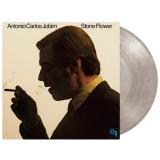
Antonio Carlos Jobim was definitely one of the most important artists in the bossa nova movement of the 1960s. The pianist and guitarist wrote the iconic "Desafinado" and, probably the most famous song in the genre, "The Girl from Ipanema". His elegant style of playing the music became the blueprint for the genre and inspired many.
Stone Flower is the album where you hear Antonio Carlos Jobim evolve in response to the new trends of the 1970s. His gentle and signature melodies are still there, but there are new elements; you here for example an electric Fender Rhodes. These changes only add to the timeless sound of Stone Flower.
The album has an impressive line-up of artists that were at their creative peak such as Ron Carter, Airto Moreira, and Eumir Deodato. Producer Creed Taylor and engineer Rudy Van Gelder give it the warm, high-quality sound that's typical of many CTI releases.
Stone Flower is available as a limited edition of 2000 individually numbered copies on transparent/black marble vinyl.
Ghost Dubs, real name Michael Fiedler, aka Jah Schulz, announces a rebirth with 'Damaged', his first album for The Bug's PRESSURE label..
Having recently dropped two criminally overlooked, experimental dub LPs, with his 'Dub Over Science' series, the German producer/bass specialist, now stretches his own parameters of outwardness still further, with these twelve fresh explorations of dub deviance. For those who feel the fusion of dub techno and ambient drone had creatively ended with the demise of the short lived, Berlin based Chain Reaction label. Ghost Dubs now upgrades, and extends that legendary blueprint's abstract methodology even further and deeper, floating away upon a wonderfully warm sea of hiss and static bliss. This is dub so atomized that it disintegrates within your eardrums. Its music, where the machines take over and virtually all traces of humanity are erased. But thankfully, the warmest soul still oozes seductively from the pores of Fiedler's robo riddims. Relentlessly hypnotic, seriously sedated, 'Damaged' celebrates the point of departure within it's mesmerising low end grooves. Album opener 'Chemical', provides an opiated slo-mo skank, which sounds like Plastikman's 'Consumed' era pulsations drenched heavily in sub aquatic fx. A triumph of surface noise surfing and sub woofer testing relentlessness, it provides the perfect intro to this compellingly immersive album. For batty shakers and headtrippers alike, there's added thrills aplenty, as Ghost Dub's richter scale tremor rhythms remain impressively massive, and the atmospheric depths of 'Damaged' appear tantalisingly oceanic. Throughout the duration of the dreamy selection, there is an obsessive balance of bewitching ambience and heavyweight bassbin shaking. The lead single 'Thin Line' itself provides a missing link between African Headcharge's early percussive body probes and Rhythm & Sound's addictive radiance, with the slightest hint of Burial's doomed romantic hauntology added for good taste. Alternately, and no less gracefully, 'Dub Lobotomy' bizarrely resembles Miles Davis 'Get Up with it' chopped, screwed, and relocated to a futuristic Kingston Town. Impressive indeed, Fiedler's mastery of live dubbing on his mixing desk shines accross the duration, and gives the album an improvised edge, and sense of peripheral chaos. Elsewhere, spooked steppars('Hot Wired'), haunting house ('True to life') and 4th World psychogeography('Undone'), combine to ensure there is a forever changing mixture of flavours percolating within the admirable consistancy of the overall sound.
With a tip of the cap, and nod of the head to Pole('Second Thoughts'), its no surprise then that PRESSURE would then turn to the great, Berlin based producer Stefan Betke, to master/cut this collection at his infamous Scape mastering room. And a fine job he did too, as high quality sound and levels are definitely maintained throughout.
If you like your melodies submerged, your dub narcotic, your basslines obese, and your beats evaporating, 'Damaged' provides the perfect prescription and entry point into Ghost Dub's spectral soundworld.
Cécille Summer 2026 Compilation
Summer and Cécille have always gone hand in hand.
For 2026, we’re back with another carefully selected collection of records that perfectly capture where house music feels today. Eleven tracks from artists we’ve admired for years, longtime friends of the label, exciting
newcomers, and fresh faces joining the Cécille family for the very first time.
Piem opens the journey with his long-awaited Cécille debut. A respected name in the scene for many years, his unmistakable groove has been on our radar for a long time, and we’re proud to finally welcome him to the label with Give Me The Rhythm.
Leon returns to where it all began. Since his very first Cécille release back in 2009, he’s been an important part of the label’s story. Let Bass Kick is classic Leon—timeless, understated and effortlessly effective.
UK duo Late Replies continue their incredible rise with Moment 4 U. Their fresh take on house music has been impossible to ignore, and we’re thrilled to have them on this year’s compilation.
Dutch mainstay Jesse Maas delivers Voices In My Head, another classy slice of groove from one of the most consistent names in the Netherlands’ house scene.
Buenos Aires’ Manu Desrets impressed us so much that one track simply wasn’t enough. His two contributions, Get GG and Voy No Kako, showcase two different shades of his sound and perfectly reflect why he’s become
one of the most exciting producers coming out of Argentina.
Andrew Azara has become a true part of the Cécille family over the years. This time he teams up with Traumer, who makes his label debut with a beautifully understated deep house record. Need You is one of those tracks
that quietly sticks with you.
We’re also excited to welcome Jay de Lys to the family. Together with Simon Kidzoo and Monölitio, the trio delivers Into The Light—a warm, feel-good house record that instantly became one of our favourites. Three
artists from Argentina, the Netherlands and Barcelona coming together exactly the way house music should.
After turning heads on last year’s Costa compilation, Brazil’s Classmatic returns alongside fellow Florianópolis producer Marian. Brazilian Madness is exactly what you’d expect: infectious groove, irresistible swing and that
unmistakable Brazilian sense of rhythm.
One of the hottest young names coming out of the Netherlands right now, Stefan Meser delivers Don’t Hesitate—one of those records that gets stuck in your head after the very first listen.
Closing the compilation is someone who’s been part of the Cécille story since the very beginning. Christian Burkhardt has been a longtime friend of the label and one of Frankfurt’s finest. Specialo lived in our vault for almost two years while we waited for the right moment to release it. This felt like the perfect place for it, and the perfect way to close another Cécille summer.
Eleven tunes. Eleven different stories. One soundtrack for Summer 2026. Welcome to the next chapter of Cécille.
Truths and secrets often reveal themselves at night, under the freedom of shadowy darkness, away from prying eyes. In creating Given to the Night, sisters Valentine and Clementine Nixon have crafted a world that drifts through the in-between: between dream and reality, between day and night and the undefined, and ultimately a world that embraces the discomfort of being untethered. A process that follows simplicity and intuition rather than pre-determined narratives. “We recorded songs as they appeared, which sometimes felt like catching light. Before we realised it we had a record”, the duo explain.
While making the record Valentine and Clementine gently pushed away from the world- deleted social media, retreated into the trees of their native New Zealand - and only invited a couple of people in during the recording process. From that space, the album came together in an eerily easeful way.
There is a dream-like drift and sonic timelessness to the the record, as reflected in its nocturnal title, which can be read in two ways:
“Being taken by, or being inclined towards nighttime, preferring its blurry cloak of shadows to the harsh light of day; or giving oneself up to night, in sacrifice, letting go of fear and melting into the darkness.”
Written during a time of personal transition there was “a sense of finding the light in the shadow” they add. Guitar lines float, synth lines entwine, tapes hiss and vocals stream creating a kaleidoscopic montage of transient memories and emotions. A spectrum of feelings arise - isolation and joy, insomnia and manic highs, confusion and fleeting clarity, grief and healings. In the record, these feelings all merge and fade into one another in a nonlinear manner, as life tends to do; creating something deeply human that simultaneously gestures towards the transcendental.
FatCat was recorded in a single session-live, with all four musicians together in the same place. What you hear on the record isn't a polished production, but a one-of-a-kind recording of four people playing at the same time in the same room.
This is not a nostalgic gesture. It's a stance. As music is increasingly understood as the output of a prompt, the question of what actually makes music becomes urgent again. Not flawless, efficient production, but the imperfect moment and its context. Not the result, but the process in which four people listen to each other, react to each other, misjudge, and find one another. This fallibility - the hesitation before an entrance, the slight pull in the timing, the glance between musicians that signals a turn - is not a weakness but the substance itself. It cannot be synthesized, because it isn't a data point but a lived relationship: between the instruments, between the people, between their shared history and what emerges new in this one take. The album is thus also a statement on the question of where, in the age of generative music, authorship and art can still be located: not in the result alone, but in the shared risk taken in creating it.
"The question was always: how do I bring my work as a producer and beatmaker onto the stage? How can something that usually happens alone behind closed studio doors become a live experience?" With the album FatCat, Sepalot pursues this question to its logical conclusion: what began as a live performance now becomes the recording itself - the studio becomes a stage for a day, and the stage becomes the definitive version of the album.
The love for electronic music remains, the raw pressure of hip hop is still palpable - and yet everything on FatCat sounds like a fresh start, captured in the very breath in which it was played.
On stage as in the studio, the four characters fit together like a puzzle. Sepalot's signature as producer and mastermind is unmistakable. On drums, Fabian Füss, longtime partner behind the kit and the voice that makes Sepalot's radio hit "Rainbows" so unforgettable. On bass, Robin Jermer. On trumpet, Matthias Lindermayr, multiple award-winning jazz virtuoso with his own albums on Enja Records. And then there's Sepalot himself, who turns it all into more than just the sum of its parts.
The eclectic beats, the pulsing bass, Sepalot's passion for atmospheric sound design - all of it remains, now joined by an element of jazz and captured in its most immediate, unpolished form. The album shows what four people in one room are capable of: a sound born of shared experience, and precisely for that reason, unique.
Multi - instrumentalist with rare elegance, FKJ unveils its first album French Kiwi Juice, and invites us in his world.
Tribute to his idols, affirmation of musical maturity, FKJ goes from Jazz to Soul, with his electronic touch that makes his paw incomparable.
A warm, reassuring and sensual universe.
His children’s questions (Why are there boundaries), his joys (Blessed & Joy), his journeys (Go Back Home & Canggu), the Franco-New Zealander delivers himself in an intimate and profound album, with music as an universal language.
An opus to advise to enthusiasts, travelers, dreamers...