Sharif Laffrey can charm the snake out of any basket. This is his first offering for the ESP Institute. Side A's Tangier is a long drawn-out exercise, an endurance test of the highest order. Over the span of some thirteen minutes, elements bob and weave intermittently and layers overlap haphazardly—the type of exciting dynamic that's born out of restriction—as if putting down a live jam without enough hands to work the console, yet Sharif perseveres. As touch and go as this arrangement may be, there is something that undoubtedly glues it all in place; the combination of his massive rolling 16th-note bassline and his tough-as-nails drumkit is so good that, upon first listen, we spat out our tea and insisted on its release. On side B, Everything Is Nice carries on with loose arrangement, dirty production and layers of inexplicable spoken- word samples (a Sharif calling card by now) but this time we're lead to a melancholy place, the blue comedown to Side A's antagonistic trial. With his ESP Institute debut, Sharif leaves you mentally unhinged, as if you've smoked something interesting and arrived bewildered in some Saharan labyrinth. These two songs will guide you through the medina to score the black meat.
WHITE RING mark a triumphant return with a brand new full-length Gate Of Grief, due out on Rocket Girl on 22 June 2018. Their debut album arrives a full eight years since their benchmark EP, Black Earth That Made Me, which sold out almost instantly, making their records some of the most highly sought after on the underground scene and earning them a cult following across the globe. Swerving from aggressively abrasive to beautifully ethereal, musically they draw from varied and challenging palette, whilst tackling themes of loss and acceptance due to struggles with drug addiction and existential dread on a broader scope.
WHITE RING were originally formed by Bryan Kurkimilis and Kendra Malia, before they were joined by Adina Viarengo, with Bryan and Adina currently touring as a duo. One of the most acclaimed proponents of the "Witch House" movement, WHITE RING blend heavy, distorted electronics with eerie, unsettling vocals. However, their new material, created over the course of seven years, pushes the boundaries further, subverting genre ideas and mashing them all together, with industrial, metal, rave, chopped and screwed, rap, grunge, neo folk, post punk and new wave all in the mix. As Bryan Kurkimilis explains; 'We treat our influences like tools to create a certain feeling. We are interested in covering more ground than sticking to a certain formula.'
Bryan and Kendra originally met on Myspace in 2006. At the time Bryan lived in New Orleans and Kendra was in New York, and they didn't even meet face-to-face until 2008 after they had already released a few singles. In 2010 they released the EP Black Earth That Made Me, which was a collection of songs that they mostly recorded before they met in person. The record confounded expectations by selling out immediately on pre-order, making it very rare and highly sought after, with copies going on Ebay for large sums. It was reissued by Rocket Girl in 2011 and still continues to sell in voluminous amounts.
They started playing live in 2009 and rapidly grew a reputation for their captivating performances, usually bringing their own lighting equipment and putting on a spectacular laser show. They have played for large crowds in their hometown of NYC and toured the UK in 2010 in support of their sold out split 7" with oOoOO, playing InTheCity and SWN festivals - which were their first shows outside of New York. They have since shared the stage with the likes of Cold Cave, araabMUZIK, Liturgy, Blank Dogs, Gatekeeper, Blondes, oOoOO, Clams Casino, and others.
They started recording Gate Of Grief in 2010, with the hope of exploring new musical territory, however they took a while to find their path. Bryan and Kendra had some tough personal battles to fight, a sense that pervades the whole album. Thematically it delves in to some pretty dark places whilst exploring the concept of time and what it does to people, relationships and society. As Bryan explains; 'There is a lot of tragedy in this album but there is also hope at the end of it.'
By 2016 pressure was building to finish recording, however due to Kendra's ill health, they needed to bring in someone new to assist with vocals. Fortunately they found Adina Viarengo, who had played in various bands and gave them the impetus needed to complete the album. Shortly after meeting in Brooklyn, Bryan and Adina moved to Joshua Tree, California to finish recording the album, before settling in Massachusetts. Her vocal style fitted in seamlessly with what Kendra had been doing, and although she sang on half the songs, it's almost impossible to tell who is singing on which track, thus making her the perfect addition to the band.
Gate of Grief can be considered the second part of Black Earth That Made Me, or rather, they are the first two chapters in an overarching trilogy about evolution. As Bryan explains; 'First you are born but then you realize what you are and what is against you and it's a flood of emotion that you can only hope to hold on for and let it pass.'
The album title, Gate of Grief, refers to the real gate between Africa and Saudi Arabia that is believed to be the spot where the first humans migrated out of Africa and went on to populate the rest of the world. The album art ties in with this concept, with an image depicting a group of settlers in the USA in early 1900 during a parade. They were actually from a cult in the early 1900s in Bryan's hometown of Fort Myers, Florida.
Insula Records Returns To The Shelves With A Brand New Ep By 3kz, A Unique Collaboration Between The Gifted Italian Producers Z.i.p.p.o. & Kaelan.
The Record Lifts Off With 'outta Here', A Journey Into Other Heights With Glissandi Melodies Rising Over Arpeggiating Sequences To A Solid Driving Techno Track That Is Functional, Spot-on Material For The Floors. This Side Is Complemented With 'urban Jungle', A Clear-cut Heady Track With Upfront Drum Programming That Leads To A Driving Atmosphere.
The B-side Is Something Special And Is Fully Covered With The 15-minute Spanning Title Track 'd50 Tears'. This Beautiful Washed Out Ambient Arrangement, Full Of Emotion And Soul, Channels The Mind To Other Places. A Cinematic Masterwork That Shows The Sophistication Of 3kz In Full Depth.
Iberian Juke Is Extremely Proud To Present 'take Me Back To The South', Sophomore Album By Label Founders Bsn Posse And Our First Ever 12" Vinyl Release. After Their Debut Lp 'forever' For British Label Slime Recordings 2015, The Duo From Málaga Has Been On Quite A Strong Form With A Handful Of Powerful Releases Including Several Eps For Iberian Juke, Modern Ruin Records, Below Music And Breaking Bass, The B-sides, Bootlegs And Remixes Project 'summer Madness Series', And Incursions For Label Imprints Sequel One Records, Hyperboloid Records Or Vandal Records.
With This Album Bsn Posse Want To Reflect Their Love, Respect And Passion For The Footwork Culture In General And For The City Of Chicago In Particular, With Its Guetto Suburbs Being The Origin And Starting Point Of The Juke And Footwork Movement. 'take Me Back To The South' Combines Masterfully In Eight Tracks Elements Of Jungle, Drum & Bass, Soul And Funk With The Classic Juke And Footwork Take At 160bpms.
The Lp Is A Sincere 'thank You' From The Duo To All The Humble Artists That Work Extremely Hard To Put Footwork Into The International Electronic Music Scene. Thanks To This Culture We Have Travelled To Incredible Places And Meet New People With The Only Aim Of Sharing Our Passion For The 160bpms.
Teste returns with The Box Man, a five-track EP that marks their first release of original material in 25 years. Formed during the early nineties in Hamilton, Ontario, they put out only three official records between 1992-1993 on Probe Records, most notably 'The Wipe,' which is regarded as a genre defining classic, while the follow-up 'Regions' also served as a template for the ensuing sonics of contemporary techno. With only a handful of live actions, the final chaotic show (public disturbance) occurred for Pure in Glasgow 1994. Afterwards, the original Teste lineup of juvenile delinquents disbanded but unwittingly ended up defining the hypnotic and drugged out strains of today's afterhours techno parties. The project vanished for decades until reactivating the chaos in 2014, promoting a slew of remixes 'The Rewipes,' by artists such as Rrose and Terence Fixmer, on the Edit Select imprint.
Since then, original member David Foster, still at large as //HUREN//, has been slugging it out in the fringes with influential output on the seminal Zhark Recordings Berlin and has collaborated as O/H with Rich Oddie of Orphx. First meeting on Mayday 2017 in Berlin, a new alliance with Martin Maischein aka Goner formed. Goner is likewise a veteran with essential output under various monikers on imprints such as Force Inc., Editions Mego, and Hospital Productions. From that pairing, The Box Man came into being for the second release on BITE, the Berlin techno label run by Hayden Payne and Florian Engerling.
The Box Man picks up where Teste last left us with their revolutionary vision of techno and continues to further their interdimensional manifestation of insanity and formation. Pure techno serving as a method of psychic expulsion and self-reckoning. From the opening, the eponymous track approaches full panoramic throttle as metallic synths creep 360 degrees around the listener, setting the tone for panic and loss of cognitive control. Teste then moves into the stealthier outpatient techno rhythms of 'The Long Term Care Facility' and 'Thieves Are Operating In This Area'. The EP contrasts its propulsion with different interpretations of its blueprint. 'Foaming At The Mouth' delves into Cabaret Voltaire-alike rhythm box violence until all is closed with the comedown melodies of 'Lyubov'. Through highly adept methods of sound design and neural interpretation, Teste once again cuts apart reality with their music, expressing nightmares and visions via new rituals and mind control techno.
After welcoming Saule with an appearance on SUBALT015, the incredibly talented producer steps up for a full EP on Subaltern - a tour de force of distinctive, dark and original productions.
*A: Gorilla Glue
Starting off the EP with a bang is 'Gorilla Glue', a heavy-hitting collaboration with original Subaltern badmen D-Operation Drop - pressure is the name of the game. A sinister intro paves the way to a stomping bass-line topped up with growling synth layers, which culminate into a captivating melody that will stick with you. Get ready for the ride!
*B1: World 8
'World 8' dives into a video game-like vibe through quirky 8 bit synths playfully matched with a massive wall of bass. Gnarly breaks round off a masterful execution of sub and space alternating in a trippy scenario: Super Mario had a little bit too many mushrooms this time...
*B2: Close Chatter
Moody dark pads set a bewitched vibe in 'Close Chatter' a goose-bump inducing drop will leave you constantly hungry for more. An oddly pleasing journey, this is the typical b side-that-could-have-been-a-side track.
* Following up his 2017 debut, Bristol's Via Maris is back on Livity Sound with an enigmatic two tracker pairing Glow Wall's aquatic reverie with the deeper rolling grooves of CU2.
* Established in 2011, Livity Sound is a frontrunning label in UK electronic music. Since its inception, Peverelist's imprint has dedicated itself to releasing innovative music, eschewing existing forms and forging its own stylistic path.
* Bristol's Joker has announced he is to celebrate 10 years of his pioneering Kapsize label with a special series of new 12' Joker releases, the second of which will drop this May.
* Over the past decade, Kapsize has put out some of Joker's most defining work, including the iconic 'Purple City' (produced with Ginz) — a track widely recognised as ground zero for Joker's purple dubstep aesthetic — and 2015 album, 'The Mainframe', as well as early records from Asa & Sorrow and L-Wiz.
* To be released both on special edition orange vinyl and digitally, Joker's second commemorative release lands in the form of 'Boat / Deploy'. A-side 'Boat' is gleefully maximalist, a playful accordion running alongside searing synths before a ominous bassline drops, taking us through his vivid and embellished creative world, while the cinematic 'Deploy' is another intense and larger-than-life riddim.
* To be released in June following the release of 'Anamorphic / Forever' in April, and 'Marching Orders ft. Footsie / Polka Dot' in May'.
Wislov might be a new signee to Knitebreed, but he has been releasing material for years, and the Spanish (not Russian) maestro is already known around the world for his awesome breakbeat creations. It was only a matter of time before a label snapped him up, and he is a producer easily capable of dropping huge tunes in both dark and lighter stsyles. This EP showcases his talent, with four tracks specifically designed to compliment the Knitebreed sound while carving his own niche into the label.
Club / DJ Support
Billy Bunter, the Fat Controller, Glowkid, Slipmatt, Dj Jedi, Dj Luna-C, Dj Brisk, Clayfighter, Jimni Cricket, Bustin, Sc@r, Doughboy, Saiyan, Dave Skywalker, Ponder and many others
Paul Dickow Aka Strategy Is A Musical Polymath With A Signature Sound Derived From His Immersion In Hardware-based Electronic Music. He Has Spent Close To Two Decades Traveling Freely Through House, Techno, Rave, Noise, Ambient, And Sounds More Difficult To Categorize. Strategy's Sound Is Inimitable Because It Is Literally Built By Hand - His Hands. Through All Of This Sonic Journeying, Including Multiple Full Length Releases, A Constant Has Been His Love Of Reggae And Dub, Yet Somehow A Proper Dub Album Has Never Emerged - Until Now.
After Two Much-loved 7' Singles On Zamzam - To Say Nothing Of Dubwise Excursions On Idle Hands, Shockout, Peak Oil, 100% Silk And More - dub Mind Paradigm' Is The Fulfillment Of A Clear, Simple Goal. "i Set Out To Make A Full Set Of Dub Tracks Good Enough To Make An Album -- Something That Had Always Eluded Me-- And It Worked, Finally. A Simple Exercise In Seeing If We Could Launch The Capsule To Orbit Planet Reggae And Make It Home Again.'
Reaching Planet Reggae, The Album Explores Analog Caverns Of Dubwise At All Tempos, From The 80s To 140, Full Of The Ghosts Of Ancient And Future Technologies, Glimmering Shards Of Hope Among Heaps Of Folly, Ruin And Rubble. Music Fans With Crates Deeper Than The Contemporary Will Find Shades Of Wackies, Firehouse, Unity Sound, Burial Mix And More, But Only Winks And Nods... No One Sounds Like Strategy, And Strategy Sounds Like No One.
Mastered By Sam Precise.
Art & Design By Polygon Press.
Distributed By Unearthed Sounds Ltd.
Limited To 700 Vinyl Lps - No Repress, No Digital.
Debütalbum des britisch-nigerianischen Electronic-Produzenten und Singer/Songwriters Tony Njoku, ein Globetrotter, aufgewachsen zwischen Lagos und London, dessen bewegende Klangbilder aus den kürzesten Popsongs epische Abenteuer machen. Vocal-Club-Beats für Ästhetiker. "Exciting blends of African percussion, falsetto croons and dark synths." - Fact. "Fusing abstract beats with his angelic tones." - Mojo. "Expansive electronics flirting with psych and soul." - Clash.
RSN ist Produzent, DJ und Musiker aus der griechischen Metropole Athen. "Strange Eyes" ist bereits sein viertes Album und gleichzeitig sein Debüt auf Agogo. Es enthält 13 Songs, die von Electronica und Trip-HopSounds beeinflusst sind, die typische Elemente aber mit ganz ungewohnten Klängen zusammenbringen. HipHop-Beats mit fetten Basslinien treffen auf effektvoll melodische Gitarren, eine Hammond-Orgel und atmosphärische, analoge Synthesizer schaffen einen idealen Klangraum für die Musik des Griechen. RSN hat zudem zahlreiche außergewöhnliche Sänger und Musiker als Gäste für diese Produktion eingeladen. Seit 2009 ist er als DJ bei der bekannten britischen Band Belleruche aktiv. Mit diesen Meistern des Souls tritt er regelmäßig bei vielen Konzerten in Griechenland und im Ausland auf, sei es in Serbien, in der Türkei, Russland, Schweiz, Frankreich, England oder Ukraine. In den vergangenen Jahren ist er so auf den großen Festivals in der ganzen Welt zu Gast gewesen. Als DJ hat er selber die Live-Shows von Top-Künstlern wie Alpha Blondy, Wax Taylor, DJ Krush, Parov Stellar und anderen eröffnet.
Helsinki's We Jazz Records presents "Y-OTIS", the debut LP from Berlin-based Swedish saxophonist/composer Otis Sandsjö, joining forces with keyboardist Elias Stemeseder, bassist Petter Eldh and drummer Tilo Weber. The album is a forward-reaching, multilayered collection of eight originals penned by Sandsjö and produced by Sandsjö and Eldh. What you get is a form of "liquid jazz", born in an era where the understanding of jazz as a musical language has evolved way beyond the concept of the previous "modern". Informed by hiphop and electronic music, "Y-OTIS" is pure jazz in that the quartet stays true to its constant mission of creating a new form of musical communication. Sandjö's circular sax riffs, the album's rich production touch, and the chopped-up jazz form creates a musical concept which stays melodic and beat-laden while being "free" right to the edge of avantgarde. It's as if the music is sampling itself, constantly keeping ahead of the curve in the musical lineage of jazz.
Otis Sandsjö (b. 1987) hails from Gothenburg, Sweden. He is known previously for example for his inspired work on singer Lucia Cadotsch's globe-trotting trio formation "Speak Low", also featuring "Y-OTIS" co-producer and bassist Petter Eldh. Elias Stemeseder was dubbed one of the top 15 young European musicians to watch by All About Jazz in 2017. Tilo Weber ranks among the most creative young drummers in the scene. Stemeseder is currently based in New York, while the remaining three musicians here live in Berlin. Live on stage, the band performing the material on the new release is called Y-OTIS.
"The art of the future, therefore, will not be poorer, but infinitely richer in subject-matter. And the form of the art of the future will also not be inferior to the present forms of art, but infinitely superior to them. Superior, not in the sense of having a refined and complex technique, but in the sense of the capacity briefly, simply, and clearly to transmit, without any superfluities, the feeling which the artist has experienced and wishes to transmit." - Leo Tolstoy, "What is Art"
This statement can be made of Lucky Brown's attempt to "briefly, simply, and clearly" capture the feeling of the sound, soul, smoke and soil of the Texas Hill Country with his upcoming album "Mesquite Suite".
A little more than one year after the release of his firebrand "Mesquite Beat/Justice" single on imprint "Tramp Tapes" (TR-1040) Lucky Brown offers us here another glimpse into the sound and concept of the Mesquite Suite.
Saints & Beggars is a rustic pentatonic horn-led 6/8 anthem that builds upon a simple primitive melody assembled from two opposing figures set against two repeating figures. Brown conceived the motif while in meditation in a yoga-turned-composition studio in San Marcos, Texas. He later delicately draped the parts around it like woodsmoke. The overall effect of the composition is one of economy and restraint - nothing could be added or taken away. The horns, guitar and vintage electric combo organ begin in unison and then the figure brazenly explodes like a flock of white winged doves from a pecan tree in humid dusk. Here are featured extemporizations from Jason Cressey - trombone, Peter Daniel - saxophone, Colin Higgins - guitar, and drummer Ollie Klomp, with an exposition of open horns in the climax. The tune is drenched in shitty reverb which engenders a mysterious dimension begging the record diggers' favorite questions: "...when is this from", "...where is this from".
'Bout To Blow, remaining uncompiled in the upcoming "Mesquite Suite" (exclusively released on this single only), is a specimen of the generic Deep Funk on 45 that lit a fire in Lucky's heart more than 20 years ago. The use of the word generic here is not meant to be derogatory. Rather, it is to transmit the sense that this tune falls squarely within the confines of the so-called Deep Funk canon. 'Bout to Blow offers classic dancefloor essentials: driving bassline, hard drum beat, chanky guitar, and outrageously distorted horns fiercely executing a devastatingly primitive horn line. Also, for devout followers of Lucky Brown's recorded work, there is hidden in the bridge an easter egg in the form of a self-referential quote: the bridge of 'Bout To Blow is also the head of T.D. & The Jimmy James 3's "Jalapeño Pep" (TR-1025)!
It has been Lucky Brown's aim to paint for the world a picture of the vernacular jazz that America's neighborhoods once crafted as their own homegrown cultural heritage. Lucky Brown's music is a rejection of the elitism, classism, and status of the music industrial complex and is an antitoxin to it's resultant homogeneity. He wants with his heart and his art to transmit an everyday people's sound, made by everyday people, dedicated to the upliftment of all people. Could this be the "art of the future" that Tolstoy wrote of in 1904
Key-selling points:
- "Bout To Blow" is available on this 7" release only
- "Saints & Beggars" is taken from the forthcoming album "Mesquite Suite" (out september 2018)
For A Long Time, Electronic Music Has Been Understood In Terms Of Sounds Rooted In Particular Places: The Styles Of House And Techno Inextricably Wedded To Detroit, Or The Early '90s Jungle Sound Which Carries Echoes Of London. But That's Something Which Is Changing - In Latin America More Than Anywhere Else. A New Project, Led By Gilles Peterson And Rum Maker Havana Club (that Created The Havana Cultura Platform In 2007 To Promote The Island's Contemporary Culture), Shines A Light On Cuba's Fast-mutating, Rhythmically-adventurous Underground. It's A Scene Where Old Ideas Are Transplanted Into New Contexts, And Like-minded Scenes Are Brought Together In New Dialogues.
Havana Cultura: ¡su´belo, Cuba! Showcases An Extended Network Of Like-minded, Forward-thinking Musicians Driving Cuba's Music Forward. Following Repeated Trips To Connect With Venues, Collectives And Djs, Peterson And Will Lv - One Half Of Lv, Who've Released On Hyperdub And Keysound Amongst Others - Linked Up With Dj Jigu¨e, A Much-respected Producer And Dj, Whose Guampara Label Has Charted New Directions For Cuban Music. He's Been Profiled By The Fader And Vice, And The Album Features His Extended Network Of Collaborators, Connecting Afro-cuban Traditions With Contemporary Movements And Ideas.
The Album Provides A Snapshot Of A Unique Club Culture That's Fast Evolving. On The One Hand, It's Indebted To Cuba's Unique Characteristics, Where Regularly-practised Traditions Are Coloured By Intermittently-experienced Cultures From Outside. On The Other, It's Part Of A Global Shift Toward De-centred Club Music, With Homegrown, Influence-grabbing Dance Cultures Tilting Attention From Club Culture's Traditional Epicentres. It Offers A New Side To Havana That's Firmly Rooted In Its Past.
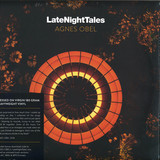
to Me, Sounds Have Always Been More Interesting Than Words,' Says Agnes Obel. i Love It When The Voice Becomes An Instrument And You Almost Forget It's A Human Voice.' Never Is This More Apt Than On This Beautifully Programmed And Bewitching Selection Of Music.
Agnes' 2010 Debut Album Philharmonics Went Platinum In France And Belgium And, Unsurprisingly, Quintuple Platinum In Her Native Denmark, Where She Also Won Five Danish Music Awards (equivalent To The Brits) In 2011. The Follow-up Aventine, Released In Late 2013, Was Imbued With The Same Measured Calmness As Her Debut. It Went Platinum In Belgium And Gold In Denmark And France.
For The Mix You Have In Your Hands It Feels Almost As If Agnes Has Scoured The World Looking For Kindred Spirits - Or Kindred Songs. There's A Quietude About It All, The Antithesis Of A Rush Hour, Like A Frozen Lake On A Sunday Morning. This Is Aided By A Veritable Cornucopia Of New Obel Material, Including A Haunting Reading Of Danish Song 'glemmer Du', Inger Christensen's 'poem About Death' Set To Original Music, And An Agnes Original, 'bee Dance'.
Among Them, There's The Enigmatic Jamaican Singer Nora Dean Who Weighs In With The Hypnotic And Slinky Duke Reid Production, 'ay Ay Ay Ay (angie-lala)' And The Sparse, Sardonic 'party Girl' By Michelle Gurevich, So Good It Inspired The Eponymous French Movie. There Are The Plangent Voices, The Bulgarian Folklore Choir, Nina Simone, Ray Davies And Agnes Herself, Ringing True. Somehow, Ms Obel Makes Even Makes The Electronic Tracks Bow To Her Needs As With Yello Whose 'great Mission' Is More Martin Denny Than Underworld And Cult Greek Composer Lena Platonos' 'bloody Shadows From A Distance' Pulses Gently Rather Than Throbs And Can's Recently Rediscovered 'obscura Primavera', Unusually Hushed.
"i Was Surprised At How Much Time I Ended Up Spending On This. I Collected All The Songs Together With My Partner Alex And We Just Spent Time Listening To Records, Trying To See What Would Fit Together. Some Of The Music I've Included Here Is On Mixtapes We Made When We Were Just Friends As Teenagers. Each One Of The Tracks Produces Stories In My Head." - Agnes Obel, February 2018
out of Stock
Last delivered 2 years ago available to reorder, subject to availability
Only one month after the release of their first ep on MT on May 2018, Vactrol Park continue surprising, this time with a full LP in the shape of 'Music from the Luminous Void'.The album sees VP delve much deeper into more atmospheric realms. Using modular synths and unexpected drum machine sequencing they leave the 4X4 beats behind in favor of off-world rhythms and ever growing bass. Starting with Drops's high frequency tension, laying on top of those heavy kick drums it keeps on growing and growing. From there it moves to the 'End of the party' groove that is Novikov's Notation, and its trippy monotonic rhythm. The A-side ends with the heavy sampled ambient track Macbeth, bringing forward that mesmerizing flute solo by Italian artist Luca Spagnoletti yet succeeding in avoiding the kitsch, and with a touch of class. The B-side delves even deeper into ambience and atmospheric muzak. Starting with Bells, that features again Spagnoletti on flute. Then we get into the real gems of the album - Anstruther and Glove. The first is a pure trip into modular psychedelia and repetitive jazzy-like drum rhythms, creating tension right from the start and plays with it throughout the track before decaying slowly into Glove, which is in sense both the catharsis and the decompression session of the album. Like a 2018 version of Vangelis, this track's soundscape will keep you dreaming with your eyes closed long after the album ends.
It's been over 10 years since the release of Gui Boratto's breakthrough full length debut 'Chromophobia'. As to what its title suggests, he shook up the techno game with a contrast of lushly coloured minimal grooves and melody, whilst many will recall that the album included the highlight single Beautiful Life' which became a dance floor anthem for that era. Four albums in and countless EPs and remixes under his belt, the Brazilian producer's unique savoir-faire in carving out a functional album out of diversely routed singles and features is back at it on his fifth studio LP, 'Pentagram'. Here Gui Boratto lays down a nuanced 12-track narrative that reinvigorates his signature sound into a refreshingly different perspective that feels all too familiar - including the return of Beautiful Life' vocalist (and Gui Boratto's wife) Luciana Villanova on the single "Overload".
Through his signature kaleidoscopic approach, Boratto delivers an album built as a far-reaching hub-and-spoke system, broadly inclusive as can be. From the opening cut, 'The Walker' - hot on the trail of Tears For Fears 'Elemental' (one of Boratto's "favourite 80's bands") - to the hi-NRG euphoria of 'Forgotten' and its pounding tech alter ego 'Forgive Me'. "I was going into 2 different directions", Boratto says, "the typical indie- electronic-rock' Boratto kind of production like It's Majik' or Like You' and a much more techno approach." He goes on, "I decided to split them into two twin sister songs. When I play live I always put these two songs together."
The Brazilian Producer further embraces the pop-friendly essence of his past work on tracks like 'The Phoenix', featuring vocalist Nathan Berger, and 'Overload', both melding acidulous synthlines with laser-precise breaks, vox hooks and drops calibrated for extended radio and club use, although sieved through his distinctive rainbow-hued musical prism. For the symbolists out there, the album's pared-down closer '618' duration accidentally happens to equate the proportions of the said pentagram. "Coincidence" Boratto questions, and capsulises, "not so ufanista and supporter of Brazilian neo-concretism, but I guess the brazilian sculptor Lygia Clark also inspired me a lot. Not the meaning of her sculptures, but the shape of the hinge of most of her work. I've wanted to transmit the scientific pentagram's point of view. It's not a religious kind of thing."
Whereas 'Spur' (a field-tested 808 and 909-heavy "purist track", "very, very old school" Boratto insists) and 'Alcazar' are sheer smooth-edged four-to- the-floor epics, the album also shares its lot of startling moments, such as with the John Barry'esque 'Scene 2' (with a hint of Amon Tobin, 'Easy Muffin' style, throw in) and its refined string-laden buildup, 100% fitted for a 007 opening credit sequence, or with 'Hallucination' (feat B.T.) and the further James Holden-ish title-track 'Pentagram' (think 'The Idiots Are Winning'), "one of those exercises I did when I got my Buchla modular synth" Boratto analyses, "I think I've used more then 30 different snares, with different delays and reverbs. The whole song is alive". And so is 'Pentagram' in its entirety: alive and definitely just as manifold and hopeful as its architectonics are the stuff of science and dreams all at once.
Es ist zehn Jahre her seit der Veröffentlichung von Gui Borattos bahnbrechendem Debütalbum - Chromophobia . So wie der Titel vermuten ließ, war das Album mit seinen kontrastreichen Minimalgrooves und den üppig gefärbten Melodien ein Schocker im besten Sinne. Ihr erinnert euch sicher noch an die Hit-Single - Beautiful Life , eine Dancefloor-Hymne aus dieser Zeit. Nach vier Alben und unzähligen EPs und Remixen ist das einmalige Savoir-faire des brasilianischen Produzenten, aus vielfältigen Singles und Features stimmige Alben zu schaffen, auch auf seinem fünften Studioalbum - Pentagram zu hören. Hier legt Gui Boratto ein Zwölf-Track-Narrativ vor, das seine Handschrift auf erquickende Weise wiederbelebt. Wiederbelebt wird auch die Stimme von - Beautiful Life (die der Frau Gui Borattos gehört) auf dem Stück - Overload .
Durch seinen charakteristisch kaleidoskopischen Ansatz liefert Boratto ein Album, das gebaut ist wie die Speichen deines Fahrrads, von dem Opener - The Walker - direkt auf der Spur von Tears For Fears - Elemental (einer von Borattos - favourite 80's bands ) - zur Hi-NRG-Euphorie von - Forgotten und seinem stampfenden Counterpart - Forgive Me . - Ich bin in zwei unterschiedlichen Richtungen gegangen , sagt Boratto: - den typischen ,Indie-Electronic-Rock'-Weg wie in - It's Majik oder - Like You und den Techno-Weg. Er fügt hinzu: - Ich hab mich entschieden jedem Track seinen Zwillings-Track an die Seite zu stellen. Immer wenn ich live spiele lege ich die zwei Stücke zusammen.
Der brasilianische Produzent erschließt weiter die Pop-Essenz seiner vergangenen Arbeit auf Tracks wie - The Phoenix (feat. Nathan Berger) und - Overload . Beide kombinieren zwitschernde Synthi-Melodien mit lasergenauen Breaks, Hooklines, Drops und sind wie gemacht für die Rotation und den Club. Und für die Symbolisten da draußen: die Länge des reduzierten Closers - 618 beträgt zufälliger Weise genau die Proportionen des besagten Pentagramms. - Fügung , fragt Boratto und fasst zusammen: - Ich bin kein Anhänger des brasilianische Neo-Konkretismus , aber ich glaube die brasilianische Künstlerin Lygia Clark hat mich sehr inspiriert. Nicht die Bedeutung ihre Skulpturen aber die Form der meisten ihrer Arbeiten. Ich wollte den wissenschaftlichen Blickwinkel auf das Pentagramm übersetzen. Nicht im religiösen Sinne oder so."
Während - Spur (ein erprobter - purist track auf der Basis von 808 und 909, - sehr, sehr old school , wie Boratto betont) und - Alcazar glatte Vierviertel-Epen sind, hält das Album auch Überraschungsmomente bereit. Z.B. das John Barryschen - Scene 2 (auch eine Spur von Amon Tobins - Easy Muffin ist darin zu hören) und seinem Streicher-Aufbau, der hundertprozentig geeignet wär für eine Eröffnungssequenz in einem Bond-Film. Auch - Hallucination (feat. B.T.) oder der James-Holden-hafte Titeltrack - Pentagram (wir denken da an - The Idiots Are Winning ) wäre da zu nennen. - Einer dieser Übungen, die ich gemacht habe, als ich meinen Buchla-Modular-Synthesizer bekommen habe, war , erinnert sich Boratto, - mehr als 30 verschiedene Snares, Delays und Reverbs zu verwenden. Der ganze Song sollte am Leben sein. Und so ist - Pentagram im Ganzen: lebendig und sicher genau so vielfältig wie sein Bauplan, der auch der Wissenschaft und den Träumen zugrundeliegt.
out of Stock
Last delivered 3 years ago available to reorder, subject to availability
Gaining traction, gaining speed, the primaeval ritual reaches its boiling point, melting the borders of mind and flesh: a turgid vortex of unstable potential, constantly mutating and morphing itself. Unformed and unstructured morphogenetic flows of matter-energy-information, self-organizing processes constituting a veritable non-organic life: the Body without Organs, that glacial reality where the alluvions, sedimentations, coagulations, foldings, and recoilings that compose an organism occur, a motherly womb detonating hydrogen bombs in her prefrontal cervix, atomizing the doors of perception with sheer gargantuan sonic tremor.
Closed Paradise brings his inimitably smooth ethos to Lovedancing. His sampladelic originals are a pastiche of sources, glued together for the booty and soul. At his request, none other than Whiskey Disco's own, Pontchartrain and The Silver Rider remix to round out and bring added funk and flex to the array.
out of Stock
Last delivered 5 years ago available to reorder, subject to availability
Rebirth return for the second in their LTD series. Argy opens up the e.p. with an atmospheric arp laden stomper enriched by the magical vocals of Blue Jay. Acid Pauli then take on remixing Modular Project's 'Leaving', coupling glitchy vocal loops and pulsating synths together with a hypnotic groove to create a trippy minimal roller. Closing out the e.p. Tiger & Woods add their trademark touch to Lele Sacchi's 'Dreaming Won't Do', focusing the track around the exuberant piano melodies whilst manipulating the vocal sample into a percussive snare element to give a distinctive feel to the remix. Killer work as always from the Rebirth crew.
Enigmatic producer Waxwood has a genuinely global outlook. Born in Russia, resident in Brooklyn and a regular visitor to Los Angeles, he can often be found jetting off to far-fung parts of the World in order to make feld recordings and immerse himself in different musical cultures.
You can hear these disparate global infuences and inspirations in
Waxwood's frst single for Claremont 56, which comes on the back of a near legendary 2015 cassette for NYC's Styles
Upon Styles, Sahasraha, which magically fused tropical hand
percussion and densely layered feld recordings with lilting ambient chords, hypnotic electronic rhythms and all manner of intoxicating
aural fourishes. 'Kama' is a slightly different beast from its' predecessor, with a sunny disposition and laidback breeziness throughout. Although underpinned
by a sturdy kick-drum pattern, its chiming melodies and metallic
percussion fourishes - reminiscent of indigenous music from far-
fung nations such as Malaysia and Indonesia - combine with gentle acoustic guitar motifs and waves of acid-esque electronics to create a beguiling and life-affrming mood. It offers more proof that Waxwood is a producer with a unique musical vision. The track's inherent gentle breeziness is explored in greater detail on the accompanying remix, which has been provided by Phantom Island regulars Fuga Ronto (AKA Swiss musicians/producers Ron Shiller and Tobi Schweizer). Riffng on Waxwood's original, they've added superb new vocals and instrumentation - think dreamy harmonies, tumbling synthesizer melodies and mesmerizing guitar parts - to create a sunset-friendly Balearic revision that's both stunningly beautiful and dazzlingly sun-kissed.
Music and Poetry of the Kesh is the documentation of an invented Pacific Coast peoples from a far distant time, and the soundtrack of famed science fiction author, Ursula K. Le Guin's Always Coming Home In the novel, the story of Stone Telling, a young woman of the Kesh, is woven within a larger anthropological folklore and fantasy. The ways of the Kesh were originally presented in 1985 as a five hundred plus page book accompanied with illustrations of instruments and tools, maps, a glossary of terms, recipes, poems, an alphabet (Le Guin's conlang, so she could write non-English lyrics), and with early editions, a cassette of field recordings' and indigenous song. Le Guin wanted to hear the people she'd imagined, she embarked on an elaborate process with her friend Todd Barton to invoke their spirit and tradition.
For Music and Poetry of the Kesh, the words and lyrics are attributed to Le Guin as composed by Barton, an Oregon-based musician, composer and Buchla synthesist (the two worked together previously on public radio projects). But the cassette notes credit the sounds and voices to the world of the Kesh, making origins ambiguous. For instance, The River Song' description reads, The prominent rhythm instrument is the doubure binga, a set of nine brass bowls struck with cloth-covered wooden mallets, here played by Ready.' According to writer and long-time friend of LeGuin, Moe Bowstern (who pens the liners for the Freedom To Spend edition of Kesh), Barton built and then taught himself to play several instruments of Le Guin's design, among them the seven-foot horn known to the Kesh as the Houmbúta and the Wéosai Medoud Teyahi bone flute.' Barton's crafting of original instruments lends an other-worldly texture to the recordings of the Kesh, not unlike fellow builders Bobby Brown and Lonnie Holley. Bowstern notes, Other musician / makers have crafted their own Kesh instruments after encountering the earlier cassette recordings that accompanied some editions of the book.' Both Barton and Le Guin are sensitive to the sovereignty of indigenous Californians and were careful not to trample the traditions of the Tolowa people who lived in the valley long before the Kesh. You research deeply, and then you bring your own voice to the table,' said Barton. Within the Kesh culture, the numbers four and five shape the lives, society and rituals. Barton composed loosely around these numbers, patiently listening to the land of Napa Valley for signs and audio signals from the natural elements. Todd incorporated ambient sounds of the creek by Le Guin's house and a campfire they built together. The songs of Kesh are joyful, soothing and meditative, while the instrumental works drift far past the imaginary lands. Heron Dance' is an uplifting first track, featuring a Wéosai Medoud Teyahi (made from a deer or lamb thigh bone with a cattail reed) and the great Houmbúta (used for theatre and ceremony). A Music of the Eighth House' sends gossamer waves of the faintest sounds to float on the wind.' Like the languages invented in the vocal work of Anna Homler, Meredith Monk, and Elizabeth Fraser, the Kesh songs and poems play with the shape of voice.
The Music and Poetry of the Kesh cassette was meant to accompany and enhance the experience of reading Always Coming Home. Presented in this edition as a long-playing album, where only traces of the book linger (the jacket offers some of Le Guin's illustration, and a letterpressed bookmark featuring the the narrative modes of western civilization and the Kesh valley is included), the music alone breaking the silence of what might be. It can transport—offering a landscape for imagining a future homecoming. One in which we are balanced, peaceful, and tend to the earth and its creatures. A line from the Sun Dance poem reminds us, We are nothing much without one another.' Freedom To Spend gives new life to the recordings of the Kesh people in the first ever vinyl edition of Music and Poetry of the Kesh, out on LP, and digital formats on March 23, 2018. The LP will include a deluxe spot printed jacket with illustrations from Always Coming Home, a facsimile of the original lyric sheet, liner notes by Moe Bowstern, multi-format digital download code and a limited edition bookmark letter pressed by Stumptown Printers in Portland, OR.
This past Monday, January 22, Ursula passed from this realm to another leaving a life spent building and exploring other worlds while challenging social concepts of the real word she inhabited.
Freedom To Spend had been working under Ursula's enthusiastic endorsement and with Todd Barton, her musical collaborator on Kesh, to give the music that accompanied her 1985 epoch a new life. With the Le Guin family's encouragement to move forward with our planned release, we are humbled to play this small role in sharing Ursula's work.
As Pete Swanson, one third of Freedom To Spend, stated, Ursula's legacy is her work which transformed the world, and this is another piece of the universe that her imagination birthed becoming real.' Listen to A Teaching Poem / Heron Dance' below.
Miss Kittin & The Hacker are the Electro duo of Caroline Hervé and Michel Amato from Grenoble, France. The pair met during the early 90s at a rave and soon after bought turntables and began DJing. In 1996, they started writing music heavily influenced by 1980s synthpop and post-punk bands like Fad Gadget, DAF, Liaisons Dangeuresues, and Yazoo, as well as Italo Disco. Bored by the techno scene at the time, they set out out to lighten the serious tone and bring a campy sexiness to the dour musical landscape. Upon hearing their demos DJ Hell signed them to his Munich-based International DJ Gigolo label and released their first 2 EPs in 1998 and 1999. Their debut album 'First Album" was released in 2001 followed by . in .
Lost Tracks Vol. 2' contains 4 previously unreleased demos recorded between 1997 and 1999. The duo fused 80's European New Wave/Italo Disco with 90's Detroit Electro acts like Le Car and Dopplereffekt. By utilizing verse-chorus structures, they playfully shook up the loop based hard techno and electro that was popular at the time. Their studio set up at the time was a Korg MS-20, Roland SH-101, TR-606, TR-808, Siel DK80, and Boss DR-660 drum machine. The songs are direct, spontaneous, seemingly improvised in places. Miss Kittin sings about falling in love in the new millennium, snuff movies and controlling the unknown trip to death, all in her cheekily derisive French accent.
All songs have been transferred from the original DAT tapes by the band and remastered for vinyl by George Horn at Fantasy Studios. The vinyl comes housed in a glossy jacket featuring a black and white photo of the duo taken in 1996. Each LP includes a postcard with liner notes from Miss Kittin and The Hacker designed by Eloise Leigh. As Miss Kittin says of these demos, We were naive, innocent, adventurous and we didn't expect anything in return'
Fresh on Francis Harris' Kingdoms imprint comes Rasmus Juncker's 'Ophold' - six tracks of sublime atmospheres and textures. The Danish musician, sound composer and DJ fits perfectly with the label's aesthetic, joining the dots between ambient, leftfield electronica and modern classical.
Juncker has a background in studying jazz drumming and has been playing improvised music within the jazz domain for many years. He also started to DJ at the age of 14 and was introduced to the world of electronic music production at the same time.
When Rasmus started to think about his debut album he spent several months trying to find his own way to combine his favourite musical influences, improvisation, electronics and classical music. 'Almost a year later', Juncker says, "I went to a sensory deprivation floating tank in Copenhagen while researching for another performance and while I was lying there, floating in the water, deprived from most of my senses, I got the idea to do something drastic in my musical process. Philosophers like Immanuel Kant describe this deprived state as a mental 'Cesura', which became some sort of guideline for the album."
So Juncker decided to start working on the album by leaving the process as well as the final result completely open. 'I wanted to create sounds and music that I had no idea what they would sound like, but would feel like a mental 'Cesura', an 'Ophold' (in Danish)' he states.
He invited musicians, one after the other, to his studio. "I had an electronic musician to improvise patterns and new interesting sounds based on my experience in the deprivation tank. I chose some of the takes and some weeks later I invited a jazz guitarist to listen and improvise on top of what he heard. Then a classical string quartet and a double bass player came to my studio months later, and finally I recorded myself on percussion and drums.
Throughout the recording process I've been experimenting with special microphones in various setups, used noises from the recordings and the room became absolutely essential for the pieces." Juncker states.
"The material I used was all first take improvision which I arranged, layered and edited into compositions. The final pieces were mixed by Andreas Pallisgaard with the same improvised and experimental approach of the recording and the production. None of the musician met each other, but their sounds developed into something completely fantastic I think. The presence of the acoustic instruments and the depth and complexity of the synthesized layers gave some kind of an indescribable sounding music from another galaxy.
Track by track:
'Norddrum' starts proceedings - ethereal, grainy sounds merge and disassociate, as a distant rhythm gradually finds its way to the fore.
The second track, 'Sora' , clocking in at under 2 minutes, is an interlude full of strings, pads, and percussive hits, rich in feeling. This strong sense of sound design and seemingly disparate sounds woven together into a whole carries through into 'Eksotisk Tirsdag' - the strings, plucked instruments and electronics harking back to 4th world adventurers like Jon Hassel and Brian Eno.
'Cyklus' dives into drone textures, pulsing and modulating to create an unearthly soundtrack.
'Havekunst' is another 2 minutes interlude, this time bringing a fully charged rhythmic barrage to the front.
'Cesura', the final track is in essence the EP's centerpiece - a sprawling 8 minute journey that traverses tense, fibrous sections and on into pulsing modular passages, before opening up into glorious moments of wonder and brightness. It's a hugely bold yet fragile endeavour, in line with the whole release.
'Your mind makes it real.' - Ahwlee Vital Sales Points: Extensive Global Sticker Promo Campaign Special Bonus Tracks Release Full-Life April 2018 (digital only) Life2 Quotes : 'Once you press play you want to listen to it from front to back.' - Danny Veekens (The Find Mag) 'Life2 embodies the essence of the ancestors. The marriage of his kicks, snares and hi hats with those lush soul chops reminds me of the first time I fell in love with hip hop.
Melancholic, wistful Rhodes chords float beneath Sarah Williams White's trademark vocal harmonics before delving into a deeply moving bass led melody that gets right under the skin. Something very special to get us excited about the new Jonny Drop LP.
Backed with an exceptional, bumping remix from the ever extraordinary Julien Dyne.
Presenting 'Envelope'. Album written, produced & mixed by Milan W. and pressed on 180g vinyl, by Ekster. Coming out on the 6th of June 2018, with foil-stamped cover-drawing by Gerard Herman. Mastered & cut by Helmut Erler at Dubplates & Mastering.
.
Milan W (AKA Milan Warmoeskerken) is an Antwerp-based musician. In 2015 he released the Slo Mo cassette, on local label JJ Funhouse. The Intact LP a year later. Compositions constructed from gentle, yet persistent, rhythms. Intricately textured downtempo echoes. Brain-dancing, rather than four-to-the-floor raving. 2017`s split with Ekolalis, for The Hague`s BAKK, made clear the direction Milan`s headed in. His contribution being a seventeen minute float. The kick largely removed. The textures cut-up, expanded and magnified. Envelope, for Ekster, builds on this work.
The harlequin turns the handle. The contraption sucks in air, and breathes. Blows out tone poems. Wordless ballads that soundtrack enchanted scenarios. Issues forth magic. A sorcerer`s apprentice casting its spell. Animating the inanimate. To everything a life. Sets the frozen fluttering. Pirouetting in red shoes. Illuminates what was dark. Astma sings a Gamelan lullaby. Summons comforting angels to a post-Industrial landscape. Glaasjes has Jazz ghosts inhabit an empty bar room. Spirits stealing excuse-me`s under its deserted spot. In Limbo amplifies their whispers. Lead soldiers court jewellery-box ballerinas behind shuttered shop fronts. On Heraldic Snippets, a tin infantry marches. Ten thousand men up to the top, and back down again. Keys make-believing that they are massed brass and fife.
The bellows pump, and the pipes all the while wheezing. An automaton philharmonic at the bidding of a steam-punk master. Analogue and digital. Clockwork and glitch. Malady finds sounds isolated, extrapolated, mutated. Orchestral`s organ-grinder moves with urgency, and alchemy. Spinning straw into gold. Snare rolls become bubbling mercury. Metallic, yet fluid. Racing at the speed of flight and escape. Slope is the music of water chasing through crystal caves. Slow Runner, a funeral crawl. Shoved into motion by a drama of strings remembered.
Like the charismatic Rat-Catcher of Hamelin, the harlequin turns the handle, and we bang the cup.
For the last decade, Argentina has become the epicenter of a musical explosion that characteristically blends folk music from the surrounding Andes and electronic beats. The artist arguably responsible for its emergence on a global platform is one named Chancha Via Circuito- a Buenos Aires native named Pedro Canale whose first album Rodante (2008) opened the floodgates by pushing the borders of Cumbia listeners weren't even aware existed. He's gone on to release other highly acclaimed albums such as Rio Arriba (2010), which Resident Advisor described as 'aural magical realism', and Amansara (2014), which catapulted him onto acclaimed international stages and received praises from Pitchfork to the New York Times.
Four years later, in the midst of some very notable global turbulence, Chancha Via Circuito brings us his highly anticipated new album Bienaventuranza- a word that essentially means bliss. Replete with his signature touches of Andean instruments (think lots of flute and charango), the folkloric elements on this album blend fluidly with danceable and digestible electronic beats. He's been cooking this record slowly, with unprecedented amounts of care and in a much more collaborative manner than his past albums.
Appearing on the album are heavy hitters in the digital cumbia scene, including Mateo Kingman, Kaleema, and Lido Pimienta, all of whom contribute their highly distinguishable sounds to the natural flow of the album. Most of these collaborations came about almost effortlessly. La Victoria is a track that blends cumbia, dancehall, and a bit of mysticism- carried by Lido Pimienta's luminous voice, Colombian Dancehall wizard Manu Ranks happened to be in town and slipped into the song naturally. Kawa Kawa came from an improv jam during rehearsal one day with Kaleema (Heidi Lewandowski) and Federico Estevez (percussionist in Chancha Via Circuito). Niño Hermoso, which is lyrically a fable, sounds the way it does because Pedro saw a video of Gianluz (Gianluca Zonzini), who he knows from dance classes, singing a Pocahontas song on Youtube.
As dancefloor-friendly as it is mystical, Bienaventuranza is as Chancha as it gets- with elements from Cumbia to Dancehall to Andean Folk to Global house, crystal clear production, and collaborations that are evidently natural and genuine, the record holds true to the sound that Canale has played such a huge part in creating. Since the release of his last album, the digital folk scene has also grown exponentially. From a new generation of producers to more listeners in unassuming parts of the globe, Pedro has been humbled to see the sound develop- and proves with this album that he's grown swiftly alongside it.
out of Stock
Last delivered 14 months ago available to reorder, subject to availability
A great compilation can open the gate to another world. Who knew that some of the most exciting Afro-funk records of all time were actually made in the small West African country of Benin Once Analog Africa released the first African Scream Contest in 2008, the proof was there for all to hear, gut-busting yelps, lethally well- drilled horn sections and irresistibly insistent rhythms added up to a record that took you into its own space with the same electrifying sureness as any favourite blues or soul or funk or punk sampler you might care to mention.
Ten years on, intrepid crate-digger Samy Ben Redjeb unveils a new treasure- trove of Vodoun-inspired Afrobeat heavy funk crossover greatness. Right from the laceratingly raw guitar fanfare which kicks o Les Sympathics' pile-driving opener, it's clear that African Scream Contest II is going to be every bit as joyous a voyage of discovery as its predecessor. And just as you're trying to get o the canvas after this one-punch knock out, an irresistible Afro-ska romp with a more than subliminal echo of the Batman theme puts you right back there. Ignace De Souza and the Melody Aces' Asaw Fofor" would've been a killer instrumental but once you've factored in the improbably-rich-to-the-point-of-being-Nat-King-Cole-influenced lead vocal, it's a total revelation.
The screaming does not stop there, in fact it's only just beginning. But the
strange thing about African Scream Contest II's celebration of unfettered Beninese creativity is that it would not have been possible without the assistance of a musician who had been trained by the Russian secret services to "search and destroy" enemies of the country's (then) Marxist-Leninist president Mathieu Kerekou.
Already familiar to fans of the first African Scream Contest as a mainstay of ruthlessly disciplined military band Les Volcans de la Capitale, Lokonon André vanished in a cloud of dust at Ben Redjeb's behest with a list of names and some petrol money, only to return a few days later having miraculously tracked down every single name he'd been given. The source of this Afrobeat bounty-hunter's impressive people-finding skills - his training with the KGB - highlights the tension between encroaching authoritarian politics and fearless expressions of personal creative freedom which is the back-story of so much great African music of the 60s and 70s. Happily, in this instance, Lokonon was tracking the artists down to oer them licensing deals, rather than to arrest them.
Where some purveyors of vintage African sounds seem to be strip-mining the
continent's musical heritage with no less rapacious intent than the mining companies and colonial authorities who previously extracted its mineral wealth, Samy Ben Redjeb's determination to track this amazing music to its human sources pays huge karmic dividends.
Like every other Analog Africa release, African Scream Contest II is illuminated by meticulously researched text and eortlessly fashion-forward photography supplied by the artists themselves. Looming large - alongside Lokonon André - in the cast of biopic-worthy characters to emerge from this seductive tropical miasma is visionary space-nerd Bernard Dohounso, who laid the foundations for Benin's vinyl predominance by importing and assembling the turntables that would play the products of his Bond villain-acronymed pressing plant SATEL, a factory that would revolutionise the music industry in the whole region.
The scene documented here couldn't have been born anywhere else but in the Benin Republic , and the prime reason for that is Vodoun. It's one of the world's most complex religions, involving the worship of some 250 divinities, where each divinity has its own specific set of rhythms, and the bands introduced on the African Scream Contest series and other compilations from that country were no less diverse than that army of dierent Gods. At once restless pioneers and masters of the art of modernising their own folklore, the mystic sound of Vodoun was their prime source of inspiration.
One especially irascible Vodoun-adept was Antoine Dougbe, who styled himself The devil's prime minister' while turning ancestral rhythms into satanically alluring modern beats. As Orchestre Poly-Rythmo songwriter Pynasco has observed sagely, Evil is not elsewhere, evil extends into the house'. And African Scream Contest II is a gloriously cinematic road-trip through an undiscovered realm of music lore whose familiarity is every bit as thrilling as its otherness.
Zia Mohiuddin Dagar : rudra veena
Annie Penta : tanpura
Concert recorded at the home of Shantha and Niranjan B. Benegal, Seattle, Washington 9 March 1986.
Recorded by Niranjan Benegal. Files obtained from Jeff Lewis.
Mastered & Cut by Rashad Becker at Dubplates & Mastering 1117 & 0318.
Liner notes by Renaud Brizard, edited by Stephen O'Malley & Ian Christe.
Front and back cover photos by unknown.
Interior photography by Niranjan B. Benegal, Dan Neuman & unknown, Seattle 1978-1980. .
Around ten years ago, deep into a cozy and hazy night following a concert with my sound brothers Daniel O'Sullivan and Kristoffer Rygg in London (as Æthenor), they graciously introduced me to a recording of rudra veena (a kind of noble deeper bass relative to the sitar, in a way) as performed by dhrupad master Zia Mohiuddin Dagar.
Dhrupad, for those who do not know, is a branch of Hindustani classical music said to "show the raga in its clearest and purest form". It's pacing concentrates heavily on the slow, contemplative alap section and works with specific microtonal gestures and deep characteristics of resonance ... in short I was hooked on this new (to me) and ancient form of music from the first listen, and feel that a more or less continual listening & reviewing of Zia Mohiuddin Dagar's recordings in the years that followed have influenced my own approach to music quite heavily (if, albeit, indirectly).
In early 2015 I was able to make contact with Zia Mohiuddin Dagar's son Bahauddin and some of his American students/disciples, primarily Jeff Lewis. Over time we developed a friendly and educational exchange, access a massive archive of recordings and developed these two paired titles for my label. It's been a long path to arrive at actually releasing them but also probably in many ways one of the most significant releases I've worked on. And I'm proud to be able to reveal these to date unreleased archival recordings of one of the masters of dhrupad, Z. M. Dagar, to the public for the first time.
Zia Mohiuddin Dagar was the nineteenth generation in a family tradition known as Dagar gharana, a rich lineage which continued and performed the musical form of dhrupad (Bahauddin Dagar continues the lineage as a master rudra veena dhrupad player of note today). Initially, dhrupad was a rigorous, austere, devotional genre that was sung in Hindu temples. But between the 16th and the 18th centuries, it became the preeminent genre in royal courts in North and Central India, and the Dagar gharana developed and continued publicly following the eventual loss of court patronage for dhrupad in the 19th century. The French ethnomusicologist Renaud Brizard covers the story of Zia Mohiuddin Dagar's life and teaching (a long story also in Seattle, my hometown!), the Dagar family and gharana, the rudra veena and more topics in an extensive set of liner notes in this release.
Ragas Abhogi & Vardhani were recorded in a private house concert in Seattle at the home of the Benegals in March 1986 (the week before the accompanying release SOMA029 Raga Yaman was recorded). The Benegals were friends (& Shantha Benegal was also a student) of Dagarsahib who sometimes hosted Hindustani music concerts in their home. It's a rare glimpse of a more intimate, personal and perhaps different kind of performance considering the form of dhrupad.
-Stephen O'Malley, March 2018, Paris, France
Stephen O'Malley would like to especially thank Bahauddin Dagar, Jeff Lewis & Jody Stecher for their enthusiasm, cooperation, patience, insight & advice toward developing these editions. Thank you also to Laurel Sercombe & John Vallier from the University of Washington Ethnomusicology Archives, Shantha Benegal, Philippe Bruguière, Dan Neuman, Ira Landgarten, Renaud Brizard, Ian Christe, Peter Rehberg, Rashad Becker, Daniel O'Sullivan & Kristoffer Rygg, all for their direct or indirect cooperation, assistance & patience.
Mgun, Or Manuel Gonzales To His Friends, Has Long Been A Fixture Artist For Dba. Since Making His Uk Debut On The Label In 2012, Having Already Featured On Detroit's Celebrated Wild Oats Imprint, He Has Smoothly Yet Slowly Progressed Through The Presses Of Fellow Dance Music Tastemakers Third Ear Recordings And Kiev's Wicked Bass. Following 2016's Warmly Received 'gentium', 'axiom' Finds Manuel Gonzales Back On Dba With An Index Of Offbeat Jams That Couldn't Have Emerged From The Mind Or Studio Of Any Other Producer.
Once More Envisioned And Engineered In His Native City Of Detroit, The Record Finds Mgun In More Auspicious And Domestic Circumstances. Now Firmly A Father And A Homeowner, 'axiom' Allows Gonzales To Flex His Party Muscle, While Further Pushing The Elastic Boundaries Of His Notoriously Unpredictable And Brilliantly Raw Production Style. Across Twelve Tracks, Listeners Are Offered An Unpredictable Trip Into The Restlessly Experimental Snatches Of Studio Time Gonzales Is Afforded Away From His Day Job At The Legendary People's Records Store. It's Here That Gonzales Absorbs Endless Releases And Rediscoveries Passing Through The Stock, Trading The Occasional Tip With Some Of Detroit's Best Known Producers.
Beginning With The Off-kilter Funk Of 'you Inside Me', 'axiom' Expertly Toes The Line Between Full-bodied, Soulful Club Weapons ('you're Never Home', 'nichrome'), And The Sort Of Lo-fi Tinged Jams That Enable Gonzales's Unusual Weirder Hooks And Rhythms To Extend Into Something Altogether More Hypnotic And Psychedelic ('kartwheel', 'sil').
There Are New Sounds And Approaches Throughout. Centrepiece Track 'see It For Myself' Finds Gonzales On Vocal Duties For The First Time, And The Dystopian Tinted 'vap' Finds His Sound Expanding Into Weightless, Dreamlike Electro. And While Certain Tracks Date Back Years, Having Slowly Matured To Full Funk, Others, Such As The Gloriously Unhinged '359' Were Rapidly Produced To Capture The Inspiring Energy Of A Late-night Glaswegian Rave.
Simply Put, 'axiom' Does The Work Of Representing Mgun At His Musical Best, An Analogue Celebration Of Pure Party Potential.
A near-perfect record, White Magic was the lauded CD-only debut album by Sorcerer (Californian native Dan Judd, one half of Windsurf with Hatchback). Just in time for Spring/Summer, we present the first ever vinyl issue, released as a deluxe double LP.
Back in summer 2007, this majestic set gently nestled itself into the Balearic soundtrack-to-summer slot for many, making him a household name for Cosmic Disco heads alongside the likes of Lindstrom, Metro Area, Todd Terje, Mudd, Studio and Quiet Village. In the intervening years, exceptional producers have created vibrant variations on the dreamy, dubby, melodic nu-disco theme. Happily, the emergence of such luminaries as Jex Opolis, Harvey Sutherland, Suzanne Kraft, Tornado Wallace et al has only served to make the master - Sorcerer - sound ever more brilliant and vital.
Utilising his array of guitars, drum machines, synths, and trusty MPC, the loved-up Sorcerer sound inspires halcyon memories of warm days, endless sunsets and pure youthful abandon. Influenced by surf, 80s dance pop, acid-R&B, space jazz, krautrock, disco, dub, and am radio gold, his music maps a tour through a uniquely Californian lifestyle. Yet when music so vividly captures a vibe and a feeling, it can make writing about it appear almost redundant. Instead, to glean the full colour of what your turntable will soon gratefully radiate, we prescribe the generous soundclips presented here.
And, for a unique insight into the process behind the wonderful sounds conjured up, here's Sorcerer himself:
"White Magic is a reflection of personal freedom and discovery. Having been in bands for years, this was a chance to develop music that stood alone and for me to be in full control.
I was living alone and worked on jams whenever I could. I was highly inspired by a new openness to music as a pure inspiration, not being part of any scene. I tapped into the mixes I was hearing coming out the UK where deejays were playing "cosmic" sounds that were so strangely familiar.
I was picking up all kinds of $1 vinyl and throwing bits of it into my sampler almost randomly to see what would come out.
In my mind, I was making music to be played at my friend's Broker/Dealer Pop nights where they fused golden German techno sounds with the new disco emerging at the time. Also, I took vacations and reconnected with the Pacific Ocean where I spent so much time as a kid: it spilled out into the sounds.
Lastly, I forged a partnership with Hatchback (Sam Grawe) who was working on music in the same way. I learned so much about arrangement and the colors of music. We began recording together as Windsurf and released our own stuff. It all seems like a small glorious moment in time, so I am so excited to keep the legacy alive and I continue to work on my music with these spirits inside of me."
Lovingly remastered by the esteemed Simon Francis, cut reassuringly loud on to heavyweight double vinyl and presented in a deluxe gatefold jacket with freshly commissioned artwork throughout from original designer Rich Robinson, this limited edition of 500 copies is sure to fly.
out of Stock
Last delivered 3 years ago available to reorder, subject to availability
A continuation of his kaleidoscopic sun-dappled cosmic-disco, Neon Leon was the much-loved CD-only sophomore album by Sorcerer. Just in time for Spring/Summer, we present the first ever vinyl issue, released as a deluxe double LP.
A perfectly formed suite of ten tracks featuring soft guitars, subtle synths and lightly grooving percussion, Neon Leon magically evokes that elusive summer feeling throughout. The guitar-driven "Algorhythm" serves as the album opener, blasting bold, sun-drenched jazz chords atop bright synths and groove-based drum programming. "Ride The Serpent" and "Distort Yourself" are guided by a more sultry, slo-mo disco impulse whilst the staggering "Chemise" and strident "Face It" merge 80s West Coast production sheen with Sorcerer's trademark laid back, gentle disco. "Raydio"'s undeniable head-nod groove adds a rare vocal to the proceedings, joyously combining with the bubbling cosmic funk.
Since its initial release in 2009, exceptional producers have created vibrant variations on the dreamy, dubby, melodic nu-disco theme. Happily, the emergence of such luminaries as Jex Opolis, Harvey Sutherland, Suzanne Kraft, Tornado Wallace et al has only served to make the master - Sorcerer - sound ever more brilliant and vital.
Utilising his array of guitars, drum machines, synths, and trusty MPC, the loved-up Sorcerer sound inspires halcyon memories of warm days, endless sunsets and pure youthful abandon. Influenced by surf, 80s dance pop, acid-R&B, space jazz, krautrock, disco, dub, and am radio gold, his music maps a tour through a uniquely Californian lifestyle. Yet when music so vividly captures a vibe and a feeling, it can make writing about it appear almost redundant. Instead, to glean the full colour of what your turntable will soon gratefully radiate, we prescribe the generous soundclips presented here.
And, for a unique insight into the process behind the wonderful sounds conjured up, here's Sorcerer himself:
"Neon Leon's is the name of a bar in a Elmore Leonard book I was reading on a vacation to Belize with my future wife. I was soaking up his brand of noir during the making of the songs on this record, along with another favorite Ross Macdonald. We were living in a small apartment in the Mission District of San Francisco where i had my own room to jam. It was painted Orange and Turquoise and was a very inspiring place to create and focus. I could walk out of my house to any number of hole in the wall bars where people were deejaying, hanging-out, and knew about me and my music.
After White Magic I developed more confidence in my style and process so I stuck with it and I believe it shows in the tunes I selected for the record. The sounds are rich and I dug deeper into sampling from obscure dollar records and getting looser musically. I made a handful of collage videos for the tracks at this time as well, which represent where my mind was at visually. In my mind it's Cosmic Funk that rules the day and I am thankful to have the opportunity to share it with the world again."
Lovingly remastered by the esteemed Simon Francis, cut reassuringly loud on to heavyweight double vinyl and presented in a deluxe gatefold jacket with freshly commissioned artwork throughout from original designer Rich Robinson, this limited edition of 500 copies is sure to fly.
WHEN YOU'VE FINISHED LOOKING AROUND THE WEBSITE, YOU CAN FIND US ON THESE SOCIAL CHANNELS
As we enter the Summer months, Excursions welcomes back The Showfa, with A Gospel Excursion Volume Two. Four more dishes of hot spiritual gumbo for your mind, body & soul.
Once again The Showfa has expertly cut together a concoction of gospel, soul, disco, latin, jazz, funk, and spiritual rhythm & blues. The glorious disco rework of a track called 'Amazing' sets the tone with an infectious piano riff and powerfully uplifting vocal. 'Surely Surely' follows, with a more vigorous strut, a short, sweet slice of disco funk, no messing about. 'Praising' keeps the groove and tempo solidly in a delicious eighties boogie formation, slap bass and sax in tow. The set closes out with beautiful latin-jazz tinged vibrations sauntering through 'I'll Show You The Way', before switching to the sweetest sweet soul you ever did hear. Soul food of the highest calibre.
The previous volume was shown love last year by an assortment of selectors and tastemakers, including Tony Humphries, Horse Meat Disco, Gilles Peterson, Craig Charles, BBC 6Music, Mi-Soul, Rinse FM and Mixmag, and also saw The Showfa spinning on the airwaves on NTS with Charlie Bones, and for Wax Poetics.
Another joyously ethereal platter, and another one that will never leave the box.
With this new work Maurizio Abate recovers the discourse started with Loneliness, Desire and Revenge (2016) but with a different narrative sensitivity. The symbolic air that you breathe suggests a personal and universal experience in which thoughts and perceptions remain as enveloped in an eternal cosmic wheel. It's a condition that flows sincerely into an emphatic introspection and identification between the stasis of an inner soul and the flowing vitality of stagnant aquatic landscapes. In this direction the music of Abate always condenses multiple ranges of different emotional spectra evoked by profound naturalistic references. The airy openings of the strings, the distant whispers of the harmonica, cascades of phrasings more calm or more torrential can lead into the magnificent climax of the Nostalgia. The string arrangement for violin and cello by Lucia Gasti introduces in a dimension of idyll, in elegiac passages of touching poetry almost of chamber music but at the same time wet by the pastoral and bucolic moods of autumn landscapes, they are paintings imbued with different flavors and colours that recall the light and the candor of the Venetian tonalisms or the moving paintings full of meaning of Tarkoski. In the darkest and saddest moments the open chords are like suspensions of unresolved questions and torments, but the cathartic finale with a free and minimalist piano prelude to possible future glares, almost to perceiving that even where there's stasis the sun can still shine the hope for the new on the clearing of the pond. Remains the feeling with that stylistic "freedom of expression" dear to the visionaries Fahey and Basho, but also a clear interpretation of the expressive possibility of the lead guitar, absolutely lyrical and contemporary for refinement of the crystalline sound, which places this work in parallel with the basic acoustic tests of others great like Jim O'Rourke, Jack Rose or James Blackshaw.
Danny McLewin (Psychemagik) and Jamie Cruisey have a new label of original signed artists called SPIRITS. The first release is from Mexican hotness 'Lokier' of She Made Monster and 'Jason Greer' aka 'The Machine', one of the Californian undergrounds best kept secrets. They met in 2015 at a festival in London and after spending a few days together, became musically obsessed with each other. That summer, as Jason bounced around Europe, he stayed with Lokier in Barcelona for some weeks and after long night walks, some tapas and absinthe bars they came up with their first EP together.
A1 "White Room's" slo-mo headnod film score, kick starts the EP, brooding synths buzzing with electric cocaine gloss, their oscillators fluttering like cyborg butterflies around the pulsating strobelight beat. Creepy.
A2 "Stained Glass" hits tough straight out the gate with subterranean bubbling acid bass and charges headlong into deep psychedelic territory with a goth-inspired guitar, reverb on 11, turning the track into a next-level robo-Giallo monster!
B1 "Pearly Hate" begins as if a menacing swarm of bionic rave bees is slowly surrounding you, the tension of their impending drone amping up steadily as your brain thinks: Do I run This midtempo Carpenter-esque jam is atmospheric putty in the hands of sleazoned DJ's and sounds like the beginning of a long, strange trip.
B2 "Red Floor" is a chugging, barely restrained dark disco beast, flagrantly wearing its Weatherall and Neu Beat-ing heart on its tattered sleeve, elliptical melodies keeping you from your sanity with a solid drop for the dancefloor - another one for DJ's who ride it rough.
Thus completes the first release for new label SPIRITS. Four tracks exploring another corner of otherworldly analogue hedonism for extra-dimensional travel. Keep your ear on "Red Floor", as its potential for dancefloor uplift is proven and Machine-ready! Stay jacked in for more missives soon...
Ivan Smagghe:
"When your best Mexican chola low-rider meets our favourite Californian mechanic, you get a proper slice of (Lokier and) Machine funk. This is grease electronics, black leather under the very dark sun of 'Pearly Hate' or in the bright isolation tank of 'White Room''
Re-mastering by: Ray Staff at Air Mastering, Lyndhurst Hall, London
This jazz recording is considered as the 'magnum opus' of master "drummer extraordinaire'', composer, arranger, producer, and leader Norman Connor's in a career that has spanned 4 decades. This recording is what many will consider the debut of the legendary vocalist Dee Dee Bridgewater who has since gone on to a brilliant career. Connor's put together an all-star group with Herbie Hancock and Onaje Allan Gumbs on piano and Fender Rhodes, Dr. Eddie Henderson on trumpet/flugelhorn, Carlos Garnett on tenor/soprano saxes, Gary Bartz on alto/soprano saxes, Buster Williams on bass, drummer/vocalist Bill Summers and Kenneth Nash on percussion, and effective, crucial cameos by master flautist Hubert Laws. On the song, "Love From the Sun'", Connors added Nathan Rubin on violin and Terry Adams on cello.
The 'best of the best' begins with the exotic theme of Hancock's "Revelation", doubled wordlessly and beautifully by Ms. Bridgewater over Williams bouncing ostinato bass pattern with flights of fancy from Hubert Laws on flute, and superb, luminous solos from Henderson's exotic trumpet, Garnett on soprano, and Hancock on Fender Rhodes. Garnett's "Carlos II" is another great composition with remarkable solos. Connors' own "Drums Around The Worlds'" is influenced by African and latin rhythms with emotional vocals from Summers and a drum-only section that builds in intensity. One of the high points of the album is Dee Dee Bridgewater's awesome, glorious vocalizing on Richard Clay's lovely "Love From The Sun", in one of the greatest performances in her career, arranged by Gumbs. Elmer Gibson's "Kumakucha" (The Sun Has Risen) is a blazing display of uptempo musicianship by Connor's driving drums, the propulsive congas of Summers and Nash, and exciting solos from Bartz, Henderson on trumpet, and Hancock's furious piano solo. The set ends with a marvelous "Holy Waters" composed and arranged by Garnett in a scorching performance by Bridgewater on vocals, Garnett unleashing one of the greatest solos in his storied career, followed by Gumbs' astute solo.
Written during the homecoming journey from Amsterdam to Detroit, 'The World is Detroit' marks the second full release from Anonym under his DLS moniker, a gloomy yet driving opus of more than 12 minutes. Remixes on the flip from Klakson co-boss and electro icon Dexter and US-to-Berlin associate Kenneth Scott.