Search:group a d
"Joell Ortiz & KXNG Crooked met the year they both won XXL's coveted Freshmen of the Year Award. The two's careers are as legendary as any in the rap game. Joell Ortiz started by signing to Dr. Dre's Aftermath label, then moving to Shady records as part of the Super group Slaughterhouse with Joe Budden, Royce Da 5'9 and KXNG Crooked. Add to that a fresh feature on Eminem's newest album "Music To Be Murdered By."
Meanwhile, KXNG Crooked was signed to Virgin Records at just 17 before joining Death Row Records. He's had a flourishing solo career including collaborations along the way with TechN9ne, 2Pac, Benny The Butcher, Raekwon, Akon, Ray J and more. The West Coast LBC representer KXNG Crooked and Brooklyn's Joell Ortiz have finally come together for the the joint project "H.A.R.D." on Mello Music Group.
Album produced by HEATMAKERZ, ERICK SERMON, BOOGEYMAN, ILLMIND, APOLLO BROWN, J.U.S.T.I.C.E. LEAGUE
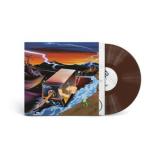
This special edition vinyl features the 24 for '24 Artist Series painting by KipDaFog."
- A1: Get It Up For Love - Doheny, Ned
- A2: Let's Put Our Love Back Together - Denne, Micky / Gold, Ken
- A3: Deco Lady - Holmes, Rupert
- A4: Over & Done With - White Horse
- A5: Liverpool Fool - Browning Bryant
- B1: Lotta Love - Larson, Nicolette
- B2: Do You Feel It - Alessi Brothers
- B3: Steal Away - Photoglo
- B4: Room To Grow - Elliot, Brian
- C1: Saturday In The Park - Chicago
- C2: Shut The Door - Don Brown
- C3: Rendezvous - Cassel, Matthew Larkin
- C4: If I Saw You Again - Pages
- C5: Losin' End - Doobie Brothers, The
- D1: Sugar Daddy - Fleetwood Mac
- D2: Steal Away - Dupree, Robbie
- D3: Spaceship Earth - Batteau, David
- D4: I've Got A Thing About You Baby - White, Tony Joe
- D5: Don't You Know - Hammer, Jan Group
RECORD STORE DAY EXCLUSIVE!
Late 70s Westcoast Yachtpop you can almost dance to!
Man nannte sie nicht umsonst die - Me Me Me Generation'. Die sehr von sich überzeugten bärtigen Musiker (und die Musikerinnen in wabernden Kleidern), die Mitte/Ende der 70er in L.A.'s Strassen rum hingen und sich selbst feierten. Der geschmackvolle Teil der Musik-Welt hätte diese Musikrichtung noch vor einigen Monaten nicht mit der Zange angefasst. Zu sanft, zu übertrieben, zu luxuriös, zu offen hedonistisch, zu ausladend. Zu unecht, zu gekünstelt, nicht authentisch, und dann noch diese unfassbaren Akkordwechsel...Aber ' Too Slow To Disco - vol. 1' hält sich nicht auf mit solchen alten Geschichten und Klischees. Wir alle wissen, sobald Musikgenres alt werden, scheinen die wichtigen, relevanten Teile auf einmal durch und diese Zusammenstellung versteht sich als Dokument eines fast vergessenen Teils der West Coast Musikwelt Mitte bis Ende der 70er Jahre.Es hat ein Jahr gedauert, die von uns ausgewählten, meist unbekannteren Songs aufzutreiben. Songs von Musikern, die damals gerade ihre ersten, oft wenig erfolgreichen Schritte unternahmen, bevor sie Jahre später mal eben eine Handvoll Welthits aus dem Ärmel schüttelten und die - grosse Welle' der Musik der kalifonischen Küste surften. Also, willkommen zu Volume 1 unseres sogenannten PRM (Personal Rediscovery Movement).
- A1: John Keating- In Search Of Atlantis
- A2: Orchester Ambros Seelos - Mondgesicht
- B1: Plaisirs Erotique - Special Ero
- B2: Francis Lai - Young Freedom
- B3: Glenn - Zeit
- C1: Jack Adkins - Sunset Beach
- C2: Instrumental Group Cabas - Cry In The Night
- C3: Frederic Castel - Open Up
- C4: The Electric Connection - Cry Of The Lone Wolf
- D1: Fabio Fabor - Idolo Moresco
- D2: The Primates- King Kong
- D3: Tony Singlair Orchestra - Walkin Trough The Night
- D4: Trepidant's - Far Away
Part 1(LENGLP008) due in May, here is basic info for Part 2 (Due Early June)
- A1: Smackos - We Can Watch Alf In The Hotel Room
- A2: Astral Engineering - Seashore Dub
- A3: Minus Group - Black Shadow
- B1: Ken Dang - Born In Borneo (Jura Soundsystem Edit)
- B2: Trevor Bastow - Integration
- C1: Kash - Percussion Sundance
- C2: Tabou Combo Superstars - Ooh La La (Jura Soundsystem Edit)
- D1: Blindboy - Traumerei
- D2: Mix-O-Rap- All Party People (Special Mix) (Go-Go Style)
- D3: Jura Soundsystem - Jungle Ambient Tool
- D4: Jura Soundsystem - Ocean Ambient Tool
- D5: Jura Soundsystem - Time Ambient Tool
- D6: Jura Soundsystem - Pyramids Ambient Tool
Repress.
The first in a series of compilations by Jura Soundsystem is a blend of Dub, Ambient, Downtempo, Boogie and Proto House with a focus on music never before released on Vinyl, sought after out of print titles and some special versions edited specifically for the album.
.
The intention with this project was to delve deeper into the reissue pond and unearth some lesser known tracks and artists. Highlights include Smackos (AKA Legowelt) Ambient epic 'We Can Watch Alf In The Hotel Room', never before released on Vinyl, the Dub / Psych hybrid of Minus Group's 'Black Shadow', Kash's sought after 'Percussion Sundance' and special edits of Ken Dang and Tabou Combo.
The end of the album includes some soothing Ambient tools.
- A1: Good Life
- A2: Mecca & The Soul Brother
- A3: Go With The Flow Side
- B1: The Creator
- B2: All Souled Out
- B3: Good Life (Group Home Mix)
Pressed On Clear Vinyl! 1991 was the year that it all broke loose for producer Pete Rock and his rhyme partner, CL Smooth. But the duo was far from an overnight sensation. The two friends had been on the grind since high school in Mt. Vernon, NY in the mid-'80s, and Pete had been building up to his big moment since he first manned the decks on WBLS's hugely influential 'In Control With Marley Marl' radio show, starting in 1987. In '91, Pete's talent finally forced him from the studio shadows into the spotlight, and after remixes and co-productions for Heavy D (1989's Big Tyme album); Johnny Gill ('Rub You The Right Way,' 1990); and Elektra label-mates Brand Nubian ('Slow Down,' 1990); it was time for top billing. As Pete's rep skyrocketed with a revolutionary remix to Public Enemy's 'Shut 'Em Down' in 1991, the stage was set. The duo's debut EP, 'All Souled Out', was the perfect set-up - and bridge to - their flawless LP, Mecca & The Soul Brother, which appeared only one year later. Fans new (thanks to a recent revival, resulting from the song's use in a Google / Android commercial) and old are sure to know the EP's only single, 'The Creator.' The cut is a perfect slice of early '90s hip-hop - jumpy, funky and rolling along at a sprinter's pace, with killer horns that sew up the chorus. Interestingly, it's the only song on the EP where Pete Rock rhymes (and solo at that, with lines written by Brand Nubian's Grand Puba). The remaining five of the EP's songs, with CL Smooth in full charge of the mic, are no less impressive. The sleeper is perhaps 'Go With The Flow,' a kinetic groover with an egregiously thick, muted bassline, surgical cuts and never-endingly captivating lines by the liquid-tongued CL. 'All Souled Out' boasts all of the Pete Rock trademarks - a jumpy, filtered bassline; beautifully stitched horn samples on the hook; and this time with a faster tempo. CL has no issues with Pete's BPM challenge, proving he can drop knowledge at any speed. And of two different versions of 'Good Life' on the platter, the EP's final cut, the 'Group Home Mix,' is perhaps the winner, with an abundance of musical action to back up CL's lyrical musings on ways to achieve success and comfort in life. 25 years after its initial impact, 'All Souled Out' sounds as heavy and essential as ever, and will remind fans how important this duo was to the artform.
- A1: Makina Girgir - Me Ate Me
- A2: Staatseinde - Repa (Refix Edit)
- A3: The Revolving Eyes - We All Go A Little Mad Sometimes
- A4: Brigade Rosse - Alles Ist Eins
- A5: Stilus Egyuttes Style Group - Tab
- B1: Imiafan - Sekundenzeiger
- B2: Sololust - Something Else 2
- B3: Machinepop - Integrated Circuit
- B4: Arsenic Of Jabir - Moonlighting
- B5: Noisebrigade - X-Rays
Second part of the Wave Earplug series trying to support the underground wave scene across Europe. Released on vinyl LP limited to 500 copies. This time artists come from Germany, Netherlands, France, Hungary, Slovakia, Sweden, Belgium and Italy. Artists in subject: MAKiNA GiRGiR, Staatseinde, The Revolving Eyes, Brigade Rosse, Stílus Együttes, Style Group, ImiAFan, Sololust, Machinepop, Arsenic Of Jabir, Noisebrigade
Eno Williams, frontwoman of Ibibio Sound Machine, uses both English and the Nigerian language from which her band's name is derived for the dazzling new album Doko Mien. Long lauded for jubilant, explosive live shows, Ibibio Sound Machine fully capture that energy on Doko Mien, the followup to their Merge debut Uyai.
In a glowing piece in the New York Times, those songs were praised for following 'in the tradition of much African music, [making] themselves the conscience of a community.' By pulsing the mystic shapes of Williams' lines through further inventive, glittering collages of genre, Ibibio Sound Machine crack apart the horizon separating cultures, between nature and technology, between joy and pain, between tradition and future. That propensity for duality and paradox seems common in people whose lives span continents.
Williams was born in the UK, but grew up in Nigeria, always steeped in her family heritage. She obsessed over West African electronic music, highlife, and the like, but was equally empowered by Western genres such as post-punk, disco, and funk. The London octet have enveloped themselves in that maximalist quilt proudly since their 2013 formation. Though it can often bring with it news of stress and uncertainty, the modern world further brings all these disparate traditions into connection.
'Everyone has everything now,' says multi-instrumentalist Max Grunhard. 'Everyone has immediate access to every genre, picking things up from everywhere—like magpies.' And while they haven't suddenly left their African roots behind, Doko Mien does find increased representation of English lyrics in the ratio. By sharing more directly with more universal lyrics, the record feels more anthemic, reaching for grander heights.
'We wanted to give people a reason to sing along, to find their soundtrack every day,' Williams says. 'We wanted everyone to feel as if they're part of the music as well.'
Late album highlight 'Guess We Found a Way' addresses the change with a coy smile. 'Guess we found a way to speak to you/ Guess we found a way to say what's true/ To say what's real,' Williams coos over glistening chains of reverberant synth and diamond dust percussion, before returning to Ibibio in the chorus. Perhaps the best example of the group's ability to convey meaning across language and tradition, to blend past and future into a singular present comes on 'She Work Very Hard'. The traditional Ibibio folk tale bobs over the waves of tuned percussion, chunky synth, and pinprick highlife-esque guitar, while Jose Joyette's drums and Derrick McIntyre's bass funk groove bring everyone to the dance floor. 'These stories won't be forgotten. Feel the music: it speaks to everybody,' Williams says. 'We can travel back in time together, while convening on a futuristic, present tense. We hope that we can give people that reason to wake up, that one song to sing and dance and be happy.'
Doko Mien: Tell me everything. On their new album, Ibibio Sound Machine provide the perfect companion, ready to digest as much as possible and then further unfurl beauty and hope. They remember and honor the past and charge forward toward the future, all while intensely expanding the present.
Visions Recordings is back with the second volume of their compilation 'the chromatic Universe' presented by Alex and Stephane Attias. This second opus is full of exclusives tracks mixing styles and genres with a colourful palette of grooves from Paris to New York, from Detroit to London, from Italy to Switzerland and beyond. This compilation is international as you can see and Visions is very happy to release 3 vinyls singles as the compilation to have a collection and a better sound quality rather than squeezing all the tracks on an album. We will also have the digital release and an exclusive and very limited CD.
Those three Ep are holding 4 tracks of pure fire. This FIRST part is offering you a new version of Just One 'stay my way remixed by Detroit/Atlanta star Kai Alçé on a house journey with a killer bass groove and keys. We got on the same side a deep experimental groovy number by Daniel Maunick aka Dokta Venom taking us on a spacey journey with fat beats and unique shuffle. On the B side Hugo LX Parisian rising Star is providing a deep jazz house special jam with Florian Pellissier on keys and the last track is an intense electronic future jazz fusion jam produced by Alex Attias. There is music for everybody who love jazz, soul, house, fusion and broken rhythms.
- A1: Laurel Halo - Public Art
- A2: Parris - Puro Rosaceaes
- A3: Rrose - Cricoid Pressure
- B1: Machinewoman - Just Made Some Jazz Music
- B2: Fit Siegel - Penny Rut
- B3: Siete Catorce - Canto
- C1: Ikonika - Bodied (Og Mix)
- C2: Panda Lassow - Lachowa
- C3: Nick Leon - Pelican Dub
- D1: Stefan Ringer - Lust
- D2: Laurel Halo - Sweetie (Dj-Kicks)
- D3: Group A - Ketabali
The 68th edition of the DJ-Kicks mix series is another landmark one, withexperimental producer Laurel Halo taking the reins. The American's adventurous28 track trip features seven exclusives, including two of her own plus thosefrom Rrose, Machinewoman, FIT Siegel, Nick LeoIün and Ikonika. An electronic outlier, Halo hails from Ann Arbor, Michigan, but has been basedin Berlin for a number of years. Landing on labels like Hyperdub, Honest Jon'sand Latency, Halo has released a body of work ranging in style, yet cohered byproduction and compositional tendencies that sound distinctly her own. Herstudio work tends to be a multi-layered mix of the electronic and theacoustic, the organic and the synthetic. As a DJ, meanwhile, she lays downmore floor focussed mixes of techno, bass and worldly drum rhythms, and herlive sets are similarly visceral and direct. Halo's DJ-kicks packs a lot in to just 60 minutes. It kicks off with the firstof two of her own exclusives, 'Public Art', a tactile piano loop that sets themelodic tone of the mix in focus. Crunchy drums soon take over and begin whatis a blistering ride through electro, trippy minimalism and textures thatrange from icy and dubby to steel plated and sharp from the likes of Red Axes,Parris and an exclusive from Rrose. Another exclusive, rough and ready cut from Machinewoman follows, before themid section twists and turns on surging drum patterns, frantic industrialtextures and spaced out gqom sounds from the likes of Griffit Vigo, DarioZenker and Final Cut. This is a mix forever on the move: one minute itstightly coiled and kinetic, the next it's loose and joyful before switchinginto more cerebral and insular passages that keep you intrigued. Fusing together so many disparate sounds and textures is no mean feat, butlike everything Halo does, here they all add up to something as thrilling andedgy as it is unpredictable and compelling.
- A1: Black Bells Group - Sweet Sidney
- A2: Charly Kingson - Nanga 'Boko
- A3: Gyedu Blay Ambolley - Highlife
- A4: Dikalo - Fine Biscuits
- A5: Mekongo President - Angona Mana
- B1: Fotso - French Girl
- B2: Tala Am - Sugar Lump
- B3: Jk Mandengue - Chibidaba, Chibidaba
- B4: Jide Obe - Too Young
- B5: Mulamba - Dashiki (Version Instrumentale)
It's that time again. The skies are calling and its time to board our trusty jet for the 5th outing of Africa Seven's premiere class compilation Africa Airways. For volume 5 its time to brace yourselves for 10 slices of Afro boogie goodness.
We up the boogie time groove with The Black Bells Group (the first band of lead singer Sidney 'Patrick Duteil' who went on to become the godfather of French hip-hop and a well know TV presenter. Here the groove is swinging... the perfect opener. Next up is German-based Cameroonian musician and cousin of Manu Dibango, Charly Kingson with this bass-synth boogie stomper. Big brass and jazzy trumpets add layers of sparkle too.
Next its time for some highlife inspired boogie from Ghanian Gyedu Blay Amboley. Highlife fused with reggae, disco, boogie and jazz just as the lyrics say.
Next we pair up with Africa Seven friend Eko once more under his Dikalo guise. The Cameroonian master musician is on fine form with his heavy brass and deep percussion with a driving afro boogie groove. To round off Side A its off to Cameroon again to groove with Jean 'Mekongo President'. Think Bernard 'Chic' Edwards on the bass with some African style and you can see it's the bottom end groove and afrobeat drums that power this gem along.
We open the second side slowly and purposefully with the highly sought after 'French Girl' from Fotso. Drippy bass synth grooves and a wondrous percussion and drum shuffle pair with piano riffs to make this a unique sounding track. Our friend Tala AM is next with the foot-stomping 'Sugar Lump'. JK Mandengue is next with most definitely the catchiest chorus you will hear today. Nigerian Jide Obe gets synth and clavinet rich with his doe to sensible dating advice 'Too Young'. We close off the album with a track from label good friend Jo Bisso under his Mulamba guise. Sounding like a long lost TV theme from a late night TV show circa 1977. Let's get down and boogie with the brand new dance in town folks... the Dashiki.
Until Volume Six takes flight it is time to unbuckle those seat belts folks.
Following a succession of twelves on labels run by Delta Funktionen & La-4a, plus outings on Hypercolour in recent years also, Berlin-based MorElian returns to her Fever AM imprint, (ran with her partner Rhyw) for its third release with the 'Move Like Atoms' EP.
'Doss Groove' rides peaky percussive breaks over a wash of melancholic pads, while ear-ripping flecks of modular percussion shift around on 'Move Like Atoms'.
Flip for B1 'Russian Wave Group'; a heavily armoured, low-end yet atmospheric pacy stepper, as B2 'Agora' closes out the EP with tightly compressed synths and rugged melodic textures, concluding another stellar release for one of the year's most exciting breakthrough artists.
HINOSCH are a duo of Koshiro Hino from Osaka and Stefan Schneider from Düsseldorf, they first (met and) began their collaborative work of musical interaction and exploring contrasting possibilities in 2017. After a number of concerts in the EU and in Japan a debut EP (HINOSCH EP/TAL05) was released in late 2017. Fully instrumental, their first full-length album HANDS offers a more steeply focussed approach than its largely improvised predecessor.
Encouraged by the momentum generated during a number of on-the-spot recordings in Osaka, where Schneider had held a residency in April 2017, the overall sound of the album has been honed down through meticulous studio engineering. One of the outstanding qualities of HANDS certainly is an unprejudiced approach of sound and song structures. The instrumentation is condently reduced to a small range of analogue and digital machines. Snatches of tape-loops deliver lower-pitched vocal and drum machine samples. This characteristic technical set up soon proved ideal in order to dene a tactile vocabulary of fully unsynchronized rhythm patterns. The word tactile perfectly conjures that quality which is the very essence of HANDS. It is the result of the manner in which interdependent threads of rhythm units are deliberately disconnected to form a cohesive, soulful and exible whole. Most tracks on HANDS are devoid of a central motif and examine an unpredictable dialogue. A fantasy of constant change and a search for musical suggestions is the most vital ingredient in this abstract environment.
The album title HANDS refers to physical aspects of electronic music production. Every live concert of Hinosch usually starts out with a hand shake between Hino and Schneider. The general process of collective music making, programming, button pushing, playing, recording, decision making, all demand utmost concentration. The image on the front of the abum sleeve (designed by Takashi Makabe) reects the general approach of HANDS: layers of tuckled fabrics confronting one another to articulate a form for themselves to no other end than their own orchestration.
After having emerged from the ever thrilling Osaka music scene onto the international playgrounds of electronic music just a few years ago Koshiro Hino's solo activities as YPY and his involvement with the band GOAT have already garnered him a very favourable international reception. Stefan Schneider has over the years produced and collaborated with a.o. Joachim Roedelius (Cluster), Arto Lindsay, Klaus Dinger (NEU!), Dieter Moebius (Cluster), Alexander Balanescu, John McEntire (tortoise), Katharina Grosse, Bill Wells and St.Etienne.
Following Induction's Liturgical Hymns Remixes EP, Ravage is proud to announce the next release on their White Series. It's a various artists release, containing tracks produced by artists who are very close to the label. Hence, it's title: Familiar Affairs.
A1. sees the return of Forward Strategy Group, with their track Pet a Burning Dog. It's hard not to think 'Sandwell District' when first laying ear on this minimalistic beauty. Bleeps, screeches and haunting synth-work with some outstanding rhythm laying underneath. Following on A2 we have Unbalance picking up the pace with his track Hard Solutions; a track very true to its name. Atmospheric, yet with a healthy dose of punch.
Kicking off his favourite position on the record, on B1 we've got Dutch techno legend Dimi Angélis. He produced a self-proclaimed 'Acid Bomb' which goes by the name of Tarazed. We dare you not to dance when this one hits the floor. Closing off the EP is Liverpool based artist Binny, who produced the wobbly-banger Relax. Proper techno from a man of whom you'd expect this kind of sound.
- A1: Billy Fury - Halfway To Paradise
- A2: Dusty Springfield - I Only Want To Be With You
- A3: The Breakaways - He Doesn't Love Me
- A4: Helen Shapiro - He Knows How To Love Me
- A5: Sonny Childe - Giving Up On Love
- A6: Tom Jones - Little Lonely One
- A7: Los Bravos - Black Is Black
- B1: David Bowie - Love You Till Tuesday
- B2: The Walker Brothers - Make It Easy On Yourself
- B3: Ivor Raymonde - Mylene
- B4: Burr Bailey - Chahawki
- B5: Cindy Cole - He's Sure The Boy I Love
- B6: Ottilie Patterson - Jealous Heart (With The Ivor Raymonde Group)
- C1: Dusty Springfield - Your Hurtin' Kinda Love
- C2: Dave Berry - I Got The Feeling
- C3: Jon Gunn - It's My Turn
- C4: Paul & Barry Ryan - I Love Her
- C5: Ivor Raymonde & His Orchestra - Grotty
- C6: Barbara Ruskin - Beautiful Friendship
- D1: Ian Dury & The Blockheads - Superman's Big Sister
- D2: The Flies - (I'm Not Your) Stepping Stone
- D3: The Ivor Raymonde Orchestra - It's The Real Thing
- D4: The Majority - Wait By The Fire
- D5: The Honeybus - She Sold Blackpool Rock
- D6: Alan David - I Found Out Too Late
- D7: The Walker Brothers - My Ship Is Coming In
Classic singles like Billy Fury's 'Halfway To Paradise', Dusty Springfield's 'I Only Want To Be With You' and The Walker Brothers' 'Make It Easy On Yourself' would not have been hits without Ivor Raymonde. As their arranger, and in the case of 'I Only Want To Be With You' songwriter too, he shaped the final recordings. He decided on the orchestration and backing
vocals, chose the instruments and determined what was heard on the radio - and what record buyers bought.
'Paradise: The Sound Of Ivor Raymonde' is a long-overdue celebration of Ivor Raymonde, collecting his work as an arranger, musical director, producer, singer and songwriter. The story of a British musical great is told for the first time.
Billy Fury, Dusty Springfield and The Walker Brothers are heard. So is the only vocal performance for which Ivor Raymonde received a credit on a record label. He worked with the pre-fame David Bowie and Tom Jones. He spotted the potential of Los Bravos, steering them into the charts with 'Black Is Black'. Near-misses and obscurities made with Brit-girls Cindy Cole and
Helen Shapiro, the soulful Sonny Childe and confrontational protopsychedelic London band The Flies are as fantastic as the hits. With these and more, 'Paradise: The Sound Of Ivor Raymonde' distils the essence of the magic of Ivor Raymonde.
'Paradise: The Sound Of Ivor Raymonde' is released by Bella Union, the label run by Ivor's son, former Cocteau Twins member Simon Raymonde.
Compiled by Simon and Kieron Tyler, it is a very personal tribute to a sadly missed father. Born in 1926, Ivor Raymonde passed away in 1990. The previously untold story is revealed through a moving reminiscence written by Simon and in-depth liner notes and a track-by-track commentary by Kieron. Ivor Raymonde played on the ocean liner The Queen Mary in 1949. In the Fifties, British television viewers saw him in legendary comedian Tony Hancock's 'Hancock's Half Hour' but music was always going
to be most important - the hits with Billy Fury and Dusty Springfield in 1961 and 1963 meant he was in demand. The 26 selections balance the wellknown with collectable rarities and tracks drawn from - until now - barely heard-of singles. Each is a gem and each shows the magic of an Ivor Raymonde recording.
'Paradise: The Sound Of Ivor Raymonde' is issued on CD and 180g heavyweight double vinyl album with digital download code. The vinyl version is sequenced slightly differently for listening flow. Every track was originally issued as a single issued in mono for the pop market until 1968 / 1969. Keeping the integrity of the compilation in mind, all but four tracks appear in mono as they did originally. The masters used are those of the original singles.
On the Corner's DJ tool and eclectic favourite, Versus is back for a second instalment. There are some familiar faces occupying this tasty wax and some new comers pushing the needle further-out On the Corner.
As 2015's Versus sold-out we'd already acquired some fresh production talents and sent stems over to new and old friends alike.
Get your atlases out as we criss-cross the globe introducing you to artists from afar-afield as Nairobi, Manchester, Pune, Iringa, Detroit, and South London.
We kick off with Jinku, self-proclaimed space monkey hitting OtC wax for the first time. The producer is one-fifth of the East African Wave, a collective of young DJ Producers who are revolutionising the East African arts scene. As a 'sponge' of different influences, Jinku lays down a balearic reworking of fellow Nairobian, Makadem's 'Nyako'.
Of the returning artists none is quite as mysterious as the elusive and incomparable Black Classical - discordant-Ra-like organ meets Brazilian poly-rhythmic percussions bludgeoned with a heady slab of rave breaks make for 'Jeje': already a firm fave of Gilles Peterson.
Boundary pushing Contours brings a new swing to the 'Agama' groove, following the underground smash from Al Dobson Jr back where it all started with the release of Tamar Collocutor's first album in 2014.
Wonky psychedelic perambulations through the Traab al-Beidaan (Sahara) from Sam Jones who adds another construct to his mantle. Group as Salaam have a cassette release forthcoming and this construct comes from field recording sessions conducted during a feast out in the shadow of Africa's largest Windfarm by label head Pete OntheCorner. Vibes!
On the B-side, sprightly producer Daisho from the Indian hotbed of Pune brings a layered percussive heater hanging in the atmosphere with ominous synth b-lines and rightly tipped to be in the realms of and early Four Tet mover.
The release enters into a deeper shamanic dance territory in the final third: the beathead's elixir, M.I.X.G. and their massive xylophone (Embaire) are back and gets a heavy acid rerub as South London's FYI Chris appear OntheCorner wax again with
'Drop the beat'.
Peter Croce, head of Detroit's Rocksteady Disco brings it deep into the early hours for this euphoric 4am fix of OntheCorner's
afro-latin-electronic party experimentalists, Penya.
- A1: Yasuko Agawa - La Nights
- A2: Stephen Colebrooke - Stay Away From Music
- A3: Andre Marie Tala - Sweet Dole
- A4: Tyna Onwudiwe - Lite Low
- B1: Rebles - Sweetest Taboo (Soca Version)
- B2: Ricardo Marrero & The Group - And We'll Make Love
- B3: Koko Ateba - Si T'es Mal Dans Ta Peau
- B4: Sookie - Tonight (Feat Jeannine Otis)
- C1: Raphael Toine - Femmes Pays Douces
- C2: Eboni Band - Desire
- C3: Robert J Riggins - I Need You Now
- C4: Salero - Teardrops & Wine
- D1: Momo Joseph - War For Ground
- D2: Claude Genteuil - Dreams Of Love
- D3: Gatot Soedarto - Sayangilah Daku Kasih
- D4: Synchro Rhythmic Eclectic Language - Pasto
Last volume of this compilation series, again a great one.., Holding amazing tunes from across the globe that you probably already have been looking for.... TIP!!
.
Over the last five years and as many volumes of their Beach Diggin' compilations, Guts and Mambo have explored the reefs of five continents, dredged the sea beds of countless seas and oceans, examined every single seashell with the aim of making sure that no vinyl pearl should escape their notice.
Tunisian reggae, Japanese disco, West Indian jazz-funk, the duo's aesthetic dribbling skills would stop the savviest Brazilian football player dead in his tracks, and it was with this in mind that they proceeded to select their discoveries. With a marked preference for meditative free-diving rather than tour package scuba diving, and isolated spots rather than massively overdeveloped beachfronts.
For this latest instalment of their adventures, Guts and Mambo have organised another expedition around the world, to salute the spots where for the last five years they have uncovered rare specimens, saving some of them from total extinction, while shining a light on others that amply deserved it.
Though each Beach Diggin' compilation can be listened to independently of the others, the five together now form a kind of navigational chart signalling with its green flags the places where, in Africa, Europe, Asia, America, and the South Pacific, they gambolled on sandy beaches, avoiding the well-trodden path, becoming more and more demanding with each passing year.
Beach diggin' is a state of mind...
- A1: Antonio Arena - Magic Door
- A2: Space Craft's Men - Crossing
- A3: Elageron - Week-End Playback
- A4: Alberto Baldan Bembo - Nitrogen
- A5: Fabio Fabor & Antonio Arena - Screw Driver
- A6: Domenico Di Vito - Spensieratamente
- B1: Albert Verrecchia - In The Space
- B2: Lamberto Macchi - Vision (Feat. Anthony Sidney)
- B3: Modern Sound Quartet - Sagittarius
- B4: Flip Flop Group - Music
- B5: King Zérand Orchestra - Blue Magnolia
- B6: The Astral Dimension - Stella Nova
With FBNM now celebrating their fifth year of operation, Lorenzo has marked the occasion by assembling his biggest project to date - an impeccably curated collection of obscure Italian production music circa 1974 - 1985. The project, nearly a year in the making, has been very close to Lorenzo's heart - beginning unexpectedly in the record fairs of Buenos Aires and leading him on several trips to Rome and Milan, tracking down the original musicians and licensors.
"In this compilation, I have tried to include some of the most interesting cuts I have collected over the years. Tracks like the entirely electronic "Nitrogen" from Alberto Baldan Bembo's "Sound Orchestra" LP on Star Track Records, featuring a wild evolving bassline leading us through frantic rhythmic experimentations. "In the Space", by French born composer Albert Verrecchia and taken from Italian poliziesco drama 'Il Tempo Degli Assasini' (Season for Assasins), tells the tale of wistful longing, played out with serenity on strings and keys, but unexpected interruption from its stop-start arrangement brings an unforeseen tension into the mix... And how could I not include the wonderfully charming "Screw Driver" by Fabio Fabor, from his collaborative album "Superman" with a young Antonio Arena. Featuring an orchestra of beautifully programmed ARP and Oberheim sonorities alongside the Commodore 64 programmed graphical artwork by Antonio Arena himself."
The music itself was partly sourced from Lorenzo's own collection, archived and then restored especially for this release. Where possible, tracks (such as "Vision", "Nitrogen" and "Blue Magnolia") have been lifted directly from the original master tapes kindly lent by the repertoire owners. Every track, however, has been carefully restored, remastered and cut for vinyl by the cautious hands of Andreas (LUPO) Lubich at Calyx Mastering, Berlin.
- A1: The Cactus Rose Project - Jelly
- A2: Leston Paul - Santa Cruz
- A3: Dancing Fantasy - Voodoo Jammin' (Eros Mix)
- B1: Bandolero - Rêves Noirs (Instrumental)
- B2: Don Carlos - Aqua (Part One)
- B3: Language - Tranquility Bass
- C1: Kamasutra - Sugar Step
- C2: Moodswings - The Jazz Man
- C3: Congarilla - Sacred Tree
- C4: Red Sun - Honey From The Baka
- D1: Coste Apetrea - Hej Där
- D2: Christoph Spendel Group - Forever
- D3: Frank De Wulf - The End
- D4: Cantoma - Gambarra (Unreleased Mix)
Over the years, Phil Mison has become the go-to selector for those looking for Ibiza-themed compilations. None of his previous collections, though, have been quite as personal as Out Of The Blue, a compilation inspired by his first spell behind the decks at the Café Del Mar in 1993 - and the remarkable chain of events leading up to it.
Mison made his first trip to Ibiza in the summer of 1991 and quickly fell in love with the magical music being played by Café Del Mar resident DJ, Jose Padilla. On his return to the UK, Mison began to cultivate his own take on the laidback, open-minded style, recording mix-tapes of Ibiza style chill out' tunes to give to friends.
In November 1992, Mison was hanging out in Tag Records, Soho, when Padilla walked in. He plucked up the courage to speak to the Spaniard because earlier that summer Mison had given one of his friends some tapes to take out to Jose in Ibiza so he wanted to see if he had got them. During the conversation Mison invited him down to his next DJ set at Nicky Holloway's club, the Milk Bar and less than three months later, and clearly impressed by what he'd heard on the tapes, Padilla invited Mison to fill in for him at the Café Del Mar, beginning in April '93.
It's that first trip to DJ in Ibiza - a crazy six-weeks spent dividing his time between spinning records at Café Del Mar, hanging out in Jose Padilla's house in the hills, and meeting some particularly eccentric White Isle residents - that proved the inspiration for Out Of The Blue.
The compilation contains a mixture of records that Mison played in his earliest Ibiza sets, those that remind him of that period, and recent discoveries that boast a similarly warm, loved-up vibe. Mison is at pains to point out that it's not a track-for-track representation of his first sets, but rather a collection inspired by this most momentous of experiences.
As you'd expect from a selector of Phil Mison's standing, Out Of The Blue is an outstanding collection. Some will no doubt hear the influence of his mentor - the man he credits with effectively turning his DJing career around - in the undulating rhythms and new age melodies of Kamasutra's Sugar Step', the meandering synthesizer solos and Spanish language vocals of Congarilla's sublime Sacred Tree', and the lilting flamenco guitars of Gambarra', an unreleased mix from Mison's popular Cantoma project.
Elsewhere, listeners can marvel at the starry ambient bliss of Belgian legend Frank De Wulf's The End', recline to the saucer-eyed fusion jazz of the Christoph Spendel Group, shuffle along to tactile, hard-to-find period deep house from Language, Moodswings and Don Carlos, and marvel at The Cactus Rose Project's ridiculously rare Jelly', a sparkling, disco-era jazz-rock outing partly inspired by the Doobie Brothers' Long Train Running'.
Out Of The Blue may well be a very personal selection of tracks celebrating a moment in time, but it's happily one that we can all enjoy.
- A1: Jack Sels - African Dance
- A2: Jon Eardley - Subtroyan Influence
- A3: René Thomas-Bobby Jaspar Quintet - Bernie's Taste
- A4: Jacques Pelzer And His Young Stars - Don't Smile
- A5: Philip Catherine & Robert Pernet - Grelots
- B1: Francy Boland - Dark Eyes
- B2: Saxorama & Jack Sels - Minor 5
- B3: Herman Sandy Quartet - Digging Chick
- B4: Fats Sadi Quartet - Ensadinado
- B5: Bobby Jaspar Quintet - Clarinescapade
- C1: The Clouds - Cecilia
- C2: Lucky Thompson & Jack Sels Sextet - Minor Works
- C3: Francy Boland Trio - Night Lady
- C4: Bobby Jaspar - Coraline
- C5: Jacques Pelzer Sextet - There'll Never Be Another You
- D1: René Goldstein And His Group - Witch Of Salem
- D2: The Clouds - Hall's Blues
- D3: René Thomas Et Son Modern Group - Get Happy
- D4: Jacques Pelzer Quartet - Work Song
- D5: The St. Tropez Jazz Octet - Let's Get Swinging
2LP in gatefold with liner notes. 180gr vinyl. Download code included. A new, twenty-track compilation focussing on a twenty-year period (1950-1970) of modern jazz in the little kingdom, featuring the leading players from that era.
Due to the absence of its main players during the heydays of modern jazz, Belgium will not be remembered for a unique jazz sound or an extensive discography. However, the little country produced a number of highly talented musicians who played lead roles on the international jazz scene.
'Let's Get Swinging: Modern Jazz in Belgium 1950-1970' retraces their steps and presents some of their finest works, including guitarist Philip Catherine, saxophonist Jack Sels, multi-instrumentalist Jacques Pelzer and vibraphone player, percussionist and vocalist 'Fats' Sadi Lallemand.^
- A1: The Mark Harvey Group - For Margot
- A2: The Mark Harvey Group - Tarot: The Moon
- B1: Thing - Sketch Pts. 1 & 2
- B2: Thing - Road Through The Wall Pts. 2 & 3
- C1: The Phill Musra Group - The Creator Is So Far Out
- C2: The Phill Musra Group - Egypt
- D1: Worlds' - 9 Degrees Black Women Liberation
- D2: Stanton Davis' Ghetto Mysticism - Play Sleep
- D3: Baird Hersey With Dave Leibman - The Year Of The Ear: Herds & Hoards
This deluxe overview Of Boston's creative jazz scene is presented as a double LP Set, packaged in deluxe box with each piece of vinyl housed in its own euro-style glossy jacket. Also Included is an 8 ½ x 5 ½, 80 page book documenting the rich history of the music with in-depth analyses and photos. Check!
In the 1970s Boston was a fertile ground for a very creative jazz scene. Small, independent venues ranging from lofts to churches to clubs opened up to support this thriving backdrop while jazz musicians set up their own labels. One man was there through it all, playing music and documenting the musical landscape. His name was Mark Harvey and here is his story....
Mark Harvey and Deano Sounds pulled together the most comprehensive package of Boston
Jazz released to date. The album has been assembled as a deluxe package that includes, in
addition to the music, an 80-page book documenting the rich history of this music scene with in-depth analyses and photos of the jazz musicians involved.
The music on this album is culled from rare private press Jazz LPs that were pressed in small
quantities of a few hundred for members of the band and the local jazz community at the time.
The music here runs the gamut of funky jazz from Arnie Cheatham's "Thing" to the deep free jazz
of the Phill Musra Group or the spoken word brilliance of Worlds, to the complex metric structures of Stanton Davis' "Play Sleep." This is a collection of very rare eccentric jazz pieces for your
enjoyment!
- 01: Fly Away - Abraham Battat
- 02: Dawn - Richard Martian & Co
- 03: Missed Another Day - The Gingerbread Express
- 04: Would You Believe - Gloria Rosebud Black
- 05: Spanish Guitar (Feat. Willie Moore's Quintet) - Jimmy Briggs
- 06: In A Galaxy Far Away - Third Stream
- 07: The Dude - Joe B
- 08: The Provider - Seeds Of Fulfillment
- 09: Masquerade - Larry Covin
- 10: In A Strange Strange Land - Bobby Boyd Congress
- 11: Wild Wild World - Larry Dismond
- 12: Take You For A Ride - St. John's Wood
- 13: Seasons Of Doubt - Finnigan/Finlan
- 14: When The Time Is Right - Timberlake
- 15: Summer Love - Portis Brothers
- 16: Midnight And You - Odyssey Group
- 17: Scratch My Back - Soul Scratchers
"...don't ask if there will ever be a Volume 2. We don't know yet. What we do know is that if we ever come across a similar tour de force as Don McCaslin's composition, Praise Poems, then there will certainly be one..." These were the final words of the sales notes for Praise Poems Volume 1 - which we proudly released earlier this year. And indeed, since then, we have discovered a tune which led us to continue to curate this series of obscure, soulful, jazzy and spiritual sounds from back in the day. The song to which we refer to is Abraham Battat's jazz-samba masterpiece, Fly Away. Fly Away is a righteous combination of sonorous jazz guitar, crackling drums and warm acoustic piano. Floating through the tones as if in a private concert for you in your very living room, it is an earnest, honest vocal performance bringing a rainbow message of freedom and liberty to the world. This is the standard by which we judged the entirety of this compilation. Though they may be known in some circles, selections by Richard Martian, Larry Covin, and The Gingerbread Express are in the same category of pure beauty. Of course, good luck finding a copy of Larry Covin's Masquerade or the Portis Brothers' Summer Love. The single hit you receive while doing an online search is the exact same copy from which we took the master. To find a needle in a haystack is a cakewalk compared to turning up a copy of some of these gems to be found here.
- A1: La Mosca
- A2: Desfile Na Praia
- A3: Funk Sin Cuenta
- A4: Al Son
- B1: Salir Del Agujero
- B2: Los Bsoaso De Paris
- B3: Quando Lembro
- B4: 6X8 En La Mañana
- B5: San Bon
ElCalefón
Salir Del Agujero
El Calefón's 1985 LP Salir Del Agujero is a rare bird.
Self-produced and privately released in Zurich, the albumdocuments one of the very few South American groups that were resident in Europe at the time, and certainly the only such band working in Switzerland. Co-founded by two Argentinians in Europe – the multi-instrumentalist, vocalist and composer Coqui Recaand the guitarist Pablo Miguez–the group consisted of Argentinian and Brazilian musicians, most of whom were present initially Europe as tourists, but had stayed on, without official sanction, as immigrants.Their music gathered its primary influences from the varied sounds of their home countries, fusing these elements drawn from the manifold indigenous styles of Argentina and Brazil with the international sounds of rock,jazz, pop and pan-Latin music.
Honed and polished by the steady gigging through which the group earned their living in Zurich, the music that appeared onSalir Del Agujero was sophisticated, original and filled with light. Resonating with a freshness undiminished in forty years, the album brims with possibility and hums with tropical warmth, bearing testament to the open-hearted musical freedoms of a mercurial musical era.
2026 Repress
Dez Andrés returns to Deep Fried Music with a healthy serving of Detroit Electro showcasing why he's considered one of the most versatile figures in dance music.
World Famous DJ Dez aka Dez Andrés, got his first drum set at the age of three. While hanging out in Amp Fiddler’s home studio, he met J Dilla, who recruited him to DJ for his hip hop group Slum Village. Parallel to revolutionizing the U.S. rap landscape with the group, Andrés went on to explore his hometown’s house legacy from the late 90’s onwards releasing a string of 12-inches on KDJ and four acclaimed full-length albums for Mahogani Music. In 2012, Dez Andrés inaugurated his own La Vida label with the future classic “New For You,” which became one of the decade’s most delectable dance floor cuts, selling out multiple pressings.
This marks the third collaboration between Dez Andres and Deep Fried Music.
- A1: The Gaslight - Hard Times Are Coming, Hard Times Are Here (Previously Unissued)
- B1: Just Because Of You (Previously Unissued Mix)
- B2: It’s Just Like Magic
The earliest foundations of the Detroit Harmony group ‘The Gaslight’ came when future lead singer Oliver “Butch” Cheatham via an introduction by his sister Jackie joined a group known as ‘The Young Sirs’ who recorded, “There’s Something The Matter (With Your Heart/African Love” for Magic City during 1969. The group included Oliver’s future brother -in-law Allen Cocker (Jackie’s future husband).
Oliver and Allen went on to form a new vocal quartet with Curtis “Kippy” Anderson and Michael Eatmon. Under the group name of ‘The Gaslight’ they signed to Uptight Productions Incorporated, a local production company founded by local businessmen Marvin Figgins and Arnold Wright. The Gaslight were the only vocal harmony group signed to Uptight Productions and as such, it was they who made the most recordings across two label imprints Grand Junction and Black Rock. The Gaslight’s first single “I Can’t Tell A Lie/Here’s Missing You” was released on Grand Junction (GJ1001) in 1970, For the groups second single Figgin’s placed them under the guidance of legendary producer/songwriter, the late George McGregor under whom they recording “Drifting Away/If You See Her” Grand Junction (GJ1002) released in 1971 For their next release Figgin’s switched the group to his Black Rock label to record “Out Of My Hand/I’m Only A Man” Black Rock (2002) under the pseudonym of Butch & The Newport’s With “Butch” being Oliver’s nickname. A later, second release of “I’m Only A Man” but with a different flip side “I’m Gonna Get You” came out on Grand Junction (GJ1100) in 1973 with the performing artist credits reverting back to ‘The Gaslight’.
Upon leaving Uptight Production’s the group found a new home when George McCregor took them to a new fledgling label T.E.A.I (an abbreviation for “Tellin’ Everybody About It”) owned by ‘The Dramatics’ Road Manager Charles Underwood. ‘The Gaslight’s’ first and only release for T.E.A.I, was the mellifluous 1975 double sider “Just Because Of You/It’s Just Like Magic”. Underwood had precured a working relationship with Polydor Records who picked the release up for national distribution three months later. As good as the record was due to poor promotion it failed to make any notable noise and eventually sank with the group soon after breaking up.
During Soul Junction’s later dealings with the late Oliver Cheatham, respected UK Collector Andy Rix mentioned he owned a three track acetate containing the two mentioned T.E.A.I/Polydor tracks plus a third unissued dance track “Hard Times” which through a licensing deal with Charles Underwood Soul Junction now present to you on a three track 45, released under its full title “Hard Times Are Coming, Hard Times Are Here” backed with a previously unissued mix of “Just Because Of You” alongside the issued 45 version of “It’s Just Like Magic”.
Death Is Not The End collaborate with Uzbek label Maqom Soul to deliver an LP counterpart to last year's mixtape of the same title, compiling specially picked & fully licensed individual belters from the ex-soviet studios of Central Asian republics between 1978 and 1989 - incl. Uzbek, Tajik, Kurdish & Uyghur artists pulling traditional folk motifs together with pop & rock and psych elements.
"These recordings do not form a smooth or coherent history. They feel more like a sequence of discoveries made at different moments and in different circumstances. Songs and instrumental pieces that once lived inside specific contexts radio broadcasts, philharmonic programs, touring routes now sit side by side, revealing hidden connections as well as clear fractures between them.
Nasiba Abdullaeva appears here as a voice from the end of an era. Trained within a conservatory system, she worked inside the format of the Soviet pop song while filling it with melodic logic that did not come from Moscow or Leningrad. Her voice is soft and sustained, shaped by Eastern melisma, and it never functions as decoration. Even in tightly structured songs there is a sense of resistance, an effort to preserve a musical language rooted in Uzbek tradition rather than fully adapted to an all Union standard.
The ensemble Sintez, later renamed Navo, represents a different path. Beginning as a student rock group, the band was gradually absorbed into the official VIA system with all its limitations and compromises. Yet it was precisely within those boundaries that Sintez and Navo developed a recognizable sound. Electric guitars and jazz rock harmonies do not overpower the folk material but remain in tension with it. Their recordings feel like negotiations between what the musicians wanted to play and what they were allowed to perform.
The Tajik ensemble Gulshan reflects an institutional approach carried to a high professional level. Formed under television and radio structures, the group treated folk material almost as a written score. Carefully constructed arrangements, close attention to orchestration, and restrained use of pop techniques define their sound. There is less spontaneity here, but a strong sense of discipline and structure, where national melody becomes part of a carefully controlled sonic framework.
Koma Wetan occupies a very different space. Formed in the 1970s, this Kurdish rock group approached poetry and folklore as tools of cultural assertion. Their psychedelic rock never feels like a stylistic borrowing. Instead it functions as a contemporary vessel for language and themes that might otherwise have remained unheard. Even today these recordings sound fragile and stubborn at the same time.
The Uyghur ensemble Yashlik, closely connected to a musical drama theatre, operated somewhere between stage performance and popular music. Their songs are built on folk melodies but shaped for wide audiences. What emerges is a constant attempt to preserve the recognizability of Uyghur musical identity without freezing it in a folkloric frame. Yashlik's music exists in a state of balance between representation and development.
Digging Central Asia does not attempt to establish hierarchies or offer a single wayof listening. Names and dates matter less than the sound itself. Tape noise, abrupt transitions, and unexpected timbres remain part of the material rather than flaws to be corrected. This music existed at the crossroads of multiple routes geographic, cultural, and ideological. Heard today in a new context, it no longer feels peripheral. Instead it stands as a reminder that the history of popular music is far more fragmented, layered, and polyphonic than it is usually allowed to be."
- A1: You Came Thru
- B1: Hurry Up Tomorrow
The Nu’rons were a family group consisting of two sets of brothers and cousins, the four young men in question being brothers Daryl Howard and Raymond Gibson (Daryl’s mother registered him under his father’s surname of Howard and Raymond under her maiden name of Gibson) together with Otho Bateman and Charles Bateman. They were all born and raised in Salem, New Jersey and from the age of ten and eleven began singing with a fifth member and Gibson brother Rudolph as a group called The Gospel 5. They eventually decided to crossover to secular music and as a group known for their energetic dance routines they came up with the new performing name of ‘The Nu’rons’ (taken from the word ‘Neuron’ which is a cell that transmits nerve impulses). However Rudolph was soon to leave the group due to physical illness. Also Daryl Howard and Charles Bateman had also been part of a working group known as The Devotions prior to becoming The Nu-Ron’s.Following hours of practice The Nu’rons eventually felt confident enough to put their own shows together and began to perform at local dances and parties around New Jersey and Philadelphia, often being used as a non-paid warm up act for bigger named artists. They moved between several different managers including Jimmy Bishop (Duo Dynamic Productions) until they came under the tutelage of WDAS radio DJ Georgie Woods (his wife Gilda, being the owner of the Philadelphia Gil, Dion and Top & Bottom record Labels). It was Georgie who introduced them to Manny Campbell who in turn invited them to an audition at his and partner Charles Bowen’s Emandolynn Music studio in Chester P.A. The song The Nu’rons chose to audition with was the self penned “I’m A Loner”, the audition went well, as during late January/early February of 1970 Manny and Charles took The Nu’rons into the Sigma Sound Studio’s with Tom Bell and the TSOP musicians to record “I’m A Loner” and “All My Life” which was released on the Nu-Ron label in April of the same year. The two studio takes presente don this release came short after the band moved on from the collaboration with producer Emanuel Campbell to take music matters in their own hands. Beside recording "Disco Hustle" to be part of the disco boom in Philly of the times, they recorded also “You Came Thru”, a rough yet beautiful heavy bassline driven soul funk recording, and the just amazing “Hurry Up Tomorrow”, here presented in one of the original Studio takes.
Black Truffle is pleased to present Radis, the first recording by the Oslo-based trio of Andrea Giordano (voice and organetto), Kalle Moberg (accordion) and Jo David Meyer Lysne (guitar and snare drum). Now based in Norway, Giordano is a native of Cuneo, in the Piedmont region in the north-west of Italy and her exploration of the Piedmontese language provides the starting point and conceptual anchor of the trio improvisations heard on Radis, which make use of the words of 20th century Piedmontese poets Nino Costa, Bianca Dorato and Oreste Gallina. As the musicians explain, the project is an attempt to preserve the beauty and singularity of a language at risk of extinction.
Fittingly, the first sound we hear on the opening piece ‘Fiorìa’ is Giordano’s unaccompanied voice. She sings a poem from Oreste Gallina as a kind of floating cadenza, the accompanying silence sensitizing the listener to the pellucid quality of Giordano’s voice and the unique sound of the Piedmontese language. The voice dies away and into the silence swells a single tone, sounded by Moberg’s accordion and—special guest on this opening piece—the alto saxophone of Mario Gabola. Extended techniques and preparations create unexpected timbres from the acoustic instruments: Gabola’s saxophone is augmented with tin cans and springs and Moberg’s unorthodox techniques allow the accordion to generate wheezing, buzzing textures and patterns of microtonal beating. Giordano’s voice returns, picking up the thread of the languorous opening melody, coexisting for a while with the shifting drone before the piece takes an unexpected yet organic left-turn into a delicate saxophone solo of sorts.
Recorded in several locations across Italy and Norway over the course of three years, Radis documents an ensemble who have developed both a distinctive sound-world and a remarkably sensitive group dynamic. Moving from folkish duets between accordion and Giordano’s organetto (the small accordion used in Italian folk music) to episodes of metallic guitar scraping from Meyer Lysne, the music is both quietly contemplative and gently chaotic. Ensemble roles shift with disarming ease. If on ‘Profij dëspers’ Meyer Lysne’s prepared guitar adds a haywire noise element to a lyrical episode of organetto and accordion, the next piece, ‘D’antorn a lor’, is grounded in chiming guitar chords of stunning beauty; once Giordano’s joins, the result calls up the most spacious moments of Maria Monti’s Il Bestiario. Throughout the seven pieces, the trio explore countless possibilities of group interaction and the margin between conventional euphony and pure abstraction: at times the voice floats against silence or seems almost disconnected from the gentle clatter of the instruments (sometimes reminiscent of Nikiforas Rotas’ haunting settings of Cavafy), while at other points the instruments touch on conventional harmonic accompaniment. What is perhaps most striking of all is the way that voice and instruments relate to each other, the extended technique reframing the voice as a kind of abstract sound object, while the melodic beauty of Giordano’s voice lends a contemplative, almost melancholic air to the wheezing and scraping of accordion and guitar.
Captured in gorgeously intimate recordings, Jim O’Rourke’s careful and beautifully spacious mix highlights the wealth of textural detail in each element. Accompanied by notes, session photos and the text of the Piedmontese poems, Radis is a work of stunning beauty that demonstrates the vitality of exploratory music in Norway today.
Yellow Vinyl
Blue Lake reveals his most ambitious album yet, which finds its visionary creator Jason Dungan harnessing the collective alchemy of his band, with ten spirited tracks that resonate with a powerful directness, evoking an ecological connection to the wider world.
The solo project (Blue Lake), now on its fifth album, found its name and inspiration via Don Cherry's 1974 live album, sparking a creative epiphany in Dungan, who set off on a path into his own untapped sonic world, guided by what he cited as the emotional potential found within non-lyrical composition. With a newly inspired ethos aimed toward creating direct and simple instrumental music imbued with a deep sense of feeling, Jason began combining an array of musical elements that gave rise to his highly revered album 'Sun Arcs' (2023), with its "ornate, zither-led lattices" (Pitchfork, Best New Music). Conceived in the blissful isolation of a Swedish cabin set in the woods, this was music that soundtracked spring in full bloom. Then, in contrast to the solitary approach of 'Sun Arcs', the highly lauded mini-album 'Weft' (2025) began to set the tone for a more band-oriented approach to delivering the Blue Lake sound. Jason had by this time experienced a special collective energy with his band during a swathe of live performances, which he then sought to harness and distill on 'The Animal', leading him to take the project into a traditional recording studio (The Village) and its limitless potential along with his gifted cohorts.
'The Animal' at its core vividly celebrates human collaboration and is deeply rooted in a sense of community and non-hierarchical connectivity. The group's creative alchemy transcends outwards and beyond the musicians performing together, to summon an inclusive, existential and ecological connection to the wider world and its inhabited spaces. The album contemplates the idea of the human as an animal as Dungan explains: "I'm quite fascinated in thinking about humans more as part of the animal environment and not as something that's so separated into a "human" realm, or sitting on top of a hierarchical pyramid. So the Animal is also me, or us - that we are just living, existing, in the same way as a piece of moss or a sparrow or a cow.
'The Animal' is a form of musical metamorphosis, still acoustic, yet more amplified, elevating it to new dimensions. The Blue Lake project takes on a new lease of life to encompass collaboration with Jason Dungan bound in a universal connectivity, resulting in his most ambitious album to date. A harmonious rejoicing that cements his reputation as a transformative presence in contemporary music.
We are excited to continue our work with Art P / Art Programming by finally offering the first full-length work from this Bremen-based electronic group. Originally released only on cassette in 1983, the self-titled album has now been fully restored and remastered, complete with bonus tracks and unreleased mixes unearthed from a rare demo.
The LP opens with "Wesen vom anderen Stern" ("Beings from Another Planet"), a downtempo, 808-driven electro synth wave track with German lyrics telling a story of aliens capturing earth, becoming the new "Herren" (lords), while humans are reduced to mere "objects." Art Programming founding member Jens-Markus Wegener notes that this track has always been a favorite during live performances, and it's easy to imagine how the futuristic sounds would have blown people away at the time.
Next is the electro/proto-techno title track "Art Programming," which we previously issued on a limited 12" in its full-length form. With its straightforward Roland 808 rhythms, catchy synth lines, and vocoder vocals, it's a classic example of German electro, and one of the earliest proto-techno tracks - long before Cybotron claimed the techno mantle. Its extensive break and electronic twist make it an early precursor to the genre. Wegener recalls that this track was created exclusively by him and Grotelüschen, with Grotelüschen contributing most of the melodic elements, while Wegener focused on drum machine programming and vocoder vocals.
On "That's Me," the album welcomes back singer Claudia Roebke. Although it's an electronic composition, Roebke adds a rock-infused, almost psychedelic vibe to the song. The lyrics, written by Wegener, depict a person obsessed with their appearance, using irony to critique societal beauty norms, questioning the obsession with perfection and attraction.
The album continues with a series of uptempo electro tracks: "Videoscreen," "La Gare," and "Genscher Pull 'N' Push." The first two feature slightly different mixes from an earlier demo that we personally prefered over the versions that were available on the final cassette release. "Videoscreen" expands on the theme of social isolation, with lyrics reflecting on a world obsessed with watching video all day - a topic that resonates strongly with today's culture of doom scrolling and social media addiction.
Next up, "Genscher Pull 'N' Push" is an incredible electro/wave/proto-techno track recorded in October 1982 with a political edge. Originally omitted from the album, it was only available on the demo cassette we mentioned earlier. The song takes aim at German politics, with lyrics that shout "bitte geh nach links / bitte geh nach rechts" ("please go to the left" and "please go to the right"), referencing the shifting political allegiances during the 1982 coalition change, when Genscher's party, the FDP, left the Helmut Schmidt cabinet to join the CDU/CSU opposition. The track was never released as the political topic had become outdated just a few months later.
The album closes with "Light and Fire," which originally served as the album's opening track. Its quirky, upbeat vibe now makes for a fitting outro.
The gear used on this album reads like a dream list for early 80s electronic music production: Roland Jupiter 4, TR 808, TB 303, System 100, SVC 350, Korg Mono/Poly, Moog Prodigy, FRICKE-Sequenzer, Roland CSQ-100 Sequenzer, Coron DS-8, MM 12/2, Sony TC 399, TEAC-244 Portastudio, Ibanez DM 1000, EH-Electric Mistress, EV-Micro. This unique lineup of equipment sets the album apart from NDW releases of the era, lending it a distinct sound with heavy proto-techno leanings and that straightforward electro vibe we all love.
The album is being released as a very limited edition of 300 copies on transparent red vinyl, complete with a full picture sleeve and lyrics inlay. This is yet another rediscovered and restored 80s gem on our label that you definitely don't want to miss!
For her new and most radical album »Electroacoustic Works for Halldorophone«, Martina Bertoni used the electronic instrument at EMS Stockholm to create four pieces that are massive in scale and incredibly intimate, sonically restrained and emotionally overwhelming—almost ambient and always demanding your full attention.
Martina Bertoni returns to Karlrecords with »Electroacoustic Works for Halldorophone,« her most radical album yet. The foundation for the four electroacoustic pieces was laid during a residency at Stockholm’s legendary Elektronmusikstudion (EMS) that the Berlin-based cellist and composer used to explore the curious instrument, originally designed by Halldór Úlfarsson in 2008, as an algorithmic system in order to examine tunings and the mathematical relationships between Aiming to analyse and understand their interaction beyond the composer’s control, Bertoni sought to engage more deeply with the concepts of time, tuning, and, most importantly, control. Accordingly, her four »Electroacoustic Works for Halldorophone« seem both massive in scale and incredibly intimate, sonically restrained and emotionally overwhelming— almost ambient and always demanding your full attention.
While the halldorophone—famously used by Hildur Guðnadóttir for her »Joker« score—roughly resembles a cello and can be played like one, it is an electronic instrument. The vibration of its strings is being picked up, amplified, and then routed through a speaker. This creates a feedback loop that becomes increasingly complex depending on how much gain is added to individual strings. Úlfarsson gave Bertoni a carte blanche for how to handle the instrument, but she stresses that she relied on »minimal interventions—some string strumming and plucking« that set the interactions of different sounds and frequencies into motion. »I decided to not approach it like a cellist would,« she explains. »Instead I used it as a kind of generative organ by turning it into a feedback machine, with tuned feedback triggering more feedback depending on the tuning, which was based on tetraphonic scales that I could apply on the four main strings as well as the sympathetic group of strings.«
Bertoni recorded the material in the EMS studio, later composing and arranging the four complex pieces in her home in Berlin, after which they were mixed and mastered by Ciaran O’Shea. While this can be considered a compositional abstraction process, traces of her concrete work as a performer are firmly ingrained in the music. »The halldorophone doesn’t have a line output, just a double set of speakers, which is why I recorded all sounds with two microphones in the EMS studio,« she explains. »That’s why there’s plenty of breathing sounds here and there—label owner Thomas Herbst and I jokingly refer to the album as my ›chamber music record‹.« And indeed, there is a striking sense of intimacy to these four pieces throughout which individual sounds, harmonic frequencies, and even subtle rhythmic figures seem to move both on their own accord but also according to a underlying vision that steers their interplay.
Indeed, »Electroacoustic Works for Halldorophone« is an album built on and marked by contrasts. The soothing polylogue of single sounds in the higher register on opener »Omen in G« is counterpointed by massive bass drones, while the second piece, »Nominal in D,« plays a cunning game of repetition and difference by combining thick textures with all kinds of rhythmic elements. »Fades in C«—the longest of the four pieces, clocking in at 17 minutes—unlocks the emotional potentials of the sonic qualities of the halldorophone, sounding at once serene and anthemic, and »Organon in D« closes the album by underscoring how Bertoni’s unconventional approach allows her to seamlessly transform simple, quiet tones into complex, towering walls of sound.
- A1: 1 Umbrella
- A2: One Of Those
- A3: Code
- A4: Baller Blockin
- A5: The Blueprint
- A6: Off Top (Feat. Larry June)
- A7: No Gimmicks (Feat. Daboii)
- B1: Pretty
- B2: Type Of Time
- B3: N.e.w.s. (Feat. Lingo & Dooder)
1 Umbrella represents a watershed moment for modern Bay Area hip-hop, effectively serving as the region’s "Avengers" assembly designed to consolidate the Northern California sound. For years, the local scene has been bisected by the distinct "mob music" bounce of Oakland and the melodic, trauma-drenched "pain music" of San Francisco; this collective is the first major commercial force to deliberately fuse these competing energies into a single, dominant infrastructure. The roster is a calculated cross-Bay alliance that balances opposing sonic weights: Lil Bean and Lil Yee anchor the group with the emotive, auto-tune-heavy melodies that define the current SF landscape, while Zaybang cuts through that introspection with his signature high-octane aggression.
Balancing the scales are ALLBLACK and 22nd Jim, who inject the classic East Bay attitude—ALLBLACK delivering the motivational, sports-heavy "player" lineage of the region, contrasted against Jim’s nonchalant, rhythmic flow. Backed by the powerhouse infrastructure of EMPIRE and united under tracks like "Baller Blockin" and the unification anthem "The Blueprint," the group is attempting to solve the fragmentation that has historically plagued the Bay’s independent market. By synchronizing their movement with the arrival of Super Bowl LX, 1 Umbrella is positioning itself not merely as a rap group, but as the official cultural ambassadors for the region, betting that a unified front can finally command the national spotlight that often eludes the West Coast’s independent giants.
Saithara were a leading traditional Lanna music group in the Chiang Mai area, led by Chansom Saithara who was named a National Artist in 1996.
Chansom's son, Thepthara Panyamana, fronted the related Saithara "Combo", who explored a range of international pop styles to craft their light-hearted parody tracks in the local "kam mueang" dialect. The lead single here, from 1985, makes use of a well-known German synth-pop song which had become a surprise smash a few years earlier, while the b-side snags a similarly notable power-pop tune from the USA.
Thepthara was also a songwriter and instructor for the child musical group Nok Lae, a Chiang Mai area youth band who became mainstream crossover stars nation-wide. Thepthara passed away in 2017, and Baa Records has teamed with his brother Komsan to license this re-issue in his memory.
- 01: We Are The Biobots
- 02: Skratching Terminators (Feat. Dj D-Styles &Amp; Prime Cuts)
- 03: Coffeecuts (Feat. Dj Ben, Krootki &Amp; Pan Jaras)
- 04: Electrode (Feat. Dj Flip Flop &Amp; Prolifix)
- 05: Priority (Feat. Dj Tigerstyle &Amp; Dj Iq)
- 06: Supersonics (Feat. Dj Melo-D)
- 07: Jam Of A Borg (Feat. Daniel Drumz)
- 08: Cybots Patrol (Feat. Pan Jaras, Miyajima &Amp; Ken One)
- 09: Digital Human
- 10: 8 Bit Overheat (Feat. Mr Krime)
There are two versions of the vinyl edition: classic 140g black record or limited (Universe Edition) 140g black + 7" black vinyl with two bonus tracks.
WE ARE THE BIOBOTS is an album by Michal Baj (DJ Eprom), who has ties to Silesia. It will be released on 21th January 2026, by the legendary Polish label JuNouMi Records (est. 2002). WE ARE THE BIOBOTS is an album that not only talks about technological progress, but also touches on the digitization of human consciousness in the 21st century. Although it discusses the dangers of AI development, no artificial intelligence was used in its creation.
The album features legendary hip hop DJs, including the art of scratching. The album will feature the most outstanding DJs from Poland, England, the USA, and Japan. Thanks to this, the album has a chance to gain a broader, international context. Eprom's professional experience to date has allowed him to bring together such a wide range of artists and bring them together on the album, including:
DJ D-Styles – a legend of scratching from the USA. A pioneer of the genre. Member of groups such as The Beat Junkies and Invisibl Skratch Piklz, creator of many scratching techniques still used today.
DJ Prime Cuts – founder of the legendary Scratch Perverts from London, multiple world champion and creator of unique scratching techniques.
DJ Flip Flop, Prolifix – representatives of the DJ community from the US coast.
DJ Tigerstyle – a leading representative of the DJ community in England, multiple world champion in scratching.
DJ IQ – the most successful scratching champion in the world.
DJ Miyajima – the unrivaled master and creator of the Japanese school of scratching.
DJ Melo-d – co-founder of The Beat Junkies collective, multiple DJ champion hosting a legendary show on Radio HOT 97 in the US.
DJ Ben, Krootki – co-founders of the Modulators group from Poland, World Champions in scratching.
Daniel Drumz – Polish DJ and music producer known worldwide.
Mr Krime – pioneer of DJing and turntablism in Poland.
Michal Baj is a multi-talented musician, artist, and music producer born in Jastrzebie-Zdroj, as well as the owner of the analog Eprom Sounds Studio, where tracks based on mixing and mastering are produced and gain worldwide recognition.
The inspiration for the album is Eprom's connection to Silesia. His work at the KWK Borynia mine, surrounded by heavy equipment and mining technology, became a direct inspiration for creating a musical story about people, machines, as well as the directions of technological development and the impact they have on society.
The album is released by JuNouMi Records, a label specializing in vinyl records, founded in 2002. Your wax supplier.
Walter Thomas’s “Chicago Knights” LP features a retrospective of songs written and released between 1987 and 2009, primarily with the Roland 1824 and the Fostex 8 track reel to reel. Channeling the spirit of underground soul and dance music specifically rooted within the greater area of Chicago, Illinois–a city known for its deep and healthy soul and r&b roots–this compilation features 8 of its 9 tracks on vinyl for the very first time.
The intro track “I Wanna Get Witcha” dates back to 1987, holds a proven track record of kicking off many a dance floor, rocking clubs worldwide in a blur of boogie-funk, disco, and soul. “Immaturity” and both versions of “Fed Up” echo the emotional differences and tensions between lovers in a spat. “Magic City” served as the anthem and homage to its namesake roller skating rink in 90s-era Waukegan, IL. While “Chicago Knights” is a relentless mid-tempo groove inspired by the aggressive motorists that dominate Chicago roadways, “2nd Chance” drops the tempo to a slow r&b roll, preaching the ethos of love, peace, and forgiveness.
Last but certainly not least, “E&J’s” was a real commercial jingle used for a once legendary BBQ joint “E&J’s” in Illinois: a short bonus track to close out the LP. These 9 tracks are just a touch of Walter’s expansive body of work, and we’re stoked to bring them to you on wax.
Walter Thomas is a singer, songwriter, producer, arranger, and composer from North Chicago, IL known for his soulfully smooth arrangements and vocals. Walter has toured internationally with quintessential soul groups like the Temptations and Friends of Distinction, as well as opening for performers including the Floaters, Bette Wright, The Emotions, and The Drifters. His decades of touring with nightclub and concert performances have honed this gifted artist into a seasoned and refined live act.
Phonica welcomes Mattias El Mansouri, a Swedish-born DJ and producer of Moroccan/Chilean descent who has been behind some of our favourite releases over the past few years on labels such as Aniara and Nous'klaer.
On the 'Sense Data' 12", El Mansouri expands on his atmospheric House and Techno explorations with three deep yet dancefloor primed pieces that hold personal resonance for him.
El Mansouri, who holds a degree in Theoretical Philosophy, explains:
"'Sense Data' are the immediate elements of perception; what is directly given to the senses before any judgment or interpretation. In vision, these appear as colored, shaped patches; in other senses, as sounds, tastes, smells, or tactile qualities. For example, seeing a brown table with a white coaster involves sense data of a brown patch and a white roundish patch, from which one infers the presence of a table and coaster."
On the record's flip, we have the beautiful "Cielo Vacío' and 'Ouzo Hallon' dub version of 'Sense Data'. El Mansouri continues:
"Cielo Vacío translates to “empty sky” in Spanish. The track serves as a eulogy for my brother, who passed away in December 2023. I chose this title because it resonates with the sonic and emotional atmosphere of the piece. Its ambiguity is intentional, carrying both the weight of grief that lingers after losing someone you love, and a strange, fragile peace you extend toward the departed. It reflects the hope that, wherever they are, whether or not one believes in an afterlife, they have found rest.
Ouzo Hallon translates to Ouzo (the Greek liquor)+Hallon (Raspberry). It’s a long drink that my (Greek) ex came up with last summer, mixing ouzo, raspberry syrup/raspberry juice and ice. It became a thing in our little friend group, consisting of mostly Greeks, and every time we all hang out we would all just drink ouzo hallon until we couldn’t stand straight. I always wanted to name a track Ouzo Hallon, just for the fun of it, and what better way to get the chance than now!"