Great return of the classic and pioneer band of the French Funk scene! After a long absence, Malka Family reformed, burned some scenes and composed a new album without changing anything to its magic formula. Recomposed with almost all original
musicians, they come back today with a new album, Le Retour du Kif. At the heart of a still popular and multicultural Marais area in Paris, young musicians gather to jam. This is where Malka Family is formed. Their first self-produced album, Malka On
The Beach, was released in 1991, and gigs were immediately chaining up all over France and Europe, famous for their eccentric costumed performance and after-parties. In 1992,
Warner France signs them for a second album Tous des Oufs, a real P-Funk space opera with guests such as Sidney, Dee Nasty, Marco Prince (FFF), or Juan Rozoff... They will then traveled France, Switzerland, Italy, Holland, Denmark, Namibia, Japan ...
And in 1994, the band becomes independent again and records an EP for Big Cheese Records, titled Fricassee de Funk. After a final tour for the third album, Fotoukonkass (BMG) recorded with Renaud Létang , the band finally broke up. At a time when Daft Punk is using funk artists to support their performance, when Bruno Mars & Mark Ronson's "Uptown Funk" continues to make the crowds dance, it's time for the original funkateers families to come back and teach a lesson to new generations. After the
band reformed and started touring again since 2015, they quickly decided to record a new album and to leave on the roads again...
Big one... offering a true big choice of vibes, with that Midnight Ravers from Anna... bringing a pure new House groove for the best surpise here... The Gulls remix is also a very nice easy listening house sound... A side opens with Dabora Hip Hop Techn oremix... full surprise ! Karoni Foli is probably the most modern track here, exploring the roots of bass Music in a very african sound design. This record is a pearl ! Don't miss!
"Emotional Rescue begins the first in a series of reissues looking at the music of guitarist Carl Weingarten and his Multiphase Records label, starting at his highly sought after collaborate album with Walter Whitney, Dreaming In Colors. With an early interest in photography and Super 8 film leading to a degree in cinema production, Weingarten's other, self-taught, love was the slide guitar. Taking its blues roots and merging them with his visual arts background created a unique "painting in sound" style of playing. While looking to break into the film industry he began writing and recording his own film scores and other music for modern dance companies. From this, he founded Multiphase Records in St Louis in 1980. By the time of Dreaming In Colors, the label had released a series of cassettes and vinyl albums offering abstract, experimental, jazz-fusion, new wave and increasingly, new age compositions. Throughout this period the work of engineer, keyboardist and programmer, Walter Whitney was often present and by the 1985 release of Dreaming In Colors the duo had collaborated for a number of years and released several projects together, most notably as members of the Delay Tactics band. Recorded during off days from the Delay Tactics sessions, the album came together at Whitney's Subterranean Sound studio with a focus away from the bands guitar driven instrumentals to explore a multilayered approach to synthesis, blending textures with Whitney's original samples and sound design, while Weingarten's guitar moved from shining solo moments to complimenting the overall oeuvre, all with heavy washes of delay. This ecumenical approach led to the creation of this compelling album. A masterful conceptual whole that is linked by rich melodies and a concise playing style, heavy on substance while never forgoing the uplifting vibrations. "
"Eight years since Shemale's 'Opening the Astral Doors' on Further Records, the quest for mystical enlightenment continues with 'Way to Hyperborea'.
Shemale's debut on Tabernacle ventures further into shadowy and abstract domains, as stars watch over the northern wastes guiding the way to strange lands beyond the funeral sea.."
· Bart Davenport's 7th album since his 2002 solo debut
· West Coast yacht rock meets '80s English pop
· Produced by L.A. Takedown's Aaron M. Olson
· Confirmed live dates in Los Angeles, San Francisco, Portland, Seattle, San Diego, Vida Festival (Spain)
Recorded in Boyle Heights, Los Angeles, Blue Motel is the new album by Bart & The Bedazzled, a brand new musical enterprise by Bart Davenport and his seventh album proper since his solo breakout in 2002. Alluding to Los Angeles with the lights down, it's an amalgam sound of '80s English pop and West Coast yacht rock jams, sprinkled with cinematic flourishes clearly influenced by the understated production of L.A. Takedown's Aaron M. Olson. The jangly pop aesthetic, resplendent with choppy chorus tinted guitar, snappy snares, sax and bass is underlined with life trodden stories about day jobs, dating, financial insecurities, lost innocence and most prominently, time travel.
The album lives somewhere in an imagined past (or future) that is curiously both the 1960s and 1980s conveying the groups's nostalgia for a fantasy world with a cheeky cynicism, despite a perception of a world that is, for Bart, on the downfall. To that end, Davenport's songs are, as always, delivered with a happy and sad sensibility reminiscent of the great Burt Bacharach. From the surreal yet humorous 'The House That Built Itself' to the sad surf music of 'Halloween By The Sea' or the romantic L.A. noir of the title track, Blue Motel arrives with a spoonful of tears, a nod and a wink.
The Bedazzled band lineup, united by their love of the 'Elegant '80s', includes the guitar of Wayne Faler (Dream Boys), drums, percussion and beats by Andres Renteria (Jose Gonzales) and post-punk bass lines from Jessica Espeleta (L.A. Takedown). The four friends from Los Angeles, united in their affection for the more sophisticated sounds of English '80s groups like Prefab Sprout and Style Council give the setlist a more distinctively pop flavour compared to Bart's soulful last outing on his album Physical World, also released on Lovemonk. Blue Motel features regular appearances from female vocalist Nedelle Torrisi (Domino, Asthmatic Kitty) who notably adds the lush layers of harmony on 'The Amateurs'. Saxophonist Billy McShane is also featured on three songs with improvisations that evoke the scene of whales in outer space.
Producer Olson often incorporates soundtrack and avant-garde elements in his own work. His gift for song arrangement, understanding of the synth and penchant for subtlety all shine brightly on Blue Motel.
The optimum effect of Music of the Five Elements will be achieved if each side of this recording is played through, from beginning to end without interruption. Music of the Five Elements, when used as a meditational or body work tool, rather than entertainment, will increase in effect over time. Overplaying or improper use, however, may eventually diminish its designed effect'
.
Music is the healing force of the universe. It's an ancient idea bandied about by Pythagoras and Plato. In the last century, music as medication has been explored by musicians as diverse as Albert Ayler, Spacemen 3 and Pauline Oliveros. Nowhere did this concept gain more traction than in the so-called realm of New Age Music, an entire movement of synth droners and echoey flautists recording home-baked healing mantras on 4-track. In recent years, thanks to cassette collecting devotees and open-minded music journalists, New Age has shed its flowing robes and is being mined for the truly incredible music that swells under its pastel surface. Musician/acupressurist Sam McClellan's 1982 Music of the Five Elements is one of those revelatory discoveries, an unrivalled work of intense research and focus, simultaneously a near perfect work of art and a scientifically sound elixir for body and mind.
After studying electronic composition at Hampshire College with Randall McClellan (no relation), Sam McClellan became intrigued with the possibilities of healing through music. He explored this idea by applying the ancient Chinese philosophy of medicine to the principles of musical composition. Using the pentatonic scale (the traditional scale of Chinese music), McClellan related each of the notes to one of the five elements (Wood, Fire, Earth, Metal Water), and created five variations for each. He experimented with tempo, beat, pitch, duration, and sound quality, studying the effect on people's energy levels. Using the results of his tests he developed a comprehensive theory of sonic healing and spent the next year composing an album designed to help people achieve inner balance, reducing anxiety and energy depletion.
Music of the Five Elements is not only the acoustic massage' that McClellan set out to make, but is a fully realized and peerless piece of music. Taking cues from Minimalism, American Primitive guitar (Fahey & Basho) and even psychedelia, the album is a continuous sound voyage for voice, synthesizer, guitar, bowed bass, piano, effects and ciao (Chinese flute) all played by McClellan himself. Although divided into sections, the journey is best undertaken as a whole, without distraction.
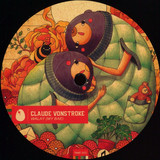
Our boss Claude VonStroke is the busiest guy we know. When he's not traveling the world or curating an event, he's in the studio every day putting in hours upon hours, relentless in perfecting his craft. He's had a slew of hits the past couple years in the form of remixes and collaborations, and now with the 'Walay (My Bae)' EP, Claude gets back to some inventive and somewhat 'out of the box' solo works.
The title song leads with a melodic riff and an funky vocal that sounds like a defective cyborg is proclaiming love for his partner, 'Walay.' This quasi-human uses the slang 'My Bae' to try and pass for human and we almost believe in his passion. The sound harkens back to old classic rave tracks but also pushes very modern production techniques.
On the flip, 'Raw Nerve' is an emotional exploration in both sounds and lyrics. A melancholy VonStroke dives deep into his insecurities and fears with sonically mutated lyrics like 'I'm feeling so sad, I'm feeling real bad today. When I see you on the street I dont want to compete.' You can feel the social instability oozing out of the vocal only to come back at the close with a violently hard bassline embodying the personal angst and frustration that goes along with not 'fitting in.'
Fresh on Francis Harris' Kingdoms imprint comes Adamo Golán's seven track LP, 'Exile And The New'. Golán is the alter ego of British-German artist Laurens A. Schmidt, who has been pursuing a more club-focused techno project, while developing an ever deeper fascination with experimental music, ambient and film scores. Drawing influence from his adopted homes Berlin and currently London, the 26-year-old has been uncompromisingly trying to develop his own musical voice.
'Exile And The New' expresses this ongoing pursuit and, being the first full-length and first ever release by Adamo Golán, marks the start of his most personal project to-date. Stretching over seven tracks, it touches upon a diverse set of sceneries, moods, and emotions whilst a distinctive sound design gives the work a subtle framework and guiding thread.
'Fis' starts the proceedings, introducing drones and field recordings and enveloping the listener in Golán's distinct sound world. 'Just Friends' merges distant snapshots of disembodied vocals with granular sound design and a sense of both space and creeping claustrophobia simultaneously. It's an approach the young producer has mastered - 'Replica' maintains an ambience of the deeply personal and a wider, hazy focus, realised via exquisite melodic fragments against a backdrop of pads and chiming electronics. Title track 'Exile And The New' unfolds around another cinematic world scored via a single stringed instrument, static interference and oceans of space. 'Lie to Me' brings a piano refrain to the fore, wrapped in luscious ambience and more fragments of a conversation heard through the rain. 'Then Rely On Me' slowly develops out of a haunting atmosphere and finds an uneasy but strangely beautiful flow, before 'The Hungry Years' closes out the album as it started - floating in space.
The 26-year-old artist sees the album as a journey that should captivate but never impose itself on the listener. It´s a gracious and neighborly invitation to dive in, get lost and explore its facets and peculiarities
It's been 4 years since the last music compilation on MindTrip. Mutable Minds brings together a mixture of five exceptional and talented artists whose sound matches perfectly with the MindTrip philosophy. Head honcho, Pfirter, and Swedish Pär Grindvik contribute the first track of the release with their diversified collaboration embodied in a hypnotic and extraordinary tune whilst Diego Amura takes the lead with a track that is characterized by driving rhythm and haunting sequences. Savas Pascalidis debuts on the label with a trippy-sci-fi interpretation and the release closes with one of the latest guests on MindTrip Podcast, Fanon Flowers, who takes us into a dark, mental and conceptual techno journey. The final outcome is mesmerizing and all four tracks can be seen on different aspects of an all night long set. This is MindTrip!
After the original comes the remix. Or in this case three. I:Cube, Chinaski and Aera help you refresh your memory and re-draw "Drawn From Memory" from Benjamin Fröhlich's second part of the "Rude Movements" series. It's one single track, but every remixer has taken his very own approach and came up with a new interpretation.
The iconic French producer and Permanent Vacation long time favourite, I:Cube, transformed the original into a soul warming and heart melting late night bomb that lets the sun appear even in the darkest places. Chinaski out of Frankfurt, well known from his releases on Live at Robert Johnson and Uncanny Valley, fuses Italo Disco with a John Carpenter-style soundtrack aesthetic and an infectious bassline completed by a full on guitar solo in the break. Aera, fresh from releasing his album on Permanent Vacation, is slowing down the tempo, rearranging the layers of the original and adding a bubbly and underwater atmosphere that let the dub stabs shine. Three different versions that may represent different memories of one long night.
In the Eighties there was an incredibly interesting underground scene emerging in the Belgian Leuven area. Bands like 'The Neon Judgement', 'Sovjet War' and countless others all came from that area and era. One of the most underestimated bands in that scene was 'Company Of State', a duo with a unique sound that played dark moody guitar-electro with a minimal DIY touch. Influenced by a wide array of artists (such as Joy Division, Velvet Underground & Edith Piaf) the duo Rudolf Hecke & Paul Taes formed the band 'Company Of State' and recorded their self-titled debut (a four track 7'EP) on their self-founded label in 1983. Best described as: wild guitars with all kinds of feedback & distortion combined with a heavy bumping rhythm-box in the background... and once the vocals kick in you get that melancholic magic that makes this EP a true classic. With this kind of pedigree, it was only logical that the band landed in the stable of Ludo Camberlin and his label 'Anything But Records', where Belgian dark & danceable underground groups such as 'The Neon Judgement' & 'Aroma Di Amore' resided in those days. Later the band would move to Maurice Engelen's label 'Antler', in company of similar acts such as '2 Belgen', 'Nacht Und Nebel', 'Siglo XX' and many others.
The band Gruppenbild was named after Heindrich Böll's famous novel and was the first musical output by the versatile Stijn Meuris (Noordkaap, Monza). Drummer Frank Coonen would later go on to be a member of 90ties indie powerpop trio 'The Romans'. Also joining in here are Luc Vrancken (Bass), Marc Guffens (Guitar) and Stijn's brother Koen Meuris on the Keyboards. As legend has it Meuris got the idea of starting his own band through his history teacher in the small provincial town of Overpelt. Said teacher was the bass player of 'De Brassers', a by then already notorious new wave punk band who had made it to the finals of Humo's Rock Rally in 1980. Blown away by the sheer simplicity and power of De Brassers music, the teenage 5 piece Gruppenbild was formed that same year. Taking inspiration from both British postpunk cornerstones as well as Belgian bands like 'Siglo XX', 'TC Matic' and the Dutch band 'De DIV' 2 years later they too found themselves in the finals of the Rock Rally. Noordkaap (Stijn's future band) would win the contest in 1990. Onbereikbaar On the Gruppenbild 7' one can already hear Meuris' melancholic singing style and his ability to write excellent lyrics in Dutch that would define the future of his musical career. The Tranquillity EP was originally released on Blitz Records in 1982, this was the band's first & only release & has become quite the rare collectable that is fetching hundreds on the second hand market. Now finally back available as a limited 7' EP (500 copies), released exclusively for Record Store Day Belgium 2018.
Cryovac Recordings enters a new sensible era of home grown production focusing on strong statements of personal style. Cryovac stresses a minimal approach to basic production with a simple soul to shape a tale of sound. The Broke Lighter E.P. is a versatile mix of characters that come together and combine their visions into one vista. This shared space of consciousness is translated to vinyl for your inspection. Cryovac Recordings continues to shine light on every corner of the Detroit Underground to expose a depth of talent that is overlooked.
The 19th edition of the Cryovac series is a moody stab at the heart of techno. It starts off with Disc Detroit's upliftingly melancholy 4/4 groover that transforms synth and turns percussion with a steady patience. Dutch Mike executes a smooth assault lead by a 303 harmony, backed by a heavy baseline and flanked by tricky programming that shifts cymbal formations. Vontell C. and his son Vontell F. sneak a dark vibe into the mix with a manic and excitable minimal ballad detuning and nodding out while detailing the burning of pretty things. Andy Garcia applies a minimalized Motown sound via strumming guitar, vintage vocals, and easy beat that rises and falls creating a serene phonic envirorment. Every track on the Broke Lighter is an opportunity to go in a new direction.
J Dilla's protégé Guilty Simpson first collaborated with Madlib's protégé MED on the hard hitting 'Jungle Love' track off J Dillas 'The Shining' LP. They continued to reunite on several tracks after and now offer us the Loyalty EP. With beats by Black Milk, MNDSGN, Exile and Preme, the duo have no choice but to come correct with the lyrics and they do. From Cali to Detroit, MED and Guilty Simpson deliver a 10 track EP to get you ready for the album dropping later this year on Bang Ya Head Entertainment.
In this opus, KID has gathered its favourite MCs: Troy Berkley (Be), Demolition Man (UK), Jamalski (US), Senior Wilson (ES), Echo Minott (Ja) and Eva Lazarus (UK) - as well as the musicians Dubamix (Fr), Dubmatix (Can) and Crew Fogata Sound.
New to the Stay Underground It Pays gang, the 11h release on the label comes from one of the most elegant japanese producer we've heard in ages : MOTOMITSU ! We get the chance to get 5 cuts on one ep (!) which is almost a mini album introducing you guys to his astonishing sound. Born in 1977 Hamamatsu, Japan
Motomitsu is a Japanese artist, DJ, children's book author, Musician, Poet, Event organizer living in Paris. He crosses freely the border of music and arts, literature. He is publishing his children's books and releasing his music. He plays DJ as a member of DJ team"Cracki" in Paris, also play the keyboards and accordion for some bands. His art work is influenced by Music and Poem. He has released tracks on various labels such as Cracki, soirée records (detroit) & cherry juice. All in all, another wonderful release that feels straight at home in the Stay Underground It Pays catalogue. Skylax always.
Das Darkwave Elektronik-duo Boy Harsher Aus Northampton, Massachusetts, Startet Sein Eigenes Label Nude Club!
Auf Nude Club Werden Am 27.04.2018 Erstmals Die Beiden Kult-alben - lesser Man (extended Version)" Und "yr Body Is Nothing" Wiederveröffentlicht, Die Es Bis Dato Nur Als Importe Gab. Boy Harsher Sind Ein Gegenentwurf Zum Normalo Elektropop Und Haben Sich Über Die Letzten Jahre Bereits Eine Sehr Treue Untergrundgemeinde Erspielt, Zuletzt Eine Triumphale, Restlos Ausverkaufte Tour Durch Europa Gespielt, Und Das Was Leute Am Himmel Für Chemtrails Halten, Sind Tatsächlich Ihre Nebelschwaden Und Trockeneis-reste. Ihre Verbindung Aus Düsteren Dance-beats, 80er-jahre-versatzstücken Mit Extrem Nach Hinten Gemixten, Sehr Ätherischen Vocals Schafft Eine Unheimliche, Intensive Und Fesselnde Klangwelt. Augustus Muller Entwickelt Den Unterbau Seiner Tracks Aus Präzisen Und Kraftvollen Beats, Die Irgendwie Nach Damals Klingen, Aber Von Heute Stammen Und Schleift Darüber Noch Sägende Synthies, Während Jae Matthews Dazu Flüstert, Schreit Und Singt Als Gäbe Es Nun Tatsächlich Kein Morgen Mehr. Diese Kathartischen Aber Auch Magnetisierenden Tracks Wurden Innerhalb Kurzer Zeit Zu Hits Eines Real Existierenden Untergrunds. Fernab Von Playlisten Und Pr Gedöns Bildete Sich Das, Was Man Früher Eine Kult-fangemeinde Genannt Hätte. Heute Sind Es Die Anfänge Des Widerstands Gegen Die Veralgorythmisierung. Glauben Wir Zumindest Hoffen Zu Dürfen.
"yr Body Is Nothing" Wurde Ursprünglich Auf Vinyl Von Dka Records Veröffentlicht, Dreimal Gepresst. Alle Pressungen Waren Innerhalb Weniger Wochen Ausverkauft. Mit Einem Starken Fokus Auf Rhythmus Und Atmosphäre Zeigen Die Hier Präsentierten 10 Songs Einen Songwriting- Und Produktionsstil, Der Raffiniert Und Einzigartig Ist, Dunkel Aber Kraftvoll Erhaben. Der Klang Ist Paradoxerweise Massiv, Aber Minimal Und Bietet Den Perfekten Raum Für Jae Matthews Reichen, Tiefen Und Emotionalen Gesang, Mit Dem Sie Gemeinsam Mit Gus Muller Den Hörer Mit Jedem Einzelnen Song Immer Tiefer In Ihren Bann Zieht. Auch Zum Ersten Mal Auf Cd Erhältlich!
Forest Bathing, or Shinrin-yoku, is a term that means taking in the
forest atmosphere.' It was developed in Japan during the 1980s and has become a cornerstone of preventive health care and healing in Japanese medicine.
Taking in the forest atmosphere' became the inspiration for A
Hawk and A Hacksaw's newest album. Their forest bath of choice is the Valle De Oro National Wildlife Refuge in New Mexico. This new album features ten original compositions by Heather Trost and Jeremy Barnes. The opening track Alexandria' features Barnes on the Persian Santur, an ancient hammer struck dulcimer, and Trost's string and woodwind melodies. The composition evokes the long trader's route between what is now Bulgaria and the wealthy cities of Istanbul and Alexandria.
The band has always had a bird's eye view of this part the world—
looking for the connections between places and even eras: a belief in the power of music to reach across borders and unite.
The band is based on the idea of collecting music and inspiration
through travel. They are not of a place, but their music evokes places along a route. This is not urban music. It's rural: songs of the woods and roads where there are no sidewalks or street lamps to light your way.
While the bulk of the music heard on this record is played by Barnes and Trost, they do have some incredible guest performances, namely the clarinet virtouso Cüneyt Sepetçi, from Istanbul, Hungarian cimbalom master Unger Balász, and closer to home, Chicago trumpeter Sam Johnson, Deerhoof's John Dieterich and Noah Martinez, of the band Lone Piñon.
out of Stock
Last delivered 8 years ago available to reorder, subject to availability
* In come the first of three releases celebrating a decade of pioneering label Kapsize. Fronted by leading light of Bristol dance music, Joker showcases one of his most iconic sounds to date.
* Suave sophistication not out of place in a Bond or Bourne film, backed with dancefloor aggression, 'Anamorphic' oozes the hi tech international espionage Purple sound Joker has carved out for himself. Opening with plush synth and horn washes, leading into unmistakable arpeggiators and guitar riffs, 'Anamorphic' manages to combine Joker's signature sexy RnB vibes into perfectly engineered system smashing bass lines with ease and style.
* 'Forever' explores the same theme with soundscapes and synth washes that Vangelis would be proud of. A textural flight over the landscape Joker painted with 'Anamorphic', 'Forever' gives listeners a chance to take in the sights and sounds of the neon cities and skylines that Joker made his name on.
* Joker continues the exploration and continuation of the sounds that made his name, elements of 'Snake Eater', 'Tron' and 'Neon City' can be found here with a new slant. A showcase of a unique pioneer at the top of his game.
"The kind of melancholia I'm talking about, by contrast, consists not in giving up on desire, but in refusing to yield. It consists, that is to say, in a refusal to adjust to what current conditions call 'reality' - even if the cost of that refusal is that you feel like an outcast in your own time." (Mark Fisher, Ghosts Of My Life, Zero Books 2014, p. 24) In Ghosts of My Life: Writings on Depression, Hauntology and Lost Futures', the author Mark Fisher outlines - to put it in a big way - a resistant melancholy. This stands in contrast to leftist melancholy resignation', as well as something which Fisher does not talk about: its common masculine counterpart, habitual post-left cynicism - as in seen it all before'. Fisher calls this hauntological melancholy. Haunting, spooks, ghosts and apparitions are an almost constant presence on I Started Wearing Black', the second album by the Cologne-based artist Sonae (pronounced so-nah'). The term hauntology shares a fate with retro-futurism when it comes to inflationary overuse and abuse. It's a conceptual container that looks good and can hold a lot, indeed, too much. Furthermore, hauntology has its peak season behind it, a term on the threshold of its expiration date. Nevertheless, I would like to rehabilitate hauntology and use it properly to characterize I Started Wearing Black', because the term is rarely as compelling to describe music as is the case here. The most recent other example could be Asiatisch' by Fatma Al Qadiri, but with a completely different frame of reference. What are the ghosts of this music It rustles, crackles, ruffles, crunches, rattles, scrapes, sometimes a beat emerges from the constant noise, sometimes an obscure voice mumbles incomprehensibly, sometimes a melancholy piano figure is prevented by this noise from coming too much to the foreground. It definitely is eerie - to bring into play another term used by Fisher in the title of his latest book, The Weird and the Eerie'. In British pop-jargon, eerie first occurred to me more often when referring to particularly leftfield, spooky and... well... ghostly dub, a bass-heavy, echoing noise, from Augustus Pablo to Creation Rebel to Burial. Unlike the Wald & Wagner records by Wolfgang Voigt, Sonae is not a kind of neo-romantic veiling with a tendency for escapist nebula. It is more a noise of latency. The noise signals a latent - not necessarily acute - threat, a latent uneasiness about... yes... about what About a System Immanent Value Defect' That's the name of a track on I Started Wearing Black' where something that sounds like a French Horn (or a foghorn) battles for attention through or against the background noise. An email from Sonae: The piece 'System Immanent Value Defect' should actually be called 'I See Turkey'. I wrote it for my fellow student Elif - she is a pianist and Gezi Park activist from Istanbul. Through her I witnessed the inner conflict and agitation that political circumstances can create: her feelings of guilt when there was an attack, with her safe in Germany as a student, watching the events from afar. It was horrible. When her mother begged her not to come home because she feared for her safety, I felt a cold shiver run down my spine. I started with the piece from this mood, beginning with the piano, then the noise (modulated sinusoidal curves), which reminded me of waves and the then heatedly discussed Mediterranean sea: atmospheric, melancholy motifs. In contrast is the anger, the pressure, represented in corresponding sounds - hopefully audible! - During this time I started to think about world views as they can be found around the globe, in how far they held by societies and their political representation. I realized that I know of no political system that is actually about the people and what would do them good. It's always about positions, power, money. I thought that was a lot more frightening on a global scale than merely viewing Turkey in isolation. That's why the piece is called "System Immanent Value Defect", because our world suffers from precisely that. Everywhere, it's all about the wrong things.' Between the wrong things there are happy moments. In the title track, after 184 seconds of rattling and hissing, a beat is unleashed, like an arrow released from a spanned bow, a beatific relief, if there is such a thing. White Trash Rouge Noir' first meanders along spookily, then after 144 seconds it transforms itself into a distant cousin of Einstu¨rzende Neubauten's Yu¨ Gung', but there is no Big Male Ego to be fed here, and the black in the album title is a completely different type of black from that of the Neubauten. Furthermore, I Started Wearing Black' was finished long before the black dresses were worn at the Golden Globes as a sign of protest against sexual violence. Sonae writes that she herself started wearing black some time ago. Her reasons are so-called personal ones: ... resulting from an individual situation (lovesickness), I started to wear black (gaining weight and feeling ugly).' The political dimension of gaining weight, feeling ugly and therefore dressing in black in I Started Wearing Black' lurks within the noise and never becomes explicit and only rarely manifest - or a manifesto. Sonae writes about the track We Are Here': A piece for minorities... in this case, considering the current pop-feminist discourse, explicitly for women. Female artists have long been saying loud and clear that 'we are here' and 'electronic music is not a boys club!' But this pop-feminist moment should only be seen as one part of the dedication of the piece. It is for minorities, for the oppressed, who didn't belong enough.'
Criminal' is a confessional work. Through the stark lens of shame and guilt that has followed Luis Vasquez since a violent childhood growing up within the humming ambient sprawl of 80s Mojave Desert, here he documents the gut-wrenching sound of going to war with himself. Battling with his own sanity, self-hatred, insecurity, self-entitlement and grappling with the risk of these things transforming him into a person he despises, Vasquez has laid his feelings bare with this: his confession and most self-reflective work to date. Guilt is my biggest demon and has been following me since childhood. Everything I do strengthens the narrative that I am guilty' Vasquez reflects. The concept of 'Criminal' is a desperate attempt to find relief by both confessing to my wrongdoings and by blaming others for their wrongdoings that have affected me.' 'Criminal' marks a striking and important chapter in his self-exploration, both artistically and emotionally. As a young musician living in Oakland, Vasquez began to try and process the narrative of his difficult upbringing veiled through musical exploration. Taking krautrock's motorik beats and Post-Punk deconstructions and honing them into a hushed percussive incantation, The Soft Moon's self-titled debut album took shape. The album was released in late 2010 by Captured Tracks and was praised by critics and emulated by contemporaries. In 2012 the apocalyptic conceptual work of 'Zeros' emerged, shortly followed by Vasquez moving to Venice, Italy in 2013, acting as a catalyst for 2014's release, 'Deeper'. While previous albums were primarily instrumental records, where Vasquez's voice was diffused amidst the music as another instrument, 'Deeper' marked the beginning of a new musical direction where vocals and lyrics became something more than a mere presence. 'Deeper' was a descent into the womb of childhood trauma, anxiety and fear, and although Vasquez survived this dark exploration of himself, he did not return alone. Working once more with Maurizio Baggio, who produced 'Deeper', at La Distilleria in Bassano Del Grappa, Italy, 'Criminal' sees Vasquez further explore putting his lyrics at the forefront and letting his raw emotions flow. The album is Vasquez's way of holding himself accountable and seeking redemption for the abuse he inflicts on himself and others, and acknowledges roots in the abuse which, inflicted upon him as a child, broke him.
The first "Last Gas Station" compilation includes 12 new tracks and aims to showcase artists that the site has followed for many years, as well as promising talents to keep an eye on. Featuring LA's "daytime disco" duo Poolside,Vampire Weekend's bassist Baio, Italian duo Marvin & Guy, Brooklyn's duo Vito & Druzzi, Adelaide-based producer James Curd and Turbotito, California Balearic duo Woolfy Vs Projections, Disco Halal's Moscoman, Mexico's finest Zombies in Miami, NY unstoppable disco funkers Midnight Magic, DFA's Greek mastermind Larry Gus, Crew Love's David Marston, and - last but certainly not least - Peaking Lights Acid Test. This will be a ride to remember...
out of Stock
Last delivered 6 years ago available to reorder, subject to availability
Do you like Love songs After spending a lifetime spent avoiding this subject in song, Joel Sarakula finally admits that he does. On his new album "Love Club" Sarakula relives the golden age of Soulful and Romantic Pop music and connects it with a modern aesthetic. While a deeper message of love and peace flows through the record, Joel Sarakula is no old fashioned hippie: ",Love Club' is about connecting to reality and re-framing the idea of romantic love and loss in the present, loveless age ". Featuring eleven songs touching all genres from disco to blues, from soul to soft-rock, Joel Sarakula's "Love Club" is a profound pop statement.
Joel Sarakula has travelled the world in search of his muse, experiencing everything from being a victim of Caribbean carjackings to performing in the remote fishing villages of Norway, via the dive bars of Europe and the US. It was the hodge-podge musical tapestry of England's capital that finally drew him to a settling point, in the wake of seemingly never ending run of shows. With personal tastes that span from the more avant-garde to soul and pop greats like Sly Stone, Todd Rundgren and Hall & Oates, there are clear nods to contemporaries like Unkown Mortal Orchestra, Erlend Oye and Toro Y Moi in terms of ambition and style.
With his last two albums "The Golden Age" and "The Imposter" collecting strong radio plays at BBC Radio 2, BBC 6, BBC London, XFM Joel Sarakula has been play-listed nationally in Europe including Flux FM, WDR 5, Radioeins, Bayern 2, Deutschlandfunk and Deutschland Kultur Radio in Germany as well as in Benelux and Italy and Spain. He is a regular fixture on the live festival and club circuit in the UK, Europe and internationally including appearances at SXSW, Primavera Sound, Glastonbury, The Great Escape, Liverpool Sound City, Scala London, Tallinn Music Week, V-ROX (Vladivostok) and Reeperbahnfestival Hamburg.
"Love Club" is Sarakula's bold and unashamedly emotional next step. In essence the album is a homage to the soulful singer & songwriter artistry of the Seventies filtered through a darker contemporary lens - fitting for these uncertain times. "I always shied away from generic love songs," the Sydney, Australia born songwriter admits, "but on this record I embraced the subject wholeheartedly... and intellectually, looking at themes of love, lust, loneliness and everything in-between." Take the first single "In Trouble", co-written with Michele Stodart of The Magic Numbers, as the best example for Joel Sarakula's unique, and honest approach to making music. "We Used To Connect" questions the changing nature of relationships in our social-media addicted world: 'We used to connect in the real world too, now the touch of your hand is a digital cue'.
"Coldharbour Man", on the other hand, examines the identity of the song's narrator and the artist vs. fan dynamic all wrapped up in a disco love song: "There's a lot going on in this particular track. I feel my writing has grown emotionally...", explains Joel Sarakula. "Just best to listen yourself and make up your own interpretation!: 'We met in a song come to life like some fantasy cliché, though I'm known for my moves in the dark you flooded sunshine on my day'. Then there's "Baltic Jam", capturing romantic love and loss in authentic 70s confessional singer & songwriter style and of course "Dead Heat", a song about how there is struggle in the most perfect relationship pairings as the match is so even: "I recall an ex-girlfriend of mine... when we first met, we thought we hated each other but we eventually flipped that emotion and realised we had a deep passion and love for each other, there just was a lot of underlying sexual tension!" : 'It's a battle we could only win, if we lose. We'd be stronger if these lonely ones became two'.
More than a year in the making, Joel Sarakula recorded "Love Club" in various studios around London and Berlin capturing soulful performances from his many musical comrades on vintage analogue equipment. "This record has truly been a labour of love. Recording and privately sharing these performances amongst my collaborators started to feel like a bit like a club - I guess that lead to the album title! I was surprised how much I actually enjoyed the 'love-making process' and I look so much forward to playing these new songs on stage with my band." We can't wait, Joel Sarakula.
One of the earliest MC5 singles! Packaged in new envelope style sleeves, with rare unseen band photos! The Motor City 5 pressed on black vinyl at Third Man Pressing in the Motor City! Includes brand spankin' new liners by David Fricke of Rolling Stone, who says, "In a 1966 live recording, the MC5 played 'Looking at You' like Motown raga. At United Sound, the band hit the zigzag riff at light speed and stayed there, framed by searing lead guitar and explosive drumming. 'Borderline' was a frantic jigsaw of power-chord jolts and sheet-like harmonies detonated again, at the Grande, for the live recording of the MC5's first LP, Kick Out the Jams."
'Pat Thomas Introduces Marijata' is a seminal Ghanian album that fuses highlife, reggae, folk, funk and soul, from legendary vocalist Pat Thomas. Originally released in 1976 on Gapophone Records.
'Marijata' was a group made up of three members - Kof 'Electric' Addison on drums, Bob Fischlan on organ and Nat Osmanu on guitar, hailing from Ghana. Pat Thomas career began in 1969 with the 'Broadway Dance Band', leaving a year later to join the 'Uhuru Dance Band'. He then played with Ebo Taylor's 'Blue Monks' and fnally formed the 'Sweet Beans' in 1973 where he really made his name. The group released 'False Lover' in 1974, split and then reformed as Marijata, releasing 'Marijata' (also available on Mr Bongo) and this album, 'Pat Thomas Introduces Marijata'.
Thomas career spans more than 50 years and he stll tours regularly across the world.
Replica original artwork, ofcial Mr Bongo reissue. Licensed from Gapophone Records courtesy of George Prah.
The Brighton-based powerhouse duo known as The Prototypes have officially announced the release of their very first vinyl record, hopefully signifying a legacy of future Get Hype Records vinyl packages for drum and bass fans everywhere. Featuring the monumental original mix of "Rocket Guns Blazin'" paralleled by the internationally-supported remix by Crissy Criss, Malux, and Erb N Dub, this exceptional record is one for dance floor fans everywhere. After the massive success of the label's launch, multiple world tours, countless number #1's alongside the groundbreaking signings the legendary duo themselves have discovered, this will be an excellent milestone for the Get Hype Records team.
We Get Hype.
* Released for the first time on vinyl
* The ultimate collection of rare early materials by this electronic music pioneer
* Comes as a deluxe double LP set with insert and extensive liner notes . Limited black vinyl pressing (700 copies) with obi strip.
Klaus Schulze is a German electronic music pioneer, composer and musician that needs very little introduction. In the late sixties & early seventies he was a member of several iconic bands such as 'Tangerine Dream', 'The Cosmic Jokers' & 'Ash Ra Tempel' before launching a solo career consisting of more than 60 albums released across five decades. Collaborations were numerous and highlights include working with Steve Winwood, Brian Eno & Alphaville... just to name a few.
Klaus Schulze's proto moog-synthesizer work is regarded as a milestone in electronic music & during the decades he released landmark albums in genres catalogued as 'Ambient', 'Electronic', 'New Age', 'Berlin School', 'Experimental', 'Kosmische Musik' & 'Krautrock'. Mr. Schulze had a more organic sound than most electronic artists of the time, often he would throw in decidedly non-electronic sounds such as acoustic guitar and a male operatic voice. Schulze is also known for developing a Minimoog technique that sounds uncannily like an electric guitar, which is quite impressive in concert.
On occasions he would also compose film scores such as Body Love (1977), Barracuda (1978), Next of Kin (1982), & Angst (1983). His best known song 'Freeze' has been used in films like Manhunter (1986) and more recently in Sofia Coppola's 'The Bling Ring' from 2013.
In 2009, producer Klaus D. Mueller and Schulze began releasing La Vie Electronique ( The Electronic Life'), a series of sets that collected rare sought-after early works & unreleased tracks put in chronological sequence. These sets contain some of the best music Klaus ever created and are early 70's masterworks that will appeal to both fans and collectors.
Now available for the first time on vinyl, One Way Static Records presents the first volume in our new archival series 'La Vie Electronique'. This volume (1.0) focuses on the years 1968-1971 and is spread over two glorious LP's containing +78 minutes of Klaus Shulze rarities. This deluxe vinyl set also comes with an insert containing extensive liner notes.
Haiku's Raw Waxes label is delighted to welcome the famously unconventional Stanislav Tolkachev with a new track EP of experimental techno and IDM sounds. Entitled Champions' Breakfast and with brilliant artwork from German Benedikt Rugar, the releases features six cuts, one of which is a previously digital-only track landing here on vinyl for the very first time.
Haiku has long been a fan of Ukrainian Tolkachev having previously collaborated on a remix for the label, while Tolkachev has also released on Haiku's other label Inkblots. This new EP is one that not only shows off the label's willingness to take risks and put out diverse and interesting electronic music, but also one that proves Tolkachev is a truly unique artist with his own musical voice. He has been that way for more than a decade now, and has put out three long players as well as countless EPs that get heavy support from the tastemakers of the day. This latest offering contains his take on the essentialness of groove, enriched by his use of atonality, dissonance and acid-not-acid textures, all in a minimal style.
The deep 'Shady' kicks things off with spangled synth lines and eerie pads off in the distance. It's a lonely and insular piece with kinked rhythms that keep you locked. The excellent 'The Main Thing Is To Survive' is then less constrained, with kicks that rock back and forth as off kilter synth lines warp and wrap around each other in mind melting and tripped out fashion. Switching up the mood with ease, 'Fuck This Guy' is a dark and musty passage of humid ambient techno with static electricity buzzing about over smeared pads that are filled with menace, then the curious 'Hair In My Mouth' is about blurting, busted frequencies, loose and scattered drums and glassy melodies. It's a mangled and mashed up track that sounds like little else. 'Negative Space' is horror soundtrack techno with urgent, driving drums and nervy sound design that keeps you on edge, and closer 'Self Destruction' is built on broken, bristling beats. A rhythm slowly emerges from the haze and it is one that is physical and restless and sure to make a big impact in the club.
This is a varied and vital EP that oozes essential electronic invention.
Here Appear is an invocation, a salutation, and a celebration — of past and perfect lives, forgotten and remembered, exchanged and borrowed. Eve Essex's solo debut is a multi-instrumental fea(s)t combining synthesizer, drum machine, alto saxophone, piccolo, electric organ/harpsichord, harmonica, slide whistle, bells, guitar pedals, and voice— composed, arranged, and performed by Essex herself. What began as an improv set at Berlin's Harlekin bar, developed over the past two years into a complete body of work evoking multiple time periods, genres, characters, and sonic landscapes. The seven tracks that make up Here Appear harness elements of classical, drone, avant-jazz, and distorted pop, coupled with an ambitious vocal delivery that draws on the phrasing and articulations of Essex's own woodwind playing, to create a quasi-narrative me´lange retaining the vulnerability of live performance. On the opening track Grind Away,' otherworldly harmonica strains set the stage for lyrics citing Chinese sci-fi novel The Third Body Problem as source material. Saxophone and piccolo interludes Immediate Communicator' and Colorless Stone' move between medieval-tinged melodic inventions and textural noise, recalling a Pharoah Sanders-influenced fever dream, while the linguistic abstractions of Russian conceptual poet Lev Rubinstein guide the looped, layered, and textured vocals of title track Here Appear.' The album closes with a languid take on Jacqueline Humbert & David Rosenboom's 1978 composition Clear Light' from My New Music, recently reissued by Unseen Worlds. Here Appear owes its minimal production to the conditions of its genesis, evidencing the restrained process of the solo artist, instrumentation is confined to what can be played simultaneously. True to the album's avant-garde roots, each song involves an element of improvisation, often taking the form of prompts or variations on a melody rather than explicit compositions. Even its most structured pieces make use of live-sampled loops, which inject a spirited unpredictability into the songwriting process and subsequent performance. Classically trained in bassoon at New England Conservatory before receiving a BFA in sculpture from RISD, Eve Essex has performed as a solo artist at Artists Space, Commend, Safe Gallery, Signal, Trans Pecos, and U.S. Blues, in New York, Harlekin/Mathew Gallery and StudioAcht in Berlin, and the PUFFERSS Festival in Providence, RI. In addition to her solo practice, Essex regularly performs as one half of Das Audit (with Craig Kalpakjian), as well as in trios Hesper (with James K and Via App) and HEVM (with MV Carbon and Hunter Hunt-Hendrix), and has collaborated extensively with Juan Antonio Olivares as installation/performance-art duo Essex Olivares. Prior to the LP release on Sky Walking (April, 20), Here Appear arrives via New York City-based label Soap Library on March 9, 2018 in both cassette and digital format, mastered by Helmut Erler at Dubplates & Mastering, Berlin and recorded by Al Carlson at Gary's Electric, Brooklyn.
It's been a while since the deadly Russian twins Gancher & Ruin released on PRSPCT but they are back on board. And his 6 track monster EP is filled with everything we love about these guys. Its heavy, raving and 110% awesome. All Hail Gancher & Ruin!
Guber releases his first EP on Paris based label Beat X Changers at the intersection of Ambiant and mental UK Bass music. The whole project is held by alternation of Slope / Release of sub-frequency and obsessional loop that dye each tracks. Anisotropic Expression is a first work that could be seen here as an draft representation of the behavior of surrounding matter. Non musical influences therefore are brought here by the the study of properties of materials expressed in a musical statement. Raw obsessional patterns, evolving and rolling out over the headroom could be seen as the emulation of many deformation models. Shaping of stereo and arrangement have been handled with the help of the sound engineer & producer X_1 leading to home or club-listening experience as well. Guber is been into music by listening & playing some music of the 70's and trash-metal that drove him straight to UK Bass music. Since there he is only focusing on spontaneous creation showing faithfull perception of thoughts, leading to a higher level of singularity.
Putting the foot to the floor French duo Haydee's "No Gouvernance" revs and rumbles like a cantankerous, clapped out engine. Rust breaks clean in huge chunks as screams and shouts punch through the thick drum fumes. Industrial legends Hunting Lodge follow in a similarly smog spitting motor, the drunken mechanical tirade that is "De Omnibus Dubitandum." Bass and beats crack and leak in this scarred proto-acid work from 1983. Newcomer Catriel drowns "nbdymksmefeellow" in a sludge of static, indecipherable words gurgle as percussion attempts to save this doomed victim. Giant Swan (Timedance) then take a piece of pipe to "Dare", pounding it with heavy blows, forcing confessions through verbal assault before leaving it more bloody pulp than track. Finally Gotshell (Blueprint) closes with a rumbling double brewed remix of "De Omnibus Dubitandum. A 12" that'll leave speakers blown and listeners in need of a tetanus shot.
- Latest ambient work from Fred Welton Warmsley III, formely known as Lee Bannon (hip hop producer and collaborator with Joey Bada$$, Souls Of Mischief, Hieroglyphics, and others)
- Former albums on labels such as Hospital Productions, Ninja Tune, NON
- Has received praise from Pitchfork, NPR, Boomkat
- Northern California electronic producer Fred Welton Warmsley III's solo work as Dedekind Cut
(pronounced dead-da-ken cut') has evolved from fractured industrial design into increasingly subdued and sublime ambient meditations across two years of dedicated activity. His second full-length collection, Tahoe—so named after the mountain lake town he now calls home—swells with widescreen grandeur, evoking vistas both inner and outer. There are echoes of his earlier, more tempestuous mode in tracks like MMXIX' and Spiral' but overall the album skews panoramic and pensive, muted synthetic mists contoured with choral melody, field recordings, and radiant drone. His compositional instincts feel alternately classical, contemporary, and conflicted, befitting an artist whose discography spans labels as divergent as Hospital Productions, Ninja Tune, and NON.
- Warmsley characterizes Tahoe as a time peace,' sifting through the past, the present, future, and fantasy.' Recorded primarily in New York, with additional sessions sourced from Berlin, Cambridge, and Placer County, California.
out of Stock
Last delivered 7 months ago available to reorder, subject to availability
The Analogue Cops aka a.k.a. Lucretio and Marieu - debut on Hot Haus Recs with 5 tape saturated thumping house trax guaranteed to get the party started!