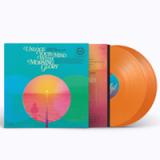
Reframed is Vitess’ third album, released on his own label Retro Futura, and marks a new turning point in his artistic journey. Unlike his previous albums — the first fully exploring the Retro aesthetic, the second embodying the Futura — Reframed brings these two worlds together within a single, coherent yet eclectic body of work. The album opens with sounds inspired by 90s progressive music and gradually moves toward more futuristic textures. This album format gives Vitess complete freedom: the freedom to build a full, living musical experience, introducing for the first time a strong instrumental dimension — most notably through the use of live drums — and allowing each track to interact with others, transform, or mirror one another, while maintaining a clear narrative thread that guides the listener throughout.
The title Reframed directly reflects this approach. The album is built around tracks conceived as Recto / Verso, offering a form of double listening experience. On the one hand, electronic, club-oriented and progressive versions, designed for energy and dancefloor movement; on the other hand, more introspective, pop and instrumental counterparts, created for listening and storytelling. Starting from the same musical foundation — a vocal sample, a percussion element, or a melody — Vitess develops two distinct interpretations of the same track, generating contrasting yet deeply connected sonic worlds. This method, central to his creative process, highlights his ability to explore a single detail in depth and let a micro-element lead him toward radically different sonic dimensions, while ensuring coherence and a strong identity across the album.
For Reframed, Vitess also collaborates for the first time with other artists: Stupid Flash, ATOEM, and Lucile, selected for their ability to enrich his universe and push it toward new aesthetics. These collaborations recreate a sense of collective energy reminiscent of his early days playing in bands, while remaining true to the essence of the Vitess project: a primarily solitary approach rooted in exploration, experimentation, and embracing the unexpected paths each idea can take.
Buscar:gui two
- A1: Cloud Nine
- A2: I Heard It Through The Grapevine
- B1: Run Away Child, Running Wild
- C1: Love Is A Hurtin’ Thing
- C2: Hey Girl
- C3: Why Did She Have To Leave Me (Why Did She Have To Go)
- C4: I Need Your Lovin’
- D1: Don’t Let Him Take Your Love From Me
- D2: I Gotta Find A Way (To Get You Back)
- D3: Gonna Keep On Tryin’ Till I Win Your Love
The Temptations Get High on Psychedelic Soul: Cloud Nine Soars with Ambitious Arrangements and Production, Features Standout Vocal Performances and Instrumentation by the Funk Brothers
The Temptations’ Cloud Nine announced that Motown — and “The Sound of Young America” — would never be the same. Influenced by the emergence of cutting-edge rock and pop currents, as well as increasing sociopolitical turmoil, the album broke down barriers between rock, psychedelia, and soul while heralding the arrival of visionary arrangements and production techniques. Bookended by traditional R&B numbers, the 1969 record sent the Temptations in bold new directions and signaled the advent of psychedelic soul.
Sourced from the original master tapes, strictly limited to 3,000 numbered copies, pressed at Fidelity Record Pressing, and housed in a Stoughton gatefold jacket, Mobile Fidelity’s 180g 45PM 2LP set presents Cloud Nine in audiophile sound for the first time on a domestic pressing. This collectible reissue bestows Norman Whitfield’s extraordinary production with the grand-scale dynamics, natural tonality, expansive openness, and low-end weight it deserves. The timbre of each of the five members’ voices is readily identifiable — even within the group harmonies — bestowing a realism never experienced outside the recording studio.
Making its debut on 45RPM, the album further benefits from the wide groove space by playing with greater separation and more realistic presence than prior editions. Everything from the brassiness of the horns to the dry snap of the snare comes across with reference-grade clarity and positioning. And since Motown’s renowned Funk Brothers backing band plays on many of the cuts, you’ll want to savor every note. The imaging, soundstaging, and organic bloom-and-decay of the notes make that possible.
Amid Cloud Nine, the instrumentation and architecture stand out as much as any element. Never before had a Motown album contained such ambitious patterns and complex passages. Seemingly conscientious of the departure from their past methods, the Temptations and Whitfield bunched together the tracks that mark a deep dive into psychedelic territory and counterbalance them with seven sterling soul cuts that dovetail with Motown tradition drenched with heartfelt vocals, swelling strings, and finger-snapping beats.
On the original 33RPM release, traditional Motown soul — laden with heartfelt vocals, swelling strings, and finger-snapping beats — occupies Side Two. These songs reveal an ensemble still very much on top of delivering pristine pop-soul material graced with romantic sweetness, persuasive insistent, and soaring highs. Re-energized after the departure of lead singer David Ruffin, who was fired for a variety of reasons in June 1968, the Temptations seamlessly meld with his replacement, Dennis Edwards, on one melodic gem after another.
The collective tackles five songs co-written by the legendary Motown team of Barrett Strong and Whitfield. Not the least of which are the smooth, shuffling “Why Did She Have to Leave Me (Why Did She Have to Go)” and deceptively simple, horn-spiked “Gonna Keep on Tryin’ till I Win Your Love.” On these tracks, as well as on a lush rendition of the ballad “Love Is a Hurtin’ Thing” and pleading, tender send-up of the Gerry Goffin-Carole King classic “Hey Girl,” Edwards and Paul Williams take turns on the lead with the estimable Eddie Kendricks, Melvin Franklin, and Otis Williams providing backing support.
All five vocalists trade-off leads on the simmering title track, a groundbreaking composition shot through with wah-wah-pedal effects, liquid funk, deep bass lines, Cuban percussion, saturated reverb, and gang choruses. Whitfield mines each member’s natural vocal range with spectacular results, keeps time with cymbals, and channels both the heated temperatures and escapist desires of a society embroiled in war, conflict, and experimental drugs.
Amazingly, the Temptations top themselves on the similarly revealing “Run Away Child, Running Wild.” Nearly 10 minutes in length, the song explodes R&B parameters and harbors a cinematic scope. Urgent pianos, distorted guitars, stripped-down percussion, steamy Hammond organs, minimal bass motifs, five distinct voices narrating the tale of a boy who fled home and now finds himself amid the scary, unforgiving external world: They combine to give the urgent tune a walls-closing-in atmosphere where fear and desperation reign. Bolstered by an extended instrumental section that precedes a climactic return of the singers’ voices, “Run Away Child, Running Wild” equaled the success of the record’s title track, with both reaching No. 6 on the pop charts.
- A1: I Can't Wait
- A2: Rock A Little (Go Ahead Lily)
- A3: Sister Honey
- B1: I Sing For Things
- B2: Imperial Hotel
- B3: Some Become Strangers
- C1: Talk To Me
- C2: The Nightmare
- D1: If I Were You
- D2: No Spoken Word
- D3: Has Anyone Ever Writen Anything For You
Looking back on her career in the early 90s, Stevie Nicks described the first track of Rock a Little as “the most exciting song that I had ever heard.” This coming from a superstar who was already closely affiliated with several bajillion-selling Fleetwood Mac albums — to say nothing of her own benchmark solo debut. Her remarks attest to the enthusiasm and effort she invested in her third record, a 1985 work that quickly furthered Nicks’ profile and cemented itself as a piece of 80s pop lore.
Mastered at MoFi’s California studio, pressed at Fidelity Record Pressing in California, strictly limited to 4,000 numbered copies, and housed in a Stoughton gatefold jacket, Mobile Fidelity’s 180g 45RPM 2LP set presents Rock a Little in audiophile sound for its 40th anniversary. Helmed by a cadre of producers and engineers, and recorded for a reported one million dollars, the platinum-certified album teems with a head-spinning array of colors, tones, dreamscapes, and accents. This reference-grade reissue marks the first time they are all brought to light and conveyed with proper balance, dimensionality, and positioning.
Though Rock a Little doubtlessly has period characteristics of a mid-80s LP, Nicks and company spare no expense when it comes to distinguishing the music with expansive sonics distinguished with lush melodies, high-tech percussion, echoing vocals, sampled keyboards, and layers of sophisticated accents. The degrees of spaciousness, headroom, and dynamics are nothing less than inspiring, while the newly enhanced detail, texture, and clarity make the songs sing like never before. As for Nicks’ voice? Wait ’til you experience the transparency and depth.
Those advantages extend, of course, to the aforementioned “I Can’t Wait,” a statement-making opener shot through with modulating synthesizers, splashy drums, metallic guitars, and serious drama. Holed up in a massive studio, Nicks required just one take to nail her part, which she called “magic and simply not able to beat.” The singer-songwriter also distilled the reverberating emotional essence of the Top 20 tune, stating “when I hear it on the radio, this incredible feeling comes over me, like something really incredible is about to happen.”
The same can be said for nearly all of Rock a Little. Crafted by the likes of Songwriters Hall of Fame multi-instrumentalist/producer Rick Nowels, Heartbreakers organist Benmont Tench, bassist Bob Glaub, jack-of-all-trades Greg Phillinganes, and session-pro guitarists Waddy Watchel, Les Dudek, and Danny Kortchmar — along with another two dozen or so participants — the record spills with diverse ideas, shapes, and moods. Everything is in the right place, as evidenced by the swirling glide and sensual undertow of the slightly funky title track to the snapping rhythmic pace and big hooks of “Imperial Hotel,” one of Nicks’ standout moments.
“What was it she wanted?” Nicks queries on “No Spoken Word,” continuing a theme of contemplation that runs through the narratives. Nicks never lands on a definite answer, but hearing her explore loneliness, love, and the secrets we keep to ourselves proves continuously rewarding. Take her passionate performance on a cover of Chas Sanford’s “Talk to Me,” a Top 5 smash furthered by tasteful saxophone lines and understated folk elements. Immersive yourself in the grand sonic corridors of “If I Were You,” laden with Nicks’ signature mysticism.
Moreover, surrender to the gravitas of the closing “Has Anyone Ever Written Anything for You,” a piano ballad composed about the death of Joe Walsh’s three-year-old daughter. As Nicks asserts earlier on the album, she sings for things money can’t buy.
So, rock a little, yes, but dare to feel even more.
Check The Description Before Asking For A Track ID is a thoughtfully curated four-track journey through modern deep tech house, balancing forward-thinking sound design with emotional depth and dancefloor functionality. The release unfolds across two distinct yet complementary sides, guiding the listener through evolving textures, moods, and states of energy.
On Side A, A1. Overt – Annular and A2. Third Echo – 31th Session introduce a spacious and immersive atmosphere. Built around shimmering arpeggios, airy melodies, and fluid progression, both tracks explore a subtle interplay between progressive motion, trance-like elements, and dub-infused textures. The result is a weightless yet driving experience — refined, hypnotic, and perfectly balanced for setting a tone that feels both futuristic and deeply engaging.
The B-side shifts into more introspective territory. B1. Eric Louis – Grooving In The Future and B2. Severin – Shiti bring a melancholic edge, focusing on emotive melodies and transitional energy. These tracks are crafted for pivotal moments within a set — where the atmosphere deepens, emotions unfold, and the narrative takes a new direction. Warm, bouncy grooves intertwine with cooler, more restrained tones, creating a contrast that feels both elegant and expressive.
Spanning a wide emotional and rhythmic spectrum, NRP006 is a versatile tool for selectors — designed to navigate the subtle shifts of a dancefloor with precision, intention, and depth.
NOREPRESS is a division of MixCult Records. Limited Edition.
In 1970, Italian composer Sandro Brugnolini recorded the two psychedelic lounge masterpieces Overground and Underground at Dirmaphon Studios in Rome. Featuring a lineup of some of Italy’s finest musicians—Silvano Chimenti (guitar), Angelo Baroncini (guitar), Giorgio Carnini (organ and piano), Giovanni Tommaso (bass and effects), and Enzo Restuccia (drums)—these sessions were deeply rooted in the late 1960s psychedelic sound but uniquely fused jazz improvisation, funk, and Latin and African rhythms with cinematic melodies.
This fusion defines their distinctive character and cements them as two of Brugnolini’s most impressive works, remaining among the most sought-after artifacts from the golden era of Italian library music. Overground—which Sonor Music Editions reissued in 2024—was originally released as the soundtrack to Persuasione, a documentary commissioned by Ente Provinciale Per Il Turismo Di Trento. Meanwhile, Underground was issued in two separate releases, RT 104 and RT 16, on the library and soundtrack label Record TV Discografica, founded by Alessandro Derevitzky in the late 1950s. In 2014, we compiled both versions for Underground's first-ever reissue (SME 3), featuring the longer version of ”Psichefreèlico" from RT 16, instead of the shorter ”Sostenuto” and ”Ballata" versions from RT 104, along with new artwork. Now, in this 2025 reissue, Underground returns in its original RT 104 attire, with its original track listing and artwork. Sourced and carefully remastered from the original mono tapes and lacquer cut by Jukka Sarapää at Timmion Cutting, this edition features carefully restored Record TV Discografica label design artwork, printed on high-quality card stock.
Two years ago he released ‘The Peak Season EP’ under his alias Flo 87, hitting all the right buttons, and now his back with ‘The Full Moon EP’ under his own name Jan Rezelman. The EP consist of three brand new tracks, all recorded in 2024. ‘Nobody’ is basically me cutting up a beautiful soul song on my MPC, and re-play it and having fun with it. I’ve put some banging drums under it, Maspaventi did the mastering, so you know it’s ready for club use! ‘Full Moon’ is an up-tempo track where I’m filtering a guitar loop and having fun with it. Anton Pieete mixed it and Sam Irl mastered it to tape, so you already know it’ sounds super phat! ‘Soul Music’ has a more experimental vibe to it, where I was messing with my new synthesizer and came up with this infectious bass-loop and those heavy hitting 808 drums. I added some strings and drum-breaks and kept the track really minimalistic. ‘The Full Moon EP’ is pressed to a limited amount so be quick! The vinyl will be in stores around spring ‘25.
Silver Tears is the new joint venture by Berlin-based gent Luca Venezia and Damian Shilman, respectively of Curses and Skelesys’ fame.
The duo first debuted in 2023 on Next Wave Acid Punx Deux (Chapter 2) compilation delivering one track rich with deep bass lines, crystal clear guitars and captivating mechanical drums. One somehow classic formula enriched by an universal allure that left you hoping for more. And here we are: these charming men have been working hard for the past two years and their first, self-titled full-length album is now ready.
Eight new cuts of elegant electronic beat-driven coldwave with baritone vocals, sharp arpeggios and no lack of slow passages, recalling 90’s shoegaze or moody grunge. A subtle play of juxtaposition of dancing moments and introspective retreats, dancefloor-oriented grooves and caustic precipices, sometimes crowned by the two dueting at vocals. One wide musical cape to cloak all the angles of the Goth subculture and prove how this can still be relevant some many years after it first bursted out.
limited to 500 copies
YIA, the emerging DJ duo, returns with a release that blends house, deep tech, and minimal influences, creating a refined yet impactful groove, designed to light up the most selective dancefloors.
The vinyl includes two exclusive remixes from two prominent international names:
• Argentine producer Guile, known for his organic and hypnotic sound, delivers a deep and immersive rework.
• From the UK, Duncan Thomas presents an elegant version, full of tension and groove, perfect for the more sophisticated nighttime sets.
Released by Yes I Am Recordings, a label active in both digital and vinyl formats, this EP is made for diggers and those seeking authentic, underground sounds.
Simon Herody put together a live solo performance sequencing electronic devices on stage for him to jam over with acoustic instruments. He played a lot in hotels and lobbies. The music had to be present but not too intrusive. Subtle electronics to guide his saxophone and flute playing. The setup proved successful and inspired him to compose the works that would become 'Hard Lounge'.
'At the same time, I was working at a bar/record store in Neukölln called Motif. Everything changed when I discovered the album "Heisei No Oto - Japanese Left-field Pop From The CD Age." I remember this guy, Jamie, who would sometimes bring new releases to the shop. This album really changed things for me; I was constantly playing it and it inspired the creation of these works tremendously.
The composition process for "Hard Lounge" was pretty unclear. I never really made conscious choices; I wanted to escape the conflicts that come with picking the right chords. I aimed to create music that transports your imagination to a sort of retro 80s jazz lounge, where people feel comfortable and at ease just sitting and listening. I wanted to act like a music designer, giving people a chance to listen without demanding too much of their attention.'
"Bassland Prophecy" was a collection of Southern California musicians, including Alex Xenophon (Deep Squared), Stuart Breidenstein (formerly of Skylab 2000), Alissa Kueker (vocals), and Maxx Vaxx (Euterpre, Butterfly Garden).
The act nourished and grew the emerging LA scene and was a renegade force in live electronic improvisation. Rather than composing full tracks, Breidenstein stated over email that they built musical "ingredients" on the fly, syncing DOS and hardware sequencers mid-performance. Their unpredictable sets, from illegal raves to makeshift desert parties, resulted in electrifying, unforgettable sonic trips.
Recalling 90s LA, Breidenstein said: “Before the internet, finding a rave was an adventure. You’d get a flyer with a phone number, call it the night of the event, then drive—sometimes 100 miles or more from a map point to the actual party. The scene was raw and underground, built by music obsessives hunting for the freshest sounds.”
Two standout tracks from 1996—“Nine / Deeper” and “Blue and Purple Starship of Trust”—perfectly represent their unique genre-bending concoctions. Against all odds, the recordings survived and have been given new life, remastered and reissued on Bristol-based *Sex Tapes From Mars*. To produce the wizardry, their setup included a Juno 106, Yamaha FB-01, a Roland S330 sampler, and a Sequential Circuits Pro-One mono synth with external MIDI, and some guitar effects pedals.
“Nine / Deeper,” born from one of their many spontaneous studio sessions, became eerily intertwined with recurring appearances of the number 9 and black cats. So much was the frequency of apophenia episodes that paranoia began to take over the artists. Recorded in a makeshift living room studio, the 14-minute excursion traverses genres and tempos, beginning quick and hypnotic, and climaxing chuggy and drenched in adlibbed acid lines, culminating in a surreal and legendary live performance in Hollywood. The piece captures the raw spontaneity of their sets, crafted with vintage gear, cassette tape recordings, and, as always, a DIY ethos. Breidenstein states, “While improvised sessions often failed, when it succeeded, it was definitely a kind of infectious magic the listener would recognize.”
“The Blue and Purple Starship of Trust” is a deeply personal piece, named after when Breidenstein saw a heavenly blue morning glory on a walk around his neighborhood, and emerged from heartbreak and the following deep depression entrenching his life at the time. Recorded in a single take onto cassette tape, blending piano, guitar, and heart-rending vocals into an emotional, dreamlike journey. The track starts with a lush, cascading synth sound, bolstered up by rolling, reverbing downtempo drums. Using Sequential Circuits Pro-One throughout, the rippling synths and off-key piano licks act like pipetted droplets of water, all elements bleeding into each other in some kind of hallucinogenic swelling, reflecting Breidenstein’s fading relationship. The guitar part is a nod to Bill Withers’ “Ain’t No Sunshine,” and Breidenstein recalls just “bawling as the guitar line was recorded.”
Created in a time of artistic struggle, living in an old school bus, surviving on instant noodles while hauling their gear from venue to venue, and scraping by on gig money, these recordings act as rare artifacts of a movement that thrived on passion and perseverance, standing as a poignant testament to resilience. Though they released a handful of tracks, ranging from deep house to ambient to techno, their true legacy lay in their high-energy, genre-blurring live shows, which are powerfully encapsulated within these recordings and leave a lasting impact on underground electronic music today.
In an ever-expanding musical universe, Azymuth have long existed as a celestial giant, drawing countless artists, musicians and followers into their orbit. Marking fifty years since their 1975 debut album Azimuth, their new album Marca Passo proves that the band’s alchemic brew of Brazilian jazz-funk and cosmic samba soul remains as vital as ever, as the group honours the profound legacy of their departed founders.
Recorded in Rio de Janeiro, Marca Passo is the first full-length release since the passing of founding drummer Ivan "Mamão" Conti in 2023, following the earlier loss of keyboardist José Roberto Bertrami in 2012. Alex Malheiros, the sole remaining original member, sees his stewardship of the band’s musical legacy as his spiritual duty. He is joined by the equally devoted Kiko Continentino (Milton Nascimento, Djavan) on keyboards, who has been with the group since 2016, and new recruit Renato Massa (Marcos Valle, Ed Motta) on drums.
Yet since their earliest recorded music, Azymuth have always been far greater than the sum of their parts. The "three-man orchestra’s" unmistakable sound is rooted in Brazil's MPB studio scene of the 1970s and early 1980s—a time when artists blended traditional Brazilian rhythms with global jazz, rock, and emerging psychedelic and progressive elements. Marca Passo continues this legacy, seamlessly fusing Brazilian musical traditions with global influences while showcasing the exceptional musicianship that powers Azymuth's distinctive, multi-dimensional sound.
The album is produced by studio mastermind Daniel Maunick, responsible for Azymuth’s two previous studio albums, Fênix in 2016 and Aurora in 2011. Daniel’s credits also include albums by Marcos Valle, Sabrina Malheiros and Terry Callier. Azymuth also invited Daniel’s father, British jazz-funk royalty Jean Paul “Bluey” Maunick, of Incognito, to play guitar on a new version of Azymuth’s eighties classic “Last Summer In Rio”, in tribute to the song’s composer, José Roberto Bertrami. Equally, “Samba Pro Mamao” is a new composition dedicated to Azymuth’s beloved original drummer, Ivan “Mamão” Conti.
Credits:
Alex Malheiros - Bass, Acoustic Guitar & Vocals: 1,2, 3, 4, 5, 6, 7, 8, 9, 10
Kiko Continentino - Keyboards, Organ, Vocoder & Vocals: 2, 3, 4, 5, 6, 7, 8, 9, 10
Renato Massa - Drums & Vocals: : 2, 3, 4, 5, 6, 8, 9, 10
Ian Moreira - Percussion: 1, 2, 3, 4, 5, 6, 8, 9, 10
Sidinho Moreira - Percussion: 1, 2, 3, 4, 5, 7, 8, 9, 10
Dudu Viana - Keyboards & Vocals: 1
Victor Bertrami - Drums: 1
Mangueirinha - Repinique: 3
Jean Paul ‘Bluey’ Maunick - Electric Guitar: 5
Jose Carlos Bigorna - Soprano Sax: 9
Daniel Maunick: Additional Percussion, Synths & EFX: 1, 2, 3, 4, 5, 6, 7, 8, 9
Produced, Engineered, Mixed & Arranged by Daniel Maunick
Co-Produced & Arranged by Alex Malheiros
Executive Producer: Joe Davis
Recorded by:
Daniel Maunick & Leonardo Vieira @ Estúdio Nos Trilhos, Santa Teresa, Rio, Brazil
Daniel Maunick & Amadeu Signorelli @ Sigstudio, Niterói, Rio, Brazil
Daniel Maunick & Alex Malheiros @ Estúdio Basslab, Piratininga, Rio, Brazil
Mixed by Daniel Maunick @ The Sugar Shack, Carluke, Scotland
Artwork & Design: Tyler Askew
- A1: Korogi ‘73 - Fushigi Song
- A2: Yas-Kaz - Hei (Theme Of Shikioni)
- A3: Yoichiro Yoshikawa - Tassili N'ajjer
- A4: Norihiro Tsuru - Farsighted Person
- B1: Geinoh Yamashirogumi - Theme Of Kaneda
- B2: Yoichiro Yoshikawa - Fiesta Del Fuego
- B3: Columbia Orchestra - Heart Beats / Theme For Andrew Glesgow
- B4: Kan Ogasawara - Gishin Anki
LP vinyl only release + 4 page liner notes (comes with hype sticker)
The percussive new age soundtracks of '80s and early '90s Japanese TV, anime and manga built alternative worlds and pushed boundaries in the process.
When Japanese composer Yas-Kaz left Tokyo for Bali in the mid 1970s he had little idea of how influential his trip would become. In studying the storied art of gamelan, the jazz and avant-garde percussionist opened a door to a world of sound and rhythm left behind by the West. The music he and his contemporaries made would become known as new age. It also happened to soundtrack the golden era of anime.
Awash with money and with the prerogative to entertain the burgeoning middle classes, anime in the 1980s experienced a creative and commercial boom. Not constricted by generic expectations, production houses such as the now renowned Studio Ghibli were able to experiment liberally with both form and content. And with it came the space for composers to be similarly adventurous.
TV, Anime & Manga New Age Soundtracks 1984-1993 charts this moment across eight tracks spanning classics of the genre and previously unknown rarities. The collection brings together music that found kinship in electronic and acoustic instrumentation, often combining spiritual or environmental themes with percussive, varied and highly refined syncopations of non-Western musical traditions.
Among them is ‘Kaneda’ by Geinoh Yamashirogumi, the shape-shifting group of self-styled musicians, anthropologists and computer scientists that masterminded the soundtrack to game-changing dystopian anime Akira - and with whom the sound, tuning and breakneck speed of Balinese gamelan has become indelibly entwined.
Reflecting the desires of the era to reach beyond Japan’s borders, many of the soundtracks featured were commissioned for narratives set in distant lands or alternative worlds. There’s violinist and composer Norihiro Tsuru’s ‘Farsighted Person’, written for The Heroic Legend of Arslān, set in ancient Persia; Yas-Kaz’s own ‘Hei (Theme of Shikioni)’, for period sci-fi manga & anime series Peacock King - Spirit Warrior; and two tracks - Tassili N’Ajjer and Fiesta Del Fuego - from Yoichiro Yoshikawa’s soundtrack to NHK’s proto-Planet Earth series The Miracle Planet.
Such was the variety and quality of the music produced, if there is a guiding principle to the tracks collected here it is a sense of escapism and adventure that came with the confluence of modern electronic instruments and a fascination with percussive traditions.
Elsewhere, pioneering children’s TV composer Chumei Watanabe’s ‘Fushigi Song’ (performed by a vocal group Korogi ‘72) offers a trippy and infectious groove with sonic similarities to Don Cherry’s ‘Brown Rice’; little-known jazz-funk library group Columbia Orchestra showcase the best of Tokyo’s session musicians on ‘Hearts Beats - Theme for Andrew Glasgow’; before lawyer-turned-composer Kan Ogasawara closes out the compilation with a dramatic flourish on ‘Gishin Anki’.
Following on from Time Capsule’s acclaimed deep-dive into the world of manga & anime synth-pop in 2022, this vinyl only collection is set to broaden and diversify an understanding of how soundtracks shaped the sound of new age music in Japan for a generation.
Curators: Kay Suzuki, Rintaro Sekizuka (Vinyl Delivery Service)
Artwork: Tu-yang
Apnea welcomes VC118A to the label for the first time with Back To Life, his next album following the 2024 collaboration Flow Zone with CRC. Across nine tracks on two 12''s, he delivers a potent mix of deep electronics, acid bleeps, mechanically crafted rhythms, and atmospheric dub infusions--pulling the listener into a hypnotic, meditative space. Driven by futuristic machine grooves and evolving textures, Back To Life moves between fluid, weightless passages and tightly constructed sequences, balancing structure with deep immersion. Each track unfolds with intention, guiding through shifting sonic landscapes that blur the line between motion and stillness. Landing April 2025 on Apnea.
When you’re running a label, a demo occasionally comes across your desk that makes you reconsider everything you thought your label was all about. For Balmat, such was the case with this stunning album from Stephen Vitiello, Brendan Canty, and Hahn Rowe. It sounds like nothing we’ve released so far—and that very otherness opened up a whole new world of possibilities for us.
Fans of ambient, experimental electronic music, and sound art will be familiar with Vitiello, a New York native, long based in Virginia, who has collaborated with a cross-generational list of greats: Taylor Deupree, Steve Roden, Lawrence English, Tetsu Inoue, Nam June Paik, Ryuichi Sakamoto, Pauline Oliveros, and many more. On labels like 12k, Room40, and Sub Rosa, he has explored a wide range of minimalism, microsound, lowercase, ambient, improv, and other styles. But this album is something different. It may begin in ambient-adjacent territory, but it quickly veers off, and it just keeps zigzagging, taking on elements of krautrock, post-punk, dub, and the groove-heavy interplay of groups like Natural Information Society and 75 Dollar Bill.
This stylistic turn is thanks in large part to Vitiello’s choice of collaborators. “We’re coming from three different schools,” Vitiello says: “sound art, art rock, and punk rock.”
Active since the early 1980s, Rowe—a violinist, guitarist, and producer/engineer—has played with, or manned the boards for, a frankly jaw-dropping list of musicians: Herbie Hancock, Gil Scott-Heron, the Last Poets, Roy Ayers, John Zorn, Glenn Branca, Swans, Live Skull, Brian Eno, David Byrne, Anohni, R.E.M., Yoko Ono, and many more. But he might be most closely associated with Hugo Largo, a one-of-a-kind New York quartet—two basses, vocals, and Rowe’s violin—that in the late 1980s helped lay the groundwork for what would eventually become known as post-rock.
Canty, of course, is the legendary drummer of Fugazi, the visionary DC post-hardcore group, as well as Rites of Spring before them, and, currently, the Messthetics, a Dischord-signed instrumental trio with guitarist Anthony Pirog and Fugazi bassist Joe Lally.
Vitiello’s trio first collaborated on First, a 17-minute piece released on the Longform Editions label in 2023. Second picks up where the freeform drift of First left off, channeling the trio’s exploratory energies into more intentionally structured tracks and—in a real first for Balmat—some almost shockingly muscular grooves. “Sometimes my projects are more conceptually driven,” Vitiello says, “but I think this was more musically geared. I just wanted to open up the references and bring in an incredible drummer, bring in some melodies, and I’m sort of the center.” But his collaborators, he stresses, are “vastly creative in making anything I might suggest better.”
Like its predecessor, Second took shape in phases, shifting between improvisation and collage. Vitiello laid down the skeleton of the music at home, sketching out initial ideas on Rhodes keyboard and acoustic and electric guitar; he then fed the parts through samplers and his modular system, recording 10- or 20-minute jams. Once he had edited them into more structured forms, he hit the studio with Canty, who added not just drums but also bass and piano; finally, Vitiello took the results of those sessions to Rowe, who played violin, viola, electric bass, and 12-string acoustic and bowed electric guitar, and assisted in some of the final structuring and mixdown.
A few more surprises along the way: Reanimator’s Don Godwin, the studio engineer where Vitiello recorded with Canty, contributed what he calls “resonant dustpan”; and none other than Animal Collective’s Geologist, who just happened to be in the studio that day, sits in on hurdy gurdy on “Mrphgtrs1,” the album’s gorgeous, stunningly atmospheric drone closer. “I love these chance encounters,” Vitiello says. “Somebody I admire, a group I admire—that was an unexpected gift.”
An unexpected gift is a great way of describing Second as a whole: three veteran musicians venturing outside their usual zones and finding a new collaborative language together. The results can’t be neatly slotted into any given genre; they belong not to any given category, but to the spirit of conversation itself.
- A1: ) | New Young Pony Club – Ice Cream
- A2: ) | Bloc Party – Banquet (Phones Disco Remix)
- A3: ) | Datarock – Fa-Fa-Fa
- A4: ) | Lcd Soundsystem – Tribulations
- A5: ) | Toktok & Soffy O – Missy Queen’s Gonna Die
- B1: ) | Justice V Simian – We Are Your Friends
- B2: ) | Digitalism – Zdarlight
- B3: ) | Soulwax – Ny Excuse
- B4: ) | Yeah Yeah Yeahs – Heads Will Roll (A-Trak Remix Radio Edit)
- B5: ) | Klaxons – Two Receivers
- C1: ) | The Rapture – Sister Saviour (Dfa Vocal Remix)
- C2: ) | Goose – Black Gloves
- C3: ) | Simian Mobile Disco – Hustler
- C4: ) | Test Icicles – What’s Your Damage (Alan Braxe & Fred Falke Remix)
- C5: ) | Css – Let’s Make Love And Listen To Death From Above
- C6: ) | We Have Band – Hear It In The Cans
- D1: ) | Fujiya & Miyagi – Knickerbocker
- D2: ) | Friendly Fires – Jump In The Pool
- D3: ) | Playgroup – Make It Happen
- D4: ) | Tiga – You Gonna Want Me
- D5: ) | Tom Vek – I Ain’t Saying My Goodbyes
- D6: ) | Shit Disco – Ok
- E1: ) | Zongamin – Bongo Song
- E2: ) | Black Strobe – Italian Fireflies
- F3: ) | Cut Copy – Going Nowhere
- F4: ) | !!! – Me And Guiliani Down By The School Yard – A True Story
- E3: ) | Fischerspooner – Emerge
- E4: ) | Clap Your Hands Say Yeah – Satan Said Dance
- F1: ) | Phoenix – 1901
- F2: ) | The Killers – Mr Brightside (Jacques Lu Cont’s Thin White Duke Radio Remix)
SPHERART introduces its new KUNST 001 series with a fresher sound for fans of Progressive & Tech 90s, made especially for grooving. In this first release, it presents *PHONE CALL* by two great talents, Mariche and Gutt. These versatile producers in the studio are joined by two remixes designed to shake up the dancefloor, one by ADR (UK) and another by GUILE from Argentina!
Australia's world-renowned cinematic soul outfit Surprise Chef return with new album Superb. A record that represents a change in their creative approach and turns up the heat in their music. Trading in their meticulous writing and recording techniques for a looser and less planned approach with the intentions of bringing more levity to the process, and it comes through in spades. The high caliber musicianship is still front and center, but they push their sound into a more energetic and fun place on this album. Album opener "Sleep Dreams" is the closest thing to a Surprise Chef tune one would come to expect but then lead single "Bully Ball" comes on and you get the picture that they came to kick in the door on this one. The song's gritty drums thunder through the speakers and get covered with percussion, keys, bass, and guitar chanks that stay in the pocket and bring the funk with them. The band pushes the boundaries of arrangement with tunes like "Body Slam" that starts off like a sweet soul track then pulls a 180, turning dark and haunting, centering on a sound they created by tucking a timpani into a bathroom two doors down from the mixing board. That same sense of experimentation comes up again on "Fare Evader" where they pepper another neck breaking rhythm track with synth notes that sound like robot sound effects from a 70s sci-film. The fellas turn up the tempo for the dance with tunes like "Consulate Case" and "Tag Dag"; the former pulling influence from afro-funk and the latter from jazz-funk. They take us deep into the beautiful world of Surprise Chef ballads on "Websites" and double down on their abilities to make beautiful and ethereal tracks with "Dreamer's Disease". With their new album Superb, their new approach, and plans to tour the world, we are about to see Surprise Chef take the step from the underground's most beloved to a household name and we are definitely here for it.
Miles Away Records are proud to introduce a brand-new, never before released piece of music.
In September 2024, Rob J Madin reached out to us with a collection of instrumental covers he had created. Immediately drawn in, we loved both the musical approach to these covers and the fact he tastefully selected these tracks to cover. Following up, we asked Rob, an accomplished musician, if he had any original compositions in a similar style.
The result is "MONSTRO", six instrumental slabs of jazz-funk heat! Produced primarily in Rob's attic studio in Sheffield. Rob showcases his talents on guitar, bass, keys, and percussion, with each track built around iconic drum samples. Listeners can expect spacey synths, silky electric pianos, and irresistible hooks. Think BADBADNOTGOOD meets Mildlife with a side plate of Herbie Hancock.
From the kick-your-door-down energy of "Callisto Disco" to the slow-burning allure of "Heartbreaker" and optimistic sunny day feel of "Cherryade" to the fully grown earworm synth lines of "Bouquet Garni". In addition to four original songs, the collection features two cover versions from that initial SoundCloud link: Michael Miglio's "Never Gonna Let You Go" and Rupa's "Ayee Morshume Be-Reham Duniya." Both are rare early-80s gems, wonderfully reimagined by Rob.
"MONSTRO" will be officially released on May 16th, 2025 on digital and physical formats. The 12" EP comes with printed inner sleeves and is pressed at 45rpm for maximum audio depth.
Australia's world-renowned cinematic soul outfit Surprise Chef return with new album Superb. A record that represents a change in their creative approach and turns up the heat in their music. Trading in their meticulous writing and recording techniques for a looser and less planned approach with the intentions of bringing more levity to the process, and it comes through in spades. The high caliber musicianship is still front and center, but they push their sound into a more energetic and fun place on this album. Album opener "Sleep Dreams" is the closest thing to a Surprise Chef tune one would come to expect but then lead single "Bully Ball" comes on and you get the picture that they came to kick in the door on this one. The song's gritty drums thunder through the speakers and get covered with percussion, keys, bass, and guitar chanks that stay in the pocket and bring the funk with them. The band pushes the boundaries of arrangement with tunes like "Body Slam" that starts off like a sweet soul track then pulls a 180, turning dark and haunting, centering on a sound they created by tucking a timpani into a bathroom two doors down from the mixing board. That same sense of experimentation comes up again on "Fare Evader" where they pepper another neck breaking rhythm track with synth notes that sound like robot sound effects from a 70s sci-film. The fellas turn up the tempo for the dance with tunes like "Consulate Case" and "Tag Dag"; the former pulling influence from afro-funk and the latter from jazz-funk. They take us deep into the beautiful world of Surprise Chef ballads on "Websites" and double down on their abilities to make beautiful and ethereal tracks with "Dreamer's Disease". With their new album Superb, their new approach, and plans to tour the world, we are about to see Surprise Chef take the step from the underground's most beloved to a household name and we are definitely here for it.
- A1: Winter Wonderland (Feat Kansas Smitty's) (2 40)
- A2: I Believe In Father Christmas (3 51)
- A3: Man With The Bag (Feat Kansas Smitty's) (2 54)
- A4: Christmas Don't Let Me Down (3 21)
- A5: Sleigh Ride (Feat Kansas Smitty's) (2 24)
- A6: Amazing Grace (Feat The Vernon Spring) (2 53)
- B1: This Winter (Feat Lady Blackbird & Kansas Smitty's) (2 54)
- B2: Silent Night (3 50)
- B3: Jingle Bells (Feat Kansas Smitty's) (2 55)
- B4: Frosty The Snowman (Feat Kansas Smitty's) (2 09)
- B5: Have Yourself A Merry Little Christmas (5 34)
- B6: God Rest Ye Merry Gentlemen (Feat Kansas Smitty's) (2 15)
- B7: Let No Walls Divide (3 21)
- C1: It's Christmas (3 12)
- C2: Beautiful, Together (3 26)
- C3: Hang Your Lights (4 57)
- C4: The Jolly Fat Man (3 05)
- C5: The Pianoman At Christmas (4 27)
- D1: Turn On The Lights (4 16)
- D2: So Many Santas (3 28)
- D3: Christmas Never Gets Old (2 43)
- D4: How Do You Fly (5 55)
- D5: Christmas Caught Me Crying (3 17)
Multi platinum-selling musician and multi-instrumentalist Jamie Cullum today announces The Pianoman At Christmas - The Complete Edition. Due for release on 19th November via Island Records. The deluxe album completes last year’s critically acclaimed hit album The Pianoman At Christmas Part 1, with its Second Part - featuring 11 covers of classic Christmas songs, as well as two original songs, including lead single ‘Christmas Don’t Let Me Down’, out now.
Drawing from the past and inspired by the present, The Pianoman At Christmas - The Complete Edition sees Jamie team up with London jazz innovators Kansas Smitty’s, as well as composer and producer The Vernon Spring and acclaimed LA-based jazz singer Lady Blackbird to complete a piece of work that is imbued with seasonal sophistication. Alongside his two original tracks, Jamie breathes new life into classics such as ‘Winter Wonderland’, ‘Silent Night’ and ‘Frosty The Snowman’, ranging from ‘Amazing Grace’ to ‘Man With The Bag’ and ‘Sleigh Ride’. The Complete Edition will be released on double CD and double black vinyl formats, alongside a limited run of 180G Heavyweight coloured vinyl in red and gold.
Speaking on the release, Jamie said -
“I had a huge amount of fun creating part two of TPAC. Recorded live, all in the room together - it’s the party after the big show, with friends, drinks and some of the finest musicians on planet earth.”
Released almost a year to the day before The Complete Edition is due out, The Pianoman At Christmas featured 11 original songs played by 57 of Britain’s best musicians, recorded in Abbey Road’s famous Studio 2 and produced by Greg Wells whose The Greatest Showman soundtrack spent 28 weeks at number 1. The album sold over 37,000 copies, spending 6 weeks in the album chart and peaking at number 11. In December Jamie broke the Guinness World Record for the largest music lesson ever, when he held a virtual piano lesson for 2,282 people, teaching them the carol ‘In The Bleak Midwinter’ with special guests Robbie Williams, Sigrid and Dodie.
With 10 million album sales and over 890 million streams to date, Jamie is a celebrated musician the world over with loyal fans in every corner of the globe. With a career spanning over 20 years, his legendary live shows have seen him perform and work alongside artists as diverse as Herbie Hancock, Pharrell Williams, Kendrick Lamar and IDLES - Jamie writing on the latter’s album Ultra Mono. The success of Jamie’s major label breakthrough, Twentysomething in 2003 and its follow up Catching Tales saw him nominated for a BRIT, Grammy and numerous other awards around the world. In 2020 he won an Ivor Novello Award for his track ‘Age of Anxiety’, taken from his acclaimed 9th studio album Taller. In addition to his enduringly successful recording career, Jamie has also established himself as a multi-award winning music broadcaster; his BBC Radio 2 show celebrated its 11th year on air this year.
With her debut album Black Acid Soul earning critical praise, Lady Blackbird is a revelatory new talent with music that transcends the jazz scene through which the LA-based artist is rooted. Reflecting influences as varied as Billie Holiday, Gladys Knight, Tina Turner and Chaka Khan, with critics drawing comparisons to Adele, Amy and Celeste, Lady Blackbird’s distinct and beguiling voice is not one to be missed.
UK band Kansas Smitty’s have developed a musical voice wholly unique from what’s happening around them. They are led by band leader and producer Giacomo Smith who's cinematic compositions feature on their releases, most recently 2021's acclaimed Things Happened Here for Berlin based label !K7. In 2015 they launched their own east London venue and bar, of the same name, which became one of the conception points for the current UK jazz boom.
Londoner Sam Beste aka The Vernon Spring is a polymath in music who has production, writing and performance credits as eclectic as Amy Winehouse, Matthew Herbert, Kano, Joy Crookes, Beth Orton, Blood Orange, Gabriels and MF DOOM. Since 2019 he has been making waves with solo project The Vernon Spring, which foregrounds his rare capacity to hold sophistication and simplicity in the same hands through highly intimate muted-piano compositions and improvisations.
Exploring the water engineering relationship between Japan and the Netherlands across a trilogy of experimental releases, the third and final part of Field Records' Waterworks series is courtesy of Yui Onodera. Pairing delicate synthesis and instrumentation with field recordings and negative space, the accomplished artist and sound architect examines the impact of water engineering on Japan's Kiso Three Rivers.
The location refers to the confluence of the Kiso, Nagara and Ibi rivers on the Nōbi plain in Gifu prefecture. In the late 19th century, Japanese authorities collaborated with Dutch engineer Johannes de Rijke to separate the three rivers at the lower part of the Kiso delta. These extensive improvements, which were finalized in 1912, successfully shielded the city of Nagoya from regular flooding.
Onodera's minimalist palette and detailed approach to spatial sound design balances microscopic field recordings and tonally-rich traditional instruments, which he applies with stark focus to the subject of the Kiso Three Rivers across eight extended pieces of music arranged into two distinct parts. The A side's shorter tracks are delicately sculpted miniatures interweaving chiming bell tones, treated guitar impressions and hushed pads. The B side's two longer suites are more overtly minimal in nature, emphasising sampled water sources accented with patient brush strokes of synthesis.
This project is supported by the Embassy of the Kingdom of the Netherlands in Tokyo, Japan.
Jack Cutter is a songwriter and guitarist based in the San Francisco Bay Area in California. He started with a $5 banjo just after finishing high school. In University, during the late 60's, he performed with bar bands in Buffalo, New York. After completing University and a year as an Aerospace Engineer, he decided that attack helicopters were not really what the world needed and so
he headed off to California in pursuit of music and mystic times.
Fast forward to Fall 2014: Jack is playing his quintessential tune, 'Gift of Our Fathers' in the SF BART subway to an onslaught of morning commuters when he was spotted by 40 Thieves. Eureka! Love at first sight and in the next few months, two of Jack's original acoustic pieces were given the 40 Thieves
treatment.Enter David Sanderson aka David Harks, a singer, songwriter, producer and label curator from the East Sussex region of the UK. 'Having fallen in love with the cosmic boogie (of 40 Thieves classic 'Backward Love') I really felt I would
love nothing more than to write a tune with them. Layne got back in touch with a track he was working on entitled Serpent Strut with Jack Cutter and we worked via email over a few months to brew up that misty soul.' Deep, stony, psychedelic, drawing from the well of Hawkwind, Joni Mitchell, David Crosby, Baffo Banfi and Tolkien-tinged acoustic Led Zep, the proof of
concept is now complete and in the capable and loving hands of Claremont 56.
Repress!
Emotional Rescue and Utopia Originals join forces to release the pop, new wave, funk of Obscure Desire, a one-off project and EP from effervescent 80s Auckland, New Zealand that saw three friends come together to make a perfect piece of club pop history.
Revolving around the musical talent of Andrew Waldergrave, a trained pianist, music degree drop-out, who moved to the island’s cultural centre of Auckland and emersed himself in the arts and nightlife scene the city had to offer.
Working at Obscure Desire, a Fashion Boutique meets Salon, he became friends with Grant Mitchell and Giselle Trezevant, together forming not a band, but as they saw it, a project to make a record for their scene and beyond.
Coming from outside of the established band route of endless rehearsals, local gigs, growing a fan base and home recordings, they fell did not have the support network of indigenous New Zealand labels. As so often the case in unearthing these lost reissue gems, the artists took matters into their own hands, seeking to write, record and release themselves.
After meeting Trevor Reekie, head of the local Pagan Records label, he took on production duties. Collating the necessary musicians, the project grew from the one song to become a full EP, recording between a home 16 track studio and a full 24 track desk at Harlequin Studios.
Centred around the title song, it is a perfect pop moment. Waldergrave’s piano leads into an infectious groove of slap bass, gated drums, Reekie’s acoustic guitar and cut vocals, before Trezevant’s vocals propel the song to an 80s swing out vibrations. Coming in Extended, Harlequin and Instrumental (digital only) mixes, this was an overload of White Funk.
Here reduced to the best two versions, more room is given to let the other recordings breathe, first the gloriously anthemic instrumental Bullet. Intricate programming and production, lead into the pop sensibility of I Wonder, some kind of wonderful antipodean reimagining of Chris & Cosey finest pop moments, an optimistic paene that permeates the whole EP. Closing 4A, espouses the Jazz Funk, with Trezevant’s simple French lyrics telling of dreams of a lover’s image.
Released in 1986 with no local support from radio and TV, it became something of a “hit” record in New Zealand’s more discerning clubs, however the members soon moved to London and the project remained a one-off moment. Over time the EP has gained cult status to become globally desired that sees copies of the original 12” selling for $000s. Now at last available for a global reach, while remaining a personal, uplifting moment of time.
Barcelona's techno powerhouse Oscar Escapa drops sweat-inducing two-tracker 'Enemy Returns' on DCLTD. Title track 'Enemy Returns': a relentless onslaught of hyperspeed techno, pounding kick drum, layers of hissing brushes and a 'womping' bass riff on the backbeat, laced with random off-set industrial stabs, the whole spiced with subtle but hooky variations. 'It's My Life': Escapa once again teams up with Joanna Dark -hers is the robotic voice- for more supersonic techno madness, this time the strata of wild percussion are spiked by a fuzzy bass arp riff, and the spoken automated vocal repeats the title like a mantra, ironically considering the spacey, industrial non-human vibe, while resonant guitar note patterns add a melodic element.
Nearby Bear Records are proud to present 'The Foundation' - the 10th Studio album from south coast super-producer Flevans.
After almost two decades in the game, Flevans has had releases and features across diverse labels including Tru Thoughts, Jalapeno Records, Boogie Angst, Ninja Tune and Ministry of Sound. His new album (the first on his own label) marks a new chapter for him as a producer, whilst showcasing some of the many styles of music which have influenced and inspired him over his musical journey so far.
Taking in instrumental hip-hop, funk, soul & disco alongside Flevans' trademark live instrumentation (he plays guitar, keys & bass across all tracks) 'The Foundation' expertly pieces together all these styles and sounds into a wonderfully cohesive and upbeat LP.
Support for Flevans across this release and recent albums has come from DJ's and radio luminaries including Fatboy Slim, Purple Disco Machine, Gilles Peterson, Steve Lamacq and Craig Charles.
The Situation collective headed up by Mr Mulatto and Frank Situation return with their much-anticipated new album ‘Audio Proxemics’. Across nine sumptuous tracks it explores a warm array of sounds from jazz-flecked deep house to soulful nu-disco with guests like Javonntte, Faze Action's Robin Lee and more. Situation is a collective of DJs, producers, editors, and musicians who hail from the five valleys of Stroud in the UK. Between them they have deep roots in electronic music and have been entrenched in the scene on many levels from hosting their own events, organising free parties, releasing everything from deep house to tech under several aliases and, since 2014, have established Situationism Records with cultured sounds from the likes of Ashley Beedle, Greg Wilson, Dr. Packer, and more.
This accomplished new album has been two years in the making and began with three tracks recorded by South African vocalist Venessa Jackson while she was on tour in the UK. As well as Venessa’s sweet tones, vocalists from across the globe contribute alongside some core Situation members: James Payne, Phil aka Dr Keys and Jon Gray aka BitterSuite who take care of bass, arrangement, production, and guitar.
It’s a timeless record that spans everything from jazz to funk with real musicality and standout instrumental skills lighting up each track. Underground favourite Javonntte adds deep and smoky tones to the flute laced and sunny house sounds of 'Bullit' while 'Never Taken A Weekend Off' is a lush broken beat sound with radiant synth leads and vocal hooks that echo classic Brit funk. 'Mrs Donovan' is a more club-ready sound with dazzling keys dancing over dusty house drums and 'Fairy Godmother' is a gorgeous slice of disco house with vibrant strings from Faze Action's Robin Lee and an effortlessly cool acid jazz vocal. Add in 'Over & Over', a lovely jumble of chords, organic percussion and life-affirming horns, and the hip-swinging drums and expressive interplay of sax and synth on the uplifting 'Rodborough Groove' and you have an album perfectly suited to bright days and hot summer nights.
- A1: Astras Theme
- A2: Clearly Packing
- A3: Inspire (Draft)
- A4: Celebrate Some Time
- B1: Just One Bump
- B2: Inspire (Afterthought)
- B3: Whos The Kid ?
- B4: Radicalise
- B5: Living In The Future
- C1: Shine Your Light
- C2: Cyberfunk
- C3: Inspire (Deluxe)
- C4: Lifestyles Of The Hip And The Crazy
- C5: Radicalise (Urself)
- D1: Wavy
- D2: Baby Its U
- D3: Sylvester
- D4: Midas Touch
At the heart of this double album, and amid the intense internal struggle between creative instinct an artistic reasoning, Ziggy has identified two key themes: Inspire and Radicalise. It is within this duality that the 15 tracks of this new work, recorded between Berlin and London throughout January 2024, take shape. Throughout its creation, the crew enlisted a familiar pallet of materials, seeking those obscure and vintage music-making machines, meeting a myriad of percussion and drums with the new addition of electric guitar as the band ventures into disco / highlife inspired territories. bring this ambitious project to life, Ziggy enlisted a team of forward thinking musicians across Europe and the UK alongside old friends and collaborators from the grassroots in Melbourne, Australia: Lewis Moody (Energy Exchange Records), Szabolcs Bognar (Abase), Eric Owusu (Jemba Groove), and Tom Varrall (Jamie Cullum) form the core rhythm section alongside a hefty list of guest appearances (from the likes of Oscar Jerome & Tom Driessler) making this truly the most ambitious and diverse incarnation of ZFEX to date.
”Operation Timeframe” is a fusion of styles between two artists who have made waves in their careers: Franco Falsini and Saverio Celestri. On one side, we have a pioneer of electronic music; on the other, the product of years of evolution.
Franco has a rich musical history and a diverse array of influences: starting from progressive rock and arriving at electro-pop, he approached electronic music with a substantial musical background. After founding and participating in various bands across the United States and England, he collaborated with the renowned record label Polydoor. In the early 1990s, he combined his skills as a guitarist and producer, beginning to perform worldwide. In track A2, “A Molecular Affair,” you can clearly hear this blend, which transports us back a few decades and lets us savor a gem deeply rooted in a quality-rich past.
Saverio also had an initial approach to electronic music partly rooted in rock, though more toward alternative rock. Moving to Berlin at a young age, he developed his sense of electronic music in a city teeming with inspiration. Here, he combined his background in electronic, pop, and rock to create brilliant tracks that captivate dance floors worldwide with his Electro, EBM, Synth-Pop, and more. With the B1 track “Veleno,” Saverio follows in the footsteps of his friend Franco, closing the album with “Traveling,” a track structured in Synth Pop, enhanced by the crystal-clear voice of Brazilian artist Lourene.
This is a record that focuses on that frame in which the two artists perfectly align their past and future, projecting it directly into the present, as only two geniuses can.
Leng Records’ first album of the year release comes courtesy of two contrasting legends of Italian dance music, Afro-Cosmic pioneer Danielle Baldelli and sometime FPI Project member Marco Fratty (real name Marco Frattini).
Both producers have a wealth of experience. Baldelli first to rose to fame as resident DJ at the near mythical Cosmic Club in the early 1980's, before moving into music production two decades ago. Since then, he’s collaborated with heaps of producers – most notably DJ Rocca, Marco Dionigi and Dario Piana – but “Oil Painting” marks his first collaboration with Frattini, an experienced producer whose bustling discography stretches right back to the Italian house explosion of the late 1980's and early ’90s.
The pair’s debut collaborative release is bold, bubbly, vibrant and funky, with the storied Italian veterans making extensive use of live instrumentation, vintage synthesizers and chugging, floor-friendly grooves. As you’d expect from a Baldelli-related project, the influences are obvious – think funk, dub-disco, cosmic rock, Italo-disco and nu-disco – but the resulting colourful cuts refuse to settle on one specific style.
Firmly focused on the dancefloor, “Oil Painting” is a gleeful, celebratory and excitable as anything either producer has released to date. For proof, check the surging arpeggio style synth-bass, kaleidoscopic synthesizer lines and eyes-closed rock guitar solos of “Automatic Amplitude”, the flute-laden dub disco shuffle of “Jasmine Flavour”, the organ-laden cosmic funk chug of “Oil Painting” and the lolloping disco-funk exuberance of “Steam Engine”, where crunchy guitar licks and Meters style organ stabs wrap themselves around a vintage disco bassline and head-nodding, toe-tapping drums.
The highlights don’t step there, either. Check the percussion and delay-laden Afro-Cosmic funk fusion of “Slinky Funk”, a veritably tropical excursion that repurposes the bassline and incessant cowbells from Cymande classic “Bra”, and the Clavinet-heavy stomp of “Positive Flow”, whose snaking, constantly-changing saxophone solo and flash-fried guitar riffs help create a thrillingly excitable mood.
From start to finish, “Oil Painting” is an album full to bursting with musical joy and umpteen giddy calls towards the dancefloor. From producers of Baledlli and Frattini’s experience, we’d expect nothing less.
Brussels-based artist Adja Fassa releases her debut album, two years after her well-received EP IRONEYE - and it is promising to be quite a ride.
This contemporary body of work showcases 11 stories, each telling their story of the impact our capitalistic society has on our most intimate moments: from dystopian neo-soul tales of Deliveroo-drivers being stalked by telemarketers (both of them selling/delivering literal 'hope and dreams'), to re-imagined jazz standards and classical songs about conditional friendships, based on time and money. We even get her take on the 'stick-it-to-the-man-sing-along-rock-song', which she called 'Sucking on my Emphatitties'. And then we have the title song 'Golden Retrieve Her' which is as much an accumulation of feelings as of musical curiosities
" 'Golden Retrieve Her' is a wordplay on wanting to retrieve my kindness in a violent social system. Simultaneously, it is criticizing the fact that we, the masses, are often asked to either be naive or pretend we are. All of this accumulated in a visual image of what our social system considers 'the perfect, obedient nuclear family': a kind couple with 2.4 children, a house in the suburbs and... a Golden Retriever." ~ Adja
Serious and concrete topics, wrapped up in a symbolic package, as Adja values both straightforwardness, critical thinking and, paradoxically, a bit of mysticism. For her visual artwork, she created four, self-made tarot cards, that represent the four themes on the album:
'The Wheel Of Fortune', embodies the desire to get the upper hand in a system that doesn't align with your values. 'The Mirror', represents projection and likeness within lost connections (whether with strangers or with friends), 'The Dark Wheel' embodies the turning point of the wheel of fortune, where one is completely surrendered to their own moral demise and 'The Cave' stands for the - sometimes painful, sometimes blissful - return to one's own mind and heart.
Musically, this album contains as much variety as song titles, as Adja continues to explore her own depths as an artist and musician, together with her partner-in-crime, guitarist, composer and jazz-arranger Alexis Nootens. She collaborated with music producer Adam Scrimshire, who was featured in the Guardian as UK's one of three most significant soul music producers alongside Swindle and Inflo, and renowned Belgianproducer, mixer and musician Koen Gisen, who both mentored her into deepening her own productional skills. Last but not least, she gathered 13 musicians to deliver the sound she brings to her album, among them her 5 steady band members and 8 studio musicians from all over Europe. As we said: it promises to be quite a ride.
LIVE:
09/05 : Ancienne Belgique, Brussels
11/05 : Jazz à Liège
More tba.
Roberto Intrallazzi and Dario Piana, two unheralded sons of Italy’s original Afro-cosmic movement of the 1980s, have joined forces in the studio for the first time. The result is the 99% Stories EP, a collaborative debut for Leng inspired by the formative years of the duo’s near 45-year friendship and their shared musical roots.
The duo both started DJing in and around Milan in 1981, drawing inspiration from pioneering contemporary Daniele Baldelli. Intrallazzi found international success following the birth of Italy’s distinctive house scene, collaborating with other like-minded producers as part of FPI Project and Cube Guys, while Piana continues to be a prolific solo artist whilst also working extensively with mentor and friend Baldelli.
The EP begins with ‘Out Of Control’, a dubbed-out cosmic disco chugger with guitar snippets, spoken word samples and sonic textures over a percussive beat and low-slung bass guitar line. Fellow long- serving Italian LTJ Xperience drops a remix that highlights the acid-flecked electronic sounds, rubbery bass and hypnotic beats in his trademark style.
Intrallazzi and Piana explore the middle ground between psychedelic, pitched down acid and cosmic- disco on ‘Lazise’, offering up a blend of percussion-enhanced beats, undulating 303 motifs and intergalactic electronics, before once more reaching for the bass guitar to drive the vibraphone, bleeps, keys and vocal enhanced midtempo shuffle of ‘Saocraffen’.
The digital version of the EP has bonus cut: ‘SP-15’. Named in honour of the Technics turntables used by Daniele Baldelli at the iconic Cosmic Club – where he first showcased his hybrid and decidedly psychedelic ‘Afro-Cosmic’ DJ style – the track is murky, immersive, trippy and picturesque in equal measure, with waves of glistening synth sounds and musical flourishes winding in an out of a charred, midtempo cosmic disco groove. We have no doubt that Baldelli approves!
New sounds from the gaullic underground on Violent Cases’ latest release, the first one since many moons. Two long tracks born out of myths and mist to take you on a mental journey.
Side A’s „Chaos Theory“ sets off at 145 bpm. Synth layers and strings over deep bass create the atmosphere. Drama. Then a brilliant incorporation of a classic guitar solo in mid track. Unique.
Side B „Pagan Blade“ is a joint venture with Ciklo and ups the tempo to 160 bpm. Rolling and riding it’s pushing the dance floor while the pagan assassin whispers the rhythm.
You can tell the artists have honed their skills playing live, these tracks will unfold their full potential and deepness on a proper system.
Stunning full sleeve artwork by Darkam. Graphically edited and arranged by TDSIGNZ. Mastered by Stefan ZMK in the low countries.
Each copy includes an artwork poster, artwork sticker and digital download link.
The five-track ‘Touch The Vibe’ EP is the latest gem in the evergreen treasure trove of music from Australia’s CC:DISCO!. 'Feel It Peak' opens the release with two escapist minutes of slow-burning, gentle synth waves and Spanish guitar before 'Touch The Vibe' then takes off on warm analogue house drums with sugary chords and a classic bassline that bounces along at an infectious pace. Toronto-born DJ, producer and vocalist Jennifer Loveless also returns in fine form, providing heady spoken word vocals that wash over both cuts in an intoxicating fashion.
On the flip, 'Like This' is another absorbing and cinematic synth interlude while 'Me Gusta Is Dead (Period Pain Mix)' brings heavy late-night vibes with its punchy steel drums, fizzing pads and crunchy chords that make for a wild ride. Last but not least is the epic closer 'Yes Papi (Miami Daddy Theme)’, a glorious blend of prog, trance and techno with a 90s throwback feel featuring Loveless’ hushed vocals that showcases CC’s expert command of lower tempo, pumping grooves of the highest calibre.
Fresh off performances at Glastonbury and Love International, plus her debut Essential Mix for BBC Radio 1, it’s safe to say CC:DISCO!’s trajectory as an artist has risen to new heights in 2024. The Lisbon-based DJ, producer, radio host, and curator added a new string to her bow at the end of last year with the launch of her Miami Daddy imprint, which garnered critical acclaim from the likes of Resident Advisor, DJ Mag, and BBC Radio 1.
CC:DISCO! ‘Yes Papi (Miami Daddy Theme)’ and ‘Touch The Vibe’ drop via Miami Daddy on 21st September and 24th October, respectively, with the full EP releasing on 22nd November 2024.
ML performs the most romantic, hypnotic guitar loop - live from under the sink! On the B-side, a coffee machine imitates a cyborg’s cleaning organ.
“Babyyyyyy, where r uuuuuu?”
Comes with special handmade design and two speed options! Very low business risk.
Mastered by Maximilian Schweizer at SMS™.
- A1: Montego Bay - Everything (Paradise Mix) 04 59
- A2: Atelier - Got To Live Together (Club Mix) 06 06
- A3: Golem - Music Sensations 04 56
- B1: The True Underground Sound Of Rome Feat. Stefano Di Carlo - Gladiators 05 26
- B2: Eagle Parade - I Believe 04 26
- C1: Dj Le Roi - Bocachica (Detroit Version) 05 28
- C2: Green Baize - Synthetic Rhythm 01 41
- C3: M.c.j. Feat. Sima - Sexitivity (Deep Mix) 05 30
- D1: Kwanzaa Posse Feat. Funk Master Sweat - Wicked Funk (Afro Ambient Mix) 06 31
- D2: Progetto Tribale - The Bird Of Paradise 06 29
- D3: Mbg - The Quite 06 59
Vol 1[28,99 €]
Googling “paradise house”, the first results to pop up are an endless list of European b&b’s with whitewashed lime façades, all of them promising “…an unmatched travel experience a few steps from the sea”. Next, a little further down, are the institutional websites of a few select semi-luxury retirement homes (no photos shown, but lots of stock images of smiling nurses with reassuring looks). To find the “paradise house” we’re after, we have to scroll even further down. Much further down.
It feels like yesterday, and at the same time it seems like a million years ago. The Eighties had just ended, and it was still unclear what to expect from the Nineties. Mobile phones that were not the size of a briefcase and did not cost as much as a car? A frightening economic crisis? The guitar-rock revival?! Certainly, the best place to observe that moment of transition was the dancefloor. Truly epochal transformations were happening there. From America, within a short distance one from the other, two revolutionary new musical styles had arrived: the first one sounded a bit like an “on a budget” version of the best Seventies disco-music – Philly sound made with a set of piano-bar keyboards! – the other was even more sparse, futuristic and extraterrestrial. It was a music with a quite distinct “physical” component, which at the same time, to be fully grasped, seemed to call for the knotty theories of certain French post-modern philosophers: Gilles Deleuze, Félix Guattari, Paul Virilio... Both those genres – we would learn shortly after – were born in the black communities of Chicago and Detroit, although listening to those vinyl 12” (often wrapped in generic white covers, and with little indication in the label) you could not easily guess whether behind them there was a black boy from somewhere in the Usa, or a girl from Berlin, or a pale kid from a Cornish coastal town.
Quickly, similar sounds began to show up from all corners of Europe. A thousand variations of the same intuition: leaner, less lean, happier, slightly less intoxicated, more broken, slower, faster, much faster... Boom! From the dancefloors – the London ones at least, whose chronicles we eagerly read every month in the pages of The Face and i-D – came tales of a new generation of clubbers who had completely stopped “dressing up” to go dancing; of hot tempered hooligans bursting into tears and hugging everyone under the strobe lights as the notes of Strings of Life rose up through the fumes of dry ice (certain “smiling” pills were also involved, sure). At this point, however, we must move on to Switzerland.
In Switzerland, in the quiet and diligent town of Lugano, between the 1980s and 1990s there was a club called “Morandi”. Its hot night was on Wednesdays, when the audience also came from Milan, Como, Varese and Zurich. Legend goes that, one night, none less than Prince and Sheila E were spotted hiding among the sofas, on a day-off of the Italian dates of the Nude Tour… The Wednesday resident and superstar was an Italian dj with an exotic name: Don Carlos. The soundtrack he devised was a mixture of Chicago, Detroit, the most progressive R&B and certain forgotten classics of old disco music: practically, what the Paradise Garage in New York might have sounded like had it not closed in 1987. In between, Don Carlos also managed to squeeze in some tracks he had worked on in his studio on Lago Maggiore. One in particular: a track that was rather slow compared to the BPM in fashion at the time, but which was a perfect bridge between house and R&B. The title was Alone: Don Carlos would explain years later that it had to be intended both in the English meaning of “by itself” and like the Italian word meaning “halo”. That wasn’t the only double entendre about the song, anyway. Its own very deep nature was, indeed, double. On the one hand, Alone was built around an angelic keyboard pattern and a romantic piano riff that took you straight to heaven; on the other, it showcased enough electronic squelches (plus a sax part that sounded like it had been dissolved by acid rain) to pigeonhole the tune into the “junk modernity” section, aka the hallmark of all the most innovative sounds of the time: music that sounded like it was hand-crafted from the scraps of glittering overground pop.
No one knows who was the first to call it “paradise house”, nor when it happened. Alternative definitions on the same topic one happened to hear included “ambient house”, “dream house”, “Mediterranean progressive”… but of course none were as good (and alluring) as “paradise house”. What is certain is that such inclination for sounds that were in equal measure angelic and neurotic, romantic and unaffective, quickly became the trademark of the second generation of Italian house. Music that seemed shyly equidistant from all the rhythmic and electronic revolutions that had happened up to that moment (“Music perfectly adept at going nowhere slowly” as noted by English journalist Craig McLean in a legendary field report for Blah Blah Blah magazine). Music that to a inattentive ear might have sounded as anonymous as a snapshot of a random group of passers-by at 10AM in the centre of any major city, but perfectly described the (slow) awakening in the real world after the universal love binge of the so-called Second Summer of Love.
For a brief but unforgettable season, in Italy “paradise house” was the official soundtrack of interminable weekends spent inside the car, darting from one club to another, cutting the peninsula from North to centre, from East to West coast in pursuit of the latest after-hours disco, trading kilometres per hour with beats per minute: practically, a new New Year’s Eve every Friday and Saturday night. This too was no small transformation, as well as a shock for an adult Italy that was encountering for the first time – thanks to its sons and daughters – the wild side of industrial modernity. The clubbers of the so-called “fuoriorario” scene were the balls gone mad in the pinball machine most feared by newspapers, magazines and TV pundits. What they did each and every weekend, apart from going crazy to the sound of the current white labels, was linking distant geographical points and non-places (thank you Marc Augé!) – old dance halls, farmhouses and business centres – transformed for one night into house music heaven. As Marco D’Eramo wrote in his 1995 essay on Chicago, Il maiale e il grattacielo: “Four-wheeled capitalism distorts our age-old image of the city, it allows the suburbs to be connected to each other, whereas before they were connected only by the centre (…) It makes possible a metropolitan area without a metropolis, without a city centre, without downtown. The periphery is no longer a periphery of any centre, but is self-centred”.
“Paradise house” perfectly understood all of this and turned it into a sort of cyber-blues that didn’t even need words, and unexpectedly brought back a drop of melancholic (post?)-humanity within a world that by then – as we would wholly realise in the decades to come – was fully inhuman and heartless. A world where we were all alone, and surrounded by a sinister yellowish halo, like a neon at the end of its life cycle. But, for one night at least, happy."
Lauer returns this year with his highly anticipated second EP on Public Release. The two tracks showcase his ability to bookend both club and indie, unified by his signature hypnotic groove and emotionally charged dance-floor storytelling. “770077” is an ecstatic emo club builder, while “Felt Bat” ventures into guitar driven new-wave-club with a strong dose of renewed nostalgia.
On remix duties, two esteemed Canadian artists bring their own unique interpretations. Khotin enhances the ethereal allure of “770077”, deepening its hypnotic atmosphere and rhythms, while Yu Su reinvents “Felt Bat” as an urgent, brooding, breakbeat-driven track that pushes the EP into new territory.
Two lyrical and spiritual forces meet, as Akae Beka and Ivorian veteran Tiken Jah Fakoly awaken the profound realisation that all is inherently blessed, encouraging us to accept life as it unfolds. Produced by Zion I Kings, Everything Bless is a gentle yet powerful reminder to embrace the present moment, cherish the divine connection with our spiritual kin, and nurture inner peace and contentment. Vaughn Benjamin meditates on the need for both determination and trust, while the ancient voiced Tiken sings in Bambara, over Mamadou Sidiki Diabate’s cascading Kora, reassuring that Jah will guide. The accompanying dub version pares down drums and vocals, maintaining the same sense of joy. Taken from 2021’s album Polarities, Everything Bless is released as a seven inch vinyl single for the first time on via Before Zero Records.
This series honours both the vocal and version culture of the reggae sound system and the profound lyricism of Vaughn Benjamin. We have consistently received two requests in relation to releasing the LPs: "Can we have dub versions?" and "Where can we read the lyrics?" Our response is the 'Akae Beka - vocal, version and word-sound collection.' Before Zero Records worked with Tippy I Grade to mix a series of dub mixes from a carefully curated selection of his extensive works with Vaughn Benjamin. The vocal and corresponding dub mixes were then cut to wax by Lewis Hopkin of Star Delta and wrapped in a collage made of Ras Marcus's artworks, which he crafted for various LP covers of Vaughn's works throughout the years with the lyrics transcribed and printed on the rear of each sleeve.
Back in stock due to popular demand, the 41st release in our signature Brazil 45’s series. Turning the spotlight to two monster funk/bossa nova cuts from Rosa Maria, we reissued a double header of firm favourites here at Mr Bongo HQ. Originally released on 7” in 1972 via Tapecar, copies of the OG are extremely difficult to get your hands on.
The A side houses ‘Deixa Nao Deixa’, with its distinct afro-Latin feel courtesy of the guitar, horns and percussion. Add in the catchy lead vocal, strong harmonies, funk/bossa drum grooves, shuffling percussion and the continuous build to the end, and you have one of the greatest Brazilian funk records ever pressed.
‘Avenida Atlantica’ takes the B side. Funk and bossa drum grooves alternate underneath the layers of vocals, horns, piano and percussion for a fiery, energetic dancefloor heater.