Factory Benelux presents a new vinyl edition of Swimming, the debut album by Belgian new wave group The Names, originally issued in June 1982, and now issued in a limited edition of 300 copies on clear vinyl.
Between 1979 and 1982 The Names recorded a string of excellent records for Factory, Factory Benelux and Les Disques du Crepuscule, all helmed by legendary producer Martin Hannett. Recorded at Strawberry Studios in Manchester, Swimming has come to be regarded as a European cold wave classic, combining strong songwriting from Michel Sordinia and poised, tasteful delivery by guitarist Marc Deprez and keyboards player Christophe Den Tandt.
"Exhibits many of the fine qualities of early 80s avant-rock: icy brutalism, spectral reverb, tormented vocals, techno-tribal rumbles" (Uncut, 12/2000); "Swimming retains a gorgeously shrouded, sepulchral mood" (Mojo, 12/2011); "Intelligent and imaginative" (The Face, 7/1982)
Bonus tracks include the popular singles Calcutta, Nightshift, Spectators of Life and The Astronaut, as well as the band's John Peel session from February 1982 - the first ever recorded by a Belgian band. The gatefold sleeve features original artwork and poster design by Benoit Hennebert, and photographs by Marc Portee.
Surface are back after a 5 year break with the first 65d Mavericks ep in over ten years ! With many struggles, false dawns and respectfully one man down, the long-awaited return of the 65d Mavericks shocks and awes with output as bizarre as ever!
Included are 4 deviations of the techno template, ranging from the spoken word rage of False Prophets on 'Notions of Progress' to the insane techno jazz workout of A2's 'Cosmic Drift'. 'You Lost Your Mind' goes abstract with live bass guitar and vocals while B2's 'Immovable (Dub)' throws down the angry man dub vibe.
Rebelling against the safety of the current scene and pushing the sound once more, expect more far out Surface releases from friends like Claude Young, Rich Oddie and new project 'The Downfall of Society' (Simon Shreeve + Nick Dunton) amongst others in the coming months.
Prairie is the project of multi-instrumentalist and producer Marc Jacobs, hailing from Brussels with roots in The Netherlands. He previously released an EP (I'm so in love I almost forgot I survived a Disaster - 2013) and an LP (Like a Pack of Hounds - 2015) on the Berlin imprint Shitkatapult. On stage, Prairie plays with two or three musicians and together they re-create a free association of musical ideas and atmospheres. Prairie has played in selected venues and festivals across Europe and toured with Apparat in 2016.If the apocalypse was painted in several layers of pastel gouache, its soundtrack might be PRAIRIE's Flash Flood. Listening to the album, we drift through a series of frozen landscapes that gesture at a post-apocalyptic ambience. This is a kind of blackened music that has been left to sediment, excavated from traces in ice core samples. Flash Flood showcases a deep sensitivity to narrative and rich cinematic textures as Marc Jacobs returns with palimpsestic sonic layers. It has been three years since PRAIRIE's last release—the 2015 Cormac McCarthy-inspired Like a Pack of Hounds—and it is clear that it has been several years of pensive reflection. Now, PRAIRIE takes the sentiment of his 2012 debut, I'm So In Love I Almost Forgot I Survived A Disaster, several steps further: it is after the apocalypse, and no one has survived. And yet with Flash Flood, we can hear the hum of this impossible future.
'After the Flash Flood' introduces the sonic ruins of distorted guitars, field recordings, drum programming and synths that create the textures of the entire album. The melancholic and subdued black metal churn of 'Raindeath' becomes the cold backdrop for unnerving, paranoiac speech. The third track, 'Sisters', foregrounds this coldness while slowly moving away toward alternate vistas where the acoustic timbres of the saz-driven 'A Permanent War Economy' take over. 'Underwater Body Hunting' and 'Rabid Ibrahim' are hard hitting beat-oriented tracks that insist on burning slow. There is a patience with PRAIRIE's FLASH FLOOD that is difficult to deny. The lamentation of 'Elephants Will Rise Again' perhaps signals that it is not only the human that is lost after catastrophe. The album closes with 'Hard Water: Cracked Ice' and 'Hayashi Clock'. The former is a beautiful coalescence of clean harmonious tones and softly overdriven drums, while the latter brings us back to a meditative state, drifting through the final pastel tapestry.
"... his cosmos is located somewhere between Bohren & der Club of Gore and Sunn O))), ambient is as familiar to him as brachial sounds, and he is as much acquainted with guitars as with synths and modern technology" (GROOVE)
"... Like Ben Frost, (Prairie) exudes a certain harshness while tempering his work with moments of sublime beauty. This isn't club material, it's music for the hammer in one's hand, the confrontation of the demon, the soul-shattering revelation." (A Closer Listen)
A great compilation can open the gate to another world. Who knew that some of the most exciting Afro-funk records of all time were actually made in the small West African country of Benin Once Analog Africa released the first African Scream Contest in 2008, the proof was there for all to hear, gut-busting yelps, lethally well- drilled horn sections and irresistibly insistent rhythms added up to a record that took you into its own space with the same electrifying sureness as any favourite blues or soul or funk or punk sampler you might care to mention.
Ten years on, intrepid crate-digger Samy Ben Redjeb unveils a new treasure- trove of Vodoun-inspired Afrobeat heavy funk crossover greatness. Right from the laceratingly raw guitar fanfare which kicks o Les Sympathics' pile-driving opener, it's clear that African Scream Contest II is going to be every bit as joyous a voyage of discovery as its predecessor. And just as you're trying to get o the canvas after this one-punch knock out, an irresistible Afro-ska romp with a more than subliminal echo of the Batman theme puts you right back there. Ignace De Souza and the Melody Aces' Asaw Fofor" would've been a killer instrumental but once you've factored in the improbably-rich-to-the-point-of-being-Nat-King-Cole-influenced lead vocal, it's a total revelation.
The screaming does not stop there, in fact it's only just beginning. But the
strange thing about African Scream Contest II's celebration of unfettered Beninese creativity is that it would not have been possible without the assistance of a musician who had been trained by the Russian secret services to "search and destroy" enemies of the country's (then) Marxist-Leninist president Mathieu Kerekou.
Already familiar to fans of the first African Scream Contest as a mainstay of ruthlessly disciplined military band Les Volcans de la Capitale, Lokonon André vanished in a cloud of dust at Ben Redjeb's behest with a list of names and some petrol money, only to return a few days later having miraculously tracked down every single name he'd been given. The source of this Afrobeat bounty-hunter's impressive people-finding skills - his training with the KGB - highlights the tension between encroaching authoritarian politics and fearless expressions of personal creative freedom which is the back-story of so much great African music of the 60s and 70s. Happily, in this instance, Lokonon was tracking the artists down to oer them licensing deals, rather than to arrest them.
Where some purveyors of vintage African sounds seem to be strip-mining the
continent's musical heritage with no less rapacious intent than the mining companies and colonial authorities who previously extracted its mineral wealth, Samy Ben Redjeb's determination to track this amazing music to its human sources pays huge karmic dividends.
Like every other Analog Africa release, African Scream Contest II is illuminated by meticulously researched text and eortlessly fashion-forward photography supplied by the artists themselves. Looming large - alongside Lokonon André - in the cast of biopic-worthy characters to emerge from this seductive tropical miasma is visionary space-nerd Bernard Dohounso, who laid the foundations for Benin's vinyl predominance by importing and assembling the turntables that would play the products of his Bond villain-acronymed pressing plant SATEL, a factory that would revolutionise the music industry in the whole region.
The scene documented here couldn't have been born anywhere else but in the Benin Republic , and the prime reason for that is Vodoun. It's one of the world's most complex religions, involving the worship of some 250 divinities, where each divinity has its own specific set of rhythms, and the bands introduced on the African Scream Contest series and other compilations from that country were no less diverse than that army of dierent Gods. At once restless pioneers and masters of the art of modernising their own folklore, the mystic sound of Vodoun was their prime source of inspiration.
One especially irascible Vodoun-adept was Antoine Dougbe, who styled himself The devil's prime minister' while turning ancestral rhythms into satanically alluring modern beats. As Orchestre Poly-Rythmo songwriter Pynasco has observed sagely, Evil is not elsewhere, evil extends into the house'. And African Scream Contest II is a gloriously cinematic road-trip through an undiscovered realm of music lore whose familiarity is every bit as thrilling as its otherness.
Multi-instrumentalist, composer and producer Adam Gibbons (aka Lack of Afro) is back in some style with 'Back To The Day', a beautifully produced summer sizzler crammed full of infectious hooks, top musicianship and most importantly, vibe by the bucketload! Taking a nod from classic material by artists such as The Jackson 5, Earth Wind & Fire (and more recently Vulfpeck), 'Back To The Day' is Lack of Afro doing what he does best and then some - blending the old and new with big drums and heavy percussion to come up with a crossover classic that's entirely his own, whilst all the while developing his abilities as a songwriter.
Providing a dynamite vocal once again is regular collaborator Elliott Cole. Not just the voice of the track, he also plays guitars and bass, whilst ably backed up by some stellar musicians including George Cooper (Haggis Horns) on keys, Rory Simmons (Blur, Jamie Cullum) on trumpet, string and horn arrangements and Harry Harding (Yola Carter) holding down the backbeat on drums.
Keeping the dancefloor packed and turning the party vibes right up to 11, 'Take It Up A Notch' (featuring the brilliant Wax & Herbal T and taken from the critically acclaimed 'Back In Business EP') completes what is arguably one of the strongest single packages of the year!
Lack of Afro continues to go from strength to strength. 2016's 'Hello Baby' (released on his own label LOA Records) picked up a BBC 6 Music 'Album Of The Year' nomination & appeared in the Top 10 of the iTunes R&B / Soul chart in 21 countries worldwide. More recently, Adam's music continues to be used across all aspects of film & TV by networks such as ABC, Fox, NBC, Sony Pictures & the BBC whilst he also has released music on Universal & Warner Brothers Records.
Both tracks are taken from the new album 'Jack Of All Trades', released on LOA Records in May 2018 and supported by a live band UK tour in May & throughout various festivals throughout the summer.
A near-perfect record, White Magic was the lauded CD-only debut album by Sorcerer (Californian native Dan Judd, one half of Windsurf with Hatchback). Just in time for Spring/Summer, we present the first ever vinyl issue, released as a deluxe double LP.
Back in summer 2007, this majestic set gently nestled itself into the Balearic soundtrack-to-summer slot for many, making him a household name for Cosmic Disco heads alongside the likes of Lindstrom, Metro Area, Todd Terje, Mudd, Studio and Quiet Village. In the intervening years, exceptional producers have created vibrant variations on the dreamy, dubby, melodic nu-disco theme. Happily, the emergence of such luminaries as Jex Opolis, Harvey Sutherland, Suzanne Kraft, Tornado Wallace et al has only served to make the master - Sorcerer - sound ever more brilliant and vital.
Utilising his array of guitars, drum machines, synths, and trusty MPC, the loved-up Sorcerer sound inspires halcyon memories of warm days, endless sunsets and pure youthful abandon. Influenced by surf, 80s dance pop, acid-R&B, space jazz, krautrock, disco, dub, and am radio gold, his music maps a tour through a uniquely Californian lifestyle. Yet when music so vividly captures a vibe and a feeling, it can make writing about it appear almost redundant. Instead, to glean the full colour of what your turntable will soon gratefully radiate, we prescribe the generous soundclips presented here.
And, for a unique insight into the process behind the wonderful sounds conjured up, here's Sorcerer himself:
"White Magic is a reflection of personal freedom and discovery. Having been in bands for years, this was a chance to develop music that stood alone and for me to be in full control.
I was living alone and worked on jams whenever I could. I was highly inspired by a new openness to music as a pure inspiration, not being part of any scene. I tapped into the mixes I was hearing coming out the UK where deejays were playing "cosmic" sounds that were so strangely familiar.
I was picking up all kinds of $1 vinyl and throwing bits of it into my sampler almost randomly to see what would come out.
In my mind, I was making music to be played at my friend's Broker/Dealer Pop nights where they fused golden German techno sounds with the new disco emerging at the time. Also, I took vacations and reconnected with the Pacific Ocean where I spent so much time as a kid: it spilled out into the sounds.
Lastly, I forged a partnership with Hatchback (Sam Grawe) who was working on music in the same way. I learned so much about arrangement and the colors of music. We began recording together as Windsurf and released our own stuff. It all seems like a small glorious moment in time, so I am so excited to keep the legacy alive and I continue to work on my music with these spirits inside of me."
Lovingly remastered by the esteemed Simon Francis, cut reassuringly loud on to heavyweight double vinyl and presented in a deluxe gatefold jacket with freshly commissioned artwork throughout from original designer Rich Robinson, this limited edition of 500 copies is sure to fly.
out of Stock
Last delivered 3 years ago available to reorder, subject to availability
A continuation of his kaleidoscopic sun-dappled cosmic-disco, Neon Leon was the much-loved CD-only sophomore album by Sorcerer. Just in time for Spring/Summer, we present the first ever vinyl issue, released as a deluxe double LP.
A perfectly formed suite of ten tracks featuring soft guitars, subtle synths and lightly grooving percussion, Neon Leon magically evokes that elusive summer feeling throughout. The guitar-driven "Algorhythm" serves as the album opener, blasting bold, sun-drenched jazz chords atop bright synths and groove-based drum programming. "Ride The Serpent" and "Distort Yourself" are guided by a more sultry, slo-mo disco impulse whilst the staggering "Chemise" and strident "Face It" merge 80s West Coast production sheen with Sorcerer's trademark laid back, gentle disco. "Raydio"'s undeniable head-nod groove adds a rare vocal to the proceedings, joyously combining with the bubbling cosmic funk.
Since its initial release in 2009, exceptional producers have created vibrant variations on the dreamy, dubby, melodic nu-disco theme. Happily, the emergence of such luminaries as Jex Opolis, Harvey Sutherland, Suzanne Kraft, Tornado Wallace et al has only served to make the master - Sorcerer - sound ever more brilliant and vital.
Utilising his array of guitars, drum machines, synths, and trusty MPC, the loved-up Sorcerer sound inspires halcyon memories of warm days, endless sunsets and pure youthful abandon. Influenced by surf, 80s dance pop, acid-R&B, space jazz, krautrock, disco, dub, and am radio gold, his music maps a tour through a uniquely Californian lifestyle. Yet when music so vividly captures a vibe and a feeling, it can make writing about it appear almost redundant. Instead, to glean the full colour of what your turntable will soon gratefully radiate, we prescribe the generous soundclips presented here.
And, for a unique insight into the process behind the wonderful sounds conjured up, here's Sorcerer himself:
"Neon Leon's is the name of a bar in a Elmore Leonard book I was reading on a vacation to Belize with my future wife. I was soaking up his brand of noir during the making of the songs on this record, along with another favorite Ross Macdonald. We were living in a small apartment in the Mission District of San Francisco where i had my own room to jam. It was painted Orange and Turquoise and was a very inspiring place to create and focus. I could walk out of my house to any number of hole in the wall bars where people were deejaying, hanging-out, and knew about me and my music.
After White Magic I developed more confidence in my style and process so I stuck with it and I believe it shows in the tunes I selected for the record. The sounds are rich and I dug deeper into sampling from obscure dollar records and getting looser musically. I made a handful of collage videos for the tracks at this time as well, which represent where my mind was at visually. In my mind it's Cosmic Funk that rules the day and I am thankful to have the opportunity to share it with the world again."
Lovingly remastered by the esteemed Simon Francis, cut reassuringly loud on to heavyweight double vinyl and presented in a deluxe gatefold jacket with freshly commissioned artwork throughout from original designer Rich Robinson, this limited edition of 500 copies is sure to fly.
WHEN YOU'VE FINISHED LOOKING AROUND THE WEBSITE, YOU CAN FIND US ON THESE SOCIAL CHANNELS
'Erpland' was the band's eighth release and was originally released in 1990 and is considered by many fans as one of their finest works. The album will be re-issued on 180g heavyweight audiophile vinyl in this 2 LP set presented in a wide spine packaging.
One of the most influential bands to emerge from the UK's festival scene, the Ozrics layer ambient and ethereal landscapes with freeform dub trips, incredible rave grooves and psychedelic progressive rock. It's an open exploration of music and the soul.
For over 30 years, the Ozrics have experienced the vicissitudes of the rock and roll life. The band has flourished through a number of line-up changes and sold over a million albums world-wide. And yet, the basic motivation behind the band's existence has never wavered. Their signature blend of hippy aesthetics and raver electronics with spiraling guitars, textured waves of keyboard and midi samplers, and super-groovy bass and drum rhythms continues to delight fans across the world to this day.
Following the 'Screaming Ghosts' collection highlighting the music of C Cat Trance, Emotional Rescue and Malka Tuti return with the first of two EPs where the band's music is given over to a selection of artists, friends and collaborators for reinterpretation, re-editing, replaying and remixing to provide a modern outlook on the bands mixture of East meets West musicology.
Very much the vision of Malka Tuti and close to their ground-breaking releases of the last two years, the genius is out of the bottle with a who's who representing both labels. First, Autarkic go supergroup in enlisting Tel Aviv's White Screen for a cover of Screaming (To Be With You). Totally replayed, this is the perfect opening, with wide-screen production, updated arrangement and decimal delivering vocals setting the standard.
Following comes an effusive, simple and on-point remix of Dalbouka by the inspiring ledge that is JD Twitch. Platitudes aside - enough has been said by others - but the fact Twitch is as enthusiastic and driven as ever is testament enough. The simplicity and genius of his rework, where 909 is added alongside fx to speaker shaking effect, shows that less can be much more.
In Sneaker (DJ) we have a name moving steadily from the (cult) periphery to become one to consistently check and respect. Following EPs for Rat Life and Bahnsteig 23, the singularity of his reversion is audacious and entrancing. Brevity, purity and ultimately intensity of percussion, horns, bell and guitar. Enter.
To end volume 1 comes Die Orangen. Kris Baha and Dreems' bromance of Aussie label (red) heads, united in post-industrial explorations. With a deep, expansive album incoming on Malka Tuti, their brooding, rattling, ghostly mix is one for late night thinkers, that steps up to encapsulate an EP that successfully marries old and new, bringing C Cat Trance's music present.
For his third album for Far Out Recordings, London based multi-instrumentalist and one of Europe's finest saxophonists Sean Khan ventures to Rio de Janeiro to collaborate with iconic Brazilian polymath Hermeto Pascoal. Taking its title from the escaped slave settlement 'Palmares' in the Northeast of Brazil during the 1600s, Palmares Fantasy is Khan's utopian jazz message for the world, and features Azymuth drummer Ivan 'Mamao' Conti, bassist Paulo Russo, guitarist Jim Mullen, and guest vocals from Brazilian chanteuse Sabrina Malheiros, and Cinematic Orchestra frontwoman Heidi Vogel.
Like Hermeto Pascoal, Sean Khan is a self-taught musician. Never able to afford his original dream of studying at Berklee, and having been turned away from Guildhall School of Music for being 'too raw', he became disillusioned with what he saw as the exclusivity, elitism and dangerous institutionalisation of the jazz world. Yet Sean's love for music and the drive to create never faltered.
Hermeto Pascoal, the man Miles Davis once dubbed the most impressive musician in the world', is a similarly independent artist. A true maverick whose ingenuity and freedom from conventional restraints is so great that he has essentially conceived his own musical language, made him the dream collaboration for Sean.
Aspiring to inclusivity and equality also informs the message in Khan's music. Inspired by the 17th Century settlement of Palmares in Brazil's Alagoas region, which was free from the Portuguese crown's murderous exploitation of South America for a century, Khan notes his fascination with the fact that while majoritively made up of escaped African slaves, many deserter conquistadors also joined the settlement.
Hearing the deep-grooving title track with this history in mind, the listener is transported to a futuristic musical eden, with Mamao's insatiable 10/8 rhythm back-boning Hermeto's wild improvised vocals, rhodes and whistles, while Sean's harmonically brilliant sax and flute add more layers of moody, characterful expression. 'Moment of Collapse' is Sean's poetic study on the uncertainties of modern day western civilisation, delicately presented by the gorgeous vocals of Heidi Vogel and drenched in lugubrious strings and Alice Coltrane-esque harp. The two covers on the album are of Hermeto's own 'Montreux' (on which Hermeto plays solos on a teapot and a pint of water), and an uplifting soulful jazz-funk take on Milton Nascimento & Lo Borges MPB classic 'Tudo Que Voce Podia Ser' featuring the vocals of pioneering nu-bossa voice Sabrina Malheiros.
The recording sessions for the album were part of an intensive and hugely productive eight-week excursion to South America for Far Out boss Joe Davis in the summer of 2016, which also saw the sessions for Azymuth's Fênix and a forthcoming album from Uruguayan fusion legend Hugo Fattoruso.
Fantastic' Gilles Peterson
Loving this!' Opolopo
Thank you!' Sassy J
Proper! Great track.' Colin Dale
this is great!' Yannick Elverfeld (RBMA / Needs Records)
I've enjoyed Sean Khan's earlier releases, but this really seems like he's grown into his fairly considerable talent.' Mark Sampson (Songlines)
His last album was his best so far, but I think this one may be even better.' Laurence Pragnell (Soul Brother Records)
dope!!!' Kyri (R2 Records)
this is great - really cool vibe!' Sam Redmore
wonderful track - can't wait to hear the lp.' Simon Harrison (Basic Soul Radio)
This is very tasty indeed.' Gavin Boyd (Soul Has No Tempo)
The legendary 1972 album from Celia, arranged by Arthur Verocai.
Célia Regina Cruz recorded four self-titled albums for Continental between 1971 and 1977, 'Amor' in 1982 plus several more before she sadly passed away late in 2017. Célia was a Brazilian vocalist who worked frequently with master arranger-composer Arthur Verocai in her early years and many other heavyweights
over the course of her extensive career.
This, her second self-titled LP from 1972, features an all-star line up, including Arthur Verocai, Erasmo Carlos, Roberto Carlos, Marcos Valle, Antonio Carlos Jobim, Nonato Buzar and Vinicius de Moraes, among others.
Célia's version of 'Na Boca do Sol' - taken from this album - is arguably her most well-known and well-loved song. An incredible take on Verocai's original, featuring waling fuzz guitars, strings, piano, horns and drums.
Needless to say clean, original versions of this record now change hands for
silly money.
Official reissue in replica of original gatefold artwork.
With this new work Maurizio Abate recovers the discourse started with Loneliness, Desire and Revenge (2016) but with a different narrative sensitivity. The symbolic air that you breathe suggests a personal and universal experience in which thoughts and perceptions remain as enveloped in an eternal cosmic wheel. It's a condition that flows sincerely into an emphatic introspection and identification between the stasis of an inner soul and the flowing vitality of stagnant aquatic landscapes. In this direction the music of Abate always condenses multiple ranges of different emotional spectra evoked by profound naturalistic references. The airy openings of the strings, the distant whispers of the harmonica, cascades of phrasings more calm or more torrential can lead into the magnificent climax of the Nostalgia. The string arrangement for violin and cello by Lucia Gasti introduces in a dimension of idyll, in elegiac passages of touching poetry almost of chamber music but at the same time wet by the pastoral and bucolic moods of autumn landscapes, they are paintings imbued with different flavors and colours that recall the light and the candor of the Venetian tonalisms or the moving paintings full of meaning of Tarkoski. In the darkest and saddest moments the open chords are like suspensions of unresolved questions and torments, but the cathartic finale with a free and minimalist piano prelude to possible future glares, almost to perceiving that even where there's stasis the sun can still shine the hope for the new on the clearing of the pond. Remains the feeling with that stylistic "freedom of expression" dear to the visionaries Fahey and Basho, but also a clear interpretation of the expressive possibility of the lead guitar, absolutely lyrical and contemporary for refinement of the crystalline sound, which places this work in parallel with the basic acoustic tests of others great like Jim O'Rourke, Jack Rose or James Blackshaw.
Comprised of Vancouver producers and multi-instrumentalists Nick Wisdom and Astrological, Canadian duo Potatohead People boast a number of noteworthy accolades thanks to a their signature sound drawing influences from 90's boom-bap, future soul, classic jazz, deep house and boogie/funk. Beginning with a series of EP's, including their landmark "Kosmichemusik" EP, Potatohead People's productions quickly made their way to artists like Illa J who tapped the duo to produce his now critically acclaimed self-titled album, as well as producers like Kaytranada (who co-produced Illa J's "Strippers" with the pair). Supporters such as Soulection, Nightmares on Wax, Pomo, DJ Spinna, Big Boi, and Phife Dawg have also played formidable roles in championing the sound of Potatohead People worldwide.
Now with three years since their last release, 2015's critically acclaimed debut album Big Luxury, Potatohead People are back their long awaited new album Nick & Astro's Guide To The Galaxy (due out May 11th via Brooklyn label Bastard Jazz) The record picks up right where the pair left off, showcasing a leap forward in production chops, musicality, and songwriting. The first single "Quest For Love" "with it's neck snapping drum break, lush rhodes chords, cosmic synths, guitar & horn flourishes and unexpected musical changeups bring in the hip-hop infected musicality the duo has become so loved for, while Nick & Astro collaborate vocally on top. "Morning Sun" featuring Danish vocalist (and Anderson.Paak collaborator) Nanna.B is in part a melancholy piece with knocking drums, an infectious bassline and a soulful, shimmering hook, while "Do My Thing" featuring Canadian singer Kapok and Illa J is a neck-snapping Hip-Hop joint perfect for the dancefloor. "Liftin' Up" featuring San Francisco's K-Maxx ventures into West Coast boogie territories, while the album's closer "Rituals" goes for a deeper more atmospheric electronic vibe.
Danny McLewin (Psychemagik) and Jamie Cruisey have a new label of original signed artists called SPIRITS. The first release is from Mexican hotness 'Lokier' of She Made Monster and 'Jason Greer' aka 'The Machine', one of the Californian undergrounds best kept secrets. They met in 2015 at a festival in London and after spending a few days together, became musically obsessed with each other. That summer, as Jason bounced around Europe, he stayed with Lokier in Barcelona for some weeks and after long night walks, some tapas and absinthe bars they came up with their first EP together.
A1 "White Room's" slo-mo headnod film score, kick starts the EP, brooding synths buzzing with electric cocaine gloss, their oscillators fluttering like cyborg butterflies around the pulsating strobelight beat. Creepy.
A2 "Stained Glass" hits tough straight out the gate with subterranean bubbling acid bass and charges headlong into deep psychedelic territory with a goth-inspired guitar, reverb on 11, turning the track into a next-level robo-Giallo monster!
B1 "Pearly Hate" begins as if a menacing swarm of bionic rave bees is slowly surrounding you, the tension of their impending drone amping up steadily as your brain thinks: Do I run This midtempo Carpenter-esque jam is atmospheric putty in the hands of sleazoned DJ's and sounds like the beginning of a long, strange trip.
B2 "Red Floor" is a chugging, barely restrained dark disco beast, flagrantly wearing its Weatherall and Neu Beat-ing heart on its tattered sleeve, elliptical melodies keeping you from your sanity with a solid drop for the dancefloor - another one for DJ's who ride it rough.
Thus completes the first release for new label SPIRITS. Four tracks exploring another corner of otherworldly analogue hedonism for extra-dimensional travel. Keep your ear on "Red Floor", as its potential for dancefloor uplift is proven and Machine-ready! Stay jacked in for more missives soon...
Ivan Smagghe:
"When your best Mexican chola low-rider meets our favourite Californian mechanic, you get a proper slice of (Lokier and) Machine funk. This is grease electronics, black leather under the very dark sun of 'Pearly Hate' or in the bright isolation tank of 'White Room''
Recorded in Philadelphia in 1969, The Deirdre Wilson Tabac's sole album is a beautiful blend of funk, jazz and soulful pop. Possessing the complex grooves, thrilling breaks and ethereal weirdness that The Rotary Connection pedalled so brilliantly, the LP failed to connect with audiences upon its original release.
In the decades since, it has deservedly attracted a considerable cult following. However, almost inevitably, it has become increasingly tricky to pick up a copy in good condition for anything less than eye-watering sums. As such, we're delighted to present the first officially licensed vinyl reissue of this undoubted masterpiece of freaky funk-rock, limited to just 500 copies.
The Tabac were, in fact, a trio. Discovered, managed and produced by Svengali Sonny Casella (who'd earlier managed garage band The Magic Mushrooms), they comprised Deirdre Wilson, Stu Freeman (formerly of said Mushrooms) and Barbara Payne (formerly with the James Brown Revue). They were backed by session players including jazz guitarist Chuck Anderson, bassist Hugh McDonald and keyboardist Roy Bittan (who went on to be a long-term Bruce Springsteen sideman).
Their first single coupled two fine Casella compositions, each featuring powerhouse vocal workouts, the supremely funk-fuelled blues beat of "The Other Side Of Life" and the psychedelic-flavoured "Look In My Face" - both of which are featured here. This 7" picked enough up airplay to merit an album, which duly appeared early the following year, but, as is often the way with these lost classics, it received barely any press. Correspondingly, sales where low and the trio didn't last long.
And herein lies the real tragedy. The rest of the LP deserves to be heard from start-to-finish - it's that good. A beguiling mix of funky folk and rocky jazz tracks, with some deep, string-drenched harmony soul ballads and a handful of remarkable covers elegantly presented througout. Indeed, they put some sauntered head-nod funk into The Beatles' "Get Back" whilst tearing through a version of "Sittin' On The Dock Of The Bay" which gives Otis' original a real run for its money.
But the real standout cut for most - with its soulful, haunting vocals, swinging hammond organ and stabbing horns, is the incredible 6/8 time jazz dancer "I Can't Keep From Cryin' Sometimes." Staggering.
Since his 2015 Night School debut E.P. Nouveauree, James Donadio - aka Prostitutes - has been traveling stages and rigs from Los Angeles to Berlin, from prestigious festival slots to slimy Glasgow basements, burning his own path through the modern techno and electronic scenes. On Aluminum Garage, Donadio is at his most playful, laying down unmistakably mid-tempo BPM early-electro jams indebted to early sampling before crashing the soundsystem with frantic, detourned Gabber. Unlike his previous LP for Spectrum Spools or indeed his Night School debut which rankled with austerity and minimalism, here Prostitutes is instinctive, multi-layered and unashamedly, brilliantly borrowing from myriad genres.
In past 3 years, Donadio has racked up critically praised releases on labels like Diagonal and CGI, refining his wares into a precise, bludgeoning toolkit that surprises and develops with each release. Aluminum Garage creeps into life with Born Wanderer, before a sub-heavy kick and bongo pattern blasts into a heavy break that feels like the earth moving from under your feet. With the utmost clarity, the track builds disparate layers - a white noise solo, warped sample piano chords straight from 1986 - into a Rave-o-matic climax, holding steady with the BPMs and immeasurably funky. Jah Elegant further blows apart any image we have of Prostitutes' music as austere' with a loping intro based on teased drum samples and a ghost MC. The Jungle break comes in by stealth before the heavy drop blasts the music into Drum + Bass momentum. It's both blistering fun and undeniably cheeky, a driving track that cuts up Remarc on a dimly lit table in suburban Ohio.
On Side 2, Errant Seagull takes the genre mess into techno territory though put through a heavily distorted grinder. Built around a skeleton of sampled bass guitar and thumping kick, the track layers drums upon drums, building in saturation until a searing synth strafes the criss-crossing rhythms. The effect is dizzying, insuring both a propellant, heavy forward motion and a grimey, angst-ridden climax. Before we're at the end of the track, the stereo field is so filthy with distortion and analogue muck the listener is desperate for a palette cleanser. Final track Shroud of Cellophane however, doesn't let up. With a ramped up BPM we're in a Cyberpunk Gabber club, nothing but 160 beats per minute, layers of frequency-tweaked noise and the light at the end of the tunnel racing towards us. It's sweet oblivion and we've earned it.
Tony Clarke is from Waterhouse, St. Andrew Jamaica. At the tender age of 10 he started following sound systems like Sir Mike The Musical Dragon with the great toaster Prince Ruff at the controls, and King Tubby's with the legendary U-Roy. Tony Clarke did his first recording in New York in 1971 at Hugh Hendricks recording studio called "Righteous Man" of which he played both bass and lead guitar. The band was later managed by the legendary band leader/trombonist Carlos Malcolm.
Tony Clarke decided to write the song 'Going Home' to reference the roots of his music. In those days and even now good reggae music that was being recorded in the United States was not receiving the approbation from home because, in Jamaica they felt that the best reggae music could only come from and be created in Jamaica to substantiate the true feeling of the genre. So he decided to go back to Jamaica and record 'Going Home' at Harry J Studio with Sylvan Morris as engineer. The rhythm track was played by Lloyd Parks (Bass), Devon Richardson (Drum), Andy Bassford (Lead Guitar), Winston "Bo-Pee" Bowen (Rhythm Guitar), Franklyn "Bubbler" Waul (Keyboard), David Madden & Junior "Chico" Chin (Horns). He also recorded the cover version to 'Hey Little Girl' originally done by Dee Clark. For this 12'' vinyl edition, the artwork was done with a vintage photo of Tony Clarke in front of his house at Waterhouse and extended liner notes on the back cover.
A seminal album of the 1980s DC Punk sound, the album was the first to feature drummer Dave Grohl, who replaced Stax for the album, and stayed with the band until they disbanded in 1990. This was the first ever album the now world famous musician ever played on.
Since disbanding, several incarnations of Scream have reunited/resurfaced for tours and recordings since. Members of the band went on to form countless other influential acts, including Nirvana, The Foo Fighters, Wool, Queens of the Stone Age, Goatsnake, The Suspects, and others.
Southern Lord is proud to be chosen to reissue Scream's everlasting 'No More Censorship' album. The band found the original multi-track tapes and Southern Lord had them baked/prepped for a remix at Grohl's 606 Studio. The new mix sounds vital and intense; the entire packaging, layout, and design are completely different from the original, including unreleased photos of the band during that era.
Scream was formed in 1981 by vocalist Peter Stahl, and brother Franz Stahl on guitar, Skeeter Thompson on bass, and Kent Stax on drums. The next few years would see the addition of second guitarist Robert Lee Davidson and keyboard player Bobby Madden, following three LPs through Discord Records — "Still Screaming" (1983), "This Side Up" (1985) and "Banging the Drum" (1986) — Scream's 'No More Censorship' was released via reggae label RAS Records in August 1988.
HOGG returns to SCRAPES with a full-length recording made at Electrical Audio. Self-Extinguishing Emission captures the physicality and energy of a HOGG performance over the last several years, while the song-writing and production show a refinement and development that is uniquely HOGG. The songs are built around a spare foundation of heavy electronic pulses punctured by occasional stabs of distorted guitar, floor tom, and biological samples. Dueling vocals of diverse sonic and emotional quality render each song into a pleasurable exploration of internal conflict within a brutal psychological atmosphere
Joanne Forman's Cave Vaults of the Moon created in 1987 for an exhibit of sculptures in Taos, New Mexico is a mesmerizing score for voice, Ensoniq Mirage, Juno 106, flute, guitar and effects. The playful extra-terrestrial recording wafted through the exhibit every day for its duration and then lay dormant for nearly 30 years. Unearthed now, Cave Vaults of the Moon sounds prescient and timeless, as if Pep Llopis and Iasos scored a Wicker Man remake set on Mars. Restored, remastered and cut using DMM.
.
We humans, the nascent beings that we are, still haven't quite figured out the full potential of music. Dancing, meditating, emoting, protesting, these are all pretty basic. But what if we communicated more complex ideas with music What if we codified all of our activities with music This idea came to composer Joanne Forman
when commissioned in 1987 to create the soundscape for an environmental exhibition of sculpture called Artifacts from an Alien Civilization in Taos, New Mexico. The sculptures, elaborate ruins that had been found on the moon, begged the question: who created them and for what purpose
Joanne Forman imagined that Earth's moon was a vacation spot for advanced beings from another galaxy. In her mind, the sculptures in the exhibit were the remnants of a deserted playground. Cave Vaults of the Moon became a collection of sonic texts describing the recreational activities that went on there, earth-viewing, collecting information, building and playing.
Memories — places, vacancies, allusions — are fundamental characters in Mary Lattimore's evocative craft. Inside her music, wordless narratives, indenite travelogues, and braided events skew into something enchantingly new. The Los Angeles-based harpist recorded her breakout 2016 album, At The Dam, during stops along a road trip across America, letting the serene landscapes of Joshua Tree and Marfa, Texas color her compositions. In 2017, she presented Collected Pieces, a tape compiling sounds from her past life in Philadelphia: odes to the east coast, burning motels, and beach town convenience stores. In 2018, from a restorative station — a redwood barn, nestled in the hills above San Francisco's Golden Gate Bridge — emanates Hundreds of Days, her second full-length LP with Ghostly International. The record sojourns between silences and speech, between microcosmic daily scenes and macrocosmic universal understandings, between being alien in promising new places and feeling torn from old native havens. It's an expansive new chapter in Lattimore's story, and an expression of mystied gratitude. A study in how ordinary components helix together to create an extraordinary world.
Awarded a residency at the Headlands Center for the Arts, Lattimore spent two summer months living with 15 fellow artists — writers, playwrights, musicians, poets, painters, activists, curators — in a cluster of old Victorian military buildings on the Northern Pacic Coast. Days offered solitude, Lattimore set up in a spacious barn, able to arrange her instruments at will. Nights welcomed new perspectives. "Hanging out with a lot of accomplished artists with poetic ways of looking at the world was really inspiring. My heart was in a bit of a tangle after leaving Philadelphia. I was holding onto things instead of moving forward. My time there was a nostalgia detox, a way to press reset in a healthy way. Also breathing in the freshest air in America, straight off of the ocean, felt good."
Throughout the shifting locales there is one consistent companion Lattimore engages: a 47-string Lyon and Healy harp. The instrument wires directly into her psyche. Pitchfork's Marc Masters posits, "she can practically talk through it at this point, she's created a language." The space and stillness of the Headlands afforded Lattimore freedom to her expand her vocabulary, to stretch out and experiment with layers of keyboard, guitar, theremin, and grand piano. Lattimore's voice sweeps beneath the plucks and washes of opener It Feels Like Floating,' enraptured by the winding current, and reappearing in the second minute of the immense "Never Saw Him Again." The track elevates towards a shimmering apex of static and percussion before organ drone yields to signature halcyon utters. As with much of Lattimore's work, the track titles are telling, "Baltic Birch" is a somber windswept march that sways gracefully out of step, a remembrance of a recent trip to Latvia where she was struck by the abandoned resort towns along the Baltic Sea. Hello From The Edge of The Earth' is an earnest reection of Lattimore's love of the natural world, recognizing the thresholds of varying terrains.
The album's fth track borrows its name from Lattimore's favorite line in Denis Johnson's short story Emergency' from Jesus' Son. A character, lost in a blizzard, reassesses a disjointed universe, a clash between curtains of snow and angels descending out of a brilliant blue summer: it isn't an apocalypse, it is a drive-in movie, with stars hovering above the lot, off the screen, in the throes of the Midwestern storm. This mix-up is disorienting and existentially tragic, Lattimore's darkly strummed piece is a melancholic parallel, mimicking Johnson's elegant suture attaching two remarkably discontinuous spaces.
Micro-revelations, not quite as bright as torn skies but nonetheless enlightening, were everyday occurrences during Lattimore's residency. Living small days with small tasks — feeling little dramas within the arcadian universe of a national park — rendered her the sense that disjointed spaces can be interconnected no matter the enormity that divides them. It's in this elastic scale of perception that something as simultaneously simple and intricate as Hundreds of Days can ourish.
- Second solo album for Ghostly, past releases on Thrill Jockey
- Recently toured w/ Sharon Van Etten, Jarvis Cocker, Kurt Vile, Steve Gunn, Julia Holter, Iceage
- Mary Lattimore has been featured on Pitchfork, NPR, The Wire Magazine, and more
Taking it's influence from downtempo Alt-Pop and Hip Hop, but with nods to blissed out Dub and World Music - the Indian producer arrives on the Berlin based label with Creators of The Rain. Danny Wolfers takes control on the flip - turning in a gorgeous, transcendental remix under his Legowelt alias.
Live instrumentation provides the backbone of the work - dusty drums drive the music forward, complemented by shifting dub-guitar leads, off kilter bassline licks and delayed drum machine breaks. Singer Gio's vocals sit com-fortably at the back of the mix, soft but inviting - present but realised with a distinctly otherworldly energy. There's a fine, organic feel to the recording - ambient surface noise shifts and warps between elements, and live FX pop and duck in and amongst instrument strikes giving the work a rolling, hypnotic feel. It's a deep and fully realised piece of music - wonderfully three dimensional in it's execution, and a striking homage to the artist's wide frame of refer-ence.
On his remix, legendary synthesiser enthusiast Legowelt draws for a characteristically Sci-Fi finish, in keeping with the best of celebrated output for Clone, L.I.E.S., Creme Organisation and more. Maintaining the tempo of the origi-nal piece, but augmenting the work with a growling Reece bassline and hazy lead synths, the Dutch producer care-fully shifts Keshvara's recording up a gear. Where Creators of The Rain began life as a grooving, Hip Hop indebted piece of World Music - immediate but markedly laid-back in it's execution - Danny Wolfers injects a more anthemic, uplifting sentiment, highlighting the dub elements with a delayed drum machine line and pushing the vocals back with a touch of reverb to give his glorious synth-work space to breathe. It's a wonderful take on an already accom-plished piece of music; respectful but inspired - and no doubt some of the Hardware Occultist's finest work.
Everyone loves "Why Can't We Live Together" by Timmy Thomas: how could one resist such a strong music vibe coming with a message more relevant today than ever! It has been covered by the most creative artists more than a few times...
Recorded in Paris and Kingston, the Soul Sugar crew & Leonardo Carmichael make it their own with a sultry reggae groove. Jahno on drums and syndrums, Thomas Naim on guitar, and Guillaume "Gee" Metenier on keyboards and production duties, are delivering the classic hit in all its majesty, in the superior categories of both extended Discomix, and Dub version under the spell of Dubmaster extraordinaire Dennis Bovell!
What to say about the breathtaking interpretation of Leonardo Carmichael Growing up in Jamaica, Leonardo learnt many a song from his father Glendon Joseph McFarlane, who would sing to his mother Geraldine, who sang in a choir. Leonardo grew up as a drummer and a singer in churches. Through a mutual friend, he met Nastassja Hammond, daughter of Beres Hammond, with whom he started writing and releasing music for various artists including Courtney John and Kreesha Turner. Leonardo has a wide appreciation for diverse genres but keep an International Reggae and Dancehall feel at the core of his music. It can be said Leonardo has faith & soul to the bone...
Division of Laura Lee are a musical tornado from Gothenburg, Sweden. In 2003, Lovitt and Division of Laura Lee teamed up to release the compilation album 97-99, which compiled early singles and hard to find tunes. Now, twenty years later, it's time to do it again. This will be the band's first release since 2013's full-length, Tree.
'Year 2018. To be fair, we haven't made an awful lot of noise lately. Our last album went by quite unnoticed, and some folks even thought we'd closed shop. To straighten things out we decided to record some new sounds.
The first tune revealed is called Hollow Pricks. A song about staying true to your beliefs. Written in the same fashion as usual, just like we have been doing it for twenty fast years. We are also thrilled that it is released in the US by Lovitt, based in Washington, D.C., our home away from home. The world needs a new haircut. This just might be the first song from our new album.'
-- Jonas Gustafsson
Per Sta°lberg - Guitar,Vocals Jonas Gustafsson - Bass,Vocals Viktor Lager - Guitar ha°kan Johansson - Drums
Osaka based producer 7FO. Having previously released a cassette on RVNG International, and a 7'' single on Bokeh Versions in 2017, this is the Japanese producer's debut full length vinyl release. The tracks, recorded between 2012 and 2017, have been tweaked, remastered and recorded to vinyl for the first time.
.
The mysterious figure recorded the tracks at home, processing guitar sounds, using a sampler, synthesizer and junk equipment. Following in the footsteps of the ambient giants of his native lands, 7FO's music continues this illustrious heritage whilst offering something fresh, modern and beautifully rendered. He describes his own sound as 'gorgeous sustained tones and dreamlike oscillations that drift through the inorganic/electronic world reverberating through our subconscious creating sonic fables in our minds'.
The 12'' comes with artwork designed by label head & visual artist Jack Hardwicke. To accompany the release Greek filmmaker George Kountouras, who also collaborated on the artwork, has directed a gorgeous video for the title track 'Moment'.
Wolkenbett EP is brought to you by Claude Steiner and Yannick Sardi. Together they form Elektro Baboushka, a music project born as a result of the duo's close friendship and joint discovery of electronic music. Inspired by bands like Yello, Kraftwerk, and Depeche Mode, Elektro Baboushka developed their own style: a blend of ambient and downbeat spiced with jazz grooves and minimal. Musically trained in guitar and piano, Claude plays the guitar and builds loops while Yannick accompanies him with vocals and keyboard. Wolkenbett EP features two massive originals and an intricately deep remix by Sleep is Commercial's Andrea Ferlin.
A native of the Caribbean coast of Colombia, Abelardo Carbono achieved legendary status in his country's storied ranks of musical icons by combining the homegrown sounds of cumbia with the chiming guitars of West African soukous, enormously popular with the local tropical sound systems, and drenching the whole thing in his off-kilter, surreal and slightly psychedelic sensibility.
With the exception of a well-received compilation of songs from his 1980s heyday, Carbono has been rarely heard from outside the sweaty dancehalls he still commands in his hometown of Barranquilla. Now, Names You Can Trust has welcomed the reclusive guitarist and singer back to the vinyl format with a simmering Afro-Carib beast of a cut, recorded with the assistance of Will "Quantic" Holland on rhythm guitar and Mario Galeano (Frente Cumbiero, Ondatropica) on keys and in conjunction with Lucas SIlva of Palenque Records & Polen Records. It's a true cross-generational and international collaboration that is uniquely possible via Colombia. The first release of this expansive & power packed studio session is a cover of vallenato pioneer Guillermo Buitrago's La Piña Madura. This updated take veers heavily towards Africa on a rock solid foundation of bass and drums, with Abelardo's trademark guitar and quirky vocals leading the way.
Master of the fuzz saz, Turkey's answer to Eric Clapton brings burly axe attacks to the snakey folk melodies of Anatolia. Long proven to cause just the brain-rot you're looking for, here's a Koray collection of tracks taken from singles and LPs for your acid-drenched pleasure. The guitar slinger who was once stabbed for wearing his hair too long around the streets of Istanbul interweaves melodies as old as the ruins of Ephesus with the riffs of Black Sabbath & his own souped-up baglama. Find out why they call him Erkin Baba.
It's rare to come across a debut album that delights and surprises in equal measure, but that's exactly what you can expect from Human Call, the first full-length excursion from daydreaming dancefloor fusionists Earthboogie.The East London-based duo of Izak Gray and Nicola Robinson has previous form when it comes to creating beautiful, funk-fuelled fusions of soundsystem-ready rhythms, humid instrumentation and intergalactic audio explorations. To date, they've released a pair of fine EPs on Leng, both of which did a splendid job in showcasing their unique musical vision.Even so, this vision has never been clearer than it is on Human Call, a vibrant eight-track missive that fixes the sticky tropical cheeriness of African and South American dance music - be it Afro-disco, Afro-funk or samba - with a wide range of complimentary sounds, styles and influences, from spacey analogue electronics, sun-kissed Balearica and hazy West Coast jazz-rock, to chunky dub disco, snappy retro-futurist house and bouncy, dub-fuelled club workouts.Throughout, Gray and Robinson showcase an impressive level of musicianship, variously combining crunchy drum machine hits and dusty old synthesizers with razor-sharp electric and acoustic guitars, rich bass, cascading saxophone solos and hazy, life-affirming vocal harmonies.The result is a string of memorable highlights, from the sticky tropical-house-meets-dub disco futurism of 'Human Call' and fuzzy disco-funk righteousness of opener 'Overground', to the post-punk disco jauntiness of 'Stargazing' and samba-infused dancefloor bliss of Nina Miranda collaboration 'Silken Moon'. Cheery, absorbing, imaginative and hugely entertaining, Human Call offers a perfect snapshot of Earthboogie's distinctive musical world.
Born in Rio in 1940, Helio won a guitar from his father at age 12.After working in sugar mills or as a sales clerk in record stores, he started performing at Rio nightclubs (like Plaza) and São Paulo.In 1975 he signed to RCA Victor on which he released his first LP, "Matheus Segundo Matheus"With arrangements by Oberdan "Black River" Magalhães, Zé Rodrix and Chiquinho de Moraes with participation of Azymuth as a support band withg a total of 128 musicians involved int he recording.Unfortuanly this much deserved reissue didn't make it to press before Helio Passed last year, but we are most humble and proud to do it justice.One of my favourite Brazilian LP's just to listen to.
Detroit producers Omar S & Brian Kage team up to bring you Thru the Madness EP.' Thru the Madness' has all the elements of a classic dance music collaboration.
The tune showcases Omar S raw and funky analog bass playing and drum programming combined with Brian Kage signature warm melodic synth lines and chord structures. The clever use of a catchy 90's vocal sample helps solidify and unify the composition.
Thru the Madness (Honk & Nik Mix)' takes a deeper approach by adding a deep Detroit-style DX pad, Nile Rodger-esque funk guitars parts, and vintage drum breaks that will keep the party moving into the late night hours. Like Dutch & Dillon from Predator, some times you gotta Get Thru the Madness!'
out of Stock
Last delivered 2 years ago available to reorder, subject to availability
Since the release of their critically acclaimed debut album in 2013 on Names You Can Trust, La Mecánica Popular has quietly been contemplating the evolution of the group's sound, philosophy, and overall approach to making music. Band leader Efraín Rozas' experimental nature has continually pushed the boundaries of his own definition of not only Latin American music, but its broader relationship with music's global culture and history. The sound of "psychedelic salsa" that LMP helped capture in their debut was destined for further outside-the-box interpretations, and with the formation of a new quintet lineup over the last few years, LMP began to incorporate a more free, improvised and instrumental-focused performance of Rozas' increasingly radical compositions. The band subsequently took this liberated approach directly into the studio, recording Roza Cruz live, in its entirety. It was a cathartic experience, a necessary methodology for the new album's concept that embraced the intimate performance of its players and did away with standard techniques of isolation and overdubs.
The evolution of the band's sound on Roza Cruz brings forth a blend of styles rarely heard together, a touch reminiscent of electric-era Miles Davis or Eddie Palmieri at his most experimental, as the driving force of timbales and congas provide a bed for a wave of lush, analog amplification that mirrors the dueling leads of fuzz guitar and electric piano. But as far out as those instruments take the listener, the raw rhythm — the clave — always keeps it tethered to the earth and the dance, a cerebral yet visceral gift for the mind and feet.
A cosmic, phased-out percussion adventure by Shimshon Miel, a lone-wolf hippie from Tel-Aviv who experimented with hallucinogenic psych-folk, and self-released his only album in 1977. Fortuna Records reissues two of the album's killer cuts for the very first time, alongside a late-night club edit by Kalbata. Expect extra trippy percussion soundscapes layered on top of a thumping bass guitar in wild 70's style stereo action. Kalbata's remix is a straight up voodoo ritual, adding much needed 808 subs to the jacked-up original.
Having pinned to perfection the sonics of the Adriatic, Croatia's Love International Festival bottles up their blissed out rhythms and sunrise sessions for the inauguration of Love International Recordings, fittingly, with a first release from UK producer Begin.
Bringing the Love International feel to wax and digital, the label will encapsulate the range of music the festival's secluded party paradise has become renowned for. All the way from the balearic tinges of this first release, to the meatier house, techno and electro selections on show at Barbarellas.
Begin aka James Holroyd has a long history with Love International. Dating back to the early 2000s, Holroyd was one of the first guest DJs at the old Garden festival on the former festival site in Petrcane. Long serving Chemical Brothers tour DJ, Back to Basics resident since the 90's and Bugged Out co founder, Begin has long paid his paid his dues to the scene. In the words of Dave Harvey: 'he's been an absolute workhorse in dance music for time'.
Love International 001's tracks seemingly fit the festivals own daily lifecycle. From the docile guitar picking of meditative EP opener 'Wood Trees' to the slow daybreak funk of 'Daypulse' where synths pierce through the track like sun rays through the Adriatic dusk, the EP is a holistic reflection of what one might hear at one of the festival's fabled sunrise sessions. 'Garden Interlude' ushers in a fresh burst of energy, with the revitalizing sounds of piano house, paired with warming neo soul vocals. 'Into The Fun' is a self fulfilling prophecy, closing the EP on a quintessentially balearic note.
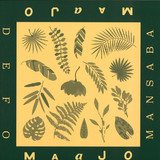
The Finnish tropical troupe Maajo is back with a two-track EP. In contrast to the Afro-Balearic sound of their 2016 debut Tropic of Tulli, the new Defo / Mansaba EP is a step in a deeper and sometimes darker direction.
Defo kicks off the EP with a driving 5/4 rhythm. Reminiscent of Mark Ernestus' Ndagga sounds, it is a tribal tune with Maajo's signature ethereal disco elements.
Trevor Deep Jr.'s version straightens out the original's unconventional time signature and focuses on a four-to-four beat and plenty of Berliner dub. The remix is a solid dancefloor tool, traversing the original like a train making its way through a dark rainforest.
The B-side is entirely covered by Mansaba, a 14-minute long journey into inwards. This studio jam, recorded largely live, is a wild mixture of polyrhythmic sequences, krautrock guitar licks, equatorial forest percussion and violin synths. The trip starts slow and soothing, sneakily picks up pace and keeps grow and growing, eventually exploding into a full-on tribal dance.
Mindblowing Afro-Soul music from Ivory Coast served up by Deke Tom Dollard, an obscure artist who only recorded two albums in 1979 and 1981 but who created an original funky fusion with Bété langage. A Selection of four amazing tracks recorded in Abidjan on two different records label called War Records and As Records.
The music here is a mixture of Funk with heavy basslines, traditional percussions, funky guitar riffs, nice horns section and lyrics in Beté. The song Demonde' is inspired by harmonies of the famous Dance to the Drummer Beat' by Herman Kelly.
Those two rare records were found by Afrobrazilero (aka Djamel Hammadi) and never appeared on the vinyl market. It's almost impossible to have infos about this singer and composer neither the musicians involved in the recording sessions. Most of the traces of the recording session were lost by the labels we licensed the tracks with.
Unique, pressed on a deluxe vinyl, remastered by The Carvery, this very Funky album is a must have for all the Afro Funk lovers!
"Emotional Rescue begins the first in a series of reissues looking at the music of guitarist Carl Weingarten and his Multiphase Records label, starting at his highly sought after collaborate album with Walter Whitney, Dreaming In Colors. With an early interest in photography and Super 8 film leading to a degree in cinema production, Weingarten's other, self-taught, love was the slide guitar. Taking its blues roots and merging them with his visual arts background created a unique "painting in sound" style of playing. While looking to break into the film industry he began writing and recording his own film scores and other music for modern dance companies. From this, he founded Multiphase Records in St Louis in 1980. By the time of Dreaming In Colors, the label had released a series of cassettes and vinyl albums offering abstract, experimental, jazz-fusion, new wave and increasingly, new age compositions. Throughout this period the work of engineer, keyboardist and programmer, Walter Whitney was often present and by the 1985 release of Dreaming In Colors the duo had collaborated for a number of years and released several projects together, most notably as members of the Delay Tactics band. Recorded during off days from the Delay Tactics sessions, the album came together at Whitney's Subterranean Sound studio with a focus away from the bands guitar driven instrumentals to explore a multilayered approach to synthesis, blending textures with Whitney's original samples and sound design, while Weingarten's guitar moved from shining solo moments to complimenting the overall oeuvre, all with heavy washes of delay. This ecumenical approach led to the creation of this compelling album. A masterful conceptual whole that is linked by rich melodies and a concise playing style, heavy on substance while never forgoing the uplifting vibrations. "
· Bart Davenport's 7th album since his 2002 solo debut
· West Coast yacht rock meets '80s English pop
· Produced by L.A. Takedown's Aaron M. Olson
· Confirmed live dates in Los Angeles, San Francisco, Portland, Seattle, San Diego, Vida Festival (Spain)
Recorded in Boyle Heights, Los Angeles, Blue Motel is the new album by Bart & The Bedazzled, a brand new musical enterprise by Bart Davenport and his seventh album proper since his solo breakout in 2002. Alluding to Los Angeles with the lights down, it's an amalgam sound of '80s English pop and West Coast yacht rock jams, sprinkled with cinematic flourishes clearly influenced by the understated production of L.A. Takedown's Aaron M. Olson. The jangly pop aesthetic, resplendent with choppy chorus tinted guitar, snappy snares, sax and bass is underlined with life trodden stories about day jobs, dating, financial insecurities, lost innocence and most prominently, time travel.
The album lives somewhere in an imagined past (or future) that is curiously both the 1960s and 1980s conveying the groups's nostalgia for a fantasy world with a cheeky cynicism, despite a perception of a world that is, for Bart, on the downfall. To that end, Davenport's songs are, as always, delivered with a happy and sad sensibility reminiscent of the great Burt Bacharach. From the surreal yet humorous 'The House That Built Itself' to the sad surf music of 'Halloween By The Sea' or the romantic L.A. noir of the title track, Blue Motel arrives with a spoonful of tears, a nod and a wink.
The Bedazzled band lineup, united by their love of the 'Elegant '80s', includes the guitar of Wayne Faler (Dream Boys), drums, percussion and beats by Andres Renteria (Jose Gonzales) and post-punk bass lines from Jessica Espeleta (L.A. Takedown). The four friends from Los Angeles, united in their affection for the more sophisticated sounds of English '80s groups like Prefab Sprout and Style Council give the setlist a more distinctively pop flavour compared to Bart's soulful last outing on his album Physical World, also released on Lovemonk. Blue Motel features regular appearances from female vocalist Nedelle Torrisi (Domino, Asthmatic Kitty) who notably adds the lush layers of harmony on 'The Amateurs'. Saxophonist Billy McShane is also featured on three songs with improvisations that evoke the scene of whales in outer space.
Producer Olson often incorporates soundtrack and avant-garde elements in his own work. His gift for song arrangement, understanding of the synth and penchant for subtlety all shine brightly on Blue Motel.
The optimum effect of Music of the Five Elements will be achieved if each side of this recording is played through, from beginning to end without interruption. Music of the Five Elements, when used as a meditational or body work tool, rather than entertainment, will increase in effect over time. Overplaying or improper use, however, may eventually diminish its designed effect'
.
Music is the healing force of the universe. It's an ancient idea bandied about by Pythagoras and Plato. In the last century, music as medication has been explored by musicians as diverse as Albert Ayler, Spacemen 3 and Pauline Oliveros. Nowhere did this concept gain more traction than in the so-called realm of New Age Music, an entire movement of synth droners and echoey flautists recording home-baked healing mantras on 4-track. In recent years, thanks to cassette collecting devotees and open-minded music journalists, New Age has shed its flowing robes and is being mined for the truly incredible music that swells under its pastel surface. Musician/acupressurist Sam McClellan's 1982 Music of the Five Elements is one of those revelatory discoveries, an unrivalled work of intense research and focus, simultaneously a near perfect work of art and a scientifically sound elixir for body and mind.
After studying electronic composition at Hampshire College with Randall McClellan (no relation), Sam McClellan became intrigued with the possibilities of healing through music. He explored this idea by applying the ancient Chinese philosophy of medicine to the principles of musical composition. Using the pentatonic scale (the traditional scale of Chinese music), McClellan related each of the notes to one of the five elements (Wood, Fire, Earth, Metal Water), and created five variations for each. He experimented with tempo, beat, pitch, duration, and sound quality, studying the effect on people's energy levels. Using the results of his tests he developed a comprehensive theory of sonic healing and spent the next year composing an album designed to help people achieve inner balance, reducing anxiety and energy depletion.
Music of the Five Elements is not only the acoustic massage' that McClellan set out to make, but is a fully realized and peerless piece of music. Taking cues from Minimalism, American Primitive guitar (Fahey & Basho) and even psychedelia, the album is a continuous sound voyage for voice, synthesizer, guitar, bowed bass, piano, effects and ciao (Chinese flute) all played by McClellan himself. Although divided into sections, the journey is best undertaken as a whole, without distraction.
After the original comes the remix. Or in this case three. I:Cube, Chinaski and Aera help you refresh your memory and re-draw "Drawn From Memory" from Benjamin Fröhlich's second part of the "Rude Movements" series. It's one single track, but every remixer has taken his very own approach and came up with a new interpretation.
The iconic French producer and Permanent Vacation long time favourite, I:Cube, transformed the original into a soul warming and heart melting late night bomb that lets the sun appear even in the darkest places. Chinaski out of Frankfurt, well known from his releases on Live at Robert Johnson and Uncanny Valley, fuses Italo Disco with a John Carpenter-style soundtrack aesthetic and an infectious bassline completed by a full on guitar solo in the break. Aera, fresh from releasing his album on Permanent Vacation, is slowing down the tempo, rearranging the layers of the original and adding a bubbly and underwater atmosphere that let the dub stabs shine. Three different versions that may represent different memories of one long night.