“Lonesome for a Storm” is the result of a felt sense in the summer of 2024.
A fleeting feeling in the body meditated on and played through a restrained pallette of instruments and found sound . LFAS is Gustav Kemps’s first solo album under his own name, but he’s been a frequent behind the scenes coll- aborator in various other bands (if you can connect the dots, there’s a lot to find). Mystery can be fun, but this album of his feels tender and generous in what it conveys.
RIYL: Empress, Loren Connors, Penguin Cafe Orchestra, The Humble Bee, Yo La Tengo, Taku Sugimoto...
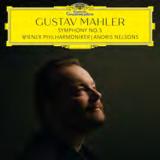
Andris Nelsons gewann jüngst seinen sechsten Grammy und widmet sich nun mit den Wiener Philharmonikern ihrem lang erwarteten Mahler-Sinfoniezyklus für die Deutsche Grammophon: mit einer atemberaubenden Interpretation der Fünften Sinfonie, die 2022 bei den Salzburger Festspielen aufgenommen wurde.
Diese Einzelveröffentlichung fängt den strahlenden Klang des Orchesters und Nelsons’ zutiefst menschliche
Herangehensweise an Mahlers Musik ein – mal intim, mal ekstatisch, mal transzendent. Die mitreißende
Intensität der Aufführung und das strahlende Adagietto bieten einen spannenden Einstieg zum kommenden
Gesamtzyklus und versprechen eines der bedeutendsten Mahler-Projekte unserer Zeit.
Nelsons folgt Mahlers vielschichtiger Partitur mit feinem Gespür für Kontraste, Übergänge und emotionale
Tiefe. So entsteht eine Lesart, die die Dramatik des Werks ebenso ernst nimmt wie seine lichteren, beinahe
entrückten Momente.
Diese Doppelvinyl-Veröffentlichung gibt den Auftakt zu Nelsons’ Mahler-Zyklus mit den Wiener Philharmonikern und lädt dazu ein, eines der zentralen Werke des symphonischen Repertoires neu zu entdecken.
The new label engorn celebrates its second catalog release, once again featuring gustav krach and taschendrachen. The A side kicks off with two dreamy deep house tracks by taschendrachen. The first track, the meaning, blends lush congas and bongos with smooth pads. dont forget us stands out with its warped bassline, while both tracks feature lovely, haunting vocals. The side is rounded off by a sweeping ambient
breakbeat track from gustav krach, closing it with atmospheric depth.
On the B side, taschendrachen showcases his passion for
chords, creating a drive infused cut with tell me do and crafting a dub influenced soundscape with tides, where the chords form a vast sonic backdrop. The release closes with gustav krachs atmospheric ambient track, offering a fitting, introspective conclusion to the journey.
No en stock
Última entrega hace 3 meses disponible para reposición sin garantía
engorn - This new label invites you on a trip through ambient, house, and techno with an unmistakable vibe. It proudly presents the first catalogue number as a various artist compilation with two as yet unknown artists: gustav krach and taschendrachen.
The A-side of the record, curated by taschendrachen, is a true feast for the dancefloor. Two warm house tracks, accompanied by catchy vocals, create a good vibe on the floor.
If we turn the record over, we find ourselves in a completely different world. The B-side, presented by gustav krach, creates an atmospheric soundscape away from the tumult. Four ambient tracks with breakbeats create a dreamy, calm, and beautiful mood.
No en stock
Última entrega hace 5 meses disponible para reposición sin garantía
Czechoslovakian big band legend Gustav Brom has graced dancefloors with his music for a long time, you've probably heard his work and not realised it. PANORAMA returns with "Calling Up The Rain", from his 1976 album "Gustav Brom plays for you Pop Jazz and Swing" Gustav infused big band jazz and a latin groove into this dancefloor weapon, Organ solos, Trumpet solos and a screeching guitar solo. What's not to love?
Presented as a reissue by the newly launched London-based record label, PANORAMA Records, "Calling Up The Rain" reaffirms the label's discerning direction and "Don't Judge A Record By It's Cover" attitude. Championed by Gilles Peterson, Patrick Forge and a few other legends in the game, PANORAMA Records aims to reintroduce this big band hit to new audiences, establishing itself as a tastemaker in the business of reissuing global grooves. It comes with a sticker on the front with quotes from tastemakers Patrick Forge, Rainer Trueby and Zag Erlat (My Analog Journal).
With this release, record collectors can anticipate a discovery of Gustav's anthem, for the first time on a 45 and a first time official reissue, a full blown party starter, as Panorama Records presents "Calling Up The Rain" as a timeless reissue. The label shook mountains with it's first release of Gitte and Inger, with huge DJ support from Gilles Peterson, Ross Allen and other great tastemakers. PAN002 is here, Buy or cry!
No en stock
Última entrega hace 2 años disponible para reposición sin garantía
Representing the astrological symbols and the planets of the solar system, The Planets has become one of the most famous suites of all time. Used across film, TV and social media, this is a classic work deserving of a place in everyone’s collection. Gustav Holst was one of Britain’s finest composers, influenced by the likes of Wagner and Strauss he rose to prominence with The Planets and has cemented his place in history as one of the great composers.
"Due to the huge success of the Original Source Series and due to frequent wishes by both fans and critics alike, DG have decided to launch a reprint of all four titles of Batch 1 – marked as “SECOND EDITION”. Same Quality, just without numbering. THE ORIGINAL SOURCE is a new series of celebrated albums reissued on vinyl. These new releases include Claudio Abbado’s fascinating interpretation of works by Debussy and Ravel with the Boston Symphony Orchestra (1 LP), the legendary recording of Brahms’s Piano Concertos Nos. 1 & 2 with Emil Gilels, the Berliner Philharmoniker and Eugen Jochum (2 LPs), and Verdi’s Messa da Requiem in the iconic version of Herbert von Karajan and Berliner Philharmoniker (2 LPs). The renowned Berlin-based Emil Berliner Studios are remastering 4-track recordings from the 1970s, using their own cutting-edge and 100% pure analogue techniques (AAA) to create versions of the highest possible audio quality. Compared to the original releases, the advantages in sound are outstanding: More clarity, more details and a better frequency response, less noise, less distortion, less compression – the highest possible audiophile quality which gives listeners the chance to enjoy this repertoire like never before.
Produced on 180g virgin vinyl by Optimal, these limited and numbered releases will be issued in deluxe gatefold editions featuring the original artwork and liner notes, with additional photos and facsimiles of the recording documentation on the inner sleeve. Furthermore, each release includes a note by Rainer Maillard/EBS detailing the technical background and procedure of the Original Source Series, and an additional insert with a photo of the original tape box. Each LP comes in a protective cellophane jacket with a sticker highlighting the
"
PGS 011 comes to us from Gustav Brovold, an essential player in Detroit's latest wave of underground electronic music. His début EP, "Hyperbolic Space" is the first release solely dedicated to the local legend, with influences ranging from 90s UK rave, apocalyptic techno, and bright, post-Drexciyan electro. Since the late-aughts, Brovold has been a fixture of Detroit's dance community; first as a member of Randy Chabot's Deastro project, and then a pillar of the after-hours scene through raves with the ADULT Contemporary collective, all the while sprinkling in rare, must-see all-hardware-based live shows around the city. Moments of brilliance have boiled over the surface globally, with appearances on Don't Be Afraid as Radio Brovold in 2015, the Detroit Electronic Quarterly's "DEQ Vol. 7" in 2016, and on the punishing opener of PGS 009's with "Temple of the Circuit" earlier this year.
Following a live show at Detroit's Donovan's Pub in late 2018, Zach (Shigeto) came to the obvious realization–this music is the reason why we started PGS, and needed to release the music to a wider audience. Brovold handed PGS a flash drive with hours of completed music, a gold mine in bits and bites. "Hyperbolic Space" represents a cohesive sampling of the mountain of tracks from Brovold's vaults, propelling PGS into the next decade. Play it in your car, or at unauthorized raves, and dance to the airwaves of Radio Brovold.
"Oakland Ave"
The vibes of forgotten 90s raves: UK techno made with digital synths, resampled as a low-bitrate soundtrack for the night time level of a PlayStation racing game. Building, dancing hi-hats, slow building chord stabs, dubby techno feels. A triumphant finish, 1st place in fifth gear. (*If you play this at 45rpm, you can Jit).
No en stock
Última entrega hace 5 años disponible para reposición sin garantía
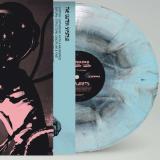
UK experimental multi-instrumentalist Oli Heffernan (aka Ivan The Tolerable) returns to independent label Riot Season Records on October 23rd, 2026, with The Planets, a fierce, tension-fuelled reinterpretation of Gustav Holst’s iconic orchestral suite tailored for the modern age.
Originally composed over a century ago to capture the astrological characters of the cosmos, Holst's masterpiece receives a radical, uneasy update. Where the original composition leaned on grand symphonic sweeps, Ivan The Tolerable strips away the comfort of the orchestra, replacing it with fracturing analog synthesisers, claustrophobic tape loops, and the hypnotic, nervous pulse of modern kosmische music and avant-garde noise.
The Planets is an album forged in the specific dread of 2026—a year defined by geopolitical instability, climate weariness, and pervasive societal tension. Rather than looking up at the stars in awe, Heffernan turns the telescope back toward a fractured Earth. From the staggering, industrial-tinged dread of "Mars" to a hollow, melancholic take on "Jupiter," the album transforms familiar motifs into an immersive exploration of collective psychological fatigue.
Recorded in isolation by Heffernan, the project captures the signature solo vulnerability seen on his recent landmark releases like Psychogeography. It balances moments of deep, meditative stillness with sudden, jarring eruptions of noise, offering listeners a space to both confront and process the overwhelming static of the everyday world.
The 2013 action-adventure game The Last Of Us was originally published in 2013 by Sony Computer Entertainment and was developed by Naughty Dog. The game is played in a third-person perspective and the player controls Joel, a smuggler who is escorting the teenager Ellie across a post-apocalyptic America. The game received critical acclaim, with praise for its narrative, gameplay, visuals, sound design, characterization, depiction of female characters. The Last Of Us became one of the best-selling video games, selling over 1.3 million units in its first week. The game won multiple Game of the Year awards and has been cited as one of the greatest video games ever made.
The Last Of Us also received acclaim for its score, which was made by composer Gustavo Santaolalla. Santaolalla is also known for his work on Brokeback Mountain and Babel, for which he both won the Academy Award for Best Original Score. The Argentinian composer also created the music for the series Jane The Virgin and Netflix’ Making A Murderer. His soundtrack to The Last Of Us was his first in the video game industry. In 2020, he also returned to compose the music to the sequel, The Last Of Us Part II.
The soundtrack of The Last Of Us: Season 1 is available as a limited edition of 4000 individually numbered copies on yellow marble vinyl. This 2LP is packaged in a deluxe gatefold sleeve with linen laminate finish. It includes printed innersleeves and an 8-page booklet with liner notes by writer and creative director Neil Druckmann.
Soda Stereo is a band that never made the same album twice. After the commercial success of Canción Animal, singer Gustavo Cerati went deeper into the art of sampling, electronic music, the Madchester scene from the UK, shoegaze and neo-psychedelia. This change in sound led to some confusion among fans, but also gathered a lot of praise for embracing modern genres. Up this day Dynamo is seen as an essential classic in the Soda Stereo catalogue and also a must have for 90s shoegaze fans.
Dynamo is available as a limited edition of 2000 individually numbered copies on transparent vinyl and includes an insert.
In 1998, Carsten Nicolai, also known as Alva Noto, visited a sound installation created by Robert Lippok for a group exhibition in Weimar, Germany. Soon after, he invited Lippok to release music on his label raster-noton. »Open Close Open« was released in 2001 and marked the beginning of Lippok's solo career. Before, Lippok had already played in Ornament und Verbrechen (with his brother Ronald Lippok) and To Rococo Rot (with Ronald Lippok and Stefan Schneider).
The title of the EP is a linguistic reference to the instructions found on everyday objects. In fact, the sound of birds or a closing door can be heard. Besides field recordings, cultural fragments were used – including the sample of the famous Adagietto from Gustav Mahler's Symphony. No. 5. – and integrated into three loop-based pieces, that have been praised by Fact Magazine as »a masterclass in collage, looping and tactile processing.«
The source material for »Open Close Open« initially served as a soundtrack for a video by Takehito Koganezawa, a visual artist from Japan. For this remastered vinyl reissue, Lippok revisited the original sound material and produced a new track called »Licht.«
This first-time reissue of Quinteplus’ 1971 album revives a key moment in Argentine jazz, featuring crisp trumpet and tenor sax, electric piano-driven funk and modal grooves, and a tight, spacious rhythm section. It showcases prominent figures like Jorge Anders and “Pocho” Lapouble.
==================================
Quinteplus was born in Buenos Aires at the end of the 1960s, emerging directly from the ideas and experiments of the legendary Agrupación Nuevo Jazz. Founded in the early ’60s, this collective brought together some of the most forward thinking figures in Argentine jazz functioned as a creative lab where musicians questioned where jazz could go next. Among the key ideas discussed was the fusion of jazz with Argentine folk styles such as zamba, chacarera, malambo, cueca, and candombe, as well as a deeper look into African rhythms as a bridge between musical worlds.
Two members of that collective, keyboardist Santiago Giacobbe and bassist Jorge “Negro” González, carried those ideas forward when they formed Quinteplus in 1969. The group came together naturally: all the musicians already knew each other and had played in different projects around the Buenos Aires scene. They shared a strong admiration for Julian “Cannonball” Adderley’s quintet, along with a clear goal—to develop a modern jazz language grounded in local Argentine rhythms.
From the start, Quinteplus stood out for its openness and adventurous spirit. Rhythm was central, and so was experimentation. The band belonged to a generation of Argentine jazz musicians eager to explore electric instruments and new textures, anticipating what would soon be known as jazz-rock. This was happening in Buenos Aires at the very same time Miles Davis was opening new doors with “In a Silent Way” and “Bitches Brew”. Giacobbe introduced one of the first Fender electric pianos in Argentina, while González pioneered the amplification of the upright bass and even developed a hybrid electric, boxless version of the instrument. Trumpeter Gustavo Bergalli, meanwhile, maintained close ties with the emerging Argentine rock scene, collaborating with Luis Alberto Spinetta and appearing on Almendra’s first album.
In 1971, Quinteplus recorded its first and only studio album for EMI. The original lineup featured Jorge Anders on tenor saxophone, Bergalli on trumpet, Giacobbe on keyboards, González on upright and electric bass, and Norberto “Pocho” Lapouble on drums and percussion—who also illustrated the album’s iconic sleeve. The record is a refined showcase of the band’s musical vision: original compositions, fluent jazz language, folk-derived rhythms, funky electric textures, tight ensemble playing, and standout brass solos. Though critically praised, the album received little label support and sold modestly, eventually becoming a sought-after collector’s item.
Quinteplus disbanded in 1973, their music was perhaps too bold and unconventional for its time.
The album’s title deftly gestures to the sheer vastness of astronomical dimensions, while simultaneously capturing the musical breadth within, where the eight planets are imagined as the eight notes of an octave. The work draws inspiration not only from earlier compositions —most notably Gustav Holst’s The Planets—but also from the rich astronomical and cultural contexts surrounding these celestial bodies. Here, the focus transcends direct citation of melodic motifs, instead embracing an intriguing conceptual approach on a meta level, unfolding in a series of vividly contrasting soundscapes. These contrasts shape a sweeping sonic journey, one that fully embraces the album format with both arms, inviting the listener to venture into realms both strange and wondrous, feeling the immensity of the interstellar space that lies between them. Contrast, after all, is the brushstroke that enriches our world.
Embarking on an auditory voyage, "Astral Guide" establishes the sonic framework that propels us into the boundless expanses of the cosmos. Its ethereal tones evoke the vastness of space, crafting a mood ripe for exploration within the realms of sci-fi. The subsequent tracks unfold like constellations, weaving a rich tapestry of sound that seamlessly marries cinematic soundscapes with pulsating, club-oriented rhythms. This album invites listeners to traverse its immersive landscapes, whether nestled in the comfort of home or dancing under the starlit sky, each note a guide through the transcendent experience of a nocturnal journey.
"Solar Flares" draws its inspiration from the awe-inspiring expanse of solar phenomena, capturing the majestic power of the sun as it reaches into the cosmos. This track resonates with the idea that energy, while vital, can also be a force of destruction when unleashed with overwhelming intensity. The composition beautifully mirrors the sun’s duality, where brilliance and devastation coexist, inviting listeners to reflect on the delicate balance between creation and annihilation. Through its rich textures and dynamic shifts, "Solar Flares" serves as both a homage to the celestial and a poignant reminder of nature's formidable power.
"Mercury – The Winged Messenger" embodies a meticulously crafted soundscape where artistry meets astronomy. The tempo of 173.6 BPM, derived from precise astronomical data, propels the composition into a vibrant realm that resonates with cosmic energy. Synthwave sound design intertwines seamlessly with the fluid rhythms of Drum’n’Bass, imbuing the piece with an uplifting dynamism that evokes the ethereal grace of Mercury itself. In this sonic exploration, listeners are invited to ascend on wings of sound, navigating the celestial tapestry of the universe with each invigorating beat.
"Venus, The Bringer of Peace" strikes a decidedly cozy note, presenting a poignant contrast to the more tempestuous themes often found in cosmic narratives. This composition evokes a nostalgic vision of an optimistic era, one in which humanity transcended borders and embraced the infinite possibilities of space exploration, where no destination felt too distant. The dense, languid atmosphere envelops the listener, creating a tangible sense of serenity that unfolds gradually, allowing for a meditative journey through sound. Each note serves as an invitation to linger in this tranquil embrace, reflecting on the harmonious potential of our collective aspirations and the beauty of connection in a vast universe.
The central theme of „Gaia, The Bringer of Life“ —originally not part of the planetary cycle— is the profound enabler of life on Earth. The arrangement delicately mirrors the slow, tentative unfolding of this potential, marked by an initially sparse orchestration that gradually builds in momentum. This progression crescendos, embodying the explosive dynamism of the Cambrian burst of life, ultimately culminating in a euphoric fanfare—a triumphant, celebratory flourish echoing life’s victorious emergence.
"Blue Moon" unfolds as a contemplative reverie on the tranquil clarity of a night sky, now seldom glimpsed in its natural purity, unclouded by the relentless haze of urban light. The listener is drawn into the vast embrace of the star-strewn firmament, a journey that sways between euphoric awe at nature’s sublime beauty and a profound melancholy for its fragile and imperiled state. Musically, this duality finds expression in the delicate interplay of modal mixtures, while an ever-shifting triplet groove, poised at the intersection of Outrun and melodic house, lends a pulse that is both nostalgic and forward-looking—echoing the beauty and transience of a world on the brink.
Rather than replicating the original composition of „Mars, The Bringer of War“, this interpretation seeks to evoke its profound, foreboding atmosphere. Cyberpunk emerges here as an ideal genre, channeling the dark, relentless march synonymous with Mars, the ancient god of war. The piece reverberates with intensity, as distorted vocalizations rise, embodying the anguish and visceral torment that shadow war’s violent crescendo. This auditory descent into conflict captures the relentless pulse of warfare, where sound itself becomes an embodiment of suffering and fury.
Majestically, "Jupiter, the Bringer of Jollity" emerges on the celestial stage, sweeping away the somber tones with its radiant vigor. Drawing inspiration from the triumphant strains of the original, and borrowing a melodic motif in the refrain, the piece expresses joy and buoyancy through a shift to a major key and the lilting sway of a danceable 12/8 meter. Spirited and exuberant, it leaps boldly from major to minor and back again, playfully shifting time signatures to capture a mood of unbridled festivity and jollity.
Here, a more conciliatory concept is chosen than in the original inspiration. „Saturn“ aligns with the number six, being the sixth planet from the Sun and bearing the iconic hexagonal pattern at its northern pole. What, then, could be more fitting than to render this piece in a 6/8 time signature? The arrangement unfolds with a multifaceted richness, mirroring the countless stones and ice fragments that form the foundations of Saturn’s majestic rings.
„Uranus“ adopts the theme of a light-footed, dancing instrumentation, giving the impression of perpetual motion, never quite settling. This musical choice harmonizes with the planet’s own orbit, as it spins with breathtaking velocity, teetering and swaying, seemingly unable to attain rest or stability.
The chill and vastness of the cosmos find expression in „Neptune, The Mystic“. At its core, an electronic soundscape envelops a classical arrangement, its unreachability intensified by an ethereal, otherworldly choir. Hovering at the outermost boundaries of the solar system, where warmth is but a distant memory, the composition lingers in a slow, contemplative tempo, evoking a realm where space for speculation stretches wide and silence reigns supreme.
Though Pluto may have lost its planetary status, and its companion Charon never achieved one, this shift in classification subtly aligns with the cosmic scale invoked here—one that mirrors the musical tradition of an eight-note sequence. Fittingly, the album closes with „Kuiper Belt“, a composition emblematic of the turbulence and vitality of countless smaller
celestial bodies that, though diminutive, find their rightful place within the vast architecture of the solar system.
They say nature is the greatest composer, shaping the universe with a symphony of chaos and order, beauty and danger. It is this duality that fuels the artistic vision of Edictum—a producer who, armed with a doctorate in chemistry, delves as deeply into the mysteries of molecules as he does into the depths of sound. In the tension between the vastness of the cosmos and the microscopic processes that dictate life’s rhythm, Edictum creates sonic landscapes that dissolve the boundaries between science and art.
His music is a story of contrasts—a sonic tale where the raw forces of nature clash with the intricate structures of human culture. Opposites intertwine to form a harmonious whole: the primal rhythms of the earth meet the celestial melodies of the cosmos, the rigid laws of physics blend with the boundless freedom of art. Edictum explores these polarities with meticulous devotion, each composition an expedition into uncharted soundscapes—a quest to give voice to the unfathomable.
With over 20 years immersed in the realms of electronic music, Edictum has honed a keen sense for rhythm and movement. His driving beats compel both body and mind into a hypnotic flow. Yet beyond the pulse of dance lies a complex framework of conceptual thought. Today, his creative focus revolves around holistic album projects—self-contained worlds with overarching narratives that embrace contrast and complexity. Each track stands alone as a fragment of the whole, but together, they weave a cohesive tapestry, much like the chapters of a novel that guide the listener on an emotional and sonic journey.
Edictum’s distinctive musical signature has earned him international recognition. With over 150 releases, many on prestigious platforms like the iconic *NewRetroWave* label, and collaborations with artists such as Jan Johnston, Azumi Inoue, Powernerd, and Turbo Knight, he has solidified his place in the global electronic music scene. His latest work, *A Cosmic Scale*, marks his seventh vinyl album and is released under his own label, *Echoes of Expanse*. The label’s name is no coincidence—it captures the essence of his art: echoes of infinity, the vibrations of the universe distilled into a singular sonic experience that carries the listener ever further into the boundless expanse of sound and space.
The very prolific ATD Records Founder, Gustavo Lima, brings 5 techno cuts on Tar Hallow for the first release of 2024. Early support by: Amotik, Answer Code Request, Ben Klock, Charlton, Chontane, Gary Beck, Kessell / Exium, Krenzlin, Kwartz, Leiras, Marco Bailey, Nastia, Perc, Steffi, W.I.R.E. and more.
A fourth vinyl arrives from Seattle/LA label Rhizome Records. The catalog returns to South America with 2 original productions from Gustavo Fridman of Buenos Aires, Argentina. An impressive up & coming DJ & producer, Gustavo Fridman has already released on underground labels Sous-Vide, Welter, and Tip Tap. Alongside the spacey originals, Romanian maestros Sublee and Ritmico (Emi & Suciu) offer expanded interpretations.
The title track “Dios Habla Hoy” kicks off the ep with cutting edge minimal percussion work and breezy atmospherics partnered with a celestial yet melancholy melody. The techy breakbeat and meandering effects deliver a nostalgic sound reminiscent of Cadenza classics.
Sublee’s remix of “Dios Habla Hoy” deconstructs and resynthesizes the original into a cosmic journey. While tones and texture remain, Sublee adds a massive groove to drive his trancy reinterpretation. Following the breakdown, synths cascade into eternity to create an emotional, dancefloor-tested moment.
“999” opens the record’s second side with a jazzy afterhours vibe. Mysterious and quirky effects add constant intrigue while the melody drifts about the punchy breakbeat.
Trip masterminds Emi & Suciu aka Ritmico are called upon to close out the record with a remix, and the result is a true weapon.Ritmico re-equips the original with powerful drums and an unrelenting groove. An array of unique and mental effects complete this deep space freak.
Ritmico re-equips the original with powerful drums and an unrelenting groove. An array of unique and mental effects complete this deep space freak.
written and produced by Gustavo Fridman in Buenos Aires, remixes by Sublee & Ritmico (Emi & Suciu)
A selection of unheard tracks by argentine cult proto-industrial band Quum, recorded between the years 2012/2014. Xtraqt Vol. 1 is the second release of Tecnologías Elementales, a record label founded by Djs Diamin and F.A.N.G.O.
Formed in 1978, Quum is an argentine group (currently consisting of brothers and founders members Gustavo and Daniel Gatti) that offers hypnotic and rhythmical improvisations in the language of experimental electronics, with a great participation of randomness, risk and uncertainty. Their music is inspired by science fiction, Zen Buddhism, chaos theory, ecology, the UFO phenomenon and the wabi-sabi concept.
Quum subscribes to the driving attitude of the Madí Movement ("invent and create"), coinciding in a conceptual vector that unites their teachers Jorge L. Borges, Gyula Kosice and Xul Solar.
Quum is a quiché-maya word extracted from the Popol Vuh that means "the secret", "that which is hidden behind the apparent", or "the mystery". The symbol that identifies them is a replica of the huge spider drawn mysteriously on the Nazca-Peru plateau.
Quum is, in addition to music, a living gesture of alternatives to conventional paradigms and pre-established archetypal behaviors.
Some kind of dirty ambient, cybernetik trance and organic industrial music.
Next up on Toolroom’s 4-track vinyl sampler series is a tasty collab from label founder, Mark Knight and dance music royalty, Armand van Helden, a fresh new edit of a revered club weapon from Julio Navas, Gustavo Bravetti and David Amo, Kiss FM regular, majestic and Sydney-native Alex Preston.
Up first label boss, Mark Knight enlists Grammy nominated Armand van Helden for their debut collaboration, 'The Music Began To Play'. Kicking off with a hard-hitting house groove and electrified bassline that drives the record, before dropping into the track's golden moment and sampling the 1979 classic disco cut 'I Don't Need No Music' by T.J.M; a gem of a record that encapsulates both Mark and Armand’s love for classic cuts.
Next up, a record that became a cult hit of the underground and one that defines the true sound of Toolroom's heritage, Julio Navas, Gustavo Bravetti and David Amo’s 'Raw'. Refreshed for 2022, we see one of France's hottest exports, Tony Romera, deliver a high energy, club focused remix of 'Raw', bringing the classic club record back to dancefloors and sound systems across the globe!
Up next is another heater from Majestic, who debuts on Toolroom with ‘Annie’. Recapping one of the hottest summers on record, Majestic embodies the Balearic, Ibizan heat, sampling Kid Creole & the Coconuts 1982 hit, 'Annie I’m Not Your Daddy', turning a slice of calypso / disco, into a club ready record for the dancefloor. From the brass melody to the hooky guitar riff, majestic lays down his signature style with a Groove Armada-esque vibe throughout.
Rounding things off is label favourite, Alex Preston with his unique blend of 4 to the floor dance music and live funk guitar riffs that have swept through clubs, moving feet, and bringing those feel-good vibes. Ticking all the right boxes on this one, 'Hunching' kicks off with its infectious groove and bassline, throwing in some lush strings, guitar flits and an 80's inspired saxophone break that adds some serious flavour to the record.
Max Von Sydow is the alias of Joakim hlund, founder of 90's electro-pop act Teddybears, garage-pop freaks Caesars and kraut space rockers Les Big Byrd among others
Max von Sydow is more of a sporadic experimental solo excursion, and he has previously released a couple of singles on Swedish labels Ingrid and Höga Nord for example. Here on his first release for Chimp Limbs he has taken the help of Gustav Ejstes from Dungen and Amason on flute and piano, as well as jazz prodigy Moussa Fadera on the drums.
The A-side, Fuzzy Ghost, has a driving bass line and an almost Klaus Dinger- like motorik drumbeat as well as hectic flute work and ethereal piano by Ejstes. And the B-side, Acid Sweat is a Moog synthdriven piece which features nice tape- echo flute- work by Ejstes and an
unrelenting funky drumbeat by Fadera.
Everything that can be measured passes, everything that can be counted ends. Only three things are infinite: the sky in its stars, the sea in its drops of water, and the heart in its tears. Gustave Flaubert
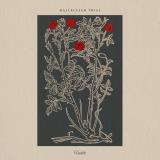
Hallelujah Trial is Tom Roberts (Cranebuilders, Beatowls) and John Canning Yates (Ella Guru): two Liverpool songwriters who knew each other for twenty years before they ever played a note together. Roberts brought a folder of songs to Yates' front room. Yates answered with piano. A weekly ritual of tea and talk became a repertoire, the repertoire became a debut performance at the final La Violette Società, and a few weeks later the songs became an album, recorded in May 2026 in the Gustav Adolf Church, the Scandinavian seamen's church on the edge of Liverpool's Baltic Triangle.
The sound is spacious, stripped back and gloriously melodic: voice, guitar and piano, songs in a room, storytelling that recalls Bill Callahan, Lee Hazlewood and the late Johnny Cash records. Yates' Ella Guru drew a Peel session and 'the best debut album since Marquee Moon' from the Independent on Sunday. Roberts' Cranebuilders recorded two Peel sessions of their own. The pedigree is genuine. The songs are better.
Recorded, mixed and produced by John Canning Yates. Mastered by Jason Mitchell (PJ Harvey, Aldous Harding). Sleeve by Pascal Blua, after a rose from William Turner's herbal of 1568. The closing 'Reprise' carries a hallelujah chorus of friends and family, recorded live in the ch
Experience the emotion of The Last of Us like never before with this stunning Blue & Grey Marble double LP.
Performed by London Music Works, Music From The Last of Us brings together the most iconic themes from the acclaimed video games and TV series, featuring the unforgettable music of Gustavo Santaolalla, along with a piece composed by Max Richter. A must-have release for fans of the franchise and soundtrack collectors alike, presented on a beautifully crafted vinyl edition that is as striking as it is immersive.
[d] a4 The Last of Us (Goodnight) [from "The Last of Us Part I"]
[e] a5 All Gone (No Escape) [from "The Last of Us Part I"]
[f] a6 The Path (A New Beginning) [from "The Last of Us Part I"]
[n] c3 It Can't Last (Sunset) [from "The Last of Us: Season 1"]
[p] c5 All Gone (Flashbacks) [from "The Last of Us: Season 1"]
[q] c6 The Last of Us (Vengeance) [from "The Last of Us: Season 1"]
[r] c7 All Gone (Ephemeral) [from "The Last of Us: Season 1"]
[t] d2 Left Behind (The Journey) [from "The Last of Us: Season 2"]
Die in London lebende schwedische Künstlerin Josefin Öhrn (Ex-Mitglied der Grammy-nominierten Band Josefin Öhrn & The Liberation) veröffentlicht mit "Cherry" ihr Solodebütalbum, das sie mit den Gastsängern Bobby Gillespie (Primal Scream) & Anton Newcombe (The Brian Jonestown Massacre) sowie Andy Bell (Ride) an der Gitarre aufnahm. "Cherry" ist Josefins bislang persönlichstes und eigenständigstes Album. Es widmet sich Themen wie Neuanfang, Begehren, Liebe und Trauer und reiht sich so in eine neue musikalische Strömung ein – ähnlich Robyn ("Sexistential") und Lykke Li ("The Afterparty") -, in der weibliche Erfahrungen offen und ohne Scham in farbenfroher Aufrichtigkeit geschildert werden. Solche Alben zeugen von einer faszinierenden Phase roher, intensiver und tiefgreifend transformativer Selbstverwirklichung. Obwohl "Cherry" musikalisch an den hypnotischen Psychedelic-Rock ihrer Ex-Band erinnert, sind die Arrangements, Strukturen und der Mix weniger avantgardistisch und orientieren sich eher an der entspannten Atmosphäre von Künstlern wie Kurt Vile, Lana Del Rey oder Natalie Bergman. Klare Melodiebögen und Josefins Stimme – intim, magnetisch und unerschütterlich – stehen im Vordergrund und verleihen dem Album seine eindringlich-emotionale Unmittelbarkeit. Josefin bat persönlich Kalle Jerneholm Gustavsson (Soundtrack Of Our Lives), mit dem sie bereits früher zusammenarbeitete, das Album zu produzieren.
Finnish Prog legend Wigwam's fourth album Being reissued on vinyl in September Finland´s Wigwam definitely belongs to the honorable circle of the pioneers of early progressive rock. Considered by many as their most ambitious work, Being was originally released in 1974. This reissue contains the album's partially remixed and remastered version from 2001, which the group’s mastermind behind the album concept Jukka Gustavson considers superior compared to the original mix. Being is a progressive rock masterpiece. Dark and satirical lyrics of social and political critique blended with complex jazz-rock, driven by the superb keyboard work by Gustavson who's joined by the band in its prime; Pekka Pohjola, Jim Pembroke, and Ronnie Österberg. Being is cited as one of the best albums from the 1970s Scandinavian Prog scene. Housed in a gatefold sleeve and containing a booklet, Being is out on vinyl and CD on September 11th, 2026.
Finnish Prog legend Wigwam's fourth album Being reissued on vinyl in September Finland´s Wigwam definitely belongs to the honorable circle of the pioneers of early progressive rock. Considered by many as their most ambitious work, Being was originally released in 1974. This reissue contains the album's partially remixed and remastered version from 2001, which the group’s mastermind behind the album concept Jukka Gustavson considers superior compared to the original mix. Being is a progressive rock masterpiece. Dark and satirical lyrics of social and political critique blended with complex jazz-rock, driven by the superb keyboard work by Gustavson who's joined by the band in its prime; Pekka Pohjola, Jim Pembroke, and Ronnie Österberg. Being is cited as one of the best albums from the 1970s Scandinavian Prog scene. Housed in a gatefold sleeve and containing a booklet, Being is out on vinyl and CD on September 11th, 2026.
Jascha Heifetz gilt als einer der prägendsten Geiger des 20. Jahrhunderts. Für María Dueñas (»Dueñas war
schlichtweg fesselnd« - New York Times) ist er seit ihrer Kindheit eine konstante künstlerische Inspiration
und Bezugsperson. Mit ihrem neuen Album ’Homage to Heifetz’ folgt sie diesen Spuren und stellt Werke
in den Mittelpunkt, die eng mit dem Vermächtnis von Heifetz verbunden sind. Aufgenommen mit Gustavo
Dudamel, der für Dueñas eine weitere Inspirationsquelle nicht nur »als fantastischer Musiker, sondern
auch als wunderbarer Mensch« darstellt, und dem Simón Bolívar Symphony Orchestra in den berühmten
Abbey Road Studios in London, finden sich unter anderem Korngolds Violinkonzert und Lalos Symphonie
espagnole auf dem neuem Album. Ergänzt wird das Programm durch Miniaturen von Debussy und Ponce,
die bewusst an die Tradition Heifetz’ anknüpfen. So entsteht ein Album, das Heifetz’ Vermächtnis würdigt
und zugleich die eigene künstlerische Stimme von María Dueñas hervorhebt.
Reservar
Resérvalo ahora
35,25 €
0 Cesta
Emmanuel Ceysson, Royal Philharmonic Orchestra, Joe Hisaishi
Der international gefeierte japanische Komponist und Dirigent Joe Hisaishi präsentiert gemeinsam mit dem
Royal Philharmonic Orchestra und dem renommierten Harfenisten Emmanuel Ceysson eine außergewöhnliche Weltersteinspielung: Hisaishis Symphony No. 3 „Metaphysica“ und ein Harfenkonzert – ein virtuoses,
genreübergreifendes Werk, das eigens für Ceysson komponiert wurde.
Die Idee zum Harfenkonzert entstand 2023 während Hisaishis Auftritt mit dem Los Angeles Philharmonic in
der Hollywood Bowl vor 17.500 Zuhörern. Im engen Austausch mit Emmanuel Ceysson entwickelte Hisaishi
ein Werk, das die traditionellen Grenzen der Harfe auslotet. Statt filigraner Zurückhaltung entfaltet das
dreisätzige Konzert eine kraftvolle, dynamische Klangsprache mit rhythmischer Energie und emotionaler
Tiefe.
Ergänzt wird die Aufnahme durch die Symphony No. 3 „Metaphysica“, die 2021 zum 50-jährigen Jubiläum des New Japan Philharmonic uraufgeführt wurde. Inspiriert von Gustav Mahler verbindet Hisaishi
in diesem Werk präzise rhythmische Strukturen mit vielschichtigen orchestralen Strukturen und schafft eine
eindrucksvolle symphonische Form von hoher Ausdruckskraft.
Mit dieser Veröffentlichung zeigt Joe Hisaishi eindrucksvoll seine einzigartige Fähigkeit, cineastische Ausdruckskraft mit symphonischer Größe zu verbinden - ein musikalisches Ereignis für Klassikliebhaber ebenso
wie für Fans seiner weltberühmten Filmmusik.
Der international gefeierte japanische Komponist und Dirigent Joe Hisaishi präsentiert gemeinsam mit dem
Royal Philharmonic Orchestra und dem renommierten Harfenisten Emmanuel Ceysson eine außergewöhnliche Weltersteinspielung: Hisaishis Symphony No. 3 „Metaphysica“ und ein Harfenkonzert – ein virtuoses,
genreübergreifendes Werk, das eigens für Ceysson komponiert wurde.
Die Idee zum Harfenkonzert entstand 2023 während Hisaishis Auftritt mit dem Los Angeles Philharmonic in
der Hollywood Bowl vor 17.500 Zuhörern. Im engen Austausch mit Emmanuel Ceysson entwickelte Hisaishi
ein Werk, das die traditionellen Grenzen der Harfe auslotet. Statt filigraner Zurückhaltung entfaltet das
dreisätzige Konzert eine kraftvolle, dynamische Klangsprache mit rhythmischer Energie und emotionaler
Tiefe.
Ergänzt wird die Aufnahme durch die Symphony No. 3 „Metaphysica“, die 2021 zum 50-jährigen Jubiläum des New Japan Philharmonic uraufgeführt wurde. Inspiriert von Gustav Mahler verbindet Hisaishi
in diesem Werk präzise rhythmische Strukturen mit vielschichtigen orchestralen Strukturen und schafft eine
eindrucksvolle symphonische Form von hoher Ausdruckskraft.
Mit dieser Veröffentlichung zeigt Joe Hisaishi eindrucksvoll seine einzigartige Fähigkeit, cineastische Ausdruckskraft mit symphonischer Größe zu verbinden - ein musikalisches Ereignis für Klassikliebhaber ebenso
wie für Fans seiner weltberühmten Filmmusik.
Caçador de Horizontes is the fourth and most ambitious album by Brazilian composer and songwriter Raphael Gimenes. Conceived as an expansive double album, it brings together voice and acoustic guitar with richly arranged strings, brass and a wide palette of percussion, engaging with the tradition of Brazilian songwriting while evoking the harmonic sensibility of artists such as Milton Nascimento, alongside elements of modern classical music.
Inspired by travels across the American continent, the album moves between intimate moments and large-scale instrumental passages, creating a cinematic and emotionally resonant atmosphere. Produced by Lucas Delacroix, Alexandre Andrés and Gimenes himself, it features more than 30 musicians from different countries and was supported by the Danish Arts Foundation (Statens Kunstfond).
Recorded between the iconic Abbey Road and Polish Radio studios, Hania Rani"s original music for Joachim Trier"s Cannes and Golden Globe winning, Oscar and Bafta nominated "Sentimental Value" is a deeply intuitive collaboration, composed before a single frame was edited. For Hania Rani composing for the most recent film by Joachim Trier was nothing less than a true joy and a real artistic adventure. As she explains: "It doesn"t happen often that I"m asked to work on a film by a director whose work I know so well and which resonates with me so naturally. What I understood while working with such an intriguing mind and intelligent artist as Joachim is that the role of a film composer is to wander along with the director, hand in hand, rather than follow one another. The collaboration should be a partnership - evenly balanced and able to invigorate people on both ends - otherwise it will always feel superficial, imposed, and timid".
No en stock
Última entrega hace 87 días disponible para reposición sin garantía
Mit ”Peter und der Wolf”, einer außergewöhnlichen Einspielung des beliebten Orchesterklassikers von
Sergej Prokofjew, setzt Gustavo Dudamel ein Ausrufezeichen ans Ende seiner Amtszeit als Music & Artistic
Director des Los Angeles Philharmonic. In seinem letzten Album als Leiter des Orchesters lässt Dudamel
mit seiner farbenreichen Interpretation jedes Instrument zu einem erlebbaren Charakter der Geschichte
werden. Mit klarem, pointiertem Ton und großer Ausdruckskraft begeistert die vielfach preisgekrönte USamerikanische Schauspielerin, Hollywood-Legende und EGOT-Gewinnerin Viola Davis als Erzählerin. In
dieser einmaligen Konstellation wird Prokofjews Märchen zu einem Orchesterwerk und lebendigen Hörspiel
zugleich.
Das Album erscheint digital und auf Vinyl, mit einem eigens für die Veröffentlichung gestalteten Artwork
der amerikanischen bildenden Künstlerin Alexandra Grant.
Representing a more analog sound than before, Itken jos mua huvittaa was recorded in Gothenburg in the autumn of 2025. The album was produced by Gustav Ejstes, known as the leader of the band Dungen, and engineered by Mattias Glavå, renowned for producing Håkan Hellström's albums. Counting among the most popular bands in Finland, Maustetytöt also enjoy international cult fame and have toured extensively across Europe over the past two years, performing headline shows in England, Germany, France, Italy, Spain, Switzerland, the Netherlands, Greece, the Czech Republic, Poland, and throughout Scandinavia.
Tulipa Ruiz is a Latin Grammy Award-winning singer, songwriter, and illustrator from Sao Paulo. Born in a family of musicians (her father, Luiz Chagas, played with Itamar Assumpçao, and her brother, Gustavo Ruiz, is her longtime producer), she followsthe footsteps of the Vanguarda Paulista and offersa bold, genre-bending sound. Fusing MPB, soul, pop, and rock, her music is joyful, rich, and one of a kind. Since her debut album, Efêmera (2010), Tulipa has become one of Brazil"s most distinctive voices, with five critically acclaimed albums, collaborations with Elza Soares and Milton Nascimento, and performances at international festivalssuch as the Montreux Jazz Festival and Lollapalooza. From the hypnotic "Samaúma" to the infectious "Estardalhaço," Habilidades Extraordinarias seamlessly blends improvisation and groove. The duet "Disco Voador" with Joao Donato, one of her last recordings, bridges generations, combining bossa-jazz swing and the warmth of Donato"s Fender Rhodes with Tulipa"s luminous vocals. "Pluma Black" (feat. Negro Leo) explores pre-jazz abstraction, while "Novelos" and the album"s title track evoke the soul-jazz of the Hermeto Pascoal and Stevie Wonder era. Acclaimed throughout Brazil, Habilidades Extraordinarias established Tulipa Ruiz as a leading figure in modern MPB, combining melodic sophistication, humour, and emotional depth. Ten years after her spectacular climb to success and her Latin Grammy Award victory, she continues to enrich the Brazilian pop and jazz scene.
Erstmals steht Yannick Nézet-Séguin beim Neujahrskonzert am Pult der Wiener Philharmoniker. Der Kanadier, schon seit Langem dem Orchester verbunden, ist Chef der Metropolitan Opera in New York und des Philadelphia Orchestra. Er bringt im Goldenen Saal des Wiener Musikvereins neben populären Titeln wie "Rosen aus dem Süden" oder der "Fledermaus-Quadrille" fünf Novitäten, die dort erstmals erklingen - darunter auch Kompositionen der US-Amerikanerin Florence Price (1887-1953) und von Josephine Weinlich (1848-1887), die das erste europäische Damenorchester gegründet hatte. Das Neujahrskonzert ist eines der größten Events der klassischen Musik; es wird in über 150 Länder übertragen und hat über 150 Millionen Zuschauerinnen und Zuschauer.
Das jährliche Neujahrskonzert in Wien ist seit mehr als acht Jahrzehnten, seit 1939, ein großes Ereignis, das im Fernsehen und im Radio übertragen wird und Millionen von Zuschauern in über 90 Ländern der Welt erreicht. Das Konzert wurde bisher von weltberühmten Dirigenten wie Herbert von Karajan, Lorin Maazel, Claudio Abbado, Carlos Kleiber, Zubin Mehta, Riccardo Muti, Nikolaus Harnoncourt, Seiji Ozawa, Mariss Jansons, Franz Welser-Möst, Gustavo Dudamel und anderen geleitet. Als musikalische Botschafter Österreichs senden die Wiener Philharmoniker den Menschen in aller Welt einen Neujahrsgruß im Geiste der Hoffnung, der Freundschaft und des Friedens mit beschwingter und unbeschwerter und zugleich nostalgischer und tiefgründiger Musik aus dem großen Repertoire der Familie von Johann Strauß und seiner Zeitgenossen.
The Swedish band Bullet got together in autumn 2001, with the aim of playing traditional heavy metal inspired by the late 1970s and early 1980s: solid, authentic and classic, with a contemporary and timeless touch. Seven years after their latest studio album, ‘Dust To Gold’ (2018), the musicians Dag “Hell” Hofer (vocals), Hampus Klang (guitar), Gustav Hector (bass), Gustav Hjortsjö (drums) and latest addition Freddie Johansson (guitar) are now back with a new album: ‘Kickstarter’ is scheduled for release on Steamhammer/SPV on 09 January 2026 and is set to prove that Bullet are determined to continue their almost 25-year career with the very kickstart referenced to by the album title. This of course also includes Bullet’s iconic tour bus, whose engine exploded after one of their most recent shows, forcing the musicians to embark on their return journey without their rolling accommodation. Naturally, this was the end neither of Bullet nor their battered vehicle – to the contrary: The group’s classic heavy metal spirit and their unwavering DIY mindset have proved stronger than ever. Having repaired the ageing bus with unwavering determination, oil-smeared hands and sweaty brows. Bullet are now ready to hit the road again, with ‘Kickstarter’ and the three lead singles/videos ‘Kickstarter’ (17 October 2025), ‘Keep Rolling’ (21 November 2025) and ‘Chained By Metal’ (19 December 2025) on board.
In November 2023, I played an event in Stockholm, put on by Bojan aka Boj Lucki, who runs a label called Bukva Sound, which I had done a remix for earlier that year. DJ Sofa was also on the lineup with me, as well as someone I had never heard of called Gustav Ejstes.
A lot of people I was talking to at the event and on the day were telling me about Gustav and how much of a spectacle it was that he would be DJing tonight, and explaining about a band he is a part of called Dungen (pronounced Doon-yen) which is very well known & respected in psychedelic rock.
I checked his set out and was very impressed by how confident he was with his vinyl mixing & selection, as well as some of the tracks on digital he was playing that I'd never heard before. I told him afterwards how much I enjoyed his set and he seemed quite happy about that, because he had been a long time vinyl buyer of my music & other releases on Future Retro London.
The day after, Bojan took me & DJ Sofa to meet Gustav at his home & we got to chat with him about music, see his record collection & hear some jungle/hardcore tracks that he had been making. Turns out a lot of the tracks I liked from his set that I'd not recognised were ones that he made!
I thought it'd be really cool to be able to release some of them as he's never put anything out like this & since he's a fan of the label, so I asked if he'd up for it and here we are!
Big thanks to Gustav for the wicked music, his manager Oskar for his co-operation in helping to put his release together, to Bojan for introducing me to Gustav's work & to The Tribes for doing the artwork.
No en stock
Última entrega hace 10 meses disponible para reposición sin garantía
Einer der wohl bekanntesten Songs Udo Lindenbergs ist „Cello“. Die Ballade über einen jungen Mann, der
eine Cello-Spielerein anhimmelt erschien erstmals 1973 auf dem Album „Alles klar auf der Andrea Doria“.
1997 nimmt Lindenberg „Cello“ dann erneut auf. Diesmal zusammen mit dem Filmorchester Babelsberg.
Zusammen schaffen sie das Album „Belcanto“. Jetzt kehrt ein Stück Musikgeschichte zurück. Zusammen
mit den zeitlosen, emotionalen Balladen „Bis ans Ende der Welt“, „Du und ich – und dann ganz Lage
gar nichts“ und „Die kleine Zockerin“ in orchestraler Aufmachung, gibt es die Single jetzt erstmals streng
limitiert und handnummeriert auf 10“ Vinyl mit neuem Cover in Anlehnung an das kraftvolle originale
Album „Belcanto“.
Lindenberg besingt in „Club der Millionäre“ in alter Udo-Manier den Wunsch, reich zu sein. Der Song
war die erste Single-Auskopplung von Udos Hommage-Album an seinen Vater, „Gustav“. Die Single erscheint nun zum ersten Mal als 10‘‘ Vinyl in Gold, streng limitiert und handnummeriert. Neben dem
Titelsong sind auf der Single zudem mit „Die Augen zu“, sowie die Ballade „Niemandsland“ und der HipHop Track „Wo ich meinen Hut hinhäng“ enthalten.
Mit echten Raritäten, kraftvollen Balladen und sozialkritischen Texten erscheint „Der blaue Planet“ von
Udo Lindenberg am 12.12.2025, das erste Mal als blaue 10‘‘ Vinyl in streng limitierter und handnummerierter Auflage. Die B Seite bilden zwei Balladen über Freundschaft und Liebe, die die Single perfekt
abrunden.