Life is like a mirror ball! The first one in a hopefully long-lived series of disco and pop influenced Super Sound Singles on Running Back, comes courtesy of the unmistakeable Gibson Brothers. Leaving their biggest wedding hits "Cuba" and "Que Sera Mi Vida" to the side, the philanthropic and smile-forcing "Ooh, What A Life" gets an extended edit service by Shan & Gerd Janson, who cut away some of the fat and make it fit for fun on contemporary dance-floors. The flip side sees them remixing and sandpapering "Heaven" into a disco-house interbred (filters and looping mandatory). To quote John Lyndon: "Disco sucks You never heard that from me."
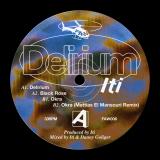
Fast At Work flight number 006 lands via London-based Australian Iti delivering three original productions drawn from the more obscure edges of dub and breakbeat. The record is built around the hallmarks of Iti’s sound: saturated synthesis and fractured percussion, however with a more in-the-box approach than his usual productions. It’s a perfect fit for the FAW imprint, already known for its propensity for both quality and borderless curation. Remixing “Okra” is Stockholm’s Mattias El Mansouri. Matias reworks the source material to
deliver a dancefloor thumper, both functional and deep – his signature combo which he does so well.
New Jersey born and Brooklyn-based Manny Steelo lands on Zero Trace with a fivetracker EP. A propulsive, percussion-led groove with warm, psychedelic dreaminess!
- 2026 Edition, gepresst auf apricotfarbenem Vinyl - Erweitertes Gatefold-Cover - Enthält ein 20-seitiges Booklet mit seltenen Fotos und Liner Notes von Lenny Kaye sowie Beiträgen von Nick Cave und Devendra Banhart. Karen Daltons Album ,In My Own Time" aus dem Jahr 1971 gilt als wahres Meisterwerk einer der geheimnisvollsten, rätselhaftesten und nachhaltig einflussreichsten Künstlerinnen der Musikgeschichte. Das neu erweiterte, 20-seitige LP-Booklet mit selten gezeigten Fotos, Liner Notes des Musikers und Autors Lenny Kaye sowie Beiträgen von Nick Cave und Devendra Banhart rundet das Paket ab. Die in Oklahoma aufgewachsene Karen Dalton (1937-1993) brachte eine Vielzahl von Einflüssen in ihr Werk ein. Wie Lenny Kaye in den Liner Notes schreibt, hört man den Jazz von Ella Fitzgerald und Billie Holiday, die Intensität von Nina Simone, den Appalachen-Gesang von Jean Ritchie sowie den R&B und Country, die auf ihrem Weg nach New York unweigerlich in ihre Musik einflossen. Ausgestattet mit einem Langhalsbanjo und einer 12-saitigen Gitarre hob sich Dalton durch ihren unverwechselbaren, lebensmüden Gesang von ihren Kollegen ab. In den frühen 60er Jahren wurde sie zu einer festen Größe in der Folk-Szene von Greenwich Village, wo sie traditionelles Material, Blues-Standards und die Songs ihrer Zeitgenossen interpretierte, darunter Tim Hardin, Fred Neil und Richard Tucker, den sie später heiratete. Bob Dylan war unterdessen sofort von ihrer Kunst begeistert. ,Meine Lieblingssängerin dort war Karen Dalton", erinnerte er sich in *Chronicles: Volume One* (Simon & Schuster, 2004). ,Karen hatte eine Stimme wie Billie Holiday und spielte Gitarre wie Jimmy Reed." Wer Dalton kannte, wusste, dass sie kein Interesse daran hatte, sich den Launen der Plattenindustrie zu beugen. Auf der Bühne interagierte sie kaum mit dem Publikum. Im Studio fühlte sie sich beim Aufnahmeprozess ebenso unwohl. Ihr Debütalbum von 1969, *It's So Hard to Tell Who's Going To Love You The Best*, das 2009 von Light in the Attic neu aufgelegt wurde, entstand heimlich, als Dalton dachte, sie würde nur Songs proben. Als Michael Lang, Mitveranstalter von Woodstock, Dalton ansprach, ob sie ein Folgealbum für sein neues Label ,Just Sunshine" aufnehmen wolle, war sie, gelinde gesagt, skeptisch. Das Album musste nach ihren eigenen Bedingungen und in ihrem eigenen Tempo entstehen. Daraus wurde ein sechsmonatiger Aufenthalt in den Bearsville Studios in Woodstock, New York. Produziert wurde das Album von dem Bassisten Harvey Brooks, der bereits auf ,It's So Hard to Tell Who's Going To Love You The Best" an Daltons Seite gespielt hatte. Brooks, der stolz darauf war, unkompliziert, zuverlässig und unterstützend zu sein, verstand Daltons Arbeitsweise, war aber auch bereit, sie sanft zu ermutigen und die Künstlerin dazu herauszufordern, ihre kreativen Grenzen zu erweitern. ,Ich habe versucht, ihr einen flexiblen Rahmen zu bieten", erzählte er Kaye. ,Ich habe die Entscheidungen ihr überlassen - das Tempo, das Feeling festzulegen." Sie war sehr zurückhaltend, und ich habe ihr alles vorgelegt; wenn sie mehr brauchte, habe ich ihr Optionen angeboten. Alle gingen einfühlsam auf sie ein. Sie war die Anführerin. Dalton, die selten ihre eigenen Kompositionen aufführte, wählte eine Reihe von Stücken zur Interpretation aus - von traditionellen Liedern wie ,Katie Cruel" und ,Same Old Man" bis hin zu Paul Butterfields ,In My Own Dream" und Richard Tuckers ,Are You Leaving For The Country". Außerdem erweiterte sie ihr übliches Repertoire und fügte R&B-Hits wie ,When a Man Loves a Woman" und ,How Sweet It Is" hinzu. Im Gegensatz zu ihrer vorherigen LP bot Daltons neue Aufnahme vollere, poporientiertere Arrangements, an denen eine ganze Reihe talentierter Studiomusiker mitwirkte. Auch wenn das Publikum der 70er Jahre vielleicht noch nicht bereit für Daltons Musik war, stand eine neue Generation kurz davor, ihr Werk zu entdecken. In den Jahrzehnten nach ihrem Tod nannten viele Künstler Karen Dalton als Einfluss, darunter Lucinda Williams, Joanna Newsom, Nick Cave, Angel Olsen, Devendra Banhart, Sharon Van Etten, Courtney Barnett und Adele. In dem kürzlich gefeierten Dokumentarfilm ,Karen Dalton: In My Own Time" sinniert Cave über Daltons einzigartige Anziehungskraft: ,Es wird eine Art Anspruch an den Zuhörer gestellt", erklärt er. Ob man es mag oder nicht, man muss in ihre Welt eintauchen. Und es ist eine Welt voller Verzweiflung. Peter Walker, der ebenfalls im Film zu sehen ist, führt diesen Gedanken weiter aus: ,Wenn sie in ihrer Musik ein bestimmtes Gefühl empfinden und es so rüberbringen kann, dass man dieses Gefühl auch spürt, dann ist das wirklich das Magischste, was man tun kann." Er fügt hinzu: ,Sie hatte eine tiefe, tiefgründige und liebevolle Seele - das hört man in ihrer Musik."
File not found. Library on device may be corrupted.
Nearly six years since his last full EP on Claptrap, Vanity Project returns with a fresh release, featuring a killer remix from Manchester aficionado Ruf Dug.
File Management Blues was born in the malaise that followed an irretrievable loss of studio files dating back over ten years at Claptrap HQ. Made with love in the wake of that back-up drive meltdown, these jams drift between acid, proto house and dreamy balearic sounds, moving from uptempo club rollers with swirling pads and biting acid lines to downtempo dub chuggers. Running through all of it is a melancholic digital string melody, four original versions on a theme, plus that tasty Ruf Dug rework of the A1.
Danza Nativa was founded in Buenos Aires in 2019 and has been drip-feeding us with a few choice releases a year ever since. The latest is another deeply immersive take on atmospheric techno from BLNDR, and it opens with the mystic, murky sounds of 'Tidal Veil'. The rhythm rolls freely, but the vibes are dank and grainy, as if you're in a dark underground cavern with the walls closing in. 'Mangrove' is just as aquatic as the title suggests, with wispy motifs buzzing about like mozzies above the humid groove. 'Arwing' has a more astral sound design with cosmic melodies over another low-key but meticulous mix of drums and hits. Finally, Alderaan enters on remix duties with a swirling late-night energetic charge.
not many artists are able to develop a distinct sonic identity releasing just 5 solo records. through his selective output in the course of 5 years on nina kraviz's Trip, vladimir dubyshkin gained not only an army of loyal fans analysing his live sets for new music, he also inspired many who followed and continued to develop his unique sound.
his tracks, many of which became underground hits like "lady of the night", "ticket to childhood" or "russian porn magazine", always stand out and are immediately recognisable. be it weird syncopated euro dance reminiscent bangers with crazy vocal snaps or haunting hypnotic beauties on a techno side. his music always has that genius dubyshkin groove, a pinch of irony and the ability to make just anyone dance, from a small underground club to a huge festival dancefloor. this universal appeal ensures his tracks resonate across sound systems of all sizes, embedding themselves in the listener's consciousness long after the music stops.
on "ivanovo night luxe", his first double ep on Trip, vladimir sounds as amazingly unhinged as ever embarking on a surreal journey, from the eerie echoes of a haunted funfair ride to the core of a peak-time set.
"ivanovo night luxe" continues to captivate and intrigue, solidifying dubyshkin's standing as an artist of unwavering integrity and reminding us that sometimes 'less is more'.
Forty years of cassette releases, pressed for the first time on vinyl
First of two instalments exploring the previously unreleased sonic archives of one of Poland’s most enigmatic
living artists - with its first volume focused on his deep listening practice and spiritual reverie (recorded 1990–2013)
The last time Andrzej Dudek-Dürer took a banknote bearing the face of the Polish anarchist Jarosław Dąbrowski from his pocket to trade it for a pair of shoes was in 1969. He bought them for 120zł - the equivalent of 100€ today - and never replaced them since then. Only rebuilt them, year after year, drawing a needle and thread through the leather each time it split, closing one wound before the next one opened. It became a ritual of precision, stitching a record of another year into their soles.
That same year, in Wrocław, he arrived at a conclusion that would recalibrate everything that followed. Convinced he was the reincarnation of Albrecht Dürer, he adopted the surname Dudek-Dürer, stopped cutting his hair and began wearing the same garments every day. It was the first ritual of many, though he wouldn't have called it that yet. Look closely enough, over the decades, and it is always the same gesture, returning in different material: hair growing in a single unbroken strand, a needle drawing thread through leather, sitar strings pulled taut across a neck he built with his own hands and magnetic tape spooling forward inside the cassette boxes stacked against his walls.
None of this began in a vacuum. Dudek-Dürer emerged from the Wrocław neo-avant-garde, in a Polish art world where an exhibition could be cancelled overnight by the stroke of a censor's pen. In 1973, his exhibition Auto-crucifixion was shut down by the state, and for a time he found himself blocked from exhibiting his own art at all - the one force in his life that ever came close to cutting the thread.
He seemed to experience it differently. In 1974, after long, patient research into sitar craftsmanship, he built his first prototype with his brother, a knowledgeable luthier. In 1978, in a smoked-out jazz club, he took his first steps into sound recording with the unreleased album Jazz From Underground with his first band. By 1979, recognition started to travel further than he could.
Turning toward Far-Eastern philosophy, meditation and the idea of reincarnation was another language of freedom for him. It was a way of claiming an inner territory the state could not reach, a border it could not close. Mail Art served a parallel function, reaching further out: in a country that restricted travel and expression, sending and receiving art through the postal system became an act of quiet rebellion.
The body, in his understanding, is only an envelope readied for constant transformation. From this came Metaphysical Telepathy: during the years he could not leave Poland, he treated that confinement as a rehearsal room, sending his mind out ahead on the same thread his body would later follow. Living Sculpture grew from the same root with performances of stillness beside static art objects, until the boundary between the object and the man beside it simply dissolved. Camera Meditation extended the same instinct into photography: a shutter click flattening three dimensions into two so that a single instant could be held forever. Inspired by the pioneers of self-portrait photography like Robert Cornelius, he used it to document time itself, and kept explaining to me: "You know. This is not about vanity. This is about observing time passing.”
The isolation did not end suddenly. It ended the way his own philosophy had already predicted it would, from the inside first. Mail Art quietly solved the problem politics couldn't. Correspondence built during years of confinement slowly worked its way through doors the state itself had kept locked. Contacts made through folded paper and stamps became invitations. Ultimately, invitations became passports.
In 1983 he made his first trip outside Poland, to Germany, in search of the audio technology he couldn’t get his hands on before. In 1985, he was invited by the Indian embassy in Poland to give a sitar concert on an instrument he had spent a decade patiently stringing together - half sitar, half tanpura, built from patience and determination. After the collapse of the People's Republic of Poland, the travels kept unspooling: South Korea, then Mexico, then Australia, Canada, New Zealand, Singapore, Japan and the United States - each stop leaving behind its own small knot of tape, tied off and carried home.
In the decades since, recognition arrived at the same unhurried pace: he conducted workshops at UC Berkeley, served as vice-president for artistic affairs of the Union of Polish Art Photographers and the Union of Polish Visual Artists between 2010 and 2014 and received the Bronze Medal for Merit to Culture - Gloria Artis. His visual work gradually entered collections including the National Museums of Warsaw, the Stedelijk Museum, Tate Modern, MoMA and the Venice Biennale. His musical practice, by contrast, never found that kind of room - left to circulate quietly, sharing his cassette tapes directly, waiting for someone willing to follow it further.
It took months before I could find a way to reach Andrzej Dudek-Dürer - his presence online is very close to nonexistent. Surprisingly, LinkedIn turned out to be the only door still open, a faintly absurd irony given everything else about him. I packed the strict minimum for a three-day trip and an empty notebook and made my way to Wrocław. His headquarters sits in the neighbourhood of Grabyszyn: a two-storey pre-war house that has belonged to his family for generations. The man who opened the door was long-haired, long-bearded, in his trademark leather shoes and patched jeans. We sat in his living room, in front of a computer where decades of recordings sat organised in cryptically named files, surrounded by books and objects that had arrived one layer at a time, leaving room for only two chairs in the middle. His shoes sat by the door, rebuilt so many times they had become their own quiet sculpture. Cassette tapes filled boxes against the walls, almost unlabelled, each one a spool of thread holding decades of sound that had never once been asked for, until now.
I listened for hours: meditating in front of strangers on the porch of a Seoul temple until the tourists stopped taking photos and simply waited with him; a stand-off with border guards at the US–Mexico crossing over an instrument they couldn't identify and didn't trust; a session with the Stockhausen family that he still, decades later, describes like it happened last week. All of it interrupted, occasionally, by the smell of soup boiling and fresh bread warming on the ceramic stove. After two days, it felt like being handed the end of a very long thread and asked, gently, to keep following it. I left with a USB drive holding his full discography, signed with his unmistakable signature.
Astral Meditations From A Living Statue is a length of that thread, drawn out from the boxes stacked against his walls - recordings gathered from different rooms, different countries, different decades. This first record breathes slowly: incense-thick, meditative, built for stillness. A cutting-edge séance in outer space where machines learn how to dream.
It begins with the neo-classical improvisations of Andrzej, space-delayed, recorded at Klub Muzyki i Literatury in Wrocław in 2002. 'When..So' opens the curtains with a deep-rooted meditation accompanied by slow-decaying piano figures illuminated by a candle-lit spirit gathering.
Los Angeles, 1990: a dormant villa, a grand piano, the voice of Bonnie Barnett. 'Exception' is captured in a single room, in a single afternoon - voice and keys circling each other, neither one leading, until the silence between the notes starts to feel like the instrument.
'The Meta...' and 'Tired Of...', recorded at Studio Morandi in Ponte Nossa, Italy, in 1992, settle into a sitar drone built entirely from patience - overtones stacking and beating against each other, strung by a man who never once set foot in India. 'Mastery Of...' follows, recorded the same year at Studio Suski in Łomianki, pushing that same hum further still, until pitch dissolves into a spectral reverie. 'Transcendental Sound', from 2000, closes the first record in a slow bath of celestial frequency - better heard beside the shores of the Odra river.
More than fifty years after deciding that a life could become an artwork, Andrzej Dudek-Dürer continues to inhabit that decision. His shoes keep wearing thin against the earth's crust. His hair keeps growing, one strand at a time. His cassette tapes keep spooling in the dark of their boxes.
Now the thread finds its last shape: a single unbroken groove, spiralling inward from the outer edge to the label at the centre. Never cut - the way nothing else in his life ever was. Drop the needle and it will find that groove and follow it, the same way a needle once followed leather, once followed a border it couldn't cross, once followed string into an instrument that didn't exist until he built it. This record is the other end of a thread that has been travelling for fifty years. For the length of both sides, it rests here, in your hands. This is a timeless proof that the Lord of the New Age was never lost."
Von einer Band, die man liebt, wünscht man sich beides: dass sie überrascht und ganz sie selbst bleibt. Mit ihrem dritten Album "Ideale" gelingt Die Verlierer genau das. Was man von ihnen erwartet, scheint kaum eine Rolle zu spielen. Große Refrains, lange Stücke, Instrumentalpassagen und experimentellere Momente führen die Songs in unerwartete Richtungen. Zusammengehalten werden sie vom unverwechselbaren Sound der Band, der ihre Identität entscheidend prägt. Dazu kommt diese mitreißende Energie, die Die Verlierer seit ihrem ersten Album auszeichnet. Bei aller musikalischen Freiheit bleibt die Haltung stabil. Die Texte sind klar politisch: gegen Gier, Krieg und die Mächtigen, die entscheiden, Kasse machen und die Folgen anderen überlassen. (V.Varlet)
12 Inch Lovers - Celebrating 15 Years of Vinyl Culture!
Belgian vinyl-only event concept 12 Inch Lovers celebrates its 15th anniversary with two new additions to its established sampler series. Now entering its seventh year, the series reflects the music and atmosphere of the events, combining dancefloor favourites with carefully selected discoveries.
Samplers 13 & 14 bring together sought-after classics, hard-to-find gems and selected tracks and versions making their vinyl debut. Each volume features nine full-length tracks across two 12-inch records, making both releases essential additions for DJs and collectors alike.
Sampler 13 includes Sorry I Am Late by Kollektiv Turmstrasse, Marea (We've Lost Dancing) by Fred again.. & The Blessed Madonna, and Lifetimes by Slam feat. Tyrone Palmer. Further highlights include Tocadisco's Morumbi and the Martijn ten Velden Remix of Guitarra G.
Sampler 14 features Dreams by Deep Dish feat. Stevie Nicks, All That Matters by Kölsch feat. Troels Abrahamsen, and the NiCe7 Remix of It's Yours by Jon Cutler feat. E-Man. Belgian favourites Decoy & Roy with Inner Life and The Mackenzie with Higher In The Sky add to the selection.
Rooted in 15 years of vinyl-only events, these two compilations capture the distinctive sound of 12 Inch Lovers, offering lasting appeal for long-time fans, record collectors and DJs looking tobring proven classics back to the dancefloor.
Nothing But (Future) Classix, Straight From Vinyl!
Sampler 14 opens with Jon Cutler feat. E-Man - It's Yours (NiCe7 Remix). This remix pairs the recognisable vocal with a punchy house groove. A fresh take on a familiar classic that sets the tone straight away. Next comes Sterac Electronics - Destination Reached, with Steve Rachmad
showcasing his feel for electronic funk. Tight rhythms and an infectious groove make this a record with lasting appeal.
Side B features Swen Weber - Maya (Rerub), a powerful club track whose build and driving rhythm keep the dancefloor moving. Deep Dish feat. Stevie Nicks - Dreams then delivers a familiar moment. Stevie Nicks' distinctive voice and Deep Dish's warm, immersive house sound
give this well-known song a character all of its own.
Side C brings Kölsch feat. Troels Abrahamsen - All That Matters, a melodic track in which the vocaland gradual build complement each other beautifully. The kind of record that feels equally at home deep into a club night or under the first rays of sunshine at a festival. Next is Chew Fu feat. Steve Clisby - Purple Rain (Mousse T.'s Home A Lone Mix). Mousse T. gives this interpretation of the Prince classic a warm, soulful house groove, leaving plenty of room for Steve Clisby's voice to shine.
On side D, Jürgen Paape - We Love takes over. Playful, melodic and full of character, it adds a different flavour to the selection. Decoy & Roy - Inner Life follows with a generous dose of nostalgia and a sound that perfectly reflects a love for Belgian club classics. Closing the sampler is The Mackenzie - Higher In The Sky, whose dreamy melodies and uplifting energy provide a fitting finale.
Nine tracks across two 12-inch records, each in its full-length version. Much-loved classics, inspired remixes and lesser-known gems, brought together withthe same love for music that has driven 12 Inch Lovers' events for 15 years.
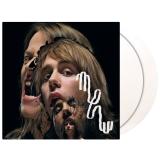
And the Glass Handed Kites is the fourth album by Danish quartet Mew and marked a highlight in their career. It has won several music prizes in Denmark, including four Danish Music Awards. Gaffa named And the Glass Handed Kites the best Danish album of 2005. Mew also won the 2005 MTV Europe Music Award for Best Danish Act. Pitchfork Media ranked the single "The Zookeeper's Boy" #92 on its list of top 100 tracks of 2006.
This reissue is the expanded edition on vinyl containing 10 bonus tracks, including the Mogwai remix of “Why Are You Looking Grave”, “Dark Design (red version)”, “Animals Of Many Kinds”, the unreleased song “Wherefore Are You Not There”, and many more.
And the Glass Handed Kites is available as a limited edition of 1500 individually numbered copies on white vinyl and includes a 12-page booklet.
Endlich wieder auf Vinyl erhältlich! Im Jahr 2000, sechs Jahre nach der Veröffentlichung von "Heute ein König", erschien ein "Männer Rock'n'Roll". "Ein rockiges, gereiftes Werk voller Poesie von Männern im besten Lokalmatadorealter!!! Neunzehn Überhits bekannter, vielleicht etwas rockiger Machart inkl. musikalischen Ausflügen in den Garagenrock-, Schlager- und Country-Bereich. Die Coverfotoserie entstand schon Jahre vorher und fiel wohl auch einer Band namens Turbonegro in die Hände... Das "Sgt. Pepper"-Album des Punkrocks" - OX-Fanzine //
With the stunning Planes In Reverse, Sascha Funke, the Berlin-born producer and DJ, and long-time member of the Kompakt family, releases his first album in almost a decade, since 2017’s Lotos Land. It’s a welcome return for one of the most eloquent and elegant producers in electronic and dance music, someone who’s always been able to say more with less, and the ten tracks here, moving effortlessly between techno, house, minimalism, disco house, and home listening tunes, are all gorgeously sculpted miniatures. With guest appearances from partner Julienne Dessagne (Fantastic Twins), with whom Funke has also worked in Saschienne, there’s something homely and family about it, too; a family of sounds, a home of tone. There’s also something consummate about Planes In Reverse, as though Sascha Funke has perfected the album format. There’s no flab here, no excess – it plays out like a perfectly designed experience, ten tracks, coming in under fifty minutes, an album where every moment matters.
It’s full of variety, but everything has the unmistakable Funke thumbprint, one that was developed during the late ‘90s / early ‘00s minimal techno and microhouse moment, but which was always open to other ideas and other sounds, too. Planes In Reverse came together quickly for Funke: “Last winter, I had two or three new tracks, which gave me a core feeling: ‘Ah, this could be the direction of something like an album.’ Sometimes it can be very easy that you wrap it up and then it becomes something coherent and solid. This happened within two or three months; it was very fast and direct.” Everything fell into place – the ten tracks revealed themselves, the album sat together as a whole, and the final piece of the puzzle was returning home again to Kompakt, who have supported Sascha Funke from the very start, releasing his first single, “Campus”, back in 1999.
Planes In Reverse opens stealthily with “What You See”, where rhythms percolate and bass prowls while gaseous textures fill the sonic spectrum. It’s also the first appearance of Fantastic Twins on the album; here, she speaks a hypnotic mantra, a prelude to the title track, where Dessagne has a pure pop moment, her voice ecstatic and vibrant. Indeed, Planes In Reverse plays out like thesis and antithesis ending in synthesis, the tracks nestling next to each other even as they shuttle between sounds, genres, perspectives. There are some beautiful moments dropped throughout Planes In Reverse – the heavenly textures that make the title track feel so cloud-bound; the glassy and orbital tones that drop from the skies through the disco house inspired “Karat”; the clamour and clatter of hyper-edited voices shuffling through “Splitter”; or the field recordings of Sascha’s son football training session that drop “Zockers” into a different place and space, slowly giving way to a beautifully paced electro-pop mantra. “In Germany,when the kids play a computer game, or when they play football, we describe it as zocken. They’re the players, they’re the Zockers.“ Funke explains.
Planes In Reverse winds down with the beautiful “Kruso”, where ticklish, loving arpeggios careen around the room, and drift-work chords shimmer and shuttle between your ears. It’s a perfect comedown to an album that feels breathes in and out at an organic pace, nothing above 130 BPM, everything sitting together just so. Indeed, that’s the feeling you take away from Planes In Reverse; it sums up the spirit of Sascha Funke productions perfectly, while also existing beautifully as its own world dreamt unto itself. It’s Sascha Funke down to the very essence. Nothing unnecessary, nothing extraneous: Pure Funke.
It’s as sure as night follows day, one of the last truly reliable things in these uncertain times, a rock in the storm of information overload, and still one of the best things you can make from PVC: The new TOTAL compilation is here!
The cheerful opener “Xtasy” comes from the up-and-coming Cologne-based DJ H0TLINE. If it says ‘Ecstasy’ on the label, that’s exactly what’s inside. The term ‘legend’ is all too often bandied about lightly. In the case of ORLANDO VOORN, it’s almost an understatement. His ‘So Deep Remix’ is a goosebumps-inducing masterpiece in its purest form. Simply wow. FRANKEY & SANDRINO haven’t visited us for a while, but their key still fits the lock. Watch out – “Disruption” might expand your consciousness! Ah, nobody grapples so beautifully with life’s big questions as TEE MANGO, but what would the world be without melancholy? A Disneyland of triviality! TEAM 85E, newly formed around JÖRG BURGER, takes on a classic from the German songbook by Ton, Steine, Scherben and opens hearts with the same ease as others open tins of beer. Speaking of hearts, MICHAEL MAYER pays tribute to the successful Artemis 2 lunar mission, as a small thank-you for reminding us that it should really always be about love. SOG, aka WOLFGANG VOIGT, agrees wholeheartedly. Sometimes all it takes is a bass drum, eight notes and a bit of love for total satisfaction. ROBAG WRUHME does what he does best: luring us down the proverbial rabbit hole like the White Rabbit, just not quite so frantically. JÜRGEN PAAPE, together with FENJA LUDWIG, doesn’t pull a rabbit out of the hat, but rather a modern dub-techno hit. We watch in amazement as a new genre takes shape. Finally, it’s time to sit back and relax with REINHARD VOIGT and just let things be. Cocktail or beer? The main thing is: it’s cold.
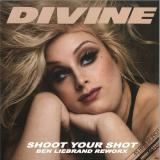
Although Shoot Your Shot sits slightly under the radar compared to Divine’s signature anthems such as You Think You’re A Man, I’m So Beautiful, Walk Like A Man and Native Love, this remix stands proudly alongside them. Liebrand injects the track with a driving Hi-NRG pulse, unmistakable Italo-disco flourishes and a powerful club groove, while Divine’s larger-than-life vocal performance and the unforgettable spoken-word alphabet breakdown remain front and centre.
On the flip, Liebrand delivers an inspired bonus, seamlessly blending the music from Divine’s worldwide club classic Native Love with the vocals from Shoot Your Shot, one of the artist’s biggest European hits. The result is a brilliantly executed hybrid that captures the excitement and creativity of the late-’80s remix scene while celebrating two of Divine’s most enduring recordings.
A rare glimpse into a golden era of European dance music and a testament to Ben Liebrand’s reputation as one of the most innovative remixers of his generation.
In Permanent Vacation 20th anniversary year, Joe Goddard returns to the label with You — a fivetrack EP that feels both timeless and deeply connected to the label's musical DNA. Blending disco, house, electronica and subtle folk influences, the release captures the optimistic spirit of the early 2000s while sounding effortlessly contemporary.
Across five beautifully crafted tracks, Goddard balances warm melodies, organic textures and dancefloor elegance with his unmistakable songwriting touch. The EP features three standout collaborations: Glynn joins on the uplifting "Cutting You Loose", fellow Hot Chip member Alexis Taylor lends his unmistakable voice to "Hide & Seek", while Absolute appears on the intimate closer "Gentle Man".
You is a fitting addition to the Permanent Vacation catalogue—music that looks back without nostalgia, embraces the present, and reminds us why timeless records never go out of style.
*Originally pressed in 2021 - this is a brand new master and cut.**
In partnership with Analogue Foundation, Oshu Records is proud to present the exclusive vinyl repress of "Laroyê" in a thick cardboard tip-on gatefold jacket on 2x 180g vinyl.
Acclaimed Hungarian, Berlin-based producer, composer and pianist Àbáse (AKA Szabolcs Bognár) returns, sharing a special, 5 anniversary remaster of his breakthrough project 'Laroyê'. Releasing on Friday 1 May via Bridge The Gap & Oshu Records, this sensitive exploration of Afro-Brazilian culture originally began as an audio diary, documenting Szabolcs’ travels and collaborations in Brazil through a collection of voice memos, fragmented beats, sketches and field recordings. As his journey progressed, and his collaborations and research deepened, the music project started to take on its own life:
"Laroyê evolved through weeks and months of research and collaborations into the album that it is now. That means that all the sessions were done in different apartments, small studios, often with borrowed equipment, which all adds to the character, but makes the creation of a coherent sound a challenge. Benjamin Tierney, Erik Breuer and Analogue Foundation did an incredible job with the mixes and with this new remaster. I truly believe that we are able to hear the tracks in a new light, with even more depth and clarity."
Coming from the West African Yoruban language, Àbáse stands for "collaboration" – a key element of the music perfectly encapsulated on 'Laroyê'. Recorded in Rio de Janeiro and Salvador, Àbáse spent five months working with diverse artists, from young talents to veterans of the Brazilian scene including Letieres Leite, Luciane Dom, Dofono d'Omolu, Afrojazz and more. The album explores the rich heritage of afro-brasilian culture through samba, MPB and Candomblé, mixing these with broken beat, hip hop and afrobeat, creating a contemporary homage to the classic Brazilian sound. Szabolcs shares:
"Despite already leading and managing musical projects that are close to my hearth, I always felt that one day I would like to start a solo project, where I could take full responsibility for the artistic direction and the music would reflect a truly personal vision. In 2017, I decided to take five months to fulfil a childhood dream and travel to Brazil to expand my creative horizon and expose myself to new influences."
An album standout is the bass-heavy, afro-brazilian ‘Agangatolú, which Àbáse describes as "best exemplifying the story and concept of Laroye as a collaborative effort - a research project exploring the rich heritage of Afro Brazilian culture through my own lens." The track features singers and percussion players Jadson Xabla and Gabriel Santana - two artists based out of one of the oldest terreiros (houses of worship) in Bahia, whilst drummer Jorge Dubman is an integral part of one of the most famous afrobeat bands from Salvador IFA. The contributions of one of Szabolcsoldest collaborators - Hungarian flautist Fanni Zahar - also made the track a full-circle moment.
On a quest for cosmic grooves of unity, Àbáses music pulls from an eclectic blend of global reference points, including modal jazz, Hungarian folk, West African, Brazilian, hiphop and underground electronic music. His work has drawn widespread critical acclaim from the likes of MOJO, Songlines, Soulection and The Guardian, and been supported by key tastemakers including Gilles Peterson, Jamz Supernova and BAMBII. As a keyboard player, Szabolcs has also collaborated with the likes of Wayne Snow, Dele Sosimi, Patti Smith, Emmanuel Wilkins, Gulty Simpson and Zeitgeist Freedom Energy Exchange.
'Laroyê' (2026 Remaster) will release on Friday 1st May via Bridge The Gap & Oshu Records.
A torrent of brilliance released from the fingertips. The art of the piano trio by a giant of arrangement.
In 1968, Norio Maeda, the genius arranger once described as being able to “write different scores with his right and left hands at the same time,” welcomed his close musical allies Takeshi Inomata and Tatsuro Takimoto and took on the piano head-on in his first piano trio work as a pianist. This album brings together the refined melodies of the new mainstream style that led the jazz scene at the time, experimental elements using prepared piano, and even a strikingly inventive recording approach in which as many as seven microphones were placed inside the piano. With the outstanding structural power of a composer and arranger and the sharp instincts of a performer woven together at a high level, this is an important work that deserves to be engraved in the history of Japanese jazz.
Colorful, powerful and elegant. A watershed masterpiece that embraces before then and after that by Kiyoshi Sugimoto, the master of the era.
Since turning professional in 1960, Kiyoshi Sugimoto has been active in many sessions and recordings. From the latter half of the 1960s, he joined groups such as Hideo Shiraki, Akira Ishikawa, and Terumasa Hino, gaining attention and solidifying his position with leader works such as “Country Dream” and “Babylonia Wind.” This work was recorded with Akira Ishikawa, Hiromasa Suzuki, Takao Uematsu and others right after studying in America for about a year. Starting with the groovy and luscious “Our Time” and “Marmalade Sky”, the dubious keyboards of “Jones Street”, and the melancholic and beautiful “Quiet Pulse”, it can be said to be a gap between jazz rock and fusion. There are attractive songs. This work represents Sugimoto’s work in the mid-1970s.
The eye of the storm: welcome to Tornado Wallace's debut album! The accumulation of about four years of work, with tracks written in Berlin and Melbourne, 'Lonely Planet' is nothing like you may have expected from the Australian expat. No stranger to fans and followers of ESP Institute, Beats in Space and Music From Memory's sister Label Second Circle, Tornado Wallace's strain of releases so far merged functionality with a musical playfulness that led him to find himself as one of the producer's behind José Padilla's International Feel album. Here, he leaves the needs of the dance floor behind in order to create a magical mystery tour de trance into his and our inner jungle. How about some references New Age sounds meet new wave melodies, Grace Jones runs into the Dire Straits at Compass Point, while a Korg Mini Pops and a Roland CR78 make amends for Sly & Robbie's absence, Michael Mann pictures Joseph Conrad's 'Heart of Darkness', Robert Rauschenberg tries his luck at naturalism and an imagined Wally Badarou echoes through all of it. Sandwiched between the title track and the yearning beauty of the album's final point 'Healing Feeling', you get all of that as well as collaborations with and contributions of NO ZU, David Hischfelder and the voice of Sui Zhen on 'Today', who would easily make Anna Domino take her proverbial hat off. Tornado Wallace created an album that supersedes the requirements and expectations of a debut. Like a lost Island Records or a never released Made to Measure album, 'Lonely Planet' soundtracks notions and ideas that recall the nostalgic future in the past as much as it looks ahead.
DJ Support: Katia Curie, Inkasso, Lea Occhi, Chloe Caillet and many more
Chris Gerber & aljalj return with the second vinyl release on Computer Toys. Featuring three driving, bassline-led house cuts built for the dancefloor, the record closes with a spacious ambient finale, providing the perfect landing after the house journey.
Limen brings together two artists whose musical paths converge around a shared sensitivity to listening, resonance, and the evocative power of sound.
Recorded at Ritmo e Blu Studio during a five-day residency between spring and summer 2025, the album emerged from a series of spontaneous encounters free from predetermined structures. The pieces preserve their original form, retaining the immediacy and temporal flow of the dialogues as they first unfolded.
Subsequent interventions were conceived not as revisions, but as an exploration of the open spaces already present within the recordings—deepening what remained unspoken and extending resonances without altering the music's natural evolution.
The title, derived from the Latin word for “threshold,” reflects the nature of the project itself: a place of passage between improvisation and composition, silence and vibration, memory and imagination. Limen inhabits a suspended territory where listening becomes an experience of openness, presence, and transformation.
---
Lino Capra Vaccina
Lino Capra Vaccina is one of the most distinctive voices in Italian experimental music. A percussionist, composer, and pioneer of minimalist and meditative sound practices, he first emerged in the early 1970s as a founding member of the influential group Aktuala, whose visionary fusion of ancient traditions, improvisation, and contemporary research anticipated what would later become known as world music.
Over a career spanning more than five decades, Vaccina has cultivated a unique artistic language centred on vibration, resonance, and the transformative power of sound. His landmark 1978 album Antico Adagio remains a touchstone of European minimalism, while his collaborations have included figures such as Franco Battiato, Juri Camisasca, Markus Stockhausen, Keith Tippett, Paolo Tofani, and many others.
Whether working with percussion, piano, electronics, or voice, Vaccina's music seeks a state of suspension and contemplation. His compositions unfold as immersive sonic environments whereancient echoes and contemporary sensibilities meet, inviting listeners into an experience that is at once intimate, spiritual, and timeless.
---
Luca Formentini
Luca Formentini is an Italian composer, sound artist, and improviser whose work unfolds at the intersection of experimentation, atmosphere, and deep listening. Active since the late 1990s, he has developed a highly personal language in which guitar, voice, field recordings, and electroacoustic processes become tools for exploring memory, perception, and the expressive potential of sound itself.
His music resists easy categorization, moving freely between ambient, contemporary composition, improvisation, and sound art. Throughout his career he has released numerous solo works and collaborated with a wide range of internationally acclaimed musicians, including Holger Czukay, Robert Rich, Markus Stockhausen, Steve Jansen, Theo Travis and Steve Lawson.His recordings have appeared on labels across Europe, Asia, Australia, and the United States.
Rooted in a practice of attentive listening and sonic exploration, Formentini creates evocative musical landscapes that invite reflection rather than certainty, opening spaces where silence, texture, and resonance become as meaningful as melody itself.
Ramjac Corporation, aka Paul Chivers, emerged from the UK's late-'80s rave underground, performing live at parties like Sunrise, Energy, Back to the Future, Fun-da-Mental and Synergy. Building tracks with an Atari computer and an E-MU 12-bit sampler, turning severe technical limitations into raw, elastic club music, 88-92: It is What it Was gathers music born in bedrooms then tested in front of crowds at warehouse raves, while the culture was still inventing itself without boundaries, completelyfree.
Ramjac was the original artist on Irdial Discs, following label founder Akin Fernandez's Aqua Regia, and introduced Lee Purkis' In Sync and Neuropolitique to the label, shaping the singular catalogue of that extraordinary imprint alongside Luke Slater's Morganistic, Thee J Johanz and Anthony Manning.
That legacy is now revisited by Musique Pour La Danse, with the release of a limited edition vinyl and digital edition featuring extended liner notes by Nick Halkes of XL Recordings, Positiva and Kicks Like A Mule fame, who witnessed the early Ramjac period first-hand. The release is illustrated by Grant Fulton, who created the visual identity for The Shamen's Synergy events and Orbital albums.
This album presents music written exclusively between 1988-92 and forms the foundation of Ramjac Corporation's ongoing live performances. Restored from the original floppy discs, the recordings preserve the uniquerelationship between early digital technology, sampling culture and live improvisation that defines the Ramjac approach.
Mixed for release for the first time by Trevor Lancaster-Smith, whose 90s engineering work encompassed Leftfield, Faithless and Roni Size, the album brings these compositions into sharp focus while preserving the character of the original instruments and performances. Not just a historical document, 88-92: It is What it Was is a living body of work: music created then, realised now, and continuing to surprise and evolve.
Twenty-five years after its original release, Markus Guentner's debut album In Moll returns in a special anniversary reissue on Black Knoll Editions, reaffirming its place as one of the defining ambient recordings of the early 21st century.
Released in 2001 during the formative years of Kompakt's influential Pop Ambient series, In Moll emerged from a period of rapid transformation in electronic music. New technologies, expanding digital networks, and shifting creative possibilities allowed artists to imagine entirely new sonic worlds. Amid this fertile landscape, Guentner's music stood apart. Combining delicate melodic fragments, slow-moving harmonies, and a remarkable sense of spatial depth, In Moll introduced a distinct artistic voice whose impact can still be felt a quarter-century later.
The album arrived shortly after Guentner's contributions to the inaugural Pop Ambient compilation, including the now-beloved "Regensburg 1," named after his Bavarian hometown. Those early recordings immediately captured the attention of Kompakt founders Michael Mayer and Wolfgang Voigt. Recalling his first encounter with the music, Mayer describes listening to a demo CDR with Voigt while wandering through Cologne late into the night, replaying the tracks for hours. "We knew that we had found something outrageously beautiful and we wanted the whole world to listen."
Across its running time, In Moll unfolds like a series of dreamlike landscapes, inviting the listener into a world that feels both familiar and strangely other. Bells, hisses, distant textures, and slow-moving bass tones drift through vast expanses of atmosphere while luminous synthesizer washes seem to blur the horizon in a fine digital mist. The album's transportive qualities are matched by a remarkable sense of compositional discipline. Every gesture feels deliberate, every texture carefully placed. Balancing warmth and melancholy with restraint, Guentner created a body of work that rewards both close listening and complete surrender.
Reflecting on the album twenty-five years later, Wolfgang Voigt describes Guentner as "one of the first, but also one of the most important ambient artists" associated with Kompakt, calling his music "an integral, timeless part of the long history of pop ambient." Music critic and former Pitchfork Editor-in-Chief Mark Richardson, who reviewed In Moll upon its original release, similarly noted that the album "marked the arrival of an important new voice," and today regards it as "one of the finest ambient releases of the decade."
The album's influence continues to extend far beyond its original audience. For many listeners, In Moll served as an entry point into a new understanding of what ambient music could be. Black Knoll boss Rafael Anton Irisarri first encountered the album shortly after its release in 2001. "It immediately opened a door to a world of music I didn't know existed," he recalls. "At a time when I was still discovering my own creative voice, Markus showed me entirely new possibilities for what electronic music could communicate." Simply put, "The Sight Below would not have existed without In Moll paving the way."
Far from a historical curiosity, In Moll continues to feel strikingly contemporary. What once sounded futuristic now feels timeless, its patient pacing, attention to detail, and sense of wonder remaining entirely intact. The album's enduring power lies not only in its influence, but in the curiosity it continues to inspire, inviting listeners to step inside its world and lose themselves within it.
To mark its twenty-fifth anniversary, Black Knoll Editions presents the most complete edition of In Moll to date. Newly remastered in full analog by Rafael Anton Irisarri, this expanded release pairs the original album with a newly reworked interpretation by Markus Guentner himself, revisiting the material through the lens of twenty-five years of artistic development. The anniversary edition also features a new visual presentation designed by Guentner, offering a visual counterpart to the album's continued evolution. Together, these recordings and visuals celebrate both the enduring legacy of In Moll and its ability to reveal new dimensions twenty-five years later.
This 25th Anniversary Edition on Black Knoll Editions celebrates a recording whose quiet impact has only grown with time, preserving a work that remains as evocative, singular, and essential today as it was in 2001.
Twenty-five years after its original release, Markus Guentner's debut album In Moll returns in a special anniversary reissue on Black Knoll Editions, reaffirming its place as one of the defining ambient recordings of the early 21st century.
Released in 2001 during the formative years of Kompakt's influential Pop Ambient series, In Moll emerged from a period of rapid transformation in electronic music. New technologies, expanding digital networks, and shifting creative possibilities allowed artists to imagine entirely new sonic worlds. Amid this fertile landscape, Guentner's music stood apart. Combining delicate melodic fragments, slow-moving harmonies, and a remarkable sense of spatial depth, In Moll introduced a distinct artistic voice whose impact can still be felt a quarter-century later.
The album arrived shortly after Guentner's contributions to the inaugural Pop Ambient compilation, including the now-beloved "Regensburg 1," named after his Bavarian hometown. Those early recordings immediately captured the attention of Kompakt founders Michael Mayer and Wolfgang Voigt. Recalling his first encounter with the music, Mayer describes listening to a demo CDR with Voigt while wandering through Cologne late into the night, replaying the tracks for hours. "We knew that we had found something outrageously beautiful and we wanted the whole world to listen."
Across its running time, In Moll unfolds like a series of dreamlike landscapes, inviting the listener into a world that feels both familiar and strangely other. Bells, hisses, distant textures, and slow-moving bass tones drift through vast expanses of atmosphere while luminous synthesizer washes seem to blur the horizon in a fine digital mist. The album's transportive qualities are matched by a remarkable sense of compositional discipline. Every gesture feels deliberate, every texture carefully placed. Balancing warmth and melancholy with restraint, Guentner created a body of work that rewards both close listening and complete surrender.
Reflecting on the album twenty-five years later, Wolfgang Voigt describes Guentner as "one of the first, but also one of the most important ambient artists" associated with Kompakt, calling his music "an integral, timeless part of the long history of pop ambient." Music critic and former Pitchfork Editor-in-Chief Mark Richardson, who reviewed In Moll upon its original release, similarly noted that the album "marked the arrival of an important new voice," and today regards it as "one of the finest ambient releases of the decade."
The album's influence continues to extend far beyond its original audience. For many listeners, In Moll served as an entry point into a new understanding of what ambient music could be. Black Knoll boss Rafael Anton Irisarri first encountered the album shortly after its release in 2001. "It immediately opened a door to a world of music I didn't know existed," he recalls. "At a time when I was still discovering my own creative voice, Markus showed me entirely new possibilities for what electronic music could communicate." Simply put, "The Sight Below would not have existed without In Moll paving the way."
Far from a historical curiosity, In Moll continues to feel strikingly contemporary. What once sounded futuristic now feels timeless, its patient pacing, attention to detail, and sense of wonder remaining entirely intact. The album's enduring power lies not only in its influence, but in the curiosity it continues to inspire, inviting listeners to step inside its world and lose themselves within it.
To mark its twenty-fifth anniversary, Black Knoll Editions presents the most complete edition of In Moll to date. Newly remastered in full analog by Rafael Anton Irisarri, this expanded release pairs the original album with a newly reworked interpretation by Markus Guentner himself, revisiting the material through the lens of twenty-five years of artistic development. The anniversary edition also features a new visual presentation designed by Guentner, offering a visual counterpart to the album's continued evolution. Together, these recordings and visuals celebrate both the enduring legacy of In Moll and its ability to reveal new dimensions twenty-five years later.
This 25th Anniversary Edition on Black Knoll Editions celebrates a recording whose quiet impact has only grown with time, preserving a work that remains as evocative, singular, and essential today as it was in 2001.
,Manifold of Partially Actualized Realities" ist das neue Album bei Kou Records von Randall Dunn - Produzent, Komponist und einer der markantesten Gestalter von Low-End- und räumlichen Klängen in der zeitgenössischen Musik, bekannt für seine Arbeit mit Sunn O))), Oneohtrix Point Never, David Torn und unzähligen anderen aus den Bereichen Heavy-, Experimental- und Avantgarde-Musik. Das Album ist eine Meditation über zerbrochene Realitäten, Zeit und Sterblichkeit - ein Spiegel, der sich auf sich selbst zurückfaltet und darüber, wie zukünftige Ereignisse die Vergangenheit beeinflussen. Sein tragender Geist ist Philip K. Dicks ,Pink Light Experience" von 1974, in der der Autor berichtete, eine Übertragung von einer gewaltigen, außerirdischen Intelligenz empfangen zu haben: informationsreich, uralt und überwältigend. Dunn nähert sich dem sowohl als Konzept als auch als kompositorische Logik - Musik, die in Schichten auftaucht, zusammenbricht, sich neu formiert und sich einer Auflösung verweigert.? In vier Stücken setzt Dunn ein ganzes Arsenal an Vintage-Synthesizern ein - Korg MonoPoly, Korg MS-20, PPG Wave, CS-80, Juno-60, Waldorf Strings, Fizmo - neben einer außergewöhnlichen Ensemblebesetzung. Spoken-Word-Beiträge von Jim Jarmusch (basierend auf PKDs Prosa) und Laima Leyton (basierend auf Robert Graves' ,Time") verankern zwei der vier Stücke in Sprache, ohne sie zu erklären. Das Album bewegt sich von orchestraler Kammermusik über elektroakustische Abstraktion hin zu einem abschließenden Stück - ,Ayn" -, das sich zu ekstatischem Jazz entfaltet, mit Cyro Baptista, Briggan Krauss, Henry Fraser, Charmaine Lee und Robert Aiki Aubrey Lowe. Wahre elektroakustische Komposition im vollsten Sinne: spektral, körperlich und weit offen. Produziert und gemischt von Randall Dunn bei Circular Ruin, April 2026. Aufgenommen und gemastert von Ben Greenberg. Dolby-Atmos-Mischungen von Ben Greenberg. Lackschnitt von Paul Gold bei Salt Mastering. Cover- und Rückseitengestaltung von Steve Rude.
,The Long Ear" ist das Debütalbum von Noh Age _ Charmaine Lee (Parabolmikrofon, Feedback, Gesang), John McCowen (Kontrabassklarinette, Bb- Klarinette, Blockflöte) und Li-Chin Li (Sheng) bei Kou Records - live aufgenommen über drei Tage bei Brooklyn Recording im März 2026 live aufgenommen und von Randall Dunn (Sunn O))), Oneohtrix Point Never) produziert. Das Parabolmikrofon hat seine eigene Geschichte: ein Überwachungsinstrument aus dem Kalten Krieg , das dafür konzipiert war, aus der Ferne zu lauschen, um das zu orten und zu verstärken, was sonst unhörbar bleiben würde. Hier ist es nach innen gerichtet - nicht auf einen Feind, sondern auf den Klang selbst, der durch vier Vintage-Röhrenverstärker geleitet wird. Die Parabolantenne spürt Resonanzen auf, die durch den Raum übertragen werden, und stellt sich auf Frequenzen ein, die von Kontrabassklarinette, Sheng und Gesang erzeugt werden, bis sich eine Rückkopplung entlädt - ein vierter Interpreter mit eigener, unvorhersehbarer Wirkmacht. Das Ergebnis ist spektrale Musik in ihrer viszeralsten Form - verwurzelt in der Tradition von Gérard Grisey, Kaija Saariaho und Iancu Dumitrescu, doch herkommend von der Überwachungsstelle, dem Abhörposten, der Abhörleitung. In sechs Stücken, die auf kompositorischen Rahmenwerken aus zellulären Automaten und grafischen Partituren basieren, bewegt sich das Trio zwischen extremen Registerbereichen - CBC-Grundtöne gegen dichte Sheng-Cluster-Klänge , die kristallklaren Obertöne von Blockflöte und Mini-Sheng - während das Feedback durch all das wandert, sich verdichtet, auslöscht, wiederkehrt. Cover- und Rückseitengestaltung von Shintaro Kago - einem in Tokio ansässigen Manga-Künstler und Pionier der ,Ero-Guro"-Tradition, der international für seine Arbeit an Flying Lotus' ,You're Dead!" (Warp, 2014) bekannt ist. Aufgenommen, gemischt und produziert von Randall Dunn. Zusätzliche Synthesizer und Sounddesign von Randall Dunn. Gemastert von Ben Greenberg. Dolby-Atmos-Mischungen von Ben Greenberg. Schablonenschnitt von Paul Gold bei Salt Mastering.
21 Bum Salute is the fifth album from Sydney experimental psych-noise-pop duo Party Dozen. The work of Kirsty Tickle (saxophone, vocals) and Jonathan Boulet (drums, loops, production), 21 Bum Salute finds the critically-acclaimed, semi-improvised duo feeling liberated - from their peers, their worries, and what the nell they're supposed to sound like now.
Emerging in 2017 from the warehouses of the Sydney experimental noise-rock scene, Party Dozen arrive at the release of their fifth album, 21 Bum Salute, in peak form. Over the course of four, increasingly perverse albums of psych-tinged rock peppered with pop noise and bursts of doom in equal measure, they've transformed from gleeful noise-makers producing DIY albums from a tiny room in Marrickville, NSW, to globe-hopping, critically-adored favourites - producing DIY albums from a tiny room in Marrickville.
As well as tours with Amyl and the Sniffers, King Gizzard and the Lizard Wizard, Tropical F*ckstorm, Algiers and more, Party Dozen had Nick Cave appear on 2022 single Macca The Mutt', collabed with New York rapper billy woods, performed an incendiary live set on KEXP, signed international deals, firstly with Temporary Residence LTD (Mogwai, Explosions in the Sky,
Along the way Party Dozen self-released their first two albums, The Living Man (2017) and Pray For Party Dozen (2020), struck a chord internationally with album The Real Work (2022), which sent them on tours of Europe, North America, Japan, China and New Zealand, while fourth LP, Crime in Australia (2024), an ode to Aussie noir that leaned beyond rock into moodier moments, repeated it.
Party Dozen recorded, mixed and mastered 21 Bum Salute completely themselves, over a three month span. Inspired by spooky "old recordings" as well as the primal impulses of acts like ESG and Bikini Kill, 21 Bum Salute - named after a peculiar, larrikin ritual in Australia's arid Northern Territory - condenses consecutive years of jam sessions, loops and improvisations into just over half an hour's worth of fizzing, strutting, striking sonics from the fringes.
21 Bum Salute is the fifth album from Sydney experimental psych-noise-pop duo Party Dozen. The work of Kirsty Tickle (saxophone, vocals) and Jonathan Boulet (drums, loops, production), 21 Bum Salute finds the critically-acclaimed, semi-improvised duo feeling liberated - from their peers, their worries, and what the nell they're supposed to sound like now.
Emerging in 2017 from the warehouses of the Sydney experimental noise-rock scene, Party Dozen arrive at the release of their fifth album, 21 Bum Salute, in peak form. Over the course of four, increasingly perverse albums of psych-tinged rock peppered with pop noise and bursts of doom in equal measure, they've transformed from gleeful noise-makers producing DIY albums from a tiny room in Marrickville, NSW, to globe-hopping, critically-adored favourites - producing DIY albums from a tiny room in Marrickville.
As well as tours with Amyl and the Sniffers, King Gizzard and the Lizard Wizard, Tropical F*ckstorm, Algiers and more, Party Dozen had Nick Cave appear on 2022 single Macca The Mutt', collabed with New York rapper billy woods, performed an incendiary live set on KEXP, signed international deals, firstly with Temporary Residence LTD (Mogwai, Explosions in the Sky,
Along the way Party Dozen self-released their first two albums, The Living Man (2017) and Pray For Party Dozen (2020), struck a chord internationally with album The Real Work (2022), which sent them on tours of Europe, North America, Japan, China and New Zealand, while fourth LP, Crime in Australia (2024), an ode to Aussie noir that leaned beyond rock into moodier moments, repeated it.
Party Dozen recorded, mixed and mastered 21 Bum Salute completely themselves, over a three month span. Inspired by spooky "old recordings" as well as the primal impulses of acts like ESG and Bikini Kill, 21 Bum Salute - named after a peculiar, larrikin ritual in Australia's arid Northern Territory - condenses consecutive years of jam sessions, loops and improvisations into just over half an hour's worth of fizzing, strutting, striking sonics from the fringes.
Wewantsounds is proud to present the first official release of a legendary 1977 concert capturing Don Cherry, Collin Walcott, and Leon Thomas in their only documented performance together. Recorded live on March 5, 1977, at Pease Auditorium in Ypsilanti, Michigan, the performance featured the three musicians playing an immersive hypnotic set, joined for part of the evening by the rest of Oregon. Long circulating among a few Don Cherry fans, the full concert is now available as a deluxe, remastered 2-LP gatefold set featuring Moki Cherry artwork and new liner notes by Jason Weiss—licensed by the Don Cherry Estate and producer James Quinlan.
Don Cherry’s huge influence has steadily grown over the years, as fans and new generations of listeners continue to uncover the vast breadth of his global musical vision. Sunrise captures Cherry during a particularly fertile late-1970s period, when the American jazz trumpeter blended global and Eastern spiritual concepts into his "Organic Music" philosophy, drawing deeply from Eastern and African traditions. Moving fluidly between trumpet, the West African doussn'gouni (a traditional hunter's harp from Mali), bamboo flutes, percussion, and vocals, Cherry creates a deeply resonant world music soundscape.
Recorded live on March 5, 1977, at Pease Auditorium in Ypsilanti, Michigan, the show took place just a month after Don Cherry participated in the recording of Collin Walcott's ECM album Grazing Dreams. With Walcott playing alongside Cherry and vocalist Leon Thomas, bringing his unmistakable yodel-style vocal approach—and joined for part of the night by the rest of Oregon (Ralph Towner, Paul McCandless and Glen Moore)—the performance stands as a stunning, hypnotic forerunner to the formation of CODONA. The newly remastered audio is so vivid and intimate that it feels as though you are sitting directly in the room with the musicians.
The release also serves as a vibrant homage to Don and Moki Cherry’s creative partnership, featuring a reproduction of Moki’s striking 1975 Mandala tapestry on the front cover.
The concert was produced by James Quinlan, a central pillar of the U.S. Jazz and World Music scene who worked as a sound engineer for Carla Bley, booked Fela Kuti’s major U.S. tour in the 1980s, and went on to direct the Creative Music Studio and found Miami’s Rhythm Foundation. In the album's liner notes, Quinlan reflects in conversation with writer Jason Weiss on the surprise magic of that night:
"Don brought Leon Thomas with him... as a guest, unannounced. It was not part of the advertisement or contract... I don't know of any other time that they recorded or performed together. So, that was completely unique... The audience had no idea what was coming... It was a sound that was just mesmerizing, almost like a mantra."
Licensed by the Don Cherry Estate and James Quinlan, Sunrise is available as a deluxe 2-LP gatefold set featuring new liner notes by Jason Weiss—an essential document in the rich, ever-evolving Don Cherry musical journey.
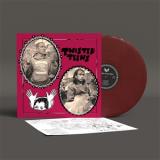
Twisted Teens - alias Caspian Halliwell und RJ Santos - gab es vor ihrem Debüt-LP aus dem Jahr 2024, das heute als The Orange Album bekannt ist, eigentlich gar nicht. Das Duo hatte unter dem Radar und abseits der Öffentlichkeit Musik von Cajun/Country bis hin zu Anarcho-Folk gemacht und dabei ein Leben als Nomaden geführt. Twisted Teens entstanden aus einem pandemiebedingten Inspirationsschub, der sie zusammenbrachte, um in passender Lo-Fi-Manier in Caspians Haus in New Orleans aufzunehmen. Ihr erstes Album wurde schnell zu einem modernen Klassiker des eingängigen, warmen Rocks, der Blues, Folk und Punk zu einer rohen und unwiderstehlichen Mischung vereint. Das Duo meldete sich 2026 stark zurück mit Blame the Clown - das sofort von Pitchfork und Paste begeistert gelobt wurde - und anschließend mit dem ebenso gefeierten Florida Water Blues, einer absurden Betrachtung ihrer Streifzüge rund um die Welt. Ihr drittes fesselndes und perfekt schräges Album aus dem Jahr 2026 ist eine Saga über Herzschmerz und verborgene Triumphe namens The Holy Cross Tigers. Die Songs sind Hymnen der Sehnsucht und unzähliger Enttäuschungen, angeheizt von allem Möglichen - von einer brutalen Trennung bis hin zu verräterischen Ex-Freunden. Trotz all dieser Leiden strahlt The Holy Cross Tigers eine gewisse Leuchtkraft aus, ein Gefühl von reflektiertem Licht, das sich gegen die Traurigkeit stemmt. Man kann sich sofort damit identifizieren - es fühlt sich an, als würden ein paar Freunde die Lasten des Lebens miteinander teilen, mit seltsamen und ekstatischen Ergebnissen, weil sie nach ihren eigenen Regeln handeln. Es ist eine übersteuerte Übertragung vom Rand des Herzschmerzes, einem Ort, an dem selbst die Glücklichen schon waren und von dem sie hoffentlich zurückgekehrt sind.
Twisted Teens - alias Caspian Halliwell und RJ Santos - gab es vor ihrem Debüt-LP aus dem Jahr 2024, das heute als The Orange Album bekannt ist, eigentlich gar nicht. Das Duo hatte unter dem Radar und abseits der Öffentlichkeit Musik von Cajun/Country bis hin zu Anarcho-Folk gemacht und dabei ein Leben als Nomaden geführt. Twisted Teens entstanden aus einem pandemiebedingten Inspirationsschub, der sie zusammenbrachte, um in passender Lo-Fi-Manier in Caspians Haus in New Orleans aufzunehmen. Ihr erstes Album wurde schnell zu einem modernen Klassiker des eingängigen, warmen Rocks, der Blues, Folk und Punk zu einer rohen und unwiderstehlichen Mischung vereint. Das Duo meldete sich 2026 stark zurück mit Blame the Clown - das sofort von Pitchfork und Paste begeistert gelobt wurde - und anschließend mit dem ebenso gefeierten Florida Water Blues, einer absurden Betrachtung ihrer Streifzüge rund um die Welt. Ihr drittes fesselndes und perfekt schräges Album aus dem Jahr 2026 ist eine Saga über Herzschmerz und verborgene Triumphe namens The Holy Cross Tigers. Die Songs sind Hymnen der Sehnsucht und unzähliger Enttäuschungen, angeheizt von allem Möglichen - von einer brutalen Trennung bis hin zu verräterischen Ex-Freunden. Trotz all dieser Leiden strahlt The Holy Cross Tigers eine gewisse Leuchtkraft aus, ein Gefühl von reflektiertem Licht, das sich gegen die Traurigkeit stemmt. Man kann sich sofort damit identifizieren - es fühlt sich an, als würden ein paar Freunde die Lasten des Lebens miteinander teilen, mit seltsamen und ekstatischen Ergebnissen, weil sie nach ihren eigenen Regeln handeln. Es ist eine übersteuerte Übertragung vom Rand des Herzschmerzes, einem Ort, an dem selbst die Glücklichen schon waren und von dem sie hoffentlich zurückgekehrt sind.
A quiet intensity permeates Chantal Michelle’s music, like a veiled flame. Even at its most spare and delicate, an undulating tension unsettles the ear through wavering microtonal interference and uncanny spatial juxtaposition. She takes seriously the mandate of the composer to foster new relationships between various types of sounds, bringing together disparate field recordings, instrumental stems, and the sounds of circuitry in unheard configurations. Resolution is elusive, in its place a sense of oblong cyclicality and prickly uncertainty. When the veil is pulled back, we find more depth, more complexity, and more mystery.
Unit of Heart, Michelle’s second album of 2026, presents two interrelated pieces that highlight diverging compositional modes. Here she brings in two key collaborators: Patrick Shiroishi, who contributes flutes and saxophones throughout, and poet Funto Omojola, whose words and voice bookend the title composition. Both compositions unfold gradually, but where the album’s a-side “Sudden Oceans” presents a minimal tonal palette focused entirely on the subtle grain of wind instruments, “Unit of Heart” proceeds linearly, moving through passages of synthesizer, environmental recordings, and full-cheeked wails of saxophone. Both encourage a state of focused listening as the scope of the music deepens and widens.
“Sudden Oceans” allows the listener to hover in rippling currents of air, breath overlapping breath in a shimmering patchwork. All flutes and saxophones on the piece are played by Shiroishi, which are molded by Michelle into a pattern that resembles the flow of tidal waters, surging and receding moment to moment as the tonal density increases. Expansive and recursive, it reflects both the restorative awe and eerie disquiet of encountering the sublime. The first and last sounds we hear are the gentle rush of unmediated breath as Shiroishi connects and disconnects from his flute.
Michelle’s skill at presenting the familiar as preternatural comes to the fore on “Unit of Heart, ” one of her most ambitious works. Omojola’s voice begins with a melody that could be a lullaby, but as it’s bounced around the stereo field it takes on a haunted quality. Their poem, reprinted on the LP’s inner sleeve, hints at a similar type of transformation: “I mean this is where our mouth turns saliva into spears only a throat can recognize. ” Pads of downy synthesizer billow and are subsumed by a discordant ringing. The climactic section features atonal electronics and field recordings, first of water and then the evening call of insects, processed in such a way to transform them into pulsating bursts of noise. What we think we know about the world, what is elemental, can change with even the slightest adjustment of the lens.
“I am not sure which of us it is that's writing this page” - Jorge Luis Borges. There are places where a river runs through the story even when you cannot see it. Austin Cash grew up in the Arkansas Delta, and Nathan Smerage in the Chicago suburbs, their paths crossing years later in Fayetteville, Arkansas, where both became members of the Ozark Free Music Society, a loose congregation of musicians who made free and experimental music in non-traditional venues across the city. ‘River Season’ began as an impulsive text sent to Smerage in the summer of 2024, Cash suggesting they should make an album of guitar duets. Calling his bluff, Smerage returned a folder of recordings within a week. Cash had a handful of pieces of his own, originally written for an unreleased film about an Ozarks ceramicist. The songs began traveling back and forth between them by email, however, after opening for the Magic Tuber String Band and playing the compositions live for the first time together, realised the decision to record them live was the only true option. For four days, in the basement apartment where Cash lived, they recorded River Season live. The result is a meticulously composed collection of steel-string guitar music: part folk record, part road map.
Fahey and Ackerman are somewhere in the distance, alongside Bert Jansch, Nick Drake, Marisa Anderson, Nathan Salsburg, Loren Connors, and others. But River Season belongs to neither Arkansas nor Chicago entirely. Cash grew up in Arkansas before moving to Chicago, whereas Smerage grew up in Illinois before moving to Arkansas. River Season catches the two musicians at an intersection in their paths; it belongs to the stretches of road and rivers between them, real and imagined. "This new collaboration between Austin and Nathan is intimate and tonally diverse. Many of the tracks see Austin playing acoustic and Nathan on electric. The statements are succinct (all but two clock in under four minutes) and idiosyncratic. "Bell Harp" and "Painting Friend" are two stand out examples for me in which the textures of the electric/acoustic pairing play off each other in a way that I can't say I have encountered before." -Evan Morgan (Magic Tuber Stringband)
Lower the drawbridge, raise the gates. Texas-based composer Graham Reynolds (A Scanner Darkly, Before Midnight, Hit Man) returns to the world of The Portcullis with a brand-new LP of music. This deluxe edition brings together the original album and The Portcullis Expansion Pack across two LPs, housed in a die-cut slipcase.
Following the original album’s release in May 2026, the Expansion Pack ventures deeper into a medieval world of knights and merchants, almoners and thieves. Percussive medieval textures, fretted guitars, brass fanfares, atmospheric strings and piano reshape dungeon synth into something vividly Reynolds’ own: an imagined soundtrack steeped in folklore, fantasy and adventure.
What began as an investigation into Reynolds’ family lineage, tracing his name back to Launceston Castle, has grown into a world extending beyond the record.
Released via Fire Records as part of the Weird Walk Record Cult, the deluxe edition arrives alongside an expanded dice game and a special Portcullis porter created with Skipton Brewing Company.
“One of the most unique and addictive albums of 2026 so far” - Loud and Quiet
“Of all the RPG-infused dungeon synth, medieval ambient records released this year, Graham Reynolds’ will be the finest.” - Loud And Quiet
“Ominous, stark environment that rumbles with sounds evocative of the natural world, in both its beauty and despair” - The New York Times
“A work of great scope, subtlety, and powerful suggestion. (…) Prepare yourself for an immersive experience, full of color and personality.” - Time Out
Two of Jean Carn's seminal hits combined. 'Was That All It Was' is a big hitting disco exploration with hints of Jean's gospel choir background coming to the fore. The flip houses the classic 'Don't Let It Go To Your Head' - covered on many an occasion since it's release back in '78.
In alten Zeiten, wenn sich Nebel um ein Schiff legte, war der einzige Weg nach vorne, langsamer zu werden und zuzuhören. Vögel, brechende Wellen, Schiffsklokken, Gongs und Hörner wurden zur neuen Sprache der Navigation, neben Tiefensondierungen, die den Meeresboden mit einer Bleileine abtasteten und seine verborgenen Formen enthüllten. Die Technik hat diese Methoden zwar weitgehend überflüssig gemacht, aber es hat immer noch etwas Faszinierendes, wenn man das Sehen gegen Hören und Fühlen eintauscht. Dieser Wandel steht im Mittelpunkt von AEAEA dem neuen Duo aus Patrick Higgins & Nicolas Jaar und ihrem Debütalbum Mist", einem Album, das fragt: Wie findest du dich zurecht, wenn die Welt um dich herum verschwimmt? Die Anfänge des Duos reichen zurück bis zum Le Guess Who?-Festival 2019, bei dem Higgins als Künstlerkurator fungierte. Benannt nach dem nebligen, mythischen Land der Eichen- und Buchenwälder, wurden die Insel und die sie umgebenden Geschichten zu einer Inspirationsquelle für beide Musiker, die schon lange eine Mischung aus altertümlicher Harmonie und elektronischem Experimentieren bevorzugen. Das Album entsteht aus der Erforschung einer neuen gemeinsamen Sprache durch das Duo, bei der Higgins' Gitarre und Percussion live durch Jaars Echtzeit- Effektketten geleitet werden, wodurch Sampling, Dubbing und Verarbeitung zu eigenständigen Musikinstrumenten werden. Aufgenommen über drei Jahre hinweg in Berlin und in Higgins' Studio im Bundesstaat New York, verwebt Mist" die neblige, intuitive Logik von Bearbeitungsketten und Improvisation in den Kern der Komposition. Die Platte entwickelt eine Reihe melodischer Themen, die aus Higgins' Gitarre hervorgehen und sich in ein Meer aus Elektronik, Percussion und schließlich einem volleren Ensemble aus Keyboards, Orgeln, Schlagzeug und den Cello-Improvisationen der Komponistin Judith Hamann brechen. Die Klanglandschaften von Mist" sind traurig und langsam, mit Tönen, die oft von einem blaugrauen Dunst umhüllt sind. Manchmal nehmen wir Strahlen fernen Lichts wahr, die die Unschärfe durchdringen, doch meist hören wir Echos ferner Ufer, deren Rhythmen es uns vielleicht endlich ermöglichen, ohne zu sehen zu sehen.
With “Rides Again Again And Again” US born and London resident singer, songwriter, producer, arranger und multi-instrumentalist extraordinaire Shawn Lee releases the third part in a series of very personal albums.
“Returning to my ‘Rides Again’ project feels like a home coming of sorts-familiar yet completely different from how I remembered it,” Shawn Lee says. “This time out it felt really fresh and freewheeling. Discovering things which were already there but somehow had remained hidden just out of sight. The genius of JJ Cale provided a lot of inspiration for this album. I had to pay tribute with the song ‘JJ’ in his honour. I also wrote a song for my dad called ‘Helluva Way’ who sadly passed while I was finishing the album. Multiple US tours last year with Young Gun Silver Fox informed lyrics on several tunes particularly ‘Hot Food’ and ‘Plastic Forks and Paper Plates’. The latter features a motley cast of characters on the ‘hell yeahs and the outro sing -a-long. My wife Kiren, Andy ‘Young Gun’ Platts, his wife Jodie and daughter Frankie plus all the live members of YGSF band, Ederlezi, as well as Smith & Liddle and our tour manager Claire Darling all contributed to the cause on ‘Plastic Forks’. Songs about Evel Knievel, my dog Carla, Tacos and Abilene Kansas round out the album as-well as a few instrumentals to boot. Three albums into the ‘Rides Again’ trilogy and I feel like I’m just getting started. So saddle up partners and join me on this musical ride!”
Swiss saxophonist Gilles Torrent may have been initially smitten by the sounds of US jazz giants like Coltrane, Shepp and Sanders, but as he’s developed and matured he’s cast his creative net much wider. After teaching himself the sax at 21 he spent the next 11 years studying the concepts and innovations of Coltrane before moving on to take the next logical step - exploring and soaking up the many styles music from around the world, and incorporating them into his Coltranesque vision of jazz.
Atestament to that workis the opening theme,‘La Longue Traversée Du Désert’whereTorrent directs an impressive ensemble of musicians – known collectively as World Jazz Sound - on a global trip from the plains of Africa to the pastures of England and even the mountains of his homeland Switzerland. Tracks like ‘Osso Varourn Ta Sidhera’, which pairs Beuna Vista-style Cuban rhythms with Grappelli-esque violin, or the transcendental calm of ‘Fridhia Mou’, complete with dainty harp and sultry Indian female vocal part, see the ensemble immersing themselves in the traditions and atmospheres of a panorama of different cultures, joining the dots between them all and gathering them up into one cohesive whole.
From the ancient and traditional – their effortlessly swung take on ‘Scarborough Fair’ for example – to the inspired but unconventional use of yodelling on ‘Chant des Alpes’, eventually giving way to a sensational modalworkout, this is an album full of widescreen freshness, surprises and, above all, the joy of discovery and experimentation. Originally released onCD in 2010, the sheer overwhelming beauty of the music withinhas compelled us at Jazzman to deliver these sanctified sounds onaudiophile standard 180g vinyl, for all to enjoy.
2x180g LPs featuring 8 tracks in total, housed in a single sleeve + download code.