The brilliant My Point of View was Herbie Hancock’s second album for Blue Note, a 1963 session featuring an all-star lineup: Donald Byrd, Hank Mobley, Grachan Moncur III, Grant Green, Chuck Israels, and a young Tony Williams. Each track radiates a deeply engaging musicality, showcasing Hancock’s masterful arranging skills. With standout compositions like King Cobra and A Tribute to Someone, this is a timeless classic—an essential reissue not to be missed.
25 years after this cult UK label first emerged, we're very happy to present some of their most sought after releases...
Primitive represented a stripped down and sonically heavyweight series of essential DJ tools, winning wide support from Techno an House DJ's alike & enduring - perhaps due to their raw, basic construction - way beyond their original inception.
This is the first compilation EP, featuring some favourites from the catalogue, remastered & repressed on limited, hand-stamped vinyl...
Despite serious demand, we will only be able to access limited quantities of these special 21st century repress editions, so buy or cry !
out of Stock
Last delivered 12 days ago available to reorder, subject to availability
Originally from Bristol, England, Ben Jacobs, aka Crackazat, is a multi-Instrumentalist and electronic producer. Since his emergence on the international scene, he has quickly become recognised for his unique fusion of Jazz and House music. He now presents his latest EP, ‘The Nervous Chill’, releasing on longstanding House label Nervous's sublabel ‘Nervous Chill’.
Crackazat’s influences range from the underground hip hop of Madlib to the Jazz-funk of Jamiroquai, showcasing downtempo beats and synthfunk. In 2015, he released his debut album ‘Crescendo’ to critical acclaim, as well as forming an alliance with Swedish house label Local Talk and performing supporting sets for Bonobo and Floating Points. Crackazat’s growing popularity has led to remixes by Joey Negro, Moulinex, and Tom Misch.
He now debuts on Nervous Chill with four sophisticated and downbeat tracks. Rooted in jazz, Crackazat’s signature keyboard solos, gilded violin chords, and glistening textures blend swinging grooves with silky melodies. Wind instruments anchor the tracks without limiting versatility, paired with dynamic percussion and featherweight pads. ‘The Nervous Chill’ sees Crackazat crafting a joyous, soulful EP that works both on and off the dancefloor.
out of Stock
Last delivered 10 days ago available to reorder, subject to availability
Leo Gibbon returns to Mudline with barbed, a six-track suite of dust-worn, sample-driven constructions pieced together from a balcony while travelling. Built from fragments that retain the emotional weight of their origins, the EP finds Gibbon paring his sound back to its essentials, letting cracked loops, negative space and tactile percussion carry a quiet sense of intimacy. There's a subtle tension throughout, music suspended between memory and movement, where worn textures and carefully preserved imperfections become part of the composition itself.
James Massiah appears on the record with a characteristically measured performance, his delivery drawing on the cadence and phrasing of archived poet freestyles, less spoken word than an act of excavation, recalling a lineage of recorded voices whose authority comes from rhythm, restraint and lived experience. His presence folds seamlessly into the EP's weathered textures, becoming another fragment in Gibbon's collage rather than a conventional guest appearance.
The first half drifts through reflective, inward-looking terrain before the second side gradually opens towards the dancefloor, never abandoning the emotional pull that defines the record. Even at its most club-focused, barbed favours understated pressure over obvious peaks, allowing atmosphere and texture to carry as much weight as rhythm. Mastered by Miles Whittaker, every grain, scrape and imperfection is left intact, balancing grit with clarity and reinforcing Mudline's instinct for raw, emotionally resonant club music that feels as honest as it does functional.
The Yummy Fur’s first album of new material in over 25 years is seductive and ambiguous; a fast-paced flip through scenes from art, myth, life and fantasy; a witty whole made from glittering scraps. The band’s original incarnation – fronted by singer, songwriter and guitarist John McKeown from 1992 to 1999 – morphed from making quick-hit cartoon-art songs to Eno and Cale-influenced creepers, populated by characters from McKeown’s life in Glasgow and the films, books and poetry that he lived a parallel life through. Everybody Talks About The Weather delights in using every past iteration of the band as potent collage material: a melee of sounds and ideas existing at once, revealing themselves then dipping back into hiding.
Recorded by the original core trio of McKeown, Brian MacDougall (guitar) and Paul Thomson (drums), Everybody Talks About The Weather comes 17 years after the band reformed for sporadic live shows, and seven years after the release of their sorta-greatest hits compilation Piggy Wings (Rock Action). Ten tracks long with nothing to spare, it is as condensed and vital as their best songs, with a new clarity of sound that allows their ambiguities to come into the light.
The album begins with “Cogs”, a taunting inquisition from within. As McKeown stages a fight between his id and ego, the tension heats up between conversational guitar lines and minimalist repetition; threatening sing-song melody and real, palpable menace. The band members are forced in tandem only to break apart, sustaining a genuine sense of just-hidden danger throughout the whole record – except, arguably, “Headphones”, a looser moment which sees McKeown make an existential something out of nothing while waiting for someone in the car (“I should have brought a book.../My ears are bleeding from the compression on your album”)
The songs are riots of reference: “Unity Over Europe” is a slyly complex two act play about the Mitford sisters – Diana, Unity, and Nancy, in a wink to the YF canon – smashing tragic biographical detail together with allusions to Thomas Pynchon and Francis Bacon. Pynchon is also lifted to serve “Blue Sunshine”, a collision of school shooters, serial killers and fictional fuck-ups (“Fast forward to Compton/Fast forward to Pynchon/Fast forward to Columbine'”) whose buzzy guitar lines are taunting and confrontational like a smarmy teenager. The innocuous title of “My Lasagne” belies a song that exists in several time periods at once: a visit to see Guernica, 50 people with their backs to the portrait of Dora Maar; the time that Picasso painted from; the Reina Sofia and the dirty streets of the Malasaña; myth-making musicians and the myths they’re riffing off overlapping and leering at each other.
All this could be laboured in lesser hands, but cultural verbosity is second nature to The Yummy Fur, who transform all this source material into songs that are weird, sexy, funny and absurd. Meaning is not happily understood or flattened. Susan Sontag's essay Against Interpretation accompanied McKeown as he wrote this album, and she’s paraphrased in “Semolina Ballerina”, the album’s justification of artistic ambiguity. Thomson’s motorik beat leads a gathering of back-and-forth instrumental phrases – including a wiry contribution on saxophone – embodying the futility of trying to parse something definitive from repeated action. “Listen to the very first thing that’s in your head,” Sontag-via-McKeown commands directly, then slinks sideways: “Interpretation is a conversation in an unmade bed”
The album features two more focused portraits, or at least The Yummy Fur’s version of such a thing. “Wanda” merges the life of filmmaker Barbara Loden and the title character of her semi-autobiographical 1970 feature film, with Loden’s then-husband Elia Kazan joining the fray of no-good men in her film. It’s a mix of adaptation and avant-criticism, with McKeown’s wordplay and mannered pronunciation mirroring the way that non-fiction and fiction twist around each other in the song. The title track is a series of vignettes and impressions from the lives of the band’s ‘90s inner circle, positing painter Mac McNaughton as a kind of Falstaffian ringleader. As with Piggy Wings and the recent single “New T-Shirt”, McNaughton painted the cover of Everybody Talks About The Weather – like the album’s music, the image of a coy girl in a white dress is an uncanny amalgamation of styles, suggestions and references just out of reach, as though seen in an art museum in a dream.
The album ends with two reads of the same frustration. “King of Nothing” is the closest The Yummy Fur will ever get to sludge-rock: the band melts together into a dusty, dreary haze as McKeown drowns in a drudgery of personal struggle (“Two jumpers on in Babylon/And only cats to talk to”) and the rhythmic toppling of heroes (Rowlands, Duvall, Munro). The majority of visible dirt is cleaned off for “Say Hello”, an uncharacteristic depiction of throwing the windows open after a dark night of the soul. Here, the situation is still cold and hard (“When the sun burns gold, but the heat never reaches your fingertips”) but it feels surmountable. Everybody Talks About The Weather is an unpredictable album from an unpredictable group, but ending on a moment of almost uncomplicated light is maybe its biggest surprise. - Claire Biddles (2026)
The Yummy Fur’s first album of new material in over 25 years is seductive and ambiguous; a fast-paced flip through scenes from art, myth, life and fantasy; a witty whole made from glittering scraps. The band’s original incarnation – fronted by singer, songwriter and guitarist John McKeown from 1992 to 1999 – morphed from making quick-hit cartoon-art songs to Eno and Cale-influenced creepers, populated by characters from McKeown’s life in Glasgow and the films, books and poetry that he lived a parallel life through. Everybody Talks About The Weather delights in using every past iteration of the band as potent collage material: a melee of sounds and ideas existing at once, revealing themselves then dipping back into hiding.
Recorded by the original core trio of McKeown, Brian MacDougall (guitar) and Paul Thomson (drums), Everybody Talks About The Weather comes 17 years after the band reformed for sporadic live shows, and seven years after the release of their sorta-greatest hits compilation Piggy Wings (Rock Action). Ten tracks long with nothing to spare, it is as condensed and vital as their best songs, with a new clarity of sound that allows their ambiguities to come into the light.
The album begins with “Cogs”, a taunting inquisition from within. As McKeown stages a fight between his id and ego, the tension heats up between conversational guitar lines and minimalist repetition; threatening sing-song melody and real, palpable menace. The band members are forced in tandem only to break apart, sustaining a genuine sense of just-hidden danger throughout the whole record – except, arguably, “Headphones”, a looser moment which sees McKeown make an existential something out of nothing while waiting for someone in the car (“I should have brought a book.../My ears are bleeding from the compression on your album”)
The songs are riots of reference: “Unity Over Europe” is a slyly complex two act play about the Mitford sisters – Diana, Unity, and Nancy, in a wink to the YF canon – smashing tragic biographical detail together with allusions to Thomas Pynchon and Francis Bacon. Pynchon is also lifted to serve “Blue Sunshine”, a collision of school shooters, serial killers and fictional fuck-ups (“Fast forward to Compton/Fast forward to Pynchon/Fast forward to Columbine'”) whose buzzy guitar lines are taunting and confrontational like a smarmy teenager. The innocuous title of “My Lasagne” belies a song that exists in several time periods at once: a visit to see Guernica, 50 people with their backs to the portrait of Dora Maar; the time that Picasso painted from; the Reina Sofia and the dirty streets of the Malasaña; myth-making musicians and the myths they’re riffing off overlapping and leering at each other.
All this could be laboured in lesser hands, but cultural verbosity is second nature to The Yummy Fur, who transform all this source material into songs that are weird, sexy, funny and absurd. Meaning is not happily understood or flattened. Susan Sontag's essay Against Interpretation accompanied McKeown as he wrote this album, and she’s paraphrased in “Semolina Ballerina”, the album’s justification of artistic ambiguity. Thomson’s motorik beat leads a gathering of back-and-forth instrumental phrases – including a wiry contribution on saxophone – embodying the futility of trying to parse something definitive from repeated action. “Listen to the very first thing that’s in your head,” Sontag-via-McKeown commands directly, then slinks sideways: “Interpretation is a conversation in an unmade bed”
The album features two more focused portraits, or at least The Yummy Fur’s version of such a thing. “Wanda” merges the life of filmmaker Barbara Loden and the title character of her semi-autobiographical 1970 feature film, with Loden’s then-husband Elia Kazan joining the fray of no-good men in her film. It’s a mix of adaptation and avant-criticism, with McKeown’s wordplay and mannered pronunciation mirroring the way that non-fiction and fiction twist around each other in the song. The title track is a series of vignettes and impressions from the lives of the band’s ‘90s inner circle, positing painter Mac McNaughton as a kind of Falstaffian ringleader. As with Piggy Wings and the recent single “New T-Shirt”, McNaughton painted the cover of Everybody Talks About The Weather – like the album’s music, the image of a coy girl in a white dress is an uncanny amalgamation of styles, suggestions and references just out of reach, as though seen in an art museum in a dream.
The album ends with two reads of the same frustration. “King of Nothing” is the closest The Yummy Fur will ever get to sludge-rock: the band melts together into a dusty, dreary haze as McKeown drowns in a drudgery of personal struggle (“Two jumpers on in Babylon/And only cats to talk to”) and the rhythmic toppling of heroes (Rowlands, Duvall, Munro). The majority of visible dirt is cleaned off for “Say Hello”, an uncharacteristic depiction of throwing the windows open after a dark night of the soul. Here, the situation is still cold and hard (“When the sun burns gold, but the heat never reaches your fingertips”) but it feels surmountable. Everybody Talks About The Weather is an unpredictable album from an unpredictable group, but ending on a moment of almost uncomplicated light is maybe its biggest surprise. - Claire Biddles (2026)
»Pipe Dreams II & III« presents two new, side-long organ works by Mary Jane Leach, extending the sonic investigations of her 1989 landmark »Pipe Dreams«. Recorded in Ghent and Cologne, the two side-long pieces use shifting stops, resonance and beating tones to turn the pipe organ into a vivid, physical field of sound.
When »Pipe Dreams« was issued on vinyl for the first time by Blume in 2017, it was effectively the first time many of us encountered Mary Jane Leach’s music, finally placing her work in its proper historical context amid the searching Downtown milieu of Julius Eastman, Arthur Russell, Arnold Dreyblatt, Ellen Fullman, Philip Corner, Daniel Goode, and Peter Zummo. Leach collaborated with most of these artists at one point or another, either in Downtown Ensemble or as a guest on their records.
Now »Pipe Dreams II« and »Pipe Dreams III« arrive, recorded in 2023 and 2024 at Miry Concertzaal in Ghent, Belgium, and Kunst-Station Sankt Peter in Cologne, respectively.
»When I was a young child, my family lived next door to a church, where my mother was the organist. I spent many hours lying on the floor of the sanctuary listening to the music, letting the sound of the organ envelop me. I also liked to play the piano loudly with the pedal down, producing clouds of sound, much to my family’s annoyance. These two organ pieces explore some of my earliest musical interests and aesthetics.
In 1989, I lived in a tower attached to St Peter’s Church in Cologne, where I had access to its organ. It had two sets of pipes, front and back, which could create antiphonal effects. I spent countless hours exploring the possibilities of all the permutations of notes, space, and the resulting sound phenomena. I wrote »Pipe Dreams« for that organ. Fast forward to 2023, when I was asked to create a piece for organ for a concert at the Miry Concertzaal in Ghent, Belgium: »Pipe Dreams II«. I had a few days to familiarise myself with the organ, its available stops, and the layout of the console. I choreographed stop changes for a volunteer, as I couldn’t reach them myself. Some amazing sounds began to happen, and at one point the sound was so visceral that I felt as though I were taming a wild beast.
»Pipe Dreams III« was performed in 2024 on the organ that I had spent so much time playing in 1989–90. One big difference, though, was that the console was totally new and computerised. Having access to the organ for only a few hours before the concert, I decided that I did not have enough time to feel comfortable with the console and should not attempt to recreate the piece I had written in 1989. I would instead use the same sequence of stops and perform an improvised piece. I loved the sounds that were being created, and I was having so much fun that at one point I even started to laugh quietly. I began to visualise the beating notes as if they were atoms, opening them up to expose their innards, with the beating, higher-pitched notes — neutrons and protons — shimmering at the top, and the lower notes — the electrons — throbbing away at the bottom. I was playing notes not so much for their pitch value, but for how they affected the notes and sound phenomena already being played. Instead of a time signature, I timed the entries by listening to the beating patterns, waiting for the right moment to enter. And no, I wasn’t hallucinating.«
Jason Dungan (aka Blue Lake) and Johan Carøe find beauty in the rhythms
and repetitions of domestic life for collaborative album, 'Routine' - out September 25
Copenhagen-based multi-instrumentalists Jason Dungan and Johan Carøe didn't set out to make an album. Instead, as the title 'Routine' suggests, they found their way there through a process of habitual making and listening, developing an intuitive musical language to reflect the dreamlike meanderings and creative play of life's quiet moments. 'Routine' blends pop orientated sounds, Avant-garde minimalism, folk and new age with the emotive depth of film-score.
Their meeting was not entirely coincidental. Previously in bands such as Squares and Triangles, Jason Dungan has since recorded multiple albums under the moniker Blue Lake, including the lauded 'Sun Arcs', pursuing his passion for self-built percussion and multi-string instruments. Johan Carøe meanwhile is a composer whose film soundtrack work has seen him collaborate with Angelo Badalamenti, Arp, and Sofie Birch, at whose Andersabo residency (curated by Dungan) the pair first met, resulting in the highly praised album 'Repair Techniques' written by Birch and Carøe.
'Routine' emerged organically over many years against the backdrop of great personal change. As Carøe said goodbye to his father and welcomed his first child, the pair sent each other fragments of melodies and patterns, working up responses when time allowed to assemble a sonic palette that combined acoustic instrumentation of zither, clarinet, cello, saxophone (among others) with the textures of tape, drum machine and Yamaha DX7 synth. Inspired by the vulnerability and DIY ethos of Arthur Russell's home recordings, the vision of labels like Disques de Crepescule, and the art pop, experimentation inherent to late '70s and early '80s recordings from NYC and Japan alike, Dungan and Carøe conjured new forms for their folk, leftfield pop and avant garde influences from the low-lit living rooms of Copenhagen and rural Sweden. "I'm very interested in the ways in which music and art emerge from our wider experiences as people, workers, parents and in the daydreaming activity of making music," Dungan explains of a process which allowed the duo's individual styles to drift apart and merge together seamlessly. "I think the process was definitely capturing moments in time, but over a long time," Carøe adds. "It was a bit like improvisation, but with time stretched."
The music floats with grace and humility, remaining sophisticated yet acutely introverted.
Whether on 'Clouds', where soft layers of zither and clarinet are moved along by a featherlight bass riff and the hypnotic clip-clop of the primitive groovebox, or the gentle grandeur of cello rising and falling through 'Routine 1', the album reveals itself over 10 instrumental tracks, evoking the ineffable calm that descends when the light changes and the world turns inwards. The act of time passing became a key creative ingredient to the evolution of the album, enriched with the exciting challenge to transform their passing rounds of home recordings via a slow release musical dialogue. Jason found creative moments in the twilight hours to lay down zither, melodica, acoustic guitar to name but few, while Johan utilising "line-in and headphones" would manipulate, stretch and pitch Jason's melodic pathways during newly born naptimes.
Carøe rhythmically plucks and slides the stringed cello instrument, leaving palpable foundations on 'Hymn' and 'Chords', in a treated, stylistic approach akin to Mabe Fratti, while 'Silence' draws to a close with a gospel touch. Dungan's harp-motion zither flourishes reveal more classical connotations on 'Reunion' with inspiration of Bedroom Community's Nico Muhly as organs rise with Moogs, culminating with a climatic choral outro from friend, mezzo-soprano Anna Caroline Olesen.
'Routine' then is their first collaboration, an album of deep and sincere reflection with inviting overtones that gesture with unrushed authenticity. A document of a new-found friendship that opens a window into the most personal of spaces, where the daily practices of music and life exist side-by-side to wondrous effect.
Pressure is the medium of wind players. Wind instruments all sound thanks to pressure differentials, whether that’s the rush of wind over a lip plate or a steady, buzzing exhalation through pursed lips. Ka Baird and Chris Ryan Williams (HxH) are wind players well- schooled in the power of using pressure and movement to amplify the mystery of an invisible force animating a metal tube. They augment their instruments, flute and trumpet respectively, with electronics, sometimes obscuring the acoustic sound source, sometimes making it hyperreal. Flutters of lip and tongue slither over the listener’s ear, and sustained tones become a dense fog, pushing on other kinds of visceral, emotional pressure points.
On Enthalpy, Baird and Williams’ first album as a duo, the energy they conjure feels barely contained, the pressure built up to a breaking point before spilling out in multiple directions at various speeds. They borrow the title from thermodynamics, referring to the total energy of a system based on its pressure and volume. The music flies out in bursts; it seeps and oozes, flows with intention. It is an incredibly rhythmic work without any hint of meter, full of sounds that punctuate with the thud of a dart hitting a bullseye. Williams’ capability to conjure swirling atmospherics, as well as his remarkable ability to pull fragments of melody from the haze, fit puzzle-like into Baird’s exclamations and the eruption of electronics that often dovetail them. The duo draws on tones from nearly the entire range of human hearing, from nimble but bulbous throbs of sub-bass to pinprick flickers of ultra-high end.
The sessions that produced Enthalpy were completely improvised, showcasing a degree of mind-meld that belies each participant’s thrill at approaching the unknown. This isn’t a casual conversation, but an omnidirectional tangle that ties and reties itself into new knots as the album progresses. Williams and Baird have both become ubiquitous presences throughout the New York City experimental music communities, collaborating with innumerable others and learning how their unique approaches work in tandem with similarly expansive thinkers and players. Even in the album’s most spacious moments, there’s a tension between the feeling of being unmoored and yet completely locked in, like the abyss is just one more river to cross. They ford it together before moving on to the next idea in lock step.
For the listener, Enthalpy is often felt in the body as much as it reverberates within the ears. We’re tossed from side to side, made to shoulder the impact of detonating electronics, absorbing these sounds with the feet, gut, and crown. Baird reaches into the back of their throat for guttural growls, and we can almost feel the scratch. As we tread the border of the synthesthetic, it's a reminder of the physical nature of sound, that the space between our ears and the speakers is its own enthalpic system of energy conduction. Move with it, let it move you, and see how it feels.
The Veils' first three albums are returning to vinyl thanks to Rough Trade Records.
The Runaway Found (2004), Nux Vomica (2006) and 2009's Sun Gangs established the New Zealand band as purveyors of lush, romantic indie, able to sweep through cinematic vistas into intimate emotional corners, via gothic orchestration and atmospheric driving rhythms.
Founded and fronted by singer-songwriter Finn Andrews while still a teenager, over their first three albums, The Veils carved out a musical landscape of their own that was in turn deep and enveloping yet emotionally raw and direct.
Having only enjoyed a limited vinyl run on their releases, due to the format's neglected commercial status during the 2000s, the repressing of The Runaway Found, Nux Vomica and Sun Gangs, offers audiences a fresh opportunity to enjoy these records with the full depth, fidelity and artwork they deserve, and reminding listeners of the musical secrets The Veils revealed to the world.
“It is a sincere joy to see these records that are so important to us and to so many others reissued on vinyl by the label that nurtured us right from the start. I remain hugely grateful to them and to all the songs on these searching, impassioned, and magnificently youthful first attempts.” - Finn Andrews, The Veils
Montréal-based sound artist Steve Bates expands his strategies and stylistic influences on An Infinite Antenna, his second solo album for Constellation, giving freer reign to melodic components and textural dynamics: leftfield synth work, deconstructed drum machine, pointillist electric guitar, and radiostatic blur are all part of the new brew swirling around his bruitist signal-bending and field-recording sensibility. Arguably a more ambient album than his acclaimed 2022 Constellation debut, An Infinite Antenna is at the same time more densely packed with ideas, dynamics, evocations and earworms. Coming out of the anarcho-punk scene of the Canadian Prairies in the 1990s, Bates founded Winnipeg’s experimental sound festival Send + Receive in 1998 before moving to Montréal to become Sound Coordinator at Hexagram (Concordia University), delving further into sonic research and theory, tape-based composition, and installation work. Alongside the curatorial arc of his own sound art label The Dim Coast, Bates released several solo and collaborative albums on ORAL_records leading up to All The Things That Happen, the 2022 Constellation debut praised by Boomkat for its “grittily iridescent ambient billow rendering maximalist panoramas” and by Backseat Mafia as “extraordinary soundscapes of unstable, destructive cacophony and tender calm, echoes of the threat of power.” Where that album was noisier and single-minded, made with the self-imposed limit of a Casio SK-1, Bates plays more widely with instrumentation and atmospheres on An Infinite Antenna, also drawing on his post-hardcore roots in seeking a sort of track-by-track concision nonetheless driven by the album’s coherence as a seamless work. “I was trying to set durations I associate with punk rather than the longer, sprawling music coming from more ambient styles (that I very much love), and while I wasn’t able to quite pare it down to Minutemen durations, I had that reduction to essential elements as a sort of whisper over my shoulder.” Incorporating source recordings made throughout 2023-2025, including at artist residencies and site-specific sound installation visits in Bosnia and Herzegovina (the album’s cover photo was taken in Sarajevo), Austria, Greece, and Saskatchewan, An Infinite Antenna combines Bates’ “idea of slowly scanning a radio dial” with a soundworld of recurring timbral and textural touchstones that forge an integrated whole.
The album’s 12 tracks work effectively as stand-alone pieces, replete with shifting undercurrents, buried melody, and stuttering kinetics, and as a sequential flow where the brief interstitial silences between them are like short pauses to flip the next page in a sketchbook of perspectival studies of a wide but singular tableau. The glistening atonal synth expressionism of opener “Pink pink pink pink…pink pink” drifts gently toward submerged ambience, darkened by the noised rumble and static interference of “Green as a ghost”, which introduces broken beats and piano chords in its denouement. Tracks like “Battles and sieges and street trees” and “Easier sad than done” work the foundations of low-end field-recording resonance, but dappled with lovely melodic droplets of treated guitar and synth. “Waste, songs of the world” and “Disaster loans” are among the album’s most explicit stylistic references to posthardcore, with distorted ambient bass and gently abrasive drum sampling. Closing track “Swamps and factories”, the album’s longest piece, is perhaps most reminiscent of Bates’ previous record with its sustained dissonant glimmer-drone, but the journey An Infinite Antenna traces to get there is Bates at his most dynamic, diverse, distinctive, and engaging. Thanks for listening.
Montréal-based sound artist Steve Bates expands his strategies and stylistic influences on An Infinite Antenna, his second solo album for Constellation, giving freer reign to melodic components and textural dynamics: leftfield synth work, deconstructed drum machine, pointillist electric guitar, and radiostatic blur are all part of the new brew swirling around his bruitist signal-bending and field-recording sensibility. Arguably a more ambient album than his acclaimed 2022 Constellation debut, An Infinite Antenna is at the same time more densely packed with ideas, dynamics, evocations and earworms. Coming out of the anarcho-punk scene of the Canadian Prairies in the 1990s, Bates founded Winnipeg's experimental sound festival Send + Receive in 1998 before moving to Montréal to become Sound Coordinator at Hexagram (Concordia University), delving further into sonic research and theory, tape-based composition, and installation work. Alongside the curatorial arc of his own sound art label The Dim Coast, Bates released several solo and collaborative albums on ORAL_records leading up to All The Things That Happen, the 2022 Constellation debut praised by Boomkat for its "grittily iridescent ambient billow rendering maximalist panoramas" and by Backseat Mafia as "extraordinary soundscapes of unstable, destructive cacophony and tender calm, echoes of the threat of power." Where that album was noisier and single-minded, made with the self-imposed limit of a Casio SK-1, Bates plays more widely with instrumentation and atmospheres on An Infinite Antenna, also drawing on his post-hardcore roots in seeking a sort of track-by-track concision nonetheless driven by the album's coherence as a seamless work. "I was trying to set durations I associate with punk rather than the longer, sprawling music coming from more ambient styles (that I very much love), and while I wasn't able to quite pare it down to Minutemen durations, I had that reduction to essential elements as a sort of whisper over my shoulder." Incorporating source recordings made throughout 2023-2025, including at artist residencies and site-specific sound installation visits in Bosnia and Herzegovina (the album's cover photo was taken in Sarajevo), Austria, Greece, and Saskatchewan, An Infinite Antenna combines Bates' "idea of slowly scanning a radio dial" with a soundworld of recurring timbral and textural touchstones that forge an integrated whole. The album's 12 tracks work effectively as stand-alone pieces, replete with shifting undercurrents, buried melody, and stuttering kinetics, and as a sequential flow where the brief interstitial silences between them are like short pauses to flip the next page in a sketchbook of perspectival studies of a wide but singular tableau. The glistening atonal synth expressionism of opener 'Pink pink pink pink_pink pink' drifts gently toward submerged ambience, darkened by the noised rumble and static interference of 'Green as a ghost', which introduces broken beats and piano chords in its denouement. Tracks like 'Battles and sieges and street trees' and 'Easier sad than done' work the foundations of low-end field-recording resonance, but dappled with lovely melodic droplets of treated guitar and synth. 'Waste, songs of the world' and 'Disaster loans' are among the album's most explicit stylistic references to posthardcore, with distorted ambient bass and gently abrasive drum sampling. Closing track 'Swamps and factories,' the album's longest piece, is perhaps most reminiscent of Bates' previous record with its sustained dissonant glimmer-drone, but the journey An Infinite Antenna traces to get there is Bates at his most dynamic, diverse, distinctive, and engaging. Thanks for listening
“Music for me, is rarely complete,” says GODFLESH mastermind Justin Broadrick, “but it has to reach a point where enough is enough. Creatively, there has to be self-discipline. One has to end it.” Broadrick is primarily referring to the nebulous process of writing and arranging songs into their various potential shapes, but he could just as easily be describing GODFLESH’s imminent conclusion. Just three years after the hypnotic crunch of Purge, 25 years after an uncertain hiatus that nearly scuttled the band, and 38 years since GODFLESH’s inception, Broadrick and bassist-at-arms Ben Green set out to mercilessly crush this cold world with their tenth and penultimate album, this year’s Decay. “Decay was born from the same sessions as Purge,” Broadrick declares of the new record’s six tracks. “It was one huge pool of songs. I picked what I felt was appropriate for what I wanted to achieve with Purge, with the intention of releasing the songs that didn't fit as a new album within a year of Purge being released. Unfortunately, two years passed whilst considering external labels, so that I didn't have to self-release GODFLESH anymore, but it took an awful lot of time to establish a comfortable home for me. The recordings were done, but as usual for me, I did change a lot of stuff once I came back to it.” Now, GODFLESH is ready to unleash an even bolder, bleaker series of sounds in Decay. These songs arrive shortly after Broadrick released a public statement about major abdominal surgery he underwent earlier this year.
Life Creates Itself is the new album by Bill Baird, releasing September 25th, 2026 on Royal Oakie Records. After years of restless wandering that took him from the Bay Area to India to Abbey Road and back again, Baird has returned home to San Antonio, Texas. Inspired by Lone Star legends Doug Sahm and Roky Erickson, the album inhabits a world where outsider country, avant-garde pop, and psychedelic folk dissolve into one.
Produced by longtime collaborator Jasper Leach (Tony Molina, Color Green) and mastered by indie-rock legend KRAMER (Galaxie 500, Daniel Johnston, Will Oldham), Life Creates Itself was recorded at Sear Sound in New York City in a single remarkable day — fitting for an album as indebted to Arthur Russell and Captain Beefheart as it is to Sir Douglas Quintet and Townes Van Zandt. The sessions brought together a constellation of collaborators around Baird and Leach, including Pedrum Siadatian (Allah-Las, PAINT), Phil Carluzzo, Austin Day, Oliver O'Haver, Jordan Johns, Michael Vattuone, Clara Kennedy, and Carluzzo’s dog Ernie.
Lead single "Yanaguana" — the original Payaya name for San Antonio, meaning either "land of many waters" or simply "where I am right now" — serves as a thesis statement for the album, a restless soul reckoning with what it means to finally come home. Meanwhile, "Karma Loan" is a fuzzy, sprawling psych track that spilled out of Baird during a deep immersion in Bach that features cello by Clara Kennedy and closes with a sound collage of spiritual gurus hawking easy paths to enlightenment. Then there's "Horse Moon" — built around pedal steel that shimmers like rays of moonlight, drifting through vignettes from a late night walk across New York City, with Pedrum Siadatian's lead guitar lending the whole thing an unhurried, dreaming quality. The night they tracked it, Baird climbed to the roof of Sear Sound and watched a full moon wash the city in a warm glow.
Baird has never sounded more at home, and Life Creates Itself may be his most cohesive record yet – a songwriter record through and through that stands apart from the rest of his discography. Royal Oakie Records is proud to release Life Creates Itself on September 25th, 2026, available on vinyl LP, CD, and digital download/streaming worldwide.
Violeta García & Hora Lunga return with 4ever, their second album and the follow-up to I’ll Wait For You In The Car Park. Released in 2025 on -ous, their debut received airplay on BBC and NTS and was selected for Bandcamp’s Best Experimental Music year-end list. 4ever picks up where that record left off: in ordinary moments, small scenes and the strange emotional weight of being somewhere between places. But here, these moments are stretched across a much larger, darker screen. A night flight, a terminal, a bad connection. When too many feelings are carried from one place to another, everyday situations begin to feel epic, empty, or apocalyptic.
Built from García’s cello and Hora Lunga’s synths, samples and field recordings, the album pushes further into emotion, letting fragile melodies, orchestral cello gestures, heavy low-end and compressed noise melt into something both dystopian and strangely familiar. Its warmth is not meant to be an escape from this world, but something that appears within it. Acoustically, the album lives through the closeness of the materials, the way sounds stay with each other, and in the feeling that even the most unstable moments are being carried together. The album presents itself in scenes that fade into each other: quiet melodic fragments that are interrupted and restarted, unpredictable changes of direction, held together by an inevitable melody, a bright synth harmony unfolding into an almost orchestral cello arrangement. Later, a broken organ-like sample turning in circles, cello melodies appearing as if they were trying to remember a song that never belonged to one voice alone. An endless loop that is placed under changing lights, briefly opening into emotional chords, then slipping back into emptiness.
It is this instability that Violeta García and Hora Lunga place at the center of their collaboration. They do not decorate the cello with production, or place electronics around an acoustic centre. They explain: “On 4ever, we become part of the same unstable surface. What holds the record together is not resolution, but the trust in staying together as things distort, overload, disappear and return.”
Violeta García, an Argentinian cellist known for her solo work and for her role in the punk band Blanco Teta, brings the instrument close to the body, as melody, pressure, texture, noise and sudden emotional weight. García has brought her distinct musical voice to KEXP, Rewire, Le Guess Who?, Bad Bonn Kilbi, Silent Green, TransMusicales, Roskilde and more.
Hora Lunga, a Zurich-based producer and composer working across unstable song forms, treats electronics less as a frame than as a weather system: something that can hold a scene together, distort it or make it disappear. In recent years, his compositions have ranged from experimental song forms, sound performances, ensemble compositions and film music. His ensemble WIRREN consists of up to fifteen performers.
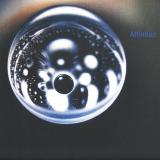
After regular appearances at Berghain since his debut two years ago, Altinbas now presents his contribution to Ostgut Ton, tying together five tracks that outline an expedition through celestial bodies in ‘Beyond the Veil’. Deepening his research on intricately crafted ambiance, the EP strikes a balance between commanding rhythm and blossoming synth work that reaffirm his inimitable style. ‘Beyond the Veil’ is a conceptual collaboration between an artist and a room; describing the dancefloor as an organism and the architecture of its surroundings.
Over the years, harmony has become synonymous with the Belgian artist’s sound. Deeply tuned and cohesive, Altinbas’s productions walk the boundary between insistent anticipation and unparalleled warmth. Although dancefloor effect remains a central theme for him, ‘Beyond the Veil’ is the latest chapter in a long study of obscurity in music that qualifies almost as ritualistic. Tracks like ‘Beyond the Veil’ and ‘Charming the Cosmic Snake’create tension in the keys that resonates like an expedition into new soundscapes. With weight and stability in the percussion, airy textures and hypnotic synth lines roll off the rhythm to mesmerize the listener. Sculpting his arrangements around the development of rich, dubby and atmospheric tones, Altinbas capitalises on the natural flow of his elements to provide an organic touch to tracks that are tuned especially for high pressure sound systems. ‘Entanglement’ and ‘Winter’ are both examples of this : soulful techno that ebbs and flows with each transition. Dimension is pushed dramatically into each of the five pieces of the EP as a direct response to the current climate of tool oriented techno. Keeping a safe distance from this approach, Altinbas invites listeners to explore the shape of his sound in an embrace rather than submit to its abrasion. The project concludes with ‘Antichamber’ - the fifth track of the EP that announces a departure from strict club codes. Dampening the rhythm from a pulse to a sway, a dreamlike landscape rises from deep within the record, smoothing over any of the rougher residuals from the preceding tracks. The descent that is ‘Antichamber’ is the result of an accumulated euphoria, gently guiding the listener back to consciousness.
‘Beyond the Veil’ represents a checkpoint for Altinbas in his research of moving a dancefloor not only physically, but emotionally. Carving out his own space in dancefloor-oriented music, he offers highly expressive compositions in defiance of the status quo. Altinbas offers this EP as a personal statement of where he stands; five tracks of carefully tended tone and harmonic glow create an emotional urgency for the collective experience.
out of Stock
Last delivered 11 days ago available to reorder, subject to availability
“Man has such a predilection for systems and abstract deductions that he is ready to distort the truth intentionally, he is ready to deny the evidence of his senses only to justify his logic”
Fyodor Dostoevsky - Notes from Underground (1864)
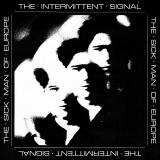
The Intermittent Signal is the sound of resistance.
In the year since The Sick Man Of Europe’s debut album was released, the world has moved on. Steady hands have slipped from the levers of power, logic has shifted underground and the message grows more urgent with every passing day.
Repetition has been relearned and the machine rhythms repurposed, this time with increased intensity. Arrangements have moved beyond the bare bones economy of the first record and there’s a newfound melodicism in places. Clarity and conviction ring true through the static and noise, while utopian ideas to remodel a broken system gain traction. This is a rejection of the attention economy and a call to reconnect through community and organisation. Those simple acts that were once commonplace have become increasingly radical as new fractures emerge.
“Through repetition the message has gained weight and become something more urgent,” The Sick Man Of Europe explains. “The vehicle for this message needed to evolve, grow to gain the strength to carry it. We’ve landed on something more expansive, immediate and immersive. Less is more. Until it isn't.”
“Man has such a predilection for systems and abstract deductions that he is ready to distort the truth intentionally, he is ready to deny the evidence of his senses only to justify his logic”
Fyodor Dostoevsky - Notes from Underground (1864)
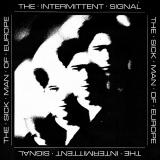
The Intermittent Signal is the sound of resistance.
In the year since The Sick Man Of Europe’s debut album was released, the world has moved on. Steady hands have slipped from the levers of power, logic has shifted underground and the message grows more urgent with every passing day.
Repetition has been relearned and the machine rhythms repurposed, this time with increased intensity. Arrangements have moved beyond the bare bones economy of the first record and there’s a newfound melodicism in places. Clarity and conviction ring true through the static and noise, while utopian ideas to remodel a broken system gain traction. This is a rejection of the attention economy and a call to reconnect through community and organisation. Those simple acts that were once commonplace have become increasingly radical as new fractures emerge.
“Through repetition the message has gained weight and become something more urgent,” The Sick Man Of Europe explains. “The vehicle for this message needed to evolve, grow to gain the strength to carry it. We’ve landed on something more expansive, immediate and immersive. Less is more. Until it isn't.”
Courant Zéro is the new moniker of Montréal multi-media installation artist and Kohlenstoff label co-founder Maxime Corbeil-Perron, signalling his return to purely recording-based electronic music production following several years focused on award-winning experimental film and audio-visual works. Solari channels his cinematic sensibility and decade-long exploration of sound art and electroacoustic counterpoint into deep cuts of maximalist ambient electronica. Drawing on his early background as a pianist and jazz drummer, Corbeil-Perron weaves a fabric of melodic and rhythmic vectors with his unique timbral palette, intersecting modern composition, IDM, ambient, glitch, and noise on a debut album brimming with sonic detail and emotive resonance. A fixture of Montréal's sound art community as both creator and curator since the early 2010s, Corbeil-Perron's work has ranged from "hypnotic A/V onslaught" (FACT Magazine) to the "richly nuanced acousmatic journey" of his 2018 EP Polychrome (Bandcamp Best Contemporary Classical Of The Month), with earlier electronic and techno-adjacent projects like Political Ritual, Dresden, and Le poisson d'argent garnering accolades from avant-music outlets A Closer Listen, Silence and Sound, and Musicworks, among others. Courant Zéro mobilizes this cumulative wealth of explorative sonic experience in the service of distinctive compositional architectures and electronic music pathways that fans of Floating Points, Jan Jelinek, Squarepusher, Tim Hecker, and Oneohtrix Point Never should find compelling. Title track "Solari" opens the album with a cavernous ambient glitch-drone soundscape that envelops ever-shifting timbres of modular arpeggiation, serving as introduction to the clarion call of "En deçà du réel", an homage to video artist Manon Labrecque, where layers of interweaving melodic counterpoint played on Buchla and other synths slowly build to widescreen immersive intensities; "I have this vision of Labreque vibrating eternally between two frames of magnetic VHS tape_ the slow pace of the piece also inspired by Tarkovsky's approach to scenography" says Corbeil-Perron. "Strange Aorta" is ectoplasmic ambient with wistful melody lines transmuting along a central filament, awash in shifting waves of low-end and ricocheting tonal glitch, the title a reference to "the thumping rhythm beating around the main melody_and the heavy remnants of grief related to my father's passing and a brutal confrontation with my own mortality a few years back." Tracks like "La peau des dents" and "Eroding Us" are more firmly rooted in electroacoustic and aleatory systems music, where colliding loops are shaped into unstable flows of deconstructed slippage and reconvergence. Those two pieces bookend the album's pivotal center: the gorgeous piano digitalia of "Horizon n'arrête" and the skittering electronica of 9-minute opus "Unyeldd", its loping broken beat and cascading melodic glitter like a cluster of wind-up music boxes in a dappled forest _ and for Corbeil- Perron also partly inspired by now fellow Constellation labelmates Do Make Say Think: "I spent a lot of time rediscovering their records after seeing them last September 2024 which definitely influenced this piece." Courant Zéro's debut is a vibrant sonic rebus at the junction of electronic, electroacoustic, noise and ambient music that resists easy categorisation. Solari strikes a compelling balance of unsettled disorientation and hospitable warmth, teeming with real feeling throughout. The album's cover art painting Cryptography I by Yen-Chao Lin represents this prevailing sensibility, its mazelike circuitry distinctly carved and crisply rendered, while filigreed with handmade detail and artisanal patina. Thanks for listening.
Weezer founding member and original bassist, Matt Sharp, while working on a series of “lost-albums” from the cutting room floor of his creative-life, stumbled upon a curious multi-track reel of analog tape. This mysterious reel found at the bottom of a treasure chest of other master recordings just happened to contain Weezer's very first studio sessions. These were the very same recordings that were responsible for earning the band a record contract for their iconic debut “Blue” album. These newly discovered sessions feature raw, vividly emotional and ecstatic versions of the band's timeless hit songs Say It Ain’t So and Undone (The Sweater Song.) Sharp and legendary music producer Joe Chicarrelli took these recordings to Los Angeles’ famed East/West Studios to take a deeper look into this mythic reel of 1-inch Ampex tape. What the two men quickly discovered was the original lineup (with guitarist Jason Cropper) in an infectious, explosively joyful, feral form. Making the decision to honor the original intention of the music and the traditional technology of the era, the songs were remixed from top to bottom, from tape to vinyl, in a 100% analog process.With Sharp as producer and Chicarrelli on the mix, the result of these sessions makes up the entirety of “1192” (named after the month and year it was originally recorded.) The illuminating spirit of the performances on 1192 are guaranteed to turn the world upside down for blue album fans everywhere. This album stands on its own as an essential entry into the band’s discography and is crucial to understanding the first chapter in Weezer's storied history.
Errands is the first duo recording from Marja Ahti, Swedish-Finnish sound artist and electroacoustic composer, and John McCowen, a native of Southern Illinois, now residing in Iceland, whose work centres on a radical exploration of clarinet multiphonics. Working without the aid of electronics, McCowen has spent years finessing performance techniques that allow him to layer beating patterns and split tones that belie their source in a monophonic instrument. Ahti, in contrast, has built up a stunning body of work in recent years using a classic electroacoustic palette of electronic, field recordings and instrumental sounds. Sharing a bill at the 2024 iteration of Stockholm’s Edition Festival, the pair discovered a sensibility shared across their different sonic means, beginning the collaborative process that would eventually result in the mercurial side-long pieces heard on Errands.
The word ‘errand’ suggests something purposeful but routine, and Ahti’s and McCowen’s work is suffused with the everyday. Meeting with McCowen to record in Iceland, Ahti used the opportunity to gather field recordings, capturing not the natural sublimity often associated with the country—think Chris Watson’s shifting glaciers—but everyday life in Reykjavik. Snatches of bustling streets and what could be humming engines thread between static sinewaves, stretches of clarinet resonances and fleeting textures, the latter often at once visceral and impossible to identify. Errands: we are a long way from the grandiose framing devices favoured by the pioneers of electroacoustic music, yet many of their principles are at work here. The gradual metamorphosis of one sound into another, the carefully achieved ambiguity between the acoustic and electronic, the treatment of the stereo field as a compositional element: all of these link Ahti and McCowen’s music to the electroacoustic tradition, yet their sensibility is radically different. The overall effect is a kind of stillness, but one at peace with continuous change. Like the unwieldy but somehow stylish everyday forms captured in the Hertta Kiiski photographs that adorn the record's sleeve, the music seems to prize a kind of deliberate awkwardness, interrupting static held textures not with an abrupt cut, but with a quick fade, suddenly revealing background as foreground.
Ahti and McCowen’s world is everyday and unornamented, but also shadowed by the numinous. Halfway through 'Chorales', we hear an arrangement for overdubbed recorders of an early motet of Messiaen’s, O sacrum convivium! Played on recorders, the piece shrinks into delicacy and dim memories of childhood music lessons, while at the same time its harmonies retain the grandeur of their liturgical origin. This double quality inflects much of what follows on Errands, including snatches of field-recorded water or air, which seem at once elemental and domestic. Enlivened with countless details that repay repeated relistening, Errands is a record that leaves the listener ready to open their ears anew to their own sound environment.
Following the much-loved Library Music: Volume One (2022), and hot on the heels of this year’s critically acclaimed ‘After The Rain, Strange Seeds’ (9/10 - Uncut) , London group The Leaf Library return with a second journey through the margins of their catalogue. Gathering together rare recordings, compilation tracks, limited edition releases, collaborations and hidden gems from their ever-expanding musical world, Library Music: Volume Two is another vibrant and varied collection of electronic indie pop, in all its guises.
Far from a conventional odds and ends collection, the double LP compilation reveals another side of a band who have always treated the spaces between albums as places to explore. These are the moments where ideas stretch out; there are hypnotic drones, motorik rhythms, glowing analogue textures, pastoral electronics and the warm, melodic melancholy that has become unmistakably The Leaf Library. There is the electro-pop of Flowers At The Border, the psych rock-adjacent Building Better Worlds, and the gentle chamber shuffle of Kendrick Road. Tracks range from the 22 minute folk kosmiche epic Versatile Clouds to the 59 seconds, record skip punctuation mark of Harmonic Runout, with a whole array of trips, ideas and experiments in between.
Since forming in a pre-Ghost Box, Castles in Space and Clay Pipe world, The Leaf Library have carved out a unique place somewhere between dream pop, kosmische repetition and experimental songcraft — drawing comparisons to Stereolab, Broadcast, Yo La Tengo and the outer edges of library music, while creating a sound entirely their own.
“We’ve always loved making things outside the pressure of a ‘proper’ album,” says singer/guitarist Matt Ashton. “Singles, collaborations and compilation tracks give you permission to follow an idea wherever it wants to go. Looking back, those pieces tell their own story.”
Where their studio albums have shown the group carefully building immersive worlds, the Library Music series maps the pathways between them — the sketches, diversions and unexpected discoveries that often reveal the most about a band.
Across a lucky thirteen tracks, Library Music: volume two is a reminder that some of the best discoveries are found on the shelves you forgot to check.
[a] Flowers At The Border [4.21]
[b] The Long Dead King [7.16]
[c] Bowed Clusters [4.00]
[d] I Learned To Swim Under Water [4.32]
[e] Building Better Worlds [11.59]
[f] Harmonic Runout [0.59]
[g] Kendrick Road [3.36]
[h] Sailing Day (Wintergreen Remix) [3.59]
[i] Versatile Clouds [22.00]
[j] Bells and Thread [2.54]
[k] No Memories, No Plans [4.33]
[l] Everyone I Met Today [1.00]
[m] Tired Ghost In Orbit [9.19]
Recorded in Los Angeles over the course of a single day at a studio in the Eagle Rock neighborhood, Dois Desertos was produced by Mario Caldato Jr. and emerged without a predetermined plan or schedule. The project took shape during Portuguese musician João Pimenta Gomes' stay in Los Angeles with his family. During that time, through Rodrigo Amarante, João met Mario and Samantha Caldato, as well as musicians Abe Rounds (drums and percussion) and Gabe Noel (bass and cello). From those encounters, the album began to unfold organically.
Working from simple scores—some containing little more than chord progressions—the sessions left plenty of room for improvisation. Every performance was captured live, in a single take, with no overdubs. The mixing process, also carried out live by Mario Caldato Jr., followed the same philosophy: effects and level adjustments were performed in real time and printed directly to the final two-track master.
At the heart of the album's sound is the Cristal Baschet, a rare instrument played by rubbing glass rods with the hands, causing metal resonators to vibrate and produce an ethereal, resonant tone. João describes its sound as "a trace, almost like a shadow." Rather than taking the lead, the instrument serves as a textural foundation, while the bass and cello carry the melodic lines. Some of these melodies are original compositions, while others draw from traditional Portuguese fado, reimagined through an open and exploratory approach.
The album has a dreamlike atmosphere, reflecting the perspective of someone experiencing Los Angeles from the outside—not in a rush to belong, but fully receptive to the city's unique energy. Two films helped shape this imaginary landscape: Model Shop (Jacques Demy, 1969), in which the French filmmaker uses Los Angeles as a pretext to simply observe and inhabit the city, and Thom Andersen's Los Angeles Plays Itself. The result is Dois Desertos, an album that, in João's own words, "could never have been made anywhere else."
With Dois Desertos, João Pimenta Gomes invites listeners into a deeply immersive experience, revealing a more exploratory side of his artistic practice while reinforcing Amor in Sound's commitment to releasing original works that engage with the many languages of contemporary music.
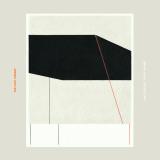
The Montréal psych-ambient synth-droners return with Sequence Three, their first album in five years and the final instalment in the group's opening trilogy of records that began with Sequence One in 2019. The spectral supergroup co-founded by Stephen Ramsay (Young Galaxy) and Jace Lasek (The Besnard Lakes), usually joined in some capacity by Lasek's Besnard bandmate Olga Goreas, deliver another dose of its trademark longform slowburn jams, forged from restored vintage synths and analogue electronic gear. Lasek and Ramsay don their seasoned producer hats to apply rockist sound design to minimalist tracks, saturated with tube compression, drenched in pink and brown noise, all queasy modulation, sparse beats, and languorous melodic lines. Evoking a humid dawn on a gas giant, these alien drone anthems meld the numinous transcendentalism of Spiritualized and Cluster with the eroded grit of William Basinski and GAS. Light Conductor has been tagged "heavyweight analogue synth nirvana" by Uncut Magazine and praised for its "fabulous, epic, shimmeringly radiant kosmische" by Electronic Sound, among other accolades. Sequence Three consolidates these strengths, while leaning into the darker disquietude that has always been an undercurrent of Light Conductor's aesthetic. Opener "She Glitters The Dust" fades up slow with intertwining detuned synth loops, a languorous lullaby beat dropping at the 3-minute mark, accompanied by insectoid shimmers and a tease of melody that's eventually given free reign over the song's second half. Aptly titled, it's as if a transmission captured within a cosmic dust cloud has provided the raw material for the band to jam on, tease out, and terrestrialize. An echo of that beat sets the tranced pulse for "Omenize", the centerpiece of Side One and the fulfilment of Light Conductor's one-vocal-track-per-album directive. With layered harmonies by Goreas and Lasek, this is the group at its ethereally anthemic best, the devotional floating-in-space bliss attenuated by another gently warped denouement. "Ghost City Radio" closes out Side One with the band's most overtly anxious tune to date, deceptively stolid in its simple bass guitar riff and filter-swept hi-hat: groove stripped to its minimum as the foundation for an extended spokenword sample of a doomsaying prepper/preacher, a sort of homage to that early hallmark of their Godspeed compatriots, done up through the lens of Light Conductor's inimitably destabilized celestial ambience. (Lasek mixed the most recent two GY!BE albums.) Side Two offers up "High In The Orange Air", a beatless, squelching, bubbling ostinato drone and the album's most orthodox ambient kosmische track. This provides the set and setting for 15-minute closer "Supercontinent", which starts off in similar territory but gradually yields to a submerged and reversed techno pulse pumping through coruscated chordal drone, gaining in woozy mesmeric psych intensity over its inexorable hypnagogic trajectory. Sequence Three rounds out a satisfying trio of full-lengths that Light Conductor has released on Constellation, featuring vibrantly minimal geometric cover art designed by label co-founder Ian Ilavsky that integrates the trilogy as a visual series as well. In keeping with the previous two albums in the set, the Deluxe 180gLP includes a 12"x24" art poster. Thanks for listening.
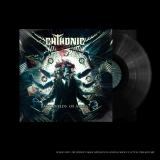
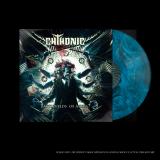
CHTHONIC's award-winning 2018 album Battlefields of Asura reissued on vinyl in September via Svart Records CHTHONIC is a Taiwanese metal band formed in Taipei in 1995, with the members nowadays split between Helsinki and Taipei. Their 2018 album Battlefields of Asura is an award-winning release. With this album, CHTHONIC won their second Golden Melody Awards, Taiwan’s equivalent of the Grammy Awards. CHTHONIC's lyrics are inspired by Taiwanese mythology, folk stories, and history, while its music incorporates elements of traditional Taiwanese folk music, enka, and the sorrowful melodies of Taiwanese opera. These are accompanied by traditional instruments such as the hena and koto. Also integral to CHTHONIC's sound are elements of symphonic black metal and melodic death metal, along with intense riffs and solos. Critics have attempted to categorize CHTHONIC as death metal, folk metal, or black metal, but the band has opted for the simpler label of metal. They've performed at many major festivals around the world, including Fuji Rock and Summer Sonic in Japan, Ozzfest in the US, Download in the UK, and Wacken Open Air in Germany, as well as having toured extensively across Europe, North America, and Asia over the years. Prior to this album, CHTHONIC was signed to Spinefarm Records / Universal Music Group, under which they released three albums and toured internationally. After their 2014 European tour, the band decided to slow down, and vocalist Freddy Lim began his political career. He was elected to Taiwan's Parliament in 2016 and re-elected in 2020. During his tenure, he pushed for LGBTQ rights and gender equality, helping Taiwan become the first Asian country to legalize same-sex marriage, along with advocating for Indigenous rights and other human rights issues..
CHTHONIC's award-winning 2018 album Battlefields of Asura reissued on vinyl in September via Svart Records CHTHONIC is a Taiwanese metal band formed in Taipei in 1995, with the members nowadays split between Helsinki and Taipei. Their 2018 album Battlefields of Asura is an award-winning release. With this album, CHTHONIC won their second Golden Melody Awards, Taiwan’s equivalent of the Grammy Awards. CHTHONIC's lyrics are inspired by Taiwanese mythology, folk stories, and history, while its music incorporates elements of traditional Taiwanese folk music, enka, and the sorrowful melodies of Taiwanese opera. These are accompanied by traditional instruments such as the hena and koto. Also integral to CHTHONIC's sound are elements of symphonic black metal and melodic death metal, along with intense riffs and solos. Critics have attempted to categorize CHTHONIC as death metal, folk metal, or black metal, but the band has opted for the simpler label of metal. They've performed at many major festivals around the world, including Fuji Rock and Summer Sonic in Japan, Ozzfest in the US, Download in the UK, and Wacken Open Air in Germany, as well as having toured extensively across Europe, North America, and Asia over the years. Prior to this album, CHTHONIC was signed to Spinefarm Records / Universal Music Group, under which they released three albums and toured internationally. After their 2014 European tour, the band decided to slow down, and vocalist Freddy Lim began his political career. He was elected to Taiwan's Parliament in 2016 and re-elected in 2020. During his tenure, he pushed for LGBTQ rights and gender equality, helping Taiwan become the first Asian country to legalize same-sex marriage, along with advocating for Indigenous rights and other human rights issues..
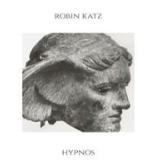
Hypnos , a new collection of his own mesmerising compositions, enchants us with sublime, atmospheric guitar intricacies beautifully constructed over soul- drenched hammond sound-beds. "With Hypnos , I wanted to create something paired back and super simple. These pieces were initially written as etudes for solo guitar, and they reflect the wide range of influences found in the music I love to listen to. A life spent listening to Django Reinhardt and Philip Glass! The inclusion of the Hammond organ came from a desire to pair the nylon- string guitar with an instrument you don't usually hear alongside it. For me, the Hammond evokes gospel and the classic organ trios of Wes Montgomery - it's a soulful, funk sonic and very spiritual. It was a real blessing to have Nathaniel Ledwidge play Hammond on the record and to showcase the softer side of this iconic instrument. Hypnos is the Greek god of sleep, the father of Morpheus, the god of dreams. Is the music dreamy and hypnotic, a brief slumberous escape from the madness out there? I hope so." - Robin Katz It's available as a limited- pressing 180g vinyl 'Gearbox Cut' LP and gatefold CD digi sleeve with obi strip & photo insert.
There are some first times you never forget. The first time one hears Syd Matters’ captivating voice is one of them.
From “End & Start Again”, his first single in 2003, Jonathan Morali’s warm, soulful vocals and timeless melodies revealed an artist in a league of his own. Success in France and abroad was immediate and has never waned.
Four albums followed between 2004 and 2011, along with a host of unforgettable songs: “Black & White Eyes”, “Obstacles”, “To All Of You” or “I Might Float” left their mark on an entire generation, racking up nearly 200 million streams and 100,000 physical sales. Drawing equally from the songwriting of the 60s, the creativity of the 70s and the modern synthetic era, Syd Matters has developed a unique musical universe, building a loyal and ever-growing audience over the years.
On stage, accompanied by his band, audiences recall intense concerts where the artist and his musicians deliver performances that were at once epic and intimate. Lush and spectacular on stage, their music never lost its center of gravity, gaining even in depth. Syd Matters toured France and Europe (England, Germany, Scandinavia...) for nearly ten years, as well as in the United States and Latin America. In 2011, the tour for his album Brother Ocean culminated in Paris at the mythical venue l’Olympia.
Jonathan Morali then took a step back from the spotlight but remained just as prolific, writing for film, theater, radio, and television and collaborating over the years with directors such Éric Rochant, Rémi Chayé, Thomas Litli, Patrick Mille, and Mélanie Laurent to name but a few. When scoring for films, the musician gives free rein to his desires and intuitions. He works with the very fabric of sounds and their underlying emotions, as if freed from the constraints imposed by the song format.
Between 2015 and 2019, he also composed the soundtracks for the remarkable video games Life Is Strange and Life Is Strange 2, which were massive global hits. Several Syd Matters tracks appeared in the game, and the success was such that it revived the band’s career, introducing their music to a new audience.
After an extended hiatus, Syd Matters will make a major comeback with a new album - their fifth - set for release in September 2026 on Créature - also home to Flora Fishbach and Chassol. They will then tour France and Europe, returning to the legendary stage of the Olympia on November 17, 2026, where they will perform their new songs. And others that we know by heart and haven’t forgotten.
The Lp is ble marble be released on the 25th September Part celebration, part reflection, THE TIME OF OUR LIVES arrives as both the final release of Lancey’s twenties and the closing chapter of a creative world he has spent the last decade constructing. The most expansive statement of his career to date, moving freely between trap, alternative R&B, dance music, Afro-influenced rhythms and more, Lancey explores triumphant highs and lows of stark vulnerability across the album, interrogating ideas of success, freedom, loneliness and what it truly means to have the time of your life. Lancey Foux stands at the forefront of UK rap’s evolution, blending elements of hip-hop, cloud rap, trap, Jersey club, drill, and more into a sound that’s uniquely his own.
Since emerging from Newham, East London in 2015 with a clutch of freestyles and SoundCloud singles, Lancey has occupied a lane entirely of his own making. As he closes out his twenties, Lancey looks ahead to the next decade full of more unpredictable artistry as he continues to break the rules and change the game.
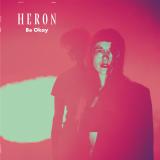
Three years after their debut, the synth-pop duo HERON is back: On September 25, the Leipzig-based band’s second album will be released on the O*RS Label. With “Be Okay,” the band shows itself to be more experimental than before and strikes a critical note—without losing its signature sound. Dancefloor euphoria meets synthwave drama; big sounds meet big themes: social criticism, sexual oppression, the struggle with one’s own demons, and moments of political powerlessness. But the album is also shaped by a courage to embrace tenderness and a commitment to longing—all underscored by a melancholy that you can dance to. With a playful spirit, the duo fully explores the space between anthemic pop and darkwave moments, thereby revealing their inner selves (even more) to the outside world
This year, Prohibition reissues their landmark 1996 album Towncrier on vinyl. A cult classic that once took them across Europe and onto the iconic French TV show Nulle Part Ailleurs, the record remains a defining moment in their career. To mark the occasion, the Paris-based quartet returns once again for a series of live performances at the end of 2026. "Prohibition is undoubtedly one of the most important rock bands France has ever produced." - MOWNO Formed in 1989, Prohibition emerged from the underground veins of the French post-punk scene-a time when the movement survived through a handful of fanzines, crumbling venues, and a sparse network of independent record stores. Their sound was raw, urban, and tightly wound, still reverberating with echoes of hardcore and skate culture. A jagged, abrasive form of rock, driven by atonal guitars, surgically precise bass lines, off-kilter rhythms, and biting vocals. What set Prohibition apart was its singular instrumentation: a saxophone unleashed and the hypnotic drone of a sitar cutting through the noise. Their reputation quickly spread across Europe and the United States, leading to relentless touring and shared stages with the likes of Blonde Redhead, Fugazi, David Grubbs, Condense, and Chokebore. The band came to a close in 1999, following the release of their fifth and final album, the enduring 14 Ups & Downs. In 2015, Prohibition reunited for a special tour marking the 20th anniversary of Prohibited Records, including a standout performance at the Teriaki Festival, later captured by Mowno. Celebrating 30 years in 2025, the band released a reimagined version of Cobweb-day, titled Cobweb-day (Revisited), and returned to the stage for a series of powerful, memorable shows. Now, in 2026, Prohibition reissues their landmark 1996 album Towncrier on vinyl. A cult classic that once took them across Europe and onto the iconic French TV show Nulle Part Ailleurs, the record remains a defining moment in their career. To mark the occasion, the Paris-based quartet returns once again for a series of live performances at the end of 2026. For fans of: The Ex, Fugazi, The Jesus Lizard
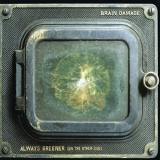
"The grass is greener_ elsewhere_" Brain Damage told us with their debut album, released in 2002. Yet here, they've reached full maturity. Rarely has a "made in France" dub album strayed so far from the Jamaican model while still harboring, in every detail, so many references and tributes to the inventors of the style (King Tubby / Lee Perry), as well as to many of the key figures in its evolution (Tikiman / Rhythm & Sound, Dub Syndicate, etc.). The recording studio, 7/11 Laboratory, is used here as a true musical instrument. The optimal use of three-dimensional stereo effects will immerse the listener in soundscapes ranging from classic space echoes and Mont Blanc tunnel-style reverberations to crackles, electronic interference, exogenous samples, and other parasitic noises coming straight from Babylon. For this album, continuing in the vein of his previous collaborations with the international dub scene (Zion Train, Alpha & Omega, Disciples, Spectre, Lab°_), Brain Damage traveled to London to record two tracks at Conscious Sounds Studio with Jamaican-born singer Tena Stelin. With the melancholic "Spirit World," one is reminded of the fruitful collaborations between Massive Attack and Horace Andy, while on "Genetic Weapon," the tone becomes more overtly assertive. Two vocal tracks, then, woven into these ten compositions, where the emotional moods and atmospheres will shift with each listen. "Always Greener (On the Other Side)" emerges as the manifesto of music conceived as cinema for the ear...
Founded in 2019 by Nick Whaley and Luca Tantari, Piss Drunk Records was born in Northern California from a shared passion for underground electronic music and the DIY ethos that has always driven independent scenes.
Rather than waiting for opportunities, the label was created with a simple philosophy: if nobody releases the music you believe in, do it yourself. Every release represents that independent spirit, putting artistic freedom before commercial expectations.
Nick Whaley has been an active figure in the Northern California underground electronic scene for many years, continuously releasing music, cutting lathe records, and performing live sets while keeping the local DIY spirit alive. Luca Tantari, originally from Italy, lived in California where the idea for Piss Drunk Records was born. After returning to Italy, he continued developing the label, expanding its international reach while preserving its original vision and underground identity.
Although founded in California, Piss Drunk Records has always maintained strong roots in both the United States and Italy, creating a bridge between two underground communities.
The label embraces a broad spectrum of electronic music, from raw industrial techno, experimental electronics and noise to old-school hardcore, gabber and more dancefloor-oriented productions. Style is never the priority—authenticity is.
The first five releases were issued as hand-cut lathe records and a limited cassette, reflecting the label's commitment to small-run, handcrafted formats. PDR006 marks Piss Drunk Records' first professionally pressed vinyl release, representing a new milestone while remaining true to the DIY philosophy that inspired the project from day one.
Piss Drunk Records exists for one reason only: to release music that deserves to exist—without compromise, without trends, and without waiting for permission.
out of Stock
Last delivered 23 days ago available to reorder, subject to availability
Trá Pháidín are a mutable collective of musicians who are geographically, culturally and mentally torn between Conamara Theas, Cathair Chorcaí, Ciarraí, Uíbh Fhailí, Sligeach and Port Láirge, active in one form or another since 2019. The music they make, which to date has mostly been self-released, is of an ambitious breadth, embracing traditional Irish absurdity, jazz, folk and krautrock influences, whilst remaining tantalisingly beyond any one specific understanding of either the world around them or even themselves. More defined however, is their overall conceptual approach, focusing upon original Gaelic music and what lies beyond simply “conas atá tú?”.
Cloch ‘s Claí (trans. Stone & Wall), their first record to be released by World of Echo, develops their established interests into more adventurous waters (and walls!) than ever. Based on the historical significance embedded into dry-stone walls, the album presents a satirical view of Éire’s relationship with her native tongue and the Gaeltacht (regions where Gaeilge - Irish Gaelic - remains the primary language). Constructed of ten tracks, each representative of a stone in a metaphorical stone-wall, Cloch ‘s Claí draws from styles of improvisation in Irish traditional music, exploring avenues of ornamentation and accompaniment in the tradition. As such, the arrangement changes in every performance, a new stone-wall articulated each time - the recording on this album represents just one such arrangement in one such performance. Inspired by Myles na gCopaleen’s An Béal Bocht, the wall comes to embody a variety of themes scattered across the landscape and psyche of na Gaeltachtaí - tokenism, housing, gentry politics, ribbon developments and so on. The result is a music expressive of regional styles in traditional music, krautrock, free jazz, post-rock, minimalism and drone presented in a way that feels instinctively fluid and reflective of a hushed existentialism from the west of Ireland.
On Cloch ‘s Claí, Trá Pháidín are: Conal Ó hAinmhuighe, Ultan Ó Labhradha, Peadar-Tom Mercier, Micheál Fitzgerald, Pól Ó Lionáird, Ruairí De Búrca. Cloch ‘s Claí will be released digitally and as a limited edition LP on 25th September via World of Echo. This record was created through the support of the DEIS Recording Grant & Ealaín na Gaeltachta.
Modi Bardo, an alumnus of Moonshine Recordings, is another who on the surface appears to be at the nascent era of their sound experiments, but in truth is a longtime explorer of outer realms of Dub.
There is much to mention here which can be uncovered with the correct keywords, but one of the early bright points would be Spacelings and Bassheads, the Detroit-based Psych duo Modi Bardo was half of, who although seemingly limited in the realms of recorded output (with only a compilation appearance each via the Electro visionaries Interdimensional Transmissions and Booty bass / Techno orientated Intuit-Solar) where in fact not-so-limited in the era in the way of public performance, even performing at the renowned Packard Plant renegades in the 90's with UR on occasion.
Forward to now, and Modi Bardo has created something that reaches for unknown territory in Dub. With an establishing A side that is deep and primordial in tone, a' la Challenger Deep and Babe Roots releases, this proves to be merely a fantastic tone setter for the B side, which seems to find a zone where Dub Techno, Half Time, and Autonomic DnB have not quite gleaned yet. Truly a record unlike any other, while somehow being an invaluable tool for DJ's exploring the links between the aforementioned sounds and even Dancehall and Jungle in the mix.
A must for all those chasing the evolution of dub reflective arts, and the adventurous DJ in general.
Magenta Coloured Vinyl, limited to 400 copies. The Garden, a magical place where lost dreams don't fade, but grow like silent flowers. Each petal holds an unfulfilled wish, each scent a memory left behind. In this garden, those who enter rediscover parts of themselves they thought lost and understand that nothing should be forgotten if it has touched their heart. The garden is the image that recurs most frequently throughout the album. We chose it as a metaphor for "refuge," a place where we can choose to nurture our natural inclinations, let them grow and blossom, but where we can also keep our shadows and our lights hidden. Where our secrets, our most authentic truths, our aspirations and our dreams, can therefore remain guarded until we are ready to reveal them to those who can contain and appreciate them.
It was a hot day in the Polish summer, over 750,000 fans had crammed their way into the Czaplinek-Broczyno Airfield for the 2025 Pol’and’Rock Festival, a storied tradition for over 30 years. The Duke of Spook WEDNESDAY 13, hot off his smash hit album Mid Death Crisis (lauded by Metal Hammer, Loudwire, Blabbermouth, and more), took the stage and proceeded to decimate onlookers with a career spanning set of both WEDNESDAY 13 and Murderdolls hits. Thankfully, for us all, they had the soundboard tapped, and now that explosive performance will live on forever as UnAlive at Pol’and’Rock 2025, dropping September 25, 2026 via Napalm Records. A bloody good time from beginning to end, certified for high speeds and ghoulish splendor.
The legendary Christian metal pioneers Stryper return with a commanding new chapter in their storied career: Throne Of Thorns, set for release this September via Frontiers Records. Decades into their journey, Stryper continue to reaffirm their status as one of the most influential and enduring bands in classic metal, seamlessly blending their signature message with a sound that remains as powerful and relevant as ever. Throne Of Thorns showcases the band at the height of their creative powers, delivering a masterclass in songwriting and musicianship. The album is packed with grand, meticulously crafted arrangements, where thunderous rhythms, soaring guitar harmonies, and anthemic choruses come together in a style that is unmistakably Stryper. Each track is infused with both intensity and melody, capturing the essence of classic metal while pushing their sound forward with renewed energy and purpose. At the forefront stands the unmistakable voice of Michael Sweet, whose passionate, powerful, and instantly recognizable delivery continues to define the band’s identity. His vocal performance on Throne Of Thorns is nothing short of extraordinary, effortlessly moving between soaring highs and emotive depth, adding a timeless quality to every song. With Throne Of Thorns, Stryper not only honor their legacy but expand upon it, offering an album that will resonate with longtime fans and newcomers alike. It’s a bold, inspired statement from a band that refuses to stand still—proof that true metal greatness only grows stronger with time.
The legendary Christian metal pioneers Stryper return with a commanding new chapter in their storied career: Throne Of Thorns, set for release this September via Frontiers Records. Decades into their journey, Stryper continue to reaffirm their status as one of the most influential and enduring bands in classic metal, seamlessly blending their signature message with a sound that remains as powerful and relevant as ever. Throne Of Thorns showcases the band at the height of their creative powers, delivering a masterclass in songwriting and musicianship. The album is packed with grand, meticulously crafted arrangements, where thunderous rhythms, soaring guitar harmonies, and anthemic choruses come together in a style that is unmistakably Stryper. Each track is infused with both intensity and melody, capturing the essence of classic metal while pushing their sound forward with renewed energy and purpose. At the forefront stands the unmistakable voice of Michael Sweet, whose passionate, powerful, and instantly recognizable delivery continues to define the band’s identity. His vocal performance on Throne Of Thorns is nothing short of extraordinary, effortlessly moving between soaring highs and emotive depth, adding a timeless quality to every song. With Throne Of Thorns, Stryper not only honor their legacy but expand upon it, offering an album that will resonate with longtime fans and newcomers alike. It’s a bold, inspired statement from a band that refuses to stand still—proof that true metal greatness only grows stronger with time.