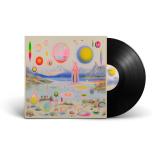
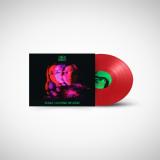
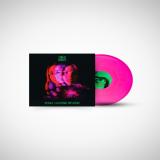
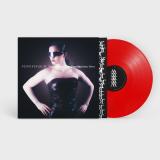
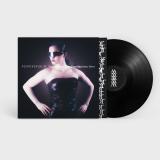
For our third celebratory release for 30 years of Ten Lovers Music we have another Various Artist selection called Frisson EP Part B. Kicking off the A side we have Mike Perras from Canada with Handle With Care, a superb opener, deep house with a saxophone solo that certainly gave us Frisson the first time we heard it. Following on is Takahiro Fuchigami from Japan with Wired City, another dark broken beat masterpiece made for the dancefloor. Onto to the AA side we have someone who is an integral piece of the Ten Lovers Music family Jose Rico from Spain who joins forces with Ruben Valero for Harmonies & Melodies, they draft in Anthonious on the Rhodes and it’s a deep house masterpiece. Finally Lobos Marinos from Japan, band leader Kazutaka Miya brings in Miki Hirose on the Trumpet and Shin Kowaka on Drums.
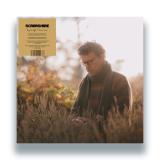
Bei dem Album ‘November 89’ handelt es sich um eine Auswahl von sehr frühen GAS Stücken, die zum Teil noch in den späten 1980er Jahren entstanden sind. Sie wurden erstmalig 2008 als CD-Einleger in dem Kunst Bildband Wolfgang Voigt GAS auf Raster Noton veröffentlicht.
Ebenso wie bei den Fotos im Buch handelt es sich bei den Stücken um frühe Vorläufer-Werke,
die in den Folgejahren mit den Alben ‘Zauberberg’ und ‘Königsforst’ zum stilprägenden, audiovisuellen Gesamtkunstwerk aus hypnotisch-fokussierten Waldbildern und abstrakt-psychedelischem Soundrauschen aus Alphorn und Bassdrum werden sollten.
Nun gibt es das Album erstmalig auf Vinyl. Damit wird die bisherige GAS Vinyl-Serie um das bisher fehlende „Erste“ Album quasi vervollständigt.
Das Covermotiv nimmt direkt Bezug auf das 1999 erschienene Album Oktember. Das sehr hypnotisch-verdichtete Waldmotiv war Grundlage für einen der ersten Waldloops Oktember, die es über die Jahre zunehmend in internationale Galerien und Kunstspielstätten geschafft haben.
Teil der Album-Veröffentlichung November 89 sind 2 Siebdruck-Editionen (je 30 + 3A.P.)
Edition 1 - November 89 - 2026 / 30cm x 30cm Siebdruck, Klebeband auf Aluminiumplatte.
Edition 2 - November 89 - 2026 / 30cm x 30cm Siebdruck, Klebeband auf Papier.
Beide Editionen bestehen aus je 3 x 10 nicht priorisierten Farbvariationen.
Die Editionen sind exklusiv nur über Kompakt erhältlich.
-----
The album ‘November 89’ comprises a selection of very early GAS tracks, some of which date back to the late 1980s. They were first released in 2008 as a CD insert in the art book ‘Wolfgang Voigt GAS’, published on Raster-Noton.
Just like the photographs in the book, these pieces are early precursors that would evolve in the ensuing years with the albums ‘Zauberberg’ and ‘Königsforst’ into a style-defining, audiovisual “Gesamtkunstwerk” (total work of art) comprising hypnotically focused forest imagery and an abstract, psychedelic wash of sound created by alphorn and bass drum.
The album is now available on vinyl for the first time. This effectively completes the existing GAS vinyl series by adding the "first" album, which had previously been missing.
The cover art makes direct reference to the album ‘Oktember’, released in 1999. The highly hypnotic, dense forest motif served as the basis for one of the first ‘Oktember’ Waldloops (forest-loops) works that have increasingly found their way into international galleries and art venues over the years.
The ‘November 89’ album release includes two screen-print editions (30 copies + 3 A.P.s each).
Edition 1 - November 89 2026 / 30 cm x 30 cm Screen print and adhesive tape on aluminum panel.
Edition 2 - November 89 2026 / 30 cm x 30 cm Screen print and adhesive tape on paper.
Each edition consists of three sets of ten color variations, with no specific hierarchy among them.
These editions are available exclusively through Kompakt.
Since his debut EP sold out on release day, Dolomites based artist Fil Palmer returns with a new release. This EP drifts between escape and return, tension and stillness, movement and reflection. Limited to 300 copies, handstamped & no repress.
LP,180, 2018 REISSUE - REMASTERED FROM ORIGINAL TAPES, CAREFULLY REPRODUCED ORIGINAL ART
The two sides of 1973's Big Business / Wind of Change are mainly the work of thegreat Keith Mansfeld but there's a killer cameo each from Alan Hawkshaw and David Snell to help deliver a thematic suite, diverse in mood, applicable to dramatic and environmental situations'. A Be With favourite and truly one for the heads.
The Big Business of side A is all the work of Keith Mansfeld. It's heavy on the suspense and features the vital Hot Property', an insistent groove so good that Madlib sampled it to lace the ace Long Awaited' by Lootpack with Dilated Peoples.
Sleeping Giant 1' is a more feshed out version of the equally-dazzling Fatal Error', evoking the orchestral magic of David Axelrod. Indeed, it conjures images of Diamond D falling over himself in the early-to-mid 90s to loop its intoxicatingly
eerie soundscape. Complete with guitar flls that recall Paris, Texas-era Ry Cooder, you need this record for this piece alone.
The horn-and-fute-led "Tycoon" is a head-nodder and "Power Complex" has some fantastic percussion. Other highlights include the breezy glide of Whistle Stop Tour' and its sister groove Clean Air.'
Over on Side B is the more expansive Wind Of Change, which includes the David Snell and the Alan Hawkshaw contributions. But these ain't no fller. Snell's shufing International Flight' sounds like a smooth Dorothy Ashby track tossed from the heavens. Hawkshaw's Road And Rail' is about as luxurious and strung-
out as the great man gets and it might just be the highlight of this whole set.
Not to be outdone, if Mansfeld's Balance Of Power' doesn't make you feel like king of the world then you must be playing it wrong. Oh, and did we mention World In Action'!
As with all ten re-issues, the audio for Big Business / Wind of Change comes from the original analogue tapes and has been remastered for vinyl by Be With regularSimon Francis. We've taken the same care with the sleeves, handing the reproduction duties over to Richard Robinson, the current custodian of KPM's
brand identity.
Chami and DHAEUR step up for the first release on DIG Curated, the sub label of Dust in Grooves (DIG), a pioneering force in the world of vinyl techno, born in Berlin. This passion project, launched by Olivia Mendez and Chami, spotlights emerging artists who embody the essence of the imprint's signature style--sophisticated, timeless, and groovy. With each release, a new talent is endorsed by a seasoned digger from the scene, aiming to push forward undiscovered sounds and empower the community.
After years of refining his palette as a dedicated DJ and acoustics master, the Italian-born, Berlin-based DHAEUR
has developed his distinct creative vision rooted in sound quality and stylistic research. At the time of crossing
paths with Chami, DHAEUR had already produced a handful of immersive tracks, exploring unknown territories
while keeping things minimalistic, giving DJs the freedom to construct their preferred sonic environments. Four of these tracks are pressed on DIG Curated 001, marking the beginning of a chapter for the sub-label that brings forth the future sound of techno.
The opening track of the release SUBJECT ZERO is a cinematic, mental, elegant journey, playing with the
perception of built up anticipation. This boundless, loopy soundscape is designed to induce inner quests on the
dancefloor and is a grand point of departure to unknown adventures ahead. This interlude of primordial grooves sets the scene for a voyage through a not-so-distant world where dystopian visions and technology merge with hypnotic synths. Evoking human emotions and desires is the hot and groovy track MIN(E)D, with vocals that could be from a female replicant building her own sonic web3 through the soundsystem of a steamy dancefloor.
On the B side, things quickly gain power and intensity, with STEPS racing through pounding beats, enigmatic
pads, and unpredictable claps, only tamed by DHAEUR's impeccable acoustic design. The EP closes with the cryptic, mechanical sounds of HEX 1904d1, deconstructing old patterns and programming a new form of evolved consciousness--inspired by precision and a reverence for organic movements.
Digi Dub re-enter the vinyl world with a handful of archival 10” releases, the first collating tracks harvested from four releases which originally came out in the early 90s.
The Aliens EP provides a perfect showcase of the adventurous and experimental approach that the label took at a time when breakbeat hardcore was starting to fragment. Taking none of the paths that their peers took, the artists in the Digi Dub stable infused their breakbeat science with a playful dubwise methodology to create idiosyncratic dance music operating at the interstice between modern dub mechanics and rave dynamics that was a premonition of much of the experimental bass music that the UK has become known for.
The first track comes from the trio L.S. Diezel whose Alien In The Woods marries cosmic interference with a steppers reinforced breakbeat and a tough digital bassline. The Diezel boys are joined by label owner Lee Berwick under his Launch DAT pseudonym for the second track Rougher Than A Lion. Beginning with what sounds like a sort of distorted tribal ritual, the track erupts into a symphony of skittering breakbeats, processed jazz lines, bursts of acid and discombobulated ragga chat.
On the second side the collaboration between Diezel and DAT continues with Poor Mans Glory that sees a weighty sped-up funk break allied with a suitably robust dub bassline overlaid with bursts of rasta invocation rattling around in the echo chamber. L.S. Diezel’s Get Your Spear Out rounds out the package with a clangorous proto-dubstep breaker forging the link between a Jah Shaka dance and Horsepower Productions.
With the original 12s now rare as rocking horse shit, grab yourself a 10” and make your bass bins smile.
BAILE & Nuage land on Shall Not Fade with their ‘Back 2 Earth’ EP
Four deeeep timeless tracks on this 12 inch. Sleek, progressive, acidy house & trancey ethereal breaks ‘Back 2 Earth’ is full of that headsy 90’s energy à la Underworld and Orbital…..we’ve been getting very lost in these ones!
Written remotely between Brooklyn, New York (BAILE) and Yerevan, Armenia (Nuage) both producers are more than a decade deep in their craft and it shows. They say “this all began with Nuage sending over a few short demos. BAILE took those pieces and constructed them into more fleshed out tracks, after which the two passed the songs back and forth slowly filling in the blanks.” …and that's the key here - no rush, no agenda just the realest takes expertly hewn.
Same Beat on the A1 is just that.. breakbeats, spoken word vocal chops and repetitive synth lines, but less is more. The percussion, bassline and programming do the work. Sometimes it's more about what you leave out than what you put in.
On ‘TSP’ you Nuage’s signature metallic synths. It’s a definite eyes closed/hands in the air weapon. Hypnotic flow building and ratcheting up the energy.
Flip over to title track’ Back 2 Earth’ and we get a trancey, garage and house blend. Sleek synths & arpeggios and minimal chops that seem to whisper ‘heaven…earth’.. BAILE utilized the Prophet Rev2 for pads and synths and a Moog Little Phatty and Minitaur for the bass but we want to know can a breakbeat soothe?
'Catch Yourself' closes out the EP.. More breaks and arpeggios but this time with an acid lead from the TB-03, grungy bass and warm gated synths underneath. Sample spotters you aren’t scoring any points here, the “I know that sample” vocal here come from Felicia Douglass (a frequent collaborator of BAILE’s who is in The Dirty Projectors and Ava Luna) and makes double the point that this EP is one of those ones that even on first listen you already know it. ‘Back 2 Earth’ has been on the SNF schedule for a minute so big up BAILE & Nuage for the patience but what that extra private time has meant, is that we can say with certainty that this EP keeps sounding better & better & better..
As WARNING prepares to release Rituals of Shame - their first new music in twenty years,vocalist/guitarist Patrick Walker is self-effacing about what led to this moment. Over the last two decades he continued to write and release music, satisfied that he had achieved what he set out to do with WARNING. In those intervening years, interest in WARNING swelled, organically gathering an ardent fanbase. In particular, the 2006 album, Watching from a Distance, has gained a cult following. In response to a transformative period in his life, Walker turned towards writing new songs, and it soon became apparent that these belonged to WARNING. In early January 2025, he started with a completely blank canvas, and piece by piece, he started to fill it with ideas that evolved to become the songs that make up Rituals of Shame.
His immersion in the project became a full-time pursuit. After successfully demoing the five songs, Walker retreated to a remote house on a hill outside Florence, Italy, to refine the lyrics. Recording took place at The Arch Studio, a 140-year-old former church in Southport, UK. Chris Fullard (Idles, Sunn O))), Ulver) handled the recording and mixing. Walker's lifelong musical inspirations can be traced through Rituals of Shame. The ambitious structural arrangements harken to Marillion’s complex but soaring episodic songs. They retain a sparsity that is reminiscent of June Tabor’s economic arrangements; thick with melody but with a diaphanous air to them. Citing John Brenner of Revelation as an enduring inspiration, Patrick credits him with introducing the idea of how to infuse heavy music with significant emotional depth. Often reluctant to discuss the minutiae of his lyrics, Walker does acknowledge that making this album was a direct response to the immediate concerns of his current life period. Rituals of Shame also echoes the enduring themes and fixations that have marked most of his work: guilt, shame, personal failure, obsession, longing, and separation, but, most of all, he says, love. Short: WARNING return with Rituals of Shame - the pioneering Doom band's first new music in 20 years! FFO: My Dying Bride, Candlemass, YOB, Black Sabbath, 40 Watt Sun, Pallbearer, Pagan Altar
LP,180g, 2027 REISSUE - REMASTERED FROM ORIGINAL TAPES, CAREFULLY REPRODUCED ORIGINAL ART
Hot Wax is an assured KPM masterclass from a dream team line-up of Brian Bennett, Alan Hawkshaw and John Fiddy. Here we're treated to what happens when all three decide to explore the latest trends in production music'. The latest as of 1976, of course.John Fiddy's numbers are sumptuous, string-led and light. Floaty soft-psych underpinned by a solid groove, particularly on Taste For Living' and "Fresh Start". If you're into Koushik and those early Manitoba/Caribou records - and you should be - you'll appreciate these.
For us, the Bennett and Bennett/Hawkshaw stuf is on another level. Capitol City' oscillates between driving funk and downbeat sentiment. Name Of The Game' is tough, smokin' funk, famously sampled in 2007 by Madlib for Percee P's Who With Me'. Bop On The Rocks' knocks hard and Full Throttle' features a guitar solo with some of the nastiest, about-to-explode fuzz you're ever likely to hear.
As with all ten re-issues, the audio for Hot Wax comes from the original analogue tapes and has been remastered for vinyl by Be With regular Simon Francis. We've taken the same care with the sleeves, handing the reproduction duties over to Richard Robinson, the current custodian of KPM's brand identity.
LP,180g, 2027 REISSUE - REMASTERED FROM ORIGINAL TAPES, CAREFULLY REPRODUCED ORIGINAL ART
The 'vivid contemporary sounds for a fresh visual image' make up the now canonised Synthesis from Alan Hawkshaw and Brian Bennett. These two greats go deeper than usual on this collection, and the end result is a synth concept record of sorts. Released in 1974, it's an essential companion piece to
their Synthesizer and Percussion LP, released on Themes International Music in the same year.
Like most of our favourite library records, Synthesis has that gloriously funky, 'weird electronic music' vibe without ever being inaccessible. With the awesome ARP Odyssey at the fore, Hawkshaw and Bennett have created a blissed-out soundscape that, whilst laid back in all the right places, somehow remains heavy on the funk. It's a sort of throbbing, proto-G Funk sound and you can fnd it on many of these low-lit basement workouts.
Take the ice-cool 'Alto Glide'. It's a sunset-funk highlight with an electro-fute refrain that conjures those dreamier Dre / DJ Quick instrumentals from '91 to '92.
Stereolab, Koushik (again) and all those Ghost Box artists were clearly listening very closely in the years since. The equally relaxed 'Mermaid' glides efortlessly with soft, shimmering piano, understated percussion and kaleidoscopic synths.
It's a really beautiful piece.With these two soft-focus closing tracks allowing the LP to foat away over the horizon, the preceding ten tracks have a more insistent, neck-snapping rhythm
section to back the synth overload. Highlights include the head-nod funk of 'Getting It Together' and the synth break in 'The Executive', which informed classic video game soundtracks.
For once Be With really is stuck for words to describe just how good this record is.
Best just to listen. As with all ten re-issues, the audio for Synthesis comes from the original analogue tapes and has been remastered for vinyl by Be With regular Simon Francis. We've taken the same care with the sleeves, handing the reproduction duties over to Richard Robinson, the current custodian of KPM's brand identity.
LP,180g, 2027 REISSUE - REMASTERED FROM ORIGINAL TAPES, CAREFULLY REPRODUCED ORIGINAL ART
Veteran library musician Alan Parker recorded with session vocalist Madeline Bell for his Themes International Music label and the result was 1976's The Voice of Soul.
The sensational uptempo dancer 'That's What Friends Are For' is probably the most well known track on the record, and is a big hit on the rare groove scene, but it is by no means an anomaly. The Voice of Soul is essentially a perfect, sophisticated soul album with heaps of swagger and sass from beginning to end.
Its once generic-sounding title is now deservedly defnitive.
And the whole LP oozes sex. It oozes sex so much that it could have soundtracked a period porn flm. Indeed, parts of it did. 'Love Is All' and 'You've Got What It Takes' both featured on the infamously banned Pretty Peaches from the same year.
As is usual with library records, The Voice of Soul was hard to get even when it was frst released. It's next to impossible now. So here's your opportunity to own what is in our opinion one of the fnest rare soul LPs of the late 70s, and a superb example of Madeline Bell's superlative vocal talents.
But that's not the whole story. As well as pitching the record as 'a varied selection of modern female vocal features which are equally suitable for background or radio programme usage', the original release notes go on to explain that 'the corresponding backing tracks are issued on TIM 1022 The Sound of Soul. Therefore it is possible to edit from vocal to instrumental version and vica versa where commentary or scene changes occur.'
So yes, all of the backing tracks from The Voice of Soul were released as The Sound of Soul, and we couldn't re-issue one without re-issuing the other.
As with all ten re-issues, the audio for The Voice of Soul comes from the original analogue tapes and has been remastered for vinyl by Be With regular Simon Francis. We've taken the same care with the sleeves, handing the reproduction duties over to Richard Robinson, the current custodian of KPM's brand identity.
180g 2027 Repress They Say: “Descriptive scores for scenes of visual impact”.
We say: Arguably the single greatest album in KPM history. An ensemble piece of staggeringly heavy works from none other than Brian Bennett, John Scott, Steve Gray, Jim Lawless and Johnny Pearson.
For our immense pleasure, Visual Impact includes the insanely ace “Nuplex” by Brian Bennett, a nagging, sweeping, punchy funk piece that exists in a world of its own. If you don’t know, get to know - the record’s worth getting for this track alone. The same goes for the beautifully paced, string-drenched, horn-fed LP opener “Canaveral Scape”, courtesy of John Scott. Truly sublime. Other highlights on the A-side include Bennett’s easy, bass-heavy jazz groover “Sequence Of Events” and the spare, building, undercover funk of Steve Gray’s aptly-named “Low Profile”.
The B-side is straight-up fantastic. The percussive, vibey exotica of Jim Lawless’s “Keeping Pace” is followed by five tracks of slick, weighty funk breaks from Johnny Pearson. Check the pure groove of “Jaguar” with its head-nod drum break intro, the creeping piano-strings combo and… er… giant neck-snapping breaks of “Giant’s Causeway”, the speaker-smashing progressive bass groove of “Fugitive”, the tense "Rock Climb" and the sheer heft of "Heavy Load". Library largeness. If that isn’t enough, John Scott’s incessant “Flight Of The Phoenix” ends the session, brilliantly pilfered by M.O.P. for their much-loved “We Run New York”.
Originally released in 1976 but wonderfully timeless, Visual Impact is a rare example of a library record that’s genuinely great listen from start to finish. Just too good…
As with all of our KPM re-issues, the audio for Visual Impact comes from the original analogue tapes and has been remastered for vinyl by Be With regular Simon Francis. We’ve taken the same care with the sleeves, handing the reproduction duties over to Richard Robinson, the current custodian of KPM’s brand identity.
And don’t worry! Those KPM stickers aren’t stuck directly on the sleeves!
With Panorama, Frank Maston pays homage to the classic era of library records and Italian soundtracks of the 70s. A blissed-out, grooving collection of filmic cues, it continues the unique brilliance of Tulips and Darkland. Elegant and easy, subtle and stylish, breezy and beautiful; this is his Maston-piece. Commissioned by legendary label KPM, Panorama cements Maston as a master of modern classics and the most mesmeric of contemporary composers.
In early 2020, Be With suggested to Frank that he should make a KPM record. He wasn't aware that they were still putting out new library records - but he was super keen: "It was completely surreal and it still hasn't fully sank in that I have a record in that catalog, sitting alongside those incredible albums that were so influential to me."
Frank was visiting family in his hometown of LA in March 2020 when the world ground to a halt so the KPM project arrived at a fortuitous moment. Having fantasised about committing to a record with no distractions, with a proper budget, access to his gear and space to work in - to really dig in and try to write and arrange the best work he could possibly make - it was a real "be careful what you wish for" moment. But, as Frank explained, "it completely saved my year and sanity to have something to focus on and get excited about. It was my lifeline." He spent seven months on it, working almost every day.
Maston had already been making library-influenced music so when KPM outlined the criteria for the tracks it was exactly what he had been doing all along. He thought the best approach would be to make a follow-up to Tulips that had a parallel life as a KPM record. Enjoying complete creative freedom, “gave me the drive to power through and dig in deep. I'm not sure if I could have kept myself on such a rigorous recording schedule under my own steam, and I think the momentum I had writing and recording it is part of the strength of this record."
Maston’s sleek retro-groove instrumentals emulate the classic KPM “Greensleeve” reel-to-reel recordings that provided mood-setting music for mid-century cinema, television, and radio programs. Apparently in close conversation with the John Cameron-Keith Mansfield KPM pastoral masterclass Voices In Harmony, Maston's Panorama could be heard as that record's funky follow-up. Yes, it's *that good*. Another reference point from the hallowed library would be Francis Coppieter's wonderful Piano Viberations.
Opener "First Class" is a blissed-out groove, featuring the soothing vocals of Molly Lewis and a glistening harp over drums, a two-note bass motif (from Eli Ghersinu of L'Eclair) and an assemblage of guitars, synths, French horn and glowing vibraphone. Acid Lounge, anyone? The irresistibly funky "Easy Money" is a gorgeous cut led by more of Molly's vocals, pastoral flute and Rhodes, underpinned by drums and percussion, grooving bass, chilled guitars and synth strings. Kicking the tempo up, the percussive "Storm" is a vibin' filmic-fusion jam where psychedelic guitars (courtesy of Pedrum of Allah Las/Paint) organ, jazzy flute, Rhodes and vibes all compete for a place in the sun, over drums and walking bassline.
The heavenly "You Shouldn't Have" is a delicate, melancholic wonder; a dreamy instrumental where the melody is shared by a whistle, harpsichord and celeste, over a cyclical piano chord sequence and bass, synths, guitars, organ and distant French horn. The tempo rises again with the passionate, sticky "Fling", a summery, nostalgic groove with skipping drums and percussion, warm bass and electric guitar, yearning flute and synth strings. The brilliantly titled "Fool Moon" has that Voices In Harmony sound down pat. A romantic slow-mo dreamscape of Rhodes and harpsichord, piano, light drums and softly strummed acoustic guitar.
Side B opens with "Medusa", a hopeful, mellowed-out track with shuffling drums, feel-good flute, muted horns, glowing Rhodes and synth strings. The soft and gentle "Morning Paper" is an elegant way to start the day; a beatless blend of flute, guitar, percussion, ambient synths and vibes. The upbeat head-nod jam "Scenic" has that widescreen car-chase feel, uptempo drums and percussion, grooving bass, piano, synths and ambient electric guitar. "Adieu" is a smooth summer vibe, relaxing with brushed drums, Rhodes, flutes and horns. Molly Lewis's gorgeous vocals steal the show, alongside vibes, jamming organ and synth strings.
"Hydra" is another laid-back 70s-sounding retro cinema cue with light drums and percussion, walking bass, spacey synths, clavinet, glowing vibraphone, vintage organ and electric guitar. Closer "Jet Lag" is a laconic bow out; bass-driven drum machine soul, featuring hand percussion, Rhodes, vibes, synths and organ.
Multi-instrumentalist Frank played a bit of everything across Panorama. Yet, humble as ever, he believes the time, energy, and enthusiasm of all of the musicians invited to the sessions helped him realise his vision: "There were two Italian flautists who really understood what I was going for. Two french horn players, cor anglais, a vibraphonist and a flügel horn player. I've never involved this many people in my projects before, and yet the result is the most "me" record I've ever made."
Musically, a strong Italian theme runs through the record. Frank is fascinated by ancient Rome and both his parents are Italian (Maston was originally Mastrantonio before anglicisation). So, it felt natural to fully embrace these strands and tie everything together with the striking artwork. The Romans were influenced by Greek culture, emulating their art and architecture, which, in turn, influenced Renaissance era artists. Frank acknowledged this tradition when reflecting on his place in the lineage of library and soundtrack composers. He then asked his friend Mattea Perrotta, a painter and sculptor, for some sketches. What he received was exactly what he had in mind: "Especially the theater mask, which really captures the range of moods on the album". Frank arranged them as per the cover and it soon felt right: "I wanted to make a cover that was reminiscent of the classic KPM albums without making it too pastiche - so it has its own identity and looks at home alongside other library records, while still fitting in nicely in the KPM catalogue." The last step was for us to introduce Frank to Be With-KPM’s Rich Robinson, who helped put together the back and centre labels and align it all within the KPM standard.
Panorama is a perfect title for the album. With no opportunity to travel for tours or recording projects, Frank arranged postcards from his collection on his desk with beautiful views of the mediterranean coast, the Roman Colosseum and Cinque Terre. These also served as visual prompts: "That was part of the sonic concept - imagining myself driving down the mediterranean coast with this music on, with the top down." Additionally, the range of moods and vibes - "I tried to make each song very different from the previous one in terms of tempo and arrangement and feeling" - speaks to the idea of a Panorama of music and sounds and emotions. The last track was originally called Panorama, but KPM already had that title in their catalogue so it was changed to "Jet Lag", which, as Frank notes, "is perhaps even more fitting, since the trip is over".
Seit der Veröffentlichung seines von Kritikern hochgelobten Debütalbums 'Come Around and Love Me' im Jahr 2023 hat Jalen Ngonda eine kometenhafte Karriere hingelegt. Der Song 'If You Don’t Want My Love' wurde zum viralen Hit und wurde bis heute 253 Millionen Mal gestreamt. Jalen war in einer Reihe von großen Fernsehsendungen zu Gast, darunter 'The Graham Norton Show', 'The Late Show with Stephen Colbert' und 'Later with Jools Holland'. Er war Support-Act für Thee Sacred Souls auf ihrer US-Tournee und hat als Headliner unzählige Clubkonzerte auf der ganzen Welt ausverkauft. Jetzt, im Jahr 2026, während die Glut seines Debüts noch hell lodert, bereitet sich Jalen Ngonda auf die Veröffentlichung seines mit Spannung erwarteten zweiten Albums 'Doctrine Of Love' vor.
Die harte Arbeit und die unermüdlichen Tourneen nach seinem Debüt haben sein Handwerk gestärkt. Seine Botschaft: 'Die Lehre der Liebe besagt, dass jeder Gedanke und jede Handlung in erster Linie von Mitgefühl für andere geleitet sein sollte, denn Liebe ist der höchste Maßstab für den Wert eines Menschen.' Die Titel des neuen Albums sind aus diesem Credo entstanden. Mit seinem tiefen Wissen und seiner Liebe zum klassischen Soul vermittelt Jalen Ngonda Authentizität in Hülle und Fülle. 'Doctrine Of Love' verbindet Pop-Sensibilität und soulige Melodien mit roher Kraft und Groove und erweitert die orchestralen Arrangements von 'Come Around And Love Me' um bläserreiche und gospelartige Backing Vocals, wodurch ein äußerst stilvolles Beispiel für moderne Soul-Kunst entsteht. Tipp!
This is not a Ben Vida, Booker Stardrum, and Will Epstein record; it’s a Play Time record. That’s a subtle but important distinction, for a couple reasons. One, the sound of Magic Object—a polymetric blend of improv and pulse minimalism for saxophone, drums, and Moog—doesn’t really sound anything like any of their many other ensembles or respective solo projects. And two, it was only while making Magic Object, their debut album, that Play Time realized they were a band at all.
Let’s back up. The roots of the trio date to 2020-21, when Will and then Booker moved to the Hudson Valley, where Ben was already living. The three got into the habit of playing together at Ben’s house, and they soon realized that their hang sessions felt fundamentally different from making music in some falling-down studio in Bushwick. Where those experiences were rushed and cramped, a new sense of time and space now suggested itself. Where once they rat-raced the music, now they relaxed into it.
Early gigs yielded similar revelations. A booking at Tubby’s, the beloved Kingston venue, evolved into a kind of residency. Tubby’s is a small space, fitting around 100 people, with a bar in the front room and a stage in the back. Play Time decided that they didn’t want to play on the stage; they wanted to play in front, among the people in the bar. Rather than hogging the spotlight and overpowering the other voices in the room, they blended with the energy of their surroundings and emerged as a sort of minimalist-jazz-krautrock bar band.
Gradually, they discovered a newfound “elasticity”—Ben’s word—that reshaped the music from inside. “It’s this communal thing,” he says. “It’s vibes. And it’s embedded in the community up here, which feels really vital and nourishing.” They were jamming, but it wasn’t just a free-for-all; they found themselves listening to each other in new ways. “Ben and Booker joke that they’re always playing in different time signatures,” Will says. “We’re all going forward with our own ideas, but we’re open to each others’ as well, and they’re all sort of dancing together.”
“We all have our painterly solo projects,” Will says—where, Booker adds, “we do a lot of studio arranging and thinking and composition that takes shape over a period of time.” Play Time, on the other hand, is all about being in the moment. That spontaneity was key to the process of recording the album. They booked two days in their friend Joey’s studio, a converted wooden barn. “It’s just a live room,” Booker says. “There’s no separation or anything. So we’re all in the space together and it’s got this beautiful, woody sound, and that’s very much the sound of the record.” For two days, they just jammed, for seven or eight hours each day. When it was over, they went through, edited down the portions they liked, and added very judicious overdubs designed to enhance the original recordings without fundamentally altering them, staying true to the spirit of the sessions.
The result is something like a snapshot and a mission statement all rolled into one. “You’re hearing us discover the voice of the band in real time,” Ben says. “We finished those sessions and we were like, ‘Oh, that’s what our band sounds like now.’”
Now, with Magic Object, the rest of us get to find out too.
—
Balmat is a label with a cloudy outline. Jointly shepherded by Albert Salinas and Philip Sherburne, two friends living in Cardedeu, Catalonia, and on the Balearic island of Menorca, Balmat grew out of Lapsus Radio, a weekly show born almost ten years ago. Balmat’s mission is simple: to foster new ideas, expand upon personal obsessions, and put enveloping sounds out into the world.
“Balmat” means “empty” or “void” in Catalan. But quite apart from any negative connotations, we prefer to think of it in terms of possibility: a space waiting to be filled.
dgoHn (pronounced “John") is the moniker of John Cunnane, who hails from somewhere between London and Essex. ‘Tessares,’ his fourth album but his first for Planet Mu, is playful, unconventional drum & bass that contrasts sparse effects and melodic elements with complex drumfunk and breakcore. He often uses unusual time signatures and head-spinning polyrhythms inspired by jazz and math rock, sometimes within the same track. Somehow he makes it sound effortless, and occasionally pretty as well, keeping a fine balance that never feels punishing; exploratory without getting lost.
He's built a name for himself over the last two decades performing live at festivals and events around the world, while collaborating with fellow artists such as Macc, Nic TVG, Jodey Kendrick and Badun as well as solo releases.
The album opens with ‘Waiting For’ which combines complex breaks with melodic fills, spacey effects and dubbed out vocals that feel like snatches of lost conversations - a combination he uses throughout the album giving it an eerie touch of humanity. Lead single ‘I Couldn't Remember So I Made Something Up’ is in 15/8 time. It feels like a conventional melodic drum & bass track, but the time signature disrupts the listeners’ expectations, while the detuned melody eases its sense of dislocation. ’Whistling On A Tuesday’ opens with a light echoey piano countdown into bass stabs which introduce heavy whirling amen breakbeats that switch between 180 and 120 bpm. ’Holly Can Swim But She Doesn’t Really Like It’ is the most rhythmically challenging track here. It feels hard to hang on to as its knotty breaks play out over bell chimes, like something Autechre might make if jungle was in their DNA. The album ends on the dubbed-out drumfunk of ‘7 Years Or More,’ with an arrangement that builds a filmic, dusty atmosphere of chimes and electric guitar, layering in vocals, vinyl crackle and echoing synth giving way to tough drums, before all that is taken away so that just a voice remains.
It’s a new day for DJ and producer Sami Yenigun, kicking off his solo label with a
Dreamcastmoe collaboration. Like the first Sami.Moe release on 1432 R, Sami.Moe 2.0 forges each artist’s sounds into club heat from club veterans. High-grade tech fuel, muscular bassline bombers, and make-em-cry house music, these four tracks herald new beginnings from old friends. A call from dingy bars, after-hours hangs and sunrise sets towards brighter days ahead.
The Diary by Scarface returns to vinyl for the first time since 2014, now expanded to a 2xLP and featuring the never-before-released bonus track “Ease Up Now.” Newly remastered, this definitive edition includes the original 1994 artwork, carefully restored for vinyl by acclaimed designer Mr. Krum. Featuring fan favorites like “No Tears” and “I Seen a Man Die,” this platinum-certified classic is presented with upgraded audio and an expanded format, making it the most comprehensive edition to date.
The Diary by Scarface returns to vinyl for the first time since 2014, now expanded to a 2xLP for the very first time, including a previously unreleased B-Side!
Newly remastered, this definitive edition features the original 1994 artwork, carefully restored for vinyl by acclaimed designer Mr. Krum
Originally released October 18, 1994, The Diary debuted at No. 2 on the Billboard 200 albums chart, marking one of Scarface’s most commercially successful releases.
Indie Exclusive 2xLP on Opaque Red Vinyl with 8x10 Glossy Insert. Contains Bonus Track "Ease Up Now"
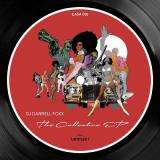
West Coast tech house had long since taken shape by the time it made its way over to the UK at the turn of the new millennium, and that's in part because of the pioneering work of the Casa Del Soul crew. The "DJ-first, producer-second collective" was founded in Denver in 1999 by a bunch of artists including DJ Darrell Foxx, who put out several records that laid out the blueprint for this raw, gritty sound across several EPs. His debut, 'The Collective EP', was one of them - two live-session, warehouse-ready tracks of low-slung and stripped-back tech with swing in the drums and dust in the percussion. The original DAT tapes were lost in a blizzard, which meant original copies have become ever more scarce and pricey on the second-hand market... until now. This fantastic remaster brings them back to life with the same distinctive rawness that made them favourites with Doc Martin and Tyrant (Craig Richards and Lee Burridge) the first time around. Utterly essential.
Hit the North is a DJs’ movement
Not a label. Not a revival. A discipline.
Over the years, the collective travelled across multiple states in the US and parts of the UK, digging deep into private collections, basements, garages, storage rooms and forgotten boxes.
They weren’t looking for classics.
They weren’t looking for hits.
They were looking for attempts.
Artists chasing something bigger than themselves.
Trying to sound like Motown.
Trying to sound like Detroit.
Trying to sound like the records that saved them.
Many of them dreamed — at best — of becoming a one hit wonder.
Most never got that far.
Some never crossed a state line.
Some never crossed the street at the end of their block.
Some never played outside their hometown.
Some never played at all.
What they left behind were fragments.
Raw versions.
Unfinished recordings.
Alternate takes.
Rejected mixes.
Test pressings.
Acetates passed quietly from hand to hand.
Sometimes with real credits.
Sometimes with fake ones.
Sometimes with handwritten labels leading nowhere.
Titles that didn’t match the music.
Stories that changed every time you asked.
Often, the trail simply disappeared.
What remained was intention.
Energy.
Urgency.
Hope pressed into sound.
So the collective worked on it.
They edited certain parts.
Extended others.
Cut what didn’t serve the floor.
Not to modernise.
Not to rewrite history.
But to unlock the power that was already there.
The result sounds like Northern Soul pushed to its breaking point.
Fast. Physical. Emotional.
Built for movement.
Some circulated privately.
Others were never pressed at all.
Recorded in personal studios, borrowed studios, friends’ rooms, temporary spaces.
Always outside the system.
This is not nostalgia.
This is unfinished business.
“Beautiful. Feels like every corner has been lovingly created. Highly recommended" Jamie Cullum, BBC Radio 2
“Incredible. One of my albums of the year” Dom Servini, Jazz FM
“What a beautiful message” China Moses, Jazz FM
“Completely envelopes you” Soweto Kinch, BBC Radio 3
“An uplifting, articulate soundtrack which instils hope and uncontaminated warmth” Backseat Mafia
“Scrimshire delivers a superior example of the style thanks to his musicality and inventive imagination” Jazzwise
“He has stepped up: a stronger musician, and a braver one, with nothing here that plays as filler” UK Vibe
DJ Support: Cerys Matthews, Gilles Peterson, Gideon Coe, Zakia, Jamie Cullum, Patrick Forge, Maflada, Dom Servini, Tony Minvielle, China Moses, Yolanda Brown
Drawing on influences from Charles Stepney to David Axelrod, into expansive folk-soul and jazz from the 60s, Bring Our Light To Every Corner is a deep and enchanting masterpiece from Scrimshire.
With captivating features by Dwight Trible, Idris Rahman, Faye Houston and Indian classical legend Mahesh Kale, the album holds together a suitably diverse set of ideas in a seamless journey full of heart.
Belgian label De:tuned once again dives into the innovative world of Luke Vibert, reviving his legendary Plug moniker with 'Variety Magic', the first new Plug album in nearly 15 years.
For this release, Vibert unearthed and hand-picked a collection of previously unreleased jungle and drum & bass gems, sourced straight from his original mid-90s DAT archive. The result is an 11-track ride through the raw energy and playful experimentation that made his early Plug work so distinctive, all infused with Vibert's unmistakable funk and mischievous flair.
Variety Magic is vibrant, bold, and delightfully off-kilter. A colourful homage to an iconic era, crafted for both deep listeners and the dancefloor. Stay tuned!
Visualised by the Variety Magi. Stencil Art by Pablo Fiasco and rewired by Openmind. Mastered by Matt Colton at Metropolis. A separate digital release will also be available at the usual digital shops.
Belgian label De:tuned once again dives into the innovative world of Luke Vibert, reviving his legendary Plug moniker with 'Variety Magic', the first new Plug album in nearly 15 years.
For this release, Vibert unearthed and hand-picked a collection of previously unreleased jungle and drum & bass gems, sourced straight from his original mid-90s DAT archive. The result is an 11-track ride through the raw energy and playful experimentation that made his early Plug work so distinctive, all infused with Vibert's unmistakable funk and mischievous flair.
Variety Magic is vibrant, bold, and delightfully off-kilter. A colourful homage to an iconic era, crafted for both deep listeners and the dancefloor. Stay tuned!
Visualised by the Variety Magi. Stencil Art by Pablo Fiasco and rewired by Openmind. Mastered by Matt Colton at Metropolis. A separate digital release will also be available at the usual digital shops.
Luke Wyatt created Sladazj as a place for beat-driven cinematic downshift. These were darker doorways than Torn Hawk could step through. Beyond the arches were Sladazj’s favorite landscapes. We’re talking hovercrafts buzzing over dark marshes as Zartan the bad guy from GI Joe changes faces and plays cards with the guy who swings the cinder block on the axe handle. Cinders and ashes, axes and unbelievers. “Second Device” is the second real long-form proving ground for these moves, the second ash pit. Sladazj is the prince of the pit.
MAUROMUSICA first appeared in 1999, when DJ Maurizio Schmitz introduced the name as an underground party brand shaped by long nights, afterhours and a deep passion for electronic music culture. For almost two decades, the project lived through intimate events and dancefloors before eventually going quiet for a number of years.
Now, MAUROMUSICA returns - not only as a party series once again, but finally as the music label Maurizio had envisioned from the very beginning. A long-held dream, brought back to life through a carefully curated first various artists compilation.
The first release brings together six artists from different corners of the electronic music world: Egyptian producer Raxon, German/French duo RE-ST, Italian artists JA:CK and Fedele, alongside Romanian producers Radu Dracul and Sublee.
Moving between warm-up atmospheres, emotional techno, afterhour moods and timeless club sounds, the compilation reflects the musical vision behind MAUROMUSICA - honest electronic music with character, depth and longevity.
Artwork comes from internationally acclaimed artist Tobias Rehberger, while the label typography was kindly provided by Buero New York.
Special thanks to Sven Väth for his continuous support and for championing Raxon's "Based In Space" in his sets for more than a year.
P.S. The handmade coloured vinyl edition of Raxon's "Based In Space" - limited to 100 copies - sold out within less than two hours. The track is now exclusively available as part of this compilation.
MAUROMUSICA first appeared in 1999, when DJ Maurizio Schmitz introduced the name as an underground party brand shaped by long nights, afterhours and a deep passion for electronic music culture. For almost two decades, the project lived through intimate events and dancefloors before eventually going quiet for a number of years.
Now, MAUROMUSICA returns - not only as a party series once again, but finally as the music label Maurizio had envisioned from the very beginning. A long-held dream, brought back to life through a carefully curated first various artists compilation.
The first release brings together six artists from different corners of the electronic music world: Egyptian producer Raxon, German/French duo RE-ST, Italian artists JA:CK and Fedele, alongside Romanian producers Radu Dracul and Sublee.
Moving between warm-up atmospheres, emotional techno, afterhour moods and timeless club sounds, the compilation reflects the musical vision behind MAUROMUSICA - honest electronic music with character, depth and longevity.
Artwork comes from internationally acclaimed artist Tobias Rehberger, while the label typography was kindly provided by Buero New York.
Special thanks to Sven Väth for his continuous support and for championing Raxon's "Based In Space" in his sets for more than a year.
P.S. The handmade coloured vinyl edition of Raxon's "Based In Space" - limited to 100 copies - sold out within less than two hours. The track is now exclusively available as part of this compilation.
Erasmus Hall's 1980 album Your Love Is My Desire' is one of the most collectable and in fact desired modern soul albums of all time. Copies of the original pressing on Westbound have exchanged hands for over £400. Furthermore in-demand gems including Your Love Is My Desire' and Just Me And You' have never previously been on 7' vinyl, so as part of these Record Store Day release those two tracks are included on the format making this package irresistible. Eramus Hall are in fact a group taking their name from a building George Clinton saw and gave them while he was in Chicago. The group comprise lead vocalists Michael Gatheright and James Wilkerson with musicians Ronald Wright, Marvin Williams, Joe Anderson, Grady Smith, Charmie Currie and William Tillery.
Originally released by Time Capsule in 2021 and long out of print, Stories From Another Time 1982-1988 returns in an upgraded edition following years of demand and rising collector prices on the secondhand market. Widely regarded as a modern cult classic, Mário Rui Silva’s visionary recordings blend acoustic folk, cinematic soul, spiritual jazz and saudade-filled Lusophone rhythm into a deeply timeless and universal work that transcends genre and geography.
This new edition features half-speed mastering cut at Metropolis alongside an expanded 4-page insert with a tribute essay and unseen photographs following Silva’s passing in 2024.
The roots of Angolan popular music explored in the meticulous guitar studies of Mário Rui Silva. For fans of Naná Vasconcelos, John Hassell’s Fourth World ambient, Eduardo Mateo’s psychedelic folk and Cameroonian electronic music visionary Francis Bebey.
Whether on mesmerising acoustic ballads or hypnotic groove-led tracks, the music of Angolan guitarist, researcher and intellectual Mário Rui Silva has a beguiling, melancholy quality, woven into the dynamics of his deft guitar playing.Rhythmically complex yet supremely effortless, the music collected here stems from three albums Mário released in Luanda in the 1980s that reflect his diverse range of influences, from traditional Angolan and West African rhythms to European jazz and classical instrumentation. It is united by a sense of low-key beauty, whether on the chugging opener ‘Kazum-zum-zum’, the jazz-funk keys of ‘Lembrança Dum Velho’, or the twinkling, late-night poly-rhythms of ‘Kizomba Kya Kisanji’.
Born in Luanda, Angola in 1953, Mário dedicated his life to Angolan popular music. His fifty-year career has seen him live between Angola and Europe, rub shoulders with Cameroonian musicians Francis Bebey and Ewanjé, record the seminal album Angola ’72 with fellow Angolan musician Bonga, and draw influence from Brazilian guitarist Baden Powell.
It was the teaching of Angolan legend and Ngola Ritmos co-founder Liceu Vieira Dias that Mário gained a technical, political and spiritual understanding of Angolan musical culture. In the hands of Liceu, the traditional Angolan semba and kazukuta rhythms of the 1940s and ‘50s helped create an emancipatory sense of national pride and collective agency that awakened its listeners to the racism and tyranny of colonial rule, underpinning the country’s push for independence in the process.
What might sound like the intonations of Brazilian influence are what Mário attributes to the “African rhythms taken by the slaves which gave rise to other musical cultures” around the globe. Instead, this music emerged from a collective instinct to assert a cosmopolitan Angolan identity free from the patronising falsehoods of Lusotropicalism.
“There was a need within me to contribute in doing new things,” Mário describes. “In the sense of solidifying the music of Angola that was the result of the meeting of two cultures, and wanting to value the Angolan part whenever possible.”A selection from Mário’s three 1980s albums, Sung’Ali (1982), Tunapenda Afrika (1985) and Koizas dum Outru Tempu (1988) have been compiled here as a 2xLP release by Time Capsule’s Sam Jacob and Kay Suzuki. Together, they provide a snapshot of one man’s journey to the core of his nation’s music, charged with the search for a culture uprooted by colonialism
Muro (DJ/producer known as the king of diggin') has selected tracks from the Japanese Jazz/Fusion label 'Electric Bird'
From their extensive catalog carefully selected and it shines a light on another charm of Electric Bird that transcends the boundaries of jazz and fusion, encompassing groove, mellow-funk.
Turkey’s first stereo LP. A foundational recording of Anatolian psychedelia. Audio transferred from the original analog master tapes, mastered and lacquer cut by Frank Merritt at The Carvery, London, and pressed on 180g heavyweight black vinyl at Record Industry in the Netherlands.
Released by the legendary Yonca Müzik label in 1973 as Turkey’s first stereo LP, Türküz Türkü Çağırırız! now returns as the first official reissue. The album captures Mazhar Alanson and Fuat Güner at a pivotal moment before their later success with MFÖ, one of Turkish pop-rock’s most influential and enduring groups.
Mazhar and Fuat first met in 1966 through a shared love of The Beatles’ Rubber Soul. Inspired by the close vocal harmonies of The Beatles and Crosby, Stills & Nash, they initially believed this music could only work in English. Producer Ergin Bener encouraged them to develop their own musical language in Turkish.
Previously members of Kaygısızlar, the pioneering group that accompanied Barış Manço, Mazhar and Fuat explored a more intimate Turkish folk-rock sound on this album. Zafer Dilek’s arrangements bring his distinctive guitar and keyboard work to a recording in which acoustic guitars, organ and electric guitar touches frame Anatolian melodies. Country-rock influences and the English-language “Upside Down” add to its range.
The title roughly translates as “We are Turks, and we sing Turkish folk songs” — reflecting a search for a new, distinctly Turkish musical identity. The album draws on works by Âşık Veysel, a defining voice of Turkish folk poetry, and Yunus Emre, the great Anatolian Sufi poet.
“Adımız Miskindir Bizim” was sampled on Action Bronson’s “Easy Rider,” while Stones Throw producer Oh No sampled “Sür Efem Atını.”
Following in the steps of last year's mysterious "Beyond the Garage" 12 inch, L.I.E.S. throws another curveball with a 30 track continuous LP from veteran West Coast producers, Vinny+Charlie. Each side running 20 minutes, this can best be described as a smoked out, haze filled afterparty beat tape on wax. Obscure samples, dusty sp-12 crushed beats, head nodding loops, sweet low rider soul..chopped, sped up, slowed down and ready to wreck your system. Limited edition white label housed in a lp jacket with custom art by LA artist SOB STORY. 300 copies worldwide.
Telling a tale of house music’s early days or roots without mentioning Tony Humphries as a club DJ, remixer and radio disc jockey would make it an incomplete, forged and most of all a bit of a yawn.
Born in Brooklyn in 1957, Humphries’ musical journey is synonymous with New York City’s dance music history and the evolution from uptempo soul music to house: from being a dancer at David Mancuso’s infamous Loft parties to becoming a mobile DJ and getting the call from Shep Pettibone to become his right hand at
the then new Kiss FM radio station, followed by countless remix offers and a legendary residency at Newark’s Club Zanzibar. Next to that one, is was especially his work as a radio disc jockey for said station during most of the 1980s until 1994 that gave him majestic clout. Breaking new records week in, week out,
putting New Jersey acts like Adeva and Jomanda or countless up-and-coming producers from there on the musical map, while simultaneously playing the hottest imports from Europe, trax from Chicago, dance classics and all things straight from New York’s music factory that never seemed to stop.
Going to his vast and almost complete archive of radio shows from way back when he graced those airwaves, we at Running Back Records have pickedNew Release Information original recordings that symbolize his importance as an industry giant and ambassador of this style of music.
„But one thing I would like to point out is that, as a DJ, the music I play is not my music. I want to make it perfectly clear that it is music that is released, and it’s everyone’s music. I do not take any other credit than being the middle person exposing this music.“
(Tony Humphries in: What Kind of House Party Is This?, Jonathan Fleming, 1996)
Dr. Caligari was notoriously out of his mind — a genius fixated on experiments and a former lecturer at the Department of Experimental Phonetics. His students, Spacelunch included, spoke of him with cautious admiration: “Too smart to be normal; too bold to stop.” His laboratory looked like a hand-welded cosmos: cables everywhere, diodes, and the soft hiss of electricity.
“What’s that?” Spacelunch nodded toward the large glass dome.
“My new invention that allows sound to become tangible. Care to take a look?”
The Professor and Cat carefully stepped inside.
“You’re about to be the first to witness the voice of space!”
“Hey, we didn’t sign up for this!”
“Doesn’t that make the experiment more interesting?”
Caligari smiled and turned a dial. Their bodies stretched like strands of pasta and vanished. An instant later, they found themselves in another dimension: towers of transistors and coils rose into the sky, the air thrummed with low-frequency oscillations, and every flash of light carried the rhythm of a sonic lattice. Almost at once, the image wavered like old film, went black, and then snapped back to the laboratory. Caligari sat at the console, eyes fixed on the monitors. “It worked,” he whispered. “Perfect phase alignment!”
Berlin-based producer and DJ Benjamin Fröhlich returns to his own Pleasure Principle imprint with the long-awaited vinyl edition of The Muv It EP -
Rooted in dusty, dubby house music and inspired by the open spaces and raw energy of a recent desert trip, the EP channels warmth and groove in equal measure. The title track Muv It sits at the heart of the release - a driving, hypnotic floor-burner that showcases Fröhlich's instinctive feel for rhythm and texture.
Alongside it, Get Up raises the energy further, bringing a higher-octane dancefloor urgency to the EP's middle section. Its dub counterpart Get Dub then strips things back - a spacious, reverb-drenched variation that lets the groove breathe and reveals the track's deeper, more meditative side.
The vinyl edition comes with an exclusive bonus track: Gruv It - a stripped-down, atmospheric rework of Muv It that trades hands up moments against a hypnotic rolling vibe.
Tasty Recordings return with another set of straight up, party starting firepower. Five delectable edits cooked up in the kitchen of a handpicked selection of producers, that know a thing or two about splicing the spice into your life.
Real heads with good memories and a lifelong love of good grooves might remember that the original mixes of 'Disco Glory' first appeared on DJ Garth's Wicked imprint in 1996. Top DJ dogs like Danny Tenaglia, Francois K and Doc Martin all used to drop them on the regular and ensuing remixes even made their way onto Sony Pictures' 'Groove' soundtrack. The DJ Garth & ETI mixes have long been out of print, so fetch a pretty penny on the second-hand market, which means it's great news that the 30th anniversary is marked with a fresh return to wax. The Acid Rock mix is psychedelic and trippy, the Look To The Moon dub is a dark and dubby tech sound that could be brand new, and the Ye Olde Organ Grinder mix has a moody and retro house charm.
Vier Jahre nach ihrem gefeierten Debüt ,International Love Affair" kehrt Tigerbalm (Rose Robinson) mit dem aufregend kaleidoskopischen Album ,Bubblegum Discos" zu Ubiquity Records zurück. Als mutige Weiterentwicklung ihres global geprägten Nu-Disco-Sounds spiegelt das Album ein neu gewonnenes Selbstbewusstsein wider sowie den Wunsch, mit handverlesenen Musikern und Sängern aus aller Welt zusammenzuarbeiten. In lebhaften Klangfarben gehalten, präsentiert ,Bubblegum Discos" Tigerbalms zwei große musikalische Leidenschaften: die brasilianische Musikkultur und Vintage-Dancefloor-Hits vom afrikanischen Kontinent, angereichert mit Anspielungen auf Italo-Disco, Proto-House und Soca. Die erste Hälfte des Albums ist stark von südamerikanischen Einflüssen geprägt. ,Nayar", entstanden in Zusammenarbeit mit Giorgio Lopez aus Neapel, macht den Anfang mit leicht vom Reggaeton inspiriertem Nu-Disco, gefolgt vom brasilianischen Disco-Rausch von ,Diga Me" und dem luftigen Samba-Disco von ,Vera En Paraty". Robinson liefert ihren allerersten Leadgesang auf dem teilweise improvisierten Neo-Boogie-Track ,Coco Makoko". Das Album wendet sich dann Afrika zu, mit herausragenden Beiträgen von Andre Espeut, der in Montreal lebenden haitianischen Sängerin Waahli auf dem hornlastigen ,Do Da Soca" und dem Afrobeats-Sänger Idd Aziz auf dem körperbetonten ,Afro-Disco". Der Abschluss ,Conga" rundet das Ganze mit schweren, afrozentrischen Disco-Rhythmen und tiefem Dub-Bass ab. Actiongeladen und makellos produziert: ,Bubblegum Discos" ist der Sound einer Künstlerin, die ihr frühes Versprechen mehr als nur einhält.
“Nimm die rosa Brille … sag was Du siehst … alles viel besser”
44 years after its original release, one of the most idiosyncratic DIY minimal electronics / synth / new wave records of the early ’80s returns: the legendary 7” by German group DEUTSCHE SCHÄFERHUNDE (engl. German shepherds)—now remastered and reissued for the first time as a one-sided 12” on Anna Logue Records. Recorded in the winter of 1981/82 between rehearsal space, provincial disco and bar nights, and a humble four-track setup, these tracks capture the raw spirit of a generation that simply started creating—no formal training, but plenty of attitude. Minimalist, uncompromising, and inspired by krautrock, punk, new wave, electronic music and dub, the songs move between raw electronics, percussive noise, new wave experimentation, and sharp social commentary. „Rosa Brille“ (rose coloured glasses) in particular feels as urgent today as it did back then—a track that has lost none of its relevance, „Gasmasken“ tells of gas masks dancing in the woods to the sound of sirens, and a timeless Holger Czukay/Jah Wobble inspired „Mein Herz“ (my heart).
Originally pressed in a small run of just 500 copies and later becoming a sought-after collector’s item now worth 200€, the record now returns in a carefully crafted edition featuring a laser-printed reverse side and additional materials such as original lyric sheets and articles, postcard and poster. DEUTSCHE SCHÄFERHUNDE thrived on paradox—a provocative name paired with a clear stance, and lyrics that still resonate today. Shaped by Cold War tension, political unease, and youthful rebellion, their sound refused to fit into any neat category. Only few other bands, such as Der Musikant, Im Namen des Volkes, Thorax Wach, Klinisch Sauber oder Stephan Eicher spielt Noise Boys come to mind.
This release is more than a reissue—it’s a document of its time that still hits with full force.
12″ features: limited to 400 copies, hand-numbered, one-sided 180g black vinyl, laser-etched B-side, outer sleeve printed on reverse side of the board, printed inner sleeve with original lyrics sheets and original articles, DIN A3 poster, double-sided postcard
Telling a tale of house music’s early days or roots without mentioning Tony Humphries as a club DJ, remixer and radio disc jockey would make it an incomplete, forged and most of all a bit of a yawn.
Born in Brooklyn in 1957, Humphries’ musical journey is synonymous with New York City’s dance music history and the evolution from uptempo soul music to house: from being a dancer at David Mancuso’s infamous Loft parties to becoming a mobile DJ and getting the call from Shep Pettibone to become his right hand at
the then new Kiss FM radio station, followed by countless remix offers and a legendary residency at Newark’s Club Zanzibar. Next to that one, is was especially his work as a radio disc jockey for said station during most of the 1980s until 1994 that gave him majestic clout. Breaking new records week in, week out,
putting New Jersey acts like Adeva and Jomanda or countless up-and-coming producers from there on the musical map, while simultaneously playing the hottest imports from Europe, trax from Chicago, dance classics and all things straight from New York’s music factory that never seemed to stop.
Going to his vast and almost complete archive of radio shows from way back when he graced those airwaves, we at Running Back Records have pickedNew Release Information original recordings that symbolize his importance as an industry giant and ambassador of this style of music.
„But one thing I would like to point out is that, as a DJ, the music I play is not my music. I want to make it perfectly clear that it is music that is released, and it’s everyone’s music. I do not take any other credit than being the middle person exposing this music.“
(Tony Humphries in: What Kind of House Party Is This?, Jonathan Fleming, 1996)
Dewa Alit, master of radical Balinese gamelan, returns to Black Truffle with Baur Bentur. Genetic (2020, BT063) introduced international listeners to the magical sound-world of Alit’s Gamelan Salukat, who perform on instruments tuned to a unique scale derived from modified versions of two traditional Balinese scales. The two pieces heard on Chasing the Phantom (2022, BT093) further demonstrated his radical fusion of tradition and experimentation, with passages where unorthodox techniques make the acoustic ensemble resemble glitching electronics. Baur Bentur now highlights another aspect of Alit’s work, presenting pieces composed in 2024 and 2025 where Gamelan Salukat performs alongside virtuoso pianist Sri Hanuraga. Alit’s music is grounded in deep reflection on the tradition of Balinese gamelan and its place in the contemporary world. His title, ‘Baur Bentur’, which translates as ‘mixing and smashing’, points to his embrace of the intercultural mixture of Eastern and Western elements in the search for innovation. Against the calcification of Balinese music into tourist entertainment, Alit poses his searching, experimental work, which celebrates the communal values and performance practices of traditional gamelan while pushing into startling new directions.
‘Sukat Tacara’ is a study in layered tempos, meters, and polyrhythms, a constantly shifting dialogue between piano and the instruments of Gamelan Salukat. It begins close to a traditional concerto, pairing a brisk sequence of melodic variations from the piano with a spare but propulsive accompaniment of drums and hanging metallophone tones, punctuated by low gong strikes. The piano builds in volume and density across a rapid succession of fragments, at points recalling George Antheil’s ticking wind-up machinery, though Hanuraga’s jazz background shines through in the fluidity with which he navigates the complexities of the score, where chromatic movement co-exists with bluesy phrases. An abrupt change in the piano to patterns of dense clusters introduces a new episode, during which the metallic instruments of the gamelan enter the foreground. The piece dazzles with its inventive rhythms and dynamics, building to a stunning passage featuring the signature heavy muting technique of the Gamelan Salukat metallophones in kinetic patterns that would be at home on a Príncipe release.
The title piece begins at high intensity and rarely lets up, working through bracing unison ensemble melodies and punctuation points where piano and gamelan together seem to become a single, thudding drum. For much of the piece the piano is tightly integrated into the ensemble, the harmonic extensions of the melodic line subsumed into a moving cloud of complex overtones generated by the gamelan instruments. Wildly kinetic on the rhythmic level, the piece swarms with microscopic movements of beating patterns generated by the ‘blend and crush’ of three simultaneous tuning systems: the equal temperament of the piano and the saih cenik (small scale) and saih gede (big scale) used by the gamelan instruments. Accompanied by the composer’s thoughtful liner notes and images of the musicians, Baur Bentur is a stunning next step in Alit’s radical combination of tradition and innovation.
Jazz-fusion, disco-funk, Latin jazz and batucada rhythms get the Filipino treatment onAfter Midnight, the sublime second album from keyboardist Boy Katindig. Originally released in 1980, After Midnight draws heavy influence from soul and funk contemporaries in the US as well as Latin America, in particular the famed Brazilian percussionist Paulinho da Costa.
It’s a testament to his musical prowess that Katindig weaves effortlessly between styles and tempos. His reverence for Paulinho da Costa extends far, with covers of several songs from the latter’s 1979 Happy People album. This includes slow-burner ‘Déjà Vu’ written by Isaac Hayes originally for Dionne Warwick; on the Filipino instrumental version, local legends Jun Regalado and Roger Herrera (from Regalado’s ‘Pinoy Funk’ single) are reunited on drums and bass respectively.
But Katindig’s original compositions hold just as much weight and unique personality: title track ‘After Midnight’ opens with a sultry funk serenade reminiscent of The Isley Brothers, and quickly transforms into a catchy, blistering, saxophone chorus that brims with swagger. Hidden B-side gem ‘Got The Need’ is an uptempo tribute to batucada that would not be out of place in a jazzy house set, and boasts increasingly elaborate and psychedelic solos from Katindig on keys and Ben Concepcion on soprano sax.
Meanwhile, ‘Love Till the End of Time’ is a masterclass in instrumental disco funk, penned by the prolific Greg Phillanganes who at that same time was writing for many of the greats including Chaka Khan, George Benson, Stevie Wonder, The Jacksons and Cheryl Lynn.
This album is lovingly reissued by Sama Sama Records, a boutique label from DJ and collector Norsicaa, who ran the esteemed Soundway Records for 8 years and released the compilation Ayo Ke Disco in late 2024.
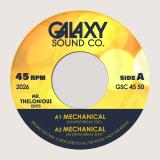
Release #50 celebrates the digging, care & musical curiosity that’s made the GSC series essential for DJs, collectors & break seekers alike.
For years GSC has built a catalog that earns immediate “cop-on-sight” status. Thoughtful edits. Deep respect for the OG recordings. Breaks that knock w/out feeling heavy-handed. The kind of taste that reminds you these are real heads behind the decks.
Side A pulls from Jerry Butler’s “I’m Your Mechanical Man,” released in ’74 on the Sweet Sixteen LP. The track contains a raw drum break hip-hop producers recognized instantly. Most famously it powers Method Man’s “Bring The Pain,” 1 of the defining solo joints from the Wu-Tang Clan era. The break later resurfaced in Missy Elliott & Method Man’s 2002 version & Snoop Dogg’s “I Miss That Bitch.”
On the flip, GSC draws the source into pure DJ tooling: a sample break edit, a full drum break edit & the “Mechanical Wu” mix — built for selectors who know the power of letting a break breathe.
Then they deliver a beautiful surprise. Instead of leaving empty wax, GSC slides in Les McCann’s “Vallarta,” from the 1977 album Music Lets Me Be. Jazz-funk heads know it instantly — the hypnotic groove behind Biggie’s “Ten Crack Commandments.”
This is why Galaxy Sound Co. matters. They’re not just pressing edits — they’re curating moments. Unearthing grooves DJs need back in rotation. Some originals now cost serious money on Discogs. Others simply faded from memory. GSC dusts them off & hands them back to the community.
Esfand ist der letzte Monat des persischen Kalenders, der mit dem Nouruz-Frühlingsfest endet. Seit 2020 ist ESFAND auch eine Band - bestehend aus dem Iraner Rouzbeh Esfand und dem Neuseeländer Patrick Stewart. Ein Duo, das traditionelle iranische Folk-Elemente mit westlichen Beats und Vocal-Features bekannter exil-iranischer Künstler*innen zu etwas völlig Neuem verschmilzt. Ihr Debütalbum "Piltan" ist ein fulminant tanzbares Statement ohne Anflüge von Ethno-Kitsch. Pure Instinktmusik. "Wir haben die Samples ausschließlich aus musikalischen Gesichtspunkten ausgewählt. Das Folk-Element in unserer Musik ist groß, aber es ist nicht unsere Aufgabe, die Reinheit dieser Kultur zu wahren. Wir werfen iranische Traditionen nicht weg, wir behalten einfach die, die am besten passen. Am Ende des Tages sind alles nur Sounds." "Piltan" ist eine akustische Reise quer durch ein riesiges Land voller kultureller Eigenheiten: von den Zar-Ritualen aus dem Persischen Golf im Süden zum Reiter-Volk der Bachtiaren im Südwesten, bis hin zu den Qaschqai im Westen und zu den Kurden im nordwestlichen Iran mit ihren Derwisch-Ritualen. Die ersten beiden Songs haben ihren Ursprung in den repetitiven Rhythmen der Zar-Rituale, bei denen der Dämon Zar Personen in Form eines Windes befällt. Der Begleiter der zu behandelnden Person wiederholt bestimmte Phrasen immer wieder, um den Patienten in Ekstase zu versetzen. Auf die von Handtrommeln befeuerten Techno-Beats in "Bibi Saghi" folgen die düster-hektischen Synthie-Grooves von "O"seda". Ob der dunkle Dub von "Shawl" oder die maschinell stampfenden "Zar Bits" und "Without Foot, Without Head" - alle acht Songs sind raffinierte Produktionen auf höchstem technischem Niveau. Auf zwei Songs ist der Sänger und Perkussionist Habib Meftah vertreten (Rouzbeh: "Ich liebe seinen Instinkt für Songs!"). Auf "Shawl" gastiert Mohsen Namjoo, der sich ähnlich viel mit Folklore befasst hat und hier Texte der bekannten iranischen Dichter Daqiqi und Farrukhi Sistani singt. Aus einer jüngeren Generation stammt die Londoner Sängerin Misagh Moradi. Ihr "Without Foot, Without Head" basiert auf Texten des weltbekannten Dichters Rumi. Sich im Moment verlieren, sich dem Rhythmus hingeben, ganz unabhängig vom eigenen Hintergrund - das geht mit der jahrhundert- und grenzüberschreitenden Musik von ESFAND. Loslassen, abschalten, ohne Kopf und Füße zu kontrollieren. Darum geht es ESFAND. Übersetzt heißt es im Text von "Without Foot Without Head": "Oh du mit der anmutigen Taille, wirbele herum! Tanze weiter!"
01 A. Stantz
02 A. Stantz
03 A. Stantz
04 TAFKAMP
05 TAFKAMP
06 Fractions
07 St Theodore
08 The Sixteen Steps
09 Offset
10 Offset
11 Betek
12 Betek
13 Redray
14 Redray
15 Andrew Red Hand
Mixed RET label surprise pack presented in black label logo tote bag. Comes with some old stock, forgotten Testpresses and long out of print titles. Only 10 available! It's possible you'll find vinyl in your RET PACK from TAFKAMP, A. Stantz, Betek, Exhausted Modern, Crossover Network, Andrew Red Hand, The Sixteen Steps, Fractions, Redray, St Theodore & Larionov and more. Limited stock of 10 available as of today. Shipping will start end of august.
Eliza Rose joins the ‘FABRICLIVE. presents’ series with a release that reflects the breadth of her creative journey in club music culture. A DJ, vocalist and songwriter from London’s vibrant underground, she has become one of the UK’s most compelling voices, equally at home in the DJ booth, on record, and crafting music that resonates across dancefloors and charts alike.
To accompany the release, fabric presents commissioned a bespoke, hand made tapestry depicting Eliza Rose and her friends at Carnival, a celebration of community, heritage and collective joy that runs through her story and the culture she represents. Rich in texture and detail, the piece transforms a living moment into something timeless and craft led. Eliza is pictured alongside the tapestry in an iconic hot pink tracksuit, set within a council estate garden that feels instantly recognisable as a portrait of London life. Surrounded by nostalgic children’s toys, from a rocking unicorn to a plastic slide, the scene captures the everyday intimacy and character of the city’s estates, spaces where music, family and friendship intertwine.
The contrast between the ornate woven artwork and the raw familiarity of the setting creates a striking visual metaphor, bridging past and present, celebration and reality. Together, the imagery reflects the spirit of the release itself: rooted in community, shaped by lived experience and grounded in the environments that continue to inform Eliza’s creative world.
Slip My Soul Where A Sweet Sunday brings together four versions by Fundación Tony Manero in charge of three projects from the Catalan jazz scene: The Gramophone All Stars Big Band, The Changes and ·I·. At the hands of these interpreters, the songs by Manero (all taken from “Sweet Movimiento”, their second studio LP) wander through different spectrums of jazz. From the Jamaican-tinged ska of the Gramophone to the dragging, hip-hop groove of ·I· through the swing -more classical or more avant-garde depending on the subject- of The Changes, these four pieces prove that jazz and disco music are family. Or what is the same: that jazz has always been dance music. Slip My Soul Where A Sweet Sunday celebrates the legacy on the one hand, the Fundación Tony Manero, which is retiring from the stage after more than 25 years paving the way for new generations and new projects. Among others, those who now take the baton in this EP.
For its third release, Handwerk Sounds returns to the Various Artists format.
A selection from across France featuring Numero 6, Tibahuult, Lazer Man, and Koffi, built around a common ground of deep, immersive sounds, shaped as a step-by-step journey. Vinyl-only release.
For his sixth solo album, Ezéchiel Pailhès returns with a new collection of songs infused by a sunny wandering spirit.
Within each of the twelve songs on SOL is a thread of melancholic happiness that has permeated much of Pailhès’ music and songwriting. He addresses love, the passing of time, hope, lost illusions, fleeting moments of grace, the temptation of forgetting, a need to escape, and desire. All this is
insulated by understated orchestrations that blend acoustic and electronic instrumentation with deft confidence.
The Portuguese and Brazilian concept of saudade—a form of melancholic longing and nostalgia— pervades, thanks in part to Pailhès decision to record the album in Rio de Janiero and to reinterpret some of the finest works of Música Popular Brasileira (MPB). In particular, he revisits a handful of
lesser known classics from the mid-century samba and bossa nova era—originally written or performed by talents including Vinícius de Moraes, João Gilberto, Tom Zé, Dorival Caymmi, João Donato, Os Tincoãs, and Ataulfo Alves.
The shift from Brazilian Portuguese to French and the decision to adapt rather than perform a straightforward cover versions, allows Pailhès to invent a form of prosody and euphony (the musicality and harmonious combination of words) that feels vibrant and unlike anything else in today’s French
chanson landscape.
“Some lyrics are simple translations from Portuguese, in what I’d call an expanded version. For others, I started from a single word or a single phrase and embroidered an entirely new text that carried me elsewhere,” explains Pailhès. “I allowed myself great interpretive freedom, while preserving the humanist dimension of the original songs. I’ve always been deeply moved by the way Brazilians transfigure reality through heightened emotion. I love this visceral and spontaneous country, which always seems to live through emotion. And above all, I love its music both popular and unifying,
bringing together all social classes. In that sense, it’s very political music, but even more so utopian, made by the people and for the people.”
On this new album, however, the French artist was keen to avoid cliché. Each song is therefore built around a carefully balanced interplay between Pailhès’ piano and synthesizers, alongside restrained arrangements of percussion, brass, bass, and cavaquinho (a small four-string plucked guitar). These parts were recorded in Rio de Janeiro with two musicians who regularly perform alongside the legendary Caetano Veloso—Kainã Do Jêje and Alberto Continentino—joined by Thomas Harres, Antônio Neves, Eduardo Neves, and Gabriel Loddo.
Since the 1960s, France and Brazil have shared a long-standing cultural and musical relationship. Some Brazilian artists, most famously Gilberto Gil, took refuge in France during the dictatorship years (1964–1985). But above all, French chanson quickly fell in love with the richness and ingenuity of
bossa nova and samba, translating and reinventing them in the language of Molière. Throughout the 1960s and 1970s, albums and hits by Henri Salvador, Georges Moustaki, Pierre Barouh, Pierre Vassiliu, and Claude Nougaro all drew from the MPB repertoire.
Fifty years later, with SOL, Ezéchiel Pailhès reinvents this rich Franco-Brazilian musical legacy, bringing to it a personality and modernity that stand confidently alongside those of his forbears.
Acclaimed producer, DJ, and dancefloor healer Octo Octa (Maya Bouldry-Morrison) announces her fourth full-length album, Sigils For Survival. Following 2013's Between Two Selves, 2017's Where Are We Going?, and 2019's Resonant Body, the new record marks a decade since Maya publicly came out as transgender in November 2015. ''As an autobiographical artist, I set out to write an album that would be a milestone for this past decade of joy and sorrow,'' Maya explains. ''Sigils For Survival is my attempt to encapsulate the intentions and techniques that I used to move through life into a spell.'' For each of the record's eight tracks, Maya drew a sigil. Each is a personal symbol intended to ''bind magic to the song and seal its intention.'' These drawings appear throughout the physical edition's design. Maya's sister, New York artist Hope Morrison, incorporated each sigil into her original paintings, which comprise the album's vivid artwork. Hope Morrison, whose imagery translates the sigils' energy into vivid form; the layout was designed by Jo?o Ervedosa. Created entirely on hardware instruments and later mixed in Logic, Sigils For Survival captures the tactile immediacy of live performance. Maya preserved the feel of MIDI-clock drift and off-grid recording, letting her machines interact in the rhythmic pocket, rather than confirming them to a click. Alongside her signature deep, ecstatic electronics, the album features hand-played dulcimer, hand-pan, and recorder. Her voice also returns, carrying spells of love, protection, and transformation. Across Sigils For Survival, Octo Octa channels the ecstatic house lineage into an intimate ritual space. The music speaks of immediacy, play, and communion -- of magic as method, love as survival, and sound as spellcraft. Sigils For Survival is both a document of ten years lived fully and an invocation for the next chapter -- a glowing testament to music's power to protect, transform, and set the spirit free.
Matter at Hand Records launches its first release MAH01: Abeja Descarada is a four track EP showcasing Oliver Albach's vision on contemporary techno, without explorative boundaries. "move on" - sets the tone with a deep, driving pulse, noisy hi-hats and shadowy textures. "you trippin’" - locks into a bleep-driven monotony that unfolds into a subtle cosmic drift. The titel track "abeja descarada" reveals a different vibe — an afterhour piece with soft, gloomy ambience. "unhinged" closes on a raw note: a relentless 808 groove with off-kilter synth work.
LN013 presents a four-track electro compilation entitled Network Not Found. On the A1, Watts provides an electro-funk workout reminiscent of early Kraftwerk. Modulating basslines, delayed breakbeats, and haunting synths call back to early tropes of the sound while contributing to and reinventing the style. LA's 5tr8tch debuts his future classic, "Sleight of Hand." This track delivers tight 808 programming and unique sound design that takes the listener on a timeless journey. The B1 features The Advent and Zein in classic Kombination Research fashion—advanced B-side business for true lovers of the movement. Pulling from the Teknotika archives, GiGi Galaxy provides a rare DAT recording from 1997. The track's growling bassline, warm 808 beats, and experimental sound design take the listener on an ever-changing journey.
"Over the past three decades, Philipp Lauer has produced an incredible body of work, deploying a myriad of aliases, both as a solo artist and as a part of collaborative projects. From his hardware-steeped Frankfurt studio Pyramide 2, he has built this catalogue through original material and remix commissions, taking on the full spectrum of electronic music while retaining an unmistakable signature. He combines a hands-on approach to rhythm and composition with a DIY MO and a love of big hooks. The level of expertise at hand seems to facilitate a playfulness that subtly permeates all layers of his work. He's a pop melody natural who just so happens to love fiddling with synthesizers, drum machines, and effects an equal amount. All of these qualities are exemplified on "Embalmed In Martino": Lauer's four-track ode to the Belgian Martino sauce, a spicy tomato-based condiment, and arguably the essential ingredient to top off the namesake raw meat sandwich. On "Embalmed", which makes use of instrumentation that would fit right in on an early eighties Manchester cut, and "Martino", where a sturdy, electroclash flavored arp bass provides the stamina, a slew of big and small riffs easily work their way in, thirsting for our ears. On the other side, "Transactional" combines Miami basslines and similarly electro-fundamental twinkling synth work with a flanger-laced 4/4 beat, while "Don't You Know" features soaring synthwave patterns and the only vocal samples on the EP. Both sport rich arrangements as well, right down to the cowbell overdubs. Lauer's often lauded for his "summery sound". In this light ALT026 lands right on time - yet we might disagree here, as it's suited for all seasons, and all terrains, both the shiny festival grounds and the dim-lit club floors."
Smoove puts the spotlight firmly on the larger-than-life vocals of Rufus Thomas, peeling things back to reveal hard-hitting breakbeat drums from the very first bar, anchored by a relentless, pounding bassline. Punchy brass stabs and rolling keys collide with dirty funk guitar riffs, all stretched out into an extended rework built for maximum floor impact.
A.2 Bouncy Lady 5.06
A classic jazz-funk break from 1975 gets a fresh twist as Smoove reworks the structure into a groovy, extended build-up. Vocal chants and handclaps take the lead, while the original sax solo is stripped away and replaced by a raw bass-and-guitar workout. The focus shifts squarely to the rhythm section, letting the drums ride all the way to the finish—ending with the studio engineer’s off-mic murmur on the tape: “beautiful.”
B1. – For The Love Of You 6.57
The Isley Brothers classic gets a loving reworking, with the groove locked in tight and the keyboards pushed front and centre letting the drums and bass drive home the groove. Those iconic falsetto vocals are spine-tingling, from start to finish.
B.2– I’m Trying 4.48
Lush, soulful strings and a deep-groove piano line glide over this drum-driven reinterpretation, opening up the raw, emotive vocal breakdowns of Carla Thomas and Pervis Staples. Originally scored by Isaac Hayes, this rework digs deep into the multitracks, uncovering previously unheard moments and giving them room to breathe.
Thirty years. That is how long it has been since 1996, when European electronic music was
overwhelmed and reshaped by a wave of melody, melancholy, and rhythm. At the center of that
big bang was Roberto Concina, known ar1s1cally as Robert Miles—a visionary capable of bringing
Dream Trance to the global stage. Today, to celebrate three decades of pure sonic magic, "Fable"
returns to the turntable in a splendid celebratory reissue that stands as a well-deserved act of love
for an ar1st who passed away far too soon.
If Children was the programma1c manifesto of that era, Fable was its emo1onal evolu1on—the
track that proved dance music could touch in1mate and cinema1c chords. Listening to it today,
remastered for vinyl, is an experience that goes way beyond a simple nostalgia trip. This 30th-anniversary reissue splits into two versions to sa1sfy both purist DJs and avid collectors,
offering two excep1onal vinyl op1ons:
The Standard Edi3on (Black Vinyl): Perfect for audiophiles and DJs who want to spin this
track in their sets without the fear of wearing out a museum piece. The warmth of the
black groove enhances the dynamics of the famous piano line and the depth of the
enveloping bass.
The Limited Edi3on (Transparent Blue Vinyl - Limited & Numbered): The true crown jewel
of this release. Visually stunning, the transparent blue vinyl seems to evoke the dreamlike,
liquid, and suspended atmosphere of the track itself. The fact that it is a limited, handnumbered edi1on instantly makes it a grail for collectors worldwide.
Thirty years. That is how long it has been since 1996, when European electronic music was
overwhelmed and reshaped by a wave of melody, melancholy, and rhythm. At the center of that
big bang was Roberto Concina, known ar1s1cally as Robert Miles—a visionary capable of bringing
Dream Trance to the global stage. Today, to celebrate three decades of pure sonic magic, "Fable"
returns to the turntable in a splendid celebratory reissue that stands as a well-deserved act of love
for an ar1st who passed away far too soon.
If Children was the programma1c manifesto of that era, Fable was its emo1onal evolu1on—the
track that proved dance music could touch in1mate and cinema1c chords. Listening to it today,
remastered for vinyl, is an experience that goes way beyond a simple nostalgia trip. This 30th-anniversary reissue splits into two versions to sa1sfy both purist DJs and avid collectors,
offering two excep1onal vinyl op1ons:
The Standard Edi3on (Black Vinyl): Perfect for audiophiles and DJs who want to spin this
track in their sets without the fear of wearing out a museum piece. The warmth of the
black groove enhances the dynamics of the famous piano line and the depth of the
enveloping bass.
The Limited Edi3on (Transparent Blue Vinyl - Limited & Numbered): The true crown jewel
of this release. Visually stunning, the transparent blue vinyl seems to evoke the dreamlike,
liquid, and suspended atmosphere of the track itself. The fact that it is a limited, handnumbered edi1on instantly makes it a grail for collectors worldwide.
Hopeful, defiant, effusive, and ecstatic, Radio!! Radio!! is the 20th album from Erasure, one of pop’s most beloved songwriting partnerships.
The record finds Andy Bell and Vince Clarke continuing to refine and deepen the pop edifice they’ve been building over the past 40 years with a set of 10 songs about love, loss and injustice that speaks, powerfully, to our empathy-starved times.
A uniquely personal album, it was shaped by a period of profound grief. When the duo got together to write the album, it was as much in the spirit of uplifting an old friend as it was work – you can hear this thread of warmth and mutual care throughout.
The album that transposes the dazzling hugeness of the duo’s best work onto avowedly more personal, more reflective songwriting. Bell acknowledges that it would be easier, perhaps, for he and Clarke to go on autopilot, 40 years into their career. But how would that pass as Erasure? “It’s a two-person brain, and everything that we’ve gone through comes into it,” he says. “We have a sense of responsibility. We couldn’t ever do something throwaway.”
Radio!! Radio!! is rooted in Erasure’s unique synth-pop palette with some key augmentation: when working on the sound of this album, Clarke was unusually drawn to piano, as well as acoustic guitar. The use of these instruments adds drama and depth to their sound whilst leaving room for the kind of glassy synth pop that Erasure made their name on.
Hoffnungsvoll, trotzig, überschwänglich und euphorisch: Radio!! Radio!! ist das 20. Album von Erasure, einem der beliebtesten Songwriting-Duos der Popmusik.
Auf dem Album entwickeln Andy Bell und Vince Clarke das musikalische Pop-Gebäude, an dem sie seit 40 Jahren arbeiten, konsequent weiter und verleihen ihm zusätzliche Tiefe. Die zehn Songs handeln von Liebe, Verlust und Ungerechtigkeit und treffen damit auf eindringliche Weise den Nerv unserer Zeit, in der es so oft an Empathie mangelt.
Es ist ein ausgesprochen persönliches Album, geprägt von einer Phase tiefer Trauer. Als sich das Duo zum Schreiben der neuen Songs traf, ging es dabei ebenso sehr darum, einen alten Freund wieder aufzurichten, wie um die gemeinsame Arbeit. Diese Wärme und gegenseitige Fürsorge ziehen sich hörbar wie ein roter Faden durch das gesamte Album.
Das Album überträgt die schillernde Größe der besten Arbeiten des Duos auf ein bewusst persönlicheres und nachdenklicheres Songwriting. Bell räumt ein, dass es für ihn und Clarke nach 40 Jahren Karriere vielleicht einfacher wäre, einfach auf Autopilot weiterzumachen. Aber wäre das noch Erasure? „Es ist wie ein gemeinsames Gehirn zweier Menschen, und alles, was wir erlebt haben, fließt darin ein“, sagt er. „Wir verspüren eine gewisse Verantwortung. Wir könnten niemals etwas Belangloses machen.
“Radio!! Radio!! ist fest in Erasures unverwechselbarer Synthie-Pop-Klangwelt verwurzelt, erweitert diese jedoch um einige entscheidende Elemente: Bei der Arbeit am Sound des Albums fühlte sich Clarke ungewöhnlich stark zum Klavier und auch zur Akustikgitarre hingezogen. Der Einsatz dieser Instrumente verleiht dem Sound zusätzliche Dramatik und Tiefe, lässt aber zugleich genügend Raum für jenen glasklaren Synthie-Pop, mit dem Erasure berühmt geworden sind.
Hopeful, defiant, effusive, and ecstatic, Radio!! Radio!! is the 20th album from Erasure, one of pop’s most beloved songwriting partnerships.
The record finds Andy Bell and Vince Clarke continuing to refine and deepen the pop edifice they’ve been building over the past 40 years with a set of 10 songs about love, loss and injustice that speaks, powerfully, to our empathy-starved times.
A uniquely personal album, it was shaped by a period of profound grief. When the duo got together to write the album, it was as much in the spirit of uplifting an old friend as it was work – you can hear this thread of warmth and mutual care throughout.
The album that transposes the dazzling hugeness of the duo’s best work onto avowedly more personal, more reflective songwriting. Bell acknowledges that it would be easier, perhaps, for he and Clarke to go on autopilot, 40 years into their career. But how would that pass as Erasure? “It’s a two-person brain, and everything that we’ve gone through comes into it,” he says. “We have a sense of responsibility. We couldn’t ever do something throwaway.”
Radio!! Radio!! is rooted in Erasure’s unique synth-pop palette with some key augmentation: when working on the sound of this album, Clarke was unusually drawn to piano, as well as acoustic guitar. The use of these instruments adds drama and depth to their sound whilst leaving room for the kind of glassy synth pop that Erasure made their name on.
Hoffnungsvoll, trotzig, überschwänglich und euphorisch: Radio!! Radio!! ist das 20. Album von Erasure, einem der beliebtesten Songwriting-Duos der Popmusik.
Auf dem Album entwickeln Andy Bell und Vince Clarke das musikalische Pop-Gebäude, an dem sie seit 40 Jahren arbeiten, konsequent weiter und verleihen ihm zusätzliche Tiefe. Die zehn Songs handeln von Liebe, Verlust und Ungerechtigkeit und treffen damit auf eindringliche Weise den Nerv unserer Zeit, in der es so oft an Empathie mangelt.
Es ist ein ausgesprochen persönliches Album, geprägt von einer Phase tiefer Trauer. Als sich das Duo zum Schreiben der neuen Songs traf, ging es dabei ebenso sehr darum, einen alten Freund wieder aufzurichten, wie um die gemeinsame Arbeit. Diese Wärme und gegenseitige Fürsorge ziehen sich hörbar wie ein roter Faden durch das gesamte Album.
Das Album überträgt die schillernde Größe der besten Arbeiten des Duos auf ein bewusst persönlicheres und nachdenklicheres Songwriting. Bell räumt ein, dass es für ihn und Clarke nach 40 Jahren Karriere vielleicht einfacher wäre, einfach auf Autopilot weiterzumachen. Aber wäre das noch Erasure? „Es ist wie ein gemeinsames Gehirn zweier Menschen, und alles, was wir erlebt haben, fließt darin ein“, sagt er. „Wir verspüren eine gewisse Verantwortung. Wir könnten niemals etwas Belangloses machen.
“Radio!! Radio!! ist fest in Erasures unverwechselbarer Synthie-Pop-Klangwelt verwurzelt, erweitert diese jedoch um einige entscheidende Elemente: Bei der Arbeit am Sound des Albums fühlte sich Clarke ungewöhnlich stark zum Klavier und auch zur Akustikgitarre hingezogen. Der Einsatz dieser Instrumente verleiht dem Sound zusätzliche Dramatik und Tiefe, lässt aber zugleich genügend Raum für jenen glasklaren Synthie-Pop, mit dem Erasure berühmt geworden sind.
Local Sugar Diggers dive back into their closest friends' shelves for another round of sly re-edits and low-slung reworks that flip old and obscure sides into sharp new tools. Nothing overcooked, just tight surgery and a feel for locked-in grooves. A'Ola!' Is all big brassy horns and Latin-flavoured funk while 'Rio Ritmo' then cuts back with a more sunny, whimsical sound for lazy afternoons daydreaming at the park. LTF very much keeps the heat simmering after his Soviet jazz-funk excursions on BMM Records, USA The Content (L)abel and Rucksack Records with the same crate-digger mania here, all executed with a wink and a steady hand.
Two jewels in the crown of the soulful electronic music scene in NYC unite for a spellbinding EP on Rhythm Section International. ”Full Circle” is a brand new body of work from Musclecars & Toribio.
To call this 12” simply epic would almost be doing it a disservice. The breadth of musicality and execution of ideas contained across 3 compositions is nothing short of miraculous. I use the word composition intentionally: these are not merely tracks - these are 3 movements making up a concerto - with a dub thrown in for good measure!
The record kicks off with a soulful house behemoth, “ That’s My Story” featuring NJ legend Roland Clark on vocals giving sweet sweet testimony. In many ways, this track feels like a coming together of the trios influences. The lyrics contextualise it, giving it this intimate, confessional feel. The latin drums shuffling amidst the 909 kick drive it forward and the organ swimming freely amongst it all takes us to church. It’s a timeless track - paying homage to the various New York traditions laid down by Louis Vega, Timmy Regisford, Joaquin Claussell , Ron Trent et al - all heroes and collaborators of the composers who - with this effort - have surely now earned their place in the pantheon of American Soul Music.
‘
Be Honest’ maintains the confessional tone with the lyrics but takes things right back down in terms of tempo. Is it a love song, an ultimatum or a cry for help? Whichever way you interpret it, this track is Toribio’s time to shine as a lead vocalist and he hits all the notes, leaving not a dry eye in the house. This is a delicate tour de force, delivered with such raw emotion and vulnerability it allows the instrumentation takes a back seat - just a gentle groove, swelling strings and some unresolved chords are all that’s required to transform us to the main character of this story. We’re left hanging, and it’s oh so relatable.
Agua De Florida serves as an uplifting, fast paced finale to the concerto and this one’s all about the trumpet - masterfully performed by Melbourne born, London based virtuoso Audrey Powne. If Herb Alpert was making house music - I imagine this is what it would sound like. Throbbing bass and noodling synths join the melee and crank the joy up to 11. If the EP is a story arc over 3 tracks, then we’re definitely not left hanging with this one. All is resolved, things are moving onwards and upwards and the circle is complete.
“Bluegold steps into the world as a ground for trance-inducing rhythm and collective movement. Rooted in techno but never bound to it, the sound leans toward the psychedelic: loops, atmospheres, and ritual percussion that blur perception and guide the floor into altered states.
The A side comes from Mruda, written during a day of turmoil where conflict and chaos spilled directly into sound. Machines were left to chance, generating unstable pulses that mirror the volatility of the moment.
Archypness takes the B side as a counterweight, drawing the energy inward. His productions move with a meditative focus, weaving rich textures and layered rhythms into journeys that feel timeless yet deeply grounded.”
Hear ye, hear ye the notable diplomats are back spreading the message of swing. Advocating for groove across the globe. Championing cheek one handshake at a time.
Another standout chapter in the Sacred Medicine catalogue, this latest release sees Ron Trent at the helm once again. This time featuring master percussionist Angel Figueroa (Herbie Hancock “This is the Drum” ) and multi versed guitarist Pablo Color.
The track unfolds through layered rhythms and melodies that feel light yet deeply pulsating, carrying both elegance and intensity. Its rich, evolving arrangement balances a strong percussive drive with a sense of space and musicality, revealing new details with every listen.
On the flipside, a more acoustic “Suite” version offers an alternate perspective, highlighting the composition’s organic textures and depth. A record that speaks to both dancers and attentive listeners alike, and another meaningful addition to the ever-consistent Sacred Medicine catalogue.
Berlin-based disco don Tobi Schwermann aka Jack Tennis strides into his tenth year making music with a seance on his Art Groupie label. 'Billy's Family' is a heart-sweeping disco sound with sweeping Philly strings and neat guitar lines, golden chords and a nice plump mid-tempo rhythm. 'Lonely Streets' channels Bill Withers gritty soul and moody basslines into an infectious groove, then 'Some Kind Of A Lady' gets lips pouted and hands in the air with unrestrained disco joy. 'VO' closes with a rich ecosystem of whistles, organic percussive sounds and a strident electronic groove with fiery Latin vocals. Eclectic excellence once more.
The Illegal Disco Limited series never misses. It's all about the king of cheeky edits adding his own spin to a carefully curated mix of disco and funk nuggets and, once again, here Monsieur Van Pratt is back with the goods. Though he always nods to the past with these reworks, he beefs them up with grooves designed for loud systems and to move floors. This one opens with the funk licks and disco stylings of 'Watcha Gonna Do' then gets celebratory with the feel good hands in the air vibes of 'The Contest'. Last but not least, 'Dance With Me' explores a more lavish sound with big vocals and lavish string stabs for good times only. Another doozy from Mr Pratt.
A1 - THE ULTIMATE DANCE TRACK
the juno 106 main line in the front and super fat bassline make this track to a special dance floor killer!
A2 - TIMELESS WHISPER
dramatic, and in the same time beautiful moments in a one tack live jam can you hear, here. Get lost in your memories..
featuring Dawn's background drums - a LONG TIME female studio friend of MEGNA
B1 - D-PAD
in love with the envelope in the melody and a handplayed angel synth line, this track is a mix of electro and trance and presents how easy it is to combine music styles.
B2 - DIRTY WASP
8 Track Tape Beats, 3 synth lines, a super long break to set the effects to the final, bring this slower wobbling track to the next level of dreams.
A1 - THE ULTIMATE DANCE TRACK
the juno 106 main line in the front and super fat bassline make this track to a special dance floor killer!
A2 - TIMELESS WHISPER
dramatic, and in the same time beautiful moments in a one tack live jam can you hear, here. Get lost in your memories..
featuring Dawn's background drums - a LONG TIME female studio friend of MEGNA
B1 - D-PAD
in love with the envelope in the melody and a handplayed angel synth line, this track is a mix of electro and trance and presents how easy it is to combine music styles.
B2 - DIRTY WASP
8 Track Tape Beats, 3 synth lines, a super long break to set the effects to the final, bring this slower wobbling track to the next level of dreams.
"I got to know visual artist, musician, and producer Guido Erfen and sound engineer, acoustic artist, and percussionist Michael Springer as part of a group of five by the name of SHM1. The members of the group organised concerts at Rhenania, a disused grain silo, where I performed with The Absurd in 1988 and 1989. The band was also featured on one of Erfen's tape releases. Erfen and Springer met when they were still at the same secondary school and soon became close friends and musical allies. With the other members of SHM they built an independent network for creating and distributing music beyond the mainstream in Cologne. Rent at Rhenania was incredibly low, allowing a recording studio to be established there.
The first traces of the Ukrainian Underground arrived at Erfen's door via a cassette tape with three bands from Kharkiv and Kyiv, the package including a long essay which detailed the rock scene in the two cities by Sergey Myasoyedow. In 1986, Myasoyedow, together with Sasha Panchenko, had founded the “Novaya Scena“ rock club in Kharkiv, presenting bands inspired by punk, the avant-garde, dadaism, and even medieval melodies. If Erfen hadn't been part of the independent mail-art scene, he wouldn't have had the chance to discover this unorthodox music. It was the summer of 1990, shortly before the Soviet Union collapsed and Ukraine became an independent state the following year.
In 1991, singer and keyboard player Soloveyka from Kharkiv arrived in Cologne and gave Erfen half a dozen cassettes with underground bands from Ukraine and a handful with bands from the Soviet Union. Intrigued by the original music of many of the acts, he visited Ukraine twice, made friends there, compiled a tape with his favourite tracks and finally succeeded in convincing Hamburg label boss Alfred Hilsberg to present underground music from Ukraine on the CD “Novaya Scena“ via his label What's So Funny About (the original home of Einstürzende Neubauten).
The album compiled 20 tracks recorded between 1986 and 1992 by 14 bands out of Kharkiv and Kyiv– music beyond the usual Perestroika records, often with jarring dissonances over grooves that fans of Captain Beefheart or The Fall would certainly enjoy.
On the other hand, there are tracks featuring flute and trumpet that seem inspired by folk, classical music, and punk. Ghostly chamber prog miniatures by Cukor Belaya Smert (lit. Sugar White Death) from Kyiv featuring, among others, the classically trained pianist and singer Svitlana Nianio (née Ochrimenko) and guitarist, visual artist, and spokesman Yewgeny "Yenia" Taran. Nianio sang in her native Ukrainian, as did two more of the bands. Today, this seems more relevant than ever, more culturally and historically significant from a Ukrainian point of view than it was even in 1993. Young Ukrainians were amazed at that time that rock music sung in their native tongue could work!
It is in the aftermath of the “Novaya Scena“ album that the music on this LP was created. About a year after the release of the CD in August 1993, Nianio and Taran came to Cologne to work on music for the dance production "Transilvania Smile" by the dance theatre ensemble Pentamonia2.
The seeds for the Traces of Ukrainian Underground in Cologne were sown. Starting in 1994, a series of informal recording sessions took place at Michael Springer’s Phanton Studio and at SHM studio in Rhenania. Together, these sessions formed the basis of the four different incarnations of the Ukraine-Cologne connection heard on STROOMS’s compilation.
A brand new repress of this highly sought-after classic deep house/tech house 12" from Da Sunlounge that is currently fetching up to €100 on second-hand markets! This is high-caliber, bumping dancefloor house that's been igniting dance floors since 2003.
Back in the day, it received support from prominent artists such as Ralph Lawson, Silver City, Fred Everything, Inland Knights, and David Duriez. Da Sunlounge has released music on labels including Cajual, Salted Music, King Street, and Mother Recordings, and has remixed well known artists like Mood II Swing and Roland Clark, among others.
Originally released in the height of the underground disco revival, The Sounds Of Revolution EP has since become a sought-after modern classic. After years out of circulation — and with original copies now trading hands for €80-100 on the second-hand market — this long-requested EP finally returns to vinyl.
Italian producer Giovanni Damico (aka G-Machine / Ron Juan) delivers four timeless boogie cuts that perfectly bridge vintage Italo, cosmic disco and modern club energy. From the euphoric synth hooks of the title track to the robotic funk of “Italians In A Line”, this EP captures everything that made Damico a staple in DJ bags across Europe.
Carefully reissued for a new generation of selectors, this release is equal parts heritage and dancefloor weapon — essential for fans of Italo, nu-disco, boogie and anyone building a serious disco collection. Expected shipping: End of May/begin of June 26.
The fifth release from Diggers Society Records is signed by one of the most influential duos in the underground electronic scene of the past 20 years: The Analogue Cops. Lucretio and Marieu deliver a finely crafted, dancefloor-oriented EP, strongly defined by the techno, electro, acid, and house sounds that have become their unmistakable signature. The A-side opens with two full-on techno dancefloor bangers, ‘Fake Black Out’ and ‘Do What You Want’, while the B-side leans more towards house, driven by the hypnotic progression of ‘Milano Gipsy’ and the intense bassline of ‘Chinese Coffee’. The duo’s creativity and brilliance shine through in raw, unconventional solutions that surface in every moment of the EP.
This special edition also includes a 10" limited to 100 hand-numbered copies, featuring two exclusive productions: “Burning Jack” and “Yes Or Not”.
Originally released on the cult V4 Visions label in 1991 & 1994, Ashaye’s 'Dreaming' and 'What’s This World Coming To' showcased the sound of Steet Soul, a genre that emerged in the 1990s, blending elements of soul, R&B, and hip-hop, that could be heard playing across London’s pirate radio stations. As the popularity of UK soul has grown in the last 5 years, DJ’s and tastemakers have put 'Dreaming' and 'What’s This World Coming To' into heavy rotation which has only increased demand & price for the original vinyl considerably. At present this demand is so high that it’s not even possible to purchase 'Dreaming' on the second hand market, while copies for 'What’s This World Coming To' are changing hands for £50+. On this fully licenced, RSD release, two of Ashaye’s biggest tracks are together on one 12 inch for the first time! Don’t sleep on this double header of premium UK street soul on South Street International's debut foray into vinyl!
More Modern Soul madness from the team at Celestial Echo. No Stranger To Love is one of those rare tracks that crosses over both Modern and Northern scenes & has long been a favourite of collectors and selectors with original copies regularly changing hands for £100 + on the second hand market.
This lead to the synth laden funk track being picked up by Dam Funk & the Stones Throw crew, who shone a new light on the track via online mixes which has only increased the demand.
Officially reissued for the first time in 40 years and as always, officially licenced and remastered by Celestial Echo Records. Needless to say, buy or cry.
We are pleased to announce the first FEX live album, Don't Look Back. The release features selected recordings from two concerts in Paderborn and Uelzen, both captured in 1985. All tracks on the album are previously unissued, including entirely unheard songs such as It's a Hard Life, Just Get Back, Legend, and Waiting Song, alongside a previously unreleased version of Subways of Your Mind, widely known as "The Most Mysterious Song on the Internet."
One of the most striking aspects of the album is the remarkable sound quality of the live recordings, as well as the strength of the performances themselves - particularly given that FEX were still considered a newcomer band at the time. The four-piece lineup consisted of singer, guitarist, and primary songwriter Ture Rückwardt, Michael Hädrich on keyboards and occasional second guitar, Norbert Ziermann on bass, and Hans-Reimer Sievers on drums. In 1985, the band was preparing for broader exposure through a nationwide tour organized by the small promotion company HBM-Musikbüro.
The album opens with the psychedelic Skyscraper, a track Rückwardt reportedly regarded as a personal favorite to perform. Hädrich contributes dynamic synthesizer layers, while Ziermann underpins the track with a distinctive slap bass groove. This is followed by the energetic rock number It's a Hard Life, which once again demonstrates that the band possessed multiple songs capable of matching the impact of their best known track Subways of Your Mind.
After this energetic opening, the album shifts into a more restrained mood with the synth-pop ballad I Got My Eyes On You. It is followed by Strange Feeling, presented here in a particularly compelling live version that arguably surpasses the previously released studio demo featured on the Skyscraper LP, with Rückwardt delivering one of his most expressive vocal performances. On Goldrush, another fan favorite, it is Hädrich's DX7 synthesizer work that stands out.
Don't Look Back continues to flow seamlessly, moving between styles such as new wave, synth pop, and a blues-influenced form of classic rock. On It's Good To Know, a song addressing the theme of stardom, the band returns to a heavier rock sound. In contrast, the synth-driven Just Get Back reflects on the conflict in Northern Ireland, then ongoing at the time. Lines such as "It's the money, it's the money why they come along" are directed at mercenary soldiers, while "even Sunday's a killing time" directly references Sunday Bloody Sunday by U2.
Previously known songs such as Dirty Slapstick and Heart in Danger lead into We Don't Want It No More, perhaps the band's most striking pop ballad. It is easy to imagine that the track had the potential to achieve radio success in the 1980s. The following piece, the epic Legend, explores themes of loneliness and love simultaneously. With poetic and abstract lines such as "some isolate in the falling rain" and "that's why I count all the reasons they call out for living, sadness is falling inside," it builds an almost eerie atmosphere.
One of the final highlights of the album is Subways of Your Mind, recorded in Uelzen. In this version, Rückwardt's vocal performance is even more on point than on the previously issued recording from Paderborn. Another notable moment is the driving, 1970s-inspired rock 'n' roll track Waiting Song. Both the composition and its live performance carry an energy that could easily stand alongside the repertoire of bands such as AC/DC. It was usually the track that FEX ended their concerts with, calling out each band member at the end of the song.
This leads to a broader reflection: it is striking that FEX did not achieve a wider breakthrough at the time. The performances captured here suggest a band capable of delivering consistently, song by song, note by note. It is not difficult to imagine FEX performing in large venues and engaging sizeable audiences. In reality, however, most performances in 1985 took place in front of relatively small crowds. The recordings featured on this album originate from the Roxy club in Paderborn and a small, unknown venue in Uelzen, likely in front of fewer than fifty attendees.
An essential figure behind these recordings is the engineer known only under his nickname Hase (German for "rabbit"), who was responsible for capturing not only these concerts but many other surviving FEX recordings. Bringing his own mixing desk to performances, he developed a deep familiarity with the band's material and was able to shape the live sound with precision, including the timely use of vocal effects. The original recordings existed only on cassette and required careful and extensive restoration work. Zoey Cairs was finally responsible for bringing them to their present quality.
This album marks the beginning of the Live Waves series, following the rediscovery of additional recordings that have gained international attention since November 2024, when they surfaced through what has been described as the largest "lost wave" music search to date. The title of this first live LP Don't Look Back carries a certain paradox. While the album invites listeners to revisit recordings from forty years ago, FEX themselves were always oriented toward the future. In that spirit, further releases of brand new material are already planned.
The cover artwork is once again based on an image by Magnussen from the Kiel archive, depicting the Prinz-Heinrich-Brücke. The bridge, once located in the northern part of the city, no longer exists. As a symbol, however, it remains fitting: a bridge stands for movement and connection - qualities that FEX sought to embody on tour, bringing their music to different places and audiences.
/// First track, Symmetry, debuted on BBC Radio 6 New Music Fix, 10th February: "A beautiful, beautiful album" /// I got my life back. On 17 February 2025, 1024 rays of ultra sound converged at an operation table in Bern, Switzerland, and disconnected a noisy circuit on my brain. 90% of the manifestation ceased – of a disease that I no longer wish to mention by its name. During the same period, I completed my new album: Self Help Manual. I’ve read more current research about the nameless disease than my neurologist, who despite that I didn’t follow his advice on suitable treatment, called me after the successful operation: a brave, brave man. I have composed the music in the same way as in my previous album – Songs for the Nervous System – through layers upon layers of improvisations in dialogue with my synthesizers, most of which are the same age as me. I made the majority of the songs in my studio in the remains of Old Hagalund in Solna. I edited the recordings in my bed during the waking hours of clarity at night. Some songs – NAC, Ketosis, Overkill – were recorded in the basement of my childhood home in Skutskär, in Norduppland, where I’d returned to be nurtured by my retired parents – who during a night when I couldn’t turn over in bed, or pull the blanket over me – made a list of what would happen to my belongings. To my friends who have stood out with me despite my disease, I want to state: you will not inherit me yet. On the new album, the electric bass takes on a leading role. ESG and Liquid Liquid have been important when I reinvented my baselines, limited and liberated by my poor fine motor skills. Plasma is my homage to Summertime Rolls by Jane’s Addiction, that I listened to frequently in my youth. I guess that no one will hear the resemblance. In several songs, the Fender Rhodes plays an important role, a magical instrument that I bought shortly after my diagnosis over a decade ago, and for a long time didn’t dare to touch out of respect for Herbie Hancock and Fela Kuti. A couple of songs draw inspiration from the Horn of Africa – Inner Nile and Delta. At first, subconsciously in the reverb-drenched Inner Nile, then more consciously in Delta. I’m sorry it doesn’t swing the right way, but it was my attempt to return to the cradle of humanity. Longevity is possibly my favourite. The melody is played by an arpeggiator that I controlled by pressing down different keys in an exhilarating sense of freedom. One song in particular, the second track – One – has caused friends to associate freely: one thought it sounded like Patrick Cowley, another like Sly & Robbie meets Kraftwerk, a third like Air – Moonlight Safari. I made one song just before the surgery: opening track Symmetry. It’s the mightiest and most minimal song. I made one song after the surgery: finishing track Self Help Manual. My previous medication pump is heard through the microphone of my Ovation Magnum. It’s the most hopeful song on the album. I took the cover photos with my Hasselblad during walks in Tokyo suburbs of Ōmori and Kamata more than ten years ago. It was something about the faith of the traffic cones that fascinated me – born in the same streamlined form, they had over the years become increasingly individual and lovable. The mixing was finalized by Christoffer Roth in the newly built Studio Dubious in Nacka. Rashad Becker, who in an interview said that he listens as much with his mouth as with his ears, mastered the album at Clunk in Berlin. Right now it feels like anything is possible. My recovery is perhaps a small step for mankind, but a giant leap for me. I hereby leave the music to you. Joakim Forsgren
Hand Stamped and strong limited! Analog and organic textures, patient grooves, no pressure. Built for trippy nights, long blends and moments when doubt turns into clarity. Poul Verner celebrates his debut on Nowawes with “Change My Mind.” Laid back dub techno on limited hand-stamped vinyl, deep and steady, driven by a grooving bassline, produced in Babelsberg, once known as Nowawes. From the submerged chords and playful percussion of the A side title track to the stripped down, dreamy late night drive of the Lesterr Interpretation on the B side, this record stays close to the floor.
2026 Repress
One of the greatest gospel disco records of all time from Detroit’s Elbernita "Twinkie" Clark gets its first ever 12 inch pressing courtesy of South Street Disco. Formerly of the Clark Sisters, Elbernita went solo in ’79 and after a debut album she let loose the ’81 follow-up ‘Ye Shall Receive Power’. ‘Awake o Zion’ is the jaw-dropping, gospel disco dancefloor destroyer cut of choice from the album and now rightly receives a full length, 6 minutes of joy, loud and proud, 12 inch pressing. Favoured by the likes of Hunee, Antal, Sadar Bahar and Motor City Drum Ensemble to name only a handful.
On the flip the truly epic, organ-led, body slammer, ‘Power’, sure to convert any naysayers out there. Heavenly goodness for your ears, eyes and mind.
Parra for Cuva returns in 2026 with a new LP – Nacar – and world tour, marking the next step in his ongoing artistic evolution. Known for creating immersive electronic soundscapes that combine organic instruments with detailed, emotive production, he now extends his vision with a renewed visual language and live experience that deepen the connection between sound and space.
Forged from the fire of internal struggles, Loraine James was wrestling with confidence and a desire for change when she embarked on “Detached From The Rest Of You”. A guiding hand came through producing 2025's “Clandestine” EP with singer Anysia Kym, which gave her the experience of a more 'pop' setting and the tools and insight to work her instrumentals into more conventional shapes; a shift from club driven sounds and winding instrumentals into more precise song forms.
Loraine’s production is stripped to the bone, soundscapes of clicks and glitches inspired by Aoki Takamasa, Ryoji Ikeda, and the early-00s Clicks & Cuts school. Here, often with not much more than sparse keyboard chords to fill in with subtle colouring, she uses the space around the sounds and vocals to draw the listener in to a succinct and direct album, her most confident yet.
Guest contributors include vocalist Sydney Spann on “In a Rut”, Alan Sparkhawk (Low) on downcast anthem “Peak Again”, Miho Hatori (Cibo Matto) on “Flatline”, Anysia Kim on “Score”, and Tirzah on “Habits and Patterns”. Finally her old spar, the rapper Le3 bLACK returns to spit fire with the jazz-indebted track “Ending Us All” with Fyn Dobson backing on tumbling drums.
Following two 12-inch singles released via the self-run label Plastic & Sounds, which launched unexpectedly this past July, the culmination of their work to date—the album Silent Way, comprising ten tracks—will be released on 27th March as a coloured vinyl 2LP (gatefold sleeve/33RPM/limited press) and digitally.
Mastering and record cutting by Rashad Becker in Berlin. The artwork centres on photographer Yusuke Yamatani's work, with Satoshi Suzuki—who handles all P&S releases—constructing the overall aesthetic.
Last October, they appeared on Resident Advisor's popular series “RA Podcast”, with audio from their world premiere live performance in April 2023 released. They held the “Plastic & Sounds” label launch party at Shibuya. In January 2026, they performed a live set of their acclaimed album “Haet” at the venue's New Year's party.
This release comes amidst growing international acclaim, with their previous album ‘Discipline’ featured in Pitchfork's ‘The 30 Best Electronic Albums of 2025’, and one of their signature tracks, ‘Butterfly Effect’, selected for RA (Resident Advisor)'s ‘The Best Electronic Tracks of 2000-25’.
- 1000 Hand Numbered Limited Edition rsd 2018
- First UK release
- Original US copies worth £300
- Curtis Mayfield song, first released on Curtom
These two classic tracks from the elusive Mary Clark were originally released on the P&P distributed La Shawn label in 1980. The Original 45 is now extremely rare and in demand and now sells for circa £200 if you can find one.
'Take Me I'm Yours' has that classic Patrick Adams NY Disco/Boogie sound and is a very popular club anthem, being reissued on 45 for the first time here.
'You Got Your Hold On Me' is a beautiful Modern Soul /2-stepper that has gained popularity in recent years. It is re-released on a single for the first time here.
This single will be very popular with DJ's and Disco and Soul collectors.
Limited to 1000 hand numbered copies with RSD and date in text.
First three releases in Ministry Of Sound's new 'Origins Of' series of vinyl releases. Taking it right back to where it all began, Ministry of Sound’s Origins series charts a selection of pioneering records responsible for shaping the sound of modern day dance music. It’s hard to imagine a world without House; this 2x LP release explores the origins of the genre from its early beginnings in 1980s Chicago presenting some of the key building blocks of a sound that went on to change the world. Featuring, Frankie Knuckles&Jamie Principle, “Steve” Silk Hurley, Marshall Jefferson, Farley “Jackmaster” Funk, Ron Hardy, RalphiRosardo, Joe Smooth and many more.
CBR009 by Hannah Addams & Cxma (Including Oxygeno Remix) Hannah Addams, Label Owner is back on the imprint after a long period of silence. First of many releases to come is a collaboration with Cxma.
This EP is the result of a whole life together in Sin City, a friendship longer than 30 years, thousands of moments, raves, parties, countless time sharing their love for music. 3 Original Mixes, Raw music, dirty bass lines, crazy random Synthe patterns. A style where both artists feel like at home. It is notorious how comfy they feel swimming on those seas. The EP gets to its maximum when a good old friend of
both, after listening to the tracks, realizes and decides he would love remixing one of them. Oxygeno Remix of "Danza de los ET" is adding the class and cleanness that was missing in the though original mixes.
With festival season in the air, Vince Watson lets loose on his big summer track for 2026. Piano-heavy ‘The Awakening’ hits right on the money - full-on hands in the air piano and some E-Dancer-style bass give this track the ‘Summer Anthem’ vibes. This is a hit record! It’s backed up with a stripped-back version, letting go of the big orchestral strings to make way for more heat from that E-Dancer baseline. On the flip side, there is a faster BPM edit of ‘Flashback’ from his 2023 album ‘Another Moment In Time’, not only bringing a more friendly club tempo, but also extra heat and intensity in the build-ups.
Originally released in 2002 on the short‑lived US imprint Square Room Records, the In Stereo EP by Aruba (Darran Nugent) has long been a prized gem for vinyl collectors of quality underground house and techno.
Now, two decades later, Darran brings In Stereo back to life on his new Sleight of Hand label, with ‘Soundz From My Stereo’ completely re‑recorded and sounding hotter than ever. This special edition also features a brand‑new Re‑edit plus a standout remix from UK DJ and producer Man Power (Geoffrey Kirkwood), who delivers a bold, imaginative re‑interpretation that elevates the release into something truly special.
Also returning is ‘Body Groove’, freshly reimagined for today’s floors. The original’s slap‑bass funk remains gloriously intact, now paired with a more modern, refined house sensibility that gives the track a whole new swagger.
Selection of IKIGAI Album by Nadia Struiwigh. IKIGAI was born in the quiet space between grief and remembering... Made entirely on hardware, from my living room in Berlin near Hermannplatz (my dad's name is Herman -- the odds), in the months my father passed away. Every sound, every sequence, every texture carries his fingerprint. Not because he made music, but because he made me love gadgets. Circuits, signals, blinking lights. He was the man who opened me up to machines and taught me how, eventually, to listen to them and use them for my craft. The name IKIGAI, a Japanese word for ''reason for being,'' found me when I was at a crossroads. The kind where you ask yourself: Why am I still here? What am I still creating for? What part of me still believes in beauty when everything feels like it's falling apart? These pieces came through slowly, on Japanese gear like Yamaha SEQTRAK, KORG, Roland -- like threads weaving a tapestry I didn't know I was making. Each track is a kind of purge... to him, to myself, to the listeners who find themselves in the in-between. The space where you're not who you were, and not yet who you're becoming. I found myself back into soundscapes and Ambient with a touch of Electronica. I weaved in sounds I captured from daily life, memories -- like the laugh of my sister. I built in silence and let the machines cry for me and let them tell the story I couldn't find the words for. IKIGAI is spacious. It's not trying to impress anyone. It's trying to just be, and hold space for all kinds of emotions. It moves like memory... slow, sacred, shifting. This release needs to be close to home, and will be released on my own imprint Distorted Waves, on the day 11.11 -- which refers to my first album that my dad had hanging up in his shed. For my father. Nadia
Bekannt für ihre lebendige, von Gothic geprägte Erzählweise, gleicht das zweite Album der englischen Indie-Folk-Singer/Songwriterin einem Kuriositätenkabinett: Das Übernatürliche verbirgt sich im Alltäglichen, Schönheit existiert Seite an Seite mit dem Grotesken. Musikalisch setzt "Myself and Other Monsters" auf traumartige Arrangements und cineastische Crescendos; die Produktion von Bill Ryder-Jones wechselt zwischen theatralischen Bläserklängen, melancholischen Streichern und eindringlichen Harmonien. Amelia besitzt die Gabe, Ungewöhnliches zeitlos klingen zu lassen. Inspiriert von Gothic-Literatur und der geheimnisvollen Aura alter Horrorfilme, wohnt vielen ihrer Songs eine gewisse Dunkelheit inne.
Für Fans von: Lisa Hannigan, Scott Walker, Charlotte Gainsbourg, The Divine Comedy, Broadcast, Leonard Cohen, Kate Bush, Nick Drake, Tom Waits
Bekannt für ihre lebendige, von Gothic geprägte Erzählweise, gleicht das zweite Album der englischen Indie-Folk-Singer/Songwriterin einem Kuriositätenkabinett: Das Übernatürliche verbirgt sich im Alltäglichen, Schönheit existiert Seite an Seite mit dem Grotesken. Musikalisch setzt "Myself and Other Monsters" auf traumartige Arrangements und cineastische Crescendos; die Produktion von Bill Ryder-Jones wechselt zwischen theatralischen Bläserklängen, melancholischen Streichern und eindringlichen Harmonien. Amelia besitzt die Gabe, Ungewöhnliches zeitlos klingen zu lassen. Inspiriert von Gothic-Literatur und der geheimnisvollen Aura alter Horrorfilme, wohnt vielen ihrer Songs eine gewisse Dunkelheit inne.
Für Fans von: Lisa Hannigan, Scott Walker, Charlotte Gainsbourg, The Divine Comedy, Broadcast, Leonard Cohen, Kate Bush, Nick Drake, Tom Waits
We have released two Darrow Fletcher CD on Kent but he has never had a vinyl LP of his own - of any description.
This compilation concentrates on his Chicago years, though it adds a rare demo, ‘Hope For Love’, only previously available on a “Masterpieces” Kent CD. Also, we have included his one-off late-70s version of fellow Chicago-born writers Grey & Hanks’ ‘No Limit’, also originally a “Masterpieces” track and a now-deleted Kent Select 45; these fetch £100+ on some sales lists.
The mid-60s sides speak for themselves. He began his career with the acclaimed soul blast of ‘The Pain Gets A Little Deeper’ (an Elton John favourite of the time!) and followed up with dancefloor classics ‘My Young Misery’, ‘What Good Am I Without You’, ‘Infatuation’ and ‘Gotta Draw The Line’.
As was common in those days, the hip dance sides were coupled with tender ballads such as ‘Sitting There That Night’, ‘Little Girl’ and ‘My Judgement Day’. Those were particularly well received in his Chicago homebase and have been admired by slow-groove scenes like Lowriders in Los Angeles ever since.
Darrow’s late 60s recordings, though recorded in Chicago, were issued on Los Angeles labels controlled by Universal. By 1971 his producer - stepfather Johnnie Haygood - had reverted to using his own Chicago imprint Genna for the last recording.
'We Fell In Turn' is the solo debut from Brooklyn-based trombonist, composer, and quartet leader Kalia Vandever. Vandever, who plays with Harry Styles and Japanese Breakfast, “sculpts her trombone’s golden tones into dazzling compositions” (Pitchfork), writing music that tends to “dip you into a feeling or a pattern or a breathing speed, and keep you there” (The New York Times). In 2022, Vandever released Regrowth, an album that “features the ecstatic, brilliant melodies that have become Vandever’s signature sound” (Bandcamp). This spring, Vandever brings contemplative reflection to We Fell in Turn, a brave and understated work from an ascending voice in American jazz.
Recorded over three days in upstate New York, 'We Fell In Turn' is improvisational — a stark palate of solo trombone, voice, effects, and little more. “My solo process has always been heavily rooted in improvisation,” says Vandever. “I wanted the process to feel similar to the way I perform. Lee Meadvin, who engineered and produced the album, had a heavy hand in the creative process as well. He would dictate prompts before I started improvising and those pieces ended up shaping a lot of the imagery that comes up throughout the record.”
Connecting the dots between Jeff Parker’s 'Forfolks', and early releases from Grouper, 'We Fell In Turn' is a study of space and patience, embracing vulnerability in its sparse adornment. At times, the album is reminiscent of Patrick Shiroishi’s 'Hidemi', both in its familial inspiration and solo instrument study, while sharing the ineffable feel of William Basinski’s 'The Disintegration Loops' — the traces of her trombone folding in on themselves in an organic loop. Emotionally generous throughout, Vandever acts as a torchbearer for jazz’s historical yearning for connection.
On 'We Fell in Turn' Vandever draws inspiration from childhood memories — events that shaped her approach to love, community, and partnership, and her maternal homeland of Hawaii. “We were exploring childhood memories, earliest experiences with disappointment and pain, and my Hawaiian roots,” says Vandever. “We Fell In Turn came after I titled the track "We Wept In Turn". Both come from the intangible feeling of waking up from vivid dreams, particularly the experience of falling right before waking up or waking up in tears.”
Through this exploration into her heritage, Vandever also found guidance. “In Hawaiian mythology, ‘aumākua are known as ancestral spiritual guides that manifest in different forms, whether physical or intangible,” says Vandever. “My ‘aumākua visits me in my dreams, usually with a reassuring hug or a reminder of my past. Memories and early experiences seem to escape me, but find their way back in dreams.” And now they’ve found their way into 'We Fell in Turn', Kalia Vandever’s stunning solo debut.
Continuing his inspired path into fractalised micro-dub-techno, John Howes lands his Paperclip Minimiser project amongst kindred spirits on Blank Mind. Crooked rhythms and tender machine hums hang in crisply defined virtual space — a gallery of science and soul that follows a natural lineage from the breakthrough years of the clicks n' cuts era by way of UK bass permutations.
Operating out of the UK's North West, Howes has been incubating a singular sound through his ongoing development of intuitive production and performance tools under the Cong Burn banner. The sometime record label and software stamp has a long-standing friendship with Blank Mind—the affinity is easy to hear in their shared exploration of modernist broken techno. Having just released a second album under his Paperclip Minimiser alias for similarly spirited West Coast US lodestar Peak Oil, Topology Transform extends the project's sound world with three tracks carved from the same period of studio orienteering. Free of the constraints of the LP format, these three tracks open up broader possibilities from Howes' customised systems, navigating the outer edges of the Paperclip paradox.
The A side opens on a 150BPM cascade of crunchy percussion and pin-prick ripples, driven by twitchy kinesis while maintaining a light-footed dexterity. If the first track finds its locomotion through double-time intensity, the second track celebrates the space that opens up around half-time pacing — two sides of the same tempo that radiate distinct energies. Conversely, the B side stretches out into an extended ambient repose. The consistency between this beatless excursion and the more propulsive A side speaks to the clarity of Howes' craft—a shimmering, blue-hued pool of advanced sonic treatment from a producer in command of a truly personal studio practice.
This is the first 12" Vinyl Ep within the ANAOH physical catalog. A perfectly balanced release in every sense, with strong power and a production level of the highest range.
Dig-it is one of the most talented and respected artists in Mexico. Co-founder of ANAOH, mixing and mastering engineer, expert sound designer, DJ and producer. Paths is the clear result of a career based on learning and artistic development, raw and powerful techno, with complex
synthesizer lines and an elaborate rhythm, nourished by organic and forceful elementsAs the first remixer we have Bailey Ibbs, a serious protagonist of the new Berlin techno scene, resident of the Tresor club and a fundamental piece in the development of a sonic evolution in contemporaryGermantechno.Hehasaddedagrooveandfreshness to the track Unheard Path.
On the other hand, Fixon and Gene Richards Jr are back home, a duo that has managed to fit perfectly into their joint productions. A percussive version of Untrodden Path, with a dirty texture designed to tear up any dance floor.
The Deku Trio's cozy Legend of Zelda coffeehouse jazz album
Jazz band The Deku Trio is back for an encore in Zelda & Jazz II, an 18-track smooth jazz Legend of Zelda tribute album. Featuring intimate piano, upright bass, and mellow drums, The Deku Trio reimagines the music of The Legend of Zelda with influences ranging from lounging bossa nova to coffeehouse jazz. Zelda & Jazz II features music from across The Legend of Zelda series. Highlights include Nintendo 64 classics Majora's Mask and Ocarina of Time, GameCube releases Twilight Princess and The Wind Waker, hand-held titles Link's Awakening and Spirit Tracks, Skyward Sword for the Wii, and the Super Nintendo's A Link to the Past. This wide-ranging tribute is topped off with artwork and character designs by comic and environmental artist Christian Benavides (League of Legends). The brainchild of Rob Araujo (Chillhop) and Chris Davidson (GameChops), The Deku Trio features rich reharmonizations on piano, gentle drums, and lush upright basslines, with mixes by Curran Sinha in Los Angeles.
The Deku Trio crafts an intimate smooth jazz tribute to the timeless Legend of Zelda series.
Antônio Carlos & Jocafi, das legendäre Duo aus Bahia, dessen Musik seit über fünf Jahrzehnten den Soul Brasiliens verkörpert, kehrt mit einer kühnen neuen Zusammenarbeit zurück: Jazz Is Dead 026. Beto Barreto von Baiana System stellte Adrian Younge und Ali Shaheed Muhammad vor, und die Begegnung war sofort von Magie geprägt. ,Als wir uns zum ersten Mal trafen, war es wie bei einer Familie", erinnern sie sich. Diese Verbundenheit veranlasste Younge und Muhammad, das Duo nach Los Angeles einzuladen, wo sie eine Handvoll Ideen mitbrachten und vor Ort neue Songs schufen - ein intuitiver, improvisatorischer Prozess, der die Philosophie von Jazz Is Dead ausmacht. Mit dieser Veröffentlichung bekräftigen Antônio Carlos & Jocafi ihre kreative Vitalität und bringen gleichzeitig einer neuen Generation ihren zeitlosen bahianischen Geist näher. ,Adrians Liebe zu Brasilien ist größer als die vieler Brasilianer", sagen sie und betonen, wie aufmerksam er zuhört, studiert und die Rhythmen, Geschichten und Gefühle ihrer Kultur vermittelt. Das Ergebnis ist ein Album, das eine Brücke zwischen dem Mercado Modelo in Salvador und der globalen Bühne schlägt und die folkloristischen Traditionen Bahias mit der analogen Seele von Jazz Is Dead verwebt.
Paul Weller releases Weller At The BBC (Vol.2) on Friday 24th April.
This second BBC outing gathers live session and live in concert performances, including intimate stripped back acoustic versions and re-workings of tracks across The Jam, The Style Council and Paul’s extensive solo career.
From timeless classics such as Start!, Shout To The Top and Wild Wood, to deep cuts and covers, like The Zombies’ Time Of The Season and Billie Eilish’s What Was I Made For?
The album also features some beautifully orchestrated tracks with the London Metropolitan Orchestra, arranged and conducted by Hannah Peel, including Aspects, Boy About Town and Have You Ever Had It Blue.
This perfectly formed EP brings together Dutch duo Fouk with a selection of collaborators across four groove-led cuts blending house, disco, and nu-disco influences.
The title track sees Fouk teaming up with The Phenomenal Handclap Band, delivering a vibrant vocal cut driven by warm basslines, uplifting melodies, and classic disco instrumentation. Importantly, both the vocal and instrumental versions appear here as extended mixes exclusive to the vinyl release.
Further collaborations with Archil & Leon and 79.5 continue the EP’s groove-heavy approach, combining soulful vocals, live instrumentation, and dancefloor-ready arrangements.
Already receiving strong support across radio, DJs, and streaming platforms, including plays from Bill Brewster (NTS Radio), Colleen Cosmo Murphy, Dom Servini, Francois K, Graeme Park, Hot Toddy, Massimiliano Pagliara, Pete Herbert, Slothboogie, Tim Zawada / Star Creature Universal Vibrations, Dave Pezzner, Nadiem Shah, Luxxury, Dj Supermarkt, Luke Solomon, Seamus Haji, Sophie Lloyd, J-Kriv, DJ Rocca, Faze Action.
The release has also landed #1 placements on Spotify’s Nu Disco editorial playlist.
With warm grooves, uplifting vocals and strong crossover appeal between disco, house and nu-disco scenes, this EP offers high playability for DJs and strong appeal for modern disco and house collectors.
"I think I have never met anybody, with the exception of Brazilian guitarists Baden Powell and Toquinho, as connected to his instrument as Agustín Pereyra Lucena" – Vinicius de Moraes
Far Out continues its exploration into the singular catalogue of Argentine guitarist and songwriter Agustin Pereyra Lucena with a special Record Store Day edition of his most celebrated album Ese Dia Va A Llegar.
Agustín Pereyra Lucena was one of South America’s outstanding guitarists. Hailing from Buenos Aires but obsessed with the music of neighbouring Brazil, Agustin abandoned his architecture studies to pursue music full-time, earning friendship and collaborations with Brazilian music's greatest figures including Vinicius de Moraes, Baden Powell, Toquinho, Dorival Caymmi, Maria Bethania and Chico Buarque.
Originally released in 1975, the album has been better known in some parts of the world as Brasiliana – a title repurposed by Agustín's European record label in the 70s to exoticize the sounds of South America for the continental market. It finds Agustin and band—which includes key collaborators Guillermo Reuter on contrabass, and Carlos Carli on drums and percussion— at their most blissfully laid back. The album features idiosyncratic renditions of classics by Antonio Carlos Jobim, Vinicius de Moraes, João Donato and Agustin’s personal hero and friend Baden Powell, alongside Agustín's own works which ooze with captivating mystical wonder.
The analog warmth of the recording is such that it feels like you’re there in mid-seventies Buenos Aires, on a balmy late night session at Estudios Audión, with a group of phenomenally impressive musicians. The heat generated is offset only by the cool temperament of everyone involved. On the handful of vocal tracks on the album, Agustin’s gentle voice is responded to by the liquid smooth vocals of Laura Hatton, Luis Maria Cosenza and Patricia Scheuer.
Agustin’s unique position in the annals of his continent’s musical history has been lovingly maintained by Agustin’s nephew Jose Luis Pereyra Lucena, who has entrusted Far Out Recordings to preserve and re-release Agustin’s works. The music has been professionally remastered at London’s Metropolis Studios, using multiple copies of well kept original vinyl.
Reissued worldwide for the first time under its original title and cover as Agustin originally intended, Ese Dia Va A Llegar will be presented in a limited edition obi-stripped gatefold replica sleeve.
The essential debut album from Chicago’s disco-funk pioneers, featuring the timeless “Free Man,” returns fully remastered from the tapes of Tom Moulton for RSD 2026. Produced by Philly soul legends Bunny Sigler and Bruce Hawes, this record bridges Chicago’s raw energy with Philly’s orchestral elegance. Essential for any collector serious about the roots of disco and dancefloor culture — an all-killer, no-filler LP that sounds fresher than ever today. Remastered and Redesigned labels and sleeve, Transparent Purple Vinyl.
‘White Series #4’ marks the debut EP of Marc Feldmann and Dominik André as a producer duo. The record opens with ‘Natural Oscillation’
, a hypnotic techno piece where flowing percussion meets subtle trance influences. ‘A Breeze of Mistral’ builds on this energy with layered repetition and a deep pulse that unfolds gradually, drawing the listener further in. On the flip side, Audrey Danza reinterprets Natural Oscillation with a direct, dancefloor-focused approach. She sharpens the groove, raises the tempo, and pushes the track forward with her signature, driving drums and a tightly locked kick, transforming the original’s hypnotic flow into a no-frills cut. The EP slows the pace with ‘Discernible Rhythms’, a reflective, 80s-influenced synth chugger that adds warmth and restraint to the record. Released as a hand-stamped white label on Subject To Restrictions Discs, White Series #4 reflects and continues the label’s contribution to the more understated forms of electronic club music.
Inside every man, lives the seed of a flower If he looks within,
he finds beauty and power.
Arno goes full length again on his second solo album.
Following a string of juicy releases on Trelik, Brouqade and The Wizzard Sleeve
the Berlin based producer is back with a bang.
Strictly Vibes Unit !
Das Remix Paket für Charles Petersohn’s Children Of Zu Zu EP glänzt durch seine Vielfalt zwischen jazzy Broken Beats und Afro/Deep House, mit Re-Works von Mary Olivetti, Moodorama, als420, Viktor Marek, The Greater Manchester Housing Authority und Charles Petersohn selbst.
“Der gemeinsame Wunsch, dass die Tracks der EP an die Idee anknüpfen sollen, dass ein Remix ein eigenes Kunstwerk sein kann, ist voll aufgegangen. Alle Mixe haben eine persönliche Handschrift, nutzen die Originals als Material, mit dem nach Herzenslust gespielt wurde. Ich bin sehr glücklich!” Charles Petersohn
Format: Vinyl 12“ Full Cover mit schwarzer Innenhülle und rundem Sticker
Passages in Time, the third album from Kasper Bjørke Quartet, traces the contours of a blend of spiritual jazz reverence and the calming grandeur of '80s ambient. Inspired by Christopher Nolan's observation that "time is the most fundamental part of our human experience," the compositions are approached as fragments of time and memory. Meditations on the elusive nature of time form the heart of the work, merging freeform jazz improvisations with cyclical synthesizer patterns that mirror its quiet undulations.
Dreamy synths intertwine with guitar, harp, trumpet, flugelhorn, saxophone, and flute, creating a spacious environment for contemplation. The music invites reflection on the choices that shape our lives and the lives of those closest to us, and on the quiet weight of our priorities within the brief span we call life on this planet. Each passage unfolds as a fleeting moment suspended in time. The subtitles hint at fragments from someone's diary, tender observations of love, parenthood, and connection. Together, the passages form a musical memoir of sorts, where memory and emotion are gently woven into the compositions.
Passages in Time does not impose structure or meaning, it reflects them, offering an open space as the instruments drift in and out of focus, tracing time's subtle rhythms and inviting the listener to infuse their own memories and meaning into these passages.
The album also marks a transformation for the Quartet project itself. Langstrakt (Claus Noreen), part of the original ensemble, continues to operate the synthesizers alongside Bjørke, while the wider constellation of contributing musicians has evolved. Strings and piano give way to flute and saxophone by Oilly Wallace, guitars by Danish ambient composer Anna Roemer, trumpet and flugelhorn by Malthe Kaptain, and cascading orchestral harp by Katie Buckley, principal harpist with the Icelandic Symphony Orchestra.
The cover painting is by American artist Marcus Leslie Singleton, courtesy of V1 Gallery, and reflects the meditative and timeless atmosphere of the music.
Passages in Time is released on Bjørke's own imprint, Sensitive Records, following the two previous Quartet albums released on Kompakt Records: The Fifty Eleven Project (2018), a debut that introduced Bjørke's ambient and neoclassical explorations, and Mother (2022), which expanded the ensemble's sound with emotive choir compositions and guest appearance by Sofie Birch (Unsound / Stroom). Together, these three albums trace a journey of artistic growth, from introspective experimentation to a fully realized, contemplative expression of time, memory, and human connection.
Baby‘s Gang - Happy Song, der Italo-Disco-Hit aus dem Jahr 1983 ist stilvoll zurück auf farbiger Maxi-Vinyl.
Auf Seite A befinden sich die Original Versionen und auf Seite B gibt es zwei exklusive, neue Remixe von Pulsedriver und BK Duke – perfekt für Sammler und DJs, die den RetroSound mit frischem Drive schätzen.
Nach zwei erfolgreichen Alben, einem umjubelten Auftritt in der Elbphilharmonie und der bisher größten Show auf der Fusion 2026 meldet sich Fuffifufzich mit neuer Musik zurück. "New Era" ist die erste Single aus dem dritten Album "New Era Same Error" (VÖ 19.03.2027) und markiert den Beginn eines neuen Kapitels.
Die Single erzählt vom Moment, in dem eine neue Liebe unverhofft ins Leben tritt - und von dem Aufbruch, der damit beginnt. Zwischen Vorfreude und Verlustangst bewegt sich der Song entlang treibender Gitarrenriffs und atmosphärischer Synthesizer und bringt auf den Punkt, worum es auf dem gesamten Album geht: "Jede neue Era wird gebaut auf dem, was war."
Musikalisch zeigt "New Era" eine hörbare Weiterentwicklung. Nach der Zeit der Bedroomproduction hat sich Fuffifufzich im Tonstudio neu aufgestellt: Jung TschoTschos (a.k.a. Johannes Aue) markante Synthproduktionen klingen tiefer und vielschichtiger als zuvor, ohne ihren Wiedererkennungswert zu verlieren.
Auch inhaltlich setzt die Single den Ton für das Album. "New Era Same Error" handelt von der menschlichen Fehlbarkeit - von der Erkenntnis, dass wir unser altes Gepäck überallhin mitnehmen, egal wie viele neue Erfahrungen wir sammeln. "New Era" fängt genau diesen Zwiespalt ein: die Euphorie des Anfangs und das Wissen, dass sich vertraute Muster wiederholen werden.
Begleitet wird Fuffifufzich auf dem Album von ihrem "Ältestenrat", einem eigens für das Projekt gegründeten Seniorinnenvokalensemble aus Berlin. In einer Branche, die ältere Stimmen oft in den Hintergrund rückt, ist das eine bewusste Setzung: "New Era" und das dazugehörige Album stellen die Erfahrung des Alters gleichberechtigt neben die Impulsivität der Jugend. Auf dem Album kommt zudem Lassie-Singers-Legende Christiane Rösinger zu Wort.
"New Era" ist ein erster Vorgeschmack auf ein Album, das sich mit Aufbruch, Veränderung und der Frage beschäftigt, wie viel Vergangenheit ein Neuanfang mit sich trägt. Ein Auftakt mit Haltung - und ein Versprechen auf mehr.
Nach zwei erfolgreichen Alben, einem umjubelten Auftritt in der Elbphilharmonie und der bisher größten Show auf der Fusion 2026 meldet sich Fuffifufzich mit neuer Musik zurück. "New Era" ist die erste Single aus dem dritten Album "New Era Same Error" (VÖ 19.03.2027) und markiert den Beginn eines neuen Kapitels.
Die Single erzählt vom Moment, in dem eine neue Liebe unverhofft ins Leben tritt - und von dem Aufbruch, der damit beginnt. Zwischen Vorfreude und Verlustangst bewegt sich der Song entlang treibender Gitarrenriffs und atmosphärischer Synthesizer und bringt auf den Punkt, worum es auf dem gesamten Album geht: "Jede neue Era wird gebaut auf dem, was war."
Musikalisch zeigt "New Era" eine hörbare Weiterentwicklung. Nach der Zeit der Bedroomproduction hat sich Fuffifufzich im Tonstudio neu aufgestellt: Jung TschoTschos (a.k.a. Johannes Aue) markante Synthproduktionen klingen tiefer und vielschichtiger als zuvor, ohne ihren Wiedererkennungswert zu verlieren.
Auch inhaltlich setzt die Single den Ton für das Album. "New Era Same Error" handelt von der menschlichen Fehlbarkeit - von der Erkenntnis, dass wir unser altes Gepäck überallhin mitnehmen, egal wie viele neue Erfahrungen wir sammeln. "New Era" fängt genau diesen Zwiespalt ein: die Euphorie des Anfangs und das Wissen, dass sich vertraute Muster wiederholen werden.
Begleitet wird Fuffifufzich auf dem Album von ihrem "Ältestenrat", einem eigens für das Projekt gegründeten Seniorinnenvokalensemble aus Berlin. In einer Branche, die ältere Stimmen oft in den Hintergrund rückt, ist das eine bewusste Setzung: "New Era" und das dazugehörige Album stellen die Erfahrung des Alters gleichberechtigt neben die Impulsivität der Jugend. Auf dem Album kommt zudem Lassie-Singers-Legende Christiane Rösinger zu Wort.
"New Era" ist ein erster Vorgeschmack auf ein Album, das sich mit Aufbruch, Veränderung und der Frage beschäftigt, wie viel Vergangenheit ein Neuanfang mit sich trägt. Ein Auftakt mit Haltung - und ein Versprechen auf mehr.
Flexi is wrapping up their 40th-anniversary celebration with a bang, and trust me, the wait was worth it. This VA 12” is a heavy-duty blend of family ties and international heat.
The Breakdown
* Gratts: The Adelaide-based crate-digger returns to Flexi with "Ghost Swell." It’s a deep, atmospheric builder that keeps the soul intact.
* Slowaxx & Ai Lati: Pure "rollin" energy. This Tuscan duo delivers a rhythmic, four-handed organic groove that’s been the secret sauce in the Italian underground.
* Melchior Sultana: The Maltese Deep House maestro brings the sub-heavy vibes. Total class, total depth.
* Robotalco: Fresh off his LP, he drops an Acid House banger. This 303-laced heater is strictly for the warehouse heads.
* DJ Soch: the "Italian Stallion" puts his classic old-school vein aside and reveals a darker, more minimal side: sharp drums, soulful vocal touches, and an essential, hypnotic groove shape a timeless track.
Forty years of curation distilled into one essential plate. It’s raw, it’s solid, and it’s built for the crates. Don’t sleep.
"After being praised as one of the best releases of 2025 by multiple platforms, the highly praised debut album from Obeka lands on vinyl via YUKU.
The rhythmic dynamics and emotive attitudes of A World No More captures the density of soundsystem culture in Obeka's ancestral roots. YUKU presents the Bermudians debut album capturing a Neo-Colonial dystopia, protest and Afro-Futurism hyperextended through decaying sonic structures of a dark past and its grievances which very much exist today.
Growing into adulthood within the walls of British and European Colonial systems meant the disconnection and lostness in a new country hid me from the world at a young age. Unlike London's vast and culturally engaging migrant communities, the industrial milling town of Stockport introduced a coldness towards people from other countries I experienced in my first year after relocating from Bermuda. I couldn't understand why. Whether cold words thrown towards me or actions upon other people who look like me, it has shown to be a dooming societal virus with no cure. The most comfort was found through what was familiar - drums and rhythmic spirituality of my homeland. It was a safe-haven, a place to empty the anger and confusion. It's been 15 years since relocating and as my sound evolved, it seems classism, racism, oppression and civil control of ethnic peoples has become worse - even now more legalised and normalised. Ogun (a powerful Yoruba deity associated with anger, justice and war) acts as the opening sequence of the record and its symbolism. Using distorted bass frequencies and dissected Regga-Dub immersed in live-sampled ghostly voices of the lost ones. This sonic exercising is also applied in Drillaman - a stampede of industrial framework and metallic instruments wielded over moody Dancehall MC'ing, magnifying two parallel worlds in cocooned evolution. The resurrection of Transatlantic African cultures and identity have never been silenced, rather carried elsewhere through trade routes of enslavement, which was pivotal when composing and completing the album upon returning home to the Caribbean for the first time ever. After reconnecting with my heritage my blurred vision of what's wrong in the world became so clear. Guidance in empty plains seek truth throughout the pain - A statement of finding oneself expressed on the poetic closing track A World No More.
On Fawohodie (A West African Adinkra symbol that represents independence, freedom, and emancipation stamped on the album cover) the motive and atmosphere begins to change. Afro-Caribbean idealism which refers to the philosophical concept that emphasizes the interconnectedness of individuals and the importance of community, often contrasting with Western individualism, begins to take shape in a new universe. We can co-exist. The track framework uses machine-led software forming frequencies we have no control over, then manipulated through decomposing soundscapes, scattered hand-drums and human-made weapons of control - exposing the hidden disparity that's been carried over generations whilst balancing hopeful and musical foundations towards equality and peace. On Pressure and Kuduro! the writing direction attempts to wake people up. Not settling for a composed approach like in past projects, quite the opposite. A call for native sonic awareness, dismantled vocals of protests, eroded percussion using chains, gears and motorised harmonies sculpted in challenging abstract behaviors far outside my comfort zone. A direct abrasiveness and weight I want people to feel, whilst finding hope and solace through enchanting choirs and hypnotic basslines in complete synchrony.
"Purity in sound manifests when you least expect it. The smallest memory or feeling grows from a seed into a sonic language that you, and only you can interpret and release back into the world." "
Gap Mangione's monumentally influential Diana In The Autumn Wind. AKA BEWITH200LP. And, without question, Be With's White Whale.
They said it could never be done. And with good reason.
We've spent the past 12 years trying to license this legendary 1968 recording from Gap and, after much work, it's finally here. Remarkably, this is the first ever vinyl reissue of Gap Mangione's Diana In The Autumn Wind, produced with the full and extensive participation of Gap. An exceedingly rare album, it's been coveted by funk, soul, jazz and hip-hop sample fiends for decades.
It's unarguably *the* most sought after album for J Dilla / Madlib sample collectors. It has also been brilliantly sampled by A Tribe Called Quest, Large Professor, Ghostface Killah, Kendrick Lamar and Talib Kweli.
But this record is so much more than a sample-spotters curio. It's solid gold throughout. Bursting with killer funky-jazz grooves and tracks adorned with warm electric piano, the release is notable for featuring some extremely significant players at the very outset of their careers; Tony Levin, at 21, whose superb playing on both acoustic and electric bass was the harmonic mainstay of the trio and Steve Gadd, at 23, one of the greatest drummers of his generation.
With acceptable copies of this holy grail changing hands for $400, to call this reissue "much-needed" underplays just how vital it is. Gap's story is told in his words alongside rare photos across a sumptuously designed 2-page insert and, to augment this deluxe edition further, its all wrapped up in a beautiful, no-expense-spared luxury tip-on sleeve, as per the original hens-teeth release. And, while we're talking packaging, just take a look at that cover - a work of art in and of itself.
The tracks are short but complex, with that extraordinary rhythm section backing the beautiful piano, organ and electric piano work of Gap. It's like the best ever library funk breaks record you never heard - but all your favourite golden age rap producers were all over it, long ago. It's a stunning blend of the vibrant, driving music of the Gap Mangione Trio coupled with the sensitive composition and superb orchestration of Gap's legendary brother, Chuck Mangione, who helmed an amalgam of seemingly disparate elements – rock, big band jazz, solo improvisation and "classical" music - into a spectacularly cohesive whole that has aged wonderfully well. As Gap himself notes in the liners, "with this group I was able to explore and add new and exciting elements from rock, Brazilian and then-current pop music."
Opener "Boy With Toys" triumphantly swaggers out the gate, all big band horns, flutes and dextrous organ work. The synthesis of everything going on is nothing short of stunning. When one wise YouTube commentator called this tune "old school superhero music", Gap agreed. Rap luminaries did, too, amongst them Talib Kweli, who rapped over DJ Scratch's chopped up intro for "Shock Body" on his Quality album back in 2002.
You've barely recovered from that incredibly affecting opener when you get hit over the head with the exquisite title-track. And now you see how two of the greatest beats of all time emerged from one single track produced nearly 50 years earlier. Unforgettably utilised by Dilla for Slum Village's heartbreakingly good "Fall In Love" and then Madlib for his "Official" beat for Dilla to rap over, on the Jaylib record. Regardless of the records it went on to spawn, this is just a staggering tune in its own right. Be beguiled by the flutes and the flutter tonguing, the counter-melody from the trombones, the soprano sax solo. All of it. Simply beautiful.
The questing organ and horn workout "Long Hair Soulful" deserves a lot more attention, overshadowed somewhat by the opening two monsters but no less fantastic. It swings, it grooves and Gadd and Levin truly cook. Up next, Gap's wonderfully percussive, mellifluously piano-heavy cover of "Yesterday" by some fellas called The Beatles. It's a subtly arresting gem. "The XIth Commandment" is damn fine, with thick, gorgeous electric piano and snappy drum work underpinning chaotic soundtracky horns. To close out the side, "St. Thomas" showcases the "fourth" member of the Gap Mangione Trio, conga drummer Dhui Mandingo. Having performed with the Trio since 1965, Dhui‘s African-based and jazz-latin-influenced style amazed listeners and its way to hear why.
Opening the B-Side, standard "You're Nobody Till Somebody Loves You" breezes along in the late-night jazz club fashion before things get super deep with the outstanding and - up to now - un-sampled "Pond With Swans". It's simply heavenly, and how its moody, melancholic intro has yet to be pilfered is anybody's guess. It oscillates between gentle, sombre movements and bombastic grooves, equally hypnotic and joyous. The rendition of "You Are My Sunshine" is yet another showcase for Gap's virtuoso playing and Gadd's mastery of the pocket. Indeed Gadd's drumming on "Free Again" is nothing short of neck-SNAPPING! Ghostface took it for not one but two "Iron's Theme" tracks across his seminal Supreme Clientele. It's got that Galt MacDermot "Coffee Cold" feel. Suuuuuper cool. The frantic "Dream On Little Dreamer" hurtles along and must've surely had the whole room absolutely swinging from the chandeliers back in Rochester in the late 60s. The album closes with the magnificent Graduate Medley, featuring memorable renditions of "Scarborough Fair", "The Sounds of Silence" and "Mrs. Robinson". The warm electric piano lines of the former were sampled by The Ummah (Dilla again!) for Tribe's "Pad & Pen" from their reappraised final album, The Love Movement, as well as by Large Professor on his much-loved "The LP (For My People)".
Under the watchful eye - and extremely attentive ears - of Gap Mangione himself, the audio for Diana In The Autumn Wind has been carefully remastered by Be With regular Simon Francis, with a few much needed tweaks here and there, according to the artist's wishes. At the prestigious Abbey Road Studios, Cicely Balston's expert skills have made sure nothing is lost in the cut whilst the records have been pressed to the highest possible standard at the always stellar Record Industry in Holland. The artwork restoration has taken place here at Be With HQ and has that drop-dead gorgeous cover artwork popping like new. Buy on sight!
A new 12” on Studio Barnhus from Sexy Lazer and Kaktus Einarsson, carrying dis4nguished Icelandic bloodlines into decidedly humid club territory. Across two tracks, the pair favor reduc4on over spectacle: taut beats, disciplined arrangements, and a strong sense of space, with the kind of detail that makes simple ideas hit with pure geyser force. While one side draws on 4ghtly coiled rhythms and freaky nocturnal tension, the flip sees the formula in its straightest, driest and most relentless form. Both sides moving with the calm confidence of a track that knows its DJ is expertly handling their task.
For the fifth volume of the Disco Goodies series, Sundries continues its tradition of delivering carefully hand-picked selections designed to satisfy every vinyl enthusiast, presenting a wide ranging collection of disco oriented cuts. From vocal-heavy disco edits like DJ Laurel’s “Rock The World” and Save The Robots’ “Warm Injections,” to classic disco-house fusions such as the irresistibly catchy, eyes-closed groover “Keep Me Loving U” by Gigi Croccante, and “Like A Fool” by Berlin based producer Shabi driven by Chic-style clipped guitar sample ,delivers pure dancefloor energy with character and warmth. Flipping to the B side, you’ll find the slow-mo disco jam “Keep It Coming,” a proto disco soul rework by producer Ben Jamin. GMGN closes the compilation in style, teasing out a hypnotic cut-up loop and layering it over a hazy, late-night atmosphere elevated by lush sax sections.
A1: Martin Stadtfeld - Neue Clavier-Übung I, Partie V in G Major Prelude 01:43:00
A2: Martin Stadtfeld - Neue Clavier-Übung I, Partie V in G Major Gigue 01:04:00
A3: Martin Stadtfeld - L'art de toucher le clavecin Prelude No 7 in B-Flat Major 01:28:00
A4: Martin Stadtfeld - Pièces de clavecin, Sixième ordre No 5 in B-Flat Major, "Les Baricades Misterieuses" 02:35:00
A5: Martin Stadtfeld - Sonata in D Minor, BWV 964 III Andante 02:37:00
A6: Martin Stadtfeld - Sonata in F Minor, K 466 03 16:00
A7: Martin Stadtfeld - Sonata in A Minor, K 54 01 57:00
A8: Martin Stadtfeld - Suite in B-Flat Major, HWV 434 / I Prelude 01 26:00
A9: Martin Stadtfeld - Suite in B-Flat Major, HWV 434 / II Allegro (Sonata) 01 23:00
A10: Martin Stadtfeld - Suite in B-Flat Major, HWV 434 / III Aria con Variazioni 02 34:00
A11: Martin Stadtfeld - Suite in E Minor, RCT 2 IV Gigue en rondeau II 01:40:00
A12: Martin Stadtfeld - Suite in E Minor, RCT 2 VIII Tambourin 01:11:00
B1: Martin Stadtfeld - Passatempo al cembalo, Sonata No 3 in C Minor / I. Allegro moderato 02 10:00
B2: Martin Stadtfeld - Passatempo al cembalo, Sonata No 3 in C Minor / II. Allegro 01 41:00
B3: Martin Stadtfeld - Sonata No 21 in C-Sharp Minor, R.21 02 25:00
B4: Martin Stadtfeld - Pièces de clavecin XIV Le Marche des Scythes 05:21:00
B5: Martin Stadtfeld - The Well-Tempered Clavier, Book II Prelude and Fugue in E-Flat Major, BWV 876 / I Praeludium 03:01:00
B6: Martin Stadtfeld - The Well-Tempered Clavier, Book II Prelude and Fugue in E-Flat Major, BWV 876 / II Fuga 03:20:00
B7: Martin Stadtfeld - & Lilian Akopova The Well-Tempered Clavier, Book I Prelude No 1 in C Major, BWV 846 (Arr. for Piano four hands by Martin Stadtfeld -) 01:44:00
B8: Martin Stadtfeld - / Lilian Akopova Armide, LWV 71, Act V Passacaglia (Arr for Piano four hands by Martin Stadtfeld -) 03:45:00
C1: Martin Stadtfeld - / Lilian Akopova Canon, P 37 (Arr. for Piano four hands by Martin Stadtfeld -) 03 34:00
C2: Martin Stadtfeld - The Fairy Queen, Z 629, Act II Hush, no more, be silent (Arr. for Piano by Martin Stadtfeld -) 02:32:00
C3: Martin Stadtfeld - The Fairy Queen, Z 629, Act V Chaconne (Arr. for Piano by Martin Stadtfeld -) 02:28:00
C4: Martin Stadtfeld - Four Seasons Summer Variation (After Violin Concerto in G Minor, Op 8, No. 2, RV 315 III. Presto) 02:44:00
C5: Martin Stadtfeld - Four Seasons Winter Variation (After Violin Concerto in F Minor, Op 8, No. 4, RV 297, III. Allegro-Lento) 01 43:00
C6: Martin Stadtfeld - Trumpet Concerto in D Major, TWV 51 D7: IV Allegro (Arr. for Piano by Martin Stadtfeld -) 01:40:00
C7: Martin Stadtfeld - Canarios (Arr for Piano by Martin Stadtfeld -) 01 30:00
C8: Martin Stadtfeld - Praise (After Israel in Egypt, HWV 54 Dank sei Dir, Herr) 02:13:00
C9: Martin Stadtfeld - Piano Improvisation 1 (After Prelude from Neue Clavier-Übung I, Partie V) 01 06:00
C10: Martin Stadtfeld - Piano Improvisation 2 (After Prelude from Neue Clavier-Übung I, Partie V) 01 16:00
D1: Martin Stadtfeld - Minuet Piano Meditation 1 (After Minuet in D Minor, BWV Anh 132 from Notebook for Anna Magdalena Bach) 01 03:00
D2: Martin Stadtfeld - Minuet Piano Meditation 2 (After Minuet in D Minor, BWV Anh 132 from Notebook for Anna Magdalena Bach) 01 23:00
D3: Martin Stadtfeld - Air Piano Meditation (After Air from Orchestral Suite No 3, BWV 1068) 01 53:00
D4: Martin Stadtfeld - Fugue Piano Meditation (After Fugue for Organ in G Minor, BWV 578) 01 47:00
D5: Martin Stadtfeld - Chaconne Piano Meditation (After Chaconne in G Major, HWV 435) 01 44:00
D6: Martin Stadtfeld - Sarabande Piano Meditation (After Sarabande from Suite in D Minor, HWV 437) 01 11:00
D7: Martin Stadtfeld - Aria Piano Meditation (After "Eternal Source of Light Divine" from Ode for the Birthday of Queen Anne, HWV 74) 01 53:00
D8: Martin Stadtfeld - Folia Piano Variation 1 (After Violin Sonata in D Minor, Op 5, No. 12) 00 47:00
D9: Martin Stadtfeld - Folia Piano Variation 2 (After Violin Sonata in D Minor, Op 5, No. 12) 00 58:00
D10: Martin Stadtfeld - Prelude Piano Variation (After Prelude from Violin Sonata in F Major, Op 5, No. 10) 01 51:00d11 Martin Stadtfeld - Piano Improvisation 1 (After "Ach bleib mit deiner Gnade") 02:21:00
D12: Martin Stadtfeld - Piano Improvisation 2 (After "Ach bleib mit deiner Gnade") 02 19:00
D13: Martin Stadtfeld - Piano Improvisation 3 (After "Ach bleib mit deiner Gnade") 00 58:00
D14: Martin Stadtfeld - Piano Improvisation 4 (After "Ach bleib mit deiner Gnade") 02 50:00
Mit seinem neuen Doppel-Album "Baroque Colours" präsentiert Martin Stadtfeld eine einzigartige Palette farbenreicher Werke des Barocks. Und das in einer ganz besonderen Form: Für den ersten Teil wählte er 19 wunderbare kleine Originalstücke aus, u.a. von Bach, Rameau oder Händel, aber auch von weniger bekannten Komponisten wie Johann Kuhnau oder Joseph-Nicolas-Pancrace Royer. Für den zweiten Teil hat Stadtfeld einige seiner Lieblingstücke des Barocks ausgewählt und für Klavier neu bearbeitet. So gibt es aus Vivaldis berühmten "Vier Jahreszeiten" die mitreißenden Melodien aus dem "Sommer" und dem "Winter" neu zu erleben - als kurze, wunderbar klingende Piano-Stücke. Oder den berühmten "Kanon" von Johann Pachelbel in einer neuen Fassung für Klavier zu vier Händen, die Martin Stadtfeld mit der Pianistin Lilian Akopova eingespielt hat. Diese ist auch seine Partnerin bei den vierhändigen Fassungen des ersten Präludiums von Bach sowie der "Passacaglia" aus Lullys Oper "Armida". Ein Erlebnis sind auch die Klavierfassungen von Purcells Musik aus der Oper "Fairy Queen". Nahezu meditativ klingen Stadtfelds Improvisationen über Themen von Bach (u.a. das berühmte "Air" und "Menuett"), über Werke von Arcangelo Corelli sowie über das Kirchenlied "Ach bleib mit Deiner Gnade". Aufgenommen wurden die insgesamt 45 Stücke mit einem modernen Steinway mit einem sehr nahen und warmen Klangbild, so dass sich die Farbenpracht und Intensität unmittelbar auf den Hörer überträgt. Es ist, als ob man vor einem farbenreichen barocken Gemälde stehen würde und dabei immer neue Farben entdeckt.