The Norwegian-born/Berlin-based electronic duo Soft as Snow returns with their most powerful statement yet. Their second full length 'Bit Rot' perfectly captures the friction of our contemporary existence in which smooth digital surfaces are locked in conflict with messy physical realities. The crumbling of fantastic European infrastructure is mirrored by luxurious synthwave and ecstatic trance crumbling into nightmarish, corroded cyberscapes.
The songs on 'Bit Rot' create a wide variety of zones in which pleasure and discomfort come together organically and seamlessly. Even as these songs are eaten alive by oppressive atmospheres and destabilizing glitches they never lose sight of their strong melodic underpinnings. Tracks like 'Always On', 'Soft Body Hard Dreaming' and the terrifyingly intense title cut are like visits to a rave inside a paranoid microchipped brain, while 'Rubber Boy' presents electro-industrial funk sung by a caged mutant. On the more restrained tip, fluorescent ballads like 'Hollow' and 'Quiet Anger' evoke the feeling of slipping into a fugue state at an all-night convenience store. This is European nightlife imagined as biomechanical horror.
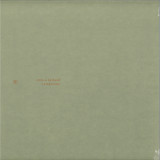
The album was mixed by Ville Haimala of fellow nordic club destroyers Amnesia Scanner, and the striking cover art features a sculpture by Norwegian artist Camilla Steinum. To further elaborate the album's themes in the visual realm the duo is creating a music video and live A/V show with 3D artist Guynoid, including a special latex suit made in collaboration with AGF Hydra. In this way, 'Bit Rot' grows beyond the album itself into a larger project exploring the fluidity of body and identity when the digital and the physical fuse as one.
Search:hard as funk
Today New York based singer, songwriter and producer Amber Mark announces details of her long-awaited debut album ‘Three Dimensions Deep’, out January 28th via EMI/PMR Records. The announcement of the album is accompanied by a sultry R&B instant-grat track ‘What It Is’ as well as a huge UK, EU and US spring tour announcement including London’s O2 Shepherd’s Bush Empire in March
Amber’s debut album arrives almost 4 years after the release of her second EP ‘Conexão’, an extended process that has proved central to its thematic development. The 17 track album can be divided into three main acts that follow the arc of Amber’s personal and musical development; WITHOUT, WITHHELD and WITHIN. Beginning by acknowledging her insecurities and anxieties before reflecting on her time in denial and spent processing them in all the wrong ways, Amber eventually widens her focus by seeking answers to the world’s negativity and trauma on a cosmic scale. Finding peace and a form of inherent spirituality in the world of astrophysics while writing the album led to a fresh perspective on life and a renewed sense of self. Amber’s debut album is simultaneously a profound concept album and a love letter to herself, richly intertwining messages of self-worth and reflections on the universe beneath a veneer of shimmering pop. In true Amber Mark style, ‘Three Dimensions Deep’ is a kaleidoscopic melting pot of influences and genres, drawing from funk and R&B, soul and hip-hop with international accents influenced by a nomadic childhood spent travelling the world with her late mother.
“Three Dimensions Deep is a musical journey of what questions you begin to ask yourself when you start looking to the universe for answers.” says Amber; “I can only go as deep as the third dimension as that’s how we see the world, but what about when you start looking to the universe within for answers.”
“‘What It Is’ low key is the title track of the album without it actually being the title track” explains Amber; “It comes from going through negative experiences which end up being the gateway to a question I think I’ll be asking for the rest of my life. What is the meaning of life,the universe and everything?”
The three official singles already released from the album ‘Worth It’, ‘Competition’ and ‘Foreign Things’ marked Amber’s first official singles since 2020’s ‘Generous’, though 2020 was still a hugely productive year for Amber. With her hometown of NYC hit hard in the first wave of the pandemic and placed under strict lockdown, Amber turned to her simple home studio to create an acclaimed series of home-produced covers and originals titled ‘Covered-19’, each accompanied by a homemade video and artworks. The series was followed by a collaboration with longtime friend Empress Of on the protest song ‘You’ve Got To Feel’, earning Annie Mac’s Hottest Record, ‘Tune Of The Week’ and a spot on the Radio 1 playlist. Earlier this year Amber was featured on legendary DJ Paul Woolford’s new piano-house track ‘HEAT’, again snagging Annie Mac’s Hottest Record and a long run across the Radio 1 and 2 playlists. Having already amassed over 300 million streams since the release of her breakout debut EP 3:33AM in 2017, Amber has built a global fanbase eager to hear her debut full length -
Many of you will be aware of the band Homegrown Syndrome (we released the single a few years ago). They were also known locally as Homegrown Funk & the band Memphis that put out one extremely rare two sider. A party Side 'Shake and Rock' flipped with a top of the rung ballad 'Inside My Love', it has everything collectors want, Rarity & Quality so sells for 500+ all day long, below Robert Garcia gives us the history....
"Memphis" were members of the Memphis based group "Home Grown Funk." Home Grown Funk was also known as "Homegrown Syndrome," a controversial name bestowed to them. Before heading to LA they gigged all over Memphis. Some of the members were from an earlier 70s group called "Brothers Unlimited" and had earlier ties during the 60s with the "Memphis Invaders" (a peaceful civil rights activist group).
With aspirations of pushing Homegrown further, a few members including Jerry Jones made the move out west. It was LA 1977 when they were introduced to Ike Tuner through a mutual friend "Ricky G". It was a casual meetup. Then one night Ike had his son Ike Jr. go check them out while performing at the Soul Train hangout spot "Maverick Flats". Ike Jr. praised their performance to Ike and he had them come out to his Inglewood studio. The group walked into the studio with a funky track already playing and that's when Jerry Jones improvised this opportunity and started singing. Ike then turned and said… "Who is that singing?" Jerry said, "Thats me." Then Ike replied " YOU BIG MUTHAF***A! You could be my new Tina." From that point the group cut bunch of tracks with Ike over the years up until they're feature on his 1980 album "The Edge."
In 1981 Perry Kibble (Keyboardist for Taste Of Honey) was at "Concerts In The Park" and heard Home Grown Funk performing. He linked up with the group and got them a deal with Arista. During this time they recorded their hit track " Confrontation." Perry suggested that the group change their name because he didn't want another group with the work "Funk" in it and hence "Homegrown Syndrome." They also use the Arista studio to cut an unreleased acetate with tracks "Got the love" and "Party Vibes" soon to be reissued on ATON.
Around the same time they were introduced to a fella named Roger Green. Green asked the group to come over to his home studio to cut the track "Inside My Love." Upon naming the record Roger Green suggested to go by "Memphis" since they were all from there. This record was eventually pressed in 1982 as small run becoming extremely hard to find.
Words by: Robert Garcia
Many of you will be aware of the band Homegrown Syndrome (we released the single a few years ago). They were also known locally as Homegrown Funk & the band Memphis that put out one extremely rare two sider. A party Side 'Shake and Rock' flipped with a top of the rung ballad 'Inside My Love', it has everything collectors want, Rarity & Quality so sells for 500+ all day long, below Robert Garcia gives us the history....
"Memphis" were members of the Memphis based group "Home Grown Funk." Home Grown Funk was also known as "Homegrown Syndrome," a controversial name bestowed to them. Before heading to LA they gigged all over Memphis. Some of the members were from an earlier 70s group called "Brothers Unlimited" and had earlier ties during the 60s with the "Memphis Invaders" (a peaceful civil rights activist group).
With aspirations of pushing Homegrown further, a few members including Jerry Jones made the move out west. It was LA 1977 when they were introduced to Ike Tuner through a mutual friend "Ricky G". It was a casual meetup. Then one night Ike had his son Ike Jr. go check them out while performing at the Soul Train hangout spot "Maverick Flats". Ike Jr. praised their performance to Ike and he had them come out to his Inglewood studio. The group walked into the studio with a funky track already playing and that's when Jerry Jones improvised this opportunity and started singing. Ike then turned and said… "Who is that singing?" Jerry said, "Thats me." Then Ike replied " YOU BIG MUTHAF***A! You could be my new Tina." From that point the group cut bunch of tracks with Ike over the years up until they're feature on his 1980 album "The Edge."
In 1981 Perry Kibble (Keyboardist for Taste Of Honey) was at "Concerts In The Park" and heard Home Grown Funk performing. He linked up with the group and got them a deal with Arista. During this time they recorded their hit track " Confrontation." Perry suggested that the group change their name because he didn't want another group with the work "Funk" in it and hence "Homegrown Syndrome." They also use the Arista studio to cut an unreleased acetate with tracks "Got the love" and "Party Vibes" soon to be reissued on ATON.
Around the same time they were introduced to a fella named Roger Green. Green asked the group to come over to his home studio to cut the track "Inside My Love." Upon naming the record Roger Green suggested to go by "Memphis" since they were all from there. This record was eventually pressed in 1982 as small run becoming extremely hard to find.
Words by: Robert Garcia
When it comes to legendary albums, very few can match the cult status achieved on the international jazz and funk scene, by Alice Clark's eponymous album, recorded for Mainstream Records in 1972. The record which went unnoticed when it first came out has become one of the most sought-after albums ever since it became cult on the London jazz and funk scene in the late 80s. It is now being acknowledged as one of the best soul albums of all-times. Recorded live over two days at the Record Plant studios in New York City, the album was produced by Bob Shad and arranged by Jazz veteran Ernie Wilkins with a big band setting. The music is a superb mix of jazz and soul blessed by Clark's superb singing and including two all-time favourites, "Don't You Care" and "Never Did I Stop Loving You" plus a selection of heart-wrenching songs beautifully sung by Clark. Very little is known about Alice Clark and the legendary two-day session. All is known is she only ever recorded one album and passed away in the early 2000s. Wewantsounds will tell the Alice Clark story for the first time and give a unique insight into the birth of this cult album with a deluxe release that will pay tribute to her talent.
- A1: A King Of Comets (Feat New Composers & Lovvlovver)
- A2: Sikao Qi Yun (Feat Jimi Tenor, Minako Sasjima & Lovvlovver)
- A3: Sergio Leone (Feat Lovvlovver, Gadzhi, Roman Englisgh & Juravlove)
- B1: Talking In My Dreams (Feat Wolfram & Lovvlovver)
- B2: Untitled Ritual (Feat Noteless)
- B3: Time Traveller
- C1: Your Ghost In Me (Feat Hard Ton, Noteless & Ruf Dug)
- C2: After The Storm (Feat Maajo)
- C3: Why You Guys Broke? (Feat Rich Thair)
- D1: A Mirage Seen At Buffalo (Feat Gadzhi, Lovvlovver, Lipelis, Roman English, Noteless & Jimi Tenor)
- D2: Et Que Je Dorme (Feat Miriam Sehhon & Lovvlovver)
- D3: Every Minute Is Too Late
The acclaimed Kito Jempere joins Cherrystones and DJN4 on the label for 2020, with an album full of international minds. Working with array of collaborators across a cast of friends including Jimi Tenor, Wolfram, Hard Ton, Lipelis, Rich Thair (Red Snapper), Ruf Dug, Cedric Gasaida (Azari & III) and many more, presenting this, his third long play.
A hail of freedom of thoughts and voices before these changed times, recorded and shared across continents. Kito - following releases with DFA, Lo Recordings, Bordello A Parigi, Hell Yeah and Duca Bianco - acts as curator rather than conductor, the idea not to transform the contributions but allow them absolute.
Sending music and receiving back, nothing was touched to keep the truth and honour. From Tokyo to London, Berlin to his base in St Petersburg, trusting the chosen artists led to a broad palette, as his 4/4 driven funk expands with Jazz horns to Motorik percussion, Avant-Reich vocals to White Isle melodies, J Pop Balearics to Chanson stories wrapped around Club memories.
A true world meeting, crossing borders and genres. An eye on the dance floor and week long chill outs. With remixes from the likes of Samo DJ, Lipelis, Cable Toy and more to follow, this is more than Yet Another Kito Jempere Album.
- A1: Black Hot Soup (Dj Shadow Remix)
- A2: Shanghai (The Scientist Remix)
- A3: Shanghai (Deaton Chris Anthony Remix)
- A4: Dreams (Yu Su Remix)
- A5: Blue Morpho (Donato Dozzy Remix)
- B1: Blue Morpho (Vril Remix)
- B2: Blue Morpho (Ciel Remix)
- B3: Blue Morpho (Zandoli Ii Remix)
- B4: Catching Smoke (Dām-Funk Remix)
- C1: Ya Love (The Flaming Lips Remix)
- C2: Ya Love (Geneva Jacuzzi Remix)
- C3: Ya Love (Héctor Oaks Remix)
- C4: 2.02 Killer Year (Bullant Remix)
- D1: Yours (Fred P Remix)
- D2: Butterfly 3000 (Terry Tracksuit Remix)
- D3: Neu Butterfly 3000 (Peaches Remix)
King Gizzard & The Lizard Wizard announce an album of remixes of tracks from ‘Butterfly 3000’, their second studio LP of 2021 alone. ‘Butterfly 3001’ features reworks courtesy of (among others) DJ Shadow, Donato Dozzy, The Scientist, DāM-FunK and The Flaming Lips!
"We’ve put off doing a remix album for a long time. Maybe it was conscious, maybe it wasn’t. But it’s happening now. That’s not to say that Butterfly 3000 makes the most sense to remix. It might seem like the obvious one, but it’s not. Yes it’s electronic. But so is a fridge. Have you tried to dance to Butterfly? It’s hard. It ties your shoelaces together. It’s duplicitous in it’s simplicity. But Butterfly 3001 expands on this. It also deviates and obliterates. We’re honoured to have such esteemed people go to work on these songs. We hope you love this album as much as we do. See you in Da Club!!!" - Joey Walke
- A1: Black Hot Soup (Dj Shadow Remix)
- A2: Shanghai (The Scientist Remix)
- A3: Shanghai (Deaton Chris Anthony Remix)
- A4: Dreams (Yu Su Remix)
- A5: Blue Morpho (Donato Dozzy Remix)
- B1: Blue Morpho (Vril Remix)
- B2: Blue Morpho (Ciel Remix)
- B3: Blue Morpho (Zandoli Ii Remix)
- B4: Catching Smoke (Dām-Funk Remix)
- C1: Ya Love (The Flaming Lips Remix)
- C2: Ya Love (Geneva Jacuzzi Remix)
- C3: Ya Love (Héctor Oaks Remix)
- C4: 2.02 Killer Year (Bullant Remix)
- D1: Yours (Fred P Remix)
- D2: Butterfly 3000 (Terry Tracksuit Remix)
- D3: Neu Butterfly 3000 (Peaches Remix)
King Gizzard & The Lizard Wizard announce an album of remixes of tracks from ‘Butterfly 3000’, their second studio LP of 2021 alone. ‘Butterfly 3001’ features reworks courtesy of (among others) DJ Shadow, Donato Dozzy, The Scientist, DāM-FunK and The Flaming Lips!
"We’ve put off doing a remix album for a long time. Maybe it was conscious, maybe it wasn’t. But it’s happening now. That’s not to say that Butterfly 3000 makes the most sense to remix. It might seem like the obvious one, but it’s not. Yes it’s electronic. But so is a fridge. Have you tried to dance to Butterfly? It’s hard. It ties your shoelaces together. It’s duplicitous in it’s simplicity. But Butterfly 3001 expands on this. It also deviates and obliterates. We’re honoured to have such esteemed people go to work on these songs. We hope you love this album as much as we do. See you in Da Club!!!" - Joey Walke
The third release on U-TRAX in 1993 was also a third debut, this time by Natasja Hagemeier and Jeroen Brandjes. Early in their career, they used several artist names, but became most commonly known as The Connection Machine. With their debut mini-album The Dream Tec Album they more or less described their style: dreamy techno. It became an instant Dutch techno classic and U-TRAX is proud and delighted to offer a fully remastered re-release, including three never before released bonus tracks (one of which is digital-only).
Natasja and Jeroen resided in Utrecht back in the 90s. In 1991 they assembled all their ideas and recorded the track "24 Hours" with DJ Paradize. Soon after this experience, they started to buy their own gear, all strictly MIDI (which wasn't too obvious in those days). In their early recording years, they had three producer-names (Syndrome, The Connection Machine and Bitch&Bites), that were all collected under the The Utroid Machine Missions umbrella, which was used for their debut on U-TRAX.
All tracks on The Dream Tec Album are The Connection Machine's earliest works, from the 1991/1992 years.
"An Overflow of the Mind" is a beautiful, dreamy track with almost divine sounds and strange voice-samples that serves perfectly as an introduction to their entire repertoire.
Their first production was "24 Hours", and what a brilliant one it is! A well-known jazz-musician talks about a "24 hour party going on", on top of a sinister and trancey rug, woven of sampled sounds from pioneers in electronic music and nailed down to the floor with a deep pounding bassdrum. At the time they made this track, 141 bpm was unbelievably fast...
"Evilish Cosmos" is all about a very sad and personal emotion, so everything we say about it will be absolutely wrong. Just listen to the meandering piano line, distorted voice samples - and feel it.
The first bonus track on this release is "Recognized Pain", which was intended to be part of the original The Dream Tec Album. It had appeared on the Phuture Classical Section C cassette in 1993, on the famous Drome Tapes label that formed the roots of U-TRAX. It truly is an amazing track: pure sonic terror with haunting rhythms, psychedelic synth lines and shards of voice samples that make the listener feel slightly uncomfortable.
"X_Manray" is many electronic music lover's favorite track. It is sooo deep that it is hard not to get hypnotized by it. Warm strings are coupled with deep beats that show up and disappear every now and then. Could serve perfectly to start off any DJ's set, as long as she or he has the guts.
Though "Braindrain" is probably the most danceable track on this album, it is carefully designed to tease the listener. Everything in this track drops in too late and every tone, melody or loop last exactly a few bars too long. Designed as a DJ-teaser and so it is.
The second bonus track, "Cafe d'Anvers", is another previously unreleased work, of which unfortunately no master recording was saved. All that is left, as far as we know, was an old VHS Hifi tape from the U-TRAX Archives. And that is where this bonus track was taken from. Mastering engineer Thee J Johanz managed to restore the quality of the recording somewhat, while at the same time maintaining its dark, clubby sound, a tribute to the famous club of the track's name in Antwerp, Belgium.
"Dream Affected Dream" is one of the most recent productions on this album. It was recorded with CNN playing live on top of it. At this exact moment, CNN was having an interview with David Koresh, the leader of the infamous Branch Davidians sect from Waco, Texas, while they were under siege by an armed police force. Natasja and Jeroen were just ready to record Dream Affected Dream, and spontaneously decided to mix in the audio from CNN. Not very long after that, the cult members set fire to themselves. A very strange and oddly funky track, that also serves as a time-document.
The final track is another bonus track. Like Cafe d'Anvers, "Voight-Kampff" is taken from on old U-TRAX VHS Hifi tape and masterfully mastered into a lovely relaxed dreamtech piece. Very suitable to start the Sunday after a long night of clubbing. This track is available for free to buyers of the complete digital album only.
Original release date: July 1993.
The sixth release on Phoq U Phonogrammen, the sordid and rash U-TRAX sublabel, may be from its least known artist, but it is our personal favorite Phoq U release. The style can perhaps best be described as acid funk. Though the drums and bass lines generally are rather tight, all tracks have these quirky synth lines that give them a rather funky, dark 'cyborg feel'.
Lynx is Reyer Caderius van Veen - and he didn't chose that name himself. Reyer is from Groningen, the mayor city in the most northern region of The Netherlands. It's a vibrant student town, with lots of music going on.
In the 90s, Reyer participated in a techno-foundation, together with Thee J. Johanz (Ballyhoo Records) and Johan Sagel, who released a 12" as Jo-I on U-TRAX in 1995. Together with Johan, Reyer also formed a band called L.A.P. 01 (Live Acid Performance), which released a 12", a 10" and a remix on Jan Liefhebber's Highland Beats and a track on Ballyhoo Records (BALL 100).
Harsh starts off with some terribly hard and high tones, that sound like a nuclear plant is going to melt down. The ferocious bassdrum and grunting acid bass line add to the uncomfortable mood.
What makes us really happy is Sex On Jupiter. It's a rushed track that completely opens up around the 1:20 mark with a desolate, yet funky sawtooth 303 bassline.
On the flipside, Changes brings a nice pumping rhythm combined with a rolling bassline with all sorts of disturbing sounds on top.
The EP closes off with another highlight of darkness: Dark Mission. The track has a lovely flow, but really starts to space you out as soon as a hoarse sounding pulsating synth spreads it wings across the deliciously bubbling 303.
To be short: this is an uncomfortable record, and we love it!
Original release date: August 1996.
- A1: Halo Maud - Des Bras (Andy Votel Remix)
- A2: Boy Azooga - Face Behind Her Cigarette (Mikey Young Remix)
- A3: Doves - Jetstream (Lindstrom Remix)
- B1: The Orielles - It Makes You Forget (Itgehane) (Itgehane)
- B2: Katy J Pearson - Take Back The Radio (Flying Mojito Bros Mojito Refrito Dub)
- B3: Confidence Man - First Class Bitch (Raf Rundell Party Nails Remix)
- C1: Audiobooks - Friends In The Bubble Bath (Gabe Gurnsey Gamma Ray Remix)
- C2: Gwenno - Chwlydro (R Seilog Remix)
- C3: Working Men's Club - Valleys (Graham Massey Acid Mix)
- D1: Saint Etienne - Filthy (Monkey Mafia Mix)
- D2: Night Beats - Sunday Morning (Jono Ma Remix)
- D3: M Craft - Chemical Trails (Beyond The Wizards Sleeve Re-Animation)
It’s incredibly easy to get a remix wrong — as the back catalogues of far too many major labels, whose slapdash commissioning of the latest hot remixer half-guarantees an unsympathetic mangling of the song, can attest. At their best, remixes can make you look at an artist as though positioned from a different angle or using a different camera; sometimes hearing a song in a different context gives it a completely new meaning. “So you take a piece of a vocal…blah” says master remixer David Morales. “That’s a remix? That represents the artist? That doesn’t represent the artist, it represents you.” In the hands of the insensitive a remix is like chucking a song into the washing machine for a 100 extra spins.
In the hands of a master, things are a little more complex. Heavenly was all but founded on the art of the remix; our departed friend Andrew Weatherall remixed the first ever release, and the label has built up an immense catalogue in the intervening years that demonstrates all that is good about the art form.
Assembled on this compilation are twelve sterling examples of the remix, from Hanspeter Lindstrøm’s reading of Doves’ ‘Jetstream’, which turns their glistening pop into Lieutenant Pigeon meets Italo-disco (in a good way), to Andy Votel’s gentle folk-funk version of Halo Maud’s délicieuse ‘Des Bras’. We delve deep into the vaults for Saint Etienne’s ‘Filthy’, Monkey Mafia turning it into a rump-shaking groove perfectly suited to Q-Tee’s rap, while more recently, Flying Mojito Bros, purveyors of Tex-Mex house groove, reimagine Katy J. Pearson as a lonesome Lone Star lover.
Though not purposely themed, beyond being judiciously chosen as the catalogue’s finest gems, there’s a tiny hint of psychedelia about this set that is hard to ignore. Firstly, there are the acid contributions from Gabe Gurnsey, who knows his way around a coruscating bassline, and from Graham Massey, whose impeccable credentials in 808 State are brought to bear on ‘Valleys’, by young turks Working Men’s Club (acid house being modern psychedelia, whether the rock press approves or not).
Jono Ma, meanwhile, flips Night Beats’ amazing ‘Sunday Mourning’ into ‘Warm Leatherette’ on benzos, creating a disorienting glimpse of a dystopian Sunday that most definitely doesn’t include a genteel read of the papers and a nice cup of tea. On the other side of the miasma is Beyond The Wizard’s Sleeve’s redemptive re-interpretation of M. Craft’s ‘Chemical Trails’, which, alongside Boy Azooga’s ‘Face Behind Her Cigarette’ (Mikey Young remix), Gwenno’s ‘Chwlydro’ (R. Seiliog remix) and and Katy J. Pearson’s ‘Take Back The Radio’ (Flying Mojito Bros Refrito Dub), is issued on vinyl for the very first time.
This dozen tracks — each one curated, remixed and delivered with love (and a teensy bit of impertinence) — is just a glimpse into the catalogue of one the UK’s finest indie labels.
In the alternative reality in which I’d prefer to exist, this what Top of the Pops might sound like; or, at the very least, the jukebox in the Korova Milk Bar. Pop disruption at its best.
As said on the A1 tune... it's a trip to Frankie Mind !! Pure Pumpin oldschool tune ! The 3 other tunes are in the same vein with a sweet funky speed hardtek humble sound. Superb Modular !
The third release on U-TRAX in 1993 was also a third debut, this time by Natasja Hagemeier and Jeroen Brandjes. Early in their career, they used several artist names, but became most commonly known as The Connection Machine. With their debut mini-album The Dream Tec Album they more or less described their style: dreamy techno. It became an instant Dutch techno classic and U-TRAX is proud and delighted to offer a fully remastered re-release, including three never before released bonus tracks (one of which is digital-only).
Natasja and Jeroen resided in Utrecht back in the 90s. In 1991 they assembled all their ideas and recorded the track "24 Hours" with DJ Paradize. Soon after this experience, they started to buy their own gear, all strictly MIDI (which wasn't too obvious in those days). In their early recording years, they had three producer-names (Syndrome, The Connection Machine and Bitch&Bites), that were all collected under the The Utroid Machine Missions umbrella, which was used for their debut on U-TRAX.
All tracks on The Dream Tec Album are The Connection Machine's earliest works, from the 1991/1992 years.
"An Overflow of the Mind" is a beautiful, dreamy track with almost divine sounds and strange voice-samples that serves perfectly as an introduction to their entire repertoire.
Their first production was "24 Hours", and what a brilliant one it is! A well-known jazz-musician talks about a "24 hour party going on", on top of a sinister and trancey rug, woven of sampled sounds from pioneers in electronic music and nailed down to the floor with a deep pounding bassdrum. At the time they made this track, 141 bpm was unbelievably fast...
"Evilish Cosmos" is all about a very sad and personal emotion, so everything we say about it will be absolutely wrong. Just listen to the meandering piano line, distorted voice samples - and feel it.
The first bonus track on this release is "Recognized Pain", which was intended to be part of the original The Dream Tec Album. It had appeared on the Phuture Classical Section C cassette in 1993, on the famous Drome Tapes label that formed the roots of U-TRAX. It truly is an amazing track: pure sonic terror with haunting rhythms, psychedelic synth lines and shards of voice samples that make the listener feel slightly uncomfortable.
"X_Manray" is many electronic music lover's favorite track. It is sooo deep that it is hard not to get hypnotized by it. Warm strings are coupled with deep beats that show up and disappear every now and then. Could serve perfectly to start off any DJ's set, as long as she or he has the guts.
Though "Braindrain" is probably the most danceable track on this album, it is carefully designed to tease the listener. Everything in this track drops in too late and every tone, melody or loop last exactly a few bars too long. Designed as a DJ-teaser and so it is.
The second bonus track, "Cafe d'Anvers", is another previously unreleased work, of which unfortunately no master recording was saved. All that is left, as far as we know, was an old VHS Hifi tape from the U-TRAX Archives. And that is where this bonus track was taken from. Mastering engineer Thee J Johanz managed to restore the quality of the recording somewhat, while at the same time maintaining its dark, clubby sound, a tribute to the famous club of the track's name in Antwerp, Belgium.
"Dream Affected Dream" is one of the most recent productions on this album. It was recorded with CNN playing live on top of it. At this exact moment, CNN was having an interview with David Koresh, the leader of the infamous Branch Davidians sect from Waco, Texas, while they were under siege by an armed police force. Natasja and Jeroen were just ready to record Dream Affected Dream, and spontaneously decided to mix in the audio from CNN. Not very long after that, the cult members set fire to themselves. A very strange and oddly funky track, that also serves as a time-document.
The final track is another bonus track. Like Cafe d'Anvers, "Voight-Kampff" is taken from on old U-TRAX VHS Hifi tape and masterfully mastered into a lovely relaxed dreamtech piece. Very suitable to start the Sunday after a long night of clubbing. This track is available for free to buyers of the complete digital album only.
Original release date: July 1993.
Believed to have been recorded in 1983, ‘O Filho Do Homem’ is a newly discovered and previously unreleased single by the late Brazilian composer and keyboardist Ana Mazzotti. Though it’s her only known studio recording of the decade, ‘O Filho Do Homem’ is one of several unreleased compositions Mazzotti and her band performed on TV Cultura and Programa MPB during the 80s.*
These performances showed Mazzotti had transitioned towards a harder edged and more daringly experimental sound in this period, while keeping the core components of samba, jazz and funk that characterised her two studio albums from the 1970s, Ninguem Vai Me Segurar (1974) and the self titled Ana Mazzotti (1977). This evolved 80s sound had evidently taken a similar path to that of her contemporaries and mentors, like Azymuth, whose keyboardist José Roberto Bertrami arranged her debut album, and Hermeto Pascoal who described her as “a super musician.”
Following the resurgence in appreciation for Ana’s music that arose from the 2019 reissues of her two studio albums, her son Toni Mazzotti was compelled to re-examine the archive of artefacts he’d inherited from his parents. Amongst the LPs, chord sheets, photos and VHS recordings, Toni stumbled upon a mysterious reel of tape, which he swiftly dispatched to the Far Out office in London. Toni and the Far Out team were delighted to discover the mystery tape was a hazy jazz-funk gem recorded by his mother (and father, drummer Romildo Santos) during the twilight of her short career; Ana Mazzotti sadly passed away in 1988 from lung cancer at the age of just 37. Aside from Ana on keyboards and vocals and Romildo who produced and played drums on all of Ana’s recordings, the line-up for the quartet is unknown.
“O Filho Do Homem” will be released on 7” vinyl and digitally on the 10th December 2021 via Far Out Recordings.
Freestyle Records in association with Rare Sounds USA present a stellar repress of Speedometer's 2003 debut LP This Is Speedometer.
Originally released on Clive Johnson's Blow It Hard (started after the demise of the well-loved weekly Soho club night of the same name, and home to the New Mastersounds first releases alongside choice cuts from JTQ and others) This Is Speedometer showcased the sounds of one of the UK's premier acts in the deep funk scene of the early noughties for the first time on the long player format.
Starting out back in 1999, Speedometer started out as an instrumental quartet gigging in small clubs in the Southeast of England, paying homage to classic funk tunes by artists such as The Meters and The JB's. The band soon expanded and began writing original material, adding the highly regarded horn section and vocalists in 2001, which enabled them to deliver the powerhouse deep funk sound on display here. In addition to their own albums, singles and live shows, Speedometer have backed many US funk & soul legends including Sir Joe Quarterman, Eddie Bo, Marva Whitney, Sharon Jones & Lee Fields and more.
Now coming up on 20 years since it's original release, you can now marvel at Speedometer's classic, original soul-funk sound thanks to a sparkling new cut. Dig in!
d 04: Just Keep On (Doin the Do) feat. The Speedettes
The seven-headed Aussie rock beast King Gizzard & The Lizard
Wizard return with a new vinyl edition of ‘Fishing For Fishies’,
perhaps their most perfectly-realised album to date.
The Eco Edition has been pressed on Eco-Mix vinyl and is housed
in a brown paper bag after previous pressings quickly sold out.
Released on the band’s own Flightless Records, here is a world
where the organic meets the automated; where the rustic meets
the robotic. Where the past and future collide in the beautiful
present.
‘Fishing For Fishies’ is a blues-infused blast of sonic boogie that
struts and shimmies through several moods and terrains. From the
soft shuffle Outback country of the opening title track through the
sunny easy listening of ‘The Bird Song’ (think a lysergically-soaked
Laurel Canyon circa 1973) and on through the party funk of
‘Plastic Boogie’ (which somehow summons the spirit of Stevie
Wonder’s ‘Innervisions’) the road-trucking, Doors-like highway
rock of ‘The Cruel Millennial’ and ‘Real’s Not Real’ - what
Carpenters might have sounded like had they existed entirely on
vegemite and weed - it’s a dizzying, dazzling display which
addresses a number of pertinent environmental issues along the
way.
“We tried to make a blues record,” says frontman Stu Mackenzie.
“A blues-boogie-shuffle-kinda-thing, but the songs kept fighting it -
or maybe it was us fighting them. Ultimately though we let the
songs guide us this time; we let them have their own personalities
and forge their own path. Paths of light, paths of darkness. This is
a collection of songs that went on wild journeys of transformation.”
Quiet though it was on the record front, 2018 was hardly a year of
rest for King Gizzard & The Lizard Wizard. In almost perpetual
motion, the band continued their unstoppable rise as their
juggernaut of a live show grew and grew and grew, with a mindblowing headline slot at Green Man Festival, a massive sold-out
US tour in the summer which saw them play their biggest venues
to date, a brain-frying sold out Brixton Academy show, two gigs in
Russia and Istanbul where they played in front of over 15,000
people and putting on the fourth edition of their annual Gizzfest in
Melbourne amongst the highlights.
EPMD’s initial success in 1987 seemed to take a lot of people by surprise. Without build-up or fanfare, they launched this stunning debut 12” and, so ill-prepared were people for it, that the label was still misspelling their name.
Those early 12” copies of ‘It’s My Thing’ – and the hard to find UK 7” that followed shortly after – have them billed as EPEE MD. Before they were signed, they were going by EEPMD, but they decided to drop an E due to the success of the west coast’s Eazy E. The one person not surprised by their success, however, was hip-hop pioneer and producer Kurtis Mantronik, who actually signed them to Fresh Records.
It’s fitting that he’s the man that saw their promise, as he himself was one to go against the grain. His electro-influenced productions for Mantronix and Just Ice were ahead of their time, and perhaps in EPMD he saw kindred spirits. Because, at the time this dropped, hip-hop was going up tempo, taking its cue from James Brown samples and picking up the pace.
On both ‘It’s My Thing’ – underpinned by the languorous ‘Seven Minutes of Funk’ by The Whole Darn Family – and ‘You’re a Customer’, with its combination of ZZ Top and Steve Miller Band – Erick Sermon and Parrish Smith slow things right down. It gives their vocals time to breathe and allows us to enjoy the interplay of their metaphor and simile-heavy lyrics. As calling cards go, they don’t come any better than this.
• Stunning debut that has become a Hip Hop classic.
• Only previous 7” release very hard to find.
Westbound 1976 Funk classic - Featuring an all-star Parliament/Funkadelic line-up - Limited 180g TANGERINE COLOR Vinyl Edition (400 copies) - Comes in Deluxe Gatefold Jacket with Obi Strip - Comes with liner notes // A co-founder of the P-Funk movement, Clarence Eugene "Fuzzy" Haskins was born in West Virginia in 1941 and started as a singer in the doo-wop vocal group The Parliaments, led by George Clinton in the late 1950s. He was a founding member of the groundbreaking and influential 1970s funk bands PARLIAMENT-FUNKADELIC. Fuzzy Haskins toured and appeared on P-Funk albums as a singer, and occasionally as a guitarist, throughout the 1970s. He is a member of the Rock and Roll Hall of Fame, inducted in 1997. Despite the success of Mothership Connection, Fuzzy Haskins was growing frustrated that his songs were no longer being featured on albums by Funkadelic and Parliament. He also watched as Bootsy Collins, a relative newcomer to the family, embarked upon a solo career. This added to Haskins' frustration and at the height of P-Funk's popularity, Fuzzy left the ensemble to pursue a solo career. Fuzzy Haskins released his first solo album, A WHOLE NOTHER THANG, in 1976. The album features funk `all-stars' from the likes of Bernie Worrell, Donald Austin and Bootsy Collins. Haskins wrote eight of the nine songs and served as producer, singer, songwriter, guitarist and even drummer. The result was an album that oozed quality. With his brand of earthy and heavyweight funk, Fuzzy Haskins' solo work fits right in with many of the other great P-Funk side projects. Also featured on the album is the track "Cookie Jar", which was later recorded by Prince. Despite the quality of music, the album didn't sell in vast quantities and didn't find the audience it deserved. `A Whole Nother Thang' is a true gem to funk fans, mint vinyl copies are hard to find and pricey these days. If you are a Funkateer_this one's for you. Originally released on Westbound Records in 1976, now back available as a limited deluxe 180g TANGERINE COLORED vinyl edition packaged in a gatefold jacket featuring the original artwork and liner notes.
In November, the new ABBA album, ‘Voyage’, will
be released, after 40 years. Just in time for the
music comeback of the year, and as a tribute to the
Swedish supergroup, a classic is now being
released on vinyl for the first time: ‘Funky ABBA’ by
the Nils Landgren Funk Unit from 2004.
Fans and music magazines count the cover
numbers by Mr. Redhorn and his cult band among
the best in the world, and even today they are
played on the radio and in clubs by DJs. Landgren,
who once played trombone himself on the ABBA
hit ‘Voulez-Vous’, personally asked ABBA
mastermind Benny Andersson for his blessing for
the album: “ABBA was never funky. But if you can
do it, then do it!” replied Andersson. Andersson
was so enthusiastic about the project that he was
also present at the legendary Polar Studio during
the recording sessions and did not miss the
opportunity to record a bonus track for the album
himself as a duo with Viktoria Tolstoy.
The result was celebrated, and ‘Funky ABBA’
became the best-selling Funk Unit album of all
time. “It's hard to believe: ABBA grooves, and
how!” claimed STEREO in their review after the
CD’s release.
For this vinyl edition, the album has been
remastered.
180g vinyl with digital download code.
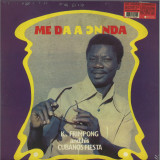
Me Da A Onnda by K. Frimpong and his Cubanos Fiesta isclassic and essential Hi-Life & Afro
Funk album from one of the greatest Ghanaian singer and composer, finally reissued for the first time!
This legendary K Fimpong's fantastic rare album was recorded in 1980.
K . Frimpong was born on July 22nd, 1939 at Ofoase in the Ashanti - Akim district and entered right
into music after elementary school by joining "Star de Republic" and later "Oko's band" after which he left
to K. Gyasy's band where he worked for more than 6 years. As a prolific songwriter and singer, here's
the reissue of his amazing album, a modern fusion of Hi- life and Soul.The excellent background is given
by the famous Cubanos Fiesta with members of Vis-A-Vis band.
Originally produced on the major Polydor, this four songs recording is a blend of danceable and
spiritual Soul and straight Hi-Life. A must-have vinyl of percussive Afro Funk for all the music
connoisseurs, K. Frimpong backed by Cubanos Fiesta LP is a true masterpiece, so hard to find and
reaching crazy skills for a decent copy affordable.
Remastered by Frank Merritt at The Carvery. Pressed on Replika format. Fully licensed by the Alhadji
Kwame Frimpong Family
With Companion, Otto A Totland completes his album trilogy of personal, sparse piano compositions, following in the footsteps of 2014's Pinô and 2017's The Lost.
As a self-taught pianist, Otto further determines himself as a timeless composer who follows nothing but his own gut and heart. The outcome is something so pure it’s hard to not be affected. The development of his pieces over the years has grown into something so himself that it's almost immediately recognisable. With Companion he has matured in his own craft, and the various pieces here feel confident and absolutely beautiful in a way that sees the end of the trilogy as a warm, empathic document for the times.
As with the previous two albums, Companion was again recorded at Nils Frahm's Berlin studio for optimal warmth and space, Pinô and The Lost at his previous Durton Studio while Companion at the historic Studio 3 at Funkhaus. All three records are released by Sonic Pieces in hand-crafted limited edition covers as a statement showing that craftmanship and humanity still exists in this world constantly moving towards the exact opposite.
This quote by Norwegian philosopher Guttorm Fløistad seems an appropriate connection to both Otto's music and the way we are all heading : “The only thing for certain is that everything changes. The rate of change increases. If you want to hang on you better speed up. That is the message of today … In order to master changes, we have to recover slowness, reflection and togetherness. There we will find real renewal.” With this in mind, Companion is exactly what it's title sets out to be. A friend that can follow and comfort in both good or bad times.
With a string of releases as Garage Shelter and as of last year, alongside Hardrock Striker as Bleu Blanc House, Signal St. returns to line up his first LP with SKYLAX.Laden with indecipherable disco and funk samples, emotive chord changes and clocking in at one hour, it’s fully fledged dance album with no filler, showing what contemporary house music should sound like in 2018 on a label that has always pushed the genre. The album wanders through a range of functions and energies, from One For You on which Signal St. channels Moodymann, Life Aquatic, where the looping styles of Moomin play centre to a dance of whispy 808 symbols and the percussive workout of Right Next To Me which gives way to the album’s final act. Though club-ready and touching on a range of moods, it evolves from its from its disco/funk beginnings and descending into a 10-minute downtempo finale, swallowed by an abyss of reverb. Like an explosive separation of two people, thrown from the plains of heaven to the depths of hell, “Zapoï and other dysfunctional love stories, closing the loops” pulls together the many faces of Signal St. in a dance album that reflects a young producer entering his prime.that will delight both fans of the purest house but also those whose scrolls of Romanian raresh bewitch. It's clearly another piece of art to add to your skylax records collection. Future classic. !
Record Kicks drops "Solid Ground", the explosive debut album by US band The Grease Traps, recorded at Kelly Finnigan' Transistor Sounds and mixed by Orgone's Sergio Rios.
Recorded between Kelly Finningn's Transistor Sound in San Francisco and Fifty Filth Studio in Oakland and mixed by Orgone' producer Sergio Rios and Kevin O' Dea, Record Kicks is proud to finally present Solid Ground, the long-awaited debut album by US very finest deep funk & soul outfit The Grease Traps. The album is set for worldwide release on November 5 on vinyl, CD and digital format. The band, based in Oakland, CA, is the latest addition to Milan-based Record Kicks roster. Active since 2002, with a 45 released on well-respected funk/soul label, Colemine Records, now, after six years spent working on the album's recording and mixing, they are ready to present their first full-length release Solid Ground on Record Kicks. The album is anticipated by the two killer funk singles "Bird of Paradise" and "More and More" on limited edition 45 vinyl.
As avid record collectors and fans of that old school analog sound, Solid Ground was recorded straight to 8-track tape on a Tascam 388, which also graces the cover art. Half of the tracks were recorded live at Transistor Sound Studio by soul crooner, Kelly Finnigan, and Ian McDonald where both Kelly and their band, Monophonics, have recorded their last few albums. The other half of the tunes were recorded by Kevin and Aaron at Fifty Filth Studio in Oakland, CA where the band also rehearses and mixed by analog-obsessive Orgone producer Sergio Rios. The album's original tunes draw from the Traps' various soul influences ranging from gritty funk ("Bird of Paradise" and "Hungry") to fuzzed-out psychedelic ("Residue") to sweet lowrider soul ("More and More"). The lyrics by lead singer The Gata also don't shy away from pressing issues of the day such as racism in America ("Roots") and finding hope in a world that seems pitted against you (the JB's style "Solid Ground"). The rare funk covers from the album provide a taste of the raw energy one would experience at a Grease Traps live show. The Traps also supplemented their sound with special guests including the Monophonics horns, background vocals from seasoned Bay Area vocalists, Sally Green and Bryan Dyer, as well as strings organized by Kansas City master viola player, Alyssa Bell.
The seed of The Grease Traps formed back in 2000 when keyboardist, Aaron Julin, answered an ad put out by guitarist, Kevin O'Dea, searching for players who were hip to the rare grooves laid down by Blue Note artists such as Grant Green and Lou Donaldson. They quickly formed Groovement, covering those same artists along with other jazz-funk staples. When their sax player and frontman moved away, they switched gears to form the band, Brown Baggin, getting into the harder funk of the JB's, the Meters, Kool & the Gang, and lesser known acts such as Mickey & the Soul Generation. They also started digging into the rare funk compilations put out by Keb Darge, Jazzman Gerald,and labels like Harmless, Ubiquity, Soul Jazz, and Now-Again. Modern day soul and funk outfits such as Breakestra, the Whitefield Brothers, and the Daptone/Soul Fire crews provided additional inspiration.
In 2005, while still playing with Brown Baggin yet fed up with juggling the schedules of seven band members, Aaron and Kevin put out an ad to find a bassist and drummer to jam with as a quartet. The first two cats to show up were bassist, Goopy Rossi, and drummer, Dave Brick. It was clear from the get-go that this rhythm section had great chemistry. Originally intended as a fun side project, the Traps quickly took priority as Brown Baggin dissolved. Performing as an instrumental quartet for a number of years, they eventually expanded their repertoire to include horns as well as that sharp-dressing soul brother, The Gata, on lead vocals. Over the years, they've shared the stage with acts such as Shuggie Otis, Robert Walter, Durand Jones, Monophonics, Neal Francis, and Jungle Fire.
Built around the successes of his soundtracks and songs for the movies of Christophe Honoré, Alex Beaupain’s profile in the ‘chanson française’ landscape is quite unique. Beaupain alternates between soundtracks, songs he writes for others (mainly great French actresses) and his own solo albums.
In march 2021, Beaupain paid tribute to the late Serge Gainsbourg for the 30th anniversary of his passing during a special live on air event where he covered in full, with the Radio France Philharmonic Orchestra, Gainsbourg’s penultimate shocking album from 1984 : Love On The Beat.
This experience led him directly in the studio with Saint DX as producer, the French American duet Faux Real singing backing vocals and a full string section to re-record this cult album with a 2021 twist. He had also dreamed of covering that particular album that had so much impact on him, musically and lyrically, when he first discovered it. The 80s funky sound of the record, produced by Billy Rush, was a new start for Gainsbourg and at the time, the lyrics schocked everyone but achieved to avoid any censorship.
“I was 10 when Love On The Beat was released in 1984. Covering the full album was an idea I always kept somewhere in my mind as I was fully aware of the long lasting impact this particular record had on all the teenagers at the time. This collection of songs is far from being the most covered or talked about works form Gainsbourg, but I’ve always had the feeling they were ‘mine’. That everything started there for me and that, one day or the other, I would have to come back to it.” (Alex Beaupain)
Legally blind from birth, Brazilian keyboard player, composer and bandleader Manfredo Fest learnt to read music in braille and began studying classical music at a young age. By 17 he had fallen in love with jazz (particularly the music of fellow blind pianist George Shearing) before becoming swept up in Rio's emergent bossa nova movement in the sixties. Moving to the States in 1967 where he would go on to work with fellow countryman Sergio Mendes, Fest recorded and self-released Brazilian Dorian Dream in 1976, enlisting Thomas Kini (bass), Alejo Poveda (drums, percussion) and Roberta Davis (vocals).
Like a turbo-powered, intergalactic elevator ride, Brazilian Dorian Dream builds on the principle of the modal diatonic scales of the Dorian mode, with influences of Brazilian rhythms, North American jazz and funk, and music of the European baroque and romantic era. The coming together of these intergenerational and intercontinental styles coupled with Fest's visionary use of the Fender Rhodes, Clavinet, Arp and Moog synthesizers (plus a whole load of effects units), makes for an album light years ahead of its time.
The miraculous wordless vocals of American jazz singer Roberta Davis are nailed so tightly alongside Manfredo's keys and mind-bending synths that it sounds almost alien. On the album's liner notes, Fest preaches Davis' ability highlighting how hard it is to sing such precise intervals so accurately. One of the tracks on which the vocals shine brightest is space funk stepper "Jungle Cat", which features hard funky drums, freaky synth lines and expert Rhodes comping. The track builds up and up before releasing into the unmistakable scat melody in the chorus.
A few years after releasing Brazilian Dorian Dream, Fest recorded and released his Manifestations album in 1979, featuring 'Jungle Kitten'': a new dancefloor focused variation on "Jungle Cat". At around 140 BPM 'Jungle Kitten' was possibly deemed too fast for statside dance floors, which explains why it never got a US 12" release. But the track became something of an underground hit at jazz dance clubs and all-dayers across the UK in the 80s and as a result it has probably become Fest's most well known track since.
The forthcoming latest edition of the popular compilation series featuring long-lost vintage 60s-70s proto-metal and stoner rock singles, Brown Acid: The Thirteenth Trip will be available on Halloween 2021. Check out the first single "Run Run", released in 1970 by Montreal hard rockers Max is available to hear & share via Metal Injection HERE. (And, direct YouTube and Bandcamp)
The Brown Acid series is curated by L.A. label RidingEasy Records and retailer/label Permanent Records. Read interviews with the series curators via Paste Magazine HERE and LA Weekly HERE.
About The Thirteenth Trip:
Max, from Montreal, QC — originally known as Dawn, before Tony Orlando & Dawn forced a name change — kick things off with “Run Run” from their lone 1970 single. It’s a hard-hitting rocker with scale climbing crunching guitars and powerful Bonham-esque drumming. Sadly, the band didn’t last long due to poor management and various other factors, so this is the only surviving document according to guitarist Gerry Markman. And what a document it is, paired with the A-side “The Flying Dutchman.”
You might remember Ralph Williams and the Wright Brothers from their track “Never Again” on Brown Acid: The Tenth Trip. Here they make their return to the series with the A-side of their 1972 Hour Glass Records 45, which sounds like Blue Cheer mangling Roy Orbison’s “Pretty Woman” (that’s right, several years before Van Halen actually did so.) Alas, Ralph and these Wright Brothers soon disappeared from terrestrial airspace.
“Feelin’ Dead” is extremely heavy blues from this also extremely rare 1974 single by Detroit, MI’s Master Danse, which was only released as a promo 45. Think Led Zeppelin’s “Since I’ve Been Loving You” and you’re on the right track. A little dose of Hendrix acid blues and a heartfelt groove, and you’ll wonder why this single never even made it to official release. The unavoidable tell in the lyric, “help me get this damn thing out of my arm” hints at the post-Vietnam heroin epidemic as a potential clue why we never heard more from Master Danse.
Folks, Gary Del Vecchio is “Buzzin’” hard on this one, and from what sounds like an in-studio party of yelps and chatter at the start of the song, it seems that the whole band was in on the festivities. The funky blues riff, reminiscent of Led Zeppelin’s “Heartbreaker” and rollicking rhythmic changes certainly keep the buzz a rollin’.The recording is technically credited as Gary Del Vecchio with Max, though not the same band as the one that kicks off this Trip.
John Kitko’s 1973 heavy psychedelic rager “Indecision” is the only recording known to exist by the mysterious artist. The Twin Record Productions release features a different artist, Tom Poff on the B-side, which is truly a shame, considering the smoldering ashes Kitko leaves of the turntable by song’s end. It starts out more like a late 60s Acid Rock jam before leaping into a blazing double-time gallop, whipped into a frenzy by wailing, neck-pickup guitar squeals and Kitko’s barely audible howls.
Tampa, FL’s Bacchus made their Brown Acid debut way back on the very first Trip with “Carry My Load.” This 1972 B-side, “Hope” is a huge sounding swinging rocker replete with roadhouse piano bolstering the chunky riffs and confident vocals. After relocating to Southern California a few years later, the band morphed into Fortress, an 80s melodic metal act whose Hands In The Till album of Pomp Rock on Atlantic Records still draws chatter today.
Orchid’s “Go Big Red” is perhaps the most garage-y sounding offering here, with loose rhythms and straightforward stop-and-start riffing. Nonetheless, the stomping energy and fried-amp guitar tone make this one a charming skull thwack. The band’s 1973 single on American records, backed with a cover of Johnny Russell and Voni Morrison’s “Act Naturally” (popularized by Buck Owens and the Buckaroos) is their only release, so the world never did see this Orchid fully blossom.
By the title alone of Dry Ice’s “Don’t Munkey with the Funky Skunky” you know you’re in for a good time. The 1974 barnstormer seems aimed to the novelty tunes crowd, with its kooky lyrics and silly-voiced spoken catchphrase break, “peeyew, you’ll be sorry if you do.” But, the Ohio band’s maniacal drumming, crunching guitars and, of course, drug euphemistic lyrics make it a shoo-in for the Brown Acid series of erudite rock’n’roll.
Good Humore’s swaggering 1976 rocker “Detroit” is a slick and smooth paen to the Motor City. It most likely doesn’t predate “Detroit Rock City” by Kiss, also released in 1976, and it has more rock’n’roll swing, but it could fit comfortably alongside the era’s arena anthems. Not much else is known about the one-off release on P.V. Records, but songwriter Mike Moats is noted to also have been a recording engineer in later years and this well produced track sounds like a labor of love.
The forthcoming latest edition of the popular compilation series featuring long-lost vintage 60s-70s proto-metal and stoner rock singles, Brown Acid: The Thirteenth Trip will be available on Halloween 2021. Check out the first single "Run Run", released in 1970 by Montreal hard rockers Max is available to hear & share via Metal Injection HERE. (And, direct YouTube and Bandcamp)
The Brown Acid series is curated by L.A. label RidingEasy Records and retailer/label Permanent Records. Read interviews with the series curators via Paste Magazine HERE and LA Weekly HERE.
About The Thirteenth Trip:
Max, from Montreal, QC — originally known as Dawn, before Tony Orlando & Dawn forced a name change — kick things off with “Run Run” from their lone 1970 single. It’s a hard-hitting rocker with scale climbing crunching guitars and powerful Bonham-esque drumming. Sadly, the band didn’t last long due to poor management and various other factors, so this is the only surviving document according to guitarist Gerry Markman. And what a document it is, paired with the A-side “The Flying Dutchman.”
You might remember Ralph Williams and the Wright Brothers from their track “Never Again” on Brown Acid: The Tenth Trip. Here they make their return to the series with the A-side of their 1972 Hour Glass Records 45, which sounds like Blue Cheer mangling Roy Orbison’s “Pretty Woman” (that’s right, several years before Van Halen actually did so.) Alas, Ralph and these Wright Brothers soon disappeared from terrestrial airspace.
“Feelin’ Dead” is extremely heavy blues from this also extremely rare 1974 single by Detroit, MI’s Master Danse, which was only released as a promo 45. Think Led Zeppelin’s “Since I’ve Been Loving You” and you’re on the right track. A little dose of Hendrix acid blues and a heartfelt groove, and you’ll wonder why this single never even made it to official release. The unavoidable tell in the lyric, “help me get this damn thing out of my arm” hints at the post-Vietnam heroin epidemic as a potential clue why we never heard more from Master Danse.
Folks, Gary Del Vecchio is “Buzzin’” hard on this one, and from what sounds like an in-studio party of yelps and chatter at the start of the song, it seems that the whole band was in on the festivities. The funky blues riff, reminiscent of Led Zeppelin’s “Heartbreaker” and rollicking rhythmic changes certainly keep the buzz a rollin’.The recording is technically credited as Gary Del Vecchio with Max, though not the same band as the one that kicks off this Trip.
John Kitko’s 1973 heavy psychedelic rager “Indecision” is the only recording known to exist by the mysterious artist. The Twin Record Productions release features a different artist, Tom Poff on the B-side, which is truly a shame, considering the smoldering ashes Kitko leaves of the turntable by song’s end. It starts out more like a late 60s Acid Rock jam before leaping into a blazing double-time gallop, whipped into a frenzy by wailing, neck-pickup guitar squeals and Kitko’s barely audible howls.
Tampa, FL’s Bacchus made their Brown Acid debut way back on the very first Trip with “Carry My Load.” This 1972 B-side, “Hope” is a huge sounding swinging rocker replete with roadhouse piano bolstering the chunky riffs and confident vocals. After relocating to Southern California a few years later, the band morphed into Fortress, an 80s melodic metal act whose Hands In The Till album of Pomp Rock on Atlantic Records still draws chatter today.
Orchid’s “Go Big Red” is perhaps the most garage-y sounding offering here, with loose rhythms and straightforward stop-and-start riffing. Nonetheless, the stomping energy and fried-amp guitar tone make this one a charming skull thwack. The band’s 1973 single on American records, backed with a cover of Johnny Russell and Voni Morrison’s “Act Naturally” (popularized by Buck Owens and the Buckaroos) is their only release, so the world never did see this Orchid fully blossom.
By the title alone of Dry Ice’s “Don’t Munkey with the Funky Skunky” you know you’re in for a good time. The 1974 barnstormer seems aimed to the novelty tunes crowd, with its kooky lyrics and silly-voiced spoken catchphrase break, “peeyew, you’ll be sorry if you do.” But, the Ohio band’s maniacal drumming, crunching guitars and, of course, drug euphemistic lyrics make it a shoo-in for the Brown Acid series of erudite rock’n’roll.
Good Humore’s swaggering 1976 rocker “Detroit” is a slick and smooth paen to the Motor City. It most likely doesn’t predate “Detroit Rock City” by Kiss, also released in 1976, and it has more rock’n’roll swing, but it could fit comfortably alongside the era’s arena anthems. Not much else is known about the one-off release on P.V. Records, but songwriter Mike Moats is noted to also have been a recording engineer in later years and this well produced track sounds like a labor of love.
- 1: Mohammed Rafi – Jaan Pehechaan Ho
- 2: Vanilla, Jade And Ebony – Graduation Rap
- 3: Skip James – Devil Got My Woman
- 4: Vince Giordano And The Nighthawks – I Must Have It
- 5: Lionel Belasco – Miranda
- 6: Blueshammer – Pickin' Cotton Blues
- 7: Mr. Freddie – Let's Go Riding
- 8: Vince Giordano And The Nighthawks – Georgia On My Mind
- 9: Lionel Belasco – Las Palmas De Maracaibo
- 10: Vince Giordano And The Nighthawks – Clarice
- 11: Craig Ventresco – Scalding Hot Coffee Rag
- 12: Vince Giordano And The Nighthawks – You're Just My Type
- 13: Lionel Belasco – Venezuela
- 14: Joe Calicott – Fare Thee Well Blues
- 15: Pink Anderson & Simmie Dooley – C. C. & O. Blues
- 16: Mcgee Bros – C-H-I-C-K-E-N Spells Chicken
- 17: Robert Wilkins – That's No Way To Get Along
- 18: Dallas String Band – So Tired
- 19: Little Hat Jones – Bye Bye Baby Blues
- 20: David Kitay – Theme From Ghost World
Cinema Paradiso is proud to present the Ghost World soundtrack, released on vinyl for the very first time, as a double gatefold LP.
A film adaptation of the popular Daniel Clowes comic of the same name, Ghost World starred Scarlett Johannson, Thora Birch and Steve Buscemi, becoming a critically acclaimed cult favourite immediately upon its release in 2001. As he did with Crumb, director Terry Zwigoff has created a soundtrack as eclectic and riveting as his movie subjects. The sounds of early jazz and blues play a crucial role in the events of Ghost World - the music heard here is some of the best ever recorded.
Skip James's classic "Devil Got My Woman" from 1931 may be the best-known work on this soundtrack, but it hardly steals the show. Three tracks from weird but riveting jazz-meets-calypso bandleader Lionel Belasco are included; the 70-year-old recordings are so original, they sound timeless. The same praise can be stated of film opener "Jaan Pehechaan Ho" a Bollywood rarity that has elements of surf music, funk, and garage rock. Of course, we also have to hear "Graduation Rap" and Blueshammer's "Pickin' Cotton Blues" two intentionally bad contemporary tracks that make the characters in the movie (and anyone listening to this soundtrack) feel out of place in today's pop culture.
Zwigoff wisely fills out the LP with tracks from his personal 78 record collection, a mix of '20s and '30s string band and blues tunes that are seldom found in compilations (including great cuts by the Dallas String Band, Joe Calicott, and McGee Bros).
The haunting "Theme from Ghost World" composed by David Kitay, finishes off the second LP, perfectly capturing all the bittersweet moods found in the film.
COLOURED vinyl[45,42 €]
Over nearly 20 years, Howlin Rain may have become the quintessential independent American rock ’n roll band: a steam-spitting Hydra of cranked guitars, kicking asphalt dust through a kaleidoscoping travelogue of desert motels and dives, volleying forth transmissions of sci-fi poetry from the blacktop veins of this cracked and aching country.
Now, in America 2021, capping these strangest and sorest of times, the band returns with The Dharma Wheel, a six-track, 52-minute dive into a joyous fantasy realm of exaggerated present.
“I wanted The Dharma Wheel to be a portal from our everyday world, the one from which you stand on hard ground and hold the album in your hands and peer into the artwork, and into another universe,” says songwriter, guitarist and vocalist, Ethan Miller. “You enter into that universe with your eyes and ears and mind and take a ride through free-form meditation on these ideas — from big, fundamental concepts about our existence right down to the grease that rolls down the arm of a pulp novel killer as he eats a gas station hot dog in an old Dodge in an alleyway.”
Lyrically, Miller has completed his evolution into a mushroom-plucking Whitman of the West, singing outlandish tales in a topographic blend of Humbead’s Revised Map of the World and an inverted U.S. where downtrodden bodhisattvas roam the back streets and moonless country roads.
“Down in Florida swamps, run by nature’s law, standing in the water, Eden gone. Two men loading rifles, beasts making time, they shot a boy from an orange tree and watched the colored birds take flight, watch the colors as they soar and dive.” — ‘Under the Wheels.’
The band, Jeff McElroy (bass, backing vocals), Justin Smith (drums/percussion, backing vocals) and Dan Cervantes (guitar, backing vocals), again sounds hardwired into Miller’s vision, building tracks that swagger and sway in response to his verse. Lending a hand this time around is the legendary Scarlet Rivera (Bob Dylan’s Rolling Thunder Revue) on violin, and the endlessly inventive Adam MacDougall (Chris Robinson Brotherhood, Circles Around the Sun) on keys.
Songs were shaped via the blast furnace of endless gigs, then recorded often mere hours after the band slipped the stage.
“The captured sonic fact about this record is that it’s the sound of a band that rehearsed this material a lot and put a ton of work into its construction and was on the road a lot and recorded on days off in the tour schedule,” Miller says. “In some cases we were on stage on Saturday night playing these songs at quarter-to-2 in the morning and by Noon the next day we were sipping coffee in the studio playing them for the machine.”
Rivera’s violin is the first sound heard as the album dawns on the instrumental “Prelude.” Soon, the band joins, twirling the theme into a psychedelicized awakening. “Don’t Let the Tears” brings the boogie, with MacDougall’s madcap synth work and wah-wah guitars showering 70’s glitter upon a parquet dance floor of the mind. “Under the Wheels” and “Rotoscope” center the album with taut, compositional epics populated by murdering drifters and fuzz pedal explosions. The blue hour comedown of “Annabelle” meditates upon the weariness of lost love, with Rivera again amping the heartache via her violin strings.
“In the evening the trains go by, and shake the dust from dirty walls, sometimes I feel like a spider in an old mason jar, who threatens only convex light from down the hall. I’ve been lost to the world since the photos of the black hole, landed on my desktop screaming, perhaps the all and nothing all-in-one is just too much to take, for particles and matter that never found their way.” — ‘Annabelle’
The record closes with the 16-minute title track, a multi-movement suite which cycles from Crazy Horse-meets-Traffic jams through colossal, mass-moving funk stomp, eventually cresting and washing into a sing-along gospel lament.
The Dharma Wheel is an album of great depth, and one steeped in good vibes: a rich, glistening world of the ultra-vivid. As illustrated in Arik Roper’s cover art, the grand dharmachakra has been set in motion, churning off the California coast.
“We were trying to build a world big enough that the imagination won’t go soft on you after just a few listens and where our love for this music, and music in general — along with a good dose of audacity — create a magic carpet ride through the world of The Dharma Wheel,” Miller continues. “In pursuing that I think we also managed to make a record that has a lot of joy in it: the joy of playing music, the joy of experiencing music, the joy of storytelling and poetry, the kind of singular joy and extended ecstatic moment that only a real ‘band’ can express in just that way.”
And it’s this joy, this exuberance and dedication to the lines of cosmic expression — all centered in the exalted art of the everyday — that constructs the heart of the record. At its core, The Dharma Wheel is the triumph of a working band, a transmission from a never-paused before arriving for our strange, bruised, spectacular now.”
Black vinyl[39,37 €]
Over nearly 20 years, Howlin Rain may have become the quintessential independent American rock ’n roll band: a steam-spitting Hydra of cranked guitars, kicking asphalt dust through a kaleidoscoping travelogue of desert motels and dives, volleying forth transmissions of sci-fi poetry from the blacktop veins of this cracked and aching country.
Now, in America 2021, capping these strangest and sorest of times, the band returns with The Dharma Wheel, a six-track, 52-minute dive into a joyous fantasy realm of exaggerated present.
“I wanted The Dharma Wheel to be a portal from our everyday world, the one from which you stand on hard ground and hold the album in your hands and peer into the artwork, and into another universe,” says songwriter, guitarist and vocalist, Ethan Miller. “You enter into that universe with your eyes and ears and mind and take a ride through free-form meditation on these ideas — from big, fundamental concepts about our existence right down to the grease that rolls down the arm of a pulp novel killer as he eats a gas station hot dog in an old Dodge in an alleyway.”
Lyrically, Miller has completed his evolution into a mushroom-plucking Whitman of the West, singing outlandish tales in a topographic blend of Humbead’s Revised Map of the World and an inverted U.S. where downtrodden bodhisattvas roam the back streets and moonless country roads.
“Down in Florida swamps, run by nature’s law, standing in the water, Eden gone. Two men loading rifles, beasts making time, they shot a boy from an orange tree and watched the colored birds take flight, watch the colors as they soar and dive.” — ‘Under the Wheels.’
The band, Jeff McElroy (bass, backing vocals), Justin Smith (drums/percussion, backing vocals) and Dan Cervantes (guitar, backing vocals), again sounds hardwired into Miller’s vision, building tracks that swagger and sway in response to his verse. Lending a hand this time around is the legendary Scarlet Rivera (Bob Dylan’s Rolling Thunder Revue) on violin, and the endlessly inventive Adam MacDougall (Chris Robinson Brotherhood, Circles Around the Sun) on keys.
Songs were shaped via the blast furnace of endless gigs, then recorded often mere hours after the band slipped the stage.
“The captured sonic fact about this record is that it’s the sound of a band that rehearsed this material a lot and put a ton of work into its construction and was on the road a lot and recorded on days off in the tour schedule,” Miller says. “In some cases we were on stage on Saturday night playing these songs at quarter-to-2 in the morning and by Noon the next day we were sipping coffee in the studio playing them for the machine.”
Rivera’s violin is the first sound heard as the album dawns on the instrumental “Prelude.” Soon, the band joins, twirling the theme into a psychedelicized awakening. “Don’t Let the Tears” brings the boogie, with MacDougall’s madcap synth work and wah-wah guitars showering 70’s glitter upon a parquet dance floor of the mind. “Under the Wheels” and “Rotoscope” center the album with taut, compositional epics populated by murdering drifters and fuzz pedal explosions. The blue hour comedown of “Annabelle” meditates upon the weariness of lost love, with Rivera again amping the heartache via her violin strings.
“In the evening the trains go by, and shake the dust from dirty walls, sometimes I feel like a spider in an old mason jar, who threatens only convex light from down the hall. I’ve been lost to the world since the photos of the black hole, landed on my desktop screaming, perhaps the all and nothing all-in-one is just too much to take, for particles and matter that never found their way.” — ‘Annabelle’
The record closes with the 16-minute title track, a multi-movement suite which cycles from Crazy Horse-meets-Traffic jams through colossal, mass-moving funk stomp, eventually cresting and washing into a sing-along gospel lament.
The Dharma Wheel is an album of great depth, and one steeped in good vibes: a rich, glistening world of the ultra-vivid. As illustrated in Arik Roper’s cover art, the grand dharmachakra has been set in motion, churning off the California coast.
“We were trying to build a world big enough that the imagination won’t go soft on you after just a few listens and where our love for this music, and music in general — along with a good dose of audacity — create a magic carpet ride through the world of The Dharma Wheel,” Miller continues. “In pursuing that I think we also managed to make a record that has a lot of joy in it: the joy of playing music, the joy of experiencing music, the joy of storytelling and poetry, the kind of singular joy and extended ecstatic moment that only a real ‘band’ can express in just that way.”
And it’s this joy, this exuberance and dedication to the lines of cosmic expression — all centered in the exalted art of the everyday — that constructs the heart of the record. At its core, The Dharma Wheel is the triumph of a working band, a transmission from a never-paused before arriving for our strange, bruised, spectacular now.”
Norah Jones has been a steady voice of warmth and reassurance for nearly 20 years since her cozy 2002 debut album Come Away With Me became a familiar musical companion for millions of people around the world. Now the 9-time GRAMMY-winning singer, songwriter, and pianist has made her first-ever holiday album with I Dream Of Christmas, a delightful and comforting collection of timeless seasonal favorites and affecting new originals that explore the complicated emotions of our times and our hopes that this holiday season will be full of joy and togetherness. I Dream Of Christmas will be released October 15 on Blue Note Records and can be pre-ordered now on vinyl, CD, and digital download.
“I’ve always loved Christmas music but never had the inclination to make a holiday album until now,” Norah says. “Last year I found myself listening to James Brown’s Funky Christmas and Elvis’s Christmas Album on Sunday’s during lockdown for a sense of comfort. In January 2021, I started thinking about making a Christmas album of my own. It gave me something fun to work on and look forward to.”
The album’s opening track, Norah’s original “Christmas Calling (Jolly Jones)” is available to stream or download today. Over chiming piano chords, Norah expresses a deep desire for holiday cheer and companionship. “I wanna hear the music play / I wanna dance and laugh and sway / I wanna happy holiday for Christmas.”
“When I was trying to figure out which direction to take, the original songs started popping in my head,” Norah explains. “They were all about trying to find the joys of Christmas, catching that spark, that feeling of love and inclusion that I was longing for during the rest of the year. Then there are all the classics that have that special nostalgia that can hit you no matter who or where you are in life. It was hard to narrow down, but I picked favorite classics that I knew I could make my own.”
Among the album’s many pleasures are Norah’s playful reinvention of The Chipmunk’s “Christmas Don’t Be Late” by David Seville (aka Ross Bagdasarian), which is given a languid beat and swaggering horns. Other highlights include sublime versions of “White Christmas,” “Blue Christmas,” “Winter Wonderland,” and “Christmas Time Is Here.”
I Dream Of Christmas was produced by Leon Michels, and features an excellent cast of musicians including Brian Blade on drums, Tony Scherr and Nick Movshon on bass, Russ Pahl on pedal steel guitar, Marika Hughes on cello, Dave Guy on trumpet, Raymond Mason on trombone, and Michels on saxophone, flute, percussion, and more.
Norah Jones first emerged on the world stage with the February 2002 release of Come Away With Me, her self-described “moody little record” that introduced a singular new voice and grew into a global phenomenon, sweeping the 2003 GRAMMY Awards. Since then, Jones has become a nine-time GRAMMY-winner. She has sold 50 million albums and her songs have been streamed six billion times worldwide. She has released a series of critically acclaimed and commercially successful solo albums—Feels Like Home (2004), Not Too Late (2007), The Fall (2009), Little Broken Hearts (2012), Day Breaks (2016), Pick Me Up Off The Floor (2020), and her first-ever live album ‘Til We Meet Again (2021)—as well as albums with her collective bands The Little Willies, El Madmo, and Puss N Boots featuring Sasha Dobson and Catherine Popper who released their second LP Sister in 2020. The 2010 compilation …Featuring Norah Jones showcased her incredible versatility by collecting her collaborations with artists as diverse as Willie Nelson, Outkast, Herbie Hancock, and Foo Fighters. Since 2018 Jones has been releasing a series of singles including collaborations with artists and friends such as Mavis Staples, Jeff Tweedy, Thomas Bartlett, Tarriona Tank Ball, Rodrigo Amarante, and Brian Blade, some of which were compiled on the 2019 singles collection Begin Again.
2021 marks the 50th Anniversary of the legendary record Fela Kuti made
with Ginger Baker of Cream.
This Anniversary edition features a newly unearthed second drum solo
from Tony Allen and Ginger Baker, taken from Afrika 70’s performance
at the 1978 Berlin Jazz Festival. Part I has never appeared on vinyl and
this second part has never been heard - until now.
1978’s Berlin Jazz Festival marked Afrika 70’s final live performance with
Fela. In the Spring of 1979, several members of Afrika 70, including
Allen, would leave the band. Allen had been with Fela since 1964. 1980
saw the birth of Egypt 80, with Baritone saxophonist Lekan Animashaun,
who had been with Fela since 1965, as its founding bandleader.
Reissued with Abbey Road mastered audio.
Red double vinyl with collector's 50th Anniversary gold foil obi strip.
Bespoke etching of album artwork on Side D.
Fela’s legacy spans decades and genres, touching on jazz, pop, funk,
hip-hop, rock and beyond. While he never achieved true icon status
during his lifetime, the last (roughly) decade has seen a broad
resurgence in his popularity and a critical reevaluation of his life, music
and influence. In 2008, the biographical musical ‘Fela!’ (co-produced by
Jay-Z and Will Smith) became a surprise hit off-Broadway and then
Broadway itself. Since then, Beyoncé performed Fela’s ‘Zombie’ at
Coachella, he’s been called out as an influence by everyone from Paul
McCartney to Questlove and sampled by Missy Elliott, Kendrick Lamar,
J. Cole, Nas, and more. Vice President Kamala Harris even used Fela’s
music at her and President Biden's first joint event together.
‘Let’s Start’ features prominently in the trailer and the soundtrack for the
new Western, ‘The Harder They Fall’, staring Idris Elba and Regina King.
Fela features prominently in an episode of Hulu’s docuseries ‘McCartney
3, 2, 1’, where Paul McCartney cites Fela as one of his important
influences.
This past spring Fela came in second place, behind Tina Turner, for the
fan vote for the Rock & Roll Hall Of Fame nominations and received
great press coverage in NY Times, Rolling Stone, MOJO, Record
Collector and more.
Honing your skills is under-appreciated in times of instant gratification and the continuous stream of music. Rotterdam-based producer Kofi The Unknown subverts this idea and took time for spiritual introspection, studying rhythms and sound production. Where being a late bloomer normally is seen as a sobriquet, the producer, composer and beatmaker wears it as a badge of honour and solidifies it as an honorary title by pinning it to his debut EP on Wicked Wax: The Late Bloomer. Wearing his heart on his sleeve, Kofi The Unknown shares his journey that led to The Late Bloomer, an emotional journey through sophisticated dance music, straight from the heart, aimed at the soul and feet.
Highly influential to Kofi’s sound and this EP is London’s Broken Beat scene. Syncopated drums, soulful chords and heavy bass lines work in tandem to emphasise the danceability the genre is known for. This is further solidified by the track Kofi released leading up to this release: One for Motet, an ode to the Broken Beat MC and Jazz Refreshed host Jason Hicks. The Late Bloomer further develops Kofi’s ode, but provides his Rotterdam flavour and brings his Hip Hop and Funk lineage into the mix.
Embrace Mistakes sets the stage for what’s to come in various ways. It is a textbook case of how dance music can tell a story and be introspective. Kofi’s honesty shines bright on the entire EP and strikes from the first kick drum on. It also shouldn’t be hard to recognise and feel the emotion the producer shares on the title track The Late Bloomer. The emotionally-laced chords and crushing drums are reminiscent of late nights at a warehouse or emotional sequences from a dystopian movie.
Staying true to his ethos ’exploring the university that music holds’, Kofi finds this beyond music production as The Late Bloomer provides an audible experience through creative mixing. Stuttering analog synths, enveloping leads, multiple percussion rhythms and off-beat snare rolls hit from all directions of the stereo spectrum, further underlining the sophistication of his merit. While the EP follows the Broken Beat accents on dance, it is an equally mindful listening experience.
Kofi The Unknown is a Rotterdam native producer with a knack for rhythms. His keen ear is informed by mentor and Dutch enigma Trian Kayhatu. While Kofi has taken the time to perfect his skills under the guidance of Trian, the two are simultaneously working on the exciting follow-up project to this debut EP. Without looking too far ahead, enjoy The Late Bloomer. It’s not only a crown jewel Kofi proudly wears, it is also establishing him as a future household name in the sophisticated dance scene. "
With a career spanning more than 25 years, the award-winning jazz guitarist has become widely acknowledged as one of the hardest working musicians in the business. Musically, Nigel’s blend of flowing bebop lines, deep blues sensibility and his mastery of chording continue to delight audiences and fellow musicians alike. His career highlights include a support show for Gladys Knight at The Royal Albert Hall and an appearance on Van Morrison’s recent album, Keep Me Singing. Starting his professional career in his early 20s, Nigel toured Europe with various reggae and funk bands before settling on a solo guitar career and turning his attention to jazz. Citing early influences as Wes Montgomery, Joe Pass, John McLaughlin and the Mahavishnu Orchestra, Nigel honed his craft by attending gigs and sitting in with the players of the time. He has played on more than 50 albums including seven as a leader, spent 10 years with acid jazz outfit The Filthy Six, was a member of James Taylor’s band, JTQ, for three years (with whom he recorded five albums) and performed with the legendary David Axelrod
- A1: Back Street Kids
- A2: You Won’t Change Me
- A3: It’s Alright
- A4: Gypsy
- B1: All Moving Parts (Stand Still)
- B2: Rock ‘N’ Roll Doctor
- B3: She’s Gone
- B4: Dirty Women
- C1: Back Street Kids (Steven Wilson Mix)
- C2: You Won’t Change Me (Steven Wilson Mix)
- C3: It’s Alright (Mono Version)*
- C4: Gypsy (Steven Wilson Mix)
- D1: All Moving Parts (Stand Still)
- D2: Rock ‘N’ Roll Doctor (Steven Wilson Mix)
- D3: She’s Gone (Steven Wilson Mix)
- D4: Dirty Women (Steven Wilson Mix)
- E1: Back Street Kids (Alternative Mix)
- E2: You Won’t Change Me (Alternative Mix)
- E3: Gypsy (Alternative Mix)
- E4: All Moving Parts (Stand Still) (Alternative Mix)
- F1: Rock ‘N’ Roll Doctor (Alternative Mix)
- F2: She’s Gone (Outtake Version)
- F3: Dirty Women (Alternative Mix)
- F4: She’s Gone (Instrumental Mix)
- G1: Symptom Of The Universe
- G2: War Pigs
- G3: Gypsy
- H1: Black Sabbath
- H2: All Moving Parts (Stand Still)
- I1: Dirty Women
- I2: Drum Solo / Guitar Solo
- J1: Electric Funeral
- J2: Snowblind
- J3: Children Of The Grave
Technical Ecstasy by Black Sabbath, limited edition, remastered, new mix, 90 mins of unreleased outtakes, alt mixes, live tracks from Ozzy, Tony, Geezer and Bill plus extensive book, tour program and poster. LP set on 180g vinyl.
In the summer of 1976, Ozzy Osbourne, Tony Iommi, Geezer Butler and Bill Ward headed to Miami to record Technical Ecstasy at the famed Criteria Studios. The band was coming off a world tour for their previous album, Sabotage, that had found their live performances evolving to include keyboards and synthesizers. These newly incorporated instruments and sounds were then introduced into the recording process on Technical Ecstasy. The new songs encompassed a wide range of styles from the hard charging “Back Street Kids” and single ballad “It’s Alright,” to the funky “All Moving Parts (Stand Still)” and progressive rock “Gypsy.” The Deluxe Edition presents a newly remastered version of the eight-track album, along with an entirely new mix of the album created by Steven Wilson using the original analogue tapes.
With eight previously unreleased outtakes and alternative mixes. Among those are different mixes of “You Won’t Change Me” and “Rock ’n’ Roll Doctor,” as well as both outtake and instrumental versions for “She’s Gone.” The collection concludes with 10 previously unreleased live tracks recorded during the 1976-77 World Tour. The songs touch on different eras of the band’s history with early tracks like “Black Sabbath”, “War Pigs” (from Paranoid), “Symptom Of The Universe”, “Snowblind” and “Children Of The Grave” alongside new songs “Gypsy” and “Dirty Women.”
The collection comes with an extensive hardback book featuring artwork, liner notes, rare memorabilia and photos from the era, plus a replica of the 1976-77 world tour concert book and a large colour poster of the iconic Hipgnosis (Storm Thorgerson/Aubrey Powell/Peter Christopherson) futuristic robots image which is perfect for framing.
Black Sabbath embraced change in 1976 when the heavy metal innovators started managing themselves and began exploring different sounds on the band’s seventh studio album, Technical Ecstasy.
BMG honours this daring album with a collection that includes a newly remastered version of the original, a brand-new mix by Steven Wilson, plus more than 90 minutes of previously unreleased outtakes, alternative mixes and live tracks. TECHNICAL ECSTASY: SUPER DELUXE EDITION will be available as a 4CD box set and 5LP box set on 180g black vinyl.
Contents:
Vinyl box set includes:
Original album newly remastered
New Mix LP
Outtakes and Alternative Mixes LP
2LP live concert from the World Tour 1976 - 77
40-page book with photos, artwork and liner notes
Technical Ecstasy colour poster
Along with James Brown and Parliament-Funkadelic, Sly & the Family Stone virtually invented 1970’s funk. Their fusion of R&B rhythms, infectious melodies, and psychedelia created a new pop/soul/rock hybrid. The impact of Sly’s music has proven widespread and long-lasting. For instance, Motown producer Norman Whitfield patterned the label’s forays into harder- driving, socially relevant material (such as The Temptations’ “Runaway Child” and “Ball of Confusion”) based on their sound.
The pioneering Stone had a major influence in the 1980’s on artists such as Prince and Rick James. Legions of artists from the 1990’s forward - including Public Enemy, Fatboy Slim, Arrested Devellopment, Beck and many others - mined Stone’s back catalog for samples.
For those not familiar with Sly this 2LP set is a great introduction and an invitation to dig deeper into Sly & The Family Stone’s catalogue. This 20 track compilation covers all the hits & fan favourites from the 1968-1974 period.
The Best Of Sly and The Family Stone is now available as a limited edition of 2000 numbered copies on transparent pink vinyl.
- A1: Judgment, Rage, Retribution And Thyme
- A2: Generation Spokesmodel
- A3: What Moves The Heart?
- A4: Today, Is A Good Day
- A5: Into Yer Shtik
- A6: In My Finest Suit
- B1: F.d.k. (Fearless Doctor Killers)
- B2: Orange Ball-Peen Hammer
- B3: Crankcase Blues
- B4: Execution Style
- B5: Dissolve
- B6: 1995
- C1: Mudhoney Funky Butt
- C2: West Seattle Hardcore
- C3: Sissy Bar
- D1: Carjack ‘94
- D2: Sailor
- D3: Small Animals
MyBrothertheCow isthefourthstudioalbumbytheAmerican grunge band Mudhoney. The album includes several direct references to bands that influenced Mudhoney’s sound. For instance, “F.D.K. (Fearless Doctor Killers)” refers to the Bad Brains song “F.V.K. (Fearless Vampire Killers)”, “Orange Ball-Peen” alludes to Captain Beefheart and Led Zeppelin, and “1995” pays tribute to The Stooges.
Available as a limited edition of 1500 individually numbered
copies on turquoise coloured vinyl.
Andy Compton is undisputedly one of the hardest working producers in dance music. With over 40 albums and 150 EPs released either solo or as part of deep house legends The Rurals, the Bristol-based producer just can't stop creating profoundly funky and vibey music that works on loose-limbed dancefloors, beach bars and shag carpets alike.
He has appeared regularly on quality labels as diverse as Lumberjacks In Hell, Hed Kandi, LARGE and naturally, his own vital imprint Peng.
Andy's latest long player for Tangential Music is a collaboration with LA artists Irantzu Pujadas and Brad Kent under the name Blue Dream.
Aptly titled: 'A Trip To LA' the album is a deliciously louche and laidback twelve tracker of pure LA heat. The project began as many great ones do, without a plan. Visiting Brad's studio to check out his huge vintage analogue synth collection in search of new sounds for The Rurals, they got to thinking...and jamming. With Brad on the dusty old drum machines, Irantzu on the microphone and Andy in synthesiser heaven, Blue Dream was born.
Their first and equally good album 'California Dreaming' was released on Peng in early 2019 and now we are here with a second round of perfectly realised dream-like grooves. Think of the sun-facing vibes of Shuggie Otis, Eddie Chacon, Bobby Caldwell or Roy Ayers at his most relaxed and add a passionate knowledge and experienced grasp of electronic forms. They make this seem easy goddammit.
'I Wanted To See You' sounds like Khruangbin with a 303, 'You Want Me Back' with its mid-tempo shuffling groove, saucy squidge bass line and seductive soul house vocal is pure daytime at Houghton Festival happiness, like Crazy P in the hot tub.
At no point are we required to sweat. Lie down if you must, stand up and sway if you're ready. This could be lovers music or just for you alone. Irantzu's vocals throughout are whispers and purrs, evocations of humid love drenched in reverb and easy living. Sunset music.
The singles 'I Wanna Go Home' and 'Sandwich Dub' don't deviate far from the endless feeling of hazy cinematic sunshine, one a sultry plea for intimacy, the other a heavily dubbed-out slice of musique française amour.
'Trip To LA' with a vocal more than suggestive of the Balearic classic 'Sueno Latino', spare guitar chords and a prodding repetitive bass line creates a feeling of slinky bliss.
Every track is full of sensual melodies and the space required to be truly funky. Press play and invite a bit of California magic in...
After years unavailable, this reissue presents this 1976 album in its full glory, with remastered sound and original artwork, including the rare promo poster.
Pressed on 180g vinyl. Once resettled in Lima, Peru, in 1974 after spending some time playing in a jazz quintet in Berlin, sax player Nilo Espinosa would put together the Nil's Jazz Ensemble, a top-notch array of local talent consisting of Pancho Sáenz (trumpet), Miguel 'Chino' Figueroa (keyboards), Oscar Stagnaro (bass), Andrés Silva (drums and percussion), Jorge Montero, Richie Zellon and Ramón Stagnaro (guitars). They recorded one single album that remains not only as one of the truly grails for collectors of Latin-American jazz but also as an outstanding piece of music on its own. The opening song "Reflexiones" is a mind-blowing jazz-funk number right up there with the very best of the genre, written by Black Sugar's former member Miguel 'Chino' Figueroa, featuring a fantastic work on trumpet and rhodes. The album also includes a cover of the rare groove classic "Hard Work" that could have easily sneaked into the funkiest side of the Prestige catalogue. Following the success of this album, Espinosa would expand his band to a big band format and tour local theatres and clubs in Lima, where jazz music was a popular genre at the time. Our reissue presents this 1976 album in its full glory, pressed on 180g vinyl with remastered sound and original artwork, including the rare promo poster.
When his mother brought Stanley Turrentine’s Salt Song LP back from a trip to Canada, Julien Lourau, then a teenager, was impressed by the scope of the sound and the groove of the saxophone. He was also charmed by the lush arrangements and funky sound of the record, typical of releases on the CTI label. Created by producer Creed Taylor, CTI left an imprint in the minds of 70s jazz fans much like Blue Note did in the 60s, and it even ended up releasing work by artists who started out on this mythical label such as Stanley Turrentine and Freddie Hubbard. The two even shared the same sound engineer, the great Rudy van Gelder.
Yet CTI, though highly prolific during its 15 years of activity, has not benefitted from the same aura as its predecessor. “To breathe life into this album, I listened to a wealth of CTI releases and discovered some I had never heard before. I noticed, oddly, that many of today’s musicians know very little about CTI - a label unfairly considered as minor.”
The choice of tracks was determined by Julien’s personal tastes, always keeping in mind a desire to help people discover them yet focusing on the joy of actually playing them too.
"The album is made up of 9 pieces. Mathieu Débordes got everything down to the nearest note before we even attempted to play them. CTI didn’t hold back in fuelling their compositions with brass and violins, but I erased this aspect and pared things down to a bass, drums and two keyboards."
English drummer Jim Hart, someone Julien worked with during his London years, propels the group - from hard-bop polyrhythms with “drum & bass” inflections to a reworking of classic Red Clay.
Sylvain Daniel on the bass and Arnaud Roulin on the analogue keys are two musicians close to the saxophonist, and that he met when they were students in 1999 while organising a master class at the Conservatoire de Nantes. Since then, they have become his esteemed companions.
The collaboration with young pianist Léo Jassef began on this recording, where he also plays the Prophet 5. The dynamic and overlap of the many keyboards played by Arnaud and Léo bring the record a richness of timbre and harmony that the strings and brass provided on the CTI recordings.
For the final track on the record, Julien called upon his friend of 30 years, guitarist Bojan Z, for a fresh, Gospel take on Love and Peace, a track recorded by Quincy Jones in 1969, which here, is dedicated to Bojan’s recently departed brother.
“When it comes down to it, this album really is as I had imagined it, with, luckily, a few unexpected turns. I created a playlist I then claimed as my own. But in the end, I must admit that I would have loved to have composed some of these tracks.”
New York City 4-piece deliver a modern blues rock masterclass on their feisty debut album.
“A timeless classic rock sound that revels in lean riffs and raw emotion.” – Afropunk
In an age where artistic merit is awarded to those who shout the loudest, Dakota Jones pride themselves on an unwavering ability to leave a lasting impression. Spearheaded by Tristan Carter-Jones fierce and unashamedly uncensored songwriting, the band’s fast-growing reputation as formidable live act has stamped Dakota Jones with the hell-hath-no-fury power of Chaka Khan, the wild spontaneity of Janis Joplin, and the honey-dripping sensuality of Marvin Gaye. Their debut album’s message of proud black heritage and triumphant queerness manifests itself in Carter-Jones’ ability to challenge norms of adulthood and femininity as she takes a deep dive into some of life’s most visceral emotions.
Tristan Carter-Jones: “I’m a black, queer woman expressing myself through love and music. Some folks still find that to be a transgressive act in and of itself. I work to fight that idea. I write a lot about my
Continued over…
sexuality and the ways in which I express it. Songs about sex and love bounce back and forth between songs about heartache, hangovers and self-medication, and the pleasure and pain of truly finding yourself. I don’t think we get to hear these things from a woman’s mouth as often as we should.”
Serving as an instant tone setter, the album opens with the line "Stretch marks from growing pains" with Carter-Jones lamenting the woes of adjusting to adulthood on lead single ‘Did It To Myself’ - her husky and commanding vocal instantly asserting its place in the spotlight. The atmosphere soon turns steamy on the flirtatious title track ‘Blacklight,’ whilst fantasising over a modern-day Bonnie & Clyde love affair the funk-laden ‘We Playin Bad Games’ packs a punch with its tale of free spirits entwined in a haze of late-night revelry.
Elsewhere, stories of caustic heartache twist the knife into wounded blues guitar riffs on ‘Like That’ and ‘Black Magic (That Power)’, in which Carter-Jones’s stoical voice never once faulters as she mourns the memories of a previous flame. Personal prayer ‘Lord Please’ recites empowered words of reassurance, and solidarity in the face of injustice erupts into a rallying cry for change on the classic sounding ‘Noise’ – written as a reaction to the 2016 US election. “I woke up after the election feeling pure panic and fear in my body,” remembers Tristan. “I wanted people in a place of privilege to stand up for what I was feeling, stand up for injustice, stand up for all of the things we need to change as a country. I wanted their rage, and I wanted their noise.”
Finally, the band’s tender tropes of togetherness eventually boil into gritty, guitar-slung balladry on hidden bonus track, ‘California,’ where, knees buckling under the weight of past trials and tribulations, Carter-Jones sets out on one final journey of self-discovery, hastily pulling out from reality and leaving only a dust cloud in her wake.
Production comes courtesy of the Grammy-winning John Wooler, ex Virgin Records A+R and founder of the Blues label Pointblank who has worked with everyone from John Lee Hooker and John Hammond to Isaac Hayes and Van Morrison. The album also features a wealth of hugely talented and accomplished musicians, including backing vocalist Kudisan Kai, former backing vocalist for the likes of Elton John, Chaka Khan, Anita Baker, Natalie Cole, Beck, Sting, Mary J. Blige and Jill Scott. Also present; Grammy winning keyboardist Jon Gilutin, who has spent years working with some of the industry’s most respected and iconic artists including Linda Ronstadt, James Taylor, Lady Gaga, Willie Nelson, Aretha Franklin, Diana Ross, Jackson Browne, Celine Dion, Bonnie Rait and Carole King. You’ll also hear the talents of acclaimed guitarist Michael Toles. Most well-known for being a part of the Stax Records group The Bar Kays, and for his contributions on famous records by Issac Hayes, Al Green, BB King, Johnny Taylor, Rufus Thomas, Albert King to name just a few.
Dakota Jones are a rising funk, soul and blues rock band from Brooklyn, New York City. Comprising of Tristan Carter-Jones (vocals), Scott Kramp (bass) Steve Ross (drums), and acclaimed musician Randy Jacobs (guitar) - former member of Was(Not Was) who has recorded for Seal, Bonnie Raitt, Tears for Fears, Elton John and many others. Though Carter-Jones and Ross first met in 1999 whilst at primary school, the band formed years later following a series of home jam sessions in 2016. The band’s collective alias originates from Carter-Jones’s middle name, ‘Dakota’. Dakota Jones have since released a string of acclaimed singles and EPs as well as received international attention for their track, ‘Have Mercy’ after it featured on Netflix’s 2019 film, Always Be My Maybe starring Ali Wong and Randall Park – and now after years of hard work and determination, the band are finally set to reveal their long awaited debut album. “We’d been regularly releasing EPs, waiting for our chance to come, and wondering what that would look like,” says Carter-Jones. “We didn’t realise until we started making this record that we needed to stop waiting for some break to come along, and just do it ourselves, independently.”
“Black Light really dives into a place of funk soul and everything that comes with it. There’s joy and dancing, sleek guitar licks and funky bass slaps. There’s pain and longing, and there’s the feeling of relief when you come out of that place and find your joy and purpose again. Black Light is my story.”
This is the first official re-release on vinyl under licensed courtesy of BMG Rights Management,UK, remastered from an original master copy out of the vaults of BMG, originally released in 1972 on Bronze Records.
Co-founder of Colosseum in 1968 with Jon Hiseman, he knew from his Jazz Club years as drummer for Georgie Fame, Dick ran through this group's hectic recording and touring schedule for over 3 years until November 1971, when it disbanded.
In his late 30s at that time, on top of his musical shape, he moved on to start recording on his first solo project, with material left over from Colosseum days (written by D. H.-S., Clem Clempson and Jon Hisemann) and new material jointly composed with well-known lyricist Pete Brown. He recruited the help of Colosseum mates, Hiseman, keyboardist Dave Greenslade and vocalist/bass player Mark Clarke, plus the brilliant ex-Elton John group Caleb Quaye (Hookfoot) on guitars and Rob Tait (ARC, Battered Ornaments) on drums; old pal G. Bond is featured providing remarkable moog work on 'Pirate's Dream', funky organ on 'Moses In The Bullrushourses' and sharing piano duties with Gordon Beck (G.B. Trio, Nucleus) on 'What The Morning Was After'; Paul Williams (Juicy Lucy) gets the lion share of vocal duties, and Chris Farlowe and Chris Spedding (Nucleus, Battered Ornaments) have respectively a sole vocal and a guitar spot on 'Pirate's Dream'.
The album track by track:
Side one starts with 'Future Song', the track that really rises above the other tracks here. The guitar, vocals (by Mark Carke) and sax are great on this one. Killer sax 2 minutes during an excellent instrumental interlude. H.-S. sounds slightly eastern-influenced on his outstanding sax lines. Such an uplifting track with it's repetitive riff and hard, driving sound! Next is 'Crabs', starting off in a mellow way with Greenslade's piano and reserved vocals as the sax joins in followed by guitar and drums as it builds. Irresistable! Great vocals by Paul Williams. One could easily imagine both tracks on a Colosseum album. 'Moses In The Bullrushourses' is uptempo, owing just as much to jazz, blues and hard rock. Great groove! Lots of organ here to send shivers down your spine and perfect guitar playing. 'What The Morning Was After' opens with some sax excursions as the drums help out. Acoustic guitar by Quaye and powerful vocals by Paul Williams take over as the piano joins in. Our second favourite tune on here after the opener. A folky song really until it picks up half-way through.
Side 2 opens with the 11 minutes 'Pirate's Dream', with Farlowe on vocals and Spedding's initial rock blues riff, but soon evolving to a complex multi parted composition in the best spirit of Valentyne Suite, driven by Hiseman multi faceted drumming. D. H.-S. twin saxes soar on a calmer mid section with Spedding doubling the licks and the bass grumbling relentlessly behind; it slowly gains speed with moog, sax and vocalizations duelling and answering each others with dazzling, demanding and inspired phrasings on top a thundering rhythm section; after the lyrics resume it evolves into a majestic, grandiose finale. A bluesy clean guitar lick opens 'Same Old Thing', a swinging, calm heavily modulated twisted blues, with a punchy rhythm section, a soulful Williams on vocal, Quaye delivering an inspired sparkling solo and D. H.-S.'s sensitive fat sax enhanced with some double tracking on the solo part. A great ending to a great album.
Album comes with the reproduction of original gatefold cover sleeve, additional cover-sized insert with band story, lyrics and photos. A highlight! Highly recommended!
“Hitting Hard” originally released in 1977 by Epsilon Records is widely regarded as one of Aguabella's seminal works, with its “street-style” rare groove fusing Brazilian, salsa, Latin jazz, and funk flavors. Playing with a talented cast of heavyweights including San Francisco vibist Nerio De Gracia, the dynamic Cedric Deon Bi on vocals, and percussion great Armando Peraza. With original copies still fetching a pretty penny in the secondary market, this limited reissue of essential Latin jazz-funk is a worthy addition to any record collection.
Contemporary hard driven Jazz Funk from the north of England. Bee To The Flower, initially released under the influence of Newcastle’s finest Warr
Thompson in a much slower and kind of stepped down version has been rearranged and recorded again by the band expressly for Tesla Groove Internation
at the Loft Studios. We have been on this project for a long while and the biggest thing we blame covid for is the goddamn delay it forced into t
development of artistic projects, of which the physical final release is only the latest of the steps. Driving (and very creative) basslines, a beautiful and almo
psychedelic Fender Rhodes intercalate with a vibrafone played with such a mastery I could only remind of thegreat Pharoah Sanders at the time of h
performances with Lonnie Liston Smith and Nathaniel Betties, one of the greatest afro percussionists of all times. All of this on such a hitting drumming I ju
can’t wait to fire it out of a proper soundsystem. Created in 2011 by north-east based Dave Wilde and Chris Jelly, the original jazz/funk fusion sounds of th
seven piece Newcastle based band have carved a niche as some of the finest exponents of the genre in the UK. The band has given exciting dance induci
live performances up and down the country, at Band on the Wall, Hoochie Coochie and many more, supporting the likes of Craig Charles, Roy Ayers an
Lonnie Liston Smith along the way. New material has been in the making for quite a while, but after the enforced lockdown, King Bee are ready to release th
latest recordings at long last. Worth waiting for.
A first-time replica re-issue of a highly sought-after, rare Brazilian MPB / Funk nugget from 1974.
Brazilian 7" singles or compacts sometimes get a bit overlooked outside of the world of avid Brazilian collectors and DJs, but here are where some of the most exquisite jewels of Brazil's rich musical tapestry lie.
This release has been a long time in the works, but now finally we are thrilled to present a replica version of one of our favourite Brazilian 7”s - the outstanding 'Morro Do Barraco Sem Água' by Lemos E Debétio (aka Toninho Lemos & Paulo Debétio). Discovering tracks like 'Morro Do Barraco Sem Água' makes you want to go the extra mile. You spend that little bit more time than is rational examining and dusting off a stack of 7”s hunting for an elusive gem, or end up disappearing down an Internet wormhole eating into time you don’t have before you need to be up for work again in the morning. This is a calculated effort, as the reward of the revitalising musical vitamins that you've stumbled upon are the big pay off.
'Morro Do Barraco Sem Água’ was originally released on Odeon Records in 1974, and even though this was a major record label it remains extremely hard to find. From the first moment the needle hits the groove with its guitar and drum break intro you know the song is special. A feel-good addictive melody with fantastic swooping arrangements and a pulsating funk backbeat, which is over all too soon. We hope you enjoy this audio treasure as much as we do!!!
- Tkay Maidza - Where Is My Mind? (Pixies)
- U.s. Girls - Junkyard (The Birthday Party)
- Aldous Harding - Revival (Deerhunter)
- The Breeders - Dirt Eaters (His Name Is Alive)
- Maria Somerville - Seabird (Air Miami)
- Tune-Yards - Cannonball (The Breeders)
- Spencer. - Genesis (Grimes)
- Helado Negro - Futurism (Deerhunter)
- Efterklang - Postal (Piano Magic)
- Bing And Ruth - Gigantic (Pixies)
- Future Islands - The Moon Is Blue (Colourbox)
- Jenny Hval - Sunbathing (Lush)
- Dry Cleaning - Oblivion (Grimes)
- Bradford Cox - Mountain Battles (Breeders)
- Sohn - Song To The Siren (Tim Buckley)
- Becky And The Birds - The Wolves
- Act I And Ii (Bon Iver)
- Ex:re - Misery Is A Butterfly (Blonde Redhead)
- Big Thief - Off You (The Breeders)
In 2020, 4AD turned 40. Never one to be on time for a party, the label is
commemorating that landmark this year with the release of ‘Bills & Aches & Blues’.
The compilation features 18 of its current artists covering a song of their
choosing from 4AD’s past: a creative experiment rooted in the spirit of
collaboration and a snapshot of 4AD, 41 years after its inception.
‘Bills & Aches & Blues’ will be released on double CD and double LP. The
first 12 months’ profits from ‘Bills & Aches & Blues’ will be donated to The
Harmony Project, a Los Angeles-based after-school programme for children
from communities and schools that lack equitable access to studying the arts
or music.
‘Bills & Aches & Blues’’ 18 recordings contain fascinating connections
between artist and track. The earliest song chosen (by U.S. Girls) is The
Birthday Party’s ‘Junkyard’, from 1981; the most recent are the two Grimes
covers (‘Genesis’ and ‘Oblivion’, respectively by Spencer. and Dry Cleaning)
from 2012. Suitably, for the one band that bridges 4AD past and present, The
Breeders are all over ‘Bills And Aches And Blues. They’re covered three
times - ‘Cannonball’ by Tune-Yards, ‘Mountain Battles’ by Bradford Cox of
Deerhunter and ‘Off You’ by Big Thief, whilst The Breeders cover ‘The Dirt
Eaters’ by their ‘90s contemporaries His Name Is Alive.
Landmark songs such as ‘Cannonball’, ‘Song To The Siren’ and Pixies’
‘Where is My Mind?’ will feel comfortable to casual fans, however by
contrast, much joy can be found in the album’s surprise choices, such as Air
Miami’s ‘Seabird’ and the Lush B-side ‘Sunbathing’, covered respectively by
new signings Maria Somerville and Jenny Hval.
‘Bills & Aches & Blues’ is named, arguably (as Elizabeth Fraser never
published the lyrics), after the opening line of Cocteau Twins ‘CherryColoured Funk’. Perhaps too unique and uncoverable in their own right, their
legendary take on Tim Buckley’s ‘Song To The Siren’, under the name This
Mortal Coil (along with Buckley’s pre-Starsailor acoustic version) informs
SOHN’s cover.
Some tracks unearth hitherto hidden shared DNA, such as Future Islands’
and Colourbox’s ‘The Moon Is Blue’; other tracks are more akin to
reinvention. Aldous Harding distils the melodic essence of Deerhunter’s
‘Revival’ and recasts it in her own uncanny image. U.S. Girls’ future-disco
‘Junkyard’ and Bing & Ruth’s neo-classical instrumental ‘Gigantic’ are even
more radical interpretations. Leading off the album, Tkay Maidza brings both
her Art Rap and R&B game, but also an unexpected ‘80s synth pop template,
to Pixies’ ‘Where Is My Mind?’, a perfect title for these chaotic times.
Albarika Store is home to many rare recordings, from more traditional folkloric and Sato styles, to the funk, blues and psych inspired workouts of the All Mighty Orchestre Poly Rythmo de Cotonou, as they referred to themselves. Many of the original records are sought after by DJs and collectors as prime examples of Afro-funk, Afro-Latin and Afropsych sounds.
The next in the series of reissues by Acid Jazz presents a straight reproduction of the incredibly hard to find Poly-Rythmo ‘Vol. 4’ album, originally from 1978.
For DJs and dancers this album has long been about the killer track ‘Aiha Ni Kpe We’, an incendiary Afrobeat recording which will activate any dancefloor anywhere. “Every time I listen to the Orchestre Poly Rythmo… Wow, I just discover something new in the music” - Gilles Peterson
This is the first exhaustive trawl of the archive and will see the label presented in a way that ensures its historical importance is recognized. Trips to West Africa have secured original master tapes and the process of transferring is ongoing. Over the next few years a comprehensive reissue campaign is planned.
The debut album of the singer-composer Rita Ray from Estonia packs powerful, warm vocals and crisp production to go with it. "Old Love Will Rust" contributes 8 soul-heavy cuts to the current scene: it's got that slower, classic R&B side of affairs, as well as an uptempo disco delight, that keeps things tight. While miss Ray herself has credits in almost all aspects of the LP, it's a certified Solid Gold Production, led by Martin Laksberg of Lexsoul Dancemachine. Blue-eyed soul hasn't sounded so strong in ages! Rita Ray is a small-town girl whose vocal chords are hardened by a decade in choir singing, spirit toughened by the city life and a foundation built in jazz studies. She's the first contemporary soul diva to rise from the post-Soviet state. Her soul-stirring shows have yet to leave a heart cold - she'll have you in her palm to deliver tender melodies, irony-filled lyrics, catchy riffs and disco-stomping sessions.
- 1: Low On Love
- 2: I Will Avenge You (Feat. Ryan Scott)
- 3: You Didn't Know
- 4: I Wish (Feat. Cory Wong, Justin Stanton & Michael League)
- 5: True Minds
- 6: Between Me & You
- 7: Good Stuff
- 8: Feels Like This
- 9: Slow Burn (Feat. Jacob Collier)
- 10: Charlemagne (Feat. Alan Hampton)
- 1: Never Mine
- 2: Response To Criticism (Feat. Roosevelt Collier)
- 3: Halfway (Feat. Laura Perrudin)
- 4: Heather's Letters To Her Mother (Feat. David Crosby, Michelle Willis, & Mike "Maz" Maher)
Since making her debut with the 2011 album Weightless, singer/songwriter/multi-instrumentalist Becca Stevens has tested the limits of musical identity, mining everything from jazz to Irish folk to indie-rock in her striving for complete and authentic expression. In her latest musical endeavor—the five-track EP WONDERBLOOM and a soon-to-follow full-length of the same name—the North Carolina-bred, Brooklyn-based artist again defies all expectation, this time dreaming up a groove-heavy, dance-ready sound infused with elements of pop and funk and R&B. But despite its brighter textures and uptempo rhythms, WONDERBLOOM finds Stevens achieving a profound complexity in her lyrics, ultimately redefining what’s possible in creating music that elevates and edifies. Centered on the captivating vocal presence she’s showcased as a member of David Crosby’s Lighthouse Band, WONDERBLOOM telegraphs an unabashed joy that Stevens partly attributes to the project’s production. In a bold new turn for her musical career, Stevens co-produced and co-engineered WONDERBLOOM alongside Nic Hard (Snarky Puppy, Ghost-Note, The Church), overseeing every aspect of the recording and claiming a sense of agency that had long eluded her in the studio. “Nic and I were truly working as equals and trusting each other to get the job done, and it was an incredibly empowering experience for me,” she says. In another major departure, Stevens purposely brought a communal sensibility to the making of WONDERBLOOM —an undertaking that resulted in more than 40 musicians contributing to the album, including Vulfpeck guitarist Cory Wong, Jacob Collier, and all of her Lighthouse bandmates (i.e., keyboardist Michelle Willis, Snarky Puppy bandleader Michael League, and David Crosby himself).
The debut album of the singer-composer Rita Ray from Estonia packs powerful, warm vocals and crisp production to go with it. "Old Love Will Rust" contributes 8 soul-heavy cuts to the current scene: it's got that slower, classic R&B side of affairs, as well as an uptempo disco delight, that keeps things tight. While miss Ray herself has credits in almost all aspects of the LP, it's a certified Solid Gold Production, led by Martin Laksberg of Lexsoul Dancemachine. Blue-eyed soul hasn't sounded so strong in ages! Rita Ray is a small-town girl whose vocal chords are hardened by a decade in choir singing, spirit toughened by the city life and a foundation built in jazz studies. She's the first contemporary soul diva to rise from the post-Soviet state. Her soul-stirring shows have yet to leave a heart cold - she'll have you in her palm to deliver tender melodies, irony-filled lyrics, catchy riffs and disco-stomping sessions.
Schmer brought these two together to battle it out for Schmer019: Snazelle vs Loveland : Get this special 6 track maxi EP of pure techno and YOU will be the winner.
Brooklyn based techno producer and Snazzy Fx boss. Much of the hardware Dan uses in his productions and live sets was designed and built by him. His focus as an artist is on electronic music as a vehicle for achieving transcendent states. This comes out in his sets as a respect for both the funky and hypnotic aspects of dance music. As a DJ and live act, Dan has performed throughout Europe and is a regular fixture in NYC.
2018 saw Dan release the "Exposure to a Steady Stream Ep" on Jacktone records. Fact Magazine included the track " Broken Saucers" in their best of September round-up.
In early 2019 Nina Kraviz and Dan released their collaboration "u ludei est pravo"on the trip compilation "Happy New Year! We Wish You Happiness".
In August, Schmer released his newest EP, "Swarm Draze".
Jasen Loveland is a mercurial force about whom little is known with any certainty. Much of Loveland’s life and exploits are shrouded in an opaque and often contradictory mythology that includes many other characters who may or may not be Loveland himself. Born sometime around 1950, Loveland seems to have been operational within the dance music community for decades, allegedly interning for Giorgio Moroder in Munich after finishing a medical degree in the 1970s. It is rumored he was the individual who did the actual synth programming on “I Feel Love”, however this was never confirmed. Documentation of Loveland’s past was further obscured by a “studio fire” while operating out of Chicago in the mid-1990s that destroyed all of Loveland’s memorabilia from the past, except for a handful of lo-resolution, poorly-scanned photographs Loveland (an early user of Hyperreal.org and the #mw.raves listserv) had emailed to a friend. Fortunately, Loveland was able to save his two favorite synthesizers, a battered Roland TB-303 and it’s demented sibbling, the MC-202, but the rest of Loveland’s equipment, and the documentation of his past, was lost in the blaze, leaving Loveland homeless for several months. Regardless of the veracity of his tales, Loveland’s music speaks for itself; the intense, maniacial vibes that pervade the ouvre are undeniably suited for the most far-out, dancefloor head trips, thus making it only a matter of time before he joined the Interdimensional Transmissions family.
Most recently, Loveland has been presenting DJ-style musical performances under the name “Loveland & Friends”, which has become an umbrella term for all projects related to his work, including JL-303, DJ Curtis Chipp, Chip Curtis, MIDI Master, Remote Perception, The Limit, Acid Musik Department, The Gaze, Ace of Fades, East German Chemistry, The Universal Vision, Clonus, Gamma Polaris, R.O.M. and DJ Kline, and Da House Band. Many of these, such as the DJ Kline project (with Prof. Dr. Alice B. Kline, a self-described “unremarkable scientist” and researcher at CERN), seem to be collaborations or ghost productions, although even this is not clear. In fact, the only confirmed Loveland collaborations are LW Productions (with Clay Wilson) and Pervocet (with Patrick Russell), the latter presented as a 12” by Interdimensional Transmissions, Detroit.
COS might not be the first genre defying progressive music group you’ve heard who share both wordless onomatopoeic vocals and a snappy three letter title (complete with philosophical leanings and alchemic penchants) but on listening to this first ever custom Cos compendium you might have just discovered a new favourite!
Perhaps it’s no coincidence that COS share close spiritual, stylistic or social connections to the aforementioned bands, as one of the few long-withstanding single-syllable ensembles to remain utterly idiosyncratic and incomparable within their hyper-focussed and impenetrable creative bubble. But as a 1970s group that effortlessly MIX head-nod prog, synth-driven jazz, cinematic sound-designs, dislocated disco, arkestral operatics and high-brow conceptual anti-pop grooves, it’s easier to remember the name COS than thumb the vast amount of genre-dividers in your local record shop which COS COULD occupy. With the crème de la crème of Belgian jazz/prog/psych/funk within their ranks, their combined idea-to-ability ratio litters the Cos-ography with concepts that aficionados, future fans, collaborators and critics still haven’t began to unravel.
With their earliest roots in the compact jazz group Brussels Art Quintet the group spent their sapling years creating art-school prog under the name Classroom, this flourishing collective, cultivated by multi-instrumentalist mainstay Daniel Schell, would soon shed its leaves, dropping band-members and typographics reducing its moniker to simply COS (a multi-purpose, globally recognised word, with links to Alchemy and philosophy, with a hard phonetic delivery to suit the groups heavier rhythmic approach). In it’s new skin COS also shed all forms of orthodox language to find its true exclusive voice. Fronted, in the conventional sense, by the daughter of author and part-time jazz player Jean De Trazegnies, the bands wordless singer changed her name to Pascale SON, to accentuate the French word for “sound”. Drawing comparisons with sound poets like Polish jazz legend Urszula Dudziak or Hungarian Katalin Ladik, but retaining the crystalline femininity (and funk) of Flora Purim, while effectively sharing an imaginary lyric book of non-words with Damo Suzuki, Magma or a future Liz Fraser... To use the word “unique” would, by COS academic standards, be lazy journalism.
Album Description BROS VOL 2 takes you on a technicolor journey via your ear drums. The eclectic flavours of VOL1 are taken to new heights. The musical scope is wider, and the worldly sonics more exotic. The power pop refrains sink their hooks deeper, the sly musical jokes sell out harder and the hard charging grooves really pack a wallop. BROS make music that is fun and colourful, the way it's supposed to be. Bio After boldly displaying their full musical range on the 2016 debut album Vol. 1, BROS—aka The Sheepdogs’ Ewan and Shamus Currie—return with Vol. 2, an endlessly surprising new 13-track collection that’s something akin to a party thrown by your friends with the best record collection. Recorded over a two-year span with producer/engineer Thomas D’Arcy in Toronto, BROS sought to expand their scope on Vol. 2 by inviting a host of collaborators, from a horn section and tabla drummer, to Sheepdogs guitarist Jimmy Bowskill (on a range of instruments he doesn’t normally play) and even their father Neil Currie on piano. The results contain something for everyone, from the Tropicalia-inspired “Sunflower” and the smooth jazz of “Clams Casino,” to the lowdown funk of “Never Gonna Stop” and the vintage AM radio homages “Crazy Schemes” and “You Love This Song.” With Vol. 2, the combination of visually evocative instrumentals and finely crafted Pop and Soul nuggets is now undeniably BROS’ trademark sound, one that’s utterly distinct from The Sheepdogs’ arena-ready, guitar-fuelled rock. As a pure studio creation, the album not only displays the Curries’ dynamic creative bond, but also their playful sense of humour and easy-going relationship, something that can’t often be said of fraternal musical partnerships. So as we all wait patiently to return to bars and concert halls, BROS Vol. 2 is here to provide the perfect soundtrack for whatever you happen to get up to within your bubble, just as long as the intention is to have some fun. For Fans of: The Sheepdogs, Dan Auerbach, The Doobie Brothers, The Allman Brothers Band, Eric Clapton, The Band, The Black Crowes
Repress
Calibre's mighty wind has blown through the drum 'n' bass scene ever since his first tentative forays into production in 1998. As a trained musician and student of the genre, he quickly developed a unique sound that was warm, orchestral and hypnotic. Attracting the attention of tastemakers like Fabio, the Belfast-born producer and DJ was encouraged to work harder and faster on this liquid funk, resulting in what would become his signature sound. By the time his sophomore album, "Second Sun", came into orbit, Calibre was recognised as a shining star of the scene.
One of the few who had realised the potential of the album format, he crafted dubbed out house grooves, jazzier downtempo numbers, and introspective vocal-led tracks amongst the more trad tempos the largely dancefloor single-based genre was known for.
The album is awash with high points, from the anthemic "Drop It Down", to the more reflective MC tracks like "Timeout" and "Blink Of An Eye". Most producers would labour over such delicately balanced arrangements for weeks, but the fact that Calibre can knock such masterworks out in a matter of hours tells you how effortlessly and naturally his music comes to him.
"Working quickly gives me a unique and personal sound," says Calibre. "It also helps that I like to sample my own playing. Any type of instrument I could get my hands on, I'd record it live. Maybe quite badly, but I still did it. It helped create my own sound. If you can play an instrument, and you can play it with a little bit of passion and a little bit of love, it'll give you something back."
In the fourteen years that have passed (Second Sun dropped in October, 2005) Calibre has written more material than quite possibly anyone else in the scene, and this year shows no sign of him slowing up. Besides the usual wealth of remixes in the pipeline, and a forthcoming techno album on Craig Richards' label, a sixth Shelflife compilation of unreleased Calibre material will be dropping on his own Signature Records label. But for now, let's rewind the story, as the man himself takes us, track by track, through Second Sun.
Madrid's Roll Dann keeps up the high quality of his first few releases with a new EP on his Opera 2000 label that offers four fine cuts.
Roll Dann has already impressed with outings on Modularz, Soma and PoleGroup. It is the direct nature of his floor facing techno that appeals, and it comes infused with the inspirations he has picked up from a stint living in Berlin, as well as with the legacy of his teenage love of hardtechno-schranz. The start of Roll Dann & _asstnt's Opera 2000 marks a shift Roll Dann's creative direction where he focuses on an aggressive yet beautifully emotive style which is displayed wonderfully in his first solo release on the imprint entitled "Oppression Dance".
Big opener "When The Hate Goes Away" is a frazzled, over driven techno monster with slamming kick drums and fizzing synths that will rewire any dance floor. The brilliant "Break The Dance" then hammers you over the head with its brutal drums and big synth walls, but a more thoughtful pad also smears over the groove to bring some tenderness. "Oppression" is quick and slick, with a kinetic sense of techno funk getting you on your toes. Last of all "The Club" is another winner, this time with its eerie pads, acerbic textures and rusty hits all racing along on powerful drum programming as a distorted voice is trapped in its midst.
- A1: Fantas Variation For Voices (Feat Evelyn Saylor, Lyra Pramuk, Annie Garlid &Amp; Stine Janvin)
- A2: Fantas For Saxophone And Voice (Feat Bendik Giske)
- A3: Fantas For Two Organs (Feat Kali Malone)
- A4: Fantas For Electric Guitar (Feat Walter Zanetti)
- B1: Singeli Fantas (Feat Jay Mitta)
- B2: Fantas Hardcore (Feat Baseck)
- B3: Fantas Resynthesized For 808 And 202 (Feat Carlo Maria)
- B4: Fantas Morbida (Feat Kara-Lis Lis Coverdale)
Fantas is the epic opening track on Caterina Barbieri’s acclaimed 2019 release Ecstatic Computation. The original Fantas laid out a magical path of patterns leading the listener on a journey into the sound itself. Fantas Variations maps out eight new potentials sprung from this initial path as constructed by a diverse mix of artists lending to a wide spectrum of new works extrapolated from the original work. For this project Barbieri invited friends and long time collaborators from a variety of musical backgrounds to create a more sustainable and inclusive landscape in terms of stylistic, geographical, gender and generational balance. The results are a diverse array of approaches and instrumentation which blur the boundaries between the acoustic and electronic.
Fantas Variations embraces a platform for mutual exchange and support between like-minded artists, where active and collective re-imagination is prioritised over the traditional model of remixes, which is often strategic, functional and more passive.
Longtime friend and collaborator Kali Malone rearranged Fantas to a slowed-down, austere and eerie version for two Organs. Evelyn Saylor created a piece for a vocal ensemble consisting of her, Lyra Pramuk, Stine Janvin and Annie Garlid, joining forces to express the choral, psychedelic and vitalistic nature of the piece. Barbieri’s former guitar professor at the Conservatory in Bologna, Walter Zanetti, composes Fantas for electric guitar, by translating every single gesture of the original electronic piece into a personal, nuanced and detailed interpretation. Bendik Giske’s reinterpretation for Saxophone and Voice captures the atmospheric essence of Fantas and its psychic meteorology. Longtime collaborator and along with Barbieri the other half of the outfit Punctum, Carlo Maria, resynthesizes Fantas for TR808 and MC202, bringing a more club-oriented dimension of the piece to life whilst unveiling the sonic continuum between rhythm and pitch through a sensitive timbral approach. Jay Mitta’s Singeli reinterpretation of Fantas transpires with pitched-up percussion and turbo-fast polyrhythmic patterns unleashing the frenetic, shifting, transformative matter within the piece to a higher plain of euphoric dance. Baseck’s variation is a rave fantasia, where the prismatic trance of the original is channeled into fierce, uncompromising hardcore, whilst Kara-Lis Coverdale’s take is a phantasmagoria for piano that gently, yet inexorably, captures the relentlessness chimerical qualities of the original, unveiling its spectral backbone.
Evelyn Saylor (feat. Lyra Pramuk, Annie Garlid & Stine Janvin) - Fantas Variation for Voices (7’38’’)
Composed by Evelyn Saylor. Performed by Evelyn Saylor, Lyra Pramuk, Stine Janvin and Annie Garlid. Recording, mix and additional production by Bridget Ferrill at Real Surreal Studio, Berlin 2021.
Bendik Giske - Fantas for Saxophone and Voice (7'31'')
Adapted and performed by Bendik Giske. Recorded, mixed, and produced by Bendik Giske in Funkhaus, Berlin 2020.
Kali Malone - Fantas for two Organs (10'21'')
Arranged for The Utopa Baroque Organ, The Sauer Organ and tuned sine waves. Recorded by Benny Nilsen at Orgelpark, Amsterdam 2020.
Walter Zanetti - Fantas for Electric Guitar (7'27'')
Recorded by Walter Zanetti, Bologna 2020.
Jay Mitta - Singeli Fantas (12'03'')
Recorded by Jay Mitta in Sisso Studios, Dar Es Salaam 2020.
Baseck - Fantas Hardcore (4'44'')
Mixed by Anthony Baldino, Los Angeles 2020.
Carlo Maria - Fantas resynthesized for 808 and 202 (4'29'')
Recorded by Carlo Maria, Milano 2020.
Kara-Lis Coverdale - Fantas Morbida (3'04'')
Performed, recorded and mixed at The Shop in Valens, Ontario by Kara-Lis Coverdale, January 2021. Engineering assistance from Robert Coverdale and Adam Feingold.
Up to kick off 2021 in the most adequately frenzied, thoroughly corrosive fashion, DDS04 serves up a quintet of chrome-tanned, hi-velocity beats courtesy of Italian hardware fetishist Anna Funk Damage (previously heard on the likes of Mind Records, Lux Rec, Lazy Tapes and more) and Austrian-Hungarian outfit Dutch Courage - alias Superskin & Új Bála - each of whom step up to the plate to deliver an exquisitely ear-wormy slice of their deranged industrial gospel.
A-side starts off to the sound of AFD's hard bouncin' "48 Hours Death" - a raw-cooked deluge of head-reducing EBM grit, flaring binary signals and Giallo-infused arpeggios out a blood-stained Suspirian tale. Fear for the deadly scalp hunters lurking in the club's darkest nooks, they've just sniffed out your trail.
Brutal churner "Youssef" picks up the torch and pulls out the quake-inducing breaks without further ado, dressed out with languorous Orientalistic melodies and steely distortions tailored to bend mind by the dozens. Forged in the furnace, the full-out punk-minded "I Come From Fire" rounds off the side on a drum and bass-heavy note, drawing as much from 60s psych-garage as it does from 80s deconstructionist tape music.
Flip sides and here's Budapest unit Dutch Courage taking the reins with the off-kilter treat "Hand Of The Sword" - navigating a weird zone of its own, floating astride post-apocalyptic Bristol bass, sliced-and-diced abstraction and overly textured yet equally bone-bruising riddims.
Wrapping up the journey with both force and serenity, "Neo-Soulmates" follows a similar path with its warped synth flexions and raucous machine cries making the rounds from one end of the spectrum to the other effortlessly, merging to give birth to something genetically contrasting from any contemporary. A most fitting finale to an EP that celebrates and encourages sonic bizarro in all its forms and manifestations.
Leng Records has long had close ties with the underground music scene in San Francisco, with low-slung dub disco and psychedelic disco outfit 40 Thieves releasing their acclaimed album The Sky Is Yours on the imprint way back in 2014. Now Leng has turned to another stalwart of the Bay Area scene, Cole Odin, on a single that’s every bit as trippy and engrossing as you’d expect from one of San Francisco’s most frequently overlooked talents. Cole made his Leng debut earlier in the year, contributing the electro-influenced track ‘Numbers Game’ to the label’s 10th anniversary compilation. On ‘Little Boxes’, he’s joined by good friend Eddie C, a much-loved disco and house producer from Canada best known for his releases on Endless Flight and Red Motorbike. The pair recorded the track while Eddie was staying with Cole in San Francisco last year.
In keeping with the low-slung, hallucinatory sound that has always been a big feature of the San Franciscan scene, ‘Little Boxes’ is a trippy, mind-altering affair in which waves of sitar sounds, cosmic synths, effects-laden guitars and kaleidoscopic electronics rise above a weighty punk-funk bassline and crunchy, snare-heavy beats. It has serious dancefloor chops but is also atmospheric and immersive: perfect 5am music for Bay Area beach parties and mushrooms-fuelled forest raves.
Fittingly, it’s 40 Thieves who provide the accompanying remix, a 10-minute epic created with the assistance of Adonis and Rodney from the psych rock band ‘Guavatron’ for additional synths and the guitars. Beginning with tabla-style percussion, swirling chords, psychedelic guitar licks and mystical sitar sounds, the remix builds in waves, with looser drums and even weightier bass propelling the track forwards at a metronomic and hypnotic pace. By the time the eyes-closed guitar solos drop two thirds of the way through, you’ll be tripping hard and reaching for the lasers. It’s a genuinely stunning remix of a genuinely intoxicating, mind-mangling track.
Re-mastering by: Cicely Baston at Alchemy/Air Mastering, London
Electric blues guitarist Melvin Taylor had been sporadically recording solo albums for 20 years when Dirty Pool arrived — and was somehow just beginning to find fame. Already a hit in Europe, it had taken a steady run of performing in Chicago’s famed blues clubs to slowly earn Taylor a well-deserved reputation as an equal talent among the giants before him, such as Otis Rush, Albert King and Stevie Ray Vaughan.
While early records like Melvin Taylor Plays the Blues For You show off an equally amazing jazz side, Taylor traded away his Wes Montgomery-inspired runs for more Luther Allison/Jimi Hendrix attacks with the formation of the trio Melvin Taylor and the Slack Band in the mid ’90’s.
The title song of the second album by that outfit, “Dirty Pool,” is actually more the balls-to-the-wall, no-compromise, hard-rockin’ electric Texas blues of Vaughan and Johnny Winter than the sweet Chicago soul of Buddy Guy.
Indeed, three tracks on this 1997 release, including “Dirty Pool,” were SRV tunes. Other standards, like “Kansas City” and “Floodin’ in California” also have more of a Lone Star State approach to them. But the Jackson, Miss.-born Taylor’s guitar is cleaner than his forebears and technically, he even surpasses them, yet the anger and sorrow of the blues is readily evident in his playing.
This rare combination of qualities really comes out in a slow blues tune like his solo in “Dirty Pool,” which after repeated listens, still makes me head shake in disbelief when I hear it.
“Too Sorry” is a good example of how well Taylor fares when he treads in Jimi Hendrix territory, whereas his rhythm work is the best I’ve heard from a lead guitarist since Vaughan; listen to “I Ain’t Superstitious,” “Born Under A Bad Sign” and the funky “Telephone Song” for your proof.
It also helps that Taylor’s drummer James Knowles is well in synch with him, while Ethan Farmer completely owns the low end of the sound. Farmer’s peppering bass lines in and “Floodin’ in California” is the textbook way electric blues bass should be. Overall, a tight little band.
Taylor’s vocals certainly won’t draw any comparisons to the Wide-Brimmed–Hatted One but he holds his own just fine until it’s cuttin’ time. This is right at the top of my list of best blues guitar playing on record over the last couple of decades. If you decide to give this one a listen, prepare to be blown away.
- A1: Wolfgang Dauner - Output
- A2: My Solid Ground - The Executioner
- A3: Association Pc - Scorpion
- B1: Fritz Muller - Fritz Muller Traum
- B2: Exmagma - It's So Nice
- B3: Anima-Sound - It Loves Want To Have Done It
- C1: Tomorrow's Gift - Jazzi Jazzi
- C2: Out Of Focus - See How A White Negro Flies
- C3: Brainstorm - Snakeskin Tango
- C4: Thirsty Moon - Big City
- D1: Gomorrha - Trauma
- D2: Brainticket - Black Sand
With his ongoing commitment to like-minded archivist label Finders Keepers Records, industrial music pioneer Steven Stapleton further entrusts us to lift the veil and expose “the right tracks” from his uber-legendary and oft misinterpreted psych/prog/punk peculiarity shopping list known as The Nurse With Wound List.
Following the critically lauded first instalment and it’s exclusively French tracklisting both parties now combine their vinyl-vulturous penchants to bring you the next ‘Strain Crack & Break’ edition which consists of twelve lesser-known German records that played a hugely important part in the initial foundations of the list which began to unfold when Stapleton was just thirteen years old.
From the perspective of a schoolboy Amon Düül (ONE) victim, at the start of a journey that commenced before phrases like kosmische and the xeno-ignant Krautrock tag had become mag hack currency, this compendium is devoid of the tropes that united what many would accurately argue to be the greatest progressive pop bands in Europe
(namely CAN, Neu! and Kraftwerk) and rather shatters the ingredients across a ground zero landscape for both inquisitive fans and socially rehabbing musos to begin to assemble a unique self-styled identity. If Krautrock was the music that journalist told us lurked behind schlager (German pop) in the 1970s, then this record includes the music that skulked behind Krautrock and perhaps refused to polish its backhanded name belt.
Including lesser-known artists like the late Wolfgang Dauner, whose career proceeded and outlived the kosmische movement while consistently informing and outsmarting them whenever they got stuck in their metronomic ruts, or how about Fritz Müller, the man who
was to Kraftwerk what Stuart Sutcliffe was to The Beatles but had more in common with Yoko and quite rightly couldn’t give a stuff about the Fab Four’s Hamburg roots.
Elsewhere we have a plethora of German bands made for German audiences as they try and shed secondhand flower power Americanisms and feel the benefits of much harder drugs and the realisations of difficult second album budgets while Kommune 1
newsflashes wipe smiles from everybody’s faces and replace them with opioid chic or acid-sarcastic grins. Bonzo Cockettes show us their Big Muffs and drummers ask for extra mics while Conny Plank goes for parliamentary office and gives babies good firm handshakes for the camera.
‘Strain Crack & Break: Volume Two’ is the sound of Steve Stapleton’s sponge-like mind and the dividends of anyone who was brave enough to even peek inside those brick-thick gatefold covers never mind drop the needle.
Over forty years since Nurse With Wound’s first album was released, Finders Keepers Records and Steve Stapleton take connoisseurs of our kind of music back to the disused elevator shaft towards ground zero. Arriving at the same checkout from different departments, Finders Keepers and Nurse With Wound continue to sing from the same hymnal with this ongoing collaborative attempt to officially, authentically and legally compile the best tracks from Steve’s list, where many overzealous erds have faltered (or simply, got the wrong end of the stick).
After ‘Strain Crack & Break: Volume One’ merely scratched the surface of this DIY dossier of elongated punk-prog peculiarities, this second lavish metallic gatefold double vinyl compendium drives a much deeper groove which, in accordance with Steve’s wishes, focusses exclusively on individual tracks of German origin - the country whose music forged the prototype of the NWW inventory in the form of his secondary school vinyl wantlist in the early 1970s, comprised of disassembled free jazz, unshowered stoner psych, hypnotic prog, deranged monk funk and fuzzed out Deutschmark bin bonzo beats.
- 1: Bonjour Klaus - Jeff Özdemir & Daniel Raymond Gahn 03:58
- 2: He's A Woman - Jeff Özdemir With Knarf Rellöm & Dj Patex 03:51
- 3: I Follow My Heartbeat - F.s.blumm & Jeff Özdemir 0:25
- 4: Saatler, Dakikalar Ve Saniyeler Gelip Geçiyor - Jeff Özdemir & Ertan Doğancı 02:29
- 5: Kleistpark - Vackrow 04:22
- 6: Love Letters - Jeff Özdemir & Joanna Gemma Auguri 03:31
- 7 52: Nd Street Und Dann Die Erste Rechts - Jeff Özdemir 05:14
- 8: Campagne (Band Version) - Désolé Léo 04:46
- 9: Disco - Beige Gt 03:40
- 10: Losin' - Jeff Özdemir & Zap 04
- 11: Complètement Perdu - Jeff Özdemir & Alexandre Thiercelin 02:18
- 12: Zu Viele Erinnerungen - Otto Von Bismarck 08:23
- 13: That's Not What Friends Are For - Jeff Özdemir's New Hard Drive 02:58
- 14: Bremerhaven, Das Kann Ich Dir Nicht Antun - Jeff Özdemir 03:26
- 15: The Day - Eng°N Featuring Jeff Özdemir 05:43
- 16: Güneș - Jeff Özdemir & Treetop 01:51
- 17: Bored - Elke Brauweiler & Jeff Özdemir 04
- 18: Die Quelle Von Hermidas - Jeff Özdemir With Elmer Kussiac 02:19
In the past years, the multi-instrumentalist, composer, producer and music enthusiast Jeff Özdemir had been focusing on organising the Live-Mixtape series in Berlin, inviting numerous artists to join him on stage for every single event. However, the year 2020 put an end to this for all the painfully obvious and obviously painful reasons. Undeterred, he instead put together the third instalment of the »Jeff Özdemir & Friends« series, working with singers, musicians and groups such as Knarf Rellöm & DJ Patex, F.S. Blumm, Joanna Gemma Auguri, Elke Brauweiler and Elmer Kussiac for an 18-track … Now, is this a compilation or an artist album? Well, why just either this or that when it can just be both at once? This is »Jeff Özdemir & Friends Vol. 3« after all, emphasis on »&«.
Released on Karaoke Kalk like its two predecessors from the years 2015 and 2017, respectively, »Jeff Özdemir & Friends Vol. 3« sees the man behind Kreuzberg’s 33rpm record store and the 33rpm Records label showcase his qualities as a people remixer, songwriter and versatile musician. He put together a collection of groovy tunes picking up on funk and afrobeat rhythms, introspective ballads, a musically channeled punk attitude, shoegaze sentiments, spoken word passages, drones, glockenspiel sounds, seriously fun experimentation and much more. Just like on the cover artwork - courtesy of Marion Eichmann, Özdemir’s favourite visual artist - everything here seems to discreetly exist for itself while being tightly connected to everything else at same time.
While artists like Ertan Doğancı, Désolé Léo, eng°n, F.S. Blumm and Zap have been long-term collaborators of Özdemir and were featured on previous instalments of the »Jeff Özdemir & Friends« series, new faces and forces also enter the mix. The melancholic »Love Letters« for example marks the first (though hopefully not last) collaboration with singer Joanna Gemm Auguri, while Knarf Rellöm & DJ Patex’s appearance has been dreamt of collectively but hasn’t been fully realised until now.
Whether it’s Désolé Léo’s French crooner soul, the lo-fi synth pop song »Bored« featuring former Commercial Breakup singer Elke Brauweiler or the many different sounds and styles presented under the name Jeff Özdemir: no decision is ever made between either that or this musical direction, but all are being joyfully enjoyed together. Thus, throughout its 70 minutes, the stylistic diversity of »Jeff Özdemir & Friends Vol. 3« does not once border on randomness. Instead, these sometimes very different songs are marked by a shared atmosphere - a direct result of these very different musicians approaching their studio time together less as a chance to make music but more of a chance to carefully listen to and interact with each other.
Just like you’d expect it from someone deeply connected with the local music community who also happens to run a record store, Özdemir is also the kind of person who’ll hand you the worn copy of a record he has just fished out from the bargain bin because he knows about its potential to change your life. The contributions by Vackrow (»Kleistpark«), Gebrüder Teichmann’s old band BeigeGT (»Disco«), and Otto von Bismarck (»Zu viele Erinnerungen«, produced by The Whitest Boy Alive’s Daniel Nentwig) do not even feature Özdemir, but are simply musical pearls that were (almost) lost in the shuffle of music history and unearthed for this very special occasion. That’s just what friends do, don’t they?
- A1: Axumites Feat Booker Gee & Lone Ark
- A2: Out In The Rain Feat Booker Gee
- A3: Never Too Much Feat Leo Carmichael
- A4: Matumbee Feat Booker Gee & Blundetto
- B1: Faith Feat Booker Gee & Lone Ark
- B2: I Want You (Sly & Robbie Remix) With Leo Carmichael
- B3: Cool Down Feat Booker Gee & Blundetto
- B4: Greedy G Feat Booker Gee
Since first emerging in the latter half of the noughties, Guillaume Metenier’s Soul Sugar project has evolved considerably. Initially a trio built around the virtuoso organist’s love of ‘60s and ‘70s soul-jazz and Hammond funk – Metenier studied under jazz organ legend Dr Lonnie Smith – Soul Sugar is now a collaborative collective that draws just as much influence from classic Jamaican dub and reggae as the works of Jimmy Smith and Jimmy McGriff.
The outfit’s musical evolution comes into sharp focus on Excursions in Soul, Reggae, Funk & Dub, a collection of hard-to-find tracks that have been released at different points, and on different vinyl formats, over the last three years. Taken as a whole, the set offers a stunning snapshot of Soul Sugar’s rapidly expanding catalogue of classics. Metenier is once again at the controls but this time round Soul Sugar’s cast list of contributing musicians includes Sly & Robbie, Blundetto, Lone Ark, Slikk Tim, Thomas Naim and honey-voiced soul singer Leo Carmichael. Metenier also stars as a musician, providing lively and ear-catching organ solos under his now familiar Booker Gee alias.
What’s most noticeable from the off is the richness of the reggae riddims, the warmness of the instrumentation and the effortlessly soulful nature of the music. This is particularly evident on the collective’s stunning covers of Luther Vandross’s "Never Too Much" and Marvin Gaye’s "I Want You": effortlessly sunny and life-affirming interpretations that re-imagine the tracks as sumptuous slabs of reggae-soul and provide a platform for Leo Carmichael’s inspiring and comforting voice. Metenier and friends’ take on dub reggae – toasty, authentically bass-heavy and seeped in analogue effects – can also be admired on "Matumbee" and "Cool Down", the latter a digi-dub influenced affair rich in colourful synths sounds, echoing delay trails and sub-bass so deep it will rattle your teeth. Both also contain lusciously jazzy guitar licks and some incredible keys-work from Metenier.The guiding hand of Spanish multi-instrumentalist and producer Lone Ark can be heard on album opener "Aximites" – think Lee ‘Scratch’ Perry producing Jimmy Smith – and "Faith", an expertly breezy concoction that sports Jackie Mittoo-esque Hammond B3 solos from Metenier over a luscious backing track that sounds like something that may have emerged from Studio One in the mid 1970s. The collective’s love of Studio One is explored further on a sweaty, reggae-funk cover of "Greedy" that features fabulous drums, bass and guitar from Slikk Tim, while "Out In The Rain" is an authentically sparse, spaced-out dub number laden with fluid instrument solos and devilishly heavy riddim.
Part compilation, part artist album, part collaborative celebration of dub-soul fusion, Excursions in Soul, Reggae, Funk & Dub is the strongest statement yet of who Soul Sugar are, and where they’re going.
Let's be honest. A record collection is hardly complete without a Soulphiction release, right?>
Michel Baumann's second release on 18437 is using his Soulphiction moniker and while 2021 is still young, he manages to pull off the one of the best house tracks so far with the opening track Ballin'
The phrase 'top-shelf material' springs to mind for sure.
Up next is 'What What ??!', an expertly constructed shuffling rhythm workout that fits neatly among a seriously funky bassline and piano hooks.
This is as close as you get sounding like a band doing their version of a Soulphiction track, from a one man band.
Finally 'Midi Funk' sounds like a dubbed out tribute to Shep Pettibone...enough said.
How deep can you go?
Athlete Whippet join the Toy Tonics family! The London/Berlin-based duo make a sound that is based on futuristic breakbeats combined with deep, jazz chord progressions and a kind of funk that sounds more like it was made in 2100 then in a year behind us. Definitely not a retro record the Vesta EP is further proof that the connection between London and Berlin that has been build by several Toy Tonics artists (Cody Currie the latest in the gang) is becoming a strong one. The combination of the Berlin dancefloor sound and the UK jazz fusion soul is changing the scene and creating new moods. Neo soul and house, broken beats and disco.. there are lot of things happening in that new world and Athlete Whippet could be a strong player in that new sound.
The 2 guys already achieved great support by UK radio DJs such as Annie Mac and Jamz Supernova for their their first collaborative EP Touch (with Metronomy’s Olugbenga), followed by their 2020 solo EP 'Your Love Is Lifting Me', an ode to compassion and solidarity, and remixes for labels including Rhythm Section.
‘Vesta’ is not just the title track of the EP but also the name of the South London Road where they shared an apartment, built a studio in their living room, and put together the first ideas for this EP.
Both Robin and Avi come from a live performance background, played in bands since their early teenage years before they met studying music at Goldsmiths in London. You can hear a playful live quality throughout the EP. It’s not your average house productions with the usual formalistic patterns, but a very original, very fresh style - hard to copy (but easy to dance to).
Now based between Berlin and London, they collaborate with their friend, Athens-born, Berlin-based artist Aphty Khéa on Yesterday and Can’t Make My Mind Up.
Avi and Robin their label squareglass and a London-residency inviting guests such as Seb Wildblood, Will Saul, Asquith, Anu and also have a monthly show on Rinse FM.
Originally released as a 12” single in 1982, ‘Every Brother Ain’t A Brother’ was the final record from Brooklyn multi-instrumentalist and producer Freddie Thompson’s Panaché band. Built around a fully cleared sampled bassline from ‘The Message’ by Grandmaster Flash & The Furious Five, ‘Every Brother Ain’t A Brother’ plays out like a summertime stroll through New York in the early 80s. The streets are full of excitement, but as the lyrics, written by vocalist Denise Williams (not to be confused with Deniece Williams of ‘Let’s Hear It For The Boy’ fame) make it clear, they’re dangerous as well.
Thirty-nine years later, Isle of Jura is proud to present the first official 12” reissue of ‘Every Brother Ain’t A Brother’. A cult classic from the disco-rap era, the reissue includes the original vocal and instrumental versions of ‘Every Brother Ain’t A Brother’ plus a Jura Soundsystem special version with additional live percussion.
Originally made up of Freddie, his wife, the singer Debra Thompson and keyboardist Douglas Glover, Panaché formed at the behest of a local disco DJ, Carl Nelson. In the wake of Chic’s early singles, Carl felt a French name would give Freddie a competitive edge. “He explained it to us that it was a French word for style and elegance. Panaché, a step above chic,” Freddie reflects.
Business minded, Freddie formed his own label, Roché Records and joined SIRMA - The Small Independent Music Manufacturers Association. “It was very hard for the independent manufacturers to get airplay and distribution at the time, so we all came together,” he remembers. Through SIRMA, Freddie met Joe and Sylvia Robinson from Sugar Hill Records, who several years later, let him sample ‘The Message’ for ‘Every Brother Ain’t A Brother’.
In 1979, Panaché scored some radioplay when they covered ‘Not On The Outside’ by ‘60s D.C R&B group The Moments. Emboldened, they brought onboard backing vocalists and recorded their only album. This Is Panache saw the band blurring the boundaries between soul, jazz-funk and disco and become a sought after collectible.
By 1982, Debra had stepped back, and one of Panaché’s backing singers was center stage, Denise Williams. “Denise was good with writing poetry,” says Freddie. "She had one called ‘Every Brother Ain’t A Brother’. It was about the unrest that was going on in the city at the time. I thought I could do something with that.”
After releasing ‘Every Brother Ain’t A Brother’ in 1982, Panaché quietly moved from center stage to behind the scenes. Over the last thirty-nine years, Freddie has continued to work in the music industry as a session musician and producer. “As soon as we stopped trying to become stars as Panaché, we became busy working in the industry,” Freddie laughs.
Cuernavaca / Stateville / Frankincense And Myrrh / Apsara / Ancestral / Spin / Zincali
Approaching his eighty-fifth birthday, sharp and lean, Phil Cohran lives a couple of blocks from the lake on the north side of Chicago. His modest apartment is filled with a palpable richness. His cornet and trumpets, zithers, French horn, harp and frankiphones (an electric kalimba of his own invention); his beloved telescope; African art; a mural of the Chinese monastery where Muslim monks bestowed on him the name Kelan ('holy scripture'); hand-printed posters from the culture wars of 1960s Chicago; all reflect a life dedicated not just to music, but also to science and astronomy, to history and activism. In its range of subject matter the track-list of Kelan Philip Cohran & The Hypnotic Brass Ensemble embodies this invigorating and all-embracing curiosity: a Mexican hill-town filled with perfume and flowers... an Illinois state prison where Cohran taught inmates in the 1960s... heavenly dancers in the temples of Cambodia... a tribute to a sixteenth-century Venetian musicologist. Welcome to the musical world of Kelan Philip Cohran.
Cohran was born in Mississippi and grew up in St Louis. In the immediate post-war years St Louis was a jazz heartland, home of stalwarts like Clark Terry and Oliver Nelson (both of whom he played with), not to mention a genius called Miles Davis. In 1950 Cohran moved to another heartland, Kansas City, where he played trumpet in one of the hardest swinging swing-groups, led by Jay McShann (who famously had given Charlie Parker his first job). With McShann he spent 'the best year of my life', touring as far as Mexico and playing proto-rock'n'roll in Texas with the likes of Big Mama Thornton on vocals. Back in St Louis Cohran led his own group, the Rajas Of Swing, whose show involved wearing red jackets, grey slacks, blue suede shoes and turbans.
Then in the mid-50s he moved to Chicago. He had a small group with a friend, the legendary tenor saxophonist John Gilmore, whose regular gig was to play at Sarah Vaughan's weekly 'birthday' parties, an excuse for the Sassy One to splash the cash and have some fun. ('What, Sarah Vaughan would sing with you and John Gilmore' 'No way, Sarah didn't sing, she was too busy partying.') And in 1959, through Gilmore, he was invited to join Sun Ra's Arkestra, at a crucial period in the evolution of that extraordinary group. Effortlessly wrapping traditions as divergent as boogie-woogie and electronica in an Afro-centric, intergalactic mythology of his own making, Sun Ra casts a huge shadow across conventional narratives of jazz history. 'With Sunny', Cohran simply says, 'I found my own voice'.
You can hear the emergence of this voice on the LP Angels And Demons At Play, recorded in 1960 - Sun Ra's masterpiece from the period. On the track Music From The World Tomorrow, against the urgent whipped and chopped percussion of the Arkestra, it is Cohran's zither, initially bowed and then plucked and strummed, which is the track's magic ingredient. More profoundly it was Sun Ra's example - his defiant self-confidence and sense of purpose - that set Cohran on his own (to quote another Ra composition) 'pathway to unknown worlds'. Indeed this spirit of self-belief led Cohran to turn down the invitation to accompany the Arkestra when Sun Ra moved east in 1961.
Staying in Chicago, Cohran founded the Affro-Arts Theater and performed with the Artistic Heritage Ensemble, recording the group for his own Zulu Records imprint. (Co-members went on to become Earth Wind & Fire; Cohran taught the group's leader Maurice White the mysteries of the frankiphone). The AACM, a musicians' collective of immense influence and importance, had its first meeting in Cohran's front room. With Oscar Brown Jr and Gene Page he wrote and performed in a show celebrating the nineteenth-century Afro-American poet Paul Lawrence Dunbar. He taught music tirelessly in schools and prisons. His studies into music theory and history led him to the discovery of a key book in his life, Gioseffo Zarlino's treatise on harmony, published in Venice in1558. Astronomy is another passion and another area of expertise. One of the gems of the Cohran discography is African Skies, with its lovely harp playing, commissioned by the Chicago Planetarium in 1993.
In Chicago he also raised a large family. Many of his children have gone on to become professional musicians; eight of them are the Hypnotic Brass Ensemble. For each of them, their first teacher was their father, who famously insisted on giving them music lessons not just for several hours after school, but for several hours before school as well. Their father's music was all around them as children; they all vividly remember lying in bed at night not being able to sleep because their father was rehearsing with the Jazz Workshop downstairs.
For the Hypnotic Brass Ensemble, the voyage to where they are now - whether tearing up festivals from Glastonbury to Melbourne, or touring with Gorillaz, or recording their first album on Honest Jon's - has involved a necessary stepping away from their father's shadow. Phil Cohran is the first to recognise this, happily allowing their sound - heavy on the funk, with the urgency of hip hop never far away - to blossom.
But likewise this album is for all of them a natural step. Recorded in Chicago in June 2011, the idea was beautifully simple - 'my music and their band' as Phil puts it, 'we don't have to rattle on more than that'. Only to point out perhaps that here - in the majestic surge of Zincali, for instance, or in the sheer verve and bounce of Cuernevaca - is music not just filled with the warmth of home. This is music that plumbs the depths and rings with joy.
'Cuernevaca is a town in the mountains south of Mexico City. I was there in 1950 when I was on the road with Jay McShann's band. It's a place close to paradise, a city filled with the fragrance of flowers. I always wanted to go back... In 1974 I taught workshops at the prison in Stateville, the Big House where Al Capone spent time. There's a huge wall around the prison, and once I took Hypnotic there - ha - to see what the future holds for them... Makeda, the Queen of Sheba, sent a caravan of gifts to King Solomon - a caravan that took more than a day to pass one point - and the main gifts were Frankincense And Myrrh... I wrote Apsara in 1967, when Jackie Kennedy was in the news with her visit to the temple of Angkor Wat in Cambodia. Apsara were celestial beings, dancers who brought forth the civilization of ancient Cambodia, by dancing in the holy nectar called Amrita... Ancestral is a meditation drone written for my Friday-night residence at the Ethiopian Diamond Restaurant in Chicago's Rogers Park... Spin is the latest of these compositions. Everything in the cosmos spins, from the smallest objects we can see in a microscope to the largest galaxies. Spin is the motion of all things whether it looks like it or not... Zincali is a name Spanish gypsies call themselves. 'Zin', East Africa; 'cali', the people. One of the offshoots in my research into Moorish Spain has led me to Gioseffo Zarlino, the sixteenth-century master of music at St Mark's in Venice. It's said that Bach lost his sight reading Zarlino's treatise on counterpoint. His greatest composition is his setting of the Song of Songs - 'Nigra Sum', 'I am black'. This is my tribute to Zarlino and to the zincali.'
Mother Freedom Band’s Cutting The Chord is a funky modern soul classic. It’s both a criminally under-appreciated album and a hard-to-find record so we’re delighted to be giving this sweet disco-funk groover the reissue treatment it deserves.
Produced by the great Al Goodman from The Moments and originally released in 1977, Cutting The Chord seems to be one of the lesser known releases on the curious, and often great “All Platinum” label. Other than a 7" of a couple of these tracks, the only thing that the band seem to have released is this album, and what an album it is. Unbeatable soul-funk of the highest quality.
The album bursts open with “Love Will Stay In Your Corner”. It’s a soulful dancer that reliably slays any funk set you care to drop it in. It’s followed by the lithe disco funk “Flick Of The Wrist” that’s all bubbling baselines and elegant horns. The groovy, horn-enhanced sweet soul of “Gotta Get It Back” is equal parts heartbreaker/hip-shaker and the acidic organs on “Mr Brother” are an experiment in synth soul.
Perhaps the group’s best known track, “Beautiful Summer’s Day” might well be worth the price of an original copy alone. It’s pure piano-driven paradise soul. A tropical birdsong intro sets the scene of a warm, perfect sunshine day and the lead vocal soars over the lush, clean production. The tempo oscillates between contemplative and stomping. Essential.
The brilliantly-named “(Assistants Rag) When You’re Hot, You’re Hot” opens side two. Another huge highlight, its title refrain repeated over this laid-back, power-funk workout. It still sounds incredibly modern, like something off the last D’Angelo record, and if Public Enemy and Diamond D both sampled it you know it knocks hard.
The horn-heavy, clav-stabbing-stomper “We Like To Boogie” keeps things fast and funky before the airy, heavenly harmony soul of “Come On Home” mellows us all out. Things pick up again with “Touch Me”, and you might recognise its addictive elements sampled in Jay-Z’s Kanye West-produced “A Star Was Born”. The magical, reggae-tinged, gospel-influenced “Sweet Love” closes out this assured, classy set.
We dare to say that Cutting The Chord is a rare example of a funk-soul LP which is killer from start-to-finish. Sure, there are the stand-out bombs, but the whole thing is a complete and varied album of feel-good vibes held together by its fluid horns, tight, tight rhythm section and beautiful vocals.
Mastered for vinyl from the original analogue tapes by Simon Francis, cut by Pete Norman and artwork restored at Be With HQ, this new edition should hopefully stop this album slipping any further into obscurity. It’s just too good to be forgotten.
The demo take of “That’s Why I Love You” was recorded within the Detroit - Memphis workflow of award winning producer Don Davis alongside several other cuts which never saw the light of the day. In pursue of our label main commitment, we have tried hard in the completion of the vocal take to preserve the original southern feel of the demo and at the same time we are offering it to you on the flip side exactly as it came out of the magnetic tape. Hope you like the whole Detroit project as it unfolds. Many stoiries about the people behind the shades of our beautiful music in our book FUNK INVESTIGATORS
'Without You' is the second release from Athens of the North house band, it's a lovely deep house side with obvious influences. 'Without You' came together while warming up some new gear that had landed in the studio during lockdown and as often happens when you're not trying too hard something just comes together. For the vocal we had a multitrack tape of Avelino Pitts from the band Gold (Sadly he passed a few years ago) and Edinburgh singer Lucy (more to come from her soon). While we may be known for disco and funk AOTN crew grew up in the early 90s, so house is our bread and butter, so you will be hearing more.
On the flip side is something we have been wanting to do for some time, I always loved Mary Love's 'Come Out Of The Sandbox' but felt the structure of the track was a little tricky to play out. We went ahead and restructured the track as well as adding synth parts and created a 12-inch mix that never was (but should have been). We brought to the mix to Ady Croasdell at Ace Records (who currently own the rights) and asked if he would let us release the track legitimately, thankfully Ady liked it and kindly gave us the green light, so delighted that it's not only out but licensed correctly.
everything one needs to know about this album: a misshapen,
CHUD-like figure wanders in a graveyard bearing a cross,
while a mutated fish flops in a polluted ditch and a clutch
of factories belch their smoke above it all. The message of
the illustration is not to frighten or warn, but to celebrate
and admire.
Originally released in January of 1984, Disease Is Relative
is an unapologetic and wholesale embrace of death,
disease, and dystopia, with liberal doses of absurdism
and an unrelenting devotion to anything unexpected,
chromatic, or evil sounding. Sporting influences as
diverse as no wave, death rock, funk, post-punk, hardcore,
metal, and prog rock, this music somehow happened in the
midst of a first wave hardcore scene, before there was a
“post-” to be “post” of. Less surprising is that this happened
in Cleveland, which also inspired a desire to recreate the
feeling of the city’s post-industrial desolation in sound.
There’s also some epic screaming and crazy guitar playing.
The album features three songwriters (brothers Andrew
& Chris Marec, Robert Griffin), who also divide guitar,
bass, and vocals equally between themselves here.
Drummer Bruce Allen is the secret weapon, and provides
a clue to what a young Bill Bruford might have done in a
band like this. And yet, beyond all odds, the end result is
cohesive, cathartic, and utterly idiomatic. The distinct vibe
of the album, and its sheer quantity of killer riffs, songs
and performances have made it an album that people have
championed over time, while others have come to know it
through the interwebs as a result.
everything one needs to know about this album: a misshapen,
CHUD-like figure wanders in a graveyard bearing a cross,
while a mutated fish flops in a polluted ditch and a clutch
of factories belch their smoke above it all. The message of
the illustration is not to frighten or warn, but to celebrate
and admire.
Originally released in January of 1984, Disease Is Relative
is an unapologetic and wholesale embrace of death,
disease, and dystopia, with liberal doses of absurdism
and an unrelenting devotion to anything unexpected,
chromatic, or evil sounding. Sporting influences as
diverse as no wave, death rock, funk, post-punk, hardcore,
metal, and prog rock, this music somehow happened in the
midst of a first wave hardcore scene, before there was a
“post-” to be “post” of. Less surprising is that this happened
in Cleveland, which also inspired a desire to recreate the
feeling of the city’s post-industrial desolation in sound.
There’s also some epic screaming and crazy guitar playing.
The album features three songwriters (brothers Andrew
& Chris Marec, Robert Griffin), who also divide guitar,
bass, and vocals equally between themselves here.
Drummer Bruce Allen is the secret weapon, and provides
a clue to what a young Bill Bruford might have done in a
band like this. And yet, beyond all odds, the end result is
cohesive, cathartic, and utterly idiomatic. The distinct vibe
of the album, and its sheer quantity of killer riffs, songs
and performances have made it an album that people have
championed over time, while others have come to know it
through the interwebs as a result.
With their 25th anniversary celebrations well underway, Hospital Records are bringing their esteemed ‘Classic Symptoms’ series into 2021 with four stellar selections.
The fifteenth edition will be the first to celebrate the label’s milestone achievement by shining the spotlight on some of the original versions of tracks from the highly anticipated ‘H25PITAL’ compilation set to be released on 26th March 2021. Expect an eclectic mix of sound supplied by Netsky, SKC & Bratwa, Hugh Hardie and Q-Project pressed to an extremely exclusive vinyl run.
An undeniable anthem which has cemented itself in the hearts of countless drum & bass lovers, Netsky’s ‘Memory Lane’ marked his first release on Hospital Records and is the perfect starter for ‘Classic Symptoms 15’. Opening the ‘Sick Music 2’ compilation which originally came out in 2010, ‘Memory Lane’ is now approaching its 11th year in circulation.
“It was an exciting time, I had been sending demos through AIM to Hospital for some time, hoping something would get picked up.” - Netsky
Hailing from Hungary, SKC & Bratwa’s nostalgic ‘Heart Of Love’ follows. First seeing the light of day as part of the ‘Weapons Of Mass Creation’ compilation in 2004, this one will take you on a funk-infused liquid trip back to the days of the original Hospital loungecore sound.
Bringing things back to the future, Hugh Hardie’s soulful slammer ‘Tearing Me Apart (feat. Kyan)’ provides ‘Classic Symptoms 15’ with alluring groove and, of course, that infamous double bass melody. Initially released on the ‘Hospital: We Are 18’ compilation back in 2013, it’s safe to say this one is timeless.
Sending it way back to 2006, Q-Project steps up with the title track of his 2006 ‘Computer Love’ electro-infused smasher. Rugged breaks and future-retro synthesis, this one sounds just as good now as it did back then.
Don’t sleep on securing your extremely limited press of four Hospital classics.
This one is for the serious collectors - once they’re gone, they’re gone.
The Badasonics mixes soul and funk together with Jamaican riddims and horns with the soulful rock and reggae voice of Caz Gardiner to deliver a pulsating party of soul steady beats. Caz has performed with the BandHouse Gigs, Newmeyer Fyler productions and The Beat Hotel. She was the lead singer for The Ambitions, a 60's influenced soul/rock band which in 2008 was nominated for a Wammie (Washington Area Music Association) in the best new band category; and the rock steady/reggae band Caz and The Day Laborers. In 2010, she was nominated for a Wammie in the best traditional blues/RnB vocalist category for her work with Caz and The Commotions. The Badasonics, consisting of former members of The Moon Invaders & The Caroloregians, were also known as the busiest backing band for Jamaican artists in Europe and have played with Lee 'Scratch' Perry, Ken Boothe, Alton Ellis, Dave & Ansel Collins, Rico Rodriguez, Doreen Shaffer, Pat Kelly, Derrick Harriott & many more.
- Rare 1987 Detroit experimental Funk/Soul album - Solo album by Tony Newton (Motown, Funk Brothers) - First ever vinyl reissue - 180g Black Vinyl Edition - Limited to 500 copies // Antonio L. Newton AKA Tony Newton (born 1948) is a multi-instrumentalist from Detroit, MI who began his professional career at the age of thirteen, playing bass guitar with blues legends like John Lee Hooker and T-Bone Walker. Discovered by Motown executive Hank Cosby while playing the Detroit blues circuit at the age of 18, he became the touring bassist with Smokey Robinson and the Miracles on the famed 1965 European 'Motown Review' tour. Within two years, Newton became the Miracles' musical director. Tony Newton also toured and recorded with other Motown artists such as The Supremes, Marvin Gaye, Stevie Wonder, The Jackson 5_and countless others. Earning the nickname "the Baby Funk Brother" he left his trademark of solid, hard-driving and deftly clever grooves on such timeless hits as "Where Did Our Love Go," "Baby Love," "Stop In The Name Of Love," "Nowhere to Run," "ABC," "Never Can Say Goodbye," "Don't Leave Me This Way," and many others. Next to his impressive body of work for Motown, Newton can be heard on several hit singles from labels like Invictus-Hotwax and Stax. Later, Newton gained recognition as a member of both the acclaimed jazz-rock fusion group: The New Tony Williams Lifetime (headed by Miles Davis' drummer Tony Williams) and the British hard rock group: G-Force (with veteran guitarist Gary Moore). Tony Newton also recorded several solo albums during his impressive career, including the two total classics: 'Mysticism & Romance' (1978) and 'Novaphonia' (1987). On the album, we are presenting you today (Novaphonia from 1987) the listener is treated to something UNIQUE (and this is not an overstatement). Newton really puts the 'multi' into multi-instrumentalist, playing the synthesizers, the electric bass and the drum machine. Experimental is the keyword here, sounds vary from psych/trance (almost like a soundtrack from a space movie), to funk, fusion, rock, R&B, soul and jazz. Novaphonia has both elements of Tony Newton's impressive musical past and his vision for the future. Spacious synths, unusual instruments and an all-around cosmic approach make this an 'out of this world' and VERY intriguing album. Resonant, sonically rich, sonorous, colorful, mind-expanding sounds are what one should expect from the 20th century Novaphonic sound developed to its greatest extent. These harmonies are innately pleasing to the human ear, mind and nervous system.
Antonio L. Newton AKA Tony Newton (born 1948) is a multi-instrumentalist from Detroit, MI who began his professional career at the age of thirteen, playing bass guitar with blues legends like John Lee Hooker and T-Bone Walker. Discovered by Motown executive Hank Cosby while playing the Detroit blues circuit at the age of 18, he became the touring bassist with Smokey Robinson and the Miracles on the famed 1965 European ‘Motown Review’ tour. Within two years, Newton became the Miracles’ musical director.
Tony Newton also toured and recorded with other Motown artists such as The Supremes, Marvin Gaye, Stevie Wonder, The Jackson 5…and countless others. Earning the nickname “the Baby Funk Brother” he left his trademark of solid, hard-driving and deftly clever grooves on such timeless hits as “Where Did Our Love Go,” “Baby Love,” “Stop In The Name Of Love,” “Nowhere to Run,” “ABC,” “Never Can Say Goodbye,” “Don’t Leave Me This Way,” and many others. Next to his impressive body of work for Motown, Newton can be heard on several hit singles from labels like Invictus-Hotwax and Stax. Later, Newton gained recognition as a member of both the acclaimed jazz-rock fusion group: The New Tony Williams Lifetime (headed by Miles Davis’ drummer Tony Williams) and the British hard rock group: G-Force (with veteran guitarist Gary Moore).
Tony Newton also recorded several solo albums during his impressive career, including the two total classics: ‘Mysticism & Romance’ (1978) and ‘Novaphonia’ (1987).
On the album, we are presenting you today (Novaphonia from 1987) the listener is treated to something UNIQUE (and this is not an overstatement). Newton really puts the ‘multi’ into multi-instrumentalist, playing the synthesizers, the electric bass and the drum machine. Experimental is the keyword here, sounds vary from psych/trance (almost like a soundtrack from a space movie), to funk, fusion, rock, R&B, soul and jazz. Novaphonia has both elements of Tony Newton’s impressive musical past and his vision for the future.
Spacious synths, unusual instruments and an all-around cosmic approach make this an ‘out of this world’ and VERY intriguing album. Resonant, sonically rich, sonorous, colorful, mind-expanding sounds are what one should expect from the 20th century Novaphonic sound developed to its greatest extent. These harmonies are innately pleasing to the human ear, mind and nervous system.
Explore new musical frontiers intended to catapult the listener towards new dimensions…this is an album that just begs for a special place in your record collection!
Tidal Waves Music now proudly presents the first-ever vinyl reissue of ‘Novaphonia’ since its release in 1987. This rare & private-pressed album (original copies tend to go for large amounts on the secondary market) is now finally back available as a limited 180g vinyl edition (500 copies) complete with the original artwork.
Metamorphic is happy to announce a new artist to the label family! MirrorTouch is a new project from London-based producer Tim Van Zandyke. The sound of Mirror Touch can best be described by a moment in time when mid 90's trax records from the US Midwest combined techno's brutalist grooves with layers of emotive harmonies harking back to Detroit's funk, soul and jazz legacy. Then techno sound hurtled forward, blazing new paths of experimentation, minimalism and hypnosis. MirrorTouch points back to that magic moment when Techno emerged from Detroit, with a series of hardware tracks that combine emotional rawness with the flow of 21st century techno.
Recline Music founder Nicco (N.D) returns on the label this April, delivering his grooving single 'Lost Universe', accompanied by a remix from Javonntte. Florence native Nicco (N.D) is a long-standing player within the house music scene. Producing since the late 90s, he has previously performed as a singer and guitarist before joining forces alongside Ivano Coppola to launch their Recline Music imprint. He has worked with DJ T., Oxia, Clarian and many others, whilst releasing over one-hundred tracks and gaining support from Marco Carola, Joris Voorn and Steve Bug.
The remixer of this package is Detroit-based Javonntte. Since the early nineties, he has been producing music and has collaborated with legendary producers including Blake Baxter, Amp Fiddler and Andres in his formative years, whilst his solo releases have landed on Quintessentials, Traxx Underground and Kai Alce's NDATL.
'Lost Universe' is a glistening deep house track that effortlessly combines luscious chords with rising pads and blissful keys to transport listeners on a hypnotic journey. Javonntte's interpretation reveals a feel-good affair, as fathomless bassline sequences fuse with kinetic drum programming and dubby chords - wrapping up this enchanting offering in style.
BEN SIMS: Sweet remix from Javonntte!
DJ BONE: Funky! I love it
STACEY PULLEN: Solid Tracks
SHUR-I-KAN: Javonntte remix is nice and summery!
FRED P: Nice one..
KAI ALCE: Javonntte remix hard, deep & HOT!
PHIL DAIRMOUNT: Javontte remix for me
SPATIAL AWARENESS: Love the OG
TELFORT: Real nice ! :)
BILL BREWSTER: Original's nice.
CRAIG SMITH: Real nice Javonette remix
DIZ: Really Nice!!
FRED EVERYTHING: Very nice Javonntte Remix!
Out on Friday 4 October, independent label Low Key Source is proud to be releasing Raiza Biza’s forthcoming album Bygones.
A hypnotic culmination of hundreds of hard drive demos, eclectic musical inspiration and collaboration, enter Bygones - a record striking the balance between the intricacies of electronic production and at times, melodic half-sung poetry, delivered with raw intensity.
The nine track record features cameo appearances from Sudanese-American rapper/producer extraordinaire Oddisee, Australia’s REMI and B Wise along with AmmoNation collaborators Blaze the Emperor, Embher, VULC, and more.
Speaking with a sense of urgency in his flowing baritone voice, Biza’s work has always carried a socially conscious heart, backed up by honest storytelling and captivating jazz/soul infused
production as the aura to his words. His new material follows a new sound arch, and with those changes comes a newly found freedom.
On Bygones, Biza found inspiration in the deeply written metaphors of the Marvin Gaye-era soul and the heart-hitting rhythms of 1970’s funk groups like Gapp Band. Binding his grounding in socially conscious thought and observational storytelling, he studies the human condition and the world around us - from his own experience.
Though this time, he admits, the record finds the balance between fun and seriousness. Rather than be ruled by the lyrics, the music plays an emotive part.
“I wanted to create space for emotional interpretation of the audience,” he reflects. “I’ve tried to find a balance between the things I’ve released in the past and the further left-sitting things on my hard drive.”
The newest generation of hip-hop has forced him to just do; and overthink less. “Being able to take that fun within the music and combine it with raw melody, you hopefully connect with people.”
He tells the angles of the human condition through high octane moments, the party life, through to the low, self-reflective moments found in tracks like ‘Stolen Youth’ and ‘Trouble’ where he teams up with Oddisee and Zenyth. Both tracks have gone onto become student radio network hits, sitting in the top 10 of the Radioscope Alternative Airplay chart in New Zealand for consecutive weeks.
A humble titan within the antipodean isles and Aotearoa’s underground scene, Biza has firmly planted roots, supporting the up-and-coming generation of local MCs and hip-hop producers. As the hearty driving force behind AmmoNation, Biza believes in the power of community and the sharing of knowledge. A voice from within the African-New Zealand diaspora, Biza has strived to bridge the gaps of understanding and preservation of his experience in New Zealand, while also supporting his fellow artists on the same mission.
“We, the African diaspora, we are no longer toddlers in the places we immigrated to. We have an identity and a growing presence.”
As long-time fans of this sublime four-track compacto 7" by the illustrious Brazilian duo Luli Lucinha e O Bando, we have floated the idea of re-issuing this beauty for several years now. So finally, the time feels right to release this beloved gem back into the world.
Originally issued on Som Livre Records in Brazil in 1972, this rarity has long been lost to only but the most hardened Brazilian record collectors and those lucky few who own an original copy. The four genre-defying compositions blend elements of psychedelic rock, MPB and folk, and are glued together by the synergy of Luli and Lucinha's vocals and the outstanding arrangements by Zé Rodrix. Whether it be the lost Brazilian-psych anthem of 'Flor Lilás’, or the tripped out folk-funk of 'Dourado Da Manhã’, the EP oozes magic and brilliance. The record also features the Brazilian percussionist, Alyrio Lima, who later became a member of the iconic Weather Report.
Luli (Heloisa Orosco Borges da Fonseca) and Lucinha's (Lucia Helena Carvalho e Silva) records have become extremely sought-after in recent years. Their inclusion on John Gómez's superb 2017 'Outro Tempo' compilation helped spread the gospel about their beautiful folky, MPB, private press albums from the late '70s and '80s. Prior to their musical partnership back in 1965, Luli released a heavenly Bossa Nova 7" nugget entailed 'Baleiro' and a self-titled solo album on Philips Records, which are now also highly-prized by collectors.
Here at Mr Bongo we feel Luli and Lucinha's names should be more widely recognised and break out of their cult artist status. They should be rated up there amongst some of the progressive, left-field greats of Brazilian music of their era. Sadly Luli passed away in 2018, but left behind an inspiring musical legacy for us all to savour.
Die GRAMMY-nominierte Band CHA WA veröffentlicht mit ,My People" eine neue Song-Kollektion, die aus der reichen und lebendigen Straßenkultur von New Orleans schöpft. ,My People" vereint zeitgenössische Klänge mit der Musik von Straßenparaden und der Mardi Gras Indianer-Gemeinschaft - einer Gruppe schwarzer New Orleaner, die mit ihrer Kleidung, ihrer Musik und ihrem Dialekt den indianischen Stämmen Respekt zollen. Vollgepackt mit einer lebendigen Ansammlung von New Orleans-Klängen und -Geschichten, schöpft diese Sammlung neuer Originalsongs aus den Grooves von New Orleans-Funkbands der 70er Jahre wie The Meters (besonders bei Stücken wie ,Wildman" und ,Bow Down") und nimmt deutliche Einflüsse aus der Geschichte der Stadt mit Brass-Band-Musik, Jazz, R&B, Hip-Hop, Rock, Soul und afrikanisch inspirierten Arrangements (einschließlich einer relaxten Coverversion von Bob Dylans ,Masters Of War" in diesem Stil). Cha Wa wurde von Bandleader Joe Gelini kurz vor der Veröffentlichung des 2018 erschienenen Debütalbums ,Spyboy" gegründet, das 2020 bei den GRAMMYs mit einer Nominierung für das beste regionale Roots-Album ausgezeichnet wurde. ENG The next generation of New Orleans music shares a bold vision for the future with a reverence for the past. It builds upon tradition to bring something unique to the world. The future of New Orleans music is Cha Wa, a Mardi Gras Indian funk band that takes the music of the streets into the 21st century, with guests like Alvin Youngblood Hart and Anjelika Jelly Joseph. On "My People", the band tries to "take the influence of Monk and Bo and Willie Tee [from the original Wild Magnolias] back in the day, when they were interpreting the music of their time - the deep funk, disco, Afrobeat and tinges of reggae," says drummer & bandleader Joe Gelini. "And we're also trying to interpret and write new music that we're inspired to play that's relevant to our generation, and our current social environment." "My People" feels like pure joy, a distillation of generations of New Orleans expression, but it also never fails to remind us how hard-won that joy was and still is: not least in the tense, funky and explosive title track, with its declaration "My people, we're still here." "Mardi Gras Indian songs are inherently songs about freedom," Gelini says. "And that struggle is as relevant today as it's ever been."
Bad Colours is the moniker of London-born, Maryland-raised, Brooklyn-based DJ and producer Ibe Soliman. With influences of garage from both sides of the Atlantic as well as funk, post-disco, proto-house and rap samples; his debut album 'PINK' is set for release by Bastard Jazz on 26th February 2021.
The drive to record an album came about while isolating at home in Flatbush during the COVID-19 pandemic. Inspired by some rough ideas and samples that friends sent him, Ibe focussed his attention on making music. From time well spent soaking up and storing sounds from clubs around the world, Ibe found, now with the time to dedicate towards it, the tracks flooding out. Taking cues from early Trax records and Larry Heard, the UKG musicality of MJ Cole, Todd Edwards' vocal sampling techniques, the brashness of Bmore, and an encyclopedia of disco, funk and soul knowledge; Ibe got to work and quickly compiled more than enough tracks for a full-length release.
Flowing from the album intro 'PINK!', first single 'Cookin' vibes over a Chris Faust sample and saxophone from south California virtuoso Carras Paton. 'Feelin' Like' was originally built around a short vocal sample by Jarv Dee, but grew to include additional lyrics on black power from the Seattle rapper after he heard it: "Dancey stuff with a message" says Ibe.
Slow jam 'Heyyy', with its preemptive lyrical synths, bridges to the album's next single 'Get You Off'. Ibe had been listening to a lot of Marvin Gaye - particularly 'I Want You' - during lockdown, getting into the production and vocals. After writing the "I just wanna get you off" hooks, he handed the track over to talented singer, actor and playwright Marcus Harmon who wrote the verses and provided the stunning vocal performance.
Keeping the sensual vibe, 'Skin To Skin' samples vocals from 'Private Play' by Wash 'N' Set, also produced by Ibe, with the Chris Isaak-esque guitar lines by Lex from Foreign Tapes. Made late at night, CMYK reminded Ibe of driving at night in the rain in NYC, where the colors bleed together on the wet road while 'Boss', the first track made for the album, is based around a Sunny Jones sample. The closing track 'Feel' was made at the peak of Black Lives Matter protests. "I just wanted something hard sounding," says Ibe.
Known for his residencies at some of New York's top venues, Ibe has been rocking crowds as a DJ for over a decade, and has shared the decks with the likes of James Murphy, Mark Ronson, and Q-Tip. He's performed alongside Wiz Khalifa, Snoop Dogg, Pusha T, and Young Thug, to name a few. In high demand as a private party curator, he's helped set the tone for Jeff Koons, FKA Twigs, Justin Timberlake, Travis Scott, and Usher. When Ibe's not behind the decks, he's in the lab, where he's produced for Kendrick Lamar, Faith Evans, Keyshia Cole, and Rick Ross, among others.
With a history 50+ years in the making, Tower of Power has been a funk
institution since 1968, knocking out hits like “What is Hip,” “So Very Hard
to Go,” “This Time It’s Real” and “You’re Still a Young Man” while lending
their soulful sound to collaborations with Santana, the Grateful Dead, Elton
John, Huey Lewis, Justin Timberlake and everyone in-between.
50 Years of Funk & Soul - Live at the Fox Theater captures their storied career
with no-holds-barred victory lap concerts in Oakland, CA, performing their full
spectrum of life-affirming funk and soul hits to sold out audiences in 2018.
Available as a 3-LP set, 2-CD/1-DVD package, standalone DVD and digital audio configuration, these historic performances include alumni special guests
Chester Thompson, Lenny Pickett, Francis ‘Rocco’ Prestia, Bruce Conte and Ray
Greene. PBS will celebrate the 50th anniversary with a 60 minute airing of the
performance beginning February 27.
solid white vinyl / 180 grams
British Electro veteran Bass Junkie returns for his second vinyl outing on Bass Agenda Recordings, this time with a full-length album. As his last release, "Low Frequency Fugitive" indicated, he has been working hard on developing his trademark sound and taking things forward; no mean feat for someone who has been ahead of his time since he began releasing Electro in the mid-nineties. He has succeeded though and everything he is loved and respected for is here, plus some advanced structures and elements - Bass Junkie evolved - a true Sub Sonic Survivor. The harder edge is here in tracks such as "Blast Them to Infinity!" and the insanely hard kick of "Star Destroyer". His funkier side shines through too, in tracks like the shimmering space funk of "Rum and Raspberries". For fans of his exceptional vocal work there are treats in store too, particularly in the aggressive attack on the modern state of things that is "Reset".
This deep soul-jazz double-sider, recorded on October 3rd 1972, was released as a seven-inch single on Motella, one of the many labels of the Mavuthela Music division of Gallo Africa (now Gallo Record Company). Mavuthela was founded by the talent scout and producer Rupert Bopape in 1964. This recording of 'The Toreadors', a one-off session group, was produced by Ray Nkwe who worked as an independent producer for several different companies and was responsible for organising many African jazz-oriented sessions in the 1970s and early 80s.
On first hearing the A-side ‘Thembi’ (written by Ray Nkwe) you’ll wonder why you haven't heard this song before, but simultaneously be struck with a sense of instant familiarity. It has a loose floating jazz vibe with echoes of 60's hippy, psychedelic soul-jazz qualities, and elements that remind us of acts such as The Deirdre Wilson Tabac. The vocal deliveries are stunning, hauntingly beautiful, and from a place where it is hard to pinpoint just where this song originates.
The B-side, ‘Gwinyitshe', is also absolute fire. This song has gained more coverage and notoriety among South African music fans / collectors and DJ's over the years. It is a deep, pulsing soul-jazz-funk groove with another exceptional vocal performance that is relaxed yet engaging and spiritual, whilst managing to surf the instrumentation to perfection. 'Gwinyitshe' was written by one of the sleeping giants of South African music, Teaspoon Ndelu, who also plays on the record and whose material we can't get enough of here at Mr Bongo.
When you think you have all the records you need a gem like this resurfaces from the past, reminds you that you've only scratched the surface and there is still a wonderful treasure trove out there to enrich you and your music collection. So dive into The Toreadors world briefly, your day will be the better off for it.
• Official vinyl replica
• South African soul-jazz obscurity
• 'Gwinyitshe' written by Teaspoon Ndelu
Italian Techno maestro SLV returns to Soma with his biggest release yet, the Under Pressure EP. With a slew of hits + an album under his belt at Soma, SLV ramps up the pace with this latest release. Two thunderous, rave-infected tracks lead the charge with remixes from label heads Slam and veteran Thomas P. Heckmann.
Opening track Perpetual Slaughter rips through the speakers with riot inducing vocals tearing at the heart of this massive bomb. Phoenix Rising continues the hard hitting theme as pulsing synths drive continuously letting up only momentarily before thrashing drums explode through. Soma label bosses, Slam, drop a typically wild remix of Perpetual Slaughter working in their own interpretation of the original's synth hook, complete with a decisive percussive assault. Legendary Techno artist Thomas P Heckmann delivers a seriously funked up, 90s-esq version of Perpetual Slaughter. Manipulating his hardware and twisting the synths to give his typically authentic and renowned, body music sound.
Though Club Band's "Club is My Passion" was written as a radio jingle, it is nonetheless a dancefloor bomb. As was the case in 1987, Best Record Italy presents the track as a vocal and instrumental version, and in the vocal cut, marimbas dance aside swinging funk guitars as claps fire over pianos and hard hitting disco drums. Brass leads mesmerize the mind before the the track drops into a minimal verse, where electro rhythms and slap basslines flow beneath a cool masculine croon, which is at times supported by backing vocal and whispers of funk guitar. During ascendant choruses, erotic screams and diva dreams coalesce as computronic tracers spread out in every direction. And in excising most of the vocals, the accompanying instrumental version pushes ever closer towards dancelfoor detonation.
The strange and majestic musical beast that is Africadelic was Dibango’s follow-up to Soul Makossa, but it was initially released on Louis Delacour’s library music label, Mondiaphone, before “Soul Makossa” became an international phenomenon. As a
Mondiaphone release, it was aimed at television and film producers seeking atmospheric background music, so the original titles are simply “Theme No 1,” “Theme No 2,” etc, with corresponding rhythmic notations such as “3/4 Africain,” “Afro Beat 12/8” and “Medium Soul Beat,” though once “Soul Makossa” hit the stratosphere, subsequent reissues bore actual song titles. In any case, the album is simply wonderful, a driving mix of Afro soul, funk and jazz, with an undercurrent of Latin percussion throughout, given further shades by rock guitar and soul organ, as heard on “African Battle” and the title track; opener “Soul Fiesta” builds
dramatic percussive tension before Dibango drops a killer vibraphone riff, while “African Carnival” makes the most of the full horn section, Dibango’s sax soloing giving room for complex polyrhythmic percussion breaks. “Oriental Sunset” has beautiful vibraphone from
Dibango too, as well as a thrilling flute melody, “Monkey Beat” and “Wa Wa” are funky soul struts and “Percussion Storm” has the band marching off into the African sunset as Dibango unleashes another killer vibraphone melody. Listening back to the album now, it is hard to believe that the whole shebang was written in a couple of days and committed to tape within the space of a week, but that is all more testimony to the greatness of Manu Dibango, one of African music’s true pioneers. Play loud and often for best effect!
Though it’s hard to pick a winner among the estimable Black Jazz catalog, this 1972 release from bassist Henry “The Skipper” Franklin would have to be near the top of the list. Franklin got his start woodshedding with Latin maverick Willie Bobo in the mid-‘60s and went on to play with The Three Sounds, but probably his most notable gig prior to this debut album was his stint in Hugh Masekela’s band (that’s Franklin playing bass with Masekela at the 1967 Monterey Pop Festival). For The Skipper, Franklin assembled a crack outfit that included a horn section of trumpeter/flugelhornist Oscar Brashear (Bobby Hutcherson, Ry Cooder, Donny Hathaway) and tenor & soprano sax man Charles Owens (Buddy Rich, Horace Tapscott, John Mayall) along with a Masekela bandmate in electric pianist Bill Henderson and ace drummer Michael Carvin (Pharoah Sanders, Lonnie Liston Smith, Freddie Hubbard). This is such a unique, organic recording that it’s hard to make comparisons; definitely a little fusion, a little ‘60s Blue Note feel, and the usual Black Jazz journey to the more lyrical, pop-inspired (“Little Miss Laurie”) and funk-infused (“Plastic Creek Stomp”) sides of jazz, but perhaps the best comparison is late-‘60s Miles before he went electric. In any case, The Skipper is just a joy to listen to from start to finish, beautifully recorded by Black Jazz producer Gene Russell and blessed with some really fine writing, most of it by Franklin himself. First-time LP reissue and a must-have!
The first EP from Nottingham’s like-minded music collective, Plates.
Originally established as a record shop and now a record cutting studio and music community, this EP showcases sounds close to its core and original supporters.
A1 is a track salvaged from a box of long-lost cassette tapes dating back to the mid-90s, bursting with raw and uplifting grooves, a soundtrack to moody city nights in Nottingham. Facehugger a long-time friend and supporter of Plates, alongside musical partner, Mark Warden aka DeviantRIP brings a tearing live analogue jam mashed together on a Roland 202, 808, 909 and JD800 - ave it!
A2 offers a completely different take on the typical ‘jungle’ style. Citizen Griot, an already prolific local beatmaker, better known for his hip-hop grooves and collaborations with local rappers, brings moody and enchanting jazz club vibes over subtle but constantly moving breakbeats.
B1 is the first ever ‘finished’ track from Plates founder, DJ Squid who has spent the last 10 years focusing on DJing and wasting precious time. This tune dedicates his love for early 90s jungle, and hardcore with the roots of soul, rare groove, weird library music and the simplicity of hand-picked samples, an MPC 2000XL and a dust-covered Mackie mixing desk.
B2 brings you back down to earth in a smoky spaced-out back room courtesy of long-time crate digger and local hero Mr Wilson. Head-nodding beats cushioned by a soothing bassline and hypnotic chords that surround you and carry you away to another dimension that is neither new or funky.
This record is dedicated in memory of Rita, Philpotts, Pete Woosh, Adam XTC and Harry McCormick.
- A1: El Entro (Feat Roxie Ray)
- A2: I Can Give (Feat Roxie Ray)
- A3: Easy To Come Home (Feat Roxie Ray)
- A4: Mamacita (Feat Roxie Ray)
- A5: Lift Me Up (Feat Roxie Ray)
- A6: Sonny&Apos;S Strut (Feat Roxie Ray)
- B1: My Lovin&Apos; Is All About You (Feat Roxie Ray)
- B2: In This Moment (Feat Roxie Ray)
- B3: Sometimes It Hurts (Feat Roxie Ray)
- B4: I&Apos;D Rather Go Blind (Feat Roxie Ray)
- B5: Take From Me (Feat Roxie Ray)
- B6: What Do I Have To Do (Feat Roxie Ray)
Following the reissue of Marta Ren "Stop Look Listen" album, Record Kicks is proud to present the reissue of another mega rare and super in-demand vinyl from its vaults: Sydney soul/funk outfit DOJO CUTS' second legendary album "Take From Me". The second studio album from the Aussie band will be finally back available on vinyl on a classy limited edition clear LP on March 12th.
"Take From Me" was originally released in 2012 and once again features the sizzling, smoky vocals of Miss Roxie Ray. This much anticipated follow-up to their 2009 debut on Record Kicks, has rapidly became a "classic" in the deep funk and soul scene with millions of streamings on the digital platforms. The originally LP has never been repressed and the few available copies change hands for crazy money on Discogs.
This is the album where all of Dojo Cuts' experience and hard work reaches its deeply soulful zenith, with tracks such as in "Easy to come home", "Sometimes it hurts" and title track "Take From Me". With the liner notes written by dj and collector Russ Dewbury (Jazz Rooms) and the support of the entire Daptone Records family aka Gabriel Roth, Neal Sugarman and Homer Steinwess, this is a must have for all the funk & soul lovers. Watch out the repress is limited to 500 copies worldwide.
A new ship of fools sails on Bolombia lands! These strange people seem to celebrate the whole jazz universe and african idioms, but they've never been in Africa. The great continent, more than physical, is a mental place of encounter and psychedelic skids. Neurotic and schizoid sorcerers, a furious wind drags them towards the total effervescence of the groove: an unprecedented cauldron of dangerous substances, hybrid styles and influences mixed with secret recipe. Their music is an explosive bubble of expressions, a feverish, impulsive and unstoppable ritual. A cosmic attitude, such as Heliocentrics or Embryo, marries the majestic and floating sounds of synths and psych organs, acidified by toxic dub sparks and deadly funk forays. A crazy horn section travels without maps from Sun-Ra and Ethiopian echoes, hard-bop reminiscenses, to sudden and virulent Balkanisms, making this soup an indecipherable combination of flavors.
It’s hard not to notice such an unforgettable sleeve, and if the music it protects is half as memorable as the artwork, you know you just have to hear it. We don’t think you’ll be disappointed because yes, this is the majestic 1971 album Un Muñeco De Madera, courtesy of the shadowy Sola, and it sounds exactly as you’d want it to. Originally released on RCA in Mexico, it’s kaleidoscopic Acapulcan-funk.
The album’s endless grooves are propelled by softly rocking, quasi-library funk breaks. Vocally, Sola is in step with the 60s French pop-chanteuse style, but of course her lyrics are delivered in sensuous Spanish. Her voice is beautiful. Pillowy soft and tender, it can suddenly explode in mystical anger. These are ten tracks of moody, mysterious vibes that stir the spirit and sooth the soul.
The LP was written, arranged and directed by prolific Spanish composer Manuel Alejandro, the man behind an incredible number of now classic Latin love songs from the 60s, 70s and 80s. As for Sola herself, next to nothing is known about the Mexican singer except the occasional whisper heard in only the darkest corners of the annals of music history. It’s said that upon growing disillusioned with the music industry she ended up in a convent of Carmelite Sisters. Fitting perhaps, given that Un Muñeco De Madera is a spiritual wonder of a record.
Much-loved single and title-track “Un Muñeco De Madera” opens the album. It introduces us to Sola’s sparkling Latin-funk, bursting with swaggering grooves sewn by tight drums, sweeping strings and lush keys. It’s followed by the serene but melancholic bossa groove of “Oye Mamá, Oye Papá” and the strings and guitar of “He Bajado Al Infierno” that hold up vocals reaching for an eternal truth. With full-on soundtracky feels, the rolling keys underpinning the Morricone-esque soundscape of “En Ellos Creo” will give you goosebumps. The gorgeous “Soy Rebelde” (“I’m Rebellious”), sets its gentle, piano-led delivery in delicate contrast to the lyrical sentiment.
Perhaps Sola’s most well-known track, the exotic bossa of “Tabu, Tabu”, is a formidable groove. Elegant bongos, prominent bass, delicate acoustics and a persistent flute blend with Sola’s unique voice; sinuous, sassy and forceful at the same time. The stunning “La Última Palabra”, while not literally the album’s last word, is nevertheless a stirring statement of strutting Latin soul, with more musical ideas packed into this one song than the entirety of most long-players.
If you hadn’t decided already, the final two tracks that are the funk-fuelled “Bada-Bada-Ba” and the horn-heavy percussive masterclass “Únete A Mi” will leave you in no doubt that this is one very special record.
Mastered with great respect by Simon Francis, cut by the master Pete Norman and with that sleeve lovingly restored by the Be With team, this re-issue ensures that Un Muñeco De Madera now sounds, looks and feels as beautiful as it deserves to.
: Un Muñeco De Madera (LP)
* The original sister label to Ram Records from the old Ram HQ studio in Essex, Liftin Spirit Records now celebrates it’s 25th year with a special ‘RELOADED’ limited vinyl series of remastered classics, alongside rare and previously unreleased tracks since the beginning in1992.
* DATs from artists such as Andy C, Ant Miles, Shimon, Joint Venture, Interrogator and Red One have been located in the archives. Also from the Ram & Liftin HQ came tracks for the Deep Seven label in 1993 and all these rare DAT masters have been located and now re-cut by Simon, the original Ram & Liftin vinyl masterer at ‘The Exchange’. Initially, Deep Seven remasters will present on a printed white label and unreleased tracks will have a black label.
* We reach the penultimate Deep Seven No.9 that never made it to vinyl back in 1993. This is now available to own and settles the speculation over the missing 9th release that has accumulated for over 25 years. Ant Miles's last Hardcore production under the guise ‘Ironik’ comes in the form of ‘Feel the Feeling’. Uplifting original vocals feature over pumping basses and funk breaks capturing that ‘93 Hardcore vibe. The flip ‘Inspiration Station’ again features original vocals encompassing the Junglistic Hardcore flavours emerging from that era.
Self-styled ‘house husband, record producer’, DMX Krew, continues his effortless stretch of releases that date back to the early 90s, with a new album for Hypercolour.
His deft melodies and mechanical, electro-tinged beats have made for some classic albums in his repertoire, from his incredible run of albums for Rephlex Records, up to 2020’s ’Ghost Bubbles’ long player for Terrestrial Funk. And so ‘Loose Gears’ marks DMX Krew’s fourth album for British stalwarts, Hypercolour, and fans will not be disappointed.
Armed with an arsenal of hardware, and a head full of futuristic visions, ‘Loose Gears’ collects eleven tracks of the customary quality we have come to expect from DMX Krew.
From the funk laden ‘Solar Transit’ to bleepy chugger ‘Dejected Ambient Twerp’, the vibrant synths and spongy rhythms of ‘Torpedo Tube’ to the beatless wiggle of ‘Xpansion 2’, there’s much in store to be savoured on ‘Loose Gears’, as DMX Krew serves up another fine selection of electronic goodies.
Recorded in a string of sessions between Curve Pusher’s former Darnley Road location in London and new facility in UK seaside town Hastings, Old Tight Selektah sees Radioactive Man and Ben Pest (OverworX) riff off their shared passions for studio hardware and live set jams, maintaining the funk at all times.
Lead track Old Tight works in recorded licks from the Pest band’s horn section - Off-Key He-Man. Bar Tab smooths out into a glimmering and acid licked electro number. You Bring It, We’ll Wing It enjoys more of the Pest brass service, slowing the pace to a dubby, broken beat tempo. Finishing up the EP Bracetings is a jumpy, up tempo finish to the release showing off both producer’s flair for high precision beat programming.
Ben Pest is a hardware-made-techno specialist based in Bristol. He runs his own label OverworX and has also released his heady raucous sound on Varvet, Don’t and I Love Acid.
Asking For Trouble est. 2017
Mastered and cut by Keith Tenniswood at Curve Pushe
Legendary Turkish psych innovators Moğollar grace the Artone Studios in Haarlem for a masterclass in the original Anadolu psych roots, cutting a compendium of their rawest hits and most-wanted psychedelic rock classics – including the J.Dilla-sampled ‘Haliç’te Güneşin Batışı’ – for the latest edition of Night Dreamer’s essential Direct-to-Disc series.
In the beginning, there was Moğollar.
Formed at the end of 1967 with five young musicians, Moğollar were the original Anadolu psych originators. They were the first Turkish pop band who tried to blend the microtonal folklore and traditional instruments of rural Anatolia with Western pop and rock; they were the first Turkish psychedelic band to achieve overseas recognition, winning the prestigious French Grand Prix Du Disque in 1971 after a period in Paris; and they coined the very phrase ‘Anadolu Pop’ with their first album release. They were radical, innovative, and hugely popular, and when the great artists of the Turkish rock revolution appeared on the scene, Moğollar were already there – stars including Barış Manço, Selda, Cem Karaca and Ersen all recorded with them or briefly joined the line-up. Moğollar were and are the undisputed pioneers of the style.
More than fifty years after first forming, Moğollar materialised in the Artone Studios to give a masterclass in fuzzed-out folklore and Turkish psychedelic roots for Night Dreamer’s Direct-to-Disc series – a fitting follow-up to Night Dreamer’s BaBa ZuLa set, coming straight from the group who laid the foundations of the genre.
In 1971, having already released numerous singles, they secured an album deal with French label Guild International du Disques. Travelling to Paris that year, they recorded their first major statement, Danses Et Rythmes de la Turquie d’Hier à Aujourd’hui, a set later released in Turkey as Anadolu Pop. The album won a prestigious French award – the Grand Prix du Disque from the L’Académie Charles Cros, an honour that had been won in the past by Jimi Hendrix, Pink Floyd and Soft Machine. Moğollar, and Anadolu psychedelic pop, had arrived on the international scene.
In 1976, after many more releases and line-up changes, and pressured by an increasingly difficult political situation in Turkey, the group dissolved for seventeen years, and various members dispersing to exile in Paris and Berlin. However, after a petition from their fanbase asked them to reform, they agreed to play a comeback concert in 1993. It was a huge success, and reunited, they went on to record some of their greatest work. Led today by original member Cahit Berkay alongside original bass player Taner Öngür, and joined by Cem Karaca’s son Emrah, Moğollar continue to push their uniquely original brand of fuzz-scorched folk-rock and crackling Anadolu psychedelia forward into a new millennium.
For this Night Dreamer session, Moğollar spent two days in the Artone studios, recording sides A and B on the first day, and C and D on day two. With BaBa ZuLa’s Murat Ertel adding contemporary sonic punch behind the boards, the band revisited their most renowned hits to lay down energised new versions, and dusted off some of the most sought-after cuts from their enormous catalogue. The result is a showcase set by a band that are one of true pioneers in global psychedelic rock, and a masterclass in the true roots of the Anadolu psych sound: fuzzed-out, committed, and straight from the source.
Highlights of the set include:
-‘Haliç’te Güneşin Batışı’, an Anadolu psych classic which was first issued as the b-side to the ‘Ternek’ single in 1970, before being recorded again for the Danses Et Rythmes de la Turquie d’Hier à Aujourd’hui LP in 1971. A tense slab of roughneck psychedelia, the final breakdown of the original recording was sampled by none other than J. Dilla for the ‘Intro’ cut on Welcome To Detroit.
-‘Gel Gel’, a 1974 song with head-nodding tempo change, originally featuring Cem Karaca. It is here voiced by his son Emrah Karaca, now a permanent member of Moğollar.
-‘Çığrık’, a 1972 cut which originally appeared on one of Moğollar’s most coveted singles, is a funky psych-rock workout with an unforgettably riff, a ringing guitar motif, and twist of Led Zeppelin.
-‘Düm Tek’, the title track of the bands second full LP (Düm Tek, 1975), a raw psych screamer, laced with hardcore davul drum patterns.
-‘Bi’Sey Yapmali’, first recorded for the 1996 Dört Renk album, became the anthem of huge street protests that took place in Turkey that year after an investigation uncovered a huge network of state, police and mafia corruption.
-‘Dinleyiverin Gari’, a hit from the 1994 come-back album Moğollar 94, addresses a notorious corruption scandal of the era.
It seems that every major jazz artist has a one-off sort of record in their discography, be it with strings, voices, spoken word or - as in this case - a foray into the funkier side of jazz. Charlie Rouse (going here as Charles Rouse) gets his chance on Two Is One, a funky soul jazz excursion on Strata-East, the artist-run label where creativity and pushing boundaries was at the forefront. Playing mostly with a group of session musicians, Rouse put together an album that may stray a bit from his hard bop roots, but is nonetheless an enjoyable and at times inventive record. The style of music played here - sophisticated soul jazz with some post bop and spiritual jazz thrown in for good measure - is very much a product of it's time. 1974 saw a whole slew of artists stretching the boundaries of what jazz music could be, combining elements from the past two decades into electric jazz adventures. The piano-less group that Rouse put together is a funky one, with lots of rhythmic playing behind either the searching solos of Rouse on the tenor or some inventive electric guitar work from either George Davis or Paul Metzke who appear together on all but a couple of tracks. Cal Scott gets plenty of time to shine throughout on what sounds like an electrified cello, an unusual instrument for modern jazz to be sure, but one that manages to fit in just fine here.
The first side of the album is all slow burning soul jazz, highlighted by the opening track "Bitchin'" where Rouse shows off that he is more than capable of setting down soulful lines over a funky backbeat. The second side is where the group gets a whole lot more inventive, particularly on the title track where they mix some post bop madness with the soul jazz sound. "Two Is One" features different tempos throughout: in the "first section" the bass plays in 9/8 time, the drums in 6/8 time and the cello and tenor are in 3/4 time. For the "second section" the rhythm section switches to 7/8 time while cello and tenor move to 4/4 time. Stanley Clarke is on bass here and his deep and twisty electric bass line is placed prominently up front.
"Two Is One" is certainly the highlight of the album from a pure jazz standpoint, and it lives up to it's title, which according to Gene Lewis' liner notes is taken from a Thelonious Monk phrase meaning two people so in tune with one another that they become one. The album finishes off with "In His Presence Searching," a spiritually informed jazz number that is reminiscent of the work being done during this period by the likes of Pharoah Sanders and Gary Bartz, (while not being quite as out there as their best work). The tune is all rhythmic glory, with Rouse and Scott playing introspective and penetrating solos throughout. It's a nice album closer, and a good reminder that while Two Is One may be best known for it's funkier excursions, Rouse had a few tricks up his sleeve and the album, when taken as a whole, is a complete statement from a legendary jazz musician.
Far heavier than their previous record. That’s evident from the get go, as they bash their way through the opening track “Give Me Your Hand,” a rhythm-heavy number fueled by fiery guitar solos, strident vocals, and a hard rocking sound. Yet the band still takes some interesting excursions along the way. “Good Lord,” for instance, encompasses Latin rhythms, a Southern rock segment, space rock passages, and even pop. The Beatles get a nod on “Any Way,” and funk goes psychedelic on “Get One Together”. Still it’s a hard rocking extravaganza. In later years, Charge’s reputation among prog rock fans soared, more so than their self-titled album.
Charge! is available as a limited edition of 1000 individually numbered copies on silver coloured vinyl.
-LTD. COL. EDITION-
We are always sitting on a handful of unreleased songs that didn't make their way to albums. Listening back to these gems we decided to launch a new series entitled Big Crown Vaults and the first volume features the music of Lee Fields & the Expressions. These tunes were cut during the Special Night & It Rains Love sessions. Listening to these tracks you can imagine how difficult some of these decisions were in the first place to leave them off the albums. An absolute standout is "Regenerate," a song that finds Lee in the country soul realm, a style that Mr Fields, a North Carolina native, flourishes in. A drum break starts the song and then drops into a chorus where El Michels, Paul & Big Bill Schalda belt out the earworm chorus. Lee sings an encouraging tune about finding your way out of a low point in a relationship while The Expressions lay down an airtight groove. "Thinking About You" takes it back to the dance floors with what will surely be a hit at Soul parties around the globe. An uptempo drum break opens the song and Lee launches into a tale about the unbreakable bond with his significant other and how they keep each strong through moments of hardship and pain. People who have seen Lee perform live in the last decade might have been lucky enough to hear his rendition of Little Carl Carlton's "Two Timer". For those of you who haven't heard it, Big Crown Vaults has got you covered. A faithful version of the song showcases Lee's gorgeous voice and the Expres- sion's unwavering groove. Another treat on here is the fuzzed out funk banger "Do You Know" where Fields uses his platform to address some of our societal woes in a "Make The World" style. A deeper from the vaults number is "Out To Get You", an instrumental that Lee never laid down vocals to. Even as just a rhythm track it stands as a testament to The Expressions musical prowess, the band that created 5 studio albums with Lee Fields which will go down in history as stone classics.
Alfredo "El Inca" Linares is one of the best and most beloved musicians in the history of salsa. Fans love his piano playing because of his authentic Cuban feel and 'swing' combined with progressive arrangements and uncompromising phrasing. "Lo Que Tengo" is full of rock solid dance floor killers and no filler, recorded in 1980 with some of the cream of the crop of contemporary Venezuelan salsa musicians (members of Mango, Madera, El Trabuco Venezolano, Los Dementes, Los Melódicos, Dimensión Latina, Guaco, and La Salsa Mayor) and launched there on the indie label A.L.G. Records as ¡Con Todo!, and then a year later on the much larger Velvet Records with a different cover. This a classic Alfredo Linares album, but with the updated studio sound of 1980s Caracas. With five perfectly paced salsas, one funky cha cha chá, a steamy bolero and a dance-friendly Latin jazz number to top it off, there is something for everybody on this record. Thankfully today's generation can now enjoy this rarity at a fraction of the cost of an original copy. Presented in its original artwork and pressed on 180g vinyl. Good to know: Alfredo "El Inca" Linares is one of the best and most beloved musicians in the history of salsa. Fans love his piano playing because of his authentic Cuban feel and 'swing' combined with progressive arrangements and uncompromising phrasing that puts one in mind of Eddie Palmieri. As a composer, arranger and band-leader Linares is highly respected as well. Ever since the 1960s in Lima Peru when his career began, his records have always been on point, being super tight, sharp, and hard as hell, what salseros call salsa brava con afinque. It's no surprise that Lo Que Tengo is exactly that: full of rock solid dance floor killers and no filler, played with verve and flair. Unlike some of his other records that were patched together from various sessions made in different studios (sometimes even in several countries!), this album has the advantage of being produced, recorded and mixed by Alfredo Linares all in one studio and block of time, and backed by hand-picked seasoned professionals who Linares had already played with, both in the studio and on stage, lending it a consistency and sonic integrity that is excitingly manifest in every groove. The album was recorded in 1980 in Caracas with some of the cream of the crop of contemporary Venezuelan salsa musicians (members of Mango, Madera, El Trabuco Venezolano, Los Dementes, Los Melódicos, Dimensión Latina, Guaco, and La Salsa Mayor) and launched there on the indie label A.L.G. Records as ¡Con Todo!, and then a year later on the much larger Velvet Records with a different cover. The LP was also released in Colombia (INS, 1982) and the US (Gallo, 1984), both editions utilizing the Velvet Records cover. During this time Linares had been in Venezuela for some five years and was under contract with a nightclub in Caracas. Through being on the salsa scene there he became friends with the band Mango and even guested on an album with them in 1976. After the contract was up Linares was a free agent again and he was able to draw on his friendship with Mango and assemble a band to back him, first for the Colombian/Venezuelan production Salsa de Verdad (Fonodisco, 1976) and then again with ¡Con Todo! / Lo Que Tengo. One of the distinctive aspects of Alfredo Linares tunes is the 'break' (la cierre)-there are always plenty of dramatic hand-clapping breakdowns followed by an infectious tumbao (sustained vamp) section that sends shivers up the spine and makes the dancers go crazy. In addition, Linares always lets his musicians stretch out, especially in the percussion section. Again, Lo Que Tengo is no exception: there are so many examples of typical arrangements here that one could call this a classic Alfredo Linares album, but with the updated studio sound of 1980s Caracas, which was awash in petro-dollars at the time and so had the latest equipment and a strong consumer base for the salsa market. The album's title tune (originally credited on the Venezuelan edition as 'Lo que tengo que crear'-'What I Have To Create') is by Mango's timbalero José "Cheo" Navarro and sums up Linares' central career philosophy: the musician lives every day to create music, to spread joy and create a party, without complications, wherever he goes. With five perfectly paced salsas, one funky cha cha chá, a steamy bolero and a dance-friendly Latin jazz number to top it off (note the bluesy piano solo from Linares and the sublime vibes of Mango's Freddy Roldán), there is something for everybody on this record. Thankfully today's generation can now enjoy this rarity at a fraction of the cost of an original copy.
Created in 2006, Setenta, the Latin Soul Band spreads a unique mix over the world scene. For their fifth album Materia Negra, the Paris-based band returns to its roots: hard Latin funk with plenty of Afro-Latin percussion upfront in the mix contrasted with accents of lush vocal harmony and warm, breezy melody. But at its core, there is something essentially darker, rougher and funkier than their previous releases, especially in the guitar and synth work, bluesy minor key arrangements, and lyrical content. It’s essentially a heavier feel with this record, influenced no doubt on the negative side by the current dark times being experienced across the globe due to the pandemic, subsequent economic downturn and the lack of effective government leadership and global solidarity to deal with the crisis. On the positive tip, the inspiring Black Lives Matter movement and international protests against oppressive governments, systemic racism, corporate greed, global warming and environmental exploitation no doubt have something to do with the serious feel of Materia Negra as well.
Another crucial aspect to this newfound toughness is what band member and Latin Big Note founder and director Osman Jr. states is the group’s desire to address DJs and dancers who appreciate the rawest songs from Setenta’s previous productions. The desire is to leave their mark on the decks and dance floors of the planet with a genre that “we defend by taking the torch extended by our mentors such as Joe Bataan: Latin Funk!” Setenta’s sound has always been soulful, with plenty of tropical Caribbean roots, but this time there is an even stronger Afro-centric theme and gritty psychedelic R&B angle, clothed in galactic, outer-space trappings, bringing to mind another forerunner, Mandrill, as well as the Afro-Futurist mothership vibe of Parliament-Funkadelic.
Repress
Exciting Bristol-based artist Myth debuts on Amsterdam's boutique imprint The North Quarter with his hard-hitting “Long Time Coming EP”. Both stripped-back and widescreen at the same time, the project captures the essence of the Dub & Jungle influences that are ingrained throughout the five-tracks. Myth's undeniable technical prowess and ear for an effortless groove are on display as he shows he's one of the the brightest talents in the scene today.
- A1: Road To Earth (With Peter Thomas)
- A2: It's The Music (With Afrika Bambaataa, Charlie Funk, Hektek & Deejay Snoop)
- A3: In The Dark (With Nichola Richards)
- A4: The Spell Of Ra-Orkon
- A5: Political Power (With Afrika Bambaataa, Charlie Funk & Donald D)
- A6: Drifting Stars
- B1: Not Get Caught (With Derobert)
- B2: Locked & Loaded
- B3: Catfight
- B4: Hot Stuff (With Afrika Bambaataa, Charlie Funk & Deejay Snoop)
- B5: The Showdown
COLOUR VINYL[16,77 €]
The Mighty Mocambos' new album "Showdown" sets another cornerstone in their prolific career as a globally active instrumental funk outfit. While maintaining their organic approach of recording real musicians live on tape, the group has refined their trademark sound with a dramatic edge, a hard hitting production and ventures into less obvious musical territories. While highly enjoying themselves as the tight unit they are, The Mighty Mocambos invited an exciting list of guests to contribute to their musical "Showdown": German film composer icon Peter Thomas, hiphop godfather Afrika Bambaataa, rap legends Charlie Funk aka Afrika Islan (member of the original Rocksteady Crew) and Donald D (of Ice-T's Rhyme Syndicate), plus Nichola Richards, Shawn Lee, DeRobert from peer label GED Soul in Nashville, Zulu Nation MCs Deejay Snoop & DJ Hektek and organ genius Guillaume Metenier all joined the group for their new musical adventure. "Showdown" is released on vinyl LP by Mocambo Records and on CD and digital incarnations by Légère Recordings.
About the Mighty Mocambos:
The Mighty Mocambos and their many incarnations have released dozens of 45s and several albums on their own imprint Mocambo Records and other labels such as Kay Dee, Truth & Soul, Tramp, Légère and Favorite Recordings, to name a few. They have collaborated with musical legends such as Afrika Bambaataa, Lee Fields or Kenny Dope, put new talent like Gizelle Smith and Caroline Lacaze on the map, brought Caribbean steel drums to funk clubs with their alter ego Bacao Rhythm & Steel Band, and have toured through all civilized parts of the continent and beyond for the better part of the last years. Their unique style and trademark sound are loved by peers, fans and critics alike and distinguishes them from mere retro-copycat-acts as well as overproduced plastic soul. The Mighty Mocambos continue to deliver their brand of funk with blazing horns, soulful guitars, driving drums and basslines combined with an extra bit of quirkiness. When not producing records for one of their many incarnations and collaborations, the band is touring steadily. Whoever witnessed a concert will tell you about the musicality, passion, energy, humour and joy that the band loves to bring to the people. Background What started out years ago as a take on "deep funk" and its associated vinyl culture has completely grown into its own oeuvre d'art. With the launch of their production studio and record label in 2006, things started to gain momentum. Apart from self-releasing the group's own recordings, Mocambo Records became a household name by putting out highly collectable vinyl 45s by today's best funk outfits as well as unearthing lost library funk treasures. The Mighty Mocambos however did not restrict themselves solely to their own label. Their interpretation of the Furious Five classic "The Message", released under a pseudonym on an obscure phantasy label without proper distribution, got picked up and remixed by Grammy- nominated producer legend Kenny Dope (Masters at Work, Bucketheads). Their first single with UK funk singer Gizelle Smith, "Working Woman", became an overnight smash and a prime-time club favourite of funk & soul DJs worldwide. Initially released on the Finnish private press imprint Old Capital, it got the remix treatment by Kenny Dope and a re-release on Kay Dee Records as well. After earning their credits through vinyl 45s, the band stepped up their game with the full- length "This Is Gizelle Smith & the Mighty Mocambos" in 2009. The album received rave reviews, got lots of airplay - and sold a bunch of physical copies too. Its success led to an extensive tour throughout Europe with club dates from Marseille to Oslo, performances at massive festivals such as the Printemps de Bourges in France and live radio appearances at respected FMs such as the BBC and Radio Nova. With the following album "The Future Is Here" (2011), the band stepped further into the spotlight and explored new sounds with features by hiphop legends Afrika Bambaataa and Charlie Funk, French singer Caroline Lacaze and German rare groove queen Su Kramer, while manifesting their unique raw funk sound and refining their unmistakable instrumental style that had long gained international reputation. The album was toured extensively, including a legendary performance with Afrika Bambaataa at Hamburg's Reeperbahn Festival (covered by ARTE TV), support gigs for Lee Fields and headline shows at renowned venues such as Amsterdam's Paradiso, Islington Assembly Hall in London, Paris' Bellevilloise, Tempo Club in Madrid, or at home at Hamburg's Mojo Club. After producing the critically acclaimed debut album "En Route" (2013) of French soul singer Caroline Lacaze, where their adapted their sound to deliver a stunning mix of French Beat, Soul & Psychedelic Rock, the band went on to record a full length under their moniker Bacao Rhythm & Steel Band. Their interpretation of 50 Cent's P.IM.P. had long become a cult classic and was often mistaken for the original sample. The group's approach in stretching the boundaries of funk by adding Caribbean steel pans caught the interest of Brooklyn's finest label Truth & Soul who signed the band for the album "55", an explosive mix of funk and hip hop cover versions as well as original compositions that showcase the band's singularity in today's funk circuit. The Mighty Mocambos' recent album "Showdown" (2015) sets yet another cornerstone in their prolific career as a globally active instrumental funk outfit. While maintaining their organic approach of recording real musicians live on tape, the group has refined their trademark sound with a dramatic edge, a hard hitting production and ventures into less obvious musical territories, with a diverse list of special guests ranging from German film composer icon Peter Thomas to hiphop pioneer Afrika Bambaataa.
- A1: Road To Earth (Feat Peter Thomas)
- A2: It's The Music (Feat Afrika Bambaataa, Charlie Funk, Hektek & Deejay Snoop)
- A3: In The Dark (Feat Nichola Richards)
- A4: The Spell Of Ra-Orkon
- A5: Political Power (Feat Afrika Bambaataa, Charlie Funk & Donald D)
- A6: Drifting Stars
- B1: Not Get Caught (Feat Derobert)
- B2: Locked And Loaded
- B3: Catfight
- B4: Hot Stuff (Feat Afrika Bambaataa, Charlie Funk & Deejay Snoop)
- B5: The Showdown
BLACK VINYL[14,66 €]
Limited edition ruby red colour vinyl reissue of the smashing album from Germany's finest funk ensemble to celebrate its 5th anniversary. 11 cinematic deep funk instrumentals, celebrated b-boy breaks and vocal dancefloor killers with special guests Afrika Bambaataa, Charlie Funk, Deejay Snoop, DJ Hektek, Donald D., DeRobert, Nichola Richards, Peter Thomas, Guillaume Metenier & Shawn Lee.
Original note from 2015 release:
"The Mighty Mocambos' new album "Showdown" sets another cornerstone in their prolific career as a globally active instrumental funk outfit. While maintaining their organic approach of recording real musicians live on tape, the group has refined their trademark sound with a dramatic edge, a hard hitting production and ventures into less obvious musical territories. While highly enjoying themselves as the tight unit they are, The Mighty Mocambos invited an exciting list of guests to contribute to their musical "Showdown": German film composer icon Peter Thomas, hiphop godfather Afrika Bambaataa, rap legends Charlie Funk aka Afrika Islam (member of the original Rocksteady Crew) and Donald D (of Ice-T's Rhyme Syndicate), plus Nichola Richards, Shawn Lee, DeRobert from peer label GED Soul in Nashville, Zulu Nation MCs Deejay Snoop & DJ Hektek and organ genius Guillaume Metenier all joined the group for their new musical adventure."
A stunning new production by the Rhythm And Sound ace, drawn from his recording sessions with some of Senegal’s greatest musicians — a griot clan of Sabar drummers from Kaolack in Senegal, led by Bakane Seck, with guest players and vocalists, including many mainstays of the bands of Baaba Maal, Youssou N’Dour and company.
Jeri-Jeri’s style of Mbalax is swingeingly masterful — heady and hard-grooving, with highly complex, fiercely succinct poly-rhythms — an ancient-futuristic music, mesmeric but sharp as nails, super-charged with drama. Featuring the lovelorn vocals of guest Mbene Diatta Seck, Sabar traditions are fused with furious Afro-Cubanismo, hard funk-rock, and shards of high-life.
Ernestus’ nasty, hypnotic, stripped dub — an Mbalax first — edges in the bass, profiles the talmbat and tungun drums, and scoops the semantics out of the singing.
Slick jungle, low-slung broken beat and even a deep house banger, 'Interlocked' assembles 8 tracks of some of the purest old-school vibes by a veteran of the scene under a brand new alias for a frustrated and precarious (post)-lockdown summer. Tapping the drama and energy of the largely pre-generic party days of '91-94 - a halcyon time of transition in which Drumskull himself, as a life-long skater otherwise stoked on the the raw energy of 80s skate video soundtracks - to Black Flag, JFA, Minor Threat, Stupids et al, to Primus, Gang Starr and Meat Beat Manifesto, made the passage into syncopated machine funk, to sub bass, time-stretched breaks and automated beat production.
Physically drumming in a couple of skate punk bands in the early 90s, exposure to hardcore and early jungle tapes in '93 by DJ Dimension and DJ Rob (Leeds Orbit, UK), amongst countless others, inspired an archetypal move to sell his drum kit so as to land a set of Technics 1210s. Spinning techno and jungle on the local free party scene and clubs as part of a DJ collective from '94-96, crafting early tunes on Amiga ProTracker software, and shortly after running club nights in mid-90s London with Mo' Wax and Ninja Tune artists, Drumskull expresses the eclecticism of the era across 8 big tracks of previously unreleased material. Evoking all the energy and excitement of being involved in those early years of dance culture, 'Interlocked' powerfully yet playfully connects then to now, reveling in a sense of timelessness, mutation and hybridity.
Album photography by Amir Zaki from his book with legendary Skateboarder Tony Hawk and author Peter Zellner 'California Concrete: A Landscape of Skateparks (2019). Graffiti lettering by original UK stylemaster and beatmaker REQ TDK.
MD Records, a small independent label started in 2018, are pleased to present the debut single from “Lost in Rio” on the new MD Gold series imprint.
Their debut single which will be out in August, ‘Little Piece of Heaven’ is a festival summer feel good slice of Latin pop featuring energetic musicianship and the vocals talents of Highland based Miss T.It is also something the guys are, rightly, very proud of.
The vinyl release of this single is presented as a double A side as both sides are phenomenal, with the remix bringing a NYC disco mix, designed purely for dancefloors with thumping bass, chic style guitars and soaring strings, think Studio 54 and the heady crossover soul of Philly meeting the early disco of New York.
Early plays by several funk and soul radio stations (Totally Wired Radio and FACE radio) has attracted interest from DJs keen to feedback with so many positive vibes and offers to collaborate on future songs.
Who Are Lost In Rio:
The band herald from the Highlands of Scotland. Inverness provides the base for a collection of musicians that have made their home here, whether they originated from Manchester, Melbourne, Malaysia or indeed the Highlands! The band has taken the funk and soul sound from their former incarnation, The Leonard Jones Potential (LJP) who were BBC6 Craig Charles Funk & Soul Show favourites with whom they undertook several live interviews on the show with Craig and also a popular live session as well as a number of joint live dates at Kendal Calling Festival, Inverness and Aberdeen. The guys were also asked to undertake some prestigious live work with world renowned DJ Carl Cox, on the bill at his personal request and alongside other acts such as Brand New Heavies, Danny Rampling, Gilles Peterson and of course, Carl himself.
The songwriting team behind all this - Anthony, Andy, Neil and Ruairi quickly set up Lost in Rio upon the demise of The LJP and began collaborating with a number of singers and a rapper (MC Butterscotch). They developed their sound into a smaller, tighter, groove based soul vibe.
From 2017 the grouped honed their sound with a number of live appearances across the Highlands including festivals and supporting acts such as Smoove and Turrell. Utilising guitars, bass, drums, Hammond and percussion, the guys set about leaning on key influences - Acid Jazz Corduroy and Brand New Heavies, dynamite disco guys Chic, Northern Soul, rare soul and a whole plethora of funky hip hop acts - The Allergies, The Herbaliser and Tribe called Quest to write a lot of new tunes. Latin influence comes to the fore in much of the groups new sound, particularly highlighting the impressive skills of Aussie percussionist Andy Pearce.
Live, the band have a good reputation and have been much sought after by promoters. Audiences have loved the tight rhythmic groove that these guys produce, meaning gigs are full of dancing and long encores. Recently the guys have been concentrating on driving up the already high standard of songwriting and production. This hard working band has plenty of material they are eager to share with those ears who are partial to quality funk, soul and pop and are looking for the right partners to work with and spread the message. Future releases will seek to exploit the wordsmith alacrity of MC Butterscotch who as well as Lost in Rio, also features as part of Scottish award winning hip hop act, Spring Break.
MD Records specialise in Unreleased soul and funk on its Yellow Series, contemporary soul and funk artists on the Gold Series, re-issue soul and funk on the Black Series and Missouri Soul and Blues via its Blue Lotus UK imprint.
- 1: The Mabon Dawud Quintet - Abeba
- 2: Thomas Meloncon - Ain't Gonna Wait Too Long
- 3: Al Williams Quintet Plus One - Sandance
- 4: Deep Jazz - Mystic Sky
- 5: Sheila Landis - Leigh Ann's Dance
- 6: Sal Nistico - Beautiful Black Casanova
- 7: Roy Hytower - Song Of Deliverance, Pt. 1 (Feat. The Crowd Pleasers)
- 8: Now - Easy Tune For Dancing
From 1963 to 2014: "Peace Chant - raw deep and spiritual jazz" exhibits 51 years of music. A well matched anthology with sounds to dive into, hard rhythms to dance to and vocals to meditate on.
The Tramp Records crew has compiled 8 tracks in nice order and dramaturgy. Some tunes you might have never heard before unless you own one of the rare original vintage vinyl records. Peace Chant is released on two separate LPs with own catalogue numbers and on one CD. Some songs I can't get out of my mind.
These days Mabon Dawud Quintet from Ethiopia is on the trail of Mulatu Astatke. Tramp Records provides the first release of "Abeba" - a funky and stoic track in Amharic mother tongue sung by a high male lamenting voice.
Even more haunting is "Ain't Gonna Wait Too Long" by Thomas Meloncon. The self-taught guitar player recorded this protest song at the age of 20. Voice, guitar, congas and double bass are plenty enough for a heavily pushing song complaining that black man's slavery isn't gone after 400 years. Artist, poet and civil right activist Meloncon (alias Muntu Mwaminifu) wrote and directed theatre and radio plays. His works are collected at Texas Southern University in Houston. "Ain't gonna wait too long" probably is his earliest artistic outing, he just had left school in 1968.
The compilation concludes with a song by Now, a band no one outside Munich might know. "Easy Tune for Dancing" can be found on a record of cultural and concert location Feierwerk form 1990. It really was a surprise to hear the quintet of trumpeter Konstantin Kern and Klaus Pfister on sax playing Afro-Cuban jazz that easily and nonchalant. If Dizzy Gillespie turned up with his bent trumpet and Lalo Schifrin sat in like he did on "Gillespiana Suite" I wouldn't be astonished!
- A1: Das Goldene Zeitalter - Don't Give Up Your Smile Today
- A2: Nu Art Quartet - Black Bandit
- A3: John Tinsey - Freedom Excelsior (Part 2)
- A4: Obie Jessie Quartet - Black King
- A5: Walt Bolen - Peace Chant
- B1: Genghis Kyle - Bakit Ba
- B2: Luna Brothers Trio - Mozambique
- B3: Hozan Yamamoto - Spotlight On Sapporo
- B4: The Milestones - Funk
From 1963 to 2014: "Peace Chant - raw deep and spiritual jazz" exhibits 51 years of music. A well matched anthology with sounds to dive into, hard rhythms to dance to and vocals to meditate on.
The Tramp Records crew has compiled 9 tracks in nice order and dramaturgy. Some tunes you might have never heard before unless you own one of the rare original vintage vinyl records. Peace Chant is released on two separate LPs with own catalogue numbers and on one CD. Some songs I can't get out of my mind:
The previously unreleased "Don't Give Up Your Smile Today" is opening the compilation. It's from Das Goldene Zeitalter, a band that didn't survive - but whose members had a huge influence on German jazz, soul, afrobeat and funk within the last years merging into groups like The Poets of Rhythm, The Whitefiled Bros., and The Malcouns. Boris Geiger aka. Bo Baral sings a Pharoah Sanders like tune, his voice deeply resonating, the rhythm section heavily grooving.
After the first three woolly recorded tracks Walt Bolen's "Peace Chant" with its dry and funky sounds with flute, two guitars and percussion is quite a pleasure to listen to. Organ and voice are Bolen's who used to play the keys in San Fernando Valley church when he was a child. "Peace Chant" was recorded for his own Ar-Que label in 1972 and is one of the few cuts with him as a leader. He has played sessions and clubs for years and today he is sitting at the church organ again.
This publication's oldest recording dates back to 1963: "Mozambique" by Luna Brothers Trio, a Caribbean and hypnotic instrumental. For my jazz trained ears it is rather unusual that the güiro (the gherkin played with a stick) is being played throughout the entire song. Heavily laid back cowbell, concas and timbales and the slightly detuned piano are wonderful! "Mozambique" sounds like from another star but its origin is Los Angeles, where the brothers Fred and Ricardo Luna had their night club band. You could imagine a bast skirt strip and at the same time the great Raumpatrouille (Space Patrol) landing on German B&W TV screens in 1966.
Hozan Yamamoto recorded crime jazz with the Japanese bamboo flute shakuhachi. He belonged to Tony Scotts "Music for Zen Meditation" in 1964, played with Ravi Shankar, avant-garde jazz bassist Gary Peacock and appeared at Donaueschingen Festival for contemporary music. Tokio university's open minded lecturer recorded the funky and modal "Spotlight on Sapporo" in 1972.
Even if you don't know her name - you will know her voice. It's 'Melbourne's High Priestess Of Soul' Kylie Auldist's unmistakable vocals on the 2016 global dance hit 'This Girl' by Kungs vs Cookin' on 3 Burners - the track that not only topped almost every pop chart across the planet, featured in many TV shows, adverts and films and social media memes, and has achieved over 1 billion streams & climbing. But of course, that's far from the whole story. Kylie established her enviable reputation as the featured vocalist in the awesome Australian outfits The Bamboos, and Cookin' On 3 Burners, and her fantastically well received solo albums for Tru Thoughts; 'Just Say' (2008), 'Made of Stone' (2009) and 'Still Life' (2012) and 'Family Tree' Freestyle Records (2016). Kylie's brand new album - 'This Is What Happiness Looks Like', her first for Greg Boraman's brand new label Soul Bank Music, further develops the musical approach she began on it's predecessor 'Family Tree' - and is very firmly entrenched on an electro boogie tip, rooted deep in the New York club scene of the early 80's. The opening track 'Everythink' sets out that 1980's electro-boogie sound and then fuses it with the song writing of a classic Wham or Hall & Oates tune - it has an infectious, slinky Moog synth bass line that will lodge itself in people's minds. Kylie's simply stunning vocal performance on this breezy and summery tune will surely make it a future classic. Producers Warren Hunter and Lewis Moody skills in the studio have brought forth many musical highlights on this album, but special mention has to be made for Is It Fun? This is where a brilliant and incredibly infectious composition is further enhanced by some top notch instrumentalists, perfectly executed production, a simply beautiful vocal performance, and results in what should surely end up being an anthemic, brand new 'soul weekender' style classic. Soul boys & girls, funkateers and disco fans won't be able to stop themselves falling deeply for this new collection of tunes, because it's not only a highly original take on a classic sound, but it was conceived, performed and recorded with a genuine passion and love, as Kylie says "Some albums are written fast, some take a long time, some albums experience setbacks, become beset by creative blocks and personal issues, and can generally be a whole lot of hard work which makes you question why you even bothered to start it in the first place - this was not one of those albums - hence the title 'This Is What Happiness Looks Like'!
ATA's newest release comes from The Yorkshire Film & Television Orchestra and features the vocal talents of Bugalu Foundation & Mind On Fire vocalist Martin Connor. This cover of the Georgie Fame classic "Somebody Stole My Thunder" features a powerhouse vocal performance from Martin Connor alongside the heavyweight big band brass sound of the Yorkshire Film & Television Orchestra's 10 piece horn section. This 7" single is backed with Rachel Modest's debut recording for the label, her intense vocal rendition of the Ben E King classic "I Who Have Nothing". Both tracks feature the trademark elements of the ATA sound: Big brass arrangements sit alongside the propulsive rhythm section, perfectly supporting both singers incredible performances.
Originally appearing as part of ATA Records free download series "Hard Work, No Pay" these 2 tracks have been sought after on vinyl for some time after garnering radio play and positive responses from BBC6 Music's Craig Charles Funk & Soul Show and the Huey Morgan show.
The Yorkshire Film And Television Orchestra is the brainchild of ATA founders Neil Innes & Pete Williams and multi-instrumentalist/arranger Steve Parry, who was approached by Neil & Pete in 2014 to provide the horn arrangements and brass performances for a then untitled British library style track intended for release as a 45. That track went on to become the track "Hawkshaw Philly" and features on the compilation "Early Works: Funk, Soul & Afro Rarities From The Archives" released earlier this year. Their shared love of huge big band arrangements and British library music ensured future collaborations, notably on this year's "ATA Records: The Library Archive Vol. 1".
Martin Connor is a well known face to anyone familiar with the Mancherster music scene and has spent 10 years as part of the Manchester collective "Mind On Fire" before providing vocals for the Latin-Funk band Bugalu Foundation (Legere Recordings).
Sheffield born,Rachel Modest developed her unique vocal ability within the churches and gospel choirs of her local community. Now based in Leeds she has developed a powerful and soulful vocal style that takes inspiration from artists such as Madeleine Bell, Dee Dee Warwick, and Dusty Springfield. Her debut for the label was this cover of the Ben E King classic "I, Who Have Nothing", which was later followed by an appearance on the debut 45 by The Magnificent Tape Band "Patterns in My Mind"and her own solo 45 "I Try/Forbidden Love", as well as collaborating with The Magnificent Tape Band on their debut LP "The Subtle Art Of Distraction" all of which received radio support from the likes of Gilles Peterson (BBC6 Music), Huey Morgan (BBC6 Music/Radio 2) and Lauren Laverne (BBC6 Music).
'Legend' is lofty praise that is often used lightly, however, Mike D from the Beastie Boys certainly is one in the truest of spirits. We are delighted after over 30 years of being involved in music to finally release a project involving such a hip-hop pioneer and icon as Mike. In keeping with the maverick attitude of the Beastie Boys, you don't always get what you expect. For this release there isn't a hip-hop beat, instrumental-funk or hardcore-punk joint in sight, rather an electronic-African club banger.
Mike took it upon himself to rework Malian artists Idrissa Soumaoro and L'Eclipse De L'I.J.A. and their track ’Nissodia', which is taken from the 'Le Tioko-Tioko' album originally released in 1978 on the German Democratic Republic (GDR) label ETERNA. The song was also featured on 'The Original Sound Of Mali' compilation released on Mr Bongo back in 2017.
It was November 2019 and the day before a Mr Bongo 30 years celebration event in Paris at the Pedro party in the 'New Morning' club, when out of the blue the remix landed in Dave Mr Bongo's inbox. We loved it straight away and decided to road test it the next night in the club. Whether it be a remix/re-edit/rework, it doesn't matter, what does matter is that it works spectacularly in the club and had people jumping on the stage to dance at the party. A sensational track and one which leaves a beautiful memory of good-times from a night out in Paris (and one which is in retrospect is even more poignant as the late-great maestro Tony Allen was in the club that night), and we are sure it will light up many more dancefloors to come.
Caiphus Semenya, AKA Mr Letta Mbulu, is a South African legend, and Listen To The Wind, his iconic debut album, is simply a superb modern-soul/boogie album. It’s also incredibly rare, especially in good condition, so Be With is delighted to present this reissue.
Now a revered composer, musician, and arranger, Caiphus left apartheid South Africa in the 60s for self-imposed exile in Southern California together with his wife, Letta Mbulu. Settling in Los Angeles he started working with the likes of Hugh Masekela and Miriam Makeba and other exiled and semi-exiled South african artists, as well as, of course, his wife Letta.
Caiphus also found himself working with and composing for a broad range of jazz and pop artists, including Lou Rawls, Nina Simone and Cannonball Adderley. His facility with both jazz and African forms served him well. His LA stay was also the beginning of an ongoing collaboration with Quincy Jones, the fruits of which can be tasted in Caiphus’s African compositions for the scores to Roots and Spielberg’s adaptation of The Color Purple.
Given his decades of work behind the scenes, it’s no surprise that it took until 1982 for Caiphus to get around to putting out the first album of his own. But all that experience shows. Listen To The Wind is a deeply impressive synthesis of early 80s US production and instrumentation together with his traditional South African musical roots.
It’s stylistically diverse but the ingredients are never diluted. There are elements of boogie, soul, funk and jazz, all shot through with pan-African flavour, and moving effortlessly from uptempo floor fillers to more meditative, slower soulful tracks. Produced by Caiphus himself, he makes full use of a stellar line up of session musicians including Nathan East, Michael Stanton, Sonny Burke and Paulinho DaCosta. And of course, there are Letta’s show-stopping vocals. To our ears, Listen To The Wind is just one big party, and lord knows we need that more than ever right now.
Opener “Angelina” is one of Caiphus’s most beloved tracks at Be With HQ. It’s a breezy, feel-good SA boogie-funk classic. Harmonic and horn heavy, it sounds as fresh today as it would’ve done in the early 80s. If this one doesn’t make you move, you may need your pulse taking. The drum breakdown alone, a little over halfway through, is sensational.
It’s followed by the gentle reggae lilt of “Play With Fire”. A real melodic slo-mo delight, carried by the tropical vibes and, above all else, by the extraordinary performance of Caiphus himself and his backing singers.
Closing out side one, the spectacular “Umoya” is driven by triumphant horns and slick bass. With its proto-Graceland vibes, we reckon Paul Simon must’ve been listening. Hard. Caiphus trades verses with the unmistakable tones of Letta, and it sounds divine. Yes, it’s as good as anything on Letta’s canonical In The Music… The Village Never Ends. A wide-eyed wonder, made for unity and togetherness, it’s all infectious, smiling faces for nearly nine minutes. But never mind nine, we could party to this for ninety minutes and “Umoya” would leave us re-energised for ninety more.
Elegantly firing up side two is perhaps the album’s best known track. “Without You” is a heavenly slice of modern soul, an end-of-nighter to end them all. Smooth strutting, disco-fied funk with that unmistakably South African sound, it’s just sublime, with those lyrics that keep coming back to smiling faces and community, “without You the sun won’t shine”. Big with the likes of Rush Hour’s Antal, this is aural perfection.
“Ziph’inkomo” is a soul-soothing, swooning epic. Gently building throughout, its final few minutes are genuinely stirring as the backing vocals and instrumentation swell. Jaw-dropping. The irresistible groove of frantic, percussive workout “Gumba Boogie” closes out what must surely be one of the greatest artistic statements of the 1980s. If his friend Quincy wasn’t feverishly taking notes for Thriller, then you could’ve fooled us.
With Simon Francis handling the mastering of this Be With edition, you know it sounds as fantastic as ever. The cover art, as breezy as the music, has been faithfully restored. All that’s missing is you.
BSP // Bispebjerg is a record label that presents music from Copenhagen based artists and affiliates. BSP is closely related to the Copenhagen Underground Posse, music and party collective that where active on the Copenhagen scene for the past 8 years.
Behind the label are Philip Jun Kamata, has been making music for nearly two decades, where he, among other things released the underground bass sex anthem "you dont know what love is" on Hyperdub. J Kamata is debuting on this V/A two new alter egoes; the 313 high tech funk inspired Jun Anthony, as well as his raw electro moniker Sequential Hill.
The other half of the label, Daniel Savi has been active in the club scene for a good while, primarily releasing on house labels such as Underground Quality and Tartelet Records. For this release he hits you hard with his bass alias Savi DJ.
With BSP we attempt to build a universe with Jungle, Electro, House, Booty Tech and their derivative genres. The first release is a V/A consisting of 3 different artists as well as remix from local hero Kasper Marott (Kulor, Axces).
Release comes in white discobags w. blue sticker on front and double sided foto insert.
Track descriptions
A1. Jun Anthony - 313 Garage. 06.38
Jun Anthony presents his groovy take on a garage track under a heavy 313- high tech funk influence.
A2. Jun Anthony - 313 Garage (Kasper Marott Remix) 05.53
The second cut holds a dubby, deep and groovy remix from Copenhagen rising star Kasper Marott.
B1. Sequential Hill - Jakd Oscillateurs - 05.29
Jun's alter ego Sequential Hill presents a punk approach to electro - Raw, but with a tiny soft spot for lofty strings and emotional pads.
B2. Savi DJ-Djungle (Slow edit) 06.08.
Savi DJ presents savvy bass grooves on this revivalist jungle cut, in a slowed down version for your mixing pleasure.
With roots cemented in jungle, breaks and hardcore, Unglued injects his signature bassline badness into each tearout track, topped with euphoric classic house samples in the title track ‘Total XTC’, to hair-raising vocals from Truthos Mufasa in ‘War Dance’ featuring Whiney.
Total XTC fires us through a prism of late 80s nostalgia with pitched-up soulful vocal samples from Charvoni’s feel-good classic house groover ‘Always There’. Dreamy pads and playful vintage notes set the scene. Soothingly sustained vocals swim over raw, metallic, jungle-infused drums that introduce the subdestroying drop. A certified rave anthem that will have all the heads entranced.
‘War Dance’ raises adrenaline as Manchester-based Truthos Mufasa lays down slick and weighty bars that ricochet off skippy old skool-style drums right in the eye of the storm. Together, Unglued and Whiney conjure up bass-rumbling chaos as we’re pushed ‘right off the tracks’ with double-barrelled artillery in the heat of battle.
Charging in with twisted swagger, ‘Got 2 Have’ is a squelchy bass-ridden stepper that screams Unglued all over. While ‘Pigeon Funk’ swoops in and stares you down with electrically-charged squarks and funk-fuelled flare.
Introduced to jungle at an early age by his influential uncle Stoppy, Unglued demonstrates his ability to simultaneously stick and unpick these roots in his powerfully dynamic ‘Total XTC’ EP by fusing the old-skool style with his unique, forward-thinking flair.
Unglued’s rise since his anthemic ‘If We Ever’ remix, has brought in over a hundred intercontinental shows since 2019, and regular support from some of the biggest players in the game, including Andy C, Noisia and Randall.
Unglued is no stranger to spins on national airwaves, with BBC Radio 1’s Annie Mac awarding him Hottest Record In The World for ‘Born In 94’, as well as regular support from Rene LaVice and Charlie Tee on Kiss Fresh. Everyone’s got their eyes stuck to Unglued!
This is the 1973 solo album by Ghanaian percussionist Anthony Kwaku Bah, who was given the nickname „Reebop“ by American
jazz legend Dizzie Gillespie. He passed away early at the age of 39 in Stockholm in 1983, but before made himself a name for his
works with UK 70s rock heroes TRAFFIC and German Krautrockers CAN, amongst others. If you might expect here the prototypical
Afro Beat and Afro Rock you mostly know from British bands, you will be surprised that this is only one part of the deal. Yes, there
are African elements to be found, buried somewhere in this boiling cauldron where polyrhythmic grooves are the base for jazz
improvisations by the brass section, that range from naughty swing and bebop, to freaked out free jazz and enchanting soul jazz
the way it was popular in the late 60s. The arrangements are utterly lush with so much going on here in every aspect that you
would get lost if there was no trace of melody to be discovered, but there they are and they tell you fantastic stories of exotic
places that only exist in your wildest dreams. Kwaku Bah’s rhythm patterns grab you by the horns and pull you into a world of
their own. Hypnotical, irresistible, hot and vivid. The tunes combine jazz, soul, funk and each one is constructed like a self –
contained story. One could imagine these tunes being used as library music for 70s movies from action to romance. All pieces
though are characterized by the constantly pulsating rhythm. To avoid drifting into the field of insubstantial disco dance music,
the performances witnessed here were executed with the highest possible emotional intensity and dedication. Lay back, close
your eyes and float away on a raft of sound upon the wild river of grooves and melodies. Some haunting Exotica jazz passages
with a typical „jungle“ feel get thrown in for the good measure. There are even vocals in an African language hard to identify,
which create and even more mysterious atmosphere. This is just an introduction part of another powerful speed funk groover but
the vocals stay and make this a clear standout track. Saxophone and guitars seem to have a duel here. You will not sit still while
having this tune „Iphonohimine“ coming down on you like a thunderstorm. Blues, Afro Beat, Psychedelic Rock, Funk, it can all be
found in here and the band goes wild into an everlasting improvisation that deprives you of your breath. Can this record get even better? Do not ask, just enjoy what comes next. If you think that some melodies by the giant brass section sound a bit too catchy
just reach out beyond these harmony lines and find yourself in a thicket of grooves, pulsations, bits and pieces of melody with a
dense, sultry atmosphere. Some smaller parts might make you think of cruise ship big bands and white suits, but everybody will
soon drop these and dance in their underwear for the hot blooded power funk base of the tune called „Africa“, which will take
over one’s soul and set it on fire. So clean, so nice and so filthy and dangerous at the same time, this album is a masterpiece of it’s
style. The exciting and very sensual funk rock of „Lovin‘ you baby“ with crazy fuzz guitars and a dark and haunting approach is
another reason to kneel down when you put this record onto your turntable. Great clean lead guitars give it a latin garage rock
edge Carlos Santana would commit serious crimes for. If you love bands like OSIBISA, Eric Burden & WAR, GINGER BAKER
AIRFORCE, SANTANA, Miles Davis, all around 1969 to 1973, this is what you always wanted to listen to. Grab your copy now.
Linda “Babe” Majika’s insanely brilliant Don’t Treat Me So Bad is a tight six tracks of blistering electro-flavoured bubblegum and synth-drizzled solar-powered machine-funk. It has become increasingly hard to find, with copies currently moving for over £200. But this is definitely a case of eye-watering price equalling heart-thumping quality.
Once of the Hot Soul Singers, Don’t Treat Me So Bad was Linda’s debut LP as a solo artist. It was produced by Ace Mbuyisa of boogie-funk maestros Freeway and was originally released on Umkhonto Records in South Africa in 1988.
The enormous “Let’s Make A Deal” is probably the best known track here, and it’s definitely the best one if you ask us. Linda’s vocals drip with attitude over warm, breezy synths and an urgent, edgy electro beat to create a timeless club-ready bomb that sounds as fresh as ever. But the rest of the album is far from filler.
Opening track “Kunzima (Tabalaza Mjita)” instantly brings the sunshine vibes, strutting out the gate with that unmistakable South African steppers groove. It’s a deceptively simple song, with multiple instrumental elements arriving and taking leave with admirable restraint.
“It’s Our Home” is a powerful showcase for Linda’s vocals, enhanced by some life-affirming call and response backing vocals throughout. In fact they’re a joyous presence on the whole album. The insistent pipes and swirling, bubbling synths of title track “Don’t Treat Me So Bad” follow. A spacious proto-piano house banger that closes out the first side in phenomenal fashion.
Arriving as track two on the second side, “Unga B’Omthemba Umuntu” has the unenviable task of following the huge “Let’s Make A Deal”. It does the job with class, bringing the tempo down to a mid-paced tropical bounce with lilting harmonies and welcome traces of hi-life guitar. Wonderful stuff. “Playboy” is is another unbeatable head-nod groover rounds out the set wonderfully. That bassline high in the mix is to die for, and the chorus will make any dancefloor smile.
As ever, Simon Francis on mastering duties elevates this release, adding heft and elegance in all the right places with his customary deft touch. The memorable cover art, in which Linda appears straight out of the 1950s with her polka dot skirt and butter-wouldn't-melt pose, has been faithfully restored. But don’t let the innocent styling fool you - Don’t Treat Me So Bad is the work of one badass woman who can hold her own, and then some.
A memorable name with an outstanding cover, Fuzzy Duck is a classic slice of underground London art rock and melodic psychedelia. Originally released on MAM in 1971, it’s truly a musical force of infectious riffs and fiery solos, sharp tempo changes, a tight rhythm section and heavy, Hammond-drenched grooves. With echoes of Spencer Davis Group, early Grand Funk and Vanilla Fudge, it comes on like a heavier Soft Machine or Caravan. No wonder Fuzzy Duck’s cult appeal has endured.
The album features Mick Hawksworth (Five Day Week Straw People, Andromeda) on bass, acoustic 12-string, electric cello and some of the vocal duties, and also Roy “Daze” Sharland (Crazy World of Arthur Brown, Spice) on organ and electric piano. Accompanying those two were Paul Francis on drums and percussion, and Grahame White on guitars and the rest of the vocals.
Originally released in an edition of 500, Fuzzy Duck became legendary all over the world through a holy trinity of scarcity, personnel and its sheer brilliance.
The album kicks off with a heavy, bass-fuelled, Hammond rocker titled “Time Will Be Your Doctor”. This is pure hard-edged blues rock, brilliantly played. Its drum break intro was sampled by DJ Premier for Gang Starr’s “Mostly Tha Voice” on 1994’s legendary Hard To Earn. And we can hear its personality all over Harvey and Thomas Bullock’s Map Of Africa.
Rollicking highlight “Mrs. Prout” follows. At nearly 7 minutes long, it incorporates more psych-leaning guitar and drawn-out keyboards à la Ray Manzarek with the band effortlessly switching from jazzy rhythm section to a progressive one. That magnificent instrumental jam that starts half-way and continues through to the end is a true wonder.
“Just Look Around You” is propulsive folk-rock with a soaring, proto power-pop chorus, backed by frenetic organ and heavy bass high in the rich, intoxicating mix. Back comes the heavy, strung-out psych to both close out side one with “Afternoon Out” and kick off side two with “More Than I Am”. Both tracks are improvisational winners that stylistically nod to the late sixties and “More Than I Am”’s guitar hook, catchy organ and memorable chorus would’ve surely made it a great single.
“Country Boy” quenches the thirst for rhythm and melody, only the lyrics and vibe are wonderfully creepy. The sudden cut of the groove and the drop into a more sinister tempo will make you stumble, before the band pick up speed and toss you back again into the opening jam, this time with a badass organ to ride you home. The final, fully fleshed out track is the majestic “In Our Time”, which oscillates between endless organ-driven boogie and heavenly, genuinely moving vocals. Just stunning.
Infamous instrumental cut “A Word from Big D” rounds out the album. Yes, that’s the band jamming with duck quack sound effects accompanying the music. “Ducking vocals” as the sleeve says. You know, just in case the whole “duck” theme had passed you by. It’s an appropriate closer for what sounds like an album that must have been *a lot* of fun to record. It’s definitely fun to listen to.
Mastered by Be With’s chief sound duck Simon Francis and cut with glee by the veteran Pete Norman, this reissue of Fuzzy Duck’s one-and-only LP sounds as mighty as it should. That unforgettable sleeve artwork has been carefully restored and the records pressed by the wonderful Record Industry in the Netherlands. Essential.
2x12"
Radio Matrix returns! In the strangest of times a somewhat prophetic message reached us. A message delivered by Immediate Proximity, a collaborative project by Diana Napirelly & Niels Luinenburg, known for his output as Delta Funktionen. Their message comes in the shape of an album called '2334'. It covers nine tracks that perfectly act as the soundtrack for our society during COVID-19 times. With tracks and titles like The Apocalyptic Techno Cult, Broken Ether, Clone Morph or Skynet Skanner, we find our self on the brink of a new era where machines and algorithms have taken over humanity. Metallic beats kick hard and eerie melodies are placed against rhythms that remember us of ancient tribes carrying out ritualistic dances in order to try to escape the machine world. Fortunately, behind this somewhat dark and apocalyptic mood a strong statement appears and calls for hope and experience. It gives the listener a path to look beyond the horizon. This release is limited to 150 copies. Printed on 350g incada silk paper with high UV gloss varnishing. Includes a sticker sheet.
They say you can't judge a book by its cover, and going by 'Jazz Rock', nor a record by its title. Though entering into jazz territory and featuring some distorted guitar, 'Jazz Rock' is more a beautiful marriage of funky breakbeat drumming and spiritual jazz instrumentation, combined with traditional Min'y music performed on the koto and shakuhachi.
Originally released in 1973, the record sounds simultaneously vintage and contemporary. It is akin to something Madlib might dream up whilst lost in Japan collaborating with Min'y players at a recording session. The record features some amazing shakuhachi (bamboo flute) playing by Hozan Yamamoto, which gives the music a haunting, dreamlike atmosphere. You can almost visualise the long grass blowing in the wind, and ear the bamboo rustling in the distance on a long hot summer's day. Takeshi Inomata, Tadao Sawai and Kazue Sawai anchor the session. Takeshi's exceptionally funky-drum work will almost certainly get some producers dusting off and firing up their MPC's. Whilst Kazue and Tadao work their magic on the koto (a traditional string instrument). Though certainly not an ambient record, 'Jazz-Rock' has the same meditative, other-worldly quality that invites you to sit back, listen and be transported somewhere else. Unfortunately, until now the 'Jazz Rock' album is a scarcity that commanded a high price-tag only for the most hardened of record collectors. So it is pleasure to make it accessible to all, and we hope you dig this lost, obscure future classic as much as we do.
‘LiteAce Frequency’ is a collection of songs influenced by 70s Manila Sound and Pinoy soul, as well as incorporating elements of Japanese funk, Brazilian sounds and hip hop.
‘LiteAce Frequency’ follows Vex Ruffin’s ‘Emilio’ EP, released on Stones Throw in May.
The album will appeal to fans of Bullion, James Pants, Dam-Funk, Teebs, Daedelus, Paul White, Anika, Toro Y Moi, Ariel Pink.
Vex Ruffin’s music has featured on soundtracks for HBO’s hit series ‘Girls’ and Netflix’s ‘Russian Doll’. Vex Ruffin has a monthly radio show on NTS and will be supporting the release of his new album
with DJ sets, live streamed performances and active social media engagement.
Vex Ruffin has previously collaborated with artists including Anika, James Pants and Bruce Haack.
Hoshina Anniversary returns to MUSAR Recordings under a new cloak, Shifting Gears.
Toyko's Hoshina Anniversary has risen to particular prominence in recent years with his self-titled brand of 'Watechno'. Stylistically fusing traditional Japanese instrumentation with Chicago and Detroit sensibilities, his works have found homes on ESP Institute, Young Marco's Safe Trip and Amsterdam-based MUSAR Recordings.
Landing on the latter, MUSAR, little over a year ago with 'Zangai' EP, Hoshina returns under a new cloak, Shifting Gears, to present 'Evil' EP.
Named after the 1975 'Gears' LP of jazz and hard bop organist, Johnny Hammond, the Shifting Gears moniker focuses heavily on principles of Jazz and raw musicianship, with a continued exploration of machine-reared club sounds. How the two can take shape as one.
Across 'Evil' EP, Hoshina's native culture remains, as heard on 'Miyatsukomaro', where traditional Japanese strings harmonise with crisp hats and jazz keys. Inspired by the early works of keyboardist and composer, Bob James, all is underpinned by intrinsic Chicago synth work.
A recurrent theme throughout, the Chicago vibe most notably takes hold on title track 'Evil'. An insidious
march, the floor-pummeling kick and shoulder-tickling toms marry seamlessly with dracula-esque chords and dizzying piano arrangements. Nodding to the mischievous bassist Jaco Pastorius of jazz fusion band, Weather Report.
Informed by the pacey creations of a revered duo, The Brecker Brothers and the 70's rock music that soundtracked Hoshina's youth, opener, 'Senor Senorita' wraps swathing reverb around a raucous melody and jiving percussion. Meanwhile, the seedy 'Syndicate' closes out amid eerie synth sneers and quirky, funk-flecked modulations.
Recorded a couple of years prior to Carl Holmes' legendary "Investigation No.1" album, this 45RPM single features Pervis Herder as vocalist on both sides. Original copies are pretty hard to find nowadays, especially in clean playing condition. We are extremely proud to release this legit repress, without a doubt one of the finest Philly funk/soul 45s ever released. 110% dance floor dynamite!
Big Crown Records is proud to present Adult Themes, the latest full length offering from El Michels Affair. This album takes the band's "Cinematic Soul" aesthetic literally and sends the listener on a journey through a whirlwind of moods and energies. With their 2005 debut album Sounding Out The City, EMA spearheaded an instrumental funk / soul movement that inspired a slew of bands and even lead to the creation of a few independent record labels. El Michels has since lent his signature sound to artists from Adele to Dr John, Lana Del Rey to Aloe Blacc, and a who's who list of others. In 2016 he co-founded Big Crown Records and has since produced the lion's share of its output. A short stint as the touring band for Wu Tang Clan in 2007 led to the cult classics Enter The 37th Chamber (2009) and Return To The 37th Chamber (2017). Adult Themes marks the long awaited, highly anticipated return to an album of original compositions from El Michels Affair. In 2017 in between producing, playing, and recording on other artists' records Leon Michels began creating compilations of short interludes intended to be sampled by hip hop producers. Some of these wound up becoming songs by Jay Z & Beyonce, Travis Scott, and Don Toliver. These minute-long snippets were inspired by the dense moody work of `60s composers like David Axelrod, and Francois de Roubaix, as well as Moondog's brand of classical jazz. Michels was having so much fun creating these instrumental / orchestral nuggets that he decided to expand on some of the ideas and create what would become the soundtrack for a movie that has yet to be made, an imaginary film entitled "Adult Themes." The album plays like the colors on an artists pallet. Songs like "Rubix" and "Villa" are densely orchestrated with the hard-hitting drums that El Michels Affair is known for. On "Life of Pablo", Leon's son makes his first appearance on record and intros a song with an epic arrangement and a moving mood. "Hipps" is a drum heavy ballad that could've easily fit on EMA's debut record, Sounding Out the City. Other compositions like "The Difference" and "Kill The Lights" are bare, melodic mood pieces with sparse drums and sophisticated chord movement. All of these tunes come together to make perfect backgrounds for dialogue and action. One of the beautiful things about instrumental music is that the listener can decide what the narrative is. With Adult Themes El Michels Affair has created a "choose your own adventure" in musical form.
Musique Pour La Danse presents Roomservice, Dutchman Orlando Voorn's forgotten yet unforgettable IDM-leaning, home-listening electronica / techno album from 1994 under his Living Room alias, originally released on the producer's cult Night Vision label.
Praised unequivocally by those lucky enough to have heard it, this criminally underrated record nonetheless deserves pride of place when talking about forward-thinking electronic music from the early 90s.
While it is widely acknowledged that Orlando Voorn's productions are one of the most fascinating prisms through which to experience a European take on the Detroit sound, Roomservice is also a strong reminder that the paradigm shift from sweaty raves to enhanced home listening, championed by Warp's Artificial Intelligence series, early Rephlex releases, along with projects such as The Black Dog, Plaid or Autechre was in fact not only limited to British artists.
As its name indicates, The Living Room is not geared for warehouses but instead interested in a more intimate and domestic setting. As such, it does not contain over the top bangers, but it's hard to find any filler in this album where all the tracks are killer, catchy and memorable. All displaying a sophisticated yet immediate focus on warm melodies and grooves no heavier than a feather, these emotional cuts provide a wonderful and intricate soundscape for introspective listeners to explore, and they will surely find echoes of ideas developped by Manuel Gottsching, Steve Reich and Pat Metheny scattered accross the album.
While some tracks are rhythmic and would fill a dancefloor in a second with their four to the floor or broken beats, the album also gives room for more ambient excursions to occur and develop brilliantly. But once again, it's more likely you'll end up dancing on your couch rather than dozing off.
2020 might be the most difficult year in recent history for dancefloors worldwide, yet that's not going to stop Musique Pour La Danse from reissuing this gem of an album for listeners, dancers, and DJs of today and tomorrow.
Words by Ed Isar.
“Soul is My Salvation is a collection of dance friendly gospel songs. The mission is to simply uplift your spirit through music and word. Dance floor’s around the world mirror the reactions of Churches from the 70’s and 80’s when experiencing these recordings.” - Tone B. Nimble.
Released as a series of eight limited vinyl-only 45, when assembled together the covers reveal a beautiful design courtesy of designer Charlotte McCrae. A true collectors item.
One side contains a boogie-infused cut from The Gospel Miracles, ‘Building Up Myself’ housed on their hard-to-find 1985 LP ‘The Lord Has Been Good To Me’. The other shines a light on the funk-heavy, gospel joy of Serenity - Don’t You Worry from another rare and pricey gospel LP, Serenity - ‘Like It Is!’
- A1: Oneness Of Juju - African Rhythms (Album Version)
- A2: Oneness Of Juju - Follow Me
- A3: Oneness Of Juju – Nooky
- B1: Oneness Of Juju – River Luv Rite
- B2: Roach Om – No Name #3 / Love Is… / My Nigger & Me
- B3: Juju – Nairobi / Chants
- C1: Oneness Of Juju – Chants / Don’t Give Up
- C2: Oneness Of Juju – Be About The Future
- C3: Juju & The Space Rangers – Got To Be Right On It (Original 45 Version)
- D1: Oneness Of Juju – Space Jungle Funk
- D2: Oneness Of Juju – West Wind (Previously Unreleased)
- E1: Juju & The Space Rangers – Plastic (Original 45 Version)
- E2: Plunky & Oneness Of Juju – Every Way But Loose (Original Version)
- E3: Okyerema Asante Feat Plunky – Sabi (Black Fire Mix)
- F1: Okyerema Asante Feat Plunky – Asante Sana
- F2: Oneness Of Juju – Bootsie’s Lament (Unreleased Version)
Strut kick off a brand new deal with the seminal independent black jazz and soul label Black Fire in May with 'African Rhythms 1970-1982', a comprehensive 2CD / 3LP compilation of Oneness Of Juju, led by Plunky J. Branch. Tracing their career from the band's earliest work in 1970 with South African exiled jazzman Ndikho Xaba in San Francisco, the compilation covers the band's journey to New York's loft jazz scene, forming Juju and releasing two landmark albums of hard-hitting percussive jazz on Strata-East. "I saw myself as a cultural warrior," explains Plunky. "We studied about Africa and tried to infuse our music with an African spirit." Moving back to his hometown of Richmond, Virginia during the mid-'70s, Plunky drew in a superb new group of musicians and vocalists and created the band's new incarnation, Oneness Of Juju, retaining the African influence but fusing his sound with funk and R'n'B on the classic 'African Rhythms' album. "We realised that, if we put a backbeat to the Afro-Cuban rhythms, people in Richmond and Washington D.C. could be drawn into it; it didn't change anything about our message." The change would lead to a series of enduring soul-jazz classics on Jimmy Gray's Black Fire label, including 'River Luv Rite', 'Plastic' and 'Don't Give Up' and their biggest crossover international hit, 'Every Way But Loose' in 1982, later famously remixed by Larry Levan. The band received renewed interest in their music during the mid-'80s as Washington D.C.'s go-go innovators cited the band as a major influence and rare groove DJs revived their albums for London dancefloors.
Tropical psych outfit, Lola’s Dice, return with an exhilarating double AA side 45 on “Cacri 'e Playa” b/w “Señor Cartujo” . Venezuelan strains of Caribbean rhythms blend with South American grit and humour; aided and abetted by studio maverick and renown bandleader Alex Figueira ( Fumaça Preta, Conjunto Papa Upa).
Lola’s Dice, an ensemble born and battle-tested by years of punk and hard rock before fusing into its current form, a consolidated tropical-psych quartet. The band’s evolution has resulted in music that is a pure body-moving delight — a fuzzy blend of guitars, synths and musical sabor that is very much rooted in the percussive sounds of Latin America, where all band members hail from, yet still comfortable in its punk-ethos.
One such fusion of sounds took place at the Barracão Sound studio in Amsterdam where they first asked rhythm sensei Alex Figueira (who currently joins them on stage whenever his agenda allows him) to help them twist their sound and bring it into the incendiary tropical realm his production work was known for.
Together they vandalized all sorts of rhythmic traditions. The resulting 4-track EP, “Viaje al Centro de Ritmo”, was a perfect match of genre-defying psychedelic madness and Caribbean cool and was duly signed and released by on-the-pulse NY based Names You Can Trust label.
After two years and a plethora of stages Lola’s Dice returned to Figueira's Barracão Sound for another dose of experimentation, diving deeper into their Caribbean roots and twisting them even further. The first fruits are now offered for release jointly by Names You Can Trust (later this year) and Figueira’s own Music With Soul.
The African Caribbean vibrations of “Cacri 'e Playa” tell a story of a stray dog whose sole habitat consists of the beach. A common phenomenon all across the Caribbean coastline shared by Venezuela and Colombia. Wonky synths and surf guitars interplay over a stomping extra syncopated drum beat. All things collide towards the end into a 1970’s style Salsa street party, the relentless cowbell driving everyone forward.
On the flip, “Señor Cartujo” contains a humorous tale about the most popular brand of anise liquor in Venezuela ("Cartujo") and a shameless ode to the glory days of "Techno Merengue", when Latino rappers in the US started making Dominican Merengue with hip hop influenced vocals and house production techniques and equipment. Lola’s Dice, however, take a more psychedelic approach to this merengue, oozing with funky guitars and percussion.
More Swiss jazz bliss! We Release Jazz (Ryo Fukui’s Scenery and Mellow Dream, Marc Moulin’s Placebo Live 1971…) is madly happy to unleash another reissue from Geneva’s very own Boillat Thérace Quintet. The My Greatest Love album features none other than bebop and hard-bop legend Benny Bailey and is available for the first time since 1975 on vinyl LP as well as digipack CD. Galvanized by the creation of the Montreux Jazz Festival in the late 60s and lively local scenes, jazz music was healthy and booming in Switzerland in the 1970s. One band that beautifully captured this energy was Jean-François Boillat and Raymond Thérace’s Boillat Thérace Quintet whose self-titled debut and impressive Montreux appearance set the tone for quality Helvetic jazz in 1974. Following this first excellent impression, the Boillat-Thérace ensemble connected with American trumpeter Benny Bailey and recorded the magnificent My Greatest Love in May and June of 1975. The modal, hard bop and soul-jazz gem includes first-class takes on Freddie Hubbard’s “Gibraltar”, Kenny Dorham’s “Blue Bossa”, and Jimmy Heath’s “Gemini”, plus deliciously funky originals from the Geneva crew, including the upbeat “Le Colin” and the swaying fan-favorite “Prompt” and its thrilling solos. Bailey is on trumpet and flugelhorn, Boillat on Fender Rhodes and piano, Thérace on saxophone and flute, Roger Vaucher on Fender bass, Eric Wespi on drums, and Rogelio Garcia on percussion and tenor saxophone…heavy sessions and deep vibes! This is reissued in conjunction with Boillat Thérace Quintet’s self-titled debut album (1974), also available via We Release Jazz.
colored vinyl
Never ones to turn down some acid, Schrödinger’s Box welcome a well-seasoned 303 master into its ranks. With more than a decade’s experience of knob jerking body bending bangers, Snuff Crew are true veterans.
The intent of Always Oldschool is laid bare on the needle drop. Throbbing beats are laced with silver-box squawk as vocals circle in the midnight sweat of “Mile High.” Forged in the sound of Chicago, “Mousehole Groove” is a gnarled and nasty banger brimming with attitude. Accentuating that attitude, Hard Ton arrives to bring his unique vocals to the proceedings. Drenched in simmering decay, spiked with rusted snares, “Jack Until” is an ode to the club and the possibilities it brings. Carrying on from that late night romp, we wake up with “Sunday Morning.” Club comedown? Think again. Piano keys cut a sharp and fine mood with lyrics only pushing the happiness even higher. Smouldering with a touch of something sinister, “Friendship” closes the proceedings.
Always Oldschool burns with a full intensity. A 12” of fiery floor funk and enflamed passions, a 12” that comes with Snuff Crew’s guarantee of sore muscles and a flourish of romance.
Melvin Bliss’ iconic ‘Synthetic Substitution’ (1973) has been sampled hundreds of times. Gracing records from Naughty by Nature’s ‘O.P.P’ to Public Enemy’s ‘Don’t Believe the Hype’, it’s one of the foundations of hip-hop. However, there’s a school of thought that says the sample could have been retired forever after Ced Gee used it for ‘Ego Tripping’. It was the first song to use those wonderful Bernard Purdie drums, and arguably the best.
Their first release on Next Plateau Records, this instant 1986 classic slams from the first bar, that hard-as-hell beat underpinned by stabs and the breathy ‘ultra-magnetic-magnetic’ chant beneath. Meanwhile, Ced and future legend Kool Keith go to town with pseudo-science and a thinly veiled diss of Run DMC – ‘Say what, Peter Piper, to hell with childish rhymes’. It’s a song shot through with promise they’d more than fulfil on their debut album, 1988’s landmark ‘Critical Beatdown’.
The flip, ‘Funky Potion’, doesn’t coalesce with quite the same genius but is still more than a curio, with the MC’s doubling down on their futuristic nonsense approach to lyricism. Rufus Thomas’ ‘Do the Funky Penguin’ is the base for yet more stabs, discordant scratches and a kitchen-sink approach that shows just innovative the group were prepared to be.
Never before released before on 7”, this undeniable hip-hop classic comes complete with bespoke hype stickers incorporating one of the great rap logos of all time.
- A1: Mind Up (Feat Andrew Ashong)
- A2: Future (Are We Living!?) (Are We Living!?)
- A3: String Stingalings
- B1: Us (Feat Afua)
- B2: Check (Feat El Train)
- B3: Choppa Fiesta
- C1: Give Me Some Of That (Feat Afua)
- C2: Good Ol' Love (Feat Sol Goodman)
- C3: Whole Again Hooligan (Feat Sol Goodman)
- D1: Glide (Feat Emeson)
- D2: Take Me To The Gutter (Feat Sol Goodman)
- D3: I Remember
Producer and multi-instrumentalist J-Felix returns with his
future blend of boogie, p-funk, disco and soul on his
sophomore album ‘Whole Again Hooligan’. Influenced by the
musicianship of Roy Hargrove’s The RH Factor, James
Brown and George Clinton, Joe elaborates on the concept of
the record: "My mum used to call me a hooligan when I was
growing up which was probably quite accurate, but there's
something about finishing a creative project as a musician that
makes you feel whole again”.
‘Whole Again Hooligan’ features a plethora of guest talent
including Brighton producer El Train, vocal flair Jerry Clavier
aka Sol Goodman, soul veteran and stellar DJ – Emeson,
and classically trained musician Afua. The records magic
moments are catalysed through a collaborative ethos, a skill
honed on J-Felix’s debut LP '101 Reasons'.
Constantly soaking up a mind-boggling array of influences –
through touring internationally as Alice Russell and Swindle's
guitarist, being an in-demand DJ (holding residencies at
Patterns, Brighton and Queen of Hoxton, London), hosting
a radio show on 1BTN, supporting the likes of Roy Ayers and
George Clinton, the list is endless... through which J-Felix's
penchant for all things funk has been perfected.
“The spirit of disco is more than alive and well for this” – Mixmag
“This guy’s got it going on!” - Huey Morgan (BBC 6Music)
“A sublime journey through squelchy electro-funk, tripped-out neo-soul and woozy hip-hop beats” - NME
“J-Felix aka Joe Newman crafts a solid tune with smooth gliding funk guitars, an undeniable bassline that magnetizes the eardrums and hard-hitting groove to match.” – EARMILK
“Excellent.. So many reasons to listen to J-Felix’ music” – FIP
“Tru Thoughts’ rising talent” – The Telegraph
Big Crown Records is proud to present Adult Themes, the latest full length offering from El Michels Affair. This album takes the band's "Cinematic Soul" aesthetic literally and sends the listener on a journey through a whirlwind of moods and energies. With their 2005 debut album Sounding Out The City, EMA spearheaded an instrumental funk / soul movement that inspired a slew of bands and even lead to the creation of a few independent record labels. El Michels has since lent his signature sound to artists from Adele to Dr John, Lana Del Rey to Aloe Blacc, and a who's who list of others. In 2016 he co-founded Big Crown Records and has since produced the lion's share of its output. A short stint as the touring band for Wu Tang Clan in 2007 led to the cult classics Enter The 37th Chamber (2009) and Return To The 37th Chamber (2017). Adult Themes marks the long awaited, highly anticipated return to an album of original compositions from El Michels Affair. In 2017 in between producing, playing, and recording on other artists' records Leon Michels began creating compilations of short interludes intended to be sampled by hip hop producers. Some of these wound up becoming songs by Jay Z & Beyonce, Travis Scott, and Don Toliver. These minute-long snippets were inspired by the dense moody work of `60s composers like David Axelrod, and Francois de Roubaix, as well as Moondog's brand of classical jazz. Michels was having so much fun creating these instrumental / orchestral nuggets that he decided to expand on some of the ideas and create what would become the soundtrack for a movie that has yet to be made, an imaginary film entitled "Adult Themes." The album plays like the colors on an artists pallet. Songs like "Rubix" and "Villa" are densely orchestrated with the hard-hitting drums that El Michels Affair is known for. On "Life of Pablo", Leon's son makes his first appearance on record and intros a song with an epic arrangement and a moving mood. "Hipps" is a drum heavy ballad that could've easily fit on EMA's debut record, Sounding Out the City. Other compositions like "The Difference" and "Kill The Lights" are bare, melodic mood pieces with sparse drums and sophisticated chord movement. All of these tunes come together to make perfect backgrounds for dialogue and action. One of the beautiful things about instrumental music is that the listener can decide what the narrative is. With Adult Themes El Michels Affair has created a "choose your own adventure" in musical form.
Premisession’ pays homage to the pivotal but now defunct Minneapolis warehouse venue “Premises,” of which Craig Lambert aka Midnight Music Club founded, and where Kajunga hosted their rst ever all night party. The EP showcases MMC’s hardware uency with a lavish cruise through mesmerizing grooves and pronounced warmth.
Calling Card creates a welcome invitation to the record with sensual synth lines, paired with the drive of undulating tom rhythms. A New Day evokes the feeling of an acid soirée. Rich emotion and improvisational elegance resonate throughout the track.
Five A.M. starts the B-side off with spring-time air; blooming into a Sunday morning daydream. Private Guy seals the deal by providing a more moody take on A New Day, with melodies weaving through playful percussion.
Midnight Music Club has been collecting records for over 40 years, sharing them passionately for nearly 30 and studying music production for 20. This live artist’s timeless yet distinctly old school sound is reminiscent of early Chicago and Detroit pioneers, with a blend of deep house and techno that is uniquely his own.
He has released on Chicago’s Descendants of the Deep label, as well as Headphoniq and his own self titled outlet. His ‘Premisession’ EP is an ode to the pivotal but now defunct Minneapolis warehouse venue Premises, which he himself founded and which hosted Kajunga’s rst- ever all-night party.
dJ FeedbACK:
“Overall cool 12", Calling Card being my fav on here, the remix is nice as well!” - Kai Alce
“Dope!!!” - Fred P
“This record from Focus is off the chain! Analog funky grooves with real rhythms. Minneapolis coming with it on Kajunga.” - Ricardo Miranda
“Dope EP, A New Day does it for me.” - Roman Rauch
KAJUNGA is a record label, party series and monthly mix series formed in 2015; the result of four Minneapolis artists’ shared love for thoughtful music and unadulterated dance floor experience.
Alex Jann returns to Dance Trax after last year’s intense electro workout alongside Assembler Code. Here he fly’s solo showcasing his broad style of electro futurism - inspired by authentic machine funk, Jann re-imagines classic sounds for modern times. Marco Bernadi on flight deck reporting for remix duties - Stay alert!
DJ Support
Nightwave “really digging this and will play in isolation streams lol cant choose a fav tracks, love them all and heavy Bernardi rmx” 5/5
Martyn Bootyspoon “Don't come around is a jam” 5/5
Solid Blake “top!” 5/5
tiga “downloading for tiga, thanks” 4/5
Fear-E “Excellent stuff!” 5/5
Paul Woolford/ Special Request “Y E S Cybernetic Memory bangs, gonna throw it in the mix on my Radio 1 show, can you send me a WAV please? T H A N K Y O U” 5/5
Horse Meat Disco “Love this” 4/5
Extrawelt “Dope!” 5/5
Martelo “this is super wavey.. into it!” 5/5
Len Faki “great vibe - love it!” 5/5
Âme “thanks” 3/5
Mr Beatnick “inward energy is perfect for my NTS show”
Ben UFO “thanks” 4/5
Mosca “Marco always hits that sweet spot of offness” 3/5
anja schneider “THX for the music” 4/5
Barely Legal “Hard” 5/5
Puzzlebox Records Classic Electro / Techno Label Returns. Label owner Keith Tucker aka K-1 is back with his own Brand of Electro Funk with infectious bass lines and unmistakable vocals from one of the genres hardest working artist and label owners.
Over the years Tucker has done it all from visuals for live shows , label art work, dj’ing all over the world to also touring as a founding member of Aux88.
His new release is “Modular World “side A is an electro banger with Tuckers amazing arpeggiator work reminiscent of his great Optic Nerve techno alias. Modular World has a hypnotizing arp and Funky bassline that hits your soul and quickly programs your mind to
dance mode. The haunting Vocal and electronic vocoder work is unmistakable K-1 at his best. Listen to the way he combines his
voices to form his own distinct sound.
Side B. “Schematix” brings this special two track ep to A thunderous boom with a more retro bass styling that shows his programming skills, K-1 is able to manipulate his mixes to showcase his intelligent techno side with the street funk of Detroit. “Schematix” dark sci-fi drone vocals kick off the k-1 mix to get any crowd to run to the dance floor.
Be With hereby presents aural perfection.
Don’t let the title mislead you, “Much Too Much” by Sass has just the right amount of everything, whether you’re talking about the vocal or the instrumental. And that’s as true now as it was when it was originally released back in 1982.
In 1981 The Jack Sass Band, as they were known, were still working the NYC club circuit. Along with the likes of Change, The BB & Q Band and High Fashion, they were part of the Little Macho Music phenomenon and that’s how they ended up in an 8 track studio on 7th Avenue near 20th Street, where Little Macho recorded demos.
Produced by the band’s vocalist Mic Murphy, who also wrote the track along with fellow band member LaForrest Cope, the band needed just one session to capture “Much Too Much”. The recording studio just so happened to be run by Silvio Tancredi and when the tracks were finished he offered to put them out on his 25 West record label. The vocal version and an instrumental mix were released as a 12" the following year. Mic tells us this meant Sass “were one of the few bands to have a record release while still playing on the club circuit. So the reaction exceeded our expectations at the time”.
According to Mic “Much Too Much” was something a little different from the band’s live sound at the time, “it was more R&B smoothed out than the more funk rock we usually leaned into”. Indeed, the track glides with grace, poise and patience. The elegant, easy tempo, combined with the magnificent melody and Mic’s signature sublime vocal conjures magic. The blend of deep boogie-funk power and heavenly sweetness is both infectious and goosebump-inducing.
Over on the flip-side, the instrumental slaps harder. Without Mic’s vocal it’s just pure groove, with nothing to stop you vibing all night - the bassline, the drums and the melody still connect. Hard. Pick your side, you won’t lose.
Working directly with Mic Murphy means that the audio for this re-issue of the classic 12" comes from the original tapes. Cut at 45 RPM and released in a plain sleeve, we’ve made sure this record is well up to the job of having a permanent place in every DJ’s bag. As far as we’re concerned, this is essential stuff.
Mic told us just how much it means to him to have “Much To Much” re-issued: “It’s an amazing feeling to have something you created almost 40 years ago still have relevance and even more amazing to be considered among the Northern Soul boogie anthems. And it’s especially important to me that we’re available again on vinyl”.
Apollo are delighted to welcome Steve Legget & Mark Hand to the fold with their lush new single ‘If You Cannot Try’ featuring the dulcet vocals of Greg Blackman. Originally released as an uplifting bumping house track on Ramrock Records Blackman sent the stems of the release to longtime collaborator Steve Legget for a rework. Legget tore the original to pieces, deconstructing it into a much more ambiguous form. ”I’ve never been a fan of a chorus in a song,” Legget muses. "I like songs that are not direct that leave room for your imagination - Mark and I ended up building a new song around the texture of the original.”
Hand and Legget met in the early 90s at the Northern College of Art in Middlesbrough, and have collaborated at various times in the intervening years, through a shared love of Detroit techno, experimental electronic music, jazz and funk. Their creative process involves sending audio files back and forth - “The release was written in collaboration over the internet Greg in Colchester, Mark in Hartlepool, and me in St Albans."
Hand added spaced out textures and riffs from his collection of vintage Fender Rhodes and classic synths - taking the track into sunny space funk realms that comes on like a lost release from joe Claussell’s Spiritual Life label or Basic Channel jamming with Herbie Hancock.
Using their new version as the seed - Hand decided to try his own ’Teesside Techno’ version - "I wanted to give the track more of a 'machine funk' vibe with my rework” he explains. “I generally like to work by jamming with hardware - the bass line is generated by triggering the arp on my Juno 6..using triggers from a TR606 kick drum and hats replaced by a TR909.. the result being more of a jackin' electronic funk mutation!"
This continuing game of musical pass the parcel has indeed born some juicy fruit -
It's album release time for this Madrid-based soul/jazz organ trio who have been burning up stages and festivals throughout 2019 and who have already had a successful single out on Rocafort Records. Beat Bronco Organ Trio have not rewritten the Hammond musical handbook, but they do what it says on the tin rather splendidly – a Road Trip that grooves, swings and sashays around the familiar but much loved funky jazz theme.
Although it's impossible to listen to the album without summoning up the ghosts of Jimmies McGriff & Smith and the like, nearly all tracks here are originals and shout out personality, verve and respectful homage to the tradition. Featuring the usual leitmotifs: Shaftish film sountrack, lo-fi lounger, gospel-tinged toe-tapper, the hip shaker and much wah-wah frenesi, there's nothing not to like if the genre is your bag.
The steaming horn section on "Hard Play" thickens the sauce à la JBs and the Meters, aided along by a unique orchestra of handclaps. Vocalist and guitarist Alberto Palacios Anaut storms in with "Hey Hey", an old Dave Bartholomew classic from New Orleans, just to remind us where Fats Domino and Ray Charles got it all from. Chip Wickham makes two welcome appearances on flute, adding an extra jazzy touch to "Squirtly" and "Electro Pi" – the latter a fabulous trippy, spacious head-nodder that demands in our opinion some kind of a wigged out drum'n'bass remix. Every track is clearly dominated by variations on the vintage keyboard, be it Hammond, Clavinet or Minimoog; all roads lead to that sexy, sacred sound.
Spain is already prominent on the modern-day Funk map thanks to groups like The Sweet Vandals, Speak Low and Mighty Vamp – and it comes as no surprise that our hero trio featured at various times in all these bands. Gabri Casanova (keys), Lucas de Mulder (guitar, percussion) and Antonio "Pax" Alvarez (drums, percussion) have been busy reviving the funk gospel for some time now. Road Trip is an elegant culmination of their efforts in keeping alive a revered and timeless tradition that still today serves as a reference to where all the good stuff came from: The Church!
Dimi is the new solo project and label of (Dimitrios Ploumpidis) one half of techno duo, AnD.
The Dimi label will be an exploration in sound, pushing techno, rave and dance floor sounds with a raw and powerful attitude.
DIMI001 kicks off with "Time Travel". Pulsating kick drums and vocal cuts interweave, creating groove with the snappy snare and lashing hi hats. When the huge synth stab and melody drop to take us straight to a hedonistic past put looking clearly into the future.
"Bang Your Face" enters the room with a tight, hard-hitting kick and serrated rave sirens building an infectious groove before being banged in the face with the old school euphoric synth line that drops in and out of the mix creating tension and dramatic shifts in the track.
"Groove Away" a throbbing bass and kick drum drop with a sinister stab for this funky techno monster. Hard in dynamics but with a maximum amount of groove this track thumps and slams while the spaced out synth line and rave stabs help keep this funky banger grooving all the way to outer space as the alien melodies propel us for take off.
"All In" syncopated delayed synth stabs build in this track with tight rhythmic percussion and distorted kick drum. The snare enters like a punch to the face but only solidifying the swing while the main synth line opens building tension ready to destroy everything in its path. This is Dimi showcasing his direct and unique take on techno music.
We were first introduced to Marumo’s ‘Modish’ album via DJ Okapi's amazing resource the ‘Afrosynth’ blog, which archives South African bubblegum/disco from the 80s & early 90s. Aside from this blog, this music would otherwise remained unknown outside of South Africa, apart from the most hardcore of digger and record collector.
‘Modish’ was originally released on Spades Record in 1982 and was recorded by producer West Nkosi, who was a member of supergroup ‘Mahlathini & The Mahotella Queens’. He worked with the big hitters in South African music such as Ladysmith Black Mambazo, Teaspoon & The Waves, Patience Africa and many more. Marumo were made up of a group of musicians from the Athlone School for the blind in Bellville, close to Cape Town. The band members, John Mothopeng, Munich Sibiya, Simon Falatsi and Marks Mbuthuma, had previously played in the groups Batsumi, All Rounders and The Orations and came together to record this versatile album. It covers a wide number of genres from Sotho soul, Mbaqanga, disco-funk, gospel & spacey-synth slow jams.
Flash forward 30 or so years later and lost dead-stock copies of the album start to appear and Marumo’s music begins to be heard across the world in the DJ sets of Motor City Drum Ensemble, Invisible City Editions, Floating Points, DJ Okapi and others.
We included the afro-disco-funk beauty of 'Khomo Tsaka Deile Kae?’ on our Mr Bongo Record Club Volume Three compilation, but felt ‘Modish’ needed to be available and heard in it’s entirety. We hope you enjoy!
It is hard to think of many 7” singles where both sides are as heavy as this one! "Change The World" & "Try, Try" were released in 1977 by 'Solat', a Dutch-based funk group made up of Surinamese and Dutch-Antillian musicians.
Formed after ex-band members of Reality/Tony And Reality; Eddy Veldman, Franky Douglas, Ivor Mitchell and Glenn Gaddum teamed up with singer Billy Jones, Solat went on to release two singles for Poker records. With it's crossover nature, it pleases disco, funk and modern-soul collectors and DJs alike, plus due to only been released in the Netherlands, the record has now become an extremely sought-after item with a high price tag to match.
Both amazing cuts are aimed straight for the dance-floor, but retain conscious and positive messages that are as relevant now as they were back then. 'Change TheWorld’ is an anthemic feelgood disco funk gem, whilst 'Try, Try ‘ is reminiscent of a Mizell Brothers golden-era production.
Mr Bongo present a replica edition with dinked centre- and original cover- and also label artwork, for all to enjoy!
Third time is a charm they say. But if the first 2 times were already so memorable, what more can you ask for?
Nebraska comes in with a bang for his third release on Heist after ‘Soften the Wireless’ EP in 2016 and ‘Metaphor to the floor’ in 2017. It’s hard to believe it has been 3 years since his last appearance on Heist, but with ‘Y’miss me baby?’, Nebraska takes back center stage with another releasefull of disco flavored electronics. Italian disco man-of-the-moment Giovanni Damico comes along for the ride and delivers a stunning 80’s flavoredremix.
It’s not to say that Nebraska (Alistair Gibbs) has been sitting still since 2017. He’s launched his own label ‘Friends & Relations’ where he explores his cut-and-paste style even more with some seriously cool disco dubs and other sonic adventures. Furthermore, he made a guest appearance on Aaron Dae and JKriv’s Razor ‘n tape Reserve. Apart from his regular musical explorations, he has also published a book (Surprise party every week) where we get a glimpse of how Gibbs sees the world.
His view is one of humor and positivity and one of creating new meaning through rearranging context. This is certainly true for his music and this new EP on Heist. The title track ‘Y’miss me baby?’ oozes funk with a clever combination of samples from different contexts put together to create something altogether new, yet familiar. The track has a real 80’s disco vibe to it and the vocoder adds even more to the ‘Zapp & Roger’ flavor of things. It’s a laidback track that feels like it was recorded on a gloomy Sunday evening with no pressure on anything and just room for fun.
The vibe takes a complete left-hand turn with ‘Dip and Flip’, a high energy house track that rattles, loops and bleeps into a full-on disco frenzy.
The b-side kicks off with Italian disco wizard Giovanni Damico remixing the title track. He’s had a great run recently with releases on Lumberjacks in Hell and more recently on Star Creature, where he’s found a home to explore his own view on modern day boogie. His ‘jam’ remix flips the track into a freeform arrangement where guitars, disco claps, delays and retro synth licks all work together for a great taste of Italian boogie.
The EP finishes off in true Nebraska style, with yet another curveball. ‘Xia long bao’ sounds like a lost Nick Holder track from the 90’s with its loopy island style Rhodes and lazy chanting. The choice of samples along with the catchy groove makes this a signature Nebraska track and a quality closer for this single.
We are super happy to have Nebraska back on Heist and with this amazing EP, you are certainly going to create smiles on your dancefloor of choice.
Yours Sincerely,
Lars & Maarten
Several years ago, the born under pitches DJ Crew members got their hands on a couple of original 70s obscurities, while these standout records shone brightly in their own right, the team finally decided to put them out as those obscure old records fetch eye-wateringly high prices on the second-hand market. Due to popular request & lovingly mastered to the highest possible standards, they are now available to play and share in very special moments at parties around the world. This will surely be one of the most keenly anticipated disco release of the year. For our second release, we are extremely proud to bring you at last, two very hard to find disco anthems on side A1 & B and one P-funk all time classic on A2 very sought after
Zenit is a jazz ensemble from Krems in Lower Austria, founded in 1976 by Hannes Treiber and Willi Langer. Their music was celebrated locally, but to reduce them to their local fame would be a shame: After all, their first two LPs, Stimmungswechsel (Change of Moods) and Früchte (Fruits), quickly gained them a much wider audience of discerning listeners. Arguably, however, Zenit’s third and final LP Straight Ahead is the most special of their records. It initially came out in 1986 on the producer’s label Spray Records, and is today one of the hardest-to-find Austrian jazz records. Its centrepiece is the infectious slow-motion disco piece “Waiting,” with vocals by American jazz singer Linda Sharrock. Effortlessly bringing together pop, soul and new age vibes, this is a record that is as unique as it is difficult to date. Does it sound like from the 80s? We’re not sure. To our minds at least, it could also be from the future.
Yes, we know the soul and funk world of the glory days, big labels, radio shows and bands amid a social context of segregation. A context that starts becoming less important when this music genre enters the mainstream in the late 70’s to eventually fade away at a fast pace in the 80’s until its complete disappearance in the 90’s and beyond. This time though, we dive a bit deeper into the hoods, because the social context of today ain’t no greatly different and it has its very own music, deeply rooted in the sounds of the early days, although more immediate and dense of beats and urban feel.
We are in Chicago, a place where every 2 hours someone is shot, and every 14 hours someone is murdered. It ain’t no Iraq or Afghanistan but one of the biggest and most sophisticated cities in the world. In the city’s west and south sides, which are considered the heart of Black America, gang rivalry is tearing its people apart. It has become so brutal that both police and perpetrators agree that this urban warfare is out of control. I started this release process after Yann sent me an heads up on this song and it took me most part of last year to build some mutual trust with Lay Lemons aka Biggz from North Lawndale, main area in the west side of the city and one of the most dangerous places in the world. When I first contacted him, Lay was having a hard time (and still does) as his daughter Raven was caught innocent in a gang shooting crossfire.
After the following investigation, the FBI (yes, big gangs are federal business) arrested and charged some members of The Four Corners Hustlers, yet Raven’s murder has no responsible and Lay suddenly lost his daughter overnight in the summer of 2017. He simply couldn’t concentrate on music, and the silly requests from a mad Italian with his crooked english were probably sounding to him like aliens speaking from outer space. I’m pretty sure this wouldn’t have been possible without the help of Lay’s cousin, sound engineer and recording studio owner living today in Detroit, so accept my gratitude Mr. Tony Amos.
Lay Lemons has never been involved with gangs nor was Raven, nowhere near that business. They are people of music, family and religion trying to survive in one of worlds toughest places. This song, its vibe, the beats, the voice... Are coming straight out of their hood, written around a fire bin on the side of the street and put together with 3 instruments. It has no chorus, it’s verses all the way through, it is a kind of prayer to the unknown in the hope of salvation through everyday strength.
Lay Lemons I salute you.
"1995" is a reissue of three tracks extracted from the Album "Rage Of Age", released in 1995 on the famous record label ACV Records. The CD version of the album contained more tracks than the album's LP version. These three tracks were never released on vinyl and it is impossible to find on the net.
Three different aspects of Freddy K really on fire at only 24 years old. Three tracks with an original style that made Freddy special at that time. Unusual from what today is called '90s style'. The title of "Mac-Beth" wants to remind the famous damned opera called "Macbeth", the track is hard, abstract and psychedelic at the same time. "Electro K" is a personal vision of something electro, funky and crazy. "Love trax" is a representation of what a love story can be.
Welcome to this rare Freddy K's world picture from 1995...
Expect the unexpected!
'P&F Recordings' returns with it’s fourth release. This time they are coming at you straight outta NAPOLI, ITALY with a four track EP by MILORD (known to many as one half of the duo “The Normalmen” and one-third of “The Mystic Jungle Tribe”).
M • E • T • A / M • U • S • I • C is one part vintage library-music studio wizardry another part lowkey house. Imagine a slinky G-funk synth at a new-age retreat, a spacey kraut jam at an eighties video arcade - all at once familiar, yet unglued from any particular moment in time.
DJ SUPPORT: “Bro, I’m finding it hard to control the sunset with this damn Japanese remote,” said Crockett. “Can you lend me a hand?” Tubbs side-eyed with extreme shade and replied, “You’re such a k-hole, dude, that’s not a remote. It’s the car phone and you’ve been staring at it for an hour. Put that shit down and let’s hit the sauna.”
-Lovefingers (ESP Institute)
Meditative sunset sounds I could also use whilst taking an Epsom bath or a Hawaiian hike at dawn. Artwork also 10/10 another epic release from my fave new label.
-Danny McLewin (Psychemagik)
Thanks for the music - its right up me alley. I’m also already a fan of Mystic Jungle Tribe and Normalmen, so that is a formula I can definitely chemicalize with.
- Dreems (Multi-Culti)
Worked this album in the studio with Milord and I never got sick of listening to the tracks! "The kemetist" brings me in that fabolous druggy-place I would like to be at every weekend …
- Manny Whodamanny (Periodica - Naples IT)
Rocksteady Disco's newest recruit is Eddie Logix. He's been at the heart of the Detroit underground for over 15 years, most recently with his Technically Yeah live hardware nights, a grip of ambient and hip-hop releases, engineering for Assemble Sound. He’s one half of left-field funk-hop duo Mega Powers with Pig Pen, and of 'BLKSHRK' alongside Blair French, who first appeared on Rocksteady Disco
back in 2016 on; For Todd.
Placebo Palace is Eddie's first solo dance EP, combining all of this experience into a diverse offering for discerning dance floors.
The EP leads with “Que Locos”, a tropical house banger driven by brass and Latin-Jazz piano. “Baby Girl” rounds out the A side, with a dusty R & B vocal sample coupled with a massive and unexpected bassline. The B side is darker and deeper, starting with the frantic Afro-Jazz-Deep House “Sunday Palaver”. Closing the EP is “Bottle Rocket”, a psychedelic surf rock-tinged disco-not-disco chugger, with live guitar by Daniel Monk and electric bass by stphn-b. More forward thinking music from Detroit via Rocksteady Disco!
As winter strikes, the summery SFV Acid reappears fully-fledged with some sluggish San Fernando Valley funk and his signature acidic aesthetics. Mostly slow-burning tracks that meander the boulevards, twitchy due the right dose of acid and vocal jabs scattered across. It's always summer in the valley.
A record to be enjoyed to its very last second AM Jazz is set to place this songwriter where he just might, finally, receive the recognition he deserves; from unsung hero to a truly worthy candidate for being called up to join the City of Manchester’s ranks of great musical icons. Whether you prefer to know him as Mr. Roberts or simply call him Al, it’s time to become acquainted with the real Jim Noir.
Tossing his bowler onto the hat stand and sliding on his slippers, AM Jazz sees ‘Jim’ putting his feet up whilst Alan Roberts takes the lead. A creative masterpiece for the record player and the mantlepiece, it’s a multi-layered album that features close friends including those dearly departed, and is his truest record to date, by a songwriter painting his own hypnotic Portrait of the Artist as a Young Man.
“I haven’t 'felt' like Jim Noir for a long time. I’m not sure I ever did; it was a construct of other people’s imaginations,” reveals Al. “AM Jazz is definitely the kind of music I make generally. It harks back to when I started making music years ago and didn’t worry about capturing a particular style. It will be nice to show people more of that.
It's the best album I've written; real hypnotic minimalism, the good stuff!” 15 years since he recorded the first ever 'Jim Noir' EP, AM
Jazz is the record all Noirheads won’t be surprised Al had inside him.
Letting the Beatlesesque stylings of his most recent album Finnish Line be (5 years ago no less), AM Jazz suits the Noir repertoire of his catalogue so far and is another homegrown offering which sees the Daveyhulme composer tinkering in his suburban Manchester studio once more, with the magic of his computer work sorcery, analog and tape recordings.
“For this I went back to the slightly more haphazard way I wrote my first album, Tower Of Love, wherein I’d use things in front of me, or a bit wrong like headphones for a microphone, to make the most Hi-Fi Lo-fi album ever.”
Whilst a brief disappearance of Jim’s online persona may have provoked bleak theories as to his whereabouts, Al had little time for digital distraction. Whilst writing and creating with friends, he has worked on electronic pet project, FAX with former Alfie guitarist, Ian Smith, and the vintage analogue house meets electro sound of his own solo EP Granada Personnel Recovery, as well as producing local band, Shaking Chainsor, and helping long-time musical colleague, Aidan Smith with his long-awaited 'The Planets' project; “I’ve been writing in dribs and drabs when I feel like it,” Al says. “I used to write all day everyday but it’s a lot harder now I’m (feeling) over 100 years old.” Never not sonically exploring or being inspired by the sounds around him, there was even a red-carpet moment when he appeared as a film premier guest after a couple of his songs were selected for the OST of director Jason Wingard’s film Eaten By Lions.
Performing all AM Jazz’s instrumental parts himself but also, at the right moment, bringing in present and past pals along the way, sexy lounge song, ‘Hexagons’ features 'Phil Anderson' and Mark Williamson singing and playing “legendary OTT guitar solo” respectively. Meanwhile the orchestration of ‘Peppergone’ waltzes like a beautifully romantic ode to Beethoven’s Moonlight Sonata – a tribute to dearly departed best friend 'Batfinks' who originally wrote the chords in his song 'Peppercorn.' “I hope he doesn’t think it’s shit,” Al jests. Listen closely and you may even find a few unsuspecting celebrity guest appearances as, perhaps, it could be the very first album to feature soundbites of podcasts sneaking onto the recordings. “I will have a podcast on if I’m recording; Adam Buxton, Athletico Mince, Frank Skinner or Richard Herring… I’m sure some mics will have picked them up, like in the old Tower of Love days,” he says referring to his breakout debut.
Culled from around 50 tunes AM Jazz moves like the time of the day, from dawn to night, stirring from the pop of ‘Good Mood’ and ‘Upside Down’s Beta Band groove. “As the album was playing, I imagined this smoky backstreet with all those neon signs outside clubs at about 4am,” Al says. Mellow ‘TOL Circle’ is like Percy Faith’s Theme From A Summer Place synthesized, capturing the style of TV library music or movie soundtrack obscurity that has always stirred Al’s curiosity, and the album plunges into a vast chasm of instrumental exploration with ‘Mystermoods,’ visiting Japan’s funky synth whiz duo Testpattern and Hakabashi Sakamoto. Darkening and deepening in intensity, ‘Eggshell’ is like an undiscovered gem from Angelo Badalamenti’s cutting room floor, the Panda Bear shimmer of ‘Lander’ is where blissful positivity and sadness meet, about another of his friends who left the world too young. “By the album’s close, its nearly time to let go and enter the ether,” he says of the album’s story. “Like one would do when they take their final sigh on this earth.”
A truly special reissue of a fantastic and incredibly rare Afro-disco 12” from 1978, Tumblack - 'Caraiba/Invocation'. Originally released on the seminal French disco label Barclay, you'd be hard pressed to even find an original copy in the UK, let alone for a reasonable price, so it's high time an officially licensed, remastered reissue came around.
Taking the A side of this EP Stefano Ritteri provides a “Spaziale Version” of 'Caraiba' that seamlessly blends elements of African, Afrobeat, Funk and Disco styles, with segments that continually morph and evolve into new tracks. Irresistibly funky and percussive drumming patterns and melodies hypnotise the listener, with only the occasional outbreak of African chanting breaking up the grooves.
The B-side contains the original version of “Invocation” that is effectively one long drum track broken down into 7 segments that never drop a beat alongside the original version of 'Caraiba' in all it's glory. As EP's go, this really does take the listener on a journey to Africa, via 1978 New York, and is a true one of a kind. And for all those sample-spotters out there, there's no end of complex drum patterns and basslines to dive into.
They Say: “Documentary and industrial underlays for current themes of modern life”.
We say: Mind-blowing, percussion-heavy, Afro-tinged, cosmic-disco library bomb.
This is the one. An absolutely outstanding record from 1983 and definitely one of the hardest to find on the collectable German library label, Coloursound. The Now Generation (Percussive Underscores) is comfortably one of the very best library records full stop.
The record comes galloping out the gate with a pair of rapid synthy-eurodisco bombs - the title-track and “Panama” - before slowing down to a woozy pace on “Inorganic Matter”. “African Nightclub” sounds like it reads, and is a particular favourite of Prins Thomas. Indeed, it was used to great effect on his seminal Cosmo Galactic Prism mix for Eskimo back in 2007. It’s followed by the dark, druggy, slow motion industrial groove of “Grease Plant” before “Southerly” lifts the tempo to close out side A with its Latin funk strut of bells and melancholic keys.
For us, though, it’s all about the opener to side B: “Mechanical Heart”. Seven minutes of building, mid-tempo disco-funk joy, deceptively explosive, club-ready gear for body and soul. The back cover dryly describes the track as “Guitar and percussion, light industrial underlay”. Hmmm. How about, “after finally emerging from a particularly heavy week jamming in a sunless, lawless German warehouse, Chic warily press record on a wayward, illicit instrumental for basement gatherings”. Just wait for those drums at the 3 minute mark…
The beatless ambience and menacing stabs of the proto-electro “Chemical Threat” follows, before the open drums and incredible fills of the metronomic “Steady Going” and fantastically monotonous funk breaks of “Nepal Trek” round out this sensational set.
This is a library masterpiece in no uncertain terms, full of synth funk, afro beats, exotica, leftfield madness, dance floor dynamite and all-around greatness.
As with our KPM and Themes re-issues, the audio for The Now Generation comes from the original analogue tapes and has been remastered for vinyl by Be With regular Simon Francis. Richard Robinson has brought the original Coloursound sleeve back to life in all its metalic silver glory.
- A1: Theme For A Hunter (2:12)
- A2: The Hunter (Link 1) (0:11)
- A3: The Hunter (Link 2) (0:09)
- A4: The Hunter (Link 3) (0:09)
- A5: Heavy Lead (1:43)
- A6: Uneasy Silence (2:05)
- A7: Hideout (1:56)
- A8: Hideout (Shock) (0:08)
- A9: Hideout (Let Down) (0:16)
- A10: Approach (2:00)
- A11: Approach (Shock) (0:08)
- A12: Approach (Sting) (0:08)
- A13: Approach (Exclamation) (0:07)
- A14: Flashing Knives (1:18)
- A15: Solid Pursuit (1:04)
- A16: Flying Squad (1:08)
- A17: Nightwatch (2:44)
- B1: Adventure Story (1:23)
- B2: Adventure Story (Link 1) (0:11)
- B3: Adventure Story (Link 2) (0:10)
- B4: The Investigator (2:48)
- B5: Passing Hours Suite (4:21)
- B6: The Set Up (2:01)
- B7: Stake Out (2:17)
- B10: Speed Trap (Link) (0:13)
- B11: Battle (1:00)
- B12: Battle (Link 1) (0:06)
- B13: Battle (Link 2) (0:17)
- B14: Attack (0:51)
- B15: Casing The Joint (1:33)
- B16: The Foil (1:31)
- B17: Scream (0:11)
- B18: Meanwhile (0:12)
- B8: Knife Edge (1:33)
- B9: Speed Trap (0:55)
They Say: “Composite themes and incidental cues for dramatic application”.
We say: Well, it’s definitely dramatic. No wonder this LP was mined by a multitude of 70s and 80s crime shows. Much like Beat Incidental, this true gem includes a raft of enjoyable sub-ten second incidental cues alongside satisfyingly stretched out, hard-knocking sleuth-funk.
The Hunter (Drama Suite) / Adventure Story is a real library-head’s library album. We’re treated to some of the best works of no less than five different heavyweights of the genre: drummer Brian Bennett, guitarist Clive Hicks (of The Gentle Rain), saxophonist Duncan Lamont, rock bassist Dave Richmond and keyboard session giant Steve Gary! Something of a dream line-up, they each contributed stellar efforts to create one of the most sought-after of the legendary KPM albums.
Both sides of this LP are dripping with insidious grooves and dramatic spy-score themes, bursting with heavy guitars, swirling flutes, creeping piano-funk and drum breaks galore. Originally released in 1975, it’s clear that these library heroes were heavily influenced by the tough funk and street soul sonics emerging from the cutting edge Blaxploitation soundtracks.
Dave Richmond’s taut swagger and wah-wah guitar licks of “Nightwatch”, Steve Gray’s sleazy horn and clav-funk on the A-side opener “Theme For A Hunter” and Brian Bennett’s rolling strut of “The Investigator” are just three of the highlights here. That last one being sampled by Jeff Jank under his Captain Funkaho guise on “My 2600” for Stones Throw back in 1999.
As with all of our KPM re-issues, the audio for The Hunter (Drama Suite) / Adventure Story comes from the original analogue tapes and has been remastered for vinyl by Be With regular Simon Francis. We’ve taken the same care with the sleeves, handing the reproduction duties over to Richard Robinson, the current custodian of KPM’s brand identity.
And don’t worry! Those KPM stickers aren’t stuck directly on the sleeves!
Vinyl only imprint DMK (sub-label of Dogmatik Records) returns this November with the ‘Future Funk’ EP from Alex Jann.
Alex Jann’s material has amassed a wide array of supporters over the years, from Solid Blake and Alienata to Dave Clarke, Afrodeutsche and Posthuman his strictly hardware and modular synth workouts perfectly weave emotional synthesis with raw, gritty aesthetics. He’s released several EP’s over the years on labels such as his own Censor imprint with remixes of his work by such artists as Marco Bernardi & Animistic Beliefs, multiple EP’s with Clive Henry and shared label space on Rhythm Cult alongside Deadbeat, Barem, & Aquarius Heaven.
Title-cut ‘Future Funk’ leads with crunchy 808 style bumpy drums, tension building strings and squelchy acid licks at its core, while ethereal pad swells and wandering sub bass tones wander within the groove. ‘Robotic Prayer’ follows next, with shuffled percussion, soft atmospherics and a choppy bass line smoothly carried across five and a half minutes all subtly nuanced throughout.
Opening the flip side is ‘The Return’ which employs robust drums and murky synth flutters alongside cinematic string melodies before ‘Liberation Of Mass’ rounds out the release, fusing a broken rhythm and intricately programmed oscillating synth effects to create a hypnotic end to the EP.
NecareDiskoEP is the debut original release from, Thomaas Banks and also the first release on his own imprint, Sinahti.
The 4 track EP delves into his love for EBM & the slower side of Techno. NecareDisko rocks with low slung future vibes. Gnarly metallic synths and apocalyptic Vatican orchestration meld with a rolling beat to provide a sleek burner with plenty of grind and glimmer.
VitalClaret ups the tempo with a rousing trip to the chasm edge. Ring modulated arpeggiated leads clash with insistent embers of modular rebellion.
A background hum rises throughout to reach a punishing crescendo. TYVYT-IYTYIon the first remix of the EP’s title track and he pushes the swamp funk button for a syncopated noise workout, with a hot as hell detuned noir melody around the halfway mark. Magma!
The EP closes with a loose open electro remix of Necare Disko from Hymns. Open and lighter than the rest of the EP, nevertheless it still has a taut, Germanic vibe with distorted bass funk dueling
hard towards the end.
- A1: Music To My Ears
- A2: Little Journey
- A3: Birds Of A Feather
- A4: Golden Dream
- A5: Chubby Cheeks
- A6: Guiding Light
- B1: Saskamodie
- B2: Somehow Someway
- B3: Jiinti
- B4: Music To My Ears (Reprise)
- B5: Sleepy Time
- B6: For Pepecito
- A1: Birds Of A Feather (Single Edit) 7
- A2: Guiding Light (Gonzales Solo Piano Version) 7
- B1: Birds Of A Feather (Vulfpeck Version) 7
- B2: Birds Of A Feather (Remix Feat Gza) 7
12" + 7"
In 2009 Mocky made a radical decision: after having become one of the cult figures of the leftfield Berlin electronic music scene of the early 2000s, Mocky retired his sampler and travelled to Paris to embark on an all acoustic journey with the producer Renaud Letang in the vintage Studio Ferber, previously inhabited by the likes of Nina Simone and Serge Gainsbourg.
Named after a song he made up when he was 7, using imaginary words, "Saskamodie" was an instant new future/retro classic: a return to pure musical expression by a cutting edge artist who was no longer bound by the electronic music scene. "Saskamodie" was a brave step into unchartered waters, the sound of a musician exploring where his talent can take him with rare confidence and authority. At different points you could hear a vintage soundtrack suite, a debonair jazz record (minus the solos) or a golden era '60s soul ballad recording ... yet, as if all these charming stylistic sorties weren't loveable enough, cut "Saskamodie" through the middle and you'll find that sweet, inescapably infectious melody is the lifeblood trickling through its core.
Mocky is listed as playing drums, bass, rhodes, piano, guitar, percussion, bells, recorder, vocals, whistle, organ and toys as well as writing string arrangements. Taylor Savvy, Gonzales, Jamie Lidell and Feist contribute additional instrumental and backing vocal performances that make this record sound more like a live performance than a studio creation.
"Saskamodie" has definitely stood the test of time and Mocky still successfully follows the path he started with this recording - be it on his series of digital Moxtapes, his album "Key Change", his recent "recorded-in-one-day" jazz album "A Day At United", his score for the japanese Netflix anime "Carole & Tuesday" or his writing and production work for the likes of Feist or Kelela.
Originally only released as CD/Digital Download, this 10 years anniversary limited vinyl edition brings us "Saskamodie" in it's original form, re-mastered for deluxe 180g vinyl and accompanied by an exclusive bonus 7" with a new single edit of the album's hit "Birds Of A Feather", a solo piano version of "Guiding Light" by Chilly Gonzales, the recent coverversion of "Birds Of A Feather" by LA's underground funk sensation Vulfpeck and a remix featuring a collaboration with noone less than the Wu Tang's GZA.
"An exceptionally musical album – there’s no other word for it – that could fail to seduce only the hardest of hearing, or the hardest of hearts" (Pitchfork, 8.0 review)
"An amazing record…a big hit for me" (Gilles Peterson)
"If Saskamodie was a film, it would undoubtedly be The Science of Sleep by Michel Gondry. Please take that as a wholehearted endorsement" (BBC)
Funky soul-jazz organist Caesar Frazier crafted superior Hammond funk. 75, his second LP, is a rare gem. It’s comfortably his greatest artistic statement.
The follow-up to Hail Ceasar!, it’s a taut, grooving set that expands his sound and, put simply, it’s got better songs. The key elements of his debut album are all there – production from maestro Bob Porter, accompaniment from hip players (Bernard “Pretty” Purdie, Cornell Dupree, John Tropea) and arrangement from Horace Ott - but the overall sound is elevated. The tightly jamming, expressive jazz-funk makes for a richer, fuller, more satisfying experience.
75 is a mixture of hard-driving originals, deeply beautiful slower numbers to vary the tempo and a couple of classy covers. The crazy bombastic “Mighty Mouse” - a riot of horns, organ and in the pocket drums - became an acid jazz classic at Dingwalls and it’s easy to see (hear?) how. A blissed out, lushly instrumental take on Seals and Crofts’s “Summer Breeze” follows, perfect for those sunshine sets.
Side A closes with the heavenly “Sweet Children”. A loping, funky jazz masterpiece famously sampled by Kanye West for Common’s “Real People” from Be. It opens beautifully, with soaring sax and a funky horn section combining with weightless keyboard tones atop snapping drums. Unsurprisingly, the excellence endures right through to the end.
The B side opens with perhaps the album’s most famous track. "Funk It Down” contains the familiar “I can feel the funk” vocal refrain throughout. But it’s the gorgeous, insouciant bridge that you should all know and love, having been used as the hook for Gang Starr’s “Ex-Girl To Next Girl”. A great cover of Stevie Wonder's “Living for the City” comes next, with an unforgettable bass-line which anchors the entire heavy rhythm section workout. Dizzying organ, triumphant horns and sun-dappled guitar grooves combine to create “Walking On The Side”, rounding out a pretty smoking set.
This is one of those rare 70s funk-soul-jazz LPs on which a bad track cannot be found. It’s all essential. So of course finding original copies on vinyl at affordable prices has been tough for years.
Mastered brilliantly by Simon Francis, cut by Pete Norman and with painstakingly reproduced artwork by the Be With team, this fresh Be With reissue ensures this legendary LP now sounds, looks and feels as sensational as it should.
This is some serious top shelf material out of Baltimore and a certified masterclass in sweet symphonic soul. Optimistics was originally released in 1970 on Turbo and it’s every bit as essential as The Chi-Lites, The Delfonics and The Moments yet nowhere near as known. Those original copies are ridiculously rare and, of course, the prices are equally ridiculous.
Optimistics is a killer LP throughout, beloved of discerning hip-hop producers worldwide and routinely championed by the legendary Pete Rock. The genius George Kerr has handled the production on what is an album of beautiful, naïve soul for mind and body. It’s bursting with goodness and, like the best of its genre, it radiates a heart-breaking ambience that cuts right to the core.
The band of Billy, Harold, James, Charles and Jerome are described on the back cover as “five young, black knights who have embarked on a musical crusade and they're gonna slay a lot of dragons along the way”. We’re not entirely sure how many mythical serpents were dispatched during the making of this album but we can certainly attest to the sense of evangelical drive.
Evergreen opener “You Put Something New In My Life” is a heart-stopping ode to a transformative love. A ballad with spine-tingling chord changes and melodic switch-ups to spare, its sweeping strings and precise drums complement the falsetto delivery perfectly.
It’s followed by the equally beguiling “Let’s Love”. Another string-drenched harmony ballad, it revolves around delicate piano and distinctive guitar lines, crying out to be recontextualised by the best sampling technicians. Closing out the A side, the wonderfully restrained “Love Is God Almighty” is harp and horn-driven, barely-there soul from a higher plain. Heavenly.
Ushering in the flipside, “Should I Let Myself Go”, sampled recently by Knxwledge, is sensational guitar-soul with a yearning that could bring the most hardened soul to tears. It’s followed by the uptempo, Temptations-funk of “Man” and quietly-great “If I Could Influence Man”, where the competing vocals ride a chugging, funky breakbeat and delicious guitar licks. The refreshing, groovy “Say It Baby” is an appropriately positive, upward looking closer. Its sentiment and feel speaks directly to both the band name and the title of this, their only album. Truly optimistic.
The whole LP is a winning blend of slow, spine-tingling ballads and joyously upbeat tracks. It’s a case of A+ vocals, melodies and harmonies over beautiful playing and arrangements. It deserves to be canonical.
This fresh reissue has been mastered with the usual care by Simon Francis and cut by the legendary Pete Norman. The artwork has been lovingly reproduced by the Be With team.
Optimistics should be known to a much wider audience. We’ve hopefully gone some way towards rectifying that.
One of the greatest enigmas of the music scene in mid to late 1970s Harare was The New Tutenkhamen, a band which played an eclectic brand of Zimbabwean township music combining
traditional rhythms and western influences. The band included some luminaries of Zimbabwean township music. Elisha Josamu was an alumnus of the fabulously-named Hallelujah Chicken Run Band (alongside Thomas Mapfumo), and Green Jangano’s long-running Harare Mambos, and would later form Two Plus Two with bassist Christopher “Chex” Tavengwa. Jethro Shasha played the drums, and would arguably become the New Tutenkhamen’s most famous export, making continental waves working with likes of Salif Keita. Paul Sekerani played the rhythm guitar, with Amos Chatyoka on the organ, while the enigmatic Maggie Mbuli provided vocals and F. Manda played the sax. The New Tutenkhamen recorded I Wish You Were Mine at Teal Records, produced by Crispen Matema, a talented jazz drummer in his own right who had played drums on the all-time classic Skokiaan, and had backed Louis Armstrong on his 1960 Rhodesia visit. Combining the
heavyweight producing talents of Matema and the writing chops of Josamu, The New Tutenkhamen band created an album howcasing various musical styles popular at the time. From the afro-jazz jam session aesthetics of “Tutenkhamen Theme”, “Big Brother alcom” and “Forever Together”, to the almost Van Morrison-sounding “Sunday Morning”; from the upbeat rock ballad “True Love”, to the funk-infused dance song “Togetherness”; from the bouncy jazz
exhortations to work hard in “Ane Nungo”, to the brassy, raunchy foot-stomper “Me & Dolly”. The title track “I Wish You Were Mine” is a ska-infused ballad that wouldn’t be out of place in post-war
Birmingham, while the star of the show is “Joburg Bound”, itself a fast-paced rock piece with Motown undertones and funky guitar lines. As a collective effort, I Wish You Were Mine provides a fascinating insight into a fraught time in Zimbabwe’s history, and the bands plying their trade through the turmoil, making music for young people, by young people.