Fiddlehead wasn’t supposed to make a second record. But, if we’re being totally honest, they weren’t supposed to make their first record either. Formed in what singer Pat Flynn describes as “a deeply, deeply, laughably depressing part of my life,” Fiddlehead was born with modest intentions. Flynn and his then-roommate, guitarist Alex Dow, decided to work on some songs, and with Basement having just broken up, guitarist Alex Henery entered the fold. Drummer Shawn Costa and bassist Adam Gonsalves—who has since been replaced by Casey Nealon—linked up with them and, all together, they wrote what would become the Out Of The Bloom EP. Those five songs established what Fiddlehead would be, a band that merged elements of post-hardcore, post-punk, and classic ‘80s emo into something that felt distinctly theirs.
Between The Richness effectively picks up where Springtime & Blind left off, as Flynn dives headfirst into that same subject. But astute listeners will notice a major difference this time: Flynn is singing about himself. “These massive things happened in my life between the first record and this record. It just so happened that I ended up getting married, I had a child, and it was around the 10-year anniversary of my father’s passing. So what if I want to write another record about how I feel about the loss of my father? Will people be like, ‘Pick another topic, dude.’ So, the opening track is called ‘Grief Motif’ because it’s the idea that this is an eternal struggle that will never go away. Take it or leave it, but it will be part of this dude as long as he’s got a pen in the hand.”
Between The Richness explodes with an energy that usurps that of Springtime & Blind. The guitar riffs of Dow and Henery are their most anthemic and combustive yet, making songs like “The Years,” “Get My Mind Right,” and “Down University” not just serve as the backbone for Flynn’s personal ruminations, but empathetic, emotional musical stabs that hit the listener just as hard. Meanwhile, Costa and Nealon give the songs a propulsive heft, allowing a track like “Million Times” to dart into unexpected territories without ever feeling alien
Fiddlehead wasn’t supposed to make a second record. But, if we’re being totally honest, they weren’t supposed to make their first record either. Formed in what singer Pat Flynn describes as “a deeply, deeply, laughably depressing part of my life,” Fiddlehead was born with modest intentions. Flynn and his then-roommate, guitarist Alex Dow, decided to work on some songs, and with Basement having just broken up, guitarist Alex Henery entered the fold. Drummer Shawn Costa and bassist Adam Gonsalves—who has since been replaced by Casey Nealon—linked up with them and, all together, they wrote what would become the Out Of The Bloom EP. Those five songs established what Fiddlehead would be, a band that merged elements of post-hardcore, post-punk, and classic ‘80s emo into something that felt distinctly theirs.
Between The Richness effectively picks up where Springtime & Blind left off, as Flynn dives headfirst into that same subject. But astute listeners will notice a major difference this time: Flynn is singing about himself. “These massive things happened in my life between the first record and this record. It just so happened that I ended up getting married, I had a child, and it was around the 10-year anniversary of my father’s passing. So what if I want to write another record about how I feel about the loss of my father? Will people be like, ‘Pick another topic, dude.’ So, the opening track is called ‘Grief Motif’ because it’s the idea that this is an eternal struggle that will never go away. Take it or leave it, but it will be part of this dude as long as he’s got a pen in the hand.”
Between The Richness explodes with an energy that usurps that of Springtime & Blind. The guitar riffs of Dow and Henery are their most anthemic and combustive yet, making songs like “The Years,” “Get My Mind Right,” and “Down University” not just serve as the backbone for Flynn’s personal ruminations, but empathetic, emotional musical stabs that hit the listener just as hard. Meanwhile, Costa and Nealon give the songs a propulsive heft, allowing a track like “Million Times” to dart into unexpected territories without ever feeling alien
Innerhalb der letzten Jahre hat ein ganzer Pit an schlagkräftigen Bands, wie exemplarisch Whitechapel,
die Flamme des progressiven, modernen metal neu entfacht: die Leerstelle aus roher Brutalität und einem
gewissen Maß an urbaner Attitude blieb jedoch bisher unbesetzt. Die britische Kombo VEXED aus Hertfordshire sind eine der wohl spannendsten Neuentdeckungen und präsentieren auf ihrem lang erwarteten
Debüt Culling Culture eine Mischung aus aggressivem Groove und brodelnder Atmosphäre.
VEXED Front-Dame Megan Targett verbindet stechend-scharfe, tiefe Growls, cleane Vocals und rapnuancierte Texte (siehe ”Fake” und ”Weaponize”) mit schlagfertiger Leichtigkeit und wird von den technisch versierten Bandmitgliedern Willem Mason-Geraghty (Schlagzeug), Jay Bacon (Gitarre) und Al Harper
(Bass) unterstützt.
Starke Riffs à la Genre-Größen wie Meshuggah, Periphery und Vildhjarta, kombiniert mit stratosphärischen
Soli und Leads beweisen, dass VEXED die größten Open-Air-Bühnen ebenso souverän beherrschen, wie
klassische Hardcore-Shows.
Mit sehr persönlichen Erfahrungen gespickt, ist Culling Culture eine Hommage an Hass, Verrat und Wut,
während es gleichzeitig die postmoderne Gesellschaft mit auffallend ehrlichem Songwriting und schwerem
Groove reflektiert. Hass kann entweder zerstören oder echte Stärke verleihen, und auf diesem 11-Tracks
starken Album beweisen VEXED das Letztere.
An acid rock LP on the Isley Brothers’ T-Neck label? Yes, the unlikely collaboration resulted from a Jimi Hendrix concert at New York’s Syracuse University, supported by the Isleys and mixed soul-rock group, Soul Survivors, who had worked with Tom Bell and Gamble & Huff. When Soul Survivors morphed into Privilege, they convinced the Isleys to sign them to T-Neck, the result being this rare self-titled album, a fine set of hard-rocking originals, expertly produced by the Isleys with plenty of stereo panning, blistering guitar from frontman Edward Leonetti, atmospheric organ from Paul Venturini and melodic bass lines from Jack Douglas, later an engineer for Aerosmith, Lou Reed and Cheap Trick. A true classic, not to be missed!
Hella Love, the Hardly Art debut from Marinero, is an album about closing a chapter. It’s Jess Sylvester’s grand farewell, and love letter to his hometown and the place he grew up, The San Francisco Bay Area, before relocating to Los Angeles after finishing his debut release. Using the moniker Marinero (which means “sailor” in Spanish), Jess Sylvester was drawn to this name as a means to honor his parent’s stories -- his father, a sailor, and mother, a Mexican-American who grew up in San Francisco. This record blends many worlds from beginning to end, and as you go deeper it hits harder. It’s his goodbye to The Bay. Pulling sonic influences from classic Latin American groups and international composers from the 60’s & 70’s: Los Terricolas, Ennio Morricone, Esquivel, Carole King and, Serge Gainsbourg Hella Love finds Sylvester fusing classical arrangements with a variety of different genres, evoking a sonic nostalgia blended with other contemporary artists like Chicano Batman, Connan Mockasin, and Chris Cohen. The album was written, played, and produced by Jess Sylvester with help from Bay Area engineer Jason Kick (Mild High Club’s Skiptracing) at Tunnel Vision and Santo Recording in Oakland, California. On the standout single “Nuestra Victoria,” Sylvester shares “It’s my way of talking about gentrification in SF, or specifically the Mission where my mom and family grew up. The song is about a bakery, or panaderia called La Victoria, and was a place where my mother and tias went growing up, a place I also went to that is no longer there.” It was one of the oldest Mexican-American businesses in SF and I wanted to honor it”. “Through the Fog” highlights Sylvester’s exploration of his influences from the Tropicalia movement, weaving bossa rhythms with lush percussion and orchestration. Using SF’s infamous fog as a metaphor for “tough times”, Sylvester expands that it is a dedication to his friends and family who have helped him get through substance abuse issues, heartbreak, and other painful experiences. “There are a few easter eggs in the lyrics for Bay Area folks or people who have followed my music in the past but it’s mostly about getting through something difficult with the love and support from the homies and fam.” The album’s title track, “Hella Love,” summarizes both of his parent’s stories of how they ended up in the bay. The first verse is about his father’s voyage out west as a sailor during the late ’60s while the second verse follows his mother’s experience moving to The Mission District when she was a young girl.
It’s difficult to classify or generalize about Marinero’s music or identity. To him, it’s important to let his music do the talking. “I’m Chicanx, a bay native, biracial, and I’ve luckily gotten to travel and spend time in Mexico and I feel like my personality and specific musical tastes come through on this album. More than these generalizations we often make, I’m just a human who can both fear and love, and I’m just hoping to connect with others to share optimism and experience joy and laughter, even if for a moment.” Lean your ear to the ground because Jess Sylvester has been many things and will continue to share his journey. It is clear this gifted creator has more to say.
-Luz Elena Mendoza
First solo album from Budapest producer "Norwell", includes 2 collaborations with Farbwechsel Label head honcho "Alpar". Analogue synthwave, kraut, kosmiche, drone... A real journey! Illuzio was inspired by the book "Mr. Vertigo" and especially by this part: "Deep down, I don't believe it takes any special talent for a person to lift himself off the ground and hover in the air. We all have it in us--every man, woman, and child--and with enough hard work and concentration, every human being is capable of...the feat....You must learn to stop being yourself. That's where it begins, and everything else follows from that. You must let yourself evaporate. Let your muscles go limp, breathe until you feel your soul pouring out of you, and then shut your eyes. That's how it's done. The emptiness inside your body grows lighter than the air around you. Little by little, you begin to weigh less than nothing. You shut your eyes; you spread your arms; you let yourself evaporate. And then, little by little, you lift yourself off the ground. Like so."
out of Stock
Last delivered 5 years ago available to reorder, subject to availability
Deep spiritual jazz recorded in Germany, performed by Jamaican born saxophone player Fitz Gore and his international group The Talismen, featuring a.o. bassist Gérard Ebbo from Morocco and drummer Philippe Zobda-Quitman from Martinique. This is the first reissue of their second album, released in 1976 by the small private label GorBra from Bonn, including "Delilah" and "Requiem For Julian Cannonball Adderley". The rare LP comes in a newly mastered version with original cover design and sleeve notes. Fitz Gore's music is full of tremendous tension and movement between deep seriousness, inwardness and humility; it affects your life, it liberates and heals.
Original sleeve notes from 1976:
"Soundmagnificat" is the successor to "Soundnitia" (GorBra Records F 665 532), the first release from the Talismen, an international group with Jamaican Tenor saxophonist Fitz Gore (born1935) as founder, spiritual and musical leader, main soloist. "Soundnitia" contained concert performances of June, 1975, including compositions by John Coltrane, Horace Silver and one by Gérard "Prof. Dr. Splüm" Ebbo, bassist of the Talismen.
This second offering from the Talismen is more varied. It has four tracks recorded at four different occasions. It presents Fitz Gore as a singer, a composer, as well as, a tenor saxophonist. The opener, Requiem for Julian "Cannonball" Adderley, is a moving tribute to a great American artist, the late alto saxophonist "Cannonball" Adderley. On this track, Hungarian drummer Janos Sudy is heard with the Talismen, for the first time. The playing by the quartet on this slow lament very adequately illustrates the mood of the composition
For the next piece, a concert performance, Gore selected a gem from the American Negro Song Tradition and he displays a mighty, masculine and soulful voice in Steal Away. An example of a modern artist using an old traditional to express his own inner feelings. Delilah is taken from another concert performance, the same concert as the music on "Soundnitia". It has extensive playing by Gore, a bass solo by Gérard Ebbo, leading into some exciting conga playing by Lamont Hampton.
The final track, A Sinner Kissed An Angel, was recorded by another tenor player, Wardell Gray, in 1950, but this version is all Gore's. After the piano introduction, Gore delivers the melody with authority and with an expressive use especially of the high register of his instrument. In his improvisation, Gore's playing becomes more dissonant. Some of his playing here causes me to think of the way the late Albert Ayler sounded on his first recordings done in Sweden, in the beginning of the 60s. No drums here, but nice accompaniment and solo work of Jochen Paul on vibes.
I met Fitz Gore in Copenhagen in the fall of 1975. We were both listening to the trumpet playing of Harry "Sweets" Edison at the now defunct Café Montmartre. Prior to that time, I did not know Gore and his music, but listening to his playing on this album and the earlier one, has once more widened my musical horizon. His music has struck some chords within me. "Music is communication", John Coltrane once said. I feel sure that as you listen to the music of Fitz Gore and his Talismen, you will get the message.
In these notes, I have mentioned a couple of jazz artists and another one ought to be named primarily, because he has meant a lot to Gore: Sonny Rollins. The two met in Paris in 1966. Gore says of Rollins: "He openend my eyes ...big man … phenomenon … my man". As Sonny Rollins's artistry, the music of Fitz Gore holds many aspects, some being aggressive and even hysterical, others being those of beauty and peace. As life itself … (Roland Baggenaes, June 1976)
The music of Fitz Gore, rooted in the blues, is full of tremendous tension and movement between deep seriousness, inwardness, humility and humor, hardness and tenderness; it affects your life, it liberates and heals - a hopeful, a truly groundbreaking, a timeless, a new music - Newsic!
(Gisela Braasch, 1976)
In memory of Fitz Gore.
Mastered 2020 by Roskow Kretschmann at Audiomoto,
kindly supported by Tom Sky. Vinyl cut at SST.
Producer for reissue: Ekkehart Fleischhammer,
reproduction of original cover design by Gisela Gore:
Patrick Haase aka rab.bit.
out of Stock
Last delivered 5 years ago available to reorder, subject to availability
Be With is delighted to present Jorge López Ruiz’s El Grito (Suite Para Orquesta De Jazz), eternal Argentinian magic released on CBS in 1967 that must be one of the most sought-after South American jazz LPs.
Living in Buenos Aires in the 60s, driven by creative impulse and rage Jorge López Ruiz used music as his platform to protest the Argentine military dictatorship: “I could never stand dictatorships, to be told how you have to think, what you have to do. Nor did I endure discrimination”.
A young López Ruiz had appeared on a television panel alongside writer, politician and philosopher Arturo Jauretche, criticising the Onganía dictatorship. Jauretche told López Ruiz “Now say it with music”. This was the deep inhale that lead to El Grito, literally “The Scream”. As López Ruiz later explained “Jauretche urged me that my protests should not remain in words and acquire the consistency of a work… but it was not so much what he told me but how he told me, what prompted me to make the work take shape, first in a live concert and then in a recording”.
As the police and military began resorting to kidnapping, torture and summary executions to quiet dissent, with depressing inevitability the artist community and their work were a particular target of the increasingly brutal regime. El Grito was banned not long after it was released and the majority of original copies were unceremoniously destroyed.
The work of a genius artist living under an opressive dictatorship, erased by the government of the time, this is buried treasure in every sense and it’s been a rare record for over 50 years. But it isn’t just being hard to find that has pushed up the prices of those few original copies that survived, this is a foundational record in the development of jazz in South America.
El Grito (Suite Para Orquesta De Jazz) is a showcase for Jorge López Ruiz’s skills as a composer and arranger as he leads a virtuoso orchestra of the likes of Mario Cosentino (alto sax), Baby López Furst (piano), Pichi Mazzei (drums), Gustavo Bergalli (trumpet), Oscar López Ruiz (guitar), Arturo Schneider (flute) and Jorge López Ruiz himself plays double bass on the fourth and fifth movements.
As the album’s sub-title explains, The album is a Jazz orchestra concept suite. Five movements, to be heard as a whole, that end where they begin.
“When I wrote it there was no history of a cyclical work in jazz. But I didn't notice that, I needed to express something and I did it. At that time they told me I was crazy, that such a thing was very difficult to do. But hey, I like challenges”.
Yet this is not challenging jazz. There are certainly avant garde, free jazz flourishes, but the hard bop characteristics make this a very accessible album: easy to listen to without being easy listening. López Ruiz’s love of film brings a definite cinematic feel.
The title movement opens the album in bombastic style. “El Grito” grabs you by the lapels and refuses to let go. Raw then controlled, it’s by turns stabbing then soothing, with rage weaved in and out of the elegant styles. “M.A.B. = Amor” is our favourite here. With a tense introduction and a patient build, a gentle sax sweeps in to lift everything up to meet the serene piano and soft drums. Elegantly paced, it moves back and forth between deep contemplation and a more urgent call and response between strings and horns. A near-eight-minute, slow motion marvel.
The second side eases in with the beautifully-titled “Hasta El Cielo, Sin Nubes, Con Todas Las Estrellas” (“Up To The Sky, No Clouds, With All The Stars”) a relatively brief mid-tempo piece featuring López Ruiz’s insistent bass notes high in the mix, and again blending the sublime with the emotive with its wild horns and tight rhythm section.
It’s followed by “Tendré El Mundo” (“I Will Have The World”) which also leads with hypnotic bass, but this time swifter, driven by crashing drums, rapid horn conversations and effortlessly cool piano flourishes. Rounding out the suite, “De Nuevo El Grito” (something like “The Next Scream” or “The Scream Renewed”) is a stylish closer. Whilst López Ruiz’s bass shifts the track along, the horns and piano are more restrained, yet no less stunning.
This Be With edition of El Grito sounds sensational, if we do say so ourselves. Working with audio from the original analogue tapes, the vinyl mastering chops of Simon Francis are on full show here in what he considers to be some of his best ever work for Be With. Pete Norman’s cutting skills have made sure nothing is lost. The tortured artwork has been restored here at Be With HQ as the finishing touch to helping this revered work find a rightful place in every protest art collection.
out of Stock
Last delivered 5 years ago available to reorder, subject to availability
Lux' is what we use to measure the intensity of light as we perceive it, when it's hitting or passing through a surface.
The first track, that gives the EP its name, embodies exactly that - the fluctuating, ever-changing nature of light; from fragile and fleeting to overwhelming and powerful. 'Lux' kicks off with warm synths creeping in, like rays of sunlight breaking through the clouds. Dreamy crescendos take you for a ride and build up until they melt into a comforting blanket of piano chords, accompanied by a propelling hi-hat pattern that will make you want to move. The track is hopeful, the start of a journey, with compelling break downs, industrial rhythm elements and powerful build-ups such as the one to the final section, dominated entirely by its fusion between techno-beat and dance-feel.
Next up is 'Odyssee'. An unapologetic track that picks up the pace. Kicking off boldly with harmonic tension and enticing drum sounds, it's hard not to surrender to the rich and fast-moving soundscape. Proud drums meet steel sounds and tentative piano figures, all glued together by the driving beat, determined to get to the next stop of this lifelong voyage. Striking accents, in the form of short-lived breaths or staccato bass lines take you through a labyrinth of growing gritty synths. A track that easily leads you through space and time and makes it feel like the most natural thing in the world. We're greeted with standalone bright and sparkly synth movements as 'Phoenix' rises and wraps us in warmth. Gently, like raindrops, a rhythmic pattern starts dripping in. Definition, like in many of his other works, blends rhythmical sounds that couldn't be more different into one, making them sound like they were never meant to exist unless next to each other. The track is a symbiosis of modern and classical sounds, lets us bathe in analogue warmth but always rolls along with digital precision.
'Phoenix' starts softly and ends in roaring flames: in a repetitively enchanting party, fabricated out of dark, pumping beats and gritty synths. 'Raven', the final of the four tracks and the lead single (released alongside the Jonas Ratshman remix just 1 week ago), intrigues with chants and empowerment just as much as with its determination and fragility. Falling from the highest heights, Raven lets you rediscover who you are when you hit the ground. Carried by a throbbing four-on-the-floor kick drum and covered in a synth-haze that is hard to resist, you'll float along, fall and rise with the everlasting wave-like movement of human existence.
out of Stock
Last delivered 3 years ago available to reorder, subject to availability
Originally released as a 12” single in 1982, ‘Every Brother Ain’t A Brother’ was the final record from Brooklyn multi-instrumentalist and producer Freddie Thompson’s Panaché band. Built around a fully cleared sampled bassline from ‘The Message’ by Grandmaster Flash & The Furious Five, ‘Every Brother Ain’t A Brother’ plays out like a summertime stroll through New York in the early 80s. The streets are full of excitement, but as the lyrics, written by vocalist Denise Williams (not to be confused with Deniece Williams of ‘Let’s Hear It For The Boy’ fame) make it clear, they’re dangerous as well.
Thirty-nine years later, Isle of Jura is proud to present the first official 12” reissue of ‘Every Brother Ain’t A Brother’. A cult classic from the disco-rap era, the reissue includes the original vocal and instrumental versions of ‘Every Brother Ain’t A Brother’ plus a Jura Soundsystem special version with additional live percussion.
Originally made up of Freddie, his wife, the singer Debra Thompson and keyboardist Douglas Glover, Panaché formed at the behest of a local disco DJ, Carl Nelson. In the wake of Chic’s early singles, Carl felt a French name would give Freddie a competitive edge. “He explained it to us that it was a French word for style and elegance. Panaché, a step above chic,” Freddie reflects.
Business minded, Freddie formed his own label, Roché Records and joined SIRMA - The Small Independent Music Manufacturers Association. “It was very hard for the independent manufacturers to get airplay and distribution at the time, so we all came together,” he remembers. Through SIRMA, Freddie met Joe and Sylvia Robinson from Sugar Hill Records, who several years later, let him sample ‘The Message’ for ‘Every Brother Ain’t A Brother’.
In 1979, Panaché scored some radioplay when they covered ‘Not On The Outside’ by ‘60s D.C R&B group The Moments. Emboldened, they brought onboard backing vocalists and recorded their only album. This Is Panache saw the band blurring the boundaries between soul, jazz-funk and disco and become a sought after collectible.
By 1982, Debra had stepped back, and one of Panaché’s backing singers was center stage, Denise Williams. “Denise was good with writing poetry,” says Freddie. "She had one called ‘Every Brother Ain’t A Brother’. It was about the unrest that was going on in the city at the time. I thought I could do something with that.”
After releasing ‘Every Brother Ain’t A Brother’ in 1982, Panaché quietly moved from center stage to behind the scenes. Over the last thirty-nine years, Freddie has continued to work in the music industry as a session musician and producer. “As soon as we stopped trying to become stars as Panaché, we became busy working in the industry,” Freddie laughs.
out of Stock
Last delivered 4 years ago available to reorder, subject to availability
Having already explored the archives of a number of overlooked Greek composers, Into The Light is now turning its attention to the uncharted territory of Greek film soundtracks of the 70s and 80s - a boom period for mystical, transcendental arthouse cinema in Greece.
GOST: A Spiritual Exploration into Greek Soundtracks (1975-1989) is a passion project from the Greek filmmaker and composer Yannis Veslemes, that took years of engagement, exhaustive research and persistence. The collection features a mixture of rare, hard-to-find and previously unreleased material from musicians and composers including Yannis Kostidakis, Thesia, Dimitris Papadimitriou, Michalis Christodoulides, Stamatis Spanoudakis, Haris Xanthoudakis, Vangelis Katsoulis and Charlotte Van Gelder . All material is accompanied by detailed linear notes from the curator Veslemes, explaining the stories behind the tracks and the movies they first featured on.
The compilation celebrates the inventiveness and experimentation of Greek soundtrack composers in the ‘70s and ‘80s, by presenting a surprising mixture of musical hybrids that bridge the worlds of electronic and acoustic music, and compositions that bring together Western and Eastern musical traditions, in uniquely idiosyncratic ways.
out of Stock
Last delivered 5 years ago available to reorder, subject to availability
It was 2017 when, chilling in the sunny Marseille in Provence, we first listened to this beat in Suif’s Studio. The French producer (Siska / Watcha Clan) had chopped a 70’s Anatolian hit and had turned it into a soul instrumental. We gently moved that diamond onto our hard disk and few months later we sent it to one of the deepest soul voices out there, known by the name of Cw Jones. Incredibly (although it seems a legend it’s actually the truth), Cw Jones connected that much with the vibe that he came up with the lyrics in complete freestyle and yes, the first take was the one! Although we have been listening to this piece for a long time now, every time we play it it’s an instant classic, and we’re so proud to be able to offer this gem to you, pressed on our most appreciated vinyl format, the 7″ inches. Enjoy, we hope you’ll feel the magic as we do <3
out of Stock
Last delivered 5 years ago available to reorder, subject to availability
Canadian bassist/vocalist Neil Merryweather relocated to Los Angeles in the late 1960s and hooked up with the singer, actress and future Penthouse pet, Lynn Carey. They would find greater fame upon forming the band Mama Lion in 1972, but Vacuum Cleaner captures th prototype of the group on this collaboration cut the year before, after RCA signed them as a duo. Merryweather’s bass is a solid anchor and his harmony and musical arrangements help keep everything in place; Canadian keyboardist JJ Velker adds atmosphere, but it is Carey’ powerful voice that really drives this hard rockin’ beast, gleaning comparisons with Janis Joplin. Merryweather & Carey notably appeared in Russ Meyer’s The Seven Minutes too.
Orange and black. Fire and ebony. Fury and pride. Wearing its signature colors proudly and raising its exclamation point high, Impulse! Records was the go-to label for music that harnessed the searching and political stand-taking of the Sixties. Launched in 1961, Impulse grew to become an inherent part of the era’s velocity as well as its volume, pulling jazz into the age of Black Power, Afrocentricity, and Spiritual Expansion. In its balance of tradition and transition, it bridged the golden age of jazz, that brief window from the late Fifties to the Seventies when players representing every jazz era were alive and active—from Louis Armstrong to Albert Ayler, from the legends of lore to a new generation of energy players. Impulse treated all its musicians as innovators, revolutionaries even—from swing and bebop, to free and Afrofuturist. The performances on Impulse Records: Music, Message and the Moment draw their staying power from a wide embrace of styles and sounds, as well as a tight focus on a historic moment when the promise of change was in the air and the message of racial harmony was in the music. Today that music has lost none of its relevance: the promise still deferred, the message still on time.
Backed by members of the David Nance Group, Rosali (Long Hots, Wandering Shade, Monocot) wades through the emotional mire with infectious, earworm melodies led by her luminous voice. With their rich, raw instrumentation, these rock ballads sound like the resilience discovered in facing one’s darkest moments, the assurance of the calm and clarity that comes after the storm. As she sings on the second track, “Bones,” “Through the darkness of the field / I walk through without yielding / To the rest of the feelings / I’m carrying.” With her confident song craft, Rosali illustrates the ability to push through, moving toward something greater without being destroyed by the weight of trauma.
Engineered by James Shroeder and featuring Kevin Donahue (Simon Joyner), James Shroeder (Simon Joyner, DNG, Connor Oberst), David Nance, Noah Sterba, Colin Duckworth, and Daniel Knapp, the album was recorded in ten days and the raw immediacy of the music is palpable across these ten tracks. Added adornment was contributed by Philadelphia's Robbie Bennett (War on Drugs) on organ and keys, and Matt Barrick (The Walkmen, Jonathan Fire Eater, Muzz) makes a percussion cameo on “Whisper,”which was tracked at Philly’s Silent Partner Studio, where No Medium was mixed by Quentin Stoltzfus (Mazarin, Light Heat). The open creative collaboration elevated the songs, resulting in the exciting, vibrant sound of the album.
Rosali wrote the bulk of these songs in January of 2019 while on a self-imposed two week residency in the hills of South Carolina. Alone in an old farmhouse, she experienced supernatural events and faced her own demons in the deepest darkness. Perhaps as a result, there is a boldness that permeates the album, a daring vulnerability in both the lyrical themes and their musical accompaniment. Rosali says, “I approach guitar playing the same intuitive way I sing, which is profoundly spiritual for me. Where words fail, the guitar becomes the conduit for raw feelings, providing a direct connection to them. I’m constantly working on being fearless in my work, which means showing the rough side, the mistakes along with the triumphs.”
While writing No Medium, Rosali was inspired by harmonographs—swinging pendulums that create beautiful illustrations of the mathematics of music—considering how the mind, too, creates images through song. She imagined herself as the swinging pendulum—“a body suspended from a fixed point” (Encyclopedia Britannica), governed by the forces surrounding her. She thought about the pendulum’s relationship to time, movement, and even its use in divination practices. The album’s title, lifted from Charlotte Brontë’s, Jane Eyre, resonated with this vision: “I know no medium: I never in my life have known any medium in my dealings with positive, hard characters, antagonistic to my own, between absolute submission and determined revolt. I have always faithfully observed the one, up to the very moment of bursting, sometimes with volcanic vehemence, into the other.” With the multiple meanings of “medium”—as middle ground, a term for psychics, and as the material of artistic expression—No Medium felt like the appropriate name, describing how the self is shaped by the patterns of life .
The influences for the sound of No Medium reflect this pairing of assured vulnerability, in the stylistic coherence of Bob Dylan’s Desire, the tender delivery in Iain Matthews’ Journey From Gospel Oak, the strut and swagger of Bowie’s Hunky Dory, the ambition and beauty of Gene Clark’s No Other, and the playful catharsis of Harry Nilsson’s Nilsson Schmilsson. The Richard and Linda Thompson-esque album opener “Mouth,” places Rosali within both a physical and emotional space. “East of the river I was travelling on / watch me lie, undone / rest me in a forest, overgrown / until I am free of all that I’ve known,” she sings. There is movement, both within a cityscape, and in her outlook on love. Speaking of her thought process when writing the song, she says, “I imagine confidently walking away from the past, toward a new approach to love and intimacy to achieve a closer relationship with myself.”
In “Pour Over Ice,” Rosali explores her relationship with alcohol and her former reliance upon it as a social lubricant to quell her social anxiety, an energizer to keep moving, a means to cope and self-medicate, and most addictively, to lure out her wild side as a free flowing, good time girl. While drinking helped her through some shitty times, it eventually got the upper hand and became an insatiable hole within. She says, “The ‘you’ in the song is really me, talking to that component of myself struggling with drinking and self-sabotage, caught up in the cycle, and all the bad choices I made.” She sings, “Maybe I didn’t care enough / or can’t remember / chasing small pleasures / making fire from embers.” Rosali wanted her lead guitar on this track to simultaneously sound like a slow motion car crash propelling her through the day, and the sound of a gnawing hunger for something more.
Rosali’s alliance with the Omaha musicians that orbit David Nance Group (including Nance himself) came about while on a Long Hots / DNG tour in the summer of 2019. Great friendships formed and one night after playing in Detroit, Dave suggested they be her backing band. The pairing was effortless and natural, and in November of the same year, they were recording No Medium in a basement in Omaha.
Riley Downing (The Deslondes) sat down one day and decided he wanted to record a song or two for a simple 45. The Deslondes had been on a hiatus for a while and Downing had the creative itch to put something down on record. He had been in contact with his bandmate John James Tourville and they decided to work on a split 7” with a friend.
The recording session felt like a breath of fresh air and the communion of talented musicians produced more songs than expected. Downing left the session energized and continued to record and trade demos with Tourville. Downing and Tourville decided that there were enough ideas to make an album. There were not going to be any rules and nothing would be discarded. All notes and lyrics would be considered. ‘Start It Over’ is the result of that creative effort. An album where each song was crafted with a different idea in mind. Some of the songs are more nostalgic than others and some were just written for good oldfashioned fun. There is a romantic quality in each song. One song might help someone get through a hard time while one song might contribute to a good time. One song might bring up memories of a better time or just get you far enough down the road to start over.
LP pressed on Sea Glass & Turquoise coloured vinyl
Jess Cornelius first began writing the songs that would comprise Distance after moving from Melbourne, Australia to Los Angeles. At the time, she was excited to start fresh after several years as the primary songwriter in the band Teeth and Tonuge. But the distance she addresses over the album is hardly a geographical one. Instrad, Distance finds a deft songwriter analyzing the space between society’s expectations for her and her own dreams, the illusion of the love and reality of disappointment, and a past she is ready to let go of and a future she could have hardly imagined.
Distance documents a songwriter in the pursuit of living life on her own terms. As Cornelius puts it, “A lot of the rEcord was about me deciding to continue this nomadic lifestyle of being a musician. People would ask ne if I was going to have a family and lot of the songs are about me being ok with no pursuing that path. It was about coming to terms with the choice I had made.. And then two years later, I’m knocked up and married! I couldn’t have imagined that”
Cornelius gave a first taste of Distance with “No Difference,” released last year, which was featured by NPR’s All Songs Considered as well as Paste Magazine, Brooklyn Vegan, Hype Machine and Uproxx, who called it “a striking stateside introduction.”
On new single “Kitchen Floor,” Cornelius maps the space between the bedroom and the front door over a Roy Orbison tinged rave-up, lamenting the coming pain: “This is gonna be a hard one.” Its accompanying video, the first in a series in which she plays a familiar female character trope, was filmed by Cornelius and her partner on an iPhone at 5am in Los Angeles so they wouldn’t encounter any people. “I have a weird fascination with Hollywood Blvd — it’s such a grotesque place most of the time,” says Cornelius. “But I knew we’d have the chance to experience it deserted and empty, and it was like a different place. I’d been watching a lot of ‘last human on earth’ apocalypse-type films. Mostly, the concept behind the clip was to have this character just owning it. There are so many things pregnant women are not ‘supposed' be doing, like having casual sex with strangers. There’s a loneliness, too, that I wanted to get across in the clip, but ultimately she’s in a state of friendliness with herself and the world.”
2012 von den Balfour Brüdern in Belfast Nord Irland gegründet, konnte sich MAVERICK schnell in der Szene etablieren. Mit ihrem ersten Album„Quid Pro Quo“ waren sie bereits mit den schwedischen Hardrock Stars THE POODLES auf Tour. Das von Presse und Fans überschwänglich gefeierte zweite Album „Big Red“ brachte sie wieder zurück auf die Bühnen, diese Mal mit den schwedischen Superstars TREAT. Außerdem waren sie Gast auf vielen Festivals wie z.B. das H.E.A.T FESTIVAL (D), ICEROCK und ROCKNACHT TENNWIL (CH), WILDFEST (BE) und dem ROCKINGHAM in England, was ihnen half ihre schon große Fanbase noch weiter zu vergrößern. Ihr nächstes Album »Cold Star Dancer« aus dem Jahr 2018 bekam beste Kritiken in der internationalen Presse und die Band spielte ihre erste Headliner Tour in Europa gefolgt von einer Tour mit den schwedischen Glam Rockern CRASHDIET. Außerdem spielten sie das das schweizer ROCK
THE RING Festival zusammen mit WHITESNAKE, TESLA und DEF LEPPARD. Die Tour wurde wieder mit Gitarrist Ric gespielt, der die Band wegen persönlicher Gründe verlassen hatte. Sein Ersatz Steve Moore kehrte zu seiner Band STORMZONE zurück. Ihr H.E.A.T FESTIVAL Auftritt im Dezember 2019 war die letzte Show für ihren Drummer Jonny Millar. Für ihn konnte mit Jason-Steve Mageney,
einem guten Freund der Band aus Wuppertal, ein mehr als adäquater Ersatz am Schlagzeug gefunden werden. Die Aufnahmen für das Album begannen Ende 2019 aber Covid-19 geschuldet, dauerte alles länger als erwartet. Durch den Lockdown in der UK war es lange Zeit unmöglich Jason für die Schlagzeugaufnahmen einzufliegen. Dies gelang dann endlich im Sommer 2020. Mit »Ethereality« ist der Band ein Album gelungen, welches alle MAVERICK Trademarks enthält. So findet man catchy, Hookline-orientiertes Songwriting von »Big Red« kombiniert mit etwas härteren Einflüssen von »Cold Star Dancer«. Man muss nur die Songs «Switchblade Sister”, «Bells Of Stygian”, «Falling” oder die Fast-Ballade »The Last One« anhören, um zu wissen, dass »Ethereality« ihr bisher bestes Album ist. Denn
so muss Heavy Rock klingen!
The 10th release on BLKMARKET MUSIC features Payphone, with ‘Unicorn System.’ From the founders of Toronto’s Payphone Studios and members of the Hypnotic Mindscapes crew and record label, the Payphone trio make their label debut with 4 hardware-heavy tracks. This elusive 3-member live-act take a functional yet improvisational approach, influenced by years of chasing the wonk during late-night jam sessions.
Kicking-off the EP is the retro futurism of ‘Don E = Dark O’ - a melancholic, chiaroscuro-esque house-meets-techno track harking back to a bygone era of rave. The A2 ‘Fool Circle’ shifts gears into the afterhours with an infectious, metallic groove. On the flip, aquatic-deep techno cut ‘Sea Sex Librarian’ dubs things out with trippy vocals and a booming round baseline. Rounding out the EP, ‘Get Outta 84’ conjures cinematic dystopia with deep electro-infused breaks.
All tracks written & produced by Cosmic JD, Ryan W, and Tro
out of Stock
Last delivered 18 months ago available to reorder, subject to availability
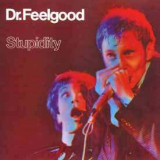
Black heavyweight vinyl pressing The third album / first live album from the British rock band, Dr. Feelgood.
Originally released in 1976, it was the first live album to ever hit number 1 on the UK charts in its first week.
Stupidity captures the relentless, hard-driving energy of Dr. Feelgood at their peak. Comprised of recordings taken from 1975 tours, the music is presented raw and without overdubs, making it clear that the dynamic friction between guitarist Wilko Johnson and vocalist Lee Brilleaux could propel the band toward greatness
The arcane enigma from the caucasian mountains that is Natalie Beridze, treats us with a reflective concept album, her 9th solo album, focussing on buried chapters in her own work history.
“I sought after material, piled up on my old hard drives; - various sound debris, recorded and produced in the past. I recycled them beyond recognition and fudged them together into new samples to compose this album.
Mapping Debris is a term used during an investigation of a plane crash. Special agency collects millions of infinite small pieces of shattered metal and wiring from the crash site. They later try to reconstruct an original fuselage of the plane from assembled debris, in order to recreate its story and reveal the reason that lead up to the catastrophe.
Mapping Debris is a manifestation of dematerialization in physical domain and time: shedding skin turning into dust, decaying objects, corrosion, atrophy, rot, nonsense and factual forgetfulness, which mirrors chilling fear of perishing, losing integrity, memory of events, images, smells and sensation of touch of those, who have already perished in their earthly archetype. Yet in the aftermath of realization, one no longer dwells in colossal dead weight of inevitability of the end. The pattern perishing has a golden thread on one end - the one that makes us dwell in ceaseless possibility of rebirth, translation and remembrance. This album is a continuation of series of works I have dedicated to my parents lives, as well as their death...”
It is an intricate poetic net one enters while surrendering to Natalies music. The spiky grit and her heartwarming, harmonic swashes that touch you like a hug, belong inseparably together and spread that multilayerd consolation, manifesting the force of music in its most glistening form. (Thomas Fehlmann/ Natalie Beridze)
Certain Sound Records and Montener the Menace are proud to finally release the first single from his highly anticipated second album "Anyone Home?"
Montener has recruited Wounded Buffalo Beats on production duties who’s looped a fantastically pitched vocal-sample over some hard, head nodding drums to set the scene for the wonderfully enlisted, all-star line-up to go berserk over.
The world-renowned guests include - Wordsworth, Rah Digga, Masta Ace & Fatlip as "High Noon" sees the gang of notorious outlaws trading smoking hot verses, swaggering into your local saloon, oozing with finesse as six-shooters still smolder in their holsters and their Stetsons pulled low.
This is one of the best cross-Atlantic collaborations Hip Hop has seen to date and is a fantastic choice for the initial lead single from the upcoming album.
"High Noon" is out April 2nd via Certain Sound Records and is accompanied by a fantastic Western influenced, animated video by the super-talented animator - Taylor Bowen which can be found below:
The Struggle - the 2nd single taken from his highly anticipated album -
Anyone Home?
Once again Montener enlists a heavy ensemble of guests featuring
Stones Throw alumni, Guilty Simpson, UKHH veteran, Micall Parknsun
& Artifacts emcee, El Da Sensei.
The Struggle sees the four emcees
perform their vocal acrobatics in unrivalled style as their rhymes
reverberate over a smooth, neck-snapping slab of vintage Boom Bap -
eerily reminiscent of the rich, classic sound of the Mid-90’s. JL Beats has
created a timeless beat here with DJ JabbaThaKut providing the world-
class cuts to round the track off in superb style.
“Its gonna make a great impact on the scene, just what we need, when we need it most” - Skinnyman
Double LP, Printed Sleeve. With a photo from an Antirep sculpture.
A collection of Doom Hardcore tunes like never melting newcommers and old school... Also bringing some Rave Hard techno surprises and some bloody Breakz to skill with...
A big DAMNED GOOD surprise !!!
out of Stock
Last delivered 5 years ago available to reorder, subject to availability
Anml Mthr is an unstoppable Acid Techno wizard who performs live with two 303 machines, modular synths and hardware sampler.
Inspired by his latest appearance at HÖR Berlin he recorded 4 tracks exclusively for FLASH Recordings.
out of Stock
Last delivered 23 days ago available to reorder, subject to availability
IZIPHO SOUL are thrilled to announce their next release: Early 80s music from New Jersey of the highest order and a first time re-release on a 45.
IF YOU WANT MY LOVIN’ is a synth-soul boogie bomb that we’ve taken to another level. The ‘Sunshine Mix’ by Philip Ward - miraculously restructured - giving it the feel of a 12” but keeping it under 5 minutes, the instrumental break in the latter stages is simply stunning. The sublime flip ‘HARDLY NEED TO SAY’, hardly needs an introduction. Whilst the Rhodes and intricate guitars weave their way throughout the track, June’s vocals shine with passion and power.
out of Stock
Last delivered 5 years ago available to reorder, subject to availability
Mother Freedom Band’s Cutting The Chord is a funky modern soul classic. It’s both a criminally under-appreciated album and a hard-to-find record so we’re delighted to be giving this sweet disco-funk groover the reissue treatment it deserves.
Produced by the great Al Goodman from The Moments and originally released in 1977, Cutting The Chord seems to be one of the lesser known releases on the curious, and often great “All Platinum” label. Other than a 7" of a couple of these tracks, the only thing that the band seem to have released is this album, and what an album it is. Unbeatable soul-funk of the highest quality.
The album bursts open with “Love Will Stay In Your Corner”. It’s a soulful dancer that reliably slays any funk set you care to drop it in. It’s followed by the lithe disco funk “Flick Of The Wrist” that’s all bubbling baselines and elegant horns. The groovy, horn-enhanced sweet soul of “Gotta Get It Back” is equal parts heartbreaker/hip-shaker and the acidic organs on “Mr Brother” are an experiment in synth soul.
Perhaps the group’s best known track, “Beautiful Summer’s Day” might well be worth the price of an original copy alone. It’s pure piano-driven paradise soul. A tropical birdsong intro sets the scene of a warm, perfect sunshine day and the lead vocal soars over the lush, clean production. The tempo oscillates between contemplative and stomping. Essential.
The brilliantly-named “(Assistants Rag) When You’re Hot, You’re Hot” opens side two. Another huge highlight, its title refrain repeated over this laid-back, power-funk workout. It still sounds incredibly modern, like something off the last D’Angelo record, and if Public Enemy and Diamond D both sampled it you know it knocks hard.
The horn-heavy, clav-stabbing-stomper “We Like To Boogie” keeps things fast and funky before the airy, heavenly harmony soul of “Come On Home” mellows us all out. Things pick up again with “Touch Me”, and you might recognise its addictive elements sampled in Jay-Z’s Kanye West-produced “A Star Was Born”. The magical, reggae-tinged, gospel-influenced “Sweet Love” closes out this assured, classy set.
We dare to say that Cutting The Chord is a rare example of a funk-soul LP which is killer from start-to-finish. Sure, there are the stand-out bombs, but the whole thing is a complete and varied album of feel-good vibes held together by its fluid horns, tight, tight rhythm section and beautiful vocals.
Mastered for vinyl from the original analogue tapes by Simon Francis, cut by Pete Norman and artwork restored at Be With HQ, this new edition should hopefully stop this album slipping any further into obscurity. It’s just too good to be forgotten.
out of Stock
Last delivered 4 years ago available to reorder, subject to availability
Roman Flügel is a magician. This statement is far from being a hyperbole. Just put the needle down on any record – I mean any! – of his ( collaborations included) since the early nineties and see for yourself: none of them are without that special effect. The magic works instantly. And as the thing with magic goes: it’s challenging to explain it. But I guess that is what makes it magic.
Eating Darkness is the title of his newest spell. Affected by the fundamental shock that any system got in 2020 – but not the result thereof – it is an album that could absorb it – as its name might suggest. Music and nightlife work hand in hand as escapism and as anchors or as the undercoat of social interactions. They enable people to deal with hardships as well as the burden and the joy of life. That is the starting point and hope of Eating Darkness: the outlook and invitation to enrich each and everyone’s existence.
Bound to the single LP format and reminiscent of a time with format limitations, the nine tracks are testament to Flügel’s weakness for the art of pop music with the use of little and especially short motifs. Furthermore equipped with a clear instrumentation and without any camouflage, Eating Darkness corresponds to his idea of a virtual band.
As it happens, the opener is called The Magic Briefcase. That sits not only well with my first sentence, but pretty much embodies the album and Roman Flügel’s apparatus in an alternative title: Crystal clear sounds and melodies bounce on and off the dance floor, living room and club are pulled together and transcendental moments take turns with the tangibility of reality. After all, that is how a real magician allures you.
out of Stock
Last delivered 4 years ago available to reorder, subject to availability
Straight out from the green hills of the Welsh countryside comes Jeb Loy Nichols, the newest sensation in Timmion's growing roster of soul-fuelled vocalists. And we certainly have a double sider of the highest calibre on offer. A seasoned and versatile music scene veteran with a major label past, Jeb has everything it takes to polish Cold Diamond & Mink's rough grooves into shining gems.
The A side gives us a rolling southern-style soul banger, which the Wyoming-born singer attacks effortlessly with his praise for an honest dance. Jeb's talent for clever song writing shines through in the lyrics which connect to our current reality, where truth has become an endangered species. The slower flip side kicks off with a Sunday afternoon worthy duo of organ and acoustic guitar before Jeb shows us how a story is weaved from minimalistic ingredients. From the rural beginnings to pastoral hardships, he lays it all bare for the listener.
In addition to this single, Jeb and Cold Diamond & Mink have a whole album of soulful gold dropping later this year. Make sure to be there to catch it when it drops.
out of Stock
Last delivered 5 years ago available to reorder, subject to availability
Best known for his northern soul classic "Happy To Be", these two songs by Jimmy 'Preacher' Ellis are definitely his most underrated and rarest too! "Since I Fell For You" was his debut recording which he released together with The Centuries in the early 1960s. On the flip side we have the super funk of "Hard Times" with its fat open drum break.
Again, this release is nothing for those who are collecting classics only. However, open-minded djs and music enthusiasts around the world will most likely enjoy these two new discoveries.
On 12th Feb 2021, Bugzy Malone releases his fifth full length project, ‘The Resurrection’. This body of work is full of hard-won wisdom and undiluted street delivery on an elevated level that sees Bugzy produce his most accomplished work to date. The tracks weave social commentary and personal experience which produces something complex but powerful.
The album is launched with the single Don’t Cry’ ft. Dermot Kennedy. This is an anthem that journey’s Bugzy’s near fatal accident in March, depicting the mental and physical journey Buzgy went through whilst on the ground following the crash. In true King of the North fashion, Bugzy delivers technically perfect verses and showcases the incredible lyrical ability that everyone has come to love of him. This is balanced by Dermot Kennedy’s powerful and gritty chorus
‘Don’t Cry’ ft. Dermot Kennedy follows on from recent release ‘Doe’d Up’ and M.E.N III, the third instalment of ‘of his legendary M.E.N series which debuted at #18 in the singles chart, giving Bugzy his highest single chart position to date.
Finding Wildflowers (Alternate Versions) - the latest offering of Tom Petty music, curated with help from his loving family, bandmates and collaborators - will be released on April 16 via Warner Records. The tracks, which were previously released on the limited-edition Super Deluxe version of 2020’s Wildflowers & All The Rest, will now be available on standalone CD & vinyl and digitally for the first time.
The first track to be released is “You Saw Me Comin’,” a previously unreleased song and recording from 1992 and the final track on the collection, which will be premiering alongside a video directed by Joel Kazuo Knoernschild and Katie Malia. Reflecting upon recording “You Saw Me Comin’” for Wildflowers, Heartbreaker Benmont Tench notes, “There’s this kind of longing in the song, in the way that he wrote the chord structure, the melody and the lyrics. It’s wistful, and it would have been the perfect way to end the disc.”
Finding Wildflowers (Alternate Versions) follows Wildflowers & All The Rest which was hailed by Rolling Stone as “the definitive artistic statement that newly illuminates one of the most fruitful, inspired periods of the American legend’s career,” and by Variety, who called it “the best and most justified boxed set of this kind since the Beatles’ White Album compendium.” In fact, the songs on Finding Wildflowers (Alternate Versions) first initiated the estate’s discovery and curation process for the larger project.
Finding Wildflowers (Alternate Versions) features 16 studio recordings of alternate takes, long cuts and jam versions of Wildflowers songs as Tom, band members and co-producer Rick Rubin worked to finalize the album in 1994. The release offers fans further deep access into the writing and recording of Wildflowers, as well as realizing the full vision of the project as Tom had always intended.
The collection was produced by Tom’s longtime engineer and co-producer Ryan Ulyate who listened to 245 reels of 24-track tape, revealing Tom and his collaborators’ evolutionary process and finding the group willing to do whatever it took to discover the essence and magic in the material.
Dakar, Senegal. From this hostile land Midnight Menace is the latest KAOS assigned and one of its kind. You all with your support to the label via bandcamp fixed his computer so he can deliver this first one as an introduction. His Schranz/hard techno beat dives into a trance-mission direct to your brain in order to make your body shake.
Moving on to France JKS is half of Jawbreakers his techno rave music is really influenced by iconic figures from the 90's rave culture (Dave the Drummer/ Stay up Forever) name track is a retrotesque beat with a powerful bass-line moving between trance, body music and electro clash. With a ton of class.
Next one on the list delivering one of those weirdo tracks that from time to time we love to showcase on our compilations. DJDJ debuts with a darkroom alike anthem. Job Sifre and DJ Dorien punishing with a high intensity Body music song, taste their Bloody Mary.
Closing this record P.E.A.R.L goes pure HEARTCORE, with his already known Spanish primitivism, a gabber kick and a dismounted amen break dissolves into a mood melody to chill a floor at the peak ready for the next explosion.
This are HEARTCORE ESSENTIALS pls use them responsibly.
#oftenplusneverminus8
out of Stock
Last delivered 17 months ago available to reorder, subject to availability
For the first time ever this 27 track double album collects all of their singles on Red Rhino and Beggars Banquet/Situation Two on Vinyl. A mandatory compilation that also includes the bonus 7 inch originally appeared on the first ltd version of the 1986 album ‘Paint Your Wagon’ (Paint Your Wagon/More Jipp), an alternative and harder rendition of ‘Beating My Head’ (originally appeared o the Ep ‘This Today’) and ‘Russia’ from the 1984 Ep ‘Hollow Eyes’. Red Lorry Yellow Lorry were one of the most successful independent bands of the 80’s with their dark and often manic rhythms.
Straight Outta Caledonia is the first commercially available “Greatest Hits” of the outsider songwriter Jackie Leven, an artist
who has largely remained in obscurity in his native Scotland despite being one of the greatest wordsmiths – and singers – it ever
produced. A well-travelled musician who began making psychedelic, progressive music in the late 60s before emerging as an
epic storyteller full of pathos, humour and humanity in the 90s, Leven lived and wrote like many of the fragile, gregarious
characters of his songs; large, full of life and empathy. Leven passed away in 2011 after recording 30+ albums under different
guises or with his briefly successful New Wave band Doll by Doll. Straight Outta Caledonia is a compilation collated by Night
School Records on its Archival label School Daze that seeks to introduce Leven’s music to new generations.
In an age of isolation, alienation and loss of visceral experience, Jackie Leven’s music can be massive and welcoming. It feels
connected to some universal humanity and vibrates with vitality. His songs are often full of tragedy and comedy simultaneously,
cutting straight to the heart, often plugging directly into the nervous system of the listener. His lyrics are rich, dense with imagery
that can veer from apocalyptic to the comically banal in a sentence, with a songwriting panache that can be heavy handed to
almost bursting point before skewering the song with a clownish, warm punchline. His productions ranged from Bob Dylan’s
Rolling Thunder Revue style rock band orchestrations with strings and organ as on the epic Ancient Misty Morning or they could
be pared down to the purest form of folk song as on Poortoun: Leven on stage alone with an acoustic guitar, albeit played with a
mastery of the instrument that he often only hinted at. Musically his sound can bend traditional structures or stay completely
confined within them yet still forever push towards an ecstatic release, as on the cinematic Snow In Central Park.
The most exciting, jaw-droppingly effective tool at Leven’s disposal was his voice. A multi-octave instrument that, though
damaged during a savage assault in Fife, he used with flair; he had both a brazen disregard for the rules and a deep humility, all
of which is evidenced with every phrasing. A baritone that could flit up through the register – always touched by his gentle
Kirkcaldy accent – it’s the prime delivery method for his songs. Leven’s voice enabled him to inhabit the characters in his songs to
an uncanny degree, a skill that in turn enables the listener to empathise with them and, subsequently, the singer. It’s most evident
in stand out song The Sexual Loneliness Of Jesus Christ, a breathtaking re-telling of the life of its protagonist, not as a pure,
sinless messiah but as a sexually frustrated, solitary man condemned to an existential loneliness no one else will ever feel. In
many ways the track is the archetypal Jackie Leven song. Produced by Pere Ubu’s David Thomas, what strikes the ear first –
after the samples of unemployed workers in Glasgow following the closing of the Clyde shipyards – is the audacious, rhythmic
tremolo effect Leven employs through the verses before the production opens up to allow Leven’s vocal to lift into a soar, a
freeing glide powered both by the force of the singer’s chutzpah and the inherent, doomed destiny of the protagonist. With any
other singer such subject matter could come across as gauche or worse, pretentiously sonorous, but Jackie Leven’s genius was
such that he could be this cinematic and brazen while touching something elemental and true in the beholder. It’s a skill evident in
every song on Straight Outta Caledonia, the trademark of a songwriter who revelled and excelled in intensity with a lightness of
touch.
In his lifetime, Jackie Leven toured, wrote and recorded at a ferocious rate. He recorded under aliases to avoid record contract
restrictions, played house shows in Europe after or instead of official concerts, events which were often spoken word story telling
masterclasses as well as performances of his often bewilderingly dense songbook. His music has traditionally been catalogued
as “folk” music and has been largely banished to a small, dedicated group of international fans and apostles both private and well
known, like author Ian Rankin or Glenn Matlock. Since his passing in 2011 however, there has been a growing recognition
amongst a newer generation, with artists like James Yorkston or Molly Nilsson publicly stating the influence of the unsung
troubadour on their own craft. Jackie Leven’s fairytales for hard men are often forensic deconstructions of masculinity, sad and
ecstatic, light and shadow, always endlessly rich, a resource as bountiful as Leven himself’s human spirit undoubtedly was.