Stanislav Tolkachev is releasing a new double-LP through Krill Music called It Will Be Too Late Then.
The Ukrainian techno artist says he made the album by assembling tracks recorded over a three-year period, and he notes somewhat cryptically, "I think this record represents a phase."
As with most of Tolkachev's releases, the album will feature his own visual art on the cover. Krill Music, a Berlin-based label originally founded six years ago in Buenos Aires, is having it pressed in Argentina to support "the growth of the Latin American vinyl industry."
Tolkachev, who previously appeared on Krill Music with a track on a sampler 12-inch nearly two years ago, just put out a new EP on Mord. Rivet's Pohjola outlet repressed his 2011 ten-inch Why Are You So Frightened. He also recently shared a stream of an electro tune that's apparently coming out Umwelt's New Flesh label next year.
Having started out throwing DIY raves in Toronto Canada, the Forth collective became influenced by the city's hunger for self-expression. Various Artists Vol. 2 is the second instalment in a series of compilations that gives Toronto artists a chance to realise their ideas on the local and international stage.
Tarawangsawelas are a musical duo from Bandung, mainly performing a contemporary version of Tarawangsa, the sacred music from Sundanese West Java. Here they are joined by their teacher and maestro, Pak Pupung Supena, together with, Pak Jaja, on Sekalipon. Wanci is a minimalist, cosmic album composed with a careful modern interpretation of one of the most mystical and spiritual genres in Indonesia. A gorgeous and infectious six track album. TIP!
.
Producer Rabih Beaini says "Last year, Europalia Festival commissioned me to work on a musical project with local musicians from Indonesia and develop a performance to tour during Europalia 2017. I chose to work with Tarawangsa, the sacred music from Sundanese West Java. Tarawangsa is played on two string instruments: a rababa-like two-stringed bowed instrument itself called Tarawangsa, and the Jentreng, a seven-stringed kecapi-like instrument. Typically from Rancakalong village in Sumedang, West Java, Tarawangsa is played as part of a ritual consisting of almost eight hours of music and dance, complete with offerings and prayers. During a performance, a selection from the forty two known Tarawangsa pieces slowly build up from a cosmic slow groove to more repetitive and hypnotic rhythms, inevitably bringing the listener and dancer to a trance state. During the residency I had the great honor to be able to develop new structures and pieces together with Tarawangsawelas, recording them in Bandung, and ultimately having them joined by their teacher and Tarawangsa maestro Pak Pupung Supena together with Pak Jaja on jentreng. This album is a modern description for one of the local Indonesian music scene, but mainly it is an offering for the Tarawangsa ritual, like the food and incense and the prayers, and the messages of the ancestors to the people of Rancakalong."
Composed and performed by Teguh Permana, Wisnu Ridwana and Rabih Beaini, except Sekalipun (traditional) performed by Pupung Supena, Jaja Rohmat, Teguh Permana & Wisnu Ridwana.
Recorded in Bandung, march 2017
Produced, mixed and arranged by Rabih Beaini.
Mastered by Neel at Enisslab.
Cover design by George Sowden, curated by M-L-XL,
Liška, the Czechoslovakian word for fox. Beguiling in its beauty, cunning in it's charm. Said to be one of the most intelligent animals on the planet its global family consists of thirty-seven varieties; all of them recognised, respected and feared for their persuasive, creative, resourceful and elusive nature. The Liška we will talk about today is no exception to these hereditary rules and within the grooves of this record Finders Keepers present an 'elusive' musical artefact that best exemplifies every facet of this composer's animal namesake.
Had he not been born in the small Bohemian town of Smecno in the early 1920s the story of The Fantastic Mr. Liška might have well taken a different course. Alternatively, fettered by the hampers of communism, this lifelong resident of Czechoslovakia would never quite find his seat at the same table as the likes of John Barry, Ennio Morricone, Michael Nyman and Stanley Myers, nor drop enough phonographic breadcrumbs to track his legacy. But having waited patiently behind the borders of the wider landscapes of international cinema, Liška's musical brood, spanning multiple stylistic decades and generations, has now started to walk proudly amongst his would-be, latter-day compeers. In an era where music lovers have almost become immune to adjectives like 'lost', 'rare' and 'unreleased' in a climate where previously lesser-known off-kilter master composers such as Vannier, Kirchin and Axelrod have become widely revered, it is perhaps the perfect time for discerning listeners to advance above the feeding trough and seek out this truly pioneering and revolutionary Eastern European composer. Rivalled only by the likes of Krzysztof Komeda and Andrzej Korzynski in Poland, alongside Alexandr Gradsky in Russia, and often splitting workloads with fellow Czech composers like Luboš Fišer, Zdenek Liska's filmography of over almost 300 fully formed movie scores virtually eclipses the achievements of these socialist era luminaries. Respected unanimously in both Czech and Slovakian by studio bosses, producers, directors and actors alike Liška is widely known for his ability to take the existing energy in a reel of film and literally change the polarity to suit his own interpretation while maintaining the full support from his 'client' who would in-turn end up working under this composer's creative direction. Not only was Liška a genius of emotive orchestral and coral composition, his grasp on small group arrangements and intimate, minimal scores set him above the competition. By utilising primitive sample techniques by 'looping' a films existing ambient noise, or rearranging found sounds and dialog into subtle melodic arrangements, Liška would independently develop his own techniques which had simultaneously become known in Paris as musique concre`te. It is a direct extension of these experiments that saw Liška also draw parallels with Walter Branchi (Ennio Morricone's main electronic sidekick) in Italy as well as Daphne Oram in the UK, making Liška a relatively untravelled pioneer of early electronic composition and sound design due to his unlikely global environment. Imprisoned, preserved or reserved; time has been kind to Liška's music.
For the third release 'Purify Records' presents the first solo EP of the cologne based label co-founder 'Tangram'. Having refined his craft for many years 'Circadian Rhythms' showcases his unique ability to create immersive and hypnotic soundtrips tailored for dancefloor usage and home listening pleasure alike. Deep electronic excursions in their purest form.
Originally starting out in the late 90s, Paris-based 8 piece, Cotonete originally gained fame for renditions of tracks from their contemporaries, the likes of: Deodato, Lalo Schiffrin and Banda Black Rio. Replicating the heavy grooves, sweaty jazz-funk with a nod to the Brazilian warmth and beach breeze. Before bowing out of the game thinking the fun was over….
Fast forward to more recent times, having had their flame reignited by Melik Bencheikh, head honcho of Paris vinyl emporium, Heartbeat Vinyl. He encouraged the band to get back together and over the last two years the band released four EPs of original material - including the collaboration with Dimitri from Paris - quickly becoming collectors items, and now gearing up for 2019 they are finally ready to present a full body of work, their album debut 'Super Vilains'.
Mystique Sound Explorer Scherbe Is Bursting Out Danceable Groove Science Between Epiphany And Delusion. Urban Misty Visions Of A Past And Current Future Deconstructed And Cludged Together Again, Twisted And Dubbed Into Danceable House.
The Ep Contains 6 Tracks In Mid Tempo, Each Of Them Having A Distinct Emotive And Dense Energy. Ready To Be Played In Clubs As Well As Tailored To Accompany You In Your Everyday Frenzy.
Steady Work By Dear Friends, A Heidelberg (germany) Based Label, Is Feeling Honoured To Disseminate His 3rd Release Featuring Scherbe, Who Used To Live A Long Time In Heidelberg And Is Now Based In Dresden. This Release Fits Well Into Scherbe¥s Discography Who Yet Released A Variety Of Records On Numerous German Underground Labels Like Uncanny Valley, Or*s, Kashual Plastik And Big Bait.
Born the 26th of October 1956 in Aïn Azel near the Algerian city of Sétif, Nordine Staïfi, real name Larbi Smati, was very young when he emigrated to the French Chambéry region.
After having recorded 'Sraoui' style songs, his real devotion as a singer took place in 1978 when publishing the song 'El Ghorba S'hiba', a disco version of a traditional East-Algerian piece. This song would revolutionize the modern Algerian music, and made Nordine one of its most important protagonists of the 1980s.
For nearly ten years he dedicated himself to the modernization of his music, traversed by the themes of exile, love and the nostalgia of his country.
Nordine Staïfi died prematurely on December 17th 1989 in France, at the age of 33.
Les Disques du Crepuscule presents Signals Into Space, a brand new studio album by acclaimed electronic duo Ultramarine. SIS is their seventh album, having debuted on Crepuscule back in 1990.
The new long player was conceived by Ian Cooper and Paul Hammond over a three year period and features four songs co-written with North American musician Anna Domino, a firm favourite of the group since her leftfield pop releases on Crepuscule and Factory in the 1980s. 'For this project we wanted to do something more ambitious and perhaps more accessible than our last album in 2013,' explains Paul. 'We were keen to start collaborating with other musicians again, as well as develop our method of performance-based writing and recording, which is partly improvised.'
Signals Into Space also features contributions from saxophonist Iain Ballamy (ECM, Food, Loose Tubes) and percussionist & vibraphone player Ric Elsworth. It was recorded and mixed in London with Andy Ramsay (Stereolab) and mastered by Noel Summerville.
'To some extent Signals Into Space is an escapist record,' reveals Ian. 'Our rehearsal space is a small windowless room on an industrial estate in Essex. Possibly as a result we ended up with a collection of visually suggestive tracks, conjuring mental images of cities, deserts and tropical islands, which gradually came into focus as Anna's lyrical ideas developed. So while the music might have been conceived in a closed space it's imbued with a positive spirit - looking outwards, seeking contact.'
Cover art by Studio Heretic. Available on CD, digital and vinyl LP (vinyl format includes a free digital copy on MP3).
With his third single release, Y-Bayani (pronounced like Why-Bayani) shows clearly that he is the most intriguing roots-reggae sensation coming out of Ghana. He is backed again by the lushly grooving Band of Enlightenment, Reason and Love.
Asembi Ara Amba, sung in Fanti language, is an old Fanti story about having bad luck if you see a vulture up in the sky. As Y-Bayani sees one suddenly and for no reason he gets in trouble with the police. Being hold back in the police station he finally takes his chance to escape into freedom while the police men taking a nap.
On We Are The Band of Enlightenment, Reason And Love the group presents their personal anthem. The song is a cinematic journey starting with a mighty horn theme, followed up by a mantric chant and enters finally into a wall of sound in double time. It's a small symphony for sure.
Invoking imagery of condensed, interstellar warfare - Dayzero takes command of the controls for Sentry Records' eighth release. Based in Japan, the acclaimed producer follows up on his substantial outings for Wheel & Deal and Hatched Music among others - having continuously refined his highly effective compound of Dubstep with vocal support from the scene's vital tastemakers. Now joining the Sentry roster with two monumental armaments, the newest signee shows us how it's done. Enrichening the sound system music scene with a no-nonsense production style as well as his innovative, experimental approach - all killer, no filler.
Taking off to another dimension in 'Sunday on Spaceship', listeners are met with feigned lo-fi soundscapes, carved out of analogue noise and detuned echoes. A state of overt tension dissolves into Dayzero firing up the heavy weaponry with stripped down sub bass tremors and meticulously crafted off-kilter groove. Amongst granular, apocalyptic percussion reverberating voices of days past flicker. Diverse drum instrumentation and supple distortion keep it lively, a no-questions-asked onslaught and guaranteed way to light up any dance.
Flipping over to the B-Side, we're placed on the receiving end of another ton of musical napalm. Finding ourselves being churned through bare concrete, laced with psychedelics. 'Down By Law' oozes of sonic variance, as industrial plucks shine through the cracks - furthering the aberration alongside narcotic staccato arpeggios. Subtle use of eerie harmonies and surging feedback wails is firmly kept in check by brute-force kicks and snares - ceremonious pressure underneath. Venting high-pressure 808's amidst supremely crafted breaks, leaving us yearning for more. A pair of mean-spirited sound-bwoy murder tracks on a twelve-inch platter - enough said!
Having remained continuously active since 1971, the Yoruba Singers are the longest-running musical group in Guyana. Emerging from a music scene mostly dominated by slick, commercial entertainment, the Yoruba Singers brought a new dimension to Guyana popular music, cooking up a potent stew of afrocentric vibes, steeped in a committed invocation of the country's African heritage. The Yoruba Singers released several recordings during their imperial period in the nineteen seventies and eighties, but what is broadly regarded as the group's magnum opus is the 1981 album Fighting for Survival. The album sums up the group's first decade of operation, serving up a heavy mix of calypso, jazzy funk, reggae and afrobeat. Initially released on the short-lived Interculture label and later reissued on a Guyana-only compact disk, the album has long been more talked about than actually heard. But thanks to Cultures of Soul a new edition is now available in wide release, and with it comes the opportunity to experience some of the deepest grooves the Caribbean has to offer!
'1929 - Das Jahr Babylon" marks Thomas Fehlmann's third full length release of 2018 and presents what appears to be a creative peak in his career that spans beyond his solo career to his early days in Palais Schaumburg, collaborating with Moritz von Oswald as 3MB to his long time work with The Orb. Having left The Orb in late 2017 has set free unforeseen energies in Fehlmann's studio.
A departure from his recent dance floor-friendly album "Los Lagos" (KOM388, KOMCD148) released in September on Kompakt, Thomas Fehlmann's '1929 - Das Jahr Babylon" is a film soundtrack from the documentary that aired on ARD network on September 30, 2018 and is now available as a podcast series.
To compliment the internationally lauded TV series "Berlin Babylon", German director Volker Heise has created a documentary about 1929, the fateful year during Germany's "Weimarer Republik" in which "Berlin Babylon" is settled. Heise's stirring documentary portrays Germany's sizzling capital that is faced with radical changes by the dark forces whom are about to toss the world into the abyss we know as World War II.
This marks the second time that Fehlmann is partnering up with Volker Heise after 2010's marathon documentary "24 Stunden Berlin" which was released as "Gute Luft" (KOM211, KOMCD81) in the same year. Fehlmann's composition for "1929" consists of sample material taken from the era and thwarts the exaggerated lust for life with threatening undertones that anticipate the dawn of mankind's darkest chapter so far. Although all the sounds breathe yesterday's atmosphere this soundtrack bursts with modernity. Fehlmann accomplished the daring feat to musically render the unsettling resemblance between the political situation 90 years ago and our current time.
We at KOMPAKT feel that Fehlmann's score has turned out spectacular enough to give it proper release on limited vinyl and CD as well as on all digital platforms.
Mit '1929 - Das Jahr Babylon" legt Thomas Fehlmann schon seinen zweiter Longplayer innerhalb eines halben Jahres vor und dokumentiert damit eine kreative Hochphase seiner überaus stattlichen Musikerkarriere. Die Trennung von The Orb scheint bei ihm ungeahnte Energien freizusetzen.
Anders als auf dem cluborientierten "Los Lagos" tritt Thomas Fehlmann auf "1929" musikalisch einen Schritt zur Seite. Und das aus gutem Grund: Analog zur international gefeierten Fernsehserie "Babylon Berlin" entstand unter der Regie von Volker Heise der Dokumentarfilm "1929 - Das Jahr Babylon" - ein ergreifendes Sittengemäde Berlins während des Schicksalsjahrs der Weimarer Republik. Wie schon zu Volker Heises vorangegangener Berlin-Doku "24 Stunden Berlin" (2010 erschienen als das Album "Gute Luft" auf KOMPAKT) hat Thomas Fehlmann auch diesmal den kongenialen Soundtrack beigesteuert. Basierend auf Klangmaterial des Jahres 1929 hat Fehlmann eine beeindruckende Musik geschaffen, in der manchmal die übertriebene Lebensfreude und Dekandenz jener Zeit aufflackert. Eine Musik, deren Stimmung jedoch unterwandert ist von den bedrohlichen Strömungen, die Deutschland kurz darauf in seine dunkelste Epoche stossen werden.
Thomas Fehlmann ist damit ein wahres Kunststück gelungen. So sehr die Produktion den Geist einer vergangenen Zeit atmet, so modern mutet sie an. "1929 - Original Filmmusik" klingt somit wie die zu Musik geronnene Erkenntnis, dass sich Gestern und Heute auf erschreckende Weise ähneln.
Wir bei Kompakt sind der Ansicht, dass Thomas Fehlmanns Filmmusik zu "1929 - Das Jahr Babylon' so spektakulär geraten ist, dass wir sie nun als limitierte CD und Vinyl-Auflage, sowie auf allen digitalen Plattformen verfügbar machen.
Emotional Response is delighted to announce Foreign Affairs - a limited edition special remix 7-inch single featuring reworks from Alexis Georgopoulos & Jefre Cantu-Ledesma's "Fragments of A Season" album by Woo and Felicia Atkinson.
Last year's ""Fragments of A Season"" represented a unique chapter in both artist's canon. Georgopoulos, who released the Arp album "Zebra" in June this year and Cantu-Ledesma, who released "On The Echoing Green" in October 2017 - both on Mexican Summer and to critical acclaim - wanted to stretch out and create a discrete work. A peripheral listen to "Fragments" revealed a resonant album of delicate, ambient vignettes, suggesting a Balearic take on Vini Reilly, Young Marble Giants and other poetically-minded, minimalistic post-punk era bands.
The Brothers Ives aka Woo were a major influence on the album's makers and so AG and JCL are thrilled they've submitted a beautiful reworking of the album's "Marine". Whereas the original sounded like Marine Girls and The Gist getting together for a nice beach day jam, Woo's rework transforms it into pulsating track of glistening proportions. Percolating synths, some guitar and clarinet - the true classic, idiosyncratic Woo-ification - creates a woozy, romantic, impossible to categorize slice of Balearic meets dub atmospherics.
If "Marine" is all midday sun, intoxicating and potently optimistic, Atkinson's remake represents the literal and figurative flip, bringing out the overcast dreaminess to "Cleo". Sounding like an outtake from a Rohmer film, or perhaps Cocteau Twins and Broadcast having a picnic in Biarritz, the version veers between abstraction, celluloid ambiguity and suggested narrative. Atkinson's reworking adds poetry of the tune (quite literally!) with her soft vocal under-gliding to perfection. Representing a temporary idyll, a meeting point where cobblestone streets lead to the sea. At nightfall, a discotheque heard in the distance. The morning mist burns off. Only such memories remain.
We don't mean to be disrespectful to the shops and supporters by having these wise-guy, unfunny and meta-feta promo releases. But this one is our shortest to date consisting of:
267 letters
39 spaces
50 words
12 nouns
7 numbers
5 verbs
4 jokes
1 Dan Graham reference
"I met Marcell at a gig I played at Karlstorbahnhof in Heidelberg earlier this year, he was serving beers behind the bar all night, it was a fun but not so busy party. The club shut the doors early and we were holed up in this old train station-come-club having a few drinks into the early hours. We sat down, chewed the fat and bonded over Jungle (and UK music in general). Marcell's buddy Phillip was insistent on me checking out his tunes through a small little bluetooth speaker!!! and these sorts of scenarios never quite play out how you'd like them too right! This one did!" Patrick Conway
Neville Watson returns to DBA with The Midnight Orchard, his first full-length in five years. Watson is a key figure on the electronic music scene at large and has made regular appearances on Don't Be Afraid, as well as on celebrated imprints such as Crème Organization, Clone and Rush Hour, where he released some of his best-known work alongside Kink.
In a crowded landscape of factory-line jack trax and synthesis for the sake-of-it, it's little surprise that Watson's physical, arresting takes on house and techno have been such a staple in the record bags of the world's leading DJs for the past twenty years. Throughout The Midnight Orchard, Watson seamlessly bridges his futurist leanings gleaned from a lifelong commitment to electronic music with the anarchic spirit of his acid-house heritage.
The record still finds catharsis in the relentless pulse that has defined Watson's life since his early residencies where he peddled ecstatic escapism to towns on the commuter belts of London, notably via his involvement in seminal Reading party Checkpoint Charlie. However, there's a more somber, arguably introspective and perhaps even somewhat wistful tone at play throughout. This might surprise those who've invested their feet and hearts in tracks with titles like Night Of The Inflatable Muscleheads and Everything I Know About House (I Learned on Facebook).
In a move away from his previous musical leanings, The Midnight Orchard embraces a distinctly more UK sound, unapologetically chronicling the paranoia that can be found skirting the euphoria of rave. And while Watson has avoided the eyebrow-arching pitfalls of the self-serious DJ full-length, it must be noted that the rhythms here are more skittering, the atmosphere less jubilant and the signature lo-fi hiss, fully popularised and bastardised since Watson's last album, has taken on a more fore-boding tone.
Meanwhile, the atmosphere elsewhere harks to a more idealistic world, particularly on the cascading and subdued Eine Kleine Emusik, and the euphoric We Own The Night. Twin Tub and Reet Dux provide dubby, sensual moments of escapism. There's uncompromising, hard-nosed rhythms on Dee Sides, and cosmic electro throughout 4am in the Trees. The album then concludes in a bold fashion with Displays of Brotherly Love and the resolutely hopeful atmosphere of Phosphorescent.
Reflecting decades of immersion in club culture and taking inspiration from wider-found sounds, The Midnight Orchard is loaded with thrilling parallels and a sense of genuine unpredictability. Tracks like Come On In and Anarcho Midnight are layered with unease, utilising pitch dark arpeggios and skittish, growling electronics to devastating effect.
Having dedicated the last eighteen months of his life to the studio, Watson has rec-orded what is undeniably the most unexpected music of his career. Amid the dark-ness, The Midnight Orchard has borne fruit.
Young Cosmonaut Having Decided To Fill The Silence Of Space With Ethereal And Dreamlike Of House Music, His Productions Resonate Throughout The Cosmos.
Very Young, He Dreams Of Interstellar Travel Through The Broader Electronic Music. He Left The High Reliefs Of The Alps To Prepare For New York And Began Producing Hip-hop Under The Pseudonym Kayloo. Quickly Recognized In The Industry But Initially Inspired By Producers Such As Pepe Bradock,
Janeret, Hugo Lx, Kink, He Does Not Forget His Dreams Of Stellar Conquest And Now Comes Back To The
House Music.
His First Space Mission Will Take The Shape Of A Self-produced Ep In Vinyl Format To Be Released At The
Parisian Distro, Syncrophone.
Four modern, textural, slow-burning instrumental hip hop soundscapes set a distinct mood on this new EP by the venerable Chris DeLuca. Heavy-hitting basslines and slightly ominous hat patterns dominate, leaving these cuts verging on the territory of dark, minimal electro destruction... with a subtle dose of that funky boom bap. Perfectly applicable to both basement dancefloor experiments and gangster dealings alike.
One half of Berlin's Funkstörung, alongside partner Michael Fakesch, De Luca is more than well-versed in the genre, having done a few remixes for high-profile hip hop and experimental acts such as Wu Tang Clan and Bjork. They've released an uncountable amount of records on labels !K7, Compost Records, Music aus Strom and Acid Planet, to name but a few. This is his first release for Detroit Underground.
Includes two fire remixes, one by fellow DU resident producer Valance Drakes, and the second by none other than Chris DeLuca's son, Lenny DeLuca.
For the last 20 years London-based author and party organiser Tim Lawrence has dedicated himself to excavating the history of New York City party culture and bringing some of the most powerful aspects of that culture to London's dance scene, from where it has ricocheted around the world. Having conducted the first set of major interviews with David Mancuso, Lawrence started to put on Loft-style Lucky Cloud Sound System parties with David and friends in London in June 2003. In early 2004 he published Love Saves the Day: A History of American Dance Music Culture, 1970-79, which tracked the influence of the Loft on the wider New York DJ, dance and disco scene. In 2009 his biography of the iconic musician Arthur Russell became the first book to map the wider downtown music scene. These beautifully written and politically insightful histories have educated, inspired and celebrated the previously overlooked foundations of contemporary dance music.
Lawrence's most recent publication, Life & Death On The New York Dancefloor, 1980 - 1983, published in late 2016, shines a light on 'one of the most dynamic and creative periods in the history of New York City'. Falling between the more regularly celebrated sounds of disco, house and techno, the period produced a uniquely hybrid series of sounds that never acquired a settled name. This led them to be largely ignored by historians and even DJs, yet the power of the period's music and the scenes it birthed, Lawrence argues, remains undeniable. Met with a rapturous response, Life and Death On The New York Dance Floor saw Lawrence on the road for most of the next year as he spread the word about the characters, the records, the clubs and the bands that shaped the post-Disco, post-Punk, and burgeoning Hip Hop landscapes of New York City during the early 1980s—a period when freedom still ruled.
This, the first of a 2-part sonic tribute to the 1980 - 1983 era as well as a musical companion piece to Life & Death On The New York Dance Floor sees recognised musicians (David Byrne of Talking Heads) nestle up alongside the belatedly recognised (Arthur Russell's Dinosaur L and Loose Joints, and Suicide's Alan Vega) and the downright obscure (Gray, 2 Teens Kill 4 and Tuxedomoon). An indication of what's to follow, Dinosaur L's original album version of 'Go Bang' has been dramatically overshadowed by the definitive François Kevorkian remix yet received regular play by David Mancuso and remains an enthralling experimental Arthur Russell jam.
Lovingly curated across 2 slabs of vinyl, the album introduces listeners to a stunning array of sounds, styles, vibes and feelings that encapsulate this most fertile and forward-thinking era, when music, fashion, sound system innovations, leaps in music technology, a DIY attitude and a freedom from corporate politics combined with extraordinary expressivity. All music contained within this album has been hand-picked and programmed by Tim Lawrence. It represents a selective yet rich introduction to one of the most extraordinary periods in New York City's epic musical history.
This is the first release on Reappearing Records, a label led by Tim Lawrence and distributed worldwide by Above Board distribution. Licensing courtesy of Tracksuit Music. Mastering by Optimum Mastering, Bristol UK. Artwork & design courtesy of Atelier Superplus. 2018.
out of Stock
Last delivered 3 years ago available to reorder, subject to availability
Major Keys is a brand-new audiophile label focusing on fully licensed reissues of jazz classics, pressed on 12' for a fuller, louder version compared to the original album cut. What better way to kick of the series than housing Herbie Hancock's imitable 'Chameleon' and 'Watermelon Man', loud and proud on either side of a 12' - remastered and cut by the engineer of the original Head Hunters LP from 1973.
They don't get much more iconic than 'Chameleon'. Nestled on the incredible 1973 'Head Hunters' album it's a 16-minute exploration of legendary jazz funk - having all the sensibilities and solos of a jazz record, yet grounding its rhythms in funk, soul and R&B. Even, as its title suggests, morphing from a low slung slow jam into a full-on, fast paced spiritual gem. Lock in for one of the most iconic basslines around courtesy of Paul Jackson, alongside some of the sweetest synth and Rhodes playing you're likely to hear from Herbie, all tied together with Harvey Mason's mythical drumming. Sampled the world over by the biggest and the best this is a truly timeless and hugely influential piece of music.
On the B side, the equally intriguing 'Watermelon Man'. This version, again taken from the Head Hunters LP, differs from the Blue Note bop '62 original, with Hancock developing it into a jazz fusion expedition. Bill Summers top and tails the track with a style of beer bottle blowing imitating a type of whistle playing found in Central African Pygmy music, giving a unique flavour to Hancock's jazz funk stylings that focus on the rhythmic interplay between each instrument. From Dilla to Digable Planets, Madonna to Massive Attack it's a classic that's sampled time and time again for good reason.
out of Stock
Last delivered 19 months ago available to reorder, subject to availability
This is the second release from the Parisian label Aperçu, which has uncovered European producers for this compilation featuring 4 titles.The story of this compilation came about gradually, with one thing leading to another as the artists involved met up all over Europe and their musical affinities became apparent. Two years after their EP Stara Zagora,Metshka and Roman Delore are issuing the second release of their label, Aperçu, promoting three producers well deserving of attention. Ben Kaczor, the resident DJ at the legendary, intimate Elysia Club in Basel, Switzerland has his own label, KCZ, and is an adept of dark, sharp-edged sounds such as in 'Navel,' which plays out like a hypnotic, melancholy adieu but with well-defined kicks.Temiri, a native of southern France having spent time in Berlin, now lives in Switzerland as well. With the Swiss mountains and Geneva's rave parties shaping his sensibility, he created 'Love Intentions' - a soft gift to the world. HiromaKeo, a Lisbon-based French producer, champions a wide-ranging, contemporary approach to electronic music. After three years spent comanaging the collective and label ESITU (between Lille and Brussels), he has started a new project in Portugal: Vilamar. In 'SonheiContigo' we find his signature precision and the Japanese influences he likes.
Last but not least, Metshkaand Roman Delorecontinue to appear at parties and events in Paris and to work on hybrid events through their Pauza collective. At the crossroads of techno, ambient and experimental music, here they give us 'Ocre,' a work of slow violence.
The arrival of Marvin Parks on today's musical scene is a perfect addition to the renaissance of the Afro-American Jazz Crooner panorama, deeply rooted in the Black Music tradition. Having his roots in Gospel and in the '50s and '60s jazz singers by the likes of Nat King Cole, Johnny Hartman and Joe Williams, Marvin Parks yet remains by all means an artist of today. In his debut Marvin shapes his light baritone colors within the sound of a well-established group of musicians under the direction and production of Nicola Conte, giving a different light to well-known standards and some originals.
Africa Seven's next installment returns to Cameroon with a special edition version of Momo Joseph's in-demand LP, "War For Ground", with three extra tracks. Momo may be better known for his work as an actor, having featured in such titles as "La Haine" (1995) and "The African" (1983), but his small foray into music is definitely memorable as he lays it out in true Afro-Boogie style. Apart from two singles, "War For Ground" represents Momo's only other body of work, and only studio album which was self-released in 1983. With this "Edition Speciale" reissue we provide you all the originals from "War For Ground" remastered alongside his party-time classic "Cameroon Airline", "Love Africa Soul" and his lesser known tack "Oh Momo".
The A-side starts with "Africain", which also featured on our compilation "Africa Airways Four". Glistening synth lines work it out over the top of romantic guitars, while the continual and hypnotic vocal chant of "Africa" tells you exactly where this music is coming from and what it means. The tempo creeps up a bit with "N'Gon Le Bek" which again takes advantage of driving guitar lines, this time facing off with the horn section. The last cut on the A-Side is "Out Side No Fine", which flows great after the previous two, keeping up the same aesthetic with a bit more of a tropical feel to it.
The B-side kicks off with the title track "War For Ground". In this one Momo starts off rather melancholic before things end more triumphantly with the backing vocals and horn section again providing much of the driving force. The final two tracks on this record make up the "Edition Speciale" element of this reissue. "Love Africa Soul", taken from Momo's 1980 single of the same name, at first seems to be one of the more straight forward disco led tracks on this release until an ecstatic synth line breaks things up in a forward thinking break down before a trademark Momo groove kicks back in. The other track featured on that single was"Cameroun Airlines", a bonafied afro-disco classic. Next we delved into the vault and unearthed a recording session for "Oh Momo", this never released version of the track reflects a slightly different side of the signer, with a more afrobeat feel.
This "Edition Speciale" version of "War For Ground" offers a thorough observation of Momo Joseph's work as a musician and looks to help shine a light on Momo's career and musical genius.
Bear Bones, Lay Low links up with Pizza Noise Mafia's Carrageenan and comes with a monster of a miniLP. BIG TIP!
.
Matthieu Levet (Carrageenan / Pizza Noise Mafia) and Ernesto González (Bear Bones, Lay Low / Tav Exotic / Maitres Fous ...) are two musicians based in Brussels who have cut their teeth in the city's freeform underground for well over a decade. Having spent time at numerous shows and parties together, they solidified a friendship after a two week tour around Europe with fellow electronic explorer , Accou, in April 2017.
It was shortly after this moment that the label Random Numbers approached the two with the initial intention of releasing a split cassette with music from their respective solo projects. Several exchanges later, the plan quickly changed into realizing a full-fledged collaboration between both musicians who, while having deep respect and interest for each other's music since they first met, had never found the opportunity to create something together.
The result is the CARCASS IDENTITY EP: a combination of Levet's raw and dub-infused electronics with González's kosmische psychedelic touch. This is music meant for strange parties: the kind where dancing and laying down are equally accepted and ncouraged, where there might be more silence than talking between participants, where small gestures and events reveal their transcendental meaning...
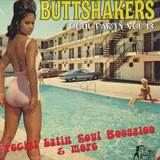
'SPECIAL LATIN SOUL BOOGALOO & MORE' - Another great volume in one of the best compilation series ever! Again, this is an amazing selection of very rare and groovy cuts, this time focused on Latin soul, boogaloo and beyond!
The latest release on Arma comes from Dutch legend and devoutly deviant underground operator Ruud Lekx, aka Rude 66. With a legacy that reaches back to the early 90s and the rough and ready Dutch electro sound of Bunker Records and The Hague, he's maintained a distinctly non-conformist approach that touches on acid, Italo, techno and more besides, all finished with the punky attitude that sets him and peers like Unit Moebius and I-F apart.
The tracks gathered together on The Witch Trials EP come from throughout Lekx's career. As the artist himself says, 'tracks from wildly different eras and sessions suddenly can combine to form one coherent EP. It's almost like the A-side tracks were waiting for 20 years to be combined with the B-side tracks.'
The overriding theme that binds together these timeless machine excursions is that of medieval witch trials - a global phenomenon that peaked in the 15-1600's. Considering the suspicion, propaganda and mass moral panic involved in this strange curio of distant history, Lekx points to the parallels with the current age, 'of political polarization and fake news accusations flying all over.' The EP title is also a tribute to two records close to his heart: The Fall's Live At The Witch Trials, and the one-off Witch Trials project by members of the Dead Kennedys, Adrian Borland and Christian Lunch.
'Werewolves & Poisoners' and 'The Crusade Against Idolatry' are both archive tracks from the 1994-5 period when Lekx made his first albums for Bunker Records. The first track's charging arps, rugged kicks, nagging acid lines and discordant paranoia all speak to that trailblazing period, while 'The Crusade...' revels in canny programming of interwoven synth lines feeding into an unhinged, psychedelic rampage that reflects the righteous fervour and spiritual confusion of the EP concept.
'The Absence Of Diabolism' opens up the B-side with a different tone, having been produced in 2016 and demonstrating the deeper acid undulations Lekx has become known for in more recent years. Still delivered via the same trusted tools he was using in the 90s, the sound feels like an extension of the Rude 66 vision rather than a separate entity. 'Envious Are All The People, Witches Watch At Every Gate,' a cut from the late 90s, closes the EP out in a spacious, snarling exploration of broken acid electro laden with cinematic sweeps of synthesizer and a constant sense of unresolved tension.
Across these four tracks, Lekx displays the scope of his craft as Rude 66 while also proving that timeless music can make sense in any context, and that the threads of inspiration in an artist's journey can be followed, explored and even resolved 20 years later, when you least expect it
For Fans Of Hot Chip, J-pop, Dada. Perlita Is Responsible For 'sex Instruments', The First Ever Song Made Entirely Out Of Sounds Produced By Sex Toys, Including Guitars Played With Vibrators, Bass Notes From Anal Beads And Strokers For Rhythm. The Track Was Made Especially For A Pornhub Toys Ad Campaign.
Caballo Rojo ("red Horse") Is The Second Album By Perlita, A Band From Cádiz, Spain, Once Described By A British Critic As "a Hot Chip Fronted By Freddy Mercury". For The Follow-up To Their 2016 Debut Cangrejo Yeti ("yeti Crab"), The Threesome Have Come Up With A Titanic Piece That, Mood-wise, Jumps Around And Gallops Between Pop, Flashes Of Andalusian Folkloric Music, Drum Machines, Japanese Voices, Synths And Verses By Spanish Poet And Nobel Prize Laureate Juan Ramón Jiménez, Among Many Other Things.
Perlita Are Based Part-time Between Puerto De Santa María, Cádiz, And The Madrid Borough Of Lavapiés. That In Itself Could Constitute A Music Genre, But It's Not On Wikipedia Yet. Their Music Speaks Many Languages, Some Of Them Invented. There's Something In It That Echoes The South - The South Of The Andalusian Psychedelic Rock Bands Of Yore, But Also Of The Typical Cádiz Brand Of Humour, Of The Famous Carnival, And Of The Northwest-african Radio Waves Reaching The Beaches Of The City From Across The Gulf Of Cádiz.
Having Cut Their Teeth In Many Spanish Indie Bands, With Perlita, The Three Band Members Decided To Explore Other Worlds - Worlds Where Synths And Drum Machines Rule, Yet With Plenty Room For Wild Percussion And Marvellously Poppy Melodies. The New Direction Became Clear On Their First Effort Cangrejo Yeti, And Is Continued On Caballo Rojo: Electronic Pop Made With An Open Mind, With A Special Fondness Of The Poetry In Details, And With A Production That Is Morphing Throughout The Record - From A Sophisticated Accompaniment Gently Rocking Some Precious Verses To A Raw And Forceful Sound Slinging Almost Dada-like Shouts, Like A Poet At A Rave Hollering About The Dunes.
'Cohesion' is the third full album from Anchorsong - AKA Tokyo-born, London-based electronic artist Masaaki Yoshida. Taking inspiration from Classical Indian Percussion, and '70s and /80s Bollywood film soundtracks
Anchorsong creates a journey of psychedelic, danceable and free-spirited compositions that blur the boundary between rhythm and melody. It was whilst extensively touring his previous album, 'Ceremonial', that Masaaki
became deeply fascinated with percussion, and shifted his attention away from the African drums present on his last record to the music of the Middle East, South East Asia, and then more specifically to the sounds of India. 'The Indian
percussion was the one I was most fascinated with, so I began to dig into that genre deeper, I started with classics like Ravi Shankar, and the more classical Indian musicians. But then I began to explore the world of Bollywood and movie
soundtracks which is another world and the more I listened to composers like Sapan Jagmohan, Rajesh Roshan and Kalyanji Anandji, the more the concept of the new record began to form.
Choosing to work with traditional Indian instruments like the tabla and dholak, Yoshida wanted to use instruments that possessed melodic qualities, and could be tuned to work in the context of electronic music. He found that when Indian
percussions mixed with other instruments they began to sound like a melody that blurred the border between rhythm and melody. The concept of bringing together contrasting elements and cultures is evident from the album's title,
'Cohesion'. Here Anchorsong has brought together musical traditions and sounds from across borders, forging a truly unique body of work. Having reached new heights with 'Ceremonial' through accolades such as BBC 6Music's #5 Album
Of The Year, 'Cohesion' looks to build on such successes through the coupling of a comprehensive European tour kicking off around the release of the album.
Odd Beholder, the project of Zurich-based musician Daniela Weinmann, releases the full-length debut album "All Reality Is Virtual" this fall.
"All Reality Is Virtual" is an intelligent, tenderly flowing and weird pop album, colourful, assertive. It deals with the strange temptations of our time: from tinder to AI, from offline loneliness to obsessive self-marketing. "I noticed that the main temptation of a digitalized life is the idea that everything can be measured, recorded and therefore known." says Weinmann. "But I yearn for surprise, for wonder. The unknown, the uncontrollable is appealing to me."
Odd Beholder have released two highly acclaimed EPs already, "Lighting" and "Atlas". Followed by the "Remixes" EP. Those remixes have been contributed by friends made along the way and artists Odd Beholder became fans of: The/Das, Fejká, Hundreds, Alessandro Giannelli, Kalipo, Thomas Atzmann. After having played tours in China, Germany, Switzerland and Italy, Daniela Weinmann teamed up with swiss musician and producer Martin Schenker to finish producing Odd Beholder's debut album. "All Reality Is Virtual" will be out Oct. 19th, 2018 on Sinnbus and Mouthwatering Records.
Emotional Rescue returns to the music of Elaine Kibaro with a special 7" single to accompany the Pour L'Amour album collection (ERC066). Here then are two bonus versions of songs from the LP with a unique Arabic recording of her "hit" Aurore and also, the previously unreleased on vinyl instrumental version of her balearic / boogie jam, Ne Doute Pas.
Having moved from Tunisia to France at the age of 13, Kibaro's duel sensibility has long been apparent in her music and performance. The early success of her debut 7" De L'autre Cote Du Miroir in 1977, was soon followed by her most 'successful' song in Aurore, first released as a 7" in 1978, before appearing again as 9 minute extended version on the 1979 Miroirs LP.
In the same year she recorded a special 7" single on the little known World Music label. Singing the lyrics in Arabic - renamed here to its true translation - much else remained the same. The music of the original, the spoken intro soon gives way to what is essentially a leftfield disco groove, with building strings, funky bass and some late archetypal 70s Euro drumming. Atop this the vocals are delivered in Kibaro's ubiquitous chanson delivery, her heartfelt singing, the congos breakdown and then chorus, as the songs builds, all lead to head-nodding smiles all round.
With this is Ne Doute Pas. A stand out from Pour L'Amour, the vocal version appeared in 1989 as a single and on the now sought after, Kiroel album. This instrumental simply let's the music shine. A Linn rise and fall bassline, soft, layered keys and mode horns are run and rerun in a catchy, incessant flow like a PWL demo. The 10 years between the 2 tracks is apparent in the instrumentation but the link between the two - Kibaro herself - is clear and worth enjoying for that.
In the sweltering North-Eastern Brazilian state of Pernambuco lies the coastal city of Recife, where Amaro Freitas is pioneering the new sound of Brazilian jazz. For the prodigious young pianist, the spirit of his hometown runs deep. From the Afro-Brazilian maracatu born on the sugar plantations of slavery, to the high intensity carnival rhythms of frevo and baião, Amaro's heavily percussive approach to jazz is as indebted to these Pernambuco traditions as it is to Coltrane, Parker and Monk.
As with many of the greats before him, Amaro began playing piano in church aged 12, under the instruction of his father, leader of the church band. As his natural talents became obvious, the young prodigy quickly outgrew his father's instruction. He won a place at the prestigious Conservatório Pernambucano de Música but had to drop out as his family could not spare the money for the bus fare. Undeterred, Amaro gigged in bands at weddings and worked in a call centre to fund his tuition. The transformative moment came at age 15 when Amaro stumbled across a DVD of Chick Corea concert, 'he completely blew my mind, I'd never seen anything like it but I knew that's what I wanted to do with a piano'.
Despite not actually owning a piano, Amaro devoted himself to studying day and night - he would practice on imaginary keys in his bedroom, until eventually striking a deal with a local restaurant to practice before opening hours. By the age of 22 Amaro was one of the most sought-after musicians in Recife and resident pianist at the legendary jazz bar Mingus. It was during this time he met and begun collaborating with bassist Jean Elton and the pair went in search of a drummer. 'We kept hearing about this crazy kid who was playing in 7/8 or 6/4, we knew we had to meet him'. Hugo Medeiros joined, and the Amaro Freitas Trio was born.
'I want to show the simplicity of music, to break the stigma that the piano is for a particular social class. Yes, it's a difficult instrument, which many people do not have access to, but with it you can express everything.'
Following his critically acclaimed debut album Sangue Negro (black blood), the title of his sophomore release Rasif is a colloquial spelling of Amaro's home town. A love letter to his native northeast, Amaro explores its traditional rhythms through the jazz idiom, employing complex mathematical patterns reminiscent of some of the most challenging works by fellow Brazilian masters Hermeto Pascoal, Egberto Gismonti and Moacir Santos.
Preferring to see the piano as a though it were a drum with 88 unique tones, Amaro's intelligence and emotion intertwine on every track, from album opener 'Dona Eni': a scorching reconstruction of the baião rhythmic structure, played in seven measures instead of two, to the serene homage to the coastal reef and its ecosystems on the title track 'Rasif'. 'Aurora' is a suite of three parts, representing the sun's journey from the light and soft of the rise, to the aggressive dissonance at its midday zenith and descending chromatic cadences as the sun sets.
Due for an Autumn release on Far Out Recordings, Rasif sees Amaro Freitas take a deserved step onto the world stage. Having already made a name for himself in Brazil, Amaro and his phenomenal band will embark on their first European tour later this year.
Amaro Freitas - Piano
Hugo Medeiros - Drums & Percussion
Jean Elton - Double Bass
Henrique Albino - Baritone Sax, Flutes & Clarinet
All compositions by Amaro Freitas
Produced by Amaro Freitas
Recorded by Bruno Giorgi @ Carranca Studio, Recife, Brazil
Mixed and mastered by Bruno Giorgi @ Quarto Studio, Rio de Janeiro, Brazil
Boofy hails from Bristol's fine heritage of progressive bass music producers. Having made a name for himself as part of the Bandulu crew and his own Sector 7 Sounds imprint, as well as dropping killer releases on Innamind Recordings and No Corner.
Lucky for us, he's saved some of his deepest, heaviest hitting cuts for Tectonic! This 4 track EP is a masterclass in minimal effectiveness, with rhythms ready to set the dancefloor off that reveal ever deeper subtitles on repeated listens.
'Back In The Box' sets the pace with swinging hats, thumping kicks and a bass line that will sound like an earthquake on the right system! Follow up for 'Herbie' which takes things in dissonant direction, before dropping hard and with authority.
Flip then for the EP title track, an exploration around the paranoid edges of a creative mind, stretched to capacity. Finally the EP closes up with 'Perfunktion', a rolling rhythm with a lighter mood, somewhat reminiscent of Mala circa 2006. Quality stuff from an excellent producer who is going from strength to strength right now.
DJ Support from: Kahn & Neek, Mala, Tubby, RSD, Joker & many more
Making his first appearance on the label, Argy lays down a three-part heavyweight production for Crosstown Rebels this October. The Greek producer effortlessly showcases his unique style and ability to create music that is sure to create heat on the dance floor.
Title track Worthless opens up the EP with a bouncy groove and sensual, breathy male vocal. Next, La Vida introduces a more percussive-led beat, creating an industrial soundscape. Get Ready closes the EP with its darkly hypnotic beat, lending itself to a more tribal aesthetic.
The word 'diverse' is most definitely one that can be used to describe Argy. Having been in the game for more than a decade, he's released music on Poker Flat, Cocoon, Objektivity, Desolat and Cuttin' Headz. He's worked alongside a range of key figures in the industry including Kerri Chandler and Manuel Göttsching. Argy has proved his prowess as a DJ holding down residencies at Amnesia, Space, Destino and Pacha as well as regular appearances at Berlin's Panorama Bar.
Soundway Records delivers a beautifully remastered reissue
of Brazilian duo Grupo Controle Digital's only album, 'A Festa
É Nossa'. First released in 1988, the album is now housed in a
tip-on heavyweight sleeve and restored artwork.
With the title track 'A Festa É Nossa' having circulated the
last few years in the DJ sets of influential tastemakers, the
album has become highly sought after by electronic fans
and collectors alike. Lo-f synths and cruising bass lines
permeate the record, influenced by the group's Brazilian
contemporaries at the time such as Tim Maia, Cláudio Zoli,
Secos E Molhados, and rock outft Made In Brazil.
Band members Billy Jaguar and Gel Valiery regularly
performed in various groups in São Paulo throughout the
80s and 90s, but after Gel passed away, Grupo Controle
Digital was no more - the band and the album faded into
obscurity and Billy became a priest, working with gospel
music. It remained that way until Brazilian DJ Millos Kaiser
(from label Selva Discos, and one half of Brazilian street party
organisers Selvagem) tracked down the remaining member
of the group to be able to include one of their tracks on the
highly anticipated Soundway compilation 'Onda De Amor:
Synthesized Brazilian Hits That Never Were (1984-94)',
released in July 2018.
Audio restored by Neal Birnie and re-mastered by Frank
Merritt at The Carvery, London. Artwork restored by Lewis
Heriz.
FOR FANS OF:
Soundway 'Onda De Amor' compilation, Music From Memory
'Outro Tempo' Brazil compilation, Spacetalk compilations,
Sabor Do Brasil
David Holmes was drawn to DIE HEXEN by their 'magical sensibility that has both shades of dark and light, which is something that always appeals to me in music'. After featuring in his edition of the famed Late Night Tales compilation with a take on the original suicide song 'Gloomy Sunday', DIE HEXEN returns to expand upon their dark ambient journey towards transcendence with an eagerly awaited debut album.
DIE HEXEN's genre eschewing synth driven compositions draw inspiration from the disturbing beauty of Hieronymus Bosch's artwork and several brushes with death, evoking a spirit who traverses realms of the underworld to bring forth knowledge of an Ancient past and in doing so, to reveal the not so distant future.
The Garden of Unearthly Delights transports the listener through strange visions of darkness, beauty, creation, destruction, death & rebirth. An exorcism of body, gender, tribe towards a place of ultimate transcendence.
Somewhat of a polymath, DIE HEXEN has already shown their prowess with live performances part music/part performance art spectacle, as an avant-garde filmmaker and as an award-winning multi-instrumentalist, sound designer and film scorer.
DIE HEXEN's divergent interests from Japanese Butoh theatre to Wiccanism, Shamanism, celestial mysticism and time travel informs their method, as they explain themself; 'The compositions I write are not written, at least not by me. They appear to me as audio/visual hallucinations. I can hear, visualise, and feel the whole composition before me. My hands know instinctively what notes to play and like a stream of consciousness, voices emerge. Having suffered severe head trauma that resulted in a heightening of the senses, the theme of death is an increasingly present theme in my work. With this, my perception of death and what is beyond changes as I contort between this world and the next physically and mentally, musically and visually. Working with music or film, my vision is one. The calling to express these auditory hallucinations is inevitable'.
The first LP release for connected comes from Nandu and as with his previous EP releases the LP is a unique genre crossing palette containing elements from Deep House,House,AfroHouse,Electronic Techno and beyond brought together in Nandus' original style. Truly an LP that begs to be listened to from start to finish. In Nandus' own words: 'One mans high can truly be, another mans anxiety. In some parts of life this is very clear like having a baby, do drugs, to work, not to work, be an artist, be a banker and so it continues. Yin & Yang and the whole idea of duality is another way to describe this. When you go left you say goodbye to right - at least for the moment you choose left. What you choose is up to you. It wasn't always my dream to get up at 3pm to change diapers, but it was always my dream to have a family. And here the sacrifice is not even mentionable. It's more than worth it. But when you sometimes in life make a choice that you regret but which always will follow you, or when uncontrollable powers force you into another direction, it can easily switch the poles between high and low. In these cases you just have to look forward, but not without looking back. You need to learn, take it with you, and do better next time. This album is about how my highs also can be my anxieties."
At 83 Years Of Age, Lee Scratch Perry Is Proud To Present To The World His Next Full Length Solo Album (with Dub Versions) , Continuing His Inimitable Roots Reggae Legacy.
Lee's Brief For The Album, Was To Blend The Vintage And The Obscure, During The Sessions Lee Referred To The Sound And 'black' And Wanted Space, Light And Darkness In The Songs And Their Respective Dub Versions.
The Result Sees Lee Having Mixed Up An Analogue Concoction Of Ultra-rare Effects, Sonic Wizardry And Deep Heavy Roots Rhythms.
Over 2017 and 2018, Lee Scratch Perry re united with Producer and Mixer Daniel Boyle, to start work on their second Solo album project for Lee.
Picking up where their last efforts ''Back on the Controls'' left off. Lee wanted to continue the raw analogue sound they had cultivated together over multiple past releases, and take it to the next level with new effects devices to create another sonic signature.
They entered the studio in 2017, to begin to put together ideas for the tracks, which were then taken to RAK studios in London with their ever changing Rolling Lion All Stars session band; to lay down the rhythm versions.
Using strictly vintage analogue equipment, they employed Neuman valve and RCA Ribbon microphones, and RAK's early model vintage API desk to record, the 'sound' for the album was sculpted in these sessions. Vintage, but punchy, which was then blended with Lee's choice of super rare and custom analogue effects. Ursa Major Space Station and Stargate delays and reverbs, old choruses, Plate and spring reverbs, and tape delays were used to create a tight vintage feel but retaining the rawness of the 'Low Fi' roots sound Lee was aiming for.
With the music coming together, the vocal sessions were held in Abbey Road studio 3, again using vintage RCA ribbon mics, over driving their EMI TG console and Fairchild compressors to create a pleasantly distorted Lo Fi vocal sound.
Lee and Daniel then returned to Daniels Rolling Lion Studio, to mix and Dub the album, live, on the mixing console.
'Rolling Lion All Stars' Musicians: Vocals: Lee 'Scratch' Perry Drums: Ed West Bass & Guitar: Hughie Izachaar Keys: Robbie Lynn Additional Keys: Calvin Bennion Percussion: Daniel Boyle Kete Drum: Mathias Liengme Hurdy Gurdy: Brian McCoy Horn Section: Rory Sadler, Robert Landen Melodica: Puraman Backing Vocals :
AEVA conjures up images of our world laid to waste. Having picked up wide and varied support on his debut 12' Dramatic Sunset, AEVA returns with his Superstars EP, a trajectory marking the implosion of a star turning supernova as euphoria dovetails into paranoia. Summer draws to an end and the melancholy imprint of unfulfilled potential begins to rust as the smell of wet concrete fills the air. This is Massive Life.